EP1792947A1 - Molecular compound comprising polymer having hydrogen bond as component compound - Google Patents
Molecular compound comprising polymer having hydrogen bond as component compound Download PDFInfo
- Publication number
- EP1792947A1 EP1792947A1 EP07000258A EP07000258A EP1792947A1 EP 1792947 A1 EP1792947 A1 EP 1792947A1 EP 07000258 A EP07000258 A EP 07000258A EP 07000258 A EP07000258 A EP 07000258A EP 1792947 A1 EP1792947 A1 EP 1792947A1
- Authority
- EP
- European Patent Office
- Prior art keywords
- tetrakis
- molecular compound
- hydroxyphenyl
- polymer
- hydrogen bond
- Prior art date
- Legal status (The legal status is an assumption and is not a legal conclusion. Google has not performed a legal analysis and makes no representation as to the accuracy of the status listed.)
- Granted
Links
- 150000001875 compounds Chemical class 0.000 title claims abstract description 207
- 229920000642 polymer Polymers 0.000 title claims abstract description 107
- 239000001257 hydrogen Substances 0.000 title claims abstract description 84
- 229910052739 hydrogen Inorganic materials 0.000 title claims abstract description 84
- -1 tetrakis aryl compound Chemical class 0.000 claims abstract description 67
- 238000000034 method Methods 0.000 claims abstract description 27
- 229920000570 polyether Polymers 0.000 claims abstract description 18
- 125000000217 alkyl group Chemical group 0.000 claims abstract description 8
- 229920000768 polyamine Polymers 0.000 claims abstract description 8
- 150000005846 sugar alcohols Polymers 0.000 claims abstract description 7
- 125000003178 carboxy group Chemical group [H]OC(*)=O 0.000 claims abstract description 6
- 125000001140 1,4-phenylene group Chemical group [H]C1=C([H])C([*:2])=C([H])C([H])=C1[*:1] 0.000 claims abstract description 4
- 125000003545 alkoxy group Chemical group 0.000 claims abstract description 4
- 229910052736 halogen Inorganic materials 0.000 claims abstract description 4
- 150000002367 halogens Chemical class 0.000 claims abstract description 4
- 125000002887 hydroxy group Chemical group [H]O* 0.000 claims abstract description 4
- 125000001997 phenyl group Chemical group [H]C1=C([H])C([H])=C(*)C([H])=C1[H] 0.000 claims abstract description 4
- 125000002924 primary amino group Chemical group [H]N([H])* 0.000 claims abstract description 4
- 150000002431 hydrogen Chemical class 0.000 claims abstract 2
- 229920002554 vinyl polymer Polymers 0.000 claims description 30
- 229920002125 Sokalan® Polymers 0.000 claims description 7
- 239000002253 acid Substances 0.000 claims description 7
- 150000002391 heterocyclic compounds Chemical class 0.000 claims description 7
- 230000004048 modification Effects 0.000 claims description 7
- 238000012986 modification Methods 0.000 claims description 7
- 150000008442 polyphenolic compounds Chemical class 0.000 claims description 7
- 235000013824 polyphenols Nutrition 0.000 claims description 7
- 125000000391 vinyl group Chemical group [H]C([*])=C([H])[H] 0.000 claims description 7
- 229920001308 poly(aminoacid) Polymers 0.000 claims description 6
- 229920001282 polysaccharide Polymers 0.000 claims description 6
- 239000005017 polysaccharide Substances 0.000 claims description 6
- 229920001289 polyvinyl ether Polymers 0.000 claims description 6
- 229920006215 polyvinyl ketone Polymers 0.000 claims description 6
- 150000004676 glycans Chemical class 0.000 claims 2
- 150000001735 carboxylic acids Chemical class 0.000 claims 1
- 239000000203 mixture Substances 0.000 abstract description 59
- 239000000470 constituent Substances 0.000 abstract description 34
- 239000000463 material Substances 0.000 abstract description 17
- 230000000712 assembly Effects 0.000 abstract description 16
- 238000000429 assembly Methods 0.000 abstract description 16
- 230000003993 interaction Effects 0.000 abstract description 11
- 238000009472 formulation Methods 0.000 abstract description 7
- 238000006243 chemical reaction Methods 0.000 abstract description 6
- 239000004020 conductor Substances 0.000 abstract description 6
- 238000004065 wastewater treatment Methods 0.000 abstract description 4
- 229920001223 polyethylene glycol Polymers 0.000 description 60
- 239000002202 Polyethylene glycol Substances 0.000 description 59
- 238000002441 X-ray diffraction Methods 0.000 description 37
- 238000004482 13C cross polarization magic angle spinning Methods 0.000 description 31
- IAYPIBMASNFSPL-UHFFFAOYSA-N Ethylene oxide Chemical compound C1CO1 IAYPIBMASNFSPL-UHFFFAOYSA-N 0.000 description 29
- 239000000843 powder Substances 0.000 description 23
- 238000000371 solid-state nuclear magnetic resonance spectroscopy Methods 0.000 description 18
- 238000001228 spectrum Methods 0.000 description 18
- 239000007787 solid Substances 0.000 description 17
- 229920003171 Poly (ethylene oxide) Polymers 0.000 description 16
- 239000000126 substance Substances 0.000 description 16
- 238000000279 solid-state nuclear magnetic resonance spectrum Methods 0.000 description 15
- 238000000862 absorption spectrum Methods 0.000 description 12
- HDPBBNNDDQOWPJ-UHFFFAOYSA-N 4-[1,2,2-tris(4-hydroxyphenyl)ethyl]phenol Chemical compound C1=CC(O)=CC=C1C(C=1C=CC(O)=CC=1)C(C=1C=CC(O)=CC=1)C1=CC=C(O)C=C1 HDPBBNNDDQOWPJ-UHFFFAOYSA-N 0.000 description 11
- 229920002873 Polyethylenimine Polymers 0.000 description 11
- 238000005160 1H NMR spectroscopy Methods 0.000 description 10
- SNVLJLYUUXKWOJ-UHFFFAOYSA-N methylidenecarbene Chemical compound C=[C] SNVLJLYUUXKWOJ-UHFFFAOYSA-N 0.000 description 10
- 238000002360 preparation method Methods 0.000 description 10
- LFQSCWFLJHTTHZ-UHFFFAOYSA-N Ethanol Chemical compound CCO LFQSCWFLJHTTHZ-UHFFFAOYSA-N 0.000 description 9
- OKKJLVBELUTLKV-UHFFFAOYSA-N Methanol Chemical compound OC OKKJLVBELUTLKV-UHFFFAOYSA-N 0.000 description 9
- 239000004721 Polyphenylene oxide Substances 0.000 description 9
- 230000008018 melting Effects 0.000 description 9
- 238000002844 melting Methods 0.000 description 9
- 238000010521 absorption reaction Methods 0.000 description 8
- 239000002131 composite material Substances 0.000 description 8
- 229920001451 polypropylene glycol Polymers 0.000 description 8
- 238000002076 thermal analysis method Methods 0.000 description 8
- ZCVAOQKBXKSDMS-AQYZNVCMSA-N (+)-trans-allethrin Chemical compound CC1(C)[C@H](C=C(C)C)[C@H]1C(=O)OC1C(C)=C(CC=C)C(=O)C1 ZCVAOQKBXKSDMS-AQYZNVCMSA-N 0.000 description 7
- FMTFEIJHMMQUJI-NJAFHUGGSA-N 102130-98-3 Natural products CC=CCC1=C(C)[C@H](CC1=O)OC(=O)[C@@H]1[C@@H](C=C(C)C)C1(C)C FMTFEIJHMMQUJI-NJAFHUGGSA-N 0.000 description 7
- NOWKCMXCCJGMRR-UHFFFAOYSA-N Aziridine Chemical compound C1CN1 NOWKCMXCCJGMRR-UHFFFAOYSA-N 0.000 description 7
- 229940024113 allethrin Drugs 0.000 description 7
- 229920001577 copolymer Polymers 0.000 description 7
- 238000001914 filtration Methods 0.000 description 7
- 239000007788 liquid Substances 0.000 description 7
- XLYOFNOQVPJJNP-UHFFFAOYSA-N water Substances O XLYOFNOQVPJJNP-UHFFFAOYSA-N 0.000 description 7
- UHOVQNZJYSORNB-UHFFFAOYSA-N Benzene Chemical compound C1=CC=CC=C1 UHOVQNZJYSORNB-UHFFFAOYSA-N 0.000 description 6
- MHCFAGZWMAWTNR-UHFFFAOYSA-M lithium perchlorate Chemical compound [Li+].[O-]Cl(=O)(=O)=O MHCFAGZWMAWTNR-UHFFFAOYSA-M 0.000 description 6
- 229910001486 lithium perchlorate Inorganic materials 0.000 description 6
- LYCAIKOWRPUZTN-UHFFFAOYSA-N Ethylene glycol Chemical compound OCCO LYCAIKOWRPUZTN-UHFFFAOYSA-N 0.000 description 5
- 125000000524 functional group Chemical group 0.000 description 5
- XSQUKJJJFZCRTK-UHFFFAOYSA-N Urea Chemical compound NC(N)=O XSQUKJJJFZCRTK-UHFFFAOYSA-N 0.000 description 4
- 238000005411 Van der Waals force Methods 0.000 description 4
- 230000000844 anti-bacterial effect Effects 0.000 description 4
- 125000004429 atom Chemical group 0.000 description 4
- 239000003899 bactericide agent Substances 0.000 description 4
- 229960000686 benzalkonium chloride Drugs 0.000 description 4
- CADWTSSKOVRVJC-UHFFFAOYSA-N benzyl(dimethyl)azanium;chloride Chemical compound [Cl-].C[NH+](C)CC1=CC=CC=C1 CADWTSSKOVRVJC-UHFFFAOYSA-N 0.000 description 4
- 239000003795 chemical substances by application Substances 0.000 description 4
- 239000013078 crystal Substances 0.000 description 4
- 230000000694 effects Effects 0.000 description 4
- 239000000839 emulsion Substances 0.000 description 4
- 239000004973 liquid crystal related substance Substances 0.000 description 4
- 239000008204 material by function Substances 0.000 description 4
- 229910052751 metal Inorganic materials 0.000 description 4
- 239000002184 metal Substances 0.000 description 4
- 239000000575 pesticide Substances 0.000 description 4
- 150000004804 polysaccharides Chemical class 0.000 description 4
- 150000003839 salts Chemical class 0.000 description 4
- 239000002904 solvent Substances 0.000 description 4
- 230000006641 stabilisation Effects 0.000 description 4
- 238000011105 stabilization Methods 0.000 description 4
- SOEZXSYRGLWFQV-UHFFFAOYSA-N 2-methyl-4-[1,2,2-tris(4-hydroxy-3-methylphenyl)ethyl]phenol Chemical compound C1=C(O)C(C)=CC(C(C(C=2C=C(C)C(O)=CC=2)C=2C=C(C)C(O)=CC=2)C=2C=C(C)C(O)=CC=2)=C1 SOEZXSYRGLWFQV-UHFFFAOYSA-N 0.000 description 3
- RWNNVWBNJBRMQP-UHFFFAOYSA-N 4-[1,2,2-tris(4-carboxyphenyl)ethyl]benzoic acid Chemical compound C1=CC(C(=O)O)=CC=C1C(C=1C=CC(=CC=1)C(O)=O)C(C=1C=CC(=CC=1)C(O)=O)C1=CC=C(C(O)=O)C=C1 RWNNVWBNJBRMQP-UHFFFAOYSA-N 0.000 description 3
- WEVYAHXRMPXWCK-UHFFFAOYSA-N Acetonitrile Chemical compound CC#N WEVYAHXRMPXWCK-UHFFFAOYSA-N 0.000 description 3
- XEKOWRVHYACXOJ-UHFFFAOYSA-N Ethyl acetate Chemical compound CCOC(C)=O XEKOWRVHYACXOJ-UHFFFAOYSA-N 0.000 description 3
- 229920002845 Poly(methacrylic acid) Polymers 0.000 description 3
- WYURNTSHIVDZCO-UHFFFAOYSA-N Tetrahydrofuran Chemical compound C1CCOC1 WYURNTSHIVDZCO-UHFFFAOYSA-N 0.000 description 3
- YXFVVABEGXRONW-UHFFFAOYSA-N Toluene Chemical compound CC1=CC=CC=C1 YXFVVABEGXRONW-UHFFFAOYSA-N 0.000 description 3
- 238000004458 analytical method Methods 0.000 description 3
- 230000000845 anti-microbial effect Effects 0.000 description 3
- 230000015572 biosynthetic process Effects 0.000 description 3
- 235000014113 dietary fatty acids Nutrition 0.000 description 3
- 229930195729 fatty acid Natural products 0.000 description 3
- 239000000194 fatty acid Substances 0.000 description 3
- 239000000499 gel Substances 0.000 description 3
- WGCNASOHLSPBMP-UHFFFAOYSA-N hydroxyacetaldehyde Natural products OCC=O WGCNASOHLSPBMP-UHFFFAOYSA-N 0.000 description 3
- 239000002304 perfume Substances 0.000 description 3
- 229920006324 polyoxymethylene Polymers 0.000 description 3
- NLKNQRATVPKPDG-UHFFFAOYSA-M potassium iodide Chemical compound [K+].[I-] NLKNQRATVPKPDG-UHFFFAOYSA-M 0.000 description 3
- 238000000926 separation method Methods 0.000 description 3
- FVAUCKIRQBBSSJ-UHFFFAOYSA-M sodium iodide Chemical compound [Na+].[I-] FVAUCKIRQBBSSJ-UHFFFAOYSA-M 0.000 description 3
- AOBIOSPNXBMOAT-UHFFFAOYSA-N 2-[2-(oxiran-2-ylmethoxy)ethoxymethyl]oxirane Chemical compound C1OC1COCCOCC1CO1 AOBIOSPNXBMOAT-UHFFFAOYSA-N 0.000 description 2
- XFDQLDNQZFOAFK-UHFFFAOYSA-N 2-benzoyloxyethyl benzoate Chemical compound C=1C=CC=CC=1C(=O)OCCOC(=O)C1=CC=CC=C1 XFDQLDNQZFOAFK-UHFFFAOYSA-N 0.000 description 2
- UYEMGAFJOZZIFP-UHFFFAOYSA-N 3,5-dihydroxybenzoic acid Chemical compound OC(=O)C1=CC(O)=CC(O)=C1 UYEMGAFJOZZIFP-UHFFFAOYSA-N 0.000 description 2
- VABZMEDUPAXIPB-UHFFFAOYSA-N 4-[1,2,2-tris(4-aminophenyl)ethyl]aniline Chemical compound C1=CC(N)=CC=C1C(C=1C=CC(N)=CC=1)C(C=1C=CC(N)=CC=1)C1=CC=C(N)C=C1 VABZMEDUPAXIPB-UHFFFAOYSA-N 0.000 description 2
- QNDZDQBPIDLSGK-UHFFFAOYSA-N 4-[1,4,4-tris(4-hydroxyphenyl)butyl]phenol Chemical compound C1=CC(O)=CC=C1C(C=1C=CC(O)=CC=1)CCC(C=1C=CC(O)=CC=1)C1=CC=C(O)C=C1 QNDZDQBPIDLSGK-UHFFFAOYSA-N 0.000 description 2
- UGVGVFISEFOCLW-UHFFFAOYSA-N 4-[1,5,5-tris(4-hydroxyphenyl)pentyl]phenol Chemical compound C1=CC(O)=CC=C1C(C=1C=CC(O)=CC=1)CCCC(C=1C=CC(O)=CC=1)C1=CC=C(O)C=C1 UGVGVFISEFOCLW-UHFFFAOYSA-N 0.000 description 2
- NIXOWILDQLNWCW-UHFFFAOYSA-M Acrylate Chemical compound [O-]C(=O)C=C NIXOWILDQLNWCW-UHFFFAOYSA-M 0.000 description 2
- XKRFYHLGVUSROY-UHFFFAOYSA-N Argon Chemical compound [Ar] XKRFYHLGVUSROY-UHFFFAOYSA-N 0.000 description 2
- RTZKZFJDLAIYFH-UHFFFAOYSA-N Diethyl ether Chemical compound CCOCC RTZKZFJDLAIYFH-UHFFFAOYSA-N 0.000 description 2
- GLZPCOQZEFWAFX-UHFFFAOYSA-N Geraniol Chemical compound CC(C)=CCCC(C)=CCO GLZPCOQZEFWAFX-UHFFFAOYSA-N 0.000 description 2
- QIGBRXMKCJKVMJ-UHFFFAOYSA-N Hydroquinone Chemical compound OC1=CC=C(O)C=C1 QIGBRXMKCJKVMJ-UHFFFAOYSA-N 0.000 description 2
- CERQOIWHTDAKMF-UHFFFAOYSA-M Methacrylate Chemical compound CC(=C)C([O-])=O CERQOIWHTDAKMF-UHFFFAOYSA-M 0.000 description 2
- 229930040373 Paraformaldehyde Natural products 0.000 description 2
- GLUUGHFHXGJENI-UHFFFAOYSA-N Piperazine Chemical compound C1CNCCN1 GLUUGHFHXGJENI-UHFFFAOYSA-N 0.000 description 2
- 239000004698 Polyethylene Substances 0.000 description 2
- 239000004809 Teflon Substances 0.000 description 2
- 229920006362 Teflon® Polymers 0.000 description 2
- 150000005215 alkyl ethers Chemical class 0.000 description 2
- 239000000956 alloy Substances 0.000 description 2
- 229910045601 alloy Inorganic materials 0.000 description 2
- FUWUEFKEXZQKKA-UHFFFAOYSA-N beta-thujaplicin Chemical compound CC(C)C=1C=CC=C(O)C(=O)C=1 FUWUEFKEXZQKKA-UHFFFAOYSA-N 0.000 description 2
- 239000004202 carbamide Substances 0.000 description 2
- 238000005266 casting Methods 0.000 description 2
- 239000004359 castor oil Substances 0.000 description 2
- 235000019438 castor oil Nutrition 0.000 description 2
- QMVPMAAFGQKVCJ-UHFFFAOYSA-N citronellol Chemical compound OCCC(C)CCC=C(C)C QMVPMAAFGQKVCJ-UHFFFAOYSA-N 0.000 description 2
- 230000001276 controlling effect Effects 0.000 description 2
- 239000013256 coordination polymer Substances 0.000 description 2
- 150000003983 crown ethers Chemical class 0.000 description 2
- OPTASPLRGRRNAP-UHFFFAOYSA-N cytosine Chemical compound NC=1C=CNC(=O)N=1 OPTASPLRGRRNAP-UHFFFAOYSA-N 0.000 description 2
- 150000001983 dialkylethers Chemical class 0.000 description 2
- 150000002170 ethers Chemical class 0.000 description 2
- 229940052303 ethers for general anesthesia Drugs 0.000 description 2
- 238000005227 gel permeation chromatography Methods 0.000 description 2
- ZEMPKEQAKRGZGQ-XOQCFJPHSA-N glycerol triricinoleate Natural products CCCCCC[C@@H](O)CC=CCCCCCCCC(=O)OC[C@@H](COC(=O)CCCCCCCC=CC[C@@H](O)CCCCCC)OC(=O)CCCCCCCC=CC[C@H](O)CCCCCC ZEMPKEQAKRGZGQ-XOQCFJPHSA-N 0.000 description 2
- 125000004435 hydrogen atom Chemical class [H]* 0.000 description 2
- 150000002466 imines Chemical class 0.000 description 2
- 230000009878 intermolecular interaction Effects 0.000 description 2
- 150000002500 ions Chemical class 0.000 description 2
- 239000003960 organic solvent Substances 0.000 description 2
- 230000008520 organization Effects 0.000 description 2
- 125000006353 oxyethylene group Chemical group 0.000 description 2
- 229920003229 poly(methyl methacrylate) Polymers 0.000 description 2
- 229920000573 polyethylene Polymers 0.000 description 2
- 239000004926 polymethyl methacrylate Substances 0.000 description 2
- 238000010298 pulverizing process Methods 0.000 description 2
- 238000003756 stirring Methods 0.000 description 2
- VZGDMQKNWNREIO-UHFFFAOYSA-N tetrachloromethane Chemical compound ClC(Cl)(Cl)Cl VZGDMQKNWNREIO-UHFFFAOYSA-N 0.000 description 2
- 239000002351 wastewater Substances 0.000 description 2
- KIUKXJAPPMFGSW-DNGZLQJQSA-N (2S,3S,4S,5R,6R)-6-[(2S,3R,4R,5S,6R)-3-Acetamido-2-[(2S,3S,4R,5R,6R)-6-[(2R,3R,4R,5S,6R)-3-acetamido-2,5-dihydroxy-6-(hydroxymethyl)oxan-4-yl]oxy-2-carboxy-4,5-dihydroxyoxan-3-yl]oxy-5-hydroxy-6-(hydroxymethyl)oxan-4-yl]oxy-3,4,5-trihydroxyoxane-2-carboxylic acid Chemical compound CC(=O)N[C@H]1[C@H](O)O[C@H](CO)[C@@H](O)[C@@H]1O[C@H]1[C@H](O)[C@@H](O)[C@H](O[C@H]2[C@@H]([C@@H](O[C@H]3[C@@H]([C@@H](O)[C@H](O)[C@H](O3)C(O)=O)O)[C@H](O)[C@@H](CO)O2)NC(C)=O)[C@@H](C(O)=O)O1 KIUKXJAPPMFGSW-DNGZLQJQSA-N 0.000 description 1
- 229920002818 (Hydroxyethyl)methacrylate Polymers 0.000 description 1
- QMVPMAAFGQKVCJ-SNVBAGLBSA-N (R)-(+)-citronellol Natural products OCC[C@H](C)CCC=C(C)C QMVPMAAFGQKVCJ-SNVBAGLBSA-N 0.000 description 1
- QLCJOAMJPCOIDI-UHFFFAOYSA-N 1-(butoxymethoxy)butane Chemical compound CCCCOCOCCCC QLCJOAMJPCOIDI-UHFFFAOYSA-N 0.000 description 1
- SQRDRPSVGROPHX-UHFFFAOYSA-N 2,3,3-triiodoprop-2-en-1-ol Chemical compound OCC(I)=C(I)I SQRDRPSVGROPHX-UHFFFAOYSA-N 0.000 description 1
- RLKNMRJPYNBTCW-UHFFFAOYSA-N 2,6-dibromo-4-[1,2,2-tris(3,5-dibromo-4-carboxyphenyl)ethyl]benzoic acid Chemical compound C1=C(Br)C(C(=O)O)=C(Br)C=C1C(C=1C=C(Br)C(C(O)=O)=C(Br)C=1)C(C=1C=C(Br)C(C(O)=O)=C(Br)C=1)C1=CC(Br)=C(C(O)=O)C(Br)=C1 RLKNMRJPYNBTCW-UHFFFAOYSA-N 0.000 description 1
- WSODAGJMJLLYIN-UHFFFAOYSA-N 2,6-dibromo-4-[1,2,2-tris(3,5-dibromo-4-hydroxyphenyl)ethyl]phenol Chemical compound C1=C(Br)C(O)=C(Br)C=C1C(C=1C=C(Br)C(O)=C(Br)C=1)C(C=1C=C(Br)C(O)=C(Br)C=1)C1=CC(Br)=C(O)C(Br)=C1 WSODAGJMJLLYIN-UHFFFAOYSA-N 0.000 description 1
- ASVGUQLPEFDADK-UHFFFAOYSA-N 2,6-dibromo-4-[1,2,2-tris(4-amino-3,5-dibromophenyl)ethyl]aniline Chemical compound C1=C(Br)C(N)=C(Br)C=C1C(C=1C=C(Br)C(N)=C(Br)C=1)C(C=1C=C(Br)C(N)=C(Br)C=1)C1=CC(Br)=C(N)C(Br)=C1 ASVGUQLPEFDADK-UHFFFAOYSA-N 0.000 description 1
- CYTYJYNCQDCPER-UHFFFAOYSA-N 2,6-dibromo-4-[1,3,3-tris(3,5-dibromo-4-hydroxyphenyl)propyl]phenol Chemical compound C1=C(Br)C(O)=C(Br)C=C1C(C=1C=C(Br)C(O)=C(Br)C=1)CC(C=1C=C(Br)C(O)=C(Br)C=1)C1=CC(Br)=C(O)C(Br)=C1 CYTYJYNCQDCPER-UHFFFAOYSA-N 0.000 description 1
- PYWFDJUMRMMKCE-UHFFFAOYSA-N 2,6-dibromo-4-[1,4,4-tris(3,5-dibromo-4-hydroxyphenyl)butyl]phenol Chemical compound C1=C(Br)C(O)=C(Br)C=C1C(C=1C=C(Br)C(O)=C(Br)C=1)CCC(C=1C=C(Br)C(O)=C(Br)C=1)C1=CC(Br)=C(O)C(Br)=C1 PYWFDJUMRMMKCE-UHFFFAOYSA-N 0.000 description 1
- LSEAJONXSKVLCG-UHFFFAOYSA-N 2,6-dibromo-4-[1,5,5-tris(3,5-dibromo-4-hydroxyphenyl)pentyl]phenol Chemical compound C1=C(Br)C(O)=C(Br)C=C1C(C=1C=C(Br)C(O)=C(Br)C=1)CCCC(C=1C=C(Br)C(O)=C(Br)C=1)C1=CC(Br)=C(O)C(Br)=C1 LSEAJONXSKVLCG-UHFFFAOYSA-N 0.000 description 1
- PGVJRDOIJQMGEF-UHFFFAOYSA-N 2,6-dichloro-4-[1,2,2-tris(3,5-dichloro-4-hydroxyphenyl)ethyl]phenol Chemical compound C1=C(Cl)C(O)=C(Cl)C=C1C(C=1C=C(Cl)C(O)=C(Cl)C=1)C(C=1C=C(Cl)C(O)=C(Cl)C=1)C1=CC(Cl)=C(O)C(Cl)=C1 PGVJRDOIJQMGEF-UHFFFAOYSA-N 0.000 description 1
- OHCJCQMLOWKKIJ-UHFFFAOYSA-N 2,6-dichloro-4-[1,2,2-tris(4-amino-3,5-dichlorophenyl)ethyl]aniline Chemical compound C1=C(Cl)C(N)=C(Cl)C=C1C(C=1C=C(Cl)C(N)=C(Cl)C=1)C(C=1C=C(Cl)C(N)=C(Cl)C=1)C1=CC(Cl)=C(N)C(Cl)=C1 OHCJCQMLOWKKIJ-UHFFFAOYSA-N 0.000 description 1
- STRYVNWOUGGFHX-UHFFFAOYSA-N 2,6-dichloro-4-[1,2,2-tris(4-carboxy-3,5-dichlorophenyl)ethyl]benzoic acid Chemical compound C1=C(Cl)C(C(=O)O)=C(Cl)C=C1C(C=1C=C(Cl)C(C(O)=O)=C(Cl)C=1)C(C=1C=C(Cl)C(C(O)=O)=C(Cl)C=1)C1=CC(Cl)=C(C(O)=O)C(Cl)=C1 STRYVNWOUGGFHX-UHFFFAOYSA-N 0.000 description 1
- HWZHVUZHVPHFGE-UHFFFAOYSA-N 2,6-dichloro-4-[1,3,3-tris(3,5-dichloro-4-hydroxyphenyl)propyl]phenol Chemical compound C1=C(Cl)C(O)=C(Cl)C=C1C(C=1C=C(Cl)C(O)=C(Cl)C=1)CC(C=1C=C(Cl)C(O)=C(Cl)C=1)C1=CC(Cl)=C(O)C(Cl)=C1 HWZHVUZHVPHFGE-UHFFFAOYSA-N 0.000 description 1
- SGMFTGBGYKSFDK-UHFFFAOYSA-N 2,6-dichloro-4-[1,4,4-tris(3,5-dichloro-4-hydroxyphenyl)butyl]phenol Chemical compound C1=C(Cl)C(O)=C(Cl)C=C1C(C=1C=C(Cl)C(O)=C(Cl)C=1)CCC(C=1C=C(Cl)C(O)=C(Cl)C=1)C1=CC(Cl)=C(O)C(Cl)=C1 SGMFTGBGYKSFDK-UHFFFAOYSA-N 0.000 description 1
- KEPFNWDRUYKPJZ-UHFFFAOYSA-N 2,6-dichloro-4-[1,5,5-tris(3,5-dichloro-4-hydroxyphenyl)pentyl]phenol Chemical compound C1=C(Cl)C(O)=C(Cl)C=C1C(C=1C=C(Cl)C(O)=C(Cl)C=1)CCCC(C=1C=C(Cl)C(O)=C(Cl)C=1)C1=CC(Cl)=C(O)C(Cl)=C1 KEPFNWDRUYKPJZ-UHFFFAOYSA-N 0.000 description 1
- DRKKTPMGTBACAQ-UHFFFAOYSA-N 2,6-difluoro-4-[1,2,2-tris(3,5-difluoro-4-hydroxyphenyl)ethyl]phenol Chemical compound C1=C(F)C(O)=C(F)C=C1C(C=1C=C(F)C(O)=C(F)C=1)C(C=1C=C(F)C(O)=C(F)C=1)C1=CC(F)=C(O)C(F)=C1 DRKKTPMGTBACAQ-UHFFFAOYSA-N 0.000 description 1
- WQOVOVCRADJMQU-UHFFFAOYSA-N 2,6-difluoro-4-[1,2,2-tris(4-amino-3,5-difluorophenyl)ethyl]aniline Chemical compound C1=C(F)C(N)=C(F)C=C1C(C=1C=C(F)C(N)=C(F)C=1)C(C=1C=C(F)C(N)=C(F)C=1)C1=CC(F)=C(N)C(F)=C1 WQOVOVCRADJMQU-UHFFFAOYSA-N 0.000 description 1
- QGEDROUTLHRPTF-UHFFFAOYSA-N 2,6-difluoro-4-[1,2,2-tris(4-carboxy-3,5-difluorophenyl)ethyl]benzoic acid Chemical compound C1=C(F)C(C(=O)O)=C(F)C=C1C(C=1C=C(F)C(C(O)=O)=C(F)C=1)C(C=1C=C(F)C(C(O)=O)=C(F)C=1)C1=CC(F)=C(C(O)=O)C(F)=C1 QGEDROUTLHRPTF-UHFFFAOYSA-N 0.000 description 1
- WAMPLXFATUWRTI-UHFFFAOYSA-N 2,6-dimethoxy-4-[1,2,2-tris(4-amino-3,5-dimethoxyphenyl)ethyl]aniline Chemical compound COC1=C(N)C(OC)=CC(C(C(C=2C=C(OC)C(N)=C(OC)C=2)C=2C=C(OC)C(N)=C(OC)C=2)C=2C=C(OC)C(N)=C(OC)C=2)=C1 WAMPLXFATUWRTI-UHFFFAOYSA-N 0.000 description 1
- TWCKMWXNZBXBEN-UHFFFAOYSA-N 2,6-dimethoxy-4-[1,2,2-tris(4-carboxy-3,5-dimethoxyphenyl)ethyl]benzoic acid Chemical compound COC1=C(C(O)=O)C(OC)=CC(C(C(C=2C=C(OC)C(C(O)=O)=C(OC)C=2)C=2C=C(OC)C(C(O)=O)=C(OC)C=2)C=2C=C(OC)C(C(O)=O)=C(OC)C=2)=C1 TWCKMWXNZBXBEN-UHFFFAOYSA-N 0.000 description 1
- XAUQMCFNZJXUQF-UHFFFAOYSA-N 2,6-dimethoxy-4-[1,2,2-tris(4-hydroxy-3,5-dimethoxyphenyl)ethyl]phenol Chemical compound COC1=C(O)C(OC)=CC(C(C(C=2C=C(OC)C(O)=C(OC)C=2)C=2C=C(OC)C(O)=C(OC)C=2)C=2C=C(OC)C(O)=C(OC)C=2)=C1 XAUQMCFNZJXUQF-UHFFFAOYSA-N 0.000 description 1
- CHCYKDXXPXKILU-UHFFFAOYSA-N 2,6-dimethoxy-4-[1,3,3-tris(4-hydroxy-3,5-dimethoxyphenyl)propyl]phenol Chemical compound COC1=C(O)C(OC)=CC(C(CC(C=2C=C(OC)C(O)=C(OC)C=2)C=2C=C(OC)C(O)=C(OC)C=2)C=2C=C(OC)C(O)=C(OC)C=2)=C1 CHCYKDXXPXKILU-UHFFFAOYSA-N 0.000 description 1
- GARINFNPRDMEOO-UHFFFAOYSA-N 2,6-dimethoxy-4-[1,4,4-tris(4-hydroxy-3,5-dimethoxyphenyl)butyl]phenol Chemical compound COC1=C(O)C(OC)=CC(C(CCC(C=2C=C(OC)C(O)=C(OC)C=2)C=2C=C(OC)C(O)=C(OC)C=2)C=2C=C(OC)C(O)=C(OC)C=2)=C1 GARINFNPRDMEOO-UHFFFAOYSA-N 0.000 description 1
- KDXZTJREEVRSQM-UHFFFAOYSA-N 2,6-dimethoxy-4-[1,5,5-tris(4-hydroxy-3,5-dimethoxyphenyl)pentyl]phenol Chemical compound COC1=C(O)C(OC)=CC(C(CCCC(C=2C=C(OC)C(O)=C(OC)C=2)C=2C=C(OC)C(O)=C(OC)C=2)C=2C=C(OC)C(O)=C(OC)C=2)=C1 KDXZTJREEVRSQM-UHFFFAOYSA-N 0.000 description 1
- SIVDRVNVMCHPIM-UHFFFAOYSA-N 2,6-dimethyl-4-[1,2,2-tris(4-amino-3,5-dimethylphenyl)ethyl]aniline Chemical compound CC1=C(N)C(C)=CC(C(C(C=2C=C(C)C(N)=C(C)C=2)C=2C=C(C)C(N)=C(C)C=2)C=2C=C(C)C(N)=C(C)C=2)=C1 SIVDRVNVMCHPIM-UHFFFAOYSA-N 0.000 description 1
- NLQGWUYFMJUZAN-UHFFFAOYSA-N 2,6-dimethyl-4-[1,2,2-tris(4-carboxy-3,5-dimethylphenyl)ethyl]benzoic acid Chemical compound CC1=C(C(O)=O)C(C)=CC(C(C(C=2C=C(C)C(C(O)=O)=C(C)C=2)C=2C=C(C)C(C(O)=O)=C(C)C=2)C=2C=C(C)C(C(O)=O)=C(C)C=2)=C1 NLQGWUYFMJUZAN-UHFFFAOYSA-N 0.000 description 1
- ZJUVPYQIOGVRKO-UHFFFAOYSA-N 2,6-dimethyl-4-[1,2,2-tris(4-hydroxy-3,5-dimethylphenyl)ethyl]phenol Chemical compound CC1=C(O)C(C)=CC(C(C(C=2C=C(C)C(O)=C(C)C=2)C=2C=C(C)C(O)=C(C)C=2)C=2C=C(C)C(O)=C(C)C=2)=C1 ZJUVPYQIOGVRKO-UHFFFAOYSA-N 0.000 description 1
- WNIAXWJGMRGLTL-UHFFFAOYSA-N 2,6-dimethyl-4-[1,3,3-tris(4-hydroxy-3,5-dimethylphenyl)propyl]phenol Chemical compound CC1=C(O)C(C)=CC(C(CC(C=2C=C(C)C(O)=C(C)C=2)C=2C=C(C)C(O)=C(C)C=2)C=2C=C(C)C(O)=C(C)C=2)=C1 WNIAXWJGMRGLTL-UHFFFAOYSA-N 0.000 description 1
- SSJMQTCMDRFKAC-UHFFFAOYSA-N 2,6-dimethyl-4-[1,4,4-tris(4-hydroxy-3,5-dimethylphenyl)butyl]phenol Chemical compound CC1=C(O)C(C)=CC(C(CCC(C=2C=C(C)C(O)=C(C)C=2)C=2C=C(C)C(O)=C(C)C=2)C=2C=C(C)C(O)=C(C)C=2)=C1 SSJMQTCMDRFKAC-UHFFFAOYSA-N 0.000 description 1
- WIMVSGXYSQUBLG-UHFFFAOYSA-N 2,6-dimethyl-4-[1,5,5-tris(4-hydroxy-3,5-dimethylphenyl)pentyl]phenol Chemical compound CC1=C(O)C(C)=CC(C(CCCC(C=2C=C(C)C(O)=C(C)C=2)C=2C=C(C)C(O)=C(C)C=2)C=2C=C(C)C(O)=C(C)C=2)=C1 WIMVSGXYSQUBLG-UHFFFAOYSA-N 0.000 description 1
- MIWIICNNFJDGCI-UHFFFAOYSA-N 2,6-diphenyl-4-[1,2,2-tris(4-amino-3,5-diphenylphenyl)ethyl]aniline Chemical compound NC1=C(C=2C=CC=CC=2)C=C(C(C(C=2C=C(C(N)=C(C=3C=CC=CC=3)C=2)C=2C=CC=CC=2)C=2C=C(C(N)=C(C=3C=CC=CC=3)C=2)C=2C=CC=CC=2)C=2C=C(C(N)=C(C=3C=CC=CC=3)C=2)C=2C=CC=CC=2)C=C1C1=CC=CC=C1 MIWIICNNFJDGCI-UHFFFAOYSA-N 0.000 description 1
- VXLZVZPUSLLWAL-UHFFFAOYSA-N 2,6-diphenyl-4-[1,2,2-tris(4-carboxy-3,5-diphenylphenyl)ethyl]benzoic acid Chemical compound OC(=O)C1=C(C=2C=CC=CC=2)C=C(C(C(C=2C=C(C(C(O)=O)=C(C=3C=CC=CC=3)C=2)C=2C=CC=CC=2)C=2C=C(C(C(O)=O)=C(C=3C=CC=CC=3)C=2)C=2C=CC=CC=2)C=2C=C(C(C(O)=O)=C(C=3C=CC=CC=3)C=2)C=2C=CC=CC=2)C=C1C1=CC=CC=C1 VXLZVZPUSLLWAL-UHFFFAOYSA-N 0.000 description 1
- OZMTYINJPVUNQH-UHFFFAOYSA-N 2,6-diphenyl-4-[1,2,2-tris(4-hydroxy-3,5-diphenylphenyl)ethyl]phenol Chemical compound OC1=C(C=2C=CC=CC=2)C=C(C(C(C=2C=C(C(O)=C(C=3C=CC=CC=3)C=2)C=2C=CC=CC=2)C=2C=C(C(O)=C(C=3C=CC=CC=3)C=2)C=2C=CC=CC=2)C=2C=C(C(O)=C(C=3C=CC=CC=3)C=2)C=2C=CC=CC=2)C=C1C1=CC=CC=C1 OZMTYINJPVUNQH-UHFFFAOYSA-N 0.000 description 1
- DJLCAMOSRJTWGX-UHFFFAOYSA-N 2,6-diphenyl-4-[1,3,3-tris(4-hydroxy-3,5-diphenylphenyl)propyl]phenol Chemical compound OC1=C(C=2C=CC=CC=2)C=C(C(CC(C=2C=C(C(O)=C(C=3C=CC=CC=3)C=2)C=2C=CC=CC=2)C=2C=C(C(O)=C(C=3C=CC=CC=3)C=2)C=2C=CC=CC=2)C=2C=C(C(O)=C(C=3C=CC=CC=3)C=2)C=2C=CC=CC=2)C=C1C1=CC=CC=C1 DJLCAMOSRJTWGX-UHFFFAOYSA-N 0.000 description 1
- AAPOQMMMPQXOFJ-UHFFFAOYSA-N 2,6-ditert-butyl-4-(2,5-dimethylphenyl)phenol Chemical group CC1=CC=C(C)C(C=2C=C(C(O)=C(C=2)C(C)(C)C)C(C)(C)C)=C1 AAPOQMMMPQXOFJ-UHFFFAOYSA-N 0.000 description 1
- VISBVVHLSFLLND-UHFFFAOYSA-N 2,6-ditert-butyl-4-[1,2,2-tris(3,5-ditert-butyl-4-carboxyphenyl)ethyl]benzoic acid Chemical compound CC(C)(C)C1=C(C(O)=O)C(C(C)(C)C)=CC(C(C(C=2C=C(C(C(O)=O)=C(C=2)C(C)(C)C)C(C)(C)C)C=2C=C(C(C(O)=O)=C(C=2)C(C)(C)C)C(C)(C)C)C=2C=C(C(C(O)=O)=C(C=2)C(C)(C)C)C(C)(C)C)=C1 VISBVVHLSFLLND-UHFFFAOYSA-N 0.000 description 1
- MJDPICJUNCYZHA-UHFFFAOYSA-N 2,6-ditert-butyl-4-[1,2,2-tris(3,5-ditert-butyl-4-hydroxyphenyl)ethyl]phenol Chemical compound CC(C)(C)C1=C(O)C(C(C)(C)C)=CC(C(C(C=2C=C(C(O)=C(C=2)C(C)(C)C)C(C)(C)C)C=2C=C(C(O)=C(C=2)C(C)(C)C)C(C)(C)C)C=2C=C(C(O)=C(C=2)C(C)(C)C)C(C)(C)C)=C1 MJDPICJUNCYZHA-UHFFFAOYSA-N 0.000 description 1
- XIXHXUUBIDBPAH-UHFFFAOYSA-N 2,6-ditert-butyl-4-[1,2,2-tris(4-amino-3,5-ditert-butylphenyl)ethyl]aniline Chemical compound CC(C)(C)C1=C(N)C(C(C)(C)C)=CC(C(C(C=2C=C(C(N)=C(C=2)C(C)(C)C)C(C)(C)C)C=2C=C(C(N)=C(C=2)C(C)(C)C)C(C)(C)C)C=2C=C(C(N)=C(C=2)C(C)(C)C)C(C)(C)C)=C1 XIXHXUUBIDBPAH-UHFFFAOYSA-N 0.000 description 1
- WBPFCIYFOQOIOJ-UHFFFAOYSA-N 2,6-ditert-butyl-4-[1,3,3-tris(3,5-ditert-butyl-4-hydroxyphenyl)propyl]phenol Chemical compound CC(C)(C)C1=C(O)C(C(C)(C)C)=CC(C(CC(C=2C=C(C(O)=C(C=2)C(C)(C)C)C(C)(C)C)C=2C=C(C(O)=C(C=2)C(C)(C)C)C(C)(C)C)C=2C=C(C(O)=C(C=2)C(C)(C)C)C(C)(C)C)=C1 WBPFCIYFOQOIOJ-UHFFFAOYSA-N 0.000 description 1
- SXAZRKUEDWGAHH-UHFFFAOYSA-N 2,6-ditert-butyl-4-[1,5,5-tris(3,5-ditert-butyl-4-hydroxyphenyl)pentyl]phenol Chemical compound CC(C)(C)C1=C(O)C(C(C)(C)C)=CC(C(CCCC(C=2C=C(C(O)=C(C=2)C(C)(C)C)C(C)(C)C)C=2C=C(C(O)=C(C=2)C(C)(C)C)C(C)(C)C)C=2C=C(C(O)=C(C=2)C(C)(C)C)C(C)(C)C)=C1 SXAZRKUEDWGAHH-UHFFFAOYSA-N 0.000 description 1
- JULXNNMDAPNPMJ-UHFFFAOYSA-N 2-bromo-4-[1,2,2-tris(3-bromo-4-carboxyphenyl)ethyl]benzoic acid Chemical compound C1=C(Br)C(C(=O)O)=CC=C1C(C=1C=C(Br)C(C(O)=O)=CC=1)C(C=1C=C(Br)C(C(O)=O)=CC=1)C1=CC=C(C(O)=O)C(Br)=C1 JULXNNMDAPNPMJ-UHFFFAOYSA-N 0.000 description 1
- UHWWTHGIXVHJAW-UHFFFAOYSA-N 2-bromo-4-[1,2,2-tris(3-bromo-4-hydroxyphenyl)ethyl]phenol Chemical compound C1=C(Br)C(O)=CC=C1C(C=1C=C(Br)C(O)=CC=1)C(C=1C=C(Br)C(O)=CC=1)C1=CC=C(O)C(Br)=C1 UHWWTHGIXVHJAW-UHFFFAOYSA-N 0.000 description 1
- KOEHBMGMKUYXMK-UHFFFAOYSA-N 2-bromo-4-[1,2,2-tris(4-amino-3-bromophenyl)ethyl]aniline Chemical compound C1=C(Br)C(N)=CC=C1C(C=1C=C(Br)C(N)=CC=1)C(C=1C=C(Br)C(N)=CC=1)C1=CC=C(N)C(Br)=C1 KOEHBMGMKUYXMK-UHFFFAOYSA-N 0.000 description 1
- CIGAQFLMZNZRRW-UHFFFAOYSA-N 2-bromo-4-[1,3,3-tris(3-bromo-4-hydroxyphenyl)propyl]phenol Chemical compound C1=C(Br)C(O)=CC=C1C(C=1C=C(Br)C(O)=CC=1)CC(C=1C=C(Br)C(O)=CC=1)C1=CC=C(O)C(Br)=C1 CIGAQFLMZNZRRW-UHFFFAOYSA-N 0.000 description 1
- FNSNOINUNZQCFD-UHFFFAOYSA-N 2-bromo-4-[1,4,4-tris(3-bromo-4-hydroxyphenyl)butyl]phenol Chemical compound C1=C(Br)C(O)=CC=C1C(C=1C=C(Br)C(O)=CC=1)CCC(C=1C=C(Br)C(O)=CC=1)C1=CC=C(O)C(Br)=C1 FNSNOINUNZQCFD-UHFFFAOYSA-N 0.000 description 1
- ZFGUABPJOGEIIK-UHFFFAOYSA-N 2-bromo-4-[1,5,5-tris(3-bromo-4-hydroxyphenyl)pentyl]phenol Chemical compound C1=C(Br)C(O)=CC=C1C(C=1C=C(Br)C(O)=CC=1)CCCC(C=1C=C(Br)C(O)=CC=1)C1=CC=C(O)C(Br)=C1 ZFGUABPJOGEIIK-UHFFFAOYSA-N 0.000 description 1
- ZKYMIAMNVIKCBI-UHFFFAOYSA-N 2-bromo-6-chloro-4-[1,2,2-tris(3-bromo-4-carboxy-5-chlorophenyl)ethyl]benzoic acid Chemical compound C1=C(Br)C(C(=O)O)=C(Cl)C=C1C(C=1C=C(Br)C(C(O)=O)=C(Cl)C=1)C(C=1C=C(Br)C(C(O)=O)=C(Cl)C=1)C1=CC(Cl)=C(C(O)=O)C(Br)=C1 ZKYMIAMNVIKCBI-UHFFFAOYSA-N 0.000 description 1
- FNMDPSVJBDQESM-UHFFFAOYSA-N 2-bromo-6-chloro-4-[1,2,2-tris(3-bromo-5-chloro-4-hydroxyphenyl)ethyl]phenol Chemical compound C1=C(Br)C(O)=C(Cl)C=C1C(C=1C=C(Br)C(O)=C(Cl)C=1)C(C=1C=C(Br)C(O)=C(Cl)C=1)C1=CC(Cl)=C(O)C(Br)=C1 FNMDPSVJBDQESM-UHFFFAOYSA-N 0.000 description 1
- MMIQZDWSNFFYIS-UHFFFAOYSA-N 2-bromo-6-chloro-4-[1,2,2-tris(4-amino-3-bromo-5-chlorophenyl)ethyl]aniline Chemical compound C1=C(Br)C(N)=C(Cl)C=C1C(C=1C=C(Br)C(N)=C(Cl)C=1)C(C=1C=C(Br)C(N)=C(Cl)C=1)C1=CC(Cl)=C(N)C(Br)=C1 MMIQZDWSNFFYIS-UHFFFAOYSA-N 0.000 description 1
- ORAUJRDCMIMDCB-UHFFFAOYSA-N 2-bromo-6-methyl-4-[1,2,2-tris(3-bromo-4-carboxy-5-methylphenyl)ethyl]benzoic acid Chemical compound BrC1=C(C(O)=O)C(C)=CC(C(C(C=2C=C(Br)C(C(O)=O)=C(C)C=2)C=2C=C(Br)C(C(O)=O)=C(C)C=2)C=2C=C(Br)C(C(O)=O)=C(C)C=2)=C1 ORAUJRDCMIMDCB-UHFFFAOYSA-N 0.000 description 1
- HLLDQFWFFJVWRD-UHFFFAOYSA-N 2-bromo-6-methyl-4-[1,2,2-tris(3-bromo-4-hydroxy-5-methylphenyl)ethyl]phenol Chemical compound BrC1=C(O)C(C)=CC(C(C(C=2C=C(Br)C(O)=C(C)C=2)C=2C=C(Br)C(O)=C(C)C=2)C=2C=C(Br)C(O)=C(C)C=2)=C1 HLLDQFWFFJVWRD-UHFFFAOYSA-N 0.000 description 1
- BXEKIOGUOCOWJT-UHFFFAOYSA-N 2-bromo-6-methyl-4-[1,2,2-tris(4-amino-3-bromo-5-methylphenyl)ethyl]aniline Chemical compound BrC1=C(N)C(C)=CC(C(C(C=2C=C(Br)C(N)=C(C)C=2)C=2C=C(Br)C(N)=C(C)C=2)C=2C=C(Br)C(N)=C(C)C=2)=C1 BXEKIOGUOCOWJT-UHFFFAOYSA-N 0.000 description 1
- XOOGXYJBKUODON-UHFFFAOYSA-N 2-chloro-4-[1,2,2-tris(3-chloro-4-hydroxyphenyl)ethyl]phenol Chemical compound C1=C(Cl)C(O)=CC=C1C(C=1C=C(Cl)C(O)=CC=1)C(C=1C=C(Cl)C(O)=CC=1)C1=CC=C(O)C(Cl)=C1 XOOGXYJBKUODON-UHFFFAOYSA-N 0.000 description 1
- ATOZPAQRTOCSJZ-UHFFFAOYSA-N 2-chloro-4-[1,2,2-tris(4-amino-3-chlorophenyl)ethyl]aniline Chemical compound C1=C(Cl)C(N)=CC=C1C(C=1C=C(Cl)C(N)=CC=1)C(C=1C=C(Cl)C(N)=CC=1)C1=CC=C(N)C(Cl)=C1 ATOZPAQRTOCSJZ-UHFFFAOYSA-N 0.000 description 1
- YYESSIYOESTVQU-UHFFFAOYSA-N 2-chloro-4-[1,2,2-tris(4-carboxy-3-chlorophenyl)ethyl]benzoic acid Chemical compound C1=C(Cl)C(C(=O)O)=CC=C1C(C=1C=C(Cl)C(C(O)=O)=CC=1)C(C=1C=C(Cl)C(C(O)=O)=CC=1)C1=CC=C(C(O)=O)C(Cl)=C1 YYESSIYOESTVQU-UHFFFAOYSA-N 0.000 description 1
- OGWTYWOXURGISC-UHFFFAOYSA-N 2-chloro-4-[1,3,3-tris(3-chloro-4-hydroxyphenyl)propyl]phenol Chemical compound C1=C(Cl)C(O)=CC=C1C(C=1C=C(Cl)C(O)=CC=1)CC(C=1C=C(Cl)C(O)=CC=1)C1=CC=C(O)C(Cl)=C1 OGWTYWOXURGISC-UHFFFAOYSA-N 0.000 description 1
- GREQALIASLONRS-UHFFFAOYSA-N 2-chloro-4-[1,4,4-tris(3-chloro-4-hydroxyphenyl)butyl]phenol Chemical compound C1=C(Cl)C(O)=CC=C1C(C=1C=C(Cl)C(O)=CC=1)CCC(C=1C=C(Cl)C(O)=CC=1)C1=CC=C(O)C(Cl)=C1 GREQALIASLONRS-UHFFFAOYSA-N 0.000 description 1
- YQLZFPGYYLQKDF-UHFFFAOYSA-N 2-chloro-4-[1,5,5-tris(3-chloro-4-hydroxyphenyl)pentyl]phenol Chemical compound C1=C(Cl)C(O)=CC=C1C(C=1C=C(Cl)C(O)=CC=1)CCCC(C=1C=C(Cl)C(O)=CC=1)C1=CC=C(O)C(Cl)=C1 YQLZFPGYYLQKDF-UHFFFAOYSA-N 0.000 description 1
- PBEKXQMMHCNSMI-UHFFFAOYSA-N 2-chloro-6-methyl-4-[1,2,2-tris(3-chloro-4-hydroxy-5-methylphenyl)ethyl]phenol Chemical compound ClC1=C(O)C(C)=CC(C(C(C=2C=C(Cl)C(O)=C(C)C=2)C=2C=C(Cl)C(O)=C(C)C=2)C=2C=C(Cl)C(O)=C(C)C=2)=C1 PBEKXQMMHCNSMI-UHFFFAOYSA-N 0.000 description 1
- MVFIJRRPAHLRGK-UHFFFAOYSA-N 2-chloro-6-methyl-4-[1,2,2-tris(4-amino-3-chloro-5-methylphenyl)ethyl]aniline Chemical compound ClC1=C(N)C(C)=CC(C(C(C=2C=C(Cl)C(N)=C(C)C=2)C=2C=C(Cl)C(N)=C(C)C=2)C=2C=C(Cl)C(N)=C(C)C=2)=C1 MVFIJRRPAHLRGK-UHFFFAOYSA-N 0.000 description 1
- QDKKZDBIOUDUSA-UHFFFAOYSA-N 2-chloro-6-methyl-4-[1,2,2-tris(4-carboxy-3-chloro-5-methylphenyl)ethyl]benzoic acid Chemical compound ClC1=C(C(O)=O)C(C)=CC(C(C(C=2C=C(Cl)C(C(O)=O)=C(C)C=2)C=2C=C(Cl)C(C(O)=O)=C(C)C=2)C=2C=C(Cl)C(C(O)=O)=C(C)C=2)=C1 QDKKZDBIOUDUSA-UHFFFAOYSA-N 0.000 description 1
- HPAHXZPDUAYWDU-UHFFFAOYSA-N 2-chloro-6-phenyl-4-[1,2,2-tris(3-chloro-4-hydroxy-5-phenylphenyl)ethyl]phenol Chemical compound OC1=C(Cl)C=C(C(C(C=2C=C(C(O)=C(Cl)C=2)C=2C=CC=CC=2)C=2C=C(C(O)=C(Cl)C=2)C=2C=CC=CC=2)C=2C=C(C(O)=C(Cl)C=2)C=2C=CC=CC=2)C=C1C1=CC=CC=C1 HPAHXZPDUAYWDU-UHFFFAOYSA-N 0.000 description 1
- SCPKNSJXXWXQDD-UHFFFAOYSA-N 2-chloro-6-phenyl-4-[1,2,2-tris(4-amino-3-chloro-5-phenylphenyl)ethyl]aniline Chemical compound NC1=C(Cl)C=C(C(C(C=2C=C(C(N)=C(Cl)C=2)C=2C=CC=CC=2)C=2C=C(C(N)=C(Cl)C=2)C=2C=CC=CC=2)C=2C=C(C(N)=C(Cl)C=2)C=2C=CC=CC=2)C=C1C1=CC=CC=C1 SCPKNSJXXWXQDD-UHFFFAOYSA-N 0.000 description 1
- OEJGOELEJHRVJA-UHFFFAOYSA-N 2-chloro-6-phenyl-4-[1,2,2-tris(4-carboxy-3-chloro-5-phenylphenyl)ethyl]benzoic acid Chemical compound OC(=O)C1=C(Cl)C=C(C(C(C=2C=C(C(C(O)=O)=C(Cl)C=2)C=2C=CC=CC=2)C=2C=C(C(C(O)=O)=C(Cl)C=2)C=2C=CC=CC=2)C=2C=C(C(C(O)=O)=C(Cl)C=2)C=2C=CC=CC=2)C=C1C1=CC=CC=C1 OEJGOELEJHRVJA-UHFFFAOYSA-N 0.000 description 1
- ZVUNTIMPQCQCAQ-UHFFFAOYSA-N 2-dodecanoyloxyethyl dodecanoate Chemical compound CCCCCCCCCCCC(=O)OCCOC(=O)CCCCCCCCCCC ZVUNTIMPQCQCAQ-UHFFFAOYSA-N 0.000 description 1
- VMSAZQFOVQLLSK-UHFFFAOYSA-N 2-fluoro-4-[1,2,2-tris(3-fluoro-4-hydroxyphenyl)ethyl]phenol Chemical compound C1=C(F)C(O)=CC=C1C(C=1C=C(F)C(O)=CC=1)C(C=1C=C(F)C(O)=CC=1)C1=CC=C(O)C(F)=C1 VMSAZQFOVQLLSK-UHFFFAOYSA-N 0.000 description 1
- KCESETQEQYTVKK-UHFFFAOYSA-N 2-fluoro-4-[1,2,2-tris(4-amino-3-fluorophenyl)ethyl]aniline Chemical compound C1=C(F)C(N)=CC=C1C(C=1C=C(F)C(N)=CC=1)C(C=1C=C(F)C(N)=CC=1)C1=CC=C(N)C(F)=C1 KCESETQEQYTVKK-UHFFFAOYSA-N 0.000 description 1
- YEGBHDDKULYZTI-UHFFFAOYSA-N 2-fluoro-4-[1,2,2-tris(4-carboxy-3-fluorophenyl)ethyl]benzoic acid Chemical compound C1=C(F)C(C(=O)O)=CC=C1C(C=1C=C(F)C(C(O)=O)=CC=1)C(C=1C=C(F)C(C(O)=O)=CC=1)C1=CC=C(C(O)=O)C(F)=C1 YEGBHDDKULYZTI-UHFFFAOYSA-N 0.000 description 1
- RFTBWOIAYDADGZ-UHFFFAOYSA-N 2-fluoro-6-methyl-4-[1,2,2-tris(3-fluoro-4-hydroxy-5-methylphenyl)ethyl]phenol Chemical compound FC1=C(O)C(C)=CC(C(C(C=2C=C(F)C(O)=C(C)C=2)C=2C=C(F)C(O)=C(C)C=2)C=2C=C(F)C(O)=C(C)C=2)=C1 RFTBWOIAYDADGZ-UHFFFAOYSA-N 0.000 description 1
- ZQNOGWVZCDVFRX-UHFFFAOYSA-N 2-fluoro-6-methyl-4-[1,2,2-tris(4-amino-3-fluoro-5-methylphenyl)ethyl]aniline Chemical compound FC1=C(N)C(C)=CC(C(C(C=2C=C(F)C(N)=C(C)C=2)C=2C=C(F)C(N)=C(C)C=2)C=2C=C(F)C(N)=C(C)C=2)=C1 ZQNOGWVZCDVFRX-UHFFFAOYSA-N 0.000 description 1
- WLTYYNPMERPOEM-UHFFFAOYSA-N 2-fluoro-6-methyl-4-[1,2,2-tris(4-carboxy-3-fluoro-5-methylphenyl)ethyl]benzoic acid Chemical compound FC1=C(C(O)=O)C(C)=CC(C(C(C=2C=C(F)C(C(O)=O)=C(C)C=2)C=2C=C(F)C(C(O)=O)=C(C)C=2)C=2C=C(F)C(C(O)=O)=C(C)C=2)=C1 WLTYYNPMERPOEM-UHFFFAOYSA-N 0.000 description 1
- NCHICHPCZMTWLU-UHFFFAOYSA-N 2-methoxy-4-[1,2,2-tris(4-amino-3-methoxyphenyl)ethyl]aniline Chemical compound C1=C(N)C(OC)=CC(C(C(C=2C=C(OC)C(N)=CC=2)C=2C=C(OC)C(N)=CC=2)C=2C=C(OC)C(N)=CC=2)=C1 NCHICHPCZMTWLU-UHFFFAOYSA-N 0.000 description 1
- IOUOSDSDCSZJTL-UHFFFAOYSA-N 2-methoxy-4-[1,2,2-tris(4-carboxy-3-methoxyphenyl)ethyl]benzoic acid Chemical compound C1=C(C(O)=O)C(OC)=CC(C(C(C=2C=C(OC)C(C(O)=O)=CC=2)C=2C=C(OC)C(C(O)=O)=CC=2)C=2C=C(OC)C(C(O)=O)=CC=2)=C1 IOUOSDSDCSZJTL-UHFFFAOYSA-N 0.000 description 1
- WBJFPPSSWRRWSW-UHFFFAOYSA-N 2-methoxy-4-[1,2,2-tris(4-hydroxy-3-methoxyphenyl)ethyl]phenol Chemical compound C1=C(O)C(OC)=CC(C(C(C=2C=C(OC)C(O)=CC=2)C=2C=C(OC)C(O)=CC=2)C=2C=C(OC)C(O)=CC=2)=C1 WBJFPPSSWRRWSW-UHFFFAOYSA-N 0.000 description 1
- ZVKRVZMZVKCYIX-UHFFFAOYSA-N 2-methoxy-4-[1,3,3-tris(4-hydroxy-3-methoxyphenyl)propyl]phenol Chemical compound C1=C(O)C(OC)=CC(C(CC(C=2C=C(OC)C(O)=CC=2)C=2C=C(OC)C(O)=CC=2)C=2C=C(OC)C(O)=CC=2)=C1 ZVKRVZMZVKCYIX-UHFFFAOYSA-N 0.000 description 1
- ROXZZNNLJABQAF-UHFFFAOYSA-N 2-methoxy-4-[1,4,4-tris(4-hydroxy-3-methoxyphenyl)butyl]phenol Chemical compound C1=C(O)C(OC)=CC(C(CCC(C=2C=C(OC)C(O)=CC=2)C=2C=C(OC)C(O)=CC=2)C=2C=C(OC)C(O)=CC=2)=C1 ROXZZNNLJABQAF-UHFFFAOYSA-N 0.000 description 1
- WHBHGFGZVCSYBF-UHFFFAOYSA-N 2-methoxy-4-[1,5,5-tris(4-hydroxy-3-methoxyphenyl)pentyl]phenol Chemical compound C1=C(O)C(OC)=CC(C(CCCC(C=2C=C(OC)C(O)=CC=2)C=2C=C(OC)C(O)=CC=2)C=2C=C(OC)C(O)=CC=2)=C1 WHBHGFGZVCSYBF-UHFFFAOYSA-N 0.000 description 1
- FLDBCDTWOYGMOB-UHFFFAOYSA-N 2-methoxy-6-methyl-4-[1,2,2-tris(4-amino-3-methoxy-5-methylphenyl)ethyl]aniline Chemical compound CC1=C(N)C(OC)=CC(C(C(C=2C=C(OC)C(N)=C(C)C=2)C=2C=C(OC)C(N)=C(C)C=2)C=2C=C(OC)C(N)=C(C)C=2)=C1 FLDBCDTWOYGMOB-UHFFFAOYSA-N 0.000 description 1
- AUTNEBRSVMPDGN-UHFFFAOYSA-N 2-methoxy-6-methyl-4-[1,2,2-tris(4-carboxy-3-methoxy-5-methylphenyl)ethyl]benzoic acid Chemical compound CC1=C(C(O)=O)C(OC)=CC(C(C(C=2C=C(OC)C(C(O)=O)=C(C)C=2)C=2C=C(OC)C(C(O)=O)=C(C)C=2)C=2C=C(OC)C(C(O)=O)=C(C)C=2)=C1 AUTNEBRSVMPDGN-UHFFFAOYSA-N 0.000 description 1
- CDZCMDAWQVNZSD-UHFFFAOYSA-N 2-methoxy-6-methyl-4-[1,2,2-tris(4-hydroxy-3-methoxy-5-methylphenyl)ethyl]phenol Chemical compound CC1=C(O)C(OC)=CC(C(C(C=2C=C(OC)C(O)=C(C)C=2)C=2C=C(OC)C(O)=C(C)C=2)C=2C=C(OC)C(O)=C(C)C=2)=C1 CDZCMDAWQVNZSD-UHFFFAOYSA-N 0.000 description 1
- RVNODWUNIGBBCD-UHFFFAOYSA-N 2-methyl-4-[1,2,2-tris(4-amino-3-methylphenyl)ethyl]aniline Chemical compound C1=C(N)C(C)=CC(C(C(C=2C=C(C)C(N)=CC=2)C=2C=C(C)C(N)=CC=2)C=2C=C(C)C(N)=CC=2)=C1 RVNODWUNIGBBCD-UHFFFAOYSA-N 0.000 description 1
- QYFVZLUCIKMEJD-UHFFFAOYSA-N 2-methyl-4-[1,2,2-tris(4-carboxy-3-methylphenyl)ethyl]benzoic acid Chemical compound C1=C(C(O)=O)C(C)=CC(C(C(C=2C=C(C)C(C(O)=O)=CC=2)C=2C=C(C)C(C(O)=O)=CC=2)C=2C=C(C)C(C(O)=O)=CC=2)=C1 QYFVZLUCIKMEJD-UHFFFAOYSA-N 0.000 description 1
- MFUJQTDIQREMHF-UHFFFAOYSA-N 2-methyl-4-[1,3,3-tris(4-hydroxy-3-methylphenyl)propyl]phenol Chemical compound C1=C(O)C(C)=CC(C(CC(C=2C=C(C)C(O)=CC=2)C=2C=C(C)C(O)=CC=2)C=2C=C(C)C(O)=CC=2)=C1 MFUJQTDIQREMHF-UHFFFAOYSA-N 0.000 description 1
- KPPUOLKBICMVMK-UHFFFAOYSA-N 2-methyl-4-[1,4,4-tris(4-hydroxy-3-methylphenyl)butyl]phenol Chemical compound C1=C(O)C(C)=CC(C(CCC(C=2C=C(C)C(O)=CC=2)C=2C=C(C)C(O)=CC=2)C=2C=C(C)C(O)=CC=2)=C1 KPPUOLKBICMVMK-UHFFFAOYSA-N 0.000 description 1
- SBWNYSPMCCCSOS-UHFFFAOYSA-N 2-methyl-4-[1,5,5-tris(4-hydroxy-3-methylphenyl)pentyl]phenol Chemical compound C1=C(O)C(C)=CC(C(CCCC(C=2C=C(C)C(O)=CC=2)C=2C=C(C)C(O)=CC=2)C=2C=C(C)C(O)=CC=2)=C1 SBWNYSPMCCCSOS-UHFFFAOYSA-N 0.000 description 1
- 229940100555 2-methyl-4-isothiazolin-3-one Drugs 0.000 description 1
- WMOSZHNOBADERT-UHFFFAOYSA-N 2-methyl-6-phenyl-4-[1,2,2-tris(4-amino-3-methyl-5-phenylphenyl)ethyl]aniline Chemical compound NC=1C(C)=CC(C(C(C=2C=C(C(N)=C(C)C=2)C=2C=CC=CC=2)C=2C=C(C(N)=C(C)C=2)C=2C=CC=CC=2)C=2C=C(C(N)=C(C)C=2)C=2C=CC=CC=2)=CC=1C1=CC=CC=C1 WMOSZHNOBADERT-UHFFFAOYSA-N 0.000 description 1
- DQQVYODTNCLAKQ-UHFFFAOYSA-N 2-methyl-6-phenyl-4-[1,2,2-tris(4-carboxy-3-methyl-5-phenylphenyl)ethyl]benzoic acid Chemical compound OC(=O)C=1C(C)=CC(C(C(C=2C=C(C(C(O)=O)=C(C)C=2)C=2C=CC=CC=2)C=2C=C(C(C(O)=O)=C(C)C=2)C=2C=CC=CC=2)C=2C=C(C(C(O)=O)=C(C)C=2)C=2C=CC=CC=2)=CC=1C1=CC=CC=C1 DQQVYODTNCLAKQ-UHFFFAOYSA-N 0.000 description 1
- WOBOVHBMNNGNRJ-UHFFFAOYSA-N 2-methyl-6-phenyl-4-[1,2,2-tris(4-hydroxy-3-methyl-5-phenylphenyl)ethyl]phenol Chemical compound OC=1C(C)=CC(C(C(C=2C=C(C(O)=C(C)C=2)C=2C=CC=CC=2)C=2C=C(C(O)=C(C)C=2)C=2C=CC=CC=2)C=2C=C(C(O)=C(C)C=2)C=2C=CC=CC=2)=CC=1C1=CC=CC=C1 WOBOVHBMNNGNRJ-UHFFFAOYSA-N 0.000 description 1
- ZNAAFZUPGAKXRU-UHFFFAOYSA-N 2-phenyl-4-[1,2,2-tris(4-amino-3-phenylphenyl)ethyl]aniline Chemical compound NC1=CC=C(C(C(C=2C=C(C(N)=CC=2)C=2C=CC=CC=2)C=2C=C(C(N)=CC=2)C=2C=CC=CC=2)C=2C=C(C(N)=CC=2)C=2C=CC=CC=2)C=C1C1=CC=CC=C1 ZNAAFZUPGAKXRU-UHFFFAOYSA-N 0.000 description 1
- FKGDTWJYZXOMRD-UHFFFAOYSA-N 2-phenyl-4-[1,2,2-tris(4-carboxy-3-phenylphenyl)ethyl]benzoic acid Chemical compound OC(=O)C1=CC=C(C(C(C=2C=C(C(C(O)=O)=CC=2)C=2C=CC=CC=2)C=2C=C(C(C(O)=O)=CC=2)C=2C=CC=CC=2)C=2C=C(C(C(O)=O)=CC=2)C=2C=CC=CC=2)C=C1C1=CC=CC=C1 FKGDTWJYZXOMRD-UHFFFAOYSA-N 0.000 description 1
- NSHFWWZSTFYPPC-UHFFFAOYSA-N 2-phenyl-4-[1,2,2-tris(4-hydroxy-3-phenylphenyl)ethyl]phenol Chemical compound OC1=CC=C(C(C(C=2C=C(C(O)=CC=2)C=2C=CC=CC=2)C=2C=C(C(O)=CC=2)C=2C=CC=CC=2)C=2C=C(C(O)=CC=2)C=2C=CC=CC=2)C=C1C1=CC=CC=C1 NSHFWWZSTFYPPC-UHFFFAOYSA-N 0.000 description 1
- AUJDHEMDEVSQHF-UHFFFAOYSA-N 2-phenyl-4-[1,3,3-tris(4-hydroxy-3-phenylphenyl)propyl]phenol Chemical compound OC1=CC=C(C(CC(C=2C=C(C(O)=CC=2)C=2C=CC=CC=2)C=2C=C(C(O)=CC=2)C=2C=CC=CC=2)C=2C=C(C(O)=CC=2)C=2C=CC=CC=2)C=C1C1=CC=CC=C1 AUJDHEMDEVSQHF-UHFFFAOYSA-N 0.000 description 1
- ASAPPGNFAFXQQP-UHFFFAOYSA-N 2-tert-butyl-4-[1,2,2-tris(3-tert-butyl-4-carboxyphenyl)ethyl]benzoic acid Chemical compound C1=C(C(O)=O)C(C(C)(C)C)=CC(C(C(C=2C=C(C(C(O)=O)=CC=2)C(C)(C)C)C=2C=C(C(C(O)=O)=CC=2)C(C)(C)C)C=2C=C(C(C(O)=O)=CC=2)C(C)(C)C)=C1 ASAPPGNFAFXQQP-UHFFFAOYSA-N 0.000 description 1
- HIDYHAAFKWHYSM-UHFFFAOYSA-N 2-tert-butyl-4-[1,2,2-tris(3-tert-butyl-4-hydroxyphenyl)ethyl]phenol Chemical compound C1=C(O)C(C(C)(C)C)=CC(C(C(C=2C=C(C(O)=CC=2)C(C)(C)C)C=2C=C(C(O)=CC=2)C(C)(C)C)C=2C=C(C(O)=CC=2)C(C)(C)C)=C1 HIDYHAAFKWHYSM-UHFFFAOYSA-N 0.000 description 1
- JVCPQGZDZISRKT-UHFFFAOYSA-N 2-tert-butyl-4-[1,2,2-tris(4-amino-3-tert-butylphenyl)ethyl]aniline Chemical compound C1=C(N)C(C(C)(C)C)=CC(C(C(C=2C=C(C(N)=CC=2)C(C)(C)C)C=2C=C(C(N)=CC=2)C(C)(C)C)C=2C=C(C(N)=CC=2)C(C)(C)C)=C1 JVCPQGZDZISRKT-UHFFFAOYSA-N 0.000 description 1
- PTRLPOCARUTRKE-UHFFFAOYSA-N 2-tert-butyl-4-[1,3,3-tris(3-tert-butyl-4-hydroxyphenyl)propyl]phenol Chemical compound C1=C(O)C(C(C)(C)C)=CC(C(CC(C=2C=C(C(O)=CC=2)C(C)(C)C)C=2C=C(C(O)=CC=2)C(C)(C)C)C=2C=C(C(O)=CC=2)C(C)(C)C)=C1 PTRLPOCARUTRKE-UHFFFAOYSA-N 0.000 description 1
- GRRUFYYXKVPHGV-UHFFFAOYSA-N 2-tert-butyl-4-[1,4,4-tris(3-tert-butyl-4-hydroxyphenyl)butyl]phenol Chemical compound C1=C(O)C(C(C)(C)C)=CC(C(CCC(C=2C=C(C(O)=CC=2)C(C)(C)C)C=2C=C(C(O)=CC=2)C(C)(C)C)C=2C=C(C(O)=CC=2)C(C)(C)C)=C1 GRRUFYYXKVPHGV-UHFFFAOYSA-N 0.000 description 1
- BIODHRZGGBBGHZ-UHFFFAOYSA-N 2-tert-butyl-4-[1,5,5-tris(3-tert-butyl-4-hydroxyphenyl)pentyl]phenol Chemical compound C1=C(O)C(C(C)(C)C)=CC(C(CCCC(C=2C=C(C(O)=CC=2)C(C)(C)C)C=2C=C(C(O)=CC=2)C(C)(C)C)C=2C=C(C(O)=CC=2)C(C)(C)C)=C1 BIODHRZGGBBGHZ-UHFFFAOYSA-N 0.000 description 1
- JVZABFBJBOPQGU-UHFFFAOYSA-N 2-tert-butyl-6-methyl-4-[1,2,2-tris(3-tert-butyl-4-carboxy-5-methylphenyl)ethyl]benzoic acid Chemical compound CC(C)(C)C1=C(C(O)=O)C(C)=CC(C(C(C=2C=C(C(C(O)=O)=C(C)C=2)C(C)(C)C)C=2C=C(C(C(O)=O)=C(C)C=2)C(C)(C)C)C=2C=C(C(C(O)=O)=C(C)C=2)C(C)(C)C)=C1 JVZABFBJBOPQGU-UHFFFAOYSA-N 0.000 description 1
- RHJNHPISWSNYOC-UHFFFAOYSA-N 2-tert-butyl-6-methyl-4-[1,2,2-tris(3-tert-butyl-4-hydroxy-5-methylphenyl)ethyl]phenol Chemical compound CC(C)(C)C1=C(O)C(C)=CC(C(C(C=2C=C(C(O)=C(C)C=2)C(C)(C)C)C=2C=C(C(O)=C(C)C=2)C(C)(C)C)C=2C=C(C(O)=C(C)C=2)C(C)(C)C)=C1 RHJNHPISWSNYOC-UHFFFAOYSA-N 0.000 description 1
- IILXKYWUFKCPRQ-UHFFFAOYSA-N 2-tert-butyl-6-methyl-4-[1,2,2-tris(4-amino-3-tert-butyl-5-methylphenyl)ethyl]aniline Chemical compound CC(C)(C)C1=C(N)C(C)=CC(C(C(C=2C=C(C(N)=C(C)C=2)C(C)(C)C)C=2C=C(C(N)=C(C)C=2)C(C)(C)C)C=2C=C(C(N)=C(C)C=2)C(C)(C)C)=C1 IILXKYWUFKCPRQ-UHFFFAOYSA-N 0.000 description 1
- ZQXFZEXUBIDCTK-UHFFFAOYSA-N 4-[1,3,3-tris(4-hydroxyphenyl)propyl]phenol Chemical compound C1=CC(O)=CC=C1C(C=1C=CC(O)=CC=1)CC(C=1C=CC(O)=CC=1)C1=CC=C(O)C=C1 ZQXFZEXUBIDCTK-UHFFFAOYSA-N 0.000 description 1
- 125000004203 4-hydroxyphenyl group Chemical group [H]OC1=C([H])C([H])=C(*)C([H])=C1[H] 0.000 description 1
- BTJIUGUIPKRLHP-UHFFFAOYSA-N 4-nitrophenol Chemical compound OC1=CC=C([N+]([O-])=O)C=C1 BTJIUGUIPKRLHP-UHFFFAOYSA-N 0.000 description 1
- 229940100484 5-chloro-2-methyl-4-isothiazolin-3-one Drugs 0.000 description 1
- ZCYVEMRRCGMTRW-UHFFFAOYSA-N 7553-56-2 Chemical compound [I] ZCYVEMRRCGMTRW-UHFFFAOYSA-N 0.000 description 1
- RZVAJINKPMORJF-UHFFFAOYSA-N Acetaminophen Chemical compound CC(=O)NC1=CC=C(O)C=C1 RZVAJINKPMORJF-UHFFFAOYSA-N 0.000 description 1
- CSCPPACGZOOCGX-UHFFFAOYSA-N Acetone Chemical compound CC(C)=O CSCPPACGZOOCGX-UHFFFAOYSA-N 0.000 description 1
- 229930024421 Adenine Natural products 0.000 description 1
- GFFGJBXGBJISGV-UHFFFAOYSA-N Adenine Chemical compound NC1=NC=NC2=C1N=CN2 GFFGJBXGBJISGV-UHFFFAOYSA-N 0.000 description 1
- 229920000856 Amylose Polymers 0.000 description 1
- 239000000592 Artificial Cell Substances 0.000 description 1
- LVDKZNITIUWNER-UHFFFAOYSA-N Bronopol Chemical compound OCC(Br)(CO)[N+]([O-])=O LVDKZNITIUWNER-UHFFFAOYSA-N 0.000 description 1
- ASTBBASAJHQXCN-UHFFFAOYSA-N C(C1=CC(C(=O)O)=CC=C1)(=O)O.C(C)O.C(C)O Chemical compound C(C1=CC(C(=O)O)=CC=C1)(=O)O.C(C)O.C(C)O ASTBBASAJHQXCN-UHFFFAOYSA-N 0.000 description 1
- 229920002101 Chitin Polymers 0.000 description 1
- 229920000858 Cyclodextrin Polymers 0.000 description 1
- QEVGZEDELICMKH-UHFFFAOYSA-N Diglycolic acid Chemical compound OC(=O)COCC(O)=O QEVGZEDELICMKH-UHFFFAOYSA-N 0.000 description 1
- XTHFKEDIFFGKHM-UHFFFAOYSA-N Dimethoxyethane Chemical compound COCCOC XTHFKEDIFFGKHM-UHFFFAOYSA-N 0.000 description 1
- 102000004190 Enzymes Human genes 0.000 description 1
- 108090000790 Enzymes Proteins 0.000 description 1
- VGGSQFUCUMXWEO-UHFFFAOYSA-N Ethene Chemical group C=C VGGSQFUCUMXWEO-UHFFFAOYSA-N 0.000 description 1
- 239000005977 Ethylene Substances 0.000 description 1
- FPVVYTCTZKCSOJ-UHFFFAOYSA-N Ethylene glycol distearate Chemical compound CCCCCCCCCCCCCCCCCC(=O)OCCOC(=O)CCCCCCCCCCCCCCCCC FPVVYTCTZKCSOJ-UHFFFAOYSA-N 0.000 description 1
- WEEGYLXZBRQIMU-UHFFFAOYSA-N Eucalyptol Chemical compound C1CC2CCC1(C)OC2(C)C WEEGYLXZBRQIMU-UHFFFAOYSA-N 0.000 description 1
- 239000005792 Geraniol Substances 0.000 description 1
- GLZPCOQZEFWAFX-YFHOEESVSA-N Geraniol Natural products CC(C)=CCC\C(C)=C/CO GLZPCOQZEFWAFX-YFHOEESVSA-N 0.000 description 1
- 229920002527 Glycogen Polymers 0.000 description 1
- 239000005264 High molar mass liquid crystal Substances 0.000 description 1
- WOBHKFSMXKNTIM-UHFFFAOYSA-N Hydroxyethyl methacrylate Chemical compound CC(=C)C(=O)OCCO WOBHKFSMXKNTIM-UHFFFAOYSA-N 0.000 description 1
- XNOPRXBHLZRZKH-UHFFFAOYSA-N Oxytocin Natural products N1C(=O)C(N)CSSCC(C(=O)N2C(CCC2)C(=O)NC(CC(C)C)C(=O)NCC(N)=O)NC(=O)C(CC(N)=O)NC(=O)C(CCC(N)=O)NC(=O)C(C(C)CC)NC(=O)C1CC1=CC=C(O)C=C1 XNOPRXBHLZRZKH-UHFFFAOYSA-N 0.000 description 1
- 101800000989 Oxytocin Proteins 0.000 description 1
- 102100031951 Oxytocin-neurophysin 1 Human genes 0.000 description 1
- 229920001665 Poly-4-vinylphenol Polymers 0.000 description 1
- 229930182556 Polyacetal Natural products 0.000 description 1
- 108010020346 Polyglutamic Acid Proteins 0.000 description 1
- 108010039918 Polylysine Proteins 0.000 description 1
- 239000004372 Polyvinyl alcohol Substances 0.000 description 1
- 206010040880 Skin irritation Diseases 0.000 description 1
- 229920002472 Starch Polymers 0.000 description 1
- 229920010524 Syndiotactic polystyrene Polymers 0.000 description 1
- QYKIQEUNHZKYBP-UHFFFAOYSA-N Vinyl ether Chemical compound C=COC=C QYKIQEUNHZKYBP-UHFFFAOYSA-N 0.000 description 1
- DHKHKXVYLBGOIT-UHFFFAOYSA-N acetaldehyde Diethyl Acetal Natural products CCOC(C)OCC DHKHKXVYLBGOIT-UHFFFAOYSA-N 0.000 description 1
- 150000001241 acetals Chemical class 0.000 description 1
- 229960000643 adenine Drugs 0.000 description 1
- 239000000783 alginic acid Substances 0.000 description 1
- 229920000615 alginic acid Polymers 0.000 description 1
- 229960001126 alginic acid Drugs 0.000 description 1
- 235000010443 alginic acid Nutrition 0.000 description 1
- 150000004781 alginic acids Chemical class 0.000 description 1
- 150000003973 alkyl amines Chemical class 0.000 description 1
- 150000001346 alkyl aryl ethers Chemical class 0.000 description 1
- TUFYVOCKVJOUIR-UHFFFAOYSA-N alpha-Thujaplicin Natural products CC(C)C=1C=CC=CC(=O)C=1O TUFYVOCKVJOUIR-UHFFFAOYSA-N 0.000 description 1
- 150000001412 amines Chemical class 0.000 description 1
- 229910052786 argon Inorganic materials 0.000 description 1
- 150000004945 aromatic hydrocarbons Chemical class 0.000 description 1
- RWCCWEUUXYIKHB-UHFFFAOYSA-N benzophenone Chemical compound C=1C=CC=CC=1C(=O)C1=CC=CC=C1 RWCCWEUUXYIKHB-UHFFFAOYSA-N 0.000 description 1
- JGQFVRIQXUFPAH-UHFFFAOYSA-N beta-citronellol Natural products OCCC(C)CCCC(C)=C JGQFVRIQXUFPAH-UHFFFAOYSA-N 0.000 description 1
- ZCILODAAHLISPY-UHFFFAOYSA-N biphenyl ether Natural products C1=C(CC=C)C(O)=CC(OC=2C(=CC(CC=C)=CC=2)O)=C1 ZCILODAAHLISPY-UHFFFAOYSA-N 0.000 description 1
- 229920001400 block copolymer Polymers 0.000 description 1
- 239000001273 butane Substances 0.000 description 1
- 239000003054 catalyst Substances 0.000 description 1
- 239000001913 cellulose Substances 0.000 description 1
- 229920002678 cellulose Polymers 0.000 description 1
- YMKDRGPMQRFJGP-UHFFFAOYSA-M cetylpyridinium chloride Chemical compound [Cl-].CCCCCCCCCCCCCCCC[N+]1=CC=CC=C1 YMKDRGPMQRFJGP-UHFFFAOYSA-M 0.000 description 1
- 229960001927 cetylpyridinium chloride Drugs 0.000 description 1
- 239000007809 chemical reaction catalyst Substances 0.000 description 1
- DHNRXBZYEKSXIM-UHFFFAOYSA-N chloromethylisothiazolinone Chemical compound CN1SC(Cl)=CC1=O DHNRXBZYEKSXIM-UHFFFAOYSA-N 0.000 description 1
- 229960005233 cineole Drugs 0.000 description 1
- RFFOTVCVTJUTAD-UHFFFAOYSA-N cineole Natural products C1CC2(C)CCC1(C(C)C)O2 RFFOTVCVTJUTAD-UHFFFAOYSA-N 0.000 description 1
- 229940114081 cinnamate Drugs 0.000 description 1
- 235000000484 citronellol Nutrition 0.000 description 1
- 238000000576 coating method Methods 0.000 description 1
- 239000004567 concrete Substances 0.000 description 1
- 230000002079 cooperative effect Effects 0.000 description 1
- 238000004132 cross linking Methods 0.000 description 1
- 229940104302 cytosine Drugs 0.000 description 1
- 238000000354 decomposition reaction Methods 0.000 description 1
- 125000004386 diacrylate group Chemical group 0.000 description 1
- 229920001971 elastomer Polymers 0.000 description 1
- STVZJERGLQHEKB-UHFFFAOYSA-N ethylene glycol dimethacrylate Chemical compound CC(=C)C(=O)OCCOC(=O)C(C)=C STVZJERGLQHEKB-UHFFFAOYSA-N 0.000 description 1
- 238000001704 evaporation Methods 0.000 description 1
- 230000008020 evaporation Effects 0.000 description 1
- 150000004665 fatty acids Chemical class 0.000 description 1
- 239000007789 gas Substances 0.000 description 1
- 239000003349 gelling agent Substances 0.000 description 1
- 229940113087 geraniol Drugs 0.000 description 1
- 229940096919 glycogen Drugs 0.000 description 1
- 229940100608 glycol distearate Drugs 0.000 description 1
- 238000005469 granulation Methods 0.000 description 1
- 230000003179 granulation Effects 0.000 description 1
- 238000004128 high performance liquid chromatography Methods 0.000 description 1
- 229920002674 hyaluronan Polymers 0.000 description 1
- 229960003160 hyaluronic acid Drugs 0.000 description 1
- 150000004677 hydrates Chemical class 0.000 description 1
- 230000002209 hydrophobic effect Effects 0.000 description 1
- MTNDZQHUAFNZQY-UHFFFAOYSA-N imidazoline Chemical compound C1CN=CN1 MTNDZQHUAFNZQY-UHFFFAOYSA-N 0.000 description 1
- 239000011630 iodine Substances 0.000 description 1
- 229910052740 iodine Inorganic materials 0.000 description 1
- 230000001788 irregular Effects 0.000 description 1
- 229920002521 macromolecule Polymers 0.000 description 1
- 239000000696 magnetic material Substances 0.000 description 1
- 239000012528 membrane Substances 0.000 description 1
- BEGLCMHJXHIJLR-UHFFFAOYSA-N methylisothiazolinone Chemical compound CN1SC=CC1=O BEGLCMHJXHIJLR-UHFFFAOYSA-N 0.000 description 1
- 238000002156 mixing Methods 0.000 description 1
- SDNJNDFHCODQDQ-UHFFFAOYSA-N n-(2-ethylphenyl)-2-[[2-[(2-ethylphenyl)carbamoyl]phenyl]disulfanyl]benzamide Chemical compound CCC1=CC=CC=C1NC(=O)C1=CC=CC=C1SSC1=CC=CC=C1C(=O)NC1=CC=CC=C1CC SDNJNDFHCODQDQ-UHFFFAOYSA-N 0.000 description 1
- IJDNQMDRQITEOD-UHFFFAOYSA-N n-butane Chemical compound CCCC IJDNQMDRQITEOD-UHFFFAOYSA-N 0.000 description 1
- OFBQJSOFQDEBGM-UHFFFAOYSA-N n-pentane Natural products CCCCC OFBQJSOFQDEBGM-UHFFFAOYSA-N 0.000 description 1
- 150000007523 nucleic acids Chemical class 0.000 description 1
- 102000039446 nucleic acids Human genes 0.000 description 1
- 108020004707 nucleic acids Proteins 0.000 description 1
- 230000003287 optical effect Effects 0.000 description 1
- XNOPRXBHLZRZKH-DSZYJQQASA-N oxytocin Chemical compound C([C@H]1C(=O)N[C@H](C(N[C@@H](CCC(N)=O)C(=O)N[C@@H](CC(N)=O)C(=O)N[C@@H](CSSC[C@H](N)C(=O)N1)C(=O)N1[C@@H](CCC1)C(=O)N[C@@H](CC(C)C)C(=O)NCC(N)=O)=O)[C@@H](C)CC)C1=CC=C(O)C=C1 XNOPRXBHLZRZKH-DSZYJQQASA-N 0.000 description 1
- 229960001723 oxytocin Drugs 0.000 description 1
- 239000000546 pharmaceutical excipient Substances 0.000 description 1
- 238000005191 phase separation Methods 0.000 description 1
- 229920001568 phenolic resin Polymers 0.000 description 1
- 230000010287 polarization Effects 0.000 description 1
- 229920000075 poly(4-vinylpyridine) Polymers 0.000 description 1
- 229920003227 poly(N-vinyl carbazole) Polymers 0.000 description 1
- 229920002006 poly(N-vinylimidazole) polymer Polymers 0.000 description 1
- 229920002454 poly(glycidyl methacrylate) polymer Polymers 0.000 description 1
- 229920002432 poly(vinyl methyl ether) polymer Polymers 0.000 description 1
- 229920002401 polyacrylamide Polymers 0.000 description 1
- 239000004584 polyacrylic acid Substances 0.000 description 1
- 229920001748 polybutylene Polymers 0.000 description 1
- 229920002643 polyglutamic acid Polymers 0.000 description 1
- 108010094020 polyglycine Proteins 0.000 description 1
- 229920000232 polyglycine polymer Polymers 0.000 description 1
- 229920000656 polylysine Polymers 0.000 description 1
- 229920002959 polymer blend Polymers 0.000 description 1
- 229920005650 polypropylene glycol diacrylate Polymers 0.000 description 1
- 108010000222 polyserine Proteins 0.000 description 1
- 229920002689 polyvinyl acetate Polymers 0.000 description 1
- 239000011118 polyvinyl acetate Substances 0.000 description 1
- 229920002451 polyvinyl alcohol Polymers 0.000 description 1
- 229920002717 polyvinylpyridine Polymers 0.000 description 1
- ZNNZYHKDIALBAK-UHFFFAOYSA-M potassium thiocyanate Chemical compound [K+].[S-]C#N ZNNZYHKDIALBAK-UHFFFAOYSA-M 0.000 description 1
- 229940116357 potassium thiocyanate Drugs 0.000 description 1
- 239000002244 precipitate Substances 0.000 description 1
- 239000000047 product Substances 0.000 description 1
- 238000000425 proton nuclear magnetic resonance spectrum Methods 0.000 description 1
- 239000002728 pyrethroid Substances 0.000 description 1
- 239000005297 pyrex Substances 0.000 description 1
- ILVXOBCQQYKLDS-UHFFFAOYSA-N pyridine N-oxide Chemical compound [O-][N+]1=CC=CC=C1 ILVXOBCQQYKLDS-UHFFFAOYSA-N 0.000 description 1
- 125000004076 pyridyl group Chemical group 0.000 description 1
- 150000003242 quaternary ammonium salts Chemical class 0.000 description 1
- 238000011084 recovery Methods 0.000 description 1
- 238000004064 recycling Methods 0.000 description 1
- 230000009467 reduction Effects 0.000 description 1
- 229920005989 resin Polymers 0.000 description 1
- 239000011347 resin Substances 0.000 description 1
- 230000036556 skin irritation Effects 0.000 description 1
- 231100000475 skin irritation Toxicity 0.000 description 1
- 235000009518 sodium iodide Nutrition 0.000 description 1
- VGTPCRGMBIAPIM-UHFFFAOYSA-M sodium thiocyanate Chemical compound [Na+].[S-]C#N VGTPCRGMBIAPIM-UHFFFAOYSA-M 0.000 description 1
- 239000012453 solvate Substances 0.000 description 1
- 239000008107 starch Substances 0.000 description 1
- 235000019698 starch Nutrition 0.000 description 1
- 239000000725 suspension Substances 0.000 description 1
- 235000007586 terpenes Nutrition 0.000 description 1
- 150000003505 terpenes Chemical class 0.000 description 1
- WBYWAXJHAXSJNI-VOTSOKGWSA-M trans-cinnamate Chemical compound [O-]C(=O)\C=C\C1=CC=CC=C1 WBYWAXJHAXSJNI-VOTSOKGWSA-M 0.000 description 1
- 238000009834 vaporization Methods 0.000 description 1
- 230000008016 vaporization Effects 0.000 description 1
- 229960000834 vinyl ether Drugs 0.000 description 1
- PICXIOQBANWBIZ-UHFFFAOYSA-N zinc;1-oxidopyridine-2-thione Chemical compound [Zn+2].[O-]N1C=CC=CC1=S.[O-]N1C=CC=CC1=S PICXIOQBANWBIZ-UHFFFAOYSA-N 0.000 description 1
- 229930007845 β-thujaplicin Natural products 0.000 description 1
Images










Classifications
-
- C—CHEMISTRY; METALLURGY
- C08—ORGANIC MACROMOLECULAR COMPOUNDS; THEIR PREPARATION OR CHEMICAL WORKING-UP; COMPOSITIONS BASED THEREON
- C08K—Use of inorganic or non-macromolecular organic substances as compounding ingredients
- C08K5/00—Use of organic ingredients
- C08K5/04—Oxygen-containing compounds
- C08K5/13—Phenols; Phenolates
Definitions
- the present invention relates to novel molecular compounds.
- molecular compounds consisting of self-associating compounds with 4 or more diffusive hydrogen bond sites and polymers having hydrogen bond sites, and to methods for aligning and modifying polymers having hydrogen bond sites, with the self -associating compounds with 4 or more diffusive hydrogen bond sites.
- Molecular compounds are molecular assemblies that two or more compounds are bound through relatively weak interactions, other than covalent bonds, represented by hydrogen bonds or van der Waals forces.
- Molecular compounds containing polymers as constituent compounds are expected to have polymer effects in addition to molecular alignment controls due to intermolecular interactions. Because of this, the molecular compounds have attracted attentions in recent years as a technique for constructing composite materials called composites, polymer alloys or hybrids. Higher functions given when forming composite are closely related to molecular alignment controls of polymers in polymer assemblies. For example, biomolecules are often involved in expressing functions by becoming composite with or assembling with other molecules, rather than functioning alone. Another example is that, as seen in nucleic acids, a assembly itself plays important roles in expressing higher functions in many cases. As described above, phenomena of polymer assemblies not only are mere interests as materials but also are expected as fields with potentials beyond our present common knowledge, such as retaining and transferring information and formation of specific sites.
- Polymer assemblies are formed based on weak, secondary, non-covalent bonding forces working between chains or in a chain, such as Coulomb forces, hydrogen bonding forces, hydrophobic bonding forces, charge transfer bonding forces and van der Waals forces.
- assemblies based on hydrogen bonds, which are direction-specific interactions are expected to be a promising technique to promote highly functional materials by means of forming composites, thanks to the relationship between molecular alignment controls and functions, which has attracted attention in recent years.
- a concrete example of polymer assemblies is a complex between polymers.
- a polymer assembly of polymethacrylic acid and poly(N-vinylpyrolidone) via cooperative hydrogen bonds is known to have very interesting physico-chemical and dynamic properties that are completely different from those of constituent polymers [ Makromol. Chem., Rapid Commun., Vol. 1, Page 591 (1980 )].
- a assembly of polymethacrylic acid and polyethylene glycol, formed via a similar interaction, has been reported to be a mechanochemical system having a deforming function responding to the environment, which is not found in the constituent polymers [ Makromol. Chem., Vol. 176, Page 2761 (1975 )].
- Such assemblies based on complexes between polymers exist in various forms ranging from very regular shapes such as polymer crystals, polymer liquid crystals or regular higher-order structures composed of assembled sub-units found in certain types of biomolecules, to irregular ones found in phase separation phenomena, such as precipitate, gel, coacervate and emulsion.
- a complex between a low molecule and a polymer, utilizing interactions with the low molecule is known as a method for controlling the chain structure of the constituent polymer.
- This method using low molecules which are easily designed and handled, can easily create a large variety of structures relating to expressing functions, and has attracted attention as a method for aligning and modifying a polymer, in such a way that the constituent polymer is crystallized, made to have a higher melting point or made insoluble due to pseudo crosslinking.
- Almost no compositions are known to be widely used in general and be good for practical use in terms of industrial and basic materials. Only a few examples have been disclosed, including, as those based on van der Waals forces, complexes containing polyethylene oxide and urea as constituent compounds [ J. Polym.
- Functions of the polymer assemblies based on the complexes between low molecules and polymers are determined depending on how the low molecules coordinate to the polymers. It becomes therefore very important to control association forms between low molecules and polymers when polymer assemblies are designed and manufactured. It is however difficult to produce polymer assemblies with fixed compositions and structures selectively and stably, because known complexes between low molecules and polymers, based on van der Waals forces are weakly direction-specific in molecular associations. In known complexes between low molecules and polymers, based on hydrogen bonds, constituent polymers applicable with low molecules are very restricted. Besides, functional groups in low molecules, which rule hydrogen bonds, are not arranged properly in terms of directions in the actions. Functions supposed from hydrogen-bonding associations between low molecules and polymers have not been expressed satisfactorily.
- the present invention relates to a molecular compound consisting of a self-associating compound with 4 or more diffusive hydrogen bond sites and a polymer having hydrogen bond sites (Claim 1); a molecular compound according to Claim 1 in which the self-associating compound with 4 or more diffusive hydrogen bond sites is a tetrakis aryl compound represented by Formula (1) [wherein, X is (CH 2 ) n or p-phenylene; n is 0, 1, 2 or 3; Y is hydroxyl, carboxyl or optionally substituted amino; and R 1 and R 2 are each hydrogen, lower alkyl, optionally substituted phenyl, halogen or lower alkoxy] (Claim2); and a molecular compound according to Claim 1 or 2 in which the polymer having hydrogen bond sites is one or more polymers selected from the group consisting of polyethers, polyalcohols, polyamines, polyphenols, polyacrylic acids, polyvinyl ethers, polyviny
- the present invention also relates to a method for aligning and/or modifying a polymer having hydrogen bond sites with a self-associating compound with 4 or more diffusive hydrogen bond sites (Claim 4); a method for the alignment and/or modification according to Claim 4 in which the self-associating compound with 4 or more diffusive hydrogen bond sites is a tetrakis aryl compound represented by Formula (1) (Claim 5); and a method for the alignment and/or modification according to Claim 4 or 5 in which the polymer having hydrogen bond sites is one or more polymers selected from the group consisting of polyethers, polyalcohols, polyamines, polyphenols, polyacrylic acids, polyvinyl ethers, polyvinyl ketones, polyvinyl carboxylic asids, polyvinyl heterocyclic compounds, polycarboxylic acid vinyls, polysaccharides and polyamino acids (Claim 6).
- the molecular compounds of the present invention are a compound that two or more constituent compounds able to exist stably on their own and containing one or more polymers are bound via hydrogen bonds.
- Examples of the compound include hydrates, solvates, adducts, clathrate compounds, molecular composites, polymer blends and polymer alloys.
- the molecular compounds of the present invention are usually crystalline solids, and may be amorphous or oily, or sometimes polymorphic. They exist in various forms, such as liquid crystal, gel, coacervate and emulsion. Regardless of these forms, any molecular compounds containing self-associating compounds with 4 or more diffusive hydrogen bond sites and polymers having hydrogen bond sites as constituent compounds are all covered by the present invention.
- X is (CH 2 ) n or p-phenylene; n is 0, 1, 2 or 3; Y is hydroxyl, carboxyl or optionally substituted amino; and R 1 and R 2 are each hydrogen, lower alkyl, optionally substituted phenyl, halogen or lower alkoxy.
- tetrakis aryl compounds of the present invention if the compounds have 4 or more hydrogen bonding functional groups in the molecules, are of diffusive type that the functional groups can self-associate between molecules, and can form molecular compounds with polymers having hydrogen bond sites.
- One or more appropriate compounds can be selected for use.
- tetrakis aryl compounds used in the present invention include 1,1,2,2-tetrakis(4-hydroxyphenyl)ethane, 1,1,2,2-tetrakis(3-methyl-4-hydroxyphenyl)ethane, 1,1,2,2-tetrakis(3,5-dimethyl-4-hydroxyphenyl)ethane, 1,1,2,2-tetrakis(3-chloro-4-hydroxyphenyl)ethane, 1,1,2,2-tetrakis(3,5-dichloro-4-hydroxyphenyl)ethane, 1,1,2,2-tetrakis(3-bromo-4-hydroxyphenyl)ethane, 1,1,2,2-tetrakis(3,5-dibromo-4-hydroxyphenyl)ethane, 1,1,2,2-tetrakis(3-t-butyl-4-hydroxyphenyl)ethane, 1,1,2,2-tetrakis(3,5-di-t-butyl-4-hydroxyphenyl)
- tetrakis aryl compounds used in the present invention also include 1,1,3,3-tetrakis(4-hydroxyphenyl)propane, 1,1,3,3-tetrakis(3-methyl-4-hydroxyphenyl)propane, 1,1,3,3-tetrakis(3,5-dimethyl-4-hydroxyphenyl)propane, 1,1,3,3-tetrakis(3-chloro-4-hydroxyphenyl)propane, 1,1,3,3-tetrakis(3,5-dichloro-4-hydroxyphenyl)propane, 1,1,3,3-tetrakis(3-bromo-4-hydroxyphenyl)propane, 1,1,3,3-tetrakis(3,5-dibromo-4-hydroxyphenyl)propane, 1,1,3,3-tetrakis(3-phenyl-4-hydroxyphenyl)propane, 1,1,3,3-tetrakis(3,5-diphenyl-4-hydroxyphen
- tetrakis aryl compounds used in the present invention also include 1,1,4,4-tetrakis(4-hydroxyphenyl)butane, 1,1,4,4-tetrakis(3-methyl-4-hydroxyphenyl)butane, 1,1,4,4-tetrakis(3,5-dimethyl-4-hydroxyphenyl)butane, 1,1,4,4-tetrakis(3-chloro-4-hydroxyphenyl)butane, 1,1,4,4-tetrakis(3,5-dichloro-4-hydroxyphenyl)butane, 1,1,4,4-tetrakis(3-methoxy-4-hydroxyphenyl)butane, 1,1,4,4-tetrakis(3,5-dimethoxy-4-hydroxyphenyl)butane, 1,1,4,4-tetrakis(3-bromo-4-hydroxyphenyl)butane, 1,1,4,4-tetrakis(3,5-dibromo-4-hydroxy
- tetrakis aryl compounds used in the present invention also include 1,1,5,5-tetrakis(4-hydroxyphenyl)pentane, 1,1,5,5-tetrakis(3-methyl-4-hydroxyphenyl)pentane, 1,1,5,5-tetrakis(3,5-dimethyl-4-hydroxyphenyl)pentane, 1,1,5,5-tetrakis(3-chloro-4-hydroxyphenyl)pentane, 1,1,5,5-tetrakis(3,5-dichloro-4-hydroxyphenyl)pentane, 1,1,5,5-tetrakis(3-methoxy-4-hydroxyphenyl)pentane, 1,1,5,5-tetrakis(3,5-dimethoxy-4-hydroxyphenyl)pentane, 1,1,5,5-tetrakis(3-bromo-4-hydroxyphenyl)pentane, 1,1,5,5-tetrakis(3,5-
- Examples of tetrakis aryl compounds used in the present invention also include ⁇ , ⁇ , ⁇ ', ⁇ '-tetrakis(4-hydroxyphenyl)-p-xylene, ⁇ , ⁇ , ⁇ ', ⁇ '-tetrakis(3-methyl-4-hydroxyphenyl)-p-xylene, ⁇ , ⁇ , ⁇ ', ⁇ '-tetrakis(3,5-dimethyl-4-hydroxyphenyl)-p-ethane, ⁇ , ⁇ , ⁇ ', ⁇ '-tetrakis(3-chloro-4-hydroxyphenyl)-p-xylene, ⁇ , ⁇ , ⁇ ', ⁇ '-tetrakis(3,5-dichloro-4-hydroxyphenyl)-p-xylene, ⁇ , ⁇ , ⁇ ', ⁇ '-tetrakis(3-bromo-4-hydroxyphenyl)-p-xylene, ⁇ , ⁇ , ⁇ ', ⁇ '-tetrakis(3,5-dibro
- tetrakis aryl compounds used in the present invention also include 1,1,2,2-tetrakis(4-carboxyphenyl)ethane, 1,1,2,2-tetrakis(3-methyl-4-carboxyphenyl)ethane, 1,1,2,2-tetrakis(3,5-dimethyl-4-carboxyphenyl)ethane, 1,1,2,2-tetrakis(3-chloro-4-carboxyphenyl)ethane, 1,1,2,2-tetrakis(3,5-dichloro-4-carboxyphenyl)ethane, 1,1,2,2-tetrakis(3-bromo-4-carboxyphenyl)ethane, 1,1,2,2-tetrakis(3,5-dibromo-4-carboxyphenyl)ethane, 1,1,2,2-tetrakis(3-t-butyl-4-carboxyphenyl)ethane, 1,1,2,2-tetrakis(3,3,
- the tetrakis aryl compounds of the present invention are usually crystalline solids, and may be amorphous or oily, or sometimes polymorphic. Regardless of these forms, the tetrakis aryl derivatives of Formula (1) are all covered by the present invention.
- one or more appropriate polymers can be selected for use from known polymers having hydrogen bond sites and that can be classified into any of polyethers, polyalcohols, polyamines, polyphenols, polyacrylic acids, polyvinyl ethers, polyvinyl ketones, polyvinyl heterocyclic compounds, polycarboxylic acid vinyls, polysaccharides and polyamino acids.
- polyethers polyalcohols
- polyamines polyamines
- polyphenols polyacrylic acids
- polyvinyl ethers polyvinyl ketones
- polyvinyl heterocyclic compounds polycarboxylic acid vinyls
- polysaccharides and polyamino acids polysaccharides and polyamino acids.
- polymers having hydrogen bond sites if they form molecular compounds with tetrakis aryl compounds represented by the said Formula (1) and used in the present invention, whether they are single polymers or copolymers. Examples of such polymers are described in the following:
- Polyethers include polyoxymethylene, polyacetal, polyethylene oxide, polyethylene glycol, polybutylene glycol, polytetramethylene oxide, polyoxymethylene alkyl ethers, polyoxyethylene alkyl ethers, polyoxyethylene alkyphenyl ethers, polyethylene glycol fatty acid esters, polyoxyethylene castor oil, polyoxyethylene hardened castor oil, polyoxyethylene alkylamines, polyoxyethylene fatty acid amides, polyoxyethylene alkylphenylformamide condensates, polyethylene glycol dialkyl ethers, polyethylene glycol dilaurate, polyoxyethylene glycol dioleate, polyethylene glycol distearate, polyethylene glycol diacrylate, polyethylene glycol dimethacrylate, polyethylene glycol dibenzoate, polyethylene glycol diglycidyl ether, polyethylene glycol divinyl ether, polyethylene glycol-n-alkylsulfopropyl ethers, polyethylene glycol biphenyl ether methacryl
- Polyalcohols include polyvinyl alcohol and vinyl alcohol-vinyl pyrolidone copolymers.
- Polyamines include polyethylene imine, poly(N-acetylethylene imine), poly(N-fonnylethylene imine), polyvinyl amine and poly(N,N-dimethyl-N',N',N",N"-tetramethylene phosphoramide).
- Polyphenols include polyvinyl phenol, polyphenol imine diethanol isophthalate and phenolformaldehyde resins.
- Polyacrylic acids include polyacrylic acid, polymethacrylic acid, polyitaconic acid, polymethyl methacrylate, polymethyl methacrylate, polyacrylamide, polydimethylaminoethyl methacrylate, polyhydroxyethyl acrylate, poly(N-hydroxymethylacrylamide), poly(N-hydroxyethylacrylamide), poly(N-iso-propylacrylamide), polyglycidyl methacrylate, polymethoxypolyethylene glycol monomethacrylate and poly(diethoxy-n-methylitaconate).
- Polyvinyl ethers include polyvinyl methyl ether, polyvinyl ethyl ether, polyvinyl-iso-butyl ether, polyvinyl acetal, polyvinyl butylal, polyvinyl formal and polyethoxy-ethoxy-ethoxy-vinyl ether.
- Polyvinyl ketones include polyvinyl methyl ketone and polyvinyl phenyl ketone.
- Polyvinyl heterocyclic compounds include polyvinyl pyrolidone, polyvinyl pyridine, polyvinyl piperazine, polyvinyl imidazole, polyvinyl imidazoline, polyvinyl carbazole, polyvinyl adenine and polyvinyl cytosine.
- Polycarboxylic acid vinyls include polyvinyl acetate, polyvinyl cinnamate and maleic anhydrate-vinyl acetate copolymers.
- Polysaccharides include starch, amylose, cycloamylose, amiropectin, cellulose, alginic acid, glycogen, chitin and hyaluronic acid.
- Polyamino acids include polyglycine, polyserine, polylysine, oxytocin and polyglutamic acid.
- a polymer used in the present invention is a compound consisting of molecules that a large number of one type or several types of constituent units are mutually combined via chemical bonds. In more detail, it refers to a compound that the number of the constituent units does not affect the properties of the molecules.
- the molecular weight of a polymer used in the present invention if the polymer forms a molecular compound with a tetrakis aryl compound of the said Formula (1).
- Polymers having molecular weights particularly in the range of 200 to 2,000,000 are preferably used from the viewpoint of forming direction-specific hydrogen bonds and performances such as organization, chemical stabilization and modification due to the formation.
- a molecular compound of the present invention may be produced in a way that a tetrakis aryl compound of the said Formula (1) and a polymer having hydrogen bond sites and forming a molecular compound, such as those described above, are directly mixed or are mixed in water or organic solvents, or by a casting method in which the two compounds are mixed in water or organic solvents followed by gradual evaporation of the solvents. It is possible to produce a molecular compound consisting of multiple constituents of 3 or more by reacting 2 or more types of polymers with a tetrakis aryl compound.
- a target molecular compound by that a molecular compound consisting of a tetrakis aryl derivative and a specific polymer having hydrogen bond sites is first formed, and then the obtained molecular compound is reacted with another polymer having hydrogen bond sites according to a method mentioned above.
- a molecular compound containing ions, molecules or the like as third components can be produced in a way that ions, molecules or the like are additionally added as third components to a tetrakis aryl derivative and a polymer having hydrogen bond sites and are reacted according to such methods as those mentioned above.
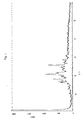
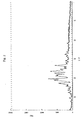
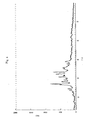
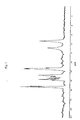
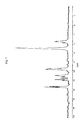
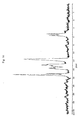
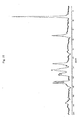
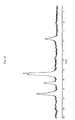
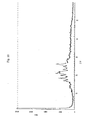
- a molecular compound of the present invention may vary in a ratio of constituent compounds composing it, depending on conditions. It can be confirmed that a substance obtained according to a method mentioned above is surely a molecular compound by such techniques as thermal analysis (TG/DTA), infrared absorption spectra (IR), X-ray diffraction patterns and 13 C-CP/MAS-solid-state NMR spectra. The composition of a molecular compound can be confirmed by thermal analysis, 1 H-NMR spectra, gel permeation chromatography (GPC), high performance liquid chromatography (HPLC), elementary analysis and the like.
- TG/DTA thermal analysis
- IR infrared absorption spectra
- X-ray diffraction patterns X-ray diffraction patterns
- 13 C-CP/MAS-solid-state NMR spectra 13 C-CP/MAS-solid-state NMR spectra.
- the composition of a molecular compound can be confirmed by thermal analysis, 1 H-NMR spectra,
- the molecular compounds of the present invention are preferably used in any form including crystal, liquid crystal, gel, precipitated solid, coacervate, emulsion and liquid. It is however preferable that the compounds are of solid forms, such as crystal, liquid crystal, gel or precipitated solid, from the viewpoint of functions such as basic materials for formulations, waste water treating materials, energy transducers, conductors and bio-model reaction sites and for the purposes of producing stable molecular compounds excellent in moldability and with regular domains and fixed compositions.
- the same molecular compound may be polymorphic. X-ray diffraction patterns are mainly examined to check whether a compound is crystalline.
- a solid structure containing a polymorphic compound can be confirmed by such a means as X-ray diffraction patterns, 13 C-CP/MAS-solid-state NMR spectra, polarization microscope and electron microscope. Intermolecular interactions in a molecular compound can be confirmed using infrared absorption spectra (IR) and 13 C-CP/MAS solid state NMR spectra.
- the method of the present invention for aligning and/or modifying a polymer is characterized in that the conformation and assembly form of a polymer having hydrogen bond sites, that is, a hydrogen bonding polymer, which is one of the components of a molecular compound, is controlled, depending on the characteristics of a tetrakis aryl compound used.
- a polymer composing a molecular compound can take a target structure depends on a form of the hydrogen bond between each tetrakis aryl molecule and the polymer.
- the molecular compound of the present invention is a multi-molecular assembly that a tetrakis aryl compound and a hydrogen bonding polymer are associated via hydrogen bonds.
- a self-associating, low molecular compound having diffusive hydrogen bond sitess is reacted to a hydrogen bonding polymer, direction-specific hydrogen bonds are formed between polymers and at regular intervals in polymer chains so as to make the polymer orientation and organization. Thus it becomes possible to align and modify the hydrogen bonding polymer.
- the polymer chains are aligned and organized and the polymer structure is optimized according to the regular domains formed due to the association among the tetrakis aryl molecules.
- the tetrakis aryl molecule and polymer are regularly aligned and organized alternatively by three-dimensionally developed hydrogen bonds, to form a stable molecular compound.
- TEP 1,1,2,2-tetrakis(4-hydroxyphenyl)ethane
- PEO polyethylene oxide
- EO ethylene oxide
- the molecular compounds of the present invention there are no particular restrictions on how to use the molecular compounds of the present invention.
- two or more types of molecular compounds, each consisting of different constituent compounds can be mixed for use.
- the molecular compounds of the present invention can be used together with other substances, whether inorganic or organic, as long as they do not damage target functions, and can also be used by adding to resins, coatings, and their materials and material compositions.
- the molecular compounds of the present invention can be used as base materials or excipients for the chemical stabilization, non-volatilization, pulverization, granulation and making tablets, of functional substances, or as gelling agents to gel liquid substances.
- the molecular compounds of the present invention can also be used as clathrate compounds containing atoms or molecules.
- a clathrate compound here refers to a substance of which there are holes of appropriate size inside three-dimensional structures formed by atoms or molecules bound and other atoms or molecules are placed inside the holes by means of non-covalent interactions at a fixed composition ratio.
- the molecular compounds of the present invention used as three-dimensional structures having inner holes may be formed from 3 or more constituent compounds. Atoms or molecules to be included inside are not necessarily single ones but two or more.
- the molecular compounds of the present invention can also be used as media to transfer functional substances or as specific reaction sites.
- a tetrakis aryl compound of the said Formula (1) and a hydrogen bonding polymer are reacted according to one of direct mixing, solvent and casting methods in the presence of a pyrethroid type pesticide such as Allethrin; quaternary ammonium salt type bactericide such as benzalkonium chloride or cetyl pyridinium chloride; antimicrobial antimolding agent such as 5-chloro-2-methyl-4-isothiazolin-3-one, 2-methyl-4-isothiazolin-3-one, zinc-2-pyridinethiol-1-oxide, 2,2'-dithiobis(pyridin-N-oxide), 2-bromo-2-nitropropan-1,3-diol or 2,3,3-triiodoallyl alcohol; terpene type perfume such as hinokitiol, cineole, citronellol or geraniol; or metal salt such as lithium perchlorate, sodium iodide, potassium i
- the substance obtained according to the method is surely a molecular compound by such a means as thermal analysis (TG/DTA), infrared absorption spectra (IR), X-ray diffraction patterns and 13 C-CP/MAS solid state NMR spectra.
- TG/DTA thermal analysis
- IR infrared absorption spectra
- X-ray diffraction patterns 13 C-CP/MAS solid state NMR spectra.
- the composition of the molecular compound can be confirmed by thermal analysis, atomic absorption analysis, elementary analysis and the like.
- Molecular compounds such as those mentioned above, are given functions including slow release, reduction of skin irritation, chemical stabilization, non-volatilization, pulverization, ionization and selective separation of useful substances, in addition to the actions that the pesticide, bactericide, antimicrobial antimolding agent, perfume or metal salt has originally. Therefore, the molecular compounds are extremely useful as functional materials with new properties.
- Example 1 Preparation of molecular compounds containing 1,1,2,2-tetrakis(4-hydroxyphenyl)ethane (TEP) and polyethers as constituent compounds (Part 1)
- each molecular compound had direction-specific intermolecular hydrogen bonds and orientating EO chains with rapid exchange between the gauche and trans conformations, from the wagging vibration absorption band of C-H of O-(CH 2 ) 2 -O, which was observed near 1360 cm -1 on the infrared absorption spectra (IR), and the signal of the methylene carbon of -CH 2 -O-CH 2 -, which was observed near 70 ppm on the 13 C-CP/MAS solid state NMR spectra.
- FIGS 1 to 4 show X-ray diffraction patterns of powder of the molecular compounds of TEP-PEG 1,000, TEP-PEG 500,000, TEP-PEGDME 2,000 and TEP-PEGPPO 2,500, respectively. Further, their 13 C-CP/MAS solid state NMR spectra are shown in Figures 5 to 8. For comparison, an X-ray diffraction pattern of TEP powder is shown in Figure 9, and a 13 C-CP/MAS solid state NMR spectrum in Figure 10.
- PEG 1,000, PEG 500,000 and PEGDME 2,000 each have melting points in the range of approximately 30°C and 65°C.
- PEGPPO 2,500 is a viscous liquid at ordinary temperature. As described above, when the molecular compounds of the present invention were formed, the liquid polyether and polyethers with low melting points were aligned and organized so as to become highly resistant to heat, be made stronger and have flexible structures.
- Example 2 Preparation of a molecular compound containing 1,1,2,2-tetrakis(4-hydroxyphenyl)ethane (TEP) and a polyether as constituent compounds (Part 2)
- the molecular compound had direction-specific intermolecular hydrogen bonds and orientating EO chains with rapid exchange between the gauche and trans conformations, from the wagging vibration absorption band of C-H of O-(CH 2 ) 2 -O, which was observed near 1360 cm -1 on the infrared absorption spectra (IR), and the signal of the methylene carbon of -CH 2 -O-CH 2 -, which was observed near 70 ppm on the 13 C-CP/MAS solid state NMR spectra.
- the molecular compound melted in the range of 175°C and 180°C. As described above, when the molecular compound of the present invention was formed, PEG with a low melting point was aligned and organized so as to become highly resistant to heat, be made stronger and have a flexible structure.
- Example 3 Preparation of a molecular compound containing 1,1,2,2-tetrakis(4-hydroxyphenyl)ethane (TEP) and a polyether as constituent compounds (Part 3)
- the molecular compound had direction-specific intermolecular hydrogen bonds and orientating TMO chains with rapid exchange between the gauche and trans conformations, from the wagging vibration absorption band of C-H of O-(CH 2 ) 4 -O, which was observed near 1360 cm -1 on the infrared absorption spectra (IR), and the signal of the methylene carbon of -CH 2 -O-CH 2 -, which was observed near 70 ppm on the 13 C-CP/MAS solid state NMR spectra.
- the molecular compound melted in the range of 278°C and 297°C.
- PTMO with a low melting point was aligned and organized so as to become highly resistant to heat, be made stronger and have a flexible structure.
- Example 4 Preparation of a molecular compound containing 1,1,2,2-tetrakis(4-hydroxyphenyl)ethane (TEP) and a polyether as constituent compounds (Part 4)
- the cast film had direction-specific intermolecular hydrogen bonds and orientating EO chains with rapid exchange between the gauche and trans conformations, from the wagging vibration absorption band of C-H of O-(CH 2 ) 2 -O, which was observed near 1360 cm -1 on the infrared absorption spectra (IR), and the signal of the methylene carbon of -CH 2 -O-CH 2 -, which was observed near 70 ppm on the 13 C-CP/MAS solid state NMR spectra.
- the molecular compound melted in the range of 140°C and 180°C. As described above, when the molecular compound of the present invention was formed, PEG with a low melting point was aligned and organized to make film, and became highly resistant to heat, was made stronger and had a flexible structure.
- Example 5 Preparation of a molecular compound containing 1,1,2,2-tetrakis(4-hydroxyphenyl)ethane (TEP) and a polyamine as constituent compounds
- Example 6 Preparation of a molecular compound containing 1,1,2,2-tetrakis(3-methyl-4-hydroxyphenyl)ethane (TEOC) and a polyether as constituent compounds
- TEOC 1,1,2,2-tetrakis(3-methyl-4-hydroxyphenyl)ethane
- each molecular compound had direction-specific intermolecular hydrogen bonds and orientating EO chains with rapid exchange between the gauche and trans conformations, from the wagging vibration absorption band of C-H of O-(CH 2 ) 2 -O, which was observed near 1360 cm -1 on the infrared absorption spectra (IR), and the signal of the methylene carbon of -CH 2 -O-CH 2 -, which was observed near 70 ppm on the 13 C-CP/MAS solid state NMR spectra.
- Example 7 Preparation of a molecular compound containing 1,1,2,2-tetrakis(4-carboxyphenyl)ethane (TEPCOOH) and a polyvinyl heterocyclic compound as constituent compounds
- the molecular compound had orientating ethylene chains with intermolecular hydrogen bonds between the carboxyl group of TEPCOOH and the pyridyl group of PVP, from the stretching band of -OH of the carboxyl group, which was observed near 3420 cm -1 on the infrared absorption spectra (IR), and the signal of the methylene carbon of -CH 2 -CH 2 -, which was observed near 40 ppm on the 13 C-CP/MAS solid state NMR spectra.
- Example 8 Preparation of a molecular compound containing 1,1,2,2-tetrakis(4-hydroxyphenyl)ethane (TEP), a polyether and a pesticide as constituent compounds
- the molecular compound had orientating EO chains with direction-specific intermolecular hydrogen bonds, from the stretching band of O-(CH 2 ) 2 -O, which was observed near 1360 cm -1 on the infrared absorption spectra (IR), and the signal of the methylene carbon of -CH 2 -O-CH 2 -, which was observed near 70 ppm on the 13 C-CP/MAS solid state NMR spectra.
- the molecular compound melted and released Allethrin in the range of 140°C and 151°C.
- An X-ray diffraction pattern of powder of the molecular compound is shown in Figure 20.
- a 13 C-CP/MAS solid state NMR spectrum is shown in Figure 21.
- Example 9 Preparation of a molecular compound containing 1,1,2,2-tetrakis(4-hydroxyphenyl)ethane (TEP), a polyether and a bactericide as constituent compounds
- the molecular compound had orientating EO chains with direction-specific intermolecular hydrogen bonds, from the wagging vibration absorption band of C-H of O-(CH 2 ) 2 -O, which was observed near 1360 cm -1 on the infrared absorption spectra (IR), and the signal of the methylene carbon of -CH 2 -O-CH 2 -, which was observed near 70 ppm on the 13 C-CP/MAS solid state NMR spectra.
- the molecular compound melted in the range of 222°C and 254°C.
- An X-ray diffraction pattern of powder of the molecular compound is shown in Figure 22.
- a 13 C-CP/MAS solid state NMR spectrum is shown in Figure 23.
- PEG was aligned and organized so that M 2 -100, which has a low melting point and is irritating, was pulverized and made highly resistant to heat.
- Example 10 Preparation of a molecular compound containing 1,1,2,2-tetrakis(4-hydroxyphenyl)ethane (TEP), a polyether and a metal salt as constituent compounds
- the cast film had orientating EO chains with direction-specific intermolecular hydrogen bonds, from the wagging vibration absorption band of C-H of O-(CH 2 ) 2 -O, which was observed near 1360 cm -1 on the infrared absorption spectra (IR), and the signal of the methylene carbon of -CH 2 -O-CH 2 -, which was observed near 70 ppm on the 13 C-CP/MAS solid state NMR spectra.
- the molecular compound melted in the range of 140°C and 180°C.
- An X-ray diffraction pattern of powder of the molecular compound is shown in Figure 24.
- PEG was aligned and organized so that lithium perchlorate, which is very hygroscopic, was made film, became highly resistant to heat and had a flexible structure.
- the molecular compounds of the present invention are the multi-molecular assemblies that self-associating compounds having diffusive hydrogen bond sites are associated with hydrogen bonding polymers via hydrogen bonds, and can be produced by simple operations. Besides, interaction points and forces in molecular assemblies are fixed as well as controlled to give functions, such as alignment and modification of constituent polymers. According to the present invention, it is possible to make various substances chemically stable, nonvolatile, slow-released, pulverized, ionized and included. Their expected applications are in the fields of functional materials having nano-organized structures, slow-release functional formulations, control of catalyst activities, selective separations and recoveries.
- the molecular compounds of the present invention can be used together with a variety of substances, whether inorganic or organic, and can be preferably used in any form including crystal, liquid crystal, gel, precipitated solid, coacervate, emulsion and liquid. Furthermore, the molecular compounds of the present invention can be applied widely to various materials provided as composite materials for industrial or biomedical uses, such as base materials for formulations, recycling base materials, waste water treating agents, energy transducers, conductors, reaction catalysts, artificial enzymes and artificial cells. Therefore, the present invention is applicable to a wide range of fields including information-recording materials, electric and electronic magnetic materials, optical functional materials, membranes, environment-adaptable materials and biomedical materials. This is an invention of great significance in industry.
Landscapes
- Chemical & Material Sciences (AREA)
- Health & Medical Sciences (AREA)
- Chemical Kinetics & Catalysis (AREA)
- Medicinal Chemistry (AREA)
- Polymers & Plastics (AREA)
- Organic Chemistry (AREA)
- Compositions Of Macromolecular Compounds (AREA)
- Organic Low-Molecular-Weight Compounds And Preparation Thereof (AREA)
Abstract
Description
- The present invention relates to novel molecular compounds. In more detail, it relates to molecular compounds consisting of self-associating compounds with 4 or more diffusive hydrogen bond sites and polymers having hydrogen bond sites, and to methods for aligning and modifying polymers having hydrogen bond sites, with the self -associating compounds with 4 or more diffusive hydrogen bond sites.
- Molecular compounds are molecular assemblies that two or more compounds are bound through relatively weak interactions, other than covalent bonds, represented by hydrogen bonds or van der Waals forces. Molecular compounds containing polymers as constituent compounds are expected to have polymer effects in addition to molecular alignment controls due to intermolecular interactions. Because of this, the molecular compounds have attracted attentions in recent years as a technique for constructing composite materials called composites, polymer alloys or hybrids. Higher functions given when forming composite are closely related to molecular alignment controls of polymers in polymer assemblies. For example, biomolecules are often involved in expressing functions by becoming composite with or assembling with other molecules, rather than functioning alone. Another example is that, as seen in nucleic acids, a assembly itself plays important roles in expressing higher functions in many cases. As described above, phenomena of polymer assemblies not only are mere interests as materials but also are expected as fields with potentials beyond our present common knowledge, such as retaining and transferring information and formation of specific sites.
- Polymer assemblies are formed based on weak, secondary, non-covalent bonding forces working between chains or in a chain, such as Coulomb forces, hydrogen bonding forces, hydrophobic bonding forces, charge transfer bonding forces and van der Waals forces. In particular, assemblies based on hydrogen bonds, which are direction-specific interactions, are expected to be a promising technique to promote highly functional materials by means of forming composites, thanks to the relationship between molecular alignment controls and functions, which has attracted attention in recent years.
- A concrete example of polymer assemblies is a complex between polymers. For example, a polymer assembly of polymethacrylic acid and poly(N-vinylpyrolidone) via cooperative hydrogen bonds is known to have very interesting physico-chemical and dynamic properties that are completely different from those of constituent polymers [Makromol. Chem., Rapid Commun., Vol. 1, Page 591 (1980)]. A assembly of polymethacrylic acid and polyethylene glycol, formed via a similar interaction, has been reported to be a mechanochemical system having a deforming function responding to the environment, which is not found in the constituent polymers [Makromol. Chem., Vol. 176, Page 2761 (1975)].
- Such assemblies based on complexes between polymers exist in various forms ranging from very regular shapes such as polymer crystals, polymer liquid crystals or regular higher-order structures composed of assembled sub-units found in certain types of biomolecules, to irregular ones found in phase separation phenomena, such as precipitate, gel, coacervate and emulsion.
- An effect of a molecular compound containing polymers as constituent compounds comes from the large molecular weights and multi-functionality of polymers: Interactions, separations and cooperative actions, based on functional groups arranged freely in space, are exemplified as polymer effects. However, it is difficult to fix interaction points and to control interaction forces among polymers of which many functional groups exist densely on a single, flexible chain. Therefore it is not satisfactory with respect to stably producing molecular compounds with fixed compositions and structures.
- A complex between a low molecule and a polymer, utilizing interactions with the low molecule is known as a method for controlling the chain structure of the constituent polymer. This method using low molecules, which are easily designed and handled, can easily create a large variety of structures relating to expressing functions, and has attracted attention as a method for aligning and modifying a polymer, in such a way that the constituent polymer is crystallized, made to have a higher melting point or made insoluble due to pseudo crosslinking. Almost no compositions are known to be widely used in general and be good for practical use in terms of industrial and basic materials. Only a few examples have been disclosed, including, as those based on van der Waals forces, complexes containing polyethylene oxide and urea as constituent compounds [J. Polym. Sci., B, Vol. 2, Page 363 (1964)], those containing polyethylene and urea as constituent compounds [J. Macromol. Sci. Phys., Vol. 8, Page 277 (1973)], those containing syndiotactic polystyrene and benzene, and an aromatic hydrocarbon such as toluene or iodine or carbon tetrachloride, as constituent compounds [Polymer, Vol. 34, No. 23, Page 4841 (1993)], and crystalline molecular compounds containing polyethylene oxide and p-dihalogenobenzenes as constituent compounds [Polymer Communications, Vol. 32, No. 15, Page 477 (1991)]; and, as those based on hydrogen bonds, those containing polyethylene imine and water as constituent compounds [Macromolecule, Vol. 14, Page 315 (1981)], those containing polyethylene oxide and hydroquinone, resorucinol or p-nitrophenol as constituent compounds [Macromol. Symp., Vol. 114, Page 51 (1997)] and crystalline molecular compounds containing poly(N-vinylpyrolidone) and 3,5-dihydroxybenzoic acid [Supramolecular Science, Vol. 2, Page 41 (1995)].
- Functions of the polymer assemblies based on the complexes between low molecules and polymers are determined depending on how the low molecules coordinate to the polymers. It becomes therefore very important to control association forms between low molecules and polymers when polymer assemblies are designed and manufactured. It is however difficult to produce polymer assemblies with fixed compositions and structures selectively and stably, because known complexes between low molecules and polymers, based on van der Waals forces are weakly direction-specific in molecular associations. In known complexes between low molecules and polymers, based on hydrogen bonds, constituent polymers applicable with low molecules are very restricted. Besides, functional groups in low molecules, which rule hydrogen bonds, are not arranged properly in terms of directions in the actions. Functions supposed from hydrogen-bonding associations between low molecules and polymers have not been expressed satisfactorily.
- In recent years, polymer assemblies based on complexes between low molecules and polymers have attracted attention particularly with respect to functionalities in formulations, waste water treatments, energy transducers, conductors, bio-model reactions and the like. There is only a very little information on roles played by low molecules as well as on solid structures. Compositions that are very satisfactory from the viewpoint of industrially valuable materials have not been found yet.
- It is an object of the present invention to provide molecular compounds useful in the fields of state-of-the-art materials, such as formulations, waste water treatments, energy transducers, conductors and bio-model reactions, in a way that interaction points and forces working inside polymer assemblies are fixed and further controlled so that constituent polymers are aligned and modified. It is also an object of the present invention to provide methods for aligning and/or modifying polymers having hydrogen bond sites.
- To solve the above problems, the inventors have studied in earnest, and found that it was easy and efficient to control the molecular alignment of hydrogen bonding polymers and modify the polymers, which are very important for building composite materials, if diffusive hydrogen bonds are present between molecules in polymer assemblies. Factors controlling the diffusive hydrogen bonds between molecules were studies in detail. As a result, it was found that self-associating compounds having 4 or more diffusive hydrogen bond sites formed, with a wide range of hydrogen bonding polymers, stable molecular compounds that were excellent in moldability and had regular domains, and that the obtained molecular compounds had excellent properties useful in the fields of state-of-the-art materials such as formulations, waste water treatments, energy transducers, conductors and bio-model reactions. Thus the present invention has been completed.
- The present invention relates to a molecular compound consisting of a self-associating compound with 4 or more diffusive hydrogen bond sites and a polymer having hydrogen bond sites (Claim 1); a molecular compound according to
Claim 1 in which the self-associating compound with 4 or more diffusive hydrogen bond sites is a tetrakis aryl compound represented by Formula (1) [wherein, X is (CH2)n or p-phenylene; n is 0, 1, 2 or 3; Y is hydroxyl, carboxyl or optionally substituted amino; and R1 and R2 are each hydrogen, lower alkyl, optionally substituted phenyl, halogen or lower alkoxy] (Claim2); and a molecular compound according toClaim 1 or 2 in which the polymer having hydrogen bond sites is one or more polymers selected from the group consisting of polyethers, polyalcohols, polyamines, polyphenols, polyacrylic acids, polyvinyl ethers, polyvinyl ketones, polyvinyl heterocyclic compounds, polycarboxylic acid vinyls, polysaccharides and polyamino acids (Claim 3).
- The present invention also relates to a method for aligning and/or modifying a polymer having hydrogen bond sites with a self-associating compound with 4 or more diffusive hydrogen bond sites (Claim 4); a method for the alignment and/or modification according to Claim 4 in which the self-associating compound with 4 or more diffusive hydrogen bond sites is a tetrakis aryl compound represented by Formula (1) (Claim 5); and a method for the alignment and/or modification according to Claim 4 or 5 in which the polymer having hydrogen bond sites is one or more polymers selected from the group consisting of polyethers, polyalcohols, polyamines, polyphenols, polyacrylic acids, polyvinyl ethers, polyvinyl ketones, polyvinyl carboxylic asids, polyvinyl heterocyclic compounds, polycarboxylic acid vinyls, polysaccharides and polyamino acids (Claim 6).

- The molecular compounds of the present invention are a compound that two or more constituent compounds able to exist stably on their own and containing one or more polymers are bound via hydrogen bonds. Examples of the compound include hydrates, solvates, adducts, clathrate compounds, molecular composites, polymer blends and polymer alloys.
- Furthermore, the molecular compounds of the present invention are usually crystalline solids, and may be amorphous or oily, or sometimes polymorphic. They exist in various forms, such as liquid crystal, gel, coacervate and emulsion. Regardless of these forms, any molecular compounds containing self-associating compounds with 4 or more diffusive hydrogen bond sites and polymers having hydrogen bond sites as constituent compounds are all covered by the present invention.
- In a tetrakis aryl compound represented by Formula (1) of the present invention, X is (CH2)n or p-phenylene; n is 0, 1, 2 or 3; Y is hydroxyl, carboxyl or optionally substituted amino; and R1 and R2 are each hydrogen, lower alkyl, optionally substituted phenyl, halogen or lower alkoxy. There are no restrictions on tetrakis aryl compounds of the present invention if the compounds have 4 or more hydrogen bonding functional groups in the molecules, are of diffusive type that the functional groups can self-associate between molecules, and can form molecular compounds with polymers having hydrogen bond sites. One or more appropriate compounds can be selected for use.
- Examples of tetrakis aryl compounds used in the present invention include 1,1,2,2-tetrakis(4-hydroxyphenyl)ethane, 1,1,2,2-tetrakis(3-methyl-4-hydroxyphenyl)ethane, 1,1,2,2-tetrakis(3,5-dimethyl-4-hydroxyphenyl)ethane, 1,1,2,2-tetrakis(3-chloro-4-hydroxyphenyl)ethane, 1,1,2,2-tetrakis(3,5-dichloro-4-hydroxyphenyl)ethane, 1,1,2,2-tetrakis(3-bromo-4-hydroxyphenyl)ethane, 1,1,2,2-tetrakis(3,5-dibromo-4-hydroxyphenyl)ethane, 1,1,2,2-tetrakis(3-t-butyl-4-hydroxyphenyl)ethane, 1,1,2,2-tetrakis(3,5-di-t-butyl-4-hydroxyphenyl)ethane, 1,1,2,2-tetrakis(3-fluoro-4-hydroxyphenyl)ethane, 1,1,2,2-tetrakis(3,5-difluoro-4-hydroxyphenyl)ethane, 1,1,2,2-tetrakis(3-methoxy-4-hydroxyphenyl)ethane, 1,1,2,2-tetrakis(3,5-dimethoxy-4-hydroxyphenyl)ethane, 1,1,2,2-tetrakis(3-phenyl-4-hydroxyphenyl)ethane, 1,1,2,2-tetrakis(3,5-diphenyl-4-hydroxyphenyl)ethane, 1,1,2,2-tetrakis(3-fluoro-5-methyl-4-hydroxyphenyl)ethane, 1,1,2,2-tetrakis(3-chloro-5-methyl-4-hydroxyphenyl)ethane, 1,1,2,2-tetrakis(3-bromo-5-methyl-4-hydroxyphenyl)ethane, 1,1,2,2-tetrakis(3-methoxy-5-methyl-4-hydroxyphenyl)ethane, 1,1,2,2-tetrakis(3-t-butyl-5-methyl-4-hydroxyphenyl)ethane, 1,1,2,2-tetrakis(3-phenyl-5-methyl-4-hydroxyphenyl)ethane, 1,1,2,2-tetrakis(3-chloro-5-bromo-4-hydroxyphenyl)ethane and 1,1,2,2-tetrakis(3-chloro-5-phenyl-4-hydroxyphenyl)ethane.
- Examples of tetrakis aryl compounds used in the present invention also include 1,1,3,3-tetrakis(4-hydroxyphenyl)propane, 1,1,3,3-tetrakis(3-methyl-4-hydroxyphenyl)propane, 1,1,3,3-tetrakis(3,5-dimethyl-4-hydroxyphenyl)propane, 1,1,3,3-tetrakis(3-chloro-4-hydroxyphenyl)propane, 1,1,3,3-tetrakis(3,5-dichloro-4-hydroxyphenyl)propane, 1,1,3,3-tetrakis(3-bromo-4-hydroxyphenyl)propane, 1,1,3,3-tetrakis(3,5-dibromo-4-hydroxyphenyl)propane, 1,1,3,3-tetrakis(3-phenyl-4-hydroxyphenyl)propane, 1,1,3,3-tetrakis(3,5-diphenyl-4-hydroxyphenyl)propane, 1,1,3,3-tetrakis(3-methoxy-4-hydroxyphenyl)propane, 1,1,3,3-tetrakis(3,5-dimethoxy-4-hydroxyphenyl)propane, 1,1,3,3-tetrakis(3-t-butyl-4-hydroxyphenyl)propane, and 1,1,3,3-tetrakis(3,5-di-t-butyl-4-hydroxyphenyl)propane.
- Examples of tetrakis aryl compounds used in the present invention also include 1,1,4,4-tetrakis(4-hydroxyphenyl)butane, 1,1,4,4-tetrakis(3-methyl-4-hydroxyphenyl)butane, 1,1,4,4-tetrakis(3,5-dimethyl-4-hydroxyphenyl)butane, 1,1,4,4-tetrakis(3-chloro-4-hydroxyphenyl)butane, 1,1,4,4-tetrakis(3,5-dichloro-4-hydroxyphenyl)butane, 1,1,4,4-tetrakis(3-methoxy-4-hydroxyphenyl)butane, 1,1,4,4-tetrakis(3,5-dimethoxy-4-hydroxyphenyl)butane, 1,1,4,4-tetrakis(3-bromo-4-hydroxyphenyl)butane, 1,1,4,4-tetrakis(3,5-dibromo-4-hydroxyphenyl)butane, 1,1,4,4-tetrakis(3-t-butyl-4-hydroxyphenyl)butane, and 1,1,4,4-tetrakis(3,5-t-butyl-4-hydroxyphenyl)butane.
- Examples of tetrakis aryl compounds used in the present invention also include 1,1,5,5-tetrakis(4-hydroxyphenyl)pentane, 1,1,5,5-tetrakis(3-methyl-4-hydroxyphenyl)pentane, 1,1,5,5-tetrakis(3,5-dimethyl-4-hydroxyphenyl)pentane, 1,1,5,5-tetrakis(3-chloro-4-hydroxyphenyl)pentane, 1,1,5,5-tetrakis(3,5-dichloro-4-hydroxyphenyl)pentane, 1,1,5,5-tetrakis(3-methoxy-4-hydroxyphenyl)pentane, 1,1,5,5-tetrakis(3,5-dimethoxy-4-hydroxyphenyl)pentane, 1,1,5,5-tetrakis(3-bromo-4-hydroxyphenyl)pentane, 1,1,5,5-tetrakis(3,5-dibromo-4-hydroxyphenyl)pentane, 1,1,5,5-tetrakis(3-t-butyl-4-hydroxyphenyl)pentane, and 1,1,5,5-tetrakis(3,5-di-t-butyl-4-hydroxyphenyl)pentane.
- Examples of tetrakis aryl compounds used in the present invention also include α,α,α',α'-tetrakis(4-hydroxyphenyl)-p-xylene, α,α,α',α'-tetrakis(3-methyl-4-hydroxyphenyl)-p-xylene, α,α,α',α'-tetrakis(3,5-dimethyl-4-hydroxyphenyl)-p-ethane, α,α,α',α'-tetrakis(3-chloro-4-hydroxyphenyl)-p-xylene, α,α,α',α'-tetrakis(3,5-dichloro-4-hydroxyphenyl)-p-xylene, α,α,α',α'-tetrakis(3-bromo-4-hydroxyphenyl)-p-xylene, α,α,α',α'-tetrakis(3,5-dibromo-4-hydroxyphenyl)-p-xylene, α,α,α',α'-tetrakis(3-t-butyl-4-hydroxyphenyl)-p-xylene, α,α,α',α' (3,5-di-t-butyl-4-hydroxyphenyl)-p-xylene, α,α,α',α'-tetrakis(3-fluoro-4-hydroxyphenyl)-p-xylene, α,α,α',α'-tetrakis(3,5-difluoro-4-hydroxyphenyl)-p-xylene, α,α,α',α'-tetrakis(3-methoxy-4-hydroxyphenyl)-p-xylene, α,α,α',α'-tetrakis(3,5-dimethoxy-4-hydroxyphenyl)-p-xylene, α,α,α',α'-tetrakis(3-phenyl-4-hydroxyphenyl)-p-xylene, α,α,α',α'-tetrakis(3,5-diphenyl-4-hydroxyphenyl)-p-xylene, α,α,α',α'-tetrakis(3-fluoro-5-methyl-4-hydroxyphenyl)-p-xylene, α,α,α',α'-tetrakis(3-chloro-5-methyl-4-hydroxyphenyl)-p-xylene, α,α,α',α'-tetrakis(3-bromo-5-methyl-4-hydroxyphenyl)-p-xylene, α,α,α',α'-tetrakis(3-methoxy-5-methyl-4-hydroxyphenyl)-p-xylene, α,α,α',α'-tetrakis(3-t-butyl-5-methyl-4-hydroxyphenyl)-p-xylene, α,α,α',α'-tetrakis(3-chloro-5-bromo-4-hydroxyphenyl)-p-xylene and α,α,α',α'-tetrakis(3-chloro-5-phenyl-4-hydroxyphenyl)-p-xylene.
- Examples of tetrakis aryl compounds used in the present invention also include 1,1,2,2-tetrakis(4-carboxyphenyl)ethane, 1,1,2,2-tetrakis(3-methyl-4-carboxyphenyl)ethane, 1,1,2,2-tetrakis(3,5-dimethyl-4-carboxyphenyl)ethane, 1,1,2,2-tetrakis(3-chloro-4-carboxyphenyl)ethane, 1,1,2,2-tetrakis(3,5-dichloro-4-carboxyphenyl)ethane, 1,1,2,2-tetrakis(3-bromo-4-carboxyphenyl)ethane, 1,1,2,2-tetrakis(3,5-dibromo-4-carboxyphenyl)ethane, 1,1,2,2-tetrakis(3-t-butyl-4-carboxyphenyl)ethane, 1,1,2,2-tetrakis(3,5-di-t-butyl-4-carboxyphenyl)ethane, 1,1,2,2-tetrakis(3-fluoro-4-carboxyphenyl)ethane, 1,1,2,2-tetrakis(3,5-difluoro-4-carboxyphenyl)ethane, 1,1,2,2-tetrakis(3-methoxy-4-carboxyphenyl)ethane, 1,1,2,2-tetrakis(3,5-dimethoxy-4-carboxyphenyl)ethane, 1,1,2,2-tetrakis(3-phenyl-4-carboxyphenyl)ethane, 1,1,2,2-tetrakis(3,5-diphenyl-4-carboxyphenyl)ethane, 1,1,2,2-tetrakis(3-fluoro-5-methyl-4-carboxyphenyl)ethane, 1,1,2,2-tetrakis(3-chloro-5-methyl-4-carboxyphenyl)ethane, 1,1,2,2-tetrakis(3-bromo-5-methyl-4-carboxyphenyl)ethane, 1,1,2,2-tetrakis(3-methoxy-5-methyl-4-carboxyphenyl)ethane, 1,1,2,2-tetrakis(3-t-butyl-5-methyl-4-carboxyphenyl)ethane, 1,1,2,2-tetrakis(3-phenyl-5-methyl-4-carboxyphenyl)ethane, 1,1,2,2-tetrakis(3-chloro-5-bromo-4-carboxyphenyl)ethane, 1,1,2,2-tetrakis(3-chloro-5-phenyl-4-carboxyphenyl)ethane, 1,1,2,2-tetrakis(4-aminophenyl)ethane, 1,1,2,2-tetrakis(3-methyl-4-aminophenyl)ethane, 1,1,2,2-tetrakis(3,5-dimethyl-4-aminophenyl)ethane, 1,1,2,2-tetrakis(3-chloro-4-aminophenyl)ethane, 1,1,2,2-tetrakis(3,5-dichloro-4-aminophenyl)ethane, 1,1,2,2-tetrakis(3-bromo-4-aminophenyl)ethane, 1,1,2,2-tetrakis(3,5-dibromo-4-aminophenyl)ethane, 1,1,2,2-tetrakis(3-t-butyl-4-aminophenyl)ethane, 1,1,2,2-tetrakis(3,5-di-t-butyl-4-aminophenyl)ethane, 1,1,2,2-tetrakis(3-fluoro-4-aminophenyl)ethane, 1,1,2,2-tetrakis(3,5-difluoro-4-aminophenyl)ethane, 1,1,2,2-tetrakis(3-methoxy-4-aminophenyl)ethane, 1,1,2,2-tetrakis(3,5-dimethoxy-4-aminophenyl)ethane, 1,1,2,2-tetrakis(3-phenyl-4-aminophenyl)ethane, 1,1,2,2-tetrakis(3,5-diphenyl-4-aminophenyl)ethane, 1,1,2,2-tetrakis(3-fluoro-5-methyl-4-aminophenyl)ethane, 1,1,2,2-tetrakis(3-chloro-5-methyl-4-aminophenyl)ethane, 1,1,2,2-tetrakis(3-bromo-5-methyl-4-aminophenyl)ethane, 1,1,2,2-tetrakis(3-methoxy-5-methyl-4-aminophenyl)ethane, 1,1,2,2-tetrakis(3-t-butyl-5-methyl-4-aminophenyl)ethane, 1,1,2,2-tetrakis(3-phenyl-5-methyl-4-aminophenyl)ethane, 1,1,2,2-tetrakis(3-chloro-5-bromo-4-aminophenyl)ethane and 1,1,2,2-tetrakis(3-chloro-5-phenyl-4-aminophenyl)ethane.
- Of the above tetrakis aryl compounds represented by Formula (1) and used in the present invention, 1,1,2,2-tetrakis(4-hydroxyphenyl)ethane, 1,1,2,2-tetrakis(3-methyl-4-hydroxyphenyl)ethane, 1,1,4,4-tetrakis(4-hydroxyphenyl)butane, 1,1,5,5-tetrakis(4-hydroxyphenyl)pentane, 1,1,2,2-tetrakis(4-carboxyphenyl)ethane and 1,1,2,2-tetrakis(4-aminophenyl)ethane are particularly preferred from the viewpoint of performances such as molecular alignment, chemical stabilization and modification of the polymers having hydrogen bond sites.
- The tetrakis aryl compounds of the present invention are usually crystalline solids, and may be amorphous or oily, or sometimes polymorphic. Regardless of these forms, the tetrakis aryl derivatives of Formula (1) are all covered by the present invention.
- As for a polymer having hydrogen bond sites and used in the present invention, one or more appropriate polymers can be selected for use from known polymers having hydrogen bond sites and that can be classified into any of polyethers, polyalcohols, polyamines, polyphenols, polyacrylic acids, polyvinyl ethers, polyvinyl ketones, polyvinyl heterocyclic compounds, polycarboxylic acid vinyls, polysaccharides and polyamino acids. There are no particular restrictions on the polymers having hydrogen bond sites if they form molecular compounds with tetrakis aryl compounds represented by the said Formula (1) and used in the present invention, whether they are single polymers or copolymers. Examples of such polymers are described in the following:
- Polyethers include polyoxymethylene, polyacetal, polyethylene oxide, polyethylene glycol, polybutylene glycol, polytetramethylene oxide, polyoxymethylene alkyl ethers, polyoxyethylene alkyl ethers, polyoxyethylene alkyphenyl ethers, polyethylene glycol fatty acid esters, polyoxyethylene castor oil, polyoxyethylene hardened castor oil, polyoxyethylene alkylamines, polyoxyethylene fatty acid amides, polyoxyethylene alkylphenylformamide condensates, polyethylene glycol dialkyl ethers, polyethylene glycol dilaurate, polyoxyethylene glycol dioleate, polyethylene glycol distearate, polyethylene glycol diacrylate, polyethylene glycol dimethacrylate, polyethylene glycol dibenzoate, polyethylene glycol diglycidyl ether, polyethylene glycol divinyl ether, polyethylene glycol-n-alkylsulfopropyl ethers, polyethylene glycol biphenyl ether methacrylate, polyethylene glycol bisaminopropylterminate, polyethylene glycol bis(carboxymethyl) ether, polyethylene glycol bisethylhexanoate, polypropylene oxide, polypropylene glycol, polypropylene glycol monoalkyl ethers, polypropylene glycol dialkyl ethers, polypropylene glycol fatty acid esters, polypropylene glycol acrylate, polypropylene glycol diacrylate, polyethylene glycol dibenzoate, polyethylene glycol diglycidyl ether, oxyethylene glycol-oxypropylene glycol copolymers, oxyethylene glycol-oxypropylene glycol copolymers, oxyethylene-oxypropylene glycol copolymers, oxyethylene-oxypropylene alkyl ether copolymers, polyether rubber, crown ethers and polymers substituted with crown ethers.
- Polyalcohols include polyvinyl alcohol and vinyl alcohol-vinyl pyrolidone copolymers. Polyamines include polyethylene imine, poly(N-acetylethylene imine), poly(N-fonnylethylene imine), polyvinyl amine and poly(N,N-dimethyl-N',N',N",N"-tetramethylene phosphoramide). Polyphenols include polyvinyl phenol, polyphenol imine diethanol isophthalate and phenolformaldehyde resins. Polyacrylic acids include polyacrylic acid, polymethacrylic acid, polyitaconic acid, polymethyl methacrylate, polymethyl methacrylate, polyacrylamide, polydimethylaminoethyl methacrylate, polyhydroxyethyl acrylate, poly(N-hydroxymethylacrylamide), poly(N-hydroxyethylacrylamide), poly(N-iso-propylacrylamide), polyglycidyl methacrylate, polymethoxypolyethylene glycol monomethacrylate and poly(diethoxy-n-methylitaconate).
- Polyvinyl ethers include polyvinyl methyl ether, polyvinyl ethyl ether, polyvinyl-iso-butyl ether, polyvinyl acetal, polyvinyl butylal, polyvinyl formal and polyethoxy-ethoxy-ethoxy-vinyl ether. Polyvinyl ketones include polyvinyl methyl ketone and polyvinyl phenyl ketone. Polyvinyl heterocyclic compounds include polyvinyl pyrolidone, polyvinyl pyridine, polyvinyl piperazine, polyvinyl imidazole, polyvinyl imidazoline, polyvinyl carbazole, polyvinyl adenine and polyvinyl cytosine. Polycarboxylic acid vinyls include polyvinyl acetate, polyvinyl cinnamate and maleic anhydrate-vinyl acetate copolymers. Polysaccharides include starch, amylose, cycloamylose, amiropectin, cellulose, alginic acid, glycogen, chitin and hyaluronic acid. Polyamino acids include polyglycine, polyserine, polylysine, oxytocin and polyglutamic acid.
- A polymer used in the present invention is a compound consisting of molecules that a large number of one type or several types of constituent units are mutually combined via chemical bonds. In more detail, it refers to a compound that the number of the constituent units does not affect the properties of the molecules. There are no particular restrictions on the molecular weight of a polymer used in the present invention if the polymer forms a molecular compound with a tetrakis aryl compound of the said Formula (1). Polymers having molecular weights particularly in the range of 200 to 2,000,000 are preferably used from the viewpoint of forming direction-specific hydrogen bonds and performances such as organization, chemical stabilization and modification due to the formation.
- A molecular compound of the present invention may be produced in a way that a tetrakis aryl compound of the said Formula (1) and a polymer having hydrogen bond sites and forming a molecular compound, such as those described above, are directly mixed or are mixed in water or organic solvents, or by a casting method in which the two compounds are mixed in water or organic solvents followed by gradual evaporation of the solvents. It is possible to produce a molecular compound consisting of multiple constituents of 3 or more by reacting 2 or more types of polymers with a tetrakis aryl compound. It is also possible to produce a target molecular compound by that a molecular compound consisting of a tetrakis aryl derivative and a specific polymer having hydrogen bond sites is first formed, and then the obtained molecular compound is reacted with another polymer having hydrogen bond sites according to a method mentioned above. Furthermore, a molecular compound containing ions, molecules or the like as third components can be produced in a way that ions, molecules or the like are additionally added as third components to a tetrakis aryl derivative and a polymer having hydrogen bond sites and are reacted according to such methods as those mentioned above.
- A molecular compound of the present invention may vary in a ratio of constituent compounds composing it, depending on conditions. It can be confirmed that a substance obtained according to a method mentioned above is surely a molecular compound by such techniques as thermal analysis (TG/DTA), infrared absorption spectra (IR), X-ray diffraction patterns and 13C-CP/MAS-solid-state NMR spectra. The composition of a molecular compound can be confirmed by thermal analysis, 1H-NMR spectra, gel permeation chromatography (GPC), high performance liquid chromatography (HPLC), elementary analysis and the like.
- The molecular compounds of the present invention are preferably used in any form including crystal, liquid crystal, gel, precipitated solid, coacervate, emulsion and liquid. It is however preferable that the compounds are of solid forms, such as crystal, liquid crystal, gel or precipitated solid, from the viewpoint of functions such as basic materials for formulations, waste water treating materials, energy transducers, conductors and bio-model reaction sites and for the purposes of producing stable molecular compounds excellent in moldability and with regular domains and fixed compositions. When crystalline, the same molecular compound may be polymorphic. X-ray diffraction patterns are mainly examined to check whether a compound is crystalline. A solid structure containing a polymorphic compound can be confirmed by such a means as X-ray diffraction patterns, 13C-CP/MAS-solid-state NMR spectra, polarization microscope and electron microscope. Intermolecular interactions in a molecular compound can be confirmed using infrared absorption spectra (IR) and 13C-CP/MAS solid state NMR spectra.
- The method of the present invention for aligning and/or modifying a polymer is characterized in that the conformation and assembly form of a polymer having hydrogen bond sites, that is, a hydrogen bonding polymer, which is one of the components of a molecular compound, is controlled, depending on the characteristics of a tetrakis aryl compound used. In the methods of the present invention for aligning and/or modifying polymers, whether a polymer composing a molecular compound can take a target structure depends on a form of the hydrogen bond between each tetrakis aryl molecule and the polymer. In other words, the molecular compound of the present invention is a multi-molecular assembly that a tetrakis aryl compound and a hydrogen bonding polymer are associated via hydrogen bonds. When a self-associating, low molecular compound having diffusive hydrogen bond sties is reacted to a hydrogen bonding polymer, direction-specific hydrogen bonds are formed between polymers and at regular intervals in polymer chains so as to make the polymer orientation and organization. Thus it becomes possible to align and modify the hydrogen bonding polymer.
- For example, when a tetrakis aryl compound working only as a proton donor to a hydrogen bonding polymer is used, the polymer chains are aligned and organized and the polymer structure is optimized according to the regular domains formed due to the association among the tetrakis aryl molecules. On the other hand, if a tetrakis aryl compound working as both a proton donor and proton acceptor to a hydrogen bonding polymer is used, the tetrakis aryl molecule and polymer are regularly aligned and organized alternatively by three-dimensionally developed hydrogen bonds, to form a stable molecular compound.
- For example, when 1,1,2,2-tetrakis(4-hydroxyphenyl)ethane (TEP), which is a tetrakis aryl compound working as a proton donor to polyethylene oxide (PEO), is reacted with PEO at a ratio of ethylene oxide (EO) unit/TEP = 5 to 15, the EO chains are oriented and organized with rapid exchange between the gauche and trans conformations, according to the three-dimensional lattice space formed by the hydrogen bonds between TEP molecules. As a result, a stable TEP-PEO molecular compound having a melting point of 160°C or above is formed. On the other hand, when TEP working as both a proton donor and proton acceptor to polyethylene imine (PEI) is reacted with PEI at a ratio of ethylene imine (EI) unit/TEP = 5 to 15, the EI chains are oriented and organized by the three-dimensional hydrogen bonds formed alternatively between PEI and TEP molecules so that an extremely stable TEP-PEI molecular compound with a decomposition point of 250°C or above is formed. As described above, in the methods of the present invention for aligning and modifying polymers utilizing the formation of molecular compounds, it becomes possible to align and modify a hydrogen bonding polymer with functions that have been difficult to control, if a self-associating, low molecule with diffusive hydrogen bond sites is present when the polymer assembles.
- There are no particular restrictions on how to use the molecular compounds of the present invention. For example, two or more types of molecular compounds, each consisting of different constituent compounds, can be mixed for use. The molecular compounds of the present invention can be used together with other substances, whether inorganic or organic, as long as they do not damage target functions, and can also be used by adding to resins, coatings, and their materials and material compositions. In addition, the molecular compounds of the present invention can be used as base materials or excipients for the chemical stabilization, non-volatilization, pulverization, granulation and making tablets, of functional substances, or as gelling agents to gel liquid substances. In addition, the molecular compounds of the present invention can also be used as clathrate compounds containing atoms or molecules. A clathrate compound here refers to a substance of which there are holes of appropriate size inside three-dimensional structures formed by atoms or molecules bound and other atoms or molecules are placed inside the holes by means of non-covalent interactions at a fixed composition ratio. The molecular compounds of the present invention used as three-dimensional structures having inner holes may be formed from 3 or more constituent compounds. Atoms or molecules to be included inside are not necessarily single ones but two or more. The molecular compounds of the present invention can also be used as media to transfer functional substances or as specific reaction sites.
- For example, a tetrakis aryl compound of the said Formula (1) and a hydrogen bonding polymer are reacted according to one of direct mixing, solvent and casting methods in the presence of a pyrethroid type pesticide such as Allethrin; quaternary ammonium salt type bactericide such as benzalkonium chloride or cetyl pyridinium chloride; antimicrobial antimolding agent such as 5-chloro-2-methyl-4-isothiazolin-3-one, 2-methyl-4-isothiazolin-3-one, zinc-2-pyridinethiol-1-oxide, 2,2'-dithiobis(pyridin-N-oxide), 2-bromo-2-nitropropan-1,3-diol or 2,3,3-triiodoallyl alcohol; terpene type perfume such as hinokitiol, cineole, citronellol or geraniol; or metal salt such as lithium perchlorate, sodium iodide, potassium iodide, sodium thiocyanate or potassium thiocyanate. Then, a gel or solid molecular compound can be produced, stably containing the said pesticide, bactericide, antimicrobial antimolding agent, perfume or metal salt, in the polymer assembly phase.
- It can be confirmed that the substance obtained according to the method is surely a molecular compound by such a means as thermal analysis (TG/DTA), infrared absorption spectra (IR), X-ray diffraction patterns and 13C-CP/MAS solid state NMR spectra. The composition of the molecular compound can be confirmed by thermal analysis, atomic absorption analysis, elementary analysis and the like.
- Molecular compounds, such as those mentioned above, are given functions including slow release, reduction of skin irritation, chemical stabilization, non-volatilization, pulverization, ionization and selective separation of useful substances, in addition to the actions that the pesticide, bactericide, antimicrobial antimolding agent, perfume or metal salt has originally. Therefore, the molecular compounds are extremely useful as functional materials with new properties.
-
- Figure 1 shows an X-ray diffraction pattern (measured at 25°C) of powder of the molecular compound consisting of TEP and PEG 1,000 [composition ratio of TEP and EO unit: 1:8 (molar ratio)], obtained in Example 1 of the present invention.
- Figure 2 shows an X-ray diffraction pattern (measured at 25°C) of powder of the molecular compound consisting of TEP and PEG 500,000 [composition ratio of TEP and EO unit: 1:8 (molar ratio)], obtained in Example 1 of the present invention.
- Figure 3 shows an X-ray diffraction pattern (measured at 25°C) of powder of the molecular compound consisting of TEP and PEGDME 2,000 [composition ratio of TEP and EO unit: 1:8 (molar ratio)], obtained in Example 1 of the present invention.
- Figure 4 shows an X-ray diffraction pattern (measured at 25°C) of powder of the molecular compound consisting of TEP and PEGPPO 2,500 at a composition ratio of 1:0.8 (molar ratio), obtained in Example 1 of the present invention.
- Figure 5 shows a 13C-CP/MAS solid state NMR spectrum (measured at 27°C at the rotational frequency of rotor of 3.5 kHz) of the molecular compound consisting of TEP and PEG 1,000 [composition ratio of TEP and EO unit: 1:8 (molar ratio)], obtained in Example 1 of the present invention.
- Figure 6 shows a 13C-CP/MAS solid state NMR spectrum (measured at 27°C at the rotational frequency of rotor of 3.5 kHz) of the molecular compound consisting of TEP and PEG 500,000 [composition ratio of TEP and EO unit: 1:8 (molar ratio)], obtained in Example 1 of the present invention.
- Figure 7 shows a 13C-CP/MAS solid state NMR spectrum (measured at 27°C at the rotational frequency of rotor of 3.5 kHz) of the molecular compound consisting of TEP and PEGDME 2,000 [composition ratio of TEP and EO unit: 1:8 (mole ratio)], obtained in Example 1 of the present invention.
- Figure 8 shows a 13C-CP/MAS solid state NMR spectrum (measured at 27°C at the rotational frequency of rotor of 3.5 kHz) of the molecular compound consisting of TEP and PEGPPO 2,500 at a composition ratio of 1:0.8 (molar ratio), obtained in Example 1 of the present invention.
- Figure 9 shows an X-ray diffraction pattern (measured at 25°C) of powder of TEP used in Example 1 of the present invention.
- Figure 10 shows a 13C-CP/MAS solid state NMR spectrum (measured at 27°C at the rotational frequency of rotor of 3.5 kHz) of TEP used in Example 1 of the present invention.
- Figure 11 shows an X-ray diffraction pattern (measured at 25°C) of powder of the molecular compound consisting of TEP and PEI 1,800 [composition ratio of TEP and EI unit: 1:6 (molar ratio)], obtained in Example 5 of the present invention.
- Figure 12 shows an X-ray diffraction pattern (measured at 25°C) of powder of the molecular compound consisting of TEOC and PEG 1,000 [composition ratio of TEP and EO unit: 1:6 (molar ratio)], obtained in Example 6 of the present invention.
- Figure 13 shows a 13C-CP/MAS solid state NMR spectrum (measured at 27°C at the rotational frequency of rotor of 3.5 kHz) of the molecular compound consisting of TEOC and PEG 1,000 [composition ratio of TEP and EO unit: 1:6 (molar ratio)], obtained in Example 6 of the present invention.
- Figure 14 shows an X-ray diffraction pattern (measured at 25°C) of powder of TEOC used in Example 6 of the present invention.
- Figure 15 shows a 13C-CP/MAS solid state NMR spectrum (measured at 27°C at the rotational frequency of rotor of 3.5 kHz) of TEOC used in Example 6 of the present invention.
- Figure 16 shows an X-ray diffraction pattern (measured at 25°C) of powder of the molecular compound consisting of TEPCOOH and PVP 60,000 at a composition ratio of 1:0.015 (molar ratio), obtained in Example 7 of the present invention.
- Figure 17 shows a 13C-CP/MAS solid state NMR spectrum (measured at 27°C at the rotational frequency of rotor of 3.5 kHz) of the molecular compound consisting of TEPCOOH and PVP 60,000 at a composition ratio of 1:0.015 (molar ratio), obtained in Example 7 of the present invention.
- Figure 18 shows an X-ray diffraction pattern (measured at 25°C) of powder of TEPCOOH used in Example 7 of the present invention.
- Figure 19 shows a 13C-CP/MAS solid state NMR spectrum (measured at 27°C at the rotational frequency of rotor of 3.5 kHz) of TEPCOOH used in Example 7 of the present invention.
- Figure 20 shows an X-ray diffraction pattern (measured at 25°C) of powder of the molecular compound consisting of TEP, PEG 1,000 and Allethrin at a composition ratio of 1:0.5:1 (molar ratio), obtained in Example 8 of the present invention.
- Figure 21 shows a 13C-CP/MAS solid state NMR spectrum (measured at 27°C at the rotational frequency of rotor of 3.5 kHz) of the molecular compound consisting of TEP, PEG 1,000 and Allethrin at a composition ratio of 1:0.5:1 (molar ratio), obtained in Example 8 of the present invention.
- Figure 22 shows an X-ray diffraction pattern (measured at 25°C) of powder of the molecular compound consisting of TEP, PEG 1,000 and benzalkonium chloride at a composition ratio of 1:0.4:1 (mole ratio), obtained in Example 9 of the present invention.
- Figure 23 shows a 13C-CP/MAS solid state NMR spectrum (measured at 27°C at the rotational frequency of rotor of 3.5 kHz) of the molecular compound consisting of TEP, PEG 1,000 and benzalkonium chloride at a composition ratio of 1:0.4:1 (molar ratio), obtained in Example 9 of the present invention.
- Figure 24 shows an X-ray diffraction pattern (measured at 25°C) of powder of the molecular compound consisting of TEP, PEG 500,000 and lithium perchlorate [composition ratio of TEP, EO unit and lithium perchlorate: 1:7:14 (molar ratio)], obtained in Example 10 of the present invention.
- The present invention is further described in reference to Examples. The present invention is not however limited by these examples at all.
- 2.5 mmol (1.0g) of TEP and 5.0 mmol (5.0g) of polyethylene glycol having an average molecular weight of 1,000 (PEG 1,000) were added to 10 ml of water and heated to dissolve. The resulting solution was left to stand for 3 hours at room temperature. The deposited white solid was separated by filtration and dried under reduced pressure at 45°C for 2 hours using a rotary vacuum pump, to give a molecular compound of a composition ratio of TEP and the ethylene oxide (EO) unit of 1:8 (molar ratio). Then, the same procedure was repeated except that PEG having an average molecular weight of 500,000 (PEG 500,000) was used instead of PEG 1,000, to give a molecular compound of a composition ratio of TEP and the EO unit of 1:8 (molar ratio). The same procedure was repeated except that polyethylene glycol dimethyl ether having an average molecular weight of 2,000 (PEGDNM) was used instead of PEG 500,000, to give a molecular compound of the composition ratio of TEP and the EO unit of 1:8 (molar ratio). Further, the same procedure was repeated except that a block copolymer of polyethylene glycol (PEG)-polypropylene glycol (PPG) with an average molecular weight of 2,500 (75% PEG product, PEGPPO 2,500) was used instead of PEGDME 2,000, to give a molecular compound of a composition ratio of TEP and PEGPPO 2,500 of 1:0.8 (molar ratio). Each of the obtained compounds was confirmed to be the molecular compound of the said composition by thermal analysis (TG/DTA), 1H-NMR and X-ray diffraction patterns. It was also confirmed that each molecular compound had direction-specific intermolecular hydrogen bonds and orientating EO chains with rapid exchange between the gauche and trans conformations, from the wagging vibration absorption band of C-H of O-(CH2)2-O, which was observed near 1360 cm-1 on the infrared absorption spectra (IR), and the signal of the methylene carbon of -CH2-O-CH2-, which was observed near 70 ppm on the 13C-CP/MAS solid state NMR spectra.
- The molecular compounds melted each in the range of 145°C and 155°C, 163°C and 172°C, 168°C and 173°C, and 132°C and 145°C, respectively. Figures 1 to 4 show X-ray diffraction patterns of powder of the molecular compounds of TEP-PEG 1,000, TEP-PEG 500,000, TEP-PEGDME 2,000 and TEP-PEGPPO 2,500, respectively. Further, their 13C-CP/MAS solid state NMR spectra are shown in Figures 5 to 8. For comparison, an X-ray diffraction pattern of TEP powder is shown in Figure 9, and a 13C-CP/MAS solid state NMR spectrum in Figure 10. PEG 1,000, PEG 500,000 and PEGDME 2,000 each have melting points in the range of approximately 30°C and 65°C. PEGPPO 2,500 is a viscous liquid at ordinary temperature. As described above, when the molecular compounds of the present invention were formed, the liquid polyether and polyethers with low melting points were aligned and organized so as to become highly resistant to heat, be made stronger and have flexible structures.
- 3.1 mmol (1.25g) of TEP and 0.05 mmol (1.0g) of PEG having an average molecular weight of 20,000 were added to 70 ml of ethyl acetate and heated to dissolve. The resulting solution was left to stand for 24 hours at room temperature. The deposited white solid was separated by filtration and dried under reduced pressure at 45°C for 2 hours using a rotary vacuum pump, to give a molecular compound of a composition ratio of TEP and the ethylene oxide (EO) unit of 1:7 (molar ratio). The obtained compound was confirmed to be the molecular compound of the said composition by 1H-NMR and X-ray diffraction patterns. It was also confirmed that the molecular compound had direction-specific intermolecular hydrogen bonds and orientating EO chains with rapid exchange between the gauche and trans conformations, from the wagging vibration absorption band of C-H of O-(CH2)2-O, which was observed near 1360 cm-1 on the infrared absorption spectra (IR), and the signal of the methylene carbon of -CH2-O-CH2-, which was observed near 70 ppm on the 13C-CP/MAS solid state NMR spectra. The molecular compound melted in the range of 175°C and 180°C. As described above, when the molecular compound of the present invention was formed, PEG with a low melting point was aligned and organized so as to become highly resistant to heat, be made stronger and have a flexible structure.
- 2.5 mmol (1.0g) of TEP and 5.0 mmol (5.0g) of polytetramethylene oxide having an average molecular weight of 1,000 (PTMO) were added to 10 ml of benzene and heated to dissolve. The resulting solution was left to stand for 24 hours at room temperature. The deposited white solid was separated by filtration and dried under reduced pressure at 45°C for 2 hours using a rotary vacuum pump, to give a molecular compound of a composition ratio of TEP and the tetramethylene oxide (TMO) unit of 1:4 (molar ratio). The obtained compound was confirmed to be the molecular compound of the said composition by 1H-NMR and X-ray diffraction patterns. It was also confirmed that the molecular compound had direction-specific intermolecular hydrogen bonds and orientating TMO chains with rapid exchange between the gauche and trans conformations, from the wagging vibration absorption band of C-H of O-(CH2)4-O, which was observed near 1360 cm-1 on the infrared absorption spectra (IR), and the signal of the methylene carbon of -CH2-O-CH2-, which was observed near 70 ppm on the 13C-CP/MAS solid state NMR spectra. The molecular compound melted in the range of 278°C and 297°C. As described above, when the molecular compound of the present invention was formed, PTMO with a low melting point was aligned and organized so as to become highly resistant to heat, be made stronger and have a flexible structure.
- 1.3 mmol (0.5g) of TEP and 0.00025 mmol (0.5g) of PEG having an average molecular weight of 2,000,000 were added to 50 ml of methanol and heated to dissolve. The density of the resulting solution was measured to be 500 cp by a B8R type rotational viscometer (made by Tokyo Keiki Co., Ltd.; rotor No. 1). A Teflon sheet of 0.08 mm thick was attached with a double-sided tape on a flat Pyrex Petri dish of 105 mm in diameter. The obtained solution was dropped to coat over the sheet with a Pasteur pipette. Methanol was gradually vaporized on a hot plate heated to about 40°C. When almost all the methanol was removed, the residue was further dried under reduced pressure at room temperature for 30 minutes using a rotary vacuum pump, to give a transparent cast film of a composition ratio of TEP and the EO unit of 1:9 (molar ratio). The obtained cast film was confirmed to be the molecular compound of the said composition by 1H-NMR and X-ray diffraction patterns. It was also confirmed that the cast film had direction-specific intermolecular hydrogen bonds and orientating EO chains with rapid exchange between the gauche and trans conformations, from the wagging vibration absorption band of C-H of O-(CH2)2-O, which was observed near 1360 cm-1 on the infrared absorption spectra (IR), and the signal of the methylene carbon of -CH2-O-CH2-, which was observed near 70 ppm on the 13C-CP/MAS solid state NMR spectra. The molecular compound melted in the range of 140°C and 180°C. As described above, when the molecular compound of the present invention was formed, PEG with a low melting point was aligned and organized to make film, and became highly resistant to heat, was made stronger and had a flexible structure.
- 2.5 mmol (1.0g) of TEP and 2.5 mmol (4.5g) of polyethylene imine having an average molecular weight of 1,800 (PEI) were added to 10 ml of water and heated to dissolve. The resulting solution was left to stand for 24 hours at room temperature. The deposited white solid was separated by filtration and dried under reduced pressure at 45°C for 2 hours using a rotary vacuum pump, to give a molecular compound of a composition ratio of TEP and the ethylene imine (EI) unit of 1:6 (molar ratio). The obtained compound was confirmed to be the molecular compound of the said composition by 1H-NMR and X-ray diffraction patterns. It was also confirmed that the molecular compound had orientating EI chains that were three-dimensionally cross-linked with hydrogen bonds, from the signal of the methylene carbon of -CH2-N-CH2-, which was observed near 52 ppm on the 13C-CP/MAS solid state NMR spectra and photographs of scanning electron microscope (SEM). The molecular compound decomposed at 274°C or above. An X-ray diffraction pattern of powder of the molecular compound is shown in Figure 11. As described above, when the molecular compound of the present invention was formed, PEI, which is a liquid at an ordinary temperature, was aligned and organized to solidify so as to become highly resistant to heat, be made stronger and have a flexible structure.
- 2.5 mmol (1.1g) of TEOC and 2.5 mmol (5.0g) of PEG having an average molecular weight of 1,000 (PEG 1,000) were added to 10 ml of water and heated to suspend with stirring. The resulting suspension was left to stand for 24 hours at room temperature. The deposited white solid was separated by filtration and dried under reduced pressure at 45°C for 2 hours using a rotary vacuum pump, to give a molecular compound of a composition ratio of TEOC and the ethylene oxide (EO) unit of 1:6 (molar ratio). The obtained compound was confirmed to be the molecular compound of the said composition by thermal analysis (TG/DTA), 1H-NMR and X-ray diffraction patterns. It was also confirmed that each molecular compound had direction-specific intermolecular hydrogen bonds and orientating EO chains with rapid exchange between the gauche and trans conformations, from the wagging vibration absorption band of C-H of O-(CH2)2-O, which was observed near 1360 cm-1 on the infrared absorption spectra (IR), and the signal of the methylene carbon of -CH2-O-CH2-, which was observed near 70 ppm on the 13C-CP/MAS solid state NMR spectra.
- The molecular compound melted in the range of 237°C and 258°C. An X-ray diffraction pattern of powder of the molecular compound is shown in Figure 12. In addition a 13C-CP/MAS solid state NMR spectrum is shown in Figure 13. For comparison, an X-ray diffraction pattern of powder of TEOC is shown in Figure 14, and a 13C-CP/MAS solid state NMR spectrum in Figure 15. As described above, when the molecular compound of the present invention was formed, PEG with a low melting point was aligned and organized so as to become highly resistant to heat, be made stronger and have a flexible structure.
- 3.5 ml of an ethanol solution of TEPCOOH of a concentration of 2.9 x 10⁻⁴M was gradually added to 4.5 ml of an ethanol solution of poly(4-vinylpyridine) having an average molecular weight of 60,000 (PVP) of a concentration of 4.2 x 10⁻⁴M, and left to stand for 2.5 hours at room temperature. The deposited white solid was separated by filtration and dried under reduced pressure at 40°C for 2 hours using a rotary vacuum pump, to give a molecular compound consisting of TEPCOOH and PVP at a composition ratio of 1:0.015 (molar ratio). The obtained compound was confirmed to be the molecular compound of the said composition by 1H-NMR and X-ray diffraction patterns. It was also confirmed that the molecular compound had orientating ethylene chains with intermolecular hydrogen bonds between the carboxyl group of TEPCOOH and the pyridyl group of PVP, from the stretching band of -OH of the carboxyl group, which was observed near 3420 cm-1 on the infrared absorption spectra (IR), and the signal of the methylene carbon of -CH2-CH2-, which was observed near 40 ppm on the 13C-CP/MAS solid state NMR spectra.
- The molecular compound melted in the range of 276°C and 312°C. An X-ray diffraction pattern of powder of the molecular compound is shown in Figure 16. In addition, a 13C-CP/MAS solid state NMR spectrum is shown in Figure 17. For comparison, an X-ray diffraction pattern of powder of TEPCOOH is shown in Figure 18, and a 13C-CP/MAS solid state NMR spectrum in Figure 19. As described above, when the molecular compound of the present invention was formed, it became possible to align and control PVP, to make it highly resistant to heat and stronger, and to give it a flexible structure.
- 2.5 mmol (1.0g) of TEP, 5.0 mmol (5.0g) of PEG having an average molecular weight of 1,000 (PEG 1,000) and 5.0 mmol (5.0g) of Allethrin were added to 10 ml of water and heated to dissolve. The resulting solution was left to stand for 3 hours at room temperature. The deposited light yellow solid was separated by filtration and dried under reduced pressure at 45°C for 2 hours using a rotary vacuum pump, to give a molecular compound consisting of TEP, PEG and Allethrin at a composition ratio of 1:0.5:1 (molar ratio). The obtained compound was confirmed to be the molecular compound of the said composition by thermal analysis (TG/DTA), 1H-NMR and X-ray diffraction patterns. It was also confirmed that the molecular compound had orientating EO chains with direction-specific intermolecular hydrogen bonds, from the stretching band of O-(CH2)2-O, which was observed near 1360 cm-1 on the infrared absorption spectra (IR), and the signal of the methylene carbon of -CH2-O-CH2-, which was observed near 70 ppm on the 13C-CP/MAS solid state NMR spectra.
- The molecular compound melted and released Allethrin in the range of 140°C and 151°C. An X-ray diffraction pattern of powder of the molecular compound is shown in Figure 20. In addition, a 13C-CP/MAS solid state NMR spectrum is shown in Figure 21. As described above, when the molecular compound of the present invention was formed, PEG was aligned and organized so that Allethrin, which is a liquid at room temperature, was pulverized and controlled in vaporization.
- 5.0 mmol (5.0g) of PEG having an average molecular weight of 1,000 (PEG 1,000) and 12.5 mmol (4.30g) of benzalkonium chloride (M2-100) were heated to melt and mix. 12.5 mmol (5.0g) of TEP was added. The resulting mixture was left to stand for 24 hours at room temperature. The solid was dried under reduced pressure at 45°C for 2 hours using a rotary vacuum pump, to give a molecular compound consisting of TEP, PEG and M2-100 at a composition ratio of 1:0.4:1 1 (molar ratio). The obtained compound was confirmed to be the molecular compound of the said composition by thermal analysis (TG/DTA), 1H-NMR and X-ray diffraction patterns. It was also confirmed that the molecular compound had orientating EO chains with direction-specific intermolecular hydrogen bonds, from the wagging vibration absorption band of C-H of O-(CH2)2-O, which was observed near 1360 cm-1 on the infrared absorption spectra (IR), and the signal of the methylene carbon of -CH2-O-CH2-, which was observed near 70 ppm on the 13C-CP/MAS solid state NMR spectra.
- The molecular compound melted in the range of 222°C and 254°C. An X-ray diffraction pattern of powder of the molecular compound is shown in Figure 22. In addition, a 13C-CP/MAS solid state NMR spectrum is shown in Figure 23. As described above, when the molecular compound of the present invention was formed, PEG was aligned and organized so that M2-100, which has a low melting point and is irritating, was pulverized and made highly resistant to heat.
- 0.80 mmol (0.086g) of lithium perchlorate was dissolved in 35 ml of an ethanol solution containing 40% by weight of acetonitrile. 0.001 mmol (0.5g) of PEG having an average molecular weight of 500,000 (PEG 500,000) was heated to dissolve into the resulting solution. To the obtained solution was added 1.6 mmol (0.625g) of TEP and heated to dissolve with stirring. The solution was flowed into a Teflon Petri dish and heated at 90°C for 30 minutes under an argon gas stream to remove the solvent. When almost all of the solvent was removed, the residue was further dried under reduced pressure at 80°C for 2 hours using a rotary vacuum pump, to give a semi-transparent cast film of a composition ratio of TEP, the EO unit and lithium perchlorate of 1:7:14 (molar ratio). The obtained cast film was confirmed to be the molecular compound of the said composition by 1H-NMR and X-ray diffraction patterns. It was also confirmed that the cast film had orientating EO chains with direction-specific intermolecular hydrogen bonds, from the wagging vibration absorption band of C-H of O-(CH2)2-O, which was observed near 1360 cm-1 on the infrared absorption spectra (IR), and the signal of the methylene carbon of -CH2-O-CH2-, which was observed near 70 ppm on the 13C-CP/MAS solid state NMR spectra.
- The molecular compound melted in the range of 140°C and 180°C. An X-ray diffraction pattern of powder of the molecular compound is shown in Figure 24. As described above, when the molecular compound of the present invention was formed, PEG was aligned and organized so that lithium perchlorate, which is very hygroscopic, was made film, became highly resistant to heat and had a flexible structure.
- The molecular compounds of the present invention are the multi-molecular assemblies that self-associating compounds having diffusive hydrogen bond sites are associated with hydrogen bonding polymers via hydrogen bonds, and can be produced by simple operations. Besides, interaction points and forces in molecular assemblies are fixed as well as controlled to give functions, such as alignment and modification of constituent polymers. According to the present invention, it is possible to make various substances chemically stable, nonvolatile, slow-released, pulverized, ionized and included. Their expected applications are in the fields of functional materials having nano-organized structures, slow-release functional formulations, control of catalyst activities, selective separations and recoveries. The molecular compounds of the present invention can be used together with a variety of substances, whether inorganic or organic, and can be preferably used in any form including crystal, liquid crystal, gel, precipitated solid, coacervate, emulsion and liquid. Furthermore, the molecular compounds of the present invention can be applied widely to various materials provided as composite materials for industrial or biomedical uses, such as base materials for formulations, recycling base materials, waste water treating agents, energy transducers, conductors, reaction catalysts, artificial enzymes and artificial cells. Therefore, the present invention is applicable to a wide range of fields including information-recording materials, electric and electronic magnetic materials, optical functional materials, membranes, environment-adaptable materials and biomedical materials. This is an invention of great significance in industry.
Claims (6)
- A molecular compound consisting of a self-associating compound with 4 or more diffusive hydrogen bond sites and a polymer having hydrogen bond sites.
- A molecular compound according to Claim 1 in which the self-associating compound with 4 or more diffusive hydrogen bond sites is a tetrakis aryl compound represented by Formula (1)

- A molecular compound according to Claim 1 or 2 in which the polymer having hydrogen bond sites is one or more polymers selected from the group consisting of polyethers, polyalcohols, polyamines, polyphenols, polyacrylic acids, polyvinyl ethers, polyvinyl ketones, polyvinyl heterocyclic compounds, polycarboxylic acid vinyls, polysaccharides and polyamino acids.
- A method for aligning and/or modifying a polymer having hydrogen bond sites with a self-associating compound with 4 or more diffusive hydrogen bond sites.
- A method for the alignment and/or modification according to Claim 4 in which the self-associating compound with 4 or more diffusive hydrogen bond sites is a tetrakis aryl compound represented by Formula (1).
- A method for the alignment and/or modification according to Claim 4 or 5 in which the polymer having hydrogen bond sites is one or more polymers selected from the group consisting of polyethers, polyalcohols, polyamines, polyphenols, polyacrylic acids, polyvinyl ethers, polyvinyl ketones, polyvinyl carboxylic acids, polyvinyl heterocyclic compounds, polycarboxylic acid vinyls, polysaccharides and polyamino acids.
Applications Claiming Priority (2)
| Application Number | Priority Date | Filing Date | Title |
|---|---|---|---|
| JP35373899A JP3967506B2 (en) | 1999-12-13 | 1999-12-13 | Molecular compound comprising a polymer having a hydrogen bonding site as a component compound |
| EP00980058A EP1241230A4 (en) | 1999-12-13 | 2000-12-12 | Molecular compound comprising polymer having hydrogen bond as component compound |
Related Parent Applications (2)
| Application Number | Title | Priority Date | Filing Date |
|---|---|---|---|
| EP00980058.2 Division | 2000-12-12 | ||
| EP00980058A Division EP1241230A4 (en) | 1999-12-13 | 2000-12-12 | Molecular compound comprising polymer having hydrogen bond as component compound |
Publications (2)
| Publication Number | Publication Date |
|---|---|
| EP1792947A1 true EP1792947A1 (en) | 2007-06-06 |
| EP1792947B1 EP1792947B1 (en) | 2013-10-16 |
Family
ID=18432892
Family Applications (2)
| Application Number | Title | Priority Date | Filing Date |
|---|---|---|---|
| EP00980058A Ceased EP1241230A4 (en) | 1999-12-13 | 2000-12-12 | Molecular compound comprising polymer having hydrogen bond as component compound |
| EP07000258.9A Expired - Lifetime EP1792947B1 (en) | 1999-12-13 | 2000-12-12 | Molecular compound comprising polymer having hydrogen bond as component compound |
Family Applications Before (1)
| Application Number | Title | Priority Date | Filing Date |
|---|---|---|---|
| EP00980058A Ceased EP1241230A4 (en) | 1999-12-13 | 2000-12-12 | Molecular compound comprising polymer having hydrogen bond as component compound |
Country Status (4)
| Country | Link |
|---|---|
| US (2) | US20020193528A1 (en) |
| EP (2) | EP1241230A4 (en) |
| JP (1) | JP3967506B2 (en) |
| WO (1) | WO2001042366A1 (en) |
Families Citing this family (3)
| Publication number | Priority date | Publication date | Assignee | Title |
|---|---|---|---|---|
| JP3967506B2 (en) * | 1999-12-13 | 2007-08-29 | 日本曹達株式会社 | Molecular compound comprising a polymer having a hydrogen bonding site as a component compound |
| WO2005082823A1 (en) * | 2004-02-26 | 2005-09-09 | Nippon Soda Co., Ltd. | Novel molecular compound |
| JP4942937B2 (en) * | 2005-01-28 | 2012-05-30 | 日本曹達株式会社 | Epoxy resin composition |
Citations (4)
| Publication number | Priority date | Publication date | Assignee | Title |
|---|---|---|---|---|
| US3836590A (en) * | 1972-05-12 | 1974-09-17 | Quaker Oats Co | Alpha,alpha,alpha',alpha'-tetrakis(4-hydroxy-3,5-disubstituted phenyl)xylene |
| JPH0238413A (en) * | 1988-07-28 | 1990-02-07 | Mitsui Toatsu Chem Inc | Resin composition for semiconductor sealing |
| EP0397395A2 (en) * | 1989-05-12 | 1990-11-14 | MITSUI TOATSU CHEMICALS, Inc. | Resin composition for sealing semiconductors |
| JPH0812907A (en) * | 1994-06-30 | 1996-01-16 | Suzuki Sogyo Co Ltd | Preventive agaisnt attachment of aquatic organism |
Family Cites Families (10)
| Publication number | Priority date | Publication date | Assignee | Title |
|---|---|---|---|---|
| US4270953A (en) * | 1978-03-09 | 1981-06-02 | Kansai Paint Co., Ltd. | Two component antifouling paint |
| US4426464A (en) * | 1981-07-03 | 1984-01-17 | International Paint Public Limited Company | Marine paint |
| EP0620256A3 (en) * | 1993-03-18 | 1995-03-29 | Nippon Paint Co Ltd | Polymer composition for hydrophilic treatment. |
| JPH07331002A (en) * | 1994-06-06 | 1995-12-19 | Asahi Chem Ind Co Ltd | Styrenic resin composition excellent in rigid and flowability |
| JP3751649B2 (en) * | 1994-12-01 | 2006-03-01 | 関西ペイント株式会社 | Temporary protection method for automotive skin coating |
| US5965663A (en) * | 1995-06-06 | 1999-10-12 | Kabushiki Kaisha Toshiba | Resin composition and resin-molded type semiconductor device |
| DE19813190B4 (en) * | 1997-03-25 | 2004-02-12 | Kansai Paint Co., Ltd., Amagasaki | Curable coating composition |
| JP3969818B2 (en) * | 1998-01-22 | 2007-09-05 | 横浜ゴム株式会社 | Elastomer composition |
| JP3731375B2 (en) * | 1999-03-29 | 2006-01-05 | 日立化成工業株式会社 | Pseudo-crosslinked resin and molded product made of this resin |
| JP3967506B2 (en) * | 1999-12-13 | 2007-08-29 | 日本曹達株式会社 | Molecular compound comprising a polymer having a hydrogen bonding site as a component compound |
-
1999
- 1999-12-13 JP JP35373899A patent/JP3967506B2/en not_active Expired - Fee Related
-
2000
- 2000-12-12 EP EP00980058A patent/EP1241230A4/en not_active Ceased
- 2000-12-12 WO PCT/JP2000/008770 patent/WO2001042366A1/en not_active Ceased
- 2000-12-12 US US10/149,617 patent/US20020193528A1/en not_active Abandoned
- 2000-12-12 EP EP07000258.9A patent/EP1792947B1/en not_active Expired - Lifetime
-
2005
- 2005-05-09 US US11/125,283 patent/US7601784B2/en not_active Expired - Fee Related
Patent Citations (4)
| Publication number | Priority date | Publication date | Assignee | Title |
|---|---|---|---|---|
| US3836590A (en) * | 1972-05-12 | 1974-09-17 | Quaker Oats Co | Alpha,alpha,alpha',alpha'-tetrakis(4-hydroxy-3,5-disubstituted phenyl)xylene |
| JPH0238413A (en) * | 1988-07-28 | 1990-02-07 | Mitsui Toatsu Chem Inc | Resin composition for semiconductor sealing |
| EP0397395A2 (en) * | 1989-05-12 | 1990-11-14 | MITSUI TOATSU CHEMICALS, Inc. | Resin composition for sealing semiconductors |
| JPH0812907A (en) * | 1994-06-30 | 1996-01-16 | Suzuki Sogyo Co Ltd | Preventive agaisnt attachment of aquatic organism |
Non-Patent Citations (2)
| Title |
|---|
| PATENT ABSTRACTS OF JAPAN vol. 014, no. 197 (C - 0712) 23 April 1990 (1990-04-23) * |
| PATENT ABSTRACTS OF JAPAN vol. 1996, no. 05 31 May 1996 (1996-05-31) * |
Also Published As
| Publication number | Publication date |
|---|---|
| US20050228167A1 (en) | 2005-10-13 |
| US20020193528A1 (en) | 2002-12-19 |
| JP3967506B2 (en) | 2007-08-29 |
| EP1241230A4 (en) | 2005-04-13 |
| EP1792947B1 (en) | 2013-10-16 |
| WO2001042366A1 (en) | 2001-06-14 |
| EP1241230A1 (en) | 2002-09-18 |
| JP2001164135A (en) | 2001-06-19 |
| US7601784B2 (en) | 2009-10-13 |
Similar Documents
| Publication | Publication Date | Title |
|---|---|---|
| Sideratou et al. | Quaternized poly (propylene imine) dendrimers as novel pH-sensitive controlled-release systems | |
| Liu et al. | One-pot hyperbranched polymer synthesis mediated by reversible addition fragmentation chain transfer (RAFT) polymerization | |
| KR100752150B1 (en) | Photocurable monomer having imidazolium salt, antimicrobial photocurable composition containing the imidazolium salt and antimicrobial polymer material prepared from the composition | |
| Yang et al. | PMMA colloid particles stabilized by layered silicate with PMMA-b-PDMAEMA block copolymer brushes | |
| Zubarev et al. | Dendron rodcoils: Synthesis of novel organic hybrid structures | |
| US10647056B2 (en) | Method of additive manufacturing using photoregulated radical polymerization | |
| Zhang et al. | Synthesis of Negative‐Charged Metal‐Containing Cyclomatrix Polyphosphazene Microspheres Based on Polyoxometalates and Application in Charge‐Selective Dye Adsorption | |
| Sun et al. | Phosphine oxide-containing multifunctional polymer via RAFT polymerization and its high-density post-polymerization modification in water | |
| Gorkem Sencevik et al. | Poly (methyl methacrylate)/POSS hybrid networks by type II photoinitiated free radical polymerization | |
| US7601784B2 (en) | Molecular compounds containing polymers having hydrogen bond sites as the constituent compounds | |
| Bera et al. | Developing Supramolecular Metallogel Derived from Pd2L4 Cage Molecule for Delivering an Anti‐Cancer Drug to Melanoma Cell B16− F10 | |
| Abid et al. | Synthesis and characterization of quaternary ammonium PEGDA dendritic copolymer networks for water disinfection | |
| Sui et al. | Dual‐responsive supramolecular inclusion complexes of block copolymer poly (ethylene glycol)‐block‐poly [(2‐dimethylamino) ethyl methacrylate] with α‐cyclodextrin | |
| Bai et al. | Temperature and pH dual-responsive behavior of polyhedral oligomeric silsesquioxane-based star-block copolymer with poly (acrylic acid-block-N-isopropylacrylamide) as arms | |
| Wang et al. | Novel triblock copolymers comprising a polyrotaxane middle block flanked by PNIPAAm blocks showing both thermo-and solvent-response | |
| Hur et al. | Novel amphiphilic homopolymers containing meta‐and para‐pyridine moieties with living characteristics and their self‐assembly | |
| KR100864429B1 (en) | Highly branched organic agent, preparation method thereof, and organic clay using the same | |
| Göktaş et al. | Synthesis and characterization of block copolymer: thermal and morphological properties of SiO2-filled block copolymer nanocomposites | |
| Ifuku et al. | Preparation and characterization of redox cellulose Langmuir–Blodgett films containing a ferrocene derivative | |
| Goh et al. | C60‐containing polymer complexes: Complexation between multifunctional 1‐(4‐methyl) piperazinyl‐fullerene or N‐[(2‐piperidyl) ethyl] aminofullerene and proton‐donating polymers | |
| Jeong et al. | Morphological transition of nanostructures of self‐assembled block copolymers by stimuli‐induced conformational changes in the hydrophilic block | |
| CA1321577C (en) | Covalently bonded active agents with carbonium ion base groups | |
| Rzayev et al. | Functional copolymer/organo‐MMT nanoarchitectures. VII. Interlamellar controlled/living radical copolymerization of maleic anhydride with butyl methacrylate via preintercalated RAFT agent–organoclay complexes | |
| Miura et al. | Syntheses and characterization of 16‐arm star and star diblock copolymer and AB8 9‐miktoarm star copolymer via NMRP and ROP from dendritic multifunctional macroinitiators | |
| Engström et al. | Synthesis of Novel Monomers and Copolymers from 1‐Vinylpyrrolidin‐2‐one: Attractive Materials for Drug Delivery Systems? |
Legal Events
| Date | Code | Title | Description |
|---|---|---|---|
| PUAI | Public reference made under article 153(3) epc to a published international application that has entered the european phase |
Free format text: ORIGINAL CODE: 0009012 |
|
| 17P | Request for examination filed |
Effective date: 20070130 |
|
| AC | Divisional application: reference to earlier application |
Ref document number: 1241230 Country of ref document: EP Kind code of ref document: P |
|
| AK | Designated contracting states |
Kind code of ref document: A1 Designated state(s): AT BE CH CY DE DK ES FI FR GB GR IE IT LI LU MC NL PT SE TR |
|
| RIN1 | Information on inventor provided before grant (corrected) |
Inventor name: SUZUKI, HIROSHI, C/O NIPPON SODA CO., LTD. Inventor name: ABE, SATORU, C/O R&D LABORATORY FOR SP. CHEM. |
|
| 17Q | First examination report despatched |
Effective date: 20070911 |
|
| AKX | Designation fees paid |
Designated state(s): AT BE CH CY DE DK ES FI FR GB GR IE IT LI LU MC NL PT SE TR |
|
| GRAP | Despatch of communication of intention to grant a patent |
Free format text: ORIGINAL CODE: EPIDOSNIGR1 |
|
| INTG | Intention to grant announced |
Effective date: 20130523 |
|
| GRAS | Grant fee paid |
Free format text: ORIGINAL CODE: EPIDOSNIGR3 |
|
| GRAA | (expected) grant |
Free format text: ORIGINAL CODE: 0009210 |
|
| AC | Divisional application: reference to earlier application |
Ref document number: 1241230 Country of ref document: EP Kind code of ref document: P |
|
| AK | Designated contracting states |
Kind code of ref document: B1 Designated state(s): AT BE CH CY DE DK ES FI FR GB GR IE IT LI LU MC NL PT SE TR |
|
| REG | Reference to a national code |
Ref country code: GB Ref legal event code: FG4D |
|
| REG | Reference to a national code |
Ref country code: CH Ref legal event code: EP |
|
| REG | Reference to a national code |
Ref country code: IE Ref legal event code: FG4D |
|
| REG | Reference to a national code |
Ref country code: AT Ref legal event code: REF Ref document number: 636506 Country of ref document: AT Kind code of ref document: T Effective date: 20131115 |
|
| REG | Reference to a national code |
Ref country code: DE Ref legal event code: R096 Ref document number: 60048302 Country of ref document: DE Effective date: 20131212 |
|
| REG | Reference to a national code |
Ref country code: NL Ref legal event code: VDEP Effective date: 20131016 |
|
| REG | Reference to a national code |
Ref country code: AT Ref legal event code: MK05 Ref document number: 636506 Country of ref document: AT Kind code of ref document: T Effective date: 20131016 |
|
| PG25 | Lapsed in a contracting state [announced via postgrant information from national office to epo] |
Ref country code: FI Free format text: LAPSE BECAUSE OF FAILURE TO SUBMIT A TRANSLATION OF THE DESCRIPTION OR TO PAY THE FEE WITHIN THE PRESCRIBED TIME-LIMIT Effective date: 20131016 Ref country code: SE Free format text: LAPSE BECAUSE OF FAILURE TO SUBMIT A TRANSLATION OF THE DESCRIPTION OR TO PAY THE FEE WITHIN THE PRESCRIBED TIME-LIMIT Effective date: 20131016 Ref country code: NL Free format text: LAPSE BECAUSE OF FAILURE TO SUBMIT A TRANSLATION OF THE DESCRIPTION OR TO PAY THE FEE WITHIN THE PRESCRIBED TIME-LIMIT Effective date: 20131016 Ref country code: BE Free format text: LAPSE BECAUSE OF FAILURE TO SUBMIT A TRANSLATION OF THE DESCRIPTION OR TO PAY THE FEE WITHIN THE PRESCRIBED TIME-LIMIT Effective date: 20131016 |
|
| PG25 | Lapsed in a contracting state [announced via postgrant information from national office to epo] |
Ref country code: ES Free format text: LAPSE BECAUSE OF FAILURE TO SUBMIT A TRANSLATION OF THE DESCRIPTION OR TO PAY THE FEE WITHIN THE PRESCRIBED TIME-LIMIT Effective date: 20131016 Ref country code: CY Free format text: LAPSE BECAUSE OF FAILURE TO SUBMIT A TRANSLATION OF THE DESCRIPTION OR TO PAY THE FEE WITHIN THE PRESCRIBED TIME-LIMIT Effective date: 20131016 Ref country code: AT Free format text: LAPSE BECAUSE OF FAILURE TO SUBMIT A TRANSLATION OF THE DESCRIPTION OR TO PAY THE FEE WITHIN THE PRESCRIBED TIME-LIMIT Effective date: 20131016 |
|
| PG25 | Lapsed in a contracting state [announced via postgrant information from national office to epo] |
Ref country code: PT Free format text: LAPSE BECAUSE OF FAILURE TO SUBMIT A TRANSLATION OF THE DESCRIPTION OR TO PAY THE FEE WITHIN THE PRESCRIBED TIME-LIMIT Effective date: 20140217 |
|
| REG | Reference to a national code |
Ref country code: DE Ref legal event code: R097 Ref document number: 60048302 Country of ref document: DE |
|
| PG25 | Lapsed in a contracting state [announced via postgrant information from national office to epo] |
Ref country code: MC Free format text: LAPSE BECAUSE OF FAILURE TO SUBMIT A TRANSLATION OF THE DESCRIPTION OR TO PAY THE FEE WITHIN THE PRESCRIBED TIME-LIMIT Effective date: 20131016 |
|
| REG | Reference to a national code |
Ref country code: CH Ref legal event code: PL |
|
| PLBE | No opposition filed within time limit |
Free format text: ORIGINAL CODE: 0009261 |
|
| STAA | Information on the status of an ep patent application or granted ep patent |
Free format text: STATUS: NO OPPOSITION FILED WITHIN TIME LIMIT |
|
| PG25 | Lapsed in a contracting state [announced via postgrant information from national office to epo] |
Ref country code: LU Free format text: LAPSE BECAUSE OF FAILURE TO SUBMIT A TRANSLATION OF THE DESCRIPTION OR TO PAY THE FEE WITHIN THE PRESCRIBED TIME-LIMIT Effective date: 20131212 Ref country code: IT Free format text: LAPSE BECAUSE OF FAILURE TO SUBMIT A TRANSLATION OF THE DESCRIPTION OR TO PAY THE FEE WITHIN THE PRESCRIBED TIME-LIMIT Effective date: 20131016 |
|
| 26N | No opposition filed |
Effective date: 20140717 |
|
| REG | Reference to a national code |
Ref country code: IE Ref legal event code: MM4A |
|
| PG25 | Lapsed in a contracting state [announced via postgrant information from national office to epo] |
Ref country code: DK Free format text: LAPSE BECAUSE OF FAILURE TO SUBMIT A TRANSLATION OF THE DESCRIPTION OR TO PAY THE FEE WITHIN THE PRESCRIBED TIME-LIMIT Effective date: 20131016 |
|
| REG | Reference to a national code |
Ref country code: DE Ref legal event code: R097 Ref document number: 60048302 Country of ref document: DE Effective date: 20140717 |
|
| PG25 | Lapsed in a contracting state [announced via postgrant information from national office to epo] |
Ref country code: IE Free format text: LAPSE BECAUSE OF NON-PAYMENT OF DUE FEES Effective date: 20131212 Ref country code: LI Free format text: LAPSE BECAUSE OF NON-PAYMENT OF DUE FEES Effective date: 20131231 Ref country code: CH Free format text: LAPSE BECAUSE OF NON-PAYMENT OF DUE FEES Effective date: 20131231 |
|
| PG25 | Lapsed in a contracting state [announced via postgrant information from national office to epo] |
Ref country code: TR Free format text: LAPSE BECAUSE OF FAILURE TO SUBMIT A TRANSLATION OF THE DESCRIPTION OR TO PAY THE FEE WITHIN THE PRESCRIBED TIME-LIMIT Effective date: 20131016 |
|
| PG25 | Lapsed in a contracting state [announced via postgrant information from national office to epo] |
Ref country code: GR Free format text: LAPSE BECAUSE OF NON-PAYMENT OF DUE FEES Effective date: 20131016 |
|
| REG | Reference to a national code |
Ref country code: FR Ref legal event code: PLFP Year of fee payment: 16 |
|
| PG25 | Lapsed in a contracting state [announced via postgrant information from national office to epo] |
Ref country code: GR Free format text: LAPSE BECAUSE OF FAILURE TO SUBMIT A TRANSLATION OF THE DESCRIPTION OR TO PAY THE FEE WITHIN THE PRESCRIBED TIME-LIMIT Effective date: 20140117 |
|
| REG | Reference to a national code |
Ref country code: FR Ref legal event code: PLFP Year of fee payment: 17 |
|
| PGFP | Annual fee paid to national office [announced via postgrant information from national office to epo] |
Ref country code: GB Payment date: 20161222 Year of fee payment: 17 Ref country code: DE Payment date: 20161213 Year of fee payment: 17 |
|
| PGFP | Annual fee paid to national office [announced via postgrant information from national office to epo] |
Ref country code: FR Payment date: 20161222 Year of fee payment: 17 |
|
| REG | Reference to a national code |
Ref country code: DE Ref legal event code: R119 Ref document number: 60048302 Country of ref document: DE |
|
| GBPC | Gb: european patent ceased through non-payment of renewal fee |
Effective date: 20171212 |
|
| REG | Reference to a national code |
Ref country code: FR Ref legal event code: ST Effective date: 20180831 |
|
| PG25 | Lapsed in a contracting state [announced via postgrant information from national office to epo] |
Ref country code: FR Free format text: LAPSE BECAUSE OF NON-PAYMENT OF DUE FEES Effective date: 20180102 Ref country code: DE Free format text: LAPSE BECAUSE OF NON-PAYMENT OF DUE FEES Effective date: 20180703 |
|
| PG25 | Lapsed in a contracting state [announced via postgrant information from national office to epo] |
Ref country code: GB Free format text: LAPSE BECAUSE OF NON-PAYMENT OF DUE FEES Effective date: 20171212 |