EP1785444A1 - Biopolyester with thermal stability - Google Patents
Biopolyester with thermal stability Download PDFInfo
- Publication number
- EP1785444A1 EP1785444A1 EP05777100A EP05777100A EP1785444A1 EP 1785444 A1 EP1785444 A1 EP 1785444A1 EP 05777100 A EP05777100 A EP 05777100A EP 05777100 A EP05777100 A EP 05777100A EP 1785444 A1 EP1785444 A1 EP 1785444A1
- Authority
- EP
- European Patent Office
- Prior art keywords
- phb
- biopolyester
- molecular weight
- poly
- treated
- Prior art date
- Legal status (The legal status is an assumption and is not a legal conclusion. Google has not performed a legal analysis and makes no representation as to the accuracy of the status listed.)
- Granted
Links
Images



Classifications
-
- C—CHEMISTRY; METALLURGY
- C08—ORGANIC MACROMOLECULAR COMPOUNDS; THEIR PREPARATION OR CHEMICAL WORKING-UP; COMPOSITIONS BASED THEREON
- C08G—MACROMOLECULAR COMPOUNDS OBTAINED OTHERWISE THAN BY REACTIONS ONLY INVOLVING UNSATURATED CARBON-TO-CARBON BONDS
- C08G63/00—Macromolecular compounds obtained by reactions forming a carboxylic ester link in the main chain of the macromolecule
- C08G63/88—Post-polymerisation treatment
- C08G63/90—Purification; Drying
-
- C—CHEMISTRY; METALLURGY
- C08—ORGANIC MACROMOLECULAR COMPOUNDS; THEIR PREPARATION OR CHEMICAL WORKING-UP; COMPOSITIONS BASED THEREON
- C08G—MACROMOLECULAR COMPOUNDS OBTAINED OTHERWISE THAN BY REACTIONS ONLY INVOLVING UNSATURATED CARBON-TO-CARBON BONDS
- C08G63/00—Macromolecular compounds obtained by reactions forming a carboxylic ester link in the main chain of the macromolecule
- C08G63/02—Polyesters derived from hydroxycarboxylic acids or from polycarboxylic acids and polyhydroxy compounds
- C08G63/06—Polyesters derived from hydroxycarboxylic acids or from polycarboxylic acids and polyhydroxy compounds derived from hydroxycarboxylic acids
Definitions
- the present invention relates to a biopolyester with an improved thermal stability. Since biopolyesters are biodegraded and reduced into natural material circulation, they can be utilized as plastics capable of environment protection. Also, in medical fields, they can be used as implant materials and carriers for medicines that need not be recovered.
- Biopolyesters are polymer materials produced by microorganisms from biological resources such as sugars and fatty acids.
- the polyesters have a unique property called biodegradability such that they are decomposed and assimilated by the action of microorganisms in the environment and are expected to be utilized as one of biodegradable polyesters, like aliphatic polyesters obtained by chemical synthesis.
- Poly(3-hydroxybutyrate) a representative example of the biopolyester, is produced with an enzyme of a microorganism, so that it consists of 100% of a structural unit having a stereocenter of the (R)-form ((R)-3-hydroxybutyrate); and the poly(3-hydroxybutyrate) is a polymer material that cannot be produced by chemical synthesis.
- the polyester has a feature that it has a melting temperature of 180°C and hence is thermoformable.
- the biopolyester undergoes a reduction in molecular weight due to thermal decomposition reaction in a temperature region of 160°C or more.
- the reduction in molecular weight causes a reduction in strength of material, so that this property is a great drawback to utilization of biopolymers.
- it is necessary to develop a methodology by which the reduction in molecular weight of the biopolyester can be minimized within the temperature region of up to 180°C, which is its melting point.
- Non-Patent Document 1 a main reaction of the thermal decomposition of a biopolyester is a molecular weight reduction due to random cleavage of its molecular chain.
- Non-Patent Document 2 a method of adding a compound that shows a plasticizing effect to a sample and lowering the melting temperature of the sample.
- a method in which a low molecular weight compound is physically added to the sample is a method in which a low molecular weight compound is physically added to the sample.
- a molding to which a low molecular weight compound is added has problems that the addition of the low molecular weight compound results in exhibiting a property (such as a reduction in melting temperature, a reduction in strength of material, or the like) that is different from an original property of the biopolyester itself and that elution of the additive during duration of use causes deterioration of performance.
- Another method is synthesis of a copolyester that contains a different molecular structure that is chemically added to its molecular chain (Non-Patent Document 3). In this method, deterioration of performance with time during duration of use is not causedbut a physical property different fromthat of a homopolymer is exhibited due to the copolymerization composition. Therefore, there is a problem that the performance expected for the homopolymer is lost.
- residues of a polymerization catalyst are known to promote a thermal decomposition reaction of polymer materials in the process of hot forming (a reverse reaction of polymerization reaction). Accordingly, there have been established synthesis technologies and purification technologies that decrease a polymerization catalyst that is contained or remaining in the synthesized polymer material as much as possible.
- biopolyesters produced by microorganisms are synthesized in the form of particles in cells of the microorganisms by polyester synthetic enzymes in the cells of the microorganisms.
- the produced biopolyesters have to be purified by solvent washing or solvent extraction to separate them from proteins such as polyester synthetic enzymes and other biomass.
- Methods of separating biopolyesters thus far proposed include a method that comprises extracting a biopolyester from cells of a microorganism with a solvent into which the biopolyester is soluble and separating the solution from cell residues, and a method that comprises removing cellular substances other than the objective polymer by an enzyme treatment or the like.
- Patent Document 1 chloroform or methylene chloride
- Patent Document 2 pyridine
- Patent Document 3 dioxane
- Patent Document 4 a method of separating and purifying the objective polymer by treating microbial cells with an alkaline solution of sodium hypochlorite has been proposed as disclosed in Non-Patent Document 4.
- Non-Patent Document 5 there is disclosed a method that comprises adding lysozyme to a microbial cell suspension, sonicating the suspension, loading the sonicate on glycerol, and purifying the objective polymer by centrifugation due to a difference in specific gravity.
- Patent Document 4 there are proposed various methods that are combinations of molecular weight reduction of nucleic acid-related substances by heat treatment, digestion with a protease such as alkalase, digestion using a surfactant such as sodium dodecyl sulfate, and so on. Further, a method that comprises a treatment with surfactant and diluted alkaline solution of sodium hypochlorite has been proposed.
- the inventors of the present invention have found that conventional biopolyesters contain a considerable amount of calcium, which is a residue that promotes thermal decomposition reaction upon hot forming. Also, they have found that starting temperature of the weight reduction of a sample in the process of elevating a temperature can be shifted higher by about 30°C by reducing a content of calcium contained in a biopolyester such as poly(3-hydroxybutyrate), and they also found that retention of molecular weight of a sample relative to the initial molecular weight upon heating the sample to the range of 170°C to 190°C, which is a melting temperature, can be greatly increased, and found that the rate of molecular weight reduction of a sample under an isothermal heating condition can be suppressed to about a half of a non-treated sample. Based on the above, the present invention has been completed.
- the present invention provides the followings.
- the biopolyester of the present invention is a biopolyester selected from poly(3-hydroxyalkanoate) and poly(3-hydroxyalkanoate) copolymer, the biopolyester having an increased thermal stability due to reduction of calcium content to 120 ppm or less.
- the calcium content of the biopolyester is preferably 100 ppm or less, more preferably 50 ppm or less. From the viewpoint of thermal stability of the biopolyester, the lower the calcium content of the biopolyester, the more preferable, and the content could be even 0. However, since the yield of the biopolyester may be decreased in the process of decreasing calcium, the calcium content is usually 3 ppm or more.
- the calcium content can be measured by atomic absorption photometry or the like.
- poly(3-hydroxyalkanoates) examples include those poly(3-hydroxyalkanoates) whose side chain bound to the carbon atom at the 3-position of the linear chain in the repeating unit is hydrogen or an alkyl group having about 1 to about 12 carbon atoms, specifically include poly(3-hydroxypropionate), poly(3-hydroxybutyrate), poly(3-hydroxyvalerate), and poly(3-hydroxyoctanoate), and among them, the poly(3-hydroxybutyrate) is more preferable.
- poly(3-hydroxyalkanoate) copolymer examples include copolymers of 3-hydroxybutyrate and another hydroxyalkanoate having 3 to 12 carbon atoms. Specific examples thereof include (3-hydroxybutyrate)-(3-hydroxypropionate) copolymer, (3-hydroxybutyrate)-(3-hydroxypropionate)-(4-hydroxybutyrate) copolymer, (3-hydroxybutyrate)-(3-hydroxyvalerate) copolymer, (3-hydroxybutyrate)-(3-hydroxyvalerate)-(3-hydroxyhexanoate)-(3-hydroxyheptanoate) copolymer, (3-hydroxybutyrate)-(3-hydroxyvalerate)-(3-hydroxyhexanoate)-(3-hydroxyheptanoate)-(3-hydroxyoctanoate) copolymer, (3-hydroxybutyrate)-(3-hydroxyhexanoate)-(3-hydroxyoctanoate) copolymer, (3-
- the biopolyesters of the present invention can be produced from the above-mentioned poly(3-hydroxyalkanoates) or poly(3-hydroxyalkanoate) copolymers produced by microorganisms, as starting materials.
- the poly(3-hydroxyalkanoates) or poly(3-hydroxyalkanoate) copolymers as starting materials can be obtained by allowing microorganisms belonging to Alcaligenes, Pseudomonas, Bacillus, Azotobacter, Nocardia, and so on to produce them, and performing extraction with an organic solvent, or the like.
- biopolyesters produced using Pseudomonas bacteria such as Pseudomonas testosteroni, Pseudomonas delafieldii, Pseudomonas cepacia, and Pseudomonas acidovorans as disclosed in JP-A 06-284892 ; biopolymers produced using Alcaligenes bacteria such as Alcaligenes faecalis, Alcaligenes ruhlandii, Alcaligenes latus, Alcaligenes aquamarinus, Alcaligenes eutrophs, Alcaligenes denitrificans, Alcaligenes paradoxus , and Alcaligenes lipolytica as disclosed in JP-A 05-023189 , JP-A 06-145311 , and JP-A 05-064592 ; and so on can be used.
- Pseudomonas bacteria such as Pseudomonas testosteroni, P
- biopolyesters produced using genetically modified microorganisms disclosed in JP-A 10-108682 , JP-A 11-243956 , and JP-A 2000-135083 can be used.
- the biopolyesters of the present invention can also be produced by using commercially available biopolyesters produced by microorganisms, as starting materials.
- the poly(3-hydroxyalkanoates) that can be used as starting materials for the biopolyesters of the present invention have a number average molecular weight as measured by gel permeation chromatography (GPC) of, forexample, 3,000 to 10,000,000, preferably 10,000 to 10,000,000, and more preferably 50,000 to 7,000,000.
- GPC gel permeation chromatography
- the poly(3-hydroxyalkanoate) copolymers that can be used as starting materials for the biopolyesters of the present invention have a number average molecular weight of, for example, 3,000 to 10,000,000, preferably 10,000 to 10,000,000, and more preferably 50,000 to 600,000.
- the biopolyesters of the present invention can be obtained by removing calcium from the above-mentioned poly(3-hydroxyalkanoates) or poly (3-hydroxyalkanoate) copolymers as starting materials. While a method of removing calcium is not particularly limited, it is preferable to acidify a solution of biopolyester (preferably to pH 5 or less) so that calcium is released and removed, since it is expected that calcium exists as bound to the carboxy terminal of the biopolyester through an ionic bond. In order to acidify the solution, for example, organic acids such as acetic acid and propionic acid and inorganic acids such as hydrochloric acid and sulfuric acid can be used.
- the removal of calcium can be performed by dissolving the biopolyester as the starting material into an organic solvent, adding acetic acid to the resultant organic solvent containing the biopolyester for reaction.
- organicsolvents include those organic solvents that can dissolve biopolyesters,specifically, chloroform, methylene chloride, 1,2-dichloroethane, and so on. Of those, chloroform is preferable.
- the biopolyester from which calcium is removed can be recovered by dropping the reaction mixture obtained by the above-mentioned reaction into an alcohol, recovering the precipitated biopolyester by filtration, washing it with an alcohol, and then drying it under reduced pressure.
- the biopolyesters of the present invention have an improved thermal stability as compared with non-treated biopolyesters due to their reduced calcium content.
- the biopolyester of the present invention (subjected to a calcium reducing treatment) and a non-treated biopolyester are each isothermally retained at 180°C and the degree of polymerization is measured to calculate thermal decomposition rates in accordance with the equation 1 described in the Examples described below for comparison
- the biopolyester of the present invention desirably exhibits a thermal decomposition rate decreased by 10% or more, preferably 20% or more, or more preferably 50% or more relative to the thermal decomposition rate of a non-treated biopolyester.
- the molecular weight and molecular weight distribution of the obtained sample were determined by gel permeation chromatography (GPC). Also, the thermal properties of the biopolyester were evaluated using a differential scanning calorimeter (DSC). Shimadzu 10A GPC system (manufactured by Shimadzu Corporation) equipped with Shimadzu RID-10A differential refractive index detector (manufactured by Shimadzu Corporation) was used as the GPC apparatus. Separation columns Shodex K-80M and Shodex K-802 manufactured by Showa Denko K.K. serially connected to each other were used. Measurement was performed at a column temperature of 40°C and a flow rate of 0. 8 ml/min and by using chloroform as a solvent.
- GPC gel permeation chromatography
- the calibration curve for measuring a molecular weight was prepared by using a low polydisperse polystyrene for measuring molecular weight. By utilizing the calibration curve, molecular weights of samples were calculated in terms of polystyrene.
- the polyester was dissolved into chloroform to a concentration of 1 mg/ml and filtered through a PTFE filter having a pore diameter of 0.45 ⁇ m to prepare a sample for GPC measurement, which was subjected to the molecular weight measurement.
- Pyris-1 DSC system manufactured by Perkin-Elmer equipped with a liquid nitrogen supply system was used as the DSC apparatus.
- Melting temperatures were obtained by charging about 3 mg of a sample which was weighed precisely into an aluminum pan and performing a fast scan from room temperature to 200°C at a temperature elevation rate of 20°C/min in a nitrogen atmosphere (at a flow rate of 30 ml/min).
- the glass transition temperature (Tg) was measured by quenching the completely molten sample by fast scan to -100°C and elevating the temperature of the sample from -100°C to 200°C at a temperature elevation rate of 20°C.
- the quantification of metal ions (Ca and Zn) in the sample was performed by atomic absorption photometry.
- the heat resistance of biopolyesters was evaluated by two methods, i.e., measurement of a change in weight in the process of temperature elevation and measurement of a change in molecular weight in the process of isothermal retention.
- the change in weight in the process of temperature elevation was measured using a thermogravimetric apparatus by elevating a temperature of sample from room temperature to 500°C at a rate of 10°C/min in a dry nitrogen atmosphere.
- the temperature of sample was measured similarly using a thermogravimetric apparatus by elevating the temperature of the sample from room temperature to a predetermined temperature at a rate of 30°C/min in a dry nitrogen atmosphere, isothermally retaining the sample at that temperature for a predetermined time, taking out the sample to room temperature after the predetermined retention time passed, and measuring the molecular weight of the sample by GPC.
- a thermogravimetric apparatus by elevating the temperature of the sample from room temperature to a predetermined temperature at a rate of 30°C/min in a dry nitrogen atmosphere, isothermally retaining the sample at that temperature for a predetermined time, taking out the sample to room temperature after the predetermined retention time passed, and measuring the molecular weight of the sample by GPC.
- TG/DTA 220U system manufactured by Seiko Instruments was used as the thermogravimetric apparatus.
- PHB poly(3-hydroxybutyrate)
- Sigma-Aldrich Corporation poly(3-hydroxybutyrate)
- purification of the polyester was performed. First, 1 g of PHB was dissolved into 100 ml of chloroform and filtered through a PTFE filter having a pore diameter of 0.45 ⁇ m to remove chloroform-insoluble solids. The obtained solution was dropped into methanol or n-hexane to precipitate PHB. The precipitated PHB was recovered by filtration and washed with methanol or n-hexane several times and dried under reduced pressure at room temperature until it showed a constant weight.
- Table 2 shows the thermal properties of the purified PHB as determined by DSC.
- Themelting temperature (Tm) and glass transition temperature (Tg) of the purification-treated PHB were observed as 176°C and 3°C, respectively. These values well coincided with those of the non-treated PHB.
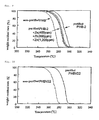
- Fig. 1 also shows the results of measurement of a change in weight in the process of temperature elevation of the obtained purification-treated PHB. For comparison, Fig. 1 also shows a thermogravimetric change curve of the non-treated PHB. In the case of the non-treated PHB, the weight decrease started at about 240°C and the weight became zero at 280°C.
- Fig. 2 shows a time course of molecular weight of the sample when the purification-treated PHBwas isothermally retained at 180°C.
- Fig. 2 also shows the data of the non-treated PHB.
- the sample was heated from room temperature to 180°C at a rate of 30°C/min, and the number average molecular weight (Mn) of the sample at the point when the temperature reached 180°C was 243,000 for the non-treated PHB and 273,000 for the purification-treated PHB.
- Fig. 3 shows the relationship between isothermal retention time at 180°C and degree of polymerization (Pn) of a sample. Linearity was observed between a reciprocal of the degree of polymerization and the retention time, and the rate constant (kd) of thermal decomposition rate was calculated from the inclination of the line.
- Fig. 4 shows the relationship of the decomposition temperature (T) versus the rate constant (kd). At either of the temperatures, the decomposition rate of the purification-treated PHB was smaller than that of the crude PHB.
- Fig. 6 shows a time course of molecular weight when the purification-treated PHB was isothermally retained at 180°C.
- the purification-treated PHB was heated from room temperature to 180°C at a rate of 30°C/min, and the number average molecular weight (Mn) at the point when the temperature reached 180°C was 282, 000 for the purification-treated PHB.
- Mn number average molecular weight
- the initial molecular weight of the twice purification-treated PHB was 280,000.
- Fig. 7 shows the relationship between the isothermal retention time at 180°C and the degree of polymerization (Pn) of the sample.
- the temperature at which a weight decrease started was about 240°C, which was shifted by about 30°C toward the lower temperature side as compared with the PHB sample to which no calcium was added. It was confirmed that the result well coincided with the result of weight decrease of the purification-non-treated sample (calcium content: 420 ppm).
- the PHB samples to which 800 ppm and 1,200 ppm of calcium was added respectively exhibited the weight decrease starting at about 230°C, which was further shifted toward the lower temperature side. The above-mentioned results showed that the calcium ion contained in the PHB sample served to promote the thermal decomposition reaction of PHB.
- a sample obtained by adding a predetermined amount of zinc to the purified PHB obtained in Implementation Result 2 was used. 1 g of the purified PHB was dissolved into 50 ml of chloroform and then a suitable amount of a methanol solution containing 1 mg/ml zinc chloride was added thereto and the resultant mixture was stirred at room temperature for 2 hours. After the stirring, the mixed solution was spread over a glass-made Petri dish and the solvent was evaporated to form a film.
- Fig. 9 shows the results of measurement of a change in weight of the obtained zinc-added PHB in the process of temperature elevation.
- 1 g of PHBV22 was dissolved into 50 ml of chloroform and then 1 ml of acetic acid was added to the resultant solution. After the mixed solution was stirred at room temperature for 24 hours, the mixed solution was dropped into methanol to obtain PHBV22. In the same manner as in Implementation Result 2, this operation was repeated twice.
- Table 3 shows the molecular weight and molecular weight distribution of PHBV22 before and after the purification treatment.
- Fig. 11 shows a time course of molecular weight of the sample when the purification-treated PHBV22 was isothermally retained at 180°C.
- the purification-treated PHBV22 was heated from room temperature to 180°C at a rate of 30°C/min, and the number average molecular weight (Mn) at the point when the temperature reached 180°C was 112,000 for the non-treated PHBV22 and 125,000 for the purification-treated PHBV22.
- the initial molecular weights were 130,000 for the non-treated PHBV22 and 128,000 for the purification-treated PHBV22, respectively. It was confirmed that the purification-treated PHBV22 (molecular weight retention ration 97.7%) exhibited a smaller ratio of molecular weight decrease than that of the non-treated PHBV22 (molecular weight retention ratio 84.1%).
- Fig. 12 shows the relationship between isothermal retention time at 180°C and degree of polymerization (Pn) of a sample.
- kd 8.21 ⁇ 10 -5 (1/min) for the non-treated PHBV22
- kd 3.23 ⁇ 10 -5 (1/min) for the purification-treated PHBV22.
Landscapes
- Chemical & Material Sciences (AREA)
- Health & Medical Sciences (AREA)
- Chemical Kinetics & Catalysis (AREA)
- Medicinal Chemistry (AREA)
- Polymers & Plastics (AREA)
- Organic Chemistry (AREA)
- Polyesters Or Polycarbonates (AREA)
- Preparation Of Compounds By Using Micro-Organisms (AREA)
- Biological Depolymerization Polymers (AREA)
Abstract
Description
- The present invention relates to a biopolyester with an improved thermal stability. Since biopolyesters are biodegraded and reduced into natural material circulation, they can be utilized as plastics capable of environment protection. Also, in medical fields, they can be used as implant materials and carriers for medicines that need not be recovered.
- Biopolyesters are polymer materials produced by microorganisms from biological resources such as sugars and fatty acids. The polyesters have a unique property called biodegradability such that they are decomposed and assimilated by the action of microorganisms in the environment and are expected to be utilized as one of biodegradable polyesters, like aliphatic polyesters obtained by chemical synthesis. Poly(3-hydroxybutyrate), a representative example of the biopolyester, is produced with an enzyme of a microorganism, so that it consists of 100% of a structural unit having a stereocenter of the (R)-form ((R)-3-hydroxybutyrate); and the poly(3-hydroxybutyrate) is a polymer material that cannot be produced by chemical synthesis.
Also, the polyester has a feature that it has a melting temperature of 180°C and hence is thermoformable. However, the biopolyester undergoes a reduction in molecular weight due to thermal decomposition reaction in a temperature region of 160°C or more. The reduction in molecular weight causes a reduction in strength of material, so that this property is a great drawback to utilization of biopolymers. When considering melt-forming of biopolyesters, it is necessary to develop a methodology by which the reduction in molecular weight of the biopolyester can be minimized within the temperature region of up to 180°C, which is its melting point. - It has been reported that a main reaction of the thermal decomposition of a biopolyester is a molecular weight reduction due to random cleavage of its molecular chain (Non-Patent Document 1) .
As a prior art relating to prevention of thermal decomposition reaction of a biopolyester that has a melting temperature and a thermal decomposition temperature close to each other, there has been used a method of adding a compound that shows a plasticizing effect to a sample and lowering the melting temperature of the sample. One example thereof is a method in which a low molecular weight compound is physically added to the sample (Non-Patent Document 2). However, a molding to which a low molecular weight compound is added has problems that the addition of the low molecular weight compound results in exhibiting a property (such as a reduction in melting temperature, a reduction in strength of material, or the like) that is different from an original property of the biopolyester itself and that elution of the additive during duration of use causes deterioration of performance.
Another method is synthesis of a copolyester that contains a different molecular structure that is chemically added to its molecular chain (Non-Patent Document 3). In this method, deterioration of performance with time during duration of use is not causedbut a physical property different fromthat of a homopolymer is exhibited due to the copolymerization composition. Therefore, there is a problem that the performance expected for the homopolymer is lost. - In various synthetic polymers, residues of a polymerization catalyst (in particular, residual metals) are known to promote a thermal decomposition reaction of polymer materials in the process of hot forming (a reverse reaction of polymerization reaction). Accordingly, there have been established synthesis technologies and purification technologies that decrease a polymerization catalyst that is contained or remaining in the synthesized polymer material as much as possible.
- On the other hand, biopolyesters produced by microorganisms are synthesized in the form of particles in cells of the microorganisms by polyester synthetic enzymes in the cells of the microorganisms. The produced biopolyesters have to be purified by solvent washing or solvent extraction to separate them from proteins such as polyester synthetic enzymes and other biomass.
Methods of separating biopolyesters thus far proposed include a method that comprises extracting a biopolyester from cells of a microorganism with a solvent into which the biopolyester is soluble and separating the solution from cell residues, and a method that comprises removing cellular substances other than the objective polymer by an enzyme treatment or the like. In the purification methods using solvents, chloroform or methylene chloride (Patent Document 1), pyridine (Patent Document 2), dioxane (Patent Document 3), and so on are used as extraction solvents. On the other hand, regarding the method that comprises removing the cellular substances other than the objective polymer using an enzyme or the like, a method of separating and purifying the objective polymer by treating microbial cells with an alkaline solution of sodium hypochlorite has been proposed as disclosed in Non-Patent Document 4. Also, inNon-Patent Document 5, there is disclosed a method that comprises adding lysozyme to a microbial cell suspension, sonicating the suspension, loading the sonicate on glycerol, and purifying the objective polymer by centrifugation due to a difference in specific gravity. In Patent Document 4, there are proposed various methods that are combinations of molecular weight reduction of nucleic acid-related substances by heat treatment, digestion with a protease such as alkalase, digestion using a surfactant such as sodium dodecyl sulfate, and so on. Further, a method that comprises a treatment with surfactant and diluted alkaline solution of sodium hypochlorite has been proposed.
However, with these methods, it is very difficult to purify biopolyesters with high purity. Further, various elements constitute various kinds of compounds in cells of microorganisms, so that it is very difficult to remove all the impurities from the biopolyesters. For the above-mentioned reasons, there have been made no studies to identify residues (in particular, residual metal ions) that promote thermal decomposition reaction of biopolyesters upon hot forming and to elucidate the effects thereof. - [Patent Document 1]
JP 57-65193 A - [Patent Document 2]
US 3044942 A - [Patent Document 3]
JP 63-198991 A - [Patent Document 4]
JP 60-145097 A - [Non Patent Document 1] Polym. Degrad. Stabil., 6(1984)127-134
- [Non Patent Document 2] Jpanese Journal of polymer science and technology 47(1991) 221-226
- [Non Patent Document 3] Phys. Technol., 16(1985) 32-36
- [Non Patent Document 4] J. Gen. Microbiology 19(1958) 198-209
- [Non Patent Document 5] J. Bacteriology 88(1964) 60-71
- It is an object of the present invention to provide a technology capable of decreasing molecular weight reduction of a biopolyester by thermal decomposition by removing a specified residue in cells that remains in the biopolyester to prepare a sample that can endure melt forming.
- The inventors of the present invention have found that conventional biopolyesters contain a considerable amount of calcium, which is a residue that promotes thermal decomposition reaction upon hot forming. Also, they have found that starting temperature of the weight reduction of a sample in the process of elevating a temperature can be shifted higher by about 30°C by reducing a content of calcium contained in a biopolyester such as poly(3-hydroxybutyrate), and they also found that retention of molecular weight of a sample relative to the initial molecular weight upon heating the sample to the range of 170°C to 190°C, which is a melting temperature, can be greatly increased, and found that the rate of molecular weight reduction of a sample under an isothermal heating condition can be suppressed to about a half of a non-treated sample. Based on the above, the present invention has been completed.
- That is, the present invention provides the followings.
- (1) A biopolyester which is selected from poly(3-hydroxyalkanoate) and poly(3-hydroxyalkanoate) copolymer, wherein said biopolyester has a calcium content of 120 ppm or less.
- (2) The biopolyester according to (1), wherein the biopolyester is poly(3-hydroxybutyrate).
- (3) The biopolyester according to (1), wherein the biopolyester is poly(3-hydroxybutyrate)-(3-hydroxyvalreate).
- (4) A method of producing a thermostable biopolyester, comprising removing calcium from poly(3-hydroxyalkanoate) or poly(3-hydroxyalkanoate) copolymer which is produced by a microorganism to obtain poly(3-hydroxyalkanoate) or poly(3-hydroxyalkanoate) copolymer having a reduced calcium content.
- (5) The method according to (4), wherein the calcium is removed by dissolving the poly(3-hydroxyalkanoate) or the poly(3-hydroxyalkanoate) copolymer which is produced by a microorganism, and acidifying the obtained solution.
-
- Fig. 1 is a diagram illustrating a thermogravimetric change curve before and after purification treatment of PHB.
- Fig. 2 is a diagram illustrating a change in molecular weight of purified PHB in the process of isothermal retention at 180°C.
- Fig. 3 is a diagram illustrating a change in degree of polymerization of PHB upon isothermal retention at 180°C.
- Fig. 4 is a diagram illustrating rate constants of thermal decomposition rates of PHB upon isothermal retention at predetermined temperatures (170°C, 175°C, 180°C, 185°C, and 190°C).
- Fig. 5 is a diagram illustrating a thermogravimetric change curve of PHB after 2 cycles of purification.
- Fig. 6 is a diagram illustrating a change in molecular weight of the twice-purified PHB upon isothermal retention at 180°C.
- Fig. 7 is a diagram illustrating a change in degree of polymerization of the twice-purified PHB upon isothermal retention at 180°C.
- Fig. 8 is a diagram illustrating thermogravimetric change curves of PHB after purification and addition of calcium ion.
- Fig. 9 is a diagram illustrating thermogravimetric change curves of PHB after purification and addition of zinc ion.
- Fig. 10 is a diagram illustrating a thermogravimetric change curve of PHBV22 subjected to purification treatment.
- Fig. 11 is a diagram illustrating a change in molecular weight of purified PHBV22 upon isothermal retention at 180°C.
- Fig. 12 is a diagram illustrating a change in degree of polymerization of purified PHBV22 upon isothermal retention at 180°C.
- Hereinafter, the present invention will be explained in detail.
The biopolyester of the present invention is a biopolyester selected from poly(3-hydroxyalkanoate) and poly(3-hydroxyalkanoate) copolymer, the biopolyester having an increased thermal stability due to reduction of calcium content to 120 ppm or less. The calcium content of the biopolyester is preferably 100 ppm or less, more preferably 50 ppm or less. From the viewpoint of thermal stability of the biopolyester, the lower the calcium content of the biopolyester, the more preferable, and the content could be even 0. However, since the yield of the biopolyester may be decreased in the process of decreasing calcium, the calcium content is usually 3 ppm or more. The calcium content can be measured by atomic absorption photometry or the like. - Examples of the poly(3-hydroxyalkanoates) include those poly(3-hydroxyalkanoates) whose side chain bound to the carbon atom at the 3-position of the linear chain in the repeating unit is hydrogen or an alkyl group having about 1 to about 12 carbon atoms, specifically include poly(3-hydroxypropionate), poly(3-hydroxybutyrate), poly(3-hydroxyvalerate), and poly(3-hydroxyoctanoate), and among them, the poly(3-hydroxybutyrate) is more preferable.
- Examples of the poly(3-hydroxyalkanoate) copolymer include copolymers of 3-hydroxybutyrate and another hydroxyalkanoate having 3 to 12 carbon atoms. Specific examples thereof include (3-hydroxybutyrate)-(3-hydroxypropionate) copolymer, (3-hydroxybutyrate)-(3-hydroxypropionate)-(4-hydroxybutyrate) copolymer, (3-hydroxybutyrate)-(3-hydroxyvalerate) copolymer, (3-hydroxybutyrate)-(3-hydroxyvalerate)-(3-hydroxyhexanoate)-(3-hydroxyheptanoate) copolymer, (3-hydroxybutyrate)-(3-hydroxyvalerate)-(3-hydroxyhexanoate)-(3-hydroxyheptanoate)-(3-hydroxyoctanoate) copolymer, (3-hydroxybutyrate)-(3-hydroxyhexanoate)-(3-hydroxyoctanoate) copolymer, (3-hydroxybutyrate)-(3-hydroxyvalerate)-(3-hydroxyheptanoate)-(3-hydroxyoctanoate) copolymer, (3-hydroxybutyrate)-(3-hydroxyvalerate)-(3-hydroxyhexanoate)-(3-hydroxyheptanoate)-(hydroxyoctanoate)-(3-hydroxynonanoate)-(3-hydroxydecanoate)-(3-hydroxyundecanoate)-(3-hydroxylaurate) coplymer, and a (3-hydroxybutyrate)-(4-hydroxybutyrate) coploymer, and among them, the (3-hydroxybutyrate)-(3-hydroxyvalerate) copolymer is more preferable.
- The biopolyesters of the present invention can be produced from the above-mentioned poly(3-hydroxyalkanoates) or poly(3-hydroxyalkanoate) copolymers produced by microorganisms, as starting materials.
The poly(3-hydroxyalkanoates) or poly(3-hydroxyalkanoate) copolymers as starting materials can be obtained by allowing microorganisms belonging to Alcaligenes, Pseudomonas, Bacillus, Azotobacter, Nocardia, and so on to produce them, and performing extraction with an organic solvent, or the like. Specifically, for example, biopolyesters produced using Pseudomonas bacteria such as Pseudomonas testosteroni, Pseudomonas delafieldii, Pseudomonas cepacia, and Pseudomonas acidovorans as disclosed inJP-A 06-284892 JP-A 05-023189 JP-A 06-145311 JP-A 05-064592 JP-A 10-108682 JP-A 11-243956 JP-A 2000-135083
The biopolyesters of the present invention can also be produced by using commercially available biopolyesters produced by microorganisms, as starting materials. The poly(3-hydroxyalkanoates) that can be used as starting materials for the biopolyesters of the present invention have a number average molecular weight as measured by gel permeation chromatography (GPC) of, forexample, 3,000 to 10,000,000, preferably 10,000 to 10,000,000, and more preferably 50,000 to 7,000,000. On the other hand, the poly(3-hydroxyalkanoate) copolymers that can be used as starting materials for the biopolyesters of the present invention have a number average molecular weight of, for example, 3,000 to 10,000,000, preferably 10,000 to 10,000,000, and more preferably 50,000 to 600,000. - The biopolyesters of the present invention can be obtained by removing calcium from the above-mentioned poly(3-hydroxyalkanoates) or poly (3-hydroxyalkanoate) copolymers as starting materials. While a method of removing calcium is not particularly limited, it is preferable to acidify a solution of biopolyester (preferably to
pH 5 or less) so that calcium is released and removed, since it is expected that calcium exists as bound to the carboxy terminal of the biopolyester through an ionic bond. In order to acidify the solution, for example, organic acids such as acetic acid and propionic acid and inorganic acids such as hydrochloric acid and sulfuric acid can be used. Preferably, the removal of calcium can be performed by dissolving the biopolyester as the starting material into an organic solvent, adding acetic acid to the resultant organic solvent containing the biopolyester for reaction. Examplesofthe organicsolventsinclude those organic solvents that can dissolve biopolyesters,specifically, chloroform, methylene chloride, 1,2-dichloroethane, and so on. Of those, chloroform is preferable. The biopolyester from which calcium is removed can be recovered by dropping the reaction mixture obtained by the above-mentioned reaction into an alcohol, recovering the precipitated biopolyester by filtration, washing it with an alcohol, and then drying it under reduced pressure. - The biopolyesters of the present invention have an improved thermal stability as compared with non-treated biopolyesters due to their reduced calcium content. For example, when the biopolyester of the present invention (subjected to a calcium reducing treatment) and a non-treated biopolyester are each isothermally retained at 180°C and the degree of polymerization is measured to calculate thermal decomposition rates in accordance with the
equation 1 described in the Examples described below for comparison, the biopolyester of the present invention desirably exhibits a thermal decomposition rate decreased by 10% or more, preferably 20% or more, or more preferably 50% or more relative to the thermal decomposition rate of a non-treated biopolyester. - Hereinafter, the present invention will be explained in more detail by examples. However, the present invention is not limited to the following examples.
- Preparation of samples and evaluation of the structures thereof Polyester produced by a microorganism was dissolved into chloroform to prepare 2% (wt/vol) solution. 1% (vol/vol) equivalent of acetic acid based on the biopolyester solution was added into this solution. The resultant mixed solution was stirred at room temperature for 3 to 12 hours. After the reaction was allowed to proceed for a predetermined time, the mixed solution was dropped into 10 times volume of an alcohol. The dropping of the solution resulted in precipitation of the biopolyester that is insoluble into the alcohol and dissolution of acetic acid into the alcohol. The precipitated biopolyester was recovered by filtration, washed with alcohol several times, and then dried at room temperature under reduced pressure until it showed a constant weight.
The molecular weight and molecular weight distribution of the obtained sample were determined by gel permeation chromatography (GPC). Also, the thermal properties of the biopolyester were evaluated using a differential scanning calorimeter (DSC).
Shimadzu 10A GPC system (manufactured by Shimadzu Corporation) equipped with Shimadzu RID-10A differential refractive index detector (manufactured by Shimadzu Corporation) was used as the GPC apparatus. Separation columns Shodex K-80M and Shodex K-802 manufactured by Showa Denko K.K. serially connected to each other were used. Measurement was performed at a column temperature of 40°C and a flow rate of 0. 8 ml/min and by using chloroform as a solvent. The calibration curve for measuring a molecular weight was prepared by using a low polydisperse polystyrene for measuring molecular weight. By utilizing the calibration curve, molecular weights of samples were calculated in terms of polystyrene. The polyester was dissolved into chloroform to a concentration of 1 mg/ml and filtered through a PTFE filter having a pore diameter of 0.45 µm to prepare a sample for GPC measurement, which was subjected to the molecular weight measurement.
Pyris-1 DSC system (manufactured by Perkin-Elmer) equipped with a liquid nitrogen supply system was used as the DSC apparatus. Melting temperatures (Tm) were obtained by charging about 3 mg of a sample which was weighed precisely into an aluminum pan and performing a fast scan from room temperature to 200°C at a temperature elevation rate of 20°C/min in a nitrogen atmosphere (at a flow rate of 30 ml/min). The glass transition temperature (Tg) was measured by quenching the completely molten sample by fast scan to -100°C and elevating the temperature of the sample from -100°C to 200°C at a temperature elevation rate of 20°C.
The quantification of metal ions (Ca and Zn) in the sample was performed by atomic absorption photometry. - The heat resistance of biopolyesters was evaluated by two methods, i.e., measurement of a change in weight in the process of temperature elevation and measurement of a change in molecular weight in the process of isothermal retention. The change in weight in the process of temperature elevation was measured using a thermogravimetric apparatus by elevating a temperature of sample from room temperature to 500°C at a rate of 10°C/min in a dry nitrogen atmosphere. In the measurement of the change in molecular weight in the isothermal process, the temperature of sample was measured similarly using a thermogravimetric apparatus by elevating the temperature of the sample from room temperature to a predetermined temperature at a rate of 30°C/min in a dry nitrogen atmosphere, isothermally retaining the sample at that temperature for a predetermined time, taking out the sample to room temperature after the predetermined retention time passed, and measuring the molecular weight of the sample by GPC. In both the measurements, about 5 mg of the sample was weighed precisely and used. TG/DTA 220U system manufactured by Seiko Instruments was used as the thermogravimetric apparatus.
- Commercially available poly(3-hydroxybutyrate) (PHB) (manufactured by Sigma-Aldrich Corporation) produced by a microorganism was used as a biopolyester. To remove impurities contained in the commercially available polyester, purification of the polyester was performed. First, 1 g of PHB was dissolved into 100 ml of chloroform and filtered through a PTFE filter having a pore diameter of 0.45 µm to remove chloroform-insoluble solids. The obtained solution was dropped into methanol or n-hexane to precipitate PHB. The precipitated PHB was recovered by filtration and washed with methanol or n-hexane several times and dried under reduced pressure at room temperature until it showed a constant weight. 1 g of the purified PHB was dissolved into 50 ml of chloroform and then 1 ml of acetic acid was added to the resultant solution. After the mixed solution was stirred at room temperature for 24 hours, the mixed solution was dropped into methanol to obtain PHB.
Table 1 shows the molecular weight and molecular weight distribution of PHB before and after the purification treatment. No changes in molecular weight and molecular weight distribution due to the purification treatment were observed. Measurement of the calcium ions in the sample before and after the purification revealed that the non-treated PHB contained 420 ppm of calcium and the purification-treated PHB contained 103 ppm of calcium. Therefore, it was shown that the purification treatment reduced the calcium content in the biopolyester.
Table 2 shows the thermal properties of the purified PHB as determined by DSC. Themelting temperature (Tm) and glass transition temperature (Tg) of the purification-treated PHB were observed as 176°C and 3°C, respectively. These values well coincided with those of the non-treated PHB.
Fig. 1 also shows the results of measurement of a change in weight in the process of temperature elevation of the obtained purification-treated PHB. For comparison, Fig. 1 also shows a thermogravimetric change curve of the non-treated PHB. In the case of the non-treated PHB, the weight decrease started at about 240°C and the weight became zero at 280°C. On the other hand, in the case of the purification-treated PHB, the temperature at which the weight decrease started was about 260°C, shifting by about 20°C toward the high temperature side as compared with the non-treated sample.
Fig. 2 shows a time course of molecular weight of the sample when the purification-treated PHBwas isothermally retained at 180°C. For comparison, Fig. 2 also shows the data of the non-treated PHB. The sample was heated from room temperature to 180°C at a rate of 30°C/min, and the number average molecular weight (Mn) of the sample at the point when the temperature reached 180°C was 243,000 for the non-treated PHB and 273,000 for the purification-treated PHB. In both of the samples, the molecular weights were decreased as compared with the initial molecular weights of 280,000 (non-treated PHB) and 276,000 (purification-treated PHB), respectively. This is because the thermal decomposition reaction had already proceeded gradually by the time when the temperature of the sample reached 180°C to decrease the molecular weight of the sample. However, it was confirmed that the purification-treated PHB (molecular weight retention rate 98.94%) exhibited a smaller ratio of molecular weight decrease than that of the non-treated PHB (molecular weight retention ratio 86.8%). It was observed that each of the samples showed a decrease in molecular weight with a lapse of retention time when it was isothermally retained at 180°C. The rate of molecular weight decrease was calculated based on the following reaction formula:
(Pn(0): degree of polymerization at the time when the temperature reached the retention temperature, Pn(t): degree of polymerization at the retention time t, kd: rate constant, degree of polymerization (Pn) = molecular weight (Mn)/mass of monomer unit (86.1)). - Fig. 3 shows the relationship between isothermal retention time at 180°C and degree of polymerization (Pn) of a sample. Linearity was observed between a reciprocal of the degree of polymerization and the retention time, and the rate constant (kd) of thermal decomposition rate was calculated from the inclination of the line. The rate constants of the non-treated PHB and the purification-treated PHB were observed as kd = 7.53×10⁻⁵ (1/min) and kd = 4,17×10⁻⁵ (1/min), respectively. As a result, it follows that the thermal decomposition rate of PHB at 180°C was reduced to about a half by performing the purification treatment.
Further, decomposition rate constant kd in a similar isothermal retention process was obtained for each of the temperatures of 170°C, 175°C, 185°C, and 190°C. Fig. 4 shows the relationship of the decomposition temperature (T) versus the rate constant (kd). At either of the temperatures, the decomposition rate of the purification-treated PHB was smaller than that of the crude PHB. - Commercially available PHB was used as a biopolyester. The purification operation (calcium removing operation) performed in
Implementation Result 1 was repeated twice. Table 1 shows the molecular weight and molecular weight distribution of PHB before and after the purification treatment. No changes in molecular weight and molecular weight distribution were observed after twice of the purification treatment. Measurement of the amount of calcium ion after the purification indicated that the amount of calcium decreased to 37 ppm. The melting temperature (Tm) and glass transition temperature (Tg) of the PHB which was purified twice well coincided with those of the non-treated PHB.
Fig. 5 shows the results of measurement of a change in weight in the process of temperature elevation of the obtained purification-treated PHB. In the case of the PHB subjected to twice of the purification treatment, the temperature at which weight decrease started was about 270°C, which was shifted by about 30°C toward the higher temperature side as compared with that of the non-treated sample.
Fig. 6 shows a time course of molecular weight when the purification-treated PHB was isothermally retained at 180°C. The purification-treated PHB was heated from room temperature to 180°C at a rate of 30°C/min, and the number average molecular weight (Mn) at the point when the temperature reached 180°C was 282, 000 for the purification-treated PHB. The initial molecular weight of the twice purification-treated PHB was 280,000. This indicated that the twice purification-treated PHB (molecular weight retention ratio 99.3%) had a smaller ratio of decrease in molecular weight than that of the non-treated PHB. When the sample was isothermally retained at 180°C, a decrease in molecular weight of the sample was observed with lapse of the retention time. Fig. 7 shows the relationship between the isothermal retention time at 180°C and the degree of polymerization (Pn) of the sample. The rate constant (kd) of thermal decomposition rate calculated from the inclination of the line was kd=2.98×10⁻⁵ (1/min) for the purification-treated PHB. As a result, it follows that the thermal decomposition rate of PHB at 180°C was further reduced by performing the purification treatment twice. - A sample obtained by adding a predetermined amount of calcium to the purified PHB obtained in
Implementation Result 2 was used. 1 g of purified PHB was dissolved into 50 ml of chloroform and then a suitable amount of a methanol solution containing 1 mg/ml of calcium chloride was added thereto and the resultant mixture was stirred at room temperature for 2 hours. After the stirring, the mixed solution was spread over a glass-made Petri dish and the solvent was evaporated to form a film.
Fig. 8 shows the results of measurement of a change in weight of the obtained calcium-added PHB in the process of temperature elevation. In the case of the PHB to which 400 ppm calcium was added, the temperature at which a weight decrease started was about 240°C, which was shifted by about 30°C toward the lower temperature side as compared with the PHB sample to which no calcium was added. It was confirmed that the result well coincided with the result of weight decrease of the purification-non-treated sample (calcium content: 420 ppm).
In addition, the PHB samples to which 800 ppm and 1,200 ppm of calcium was added respectively exhibited the weight decrease starting at about 230°C, which was further shifted toward the lower temperature side.
The above-mentioned results showed that the calcium ion contained in the PHB sample served to promote the thermal decomposition reaction of PHB. - A sample obtained by adding a predetermined amount of zinc to the purified PHB obtained in
Implementation Result 2 was used. 1 g of the purified PHB was dissolved into 50 ml of chloroform and then a suitable amount of a methanol solution containing 1 mg/ml zinc chloride was added thereto and the resultant mixture was stirred at room temperature for 2 hours. After the stirring, the mixed solution was spread over a glass-made Petri dish and the solvent was evaporated to form a film.
Fig. 9 shows the results of measurement of a change in weight of the obtained zinc-added PHB in the process of temperature elevation. In the case of the PHB to which 400 ppm of zinc was added, the temperature at which a weight decrease started was about 260°C, which was shifted by about 10°C toward the lower temperature side as compared with the PHB sample to which no zinc was added. However, when zinc was added 800 ppm and 1,200 ppm, respectively, the temperature at which weight decrease of the sample started did not go down any further and showed substantially the same behavior.
The above-mentioned results indicated that while zinc ion contained in the PHB sample served to promote the thermal decomposition reaction of PHB, its effect was very small as compared with that of calcium ion. -
Table 1 Molecular weight and Ca content of samples Sample Number average molecular weight Molecular weight distribution Ca Content (ppm) Memo Non-purified PHB 280,000 2.2 420 Note 1Purified PHB-1 276,000 2.2 103 Note 2Purified PHB-2 282,000 2.1 37 Note 3 Purified PHB-2+Ca(400ppm) 282,000 2.1 400 Note 4 Purified PHB-2+Ca(800ppm) 282,000 2.1 800 Note 4 Purified PHB-2+Ca(1200ppm) 282,000 2.1 1,200 Note 4 -
Table 2 Melting temperature and glass transition temperature of samples Sample Melting temperature (°C) Glass transition (°C) Ca content (ppm) Non-purified PHB 178 3 420 Purified PHB-1 176 3 103 Purified PHB-2 176 3 37 Purified PHB-2+Ca(400ppm) 177 3 400 Purified PHB-2+Ca(800ppm) 176 3 800 Purified PHB-2+Ca(1200ppm) 176 3 1,200 - Commercially available poly(3-hydroxybutyrate-co-3-hydroxyvalerate) (3-hydroxyvalerate fraction = 22 mol%) (PHBV22) (manufactured by Sigma-Aldrich Corporation) was used as a biopolyester. In the same manner as in
Implementation Result 1, 1 g of PHBV22 was dissolved into 50 ml of chloroform and then 1 ml of acetic acid was added to the resultant solution. After the mixed solution was stirred at room temperature for 24 hours, the mixed solution was dropped into methanol to obtain PHBV22. In the same manner as inImplementation Result 2, this operation was repeated twice. Table 3 shows the molecular weight and molecular weight distribution of PHBV22 before and after the purification treatment. No changes in molecular weight and molecular weight distribution due to the purification treatment were observed. Measurement of the calcium ion in the sample before and after the purification revealed that the non-treated PHBV22 contained 480 ppm of calcium and the purification-treated PHBV22 contained 53 ppm of calcium. Table 4 shows the thermal properties of the purified PHBV22 as determined by DSC. The melting temperature (Tm) and glass transition temperature (Tg) of the purification-treated PHBV22 were observed at 135°C and -3°C, respectively. These values well coincided with those of the non-treated PHB.
Fig. 10 shows the results of measurement of a change in weight in the process of temperature elevation of the obtained purification-treated PHBV22. In the case of the non-treated PHBV22, the weight decrease started at about 245°C and the weight became zero at 280°C. On the other hand, in the case of the purification-treated PHBV22, the temperature at which the weight decrease started was about 265°C, shifting by about 20°C toward the high temperature side as compared with the non-treated sample.
Fig. 11 shows a time course of molecular weight of the sample when the purification-treated PHBV22 was isothermally retained at 180°C. The purification-treated PHBV22 was heated from room temperature to 180°C at a rate of 30°C/min, and the number average molecular weight (Mn) at the point when the temperature reached 180°C was 112,000 for the non-treated PHBV22 and 125,000 for the purification-treated PHBV22. The initial molecular weights were 130,000 for the non-treated PHBV22 and 128,000 for the purification-treated PHBV22, respectively. It was confirmed that the purification-treated PHBV22 (molecular weight retention ration 97.7%) exhibited a smaller ratio of molecular weight decrease than that of the non-treated PHBV22 (molecular weight retention ratio 84.1%). It was observed that each of the samples showed a decrease in molecular weight with a lapse of retention time when it was isothermally retained at 180°C. Fig. 12 shows the relationship between isothermal retention time at 180°C and degree of polymerization (Pn) of a sample. The rate constant (kd) of thermal decomposition rate calculated from the inclination of the line was kd = 8.21×10⁻⁵ (1/min) for the non-treated PHBV22 and kd = 3.23×10⁻⁵ (1/min) for the purification-treated PHBV22. As a result, it follows that the thermal decomposition rate of PHBV22 at 180°C was reduced to about a half by performing the purification treatment. -
Table 3 Molecular weight and Ca content of samples Sample Number average molecular weight Molecular weight distribution Ca Content (ppm) Memo Non-purified PHBV22 130,000 2.0 480 Note 1Purified PHB22 128,000 2.1 53 Note 2 -
Table 4 Melting temperature and glass transition temperature of samples Sample Melting temperature (°C) Glass transition (°C) Ca Content (ppm) Non-purified PHBV22 134 -3 480 Purified PHB22 135 -3 53 - According to the present invention, decrease in molecular weight of biopolyesters upon hot forming and deterioration of their performance during use can be prevented and moldings can be provided without changing the original properties of the biopolyester itself.
Claims (5)
- A biopolyester which is selected from poly (3-hydroxyalkanoate) and poly (3-hydroxyalkanoate) copolymer, wherein said biopolyester has a calcium content of 120 ppm or less.
- The biopolyester according to claim 1, wherein the biopolyester is poly(3-hydroxybutyrate).
- The biopolyester according to claim 1, wherein the biopolyester is poly(3-hydroxybutyrate)-(3-hydroxyvalreate).
- A method of producing a thermostable biopolyester, comprising removing calcium from poly(3-hydroxyalkanoate) or poly(3-hydroxyalkanoate) copolymer which is produced by a microorganism to obtain poly(3-hydroxyalkanoate) or poly(3-hydroxyalkanoate) copolymer having a reduced calcium content.
- The method according to claim 4, wherein the calcium is removed by dissolving the poly(3-hydroxyalkanoate) or the poly(3-hydroxyalkanoate) copolymer which is produced by a microorganism, and acidifying the obtained solution.
Applications Claiming Priority (2)
| Application Number | Priority Date | Filing Date | Title |
|---|---|---|---|
| JP2004251853 | 2004-08-31 | ||
| PCT/JP2005/015751 WO2006025375A1 (en) | 2004-08-31 | 2005-08-30 | Biopolyester with thermal stability |
Publications (3)
| Publication Number | Publication Date |
|---|---|
| EP1785444A1 true EP1785444A1 (en) | 2007-05-16 |
| EP1785444A4 EP1785444A4 (en) | 2009-11-04 |
| EP1785444B1 EP1785444B1 (en) | 2015-02-25 |
Family
ID=36000027
Family Applications (1)
| Application Number | Title | Priority Date | Filing Date |
|---|---|---|---|
| EP05777100.8A Expired - Lifetime EP1785444B1 (en) | 2004-08-31 | 2005-08-30 | Method for producing a biopolyester with thermal stability |
Country Status (4)
| Country | Link |
|---|---|
| US (2) | US20080207870A1 (en) |
| EP (1) | EP1785444B1 (en) |
| JP (1) | JP5279060B2 (en) |
| WO (1) | WO2006025375A1 (en) |
Cited By (1)
| Publication number | Priority date | Publication date | Assignee | Title |
|---|---|---|---|---|
| WO2007082836A1 (en) * | 2006-01-17 | 2007-07-26 | Basf Se | Method for the production of polyhydroxy alkanoates having a smaller alkali metal and alkaline earth metal concentration and greater thermal stability |
Families Citing this family (3)
| Publication number | Priority date | Publication date | Assignee | Title |
|---|---|---|---|---|
| WO2008143176A1 (en) * | 2007-05-18 | 2008-11-27 | Toyo Boseki Kabushiki Kaisha | Poly-3-hydroxybutyrate or poly-3-hydroxybutyrate copolymer with improved heat resistance and process for producing the same |
| JP5608096B2 (en) * | 2008-12-09 | 2014-10-15 | 株式会社カネカ | Poly-3-hydroxyalkanoic acid and process for producing the same |
| JP6070802B2 (en) * | 2014-10-10 | 2017-02-01 | ダイキン工業株式会社 | Resin composition and molded product |
Family Cites Families (20)
| Publication number | Priority date | Publication date | Assignee | Title |
|---|---|---|---|---|
| AT390068B (en) | 1988-07-07 | 1990-03-12 | Danubia Petrochemie | EXTRACTION AGENT FOR POLY-D (-) - 3-HYDROXYBUTTERIC ACID |
| JP3114148B2 (en) | 1991-09-06 | 2000-12-04 | 旭化成工業株式会社 | Method for producing biopolyester |
| JPH0523189A (en) | 1991-07-18 | 1993-02-02 | Mitsubishi Kasei Corp | Method for producing polyester copolymer |
| DE4215860A1 (en) * | 1992-05-14 | 1993-11-18 | Buna Ag | Dye-free poly:hydroxy:alkanoate prodn. - comprises drying moist bacterial biomass and extracting using acetic acid contg. beta-butyrolactone |
| JPH06284892A (en) | 1992-05-14 | 1994-10-11 | Yoshiharu Doi | Method for producing polyester |
| CZ282634B6 (en) | 1992-05-14 | 1997-08-13 | Buna Ag | Process for obtaining polyhydroxyalkanoates without a dyestuff |
| US5281691A (en) * | 1992-06-19 | 1994-01-25 | Eastman Kodak Company | Poly(3-hydroxyalkanoates) |
| JP3280123B2 (en) | 1992-09-16 | 2002-04-30 | 旭化成株式会社 | Biopolyester copolymer and method for producing the same |
| JP3062459B2 (en) | 1996-08-14 | 2000-07-10 | 理化学研究所 | Polyester synthase gene and method for producing polyester |
| JPH10168175A (en) * | 1996-12-10 | 1998-06-23 | Mitsui Chem Inc | Purification of aliphatic polyester |
| DE19712702A1 (en) * | 1997-03-26 | 1998-10-01 | Buna Sow Leuna Olefinverb Gmbh | Recovery of polyhydroxyalkanoates produced by microbial fermentation |
| JP4177912B2 (en) | 1998-03-02 | 2008-11-05 | 株式会社カネカ | Polyester manufacturing method |
| JP2002510747A (en) | 1998-04-08 | 2002-04-09 | メタボリックス,インコーポレイテッド | Methods for separation and purification of biopolymers |
| WO2000008198A1 (en) * | 1998-08-04 | 2000-02-17 | Metabolix, Inc. | Polyhydroxyalkanoate production from polyols |
| JP4258577B2 (en) | 1998-09-22 | 2009-04-30 | 独立行政法人科学技術振興機構 | Process for producing poly-3-hydroxyalkanoic acid |
| US7025980B1 (en) * | 1999-09-14 | 2006-04-11 | Tepha, Inc. | Polyhydroxyalkanoate compositions for soft tissue repair, augmentation, and viscosupplementation |
| US6808907B2 (en) * | 2001-03-27 | 2004-10-26 | Canon Kabushiki Kaisha | Method and apparatus for producing polyhydroxyalkanoate |
| JP4007580B2 (en) * | 2001-03-27 | 2007-11-14 | キヤノン株式会社 | Method and apparatus for producing polyhydroxyalkanoate |
| JP4264819B2 (en) * | 2001-12-10 | 2009-05-20 | 独立行政法人理化学研究所 | Method for producing biodegradable polyester |
| JP4553733B2 (en) * | 2002-11-08 | 2010-09-29 | 株式会社カネカ | Biodegradable polyester aqueous dispersion and method for producing the same |
-
2005
- 2005-08-30 US US11/661,503 patent/US20080207870A1/en not_active Abandoned
- 2005-08-30 WO PCT/JP2005/015751 patent/WO2006025375A1/en not_active Ceased
- 2005-08-30 EP EP05777100.8A patent/EP1785444B1/en not_active Expired - Lifetime
- 2005-08-30 JP JP2006532713A patent/JP5279060B2/en not_active Expired - Fee Related
-
2012
- 2012-01-27 US US13/360,583 patent/US8450448B2/en not_active Expired - Fee Related
Cited By (1)
| Publication number | Priority date | Publication date | Assignee | Title |
|---|---|---|---|---|
| WO2007082836A1 (en) * | 2006-01-17 | 2007-07-26 | Basf Se | Method for the production of polyhydroxy alkanoates having a smaller alkali metal and alkaline earth metal concentration and greater thermal stability |
Also Published As
| Publication number | Publication date |
|---|---|
| JPWO2006025375A1 (en) | 2008-05-08 |
| EP1785444B1 (en) | 2015-02-25 |
| JP5279060B2 (en) | 2013-09-04 |
| WO2006025375A1 (en) | 2006-03-09 |
| US20080207870A1 (en) | 2008-08-28 |
| US20120136135A1 (en) | 2012-05-31 |
| US8450448B2 (en) | 2013-05-28 |
| EP1785444A4 (en) | 2009-11-04 |
Similar Documents
| Publication | Publication Date | Title |
|---|---|---|
| Saito et al. | Microbial synthesis and properties of poly (3-hydroxybutyrate-co-4-hydroxybutyrate) in Comamonas acidovorans | |
| Urayama et al. | Microstructure and thermomechanical properties of glassy polylactides with different optical purity of the lactate units | |
| Karayannidis et al. | Thermal behavior and tensile properties of poly (ethylene terephthalate‐co‐ethylene isophthalate) | |
| US8450448B2 (en) | Thermostable biopolyester | |
| WO1997007153A1 (en) | Methods of controlling microbial polyester structure | |
| Li et al. | Study of enzymatic degradation of microbial copolyesters consisting of 3-hydroxybutyrate and medium-chain-length 3-hydroxyalkanoates | |
| WO2013184014A1 (en) | Process for preparing high molecular weight poly(lactic acid) by melt polycondensation | |
| US7098298B2 (en) | Method for producing polyhydroxyalkanoate crystal | |
| Lee et al. | Synthesis and enzymatic degradability of an aliphatic/aromatic block copolyester: poly (butylene succinate)-multi-poly (butylene terephthalate) | |
| US5132397A (en) | 4-valerolactone copolymers | |
| Tanadchangsaeng et al. | Miscibility of natural polyhydroxyalkanoate blend with controllable material properties | |
| EP1550723B1 (en) | Method of purifying 3-hydroxyalkanoic acid copolymer | |
| JP5223347B2 (en) | Resin composition, method for producing the same, and copolymer | |
| Kumagai et al. | Synthesis of a block copolymer of poly (3-hydroxybutyrate) and poly (ethylene glycol) and its application to biodegradable polymer blends | |
| Nagata | Synthesis, characterization, and hydrolytic degradation of copolyesters of 3‐(4‐hydroxyphenyl) propionic acid and p‐hydroxybenzoic acid, vanilic acid, or syringic acid | |
| Shirahama et al. | Highly biodegradable copolymers composed of chiral depsipeptide and l‐lactide units with favorable physical properties | |
| JP2008223002A (en) | Biodegradable resin composition | |
| EP1414885A1 (en) | Method for increasing solid state polymerization rate | |
| CA2544588A1 (en) | Process for producing polyhydroxyalkanoate crystal | |
| Abe et al. | Synthesis and Characterization of Poly [(R, S)-3-hydroxybutyrate-b-6-hydroxyhexanoate] as a Compatibilizer for a Biodegradable Blend of Poly [(R)-3-hydroxybutyrate] and Poly (6-hydroxyhexanoate) | |
| JP2004285225A (en) | Thermostable biopolyester | |
| Prasad et al. | Synthesis, characterization, and in vitro degradation of liquid‐crystalline terpolyesters of 4‐hydroxyphenylacetic acid/3‐(4‐hydroxyphenyl) propionic acid with terephthalic acid and 2, 6‐naphthalene diol | |
| JP7133187B2 (en) | Homopolymer of 3-hydroxy-2-methylbutanoic acid and polyhydroxyalkanoic acid copolymer containing a high fraction of 3-hydroxy-2-methylbutanoic acid | |
| Yu et al. | Miscibility and Physical Properties of Poly (3‐hydroxybutyrate‐co‐3‐hydroxyhexanoate)/Poly (ethylene oxide) Binary Blends | |
| US7153928B2 (en) | Method for producing polyhydroxyalkanoate crystal |
Legal Events
| Date | Code | Title | Description |
|---|---|---|---|
| PUAI | Public reference made under article 153(3) epc to a published international application that has entered the european phase |
Free format text: ORIGINAL CODE: 0009012 |
|
| 17P | Request for examination filed |
Effective date: 20070309 |
|
| AK | Designated contracting states |
Kind code of ref document: A1 Designated state(s): AT BE BG CH CY CZ DE DK EE ES FI FR GB GR HU IE IS IT LI LT LU LV MC NL PL PT RO SE SI SK TR |
|
| DAX | Request for extension of the european patent (deleted) | ||
| A4 | Supplementary search report drawn up and despatched |
Effective date: 20091007 |
|
| RIC1 | Information provided on ipc code assigned before grant |
Ipc: C08L 101/16 20060101ALI20091001BHEP Ipc: C08G 63/90 20060101AFI20060329BHEP Ipc: C08G 63/06 20060101ALI20091001BHEP |
|
| 17Q | First examination report despatched |
Effective date: 20091230 |
|
| GRAP | Despatch of communication of intention to grant a patent |
Free format text: ORIGINAL CODE: EPIDOSNIGR1 |
|
| INTG | Intention to grant announced |
Effective date: 20140729 |
|
| GRAS | Grant fee paid |
Free format text: ORIGINAL CODE: EPIDOSNIGR3 |
|
| RIN1 | Information on inventor provided before grant (corrected) |
Inventor name: ABE, HIDEKI Inventor name: DOI, YOSHIHARU |
|
| GRAA | (expected) grant |
Free format text: ORIGINAL CODE: 0009210 |
|
| RAP1 | Party data changed (applicant data changed or rights of an application transferred) |
Owner name: RIKEN |
|
| RIN1 | Information on inventor provided before grant (corrected) |
Inventor name: DOI, YOSHIHARU Inventor name: ABE, HIDEKI |
|
| AK | Designated contracting states |
Kind code of ref document: B1 Designated state(s): AT BE BG CH CY CZ DE DK EE ES FI FR GB GR HU IE IS IT LI LT LU LV MC NL PL PT RO SE SI SK TR |
|
| REG | Reference to a national code |
Ref country code: GB Ref legal event code: FG4D |
|
| REG | Reference to a national code |
Ref country code: CH Ref legal event code: EP |
|
| REG | Reference to a national code |
Ref country code: IE Ref legal event code: FG4D |
|
| REG | Reference to a national code |
Ref country code: DE Ref legal event code: R096 Ref document number: 602005045902 Country of ref document: DE Effective date: 20150402 |
|
| REG | Reference to a national code |
Ref country code: AT Ref legal event code: REF Ref document number: 711960 Country of ref document: AT Kind code of ref document: T Effective date: 20150415 |
|
| RAP2 | Party data changed (patent owner data changed or rights of a patent transferred) |
Owner name: RIKEN |
|
| REG | Reference to a national code |
Ref country code: NL Ref legal event code: VDEP Effective date: 20150225 |
|
| REG | Reference to a national code |
Ref country code: AT Ref legal event code: MK05 Ref document number: 711960 Country of ref document: AT Kind code of ref document: T Effective date: 20150225 |
|
| REG | Reference to a national code |
Ref country code: LT Ref legal event code: MG4D |
|
| PG25 | Lapsed in a contracting state [announced via postgrant information from national office to epo] |
Ref country code: LT Free format text: LAPSE BECAUSE OF FAILURE TO SUBMIT A TRANSLATION OF THE DESCRIPTION OR TO PAY THE FEE WITHIN THE PRESCRIBED TIME-LIMIT Effective date: 20150225 Ref country code: SE Free format text: LAPSE BECAUSE OF FAILURE TO SUBMIT A TRANSLATION OF THE DESCRIPTION OR TO PAY THE FEE WITHIN THE PRESCRIBED TIME-LIMIT Effective date: 20150225 Ref country code: FI Free format text: LAPSE BECAUSE OF FAILURE TO SUBMIT A TRANSLATION OF THE DESCRIPTION OR TO PAY THE FEE WITHIN THE PRESCRIBED TIME-LIMIT Effective date: 20150225 Ref country code: ES Free format text: LAPSE BECAUSE OF FAILURE TO SUBMIT A TRANSLATION OF THE DESCRIPTION OR TO PAY THE FEE WITHIN THE PRESCRIBED TIME-LIMIT Effective date: 20150225 |
|
| PG25 | Lapsed in a contracting state [announced via postgrant information from national office to epo] |
Ref country code: GR Free format text: LAPSE BECAUSE OF FAILURE TO SUBMIT A TRANSLATION OF THE DESCRIPTION OR TO PAY THE FEE WITHIN THE PRESCRIBED TIME-LIMIT Effective date: 20150526 Ref country code: AT Free format text: LAPSE BECAUSE OF FAILURE TO SUBMIT A TRANSLATION OF THE DESCRIPTION OR TO PAY THE FEE WITHIN THE PRESCRIBED TIME-LIMIT Effective date: 20150225 Ref country code: IS Free format text: LAPSE BECAUSE OF FAILURE TO SUBMIT A TRANSLATION OF THE DESCRIPTION OR TO PAY THE FEE WITHIN THE PRESCRIBED TIME-LIMIT Effective date: 20150625 Ref country code: LV Free format text: LAPSE BECAUSE OF FAILURE TO SUBMIT A TRANSLATION OF THE DESCRIPTION OR TO PAY THE FEE WITHIN THE PRESCRIBED TIME-LIMIT Effective date: 20150225 |
|
| PG25 | Lapsed in a contracting state [announced via postgrant information from national office to epo] |
Ref country code: NL Free format text: LAPSE BECAUSE OF FAILURE TO SUBMIT A TRANSLATION OF THE DESCRIPTION OR TO PAY THE FEE WITHIN THE PRESCRIBED TIME-LIMIT Effective date: 20150225 |
|
| PG25 | Lapsed in a contracting state [announced via postgrant information from national office to epo] |
Ref country code: SK Free format text: LAPSE BECAUSE OF FAILURE TO SUBMIT A TRANSLATION OF THE DESCRIPTION OR TO PAY THE FEE WITHIN THE PRESCRIBED TIME-LIMIT Effective date: 20150225 Ref country code: DK Free format text: LAPSE BECAUSE OF FAILURE TO SUBMIT A TRANSLATION OF THE DESCRIPTION OR TO PAY THE FEE WITHIN THE PRESCRIBED TIME-LIMIT Effective date: 20150225 Ref country code: EE Free format text: LAPSE BECAUSE OF FAILURE TO SUBMIT A TRANSLATION OF THE DESCRIPTION OR TO PAY THE FEE WITHIN THE PRESCRIBED TIME-LIMIT Effective date: 20150225 Ref country code: CZ Free format text: LAPSE BECAUSE OF FAILURE TO SUBMIT A TRANSLATION OF THE DESCRIPTION OR TO PAY THE FEE WITHIN THE PRESCRIBED TIME-LIMIT Effective date: 20150225 Ref country code: RO Free format text: LAPSE BECAUSE OF FAILURE TO SUBMIT A TRANSLATION OF THE DESCRIPTION OR TO PAY THE FEE WITHIN THE PRESCRIBED TIME-LIMIT Effective date: 20150225 |
|
| REG | Reference to a national code |
Ref country code: DE Ref legal event code: R097 Ref document number: 602005045902 Country of ref document: DE |
|
| PG25 | Lapsed in a contracting state [announced via postgrant information from national office to epo] |
Ref country code: PL Free format text: LAPSE BECAUSE OF FAILURE TO SUBMIT A TRANSLATION OF THE DESCRIPTION OR TO PAY THE FEE WITHIN THE PRESCRIBED TIME-LIMIT Effective date: 20150225 |
|
| PG25 | Lapsed in a contracting state [announced via postgrant information from national office to epo] |
Ref country code: IT Free format text: LAPSE BECAUSE OF FAILURE TO SUBMIT A TRANSLATION OF THE DESCRIPTION OR TO PAY THE FEE WITHIN THE PRESCRIBED TIME-LIMIT Effective date: 20150225 |
|
| PLBE | No opposition filed within time limit |
Free format text: ORIGINAL CODE: 0009261 |
|
| STAA | Information on the status of an ep patent application or granted ep patent |
Free format text: STATUS: NO OPPOSITION FILED WITHIN TIME LIMIT |
|
| 26N | No opposition filed |
Effective date: 20151126 |
|
| PG25 | Lapsed in a contracting state [announced via postgrant information from national office to epo] |
Ref country code: SI Free format text: LAPSE BECAUSE OF FAILURE TO SUBMIT A TRANSLATION OF THE DESCRIPTION OR TO PAY THE FEE WITHIN THE PRESCRIBED TIME-LIMIT Effective date: 20150225 |
|
| PG25 | Lapsed in a contracting state [announced via postgrant information from national office to epo] |
Ref country code: LU Free format text: LAPSE BECAUSE OF FAILURE TO SUBMIT A TRANSLATION OF THE DESCRIPTION OR TO PAY THE FEE WITHIN THE PRESCRIBED TIME-LIMIT Effective date: 20150830 Ref country code: MC Free format text: LAPSE BECAUSE OF FAILURE TO SUBMIT A TRANSLATION OF THE DESCRIPTION OR TO PAY THE FEE WITHIN THE PRESCRIBED TIME-LIMIT Effective date: 20150225 |
|
| REG | Reference to a national code |
Ref country code: CH Ref legal event code: PL |
|
| PG25 | Lapsed in a contracting state [announced via postgrant information from national office to epo] |
Ref country code: CH Free format text: LAPSE BECAUSE OF NON-PAYMENT OF DUE FEES Effective date: 20150831 Ref country code: LI Free format text: LAPSE BECAUSE OF NON-PAYMENT OF DUE FEES Effective date: 20150831 |
|
| PG25 | Lapsed in a contracting state [announced via postgrant information from national office to epo] |
Ref country code: BE Free format text: LAPSE BECAUSE OF FAILURE TO SUBMIT A TRANSLATION OF THE DESCRIPTION OR TO PAY THE FEE WITHIN THE PRESCRIBED TIME-LIMIT Effective date: 20150225 |
|
| REG | Reference to a national code |
Ref country code: IE Ref legal event code: MM4A |
|
| REG | Reference to a national code |
Ref country code: FR Ref legal event code: ST Effective date: 20160429 |
|
| PG25 | Lapsed in a contracting state [announced via postgrant information from national office to epo] |
Ref country code: IE Free format text: LAPSE BECAUSE OF NON-PAYMENT OF DUE FEES Effective date: 20150830 |
|
| PG25 | Lapsed in a contracting state [announced via postgrant information from national office to epo] |
Ref country code: FR Free format text: LAPSE BECAUSE OF NON-PAYMENT OF DUE FEES Effective date: 20150831 |
|
| PG25 | Lapsed in a contracting state [announced via postgrant information from national office to epo] |
Ref country code: HU Free format text: LAPSE BECAUSE OF FAILURE TO SUBMIT A TRANSLATION OF THE DESCRIPTION OR TO PAY THE FEE WITHIN THE PRESCRIBED TIME-LIMIT; INVALID AB INITIO Effective date: 20050830 Ref country code: BG Free format text: LAPSE BECAUSE OF FAILURE TO SUBMIT A TRANSLATION OF THE DESCRIPTION OR TO PAY THE FEE WITHIN THE PRESCRIBED TIME-LIMIT Effective date: 20150225 |
|
| PG25 | Lapsed in a contracting state [announced via postgrant information from national office to epo] |
Ref country code: CY Free format text: LAPSE BECAUSE OF FAILURE TO SUBMIT A TRANSLATION OF THE DESCRIPTION OR TO PAY THE FEE WITHIN THE PRESCRIBED TIME-LIMIT Effective date: 20150225 |
|
| PG25 | Lapsed in a contracting state [announced via postgrant information from national office to epo] |
Ref country code: TR Free format text: LAPSE BECAUSE OF FAILURE TO SUBMIT A TRANSLATION OF THE DESCRIPTION OR TO PAY THE FEE WITHIN THE PRESCRIBED TIME-LIMIT Effective date: 20150225 |
|
| PG25 | Lapsed in a contracting state [announced via postgrant information from national office to epo] |
Ref country code: PT Free format text: LAPSE BECAUSE OF FAILURE TO SUBMIT A TRANSLATION OF THE DESCRIPTION OR TO PAY THE FEE WITHIN THE PRESCRIBED TIME-LIMIT Effective date: 20150225 |
|
| PGFP | Annual fee paid to national office [announced via postgrant information from national office to epo] |
Ref country code: GB Payment date: 20230822 Year of fee payment: 19 |
|
| PGFP | Annual fee paid to national office [announced via postgrant information from national office to epo] |
Ref country code: DE Payment date: 20230821 Year of fee payment: 19 |
|
| REG | Reference to a national code |
Ref country code: DE Ref legal event code: R119 Ref document number: 602005045902 Country of ref document: DE |
|
| GBPC | Gb: european patent ceased through non-payment of renewal fee |
Effective date: 20240830 |
|
| PG25 | Lapsed in a contracting state [announced via postgrant information from national office to epo] |
Ref country code: DE Free format text: LAPSE BECAUSE OF NON-PAYMENT OF DUE FEES Effective date: 20250301 |
|
| PG25 | Lapsed in a contracting state [announced via postgrant information from national office to epo] |
Ref country code: GB Free format text: LAPSE BECAUSE OF NON-PAYMENT OF DUE FEES Effective date: 20240830 |