EP1785152A1 - Sterilizer and method for controlling the same - Google Patents
Sterilizer and method for controlling the same Download PDFInfo
- Publication number
- EP1785152A1 EP1785152A1 EP06291750A EP06291750A EP1785152A1 EP 1785152 A1 EP1785152 A1 EP 1785152A1 EP 06291750 A EP06291750 A EP 06291750A EP 06291750 A EP06291750 A EP 06291750A EP 1785152 A1 EP1785152 A1 EP 1785152A1
- Authority
- EP
- European Patent Office
- Prior art keywords
- sterilizer
- unit
- sterilizing
- ozone
- microorganisms
- Prior art date
- Legal status (The legal status is an assumption and is not a legal conclusion. Google has not performed a legal analysis and makes no representation as to the accuracy of the status listed.)
- Withdrawn
Links
- 238000000034 method Methods 0.000 title claims abstract description 34
- 230000001954 sterilising effect Effects 0.000 claims abstract description 79
- 244000005700 microbiome Species 0.000 claims abstract description 37
- 230000003641 microbiacidal effect Effects 0.000 claims abstract description 5
- 229940124561 microbicide Drugs 0.000 claims abstract description 5
- 239000002855 microbicide agent Substances 0.000 claims abstract description 5
- CBENFWSGALASAD-UHFFFAOYSA-N Ozone Chemical compound [O-][O+]=O CBENFWSGALASAD-UHFFFAOYSA-N 0.000 claims description 60
- 238000004378 air conditioning Methods 0.000 claims description 6
- 238000001816 cooling Methods 0.000 claims description 4
- 238000010438 heat treatment Methods 0.000 claims description 4
- 241000700605 Viruses Species 0.000 description 14
- 230000001276 controlling effect Effects 0.000 description 12
- 230000000694 effects Effects 0.000 description 9
- IAYPIBMASNFSPL-UHFFFAOYSA-N Ethylene oxide Chemical compound C1CO1 IAYPIBMASNFSPL-UHFFFAOYSA-N 0.000 description 3
- 150000002500 ions Chemical class 0.000 description 3
- 238000012423 maintenance Methods 0.000 description 3
- 239000000126 substance Substances 0.000 description 3
- 238000010586 diagram Methods 0.000 description 2
- 239000000463 material Substances 0.000 description 2
- 238000012986 modification Methods 0.000 description 2
- 230000004048 modification Effects 0.000 description 2
- 231100000331 toxic Toxicity 0.000 description 2
- 230000002588 toxic effect Effects 0.000 description 2
- 206010003645 Atopy Diseases 0.000 description 1
- 241000894006 Bacteria Species 0.000 description 1
- 206010019233 Headaches Diseases 0.000 description 1
- 206010020751 Hypersensitivity Diseases 0.000 description 1
- 208000026935 allergic disease Diseases 0.000 description 1
- 230000007815 allergy Effects 0.000 description 1
- 208000006673 asthma Diseases 0.000 description 1
- 230000004888 barrier function Effects 0.000 description 1
- 231100000869 headache Toxicity 0.000 description 1
- 239000002184 metal Substances 0.000 description 1
- 239000000203 mixture Substances 0.000 description 1
- 230000003647 oxidation Effects 0.000 description 1
- 238000007254 oxidation reaction Methods 0.000 description 1
- 230000001105 regulatory effect Effects 0.000 description 1
- 230000004044 response Effects 0.000 description 1
Images


Classifications
-
- A—HUMAN NECESSITIES
- A61—MEDICAL OR VETERINARY SCIENCE; HYGIENE
- A61L—METHODS OR APPARATUS FOR STERILISING MATERIALS OR OBJECTS IN GENERAL; DISINFECTION, STERILISATION OR DEODORISATION OF AIR; CHEMICAL ASPECTS OF BANDAGES, DRESSINGS, ABSORBENT PADS OR SURGICAL ARTICLES; MATERIALS FOR BANDAGES, DRESSINGS, ABSORBENT PADS OR SURGICAL ARTICLES
- A61L9/00—Disinfection, sterilisation or deodorisation of air
- A61L9/015—Disinfection, sterilisation or deodorisation of air using gaseous or vaporous substances, e.g. ozone
-
- A—HUMAN NECESSITIES
- A61—MEDICAL OR VETERINARY SCIENCE; HYGIENE
- A61L—METHODS OR APPARATUS FOR STERILISING MATERIALS OR OBJECTS IN GENERAL; DISINFECTION, STERILISATION OR DEODORISATION OF AIR; CHEMICAL ASPECTS OF BANDAGES, DRESSINGS, ABSORBENT PADS OR SURGICAL ARTICLES; MATERIALS FOR BANDAGES, DRESSINGS, ABSORBENT PADS OR SURGICAL ARTICLES
- A61L9/00—Disinfection, sterilisation or deodorisation of air
- A61L9/16—Disinfection, sterilisation or deodorisation of air using physical phenomena
- A61L9/22—Ionisation
-
- F—MECHANICAL ENGINEERING; LIGHTING; HEATING; WEAPONS; BLASTING
- F24—HEATING; RANGES; VENTILATING
- F24F—AIR-CONDITIONING; AIR-HUMIDIFICATION; VENTILATION; USE OF AIR CURRENTS FOR SCREENING
- F24F11/00—Control or safety arrangements
- F24F11/30—Control or safety arrangements for purposes related to the operation of the system, e.g. for safety or monitoring
- F24F11/46—Improving electric energy efficiency or saving
-
- F—MECHANICAL ENGINEERING; LIGHTING; HEATING; WEAPONS; BLASTING
- F24—HEATING; RANGES; VENTILATING
- F24F—AIR-CONDITIONING; AIR-HUMIDIFICATION; VENTILATION; USE OF AIR CURRENTS FOR SCREENING
- F24F11/00—Control or safety arrangements
- F24F11/70—Control systems characterised by their outputs; Constructional details thereof
- F24F11/72—Control systems characterised by their outputs; Constructional details thereof for controlling the supply of treated air, e.g. its pressure
- F24F11/74—Control systems characterised by their outputs; Constructional details thereof for controlling the supply of treated air, e.g. its pressure for controlling air flow rate or air velocity
- F24F11/77—Control systems characterised by their outputs; Constructional details thereof for controlling the supply of treated air, e.g. its pressure for controlling air flow rate or air velocity by controlling the speed of ventilators
-
- F—MECHANICAL ENGINEERING; LIGHTING; HEATING; WEAPONS; BLASTING
- F24—HEATING; RANGES; VENTILATING
- F24F—AIR-CONDITIONING; AIR-HUMIDIFICATION; VENTILATION; USE OF AIR CURRENTS FOR SCREENING
- F24F8/00—Treatment, e.g. purification, of air supplied to human living or working spaces otherwise than by heating, cooling, humidifying or drying
- F24F8/20—Treatment, e.g. purification, of air supplied to human living or working spaces otherwise than by heating, cooling, humidifying or drying by sterilisation
- F24F8/24—Treatment, e.g. purification, of air supplied to human living or working spaces otherwise than by heating, cooling, humidifying or drying by sterilisation using sterilising media
- F24F8/26—Treatment, e.g. purification, of air supplied to human living or working spaces otherwise than by heating, cooling, humidifying or drying by sterilisation using sterilising media using ozone
-
- F—MECHANICAL ENGINEERING; LIGHTING; HEATING; WEAPONS; BLASTING
- F24—HEATING; RANGES; VENTILATING
- F24F—AIR-CONDITIONING; AIR-HUMIDIFICATION; VENTILATION; USE OF AIR CURRENTS FOR SCREENING
- F24F11/00—Control or safety arrangements
- F24F11/30—Control or safety arrangements for purposes related to the operation of the system, e.g. for safety or monitoring
-
- F—MECHANICAL ENGINEERING; LIGHTING; HEATING; WEAPONS; BLASTING
- F24—HEATING; RANGES; VENTILATING
- F24F—AIR-CONDITIONING; AIR-HUMIDIFICATION; VENTILATION; USE OF AIR CURRENTS FOR SCREENING
- F24F2110/00—Control inputs relating to air properties
- F24F2110/10—Temperature
-
- F—MECHANICAL ENGINEERING; LIGHTING; HEATING; WEAPONS; BLASTING
- F24—HEATING; RANGES; VENTILATING
- F24F—AIR-CONDITIONING; AIR-HUMIDIFICATION; VENTILATION; USE OF AIR CURRENTS FOR SCREENING
- F24F2110/00—Control inputs relating to air properties
- F24F2110/20—Humidity
Definitions
- the present invention relates to a sterilizer, and more particularly, to a sterilizer and a method for controlling the same, which can generate a proper amount of ozone according to the growing condition of microorganisms, thereby minimizing the power consumption and preventing the sterilizer from being harmful to human.
- a variety of methods such as a high pressure/temperature treating method, a chemical treating method using ethylene oxide, an ultraviolet treating method, and a sterilizing method using plasma discharge has been used to sterilize microorganisms such as mold and viruses.
- the high pressure/temperature treating method uses a high pressure/temperature steam. This method may corrode metal and may not be applied to plastic.
- the chemical treating method using the ethylene oxide is excellent in a sterilizing treatment at a low temperature.
- the ethylene oxide is an inflammable and toxic material. Therefore, it must be very carefully treated. In addition, the toxic material may remain on the treated object.
- the ultraviolet treating method uses an ultraviolet lamp.
- a merit of this method is that it is convenient to use. However, a portion where the lamp does not directly contact is not sterilized.
- This method uses a high electron energy generated by a dielectric barrier discharge (DBD).
- DBD dielectric barrier discharge
- this method generates OH radical, negative ions, and ozone using the high electron energy to sterilize bacteria or mold and break the chemical connection chain of the volatile organic compositions.
- a contact electric power must be continuously applied to generate the ozone.
- the ozone is satirized in the enclosed interior space and thus harmful to human.
- the present invention is directed to a sterilizer and a method for controlling the same that substantially obviates one or more problems due to limitations and disadvantages of the related art.
- An object of the present invention is to provide a sterilizer and a method for controlling the same, which can variably control the control module, i.e., an amount of ozone and an airflow rate according to a growing condition of microorganisms.
- Another object of the present invention is to provide a sterilizer and a method for controlling the same, which can variably control the operation of the sterilizer according to the according to a growing condition of microorganisms, thereby preventing the sterilizer from excessively operating and from being harmful to human by the ozone saturation.
- Still another object of the present invention is to provide a sterilizer and a method for controlling the same, which can minimize the power consumption by properly adjusting the number of on/off times and on/off duration of the electric power, thereby reducing the maintenance costs of the sterilizer.
- a sterilizer including: a sensor unit measuring a growing condition of microorganism; a sterilizing unit generating a microbicide for sterilizing the microorganisms; and a control unit controlling an operational condition of the sterilizing unit according to a growing condition of microorganisms detected by the sensor unit.
- a sterilizer including: a sensor unit measuring a growing condition of microorganism; a sterilizing unit generating ozone for sterilizing the microorganisms; and a control unit determining an operational condition according to a growing condition of microorganisms detected by the sensor unit and controlling the sterilizing unit according to the determined condition; and a blower unit for distributing the ozone generated into an interior space.
- a method of controlling a sterilizer including: determining an operational condition of a sterilizing unit according to a growing condition of microorganisms detected; and operating the sterilizing unit to generate ozone according to the determined operational condition.
- an amount of ozone and an airflow rate can vary according to a growing condition of microorganisms.
- the operational condition of the sterilizing unit is variably set according to the growing condition of the microorganisms, the saturation of the ozone in the interior space can be prevented, thereby preventing the ozone from being harmful to human.
- the operation of the sterilizer can be variably controlled according to the according to a growing condition of microorganisms, thereby preventing the sterilizer from excessively operating and from being harmful to human by the ozone saturation.
- Still another object of the present invention is to provide a sterilizer and a method for controlling the same, which can minimize the power consumption by properly adjusting the number of on/off times and on/off duration of the electric power, thereby reducing the maintenance costs of the sterilizer.
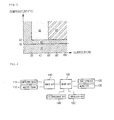
- Fig. 1 is a view illustrating a growing condition of microorganisms
- Fig. 2 is a block diagram illustrating a sterilizer according to an embodiment of the present invention
- Fig. 3 is a view illustrating an operational condition of a sterilizer according to a temperature and a humidity
- Fig. 4 is a view illustrating an mount of ozone introduced into an interior space by a sterilizing unit according to an embodiment of the present invention
- Figs. 5 through 7 are views illustrating an on/off duration of power applied to a sterilizer.
- Fig. 8 is a view illustrating a method for controlling a sterilizer according to an embodiment of the present invention.
- Fig. 1 is a view illustrating a growing condition of microorganisms.
- a generation amount of the mold and virus varies depending on the temperature and humidity and quickly increases in 60%RH state.
- virus spores are dispersed into the air to cause allergy, atopy, asthma, headache, and the like.
- the growing conditions can be divided using the temperature and humidity.
- the following will describe the growing condition of the mold and virus using the exemplary temperature and humidity.
- the region where the temperature is equal to or less than 18°C is a virus sustain region 30, in which the activity and generation amount of the virus is not significantly increased but the virus can grow.
- the region where the temperature is equal to or less than 22°C and the humidity is 20 ⁇ 60% is a mold sustain region 10 in which the activity and generation amount of the mold is not significantly increased but the mold grow.
- the region where the temperature is equal to or less than 22°C and the humidity is equal to or greater than 60% is a mold increase region where the activity and generation amount of the mold is significantly increased and thus the interior air quality may be steeply deteriorated.
- the region where the temperature is equal to or greater than 22°C and the humidity is equal to or less than 20% is a virus increase region where the activity and generation amount of the virus is increased and thus the interior air quality may be deteriorated.
- Fig. 2 is a block diagram of a sterilizer according to an embodiment of the present invention.
- a sterilizer of this embodiment includes a sensor unit 110 for detecting a growing condition of microorganisms of the interior space, a control unit 100 for allowing a proper amount of ozone to be generated according to a temperature/humidity detected by the sensor unit 11, a sterilizing unit 120 for generating the ozone according to the control of the control unit 100, a blower unit 130 for dispersing the ozone into the interior space according to the control of the control unit 100.
- the blower unit varies the airflow rate according to the control of the control unit 100.
- the sterilizer may further include an air conditioning unit 140 for heating and cooling the interior space and a ventilating unit 150 for ventilating the interior space.
- the sensor unit 110 includes a temperature sensor 111 for detecting an interior temperature and a humidity sensor 112 for detecting an interior humidity.
- the temperature and humidity sensors 111 and 112 may be placed at proper locations where the mold and virus can be grown.
- control unit 100 reads the temperature and/or humidity detected by the sensor unit 110 and controls an amount of the ozone supplied to the interior space and an airflow rate.
- the control unit 100 controls a ratio between a power-On duration and a power-Off duration to properly set the amount of the ozone.
- the control unit 100 controls a dispersing speed of the ozone into the interior space by controlling the airflow rate generated by the blower unit 130.
- control unit 100 can read the temperature and/or humidity of the interior space, which is detected by the sensor unit 110, while the ozone is supplied into the interior space by the sterilizing unit 120.
- control unit 100 can reset the driving condition of the sterilizer 120 and the blower unit 130. Accordingly, even when the microorganism growing condition of the interior space varies, the control unit 100 can control a generation amount of the ozone in response to the varied condition, thereby preventing the excessive ozone from being harmful to human.
- the sterilizer unit 120 may be a device that can generate the ozone using the plasma discharge.
- the sterilizer unit 120 may be a device that can generate the OH radical, negative ions, ozone, and the like using the DBD.
- the blower unit 130 functions to generate a wind pressure using a fan so that the ozone generated by the sterilizer 120 is supplied to the interior space. As the rpm of the fan varies, the wind pressure varies.
- the air conditioning unit 140 functions to heat and cool the interior space, including a compressor, a heat exchanger, and an expander.
- the heating and cooling of the interior space by the air conditioning unit 140 may be controlled by the control unit 100.
- the ventilating unit 150 functions to supply external fresh air to the interior space while exhausting polluted air to an external side.
- the ventilating unit 150 is also controlled by the control unit 100.
- Fig. 3 is a view illustrating an operational condition of the sterilizer.
- the sterilizer of the present invention is variably controlled according to conditions of regions divided according to the temperature and humidity of the interior space. That is, according to the growing condition of the microorganisms, a generation amount of the ozone by the sterilizing unit 120 varies.
- the interior space can be defined as a first region 210 where the growth of the mold can be stopped. In the first region 210, the activity and generation of the mold is not significantly increased but the mold can be still grown.
- control unit 100 significantly reduces the voltage applied to the sterilizing unit 120 to reduce the power consumption and prevent the ozone from being excessively supplied into the interior space.
- the interior space can be defined as a second region 220.
- the activity or generation amount of the mold can be steeply increased and thus the air quality of the interior space is steeply deteriorated.
- control unit 100 controls the sterilizing unit 120 and the blower unit 130 such that a large amount of ozone can be supplied into the interior space in a short time.
- the interior space may be further defined as a third region where the temperature detected by the sensor unit 110 is equal to or greater than A°C and the humidity is less than C% and a fourth region where the temperature detected by the sensor unit 110 is less than A°C.
- the activity and generation amount of the virus may be increased and thus the air quality may be deteriorated.
- the control unit 100 controls the sterilizing unit 120 such that a proper amount of the ozone can be supplied by adjusting a ratio between a power-on duration and a power-off duration of the power applied to the sterilizing unit 120.
- Fig. 4 is a view illustrating an amount of ozone introduced into an interior space by a sterilizing unit according to an embodiment of the present invention and Figs. 5 through 7 are views illustrating an on/off duration of power applied to a sterilizer.
- the control of the sterilizing unit 120 of the present embodiment of the present invention is realized by adjusting a ratio between the power-on duration and the power-off duration of the electric power applied to the sterilizing unit 120.
- the power applied to the sterilizing unit 120 is intermittently turned on.
- the sterilizing unit 120 when the temperature and humidity that are detected by the senor 110 correspond to the first region 210, the sterilizing unit 120 is operated with a first mode 310 so that an amount of the ozone in the interior space can be maintained at 18ppb as time goes.
- the sterilizing unit 120 is operated with a third mode 330 so that an amount of the ozone in the interior space can be maintained at 38048ppb as time goes.
- the sterilizing unit 120 operates with the first mode 310 or the third mode 330, the power-on duration is intermittently realized as shown in Fig. 6.
- an amount of the ozone supplied to the interior space is less than that of the third mode 330, and thus the power applied to the sterilizing unit 120 in the third mode 33 is set to be less than that of the first mode.
- the ratio between the power on-time 410 and the power-off time 400 is set as follows.
- the ratio of the power-on time 410 to the power-off time 400 is set at 0.2 ⁇ 0.05. This is for maintaining the amount of the ozone at 18ppb as shown in Fig. 4.
- the ratio of the power-on time 410 to the power-off time 400 is set at 0.1 ⁇ 0.05. This is for maintaining the amount of the ozone at 48ppb as shown in Fig. 4.
- the sterilizing unit 120 is operated with the second d mode 320 so that a maximum generation amount of the ozone supplied to the interior space can be 50ppb with a predetermined cycle.
- the sterilizing unit 120 operates with the second mode 310 or the third mode 330, the power-on and power-off durations 410 and 420 is intermittently realized as shown in Fig. 5.
- a break duration 420 where the power-off duration 400 is continuously maintained is provided, thereby completing one cycle.
- the ratio of the power-on time 410 to the power-off time 400 is set at 0.3 ⁇ 0.05. This is for that the increase and decrease of the generation of the ozone supplied to the interior space can be repeated with a predetermined cycle and thus the maximum amount of the ozone can be about 50ppb as shown in Fig. 4.
- the blower unit 130 is set to increase the wind pressure. This is for supplying a large amount of the ozone to the interior space in the second mode 320 in short time. This can be realized by increasing the rpm of the fan provided in the blower unit 130.
- the first through third modes 310, 320, 330 are divided according to the activity and generation amount of the microorganism. That is, as the activity and generation amount of the microorganisms increase, the power-on duration 410 of the power applied to the sterilizing unit 120 is set to be relatively high.
- the ozone may be generated by continuously applying a direct current power.
- this mode may be a manual mode where the amount of the ozone is controlled by a user. In this case, the amount of the ozone supplied to the interior space is continuously increased.
- the ventilating unit 150 ventilates the interior space.
- control unit 100 operates the ventilating unit 150 after the sterilizing unit 120 operates for a predetermined time, thereby reducing the amount of the ozone in the interior space.
- control unit 10 can detect the amount of the ozone in the interior space using the sensor. When the amount of the ozone reaches a preset level, the control unit 100 operates the ventilating unit 150 to reduce the amount of the ozone in the interior space.
- Fig. 8 is a view illustrating a method for controlling a sterilizer according to an embodiment of the present invention.
- the sterilizing unit when the sterilizing unit operates (S100), it is determined if the operation of the sterilizing unit is set as an automatic mode (S110).
- the automatic mode is for intermittently applying the power to the sterilizing unit, thereby reducing the power consumption of the sterilizing unit and preventing the ozone from being excessively supplied into the interior space.
- the control unit 100 continuously applies the direct current power to the sterilizing unit 120 so that the sterilizing unit 120 operates with the fourth mode 340 (S160).
- the control unit 100 reads the detected temperature and humidity.
- control unit 100 determines if the temperature detected by the sensor unit 110 is above A°C (S130). When the detected temperature is less than A°C, the sterilizing unit 120 is set to operate with the third mode 330 (S170).
- the control unit 110 sets the sterilizing unit 120 such that the sterilizing unit 120 operates with the second mode 320 (S180).
- the control unit 100 sets the sterilizing unit 120 such that the sterilizing unit 120 operates with the third mode 330 (S170).
- the sterilizing unit 120 is set to operate with the first mode 310 (S190).
- the operation mode (The first through third modes) of the sterilizing unit 120 is set and the sterilizing unit 120 is automatically operated according to the mode set (S200).
- the sterilizing unit 120 variably operates according to the temperature and humidity of the interior space, thereby reducing the power consumption and maintaining a proper amount of the ozone in the interior space.
- the sterilizing unit cooperates with the air conditioning unit that heats, cools, and ventilates the interior space.
- the sterilizing function for killing the microorganism such as mold and viruses as well as the air conditioning function can be realized.
Landscapes
- Engineering & Computer Science (AREA)
- Health & Medical Sciences (AREA)
- General Engineering & Computer Science (AREA)
- Chemical & Material Sciences (AREA)
- Combustion & Propulsion (AREA)
- Mechanical Engineering (AREA)
- Epidemiology (AREA)
- Life Sciences & Earth Sciences (AREA)
- Animal Behavior & Ethology (AREA)
- General Health & Medical Sciences (AREA)
- Public Health (AREA)
- Veterinary Medicine (AREA)
- Fluid Mechanics (AREA)
- Physics & Mathematics (AREA)
- Disinfection, Sterilisation Or Deodorisation Of Air (AREA)
- Apparatus For Disinfection Or Sterilisation (AREA)
Abstract
Description
- The present invention relates to a sterilizer, and more particularly, to a sterilizer and a method for controlling the same, which can generate a proper amount of ozone according to the growing condition of microorganisms, thereby minimizing the power consumption and preventing the sterilizer from being harmful to human.
- Generally, a variety of methods such as a high pressure/temperature treating method, a chemical treating method using ethylene oxide, an ultraviolet treating method, and a sterilizing method using plasma discharge has been used to sterilize microorganisms such as mold and viruses.
- The high pressure/temperature treating method uses a high pressure/temperature steam. This method may corrode metal and may not be applied to plastic.
- The chemical treating method using the ethylene oxide is excellent in a sterilizing treatment at a low temperature. However, the ethylene oxide is an inflammable and toxic material. Therefore, it must be very carefully treated. In addition, the toxic material may remain on the treated object.
- The ultraviolet treating method uses an ultraviolet lamp. A merit of this method is that it is convenient to use. However, a portion where the lamp does not directly contact is not sterilized.
- Therefore, the sterilizing method using the plasma discharge has been widely used. This method uses a high electron energy generated by a dielectric barrier discharge (DBD).
- That is, this method generates OH radical, negative ions, and ozone using the high electron energy to sterilize bacteria or mold and break the chemical connection chain of the volatile organic compositions.
- However, due to the high oxidation of the OH radical, negative ions and ozone generated by the plasma discharge, when these components are exposed to an enclosed environment, thereby may be harmful to human. Many countries including Korea propose a guideline of the ozone. In Korea, it is regulated that it cannot above 50ppb (parts per billion) for 24 hours.
- Meanwhile, in the convention sterilizer, a contact electric power must be continuously applied to generate the ozone. In this case, the ozone is satirized in the enclosed interior space and thus harmful to human.
- In addition, as the electric power is continuously applied, the power consumption increases and the sterilizer may be excessively operated, thereby increasing the maintenance costs of the sterilizer.
- Accordingly, the present invention is directed to a sterilizer and a method for controlling the same that substantially obviates one or more problems due to limitations and disadvantages of the related art.
- An object of the present invention is to provide a sterilizer and a method for controlling the same, which can variably control the control module, i.e., an amount of ozone and an airflow rate according to a growing condition of microorganisms.
- Another object of the present invention is to provide a sterilizer and a method for controlling the same, which can variably control the operation of the sterilizer according to the according to a growing condition of microorganisms, thereby preventing the sterilizer from excessively operating and from being harmful to human by the ozone saturation.
- Still another object of the present invention is to provide a sterilizer and a method for controlling the same, which can minimize the power consumption by properly adjusting the number of on/off times and on/off duration of the electric power, thereby reducing the maintenance costs of the sterilizer.
- Additional advantages, objects, and features of the invention will be set forth in part in the description which follows and in part will become apparent to those having ordinary skill in the art upon examination of the following or may be learned from practice of the invention. The objectives and other advantages of the invention may be realized and attained by the structure particularly pointed out in the written description and claims hereof as well as the appended drawings.
- To achieve these objects and other advantages and in accordance with the purpose of the invention, as embodied and broadly described herein, there is provided a sterilizer including: a sensor unit measuring a growing condition of microorganism; a sterilizing unit generating a microbicide for sterilizing the microorganisms; and a control unit controlling an operational condition of the sterilizing unit according to a growing condition of microorganisms detected by the sensor unit.
- In another aspect of the present invention, there is provided a sterilizer including: a sensor unit measuring a growing condition of microorganism; a sterilizing unit generating ozone for sterilizing the microorganisms; and a control unit determining an operational condition according to a growing condition of microorganisms detected by the sensor unit and controlling the sterilizing unit according to the determined condition; and a blower unit for distributing the ozone generated into an interior space.
- In still another aspect of the present invention, there is provided a method of controlling a sterilizer, including: determining an operational condition of a sterilizing unit according to a growing condition of microorganisms detected; and operating the sterilizing unit to generate ozone according to the determined operational condition.
- As proposed above, an amount of ozone and an airflow rate can vary according to a growing condition of microorganisms.
- In addition, since the operational condition of the sterilizing unit is variably set according to the growing condition of the microorganisms, the saturation of the ozone in the interior space can be prevented, thereby preventing the ozone from being harmful to human.
- Furthermore, the operation of the sterilizer can be variably controlled according to the according to a growing condition of microorganisms, thereby preventing the sterilizer from excessively operating and from being harmful to human by the ozone saturation.
- Still another object of the present invention is to provide a sterilizer and a method for controlling the same, which can minimize the power consumption by properly adjusting the number of on/off times and on/off duration of the electric power, thereby reducing the maintenance costs of the sterilizer.
- It is to be understood that both the foregoing general description and the following detailed description of the present invention are exemplary and explanatory and are intended to provide further explanation of the invention as claimed.
- The accompanying drawings, which are included to provide a further understanding of the invention and are incorporated in and constitute a part of this application, illustrate embodiment(s) of the invention and together with the description serve to explain the principle of the invention. In the drawings:
- Fig. 1 is a view illustrating a growing condition of microorganisms;
- Fig. 2 is a block diagram illustrating a sterilizer according to an embodiment of the present invention;
- Fig. 3 is a view illustrating an operational condition of a sterilizer according to a temperature and a humidity;
- Fig. 4 is a view illustrating an mount of ozone introduced into an interior space by a sterilizing unit according to an embodiment of the present invention;
- Figs. 5 through 7 are views illustrating an on/off duration of power applied to a sterilizer; and
- Fig. 8 is a view illustrating a method for controlling a sterilizer according to an embodiment of the present invention.
- Reference will now be made in detail to the preferred embodiments of the present invention, examples of which are illustrated in the accompanying drawings. The invention may, however, be embodied in many different forms and should not be construed as being limited to the embodiments set forth herein; rather, these embodiments are provided so that this disclosure will be thorough and complete, and will fully convey the concept of the invention to those skilled in the art.
- Fig. 1 is a view illustrating a growing condition of microorganisms.
- In the growing condition of FIG. 1, an example where mold and virus are used as viruses and the growing condition is divided into four regions is illustrated. However, the present invention is not limited to this example.
- That is, a generation amount of the mold and virus varies depending on the temperature and humidity and quickly increases in 60%RH state. During the growth, virus spores are dispersed into the air to cause allergy, atopy, asthma, headache, and the like.
- Therefore, the growing conditions can be divided using the temperature and humidity. The following will describe the growing condition of the mold and virus using the exemplary temperature and humidity.
- The region where the temperature is equal to or less than 18°C is a virus sustain
region 30, in which the activity and generation amount of the virus is not significantly increased but the virus can grow. - In addition, the region where the temperature is equal to or less than 22°C and the humidity is 20~60% is a mold
sustain region 10 in which the activity and generation amount of the mold is not significantly increased but the mold grow. - The region where the temperature is equal to or less than 22°C and the humidity is equal to or greater than 60% is a mold increase region where the activity and generation amount of the mold is significantly increased and thus the interior air quality may be steeply deteriorated.
- The region where the temperature is equal to or greater than 22°C and the humidity is equal to or less than 20% is a virus increase region where the activity and generation amount of the virus is increased and thus the interior air quality may be deteriorated.
- Fig. 2 is a block diagram of a sterilizer according to an embodiment of the present invention.
- Referring to Fig. 2, a sterilizer of this embodiment includes a
sensor unit 110 for detecting a growing condition of microorganisms of the interior space, acontrol unit 100 for allowing a proper amount of ozone to be generated according to a temperature/humidity detected by the sensor unit 11, asterilizing unit 120 for generating the ozone according to the control of thecontrol unit 100, ablower unit 130 for dispersing the ozone into the interior space according to the control of thecontrol unit 100. The blower unit varies the airflow rate according to the control of thecontrol unit 100. - In addition, the sterilizer may further include an
air conditioning unit 140 for heating and cooling the interior space and aventilating unit 150 for ventilating the interior space. - The
sensor unit 110 includes atemperature sensor 111 for detecting an interior temperature and ahumidity sensor 112 for detecting an interior humidity. The temperature andhumidity sensors - In addition, the
control unit 100 reads the temperature and/or humidity detected by thesensor unit 110 and controls an amount of the ozone supplied to the interior space and an airflow rate. - The
control unit 100 controls a ratio between a power-On duration and a power-Off duration to properly set the amount of the ozone. - The
control unit 100 controls a dispersing speed of the ozone into the interior space by controlling the airflow rate generated by theblower unit 130. - That is, the
control unit 100 can read the temperature and/or humidity of the interior space, which is detected by thesensor unit 110, while the ozone is supplied into the interior space by the sterilizingunit 120. - In this case, when the microorganism growing condition is different from a condition of the initial driving of the
sterilizer 120, thecontrol unit 100 can reset the driving condition of thesterilizer 120 and theblower unit 130. Accordingly, even when the microorganism growing condition of the interior space varies, thecontrol unit 100 can control a generation amount of the ozone in response to the varied condition, thereby preventing the excessive ozone from being harmful to human. - Here, the
sterilizer unit 120 may be a device that can generate the ozone using the plasma discharge. Particularly, thesterilizer unit 120 may be a device that can generate the OH radical, negative ions, ozone, and the like using the DBD. - The
blower unit 130 functions to generate a wind pressure using a fan so that the ozone generated by thesterilizer 120 is supplied to the interior space. As the rpm of the fan varies, the wind pressure varies. - The
air conditioning unit 140 functions to heat and cool the interior space, including a compressor, a heat exchanger, and an expander. The heating and cooling of the interior space by theair conditioning unit 140 may be controlled by thecontrol unit 100. - The ventilating
unit 150 functions to supply external fresh air to the interior space while exhausting polluted air to an external side. The ventilatingunit 150 is also controlled by thecontrol unit 100. - Fig. 3 is a view illustrating an operational condition of the sterilizer.
- Referring to Fig. 3, the sterilizer of the present invention is variably controlled according to conditions of regions divided according to the temperature and humidity of the interior space. That is, according to the growing condition of the microorganisms, a generation amount of the ozone by the sterilizing
unit 120 varies. - That is, when the temperature measured by the
sensor unit 110 is equal to or greater than A°C and the humidity is C-B%, the interior space can be defined as afirst region 210 where the growth of the mold can be stopped. In thefirst region 210, the activity and generation of the mold is not significantly increased but the mold can be still grown. - Therefore, when it is determined that the interior space is defined as the
first region 210, thecontrol unit 100 significantly reduces the voltage applied to the sterilizingunit 120 to reduce the power consumption and prevent the ozone from being excessively supplied into the interior space. - In addition, when the temperature detected by the
sensor unit 110 is equal to or greater than A°C and the humidity detected by thesensor unit 110 is B%, the interior space can be defined as asecond region 220. In thesecond region 220, the activity or generation amount of the mold can be steeply increased and thus the air quality of the interior space is steeply deteriorated. - Therefore, when it is determined that the interior space is defined as the
second region 220, thecontrol unit 100 controls the sterilizingunit 120 and theblower unit 130 such that a large amount of ozone can be supplied into the interior space in a short time. - Meanwhile, the interior space may be further defined as a third region where the temperature detected by the
sensor unit 110 is equal to or greater than A°C and the humidity is less than C% and a fourth region where the temperature detected by thesensor unit 110 is less than A°C. - In the
third region 230, the activity and generation amount of the virus may be increased and thus the air quality may be deteriorated. - Therefore, when it is determined that the interior space is defined as the
third region 230, thecontrol unit 100 controls the sterilizingunit 120 such that a proper amount of the ozone can be supplied by adjusting a ratio between a power-on duration and a power-off duration of the power applied to the sterilizingunit 120. - Fig. 4 is a view illustrating an amount of ozone introduced into an interior space by a sterilizing unit according to an embodiment of the present invention and Figs. 5 through 7 are views illustrating an on/off duration of power applied to a sterilizer.
- Referring to Figs. 4 through 7, the control of the sterilizing
unit 120 of the present embodiment of the present invention is realized by adjusting a ratio between the power-on duration and the power-off duration of the electric power applied to the sterilizingunit 120. Particularly, the power applied to the sterilizingunit 120 is intermittently turned on. - In one embodiment, when the temperature and humidity that are detected by the
senor 110 correspond to thefirst region 210, the sterilizingunit 120 is operated with afirst mode 310 so that an amount of the ozone in the interior space can be maintained at 18ppb as time goes. - When the temperature and humidity that are detected by the
senor 110 correspond to thethird region 230, the sterilizingunit 120 is operated with athird mode 330 so that an amount of the ozone in the interior space can be maintained at 38048ppb as time goes. - That is, when the sterilizing
unit 120 operates with thefirst mode 310 or thethird mode 330, the power-on duration is intermittently realized as shown in Fig. 6. - When the sterilizing
unit 120 operates with thefirst mode 310, an amount of the ozone supplied to the interior space is less than that of thethird mode 330, and thus the power applied to the sterilizingunit 120 in the third mode 33 is set to be less than that of the first mode. - Meanwhile, when the sterilizing
unit 120 operates with thefirst mode 310 or thethird mode 330, the ratio between the power on-time 410 and the power-off time 400 is set as follows. - When the sterilizing
unit 120 operates with thefirst mode 310, the ratio of the power-ontime 410 to the power-off time 400 is set at 0.2±0.05. This is for maintaining the amount of the ozone at 18ppb as shown in Fig. 4. - When the sterilizing
unit 120 operates with thethird mode 330, the ratio of the power-ontime 410 to the power-off time 400 is set at 0.1±0.05. This is for maintaining the amount of the ozone at 48ppb as shown in Fig. 4. - When the temperature and humidity that are detected by the
senor 110 correspond to thesecond region 220, the sterilizingunit 120 is operated with thesecond d mode 320 so that a maximum generation amount of the ozone supplied to the interior space can be 50ppb with a predetermined cycle. - That is, when the sterilizing
unit 120 operates with thesecond mode 310 or thethird mode 330, the power-on and power-off durations - Then, after the power-on duration 41 and power-off are performed by a predetermined times, a
break duration 420 where the power-off duration 400 is continuously maintained is provided, thereby completing one cycle. - When the sterilizing
unit 120 operates with thesecond mode 320, the ratio of the power-ontime 410 to the power-off time 400 is set at 0.3±0.05. This is for that the increase and decrease of the generation of the ozone supplied to the interior space can be repeated with a predetermined cycle and thus the maximum amount of the ozone can be about 50ppb as shown in Fig. 4. - In addition, when the sterilizing
unit 120 operates with thesecond mode 320, theblower unit 130 is set to increase the wind pressure. This is for supplying a large amount of the ozone to the interior space in thesecond mode 320 in short time. This can be realized by increasing the rpm of the fan provided in theblower unit 130. - The first through
third modes duration 410 of the power applied to the sterilizingunit 120 is set to be relatively high. - In addition to the intermittent setting of the on/off
durations 400 and 41 of the power applied to the sterilizingunit 120, as shown in Fig. 7, the ozone may be generated by continuously applying a direct current power. - That is, when the When the sterilizing
unit 120 operates with thefourth mode 340, this mode may be a manual mode where the amount of the ozone is controlled by a user. In this case, the amount of the ozone supplied to the interior space is continuously increased. - In order to prevent the ozone from be excessively supplied in the
fourth mode 340, the ventilatingunit 150 ventilates the interior space. - To achieve this, the
control unit 100 operates theventilating unit 150 after thesterilizing unit 120 operates for a predetermined time, thereby reducing the amount of the ozone in the interior space. In addition, thecontrol unit 10 can detect the amount of the ozone in the interior space using the sensor. When the amount of the ozone reaches a preset level, thecontrol unit 100 operates theventilating unit 150 to reduce the amount of the ozone in the interior space. - Fig. 8 is a view illustrating a method for controlling a sterilizer according to an embodiment of the present invention.
- Referring to Fig. 8, when the sterilizing unit operates (S100), it is determined if the operation of the sterilizing unit is set as an automatic mode (S110). The automatic mode is for intermittently applying the power to the sterilizing unit, thereby reducing the power consumption of the sterilizing unit and preventing the ozone from being excessively supplied into the interior space.
- If the operation mode of the sterilizing unit is not set at the automatic mode but the manual mode, the
control unit 100 continuously applies the direct current power to the sterilizingunit 120 so that the sterilizingunit 120 operates with the fourth mode 340 (S160). - However, when the operation mode of the sterilizing unit is set at the automatic mode, the temperature and humidity of the interior space is detected by the sensor unit 110 (S120), and the
control unit 100 reads the detected temperature and humidity. - Then, the
control unit 100 determines if the temperature detected by thesensor unit 110 is above A°C (S130). When the detected temperature is less than A°C, the sterilizingunit 120 is set to operate with the third mode 330 (S170). - When the detected temperature is equal to or greater than A°C, it is determined if the humidity detected by the
sensor unit 110 is less than B% (S140). When the detected humidity is less than B%, thecontrol unit 110 sets the sterilizingunit 120 such that the sterilizingunit 120 operates with the second mode 320 (S180). - When the detected humidity is less than B%, it is further determined if the humidity is equal to or greater than C% that is less than B% (S150). When the detected humidity is less than C%, the
control unit 100 sets the sterilizingunit 120 such that the sterilizingunit 120 operates with the third mode 330 (S170). In addition, when the measured humidity is equal to or greater than C%, the sterilizingunit 120 is set to operate with the first mode 310 (S190). - As described above, when the sterilizing unit is set to operate with the automatic mode, the operation mode (The first through third modes) of the sterilizing
unit 120 is set and the sterilizingunit 120 is automatically operated according to the mode set (S200). - By the above-described method, the sterilizing
unit 120 variably operates according to the temperature and humidity of the interior space, thereby reducing the power consumption and maintaining a proper amount of the ozone in the interior space. - In addition, the sterilizing unit cooperates with the air conditioning unit that heats, cools, and ventilates the interior space. In this case, the sterilizing function for killing the microorganism such as mold and viruses as well as the air conditioning function can be realized.
- It will be apparent to those skilled in the art that various modifications and variations can be made in the present invention. Thus, it is intended that the present invention covers the modifications and variations of this invention provided they come within the scope of the appended claims and their equivalents.
Claims (19)
- A sterilizer for killing microorganisms contained in air, characterized in that the sterilizer comprises:a sensor unit measuring a growing condition of microorganism;a sterilizing unit generating a microbicide for sterilizing the microorganisms; anda control unit controlling an operational condition of the sterilizing unit according to a growing condition detected by the sensor unit.
- The sterilizer according to claim 1, characterized in that the growing condition of the microorganisms is determined by a temperature and a humidity.
- The sterilizer according to claim 1, characterized in that a ratio between an on-during and an off-duration of a power applied to the sterilizing unit varies according to the growing condition of the microorganisms detected by the sensor unit.
- The sterilizer according to claim 1, characterized in that the sensor unit comprises a temperature sensor detecting the temperature and a humidity sensor detecting the humidity
- The sterilizer according to claim 1, characterized in that the sterilizer is applied to an air conditioner heating and cooling the air.
- The sterilizer according to claim 1, characterized in that the sterilizer further comprises a blower unit for dispersing the microbicide from the sterilizing unit into the interior space.
- The sterilizer according to claim 1, characterized in that the microbicide includes ozone generated by a plasma discharge.
- The sterilizer according to claim 1, characterized in that the sterilizer further comprises an ozone detecting sensor detecting an amount of ozone distributed in the interior space and a ventilating unit operated according to the amount of the ozone detected by the ozone detecting sensor.
- The sterilizer according to claim 1, characterized in that the sterilizer further comprises an air conditioning unit cooperating with the sterilizing unit and controlled by the control unit.
- The sterilizer according to claim 1, characterized in that the control unit controls the sterilizer such that the sterilizer operates with an automatic or manual mode.
- The sterilizer according to claim 10, characterized in that, in the automatic mode, the on/off duration of the sterilizing is periodically or non-periodically realized by the control unit.
- The sterilizer according to claim 10, characterized in that, in the manual mode, the on-duration of the sterilizing unit is continuously maintained.
- A method of controlling a sterilizer for killing microorganisms, characterized in that the method comprises:determining an operational condition of an sterilizing unit according to a growing condition of microorganisms detected; andoperating the sterilizing unit to generate ozone according to the determined operational condition.
- The method according to claim 13, characterized in that the growing condition of the microorganisms is determined depending on a temperature and a humidity.
- The method according to claim 13, characterized in that an on/off cycle or on/off duration of the sterilizing unit varies according to the growing condition of the microorganisms.
- The method according to claim 13, characterized in that the growing condition of the microorganisms are continuously detected during the operation of the sterilizing unit to vary the operational condition of the sterilizing unit.
- The method according to claim 13, further comprising operating a blower unit so that the ozone generated from the sterilizing unit into the interior space.
- The method according to claim 17, characterized in that a generation amount of the ozone and wind pressure of the blower unit vary according to the growing condition of the microorganisms.
- The method according to claim 13, characterized in that a sterilizing process of the sterilizing unit is performed by synchronizing with an air conditioner performing the heating and cooling.
Applications Claiming Priority (1)
| Application Number | Priority Date | Filing Date | Title |
|---|---|---|---|
| KR20050107909 | 2005-11-11 |
Publications (1)
| Publication Number | Publication Date |
|---|---|
| EP1785152A1 true EP1785152A1 (en) | 2007-05-16 |
Family
ID=37806137
Family Applications (1)
| Application Number | Title | Priority Date | Filing Date |
|---|---|---|---|
| EP06291750A Withdrawn EP1785152A1 (en) | 2005-11-11 | 2006-11-10 | Sterilizer and method for controlling the same |
Country Status (4)
| Country | Link |
|---|---|
| US (1) | US20070154344A1 (en) |
| EP (1) | EP1785152A1 (en) |
| JP (1) | JP2007130483A (en) |
| CN (1) | CN1961967A (en) |
Cited By (1)
| Publication number | Priority date | Publication date | Assignee | Title |
|---|---|---|---|---|
| KR100934482B1 (en) * | 2007-09-18 | 2009-12-30 | (주)창조엔지니어링 | Sterilization apparatus using ozone plasma and its driving method |
Families Citing this family (16)
| Publication number | Priority date | Publication date | Assignee | Title |
|---|---|---|---|---|
| WO2008103719A1 (en) * | 2007-02-22 | 2008-08-28 | Uv03, Inc. | Sterilizer |
| US8128869B2 (en) * | 2009-10-05 | 2012-03-06 | Hussmann Corporation | Air sanitization system with variable speed fan |
| GB2487379A (en) * | 2011-01-18 | 2012-07-25 | Bioquell Uk Ltd | Control of decontamination cycles |
| EP2620164A1 (en) * | 2012-01-26 | 2013-07-31 | O3 Technology Research & Development AB | A method for disinfecting a given facility or equipment and a mobile disinfection unit for use in the method |
| CN103055332B (en) * | 2012-12-31 | 2014-09-17 | 云南航天工业有限公司 | Atmospheric dielectric barrier discharge plasma sterilization device |
| CN103344018A (en) * | 2013-06-30 | 2013-10-09 | 镇江雷明特种光源有限公司 | Built-in disinfection and sterilization device of central air conditioner pipeline |
| CN106237356B (en) * | 2015-10-30 | 2019-03-15 | 小米科技有限责任公司 | The method and device that head toothbrushes are sterilized |
| CN106979577A (en) * | 2016-01-15 | 2017-07-25 | 天津悦利科技有限公司 | A kind of air cleaning system |
| JP6874414B2 (en) * | 2017-02-17 | 2021-05-19 | 株式会社大林組 | Dismantling method |
| JP6993197B2 (en) * | 2017-11-28 | 2022-02-04 | 日本特殊陶業株式会社 | Ozone generation system |
| US10614696B2 (en) * | 2017-12-19 | 2020-04-07 | Winston Johnson | Sterile wet pack detector system |
| CN109114742B (en) * | 2018-07-27 | 2021-04-20 | 广东美的制冷设备有限公司 | Control method, control device, air conditioner, remote control terminal, server and storage medium |
| CN109357332A (en) * | 2018-09-11 | 2019-02-19 | 梁云 | Microbial control system for cleaning work area and method of use |
| CN110578997A (en) * | 2019-08-13 | 2019-12-17 | 上海朗绿建筑科技股份有限公司 | sterilization control method and system for air treatment unit |
| CN111397159A (en) * | 2020-04-17 | 2020-07-10 | 宁波奥克斯电气股份有限公司 | Antivirus air conditioner control method and device and air conditioner |
| CN112181000A (en) * | 2020-09-26 | 2021-01-05 | 上海东健净化股份有限公司 | Intelligent control system of plasma air sterilizing machine |
Citations (5)
| Publication number | Priority date | Publication date | Assignee | Title |
|---|---|---|---|---|
| DE4213778A1 (en) * | 1991-10-30 | 1993-05-06 | Kesslertech Gmbh | Air conditioning and processing for home and work-places - filtering out harmful products and controlling ozone level by unit responding to sensor inputs |
| WO2003089017A1 (en) * | 2002-04-16 | 2003-10-30 | Prompt Care, Inc. | Method for abatement of allergens, pathogens and volatile organic compounds |
| WO2003101498A2 (en) * | 2001-11-02 | 2003-12-11 | Pure 03 Tech, Inc | Decontamination system for chemical and biological agents |
| EP1440695A1 (en) * | 2003-01-21 | 2004-07-28 | Jörg Dipl.-Ing. Lehmann | Process for activating oxygen from air for the destruction of VOCs and germs in closed rooms and for maintaining oxygen and ozone concentrations equal to those occuring in nature |
| CA2525523A1 (en) * | 2003-05-14 | 2004-11-25 | Sharp Kabushiki Kaisha | Ion generator and air conditioning apparatus |
Family Cites Families (4)
| Publication number | Priority date | Publication date | Assignee | Title |
|---|---|---|---|---|
| DK0567775T3 (en) * | 1992-04-28 | 1995-12-04 | Humanair Patentverwertung Gmbh | Method for treating room air for the human area |
| US5820828A (en) * | 1996-06-28 | 1998-10-13 | Ferone; Daniel A. | Modular ozone distributing system |
| US7407624B2 (en) * | 2002-04-16 | 2008-08-05 | Prompt Care, Inc. | Method for abatement of allergens, pathogens and volatile organic compounds |
| KR100640800B1 (en) * | 2005-05-03 | 2006-11-02 | 엘지전자 주식회사 | Ventilator with humidity control and sterilization unit and control method |
-
2006
- 2006-11-09 US US11/558,039 patent/US20070154344A1/en not_active Abandoned
- 2006-11-10 EP EP06291750A patent/EP1785152A1/en not_active Withdrawn
- 2006-11-10 JP JP2006305811A patent/JP2007130483A/en not_active Withdrawn
- 2006-11-13 CN CNA2006101463932A patent/CN1961967A/en active Pending
Patent Citations (5)
| Publication number | Priority date | Publication date | Assignee | Title |
|---|---|---|---|---|
| DE4213778A1 (en) * | 1991-10-30 | 1993-05-06 | Kesslertech Gmbh | Air conditioning and processing for home and work-places - filtering out harmful products and controlling ozone level by unit responding to sensor inputs |
| WO2003101498A2 (en) * | 2001-11-02 | 2003-12-11 | Pure 03 Tech, Inc | Decontamination system for chemical and biological agents |
| WO2003089017A1 (en) * | 2002-04-16 | 2003-10-30 | Prompt Care, Inc. | Method for abatement of allergens, pathogens and volatile organic compounds |
| EP1440695A1 (en) * | 2003-01-21 | 2004-07-28 | Jörg Dipl.-Ing. Lehmann | Process for activating oxygen from air for the destruction of VOCs and germs in closed rooms and for maintaining oxygen and ozone concentrations equal to those occuring in nature |
| CA2525523A1 (en) * | 2003-05-14 | 2004-11-25 | Sharp Kabushiki Kaisha | Ion generator and air conditioning apparatus |
Cited By (1)
| Publication number | Priority date | Publication date | Assignee | Title |
|---|---|---|---|---|
| KR100934482B1 (en) * | 2007-09-18 | 2009-12-30 | (주)창조엔지니어링 | Sterilization apparatus using ozone plasma and its driving method |
Also Published As
| Publication number | Publication date |
|---|---|
| CN1961967A (en) | 2007-05-16 |
| US20070154344A1 (en) | 2007-07-05 |
| JP2007130483A (en) | 2007-05-31 |
Similar Documents
| Publication | Publication Date | Title |
|---|---|---|
| EP1785152A1 (en) | Sterilizer and method for controlling the same | |
| JP4396688B2 (en) | Air conditioner and operation method thereof | |
| JPH09126485A (en) | Air conditioner equipped with sterilizer and control method thereof | |
| JP2004097289A (en) | Toothbrush storage device with disinfection function | |
| CA2451496C (en) | Ultraviolet lamp assembly | |
| JP2004174138A (en) | Environmental control equipment | |
| CA2667127A1 (en) | Ozone sterilization process and apparatus | |
| JP3448686B2 (en) | Mold control method and air conditioner | |
| JP3477950B2 (en) | Refrigeration and air conditioning equipment | |
| CN114688686A (en) | Method and device for controlling ultraviolet sterilization of air conditioner, air conditioner and storage medium | |
| JP2004211959A (en) | Bathroom air conditioner | |
| JP2007159820A (en) | Ozone sterilization method and apparatus | |
| CN113467549B (en) | Air disinfection purifier and filter screen temperature control method thereof | |
| JP3744784B2 (en) | Air conditioner with ion generator | |
| JP4825190B2 (en) | Air conditioner | |
| KR20050037261A (en) | Controlling method for sterilization of air-conditioner | |
| JP2006153316A (en) | Vaporizing humidifier | |
| KR20040017470A (en) | Air- cleaning apparatus for Heating, Ventilation, and Air Conditioning controls on vehicle | |
| CN111895615A (en) | Air conditioner and purification control method thereof | |
| JP2008243824A (en) | Lighting equipment with air purification function | |
| JP2003329288A (en) | Mold control method and air conditioner | |
| RU2347158C2 (en) | Cooling device | |
| JP2019115454A (en) | Space sterilization and deodorization system | |
| KR100457973B1 (en) | Apparatus for pasteurizing a bacterium which inhabit Evaporator of Air Conditioner | |
| JPH0731795A (en) | Drying machine with sterilizing and deodorizing function |
Legal Events
| Date | Code | Title | Description |
|---|---|---|---|
| PUAI | Public reference made under article 153(3) epc to a published international application that has entered the european phase |
Free format text: ORIGINAL CODE: 0009012 |
|
| 17P | Request for examination filed |
Effective date: 20061123 |
|
| AK | Designated contracting states |
Kind code of ref document: A1 Designated state(s): AT BE BG CH CY CZ DE DK EE ES FI FR GB GR HU IE IS IT LI LT LU LV MC NL PL PT RO SE SI SK TR |
|
| AX | Request for extension of the european patent |
Extension state: AL BA HR MK YU |
|
| 17Q | First examination report despatched |
Effective date: 20071228 |
|
| AKX | Designation fees paid |
Designated state(s): DE FR GB |
|
| STAA | Information on the status of an ep patent application or granted ep patent |
Free format text: STATUS: THE APPLICATION IS DEEMED TO BE WITHDRAWN |
|
| 18D | Application deemed to be withdrawn |
Effective date: 20080508 |