EP1781005A1 - Centralized personal directory scheme for communications networks - Google Patents
Centralized personal directory scheme for communications networks Download PDFInfo
- Publication number
- EP1781005A1 EP1781005A1 EP06011170A EP06011170A EP1781005A1 EP 1781005 A1 EP1781005 A1 EP 1781005A1 EP 06011170 A EP06011170 A EP 06011170A EP 06011170 A EP06011170 A EP 06011170A EP 1781005 A1 EP1781005 A1 EP 1781005A1
- Authority
- EP
- European Patent Office
- Prior art keywords
- calling party
- caller
- communications network
- character
- stored
- Prior art date
- Legal status (The legal status is an assumption and is not a legal conclusion. Google has not performed a legal analysis and makes no representation as to the accuracy of the status listed.)
- Granted
Links
Images


Classifications
-
- H—ELECTRICITY
- H04—ELECTRIC COMMUNICATION TECHNIQUE
- H04M—TELEPHONIC COMMUNICATION
- H04M3/00—Automatic or semi-automatic exchanges
- H04M3/42—Systems providing special services or facilities to subscribers
- H04M3/487—Arrangements for providing information services, e.g. recorded voice services or time announcements
- H04M3/493—Interactive information services, e.g. directory enquiries ; Arrangements therefor, e.g. interactive voice response [IVR] systems or voice portals
- H04M3/4931—Directory assistance systems
-
- H—ELECTRICITY
- H04—ELECTRIC COMMUNICATION TECHNIQUE
- H04M—TELEPHONIC COMMUNICATION
- H04M2201/00—Electronic components, circuits, software, systems or apparatus used in telephone systems
- H04M2201/38—Displays
-
- H—ELECTRICITY
- H04—ELECTRIC COMMUNICATION TECHNIQUE
- H04M—TELEPHONIC COMMUNICATION
- H04M3/00—Automatic or semi-automatic exchanges
- H04M3/42—Systems providing special services or facilities to subscribers
- H04M3/42025—Calling or Called party identification service
- H04M3/42034—Calling party identification service
- H04M3/42042—Notifying the called party of information on the calling party
-
- H—ELECTRICITY
- H04—ELECTRIC COMMUNICATION TECHNIQUE
- H04M—TELEPHONIC COMMUNICATION
- H04M3/00—Automatic or semi-automatic exchanges
- H04M3/42—Systems providing special services or facilities to subscribers
- H04M3/42025—Calling or Called party identification service
- H04M3/42034—Calling party identification service
- H04M3/42059—Making use of the calling party identifier
-
- H—ELECTRICITY
- H04—ELECTRIC COMMUNICATION TECHNIQUE
- H04M—TELEPHONIC COMMUNICATION
- H04M3/00—Automatic or semi-automatic exchanges
- H04M3/42—Systems providing special services or facilities to subscribers
- H04M3/42025—Calling or Called party identification service
- H04M3/42085—Called party identification service
- H04M3/42093—Notifying the calling party of information on the called or connected party
-
- H—ELECTRICITY
- H04—ELECTRIC COMMUNICATION TECHNIQUE
- H04M—TELEPHONIC COMMUNICATION
- H04M3/00—Automatic or semi-automatic exchanges
- H04M3/42—Systems providing special services or facilities to subscribers
- H04M3/42025—Calling or Called party identification service
- H04M3/42085—Called party identification service
- H04M3/42102—Making use of the called party identifier
Definitions
- the present invention relates generally to providing personalized caller identification. More particularly, the present invention relates to providing a centralized personal directory scheme with corresponding digit tree processing within a communications network.
- caller ID is a well known.
- Caller ID is currently used within either landline or mobile telecommunications.
- each caller has a corresponding unique identifier typically in terms of the caller's telephone number.
- a mechanism on the called party end of the communications link is enabled to distinguish and display such unique identifier prior to fully establishing a communication link. While such a system is useful, there is the limitation that the unique identifier in the form of the caller's telephone number is only useful if the called party recognizes the actual telephone number.
- alpha tagging allows users to associate a text string with any given caller ID (or extension number) that is displayed on their telephone set when receiving or making a call involving that caller ID (or extension number).
- the text string is personal to the user and the same caller ID may be included in the personal directory of more than one user. For example, several users may have different alpha tags for the same number - e.g., the number for "Dino's Pizzeria & Take-Out” could be "Pizza" for one user, "Delivery” for another user, and “Dinner” for yet another user.
- Some telephones and other physical telecommunications devices implement alpha tagging by enabling a user to store several phone numbers and associate such phone numbers with an alphabetic name or term.
- (613) 555-2323 may correspond to a particular take-out restaurant focussing on vegetarian food and operating under the name of "Veggies On The Run.”
- a patron of such restaurant may program their telephone to associate "Veggies” to correspond with (613) 555-2323. If such restaurant were to call the patron, the caller ID mechanism with their telephone would recognize (613) 555-2323 and display the associated, prestored term "Veggies" on the patron's caller ID display.
- the same telephone could be used to store other frequent contacts and associated telephone numbers.
- the personal directory of stored alpha tags and numbers is referenced to determine whether a text string has been configured for the instant caller ID (or extension number). If so, the text string is displayed on the device rather than the caller ID (or extension number).
- a system directory can also be referenced when no personal directory entry exists. Additionally, if desired a department/tenant scope directory can also be used before checking the system directory to provide more flexibility in alpha tagging delivery. Such systems are limited, however, by the memory of the telephone or device used to store the alpha tag and number data. While memory storage capacity has become less of a concern as the cost of memory has been reduced over time, access time can be a considerable issue if a significant amount of fixed memory allocation is to be scanned.
- the personal directory may be more centralized. Within such centralized systems, independent personal directory facilities may exist for a group of users that would require considerable system memory space. Such centralized systems often limit each user to a fixed personal directory size of only 10 or 20 possible entries.
- a hash mechanism (or resource management facility) is used to share a pool of personal directory entries between all users or groups of users. The hash mechanism identifies a hash table bucket that is a linked list or table of entries. Each entry includes the user identity, the full caller ID (or significant abbreviation), and the associated alpha tag. A caller ID (or extension number) is then transformed into a hash table bucket, many to one, and the corresponding bucket entries are searched for the matching caller ID and user identifier.
- the present invention therefore provides a centralized personal directory scheme having corresponding digit tree processing and useful within a communications network.
- the present invention uses digit tree processing along with a non-diallable digit capability in order to provide for direct de-referencing of personal numbers where no searching of entries is required.
- the present invention also prevents collisions in data configuration/manipulation between users (or systems).
- the present invention distinguishes between internal and external numbers (and other categories). Further, the present invention is applicable to corporate alpha tagging as well as personal alpha tagging, including department/tenant delineation.
- the present invention can support a downloadable personal directory for provisioning any applicable software interface by downloading the associated digit tree branch of the present invention. Still further, the present invention can support "wild card" digits and dialling conflict resolution automatically. Moreover, fixed allocation of system memory space is not required for personal directories implemented via the present invention.
- the present invention provides an apparatus for personalized calling party number determination and identification, the apparatus including an interface for receiving a calling party number corresponding to a calling party, a memory for storing an alpha tag corresponding to the calling party number, and a processor coupled to the interface.
- the processor includes instructions to determine a character indicating presence of a character string including a unique identifier portion, a classification portion, and a calling party portion, wherein the processor correlates the alpha tag to the calling party upon matching the calling party portion of the character string to the calling party number stored in the memory.
- a method for personalized calling party number determination and identification including receiving from a calling party a call message within a communications network, determining from the call message, a non-diallable character indicating presence of a character string including a unique identifier portion, a classification portion, and a calling party portion, upon determination of the non-diallable character, correlating a stored alpha tag with the calling party upon matching the calling party portion of the character string to a stored calling party number, and displaying the stored alpha tag.
- the present invention provides a method for personalized calling party number determination and identification, the method including receiving, within a communications network, an outgoing call message to a known calling party number, determining from the call message, a non-diallable character indicating presence of a character string including a unique identifier portion, a classification portion, and a calling party portion, upon determination of the non-diallable character, correlating a stored alpha tag with the known calling party number upon matching the calling party portion of the character string to a stored calling party number; and displaying the stored alpha tag.
- the present invention provides a method and system for providing personalized caller identification including a centralized personal directory scheme with corresponding digit tree processing within a communications network.
- a centralized personal directory scheme with corresponding digit tree processing within a communications network.
- the invention is described in terms of incoming calls only. However, it should be readily apparent that the present invention applies to both incoming and outgoing calls such that a personal directory may be used for outgoing calls as well as incoming calls
- a basic digit tree building block is shown and includes fields (nodes) for numeric digits 0 through 9 along with the "*" and "#" characters. To avoid increasing the storage requirements of digit string pools, the digit block shown also includes nodes for time out (T), pause (P), and flash (F). Three wildcard digits, N, X, and Y are allotted for other features not related to the present discussion.
- the basic digit tree building block shown also includes a node for a special character (I). This special character is described further below.
- FIGURE 2 shows one possible embodiment of a special string 200 of the present invention including the special character, unique identifier, classification indicator (i.e., internal/external indicator), caller's phone number, and caller's area code.
- the special character is a " ⁇ " character, but may of course be any single or multiple characters.
- the unique identifier is the given called number that, for instance, may be indicated as "4001" for "extension 4001" within a corporate communications network. Such extensions may of course be longer or shorter and the related unique identifiers would therefore be longer or shorter correspondingly.
- the internal/external indicator may be a single character indicating the nature of the caller's number - e.g., "1" for internal, "0" for external - and may also be other single or multiple characters depending upon the variety of caller types in any given system.
- Traversal of the digit tree is represented by element 15 and is accomplished in a known manner including, but not limited to, a call processing engine is typically used for processing the called number and includes one or more known type of computer processors.
- the called number includes a special character " ⁇ " though it should be understood that not all incoming calls will include such special character such that the incoming call can be processed in like manner with or without the special character to arrive at the termination device 20.
- the call processing engine receives digits and performs digit translation until a termination 20 is found at a device that corresponds to the called number.
- the special character is a hidden, non-diallable digit, for example " ⁇ ", within the system digit tree for use as a prefix to alpha tagging digit tree entries.
- the special character is identified 30 whereby a special string is generated and further processed by a special digit tree processing 100 formed by digit blocks 31 through 39. Blocks between digit blocks 37 and 38 are omitted for clarity of illustration.
- each digit block may be included within each digit block, in addition to numerals 0 through 9 and the special character " ⁇ ", such as field delimiters (not shown for clarity).
- field delimiters may be used to indicate where, for instance, the unique identifier ends and the internal/external indicator begins.
- the field delimiter could be any character such as, but not limited to, "*" or "#”.
- Such field delimiters may be useful especially when the unique identifier is within a range of digits.
- the unique identifier may be only four digits as shown in FIGURE 2, may be only three, or may be as many as seven digits depending upon the number of extensions within the communications network utilizing the invention.
- the field delimiter may be omitted altogether if the information regarding the internal/external indicator were to be retained upon generation of the special string.
- This information regarding internal/external context could be retained, for instance, within a journal block as an internal/external flag during digit translation along with other information typically retained during normal translation operations.
- the special digit tree processing 100 subsequent to identification of the special character, e.g., " ⁇ " first processes the unique user identifier (preferably the user's extension number) as shown at digit blocks 31 through 34.
- the processing indicated at a block 35 shows processing of a classification indicator.
- the classification indicator shown preferably indicates a "1" for calls made internal to a network (e.g., intra-corporate) and a "0" for call made external to a closed network (e.g., from the public switched telephone network, PSTN).
- the caller ID digits indicating the digits of the calling external number (or extension number if deemed internal) are processed via blocks 36 through 39.
- the example shown may be for a caller ID of "613-592-0000.”
- the area code "613" may or may not be considered in digit translation depending upon the given implementation of the present invention.
- the final block 39 ends with translation of the digit "5" as the final translation before personalized identification 40 is made that associates the abbreviated number 592-0000 with some stored alpha tagging text string - e.g., "Veggies Restaurant” for the caller ID "592-0000.”
- a classification indicator of, for example "1” indicating an internal (e.g., intra-corporate) caller ID may require even less digit translation because only three, four, or five extension digits would be necessarily processed in most types of corporate enterprise systems.
- the caller's phone number obtained as caller ID for an incoming call, or as a keypad entry for an outgoing call would include a standard seven characters along with three more characters for the caller's area code.
- the caller's phone number and caller's area code would preferably be arranged in reverse order.
- the special string 200 shown in FIGURE 2 is indicative of a caller having the phone number (613) 592-0000 where the called extension is 4001. It is possible to implement the present invention without reversing the order of digits.
- any given personalized identification e.g., "Veggies Restaurant”
- digit matching to any given personalized identification would be facilitated by identifying the most specific possible match (i.e., extensions such as "0000") prior to the most general possible match (i.e., area codes such as "613"). This would accordingly reduce processing time in an advantageous manner.
- the classification indicator reveals that the caller is an internal number, and then perhaps only the first four subsequent characters would be necessary to translate in the digit translation process (shown as 100 in FIGURE 3).
- FIGURE 4 a flowchart illustrating the methodology of alpha tag de-referencing in accordance with the present invention is shown.
- the incoming call will of course have the call destination determined and if the personal alpha tag feature is deemed present by the identification of the special character, then a special string is generated.
- the special string is built in accordance with that shown in FIGURE 2 by building upon the caller-ID with the called party prefix. If no special character is found, then no further action in regards to the invention is taken. This is of course possible, as the present invention is an optional feature. If found though, and after the special string is generated, the digits are traversed until no further digits remain to traverse.
- the digit traversal will ideally point to a swid (software ID) that will correspond to a stored entry. If no match is made, then of course no action need be taken. However, upon indication of a match, the special string will then de-reference an alpha tag string that corresponds to a personalized entry. That entry is then displayed on some user interface utilizing the present invention.
- Such interface may be a desktop telephone set, a software based computer screen interface, or any related interface including, but not limited to, audio and/or visual mechanisms.
- the alpha tag string may be translated into an audio form by use of a .wav file or the like.
- classification indicators can be used to further distinguish between types of entries in the personal digit tree other than simply internal and external calling parties. Such entries would not be limited to directory numbers but could also apply to alpha tagging for account codes, as an example.
- An indicator of whether the alpha tagging text string is private may also be stored within the digit sequence (or associated with the text string itself). The privacy indicator would be used to prevent display of the entry in a system configuration.
- the hidden, non-diallable digit may be any single identifier or combination of identifiers that would prefix the personal directory entries.
- the use of a digit tree may be replaced by any other mechanism for managing digit translations.
- the digit tree mechanism may be expanded to include alphanumeric characters (in addition to the standard diallable digits) for application in areas where digits are insufficient.
- the present invention could also be applied to management of personal contacts within a corporate contact database (where contacts are indexed by telephone numbers).
- the prefix identifier can be used to ensure only authorized individual(s) can view and/or modify the entries.
- the present invention may be applied when a user has access to personalize (or of limited access) data stored in a centralized (or distributed/replicated) repository. Further, the present invention may be applied where users are uniquely identified by a user ID that are each used to access their data within the repository.
- the special string of the present invention results in a unique and useful method of digit translation.
- a method is implemented to translate a given caller ID (or extension number) into a digit string using a given user identifier.
- the method includes insertion or removal of a text string reference in the digit tree using the digit string provided by the aforementioned method and described in detail above.
- the present inventive digit tree translation method serves to de-reference an associated text string using a digit string and applying appropriate abbreviation matching rules based on classification indicator as described above.
- the Caller ID that a user enters in their personal directory is reversed when stored in the digit tree to facilitate matching of abbreviated digits.
- Abbreviated digits are considered to be any shortened string of digits less than the extended (i.e., full) phone number such as "1-(613)-592-0000".
- the method applies the classification indicator to distinguish between the significant abbreviation that can be applied. Numbers designated as internal cannot be abbreviated and must match exactly (for example, 004 is not a valid match for 2004). Numbers designated as external will match if the abbreviated form matches the caller ID dialed or received on an incoming call. In such a way, the area code may be ignored so long as duplicates do not exist for the abbreviations.
Landscapes
- Engineering & Computer Science (AREA)
- Signal Processing (AREA)
- Telephonic Communication Services (AREA)
- Sub-Exchange Stations And Push- Button Telephones (AREA)
Abstract
Description
- The present invention relates generally to providing personalized caller identification. More particularly, the present invention relates to providing a centralized personal directory scheme with corresponding digit tree processing within a communications network.
- Within the field of telecommunications, the concept of calling party identification (i.e. "caller ID") is a well known. Caller ID is currently used within either landline or mobile telecommunications. In such known caller ID systems, each caller has a corresponding unique identifier typically in terms of the caller's telephone number. A mechanism on the called party end of the communications link is enabled to distinguish and display such unique identifier prior to fully establishing a communication link. While such a system is useful, there is the limitation that the unique identifier in the form of the caller's telephone number is only useful if the called party recognizes the actual telephone number. To alleviate this, alpha tagging allows users to associate a text string with any given caller ID (or extension number) that is displayed on their telephone set when receiving or making a call involving that caller ID (or extension number). The text string is personal to the user and the same caller ID may be included in the personal directory of more than one user. For example, several users may have different alpha tags for the same number - e.g., the number for "Dino's Pizzeria & Take-Out" could be "Pizza" for one user, "Delivery" for another user, and "Dinner" for yet another user.
- Some telephones and other physical telecommunications devices implement alpha tagging by enabling a user to store several phone numbers and associate such phone numbers with an alphabetic name or term. For instance, (613) 555-2323 may correspond to a particular take-out restaurant focussing on vegetarian food and operating under the name of "Veggies On The Run." A patron of such restaurant may program their telephone to associate "Veggies" to correspond with (613) 555-2323. If such restaurant were to call the patron, the caller ID mechanism with their telephone would recognize (613) 555-2323 and display the associated, prestored term "Veggies" on the patron's caller ID display. Similarly, the same telephone could be used to store other frequent contacts and associated telephone numbers. When an incoming call arrives, the personal directory of stored alpha tags and numbers is referenced to determine whether a text string has been configured for the instant caller ID (or extension number). If so, the text string is displayed on the device rather than the caller ID (or extension number). A system directory can also be referenced when no personal directory entry exists. Additionally, if desired a department/tenant scope directory can also be used before checking the system directory to provide more flexibility in alpha tagging delivery. Such systems are limited, however, by the memory of the telephone or device used to store the alpha tag and number data. While memory storage capacity has become less of a concern as the cost of memory has been reduced over time, access time can be a considerable issue if a significant amount of fixed memory allocation is to be scanned.
- In addition to maintaining a personal directory within a telephone or some such telecommunications device itself, the personal directory may be more centralized. Within such centralized systems, independent personal directory facilities may exist for a group of users that would require considerable system memory space. Such centralized systems often limit each user to a fixed personal directory size of only 10 or 20 possible entries. Alternatively, a hash mechanism (or resource management facility) is used to share a pool of personal directory entries between all users or groups of users. The hash mechanism identifies a hash table bucket that is a linked list or table of entries. Each entry includes the user identity, the full caller ID (or significant abbreviation), and the associated alpha tag. A caller ID (or extension number) is then transformed into a hash table bucket, many to one, and the corresponding bucket entries are searched for the matching caller ID and user identifier.
- Within local networks such as a corporate enterprise setting, such access time and memory allocation issues become significant concerns. It is, therefore, desirable to provide an improved and robust caller identification mechanism for use within such communications networks.
- It is an object of the present invention to obviate or mitigate at least one disadvantage of previous caller identification mechanisms. The present invention therefore provides a centralized personal directory scheme having corresponding digit tree processing and useful within a communications network. The present invention uses digit tree processing along with a non-diallable digit capability in order to provide for direct de-referencing of personal numbers where no searching of entries is required. The present invention also prevents collisions in data configuration/manipulation between users (or systems). As well, the present invention distinguishes between internal and external numbers (and other categories). Further, the present invention is applicable to corporate alpha tagging as well as personal alpha tagging, including department/tenant delineation. The present invention can support a downloadable personal directory for provisioning any applicable software interface by downloading the associated digit tree branch of the present invention. Still further, the present invention can support "wild card" digits and dialling conflict resolution automatically. Moreover, fixed allocation of system memory space is not required for personal directories implemented via the present invention.
- In a first aspect, the present invention provides an apparatus for personalized calling party number determination and identification, the apparatus including an interface for receiving a calling party number corresponding to a calling party, a memory for storing an alpha tag corresponding to the calling party number, and a processor coupled to the interface. The processor includes instructions to determine a character indicating presence of a character string including a unique identifier portion, a classification portion, and a calling party portion, wherein the processor correlates the alpha tag to the calling party upon matching the calling party portion of the character string to the calling party number stored in the memory.
- In a further embodiment, there is provided a method for personalized calling party number determination and identification, the method including receiving from a calling party a call message within a communications network, determining from the call message, a non-diallable character indicating presence of a character string including a unique identifier portion, a classification portion, and a calling party portion, upon determination of the non-diallable character, correlating a stored alpha tag with the calling party upon matching the calling party portion of the character string to a stored calling party number, and displaying the stored alpha tag.
- In a further aspect, the present invention provides a method for personalized calling party number determination and identification, the method including receiving, within a communications network, an outgoing call message to a known calling party number, determining from the call message, a non-diallable character indicating presence of a character string including a unique identifier portion, a classification portion, and a calling party portion, upon determination of the non-diallable character, correlating a stored alpha tag with the known calling party number upon matching the calling party portion of the character string to a stored calling party number; and displaying the stored alpha tag.
- Other aspects and features of the present invention will become apparent to those ordinarily skilled in the art upon review of the following description of specific embodiments of the invention in conjunction with the accompanying figures.
- Embodiments of the present invention will now be described, by way of example only, with reference to the attached Figures, wherein:
- FIGURE 1 is a schematic illustrating a digit block including a special character node in accordance with the present invention;
- FIGURE 2 is a schematic illustrating a special string in accordance with the present invention;
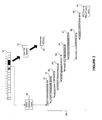
- FIGURE 3 is a schematic illustrating digit tree traversal of the digit block shown in
- FIGURE 1 along with parallel generation and traversal of the special string shown in
- FIGURE 2 in accordance with the present invention; and
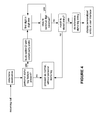
- FIGURE 4 is a flowchart showing the methodology of alpha tag de-referencing in accordance with the present invention.
- Generally, the present invention provides a method and system for providing personalized caller identification including a centralized personal directory scheme with corresponding digit tree processing within a communications network. For purposes of clarity, the invention is described in terms of incoming calls only. However, it should be readily apparent that the present invention applies to both incoming and outgoing calls such that a personal directory may be used for outgoing calls as well as incoming calls
- With reference to FIGURE 1, a basic digit tree building block is shown and includes fields (nodes) for
numeric digits 0 through 9 along with the "*" and "#" characters. To avoid increasing the storage requirements of digit string pools, the digit block shown also includes nodes for time out (T), pause (P), and flash (F). Three wildcard digits, N, X, and Y are allotted for other features not related to the present discussion. In accordance with the present invention, the basic digit tree building block shown also includes a node for a special character (I). This special character is described further below. - FIGURE 2 shows one possible embodiment of a
special string 200 of the present invention including the special character, unique identifier, classification indicator (i.e., internal/external indicator), caller's phone number, and caller's area code. In the example shown, the special character is a "~" character, but may of course be any single or multiple characters. The unique identifier is the given called number that, for instance, may be indicated as "4001" for "extension 4001" within a corporate communications network. Such extensions may of course be longer or shorter and the related unique identifiers would therefore be longer or shorter correspondingly. The internal/external indicator may be a single character indicating the nature of the caller's number - e.g., "1" for internal, "0" for external - and may also be other single or multiple characters depending upon the variety of caller types in any given system. - With reference to FIGURE 3, a
digit block 10 as described in regard to FIGURE 1 including the special character as "~" mentioned above in regard to FIGURE 2. Traversal of the digit tree is represented byelement 15 and is accomplished in a known manner including, but not limited to, a call processing engine is typically used for processing the called number and includes one or more known type of computer processors. In the instance shown, the called number includes a special character "~" though it should be understood that not all incoming calls will include such special character such that the incoming call can be processed in like manner with or without the special character to arrive at thetermination device 20. In other words, the call processing engine receives digits and performs digit translation until atermination 20 is found at a device that corresponds to the called number. The special character is a hidden, non-diallable digit, for example "~", within the system digit tree for use as a prefix to alpha tagging digit tree entries. In parallel withdigit translation 15, the special character is identified 30 whereby a special string is generated and further processed by a specialdigit tree processing 100 formed bydigit blocks 31 through 39. Blocks between digit blocks 37 and 38 are omitted for clarity of illustration. - It should be understood that other characters may be included within each digit block, in addition to
numerals 0 through 9 and the special character "~", such as field delimiters (not shown for clarity). Such field delimiters may be used to indicate where, for instance, the unique identifier ends and the internal/external indicator begins. The field delimiter could be any character such as, but not limited to, "*" or "#". Such field delimiters may be useful especially when the unique identifier is within a range of digits. For example, the unique identifier may be only four digits as shown in FIGURE 2, may be only three, or may be as many as seven digits depending upon the number of extensions within the communications network utilizing the invention. Alternatively, the field delimiter may be omitted altogether if the information regarding the internal/external indicator were to be retained upon generation of the special string. This information regarding internal/external context could be retained, for instance, within a journal block as an internal/external flag during digit translation along with other information typically retained during normal translation operations. - The special
digit tree processing 100 subsequent to identification of the special character, e.g., "~", first processes the unique user identifier (preferably the user's extension number) as shown at digit blocks 31 through 34. The processing indicated at ablock 35 shows processing of a classification indicator. The classification indicator shown preferably indicates a "1" for calls made internal to a network (e.g., intra-corporate) and a "0" for call made external to a closed network (e.g., from the public switched telephone network, PSTN). The caller ID digits indicating the digits of the calling external number (or extension number if deemed internal) are processed viablocks 36 through 39. The example shown may be for a caller ID of "613-592-0000." - It should be noted the area code "613" may or may not be considered in digit translation depending upon the given implementation of the present invention. As shown in FIGURE 2, the
final block 39 ends with translation of the digit "5" as the final translation beforepersonalized identification 40 is made that associates the abbreviated number 592-0000 with some stored alpha tagging text string - e.g., "Veggies Restaurant" for the caller ID "592-0000." Still further, it should be readily apparent as suggested above that a classification indicator of, for example "1" indicating an internal (e.g., intra-corporate) caller ID may require even less digit translation because only three, four, or five extension digits would be necessarily processed in most types of corporate enterprise systems. - With further reference to FIGURE 2, the caller's phone number obtained as caller ID for an incoming call, or as a keypad entry for an outgoing call, would include a standard seven characters along with three more characters for the caller's area code. The caller's phone number and caller's area code would preferably be arranged in reverse order. For example, the
special string 200 shown in FIGURE 2 is indicative of a caller having the phone number (613) 592-0000 where the called extension is 4001. It is possible to implement the present invention without reversing the order of digits. However, digit matching to any given personalized identification (e.g., "Veggies Restaurant") would be facilitated by identifying the most specific possible match (i.e., extensions such as "0000") prior to the most general possible match (i.e., area codes such as "613"). This would accordingly reduce processing time in an advantageous manner. Further, if the classification indicator reveals that the caller is an internal number, and then perhaps only the first four subsequent characters would be necessary to translate in the digit translation process (shown as 100 in FIGURE 3). - In regard to FIGURE 4, a flowchart illustrating the methodology of alpha tag de-referencing in accordance with the present invention is shown. In each call instance, the incoming call will of course have the call destination determined and if the personal alpha tag feature is deemed present by the identification of the special character, then a special string is generated. The special string is built in accordance with that shown in FIGURE 2 by building upon the caller-ID with the called party prefix. If no special character is found, then no further action in regards to the invention is taken. This is of course possible, as the present invention is an optional feature. If found though, and after the special string is generated, the digits are traversed until no further digits remain to traverse. Upon such instance, the digit traversal will ideally point to a swid (software ID) that will correspond to a stored entry. If no match is made, then of course no action need be taken. However, upon indication of a match, the special string will then de-reference an alpha tag string that corresponds to a personalized entry. That entry is then displayed on some user interface utilizing the present invention. Such interface may be a desktop telephone set, a software based computer screen interface, or any related interface including, but not limited to, audio and/or visual mechanisms. For instance, the alpha tag string may be translated into an audio form by use of a .wav file or the like.
- As suggested above, further alternatives in terms of the classification indicators are possible and considered to be well within the intended scope of the present invention. For instance, additional classification indicators can be used to further distinguish between types of entries in the personal digit tree other than simply internal and external calling parties. Such entries would not be limited to directory numbers but could also apply to alpha tagging for account codes, as an example. An indicator of whether the alpha tagging text string is private may also be stored within the digit sequence (or associated with the text string itself). The privacy indicator would be used to prevent display of the entry in a system configuration.
- Yet further, the hidden, non-diallable digit may be any single identifier or combination of identifiers that would prefix the personal directory entries. As well, the use of a digit tree may be replaced by any other mechanism for managing digit translations. The digit tree mechanism may be expanded to include alphanumeric characters (in addition to the standard diallable digits) for application in areas where digits are insufficient.
- It is yet further appreciable that the present invention could also be applied to management of personal contacts within a corporate contact database (where contacts are indexed by telephone numbers). In such instance, the prefix identifier can be used to ensure only authorized individual(s) can view and/or modify the entries. By extension, the present invention may be applied when a user has access to personalize (or of limited access) data stored in a centralized (or distributed/replicated) repository. Further, the present invention may be applied where users are uniquely identified by a user ID that are each used to access their data within the repository.
- In operation, the special string of the present invention results in a unique and useful method of digit translation. Specifically, a method is implemented to translate a given caller ID (or extension number) into a digit string using a given user identifier. As well, the method includes insertion or removal of a text string reference in the digit tree using the digit string provided by the aforementioned method and described in detail above. In addition, the present inventive digit tree translation method serves to de-reference an associated text string using a digit string and applying appropriate abbreviation matching rules based on classification indicator as described above. Within such inventive method, the Caller ID that a user enters in their personal directory is reversed when stored in the digit tree to facilitate matching of abbreviated digits. Abbreviated digits are considered to be any shortened string of digits less than the extended (i.e., full) phone number such as "1-(613)-592-0000". The method applies the classification indicator to distinguish between the significant abbreviation that can be applied. Numbers designated as internal cannot be abbreviated and must match exactly (for example, 004 is not a valid match for 2004). Numbers designated as external will match if the abbreviated form matches the caller ID dialed or received on an incoming call. In such a way, the area code may be ignored so long as duplicates do not exist for the abbreviations.
- The above-described embodiments of the present invention are intended to be examples only. Alterations, modifications and variations may be effected to the particular embodiments by those of skill in the art without departing from the scope of the invention, which is defined solely by the claims appended hereto.
Claims (27)
- An apparatus for personalized calling party number determination and identification, said apparatus comprising:an interface for receiving a calling party number corresponding to a calling party;a memory for storing an alpha tag corresponding to said calling party number; anda processor coupled to said interface, said processor including instructions to determine a character indicating presence of a character string including a unique identifier portion, a classification portion, and a calling party portion;wherein said processor correlates said alpha tag to said calling party upon matching said calling party portion of said character string to said calling party number stored in said memory.
- The apparatus as claimed in Claim 1, wherein said processor is a call process engine using digit tree processing.
- The apparatus as claimed in Claim 2, wherein said calling party number received by said interface is a standard caller identification (caller ID) associated with said calling party number.
- The apparatus as claimed in Claim 3, wherein said character determined by said processor is a hidden, non-diallable character.
- The apparatus as claimed in Claim 4, wherein said classification portion of said character string includes one or more characters to indicate whether said calling party is internal or external relative to a communications network that includes said apparatus.
- The apparatus as claimed in Claim 5, wherein said calling party portion includes a caller's extended phone number.
- The apparatus as claimed in Claim 5, wherein said calling party portion is capable of including a caller's extended phone number.
- The apparatus as claimed in Claim 5, wherein said calling party portion is capable of including a caller's abbreviated phone number.
- The apparatus as claimed in Claim 5, wherein said memory resides centrally within said communications system that includes said apparatus.
- A method for personalized calling party number determination and identification, said method comprising:receiving from a calling party a call message within a communications network;determining from said call message, a non-diallable character indicating presence of a character string including a unique identifier portion, a classification portion, and a calling party portion;upon determination of said non-diallable character, correlating a stored alpha tag with said calling party upon matching said calling party portion of said character string to a stored calling party number; anddisplaying said stored alpha tag.
- The method as claimed in Claim 10, wherein said stored alpha tag is a user-generated alphabetic identifier stored within a centralized memory of said communications network.
- The method as claimed in Claim 11, wherein receiving step occurs at an interface of said communications network and said determining and correlating steps occur within a call process engine using digit tree processing.
- The method as claimed in Claim 12, wherein said calling party number received by said interface is a standard caller identification (caller ID) associated with said calling party.
- The method as claimed in Claim 13, wherein said classification portion of said character string includes one or more characters to indicate whether said calling party is internal or external relative to said communications network.
- The method as claimed in Claim 14, wherein said calling party portion includes a caller's extended phone number.
- The method as claimed in Claim 14, wherein said calling party portion is capable of including a caller's extended phone number.
- The method as claimed in Claim 14, wherein said calling party portion is capable of including a caller's abbreviated phone number.
- The method as claimed in Claim 14, wherein said call message is an incoming message to said communications network.
- The method as claimed in Claim 14, wherein said call message is an outgoing message from within said communications network.
- A method for personalized calling party number determination and identification, said method comprising:receiving, within a communications network, an outgoing call message to a known calling party number;determining from said call message, a non-diallable character indicating presence of a character string including a unique identifier portion, a classification portion, and a calling party portion;upon determination of said non-diallable character, correlating a stored alpha tag with said known calling party number upon matching said calling party portion of said character string to a stored calling party number; anddisplaying said stored alpha tag.
- The method as claimed in Claim 20, wherein said stored alpha tag is a user-generated alphabetic identifier stored within a centralized memory of said communications network.
- The method as claimed in Claim 21, wherein receiving step occurs at an interface of said communications network and said determining and correlating steps occur within a call process engine using digit tree processing.
- The method as claimed in Claim 22, wherein said known calling party number received by said interface is a standard caller identification (caller ID) associated with said known calling party number.
- The method as claimed in Claim 23, wherein said classification portion of said character string includes one or more characters to indicate whether said known calling party number is internal or external relative to said communications network.
- The method as claimed in Claim 24, wherein said calling party portion includes a known caller's extended phone number.
- The method as claimed in Claim 24, wherein said calling party portion is capable of including a known caller's extended phone number.
- The method as claimed in Claim 24, wherein said calling party portion is capable of including a known caller's abbreviated phone number.
Applications Claiming Priority (1)
| Application Number | Priority Date | Filing Date | Title |
|---|---|---|---|
| US11/259,090 US7778400B2 (en) | 2005-10-27 | 2005-10-27 | Centralized personal directory scheme for communications networks |
Publications (3)
| Publication Number | Publication Date |
|---|---|
| EP1781005A1 true EP1781005A1 (en) | 2007-05-02 |
| EP1781005B1 EP1781005B1 (en) | 2011-05-11 |
| EP1781005B9 EP1781005B9 (en) | 2011-09-21 |
Family
ID=37734438
Family Applications (1)
| Application Number | Title | Priority Date | Filing Date |
|---|---|---|---|
| EP06011170A Active EP1781005B9 (en) | 2005-10-27 | 2006-05-31 | Centralized personal directory scheme for communications networks |
Country Status (3)
| Country | Link |
|---|---|
| US (1) | US7778400B2 (en) |
| EP (1) | EP1781005B9 (en) |
| CA (1) | CA2544008C (en) |
Families Citing this family (6)
| Publication number | Priority date | Publication date | Assignee | Title |
|---|---|---|---|---|
| US8654966B2 (en) * | 2007-01-24 | 2014-02-18 | Audiocodes Ltd. | Method for dial plan parsing and a system incorporating the same |
| JP4905259B2 (en) * | 2007-06-05 | 2012-03-28 | 富士通株式会社 | Connection system, connection system control method, and connection system control program |
| US8175239B2 (en) * | 2008-05-29 | 2012-05-08 | Alcatel Lucent | Method and apparatus for efficient abbreviated dialing |
| JP5882602B2 (en) * | 2011-05-20 | 2016-03-09 | キヤノン株式会社 | Image forming apparatus, image forming apparatus control method, and program |
| US10929346B2 (en) | 2016-11-14 | 2021-02-23 | Tuxera, Inc. | Systems and methods for storing large files using file allocation table based file systems |
| US10838913B2 (en) * | 2016-11-14 | 2020-11-17 | Tuxera, Inc. | Systems and methods for storing large files using file allocation table based file systems |
Citations (2)
| Publication number | Priority date | Publication date | Assignee | Title |
|---|---|---|---|---|
| WO1994024802A1 (en) * | 1993-04-15 | 1994-10-27 | Bellsouth Corporation | System for communicating with an adsi-compatible telephone via a service circuit node |
| US6658455B1 (en) * | 1999-12-30 | 2003-12-02 | At&T Corp. | Method and system for an enhanced network and customer premise equipment personal directory |
Family Cites Families (10)
| Publication number | Priority date | Publication date | Assignee | Title |
|---|---|---|---|---|
| CA2119085C (en) | 1994-03-15 | 2002-01-15 | Mitel Corporation | Adaptive communication system |
| US6301353B1 (en) * | 1996-03-07 | 2001-10-09 | Mitel Corporation | Common automatic route selection leading digit strings |
| EP0932312A4 (en) * | 1997-03-13 | 2004-11-03 | Toshiba Kk | Private branch exchange |
| CA2243781C (en) * | 1997-08-22 | 2006-08-01 | Mitel Corporation | Dynamic communications group |
| US6324272B1 (en) * | 1999-10-29 | 2001-11-27 | Lucent Technologies Inc. | Telecommunication calling party number determination and manipulation |
| US6449475B1 (en) * | 1999-12-20 | 2002-09-10 | Qualcomm, Incorporated | System and method for matching calls to electronic phonebook entries |
| US6542591B1 (en) * | 2000-07-27 | 2003-04-01 | International Business Machines Corporation | Method and system for caller identification callback lists |
| GB2370721A (en) | 2000-10-31 | 2002-07-03 | Advanced American Telephones | Cordless telephone with computer interface |
| JP4791656B2 (en) * | 2001-07-03 | 2011-10-12 | オーチス エレベータ カンパニー | Floor height variable double deck elevator |
| US6813344B1 (en) * | 2001-08-29 | 2004-11-02 | Palm Source, Inc. | Method and system for providing information for identifying callers based on a partial number |
-
2005
- 2005-10-27 US US11/259,090 patent/US7778400B2/en active Active
-
2006
- 2006-04-18 CA CA2544008A patent/CA2544008C/en not_active Expired - Lifetime
- 2006-05-31 EP EP06011170A patent/EP1781005B9/en active Active
Patent Citations (2)
| Publication number | Priority date | Publication date | Assignee | Title |
|---|---|---|---|---|
| WO1994024802A1 (en) * | 1993-04-15 | 1994-10-27 | Bellsouth Corporation | System for communicating with an adsi-compatible telephone via a service circuit node |
| US6658455B1 (en) * | 1999-12-30 | 2003-12-02 | At&T Corp. | Method and system for an enhanced network and customer premise equipment personal directory |
Also Published As
| Publication number | Publication date |
|---|---|
| US7778400B2 (en) | 2010-08-17 |
| CA2544008A1 (en) | 2007-04-27 |
| EP1781005B1 (en) | 2011-05-11 |
| EP1781005B9 (en) | 2011-09-21 |
| US20070116219A1 (en) | 2007-05-24 |
| CA2544008C (en) | 2011-09-20 |
Similar Documents
| Publication | Publication Date | Title |
|---|---|---|
| EP2462735B1 (en) | Systems and methods for disambiguating entries in a contacts list database implemented on a mobile device | |
| US11303748B2 (en) | Location based masked communication | |
| JP4982348B2 (en) | Mobile phone communication system and mobile phone communication method | |
| US7039172B2 (en) | Dual language caller ID with asian language support | |
| US8189562B2 (en) | Method and system for providing dynamic speed-dial list | |
| JP2010268178A (en) | Telephone directory management system, and telephone directory management method | |
| EP0892540B1 (en) | Location - specific method and system for processing message storage | |
| US7778400B2 (en) | Centralized personal directory scheme for communications networks | |
| US20040120504A1 (en) | System for the automatic update of a subscriber's telephone number directory | |
| US20040042613A1 (en) | Method and apparatus for translating a dialed string entered by a calling party | |
| FI119673B (en) | Process for processing an address book and communication device using the same | |
| US20070036288A1 (en) | Personalized telephone number | |
| GB2310566A (en) | Telephone call handling system | |
| JP4208076B2 (en) | Private branch exchange system | |
| JPH03162052A (en) | Telephone incoming call management system | |
| JP2000041109A (en) | Multiplex telephone number management method | |
| KR100262343B1 (en) | Device of directory service using calling number and method thereof | |
| KR100621727B1 (en) | How to save phone number of communication device that supports calling number display | |
| KR100644899B1 (en) | How to search phone book of mobile terminal | |
| JPH11298610A (en) | Telephone exchange system | |
| JP2006019826A (en) | Communication device | |
| CA2155767A1 (en) | Portable directory number in pabx cluster | |
| JPH09270854A (en) | Call destination telephone number management method and management system thereof | |
| ITRM990252A1 (en) | TECHNIQUE OF AUTOMATIC ACCESS TO THE LIST OF SUBSCRIBERS INFORMATION BY USING THE MOBILE KEYBOARD. |
Legal Events
| Date | Code | Title | Description |
|---|---|---|---|
| PUAI | Public reference made under article 153(3) epc to a published international application that has entered the european phase |
Free format text: ORIGINAL CODE: 0009012 |
|
| 17P | Request for examination filed |
Effective date: 20060622 |
|
| AK | Designated contracting states |
Kind code of ref document: A1 Designated state(s): AT BE BG CH CY CZ DE DK EE ES FI FR GB GR HU IE IS IT LI LT LU LV MC NL PL PT RO SE SI SK TR |
|
| AX | Request for extension of the european patent |
Extension state: AL BA HR MK YU |
|
| 17Q | First examination report despatched |
Effective date: 20070625 |
|
| AKX | Designation fees paid |
Designated state(s): DE FR GB |
|
| GRAP | Despatch of communication of intention to grant a patent |
Free format text: ORIGINAL CODE: EPIDOSNIGR1 |
|
| GRAS | Grant fee paid |
Free format text: ORIGINAL CODE: EPIDOSNIGR3 |
|
| GRAA | (expected) grant |
Free format text: ORIGINAL CODE: 0009210 |
|
| AK | Designated contracting states |
Kind code of ref document: B1 Designated state(s): DE FR GB |
|
| REG | Reference to a national code |
Ref country code: GB Ref legal event code: FG4D |
|
| REG | Reference to a national code |
Ref country code: DE Ref legal event code: R096 Ref document number: 602006021842 Country of ref document: DE Effective date: 20110622 |
|
| PLBE | No opposition filed within time limit |
Free format text: ORIGINAL CODE: 0009261 |
|
| STAA | Information on the status of an ep patent application or granted ep patent |
Free format text: STATUS: NO OPPOSITION FILED WITHIN TIME LIMIT |
|
| 26N | No opposition filed |
Effective date: 20120214 |
|
| REG | Reference to a national code |
Ref country code: DE Ref legal event code: R097 Ref document number: 602006021842 Country of ref document: DE Effective date: 20120214 |
|
| REG | Reference to a national code |
Ref country code: FR Ref legal event code: PLFP Year of fee payment: 11 |
|
| REG | Reference to a national code |
Ref country code: FR Ref legal event code: PLFP Year of fee payment: 12 |
|
| REG | Reference to a national code |
Ref country code: FR Ref legal event code: PLFP Year of fee payment: 13 |
|
| REG | Reference to a national code |
Ref country code: FR Ref legal event code: PLFP Year of fee payment: 18 |
|
| PGFP | Annual fee paid to national office [announced via postgrant information from national office to epo] |
Ref country code: DE Payment date: 20250402 Year of fee payment: 20 |
|
| PGFP | Annual fee paid to national office [announced via postgrant information from national office to epo] |
Ref country code: GB Payment date: 20250401 Year of fee payment: 20 |
|
| PGFP | Annual fee paid to national office [announced via postgrant information from national office to epo] |
Ref country code: FR Payment date: 20250401 Year of fee payment: 20 |