EP1781002B1 - Verfahren und mobiles Kommunikationsendgerät zur automatischen Bluetooth-Verbindung mit einer Schnelltaste - Google Patents
Verfahren und mobiles Kommunikationsendgerät zur automatischen Bluetooth-Verbindung mit einer Schnelltaste Download PDFInfo
- Publication number
- EP1781002B1 EP1781002B1 EP06122830.0A EP06122830A EP1781002B1 EP 1781002 B1 EP1781002 B1 EP 1781002B1 EP 06122830 A EP06122830 A EP 06122830A EP 1781002 B1 EP1781002 B1 EP 1781002B1
- Authority
- EP
- European Patent Office
- Prior art keywords
- key
- bluetooth
- mobile communication
- short
- communication terminal
- Prior art date
- Legal status (The legal status is an assumption and is not a legal conclusion. Google has not performed a legal analysis and makes no representation as to the accuracy of the status listed.)
- Not-in-force
Links
Images



Classifications
-
- H—ELECTRICITY
- H04—ELECTRIC COMMUNICATION TECHNIQUE
- H04W—WIRELESS COMMUNICATION NETWORKS
- H04W12/00—Security arrangements; Authentication; Protecting privacy or anonymity
- H04W12/06—Authentication
-
- H—ELECTRICITY
- H04—ELECTRIC COMMUNICATION TECHNIQUE
- H04L—TRANSMISSION OF DIGITAL INFORMATION, e.g. TELEGRAPHIC COMMUNICATION
- H04L63/00—Network architectures or network communication protocols for network security
- H04L63/04—Network architectures or network communication protocols for network security for providing a confidential data exchange among entities communicating through data packet networks
- H04L63/0428—Network architectures or network communication protocols for network security for providing a confidential data exchange among entities communicating through data packet networks wherein the data content is protected, e.g. by encrypting or encapsulating the payload
- H04L63/0492—Network architectures or network communication protocols for network security for providing a confidential data exchange among entities communicating through data packet networks wherein the data content is protected, e.g. by encrypting or encapsulating the payload by using a location-limited connection, e.g. near-field communication or limited proximity of entities
-
- H—ELECTRICITY
- H04—ELECTRIC COMMUNICATION TECHNIQUE
- H04M—TELEPHONIC COMMUNICATION
- H04M1/00—Substation equipment, e.g. for use by subscribers
- H04M1/72—Mobile telephones; Cordless telephones, i.e. devices for establishing wireless links to base stations without route selection
- H04M1/724—User interfaces specially adapted for cordless or mobile telephones
- H04M1/72403—User interfaces specially adapted for cordless or mobile telephones with means for local support of applications that increase the functionality
- H04M1/72409—User interfaces specially adapted for cordless or mobile telephones with means for local support of applications that increase the functionality by interfacing with external accessories
- H04M1/72412—User interfaces specially adapted for cordless or mobile telephones with means for local support of applications that increase the functionality by interfacing with external accessories using two-way short-range wireless interfaces
-
- H—ELECTRICITY
- H04—ELECTRIC COMMUNICATION TECHNIQUE
- H04M—TELEPHONIC COMMUNICATION
- H04M1/00—Substation equipment, e.g. for use by subscribers
- H04M1/72—Mobile telephones; Cordless telephones, i.e. devices for establishing wireless links to base stations without route selection
- H04M1/724—User interfaces specially adapted for cordless or mobile telephones
- H04M1/72466—User interfaces specially adapted for cordless or mobile telephones with selection means, e.g. keys, having functions defined by the mode or the status of the device
-
- H—ELECTRICITY
- H04—ELECTRIC COMMUNICATION TECHNIQUE
- H04W—WIRELESS COMMUNICATION NETWORKS
- H04W12/00—Security arrangements; Authentication; Protecting privacy or anonymity
- H04W12/50—Secure pairing of devices
-
- H—ELECTRICITY
- H04—ELECTRIC COMMUNICATION TECHNIQUE
- H04W—WIRELESS COMMUNICATION NETWORKS
- H04W84/00—Network topologies
- H04W84/18—Self-organising networks, e.g. ad-hoc networks or sensor networks
-
- H—ELECTRICITY
- H04—ELECTRIC COMMUNICATION TECHNIQUE
- H04M—TELEPHONIC COMMUNICATION
- H04M2250/00—Details of telephonic subscriber devices
- H04M2250/02—Details of telephonic subscriber devices including a Bluetooth® interface
Definitions
- the present invention relates generally to the Bluetooth® (hereinafter “Bluetooth”) functionality of a mobile communication terminal, and in particular, to a method and apparatus of efficiently invoking a Bluetooth service by a short (hot) key in a mobile communication terminal equipped with a Bluetooth module.
- Bluetooth Bluetooth®
- Bluetooth provides short-range wireless connectivity between terminals.
- the Bluetooth functionality of mobile phones supports a variety of services including Headset, Music, Printing, and File Transfer.
- a mobile communication terminal To wirelessly communicate with peripheral devices equipped with Bluetooth modules, a mobile communication terminal first scans for Bluetooth devices and agrees to communicate with a Bluetooth device by Bluetooth pairing.
- FIG. 1 illustrates connections between a typical mobile communication terminal with a Bluetooth module and Bluetooth devices.
- a mobile communication terminal 100 equipped with a Bluetooth module scans for peripheral Bluetooth devices 111, 113, 115 and 117, makes a list 102 of the discovered Bluetooth devices 111, 113, 115 and 117, and selects an intended Bluetooth device from the list 102.
- the mobile communication terminal 100 connects to the selected Bluetooth device or service. As more and more peripheral Bluetooth devices are provided and one Bluetooth device implements a plurality of services, the mobile communication terminal inconveniently must scan menus one by one for an intended Bluetooth device or service.
- EP 1 432 180 A relates to connecting and exercising control between Bluetooth devices.
- the described method begins when the controlled device, which may not own a user interface or input devices, enters Bluetooth discovery mode and the second device, which may be a UI device, enters Bluetooth discovery mode. After the authorization procedure, link keys are created and stored to maintain authorization of the two devices for future encounters.
- the controllable device pushes the Ul device a Java control application.
- the Ul device accepts the Java control application and executes the Java application, thereby sending signals which will control the controllable device.
- US 2003/002678 A1 relates to utilizing user data in a Bluetooth device which has no user interface.
- the user data is transmitted from the first Bluetooth device having a user interface to a second Bluetooth device having no user interface and stored in the second Bluetooth device.
- the stored user data is read out, and a communication with a Bluetooth device that corresponds to the read out user data is established.
- the second Bluetooth device with no user interface reads out the stored user data and uses the data for communication with a Bluetooth device that corresponds to the user data.
- US 2004/203384 A1 describes a communication system having a first communication device and a second communication device for carrying out communications by setting up a communication link.
- the identification code generated at one of the first and second communication devices is presented to the other, and the authentication data are generated by using this identification code at both of the communication devices to prevent illegal acquisition of the identification code.
- EP 1 587 290 A2 relates to providing automatic format conversion via an access gateway in a home. Signals containing icons representative of the services may be transmitted to and displayed on a screen of the access device and/or audio alerts may be utilized to notify the user of these services.
- US 2005/001902 A1 relates to a simplified user interface for transferring a captured image.
- a device and method for facilitating transmission of an image to one of a plurality of Bluetooth-enabled devices with a minimum of user interaction is described.
- the Bluetooth radio transceiver Upon selection of a button, the Bluetooth radio transceiver is activated to perform an inquiry and name request of all Bluetooth receiving devices within the device range, automatically providing a list to the camera user on the LCD viewing panel.
- the user selects the desired receiving device from the list using the four-way directional button and selects the OK/select button to activate the transmission.
- WO 02/43389 A describes a method of transferring data of screen and voice of a mobile phone to a normal analog television receiver with an adapter.
- a Bluetooth accessory coupled to the mobile phone transmits image and sound received by the mobile phone to the television receiver module.
- a phone copies image information and control information from the display to the Bluetooth transmitter and unites sound information to those.
- US 2001/0003097 A1 refers to conventional mobile stations, usually including a keypad and use of short/hot keys to immediately perform a desired function or display desired menu items, wherein various hot keys can be predefined.
- the present invention is directed to a method for connecting to a peripheral Bluetooth device and service by a short key in a mobile communication terminal having a Bluetooth module.
- the following description is made based on the assumption that the "#" key is preset as the short key with which to invoke the Bluetooth device and service, although other keys may be preset to act as the short key.
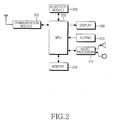
- FIG. 2 is a block diagram of a mobile communication terminal having a Bluetooth module according to the present invention.
- the mobile communication terminal can be any of a cellular phone, a Personal Communication System (PCS) phone, a Personal Digital Assistant (PDA), and an International Mobile Telecommunication-2000 (IMT-2000) terminal, as long as it is equipped with a Bluetooth module.
- PCS Personal Communication System
- PDA Personal Digital Assistant
- IMT-2000 International Mobile Telecommunication-2000
- a Micro-Processor Unit acting as a controller, 200 provides overall control to the mobile communication terminal.
- the MPU 200 is responsible for processing and controlling voice communications and data communications.
- the MPU 200 sets a short key for a peripheral Bluetooth device and service registered to the mobile communication terminal so that a connection is facilitated to the peripheral Bluetooth device and service by use of a Bluetooth mode key and the short key.
- a description of the typical processing and control operation of the MPU 200 is not provided herein.
- a communication module 202 transmits/receives a radio signal of data to/from an antenna. For transmission, the communication module 202 performs channel coding, spreading, and baseband-Radio Frequency (RF) upconversion on transmission data. For reception, the communication module 202 performs RF-baseband downconversion, despreading, and channel decoding on a received signal and thus recovers data.
- RF Radio Frequency
- a Bluetooth module 204 scans for available peripheral Bluetooth devices under the control of the MPU 200 and registers discovered Bluetooth devices in a Bluetooth device list by Bluetooth pairing. For communications with a peripheral Bluetooth module, during reception, the Bluetooth module 204 downconverts a radio signal received from the Bluetooth module to a baseband signal and provides the baseband signal to the MPU 200. During transmission, the Bluetooth module 202 converts transmission data to an analog signal, upconverts the analog signal to a radio signal, and transmits the radio signal to the Bluetooth device.
- a memory 206 includes a read Only Memory (ROM), a Random Access Memory (RAM), and a flash ROM.
- the ROM stores the microcodes of programs for processing and control of the MPU 200 and a variety of reference data.
- the RAM is a working memory for the MPU 200, for temporarily storing data generated during execution of programs.
- the flash ROM stores updatable data to be kept, such as a phone book, outgoing messages and incoming messages.
- the memory 206 stores the Bluetooth device list, a list of Bluetooth device services that the Bluetooth devices can provide, and information about short keys associated with the services.
- a display 208 displays status information generated during the operation of the mobile communication terminal, limited digits and characters, moving pictures, and still images.
- the display 208 can be implemented by a color Liquid Crystal Display (LCD).
- LCD Liquid Crystal Display
- a keypad 210 is provided with digit keys 0 to 9 and function keys including Menu, Cancel (Clear), OK, Talk, End, Internet, and navigation (or directional) keys ( ⁇ / ⁇ / ⁇ / ⁇ ).
- the keypad 210 provides key input data corresponding to a pressed key to the MPU 200.
- a touch pad may used as an input means.
- the touch pad includes a plurality of touch elements for inputting characters, numerals and directional function.
- each touching element is corresponding to each key of the key pad.
- An audio processor 212 receives and outputs a voice signal through a microphone and a speaker.
- the audio processor 212 converts digital data received from the MPU 200 to an analog voice signal and outputs the voice signal through the speaker.
- the audio processor 212 also converts a voice signal received through the microphone to digital data and provides the digital data to the MPU 200.
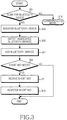
- FIG. 3 is a flowchart illustrating an operation for registering a short key associated with a Bluetooth service in the mobile communication system according to the present invention.
- the MPU 200 scans for peripheral Bluetooth devices through the Bluetooth module 204 in step 301. If no peripheral Bluetooth devices are discovered, the MPU 200 is placed in a corresponding mode (e.g. normal mode or idle mode) in step 315.
- a corresponding mode e.g. normal mode or idle mode
- the MPU 200 registers the discovered peripheral Bluetooth devices in a Bluetooth device list by pairing using Personal Identification Number (PIN) codes in step 303.
- PIN Personal Identification Number
- step 305 the MPU 200 detects the services that the registered peripheral Bluetooth devices can provide.
- the MPU 200 adds the detected services to a Bluetooth service list in step 307 and determines whether to set short keys for the registered Bluetooth devices or services in step 309. If a short key mode is not selected, the MPU 200 ends the process.
- the MPU 200 receives a short key to be associated with a Bluetooth device and service by key input from a user in step 311.
- the MPU 200 registers the short key in a Bluetooth short key table of the memory 206 in step 313 and then ends the process.
- FIG. 4 is a flowchart illustrating an operation for invoking a Bluetooth service by a short key in the mobile communication system according to the present invention.
- the MPU 200 monitors reception of a key from the user in step 401. If no key is entered, the MPU 200 enters a corresponding mode (e.g. normal mode or idle mode) in step 413.
- a corresponding mode e.g. normal mode or idle mode
- the MPU 200 determines whether the key includes a Bluetooth mode key in step 403. For example, for the input of "#1", the MPU 200 recognizes the Bluetooth mode key "#", as illustrated in FIG. 5A .
- the MPU 200 invokes a function corresponding to the entered key (e.g. phone mode), recognizing that the entered key is associated with an ordinary function other than Bluetooth in step 411.
- a function corresponding to the entered key e.g. phone mode
- the MPU 200 transitions to the Bluetooth mode in step 405 and detects a peripheral Bluetooth device or service corresponding to the entered short key in the Bluetooth short key table in step 407. While not shown, if the short key is not detected in the Bluetooth short key table, the MPU 200 displays a short key input error message or error alarm.
- step 409 the MPU 200 connects to the peripheral Bluetooth device or service, as illustrated in FIG. 5B . Then the MPU 200 ends the process.
- short keys are set for a plurality of Bluetooth devices and services in a mobile communication terminal having a Bluetooth module. Therefore, an intended Bluetooth device and service can be connected quickly and easily among many Bluetooth devices and services.
Landscapes
- Engineering & Computer Science (AREA)
- Computer Networks & Wireless Communication (AREA)
- Signal Processing (AREA)
- Computer Security & Cryptography (AREA)
- Human Computer Interaction (AREA)
- Computer Hardware Design (AREA)
- Computing Systems (AREA)
- General Engineering & Computer Science (AREA)
- Mobile Radio Communication Systems (AREA)
- Telephone Function (AREA)
Claims (7)
- Verfahren zum automatischen Verbinden mit einem Bluetooth-Peripheriegerät in einem Mobilkommunikationsendgerät mit einem Bluetoothmodul (204), mit den Schritten:Ermitteln (403), durch eine Mikroprozessoreinheit des Mobilkommunikationsendgeräts, bei Empfang einer Tasteneingabe, ob eine Bluetoothmodustaste in einer Taste enthalten ist, die durch die Tasteneingabe angegeben ist, wobei die durch die Tasteneingabe angegebene Taste die Bluetoothmodustaste und eine Schnelltaste enthält;Übergehen (405) in einen Bluetoothmodus in Reaktion darauf, dass ermittelt wird, dass die Bluetoothmodustaste in der Taste enthalten ist;Erfassen (407), in einer Bluetoothschnelltastentabelle, die in einem Speicher (206) des Mobilkommunikationsendgeräts gespeichert ist, eines peripheren Bluetoothgeräts oder Dienstes, den das periphere Bluetoothgerät unterstützt und durch die Schnelltaste angegeben wird, wobei jede Schnelltaste, die in der Bluetoothschnelltastentabelle eingetragen ist, zu einem entsprechenden peripheren Bluetoothgerät und Dienst gehört, den das periphere Bluetoothgerät unterstützt; undVerbinden (409) des erfassten peripheren Bluetoothgeräts oder Dienstes, den das periphere Bluetoothgerät unterstützt.
- Verfahren nach Anspruch 1, wobei die Tasteneingabe mit einem Tastenfeld (210) oder einem berührungsempfindlichen Feld erfolgt.
- Verfahren nach Anspruch 1 oder 2, das ferner bei Fehlen des peripheren Bluetoothgeräts, das durch die Schnelltaste angegeben ist, umfasst: Anzeigen einer Schnelltasteneingabefehlernachricht oder Erzeugen eines Fehleralarms.
- Verfahren nach einem der Ansprüche 1 bis 3, wobei das Ermitteln umfasst: Ermitteln, ob die Tasteneingabe die Bluetoothmodustaste enthält, indem ein anfänglicher Teil der Tasteneingabe geprüft wird.
- Mobilkommunikationsendgerät für automatisches Verbinden mit einem peripheren Bluetoothgerät, wobei das Mobilkommunikationsendgerät ein Bluetoothmodul (204) hat, ferner mit:einer Eingabeeinrichtung, die zum Erfassen einer Tasteneingabe ausgebildet ist; undeiner Steuerung (200), die ausgebildet ist zum Ermitteln, ob eine Bluetoothmodustaste in einer Taste enthalten ist, die durch die Tasteneingabe angegeben wird, wobei die durch die Tasteneingabe angegebene Taste die Bluetoothmodustaste und eine Schnelltaste enthält;Übergehen in einen Bluetoothmodus in Reaktion darauf, dass ermittelt wird, dass die Bluetoothmodustaste in der Taste enthalten ist;Erfassen, in einer Bluetoothschnelltastentabelle, die in einem Speicher (206) des Mobilkommunikationsendgeräts gespeichert ist, eines peripheren Bluetoothgeräts oder Dienstes, der von dem peripheren Bluetoothgerät unterstützt wird, und von der Schnelltaste angegeben wird, wobei jede in der Bluetoothschnelltastentabelle eingetragene Schnelltaste einem entsprechenden peripheren Bluetoothgerät und einem Dienst, den das periphere Bluetoothgerät unterstützt, zugeordnet ist; undVerbinden des erfassten peripheren Bluetoothgeräts oder Dienstes, den das periphere Bluetoothgerät unterstützt.
- Mobilkommunikationsendgerät nach Anspruch 5, wobei die Eingabeeinrichtung ein Tastenfeld (210) oder ein berührungsempfindliches Feld umfasst.
- Mobilkommunikationsendgerät nach Anspruch 5 oder 6, wobei die Steuerung ferner ausgebildet ist, bei Fehlen des peripheren Bluetoothgeräts, das durch die Schnelltaste angegeben ist, eine Schnelltasteneingabefehlernachricht auf einer Anzeige (208) anzuzeigen oder einen Fehleralarm zu erzeugen.
Applications Claiming Priority (1)
| Application Number | Priority Date | Filing Date | Title |
|---|---|---|---|
| KR1020050100516A KR100774292B1 (ko) | 2005-10-25 | 2005-10-25 | 이동통신단말기에서 블루투스 자동 연결 방법 |
Publications (2)
| Publication Number | Publication Date |
|---|---|
| EP1781002A1 EP1781002A1 (de) | 2007-05-02 |
| EP1781002B1 true EP1781002B1 (de) | 2019-05-08 |
Family
ID=37708242
Family Applications (1)
| Application Number | Title | Priority Date | Filing Date |
|---|---|---|---|
| EP06122830.0A Not-in-force EP1781002B1 (de) | 2005-10-25 | 2006-10-24 | Verfahren und mobiles Kommunikationsendgerät zur automatischen Bluetooth-Verbindung mit einer Schnelltaste |
Country Status (3)
| Country | Link |
|---|---|
| US (1) | US8989662B2 (de) |
| EP (1) | EP1781002B1 (de) |
| KR (1) | KR100774292B1 (de) |
Families Citing this family (18)
| Publication number | Priority date | Publication date | Assignee | Title |
|---|---|---|---|---|
| US8140013B1 (en) | 2003-06-04 | 2012-03-20 | Cypress Semiconductor Corporation | Wireless communication device and method |
| US7848703B1 (en) * | 2004-12-30 | 2010-12-07 | Cypress Semiconductor Corporation | Method and apparatus for binding wireless devices |
| KR100774292B1 (ko) | 2005-10-25 | 2007-11-08 | 삼성전자주식회사 | 이동통신단말기에서 블루투스 자동 연결 방법 |
| US9319741B2 (en) | 2006-09-07 | 2016-04-19 | Rateze Remote Mgmt Llc | Finding devices in an entertainment system |
| US8607281B2 (en) | 2006-09-07 | 2013-12-10 | Porto Vinci Ltd. Limited Liability Company | Control of data presentation in multiple zones using a wireless home entertainment hub |
| US9386269B2 (en) * | 2006-09-07 | 2016-07-05 | Rateze Remote Mgmt Llc | Presentation of data on multiple display devices using a wireless hub |
| KR101433166B1 (ko) * | 2008-01-23 | 2014-08-25 | 삼성전자주식회사 | 블루투스 헤드셋 및 그의 멀티포인트 페어링 방법 |
| DE102008018003A1 (de) * | 2008-04-09 | 2009-10-22 | Siemens Enterprise Communications Gmbh & Co. Kg | Verfahren zum Austausch von Daten zwischen einem Mobiltefelon und einem Festnetztelefon |
| KR101542379B1 (ko) * | 2008-08-28 | 2015-08-06 | 엘지전자 주식회사 | 영상 표시 장치 및 사용자별 시청 환경 설정 방법 |
| US8457557B2 (en) | 2009-04-24 | 2013-06-04 | Skullcandy, Inc. | Wireless synchronization mechanism |
| US20110021147A1 (en) * | 2009-07-21 | 2011-01-27 | Tout Walid R | System and method for determining connectivity status of short range wireless devices |
| US8712327B2 (en) | 2010-07-16 | 2014-04-29 | Blackberry Limited | Remote device pairing setup |
| KR101885133B1 (ko) * | 2011-02-01 | 2018-08-03 | 삼성전자주식회사 | 디지털 디바이스에서 어플리케이션 자동 인스톨 기능을 제공하기 위한 장치 및 방법 |
| US8854299B2 (en) | 2011-07-22 | 2014-10-07 | Blackberry Limited | Orientation based application launch system |
| US20140370837A1 (en) * | 2012-01-24 | 2014-12-18 | Secure Courture, Llc | System for Initiating an Emergency Communication Using a Wireless Peripheral of a Mobile Computing Device |
| US9503842B2 (en) * | 2015-03-27 | 2016-11-22 | Intel Corporation | Techniques to support integrated bluetooth/3GPP radio access technologies |
| CN106027804B (zh) * | 2016-07-19 | 2020-11-27 | 泾县谷声信息科技有限公司 | 移动终端的解锁方法及解锁装置 |
| CN116419436A (zh) * | 2021-12-30 | 2023-07-11 | 中兴通讯股份有限公司 | 一种蓝牙设备的组网方法、终端设备及蓝牙设备 |
Citations (1)
| Publication number | Priority date | Publication date | Assignee | Title |
|---|---|---|---|---|
| US20010003097A1 (en) * | 1999-12-07 | 2001-06-07 | Samsung Electronic Co., Ltd | Method of defining short keys used to select desired functions of a communication terminal by the user |
Family Cites Families (13)
| Publication number | Priority date | Publication date | Assignee | Title |
|---|---|---|---|---|
| ES2316177T3 (es) * | 1999-01-29 | 2009-04-01 | Wistron Corporation | Descubrimiento de servicios segun un criterio de proximidad. |
| US6553240B1 (en) * | 1999-12-30 | 2003-04-22 | Nokia Corporation | Print option for WAP browsers |
| FI110046B (fi) | 2000-11-27 | 2002-11-15 | Lasse Artturi Halttunen | Menetelmä mobiilipuhelimen kuvan ja äänen siirtämiseksi tavalliseen analogiseen televisiovastaanottimeen matkapuhelinlisälaitteen avulla |
| KR100407571B1 (ko) * | 2001-06-29 | 2003-12-01 | 삼성전자주식회사 | 사용자 인터페이스가 없는 블루투스 장치에서 사용자정보를 이용하는 방법 |
| KR100563713B1 (ko) * | 2001-11-08 | 2006-03-28 | 엘지전자 주식회사 | 블루투스 장치에서의 블루투스 무선통신 관리방법 |
| JP3761505B2 (ja) | 2002-03-04 | 2006-03-29 | 株式会社東芝 | 通信システム、無線通信端末及び無線通信装置 |
| KR20040023923A (ko) * | 2002-09-12 | 2004-03-20 | 엘지전자 주식회사 | 이동 통신 단말기를 이용한 차량 원격제어시스템 및 방법 |
| US20050009469A1 (en) | 2002-12-20 | 2005-01-13 | Sakari Kotola | Client software download in bluetooth device bonding |
| WO2004077282A2 (en) | 2003-02-27 | 2004-09-10 | Concord Camera Corp. | Simplified user interface for an image capture device |
| EP1587290B1 (de) | 2004-04-16 | 2013-07-10 | Broadcom Corporation | Automatische Formatumwandlung über einen Zugangsgateway in einer Wohnung |
| JP3817249B2 (ja) * | 2004-04-28 | 2006-09-06 | 株式会社エヌ・ティ・ティ・ドコモ | 移動機、及び、通信制御方法 |
| KR100678099B1 (ko) * | 2005-04-06 | 2007-02-02 | 삼성전자주식회사 | 휴대단말기의 블루투스 통신모드에서 정보 표시장치 및방법 |
| KR100774292B1 (ko) * | 2005-10-25 | 2007-11-08 | 삼성전자주식회사 | 이동통신단말기에서 블루투스 자동 연결 방법 |
-
2005
- 2005-10-25 KR KR1020050100516A patent/KR100774292B1/ko not_active Expired - Fee Related
-
2006
- 2006-10-19 US US11/583,397 patent/US8989662B2/en not_active Expired - Fee Related
- 2006-10-24 EP EP06122830.0A patent/EP1781002B1/de not_active Not-in-force
Patent Citations (1)
| Publication number | Priority date | Publication date | Assignee | Title |
|---|---|---|---|---|
| US20010003097A1 (en) * | 1999-12-07 | 2001-06-07 | Samsung Electronic Co., Ltd | Method of defining short keys used to select desired functions of a communication terminal by the user |
Also Published As
| Publication number | Publication date |
|---|---|
| US20070093207A1 (en) | 2007-04-26 |
| EP1781002A1 (de) | 2007-05-02 |
| US8989662B2 (en) | 2015-03-24 |
| KR20070044523A (ko) | 2007-04-30 |
| KR100774292B1 (ko) | 2007-11-08 |
Similar Documents
| Publication | Publication Date | Title |
|---|---|---|
| EP1781002B1 (de) | Verfahren und mobiles Kommunikationsendgerät zur automatischen Bluetooth-Verbindung mit einer Schnelltaste | |
| KR100834816B1 (ko) | 휴대용 단말기에서 블루투스 신호의 세기를 이용하여데이터를 전송하기 위한 장치 및 방법 | |
| KR101964077B1 (ko) | 휴대용 단말기에서 블루투스 디바이스와 연결하기 위한 장치 및 방법 | |
| US7092671B2 (en) | Method and system for wirelessly autodialing a telephone number from a record stored on a personal information device | |
| CN100373970C (zh) | 在双模式移动终端中控制呼叫的装置和方法 | |
| KR100395332B1 (ko) | 블루투스 무선장치를 구비한 통신 단말간의 링크 연결 방법 | |
| KR101669059B1 (ko) | 휴대 단말기의 통화 절환 서비스 방법 및 시스템 | |
| EP3457674A1 (de) | Vorrichtung und verfahren zur steuerung eines eingebauten mikrofons eines tragbaren endgeräts | |
| US20060212938A1 (en) | Electronic device, registration method thereof, and storage medium | |
| US20110151788A1 (en) | System and Method for Automatically Switching Connection of a Wireless Interface | |
| GB2371699A (en) | Using infrared communication to specify the destination of a radio communication | |
| JP2002186022A (ja) | ウェアブル端末システム | |
| KR20110031581A (ko) | 휴대용 단말기에서 심 카드를 선택하는 장치 및 방법 | |
| CN102077476B (zh) | 分布式移动电话系统 | |
| US20100273420A1 (en) | Device, system, communication method for device, and communication method for system | |
| KR101626465B1 (ko) | 휴대용 단말기에서 억세스 포인트와 연결하기 위한 장치 및 방법 | |
| KR100640391B1 (ko) | 인터넷을 이용한 휴대폰 배경화면 다운로드 시스템 및휴대폰의 배경화면 디스플레이방법 | |
| KR100564984B1 (ko) | 통신장치 | |
| EP1936928A2 (de) | System und Verfahren zur Verbindung eines drahtlosen Telefons mit einem PC | |
| EP1746775B1 (de) | Anbindung eines tragbaren Endgerätes an einen Server | |
| KR100606070B1 (ko) | 이동 통신 단말기의 사용 정보 동기화 방법 | |
| KR100442950B1 (ko) | 터치 스크린 방식의 블루투스 단말기에서 입력 펜을이용한 데이터 통신방법 | |
| KR20080022661A (ko) | 휴대용 단말기의 블루투스 연결 장치 및 방법 | |
| KR100650679B1 (ko) | 무선인터넷 자동스위칭연결기능이 구비된 이동통신단말기및 그 제어방법 | |
| KR101303020B1 (ko) | 음성통화와 메신저 서비스의 동시 실행방법 및 이를수행하기 위한 이동통신단말기 |
Legal Events
| Date | Code | Title | Description |
|---|---|---|---|
| PUAI | Public reference made under article 153(3) epc to a published international application that has entered the european phase |
Free format text: ORIGINAL CODE: 0009012 |
|
| 17P | Request for examination filed |
Effective date: 20061024 |
|
| AK | Designated contracting states |
Kind code of ref document: A1 Designated state(s): AT BE BG CH CY CZ DE DK EE ES FI FR GB GR HU IE IS IT LI LT LU LV MC NL PL PT RO SE SI SK TR |
|
| AX | Request for extension of the european patent |
Extension state: AL BA HR MK YU |
|
| 17Q | First examination report despatched |
Effective date: 20071121 |
|
| AKX | Designation fees paid |
Designated state(s): DE FR GB |
|
| RAP1 | Party data changed (applicant data changed or rights of an application transferred) |
Owner name: SAMSUNG ELECTRONICS CO., LTD. |
|
| GRAP | Despatch of communication of intention to grant a patent |
Free format text: ORIGINAL CODE: EPIDOSNIGR1 |
|
| RIC1 | Information provided on ipc code assigned before grant |
Ipc: H04W 12/04 20090101ALI20181127BHEP Ipc: H04W 12/06 20090101ALI20181127BHEP Ipc: H04M 1/725 20060101AFI20181127BHEP Ipc: H04W 84/18 20090101ALI20181127BHEP Ipc: H04L 29/06 20060101ALI20181127BHEP |
|
| INTG | Intention to grant announced |
Effective date: 20181219 |
|
| RIC1 | Information provided on ipc code assigned before grant |
Ipc: H04W 84/18 20090101ALI20181127BHEP Ipc: H04W 12/04 20090101ALI20181127BHEP Ipc: H04M 1/725 20060101AFI20181127BHEP Ipc: H04W 12/06 20090101ALI20181127BHEP Ipc: H04L 29/06 20060101ALI20181127BHEP |
|
| GRAS | Grant fee paid |
Free format text: ORIGINAL CODE: EPIDOSNIGR3 |
|
| GRAA | (expected) grant |
Free format text: ORIGINAL CODE: 0009210 |
|
| AK | Designated contracting states |
Kind code of ref document: B1 Designated state(s): DE FR GB |
|
| REG | Reference to a national code |
Ref country code: GB Ref legal event code: FG4D |
|
| REG | Reference to a national code |
Ref country code: DE Ref legal event code: R096 Ref document number: 602006057905 Country of ref document: DE |
|
| PGFP | Annual fee paid to national office [announced via postgrant information from national office to epo] |
Ref country code: GB Payment date: 20190923 Year of fee payment: 14 |
|
| REG | Reference to a national code |
Ref country code: DE Ref legal event code: R097 Ref document number: 602006057905 Country of ref document: DE |
|
| PLBE | No opposition filed within time limit |
Free format text: ORIGINAL CODE: 0009261 |
|
| STAA | Information on the status of an ep patent application or granted ep patent |
Free format text: STATUS: NO OPPOSITION FILED WITHIN TIME LIMIT |
|
| 26N | No opposition filed |
Effective date: 20200211 |
|
| REG | Reference to a national code |
Ref country code: DE Ref legal event code: R119 Ref document number: 602006057905 Country of ref document: DE |
|
| PG25 | Lapsed in a contracting state [announced via postgrant information from national office to epo] |
Ref country code: DE Free format text: LAPSE BECAUSE OF NON-PAYMENT OF DUE FEES Effective date: 20200501 |
|
| PG25 | Lapsed in a contracting state [announced via postgrant information from national office to epo] |
Ref country code: FR Free format text: LAPSE BECAUSE OF NON-PAYMENT OF DUE FEES Effective date: 20191031 |
|
| GBPC | Gb: european patent ceased through non-payment of renewal fee |
Effective date: 20201024 |
|
| PG25 | Lapsed in a contracting state [announced via postgrant information from national office to epo] |
Ref country code: GB Free format text: LAPSE BECAUSE OF NON-PAYMENT OF DUE FEES Effective date: 20201024 |