EP1780964B1 - Telekommunikationsdienstevorrichtungen und Verfahren - Google Patents
Telekommunikationsdienstevorrichtungen und Verfahren Download PDFInfo
- Publication number
- EP1780964B1 EP1780964B1 EP06255547A EP06255547A EP1780964B1 EP 1780964 B1 EP1780964 B1 EP 1780964B1 EP 06255547 A EP06255547 A EP 06255547A EP 06255547 A EP06255547 A EP 06255547A EP 1780964 B1 EP1780964 B1 EP 1780964B1
- Authority
- EP
- European Patent Office
- Prior art keywords
- mail address
- telecommunications services
- user
- address
- Prior art date
- Legal status (The legal status is an assumption and is not a legal conclusion. Google has not performed a legal analysis and makes no representation as to the accuracy of the status listed.)
- Not-in-force
Links
- 238000000034 method Methods 0.000 title claims abstract description 19
- 238000013500 data storage Methods 0.000 claims description 8
- 241001235655 Clione Species 0.000 description 1
- 238000010586 diagram Methods 0.000 description 1
Images

Classifications
-
- H—ELECTRICITY
- H04—ELECTRIC COMMUNICATION TECHNIQUE
- H04L—TRANSMISSION OF DIGITAL INFORMATION, e.g. TELEGRAPHIC COMMUNICATION
- H04L51/00—User-to-user messaging in packet-switching networks, transmitted according to store-and-forward or real-time protocols, e.g. e-mail
- H04L51/06—Message adaptation to terminal or network requirements
- H04L51/066—Format adaptation, e.g. format conversion or compression
-
- H—ELECTRICITY
- H04—ELECTRIC COMMUNICATION TECHNIQUE
- H04L—TRANSMISSION OF DIGITAL INFORMATION, e.g. TELEGRAPHIC COMMUNICATION
- H04L51/00—User-to-user messaging in packet-switching networks, transmitted according to store-and-forward or real-time protocols, e.g. e-mail
- H04L51/48—Message addressing, e.g. address format or anonymous messages, aliases
-
- H—ELECTRICITY
- H04—ELECTRIC COMMUNICATION TECHNIQUE
- H04L—TRANSMISSION OF DIGITAL INFORMATION, e.g. TELEGRAPHIC COMMUNICATION
- H04L51/00—User-to-user messaging in packet-switching networks, transmitted according to store-and-forward or real-time protocols, e.g. e-mail
- H04L51/21—Monitoring or handling of messages
- H04L51/214—Monitoring or handling of messages using selective forwarding
-
- H—ELECTRICITY
- H04—ELECTRIC COMMUNICATION TECHNIQUE
- H04L—TRANSMISSION OF DIGITAL INFORMATION, e.g. TELEGRAPHIC COMMUNICATION
- H04L51/00—User-to-user messaging in packet-switching networks, transmitted according to store-and-forward or real-time protocols, e.g. e-mail
- H04L51/58—Message adaptation for wireless communication
Definitions
- the present invention relates to telecommunications services apparatus and related methods, and in particular, but not exclusively, to text communication and voice communication in mobile telecommunication networks.
- E-mail is a ubiquitous means for reception of communications. Most people, over a wide age range, already have an active e-mail address.
- E-mail can be used to receive text or voice communications.
- Voice can be delivered as an attached audio file which can be opened and listened to by a recipient without special software.
- E-mail can also be used to receive video material.
- the current numbers of mobile telephone video users is relatively small so a prospective video sender using a 3G video mobile network has a limited number of prospective video recipients.
- WO 01/58172 discloses a communication system in which a sender specifies a device of a recipient to which communication data is to be sent. However, it is the potential recipient of a telecommunication, not the sender, who can alter the contact details.
- WO 99/12364 discloses a communication system in which a text message can be delivered in e-mail form. However, the user is required to use one address in a setting-up procedure and a different address to which text messages are sent.
- One embodiment of the invention may be viewed as a telecommunications service for allowing a user to send a telecommunication comprising textual, graphic and/or audio material to be delivered to a recipient in e-mail form , which telecommunication is in the form of at least one of a text message, a picture message, a video message, a multi-media message and a voice call, wherein the service comprises allowing a user use of at least one address string which serves as an e-mail service identifier, and the user is able to associate a prospective recipient's e-mail address with e-mail address identification data, comprising a user identifier, by way of an initial set-up procedure, such that the telecommunication when sent to a dialled address comprising the e-mail service identifier will cause the textual, graphic and/or audio material of the telecommunication to be sent to the recipient in e-mail form.
- the service comprises allowing a user use of at least one address string which serves as an e-mail service
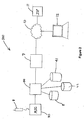
- Figure 1 shows a mobile telecommunications network 1 which is adapted to provide a service in which a sender of at least one of a text message (for example an SMS message), a picture message, a video message and a multi-media message (MMS) is able to send that message such that textual, graphic and/or audio material therein is delivered to a recipient in the form of an e-mail.
- a text message for example an SMS message
- a picture message for example an SMS message
- video message for example an MP3
- MMS multi-media message
- the network 1 comprises an MSC (Mobile Switching Centre) 2, an SMS Router 3, telecommunications services equipment 4, and a data storage assembly 5 and an e-mail gateway 7.
- MSC Mobile Switching Centre
- an initial set-up procedure is required in which a user causes an email address of a prospective recipient to be associated with the user's CLI (Caller Line Identity).
- CLI Cosmetic Line Identity
- the message is received at the MSC 2 from where it is detected and intercepted in the MO (Mobile Originated) path, by the SMS Router 3.
- the SMS Router 3 On recognising the '*' address the SMS Router 3 is operative to send the message to the equipment 4.
- the equipment 4 is operative to store in the data storage assembly 5 the association between the user's CLI and the e-mail address.
- the network 1 operates as follows. A user wishes that a text message be received by a recipient, John Smith, in the form of an e-mail. Once the message has been composed the user sends the message to the destination address (which symbol may be described as an e-mail service identifier) '*', ie a destination address consisting of a single star symbol. This is not a suffix or a prefix, but the entirety of the dialled string entered on the user's handset.
- the destination address which symbol may be described as an e-mail service identifier
- '*' ie a destination address consisting of a single star symbol. This is not a suffix or a prefix, but the entirety of the dialled string entered on the user's handset.
- the SMS Router 3 After passing via the MSC 2 the message is intercepted by the SMS Router 3 which recognises the destination address consisting of a '*' symbol. This recognition step is achieved in a known way by the SMS Router 3 'unpacking' the Transport Protocol Data Unit (TPDU) to extract the dialled address therefrom.
- the message and the CLI are then routed to the equipment 4.
- the equipment 4 determines the user's CLI and retrieves from a database in the data storage assembly 5 by way of a look-up operation the associated e-mail address for John Smith.
- the message and the e-mail address is then sent to the gateway 7 wherein the message is converted into the form of an e-mail with the e-mail address 'john.smith@company.domain.com'.
- the e-mail is then sent via the Internet 10 and to the respective Internet Service Provider (ISP) 11, from where the e-mail can be sent to the user's e-mail account accessible on a computer terminal 12.
- ISP
- Reply paths are enabled by providing a header portion of the e-mail sent to the recipient with a suitable return address, which preferably directs the reply via the equipment 4.
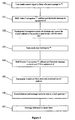
- Figure 3 shows some of the various process steps 100 to 107 involved in the above described embodiment.
- e-mail service identifiers for the service, including multiple '*' symbols eg '***', a numeric short code, eg '301', a combination of one of more number characters and one or more '*' symbols, eg '***10', and a long number eg '07070 123456' (which could optionally also be a virtual mobile number).
- each user of the service could be afforded a dialled address syntax for the service which allows a user to associate multiple different e-mail addresses of one or more prospective recipients with one or more respective destination identifiers.
- the dialled address string range 301 to 309 would allow a user to assign each of the (nine) addresses in the range to a different e-mail address.
- the same functionality could be offered by use of a combination of one or more '*' symbols followed by one or more numeric characters. For example, a range of '***1' through to '***9' could be available to each user.
- the one or more numeric characters following the one or more '*' symbols could, for convenience, correspond to an extension number which is used to reach the same recipient on a PABX.
- the equipment 4 locates the required e-mail address by way of first using the user's CLI, and then using the destination identifier to determine which of the stored e-mail addresses is required in that instance.
- the one or more '*' symbols would initially be recognised by the SMS router 3 as the e-mail service identifier. Accordingly the message contents, the CLI and the one or more numeric characters following the one or more '*' symbols are sent to the equipment 4.
- the one or more numeric characters eg '301'
- the destination identifier and the user's CLI constitute e-mail address identification data.
- the equipment 4 uses the combination of the CLI and the destination identifier to determine from a look-up table in the data storage assembly 5 the required e-mail address. It will be appreciated that once the SMS router 3 has recognised the one or more '*' symbols, no further use need be made thereof.
- the SMS router 3 is configured to recognise one or more of the initial digits, for example '30', which serves/serve as the e-mail service identifier. On recognising the e-mail service identifier, the SMS router 3 is then operative to send to the equipment 4 the message contents, the user's CLI and at least the remaining digit/digits of the dialled string (or data representative thereof).
- the latter element of the data sent to the equipment 4 comprises one of the numerals in the range 1 to 9, which can then be used in combination with the user's CLI to determine the required e-mail address. Whichever of the numerals 1 to 9 (or data representative thereof) which is sent to the equipment 4 may be described as a destination identifier.
- the SMS router 3 may be configured to recognise the whole of the dialled address string in order to determine that the e-mail service is required.
- the SMS router 3 may be programmed to recognise a dialled address string consisting of three numerals which must be one of a range, say 301 to 309. In such an arrangement the whole of the dialled address string may be considered to serve as the e-mail service identifier.
- the SMS router may then send only that or those part/s of the string to the equipment 4 which enable the required e-mail address to be located, eg one of the numerals in the range 1 to 9 (or a representation thereof).
- the SMS router may be configured to recognise a part or the whole of the dialled address string as an e-mail service identifier, and then send to the equipment 4, inter alia, that part or parts of the dialled string which are indicative of a particular e-mail address.
- a long number syntax eg '07070 123456'
- the SMS router may be configured to recognise a part or the whole of the dialled address string as an e-mail service identifier, and then send to the equipment 4, inter alia, that part or parts of the dialled string which are indicative of a particular e-mail address.
- both short and long numbers are capable of being used, and it may be arranged that the last few digits of the long number would match the short number.
- the equipment 4 may be configured to allow a user to associate multiple e-mail addresses with a destination identifier so that any text message sent in relation that destination identifier will be sent to all of the e-mail addresses associated with that use of that destination identifier.
- Suitable syntax would allow a user to initially associate multiple e-mail addresses with the destination identifier.
- a user may send a text message from his handset 8 to a dialled address string in the following form: ' + mary.black@company.domain.com'
- dialled address string would include the appropriate destination identifier(s).
- the ' +' symbol is recognised by the equipment 4 so that the e-mail address is added to the database in the first storage assembly 5 in association with the destination identifier and/or the user identifier. In this way the user may associate his own e-mail address to ensure that he has a copy of the message sent.
- the '-' symbol may be used in a similar way to remove one or more e-mail addresses from being associated with a particular destination identifier.
- the '?' symbol may be used to query the current settings.
- a dialled string consisting of say '***' would enable a user to send a message, received as an e-mail, to the network operator or the service provider.
- the association between use of '***' stored in the equipment 4 would have been previously configured by the network operator and/or the service provider.
- the SMS router 3 On recognising the '***' address the SMS router 3 would send the message, the user's CLI and data indicative of '***' (or at least a signal indicative of the fact that the router 3 has recognised '***') to the equipment 4.
- the equipment 4 would then cause the message to be sent as an e-mail to a stored e-mail address of the network operator or service provider.
- the user would be able to send messages to his personalised e-mail recipients by use of a different syntax, for example dialled strings in the range **50 to **59.
- Handsets could be shipped in a condition in which one or more dialled address strings for the service have been pre-programmed into a memory of each handset.
- the one or more dialled address strings could be hidden from the user who may only see identifiers such as 'e-mail-1', 'e-mail-2' etc on a display of the handset.
- all users are assigned one or more unique identification strings (ie a string unique to each user of the service) which, when dialled in combination with any e-mail service identifier, allows the equipment 4 to locate a required e-mail address without need to use the user's CLI. It will be appreciated that the or each unique identification string/s serves as a user identifier.
- Any or all of the services described above could be provided by an operator on a subscription basis. It may be that a subscription is only required if a user requires the use of multiple destination addresses.
- configuration may in addition or alternatively be effected by the World Wide Web, an e-mail, a voice call (for example Touch Text as described in Patent Specification GB 2317982B ) , WAP or other suitable means.
- the equipment 4 may be configured to perform a number of attempts to successfully connect to the e-mail gateway 7 in the event that the connection to the gateway is temporarily unavailable or that the gateway is not functioning correctly.
- SMS Router will either deliver the message directly to its destination or forward the message to the SMSC (Short Message Service Centre) for eventual delivery to a recipient handset 20.
- SMSC Short Message Service Centre
- the SMSC 13 is configured to receive all text messages in the MO path and to filter out to the equipment 4 those messages which have a dialled address string comprising a predetermined e-mail service identifier.
- the network shown in Figure 1 could be used for multi-media messages to be delivered in e-mail form.
- handset 30 which sends a multi-media message with a predetermined dialled address string (the e-mail service identifier)of the service.
- An MSC 21 is configured to send the message to an MMSC (Multi-Media Messaging Service Centre) 22.
- the MMSC is configured to recognise the e-mail service identifier and accordingly send the message to the equipment 4 to be processed in an identical manner as described above in relation to text messages.
- the network 100 shown in Figure 2 comprises an MSC 30, telecommunications services equipment 40, voice services equipment 41, video services equipment 42 and the data storage assembly 5.
- the user configures the data storage assembly 5 to associate with his CLI one or more e-mail addresses.
- the user uses the handset 8 and dials the predetermined address string for the service (for example consisting of '***').
- the MSC 30 is programmed to recognise '***' and to send the call to the equipment 40.
- the call is connected to the voice services equipment 41 which prompts the user to begin speaking and a voice message is recorded by the equipment 41.
- the equipment 41 is also operative to retrieve the e-mail address which is associated with the user's CLI.
- the equipment 40 then sends the voice recording as an audio file to the e-mail gateway 7, together with the e-mail address.
- the e-mail gateway 7 then causes the audio file to be sent to the recipient as an attachment to an e-mail.
- An optional video services unit 42 is provided to enable a video call or recorded message from the handset 8 to be received and stored, and then to send the video file to the e-mail gateway 7. This enables a sender in a 3G video network to send video material as an e-mail to recipients possessing handsets that do not have a video capability.
- telecommunications services equipment 4 and the telecommunications services equipment 40 are shown as separate entities in Figures 1 and 2 this need not necessarily be the case and a single equipment entity providing the required functionality of both text messages etc, and for voice calls could be provided.
- the SMS Router 3 are shown as separate entities in Figure 1 this need not necessarily be the case and a single/unitary equipment entity may be provided instead which provides the required functionality.
- one embodiment allows a user to playback a voice recording made before causing the same to be delivered as an e-mail.
- the various telecommunications services described above are advantageously sender-centric, in that the recipient need do nothing apart from possess an active email account.
- the sender pre-configures the network to associate invocation of the service with a corresponding destination email address.
Landscapes
- Engineering & Computer Science (AREA)
- Computer Networks & Wireless Communication (AREA)
- Signal Processing (AREA)
- Telephonic Communication Services (AREA)
- Information Transfer Between Computers (AREA)
- Medicines Containing Material From Animals Or Micro-Organisms (AREA)
- Financial Or Insurance-Related Operations Such As Payment And Settlement (AREA)
Claims (17)
- Telekommunikationsdienstevorrichtung mit einem Datenprozessor (4), wobei die Vorrichtung dazu konfiguriert ist, in einem Einstellungsvorgang ein Steuersignal von einem Sender zu erhalten, das an eine Diensteadresse gesendet wird, welches Signal dazu ausgelegt ist, den Datenprozessor (4) zu veranlassen, E-Mail-Adressen-Identifizierungsdaten, die einem Benutzeridentifizierer umfassen, der einem Empfänger zugeordnet ist, zumindest einer E-Mail-Adresse des Empfängers zuzuordnen, und wobei die Vorrichtung weiterhin so konfiguriert ist, dass sie beim nachfolgenden Einsatz, wenn der Sender eine Telekommunikation an die Diensteadresse sendet, die dem Empfänger in E-Mail-Form zuzustellen ist, die Vorrichtung dazu konfiguriert ist, die E-Mail-Adressen-Identifizierungsdaten zu empfangen, die der Datenprozessor (4) dann dazu verwendet, die zumindest eine E-Mail-Adresse des Empfängers zu bestimmen.
- Telekommunikationsdienstevorrichtung nach Anspruch 1, bei der der Benutzeridentifizierer eine CLI, Caller Line Identity - Anschlusskennung, einer Telekommunikationseinrichtung des Benutzers umfasst.
- Telekommunikationsdienstevorrichtung nach Anspruch 1 oder Anspruch 2, wobei die Identifizierungsdaten einen Zielidentifizierer umfassen, der in Verbindung mit dem Benutzeridentifizierer dazu dient, zumindest eine E-Mail-Adresse aus mehreren gespeicherten E-Mail-Adressen zu identifizieren, an die der Benutzer eine E-Mail senden kann.
- Telekommunikationsdienstevorrichtung nach Anspruch 3, wobei der Zielidentifizierer ein oder mehrere numerische Zeichen umfasst.
- Telekommunikationsdienstevorrichtung nach Anspruch 4, wobei der Zielidentifizierer bis zu sechs numerische Zeichen umfasst.
- Telekommunikationsdienstevorrichtung nach irgendeinem vorhergehenden Anspruch, die dazu ausgelegt ist, im Gebrauch einen oder mehrere Nachschlagvorgänge durchzuführen, um die zumindest eine E-Mail-Adresse zu bestimmen.
- Telekommunikationsdienstevorrichtung nach irgendeinem vorhergehenden Anspruch, die eine Datenspeichereinrichtung (5) umfasst, welche die zumindest eine E-Mail-Adresse und Daten, die für die Zuordnung zu den E-Mail-Adressen-Identifizierungsdaten repräsentativ sind, speichert.
- Telekommunikationsdienstevorrichtung nach irgendeinem vorhergehenden Anspruch, die dazu ausgelegt ist, das Steuersignal dadurch zu erhalten, dass der Benutzer eine Textnachricht oder eine E-Mail sendet oder eine Sprachmitteilung bewirkt.
- Telekommunikationsdienstevorrichtung nach irgendeinem vorhergehenden Anspruch, die einen SMS-Router (3) umfasst.
- Telekommunikationsdienstevorrichtung nach irgendeinem vorhergehenden Anspruch, wobei die E-Mail-Adressen-Identifizierungsdaten ein oder mehrere alphanumerische Zeichen umfassen.
- Telekommunikationsdienstevorrichtung nach irgendeinem vorhergehenden Anspruch, wobei die E-Mail-Adressen-Identifizierungsdaten ein oder mehrere Sternchensymbole umfassen.
- Telekommunikationsdienstevorrichtung nach Anspruch 11, wobei die E-Mail-Adressen-Identifizierungsdaten zumindest drei Sternchensymbole umfassen.
- Telekommunikationsdienstevorrichtung nach irgendeinem vorhergehenden Anspruch, wobei die E-Mail-Adressen-Identifizierungsdaten ein oder mehrere numerische Zeichen mit dem einen oder den mehreren Sternchensymbolen kombiniert umfassen.
- Telekommunikationsdienstevorrichtung nach Anspruch 13, wobei das eine oder die mehreren Sternchensymbole vor dem einen oder den mehreren numerischen Zeichen steht/stehen.
- Telekommunikationsdienstevorrichtung nach irgendeinem vorhergehenden Anspruch, wobei E-Mail-Adressen-Identifizierungsdaten als zumindest ein Teil der gewählten Adressensequenz der Diensteadresse bereitgestellt werden.
- Verfahren zum Bewirken, dass eine Telekommunikation von einem Sender an einen Empfänger in E-Mail-Form zugestellt wird, wobei das Verfahren das Senden eines Steuersignals vom Sender an eine Diensteadresse umfasst, wobei das Steuersignal einen Datenprozessor (4) veranlasst, E-Mail-Adressen-Identifizierungsdaten, die einen dem Empfänger zugeordneten Benutzeridentifizierer umfassen, zumindest einer E-Mail-Adresse des Empfängers zuzuordnen, und wobei das Verfahren weiterhin das Senden einer Telekommunikation vom Sender an den Empfänger umfasst, die in E-Mail-Form zusammen mit E-Mail-Adressen-Identifizierungsdaten an die Diensteadresse zuzustellen ist, und wobei das Verfahren das Bestimmen der zumindest einen zugeordneten E-Mail-Adresse des Empfängers im Datenprozessor (4) umfasst.
- Verfahren nach Anspruch 16, wobei die Telekommunikation zumindest eine von einer Textnachricht, einer Bildnachricht, einer Videonachricht, einer Multimedianachricht und einer Sprachmitteilung umfasst.
Applications Claiming Priority (1)
| Application Number | Priority Date | Filing Date | Title |
|---|---|---|---|
| GBGB0521970.4A GB0521970D0 (en) | 2005-10-28 | 2005-10-28 | Telecommunications services apparatus and methods |
Publications (2)
| Publication Number | Publication Date |
|---|---|
| EP1780964A1 EP1780964A1 (de) | 2007-05-02 |
| EP1780964B1 true EP1780964B1 (de) | 2009-12-16 |
Family
ID=35515868
Family Applications (1)
| Application Number | Title | Priority Date | Filing Date |
|---|---|---|---|
| EP06255547A Not-in-force EP1780964B1 (de) | 2005-10-28 | 2006-10-27 | Telekommunikationsdienstevorrichtungen und Verfahren |
Country Status (4)
| Country | Link |
|---|---|
| EP (1) | EP1780964B1 (de) |
| AT (1) | ATE452495T1 (de) |
| DE (1) | DE602006011111D1 (de) |
| GB (1) | GB0521970D0 (de) |
Family Cites Families (4)
| Publication number | Priority date | Publication date | Assignee | Title |
|---|---|---|---|---|
| FI101661B1 (fi) * | 1996-01-08 | 1998-07-31 | Nokia Mobile Phones Ltd | Puhelimen oman puhelinvastaajan aktivointi soittajan numeron mukaan |
| FI108388B (fi) | 1997-09-01 | 2002-01-15 | Nokia Corp | Sõhk÷postiliikenne matkaviestinjõrjestelmõssõ |
| EP1157527A4 (de) * | 1999-02-10 | 2004-12-15 | Varicom Comm Ltd | Telefondienstverfahren zum senden von elektronischer post |
| AU3220701A (en) | 2000-02-07 | 2001-08-14 | Eddie Aronovich | Communication routing server and method |
-
2005
- 2005-10-28 GB GBGB0521970.4A patent/GB0521970D0/en not_active Ceased
-
2006
- 2006-10-27 AT AT06255547T patent/ATE452495T1/de not_active IP Right Cessation
- 2006-10-27 DE DE602006011111T patent/DE602006011111D1/de active Active
- 2006-10-27 EP EP06255547A patent/EP1780964B1/de not_active Not-in-force
Also Published As
| Publication number | Publication date |
|---|---|
| EP1780964A1 (de) | 2007-05-02 |
| DE602006011111D1 (de) | 2010-01-28 |
| ATE452495T1 (de) | 2010-01-15 |
| GB0521970D0 (en) | 2005-12-07 |
Similar Documents
| Publication | Publication Date | Title |
|---|---|---|
| US7209950B2 (en) | Method and apparatus for a network independent short message delivery system | |
| EP1523165B1 (de) | Internetbasierte Ereignisbenachrichtigung | |
| US7546117B2 (en) | Method and apparatus for blocking ID information associated with a sender of a short messaging service (SMS) message | |
| US7317929B1 (en) | Delivery of voice data from multimedia messaging service messages | |
| AU2005308619B2 (en) | Telecommunications services apparatus and methods | |
| EP1782641B1 (de) | Telekommunikationsdienstevorrichtung (sms-router) und verfahren zum zustellen von kurznachrichten (sms) über das heimnetzwerk des empfängers | |
| US20050186974A1 (en) | Short message service (SMS), multimedia message service (MMS), call screening and filtering | |
| JP2004507945A (ja) | 登録グループへメッセージを同報するための移動無線通信システム及び方法 | |
| US20050105697A1 (en) | System and method for simple unified messaging | |
| GB2470359A (en) | Automated-response text messaging | |
| US20080242327A1 (en) | System and method for sending sms and text messages | |
| AU2004223000B2 (en) | Telecommunications services apparatus and method | |
| US7519379B2 (en) | Multimedia message center and telecommunication device for accessing stored multimedia messages | |
| US20020085534A1 (en) | Device independent communication system | |
| AU2003290302B2 (en) | Telecommunications services apparatus and methods in mobile telephony messaging | |
| EP1780964B1 (de) | Telekommunikationsdienstevorrichtungen und Verfahren | |
| WO2004066648A1 (en) | Telecommunications services apparatus and methods | |
| WO2004025977A1 (en) | Telecommunications services apparatus and methods | |
| CN100382611C (zh) | 一种多媒体消息前转的方法 | |
| EP1601212B1 (de) | Vorrichtung und Verfahren zur Modifizierung der Absenderkennzeichnung in einer SMS Nachricht. | |
| GB2390956A (en) | Telecommunications services apparatus | |
| EP1756990B1 (de) | Gateway-anwendung zur support-verwendung einer einzigen internet-adressendomäne zum routen von nachrichten zu mehreren multimedia-nachrichtendienstzentralen | |
| WO2011158033A1 (en) | Communications services apparatus and method | |
| GB2402020A (en) | Delivering a call to a Virtual Mobile address as an email | |
| KR101348272B1 (ko) | 멀티미디어 메시지 서비스(mms)를 이용하여 메시지를 송신하는 방법 |
Legal Events
| Date | Code | Title | Description |
|---|---|---|---|
| PUAI | Public reference made under article 153(3) epc to a published international application that has entered the european phase |
Free format text: ORIGINAL CODE: 0009012 |
|
| AK | Designated contracting states |
Kind code of ref document: A1 Designated state(s): AT BE BG CH CY CZ DE DK EE ES FI FR GB GR HU IE IS IT LI LT LU LV MC NL PL PT RO SE SI SK TR |
|
| AX | Request for extension of the european patent |
Extension state: AL BA HR MK YU |
|
| RIN1 | Information on inventor provided before grant (corrected) |
Inventor name: WILSON, JEFFREY |
|
| 17P | Request for examination filed |
Effective date: 20071024 |
|
| AKX | Designation fees paid |
Designated state(s): AT BE BG CH CY CZ DE DK EE ES FI FR GB GR HU IE IS IT LI LT LU LV MC NL PL PT RO SE SI SK TR |
|
| GRAP | Despatch of communication of intention to grant a patent |
Free format text: ORIGINAL CODE: EPIDOSNIGR1 |
|
| GRAS | Grant fee paid |
Free format text: ORIGINAL CODE: EPIDOSNIGR3 |
|
| GRAA | (expected) grant |
Free format text: ORIGINAL CODE: 0009210 |
|
| AK | Designated contracting states |
Kind code of ref document: B1 Designated state(s): AT BE BG CH CY CZ DE DK EE ES FI FR GB GR HU IE IS IT LI LT LU LV MC NL PL PT RO SE SI SK TR |
|
| REG | Reference to a national code |
Ref country code: GB Ref legal event code: FG4D |
|
| REG | Reference to a national code |
Ref country code: CH Ref legal event code: EP |
|
| REG | Reference to a national code |
Ref country code: IE Ref legal event code: FG4D |
|
| REF | Corresponds to: |
Ref document number: 602006011111 Country of ref document: DE Date of ref document: 20100128 Kind code of ref document: P |
|
| REG | Reference to a national code |
Ref country code: NL Ref legal event code: T3 |
|
| PG25 | Lapsed in a contracting state [announced via postgrant information from national office to epo] |
Ref country code: SE Free format text: LAPSE BECAUSE OF FAILURE TO SUBMIT A TRANSLATION OF THE DESCRIPTION OR TO PAY THE FEE WITHIN THE PRESCRIBED TIME-LIMIT Effective date: 20091216 Ref country code: LT Free format text: LAPSE BECAUSE OF FAILURE TO SUBMIT A TRANSLATION OF THE DESCRIPTION OR TO PAY THE FEE WITHIN THE PRESCRIBED TIME-LIMIT Effective date: 20091216 Ref country code: FI Free format text: LAPSE BECAUSE OF FAILURE TO SUBMIT A TRANSLATION OF THE DESCRIPTION OR TO PAY THE FEE WITHIN THE PRESCRIBED TIME-LIMIT Effective date: 20091216 |
|
| LTIE | Lt: invalidation of european patent or patent extension |
Effective date: 20091216 |
|
| PG25 | Lapsed in a contracting state [announced via postgrant information from national office to epo] |
Ref country code: LV Free format text: LAPSE BECAUSE OF FAILURE TO SUBMIT A TRANSLATION OF THE DESCRIPTION OR TO PAY THE FEE WITHIN THE PRESCRIBED TIME-LIMIT Effective date: 20091216 Ref country code: SI Free format text: LAPSE BECAUSE OF FAILURE TO SUBMIT A TRANSLATION OF THE DESCRIPTION OR TO PAY THE FEE WITHIN THE PRESCRIBED TIME-LIMIT Effective date: 20091216 Ref country code: PL Free format text: LAPSE BECAUSE OF FAILURE TO SUBMIT A TRANSLATION OF THE DESCRIPTION OR TO PAY THE FEE WITHIN THE PRESCRIBED TIME-LIMIT Effective date: 20091216 |
|
| PG25 | Lapsed in a contracting state [announced via postgrant information from national office to epo] |
Ref country code: AT Free format text: LAPSE BECAUSE OF FAILURE TO SUBMIT A TRANSLATION OF THE DESCRIPTION OR TO PAY THE FEE WITHIN THE PRESCRIBED TIME-LIMIT Effective date: 20091216 |
|
| PG25 | Lapsed in a contracting state [announced via postgrant information from national office to epo] |
Ref country code: IS Free format text: LAPSE BECAUSE OF FAILURE TO SUBMIT A TRANSLATION OF THE DESCRIPTION OR TO PAY THE FEE WITHIN THE PRESCRIBED TIME-LIMIT Effective date: 20100416 Ref country code: ES Free format text: LAPSE BECAUSE OF FAILURE TO SUBMIT A TRANSLATION OF THE DESCRIPTION OR TO PAY THE FEE WITHIN THE PRESCRIBED TIME-LIMIT Effective date: 20100327 Ref country code: BG Free format text: LAPSE BECAUSE OF FAILURE TO SUBMIT A TRANSLATION OF THE DESCRIPTION OR TO PAY THE FEE WITHIN THE PRESCRIBED TIME-LIMIT Effective date: 20100316 Ref country code: PT Free format text: LAPSE BECAUSE OF FAILURE TO SUBMIT A TRANSLATION OF THE DESCRIPTION OR TO PAY THE FEE WITHIN THE PRESCRIBED TIME-LIMIT Effective date: 20100416 Ref country code: RO Free format text: LAPSE BECAUSE OF FAILURE TO SUBMIT A TRANSLATION OF THE DESCRIPTION OR TO PAY THE FEE WITHIN THE PRESCRIBED TIME-LIMIT Effective date: 20091216 Ref country code: EE Free format text: LAPSE BECAUSE OF FAILURE TO SUBMIT A TRANSLATION OF THE DESCRIPTION OR TO PAY THE FEE WITHIN THE PRESCRIBED TIME-LIMIT Effective date: 20091216 |
|
| PG25 | Lapsed in a contracting state [announced via postgrant information from national office to epo] |
Ref country code: SK Free format text: LAPSE BECAUSE OF FAILURE TO SUBMIT A TRANSLATION OF THE DESCRIPTION OR TO PAY THE FEE WITHIN THE PRESCRIBED TIME-LIMIT Effective date: 20091216 Ref country code: CZ Free format text: LAPSE BECAUSE OF FAILURE TO SUBMIT A TRANSLATION OF THE DESCRIPTION OR TO PAY THE FEE WITHIN THE PRESCRIBED TIME-LIMIT Effective date: 20091216 Ref country code: BE Free format text: LAPSE BECAUSE OF FAILURE TO SUBMIT A TRANSLATION OF THE DESCRIPTION OR TO PAY THE FEE WITHIN THE PRESCRIBED TIME-LIMIT Effective date: 20091216 |
|
| PLBE | No opposition filed within time limit |
Free format text: ORIGINAL CODE: 0009261 |
|
| STAA | Information on the status of an ep patent application or granted ep patent |
Free format text: STATUS: NO OPPOSITION FILED WITHIN TIME LIMIT |
|
| PG25 | Lapsed in a contracting state [announced via postgrant information from national office to epo] |
Ref country code: CY Free format text: LAPSE BECAUSE OF FAILURE TO SUBMIT A TRANSLATION OF THE DESCRIPTION OR TO PAY THE FEE WITHIN THE PRESCRIBED TIME-LIMIT Effective date: 20091216 Ref country code: GR Free format text: LAPSE BECAUSE OF FAILURE TO SUBMIT A TRANSLATION OF THE DESCRIPTION OR TO PAY THE FEE WITHIN THE PRESCRIBED TIME-LIMIT Effective date: 20100317 |
|
| 26N | No opposition filed |
Effective date: 20100917 |
|
| PG25 | Lapsed in a contracting state [announced via postgrant information from national office to epo] |
Ref country code: DK Free format text: LAPSE BECAUSE OF FAILURE TO SUBMIT A TRANSLATION OF THE DESCRIPTION OR TO PAY THE FEE WITHIN THE PRESCRIBED TIME-LIMIT Effective date: 20091216 |
|
| PG25 | Lapsed in a contracting state [announced via postgrant information from national office to epo] |
Ref country code: IT Free format text: LAPSE BECAUSE OF FAILURE TO SUBMIT A TRANSLATION OF THE DESCRIPTION OR TO PAY THE FEE WITHIN THE PRESCRIBED TIME-LIMIT Effective date: 20091216 |
|
| REG | Reference to a national code |
Ref country code: NL Ref legal event code: V1 Effective date: 20110501 |
|
| PG25 | Lapsed in a contracting state [announced via postgrant information from national office to epo] |
Ref country code: MC Free format text: LAPSE BECAUSE OF NON-PAYMENT OF DUE FEES Effective date: 20101031 |
|
| REG | Reference to a national code |
Ref country code: CH Ref legal event code: PL |
|
| GBPC | Gb: european patent ceased through non-payment of renewal fee |
Effective date: 20101027 |
|
| PG25 | Lapsed in a contracting state [announced via postgrant information from national office to epo] |
Ref country code: LI Free format text: LAPSE BECAUSE OF NON-PAYMENT OF DUE FEES Effective date: 20101031 Ref country code: CH Free format text: LAPSE BECAUSE OF NON-PAYMENT OF DUE FEES Effective date: 20101031 Ref country code: FR Free format text: LAPSE BECAUSE OF NON-PAYMENT OF DUE FEES Effective date: 20101102 |
|
| REG | Reference to a national code |
Ref country code: FR Ref legal event code: ST Effective date: 20110630 |
|
| PG25 | Lapsed in a contracting state [announced via postgrant information from national office to epo] |
Ref country code: GB Free format text: LAPSE BECAUSE OF NON-PAYMENT OF DUE FEES Effective date: 20101027 Ref country code: NL Free format text: LAPSE BECAUSE OF NON-PAYMENT OF DUE FEES Effective date: 20110501 |
|
| REG | Reference to a national code |
Ref country code: DE Ref legal event code: R119 Ref document number: 602006011111 Country of ref document: DE Effective date: 20110502 |
|
| PG25 | Lapsed in a contracting state [announced via postgrant information from national office to epo] |
Ref country code: IE Free format text: LAPSE BECAUSE OF NON-PAYMENT OF DUE FEES Effective date: 20101027 |
|
| PG25 | Lapsed in a contracting state [announced via postgrant information from national office to epo] |
Ref country code: LU Free format text: LAPSE BECAUSE OF NON-PAYMENT OF DUE FEES Effective date: 20101027 Ref country code: HU Free format text: LAPSE BECAUSE OF FAILURE TO SUBMIT A TRANSLATION OF THE DESCRIPTION OR TO PAY THE FEE WITHIN THE PRESCRIBED TIME-LIMIT Effective date: 20100617 |
|
| PG25 | Lapsed in a contracting state [announced via postgrant information from national office to epo] |
Ref country code: TR Free format text: LAPSE BECAUSE OF FAILURE TO SUBMIT A TRANSLATION OF THE DESCRIPTION OR TO PAY THE FEE WITHIN THE PRESCRIBED TIME-LIMIT Effective date: 20091216 |
|
| PG25 | Lapsed in a contracting state [announced via postgrant information from national office to epo] |
Ref country code: DE Free format text: LAPSE BECAUSE OF NON-PAYMENT OF DUE FEES Effective date: 20110502 |