EP1779684B1 - System and method for informing a sender of content adaptation and message failure issues - Google Patents
System and method for informing a sender of content adaptation and message failure issues Download PDFInfo
- Publication number
- EP1779684B1 EP1779684B1 EP05772981.6A EP05772981A EP1779684B1 EP 1779684 B1 EP1779684 B1 EP 1779684B1 EP 05772981 A EP05772981 A EP 05772981A EP 1779684 B1 EP1779684 B1 EP 1779684B1
- Authority
- EP
- European Patent Office
- Prior art keywords
- multimedia message
- user
- adaptation
- content
- exhibiting
- Prior art date
- Legal status (The legal status is an assumption and is not a legal conclusion. Google has not performed a legal analysis and makes no representation as to the accuracy of the status listed.)
- Expired - Lifetime
Links
Images

Classifications
-
- H—ELECTRICITY
- H04—ELECTRIC COMMUNICATION TECHNIQUE
- H04W—WIRELESS COMMUNICATION NETWORKS
- H04W4/00—Services specially adapted for wireless communication networks; Facilities therefor
- H04W4/20—Services signaling; Auxiliary data signalling, i.e. transmitting data via a non-traffic channel
-
- H—ELECTRICITY
- H04—ELECTRIC COMMUNICATION TECHNIQUE
- H04L—TRANSMISSION OF DIGITAL INFORMATION, e.g. TELEGRAPHIC COMMUNICATION
- H04L51/00—User-to-user messaging in packet-switching networks, transmitted according to store-and-forward or real-time protocols, e.g. e-mail
- H04L51/06—Message adaptation to terminal or network requirements
- H04L51/066—Format adaptation, e.g. format conversion or compression
-
- H—ELECTRICITY
- H04—ELECTRIC COMMUNICATION TECHNIQUE
- H04L—TRANSMISSION OF DIGITAL INFORMATION, e.g. TELEGRAPHIC COMMUNICATION
- H04L65/00—Network arrangements, protocols or services for supporting real-time applications in data packet communication
- H04L65/60—Network streaming of media packets
- H04L65/75—Media network packet handling
- H04L65/756—Media network packet handling adapting media to device capabilities
-
- H—ELECTRICITY
- H04—ELECTRIC COMMUNICATION TECHNIQUE
- H04L—TRANSMISSION OF DIGITAL INFORMATION, e.g. TELEGRAPHIC COMMUNICATION
- H04L65/00—Network arrangements, protocols or services for supporting real-time applications in data packet communication
- H04L65/60—Network streaming of media packets
- H04L65/75—Media network packet handling
- H04L65/765—Media network packet handling intermediate
-
- H—ELECTRICITY
- H04—ELECTRIC COMMUNICATION TECHNIQUE
- H04L—TRANSMISSION OF DIGITAL INFORMATION, e.g. TELEGRAPHIC COMMUNICATION
- H04L69/00—Network arrangements, protocols or services independent of the application payload and not provided for in the other groups of this subclass
- H04L69/40—Network arrangements, protocols or services independent of the application payload and not provided for in the other groups of this subclass for recovering from a failure of a protocol instance or entity, e.g. service redundancy protocols, protocol state redundancy or protocol service redirection
-
- H—ELECTRICITY
- H04—ELECTRIC COMMUNICATION TECHNIQUE
- H04W—WIRELESS COMMUNICATION NETWORKS
- H04W4/00—Services specially adapted for wireless communication networks; Facilities therefor
- H04W4/12—Messaging; Mailboxes; Announcements
-
- H—ELECTRICITY
- H04—ELECTRIC COMMUNICATION TECHNIQUE
- H04L—TRANSMISSION OF DIGITAL INFORMATION, e.g. TELEGRAPHIC COMMUNICATION
- H04L51/00—User-to-user messaging in packet-switching networks, transmitted according to store-and-forward or real-time protocols, e.g. e-mail
- H04L51/21—Monitoring or handling of messages
- H04L51/23—Reliability checks, e.g. acknowledgments or fault reporting
-
- H—ELECTRICITY
- H04—ELECTRIC COMMUNICATION TECHNIQUE
- H04L—TRANSMISSION OF DIGITAL INFORMATION, e.g. TELEGRAPHIC COMMUNICATION
- H04L51/00—User-to-user messaging in packet-switching networks, transmitted according to store-and-forward or real-time protocols, e.g. e-mail
- H04L51/58—Message adaptation for wireless communication
-
- H—ELECTRICITY
- H04—ELECTRIC COMMUNICATION TECHNIQUE
- H04L—TRANSMISSION OF DIGITAL INFORMATION, e.g. TELEGRAPHIC COMMUNICATION
- H04L65/00—Network arrangements, protocols or services for supporting real-time applications in data packet communication
- H04L65/1066—Session management
- H04L65/1101—Session protocols
Definitions
- the present invention relates generally to the field of multimedia messaging systems. More particularly, the present invention relates to multimedia messaging systems that support complex content items and forms.
- Multimedia messaging systems have greatly increased in popularity in recent years. Traditionally, individuals have used multimedia messaging systems to transmit basic text messages to other individuals on a network. More recently, however, individuals have begun to transmit much more complex types of information. This can include, for example, texts using individualized fonts and styles, as well as graphics, digital photographs, audio files, video files, and more. These types of information can be transmitted on devices such as portable telephones, personal digital assistants, hand-held personal computers, and other devices.
- the user may not be aware that the intended recipient of complex multimedia messages has limited capabilities on his or her device, resulting in a great deal of wasted effort in creating multimedia messages with advanced features which will never be accessible by the recipient.
- the sender prepared particularly a fanciful presentation for the recipient, converting and/or stripping portions of it may make it virtually unrecognizable or otherwise modify it to the point that the sender feels that it would not have even been worthwhile to transmit the presentation in the first place.
- the sender of the complex multimedia message may not even be informed of the limited recipient capabilities after the multimedia message has been sent.
- a number of devices include a User Agent Profile (UAProf), an XML or extended markup language file that describes the capabilities of the device.
- UProf User Agent Profile
- the sender of a message does not have the capability to even estimate the capabilities of the recipient before the message is transmitted. This creates obvious problems for both parties, as the recipient may not receive an expected message, and the sender may not learn that the message failed to reach the recipient.
- a small portion such as the text alone
- the sender may not know that the formats and styles have been stripped, or that the attachments to the files could not be accessed.
- MMSC multimedia messaging service center
- these informational messages do nothing to inform the sender that parts of the sent multimedia message may have had to have been converted and/or stripped before reaching the recipient, as well as what (if any) portions of the sent multimedia message were transmitted without stripping and/or converting.
- Information about content adaptation can be very relevant to the multimedia message sender, as important content may have been dropped during the adaptation process. Even in cases where the dropped content could be later made available to the user, such as through an alternative recipient device, it may be important to the multimedia message sender to know if all of the content had reached the recipient immediately.
- US200211 32608 describes transmitting destination and data format information to a MMS user database server, the server determining which mobile telephones support the data format and informing a transmitting mobile telephone of this.
- the transmitting mobile telephone then addresses a multimedia message to selected destination mobile terminals.
- the MMS user database server may modify a transmitted multimedia message and transmit the message to a destination mobile telephone.
- WO00164110 discloses sending a multimedia message from a sending terminal to a receiving terminal using a multimedia service centre MMSC.
- the MMSC selects whether or not to send the message to the receiving terminal based on the receiving terminal's profile stored at the MMSC.
- the receiving terminal may select whether or not to retrieve the multimedia message based on the data type/format of the message.
- US 2004/0057403 discloses a method for sending an MMS-message, in particular fro sending an e-mail, a fax and/or an SMS. From a first subscriber device in an MMS enables system to a second subscriber device. The MMS message is converted before being fowrarded to the second subscriber device, if the second subscriber device is not connected to an MMS-enabled system or cannot receive MMS messages. A send can specify the communication means for forwarding/dispatch of the MMS-message by setting a value in the message.
- the present invention provides the sender of a message, particularly a multimedia message, the ability to control the adaptation of a message and/or to obtain information regarding whether any adaptation has occurred, as well as the ability to learn more about potential problems involved with the transmittal of the message.
- This provides the sender with a number of advantages that were not previously available. For example, the present invention gives the sender a higher degree of control over the message, while also giving the user the ability to tailor the message depending upon the capabilities of the recipient device.
- the present invention involves a system and method for providing additional information to a multimedia message sender about the status of a recently-transmitted multimedia message.
- the system involves the use of information in the form of a header or other mechanism regarding whether the message can be converted and/or partially stripped for the receiving device. Additionally, the system and method of the present invention involves providing additional information to the message sender regarding reasons why a message could not be delivered, as well as the nature and consequences of potential adaptation of the original message.
- the present invention also is directed to a computer program and module that implements the functions described herein.
- a method for controlling the content of a multimedia message transmitted from a transmitting device to a receiving device comprising: receiving, by a service device, a multimedia message from the transmitting device; and determining, by the service device, whether the receiving device is capable of exhibiting the multimedia message to a user of the receiving device without adaptation of the multimedia message's content; the method characterised by: using, by the service device, information in the form of a header to determine that content adaptation to the multimedia message is not permitted; having the receiving device exhibit the multimedia message to the user of the receiving device if the receiving device is capable of exhibiting the multimedia message to the user without adaptation of the multimedia message's content; informing, by the service device, the transmitting device that the multimedia message could not be exhibited to the user on the receiving device without adaptation of the multimedia message's content if the receiving device is not capable of exhibiting the multimedia message to the user without adaptation of the multimedia message's content; receiving an address for a secondary device from the transmitting device; determining whether the secondary device is
- a computer program for controlling the content of a multimedia message transmitted from a transmitting device to a receiving device comprising computer code which when executed is configured to carry out the step of: determining whether the receiving device is capable of exhibiting a multimedia message received from the transmitting device to a user without adaptation of the multimedia message's content; the computer program characterised by the computer code being further configured to carry out the steps of: using information in the form of a header to determine that content adaptation to the multimedia message is not permitted; and transmitting the message to the receiving device if the receiving device is capable of exhibiting the message without adaptation of the message's content; informing the transmitting device that the multimedia message could not be exhibited to the user on the receiving device without adaptation of the multimedia message's content if the receiving device is not capable of exhibiting the multimedia message to the user without adaptation of the multimedia message's content; determining whether a secondary device having a secondary address received from the transmitting device is capable of exhibiting the multimedia message to the user without adaptation of the multimedia message's content if the
- a system for controlling the content of a multimedia message transmitted over a network comprising: a transmitting device including computer software configured to transmit a multimedia message; a service device configured to be in communication with the transmitting device; and a receiving device configure to receive the multimedia message, wherein upon the transmittal of the multimedia message from the transmitting device to the service device, the service device is configured to determine whether the receiving device is capable of exhibiting the multimedia message to a user without adaptation of the multimedia message's content and to use information in the form of a header to determine that content adaptation to the multimedia message is not permitted, and wherein the service device is further configured to inform the transmitting device if the multimedia message could not be exhibited to the user on the receiving device without adaptation of the multimedia message's content and to: determine whether a secondary device having a secondary address received from the transmitting device is capable of exhibiting the multimedia message to the user without adaptation of the multimedia message's content if the receiving device is not capable of exhibiting the multimedia message to the user without adaptation of the multimedia message'
- a module for use in a service device comprising: a memory unit; a processor operatively connected to the memory unit; and means for communicating a message generated by the processor and the memory unit to a receiving device; the memory unit comprising computer code which when executed is configured to cause the service device to determine whether a receiving device is capable of exhibiting to a user a multimedia message received from a transmitting device without adaptation of the multimedia message's content; characterised by: the module being configured to use information in the form of a header to determine that content adaptation to the multimedia message is not permitted; and the memory unit further comprising: computer code which, when executed, is configured to cause the service device to inform the transmitting device that the multimedia message could not be exhibited to the user on the receiving device without adaptation of the multimedia message's content if the receiving device is not capable of exhibiting the multimedia message without adaptation of the multimedia message's content.
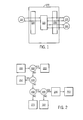
- FIG 1 shows a generic multimedia messaging network 100 according to one embodiment of the present invention.
- the multimedia messaging network 100 is arranged to allow communication between a transmitting device 110 and a receiving device 120, as well as other secondary devices 160.
- MMSC multimedia messaging service center 130
- Figure 1 shows the transmittal among the transmitting device 110, the multimedia messaging service center 130 and the receiving device 120 as being generally direct. However, the transmittal of messages in reality will usually occur through a variety of local exchanges, represented generically at 140 and 150.
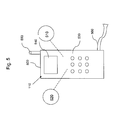
- FIG. 5 shows a sample transmitting device 110 that can be used in accordance with the principles of the present invention.
- the transmitting device 110 can take virtually any form and is not intended to be limited to one particular type of mechanism.
- the transmitting device 110 in Figure 5 comprises a body 500 with a memory unit 510 and a processor 520 contained therein and are operatively connected to each other.
- a plurality of input buttons 530 are provided, as well as a display 540.
- the transmitting device 110 can include either a wired connection 560, such as a USB or IEEE connection, or a wireless connection 550 to transmit and receive messages.
- the memory unit 510 and the processor 520 can be used to generate the message to be transmitted.
- a new header field is added to the M-send.req protocol data unit (PDU) for the transmitting device 110 in order to ultimately provide additional control for the transmittal device over the message to be transmitted to the receiving device 120.
- PDU protocol data unit
- This header specifies whether the multimedia messaging service center 130 is permitted to perform any content adaptation to the message being transmitted. If the header indicates that content adaptation is not permitted, the multimedia messaging service center 130 then determines whether the receiving device 120 is capable of receiving the message without adaptation. The answer to this question is transmitted back to the transmitting device 110 using the M-Send.conf PDU. The transmitting device 110 is then able to inform the user whether the message can be transmitted in a completely unmodified form.
- Figure 2 is a representation of how the transmitting device 110, the multimedia messaging service center 130 and the receiving device 120 interact according one embodiment of the present invention.
- Figure 2 shows a simplified case where both the transmitting device 110 and the recipient device 120 belong to the same multimedia messaging service center 130. In many instances, the transmitting device 110 and the recipient device 120 belong to different multimedia messaging service centers 130.
- the user transmits a message from the transmitting device 110 to the multimedia messaging service center 130.
- the multimedia messaging service center 130 determines if the M-send.req PDU includes a header that would permit the message to be adapted or modified. If the header permits such modification, then at step 230 the multimedia messaging service center modifies the message as necessary and transmits the message to the receiving device 120 at step 230.
- the multimedia messaging service center 130 determines whether the receiving device 120 is capable of receiving, processing and exhibiting the message in an unmodified form. This occurs at step 240. If the receiving device 120 is capable of receiving, processing and exhibiting the message without modification, then the multimedia messaging service center 130 transmits the message to the receiving device 120 at step 250 for such processing and display. It is also possible for step 240 to occur before the multimedia messaging service center 130 determines if the M-send.req PDU includes a header that would permit the message to be adapted or modified, with substantially the same result.
- the system of the present invention can also automatically rout the unadapted message to a secondary device, shown at 160 in Figure 1 , if necessary. This can be accomplished through the use of a separate address field in the M-Send.req PDU. A separate address field can be added for the secondary address and the MMSC can be configured for using this separate address field as discussed herein.
- the multimedia messaging service center 130 determines whether the receiving device 120 is capable of receiving the message in an unadapted form, shown at 240 in Figure 2 . If the receiving device 120 is not able to receive the message in an unadapted form, then the multimedia messaging service center 130 determines whether there is a separate address field in the M-Send.req PDU for transmitting the message to a secondary address. This is represented at 260 in Figure 2 . If no such alternate address exists, then at 270 the multimedia messaging service center 130 informs the transmitting device 110 that the message cannot be delivered to the receiving device 120 without modification.
- the multimedia messaging service center 130 determines whether the secondary device 160 can accept the message without modification. This can be done using the UAProf of the secondary device in a manner similar to that discussed herein regarding the primary recipient device. If the secondary device 160 cannot so accept the message, then at step 310 the multimedia messaging service center 130 informs the transmitting device 110 that the message cannot be delivered to either the receiving device 120 or the secondary device without modification. If the secondary device can accept, process and exhibit the message without modification, then at step 290 the multimedia messaging service center 130 transmits the message to the secondary device 160 corresponding to the alternate address. The multimedia messaging service center 130, in one embodiment of the invention, also informs the transmitting device 110 that the message is being so redirected. The secondary device 160 then displays the message at step 300.
- the transmitting device 110 is informed of the redirection after the message is transmitted to the secondary device 160.
- these two steps could occur in the opposite order or could occur simultaneously.
- a string of secondary devices 160 such that if the message cannot be sent in an unadapated form to the original secondary device 160, that an attempt can be made to transmit the message to yet other devices.
- the address of the secondary device or addresses of the string of secondary devices can be entered by the user similar to the way the user would enter the address of the primary recipient device.
- the M-Send.req PDU header could indicate that it is acceptable to have the message modified for the secondary device 160 only, in which case such a determination would not be necessary and the message could be transmitted to the secondary device 160 regardless of potential modification.
- the separate address field can also be used in situations where the receiving device 120 is not multimedia messaging system-capable.
- the separate address could be an electronic mail account or another device address owned by the same individual as who owns the receiving device 120.
- the transmitting device 110 can also be informed that the message has been transmitted to the secondary device 160.
- a default location such as an electronic mail address or a server in the network with Internet access, could be used in place of the secondary device when the unmodified message can be transmitted.
- the modified message may be sent to the receiving device 120 and, depending on the provided service, the unmodified message can be transmitted to the default address.
- the receiving device 120 does not use the same multimedia messaging service center 130 as the transmitting device 110. In this situation, it may not be possible at the moment of message transmittal to determine whether content adaptation will be necessary. In this situation, the transmitting device 110 can still be informed whether content adaptation occurs once the receiving device 120 processes the message.
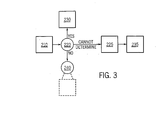
- Figure 3 shows the process for this determination.
- the user transmits a message from the transmitting device 110 to the multimedia messaging service center 130.
- the multimedia messaging service center 130 determines if the M-send.req PDU includes a header that would permit the message to be adapted or modified. If the multimedia messaging service center 130 cannot determine whether the receiving device 120 can accept, process and exhibit the message without modification, then at step 225 the message is transmitted to the message recipient's multimedia messaging service center, which then performs the steps discussed herein and depicted in Figure 2 .
- the present invention also involves the use of a new "reason" field within a multimedia messaging system delivery report that is transmitted to the transmitting device 110 after the message is transmitted to the receiving device 120.
- the process for accomplishing this task is shown generally in Figure 4.
- Figure 4 shows the process of providing this type of information as separate from the process of determining the capabilities of the receiving device 120 and the consequences thereof, shown in Figures 2-3 .
- the processes shown in Figures 2-4 could easily be implemented simultaneously as a single process for the transmitting device 110 and the receiving device 120.
- the transmitting device 110 transmits a message to the multimedia messaging service center 130 at step 400.
- the multimedia messaging service center 130 processes and modifies the message as necessary depending upon the capabilities of the receiving device 120.
- the message is then transmitted to the receiving device 120, where it is exhibited to the user of the receiving device 120 if possible at step 420.
- information is transmitted back to the transmitting device 110 regarding the transmitted message, including at least one of a plurality of messages in a multimedia messaging system delivery report that is transmitted back to the transmitting device 110.
- the delivery report is generated by the recipient's multimedia messaging service center 130.
- a multimedia messaging system delivery report is sent to the transmitting device 110 noting that no content adaptation was necessary. If, however, the message could not even be exhibited to the recipient in any form, then at step 450 a multimedia messaging system delivery report is sent to the transmitting device 110 informing the user of the transmitting device 110 as to why the message transmittal failed.
- the multimedia messaging system delivery report could provide information such as the fact that the receiving device 120 did not support the content, that the message was too large, that the receiving device address was unresolved, or that the receiving device 120 did not support the multimedia messaging system. This type of information aids the user of the transmitting device 110 in determining why the message could not be transmitted on the receiving device 120, possibly helping the user in altering his behavior in sending messages.
- a multimedia messaging system delivery report is transmitted to the transmitting device 110 providing information about the modifications that were necessary.
- the information transmitted back to the transmitting device 110 could include but is not limited to information concerning whether minor or major adaptation was necessary, the types of content that had to be stripped from the message, and the amount of material that had to be stripped from the message. This type of information could be especially helpful to a user who sends multimedia messages that have a large file size, as will often occur when audio and/or video files are included.
- users of portable devices are billed based upon the size of the messages that are sent, and a user who is billed in this manner can save a considerable amount of money by not sending video files when they cannot be received by some other recipients.
- some of the information provided in the delivery report can be optional, with the user of the transmitting device 110 able to decide what information he or she would like to be made aware of.
- the system and method of the present invention provides the sender of a multimedia message with much more control over the integrity of the transmittal than has been conventionally available. In the event that the user believes that it is important that the message not be altered in any form, he or she simply can deny the ability to alter the message. Additionally, the present invention provides the sender of a message more information in situations where the message is ultimately not delivered successfully in exactly the same form as it was originally intended.
- the present invention can be incorporated into virtually any type of supportable module and can take the form of a computer software program that is programmed to execute the functions described herein.
Landscapes
- Engineering & Computer Science (AREA)
- Computer Networks & Wireless Communication (AREA)
- Signal Processing (AREA)
- Multimedia (AREA)
- Computer Security & Cryptography (AREA)
- Business, Economics & Management (AREA)
- General Business, Economics & Management (AREA)
- Information Transfer Between Computers (AREA)
- Two-Way Televisions, Distribution Of Moving Picture Or The Like (AREA)
- Data Exchanges In Wide-Area Networks (AREA)
- Mobile Radio Communication Systems (AREA)
Description
- The present invention relates generally to the field of multimedia messaging systems. More particularly, the present invention relates to multimedia messaging systems that support complex content items and forms.
- Multimedia messaging systems have greatly increased in popularity in recent years. Traditionally, individuals have used multimedia messaging systems to transmit basic text messages to other individuals on a network. More recently, however, individuals have begun to transmit much more complex types of information. This can include, for example, texts using individualized fonts and styles, as well as graphics, digital photographs, audio files, video files, and more. These types of information can be transmitted on devices such as portable telephones, personal digital assistants, hand-held personal computers, and other devices.
- With this virtual explosion in the capabilities of multimedia messaging systems, a number of new issues have arisen for users of such systems. For example, while newer devices often include the capability to both send and receive these types of "complex" multimedia messages, most older devices and many newer, less expensive devices are still extremely limited in their messaging capability, offering the user only the ability to send and receive limited text messages without any stylization or attachments. These more "limited" devices also often are not capable of transmitting or receiving information over a certain size.
- The above limitations can create serious compatibility issues for users of both simple and complex devices. For a user of an older and/or simple device with limited capabilities, he or she may not even be able to access large and/or complex multimedia messages. Additionally, although such devices or their service systems may include the ability for the user to at least view text of some complex multimedia messages, the specialized stylization, formatting and attachments that may have been included by the multimedia message sender will be stripped from the multimedia message, and the recipient may not even be aware that attachments were even included with the message. This alteration of the content and/or format of the message, often referred to as content adaptation, creates a number of difficulties for both the sender and the recipient of the message.
- For users of more complex devices, the user may not be aware that the intended recipient of complex multimedia messages has limited capabilities on his or her device, resulting in a great deal of wasted effort in creating multimedia messages with advanced features which will never be accessible by the recipient. In instances where the sender prepared particularly a fanciful presentation for the recipient, converting and/or stripping portions of it may make it virtually unrecognizable or otherwise modify it to the point that the sender feels that it would not have even been worthwhile to transmit the presentation in the first place.
- Furthermore, in some instances the sender of the complex multimedia message may not even be informed of the limited recipient capabilities after the multimedia message has been sent. A number of devices include a User Agent Profile (UAProf), an XML or extended markup language file that describes the capabilities of the device. However, even if there is UAProf support, the sender of a message does not have the capability to even estimate the capabilities of the recipient before the message is transmitted. This creates obvious problems for both parties, as the recipient may not receive an expected message, and the sender may not learn that the message failed to reach the recipient. In addition, even if a small portion (such as the text alone) does make it to the recipient's device for access, the sender may not know that the formats and styles have been stripped, or that the attachments to the files could not be accessed.
- One attempt to overcome some of the above-identified shortcomings has involved using the multimedia messaging service center (MMSC) to send a report to the original multimedia message sender discussing the status of the sent multimedia message. For example, one traditional system has the MMSC automatically send the multimedia message sender one of the following pieces of information regarding the sent multimedia message: "Expired", "Retrieved", "Rejected", "Deferred", "Unrecognized", "Indeterminate", "Forward" and "Unreachable". Although providing the sender with this very rudimentary information about the status of the sent multimedia message, such single-word informational messages do not greatly help the sender in understanding potential problems. Also, these informational messages do nothing to inform the sender that parts of the sent multimedia message may have had to have been converted and/or stripped before reaching the recipient, as well as what (if any) portions of the sent multimedia message were transmitted without stripping and/or converting. Information about content adaptation can be very relevant to the multimedia message sender, as important content may have been dropped during the adaptation process. Even in cases where the dropped content could be later made available to the user, such as through an alternative recipient device, it may be important to the multimedia message sender to know if all of the content had reached the recipient immediately.
-
US200211 32608 describes transmitting destination and data format information to a MMS user database server, the server determining which mobile telephones support the data format and informing a transmitting mobile telephone of this. The transmitting mobile telephone then addresses a multimedia message to selected destination mobile terminals. Alternatively, the MMS user database server may modify a transmitted multimedia message and transmit the message to a destination mobile telephone. -
WO00164110 -
US 2004/0057403 discloses a method for sending an MMS-message, in particular fro sending an e-mail, a fax and/or an SMS. From a first subscriber device in an MMS enables system to a second subscriber device. The MMS message is converted before being fowrarded to the second subscriber device, if the second subscriber device is not connected to an MMS-enabled system or cannot receive MMS messages. A send can specify the communication means for forwarding/dispatch of the MMS-message by setting a value in the message. - It would therefore be desirable to develop a system and a method that overcomes the above-identified difficulties while maintaining the improvements in functionality that are continuously being implemented in multimedia messaging systems.
- The present invention provides the sender of a message, particularly a multimedia message, the ability to control the adaptation of a message and/or to obtain information regarding whether any adaptation has occurred, as well as the ability to learn more about potential problems involved with the transmittal of the message. This provides the sender with a number of advantages that were not previously available. For example, the present invention gives the sender a higher degree of control over the message, while also giving the user the ability to tailor the message depending upon the capabilities of the recipient device.
- The present invention involves a system and method for providing additional information to a multimedia message sender about the status of a recently-transmitted multimedia message. The system involves the use of information in the form of a header or other mechanism regarding whether the message can be converted and/or partially stripped for the receiving device. Additionally, the system and method of the present invention involves providing additional information to the message sender regarding reasons why a message could not be delivered, as well as the nature and consequences of potential adaptation of the original message. The present invention also is directed to a computer program and module that implements the functions described herein.
- According to a first aspect, there is provided a method for controlling the content of a multimedia message transmitted from a transmitting device to a receiving device, comprising: receiving, by a service device, a multimedia message from the transmitting device; and determining, by the service device, whether the receiving device is capable of exhibiting the multimedia message to a user of the receiving device without adaptation of the multimedia message's content; the method characterised by: using, by the service device, information in the form of a header to determine that content adaptation to the multimedia message is not permitted; having the receiving device exhibit the multimedia message to the user of the receiving device if the receiving device is capable of exhibiting the multimedia message to the user without adaptation of the multimedia message's content; informing, by the service device, the transmitting device that the multimedia message could not be exhibited to the user on the receiving device without adaptation of the multimedia message's content if the receiving device is not capable of exhibiting the multimedia message to the user without adaptation of the multimedia message's content; receiving an address for a secondary device from the transmitting device; determining whether the secondary device is capable of exhibiting the multimedia message to the user without adaptation of the multimedia message's content if the receiving device is not capable of exhibiting the multimedia message to the user without adaptation of the multimedia message's content; and having the secondary device exhibit the multimedia message to the user if the secondary device is capable of exhibiting the multimedia message to the user without adaptation of the multimedia message's content.
- According to a second aspect, there is provided computer program for controlling the content of a multimedia message transmitted from a transmitting device to a receiving device, comprising computer code which when executed is configured to carry out the step of: determining whether the receiving device is capable of exhibiting a multimedia message received from the transmitting device to a user without adaptation of the multimedia message's content; the computer program characterised by the computer code being further configured to carry out the steps of: using information in the form of a header to determine that content adaptation to the multimedia message is not permitted; and transmitting the message to the receiving device if the receiving device is capable of exhibiting the message without adaptation of the message's content; informing the transmitting device that the multimedia message could not be exhibited to the user on the receiving device without adaptation of the multimedia message's content if the receiving device is not capable of exhibiting the multimedia message to the user without adaptation of the multimedia message's content; determining whether a secondary device having a secondary address received from the transmitting device is capable of exhibiting the multimedia message to the user without adaptation of the multimedia message's content if the receiving device is not capable of exhibiting the multimedia message to the user without adaptation of the multimedia message's content; and transmitting the multimedia message to the secondary device if the secondary device is capable of exhibiting the multimedia message to the user without adaptation of the multimedia message's content.
- According to a third aspect, there is provided a system for controlling the content of a multimedia message transmitted over a network, comprising: a transmitting device including computer software configured to transmit a multimedia message; a service device configured to be in communication with the transmitting device; and a receiving device configure to receive the multimedia message, wherein upon the transmittal of the multimedia message from the transmitting device to the service device, the service device is configured to determine whether the receiving device is capable of exhibiting the multimedia message to a user without adaptation of the multimedia message's content and to use information in the form of a header to determine that content adaptation to the multimedia message is not permitted, and wherein the service device is further configured to inform the transmitting device if the multimedia message could not be exhibited to the user on the receiving device without adaptation of the multimedia message's content and to: determine whether a secondary device having a secondary address received from the transmitting device is capable of exhibiting the multimedia message to the user without adaptation of the multimedia message's content if the receiving device is not capable of exhibiting the multimedia message to the user without adaptation of the multimedia message's content; and - transmit the multimedia message to the secondary device if the secondary device is capable of exhibiting the multimedia message to the user without adaptation of the multimedia message's content.
- According to a fourth aspect, there is provided a module for use in a service device, comprising: a memory unit; a processor operatively connected to the memory unit; and means for communicating a message generated by the processor and the memory unit to a receiving device; the memory unit comprising computer code which when executed is configured to cause the service device to determine whether a receiving device is capable of exhibiting to a user a multimedia message received from a transmitting device without adaptation of the multimedia message's content; characterised by: the module being configured to use information in the form of a header to determine that content adaptation to the multimedia message is not permitted; and the memory unit further comprising: computer code which, when executed, is configured to cause the service device to inform the transmitting device that the multimedia message could not be exhibited to the user on the receiving device without adaptation of the multimedia message's content if the receiving device is not capable of exhibiting the multimedia message without adaptation of the multimedia message's content.
- These and other objects, advantages and features of the invention, together with the organization and manner of operation thereof, will become apparent from the following detailed description when taken in conjunction with the accompanying drawings, wherein like elements have like numerals throughout the several drawings described below.
-
-
FIG. 1 is a representative of a multimedia messaging system network including a plurality of devices for transmitting and receiving messages according to one embodiment of the present invention; -
FIG. 2 is a flow diagram showing the process of determining whether a receiving device can accept a message without modification or adaptation and how the message is treated depending upon whether the message can be so accepted according to one embodiment of the invention; -
FIG. 3 is a flow diagram showing the process of determining whether a receiving device can accept a message without modification or adaptation, and upon not being able to make such a determination, how the message is treated; -
FIG. 4 is a flow diagram showing the process of informing the transmitting device as to whether the message was successfully sent and the level of adaptation necessary; and -
Figure 5 is a front view of a generic portable device that can serve as a transmitting device according to the principles of the present invention. -
Figure 1 shows a genericmultimedia messaging network 100 according to one embodiment of the present invention. Themultimedia messaging network 100 is arranged to allow communication between a transmittingdevice 110 and areceiving device 120, as well as othersecondary devices 160. In this embodiment of the invention, when a message is transmitted, the message travels from the transmittingdevice 110 to a multimedia messaging service center 130 (MMSC), which in turn transmits the message to thereceiving device 120.Figure 1 shows the transmittal among the transmittingdevice 110, the multimediamessaging service center 130 and thereceiving device 120 as being generally direct. However, the transmittal of messages in reality will usually occur through a variety of local exchanges, represented generically at 140 and 150. -
Figure 5 shows asample transmitting device 110 that can be used in accordance with the principles of the present invention. The transmittingdevice 110 can take virtually any form and is not intended to be limited to one particular type of mechanism. The transmittingdevice 110 inFigure 5 comprises abody 500 with amemory unit 510 and aprocessor 520 contained therein and are operatively connected to each other. A plurality ofinput buttons 530 are provided, as well as adisplay 540. The transmittingdevice 110 can include either awired connection 560, such as a USB or IEEE connection, or awireless connection 550 to transmit and receive messages. Thememory unit 510 and theprocessor 520 can be used to generate the message to be transmitted. - According to one embodiment of the present invention, a new header field is added to the M-send.req protocol data unit (PDU) for the transmitting
device 110 in order to ultimately provide additional control for the transmittal device over the message to be transmitted to the receivingdevice 120. This header specifies whether the multimediamessaging service center 130 is permitted to perform any content adaptation to the message being transmitted. If the header indicates that content adaptation is not permitted, the multimediamessaging service center 130 then determines whether the receivingdevice 120 is capable of receiving the message without adaptation. The answer to this question is transmitted back to the transmittingdevice 110 using the M-Send.conf PDU. The transmittingdevice 110 is then able to inform the user whether the message can be transmitted in a completely unmodified form. Although the use of a header as described herein is one method of use, various systems and/or computer software programs incorporating computer code can be used by those skilled in the art to achieve similar results. -
Figure 2 is a representation of how the transmittingdevice 110, the multimediamessaging service center 130 and the receivingdevice 120 interact according one embodiment of the present invention.Figure 2 shows a simplified case where both the transmittingdevice 110 and therecipient device 120 belong to the same multimediamessaging service center 130. In many instances, the transmittingdevice 110 and therecipient device 120 belong to different multimedia messaging service centers 130. Atstep 210, the user transmits a message from the transmittingdevice 110 to the multimediamessaging service center 130. Atstep 220, the multimediamessaging service center 130 determines if the M-send.req PDU includes a header that would permit the message to be adapted or modified. If the header permits such modification, then atstep 230 the multimedia messaging service center modifies the message as necessary and transmits the message to the receivingdevice 120 atstep 230. The modifications are based upon the capabilities of the receivingdevice 120 in the UAProf. It should also be noted that, in the event the transmittingdevice 110 and therecipient device 120 belong to different multimedia messaging service centers 130, the processing depicted inFigure 2 will occur in the recipient's multimedia messaging service center. - If the M-send.req PDU header does not permit modification of the message, then the multimedia
messaging service center 130 determines whether the receivingdevice 120 is capable of receiving, processing and exhibiting the message in an unmodified form. This occurs atstep 240. If the receivingdevice 120 is capable of receiving, processing and exhibiting the message without modification, then the multimediamessaging service center 130 transmits the message to the receivingdevice 120 atstep 250 for such processing and display. It is also possible forstep 240 to occur before the multimediamessaging service center 130 determines if the M-send.req PDU includes a header that would permit the message to be adapted or modified, with substantially the same result. - In one particular embodiment of the present invention and as also represented in
Figure 2 , the system of the present invention can also automatically rout the unadapted message to a secondary device, shown at 160 inFigure 1 , if necessary. This can be accomplished through the use of a separate address field in the M-Send.req PDU. A separate address field can be added for the secondary address and the MMSC can be configured for using this separate address field as discussed herein. - As discussed above, in the event that the M-Send.req PDU includes a header instructing that no content adaptation should occur at the receiving
device 120, the multimediamessaging service center 130 determines whether the receivingdevice 120 is capable of receiving the message in an unadapted form, shown at 240 inFigure 2 . If the receivingdevice 120 is not able to receive the message in an unadapted form, then the multimediamessaging service center 130 determines whether there is a separate address field in the M-Send.req PDU for transmitting the message to a secondary address. This is represented at 260 inFigure 2 . If no such alternate address exists, then at 270 the multimediamessaging service center 130 informs the transmittingdevice 110 that the message cannot be delivered to the receivingdevice 120 without modification. If there is an alternate address, on the other hand and as shown atstep 280, the multimediamessaging service center 130 determines whether thesecondary device 160 can accept the message without modification. This can be done using the UAProf of the secondary device in a manner similar to that discussed herein regarding the primary recipient device. If thesecondary device 160 cannot so accept the message, then atstep 310 the multimediamessaging service center 130 informs the transmittingdevice 110 that the message cannot be delivered to either the receivingdevice 120 or the secondary device without modification. If the secondary device can accept, process and exhibit the message without modification, then atstep 290 the multimediamessaging service center 130 transmits the message to thesecondary device 160 corresponding to the alternate address. The multimediamessaging service center 130, in one embodiment of the invention, also informs the transmittingdevice 110 that the message is being so redirected. Thesecondary device 160 then displays the message atstep 300. - In the embodiment shown in
Figure 2 , the transmittingdevice 110 is informed of the redirection after the message is transmitted to thesecondary device 160. However, these two steps could occur in the opposite order or could occur simultaneously. It is also possible for there to be a string ofsecondary devices 160, such that if the message cannot be sent in an unadapated form to the originalsecondary device 160, that an attempt can be made to transmit the message to yet other devices. The address of the secondary device or addresses of the string of secondary devices can be entered by the user similar to the way the user would enter the address of the primary recipient device. - In an alternate embodiment of the invention, the M-Send.req PDU header could indicate that it is acceptable to have the message modified for the
secondary device 160 only, in which case such a determination would not be necessary and the message could be transmitted to thesecondary device 160 regardless of potential modification. - The separate address field can also be used in situations where the receiving
device 120 is not multimedia messaging system-capable. The separate address could be an electronic mail account or another device address owned by the same individual as who owns the receivingdevice 120. At the same time, the transmittingdevice 110 can also be informed that the message has been transmitted to thesecondary device 160. - Alternatively and depending on the provided service, a default location, such as an electronic mail address or a server in the network with Internet access, could be used in place of the secondary device when the unmodified message can be transmitted. In the situation where the transmitting
device 110 does not forbid modification and the message requires modification, the modified message may be sent to the receivingdevice 120 and, depending on the provided service, the unmodified message can be transmitted to the default address. - One issue that can arise in practice involves the possibility that the receiving
device 120 does not use the same multimediamessaging service center 130 as the transmittingdevice 110. In this situation, it may not be possible at the moment of message transmittal to determine whether content adaptation will be necessary. In this situation, the transmittingdevice 110 can still be informed whether content adaptation occurs once the receivingdevice 120 processes the message.Figure 3 shows the process for this determination. As discussed above, atstep 210, the user transmits a message from the transmittingdevice 110 to the multimediamessaging service center 130. Atstep 220, the multimediamessaging service center 130 determines if the M-send.req PDU includes a header that would permit the message to be adapted or modified. If the multimediamessaging service center 130 cannot determine whether the receivingdevice 120 can accept, process and exhibit the message without modification, then atstep 225 the message is transmitted to the message recipient's multimedia messaging service center, which then performs the steps discussed herein and depicted inFigure 2 . - The present invention also involves the use of a new "reason" field within a multimedia messaging system delivery report that is transmitted to the transmitting
device 110 after the message is transmitted to the receivingdevice 120. The process for accomplishing this task is shown generally inFigure 4. Figure 4 shows the process of providing this type of information as separate from the process of determining the capabilities of the receivingdevice 120 and the consequences thereof, shown inFigures 2-3 . However, it is to be understood that the processes shown inFigures 2-4 could easily be implemented simultaneously as a single process for the transmittingdevice 110 and the receivingdevice 120. - As shown in
Figure 4 , the transmittingdevice 110 transmits a message to the multimediamessaging service center 130 atstep 400. Atstep 410, the multimediamessaging service center 130 processes and modifies the message as necessary depending upon the capabilities of the receivingdevice 120. The message is then transmitted to the receivingdevice 120, where it is exhibited to the user of the receivingdevice 120 if possible atstep 420. Atstep 430, information is transmitted back to the transmittingdevice 110 regarding the transmitted message, including at least one of a plurality of messages in a multimedia messaging system delivery report that is transmitted back to the transmittingdevice 110. The delivery report is generated by the recipient's multimediamessaging service center 130. - If the entire message was able to be exhibited on the receiving
device 120 without adaptation or modification, then at step 440 a multimedia messaging system delivery report is sent to the transmittingdevice 110 noting that no content adaptation was necessary. If, however, the message could not even be exhibited to the recipient in any form, then at step 450 a multimedia messaging system delivery report is sent to the transmittingdevice 110 informing the user of the transmittingdevice 110 as to why the message transmittal failed. The multimedia messaging system delivery report could provide information such as the fact that the receivingdevice 120 did not support the content, that the message was too large, that the receiving device address was unresolved, or that the receivingdevice 120 did not support the multimedia messaging system. This type of information aids the user of the transmittingdevice 110 in determining why the message could not be transmitted on the receivingdevice 120, possibly helping the user in altering his behavior in sending messages. - If the message was able to be exhibited on the receiving
device 120, but only with some adaptation or modification, then at step 460 a multimedia messaging system delivery report is transmitted to the transmittingdevice 110 providing information about the modifications that were necessary. The information transmitted back to the transmittingdevice 110 could include but is not limited to information concerning whether minor or major adaptation was necessary, the types of content that had to be stripped from the message, and the amount of material that had to be stripped from the message. This type of information could be especially helpful to a user who sends multimedia messages that have a large file size, as will often occur when audio and/or video files are included. In many cases, users of portable devices are billed based upon the size of the messages that are sent, and a user who is billed in this manner can save a considerable amount of money by not sending video files when they cannot be received by some other recipients. - In one embodiment of the present invention, some of the information provided in the delivery report can be optional, with the user of the transmitting
device 110 able to decide what information he or she would like to be made aware of. - The system and method of the present invention provides the sender of a multimedia message with much more control over the integrity of the transmittal than has been conventionally available. In the event that the user believes that it is important that the message not be altered in any form, he or she simply can deny the ability to alter the message. Additionally, the present invention provides the sender of a message more information in situations where the message is ultimately not delivered successfully in exactly the same form as it was originally intended. The present invention can be incorporated into virtually any type of supportable module and can take the form of a computer software program that is programmed to execute the functions described herein.
- It should be understood that the above description of the invention and specific examples and embodiments, while indicating some embodiments of the present invention, are given by demonstration and not limitation. For example, instead of incorporating a non-modification instruction into the M-Send.req PDU, it could also be transmitted separate from this PDU. It is also possible to include a "partial modification" instruction such that certain types of information can be removed and modified while other types cannot be so modified or adapted.
Claims (23)
- A method for controlling the content of a multimedia message transmitted from a transmitting device (110) to a receiving device (120; 140), comprising:- receiving, by a service device, a multimedia message from the transmitting device (110); and- determining, by the service device, whether the receiving device (120; 140) is capable of exhibiting the multimedia message to a user of the receiving device without adaptation of the multimedia message's content; the method characterised by:- using, by the service device, information in the form of a header to determine that content adaptation to the multimedia message is not permitted;- having the receiving device (120; 140) exhibit the multimedia message to the user of the receiving device if the receiving device (120; 140) is capable of exhibiting the multimedia message to the user without adaptation of the multimedia message's content;- informing, by the service device, the transmitting device (110) that the multimedia message could not be exhibited to the user on the receiving device (120; 140) without adaptation of the multimedia message's content if the receiving device (120; 140) is not capable of exhibiting the multimedia message to the user without adaptation of the multimedia message's content;- receiving an address for a secondary device from the transmitting device (110);- determining whether the secondary device is capable of exhibiting the multimedia message to the user without adaptation of the multimedia message's content if the receiving device (120; 140) is not capable of exhibiting the multimedia message to the user without adaptation of the multimedia message's content; and- having the secondary device exhibit the multimedia message to the user if the secondary device is capable of exhibiting the multimedia message to the user without adaptation of the multimedia message's content.
- The method of claim 1, further comprising:- preventing the multimedia message from being exhibited to the user on the receiving device (120; 140) if the receiving device (120; 140) is not capable of exhibiting the multimedia message to the user without adaptation of the multimedia message's content.
- The method of claim 1, further comprising:- exhibiting the multimedia message to the user on the receiving device (120; 140) in an adapted form if the receiving device (120; 140) is not capable of exhibiting the multimedia message to the user without adaptation of the multimedia message's content,; and- informing the transmitting device (110) that the multimedia message could be exhibited to the user on the receiving device (120; 140) in adapted form if the receiving device (120; 140) is not capable of exhibiting the multimedia message to the user without adaptation of the multimedia message's content.
- The method of claim 3, further comprising:- informing the transmitting device (110) about differences between the multimedia message as transmitted by the transmitting device (110) and the multimedia message in the adapted form.
- The method of claim 1, further comprising:- informing the transmitting device (110) as to why the multimedia message cannot be exhibited to the user by the receiving device (120; 140) if the receiving device (120; 140) is not capable of exhibiting the multimedia message to the user in any form.
- The method of claim 1, further comprising:- informing the transmitting device (110) that the multimedia message was transmitted to the secondary device if the secondary device is capable of exhibiting the multimedia message to the user without adaptation of the multimedia message's content.
- The method of claim 1, further comprising:- informing the transmitting device (110) that the multimedia message could not be exhibited to the user on the secondary device without adaptation of the multimedia message's content if the secondary device is not capable of exhibiting the multimedia message to the user without adaptation of the multimedia message's content,.
- The method of claim 7, further comprising:- preventing the multimedia message from being exhibited to the user on the secondary device if the secondary device is not capable of exhibiting the multimedia message to the user without adaptation of the multimedia message's content.
- A computer program for controlling the content of a multimedia message transmitted from a transmitting device (110) to a receiving device (120; 140), comprising computer code which when executed is configured to carry out the step of:- determining whether the receiving device (120; 140) is capable of exhibiting a multimedia message received from the transmitting device (110) to a user without adaptation of the multimedia message's content;
the computer program characterised by the computer code being further configured to carry out the steps of:- using information in the form of a header to determine that content adaptation to the multimedia message is not permitted; and- transmitting the message to the receiving device (120; 140) if the receiving device (120; 140) is capable of exhibiting the message without adaptation of the message's content;- informing the transmitting device (110) that the multimedia message could not be exhibited to the user on the receiving device (120; 140) without adaptation of the multimedia message's content if the receiving device (120; 140) is not capable of exhibiting the multimedia message to the user without adaptation of the multimedia message's content;- determining whether a secondary device having a secondary address received from the transmitting device (110) is capable of exhibiting the multimedia message to the user without adaptation of the multimedia message's content if the receiving device (120; 140) is not capable of exhibiting the multimedia message to the user without adaptation of the multimedia message's content; and- transmitting the multimedia message to the secondary device if the secondary device is capable of exhibiting the multimedia message to the user without adaptation of the multimedia message's content. - The computer program of claim 9, further comprising computer code which, when executed, is configured to carry out the step of:- preventing the multimedia message from being exhibited to the user on the receiving device (120; 140) if the receiving device (120; 140) is not capable of exhibiting the multimedia message to the user without adaptation of the multimedia message's content.
- The computer program of claim 9, further computer code which, when executed, is configured to carry out the steps of:- transmitting the multimedia message to the receiving device (120; 140) in an adapted form if the receiving device (120; 140) is not capable of exhibiting the multimedia message to the user without adaptation of the multimedia message's content,; and- informing the transmitting device (110) that the multimedia message was transmitted to the receiving device (120; 140) in adapted form if the receiving device (120; 140) is not capable of exhibiting the multimedia message to the user without adaptation of the multimedia message's content.
- The computer program of claim 11, further comprising computer code which, when executed, is configured to carry out the step of:- informing the transmitting device (110) about the differences between the multimedia message as transmitted by the transmitting device (110) and the multimedia message in the adapted form.
- The computer program of claim 9, further comprising computer code which, when executed, is configured to carry out the step of:- informing the transmitting device (110) as to why the multimedia message cannot be exhibited to the user by the receiving device (120; 140) if the receiving device (120; 140) is not capable of exhibiting the multimedia message to the user in any form.
- The computer program of claim 9, further comprising computer code which, when executed, is configured to carry out the step of:- informing the transmitting device (110) that the multimedia message was transmitted to the secondary device without adaptation if the secondary device is capable of exhibiting the multimedia message to a user without adaptation of the multimedia message's content.
- The computer program of claim 9, further comprising computer code which, when executed, is configured to carry out the step of:- informing the transmitting device (110) that the multimedia message could not be exhibited to the user on the secondary device without adaptation of the multimedia message's content if the secondary device is not capable of exhibiting the multimedia message without adaptation of the multimedia message's content.
- The computer program of claim 15, further comprising computer code which, when executed, is configured to carry out the step of:- preventing the multimedia message from being exhibited to the user on the secondary device if the secondary device is not capable of exhibiting the multimedia message to the user without adaptation of the multimedia message's content.
- A system for controlling the content of a multimedia message transmitted over a network, comprising:- a transmitting device (110) including computer software configured to transmit a multimedia message;- a service device (130) configured to be in communication with the transmitting device (110); and- a receiving device (120; 140) configure to receive the multimedia message, wherein upon the transmittal of the multimedia message from the transmitting device (110) to the service device (130), the service device (130) is configured to determine whether the receiving device (120; 140) is capable of exhibiting the multimedia message to a user without adaptation of the multimedia message's content and to use information in the form of a header to determine that content adaptation to the multimedia message is not permitted, and wherein the service device (130) is further configured to inform the transmitting device (110) if the multimedia message could not be exhibited to the user on the receiving device (120; 140) without adaptation of the multimedia message's content and to:- determine whether a secondary device having a secondary address received from the transmitting device (110) is capable of exhibiting the multimedia message to the user without adaptation of the multimedia message's content if the receiving device (120; 140) is not capable of exhibiting the multimedia message to the user without adaptation of the multimedia message's content; and- transmit the multimedia message to the secondary device if the secondary device is capable of exhibiting the multimedia message to the user without adaptation of the multimedia message's content.
- A module for use in a service device, comprising:- a memory unit; a processor operatively connected to the memory unit; and- means for communicating a message generated by the processor and the memory unit to a receiving device (120; 140);
the memory unit comprising computer code which when executed is configured to cause the service device (130) to determine whether a receiving device (120; 140) is capable of exhibiting to a user a multimedia message received from a transmitting device (110) without adaptation of the multimedia message's content;
characterised by:the module being configured to use information in the form of a header to determine that content adaptation to the multimedia message is not permitted; and the memory unit further comprising:computer code which, when executed, is configured to cause the service device (130) to inform the transmitting device (110) that the multimedia message could not be exhibited to the user on the receiving device (120; 140) without adaptation of the multimedia message's content if the receiving device (120; 140) is not capable of exhibiting the multimedia message without adaptation of the multimedia message's content and to:- determine whether a secondary device having a secondary address received from the transmitting device (110) is capable of exhibiting the multimedia message to the user without adaptation of the multimedia message's content if the receiving device (120; 140) is not capable of exhibiting the multimedia message to the user without adaptation of the multimedia message's content; and- transmit the multimedia message to the secondary device if the secondary device is capable of exhibiting the multimedia message to the user without adaptation of the multimedia message's content. - The module of claim 18, wherein the service device (130) comprises a wireless data communication link.
- The module of claim 18, wherein the service device (130) comprises a wired data communication link.
- The module of claim 18, wherein the memory unit further includes computer code which, when executed, is configured to cause the service device (130) to inform the transmitting device (110) as to why the multimedia message cannot be exhibited to the user by the receiving device (120; 140) if the receiving device (120; 140) is not capable of exhibiting the multimedia message to the user in any form.
- The module of claim 18, wherein the memory unit further includes computer code which, when executed, is configured to cause the service device (130) to inform the transmitting device (110) that the multimedia message was transmitted to the receiving device (120; 140) in adapted form if the receiving device (120; 140) is not capable of exhibiting the multimedia message to the user without adaptation of the multimedia message's content.
- The module of claim 22, wherein the memory unit further includes computer code which, when executed, is configured to cause the service device (130) to inform the transmitting device (110) about the differences between the multimedia message as transmitted by the transmitting device (110) and the multimedia message in the adapted form.
Applications Claiming Priority (2)
| Application Number | Priority Date | Filing Date | Title |
|---|---|---|---|
| US10/899,322 US8645472B2 (en) | 2004-07-26 | 2004-07-26 | System and method for informing a sender of a message of content adaptation and message failure issues |
| PCT/IB2005/002179 WO2006013429A2 (en) | 2004-07-26 | 2005-07-25 | System and method for informing a sender of content adaptation and message failure issues |
Publications (3)
| Publication Number | Publication Date |
|---|---|
| EP1779684A2 EP1779684A2 (en) | 2007-05-02 |
| EP1779684A4 EP1779684A4 (en) | 2012-02-01 |
| EP1779684B1 true EP1779684B1 (en) | 2015-07-01 |
Family
ID=35658541
Family Applications (1)
| Application Number | Title | Priority Date | Filing Date |
|---|---|---|---|
| EP05772981.6A Expired - Lifetime EP1779684B1 (en) | 2004-07-26 | 2005-07-25 | System and method for informing a sender of content adaptation and message failure issues |
Country Status (12)
| Country | Link |
|---|---|
| US (1) | US8645472B2 (en) |
| EP (1) | EP1779684B1 (en) |
| JP (1) | JP4750114B2 (en) |
| KR (1) | KR20090018983A (en) |
| CN (1) | CN101027924B (en) |
| AU (1) | AU2005268547B2 (en) |
| BR (1) | BRPI0514400B1 (en) |
| CA (1) | CA2575106C (en) |
| RU (1) | RU2407236C2 (en) |
| SG (1) | SG187522A1 (en) |
| WO (1) | WO2006013429A2 (en) |
| ZA (1) | ZA200701602B (en) |
Families Citing this family (11)
| Publication number | Priority date | Publication date | Assignee | Title |
|---|---|---|---|---|
| KR100887898B1 (en) * | 2006-09-27 | 2009-03-11 | 엘지전자 주식회사 | How to check outgoing message change of mobile communication terminal and mobile communication terminal for performing this |
| GB2463006B (en) | 2008-08-26 | 2011-03-16 | Cvon Innovations Ltd | Conversion management system, method and computer program |
| US9100458B2 (en) | 2008-09-11 | 2015-08-04 | At&T Intellectual Property I, L.P. | Apparatus and method for delivering media content |
| GB2466994B (en) * | 2009-01-17 | 2013-08-14 | Henry Mcguire | Flexible messaging |
| US20130035944A1 (en) * | 2011-08-02 | 2013-02-07 | General Instrument Corporation | Personalizing communications based on an estimated sensitivity level of the recipient |
| US9440143B2 (en) | 2013-07-02 | 2016-09-13 | Kabam, Inc. | System and method for determining in-game capabilities based on device information |
| US9415306B1 (en) | 2013-08-12 | 2016-08-16 | Kabam, Inc. | Clients communicate input technique to server |
| US9623322B1 (en) | 2013-11-19 | 2017-04-18 | Kabam, Inc. | System and method of displaying device information for party formation |
| US9295916B1 (en) | 2013-12-16 | 2016-03-29 | Kabam, Inc. | System and method for providing recommendations for in-game events |
| US9888033B1 (en) * | 2014-06-19 | 2018-02-06 | Sonus Networks, Inc. | Methods and apparatus for detecting and/or dealing with denial of service attacks |
| JP6707834B2 (en) * | 2015-10-26 | 2020-06-10 | 船井電機株式会社 | Content delivery server, content delivery method |
Family Cites Families (15)
| Publication number | Priority date | Publication date | Assignee | Title |
|---|---|---|---|---|
| FI98028C (en) * | 1995-05-03 | 1997-03-25 | Nokia Mobile Phones Ltd | data adapter |
| JPH0983565A (en) | 1995-09-13 | 1997-03-28 | Toshiba Corp | Communications system |
| JPH11220490A (en) * | 1998-02-02 | 1999-08-10 | Fuji Xerox Co Ltd | Multimedia information distribution device |
| ES2245103T3 (en) | 1999-04-19 | 2005-12-16 | Nokia Corporation | METHOD FOR DELIVERING MESSAGES. |
| JP2000349809A (en) | 1999-06-07 | 2000-12-15 | Nec Corp | Method and apparatus for modifying mail header in electronic mail system and recording medium on which the method is recorded |
| US6963972B1 (en) * | 2000-09-26 | 2005-11-08 | International Business Machines Corporation | Method and apparatus for networked information dissemination through secure transcoding |
| EP1358742B1 (en) | 2001-02-07 | 2012-04-04 | Siemens Aktiengesellschaft | Method for sending messages from an mms-system and a device therefor |
| JP4123331B2 (en) | 2001-03-16 | 2008-07-23 | 日本電気株式会社 | Portable wireless communication terminal capable of multimedia communication with multimedia communication system and message transmission / reception method |
| JP2002328831A (en) | 2001-04-27 | 2002-11-15 | Sharp Corp | Content server device, content registration device, content conversion system, and program |
| US7200680B2 (en) * | 2002-03-11 | 2007-04-03 | Ericsson Inc. | Method, apparatus and system for providing multimedia messages to incompatible terminals |
| US20030172173A1 (en) | 2002-03-11 | 2003-09-11 | Fenton Gregg A. | Method, apparatus and system for reformatting a multimedia message for delivery to a terminal during connectionless communications |
| DE10215567A1 (en) | 2002-04-09 | 2003-10-23 | Siemens Ag | Method for the transmission of data, in particular with multimedia content, in a mobile radio network |
| DE10219894A1 (en) * | 2002-05-03 | 2003-11-20 | Siemens Ag | Method for creating a representation of at least one multimedia message, associated radio communication network and subsystem |
| WO2004049132A2 (en) * | 2002-11-25 | 2004-06-10 | Telesector Resources Group, Inc. | Method and apparatus for adaptive message notification |
| GB2404112A (en) | 2003-05-10 | 2005-01-19 | Uriel Kalman Keen | Communications system, apparatus and method |
-
2004
- 2004-07-26 US US10/899,322 patent/US8645472B2/en not_active Expired - Fee Related
-
2005
- 2005-07-25 EP EP05772981.6A patent/EP1779684B1/en not_active Expired - Lifetime
- 2005-07-25 SG SG2013005939A patent/SG187522A1/en unknown
- 2005-07-25 WO PCT/IB2005/002179 patent/WO2006013429A2/en not_active Ceased
- 2005-07-25 JP JP2007523168A patent/JP4750114B2/en not_active Expired - Fee Related
- 2005-07-25 BR BRPI0514400A patent/BRPI0514400B1/en not_active IP Right Cessation
- 2005-07-25 CN CN2005800322860A patent/CN101027924B/en not_active Expired - Fee Related
- 2005-07-25 AU AU2005268547A patent/AU2005268547B2/en not_active Ceased
- 2005-07-25 RU RU2007105981/09A patent/RU2407236C2/en not_active IP Right Cessation
- 2005-07-25 CA CA2575106A patent/CA2575106C/en not_active Expired - Fee Related
- 2005-07-25 KR KR1020087031873A patent/KR20090018983A/en not_active Ceased
-
2007
- 2007-02-23 ZA ZA200701602A patent/ZA200701602B/en unknown
Also Published As
| Publication number | Publication date |
|---|---|
| CA2575106C (en) | 2015-05-26 |
| HK1108311A1 (en) | 2008-05-02 |
| US8645472B2 (en) | 2014-02-04 |
| BRPI0514400B1 (en) | 2018-11-27 |
| CN101027924A (en) | 2007-08-29 |
| JP2008507782A (en) | 2008-03-13 |
| BRPI0514400A (en) | 2008-06-10 |
| WO2006013429A2 (en) | 2006-02-09 |
| RU2407236C2 (en) | 2010-12-20 |
| KR20090018983A (en) | 2009-02-24 |
| CA2575106A1 (en) | 2006-02-09 |
| US20060020669A1 (en) | 2006-01-26 |
| AU2005268547A1 (en) | 2006-02-09 |
| WO2006013429A3 (en) | 2006-04-06 |
| JP4750114B2 (en) | 2011-08-17 |
| RU2007105981A (en) | 2008-09-10 |
| CN101027924B (en) | 2012-01-25 |
| AU2005268547B2 (en) | 2010-06-17 |
| EP1779684A4 (en) | 2012-02-01 |
| ZA200701602B (en) | 2008-08-27 |
| SG187522A1 (en) | 2013-02-28 |
| EP1779684A2 (en) | 2007-05-02 |
Similar Documents
| Publication | Publication Date | Title |
|---|---|---|
| EP0974917B1 (en) | Method and system for management of message attachments | |
| JP3281713B2 (en) | Medium conversion apparatus and method | |
| EP2025139B1 (en) | Multi-media messaging system for mobile telephone | |
| EP0949829B1 (en) | Mobile radio terminal and method for communicating short messages | |
| US20030225847A1 (en) | Sending instant messaging personalization items | |
| US20120149407A1 (en) | Message Handling | |
| JP2003189373A (en) | System and protocol for providing a picture in a wireless communication message | |
| JP3950139B2 (en) | E-mail delivery system, mail server, mail client | |
| CA2575106C (en) | System and method for informing a sender of content adaptation and message failure issues | |
| JP2984620B2 (en) | Email system with incoming call notification function | |
| KR100619308B1 (en) | Multimedia messaging service system and method | |
| US6959328B1 (en) | Method and system for improving email traffic using a digital imaging device | |
| CN1507232B (en) | Method and apparatus for transmitting multimedia information | |
| KR100975439B1 (en) | Method for transmitting data with multimedia content, especially in mobile wireless communication networks | |
| EP1775971B1 (en) | System and method for forwarding messages | |
| CN1784028B (en) | Method for receiving multimedia information | |
| KR100899132B1 (en) | System and method for notifying the sender of content adaptation and message failure issues | |
| MX2007001006A (en) | System and method for informing a sender of content adaptation and message failure issues | |
| CN1822034B (en) | E-mail transferring method for receiving message | |
| WO2009066944A2 (en) | Method and device for displaying of message | |
| HK1108311B (en) | System and method for informing a sender of content adaptation and message failure issues | |
| KR20110089703A (en) | Apparatus and method for sending handwritten animated messages that can prevent spam messages | |
| KR20030047930A (en) | Advertising message service system and the method for the same | |
| KR20060075418A (en) | A mobile communication terminal having a reply request text message transmission function and method thereof | |
| HK1189723A (en) | Multimedia message handling |
Legal Events
| Date | Code | Title | Description |
|---|---|---|---|
| PUAI | Public reference made under article 153(3) epc to a published international application that has entered the european phase |
Free format text: ORIGINAL CODE: 0009012 |
|
| 17P | Request for examination filed |
Effective date: 20070220 |
|
| AK | Designated contracting states |
Kind code of ref document: A2 Designated state(s): AT BE BG CH CY CZ DE DK EE ES FI FR GB GR HU IE IS IT LI LT LU LV MC NL PL PT RO SE SI SK TR |
|
| DAX | Request for extension of the european patent (deleted) | ||
| RIN1 | Information on inventor provided before grant (corrected) |
Inventor name: MOSTAFA, MIRAJ Inventor name: VESANTO, PAEIVI Inventor name: PIETIKAINEN, ARJA Inventor name: POIKELA, HEIKKI Inventor name: PIHLAJAMAKI, SISKO |
|
| A4 | Supplementary search report drawn up and despatched |
Effective date: 20120102 |
|
| RIC1 | Information provided on ipc code assigned before grant |
Ipc: H04W 84/00 20090101AFI20120111BHEP |
|
| 17Q | First examination report despatched |
Effective date: 20120905 |
|
| RAP1 | Party data changed (applicant data changed or rights of an application transferred) |
Owner name: VRINGO INC. |
|
| RAP1 | Party data changed (applicant data changed or rights of an application transferred) |
Owner name: VRINGO INFRASTRUCTURE INC. |
|
| REG | Reference to a national code |
Ref country code: DE Ref legal event code: R079 Ref document number: 602005046863 Country of ref document: DE Free format text: PREVIOUS MAIN CLASS: H04Q0007220000 Ipc: H04L0012580000 |
|
| RIC1 | Information provided on ipc code assigned before grant |
Ipc: H04L 12/58 20060101AFI20141216BHEP Ipc: H04L 29/06 20060101ALI20141216BHEP Ipc: H04L 29/14 20060101ALI20141216BHEP Ipc: H04W 84/00 20090101ALI20141216BHEP |
|
| GRAP | Despatch of communication of intention to grant a patent |
Free format text: ORIGINAL CODE: EPIDOSNIGR1 |
|
| INTG | Intention to grant announced |
Effective date: 20150123 |
|
| GRAS | Grant fee paid |
Free format text: ORIGINAL CODE: EPIDOSNIGR3 |
|
| GRAA | (expected) grant |
Free format text: ORIGINAL CODE: 0009210 |
|
| AK | Designated contracting states |
Kind code of ref document: B1 Designated state(s): AT BE BG CH CY CZ DE DK EE ES FI FR GB GR HU IE IS IT LI LT LU LV MC NL PL PT RO SE SI SK TR |
|
| REG | Reference to a national code |
Ref country code: GB Ref legal event code: FG4D |
|
| REG | Reference to a national code |
Ref country code: AT Ref legal event code: REF Ref document number: 734512 Country of ref document: AT Kind code of ref document: T Effective date: 20150715 Ref country code: CH Ref legal event code: EP |
|
| REG | Reference to a national code |
Ref country code: DE Ref legal event code: R096 Ref document number: 602005046863 Country of ref document: DE |
|
| REG | Reference to a national code |
Ref country code: IE Ref legal event code: FG4D |
|
| REG | Reference to a national code |
Ref country code: NL Ref legal event code: T3 |
|
| REG | Reference to a national code |
Ref country code: AT Ref legal event code: MK05 Ref document number: 734512 Country of ref document: AT Kind code of ref document: T Effective date: 20150701 |
|
| REG | Reference to a national code |
Ref country code: LT Ref legal event code: MG4D |
|
| PG25 | Lapsed in a contracting state [announced via postgrant information from national office to epo] |
Ref country code: GR Free format text: LAPSE BECAUSE OF FAILURE TO SUBMIT A TRANSLATION OF THE DESCRIPTION OR TO PAY THE FEE WITHIN THE PRESCRIBED TIME-LIMIT Effective date: 20151002 Ref country code: FI Free format text: LAPSE BECAUSE OF FAILURE TO SUBMIT A TRANSLATION OF THE DESCRIPTION OR TO PAY THE FEE WITHIN THE PRESCRIBED TIME-LIMIT Effective date: 20150701 Ref country code: LT Free format text: LAPSE BECAUSE OF FAILURE TO SUBMIT A TRANSLATION OF THE DESCRIPTION OR TO PAY THE FEE WITHIN THE PRESCRIBED TIME-LIMIT Effective date: 20150701 Ref country code: LV Free format text: LAPSE BECAUSE OF FAILURE TO SUBMIT A TRANSLATION OF THE DESCRIPTION OR TO PAY THE FEE WITHIN THE PRESCRIBED TIME-LIMIT Effective date: 20150701 |
|
| PG25 | Lapsed in a contracting state [announced via postgrant information from national office to epo] |
Ref country code: PL Free format text: LAPSE BECAUSE OF FAILURE TO SUBMIT A TRANSLATION OF THE DESCRIPTION OR TO PAY THE FEE WITHIN THE PRESCRIBED TIME-LIMIT Effective date: 20150701 Ref country code: IS Free format text: LAPSE BECAUSE OF FAILURE TO SUBMIT A TRANSLATION OF THE DESCRIPTION OR TO PAY THE FEE WITHIN THE PRESCRIBED TIME-LIMIT Effective date: 20151101 Ref country code: ES Free format text: LAPSE BECAUSE OF FAILURE TO SUBMIT A TRANSLATION OF THE DESCRIPTION OR TO PAY THE FEE WITHIN THE PRESCRIBED TIME-LIMIT Effective date: 20150701 Ref country code: AT Free format text: LAPSE BECAUSE OF FAILURE TO SUBMIT A TRANSLATION OF THE DESCRIPTION OR TO PAY THE FEE WITHIN THE PRESCRIBED TIME-LIMIT Effective date: 20150701 Ref country code: PT Free format text: LAPSE BECAUSE OF FAILURE TO SUBMIT A TRANSLATION OF THE DESCRIPTION OR TO PAY THE FEE WITHIN THE PRESCRIBED TIME-LIMIT Effective date: 20151102 Ref country code: SE Free format text: LAPSE BECAUSE OF FAILURE TO SUBMIT A TRANSLATION OF THE DESCRIPTION OR TO PAY THE FEE WITHIN THE PRESCRIBED TIME-LIMIT Effective date: 20150701 |
|
| REG | Reference to a national code |
Ref country code: CH Ref legal event code: PL |
|
| PG25 | Lapsed in a contracting state [announced via postgrant information from national office to epo] |
Ref country code: MC Free format text: LAPSE BECAUSE OF FAILURE TO SUBMIT A TRANSLATION OF THE DESCRIPTION OR TO PAY THE FEE WITHIN THE PRESCRIBED TIME-LIMIT Effective date: 20150701 |
|
| REG | Reference to a national code |
Ref country code: DE Ref legal event code: R097 Ref document number: 602005046863 Country of ref document: DE |
|
| REG | Reference to a national code |
Ref country code: IE Ref legal event code: MM4A |
|
| PG25 | Lapsed in a contracting state [announced via postgrant information from national office to epo] |
Ref country code: DK Free format text: LAPSE BECAUSE OF FAILURE TO SUBMIT A TRANSLATION OF THE DESCRIPTION OR TO PAY THE FEE WITHIN THE PRESCRIBED TIME-LIMIT Effective date: 20150701 Ref country code: LI Free format text: LAPSE BECAUSE OF NON-PAYMENT OF DUE FEES Effective date: 20150731 Ref country code: IT Free format text: LAPSE BECAUSE OF FAILURE TO SUBMIT A TRANSLATION OF THE DESCRIPTION OR TO PAY THE FEE WITHIN THE PRESCRIBED TIME-LIMIT Effective date: 20150701 Ref country code: EE Free format text: LAPSE BECAUSE OF FAILURE TO SUBMIT A TRANSLATION OF THE DESCRIPTION OR TO PAY THE FEE WITHIN THE PRESCRIBED TIME-LIMIT Effective date: 20150701 Ref country code: SK Free format text: LAPSE BECAUSE OF FAILURE TO SUBMIT A TRANSLATION OF THE DESCRIPTION OR TO PAY THE FEE WITHIN THE PRESCRIBED TIME-LIMIT Effective date: 20150701 Ref country code: CZ Free format text: LAPSE BECAUSE OF FAILURE TO SUBMIT A TRANSLATION OF THE DESCRIPTION OR TO PAY THE FEE WITHIN THE PRESCRIBED TIME-LIMIT Effective date: 20150701 Ref country code: CH Free format text: LAPSE BECAUSE OF NON-PAYMENT OF DUE FEES Effective date: 20150731 |
|
| PLBE | No opposition filed within time limit |
Free format text: ORIGINAL CODE: 0009261 |
|
| STAA | Information on the status of an ep patent application or granted ep patent |
Free format text: STATUS: NO OPPOSITION FILED WITHIN TIME LIMIT |
|
| PG25 | Lapsed in a contracting state [announced via postgrant information from national office to epo] |
Ref country code: RO Free format text: LAPSE BECAUSE OF FAILURE TO SUBMIT A TRANSLATION OF THE DESCRIPTION OR TO PAY THE FEE WITHIN THE PRESCRIBED TIME-LIMIT Effective date: 20150701 |
|
| 26N | No opposition filed |
Effective date: 20160404 |
|
| REG | Reference to a national code |
Ref country code: FR Ref legal event code: PLFP Year of fee payment: 12 |
|
| PG25 | Lapsed in a contracting state [announced via postgrant information from national office to epo] |
Ref country code: IE Free format text: LAPSE BECAUSE OF NON-PAYMENT OF DUE FEES Effective date: 20150725 |
|
| PG25 | Lapsed in a contracting state [announced via postgrant information from national office to epo] |
Ref country code: SI Free format text: LAPSE BECAUSE OF FAILURE TO SUBMIT A TRANSLATION OF THE DESCRIPTION OR TO PAY THE FEE WITHIN THE PRESCRIBED TIME-LIMIT Effective date: 20150701 |
|
| PG25 | Lapsed in a contracting state [announced via postgrant information from national office to epo] |
Ref country code: BE Free format text: LAPSE BECAUSE OF FAILURE TO SUBMIT A TRANSLATION OF THE DESCRIPTION OR TO PAY THE FEE WITHIN THE PRESCRIBED TIME-LIMIT Effective date: 20150701 |
|
| PG25 | Lapsed in a contracting state [announced via postgrant information from national office to epo] |
Ref country code: HU Free format text: LAPSE BECAUSE OF FAILURE TO SUBMIT A TRANSLATION OF THE DESCRIPTION OR TO PAY THE FEE WITHIN THE PRESCRIBED TIME-LIMIT; INVALID AB INITIO Effective date: 20050725 Ref country code: BG Free format text: LAPSE BECAUSE OF FAILURE TO SUBMIT A TRANSLATION OF THE DESCRIPTION OR TO PAY THE FEE WITHIN THE PRESCRIBED TIME-LIMIT Effective date: 20150701 |
|
| REG | Reference to a national code |
Ref country code: FR Ref legal event code: PLFP Year of fee payment: 13 |
|
| PG25 | Lapsed in a contracting state [announced via postgrant information from national office to epo] |
Ref country code: CY Free format text: LAPSE BECAUSE OF FAILURE TO SUBMIT A TRANSLATION OF THE DESCRIPTION OR TO PAY THE FEE WITHIN THE PRESCRIBED TIME-LIMIT Effective date: 20150701 |
|
| PG25 | Lapsed in a contracting state [announced via postgrant information from national office to epo] |
Ref country code: TR Free format text: LAPSE BECAUSE OF FAILURE TO SUBMIT A TRANSLATION OF THE DESCRIPTION OR TO PAY THE FEE WITHIN THE PRESCRIBED TIME-LIMIT Effective date: 20150701 |
|
| PG25 | Lapsed in a contracting state [announced via postgrant information from national office to epo] |
Ref country code: LU Free format text: LAPSE BECAUSE OF NON-PAYMENT OF DUE FEES Effective date: 20150725 |
|
| REG | Reference to a national code |
Ref country code: FR Ref legal event code: PLFP Year of fee payment: 14 |
|
| PGFP | Annual fee paid to national office [announced via postgrant information from national office to epo] |
Ref country code: NL Payment date: 20190712 Year of fee payment: 15 Ref country code: FR Payment date: 20190619 Year of fee payment: 15 |
|
| PGFP | Annual fee paid to national office [announced via postgrant information from national office to epo] |
Ref country code: DE Payment date: 20190710 Year of fee payment: 15 |
|
| PGFP | Annual fee paid to national office [announced via postgrant information from national office to epo] |
Ref country code: GB Payment date: 20190724 Year of fee payment: 15 |
|
| REG | Reference to a national code |
Ref country code: DE Ref legal event code: R119 Ref document number: 602005046863 Country of ref document: DE |
|
| REG | Reference to a national code |
Ref country code: NL Ref legal event code: MM Effective date: 20200801 |
|
| GBPC | Gb: european patent ceased through non-payment of renewal fee |
Effective date: 20200725 |
|
| PG25 | Lapsed in a contracting state [announced via postgrant information from national office to epo] |
Ref country code: FR Free format text: LAPSE BECAUSE OF NON-PAYMENT OF DUE FEES Effective date: 20200731 Ref country code: GB Free format text: LAPSE BECAUSE OF NON-PAYMENT OF DUE FEES Effective date: 20200725 Ref country code: NL Free format text: LAPSE BECAUSE OF NON-PAYMENT OF DUE FEES Effective date: 20200801 |
|
| PG25 | Lapsed in a contracting state [announced via postgrant information from national office to epo] |
Ref country code: DE Free format text: LAPSE BECAUSE OF NON-PAYMENT OF DUE FEES Effective date: 20210202 |