EP1777633A2 - Auf Abfrageanalysen basierender Dokumentähnlichkeitswert - Google Patents
Auf Abfrageanalysen basierender Dokumentähnlichkeitswert Download PDFInfo
- Publication number
- EP1777633A2 EP1777633A2 EP06125569A EP06125569A EP1777633A2 EP 1777633 A2 EP1777633 A2 EP 1777633A2 EP 06125569 A EP06125569 A EP 06125569A EP 06125569 A EP06125569 A EP 06125569A EP 1777633 A2 EP1777633 A2 EP 1777633A2
- Authority
- EP
- European Patent Office
- Prior art keywords
- document
- search
- determining
- score
- documents
- Prior art date
- Legal status (The legal status is an assumption and is not a legal conclusion. Google has not performed a legal analysis and makes no representation as to the accuracy of the status listed.)
- Withdrawn
Links
Images



Classifications
-
- G—PHYSICS
- G06—COMPUTING OR CALCULATING; COUNTING
- G06Q—INFORMATION AND COMMUNICATION TECHNOLOGY [ICT] SPECIALLY ADAPTED FOR ADMINISTRATIVE, COMMERCIAL, FINANCIAL, MANAGERIAL OR SUPERVISORY PURPOSES; SYSTEMS OR METHODS SPECIALLY ADAPTED FOR ADMINISTRATIVE, COMMERCIAL, FINANCIAL, MANAGERIAL OR SUPERVISORY PURPOSES, NOT OTHERWISE PROVIDED FOR
- G06Q30/00—Commerce
- G06Q30/02—Marketing; Price estimation or determination; Fundraising
-
- G—PHYSICS
- G06—COMPUTING OR CALCULATING; COUNTING
- G06F—ELECTRIC DIGITAL DATA PROCESSING
- G06F16/00—Information retrieval; Database structures therefor; File system structures therefor
- G06F16/90—Details of database functions independent of the retrieved data types
- G06F16/95—Retrieval from the web
- G06F16/951—Indexing; Web crawling techniques
Definitions
- the present invention relates generally to information retrieval systems and, more particularly, to systems and methods for generating search results based, at least in part, on historical data associated with relevant documents and, more particularly, to document scoring based on query analysis.
- Search engines may base their determination of the user's interest on search terms (called a search query) provided by the user.
- the goal of a search engine is to identify links to high quality relevant results based on the search query.
- the search engine accomplishes this by matching the terms in the search query to a corpus of pre-stored web documents. Web documents that contain the user's search terms are considered "hits" and are returned to the user.
- Both categories of search engines strive to provide high quality results for a search query.
- "stale" documents i.e., those documents that have not been updated for a period of time and, thus, contain stale data
- "fresher" documents i.e., those documents that have been more recently updated and, thus, contain more recent data.
- the higher ranking stale documents degrade the search results.
- Systems and methods consistent with the principles of the invention may score documents based, at least in part, on history data associated with the documents. This scoring may be used to improve search results generated in connection with a search query.
- a method for scoring a document may include identifying a document and obtaining one or more types of history data associated with the document. The method may further include generating a score for the document based, at least in part, on the one or more types of history data.
- a method for scoring documents may include determining an age of linkage data associated with a linked document and ranking the linked document based on a decaying function of the age of the linkage data.
- Systems and methods consistent with the principles of the invention may score documents using, for example, history data associated with the documents.
- the systems and methods may use these scores to provide high quality search results.
- a "document,” as the term is used herein, is to be broadly interpreted to include any machine-readable and machine-storable work product.
- a document may include an e-mail, a web site, a file, a combination of files, one or more files with embedded links to other files, a news group posting, a blog, a web advertisement etc.
- Web pages often include textual information and may include embedded information. (such as meta information, images, hyperlinks, etc.) and/or embedded instructions (such as Javascript, etc.).
- a page may correspond to a document or a portion of a document. Therefore, the words "page” and "document” may be used interchangeably in some cases. In other cases, a page may refer to a portion of a document, such as a sub-document. It may also be possible for a page to correspond to more than a single document.
- documents may be described as having links to other documents and/or links from other documents.
- the link when a document includes a link to another document, the link may be referred to as a "forward link.”
- the link When a document includes a link from another document, the link may be referred to as a "back link.”
- link When the term “link” is used, it may refer to either a back link or a forward link.
- Fig. 1 is an exemplary diagram of a network 100 in which systems and methods consistent with the principles of the invention may be implemented.
- Network 100 may include multiple clients 110 connected to multiple servers 120-140 via a network 150.
- Network 150 may include a local area network (LAN), a wide area network (WAN), a telephone network, such as the Public Switched Telephone. Network (PSTN), an intranet, the Internet, a memory device, another type of network, or a combination of networks.
- PSTN Public Switched Telephone. Network
- server 120 may include a search engine 125 usable by clients 110.
- Server 120 may crawl a corpus of documents (e.g., web pages), index the documents, and store information associated with the documents in a repository of crawled documents.
- Servers 130 and 140 may store or maintain documents that may be crawled by server 120. While servers 120-140 are shown as separate entities, it may be possible for one or more of servers 120-140 to perform one or more of the functions of another one or more of servers 120-140. For example, it may be possible that two or more of servers 120-140 are implemented as a single server. It may also be possible for a single one of servers 120-140 to be implemented as two or more separate (and possibly distributed) devices.
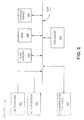
- Fig. 2 is an exemplary diagram of a client or server entity (hereinafter called “client/server entity"), which may correspond to one or more of clients 110 and servers 120-140, according to an implementation consistent with the principles of the invention
- the client/server entity may include a bus 210, a processor 220, a main memory 230, a read only memory (ROM) 240, a storage device 250, one or more input devices 260, one or more output devices 270, and a communication interface 280.
- Bus 210 may include one or more conductors that permit communication among the components of the client/server entity.
- Processor 220 may include one or more conventional processors or microprocessors that interpret and execute instructions.
- Main memory 230 may include a random access memory (RAM) or another type of dynamic storage device that stores information and instructions for execution by processor 220.
- ROM 240 may include a conventional ROM device or another type of static storage device that stores static information and instructions for use by processor 220.
- Storage device 250 may include a magnetic and/or optical recording medium and its corresponding drive.
- Input device(s) 260 may include one or more conventional mechanisms that permit an operator to input information to the client/server entity, such as a keyboard, a mouse, a pen, voice recognition and/or biometric mechanisms, etc.
- Output device(s) 270 may include one or more conventional mechanisms that output information to the operator, including a display, a printer, a speaker, etc.
- Communication interface 280 may include any transceiver-like mechanism that enables the client/server entity to communicate with other devices and/or systems.
- communication interface 280 may include mechanisms for communicating with another device or system via a network, such as network 150.
- the client/server entity perform certain searching-related operations.
- the elient/server entity may perform these operations in response to processor 220 executing software instructions contained in a computer-readable medium, such as memory 230.
- a computer-readable medium may be defined as one or more physical or logical memory devices and/or carrier waves.
- the software instructions may be read into memory 230 from another computer-readable medium, such as data storage device 250, of from another device via communication interface 280.
- the software instructions contained in memory 230 may cause processor 220 to perform processes that will be described later.
- hardwired circuitry may be used in place of or in combination with software instructions to implement processes consistent with the principles of the invention.
- implementations consistent with the principles of the invention are not limited to any specific combination of hardware circuitry and software.
- Document locator 310 may identify a set of documents whose contents match a user search query. Document locator 310 may initially locate documents from document corpus 340 by comparing the terms in the user's search query to the documents in the corpus. In general, processes for indexing documents and searching the indexed collection to return a set of documents containing the searched terms are well known in the art, Accordingly, this functionality of document locator 310 will not be described further herein.
- History component 320 may gather history data associated with the documents in document corpus 340.
- the history data may include data relating to: document inception dates; document content updates/changes; query analysis; link-based criteria; anchor text (e.g., the text in which a hyperlink is embedded, typically underlined or otherwise highlighted in a document); traffic; user behavior; domain-related information; ranking history; user maintained/generated data (e.g., bookmarks); unique words, bigrams, and phrases in anchor text; linkage of independent peers; and/or document topics.
- anchor text e.g., the text in which a hyperlink is embedded, typically underlined or otherwise highlighted in a document
- traffic user behavior
- domain-related information e.g., ranking history
- user maintained/generated data e.g., bookmarks
- unique words, bigrams, and phrases in anchor text linkage of independent peers; and/or document topics.
- Ranking component 330 may assign a ranking score (also called simply a "score" herein) to one or more documents in document corpus 340.
- Ranking component 330 may assign the ranking scores prior to, independent of, or in connection with a search query.
- search engine 125 may sort the documents based on the ranking score and return the sorted set of documents to the client that submitted the search query.
- the ranking score is a value that attempts to quantify the quality of the documents.
- the score is based, at least in part, on the history data from history component 320.
- a document's inception date may be used to generate (or alter) a score associated with that document.
- the term "date” is used broadly here and may, thus, include time and date measurements.
- the inception date of a document may be determined from the date that search engine 125 first learns of or indexes the document.
- Search engine 125 may discover the document through crawling, submission of the document (or a reprssentation/summary thereof) to search engine 125 from an "outside" source, a combination of crawl or submission-based indexing techniques, or in other ways.
- the inception date of a document may be determined from the date that search engine 125 first discovers a link to the document.
- the date that a domain with which a document is registered may be used as an indication of the inception date of the document.
- the first time that a document is referenced in another document such as a news article, newsgroup, mailing list, or a combination of one or more such documents, may be used to infer an inception date of the document.
- the date that a document includes at least a threshold number of pages may be used as an indication of the inception date of the document.
- the inception date of a document may be equal to a time stamp associated with the document by the server hasting the document. Other techniques, not specifically mentioned herein, or combinations of techniques could be used to determine or infer a document's inception date.
- Search engine 125 may use the inception date of a document for scoring of the document. For example, it may be assumed that a document with a fairly recent inception date will not have a significant number of links from other documents (i.e., back links). For existing link-based scoring techniques that score based on the number of links to/from a document, this recent document may be scored lower than an older document that has a larger number of links (e.g., back links). When the inception date of the documents are considered, however, the scores of the documents may be modified (either positively or negatively) based on the documents' inception dates.
- search engine 125 may actually lower the score of a document(s) to reduce the effect of spamming.
- search engine 125 may use the inception date of a document to determine a rate at which links to the document are created (e.g., as an average per unit time based on the number of links created since the inception date or some window in that period). This rate can then be used to score the document, for example, giving more weight to documents to which links are generated more often.
- H may refer to the history-adjusted link score
- L may refer to the link score given to the document, which can be derived using any known link scoring technique (e.g., the scoring technique described in U.S. Patent No. 6,285,999 ) that assigns a score to a document based on links to/from the document
- F may refer to elapsed time measured from the inception date associated with the document (or a window within this period
- search engine 125 may determine the age of each of the documents in a result set (e.g., using their inception dates), determine the average age of the documents, and modify the scores of the documents (either positively or negatively) based on a difference between the documents' age and the average age.
- search engine 125 may generate (or alter) a score associated with a document based, at least in part, on information relating to the inception date of the document.
- information relating to a manner in which a document's content changes over time may be used to generate (or alter) a score associated with that document. For example, a document whose content is edited often may be scored differently than a document whose content remains static over time. Also, a document having a relatively large amount of its content updated over time might be scored differently than a document having a relatively small amount of its content updated over time.
- UA may also be determined as a function of one or more factors, such as the number of "new" or unique pages associated with a document over a period of time. Another factor might include the ratio of the number of new or unique pages associated with a document over a period of time versus the total number of pages associated with that document. Yet another factor may include the amount that the document is updated over one or more periods of time (e.g., n % of a document's visible content may change over a period t (e.g., last m months)), which might be an average value. A further factor might include the amount that the document (or page) has changed in one or more periods of time (e.g., within the last x days).
- factors such as the number of "new" or unique pages associated with a document over a period of time.
- Another factor might include the ratio of the number of new or unique pages associated with a document over a period of time versus the total number of pages associated with that document.
- Yet another factor may include the amount that the document is
- UA may be determined as a function of differently weighted portions of document content. For instance, content deemed to be unimportant if updated/changed, such as Javascript, comments, advertisements, navigational elements, boilerplate material or date/time tags, may be given relatively little weight or even ignored altogether when determining UA. On the other hand, content deemed to be important if updated/changed (e.g., more often, more recently, more extensively, etc.), such as the title or anchor text associated with the forward links, could be given more weight than changes to other content when determining UA.
- updated/changed e.g., more often, more recently, more extensively, etc.
- UF and UA may be used in other ways to influence the score assigned to a document.
- the rate of change in a current time period can be compared to the rate of change in another (e.g., previous) time period to determine whether there is an acceleration or deceleration, trend.
- Documents for which there is an increase in the rate of change might be scored higher than those documents for which there is a steady rate of change, even if that rate of change is relatively high.
- the amount of change may also be a factor in this scoring. For example, document for which there is an increase in the rate of change when that amount of change is greater than some threshold might be scored higher than those documents for which there is a steady rate of change or an amount of change is less than the threshold.
- search engine 125 may store representations of the documents and monitor these representations for changes. For example, search engine 125 may store "signatures" of documents instead, of the (entire) documents themselves to detect changes to document content. In this case, search engine 125 may store a term vector for a document (or page) and monitor it for relatively large changes. According to another implementation, search engine 125 may store and monitor a relatively small portion (e.g., a few terms) of the documents that are determined to be important or the most frequently occurring (excluding "stop words").
- search engine 125 may store a summary or other representation of a document and monitor this information for changes.
- search engine 125 may generate a similarity hash (which may be used to detect near-duplication of a document) for the document and monitor it for changes.
- a change in a similarity hash may be considered to indicate a relatively large change in its associated document.
- yet other techniques may be used to monitor documents for changes. In situations where adequate data storage resources exist, the full documents may be stored and used to determine changes rather than some representation of the documents.
- search engine 125 may determine a date when the content of each of the documents in a result set last changed, determine the average date of change for the documents, and modify the scores of the documents (either positively or negatively) based on a difference between the documents' date-of-change and the average date-or-change.
- search engine 125 may generate (or alter) a score associated with a document based, at least in part, on information rotating to a manner in which the document's content changes over time. For very large documents that include content belonging to multiple individuals or organizations, the score may correspond to each of the sub-documents (i.e., that content belonging to or updated by a single individual or organization).
- one or more query-based factors may be used to generate (or alter) a score associated with a document.
- one query-based factor may relate to the extent to which a document is selected over time when the document is included in a set of search results.
- search engine 125 might score documents selected relatively more often/increasingly by users higher than other documents.
- Another query-based factor may relate to the occurrence of certain search terms appearing in queries over time.
- a particular set of search terms may increasingly appear in queries over a period of time. For example, terms relating to a "hot" topic that is gaining/has gained, popularity or a breaking news event would conceivably appear frequently over a period of time.
- search engine 125 may score documents associated with these search terms (or queries) higher than documents not associated with these terms.
- a further query-based factor may relate to a change over time in the number of search results generated by similar queries.
- a significant increase in the number of search results generated by similar queries might indicate a hot topic or breaking news and cause search engine 125 to increase the scores of documents related to such queries.
- Another query-based factor may relate to queries that remain relatively constant over time but lead to results that change over time. For example, a query relating to "world series champion" leads to search results that change over time (e.g., documents renting to a particular team dominate search results in a given year or time of year). This change can be monitored and used to score documents accordingly.
- Yet another query-based factor may relate to the extent to which a document appears in results for different queries.
- the entropy of queries for one or more documents may be monitored and used as a basis for scoring. For example, if a particular document appears as a hit for a discordant set of queries, this may (though not necessarily) be considered a signal that the document is spam, in which case search engine 125 may score the document relatively lower.
- search engine 125 may derive a valuable signal of how fresh the document is. For example, if such analysis is reflected by a curve that is dropping off, this may signal that the document may be stale (e.g., no longer updated, diminished in importance, superceded by another document, etc.).
- the analysis may depend on the number of new links to a document.
- search engine 125 may monitor the number of new links to a document in the last n days compared to the number of new links since the document was first found.
- search engine 125 may determine the oldest age of the most recent y% of links compared to the age of the first link found.
- the metric results in 0.1 for site A and 0 for site B.
- the metric may be scaled appropriately.
- the metric may be modified by performing a relatively more detailed analysis of the distribution of link dates. For example, models may be built that predict if a particular distribution signifies a particular type of site (e.g., a site that is no longer updated, increasing or decreasing in popularity, superceded, etc.).
- the analysis may depend on weights assigned to the links.
- each link may be weighted by a function that increases with the freshness of the link.
- the freshness of a link may be determined by the date of appearance/change of the link, the date of appearance/change of anchor text associated with the link, date of appearance/change of the document containing the link.
- the date of appearance/change of the document containing a link may be a better indicator of the freshness of the link based on the theory that a good link may go unchanged when a document gets updated if it is still relevant and good.
- each updated document may be tested for significant changes (e.g., changes to a large portion of the document or changes to many different portions of the document) and a link's freshness may be updated (or not updated) accordingly.
- Links may be weighted in other ways. For example, links may be weighted based on how much the documents containing the links are trusted (e.g., government documents can be given high trust). Links may also, or alternatively, be weighted based on how authoritative the documents containing the links are (e.g., authoritative documents may be determined in a manner similar to that described in U.S. Patent No. 6,285,999 ). Links may also, or alternatively, be weighted based on the freshness of the documents containing the links using some other features to establish freshness (e.g., a document that is updated frequently (e.g., the Yahoo home page) suddenly drops a link to a document).
- a document that is updated frequently e.g., the Yahoo home page
- Search engine 125 may raise or lower the score of a document to which there are links as a function of the sum of the weights of the links pointing to it.
- This technique may be employed recursively. For example, assume that a document S is 2 years olds. Document S maybe considered fresh if n% of the links to S are fresh or if the documents containing forward links to S are considered fresh. The latter can be checked by using the creation date of the document and applying this technique recursively.
- the analysis may depend on an age distribution associated with the links pointing to a document.
- the dates that the links to a document were created may be determined and input to a function that determines the age distribution. It may be assumed that the age distribution of a stale document will be very different from the age distribution of a fresh document.
- Search engine 125 may then score documents based, at least in part, on the age distributions associated with the documents.
- the dates that links appear can also be used to detect "spam," where owners of documents or their colleagues create links to their own document for the purpose of boosting the score assigned by a search engine.
- a typical, "legitimate" document attracts back links slowly.
- a large spike in the quantity of back links may signal a topical phenomenon (e.g., the CDC web site may develop many links quickly after an outbreak, such as SARS), or signal attempts to spam a search engine (to obtain a higher ranking and, thus, better placement in search results) by exchanging links, purchasing links, or gaining links from documents without editorial discretion on making links.
- Examples of documents that give links without editorial discretion include guest books, referrer logs, and "free for all" pages that let anyone add a link to a document.
- the analysis may depend on the date that links disappear.
- the disappearance of many links can mean that the document to which these links point is stale (e.g., no longer being updated or has been superseded by another document).
- search engine 125 may monitor the date at which one or more links to a document disappear, the number of links that disappear in a given window of time, or some other time-varying decrease in the number of links (or links/updates to the documents containing such links) to a document to identify documents that may be considered stale. Once a document has been determined to be stale, the links contained in that document may be discounted or ignored by search engine 125 when determining scores for documents pointed to by the links.
- the analysis may depend, not only on the age of the links to a document, but also on the dynamic-ness of the links.
- search engine 125 may weight documents that have a different featured link each day, despite having a very fresh link, differently (e.g., lower) than documents that are consistently updated and consistently link to a given target document.
- search engine 125 may generate a score for a document based on the scores of the documents with links to the document for all versions of the documents within a window of time. Another version of this may factor a discount/decay into the integration based on the major update times of the document.
- search engine 125 may generate (or alter) a score associated with a document based, at least in part, on one or more link-baaed factors.
- information relating to a manner in which anchor text changes over time may be used to generate (or alter) a score associated with a document.
- changes over time in anchor text associated with links to a document may be used as an indication that there has been an update or even a change of focus in the document.
- the domain associated with the document may have changed significantly (completely) from a previous incarnation. This may occur when a domain expires and a different party purchases the domain. Because anchor text is often considered to be part of the document to which its associated link points, the domain may show up in search results for queries that are no longer on topic. This is an undesirable result.
- One way to address this problem is to estimate the date that a domain changed its focus. This may be done by determining a date when the text of a document changes significantly or when the text of the anchor text changes significantly. All links and/or anchor text prior to that date may then be ignored or discounted.
- the freshness of anchor text may also be used as a factor in scoring documents.
- the freshness of an anchor text may be determined, for example, by the date of appearance/change of the anchor text, the date of appearance/change of the link associated with the anchor text, and/or the date of appearance/change of the document to which the associated link points.
- the date of appearance/change of the document pointed to by the link may be a good indicator of the freshness of the anchor text based on the theory that good anchor text may go unchanged when a document gets updated if it is still relevant and good.
- each updated document may be tested for significant changes (e.g., changes to a large portion of the document or changes to many different portions of the document) and an anchor text's freshness may be updated (or not updated) accordingly.
- search engine 125 may generate (or alter) a score associated with a document based, at least in part, on information relating to a manner in which anchor text changes over time.
- information relating to traffic associated with a document over time may be used to generate (or alter) a score associated with the document.
- search engine 125 may monitor the time-varying characteristics of traffic to, or other "use" of, a document by one or more users. A large reduction in traffic may indicate that a document may be stale (e.g., no longer be updated or may be superseded by another document).
- search engine 125 may monitor time-varying characteristics relating to "advertising traffic" for a particular document. For example, search engine 125 may monitor one or a combination of the following factors: (1) the extent to and rate at which advertisements are presented or updated by a given document over time; (2) the quality of the advertisers (e.g., a document whose advertisements refer/link to documents known to search engine 125 over time to have relatively high traffic and trust, such as amazon.com, may be given relatively more weight than those documents whose advertisements refer to low traffic/untrustworthy documents, such as a pornographic site); and (3) the extent to which the advertisements generate user traffic to the documents to which they relate (e.g., their click-through rate). Search engine 125 may use these time-varying characteristics relating to advertising traffic to score the document.
- the quality of the advertisers e.g., a document whose advertisements refer/link to documents known to search engine 125 over time to have relatively high traffic and trust, such as amazon.com, may be given relatively more weight than those documents whose advertisements refer to low
- search engine 125 may generate (or alter) a score associated with a document based, at least in part, on information relating to traffic associated with the document over time.
- search engine 125 may generate (or alter) a score associated with a document based, at least in part, on information corresponding to individual or aggregate user behavior relating to the document over time.
- information relating to a domain associated with a document may be used to generate (or alter) a score associated with the document.
- search engine 125 may monitor information relating to how a document is hosted within a computer network (e.g., the Internet, an intranet or other network or database of documents) and use this information to score the document.
- a computer network e.g., the Internet, an intranet or other network or database of documents
- search engine 125 Individuals who attempt to deceive (spam) search engines often use throwaway or "doorway" domains and attempt to obtain as much traffic as possible before being caught. Information regarding the legitimacy of the domains may be used by search engine 125 when scoring the documents associated with these domains.
- Certain signals may be used to distinguish between illegitimate and legitimate domains. For example, domains can be renewed up to a period of 10 years. Valuable (legitimate) domains are often paid for several years in advance, while doorway (illegitimate) domains rarely are used for more than a year. Therefore, the date when a domain expires in the future can be used as a factor in predicting the legitimacy of a domain and, thus, the documents associated therewith.
- the domain name server (DNS) record for a domain may be monitored to predict whether a domain is legitimate.
- the DNS record contains details of who registered the domain, administrative and technical addresses, and the addresses of name servers (i.e., servers that resolve the domain name into an IP address).
- name servers i.e., servers that resolve the domain name into an IP address.
- search engine 125 may monitor whether physically correct address information exists over a period of time, whether contact information for the domain changes relatively often, whether there is a relatively high number of changes between different name servers and hosting companies, etc.
- a list of known-bad contact information, name servers, and/or IF addresses may be identified, stored, and used in predicting me legitimacy of a domain and, thus, the documents associated therewith.
- the age, or other information, regarding a name server associated with a domain may be used to predict the legitimacy of the domain.
- a "good” name server may have a mix of different domains from different registrars and have a history of hosting those domains, while a "bad” name server might host mainly pornography or doorway domains, domains with commercial words (a common indicator of spam), or primarily bulk domains from a single registrar, or might be brand new.
- the newness of a name server might not automatically be a negative factor in determining the legitimacy of the associated domain, but in combination with other factors, such as ones described herein, it could be.
- search engine 125 may generate (or alter) a score associated with a document based, at least in part, on information relating to a legitimacy of a domain associated with the document.
- information relating to prior rankings of a document may be used to generate (or alter) a score associated with the document.
- search engine 125 may monitor the time-varying ranking of a document in response to search queries provided to search engine 125. Search engine 125 may determine that a document that jumps in rankings across many queries might be a topical document or it could signal an attempt to spam search engine 125.
- a query set (e.g.. of commercial queries) can be repeated, and documents that gained more than M% in the rankings may be flagged or the percentage growth in ranking may be used as a signal in determining scores for the documents.
- search engine 125 may determine that a query is likely commercial if the average (median) score of the top results is relatively high and there is a significant amount of change in the top results from month to mouth, Search engine 125 may also monitor churn as an indication of a commercial query. For commercial queries, the likelihood of spam is higher, so search engine 125 may treat documents associated therewith accordingly.
- search engine 125 may monitor (on a page, host, document, and/or domain basis) one or more other factors, such as the number of queries for which, and the rate at which (increasing/decreasing), a document is selected as a search result over time; seasonality, burstiness, and other patterns over time that a document is selected as a search result; and/or changes in scores over time for a URL-query pair.
- search engine 125 may monitor a number of document (e.g., URL) independent query-based criteria over time. For example, search engine 125 may monitor the average score among a top set of results generated in response to a given query or set of queries and adjust the score of that set of results and/or other results generated in response to the given query or set of queries. Moreover, search engine 125 may monitor the number of results generated for a particular query or set of queries over time. If search engine 125 determines that the number of results increases or that there is a change in the rate of increase (e.g., such an increase may be an indication of a "hot topic" or other phenomenon), search engine 125 may score those results higher in the future.
- search engine 125 may score those results higher in the future.
- search engine 125 may monitor the ranks of documents over time to detect sudden spikes in the ranks of the documents.
- a spike may indicate either a topical phenomenon (e.g., a hot topic) or an attempt to spam search engine 125 by, for example, trading or purchasing links.
- Search engine 125 may take measures to prevent spam attempts by, for example, employing hysteresis to allow a rank to grow at a certain rate.
- the rank for a given document may be allowed a certain maximum threshold of growth over a predefined window of time.
- search engine 125 may consider mentions of the document in news articles, discussion groups, etc. on the theory that spam documents will not be mentioned, for example, in the news. Any or a combination of these techniques may be used to curtail spamming attempts.
- search engine 125 may make exceptions for documents that are determined to be authoritative in some respect, such as government documents, web directories (e.g., Yahoo), and documents that have shown a relatively steady and high rank over time. For example, if an unusual spike in the number or rate of increase of links to an authoritative document occurs, then search engine 125 may consider such a document not to be spam and, thus, allow relatively high or even no threshold for (growth of) its rank (over time).
- search engine 125 may consider significant drops in ranks of documents as an indication that these documents are "out of favor" or outdated. For example, if the rank of a document over time drops significantly, then search engine 125 may consider the document as outdated and score the document accordingly.
- search engine 125 may generate (or alter) a score associated with a document based, at least in part, on information relating to prior rankings of the document.
- Search engine 125 may also analyze upward and downward trends to add or remove the document (or more specifically, a path to the document) from the bookmarks/favorites lists, the rate at which the document is added to or removed from the bookmarks/favorites lists, and/or whether the document is added to, deleted from, or accessed through the bookmarka/favorites lists. If a number of users are adding a particular document to their bookmarks/favorites lists or often accessing the document through such lists over time, this may be considered an indication that the document is relatively important.
- information regarding unique words, bigrams, and phrases in anchor text may be used to generate (or alter) a score associated with a document.
- search engine 125 may monitor web (or link) graphs and their behavior over time and use this information for scoring, spam defection, or other purposes.
- Naturally developed web graphs typically involve independent decisions.
- Synthetically generated web graphs which are usually indicative of an intent to spam, are based on coordinated decisions, causing the profile of growth in anchor words/bigrams/phrases to likely be relatively spiky.
- search engine 125 may generate (or alter) a score associated with a document based, at least in part, on information regarding unique words, bigrams, and phrases in anchor text associated with one or more links pointing to the document.
- a sudden growth in the number of apparently independent peers, incoming and/or outgoing, with a large number of links to individual documents may indicate a potentially synthetic web graph, which is an indicator of an attempt to spam. This indication may be strengthened if the growth corresponds to anchor text that is unusually coherent or discordant.
- This information can be used to demote the impact of such links, when used with a link-based scoring technique, either as a binary decision item (e.g., demote the score by a fixed amount) or a multiplicative factor.
Landscapes
- Engineering & Computer Science (AREA)
- Theoretical Computer Science (AREA)
- Databases & Information Systems (AREA)
- Physics & Mathematics (AREA)
- Business, Economics & Management (AREA)
- General Physics & Mathematics (AREA)
- Accounting & Taxation (AREA)
- General Engineering & Computer Science (AREA)
- Data Mining & Analysis (AREA)
- Development Economics (AREA)
- Finance (AREA)
- Strategic Management (AREA)
- Entrepreneurship & Innovation (AREA)
- Game Theory and Decision Science (AREA)
- Economics (AREA)
- Marketing (AREA)
- General Business, Economics & Management (AREA)
- Information Retrieval, Db Structures And Fs Structures Therefor (AREA)
- Document Processing Apparatus (AREA)
Applications Claiming Priority (3)
| Application Number | Priority Date | Filing Date | Title |
|---|---|---|---|
| US50761703P | 2003-09-30 | 2003-09-30 | |
| US10/748,664 US7346839B2 (en) | 2003-09-30 | 2003-12-31 | Information retrieval based on historical data |
| EP04784004A EP1668551A1 (de) | 2003-09-30 | 2004-09-15 | Informationsabruf auf der basis von vorgeschichtedaten |
Related Parent Applications (2)
| Application Number | Title | Priority Date | Filing Date |
|---|---|---|---|
| EP04784004A Addition EP1668551A1 (de) | 2003-09-30 | 2004-09-15 | Informationsabruf auf der basis von vorgeschichtedaten |
| EP04784004A Division EP1668551A1 (de) | 2003-09-30 | 2004-09-15 | Informationsabruf auf der basis von vorgeschichtedaten |
Publications (2)
| Publication Number | Publication Date |
|---|---|
| EP1777633A2 true EP1777633A2 (de) | 2007-04-25 |
| EP1777633A3 EP1777633A3 (de) | 2007-12-12 |
Family
ID=37866110
Family Applications (3)
| Application Number | Title | Priority Date | Filing Date |
|---|---|---|---|
| EP20060125569 Withdrawn EP1777633A3 (de) | 2003-09-30 | 2004-09-15 | Auf Abfrageanalysen basierender Dokumentähnlichkeitswert |
| EP20060125570 Ceased EP1775665A3 (de) | 2003-09-30 | 2004-09-15 | Auf linkbasierten Kriterien basierender Dokumentähnlichkeitswert |
| EP20060125571 Withdrawn EP1775666A3 (de) | 2003-09-30 | 2004-09-15 | Auf dem mit einem Dokument verbundenen Verkehr basierender Dokumentähnlichkeitswert |
Family Applications After (2)
| Application Number | Title | Priority Date | Filing Date |
|---|---|---|---|
| EP20060125570 Ceased EP1775665A3 (de) | 2003-09-30 | 2004-09-15 | Auf linkbasierten Kriterien basierender Dokumentähnlichkeitswert |
| EP20060125571 Withdrawn EP1775666A3 (de) | 2003-09-30 | 2004-09-15 | Auf dem mit einem Dokument verbundenen Verkehr basierender Dokumentähnlichkeitswert |
Country Status (1)
| Country | Link |
|---|---|
| EP (3) | EP1777633A3 (de) |
Cited By (1)
| Publication number | Priority date | Publication date | Assignee | Title |
|---|---|---|---|---|
| US8380713B2 (en) | 2009-10-13 | 2013-02-19 | Electronics And Telecommunications Research Institute | Apparatus for question answering based on answer trustworthiness and method thereof |
Family Cites Families (5)
| Publication number | Priority date | Publication date | Assignee | Title |
|---|---|---|---|---|
| US6421675B1 (en) * | 1998-03-16 | 2002-07-16 | S. L. I. Systems, Inc. | Search engine |
| US6546388B1 (en) * | 2000-01-14 | 2003-04-08 | International Business Machines Corporation | Metadata search results ranking system |
| JP2002024065A (ja) * | 2000-07-07 | 2002-01-25 | Ricoh Co Ltd | 文書管理システム、文書管理方法およびその方法を実施するためのプログラムを記録した記録媒体 |
| NO313399B1 (no) * | 2000-09-14 | 2002-09-23 | Fast Search & Transfer Asa | Fremgangsmate til soking og analyse av informasjon i datanettverk |
| US8001118B2 (en) * | 2001-03-02 | 2011-08-16 | Google Inc. | Methods and apparatus for employing usage statistics in document retrieval |
-
2004
- 2004-09-15 EP EP20060125569 patent/EP1777633A3/de not_active Withdrawn
- 2004-09-15 EP EP20060125570 patent/EP1775665A3/de not_active Ceased
- 2004-09-15 EP EP20060125571 patent/EP1775666A3/de not_active Withdrawn
Cited By (1)
| Publication number | Priority date | Publication date | Assignee | Title |
|---|---|---|---|---|
| US8380713B2 (en) | 2009-10-13 | 2013-02-19 | Electronics And Telecommunications Research Institute | Apparatus for question answering based on answer trustworthiness and method thereof |
Also Published As
| Publication number | Publication date |
|---|---|
| EP1775666A3 (de) | 2010-02-17 |
| EP1777633A3 (de) | 2007-12-12 |
| EP1775665A3 (de) | 2010-03-03 |
| EP1775666A2 (de) | 2007-04-18 |
| EP1775665A2 (de) | 2007-04-18 |
Similar Documents
| Publication | Publication Date | Title |
|---|---|---|
| US8112426B2 (en) | Document scoring based on document content update | |
| EP1777633A2 (de) | Auf Abfrageanalysen basierender Dokumentähnlichkeitswert | |
| AU2007200526B2 (en) | Document scoring based on query analysis |
Legal Events
| Date | Code | Title | Description |
|---|---|---|---|
| PUAI | Public reference made under article 153(3) epc to a published international application that has entered the european phase |
Free format text: ORIGINAL CODE: 0009012 |
|
| AC | Divisional application: reference to earlier application |
Ref document number: 1668551 Country of ref document: EP Kind code of ref document: P |
|
| AK | Designated contracting states |
Kind code of ref document: A2 Designated state(s): AT BE BG CH CY CZ DE DK EE ES FI FR GB GR HU IE IT LI LU MC NL PL PT RO SE SI SK TR |
|
| PUAL | Search report despatched |
Free format text: ORIGINAL CODE: 0009013 |
|
| AK | Designated contracting states |
Kind code of ref document: A3 Designated state(s): AT BE BG CH CY CZ DE DK EE ES FI FR GB GR HU IE IT LI LU MC NL PL PT RO SE SI SK TR |
|
| 17P | Request for examination filed |
Effective date: 20080515 |
|
| 17Q | First examination report despatched |
Effective date: 20080616 |
|
| AKX | Designation fees paid |
Designated state(s): AT BE BG CH CY CZ DE DK EE ES FI FR GB GR HU IE IT LI LU MC NL PL PT RO SE SI SK TR |
|
| DAF | New application according to art. 61(8) epc: reference to earlier document (deleted) | ||
| STAA | Information on the status of an ep patent application or granted ep patent |
Free format text: STATUS: THE APPLICATION HAS BEEN WITHDRAWN |
|
| 18W | Application withdrawn |
Effective date: 20150825 |
|
| P01 | Opt-out of the competence of the unified patent court (upc) registered |
Effective date: 20230519 |