EP1775951A2 - Operation reproducing method, apparatus and system - Google Patents
Operation reproducing method, apparatus and system Download PDFInfo
- Publication number
- EP1775951A2 EP1775951A2 EP06019861A EP06019861A EP1775951A2 EP 1775951 A2 EP1775951 A2 EP 1775951A2 EP 06019861 A EP06019861 A EP 06019861A EP 06019861 A EP06019861 A EP 06019861A EP 1775951 A2 EP1775951 A2 EP 1775951A2
- Authority
- EP
- European Patent Office
- Prior art keywords
- another system
- data
- contents
- devices
- reproducing
- Prior art date
- Legal status (The legal status is an assumption and is not a legal conclusion. Google has not performed a legal analysis and makes no representation as to the accuracy of the status listed.)
- Withdrawn
Links
- 238000000034 method Methods 0.000 title claims description 25
- 238000004891 communication Methods 0.000 description 33
- 238000010586 diagram Methods 0.000 description 30
- 230000009471 action Effects 0.000 description 28
- 238000007726 management method Methods 0.000 description 25
- 230000008569 process Effects 0.000 description 12
- 230000006870 function Effects 0.000 description 11
- 238000012545 processing Methods 0.000 description 11
- 238000012546 transfer Methods 0.000 description 8
- 230000003068 static effect Effects 0.000 description 7
- 230000005540 biological transmission Effects 0.000 description 4
- 238000013500 data storage Methods 0.000 description 4
- 230000003287 optical effect Effects 0.000 description 2
- 230000004044 response Effects 0.000 description 2
- 238000004458 analytical method Methods 0.000 description 1
- 238000012790 confirmation Methods 0.000 description 1
- 238000007796 conventional method Methods 0.000 description 1
- 238000007405 data analysis Methods 0.000 description 1
- 238000012986 modification Methods 0.000 description 1
- 230000004048 modification Effects 0.000 description 1
- 238000011017 operating method Methods 0.000 description 1
Images







Classifications
-
- H—ELECTRICITY
- H04—ELECTRIC COMMUNICATION TECHNIQUE
- H04N—PICTORIAL COMMUNICATION, e.g. TELEVISION
- H04N7/00—Television systems
- H04N7/16—Analogue secrecy systems; Analogue subscription systems
- H04N7/162—Authorising the user terminal, e.g. by paying; Registering the use of a subscription channel, e.g. billing
- H04N7/163—Authorising the user terminal, e.g. by paying; Registering the use of a subscription channel, e.g. billing by receiver means only
-
- H—ELECTRICITY
- H04—ELECTRIC COMMUNICATION TECHNIQUE
- H04N—PICTORIAL COMMUNICATION, e.g. TELEVISION
- H04N21/00—Selective content distribution, e.g. interactive television or video on demand [VOD]
- H04N21/40—Client devices specifically adapted for the reception of or interaction with content, e.g. set-top-box [STB]; Operations thereof
- H04N21/43—Processing of content or additional data, e.g. demultiplexing additional data from a digital video stream; Elementary client operations, e.g. monitoring of home network or synchronising decoder's clock; Client middleware
- H04N21/436—Interfacing a local distribution network, e.g. communicating with another STB or one or more peripheral devices inside the home
- H04N21/43615—Interfacing a Home Network, e.g. for connecting the client to a plurality of peripherals
-
- H—ELECTRICITY
- H04—ELECTRIC COMMUNICATION TECHNIQUE
- H04N—PICTORIAL COMMUNICATION, e.g. TELEVISION
- H04N21/00—Selective content distribution, e.g. interactive television or video on demand [VOD]
- H04N21/40—Client devices specifically adapted for the reception of or interaction with content, e.g. set-top-box [STB]; Operations thereof
- H04N21/43—Processing of content or additional data, e.g. demultiplexing additional data from a digital video stream; Elementary client operations, e.g. monitoring of home network or synchronising decoder's clock; Client middleware
- H04N21/443—OS processes, e.g. booting an STB, implementing a Java virtual machine in an STB or power management in an STB
-
- H—ELECTRICITY
- H04—ELECTRIC COMMUNICATION TECHNIQUE
- H04N—PICTORIAL COMMUNICATION, e.g. TELEVISION
- H04N21/00—Selective content distribution, e.g. interactive television or video on demand [VOD]
- H04N21/40—Client devices specifically adapted for the reception of or interaction with content, e.g. set-top-box [STB]; Operations thereof
- H04N21/47—End-user applications
- H04N21/485—End-user interface for client configuration
Definitions
- the present invention relates to a technique capable of reproducing an operation of using multiple devices on a network performed in another system.
- an operating apparatus for manipulating a series of actions across the devices, such as processing and displaying stored contents data and displaying multiple pieces of contents data so as to control the series of actions.
- Patent Document 1 Japanese Patent Laid-Open No. 10-063685 for instance
- Patent Document 2 Japanese Patent Laid-Open No. 2000-010829 for instance.
- Patent Document 3 Japanese Patent Laid-Open No. 2000-175136 for instance.
- the present invention has been made to solve the problems, and an object thereof is to present to a user an operation reproducible in the user's system based on operation history information in which the information on operations performed in other systems is recorded.
- an operation reproducing method of a system capable of reproducing an operation using multiple devices on a network performed in another system characterized by comprising: an acquisition step of acquiring operation history information in which information on the operation using multiple devices on the network performed in the another system is recorded from the another system; a determination step of determining whether or not the operation performed in the another system is reproducible based on the operation history information; and a presentation step of presenting to a user the operation determined to be reproducible in the determination step.
- an operation reproducing apparatus of a system capable of reproducing an operation using multiple devices on a network performed in another system, characterized by comprising: acquisition means for acquiring operation history information in which information on the operation using multiple devices on the network performed in the another system is recorded from the another system; determination means for determining whether or not the operation performed in the another system is reproducible based on the operation history information; and presentation means for presenting to a user the operation determined to be reproducible by the determination means.
- a system capable of reproducing an operation using multiple devices on a network performed in another system, characterized by comprising: acquisition means for acquiring operation history information in which information on the operation using multiple devices on the network performed in the another system is recorded from the another system; determination means for determining whether or not the operation performed in the another system is reproducible based on the operation history information; and presentation means for presenting to a user the operation determined to be reproducible by the determination means.
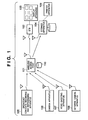
- FIG. 1 is a diagram showing an example of a configuration of a wireless LAN system according to this embodiment
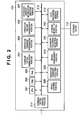
- FIG. 2 is a diagram showing a hardware configuration of a wireless access point 101
- FIG. 3 is a diagram showing the hardware configuration of an STB 102 to which a display apparatus 103 is connected;
- FIG. 4 is a diagram showing the hardware configuration of a storage apparatus 104
- FIG. 5 is a diagram showing the hardware configuration of a broadcast contents recording and reproducing apparatus 105
- FIG. 6 is a diagram showing a basic hardware configuration of a camera apparatus 106
- FIG. 7 is a diagram showing the hardware configuration of a printer apparatus 109.
- FIG. 8 is a diagram showing a list representing operation contents of a user
- FIGS. 9A and 9B are diagrams showing the configuration of an operation history table
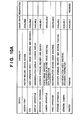
- FIGS. 10A and 10B are diagrams showing an example of the configuration of a device status management table which is managed by system
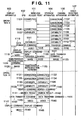
- FIG. 11 is a diagram showing communication sequences among devices in operations 6 and 10;
- FIG. 12 is a flowchart showing an operation history recording process according to this embodiment.
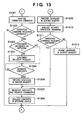
- FIG. 13 is a flowchart showing a contents collection process according to this embodiment.
- FIG. 14 is a diagram showing recording command information created as operation command history data in a system 1;
- FIG. 15 is a diagram showing the communication sequences among the devices when transferring the recording command information to a system 2;
- FIG. 16 is a flowchart showing a presentation process of the operation command history data
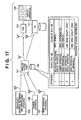
- FIG. 17 is a diagram showing the recording command information in the system 2;
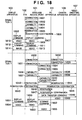
- FIG. 18 is a diagram showing the communication sequences among the devices in operations 3 and 7 when executing the operation command history data in the system 2;
- FIG. 19 is a flowchart showing a process of executing the operation command history data.
- the multiple devices are a set-top box (an STB hereafter) including a display apparatus, a camera apparatus, a video shooting apparatus, a network camera apparatus, a broadcast contents recording and reproducing apparatus and a storage apparatus connected with a printer apparatus.
- the wireless access points function as an operation recording apparatus and a communication control device while the STB functions as an operation input device.
- the camera apparatus, video shooting apparatus, network camera apparatus, broadcast contents recording and reproducing apparatus and storage apparatus function as storage devices while the display apparatus and printer apparatus function as reproducing devices.
- FIG. 1 is a diagram showing an example of a configuration of the wireless LAN system according to this embodiment.
- a wireless access point 101 controls communication of a wireless LAN, manages and controls the devices configuring the wireless LAN system, analyzes an operation command and further recognizes sending and receiving of data so as to create operation history data.
- An STB 102 follows a user operation and temporarily records and converts contents data recorded in the devices and a storage apparatus 104 and the data sent from the devices so as to display them on a display apparatus 103.
- the display apparatus 103 displays the contents according to an operation of the STB 102.
- the storage apparatus 104 can store the contents data existing in the devices, create and record a thumbnail, reproduction data on characterizing portions, detailed metadata and the like described later and search for and deliver the recorded data according to control from the STB 102.
- the broadcast contents recording and reproducing apparatus 105 can receive and record broadcast contents, reproduce them according to the control from the STB 102 and send the reproduction data over the network.
- a camera apparatus 106 can shoot a still image, create the thumbnail and the like, shoot a moving image of a low resolution and send each piece of image data over the network according to the control from the STB 102.
- a video shooting apparatus 107 can shoot a moving image of a high resolution and send that video data over the network according to the control from the STB 102.
- a network camera apparatus 108 can shoot a moving image of a high resolution and send the data by video streaming over the network according to the control from the STB 102.
- a printer apparatus 109 prints the data recorded in the storage apparatus 104.
- a portable storage device 110 is the portable storage device such as a hard disk, a DVD or a memory capable of recording the data stored in the wireless access point 101 and available to another system.
- FIGS. 2 to 7 a hardware configuration of the devices 101 to 109 configuring the wireless LAN system will be described in turn by using FIGS. 2 to 7 below.
- FIG. 2 is a diagram showing the hardware configuration of the wireless access point 101.
- the wireless access point 101 includes a central control portion (CPU) 201, a ROM 202 and a RAM 203, which control the entire apparatus.
- the wireless access point 101 also includes a communication management portion 204 for managing communication links and a communication state among the devices and an operation command recognizing portion 205 for recognizing the operation command transmitted from the STB 102.
- the wireless access point 101 further includes an operation history management portion 206 for managing operation history information created by an operation history information creating portion described later, an operation history information creating portion 207 for creating the operation history information and a device control portion 208 for transmitting a command to the devices according to the operation history information and exerting control.
- the wireless access point 101 further includes an operation command executing portion 209 for executing the operation command according to the operation history information and a device management portion 210 for managing the devices configuring the system and managing capabilities and resources of the devices.
- the wireless access point 101 further includes a capability exchange detecting portion 211 for detecting the capabilities and resources of the devices configuring the system and a storage device I/F portion 212 for reading and writing the data from and to the portable storage device.
- the wireless access point 101 further includes a data recording memory portion 213 for temporarily recording the contents data delivered on the network and a communication control portion 214 for controlling the communication of the wireless LAN via a communication I/F not shown.
- the above-mentioned portions 201 to 214 are connected via an internal bus 215.
- FIG. 3 is a diagram showing the hardware configuration of the STB 102 to which the display apparatus 103 is connected.
- the STB 102 includes a central control portion (CPU) 301, a ROM 302 and a RAM 303, which control the entire STB.
- the STB 102 also includes an image decoding portion 304 for decoding the video data and image data such as JPEG and MPEG transmitted from the devices and an image encoding portion 305 for encoding the data decoded by the image decoding portion 304.
- the STB 102 further includes a resolution converting portion 306 for converting the data decoded by the image decoding portion 304 to a size and a resolution for display and a video frame converting portion 307 for thinning a data display frame decoded by the image decoding portion 304 and converting a frame rate.
- the STB 102 further includes an operation command inputting portion 308 for inputting an operation command from the user, a display control portion 309 for controlling a display of the display apparatus 103 and an operation command executing portion 310 for executing the operation command according to the operation command from the operation command inputting portion 308.
- the STB 102 further includes a capability exchange portion 311 for detecting the capabilities of the connected devices which are used when executed according to the operation command and a device management portion 312 for keeping the communication with the devices and the capabilities thereof.
- the STB 102 further includes a device control portion 313 for controlling the connected devices which are used when executed according to the operation command, and a display I/F portion 314 for controlling data display such as the contents, a list of the contents or a thumbnail for the display apparatus 103.
- the STB 102 further includes a data acquisition control portion 315 for exerting control to acquire the data such as the contents and thumbnail from the devices and a communication control portion 316 for controlling the communication of the wireless LAN via the communication I/F not shown.
- the above-mentioned portions 301 to 316 are connected via an internal bus 317.
- the display apparatus 103 includes a central control portion (CPU) 321, a ROM 322 and a RAM 323, which control the entire apparatus.
- the display apparatus 103 also includes a display portion 324 for displaying the data such as the contents and thumbnail, and provides capabilities such as high-resolution display and 2-screen display.
- the display apparatus 103 will be described by exemplifying the case of being connected to the STB 102. However, it goes without saying that the present invention is also applicable to the case where the STB 102 is included in the display apparatus 103 itself or the case where the STB 102 is stand-alone.
- FIG. 4 is a diagram showing the hardware configuration of the storage apparatus 104.
- the storage apparatus 104 includes a central control portion (CPU) 401, a ROM 402 and a RAM 403, which control the entire apparatus.
- the storage apparatus 104 also includes a device I/F portion 404 such as a USB for acquiring the data from the devices, to which the printer apparatus 109 and the like are connected.
- the storage apparatus 104 further includes a data storage portion 405 for recording the data from the devices and metadata such as the thumbnail when created and a search control portion 406 for searching stored data according to the operation command from the STB 102 and the like.
- the storage apparatus 104 further includes an image decoding portion 407 for decoding the video data and image data such as JPEG and MPEG acquired from the devices and an image encoding portion 408 for encoding the data decoded by the image decoding portion 407 for transmission.
- the storage apparatus 104 further includes a thumbnail creating portion 409 for creating the thumbnail as the metadata for the data acquired from the devices, characterizing portion reproduction data and the like and a metadata creating portion 410 for creating detailed metadata for the data acquired from the devices and the like.
- the storage apparatus 104 further includes a command control portion 411 for transmitting and searching the contents data, contents list and metadata according to the operation command from the STB 102 and the like and a printing control portion 412 for controlling printing for the printer apparatus 109.
- the printing control portion 412 also provides the capabilities such as high-resolution printing and album printing, and also manages the resources of the printer apparatus 109.
- the storage apparatus 104 further includes a communication control portion 413 for controlling the communication of the wireless LAN via the communication I/F not shown.
- the above-mentioned portions 401 to 413 are connected via an internal bus 414.
- FIG. 5 is a diagram showing the hardware configuration of the broadcast contents recording and reproducing apparatus 105.
- the broadcast contents recording and reproducing apparatus 105 includes a central control portion (CPU) 501, a ROM 502 and a RAM 503, which control the entire apparatus.
- the broadcast contents recording and reproducing apparatus 105 also comprises a tuner not shown, and includes an antenna I/F portion 504 connected to an antenna for receiving broadcast data and a data storage portion 505 for recording selected broadcast video data, broadcast metadata and the like.
- the broadcast contents recording and reproducing apparatus 105 further includes a search control portion 506 for searching the stored data according to the operation command from the STB 102 and the like and an image decoding portion 507 for decoding the received broadcast video data such as MPEG.
- the broadcast contents recording and reproducing apparatus 105 further includes an image encoding portion 508 for encoding the data decoded by the image decoding portion 507 for transmission and a thumbnail creating portion 509 for creating the thumbnail, characterizing portion reproduction data and the like as the metadata for the received and selected broadcast video data.
- the broadcast contents recording and reproducing apparatus 105 further includes a command control portion 510 for transmitting and searching the contents data, contents list and metadata according to the operation command from the STB 102 and the like and a communication control portion 511 for controlling the communication of the wireless LAN via the communication I/F not shown.
- the above-mentioned portions 501 to 511 are connected via an internal bus 512.
- FIG. 6 is a diagram showing the basic hardware configuration of the camera apparatus 106.
- the camera apparatus 106 will be taken as an example and described here.
- the camera apparatus 106 includes a central control portion (CPU) 601, a ROM 602 and a RAM 603, which control the entire apparatus.
- the camera apparatus 106 also includes an image encoding portion 604 for encoding the contents data for transmitting it and a device I/F portion 605 such as a USB for acquiring the data from the other devices.
- the camera apparatus 106 further includes a thumbnail creating portion 606 for creating the thumbnail as the metadata for the data acquired from the devices, characterizing portion reproduction data and the like and a metadata creating portion 607 for creating detailed metadata for the data acquired from the devices and the like.
- the camera apparatus 106 further includes a data storage portion 608 for temporarily storing the data from the devices and storing the metadata such as the thumbnail when created.
- the camera apparatus 106 further includes a data transmission control portion 609 for transmitting the contents data, contents list and metadata to the display apparatus 103, storage apparatus 104 and the like according to the operation command from the STB 102 and the like.
- the camera apparatus 106 further includes a communication control portion 610 for controlling the communication of the wireless LAN via the communication I/F not shown.
- the above-mentioned portions 601 to 610 are connected via an internal bus 611.
- FIG. 7 is a diagram showing the hardware configuration of the printer apparatus 109.
- the printer apparatus 109 includes a central control portion (CPU) 701, a ROM 702 and a RAM 703, which control the entire apparatus.
- the printer apparatus 109 also includes a device I/F portion 704 such as a USB for acquiring the data from the devices, to which a personal computer and the like are connected.
- the printer apparatus 109 further includes a data storage portion 705 for recording the data from the devices and metadata such as the thumbnail transmitted from the devices and an image decoding portion 706 for decoding the video data and image data such as JPEG and MPEG acquired from the devices.
- the printer apparatus 109 further includes an image encoding portion 707 for encoding the data decoded by the image decoding portion 706 for transmission and a command control portion 708 for transmitting and searching the contents data, contents list and metadata according to the operation command from the STB 102 and the like.
- the printer apparatus 109 further includes a printing control portion 709 for controlling printing for a printer engine, and the printer engine manages the capabilities such as high-resolution printing and album printing and the resources of the printer engine.
- the printer apparatus 109 further includes a communication control portion 710 for controlling the communication of the wireless LAN via the communication I/F not shown.
- the above-mentioned portions 701 to 710 are connected via an internal bus 711.
- the storage apparatus 104 of this embodiment does not have the capability for creating the thumbnail and metadata of the videos, images and the like and the capability for searching by using them.
- FIG. 8 is a diagram showing the list representing operation contents of the user.
- the entire list consists of the operation contents inputted by the user from the operation command inputting portion 308 of the STB 102.
- the list is displayed on the display apparatus 103, where the operation is executed by selecting it.
- An operation 1 is the operation whereby broadcast video contents recorded in the broadcast contents recording and reproducing apparatus 105 are searched for and delivered to the display apparatus 103 to be displayed thereon.
- An operation 2 is the operation whereby the broadcast video contents recorded in the broadcast contents recording and reproducing apparatus 105 and a static image recorded in the camera apparatus 106 are delivered to the display apparatus 103 to be simultaneously displayed on two screens.
- An operation 3 is the operation whereby the static image recorded in the camera apparatus 106 is delivered to the display apparatus 103 and displayed thereon and then the video recorded in the video shooting apparatus 107 is delivered to the display apparatus 103 and displayed thereon.
- An operation 4 is the operation whereby the static image recorded in the camera apparatus 106 is delivered to the storage apparatus 104 and stored therein to be printed by the printer apparatus 109.
- An operation 5 is the operation whereby a moving image is shot by the network camera apparatus 108 and transmitted to the display apparatus 103 by video streaming distribution to be displayed thereon.
- An operation 6 is the operation whereby the video recorded in the video shooting apparatus 107 is delivered to the display apparatus 103 and reproduced thereon and in timing of having reproduced it for 2 minutes and 30 seconds, the static image recorded in the camera apparatus 106 is acquired to be simultaneously displayed on the two screens.
- An operation 7 is the operation whereby the video shot in the video shooting apparatus 107 is simultaneously delivered to the display apparatus 103 and storage apparatus 104 and stored in the storage apparatus 104 while displaying it on the display apparatus 103.
- An operation 8 is the operation whereby a low-resolution video is shot by the video shooting apparatus 107 and delivered to the display apparatus 103 to be displayed thereon.
- An operation 9 is the operation whereby a high-resolution video is shot by the video shooting apparatus 107 and delivered to the display apparatus 103 to be displayed thereon.
- An operation 10 is the operation whereby the contents with favorite tag metadata stored in the storage apparatus 104 are searched for, which are delivered to the display apparatus 103 to be displayed thereon.
- FIGS. 9A and 9B are diagrams showing the configuration of an operation history table. This table is recorded in the storage device 110 of the wireless access point 101. As shown in FIGS. 9A and 9B, those recorded in the storage device 110 are the operation command transmitted to the devices via the input and network when each of the operations is performed, the devices used for the operation and the capabilities of the devices used for the operation. In the case where the operation is performed by the operation command related to original contents, the contents used for the operation are recorded in the storage device 110 and added to the operation history table.
- the operations 2, 3 and 6 shown in FIGS. 9A and 9B are the operations related to the contents, where an outline of the contents is recorded in the operation history table.
- the operations 1, 4, 5, 7, 8, 9 and 10 are intended for movement of the operations only unrelated to the contents so that the outline of the contents is not recorded in the operation history table.
- operation command information plays a role of a play list for reproducing the contents.
- FIGS. 10A and 10B a description will be given by using FIGS. 10A and 10B as to the table for managing a capability usage state of the multiple devices connected to the network by system.
- FIGS. 10A and 10B are diagrams showing an example of the configuration of a device status management table which is managed by system.
- the management table is recorded in the device management portion 210 of the wireless access point 101.
- FIG. 10A is the device status management table of a system 1
- FIG. 10B is the device status management table of a system 2. Both FIGS. 10A and 10B have the connected devices, their capabilities, usage state and reservation state recorded therein.
- the system 1 is connected with the wireless access point 101, STB 102, display apparatus 103, broadcast contents recording and reproducing apparatus 105, camera apparatus 106, video shooting apparatus 107, storage apparatus 104, network camera apparatus 108 and printer apparatus 109.
- the wireless access point 101 has the capabilities such as operation history recording and device access
- the STB 102 has the capabilities such as user operation input, image encoding and decoding.
- the display apparatus 103 has the capabilities such as high-resolution display and 2-screen display
- the broadcast contents recording and reproducing apparatus 105 has the capabilities such as the storage, delivery and search of the broadcast contents.
- the camera apparatus 106 has the capabilities such as static image shooting, low-resolution moving image shooting and data distribution, and the video shooting apparatus 107 has the capabilities such as high-resolution moving image shooting and data distribution.
- the storage apparatus 104 has the capabilities such as the storage, delivery, search and printing of the contents, and the network camera apparatus 108 has the capabilities such as high-resolution video shooting and streaming distribution.
- the printer apparatus 109 has a printing capability. These are recorded together with the usage state and reservation information about the devices.
- the system 2 is connected with the wireless access point 101, STB 102, display apparatus 103, broadcast contents recording and reproducing apparatus 105, camera apparatus 106, video shooting apparatus 107 and a PC.
- the wireless access point 101 has the capabilities such as operation history recording and device access
- the STB 102 has the capabilities such as user operation input and image encoding and decoding.
- the display apparatus 103 has the capability such as high-resolution display
- the broadcast contents recording and reproducing apparatus 105 has the capabilities such as the storage, delivery and search of the broadcast contents.
- the camera apparatus 106 has the capabilities such as static image shooting, low-resolution moving image shooting and data distribution.
- the video shooting apparatus 107 has the capabilities such as high-resolution moving image shooting and data distribution
- the PC has the capabilities such as the storage, delivery and printing of the contents. These are recorded together with the usage state and reservation state of the devices.
- FIGS. 11 to 13 a description will be given by using FIGS. 11 to 13 as to a recording process of the operation history, as an example of the operations, performed by the wireless access point 101 when the operations 6 and 10 shown in FIG. 8 are performed from the STB 102.
- FIG. 11 is a diagram showing communication sequences among the devices in the operations 6 and 10.
- FIG. 12 is a flowchart showing the operation history recording process according to this embodiment.
- the operation command is inputted from the operation command inputting portion 308 of STB 102 and the operation is started, the information on the operation is transmitted from the STB 102 to the wireless access point 101 (S1201).
- a region of new operation command history data is created by the operation history management portion 206 of the wireless access point 101, and the recording process of the operation history is started by the operation history information creating portion 207 (S1202).
- the region of the operation command history data is the region of the data registered as the operation 6 with the operation history table shown in FIGS. 9A and 9B for instance.
- the wireless access point 101 receives inter-device connection information (1101) from the STB 102 (YES in S1203), it transmits connection request information (1102, 1104) to the video shooting apparatus 107 and camera apparatus 106.
- the video shooting apparatus 107 and camera apparatus 106 are designated as connected devices.
- the device management portion 210 registers the video shooting apparatus 107 and camera apparatus 106 as the devices for use with the device status management table (S1204). Thereafter, it analyzes connection response information (1103, 1105) from the video shooting apparatus 107 and camera apparatus 106, and registers an inter-device connection relation of the devices for use with the device status management table (S1205).
- the wireless access point 101 receives capability exchange information (1107) from the STB 102 (YES in S1206), it transmits capability request information (1108, 1110) to the video shooting apparatus 107 and camera apparatus 106. Thereafter, if it receives capability response information (1109, 1112) from the video shooting apparatus 107 and camera apparatus 106, the capability exchange detecting portion 211 detects the capabilities of the devices for use (S1207). And the device management portion 210 registers the capabilities of the devices for use with the device status management table (S1208).
- the operation command recognizing portion 205 recognizes the received commands and analyzes the capabilities for use of the devices in that case.
- the operation history information creating portion 207 registers the operation command with the operation history table (S1210), and further registers the used capabilities of the devices with the operation history table (S1211).
- the above-mentioned operation command and capabilities for use are registered with the operation history table as the operation command history data of the operation 6. The processing thereafter will be further described by using FIG. 13 later.
- the wireless access point 101 receives the contents (YES in S1212), it performs a contents collection process shown in FIG. 13 described later. If the wireless access point 101 receives any other information (NO in S1212), it determines whether or not the operation is finished. If the operation is not finished (NO in S1213), it repeats the processing from S1203 onward. If the operation is finished thereafter (YES in S1213), the operation history information creating portion 207 records the created operation history table in the storage device 110 (S1214).
- FIG. 13 is a flowchart showing the contents collection process according to this embodiment.
- the operation command recognizing portion 205 analyzes the operation command (S1301).
- the contents to be transferred is necessary as with a data transfer command (1113) (YES in S1302), it analyzes whether or not the contents are delivered on the network. Consequently, if not delivered (NO in S1303), a delivery request is made to the device having the contents to be able to receive the contents (S1304).
- the data transfer command (1114) is transmitted to the video shooting apparatus 107, and a video (1116) received from the video shooting apparatus 107 is transferred as a video (1115) to the STB 102.
- the contents are delivered to another device by the operation as with the video (1116) and an image (1123), the contents are received (YES in S1305) and recorded in a buffer memory (S1306). And the operation history information creating portion 207 registers the contents and related commands with the operation history table (S1307). And it records the contents in the storage device 110 (S1308).
- the wireless access point 101 receives a display command (1118), a data transfer command (1120) and a simultaneous reproduction command (1125) from the STB 102.
- the wireless access point 101 transmits a data transfer command (1121) to the camera apparatus 106, and transfers the image (1123) received from the camera apparatus 106 as an image (1122) to the STB 102.
- the STB 102 transmits a display command (1117) and a simultaneous reproduction command (1124) to the display apparatus 103, and transfers a video (1119) and an image (1126) to the display apparatus 103.
- the contents data is not stored if the contents to be transferred is not necessary (NO in S1302).
- the contents data is not stored in the case where the contents to be transferred changes each time, such as transferring a video (1146) of a search result.
- the data is recorded in the data recording memory portion 213 (S1309), and the operation history management portion 206 analyzes the operation command related to the data (S1310).
- the operation history information creating portion 207 registers the contents and related commands with the operation history table (S1307). And it records the contents with the storage device 110 (S1308). It erases the contents data recorded in the data recording memory portion 213 (S1312) in the case where the operation command does not require the contents data (NO in S1311).
- the communication sequences (1131 to 1149) among the devices in the operation 10 are the same as those in the operation 6 shown in FIG. 11, and so detailed description thereof will be omitted.
- FIG. 14 is a diagram showing recording command information created as the operation command history data in the system 1.
- the recording command information is recorded in the storage device 110 of the wireless access point 101, and can be shown as a list on the display apparatus 103 as shown in FIG. 14. And the user can reproduce the same action by selecting a desired operation from a displayed list.
- the system 1 creates and records the operation command history data and another system acquires the history data so that the other system can easily reproduce the same action and reproduce, view and print the contents effectively.
- FIGS. 15 to 17 a description will be given by using FIGS. 15 to 17 as to the processing of transferring the recording command information created by the system 1 to the system 2, automatically determining whether or not the same action is possible in the system 2 and presenting only an operable command to the user.
- the recording command information is transferred by moving the storage device 110 from the system 1 to the system 2 shown in FIG. 10B.
- FIG. 15 is a diagram showing the communication sequences among the devices when transferring the recording command information to the system 2.
- FIG. 16 is a flowchart showing a presentation process of the operation command history data.
- the operation history table (FIGS. 9A and 9B) is read out of the storage device 110 (S1602).
- the operation history management portion 206 starts a data analysis of the operation history table (S1603). According to a result of the analysis, the operation history management portion 206 transmits connection commands (1401, 1407 and so on) and connects with the devices for use so as to check device configuration for use (S1604).
- the device management portion 210 transmits a capability exchange command (1403, 1409 or the like) to check whether or not capability resources for use are sufficient (S1606). Consequently, if sufficient, it transmits an operation command display command (1414) to display the recording command information shown in FIG. 17 (S1607). It examines whether or not there is next data in the operation history table (S1608). If there is, the operation history management portion 206 analyzes the next data (S1609) so as to return to the above-mentioned process (S1604).
- a capability exchange command 1403, 1409 or the like
- the operation history management portion 206 analyzes the operation history table to check the capabilities used in the missing devices (S1610).
- the device management portion 210 performs capability exchange with the devices usable in the system 2 (S1611), and determines whether or not the capability for performing the operation exists in the system (S1612).
- the device management portion 210 checks whether or not the capability resources for use are sufficient (S1606) with the capability exchange command (1403, 1409 or the like). Consequently, if sufficient, it transmits the operation command display command (1414) to display the recording command information shown in FIG. 17 (S1607).
- the recording command information is not displayed as to the operation of the operation history table having no execution capability and resources therefor.
- FIG. 17 is a diagram showing the recording command information in the system 2. It is the recording command information presented on removing the storage device 110 from the system 1 and mounting it on the system 2.
- the display apparatus 103 displays as a list the ones determined to be executable from the devices and capabilities for use of the device status management table of the system 2 and the operation history table recorded in the storage device 110. And the user selects a desired operation from the list so as to reproduce the same action.
- FIG. 18 is a diagram showing the communication sequences among the devices in the operations 3 and 7 when executing the operation command history data in the system 2.
- FIG. 19 is a flowchart showing the process of executing the operation command history data.
- the wireless access point 101 reads out the data of the operation history table shown in FIGS. 9A and 9B from the storage device 110 (S1902).
- the operation command executing portion 209 analyzes the capabilities of the devices for use (S1903), and transmits connection commands (1801 in the operation 3, 1830, 1832 and 1834 in the operation 7) and connects with the devices for use (S1904).
- the operation 3 the reservation command is transmitted to the STB 102 connected with the display apparatus 103.
- the reservation commands are transmitted to the STB 102, video shooting apparatus 107 and a PC 111.
- the operation command executing portion 209 transmits the operation command and executes a relevant operation (S1908).
- a display command (1807) and a data transfer command (1848) are transmitted (S1910) so as to execute the operation command on the devices (S1911).
- the contents data is read out of the storage device 110 to deliver the contents (S1913).
- the videos (1853, 1855) as the contents are transmitted (S1915).
- the above-mentioned processing (S1909 to 1915) is executed until there is no operation command history data (NO in S1916). When there is no more operation command history data (YES in S1916), this processing is finished.
- the wireless access point 101 was the operation recording apparatus.
- another apparatus such as the STB 102 or the storage apparatus 104 may also be the operation recording apparatus.
- the operation history table was recorded in the storage device 110 in the wireless access point 101.
- the storage device 110 may be connected not only to the wireless access point 101 but also to the device such as the STB 102 or the storage apparatus 104.
- the STB 102 was used as the operation input device.
- the operations may be performed by the storage apparatus 104 or the like or may also be dispersed among the devices and performed respectively. In that case, there should be a configuration in which, on performing an internal operation of the devices, that internal operation command is sent over the network and is received and recorded by the device for storing it in the operation history table.
- the other system acquired the operation history table via the storage device 110.
- the operation history table may also be acquired via the network.
- the contents data was also transferred by way of the wireless access point 101.
- the contents data may also be transferred directly between the devices on either recording or executing the operation command history data.
- the present invention is applicable either to the system configured by multiple devices (such as a host computer, an interface device, a reader and a printer) or to the apparatus consisting of one device (such as a copying machine or a facsimile).
- devices such as a host computer, an interface device, a reader and a printer
- apparatus consisting of one device (such as a copying machine or a facsimile).
- the program code itself read out of the recording medium realizes the functions of the embodiments, where the recording medium having the program code stored therein configures the present invention.
- the recording medium for supplying the program code it is possible to use a floppy (registered trademark) disk, a hard disk, an optical disk, a magnetic optical disk, a CD-ROM, a CD-R, a magnetic tape, a nonvolatile memory card or a ROM for instance.
- the program code read out of the recording medium writes to a memory provided to an expansion board inserted into the computer or an expansion unit connected to the computer. Thereafter, the CPU or the like provided to the expansion board or the expansion unit executes a part or all of the actual processing based on an instruction of the program code, whereby the functions of the aforementioned embodiments are realized. It goes without saying that this case is also included.
Landscapes
- Engineering & Computer Science (AREA)
- Multimedia (AREA)
- Signal Processing (AREA)
- Software Systems (AREA)
- Human Computer Interaction (AREA)
- Computer Security & Cryptography (AREA)
- Television Signal Processing For Recording (AREA)
- Facsimiles In General (AREA)
- Two-Way Televisions, Distribution Of Moving Picture Or The Like (AREA)
- Debugging And Monitoring (AREA)
- Signal Processing For Digital Recording And Reproducing (AREA)
Abstract
Description
- The present invention relates to a technique capable of reproducing an operation of using multiple devices on a network performed in another system.
- In recent years, there are devices having a storage function such as a camera for shooting contents other than a personal computer (PC) and a dedicated storage apparatus. There are also display apparatuses for displaying the contents stored in such devices.
- In such a configuration, there exists an operating apparatus for manipulating a series of actions across the devices, such as processing and displaying stored contents data and displaying multiple pieces of contents data so as to control the series of actions.
- Furthermore, it is also possible to record an operation history of the above-mentioned series of actions across the devices. There is also an apparatus for controlling communication among the devices, which can record operation commands, communicated contents and results of processing by the devices and the like.
- In reproducing the contents in such a situation, there are many cases where a user wants to reproduce a certain action. For instance, in reproducing image data of a video camera, there are cases where the user wants to display static image data existing in the camera simultaneously at a certain time and repeat the same action later.
- In such a system, the same operation is repeated each time. In such a system, there are also cases where a processing script is created and implemented to reproduce the operation. Furthermore, in such a system, there are also cases where the operation history is taken to reproduce the operation therefrom.
- In such a situation, there is a proposed system of recording the history of a certain operation to have it used and reproduced by another person (refer to Patent Document 1:
Japanese Patent Laid-Open No. 10-063685 - There is also a proposed system of creating an easily reproducible script file from a log file of an operating procedure and including a procedure reproducing program capable of reproducing it (refer to Patent Document 2:
Japanese Patent Laid-Open No. 2000-010829 - Furthermore, there is also a proposed system of storing operational information and information on the devices used for the operation, analogizing the devices used in the past from their status and operational information, and analogizing and performing the operational contents (refer to Patent Document 3:
Japanese Patent Laid-Open No. 2000-175136 - However, the above conventional techniques have the following problems.
- (1) In the case of having the same operation work on another system, the contents are moved and the same operation is performed to reproduce that action each time.
- (2) As it is not known how the other person operated, reproduced, viewed and printed the delivered contents, it is not sure which action is the most efficient and the most effective. It is not sure which action can be performed to the contents either.
- (3) In the case of reproducing the action on another system by using a script or the like, if the configuration and equipment capability of the other system are different, it cannot be sure whether the action is reproducible unless the actual action is performed. And the script of which action is performable cannot be determined in advance either.
- (4) Even in the case of the same configuration, it is not sure whether capability resources of the devices for performing the action are available. The action is actually performed and negotiations are conducted with the devices in the order of action, and it turns out that the reproduction is impossible in the middle of the action.
- (5) Even in the same system, there are the cases where the action is not reproducible because the capability resources of the devices necessary for the action are in use, their power is off or they are moved outside communication of the system. Also in this case, the action is actually performed and negotiations are conducted with the devices in the order of action, and it turns out that the reproduction is impossible in the middle of the action.
- The present invention has been made to solve the problems, and an object thereof is to present to a user an operation reproducible in the user's system based on operation history information in which the information on operations performed in other systems is recorded.
- To achieve this object, according to an aspect of the present invention, there is provided an operation reproducing method of a system capable of reproducing an operation using multiple devices on a network performed in another system, characterized by comprising: an acquisition step of acquiring operation history information in which information on the operation using multiple devices on the network performed in the another system is recorded from the another system; a determination step of determining whether or not the operation performed in the another system is reproducible based on the operation history information; and a presentation step of presenting to a user the operation determined to be reproducible in the determination step.
- Moreover, according to an aspect of the present invention, there is provided an operation reproducing apparatus of a system capable of reproducing an operation using multiple devices on a network performed in another system, characterized by comprising: acquisition means for acquiring operation history information in which information on the operation using multiple devices on the network performed in the another system is recorded from the another system; determination means for determining whether or not the operation performed in the another system is reproducible based on the operation history information; and presentation means for presenting to a user the operation determined to be reproducible by the determination means.
- Moreover, according to an aspect of the present invention, there is provided a system capable of reproducing an operation using multiple devices on a network performed in another system, characterized by comprising: acquisition means for acquiring operation history information in which information on the operation using multiple devices on the network performed in the another system is recorded from the another system; determination means for determining whether or not the operation performed in the another system is reproducible based on the operation history information; and presentation means for presenting to a user the operation determined to be reproducible by the determination means.
- Further features of the present invention will become apparent from the following description of exemplary embodiments (with reference to the attached drawings).
- FIG. 1 is a diagram showing an example of a configuration of a wireless LAN system according to this embodiment;
- FIG. 2 is a diagram showing a hardware configuration of a
wireless access point 101; - FIG. 3 is a diagram showing the hardware configuration of an
STB 102 to which adisplay apparatus 103 is connected; - FIG. 4 is a diagram showing the hardware configuration of a
storage apparatus 104; - FIG. 5 is a diagram showing the hardware configuration of a broadcast contents recording and reproducing
apparatus 105; - FIG. 6 is a diagram showing a basic hardware configuration of a
camera apparatus 106; - FIG. 7 is a diagram showing the hardware configuration of a
printer apparatus 109; - FIG. 8 is a diagram showing a list representing operation contents of a user;
- FIGS. 9A and 9B are diagrams showing the configuration of an operation history table;
- FIGS. 10A and 10B are diagrams showing an example of the configuration of a device status management table which is managed by system;
- FIG. 11 is a diagram showing communication sequences among devices in
operations - FIG. 12 is a flowchart showing an operation history recording process according to this embodiment;
- FIG. 13 is a flowchart showing a contents collection process according to this embodiment;
- FIG. 14 is a diagram showing recording command information created as operation command history data in a
system 1; - FIG. 15 is a diagram showing the communication sequences among the devices when transferring the recording command information to a
system 2; - FIG. 16 is a flowchart showing a presentation process of the operation command history data;
- FIG. 17 is a diagram showing the recording command information in the
system 2; - FIG. 18 is a diagram showing the communication sequences among the devices in
operations system 2; and - FIG. 19 is a flowchart showing a process of executing the operation command history data.
- A detailed description will be given below as preferred embodiments for implementing the present invention with reference to the attached drawings.
This embodiment will exemplify and describe the case where multiple devices are connected to a network constructed by wireless access points of a wireless LAN system. Here, the multiple devices are a set-top box (an STB hereafter) including a display apparatus, a camera apparatus, a video shooting apparatus, a network camera apparatus, a broadcast contents recording and reproducing apparatus and a storage apparatus connected with a printer apparatus. The wireless access points function as an operation recording apparatus and a communication control device while the STB functions as an operation input device. Furthermore, the camera apparatus, video shooting apparatus, network camera apparatus, broadcast contents recording and reproducing apparatus and storage apparatus function as storage devices while the display apparatus and printer apparatus function as reproducing devices. - (System Configuration)
FIG. 1 is a diagram showing an example of a configuration of the wireless LAN system according to this embodiment. In FIG. 1, awireless access point 101 controls communication of a wireless LAN, manages and controls the devices configuring the wireless LAN system, analyzes an operation command and further recognizes sending and receiving of data so as to create operation history data. An STB 102 follows a user operation and temporarily records and converts contents data recorded in the devices and astorage apparatus 104 and the data sent from the devices so as to display them on adisplay apparatus 103. Thedisplay apparatus 103 displays the contents according to an operation of theSTB 102. - The
storage apparatus 104 can store the contents data existing in the devices, create and record a thumbnail, reproduction data on characterizing portions, detailed metadata and the like described later and search for and deliver the recorded data according to control from theSTB 102. The broadcast contents recording and reproducingapparatus 105 can receive and record broadcast contents, reproduce them according to the control from theSTB 102 and send the reproduction data over the network. Acamera apparatus 106 can shoot a still image, create the thumbnail and the like, shoot a moving image of a low resolution and send each piece of image data over the network according to the control from theSTB 102. - A
video shooting apparatus 107 can shoot a moving image of a high resolution and send that video data over the network according to the control from theSTB 102. Anetwork camera apparatus 108 can shoot a moving image of a high resolution and send the data by video streaming over the network according to the control from theSTB 102. Aprinter apparatus 109 prints the data recorded in thestorage apparatus 104. Aportable storage device 110 is the portable storage device such as a hard disk, a DVD or a memory capable of recording the data stored in thewireless access point 101 and available to another system. - Here, a hardware configuration of the
devices 101 to 109 configuring the wireless LAN system will be described in turn by using FIGS. 2 to 7 below. - FIG. 2 is a diagram showing the hardware configuration of the
wireless access point 101. As shown in FIG. 2, thewireless access point 101 includes a central control portion (CPU) 201, aROM 202 and aRAM 203, which control the entire apparatus. Thewireless access point 101 also includes acommunication management portion 204 for managing communication links and a communication state among the devices and an operationcommand recognizing portion 205 for recognizing the operation command transmitted from theSTB 102. - The
wireless access point 101 further includes an operationhistory management portion 206 for managing operation history information created by an operation history information creating portion described later, an operation historyinformation creating portion 207 for creating the operation history information and adevice control portion 208 for transmitting a command to the devices according to the operation history information and exerting control. Thewireless access point 101 further includes an operationcommand executing portion 209 for executing the operation command according to the operation history information and adevice management portion 210 for managing the devices configuring the system and managing capabilities and resources of the devices. - The
wireless access point 101 further includes a capabilityexchange detecting portion 211 for detecting the capabilities and resources of the devices configuring the system and a storage device I/F portion 212 for reading and writing the data from and to the portable storage device. Thewireless access point 101 further includes a datarecording memory portion 213 for temporarily recording the contents data delivered on the network and acommunication control portion 214 for controlling the communication of the wireless LAN via a communication I/F not shown. The above-mentionedportions 201 to 214 are connected via aninternal bus 215. - FIG. 3 is a diagram showing the hardware configuration of the
STB 102 to which thedisplay apparatus 103 is connected. As shown in FIG. 3, theSTB 102 includes a central control portion (CPU) 301, aROM 302 and aRAM 303, which control the entire STB. TheSTB 102 also includes animage decoding portion 304 for decoding the video data and image data such as JPEG and MPEG transmitted from the devices and animage encoding portion 305 for encoding the data decoded by theimage decoding portion 304. - The
STB 102 further includes aresolution converting portion 306 for converting the data decoded by theimage decoding portion 304 to a size and a resolution for display and a videoframe converting portion 307 for thinning a data display frame decoded by theimage decoding portion 304 and converting a frame rate. TheSTB 102 further includes an operationcommand inputting portion 308 for inputting an operation command from the user, adisplay control portion 309 for controlling a display of thedisplay apparatus 103 and an operationcommand executing portion 310 for executing the operation command according to the operation command from the operationcommand inputting portion 308. - The
STB 102 further includes acapability exchange portion 311 for detecting the capabilities of the connected devices which are used when executed according to the operation command and adevice management portion 312 for keeping the communication with the devices and the capabilities thereof. TheSTB 102 further includes adevice control portion 313 for controlling the connected devices which are used when executed according to the operation command, and a display I/F portion 314 for controlling data display such as the contents, a list of the contents or a thumbnail for thedisplay apparatus 103. - The
STB 102 further includes a dataacquisition control portion 315 for exerting control to acquire the data such as the contents and thumbnail from the devices and acommunication control portion 316 for controlling the communication of the wireless LAN via the communication I/F not shown. The above-mentionedportions 301 to 316 are connected via aninternal bus 317. - The
display apparatus 103 includes a central control portion (CPU) 321, aROM 322 and aRAM 323, which control the entire apparatus. Thedisplay apparatus 103 also includes adisplay portion 324 for displaying the data such as the contents and thumbnail, and provides capabilities such as high-resolution display and 2-screen display. Thedisplay apparatus 103 will be described by exemplifying the case of being connected to theSTB 102. However, it goes without saying that the present invention is also applicable to the case where theSTB 102 is included in thedisplay apparatus 103 itself or the case where theSTB 102 is stand-alone. - FIG. 4 is a diagram showing the hardware configuration of the
storage apparatus 104. As shown in FIG. 4, thestorage apparatus 104 includes a central control portion (CPU) 401, aROM 402 and aRAM 403, which control the entire apparatus. Thestorage apparatus 104 also includes a device I/F portion 404 such as a USB for acquiring the data from the devices, to which theprinter apparatus 109 and the like are connected. - The
storage apparatus 104 further includes adata storage portion 405 for recording the data from the devices and metadata such as the thumbnail when created and asearch control portion 406 for searching stored data according to the operation command from theSTB 102 and the like. Thestorage apparatus 104 further includes animage decoding portion 407 for decoding the video data and image data such as JPEG and MPEG acquired from the devices and animage encoding portion 408 for encoding the data decoded by theimage decoding portion 407 for transmission. - The
storage apparatus 104 further includes athumbnail creating portion 409 for creating the thumbnail as the metadata for the data acquired from the devices, characterizing portion reproduction data and the like and ametadata creating portion 410 for creating detailed metadata for the data acquired from the devices and the like. Thestorage apparatus 104 further includes acommand control portion 411 for transmitting and searching the contents data, contents list and metadata according to the operation command from theSTB 102 and the like and aprinting control portion 412 for controlling printing for theprinter apparatus 109. Theprinting control portion 412 also provides the capabilities such as high-resolution printing and album printing, and also manages the resources of theprinter apparatus 109. - The
storage apparatus 104 further includes acommunication control portion 413 for controlling the communication of the wireless LAN via the communication I/F not shown. The above-mentionedportions 401 to 413 are connected via aninternal bus 414. - FIG. 5 is a diagram showing the hardware configuration of the broadcast contents recording and reproducing
apparatus 105. As shown in FIG. 5, the broadcast contents recording and reproducingapparatus 105 includes a central control portion (CPU) 501, aROM 502 and aRAM 503, which control the entire apparatus. The broadcast contents recording and reproducingapparatus 105 also comprises a tuner not shown, and includes an antenna I/F portion 504 connected to an antenna for receiving broadcast data and adata storage portion 505 for recording selected broadcast video data, broadcast metadata and the like. - The broadcast contents recording and reproducing
apparatus 105 further includes asearch control portion 506 for searching the stored data according to the operation command from theSTB 102 and the like and animage decoding portion 507 for decoding the received broadcast video data such as MPEG. The broadcast contents recording and reproducingapparatus 105 further includes animage encoding portion 508 for encoding the data decoded by theimage decoding portion 507 for transmission and athumbnail creating portion 509 for creating the thumbnail, characterizing portion reproduction data and the like as the metadata for the received and selected broadcast video data. - The broadcast contents recording and reproducing
apparatus 105 further includes acommand control portion 510 for transmitting and searching the contents data, contents list and metadata according to the operation command from theSTB 102 and the like and acommunication control portion 511 for controlling the communication of the wireless LAN via the communication I/F not shown. The above-mentionedportions 501 to 511 are connected via aninternal bus 512. - FIG. 6 is a diagram showing the basic hardware configuration of the
camera apparatus 106. As the configuration of the above-mentionedvideo shooting apparatus 107 andnetwork camera apparatus 108 is the same as that of thecamera apparatus 106, thecamera apparatus 106 will be taken as an example and described here. - As shown in FIG. 6, the
camera apparatus 106 includes a central control portion (CPU) 601, aROM 602 and aRAM 603, which control the entire apparatus. Thecamera apparatus 106 also includes animage encoding portion 604 for encoding the contents data for transmitting it and a device I/F portion 605 such as a USB for acquiring the data from the other devices. - The
camera apparatus 106 further includes athumbnail creating portion 606 for creating the thumbnail as the metadata for the data acquired from the devices, characterizing portion reproduction data and the like and ametadata creating portion 607 for creating detailed metadata for the data acquired from the devices and the like. Thecamera apparatus 106 further includes adata storage portion 608 for temporarily storing the data from the devices and storing the metadata such as the thumbnail when created. - The
camera apparatus 106 further includes a datatransmission control portion 609 for transmitting the contents data, contents list and metadata to thedisplay apparatus 103,storage apparatus 104 and the like according to the operation command from theSTB 102 and the like. Thecamera apparatus 106 further includes acommunication control portion 610 for controlling the communication of the wireless LAN via the communication I/F not shown. The above-mentionedportions 601 to 610 are connected via aninternal bus 611. - FIG. 7 is a diagram showing the hardware configuration of the
printer apparatus 109. As shown in FIG. 7, theprinter apparatus 109 includes a central control portion (CPU) 701, aROM 702 and aRAM 703, which control the entire apparatus. Theprinter apparatus 109 also includes a device I/F portion 704 such as a USB for acquiring the data from the devices, to which a personal computer and the like are connected. - The
printer apparatus 109 further includes adata storage portion 705 for recording the data from the devices and metadata such as the thumbnail transmitted from the devices and animage decoding portion 706 for decoding the video data and image data such as JPEG and MPEG acquired from the devices. Theprinter apparatus 109 further includes animage encoding portion 707 for encoding the data decoded by theimage decoding portion 706 for transmission and acommand control portion 708 for transmitting and searching the contents data, contents list and metadata according to the operation command from theSTB 102 and the like. - The
printer apparatus 109 further includes aprinting control portion 709 for controlling printing for a printer engine, and the printer engine manages the capabilities such as high-resolution printing and album printing and the resources of the printer engine. Theprinter apparatus 109 further includes acommunication control portion 710 for controlling the communication of the wireless LAN via the communication I/F not shown. The above-mentionedportions 701 to 710 are connected via aninternal bus 711. - The
storage apparatus 104 of this embodiment does not have the capability for creating the thumbnail and metadata of the videos, images and the like and the capability for searching by using them. - As for the above configuration, a description will be given as a list of the operation contents and the operation history recorded by the
storage device 110 of thewireless access point 101. First, the list of the operation contents will be described by using FIG. 8. - FIG. 8 is a diagram showing the list representing operation contents of the user. The entire list consists of the operation contents inputted by the user from the operation
command inputting portion 308 of theSTB 102. The list is displayed on thedisplay apparatus 103, where the operation is executed by selecting it. - An
operation 1 is the operation whereby broadcast video contents recorded in the broadcast contents recording and reproducingapparatus 105 are searched for and delivered to thedisplay apparatus 103 to be displayed thereon. Anoperation 2 is the operation whereby the broadcast video contents recorded in the broadcast contents recording and reproducingapparatus 105 and a static image recorded in thecamera apparatus 106 are delivered to thedisplay apparatus 103 to be simultaneously displayed on two screens. - An
operation 3 is the operation whereby the static image recorded in thecamera apparatus 106 is delivered to thedisplay apparatus 103 and displayed thereon and then the video recorded in thevideo shooting apparatus 107 is delivered to thedisplay apparatus 103 and displayed thereon. Anoperation 4 is the operation whereby the static image recorded in thecamera apparatus 106 is delivered to thestorage apparatus 104 and stored therein to be printed by theprinter apparatus 109. - An
operation 5 is the operation whereby a moving image is shot by thenetwork camera apparatus 108 and transmitted to thedisplay apparatus 103 by video streaming distribution to be displayed thereon. Anoperation 6 is the operation whereby the video recorded in thevideo shooting apparatus 107 is delivered to thedisplay apparatus 103 and reproduced thereon and in timing of having reproduced it for 2 minutes and 30 seconds, the static image recorded in thecamera apparatus 106 is acquired to be simultaneously displayed on the two screens. - An
operation 7 is the operation whereby the video shot in thevideo shooting apparatus 107 is simultaneously delivered to thedisplay apparatus 103 andstorage apparatus 104 and stored in thestorage apparatus 104 while displaying it on thedisplay apparatus 103. Anoperation 8 is the operation whereby a low-resolution video is shot by thevideo shooting apparatus 107 and delivered to thedisplay apparatus 103 to be displayed thereon. - An
operation 9 is the operation whereby a high-resolution video is shot by thevideo shooting apparatus 107 and delivered to thedisplay apparatus 103 to be displayed thereon. Anoperation 10 is the operation whereby the contents with favorite tag metadata stored in thestorage apparatus 104 are searched for, which are delivered to thedisplay apparatus 103 to be displayed thereon. - FIGS. 9A and 9B are diagrams showing the configuration of an operation history table. This table is recorded in the
storage device 110 of thewireless access point 101. As shown in FIGS. 9A and 9B, those recorded in thestorage device 110 are the operation command transmitted to the devices via the input and network when each of the operations is performed, the devices used for the operation and the capabilities of the devices used for the operation. In the case where the operation is performed by the operation command related to original contents, the contents used for the operation are recorded in thestorage device 110 and added to the operation history table. - For instance, the
operations operations - Next, a description will be given by using FIGS. 10A and 10B as to the table for managing a capability usage state of the multiple devices connected to the network by system.
- FIGS. 10A and 10B are diagrams showing an example of the configuration of a device status management table which is managed by system. The management table is recorded in the
device management portion 210 of thewireless access point 101. FIG. 10A is the device status management table of asystem 1, and FIG. 10B is the device status management table of asystem 2. Both FIGS. 10A and 10B have the connected devices, their capabilities, usage state and reservation state recorded therein. - The
system 1 is connected with thewireless access point 101,STB 102,display apparatus 103, broadcast contents recording and reproducingapparatus 105,camera apparatus 106,video shooting apparatus 107,storage apparatus 104,network camera apparatus 108 andprinter apparatus 109. As for the capabilities of the devices, thewireless access point 101 has the capabilities such as operation history recording and device access, and theSTB 102 has the capabilities such as user operation input, image encoding and decoding. Thedisplay apparatus 103 has the capabilities such as high-resolution display and 2-screen display, and the broadcast contents recording and reproducingapparatus 105 has the capabilities such as the storage, delivery and search of the broadcast contents. Thecamera apparatus 106 has the capabilities such as static image shooting, low-resolution moving image shooting and data distribution, and thevideo shooting apparatus 107 has the capabilities such as high-resolution moving image shooting and data distribution. Thestorage apparatus 104 has the capabilities such as the storage, delivery, search and printing of the contents, and thenetwork camera apparatus 108 has the capabilities such as high-resolution video shooting and streaming distribution. And theprinter apparatus 109 has a printing capability. These are recorded together with the usage state and reservation information about the devices. - The
system 2 is connected with thewireless access point 101,STB 102,display apparatus 103, broadcast contents recording and reproducingapparatus 105,camera apparatus 106,video shooting apparatus 107 and a PC. As for the capabilities of the devices, thewireless access point 101 has the capabilities such as operation history recording and device access, and theSTB 102 has the capabilities such as user operation input and image encoding and decoding. Thedisplay apparatus 103 has the capability such as high-resolution display, and the broadcast contents recording and reproducingapparatus 105 has the capabilities such as the storage, delivery and search of the broadcast contents. Thecamera apparatus 106 has the capabilities such as static image shooting, low-resolution moving image shooting and data distribution. Thevideo shooting apparatus 107 has the capabilities such as high-resolution moving image shooting and data distribution, and the PC has the capabilities such as the storage, delivery and printing of the contents. These are recorded together with the usage state and reservation state of the devices. - (Detailed Description of the Actions)
Here, concrete processing of this embodiment will be described by dividing it into several cases with reference to FIGS. 11 to 19. First, a description will be given by using FIGS. 11 to 13 as to a recording process of the operation history, as an example of the operations, performed by thewireless access point 101 when theoperations STB 102. - FIG. 11 is a diagram showing communication sequences among the devices in the
operations
FIG. 12 is a flowchart showing the operation history recording process according to this embodiment. First, if the operation command is inputted from the operationcommand inputting portion 308 ofSTB 102 and the operation is started, the information on the operation is transmitted from theSTB 102 to the wireless access point 101 (S1201). Thus, a region of new operation command history data is created by the operationhistory management portion 206 of thewireless access point 101, and the recording process of the operation history is started by the operation history information creating portion 207 (S1202). The region of the operation command history data is the region of the data registered as theoperation 6 with the operation history table shown in FIGS. 9A and 9B for instance. - Here, in the case where the
wireless access point 101 receives inter-device connection information (1101) from the STB 102 (YES in S1203), it transmits connection request information (1102, 1104) to thevideo shooting apparatus 107 andcamera apparatus 106. As this example is theoperation 6, thevideo shooting apparatus 107 andcamera apparatus 106 are designated as connected devices. Thus, thedevice management portion 210 registers thevideo shooting apparatus 107 andcamera apparatus 106 as the devices for use with the device status management table (S1204). Thereafter, it analyzes connection response information (1103, 1105) from thevideo shooting apparatus 107 andcamera apparatus 106, and registers an inter-device connection relation of the devices for use with the device status management table (S1205). - Next, if the
wireless access point 101 receives capability exchange information (1107) from the STB 102 (YES in S1206), it transmits capability request information (1108, 1110) to thevideo shooting apparatus 107 andcamera apparatus 106. Thereafter, if it receives capability response information (1109, 1112) from thevideo shooting apparatus 107 andcamera apparatus 106, the capabilityexchange detecting portion 211 detects the capabilities of the devices for use (S1207). And thedevice management portion 210 registers the capabilities of the devices for use with the device status management table (S1208). - Next, if the
wireless access point 101 receives the operation and control commands from the STB 102 (YES in S1209), the operationcommand recognizing portion 205 recognizes the received commands and analyzes the capabilities for use of the devices in that case. And the operation historyinformation creating portion 207 registers the operation command with the operation history table (S1210), and further registers the used capabilities of the devices with the operation history table (S1211). In this example, the above-mentioned operation command and capabilities for use are registered with the operation history table as the operation command history data of theoperation 6. The processing thereafter will be further described by using FIG. 13 later. - If the
wireless access point 101 receives the contents (YES in S1212), it performs a contents collection process shown in FIG. 13 described later. If thewireless access point 101 receives any other information (NO in S1212), it determines whether or not the operation is finished. If the operation is not finished (NO in S1213), it repeats the processing from S1203 onward. If the operation is finished thereafter (YES in S1213), the operation historyinformation creating portion 207 records the created operation history table in the storage device 110 (S1214). - FIG. 13 is a flowchart showing the contents collection process according to this embodiment. First, when receiving and registering the above-mentioned operation and control commands (S1211), the operation
command recognizing portion 205 analyzes the operation command (S1301). Here, in the case where the contents to be transferred is necessary as with a data transfer command (1113) (YES in S1302), it analyzes whether or not the contents are delivered on the network. Consequently, if not delivered (NO in S1303), a delivery request is made to the device having the contents to be able to receive the contents (S1304). - In the example of FIG. 11, the data transfer command (1114) is transmitted to the
video shooting apparatus 107, and a video (1116) received from thevideo shooting apparatus 107 is transferred as a video (1115) to theSTB 102. - In the case where the contents are delivered to another device by the operation as with the video (1116) and an image (1123), the contents are received (YES in S1305) and recorded in a buffer memory (S1306). And the operation history
information creating portion 207 registers the contents and related commands with the operation history table (S1307). And it records the contents in the storage device 110 (S1308). - In the example of FIG. 11, the
wireless access point 101 receives a display command (1118), a data transfer command (1120) and a simultaneous reproduction command (1125) from theSTB 102. Thewireless access point 101 transmits a data transfer command (1121) to thecamera apparatus 106, and transfers the image (1123) received from thecamera apparatus 106 as an image (1122) to theSTB 102. TheSTB 102 transmits a display command (1117) and a simultaneous reproduction command (1124) to thedisplay apparatus 103, and transfers a video (1119) and an image (1126) to thedisplay apparatus 103. - In the case where the operation of searching for the contents of the storage apparatus and reproducing them on the display apparatus is performed on the
STB 102 as with theoperation 10, the contents data is not stored if the contents to be transferred is not necessary (NO in S1302). In this example, the contents data is not stored in the case where the contents to be transferred changes each time, such as transferring a video (1146) of a search result. - In the case where the above-mentioned contents are received (YES in S1212), the data is recorded in the data recording memory portion 213 (S1309), and the operation
history management portion 206 analyzes the operation command related to the data (S1310). Here, in the case where the operation command requires the contents data (YES in S1311), the operation historyinformation creating portion 207 registers the contents and related commands with the operation history table (S1307). And it records the contents with the storage device 110 (S1308). It erases the contents data recorded in the data recording memory portion 213 (S1312) in the case where the operation command does not require the contents data (NO in S1311). - The communication sequences (1131 to 1149) among the devices in the
operation 10 are the same as those in theoperation 6 shown in FIG. 11, and so detailed description thereof will be omitted. - FIG. 14 is a diagram showing recording command information created as the operation command history data in the
system 1. The recording command information is recorded in thestorage device 110 of thewireless access point 101, and can be shown as a list on thedisplay apparatus 103 as shown in FIG. 14. And the user can reproduce the same action by selecting a desired operation from a displayed list. - Thus, the
system 1 creates and records the operation command history data and another system acquires the history data so that the other system can easily reproduce the same action and reproduce, view and print the contents effectively. - Next, a description will be given by using FIGS. 15 to 17 as to the processing of transferring the recording command information created by the
system 1 to thesystem 2, automatically determining whether or not the same action is possible in thesystem 2 and presenting only an operable command to the user. The recording command information is transferred by moving thestorage device 110 from thesystem 1 to thesystem 2 shown in FIG. 10B. - FIG. 15 is a diagram showing the communication sequences among the devices when transferring the recording command information to the
system 2. FIG. 16 is a flowchart showing a presentation process of the operation command history data. First, if the operationcommand inputting portion 308 ofSTB 102 orders a list display of the operation command history data (S1601), the operation history table (FIGS. 9A and 9B) is read out of the storage device 110 (S1602). And the operationhistory management portion 206 starts a data analysis of the operation history table (S1603). According to a result of the analysis, the operationhistory management portion 206 transmits connection commands (1401, 1407 and so on) and connects with the devices for use so as to check device configuration for use (S1604). - Next, in the case where there are all the devices to be used for the operation command history data (YES in S1605), the
device management portion 210 transmits a capability exchange command (1403, 1409 or the like) to check whether or not capability resources for use are sufficient (S1606). Consequently, if sufficient, it transmits an operation command display command (1414) to display the recording command information shown in FIG. 17 (S1607). It examines whether or not there is next data in the operation history table (S1608). If there is, the operationhistory management portion 206 analyzes the next data (S1609) so as to return to the above-mentioned process (S1604). - In the case where there are not all the devices to be used for the operation command history data (NO in S1605), the operation
history management portion 206 analyzes the operation history table to check the capabilities used in the missing devices (S1610). Next, thedevice management portion 210 performs capability exchange with the devices usable in the system 2 (S1611), and determines whether or not the capability for performing the operation exists in the system (S1612). Here, if it exists, thedevice management portion 210 checks whether or not the capability resources for use are sufficient (S1606) with the capability exchange command (1403, 1409 or the like). Consequently, if sufficient, it transmits the operation command display command (1414) to display the recording command information shown in FIG. 17 (S1607). - In the above-mentioned S1606 or S1612, the recording command information is not displayed as to the operation of the operation history table having no execution capability and resources therefor.
- FIG. 17 is a diagram showing the recording command information in the
system 2. It is the recording command information presented on removing thestorage device 110 from thesystem 1 and mounting it on thesystem 2. Here, thedisplay apparatus 103 displays as a list the ones determined to be executable from the devices and capabilities for use of the device status management table of thesystem 2 and the operation history table recorded in thestorage device 110. And the user selects a desired operation from the list so as to reproduce the same action. - Thus, it is possible to recognize what operation can or cannot be performed before actually performing that operation and specify a desired operation simply. It is also possible to prevent the operation from becoming irreproducible halfway through the action after performing the operation.
- FIG. 18 is a diagram showing the communication sequences among the devices in the
operations system 2. FIG. 19 is a flowchart showing the process of executing the operation command history data. First, if a desired operation is selected out of the recording command information shown in FIG. 17 from the operationcommand inputting portion 308 of the STB 102 (S1901), thewireless access point 101 reads out the data of the operation history table shown in FIGS. 9A and 9B from the storage device 110 (S1902). Next, the operationcommand executing portion 209 analyzes the capabilities of the devices for use (S1903), and transmits connection commands (1801 in theoperation - Next, it transmits capability exchange commands (1803 in the
operation operation operation 3, the reservation command is transmitted to theSTB 102 connected with thedisplay apparatus 103. In theoperation 7, the reservation commands are transmitted to theSTB 102,video shooting apparatus 107 and aPC 111. - Next, on receiving reservation confirmations (1806 in the
operation command executing portion 209 transmits the operation command and executes a relevant operation (S1908). In the case where there is an operation for transmitting the operation and control commands in the operation history table shown in FIGS. 9A and 9B (S1909), a display command (1807) and a data transfer command (1848) are transmitted (S1910) so as to execute the operation command on the devices (S1911). - In the case where it is necessary to transmit the contents data stored in the
storage device 110 and recorded together with the operation command history data as in the operation 3 (S1912), the contents data is read out of thestorage device 110 to deliver the contents (S1913). In the case where the contents from the devices are received (S1914) by thesystem 2 as with the video (1849) from thevideo shooting apparatus 107 as in theoperation 7, the videos (1853, 1855) as the contents are transmitted (S1915). The above-mentioned processing (S1909 to 1915) is executed until there is no operation command history data (NO in S1916). When there is no more operation command history data (YES in S1916), this processing is finished. - Thus, it is possible, in another system, to reproduce the same action easily and reproduce, view and print the contents effectively.
- As the capabilities of the devices necessary to execute the operation can be reserved in advance, it no longer happens that the reproduction becomes impossible halfway through the execution after performing the operation.
- According to this embodiment, the
wireless access point 101 was the operation recording apparatus. However, another apparatus such as theSTB 102 or thestorage apparatus 104 may also be the operation recording apparatus. - The operation history table was recorded in the
storage device 110 in thewireless access point 101. However, thestorage device 110 may be connected not only to thewireless access point 101 but also to the device such as theSTB 102 or thestorage apparatus 104. - Furthermore, the
STB 102 was used as the operation input device. However, the operations may be performed by thestorage apparatus 104 or the like or may also be dispersed among the devices and performed respectively. In that case, there should be a configuration in which, on performing an internal operation of the devices, that internal operation command is sent over the network and is received and recorded by the device for storing it in the operation history table. - The other system acquired the operation history table via the
storage device 110. However, the operation history table may also be acquired via the network. Furthermore, it is also possible to acquire only the operation history table via thestorage device 110 or via the network and transfer the contents for use from the original system via the network per instruction from displayed operation command information. - Furthermore, all the contents data was also transferred by way of the
wireless access point 101.
In the case of the operation command related to the original contents, however, the contents data may also be transferred directly between the devices on either recording or executing the operation command history data. - This embodiment was described by taking an example of the case where one operation input device is connected to the network. However, the present invention is also applicable to the case where multiple operation input devices are connected. In that case, the operation recording apparatus should record the operation command history data as to each of the operation input devices.
- The present invention is applicable either to the system configured by multiple devices (such as a host computer, an interface device, a reader and a printer) or to the apparatus consisting of one device (such as a copying machine or a facsimile).
- It is also possible to provide the system or the apparatus with a recording medium having a program code of software for realizing the functions of the aforementioned embodiments recorded thereon so that the computer (a CPU or an MPU) of the system or the apparatus reads and executes the program code stored in the recording medium. It goes without saying that the object of the present invention is thereby attained.
- In this case, the program code itself read out of the recording medium realizes the functions of the embodiments, where the recording medium having the program code stored therein configures the present invention.
- As for the recording medium for supplying the program code, it is possible to use a floppy (registered trademark) disk, a hard disk, an optical disk, a magnetic optical disk, a CD-ROM, a CD-R, a magnetic tape, a nonvolatile memory card or a ROM for instance.
- It goes without saying that not only the functions of the aforementioned embodiments are realized by executing the program code read out by the computer but the following cases are also included. To be more specific, it includes the case where an OS (Operating System) or the like running on the computer based on an instruction of the program code executes a part or all of actual processing whereby the functions of the aforementioned embodiments are realized.
- Furthermore, the program code read out of the recording medium writes to a memory provided to an expansion board inserted into the computer or an expansion unit connected to the computer. Thereafter, the CPU or the like provided to the expansion board or the expansion unit executes a part or all of the actual processing based on an instruction of the program code, whereby the functions of the aforementioned embodiments are realized. It goes without saying that this case is also included.
- While the present invention has been described with reference to exemplary embodiments, it is to be understood that the invention is not limited to the disclosed exemplary embodiments. The scope of the following claims is to be accorded the broadest interpretation so as to encompass all such modifications and equivalent structures and functions.
Claims (17)
- An operation reproducing method of a system capable of reproducing an operation using multiple devices on a network performed in another system, characterized by comprising:an acquisition step of acquiring operation history information in which information on the operation using multiple devices on the network performed in said another system is recorded from said another system;a determination step of determining whether or not the operation performed in said another system is reproducible based on the operation history information; anda presentation step of presenting to a user the operation determined to be reproducible in the determination step.
- The operation reproducing method according to claim 1, characterized in that the operation history information includes at least operation command information, device for use information and capability for use information.
- The operation reproducing method according to claim 1, characterized in that the operation history information is recorded in a portable storage device, and the acquisition step acquires the portable storage device from said another system.
- The operation reproducing method according to claim 1, characterized in that the acquisition step acquires the operation history information from said another system via the network.
- The operation reproducing method according to claim 1, characterized in that the determination step determines whether or not the operation performed in said another system is reproducible based on capabilities and a usage state of the multiple devices on the network.
- The operation reproducing method according to claim 1, characterized in that the presentation step has a list of the operations determined to be reproducible displayed on a display apparatus.
- The operation reproducing method according to claim 1, further characterized by comprising a reproduction step of reproducing the operation selected from the presented operations.
- An operation reproducing apparatus of a system capable of reproducing an operation using multiple devices on a network performed in another system, characterized by comprising:acquisition means for acquiring operation history information in which information on the operation using multiple devices on the network performed in said another system is recorded from said another system;determination means for determining whether or not the operation performed in said another system is reproducible based on the operation history information; andpresentation means for presenting to a user the operation determined to be reproducible by the determination means.
- The operation reproducing apparatus according to claim 8, characterized in that the operation history information includes at least operation command information, device for use information and capability for use information.
- The operation reproducing apparatus according to claim 8, characterized in that the operation history information is recorded in a portable storage device, and the acquisition means acquires the portable storage device from said another system.
- The operation reproducing apparatus according to claim 8, characterized in that the acquisition means acquires the operation history information from said another system via the network.
- The operation reproducing apparatus according to claim 8, characterized in that the determination means determines whether or not the operation performed in said another system is reproducible based on capabilities and a usage state of the multiple devices on the network.
- The operation reproducing apparatus according to claim 8, characterized in that the presentation means has a list of the operations determined to be reproducible displayed on a display apparatus.
- The operation reproducing apparatus according to claim 8, further characterized by comprising reproduction means for reproducing the operation selected from the presented operations.
- A system capable of reproducing an operation using multiple devices on a network performed in another system, characterized by comprising:acquisition means for acquiring operation history information in which information on the operation using multiple devices on the network performed in said another system is recorded from said another system;determination means for determining whether or not the operation performed in said another system is reproducible based on the operation history information; andpresentation means for presenting to a user the operation determined to be reproducible by the determination means.
- A program recorded on a computer-readable recording medium for causing a computer to execute the operation reproducing method according to claim 1.
- A computer-readable recording medium having the program for causing a computer to execute the operation reproducing method according to claim 1 recorded thereon.
Applications Claiming Priority (1)
| Application Number | Priority Date | Filing Date | Title |
|---|---|---|---|
| JP2005300163A JP4785489B2 (en) | 2005-10-14 | 2005-10-14 | Information processing apparatus and control method thereof |
Publications (2)
| Publication Number | Publication Date |
|---|---|
| EP1775951A2 true EP1775951A2 (en) | 2007-04-18 |
| EP1775951A3 EP1775951A3 (en) | 2009-07-08 |
Family
ID=37719337
Family Applications (1)
| Application Number | Title | Priority Date | Filing Date |
|---|---|---|---|
| EP06019861A Withdrawn EP1775951A3 (en) | 2005-10-14 | 2006-09-22 | Operation reproducing method, apparatus and system |
Country Status (4)
| Country | Link |
|---|---|
| US (1) | US8151307B2 (en) |
| EP (1) | EP1775951A3 (en) |
| JP (1) | JP4785489B2 (en) |
| CN (1) | CN100435148C (en) |
Families Citing this family (4)
| Publication number | Priority date | Publication date | Assignee | Title |
|---|---|---|---|---|
| JP4358879B2 (en) * | 2007-05-22 | 2009-11-04 | シャープ株式会社 | Image processing apparatus and image processing server |
| JP5111022B2 (en) * | 2007-08-31 | 2012-12-26 | キヤノン株式会社 | Device management apparatus, device management system, device management method, and device management program |
| JP5171598B2 (en) * | 2008-12-17 | 2013-03-27 | キヤノン株式会社 | Communication apparatus, providing apparatus, control method, program, and system. |
| JP5901962B2 (en) * | 2011-12-26 | 2016-04-13 | 株式会社日立システムズ | Command processing system and method |
Citations (1)
| Publication number | Priority date | Publication date | Assignee | Title |
|---|---|---|---|---|
| EP1336932A2 (en) | 2002-02-15 | 2003-08-20 | Kabushiki Kaisha Toshiba | Reproduction test service apparatus for medical systems, maintenance support information management apparatus, X-ray ct system, and maintenance service centre apparatus |
Family Cites Families (20)
| Publication number | Priority date | Publication date | Assignee | Title |
|---|---|---|---|---|
| EP0554854A3 (en) * | 1992-02-04 | 1996-02-28 | Digital Equipment Corp | System and method for executing, tracking and recovering long running computations |
| GB2263988B (en) * | 1992-02-04 | 1996-05-22 | Digital Equipment Corp | Work flow management system and method |
| JPH0695920A (en) * | 1992-09-14 | 1994-04-08 | Mitsubishi Electric Corp | Program operation reproducing apparatus and method thereof |
| JPH0850555A (en) * | 1994-08-08 | 1996-02-20 | Matsushita Electric Ind Co Ltd | Fault analysis device and fault detection device |
| JP3647512B2 (en) * | 1995-08-04 | 2005-05-11 | 富士通株式会社 | Maintenance method for wide area workflow system |
| JPH09160703A (en) * | 1995-12-13 | 1997-06-20 | Yamatake Honeywell Co Ltd | Method and system for reproducing operation of supervisory control program |
| JPH103745A (en) * | 1996-06-12 | 1998-01-06 | Sony Corp | Recording medium, digital copy management method, playback device, and recording device |
| JPH1063685A (en) * | 1996-08-19 | 1998-03-06 | Nec Corp | Information retrieving system |
| JP2000010829A (en) | 1998-06-25 | 2000-01-14 | Nec Software Shikoku Ltd | Device and method for supporting fault analysis |
| JP2000175136A (en) | 1998-12-09 | 2000-06-23 | Toshiba Corp | Network type digital video information management device and machine readable recording medium storing network type digital video information management program |
| US6748278B1 (en) * | 2000-03-13 | 2004-06-08 | Microsoft Corporation | Remote controlled system with computer-based remote control facilitator |
| JP2002229816A (en) * | 2001-01-31 | 2002-08-16 | Fujitsu Ltd | Failure information acquisition system |
| JP2003274091A (en) * | 2002-03-19 | 2003-09-26 | Fuji Photo Film Co Ltd | Image output system and operation reproduction method for the image output system |
| JP2003338947A (en) * | 2002-05-22 | 2003-11-28 | Pioneer Electronic Corp | Electronic equipment network system, electronic equipment controller, and electronic equipment control method |
| JP2004139440A (en) * | 2002-10-18 | 2004-05-13 | Matsushita Electric Ind Co Ltd | Service providing system and related device or method, recording medium or program |
| US7363028B2 (en) * | 2003-11-04 | 2008-04-22 | Universal Electronics, Inc. | System and method for controlling device location determination |
| US9131272B2 (en) * | 2003-11-04 | 2015-09-08 | Universal Electronics Inc. | System and method for saving and recalling state data for media and home appliances |
| JP4325438B2 (en) * | 2004-03-01 | 2009-09-02 | ソニー株式会社 | Information processing system, information processing method, and computer program |
| JP2005286855A (en) * | 2004-03-30 | 2005-10-13 | Hitachi Ltd | Portable information terminal device |
| US7461350B2 (en) * | 2004-12-30 | 2008-12-02 | Nokia Corporation | Application specific key buttons in a portable device |
-
2005
- 2005-10-14 JP JP2005300163A patent/JP4785489B2/en not_active Expired - Fee Related
-
2006
- 2006-09-22 EP EP06019861A patent/EP1775951A3/en not_active Withdrawn
- 2006-10-11 US US11/548,505 patent/US8151307B2/en not_active Expired - Fee Related
- 2006-10-13 CN CNB2006101405123A patent/CN100435148C/en not_active Expired - Fee Related
Patent Citations (1)
| Publication number | Priority date | Publication date | Assignee | Title |
|---|---|---|---|---|
| EP1336932A2 (en) | 2002-02-15 | 2003-08-20 | Kabushiki Kaisha Toshiba | Reproduction test service apparatus for medical systems, maintenance support information management apparatus, X-ray ct system, and maintenance service centre apparatus |
Also Published As
| Publication number | Publication date |
|---|---|
| JP2007110508A (en) | 2007-04-26 |
| CN100435148C (en) | 2008-11-19 |
| JP4785489B2 (en) | 2011-10-05 |
| EP1775951A3 (en) | 2009-07-08 |
| US8151307B2 (en) | 2012-04-03 |
| CN1949219A (en) | 2007-04-18 |
| US20070088779A1 (en) | 2007-04-19 |
Similar Documents
| Publication | Publication Date | Title |
|---|---|---|
| CN100572083C (en) | The printer that has the hardware and software interface that is used for multimedia equipment | |
| JP4964649B2 (en) | User interface for creating and using media keys | |
| US8554690B2 (en) | Techniques for using media keys | |
| US9785393B2 (en) | Wireless printing system, information processing apparatus, printing apparatus and methods of controlling same | |
| US9661040B2 (en) | Collaboration processing apparatus, collaboration processing system, and program | |
| US20070229678A1 (en) | Camera for generating and sharing media keys | |
| JP2006081119A (en) | Image processing apparatus, image processing system, and control method thereof | |
| JP2005100410A (en) | Independent multimedia printer with user interface for processing distribution | |
| EP1840898B1 (en) | Techniques for using media keys | |
| JP2009093208A (en) | Image forming system, information processing apparatus, management apparatus, image forming apparatus, data processing method, storage medium, program | |
| JP2005100409A (en) | Network printer with hardware and software interface for peripheral devices | |
| US20070230703A1 (en) | Transmission of media keys | |
| JP2005096457A (en) | Printer with hardware and software interface for peripheral devices | |
| US8284443B2 (en) | Apparatus and system for managing form data obtained from outside system | |
| EP1775951A2 (en) | Operation reproducing method, apparatus and system | |
| KR100677623B1 (en) | Apparatus and method for remotely controlling an image forming apparatus using wireless data communication | |
| JP2009005194A (en) | Image processing apparatus, method, and program | |
| US8130408B2 (en) | Image forming system and data processing method | |
| JP6582365B2 (en) | Image forming apparatus, management system, control method, and program | |
| JP2006246445A (en) | Image processing system, image processing apparatus, audit data transfer method, computer program, and computer-readable storage medium | |
| JP6226587B2 (en) | Display device, display method, and program | |
| JP6320346B2 (en) | Information processing apparatus, communication processing method, and program | |
| US7979799B2 (en) | Image display apparatus and display method for an image display apparatus | |
| JP2005148949A (en) | Article search system and search method | |
| JP6609333B2 (en) | Printing apparatus and printing method, information processing apparatus and control method, and program |
Legal Events
| Date | Code | Title | Description |
|---|---|---|---|
| PUAI | Public reference made under article 153(3) epc to a published international application that has entered the european phase |
Free format text: ORIGINAL CODE: 0009012 |
|
| AK | Designated contracting states |
Kind code of ref document: A2 Designated state(s): AT BE BG CH CY CZ DE DK EE ES FI FR GB GR HU IE IS IT LI LT LU LV MC NL PL PT RO SE SI SK TR |
|
| AX | Request for extension of the european patent |
Extension state: AL BA HR MK YU |
|
| PUAL | Search report despatched |
Free format text: ORIGINAL CODE: 0009013 |
|
| AK | Designated contracting states |
Kind code of ref document: A3 Designated state(s): AT BE BG CH CY CZ DE DK EE ES FI FR GB GR HU IE IS IT LI LT LU LV MC NL PL PT RO SE SI SK TR |
|
| AX | Request for extension of the european patent |
Extension state: AL BA HR MK RS |
|
| 17P | Request for examination filed |
Effective date: 20100108 |
|
| AKX | Designation fees paid |
Designated state(s): DE FR GB |
|
| STAA | Information on the status of an ep patent application or granted ep patent |
Free format text: STATUS: THE APPLICATION HAS BEEN WITHDRAWN |
|
| 18W | Application withdrawn |
Effective date: 20160128 |