EP1775298A1 - Thienopyrazole derivative having pde7 inhibitory activity - Google Patents
Thienopyrazole derivative having pde7 inhibitory activity Download PDFInfo
- Publication number
- EP1775298A1 EP1775298A1 EP05765241A EP05765241A EP1775298A1 EP 1775298 A1 EP1775298 A1 EP 1775298A1 EP 05765241 A EP05765241 A EP 05765241A EP 05765241 A EP05765241 A EP 05765241A EP 1775298 A1 EP1775298 A1 EP 1775298A1
- Authority
- EP
- European Patent Office
- Prior art keywords
- methyl
- cyclohexyl
- thieno
- pyrazole
- carboxamide
- Prior art date
- Legal status (The legal status is an assumption and is not a legal conclusion. Google has not performed a legal analysis and makes no representation as to the accuracy of the status listed.)
- Granted
Links
- 0 Cc1c(C(*)=O)c(*)n[n]1* Chemical compound Cc1c(C(*)=O)c(*)n[n]1* 0.000 description 7
- HNXBHNXMRSXDRQ-UHFFFAOYSA-N CC(C)(C)OC(N(CC1)CCC1c(cc1)ccc1[N+]([O-])=O)=O Chemical compound CC(C)(C)OC(N(CC1)CCC1c(cc1)ccc1[N+]([O-])=O)=O HNXBHNXMRSXDRQ-UHFFFAOYSA-N 0.000 description 1
- KITGXFLKRANHBW-UHFFFAOYSA-N CC(C)(C)OC(N(CC1)CCN1c(cc1)ccc1NC(c1cc(c(C)n[n]2C3CCCCC3)c2[s]1)=O)=O Chemical compound CC(C)(C)OC(N(CC1)CCN1c(cc1)ccc1NC(c1cc(c(C)n[n]2C3CCCCC3)c2[s]1)=O)=O KITGXFLKRANHBW-UHFFFAOYSA-N 0.000 description 1
- BJAPOWAXIRNVEV-UHFFFAOYSA-O CC(C)(C)OC(NCCNC(c1cc(C(C)=N)c([NH2+]C2CCCCC2)[s]1)=O)=O Chemical compound CC(C)(C)OC(NCCNC(c1cc(C(C)=N)c([NH2+]C2CCCCC2)[s]1)=O)=O BJAPOWAXIRNVEV-UHFFFAOYSA-O 0.000 description 1
- QHZJRHRMFIDRFL-MGCOHNPYSA-N CC(C)(C)OC(N[C@H](CC1)CC[C@@H]1C#N)=O Chemical compound CC(C)(C)OC(N[C@H](CC1)CC[C@@H]1C#N)=O QHZJRHRMFIDRFL-MGCOHNPYSA-N 0.000 description 1
- OHNUKBLNKZDDMS-UHFFFAOYSA-N CC(C)NC(c1ccc(N)nc1)=O Chemical compound CC(C)NC(c1ccc(N)nc1)=O OHNUKBLNKZDDMS-UHFFFAOYSA-N 0.000 description 1
- IGHPKPXKULGYLF-UHFFFAOYSA-N CC(C1)OC(C)CN1C(CC1)CCC1NC(c1cc(c(C)n[n]2C3CCOCC3)c2[s]1)=O Chemical compound CC(C1)OC(C)CN1C(CC1)CCC1NC(c1cc(c(C)n[n]2C3CCOCC3)c2[s]1)=O IGHPKPXKULGYLF-UHFFFAOYSA-N 0.000 description 1
- NPFQLUIOJNTKJU-UHFFFAOYSA-N CC(Nc(c(OC)c1)ccc1NC(c1cc(c(C)n[n]2C3CCCCC3)c2[s]1)=O)=O Chemical compound CC(Nc(c(OC)c1)ccc1NC(c1cc(c(C)n[n]2C3CCCCC3)c2[s]1)=O)=O NPFQLUIOJNTKJU-UHFFFAOYSA-N 0.000 description 1
- BFSGBAFMZFGCOG-UHFFFAOYSA-N CC(Nc(cc1)ccc1NC(c1cc(c(C)n[n]2C3CCCC3)c2[s]1)=O)=O Chemical compound CC(Nc(cc1)ccc1NC(c1cc(c(C)n[n]2C3CCCC3)c2[s]1)=O)=O BFSGBAFMZFGCOG-UHFFFAOYSA-N 0.000 description 1
- YCQVRBRRNYJAHX-UHFFFAOYSA-N CC(Nc1cccc(NC(c2cc(c(C)n[n]3C4CCCCC4)c3[s]2)=O)c1)=O Chemical compound CC(Nc1cccc(NC(c2cc(c(C)n[n]3C4CCCCC4)c3[s]2)=O)c1)=O YCQVRBRRNYJAHX-UHFFFAOYSA-N 0.000 description 1
- OCOBFZZEZIIKHW-UHFFFAOYSA-N CC(c1c(NC2CCCCC2)[s]c(C(Nc(cc2)cnc2N(CC2)CCC2O)=O)c1)=N Chemical compound CC(c1c(NC2CCCCC2)[s]c(C(Nc(cc2)cnc2N(CC2)CCC2O)=O)c1)=N OCOBFZZEZIIKHW-UHFFFAOYSA-N 0.000 description 1
- KGOVXGBUAYNUMR-UHFFFAOYSA-N CCC(N(CC1)c(cc2)c1cc2NC(c1cc(c(C)n[n]2C3CCCCC3)c2[s]1)=O)=O Chemical compound CCC(N(CC1)c(cc2)c1cc2NC(c1cc(c(C)n[n]2C3CCCCC3)c2[s]1)=O)=O KGOVXGBUAYNUMR-UHFFFAOYSA-N 0.000 description 1
- XMJXGMZBNFICRS-UHFFFAOYSA-N CCN(CC1)CCN1c(c(F)c1)ccc1[N+]([O-])=O Chemical compound CCN(CC1)CCN1c(c(F)c1)ccc1[N+]([O-])=O XMJXGMZBNFICRS-UHFFFAOYSA-N 0.000 description 1
- MXLNTZNOGMCUJH-UHFFFAOYSA-N CCOC(Cc(cc1)ccc1NC(c1cc(c(C)n[n]2C3CCCCC3)c2[s]1)=O)=O Chemical compound CCOC(Cc(cc1)ccc1NC(c1cc(c(C)n[n]2C3CCCCC3)c2[s]1)=O)=O MXLNTZNOGMCUJH-UHFFFAOYSA-N 0.000 description 1
- VZNLHCHPZAOZBS-UHFFFAOYSA-N CCOC(c1cc(c(C)n[n]2C3COCCC3)c2[s]1)=O Chemical compound CCOC(c1cc(c(C)n[n]2C3COCCC3)c2[s]1)=O VZNLHCHPZAOZBS-UHFFFAOYSA-N 0.000 description 1
- GCDGAVXJGVMAGN-UHFFFAOYSA-N CN(CCN1CCN)S1(=O)=O Chemical compound CN(CCN1CCN)S1(=O)=O GCDGAVXJGVMAGN-UHFFFAOYSA-N 0.000 description 1
- RLHBCXKHVSXMKY-UHFFFAOYSA-N COCC(Nc(cc1)ccc1N)=O Chemical compound COCC(Nc(cc1)ccc1N)=O RLHBCXKHVSXMKY-UHFFFAOYSA-N 0.000 description 1
- RTNJNAVGUOFSIO-UHFFFAOYSA-N Cc1n[n](C2CCCC2)c(Cl)c1C=O Chemical compound Cc1n[n](C2CCCC2)c(Cl)c1C=O RTNJNAVGUOFSIO-UHFFFAOYSA-N 0.000 description 1
- QGARAIUIRLLFRO-UHFFFAOYSA-N Cc1n[n](C2CCCCC2)c(Cl)c1 Chemical compound Cc1n[n](C2CCCCC2)c(Cl)c1 QGARAIUIRLLFRO-UHFFFAOYSA-N 0.000 description 1
- FSLGBAIKMSWTBY-UHFFFAOYSA-N Cc1n[n](C2CCCCC2)c2c1cc(C(NC(CC1)CCC1C(N(CC1)CCC1O)=O)=O)[s]2 Chemical compound Cc1n[n](C2CCCCC2)c2c1cc(C(NC(CC1)CCC1C(N(CC1)CCC1O)=O)=O)[s]2 FSLGBAIKMSWTBY-UHFFFAOYSA-N 0.000 description 1
- QLWGHUQHANFJEW-UHFFFAOYSA-N Cc1n[n](C2CCCCC2)c2c1cc(C(NCC(N(CC1)CCC1O)=O)=O)[s]2 Chemical compound Cc1n[n](C2CCCCC2)c2c1cc(C(NCC(N(CC1)CCC1O)=O)=O)[s]2 QLWGHUQHANFJEW-UHFFFAOYSA-N 0.000 description 1
- QNNNLVPJNGYNON-UHFFFAOYSA-N Cc1n[n](C2CCCCC2)c2c1cc(C(NCCN(C(CS1)=O)C1=O)=O)[s]2 Chemical compound Cc1n[n](C2CCCCC2)c2c1cc(C(NCCN(C(CS1)=O)C1=O)=O)[s]2 QNNNLVPJNGYNON-UHFFFAOYSA-N 0.000 description 1
- HXXJDLZNCVULTD-UHFFFAOYSA-N Cc1n[n](C2CCCCC2)c2c1cc(C(NCCN)=O)[s]2 Chemical compound Cc1n[n](C2CCCCC2)c2c1cc(C(NCCN)=O)[s]2 HXXJDLZNCVULTD-UHFFFAOYSA-N 0.000 description 1
- MDLOZBDGUCAMII-UHFFFAOYSA-N Cc1n[n](C2CCCCC2)c2c1cc(C(NCCO)=O)[s]2 Chemical compound Cc1n[n](C2CCCCC2)c2c1cc(C(NCCO)=O)[s]2 MDLOZBDGUCAMII-UHFFFAOYSA-N 0.000 description 1
- BYXDQJDRZRFHOB-WGSAOQKQSA-N Cc1n[n](C2CCCCC2)c2c1cc(C(N[C@H](CC1)CC[C@@H]1N(CC1)CCC1N)=O)[s]2 Chemical compound Cc1n[n](C2CCCCC2)c2c1cc(C(N[C@H](CC1)CC[C@@H]1N(CC1)CCC1N)=O)[s]2 BYXDQJDRZRFHOB-WGSAOQKQSA-N 0.000 description 1
- RMKRHHHJFBNKCA-DIVCQZSQSA-N Cc1n[n](C2CCCCC2)c2c1cc(C(N[C@H](CC1)CC[C@@H]1N(CCC1)CCN1C(OCc1ccccc1)=O)=O)[s]2 Chemical compound Cc1n[n](C2CCCCC2)c2c1cc(C(N[C@H](CC1)CC[C@@H]1N(CCC1)CCN1C(OCc1ccccc1)=O)=O)[s]2 RMKRHHHJFBNKCA-DIVCQZSQSA-N 0.000 description 1
- PKDPDIGYQHRQKY-IYARVYRRSA-N Cc1n[n](C2CCCCC2)c2c1cc(C(N[C@H](CC1)CC[C@@H]1N(CCN(C)C1)C1=O)=O)[s]2 Chemical compound Cc1n[n](C2CCCCC2)c2c1cc(C(N[C@H](CC1)CC[C@@H]1N(CCN(C)C1)C1=O)=O)[s]2 PKDPDIGYQHRQKY-IYARVYRRSA-N 0.000 description 1
- AEXKLWCKKJQGLQ-WKILWMFISA-N Cc1n[n](C2CCCCC2)c2c1cc(C(N[C@H](CC1)CC[C@@H]1N(CCN1)C1=O)=O)[s]2 Chemical compound Cc1n[n](C2CCCCC2)c2c1cc(C(N[C@H](CC1)CC[C@@H]1N(CCN1)C1=O)=O)[s]2 AEXKLWCKKJQGLQ-WKILWMFISA-N 0.000 description 1
- SOKGISXMMUGLIT-CTYIDZIISA-N Cc1n[n](C2CCCCC2)c2c1cc(C(N[C@H](CC1)CC[C@@H]1O)=O)[s]2 Chemical compound Cc1n[n](C2CCCCC2)c2c1cc(C(N[C@H](CC1)CC[C@@H]1O)=O)[s]2 SOKGISXMMUGLIT-CTYIDZIISA-N 0.000 description 1
- XWEBMFZXDNUZAN-GFCCVEGCSA-N Cc1n[n](C2CCCCC2)c2c1cc(C(N[C@H]1CNCC1)=O)[s]2 Chemical compound Cc1n[n](C2CCCCC2)c2c1cc(C(N[C@H]1CNCC1)=O)[s]2 XWEBMFZXDNUZAN-GFCCVEGCSA-N 0.000 description 1
- OAPODHNHTLPPAZ-UHFFFAOYSA-N Cc1n[n](C2CCCCC2)c2c1cc(C(Nc(cc1)cc(Cl)c1N1CCN(C)CC1)=O)[s]2 Chemical compound Cc1n[n](C2CCCCC2)c2c1cc(C(Nc(cc1)cc(Cl)c1N1CCN(C)CC1)=O)[s]2 OAPODHNHTLPPAZ-UHFFFAOYSA-N 0.000 description 1
- JRMCKLFYBZWRGQ-UHFFFAOYSA-N Cc1n[n](C2CCCCC2)c2c1cc(C(Nc(cc1)cc3c1NCC3)=O)[s]2 Chemical compound Cc1n[n](C2CCCCC2)c2c1cc(C(Nc(cc1)cc3c1NCC3)=O)[s]2 JRMCKLFYBZWRGQ-UHFFFAOYSA-N 0.000 description 1
- ZSOABDJKJZPYAT-UHFFFAOYSA-N Cc1n[n](C2CCCCC2)c2c1cc(C(Nc(cc1)ccc1C(N1CCN(C)CC1)=O)=O)[s]2 Chemical compound Cc1n[n](C2CCCCC2)c2c1cc(C(Nc(cc1)ccc1C(N1CCN(C)CC1)=O)=O)[s]2 ZSOABDJKJZPYAT-UHFFFAOYSA-N 0.000 description 1
- WMFGAUPSKNWXAN-UHFFFAOYSA-N Cc1n[n](C2CCCCC2)c2c1cc(C(Nc(cc1)ccc1N(C(CN1C)=O)C1=O)=O)[s]2 Chemical compound Cc1n[n](C2CCCCC2)c2c1cc(C(Nc(cc1)ccc1N(C(CN1C)=O)C1=O)=O)[s]2 WMFGAUPSKNWXAN-UHFFFAOYSA-N 0.000 description 1
- QMTADOHBGLSRDC-UHFFFAOYSA-N Cc1n[n](C2CCCCC2)c2c1cc(C(Nc(cc1)ccc1N(CC1)CCC1O)=O)[s]2 Chemical compound Cc1n[n](C2CCCCC2)c2c1cc(C(Nc(cc1)ccc1N(CC1)CCC1O)=O)[s]2 QMTADOHBGLSRDC-UHFFFAOYSA-N 0.000 description 1
- FGZPBBCADPBUDZ-UHFFFAOYSA-N Cc1n[n](C2CCCCC2)c2c1cc(C(Nc(cc1)ccc1S(N1CCNCC1)(=O)=O)=O)[s]2 Chemical compound Cc1n[n](C2CCCCC2)c2c1cc(C(Nc(cc1)ccc1S(N1CCNCC1)(=O)=O)=O)[s]2 FGZPBBCADPBUDZ-UHFFFAOYSA-N 0.000 description 1
- UOSPDBQZKNYQKH-UHFFFAOYSA-N Cc1n[n](C2CCCCC2)c2c1cc(C(Nc(cc1C(F)(F)F)ccc1N1CCN(C)CC1)=O)[s]2 Chemical compound Cc1n[n](C2CCCCC2)c2c1cc(C(Nc(cc1C(F)(F)F)ccc1N1CCN(C)CC1)=O)[s]2 UOSPDBQZKNYQKH-UHFFFAOYSA-N 0.000 description 1
- DKROOLIXUNRVQQ-UHFFFAOYSA-N Cc1n[n](C2CCCCC2)c2c1cc(C(Nc(cc1C3)ccc1NC3=O)=O)[s]2 Chemical compound Cc1n[n](C2CCCCC2)c2c1cc(C(Nc(cc1C3)ccc1NC3=O)=O)[s]2 DKROOLIXUNRVQQ-UHFFFAOYSA-N 0.000 description 1
- ABESXCHCPRFOCV-UHFFFAOYSA-N Cc1n[n](C2CCCCC2)c2c1cc(C(Nc1ccc(C(O)=O)c(OC)c1)=O)[s]2 Chemical compound Cc1n[n](C2CCCCC2)c2c1cc(C(Nc1ccc(C(O)=O)c(OC)c1)=O)[s]2 ABESXCHCPRFOCV-UHFFFAOYSA-N 0.000 description 1
- WOGFRAWLKQAGKJ-UHFFFAOYSA-N Cc1n[n](C2CCCCC2)c2c1cc(C(Nc1ccc(N(CCN3)C3=O)nc1)=O)[s]2 Chemical compound Cc1n[n](C2CCCCC2)c2c1cc(C(Nc1ccc(N(CCN3)C3=O)nc1)=O)[s]2 WOGFRAWLKQAGKJ-UHFFFAOYSA-N 0.000 description 1
- BGQGATWUIONTFY-UHFFFAOYSA-N Cc1n[n](C2CCCCC2)c2c1cc(C(O)=O)[s]2 Chemical compound Cc1n[n](C2CCCCC2)c2c1cc(C(O)=O)[s]2 BGQGATWUIONTFY-UHFFFAOYSA-N 0.000 description 1
- CWAFGXZTKRMUIR-UHFFFAOYSA-N Cc1n[n](C2CCOCC2)c2c1cc(C(NC(CC1)CCC1C(N(CC1)CCC1O)=O)=O)[s]2 Chemical compound Cc1n[n](C2CCOCC2)c2c1cc(C(NC(CC1)CCC1C(N(CC1)CCC1O)=O)=O)[s]2 CWAFGXZTKRMUIR-UHFFFAOYSA-N 0.000 description 1
- HUOSASYUKDFLHX-UHFFFAOYSA-N Cc1n[n](C2CCOCC2)c2c1cc(C(Nc1cc(S(CCO)(=O)=O)ccc1)=O)[s]2 Chemical compound Cc1n[n](C2CCOCC2)c2c1cc(C(Nc1cc(S(CCO)(=O)=O)ccc1)=O)[s]2 HUOSASYUKDFLHX-UHFFFAOYSA-N 0.000 description 1
- UUGFOQTWALNMMQ-RUCARUNLSA-N Cc1n[n](C2CCOCC2)c2c1cc(C(Nc1ccc(C(NC[C@H](CC3)CC[C@@H]3O)=O)nc1)=O)[s]2 Chemical compound Cc1n[n](C2CCOCC2)c2c1cc(C(Nc1ccc(C(NC[C@H](CC3)CC[C@@H]3O)=O)nc1)=O)[s]2 UUGFOQTWALNMMQ-RUCARUNLSA-N 0.000 description 1
- JKEKFPNIJKEMSY-MRVPVSSYSA-N Nc(cc1)cc(F)c1N(CC1)C[C@@H]1O Chemical compound Nc(cc1)cc(F)c1N(CC1)C[C@@H]1O JKEKFPNIJKEMSY-MRVPVSSYSA-N 0.000 description 1
Classifications
-
- C—CHEMISTRY; METALLURGY
- C07—ORGANIC CHEMISTRY
- C07D—HETEROCYCLIC COMPOUNDS
- C07D231/00—Heterocyclic compounds containing 1,2-diazole or hydrogenated 1,2-diazole rings
- C07D231/02—Heterocyclic compounds containing 1,2-diazole or hydrogenated 1,2-diazole rings not condensed with other rings
- C07D231/10—Heterocyclic compounds containing 1,2-diazole or hydrogenated 1,2-diazole rings not condensed with other rings having two or three double bonds between ring members or between ring members and non-ring members
- C07D231/14—Heterocyclic compounds containing 1,2-diazole or hydrogenated 1,2-diazole rings not condensed with other rings having two or three double bonds between ring members or between ring members and non-ring members with hetero atoms or with carbon atoms having three bonds to hetero atoms with at the most one bond to halogen, e.g. ester or nitrile radicals, directly attached to ring carbon atoms
- C07D231/18—One oxygen or sulfur atom
-
- A—HUMAN NECESSITIES
- A61—MEDICAL OR VETERINARY SCIENCE; HYGIENE
- A61K—PREPARATIONS FOR MEDICAL, DENTAL OR TOILETRY PURPOSES
- A61K31/00—Medicinal preparations containing organic active ingredients
- A61K31/33—Heterocyclic compounds
- A61K31/395—Heterocyclic compounds having nitrogen as a ring hetero atom, e.g. guanethidine or rifamycins
- A61K31/41—Heterocyclic compounds having nitrogen as a ring hetero atom, e.g. guanethidine or rifamycins having five-membered rings with two or more ring hetero atoms, at least one of which being nitrogen, e.g. tetrazole
- A61K31/415—1,2-Diazoles
- A61K31/4162—1,2-Diazoles condensed with heterocyclic ring systems
-
- A—HUMAN NECESSITIES
- A61—MEDICAL OR VETERINARY SCIENCE; HYGIENE
- A61P—SPECIFIC THERAPEUTIC ACTIVITY OF CHEMICAL COMPOUNDS OR MEDICINAL PREPARATIONS
- A61P1/00—Drugs for disorders of the alimentary tract or the digestive system
-
- A—HUMAN NECESSITIES
- A61—MEDICAL OR VETERINARY SCIENCE; HYGIENE
- A61P—SPECIFIC THERAPEUTIC ACTIVITY OF CHEMICAL COMPOUNDS OR MEDICINAL PREPARATIONS
- A61P1/00—Drugs for disorders of the alimentary tract or the digestive system
- A61P1/04—Drugs for disorders of the alimentary tract or the digestive system for ulcers, gastritis or reflux esophagitis, e.g. antacids, inhibitors of acid secretion, mucosal protectants
-
- A—HUMAN NECESSITIES
- A61—MEDICAL OR VETERINARY SCIENCE; HYGIENE
- A61P—SPECIFIC THERAPEUTIC ACTIVITY OF CHEMICAL COMPOUNDS OR MEDICINAL PREPARATIONS
- A61P1/00—Drugs for disorders of the alimentary tract or the digestive system
- A61P1/16—Drugs for disorders of the alimentary tract or the digestive system for liver or gallbladder disorders, e.g. hepatoprotective agents, cholagogues, litholytics
-
- A—HUMAN NECESSITIES
- A61—MEDICAL OR VETERINARY SCIENCE; HYGIENE
- A61P—SPECIFIC THERAPEUTIC ACTIVITY OF CHEMICAL COMPOUNDS OR MEDICINAL PREPARATIONS
- A61P1/00—Drugs for disorders of the alimentary tract or the digestive system
- A61P1/18—Drugs for disorders of the alimentary tract or the digestive system for pancreatic disorders, e.g. pancreatic enzymes
-
- A—HUMAN NECESSITIES
- A61—MEDICAL OR VETERINARY SCIENCE; HYGIENE
- A61P—SPECIFIC THERAPEUTIC ACTIVITY OF CHEMICAL COMPOUNDS OR MEDICINAL PREPARATIONS
- A61P11/00—Drugs for disorders of the respiratory system
-
- A—HUMAN NECESSITIES
- A61—MEDICAL OR VETERINARY SCIENCE; HYGIENE
- A61P—SPECIFIC THERAPEUTIC ACTIVITY OF CHEMICAL COMPOUNDS OR MEDICINAL PREPARATIONS
- A61P11/00—Drugs for disorders of the respiratory system
- A61P11/02—Nasal agents, e.g. decongestants
-
- A—HUMAN NECESSITIES
- A61—MEDICAL OR VETERINARY SCIENCE; HYGIENE
- A61P—SPECIFIC THERAPEUTIC ACTIVITY OF CHEMICAL COMPOUNDS OR MEDICINAL PREPARATIONS
- A61P11/00—Drugs for disorders of the respiratory system
- A61P11/06—Antiasthmatics
-
- A—HUMAN NECESSITIES
- A61—MEDICAL OR VETERINARY SCIENCE; HYGIENE
- A61P—SPECIFIC THERAPEUTIC ACTIVITY OF CHEMICAL COMPOUNDS OR MEDICINAL PREPARATIONS
- A61P17/00—Drugs for dermatological disorders
-
- A—HUMAN NECESSITIES
- A61—MEDICAL OR VETERINARY SCIENCE; HYGIENE
- A61P—SPECIFIC THERAPEUTIC ACTIVITY OF CHEMICAL COMPOUNDS OR MEDICINAL PREPARATIONS
- A61P17/00—Drugs for dermatological disorders
- A61P17/04—Antipruritics
-
- A—HUMAN NECESSITIES
- A61—MEDICAL OR VETERINARY SCIENCE; HYGIENE
- A61P—SPECIFIC THERAPEUTIC ACTIVITY OF CHEMICAL COMPOUNDS OR MEDICINAL PREPARATIONS
- A61P17/00—Drugs for dermatological disorders
- A61P17/06—Antipsoriatics
-
- A—HUMAN NECESSITIES
- A61—MEDICAL OR VETERINARY SCIENCE; HYGIENE
- A61P—SPECIFIC THERAPEUTIC ACTIVITY OF CHEMICAL COMPOUNDS OR MEDICINAL PREPARATIONS
- A61P19/00—Drugs for skeletal disorders
-
- A—HUMAN NECESSITIES
- A61—MEDICAL OR VETERINARY SCIENCE; HYGIENE
- A61P—SPECIFIC THERAPEUTIC ACTIVITY OF CHEMICAL COMPOUNDS OR MEDICINAL PREPARATIONS
- A61P19/00—Drugs for skeletal disorders
- A61P19/02—Drugs for skeletal disorders for joint disorders, e.g. arthritis, arthrosis
-
- A—HUMAN NECESSITIES
- A61—MEDICAL OR VETERINARY SCIENCE; HYGIENE
- A61P—SPECIFIC THERAPEUTIC ACTIVITY OF CHEMICAL COMPOUNDS OR MEDICINAL PREPARATIONS
- A61P25/00—Drugs for disorders of the nervous system
-
- A—HUMAN NECESSITIES
- A61—MEDICAL OR VETERINARY SCIENCE; HYGIENE
- A61P—SPECIFIC THERAPEUTIC ACTIVITY OF CHEMICAL COMPOUNDS OR MEDICINAL PREPARATIONS
- A61P25/00—Drugs for disorders of the nervous system
- A61P25/28—Drugs for disorders of the nervous system for treating neurodegenerative disorders of the central nervous system, e.g. nootropic agents, cognition enhancers, drugs for treating Alzheimer's disease or other forms of dementia
-
- A—HUMAN NECESSITIES
- A61—MEDICAL OR VETERINARY SCIENCE; HYGIENE
- A61P—SPECIFIC THERAPEUTIC ACTIVITY OF CHEMICAL COMPOUNDS OR MEDICINAL PREPARATIONS
- A61P27/00—Drugs for disorders of the senses
- A61P27/02—Ophthalmic agents
-
- A—HUMAN NECESSITIES
- A61—MEDICAL OR VETERINARY SCIENCE; HYGIENE
- A61P—SPECIFIC THERAPEUTIC ACTIVITY OF CHEMICAL COMPOUNDS OR MEDICINAL PREPARATIONS
- A61P27/00—Drugs for disorders of the senses
- A61P27/16—Otologicals
-
- A—HUMAN NECESSITIES
- A61—MEDICAL OR VETERINARY SCIENCE; HYGIENE
- A61P—SPECIFIC THERAPEUTIC ACTIVITY OF CHEMICAL COMPOUNDS OR MEDICINAL PREPARATIONS
- A61P29/00—Non-central analgesic, antipyretic or antiinflammatory agents, e.g. antirheumatic agents; Non-steroidal antiinflammatory drugs [NSAID]
-
- A—HUMAN NECESSITIES
- A61—MEDICAL OR VETERINARY SCIENCE; HYGIENE
- A61P—SPECIFIC THERAPEUTIC ACTIVITY OF CHEMICAL COMPOUNDS OR MEDICINAL PREPARATIONS
- A61P31/00—Antiinfectives, i.e. antibiotics, antiseptics, chemotherapeutics
- A61P31/04—Antibacterial agents
-
- A—HUMAN NECESSITIES
- A61—MEDICAL OR VETERINARY SCIENCE; HYGIENE
- A61P—SPECIFIC THERAPEUTIC ACTIVITY OF CHEMICAL COMPOUNDS OR MEDICINAL PREPARATIONS
- A61P37/00—Drugs for immunological or allergic disorders
-
- A—HUMAN NECESSITIES
- A61—MEDICAL OR VETERINARY SCIENCE; HYGIENE
- A61P—SPECIFIC THERAPEUTIC ACTIVITY OF CHEMICAL COMPOUNDS OR MEDICINAL PREPARATIONS
- A61P37/00—Drugs for immunological or allergic disorders
- A61P37/02—Immunomodulators
-
- A—HUMAN NECESSITIES
- A61—MEDICAL OR VETERINARY SCIENCE; HYGIENE
- A61P—SPECIFIC THERAPEUTIC ACTIVITY OF CHEMICAL COMPOUNDS OR MEDICINAL PREPARATIONS
- A61P37/00—Drugs for immunological or allergic disorders
- A61P37/02—Immunomodulators
- A61P37/06—Immunosuppressants, e.g. drugs for graft rejection
-
- A—HUMAN NECESSITIES
- A61—MEDICAL OR VETERINARY SCIENCE; HYGIENE
- A61P—SPECIFIC THERAPEUTIC ACTIVITY OF CHEMICAL COMPOUNDS OR MEDICINAL PREPARATIONS
- A61P37/00—Drugs for immunological or allergic disorders
- A61P37/08—Antiallergic agents
-
- A—HUMAN NECESSITIES
- A61—MEDICAL OR VETERINARY SCIENCE; HYGIENE
- A61P—SPECIFIC THERAPEUTIC ACTIVITY OF CHEMICAL COMPOUNDS OR MEDICINAL PREPARATIONS
- A61P43/00—Drugs for specific purposes, not provided for in groups A61P1/00-A61P41/00
-
- A—HUMAN NECESSITIES
- A61—MEDICAL OR VETERINARY SCIENCE; HYGIENE
- A61P—SPECIFIC THERAPEUTIC ACTIVITY OF CHEMICAL COMPOUNDS OR MEDICINAL PREPARATIONS
- A61P7/00—Drugs for disorders of the blood or the extracellular fluid
-
- A—HUMAN NECESSITIES
- A61—MEDICAL OR VETERINARY SCIENCE; HYGIENE
- A61P—SPECIFIC THERAPEUTIC ACTIVITY OF CHEMICAL COMPOUNDS OR MEDICINAL PREPARATIONS
- A61P9/00—Drugs for disorders of the cardiovascular system
-
- A—HUMAN NECESSITIES
- A61—MEDICAL OR VETERINARY SCIENCE; HYGIENE
- A61P—SPECIFIC THERAPEUTIC ACTIVITY OF CHEMICAL COMPOUNDS OR MEDICINAL PREPARATIONS
- A61P9/00—Drugs for disorders of the cardiovascular system
- A61P9/10—Drugs for disorders of the cardiovascular system for treating ischaemic or atherosclerotic diseases, e.g. antianginal drugs, coronary vasodilators, drugs for myocardial infarction, retinopathy, cerebrovascula insufficiency, renal arteriosclerosis
-
- C—CHEMISTRY; METALLURGY
- C07—ORGANIC CHEMISTRY
- C07D—HETEROCYCLIC COMPOUNDS
- C07D495/00—Heterocyclic compounds containing in the condensed system at least one hetero ring having sulfur atoms as the only ring hetero atoms
- C07D495/02—Heterocyclic compounds containing in the condensed system at least one hetero ring having sulfur atoms as the only ring hetero atoms in which the condensed system contains two hetero rings
- C07D495/04—Ortho-condensed systems
Definitions
- the present invention relates to thienopyrazole derivatives, pharmaceutically acceptable salts and solvates thereof, having selective PDE 7 (phosphodiesterase VII) inhibiting effect. Further, the present invention relates to an intermediate compounds for preparing said theinopyrazole derivatives and a process for producing them. These compounds are effective compounds for treating various kinds of diseases such as allergic diseases, inflammatory diseases and immunological diseases.
- Cyclic AMP or cyclic GMP (cGMP), which is an intracellular second messenger substance, is decomposed and inactivated by phosphodiesterases (PDE 1 to PDE 11).
- the PDE 7 selectively decomposes cAMP, and is characterized as an enzyme which is not inihibited by rolipram.
- Rolipram is a selective inhibitor of PDE 4 , which decomposes cAMP similarly.
- PDE 7 plays an important role for activating T cells ( Beavo, et al., Science, 283, 848 (1999 )), and is well known that activation of T-cell is concerned with the exacerbation of allergic diseases, inflammatory diseases or immunological diseases.
- bronchial asthma chronic bronchitis, chronic obstructive pulmonary disease, allergic rhinitis, psoriasis, atopic dermatitis, conjunctivitis, osteoarthritis, rheumatoid arthritis, multiple sclerosis, systemic lupus erythematosus, inflammatory bowel disease, hepatitis, pancreatitis, encephalomyelitis, sepsis, Crohn's disease, rejection reaction in transplantation, graft versus host disease (GVH disease), and restenosis after angioplasty [ J. Allergy Clin. Immunol., 2000 Nov; 106 (5 Suppl.) : S221-6 ; Am. J.
- a compound having PDE 7 inhibiting effect is useful for treating various kinds of diseases such as allergic diseases, inflammatory diseases or immunological diseases concerned with T cells.
- Patent Document 1 imidazopyridine derivatives
- Patent Document 2 dihydropurine derivatives
- Patent Document 3 pyrrole derivatives
- Patent Document 4 benzothiopyranoimidazolone derivatives
- Patent Document 5 heterocyclic compounds
- Patent Document 6 quinazoline and pyridopyrimidine derivatives
- Patent Document 7 spiro tricyclic compounds
- Patent Document 8 thiazole and oxathiazole derivatives
- Patent Document 10 sulfonamide derivatives
- Patent Document 11 dihydroisoquinoline derivatives
- Patent Document 12 guanine derivatives
- Non-Patent Document 1 benzothiadiazine derivatives and benzothienothiadiazine derivatives
- Non-Patent Document 2 Non-Patent Document 2
- Non-Patent Documents 9 - 11 Although some compounds having thienopyrazole skeleton have been known (Patent Documents 13 - 24; Non-Patent Documents 4 - 8), there is no suggestion that these compounds have PDE 7 inhibiting effect. Further, the method for producing the thienopyrazole derivatives of the present invention has been reported (Non-Patent Documents 9 - 11); however, the substituents on the thienopyrazole skeleton are different from those of the present invention.
- the purpose of the present invention is to provide novel compounds having PDE 7 inhibiting activity, and PDE 7 inihibitors containing said inhibitors as an active ingredient. Further, the present invention provides useful intermediate compounds for manufacturing the above-mentioned novel compounds.
- the compounds of the present invention inhibit PDE 7 selectively, and therefore, enhance cellular cAMP level. Consequently, the compounds of the present invention are useful for treating various kinds of diseases such as allergic diseases, inflammatory diseases or immunological diseases by inhibiting the activation of T-cells.
- the compounds of the present invention are useful for treating or preventing the diseases such as bronchial asthma, chronic bronchitis, chronic obstructive pulmonary disease, allergic rhinitis, psoriasis, atopic dermatitis, conjunctivitis, osteoarthritis, rheumatoid arthritis, multiple sclerosis, systemic lupus erythematosus, inflammatory bowel disease, hepatitis, pancreatitis, encephalomyelitis, sepsis, Crohn's disease, rejection reaction in transplantation, GVH disease, restenosis after angioplasty.
- diseases such as bronchial asthma, chronic bronchitis, chronic obstructive pulmonary disease, allergic rhinitis, psoriasis, atopic dermatitis, conjunctivitis, osteoarthritis, rheumatoid arthritis, multiple sclerosis, systemic lupus erythematosus,
- PDE 7 inhibiting composition containing the thienopyrazole compounds mentioned above, or pharmaceutically acceptable salts or solvates thereof as an active ingredient is provided.
- R 1 and R 2 have the same meanings as defined above; and then, by an electrophilic substitution reaction of the resulting compound without separation to give the pyrazole derivative of the formula (IV):
- R 4 has the same meanings as defined above; to give the compound of the formula (II):
- R 1 , R 2 , R 3 and R 4 have the same meanings as defined above.
- the intermediate compound of the formula (IV) can be obtained by electrophilic substitution reaction of chloropyrazole compound of the formula (V): wherein, R 1 and R 2 have the same meanings as defined above.
- the compound of the formula (I) can be obtained by one pot synthesis from the compound of the formula (IV) without separation of the intermediate compound of the fromula (II).
- R 3 is a hydrogen atom.
- the compounds of the present invention inhibit PDE 7 selectively, and therefore, the compounds of the present invention are useful for treating or preventing the diseases such as bronchial asthma, chronic bronchitis, chronic obstructive pulmonary disease, allergic rhinitis, psoriasis, atopic dermatitis, conjunctivitis, osteoarthritis, rheumatoid arthritis, multiple sclerosis, systemic lupus erythematosus, inflammatory bowel disease, hepatitis, pancreatitis, encephalomyelitis, septicemia sepsis, Crohn's disease, rejection reaction of transplantation, GVH disease, restenosis after angioplasty.
- the compounds of the formula (II) and (IV) are important intermediate compounds for synthesis of the present compound of formula (I), and therefore, by using these intermediates, the compounds of the present invention represented by the formula (I) can be obtained by simple and easy way.
- C n -C m alkyl group of the present invention includes a straight or a branched-chained alkyl group having n to m carbon atoms.
- cycloalkyl group means cycloalkyl group having 3 to 8 carbon atoms such as cyclopropyl, cyclobutyl, cyclopentyl, cyclohexyl, cycloheptyl, cyclooctyl and the like.
- heterocycloalkyl group may be 3 to 7 membered monocyclic or polycyclic heterocyclic group containing the same or different 1 to 4 hetero atom(s) such as oxygen, nitrogen or sulfur atom(s), and examples may include piperidinyl, pyrrolidinyl, piperazinyl, tetrahydrofuryl, tetrahydropyranyl, morpholinyl, azetidinyl, imidazolidinyl, oxazolidinyl, hexahydropyrrolidinyl, octahydroindolidinyl, octahydroquinolidinyl, octahydroindolyl, and oxo-derivatives thereof.
- halogen atom includes chlorine, fluorine, bromine and iodine.
- aryl group may be aromatic hydrocarbon group, which consists of mono-benzene ring, or binding or condensed benzene ring, such as phenyl, naphthyl, biphenyl and the like; and dicyclic or tricyclic group, which consists of benzene ring condensed with cycloalkyl or heterocyclic ring, such as 1,2,3,4-tetrahydronaphthalene, 2,3-dihydroindene, indoline, coumarone and the like.
- heteroaryl group may be 5 to 7 membered monocyclic heteroaryl group or polycyclic heteroaryl group, and having 2 to 8 carbom atoms with 1 to 4 hetero atom(s) such as oxygen, nitrogen, sulfur atom (s), in which the polycyclic heteroaryl group has condensed ring system by the same or different nomocyclic heteroaryl or benzene ring each other; or polycyclic group which is consited of heteroaryl group condensed with cycloalkyl or heterocycloalkyl ring.
- the examples include pyrrole, furyl, thienyl, imidazolyl, thiazolyl, pyrazinyl, indolyl, indolinyl, quinolinyl, isoquinolinyl, tetrazolyl, pyridinyl, pyrazolyl, pyridazinyl, pyrimidinyl, benzothiophenyl, isoxazolyl, indazolyl, benzoimidazolyl, phthalazinyl, triazolyl, benzooxazolyl, benzothiazolyl, dihydrocyclopentapyridinyl, dihydro-pyrropyridinyl and the like.
- substituent of the present invention may include straight, branched-chained or cyclic C 1 -C 8 alkyl group, which may be substituted by one or more methyl, ethyl, propyl, isopropyl, n-butyl, t-butyl, cyclohexyl, cycloheptyl, methoxymethyl, hydroxymethyl, trifluoromethyl, C 1 -C 3 alkoxy group, halogen atom, and hydroxyl group; hydroxyl group; cyano group; substituted or unsubstituted alkoxy group such as methoxy, ethoxy group; amino group which may be substituted by C 1 -C 6 alkyl group or acyl group such as amino, methylamino, ethylamino, dimethylamino, acylamino and the like; carboxylic group; substituted or unsubstituted ester group; phosphate group; sulfonic group; substituted or
- Examples of suitable substituent of "C 3 -C 8 alkyl group which may be substituted” in the group of R 1 may include hydroxyl group, halogen atom, alkoxy grouo and the like, and examples of suitable substituent of "cycloalkyl group which may be sunstituted” in the group of R 1 include hydroxyl group, alkoxy group, oxo group, C 1 -C 3 alkyl group such as methyl group.
- Examples of suitable substituent of "heterocyclo alkyl group which may be substituted” in the group of R 1 may include C 1 -C 3 alkyl group such as methyl group.
- Examples of suitable substituent of "C 1 -C 3 alkyl group which may be substituted” in the group R 2 may include hydroxyl group, alkoxy group, halogen atom such as fluorine atom. Further, examples of suitable substituent of C 1 -C 3 alkyl group which may be substituted” in the group R 3 include hydroxyl group, alkoxy group, halogen atom such as fluorine atom. Examples of suitable substituent of "aryl group which may be substituted” and “heteroaryl group which may be substituted” in the group R 4 may include hydroxyl group, halogen atom, heterocycloalkyl group which may be substituted by C 1 -C 6 alkyl group.
- Suitable substituent of "cycloalkyl group which may be substituted" in the groups R 5 and R 6 may include hydroxyl group; oxo group; carboxyl group; carboxyl ester group; cyano group; C 1 -C 6 alkyl group ⁇ in which said C 1 -C 6 alkyl group may be substituted by C 1 -C 3 alkoxyl group, hydroxyl group, amino group which may be substituted by C 1 -C 6 alkyl group, arylsulfonyloxy group, heterocycloalkyl group (in which said heterocycloalkyl group may be substituted by hydroxyl group, C 1 -C 6 alkyl group, oxo group or acetyl group) ⁇ ; amide group (in which said amide group may be substituted by cycloalkyl group or C 1 -C 6 alkyl group which may be substituted by hydroxyl group); heterocycloalkylamide group which may be substituted by C 1 -C 6
- heterocycloalkyl group which may be substituted may include benzyl group; acyl group; oxo group; heterocycloalkyl group (in which said heterocycloalkyl group may be substituted by C 1 -C 6 alkyl group, acyl group, sulfonyl group which may be substituted by C 1 -C 6 alkyl group or alkoxycarbonyl group); C 1 -C 6 alkyl group which may be substituted by carboxyl group or carboxylic ester group; amido group which may be substituted by C 1 -C 6 alkyl group; heterocycloalkylamide group which may be substituted by C 1 -C 6 alkyl group; sulfonyl group which may be substituted by C 1 -C 6 alkyl group; sulfonamide group which may be substituted by C 1 -C 6 alkyl group; cycloalkyl group which may be substituted by oxo or hydroxy
- Suitable substituent of "aryl group which may be substituted" in the group of R 5 and R 6 may include halogen atom; nitro group; cyano group; acyl group; amino group which may be substituted by acyl group; amide group (in which said amide group may be substituted by C 1 -C 6 alkyl group which may be substituted by C 1 -C 3 alkoxy group or C 1 -C 6 alkylgroup which may besubstitute by hydroxyl group) ; alkoxycarbonylamino group; alkoxycarbonyl group; alkoxy group (in which said alkoxy group may be substituted by carboxyl group, carboxylic ester group, or amide group) ; carbonyl group; carboxyl group; carboxylic ester group; carbamoyl group; sulfonic group; sulfonamide group; aminosulfonyl group; C 1 -C 6 alkyl group (in which said alkyl group may be substituted by C
- Suitable substituent of "heteroaryl group which may be substituted" in the group of R 5 and R 6 may include halogen atom; acyl group; amide group ⁇ in which said amide group may be substituted by C 1 -C 6 alkyl group (in which said alkyl group may be further substituted by amino group which may be substituted by C 1 -C 6 alkyl group or hydroxyl group) ⁇ ; cycloalkyl group which may be subustituted by hydroxyl group; cycloheteroalkyl group which may be substituted by C 1 -C 6 alkyl group or acyl group; heterocycloalkylamide group which may be substituted by C 1 -C 6 alkyl group; heterocycloalkylamide group which may be substituted by hydroxyl group; oxo group; acylamino group; C 1 -C 6 alkyl group (in which said alkyl group may be substituted by cycloheteroalkyl group which may be substitute
- substituent of "substituted or unsubstituted heterocycloalkyl group which is formed said ring system together with nitrogen atom which they are bonded” may include acyl group; amide group; C 1 -C 6 alkyl group or C 1 -C 3 alkoxy group; carbonyl group; carboxyl group; carboxylic ester group; hydroxyl group; carbamoyl group; sulfonamide group; aminosulfonic group; oxo group; and the like.
- Examples of suitable substituent of "C 1 -C 3 alkyl group which may be substituted" in the group R 7 may include hydroxyl group, alkoxy group, halogen atom such as fluorine atom, and the like.
- heterocycloalkyl group which may be substituted may include hydroxyl group, alkoxy group, oxo group, acyl group, C 1 -C 6 alkyl group, C 1 -C 3 alkoxy group, carboxyl group, amide group, and the like.
- examples of suitable substituent of "C 1 -C 3 alkyl group which may be substituted” may include hydroxyl group, alkoxy group and the like. Further, examples of suitable substituent of "heterocycloalkyl group which may be substituted” may include C 1 -C 6 alkyl group, hydroxyl group, alkoxy group, oxo group, acyl group and the like, and examples of suitable substituent of "acyl group which may be substituted” may include C 1 -C 6 alkyl group, hydroxyl group, alkoxy group and the like.
- substituents of "substituted or unsubstituted heterocycloalkyl group which is formed said ring system together with nitrogen atom which they are bonded” include acyl group, amide group, C 1 -C 6 alkyl group, C 1 -C 3 alkoxy group, carbonyl group, carboxyl group, carboxylic ester group, hydroxyl group, carbamoyl group, sulfonamide group, aminosulfonic group, and the like.
- Preferable compounds of the formula (I) of the present invention may include the compounds wherein R 1 is cyclohexyl group, cycloheptyl group or tetrahydropyranyl group; R 2 is methyl group; R 3 is a hydrogen atom; and R 4 is the group -NR 5 R 6 (in which one of these R 5 and R 6 is a hydrogen atom).
- the compounds of the present invention may contain one or more asymmetric carbon atom and therefore, the compounds of the present invention may exist as optically isomer of (R)-form or (S)-form, racemic forms, as well as diastereomers. Further, the compounds of the present invention may exist as geometrical isomer such as (Z)-form or (E)-form due to the double bond in the substituent. Therefore, the compounds of the present invention should include these isomers per se as well as the isomeric mixtures thereof.
- the compounds of the present invention may form acid additional salt thereof with various acids.
- the acid additional salt include the salts with inorganic acid such as hydrochloric acid, hydrobromic acid, hydroiodic acid, sulfuric acid, nitric acid, phosphoric acid, and the like; salts with organic acid such as formic acid, acetic acid, propionic acid, oxalic acid, malonic acid, succinic acid, fumaric acid, maleic acid, lactic acid, malic acid, citric acid, tartaric acid, benzoic acid, picric acid, methanesulfonic acid, toluenesulfonic acid, benzenesulfonic acid, trichloroacetic acid, trifluoroacetic acid, asparaginic acid, glutamic acid and the like.
- the compounds of the present invention may form pharmaceutically acceptable salts by treating with various kinds of metal, especially alkali metal or alkali earth metal.
- These salts may include sodium salt, potassium salt, calcium salt and the like.
- the compounds of the present invention may include hydrate thereof or solvate with ethanol or isopropanol thereof, and polymorphisms thereof.
- the following compounds are preferable thienopyrazole compounds of the formula (I) of the present invention.
- the compounds represented by the formula (I) of the present invention may be prepared by the following methods.
- the compound (VI) obtained from the compound (VIII) by reacting with R 1 NHNH 2 (VII) in accordance with the known method e.g., International Patent Publication WO 03/053, 975 .
- the compound (VIII) is reacted with 1 to 2 equivalents, preferably about 1 equivalent of the compound (VII) in the solvent or absent of the solvent at room temperature to 120°C.
- the solvent to be used in the reaction is inorganic acid aqueous solution such as hydrochloric acid or sulfuric acid; aromatic carbon hydrate such as benzene or toluene; organic acid such as acetic acid; ethers such as 1,4-dioxane or tetrahydrofuran; halogenated hydrocarbons such as dichloromethane; alcohols such as methanol or ethanol; or the mixture solvent there of.
- the reaction mixture is neutralized and the mixture is extracted with an organic solvent, which is nonmiscible solvent with water, and the organic layer is washed sequentially with water and saturated saline solution. Then, the compound (VI) can be obtained by removal of the solvent. This compound (VI) can be purified by recrystallization, if necessary.
- the starting compounds (VII) and (VIII) to be used in this reaction can be commercially available or can be known compounds (e.g., J. Org. Chem., 1981, 46, 5414-5415 ). Further, the compounds (VII) can be used as salt with acidic compounds, such as hydrochloric acid salt or acetic acid salt.
- the resulting compound (VI) is converted to the compound (V) in accordance with the common method.
- the reaction can be conducted by reacting the compound (VI) with 1 to 6 equivalents of halogenating reagent such as phosphorous oxychloride or thionyl chloride in aromatic hydrocarbon solvent such as benzene or toluene, or the absence of the solvent, at room temperature to refluxing temperature of the solvent for 1 to 12 hours.
- the compound (V) can be obtained by removal of the solvent.
- the obtained compound (V) is converted, without further purification, to the compound (IV) by an electrophilic substitution reaction.
- the compound, (V) in which R 3 is a hydrogen atom can be obtained by Vilsmeier reaction with the reaction reagent prepared from 1 to 5 equivalents of phosphorus oxychloride, in the amide solvent such as N,N-dimethyl formamide. The reaction is carried out at room temperature to 120 °C for 1 to 12 hours. After the reaction is completed, inorganic base aqueous solution such as sodium hydroxide aqueous solution is added to the the reaction mixture and the mixture is extracted with an organic solvent, which is nonmiscible solvent with water, and the organic layer is washed sequentially with water and saturated saline solution. Then, the compound (IV) can be obtained by removal of the solvent.
- This compound (IV) can be purified by column chromatography or recrystallization, if necessary.
- the compound (IV) can be converted directly from the compound (IV) by Vilsmeier reaction in single process, or one-pot synthesis reaction without separation of the intermediate compound (V). Namely, the compound (VI) is treated with 2 to 5 equivalents of phosphorous oxychloride without using the reaction solvent at room temperature to 120°C to obtain the compound (V) in the reaction mixture. Then, to this reaction mixture containing the resulting compound (V) is added formamide solvents such as N,N-dimethylformamide at 0°C to 120°C, and the Vilsmeier reaction is carried out at room temperature to 120°C for 1 to 24 hours.
- formamide solvents such as N,N-dimethylformamide
- inorganic base aqueous solution such as sodium hydroxide aqueous solution is added to the the reaction mixture and the mixture is extracted with an organic solvent, which is nonmiscible solvent with water, and the organic layer is washed sequentially with water and saturated saline solution. Then, the compound (IV) can be obtained by removal of the solvent.
- This compound (IV) can be purified by column chromatography or recrystallization, if necessary.
- the reaction is carried out by treating the compound (IV) with 1 to 1.5 equivalents of the compound (III), in the solvent at room temperature to 80°C for 0.5 to 8 hours.
- the solvent to be used in this reaction is polar solvent such as acetonitrile or N,N-dimethylformamide; ethers such as 1,4-dioxane or tetrahydrofuran; halogenated hydrocarbons such as dichloromethane; alcohols such as methanol or ethanol; or the mixture solvent thereof.
- the compound (III) is previously treated with base such as potassium carbonate, sodium hydride, potassium tert-butoxide, sodium methylate or sodium hydroxide.
- the obtained compound (II) is converted to the compound (I) of the present invention by ring formation reaction.
- the reaction condition of this ring formation may vary depending on the variety of the group R 4 .
- the group R 4 is the group: -CO 2 R 7
- the compound (I) can be obtained from the compound (II) by treating with 1 to 1. 5 equivalents of the base such as potassium carbonate, sodium hydride, sodium methylate or sodium hydroxide in the solvent at 0°C to 80°C for 0.5 to 24 hours.
- the solvent to be used in this reaction is polar solvent such as acetonitrile or N,N-dimethylformamide; ethers such as 1,4-dioxane or tetrahydrofuran; halogenated hydrocarbons such as dichloromethane; alcohols such as methanol or ethanol; or the mixture solvent there of.
- polar solvent such as acetonitrile or N,N-dimethylformamide
- ethers such as 1,4-dioxane or tetrahydrofuran
- halogenated hydrocarbons such as dichloromethane
- alcohols such as methanol or ethanol
- the compound (I) can be obtained from the compound (IV), without the separatiuon of the compound (II) in the corresponding stepwise reaction.
- the compound (I) can be obtained from the compound (II) by treating with 1 to 3 equivalents of the strong base such as lithium diisopropylamide or lithium bis (trimethylsilyl) amide in the ethers such as diethylether or tetrahydrofuran. After the reaction is completed, water is added to the the reaction mixture and the mixture is extracted with an organic solvent, which is nonmiscible solvent with water, and the organic layer is washed sequentially with water and saturated saline solution, then, the organic solvent is removedoff.
- the strong base such as lithium diisopropylamide or lithium bis (trimethylsilyl) amide
- the ethers such as diethylether or tetrahydrofuran.
- the resulting residue is dissolved in alcohols such asmethanol or ethanol, and the acid such as hydrochloric acid is added to the mixture, and then, the mixture is stirred at room temperature to 60°C to obtain the compound (I).
- alcohols such asmethanol or ethanol
- the acid such as hydrochloric acid
- the mixture is stirred at room temperature to 60°C to obtain the compound (I).
- water is added to the the reaction mixture and the mixture is extracted with an organic solvent, which is nonmiscible solvent with water, and the organic layer is washed sequentially with water and saturated saline solution.
- the compound (I) can be obtained by removal of the solvent.
- This compound (I) can be purified by column chromatography or recrystallization, if necessary.
- the group R 4 is the group: -CONR 5 R 6
- the compound (I) in which the group R 4 is -CO 2 R 7 obtained by the method described above is converted to the compound (I) in which the group R 4 is -CO 2 H.
- This convertion reaction is the hydrolysis reaction of ester compound, and can be carried out in the several manners.
- the hydrolysis reaction can be carried out in the presence of the base such as sodium hydroxide, in the solvent at room temperature to refluxing temperature of the solvent.
- the solvent to be used in the reaction may be alcohols such as methanol or ethanol; water; or the mixture solvent thereof.
- the reaction mixture is condensed, and the mixture is neutralized by adding hydrochloric acid to obtain the compound (I) in which the group R 4 is -CO 2 H.
- the resulting compound (I) in which the group R 4 is -CO 2 H is converted to the compound in which the group R 4 is -CONR 5 R 6 by amidation reaction in accordance with the several known methods.
- the compound (I) in which the group R 4 is -CO 2 H is converted to the corresponding acid chloride by treating with the halogenating reagent such as phosphorous oxychloride or thionyl chloride.
- the obtained acid chloride is treated with the amine compound HNR 5 R 6 in the presence of base catalyst such as triethylamine in solvent at 0°C to room temperature.
- the solvent to be used in the reaction may be halogenated hydrocarbons such as dichloromethane; aromoatic hydrocarbons such as toluene or benzene; ethers such as diethylether or tetrahydrofurane; or the mixture solvent thereof.
- the reaction mixture is diluted with the organic solvent, which is nonmiscible solvent with water, and the organic layer is washed sequentially with water and saturated saline solution.
- the compound (I) in which the group R 4 is -CONR 5 R 6 can be obtained by removal of the solvent. This compound can be purified by column chromatography or recrystallization, if necessary.
- the present invention is illustrated in more detail by way of the following Biological Test, Examples, and Manufacturing Examples.
- the PDE 7 (phosphodiesterase VII) inhibiting effect of the compounds of the present invention was performed by the following method, which was modified assay method described in Biochemical. Pharmacol. 48(6), 1219-1223 (1994) .
- the active fraction of PDE 7 (phosphodiesterase VII) was obtained. That is, MOLT-4 (obtainable from ATCC as ATCC No. CRL-1582), which was cell line of human acute lymphoblastic lymphoma T cells, was incubated in RPMI1640 culture medium containing 10% fetal bovine serum to obtain 5 ⁇ 10 8 MOLT-4 cells.
- the cells were collected by centrifugation and suspended with 10mL of buffer solution A [25mM of tris-HCl, 5mM of 2-mercaptoethnol, 2mM of benzamidine, 2mM of EDTA, 0.1mM of 4-(2-aminoethyl)benzensulfonyl hydrochloride; pH 7.5], then homogenized by Polytron® homogenizer.
- the homogenate were centrifuged under 25,000 ⁇ G for 10 minutes at 4°C.
- the supernatant was separated and thus obtained supernatant was further centrifuged under 100,000 ⁇ G for 60 minutes at 4°C, and then filtrated with 0.2 ⁇ m filter to obtain the soluble fraction.
- IC 50 was calculated as 50% inhibiting concentration of the metabolic activities of phosphodiesterase VII of the tested compound.
- the compounds of the present invention selectively inhibit PDE 7 and their selectivities are more than 10 times compared to other phosphodiesterase. Therefore, it is expected that the side effect of the compounds of the present invention caused by other isozyme to be less.
- the PDE 4 (phosphodiesterase IV) inhibiting effect of the compounds of the present invention was performed by the following method, which was modified assay method described in Biochemical. Pharmacol. 48(6), 1219-1223 (1994) .
- the active fraction of PDE 4 (phosphodiesterase IV) was obtained. That is, the livers obtained from three Balb/c mice (male, 12 weeks: obtainable fromCLEA Japan, Inc.) were suspended with 30mL of buffer solution B [20mM of bis-tris, 5mM of 2-mercaptoethnol, 2mM of benzamidine, 2mM of EDTA, 0.1mM of 4-(2-aminoethyl)benzensulfonyl hydrochloride, 50mM of sodium acetate; pH 6.5], then homogenized by Polytron® homogenizer. The homogenate were centrifuged under 25,000 ⁇ G for 10 minutes at 4°C. The supernatant was separated and thus obtained supernatant was further centrifuged under 100,000 ⁇ G for 60 minutes at 4°C, and then filtrated with 0.2 ⁇ m filter to obtain the soluble fraction.
- buffer solution B 20mM of bis-tris, 5mM of 2-mercaptoethnol, 2
- IC 50 was calculated as 50% inhibiting concentration of the metabolic activities of phosphodiesterase IV of the tested compound.
- the IC 50 of the compounds of PDE 4 inhibiting effect of the present invention was more than 10 times weaker than that of PDE 7 inhibiting effect.
- Tables 1 to 4 the IC 50 values of PDE 7 inhibiting activities and PDE 4 inhibiting activities were summarized.
- the compounds of the present invention inhibit PDE 7 selectively, and therefore, enhance cellular cAMP level. Consequently, the compounds of the present invention are useful for treating various kinds of diseases such as allergic diseases, inflammatory diseases or immunological diseases.
- the compounds of the present invention are useful for treating or preventing the diseases such as bronchial asthma, chronic bronchitis, chronic obstructive pulmonary disease, allergic rhinitis, psoriasis, atopic dermatitis, conjunctivitis, osteoarthritis, rheumatoid arthritis, multiple sclerosis, systemic lupus erythematosus, inflammatory bowel disease, hepatitis, pancreatitis, encephalomyelitis, sepsis, Crohn's disease, rejection for organ transplantation, GVH disease, and restenosis after angioplasty.
- diseases such as bronchial asthma, chronic bronchitis, chronic obstructive pulmonary disease, allergic rhinitis,
- the compounds of the present invention can be used for preparation of the pharmaceutical composition or PDE 7 inhibitor.
- one or more compounds may be administered in the appropriated formulation.
- the formulation for oral administration may include for example, capsules, granules, fine granules, syrups, dry syrups or the like;
- the formulation for parenteral administration may include, for example injectable solution, suppository formulation such as rectal suppository or vaginal suppository, nasal administration such as sprays, or percutaneous absorption formulation such as ointment and tapes, and the like.
- the administration dose may vary depending on the various kinds of factors . These factors may be the condition of the patients, the severity of the diseases, ages, existence of a complication, as well as formulation.
- a usual recommended daily dose for oral administration is within the range of 0.1 - 1,000mg/day/adult, preferably 0.1 - 500mg/day/adult, and more preferably 1 - 100mg/day/adult.
- a usual recommended daily dose is within the range of 1/10 to 1/2 based on dose of oral administration. These doses can be adjusted depending on age, as well as the patient's condition.
- the toxicological properties of the compounds of the present invention is low, therefore, the compounds of the present invention is expected to have high safety margin.
- the title compound 150mg (58%) was obtained in a manner similar to the Manufacturing Example 2 by use of the compound obtained in the Manufacturing Example 6, instead of the compound obtained in the Manufacturing Example 1.
- the title compound 175mg (77%) was obtained in a manner similar to the Manufacturing Example 3 by use of the compound obtained in the Manufacturing Example 8, instead of the compound obtained in the Manufacturing Example 2.
- the title compound 130mg (95%) was obtained in a manner similar to the Manufacturing Example 2 by use of the compound obtained in the Manufacturing Example 9, instead of the compound obtained in the Manufacturing Example 1.
- the title compound 130mg (68%) was obtained in a manner similar to the Manufacturing Example 3 by use of tert-butyl trans- 4-amino-cyclohexylcarbamate, instead of the compound obtained in the Manufacturing Example 2.
- the title compound 604mg (86%) was obtained in a manner similar to the Manufacturing Example 2 by use of the compound obtained in the Manufacturing Example 13, instead of the compound obtained in the Manufacturing Example 1.
- the title compound 536mg (quantitative) was obtained in a manner similar to the Manufacturing Example 2 by use of 1-methyl-4-(5-nitro-2-pyridinyl)piperazine, instead of the compound obtained in the Manufacturing Example 1.
- the title compound 350mg (98%) was obtained in a manner similar to the Manufacturing Example 2 by use of the compound obtained in the Manufacturing Example 16, instead of the compound obtained in the Manufacturing Example 1.
- the title compound 900mg (quantitative) was obtained in a manner similar to the Manufacturing Example 2 by use of the compound obtained in the Manufacturing Example18, instead of the compound obtained in the Manufacturing Example 1.
- the title compound 392mg (57%) was obtained in a manner similar to the Manufacturing Example 2 by use of the compound obtained in the Manufacturing Example 20, instead of the compound obtained in the Manufacturing Example 1.
- the title compound 2.33g (92%) was obtained in a manner similar to the Manufacturing Example 18 by use of N-ethylpiperazine instead of 2-methylaminoethanol.
- the title compound 2.21g (87%) was obtained in a manner similar to the Manufacturing Example 18 by use of N-methylhomopiperazine, instead of 2-methylaminoethanol.
- the title compound 1.85g (94%) was obtained in a manner similar to the Manufacturing Example 2 by use of the compound obtained in the Manufacturing Example 22, instead of the compound obtained in the Manufacturing Example 1.
- the title compound 2.76g (quantitative) was obtained in a manner similar to the Manufacturing Example 2 by use of the compound obtained in the Manufacturing Example 25, instead of the compound obtained in the Manufacturing Example 1.
- the title compound 2.82g (quantitative) was obtained in a manner similar to the Manufacturing Example 25 by use of 1,4-dioxa-8-azaspiro[4.5]decane, instead of N-methylpiperazine.
- the title compound 3.05g (quantitative) was obtained in a manner similar to the Manufacturing Example 25 by use of 3, 4-dichloronitrobenzene and 1,4-dioxa-8-azaspiro[4.5]decane, instead of 3,4-difluoronitorobenzene and N-methylpiperazine, respectively.
- the title compound 1.84g (85%) was obtained in a manner similar to the Manufacturing Example 28 by use of the compound obtained in the Manufacturing Example 29, instead of the compound obtained in the Manufacturing Example 27.
- the title compound 1.85g (94%) was obtained in a manner similar to the Manufacturing Example 2 by use of the compound obtained in the Manufacturing Example 23, instead of the compound obtained in the Manufacturing Example 1.
- the title compound 361mg (90%) was obtained in a manner similar to the Manufacturing Example 4 by use of the compound obtained in the Manufacturing Example 35, instead of the compound obtained in the Manufacturing Example 3.
- the title compound 571mg (quantitative) was obtained in a manner similar to the Manufacturing Example 4 by use of the compound obtained in the Manufacturing Example 38, instead of the compound obtained in the Manufacturing Example 3.
- the title compound 0.42g (quantitative) was obtained in a manner similar to the Manufacturing Example 4 by use of the compound obtained in the Manufacturing Example 40, instead of the compound obtained in the Manufacturing Example 3.
- the title compound 1.18g (91%) was obtained in a manner similar to the Manufacturing Example 4 by use of the compound obtained in the Manufacturing Example 44, instead of the compound obtained in the Manufacturing Example 3.
- the title compound 730mg (quantitative) was obtained in a manner similar to the Manufacturing Example 2 by use of 1- (5-nitro-2-pyridinyl) - 2-imidazolidinone, instead of the compound obtained in the Manufacturing Example 1.
- the title compound 179mg (69%) was obtained in a manner similar to the Manufacturing Example 2 by use of 3-(4-nitrophenyl)-2, 4-imidazolidinedione, instead of the compound obtained in the Manufacturing Example 1.
- the title compound 1.81g (99%) was obtained in a manner similar to the Manufacturing Example 2 by use of the compound obtained in the Manufacturing Example 50, instead of the compound obtained in the Manufacturing Example 1.
- the title compound 1.91g (49%) was obtained in a manner similar to the Manufacturing Example 16 by use of 4-hydroxypiperidine, instead of N-methylpiperazine.
- the title compound 1.56g (52%) was obtained in a manner similar to the Manufacturing Example 2 by use of the compound obtained in the Manufacturing Example 52, instead of the compound obtained in the Manufacturing Example 1.
- the title compound 1.91g (49%) was obtained in a manner similar to the Manufacturing Example 8 by use of 4-hydroxypiperidine, instead of 1-piperazineethanol.
- the title compound 1.67g (98%) was obtained in a manner similar to the Manufacturing Example 2 by use of the compound obtained in the Manufacturing Example 55, instead of the compound obtained in the Manufacturing Example 1.
- the title compound 2.28g (82%) was obtained in a manner similar to the Manufacturing Example 25 by use of 2-fluoro-5-nitrobenzotrifluoride, instead of 3,4-difluoronitrobenzene.
- the title compound 1.96g (99%) was obtained in a manner similar to the Manufacturing Example 2 by use of the compound obtained in the Manufacturing Example 57, instead of the compound obtained in the Manufacturing Example 1.
- the title compound 640mg (89%) was obtained in a manner similar to the Manufacturing Example 2 by use of the compound obtained in the Manufacturing Example 65, instead of the compound obtained in the Manufacturing Example 1.
- the title compound 856mg (94%) was obtained in a manner similar to the Manufacturing Example 2 by use of the compound obtained in the Manufacturing Example 68, instead of the compound obtained in the Manufacturing Example 1.
- the title compound 545mg (quantitative) was obtained in a manner similar to the Manufacturing Example 2 by use of the compound obtained in the Manufacturing Example 71, instead of the compound obtained in the Manufacturing Example 1.
- the title compound 1.23g (78%) was obtained in a manner similar to the Manufacturing Example 74 by use of the compound obtained in the Manufacturing Example 75, instead of the compound obtained in the Manufacturing Example 73.
- the title compound 1.2g (quantitative) was obtained in a manner similar to the Manufacturing Example 2 by use of the compound obtained in the Manufacturing Example 77, instead of the compound obtained in the Manufacturing Example 1.
- the title compound 2.0g (81%) was obtained in a manner similar to the Manufacturing Example 77 by use of 2-fluoro-5-nitrobenzonitrile, instead of 2-fluoro-5-nitrotoluene.
- the title compound 2.30g (98%) was obtained in a manner similar to the Manufacturing Example 77 by use of methyl 2-fluoro-5-nitrobenzoate, instead of 2-fluoro-5-nitrotoluene.
- the title compound 1.83g (91%) was obtained in a manner similar to the Manufacturing Example 2 by use of the compound obtained in the Manufacturing Example 81, instead of the compound obtained in the Manufacturing Example 1.
- the title compound 10.8g (quantitative) was obtained in a manner similar to the Manufacturing Example 4 by use of the compound obtained in the Manufacturing Example 83, instead of the compound obtained in the Manufacturing Example 3.
- the title compound 4.0g (96%) was obtained in a manner similar to the Manufacturing Example 83 by use of benzyl 4-oxocyclohexylcarbamate and tert-butyl 1-piperazinecarbamate, instead of tetrahydro-4H-pyran-4-one and tert-butyl piperidin-4-ylcarbamate, respectively.
- the title compound 2.6g (quantitative) was obtained in a manner similar to the Manufacturing Example 2 by use of the compound obtained in the Manufacturing Example 85, instead of the compound obtained in the Manufacturing Example 1.
- the title compound 604mg (89%) was obtained in a manner similar to the Manufacturing Example 3 by use of tert-butyl trans- 4-aminocyclohexylcarbamate and chloroacetyl chloride, instead of the compound obtained in the Manufacturing Example 2 and acetyl chloride, respectively.
- the title compound 349mg (quantitative) was obtained in a manner similar to the Manufacturing Example 4 by use of the compound obtained in the Manufacturing Example 90, instead of the compound obtained in the Manufacturing Example 3.
- the title compound 2.6g (67%) was obtained in a manner similar to the Manufacturing Example 83 by use of benzyl 4-oxocyclohexylcarbamate and ethyl isonipecocotinate, instead of tetrahydro-4H-pyran-4-one and tert-butyl piperidin-4-ylcarbamate, respectively.
- the title compound 1.58g (quantitative) was obtained in a manner similar to the Manufacturing Example 2 by use of the compound obtained in the Manufacturing Example 92, instead the compound obtained in the Manufacturing Example 1.
- reaction mixture was cooled with ice water, and 23g (0.578mol) of sodium hydride (60% oily) was added gradually to this reaction mixture, and the mixture was stirred for 30 minutes at 0°C.
- the title compound 65mg (84%) was obtained in a manner similar to the Example 7 by use of aniline, instead of benzylamine.
- the title compound 133mg (92%) was obtained in a manner similar to the Example 7 by use of the compound obtained in the Manufacturing Example 2, instead of benzylamine.
- the title compound 68mg (99%) was obtained in a manner similar to the Manufacturing Example 4 by use of the compound obtained in the Example 13, instead of the compound obtained in the Manufacturing Example 3.
- the title compound 142mg (quantitative) was obtained in a manner similar to the Manufacturing Example 2 by use of the compound obtained in the Example 17, instead of the compound obtained in the Manufacturing Example 1.
- the title compound 47mg (75%) was obtained in a manner similar to the Example 19 by use of the compound obtained in the Example 14 and propionyl chloride, instead of using the compound obtained in the Example 18 and acetyl chloride, respectively.
- the title compound 62mg (82%) was obtained in a manner similar to the Example 19 by use of the compound obtained in the Example 14 and ethyl chlorocarbonate, instead of the compound obtained in the Example 18 and acetyl chloride, respectively.
- the title compound 68mg (89%) was obtained in a manner similar to the Example 19 by use of the compound obtained in the Example 14 and isobutyryl chloride, instead of the compound obtained in the Example 18 and acetyl chloride, respectively.
- the title compound 66mg (87%) was obtained in a manner similar to the Example 19 by use of the compound obtained in the Example 14 and n-butyryl chloride, instead of the compound obtained in the Example 18 and acetyl chloride, respectively.
- the title compound 59mg (76%) was obtained in a manner similar to the Example 19 by use of the compound obtained in the Example 14 and propanoyl chloride, instead of the compound obtained in the Example 18 and acetyl chloride, respectively.
- the title compound 60mg (58%) was obtained in a manner similar to the Example 7 by use of 5-amino-1,3-dihydro-2H-indol-2-one, instead of benzylamine.
- the title compound 65mg (76%) was obtained in a manner similar to the Example 7 by use of (4-aminophenyl)methanol, instead of benzylamine.
- the title compound 57mg (53%) was obtained in a manner similar to the Example 7 by use of 4-[(4-methyl-1-piperazinyl)carbonyl]aniline, instead of benzylamine.
- the title compound 76mg (80%) was obtained in a manner similar to the Example 7 by use of the compound obtained in the Manufacturing Example 4, instead of benzylamine.
- the title compound 50mg (50%) was obtained in a manner similar to the Example 7 by use of 4-amino-N-(2-methoxyethyl)benzamide, instead of benzylamine.
- the title compound 54mg (62%) was obtained in a manner similar to the Example 7 by use of p-aminoacetophenone, instead of benzylamine.
- the title compound 80mg (51%) was obtained in a manner similar to the Example 7 by use of ethyl 4-aminobenzoate, instead of benzylamine.
- the title compound 22mg (37%) was obtained in a manner similar to the Manufacturing Example 2 by use of the compound obtained in the Example 42, instead of the compound obtained in the Manufacturing Example 1.
- the title compound 27mg (49%) was obtained in a manner similar to the Manufacturing Example 3 by use of the compound obtained in the Example 43, instead of the compound obtained in the Manufacturing Example 2.
- the title compound 81mg (96%) was obtained in a manner similar to the Example 7 by use of p-anisidine, instead of benzylamine.
- the title compound 65mg (85%) was obtained in a manner similar to the Example 7 by use of cyclopentylamine, instead of benzylamine.
- the title compound 82mg (quantitative) was obtained in a manner similar to the Example 7 by use of cyclohexylamine, instead of benzylamine.
- the title compound 13mg (20%) was obtained in a manner similar to the Example 7 by use of the compound obtained in the Manufacturing Example 5, instead of benzylamine.
- the title compound 11mg (19%) was obtained in a manner similar to the Example 7 by use of 4-aminophenylformamide, instead of benzylamine.
- the title compound 71mg (32%) was obtained in a manner similar to the Example 7 by use of tert-butyl 4-[(4-aminopehnyl)sulfonyl]-1-piperazinecarboxylate, instead of benzylamine.
- the title compound 30mg (61%) was obtained in a manner similar to the Manufacturing Example 4 by use of the compound obtained in the Example 54, instead of the compound obtained in the Manufacturing Example 3.
- the title compound 14mg (12%) was obtained in a manner similar to the Example 7 by use of 4-(4-morpholinylsulfonyl)aniline, instead of benzylamine.
- the title compound 42mg (49%) was obtained in a manner similar to the Example 19 by use of the compound obtained in the Example 14 and cyclopropanecarbonyl chloride, instead of the compound obtained in the Example 18 and acetyl chloride, respectively.
- the title compound 106mg (quantitative) was obtained in a manner similar to the Example 7 by use of the compound obtained in the Manufacturing Example 7, instead of benzylamine.
- the title compound 40mg (78%) was obtained in a manner similar to the Manufacturing Example 3 by use of the compound obtained in the Example 63, instead of the compound obtained in the Manufacturing Example 2.
- the title compound 320mg (96%) was obtained in a manner similar to the Example 7 by use of ethyl (4-aminophenoxy)acetate, instead of benzylamine.
- the title compound 268mg (95%) was obtained in a manner similar to the Example 41 by use of the compound obtained in the Example 65, instead of the compound obtained in the Example 40.
- the title compound 24mg (39%) was obtained in a manner similar to the Manufacturing Example 5 by use of the compound obtained in the Example 66 and methylamine (30%-methanol solution), instead of 6-aminonicotic acid and isopropylamine, respectively.
- the title compound 223mg (93%) was obtained in a manner similar to the Example 7 by use of ethyl(4-aminopehnyl)acetate, instead of benzylamine.
- the title compound 157mg (84%) was obtained in a manner similar to the Example 41 by use of the compound obtained in the Example 68, instead of the compound obtained in the Example 40.
- the title compound 31mg (50%) was obtained in a manner similar to the Manufacturing Example 5 by use of the compound obtained in the Example 69 and methylamine (30%-methanol solution), instead of 6-aminonicotic acid and isopropylamine, respectively.
- the title compound 108mg (88%) was obtained in a manner similar to the Manufacturing Example 4 by use of the compound obtained in the Example 71, instead of the compound obtained in the Manufacturing Example 3.
- the title compound 32mg (63%) was obtained in a manner similar to the Manufacturing Example 3 by use of the compound obtained in the Example 72, instead of the compound obtained in the Manufacturing Example 2.
- the title compound 65mg (90%) was obtained in a manner similar to the Manufacturing Example 5 by use of the compound obtained in the Example 66 and N-methylpiperazine, instead of 6-aminonicotic acid and isopropylamine, respectively.
- the title compound 43mg (67%) was obtained in a manner similar to the Manufacturing Example 5 by use of the compound obtained in the Example 66 and dimethylamine HCl salt, instead of 6-aminonicotic acid and isopropylamine, respectively.
- the title compound 60mg (28%) was obtained in a manner similar to the Example 7 by use of the compound obtained in the Manufacturing Example 10, instead of benzylamine.
- the title compound 28mg (30%) was obtained in a manner similar to the Example 7 by use of the compound obtained in the Manufacturing Example 12, instead of benzylamine.
- the title compound 4.5g (81%) was obtained in a manner similar to the Example 2 by use of the compound obtained in the Example 82, instead of the compound obtained in the Example 1.
- the title compound 4.0g (79%) was obtained in a manner similar to the Example 3-1 by use of the compound obtained in the Example 83, instead of the compound obtained in the Example 2.
- the title compound 1.9g (36%) was obtained in a manner similar to the Example 4 by use of the compound obtained in the Example 84, instead of the compound obtained in the Example 3.
- the title compound 1.47g (87%) was obtained in a manner similar to the Example 5-1 by use of the compound obtained in the Example 85, instead of the compound obtained in the Example 4.
- the title compound 0.49g (68%) was obtained in a manner similar to the Example 6 by use of the compound obtained in the Example 86, instead of the compound obtained in the Example 5.
- the title compound 88mg (72%) was obtained in a manner similar to the Example 7 by use of N- (4-aminophenyl) acetamide and the compound obtained in the Example 87, instead of benzylaminen and the compound obtained in the Example 6 respectively.
- the title compound 16.27g (52%) was obtained in a manner similar to the Example 1 by use of cycloheptylhydrazine HCl salt, instead of using cyclohexylhydrazine HCl salt.
- the title compound 6.92g (79%) was obtained in a manner similar to the Example 2 by use of the compound obtained in the Example 89, instead of the compound obtained in the Example 1.
- the title compound 6.47g (84%) was obtained in a manner similar to the Example 3-1 by use of the compound obtained in the Example 90, instead of the compound obtained in the Example 2.
- the title compound 1.40g (67%) was obtained in a manner similar to the Example 6 by use of the compound obtained in the Example 92, instead of the compound obtained in the Example 5.
- the title compound 71mg (60%) was obtained in a manner similar to the Example 7 by use of N- (4-aminophenyl) acetamide and the compound obtained in the Example 93, instead of benzylaminen and the compound obtained in the Example 6, respectively.
- the title compound 80mg (96%) was obtained in a manner similar to the Example 7 by use of 4-aminopyridine, instead of benzylamine.
- the title compound 142mg (quantitative) was obtained in a manner similar to the Manufacturing Example 2 by use of the compound obtained in the Example 98, instead of the compound obtained in the Manufacturing Example 1.
- the title compound 10mg (24%) was obtained in a manner similar to the Example 19 by use of the compound obtained in the Example 99, instead of the compound obtained in the Example 18.
- the title compound 92mg (88%) was obtained in a manner similar to the Example 7 by use of the compound obtained in the Manufacturing Example 14, instead of benzylamine.
- the title compound 160mg (87%) was obtained in a manner similar to the Example 41 by use of the compound obtained in the Example 102, instead of the compound obtained in the Example 40.
- the title compound 44mg (77%) was obtained in a manner similar to the Manufacturing Example 5 by use of the compound obtained in the Example 103 and methylamine (30%-methanol solution), instead of 6-aminonicotic acid and isopropylamine, respectively.
- the title compound 50mg (85%) was obtained in a manner similar to the Manufacturing Example 5 by use of the compound obtained in the Example 103 and dimethylamine HCl salt, instead of 6-aminonicotic acid and isopropylamine, respectively.
- the title compound 76mg (77%) was obtained in a manner similar to the Example 7 by use of 4-(4-methyl-1-piperazinyl)aniline, instead of benzylamine.
- the title compound 300mg (quantitative) was obtained in a manner similar to the Example 7 by use of 4-cyanoaniline, instead of benzylamine.
- the title compound 89mg (78%) was obtained in a manner similar to the Example 106 by use of the compound obtained in the Example 93, instead of the compound obtained in the Example 6.
- the title compound 160mg (59%) was obtained in a manner similar to the Example 10 by use of the compound obtained in the Example 93, instead of the compound obtained in the Example 6.
- the title compound 342mg (88%) was obtained in a manner similar to the Example 98 by use of 4-amino-3,5-dichloropyridine, instead of 4-nitoraniline.
- the title compound 143mg (94%) was obtained in a manner similar to the Example107 by use of the compound obtained in the Example 119, instead of the compound obtained in the Example 106.
- the title compound 124mg (65%) was obtained in a manner similar to the Example 119 by use of N-methylhomopirerazine, instead of N-methylpiperazine.
- the title compound 82mg (78%) was obtained in a manner similar to the Example 7 by use of 2-aminoethanol, instead of benzylamine.
- the title compound 99mg (68%) was obtained in a manner similar to the Example 7 by use of the compound obtained in the Manufacturing Example 19, instead of benzylamine.
- the title compound 123mg (88%) was obtained in a manner similar to the Example 41 by use of the compound obtained in the Example 126, instead of the compound obtained in the Example 40.
- the title compound 605mg (96%) was obtained in a manner similar to the Example 7 by use of ethyl trans- 4-aminocyclohexanecarboxylate hydrochloric acid salt, instead of benzylamine.
- the title compound 150mg (80%) was obtained in a manner similar to the Example 128 by use of the compound obtained in the Example 129, instead of the compound obtained in the Example 126.
- the title compound 180mg (92%) was obtained in a manner similar to the Example 135 by use of 1,4-cyclohexanedione monoethyleneketal, instead of tetrahydro-4-pyranone.
- the title compound 649mg (quantitative) was obtained in a manner similar to the Example 7 by use of the compound obtained in the Manufacturing Example 21, instead of benzylamine.
- the title compound 94mg (86%) was obtained in a manner similar to the Example 125 by use of the compound obtained in the Example 140, instead of the compound obtained in the Example 124.
- the title compound 90mg (42%) was obtained in a manner similar to the Example 7 by use of the compound obtained in the Manufacturing Example 24, instead of benzylamine.
- the title compound 161mg (76%) was obtained in a manner similar to the Example 7 by use of the compound obtained in the Manufacturing Example 31, instead of benzylamine.
- the title compound 401mg (80%) was obtained in a manner similar to the Example 7 by use of ethyl 4-amino-2-methoxybenzoate, instead of benzylamine.
- the title compound 242mg (59%) was obtained in a manner similar to the Example 41 by use of the compound obtained in the Example 145, instead of the compound obtained in the Example 40.
- the title compound 76mg (79%) was obtained in a manner similar to the Example 147 by use of morpholine, instead of N-methylpiperazine.
- the title compound 70mg (80%) was obtained in a manner similar to the Example147 by use of dimethylamine HCl salt, instead of N-methylpiperazine.
- the title compound 136mg (79%) was obtained in a manner similar to the Example7 by use of the compound obtained in the Manufacturing Example 26, instead of benzylamine.
- the title compound 546mg (96%) was obtained in a manner similar to the Example7 by use of the compound obtained in the Manufacturing Example 28, instead of benzylamine.
- the title compound 565mg (96%) was obtained in a manner similar to the Example7 by use of the compound obtained in the Manufacturing Example 30, instead of benzylamine.
- the title compound 282mg (61%) was obtained in a manner similar to the Example158 by use of the compound obtained in the Example 160, instead of the compound obtained in the Example 157.
- the title compound 90mg (90%) was obtained in a manner similar to the Example159-1 by use of the compound obtained in the Example 161, instead of the compound obtained in the Example 158.
- the title compound 101mg (53%) was obtained in a manner similar to the Example 166 by use of N-methylhomopirerazine, instead of N-methylpiperazine.
- the title compound 30mg (20%) was obtained in a manner similar to the Example 166 by use of 4-methoxypiperidine p-toluenesulfonic acid salt, instead of N-methylpiperazine.
- the title compound 96mg (99%) was obtained in a manner similar to the Manufacturing Example 3 by use of the compound obtained in the Example 170 and acetic anhydride, instead of the compound obtained in the Manufacturing Example 2 and acetyl chloride, respectively.
- the title compound 131mg (73%) was obtained in a manner similar to the Example 166 by use of N-(2-methoxylethyl)methylamine, instead of N-methylpiperazine.
- the title compound 102mg (quantitative) was obtained in a manner similar to the Example 159 by use of the compound obtained in the Example 175, instead of the compound obtained in the Example 158.
- the title compound 126mg (66%) was obtained in a manner similar to the Example 166 by use of cis- 2,6-dimethylmorpholine, instead of N-methylpiperazine.
- the title compound 182mg (89%) was obtained in a manner similar to the Example 166 by use of the compound obtained in the Example 175 and methylamine (30% ethanol solution), instead of the compound obtained in the Example 75 and N-methylpiperazine, respectively.
- the title compound 35mg (72%) was obtained in a manner similar to the Manufacturing Example 3 by use of the compound obtained in the Example 179 and acetic anhydride, instead of the compound obtained in the Manufacturing Example 2 and acetyl chloride, respectively.
- the title compound 82mg (60%) was obtained in a manner similar to the Example 165 by use of the compound obtained in the Example 182, instead of the compound obtained in the Example 164.
- the title compound 63mg (95%) was obtained in a manner similar to the Example 165 by use of the compound obtained in the Example 183, instead of the compound obtained in the Example 164.
- the title compound 146mg (86%) was obtained in a manner similar to the Example 165 by use of the compound obtained in the Example 186, instead of the compound obtained in the Example 164.
- the title compound 51mg (97%) was obtained in a manner similar to the Example 165 by use of the compound obtained in the Example 187, instead of the compound obtained in the Example 164.
- the title compound 81mg (95%) was obtained in a manner similar to the Manufacturing Example 3 by use of the compound obtained in the Example 188, instead of the compound obtained in the Manufacturing Example 2.
Landscapes
- Health & Medical Sciences (AREA)
- Chemical & Material Sciences (AREA)
- Organic Chemistry (AREA)
- Engineering & Computer Science (AREA)
- Bioinformatics & Cheminformatics (AREA)
- Pharmacology & Pharmacy (AREA)
- Life Sciences & Earth Sciences (AREA)
- Animal Behavior & Ethology (AREA)
- General Health & Medical Sciences (AREA)
- Public Health (AREA)
- Veterinary Medicine (AREA)
- Medicinal Chemistry (AREA)
- Chemical Kinetics & Catalysis (AREA)
- General Chemical & Material Sciences (AREA)
- Nuclear Medicine, Radiotherapy & Molecular Imaging (AREA)
- Immunology (AREA)
- Pulmonology (AREA)
- Biomedical Technology (AREA)
- Dermatology (AREA)
- Neurosurgery (AREA)
- Neurology (AREA)
- Cardiology (AREA)
- Heart & Thoracic Surgery (AREA)
- Rheumatology (AREA)
- Physical Education & Sports Medicine (AREA)
- Communicable Diseases (AREA)
- Hospice & Palliative Care (AREA)
- Ophthalmology & Optometry (AREA)
- Orthopedic Medicine & Surgery (AREA)
- Psychiatry (AREA)
- Transplantation (AREA)
- Pain & Pain Management (AREA)
- Oncology (AREA)
- Epidemiology (AREA)
- Urology & Nephrology (AREA)
- Vascular Medicine (AREA)
- Diabetes (AREA)
- Hematology (AREA)
- Otolaryngology (AREA)
- Gastroenterology & Hepatology (AREA)
Abstract

Description
- The present invention relates to thienopyrazole derivatives, pharmaceutically acceptable salts and solvates thereof, having selective PDE 7 (phosphodiesterase VII) inhibiting effect. Further, the present invention relates to an intermediate compounds for preparing said theinopyrazole derivatives and a process for producing them. These compounds are effective compounds for treating various kinds of diseases such as allergic diseases, inflammatory diseases and immunological diseases.
- Cyclic AMP (cAMP) or cyclic GMP (cGMP), which is an intracellular second messenger substance, is decomposed and inactivated by phosphodiesterases (PDE 1 to PDE 11). The PDE 7 selectively decomposes cAMP, and is characterized as an enzyme which is not inihibited by rolipram. Rolipram is a selective inhibitor of PDE 4 , which decomposes cAMP similarly.
- It is suggested that PDE 7 plays an important role for activating T cells (Beavo, et al., Science, 283, 848 (1999)), and is well known that activation of T-cell is concerned with the exacerbation of allergic diseases, inflammatory diseases or immunological diseases. These diseases are for example bronchial asthma, chronic bronchitis, chronic obstructive pulmonary disease, allergic rhinitis, psoriasis, atopic dermatitis, conjunctivitis, osteoarthritis, rheumatoid arthritis, multiple sclerosis, systemic lupus erythematosus, inflammatory bowel disease, hepatitis, pancreatitis, encephalomyelitis, sepsis, Crohn's disease, rejection reaction in transplantation, graft versus host disease (GVH disease), and restenosis after angioplasty [J. Allergy Clin. Immunol., 2000 Nov; 106 (5 Suppl.) : S221-6; Am. J. Respir. Crit. Care Med., 1996 Feb; 153 (2) : 629-32; Am. J. Respir. Crit. Care Med. , 1999 Nov; 160 (5 Pt 2): S33-7; Clin. Exp. Allergy, 2000 Feb; 30(2): 242-54; Hosp. Med., 1998 Jul; 59(7): 530-3; Int. Arch. Allergy Immunol., 1998 Mar; 115 (3) : 179-90; J. Immunol., 1991 Feb 15; 146(4) : 1169-79 ; Osteoarthritis Cartilage, 1999 Jul; 7(4) : 401-2; Rheum. Dis. Clin. NorthAm. , 2001 May; 27 (2) : 317-34; J. Autoimmun., 2001 May; 16 (3) : 187-92; Curr. Rheumatol. Rep. , 2000 Feb; 2 (1) : 24-31; Trends Immunol., 2001 Jan; 22 (1) : 21-6; Curr. Opin. Immunol., 2000 Aug; 12(4): 403-8; Diabetes Care, 2001 Sep; 24 (9) : 1661-7; J. Neuroimmunol., 2000 Nov 1; 111(1-2): 224-8; Curr. Opin. Immunol., 1997 Dec; 9 (6) : 793-9; JAMA, 1999 Sep 15; 282 (11) : 1076-82; Semin. Cancer Biol., 1996Apr; 7(2): 57-69 ; J. Interferon Cytokine Res., 2001 Apr; 21(4): 219-21] .
Therefore, it is considered that a compound having PDE 7 inhibiting effect is useful for treating various kinds of diseases such as allergic diseases, inflammatory diseases or immunological diseases concerned with T cells. - There has been proposed that many compounds selectively inhibit PDE 7. There can be mentioned the examples such as imidazopyridine derivatives (Patent Document 1), dihydropurine derivatives (Patent Document 2), pyrrole derivatives (Patent Document 3), benzothiopyranoimidazolone derivatives (Patent Document 4), heterocyclic compounds (Patent Document 5; Patent Document 6), quinazoline and pyridopyrimidine derivatives (Patent Document 7), spiro tricyclic compounds (Patent Document 8), thiazole and oxathiazole derivatives (Patent Document 9), sulfonamide derivatives (Patent Document 10), hetero-biarylsulfonamide derivatives (Patent Document 11), dihydroisoquinoline derivatives (Patent Document 12), guanine derivatives (Non-Patent Document 1), benzothiadiazine derivatives and benzothienothiadiazine derivatives (Non-Patent Document 2, and Non-Patent Document 3) . However, no curative medicines having PDE 7 inhibiting effect as main pharmacological mechanism have developed up to now.
- Though some compounds having thienopyrazole skeleton have been known (Patent Documents 13 - 24; Non-Patent Documents 4 - 8), there is no suggestion that these compounds have PDE 7 inhibiting effect. Further, the method for producing the thienopyrazole derivatives of the present invention has been reported (Non-Patent Documents 9 - 11); however, the substituents on the thienopyrazole skeleton are different from those of the present invention.
-
- Patent Document 1:
International Patent Publication WO 01/34,601 - Patent Document 2:
International Patent Publication WO 00/68,203 - Patent Document 3:
International Patent Publication WO 01/32,618 - Patent Document 4:
DE Patent 19,950,647 - Patent Document 5:
International Patent Publications WO 02/88,080 - Patent Document 6:
International Patent Publications WO 02/87,513 - Patent Document 7: International Patent Publication
WO 02/102,315 - Patent Document 8:
International Patent Publication WO 02/74,754 - Patent Document 9:
International Patent Publication WO 02/28,847 - Patent Document 10:
International Patent Publication WO 01/98,274 - Patent Document 11:
International Patent Publication WO 01/74,786 - Patent Document 12:
International Patent Publication WO 02/40,450 - Patent Document 13: International Patent Publication
WO 02/100,403 - Patent Document 14:
International Patent Publication WO 02/79,146 - Patent Document 15:
International Patent Publication WO 02/66,469 - Patent Document 16:
International Patent Publication WO 01/90,101 - Patent Document 17:
U.S. Patent No. 6,022,307 - Patent Document 18: International Patent Publication
WO 03/024,962 - Patent Document 19: International Patent Publication
WO 03/029,245 - Patent Document 20: International Patent Publication
WO 03/040,096 - Patent Document 21: International Patent Publication
WO 03/097,617 - Patent Document 22: International Patent Publication
WO 03/099,821 - Patent Document 23:
International Patent Publication WO 97/27,200 - Patent Document 24:
U.S. Patent No. 3,699,691 -
- Non-Patent Document 1: Bioorg. Med. Chem. Lett., 11(2001), 1081
- Non-Patent Document 2: J. Med. Chem., 43(2000), 683
- Non-Patent Document 3: Eur. J. Med. Chem., 36(2001), 333
- Non-Patent Document 4: Russ. J. Org. Chem., 39(2003), 893
- Non-Patent Document 5: Aknos Consulting and Solutions GmbH Co., Catalog: Akos samples
- Non-Patent Document 6: Phosphorus, sulfur and silicon and related Elements, 157(2000), 107
- Non-Patent Document 7: Zhurnal Organisheskoi Khimii., 9(1973), 2416
- Non-Patent Document 8: Zhurnal Organisheskoi Khimii., 5(1969), 1498
- Non-Patent Document 9: Phosphorus, sulfur and silicon and related Elements, 157(2000), 107
- Non-Patent Document 10: Chinese Chemical Letters, 10(3), (1999). 189
- Non-Patent Document 11: Indian Journal of Chemistry, Section B: Organic Chemistry Including Medicinal Chemistry, 35B(7), (1996), 715
- The purpose of the present invention is to provide novel compounds having PDE 7 inhibiting activity, and PDE 7 inihibitors containing said inhibitors as an active ingredient. Further, the present invention provides useful intermediate compounds for manufacturing the above-mentioned novel compounds.
- The compounds of the present invention inhibit PDE 7 selectively, and therefore, enhance cellular cAMP level. Consequently, the compounds of the present invention are useful for treating various kinds of diseases such as allergic diseases, inflammatory diseases or immunological diseases by inhibiting the activation of T-cells.
- For example, the compounds of the present invention are useful for treating or preventing the diseases such as bronchial asthma, chronic bronchitis, chronic obstructive pulmonary disease, allergic rhinitis, psoriasis, atopic dermatitis, conjunctivitis, osteoarthritis, rheumatoid arthritis, multiple sclerosis, systemic lupus erythematosus, inflammatory bowel disease, hepatitis, pancreatitis, encephalomyelitis, sepsis, Crohn's disease, rejection reaction in transplantation, GVH disease, restenosis after angioplasty.
- Through extensive investigations of researching compounds having the capabilities of inhibiting PDE 7, the present inventors discovered that the compounds having thienopyrazole skeleton in the molecule represented by the formula (I) mentioned below possess potent and selective PDE 7 inhibiting effect, and thus, completed the present invention.
- Accordingly, as one aspect of the present invention, it is provided thienopyrazole compounds represented by the following formula (I):
-

- wherein:
- R1 is substituted or unsubstituted C3-C8 alkyl group, substituted or unsubstitiuted cycloalkyl group or substituted or unsubstituted heterocycloalkyl group;
- R2 is a hydrogen atom or substituted or unsubstituted C1-C3 alkyl group;
- R3 is a hydrogen atom, substituted or unsubstituted C1-C3 alkyl group, or a halogen atom;
- R4 is substituted or unsubstituted aryl group, substituted or unsubstituted heteroaryl group, or a group -CONR5R6 or -CO2R7;
- R5 and R6 are, same or different from each other, a hydrogen atom; C1-C6 alkyl group which may be substituted by a halogen atom, substituted or unsubsituted aryl group, substituted or unsubsituted heteroaryl group, substituted or unsubsituted heterocycloalkyl group, substituted or unsubstitutedcycloalkyl group, agroup-NR7COR8, -COR8, -NR9R10; substituted or unsubstituted cycloalkyl group; substituted or unsubstituted heterocycloalkyl group; substituted or unsubstituted aryl group; substituted or unsubstituted heteroaryl group; or substituted or unsubstituted heterocycloalkyl group in which the ring is formed together with the nitrogen atom binding R5 and R6;
- R7 is a hydrogen atom, or substituted or unsubstituted C1-C3 alkyl group;
- R8 is substituted or unsubstituted heterocycloalkyl group, or a a group -OH, -OR7 or -NR9R10;
- R9 and R10 are, same or different from each other, a hydrogen atom, substituted or unsubstituted C1-C3 alkyl group, substituted or unsubstituted heterocycloalkyl group; substituted or unsubsituted acyl group; a group -SO2R7, or substituted or unsubstituted heterocycloalkyl group in which the ring is formed together with the nitrogen atom binding R5 and R6; or pharmaceutically acceptable salts or solvates thereof.
- Another aspect of the present invention, it is provided PDE 7 inhibiting composition containing the thienopyrazole compounds mentioned above, or pharmaceutically acceptable salts or solvates thereof as an active ingredient.
- Still another aspect of the present invention, it is provided a method for preparing the thienopyrazole compounds represented by the formula (I).
In particular, the method is comprised by chlorination of pyrazole-5-one derivative represented by the formula (VI): -

-

-

-

-

- Additionally, the intermediate compound of the formula (IV) can be obtained by electrophilic substitution reaction of chloropyrazole compound of the formula (V):

- Furthermore, the compound of the formula (I) can be obtained by one pot synthesis from the compound of the formula (IV) without separation of the intermediate compound of the fromula (II). In paticurally, it is provided the manufacturing method for the compound of the formula (I),
in which R3 is a hydrogen atom. - The compounds of the present invention inhibit PDE 7 selectively, and therefore, the compounds of the present invention are useful for treating or preventing the diseases such as bronchial asthma, chronic bronchitis, chronic obstructive pulmonary disease, allergic rhinitis, psoriasis, atopic dermatitis, conjunctivitis, osteoarthritis, rheumatoid arthritis, multiple sclerosis, systemic lupus erythematosus, inflammatory bowel disease, hepatitis, pancreatitis, encephalomyelitis, septicemia sepsis, Crohn's disease, rejection reaction of transplantation, GVH disease, restenosis after angioplasty.
Further, the compounds of the formula (II) and (IV) are important intermediate compounds for synthesis of the present compound of formula (I), and therefore, by using these intermediates, the compounds of the present invention represented by the formula (I) can be obtained by simple and easy way. - The present invention will now be explained more specifically as following.
The term "Cn-Cm alkyl group" of the present invention includes a straight or a branched-chained alkyl group having n to m carbon atoms. The term "cycloalkyl group" means cycloalkyl group having 3 to 8 carbon atoms such as cyclopropyl, cyclobutyl, cyclopentyl, cyclohexyl, cycloheptyl, cyclooctyl and the like. The term "heterocycloalkyl group" may be 3 to 7 membered monocyclic or polycyclic heterocyclic group containing the same or different 1 to 4 hetero atom(s) such as oxygen, nitrogen or sulfur atom(s), and examples may include piperidinyl, pyrrolidinyl, piperazinyl, tetrahydrofuryl, tetrahydropyranyl, morpholinyl, azetidinyl, imidazolidinyl, oxazolidinyl, hexahydropyrrolidinyl, octahydroindolidinyl, octahydroquinolidinyl, octahydroindolyl, and oxo-derivatives thereof. - The "halogen atom" includes chlorine, fluorine, bromine and iodine. The term "aryl group" may be aromatic hydrocarbon group, which consists of mono-benzene ring, or binding or condensed benzene ring, such as phenyl, naphthyl, biphenyl and the like; and dicyclic or tricyclic group, which consists of benzene ring condensed with cycloalkyl or heterocyclic ring, such as 1,2,3,4-tetrahydronaphthalene, 2,3-dihydroindene, indoline, coumarone and the like.
The term "heteroaryl group" may be 5 to 7 membered monocyclic heteroaryl group or polycyclic heteroaryl group, and having 2 to 8 carbom atoms with 1 to 4 hetero atom(s) such as oxygen, nitrogen, sulfur atom (s),
in which the polycyclic heteroaryl group has condensed ring system by the same or different nomocyclic heteroaryl or benzene ring each other; or polycyclic group which is consited of heteroaryl group condensed with cycloalkyl or heterocycloalkyl ring.
The examples include pyrrole, furyl, thienyl, imidazolyl, thiazolyl, pyrazinyl, indolyl, indolinyl, quinolinyl, isoquinolinyl, tetrazolyl, pyridinyl, pyrazolyl, pyridazinyl, pyrimidinyl, benzothiophenyl, isoxazolyl, indazolyl, benzoimidazolyl, phthalazinyl, triazolyl, benzooxazolyl, benzothiazolyl, dihydrocyclopentapyridinyl, dihydro-pyrropyridinyl and the like. - Examples of suitable substituent of the present invention may include straight, branched-chained or cyclic C1-C8 alkyl group, which may be substituted by one or more methyl, ethyl, propyl, isopropyl, n-butyl, t-butyl, cyclohexyl, cycloheptyl, methoxymethyl, hydroxymethyl, trifluoromethyl, C1-C3 alkoxy group, halogen atom, and hydroxyl group; hydroxyl group; cyano group; substituted or unsubstituted alkoxy group such as methoxy, ethoxy group; amino group which may be substituted by C1-C6 alkyl group or acyl group such as amino, methylamino, ethylamino, dimethylamino, acylamino and the like; carboxylic group; substituted or unsubstituted ester group; phosphate group; sulfonic group; substituted or unsubstituted aryl group; substituted or unsubstituted heteroaryl group; saturated or unsaturated heterocycloalkyl group which may be substituted; substituted or unsubstituted carbamoyl group; substituted or unsubstituted amide group; substituted or unsubstituted thioamide group; halogen atom; nitro group; substituted or unsubstituted sulfone group; substituted or unsubstituted sulfonylamide group; oxo group; substituted or unsubstituted urea group; straight, branched-chained or cyclic alkenyl group such as ethenyl, propenyl, cyclohexenyl and the like.
- Examples of suitable substituent of "C3-C8 alkyl group which may be substituted" in the group of R1 may include hydroxyl group, halogen atom, alkoxy grouo and the like, and examples of suitable substituent of "cycloalkyl group which may be sunstituted" in the group of R1 include hydroxyl group, alkoxy group, oxo group, C1-C3 alkyl group such as methyl group. Examples of suitable substituent of "heterocyclo alkyl group which may be substituted" in the group of R1 may include C1-C3 alkyl group such as methyl group.
- Examples of suitable substituent of "C1-C3 alkyl group which may be substituted" in the group R2 may include hydroxyl group, alkoxy group, halogen atom such as fluorine atom. Further, examples of suitable substituent of C1-C3 alkyl group which may be substituted" in the group R3 include hydroxyl group, alkoxy group, halogen atom such as fluorine atom.
Examples of suitable substituent of "aryl group which may be substituted" and "heteroaryl group which may be substituted" in the group R4 may include hydroxyl group, halogen atom, heterocycloalkyl group which may be substituted by C1-C6 alkyl group. - Examples of suitable substituent of "cycloalkyl group which may be substituted" in the groups R5 and R6 may include hydroxyl group; oxo group; carboxyl group; carboxyl ester group; cyano group; C1-C6 alkyl group {in which said C1-C6 alkyl group may be substituted by C1-C3 alkoxyl group, hydroxyl group, amino group which may be substituted by C1-C6 alkyl group, arylsulfonyloxy group, heterocycloalkyl group (in which said heterocycloalkyl group may be substituted by hydroxyl group, C1-C6 alkyl group, oxo group or acetyl group) } ; amide group (in which said amide group may be substituted by cycloalkyl group or C1-C6 alkyl group which may be substituted by hydroxyl group); heterocycloalkylamide group which may be substituted by C1-C6 alkyl group; heterocycloalkylamide group which may be substituted by hydroxyl group; amino group (in which said amino group may be substituted by C1-C6 alkyl group which may be substituted by C1-C3 alkoxy group and acyl group); heterocycloalkyl group {in which said heterocycloalkyl group may be substituted by C1-C6 alkyl group (in which said alkyl group may be substituted by hydroxyl group), oxo group, acyl group, hydroxyl group, amino group which may be substituted by C1-C6 alkyl group, amino group which may be substituted by acyl group, C1-C3 alkoxy group, alkoxycarbonyl group, carboxyl group, aminocarbonyl group which may be substituted by C1-C6 alkyl group, or sulfonyl group which may be substituted by C1-C6 alkyl group}.
Examples of suitable substituent of "heterocycloalkyl group which may be substituted" may include benzyl group; acyl group; oxo group; heterocycloalkyl group (in which said heterocycloalkyl group may be substituted by C1-C6 alkyl group, acyl group, sulfonyl group which may be substituted by C1-C6 alkyl group or alkoxycarbonyl group); C1-C6 alkyl group which may be substituted by carboxyl group or carboxylic ester group; amido group which may be substituted by C1-C6 alkyl group; heterocycloalkylamide group which may be substituted by C1-C6 alkyl group; sulfonyl group which may be substituted by C1-C6 alkyl group; sulfonamide group which may be substituted by C1-C6 alkyl group; cycloalkyl group which may be substituted by oxo or hydroxyl group; alkoxycarbonyl group, and the like. - Further, examples of suitable substituent of "aryl group which may be substituted" in the group of R5 and R6 may include halogen atom; nitro group; cyano group; acyl group; amino group which may be substituted by acyl group; amide group (in which said amide group may be substituted by C1-C6 alkyl group which may be substituted by C1-C3 alkoxy group or C1-C6 alkylgroup which may besubstitute by hydroxyl group) ; alkoxycarbonylamino group; alkoxycarbonyl group; alkoxy group (in which said alkoxy group may be substituted by carboxyl group, carboxylic ester group, or amide group) ; carbonyl group; carboxyl group; carboxylic ester group; carbamoyl group; sulfonic group; sulfonamide group; aminosulfonyl group; C1-C6 alkyl group (in which said alkyl group may be substituted by C1-C3 alkoxy group, hydroxyl group or hetrocycloalkyl group which may be substituted by C1-C6 alkyl group); heterocycloalkylamide group which may be subustituted by C1-C6 alkyl group; heterocycloalkyl group which may be substituted by hydroxyl grop; acetic acid group; acetic acid amide group; or heterocycloalkyl group (in which said heterocycloalkyl group may be substituted by hydroxyl group, oxo group, acyl group, C1-C6 alkyl group, amino group which may be substituted by C1-C6 alkyl group, amino group which may be substituted by acyl group, C1-C3 alkoxy group, alkoxycarbonyl group, and the like).
Examples of suitable substituent of "heteroaryl group which may be substituted" in the group of R5 and R6 may include halogen atom; acyl group; amide group {in which said amide group may be substituted by C1-C6 alkyl group (in which said alkyl group may be further substituted by amino group which may be substituted by C1-C6 alkyl group or hydroxyl group)}; cycloalkyl group which may be subustituted by hydroxyl group; cycloheteroalkyl group which may be substituted by C1-C6 alkyl group or acyl group; heterocycloalkylamide group which may be substituted by C1-C6 alkyl group; heterocycloalkylamide group which may be substituted by hydroxyl group; oxo group; acylamino group; C1-C6 alkyl group (in which said alkyl group may be substituted by cycloheteroalkyl group which may be substituted by hydroxyl group, acyl group or cycloheteroalkyl group which may be substituted hydroxyl group) ; carboxyl group; carboxylic ester group; sulfonyl group; heterocycloalkyl group (in which said heterocycloalkyl group may be substituted by hydroxyl group, oxo group, acyl group, C1-C6 alkyl group, amino group which may be substituted by C1-C6 alkyl group, amino group which may be substituted by acyl group, C1-C3 alkoxy group, alkoxycarbonyl group, and the like).
Examples of suitable substituent of "substituted or unsubstituted heterocycloalkyl group which is formed said ring system together with nitrogen atom which they are bonded" may include acyl group; amide group; C1-C6 alkyl group or C1-C3 alkoxy group; carbonyl group; carboxyl group; carboxylic ester group; hydroxyl group; carbamoyl group; sulfonamide group; aminosulfonic group; oxo group; and the like. - Examples of suitable substituent of "C1-C3 alkyl group which may be substituted" in the group R7 may include hydroxyl group, alkoxy group, halogen atom such as fluorine atom, and the like.
- Examples of suitable substituent of "heterocycloalkyl group which may be substituted" in the group R8 may include hydroxyl group, alkoxy group, oxo group, acyl group, C1-C6 alkyl group, C1-C3 alkoxy group, carboxyl group, amide group, and the like.
- In the groups R9 and R10, examples of suitable substituent of "C1-C3 alkyl group which may be substituted" may include hydroxyl group, alkoxy group and the like. Further, examples of suitable substituent of "heterocycloalkyl group which may be substituted" may include C1-C6 alkyl group, hydroxyl group, alkoxy group, oxo group, acyl group and the like, and examples of suitable substituent of "acyl group which may be substituted" may include C1-C6 alkyl group, hydroxyl group, alkoxy group and the like.
Examples of suitable substituent of "substituted or unsubstituted heterocycloalkyl group which is formed said ring system together with nitrogen atom which they are bonded" include acyl group, amide group, C1-C6 alkyl group, C1-C3 alkoxy group, carbonyl group, carboxyl group, carboxylic ester group, hydroxyl group, carbamoyl group, sulfonamide group, aminosulfonic group, and the like. - Preferable compounds of the formula (I) of the present invention may include the compounds wherein R1 is cyclohexyl group, cycloheptyl group or tetrahydropyranyl group; R2 is methyl group; R3 is a hydrogen atom; and R4 is the group -NR5R6 (in which one of these R5 and R6 is a hydrogen atom).
- It is understood that when the compounds of the formula (I) of the present invention exist in the tautomeric mixtures, each tautomeric isomers per se, as well as the mixture thereof. Furthermore, the radiolabelled compound of the formula (I) shall be included within the scope of the compounds of the present invention.
- The compounds of the present invention may contain one or more asymmetric carbon atom and therefore, the compounds of the present invention may exist as optically isomer of (R)-form or (S)-form, racemic forms, as well as diastereomers. Further, the compounds of the present invention may exist as geometrical isomer such as (Z)-form or (E)-form due to the double bond in the substituent. Therefore, the compounds of the present invention should include these isomers per se as well as the isomeric mixtures thereof.
- The compounds of the present invention may form acid additional salt thereof with various acids. Examples of the acid additional salt include the salts with inorganic acid such as hydrochloric acid, hydrobromic acid, hydroiodic acid, sulfuric acid, nitric acid, phosphoric acid, and the like; salts with organic acid such as formic acid, acetic acid, propionic acid, oxalic acid, malonic acid, succinic acid, fumaric acid, maleic acid, lactic acid, malic acid, citric acid, tartaric acid, benzoic acid, picric acid, methanesulfonic acid, toluenesulfonic acid, benzenesulfonic acid, trichloroacetic acid, trifluoroacetic acid, asparaginic acid, glutamic acid and the like.
- The compounds of the present invention may form pharmaceutically acceptable salts by treating with various kinds of metal, especially alkali metal or alkali earth metal. These salts may include sodium salt, potassium salt, calcium salt and the like. Further, the compounds of the present invention may include hydrate thereof or solvate with ethanol or isopropanol thereof, and polymorphisms thereof.
- The following compounds are preferable thienopyrazole compounds of the formula (I) of the present invention.
- Ethyl 1-cyclohexyl-3-methyl-1H-thieno[2,3-c]pyrazole-5-carboxylate;
N-Benzyl-1-cyclohexyl-3-methyl-1H-thieno[2,3-c]pyrazole-5-carboxamide;
1-Cyclohexyl-3-methyl-N-phenyl-1H-thieno[2,3-c]pyrazole-5-carboxamide;
N-{4-[Acetyl(methyl)amino]phenyl}-1-cyclohexyl-3-methyl-1H-thieno[2,3-c]pyrazole-5-carboxamide;
N-[4-(Acetylamino)-3-methoxyphenyl]-1-cyclohexyl-3-methyl-1H-thieno[2,3-c]pyrazole-5-carboxamide;
N-(1-Acetyl-2,3-dihydro-1H-indol-5-yl)-1-cyclohexyl-3-methyl-1H-thieno[2,3-c]pyrazole-5-carboxamide;
Ethyl 4-{[(1-cyclohexyl-3-methyl-1H-thieno[2,3-c]pyrazol-5-yl)-carbonyl]amino}phenylcarbamate;
tert-Butyl 5-{[(1-cyclohexyl-3-methyl-1H-thieno[2,3-c]pyrazol-5-yl)-carbonyl]amino}-1-indolinecarboxylate;
1-Cyclohexyl-N-(2,3-dihydro-1H-indol-5-yl)-3-methyl-1H-thieno[2,3-c]pyrazole-5-carboxamide;
1-Cyclohexyl-N-(1H-indol-5-yl)-3-methyl-1H-thieno[2,3-c]-pyrazole-5-carboxamide;
1-Cyclohexyl-3-methyl-N-[4-(4-morpholinyl)phenyl]-1H-thieno[2,3-c]pyrazole-5-carboxamide;
1-Cyclohexyl-3-methyl-N-(3-nitrophenyl)-1H-thieno[2,3-c]-pyrazole-5-carboxamide;
N-(3-Aminophenyl)-1-cyclohexyl-3-methyl-1H-thieno[2,3-c]-pyrazole-5-carboxamide; - N-[3-(Acetylamino)phenyl]-1-cyclohexyl-3-methyl-1H-thieno[2,3-c]pyrazole-5-carboxamide;
1-Cyclohexyl-3-methyl-N-{4-[(methylamino)carbonyl]phenyl}-1H-thieno[2,3-c]pyrazole-5-carboxaimde;
1-Cyclohexyl-3-methyl-N-(1-propionyl-2,3-dihydro-1H-indol-5-yl)-1H-thieno[2,3-c]pyrazole-5-carboxamide;
Ethyl 5-{[(1-cyclohexyl-3-methyl-1H-thieno[2,3-c]pyrazol-5-yl)-carbonyl]amino}-1-indolinecarboxylate;
1-Cyclohexyl-N-(1-isobutyryl-2,3-dihydro-1H-indol-5-yl)-3-methyl-1H-thieno[2,3-c]pyrazole-5-carboxamide;
N-(1-Butyryl-2,3-dihydro-1H-indol-5-yl)-1-cyclohexyl-3-methyl-1H-thieno[2,3-c]pyrazole-5-carboxamide;
1-Cyclohexyl-N-[1-(2,2-dimethylpropanoyl)-2,3-dihydro-1H-indol-5-yl]-3-methyl-1H-thieno[2, 3-c]pyrazole-5-carboxamide;
1-Cyclohexyl-3-methyl-N-(2-oxo-2,3-dihydro-1H-indol-5-yl)-1H-thieno[2,3-c]pyrazole-5-carboximide;
N-[4-(Acetylamino)-3-chlorophenyl]-1-cyclohexyl-3-methyl-1H-thieno[2,3-c]pyrazole-5-carboxamide;
1-Cyclohexyl-N-{4-[(ethylamino)carbonyl]phenyl}-3-methyl-1H-thieno[2,3-c]pyrazole-5-carboxamide;
1-Cyclohexyl-N-[4-(methoxymethyl)phenyl]-3-methyl-1H-thieno[2,3-c]-pyrazole-5-carboxamide;
1-Cyclohexyl-N-[4-(hydroxymethyl)phenyl]-3-methyl-1H-thieno-[2,3-c]pyrazole-5-carboxcamide; - 1-Cyclohexyl-3-methyl-N-[4-(4-morpholinylcarbonyl)phenyl]-1H-thieno[2,3-c]pyrazole-5-carboxamide;
1-Cyclohexyl-3-methyl-N-{4-[(4-methyl-1-piperazinyl) carbonyl]-phenyl}-1H-thieno[2,3-c]pyrazole-5-carboxamide;
1-Cyclohexyl-3-methyl-N-{4-[(methylsulfonyl)amino]phenyl}-1H-thieno[2,3-c]pyrazole-5-carboxiamide;
1-Cyclohexyl-3-methyl-N-{4-[(methylamino)sulfonyl]phenyl}-1H-thieno[2,3-c]pyrazole-5-carboxamide;
N-{1-[(1-Cyclohexyl-3-methyl-1H-thieno[2,3-c]pyrazol-5-yl)-carbonyl]-2,3-dihydro-1H-indol-5-yl}acetamide;
1-Cyclohexyl-3-methyl-N-{4-[(4-methyl-1-piperazinyl)sulfonyl]-phenyl}-1H-thieno[2,3-c]pyrazole-5-carboxamide;
1-Cyclohexyl-N-(4-{[(2-methoxyethyl)amino]carbonyl}phenyl)-3-methyl-1H-thieno[2,3-c]pyrazole-5-carboxamide;
N-(4-Acetylphenyl)-1-cyclohexyl-3-methyl-1H-thieno[2,3-c]-pyrazole-5-carboxamide;
1-Cyclohexyl-N-{4-[(dimethylamino)carbonyl]phenyl}-3-methyl-1H-thieno[2,3-c]pyrazole-5-carboxamide;
Ethyl 4-{[(1-cyclohexyl-3-methyl-1H-thieno[2,3-c]pyrazol-5-yl)-carbonyl]amino}benzoate;
4-{[(1-Cyclohexyl-3-methyl-1H-thieno[2,3-c]pyrazol-5-yl)carbonyl]-amino}benzoic acid;
1-Cyclohexyl-N-(2-methoxy-4-nitrophenyl)-3-methyl-1H-thieno-[2,3-c]pyrazole-5-carboxamide; - N-(4-Amino-2-methoxyphenyl)-1-cyclohexyl-3-methyl-1H-thieno-[2,3-c]pyrazole-5-carboxamide;
N-[4-(Acetylamino)-2-methoxyphenyl]-1-cyclohexyl-3-methyl-1H-thieno[2,3-c]pyrazole-5-carboxamide;
1-Cyclohexyl-N-{4-[(isopropylamino)carbonyl]phenyl}-3-methyl-1H-thieno[2,3-c]pyrazole-5-carboxamide;
1-Cyclohexyl-N-(4-{[(2-hydroxyethyl)amino]carbonyl}phenyl)-3-methyl-1H-thieno[2,3-c]pyrazole-5-carboxamide;
N-[6-(Acetylamino)-3-pyridinyl]-1-cyclohexyl-3-methyl-1H-thieno[2,3-c]pyrazole-5-carboxamide;
1-Cyclohexyl-N-(4-methoxyphenyl)-3-methyl-1H-thieno[2,3-c]-pyrazole-5-carboxamide;
1-Cyclohexyl-N-cyclopentyl-3-methyl-1H-thieno[2,3-c]pyrazole-5-carboxamide;
N,1-Dicyclohexyl-3-methyl-1H-thieno[2,3-c]pyrazole-5-carboxamide;
N-{4-[(tert-butylamino)carbonyl]phenyl}-1-cyclohexyl-3-methyl-1H-thieno[2,3-c]pyrazole-5-carboxamide;
1-Cyclohexyl-N-{5-[(isopropylamino)carbonyl]-2-pyridinyl}-3-methyl-1H-thieno[2,3-c]pyrazole-5-carboxamide;
1-Cyclohexyl-N-[4-(formylamino)phenyl]-3-methyl-1H-thieno[2,3-c]-pyrazole-5-carboxamide;
tert-Butyl 4-[(4-{[(1-cyclohexyl-3-methyl-1H-thieno[2,3-c]pyrazol-5-yl)carbonyl]amino}phenyl)sulfonyl]-1-piperazinecarboxylate; - 1-Cyclohexyl-3-methyl-N-[4-(1-piperazinylsulfonyl)phenyl]-1H-thieno[2,3-c]pyrazole-5-carboxamide;
1-Cyclohexyl-3-methyl-N-[4-(4-morpholinylsulfonyl)phenyl]-1H-thieno[2,3-c]pyrazole-5-carboxamide;
1-Cyclohexyl-3-methyl-N-[4-(methylsulfonyl)phenyl]-1H-thieno-[2,3-c]pyrazole-5-carboxamide;
1-Cyclohexyl-N-[1-(cyclopropylcarbonyl)-2,3-dihydro-1H-indol-5-yl]-3-methyl-1H-thieno[2,3-c]pyrazole-5-carboxaimde;
1-Cyclohexyl-3-methyl-N-[1-(methylsulfonyl)-2,3-dihydro-1H-indol-5-yl]-1H-thieno[2,3-c]pyrazole-5-carboxamide;
N-(1-Acetyl-1H-indol-5-yl)-1-cyclohexyl-3-methyl-1H-thieno[2,3-c]-pyrazole-5-carboxamide;
1-Cyclohexyl-N-cyclopropyl-3-methyl-1H-thieno[2,3-c]pyrazole-5-carboxamide;
N-(1-Benzyl-4-piperidinyl)-1-cyclohexyl-3-methyl-1-thieno[2,3-c]-pyrazole-5-carboxamide;
1-Cyclohexyl-3-methyl-N-(4-piperidinyl)-1H-thieno[2,3-c]pyrazole-5-carboxamide;
N-(1-Acetyl-4-piperidinyl)-1-cyclohexyl-3-methyl-1H-thieno-[2,3-c]pyrazole-5-carboxamide;
Ethyl (4-{[(1-cyclohexyl-3-methyl-1H-thieno[2,3-c]pyrazol-5-yl)-carbonyl]amino}phenoxy)acetate;
(4-{[(1-Cyclohexyl-3-methyl-1H-thieno[2,3-c]pyrazol-5-yl)-carbonyl]amino}phenoxy)acetic acid; - 1-Cyclohexyl-3-methyl-N-{4-[2-(methylamino)-2-oxoethoxy]phenyl}-1H-thieno[2,3-c]pyrazole-5-carboxamide;
Ethyl (4-{[(1-cyclohexyl-3-methyl-1H-thieno[2,3-c]pyrazol-5-yl)-carbonyl]amino}phenyl)acetate;
(4-{[(1-Cyclohexyl-3-methyl-1H-thieno[2,3-c]pyrazol-5-yl)-carbonyl]amino}phenyl)acetic acid;
1-Cyclohexyl-3-methyl-N-{4-[2-(methylamino)-2-oxoethyl]phenyl}-1H-thieno[2,3-c]pyrazole-5-carboxamide;
tert-Butyl 4-(4-{[(1-cyclohexyl-3-methyl-1H-thieno[2,3-c]pyrazol-5-yl)carbonyl]amino}phenyl)-1-piperazinecarboxylate;
1-Cyclohexyl-3-methyl-N-[4-(1-piperazinyl)phenyl]-1H-thieno-[2,3-c]pyrazole-5-carboxamide;
N-[4-(4-Acetyl-1-piperazinyl)phenyl]-1-cyclohexyl-3-methyl-1H-thieno[2,3-c]pyrazole-5-carboxamide;
1-Cyclohexyl-N-(trans-4-hydroxycyclohexyl)-3-methyl-1H-thieno-[2,3-c]pyrazole-5-carboxamide;
1-Cyclohexyl-3-methyl-N-(4-oxocyclohexyl)-1H-thieno[2,3-c]-pyrazole-5-carboxamide;
1-Cyclohexyl-3-methyl-N-{4-[2-(4-methyl-1-piperazinyl)-2-oxoethoxy]phenyl}-1H-thieno[2,3-c]pyrazole-5-carboxamide;
1-Cyclohexyl-N-{4-[2-(dimethylamino)-2-oxoethoxy]phenyl}-3-methyl-1H-thieno[2,3-c]pyrazole-5-carboxamide;
2-{4-[4-{[(1-Cyclohexyl-3-methyl-1H-thieno[2,3-c]pyrazol-5-yl)-carbonyl]amino}phenyl]sulfonyl}-1-piperazinyl}ethyl acetate;
1-Cyclohexyl-N-(4-{[4-(2-hydroxyethyl)-1-piperazinyl]sulfonyl}phenyl)-3-methyl-1H-thieno[2,3-c]pyrazole-5-carboxamide; - N-[trans-4-(Acetylamino)cyclohexyl]-1-cyclohexyl-3-methyl-1H-thieno[2,3-c]pyrazole-5-carboxamide ;
1-Cyclohexyl-N,3-dimethyl-1H-thieno[2,3-c]pyrazole-5-carboxamide ;
Ethyl 1-cyclopentyl-3-methyl-1H-thieno[2,3-c]pyrazole-5-carboxylate ;
N-[4-(Acetylamino)phenyl]-1-cyclopentyl-3-methyl-1H-thieno[2,3-c]-pyrazole-5-carboxamide;
Ethyl 1-cycloheptyl-3-methyl-1H-thieno[2,3-c]pyrazole-5-carboxylate ;
N-[4-(Acetylamino)phenyl]-1-cycloheptyl-3-methyl-1H-thieno-[2,3-c]pyrazole-5-carboxamide ;
1-Cyclohexyl-N,3-dimethyl-N-phenyl-1H-thieno[2,3-c]pyrazole-5-carboxamide;
1-Cyclohexyl-3-methyl-N-(4-pyridinyl)-1H-thieno[2,3-c]pyrazole-5-carboxamide;
1-Cyclohexyl-3-methyl-N-(3-pyridinyl)-1H-thieno[2,3-c]pyrazole-5-carboxamide;
1-Cyclohexyl-3-methyl-N-(4-nitrophenyl)-1H-thieno[2,3-c]pyrazole-5-carboxamide;
N-(4-Aminophenyl)-1-cyclohexyl-3-methyl-1H-thieno[2,3-c]pyrazole-5-carboxamide;
N-[4-(Acetylamino)pheny]-1-cyclohexyl-3-methyl-1H-thieno[2,3-c]-pyrazole-5-carboxamide; - 1-Cyclohexyl-N-{4-[(methoxyacetyl)amino]phenyl}-3-methyl-1H-thieno[2,3-c]pyrazole-5-carboxamide;
Methyl 5-{[(1-cyclohexyl-3-methyl-1H-thieno[2,3-c]pyrazol-5-yl)-carbonyl]amino}-2-pyridinecarboxylate;
5-{[(1-Cyclohexyl-3-methyl-1H-thieno[2,3-c]pyrazol-5-yl)carbonyl]-amino}-2-pyridinecarboxylic acid;
1-Cyclohexyl-3-methyl-N-{6-[(methylamino)carbonyl]-3-pyridinyl}-1H-thieno[2,3-c]pyrazole-5-carboxamide;
1-Cyclohexyl-N-{6-[(dimethylamino)carbonyl]-3-pyridinyl}-3-methyl-1H-thieno[2,3-c]pyrazole-5-carboxamide;
1-Cyclohexyl-3-methyl-N-[4-(4-methyl-1-piperazinyl)phenyl]-1H-thieno[2,3-c]pyrazole-5-carboxamide;
1-Cyclohexyl-3-methyl-N-[4-(4-methyl-1-piperazinyl)phenyl]-1H-thieno[2,3-c]pyrazole-5-carboxamide methanesulfonate;
N-(4-Cyanophenyl)-1-cyclohexyl-3-methyl-1H-thieno[2,3-c]pyrazole-5-carboxamide;
1-Cyclohexyl-3-methyl-N-[6-(4-methyl-1-piperazinyl)-3-pyridinyl]-1H-thieno[2,3-c]pyrazole-5-carboxamide;
1-Cyclohexyl-3-methyl-N-{3-[(4-methyl-1-piperazinyl)sulfonyl]-phenyl}-1H-thieno[2,3-c]pyrazole-5-carboxamide;
1-Cyclohexy-3-methyl-N-{3-[(methylamino)sulfonyl]phenyl}-1H-thieno[2,3-c]pyrazole-5-carboxamide; - 1-Cycloheptyl-3-methyl-N-[4-(4-methyl-1-piperazinyl)phenyl]-1H-thieno[2,3-c]pyrazole-5-carboxamide;
1-Cyclohexyl-3-methyl-N-[3-(4-methyl-1-piperazinyl)phenyl]-1H-thieno[2,3-c]pyrazole-5-carboxamide;
1-Cyclohexyl-N-[4-(4-hydroxy-1-piperidinyl)phenyl]-3-methyl-1H-thieno[2,3-c]pyrazole-5-carboxamide;
N-[4-(Acetylamino)-3-methoxyphenyl]-1-cycloheptyl-3-methyl-1H -thieno[2,3-c]pyrazole-5-carboxamide;
1-Cyclohexyl-N-(3,5-dichloro-4-pyridinyl)-3-methyl-1H-thieno-[2,3-c]pyrazole-5-carboxamide;
5-(4-Bromophenyl)-1-cyclohexyl-3-methyl-1H-thieno[2,3-c]pyrazole;
1-Cyclohexyl-3-methyl-5-[4-(4-methyl-1-piperazinyl)phenyl]-1H-thieno[2,3-c]pyrazole;
1-Cyclohexyl-3-methyl-5-[4-(4-methyl-1,4-diazepam-1-yl)phenyl]-1H-thieno[2,3-c]pyrazole;
1-Cyclohexyl-N-{3-fluoro-4-[(2-hydroxyethyl)(methyl)amino]phenyl}-3-methyl-1H-thieno[2,3-c]pyrazole-5-carboxamide;
1-Cyclohexyl-N-{3-fluoro-4-[(2-hydroxyethyl)(methyl)amino]phenyl}-3-methyl-1H-thieno[2,3-c]pyrazole-5-carboxamide HCl salt; - Ethyl cis-4-{[(1-cyclohexyl-3-methyl-1H-thieno[2,3-c]pyrazol-5-yl)carbonyl]amino}cyclohexanecarboxylate;
cis-4-{[(1-Cyclohexyl-3-methyl-1H-thieno[2,3-c]pyrazol-5-yl)-carbonyl]aminolcyclohexanecarboxylic acid;
1-Cyclohexyl-N-[cis-4-(hydroxymethyl)cyclohexyl]-3-methyl-1H-thieno[2,3-c]pyrazole-5-carboxamide;
Methyl trans-4-({[(1-cyclohexyl-3-methyl-1H-thieno[2,3-c]pyrazol-5-yl)carbonyl]amino)methyl}cyclohexanecarboxylate;
1-Cyclohexyl-N-{[trans-4-(hydroxymethyl)cyclohexyl]methyl}-3-methyl-1H-thieno[2,3-c]pyrazole-5-carboxamide;
tert-Butyl trans-4-({[(1-cyclohexyl-3-methyl-1H-thieno[2,3-c]-pyrazol-5-yl)carbonyl]amino}cyclohexylcarbamate;
N-(trans-4-Aminocyclohexyl)-1-cyclohexyl-3-methyl-1H-thieno[2,3-c-pyrazole-5-carboxamide;
1-Cyclohexyl-3-methyl-N-[trans-4-(4-morpholinyl)cyclohexyl]-1H-thieno[2,3-c]pyrazole-5-carboxamide;
1-Cyclohexyl-3-methyl-N-(4-piperidinyl)-1H-thieno[2,3-c]pyrazole-5-carboxaimde;
1-Cyclohexyl-3-methyl-N-(1-tetrahydoro-2H-pyran-4-yl-4-piperidinyl)-1H-thieno[2,3-c]pyrazole-5-carboxamide;
1-Cyclohexyl-N-[1-(1,4-diazaspiro[4,5] decan-8-yl)-4-piperidinyl]-3-methyl-1H-thieno[2,3-c]pyrazole-5-carboxamide; - 1-Cyclohexyl-3-methyl-N-[1-(4-oxocyclohexyl)-4-piperidinyl]-1H-thieno[2,3-c]pyrazole-5-carboxamide;
1-Cyclohexyl-N-[1-(trans-4-hydroxycyclohexyl)-4-piperidinyl]-3-methyl-1H-thieno[2,3-c]pyrazole-5-carboxamide;
tert-Butyl 4-(4-{[(1-cyclohexyl-3-methyl-1H-thieno[2,3-c]pyrazol-5-yl)carbonyl]amino}phenyl)-1-piperidinecarboxylate;
1-Cyclohexyl-3-methyl-N-[4-(4-piperidinyl)phenyl]-1H-thieno-[2,3-c]pyrazole-5-carboxamide;
1-Cyclohexyl-3-methyl-N-[4-(1-methyl-4-piperidinyl)phenyl]-1H-thieno[2,3-c]pyrazole-5-carboxamide;
1-Cyclohexyl-N-[4-(4-ethyl-1-piperazinyl)-3-fluorophenyl]-3-methyl-1H-thieno[2,3-c]pyrazole-5-carboxamide;
1-Cyclohexyl-N-[3-fluoro-4-(4-methyl-1,4-diazepam-1-yl)phenyl]-3-methyl-1H-thieno[2,3-c]pyrazole-5-carboxamide;
Ethyl 4-{[(1-cyclohexyl-3-methyl-1H-thieno[2,3-c]pyrazol-5-yl)-carbonyl]amino}-2-methoxybenzoate;
4-{[(1-Cyclohexyl-3-methyl-1H-thieno[2,3-c]pyrazol-5-yl)carbonyl]-amino}-2-methoxybenzoic acid;
1-Cyclohexyl-N-{3-methoxy-4-[(4-methyl-1-piperazinyl)carbonyl]-phenyl}-3-methyl-1H-thieno[2,3-c]pyrazole-5-carboxamide; - 1-Cyclohexyl-N-[3-methoxy-4-(4-morpholinylcarbonyl)phenyl]-3-methyl-1H-thieno[2,3-c]pyrazole-5-carboxamide;
1-Cyclohexyl-N-{4-[(4-hydroxy-1-piperidinyl)carbonyl]-3-methoxyphenyl}-3-methyl-1H-thieno[2,3-c]pyrazole-5-carboxamide;
1-Cyclohexyl-N-(4-{[(2-hydroxyethyl)amino]carbonyl}-3-methoxyphenyl)-3-methyl-1H-thieno[2,3-c]pyrazole-5-carboxamide;
1-Cyclohexyl-N-(3-methoxy-4-{[(2-methoxyethyl)amino]carbonyl}phenyl)-3-methyl-1H-thieno[2,3-c]pyrazole-5-carboxamide;
1-Cyclohexyl-N-{3-methoxy-4-[(methylamino)carbonyl]phenyl}-3-methyl-1H-thieno[2,3-c]pyrazole-5-carboxamide;
1-Cyclohexyl-N-{4-[(dimethylamino)carbonyl]-3-methoxyphenyl}-3-methyl-1H-thieno[2,3-c]pyrazole-5-carboxamide;
1-Cyclohexyl-N-[3-fluoro-4-(4-methyl-1-piperazinyl)phenyl]-3-methyl-1H-thieno[2,3-c]pyrazole-5-carboxamide;
N-[3-Chloro-4-(4-methyl-1-piperazinyl)phenyl]-1-cyclohexyl-3-methyl-1H-thieno[2,3-c]pyrazole-5-carboxamide;
1-Cyclohexyl-N-[4-(1,4-dioxa-8-azaspiro[4,5]deca-8-yl)-3-fluorophenyl]-3-methyl-1H-thieno[2,3-c]pyrazole-5-carboxamide; - 1-Cyclohexyl-N-[3-fluoro-4-(4-oxo-1-piperidinyl)phenyl]-3-methyl-1H-thieno[2,3-c]pyrazole-5-carboxamide;
1-Cyclohexyl-N-[3-fluoro-4-(4-hydroxy-1-piperidinyl)phenyl]-3 -methyl-1H-thieno[2,3-c]pyrazole-5-carboxamide;
N-[3-Chloro-4-(1,4-dioxa-8-azaspiro[4,5]deca-8-yl)phenyl]-1-cyclohexyl-3-methyl-1H-thieno[2,3-c]pyrazole-5-carboxamide;
N-[3-Chloro-4-(4-oxo-1-piperidinyl)phenyl]-1-cyclohexyl-3-methyl-1H-thieno[2,3-c]pyrazole-5-carboxamide;
N-[3-Chloro-4-(4-hydroxy-1-piperidinyl)phenyl]-1-cyclohexyl-3-methyl-1H-thieno[2,3-c]pyrazole-5-carboxamide;
1-Cyclohexyl-N-{3-fluoro-4-[4-(methylamino)-1-piperidinyl]phenyl}-3-methyl-1H-thieno[2,3-c]pyrazole-5-carboxamide;
tert-Butyl 1-(2-chloro-4-{[(1-cyclohexyl-3-methyl-1H-thieno[2,3-c]-pyrazol-5-yl)carbonyl]amino}phenyl)-4-piperidinyl(methyl)carbamate;
N-{3-Chloro-4-[4-(methylamino)-1-piperidinyl]phenyl}-1-cyclohexyl-3-methyl-1H-thieno[2,3-c]pyrazole-5-carboxamide;
1-Cyclohexyl-3-methyl-N-[trans-4-(4-methyl-1-piperazinyl)-cyclohexyl]-1H-thieno[2,3-c]pyrazole-5-carboxamide; - 1-Cyclohexyl-3-methyl-N-{trans-4-(4-methyl-1,4-diazapam-1-yl)-cyclohexyl}-1H-thieno[2,3-c]pyrazole-5-carboxamide;
1-Cyclohexyl-N-[trans-4-(4-methoxy-1-piperidinyl)cyclohexyl]-3-methyl-1H-thieno[2,3-c]pyrazole-5-carboxamide;
Benzyl 4-(trans-4-{[(1-cyclohexyl-3-methyl-1H-thieno[2,3-c]pyrazol-5-yl)carbonyl]amino}cyclohexyl)-1,4-diazepam-1-carboxylate;
1-Cyclohexyl-N-[trans-4-(1,4-diazepam-1-yl)cyclohexyl]-3-methyl-1H-thieno[2,3-c]pyrazole-5-carboxamide;
N-[trans-4-(4-Acetyl-1,4-diazepam-1-yl)cyclohexyl]-1-cyclohexyl-3-methyl-1H-thieno[2,3-c]pyrazole-5-carboxamide;
1-Cyclohexyl-N-{trans-4-[(2-methoxyethyl)(methyl)amino]cyclohexyl}-3-methyl-1H-thieno[2,3-c]pyrazole-5-carboxamide;
1-Cyclohexyl-N-{cis-4-[(2-methoxyethyl)(methyl)amino]cyclohexyl}-3-methyl-1H-thieno[2,3-c]pyrazole-5-carboxamide;
1-Cyclohexyl-N-[trans-4-(1,4-dioxa-8-azaspiro[4.5]deca-8-yl)-cyclohexyl]-3-methyl-1H-thieno[2,3-c]pyrazole-5-carboxamide;
1-Cyclohexyl-3-methyl-N-[trans-4-(4-oxo-1-piperidinyl)cyclohexyl]-1H-thieno[2,3-c]pyrazole-5-carboxamide;
1-Cyclohexyl-N-[trans-4-(4-hydroxy-1-piperidinyl)cyclohexyl]-3-methyl-1H-thieno[2,3-c]pyrazole-5-carboxamide; - 1-Cyclohexyl-N-{trans-4-[(2R,6S)-2,6-dimethylmorpholinyl]cyclohexyl}-3-methyl-1H-thieno[2,3-c]pyrazole-5-carboxamide;
1-Cyclohexyl-N-{cis-4-[(2R,6S)-2,6-dimethylmorpholinyl]cyclohexyl}-3-methyl-1H-thieno[2,3-c]pyrazole-5-carboxamide;
1-Cyclohexyl-3-methyl-N-{trans-4-[4-(methylamino)-1-piperidinyl]-cyclohexyl}-1H-thieno[2,3-c]pyrazole-5-carboxamide;
N-(trans-4-{4-[Acetyl(methyl)amino]-1-piperidinyl}cyclohexyl)-1-cyclohexyl-3-methyl-1H-thieno[2,3-c]pyrazole-5-carboxamide;
1-Cyclohexyl-N-{trans-4-[4-(dimethylamino)-1-piperidinyl]cyclohexyl}-3-methyl-1H-thieno[2,3-c]pyrazole-5-carboxamide;
tert-Butyl 1-(trans-4-{[(1-cyclohexyl-3-methyl-1H-thieno[2,3-c]-pyrazol-5-yl)carbonyl]amino}cyclohexyl)-4-piperidinylcarbamate;
tert-Butyl 1-(cis-4-{[(1-cyclohexyl-3-methyl-1H-thieno[2,3-c]-pyrazol-5-yl)carbonyl]amino}cyclohexyl)-4-piperidinylcarbamate;
N-[trans-4-(4-Amino-1-piperidinyl)cyclohexyl]-1-cyclohexyl-3-methyl-1H-thieno[2,3-c]pyrazole-5-carboxamide;
N-[cis-4-(4-Amino-1-piperidinyl)cyclohexyl]-1-cyclohexyl-3-methyl-1H-thieno[2,3-c]pyrazole-5-carboxamide; - tert-Butyl 4-(trans-4-{[(1-cyclohexyl-3-methyl-1H-thieno[2,3-c]-pyrazol-5-yl)carbonyl]amino}cyclohexyl)-1-piperazinecarboxylate;
tert-Butyl 4-(cis-4-{[(1-cyclohexyl-3-methyl-1H-thieno [2,3-c]pyrazol-5-yl)carbonyl]amino}cyclohexyl)-1-piperazinecarboxylate;
1-Cyclohexyl-3-methyl-N-[trans-4-(1-piperazinyl)cyclohexyl]-1H-thieno[2,3-c]pyrazole-5-carboxamide;
1-Cyclohexyl-3-methyl-N-[cis-4-(1-piperazinyl)cyclohexyl]-1H-thieno[2,3-c]pyrazole-5-carboxamide;
N-[trans-4-(4-Acetyl-1-piperazinyl)cyclohexyl]-1-cyclohexyl-3-methyl-1H-thieno[2,3-c]pyrazole-5-carboxamide;
1-Cyclohexyl-N-[3-fluoro-4-(4-methyl-1,4-diazapam-1-yl)phenyl]-3-methyl-1H-thieno[2,3-c]pyrazole-5-carboxamide;
Ethyl 3-methyl-1-tetrahydro-2H-pyran-4-yl-1H-thieno[2,3-c]-pyrazole-5-carboxamide;
3-Methyl-1-tetrahydro-2H-pyran-4-yl-1H-thieno[2,3-c]pyrazole-5-carboxylic acid;
3-Methyl-N-[4-(4-methyl-1-piperazinyl)phenyl]-1-tetrahydro-2H-pyran-4-yl-1H-thieno[2,3-c]pyrazole-5-carboxamide;
N-[3-Fluoro-4-(4-methyl-1-piperazinyl)phenyl]-3-methyl-1-tetra-hydro-2H-pyran-4-yl-1H-thieno[2,3-c]pyrazole-5-carboxamide; - 1-Cyclohexyl-3-methyl-N-[4-(4-morpholinylmethyl)phenyl]-1H-thieno[2,3-c]pyrazole-5-carboxamide;
1-Cyclohexyl-N-{4-[2-(dimethylamino)ethyl]phenyl}-3-methyl-1H-thieno[2,3-c]pyrazole-5-carboxamide;
1-Cyclohexyl-3-methyl-N-{4-[2-(4-morpholinyl)ethyl]phenyl}-1H-thieno[2,3-c]pyrazole-5-carboxamide;
1-Cyclohexyl-3-methyl-N-{4-[(3-methy-2,5-dioxo-1-imidazolidinyl)-methyl]phenyl}-1H-thieno[2,3-c]pyrazole-5-carboxamide;
1-Cyclohexyl-3-methyl-N-[4-(3-methyl-2,5-dioxo-1-imidazolidinyl)-phenyl]-1H-thieno[2,3-c]pyrazole-5-carboxamide;
Methyl trans-4-{[(1-cyclohexyl-3-methyl-1H-thieno[2,3-c]pyrazol-5-yl)carbonyl]amino}cyclohexanecarboxylate;
4-{[(1-Cyclohexyl-3-methyl-1H-thieno[2,3-c]pyrazole-5-yl)carbonyl]-amino}cyclohexanecarboxylic acid;
1-Cyclohexyl-N-[4-(hydroxymethyl)cyclohexyl]-3-methyl-1H-thieno-[2,3-c]pyrazole-5-carboxamide;
1-Cyclohexyl-3-methyl-N-{4-[(4-methyl-1-piperazinyl)carbonyl]-cyclohexyl}-1H-thieno[2,3-c]pyrazole-5-carboxamide;
1-Cyclohexyl-N-{4-[(dimethylamino)carbonyl]cyclohexyl}-3-methyl-1H-thieno[2,3-c]pyrazole-5-carboxamide;
N-(4-Cyanocyclohexyl)-1-cyclohexyl-3-methyl-1H-thieno-[2,3-c]pyrazole-5-carboxamide; - tert-Butyl 2-{[(1-cyclohexyl-3-methyl-1H-thieno[2,3-c]pyrazol-5-yl)carbonyl]amino}ethyl(methyl)carbamate;
1-Cyclohexyl-3-methyl-N-[2-(methylamino)ethyl]-1H-thieno-[2,3-c]pyrazole-5-carboxamide;
N-{2-[Acetyl(methyl)amino]ethyl}-1-cyclohexyl-3-methyl-1H-thieno[2,3-c]pyrazole-5-carboxamide;
1-Cyclohexyl-3-methyl-N-{2-[methyl(methylsulfonyl)amino]ethyl}-1H-thieno[2,3-c]pyrazole-5-carboxamide;
Ethyl (4-{[(1-cyclohexyl-3-methyl-1H-thieno[2,3-c]pyrazol-5-yl)-carbonyl]amino}-1-piperidinyl)acetate;
(4-{[(1-Cyclohexyl-3-methyl-1H-thieno[2,3-c]pyrazol-5-yl)carbonyl]-amino}-1-piperidinyl)acetic acid;
Ethyl 2-(4-{[(1-cyclohexyl-3-methyl-1H-thieno[2,3-c]pyrazol-5-yl)-carbonyl]amino}-1-piperidinyl)-2-methylpropanoate;
2-(4-{[(1-Cyclohexyl-3-methyl-1H-thieno[2,3-c]pyrazol-5-yl)-carbonyl]amino}-1-piperidinyl)-2-methylpropanoic acid;
1-Cyclohexyl-N-[2-(5,5-dimethyl-2,4-dioxo-1,3-oxazolidin-3-yl)-ethyl]-3-methyl-1H-thieno[2,3-c]pyrazole-5-carboxamide;
1-Cyclohexyl-3-methyl-N-{2-[methyl(4-morpholinylcarbonyl)amino]-ethyl}-1H-thieno[2,3-c]pyrazole-5-carboxamide; - 1-Cyclohexyl-N-{2-[[(dimethylamino)carbonyl](methyl)amino]ethyl}-3-methyl-1H-thieno[2,3-c]pyrazole-5-carboxamide;
Methyl 2-{[(1-cyclohexyl-3-methyl-1H-thieno[2,3-c]pyrazol-5-yl)-carbonyl]amino}ethyl(methyl)carbamate;
1-Cyclohexyl-N-{2-[(methoxyacetyl)(methyl)amino]ethyl}-3-methyl-1H-thieno[2,3-c]pyrazole-5-carboxamide;
1-Cyclohexyl-N-{2-[glycoloyl(methyl)amino]ethyl}-3-methyl-1H-thieno[2,3-c]pyrazole-5-carboxamide;
1-Cyclohexyl-N-(4-{[(2-hydroxyethyl)(methyl)amino]carbonyl}cyclohexyl)-3-methyl-1H-thieno[2,3-c]pyrazole-5-carboxamide;
Methyl (1S,3S)-3-{[(1-cyclohexyl-3-methyl-1H-thieno[2,3-c]pyrazol-5-yl)carbonyl]amino}cyclopentanecarboxylate;
(1S,3S)-3-{[(1-Cyclohexyl-3-methyl-1H-thieno[2,3-c]pyrazol-5-yl)-carbonyl]amino}cyclopentanecarboxylic acid;
1-Cyclohexyl-3-methyl-N-[2-(4-methyl-2,3-dioxo-1-piperazinyl)-ethyl]-1H-thieno[2,3-c]pyrazole-5-carboxamide;
1-Cyclohexyl-N-{(1S,3S)-3-[(dimethylamino)carbonyl]cyclopentyl}-3-methyl-1H-thieno[2,3-c]pyrazole-5-carboxamide;
Methyl (1R,3R)-3-{[(1-cyclohexyl-3-methyl-1H-thieno[2,3-c]pyrazol-5-yl)carbonyl]amino}cyclopentanecarboxylate; - (1R,3R)-3-{[(1-Cyclohexyl-3-methyl-1H-thieno[2,3-c]pyrazol-5-yl)-carbonyl]amino}cyclopentanecarboxylic acid;
1-Cyclohexyl-N-{(1R,-3R)-3-[(dimethylamino)carbonyl]cyclopentyl}-3-methyl-1H-thieno[2,3-c]pyrazole-5-carboxamide;
1-Cyclohexyl-N-{1-[(dimethylamino)carbonyl]-4-piperidinyl}-3-methyl-1H-thieno[2,3-c]pyrazole-5-carboxamide;
1-Cyclohexyl-3-methyl-N-[4-(4-morpholinylcarbonyl)cyclohexyl]-1H-thieno[2,3-c]pyrazole-5-carboxamide;
1-Cyclohexyl-3-methyl-N-(4-[(methylamino)carbonyl]cyclohexyl)-1H-thieno[2,3-c]pyrazole-5-carboxamide;
1-Cyclohexyl-N-{4-[(cyclopropylamino)carbonyl]cyclohexyl}-3-methyl-1H-thieno[2,3-c]pyrazole-5-carboxamide;
1-Cyclohexyl-N-{4-[(4-hydroxy-1-piperidinyl)carbonyl]cyclohexyl}-3-methyl-1H-thieno[2,3-c]pyrazole-5-carboxamide;
1-Cyclohexyl-N-{1-[(dimethylamino)sulfonyl]-4-piperidinyl}-3-methyl-1H-thieno[2,3-c]pyrazole-5-carboxamide;
tert-Butyl 4-{[(1-cyclohexyl-3-methyl-1H-thieno[2,3-c]pyrazol-5-yl)carbonyl]amino}-1-piperidinecarboxylate;
1-Cyclohexyl-3-methyl-N-(4-piperidinyl)-1H-thieno[2,3-c]pyrazole-5-carboxamide;
N-[(3S)-1-Benzylpyrrolidinyl]-1-cyclohexyl-3-methyl-1H-thieno[2,3-c]pyrazole-5-carboxamide;
1-Cyclohexyl-3-methyl-N-[(3S)-pyrrolidinyl]-1H-thieno[2,3-c]-pyrazole-5-carboxamide; - 1-Cyclohexyl-N-{(3S)-1-[(dimethylamino)carbonyl]pyrrolidinyl}-3-methyl-1H-thieno[2,3-c]pyrazole-5-carboxamide;
1-Cyclohexyl-N-{4-[(2,5-dioxo-1-imidazolidinyl)methyl]cyclohexyl}-3-methyl-1H-thieno[2,3-c]pyrazole-5-carboxamide;
Ethyl 1-[(1-cyclohexyl-3-methyl-1H-thieno[2,3-c]pyrazol-5-yl)-carbonyl]-4-piperidinecarboxylate;
1-[(1-Cyclohexyl-3-methyl-1H-thieno[2,3-c]pyrazol-5-yl)carbonyl]-4-piperidinecarboxylic acid;
1-[(1-Cyclohexyl-3-methyl-1H-thieno[2,3-c]pyrazol-5-yl)carbonyl]-N-methyl-4-piperidinecarboxamide;
Ethyl (3S)-1-[(1-cyclohexyl-3-methyl-1H-thieno[2,3-c]pyrazol-5-yl)-carbonyl]-3-piperidinecarboxylate;
N-[(6S,7aS)-1,3-Dioxohexahydro-1H-pyrrolo[1,2-c]imidazol-6-yl]-1-cyclohexyl-3-methyl-1H-thieno[2,3-c]pyrazole-5-carboxamide;
N-[(6S,7aS)-2-Methyl-1,3-dioxohexahydro-1H-pyrrolo[1,2-c]imidazol-6-yl]-1-cyclohexyl-3-methyl-1H-thieno[2,3-c]pyrazole-5-carboxamide;
{1-[(1-Cyclohexyl-3-methyl-1H-thieno[2,3-c]pyrazol-5-yl)carbonyl]-3-piperidinyl}methanol;
N-{4-[(Dimethylamino)carbonyl]phenyl}-3-methyl-1-tetrahydro-2H-pyran-4-yl-1H-thieno[2,3-c]pyrazole-5-carboxamide; - 1-Cyclohexyl-3-methyl-N-[6-(2-oxo-1-imidazolidinyl)-3-pyridinyl]-1H-thieno[2,3-c]pyrazole-5-carboxamide;
1-Cyclohexyl-N-[(1S,3S)-3-(hydroxymethyl)cyclopentyl]-3-methyl-1H-thieno[2,3-c]pyrazole-5-carboxamide;
1-Cyclohexyl-N-{(1S, 35)-3-[(2,5-dioxo-1-imidazolidinyl)methyl]-cyclopentyl}-3-methyl-1H-thieno[2,3-c]pyrazole-5-carboxamide;
1-Cyclohexyl-N-[4-(2,5-dioxo-1-imidazolidinyl)phenyl]-3-methyl-1H-thieno[2,3-c]pyrazole-5-carboxamide;
3-Methyl-N-[4-(3-methyl-2,5-dioxo-1-imidazolidinyl)phenyl]-1-tetrahydro-2H-pyran-4-yl-1H-thieno[2,3-c]pyrazole-5-carboxamide;
3-Methyl-N-[6-(2-oxo-1-imidazolidinyl)-3-pyridinyl]-1-tetrahydro-2H-pyran-4-yl-1H-thieno[2,3-c]pyrazole-5-carboxamide;
1-Cyclohexyl-N-{4-[(3R)-3-hydroxypyrrolidinyl]phenyl}-3-methyl-1H-thieno[2,3-c]pyrazole-5-carboxamide;
1-Cyclohexyl-N-{3-fluoro-4-[(3R)-3-hydroxypyrrolidinyl]phenyl}-3-methyl-1H-thieno[2,3-c]pyrazole-5-carboxamide ;
1-Cyclohexyl-N-{3-[(4-hydroxy-1-piperidinyl) sulfonyl]phenyl}-3-methyl-1H-thieno[2,3-c]pyrazole-5-carboxamide ;
N-{4-[4-{[tert-Butyl(dimethyl)silyl]oxy}-1-piperidinyl]sulfonyl}phenyl}-1-cyclohexyl-3-methyl-1H-thieno[2,3-c]pyrazole-5-carboxamide; - 1-Cyclohexyl-N-{4-[(4-hydroxy-1-piperidinyl)sulfonyl]phenyl}-3-methyl-1H-thieno[2,3-c]pyrazole-5-carboxamide;
1-Cyclohexyl-N-[4-(2-hydroxyethyl)phenyl]-3-methyl-1H-thieno[2,3-c]pyrazole-5-carboxamide;
N-[3-Fluoro-4-(4-hydroxy-1-piperidinyl)phenyl]-3-methyl-1-tetrahydro-2H-pyran-4-yl-1H-thieno[2,3-c]pyrazole-5-carboxamide;
1-Cyclohexyl-3-methyl-N-[4-(4-methyl-1-piperazinyl)-3-(trifluoromethyl)phenyl]-1H-thieno[2,3-c]pyrazole-5-carboxamide;
1-Cyclohexyl-3-methyl-N-[4-(2-oxo-1,3-oxazolidin-3-yl)cyclohexyl]-1H-thieno[2,3-c]pyrazole-5-carboxamide;
1-Cyclohexyl-3-methyl-N-[4-(2-oxo-1-imidazolidinyl)cyclohexyl]-1H-thieno[2,3-c]pyrazole-5-carboxamide;
4-[(4-{[(1-Cyclohexyl-3-methyl-1H-thieno [2,3-c] pyrazol-5-yl) - carbonyl]amino}cyclohexyl)amino]-4-oxobutanoic acid;
1-Cyclohexyl-N-[4-(2,5-dioxo-1-pyrrolidinyl)cyclohexyl]-3-methyl-1H-thieno[2,3-c]pyrazole-5-carboxamide;
1-Cyclohexyl-N-[4-(1,1-dioxide-2-isothiazolidinyl)cyclohexyl]-3-methyl-1H-thieno[2,3-c]pyrazole-5-carboxamide; - Benzyl [{[(4-{[(1-cyclohexyl-3-methyl-1H-thieno[2,3-c]pyrazol-5-yl)-carbonyl]amino}cyclohexyl)amino]carbonyl}(methyl)amino]acetate;
1-Cyclohexyl-3-methyl-N-[4-(3-methyl-2,5-dioxo-1-imidazolidinyl)-cyclohexyl]-1H-thieno[2,3-c]pyrazole-5-carboxamide;
1-Cyclohexyl-3-methyl-N-[2-(3-methyl-2,5-dioxo-1-imidazolidinyl)-ethyl]-1H-thieno[2,3-c]pyrazole-5-carboxamide;
1-Cyclohexyl-3-methyl-N-[3-(3-methyl-2,5-dioxo-1-imidazolidinyl)-propyl]-1H-thieno[2,3-c]pyrazole-5-carboxamide;
1-Cyclohexyl-N-[4-({[(2-hydroxyethyl)(methyl)amino]carbonyl}amino)-cyclohexyl]-3-methyl-1H-thieno[2,3-c]pyrazole-5-carboxamide;
1-Cyclohexyl-3-methyl-N-[4-(3-methyl-2-oxo-1-imidazolidinyl)-cyclohexyl]-1H-thieno[2,3-c]pyrazole-5-carboxamide;
Ethyl 3-{[(1-cyclohexyl-3-methyl-1H-thieno[2,3-c]pyrazol-5-yl)-carbonyl]amino}propanoate;
N-[(1-Cyclohexyl-3-methyl-1H-thieno[2,3-c]pyrazol-5-yl)carbonyl]-β-alanine;
tert-Butyl {[(1-cyclohexyl-3-methyl-1H-thieno[2,3-c]pyrazol-5-yl)-carbonyl]amino}acetate; - {[(1-Cyclohexyl-3-methyl-1H-thieno[2,3-c]pyrazol-5-yl)carbonyl]-amino}acetic acid;
1-Cyclohexyl-3-methyl-N-[3-(4-morpholinyl)-3-oxopropyl]-1H-thieno[2,3-c]pyrazole-5-carboxamide;
tert-Butyl 2-{[(1-cyclohexyl-3-methyl-1H-thieno[2,3-c]pyrazol-5-yl)-carbonyl]amino}ethylcarbamate;
N-(2-Aminoethyl)-1-cyclohexyl-3-methyl-1H-thieno[2,3-c]pyrazole-5-carboxamide;
1-Cyclohexyl-N-[3-(dimethylamino)-3-oxopropyl]-3-methyl-1H-thieno[2,3-c]pyrazole-5-carboxamide;
1-Cyclohexyl-3-methyl-N-(3-[methyl(1-methyl-4-piperidinyl)amino]-3-oxopropyl}-1H-thieno[2,3-c]pyrazole-5-carboxamide;
1-Cyclohexyl-N-[3-(4-hydroxy-1-piperidinyl)-3-oxopropyl]-3-methyl-1H-thieno[2,3-c]pyrazole-5-carboxamide;
1-Cyclohexyl-3-methyl-N-[2-(4-morpholinyl)-2-oxoethyl]-1H-thieno[2,3-c]pyrazole-5-carboxamide;
1-Cyclohexyl-N-[2-(dimethylamino)-2-oxoethyl]-3-methyl-1H-thieno[2,3-c]pyrazole-5-carboxamide;
1-Cyclohexyl-3-methyl-N-[2-(4-methyl-1-piperazinyl)-2-oxoethyl]-1H-thieno[2,3-c]pyrazole-5-carboxamide;
1-Cyclohexyl-N-[2-(4-hydroxy-1-piperidinyl)-2-oxoethyl]-3-methyl-1H-thieno[2,3-c]pyrazole-5-carboxamide;
1-Cyclohexyl-3-methyl-N-[3-(4-methyl-1-piperazinyl)-3-oxopropyl]-1H-thieno[2,3-c]pyrazole-5-carboxamide; - 1-Cyclohexyl-3-methyl-N-{2-[methyl(1-methyl-4-piperidinyl)amino]-2-oxoethyl}-1H-thieno[2,3-c]pyrazole-5-carboxamide;
1-Cyclohexyl-3-methyl-N-[2-(2-oxo-1,3-oxazolidin-3-yl)ethyl]-1H-thieno[2,3-c]pyrazole-5-carboxamide;
1-Cyclohekyl-N-[2-(1,1-dioxide-2-isothiazolidinyl)ethyl]-3-methyl-1H-thieno[2,3-c]pyrazole-5-carboxamide;
1-Cyclohexyl-N-[2-({[(2-hydroxyethyl)(methyl)amino]carbonyl}amino)-ethyl]-3-methyl-1H-thieno[2,3-c]pyrazole-5-carboxamide;
1-Cyclohexyl-3-methyl-N-[2-(3-methyl-2-oxo-1-imidazolidinyl)ethyl]-1H-thieno[2,3-c]pyrazole-5-carboxamide;
Ethyl 4-{[(1-cyclohexyl-3-methyl-1H-thieno[2,3-c]pyrazol-5-yl)-carbonyl]amino}butanoate;
4-{[(1-Cyclohexyl-3-methyl-1H-thieno[2,3-c]pyrazol-5-yl)carbonyl]-amino}butanoic acid;
1-Cyclohexyl-N-[2-(2,5-dioxo-1-imidazolidinyl)ethyl]-3-methyl-1H-thieno[2,3-c]pyrazole-5-carboxamide;
1-Cyclohexyl-N-[4-(dimethylamino)-4-oxobutyl]-3-methyl-1H-thieno[2,3-c]pyrazole-5-carboxamide;
1-Cyclohexyl-3-methyl-N-[2-(3,4,4-trimethyl-2,5-dioxo-1-imidazolidinyl)ethyl]-1H-thieno[2,3-c]pyrazole-5-carboxamide;
1-Cyclohexyl-N-[2-(2,4-dioxo-1,3-thiazolidin-3-yl)ethyl]-3-methyl-1H-thieno[2,3-c]pyrazole-5-carboxamide; - 1-Cyclohexyl-N-[1-(hydroxymethyl)cyclopropyl]-3-methyl-1H-thieno[2,3-c]pyrazole-5-carboxamide;
1-Cyclohexyl-3-methyl-N-{1-[(3-methyl-2,5-dioxo-1-imidazolidinyl)-methyl]cyclopropyl}-1H-thieno[2,3-c]pyrazole-5-carboxamide;
Methyl [(2-{[(1-cyclohexyl-3-methyl-1H-thieno[2,3-c]pyrazol-5-yl)-carbonyl]amino}ethyl)amino]acetate;
Methyl [(aminocarbonyl)(2-{[(1-cyclohexyl-3-methyl-1H-thieno-[2,3-c]pyrazol-5-yl)carbonyl]amino}ethyl)amino]acetate;
1-Cyclohexyl-N-[2-(2,4-dioxo-1-imidazolidinyl)ethyl]-3-methyl-1H-thieno[2,3-c]pyrazole-5-carboxamide;
1-Cyclohexyl-N-[2-(4,4-dimethyl-2,5-dioxo-1-imidazolidinyl)ethyl]-3-methyl-1H-thieno[2,3-c]pyrazole-5-carboxamide;
1-Cyclohexyl-3-methyl-N-[2-(5-methyl-1,1-dioxide-1,2,5-thiadiazolidin-2-yl)ethyl]-1H-thieno[2,3-c]pyrazole-5-carboxamide;
1-Cyclohexyl-N-[2-(3-ethyl-2,4-dioxo-1-imidazolidinyl)ethyl]-3-methyl-1H-thieno[2,3-c]pyrazole-5-carboxamide;
1-Cyclohexyl-3-methyl-N-[2-(3-methyl-2,4-dioxo-1-imidazolidinyl)-ethyl]-1H-thieno[2,3-c]pyrazole-5-carboxamide;
1-Cyclohexyl-N-[(1S)-2-hydroxy-1-methylethyl]-3-methyl-1H-thieno[2,3-c]pyrazole-5-carboxamide; - 1-Cyclohexyl-N-[(1S)-2-(2,5-dioxo-1-imidazolidinyl)-1-methylethyl]-3-methyl-1H-thieno[2,3-c]pyrazole-5-carboxamide;
N-[(3R)-1-Benzylpyrrolidinyl]-1-cyclohexyl-3-methyl-1H-thieno[2,3-c]pyrazole-5-carboxamide;
1-Cyclohexyl-3-methyl-N-[(3R)-pyrrolidinyl]-1H-thieno[2,3-c]-pyrazole-5-carboxamide;
1-Cyclohexyl-N-{(3R)-1-[(dimethylamino)carbonyl]pyrrolidinyl}-3-methyl-1H-thieno[2,3-c]pyrazole-5-carboxamide;
1-Cyclohexyl-N-[(1R)-2-hydroxy-1-methylethyl]-3-methyl-1H-thieno[2,3-c]pyrazole-5-carboxamide;
1-Cyclohexyl-N-[(1R)-2-(2,5-dioxo-1-imidazolidinyl)-1-methylethyl]-3-methyl-1H-thieno[2,3-c]pyrazole-5-carboxamide;
1-Cyclohexyl-N-[(2S)-2-hydroxypropyl]-3-methyl-1H-thieno[2,3-c]-pyrazole-5-carboxamide;
1-Cyclohexyl-N-[(2R)-2-(2,5-dioxo-1-imidazolidinyl)propyl]-3-methyl-1H-thieno[2,3-c]pyrazole-5-carboxamide;
1-Cyclohexyl-N-[(2R)-2-hydroxypropyl]-3-methyl-1H-thieno[2,3-c]-pyrazole-5-carboxamide;
1-Cyclohexyl-N-[(2S)-2-(2,5-dioxo-1-imidazolidinyl)propyl]-3-methyl-1H-thieno[2,3-c]pyrazole-5-carboxamide;
1-Cyclohexyl-N-[(1R)-1-(hydroxymethyl)propyl]-3-methyl-1H-thieno[2,3-c]pyrazole-5-carboxamide; - 1-Cyclohexyl-N-{(1R)-1-[(2,5-dioxo-1-imidazolidinyl)methyl]propyl}-3-methyl-1H-thieno[2,3-c]pyrazole-5-carboxamide;
1-Cyclohexyl-N-[(1R)-1-(hydroxymethyl)-2-methylpropyl]-3-methyl-1H-thieno[2,3-c]pyrazole-5-carboxamide;
1-Cyclohexyl-N-{(1R)-1-[(2,5-dioxo-1-imidazolidinyl)methyl]-2-methylpropyl}-3-methyl-1H-thieno[2,3-c]pyrazole-5-carboxamide;
tert-Butyl 2-{[(1-cyclohexyl-3-methyl-1H-thieno[2,3-c]pyrazol-5-yl)-carbonyl]amino}-2-methylpropylcarbamate;
N-(2-Amino-1,1-dimethylethyl)-1-cyclohexyl-3-methyl-1H-thieno[2,3-c]pyrazole-5-carboxamide;
1-Cyclohexyl-N-[2-(2,5-dioxo-1-imidazolidinyl)-1,1-dimethylethyl]-3-methyl-1H-thieno[2,3-c]pyrazole-5-carboxamide;
N-(3-Amino-2,2-dimethylpropyl)-1-cyclohexyl-3-methyl-1H-thieno[2,3-c]pyrazole-5-carboxamide;
1-Cyclohexyl-N-[3-(2,5-dioxo-1-imidazolidinyl)-2,2-dimethylpropyl]-3-methyl-1H-thieno[2,3-c]pyrazole-5-carboxamide;
(±)-1-Cyclohexyl-N-[trans-2-(hydroxymethyl)cyclopropyl]-3-methyl-1H-thieno[2,3-c]pyrazole-5-carboxamide;
N-[4-(4-Hydroxy-1-piperidinyl)phenyl]-3-methyl-1-tetrahydro-2H-pyran-4-yl-1H-thieno[2,3-c]pyrazole-5-carboxamide; - 1-Cyclohexyl-3-methyl-N-[4-(3-oxo-1-piperazinyl)phenyl]-1H-thieno[2,3-c]pyrazole-5-carboxamide;
3-Methyl-N-[4-(3-oxo-1-piperazinyl)phenyl]-1-tetrahydro-2H-pyran-4-yl-1H-thieno[2,3-c]pyrazole-5-carboxamide;
Methyl 3-{[(1-cyclohexyl-3-methyl-1H-thieno[2,3-c]pyrazol-5-yl)-carbonyl]amino}benzoate;
3-{[(1-Cyclohexyl-3-methyl-1H-thieno[2,3-c]pyrazol-5-yl)carbonyl]-amino}benzoic acid;
1-Cyclohexyl-N-{3-[(dimethylamino)carbonyl]phenyl}-3-methyl-1H-thieno[2,3-c]pyrazole-5-carboxamide;
1-Cyclohexyl-3-methyl-N-[3-(4-morpholinylcarbonyl)phenyl]-1H-thieno[2,3-c]pyrazole-5-carboxamide;
Methyl trans-4-{[(3-methyl-1-tetrahydro-2H-pyran-4-yl-1H-thieno-[2,3-c]pyrazol-5-yl)carbonyl]amino}cyclohexanecarboxylate;
trans-4-{[(3-Methyl-1-tetrahydro-2H-pyran-4-yl-1H-thieno[2,3-c]-pyrazol-5-yl)carbonyl]amino}cyclohexanecarboxylic acid;
N-{trans-4-[(Dimethylamino)carbonyl]cyclohexyl}-3-methyl-1-tetrahydro-2H-pyran-4-yl-1H-thieno[2,3-c]pyrazole-5-carboxamide;
3-Methyl-N-[trans-4-(4-morpholinylcarbonyl)cyclohexyl]-1-tetrahydro-2H-pyran-4-yl-1H-thieno[2,3-c]pyrazole-5-carboxamide;
N-{trans-4-[(4-Hydroxy-1-piperidinyl)carbonyl]cyclohexyl}-3-methyl-1-tetrahydro-2H-pyran-4-yl-1H-thieno[2,3-c]pyrazole-5-carboxamide; - 3-Methyl-N-{trans-4-[(4-methyl-1-piperazinyl)carbonyl]cyclohexyl}-1-tetrahydro-2H-pyran-4-yl-1H-thieno[2,3-c]pyrazole-5-carboxamide;
1-Cyclohexyl-3-methyl-N-[3-(4-morpholinyl)propyl]-1H-thieno[2,3-c]pyrazole-5-carboxamide;
1-Cyclohexyl-3-methyl-N-[2-(4-morpholinyl)ethyl]-1H-thieno[2,3-c]pyrazole-5-carboxamide;
1-Cyclohexyl-3-methyl-N-[2-(1-piperidinyl)ethyl]-1H-thieno[2,3-c]pyrazole-5-carboxamide;
N-[trans-4-(Hydroxymethyl)cyclohexyl]-3-methyl-1-tetrahydro-2H-pyran-4-yl-1H-thieno[2,3-c]pyrazole-5-carboxamide;
(trans-4-{[(3-Methyl-1-tetrahydro-2H-pyran-4-yl-1H-thieno[2,3-c]-pyrazol-5-yl)carbonyl]amino}cyclohexyl)methyl p-toluenesulfonate;
3-Methyl-N-[trans-4-(4-morpholinylmethyl)cyclohexyl]-1-tetrahydro-2H-pyran-4-yl-1H-thieno[2,3-c]pyrazole-5-carboxamide;
N-{trans-4-[(Dimethylamino)methyl]cyclohexyl}-3-methyl-1-tetrahydro-2H-pyran-4-yl-1H-thieno[2,3-c]pyrazole-5-carboxamide;
N-{trans-4-[(4-Acetyl-1-piperazinyl)methyl]cyclohexyl}-3-methyl-1-tetrahydro-2H-pyran-4-yl-1H-thieno[2,3-c]pyrazole-5-carboxamide;
N-{3-[(Dimethylamino)sulfonyl]phenyl}-3-methyl-1-tetrahydro-2H-pyran-4-yl-1H-thieno[2,3-c]pyrazole-5-carboxamide; - 3-Methyl-N-[3-(methylsulfonyl)phenyl]-1-tetrahydro-2H-pyran-4-yl-1H-thieno[2,3-c]pyrazole-5-carboxamide;
N-{3-[(2-{[tert-Butyl(dimethyl)silyl]oxy}ethyl)sulfonyl]phenyl}-3-methyl-1-tetrahydro-2H-pyran-4-yl-1H-thieno[2,3-c]pyrazole-5-carboxamide;
N-[3-[(2-Hydroxyethyl)sulfonyl]phenyl]-3-methyl-1-tetrahydro-2H-pyran-4-yl-1H-thieno[2,3-c]pyrazole-5-carboxamide;
3-Methyl-N-[trans-4-(4-morpholinyl)cyclohexyl]-1-tetrahydro-2H-pyran-4-yl-1H-thieno[2,3-c]pyrazole-5-carboxamide;
1-Cyclohexyl-N-[6-(4-hydroxy-1-piperidinyl)-3-pyridinyl]-3-methyl-1H-thieno[2,3-c]pyrazole-5-carboxamide;
1-Cyclohexyl-N-[2,3-difluoro-4-(4-hydroxy-1-piperidinyl)phenyl]-3-methyl-1H-thieno[2,3-c]pyrazole-5-carboxamide;
1-Cyclohexyl-N-[4-(4-hydroxy-1-piperidinyl)-3-methylphenyl]-3-methyl-1H-thieno[2,3-c]pyrazole-5-carboxamide;
N-[3-cyano-4-(4-hydroxy-1-piperidinyl)phenyl]-1-cyclohexyl-3-methyl-1H-thieno[2,3-c]pyrazole-5-carboxamide;
Methyl 5-{[(1-cyclohexyl-3-methyl-1H-thieno[2,3-c]pyrazol-5-yl)-carbonyl]amino}-2-(4-hydroxy-1-piperidinyl)benzoate;
5-{[(1-Cyclohexyl-3-methyl-1H-thieno[2,3-c]pyrazol-5-yl)carbonyl]-amino}-2-(4-hydroxy-1-piperidinyl)benzoic acid; - N-[6-(4-Hydroxy-1-piperidinyl)-3-pyridinyl]-3-methyl-1-tetrahydro-2H-pyran-4-yl-1H-thieno[2,3-c]pyrazole-5-carboxamide;
3-Methyl-1-tetrahydro-2H-pyran-4-yl-N-(1-tetrahydro-2H-pyran-4-yl-4-piperidinyl)-1H-thieno[2,3-c]pyrazole-5-carboxamide;
1-Cyclohexyl-N-{6-[(4-hydroxy-1-piperidinyl)carbonyl]-3-pyridinyl}-3-methyl-1H-thieno[2,3-c]pyrazole-5-carboxamide;
1-Cyclohexyl-N-(6-{[(2-hydroxyethyl)amino]carbonyl}-3-pyridinyl)-3-methyl-1H-thieno[2,3-c]pyrazole-5-carboxamide;
1-Cyclohexyl-3-methyl-N-{6-[(4-methyl-1-piperazinyl)carbonyl]-3-pyridinyl}-1H-thieno[2,3-c]pyrazole-5-carboxamide;
1-Cyclohexyl-N-[6-({[2-(dimethylamino)ethyl]amino}carbonyl)-3-pyridinyl)-3-methyl-1H-thieno[2,3-c]pyrazole-5-carboxamide;
1-Cyclohexyl-N-(6-{[(trans-4-hydroxycyclohexyl)amino]carbonyl}-3-pyridinyl]-3-methyl-1H-thieno[2,3-c]pyrazole-5-carboxamide;
1-Cyclohexyl-3-methyl-N-{6-[(4-methyl-1,4-diazepam-1-yl)carbonyl]-3-pyridinyl}-1H-thieno[2,3-c]pyrazole-5-carboxamide;
tert-Butyl 4-{[(3-methyl-1-tetrahydro-2H-pyran-4-yl-1H-thieno[2,3-c]-pyrazol-5-yl)carbonyl]amino}-1-piperidinecarboxylate;
3-Methyl-N-(4-piperidinyl)-1-tetrahydro-2H-pyran-4-yl-1H-thieno-[2,3-c]pyrazole-5-carboxamide; - N-{1-[(Dimethylamino)carbonyl]-4-piperidinyl}-3-methyl-1-tetrahydro-2H-pyran-4-yl-1H-thieno[2,3-c]pyrazole-5-carboxamide;
tert-Butyl 4-{4-{[(3-methyl-1-tetrahydro-2H-pyran-4-yl-1H-thieno-[2,3-c]pyrazol-5-yl)carbonyl]amino}piperidin-1-yl]-1-piperidine-carboxylate;
3-Methyl-N-(piperidin-4-yl-4-piperidinyl)-1-tetrahydro-2H-pyran-4-yl-1H-thieno[2,3-c]pyrazole-5-carboxamide;
3-Methyl-N-(1-acetylpiperidin-4-yl-4-piperidinyl)-1-tetrahydro-2H-pyran-4-yl-1H-thieno[2,3-c]pyrazole-5-carboxamide;
3-Methyl-N-(1-methanesulfonylpiperidin-4-yl-4-piperidinyl)-1-tetrahydro-2H-pyran-4-yl-1H-thieno[2,3-c]pyrazole-5-carboxamide;
tert-Butyl 4-(trans-4-{[(3-methyl-1-tetrahydro-2H-pyran-4-yl-1H-thieno[2,3-c]pyrazol-5-yl)carbonyl]amino}cyclohexyl)-1-piperazinecarboxylate;
tert-Butyl 4-(cis-4-{[(3-methyl-1-tetrahydro-2H-pyran-4-yl-1H-thieno[2,3-c]pyrazol-5-yl)carbonyl]amino}cyclohexyl)-1-piperazinecarboxylate;
3-Methyl-N-[trans-4-(1-piperazinyl)cyclohexyl]-1-tetrahydro-2H-pyran-4-yl-1H-thieno[2,3-c]pyrazole-5-carboxamide;
3-Methyl-N-[cis-4-(1-piperazinyl)cyclohexyl]-1-tetrahydro-2H-pyran-4-yl-1H-thieno[2,3-c]pyrazole-5-carboxamide;
N-[trans-4-(4-Acetyl-1-piperazinyl)cyclohexyl]-3-methyl-1-tetrahydro-2H-pyran-4-yl-1H-thieno[2,3-c]pyrazole-5-carboxamide;
3-Methyl-N-{trans-4-[4-(methylsulfonyl)-1-piperazinyl]cyclohexyl}-1-tetrahydro-2H-pyran-4-yl-1H-thieno[2,3-c]pyrazole-5-carboxamide; - N-[cis-4-(4-Acetyl-1-piperazinyl)cyclohexyl]-3-methyl-1-tetrahydro-2H-pyran-4-yl-1H-thieno[2,3-c]pyrazole-5-carboxamide;
3-Methyl-N-[1-(4-morpholinylcarbonyl)-4-piperidinyl]-1-tetrahydro-2H-pyran-4-yl-1H-thieno[2,3-c]pyrazole-5-carboxamide;
3-Methyl-N-{1-[(4-methyl-1-piperazinyl)carbonyl]-4-piperidinyl}-1-tetrahydro-2H-pyran-4-yl-1H-thieno[2,3-c]pyrazole-5-carboxamide;
N-(trans-4-Hydroxycyclohexyl)-3-methyl-1-tetrahydro-2H-pyran-4-yl-1H-thieno[2,3-c]pyrazole-5-carboxamide;
3-Methyl-N-(4-oxocyclohexyl)-1-tetrahydro-2H-pyran-4-yl-1H-thieno[2,3-c]pyrazole-5-carboxamide;
N-[trans-4-(cis-2,6-Dimethylmorpholinyl)cyclohexyl]-3-methyl-1-tetrahydro-2H-pyran-4-yl-1H-thieno[2,3-c]pyrazole-5-carboxamide;
N-[cis-4-(cis-2,6-Dimethylmorpholinyl)cyclohexyl]-3-methyl-1-tetrahydro-2H-pyran-4-yl-1H-thieno[2,3-c]pyrazole-5-carboxamide;
1-Cyclohexyl-N-[6-(hydroxymethyl)-3-pyridinyl]-3-methyl-1H-thieno[2,3-c]pyrazole-5-carboxamide;
Methyl 5-{[(3-methyl-1-tetrahydro-2H-pyran-4-yl-1H-thieno[2,3-c]-pyrazol-5-yl)carbonyl]amino}-2-pyridinecarboxylate;
5-{[(3-Methyl-1-tetrahydro-2H-pyran-4-yl-1H-thieno[2,3-c]-pyrazol-5-yl)carbonyl]amino}-2-pyridinecarboxylic acid; - N-(6-{[(trans-4-Hydroxycyclohexyl)amino]carbonyl}-3-pyridinyl)-3-methyl-1-tetrahydro-2H-pyran-4-yl-1H-thieno[2,3-c]pyrazole-5-carboxamide;
N-[6-({[2-(Dimethylamino)ethyl]amino}carbonyl)-3-pyridinyl]-3-methyl-1-tetrahydro-2H-pyran-4-yl-1H-thieno[2,3-c]pyrazole-5-carboxamide;
3-Methyl-N-(6-{[(1-methyl-4-piperidinyl)amino]carbonyl}-3-pyridinyl)-1-tetrahydro-2H-pyran-4-yl-1H-thieno[2,3-c]pyrazole-5-carboxamide;
N-(6-{[(1-Acetyl-4-piperidinyl)amino]carbonyl}-3-pyridinyl)-3-methyl-1-tetrahydro-2H-pyran-4-yl-1H-thieno[2,3-c]pyrazole-5-carboxamide;
1-Cyclohexyl-3-methyl-N-[6-(4-morpholinylmethyl)-3-pyridinyl]-1H-thieno[2,3-c]pyrazole-5-carboxamide;
1-Cyclohexyl-N-{6-[(4-hydroxy-1-piperidinyl)methyl]-3-pyridinyl}-3-methyl-1H-thieno[2,3-c]pyrazole-5-carboxamide;
N-{6-[(4-Acetyl-1-piperazinyl)methyl]-3-pyridinyl}-1-cyclohexyl-3-methyl-1H-thieno[2,3-c]pyrazole-5-carboxamide;
3-Methyl-N-[trans-4-(4-metyl-2-oxo-1-piperazinyl)cyclohexyl]-1-tetrahydro-2H-pyran-4-yl-1H-thieno[2,3-c]pyrazole-5-carboxamide;
1-Cyclohexyl-3-methyl-N-[trans-4-(4-methyl-2-oxo-1-piperazinyl)-cyclohexyl]-1H-thieno[2,3-c]pyrazole-5-carboxamide;
3-Methyl-N-[trans-4-(3-oxo-1-piperazinyl)cyclohexyl]-1-tetrahydro-2H-pyran-4-yl-1H-thieno[2,3-c]pyrazole-5-carboxamide; - 3-Methyl-N-[cis-4-(3-oxo-1-piperazinyl)cyclohexyl]-1-tetrahydro-2H-pyran-4-yl-1H-thieno[2,3-c]pyrazole-5-carboxamide;
3-Methyl-N-[trans-4-(4-methyl-3-oxo-1-piperazinyl)cyclohexyl]-1-tetrahydro-2H-pyran-4-yl-1H-thieno[2,3-c]pyrazole-5-carboxamide;
3-Methyl-N-[cis-4-(4-methyl-3-oxo-1-piperazinyl)cyclohexyl]-1-tetrahydro-2H-pyran-4-yl-1H-thieno[2,3-c]pyrazole-5-carboxamide;
Ethyl 1-(trans-4-{[(3-methyl-1-tetrahydro-2H-pyran-4-yl-1H-thieno-[2,3-c]pyrazol-5-yl)carbonyl]amino}cyclohexyl)-4-piperidine-carboxylate;
Ethyl 1-(cis-4-{[(3-methyl-1-tetrahydro-2H-pyran-4-yl-1H-thieno-[2,3-c]pyrazol-5-yl)carbonyl]amino}cyclohexyl)-4-piperidine-carboxylate;
N-{trans-4-[4-(Hydroxymethyl)-1-piperidinyl]cyclohexyl}-3-methyl-1-tetrahydro-2H-pyran-4-yl-1H-thieno[2,3-c]pyrazole-5-carboxamide;
N-{cis-4-[4-(Hydroxymethyl)-1-piperidinyl]cyclohexyl}-3-methyl-1-tetrahydro-2H-pyran-4-yl-1H-thieno[2,3-c]pyrazole-5-carboxamide;
N-[trans-4-(4-Hydroxy-1-piperidinyl)cyclohexyl]-3-methyl-1-tetrahydro-2H-pyran-4-yl-1H-thieno[2,3-c]pyrazole-5-carboxamide;
N-(cis-4-{4-[(Dimethylamino)carbonyl]-1-piperidinyl}cyclohexyl)-3-methyl-1-tetrahydro-2H-pyran-4-yl-1H-thieno[2,3-c]pyrazole-5-carboxamide;
1-(trans-4-{[(3-Methyl-1-tetrahydro-2H-pyran-4-yl-1H-thieno[2,3-c]-pyrazol-5-yl)carbonyl]amino)cyclohexyl)-4-piperidinecarboxylic acid; - N-(trans-4-{4-[(Dimethylamino)carbonyl]-1-piperidinyl}cyclohexyl)-3-methyl-1-tetrahydro-2H-pyran-4-yl-1H-thieno[2,3-c]pyrazole-5-carboxamide;
Ethyl 3-methyl-1-tetrahydro-2H-pyran-3-yl-1H-thieno[2,3-c]pyrazole-5-carboxylate;
3-Methyl-1-tetrahydro-2H-pyran-3-yl-1H-thieno[2,3-c]pyrazole-5-carboxylic acid;
3-Methyl-N-[trans-4-(4-morpholinyl)cyclohexyl]-1-tetrahydro-2H-pyran-3-yl-1H-thieno[2,3-c]pyrazole-5-carboxamide;
N-[trans-4-(4-Ethyl-3-oxo-1-piperazinyl)cyclohexyl]-3-methyl-1-tetrahydro-2H-pyran-4-yl-1H-thieno[2,3-c]pyrazole-5-carboxamide;
N-[cis-4-(4-Ethyl-3-oxo-1-piperazinyl)cyclohexyl]-3-methyl-1-tetrahydro-2H-pyran-4-yl-1H-thieno[2,3-c]pyrazole-5-carboxamide;
N-{trans-4-[(4-Ethyl-3-oxo-1-piperazinyl)methyl]cyclohexyl}-3-methyl-1-tetrahydro-2H-pyran-4-yl-1H-thieno[2,3-c]pyrazole-5-carboxamide;
3-Methyl-N-{trans-4-[(4-methyl-3-oxo-1-piperazinyl)methyl]-cyclohexyl}-1-tetrahydro-2H-pyran-4-yl-1H-thieno[2,3-c]pyrazole-5-carboxamide;
3-Methyl-N-[4-(4-methyl-2-oxo-1-piperazinyl)phenyl]-1-tetrahydro-2H-pyran-4-yl-1H-thieno[2,3-c]pyrazole-5-carboxamide; - The compounds represented by the formula (I) of the present invention may be prepared by the following methods.
-


- (wherein, R1, R2, R3 and R4 have same meanings mentioned above; L is C1-C3 lower alkyl group)
- First, the compound (VI) obtained from the compound (VIII) by reacting with R1NHNH2 (VII) in accordance with the known method (e.g., International Patent Publication
WO 03/053, 975
The solvent to be used in the reaction is inorganic acid aqueous solution such as hydrochloric acid or sulfuric acid; aromatic carbon hydrate such as benzene or toluene; organic acid such as acetic acid; ethers such as 1,4-dioxane or tetrahydrofuran; halogenated hydrocarbons such as dichloromethane; alcohols such as methanol or ethanol; or the mixture solvent there of. - After the reaction is completed, the reaction mixture is neutralized and the mixture is extracted with an organic solvent, which is nonmiscible solvent with water, and the organic layer is washed sequentially with water and saturated saline solution. Then, the compound (VI) can be obtained by removal of the solvent. This compound (VI) can be purified by recrystallization, if necessary.
- The starting compounds (VII) and (VIII) to be used in this reaction can be commercially available or can be known compounds (e.g., J. Org. Chem., 1981, 46, 5414-5415). Further, the compounds (VII) can be used as salt with acidic compounds, such as hydrochloric acid salt or acetic acid salt.
- Then, the resulting compound (VI) is converted to the compound (V) in accordance with the common method. Namely, the reaction can be conducted by reacting the compound (VI) with 1 to 6 equivalents of halogenating reagent such as phosphorous oxychloride or thionyl chloride in aromatic hydrocarbon solvent such as benzene or toluene, or the absence of the solvent, at room temperature to refluxing temperature of the solvent for 1 to 12 hours. After the reaction is completed, the compound (V) can be obtained by removal of the solvent.
- The obtained compound (V) is converted, without further purification, to the compound (IV) by an electrophilic substitution reaction. For example, the compound, (V) in which R3 is a hydrogen atom, can be obtained by Vilsmeier reaction with the reaction reagent prepared from 1 to 5 equivalents of phosphorus oxychloride, in the amide solvent such as N,N-dimethyl formamide. The reaction is carried out at room temperature to 120 °C for 1 to 12 hours.
After the reaction is completed, inorganic base aqueous solution such as sodium hydroxide aqueous solution is added to the the reaction mixture and the mixture is extracted with an organic solvent, which is nonmiscible solvent with water, and the organic layer is washed sequentially with water and saturated saline solution. Then, the compound (IV) can be obtained by removal of the solvent. This compound (IV) can be purified by column chromatography or recrystallization, if necessary. - Further, the compound (IV) can be converted directly from the compound (IV) by Vilsmeier reaction in single process, or one-pot synthesis reaction without separation of the intermediate compound (V). Namely, the compound (VI) is treated with 2 to 5 equivalents of phosphorous oxychloride without using the reaction solvent at room temperature to 120°C to obtain the compound (V) in the reaction mixture. Then, to this reaction mixture containing the resulting compound (V) is added formamide solvents such as N,N-dimethylformamide at 0°C to 120°C, and the Vilsmeier reaction is carried out at room temperature to 120°C for 1 to 24 hours.
After the reaction is completed, inorganic base aqueous solution such as sodium hydroxide aqueous solution is added to the the reaction mixture and the mixture is extracted with an organic solvent, which is nonmiscible solvent with water, and the organic layer is washed sequentially with water and saturated saline solution. Then, the compound (IV) can be obtained by removal of the solvent. This compound (IV) can be purified by column chromatography or recrystallization, if necessary. - Then, the obtained compound (IV) is converted to the compound (II) . The reaction is carried out by treating the compound (IV) with 1 to 1.5 equivalents of the compound (III), in the solvent at room temperature to 80°C for 0.5 to 8 hours. The solvent to be used in this reaction is polar solvent such as acetonitrile or N,N-dimethylformamide; ethers such as 1,4-dioxane or tetrahydrofuran; halogenated hydrocarbons such as dichloromethane; alcohols such as methanol or ethanol; or the mixture solvent thereof. In this reaction, the compound (III) is previously treated with base such as potassium carbonate, sodium hydride, potassium tert-butoxide, sodium methylate or sodium hydroxide.
After the reaction is completed, water is added to the the reaction mixture and the mixture is extracted with an organic solvent, which is nonmiscible solvent with water, and the organic layer is washed sequentially with water and saturated saline solution. Then, the compound (II) can be obtained by removal of the solvent. This compound (II) can be purified by column chromatography or recrystallization, if necessary. - Then, the obtained compound (II) is converted to the compound (I) of the present invention by ring formation reaction.
The reaction condition of this ring formation may vary depending on the variety of the group R4. When the group R4 is the group: -CO2R7, the compound (I) can be obtained from the compound (II) by treating with 1 to 1. 5 equivalents of the base such as potassium carbonate, sodium hydride, sodium methylate or sodium hydroxide in the solvent at 0°C to 80°C for 0.5 to 24 hours. The solvent to be used in this reaction is polar solvent such as acetonitrile or N,N-dimethylformamide; ethers such as 1,4-dioxane or tetrahydrofuran; halogenated hydrocarbons such as dichloromethane; alcohols such as methanol or ethanol; or the mixture solvent there of.
After the reaction is completed, water is added to the the reaction mixture and the mixture is extracted with an organic solvent, which is nonmiscible solvent with water, and the organic layer is washed sequentially with water and saturated saline solution. Then, the compound (I) can be obtained by removal of the solvent. This compound (I) can be purified by column chromatography, if necessary. - Further, when the group R4 is the group: -CO2R7, the compound (I) can be obtained from the compound (IV), without the separatiuon of the compound (II) in the corresponding stepwise reaction.
- When the group R4 is an aryl group which may be substituted or a heteroaryl group which may be substituted, the compound (I) can be obtained from the compound (II) by treating with 1 to 3 equivalents of the strong base such as lithium diisopropylamide or lithium bis (trimethylsilyl) amide in the ethers such as diethylether or tetrahydrofuran.
After the reaction is completed, water is added to the the reaction mixture and the mixture is extracted with an organic solvent, which is nonmiscible solvent with water, and the organic layer is washed sequentially with water and saturated saline solution, then, the organic solvent is removedoff. The resulting residue is dissolved in alcohols such asmethanol or ethanol, and the acid such as hydrochloric acid is added to the mixture, and then, the mixture is stirred at room temperature to 60°C to obtain the compound (I).
After the reaction is completed, water is added to the the reaction mixture and the mixture is extracted with an organic solvent, which is nonmiscible solvent with water, and the organic layer is washed sequentially with water and saturated saline solution. Then, the compound (I) can be obtained by removal of the solvent. This compound (I) can be purified by column chromatography or recrystallization, if necessary. - In the case of the group R4 is the group: -CONR5R6, first, the compound (I) in which the group R4 is -CO2R7 obtained by the method described above, is converted to the compound (I) in which the group R4 is -CO2H. This convertion reaction is the hydrolysis reaction of ester compound, and can be carried out in the several manners. For example, the hydrolysis reaction can be carried out in the presence of the base such as sodium hydroxide, in the solvent at room temperature to refluxing temperature of the solvent. The solvent to be used in the reaction may be alcohols such as methanol or ethanol; water; or the mixture solvent thereof. After the reaction is completed, the reaction mixture is condensed, and the mixture is neutralized by adding hydrochloric acid to obtain the compound (I) in which the group R4 is -CO2H.
Then, the resulting compound (I) in which the group R4 is -CO2H is converted to the compound in which the group R4 is -CONR5R6 by amidation reaction in accordance with the several known methods. For example, the compound (I) in which the group R4 is -CO2H is converted to the corresponding acid chloride by treating with the halogenating reagent such as phosphorous oxychloride or thionyl chloride. Then, the obtained acid chloride is treated with the amine compound HNR5R6 in the presence of base catalyst such as triethylamine in solvent at 0°C to room temperature. The solvent to be used in the reaction may be halogenated hydrocarbons such as dichloromethane; aromoatic hydrocarbons such as toluene or benzene; ethers such as diethylether or tetrahydrofurane; or the mixture solvent thereof.
After the reaction is completed, the reaction mixture is diluted with the organic solvent, which is nonmiscible solvent with water, and the organic layer is washed sequentially with water and saturated saline solution. Then, the compound (I) in which the group R4 is -CONR5R6 can be obtained by removal of the solvent. This compound can be purified by column chromatography or recrystallization, if necessary. - All reaction mentioned above are well known, and the reagents to be used or the reaction conditions to be applied can be easily established in accordance with the standard text book and the examples mentioned later. Further, the other methods or modified methods for obtaining the compound (I) of the present invention can be easily selected by the person skilled in this field.
- The present invention is illustrated in more detail by way of the following Biological Test, Examples, and Manufacturing Examples.
- The synthesis of the compounds of the present invention and intermediate compounds to be used in the synthesis are illustrated in the Examples and Manufacturing Examples mentioned later. Further, the physicochemical data and chemical structure of the compounds and intermediate compounds obtained by the Examples and Manufacturing Examples are summarized in the Tables mentions later.
- The compound numbers in the Examples are identical to those in the Tables.
- It is to be noted that the present invention is not limited by those Examples in any way.
- The PDE 7 (phosphodiesterase VII) inhibiting effect of the compounds of the present invention was performed by the following method, which was modified assay method described in Biochemical. Pharmacol. 48(6), 1219-1223 (1994). (1) The active fraction of PDE 7 (phosphodiesterase VII) was obtained. That is, MOLT-4 (obtainable from ATCC as ATCC No. CRL-1582), which was cell line of human acute lymphoblastic lymphoma T cells, was incubated in RPMI1640 culture medium containing 10% fetal bovine serum to obtain 5 × 10⁸ MOLT-4 cells. The cells were collected by centrifugation and suspended with 10mL of buffer solution A [25mM of tris-HCl, 5mM of 2-mercaptoethnol, 2mM of benzamidine, 2mM of EDTA, 0.1mM of 4-(2-aminoethyl)benzensulfonyl hydrochloride; pH 7.5], then homogenized by Polytron® homogenizer. The homogenate were centrifuged under 25,000 × G for 10 minutes at 4°C. The supernatant was separated and thus obtained supernatant was further centrifuged under 100,000 × G for 60 minutes at 4°C, and then filtrated with 0.2µm filter to obtain the soluble fraction.
- (2) The obtained soluble fraction was filled in equilibrium HiTrap Q column (5mL × 2) with buffer solution A, and phosphodiesterase fractions were eluted by 300mL of buffer solution A with linear gradient from 0 to 0.8 M NaCl concentration. 5mL each of 60 eluents were collected, and each eluents were examined for cyclic AMP metabolic activities of phosphodiesterase. The fraction eluting with about 350mM NaCl concentration parts, where metabolic activities were not inactivated by 10µM of rolipram (selective inhibitor for phosphodiesterase IV) and 10µM of milrinone (selective inhibitor for phosphodiesterase III), were collected as storage solution for using to test PDE 7 inhibiting effect.
- (3) The tested compound having desired concentration was reacted in the solution of 20mM tris-HCl (pH 7.5), 1mM of MgCl2, 100µM of EDTA, 330µg/mL of bovine serum albumin, 4µg/mL of 5'-nucleotidase, 0.1µCi of 3H-cAMP (0.064µM of cAMP), 10µM of rolipram in storage solution of PDE 7 for 2 hours at 25°C. After the reaction, suspension of Sephadex®-QAE in 10mM of HEPES-Na (pH 7.0) was added to the reaction mixture, and the mixture was left at rest for 5 minutes. Further, Sephadex®-QAE was added to the obtained supernatant and the mixture was left at rest for 5 minutes, then, the radioactivity of the solution was measured.
- (4) IC50 was calculated as 50% inhibiting concentration of the metabolic activities of phosphodiesterase VII of the tested compound.
- The compounds of the present invention selectively inhibit PDE 7 and their selectivities are more than 10 times compared to other phosphodiesterase. Therefore, it is expected that the side effect of the compounds of the present invention caused by other isozyme to be less.
- For example, the selectivity against PDE 4 (phosphodiesterase IV) of the compounds of the present invention was affirmed by means of the following Biological Test.
- The PDE 4 (phosphodiesterase IV) inhibiting effect of the compounds of the present invention was performed by the following method, which was modified assay method described in Biochemical. Pharmacol. 48(6), 1219-1223 (1994).
- (1) The active fraction of PDE 4 (phosphodiesterase IV) was obtained. That is, the livers obtained from three Balb/c mice (male, 12 weeks: obtainable fromCLEA Japan, Inc.) were suspended with 30mL of buffer solution B [20mM of bis-tris, 5mM of 2-mercaptoethnol, 2mM of benzamidine, 2mM of EDTA, 0.1mM of 4-(2-aminoethyl)benzensulfonyl hydrochloride, 50mM of sodium acetate; pH 6.5], then homogenized by Polytron® homogenizer. The homogenate were centrifuged under 25,000 × G for 10 minutes at 4°C. The supernatant was separated and thus obtained supernatant was further centrifuged under 100,000 × G for 60 minutes at 4°C, and then filtrated with 0.2µm filter to obtain the soluble fraction.
- (2) The obtained soluble fraction was filled in equilibrium DEAE sepharose column (1 × 10cm) with buffer solution B, and phosphodiesterase fractions were eluted by 120mL of buffer solution B with linear gradient from 0.05 to 1M sodium acetate concentration. 5 mL each of 24 eluents were collected, and each eluents were examined for cyclic AMP metabolic activities of phosphodiesterase. The fraction eluting with about 620mM of sodium acetate concentration parts, where metabolic activities were inactivated by 30µM of rolipram (selective inhibitor for phosphodiesterase IV), were collected as storage solution to test PDE 4 inhibiting effect.
- (3) The tested compound having desired concentration was reacted in the solution of 20mM tris-HCl (pH 7.5), 1mM of MgCl2, 100µM of EDTA, 330µg/mL of bovine serum albumin, 4µg/mL of 5'-nucleotidase, 0.1µCi of 3H-cAMP (0.064µM of cAMP), and storage solution of PDE 4 for 2 hours at 25°C. After the reaction, suspension of Sephadex®-QAE in 10mM of HEPES-Na (pH 7.0) was added to the reaction mixture, and the mixture was left at rest for 5 minutes . Further, Sephadex®-QAE was added to the obtained supernatant and the mixture was left at rest for 5 minutes, then, the radioactivity of the solution was measured.
- (4) IC50 was calculated as 50% inhibiting concentration of the metabolic activities of phosphodiesterase IV of the tested compound.
- As the results of the mentioned above Biological Test 2, the IC50 of the compounds of PDE 4 inhibiting effect of the present invention was more than 10 times weaker than that of PDE 7 inhibiting effect.
In the following Tables 1 to 4, the IC50 values of PDE 7 inhibiting activities and PDE 4 inhibiting activities were summarized. -
[Table 1] Compound No. PD7 IC50/µM PDE4 IC50/µM Compound No. PDE7 IC50/µM PDE4 IC50/µM 10 0.027 1.8 46 0.03 2 11 0.019 2 47 0.032 3.5 12 0.053 5 51 0.075 9.5 14 0.088 3.7 53 0.055 3.5 16 0.034 2.2 58 0.036 3.6 20 0.033 >30 59 0.08 7 21 0.084 2.5 60 0.065 6.5 23 0.083 4.8 67 0.023 3.5 25 0.098 6.5 70 0.025 4.7 26 0.044 3 72 0.01 1.2 28 0.05 30 73 0.012 1 32 0.095 2.5 74 0.05 7 36 0.04 25 76 0.02 2 37 0.028 2 77 0.02 2 38 0.033 5 79 0.06 - 39 0.014 3.5 80 0.06 2.5 40 0.075 15 94 0.058 >30 41 0.05 12 99 0.099 5 45 0.05 12 100 0.037 >30 -
[Table 2] Compound No. PDE7 IC50/µM PDE4 IC50/µM Compound No. PDE7 IC50/µM PDE4 IC50/µM 101 0.03 1.3 156 0.055 2 102 0.085 5.5 159 0.035 1.6 104 0.058 1.5 162 0.07 2 106 0.009 1.2 163 0.014 0.9 107 0.017 2 165 0.02 0.65 109 0.015 1 166 0.016 1.5 110 0.075 5.5 167 0.015 1 111 0.01 >30 168 0.022 1.5 112 0.008 1.2 170 0.022 1.3 114 0.021 1.5 171 0.037 1.7 115 0.04 1.5 172 0.048 9.4 125 0.075 4 176 0.02 1.7 132 0.088 10 177 0.013 1.6 133 0.009 1.8 179 0.0031 0.75 135 0.053 7.4 180 0.01 1.4 141 0.022 1.6 181 0.0086 0.86 142 0.014 2 184 0.0068 1.1 147 0.085 3 188 0.0065 0.7 149 0.065 2 190 0.0035 1.7 150 0.045 0.7 191 0.0089 0.98 152 0.085 3 196 0.09 7.5 155 0.01 1.5 197 0.079 4.4 -
[Table 3] Compound No. PDE7 IC50/µM PDE4 IC50/µM Compound No. PDE7 IC50/µm PDE4 IC50/µm 199 0.056 5.8 255 0.089 12 200 0.016 1.9 256 0.002 0.81 201 0.018 2.2 257 0.068 8.3 202 0.033 2.4 258 0.015 4.7 203 0.0061 1.4 260 0.037 4.5 205 0.091 14 261 0.028 1.9 206 0.05 3.8 262 0.028 3.8 207 0.024 2.4 263 0.054 3.5 208 0.025 3.8 264 0.081 6.3 209 0.077 7.4 266 0.07 11 225 0.018 2 268 0.088 4.8 227 0.056 10 270 0.015 1.8 228 0.051 5.8 271 0.0089 2.1 230 0.023 7 273 0.014 1.6 234 0.013 2.1 274 0.0099 1.7 235 0.017 2.8 276 0.004 1.2 236 0.02 2.7 277 0.032 7.8 237 0.0078 - 280 0.017 1.9 238 0.0078 2.7 302 0.06 6.1 239 0.015 2.6 305 0.066 6.8 240 0.041 - 313 0.09 12 246 0.051 6.6 316 0.097 15 247 0.0065 1.4 317 0.067 12 -
[Table 4] Compound No. PDE7 IC50/µM PDE4 IC50/µM Compound No. PDE7 IC50/µM PDE4 IC50/µM 323 0.071 6.3 379 0.013 1.2 325 0.034 4 380 0.056 1.5 331 0.029 4.9 381 0.022 0.67 339 0.02 5.1 382 0.025 0.62 340 0.054 28 383 0.074 2.4 341 0.005 1.8 395 0.019 1.4 342 0.028 4.6 396 0.022 0.9 349 0.078 2.8 402 0.019 7.3 358 0.071 11 404 0.032 3.5 360 0.057 7.9 412 0.043 4.9 365 0.041 3.9 413 0.05 2.5 366 0.049 3.6 414 0.035 2.8 367 0.02 2.3 415 0.093 5.1 368 0.026 2.9 416 0.017 1.3 369 0.024 7.6 417 0.063 7 370 0.0087 4.1 419 0.029 5.7 371 0.017 3.6 423 0.072 8.1 372 0.011 4 425 0.09 13 373 0.0045 3.4 428 0.05 9.7 375 0.0072 0.93 436 0.03 7.2 378 0.044 2.5 440 0.097 28 - The compounds of the present invention inhibit PDE 7 selectively, and therefore, enhance cellular cAMP level. Consequently, the compounds of the present invention are useful for treating various kinds of diseases such as allergic diseases, inflammatory diseases or immunological diseases. For example, the compounds of the present invention are useful for treating or preventing the diseases such as bronchial asthma, chronic bronchitis, chronic obstructive pulmonary disease, allergic rhinitis, psoriasis, atopic dermatitis, conjunctivitis, osteoarthritis, rheumatoid arthritis, multiple sclerosis, systemic lupus erythematosus, inflammatory bowel disease, hepatitis, pancreatitis, encephalomyelitis, sepsis, Crohn's disease, rejection for organ transplantation, GVH disease, and restenosis after angioplasty.
- The compounds of the present invention can be used for preparation of the pharmaceutical composition or PDE 7 inhibitor. As an active ingredient, one or more compounds may be administered in the appropriated formulation. The formulation for oral administration may include for example, capsules, granules, fine granules, syrups, dry syrups or the like; the formulation for parenteral administration may include, for example injectable solution, suppository formulation such as rectal suppository or vaginal suppository, nasal administration such as sprays, or percutaneous absorption formulation such as ointment and tapes, and the like.
- The administration dose may vary depending on the various kinds of factors . These factors may be the condition of the patients, the severity of the diseases, ages, existence of a complication, as well as formulation. A usual recommended daily dose for oral administration is within the range of 0.1 - 1,000mg/day/adult, preferably 0.1 - 500mg/day/adult, and more preferably 1 - 100mg/day/adult. In the case of parenteral administration, a usual recommended daily dose is within the range of 1/10 to 1/2 based on dose of oral administration. These doses can be adjusted depending on age, as well as the patient's condition.
- The toxicological properties of the compounds of the present invention is low, therefore, the compounds of the present invention is expected to have high safety margin.
- The compounds of the present invention and intermediate compounds used for the synthesis of the compounds of the present invention are illustrated in the following Manufacturing Examples and Examples.
- The physicochemical data and chemical structure of the compounds are summarized in the Tables mentions later. The compound numbers in the Examples and Manufacturing Examples are identical to those in the Tables.
- To a solution of 500mg (3.05mmol) of 5-nitroindoline in 10mL of anhydrous dichloromethane was added 798mg (3.65mmol) of di-tert-butyl dicarbonate under ice cooling, and the mixture was stirred for 1.5 hours. Then, to this mixture was added catalytic amount of 4-dimethylamiopyridine and the mixture was stirred for 1 hour at room temperature. Water was added to the reaction mixture and the mixture was extracted with dichloromethane. The organic layer was washed with saturated saline solution and dried over with anhydrous sodium sulfate. The solvent was removed under reduced pressure and the resulting residue was purified by silica gel column chromatography (eluent: hexane/ethyl acetate = 6/1) to give 800mg (99%) of the title compound.
- 80mg of 10% palladium-carbon was added to a solution of 760mg (2.88mmol) of the compound obtained in the Manufacturing Example 1 in 60mL of methanol, and the reaction atmosphere was exchanged to hydrogen gas atmosphere. Then, the mixture was stirred for 30 minutes at room temperature and filtrated by Celite®. The filtrate was removed under reduced pressure to give 670mg (99%) of the title compound.
- To a solution of 300mg (1.28mmol) of the compound obtained in the Manufacturing Example 2 in 10mL of anhydrous dichloromethane were added 191µL (2.69mmol) of acetyl chloride and 375µL (2.69mmol) of triethylamine, and the mixture was stirred for 1 hour at room temperature. Then, water was added to the reaction mixture and the mixture was extracted with dichloromethane. The organic layer was dried over with anhydrous sodium sulfate and removed under reduced pressure. The resulting residue was purified by silica gel column chromatography (eluent: hexane/ethyl acetate = 1/1 to 1/2) to give 370mg (quantitative) of the title compound.
- A mixture solution of 330mg (1.19mmol) of the compound obtained in the Manufacturing Example 3 in 15mL of 4M-HCl/dioxane was stirred for 1. 5 hours at room temperature. Then, diethyl ether was added to the reaction mixture and the resulting precipitates were collected to give 173mg (68%) of the title compound.
- To a solution of 300mg (2.17mmol) of 6-aminonicotinic acid in 50mL of chloroform were added 370µL (4.34mmol) of isopropylamine, 4mL of anhydrous propanephosphonic acid (25 wt% solution in ethyl acetate) and 1.4mL (10mmol) of triethylamin, and the mixture was stirred for 6 hours at room temperature. Then, saturated sodium bicarbonate aqueous solution was added to the reaction mixture, and the mixture was extracted with dichloromethane. The organic layer was washed with saturated saline solution and dried over with anhydrous sodium sulfate. The solvent was removed under reduced pressure and the residue was purified by silica gel column chromatography (eluent: dichloromethane/methanol = 10/1 to 5/1) to give 30mg (8%) of the title compound.
- To a solution of 300mg (1.83mmol) of 5-nitroindoline in 20mL of dichloromethane were added 141µL (2.74mmol) of methanesulfonyl chloride and 382µL (2.74mmol) of triethylamine, and the mixture was stirred for 2 hours at room temperature. 141µL (2.74mmol) of methanesulfonyl chloride and 255µL (1.83mmol) of triethylamine were further added to the reaction mixture, and the mixture was stirred for 2 hours at room temperature. Then, water was added to the reaction mixture and the mixture was extracted with dichloromethane. The organic layer was washed with saturated saline solution and dried over with anhydrous sodium sulfate. The solvent was removed under reduced pressure and the residue was treated with diethyl ether, then, the precipitates were collected by filtration to give 410mg (92%) of the title compound.
- The title compound 150mg (58%) was obtained in a manner similar to the Manufacturing Example 2 by use of the compound obtained in the Manufacturing Example 6, instead of the compound obtained in the Manufacturing Example 1.
- To a solution of 415µL (3.38mmol) of 1-piperazineethanol in 20mL of dichloromethane were added 500mg (2.26mmol) of 4-nitrobenzenesulfonyl chloride and 472µL (3. 38mmol) of triethylamine under ice cooling, and the mixture was stirred for 30 minutes at the same temperature. The reaction mixture was diluted with dichloromethane and the organic layer was washed with water, saturated sodium bicarbonate aqueous solution and saturated saline solution and then, dried over with anhydrous sodium sulfate. The solvent was removed under reduced pressure and the residue was purified by silica gel column chromatography (eluent: dichloromethane/methanol = 30/1) to give 670mg (94%) of the title compound.
- The title compound 175mg (77%) was obtained in a manner similar to the Manufacturing Example 3 by use of the compound obtained in the Manufacturing Example 8, instead of the compound obtained in the Manufacturing Example 2.
- The title compound 130mg (95%) was obtained in a manner similar to the Manufacturing Example 2 by use of the compound obtained in the Manufacturing Example 9, instead of the compound obtained in the Manufacturing Example 1.
- The title compound 130mg (68%) was obtained in a manner similar to the Manufacturing Example 3 by use of tert-butyl trans-4-amino-cyclohexylcarbamate, instead of the compound obtained in the Manufacturing Example 2.
- To a solution of 220mg (0.86mmol) of the compound obtained in the Manufacturing Example 11 in 8mL Of dichloromethane was added 8mL of trifluoroacetic acid at room temperature, and the mixture was stirred for 30 minutes at the same temperature. The reaction mixture was condensed and the residue was treated with diethyl ether. The resulting precipitates were collected by filtration to give 194mg (84%) of the title compound.
- To a mixture solution of 384µL (5.0mmol) of methoxyacetic acid and 691mg (5.0mmol) of p-nitroaniline in 10mL of dichloromethane were added 1.53mg (5. 5mmol) of 2-chloro-1, 3-dimethylimidazolium hexafluorophosphate and 1.53mL (11.0mmol) of triethylamine, and the mixture was refluxed for 7 hours. Then, the reaction mixture was extracted with ethyl acetate, the extract was washed with water and saturated saline solution, then, dried over with anhydrous sodium sulfate. The solvent was removed under reduced pressure and the residue was purified by silica gel column chromatography (eluent: hexane/ethyl acetate = 2/1) to give 750mg (71%) of the title compound.
- The title compound 604mg (86%) was obtained in a manner similar to the Manufacturing Example 2 by use of the compound obtained in the Manufacturing Example 13, instead of the compound obtained in the Manufacturing Example 1.
- The title compound 536mg (quantitative) was obtained in a manner similar to the Manufacturing Example 2 by use of 1-methyl-4-(5-nitro-2-pyridinyl)piperazine, instead of the compound obtained in the Manufacturing Example 1.
- To a solution of 500mg (2.26mmol) of 3-nitrobenzenesulfonyl chloride in 30mL of dichloromethane were added 275µL (2.48mmol) of N-methylpiperazine and 786µL (5.64mmol) of triethylamine, and the mixture was stirred for 1 hour at room temperature. The reaction mixture was extracted with dichloromethane and the organic layer was washed with water and saturated saline solution, and then, dried over with anhydrous sodium sulfate. The solvent was removed under reduced pressure and the residue was treated with diethyl ether to give 510mg (79%) of the title compound.
- The title compound 350mg (98%) was obtained in a manner similar to the Manufacturing Example 2 by use of the compound obtained in the Manufacturing Example 16, instead of the compound obtained in the Manufacturing Example 1.
- To a solution of 554µL (5.0mmol) of 3,4-difluoronitrobenzene in 10mL of dimethyl sulfoxide were added 1.38mg (10.0mmol) of potassium carbonate and 803µL (10.0mmol) of 2-methylaminoetanol, and the mixture was stirred for 1.5 hours at 100°C. The reaction mixture was cooled to room temperature and extracted with ethyl acetate, then, the extract was washed with water and saturated saline solution. After dried over with anhydrous sodium sulfate, the solvent was removed under reduced pressure ant the residue was purified by silica gel column chromatography (eluent: hexane/ethyl acetate = 1/1) to give 1.06g (99%) of the title compound.
- The title compound 900mg (quantitative) was obtained in a manner similar to the Manufacturing Example 2 by use of the compound obtained in the Manufacturing Example18, instead of the compound obtained in the Manufacturing Example 1.
- To a solution of 4.84g (30mmol) of 4-phenylpiperidine in 30mL of conc. sulfuric acid was added gradually a solution of 1.26mL of fuming nitric acid in 5mL of conc. sulfuric acid under ice cooling, and after addition, the reaction mixture was warmed up to room temperature. Then, the reaction mixture was poured into 200g of ice and sodium hydroxide aqueous solution was added slowly until the mixture to be alkalified. The mixture was extracted with chloroform and the organic layer was dried over with anhydrous sodium sulfate. The solvent removed under reduced pressure. Then, 2.18g (10mmol) of di-tert-butyl dicarbonate was added to a solution of the resulting residue in 20mL of dichloromethane, and the mixture was stirred for 1 hour at room temperature. The mixture was concentrated and the residue was purified by silica gel column chromatography (eluent: dichloromethane/methanol = 40/1) to give 0.78g (8%) of the title compound.
- The title compound 392mg (57%) was obtained in a manner similar to the Manufacturing Example 2 by use of the compound obtained in the Manufacturing Example 20, instead of the compound obtained in the Manufacturing Example 1.
- The title compound 2.33g (92%) was obtained in a manner similar to the Manufacturing Example 18 by use of N-ethylpiperazine instead of 2-methylaminoethanol.
- The title compound 2.21g (87%) was obtained in a manner similar to the Manufacturing Example 18 by use of N-methylhomopiperazine, instead of 2-methylaminoethanol.
- The title compound 1.85g (94%) was obtained in a manner similar to the Manufacturing Example 2 by use of the compound obtained in the Manufacturing Example 22, instead of the compound obtained in the Manufacturing Example 1.
- To a solution of 3. 9mL (35mmol) of 3,4-difluoronitrobenzene in 60mL of dimethyl sulfoxide were added 9.7mL (87.5mmol) of N-methylpiperazine and 12.1g (87.5mmol) of potassium carbonate, and the mixture was refluxed for 5 hours at 100°C. The reaction mixture was cooled to room temperature and poured into 500mL of ice water, and the resulting precipitates were collected. The collected precipitates were dissolved in 2M-HCl aqueous solution and washed with ether. The aqueous layer was neutralized with 4M-NaOH aqueous solution to give the precipitates. The precipitates were collected to give 5.71g (68%) of the title compound.
- The title compound 2.76g (quantitative) was obtained in a manner similar to the Manufacturing Example 2 by use of the compound obtained in the Manufacturing Example 25, instead of the compound obtained in the Manufacturing Example 1.
- The title compound 2.82g (quantitative) was obtained in a manner similar to the Manufacturing Example 25 by use of 1,4-dioxa-8-azaspiro[4.5]decane, instead of N-methylpiperazine.
- To a solution of 2.0g (7.09mmol) of the compound obtained in the Manufacturing Example 27 in 30mL of methanol was added 200mg of platinum on sulfide carbon, and the reaction atmosphere was changed to hydrogen gas atmosphere. Then, the mixture was stirred for 5 hours at normal pressures and temperature. The reaction mixture was filtrated by Celite®, and the filtrate was removed under reduced pressure. The residue was purified by silica gel column chromatography (eluent: hexane/ethyl acetate = 3/1 to 1/1) to give 1.71g (96%) of the title compound.
- The title compound 3.05g (quantitative) was obtained in a manner similar to the Manufacturing Example 25 by use of 3, 4-dichloronitrobenzene and 1,4-dioxa-8-azaspiro[4.5]decane, instead of 3,4-difluoronitorobenzene and N-methylpiperazine, respectively.
- The title compound 1.84g (85%) was obtained in a manner similar to the Manufacturing Example 28 by use of the compound obtained in the Manufacturing Example 29, instead of the compound obtained in the Manufacturing Example 27.
- The title compound 1.85g (94%) was obtained in a manner similar to the Manufacturing Example 2 by use of the compound obtained in the Manufacturing Example 23, instead of the compound obtained in the Manufacturing Example 1.
- The title compound 2.17g (quantitative) was obtained in a manner similar to the Manufacturing Example 2 by use of 4-[2-(4-morpholinyl)-ethyl]nitrobenzene, instead of the compound obtained in the Manufacturing Example 1.
- To a mixture solution of 685mg (6.0mmol) of 1-methylhydantoin in 10mL of N, N-dimethylformamide and 10mL of tetrahydrofuran was added 240mg (6.9mmol) of sodiumhydride (60% oily) at room temperature, and the mixture was stirred for 30 minutes at the same temperature. Then, 1.08g (5.0mmol) of p-nitrobenzyl bromide was added to the reaction mixture, and the mixture was stirred for over night at room temperature. Water was added to the reaction mixture and the mixture was extracted with ethyl acetate. The organic layer was dried over with anhydrous sodium sulfate and the solvent was removed under reduced pressure to give 1.38g (quantitative) of the title compound.
- To a mixture solution of 1.33g (5.34mmol) of the compound obtained in the Manufacturing Example 33 in 12mL of ethanol and 6mL of conc. hydrochloric acid was added 5.41g (24.01mmol) of tin chloride (II) dehydrate at room temperature, and the mixture was stirred for 2 hours at 75°C. The reaction mixture was cooled to room temperature, alkalized by adding of 4N-sodium hydroxide aqueous solution and treated with chloroform. The mixture was filtered with Celite®, and chloroform layer was separated and dried over with anhydrous sodium sulfate. The solvent was removed under reduced pressure to give 1.148g (98%) of the title compound.
- To a solution of 765mg (4.99mmol) of trans-4-cyanocyclohexane carboxylic acid in 10mL of tert-butanol was added 766µL (5.49mmol) of triethylamine and 1.13mL (5.24mmol) of diphenylphosphorylazide at room temperature, and the mixture was refluxed for 6 hours. After the reaction mixture was cooled to room temperature, ethyl acetate was added to this mixture and the organic layer was washed with saturated sodium bicarbonate aqueous solution, then, dried over with anhydrous sodium sulfate. The solvent was removed under reduced pressure and the residue was purified by silica gel column chromatography (eluent: hexane/ethyl acetate=2/1) to give 608mg (54%) of the title compound.
- The title compound 361mg (90%) was obtained in a manner similar to the Manufacturing Example 4 by use of the compound obtained in the Manufacturing Example 35, instead of the compound obtained in the Manufacturing Example 3.
- To a solution of 3.60g (11.95mmol) of 2-[2-(4-methyl-2,3-dioxo-1-piperazinyl)ethyl]phthalimide in 30mL of ethanol was added 695µL (14.34mmol) of hydrazine monohydrate and the mixture was stirred at 40°C for over night. The reaction mixture was cooled to room temperature, then, 25mL of water and 6mL of 6N-HCl were added to this mixture and the mixture was stirred for 5 hours at room temperature. After removed off the insoluble substances by filtration, the filtrate was concentrated and the residue was re-crystallized by 2% water-ethanol solution to give 2.12g (85%) of the title compound.
- To a solution of 500mg (2.50mmol) of tert-butyl 4-piperidinyl-carbamate in 20mL of dichloromethane was added 522µL (3.74mmol) of triethylamine and 276µL (3.00mmol) of dimethylaminocarbonyl chloride and the mixture was stirred for 2 hours at room temperature. Then, the mixture was treated with ethyl acetate and the organic layer was washed with water and saturated saline solution, and then, dried over with anhydrous sodium sulfate. The solvent was removed under reduced pressure to give 636mg (94%) of the title compound.
- The title compound 571mg (quantitative) was obtained in a manner similar to the Manufacturing Example 4 by use of the compound obtained in the Manufacturing Example 38, instead of the compound obtained in the Manufacturing Example 3.
- To a solution of 412mg (2.06mmol) of tert-butyl 4-piperidinyl-carbamate in 20mL of dichloromethane were added 430µL (3.09mmol) of triethylamine and 265µL (2.47mmol) of dimethylsulfamoyl chloride and the mixture was stirred for 2 hours at room temperature. Then, the mixture was treated with ethyl acetate and the organic layer was washed with water and saturated saline solution, and then, dried over with anhydrous sodium sulfate. The solvent was removed under reduced pressure and the residue was purified by silica gel column chromatography (eluent: dichloromethane/methanol = 40/1) to give 536mg (85%) of the title compound.
- The title compound 0.42g (quantitative) was obtained in a manner similar to the Manufacturing Example 4 by use of the compound obtained in the Manufacturing Example 40, instead of the compound obtained in the Manufacturing Example 3.
- The title compound 4.70g (96%) was obtained in a manner similar to the Manufacturing Example 2 by using methyl (2S,4S)-1-benzyloxycarbonyl-4-tert-butoxycarbonylaminopyrrolidine-2-carboxylate, instead of the compound obtained in the Manufacturing Example 1.
- To a solution of 4.60g (18.83mmol) of the compound obtained in the Manufacturing Example 42 in 80mL of dioxane and 80mL of water were added 2.29g (28.55mmol) of potassium isocyanate and 3.23mL (56.49mmol) of acetic acid, and the mixture was stirred for 17 hour at room temperature. Then, the mixture was treated with ethyl acetate and the organic layer was washed with water and saturated saline solution, and then, dried over with anhydrous sodium sulfate. The solvent was removed under reduced pressure and the residue was purified by silica gel column chromatography (eluent: dichloromethane/methanol = 20/1) to give 2. 32g (43%) of the title compound.
- To a solution of 2.21g (7.69mmol) of the compound obtained in the Manufacturing Example 43 in 150mL of methanol was added gradually 615mg (15.38mmol) of sodium hydride (60% oily) and the mixture was stirred for 30 minutes at room temperature. After condensed the reaction mixture, ethyl acetate and diluted hydrochloric acid were added to this mixture. The organic layer was separated and dried over with anhydrous sodium sulfate, and the solvent removed under reduced pressure to give 1.8g (92%) of the title compound.
- The title compound 1.18g (91%) was obtained in a manner similar to the Manufacturing Example 4 by use of the compound obtained in the Manufacturing Example 44, instead of the compound obtained in the Manufacturing Example 3.
- The title compound 730mg (quantitative) was obtained in a manner similar to the Manufacturing Example 2 by use of 1- (5-nitro-2-pyridinyl) - 2-imidazolidinone, instead of the compound obtained in the Manufacturing Example 1.
- The title compound 179mg (69%) was obtained in a manner similar to the Manufacturing Example 2 by use of 3-(4-nitrophenyl)-2, 4-imidazolidinedione, instead of the compound obtained in the Manufacturing Example 1.
- The title compound 413mg (95%) was obtained in a manner similar to the Manufacturing Example 2 by use of 3- (4-nitrophenyl)-1-methyl-2,4-imidazolidinedione, instead of the compound obtained in the Manufacturing Example 1.
- The title compound 1.98g (quantitative) was obtained in a manner similar to the Manufacturing Example 2 by use of (3R) -1- (4-nitrophenyl)-3-pyrrolidinol, instead of the compound obtained in the Manufacturing Example 1.
- The title compound 2.19g (65%) was obtained in a manner similar to the Manufacturing Example 18 by use of (R)-3-pyrrolidinol, instead of 2-methylaminoethanol.
- The title compound 1.81g (99%) was obtained in a manner similar to the Manufacturing Example 2 by use of the compound obtained in the Manufacturing Example 50, instead of the compound obtained in the Manufacturing Example 1.
- The title compound 1.91g (49%) was obtained in a manner similar to the Manufacturing Example 16 by use of 4-hydroxypiperidine, instead of N-methylpiperazine.
- The title compound 1.56g (52%) was obtained in a manner similar to the Manufacturing Example 2 by use of the compound obtained in the Manufacturing Example 52, instead of the compound obtained in the Manufacturing Example 1.
- The title compound 1.91g (49%) was obtained in a manner similar to the Manufacturing Example 8 by use of 4-hydroxypiperidine, instead of 1-piperazineethanol.
- To a solution of 1.5g (5.24mmol) of the compound obtained in the Manufacturing Example 54 in 60mL of dichloromethane was added 1.32mL (5.76mmol) of tert-butyldimethylsilyl trifluorate at 0°C, and the mixture was stirred overnight at room temperature. After the reaction, the reaction mixture was washed with water and the organic layer was dried over with anhydrous sodium sulfate. The solvent was removed under reduced pressure and the residue was purified by silica gel column chromatography (eluent: hexane/ethyl acetate = 5/1) to give 2.04g (97%) of the title compound.
- The title compound 1.67g (98%) was obtained in a manner similar to the Manufacturing Example 2 by use of the compound obtained in the Manufacturing Example 55, instead of the compound obtained in the Manufacturing Example 1.
- The title compound 2.28g (82%) was obtained in a manner similar to the Manufacturing Example 25 by use of 2-fluoro-5-nitrobenzotrifluoride, instead of 3,4-difluoronitrobenzene.
- The title compound 1.96g (99%) was obtained in a manner similar to the Manufacturing Example 2 by use of the compound obtained in the Manufacturing Example 57, instead of the compound obtained in the Manufacturing Example 1.
- To a solution of 686mg (5.04mmol) of 2-methyl-1, 2, 5-thiadiazolidine 1,1-dioxide in 10mL of N,N-dimethylformamide was added 212mg (5.30mmol) of sodium hydride (60% oily) at room temperature, and the mixture was stirred for 1 hour at the same temperature. Then, 1.41g (5.54mmol) of N-(2-bromoethyl)phthalimide was added to the reaction mixture, and the mixture was stirred for 1.5 hours at 75°C. After the reaction, water was added to the reaction mixture and solvent was removed under reduced pressure. The resulting residue was treated with water and extracted with dichloromethane and the organic layer was washed with water and saturated saline solution, then, dried over with anhydrous sodium sulfate. The solvent was removed under reduced pressure and the residue was purified by silica gel column chromatography (eluent: hexane/ethyl acetate = 1/5), and solidified by treating with ethyl acetate/ether to give 526mg (34%) of the title compound.
- To a suspension of 500mg (1.62mmol) of the compound obtained in the Manufacturing Example 59 in 5mL of ethanol was added 94µL (1.94mmol) of hydrazine monohydrate, and the mixture was stirred for 6 hours at 70°C. Then, insoluble substances were removed off by filtration and the filtrate was removed under reduced pressure, and 5mL of water and 1.5mL of 6M-HCl aqueous solution were added to the residue. Then, the mixture was stirred for 6 hours at room temperature and insoluble substances were removed off by filtration and the filtrate was removed under reduced pressure. The resulting residue was recrystallized from ethanol to give 287mg (82%) of the title compound.
- To a solution of 4.77g(30.0mmol) of 3,4-difluoronitrobenzene in 100mL of N,N-dimethylformamide were added 5.33g (40.0mmol) of potassium carbonate and 3.03g (30.0mmol) of 4-hydroxypiperidine and the mixture was stirred for 1 hour at 120°C. After the reaction mixture was cooled to room temperature, the reaction mixture was diluted with chloroform and insoluble substances were removed off by filtration. The filtrate was condensed and the residue was purified by silica gel column chromatography (eluent: hexane/ethyl acetate = 1.5/1) to give 3.1g (43%) of the title compound.
- To a solution of 2. 95g (12.28mmol) of the compound obtained in the Manufacturing Example 61 in 100mL of ethanol was added 600mg of 5%-palladium carbon, and the atmosphere was exchanged to hydrogen atmosphere. The mixture was stirred for 2 hours at room temperature and filtered. The filtrate was removed under reduced pressure to give 2.48g (96%) of the title compound.
- To a solution of 21.43g (0.1mol) of tert-butyl N-(trans-4-aminocyclohexyl) carbamate in 250mL of N,N-dimethylformamide were added 16.76mL (0.12mol) of bis (2-bromoethyl) ether and 34.85mL (0.25mol) of triethylamine, and the mixture was stirred for 6 hours at 70°C. Then solvent was removed under reduced pressure and the residue was treated with ethyl acetate. The organic layer was washed with sodium carbonate aqueous solution and saturated saline solution, then, dried over with anhydrous sodium sulfate. The solvent was removed under reduced pressure and the residue was purified by silica gel column chromatography (eluent: chloroform alone to chloroform/methanol = 30/1) to give 19.92g (70%) of the title compound.
- To a solution of 18.53g (65.16mmol) of the compound obtained in the Manufacturing Example 63 in 65mL of chloroform was added 130mL of 4N-HCl/ethyl acetate solution, and the mixture was stirred for 3 hours at room temperature. The reaction mixture was treated with 200mL of diethyl ether and separated precipitates were collected to give 16.22g (97%) of the title compound.
- To a solution of 1.275g (9.04mmol) of 4-fluoronitrobenzene in 30mL of N,N-dimethylformamide were added 1.87g (13.56mmol) of potassium carbonate and 905mg (9.04mmol) of piperazine-2-one, and the mixture was stirred for 1 hour at 130°C and for 1 hour at 140°C. The reaction mixture was cooled to room temperature and diluted with chloroform, then, insoluble substances were removed off by filtration. The filtrate was condensed under reduced pressure and the resulting solid was washed with ethanol to give 859mg (43%) of the title compound.
- The title compound 640mg (89%) was obtained in a manner similar to the Manufacturing Example 2 by use of the compound obtained in the Manufacturing Example 65, instead of the compound obtained in the Manufacturing Example 1.
- The title compound 2.55g (99%) was obtained in a manner similar to the Manufacturing Example 2 by use of N,N-dimethyl-3-nitrobenzenesulfonamide, instead of the compound obtained in the Manufacturing Example 1.
- To a solution of 955mg (4.13mmol) of 3-[(2-hydroxyethyl)sulfonyl]-nitrobenzene in 30mL of dichloromethane were added 747mg (4.96mmol) of tert-butyldimethylsilyl chloride and 10mg of 4-dimethylaminopyridine, and the mixture was stirred for over night at room temperature. Then, the reaction mixture was diluted with dichloromethane and the organic layer was washed with water and dried over anhydrous sodium sulfate. The solvent was removed under reduced pressure and the residue was purified by silica gel column chromatography (eluent: hexane/ethyl acetate = 4/1 to 2/1) to give 1.27g (89%) of the title compound.
- The title compound 856mg (94%) was obtained in a manner similar to the Manufacturing Example 2 by use of the compound obtained in the Manufacturing Example 68, instead of the compound obtained in the Manufacturing Example 1.
- To a suspension of 2.946g (13.73mmol) of 2-chloro-N-(4-nitrophenyl)acetamide in 30mL of ethanol was added 3.31mL (41.18mmol) of 2-(methyamino)ethanol and the mixture was refluxed for 4 hours. After the reaction mixture was cooled to room temperature and condensed, then, the residue was treated with ethyl acetate. The organic layer was washed with water and dried over with anhydrous sodium sulfate. The solvent was removed under reduced pressure and the residue was purified by silica gel column chromatography (eluent: dichloromethane/methanol = 40/1) to give 2.05g (59%) of the title compound.
- To a solution of 1.48g (5.84mmol) of the compound obtained in the Manufacturing Example 70 in 50mL of tetrahydrofuran were added 1.75mL (7.01mmol) of tri-n-butylphosphine and 1.21g (7.01mmol) of 1,1'-azobis-(N,N-dimethylformamide), and the mixture was stirred for 4 hours at room temperature. Water was added to the reaction mixture and the mixture was extracted with ethyl acetate. The organic layer was washed with saturated saline solution and dried over with anhydrous sodium sulfate. The solvent was removed under reduced pressure and the residue was purified by silica gel column chromatography to give 738mg (54%) of the title compound.
- The title compound 545mg (quantitative) was obtained in a manner similar to the Manufacturing Example 2 by use of the compound obtained in the Manufacturing Example 71, instead of the compound obtained in the Manufacturing Example 1.
- To a suspension of 1.0g (6.3mmol) of 2-chloro-5-nitropyridine in 20mL of n-propanol was added 1. 9g (18.9mmol) of 4-hydroxypiperidine, and the mixture was stirred for 1.5 hours at 100°C. After cooling the reaction mixture, the solvent was removed under reduced pressure, and the residue was purified by silica gel column chromatography (eluent: dichloromethane/methanol = 50/1) to give 1. 37g (97%) of the title compound.
- To a suspension of 1.35g (6.04mmol) of the compound obtained in the Manufacturing Example 73 in 18mL of ethanol and 3mL of water were added 1.3g of reduced iron and 0.25mL of conc. hydrochloric acid, and the mixture was stirred for 2 hours at 90°C. After cooling the reaction mixture, the mixture was filtrated by Celite® and filtrate was condensed under reduced pressure. The resulting residue was purified by silica gel column chromatography (eluent: dichloromethane/methanol = 10/1) to give 601mg (51%) of the title compound.
- To a solution of 1.72mL (15mmol) of 2,3,4-trifluorobenzene in N,N-dimethylformamide were added 1.01g (10mmol) of 4-hydroxypiperidine and 2.3mL (20mmol) of 2,6-lutidine, and the mixture was stirred for 24 hours at room temperature. The solvent was removed under reduced pressure, and saturated sodium bicarbonate aqueous solution was added to the residue and the mixture was extracted with ethyl acetate. The organic layer was washed with water and saturated saline solution, and dried over with anhydrous sodium sulfate. The solvent was removed under reduced pressure and the residue was purified by silica gel column chromatography (eluent: hexane/ethyl acetate = 2/1 to ethyl acetate alone) to give 1.82g (70%) of the title compound.
- The title compound 1.23g (78%) was obtained in a manner similar to the Manufacturing Example 74 by use of the compound obtained in the Manufacturing Example 75, instead of the compound obtained in the Manufacturing Example 73.
- To a solution of 1.55g (10mmol) of 2-fluoro-5-nitrotoluene in 35mL of N, N-dimethylformamide were added 1.01g (10mmol) of 4-hydroxypiperidine and 1.8g (13mmol) of potassium carbonate, and the mixture was stirred for 2 hours at 120°C. The reaction mixture was poured into ice and the mixture was extracted with ethyl acetate. The organic layer was washed with water and saturated saline solution, and dried over with anhydrous sodium sulfate. The solvent was removed under reduced pressure and the residue was purified by silica gel column chromatography (eluent: hexane/ethyl acetate = 1/1) to give 1.5g (63%) of the title compound.
- The title compound 1.2g (quantitative) was obtained in a manner similar to the Manufacturing Example 2 by use of the compound obtained in the Manufacturing Example 77, instead of the compound obtained in the Manufacturing Example 1.
- The title compound 2.0g (81%) was obtained in a manner similar to the Manufacturing Example 77 by use of 2-fluoro-5-nitrobenzonitrile, instead of 2-fluoro-5-nitrotoluene.
- To a suspension of 1.0g (4.04mmol) of the compound obtained in the Manufacturing Example 79 in 10mL of water were added 790mg (14.14mmol) of iron and 130mg (2.42mmol) of ammonium chloride, and the mixture was refluxed for 3 hours. After the reaction mixture was cooled to room temperature, water was added to the reaction mixture, and the mixture was extracted with chloroform. The organic layer was washed with water and saturated saline solution, and dried over with anhydrous sodium sulfate. The solvent was removed under reduced pressure and the residue was purified by silica gel column chromatography (eluent: hexane/ethyl acetate = 1/1 to 1/4) to give 327mg (37%) of the title compound.
- The title compound 2.30g (98%) was obtained in a manner similar to the Manufacturing Example 77 by use of methyl 2-fluoro-5-nitrobenzoate, instead of 2-fluoro-5-nitrotoluene.
- The title compound 1.83g (91%) was obtained in a manner similar to the Manufacturing Example 2 by use of the compound obtained in the Manufacturing Example 81, instead of the compound obtained in the Manufacturing Example 1.
- To a suspension of 9.5g (184mmol) of tert-butyl piperidin-4-yl carbamate in 200mL of 1,2-dichloroethane were added 4.4mL (47.4mmol) of tetrahydro-9H-pyran-4-one and 1.0mL of acetic acid, and the mixture was stirred for 30 minute. The reaction mixture was cooled to 0°C, and to this mixture was added 15g (71.1mmol) of sodium triacetoxyborohydride and the mixture was stirred for 4 hours at room temperature, then, 5.0g (23. 6mmol) of sodium triacetoxyborohydride was further added to the mixture and the mixture was stirred for 64 hours at room temperature. Saturated sodium bicarbonate aqueous solution was added to the reaction mixture, and the mixture was extracted with dichloromethane. The organic layer was washed with water and saturated saline solution, and dried over with anhydrous sodium sulfate. The solvent was removed under reduced pressure and the residue was purified by silica gel column chromatography (eluent: hexane/ethyl acetate = 2/1) to give 11.54g (86%) of the title compound.
- The title compound 10.8g (quantitative) was obtained in a manner similar to the Manufacturing Example 4 by use of the compound obtained in the Manufacturing Example 83, instead of the compound obtained in the Manufacturing Example 3.
- The title compound 4.0g (96%) was obtained in a manner similar to the Manufacturing Example 83 by use of benzyl 4-oxocyclohexylcarbamate and tert-butyl 1-piperazinecarbamate, instead of tetrahydro-4H-pyran-4-one and tert-butyl piperidin-4-ylcarbamate, respectively.
- The title compound 2.6g (quantitative) was obtained in a manner similar to the Manufacturing Example 2 by use of the compound obtained in the Manufacturing Example 85, instead of the compound obtained in the Manufacturing Example 1.
- The title compound 686mg (78%) was obtained in a manner similar to the Manufacturing Example 4 by use of tert-butyl 6-(hydroxylmethyl)pyridin-3-ylcarbamate, instead of the compound obtained in the Manufacturing Example 3.
- The title compound 604mg (89%) was obtained in a manner similar to the Manufacturing Example 3 by use of tert-butyl trans-4-aminocyclohexylcarbamate and chloroacetyl chloride, instead of the compound obtained in the Manufacturing Example 2 and acetyl chloride, respectively.
- To a suspension of 560mg (1.93mml) of the compound obtained in the Manufacturing Example 88 in 5mL of ethanol was added 464µL (5.78mmol) of 2- (methylamino) ethanol and the mixture was refluxed for 1 hour. After cooling, the solvent was removed under reduced pressure and water was added to the residue, and the mixture was extracted with dichloromethane. The organic layer was washed with water and saturated saline solution, and dried over with anhydrous sodium sulfate. The solvent was removed under reduced pressure and the residue was purified by recrystallization (isopropanol) to give 391mg (61%) of the title compound.
- 589 mg (5.25mmol) of potassium t-butoxide was added to a suspension solution of 560mg (1.7mmol) of the compound obtained in the Manufacturing Example 89 in 10mL of tetrahydrofuran, and a solution of 499mg (2. 62mmol) of p-toluenesulfonyl chloride in 5mL of tetrahydrofuran was added to this mixture, then, the mixture was stirred for 2 hours at 0°C. 499mg (2.62mmol) of p-toluenesulfonyl chloride and 589mg (5.25mmol) of potassium t-butoxide were further added to the reaction mixture, and the mixture was stirred for 30minutes at room temperature. Water was added to the reaction mixture and the mixture was extracted with chloroform. The organic layer was washed with water and saturated saline solution, and dried over with anhydrous sodium sulfate. The solvent was removed and the residue was purified by silica gel column chromatography (eluent: dichloromethane/methanol = 10/1) to give 398mg (75%) of the title compound.
- The title compound 349mg (quantitative) was obtained in a manner similar to the Manufacturing Example 4 by use of the compound obtained in the Manufacturing Example 90, instead of the compound obtained in the Manufacturing Example 3.
- The title compound 2.6g (67%) was obtained in a manner similar to the Manufacturing Example 83 by use of benzyl 4-oxocyclohexylcarbamate and ethyl isonipecocotinate, instead of tetrahydro-4H-pyran-4-one and tert-butyl piperidin-4-ylcarbamate, respectively.
- The title compound 1.58g (quantitative) was obtained in a manner similar to the Manufacturing Example 2 by use of the compound obtained in the Manufacturing Example 92, instead the compound obtained in the Manufacturing Example 1.
- To a solution of 14.1g (0.10mol) of 4-fluoronitrobenzene in 200mL of N, N-dimethylformamide were added 20.73 (0.15mol) of potassium carbonate and 10.1g (0.10mol) of 4-hydroxypiperidine and the mixture was stirred for 1 hour at 140°C. The reaction mixture was cooled to room temperature and the mixture was treated with chloroform, then insoluble substances were removed off by filtration. The filtrate was condensed and the residue was recrystallized from ethanol to give 17. 27g (78%) of the title compound.
- To a solution of 17.09g (76.95mmol) of the compound obtained in the Manufacturing Example 94 in 300mL of methanol was added 2.0g of 5%-palladium-carbon, and the atmosphere was exchanged to hydrogen atmosphere. The mixture was stirred for over night at room temperature and the mixture was filtrated. The filtrate was removed under reduced pressure to give 13.04g (88%) of the title compound.
- A mixture solution of 39.88g (0.265mol) of cyclohexylhydazine HCl salt in 28.57mL (0.265mol) of methyl acetoacetate was heated for 1 hour at 120°C. After the reaction mixture was cooled to room temperature, dichloromethane was added to this mixture and the mixture was neutralized by 2N-NaOH aqueous solution. The organic layer was dried over with anhydrous sodium sulfate and the solvent was removed under reduced pressure. The resulting residue was treated with hexane to give crystalline and the crystalline was collected by filtration to give 33.84g (71%) of the title compound.
- A mixture of 13. 5g (74.9mmol) of the compound obtained in the Example 1 and 13.5mL of phosphorus oxychloride was heated for 2 hours at 110°C. Then, the reaction mixture was cooled to room temperature and condensed under reduced pressure. The residue was extracted with ethyl acetate, and the extract was washed with saturated sodium bicarbonate aqueous solution and saturated saline solution, then, dried over with anhydrous sodium sulfate. The solvent removed under reduced pressure to give 9.84g (66%) of the title compound.
- To a solution of 9.84g (49.52mmol) of the compound obtained in the Example 2 in 50mL of N,N-dimethylformamide was added 11.5mL (123.8mmol) of phosphorous oxychloride under ice cooling, and the mixture was stirred for 30 minutes at room temperature and for 1 hour at 80°C. Then, the reaction mixture was cooled to room temperature and condensed under reduced pressure. The residue was extracted with ethyl acetate and the extract was washed with saturated sodium bicarbonate aqueous solution and saturates saline solution, then, dried over with anhydrous sodium sulfate. The solvent was removed under reduced pressure and the residue was purified by silica gel column chromatography (eluent: hexane/ethyl acetate = 10/1) to give 8.73g (76%) of the title compound.
- A mixture of 110g (0.61mol) of the compound obtained in the Example 1 and 216mL (2.32mol) of phosphorus oxychloride was heated and stirred for 2 hours at 110°C. Then, the reaction mixture was cooled to room temperature and added gradually to 630mL of cooled N,N-dimethylformamide. After adding, the mixture was stirred for 30 minutes at room temperature and for 5 hours at 80°C. The reaction mixture was cooled to room temperature, and the mixture was poured slowly into ice. Chloroform was added to this mixture and pH of the mixture was adjusted to about 4 by 4N-NaOH aqueous solution (about 2.3L). The organic layer was separated and water layer was extracted with chloroform. The combined organic layer was washed with water and saturated saline solution, then, dried over with anhydrous sodium sulfate. The solvent was removed under reduced pressure and the residue was purified by silica gel column chromatography (eluent: ethyl acetate/hexane = 1/10 to 1/7) to give 100. 8g (73%) of the title compound.
- To a solution of 8.0g (35.3mmol) of the compound obtained in the Example 3 in 100mL of acetonitrile were added 4.84mL (44.11mmol) of ethyl thioglycolate and 7. 32g (52.93mmol) of potassium carbonate, and the mixture was refluxed for 4 hours. Then, 1. 93mL (17. 64mmol) of ethyl thioglycolate and 2.43g (17.64mmol) of potassium carbonate were further added to the reaction mixture and the mixture was refluxed for 2 hours. After the reaction mixture was cooled to room temperature and condensed under reduced pressure. The residue was extracted with ethyl acetate and the extract was washed with water and saturated saline solution, then, dried over with anhydrous sodium sulfate. The solvent was removed under reduced pressure and the residue was purified by silica gel column chromatography (eluent: hexane/ethyl acetate = 4/1) to give 8.09g (74%) of the title compound.
- To a solution of 7.95g (25.61mmol) of the compound obtained in the Example 4 in 100mL of N,N-dimethylformamide were added 5. 31g (38.42mmol) of potassium carbonate and 677mg (2.56mmol) of 18-crown-6, and the mixture was heated for 2 hours at 120°C to 130°C. After cooling the reaction mixture to room temperature, the mixture was extracted with ethyl acetate, and the extract was washed with water and saturated saline solution, then, dried over with anhydrous sodium sulfate. The solvent was removed under reduced pressure and the residue was purified by silica gel column chromatography (eluent: hexane/acetone =15/1) to give 2.2g (29%) of the title compound.
- To a solution of 63.4mL (0.578mmol) of ethyl thioglycolate in 1L of tetrahydrofuran was added gradually 23g (0.578mol) of sodium hydride (60% oily) under ice cooling, and the mixture was stirred for 1 hour at room temperature. The reaction mixture was cooled with ice water, and a solution of 100.8g (0.444mol) of the compound obtained in the Example 3 in 400mL of tetrahydrofuran was added gradually to this reaction mixture during 45 minutes, and the mixture was stirred for 2 hours at room temperature. Then, the reaction mixture was cooled with ice water, and 23g (0.578mol) of sodium hydride (60% oily) was added gradually to this reaction mixture, and the mixture was stirred for 30 minutes at 0°C. After the reaction, the reaction mixture was poured slowly into ice/ethyl acetate solution, and the organic layer was separated. The water layer was extracted with ethyl acetate, and the combined organic layer was washed with water and saturated saline solution, then dried over with anhydrous sodium sulfate. The solvent was removed under reduced pressure and the residue was purified by silica gel column chromatography (eluent: ethyl acetate/hexane = 1/8 to 1/5) to give 104.7g (81%) of the title compound.
- To a solution of 11.89g (40.66mmol) of the compound obtained in the Example 5 in 100mL of ethanol was added 44.7mL (44.7mmol) of 1N sodium hydroxide solution, and the mixture was heated for 1 hour at 60°C. Then, the reaction mixture was cooled to room temperature and condensed under reduced pressure. Water and diethyl ether were added to the residue and the water layer was separated. 23mL of 2N-HCl aqueous solution was added to the water layer, and the resulting precipitates were collected to give 10.38g (97%) of the title compound.
- To a suspension of 60mg (0.23mmol) of the compound obtained in the Example 6 in 2mL of dichloromethane was added 33µL (0.45mmol) of thionyl chloride, and the mixture was stirred for 8 hours at 80°C. Then, the solvent was removed under reduced pressure to give the corresponding acid chloride intermediate compound.
Next, 27µL (0.25mmol) of benzylamine and 79µL of triethylamine were added to the solution of the above acid chloride intermediate compound in 2mL of anhydrous dichloromethane under ice-cooling, and the mixture was stirred for 1.5 hours at room temperature. Then, water was added to the reaction mixture and the mixture was extracted with dichloromethane. The organic layer was dried over with anhydrous sodium sulfate and removed under reduced pressure. The residue was purified by silica gel column chromatography (eluent: hexane/ethyl acetate = 4/1 to 3/1) to give 75mg (94%) of the title compound. - The title compound 65mg (84%) was obtained in a manner similar to the Example 7 by use of aniline, instead of benzylamine.
- The title compound 89mg (82%) was obtained in a manner similar to the Example 7 by use of N-(4-aminophenyl)-N-methylacetamide, instead of benzylamine.
- The title compound 73mg (65%) was obtained in a manner similar to the Example 7 by use of N-(4-amino-3-methoxyphenyl)acetamide, instead of benzylamine.
- The title compound 30mg (27%) was obtained in a manner similar to the Example 7 by use of 1-acetyl-2,3-dihydro-1H-indol-5-ylamine, instead of benzylamine.
- The title compound 101mg (89%) was obtained in a manner similar to the Example 7 by use of ethyl 4-aminophenylcarbamate, instead of benzylamine.
- The title compound 133mg (92%) was obtained in a manner similar to the Example 7 by use of the compound obtained in the Manufacturing Example 2, instead of benzylamine.
- The title compound 68mg (99%) was obtained in a manner similar to the Manufacturing Example 4 by use of the compound obtained in the Example 13, instead of the compound obtained in the Manufacturing Example 3.
- The title compound 95mg (95%) was obtained in a manner similar to the Example 7 by use of 5-aminoindole, instead of benzylamine.
- The title compound 85mg (89%) was obtained in a manner similar to the Example 7 by use of 4- (4-morpholinyl)aniline, instead of benzylamine.
- The title compound 175mg (60%) was obtained in a manner similar to the Example 7 by use of 3-nitroaniline, instead of benzylamine.
- The title compound 142mg (quantitative) was obtained in a manner similar to the Manufacturing Example 2 by use of the compound obtained in the Example 17, instead of the compound obtained in the Manufacturing Example 1.
- To a solution of 60mg (0.17mmol) of the compound obtained in the Example 18 in 4mL of anhydrous tetrahydrofuran were added 25µL (0.35mmol) of acetyl chloride and 50µL (0.35mmol) of triethylamine under ice cooling, and the mixture was stirred for 2 hour at room temperature. Then, water was added to the reaction mixture and the mixture was extracted with ethyl acetate. The organic layer was dried over with anhydrous sodium sulfate and removed under reduced pressure. The residue was purified by silica gel column chromatography (eluent: hexane/ethyl acetate = 2/1 to 1/2) to give 15mg (22%) of the title compound.
- The title compound 37mg (41%) was obtained in a manner similar to the Example 7 by use of 4-amino-N-methylbenzamide, instead of benzylamine.
- The title compound 47mg (75%) was obtained in a manner similar to the Example 19 by use of the compound obtained in the Example 14 and propionyl chloride, instead of using the compound obtained in the Example 18 and acetyl chloride, respectively.
- The title compound 62mg (82%) was obtained in a manner similar to the Example 19 by use of the compound obtained in the Example 14 and ethyl chlorocarbonate, instead of the compound obtained in the Example 18 and acetyl chloride, respectively.
- The title compound 68mg (89%) was obtained in a manner similar to the Example 19 by use of the compound obtained in the Example 14 and isobutyryl chloride, instead of the compound obtained in the Example 18 and acetyl chloride, respectively.
- The title compound 66mg (87%) was obtained in a manner similar to the Example 19 by use of the compound obtained in the Example 14 and n-butyryl chloride, instead of the compound obtained in the Example 18 and acetyl chloride, respectively.
- The title compound 59mg (76%) was obtained in a manner similar to the Example 19 by use of the compound obtained in the Example 14 and propanoyl chloride, instead of the compound obtained in the Example 18 and acetyl chloride, respectively.
- The title compound 60mg (58%) was obtained in a manner similar to the Example 7 by use of 5-amino-1,3-dihydro-2H-indol-2-one, instead of benzylamine.
- The title compound 28mg (43%) was obtained in a manner similar to the Example 7 by use of N-(4-amino-2-chloropheny)acetamide, instead of benzylamine.
- The title compound 30mg (32%) was obtained in a manner similar to the Example 7 by use of 4-amino-N-ethylbenzamide, instead of benzylamine.
- The title compound 62mg (70%) was obtained in a manner similar to the Example 7 by use of 4- (methoxymethyl) aniline, instead of benzylamine.
- The title compound 65mg (76%) was obtained in a manner similar to the Example 7 by use of (4-aminophenyl)methanol, instead of benzylamine.
- The title compound 88mg (90%) was obtained in a manner similar to the Example 7 by use of 4-(4-morpholinylcarbonyl)aniline, instead of benzylamine.
- The title compound 57mg (53%) was obtained in a manner similar to the Example 7 by use of 4-[(4-methyl-1-piperazinyl)carbonyl]aniline, instead of benzylamine.
- The title compound 33mg (33%) was obtained in a manner similar to the Example 7 by use of N-(4-aminophenyl)methanesulfonamide, instead of benzylamine.
- The title compound 22mg (22%) was obtained in a manner similar to the Example 7 by use of 4-amino-N-methylbenzenesulfonamide, instead of benzylamine.
- The title compound 76mg (80%) was obtained in a manner similar to the Example 7 by use of the compound obtained in the Manufacturing Example 4, instead of benzylamine.
- The title compound 36mg (32%) was obtained in a manner similar to the Example 7 by use of 4-[(4-methyl-1-piperazinyl)sulfonyl]aniline, instead of benzylamine.
- The title compound 50mg (50%) was obtained in a manner similar to the Example 7 by use of 4-amino-N-(2-methoxyethyl)benzamide, instead of benzylamine.
- The title compound 54mg (62%) was obtained in a manner similar to the Example 7 by use of p-aminoacetophenone, instead of benzylamine.
- The title compound 86mg (92%) was obtained in a manner similar to the Example 7 by use of 4-amino-N,N-dimethylbenzamide, instead of benzylamine.
- The title compound 80mg (51%) was obtained in a manner similar to the Example 7 by use of ethyl 4-aminobenzoate, instead of benzylamine.
- To a solution of 55mg (0.13mmol) of the compound obtained in the Example 40 in 8mL of ethanol was added 134µL of 1M sodium hydroxide solution, and the mixture was stirred for 1 hour at room temperature. Then, 20mL of water was added to the reaction mixture and the water layer was washed with ethyl acetate. The water layer was neutralized by adding of 1M-HCl solution, and the resulting precipitates were collected to give 33mg (65%) of the title compound.
- The title compound 73mg (31%) was obtained in a manner similar to the Example 7 by use of 2-methoxy-4-nitroaniline, instead of benzylamine.
- The title compound 22mg (37%) was obtained in a manner similar to the Manufacturing Example 2 by use of the compound obtained in the Example 42, instead of the compound obtained in the Manufacturing Example 1.
- The title compound 27mg (49%) was obtained in a manner similar to the Manufacturing Example 3 by use of the compound obtained in the Example 43, instead of the compound obtained in the Manufacturing Example 2.
- The title compound 47mg (49%) was obtained in a manner similar to the Example 7 by use of 4-amino-N-isopropylbenzamide, instead of benzylamine.
- The title compound 93mg (72%) was obtained in a manner similar to the Example 7 by use of 4-amino-N-(2-hydroxyethyl)benzamide, instead of benzylamine.
- The title compound 33mg (37%) was obtained in a manner similar to the Example 7 by use of N-(5-amino-2-pyridinyl)acetamide, instead of benzylamine.
- The title compound 81mg (96%) was obtained in a manner similar to the Example 7 by use of p-anisidine, instead of benzylamine.
- The title compound 65mg (85%) was obtained in a manner similar to the Example 7 by use of cyclopentylamine, instead of benzylamine.
- The title compound 82mg (quantitative) was obtained in a manner similar to the Example 7 by use of cyclohexylamine, instead of benzylamine.
- The title compound 89mg (89%) was obtained in a manner similar to the Example 7 by use of 4-amino-N-(tert-butyl)benzamide, instead of benzylamine.
- The title compound 13mg (20%) was obtained in a manner similar to the Example 7 by use of the compound obtained in the Manufacturing Example 5, instead of benzylamine.
- The title compound 11mg (19%) was obtained in a manner similar to the Example 7 by use of 4-aminophenylformamide, instead of benzylamine.
- The title compound 71mg (32%) was obtained in a manner similar to the Example 7 by use of tert-butyl 4-[(4-aminopehnyl)sulfonyl]-1-piperazinecarboxylate, instead of benzylamine.
- The title compound 30mg (61%) was obtained in a manner similar to the Manufacturing Example 4 by use of the compound obtained in the Example 54, instead of the compound obtained in the Manufacturing Example 3.
- The title compound 14mg (12%) was obtained in a manner similar to the Example 7 by use of 4-(4-morpholinylsulfonyl)aniline, instead of benzylamine.
- The title compound 41mg (43%) was obtained in a manner similar to the Example 7 by use of 4-(methylsulfonyl) aniline, instead of benzylamine.
- The title compound 42mg (49%) was obtained in a manner similar to the Example 19 by use of the compound obtained in the Example 14 and cyclopropanecarbonyl chloride, instead of the compound obtained in the Example 18 and acetyl chloride, respectively.
- The title compound 106mg (quantitative) was obtained in a manner similar to the Example 7 by use of the compound obtained in the Manufacturing Example 7, instead of benzylamine.
- The title compound 94mg (97%) was obtained in a manner similar to the Example 7 by use of 1-acetyl-1H-indole-5-amine, instead of benzylamine.
- The title compound 67mg (96%) was obtained in a manner similar to the Example 7 by use of cyclopropylamine, instead of benzylamine.
- The title compound 200mg (81%) was obtained in a manner similar to the Example 7 by use of 1-benzyl-4-piperidinylamine, instead of benzylamine.
- To a solution of 180mg (0.42mol) of the compound obtained in the Example 62 in 4mL of 1,2-dichloroethane was added 50 µL of 1-chloroethyl chloroformate, and the mixture was refluxed for 2 hours. Then, the reaction mixture was cooled to room temperature and condensed under reduced pressure. The residue was dissolved in 6mL of methanol and the mixture was refluxed for 3 hours. After the reaction mixture was cooled to room temperature, the solvent was removed under reduced pressure. The residue was washed with ethyl acetate and the resulting precipitates were collected to give 109mg (69%) of the title compound.
- The title compound 40mg (78%) was obtained in a manner similar to the Manufacturing Example 3 by use of the compound obtained in the Example 63, instead of the compound obtained in the Manufacturing Example 2.
- The title compound 320mg (96%) was obtained in a manner similar to the Example 7 by use of ethyl (4-aminophenoxy)acetate, instead of benzylamine.
- The title compound 268mg (95%) was obtained in a manner similar to the Example 41 by use of the compound obtained in the Example 65, instead of the compound obtained in the Example 40.
- The title compound 24mg (39%) was obtained in a manner similar to the Manufacturing Example 5 by use of the compound obtained in the Example 66 and methylamine (30%-methanol solution), instead of 6-aminonicotic acid and isopropylamine, respectively.
- The title compound 223mg (93%) was obtained in a manner similar to the Example 7 by use of ethyl(4-aminopehnyl)acetate, instead of benzylamine.
- The title compound 157mg (84%) was obtained in a manner similar to the Example 41 by use of the compound obtained in the Example 68, instead of the compound obtained in the Example 40.
- The title compound 31mg (50%) was obtained in a manner similar to the Manufacturing Example 5 by use of the compound obtained in the Example 69 and methylamine (30%-methanol solution), instead of 6-aminonicotic acid and isopropylamine, respectively.
- The title compound 158mg (quantitative) was obtained in a manner similar to the Example 7 by use of tert-buty 4-(4-aminophenyl)-1-piperazine-carboxylate, instead of benzylamine.
- The title compound 108mg (88%) was obtained in a manner similar to the Manufacturing Example 4 by use of the compound obtained in the Example 71, instead of the compound obtained in the Manufacturing Example 3.
- The title compound 32mg (63%) was obtained in a manner similar to the Manufacturing Example 3 by use of the compound obtained in the Example 72, instead of the compound obtained in the Manufacturing Example 2.
- The title compound 82mg (quantitative) was obtained in a manner similar to the Example 7 by use of trans-4-aminocyclohexanol, instead of benzylamine.
- To a solution of 4.0g (11.1mmol) of the compound obtained in the Example 74 in 200mL of dichloromethane was added 5.0g (13.3mmol) of pyridinium dichromate, and the mixture was stirred for 6 hours at room temperature. Then, 5.0g (13.3mmol) of pyridinium dichromate was further added to the reaction mixture and the mixture was stirred for 18 hours. The reaction mixture was filtrated with Celite® and the filtrate was removed under reduced pressure. The residue was purified by silica gel column chromatography (eluent: dichloromethane/methanol = 40/1) to give the 2.6g (65%) of the title compound.
- The title compound 65mg (90%) was obtained in a manner similar to the Manufacturing Example 5 by use of the compound obtained in the Example 66 and N-methylpiperazine, instead of 6-aminonicotic acid and isopropylamine, respectively.
- The title compound 43mg (67%) was obtained in a manner similar to the Manufacturing Example 5 by use of the compound obtained in the Example 66 and dimethylamine HCl salt, instead of 6-aminonicotic acid and isopropylamine, respectively.
- The title compound 60mg (28%) was obtained in a manner similar to the Example 7 by use of the compound obtained in the Manufacturing Example 10, instead of benzylamine.
- To a solution of 45mg (0.08mmol) of the compound obtained in the Example 78 in 4mL of ethanol was added 86µL of 1M sodium hydroxide aqueous solution, and the mixture was stirred for 1 hour at room temperature. Then, water was added to the reaction mixture and the mixture was extracted with ethyl acetate. The organic layer was washed with saturated saline solution and dried over with anhydrous sodium sulfate. The solvent was removed under reduced pressure and the residue was purified by silica gel column chromatography (eluent: dichloromethane/methanol = 20/1) to give 31mg (74%) of the title compound.
- The title compound 28mg (30%) was obtained in a manner similar to the Example 7 by use of the compound obtained in the Manufacturing Example 12, instead of benzylamine.
- The title compound 58mg (92%) was obtained in a manner similar to the Example 7 by use of methylamine HCl salt, instead of benzylamine.
- The title compound 9.70g (80%) was obtained in a manner similar to the Example 1 by use of cyclopentylhydrazine HCl salt, instead of cyclohexylhydrazine HCl salt.
- The title compound 4.5g (81%) was obtained in a manner similar to the Example 2 by use of the compound obtained in the Example 82, instead of the compound obtained in the Example 1.
- The title compound 4.0g (79%) was obtained in a manner similar to the Example 3-1 by use of the compound obtained in the Example 83, instead of the compound obtained in the Example 2.
- The title compound 1.9g (36%) was obtained in a manner similar to the Example 4 by use of the compound obtained in the Example 84, instead of the compound obtained in the Example 3.
- The title compound 1.47g (87%) was obtained in a manner similar to the Example 5-1 by use of the compound obtained in the Example 85, instead of the compound obtained in the Example 4.
- The title compound 0.49g (68%) was obtained in a manner similar to the Example 6 by use of the compound obtained in the Example 86, instead of the compound obtained in the Example 5.
- The title compound 88mg (72%) was obtained in a manner similar to the Example 7 by use of N- (4-aminophenyl) acetamide and the compound obtained in the Example 87, instead of benzylaminen and the compound obtained in the Example 6 respectively.
- The title compound 16.27g (52%) was obtained in a manner similar to the Example 1 by use of cycloheptylhydrazine HCl salt, instead of using cyclohexylhydrazine HCl salt.
- The title compound 6.92g (79%) was obtained in a manner similar to the Example 2 by use of the compound obtained in the Example 89, instead of the compound obtained in the Example 1.
- The title compound 6.47g (84%) was obtained in a manner similar to the Example 3-1 by use of the compound obtained in the Example 90, instead of the compound obtained in the Example 2.
- To a solution of 6.4g (26.6mmol) of the compound obtained in the Example 91 in 100mL of acetonitrile were added 3. 06mL (27.9mmol) of ethyl thioglycolateand7.72g (55.8mmol) of potassium carbonate, and the mixture was refluxed for 23 hours. Then, 3. 06mL (27.9mmol) of ethyl thioglycolate was further added ant the mixture was refluxed for 3 hours. After cooling the reaction mixture to room temperature, the mixture was condensed and the residue was extracted with dichloromethane. The organic layer was washed with water and saturated saline solution, then, dried over with anhydrous sodium sulfate. The solvent was removed under reduced pressure, and the residue was purified by silica gel column chromatography (eluent: hexane/acetone =20/1) to give 2.46g (30%) of the title compound.
- The title compound 1.40g (67%) was obtained in a manner similar to the Example 6 by use of the compound obtained in the Example 92, instead of the compound obtained in the Example 5.
- The title compound 71mg (60%) was obtained in a manner similar to the Example 7 by use of N- (4-aminophenyl) acetamide and the compound obtained in the Example 93, instead of benzylaminen and the compound obtained in the Example 6, respectively.
- The title compound 103mg (96%) was obtained in a manner similar to the Example 7 by use of N-methylaniline, instead of benzylamine.
- The title compound 80mg (96%) was obtained in a manner similar to the Example 7 by use of 4-aminopyridine, instead of benzylamine.
- The title compound 48mg (57%) was obtained in a manner similar to the Example 7 by use of 3-aminopyridine, instead of benzylamine.
- To a suspension of 170mg (0.643mmol) of the compound obtained in the Example 6 in 3mL of 1,2-dichloroethane was added 94µL (1.29mmol) of thionyl chloride, and the mixture was stirred for 1.5 hours at 90°C. After cooling the reaction mixture to room temperature, and the solvent was removed under the reduced pressure to give the corresponding acid chloride intermediate compound.
Then, to a solution of 170mg (0.643mmol) of 4-nitroaniline in 4mL of tetrahydrofuran was added 77mg (60% oily; 1.93mmol) ofsodiumborohydride, and the mixture was stirred for 10minutes at room temperature. Next, a solution of the above acid chloride in 3mL of tetrahydrofuran was added to this mixture, and the mixture was stirred for 30 minutes at room temperature. Water was added to the reaction mixture and the mixture was extracted with ethyl acetate. The organic layer was washed with saturated saline solution and dried over with anhydrous sodium sulfate. The solvent was removed under reduced pressure and the resulting solid was washed with methanol to give 150mg (61%) of the title compound. - The title compound 142mg (quantitative) was obtained in a manner similar to the Manufacturing Example 2 by use of the compound obtained in the Example 98, instead of the compound obtained in the Manufacturing Example 1.
- The title compound 10mg (24%) was obtained in a manner similar to the Example 19 by use of the compound obtained in the Example 99, instead of the compound obtained in the Example 18.
- The title compound 92mg (88%) was obtained in a manner similar to the Example 7 by use of the compound obtained in the Manufacturing Example 14, instead of benzylamine.
- The title compound 98mg (43%) was obtained in a manner similar to the Example 7 by use of methyl 5-amino-2-pyridinecarboxylate, instead of benzylamine.
- The title compound 160mg (87%) was obtained in a manner similar to the Example 41 by use of the compound obtained in the Example 102, instead of the compound obtained in the Example 40.
- The title compound 44mg (77%) was obtained in a manner similar to the Manufacturing Example 5 by use of the compound obtained in the Example 103 and methylamine (30%-methanol solution), instead of 6-aminonicotic acid and isopropylamine, respectively.
- The title compound 50mg (85%) was obtained in a manner similar to the Manufacturing Example 5 by use of the compound obtained in the Example 103 and dimethylamine HCl salt, instead of 6-aminonicotic acid and isopropylamine, respectively.
- The title compound 76mg (77%) was obtained in a manner similar to the Example 7 by use of 4-(4-methyl-1-piperazinyl)aniline, instead of benzylamine.
- To a suspension of 563mg (1.287mmol) of the compound obtained in the Example 106 in 5.6mL of methanol was added 85.6µL (1.319mmol) of methanesulfonic acid at 50°C, and the mixture was refluxed. Then, the reaction mixture was gradually cooled to 0°C and the resulting precipitates were collected to give 452mg (66%) of the title compound.
- The title compound 300mg (quantitative) was obtained in a manner similar to the Example 7 by use of 4-cyanoaniline, instead of benzylamine.
- 1-Cyclohexyl-3-methyl-N-[6-(4-methyl-1-piperazinyl)-3-pyridinyl]-1H-thieno[2,3-c]pyrazole-5-carboxamide 235mg (79%) was obtained in a manner similar to the Example 7 by use of 4-cyanoaniline, instead of benzylamine. Next, to a solution of 132mg (0.301mmol) of the above free base compound in 2mL of methanol was added 166µL of 4N-HCl/dioxane, and the mixture was diluted with diethyl ether. The resulting precipitates were collected to give 140mg (91%) of the title compound.
- 1-Cyclohexyl-3-methyl-N-{3-[(4-methyl-1-piperazinyl)sulfonyl]-phenyl}-1H-thieno[2,3-c]pyrazole-5-carboxamide 133mg (87%) was obtained in a manner similar to the Example 7 by use of the compound obtained in the Manufacturing Example 17, instead of benzylamine. Next, to a solution of 133mg (0.265mmol) of the above free base compound in 3mL of methanol was added 80µL of 4N-HCl/dioxane, and the mixture was diluted with diethyl ether. The resulting precipitates were collected to give 138mg (97%) of the title compound.
- The title compound 45mg (34%) was obtained in a manner similar to the Example 7 by use of 3-amino-N-methylbenzenesulfonamide, instead of benzylamine.
- The title compound 89mg (78%) was obtained in a manner similar to the Example 106 by use of the compound obtained in the Example 93, instead of the compound obtained in the Example 6.
- The title compound 106mg (80%) was obtained in a manner similar to the Example 7 by use of 3-(4-methyl-1-piperazinyl)aniline, instead of benzylamine.
- To a suspension of 4.1g (15.51mmol) of the compound obtained in the Example 6 in 50mL of 1,2-dichloroethane was added 2.26mL (31.02mmol) of thionyl chloride, and the mixture was refluxed for 1.5 hours. After cooling of the reaction and the solvent was removed under reduced pressure to give the corresponding acid chloride intermediate compound.
Then, 3.04g (15.82mmol) of the compound obtained in the Manufacturing Example 95 and 4.32mL (31.02mmol) of triethylamine were added to a solution of the above acid chloride intermediate compound in 150mL of anhydrous dichloromethane under ice cooling, and the mixture was stirred for 20 hours at room temperature. Water was added to the reaction mixture, and the mixture was extracted with dichloromethane. The organic layer was dried over with anhydrous sodium sulfate and the solvent was removed under reduced pressure. The residue was purified by silica gel column chromatography (eluent: dichloromethane/methanol = 40/1 to 30/1) to give 7.5g (83%) of the title compound. - The title compound 160mg (59%) was obtained in a manner similar to the Example 10 by use of the compound obtained in the Example 93, instead of the compound obtained in the Example 6.
- The title compound 342mg (88%) was obtained in a manner similar to the Example 98 by use of 4-amino-3,5-dichloropyridine, instead of 4-nitoraniline.
- To a solution of 1.2g (5.29mmol) of the compound obtained in the Example 3 in 21mL of ethanol were added 2.07g (6.35mmol) of S-(4-bromobenzyl)isothioureahydrobromic acid salt and 10.6mL of 2N-sodium hydroxide solution , and the mixture was refluxed for 2 hours. After the reaction mixture was cooled to room temperature, the mixture was condensed and the residue was diluted with ethyl acetate. The organic layer was washed with saturated saline solution and dried over with anhydrous sodium sulfate. The solvent was removed under reduced pressure and the residue was purified by silica gel column chromatography (eluent: hexane/ethyl acetate =7/1) to give 1.723g (82%) of the title compound.
- To a solution of 1. 623g (4.13mmol) of the compound obtained in the Example 117 in 30mL of tetrahydrofuran was added gradually a solution of 10.3mL (10.3mmol) of 1M lithium bis(trimethylsilyl)amide in tetrahydrofuran at -78°C, and the mixture was stirred for 30 minutes at the same temperature. Then, the reaction mixture was warmed slowly to 0°C during 1 hour, and water was added to the reaction mixture. The mixture was extracted with dichloromethane and the organic layer was dried over with anhydrous sodium sulfate. The solvent was removed under reduced pressure and 15mL of ethanol and 10mL of 4N-HCl/dioxnae were added to the residue and the mixture was stirred for 30 minutes at room temperature and for 30 minutes at 60°C. Then, the reaction mixture was cooled to room temperature and condensed under reduced pressure. The residue was diluted with ethyl acetate and the organic layer was washed with saturated sodium bicarbonate aqueous solution, then, dried over with anhydrous sodium sulfate. The solvent was removed under reduced pressure and the residue was purified by silica gel column chromatography (eluent: hexane/ethyl acetate = 8/1) to give 717mg (46%) of the title compound.
- To a solution of 175mg (0.466mmol) of the compound obtained in the Example 118 in 30mL of toluene were added 115µL (1.40mmol) of N-methylpiperazine, 89.6mg (0.933mmol) of sodium tert-butoxide, 5.2mg (0.023mmol) of palladium acetate (II) and 9.4mg (0.0466mmol) of tri-tert-butyl-phosphine, and the mixture was refluxed for 5 hours. After the mixture was cooled to room temperature, ethyl acetate was added to the mixture and the organic layer was washed with water and saturated saline solution, then, dried over with anhydrous sodium sulfate. The solvent was removed under reduced pressure and the residue was purified by silica gel column chromatography (eluent: dichloromethane/methanol = 40/1) to give 158mg (86%) of the title compound.
- The title compound 143mg (94%) was obtained in a manner similar to the Example107 by use of the compound obtained in the Example 119, instead of the compound obtained in the Example 106.
- The title compound 124mg (65%) was obtained in a manner similar to the Example 119 by use of N-methylhomopirerazine, instead of N-methylpiperazine.
- The title compound 82mg (78%) was obtained in a manner similar to the Example 7 by use of 2-aminoethanol, instead of benzylamine.
- The title compound 103mg (94%) was obtained in a manner similar to the Example 7 by use of 3-amino-1-propanol, instead of benzylamine.
- The title compound 99mg (68%) was obtained in a manner similar to the Example 7 by use of the compound obtained in the Manufacturing Example 19, instead of benzylamine.
- To a solution of 91mg (0.211mmol) of the compound obtained in the Example 124 in 2mL of diethyl ether and 1mL of ethyl acetate was added 63µL (0.25mmol) of 4N-HCl/1, 4-dioxane, and 3mL of diethyl ether was further added to the mixture. The resulting precipitates were collected to give 86mg (87%) of the title compound.
- The title compound 365mg (92%) was obtained in a manner similar to the Example 7 by use of ethyl cis-4-aminocyclohexanecarboxylate, instead of benzylamine.
- The title compound 123mg (88%) was obtained in a manner similar to the Example 41 by use of the compound obtained in the Example 126, instead of the compound obtained in the Example 40.
- To a solution of 185mg (0.433mmol) of the compound obtained in the Example 126 in 6mL of tetrahydrofuran were added 56mg (1.33mmol) of lithium chloride and 50mg (1.33mmol) of sodium borohydride, and the mixture was stirred for 14 hours at room temperature. Then, ethyl acetate was added to the mixture and the organic layer was washed with water and saturated saline solution, then, dried over with anhydrous sodium sulfate. The solvent was removed under reduced pressure and the residue was purified by silica gel column chromatography (eluent: hexane/ethyl acetate = 1/3) to give 110mg (66%) of the title compound.
- The title compound 605mg (96%) was obtained in a manner similar to the Example 7 by use of ethyl trans-4-aminocyclohexanecarboxylate hydrochloric acid salt, instead of benzylamine.
- The title compound 150mg (80%) was obtained in a manner similar to the Example 128 by use of the compound obtained in the Example 129, instead of the compound obtained in the Example 126.
- The title compound 90mg (quantitative) was obtained in a manner similar to the Example 7 by use of tert-butyl trans-4-aminocyclohexyl-carbamate, instead of benzylamine.
- To a solution of 890mg (1.93mmol) of the compound obtained in the Example 131 in 5mL of N,N-dimethylformamide was added 9.66mL of 4N-HCl/dioxane, and the mixture was stirred for 3 hours at room temperature. Then, the mixture was diluted with dichloromethane and 50mL of 1N-sodium hydroxide solution was added to the mixture. The organic layer was dried over with anhydrous sodium sulfate and the solvent was removed under reduced pressure. The residue was purified by alkaline silica gel column chromatography (eluent: chloroform/methanol = 60/1) to give 495mg (71%) of the title compound.
- To a solution of 120mg (0.333mmol) of the compound obtained in the Example 132 in 8mL of N,N-dimethylformamide were added 46.8µL (0.333mmol) of bis(2-chloroethyl)ether, 116µL (0.832mmol) of triethylamine, 50mg (0.333mmol) of sodium iodide, and 6.5µL (0.333mmol) of 15-crown-5, and the mixture was stirred for 24 hours at 100°C. After the reaction mixture was cooled to room temperature, the mixture was extracted with ethyl acetate and the organic layer was washed with saturated sodium bicarbonate aqueous solution and saturated saline solution, then, dried over with anhydrous sodium sulfate. The solvent was removed under reduced pressure and the residue was purified by silica gel column chromatography (eluent: chloroform/methanol = 20/1) to give 22mg (15%) of the title compound.
- Saturated sodium bicarbonate solution and ethyl acetate were added to the compound obtained in the Example 63, and the organic layer was dried over with anhydrous sodium sulfate. The solvent was removed and the residue was purified by alkaline silica gel column chromatography (eluent: chloroform/methanol =60/1) to give 411mg (60%) of the title compound.
- To a solution of 150mg (0.433mmol) of the compound obtained in the Example 134 in 8mL of dichloromethane were added 44µL (0.476mmol) of tetrahydro-4-pyranone and 128mg (0.606mmol) of sodium triacetoxyborohydride, and the mixture was stirred for 24 hours at room temperature. Then, saturated sodium bicarbonate solution was added to the reaction mixture and the mixture was extracted with dichloromethane. The organic layer was washed with water and saturated saline solution, then, dried over with anhydrous sodium sulfate. The solvent was removed under reduced pressure and the residue was purified by silica gel column chromatography (eluent: dichloromethane/methanol = 20/1) to give 70mg (38%) of the title compound.
- The title compound 180mg (92%) was obtained in a manner similar to the Example 135 by use of 1,4-cyclohexanedione monoethyleneketal, instead of tetrahydro-4-pyranone.
- To a solution of 153mg (0. 314mmol) of the compound obtained in the Example 136 in 3mL of acetone and 1mL of water was added 71. 8mg (0. 377mmol) of p-toluenesulfonic acid monohydrate, and the mixture was refluxed for 2 days. Then, saturated sodium bicarbonate aqueous solution was added to the reaction mixture and the mixture was extracted with dichloromethane. The organic layer was dried over with anhydrous sodium sulfate and removed under reduced pressure to give 120mg (86%) of the title compound.
- To a solution of 109mg (0.246mmol) of the compound obtained in the Example 137 in 8mL of ethanol was added 14.0mg (0.369mmol) of sodium borohydride, and the mixture was stirred for 1 hour at 0°C. Then, dichloromethane was added to the reaction mixture and the organic layer was washed with water, then, dried over with anhydrous sodium sulfate. The solvent was removed under reduced pressure and the residue was purified by silica gel column chromatography (eluent: dichloromethane/methanol = 20/1) to give 67mg (61%) of the title compound.
- The title compound 649mg (quantitative) was obtained in a manner similar to the Example 7 by use of the compound obtained in the Manufacturing Example 21, instead of benzylamine.
- To a solution of 584mg (1.12mmol) of the compound obtained in the Example 139 in 3mL of dichloromethane was added 0.86mL (11.2mmol) of trifluoroacetic acid at room temperature, and the mixture was stirred for 1.5 hours at the same temperature. Then, the mixture was extracted with dichloromethane and the organic layer was washed with 2N sodium hydroxide solution and then, dried over with anhydrous sodium sulfate. The solvent was removed under reduced pressure and the residue was purified by silica gel column chromatography (eluent: dichloromethane/methanol = 100/1) to give 437mg (92%) of the title compound.
- The title compound 94mg (86%) was obtained in a manner similar to the Example 125 by use of the compound obtained in the Example 140, instead of the compound obtained in the Example 124.
- To a solution of 174mg (0.412mmol) of the compound obtained in the Example 140 in 5mL of chloroform were added 31µL (0.494mmol) of methyl iodide and 86µL (0.618mmol) of triethylamine, and the mixture was stirred for 2 hours at roomtemperature. Then, saturated sodiumbicarbonate aqueous solution was added to the reaction mixture and the mixture was extracted with dichloromethane. The organic layer was dried over with anhydrous sodium sulfate and removed under reduced pressure . Theresiduewaspurified by alkaline silica gel column chromatography (eluent: dichloromethane/methanol = 40/1) to give 46mg (26%) of the title compound.
- The title compound 90mg (42%) was obtained in a manner similar to the Example 7 by use of the compound obtained in the Manufacturing Example 24, instead of benzylamine.
- The title compound 161mg (76%) was obtained in a manner similar to the Example 7 by use of the compound obtained in the Manufacturing Example 31, instead of benzylamine.
- The title compound 401mg (80%) was obtained in a manner similar to the Example 7 by use of ethyl 4-amino-2-methoxybenzoate, instead of benzylamine.
- The title compound 242mg (59%) was obtained in a manner similar to the Example 41 by use of the compound obtained in the Example 145, instead of the compound obtained in the Example 40.
- To a solution of 200mg (0.48mmol) of the compound obtained in the Example 146 in 3mL of anhydrous dichloromethane were added 64µL (0 . 58mmol) of N-methylpiperazine and 111mg (0.58mmol) of 1-ethyl-3-(3-dimethylaminopropyl) carbodiimide HCl salt, and the mixture was stirred for 3 hours at room temperature. Then, saturated sodium bicarbonate aqueous solution was added to the reaction mixture and the mixture was extracted with dichloromethane. The organic layer was washed with water and saturated saline solution and dried over with anhydrous sodium sulfate. The solvent was removed under reduced pressure and the residue was purified by silica gel column chromatography (eluent: dichloromethane/methanol = 20/1 to 10/1). The obtained crude crystalline was dissolved in 4M-HCl/dioxane and the solvent was removed under reduced pressure. The obtained solid was collected to give 124mg (49%) of the title compound.
- The title compound 76mg (79%) was obtained in a manner similar to the Example 147 by use of morpholine, instead of N-methylpiperazine.
- The title compound 68mg (69%) was obtained in a manner similar to the Example147 by use of 4-hydroxypiperidine, instead of N-methylpiperazine.
- The title compound 53mg (58%) was obtained in a manner similar to the Example147 by use of 2-aminoethanol, instead of N-methylpiperazine.
- The title compound 73mg (78%) was obtained in a manner similar to the Example147 by use of 2-methoxyethylamine, instead of N-methylpiperazine.
- The title compound 31mg (36%) was obtained in a manner similar to the Example147 by use of methylamine HCl salt, instead of N-methylpiperazine.
- The title compound 70mg (80%) was obtained in a manner similar to the Example147 by use of dimethylamine HCl salt, instead of N-methylpiperazine.
- The title compound 136mg (79%) was obtained in a manner similar to the Example7 by use of the compound obtained in the Manufacturing Example 26, instead of benzylamine.
- A suspension of 100mg (0.22mmol) of the compound obtained in the Example 154 in 2mL of methanol was heated at 50°C, and to this suspension was added 14mL (0.22mmol) of methanesulfonic acid, then, the mixture was refluxed for 10 minutes. The reaction mixture was cooled gradually and the appeared precipitates were collected to give 68mg (56%) of the title compound.
- The title compound 169mg (95%) was obtained in a manner similar to the Example7 by use of 3-chloro-4-(4-methyl-1-piperazinyl)aniline, instead of benzylamine.
- The title compound 546mg (96%) was obtained in a manner similar to the Example7 by use of the compound obtained in the Manufacturing Example 28, instead of benzylamine.
- To a solution of 500mg (1.00mmol) of the compound obtained in the Example 157 in a mixture solution of 20mL of toluene and 2mL of water was added 229mg (1.20mmol) of p-toluenesulfonic acid monohydrate, and the mixture was refluxed for 8 hours. Then, the reaction mixture was cooled to room temperature and condensed under reduced pressure. Saturated sodium bicarbonate aqueous solution was added to the residue and the mixture was extracted with ethyl acetate. The organic layer was washed with water and saturated saline solution, and then, dried over with anhydrous sodium sulfate. The solvent was removed under reduced pressure to give 460mg (quantitative) of the title compound.
- To a suspension of 150mg (0.33mmol) of the compound obtained in the Example 158 in anhydrous methanol was added 15mg (0.39mmol) of sodium borohydride under ice cooling, and the mixture was stirred for 3 hours at the same temperature and for 2 hours at room temperature. Then, acetone was added to the reaction mixture and the solvent was removed under reduced pressure. The residue was diluted with ethyl acetate and the organic layer was washed with water and saturated saline solution. The solvent was removed under reduced pressure and the residue was purified by silica gel column chromatography (eluent: hexane/ethyl acetate = 1/2 t 0/1) to give 114mg (76%) of the title compound.
- To a suspension of 900mg (3.40mmol) of the compound obtained in 15mL of 1, 2-dichloroethane was added 497µL (6.81mmol) of thionyl chloride, and the mixture was refluxed for 1.5 hours. After cooling the reaction mixture, the solvent removed under reduced pressure to give acid chloride intermediate compound.
Then, 752mg (3.57mmol) of the compound obtained in the Manufacturing Example 62 and 949µL (6.81mmol) of triethylamine were added to a solution of acid chloride intermediate compound obtained above in 40mL of anhydrous dichloromethane, and the mixture was stirred for 6 hours at room temperature. Water was added to the reaction mixture and the mixture was extracted with dichloromethane. The organic layer was dried over with anhydrous sodium sulfate, and the solvent was removed under reduced pressure. The resulting residue was recrystallized from ethanol to give 0.86g (55%) of the title compound. - The title compound 565mg (96%) was obtained in a manner similar to the Example7 by use of the compound obtained in the Manufacturing Example 30, instead of benzylamine.
- The title compound 282mg (61%) was obtained in a manner similar to the Example158 by use of the compound obtained in the Example 160, instead of the compound obtained in the Example 157.
- The title compound 90mg (90%) was obtained in a manner similar to the Example159-1 by use of the compound obtained in the Example 161, instead of the compound obtained in the Example 158.
- To a suspension of 150mg (0.33mmol) of the compound obtained in the Example 158 in 3mL of 1,2-dichloroethane were added 68µL (0.66mmol) of trimethylamine (30%-ethanol solution), 20µL of acetic acid and 105mg (0.50mmol) of sodium triacetoxyborohydride, and the mixture was stirred for 18 hours at room temperature. Then, saturated sodium bicarbonate solution was added to the reaction mixture and the mixture was extracted with dichloromethane. The organic layer was washed with water and saturated saline solution, and then, dried over with anhydrous sodium sulfate. The solvent was removed under reduced pressure and the residue was purified by alkaline silica gel column chromatography (eluent: dichloromethane/methanol = 20/l) to give 148mg (97%) of the title compound.
- To a suspension of 200mg (0.43mmol) of the compound obtained in the Example 161 in 3mL of 1,2-dichloroethane were added 88µL (0.85mmol) of trimethylamine (30%-ethanol solution), 15µL of acetic acid and 135mg (0.64mmol) of sodium triacetoxyborohydride, and the mixture was stirred for 4 hours at room temperature. Then, saturated sodium bicarbonate solution was added to the reaction mixture and the mixture was extracted with dichloromethane. The organic layer was washed with water and saturated saline solution, the dried over with anhydrous sodium sulfate. The solvent was removed under reduced pressure and the residue was dissolved in 4mL of dichloromethane. To this mixture were added 186mg (0.85mmol) of tert-butyldicarbonate and 0.14mL (1.02mmol) of triethylamine, and the mixture was stirred for 1 hour at room temperature. Water was added to the reaction mixture and the mixture was extracted with dichloromethane. The organic layer was washed with water and saturated saline solution and dried over with anhydrous sodium sulfate. The solvent was removed under reduced pressure and the residue was purified by silica gel column chromatography (eluent: hexane/ethyl acetate = 1/1) to give 236mg (95%) of the title compound.
- To a solution of 211mg (0.36mmol) of the compound obtained in the Example 164 in 3mL of dichloromethane was added 1.5mL of trifluoroacetic acid, and the mixture was stirred for 1. 5 hours at room temperature. After removal of the solvent under reduced pressure, water was added to the residue and the mixture was extracted with chloroform. The organic layer was washed with water and saturated saline solution and dried over with anhydrous sodium sulfate. The solvent was removed under reduced pressure and the residue was purified by alkaline silica gel column chromatography (eluent = dichloromethane/methanol = 40/1) to give 116mg (66%) of the title compound.
- To a solution of 150mg (0.42mmol) of the compound obtained in the Example 75 in 3mL of dichloromethane were added 93µL (0.84mmol) of N-methylpiperazine, 15µL of acetic acid and 133mg (0.63mmol) of sodium triacetoxyborohydride, and the mixture was stirred for 3 hours at room temperature. Then, saturated sodium bicarbonate solution was added to the reaction mixture and the mixture was extracted with dichloromethane. The organic layer was washed with water and saturated saline solution, then, dried over with anhydrous sodium sulfate. The solvent was removed under reduced pressure and the residue was purified by alkaline silica gel column chromatography (eluent: ethyl acetate) to give 103mg (56%) of the title compound.
- The title compound 101mg (53%) was obtained in a manner similar to the Example 166 by use of N-methylhomopirerazine, instead of N-methylpiperazine.
- The title compound 30mg (20%) was obtained in a manner similar to the Example 166 by use of 4-methoxypiperidine p-toluenesulfonic acid salt, instead of N-methylpiperazine.
- The title compound 252mg (78%) was obtained in a manner similar to the Example 166 by use of benzyl 1-homopirerazinecarboxylate, instead of N-methylpiperazine.
- A mixture solution of 219mg (0.38mmol) of the compound obtained in the Example 169 in 3mL of 30%-HBr/acetic acid was stirred for 3 hours at room temperature. Then, the reaction mixture was neutralized by 4M-sodium hydroxide aqueous solution and the mixture was extracted with dichloromethane. The organic layer was washed with water and saturated saline solution and dried over with anhydrous sodium sulfate. The solvent was removed under reduced pressure and the residue was purified by alkaline silica gel column chromatography (eluent: dichloromethane/methanol = 30/1) to give 126mg (75%) of the title compound.
- The title compound 96mg (99%) was obtained in a manner similar to the Manufacturing Example 3 by use of the compound obtained in the Example 170 and acetic anhydride, instead of the compound obtained in the Manufacturing Example 2 and acetyl chloride, respectively.
- The title compound 131mg (73%) was obtained in a manner similar to the Example 166 by use of N-(2-methoxylethyl)methylamine, instead of N-methylpiperazine.
- The title compound 34mg (19%) was obtained as by-product in the Example 172.
- The title compound 664mg (98%) was obtained in a manner similar to the Example 166 by use of 1,4-dioxa-8-azaspiro[4.5]decane, instead of N-methylpiperazine.
- A mixture of 384mg (0.79mmol) of the compound obtained in the Example 174 in 6mL of 6M-HCl aqueous solution was stirred for 9 days at room temperature. Then, the reaction mixture was neutralized by saturated sodium bicarbonate aqueous solution and the mixture was extracted with chloroform. The organic layer was washed with water and saturated saline solution, and dried over with anhydrous sodium sulfate. The solvent was removed under reduced pressure to give 317mg (91%) of the title compound.
- The title compound 102mg (quantitative) was obtained in a manner similar to the Example 159 by use of the compound obtained in the Example 175, instead of the compound obtained in the Example 158.
- The title compound 126mg (66%) was obtained in a manner similar to the Example 166 by use of cis-2,6-dimethylmorpholine, instead of N-methylpiperazine.
- The title compound 50mg (26%) was obtained as by-product in the Example 177.
- The title compound 182mg (89%) was obtained in a manner similar to the Example 166 by use of the compound obtained in the Example 175 and methylamine (30% ethanol solution), instead of the compound obtained in the Example 75 and N-methylpiperazine, respectively.
- The title compound 35mg (72%) was obtained in a manner similar to the Manufacturing Example 3 by use of the compound obtained in the Example 179 and acetic anhydride, instead of the compound obtained in the Manufacturing Example 2 and acetyl chloride, respectively.
- To a mixture solution of 70mg (0.15mmol) of the compound obtained in the Example 179 in 2mL of ethanol and 2mL of water were added 30mg of paraformaldehyde and 1mL of formic acid, and the mixture was refluxed for 6 hours. Further 30mg of paraformaldehyde and 1mL of formic acid were added to the reaction mixture, and the mixture was refluxed for 18 hours. Then, the reaction mixture was cooled to room temperature and neutralized with saturated sodium bicarbonate aqueous solution, and extracted with dichloromethane. The organic layer was washed with water and saturated saline solution, and dried over with anhydrous sodium sulfate. The solvent was removed under reduced pressure and the residue was recrystallized from ethyl acetate to give 32mg (44%) of the title compound.
- The title compound 176mg (58%) was obtained in a manner similar to the Example 166 by use of tert-butyl 4-piperidinecarbamate, instead of N-methylpiperazine.
- The title compound 94mg (31%) was obtained as by-product in the Example 182.
- The title compound 82mg (60%) was obtained in a manner similar to the Example 165 by use of the compound obtained in the Example 182, instead of the compound obtained in the Example 164.
- The title compound 63mg (95%) was obtained in a manner similar to the Example 165 by use of the compound obtained in the Example 183, instead of the compound obtained in the Example 164.
- The title compound 218mg (74%) was obtained in a manner similar to the Example 166 by use of tert-butyl 1-piperazinecarboxylate, instead of N-methylpiperazine.
- The title compound 72mg (14%) was obtained as by-product in the Example 186.
- The title compound 146mg (86%) was obtained in a manner similar to the Example 165 by use of the compound obtained in the Example 186, instead of the compound obtained in the Example 164.
- The title compound 51mg (97%) was obtained in a manner similar to the Example 165 by use of the compound obtained in the Example 187, instead of the compound obtained in the Example 164.
- The title compound 81mg (95%) was obtained in a manner similar to the Manufacturing Example 3 by use of the compound obtained in the Example 188, instead of the compound obtained in the Manufacturing Example 2.
- To a solution of 143mg (0.305mmol) of the compound obtained in the Example 144 in 2mL of ethanol was added 38.9mg (0.335mmol) of fumaric acid, and the resulting precipitates were collected to give 139mg (86%) of the title compound.
- The title compound 6.93g (58%) was obtained in a manner similar to the Example 1 by use of 4-tetrahydropyranylhydrazine, instead of cyclohexylhydrazine HCl salt.
- A mixture solution of 6.87g (3.77mmol) of the compound obtained in the Example 192 and 14.1mL (150.8mmol) of phosphorous oxychloride was stirred for 1 hour at 110°C. After the reaction mixture was cooled to room temperature, this mixture was added gradually to ice-cooled 40mL of N,N-dimethylformamide, and the mixture was stirred for 1 hour at room temperature and for 3 hours at 90°C. Then, the reaction mixture was cooled with ice and diluted with ethyl acetate, and pH of the reaction mixture was adjusted to 4 by adding 2N-NaOH aqueous solution. The mixture was extracted with ethyl acetate and the organic layer was washed with saturated saline solution and then, dried over with anhydrous sodium sulfate. The solvent was removed under reduced pressure and the residue was purified by silica gel column chromatography (eluent: hexane/ethyl acetate = 2/1) to give 4.64g (54%) of the title compound.
- To a solution of 16.54mL (0. 151mol) of ethyl thioglycolate in 300mL of tetrahydrofuran was added 6.03g (0.151mol) of sodium hydride (60% oily) in small portions, and the mixture was stirred for 3 minutes. Then, 31. 36g (0.137mol) of the compound obtained in the Example 193 was added to this mixture at once, and the mixture was stirred for 1 hour. Further, 6.03g (0.151mol) of sodium hydride (60% oily) was added to this mixture in small portions at 0°C, and the mixture was stirred for 1 hour. The reaction mixture was diluted with ethyl acetate and the organic layer was washed with water and saturated saline solution, and dried over with anhydrous sodium sulfate. The solvent was removed under reduced pressure and the residue was purified by silica gel column chromatography (eluent: hexane/ethyl acetate = 3/1 to 2/1) to give 30.1g (76%) of the title compound.
- The title compound 4.26g (99%) was obtained in a manner similar to the Example 6 by use of the compound obtained in the Example 194, instead of the compound obtained in the Example 5.
- The title compound 166mg (84%) was obtained in a manner similar to the Example 7 by use of 4-(4-methyl-1-piperazinyl)aniline and the compound obtained in Example 194, instead of benzylamine and the compound obtained in the Example 6, respectively.
- The title compound 214mg (83%) was obtained in a manner similar to the Example 7 by use of [3-fluoro-4-(4-methyl-1-piperazinyl)]aniline and the compound obtained in Example 195, instead of benzylamine and the compound obtained in the Example 6, respectively.
- The title compound 173mg (87%) was obtained in a manner similar to the Example 7 by use of 4-(4-morpholinylmethyl)aniline, instead of benzylamine.
- 41.7mg (0.59mmol) of fumaric acid was added to a mixture of 150mg (0.432mmol) of the compound obtained in the Example 198 in 1mL of ethanol, and 2mL of diethyl ether was further added to the mixture. Then, the mixture was stirred for over night and appeared precipitates were collected by filtration to give 112mg (59%) of the title compound.
- The title compound 83mg (75%) was obtained in a manner similar to the Example 7 by use of 4-[(2-dimethylamino)ethyl]aniline, instead of benzylamine.
- The title compound 140mg (68%) was obtained in a manner similar to the Example 7 by use of the compound obtained in the Example 32, instead of benzylamine.
- The title compound 185mg (88%) was obtained in a manner similar to the Example 7 by use of the compound obtained in the Example 34, instead of benzylamine.
- The title compound 116mg (57%) was obtained in a manner similar to the Example 7 by use of 4- (3-methyl-2, 5-dioxo-1-imidazolidinyl) aniline, instead of benzylamine.
- The title compound 2.18g (95%) was obtained in a manner similar to the Example 7 by use of methyl trans-4-aminocyclohexanecarboxylate, instead of benzylamine.
- The title compound 1.48g (quantitative) was obtained in a manner similar to the Example 41 by use of the compound obtained in the Example 204, instead of the compound obtained in the Example 40.
- To a solution of 200mg (0.496mmol) of the compound obtained in the Example 204 in 5mL of tetrahydrofuran was added 43mg (1.98mmol) of lithium borohydride, and the mixture was stirred for 1.5 hours under heating at 70°C. The reaction mixture was cooled to room temperature and water was added to the mixture and mixture was extracted with dichloromethane. The organic layer was dried over with anhydrous sodium sulfate and the solvent was removed under reduced pressure. The resulting residue was recrystallized from isopropanol/hexane (1/1) to give 76mg (41%) of the title compound.
- To a solution of 200mg (0.513mmol) of the compound obtained in the Example 205 in 5mL of dichloromethane and 1mL of N,N-dimethylformamide were added 51.3µL (0.462mmol) of N-methylpiperazine and 750mg of PS carbodiimide (Argonaut Co.), and the mixture was stirred for over night at room temperature. The reagent removed off by filtration and the filtrate was condensed to give 36mg (15%) of the title compound.
- The title compound 18mg (8%) was obtained in a manner similar to the Example 207 by use of 2M-dimethylamine in tetrahydrofuran, instead of N-methylpiperazine.
- The title compound 189mg (84%) was obtained in a manner similar to the Example 7 by use of the compound obtained in the Example 36, instead of benzylamine.
- The title compound 1.89g (99%) was obtained in a manner similar to the Example 7 by use of [2-(N-Boc-N-methyl)amino]ethylamine, instead of benzylamine.
- The title compound 1.71g (quantitative) was obtained in a manner similar to the Manufacturing Example 4 by use of the compound obtained in the Example 210, instead of the compound obtained in the Manufacturing Example 3.
- To a solution of 150mg (0.381mmol) of the compound obtained in the Example 211 in 5mL of dichloromethane were added 54µL (0.572mmol) of acetic anhydride and 123µL (1.53mmol) of pyridine, and the mixture was stirred for 1 hour at room temperature. Then, 54µL (0.572mmol) of acetic anhydride and 123µL (1.53mmol) of pyridine were further added to the reaction mixture, and the mixture was stirred for 1 hour at room temperature. Water was added to the reaction mixture and the mixture was extracted with dichloromethane, and the organic layer was dried over with anhydrous sodium sulfate. The solvent was removed under reduced pressure, and the residue was purified by silica gel column chromatography (eluent: dichloromethane/methanol = 30/1) to give 120mg (87%) of the title compound.
- To a solution of 150mg (0.381mmol) of the compound obtained in the Example 211 in 5mL of dichloromethane were added 44µL (0.572mmol) of methanesulfonyl chloride and 212µL (1.53mmol) of triethylamine, and the mixture was stirred for 1 hour at room temperature. After the reaction, water was added to the reaction mixture and the mixture was extracted with dichloromethane. The organic layer was dried over with anhydrous sodium sulfate and the solvent was removed under reduced pressure. The resulting residue was purified by silica gel column chromatography (eluent: dichloromethane/methanol = 40/1), and the eluate was treated with 4N-HCl/dioxane to give 128mg (77%) of the title compound.
- To a solution of 250mg (0.722mol) of the compound obtained in the Example 134 in 6mL of dichloromethane were added 88µL (0.794mmol) of ethyl bromoacetate and 151µL (1.082mmol) of triethylamine, and the mixture was stirred for 3 days at roomtemperature. Then, water was added to the reaction mixture and the mixture was extracted with dichloromethane. The organic layer was dried over with anhydrous sodium sulfate and the solvent was removed under reduced pressure. The resulting residue was purified by silica gel column chromatography (eluent: dichloromethane/methanol = 40/1) to give 237mg (76%) of the title compound.
- The title compound 176mg (86%) was obtained in a manner similar to the Example 41 by use of the compound obtained in the Example 214, instead of the compound obtained in the Example 40.
- To a solution of 252mg (0.727mmol) of the compound obtained in the Example 134 in 5mL of N,N-dimethylformamide were added 128µL (0.873mmol) of ethyl 2-bromoisobutyrate and 152µL (1.09mmol) of triethylamine, and the mixture was stirred for over night at 70°C. Then, water was added to the reaction mixture and the mixture was extracted with dichloromethane. The organic layer was dried over with anhydrous sodium sulfate and the solvent was removed under reduced pressure. The resulting residue was purified by silica gel column chromatography (eluent: dichloromethane/methanol = 40/1) to give 115mg (34%) of the title compound.
- The title compound 65mg (69%) was obtained in a manner similar to the Example 41 by use of the compound obtained in the Example 216, instead of the compound obtained in the Example 40.
- The title compound 198mg (90%) was obtained in a manner similar to the Example 7 by use of 1- (4-aminophenyl) -4-piperidinol and the compound obtained in the Example 195, instead of benzylamine and the compound obtained in the Example 6, respectively.
- To a solution of 150mg (0.488mol) of the compound obtained in the Example 122 in 5mL of tetrahydrofuran were added 75.6mg (0.586mmol) of 5,5-dimethyloxazolidine-dione, 154mg (0.586mmol) of triphenylphsophine and 267µL (0.586mmol) of diethyl azodicarboxylate (40% toluene solution), and the mixture was stirred for 2 hours at room temperature. After the reaction, water was added to the reaction mixture and the mixture was extracted with dichloromethane. The organic layer was dried over with anhydrous sodium sulfate and the solvent was removed under reduced pressure. The resulting residue was purified by silica gel column chromatography (eluent: dichloromethane/acetone = 2/1 for first trial, and hexane/ethyl acetate = 2/1 for second trial) to give 133mg (65%) of the title compound.
- The title compound 164mg (99%) was obtained in a manner similar to the Example 214 by use of the compound obtained in the Example 211 and 4-morpholinylcarbonyl chloride, instead of the compound obtained in the Example 134 and ethyl bromoacetate, respectively.
- The title compound 119mg (80%) was obtained in a manner similar to the Example 214 by use of the compound obtained in the Example 211 and dimethylaminocarbonyl chloride, instead of the compound obtained in the Example 134 and ethyl bromoacetate, respectively.
- To a solution of 150mg (0.381mmol) of the compound obtained in the Example 211 in 5mL of dichloromethane and 5mL of water were added 158mg (1.14mmol) of potassium carbonate and 44µL (0.572mmol) of ethyl chlorocarbonate, and the mixture was stirred for over night at room temperature. Then, water was added to the reaction mixture and the mixture was extracted with dichloromethane. The organic layer was dried over with anhydrous sodium sulfate and the solvent was removed under reduced pressure. The resulting residue was purified by silica gel column chromatography (eluent: dichloromethane/methanol = 40/1) to give 120mg (83%) of the title compound.
- The title compound 124mg (83%) was obtained in a manner similar to the Example 214 by use of the compound obtained in the Example 211 and methoxyacetyl chloride, instead of the compound obtained in the Example 134 and ethyl bromoacetate, respectively.
- To a solution of 150mg (0.381mmol) of the compound obtained in the Example 211 in 6mL of dichloromethane were added 34.8mg (0-458mmol) of hydroxyacetic acid, 186µL (1.335mmol) of triethylamine, 61.8mg (0.458mmol) of N-hydroxybenzotriazole and 80.4mg (0.419mmol) of 1-ethyl-3-(3'-dimethylaminopropyl)carbodiimide, and the mixture was stirred for 3 hours at room temperature. Then, water was added to the reaction mixture and the mixture was extracted with dichloromethane. The organic layer was dried over with anhydrous sodium sulfate and the solvent was removed under reduced pressure. The resulting residue was purified by silica gel column chromatography (eluent: dichloromethane/methanol = 40/1) to give 87mg (60%) of the title compound.
- The title compound 128mg (74%) was obtained in a manner similar to the Example 224 by use of the compound obtained in the Example 205 and 2-N-methylaminoethanol, instead of the compound obtained in the Example 211 and hydroxyacetic acid, respectively.
- The title compound 565mg (97%) was obtained in a manner similar to the Example 7 by use of methyl (1S, 3S) -3-aminocyclopentanecarboxylate, instead of benzylamine.
- The title compound 542mg (quantitative) was obtained in a manner similar to the Example 41 by use of the compound obtained in the Example 226, instead of the compound obtained in the Example 40.
- The title compound 88mg (35%) was obtained in a manner similar to the Example 7 by use of the compound obtained in the Example 37, instead of benzylamine.
- The title compound 176mg (91%) was obtained in a manner similar to the Example 224 by use of the compound obtained in the Example 227 and 2M-dimethylamine tetrahydrofuran solution, instead of the compound obtained in the Example 211 and hydroxyacetic acid, respectively.
- The title compound 137mg (84%) was obtained in a manner similar to the Example 125 by using the compound obtained in the Example 229, instead of the compound obtained in the Example 124.
- The title compound 772mg (99%) was obtained in a manner similar to the Example 7 by use of methyl (1R, 3R) -3-aminocyclopentanecarboxylate, instead of benzylamine.
- The title compound 822mg (quantitative) was obtained in a manner similar to the Example 41 by use of the compound obtained in the Example 231, instead of the compound obtained in the Example 40.
- The title compound 153mg (79%) was obtained in a manner similar to the Example 224 by use of the compound obtained in the Example 232 and 2M-dimethylamine tetrahydrofuran solution, instead of the compound obtained in the Example 211 and hydroxyacetic acid, respectively.
- The title compound 80mg (54%) was obtained in a manner similar to the Example 125 by use of the compound obtained in the Example 233, instead of the compound obtained in the Example 124.
- The title compound 241mg (95%) was obtained in a manner similar to the Example 7 by use of the compound obtained in the Manufacturing Example 39, instead of benzylamine.
- The title compound 236mg (96%) was obtained in a manner similar to the Example 224 by use of the compound obtained in the Example 205 and morpholine, instead of the compound obtained in the Example 211 and hydroxyacetic acid, respectively.
- The title compound 122mg (79%) was obtained in a manner similar to the Example 224 by use of the compound obtained in the Example 205 and methylamine (30% ethanol solution), instead of the compound obtained in the Example 211 and hydroxyacetic acid, respectively.
- The title compound 115mg (64%) was obtained in a manner similar to the Example 224 by use of the compound obtained in the Example 205 and cyclopropylamin, instead of the compound obtained in the Example 211 and hydroxyacetic acid, respectively.
- The title compound 157mg (86%) was obtained in a manner similar to the Example 224 by use of the compound obtained in the Example 205 and 4-hydroxypiperidine, instead of the compound obtained in the Example 211 and hydroxyacetic acid, respectively.
- The title compound 257mg (99%) was obtained in a manner similar to the Example 7 by use of the compound obtained in the Manufacturing Example 41, instead of benzylamine.
- The title compound 2.57g (98%) was obtained in a manner similar to the Example 7 by use of 4-amino-1-Boc-piperidine, instead of benzylamine.
- The title compound 2.29g (97%) was obtained in a manner similar to the Manufacturing Example 4 by using the compound obtained in the Example 241, instead of the compound obtained in the Manufacturing Example 3.
- The title compound 2.32g (97%) was obtained in a manner similar to the Example 7 by use of (3S)-1-benzyl-3-aminopyrrolidine, instead of benzylamine.
- To a solution of 2.26g (5.35mmol) of the compound obtained in the Example 243 in 50mL of 1,2-dichloroethane was added 721µL (6.68mmol) of 1-chloroethyl chloroformate, and the mixture was refluxed for 2 hours. Then, 289µL (2.67mmol) of 1-chloroethyl chloroformate was further added to this mixture and the mixture was refluxed for 1 hour under stirring. The solvent was removed under reduced pressure and 50mL of methanol was added to the residue, and the mixture was refluxed for 30 minutes. The solvent was removed under reduced pressure and the residue was treated with saturated sodium bicarbonate aqueous solution, and the mixture was extracted with dichloromethane. The organic layer was dried over with anhydrous sodium sulfate, and the solvent was removed under reduced pressure. The residue was purified by silica gel column chromatography (eluent: dichloromethane/methanol = 20/1) to give 0.83g (47%) of the title compound.
- The title compound 155mg (85%) was obtained in a manner similar to the Example 214 by use of the compound obtained in the Example 244 and dimethylaminocarbonyl chloride, instead of the compound obtained in the Example 134 and ethyl bromoacetate, respectively.
- The title compound 155mg (85%) was obtained in a manner similar to the Example 125 by use of the compound obtained in the Example 245, instead of the compound obtained in the Example 124.
- To a solution of 136mg (0. 362mmol) of the compound obtained in the Example 206 in 10mL of tetrahydrofuran were added 72mg (O.724mmol) of hydantoin, 135µL (0.543mmol) of tri-n-butylphosphine and 1, 1'-azobis (N, N-dimethylformamide), and the mixture was stirred for 3 hours at 60°C. The reaction mixture was cooled to room temperature, treated with water, and extracted with ethyl acetate. The organic layer was dried over with anhydrous sodium sulfate and removed under reduced pressure. The residue was purified by silica gel column chromatography (eluent: ethyl acetate) to give 96mg (58%) of the title compound.
- The title compound 2.73g (98%) was obtained in a manner similar to the Example 7 by using ethyl isonipecotic acid, instead of benzylamine.
- The title compound 1.1g (99%) was obtained in a manner similar to the Example 41 by use of the compound obtained in the Example 248, instead of the compound obtained in the Example 40.
- The title compound 195mg (94%) was obtained in a manner similar to the Example 224 by use of methylamine (30% ethanol solution) and the compound obtained in the Example 249, instead of the compound obtained in the Example 211 and hydroxyacetic acid, respectively.
- The title compound 2.29g (quantitative) was obtained in a manner similar to the Example 7 by use of ethyl (R)-nipecotic acid, instead of benzylamine.
- The title compound 595mg (74%) was obtained in a manner similar to the Example 7 by use of the compound obtained in the Manufacturing Example 45, instead of benzylamine.
- To a solution of 150mg (0.374mmol) of the compound obtained in the Example 252 in 10mL of tetrahydrofuran were added 30µL (0.747mmol) of methanol, 122mg (0.476mmol) of triphenylphosophine and 213µL (0.467mmol) of diethylazodicarboxylate (40% toluene solution), and the mixture was stirred for 1 hour at room temperature. Then, the solvent was removed under reduced pressure and the residue was purified by silica gel column chromatography (eluent: hexane/acetone = 2/1 for first trial; dichloromethane/ethyl acetate =1/1 for second trial), and obtained product was converted to the HCl salt by treating with 100µL of 4N-HCl/dioxane solution and recrystallized from methanol-ethanol (1/1) to give 23 mg (15%) of the title compound.
- The title compound 595mg (74%) was obtained in a manner similar to the Example 7 by use of (±)-3-hyrdoxymethylpiperidine, instead of benzylamine.
- The title compound 123mg (80%) was obtained in a manner similar to the Example 7 by use of 4-(dimethylaminocarbonyl)aniline, instead of benzylamine.
- The title compound 199mg (83%) was obtained in a manner similar to the Example 7 by use of the compound obtained in the Manufacturing Example 46, instead of benzylamine.
- The title compound 462mg (quantitative) was obtained in a manner similar to the Example 206 by use of the compound obtained in the Example 226, instead of the compound obtained in the Example 204.
- The title compound 74mg (40%) was obtained in a manner similar to the Example 247 by use of the compound obtained in the Example 257, instead of the compound obtained in the Example 206.
- The title compound 54mg (27%) was obtained in a manner similar to the Example 7 by use of the compound obtained in the Manufacturing Example 47, instead of benzylamine.
- The title compound 104mg (61%) was obtained in a manner similar to the Example 7 by use of the compound obtained in the Manufacturing Example 48 and the compound obtained in the Example 195, instead of benzylamine and the compound obtained in the Example 6, respectively.
- The title compound 101mg (63%) was obtained in a manner similar to the Example 7 by use of the compound obtained in the Manufacturing Example 46 and the compound obtained in the Example 195, instead of benzylamine and the compound obtained in the Example 6, respectively.
- The title compound 308mg (64%) was obtained in a manner similar to the Example 7 by use of the compound obtained in the Manufacturing Example 49, instead of benzylamine.
- The title compound 397mg (79%) was obtained in a manner similar to the Example 7 by use of the compound obtained in the Manufacturing Example 51, instead of benzylamine.
- The title compound 80mg (35%) was obtained in a manner similar to the Example 7 by use of the compound obtained in the Manufacturing Example 53, instead of benzylamine.
- The title compound 243mg (69%) was obtained in a manner similar to the Example 7 by use of the compound obtained in the Manufacturing Example 56, instead of benzylamine.
- To a solution of 231mg (0.374mmol) of the compound obtained in the Example 265 in 5mL of tetrahydrofuran was added 562µL (0.562mmol) of tetrabutylammoniumfluoride (1M-tetrahydrohfuran solution), and the mixture was stirred for over night at room temperature. Then, the reaction mixture was treated with ethyl acetate, and the organic layer was washed with water, saturated saline solution and then, dried over with anhydrous sodium sulfate. The solvent was removed under reduced pressure and the residue was purified by silica gel column chromatography (eluent: hexane/ethyl acetate = 1/2) to give 176mg (94%) of the title compound.
- The title compound 139mg (64%) was obtained in a manner similar to the Example 7 by use of 4-aminophenethylalcohol, instead of benzylamine.
- The title compound 161mg (96%) was obtained in a manner similar to the Example 7 by use of the compound obtained in the Manufacturing Example 62 and the compound obtained in the Example 195, instead of benzylamine and the compound obtained in the Example 6, respectively.
- The title compound 229mg (80%) was obtained in a manner similar to the Example 7 by use of the compound obtained in the Manufacturing Example 58, instead of benzylamine.
- To a suspension of 150mg (0.416mmol) of the compound obtained in the Example 132 in 2.5mL of tetrahydrofuran were added 52µL (0.50mmol) of 2-chloroethyl chloroformate and 87µL (0.624mmol) of triethylamine, and the mixture was stirred for 3 hours at room temperature. Saturated sodium bicarbonate aqueous solution was added to the reaction mixture and the mixture was extracted with chloroform. The organic layer was washed with water and saturated saline solution and dried over with anhydrous sodium sulfate. The solvent was removed under reduced pressure to give urethane intermediate compound.
Next, to a mixture solution of the urethane intermediate compound obtained above in 2mL of ethanol and 4mL of tetrahydrofuran was added 2mL of 4M-NaOH aqueous solution, and the mixture was stirred for 40 hours at room temperature. The solvent was removed under reduced pressure and the residue was treated with water, and the mixture was extracted with chloroform. The organic layer was washed with water and saturated saline solution and dried over with anhydrous sodium sulfate. The solvent was removed under reduced pressure and the residue was purified by silica gel column chromatography (eluent: chloroform/methanol = 10/1) to give 180mg (quantitative) of the title compound. - To a suspension of 150mg (0.416mmol) of the compound obtained in the Example 132 in 4mL of tetrahydrofuran was added 71µL (0.832mmol) of 2-chloroethyisocyanate, and the mixture was stirred for 3. 5 hours at room temperature. 2mL of 1M-NaOH aqueous solution was added to the reaction mixture, and the mixture was stirred. Then, further 5mL of 4M-NaOH aqueous solution and 15mL of tetrahydrofuran were added to the mixture, and the mixture was stirred for 2 hours. Next, 5µL of 15-crown-5 was added to the reaction mixture and the mixture was further stirred for 43 hours at room temperature, then, 5mL of ethanol was added to the reaction mixture and stirred for 6 hours at 80°C. The solvent was removed under reduced pressure and the residue was treated with water. The mixture was extracted with chloroform and the organic layer was washed with water and saturated saline solution, then, dried over with anhydrous sodium sulfate. The solvent was removed under reduced pressure and the residue was purified by silica gel column chromatography (eluent: chloroform/methanol = 10/1) to give 106mg (55%) of the title compound.
- To a suspension of 150mg (0.416mmol) of the compound obtained in the Example 132 in 5mL of xylene was added 62mg (0.624mmol) of succinic anhydride, and the mixture was refluxed for 5 hours. The solvent was removed under reduced pressure and the residue was treated with ether. The appeared precipitates were collected to give 178mg (93%) of the title compound.
- A mixture of 141mg (0.306mmol) of the compound obtained in the Example 272, 2mL of acetic anhydride and 33mg of sodium acetate was stirred for 3 hours at 60°C and for 14 hours at 80°C, then, 2mL of acetic anhydride was further added to the reaction mixture, and the mixture was stirred for 6 hours at 100°C. After the reaction, ice water was added to the reaction mixture and the mixture was neutralized by adding saturates sodium bicarbonate aqueous solution, and extracted with chloroform. The organic layer was washed with water and saturated saline solution, and dried over with anhydrous sodium sulfate. The solvent was removed under reduced pressure and the residue was treated with ethanol to give 59mg (49%) of the title compound.
- To a solution of 150mg (0.416mmol) of the compound obtained in the Example 132 in 10mL of dichloromethane were added 87µL (0.624mmol) of triethylamine and 61µL (0.50mmol) of 3-chloropropanesulfonyl chloride, and the mixture was stirred for 1.5 hours at room temperature. Water was added to the reaction mixture and the mixture was extracted with chloroform.
The organic layer was washed with water and saturated saline solution and dried over with anhydrous sodium sulfate. The solvent was removed under reduced pressure to give sulfonamide intermediate compound.
Next, to a mixture solution of the sulfonamide intermediate compound obtained above in 5mL of ethanol was added 2mL of 4M-NaOH aqueous solution, and the mixture was stirred for 1.5 hours at room temperature and for 3 hours at 80C°. The reaction mixture was cooled and treated with water, and then, extracted with chloroform. The organic layer was washed with water and saturated saline solution and dried over with anhydrous sodium sulfate. The solvent was removed under reduced pressure and the residue was recrystallized from ethanol to give 112mg (58%) of the title compound. - To a solution of 200mg (0.555mmol) of the compound obtained in the Example 132 in 4mL of tetrahydrofuren were added 66mg (0.22mmol) of tri-phosgene and 232µL (1.66mmol) of triethylamine, and the mixture was stirred for 1 hour at room temperature. Then, 195mg (0. 55mmol) of p-toluene sulfonic acid sarcosine benzyl ester and 77µL (0.555mmol) of triethylamine were added to the reaction mixture, and the mixture was stirred for 5 hours at room temperature. Water was added to the reaction mixture and the mixture was extracted with chloroform, and the organic layer was washed with water and saturated saline solution, then, dried over with anhydrous sodium sulfate. The solvent was removed under reduced pressure and the residue was purified by silica gel column chromatography (eluent: chloroform/methanol = 15/1) to give 227mg (72%) of the title compound.
- To a solution of 207mg (0.366mmol) of the compound obtained in the Example 275 in 5mL of ethanol was added 0.5mL of 6M-HCl aqueous solution and the mixture was refluxed for 4 hours. After the reaction, the mixture was neutralized by adding saturated sodium bicarbonate aqueous solution, and extracted with chloroform. The organic layer was washed with water and saturated saline solution and dried over with anhydrous sodium sulfate. The solvent was removed under reduced pressure and the residue was purified by silica gel column chromatography (eluent: chloroform/methanol = 15/1) to give 169mg (quantitative) of the title compound.
- To a solution of 150mg (0.487mmol) of the compound obtained in the Example 122 and 55.6mg (0.487mmol) of 1-methylhydantoin 4mL of tetrahydrofuran were added 121µL (0.487mmol) of n-butylphosphine and 83.8mg (0.487mmol) of 1,1'-azobis(N,N-dimethylformamide), and the mixture was stirred for 5hours at room temperature. The reaction mixture was treated with water and extracted with chloroform. The organic layer was washed with water and saturated saline solution, and dried over with anhydrous sodium sulfate. The solvent was removed under reduced pressure and the residue was purified by silica gel column chromatography (eluent: ethyl acetate) to give 113mg (58%) of the title compound.
- The title compound 147mg (75%) was obtained in a manner similar to the Example 277 by use of the compound obtained in the Example 123, instead of the compound obtained in the Example 122.
- To a suspension of 200mg (0.555mmol) of the compound obtained in the Example 132 in 4mL of tetrahydrofuran were added 66mg (0.22mmol) of triphosgene and 232µL (1.66mmol) of triethylamine and the mixture was stirred for 1 hour at room temperature. Then, 54µL (0.66mmol) of 2- (methylamino) ethanol was added to the reaction mixture and the mixture was stirred for 3 hours at room temperature. The reaction mixture was treated with water and extracted with chloroform, washed with water and saturated saline solution, and then, dried over with anhydrous sodium sulfate. The solvent was removed under reduced pressure and the residue was purified by silica gel column chromatography (eluent: chloroform/methanol = 15/1) to give 190mg (74%) of the title compound.
- To a suspension of 187mg (0.519mmol) of the compound obtained in the Example 279 in 6mL of tetrahydrofuran was added 140mg (1.25mmol) of potassium tert-butoxide and the mixture was cooled to 0°C. Then, a solution of 119mg (0.623mmol) of p-toletnesulfonyl chloride in 2mL of tetrahydrofuran was added gradually to the reaction mixture and the mixture was stirred for 30 minutes at room temperature. The reaction mixture was treated with water and extracted with chloroform. The organic layer was washed with water and saturated saline solution and dried over with anhydrous sodium sulfate. The solvent was removed under reduced pressure and the residue was purified by silica gel column chromatography (eluent: chloroform/methanol = 20/1) to give 115mg (64%) of the title compound.
- The title compound 716mg (98%) was obtained in a manner similar to the Example 7 by use of β-alanine ethyl ester HCl salt, instead of benzylamine.
- The title compound 620mg (99%) was obtained in a manner similar to the Example 41 by use of the compound obtained in the Example 281, instead of the compound obtained in the Example 40.
- The title compound 663mg (88%) was obtained in a manner similar to the Example 7 by use of glycine tert-butyl ester HCl salt, instead of benzylamine.
- A mixture solution of 637mg (1.68mmol) of the compound obtained in the Example 283 and 5mL of 4M-HCl/dioxane was stirred for 5 hours at room temperature, and after the reaction, the solvent was removed under reduced pressure. The residue was treated with water and extracted with chloroform, and the organic layer was washed with water and saturated saline solution, then, dried over with anhydrous sodium sulfate. The solvent was removed under reduced pressure to give 556mg (quantitative) of the title compound.
- A suspension solution of 85mg (0.253mmol) of the compound obtained in the Example 282, 246mg (0.337mmol) of PS-carbodiimide (Argonaut Co.), and 39mg (0.287mmol) of 1-hydroxybenzotriazole in 4mL of dichloromethane was stirred for 10 minutes at room temperature. To the reaction mixture was added 20µL (0.228mmol) of morpholine, and the mixture was stirred for 20 hours at roomtemperature. Then, 267mng (0.861mmol) of MP-carbonate (Argonaut Co.) was added to the reaction mixture and the mixture was stirred for 3 hours at room temperature. The reaction mixture was filtrated and the filtrate was condensed under reduced pressure. The residue was recrystallized from ethyl acetate/hexane to give 80mg (78%) of the title compound.
- The title compound 2.23g (97%) was obtained in a manner similar to the Example 7 by use of N- (2-aminomethyl) carbamic acid tert-butyl ester, instead of benzylamine.
- To a solution of 2.18g (5.36mmol) of the compound obtained in the Example 286 in 20mL of dichloromethane was added 5mL of 4M-HCl/dioxane, and the mixture was stirred for 18 hours at room temperature. After reaction, the solvent was removed under reduced pressure and the residue was neutralized with saturated sodium bicarbonate aqueous solution, and extracted with chloroform. The organic layer was washed with water and saturated saline solution, then, dried over with anhydrous sodium sulfate. The solvent was removed under reduced pressure and the residue was treated with ethanol to give 670mg (41%) of the title compound.
- The title compound 52mg (57%) was obtained in a manner similar to the Example 285 by use of 2.0M-dimethylamine/tetrahydrofuran, instead of morpholine.
- The title compound 79mg (70%) was obtained in a manner similar to the Example 285 by use of 1-methyl-4-(methylamino)piperidine, instead of morpholine.
- The title compound 74mg (70%) was obtained in a manner similar to the Example 285 by use of 4-hydroxypiperidine, instead of morpholine.
- The title compound 62mg (63%) was obtained in a manner similar to the Example 285 by use of the compound obtained in the Example 284, instead of the compound obtained in the Example 282.
- The title compound 63mg (71%) was obtained in a manner similar to the Example 285 by use of the compound obtained in the Example 284 and 2.0M-dimethylamine/tetrahydrofuran, instead of the compound obtained in the Example 282 and morpholine, respectively.
- The title compound 68mg (67%) was obtained in a manner similar to the Example 285 by use of the compound obtained in the Example 284 and N-methylpiperazine, instead of the compound obtained in the Example 282 and morpholine, respectively.
- The title compound 75mg (73%) was obtained in a manner similar to the Example 285 by use of the compound obtained in the Example 284 and 4-hydroxypiperidine, instead of the compound obtained in the Example 282 and morpholine, respectively.
- The title compound 84mg (80%) was obtained in a manner similar to the Example 285 by use of N-methylpiperazine, instead of morpholine.
- The title compound 41mg (41%) was obtained in a manner similar to the Example 191 by use of the compound obtained in the Example 295, instead of the compound obtained in the Example 144.
- The title compound 81mg (74%) was obtained in a manner similar to the Example 285 by use of the compound obtained in the Example 284 and 1-methyl-4-(methylamino)piperidine, instead of the compound obtained in the Example 282 and morpholine, respectively.
- The title compound 74mg (79%) was obtained in a manner similar to the Example 191 by use of the compound obtained in the Example 297, instead of the compound obtained in the Example 144.
- To a suspension of 150mg (0.490mmol) of the compound obtained in the Example 287 in 3mL of tetrahydrofuran were added 102µL (0.735mmol) of triethylamine and 61µL (0.590mmol) of 2-chloroethyl chloroformate, and the mixture was stirred for 2 hours at room temperature. Then, 210mg (1.08mmol) of 28%-sodium methoxide/methanol solution was added to the reaction mixture and the mixture was stirred for 2 hours at room temperature, and further 130mg (0.674mmol) of 28%-sodium methoxide/methanol solution was added to the reaction mixture and the resulting mixture was stirred for 15 hours at room temperature. Then, the reaction mixture was treated with water and extracted with chloroform. The organic layer was washed with water and saturated saline solution, then, dried over with anhydrous sodium sulfate. The solvent was removed under reduced pressure and the residue was recrystallized from ethyl acetate to give 107mf (58%) of the title compound.
- The title compound 125mg (62%) was obtained in a manner similar to the Example 274 by use of the compound obtained in the Example 287, instead of the compound obtained in the Example 132.
- The title compound 160mg (60%) was obtained in a manner similar to the Example 279 by use of the compound obtained in the Example 287, instead of the compound obtained in the Example 132.
- The title compound 110mg (80%) was obtained in a manner similar to the Example 280 by use of the compound obtained in the Example 301, instead of the compound obtained in the Example 279.
- The title compound 763mg (67%) was obtained in a manner similar to the Example 7 by use of ethyl 4-aminobutyrate HCl salt, instead of benzylamine.
- The title compound 690mg (quantitative) was obtained in a manner similar to the Example 41 by use of the compound obtained in the Example 303, instead of the compound obtained in the Example 40.
- The title compound 98mg (67%) was obtained in a manner similar to the Example 7 by use of 3-(2-aminoethyl)-2,4-imidazolidinedione, instead of benzylamine.
- The title compound 101mg (85%) was obtained in a manner similar to the Example 285 by use of the compound obtained in the Example 304 and 2.0M-dimethylamine/tetrahydrofuran solution, instead of the compound obtained in the Example 282 and morpholine, respectively.
- To a solution of 150mg (0.487mmol) of the compound obtained in the Example 122 in 5mL of tetrahydrofuran were added 90mg (0.634mmol) of 1,5,5-trimethylhydantoin, 166mg (0.634mmol) of triphenylphosphine and 289µL (0.634mmol) of 40%-diethyl azodicarboxylate/toluene solution, and the mixture was stirred for 30 minutes at room temperature. After the reaction, the reaction mixture was treated with water and extracted with dichloromethane. The organic layer was washed with water and saturated saline solution, then, dried over with anhydrous sodium sulfate. The solvent was removed under reduced pressure and the residue was purified by silica gel column chromatography (eluent: hexane/ethyl acetate = 1/2) to give 146mg (69%) of the title compound.
- The title compound 106mg (53%) was obtained in a manner similar to the Example 307 by use of 2,4-thiazolidinedione, instead of 1,5,5-tirmethylhydantoin.
- The title compound 766mg (93%) was obtained in a manner similar to the Example 7 by use of (1-aminocyclopropyl)methanol, instead of benzylamine.
- The title compound 111mg (58%) was obtained in a manner similar to the Example 307 by use of the compound obtained in the Example 309 and 1-methylhydantoin, instead of the compound obtained in the Example 122 and 1,5,5-trimethylhydantoin, respectively.
- To a solution of 170mg (0.555mmol) of the compound obtained in the Example 287 in 5mL of acetonitrile were added 52.5µL (0.555mmol) of methyl bromoacetate and 153mg (1.11mmol) of potassium carbonate, and the mixture was refluxed for 3 hours. The reaction mixture was cooled and filtrated. The filtrate was treated with water and extracted with ethyl acetate. The organic layer was washed with water and saturated saline solution, then, dried over with anhydrous sodium sulfate. The solvent was removed under reduced pressure and the residue was purified by silica gel column chromatography (eluent: dichloromethane/methanol = 20/1 to 10/1) to give 93mg (44%) of the title compound.
- To a solution of 78.8mg (0.208mmol) of the compound obtained in the Example 311 in 1.5mL of dioxane and 1.5mL of water were added 25.3mg (0.312mmol) of potassium cyanate and 36µL of acetic acid, and the mixture was stirred for 1.5 hours at room temperature. The reaction mixture was treated with water and extracted with ethyl acetate. The organic layer was washed with water and saturated saline solution, then, dried over with anhydrous sodium sulfate. The solvent was removed under reduced pressure and the residue was purified by silica gel column chromatography (eluent: ethyl acetate/methanol = 20/1 to 10/1) to give 73mg (84%) of the title compound.
- To a solution of 68mg (0.161mmol) of the compound obtained in the Example 312 in 6mL of methanol was added 13mg (60% oily; 0.323mmol) of sodiumhydride, and the mixture was stirred for 1.5 hour at room temperature. The solvent was removed and the residue was treated with water and extracted with ethyl acetate. The organic layer was washed with water and saturated saline solution, and then, dried over with anhydrous sodium sulfate. The solvent was removed under reduced pressure and the residue was recrystallized from ethanol to give 20mg (32%) of the title compound.
- The title compound 195mg (96%) was obtained in a manner similar to the Example 307 by use of 5,5-dimethylhydantoin, instead of 1,5,5-trimethylhydantoin.
- The title compound 227mg (94%) was obtained in a manner similar to the Example 7 by use of the compound obtained in the Manufacturing Example 60, instead of benzylamine.
- The title compound 84mg (65%) was obtained in a manner similar to the Example 307 by use of the compound obtained in the Example 313 and ethanol, instead of 1,5,5-trimethylhydantoin and the compound obtained in the Example 122, respectively.
- The title compound 82mg (66%) was obtained in a manner similar to the Example 307 by use of the compound obtained in the Example 313 and methanol, instead of 1,5,5-trimethylhydantoin and the compound obtained in the Example 122, respectively.
- The title compound 170mg (56%) was obtained in a manner similar to the Example 7 by use of (S)-(+)-2-amino-1-propanol, instead of benzylamine.
- The title compound 46mg (24%) was obtained in a manner similar to the Example 307 by use of the compound obtained in the Example 318 and hydantoin, instead of the compound obtained in the Example 122 and 1,5,5-trimethylhydantoin, respectively.
- The title compound 2.32g (97%) was obtained in a manner similar to the Example 7 by use of (3R) - (-) -1-benzyl-3-aminopyrrolidine, instead of benzylamine.
- To a solution of 2.28g (5.40mmol) of the compound obtained in the Example 320 in 15mL of dichloromethanewas added gradually 1.16mL (10.8mmol) of 1-chloroethyl formate at 0C°, and the mixture was stirred for 1 hour at the same temperature and for 2 hours at room temperature. The solvent was removed under reduced pressure and 25mL of ethanol was added to the residue, then, the mixture was refluxed for 2.5 hours. After cooling, the solvent was removed under reduced pressure, and the residue was treated with 6M-HCl aqueous solution. Water layer was washed with ether, and neutralized by 4M-NaOH aqueous solution, and extracted with dichloromethane. The organic layer was washed with water and saturated saline solution, then, dried over with anhydrous sodium sulfate. The solvent was removed under reduced pressure and the residue was purified by alkaline silica gel column chromatography (eluent: dichloromethane/methanol = 50/1 to 30/1) to give 1.06g (59%) of the title compound.
- To a solution of 150mg (0.451mmol) of the compound obtained in the Example 321 in 5mL of dichloromethane were added 50µL (0.541mmol) of N,N-dimethylcarbamoyl chloride and 94µL of (0.677mmol) of triethylamine, and the mixture was stirred for 4 hours at room temperature. The reaction mixture was treated with saturated sodium bicarbonate aqueous solution and extracted with dichloromethane. The organic layer was washed with water and saturated saline solution, then, dried over with anhydrous sodium sulfate. The solvent was removed under reduced pressure and the residue was purified by alkaline silica gel column chromatography (eluent: dichloromethane/methanol = 30/1 to 10/1) to give 177mg (97%) of the title compound.
- 0.11mL (0.44mmol) of 4M-HCl/ethyl acetate was added to a solution of 150mg (0.372mmol) of the title compound in 1mL of ethyl acetate, and the mixture was treated with ether, then, stirred for 2 hours. The precipitates were collected to give 152mg (93%) of the title compound.
- The title compound 357mg (98%) was obtained in a manner similar to the Example 7 by use of (R)-(-)-2-amino-1-propanol, instead of benzylamine.
- The title compound 67mg (18%) was obtained in a manner similar to the Example 307 by use of the compound obtained in the Example 324 and hydantoin, instead of the compound obtained in the Example 122 and 1,5,5-trimethylhydantoin, respectively.
- The title compound 343mg (94%) was obtained in a manner similar to the Example 7 by use of (S)-(-)-1-amino-2-propanol, instead of benzylamine.
- The title compound 57mg (15%) was obtained in a manner similar to the Example 307 by use of the compound obtained in the Example 326 and hydantoin, instead of the compound obtained in the Example 122 and 1,5,5-trimethylhydantoin, respectively.
- The title compound 338mg (93%) was obtained in a manner similar to the Example 7 by use of (R)-(+)-1-amino-2-propanol, instead of benzylamine.
- The title compound 42mg (11%) was obtained in a manner similar to the Example 307 by use of the compound obtained in the Example 328 and hydantoin, instead of the compound obtained in the Example 122 and 1,5,5-trimethylhydantoin, respectively.
- The title compound 355mg (94%) was obtained in a manner similar to the Example 7 by use of (R) - (-) -2-mino-1-butanol, instead of benzylamine.
- The title compound 66mg (18%) was obtained in a manner similar to the Example 307 by use of the compound obtained in the Example 330 and hydantoin, instead of the compound obtained in the Example 122 and 1,5,5-trimethylhydantoin, respectively.
- The title compound 392mg (99%) was obtained in a manner similar to the Example 7 by use of D-valinol, instead of benzylamine.
- The title compound 97mg (22%) was obtained in a manner similar to the Example 307 by use of the compound obtained in the Example 332 and hydantoin, instead of the compound obtained in the Example 122 and 1,5,5-trimethylhydantoin, respectively.
- The title compound 493mg (quantitative) was obtained in a manner similar to the Example 7 by use of tert-butyl 2-amino-2-methylpropyl-carbamate, instead of benzylamine.
- A mixture solution of 470mg (1.08mmol) of the compound obtained in the Example 334 in 2mL of 4M-HCl/dioxane was stirred for 3 hours at room temperature. Then, the solvent was removed under reduced pressure and the residue was treated with ether and the resultant precipitates were collected. The collected precipitates were dissolved in water and the mixture was neutralized with saturated sodium bicarbonate aqueous solution, and extracted with dichloromethane. The organic layer was washed with water and saturated saline solution and dried over with anhydrous sodium sulfate. The solvent was removed under reduced pressure to give 344mg (92%) of the title compound.
- To a solution of 304mg (0.882mmol) of the compound obtained in the Example 335 in 5mL of ethanol was added gradually a solution of 114mg (0.882mmol) of ethyl isocyanatoacetate in 5mL of ethanol, and the mixture was stirred for 3 hours at room temperature. The solvent was removed under reduced pressure and the residue was dissolved in 5mL of ethanol, then, 5mL of 6M-HCl aqueous solution was added to the mixture. The mixture was refluxed for 3 hours, and the solvent was removed under reduced pressure. The residue was neutralized with saturated sodium bicarbonate aqueous solution and the mixture was extracted with ethyl acetate. The organic layer was washed with water and saturated saline solution and then, dried over with anhydrous sodium sulfate. The solvent was removed under reduced pressure and the residue was purified by silica gel column chromatography (eluent: ethyl acetate) to give 336mg (91%) of the title compound.
- The title compound 227mg (70%) was obtained in a manner similar to the Example 323 by use of the compound obtained in the Example 336, instead of the compound obtained in the Example 322.
- The title compound 162mg (41%) was obtained in a manner similar to the Example 7 by use of 2,2-dimethyl-1,3-propanediamine, instead of benzylamine.
- The title compound 123mg (72%) was obtained in a manner similar to the Example 336 by use of the compound obtained in the Example 338, instead of the compound obtained in the Example 335.
- The title compound 280mg (42%) was obtained in a manner similar to the Example 7 by use of (±)-trans-(2-aminocyclopropyl)methanol, instead of benzylamine.
- The title compound 215mg (87%) was obtained in a manner similar to the Example 7 by use of the compound obtained in the Manufacturing Example 66, instead of benzylamine.
- The title compound 152mg (77%) was obtained in a manner similar to the Example 7 by use of the compound obtained in the Manufacturing Example 66 and the compound obtained in the Example 195, instead of benzylamine and the compound obtained in the Example 6, respectively.
- The title compound 1.78g (95%) was obtained in a manner similar to the Example 7 by use of methyl m-aminobenzoate, instead of benzylamine.
- The title compound 1.67g (quantitative) was obtained in a manner similar to the Example 41 by use of the compound obtained in the Example 343, instead of the compound obtained in the Example 40.
- The title compound 145mg (90%) was obtained in a manner similar to the Example 224 by use of the compound obtained in the Example 344 and 2M-dimethylamine/tetrahydrofuran solution, instead of the compound obtained in the Example 211 and hydroxyacetic acid, respectively.
- The title compound 167mg (94%) was obtained in a manner similar to the Example 224 by use of the compound obtained in the Example 344 and morpholine, instead of the compound obtained in the Example 211 and hydroxyacetic acid, respectively.
- The title compound 605mg (99%) was obtained in a manner similar to the Example 7 by use of methyl trans-4-aminocyclohexanecarboxylate HCl salt and the compound obtained in the Example 195, instead of benzylamine and the compound obtained in the Example 6., respectively.
- The title compound 540mg (98%) was obtained in a manner similar to the Example 41 by use of the compound obtained in the Example 347, instead of the compound obtained in the Example 40.
- The title compound 117mg (91%) was obtained in a manner similar to the Example 224 by use of the compound obtained in the Example 348 and 2M-dimethylanime/tetrahydrofuran solution, instead of the compound obtained in the Example 211 and hydroxyacetic acid, respectively.
- The title compound 132mg (93%) was obtained in a manner similar to the Example 224 by use of the compound obtained in the Example 348 and morpholine, instead of the compound obtained in the Example 211 and hydroxyacetic acid, respectively.
- The title compound 137mg (94%) was obtained in a manner similar to the Example 224 by use of the compound obtained in the Example 348 and 4-hydroxypiperidine, instead of the compound obtained in the Example 211 and hydroxyacetic acid, respectively.
- The title compound 97mg (76%) was obtained in a manner similar to the Example 224 by use of the compound obtained in the Example 348 and 1-methylpiperazine, instead of the compound obtained in the Example 211 and hydroxyacetic acid, respectively.
- The title compound 199mg (90%) was obtained in a manner similar to the Example 7 by use of N-(3-aminopropyl)morpholine, instead of benzylamine.
- The title compound 174mg (82%) was obtained in a manner similar to the Example 7 by use of N-(2-aminoethyl)morpholine, instead of benzylamine.
- The title compound 148mg (70%) was obtained in a manner similar to the Example 7 by use of N-(2-aminoethyl)piperidine, instead of benzylanime.
- The title compound 628mg (96%) was obtained in a manner similar to the Example 206 by use of the compound obtained in the Example 347, instead of the compound obtained in the Example 204.
- To a suspension solution of 510mg (1.35mmol) of the compound obtained in the Example 356 in 20mL of dichloromethane and 20mL of chloroform were added 270mg (1.42mmol) of p-toluenesulfonyl chloride and 131µL (1.62mmol) of pyridine, and the mixture was stirred for over night at room temperature. Then, further 270mg (1.42mmol) of p-toluenesulfonyl chloride and 131µL (1. 62mmol) of pyridine were added twice to the reaction mixture at 50C°, and the mixture was stirred for over night. Further, 270mg (1.42mmol) of p-toluenesulfonyl chloride, 131µL (1.62mmol) of pyridine and 226µL (1.62mmol) of triethylamine were added twice to the reaction mixture, and the mixture was stirred for over night. Then, the reaction mixture was washed with water and dried over with anhydrous sodium sulfate. The solvent was removed under reduced pressure and the residue was purified by silica gel column chromatography (eluent: hexane/ethyl acetate = 1/1 to ethyl acetate only) to give 402mg (56%) of the title compound.
- To a solution of 120mg (0.226mmol) of the compound obtained in the Example 357 in 5mL of N,N-dimethylformamide was added 79µL (0.903mmol) of morpholine, and the mixture was stirred for 12 hours at 100°C. Then, the reaction mixture was cooled to room temperature, and treated with 20mL of ethyl acetate. The organic layer was washed with water and saturated saline solution, and dried over with anhydrous sodium sulfate. The solvent was removed under reduced pressure and the residue was purified by silica gel column chromatography (eluent: dichloromethane/methanol = 40/1) to give 52mg (52%) of the title compound.
- The title compound 92mg (quantitative) was obtained in a manner similar to the Example 358 by use of 2M-dimethylamine/tetrahydrofuran solution, instead of morpholine.
- The title compound 82mg (87%) was obtained in a manner similar to the Example 358 by use of 1-acetylpiperazine, instead of morpholine.
- The title compound 133mg (66%) was obtained in a manner similar to the Example 7 by use of the compound obtained in the Manufacturing Example 67 and the compound obtained in the Example 195, instead of benzylamine and the compound obtained in the Example 6, respectively.
- The title compound 74mg (39%) was obtained in a manner similar to the Example 7 by use of 3-methylsulfonylaniline HCl salt and the compound obtained in the Example 195, instead of benzylamine and the compound obtained in the Example 6, respectively.
- The title compound 135mg (53%) was obtained in a manner similar to the Example 7 by use of the compound obtained in the Manufacturing Example 68 and the compound obtained in the Example 195, instead of benzylamine and the compound obtained in the Example 6, respectively.
- The title compound 61mg (60%) was obtained in a manner similar to the Example 266 by use of the compound obtained in the Example 363, instead of the compound obtained in the Example 265.
- A mixture solution of 456.5mg (1.00mmol) of the compound obtained in the Example 159 and 142.8µL (2.20mmol) of methanesulfonic acid in 4mL of ethanol was condensed under reduced pressure. The residue was treated with 5mL of ethanol and the residue was solved in the solution by heating and refluxing. Then, 2mL of isopropyl ether was added and the mixture was cooled gradually to room temperature. The resulting precipitates were collected by filtration to give 383mg (59%) of the title compound.
- To a solution of 228.3mg (0.50mmol) of the compound obtained in the Example 159 in 2mL of ethanol was added 104.6mg (0.55mmol) of p-toluenesulfonic acid monohydrate at 50°C, and the mixture was condensed under reduced pressure. Then, 1. 5mL of isopropanol was added to the residue and the residue was solved in the mixture by heating at 70C°, and the mixture was cooled gradually to room temperature. The resulting precipitates were collected by filtration to give 281mg (89%) of the title compound.
- To a solution of 438.6mg (1.00mmol) of the compound obtained in the Example 114 in 4mL of ethanol was added 71.4µL (1.10mmol) of methanesulfonic acid, and further 0.8mL of ethyl acetate was added to the mixture. After refluxing the mixture, then, the mixture was cooled gradually to room temperature. The resulting precipitates were collected by filtration to give 424mg (79%) of the title compound.
- To a suspension of 219.3mg (0.50mmol) of the compound obtained in the Example 114 in 3mL of ethanol was added 104.6mg (0.55mmol) of p-toluenesulfonic acid monohydrate, and the mixture was refluxed. Then, the separated precipitates were dissolved by adding 0.6mL of water and the mixture was cooled gradually to 0°C. The resulting precipitates were collected by filtration to give 244mg (80%) of the title compound.
- To a suspension of 120mg (0.45mmol) of the compound obtained in the Example 195 in 2mL of 1,2-dichloroethane was added 66µL (0.90mmol) of thionyl chloride and the mixture was refluxed for 2 hours. After cooling the reaction mixture and the solvent removed under reduced pressure to give acid chloride intermediate compound.
314µL (2.25mmol) of triethylamine and 139mg (0.54mmol) of the compound obtained in the Manufacturing Example 64 were added to the solution of the acid chloride intermediate compound in 5mL of anhydrous dichloromethane, and the mixture was stirred for 3 hours at room temperature. The reaction mixture was treated with saturated sodium bicarbonate aqueous solution and extracted with dichloromethane. The organic layer was washed with water and saturated saline solution, then, dried over with anhydrous sodium sulfate. The solvent was removed under reduced pressure and the residue was purified by silica gel column chromatography (eluent: dichloromethane/methanol = 20/1 to 10/1) to give 172mg (88%) of the title compound. - The title compound 216mg (quantitative) was obtained in a manner similar to the Example 7 by use of the compound obtained in the Manufacturing Example 74, instead of benzylamine.
- The title compound 177mg (82%) was obtained in a manner similar to the Example 7 by use of the compound obtained in the Manufacturing Example 76, instead of benzylamine.
- The title compound 189mg (92%) was obtained in a manner similar to the Example 7 by use of the compound obtained in the Manufacturing Example 78, instead of benzylamine.
- The title compound 209mg (99%) was obtained in a manner similar to the Example 7 by use of the compound obtained in the Manufacturing Example 80, instead of benzylamine.
- The title compound 224mg (99%) was obtained in a manner similar to the Example 7 by use of the compound obtained in the Manufacturing Example 82, instead of benzylamine.
- The title compound 167mg (81%) was obtained in a manner similar to the Example 41 by use of the compound obtained in the Example 374, instead of the compound obtained in the Example 40.
- The title compound 202mg (quantitative) was obtained in a manner similar to the Example 369 by use of the compound obtained in the Manufacturing Example 74, instead of the compound obtained in the Manufacturing Example 64.
- The title compound 187mg (96%) was obtained in a manner similar to the Example 369 by use of the compound obtained in the Manufacturing Example 84, instead of the compound obtained in the Manufacturing Example 64.
- To a suspension of 100mg (0.26mmol) of the compound obtained in the Example 103 in 5mL of anhydrous dichloromethane were added 39.4mg (0.39mmol) of 4-hydroxypiperidine, 53mg (0.39mmol) of 1-hydroxybenzotriazole, 74.8mg (0.39mmol) of 1-ethyl-3-(3-dimethylaminopropyl) carbodi imide HCl salt and 72.5µL (0.52mmol) of triethylamine, and the mixture was stirred for 17 hours at room temperature. The reaction mixture was treated with saturated sodium bicarbonate aqueous solution, and extracted with dichloromethane. The organic layer was washed with water and saturated saline solution, then, dried over with anhydrous sodium sulfate. The solvent was removed under reduced pressure and the residue was purified by silica gel column chromatography (eluent: dichloromethane/methanol = 10/1) to give 102mg (84%) of the title compound.
- The title compound 76mg (68%) was obtained in a manner similar to the Example 378 by use of 2-aminoethanol, instead of 4-hydroxypiperidine.
- The title compound 87mg (72%) was obtained in a manner similar to the Example 378 by use of N-methylpiperazine, instead of 4-hydroxypiperidine.
- The title compound 71mg (60%) was obtained in a manner similar to the Example 378 by use of N,N-dimethylethylenediamine, instead of 4-hydroxypiperidine.
- The title compound 50mg (39%) was obtained in a manner similar to the Example 378 by use of trans-4-aminocyclohexanaol, instead of 4-hydroxypiperidine.
- The title compound 105mg (84%) was obtained in a manner similar to the Example 378 by use of N-methylhomopiperazine, instead of 4-hydroxypiperidine.
- The title compound 1.86g (92%) was obtained in a manner similar to the Example 369 by use of 4-amino-1-Boc-piperidine, instead of the compound obtained in the Manufacturing Example 64.
- A mixture solution of 1.81g (4.03mmol) of the compound obtained in the Example 384 in 10mL of 4M-HCl/dioxane was stirred for 30 minutes at room temperature and for 2 hours at 60°C. After cooling the reaction mixture, the solvent was removed under reduced pressure and the residue was treated with saturated sodium bicarbonate aqueous solution, then, the mixture was extracted with chloroform. The organic layer was washed with water and saturated saline solution and then, dried over with anhydrous sodium sulfate. The solvent was removed under reduced pressure to give 1.22g (87%) of the title compound.
- The title compound 132mg (91%) was obtained in a manner similar to the Example 322 by use of the compound obtained in the Example 385, instead of the compound obtained in the Example 321.
- To a suspension of 220mg (0.63mmol) of the compound obtained in the Example 385 in 5mL of 1, 2-dichloroethane were added 15 µL of acetic acid and 151mg (0.757mmol) of 1-Boc-4-piperidone, and the mixture was stirred for 30 minutes at room temperature. Then, 200mg (0.95mmol) of sodium triacetoxyborohydride was added to the reaction mixture, and the mixture was stirred for 6 hours at room temperature. The reaction mixture was treated with saturated sodium bicarbonate aqueous solution and extracted with dichloromethane. The organic layer was washed with water and saturated saline solution, then, dried over with anhydrous sodium sulfate. The solvent was removed under reduced pressure and the residue was purified by silica gel column chromatography (eluent: dichloromethane/methanol = 10/1) to give 230mg (69%) of the title compound.
- The title compound 165mg (98%) was obtained in a manner similar to the Example 385 by use of the compound obtained in the Example 387, instead of the compound obtained in the Example 384.
- The title compound 51mg (62%) was obtained in a manner similar to the Manufacturing Example 3 by use of the compound obtained in the Example 388, instead of the compound obtained in the Manufacturing Example 2.
- The title compound 68mg (77%) was obtained in a manner similar to the Manufacturing Example 3 by use of the compound obtained in the Example 388 and methanesulfonyl chloride, instead of the compound obtained in the Manufacturing Example 2 and acetyl chloride, respectively.
- The title compound 456mg (46%) was obtained in a manner similar to the Example 369 by use of the compound obtained in the Manufacturing Example 86, instead of the compound obtained in the Manufacturing Example 64.
- 523mg (52%) of the title compound was obtained as by-product in the Example 391.
- A mixture of 419mg (0.817mmol) of the compound obtained in the Example 391 in 3mL of 4M-HCl/dioxane and 1mL of methanol was stirred for 5 hours at room temperature. The solvent was removed under reduced pressure and the residue was treated with ethanol. The resulting precipitates were collected by filtration to give 343mg (83%) of the title compound.
- The title compound 234mg (51%) was obtained in a manner similar to the Example 393 by use of the compound obtained in the Example 392, instead of the compound obtained in the Example 391.
- The title compound 100mg (70%) was obtained in a manner similar to the Manufacturing Example 3 by use of the compound obtained in the Example 388 and acetic anhydride, instead of the compound obtained in the Manufacturing Example 2 and acetyl chloride, respectively.
- The title compound 109mg (71%) was obtained in a manner similar to the Manufacturing Example 3 by use of the compound obtained in the Example 393 and methanesulfonyl chloride, instead of the compound obtained in the Manufacturing Example 2 and acetyl chloride, respectively.
- The title compound 113mg (66%) was obtained in a manner similar to the Manufacturing Example 3 by use of the compound obtained in the Example 394 and acetic anhydride, instead of the compound obtained in the Manufacturing Example 2 and acetyl chloride, respectively.
- The title compound 109mg (69%) was obtained in a manner similar to the Manufacturing Example 3 by use of the compound obtained in the Example 385 and 4-morpholinyl chloride, instead of the compound obtained in the Manufacturing Example 2 and acetyl chloride, respectively.
- The title compound 92mg (56%) was obtained in a manner similar to the Manufacturing Example 3 by use of the compound obtained in the Example 385 and 4-methyl-1-piperazinecarbonyl chloride HCl salt, instead of the compound obtained in the Manufacturing Example 2 and acetyl chloride, respectively.
- The title compound 843mg (52%) was obtained in a manner similar to the Example 396 by use of trans-4-aminocyclohexanol, instead of the compound obtained in the Manufacturing Example 64.
- To a solution of 828mg (2.28mmol) of the compound obtained in the Example 400 in 30mL of dichloromethane were added 983mg (4.56mmol) of pyridinium chlorocromate and 2g of Molecular sieves 4A, and the mixture was stirred for 4 hours at room temperature. The reaction mixture was filtrated by Celite®, and the filtrate was removed under reduced pressure. The residue was purified by silica gel column chromatography (eluent: dichloromethane/ethyl acetate) and further purified by silica gel column chromatography (eluent: ethyl acetate) to give 668mg (81%) of the title compound.
- To a solution of 150mg (0.415mmol) of the compound obtained in the Example 401 in 3mL of 1,2-dichloroethane were added 103µL (0.83mmol) of cis-2,6-dimethylmorpholine and 15µL of acetic acid, and the mixture was stirred for 30 minutes at room temperature. Then, 132mg (0.623mmol) of sodium triacetoxyborohydride was added to the reaction mixture and the mixture was stirred for 4 hours at room temperature. The reaction mixture was treated with saturated sodium bicarbonate aqueous solution and extracted with dichloromethane. The organic layer was washed with water and saturated saline solution, then, dried over with anhydrous sodium sulfate. The organic layer was removed under reduced pressure and the residue was purified by alkaline silica gel column chromatography (eluent: ethyl acetate/hexane = 1/1) to give 132mg (69%) of the title compound.
- The title compound 46mg (24%) was obtained in the Example 402 as by-product.
- The title compound 215mg (58%) was obtained in a manner similar to the Example 7 by use of the compound obtained in the Manufacturing Example 87, instead of benzylamine.
- To a suspension of 700mg (2.63mmol) of the compound obtained in the Example 195 in 6mL of 1,2-dichloroethane was added 384µL (5.26mmol) of thionyl chloride, and the mixture was refluxed for 2 hours. After reaction mixture was cooled, the solvent was removed under reduced pressure to give acid chloride intermediate compound.
Then, to a solution of the acid chloride intermediate compound obtained above in 8mL of pyridine was added 400mg (2.63mmol) of methyl 5-amino-2-pyridinecarboxylate, and the mixture was stirred for 2 hours atroomtemperature. The reaction mixture was treated with saturated sodium bicarbonate aqueous solution and extracted with dichloromethane. The organic layer was washed with water and saturated saline solution, then, dried over with anhydrous sodium sulfate. The solvent was removed under reduced pressure and the residue was purified by silica gel column chromatography (eluent: ethyl acetate) to give 956mg (91%) of the title compound. - To a solution of 923mg (2.30mmol) of the compound obtained in the Example 405 in 5mL of methanol was added 5mL of 1M-NaOH aqueous solution, and themixturewas stirred for 1. 5 hours at 60°C. After cooling the reaction mixture, the solvent was removed under reduced pressure and the residue was neutralized by adding 2. 5mL of 2M-HCl aqueous solution. The resulting precipitates were collected to give 870mg (98%) of the title compound.
- The title compound 118mg (94%) was obtained in a manner similar to the Example 378 by use of the compound obtained in the Example 406 and trans-4-aminocyclohexanol, instead of the compound obtained in the Example 103 and 4-hydroxypiperidine, respectively.
- The title compound 108mg (91%) was obtained in a manner similar to the Example 378 by use of the compound obtained in the Example 406 and N,N-dimethylethylenediamine, instead of the compound obtained in the Example 103 and 4-hydroxypiperidine, respectively.
- The title compound 35.6mg (36%) was obtained in a manner similar to the Example 378 by use of the compound obtained in the Example 406 and 4-amino-1-methylpiperidine, instead of the compound obtained in the Example 103 and 4-hydroxypiperidine, respectively.
- The title compound 109mg (82%) was obtained in a manner similar to the Example 378 by use of the compound obtained in the Example 406 and 4-amino-1-acetylpiperidine, instead of the compound obtained in the Example 103 and 4-hydroxypiperidine, respectively.
- To a suspension of 120mg (0.324mmol) of the compound obtained in the Example 404 in 3mL of ethyl acetate were added 90µL (0.648mmol) of triethylamine and 38µL (0.486mmol) of methanesulfonyl chloride, and the mixture was stirred for 30 minutes at room temperature. Thereactionmixture was treated with ethyl acetate, and the organic layer was washed with saturated sodium bicarbonate aqueous solution, water and saturated saline solution, respectively, then, dried over with anhydrous sodium sulfate. Sodium sulfate was removed off by filtration, and the filtrate was treated with 1mL of 4M-HCl/dioxane, and the solvent was removed to give (5-{[ (1-cyclohexyl-3-methyl-1H-thieno[2,3-c]pyrazole-5-yl)carbonyl]amino} -2-pyridinyl)methyl methanesulfonate HCl salt as the intermediate compound.
To a suspension of the intermediate compound obtained above in 3mL of acetonitrile were added 162mg (1.17mmol) of potassium carbonate, 28.8µL (0.33mmol) of morpholine and 5.8mg (0.035mmol) of potassium iodide, and then, the mixture was stirred for 2 hours at 70°C and for 15 hours at room temperature. Then, the reaction mixture was treated with water and extracted with ethyl acetate. The organic layer was washed with water and saturated saline solution, and dried over with anhydrous sodium sulfate. The solvent was removed under reduced pressure and the residue was purified by silica gel column chromatography (eluent: dichloromethane/methanol = 10/1) to give 114mg (80%) of the title compound. - To a solution of 100mg (0.227mmol) of the compound obtained i.n the Example 411 in 2mL of ethanol was added 14.8µL of methanesulfonic acid and the solvent was removed. The residue was recrystallized from isopropanol to give 77mg (63%) of the title compound.
- The title compound 104mg (71%) was obtained in a manner similar to the Example 411 by use of 4-hydroxypiperidine, instead of morpholine.
- The title compound 102mg (66%) was obtained in a manner similar to the Example 411 by use of 1-acetylpiperazine, instead of morpholine.
- The title compound 124mg (72%) was obtained in a manner similar to the Example 369 by use of the compound obtained in the Manufacturing Example 91, instead of the compound obtained in the Manufacturing Example 64.
- The title compound 130mg (75%) was obtained in a manner similar to the Example 7 by use of the compound obtained in the Manufacturing Example 91, instead of benzylamine.
- The title compound 115mg (62%) was obtained in a manner similar to the Example 402 by use of 2-piperazine, instead of cis-2,6-dimethyl-morpholine.
- The title compound 43mg (23%) was obtained in the Example 471, as by-product.
- To a suspension of 150mg (0.415mmol) of the compound obtained in the Example 401 in 3mL of 1,2-dichloroethane were added 125mg (0.83mmol) of 1-methyl-2-piperazinone HCl salt, 15µL of acetic acid, and 82mg (1.0mmol) of sodium acetate, and the mixture was stirred for 30 minutes at room temperature. Then, 132mg (0.623mmol) of sodium triacetoxyborohydride was added to the reaction mixture, and the mixture was stirred for 1 hour at room temperature. The reaction mixture was diluted by saturated sodium bicarbonate aqueous solution and extracted with dichloromethane. The organic layer was washed with water and saturated saline solution, then, dried over with anhydrous sodium sulfate. The solvent was removed under reduced pressure and the residue was purified by silica gel column chromatography (eluent: dichloromethane/methanol = 10/1) to give 131mg (69%) of the title compound.
- The title compound 21ng (11%) was obtained in the Example 419, as by-product.
- The title compound 690mg (37%) was obtained in a manner similar to the Example 369 by use of the compound obtained in the manufacturing Example 93, instead of the compound obtained in the Manufacturing Example 64.
- The title compound 1.10g (58%) was obtained in the Example 421, as by-product.
- The title compound 59mg (54%) was obtained in a manner similar to the Example 206 by use of the compound obtained in the Example 421, instead of the compound obtained in the Example 204.
- The title compound 61mg (55%) was obtained in a manner similar to the Example 206 by use of the compound obtained in the Example 422, instead of the compound obtained in the Example 204.
- The title compound 76mg (42%) was obtained in a manner similar to the Example 402 by use of 4-hydroxypiperidine, instead of cis-2,6-dimethylmorpholine.
- A mixture solution of 400mg (0.795mmol) of the compound obtained in the Example 422 in 8mL of 6M-HCl aqueous solution was refluxed for 2.5 hours. After cooling the reaction mixture, the solvent was removed under reduced pressure to give 1-(cis-4-{[(3-methyl-1-tetrahydro-2H-pyran-4-yl-1H-thieno[2,3-c]pyrazol-5-yl)carbonyl]amino}cyclohexyl )-4-piperidinecarboxylic acid HCl salt as intermediate compound.
Then, to a suspension of the intermediate compound obtained above in dichloromethane were added 0.60mL (1.2mmol) of 2M-dimethylamine/tetrahydrofuran, 229mg (1.19mmol) of 1-ethyl-3-(3-dimethylaminopropyl)-carbodiimide HCl salt, 746µL (5.35mmol) of triethylamine and 182mg (1.19mmol) of 1-hydroxybenzotriazole, and the mixture was stirred for 95 hours at room temperature. The saturated sodium bicarbonate aqueous solution was added to the reaction mixture, and the mixture was extracted with dichloromethane. The organic layer was washed water and saturated saline solution, then, dried over with anhydrous sodium sulfate. The solvent was removed under reduced pressure and the residue was purified by alkaline silica gel column chromatography (eluent: ethyl acetate) to give 196mg (49%) of the title compound. - A mixture solution of 400mg (0.795mmol) of the compound obtained in the Example 421 in 6M-HCl aqueous solution was stirred for 2 hours at 70°C. The solvent was removed to give 465mg (quantitative) of the title compound.
- The title compound 195mg (78%) was obtained in a manner similar to the Example 378 by use of the compound obtained in the Example 427 and 2M-dimethylamine/tetrahydrofuran, instead of the compound obtained in the Example 103 and 4-hydroxypiperidine, respectively.
- To a solution of 3.48g (34.1mmol) of tetrahydro-2H-pyran-3-ol in 350mL of dichloromethane were added 11.1g (51.2mmol) of pyridinium chlorochromate, 3.16g (38.5mmol) of sodium acetate, and 30g of molecular sieve 4A, and the mixture was stirred for 4 hours at room temperature. Then, the reaction mixture was filtrated by Celite® and the filtrate was condensed under reduced pressure. The residue was purified by silica gel column chromatography (eluent: hexane/ethyl acetate = 2/1) to give dihydro-2H-pyran-3(4H)-one as intermediate compound.
A mixture solution of the intermediate compound obtained above and 9.6g (34.1mmol) of benzoylhydrazine in 20mL of methanol was stirred for 9 hours at 60°C. After cooling the reaction mixture, the solvent was removed and the residue was purified by silica gel column chromatography (eluent: dichloromethane/methanol = 30/1) to give 1. 75g (24%) of the title compound. - To a solution of 1.69g (7.51mmol) of the compound obtained in the Example 429 in methanol was added 257mg (6.76mmol) of sodium borohydride at 0°C, and the mixture was stirred for 3 hours at the same temperature. The solvent was removed and the residue was treated with water and the mixture was extracted with dichloromethane. The organic layer was washed with water and saturated saline solution, then, dried over with anhydrous sodium sulfate. The solvent was removed and the residue was purified by silica gel column chromatography (eluent : dichloromethane/methanol=30/1) to give 1.46g (88%) of the title compound.
- To a solution of 1.44g (6.53mmol) of the compound obtained in the Example 430 in 10mL of water was added 20mL of conc. HCl, and the mixture was stirred for 24 hours at 100°C. After cooling the reaction mixture, the insoluble substances were removed off by filtration, and the filtrate was condensed to give 1-(tetrahydro-2H-pyran-3-yl)hydrazine HCl salt as intermediate compound.
A mixture of the intermediate compound obtained above and 705µL (6.53mmol) of methyl acetoacetate was stirred for 2 hours at 110°C. The reaction mixture was cooled and diluted with water and ethyl acetate, then, neutralized by 1M-NaOH aqueous solution. The solvent was removed and the residue was purified by silica gel column chromatography (eluent: dichloromethane/methanol = 20/1) to give 793mg (67%) of the title compound. - The title compound 452mg (47%) was obtained in a manner similar to the Example 193 by use of the compound obtained in the Example 431, instead of the compound obtained in the Example 192.
- To a solution of 259µL (2.36mmol) of ethyl thioglycolate in 4mL of tetrahydrofuran was added 94mg (2.36mmol) of sodium borohydride (60% oily) at 0°C, and the mixture was stirred for 30 minutes at room temperature. Then, the reaction mixture was cooled to 0°C and 415mg (1.81mmol) of the compound obtained in the Example 432 in 4mL of tetrahydrofuran was added gradually to this mixture, and the mixture was stirred for 2 hours at room temperature. Then, the reaction mixture was cooled to 0°C and 94mg (2.36mmol) of sodium borohydride (60% oily) was added to this mixture, and the mixture was stirred for 30 minutes at room temperature. The reaction mixture was treated with ice water and extracted with ethyl acetate. The organic layer was washed with water and saturated saline solution, then, dried over with anhydrous sodium sulfate. The solvent was removed under reduced pressure and the residue was purified by silica gel column chromatography (eluent: hexane/ethyl aceteta = 3/1) to give 413mg (78%) of the title compound.
- The title compound 320mg (89%) was obtained in a manner similar to the Example 6 by use of the compound obtained in the Example 433, instead of the compound obtained in the Example 5.
- The title compound 185mg (95%) was obtained in a manner similar to the Example 369 by use of the compound obtained in the Example 434, instead of the compound obtained in the Example 195.
- The title compound 140mg (71%) was obtained in a manner similar to the Example 419 by use of 1-ethyl-2-piperazinone HCl salt, instead of 1-methyl-2-piperazinone HCl salt.
- The title compound 41mg (21%) was obtained in the Example 436, as by-product.
- To a solution of 150mg (0.282mmol) of the compound obtained in the Example 357 in 3mL of N,N-dimethylformamide were added 93mg (0.564mmol) of 1-ethyl-2-piperazinone HCl salt, and 236µL (1.7mmol) of triethylamine, and the mixture was stirred for 5 hours at 100°C. Then, 43mg (0.282mmol) of sodium iodide was added to the reaction mixture and the mixture was stirred for 40 hours at 100°C. Further, 100mg (0.61mmol) of 1-ethyl-2-piperazinone HCl salt and 50mg (0.33mmol) of sodium iodide were added to the reaction mixture, and the mixture was stirred for 15 minutes at 120°C using microwave. After the reaction, water was added to the reaction mixture and the mixture was extracted with dichloromethane. The organic layer was washed with water and saturated saline solution, then, dried over with anhydrous sodium sulfate. The solvent was removed under reduced pressure and the residue was purified by silica gel column chromatography (eluent: dichloromethane/methanol = 20/1 to 15/1), and further alkaline silica gel column chromatography (eluent: ethyl acetate) to give 63mg (46%) of the title compound.
- The title compound 24mg (18%) was obtained in a manner similar to the Example 438 by use of 1-methyl-2-piperazinone HCl salt, instead of 1-ethyl-2-piperazinone HCl salt.
- The free base of the title compound was obtained in a manner similar to the Example 7 by use of the compound obtained in the Manufacturing Example 72 and the compound obtained in the Example 195, instead of benzylamine and the compound obtained in the Example 6, respectively. Then, 30.7µL (0.473mmol) of methanesulfonic acid was added to a solution of the free base of the compound obtained above in 2.5mL of isopropanol, and the mixture was refluxed. The reaction mixture was cooled to room temperature and the resultant precipitates were collected to give 206mg (83%) of the title compound.
- Chemicla structure and physicochemical data of the compounds obtained by the above-mentioned Manufadturing Examples and Examples are summarized in the following Tables.
-
[Table 5] Manufacturing Example No. Chemical Structure Properties m.p.(°C) (recryst. solvent) 1H-NMR MS(FAB) (M+1)+ 1 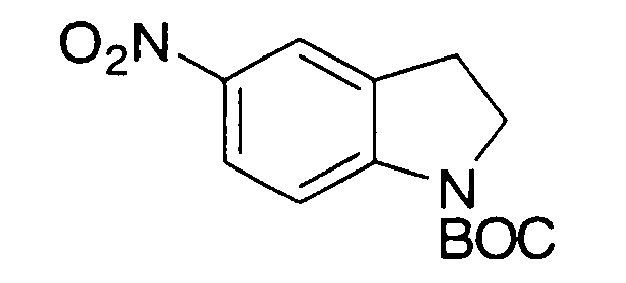
pale yellow cryst. 98-100 CDCl3 1.58(9H, s). 3.17(2H, t. J=8.8Hz), 4.09(2H, t. J=8.8Hz), 7.76-7.82(1H, m), 8.00-8.02(1H, m), 8.10(1H, m) 265 2 
brown oil CDCl3 1.53(9H, s). 3.00(2H, t. J=8.6Hz), 3.45(2H, brs), 3.88-3.98(2H, m), 6.45-6.56(2H, m), 7.58-7.65(1H, m) 234 3 
colorless cryst. 134-138 CDCl3 1.57(9H, s), 2.15(3H, s), 3.08(2H, t. J=8.7Hz). 3.91-4.05(2H, m), 6.90-7.11(2H, m), 7.50-7.71(1H, m) 277 4 
pale pink cryst. 195-210 DMSO 2.06(3H, s), 3.18(2H, t. J=7.8Hz). 3.70(2H, t. J=7.8Hz), 7.35-7.38(1H, m), 7.50-7.53(1H, m), 7.76-7.78(1H, m), 10.24(1H, brs), 11.18(2H, brs) 177 -
[Table 6] Manufacturing Exmple No. Chemical Structure Properties m.p.(°C) (recryst. solvent) 1H-NMR MS(FAB) (M+1)+ 5 
colorless cryst. 247-249 DMSO 1.13(6H, d. J=6.6Hz), 3.99-4.09(1H, m). 6.38-6.41(3H, m). 7.79(1H, dd. J=2.3 and 8.6Hz). 7.84(1H, d. J=7.6Hz), 8.43(1 H, d. J=2.3Hz) 180 6 
pale yellow 190-192 CDCl3 2.99(3H, s). 3.26(2H, t, J=8.6Hz). 4.13(2H, t. J=8.6Hz), 7.47(1H. d. J=8.9Hz). 8.07-8.09(1H, m). 8.13-8.16(1H, m) 243 7 
yellow crys. 117-118 CDCl3 2.79(3H, s). 3.05(2H, t, J=8.3Hz), 3.57(2H, brs), 3.94(2H, t, J=8.3Hz), 6.53(1H, dd, J=2.2 and 8.4Hz). 6.58-6.60(1H, m), 7,21(1H, dd, J=8.4Hz) 212 8 
pale yellow cryst. 146-148 CDCl3 2.22(1H, t, J=5.3Hz). 2.56(2H, t. J=5.3Hz). 2.59-2.63(4H, m), 3.08-3.13(4H, m), 2.56-2.61(2H, m), 7.94-7.97(2H, m), 8.39-8.42(2H, m) 316 -
[Table 7] Manufacturing Exmple No. Chemical Structure Properties m.p.(°C) (recryst. solvent) 1H-NMR MS(FAB) (M+1)+ 9 
pale yellow cryst 114-116 CDCl3 2.02(3H, s), 2.55-2.69(6H, m). 3.04-3.15(4H, m), 4.13(2H, t, J=5.7Hz). 7.94(2H, dd, J=1.8 and 7.0Hz), 8.39(2H, dd. J=1.8 and 7.0Hz) 358 10 
colorless cryst. 109-112 CDCl3 2.03(3H, s), 2.53-2.68(6H, m), 2.94-3.07(4H, m). 4.07-4.19(4H, m), 6.67-6.70(2H, m). 7.51-7.54(2H, m) 328 11 
colorless cryst. 210(dec.) CDCl3 1.12-1.28(4H, m), 1.44(9H, s), 1.92-2.05(4H, m), 1.95(3H, s), 3.33-3.45(1H, m), 3.68-3.78(1H, m), 4.32-4.42(1H, m), 5.21-5.29(1H, m) 257 12 
colorless cryst. 230(dec.) MeOH 1.26-1.55(4H, m), 1.91(3H, s), 1.94-2.11(4H, m), 3.01-3.12(1H, m), 3.55-3.67(1H, m), 7.99(1H, d. J=6.8Hz) 157 -
[Table 8] Manufacturing Exmple No, Chemical Structure Properties m.p.(°C) (recryst. solvent) 1H-NMR MS(FAB) (M+1)+ 13 
yellow solid 107-110 CDCl3 3.53(3H, s), 4.06(2H, m). 7.77(2H, d. J=9.1Hz), 8,22(2H, d, J=9.1Hz). 8.56(1 H, brs) 211 14 
brown solid 82-83 CDCl3 3.49(3H, s), 3.61(2H, brs), 3.99(2H, s). 6.66(2H, d, J=8.6Hz), 7.33(2H, d, J=8.6Hz), 8.06(1H, brs) 181 15 
brown solid 73-78 CDCl3 2.34(3H, s), 2.51-2.56(4H, m), 3,29(2H, brs), 3.38-3.43(4H, m), 6.57(1H, d, J=8.8Hz), 6.98(1H, dd, J=3.0 and 8.8Hz), 7.79(1H, d, J=3.OHz) 193 16 
pale yellow solid 104-105 CDCl3 2.28(3H, s). 2.48-2.53(4H, m), 3.08-3.13(4H, m), 7.73-7.80(1H, m), 8.07-8.12(1H, m). 8.44-8.49(1H, m), 8.60-6.62(1H, m) 286 -
[Table 9] Manufacturing Exmple No. Chemical Structure Properties m.p.(°C) (recryst. solvent) 1H-NMR MS(FAB) (M+1)+ 17 
colorless solid 141-142 CDCl3 2.27(3H, s), 2.45-2.50(4H, m), 3.01-3.06(4H, m), 3.89(2H, brs). 6.82-6.87(1H, m). 7.00-7.03(1H, m), 7.08-7.12(1 H, m). 7.24-7.27(1 H, m) 256 18 
yellow solid 49-50 CDCl3 3.13(3H, s), 3.58-3.64(2H, m). 3.87-3.93(2H, m), 6.80-6.86(1H, m). 7.89(1H, dd, J=1.5 and 14.3Hz), 7.95-8.00(1 H, m) 215 19 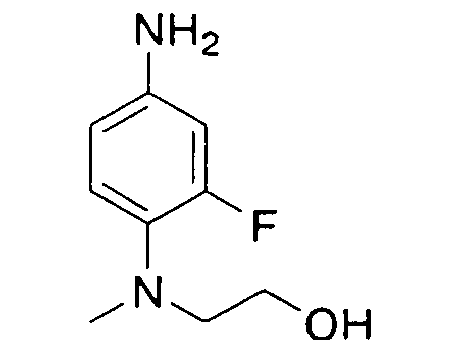
brown oil CDCl3 2.73(3H, s). 3.06-3.11(2H, m), 3.59(2H, brs), 3.88-3.93(2H, m), 6.37-6.454(2H, m), 6.88-6.95(1 H, m) 185 20 
ywllow oil CDCl3 1.47(9H, s), 1.57-1.70(2H, m), 1.78-1.90(2H, m). 2.70-2.86(3H, m), 4.20-4.32(2H, m). 7.34(2H. d. J=8.7Hz). 8.15(2H, d. J=8.7Hz) 307 -
[Table 10] Manufacturing Exmple No. Chemical Structure Properties m.p.(°C) (recryst. solvent) 1H-NMR MS(FAB) (M+1)+ 21 
pale yellow solid 109-112 CDCl3 1.46(9H, s), 1.51-1.61(2H, m). 1.72-1.79(2H, m), 2.47-2.57(1H, m), 2.70-2.81(2H, m), 3.56(2H, brs), 4.14-4.26(1H, m). 6.63(2H, d. J=8.4Hz), 6.97(2H, d, J=8.3Hz) 277 22 
yellow solid 64-65 CDCl3 1.12(3H, t. J=7.2Hz). 2.47(2H, q. J=7.2Hz), 2.58-2.63(4H, m), 3.29-3.34(4H, m), 6.89(1H, dd, J=8.8 and 8.8Hz). 7.88(1H. dd. J=2.6 and 13.2Hz), 7.95-8.00(1H, m) 254 23 
yellow solid 49-50 CDCl3 2.00-2.07(2H, m), 2.39(3H, s), 2.58-2.63(2H, m), 2.73-2.79(2H, m), 3.54-3.60(2H, m). 3.61-3.66(2H, m), 6.68-6.74(1 H, m), 7.83-7.94(2H, m) 254 24 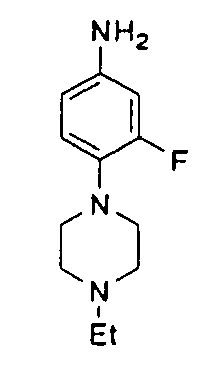
pale yellow solid 58-60 CDCl3 1.11 (3H, t, J=7.2Hz). 2.46(2H. q. J=7.2Hz), 2.57-2.64(4H, m), 2.97-3.03(4H, m). 3.51(2H, brs), 6.35-6.45(2H, m), 7.77-7.84(1 H, m) 224 -
[Table 11] Manufacturing Exmple No. Chemical Structure Properties m.p.(°C) (recryst. solvent) 1H-NMR MS(FAB) (M+1)+ 25 
pale yellow solid 71-71.5 CDCl3 2.36(3H, s), 2.57-2.64(4H, m), 3.30-3.38(4H, m), 6.88-6.94(1H, m), 7.90(1H. dd, J=2.5 and 13.2Hz), 7.98(1H, dd, J=2.5 and 9.0Hz) 240 26 
pale reddish brown solid 93-94.5 CDCl3 2.34(3H, s), 2.51-2.69(4H, m), 2.96-3.09(4H, m), 3.53(2H, brs), 6,37-6.48(2H, m), 6.78-6.87(1H, m) 210 27 
pale yellow solid 129-131 (AcOEt/hexane) CDCl3 1.84-1.92(4H, m), 3.38-3.47(4H, m). 4.01(4H, s), 6,89-6,97(1H, m), 7.90(1H, dd, J=2.6 and 13.1Hz), 7.97(1H, dd, J=2.6 and 8.8Hz) 284 28 
colorless solid 100.5-101.5 (EtOH) CDCl3 1.83-1.92(4H, m), 3.01-3.09(4H, m). 3.53(2H. brs), 3.99(4H, s). 6.37-6.47(2H, m). 6.79-6.88(1H, m) 253 -
[Table 12] Manufacturing Exmple No. Chemical Structure Properties m.p. (°C) (recryst. solvent) 1H-NMR MS(FAB) (M+1)+ 29 
yellow solid 121-122 (AcOEt/hexane) CDCl3 1.89-1.98(4H, m), 3.27-3.34(4H, m), 4.02(4H, s), 7.05(1H, d, J=8.9Hz), 8.08(1H, dd, J=2.7 and 8.9Hz), 8.25(1H, d, J=2.7Hz) 299 30 
pale yellow solid 139.5-140.5 (EtOH) CDCl3 1.83-1.92(4H, m), 2.97-3.04(4H, m), 3.52(2H, brs), 4.00(4H, s), 6.54(1H, dd, J=2.6 and 8.5Hz), 6.74(1H, d, J=2.6Hz), 6.91(1H, d, J=8.5Hz) 269 31 
reddish brown solid 40-42 CDCl3 1.90-1.97(2H, m), 2.39(3H, s), 2.65-2.75(4H, m), 3.23-3.30(4H, m), 3.43(2H, brs), 6.32-6.42(2H, m), 6.72-6.78(1H, m) 224 32 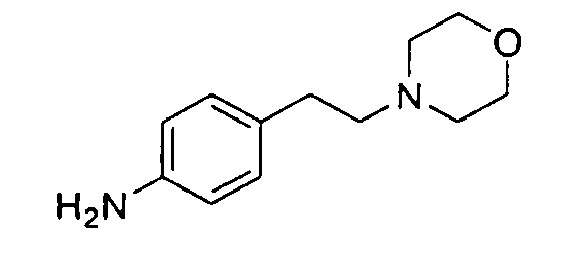
pale brown solid CDCl3 2.46-2.56(6H, m), 2.66-2.73(2H, m), 3.58(2H, brs), 3.70-3.76(4H, m), 6.59-6.65(2H, m), 6.96-7.02(2H, m) 207 -
[Table 13] Manufacturing Exmple No. Chemical Structure Properties m.p.(°C) (recryst. solvent) 1H-NMR MS(FAB) (M+1)+ 33 
pale yellow viscous solid CDCl3 3.02(3H, s), 3.92(2H, s), 4.74(2H, s), 7.54-7.59(2H, m), 8.15-8.20(2H, m) 250 34 
pale yellow viscous solid CDCl3 2.96(3H, s), 3.65(2H, brs), 3.82(2H, s), 4.53(2H, s). 6.57-6.62(2H, m), 7.22-7.27(2H, m) 220 35 
pale yellow solid CDCl3 1.10-1.22(2H, m), 1.44(9H, s), 1.61-1.73(2H, m), 2.04-2.15(4H, m), 2.36-2.45(1H, m), 3.46(1H, br), 4.38(1H, br) 225 36 
colorless solid DMSO-d6 1.27-1.40(2H, m), 1.51-1.65(2H, m), 1.90-1.98(2H, m), 2.03-2.11(2H, m), 2.67(1H, tt, J=3.7 and 11.7Hz), 2.94-3.07(1H, m), 8.06(3H, br) 125 -
[Table 14] Manufacturing Exmple No. Chemical Structure Properties m.p. (°C) (recryst. solvent) 1H-NMR MS(FAB) (M+1)+ 37 
colorless solid D2O 3.06(3H, brs), 3.25-3.32(2H, m), 3.67-3.99(6H, m) 172 38 
colorless solid CDCl3 1.29-1.40(2H, m), 1.45(9H, s), 1.89-1.96(2H, m), 2.88(6H, s), 2.82-2.88(2H, m), 3.57-3,65(3H, m), 4.43(1H, br) 272 39 
colorless foamy solid DMSO-d6 1.39-1.51(2H, m), 1.83-1.92(2H, m), 2.50(3H, s), 2.68-2.78(2H, m), 2.72(3H, s), 3.08-3.21(1H, m), 3.51-3.59(2H, m) 172 40 
colorless solid CDCl3 1.39-1.49(2H, m), 1.44(9H, s), 1.93-2.02(2H, m), 2.81(6H, s), 2.88-2.89(2H, m), 3.50-3.68(3H, m), 4.46(1H, br) 308 -
[Table 15] Manufacturing Exmple No, Chemical Structure Properties m.p.(°C) (recryst. solvent) 1H-NMR MS(FAB) (M+1)+ 41 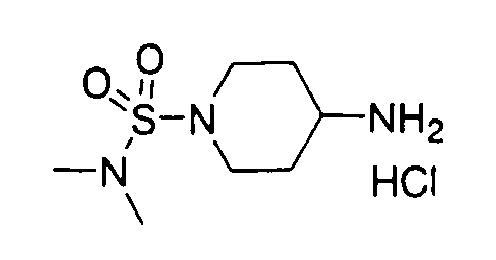
colorless solid DMSO-d6 1.45-1.56(2H, m), 1.88-1.96(2H, m), 2.74(6H, s), 2.86-2.96(2H, m), 3.11-3.21(1H, m), 3.56-3.62(2H, m), 8.02(3H, br) 208 42 
colorless solid CDCl3 1.43(9H, s), 1.80-1.87(1H, m), 2.41(1H, ddd, J=7.2, 9.4 and 14.7Hz), 2.92-2.99(1H, m). 3.12(1H, dd, J=5.7 and 11.0Hz), 3.76(3H, s), 3.82(1H, dd. J=4.8 and 9.4Hz), 4.12(1H, br), 4.92(1H, br) 245 43 
colorless solid CDCl3 1.44(9H, s), 1.97-2.06(1H, m), 2.47(1H, ddd, J=6.5, 9.5 and 13.9Hz), 3.33-3.39(1H, m), 3.70(1H, dd, J=6.0 and 9.9Hz), 3.79(3H, s), 4.36-4.46(1H, m), 4.43(1H, dd, J=2.7 and 9.5Hz), 4.60(2H, brs), 5.52-5.58(1H, m) 288 44 
colorless solid CDCl3 1.45(9H, s), 1.80-2.65(2H, br), 3.25-4.80(5H, br) 256 -
[Table 16] Manufacturing Exmple No. Chemical Structure Properties m.p.(°C) (recryst. solvent) 1H-NMR MS(FAB) (M+1)+ 45 
colorless solid D2O 1.94-2.04(1H, m). 2.70-2.78(1H, m), 3.64-3.75(2H, m), 3.76(1H, s). 4.25-4.34(1H, m), 4.51(1H, dd, J=7.3 and 10.5Hz) 156 46 
pale reddish brown solid CDCl3 3.42-3.58(4H, m), 4.07-4.14(2H, m), 4.58(1H, br), 7.06(1H, dd, J=2.9 and 8.9Hz), 7.79(1H, dd, J=0.7 and 2.9Hz). 8.04(1H, dd, J=0.7 and 8.9Hz) 179 47 
pale brown solid DMSO-d6 3.99(2H. s). 5.24(2H, brs). 6.57(2H, dd, J=2.0 and 6.6Hz), 6.89(1H, dd, J=2.0 and 6.6Hz), 8.10(1H, brs) 192 48 
pale brown solid DMSO-d6 2.89(3H, s). 4.04(2H, s), 5.27(2H, brs), 6.55-6.60(2H, m), 6.86-6.91(2H, m) 206 -
[Table 17] Manufacturing Exmple No, Chemical Structure Properties m.p. (°C) (recryst. solvent) 1H-NMR MS(FAB) (M+1)+ 49 
reddish brown solid CDCl3 1.98-2.06(1H, m), 2.13-2.24(1H, m), 3.18-3.50(6H, m), 4.52-4.58(1H, m), 6.45-6.51(1H, m), 6.64-6.70(1H, m) 179 50 
brown solid (EtOH) DMSO-d6 1.86-2.05(2H, m), 3.38-3.45(1H, m), 3.55-3.74(3H, m), 4.36-4.42(1H, m), 5.05(1H, d. J=3.5Hz), 6.74-6.80(1H, m), 7.89-7.97(2H, m) 227 51 
purple oil CDCl3 1.90-1.99(1H, m), 2.14-2.25(1H, m), 3.06-3.27(2H, m), 3.35-3.56(2H, m), 4.47-4.52(1H, m), 6.36-6.48(2H, m), 6.57-6.64(1H, m) 197 52 
pale brown solid DMSO-d6 1.38-1.48(2H, m), 1.70-1.78(2H, m), 2.78-2.85(2H, m), 3.19-3.26(2H, m), 3.50-3.58 (1H, m), 4.69(1H, d, J=4.0Hz), 7.93-7.99(1H, m), 8.17-8.21 (1H, m), 8.36-8.38(1H, m), 8.54-8.58(1H, m) 287 -
[Table 18] Manufacturing Exmple No. Chemical Structure Properties m.p.(°C) (recryst. solvent) 1H-NMR MS(FAB) (M+1)+ 53 
colorless solid DMSO-d6 1.39-1.48(2H, m). 1.69-1.77(2H, m), 2.65-2.73(2H, m). 3.06-3.15(2H, m), 3,50-3,58(1H, m), 4.65(1H, d, J=3.8Hz), 5.61 (2H, brs), 6.76-6.84(2H, m). 6.89-6.92(1H, m), 7.20-7.26(1H, m) 257 54 
colorless solid DMSO-d6 1.38-1.48(2H, m), 1.71-1.79(2H, m), 2.81-2.88(2H, m), 3.18-3.26(2H, m), 3.52-3.59(1H, m). 4.68(1H, d, J=4.0Hz), 8.00-8.05(2H, m), 8.42-8.47(2H. m) 287 55 
colorless solid CDCl3 -0.01(6H, s), 0.77(9H, s), 1.59-1.68(2H, m), 1.77-1.87(2H, m), 3.07-3.15(2H, m). 3.17-3.24(2H, m), 3.82-3.89(1H, m). 7.93-7.98(2H, m), 8.37-8.42(2H. m) 401 56 
colorless solid CDCl3 -0.01(6H, s). 0.80(9H, s), 1.56-1.65(2H, m). 1.75-1.84(2H, m). 2.89-2.96(2H. m). 3.12-3.19(2H, m), 3.72-3.78(1H, m), 4.10(2H, br), 6.68-6.73(2H, m). 7.52-7.57(2H, m) 371 -
[Table 19] Manufacturing Exmple No. Chemical Structure Properties m.p.(°C) (recryst. solvent) 1H-NMR MS(FAB) (M+1)+ 57 
yellow solid 56.5-57.5 CDCl3 2.36(3H, s). 2.52-2.64.(4H, m), 3.11-3.22(4H, m), 7.27(1H, d, J=9.1Hz), 8.31(1H, dd, J=2.6 and 9.1 Hz), 8.50(1 H, d, J=2.6Hz) 290 58 
reddish brown solid 123-125 CDCl3 2.32(3H, s), 2.40-2.60(4H, m), 2.80-2.89(4H, m), 3.69(2H, brs), 6.78(1H, dd, J=2.7 and 8.5Hz), 6.89(1H, d, J=2.7Hz), 7.19(1H, d, J=8.5Hz) 260 59 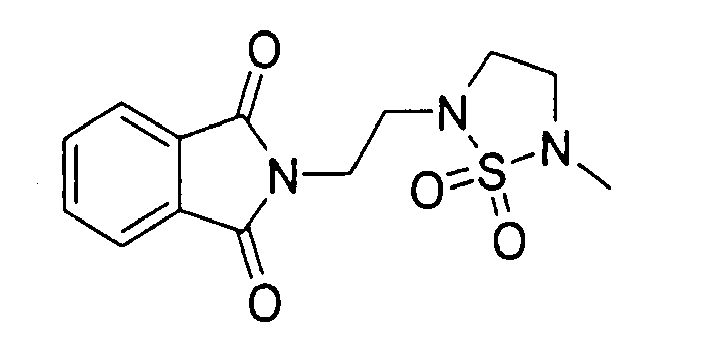
colorless solid 154-156.5 CDCl3 2.66(3H, s), 3.28(2H, t, J=6.5Hz), 3.35-3.42(2H, m), 3.51(2H, t, J=6.5Hz), 3.88-3.95(2H, m), 7.69-7.76(2H, m), 7.82-7.89(2H, m) 310 60 
colorless solid 142-145 (EtOH) DMSO-d6 2.63(3H, s), 2.98-3.03(2H, m), 3.17-3.43(6H, m), 8,02(3H, brs) 180(free) -
[Table 20] Manufacturing Example No. Chemical Structure properties m.p.(°C) (recryst. solvent) 1H-NMR MS(FAB) (M+1)+ 61 
yellow solid 53-57 CDCl3 1.69-1.79(2H, m), 2.01-2.09(2H, m), 3.05-3.15(2H, m), 3.55-3.64(2H, m), 3.91-4.00(1H, m), 6.89-6.96(1H, m). 7.87-8.04(2H, m) 241 62 
pale reddish brown solid 112-116 CDCl3 1.58(1H, br), 1.71-1.81(2H, m), 1.98-2.06(2H, m), 2.71-2.81(2H, m), 3.17-3.25(2H, m), 3.53(2H, br), 3.77-3.86(1H, m), 6.37-6.47(2H, m), 6.79-6.86(1H, m) 211 63 
pale yellow solid 147-149 CDCl3 1.05-1.16(2H, m), 1.24-1.40(2H, m), 1.43(9H, s), 1.88-1.97(2H, m), 2.02-2.10(2H, m), 2.16(1H, tt, J=3.5 and 11.4Hz), 2.50-2.56(4H, m), 3.37(1H, br), 3.67-3.72(4H, m), 4.36(1H, br) 285 64 
colorless solid >250 DMSO-d6 1.32-1.48(2H, m), 1.51-1.66(2H, m), 2.03-2.12(2H, m), 2.17-2.26(2H, m), 2.90-3.20(4H, m), 3.33-3.41(2H, m), 3.82-3.99(4H, m), 8.10-8.28(3H, m), 11.17-11.46(1 H, m) 185 -
[Table 21] Manufacturing Example No, Chemical structure properties m.p. (°C) (recryst. solvent) 1H-NMR MS(FAB) (M+1)+ 65 
pale brown solid 195-199 DMSO-d6 3.32-3.37(2H, m), 3.62-3.67(2H, m), 3.98(2H, s), 6.96-7.02(2H, m), 8.06-8.12(2H, m), 8.26(1 H, brs) 222 66 
pale brown solid CDCl3 3.28-3.33(2H, m), 3.45-3.51(2H, m), 3.74(2H, s), 6.00(1H, brs), 6.65-6.71(2H, m), 6.77-6.83(2H, m), 192 67 
pale purple solid 151-154 CDCl3 2.71(6H, s), 3.91(2H, br), 6.84-6.88(1H, m), 7.05-7.07(1H, m), 7.11-7.16(1H, m), 7.28-7.33(1H, m) 201 68 
colorless solid 87-88 CDCl3 -0.08(6H, s), 0.72(9H, s), 3.43(2H, t, J=5.6Hz), 4.07(2H, t. J=5.6Hz), 7.74-7.80(1H, m), 8.24-8.28(1H, m), 8.47-8.52(1H, m), 8.77-8.79(1H, m) 346 -
[Table 22] Manufacturing Example No. Chemical Structure properties m.p.(°C) (recryst. solvent) 1H-NMR MS(FAB) (M+1)+ 69 
colorless viscous solid CDCl3 -0.01(6H, s), 0.81(9H, s), 3.33(2H, t J=6.6Hz). 3.94(2H, br), 3.98(2H, t. J=6.6Hz). 6.85-6.91(1H, m), 7.15-7.17(1H, m), 7.22-7.32(2H, m) 316 70 
pale yellow solid CDCl3 1.77(1H, brs), 2.48(3H, s), 2.70(2H, t. J=5.0Hz), 3.27(2H, s). 3.80(2H, brs), 7.78-7.84(2H, m). 8.28-8.34(2H, m). 9.97(1H, brs) 254 71 
pale yellow solid 100-101 CDCl3 2.42(3H, s), 2.83(2H, t, J=5.3Hz), 3.32(2H, s). 3.79(2H, t. J=5.3Hz), 7.53-7.59(2H. m), 8.24-8.30(2H, m) 236 72 
colorless solid 158-160 CDCl3 2.39(3H, s), 2.74-2.79(2H, m), 3.25(2H, s), 3.61-3.74(4H, m), 6.66-6.73(2H, m), 7.00-7.07(2H, m) 206 -
[Table 23] Manufacturing Example No. Chemical Structure properties m.p. (°C) (recryst. solvent) 1H-NMR MS(FAB) (M+1)+ 73 
yellow solid 149-151 CDCl3 1.56-1.70(2H, m), 1.93-2.06(2H, m), 3.44-3.58(2H, m), 4.00-4.09(1H, m), 4.11-4.22(2H, m), 6.60(1H, d, J=9.6Hz), 8.19(1H, dd, J=2.8 and 9.6Hz), 9.03(1H, d, J=2.8Hz) 224 74 
reddish brown solid 140-140 CD3OD 1.50-1.61(2H, m), 1.88-1.96(2H, m), 2.88-2.97(2H, m), 3.70-3.81(3H, m), 6.73(1H, d, J=8.8Hz), 7.10(1H, dd, J=2.7 and 8.8Hz), 7.70(1H, d, J=2.7Hz) 194 75 
yellow solid 90.5-91.5 CDCl3 1.66-1.80(2H, m), 1.97-2.11(2H, m), 3.09-3.23(2H, m), 3.53-3.71(2H, m), 3.91-4.06(1H, m), 6.61-6.72(1H, m), 7.79-7.90(1H, m) 259 76 
pale yellow solid 148-150 CD3OD 1.62-1.73(2H, m), 1.90-2.00(2H, m), 2.69-2.79(2H, m), 3.12-3.21(2H, m), 3.65-3.74(1H, m), 6.52(1H, dt, J=2.2 and 8.9Hz), 6.65(1H, dt, J=2.2 and 8.8Hz) 229 -
[Table 24] Manufacturing Example No. Chemical Structure m.p.(°C) properties (recryst. solvent) 1H-NMR MS(FAB) (M+1)+ 81 
pale yellow oil CDCl3 1.999-2.10(2H, m), 3.08-3.19(2H, m), 3.45-3.56(2H, m), 3.93(2H, m), 3.94-4.004(1H, m), 6.98(1H, d, J=9.3Hz), 8.19(1H, dd, J=2.8 and 9.3Hz), 8.60(1H, d, J=2.8Hz) 281 82 
pale yellow solid 123-124.5 CDCl3 1.47-1.53(1H, m), 1.67-1.78(2H, m), 1.95-2.02(2H, m), 2.70-2.79 (2H, m), 3.10-3.19(2H, m), 3.50-3.63(2H, m), 3.74-3.83(1H, m), 3.88(3H, s), 6.75(1H, dd, J=2.9 and 8.6Hz), 6.91-6.98(1H, m), 7.03(1H, d, J=2.9Hz) 251 83 
colorress solid 142-145 (EtOH) CDCl3 1.33-1.49(2H, m), 1.44(9H, s), 1.52-1.63(2H, m), 1.70-1.79(2H, m), 1.90-1.99(2H, m), 2.19-2.28(2H, m), 2.44(1H, tt, J=3.8 and 11.4Hz), 2.83-2.92(2H, m), 3.36(2H, dt, J=1.9 and 11.9Hz), 3.41-3.50(1H, m), 3.99-4.05(2H, m), 4.39-4.48(1H, m) 285 84 
colorless solid DMSO-d6 1.67-1.80(2H, m), 1.95-2.20(6H, m), 2.93-3.09(2H, m), 3.23-3.39(4H, m), 3.45-.357(2H, m), 3.90-4.02(2H, m), 8.40-8.68(3H, m), 10.95-11.22(1H, m), 185(free) -
[Table 25] Manufacturing Example No. Chemical Structure properties m.p.(°C) (recryst. solvent) 1H-NMR MS(FAB) (M+1)+ 81 
pale yellow oil CDCl3 1.69-1.80(2H, m), 1.99-2.10(2H, m), 3.08-3.19(2H, m), 3.45-3.56(2H, m), 3.93(3H, s), 3.94-4.004(1H, m), 6.98(1H, d, J=9.3Hz), 8.19(1H, dd, J=2.8 and 9.3Hz), 8.60(1H, d, J=2.8Hz) 281 82 
pale yellow solid 123-124.5 CDCl3 1.47-1.53(1H, m), 1.67-1.78(2H, m), 1.95-2.02(2H, m), 2.70-2.79(2H, m), 3.10-3.19(2H, m), 3.50-3.63(2H, m), 3.74-3,83(1H, m), 3.88(3H, s), 6.75(1H, dd, J=2.9 and 8.6Hz), 6.91-6.98(1H, m), 7.03(1H, d, J=2.9Hz) 251 83 
colorress solid 142-145 (EtOH) CDCl3 1.33-1.49(2H, m), 1.44(9H, s), 1.52-1.63(2H, m), 1.70-1.79(2H, m), 1.90-1.99(2H. m), 2.19-2.28(2H, m), 2.44(1H, tt, J=3.8 and 11.4Hz), 2.83-2.92(2H, m), 3.36(2H, dt, J=1.9 and 11.9Hz), 3.41-3.50(1H, m), 3.99-4.05(2H, m), 4.39-4.48(1H, m) 285 84 
colorless solid DMSO-d6 1.67-1.80(2H, m), 1.95-2.20(6H, m), 2.93-3.09(2H, m), 3.23-3.39(4H, m), 3.45-3.57(2H, m), 3.90-4.02(2H, m), 8.40-8.68(3H, m), 10.95-11.22(1H, m) 185(free) -
[Table 26] Manufacturing Example No. Chemical Structure properties m.p.(°C) (recryst. solvent) 1H-NMR MS(FAB) (M+1)+ 85 
pale yellow oil CDCl3 1.08-1.92(7H, m), 1.45(9H, s), 2.03-2.12(1H, m), 2.19-2.31(1H, m), 2.42-2.53(4H, m), 3.37-3.50(4.5H, m), 3.74-3.83(0.5H, m), 4.57-4.64(0.5H, m), 4.83-4.91(0.5H, m), 5.05-5.14(2H, m), 7.29-7.41 (5H. m) 418 86 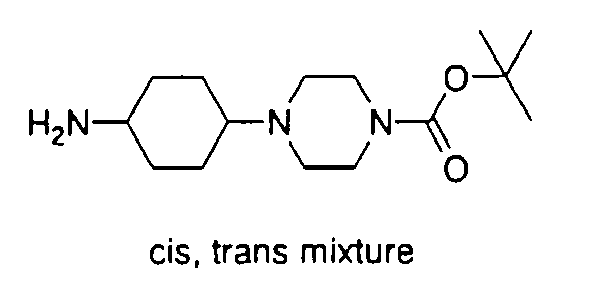
colorless oil CDCl3 1.05-1.78(6H, m), 1.45 and 1.46(9H, each s), 1.82-1.98(2H, m), 2.17-2.31(1H, m). 2.43-2.68(4.5H, m), 2.98-3.04(0.5H, m), 3.37-3.47(4H, m) 284 87 
brown solid 145-148 DMSO-d6 4.66(2H, s), 7.60-7.70(2H, m), 7.94(1H, d, 2.4Hz) 125(free) 88 
colorless solid 215-217 (EtOH) CDCl3 1.18-1.38(4H, m), 1.44(9H, s), 1.99-2.10(4H, m), 3.39-3.51(1H, m), 3.69-3.80(1H, m), 4.03(2H, s), 4.37-4.46(1H, m), 6.35-6.42(1H, m) 291 -
[Table 27] Manufacturing Example No. Chemical Structure properties m.p.(°C) (recryst. solvent) 1H-NMR MS(FAB) (M+1)+ 89 
colorless solid 161-163 (iso-PrOH) CDCl3 1.17-1.37(4H, m), 1.44(9H, s), 1.92-2.13(5H, m), 2.33(3H, s), 2.58(2H, t. J=5.2Hz), 3.06(2H, s). 3.35- 3.48(1H, m), 3.69(2H, t, J=5.2Hz), 3.71-3.80(1H, m), 4.38-4.48(1H, m), 7.09-7.16(1H, m) 330 90 
pale brown solid 162.5-165 CDCl3 1.21-1.37(2H, m), 1.44(9H, s), 1.48-1.60(2H. m), 1.63-1.74(2H, m), 2.01-2.10(2H, m), 2.32(3H, s), 2.59-2.65(2H, m), 3.11(2H, s), 3.20-3.27(2H, m), 3.30-3.44(1H, m), 4.38-4.50(2H, m) 312 91 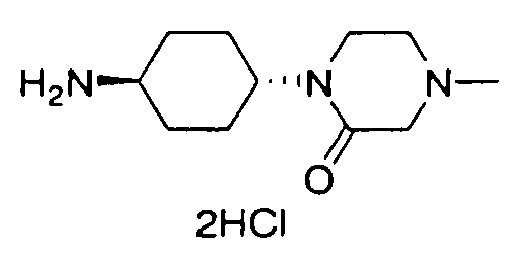
colorless solid DMSO-d6 1.38-1.71(6H, m), 1.98-2.09(2H, m), 3.17(3H, s), 2.90-3.01(1H, m), 3.20-3.90(6H, m), 4.11-4.22(1H, m), 8.09-8.28(3H, m), 11,92(1H, brs) 212(free) 92 
colorless gum CDCl3 1.06-1.97(14H, m), 2.02-2.31(5H, m), 2.81-2.98(2H, m), 3.37-3.49(0.4H, m), 3.74-3.87(0.6H, m), 4.08-4.18(2H, m), 4.53-4.62(0.4H, m), 4.83-4.93(0.6H, m), 5.04-5.19(2H, m), 7.28-7.43(5H, m) 389 -
[Table 28] Manufacturing Example No. Chemical Structure properties m.p.(°C) (recryst. solvent) 1H-NMR MS(FAB) (M+1)+ 93 
colorless oil CDCl3 1.05-1.19(1H, m), 1.20-1.39(4H, m), 1.50-1.97(12H, m), 2.12-2.32(4H, m). 2.62(0.4H, tt. J=3.9 and 11.1Hz), 2.74-3.00(2H, m), 3.01-3.09(0.6H, m), 4.08-4.19(2H, m) 255 94 
yellow solid 106-107 (EtOH) CDCl3 1.53-1.56(1H, m), 1.62-1.72(2H, m), 1.98-2.06(2H, m), 3.21-3.29(2H, m), 3.76-3.84(2H, m), 3.97-4.06(1H, m), 6.81-6.87(2H, m), 8.10-8.16(2H, m) 223 95 
pale purple solid 171-173 CDCl3 1.45(1H, br), 1.68-1.77(2H, m), 1.98-2.06(2H, m), 2.74-2.83(2H, m), 3.32-3.40(2H, m), 3.42(2H, br), 3.76-3.85(1H, m), 6.63-6.68(2H, m), 6.81-6.86(2H, m) 193 -
[Table 29] Example No. Chemical Structure properties m.p.(°C) (recryst. solvent) 1H-NMR MS(FAB) (M+1)+ 1 
colorless cryst. 147.6-150.4 CDCl3 1.21-1.36(1H, m). 1.39-1.52(2H, m), 1.71-1.98(7H, m), 2.09(3H, s), 3.20(2H, s), 3.95-4.02(1 H, m) 181 2 
pale brown oil CDCl3 1.21-1.47(3H, m), 1.65-1.75(1H, m), 1.83-1.95(6H, m), 2.23(3H, s). 4.10-4.20(1H, m), 5.95(1H, s) 3 
colorless cryst. 86.0-87.6 CDCl3 1.21-1.50(3H, m), 1.71-1.79(1H, m), 1.90-1.98(6H, m), 2.46(3H, s). 4.18-4.28(1H, m), 9.88(1H, s) 227 4 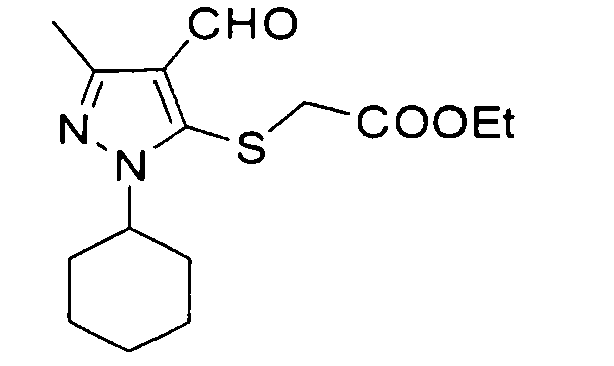
colorless oil CDCl3 1.21(3H, t, J=7.1Hz), 1.22-1.50(3H, m), 1.71-2.01(7H, m), 2.48(3H, s), 3.59(2H, s). 4.12(2H, q. J=7.1Hz), 4.58-4.60(1H, m), 10.02(1H, s) 311 -
[Table 30] Example No. Chemical Structure properties m.p.(°C) (recryst. solvent) 1H-NMR MS(FAB) (M+1)+ 5 
colorless oil CDCl3 1.22-1.34(1H, m), 1.38(3H, t, J=7.1Hz), 1.38-1.52(2H, m), 1.70-1.88(3H, m), 1.89-1.98(2H, m), 2.15-2.22(2H, m), 2.45(3H, s), 4.12-4.21(1H, m), 4.35(2H, q, J=7.1Hz), 7.70(1H, s) 293 6 
colorless cryst. 231.5-235.0 CDCl3 1.22-1.37(1H, m), 1.39-1.51(2H, m), 1.72-1.89(3H, m), 1.91-1.98(2H, m), 2.16-2.24(2H, m), 2.47(3H, s), 4.16-4.25(1H, m), 7.79(1H, m) 265 7 
colorless cryst. 128.4-130.1 CDCl3 1.21-1.33(1H, m), 1.38-1.51(2H, m), 1.70-1.87(3H, m), 1.89-1.95(2H, m), 2.14-2.21(2H, m), 2.42(3H, s), 4.10-4.21(1H, m), 4.63(1H, d, J=5.7Hz), 6.11-6.17(1H, m), 7.29-7.37(6H, m) 354 8 
colorless cryst 149.0-150.0 CDCl3 1.24-1.35(1H, m), 1.40-1.52(2H, m), 1.72-1.99(5H, m), 2.15-2.23(2H, m), 2.47(3H, s), 4.15-4.26(1H, m), 7.12-7.16(1H, m), 7.35-7.40(2H, m), 7.47(1H, m), 7.49-7.51(3H, m) 340 -
[Table 31] Example No. Chemical Structure properties m.p.(°C) (recryst. solvent) 1H-NMR MS(FAB) (M+1)+ 9 
colorless cryst. 221.8-224.2 CDCl3 1.25-1.53(3H, m), 1.74-1.96(5H, m), 1.89(3H, s), 2.19-2.23(2H, m), 2.47(3H, s), 3.26(3H, s), 4.18-4.23(1H, m), 7.17-7.20(2H, m), 7.49(1H, s), 7.64-7.67(3H, m) 411 10 
colorless cryst. 241.5-242.8 CDCl3 1,23-1,33(1H, m), 1.40-1.52(2H, m), 1.70-1.97(5H, m), 2.17-2.23(2H, m), 2.20(3H, s), 2,46(3H, s), 3.93(3H, s), 4.13-4.20(1H, m), 6.73-6.76(1H, m), 7.46(1H, s), 7.59-7.61(1H, m), 7.67-7.69(1H, m), 7.77-7.79(1H, m), 8.30-8.34(1H, m) 427 11 
colorless cryst. >270 CDCl3 1.23-1.33(1H, m), 1.40-1.52(2H, m), 1.71-1.97(5H, m), 2.15-2.22(2H, m), 2.22(3H, s), 2.46(3H, s), 3.22(2H, t. J=8.5Hz), 4.08(2H, t, J=8.5Hz), 4.13-4.21(1H, m), 7.05-7.08(1H, m), 7.44(1H, s), 7.53-7.55(1H, m). 7.79(1H, brs), 8.16-8.19(1H, m) 423 12 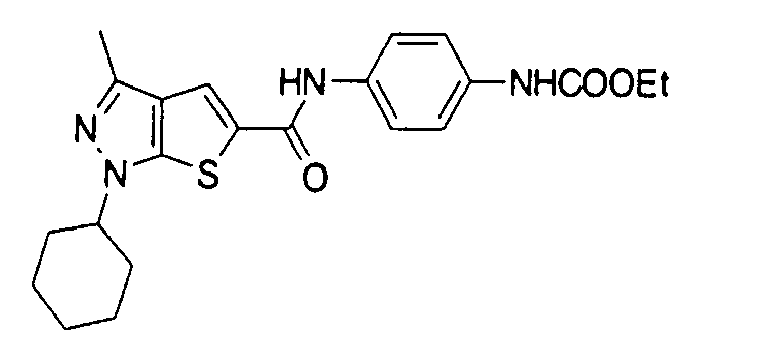
colorless cryst. 195.9-197.9 CDCl3 1.23-1.33(1H, m). 1.31(3H, t, J=7.1Hz), 1.41-1.54(2H, m), 1,71-1.95(5H, m), 2.15-2.22(2H, m), 2.46(3H, s), 4.15-4.22(1H, m). 4.23(2H, q, J=7.1Hz), 6.52(1H, brs), 7.36-7.38(2H, m), 7,45(1H, s), 7.52-7.55(3H, m) 427 -
[Table 32] Example No. Chemical Structure properties m.p.(°C) (recryst. solvent) 1H-NMR MS(FAB) (M+1)+ 13 
colorless cryst/ 200.3-200.8 CDCl3 1.23-1.32(1H, m). 1.39-1.52(2H, m). 1.53(9H. s), 1.73-1.96(5H, m), 2.16-2.24(2H, m), 2.46(3H, s), 3.10(2H, t. J=8.5Hz). 3.99(2H, t, J=8.5Hz). 4.15-4.22(1H, m). 7.08-7.20(1H. m), 7.44(1H, s), 7.53(1H, brs), 7.58-7.72(1H, m) 481 14 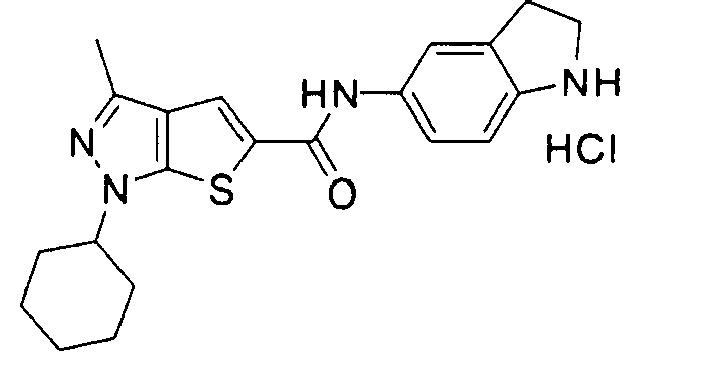
colorless cryst. 268.3-271.2 DMSO 1.23-1.33(1H, m), 1.40-1.51(2H, m), 1.66-1.90(5H, m), 2.04-2.13(2H, m), 2.40(3H, s), 3.23(2H. t. J=7.7Hz), 3,74(2H, t. J=7.7Hz), 4.29-4.31(1H, m), 7.41-7.45(1H, m), 7.69-7.72(1H, m), 7.90-7.92(1H, m). 8.17(1H, s), 10.49-10.51(1H, m), 11.18(1H, brs) 381 15 
pale brown cryst. 234.3-235.6 CDCl3 1.23-1.32(1H, m), 1.39-1.52(2H, m), 1.72-1.98(5H, m), 2.16-2.23(2H, m), 2.46(3H, s), 4.13-4.22(1H, m), 6.53-6.55(1H, m), 7.21-7.23(1H, m), 7.31-7.38(2H, m), 7.47(1H, s), 7.67(1H, brs), 7.89-7.91(1H, m), 8.20(1H, brs) 379 16 
pale yellow cryst. 216.9-218.4 CDCl3 1.23-1.32(1H, m), 1.40-1.52(2H, m), 1.71-1.88(3H, m), 1.90-1.98(2H, m), 2.15-2.22(2H. m), 2.46(3H, s), 3.12-3.16(4H, m), 3.85-3.88(4H, m), 4.13-4.22(1H, m), 6.90-6.93(2H, m), 7.43(1H, s), 7.47-7.51(3H, m) 424 -
[Table 33] Example No. Chemical Structure properties m.p.(°C) (recryst, solvent) 1H-NMR MS(FAB) (M+1)+ 17 
pale yellow cryst. 193.1-194.8 CDCl3 1.23-1.35(1H, m), 1.40-1.52(2H, m), 1.72-1.89(3H, m), 1.90-1.98(2H, m), 2.17-2.23(2H, m), 2.48(3H, s), 4.16-4.24(1H, m), 7.51-7.57(2H, m), 7.80(1H, brs), 8.00(1H, dd, J=1.8 and 8.2Hz), 8.07(1H, dd, J=1.8 and 8.2Hz), 8.43(1H, s) 385 18 
yellow cryst. 150.0-153.8 CDCl3 1.23-1.35(1H, m), 1.39-1.55(2H, m), 1.72-1.98(5H, m), 2.16-2.23(2H, m), 2.46(3H, s), 3.49(2H, brs), 4.15-4.24(1H, m), 6.75- 6.84(2H, m), 7.06-7.09(1 H, m), 7.43-7.46(2H, m), 7.60(1 H, brs) 355 19 
pale yellow cryst. >270 DMSO 1.20-1.31(1H, m), 1.39-1.51 (2H, m), 1.65-1.88(5H, m), 2.01-2.11(2H, m), 2.05(3H, s), 2.40(3H, s), 4.18-4.26(1H, m), 7.21-7.29(2H, m), 7.39-7.42(1H, m), 8.06-8.11 (2H, m), 9.93(1H, brs), 10.21(1H, brs) 397 20 
colorless cryst. >270 (EtOH) DMSO 1.19-1.30(1H, m), 1.37-1.50(2H, m), 1.63-1.87(5H, m), 2.04-2.11(2H, m), 2.40(3H, s), 2.78(3H, d. J=4.4Hz), 4.16-4.22(1H, m), 7.78-7.85(4H, m), 8.10(1H, s), 8.30-8.32(1H, m), 10.38(1H, brs) 397 -
[Table 34] Example No. Chemical Structure properties m.p.(°C) (recryst. solvent) 1H-NMR MS(FAB) (M+1)+ 21 
colorless cryst. 223.2-226.5 CDCl3 1.25(3H, t, J=7.3Hz) 1.23-1.35(1H, m), 1.39-1.55(2H, m), 1.72-1.89(3H, m), 1.90-1.98(2H, m), 2.18-2.24(2H, m), 2.41-2.49(2H, m), 2.46(3H, s), 3.22(2H, t, J=8.5Hz), 4.07(2H, t, J=8.5Hz), 4.17-4.25(1H, m), 7.06-7.09(1H, m), 7.45(1H, s), 7.59-7.61(1H, m), 7.78-7.80(1H, m), 8,19-8.22(1H, m) 437 22 
pale yellow cryst. 155.0-159.0 CDCl3 0.88(3H, t, J=6.8Hz) 1.23-1.52(3H, m), 1.73-1.98(5H, m), 2.17-2.22(2H, m), 2.45(3H, s), 3.13(2H, t, J=8.6Hz), 4.03(2H, t, J=8.6Hz), 4.15-4.23(1H, m), 4.22-4.37(2H, m), 7.11-7.18(1H, m), 7.45(1H, s), 7.59(1H, brs). 7.63-7.74(1H, m), 7.75-7.89(1H, m) 453 23 
colorless cryst. 192.8-196.6 CDCl3 1.23(6H, d, J=6.7Hz), 1.23-1.35(1H, m), 1.38-1.52(2H, m), 1.72-1.99(5H, m). 2.17-2.22(2H, m). 2.46(3H, s). 2.74-2.83(1H, m), 3.22(2H, t, J=8.4Hz), 4.09-4.24(1H, m), 4.15(2H, t, J=8.4Hz), 7.05-7.09(1H, m), 7.45(1H, s), 7.59-7.61(1H, m), 7.79-7.81(1H, m), 8.22-8.25(1H, m) 451 24 
colorless cryst. 179.9-183.1 CDCl3 1.03(3H, t, J=7.3Hz), 1.23-1.35(1H, m), 1.38-1.52(2H, m), 1.74-1.99(7H, m), 2.18-2.24(2H, m), 2.40(2H, t, J=7.3Hz). 2.46(3H, s), 3.21(2H, t. J=8.5Hz), 4.08(2H, t, J=8.5Hz), 4.12-4.27(1H, m), 7.06-7.09(1H, m), 7.45(1H, s), 7.59-7.61(1H, m), 7.79-7.81(1H, m), 8.20-8.23(1H, m) 451 -
[Table 35] Example No. Chemical Structure properties m.p.(°C) (recryst. solvent) 1H-NMR MS(FAB) (M+1)+ 25 
colorless cryst. 162.8-167.3 CDCl3 1.21-1.51(3H, m), 1.38(9H, s), 1.72-1.99(5H, m), 2.18-2.22(2H, m), 2.45(3H, s), 3.15(2H, t, J=8.1Hz), 4.12-4.27(1H, m), 4.25(2H, t, J=8.1Hz), 7.08(1H, dd, J=2.1 and 8.7Hz). 7.45(1H, s), 7.62-7.65(1H, m), 7.79-7.81(1H, m), 8.19-8.22(1H, m) 465 26 
pale yellow cryst. 171.8-176.3 CDCl3 1.22-1.37(1H, m), 1.39-1.52(2H, m), 1.72-1.89(3H, m),1.90-1.99(2H, m), 2.18-2.24(2H, m), 2.46(3H, s), 3.56(2H, s), 4.14-4.22(1H, m), 6.81-6.84(1H, m), 7.28-7.31(1H, m), 7.46(1H, s), 7.50-7.52(1H, m), 7.55-7.58(1H, m), 7.62-7.64(1H m) 395 27 
vcolorless cryst. >270 EtOH DMSO 1.19-1.30(1H, m), 1.37-1.50(2H, m), 1.63-1.88(5H, m), 2.04-2.11(2H, m), 2.08(3H, s), 2.40(3H. s). 4.19-4.28(1H, m), 7.60-7.65(2H, m), 7.96-7.98(1H, m). 8.06(1 H, s), 9.49(1 H, brs). 10.36(1 H, brs) 431 28 
colorless cryst. 262.2-263.8 EtOH DMSO 1.12(3H, t, J=7.2Hz). 1.21-1.30(1H. m), 1.38-1.50(2H, m), 1.63-1.88(5H, m), 2.04-2.11(2H, m), 2.40(3H, s), 3.23-3.32(2H, m), 4.19-4.28(1H, m), 7.78-7.86(4H, m), 8.11(1H. s), 8.35-8.36(1H, m), 10.46(1H, brs) 411 -
[Table 36] Example No. Chemical Structure properties m.p.(°C) (recryst. solvent) 1H-NMR MS(FAB) (M+1)+ 29 
pale yellow cryst. 135.2-136.3 CDCl3 1.22-1.35(1H, m), 1.39-1.52(2H, m), 1.72-1.98(5H, m), 2.16-2-22(2H, m), 2.46(3H, s), 3.39(3H, s), 4.14-4.22(1H, m), 4.44(2H, s), 7.33-7.36(2H, m), 7.47(1H, s), 7.57-7.60(3H, m) 384 30 
pale yellow cryst. 190.0-191.9 CDCl3 1.22-1.35(1H, m). 1.39-1.51(2H, m), 1.72-1.98(5H, m), 2.17-2.22(2H, m). 2.47(3H, s). 4.12-4.22(1H, m), 4.68(2H, d, J=5.1Hz), 7.35-7.39(2H, m), 7.48(1H, s), 7.58-7.61 (2H, m), 7.64(1 H, brs) 370 31 
colorless cryst. 246.5-248.3 CDCl3 1.22-1.35(1H, m), 1.39-1.51(2H, m), 1.72-1.89(3H, m), 1.90-1.98(2H, m), 2.17-2.22(2H. m), 2.47(3H, s), 3.39-3.89(8H, m), 4.13-4.25(1H, m), 7.40-7.43(2H, m), 7.55(1H, s), 7.61-7.64(2H, m), 7.85(1H, brs) 453 32 
colorless cryst. 193.2-196.0 CDCl3 1.22-1.34(1H, m), 1.39-1.51(2H, m), 1.72-1.89(3H, m), 1.90-1.98(2H, m), 2.16-2.25(2H, m), 2.38-2.56(4H, m), 2.36(3H, s), 2.47(3H, s), 3.36-3.90(4H, m), 4.15-4.25(1H, m), 7.39-7.42(2H, m), 7.56(1H, s), 7.59-7.62(2H, m), 7.91(1H, brs) 466 -
[Table 37] Example No. Chemical Structure properties m.p.(°C) (recryst. solvent) 1H-NMR MS(FAB) (M+1)+ 33 
colorless cryst. 240.0-243.1 EtOH DMSO 1.17-1.30(1H, m). 1.38-1.50(2H, m), 1.62-1.88(5H, m), 2.03-2.11(2H, m), 2.40(3H, s), 2.95(3H, s), 4.17-4.25(1H, m), 7.18-7.21(2H, m), 7.66-7.69(2H, m), 8.05(1H, s), 9.60(1H, brs), 10.23(1 H, brs) 433 34 
pale yellow cryst. 338.7-240.0 AcOEt/hexane CDCl3 1.20-1.31(1H, m), 1.39-1.50(2H, m), 1.63-1.89(5H, m), 2.03-2.12(2H, m), 2.41(3H, s). 2.42(3H, s), 4.19-4.29(1H, m), 7.31-7.36(1H, m), 7.75-7.78(2H, m), 7.93-7.96(2H, m), 8.13(1H, s), 10.55(1H, brs) 433 35 
colorless cryst. 203.9-207.1 EtOH DMSO 1.18-1.31(1H, m), 1.36-1.51(2H, m), 1.61-1.89(5H, m), 2.00-2.11(2H, m), 2.03(3H, s), 2.39(3H, s), 3.22(2H, t, J=8.0Hz), 4.15-4.26(1H, m), 4.49(2H, t, J=8.0Hz), 7.28-7.31(1H, m), 7.60-7.62(1H, m). 7.79(1H, s), 7.95-7.98(1H, m), 9.91(1H, brs) 423 36 
colorless cryst. 223.5-225.0 CDCl3 1.21-1.38(1H, m), 1.41-1.55(2H, m), 1.73-1.91(3H, m), 1.91-2.00(2H, m), 2.16-2.25(2H, m), 2.27(3H, s), 2.42-2.55(4H, m), 3.00-3.12(4H, m), 4.16-4.25(1H, m), 7.52(1H, s), 7.73-7.80(5H, m) 502 -
[Table 38] Example No. Chemical Structure properties m.p.(°C) (recryst. solvent) 1H-NMR MS(FAB) (M+1)+ 37 
Colorless cryst. 203.2-205.8 CDCl3 1.22-1.38(1H, m), 1.40-1.53(2H, m), 1.72-1.90(3H, m). 1.91-1.99(2H, m), 2.16-2.22(2H. m). 2.40(3H, s), 3.40(3H, s), 3.55-3.60(2H, m), 3.64-3.69(2H, m), 4.15-4.25(1H, m), 6.48-6.52(1H, m), 7.52(1H. s). 7.67-7.71(2H, m), 7.78-7.81(2H, m). 7,83(1H, brs) 441 38 
colorless cryst. 177.8-179.4 CDCl3 1.22-1.36(1H. m), 1.40-1.53(2H, m), 1.72-1.89(3H, m), 1.91-1.99(2H, m). 2.16-2.23(2H, m), 2.47(3H, s), 2.60(3H, s). 4.15-4.25(1H, m). 7.51(1H, s). 7.71-7.74(2H, m), 7.78(1H, brs), 7.97-8.01(2H, m) 382 39 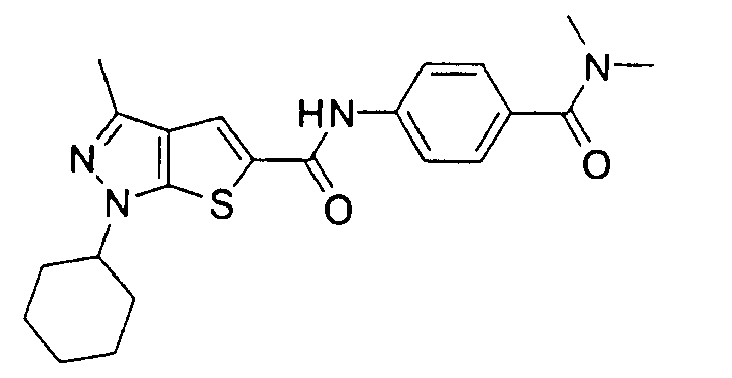
colorless cryst. 239.0-243.8 CDCl3 1.22-1.36(1H, m), 1.40-1.52(2H, m), 1.72-1.89(3H, m), 1.90-1.99(2H, m), 2.17-2.24(2H, m), 2.47(3H, s), 3.02(3H, brs), 3.12(3H, brs), 4.15-4.25(1H, m), 7.37(2H, dd, J=1.8 and 8.5Hz), 7.55(2H, dd. J=1.8 and 8.5Hz), 7.64(1 H, s), 8.17(1H, brs) 411 40 
colorless cryst. 159.5-163.3 CDCl3 1.22-1.36(1H, m), 1.40(3H, t. J=7.1Hz), 1.40-1.52(2H, m), 1.72-1.89(3H, m), 1.90-1.99(2H, m), 2.17-2.24(2H, m), 2.47(3H, s), 4.15-4.25(1H, m), 4.37(2H, q, J=7.1Hz), 7.50(1H, s), 7.68-7.71(2H, m), 7.74(1H, brs). 8.04-8.08(2H, m) 412 -
[Table 39] Example No. Chemical Structure properties m.p.(°C) (recryst. solvent) 1H-NMR MS(FAB) (M+1)+ 41 
colorless cryst. 265.9-268.8 DMSO 1.18-1.31(1H, m), 1.39-1.51(2H, m), 1.62-1.89(5H, m), 2.04-2.11(2H, m). 2.41(3H, s). 4.18-4.26(1H. m), 7.84-7.87(2H, m), 7.92-7.95(2H, m). 8.13(1H, s), 10.48(1H, brs) 384 42 
colorless cryst. 215.8-216.8 CDCl3 1.22-1.38(1H, m), 1.40-1.52(2H, m), 1.72-1.89(3H, m), 1.90-1.99(2H, m). 2.18-2.24(2H. m), 2.50(3H, s), 4.09(3H. s). 4.15-4.25(1H, m), 7.50(1H, s), 7.81(1H, d, J=2.3Hz). 7,97(1H, dd. J=2.3 snd 9.0Hz), 8.54(1H. brs), 8.65(1H, d. J=9.0Hz) 415 43 
yellow cryst. 102.2-105.0 CDCl3 1.22-1.37(1H, m), 1.39-1.52(2H, m), 1.70-1.98(5H, m), 2.17-2.23(2H, m), 2.47(3H, s), 3.62(2H, brs), 3.90(3H, s), 4.13-4.24(1H, m), 6.30-6.35(2H, m), 7.40(1 H, s), 8.06(1 H, brs), 8.12-8.15(1H, m) 384(M+) 44 
pale yellow cryst. 263.1-265.3 EtOH DMSO 1.18-1.31(1H, m), 1.38-1.51(2H, m), 1.63-1.88(5H, m), 2.04-2.11(2H, m), 2.05(3H, s), 2.38(3H, s), 3.79(3H, s), 4.15-4.29(1H, m), 7.08-7.11(1H, m), 7.45-7.51(2H, m), 8.02(1H, s), 9.45(1H, brs), 9.97(1H, brs) 427 -
[Table 40] Example No Chemical Structure properties m.p.(°C) (recryst. solvent) 1H-NMR 1H-NMR MS(FAB) (M+1)+ 45 
ccolorless cryst. 255.7-259.5 EtOH DMSO 1.16(6H, d, J=6.6Hz), 1.18-1.31(1H, m), 1.38-1.51(2H, m), 1.63-1.88(5H, m), 2.03-2.12(2H, m), 2.41(3H, s), 4.04-4.15(1H, m), 4.19-4.28(1H, m), 7.78-7.81(2H, m), 7.84-7.87(2H, m), 8.09(1H, d, J=7.4Hz), 8.11(1H, s), 10.39(1H, brs) 425 46 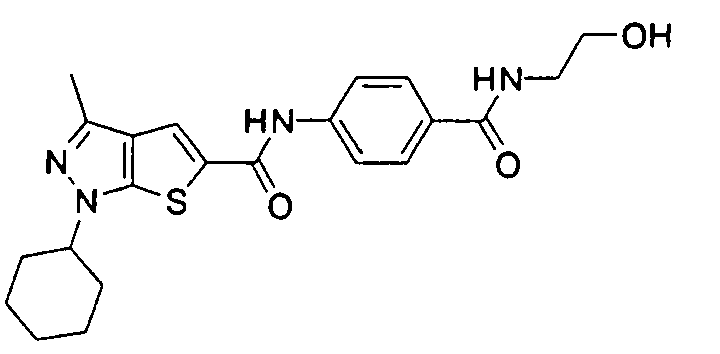
colorless cryst. 194.2-196.0 DMSO 1.20-1.33(1H, m), 1.39-1.54(2H, m), 1.65-1.95(5H, m), 2.05-2.15(2H, m), 2.41 (3H, s), 3.26-3.40(2H, m), 3.49-3.59(2H, m), 4.18-4.29(1H, m), 4.69-4.73(1H, m), 7.79-7.88(4H, m), 8.11(1H, s), 8.31-8.35(1H, m), 10.40(1H, brs) 427 47 
colorless cryst. >270 EtOH DMSO 1.19-1.33(1H, m), 1.39-1.52(2H, m), 1.63-1.90(5H, m), 2.05-2.12(2H, m), 2.08(3H, s), 2.40(3H, s), 4.18-4.28(1H, m), 8.01-8.08(2H, m), 8.04(1H, s), 8.65-8.67(1H, m), 10.36(1H, brs), 10.45(1H, brs) 398 48 
colorless crys. 133.5-136.0 CDCl3 1.22-1.37(1H, m), 1.39-1.52(2H, m), 1.71-1.98(5H, m), 2.16-2.23(2H, m), 2.46(3H, s), 3.81(3H, s), 4.13-4.25(1H, m), 6.91(2H, dd, J=2.1 and 6.9Hz), 7.44(1H, s), 7.49(2H, dd, J=2.1 and 6.9Hz), 10.51 (1H, brs) 370 -
[Table 41] Example No. Chemical Structure properties m.p.(°C) (recryst. solvent) 1H-NMR MS(FAB) (M+1)+ 49 
colorless cryst. 161.0-164.2 CDCl3 1.22-1.35(1H, m), 1.39-1.54(4H, m), 1.61-1.98(9H, m), 2.04-2.21 (4H, m), 2.43(3H, s), 4.13-4.22(1H, m), 4.31-4.42(1H, m), 5.80(1H, d. J=6.6Hz), 7.29(1 H, s) 332 50 
colorless cryst. 184.0-185.8 CDCl3 1.15-1.35(4H. m), 1.37-1.52(4H, m), 1.61-1.70(1H, m), 1.71-1.98(7H, m), 2.00-2.09(2H, m), 2.14-2.21(2H, m), 2.43(3H. s), 3.88-3.98(1H, m), 4.13-4.22(1H, m), 5.73(1H, d. J=8.0Hz), 7.30(1H. s) 346 51 
colorless cryst. 256.0-257.3 CDCl3 1.21-1.37(1H, m), 1.40-1.52(2H, m), 1.48(9H. s), 1.71-1.89(3H, m), 1.91-1.99(2H, m), 2.18-2.25(2H, m), 2.46(3H, s), 4.15-4.22(1H, m), 5.92(1H, brs), 7.53(1H, s), 7.63-7.66(2H, m), 7.70-7.73(2H, m), 7.85(1H, brs) 439 52 
colorless cryst. >270 CDCl3 1.21-1.36(1H, m), 1.29(6H, d, J=6.6Hz), 1.40-1.52(2H, m), 1.71-1.89(3H, m), 1.91-1.99(2H, m). 2.18-2.24(2H, m), 2.47(3H, s), 4.15-4.24(1H, m). 4.28-4.35(1H, m), 5.85(1H, d, J=7.6Hz), 7.57(1H, s), 8.08(1H, dd, J=2.2 and 8.7Hz), 8.36(1H, d, J=8.7Hz), 8.56(1H, brs), 8.71-8.72(1H, m) 426 -
[Table 42] Example No. Chemical Structure properties m.p.(°C) (recryst. solvent) 1H-NMR MS(FAB) (M+1)+ 53 
pale brown cryst. 216.9-218.5 EtOH/Et2O DMSO 1.19-1.31(1H, m), 1.39-1.52(2H, m), 1.63-1.89(5H, m), 2.05-2.11(2H, m), 2.39(3H, s), 4.18-4.27(1H, m), 7.54-7.58(2H, m), 7,64-7.68(2H, m), 8.04(1H, s), 8.24(1H, brs), 10.14(1H, brs), 10.21(1H, brs) 383 54 
colorless cryst. 226.0-227.8 CDCl3 1.21-1.36(1H, m), 1.41(9H, s), 1.40-1.52(2H, m), 1.71-1.89(3H, m), 1.91-1.99(2H, m), 2.18-2.25(2H, m), 2.48(3H, s), 2.97-3.01(4H, m), 3.50-3.55(4H, m), 4.18-4.27(1H, m), 7.53(1H, s), 7.73-7.76(2H, m), 7.78-7.81(2H, m), 7.82(1H, brs) 588 55 
colorless cryst. >270 DMSO 1.19-1.31(1H, m), 1.39-1.50(2H, m), 1.63-1.89(5H, m), 2.05-2.11(2H, m), 2.41(3H, s), 3.09-3.22(8H, m), 4.19-4.30(1H, m), 7.77-7.80(2H, m), 8.05-8.08(2H, m), 8.22(1H, s), 8.84(1H, brs), 10.74(1H, brs) 488 56 
colorless cryst. >270 CDCl3 1.21-1.35(1H, m), 1.39-1.51(2H, m), 1.74-1.99(5H, m), 2.17-2.26(2H, m), 2.48(3H, s), 3.00-3.03(4H, m), 3.72-3.77(4H, m), 4.18-4.26(1H, m), 7.53(1H, s), 7.71-7.83(5H, m) 489 -
[Table 43] Example No. Chemical Structure properties m.p.(°C) (recryst. solvent) 1H-NMR MS(FAB) (M+1)+ 57 
colorless cryst. >270 CDCl3 1.21-1.35(1H, m), 1.37-1.51(2H, m), 1.73-1.99(5H, m), 2.17-2.26(2H, m), 2.48(3H, s), 3.06(3H, s), 4.14-4.26(1H, m), 7.54(1H, s). 7.81-7.84(3H, m), 7.93-7.96(2H, m) 418 58 
colorless cryst. 217.7-219.9 EtOH DMSO 0.80-0.91(4H, m), 1.15-1.30(1H, m), 1.39-1.50(2H, m), 1.63-1.88(5H, m), 1.90-1.99(1H, m), 2.02-2.10(2H, m), 2.39(3H, s), 3.15-3.22(2H, m), 4.18-4.35(3H, m), 7.38-7,41(1H, m), 7.67-7.69(1H, m), 7.94-7.99(1H, m), 8.03(1H, s), 10.16(1H, brs) 449 59 
colorless cryst. 132.8-137.4 CDCl3 1.21-1.37(1H, m), 1.39-1.53(2H, m), 1.72-1-98 (5H, m), 2.17-2.23 (2H, m), 2.47(3H, s), 2.86(3H, s), 3.18(2H, t, J=8.4Hz), 4.01(2H, t, J=8.4Hz), 4.15-4.27(1H, m), 7.14-7.18(1H, m), 7.37-7.40(1H, m), 7.47(1H, s), 7.58(1H, brs), 7.74(1H, brs) 459 60 
colorless cryst. 213.1-217.5 CDCl3 1.22-1.36(1H, m), 1.40-1.52(2H, m), 1.72-1.98 (5H, m), 2.18-2.23 (2H, m), 2.47 (3H, s), 2.64 (3H, s), 4.15-4.27 (1H, m), 6.63-6.64 (1H, m), 7.29 (1H, dd, J=1.8 and 8.9Hz), 7.42-7.44(1H, m), 7.50 (1H, s), 7.75(1H, brs), 8.10 (1H, d, J=1.8Hz), 8.38-8.42 (1H, m) 421 -
[Table 44] Example No. Chemical Structure properties m.p.(°C) (recryst. solvent) 1H-NMR MS(FAB) (M+1)+ 61 
colorless cryst. 178.9-181.5 CDCl3 0.60-0.64(2H, m), 0.82-0.89(2H, m), 1.21-1.32(1H, m), 1.38-1.50(2H, m), 1.72-1.88(3H, m), 1.89-1.95(2H, m), 2.13-2.20(2H, m), 2.42(3H, s), 2.85-2.91(1H, m), 4.12-4.20(1H, m), 6.02(1H, brs), 7.29(1H, s) 304 62 
colorless cryst. 170.2-172.2 CDCl3 1.21-1.50(5H, m), 1.70-1.95(5H, m), 1.98-2.04(2H, m), 2.12-2.23(4H, m), 2.43(3H, s), 2.84-2.90(2H, m), 3.52(2H, s), 3.91-4.02(1H, m), 4.12-4.21(1H, m), 5.73(1H, d, J=7.2Hz), 7.26-7,33(6H, m) 437 63 
colorless cryst. 164.1-167.3 DMSO 1.17-1.30(1H, m), 1.39-1.50(2H, m), 1.64-1.87(7H, m), 1.92-2.00(2H, m), 2.02-2.10(2H, m), 2.36(3H, s), 2.95-3.01(2H, m), 3.29-3.36(2H, m), 3.96-4.05(1H, m), 4.15-4.22(1H, m), 7.88(1H, s), 8.51(1H, d, J=7.5Hz), 8.72(1H, brs) 347 64 
colorless cryst. 249.2-250.8 CDCl3 1.21-1,50(5H, m), 1.71-1.88(3H, m), 1.89-1.98(2H, m), 2.01-2.07(1H, m), 2.12(3H, s), 2.14-2.21(3H, m), 2.44(3H, s), 2.72-2.80(1H, m), 3.18-3.25(1H, m), 3.79-3.88(1H, m), 4.12-4.21 (2H, m), 4.59-4.66(1H, m), 5.78(1H, d, J=7.7Hz), 7.34(1H, s) 389 -
[Table 45] Example No. Chemical Structure properties m.p.(°C) (recryst. solvent) 1H-NMR MS(FAB) (M+1)+ 65 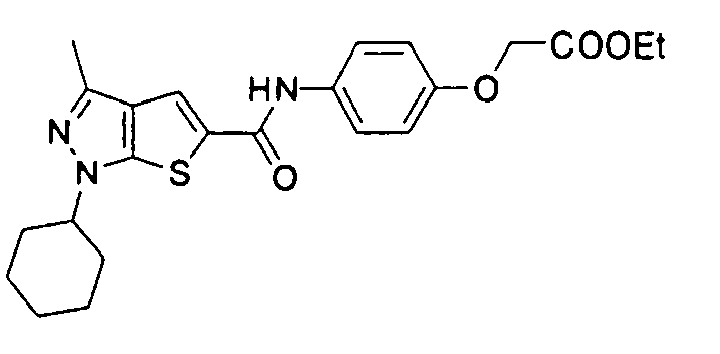
colorless cryst. 137.1-138.1 CDCl3 1.25-1.34(1H, m), 1.31(3H, t, J=7.1 Hz). 1.38-1.50(2H, m), 1.71-1.88(3H, m), 1.89-1.98(2H, m), 2.16-2.22(2H, m), 2.46(3H, s), 4.15-4,22(1H, m), 4.28(2H, q, J=7.1 Hz), 4.62(2H, s), 6.90-6.94(2H, m), 7.45(1H, s). 7.49-7.53(2H, m), 7.55(1H, brs) 442 66 
colorless cryst. 181.0-182.6 DMSO 1.18-1.30(1H, m), 1.38-1.50(2H, m), 1.64-1.90(5H, m), 2.04-2.10(2H, m), 2.39(3H, s), 4.18-4.27(1H, m), 4.64(2H, s), 6.89-6.92(2H, m), 7.59-7.62(2H, m), 8.01(1H, s), 10.13(1H, brs) 414 67 
colorless cryst. 233.2-235.0 CDCl3 1.25-1.35(1H, m), 1.40-1.52(2H, m), 1.72-1.98(5H, m), 2.18-2.23(2H, m), 2.46(3H, s), 2.92(3H, d, J=5.0Hz), 4.15-4.24(1H, m), 4.49(2H, s), 6.53-6.63(1H, m), 6.92(2H, dd, J=2.1 and 6.9Hz), 7.47(1H, s), 7.53(2H, dd, J=2.1 and 6.9Hz), 7.57(1H, brs) 427 68 
colorless cryst. 149.3-151.2 CDCl3 1.22-1.35(1H, m). 1.26(3H, t, J=7.2Hz), 1.38-1.53(2H, m), 1.71-1.98(5H, m), 2.15-2.22(2H, m), 2.47(3H, s), 3.60(2H, s), 4.15-4.22(1H, m), 4.16(2H, q, J=7.2Hz), 7.27-7.30(2H, m). 7.46(1H, s), 7.54-7.57(2H, m), 7.58(1H, brs) 426 -
[Table 46] Example No. Chemical Structure properties m.p.(°C) (recryst. solvent) 1H-NMR MS(FAB) (M+1)+ 69 
colorless cryst. 233.2-234.7 DMSO 1.18-1.30(1H, m), 1.38-1.51(2H, m), 1.61-1.89(5H, m), 2.05-2.11(2H, m), 2.40(3H, s), 3.53(2H, s), 4.18-4.29(1H, m), 7.21-7.25(2H, m), 7.63-7.66(2H, m), 8.06(1H, s), 10.20(1H, brs) 398 70 
colorless cryst. 257.3-258.8 DMSO 1.18-1.32(1H, m), 1.37-1.50(2H, m), 1.61-1.89(5H, m), 2.05-2.09(2H, m), 2.39(3H, s), 2.57(3H, d, J=4.6Hz), 3.35(2H, s), 4,19-4.27(1H, m), 7.20-7.23(2H, m), 7.61-7.64(2H, m), 7.88-7.91(1H, m), 8.06(1H, s), 10.18(1H, brs) 411 71 
colorless cryst. 228.3-229.6 CDCl3 1.24-1.35(1H, m), 1.38-1.52(2H, m), 1.49(9H, s), 1.72-1.98(5H, m), 2.15-2.21(2H, m), 2.46(3H. s). 3.09-3.12(4H, m), 3.58-3.61(4H, m), 4.12-4.25(1H, m), 6.91-6.94(2H, m), 7.44(1H, s), 7.47-7.50(2H, m), 7.53(1 H, brs) 523 72 
colorless cryst. 248.5-252.6 DMSO 1.19-1.31(1H, m), 1.38-1.51(2H, m), 1.63-1.89(5H, m), 2.04-2.10(2H, m), 2.39(3H, s), 3.19-3.22(4H, m), 3.30-3.33(4H, m), 4.05-4.15(1H, m), 6.98-7.01(2H, m), 7.61-7.64(2H, m), 8.07(1H, s), 9.08-9.15(2H, m), 10.17(1H, brs) 424 -
[Table 47] Example No. Chemical Structure properties m.p.(°C) (recryst. solvent) 1H-NMR MS(FAB) (M+1)+ 73 
colorless cryst. >270 EtOH DMSO 1.18-1.32(1H, m), 1.35-1.51(2H, m), 1.65-1.90(5H, m), 2.04(3H, s), 2.05-2.11(2H, m), 2.39(3H, s), 3.02-3.13(4H, m), 3.55-3.60(4H, m), 4.15-4.28(1H, m), 6.94-6.98(2H, m), 7.56-7.59(2H, m), 8.01(1H, s), 10.07(1H, brs) 466 74 
colorless cryst. 181.3-182.8 CDCl3 1.22-1.52(7H, m), 1.72-1.88(3H, m), 1.89-1.98(2H, m), 2.00-2.08(2H, m), 2.10-2.22(4H, m), 2.43(3H, s), 3.60-3.71(1H, m), 3.90-4.00(1H, m), 4.12-4.21(1H, m), 5.68(1H, d, J=7.8Hz), 7.30(1H, s) 362 75 
colorless cryst. 177.2-178.5 CDCl3 1.21-1.35(1H, m), 1.39-1.50(2H, m). 1.72-1.88(5H, m), 1.90-1.98(2H, m), 2.15-2.23(2H, m), 2.32-2.60(6H, m), 2.43(3H, s), 4.14-4.22(1H, m), 4.40-4.50(1H, m), 5.86(1H, d, J=7.6Hz), 7.35(1H, s) 360 76 
colorless cryst. 117.2-121.2 CDCl3 1.21-1.35(1H, m), 1.40-1.52(2H, m), 1.72-1,89(3H, m), 1.90-1.98(2H, m), 2.16-2.22(2H, m), 2.30(3H, s), 2.34-2.42(4H, m), 2.46(3H, s), 3.59-3.68(4H, m), 4,14-4.25(1H, m), 4.68(2H, s), 6.93-6.97(2H, m), 7.46(1H, s), 7.49-7.52(2H, m), 7.60(1H, brs) 496 -
[Table 48] Example No. Chemical Structure properties m.p.(°C) (recryst. solvent) 1H-NMR MS(FAB) (M+1)+ 77 
colorless cryst. 178.2-180.8 CDCl3 1.22-1.35(1H, m), 1.37-1.52(2H, m), 1.72-1.89(3H. m), 1.90-1.98(2H, m), 2.15-2.22(2H, m), 2.46(3H, s), 2.99(3H, s), 3.10(3H, s), 4.15-4.23(1H, m), 4.69(2H, s), 6.94-6.98(2H, m), 7.46(1H, s), 7.48-7.51 (2H, m), 7.56(1H, brs) 441 78 
colorless cryst. 202.2-203.8 CDCl3 1.22-1.35(1H, m), 1.40-1.52(2H, m), 1.72-1.89(3H, m), 1.91-1.99(2H, m), 2.03(3H, s), 2.19-2.25(2H, m), 2.48(3H, s), 2.59-2.64(6H, m), 3.02-3.08(4H, m), 4.13(2H, t. J=5.7Hz), 4.15-4.26(1H, m). 7.53(1H, s), 7.73-7.81(4H, m), 7.84(1H, brs) 574 79 
colorless cryst. 141.4-145.8 CDCl3 1.22-1.35(1H, m), 1.39-1.53(2H, m), 1.72-1.98(5H, m), 2.18-2.22(2H, m), 2.34(1H, brs), 2.48(3H, s), 2.52-2.58(2H, m), 2.60-2.63(4H, m), 3.03-3.09(4H, m), 3.58-3.61(2H, m). 4.17-4.26(1H, m), 7.54(1H, s), 7.74-7.82(4H, m), 7.84(1H, brs) 532 80 
colorless cryst. >270 EtOH DMSO 1.17-1.50(7H, m), 1.63-1.90(9H, m), 1.78(3H. s), 2.00-2.08(2H, m), 2.35(3H, s), 3.41-3.57(1H, m), 3.60-3,72(1H, m), 4.12-4.24(1H, m), 7.73(1H, d, J=7.6Hz), 7.79(1H, s), 8.24(1H, d, J=7.7Hz) 403 -
[Table 49] Example No. Chemical Structure Properties m.p.(°C) (recryst. solvent) 1H-NMR MS(FAB) (M+1)+ 81 
colorless cryst. 217.5-218.3 CDCl3 1.21-1.32(1H, m), 1.37-1.51(2H, m), 1.70-1.88(3H, m), 1.89-1.97(2H, m), 2.13-2.21(2H, m), 2.43(3H, s), 3.00(3H, d. J=4.9Hz), 4.10-4.21(1H, m), 5.85-5.93(1H, m), 7.30(1H, s) 278 82 
colorless cryst. 125.1-127.8 CDCl3 1.54-1.69(2H, m), 1.75-1.93(6H, m), 2.09(3H, s), 3.19(2H, s), 4.51-4.60(1H, m) 167 83 
browm oil CDCl3 1.60-1.72(2H, m), 1.86-1.98(2H, m), 2.00-2.10(4H, m), 2.23(3H, s), 4.68-4.75(1H, m), 5.95(1H, s) 84 
colorless oil CDCl3 1.65-1.75(2H, m), 1.92-2.02(2H, m), 2.14-2.13(4H, m), 2.45(3H, s), 4.72-4.80(1H, m), 9.85(1H, s) 213 -
[Table 50] Example No. Chemical Structure properties m.p.(°C) (recryst. solvent) 1H-NMR MS(FAB) (M+1)+ 85 
colorless oil CDCl3 1.20(3H, t, J=7.1Hz), 1.65-1.75(2H, m), 1.92-2.11(6H, m), 2.48(3H, s), 3.58(2H, s), 4.10(2H, q, J=7.1Hz), 5.17-5.22(1H, m), 10.01(1H, s) 297 86 
colorless oil CDCl3 1.38(3H, t, J=7.1Hz), 1.68-1.78(2H, m), 1.83-1.95(2H, m), 2.05-2.24(4H, m), 2.44(3H, s), 4.35(2H, q, J=7.1Hz), 4.66-4.72(1H, m), 7.69(1H, s) 279 87 
colorless cryst. 167.5-168.9 CDCl3 1.68-1.80(2H, m), 1.84-1.96(2H, m). 2.08-2.25(4H, m), 2.47(3H, s), 4.66-4.75(1H, m), 7.80(1H, s) 251 88 
colorless cryst. >270 EtOH DMSO 1.62-1.72(2H, m), 1.75-1.85(2H, m), 1.94-2.04(2H, m), 2.02(3H, s). 2.09-2.19(2H, m), 2.40(3H, s), 4.70-4.79(1H, m). 7.52-7.55(2H, m). 7.60-7.63(2H, m). 8.03(1H, s), 9.88(1H, brs), 10.16(1H, brs) 383 -
[Table 51] Example No. Chemical Structure properties m.p.(°C) (recryst. solvent) 1H-NMR MS(FAB) (M+1)+ 89 
pale yellow cryst. 134.0-137.7 CDCl3 1.45-1.71 (6H, m), 1.72-1.97(6H, m). 2.09(3H, s), 3.16(2H, s). 4.15-4.21(1H, m), 195 90 
brown oil CDCl3 1.48-1.72(6H, m). 1.78-1.88(2H, m), 1.91-2.00(2H, m), 2.01-2.11(2H, m), 2.23(3H, s). 4.30-4.38(1H, m), 5.93(1H, s) 91 
colorless cryst. 750-763 CDCl3 1.50-1.73(6H, m), 1.81-1.91(2H, m), 1.93-2.02(2H, m), 2.03-2.14(2H, m), 2.45(3H, s), 4.39-4.46(1H, m), 9.87(1H, s) 241 92 
colorless oil CDCl3 1.38(3H, t. J=7.1Hz), 1.51-1.73(6H, m), 1.79-1.89(2H, m), 1.99-2.10(2H, m), 2.15-2.23(2H, m), 2.44(3H, s), 4.35(2H, q, J=7.1Hz), 4.32-4.42(1H, m), 7.69(1H, s) 307 -
[Table 52] Example No. Chemical Structure properties m.p.(°C) (recryst. solvent) 1H-NMR MS(FAB) (M+1)+ 93 
colorless cryst. 239.8-241.4 CDCl3 1.52-1.75(6H, m), 1.80-1.90(2H, m), 2.00-2.10(2H, m), 2.16-2.25(2H, m), 2.46(3H, s), 4.35-4.41(1H, m), 7.79(1H, s) 279 94 
colorless cryst. >270 EtOH DMSO-d6 1.50-1.82(8H, m), 1.88-2.12(4H, m), 1.97(3H, s), 2.39(3H, s), 4.32-4.46(1H, m), 7.52-7.55(2H, m), 7.60-7.63(2H, m), 8.03(1H, s), 9.88(1H, brs), 10.15(1H, brs) 411 95 
colorless cryst. 157-159 CDCl3 1.18-1.45(3H, m), 1.68-1.82(3H, m), 1.84-1.93(2H, m), 2.04-2.13(2H, m), 2.21(3H, s), 3.45(3H, s), 4.04-4.14(1H, m), 6.11 (1 H, s). 7.27-7.33(2H, m), 7.39-7.49(3H, m) 354 96 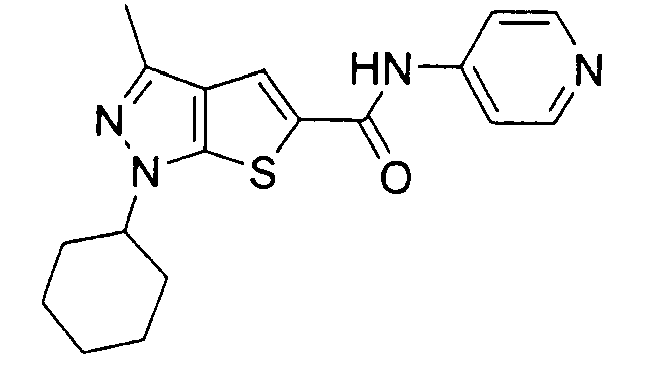
colorless cyrst. 223-224 CDCl3 1.22-1.36(1H, m), 1.40-1.53(2H, m), 1.72-1.89(3H, m), 1.91-2.00(2H, m), 2.15-2.25(2H. m), 2.47(3H, s), 4.15-4.25(1H, m), 7.53(1H, s), 7.54-7.58(2H, m), 7.74(1H, brs), 8.53-8.58(2H, m) 341 -
[Table 53] Example No. Chemical Structure properties m.p.(°C) (recryst. solvent) 1H-NMR MS(FAB) (M+1)+ 97 
colorless solid 178-180 CDCl3 1.23-1.35(1H, m), 1.39-1.42(2H, m), 1.72-1.89(3H, m), 1.90-1.97(2H, m), 2.16-2.25(2H, m), 2.48(3H, s), 4.15-4.25(1H, m), 7.29-7.35(1H, m), 7.53(1H, s), 7.68(1H, brs), 8.24-8.29(1H, m), 8.38-8.42(1H, m), 8.63-8.66(1H, m) 341 98 
pale yellow cryst. 210-212 CDCl3 1.22-1.52(3H, m), 1.72-1.89(3H, m), 1.91-1.98(2H, m), 2.17-2.26(2H, m), 2.48(3H, s), 4.15-4.25(1H, m), 7.54(1H, s), 7.77-7.81(2H, m), 7.87(1H, brs), 8.24-2.29(2H, m) 385 99 
pale yellow foamy solid CDCl3 1.22-1.34(1H, m), 1.38-1.51(2H, m), 1.71-1.98(5H, m), 2.14-2.23(2H, m), 2.45(3H, s), 4.14-4.24(1H, m), 6.65-6.72(2H, m), 7.33-7.38(2H, m), 7.42(1H, s), 7.48(1H, s) 355 100 
colorless solid >300 CDCl3 1.19-1.30(1H, m), 1.36-1.50(2H, m). 1.63-1.86(5H, m), 2.03(3H, s), 2.03-2.10(2H, m), 2.39(3H, s), 4.15-4.26(1H, m), 7.51-7.56(2H, m), 7.59-7.64(2H, m), 8.04(1H, s), 9.91(1H, brs), 10.18(1H, brs) 397 -
[Table 54] Example No. Chemical Structure properties m.p.(°C) (recryst. solvent) 1H-NMR MS(FAB) (M+1)+ 101 
pale yellow cryst. 233-236 CDCl3 1.23-1.35(1H, m), 1.38-1.54(2H, m), 1.72-1.97(5H, m), 2.15-2.24(2H, m), 2.47(3H, s), 3.52(3H, s), 4.03(2H, s), 4.15-4.25(1H, m), 7.47(1H, s), 7.56-7.65(4H, m), 8.25(1H, brs) 427 102 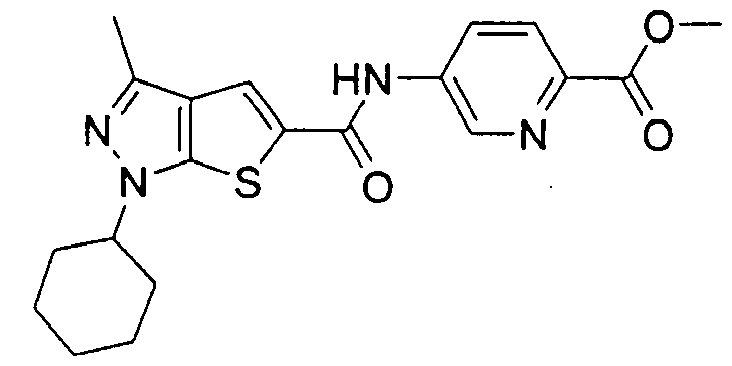
colorless solid 120-123 CDCl3 1.23-1.36(1H, m), 1.39-1.52(2H, m), 1.72-1.98(5H, m), 2.16-2.24(2H, m), 2.48(3H, s), 4.01(3H, s), 4.15-4.25(1H, m), 7.58(1H, s), 7.88(1H, brs), 8.18(1H, d, J=8.6Hz), 8.51(1H, dd, J=2.6 and 8.6Hz), 8.71(1H, d, J=2.6Hz) 399 103 
pale yellow solid 161-166 DMSO-d6 1.18-1.42(1H, m), 1.38-1.51(2H, m), 1.65-1.89(5H, m), 2.05-2.13(2H, m), 2.42(3H, s). 4.19-4.28(1H, m), 8.07(1H, d. J=8.6Hz), 8.14(1H, s), 8.35(1H, dd, J=2.4 and 8.6Hz), 8.99(1H, d, J=2.4Hz), 10.71(1H, brs) 385 104 
colorless solid 255-257 CDCl3 1.21-1.35(1H, m), 1.40-1.60(2H, m), 1.72-1.97(5H, m), 2.16-2.25(2H, m), 2.47(3H, s), 3.04(3H, d. J=5.1Hz), 4.15-4.25(1H, m), 7.55(1H, s), 7.79(1H, brs), 7.86-7.92(2H, m), 8.21-8.24(2H, m), 8.76(1H, brs) 398 -
[Table 55] Example No. Chemical Structure properties m.p.(°C) (recryst. solvent) 1H-NMR MS(FAB) (M+1)+ 105 
colorless cryst. 243-245 CDCl3 1.23-1.35(1H, m). 1.39-1.52(2H, m), 1.72-1.98(5H, m), 2.16-2.24(2H, m), 2.48(3H, s), 3.11(3H, s), 3.17(3H, s), 4.15-4.25(1H, m), 7.51(1H, d, J=8.5Hz), 7.78(1H. s), 8.00(1H, dd. J=2.5 and 8.5Hz), 8.57-8.60(2H, m) 412 106 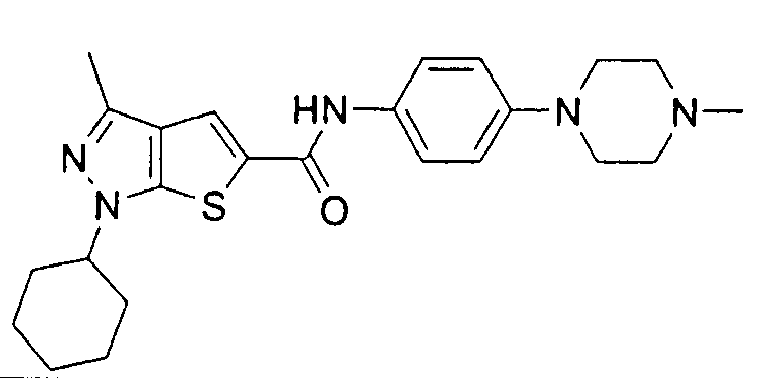
yellow solid 206-208 CDCl3 1.22-1.35(1H, m). 1.38-1.50(2H. m), 1.70-1.97(5H, m), 2.15-2.23(2H, m). 2.36(3H, s), 2.46(3H, s), 2.56-2.63(4H, m), 3.17-3.23(4H, m), 4.14-4.23(1H, m), 6.93(2H, d, J=8.9Hz), 7.44(1H, s), 7.47(2H, d. J=8.9Hz), 7.53(1H, brs) 438 107 
colorless cryst. 175(dec.) (MeOH) D2O 1.05-1.18(1H, m), 1.25-1.39(2H, m), 1.48-1.69(3H, m), 1.73-1.83(2H, m), 1.93-2.01(2H, m), 2.31(3H, s), 2.86(3H, s), 2.96(3H, s), 3.25-3.55(8H, m), 3.90-4.00(1H, m), 6.96(2H, d, J=8.6Hz), 7.34(1H, d, J=8.6Hz), 7.50(1H, brs) 438 108 
colorless solid 98-103 COCl3 1.21-1.36(1H, m), 1.38-1.52(2H, m), 1.72-1.98(5H, m), 2.15-2.24(2H, m), 2.36(3H, s), 4.13-4.23(1H, m), 7.53(1H, s), 7.64(2H, d, J=8.6Hz), 7.75(2H, d, J=8.6Hz), 7.89(1H, brs) 365 -
[Table 56] Example No. Chemical Structure properties m.p.(°C) (recryst. solvent) 1H-NMR MS(FAB) (M+1)+ 109 
colorless solid 250(decpt.) D2O 1.12-1.26(1H, m). 1.31-1.44(2H, m), 1.54-1.64(3H, m), 1.80-1.88(2H, m), 1.96-2.05(2H, m). 2.32(3H, s). 3.00(3H, s), 3.17-3.30(2H, m). 3.34-3.45(2H, m). 3.63-3.74(2H, m), 3.95-4.05(1H, m), 4.18-4.29(2H, m), 7.03(1H, d. J=9.4Hz), 7.55(1H, s), 7.82(1H, dd. J=2.4 and 9.4Hz), 8.25(1H, d. J=2.4Hz) 439 110 
colorless cryst. 164-170 DMSO-d6 1.28-1.32(1H, m), 1.38-1.52(2H, m), 1.64-1.89(5H, m), 2.05-2.12(2H, m), 2.41 (3H, s), 2.63-2.74(2H, m), 2.76(3H, s), 3.09-3.12(2H, m), 3.41-3.50(2H, m), 373-3.82(2H, m), 4.20-4.30(1H, m), 7.47-7.51(1H, m), 7.65-7.71(1H, m), 8.08-8.13(1H. m), 8.17(1H, s). 8.26-8.28(1H, m), 10.22(1H, brs). 10.68(1H, brs) 502 111 
coloeless solid 255-256 DMSO-d6 1.28-1.31(1H, m), 1.38-1.52(2H. m), 1.64-1.89(5H, m), 2.04-2.12(2H, m), 2.41(3H, s), 2.45(3H, s), 4.17-4.27(1H, m). 7.44(1H, brs), 7.47-7.51(1H, m), 7.55-7.61(1H, m), 7.99-8.04(1H, m), 8.11(1H, s), 8.22-8.26(1H, m), 10.51(1H, brs) 433 112 
pale yellow solid 203-205 CDCl3 1.52-1.75(6H, m), 1.78-1.88(2H, m). 1.99-2.11(2H, m), 2.15-2.24(2H, m). 2.35(3H, s). 2.45(3H, s), 2.55-2.61(4H, m), 3.16-3.22(4H, m), 4.34-4.43(1H, m), 6.92(2H, d. J=9.0Hz), 7.43(1H, s), 7.46(2H, d, J=9.0Hz), 7.49(1 H, brs) 452 -
[Table 57] Example No. Chemical Structure properties m.p.(°C) (recryst. solvent) 1H-NMR MS(FAB) (M+1)+ 113 
colorless foamy solid CDCl3 1.22-1.36(1H, m), 1.39-1.52(2H, m), 1.69-1.98(5H, m), 2.15-2.24(2H, m), 2.35(3H, s), 2.46(3H, s), 2.53-2.59(4H, m), 3.21-3.27(4H, m), 4.13-4.23(1H, m), 6.67-6.72(1H, m), 6.88-6.93(1H, m), 7.19-7.25(1H, m), 7.40-7.43(1 H, m), 7.45(1 H, s), 7.45(1 H, brs) 438 114 
yellow cryst. 165-167 (iPrOH) DMSO-d6 1.18-1.32(1H, m), 1.37-1.53(4H, m), 1.64-1.88(7H, m). 2.03-2.10(2H, m), 2.39(3H, s), 2.75-2.84(2H, m), 3.45-3.52(2H, m), 3.56-3.65(1H, m), 4.16-4.26(1H. m), 4.65(1H, d, J=4.2Hz), 6.91(2H, d, J=9.0Hz), 7.52(2H, d, J=9.0Hz), 7.99(1H, s), 10.02(1H, brs) 439 115 
colorless cryst. 205-207 (EtOH) CDCl3 1.56-1.75(6H, m), 1.80-1.88(2H, m), 2.00-2.10(2H, m), 2.15-2.25(5H, m), 2.46(3H, s), 3.93(3H, s), 4.33-4.43(1H, m), 6.74(1H, dd, J=2.2 and 8.7Hz). 7.47(1H, s), 7.65(1H, brs), 7.70(1H, brs), 7.78(1H, d, J=2.2Hz), 8.31(1H, d, J=8.7Hz) 441 116 
colorless cryst. 201-202 (iPr2O/EtOAc) CDCl3 1.21-1.35(1H, m), 1.38-1.52(2H, m), 1.71-1.98(5H, m), 2.15-2.23(2H, m), 2.48(3H, s), 4.15-4.25(1H, m), 7.64(1H, s), 7.64(1H, brs), 8.55(2H, s) 409 -
[Table 58] Example No. Chemical Structure properties m.p.(°C) (recryst. solvent) 1H-NMR MS(FAB) (M+1)+ 117 
colorless solid 93-96 CDCl3 1.16-1.31(4H, m), 1.38-1.47(2H, m), 1.65-1.89(4H, m), 2.47(3H, s), 3.92(3H, s), 4.16-4.26(1H, m), 6.94(2H, d, J=8.3Hz), 7.38(2H, d, J=8.3Hz), 9.90(1H, s) 393 118 
colorless solid 118-120 CDCl3 1.22-1.34(1H, m), 1.37-1.52(2H, m), 1.72-1.98(5H, m), 2.15-2.24(2H, m). 2.45(3H, s), 4.14-4.24(1H, m), 7.13(1H, s), 7.39-7.44(2H, m), 7.47-7.52(2H, m) 375 119 
pale yellow solid 182-183 CDCl3 1.22-1.48(3H, m), 1.70-1.95(5H, m), 2.15-2.24(2H, m), 2.36(3H, s), 2.44(3H, s). 2.56-2.61 (4H, m), 3.23-3.28(4H, m), 4.12-4.22(1H, m), 6.88-6.94(2H, m), 6.98(1H, s), 7.42-7.48(2H, m) 395 120 
colorless cryst. 210-214 (EtOH/Et2O) DMSO-d6 1.16-1.28(1H, m), 1.38-1.50(2H, m), 1.65-1.87(5H, m), 2.04-2.13(2H, m). 2.30(3H, s), 2.34(3H, s). 2.85-2.88(3H, m), 2.93-3.21 (4H, m), 3.40-3.58(2H, m), 3,82-3.97(2H, m), 4.12-4.22(1H, m), 7.01-7.06(2H. m), 7.31 (1H, s), 7.48-7.53(2H, m), 9.55(1H, brs) 395 -
[Table 59] Example No. Chemical Structure properties m.p.(°C) (recryst. solvent) 1H-NMR MS(FAB) (M+1)+ 121 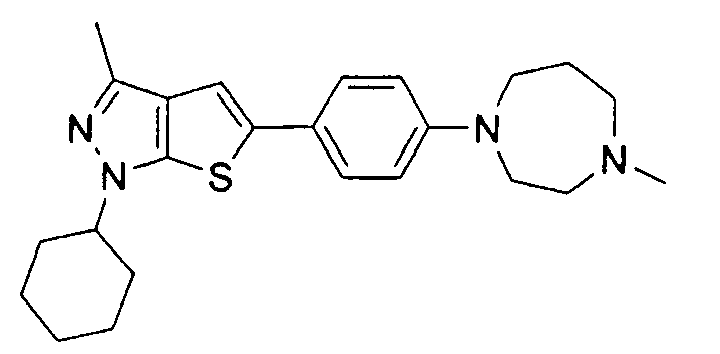
pale yellow solid 112-114 CDCl3 1.22-1.53(3H, m), 1.70-1.96 (5H, m), 1.99-2.07 (2H, m), 2.15-2.24(2H, m), 2.39(3H, s), 2.43(3H, s), 2.56-2.61 (2H, m), 2.71-2.76(2H, m), 3.47-3.53 (2H, m), 3.57-3.62(2H, m), 4.12-4.22(1H, m), 6.66-6.71(2H, m), 6.91 (1H, s), 7.38-7.43(2H, m) 409 122 
colorless cryst. 127-129 CDCl3 1.22-1.33(1H, m), 1.37-1.50(2H, m), 1.70-1.96 (5H, m), 2.13-2.21(2H, m), 2.41-2.46 (1H, brs), 2.44 (3H, s), 3.59-3.65(2H, m), 3.81-3.87(2H, m), 4.18(1H, tt, J=3.8 and 11.8Hz), 6.36-6.44 (1H, m), 7.36(1H, s) 308 123 
colorless viscous solid CDCl3 1.20-1.33(1H, m), 1.37-1.50(2H, m), 1.71-1.97(7H, m), 2.14-2.22(2H, m), 2.43(3H, s), 2.85-2.91(1H, m), 3.59-3.65(2H, m), 3.72-3.79(2H, m), 4.18(1H, tt, J=3.8 and 11.8Hz), 6.42-6.48(1H, m), 7.34(1H, s) 322 124 
pale yellow foamy solid CDCl3 1.22-1.35(1H, m), 1.39-1.53(2H, m), 1.71-1.97(5H, m), 2.15-2.25(3H, m), 2.46(3H, s), 2.84(3H, s), 3.20-3.26(2H, m), 3.72-3.79(2H, m), 4.20(1H, tt, J=3.8 and 11.8Hz), 6.97-7.04(1H, m), 7.18(1H, dd, J=1.9 and 8.6Hz), 7.47(1H, s), 7.50(1H, dd, J=2.3 and 13.8Hz), 7.58(1 H, brs) 431 -
[Table 60] Example No. Chemical Structure properties m.p.(°C) (recryst. solvent) 1H NMR MS(FAB) (M+1)+ 125 
colorless solid 112-125 DMSO-d6 1.18-1.30(1H, m), 1.37-1.50(2H, m), 1.63-1.88(5H, m), 2.02-2.10(2H, m), 2.40(3H, s). 2.89(3H, s), 3.20-3.26(2H. m), 3.52-3.58(2H, m), 4.22(1H. tt. J=3.8 and 11.7Hz), 7.18-7.26(1H, m), 7.39-7.45(1H, m), 7.64(1H, dd. J=2.0 and 15.3Hz). 8.06(1H, s), 10.30(1H, brs) 431 126 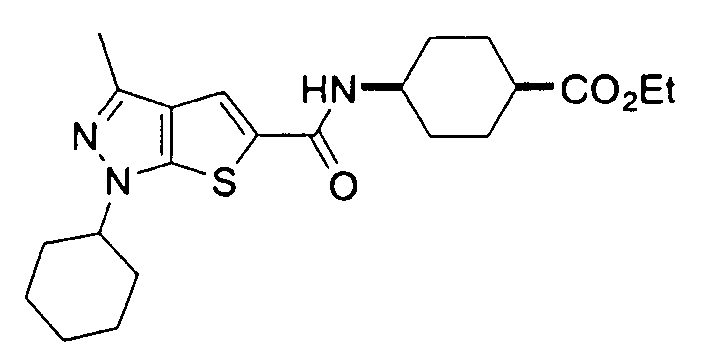
colorless foamy solid CDCl3 1.22-1.34(1H, m), 1.28(3H, t. J=7.1Hz), 1.37-1.50(2H, m), 1.62-2.00(13H, m), 2.14-2.22(2H, m), 2.44(3H, s), 2.49-2.57(1H, m), 4.08-4.22(2H, m), 4.16(2H, q, J=7.1Hz), 5.84-5.90(1H, m), 7.32(1H, s) 418 127 
colorless solid 212-213 CDCl3 1.20-2.06(16H, m), 2.13-2.22(2H, m), 2.44(3H, s), 2.60-2.68(1H, m), 4.06-4.23(2H, m), 5.82-5.89(1H. m), 7.32(1H, s) 390 128 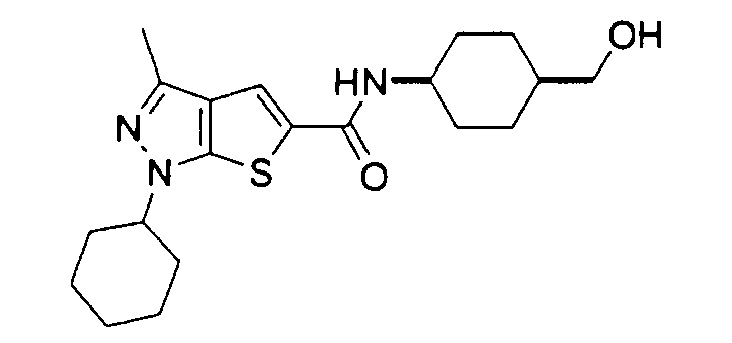
colorless solid 150-153 CDCl3 1.22-1.97(17H, m), 2.13-2.21(2H, m), 2.45(3H, s), 3.57-3.61(2H, m), 4.09-4.27(2H, m), 5.93-5.98(1H, m), 7.32(1H, s) 376 -
[Table 61] Example No. Chemical Structure properties m.p.(°C) (recryst. solvent) 1H-NMR MS(FAB) (M+1)+ 129 
colorless solid 147-148 CDCl3 0.98-1.11(2H, m), 1.21-1,35(1H, m), 1.38-1.50(4H, m), 1.53-1.65(1H, m), 1.72-1.97(7H, m), 2.00-2.08(2H, m), 2.14-2.21(2H, m), 2.26(1H, tt, J=3.6 and 12.2Hz), 2.44(3H, s), 3.28-3.34(2H, m), 3.67(3H, s), 4,18(1H, tt, J=3.8 and 11.8Hz), 5.92-6.00(1H, m), 7.33(1H, s) 418 130 
colorless cryst. 101-104 (EtOAc) CDCl3 0.92-1.10(4H, m), 1.21-1.34(2H, m), 1.36-1.55(3H, m), 1.70-1.97(9H, m), 2.13-2.21(2H, m), 2.44(3H, s), 3.28-3.34(2H, m), 3.46-3.51(2H, m), 4.18(1H, tt, J=3.8 and 11.9Hz), 5.92-6.00(1H, m), 7.33(1H, s) 390 131 
colorless solid 265(dec.) CDCl3 1.21-2.22(18H, m), 1.45(9H, s), 2.43(3H, s), 3.37-3.53(1H, m), 3.87-3.97(1H, m), 4.17(1H, tt. J=3.8 and 11.9Hz), 4.37-4.45(1H, m), 5.66-5.72(1H, m), 7.31(1H, s) 461 132 
colorless cryst. 154-156 (Et2O) CDCl3 1.20-1.98(14H, m), 2.05-2.23(4H, s), 2.44(3H, s), 2.65-2.74(1H, m), 3.86-3.96(1H, m), 4.18(1H, tt, J=3.8 and 11.8Hz), 5.64-5.69(1H, m), 7.30(1H, s) 361 -
[Table 62] Example No. Chemical Structure properties properties m.p.(°C) (recryst. solvent) 1H-NMR MS(FAB) (M+1)+ 133 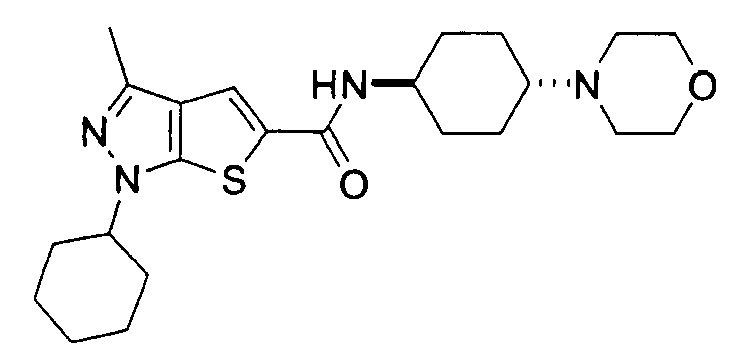
colorless solid 211-214 CDCl3 1.19-1.49(7H, m), 1.71-2.03(7H, m), 2.13-2.29(5H, m), 2.44(3H, s), 2.56-2.61(4H, m). 3.72-3.77(4H, m), 3.85-3.94(1H, m), 4.17(1H, tt, J=3.9 and 11.8Hz), 5.66-5.71(1H, m), 7.30(1H, s) 431 134 
colorless solid 184-187 CDCl3 1.21-1.52(5H, m), 1.71-1.97(5H, m), 2.01-2.08(2H, m), 2.04-2.11(2H, m). 2.44(3H, s), 2.70-2.80(2H, m), 3.08-3.15(2H, m), 3.99-4.10(1H, m). 4.18(1H, tt, J=3.9 and 11.8Hz). 5.72-5.79(1H, m), 7.32(1 H. s) 347 135 
colorless solid 207-208 CDCl3 1.22-1.34(1H, m), 1.38-1.68(6H, m), 1.71-1.96(7H, m), 2.03-2.11(2H, m), 2.13-2.21(2H, m). 2.30-2.39(2H, m), 2.44(3H, s), 2.46-2.55(1H, m), 2.92-3.00(2H, m), 3.35-3.45(2H, m), 3.92-4.07(3H, m), 4.17(1H, tt, J=3.8 and 11.8Hz), 5.71-5.77(1H, m), 7.31(1H, s) 431 136 
colorless solid 217-220 CDCl3 1.22-1.96(18H, m), 2.01-2.09(2H, m), 2.13-2.21(2H, m), 2.36-2.49(3H, m), 2.44(3H, s), 2.87-2.94(2H, m), 3.77-3.84(1H, m), 3.91-4.01(8H, m), 4.17(1H, tt, J=3.8 and 11.8Hz), 5.76-5.80(1H, m), 7.31(1H, s) 487 -
[Table 63] Example No. Chemical Structure properties m.p.(°C) (recryst. solvent) 1H-NMR MS(FAB) (M+1)+ 137 
colorless solid 207-210 CDCl3 1.21-2.22(18H, m), 2.28-2.54(4H, m), 2.44(3H, s), 2.58-2.66(1H, m), 2.72-2.82(1H, m), 2.93-3.01(2H, m), 3.93-4.02(1H, m), 4.18(1H, tt, J=3.8 and 11.8Hz), 5.73-5.79(1H, m), 7.32(1H, s) 443 138 
colorless solid 150-160 CDCl3 1.20-1.65(8H, m), 1.69-1.98(8H, m), 2.00-2.10(4H, m), 2.13-2.20(2H, m), 2.30-2.41(3H, m), 2.44(3H, s), 2.95-3.96(2H, m), 3.55-3.64(1H, m), 3.88-4.01(1H, m), 4.17(1H, tt, J=3.8 and 11.8Hz), 5.70-5.77(1H, m), 7.31(1H, s) 445 139 
colorless solid 197(dec.) CDCl3 1.22-1.33(1H, m), 1.37-1.64(4H, m), 1.48(9H, s), 1.70-1.96(7H, m), 2.15-2.21(2H, m), 2.45(3H, s), 2.57-2.67(1H, m). 2.72-2.84(2H, m), 4.12-4.30(3H, m), 7.18(2H, d, J=8.5Hz). 7.46(1H, s). 7.51(2H, d, J=8.5Hz), 7.63(1 H, brs) 523 140 
pale yellow foamy solid CDCl3 1.22-1.33(1H, m). 1.37-1.50(2H, m), 1.52-1.67(1H, m). 1.70-1.95(8H, m) 2.13-2.21(2H, m). 2.44(3H, s), 2.55-2.64(1H, m), 2.68-2.78(2H, m), 3.13-3.21 (2H, m), 4.18(1H, tt, J=3.8 and 11.8Hz), 7.20(2H, d. J=8.4Hz), 7.45(1H, s). 7.50(2H, d. J=8.4Hz). 7.60(1H. brs) 423 -
[Table 64] Example No. Chemical Structure properties m.p.(°C) (recryst. solvent) 1H-NMR MS(FAB) (M+1)+ 141 
colorless cryst. 270(dec.) (EtOH/Et2O) DMSO-d6 1.14-1.28(1H, m), 1.35-1.48(2H, m), 1.59-1.93(9H, m), 1.99-2.07(2H, m), 2.47(3H, s), 2.74-2.84(1H, m), 2.90-3.01(2H, m), 3.26-3.36(2H, m), 4.18(1H, tt, J=3.8 and 11.8Hz), 7.18(2H, d, J=8.5Hz), 7.65(2H, d, J=8.5Hz), 8.06(1H, s), 8.42-8.58(1H, m), 8.63-8.77(1H, m), 10.21(1H, brs) 423 142 
colorless foamy solid CDCl3 1.20-1.33(1H, m), 1.37-1.51 (2H, m), 1.69-1.95(9H, m), 1.98-2.07(2H, m), 2.12-2.21 (2H, m), 2.31(3H, s). 2.39-2.49(1H, m), 2.45(3H, s), 2.92-3.00(2H, m), 4.18(1H, tt, J=3.8 and 11.8Hz), 7.21 (2H, d, J=8.5Hz), 7.44(1H, s), 7.50(2H, d, J=8.5Hz), 7.57(1H, brs) 437 143 
pale brown solid 197-198 CDCl3 1.12(3H, t. J=7.3Hz), 1.21-1.33(1H. m), 1.37-1.51(2H, m), 1.69-1.96(5H, m), 2.15-2.22(2H, m), 2.45(3H, s), 2.48(2H, q, J=7.3Hz). 2.58-2.66(4H, m), 3.07-3.14(4H, m), 4,18(1H, tt. J=3.8 and 11.8Hz), 6.89-6.97(1H, m), 7.15(1H, dd, J=1.6 and 8.6Hz), 7.43(1H, s), 7.46-7.53(1H, m), 7.51 (1H, brs) 470 144 
brown foamy solid CDCl3 1.21-1.33(1H, m), 1.37-1.50(2H, m), 1.69-2.04(7H, m), 2.12-2.21(2H, m), 2.39(3H, s), 2.44(3H, s), 2.62-2.67(2H, m), 2.73-2.78(2H, m), 3.35-3.44(4H, m), 4.17(1H, tt. J=3.8 and 11.8Hz), 6.76-6.83(1H. m), 7.09(1H, dd, J=1.9 and 8.9Hz), 7.43(1H, s), 7.48(1H, dd, J=2.4 and 11.6Hz), 7.42(1H, s), 7.51(1H, brs) 470 -
[Table 65] Example No. Chemical Structure properties m.p.(°C) (recryst. solvent) 1H-NMR MS(FAB) (M+1)+ 145 
colorless solid 216-218 (AcOEt/hexane) CDCl3 1.21-1.52(3H, m), 1.38(3H, t. J=7.1Hz), 1.71-1.99(5H, m), 2.16-2.25(2H, m), 2.45(3H, s), 3.92(3H, s), 4.13-4.22(1H. m), 4.35(2H, q, J=7.1Hz). 6.95(1H, dd, J=1.8 and 8.4Hz), 7.52(1H, s), 7.72(1H, d, 1.8Hz), 7.84(1H, d, J=8.4Hz), 7.92(1H, brs) 442 146 
colorless solid 223-224.5 (AcOEt) DMSO-d6 1.15-1.30(1H, m), 1.38-1.51(2H, m), 1.62-1.90(5H, m), 2.02-2.13(2H, m), 2.41(3H, s). 3.83(3H, s), 4.17-4.29(1H, m), 7.43(1H, dd, J=1.6 and 8.5Hz), 7.59(1H, d, 1.6Hz), 7.72(1H, d, J=8.5Hz), 8.12(1H, s). 10.41(1H, brs), 12.31(1H, brs) 414 147 
colorless solid 193.5-198 DMSO-d6 1.17-1.31(1H, m), 1.39-1.51(2H, m), 1.62-1.90(5H, m), 2.02-2.13(2H, m), 2.41(3H, s), 2.78(3H, s), 2.88-3.08(2H, m), 3.19-3.60(5H, m), 3.84(3H, s), 4.17-4.29(1H, m), 4.51-4.64(1H, m), 7.19-7.29(1H, m), 7.41-7.54(1H, m), 7.59-7.68(1H, m), 8.21(1H, s), 10.50(1H, brs), 11.20(1H, brs) 496 148 
colorless solid 188.5-190 (AcOEt/hexane) CDCl3 1.21-1.35(1H, m), 1.39-1.1.52(2H, m), 1.71-2.00(5H, m), 2.13-2.25(2H, m), 2.50(3H, s), 3.19-3.39(2H, m), 3.51-3.65(2H, m), 3.70-3.97(4H, m), 3.77(3H, s), 4.14-4.26(1H, m), 6.80(1H, dd, J=1.8 and 8.1 Hz), 7.04(1H, d, J=8.1Hz), 7.37(1H, d, J=1.7Hz), 7.76(1H, s), 8.72(1H, brs) 483 -
[Table 66] Example No. Chemical Structure properties m.p.(°C) (recryst. solvent) 1H-NMR MS(FAB) (M+1)+ 149 
colorless solid 242.5-245.5 CDCl3 1.21-1.69(6H, m), 1.71-2.00(7H, m), 2.13-2.25(2H, m), 4.46(3H, s), 2.99-3.18(1H, m), 3.34-3.59(2H, m), 3.70-3.80(3H, m), 3.90-4.00(1H, m), 4.13-4.34(2H, m), 6.77-6.82(1H, m), 6.95-7.03(1H, m), 7.29-7.36(1H, m), 7.82(1H, s), 8.84(1H, brs) 497 150 
colorless solid 243-245.5 CDCl3 1.21-1.36(1H, m), 1.39-1.51(2H, m), 1.70-2.00(5H, m), 2.15-2.25(2H, m), 3.27(1H, brt, J=5.2Hz), 3.60-3.69(2H, m), 3.79-3.89(2H, m), 3.99(3H, s), 4.13-4.25(1H, m), 6.88(1H,dd, J=1.8 and 8.5Hz), 7.58(1H, s), 7.93(1H, d, J=1.8Hz), 8.13(1H, d, J=8.5Hz), 8.15(1H, brs), 8.26(1H, brt, 5.5Hz) 457 151 
colorless solid 187-188 COCl3 1.21-1.35(1H, m), 1.39-1.52(2H, m), 1.71-1.99(5H, m), 2.14-2.24(2H, m), 2.44(3H, s), 3.41(3H, s), 3.52-3.60(2H, m), 3.62-3.70(2H, m), 3.99(3H, s), 4.13-4.24(1H, m), 6.89(1H,dd, J=1.5 and 8.5Hz), 7.57(1H, s), 7.95(1H, d, J=1.5Hz). 8.11(1H, brs), 8.16(1H, d. J=8.5Hz), 8.19(1H, brt, 5.3Hz) 471 152 
colorless solid 279-281 (AcOEt) COCl3 1.22-1.36(1H, m), 1.39-1.52(2H, m), 1.71-1.99(5H, m), 2.14-2.23(2H, m), 2.45(3H, s), 3.01(3H, d, J=4.8Hz), 4.00(3H, s), 4.13-4.23(1H, m), 6.87(1H,dd, J=1.8 and 8.5Hz), 7.56(1H, s), 7.81(1H, brq. J=4.8Hz), 7.97(1H, d. J=1.8Hz). 8.04(1H, brs). 8.19(1H, d. J=8.5Hz) 427 -
[Table 67] Example No. Chemical Structure properties m.p.(°C) (recryst. solvent) 1H-NMR MS(FAB) (M+1)+ 153 
colorless solid 216-218 (AcOEt) CDCl3 1.21-1.37(1H. m). 1.39-1.52(2H, m), 1.70-1.98(5H, m), 2.15-2.25(2H, m), 2.47(3H, s), 2.87(3H, s), 3.16(3H, s), 3.73(3H, s), 4.13-4.24(1H, m), 6.79(1H, dd, J=1.4 and 8.1Hz). 6.98(1H, d, J=8.1Hz). 7.28(1H, d, J=1.4Hz). 7.88(1H, s), 8.98(1H, brs) 441 154 
colorless solid 169-172.5 (EtOH) CDCl3 1.21-1.34(1H, m), 1.38-1.51(2H, m). 1.69-1.97(5H, m), 2.12-2.21(2H, m), 2.34(3H, s), 2.44(3H, s), 2.53-2.64(4H, m), 3.03-3.14(4H, m), 4.11-4.21(1H, m), 6.89-6.96(1H, m), 7.15(1H, dd J=2.4 and 8.6Hz), 7.43(1H, s), 7.49(1H, dd J=2.4 and 14.0Hz), 7.53(1H, brs) 456 155 
colorless solid 270(dec.) DMSO-d6 1.15-1.29(1H, m), 1.34-1.49(2H, m), 1.60-1.88(5H. m). 1.99-2.09(2H, m). 2.30(3H, s), 2.37(3H, s). 2.84(3H, s). 2.90-3.62(8H, m), 4,13-4.27(1H, m), 7.08-7.14(1H, m), 7.39-7.45(1H, m), 7.62-7.71 (1H, m), 8.02(1H, s), 9.56(1H, brs), 10.28(1H, brs) 456 156 
colorless solid 114-118 (EtOH) CDCl3 1.21-1.35(1H, m), 1.40-1.52(2H, m), 1.71-1.98 (5H, m), 2.14-2.23(2H, m), 2.39(3H, s), 2.46(3H, s). 2.54-2.72(4H, m), 3.00-3.17(4H, m), 4.14-4.26(1H, m), 7.05(1H, d, J=8.7Hz), 7.43(1H, dd, J=2.4 and 8.7Hz), 7.46(1H, s), 7.57(1H, brs), 7.69(1H, d, J=2.4Hz) 472 -
[Table 68] Example No. Chemical Structure properties m.p.(°C) (recryst. solvent) 1H-NMR ms(FAB) (M+1)+ 157 
colorless solid 188-189.5 (EtCH) CDCl3 1.21-1.35(1H, m), 1.39-1.51(2H, m), 1.70-1.98(9H. m), 2.14-2.23(2H, m), 2.45(3H, s). 3.11-3.19(4H. m), 4.00(4H, s). 4.12-4.24(1H, m), 6.91-6.98(1H. m), 7.16(1H. dd J=2.4 and 8.6Hz), 7.46(1H, s), 7.49(1H, dd, J=2.4 and 13.9Hz). 7.61(1H, brs) 499 158 
colorless solid 198-199 (EtCH) CDCl3 1.21-1.35(1H, m), 1.39-1.52(2H, m), 1.70-1.99(5H, m), 2.16-2.25(2H, m). 2.46(3H, s). 2.59-2.68(4H, m), 3.34-3.43(4H, m), 4.1 4-4.25(1H, m). 6.94-7.01(1H, m), 7.18-7.23(1H, m), 7.47(1H, s). 7.56(1H, dd, J=2.4 and 13.7Hz). 7.62(1H, brs) 455 159 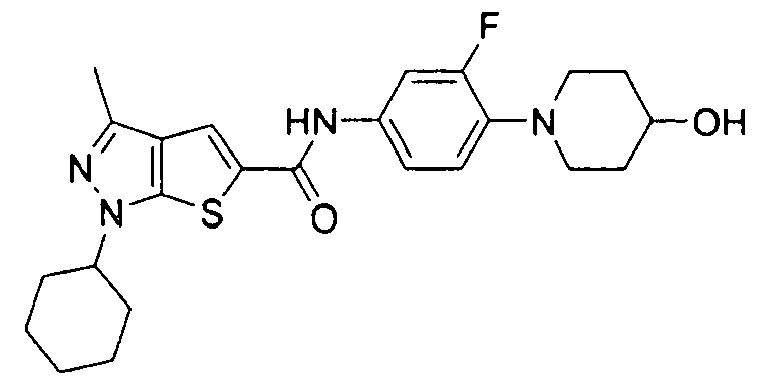
colorless solid 210-212 (EtOH) CDCl3 1.21-1.34(1H, m), 1.39-1.52(3H, m), 1.70-1.98(7H, m). 2.00-2.09(2H. m), 2.16-2.24(2H, m), 2.46(3H, s). 279-2.89(2H, m), 3.29-3.39(2H, m). 3.81-3.91(1H, m), 4.13-4.24(1H, m), 6.91-7.00(1H, m), 7,17(1H, dd. J=2.5 and 8,6Hz), 7.46(1H, s). 7.48(1H, dd, J=2.5 and 13.9Hz), 7.58(1H, brs) 457 160 
colorless solid 230.5-232 (EtOH) CDCl3 1.22-1.36(1H, m), 1.39-1.52(2H, m), 1.71-1.98(9H, m), 2.15-2.23(2H, m), 2.45(3H. s). 3.05-3.16(4H, m), 4.01 (4H, s), 4.15-4.24(1H, m). 7.05(1H, d, J=8.7Hz), 7.44(1H, dd. J=2.5 and 8.7Hz). 7.46(1H. s). 7.58(1H, brs), 7.66(1H, d, J=2.5Hz) 515 -
[Table 69] Example No. Chemical Structure properties m.p.(°C) (recryst. solvent) 1H-NMR MS(FAB) (M+1)+ 161 
colorless solid 217.5-219 (EtOH) CDCl3 1.21-1.37(1H, m), 1.40-1.52(2H, m), 1.71-1.99(5H, m), 2.15-2.24(2H, m), 2.46(3H, s), 2.60-2.70(4H, m), 3.29-3.38(4H, m), 4.13-4.26(1H, m), 7.05(1H, d, J=8.7Hz), 7.47(1H, dd, J=2.5 and 8.7Hz), 7.48(1H, s), 7.64(1H, brs), 7.73(1H, d, J=2.5Hz) 471 162 
colorless solid 153.5-156 (AcOEt/hexane) CDCl3 1.21-1.36(1H, m), 1.39-1.53(3H, m), 1.71-1.99(7H, m), 2.01-2.10(2H, m), 2.16-2.24(2H, m), 2.45(3H, s), 275-2.87(2H, m), 3.21-3.31(2H, m), 3.82-3.92(1H, m), 4.14-4.26(1H, m), 7.03(1H, d, J=8.7Hz), 7.44(1H, dd, J=2.5 and 8.7Hz). 7.47(1H, s), 7.63(1H. brs), 7.65(1H, d, J=2.5Hz) 473 163 
colorless solid 174-176 (AcOEt/hexane) CDCl3 1.22-1.36(1H, m), 1.39-1.63(4H, m), 1.71-2.07(7H, m), 2.14-2.23(2H, m), 2.41-2.56(1H, m), 2.46(3H, s), 2.48(3H, s), 2.68-2.80(2H, m), 3.38-3.45(2H, m), 4.14-4.23(1H, m), 6.90-6.99(1H, m), 7.17(1H, dd, J=2.4 and 8.6Hz), 7.42-7.51(2H, m), 7.58(1 H, brs) 470 164 
colorless solid 99.5-106.5 CDCl3 1.22-1.36(1H, m), 1.39-1.52(2H, m), 1.49(9H, s), 1.70-2.00(9H, m), 2.14-2.24(2H, m), 2.46(3H, s), 2.67-2.77(2H, m), 2.81(3H, s), 3.37-3.46(2H, m), 4.10-4.26(2H, m), 7.00-7.07(1H, m), 7,39-7,45(1H, m), 7.47(1H, s). 7.59-7.62(1H, m), 7.69(1H, brs) 586 -
[Table 70] Example No. Chemical Structure properties m.p.(°C) (recryst. solvent) 1H-NMR MS(FAB) (M+1)+ 165 
colorless solid 112-121 CDCl3 1.22-1.37(1H. m), 1.39-1.65(4H. m). 1.71-2.08(7H, m), 2.16-2.25(2H, m). 2.46(3H. s). 2.49(3H, s). 2.50-2.58(1H, m), 265-2.76(2H, m), 3.30-3.39(2H, m), 4.12-4.24(1H. m). 7.04(1H, d. J=8.7Hz), 7.45(1H, dd. J=2.4 and 8.7Hz). 7.46(1H, s), 7.56(1H, brs). 7.64(1H, d, J=2.4Hz) 486 166 
colorless solid 230-233.5 (AcOEt) CDCl3 1.17-1.32(3H, m), 1.36-1.49(4H, m), 1.69-2.00(7H, m), 2.10-2.20(4H. m), 2.22-2.30(1H, m). 2.27(3H, s), 2.37-2.70(8H, m), 2.41(3H, s). 3.81-3.92(1H, m), 4.09-4.21(1H, m), 5.62-5.69(1H, m), 7.28(1H, s) 444 167 
colorless solid 195-199 (AcOEt) CDCl3 1.17-1.32(3H, m), 1.36-1.50(4H, m), 1.69-1.95(9H, m), 2.09-2.20(4H, m), 2.34(3H, s), 2.41 (3H, s), 2.42-2.50(1H, m), 2.52-2.62(4H, m), 2.71-2.80(4H, m), 3.80-3.91(1H, m), 4.10-4.20(1H, m), 5.61-5.69(1H, m), 7.28(1H, s) 458 168 
colorless solid 204.5-207 (AcOEt/hexane) CDCl3 1.18-1.32(3H, m), 1.36-1.49(4H, m), 1.51-1.61(2H, m), 1.69-1.95(9H, m), 2.10-2.20(4H, m), 2.25-2.38(3H, m), 2.41(3H, s), 2.72-2.81(2H, m), 3.13-3.22(1H, m), 3.32(3H, s), 3.80-3.93(1H, m). 4.11-4.21(1H, m), 5.62-5.69(1H, m). 7.28(1H, s) 459 -
[Table 71] Example No. Chemical Structure properties m.p.(°C) (recryst. solvent) 1H-NMR MS(FAB) (M+1)+ 169 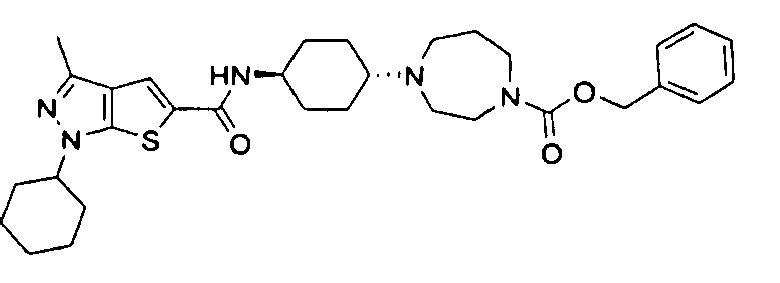
colorless solid 61-63 CDCl3 1.12-1.50(7H, m), 1.68-1.95(9H, m), 2.05-2.20(4H, m), 2.35-2.50(1H, m), 2.41(3H, s), 2.572.78(4H, m), 3.41-3.59(4H, m), 3.76-3.90(1H, m), 4.08- 4.21 (1H, m), 5.13(2H, s), 5.60-5.71 (1H, m), 7.28-7.40(6H, m) 578 170 
colorless solid 115-120 CDCl3 1.17-1.32(3H, m), 1.36-1.50(4H, m), 1.64-1.96(9H, m), 2.09-2.21 (4H, m), 2.41 (3H, s), 2.43-2.54(1H, m), 2.68-2.77(4H, m), 2.83-2.94(4H, m), 3.80-3.92(1H, m), 4,10-4.21(1H, m), 5.61-5.70(1H, m), 7.28(1H, s) 444 171 
colorless foamy solid CDCl3 1.17-1.50(7H, m), 1.69-1.97(9H, m), 2.07 and 2.08(total 3H, each s), 2.10-2.21(4H, m), 2.41(3H, s), 2.44-2.54(1H, m), 2.61-2.69(2H, m), 2.71-2.79(2H, m), 3.41-3.52(2H, m), 3.55-3.12(2H, m), 3.79-3.92(1H, m), 4.11-4.21(1H, m), 5.64-5.72(1H, m), 7.28(1H, s) 486 172 
colorless solid 142-143.5 (AcOEt/hexane) CDCl3 1.17-1.32(3H, m), 1.35-1.49(4H, m), 1.69-1.96(7H, m), 2.10-2.20(4H, m), 2.30(3H, s), 2.39-2.48(1H, m), 2.41(3H, s). 2.63(2H, t, J=5.9Hz), 3.35(3H, s), 3.45(2H, t, J=5.9Hz), 3.80-3.92(1H, m), 4.10-4.20(1H, m), 5.61-5.69(1H, m), 7.28(1H, s) 433 -
[Table 72] Example No. Chemical Structure properties m.p.(°C) (recryst. solvent) 1H-NMR MS(FAS) (M+1)+ 173 
colorless foamy solid CDCl3 1.20-1.97(16H, m), 2.11-2.20(2H, m), 2.28-2.47(1H, m), 2.33(3H. s). 2.44(3H, s), 2.68(2H, t. J=6.0Hz). 3.35(3H, s), 3.47(2H, t. J=6.0Hz). 4.11-4.24(2H, m), 5,93-6.00(1H, m), 7.30(1H, s) 433 174 
colorless solid 222-224.5 (EtOH) CDCl3 1.16-1.31(3H, m), 1.35-1.50(4H, m), 1.68-1.96(11H, m), 2.09-2.19(4H, m), 2.31-2.40(1H, m), 2.41 (3H, s), 2.58-2.67(4H, m), 3.80-3.92(1H, m), 3.94(4H, s), 4.10-4.20(1H, m), 5.62-5.71(1H, m). 7.28(1H, s) 487 175 
colorless solid 197-199 (AcOEt) CDCl3 1.19-1.32(3H, m), 1.36-1.52(4H, m), 1.69-2.00(7H, m), 2.10-2.23(4H, m), 2.36-2.56(8H, m), 2.79-2.89(4H, m), 3.82-3.95(1H, m), 4.10-4.20(1H, m), 5.66-5.76(1H, m), 7.29(1H,s) 443 176 
colorless solid 200-202 (AcOEt) CDCl3 1.18-1.31(3H, m), 1.36-1.97(16H, m), 2.10-2.20(4H, m), 2.27-2.38(3H, m), 2.41(3H, s), 2.75-2.85(2H, m), 3.61-3.71(1H, m), 3.80-3.92(1H, m), 4.10-4.20(1H, m), 5,64-5.73(1H, m), 7.28(1H, s) 445 -
[Table 73] Example No. Chemical Structure Properties m.p.(°C) (recryst. solvent) 1H-NMR MS(FAB) (M+1)+ 177 
colorless solid 226-228 (EtOH) CDCl3 1.15(6H, d, J=6.2Hz), 1.17-1.32(3H, m), 1.34-1.50(4H, m), 1.69-1.99(9H, m), 2.11-2,27(5H. m), 2.41(3H, s), 2.68-2.78(2H, m), 3.59-3.69(2H, m), 3.81-3.93(1H, m), 4.11-4.20(1H, m), 5.63-5.70(1H, m), 7.28(1H, s) 459 178 
colorless solid 199.5-200.5 (EtOH) CDCl3 1.17(6H, d. J=6.2Hz), 1.20-1.33(1H, m), 1.36-1.50(2H, m), 1.53-1.96(15H, m), 2.09-2.20(3H, m), 2.43(3H, s), 2.80-2.89(2H, m), 3.60-3.70(2H, m), 4.10-4.22(2H, m), 5.89-5.96(1H, m), 7.30(1H, s) 459 179 
colorless solid 201.5-203 (AcOEt/hexane) CDCl3 1.17-1.98(18H, m), 2.10-2.38(8H, m), 2.41(6H, s), 2.81-2.90(2H, m), 3.80-3.92(1H, m), 4,11-4,20(1H. m), 5.62-5.69(1H, m), 7.29(1H. s) 458 180 
colorless solid 253-255 (AcOEt/EtOH) CDCl3 1.18-1.31 (3H, m), 1.35-1.50(4H, m), 1.57-2.00(11H, m). 2.07 and 2.10(total 3H, each s), 2.11-2.21 (4H, m), 2.24-2.40(3H, m), 2.41 (3H, s), 2.81 and 2.85 (total 3H, each s). 2.90-3.01(2H, m), 3.41-3.51(0.4H, m), 3.81-3.94(1H, m), 4.10-4.2(1H, m), 4.41-4.52(0.6H, m), 5.67-5.74(1H, m), 7.29(1H, s) 500 -
[Table 74] Example No. Chemical Structure properties m.p.(°C) (recryst. solvent) 1H-NMR MS(FAB) (M+1)+ 181 
colorless solid 204-208.5 (AcOEt) CDCl3 1.18-1.33(3H, m), 1.36-1.50(4H, m), 1.55-1.99 (11H, m), 2.10-2.20 (4H, m), 2.23-2.48(4H, m), 2.38 (6H, s), 2.41(3H, s), 2.95-3.05(2H, m), 3.80-3.92(1H, m), 4.10-4.20(1H, m), 5.68-5.74(1H, m), 7.29(1H, s) 472 182 
colorless solid 215.5-224 CDCl3 1.16-1.50(9H, m), 1.43(9H, s), 1.69-1.99 (9H, m), 2.10-2.19(4H, m), 2.22-2.36(3H, m), 2.41(3H, s), 2.78-2.87 (2H, m), 3.36-3.49(1H, m), 3.81-3.92 (1H, m), 4.09-4.20 (1H, m), 4.35-4.44 (1H, m), 5.62-5.69 (1H, m), 7.28(1H, s) 544 183 
colorless solid CDCl3 1.20-2.00(20H, m), 1.44(9H, s), 2.11-2.28(5H, m), 2.43(3H, s), 2.40-2.49(2H, m), 3.38-3.51(1H, m), 4.11-4.22(2H, m), 4.33-4.46(1H, m), 5.90-5.97(1H, m), 7.30(1H, s) 544 184 
colorless solid 219-221.5 (AcOEt/hexane) CDCl3 1.16-1.52(9H, m), 1.69-1.96(9H, m), 2.10-2.38(7H, m), 2.41(3H, s). 2.57-2.68(1H, m), 2.80-2.89(2H, m), 3.80-3.92(1H, m), 4.10-4.21(1H, m), 5.62-5.70(1H, m), 7.28(1 H, s) 444 -
[Table 75] Example No. Chemical Structure properties m.p.(°C) (recryst. solvent) 1H-NMR MS(FAB) (M+1)+ (M+1)+ 185 
colorless solid 83-86.5 CDCl3 1.20-1.95(20H, m), 2.02-2.36(5H, s), 2.43(3H, s), 2.60-2.70(1H, m), 2.92-3.03(2H, m), 4.11-4.22(2H. m), 5.91-6.00(1H, m), 7.30(1H, s) 444 186 
colorless solid 190.5-193.5 CDCl3 1.17-1.32(3H, m), 1.36-1.49(4H, m), 1.45(9H, s), 1.69-1.96(7H, m), 2.11-2.21(4H, m), 2.25-2.36(1H, m), 2.41(3H, s), 2.45-2.53(4H, m), 3.38-3.45(4H, m), 3.81-3.93(1H, m), 4.10-4.20(1H, m), 5.63-5.70(1H, m), 7.28(1H, s) 530 187 
colorless foamy solid CDCl3 1.20-1.96(16H, m), 1.45(9H, s), 2.11-2.24(3H, m), 2.43(3H, s), 2.45-2.51(4H, m), 3.39-3.47(4H, m), 4.10-4.21(2H, m), 5.88-5.93(1H. m), 7.30(1H, s) 530 188 
colorless solid 180.5-182 (AcOEt) CDCl3 1.18-1.32(3H, m), 1.34-1.49(4H, m). 1.69-1.99(7H, m), 2.10-2.19(4H, m), 2.20-2.29(1H, m), 2.41(3H, s), 2.48-2.58(4H, m), 2.82-2.91(4H, m), 3.80-3.93(1H, m). 4,10-4.20(1H, m). 5.63-5.70(1H, m), 7.28(1H, s) 430 -
[Table 76] Example No. Chemical Structure properties m.p.(°C) (recryst. solvent) 1H-NMR MS(FAB) (M+1)+ 189 
colorless solid 161-164.5 CDCl3 1.20-1.96(16H, m), 2.11-2.21(3H, m). 2.43(3H. s), 2.46-2.58(4H, m), 2.87-2.96(4H, m), 4.10-4.22(2H, m), 5.90-5.99(1H, m), 7.30(1H, s) 430 190 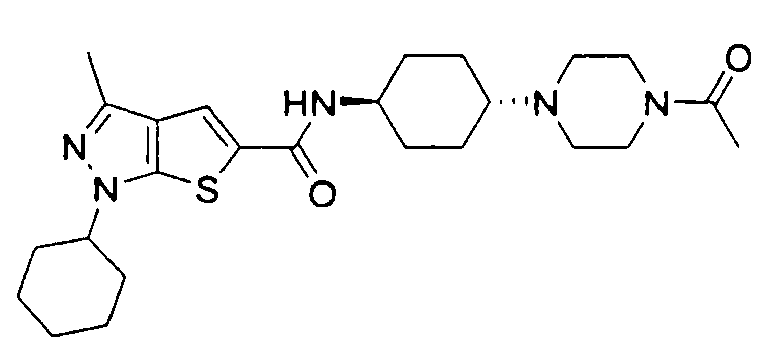
colorless solid 242-243.5 (AcOEt/EtOH) CDCl3 1.18-1.32(3H, m), 1.35-1.50(4H, m), 1.69-1.96(7H, m), 2.07(3H, s). 2.11-2.21(4H, m), 2.27-2.38(1H, m), 2.41(3H, s), 2.49-2.59(4H, m), 3.40-3.47(2H, m), 3.57-3.63(2H, m), 3.81-3.93(1H, m), 4.10-4.21(1H, m). 5.64-5.71(1H, m). 7.28(1H, s) 472 191 
pale brown solid 237(dec.) DMSO-d6 1.16-1.29(1H, m), 1.35-1.50(2H, m), 1.61-1.84(5H, m), 1.881.96(2H, m), 2.00-2.08(2H, m). 2.35(3H, s), 2.36(3H, s), 2.63-2.69(2H, m). 2.72-2.77(2H, m), 3.25-3.35(4H, m), 4.19(1H, tt. J=3.8 and 11.7Hz). 6.51 (1H, s). 6.88-6.95(1H, m), 7.29(1H, dd, J=2.0 and 8.8Hz). 7.55(1H, dd. J=2.3 and 15.7Hz). 7.98(1H, s), 10.15(1H, brs) 470 192 
colorless solid CDCl3 1.64-1.73(2H, m), 2.00-2.10(2H, m), 2.10(3H, s), 3.22(2H, s), 3.43-3.52(2H, m), 4.02-4.09(2H, m), 4.23(1H, tt. J=11.7 and 4.2Hz) 183 -
[Table 77] Example No. Chemical Structure properties m.p.(°C) (recryst. solvent) 1H-NMR MS(FAB) (M+1)+ 193 
colorless solid CDCl3 1.80-1.88(2H, m), 2.22-2.35(2H, m), 2.46(3H, s), 3.50-3.58(2H, m), 4.09-4.15(2H, m), 4.48(1H, tt, J=11.6 and 4.2Hz), 9.89(1H, s) 229 194 
colorless solid 78-80 CDCl3 1.38(3H, t, J=7.1Hz). 2.08-2.25(4H, m), 2.45(3H, s), 3.52-3.61 (2H, m), 4.10-4.17(2H, m), 4.35(2H, q, J=7.1Hz), 4.38-4.47(1H, m), 7.71(1H, s) 295 195 
colorless solid 240-242 DMSO-d6 1.90-2.05(4H, m), 2.38(3H, s), 3.44-3.52(2H, m), 3.92-4.00(2H, m), 4.43-4.54(1H, m), 7.66(1H, s) 267 196 
colorless solid 107-109 (EtOH) CDCl3 2.08-2.26(4H, m). 2.36(3H, s), 2.46(3H, s), 2.55-2.61(4H. m). 3.16-3.23(4H, m), 3.52-3.61(2H, m), 4.09-4.16(2H, m), 4.37-4.47(1H, m), 6.90-6.95(2H. m), 7.45(1H,s). 7.45-7.50(2H, m), 7.53(1H, brs) 440 -
[Table 78] Example No. Chemical Structure properties m.p.(°C) (recryst. solvent) 1H-NMR MS(FAB) (M+1)+ 197 
colorless solid 98-102 (EtOH) CDCl3 2.07-2.25(4H. m). 2.36(3H, s), 2.46(3H, s), 2.57-2.63(4H, m), 3.06-3.12(4H, m), 3.50-3.58(2H, m). 4.08-4.15(2H, m), 4.36-4.47(1H, m), 6.89-6.96(1H, m), 7.12-7.16(1H, m), 7.45(1H, s), 7.47-7.52(1H, m), 7.52(1H, brs) 458 198 
colorless foamy solid CDCl3 1.23-1.36(1H, m). 1.38-1.52(2H, m), 1.72-1.98(5H, m), 2.15-2.25(2H, m), 2.41-2.47(4H, m), 2.46(3H, s), 3.48(2H, s). 3.69-3.75(4H, m), 4.19(1H, tt, J=3.8 and 11.8Hz), 7.32(2H, d, J=8.4Hz), 7.47(1H, s), 7.54(2H, d. J=8.4Hz), 7.65(1H, brs) 439 199 
colorless solid 198-202 (Et2O/EtOH) DMSO-d6 1.16-1.31(1H, m), 1.38-1.52(2H, m), 1.62-1.86(5H, m), 2.01-2.11(2H, m), 2.31-2.39(4H, m), 2.40(3H, s), 3.44(2H, s), 3.54-3.60(4H, m), 4.22(1H, tt, J=3.8 and 11.6Hz). 6.62(2H, s), 7.27(2H, d, J=8.5Hz), 7.67(2H, d, J=8.5Hz), 8.06(1H, s), 10.21 (1H, s) 439 200 
colorless solid 140-144 (Et2O/hexane) CDCl3 1.21-1.33(1H, m), 1.38-1.51(2H, m), 1.71-1.96(5H, m), 2.14-2.23(2H, m), 2.31(6H, m), 2.46(3H, s), 2.50-2.56(2H, m), 2.65-2.71(2H, m), 4.19(1H, tt, J=3.9 and 11.8Hz), 7.18-7.23(2H, m), 7.46(1H, s), 7.49-7.54(2H, m), 7,58(1H, brs) 411 -
[Table 79] Example No. Chemical Structure properties m.p.(°C) (recryst. solvent) 1H-NMR MS(FAB) (M+1)+ 201 
colorless solid 162-164 CDCl3 1.24-1.36(1H, m), 1.39-1.52(2H, m), 1.72-1.98(5H, m), 2.15-2.24(2H, m), 2.46(3H, s), 2.49-2.55(4H, m), 2.56-2.62(2H, m), 2.76-2.83(2H, m), 3.73-3.78(4H, m), 4,19(1H, tt, J=3.9 and 11.8Hz), 7.20(2H, d, J=8.4Hz), 7.46(1H, s), 7.51(2H, d, J=8.4Hz), 7.61(1H, brs) 453 202 
colorless foamy solid 216-218 CDCl3 1.24-1.35(1H, m), 1.39-1.52(2H, m), 1.72-1.99(5H, m), 2.16-2.24(2H, m), 2.46(3H, s), 2.99(3H, s), 3.86(2H, s), 4.19(1H, tt, J=3.9 and 11.8Hz), 4.63(2H, s), 7.41-7.46(2H, m), 7.47(1H, s), 7.53-7.57(2H, m), 7.63(1 H, brs) 466 203 
colorless solid (AcOEt) CDCl3 1.22-1.53(3H, m), 1.72-1.99(5H, m), 2.16-2.24(2H, m), 2.47(3H, s), 3.10(3H, s), 4.04(2H, s), 4.19(1H, tt, J=3.9 and 11.8Hz), 7.36-7.42(2H. m), 7.51(1H, s), 7.66-7.72(2H, m). 7.79(1H. brs) 452 204 
colorless solid 153-156 CDCl3 1.18-1.33(3H, m), 1.38-1.51(2H, m), 1.55-1.67(2H. m), 1.71-1.96(5H, m), 2.03-2.22(6H, m), 2.28(1H, tt, J=3.6 and 12.1Hz), 2.43(3H, s), 3.68(3H, s), 3.88-4.00(1H, m), 4,16(1H, tt, J=3.9 and 11.9Hz), 5.69-5.75(1H, m), 7.30(1H, s) 404 -
[Table 80] Example No. Chemical Structure properties m.p.(°C) (recryst, solvent) 1H-NMR MS(FAB) (M+1)+ 205 
colorless solid 280-288 DMSO-d6 1.16-1.49(7H, m), 1.62-2.08(11H, m),2.17(1H, tt, J=3.4 and 11.5Hz), 2.35(3H, s), 3.60-3.72(1H, m), 4.18(1H, tt. J=3.8 and 11.5Hz), 7.80(1H, s), 8.26(1H, d. J=7.8Hz), 12.12(1H. brs) 390 206 
colorless solid 180-182 CDCl3 1.07-1.56(8H, m), 1.70-1.95(7H, m), 2.11-2.20(4H, m), 2.43(3H, s), 3.46-3.52(2H, m). 3.85-3.97(1H, m), 4.17(1H, tt. J=3.8 and 11.9Hz), 5.66-5.72(1H, m), 7.30(1H, s) 376 207 
colorless foamy solid CDCl3 1.19-1.35(3H, m), 1.37-1.51(2H, m), 1.69-1.96(9H, m). 2.13-2.25(4H, m), 2.32(3H, s), 2.34-2.49(5H, m), 2.43(3H, s), 3.47-3.55(2H, m), 3.60-3.67(2H, m), 3.88-4.01(1H, m), 4.17(1H, tt. J=3.9 and 11.9Hz), 5.65-5.71(1H, m), 7.31(1H, s) 472 208 
colorless solid 224-228 CDCl3 1.21-1.52(5H, m), 1.67-1.96(9H, m), 2.13-2.23(4H, m), 2.43(3H, s), 2.49(1H, tt, J=3.5 and 11.7Hz), 2.95(3H, s), 3.06(3H, s), 3.90-4.02(1H, m), 4.17(1H, tt, J=3.8 and 11.9Hz), 5.64-5.70(1H. m), 7.29(1H, s) 417 -
[Table 81] Example No. Chemical Structure properties m.p.(°C) (recryst. solvent) 1H-NMR MS(FAB) (M+1)+ 209 
colorless solid 134-136 CDCl3 1.22-1.34(3H, m), 1.37-1.51(2H, m), 1.70-1.87(5H, m), 1.89-1.96(2H, m), 2.13-2.23(6H, m), 2.40-2.49(1H, m), 2.43(3H, s), 3.92-4.02(1H, m), 4.17(1H, tt, J=3.8 and 11.8Hz), 5.66-5.72(1H, m), 7.30(1H, s) 371 210 
colorless foamy solid CDCl3 1.21-1.33(1H, m), 1.37-1.50(2H, m), 1.47(9H, s), 1.69-1.95(5H, m), 2.12-2.21(2H, m), 2.41(3H, s), 2.92(3H, s), 3.47-3.60(4H, m), 4.17(1H, tt, J=3.8 and 11.8Hz), 7.26-7.36(1H, m), 7.34(1H, s) 421 211 
colorless solid 130-142 DMSO-d6 1.17-1.30(1H, m), 1.37-1.50(2H, m), 1.50-1.86(5H, m), 2.02-2.10(2H, m), 2.36(3H, s), 2.56-2.61(2H, m), 3.03-3.12(2H, m), 3.51-3.57(1H, m), 3.57(3H, s), 4.20(1H, tt, J=3.8 and 11.6Hz), 7.86(1H, s), 8.72-8.87(3H, m) 321 212 
colorless solid 153-154 CDCl3 1.21-1.34(1H, m), 1.37-1.49(2H, m). 1.70-1.96(5H, m), 2.12(3H, s). 2.13-2.22(2H, m), 2.44(3H. s). 3.08(3H, s), 3.58-3.71(4H, m). 4.16(1H, tt. J=3.8 and 11.8Hz). 7.30-7.37(1H, m), 7.31(1H, s) 363 -
[Table 82] Example No. Chemical Structure properties m.p.(°C) (recryst. solvent) 1H-NMR MS(FAB) (M+1)+ 213 
colorless solid 120-130 DMSO-d6 1.14-1.28(1H, m), 1.35-1.48(2H, m), 1.62-1.85(5H, m), 2.01-2.08(2H, m), 2.35(3H, s), 2.81(3H, s), 2.86(3H, s), 3.18-3.23(2H, m), 3.38-3.44(2H, m), 4,19(1H, tt, J=3.8 and 11.5Hz), 7.75(1H, s). 8.62-8.68(1H, m) 399 214 
colorless foamy solid CDCl3 1.21-1.34(1H, m), 1.28(3H, t, J=7.1Hz), 1.38-1.51(2H, m), 1.57-1.97(7H, m), 2.01-2.08(2H, m), 2.14-2.21(2H, m), 2.36(2H, dt, J=2.3 and 11.6Hz), 2.44(3H, s), 2.93-3.00(2H, m), 3.24(2H, s). 3.94-4.04(1H, m). 4.12-4.22(1H, m), 4.19(2H, q, J=7.1Hz). 5.72-5.77(1H, m), 7.32(1H, s) 433 215 
colorless solid 230-236 DMSO-d6 1.16-130(1H, m), 1.36-1.49(2H. m), 1.61-1.88(7H, m), 2.01-2.08(2H, m), 2.36(3H, s). 2.41-2.59(4H, m), 3.07-3.14(2H, m), 3.17-3.20(2H, m), 3.73-3.84(1H, m), 4.18(1H, tt. J=3.9 and 11.5Hz), 7.83(1H, s), 8.31-8.35(1H, m) 405 216 
pale yellow solid 156-158 CDCl3 1.21-1.34(1H, m). 1.29(3H, t. J=7.1Hz). 1.33(6H, s), 1.37-1.69(4H, m), 1.69-1.97(5H, m), 2.01-2.08(2H, m), 2.13-2.21 (2H, m), 2.31-2.41(2H, m), 2.43(3H, s), 2.92-2.99(2H, m), 3.91-4.01(1H, m), 4.12-4.22(1H, m), 4.19(2H, q, J=7.1Hz), 5.70-5.75(1H, m), 7.30(1H, s) 461 -
[Table 83] Example No. Chemical Structure properties m.p.(°C) (recryst. solvent) 1H-NMR MS(FAB) (M+1)+ 217 
colorless solid 251-256 DMSO-d6 1.16-1.30(1H, m), 1.25(6H, s), 1.34-1.51(2H, m), 1.62-1.86(7H, m), 1.92-1.99(2H, m), 2.02-2.09(2H, m), 2.36(3H, s), 2.65-2.76(2H, m), 3.13-3.20(2H, m), 3.81-3.91(1H, m), 4.19(1H, tt, J=3.7 and 11.5Hz), 7.86(1H, s), 8.34-8.39(1H, m) 433 218 
colorless solid 125-127 CDCl3 1.21-1.34(1H, m), 1.38-1.50(2H, m), 1.72-1.77(5H, m), 2.14-2.22(2H, m), 2.36-2.46(1H, m), 2.44(3H, s), 3.60-3.66(2H, m), 3.83-3.88(2H, m), 4.18(1H, tt, J=3.8 and 11.8Hz), 6.36-6.44(1H, m), 7.36(1H, s) 308 219 
colorless solid 207-208 CDCl3 1.21-1.34(1H, m), 1.38-1.51(2H, m), 1.57(6H, s), 1.71-1.97(5H, m), 2.12-2.20(2H, m), 2.44(3H, s), 3.72-3.77(2H, m), 3.78-3.83(2H, m), 4.16(1H, tt, J=3.8 and 11.8Hz), 6.40-6.46(1H, m), 7.31(1H, s) 419 220 
colorless solid 169-171 CDCl3 1.21-1.33(1H, m), 1.37-1.48(2H, m), 1.68-1.96(5H, m), 2.11-2.21 (2H, m), 2.44(3H, s), 2.94(3H, s), 3.23-3.29(4H, m), 3.47-3.52(2H, m), 3.58-3.64(2H, m), 3.66-3.71(4H, m), 4.16(1H, tt, J=3.8 and 11,8Hz), 7.34(1H, s), 7.94-7.99(1H, m) 434 -
[Table 84] Example No. Chemical Structure properties m.p.(°C) (recryst. solvent) 1H-NMR MS(FAB) (M+1)+ 221 
colorless solid 103-105 (Et2O/hexane) CDCl3 1.18-1.32(1H, m), 1.36-1.50(2H, m). 1.68-1.95(5H, m), 2.12-2.20(2H, m), 2.44(3H, s), 2.86(6H, s), 2.90(3H, s), 3.44-3.49(2H, s), 3.56-3.62(2H, m), 4.16(1H, tt, J=3.8 and 11.8Hz). 7.39(1H, s), 8.37-8.43(1H, m) 392 222 
colorless solid 109-113 (Et2O/hexane) CDCl3 1.18-1.33(1H, m). 1.36-1.50(2H, m), 1.69-1.96(5H, m), 2.12-2.20(2H, m), 2.44(3H, s), 2.96(3H, brs), 3.46-3.64(4H, s), 3.72(3H, s). 4.17(1H, tt. J=3.8 and 11.8Hz), 6.05-6.15(0.2H, m), 7.00-7.08(0.8H, m), 7.3 2(1H, s) 379 223 
colorless solid 136-137 (Et2O/hexane) CDCl3 1.18-1.33(1H, m), 1.36-1.50(2H, m). 1.69-1.96(5H, m). 2.12-2.20(2H, m), 2.44(3H, s). 2.99(0.5H. s), 3.06(2.5H, s), 3.41(2.5H, s), 3.44(0.5H, s), 3.56- 3.70(4H, s), 4.10-4.21(3H, m), 6.65-6.72(0.17H, m), 7.12-7.18(0.83H, m), 7.33(1H. s) 393 224 
colorless foamy solid foamy CDCl3 1.21-1.34(1H, m), 1.37-1.52(2H, m), 1.70-1.96(5H. m), 2.13-2.22(2H. m), 2.43(0.3H, s). 2.44(2.7H, s), 2.97(2.7H, s), 3.08(0.3H, s). 3.38-3.74(5H, s). 4.11-4.22(3H, m), 6.17-6.24(0.1H, m), 6.78-6.84(0.9H, m), 7.29(0.9H, s), 7.34(0.1 H, s) 379 -
[Table 85] Example No. Chemical Structure properties m.p.(°C) (recryst. solvent) 1H-NMR MS(FAB) (M+1)+ 225 
colorless solid 190-194 CDCl3 1.20-1.50(5H, m). 1.66-1.96(9H, m). 2.12-2.26(4H. m), 2.43(3H, s), 2.44-2.68(1H, m), 2.96(0.6H, s). 3.13(2.4H, s), 3.48-3.59(2H, m), 3.76-3.83(2H, m), 3.91-4.03(1H, m), 4.17(1H, tt, J=3.8 and 11.8Hz). 5.68-5.74(1H, m), 7.30(1H, s) 447 226 
colorless solid 190-194 CDCl3 1.21-1.33(1H, m), 1.37-1.50(2H, m), 1.54-1.64(1H, m), 1.70-1.98(7H, m), 2.05-2.40(5H, m), 2.43(3H, s), 2.92-3.02(1H, m), 3.70(3H, s), 4.17(1H, tt, J=3.8 and 11.8Hz), 4.46-4.55(1H, m), 5.77-5.84(1H, m), 7.30(1H, s) 390 227 
colorless solid 164-167 DMSO-d6 1.16-1.31(1H, m), 1.37-1.86(10H, m), 1.93-2.08(5H, m), 2.35(3H, s), 2.87-2.97(1H, m), 4.18(1H, tt, J=3.8 and 11.7Hz), 4.23-4.32(1H, m), 7.81 (1H, s), 8.32-8.36(1 H, m), 12.14(1 H, brs) 376 228 
colorless solid >300 DMSO-d6 1.16-1.29(1H, m), 1.36-1.49(2H, m), 1.62-1.86(5H, m), 2.00-2.07(2H, m), 2.35(3H, s), 2.91(3H, s), 3.39-3.58(8H, m), 4,19(1H, tt, J=3.8 and 11.6Hz), 7.69(1H, s), 8.60-8.66(1H, m) 418 -
[Table 86] Example No, Chemical Structure properties m.p.(°C) (recryst. solvent) 1H-NMR MS(FAB) (M+1)+ 229 
colorless foamy solid CDCl3 1.21-1.33(1H, m), 1.38-1.51(2H, m), 1.58-1.68(1H, m), 1.70-2.05(8H, m), 2.13-2.21(2H, m), 2.23-2.40(2H, m), 2.43(3H, s), 2.96(3H, s), 3.05(3H, s), 3.12-3.22(1H, m), 4.17(1H, tt, J=3.8 and 11.8Hz), 4.43-4.52(1H, m), 5.83-5.89(1H, m), 7.31(1H, s) 403 231 
colorless solid 75-90 DMSO-d6 1.15-1.28(1H, m), 1.36-1.48(2H, m), 1.51-1.85(8H, m), 1.92-2.07(5H, m), 2.36(3H, s), 2.83(3H, s), 3.02(3H, s), 3.18-3.29(1H, m), 4.18(1H, tt, J=3.8 and 11.6Hz), 4.22-4.32(1H, m), 7.81(1H, s), 8.30-8.35(1H, m) 403 231 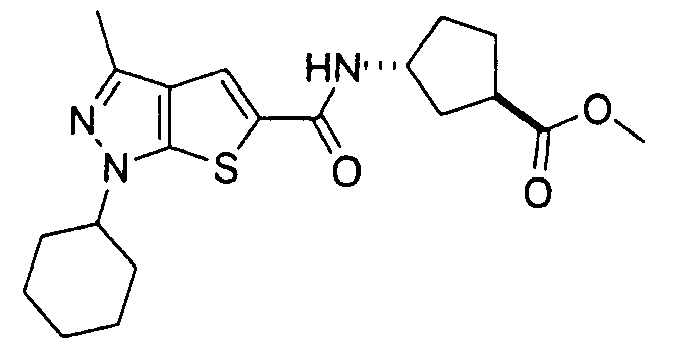
colorless solid 95-101 CDCl3 1.21-1.33(1H, m), 1.37-1.50(2H, m), 1.54-1.64(1H, m), 1.70-1.98(7H, m). 2.05-2.40(5H, m), 2.43(3H, s), 2.92-3.02(1H, m), 3.70(3H, s), 4,17(1H, tt, J=3.8 and 11.8Hz), 4.46-4.55(1H, m), 5.84-5.89(1H, m), 7.31(1H, s) 390 232 
colorless solid 165-168 DMSO-d6 1.16-1.30(1H, m), 1.37-1.86(10H, m), 1.93-2.09(5H, m), 2.35(3H, s), 2.87-2.96(1H, m), 4.19(1H, tt, J=3.8 and 11.7Hz), 4.23-4.31(1H, m), 7.81(1H, s), 8.32-8.36(1H, m), 12.14(1H, brs) 376 -
[Table 87] Example No. Chemical Structure properties m.p.(°C) (recryst. solvent) 1H-NMR MS(FAB) (M+1)+ 233 
colorless foamy solid CDCl3 1.21-1.33(1H, m), 1.38-1.51(2H, m), 1.59-1.68(1H, m), 1.70-2.04(8H, m), 2.13-2.21(2H, m), 2.23-2.40(2H, m), 2.43(3H, s), 2.96(3H, s), 3.05(3H, s), 3.12-3.22(1H, m), 4.17(1H, tt, J=3.8 and 11.8Hz), 4.42-4.52(1H, m), 5.83-5.89(1H, m), 7.30(1H, s) 403 234 
colorless solid 96-105 DMSO-d6 1.15-1.28(1H, m), 1.36-1.48(2H, m), 1.51-1.85(8H, m), 1.92-2.07(5H, m), 2.36(3H, s), 2.83(3H, s), 3.02(3H, s), 3.18-3.29(1H, m), 4.18(1H, tt, J=3.8 and 11.6Hz), 4.22-4.31(1H, m), 7.81(1H, s), 8.30-8.35(1H, m) 403 235 
colorless solid 210-212 CDCl3 1.22-1.33(1H. m), 1.38-1.56(4H. m), 1.70-1.96(5H, m), 2.00-2.08(2H, m), 2.14-2.22(2H, m), 2.44(3H, s), 2.84(6H, s), 2.89-2.99(2H, m), 3.65-3.73(2H, m), 4.08-4.22(2H, m), 5.78-5.84(1H, m), 7.32(1H, s) 418 236 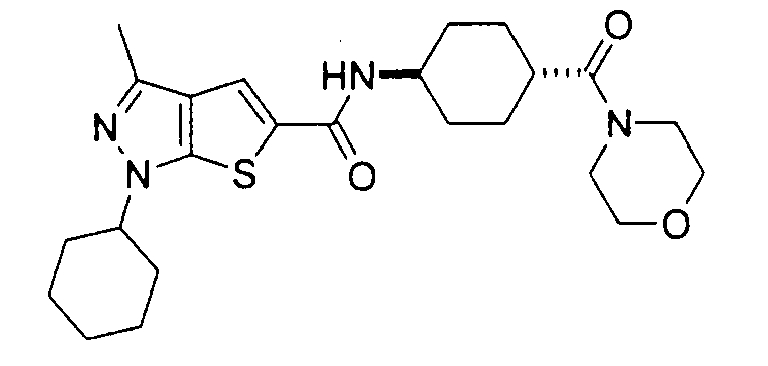
colorless solid 235-238 CDCl3 1.20-1.35(3H, m), 1.38-1.51(2H, m), 1.72-1.97(9H, m), 2.13-2.26(4H, m), 2.43(3H, s), 3.49-3.54(2H, m), 3.60-3.72(6H, m), 3.90-4.02(1H, m), 4.17(1H, tt, J= 3.8 and 11.8Hz), 5.67-5.72(1H, m), 7.30(1H, s) 459 -
[Table 88] Example No. Chemical Structure properties m.p.(°C) (recryst. solvent) 1H-NMR MS(FAB) (M+1)+ 237 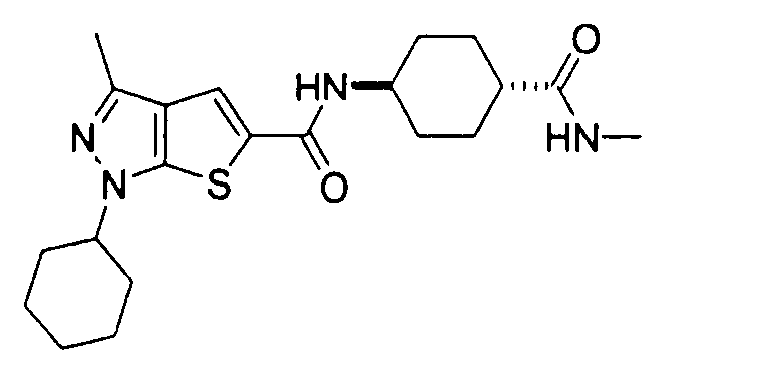
colorless solid >300 DMSO-d6 1.17-1.49(7H, m), 1.63-1.92(9H, m), 2.01-2.11(3H, m), 2.35(3H, s), 2.55(3H, d, J=4.5Hz), 3.59-3.71(1H, m), 4.18(1H, tt, J=3.8 and 11.6Hz). 7.64-7.70(1H, m), 7.79(1H, s). 8.22-8.27(1H, m) 403 238 
colorless solid >300 DMSO-d6 0.33-0.39(2H, m), 0.56-0.62(2H, m), 1.16-1.49(7H, m), 1.63-1.91(9H, m), 1.96-2.08(3H, m), 2.35(3H, s), 2.57-2.63(1H, m). 3.60-3.72(1H, m), 4.13-4.22(1H, m), 7.75-7.78(1H, m), 7.78(1H, s). 8.21-8.26(1H, m) 429 239 
colorless solid 260-263 CDCl3 1.21-1.34(3H, m), 1.37-1.60(4H, m), 1.68-1.98(11H, m), 2.14-2.26(4H, m), 2.43(3H, s), 2.48(1H, tt, J=3.7 and 11.6Hz), 3.15-3.31(2H, m), 3.74-3.83(1H, m), 3.91-4.02(2H, m), 4.08-4.16(1H, m), 4.17(1H, tt, J=3.8 and 11.8Hz), 5.68-5.73(1H, m), 7.30(1H, s) 47 473 240 
colorless solid 230-231 CDCl3 1.21-1.34(1H, m), 1.38-1.51(2H, m), 1.57-1.66(2H, m), 1.72-1.97(5H, m), 2.05-2.13(2H, m), 2.15-2.23(2H, m), 2.44(3H, s), 2.83(6H, s), 2.96-3.06(2H, m), 3.72-3.80(2H, m), 4.06-4.16(1H, m), 4.18(1H, tt, J=3.8 and 11.8Hz), 5.78-5.93(1H, m), 7.34(1H, s) 454 -
[Table 89] Example No. Chemical Structure properties m.p.(°C) (recryst. solvent) 1H-NMR MS(FAB) (M+1)+ (M+1)+ 241 
colorless solid 83-87 CDCl3 1.21-1.50(5H, m), 1.47(9H, s). 1.70-2.06(7H, m), 2.13-2.21(2H, m), 2.43(3H, s), 2.80-2.96(2H, m), 4.04-4.17(2H, m), 4,18(1H, tt. J=3.9 and 11.8Hz), 5.74-5.81(1H, m), 7.33(1H, s) 447 242 
pale yellow solid 153-160 DMSO-d6 1.15-1.29(1H, m), 1.36-1.49(2H, m), 1.62-1.86(7H, m), 1.91-1.99(2H, m), 2.00-2.08(2H, m), 2.36(3H, s), 2.89-3.06(2H, m), 3.26-3.35(2H, m), 3.97-4.06(1H, m), 4.19(1H, tt, J=3.8 and 11.6Hz), 7.89(1H, s), 8.50-8.55(1H, m), 8.76(1H, brs) 347 243 
colorless foamy solid CDCl3 1.22-1.33(1H, m), 1.38-1.50(2H, m), 1.69-1.97(6H, m), 2.13-2.22(2H, m), 2.26-2.43(2H, m), 2.44(3H, s), 2.58-2.64(1H, m), 2.72-2.77(1H, m), 2.91-2.98(1H, m), 3.64 and 3.65(total 2H, each s), 4.17(1H, tt, J=3.8 and 11.8Hz), 6.34-6.40(1H, m), 7.26-7.38(6H, m) 423 244 
colorless foamy solid CDCl3 1.21-1.34(1H, m), 1.38-1.50(2H, m), 1.69-1.97(6H, m), 2.10-2.28(3H, m), 2.42(3H, s), 2.90-3.02(2H, m), 3.09-3.22(2H, m), 4,17(1H, tt, J=3.8 and 11.8Hz). 4.54-4.63(1H, m), 6.33-6.39(1H, m). 7.38(1H, m) 333 -
[Table 90] Example No. Chemical Structure properties m.p.(°C) (recryst. solvent) 1H-NMR MS(FAB) (M+1)+ 245 
colorless foamy solid CDCl3 1.21-1.34(1H, m), 1.38-1.50(2H, m). 1.71-1.96(5H, m), 1.99-2.08(1H, m), 2.12-2.23(3H, m), 2.43(3H, s), 2.89(6H, s), 3.42-3.62(4H, m), 4.17(1H, tt, J=3.9 and 11.8Hz), 4.50-4.58(1H, m), 6.60-6.65(1H, m), 7.35(1H, s) 404 246 
colorless solid 110-114 DMSO-d6 1.16-1.30(1H, m), 1.36-1.50(2H, m). 1.62-1.91(6H, m), 2.00-2.10(3H, m), 2.35(3H, s), 2.74(6H, s), 3.21(1H, dd, J=5.4 and 10.6Hz). 3.29-3.47(2H, m), 3.55(1H, dd, J=7.6 and 10.6Hz), 4.19(1H, tt. J=3.8 and 11.6Hz). 4.28-4.36(1H, m), 7.86(1H, s), 8.50-8.55(1H. m) 404 247 
colorless solid 251-254 CDCl3 1.12-1.50(7H, m), 1.69-1.96(8H, m), 2.07-2.21(4H, m), 2.43(3H, s), 3.38-3.43(2H, m), 3.85-3.95(1H, m), 4.00(2H, brs), 4.17(1H, tt. J=3.9 and 11.9Hz), 5.21 (1H, brs). 5.63-5.69(1 H, m), 7.30(1 H, s) 458 248 
pale yellow oil CDCl3 1.21-1.33(1H, m), 1.28(3H, t. J=7.1Hz). 1.37-1.51(2H, m), 1.70-2.06(9H, m), 2.15-2.23(2H, m), 2.44(3H, s). 2.57-2.67(1H, m), 3.14-3.24(2H, m), 4.11-4.22(1H. m), 4.17(2H, q. J=7.1Hz), 4.35-4.45(2H, m), 7.12(1H, s) 404 -
[Table 91] Example No. Chemical Structure properties m.p.(°C) (recryst. solvent) 1H-NMR MS(FAB) (M+1)+ 249 
colorless solid 94-96 CDCl3 1.20-1.33(1H, m), 1.37-1.50(2H, m), 1.70-1.96(7H, m), 2.02-2.10(2H, m), 2.12-2.20(2H, m), 2.44(3H, s), 2.65-2.75(1H, m), 3.17-3.28(2H, m), 4.18(1H, tt, J=3.8 and 11.9Hz), 4.36-4.45(2H, m), 7.13(1H, s) 376 250 
colorless solid 211-214 CDCl3 1.21-1.33(1H, m), 1.37-1.51(2H, m), 1.70-1.99(9H, m), 2.12-2.22(2H, m), 2.39(1H, tt, J=4.0 and 11.3Hz), 2.44(3H, s), 2.84(3H, d, J=4.8Hz), 3.00-3.12(2H, m), 4.17(1H, tt, J=3.8 and 11.8Hz), 4.48-4.57(2H, m), 5.46-5.55(1H, m), 7.13(1H, s) 389 251 
colorless oil CDCl3 1.20-1.32(1H, m), 1.26(3H, t, J=7.1Hz), 1.37-1.50(2H, m), 1.55-1.66(1 H, m), 1.70-1.97(7H, m), 2.10-2.20(3H, m), 2.44(3H, s), 2.53-2.63(1H, m), 3.12-3.21(1H, m), 3.27-3.38(1H, m), 4.12-4.22(1H, m), 4.15(2H, q, J=7.1Hz). 4.25-4.34(1H, m), 4.47-4.56(1H, m), 7.16(1H, s) 404 252 
colorless solid 262-266 DMSO-d6 1.16-1.29(1H, m), 1.36-1.50(2H, m), 1.62-1.92(6H, m), 2.01-2.09(2H, m), 2.35(3H, s), 2.35-2.45(1H, m), 3.27-3.34(1H, m), 3.55(1H, dd, J=5.5 and 11.3Hz), 4.19(1H, tt. J=3.8 and 11.6Hz), 4.24-4.30(1H, m), 4.55-4.65(1H, m), 7.73(1H, s), 8.52-8.56(1H, m), 10.90(1H, brs) 402 -
[Table 92] Example No. Chemical Structure properties m.p.(°C) (recryst. solvent) 1H-NMR MS(FAB) (M+1)+ 253 
colorless solid 221-223 DMSO-d6 1.16-1.28(1H, m). 1.36-1.50(2H, m), 1.62-1.91(6H, m), 2.00-2.08(2H, m), 2.35(3H, s). 2.40-2.48(1H, m), 2.87(3H, s), 3.39(1H, dd, J=6.9 and 11.4Hz). 3.58(1H, tt. J=5.4 and 11.4Hz). 4.19(1H, tt. J=3.8 and 11.6Hz). 4.33(1H, t. J=8.4Hz). 4.56-4.64(1H, m), 7.71(1H, s), 8.51-8.56(1H, m) 416 254 
pale yellow foamy solid CDCl3 1.21-1.34(1H, m), 1.37-1.49(3H, m), 1.52-1.63(1H, m), 1.70-1.97(8H, m), 2.12-2.20(2H, m), 2.43(3H, s), 2.44-2.60(1H, m), 3.26-3.61(4H, m). 4.05-4.17(2H, m), 4.17(1H, tt. J=3.8 and 11.9Hz). 7.18(1H, s) 362 255 
colorless solid 247-248.5 CDCl3 2.11-2.27(4H, m), 2.48(3H, s), 2.97-3.16(6H, m), 3.57(2H, dt, J=2.4 and 11.6Hz), 4.11-4.18(2H, m), 4.39-4.49(1H, m), 7.36-7.41(2H, m), 7.54-7.59(2H, m), 7.65(1H, s), 8.11(1H, brs) 413 256 
colorless solid 148-150 DMSO-d6 1.16-1.31(1H, m), 1.37-1.51(2H, m), 1.62-1.88(5H, m), 2.03-2.12(2H, m), 2.40(3H, s), 3.37-3.43(2H, m), 3.95-4.02(2H, m), 4.22(1H, tt, J=3.8 and 11.5Hz), 7.15(1H, brs), 8.00(1H, dd, J=2.6 and 9.1Hz), 8.03(1H, s), 8.16(1H, d, J=9.1Hz), 8.59(1H, d, J=2.6Hz), 10.3(1H, brs) 425 -
[Table 93] Example No. Chemical Structure properties m.p.(°C) (recryst. solvent) 1H-NMR MS(FAB) (M+1)+ 257 
colorless foamy solid CDCl3 1.21-1.59(5H, m), 1.67-2.00(8H, m), 2.12-2.22(3H, m), 2,28-2.38(1H, m), 2.43(3H, s), 3,56(2H, d. J=6.8Hz), 4.17(1H, tt, J=3.8 and 11.9Hz), 4.38-4.48(1 H, m), 5.82-5.86(1H, m), 7.30(1H. s) 362 258 
colorless solid 183-185 (toluene) CDCl3 1.20-1.58(6H, m), 1.69-1.96(7H, m), 2.12-2.30(3H, m), 2.43(3H, s). 2.49-2.61(1H, m), 3.50-3.55(2H, m), 3.98(2H, s), 4,17(1H, tt, J=3.8 and 11.9Hz), 4.43-4.53(1H, m), 5.26(1H, brs), 5.76-5.82(1H, m), 7.29(1H, s) 444 259 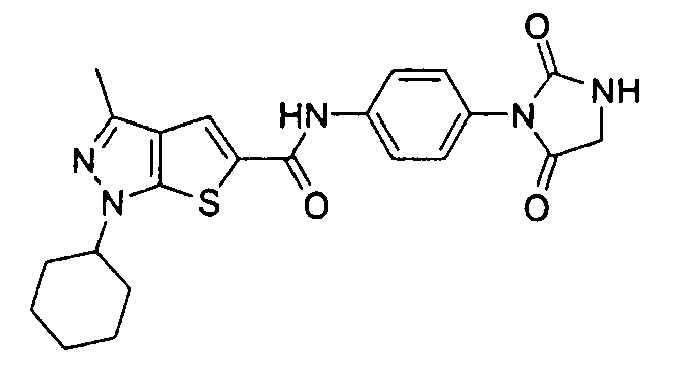
colorless solid 218-222 CDCl3 1.21-1.33(1H, m), 1.37-1.51(2H, m), 1.70-1.97(5H, m). 2.15-2.21(2H, m). 2.43(3H, s). 4.18(1H, tt, J=3.8 and 11.8Hz). 4.63(2H, s), 6.75-6.79(2H, m), 7.13-7.17(2H, m), 8.28(1H, s) 438 260 
colorless solid 204-206 CDCl3 2.11-2.27(4H, m), 2.48(3H, s). 3.10(3H, s). 3.57(2H, dt, J=2.4 and 11.6Hz), 4.05(2H, s). 4.11-4.18(2H, m). 4.37-4.48(1H, m), 7.40-7.45(2H, m), 7.50(1H. s). 7.68(1H, brs), 7.70-7.75(2H, m) 454 -
[Table 94] Example No. Chemical Structure properties m.p.(°C) (recryst. solvent) 1H-NMR MS(FAB) (M+1)+ 261 
pale brown solid 252-254 (EtOH) DMSO-d6 1.91-2.07(4H, m), 2.41(3H, s), 3.38-3.44(2H, s), 3.51(2H, dt, J=2.4 and 11.6Hz), 3.95-4.03(4H, m), 4.47-4.57(1H, m), 7.16(1H, brs), 8.00(1H, dd, J=2.7 and 9.1Hz). 8.05(1H, s), 8.16(1H, d. J=9.1Hz), 8.60(1H, d, J=2.7Hz), 10.33(1H, brs) 427 262 
pale yellow solid 164-166 (iso-PrOH) CDCl3 1.22-1.35(1H, m), 1.38-1.53(2H. m), 1.70-1.97(5H. m). 2.04-2.12(1H, m), 2.15-2.25(3H, m), 2.45(3H, s), 3.25-3.41(2H. m), 3.46-3.57(2H, m), 4.19(1H, tt. J=3.9 and 11.8Hz). 4.58-4.65(1H, m), 6.53-6.59(2H, m), 7.40-7.51(4H, m) 425 263 
pale yellow solid 167-168 (hexane/AcOEt) CDCl3 1.22-1.35 (1H, m), 1.38-1.52(2H, m), 1.71-2.05 (7H, m), 2.11-2.23(3H, m), 2.45(3H, s), 3.29-3.39 (2H, m), 3.57-3.68 (2H, m), 4.19 (1H, tt, J=3.9 and 11.8Hz), 4.52-4.58 (1H, m), 6.61-6.67(1H, m), 7.10(1H, dd, J=2.2 and 8.7Hz), 7.42(1H, dd, J=2.5 and 14.8Hz), 7.44(1H, s), 7.52(1H, brs) 443 264 
colorless solid 216-218 CDCl3 1.23-1.67(5H, m), 1.72-1.98(7H, m), 2.15-2.23(2H, m), 2.50(3H, s), 2.85-2.95(2H, m), 3.31-3.40(2H, m), 3.72-3.80(1H, m), 4.20(1H, tt, J=3.8 and 11.8Hz), 7.49-7.57(2H, m), 7.64(1H, s), 7.93(1H, d, J=1.7Hz), 8.11-8.17(1H, m), 8.19(1H, brs) 503 -
[Table 95] Example No. Chemical Structure properties m.p.(°C) (recryst. solvent) 1H-NMR MS(FAB) (M+1)+ 265 
colorless solid 226-228 CDCl3 -0.01(6H, s), 0.80(9H, s), 1.22-1.36(1H, s). 1.40-1.68(4H, m), 1.72-1.99(7H, m), 2.16-2.26(2H, m), 2.48(3H, s), 2.97-3.05(2H, m), 3.15-3.25(2H, m). 3.75-3.81(1H, m), 4.16-4.26(1H, m). 7.53(1H, s), 7.75-7.81(5H, m) 617 266 
colorless solid 229-233 CDCl3 1.24-1.55(4H, m), 1.60-1.98(9H, m), 2.18-2.25(2H, s), 2.47(3H, s), 2.85-2.93(2H, m), 3.29-3.38(2H, m), 3.75-3.82(1H, m), 4.20(1H, tt. J=3.8 and 11.8Hz). 7.54(1H, s), 7.73-7.81(4H, m), 7.84(1H, brs) 503 267 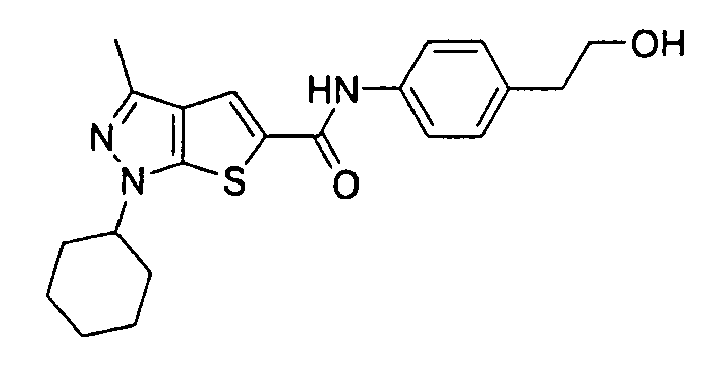
colorless solid 162-165 CDCl3 1.22-1.35(1H, m), 1.38-1.55(2H, m), 1.72-1.98(5H, s), 2.17-2.24(2H, m), 2.46(3H, s). 2.86(2H. t, J=6.5Hz), 3.86(2H, t. J=6.5Hz), 4.19(1H, tt, J=3.9 and 11.8Hz). 7.23(2H, d. J=8.4Hz). 7.47(1H, s), 7.53(2H, d, J=8.4Hz), 7.60(1H, brs) 384 268 
pale yellow solid 211-213 CDCl3 1.43-1.47(1H, m). 1.72-1.82(2H. m), 2.00-2.27(6H, m). 2.47(3H, s), 2.81-2.91(2H. m), 3.30-3.37(2H, m), 3.56(2H, dt, J=2.4 and 11.6Hz), 3.83-3.91(1H, m), 4.11-4.18(2H, m), 4.38-4.48(1H, m), 6.90-7.00(1H, m), 7.16-7.21(1H, m), 7.45(1H, s), 7.47-7.52(1H, m), 7.53(1H, brs) 459 -
[Table 96] Example No. Chemical Structure properties m.p.(°C) (recryst. solvent) 1H-NMR MS(FAB) (M+1)+ 269 
colorless solid 205-206.5 (AcOEt/hexane) CDCl3 1.19-1.33(1H, m), 1.38-1.50(2H, m). 1.70-1.97(5H, m), 2.12-2.21(2H, m), 2.34(3H. s). 2.45(3H, s). 2.48-2.63(4H, m). 2.88-2.96(4H, m), 4.12-4,22(1H, m), 7.37(1H, d. J=8.7Hz), 7.48(1H, s), 7.66(1H. brs). 7.75(1 H, d, J=2.5Hz), 7.83(1H, dd, J=2.5 and 8.7Hz) 506 270 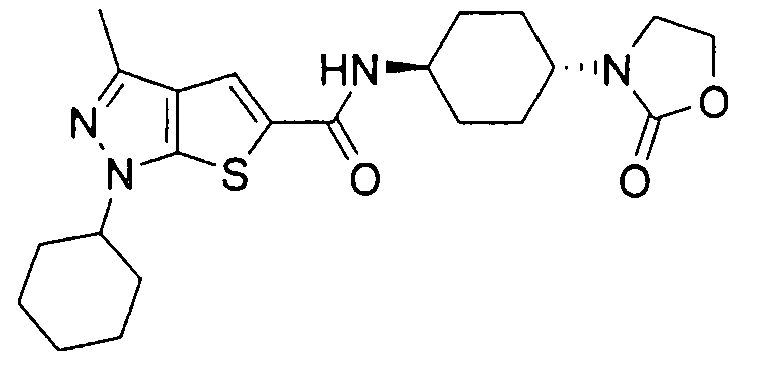
colorless solid >300 (EtOH) CDCl3 1.21-1.34(1H, m), 1.47-1.50(4H, m), 1.54-1.67(2H, m), 1.71-1.96(7H. m), 2.13-2.22(4H, m), 2.43(3H, s), 3.51-3.59(2H, m), 3.79(1H, tt, J=3.9 and 12.1Hz), 3.89-4.01(1H, m), 4,17(1H, tt, J=3.8 and 11.8Hz), 4.32-4.38(2H, m), 6.08-6.12(1H, m), 7.44(1H, s) 431 271 
colorless solid 290(dec.) (EtOH) CDCl3 1,20-1.50(7H, m), 1.70-1.97(5H, m), 2.06-2.21(6H, m), 2.43(3H, s), 3.40-3.50(1H, m), 3.79(2H, t, J=8.5Hz), 3.88-3.99(1H, m), 4.17(1H, tt, J=3.8 and 11.9Hz), 4.25(2H, t, J=8.5Hz), 5.69-5.77(1H, m), 7.32(1H, s) 430 272 
colorless solid 268(dec.) CD3OD 1.24-1.56(7H, m), 1.72-2.03(9H, m), 2.09-2.17(2H, m), 2.42(3H, s), 2.44(2H, t, J=7.0Hz), 2.58(2H, t. J=7.0Hz), 3.61-3.70(1H, m), 3.77-3.86(1H, m), 4.18(1H, tt, J=3.8 and 11.8Hz), 7.66(1H, s) 461 -
[Table 97] Example No. Chemical Structure properties m.p.(°C) (recryst. solvent) 1H-NMR MS(FAB) (M+1)+ 273 
pale brown solid >300 CDCl3 1.21-1.51(5H, m), 1.61-1.97(7H. m), 2.12-2.24(4H, m), 2.37-2.49(2H, m), 2.43(3H, s), 2.67(4H, s), 3.98-4.09(2H, m), 4.17(1H, tt, J=3.8 and 11.8Hz), 5.68-5.73(1H, m), 7.32(1H, s) 443 274 
colorless solid 279-280 (EtOH) CDCl3 1.21-1.50(5H, m), 1.58-1.87(7H, m), 1.88-1.96(2H, m), 2.12-2.21(4H, m), 2.31-2.40(2H, m), 2.43(3H, s), 3.14(2H, t, J=7.5Hz), 3.29(2H, t, J=6.7Hz), 3.50(1H, tt, J=3.8 and 11.8Hz), 3.84-3.97(1H, m), 4.17(1H, tt, J=3.8 and 11.8Hz), 5.78-5.83(1H, m), 7.34(1H, s) 465 275 
colorless solid 251-254 CDCl3 1.20-1.50(7H, m), 1.70-1.98(5H, m), 2.03-2.21(6H, m), 2.42(3H, s), 2.94(3H, s), 3.60-3.71(1H, m), 3.88-3.99(1H, m), 4.11(2H, s), 4.17(1H, tt. J=3.8 and 11.8Hz). 4.34-4.40(1H, m), 5.17(2H, s), 5.78-5.84(1H, m), 7.29-7.41 (6H, s) 566 276 
colorless solid 274-276 (EtOH) CDCl3 1.21-1.50(5H, m). 170-1.97(7H, m), 2.11-2.23(4H, m), 2.33-2.49(2H, m). 2.43(3H, s), 2.98(3H. s), 3.81(2H, s), 3.90-4.08(2H, m), 4.17(1H, tt. J=3.9 and 11.9Hz). 5.69-5.75(1H, m), 7.32(1H, s) 458 -
[Table 98] Example No. Chemical Structure properties m.p.(°C) (recryst. solvent) 1H-NMR MS(FAB) (M+1)+ 277 
colorless solid 156-157.5 (AcOEt/hexane) CDCl3 1.21-1.33(1H, m), 1.37-1.50(2H, m), 1.69-1.97(5H, m), 2.12-2.21(2H, m), 2.45(3H, s), 3.02(3H, s), 3.61-3.69(2H, m), 3.79-3.88(2H, m), 3.93(2H, s), 4.16(1H, tt, J=3.9 and 11.8Hz), 6.98-7.06(1H, m), 7.34(1H, s) 404 278 
colorless solid 170-171 (AcOEt) CDCl3 1.21-1.33(1H, m), 1.38-1.51(2H, m), 1.70-1.98(7H, m), 2.12-2.22(2H, m), 2.45(3H, s), 3.04(3H, s), 3.38-3.46(2H, m), 3.67(2H, t, J=6.0Hz), 3.94(2H, s), 4.17(1H, tt, J=3.9 and 11.8Hz), 7.15-7.22(1H, m), 7.43(1H, s) 418 279 
colorless solid >300 CDCl3 1.20-1.50(7H, m), 1.69-1.96(5H, m), 2.03-2.21(6H, m), 2.41(3H, s), 2.93(3H, s). 3.44(2H, t. J=4.6Hz). 3.49-3.53(1H, m). 3.58-3.69(1H, m). 3.72-3.80(2H, m), 3.87-3.99(1H. m), 4,16(1H, tt. J=3.9 and 11.8Hz). 4.70-4.78(1H, m), 5.88-5.95(1H, m). 7.35(1H, s) 462 280 
colorless solid 274-276.5 (EtOH) CDCl3 1.20-1.68(7H. m), 1.70-1.98(7H, m), 2.09-2.22(4H, m), 2.43(3H, s), 2.79(3H, s), 3.28(4H, s), 3.79(1H, tt, J=3.9 and ). 3.87-3.98(1H, m), 4.17(1H, tt, J=3.9 and 11.8Hz). 5.93-6.01(1H, m), 7.36(1H, s) 444 -
[Table 99] Example No. Chemical Structure properties m.p. (°C) (recryst. solvent) 1H-NMR MS(FAB) (M+1)+ 281 
colorless solid 98.5-99.5 CDCl3 1.21-1.35(1H, m), 1.29(3H, t. J=7.1Hz). 1.38-1.51(2H, m), 1.70-1.98(5H, m), 2.12-2.22(2H, m), 2.44(3H, s), 2.64(2H, t, J=6.0Hz), 3.67-3.76(2H, m), 4.11-4.25(1H, m), 4.19(2H, q, J=7.1Hz), 6.68-6.74(1H, m), 7.37(1H, s) 364 282 
colorless solid 161-162 (AcOEt) CDCl3 1.20-1.33(1H, m), 1.38-1.50(2H, m), 1.69-1.96(5H, m), 2.10-2.20(2H, m), 2.42(3H, s), 2.72(2H, t. J=5.9Hz), 3.68-3.74(2H, m), 4.18(1H, tt, J=3.9 and 11.9Hz). 6.68-6.74(1H, m), 7.34(1H, s) 336 283 
colorless solid 141-142.5 CDCl3 1.21-1.50(3H, m), 1.51(9H, s), 1.71-1.97(5H, m), 2.13-2.22(2H, m), 2.44(3H, s), 4.12(2H, d, J=4.8Hz), 4.17(1H, tt, J=3.8 and 11.9Hz), 6.43-6.49(1H, m), 7.40(1H, s) 378 284 
colorless solid 194-195 (AcOEt) CDCl3 1.20-1.33(1H, m), 1.38-1.51(2H, m), 1.70-1.98(5H, m), 2.12-2.21(2H, m), 2.44(3H, s), 4.19(1H, tt, J=3.9 and 11.9Hz), 4.27(2H, d, J=5.1Hz), 6.55-6.61(1H, m), 7.45(1H, s) 322 -
[Table 100] Example No. Chemical Structure properties m.p.(°C) (recryst. solvent) 1H-NMR MS(FAB) (M+1)+ 285 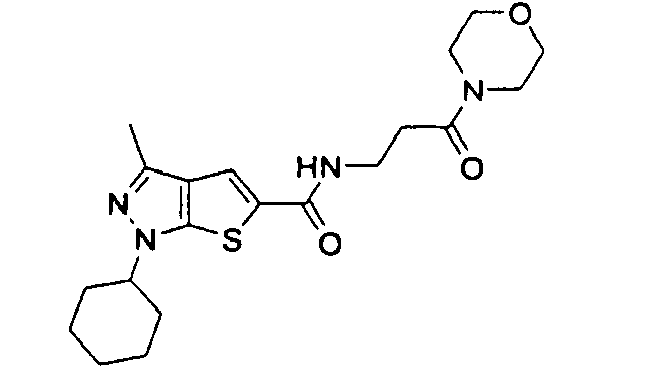
colorless solid 138.5-139.5 (AcOEt/hexane) CDCl3 1.21-1.33(1H, m), 1.38-1.50(2H, m), 1.70-1.98(5H, m), 2.11-2.21(2H, m), 2.43(3H, s), 2.61(2H, t, J=5.5Hz), 3.41-3.49(2H, m). 3.60-3.71(6H, m), 3.71-3.78(2H, m), 4.17(1H, tt, J=3.9 and 11.8Hz), 6.95-7.02(1H, m), 7.32(1H, s) 405 286 
colorless solid 183.5-185 CDCl3 1.20-1.32(1H, m), 1.37-1.51(2H, m), 1.45(9H, s), 1.70-1.96(5H, m), 2.12-2.21(2H, m), 2.42(3H, s), 3.38-3.45(2H, m), 3.50-3.56(2H, m), 4.17(1H, tt, J=3.9 and 11.8Hz), 4.97-5.03(1H, m), 7.09-7.16(1H, m), 7.36(1 H, s) 407 287 
colorless solid 157-158 CDCl3 1.20-1.32(1H, m), 1.371.37-1.52(2H, m). 1.70-1.97(5H, m), 2.12-2.21(2H, m), 2.43(3H, s), 2.94(2H, t, J=5.7Hz), 3.45-3.52(2H, m), 4.17(1H, tt, J=3.8 and 11.8Hz), 6.53-6.61(1H, m), 7.36(1H, s) 307 288 
colorless solid 154-155 (AcOEt) CDCl3 1.21-1.33(1H, m), 1.38-1.50(2H, m), 1.69-1.96(5H, m), 2.11-2.20(2H, m), 2.43(3H, s), 2.61(2H, t. J=5.4Hz), 2.98(3H, s). 3.00(3H, s), 3.70-3.78(2H, m), 4.16(1H, tt, J=3.9 and 11.9Hz). 7.10-7.17(1H, m), 7.33(1H, s) 363 -
[Table 101] Example No. Chemical Structure properties m.p.(°C) (recryst. solvent) 1H-NMR MS(FAB) (M+1)+ 289 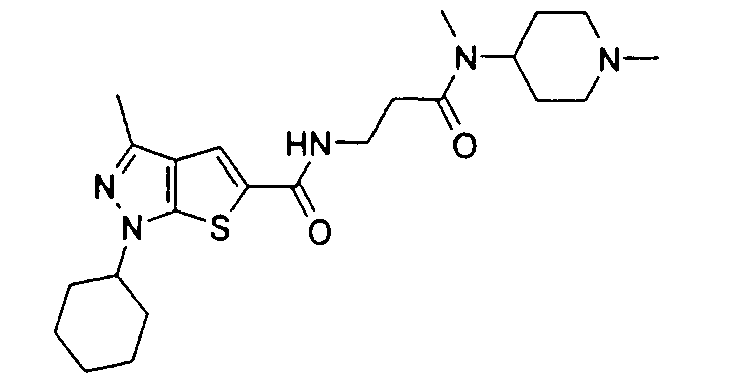
colorless solid 164.5-168 (AcOEt/hexane) CDCl3 1.21-1.33(1H, m), 1.37-1.50(2H, m), 1.56-1.65(2H, m), 1.70-2.20(11H, m), 2.29 and 2.30(total 3H, each s), 2.42 and 2.43(total 3H, each s), 2.57-2.68(2H, m), 2.83 and 2.85(total 3H, each s), 2.89-2.99(2H, m), 3.51(0.4H, tt. J=4.1 and 11.6Hz), 3.70-3.79(2H, m), 4.16(1H, tt. J=3.8 and 11.8Hz), 4.47(0.6H, tt. J=4.2 and 12.2Hz), 7.08-7.16(1H, m), 7.32 and 7.33(total 1H, each s) 446 290 
colorless solid 173-175.5 (AcOEt) CDCl3 1.21-1,34(1H, m), 1.38-1.59(4H, m). 1.69-1.98(7H, m), 2.11-2.20(2H, m), 2.43(3H, s), 2.63(2H, d, J=5.5Hz), 3.18-3.31(2H, m), 3.65-3.78(3H, m), 3.91-4.00(1H, m), 4.01-4.21(2H, m), 7.03-7.10(1H, m), 7.33(1H, s) 419 291 
colorless solid 214-215 (AcOEt) CDCl3 1.20-1.33(1H, m), 1.38-1.52(2H, m), 1.69-1.98(5H, m), 2.13-2.23(2H, m), 2.44(3H, s), 3.43-3.52(2H, m), 3.68-3.79(6H, m), 4.18(1H, tt, J=3.9 and 11.8Hz), 4.23(2H, d, J=3.9Hz), 7.08-7.15(1H, m), 7.44(1H, s) 391 292 
colorless solid 130-131.5 CDCl3 1.20-1.34(1H, m), 1.38-1.51(2H, m), 1.70-1.98(5H, m), 2.13-2.22(2H, m), 2.44(3H, s), 3.04(3H, s), 3.05(H, s), 4.18(1H, tt, J=3.9 and 11.8Hz), 4.21(2H, d, J=3.9Hz). 7.11-7.18(1H, m), 7.44(1H, s) 349 -
[Table 102] Example No. Chemical Structure properties m.p.(°C) (recryst. solvent) 1H-NMR MS(FAB) (M+1)+ 293 
colorless solid 157-159 CDCl3 1.20-1.34(1H, m), 1.38-1.50(2H, m), 1.70-1.98(5H, m), 2.13-2.22(2H, m), 2.33(3H, s), 2.40-2.50(4H, m), 2.44(3H, s), 3.46-3.51(2H, m), 3.69-3.75(2H, m), 4.18(1H, tt, J=3.9 and 11.8Hz), 4.22(2H, d, J=3.9Hz), 7.10-7.16(1H, m), 7.44(1H, s) 404 294 
colorless solid 175-176 CDCl3 1.20-1.33(1H, m), 1.39-1.50(2H, m), 1.53-1.64(3H, m), 1.70-1.99(7H, m), 2.15-2.21(2H, m), 2.44(3H, s), 3.21-3.31(1H, m), 3.37-3.46(1H, m), 3.66-3.74(1H, m), 3.99-4.09(2H, m), 4.18(1H, tt, J=3.9 and 11.8Hz), 4.23(2H, d, J=3.9Hz), 7.12-7.18(1H, m), 7.44(1H, s) 405 295 
colorless foamy solid CDCl3 1.20-1.32(1H, m), 1.38-1.50(2H, m), 1.68-1.98(5H, m), 2.11-2.21(2H, m), 2.30(3H, s), 2.36-2.51(4H, m), 2.43(3H, s). 2.61(2H, t, J=5.5Hz), 3.42-3.51(2H, m), 3.61-3.69(2H, m), 3.70-3.80(2H, m), 4.16(1H, tt, J=3.9 and 11.8Hz), 7.00-7.09(1H, m), 7.33(1H, s) 418 296 
colorless 91-96 CD3OD 1.22-1.38(1H, m), 1.43-1.59(2H, m), 1.72-2.99(5H, m), 2.09-2.18(2H, m), 2.42(3H, s), 2.63(3H, s), 2.74(2H, t, J=6.7Hz), 2.86-3.00(4H, m), 3.62(2H, t, J=6.7Hz), 3.70-3.80(4H, m), 4.16(1H, tt, J=3.9 and 11.8Hz), 6.72(2H, s), 7.60(1H, s) 418 (free) -
[Table 103] Example No. Chemical Structure properties m.p.(°C) (recryst. solvent) 1H-NMR MS(FAB) (M+1)+ 297 
colorless foamy solid CDCl3 1.20-1.34(1H, m), 1.38-1.50(2H, m), 1.60-1.69(2H, m), 1.72-2.21(11H, m), 2.30 and 2.32(total 3H, each s), 2.44(3H, s), 2.88 and 2.92(total 3H, each s), 2.90-2.99(2H, m), 3.43-3.53(0.4H, m), 4.12-4.28(3H, m), 4.47(0.6H, tt, J=4.2 and 12.2Hz), 7.14-7.27(1H, m), 7.44 and 7.45(total 1H, each s) 432 298 
colorless solid 107-116.5 CD3OD 1.23-1.38(1H, m), 1.43-1.57(2H, m), 1.71-2.21(11H, m), 2.43(3H, s), 2.83(3H, s), 2.87 and 2.99(total 3H, each s), 3.02-3.13(2H, m), 3.49-3.58(2H, m), 4.01-4.13(0.3H, m). 4.15-4.24(1H, m), 4.21 and 4.31(total 2H, each s), 4.50-4.60(0.7H, m), 6.70(2H, s), 7.70(1H, s) 432(free) 299 
colorless solid 182-183 (AcOEt) CDCl3 1.20-1.33(1H, m), 1.36-1.50(2H, m), 1.69-1.98(5H, m), 2.11-2.21(2H, m), 2.43(3H, s), 3.51-3.59(2H, m), 3.64-3.76(4H, m), 4.16(1H, tt, J=3.9 and 11.8Hz). 4.33-4.42(2H, m), 6.79-6.87(1H, m), 7.37(1H, s) 377 300 
colorless solid 158-160 (EtOH) CDCl3 1.20-1.33(1H, m), 1.38-1.51(2H, m), 1.69-1.96(5H, m), 2.12-2.21(2H, m), 2.37-2.48(2H, m), 2.44(3H, s), 3.21(2H, t, J=7.5Hz), 3.34-3.42(4H, m), 3.61-3.69(2H, m), 4.17(1H, tt, J=3.9 and 11.8Hz), 6.20-6.27(1H, m), 7.40(1H, s) 411 -
[Table 104] Example No. Chemical Structure properties m.p.(°C) (recryst. solvent) 1H-NMR MS(FAB) (M+1)+ 301 
colorless foamy solid CDCl3 1.19-1.32(1H, m), 1.37-1.50(2H, m), 1.69-1.97(5H, m), 2.09-2.11(2H, m), 2.43(3H, s), 2.92(3H, s), 3.38-3.55(6H, m), 3.61-3.67(1H, m), 3.72-3.79(2H, m), 4.16(1H, tt, J=3.9 and 11.8Hz), 5.81-5.89(1H, m), 7.43(1H, s), 7.63-7.72(1H, m) 408 302 
colorless solid 182-183 (AcOEt) CDCl3 1.21-1.33(1H, m), 1.37-1.50(2H, m), 1.69-1.97(5H, m), 2.11-2.21(2H, m), 2.44(3H, s), 2.79(3H, s), 3.31-3.49(6H, m), 3.54-3.61(2H, m), 4.16(1H, tt, J=3.8 and 11.8Hz), 7.37-3.43(1H, m), 7.38(1H, s) 390 303 
colorless solid 110-111 CDCl3 1.20-1.33(1H, m), 1.96(3H, t, J=6.7Hz), 1.38-1.51(2H, m), 1.70-2.01(7H, m), 2.12-2.21(2H, m), 2.38-2.51(2H, m), 2.44(3H, s), 3.45-3.53(2H, m), 4.10-4.22(3H, m), 6.39-6.44(1H, m), 7.32(1H, s) 378 304 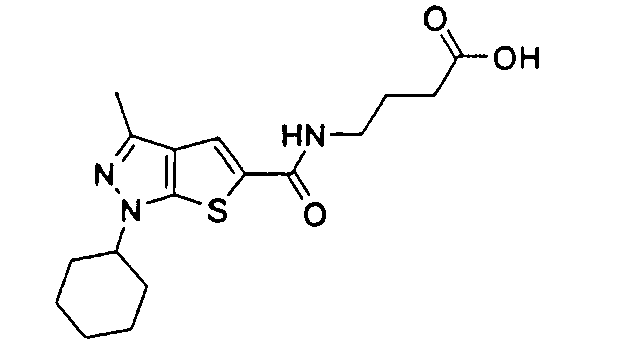
colorless solid 170-171 (AcOEt/benzene) CDCl3 1.19-1.32(1H, m), 1.37-1.51(2H, m). 1.70-1.84(3H, m), 1.88-2.01(4H, m), 2.11-2.20(2H, m), 2.28(3H, s). 2.49(2H, t. J=6.4Hz), 3.50-3.58(2H, m), 4.18(1H, tt, J=3.8 and 11.9Hz), 6.54-6.61(1H, m), 7.30(1H, s) 350 -
[Table 105] Example No. Chemical Structure properties m.p. (°C) (recryst. solvent) 1H-NMR MS(FAB) (M+1)+ 305 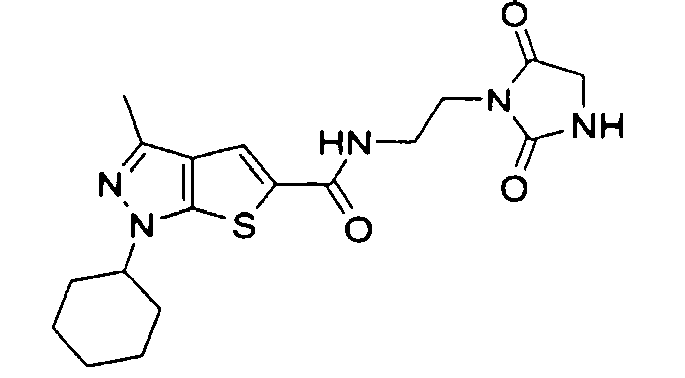
colorless solid 233-234 (EtOH) DMSO-d6 1.16-1.30(1H. m), 1.37-1.49(2H, m), 1.62-1.87(5H, m), 2.00-2.09(2H, m), 2.35(3H, s), 3.33-3.42(2H, m), 3.46-3.52(2H, m), 3.85(2H, s), 4.18(1H, tt. J=3.8 and 11.6Hz), 7.64(1H, s), 8.03(1H, s), 8.57-8.62(1H, m) 390 306 
colorless solid 114.5-116 (AcOEt/hexane) CDCl3 1.20-1.33(1H, m), 1.38-1.50(2H, m), 1.70-1.96(5H, m), 1.99-2.06(2H, m), 2.11-2.20(2H, m), 2.43(3H, s), 2.48-2.53(2H, m), 2.97(3H, s), 3.02(3H, s), 3.44-3.51(2H, m), 4.16(1H, tt, J=3.9 and 11.8Hz), 7.39(1H, s), 7.49-7.56(1H, m) 377 307 
colorless solid 162-163 (AcOEt/hexane) CDCl3 1.21-1.34(1H, m), 1.37-1.49(2H, m), 1.39(6H, s), 1.69-1.97(5H, m), 2.12-2.20(2H, m), 2.45(3H, s), 2.90(3H, s), 3.62-3.69(2H, m), 3.80-3.86(2H, m), 4.16(1H, tt, J=3.8 and 11.8Hz), 6.99-7.05(1H, m), 7.34(1H, s) 432 308 
colorless solid 168-169 (AcOEt) CDCl3 1.21-1.33(1H, m), 1.37-1.51(2H, m), 1.70-1.98(5H, m), 2.12-2.20(2H, m), 2.44(3H, s), 3.66-3.72(2H, m), 3.89-3.96(2H, m), 4.16(1H, tt, J=3.9 and 11.8Hz). 6.39-6.47(1H, m), 7.29(1H, s) 407 -
[Table 106] Example No. Chemical Structure properties m.p.(°C) (recryst. solvent) 1H-NMR MS(FAB) (M+1)+ 309 
colorless solid 173-174 (AcOEt/hexane) CDCl3 0.92-1.02(4H. m), 1.20-1.32(1H, m). 1.37-1.50(2H, m), 1.70-1.84(3H, m). 1.88-1.97(2H, m), 2.11-2.20(2H. m), 2.42(3H, s), 3.70(2H, d. J=5.1 Hz). 3.92(1H, t. J=5.1 Hz), 4.16(1H, tt. J=3.9 and 11.8Hz). 6.60(1H, brs), 7.33(1H, s) 334 310 
colorless solid 208-209 (AcOEt/hexane) CDCl3 0.98-1.14(4H, m), 1.20-1.33(1H, m), 1.38-1.50(2H. m), 1.69-1.99(5H, m), 2.11-2.21(2H, m). 2.40(3H. s), 2.99(3H, s). 3.73(2H, s), 3.87(2H, s), 4.14(1H, tt, J=3.9 and 11.8Hz). 6.53(1H, brs). 7.27(1H, s) 430 311 
colorless solid 113-114 CDCl3 1.20-1.33(1H, m), 1.39-1.51(2H, m), 1.65-1.98(5H, m), 2.12-2.21(2H, m), 2.44(3H, s), 2.86-2.92(2H, m), 3.44-3.56(2H, m), 3.47(2H, s), 3.76(3H, s). 4.14(1H, tt, J=3.8 and 11.8Hz), 6.80-6.89(1H, m), 7.40(1H, s) 379 312 
colorless solid 83-87 CDCl3 1.21-1.34(1H, m), 1.38-1.50(2H, m), 1.69-1.97(5H, m), 2.12-2.21(2H, m), 2.44(3H, s), 3.48-3.64(4H, m), 3.79(3H, s), 4.06(2H, s), 4.17(1H, tt, J=3.8 and 11.8Hz), 4.93(2H, brs), 7.31-7.42(1H, m), 7.39(1H, s) 422 -
[Table 107] Example No. Chemical Structure properties m.p.(°C) (recryst. solvent) 1H-NMR MS(FAB) (M+1)+ 313 
colorless solid 233-235 (EtOH) CDCl3 1.20-1.32(1H, m), 1.38-1.50(2H, m), 1.70-1.98(5H, m), 2.11-2.21 (2H, m), 2.42(3H, s), 3.57-3.70(4H, m), 4.07(2H, s), 4.14(1H, tt, J=3.9 and 11.9Hz), 6.62-6.70(1H, m), 7.35(1H, s). 7.97(1H, brs) 390 314 
colorless solid 207-2113 (EtOH) CDCl3 1.20-1.32(1H, m), 1.37-1.51(2H, m), 1.45(6H, s), 1.69-1.96(5H. m), 2.11-2.20(2H, m), 2.44(3H, s), 3.64-71(2H, m), 3.79-3.85(2H, m), 4.16(1H, tt, J=3.9 and 11.9Hz), 5.51(1H, brs), 6.89-6.96(1H, m), 7.33(1H, s) 418 315 
colorless solid 149-150 (AcOEt/hexane) CDCl3 1.21-1.33(1H, m), 1.38-1.51(2H, m), 1.70-1.98(5H, m), 2.13-2.21(2H, m), 2.44(3H, s), 2.78(3H, s), 3.31-3.48(6H, m), 3.68-3.75(2H, m), 4.17(1H, tt, J=3.8 and 11.9Hz), 6.62-6.70(1H, m), 7.38(1H, s) 426 316 
colorless solid 148.5-150 (AcOEt/hexane) CDCl3 1.13(3H, t, J=7.2Hz), 1.20-1.33(1H, m), 1.38-1.50(2H, m), 1.70-1.98(5H, m), 2.11-2.21(2H, m), 2.44(3H, s), 3.53(2H, q, J=7.2Hz), 3.60-3.72(4H, m), 3.99(2H, s), 4.16(1H, tt, J=3.9 and 11.9Hz), 6.57-6.65(1H, m), 7.33(1H, s) 418 -
[Table 108] Example No. Chemical Structure properties m.p.(°C) (recryst. solvent) 1H-NMR MS(FAB) (M+1)+ 317 
colorless solid 154-155 (AcOEt/hexane) CDCl3 1.20-1.33(1H, m). 1.37-1.50(2H. m), 1.69-1.97(5H, m), 2.11-2.21(2H, m), 2.44(3H, s), 2.99(3H, s), 3.59-3.74(4H, m), 4.01(2H, s), 4,17(1H, tt, J=3.9 and 11.9Hz), 6.57-6.67(1H, m), 7.34(1H, s) 404 318 
colorless solid 152-153 (AcOEt/hexane) CDCl3 1.20-1.34(1H, m), 1.30(3H, d. J=6.8Hz), 1.38-1.50(2H, m), 1,69-1.98(5H, m). 2.12-2.21(2H, m). 2.42(3H, s). 2.75(1H, t, J=5.5Hz), 3.61-3.68(2H, m), 3.74-3.82(2H, m), 4.17(1H, tt, J=3.9 and 11.9Hz). 4.21-4.31(1H, m), 6.13-6.21(1H, m), 7.35(1H, s) 322 319 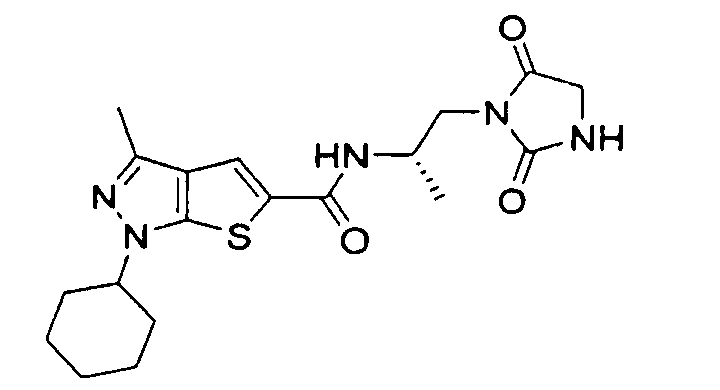
colorless solid 172.5-175 (AcOEt/hexane) CDCl3 1.20-1.34(1H, m), 1.29(3H. d, J=6.8Hz). 1.38-1.50(2H, m), 1.69-1.96(5H, m), 2.11-2.20(2H, m). 2.43(3H, s), 3.61-3.77(2H, m), 3.96-4.08(2H, m), 4,16(1H, tt, J=3.9 and 11.9Hz), 4.36-4.48(1H, m), 5.46(1H, brs), 6.79-6.86(1H, m), 7.32(1H, s) 404 320 
colorless foamy solid CDCl3 1.21-1.33(1H, m), 1.38-1.50(2H, m), 1.68-1.97(6H, m), 2.11-2.21(2H, m), 2.26-2.42(2H, m), 2.44(3H, s), 2.58-2.63(1H, m), 2.70-2.78(1H, m), 2.90-2.99(1H, m), 3.59-3.69(2H, m), 4.16(1H, tt, J=3.9 and 11.8Hz), 4.59-4.69(1H, m). 6.34-6.42(1H, m), 7.23-7.40(6H, m) 423 -
[Table 109] Example No. Chemical Structure properties m.p. (°C) (recryst. solvent) 1H-NMR MS(FAB) (M+1)+ 321 
colorless solid 119-123 CDCl3 1.20-1.32(1H, m), 1.37-1.50(2H, m), 1.70-1.98(6H, m), 2.11-2.31(3H, m), 2.42(3H, s), 2.93-3.04(2H, m), 3.11-3.25(2H, m), 4.16(1H, tt, J=3.9 and 11.9Hz), 4.55-4.65(1H, m), 6.48-6.55(1H, m), 7.41(1H, s) 333 322 
colorless foamy solid CDCl3 1.21-1.32(1H, m), 1.37-1.50(2H, m), 1.70-1.96(5H, m), 1.98-2.08(1H, m), 2.11-2.24(3H, m), 2.43(3H, s). 2.89(6H, s), 3.41-3.62(4H, m), 4.17(1 H, tt, J=3.8 and 11.8Hz), 4.50-4.59(1H, m), 6.61-6.69(1H. m), 7.35(1H, s) 404 323 
colorless solid 126-128 DMSO-d6 1,16-1.29(1H, m), 1.38-1.50(2H, m), 1.61-1.91(6H, m), 2.00-2.10(3H, m), 2.35(3H, s), 2.74(6H, s), 3,1 9-3.25(1H, m), 3.30-3.49(2H, m). 3.51-3.60(1H, m). 4.19(1H, tt. J=3.8 and 11.6Hz). 4.28-4.38(1H, m), 7.88(1H, s). 8.52-8.59(1H, m) 404(free) 324 
colorless solid 146.5-148 CDCl3 1.20-1.34(1H, m). 1.30(3H, d, J=6.8Hz). 1.38-1.50(2H, m), 1.69-1.98(5H, m), 2.12-2.21(2H, m), 2.42(3H, s), 2.68-2.73(1H, m), 3.61-3.68(2H, m), 3.74-3.82(2H, m), 4.17(1H, tt. J=3.9 and 11.9Hz), 4.21-4.31(1H, m), 6.11-6.19(1H, m), 7.35(1H, s) 322 -
[Table 110] Example No. Chemical Structure properties m.p.(°C) (recryst. solvent) 1H-NMR MS(FAB) (M+1)+ 325 
colorless solid 170-173 CDCl3 1.20-1.34(1H, m), 1.29(3H, d, J=6.8Hz), 1.38-1.50(2H, m), 1.69-1.96(5H, m), 2.11-2.20(2H, m), 2.43(3H, s), 3.61-3.77(2H, m), 3.96-4.08(2H, m), 4.16(1H, tt, J=3.9 and 11.9Hz), 4.36-4.48(1H, m), 5.44(1H, brs), 6.79-6.86(1H, m), 7.32(1 H, s) 404 326 
colorless solid 116-117.5 CDCl3 1.20-1.33(1H, m), 1.26(3H, d, J=6.3Hz), 1.38-1.51(2H, m), 1.70-1.97(5H, m), 2.12-2.21(2H, m), 2.42(3H, s), 2.49-2.54(1H, m), 3.23-3.32(1H, m), 3.61-3.70(1H, m), 3.99-4.09(1H, m), 4.17(1H, tt, J=3.9 and 11.BHz), 6.42-6.50(1H, m), 7.37(1H, s) 322 327 
colorless solid 213-215 CDCl3 1.20-1.34(1H, m), 1.38-1.50(2H, m), 1.47(3H, d, J=7.1Hz), 1.69-1.97(5H, m), 2.12-2.20(2H, m), 2.44(3H, s), 3.37-3.44(1H, m), 3.98(2H, s), 4.10-4.23(2H, m), 4.47-4.58(1H, m), 5.42(1H, brs), 7.10-7.18(1H, m), 7.36(1H, s) 404 328 
colorless solid 115.5-117 CDCl3 1.20-1.33(1H, m), 1.26(3H, d, J=6.3Hz), 1.38-1.51(2H, m), 1.70-1.97(5H, m), 2.12-2.21(2H, m), 2.42(3H, s), 2.44-2.49(1H, m), 3.23-3.32(1H, m), 3.61-3.70(1H, m), 3.99-4.09(1H, m), 4.17(1H, tt, J=3.9 and 11.8Hz), 6.40-6.48(1H, m), 7.37(1H, s) 322 -
[Table 111] Example No. Chemical Structure properties m.p.(°C) (recryst. solvent) 1H-NMR MS(FAB) (M+1)+ 329 
colorless solid 214-216 (AcOEt/hexane) CDCl3 1.20-1.34 (1H, m), 1.38-1.50(2H, m), 1.47(3H, d, J=7.1 Hz), 1.69-1.97 (5H, m), 2.12-2.20(2H, m), 2.44(3H, s), 3.37-3.44 (1H, m), 3.98(2H, s). 4.10-4.23(2H, m), 4.47-4.58 (1H, m), 5.46 (1H, brs), 7.12-7.20(1H, m), 7.36(1H, s) 404 330 
colorless solid 147-149.5 CDCl3 1.02(3H, t, J=7.5Hz), 1.20-1.32 (1H, m), 1.38-1.51 (2H, m), 1.58-1.97(7H, m), 2.12-2.21(2H, m), 2.43 (3H, s), 2.51-2.59(1H, m), 3.68-3.74(1H, m), 3.78-3.83(1H, m), 4.00-4.10 (1H, m), 4.17 (1H, tt, J=3.8 and 11.9Hz), 6.07-6.14 (1H, m), 7.36 (1H, s) 336 331 
colorless solid 180-183 CDCl3 1.03(3H, t, J=7.5Hz), 1.20-1.33(1H, m), 1.37-1.50(2H, m), 1,55-1.97(7H, m), 2.11-2.19(2H, m), 2.43(3H, s), 3.62-3.77(2H, m), 3.91-4.04(2H, m). 4.16(1H, tt, J=3.8 and 11.8Hz), 4.25-4.37(1H, m), 5.45(1H, brs), 6.53-6.60(1H, m), 7.33(1H, s) 418 332 
colorless solid 148.5-149.5 CDCl3 0.99-1.08(6H, m), 1.19-1.32(1H, m), 1.38-1.51(2H, m), 1.70-2.07(6H, m), 2.12-2.21(2H, m), 2.43(3H, s), 2.51-2.60(1H, m), 3.77-3.83(2H, m), 3.86-3.95(1H, m), 4.17(1H, tt, J=3.9 and 11.8Hz), 6.12-6.20(1H, m), 7.56(1H, s) 350 -
[Table 112] Example No. Chemical Structure properties m.p.(°C) (recryst. solvent) 1H-NMR MS(FAB) (M+1)+ 333 
colorless solid 180-184 CDCl3 1.05(6H, d, J=6.8Hz), 1,19-1.33(1H, m), 1.38-1.51(2H, m), 1.69-2.01(6H, m), 2.10-2.20(2H, m), 2.44(3H, s), 3.59-3.80(2H, m), 3.88-4.02(2H, m), 4.11-4.31(2H, m), 5.45(1H, brs), 6.32-6.41(1H, m), 7.34(1H, s) 432 334 
colorless foamy solid CDCl3 1.20-1.33(1H, m). 1.38-1.53(2H, m), 1.47(6H, s), 1.50(9H, s), 1.69-1.95(5H, m), 2.11-2.20(2H, m), 2.40(3H, s), 3.22(2H, d, J=6.7Hz), 4.16(1H, tt, J=3.9 and 11.8Hz), 5.15-5.20(1H, m), 7.36(1H, s), 7.58(1H. brs) 435 335 
colorless solid 134-136.5 CDCl3 1.20-1.50(3H, m), 1.43(6H, s), 1.70-1.97(5H, m), 2.11-2.20(2H, m), 2.43(3H, s), 2.83(2H, s), 4.16(1H, tt. J=3.9 and 11.8Hz), 6.70(1H, brs), 7.28(1H, s) 335 336 
colorless foamy solid CDCl3 1.21-1.32(1H, m), 1.38-1.51(2H, m), 1.55(6H, s), 1.69-1.96(5H, m), 2.10-2.19(2H, m), 2.44(3H, s). 3.66(2H, s), 4.10-4.20(3H, m), 5.55(1H, brs), 7.34(1H, s), 7.74(1H, brs) 418 -
[Table 113] Example No, Chemical Structure properties m.p.(°C) (recryst. solvent) 1H-NMR MS(FAB) (M+1)+ 337 
colorless solid 141.5-143 DMSO-d6 1.18-1.31(1H, m), 1.34-1.51(2H, m), 1.35(6H, s). 1.61-1.88(5H, m), 2.00-2.09(2H, m). 2.35(3H, s), 3.62(2H, s). 3.98(2H, m), 4.18(1H, tt, J=3.8 and 11.5Hz). 7.60(1H, s), 8.01 (1H, s), 8.28(1H, s) 418(free) 338 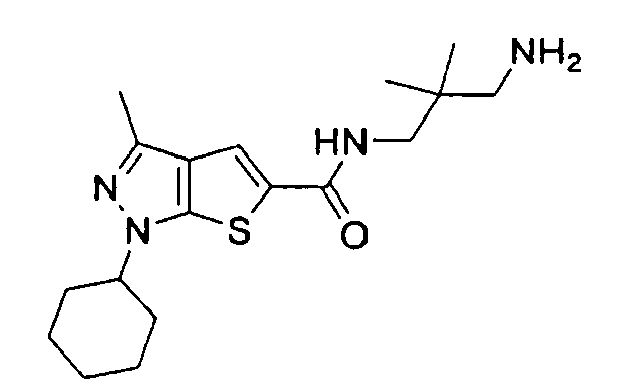
colorless solid 145-147 CDCl3 0.97(6H, s), 1.20-1.33(1H, m), 1.39-1.53(2H, m), 1.70-1.98(5H, m). 2.12-2.21(2H, m), 2.44(3H, s), 2.72(2H, s), 3.37(2H, d, J=5.2Hz), 4.17(1H, tt. J=3.9 and 11.8Hz). 7.29(1H, s), 8.48-8.53(1H. m) 349 339 
colorless solid 180-182 CDCl3 1.00(6H, s). 1.20-1.34(1H, m). 1.38-1.50(2H. m). 1.70-1.98(5H, m), 2.12-2.21(2H, m), 2.45(3H, s), 3.17(2H, d, J=6.7Hz), 3.43(2H. s), 4.09-4.13(2H, m). 4.17(1H, tt, J=3.8 and 11.8Hz), 5.60(1H, brs). 7.44(1H. s), 7.83-7.89(1H, m) 432 340 
colorless solid 153-154 CDCl3 0.83-0.91(1H, m), 0.94-1.00(1H, m). 1.20-1.50(4H, m), 1.70-1.97(5H, m), 2.12-2.21(2H, m), 2.42(3H, s). 2.57-2.62(1H, m), 3.05-3.19(2H, m), 3.90-3.98(1H, m), 4.16(1H, tt, J=3.9 and 11.8Hz), 6.35(1H, brs), 7.32(1H, s) 334 -
[Table 114] Example No. Chemical Structure propeties m.p.(°C) (recryst. solvent) 1H-NMR MS(FAB) (M+1)+ 341 
pale brown solid 220(dec.) DMSO-d6 1.16-1.32(1H, m), 1.38-1.51(2H, m), 1.63-1.87(5H, m), 2.02-2.11 (2H, m). 2.39(3H, s), 3.26-3.39(4H, m), 3.67(2H, s), 4.16-4.26(1H, m), 6.91-6.96(2H, m), 7.56-7.61(2H, m), 8.00(1H, s), 8.01-8.03(1H, m), 10.06(1H, brs) 438 342 
pale brown solid 155(dec.) CDCl3 2.11-2.28(4H, m), 2.47(3H, s), 3.45-3.49(2H, m), 3.52-3.61(4H, m), 3.87(2H, s), 4.12-4.18(2H, m). 4.39-4.49(1H, m), 6.01(1H, brs), 6.87-6.93(2H, m), 7.47(1H, s), 7.50-7.56(2H, m), 7.58(1H, brs) 440 343 
colorless solid 155.5-157 CDCl3 1.22-1.35(1H, m), 1.39-1.52(2H, m), 1.72-1.98(5H. m), 2.16-2.24(2H, m), 2.47(3H, s), 3.93(3H, s), 4.20(1H, tt. J=3.8 and 11.8Hz), 7.45(1H, t, J=7.9Hz), 7.50(1H, s). 7.74(1H, brs). 7.81(1H, dt, J=7.9 and 1.3Hz). 7.99-8.04(1H, m), 8.11-8.13(1H, m) 398 344 
colorless foamy solid CDCl3 1.20-1.32(1H, m), 1.36-1.50(2H, m), 1.71-1.96(5H, m), 2.15-2.22(2H, m), 2.42(3H, s), 4.18(1H, tt, J=3.8 and 11.8Hz). 7.42(1H, t, J=7.9Hz), 7.64(1H, s), 7.80-7,85(1H, m), 8.05-8.10(1H, m), 8.13-8.16(1H. m) 8.30(1H, brs) 384 -
[Table 115] Example No. Chemical Structure propeties m.p.(°C) (recryst. solvent) 1H-NMR MS(FAB) (M+1)+ 345 
colorless solid CDCl3 1.25-1.35(1H, m), 1.39-1.52(2H, m), 1.72-1.98(5H, m), 2.16-2.24(2H, m), 2.47(3H, s), 3.02(3H, 226-228brs), 3.13(3H, brs), 4.19(1H, tt. J=3.9 and 11.8Hz), 7.12-7.16(1H, m), 7.34-7.39(1H, m), 7.57(1H, s), 7.60(1H, brs), 7.64-7.68 (1H, m), 8.15 (1H, brs) 411 346 
colorless solid 218-220 CDCl3 1.24-1.36(1H, m), 1.39-1.52(2H, m), 1.72-1.98(5H. m), 2.17-2.25(2H, m), 2.47(3H, s), 3.45-3.89(8H, m), 4.15-4.25(1H, m), 7.15-7.20(1H, m), 7.38-7.43(1H, m), 7.51(1H, s), 7.59-7.64(1H, m), 7.71-7.74(1H, m), 7.81 (1H, brs) 453 347 
colorless solid 185-187 CDCl3 1.18-1.32(2H, m), 1.55-1.67(2H, m). 2.04-2.33(9H, m), 2.43(3H, s). 3.55(2H, dt. J=2.4 and 11.7Hz). 3.69(3H, s). 3.88-3.99(1H, m). 4.09-4.16(2H, m). 4.36-4.45(1H, m), 5.69-5.74(1H, m), 7.31 (1H, s) 406 348 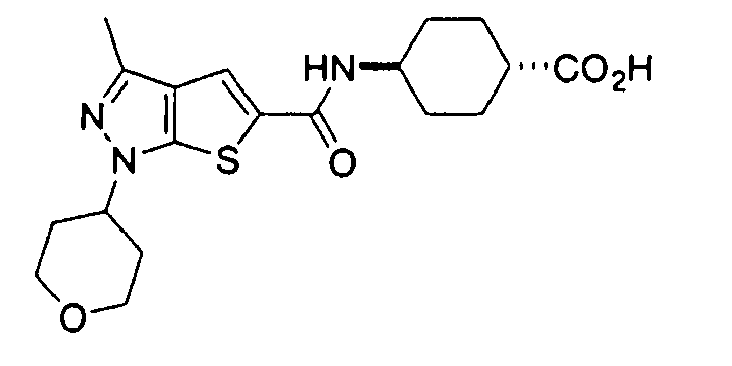
colorless solid 267-270 DMSO-d6 1.27-1.47(4H, m), 1.85-2.04(8H, m), 2.12-2.22(1H, m), 2.33(3H, s). 3.49(2H, dt. J=2.4 and 11.6Hz), 3.63-3.72(1H, m), 3.95-4.00(2H, m), 4.43-4.52(1H, m), 7.81(1H, s), 8.25-8.29(1H, m) 392 -
[Table 116] Example No. Chemical Structure propeties m.p.(°C) (recryst. solvent) 1H-NMR MS(FAB) (M+1)+ 349 
colorless solid 232-234 CDCl3 1.22-1.34(2H, m), 1.69-1.90(4H, m), 2.08-2.26(6H, m), 2.44(3H, s), 2.49(1H, tt, J=3.6 and 11.6Hz), 2.94(3H, s), 3.06(3H, s), 3.55(2H, dt, J=2.4 and 11.7Hz), 3.90-4.03(1H, m), 4.10-4.17(2H, m), 4.36-4.46(1H, m), 5.69-5.74(1H, m), 7.31(1H, s) 419 350 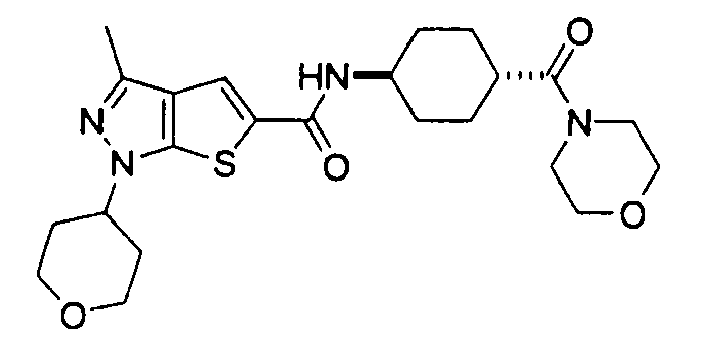
colorless solid 220-222 CDCl3 1.20-1.35(2H, m), 1.71-1.89(4H, m), 2.08-2.27(6H, m), 2.40-2.48(1H, m), 2.44(3H, s), 3.47-3.72(10H, m), 3.91-4.01(1H, m), 4.09-4.17(2H, m), 4.37-4.46(1H, m), 5.67-5.72(1H, m), 7.31(1H, s) 461 351 
colorless solid 255-260 DMSO-d6 1.17-1.53(6H, m), 1.62-2.07(10H, m), 2.36(3H, s), 2.48-2.54(1H, m), 2.91-3.03(1H, m), 3.13-3.24(1H, m), 3.47-3.55(2H, m), 3.61-3.79(3H, m), 3.88-4.00(3H, m), 4.43-4.53(1H, m), 4.72-7.75(1H, m). 7.83(1H, s), 8.26-8.29(1H, m) 475 352 
colorless solid 200-203 CDCl3 2.20-1.33(2H, m), 1.70-1.88(4H, m), 2.08-2.27(6H, m), 2.31(3H, s), 2.35-2.48(5H. m), 2.43(3H, s), 3.48-3.66(6H, m), 3.90-4.02(1H, m), 4.10-4.16(2H, m), 4.36-4.47(1H, m), 5.65-5.71(1H, m), 7.31(1H, s) 474 -
[Table 117] Example No. Chemical Structure propeties m.p.(°C) (recryst. solvent) 1H-NMR MS(FAB) (M+1)+ 353 
colorless solid 128-129 CDCl3 1.21-1.35(1H, m), 1.38-1.52(2H, m), 1.71-2.96(7H, m), 2.05-2.22(2H, m), 2.44(3H, s), 2.50-2.59(6H, m), 3.52-3.57(2H, m), 3.76-3.81 (4H, m), 4.14-4.24(1H, m), 7.38(1H, s), 7.67-7.73(1H, m) 391 354 
colorless solid 138-138.5 CDCl3 1.22-1.34(1H, m), 1.37-1.51 (2H, m), 1.72-1.96(5H, m), 2.14-2.21 (2H, m), 2.45(3H, s), 2.49-2.54(4H, m), 2.59(2H, t. J=5.9Hz), 3.51-3.57(2H, m), 3.74-3.78(4H, m), 4.17(1H, tt. J=3.8 and 11.8Hz), 6.50-6.55(1H, m), 7.32(1H, s) 377 355 
colorless solid 122-123 CDCl3 1.22-1.53(5H, m), 1.59-1.66(4H, m), 1.71-1.97(5H, m), 2.14-2.22(2H, m), 2.40-2.48(4H, m), 2.45(3H, s). 2.52-2.56(2H, m), 3.47-3.54(2H, m), 4.17(1H, tt, J=3.8 and 11.8Hz), 6.73-6.79(1H, m), 7.31(1H, s) 375 356 
colorless solid 175-178 DMSO-d6 0.90-1.03(2H, m), 1.23-1.37(3H, m), 1.75-2.06(8H, m), 2.36(3H, s), 3.20-3.26(2H, m), 3.46- 3.54(2H, m), 3.59-3.72(1H, m), 3.94-4.01(2H, m), 4.38-4.52(2H, m), 7.81(1H, s), 8.23-8.28(1H, m) 378 -
[Table 118] Example No. Chemical Structure propeties m.p.(°C) (recryst. solvent) 1H-NMR MS(FAB) (M+1)+ 357 
colorless solid 193-195 CDCl3 1.02-1.27(4H, m), 1.62-1.87(3H, m), 2.06-2.25(6H, m), 2.43(3H, s), 2.46(3H, s), 3.55(2H, dt, J=2.5 and 11.7Hz), 3.80-3.92(3H, m), 4.10-4.16(2H, m), 4.36-4.46(1H, m), 5.67-5.72(1H, m), 7.30(1H, s), 7.34-7.39(2H, m), 7.78-7.93(2H, m) 532 358 
colorless solid 165-167 CDCl3 1.01-1.28(4H, m), 1.43-1.56(1H, m), 1.84-1.95(2H, m), 2.08-2.25(8H, m), 2.38-2.42(4H, m), 2.44(3H, s), 3.55(2H, dt, J=2.4 and 11.8Hz), 3.68-3.73(4H, m), 3.85-3.95(1H, m), 4.09-4.17(2H, m), 4.35-4.46(1H, m), 5.68-5.73(1H, m), 7.31(1H, s) 447 359 
pale yellow solid 158-160 CDCl3 1.00-1.27(4H, m), 1.36-1.50(1H, m), 1.84-1.92(2H, m), 2.06-2.17(8H, m), 2.20(6H, s), 2.44(3H, s), 3.55(2H, dt. J=2.4 and 11.7Hz), 3.83-3.98(1H, m), 4.10-4.17(2H, m), 4.36-4.47(1H, m). 5.68-5.73(1H, m). 7.31(1H, s) 405 360 
pale yellow solid CDCl3 1.01-1.28(4H, m). 1.42-1.55(1H, m), 1.85-1.93(2H, m), 2.08-2.25(8H, m), 2.09(3H, s), 2.33-2.42(4H, m), 2.44(3H, s), 3.43-3.48(2H, m), 3.55(2H, dt, J=2.3 and 11.7Hz), 3.59-3.63(2H, m), 4.10-4.17(2H, m), 4.37-4.47(1H, m), 5.70-5.75(1H, m), 7.32(1H, s) 488 -
[Table 119] Example No. Chemical Structure propeties m.p.(°C) (recryst. solvent) 1H-NMR MS(FAB) (M+1)+ 361 
colorless solid 224-225 DMSO-d6 1.92-2.10(4H, m), 2.42(3H, s), 2.64(6H, s). 3.51 (2H. dt. J=2.4 and 11.5Hz). 3.96-4.02(2H, m), 4.50-4.60(1H, m), 7.44-7.49(1H, m), 7.62-7.67(1H, m), 8.10-8.16(1H, m), 8.17(1H, s), 8.18-8.20(1H, m), 10.57(1H, brs) 449 362 
colorless solid 226-227 DMSO-d6 1.91-2.10(4H, m). 2.42(3H. s), 3.22(3H, s), 3.48-3.57(2H, m), 3.96-4.03(2H, m), 4.50-4.60(1H, m). 7.64-7.68(2H, m), 8.06-8.12(1H, m), 8.14(1H. s), 8.34(1H, brs), 10.61(1H, brs) 420 363 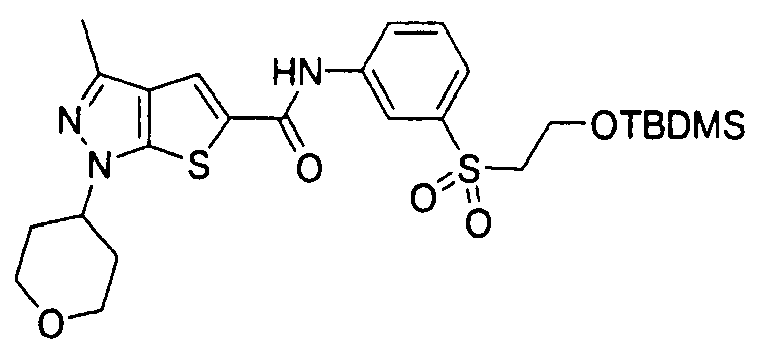
colorless solid 181-182 CDCl3 -0.04(6H, s). 0.77(9H, s), 2.12-2.284H, m), 2.50(3H, s), 3.37-3.43(2H, m), 3.57(2H, dt, J=2.5 and 11.7Hz), 3.99-4.05(2H, m), 4.12-4.18(2H, m), 4.40-4.50(1H, m), 7.55-7.61(1H, m), 7.60(1H, s), 7.67-7.71(1H, m), 8.01-8.04(1H, m), 8.09(1H, brs). 8.22-8.26(1H, m) 564 364 
colorless solid 229-232 DMSO-d6 1.92-2.09(4H, m), 2.42(3H, s), 3.43-3.48(2H, m), 3.51(2H, dt, J=2.4 and 11.6Hz), 3.66-3.74(2H, m), 3.96-4.03(2H, m), 4.49-4.60(1H, m), 4.88-4.93(1H, m), 7.59-7.67(2H, m), 8.08-8.13(1H, m), 8.14(1H, s), 8.30-8.32(1H, m), 10.61(1H, brs) 450 -
[Table 120] Example No. Chemical Structure propeties m.p.(°C) (recryst. solvent) 1H-NMR MS(FAB) (M+1)+ 365 
colorless solid 201-206 (EtOH/(iso- Pr)2O) DMSO-d6 1.16-1.30(1H. m), 1.36-1.51(2H, m), 1.54-1.92(9H, m), 2.02-2.10(2H, m), 2.34(6H, s). 2.40(3H, s), 2.82-2.92(2H, m), 3.25-3.33(2H, m), 3.62-3,70(1H, m), 4.10-4.25(1H, m), 7.12-7.21(1H, m), 7.39-7.45(1H, m), 7.62-7.70(1H, m), 8.03(1H, s), 10.29(1H, brs) 457 366 
colorless solid 211-213 (iso-PrOH) DMSO-d6 1.16-1.31(1H, m), 1.36-1.91(11H, m), 2.02-2.10(2H, m), 2.29(3H, s). 2.40(3H, s). 2.77-2.87(2H, m), 3.22-3.30(2H, m), 3.58-3.67(1H, m), 4.15-4.26(1H, m), 7.08-7.18(3H, m), 7.38-7.44(1H, m), 7.45-7.50(2H, m), 7.61-7.69(1H, m), 8.03(1H, s), 10.29(1H, brs) 457 367 
colorless solid 223-228 (Et2O/AcOEt) CD3OD 1.26-1.41(1H, m), 1.46-1.60(2H, m), 1.73-2.07(7H, m), 2.12-2.28(4H, m), 2.46(3H, s), 2.70(3H, s), 3.53-3.66(2H, br), 3.74-3.91(2H, br), 4.02-4.14(1H, br), 4.22(1H, tt, J=3.9 and 11.8Hz), 7.60-7.66(2H, m), 7.89-7.96(2H, m), 7.91(1H, s), 10.26(1H, brs) 439 368 
colorless solid 255(dec.) (EtOH/H2O) DMSO-d6 1.19-1.31(1H, m), 1.39-1.52(2H, m), 1.65-1.89(7H, m), 1.96-2.13(4H, m), 2.29(3H, s), 2.40(3H, s), 3.22-3.95(4H, m), 4.23(1H, tt. J=3.8 and 11.6Hz), 7.11(2H, d, J=8.0Hz), 7.35-7.66(1H, br), 7.47(2H, d, J=8.0Hz), 7.72-7.91(2H, br), 8.07(1H, brs), 10.38(1H, brs) 439 -
[Table 121] Example No. Chemical Structure propeties m.p.(°C) (recryst. solvent) 1H-NMR (M+1)+ 369 
colorless solid 226-227.5 (EtOH) CDCl3 1.19-1.32(2H, m), 1.36-1.48(2H, m), 1.93-2.02(2H, m), 2.07-2.28(7H, m), 2.43(3H, s), 2.53-2.60(4H, m), 3.55(2H, dt, J=2.4 and 11.6Hz), 3.70-3.77(4H, m), 3.83-3.97(1H, m), 4.10-4.18(2H, m). 4.37-4.47(1H, m), 5.70-5.77(1H, m). 7.31(1H, s) 433 370 
yellow solid 189-190.5 (EtOH) CDCl3 1.21-1.33(1H, m), 1.39-1.51(2H, m). 1.53-2.03(10H, m), 2.15-2.24(2H, m), 2.44(3H, s), 3.10-3.21 (2H, m), 3.88-3.96(1H, m). 3.98-4.09(2H, m), 4.19(1H, tt, J=3.8 and 11.8Hz), 6.69(1H, d, J=9.1Hz), 7.49(1H, s), 7.63(1H, brs), 7.90(1H, dd. J=2.7 and 9.1 Hz), 8.19(1 H, d, J=2.7Hz) 440 371 
colorless solid 191-193 CDCl3 1.22-1.37(1H, m), 1.40-1.56(3H, m), 1.71-2.10(9H, m), 2.17-2.247(2H, m). 2.47(3H, s). 2.83-2.94(2H, m), 3.31-3.41(2H, m), 3.82-3.93(1H, m). 4.19(1H, tt, J=3.8 and 11.8Hz), 6.71-6.68(1H, m), 7.48(1H, s), 7.67(1H. brs), 7.90-7.99(1H, m) 475 372 
colorless solid 232-233 (EtOH) CDCl3 1.21-1.35(1H. m), 1.39-1.52(3H, m). 1.69-2.06(9H, m), 2.13-2.23(2H, m), 2.30(3H, s), 2.45(3H, s), 2.67-2.76(2H, m), 3.02-3.11(2H, m), 3.79-3.89(1H, m), 4.19(1H, tt, J=3.8 and 11.8Hz). 7.00(1H, d. J=8.4Hz), 7.32-7.41(2H, m), 7.44(1H. s), 7.56(1H, brs) 453 -
[Table 122] Example No. Chemical Structure propeties m.p.(°C) (recryst. solvent) 1H-NMR MS(FAB) (M+1)+ 373 
colorless solid 255-256.5 (EtOH) CDCl3 1.21-1.35 (1H, m), 1.39-1.57(3H, m), 1.71-1.98 (7H, m), 2.03-2.12 (2H, m), 2.16-2.23(2H, m), 2.45(3H, s), 2.94-3.03(2H, m), 3.39-3.48(2H, m), 3.88-3.97(1H, m), 4.19 (1H, tt, J=3.8 and 11.8Hz), 7.02 (1H, d, J=8.9Hz), 7.50 (1H, s), 7.70-7.82(3H, m) 464 374 
pale yellow foamy solid CDCl3 1.22-1.34 (1H, m), 1.38-1.57(3H, m), 1.69-2.08(9H, m), 2.14-2.23(2H, m), 2.45(3H, s), 2.80-2.90(2H, m), 3.21-3.31 (2H, m), 3.80-3.88(1H, m), 3.89(3H, s), 4.19(1H, tt, J=3.8 and 11.8Hz), 7.05(1H, d, J=8.8Hz), 7.48(1H, s), 7.71 (1H, brs), 7.77 (1H, dd, J=2.6 and 8.8Hz)7.84(1H. d, J=2.6Hz) 497 375 
colorless solid >300 DMSO-d6 1.19-1.32(1H, m). 1.39-1.51(2H, m), 1.59-1.88(7H, m), 1.93-2.02(2H, m), 2.03-2.11(2H, m). 2.40(3H, s), 2.98-3.09(2H, m), 3.12-3.21(2H, m), 3.76-3.85(1H, m). 4.23(1H, tt, J=3.8 and 11.5Hz), 4.92(1H, d. J=4.2Hz), 7.70(1H, d, J=8.8Hz), 8.08-8.14(2H, m), 8.35(1 H, d, J=2.6Hz), 10.47(1 H, brs). 483 376 
yellow solid 121-123 DMSO-d6 1.30-1.42(2H, m), 1.73-1.83(2H, m), 1.91-2.09(4H, m), 2.41(3H, s). 2.99-3.10(2H, m), 3.51(2H, dt, J=2.3 and 11.6Hz), 3.63-3.72(1H, m), 3.91-4.03(4H, m), 4.44-4.54(1H, m), 4.67(1H, d, J=4.2Hz), 6.85(1H, d, J=9.2Hz), 7.82(1H, dd, J=2.7 and 9.2Hz), 8.37(1H, d, J=2.7Hz), 10.13(1H, brs), 442 -
[Table 123] Example No. Chemical Structure propeties m.p.(°C) (recryst. solvent) 1H-NMR MS(FAB) (M+1)+ 377 
colorless solid 194-195 (EtOH) CDCl3 1.53-1.69(4H, m). 1.74-1.82(2H, m). 1.97-2.25(6H, m), 2.31-2.40(2H, m), 2.44(3H, s), 2.50-2.59(1H, m), 2.94-3.03(2H, m), 3.41(2H, dt, J=1.7 and 11.8Hz), 3.55(2H, dt, J=2.4 and 11.6Hz), 3.92-4.08(3H, m). 4.10-4.18(2H, m), 4.36-4.47(1H. m), 5.82-5.90(1H, m), 7.33(1H, s) 433 378 
colorless solid 268-269.5 (EtOH) DMSO-d6 1.19-1.50(5H, m), 1.62-1.88(7H, m), 2.03-2.12(2H, m), 2.41(3H, s), 3.14-3.28(2H, m), 3.61-3.80(2H, m), 3.99-4.09(1H, m), 4.24(1H, tt, J=3.8 and 11.5Hz), 4.77(1H, d, J=4.2Hz). 7.58(1H, d, J=8.6Hz), 8.10(1H, s), 8.24(1H. dd, J=2.4 and 8.6Hz), 8.88(1H, d. J=2.4Hz). 10.58(1H, brs), 468 379 
colorless solid 249-251.5 (EtOH) DMSO-d6 1.19-1.32(1H, m), 1.39-1.51(2H, m), 1.63-1.89(5H, m), 2.03-2.12(2H, m), 2.41(3H, s). 3.33-3.41(2H, m), 3.50-3.58(2H, m), 4.23(1H. tt, J=3.8 and 11.4Hz), 4.79(1H, d. J=5.4Hz), 8.04(1H, d. J=8.6Hz), 8.12(1H, s), 8.34(1H, dd. J=2.4 and 8.6Hz). 8.55-8.63(1H, m), 8.95(1H. d, J=2.4Hz), 10.67(1H, brs), 428 380 
colorless solid 207-209 DMSO-d6 1.19-1.32(1H, m), 1.39-1.51(2H, m), 1.63-1.89(5H. m), 2.03-2.12(2H, m), 2.19(3H, s). 2.24-2.40(4H, m), 2.41(3H, s), 3.42-3.51(2H, m). 3.60-3.69(2H, m), 4.24(1H. tt. J=3.9 and 11.5Hz).7.61(1H. d. J=8.6Hz). 8.10(1H, s), 8.25(1H, dd. J=2.5 and 8.6Hz), 8.89(1H, d, J=2.5Hz), 10.60(1H, brs), 467 -
[Table 124] Example No. Chemical Structure propeties m.p.(°C) (recryst. solvent) 1H-NMR MS(FAB) (M+1)+ 381 
colorless solid 214-215.5 CDCl3 1.22-1.33(1H, m). 1.38-1.51(2H, m), 1.71-1.98(5H, m). 2.15-23(2H, m). 2.29(6H, s), 2.43(3H, s). 2.53(2H. t, J=6.2Hz), 3.52-3.60(2H, m), 4.19(1H, tt, J=3.8 and 11.8Hz). 7.62(1H, s), 8.12-8.34(4H, m). 8.78-8.82(1H, m) 455 382 
colorless solid 252-254 DMSO-d6 1.18-1.32(3H, m), 1.39-1.53(4H, m), 1.64-1.89(9H, m), 2.02-2.12(2H, m), 2.41(3H, s), 3.36-3.46(1H, m), 3.68-3.80(1H, m), 4.24(1H, tt, J=3.8 and 11.5Hz). 4.55(1H, d. J=4.4Hz), 8.03(1H, d, J=8.6Hz), 8.12(1H, s), 8.30-8.38(2H, m), 8.94(1H, d, J=2.4Hz), 10.67(1H.brs). 482 383 
colorless solid 197.5-199.5 CDCl3 1.22-1.35(1H, m), 1.39-1.51(2H, m), 1.71-2.08(7H, m), 2.13-2.25(2H, m), 2.36(1.5H. s). 2.40(1.5H. s). 2.47(3H, s). 2.56-2.2.70(3H. m), 2.73-2.83(1H, m), 3.52-3.68(2H, m), 3.82-3.91(2H, m), 4.20(1H, tt. J=3.8 and 11.8Hz), 7.31-7.38(1H, m), 7.76-7.87(1H, m), 7.95(1H, s), 8.48-8.58(1H, m), 9.33(1 H, brs) 481 384 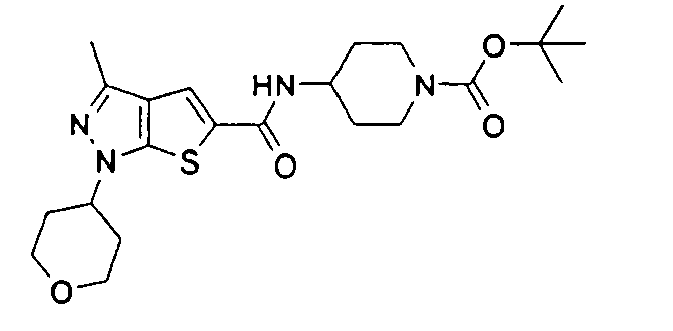
colorless solid 175-180 CDCl3 1.33-1.54(2H, m), 1.45(9H, s), 1.98-2.06(2H, m), 2.09-2.25(4H, m), 2.44(3H, s), 2.83-2.97(2H, m), 3.51-3.61(2H, m), 4.02-4.19(5H, m), 4.35-4.48(1H, m), 5.82-5.89(1H, m), 7.35(1H, s) 449 -
[Table 125] Example No. Chemical Structure propeties m.p.(°C) (recryst. solvent) 1H-NMR MS(FAB) (M+1)+ 385 
colorless solid 205-214 CDCl3 1.37-1.9(2H, m), 2.00-2.25(6H, m), 2.44(3H, s), 2.70-2.80(2H, m), 3.08-3.17(2H, m), 3.55(2H, dt, J=2.4 and 11.6Hz), 4.00-4.19(3H, m), 4.36-4.48(1H, m), 5.81-5.90(1H, m), 7.34(1H, s) 349 386 
colorless solid 239-240 (EtOH) CDCl3 1.46-1.59(2H, m), 2.00-2.25(6H, m), 2.44(3H, s), 2.83(6H, s), 2.89-2.99(2H, m), 3.55(2H, dt, J=2.4 and 11.6Hz). 3.64-3.73(2H, m), 4.08-4.19(3H, m), 4.37-4.47(1H, m), 5.91-5.98(1H, m), 7.35(1H, s) 420 387 
colorless solid 214.5-217 CDCl3 1.37-1.60(4H, m), 1.46(9H, s), 1.73-1.85(2H. m). 2.01-2.25(6H, m), 2.32-2.51(3H, m), 2.44(3H, s). 2.63-2.76(2H, m), 2.89-2.97(2H, m), 3.55(2H, dt, J=2.4 and 11.6Hz), 3.90-4.01(1H, m), 4.08-4.22(4H, m), 4.36-4.48(1 H, m), 5.79-5.86(1 H, m), 7.33(1 H, s) 532 388 
colorless solid 180-182.5 CDCl3 1.36-1.59(4H, m), 1.78-1.88(2H. m), 2.00-2.25(6H, m), 2.31-2.50(3H, m), 2.44(3H, s), 2.55-2.65(2H, m), 2.89-2.99(2H, m), 3.11-3.20(2H, m), 3.55(2H, dt, J=2.4 and 11.6Hz), 3.90-4.01(1H, m), 4.09-4.19(2H, m), 4.37-4.48(1H, m), 5.73-5.81(1H, m), 7.32(1H, s) 432 -
[Table 126] Example No. Chemical Structure propeties m.p.(°C) (recryst. solvent) 1H-NMR MS(FAB) (M+1). 389 
colorless solid 235.5-237 (EtOH) CDCl3 1.38-1.58(4H, m), 1.80-1.91 (2H, m), 2.01-2.25(6H, m), 2.09(3H, s), 2.30-2.40 (2H, m), 2.44(3H, s), 2.47-2.60 (2H, m), 2.87-2.94 (2H, m), 2.99-3.09(2H, m), 3.55 (2H, dt, J=2.4 and 11.6Hz), 3.81-4.00 (2H, m), 4.09-4.18(2H, m), 4.35-4.46 (1H, m). 4.62-4.70 (1H, m), 5.75-5.81 (1H, m), 7.33 (1H, s) 474 390 
colorless solid 273-275.5 CDCl3 1.46-1.58(2H, m), 1.60-1.72(2H, m), 1.88-1.96 (2H, m), 2.02-2.24(6H, m), 2.32-2.49(3H, m), 2.44(3H, s), 2.64-2.74(2H, m), 2.78(3H, s), 2.88-2.96(2H. m), 3.55(2H, dt, J=2.4 and 11.6Hz), 3.81-4.01(3H, m), 4.10-4.18(2H, m), 4.38-4.48(1H, m), 5.73-5.80(1H, m), 7.33(1H, s) 510 391 
colorless solid 141-145 CDCl3 1.20-1.32(2H, m), 1.38-1.52(2H, m), 1.46(9H, s), 1.89-1.98(2H, m), 2.08-2.24(6H, m), 2.28-2.38(1H, m), 2.43(3H, s), 2.49-2.55(4H, m), 3.39-3.47(4H, m), 3.55(2H, dt, J=2.4 and 11.6Hz), 3.82-3.93(1H, m), 4.09-4.16(2H, m), 4.37-4.47(1H, m), 5.71-5.78(1H, m), 7.31(1H, s) 532 392 
colorless solid 209-210.5 CDCl3 1.47(9H, s), 1.54-1.80(6H, m), 1.83-1.92(2H, m), 2.09-2.28(5H, m), 2.45(3H, s), 2.48-2.56(4H, m), 3.41-3.49(4H, m), 3.56(2H, dt, J=2.4 and 11.6Hz), 4.10-4.22(3H, m), 4.37-4.48(1H, m), 5.93-6.00(1H, m), 7.33(1H, s) 532 -
[Table 127] Example No. Chemical Structure propeties m.p. (°C) (recryst. solvent) 1H-NMR MS(FAB) (M+1)+ 393 
colorless solid 270 (dec.) DMSO-d6 1.31-1.48(2H, m), 1.55-1.71(2H. m), 1.88-2.08(6H, m). 2.11-2.20(2H, m). 2.36(3H, s), 3.42-3.80(10H, m), 3.93-4.00(2H, m), 4.41-4.51(1H, m), 7.84(1H, s), 8.35-8.40(1H, m), 9.40-9.74(2H, m), 11.79-11.91 (1H, m) 432(free) 394 
colorless solid 209-220 DMSO-d6 1.56-1.69(2H, m), 1.85-2.07(10H, m), 2.38(3H, s), 3.29-3.68(11H, m), 3.92-4.09(3H, m). 4.42-4.53(1 H, m), 8.04(1 H, s), 8.07-8.11 (1 H, m), 9.37-10.00(2H, m), 11.69-11.81 (1H, m) 432(free) 395 
colorless solid 255-256 (EtOH) CDCl3 1,20-1.32(2H, m), 1.36-1.49(2H, m), 1.89-1.98(2H. m), 2.07-2.24(6H, m), 2.09(3H, s), 2.28-2.40(1H, m), 2.43(3H, s), 2.50-2.60(4H, m), 3.41- 3.49(2H, m), 3.55(2H, dt, J=2.4 and 11.6Hz), 3.59-3.66(2H, m), 3.82-3.95(1H, m), 4.09-4.17(2H, m), 4.35-4.47(1H, m), 5.22-5.29(1H, m), 7.32(1H, s) 474 396 
colorless solid 245-246.5 (EtOH) CDCl3 1.20-1.32(2H, m), 1.37-1.49(2H, m), 1.89-1.99(2H, m), 2.08-2.25(6H, m), 2.30-2.40(1H, m), 2.43(3H, s), 2.63-2.73(4H, m), 2.77(3H, s), 3.19- 3.31(4H, m), 3.55(2H, dt, J=2.4 and 11.6Hz), 3.82-3.95(1H, m), 4.09-4.19(2H, m), 4.37-4.47(1H, m), 5.69-5.78(1H, m), 7.32(1H, s) 510 -
[Table 128] Example No. Chemical Structure propeties m.p.(°C) (recryst. solvent) 1H-NMR MS(FAB) (M+1)+ 397 
colorless solid 226.5-227.5 (EtOH) CDCl3 1.58-1.79(6H, m), 1.81-1.92(2H, m), 2.08-2.29 (5H, m), 2.09(3H, s), 2.45(3H, s), 2.48-2.60(4H, m), 3.43-3.51(2H, m), 3.56(2H, dt, J=2.4 and 11.6Hz), 3.60-3.69(2H, m), 4.09-4.22(3H, m), 4.38-4.48 (1H, m), 5.90-5.99 (1H, m), 7.33 (1H, s) 474 398 
colorless solid 198-199 (EtOH) CDCl3 1.43-1.57(2H, m), 2.00-2.25 (6H, m), 2.44 (3H, s), 2.90-3.01 (2H, m), 3.24-3.31(4H, m), 3.55(2H, dt, J=2.5 and 11.6Hz), 3.65-3.78 (6H, m), 4.08-4.20(3H, m), 4.36-4.48 (1H, m), 5.80-5.87 (1H, m), 7.33 (1H, s) 462 399 
colorless solid 211.5-213 (AcOEt) CDCl3 1.431.59(2H, m), 2.00-1.99-1.27(6H. m), 2.30(3H, s), 2.36-2.42(4H, m), 2.44(3H, s), 2.90-3.01(2H, m), 3.25-3.34(4H, m), 3.55(2H, dt, J=2.4 and 11.6Hz), 3.67-3.78(2H, m), 4.08-4.20(3H, m), 4.36-4.47(1H, m), 5.98-6.06(1H, m), 7.36(1H, s) 475 400 
pale reddish brown solid 199-204 CDCl3 1.23-1.39(2H, m), 1.41-1.53(3H, m), 2.00-2.24(8H. m), 2.43(3H, s), 3.55(2H, dt, J=2.4 and 11.6Hz), 3.60-3.71(1H, m), 3.89-4.00(1H, m), 4.09-4.17(2H, m), 4.36-4.47(1H, m), 5.69-5.75(1H, m), 7.31(1H, s) 364 -
[Table 129] Example No. Chemical Structure propeties m.p.(°C) (recryst. solvent) 1H-NMR MS(FAB) (M+1)+ 401 
colorless solid 177-178.5 CDCl3 1.71-1.83(2H. m), 2.09-2.25(4H, m), 2.32-2.41 (2H. m), 2.44(3H, s). 2.47-2.59(4H, m), 3.56(2H, dt, J=2.5 and 11.6Hz), 4.09-4.18(2H, m), 4.38-4.50(2H, m), 5.89-5.96(1H, m), 7.37(1H, s) 362 402 
colorless solid 199-200 (iso-PrOH) CDCl3 1.17(6H, d, J=6.3Hz), 1.19-1.31(2H, m), 1.36-1.49(2H, m), 1.90-2.00(4H, m), 2.08-2.28(7H, m), 2.43(3H, s), 2.70-2.78(2H, m), 3.55(2H, dt, J=2.4 and 11.7Hz), 3.60-3.70(2H, m), 3.82-3.95(1H, m), 4.09-4.17(2H, m), 4.35-4.46(1H, m), 5.66-5.72(1H, m), 7.31(1H, s) 461 403 
colorless solid 202-208 CDCl3 1.19(6H, d, J=6.2Hz), 1.56-1.92(10H, m), 2.09-2.27(5H, m), 2.45(3H, s), 2.83-2.90(2H, m), 3.56(2H, dt, J=2.4 and 11.6Hz), 3.61-3.71(2H, m), 4.09-4.23(3H, m), 4.37-4.48(1H, m). 5.91-6.00(1H, m), 7.33(1H, s) 461 404 
colorless solid 170.5-172 (AcOEt) CDCl3 1.21-1.35(1H, m), 1.39-1.52(2H, m), 1.71-1.99(5H, m), 2.14-2.25(2H, m), 2.45(3H, s), 4.19(1H, tt, J=3.8 and 11.8Hz), 4.75(2H, s), 7.27(1H, d, J=8.5Hz), 7.56(1H, s), 7.88(1H, brs), 8.19(1H, dd, J=2.4 and 8.5Hz), 8.61(1H, d, J=2.4Hz) 371 -
[Table 130] Example No. Chemical Structure propeties m.p.(°C) (recryst. solvent) 1H-NMR MS(FAB) (M+1)+ 405 
colorless solid 232-233 CDCl3 2.10-2.26(4H, m), 2.45(3H, s), 3.57(2H, dt, J=2.5 and 11.5Hz), 4.00(3H, s), 4.10-4.19(2H, m), 4.39-4.49(1H, m), 7.63(1H, s), 8.17(1H, d, J=8.6Hz), 8.20(1H, brs), 8.53(1H, dd, J=2.7 and 8.6Hz), 8.71(1H, d. J=2.7Hz) 401 406 
colorless solid 262-264 DMSO-d6 1.90-2.10(4H, m), 2.43(3H, s), 3.51(2H, dt, J=2.3 and 11.6Hz). 3.93-4.03(2H, m), 4.49-4.59(1 H, m), 8.07(1H, d, J=8.6Hz), 8.16(1H, s), 8.35(1H, dd, J=2.3 and 8.6Hz), 9.00(1H, d. J=2.3Hz), 10.74(1H, brs), 387 407 
colorless solid 258-259.5 (EtOH) DMSO-d6 1.20-1.32(2H, m), 1.40-1.54(2H, m), 1.73-1.89(4H. m), 1.91-2.10(4H, m), 2.43(3H, s), 3.34-3.45(1H, m), 3.51(2H, dt, J=2.3 and 11.6Hz), 3.69-3.80(1H, m), 3.94-4.03(2H, m), 4.49-4.58(2H, m), 8.03(1H, d, J=8.7Hz), 8.13(1H, s), 8.29-8.38(1H, m), 8.95(1H, d, J=2.4Hz), 10.67(1H, brs), 484 408 
colorless solid 185-186 (AcOEt) CDCl3 2.10-2.27(4H, m), 2.32(6H, s), 2.45(3H, s), 2.58(2H, t, J=6.2Hz), 3.51-3.61(4H, m), 4.10-4.19(2H. m), 4.39-4.50(1H, m), 7.66(1H, s), 8.14-8.19(1H, m), 8.20-8.31(3H, m), 8.78(1H, d, J=2.3Hz) 457 -
[Table 131] Example No. Chemical Structure propeties m.p.(°C) (recryst. solvent) 1H-NMR MS(FAB) (M+1)+ 409 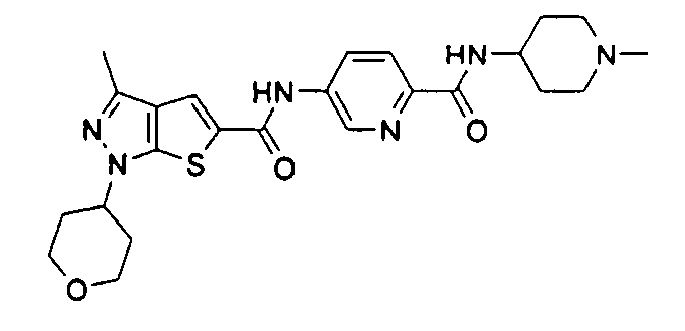
colorless solid 240-242 (AcOEt) CDCl3 1.60-1.73(2H, m). 1.98-2.07(2H, m), 2.10-2.29(6H, m), 2.30(3H, s), 2.46(3H, s), 2.78-2.88(2H, m), 3.57(2H, dt, J=2.5 and 11.6Hz), 3.90-4.02(1H, m), 4.10-4.19(2H, m), 4.39-4.49(1H, m), 7.62(1H, s), 7.80-7.87(1 H, m), 8.12-8.29(3H, m), 8.77(1 H, d, J=2.3Hz) 483 410 
colorlesds solid >300 DMSO-d6 1.41-1.66(2H, m), 1.71-1.87(2H, m), 1.91-2.10(4H, m), 2.01(3H, s), 2.43(3H, s), 2.60-2.71 (1H, m), 3.09-3.20(1H, m), 3.51(2H, dt, J=2.3 and 11.6Hz), 3.79-3.89(1H, m), 3.96-4.10(3H, m), 4.31-4.40(1H, m), 4.47-4.59(1H, m), 8.02-8.08(1H, m). 8.14(1H, s). 8.31-8.38(1H, m). 8.52-8.59(1H, m), 8.96(1H, d, J=2.4Hz), 10.68(1H, brs), 511 411 
pale brown foam CDCl3 1.22-1.35(1H, m), 1.39-1.51 (2H, m), 1.70-1.98(5H, m), 2.14-2.25(2H, m), 2.46(3H, s). 2.49-2.57(4H, m), 3.64(2H, s), 3.70-3.79(4H, m). 4.20(1 H, tt. J=3.8 and 11.8Hz), 7.42(1H, d. J=8.5Hz), 7.53(1H, s), 7.74(1H, brs). 8.24(1H, dd, J=2.7 and 8.5Hz), 8.58(1H, d, J=2.7Hz) 440 412 
pale browm solid 225.5-227.5 (iso-PrOH) DMSO-d6 1.19-1.31(1H, m), 1.39-1.52(2H, m), 1.63-1.89(5H, m), 2.03-2.13(2H, m), 2.32(3H, s). 2.41(3H, s), 3.20-3.32(4H, m), 3.79-3.91(4H, m), 4.24(1H, tt, J=3.8 and 11.5Hz), 4.41-4.51(2H, m), 7.55(1H, d, J=8.5Hz), 8.13(1H, s), 8.26(1H, dd, J=2.4 and 8.5Hz), 9.03(1H, d, J=2.4Hz), 10.29(1H, brs). 10.62(1H, brs), 440(free) -
[Table 132] Example No. Chemical Structure propeties m.p.(°C) (recryst. solvent) 1H-NMR MS(FAB) (M+1)+ 413 
pale yellow solid 214.5-216 (EtOH) CDCl3 1.22-1.35(1H, m), 1.39-1.51(3H, m), 1.56-1.69(2H, m), 1.71-1.99(7H, m), 2.16-2.29(4H, m). 2.46(3H, s), 2.74-2.83(2H, m), 3.63(2H, s), 3.66-3.76(1H, m), 4.20(1H, tt, J=3.8 and 11.8Hz), 7.42(1H, d, J=8.5Hz), 7.54(1H, s), 7.79(1H, brs), 8.22(1H, dd, J=2.5 and 8.5Hz), 8.57(1H, d, J=2.5Hz) 454 414 
colorless solid 229-230.5 (AcOEt) CDCl3 1.22-1.35(1H, m), 1.40-1.51(2H, m), 1.71-1.99(5H, m), 2.09(3H, m), 2.16-2.22(2H, m), 2.41-2.56(4H, m), 2.46(3H, s), 3.47-3.52(2H, m), 3.61-3.69(2H, m), 3.66(2H, s), 4.20(1H, tt, J=3.8 and 11.8Hz), 7.40(1H, d, J=8.5Hz), 7.58(1H, s), 8.00(1H, brs), 8.25(1H, dd, J=2.6 and 8.5Hz), 8.60(1H, d, J=2.6Hz) 481 415 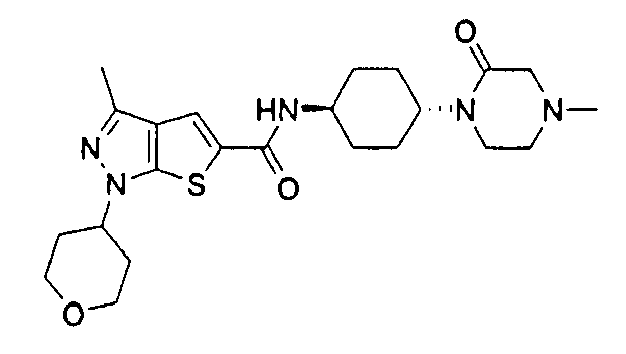
colorless solid 266-268 (EtOH) CDCl3 1.42-1.53(2H, m), 1.58-1.80(4H, m), 2.07-2.25(6H. m), 2.33(3H, s), 2.44(3H, s), 2.61-2.69(2H, m), 3.15(2H, s), 3.23-3.31(2H, m), 3.55(2H, dt, J=2.3 and 11.6Hz), 3.88-4.00(1H, m), 4.09-4.17(2H, m), 4.37-4.46(1H, m), 4.51-4.61(1H, m), 6.48-6.56(1H, m), 7.46(1H, s) 460 416 
colorless solid 263-265 (EtOH) CDCl3 1.21-1.33(1H, m), 1.37-1.52(4H, m), 1.58-1.98(9H. m), 2.11-2.21(4H, m), 2.33(3H, s), 2.44(3H, s), 2.61-2.68(2H, m), 3.14(2H, s). 3.23-3.31(2H, m), 3.88- 3.99(1H, m), 4.17(1H, tt, J=3.9 and 11.9Hz). 4.49-4.60(1H, m), 6.21-6.29(1H, m), 7.41(1H, s) 458 -
[Table 133] Example No. Chemical Structure propeties m.p.(°C) (recryst. solvent) 1H-NMR MS(FAB) (M+1)+ 417 
colorless solid 229.5-232 CDCl3 1.21-1.34(2H. m). 1.38-1.50(2H. m), 1.91-2.00(2H, m), 2.09-2.26(6H. m), 2.34-2.43(1H, m), 2.44(3H, s), 2.71-2.79(2H, m). 3.29(2H, s). 3.32-3.39(2H, m), 3.55(2H, dt, J=2.4 and 11.6Hz), 3.84-3.97(1H, m), 4.09-4.18(2H, m), 4.37-4.48(1H, m), 5.71-5.79(1H, m). 5.94(1H, brs), 7.32(1H, s) 446 418 
colorless solid 109-118 CDCl3 1.64-1.89(8H, m), 2.09-2.26(4H, m), 2.32-2.40(1H, m), 2.45(3H, s), 2.71-2.80(2H, m), 3.26(2H, s), 3.32-3.42(2H, m), 3.56(2H, dt, J=2.4 and 11.7Hz), 4.09-4.20(3H, m), 4.37-4.49(1H, m), 5,93-6.01(1H, m), 6.14(1H, brs), 7.56(1H, s) 446 419 
colorless solid 242-244 (EtOH) CDCl3 1.21-1.33(2H, m), 1.36-1.49(2H, m), 1.92-2.01(2H, m), 2.08-2.25(6H. m), 2.29-2.39(1H, m), 2.43(3H, s). 2.73-2.81(2H, m), 2.95(3H, s), 3.28(2H, s), 3.29-3.34(2H, m), 3.55(2H, dt, J=2.4 and 11.6Hz), 3.83-3.97(1H, m), 4.10-4.18(2H, m), 4.36-4.47(1H, m), 5.73-5.81 (1H, m), 7.33(1H, s) 460 420 
colorless solid 181-182 CDCl3 1.67-1.89(8H, m), 2.09-2.25(4H, m), 2.28-2.35(1H, m), 2.45(3H, s), 2.74-2.82(2H, m), 2.98(3H, s), 3.25(2H, s), 3.30-3.39(2H, m), 3.56(2H, dt, J=2.3 and 11.6Hz), 4.09-4.21(3H, m), 4.37-4.47(1H, m), 5.88-5.94(1H, m), 7.33(1H, s) 460 -
[Table 134] Example No. Chemical Structure propeties m.p.(°C) (recryst. solvent) 1H-NMR MS(FAB) (M+1)+ 421 
colorless solid 206-208.5 CDCl3 1.19-1.31(2H, m), 1.25(3H, t, J=7.1Hz). 1.39-1.51(2H, m), 1.68-1.80(2H, m), 1.88-1.98(4H. m), 2.08-2.39(10H, m), 2.43(3H, s), 2.83-2.92(2H, m), 3.55(2H, dt, J=2.4 and 11.7Hz), 3.81-3.93(1H, m), 4.09-4.18(4H, m), 4.36-4.46(1H, m), 5.67-5.73(1H, m), 7.31(1H, s) 503 422 
colorless foam CDCl3 1.26(3H, t, J=7.1 Hz), 1.54-4.81 (8H, m), 1.84-1.99(4H, m), 2.05-2.34(8H, m), 2.45(3H, s), 2.99-3.08(2H, m), 3.56(2H, dt, J=2.4 and 11.7Hz), 4.10-4.24(5H, m), 4.38-4.48(1H, m), 5.95-6.01(1H, m), 7.33(1H, s) 503 423 
colorless solid 201-202 CDCl3 1.19-1.31(4H, m), 1.33-1.57(4H, m), 1.72-1.81(2H, m), 1.90-1.99(2H. m), 2.09-2.28(8H, m), 2.30-2.39(1H, m), 2.43(3H, s), 2.88-2.98(2H, m), 3.50(2H, d. J=6.4Hz), 3.55(2H, dt, J=2.3 and 11.6Hz), 3.81-3.94(1H, m), 4.09-4.17(2H, m), 4.37-4.48(1H, m), 5.67-5.74(1H, m), 7.31(1H, s) 461 424 
colorless solid 119-122 CDCl3 1.21-1.33(2H, m), 1.40-1.71(6H, m), 1.75-1.85(4H, m), 1.87-1.97(2H, m), 2.00-2.28(7H, m), 2.45(3H, s), 3.05-3.13(2H, m), 3.48-3.60(4H, m), 4.09-4.17(2H, m), 4.19-4.27(1H, m), 4.36-4.48(1H, m). 5.99-6.07(1H, m), 7.33(1H, s) 461 -
[Table 135] Example No. Chemical Structure propeties m.p.(°C) (recryst. solvent) 1H-NMR MS(FAB) (M+1)+ 425 
colorless solid 211-213.5 (EtOH) CDCl3 1.19-1.31 (2H, m), 1.39-1.69(5H, m), 1.89-1.98 (4H, m), 2.08-2.25(6H. m), 2.30-2.40(3H, m), 2.43 (3H, s), 2.78-2.88 (2H, m), 3.55 (2H, dt, J=2.4 and 11.7Hz), 3.62-3.75(1H, m), 3.82-3.93 (1H, m), 4.09-4.17(2H, m), 4.37-4.47(1H, m), 5.69-5.76 (1H, m), 7.31 (1H, s) 447 426 
colorless solid 234.5-237 (EtOH) CDCl3 1.62-1.78(8H, m), 1.79-1.91 (4H, m), 1.98-2.07(2H, m), 2.09-2.26 (5H, m), 2.46(3H, s), 2.47-2.55 (1H, m), 2.95(3H, s), 3.06(3H, s), 3.10-3.18(2H, m), 3.56(2H, dt, J=2.4 and 11.7Hz), 4.09-4.21(3H, m), 4.38-4.46(1H, m), 5.98-6.06(1H, m), 7.36(1H, s) 502 427 
colorless solid 211-218 DMSO-d6 1.32-1.49(2H, m), 1.53-1.69(2H, m), 1.88-2.21(12H, m), 2.36(3H, s). 2.49-2.61(1H, m), 2.89-3.06(2H, m), 3.11-3.22(1H, m), 3.30-3.54(4H, m). 3.64-3.77(1H, m), 3.91-4.00(2H, m), 4.40-4.52(1H, m), 7.87(1H, s), 8.40-8.49(1H, m), 10.50-10.74(1H, m), 475(free) 428 
colorless solid 233.5-234.5 (AcOEt/EtOH) CDCl3 1.19-1.31(2H, m), 1.39-1.52(2H, m), 1.68-1.98(6H, m), 2.07-2.51(10H. m), 2.43(3H, s). 2.90-2.99(2H, m), 2.94(3H, s). 3.05(3H, s), 3.55(2H, dt, J=2.3 and 11.6Hz), 3.81-3.94(1H, m), 4.09-4.18(2H, m), 4.35-4.47(1H, m), 5.71-5.79(1H, m), 7.32(1H. s) 502 -
[Table 136] Examp le No. Chemical Structure propeties m.p. (°C) (recryst. solvent) 1H-NMR MS(FAB) (M+1)+ 429 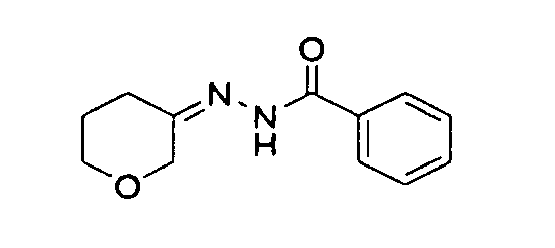
pale reddish brown viscous solid CDCl3 1.89-2.02(2H, m), 2.49-2.61 (2H, m), 2.76-2.88(2H, m), 4.21-4.40(2H. m), 7.40-7.59(3H, m), 7.71-7.90(2H, m), 8.70-8.91(1H, m) 219 430 
colorless solid 127-130.5 CDCl3 1.49-1.65(2H, m), 1.76-1.88(1H, m), 1.92-2.03(1H, m), 3.05-3.13(1H, m), 3.39-3.46(1H, m), 3.49-3.58(1H, m), 3.72-3.80(1H, m), 3.87-3.95(1H, m), 7.41-7.49(2H, m), 7.50-7.59(1H, m), 7.63(1H, brs), 7.71-7.80(2H, m) 221 431 
pale brown solid 170-181 CDCl3 1.71-1.81(2H, m), 1.91-2.01(2H, m), 2.09(3H, s), 3.20(2H. s), 3.33-3.42(1H, m), 3.56(1H, t, J=10.7Hz), 3.84-3.94(2H, m), 4,15-4.25(1H, m) 183 432 
colorless solid 124-129 CDCl3 1.80-1.90(2H, m), 2.07-2.15(1H, m), 2.19-2.30(1H, m), 2.45(3H, s), 3.41-3.51(1H, m). 3.72(1H, t. J=10.7Hz). 3.94-4.01 (2H, m), 4.39-4.49(1H, m), 9.89(1H, s) 229 -
[Table 137] Example No. Chemical Structure propeties m.p.(°C) (recryst. solvent) 1H-NMR MS(FAB) (M+1)+ 433 
pale yellow oil CDCl3 1.38(3H, t, J=7.1Hz), 1.72-1.90(2H, m), 2.18-2.31(2H, m), 2.45(3H, s), 3.60(1H, ddd, J=3.4 and 9.6 and 11.5Hz), 3.82(1H, dd, J=8.7 and 11.3Hz), 3.89-3.96(1H, m), 4.11-4.18(1H, m), 4.32-4.40(3H, m), 7.69(1 H, s) 295 434 
colorless solid 174-176 DMSO-d6 1.59-1.78(2H, m), 2.05-2.22(2H, m), 2.38(3H, s), 3.49-3.58(1H, m), 3.70-3.81(2H, m), 4.00(1H, dd, J=3.4 and 11.4Hz), 4.32-4.40(1H, m), 7.76(1H, s). 13.10(1H, brs) 267 435 
colorless solid 211.5-212.5 (EtOH) CDCl3 1.20-1.31(2H, m), 1.36-1.49(2H, m), 1.70-1.90(2H, m), 1.93-2.02(2H, m), 2.13-2.31(5H, m), 2.43(3H, s), 2.53-2.61(4H, m). 3.54-3.63(1H, m), 3,69-3.75(4H, m). 3.81(1H, dd, J=8.7 and 11.3Hz), 3.84-3.95(2H, m), 4.10-4.16(1H, m), 4.31-4.40(1H, m), 5.69-5.76(1H, m), 7.31(1H, s) 433 436 
colorless solid 223-225 (EtOH) CDCl3 1.14(3H, t. J=7.2Hz), 1.20-1.33(2H, m), 1.35-1.49(2H, m), 1.92-2.02(2H, m), 2.08-2.38(7H. m). 2.43(3H, s), 2.72-2.81(2H, m), 3.27(2H, s), 3.29-3.36(2H, m), 3.43(2H, q, J=7.2Hz), 3.55(2H, dt, J=2.4 and 11.6Hz), 3.83-3.97(1H, m), 4.09-4.20(2H, m), 4.37-4.48(1H, m), 5.76-5.83(1H, m), 7.33(1H, s) 474 -
[Table 138] Example No. Chemical Structure propeties m.p.(°C) (recryst. solvent) 1H-NMR MS(FAB) (M+1)+ 437 
colorless solid 187-190 CDCl3 1.16(3H, t, J=7.2Hz). 1.65-1.90(8H, m), 2.08-2.35(5H, m), 2.45(3H, s), 2.72-2.83(2H, m), 3.24(2H, s), 3.30-3.39(2H, m), 3.45(2H, q, J=7.2Hz). 3.56(2H, dt, J=2.5 and 11.6Hz), 4.08-4.21(3H, m), 4.37-4.47(1H, m), 5.37-5.94(1H, m), 7.33(1H, s) 474 438 
colorless solid 180-186 CDCl3 1.01-1.29(4H, m), 1.14(3H, t, J=7.2Hz), 1.40-1.53(1H, m). 1.86-1.94(2H, m), 2.07-2.27(8H, m), 2.43(3H, s), 2.62-2.69(2H, m), 3.08(2H, s), 3.29-3.33(2H, m), 3.43(2H, q, J=7.2Hz), 3.55(2H, dt, J=2.4 and 11.6Hz), 3.82-3.98(1H, m). 4.09-4.18(2H, m), 4.36-4.47(1H, m), 5.75-5.81(1H, m), 7.33(1H, s) 488 439 
colorless solid 194-197 CDCl3 1.01-1.30(4H, m), 1.40-1.54(1H, m), 1.83-1.95(2H, m), 2.07-2.29(8H, m). 2.44(3H, s), 2.51-2.60(2H, m), 2.96(3H, s). 3.09(2H, s), 3.29-3.38(2H, m), 3.55(2H, dt, J=2.3 and 11.6Hz). 3.84-3.98(1H, m), 4.09-4.19(2H, m), 4.36-4.48(1H, m), 5.78-5.86(1H, m), 7.33(1H, s) 474 440 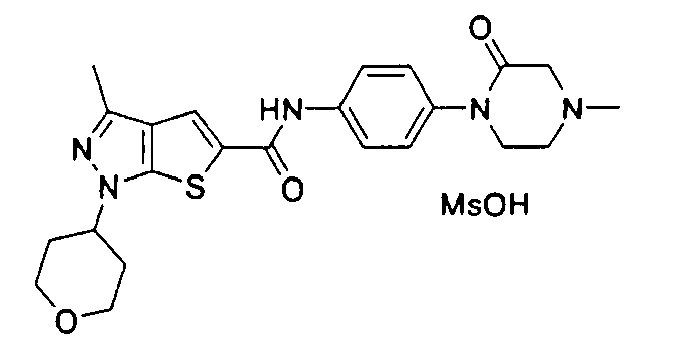
pale yellow solid 255 (dec.) (iso-PrOH) DMSO-d6 1.90-2.08(4H, m), 2.30(3H, s), 2.42(3H, s). 2.93(3H, brs), 3.51(2H, dt, J=2.3 and 11.7Hz), 3.50-4.07(8H, m), 4.47-4.57(1H, m), 7.31-7.36(2H, m), 7.76-7.81(2H, m), 8.10(1 H, s), 10.36(1 H, brs) 454 - The present invention provides thienopyrazole derivatives having selective PDE 7 (phosphodiesterase VII) inhibiting effect. These compounds are effective compounds for treating various kinds of diseases such as allergic diseases, inflammatory diseases and immunologic diseases.
Claims (22)

R1 is substituted or unsubstituted C3-C8 alkyl group, substituted or unsubstitiuted cycloalkyl group or substituted or unsubstituted heterocycloalkyl group;
R2 is a hydrogen atom or substituted or unsubstituted C1-C3 alkyl group;
R3 is a hydrogen atom, substituted or unsubstituted C1-C3 alkyl group, or a halogen atom;
R4 is substituted or unsubstituted aryl group, substituted or unsubstituted heteroaryl group, or a group -CONR5R6 or -CO2R7;
R5 and R6 are, same or different from each other, a hydrogen atom; C1-C6 alkyl group which may be substituted by a halogen atom, substituted or unsubsituted aryl group, substituted or unsubstituted heteroaryl group, substituted or unsubstituted heterocycloalkyl group, substituted or unsubstituted cycloalkyl group, a group -NR7COR8, -COR8, -NR9R10; substituted or unsubstituted cycloalkyl group; substituted or unsubstituted heterocycloalkyl group; substituted or unsubstituted aryl group; substituted or unsubstituted heteroaryl group; or substituted or unsubstituted heterocycloalkyl group in which the ring is formed together with the nitrogen atom binding R5 and R6;
R7 is a hydrogen atom, or substituted or unsubstituted C1-C3 alkyl group;
R8 is substituted or unsubstituted heterocycloalkyl group, or a a group -OH, -OR7 or -NR9R10;
R9 and R10 are, same or different from each other, a hydrogen atom, substituted or unsubstituted C1-C3 alkyl group, substituted or unsubstituted heterocycloalkyl group; substituted or unsubstituted acyl group; a group -SO2R7, or substituted or unsubstituted heterocycloalkyl group in which the ring is formed together with the nitrogen atom binding R5 and R6] or pharmaceutically acceptable salts or solvates thereof.


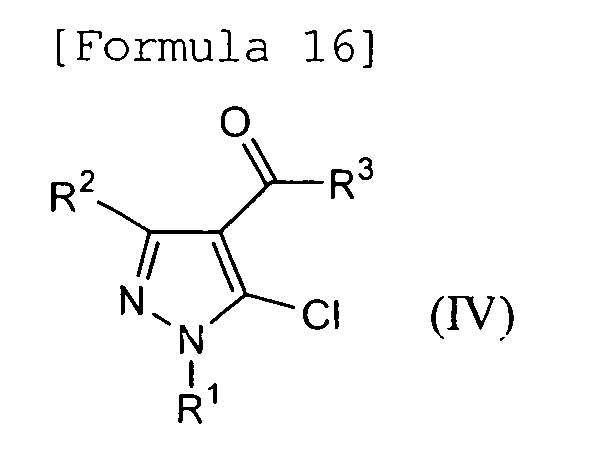
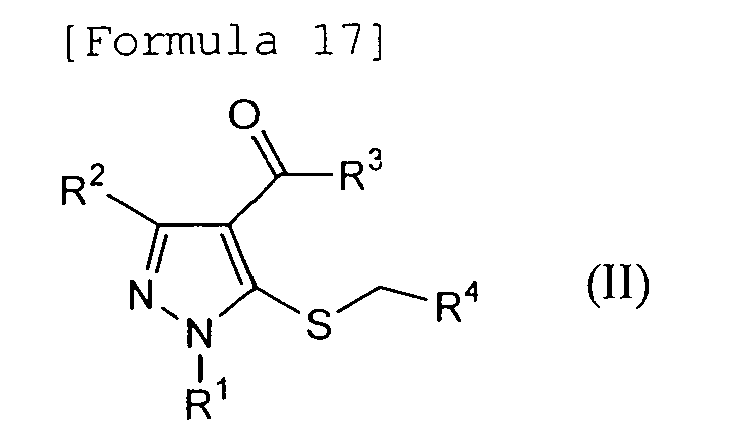
Priority Applications (4)
| Application Number | Priority Date | Filing Date | Title |
|---|---|---|---|
| DK11179011.9T DK2433943T3 (en) | 2004-07-01 | 2005-07-01 | Intermediates for thienopyrazole derivatives with PDE7 inhibitory activity |
| EP11179011.9A EP2433943B1 (en) | 2004-07-01 | 2005-07-01 | Intermediates for thienopyrazole derivatives having PDE7 inhibitory activity |
| PL11179011T PL2433943T3 (en) | 2004-07-01 | 2005-07-01 | Intermediates for thienopyrazole derivatives having PDE7 inhibitory activity |
| PL05765241T PL1775298T3 (en) | 2004-07-01 | 2005-07-01 | Thienopyrazole derivative having pde7 inhibitory activity |
Applications Claiming Priority (2)
| Application Number | Priority Date | Filing Date | Title |
|---|---|---|---|
| JP2004195836 | 2004-07-01 | ||
| PCT/JP2005/012208 WO2006004040A1 (en) | 2004-07-01 | 2005-07-01 | Thienopyrazole derivative having pde7 inhibitory activity |
Related Child Applications (1)
| Application Number | Title | Priority Date | Filing Date |
|---|---|---|---|
| EP11179011.9 Division-Into | 2011-08-26 |
Publications (3)
| Publication Number | Publication Date |
|---|---|
| EP1775298A1 true EP1775298A1 (en) | 2007-04-18 |
| EP1775298A4 EP1775298A4 (en) | 2009-07-01 |
| EP1775298B1 EP1775298B1 (en) | 2013-03-20 |
Family
ID=35782844
Family Applications (2)
| Application Number | Title | Priority Date | Filing Date |
|---|---|---|---|
| EP11179011.9A Expired - Lifetime EP2433943B1 (en) | 2004-07-01 | 2005-07-01 | Intermediates for thienopyrazole derivatives having PDE7 inhibitory activity |
| EP05765241A Expired - Lifetime EP1775298B1 (en) | 2004-07-01 | 2005-07-01 | Thienopyrazole derivative having pde7 inhibitory activity |
Family Applications Before (1)
| Application Number | Title | Priority Date | Filing Date |
|---|---|---|---|
| EP11179011.9A Expired - Lifetime EP2433943B1 (en) | 2004-07-01 | 2005-07-01 | Intermediates for thienopyrazole derivatives having PDE7 inhibitory activity |
Country Status (15)
| Country | Link |
|---|---|
| US (3) | US7932250B2 (en) |
| EP (2) | EP2433943B1 (en) |
| JP (3) | JP4810426B2 (en) |
| KR (1) | KR101377844B1 (en) |
| CN (2) | CN1976938B (en) |
| AU (1) | AU2005258410B2 (en) |
| BR (1) | BRPI0512916B1 (en) |
| CA (1) | CA2569530C (en) |
| DK (2) | DK2433943T3 (en) |
| ES (2) | ES2437755T3 (en) |
| MX (1) | MX2007000214A (en) |
| PL (2) | PL2433943T3 (en) |
| PT (1) | PT1775298E (en) |
| RU (1) | RU2376309C2 (en) |
| WO (1) | WO2006004040A1 (en) |
Cited By (14)
| Publication number | Priority date | Publication date | Assignee | Title |
|---|---|---|---|---|
| WO2008119057A2 (en) | 2007-03-27 | 2008-10-02 | Omeros Corporation | The use of pde7 inhibitors for the treatment of movement disorders |
| US7772225B2 (en) | 2005-12-09 | 2010-08-10 | Solvay Pharmaceuticals Gmbh | N-sulfamoyl-piperidineamides for the treatment or inhibition of obesity and related conditions |
| WO2010129036A1 (en) * | 2009-05-04 | 2010-11-11 | Omeros Corporation | Use of pde7 inhibitors for the treatment of movement disorders |
| WO2012064667A2 (en) | 2010-11-08 | 2012-05-18 | Omeros Corporation | Treatment of addiction and impulse-control disorders using pde7 inhibitors |
| JP2012521429A (en) * | 2009-03-23 | 2012-09-13 | メルク・シャープ・エンド・ドーム・コーポレイション | P2X3 receptor antagonist for the treatment of pain |
| US8273900B2 (en) | 2008-08-07 | 2012-09-25 | Novartis Ag | Organic compounds |
| EP2473055A4 (en) * | 2009-09-04 | 2013-02-13 | Univ Vanderbilt | MGLUR4 ALLOSTERIC POTENTIALIZERS, COMPOSITION AND METHODS FOR TREATING NEUROLOGICAL DYSFUNCTIONS |
| WO2013072693A1 (en) | 2011-11-15 | 2013-05-23 | Xention Limited | Thieno [2, 3 - c] pyrazoles for use as potassium channel inhibitors |
| US8653125B2 (en) | 2009-03-05 | 2014-02-18 | Shionogi Co., Ltd. | Cyclohexane derivative having NPY Y5 receptor antagonism |
| US9220715B2 (en) | 2010-11-08 | 2015-12-29 | Omeros Corporation | Treatment of addiction and impulse-control disorders using PDE7 inhibitors |
| WO2019067530A1 (en) * | 2017-09-26 | 2019-04-04 | The Broad Institute, Inc. | Compositions and methods for treating inflammatory bowel disease |
| US10544144B2 (en) | 2016-06-06 | 2020-01-28 | Shanghai Allist Pharmaceutical And Medical Technol | Fused pyrimidine piperidine cyclic derivative, preparation process and use thereof |
| WO2024038089A1 (en) | 2022-08-18 | 2024-02-22 | Mitodicure Gmbh | Use of a therapeutic agent with phosphodiesterase-7 inhibitory activity for the treatment and prevention of diseases associated with chronic fatigue, exhaustion and/or exertional intolerance |
| WO2025042956A1 (en) * | 2023-08-22 | 2025-02-27 | Omeros Corporation | Pde 7 modulator compounds |
Families Citing this family (17)
| Publication number | Priority date | Publication date | Assignee | Title |
|---|---|---|---|---|
| NZ548212A (en) | 2003-12-29 | 2010-07-30 | Sepracor Inc | Pyrrole and pyrazole DAAO inhibitors |
| KR101294014B1 (en) | 2006-01-06 | 2013-08-09 | 선오비온 파마슈티컬스 인코포레이티드 | Cycloalkylamines as monoamine reuptake inhibitors |
| US8053603B2 (en) | 2006-01-06 | 2011-11-08 | Sunovion Pharmaceuticals Inc. | Tetralone-based monoamine reuptake inhibitors |
| DK2816024T3 (en) | 2006-03-31 | 2017-10-30 | Sunovion Pharmaceuticals Inc | CHIRALE AMINER |
| PE20080695A1 (en) | 2006-04-27 | 2008-06-28 | Banyu Pharma Co Ltd | DIHYDROPIRAZOLOPYRIMIDINONE DERIVATIVES AS KINASE WEEL INHIBITORS |
| US7579370B2 (en) | 2006-06-30 | 2009-08-25 | Sepracor Inc. | Fused heterocycles |
| US7884124B2 (en) | 2006-06-30 | 2011-02-08 | Sepracor Inc. | Fluoro-substituted inhibitors of D-amino acid oxidase |
| KR20090024823A (en) * | 2006-06-30 | 2009-03-09 | 세프라코 아이엔시. | Fused Heterocycle Inhibitors of D-Amino Acid Oxidase |
| US20100056791A1 (en) | 2006-09-01 | 2010-03-04 | Yasushi Kohno | Pyrazolopyridine carboxamide derivative and phosphodiesterase (pde) inhibitor containing the same |
| US7902252B2 (en) | 2007-01-18 | 2011-03-08 | Sepracor, Inc. | Inhibitors of D-amino acid oxidase |
| MX2009012685A (en) | 2007-05-31 | 2009-12-14 | Sepracor Inc | Phenyl substituted cycloalkylamines as monoamine reuptake inhibitors. |
| AU2013266793B2 (en) * | 2012-05-07 | 2016-08-04 | Omeros Corporation | Treatment of addiction and impulse-control disorders using PDE7 inhibitors |
| FR3000403B1 (en) * | 2012-12-28 | 2015-02-06 | Galderma Res & Dev | DERMATOLOGICAL COMPOSITION COMPRISING A SOLUBILIZED PDE7 INHIBITOR, ITS PREPARATION METHOD AND USE |
| FR3000404B1 (en) * | 2012-12-28 | 2015-02-06 | Galderma Res & Dev | DERMATOLOGICAL COMPOSITION COMPRISING A DISPERSEE-FORMED PDE7 INHIBITOR, PREPARATION METHOD AND USE THEREOF |
| US11685745B2 (en) | 2017-07-12 | 2023-06-27 | Dart Neuroscience, Llc | Substituted benzoxazole and benzofuran compounds as PDE7 inhibitors |
| CN113072562B (en) * | 2021-04-06 | 2022-01-14 | 山东大学 | GSK-3 beta inhibitor and preparation method and application thereof |
| JP2025532621A (en) * | 2022-09-15 | 2025-10-01 | ザ リージェンツ オブ ザ ユニバーシティ オブ カリフォルニア | Supramolecular Polymer Therapeutics and Diagnostics |
Family Cites Families (31)
| Publication number | Priority date | Publication date | Assignee | Title |
|---|---|---|---|---|
| US3649641A (en) | 1969-11-04 | 1972-03-14 | American Home Prod | 4-hydroxy - 1 - substituted-1h-thieno(2 3-c) pyrazole-5-carboxylic acid derivatives and intermediates thereto |
| DE2707270A1 (en) * | 1977-02-19 | 1978-08-24 | Hoechst Ag | Pyrazolo-benzodiazepine derivs. - used esp. for lowering uric acid levels |
| US4248881A (en) * | 1979-12-20 | 1981-02-03 | E. R. Squibb & Sons, Inc. | Imidazolylethoxymethyl derivatives of pyrazole |
| WO1997027200A1 (en) | 1996-01-26 | 1997-07-31 | Smithkline Beecham Plc | Thienoxazinone derivatives useful as antiviral agents |
| US6022307A (en) | 1998-07-14 | 2000-02-08 | American Cyanamid Company | Substituted dibenzothiophenes having antiangiogenic activity |
| CA2373073A1 (en) | 1999-05-07 | 2000-11-16 | Takeda Chemical Industries, Ltd. | Cyclic compounds and uses thereof |
| DE19950647A1 (en) | 1999-10-21 | 2001-04-26 | Merck Patent Gmbh | Benzopyranoimidazolone and benzothiopyranoimidazolone derivatives as phosphodiesterase-VII inhibitors useful for treatment of e.g. asthma, psoriasis, osteoporosis, cachexia, sepsis, tumors and AIDS |
| DE19953025A1 (en) | 1999-11-04 | 2001-05-10 | Merck Patent Gmbh | Pyrrole derivatives as phosphodiesterase VII inhibitors |
| DE19953414A1 (en) | 1999-11-06 | 2001-05-10 | Merck Patent Gmbh | Imidazopyridine derivatives as phosphodiesterase VII inhibitors |
| GB0007934D0 (en) | 2000-03-31 | 2000-05-17 | Darwin Discovery Ltd | Chemical compounds |
| DZ3347A1 (en) | 2000-05-22 | 2001-11-29 | Aventis Pharma Inc | ARYLMETHYLAMINE DERIVATIVES FOR THEIR USE AS TRYPTASE INHIBITORS |
| GB0015095D0 (en) | 2000-06-20 | 2000-08-09 | Celltech Chiroscience Ltd | Chemical compounds |
| EP1193261A1 (en) | 2000-10-02 | 2002-04-03 | Warner-Lambert Company | New thiadiazoles and their use as phosphodiesterase-7 inhibitors |
| GB0024795D0 (en) * | 2000-10-10 | 2000-11-22 | Hoffmann La Roche | Pyrazole derivatives for the treatment of viral diseases |
| NZ525147A (en) | 2000-11-14 | 2004-10-29 | Altana Pharma Ag | (Dihydro)isoquinoline derivatives as phosphodiesterase inhibitors |
| CA2438318A1 (en) | 2001-02-16 | 2002-08-29 | Aventis Pharmaceuticals Inc. | Novel heterocyclic amide derivatives and their use as dopamine d3 receptor ligands |
| EP1363898A4 (en) | 2001-03-02 | 2004-12-08 | Bristol Myers Squibb Co | Compounds useful as modulators of melanocortin receptors and pharmaceutical compositions comprising same |
| WO2002076953A1 (en) | 2001-03-21 | 2002-10-03 | Warner-Lambert Company Llc | New spirotricyclic derivatives and their use as phosphodiesterase-7 inhibitors |
| WO2002088079A2 (en) | 2001-05-01 | 2002-11-07 | Bristol-Myers Squibb Company | Dual inhibitors of pde 7 and pde 4 |
| DE60216094T2 (en) | 2001-06-07 | 2007-06-06 | Eli Lilly And Co., Indianapolis | MODULATORS OF PEROXISOM PROLIFERATOR ACTIVATED RECEPTORS (PPAR) |
| PE20030008A1 (en) | 2001-06-19 | 2003-01-22 | Bristol Myers Squibb Co | DUAL INHIBITORS OF PDE 7 AND PDE 4 |
| GB0122503D0 (en) * | 2001-09-18 | 2001-11-07 | Astrazeneca Ab | Chemical compounds |
| DE60234264D1 (en) | 2001-10-01 | 2009-12-17 | Bristol Myers Squibb Co | SPIRO-HYDANTOIN COMPOUNDS SUITED AS ANTI-INFLAMMATORY AGENTS |
| AR039555A1 (en) | 2001-11-08 | 2005-02-23 | Upjohn Co | N, N'-SUBSTITUTED DERIVATIVES OF 1,3-DIAMINO-2-HYDROXIPROPANE |
| WO2003053975A1 (en) | 2001-12-13 | 2003-07-03 | Daiichi Suntory Pharma Co., Ltd. | Pyrazolopyrimidinone derivatives having pde7-inhibitory activity |
| EP1503997A1 (en) | 2002-05-14 | 2005-02-09 | Axys Pharmaceuticals, Inc. | Cysteine protease inhibitors |
| TWI329111B (en) | 2002-05-24 | 2010-08-21 | X Ceptor Therapeutics Inc | Azepinoindole and pyridoindole derivatives as pharmaceutical agents |
| CN1656079A (en) | 2002-05-31 | 2005-08-17 | 卫材株式会社 | Pyrazole compound and pharmaceutical composition containing same |
| JP2006219374A (en) | 2003-06-13 | 2006-08-24 | Daiichi Asubio Pharma Co Ltd | Imidazotriazinone derivatives having PDE7 inhibitory action |
| JP2006219373A (en) | 2003-06-13 | 2006-08-24 | Daiichi Asubio Pharma Co Ltd | Pyridinylpyrazolopyrimidinone derivatives having PDE7 inhibitory action |
| JP2005112840A (en) * | 2003-09-16 | 2005-04-28 | Nissan Chem Ind Ltd | New pyrazolesulfonylurea compound and herbicide |
-
2005
- 2005-07-01 DK DK11179011.9T patent/DK2433943T3/en active
- 2005-07-01 EP EP11179011.9A patent/EP2433943B1/en not_active Expired - Lifetime
- 2005-07-01 PT PT57652414T patent/PT1775298E/en unknown
- 2005-07-01 ES ES11179011.9T patent/ES2437755T3/en not_active Expired - Lifetime
- 2005-07-01 AU AU2005258410A patent/AU2005258410B2/en not_active Expired
- 2005-07-01 PL PL11179011T patent/PL2433943T3/en unknown
- 2005-07-01 RU RU2007103815/04A patent/RU2376309C2/en active
- 2005-07-01 CA CA2569530A patent/CA2569530C/en not_active Expired - Lifetime
- 2005-07-01 DK DK05765241.4T patent/DK1775298T3/en active
- 2005-07-01 PL PL05765241T patent/PL1775298T3/en unknown
- 2005-07-01 CN CN2005800214809A patent/CN1976938B/en not_active Expired - Lifetime
- 2005-07-01 KR KR1020067027869A patent/KR101377844B1/en not_active Expired - Lifetime
- 2005-07-01 JP JP2006528851A patent/JP4810426B2/en not_active Expired - Lifetime
- 2005-07-01 ES ES05765241T patent/ES2407811T3/en not_active Expired - Lifetime
- 2005-07-01 CN CN201210214980.6A patent/CN102827082B/en not_active Expired - Lifetime
- 2005-07-01 EP EP05765241A patent/EP1775298B1/en not_active Expired - Lifetime
- 2005-07-01 MX MX2007000214A patent/MX2007000214A/en active IP Right Grant
- 2005-07-01 US US11/630,757 patent/US7932250B2/en not_active Expired - Lifetime
- 2005-07-01 WO PCT/JP2005/012208 patent/WO2006004040A1/en not_active Ceased
- 2005-07-01 BR BRPI0512916-8A patent/BRPI0512916B1/en not_active IP Right Cessation
-
2011
- 2011-03-14 US US13/047,660 patent/US20110166343A1/en not_active Abandoned
- 2011-07-19 JP JP2011158314A patent/JP5339638B2/en not_active Expired - Lifetime
- 2011-07-19 JP JP2011158328A patent/JP5339639B2/en not_active Expired - Lifetime
-
2013
- 2013-08-29 US US14/013,168 patent/US8901315B2/en not_active Expired - Lifetime
Cited By (29)
| Publication number | Priority date | Publication date | Assignee | Title |
|---|---|---|---|---|
| US7772225B2 (en) | 2005-12-09 | 2010-08-10 | Solvay Pharmaceuticals Gmbh | N-sulfamoyl-piperidineamides for the treatment or inhibition of obesity and related conditions |
| WO2008119057A2 (en) | 2007-03-27 | 2008-10-02 | Omeros Corporation | The use of pde7 inhibitors for the treatment of movement disorders |
| US9119822B2 (en) | 2007-03-27 | 2015-09-01 | Omeros Corporation | Use of PDE7 inhibitors for the treatment of movement disorders |
| US8637528B2 (en) | 2007-03-27 | 2014-01-28 | Omeros Corporation | Use of PDE7 inhibitors for the treatment of movement disorders |
| US8614213B2 (en) | 2008-08-07 | 2013-12-24 | Novartis Ag | Cyclohexyl amide derivatives and their use as CRF-1 receptor antagonists |
| US8273900B2 (en) | 2008-08-07 | 2012-09-25 | Novartis Ag | Organic compounds |
| US8653125B2 (en) | 2009-03-05 | 2014-02-18 | Shionogi Co., Ltd. | Cyclohexane derivative having NPY Y5 receptor antagonism |
| EP2411001A4 (en) * | 2009-03-23 | 2012-11-21 | Merck Sharp & Dohme | ANTAGONISTS OF THE P2X3 RECEPTOR FOR THE TREATMENT OF PAIN |
| JP2012521429A (en) * | 2009-03-23 | 2012-09-13 | メルク・シャープ・エンド・ドーム・コーポレイション | P2X3 receptor antagonist for the treatment of pain |
| AU2010245250B2 (en) * | 2009-05-04 | 2015-04-02 | Omeros Corporation | Use of PDE7 inhibitors for the treatment of movement disorders |
| EP2427193A4 (en) * | 2009-05-04 | 2013-04-03 | Omeros Corp | USE OF PDE7 INHIBITORS FOR THE TREATMENT OF MOVEMENT DISORDERS |
| CN106139152A (en) * | 2009-05-04 | 2016-11-23 | 奥默罗斯公司 | For treating the purposes of dyskinetic PDE7 inhibitor |
| WO2010129036A1 (en) * | 2009-05-04 | 2010-11-11 | Omeros Corporation | Use of pde7 inhibitors for the treatment of movement disorders |
| CN102427812A (en) * | 2009-05-04 | 2012-04-25 | 奥默罗斯公司 | Use of PDE7 inhibitors for the treatment of movement disorders |
| EP2473055A4 (en) * | 2009-09-04 | 2013-02-13 | Univ Vanderbilt | MGLUR4 ALLOSTERIC POTENTIALIZERS, COMPOSITION AND METHODS FOR TREATING NEUROLOGICAL DYSFUNCTIONS |
| US8779157B2 (en) | 2009-09-04 | 2014-07-15 | Vanderbilt University | MGLUR4 allosteric potentiators, compositions, and methods of treating neurological dysfunction |
| US9220715B2 (en) | 2010-11-08 | 2015-12-29 | Omeros Corporation | Treatment of addiction and impulse-control disorders using PDE7 inhibitors |
| WO2012064667A2 (en) | 2010-11-08 | 2012-05-18 | Omeros Corporation | Treatment of addiction and impulse-control disorders using pde7 inhibitors |
| EP2640395A4 (en) * | 2010-11-08 | 2014-01-22 | Omeros Corp | ADDICTION TREATMENT AND PULSE CONTROL DISORDERS USING PDE7 INHIBITORS |
| US11207275B2 (en) | 2010-11-08 | 2021-12-28 | Omeros Corporation | Treatment of addiction and impulse-control disorders using PDE7 inhibitors |
| US11464785B2 (en) | 2010-11-08 | 2022-10-11 | Omeros Corporation | Treatment of addiction and impulse-control disorders using PDE7 inhibitors |
| EP4275752A2 (en) | 2010-11-08 | 2023-11-15 | Omeros Corporation | Treatment of addiction and impulse-control disorders using pde7 inhibitors |
| EP4275752A3 (en) * | 2010-11-08 | 2024-02-21 | Omeros Corporation | Treatment of addiction and impulse-control disorders using pde7 inhibitors |
| WO2013072693A1 (en) | 2011-11-15 | 2013-05-23 | Xention Limited | Thieno [2, 3 - c] pyrazoles for use as potassium channel inhibitors |
| US10544144B2 (en) | 2016-06-06 | 2020-01-28 | Shanghai Allist Pharmaceutical And Medical Technol | Fused pyrimidine piperidine cyclic derivative, preparation process and use thereof |
| WO2019067530A1 (en) * | 2017-09-26 | 2019-04-04 | The Broad Institute, Inc. | Compositions and methods for treating inflammatory bowel disease |
| US11382908B2 (en) | 2017-09-26 | 2022-07-12 | The Broad Institute, Inc. | Compositions and methods for treating inflammatory bowel disease |
| WO2024038089A1 (en) | 2022-08-18 | 2024-02-22 | Mitodicure Gmbh | Use of a therapeutic agent with phosphodiesterase-7 inhibitory activity for the treatment and prevention of diseases associated with chronic fatigue, exhaustion and/or exertional intolerance |
| WO2025042956A1 (en) * | 2023-08-22 | 2025-02-27 | Omeros Corporation | Pde 7 modulator compounds |
Also Published As
Similar Documents
| Publication | Publication Date | Title |
|---|---|---|
| EP1775298B1 (en) | Thienopyrazole derivative having pde7 inhibitory activity | |
| KR0170567B1 (en) | Pyrazole and Pyrazolopyrimidine with Adrenal Cortical Stimulating Hormone-Free Factor Antagonist Activity | |
| EP1454897B1 (en) | Pyrazolopyrimidinone derivatives having pde7-inhibitory activity | |
| US6750338B2 (en) | Process for making 5-substituted pyrazoles | |
| EP1377556B1 (en) | Pyrazole derivatives for treating hiv | |
| EP1567503B1 (en) | Pyrazole derivatives useful as cox-i inhibitors | |
| EP0554829A2 (en) | Pyrazole derivatives with antiinflammatory, analgesic and antithrombolic activity | |
| CN1306935C (en) | Vasopressin antagonist and oxytocin antagonist | |
| US6005109A (en) | Pyrazoles and pyrazolopyrimidines having CRF antagonistic activity | |
| NZ578568A (en) | 4-[4-(2-adamantylcarbamoyl)-5-tert-butyl-pyrazol-1-yl] benzoic acid as 11-beta-HSD1 inhibitors | |
| NO334947B1 (en) | 5-membered, heterocycle-based P38 kinase inhibitors, pharmaceutical preparations containing such compounds, production article containing the same, use of the compounds and methods of preparation thereof. | |
| JP2000513750A (en) | Hydrazine derivatives | |
| US5550147A (en) | Pyrazole derivatives, processes for preparation thereof and pharmaceutical composition comprising the same | |
| EP1401826B1 (en) | Pyrazole derivatives as hiv reverse transcriptase inhibitors | |
| US20090111860A1 (en) | Sulfonamide compounds useful as adg receptor modulators | |
| US6103900A (en) | Pyrazoles and pyrazolopyrimidines having CRF antagonistic activity | |
| WO2000018741A2 (en) | Pyrazole compounds as cox-2 inhibitors | |
| CA2272138C (en) | Pyrazolopyrimidine and pyrazolopyridine compounds having crf antagonist activity | |
| MXPA05003641A (en) | Pyrazole derivatives and their use as therapeutic agents for hiv mediated diseases. | |
| AU2011232811A1 (en) | Pyrazole derivatives as 11-beta-HSD1 inhibitors |
Legal Events
| Date | Code | Title | Description |
|---|---|---|---|
| PUAI | Public reference made under article 153(3) epc to a published international application that has entered the european phase |
Free format text: ORIGINAL CODE: 0009012 |
|
| 17P | Request for examination filed |
Effective date: 20070130 |
|
| AK | Designated contracting states |
Kind code of ref document: A1 Designated state(s): AT BE BG CH CY CZ DE DK EE ES FI FR GB GR HU IE IS IT LI LT LU LV MC NL PL PT RO SE SI SK TR |
|
| RAP1 | Party data changed (applicant data changed or rights of an application transferred) |
Owner name: ASUBIO PHARMA CO., LTD. |
|
| DAX | Request for extension of the european patent (deleted) | ||
| RIC1 | Information provided on ipc code assigned before grant |
Ipc: C07D 519/00 20060101ALI20090519BHEP Ipc: C07D 495/04 20060101AFI20060210BHEP Ipc: A61K 31/4162 20060101ALI20090519BHEP Ipc: A61P 37/00 20060101ALI20090519BHEP |
|
| A4 | Supplementary search report drawn up and despatched |
Effective date: 20090602 |
|
| 17Q | First examination report despatched |
Effective date: 20090828 |
|
| RAP1 | Party data changed (applicant data changed or rights of an application transferred) |
Owner name: DAIICHI SANKYO COMPANY, LIMITED |
|
| GRAP | Despatch of communication of intention to grant a patent |
Free format text: ORIGINAL CODE: EPIDOSNIGR1 |
|
| RIN1 | Information on inventor provided before grant (corrected) |
Inventor name: MURAFUJI, H., DAIICHI ASUBIO PHARMA CO. LTD. Inventor name: HAYASHI, Y., DAIICHI ASUBIO PHARMA CO. LTD. Inventor name: INOUE, H, DAIICHI ASUBIO PHARMA CO. LTD. |
|
| GRAS | Grant fee paid |
Free format text: ORIGINAL CODE: EPIDOSNIGR3 |
|
| GRAA | (expected) grant |
Free format text: ORIGINAL CODE: 0009210 |
|
| AK | Designated contracting states |
Kind code of ref document: B1 Designated state(s): AT BE BG CH CY CZ DE DK EE ES FI FR GB GR HU IE IS IT LI LT LU LV MC NL PL PT RO SE SI SK TR |
|
| REG | Reference to a national code |
Ref country code: GB Ref legal event code: FG4D |
|
| REG | Reference to a national code |
Ref country code: CH Ref legal event code: EP |
|
| REG | Reference to a national code |
Ref country code: IE Ref legal event code: FG4D |
|
| REG | Reference to a national code |
Ref country code: AT Ref legal event code: REF Ref document number: 602038 Country of ref document: AT Kind code of ref document: T Effective date: 20130415 |
|
| REG | Reference to a national code |
Ref country code: CH Ref legal event code: NV Representative=s name: RENTSCH PARTNER AG, CH |
|
| REG | Reference to a national code |
Ref country code: DE Ref legal event code: R096 Ref document number: 602005038668 Country of ref document: DE Effective date: 20130516 |
|
| REG | Reference to a national code |
Ref country code: DK Ref legal event code: T3 |
|
| REG | Reference to a national code |
Ref country code: SE Ref legal event code: TRGR |
|
| REG | Reference to a national code |
Ref country code: PT Ref legal event code: SC4A Free format text: AVAILABILITY OF NATIONAL TRANSLATION Effective date: 20130605 |
|
| REG | Reference to a national code |
Ref country code: ES Ref legal event code: FG2A Ref document number: 2407811 Country of ref document: ES Kind code of ref document: T3 Effective date: 20130614 |
|
| REG | Reference to a national code |
Ref country code: RO Ref legal event code: EPE |
|
| REG | Reference to a national code |
Ref country code: NL Ref legal event code: T3 |
|
| PG25 | Lapsed in a contracting state [announced via postgrant information from national office to epo] |
Ref country code: LV Free format text: LAPSE BECAUSE OF FAILURE TO SUBMIT A TRANSLATION OF THE DESCRIPTION OR TO PAY THE FEE WITHIN THE PRESCRIBED TIME-LIMIT Effective date: 20130320 Ref country code: SI Free format text: LAPSE BECAUSE OF FAILURE TO SUBMIT A TRANSLATION OF THE DESCRIPTION OR TO PAY THE FEE WITHIN THE PRESCRIBED TIME-LIMIT Effective date: 20130320 |
|
| REG | Reference to a national code |
Ref country code: PL Ref legal event code: T3 Ref country code: GR Ref legal event code: EP Ref document number: 20130401232 Country of ref document: GR Effective date: 20130711 |
|
| PG25 | Lapsed in a contracting state [announced via postgrant information from national office to epo] |
Ref country code: SK Free format text: LAPSE BECAUSE OF FAILURE TO SUBMIT A TRANSLATION OF THE DESCRIPTION OR TO PAY THE FEE WITHIN THE PRESCRIBED TIME-LIMIT Effective date: 20130320 Ref country code: IS Free format text: LAPSE BECAUSE OF FAILURE TO SUBMIT A TRANSLATION OF THE DESCRIPTION OR TO PAY THE FEE WITHIN THE PRESCRIBED TIME-LIMIT Effective date: 20130720 Ref country code: EE Free format text: LAPSE BECAUSE OF FAILURE TO SUBMIT A TRANSLATION OF THE DESCRIPTION OR TO PAY THE FEE WITHIN THE PRESCRIBED TIME-LIMIT Effective date: 20130320 |
|
| PG25 | Lapsed in a contracting state [announced via postgrant information from national office to epo] |
Ref country code: CY Free format text: LAPSE BECAUSE OF FAILURE TO SUBMIT A TRANSLATION OF THE DESCRIPTION OR TO PAY THE FEE WITHIN THE PRESCRIBED TIME-LIMIT Effective date: 20130320 |
|
| PLBE | No opposition filed within time limit |
Free format text: ORIGINAL CODE: 0009261 |
|
| STAA | Information on the status of an ep patent application or granted ep patent |
Free format text: STATUS: NO OPPOSITION FILED WITHIN TIME LIMIT |
|
| 26N | No opposition filed |
Effective date: 20140102 |
|
| PG25 | Lapsed in a contracting state [announced via postgrant information from national office to epo] |
Ref country code: MC Free format text: LAPSE BECAUSE OF FAILURE TO SUBMIT A TRANSLATION OF THE DESCRIPTION OR TO PAY THE FEE WITHIN THE PRESCRIBED TIME-LIMIT Effective date: 20130320 |
|
| REG | Reference to a national code |
Ref country code: DE Ref legal event code: R097 Ref document number: 602005038668 Country of ref document: DE Effective date: 20140102 |
|
| REG | Reference to a national code |
Ref country code: HU Ref legal event code: AG4A Ref document number: E018813 Country of ref document: HU |
|
| REG | Reference to a national code |
Ref country code: FR Ref legal event code: PLFP Year of fee payment: 11 |
|
| REG | Reference to a national code |
Ref country code: FR Ref legal event code: PLFP Year of fee payment: 12 |
|
| REG | Reference to a national code |
Ref country code: FR Ref legal event code: PLFP Year of fee payment: 13 |
|
| REG | Reference to a national code |
Ref country code: CH Ref legal event code: PCAR Free format text: NEW ADDRESS: BELLERIVESTRASSE 203 POSTFACH, 8034 ZUERICH (CH) |
|
| REG | Reference to a national code |
Ref country code: FR Ref legal event code: PLFP Year of fee payment: 14 |
|
| P01 | Opt-out of the competence of the unified patent court (upc) registered |
Effective date: 20230502 |
|
| PGFP | Annual fee paid to national office [announced via postgrant information from national office to epo] |
Ref country code: IE Payment date: 20240611 Year of fee payment: 20 |
|
| PGFP | Annual fee paid to national office [announced via postgrant information from national office to epo] |
Ref country code: GB Payment date: 20240530 Year of fee payment: 20 |
|
| PGFP | Annual fee paid to national office [announced via postgrant information from national office to epo] |
Ref country code: LT Payment date: 20240617 Year of fee payment: 20 |
|
| PGFP | Annual fee paid to national office [announced via postgrant information from national office to epo] |
Ref country code: LU Payment date: 20240613 Year of fee payment: 20 Ref country code: GR Payment date: 20240617 Year of fee payment: 20 |
|
| PGFP | Annual fee paid to national office [announced via postgrant information from national office to epo] |
Ref country code: NL Payment date: 20240613 Year of fee payment: 20 |
|
| PGFP | Annual fee paid to national office [announced via postgrant information from national office to epo] |
Ref country code: CZ Payment date: 20240621 Year of fee payment: 20 |
|
| PGFP | Annual fee paid to national office [announced via postgrant information from national office to epo] |
Ref country code: RO Payment date: 20240618 Year of fee payment: 20 Ref country code: FR Payment date: 20240611 Year of fee payment: 20 Ref country code: BG Payment date: 20240531 Year of fee payment: 20 |
|
| PGFP | Annual fee paid to national office [announced via postgrant information from national office to epo] |
Ref country code: PL Payment date: 20240604 Year of fee payment: 20 Ref country code: PT Payment date: 20240625 Year of fee payment: 20 |
|
| PGFP | Annual fee paid to national office [announced via postgrant information from national office to epo] |
Ref country code: TR Payment date: 20240630 Year of fee payment: 20 Ref country code: SE Payment date: 20240529 Year of fee payment: 20 Ref country code: BE Payment date: 20240614 Year of fee payment: 20 |
|
| PGFP | Annual fee paid to national office [announced via postgrant information from national office to epo] |
Ref country code: IT Payment date: 20240612 Year of fee payment: 20 |
|
| PGFP | Annual fee paid to national office [announced via postgrant information from national office to epo] |
Ref country code: FI Payment date: 20240712 Year of fee payment: 20 Ref country code: DE Payment date: 20240529 Year of fee payment: 20 |
|
| PGFP | Annual fee paid to national office [announced via postgrant information from national office to epo] |
Ref country code: DK Payment date: 20240712 Year of fee payment: 20 |
|
| PGFP | Annual fee paid to national office [announced via postgrant information from national office to epo] |
Ref country code: ES Payment date: 20240801 Year of fee payment: 20 Ref country code: CH Payment date: 20240801 Year of fee payment: 20 |
|
| PGFP | Annual fee paid to national office [announced via postgrant information from national office to epo] |
Ref country code: AT Payment date: 20240625 Year of fee payment: 20 |
|
| PGFP | Annual fee paid to national office [announced via postgrant information from national office to epo] |
Ref country code: HU Payment date: 20240626 Year of fee payment: 20 |
|
| REG | Reference to a national code |
Ref country code: DE Ref legal event code: R071 Ref document number: 602005038668 Country of ref document: DE |
|
| REG | Reference to a national code |
Ref country code: NL Ref legal event code: MK Effective date: 20250630 |
|
| REG | Reference to a national code |
Ref country code: DK Ref legal event code: EUP Expiry date: 20250701 |
|
| PG25 | Lapsed in a contracting state [announced via postgrant information from national office to epo] |
Ref country code: GB Free format text: LAPSE BECAUSE OF EXPIRATION OF PROTECTION Effective date: 20250630 |
|
| REG | Reference to a national code |
Ref country code: CH Ref legal event code: PL |
|
| REG | Reference to a national code |
Ref country code: GB Ref legal event code: PE20 Expiry date: 20250630 |
|
| REG | Reference to a national code |
Ref country code: LT Ref legal event code: MM9A Effective date: 20250701 |
|
| PG25 | Lapsed in a contracting state [announced via postgrant information from national office to epo] |
Ref country code: CZ Free format text: LAPSE BECAUSE OF EXPIRATION OF PROTECTION Effective date: 20250701 |
|
| REG | Reference to a national code |
Ref country code: ES Ref legal event code: FD2A Effective date: 20250728 |
|
| REG | Reference to a national code |
Ref country code: IE Ref legal event code: MK9A |
|
| REG | Reference to a national code |
Ref country code: BE Ref legal event code: MK Effective date: 20250701 |
|
| REG | Reference to a national code |
Ref country code: SE Ref legal event code: EUG |
|
| PG25 | Lapsed in a contracting state [announced via postgrant information from national office to epo] |
Ref country code: PT Free format text: LAPSE BECAUSE OF EXPIRATION OF PROTECTION Effective date: 20250709 Ref country code: ES Free format text: LAPSE BECAUSE OF EXPIRATION OF PROTECTION Effective date: 20250702 |
|
| PG25 | Lapsed in a contracting state [announced via postgrant information from national office to epo] |
Ref country code: IE Free format text: LAPSE BECAUSE OF EXPIRATION OF PROTECTION Effective date: 20250701 |