EP1770818A1 - Charging apparatus and terminal apparatus - Google Patents
Charging apparatus and terminal apparatus Download PDFInfo
- Publication number
- EP1770818A1 EP1770818A1 EP06121270A EP06121270A EP1770818A1 EP 1770818 A1 EP1770818 A1 EP 1770818A1 EP 06121270 A EP06121270 A EP 06121270A EP 06121270 A EP06121270 A EP 06121270A EP 1770818 A1 EP1770818 A1 EP 1770818A1
- Authority
- EP
- European Patent Office
- Prior art keywords
- battery
- electric power
- charging circuit
- charging
- photovoltaic generator
- Prior art date
- Legal status (The legal status is an assumption and is not a legal conclusion. Google has not performed a legal analysis and makes no representation as to the accuracy of the status listed.)
- Granted
Links
Images


Classifications
-
- H—ELECTRICITY
- H02—GENERATION; CONVERSION OR DISTRIBUTION OF ELECTRIC POWER
- H02J—ELECTRIC POWER NETWORKS; CIRCUIT ARRANGEMENTS OR SYSTEMS FOR SUPPLYING OR DISTRIBUTING ELECTRIC POWER; SYSTEMS FOR STORING ELECTRIC ENERGY
- H02J7/00—Circuit arrangements for charging or discharging batteries or for supplying loads from batteries
- H02J7/34—Parallel operation in networks using both storage and other DC sources, e.g. providing buffering
- H02J7/35—Parallel operation in networks using both storage and other DC sources, e.g. providing buffering with light sensitive cells
-
- H—ELECTRICITY
- H01—ELECTRIC ELEMENTS
- H01M—PROCESSES OR MEANS, e.g. BATTERIES, FOR THE DIRECT CONVERSION OF CHEMICAL ENERGY INTO ELECTRICAL ENERGY
- H01M10/00—Secondary cells; Manufacture thereof
- H01M10/42—Methods or arrangements for servicing or maintenance of secondary cells or secondary half-cells
- H01M10/46—Accumulators structurally combined with charging apparatus
- H01M10/465—Accumulators structurally combined with charging apparatus with solar battery as charging system
-
- H—ELECTRICITY
- H01—ELECTRIC ELEMENTS
- H01M—PROCESSES OR MEANS, e.g. BATTERIES, FOR THE DIRECT CONVERSION OF CHEMICAL ENERGY INTO ELECTRICAL ENERGY
- H01M10/00—Secondary cells; Manufacture thereof
- H01M10/42—Methods or arrangements for servicing or maintenance of secondary cells or secondary half-cells
- H01M10/44—Methods for charging or discharging
-
- Y—GENERAL TAGGING OF NEW TECHNOLOGICAL DEVELOPMENTS; GENERAL TAGGING OF CROSS-SECTIONAL TECHNOLOGIES SPANNING OVER SEVERAL SECTIONS OF THE IPC; TECHNICAL SUBJECTS COVERED BY FORMER USPC CROSS-REFERENCE ART COLLECTIONS [XRACs] AND DIGESTS
- Y02—TECHNOLOGIES OR APPLICATIONS FOR MITIGATION OR ADAPTATION AGAINST CLIMATE CHANGE
- Y02E—REDUCTION OF GREENHOUSE GAS [GHG] EMISSIONS, RELATED TO ENERGY GENERATION, TRANSMISSION OR DISTRIBUTION
- Y02E10/00—Energy generation through renewable energy sources
- Y02E10/50—Photovoltaic [PV] energy
- Y02E10/56—Power conversion systems, e.g. maximum power point trackers
-
- Y—GENERAL TAGGING OF NEW TECHNOLOGICAL DEVELOPMENTS; GENERAL TAGGING OF CROSS-SECTIONAL TECHNOLOGIES SPANNING OVER SEVERAL SECTIONS OF THE IPC; TECHNICAL SUBJECTS COVERED BY FORMER USPC CROSS-REFERENCE ART COLLECTIONS [XRACs] AND DIGESTS
- Y02—TECHNOLOGIES OR APPLICATIONS FOR MITIGATION OR ADAPTATION AGAINST CLIMATE CHANGE
- Y02E—REDUCTION OF GREENHOUSE GAS [GHG] EMISSIONS, RELATED TO ENERGY GENERATION, TRANSMISSION OR DISTRIBUTION
- Y02E60/00—Enabling technologies; Technologies with a potential or indirect contribution to GHG emissions mitigation
- Y02E60/10—Energy storage using batteries
Definitions
- the present invention relates to a charging apparatus and a terminal apparatus.
- the constitution element on which the solar panel is provided is different from the main body of the cellular phone, naturally, it is necessary to carry about a charging apparatus that the solar panel is attached to the constitution element different from the cellular phone with the cellular phone, which is troublesome. Therefore, it is preferable to apply a structure in which the solar panel is attached to the main body of the cellular phone, that is, the solar battery is included in the cellular phone. In such case, it is not possible to obtain a sufficient area for attaching the solar panel and to generate a sufficient amount of electrical power, therefore, it could take a few days (for example, 10 days) to fully charge a battery of the cellular phone and efficiency is significantly worse than using a conventional battery.
- the present invention is made with respect to the problem above and has an object to increase the charging efficiency of the charging apparatus which uses an electric power generator which generates electric power in response to received light, like a solar battery.
- a charging apparatus of the present invention includes: a battery which is rechargeable; an electric power generator which generates electric power in response to received light; and a generative charging circuit which supplies electric power generated by the electric power generator to the battery, generative charging circuit including: a control portion which controls current in the direction from the battery to the electric power generator; and a voltage regulation portion which regulates voltage of electric power supplied from the electric power generator to the battery, and which is connected with the control portion in series.
- FIGS. 1-4 show one embodiment of the present invention and the embodiment explained below shows a case in which the present invention is applied to a terminal apparatus such as a cellular phone.
- FIGS. 1 and 2 are figures of a cellular phone K of this embodiment seen from oblique directions
- FIG. 1 is a figure of a cellular phone K of this embodiment seen in an oblique direction from above
- FIG. 2 is a figure of a cellular phone K of this embodiment seen in an oblique direction from below.
- the cellular phone K of this embodiment has two cases including a first case 1 and a second case 2. These two cases 1 and 2 are connected via a hinge portion 3 and are foldable, therefore, they are constituted to be open and closed. On a facing surface 1a of the first case 1 which is facing the second case 2 when the two cases 1 and 2 are folded, a display portion 4 and a speaker portion 5 are provided. On a facing surface 2a of the second case 2 which is facing the first case 1 when two cases are folded, a key operation portion 7 and a microphone 9 are provided. Moreover, close to the hinge portion 3 of the second case 2, an antenna 11 is provided for communication with a base station. This antenna 11 can be retracted into the second case 2 and can be pulled out of the second case 2.
- a multiple function operation key 12 which has a four direction key, a decision key and the like; an operation key 13 for an operation guide; an operation key 14 for a mail; an operation key 15 for Web browsing; an operation key 16 for a telephone book; and operation keys 17 including numeric keypads such as 0-9, *, #, and the like.
- the cellular phone K of this embodiment has a charging apparatus 100, such as shown in FIG. 3, to which the photovoltaic generation is applied, and a solar panel 10, as a photovoltaic generator, which is one of its elements, is set on a back face 2b, which is a surface portion, of the second case 2 as shown in FIG 2.
- FIG 3 is a circuit diagram of the charging apparatus 100.
- the charging apparatus 100 is constituted by providing: the solar panel 10 which generates electric power in response to received light, in other words, the solar panel 10 is a photovoltaic generator that converts the energy of light to electrical energy and generates electric power; a solar charging circuit 20 which is used as a generative charging circuit; a battery 30 which is rechargeable; an AC adaptor input terminal 40 to which an external power source such as a commercial power source is connected; and an external charging circuit 50 which converts and outputs the electrical power from the external power source connected to the AC adaptor input terminal 40.
- the solar panel 10 and the AC adaptor input terminal 40 are attached and exposed on the outside of the cases 1 and 2, and other constitution elements are set inside the first case 1 or the second case 2.
- the solar panel 10 generates electric power in response to received light by converting the energy of light to electric energy, and is attached to the outside of the back face 2b of the second case 2 as described above. It should be noted that, with respect to a generally used cellular phone, an approximately 4 cm x 7 cm area can be obtained for setting the solar panel 10.
- the solar charging circuit 20 supplies electric power generated through the power-generation of the solar panel 10 to the battery 30.
- the solar charging circuit 20 has a constitution in which a regulator 60 as a voltage regulation portion and a reverse-current blocking diode 70 as a control portion are connected in series.
- the regulator 60 regulates the voltage of the electric power supplied from the solar panel 10 to the battery 30.
- FIG. 4 is a circuit diagram showing a concrete example of the regulator 60.
- the regulator 60 is constituted by providing an operational amplifier 61, a control transistor 62, a reference voltage circuit 63, and an overcurrent protection circuit 64.
- a voltage Va is obtained by operating a resistance voltage division on an output voltage from a drain of the control transistor 62 by using two resistances 65 and 66, a reference voltage Vr is determined by the reference voltage circuit 63, and in the regulator 60, a gate voltage Vc is determined by comparing the voltage Va and the reference voltage Vr.
- an output voltage Vd from the drain of the control transistor 62 is regulated to be the same as the reference voltage Vr.
- the overcurrent is prevented from reaching the battery 30 by the overcurrent protection circuit 64.
- the reverse-current blocking diode 70 prevents the current flowing in the direction from the battery 30 to the solar panel 10.
- the battery 30 stores the supplied electric power, outputs the electric power for the operation of the cellular phone K in accordance with requirements, and can be, for example, a lithium-ion battery or the like.
- the external charging circuit 50 supplies the electric power which is supplied from an AC adaptor via the AC adaptor input terminal 40.
- the external charging circuit 50 supplies the electric power, which is output after converting from the AC electric power supplied from the external power source via the AC adaptor input terminal 40 to the DC electric power by the AC adaptor, which is not shown in the figures, to the battery 30.
- the external charging circuit 50 is constituted by providing a charged-current detection resistance 51, a charging transistor 52, and an electric power IC 53.
- an output portion 21 of the solar charging circuit 20 is connected closer to the battery 30 than an output portion 54 of the external charging circuit 50.
- the electric power is supplied from the external power source via the external charging circuit 50 while the electric power generated by the solar panel 10 is supplied via the solar charging circuit 20 to the battery 30, and the voltage of the electric power supplied from the external power source is larger than the voltage of the electric power generated by the solar panel 10, the electric power is supplied from the external charging circuit 50 to the battery 30.
- the electric power is supplied from the solar charging circuit 20 to the battery 30.
- the electric power generated by this solar panel 10 changes in accordance with the illuminance of the light irradiated on the solar panel 10, and continuously changes.
- the electric power which changes continuously is regulated by the regulator 60 and supplied to the battery 30. As a result, the battery 30 is charged.
- the charging apparatus 100 provided in the cellular phone K of this embodiment, it is not necessary to supply the electric power generated by the solar panel 10 to the battery 30 via the external charging circuit for supplying the electric power from the external power source to the battery as in a conventional charging apparatus. Therefore, it is possible to design the solar charging circuit 20 as a dedicated circuit for supplying the electric power generated by the solar panel 10. That is, it is possible to design the solar charging circuit 20 which is suitable for a small amount of generated power. Hence, by applying the charging apparatus 100 of this embodiment, it is possible to improve the charging efficiency of the charging apparatus which uses the photovoltaic generator such as the solar battery.
- a voltage regulation portion of the solar charging circuit 20 is constituted from the regulator 60 including the operational amplifier 61, and the regulator 60 does not include a charging transistor which is provided by the external charging circuit 50, therefore, it is possible to reduce the electric power consumed by the solar charging circuit 20.
- the external charging circuit 50 is constituted based on the assumption that there is a charging apparatus to which sufficient electric power is supplied from an external power source, therefore, by applying such a constitution, a larger amount of electric power is consumed than in the solar charging circuit 20.
- a structure in which the electric power from the solar panel 10 is supplied to the battery 30 via the external charging circuit 50 is not applied. Therefore, it is possible to prevent the electric power which is supplied from the solar panel 10 to the battery 30 from being consumed by the external charging circuit 20 when electric power is supplied from the solar panel 10 to the battery 30. Hence, it is possible to improve the charging efficiency of the charging apparatus which uses the photovoltaic generator.
- the solar charging circuit 20 has a constitution in which both the reverse-current blocking diode 70, which prevents a current flowing in the direction from the battery 30 to the solar panel 10, and the regulator 60, which regulates voltage of the electric power supplied in the direction from the solar panel 10 to the battery 30, are connected in series. Therefore, a leakage of electric power toward the solar panel 10 is prevented and it is possible to prevent the solar panel 10 from discharging.
- the regulator 60 is set closer to the battery 30 than the reverse-current blocking diode 70. In other words, it is possible to supply the electric power to the battery 30 without fluctuation or disturbance of the voltage of the electric power.
- the electric power from the external power source is regulated to be a predetermined voltage by the external charging circuit 50 and is supplied to the battery 30.
- the external power source is connected and the electric power from the external power source is supplied to the battery 30 via the external charging circuit 50, and the voltage of the electric power supplied from the external power source is larger than the voltage of the electric power generated by the solar panel 10, the electric power from the solar charging circuit 20 is not supplied to the battery 30.
- the charging apparatus 100 of the cellular phone K of this embodiment includes the external charging circuit 50 which supplies the electric power from the external power source to the battery 20. Therefore, if the electric power from the solar charging circuit 20 is not sufficient to charge the battery 30, it is possible to charge the battery 30 by applying electric power from an external power source.
- the output portion 21 of the solar charging circuit 20 is connected closer (or directly) to the battery 30 than the output portion 54 of the external charging circuit 50, therefore, even in the case in which the charging apparatus 100 includes the external charging circuit 50, it is possible to supply the electric power generated by the solar panel 10 more appropriately to the battery 30 without passing through the external charging circuit 50.
- the cellular phone K which is a terminal apparatus, of this embodiment includes the charging apparatus described above; therefore, it is possible to apply the electric power generated by the solar panel 10 efficiently for charging and to charge the battery 30 in a shorter time.
- the reverse-current blocking diode 70 is applied as a control portion for controlling the current of the electric power flowing in the direction from the battery 30 to the solar panel 10.
- the present invention is not limited by this, and it is preferable to apply a switching element as the control portion.
- a circuit including a Zener diode For a solar charging circuit with low power consumption, other than the circuit including the operational amplifier described above, it is preferable to apply a circuit including a Zener diode.
- the cellular phone K is described as the terminal apparatus including the charging apparatus 100, however, the present invention is not limited by this and can be applied to all of terminal apparatuses which include a rechargeable battery.
- the solar panel 10 of the embodiment above a solar panel which has a maximum output current when the output voltage is 2.4-4.2 V and which is made from amorphous silicon is applied, and this solar panel 10 is attached on the case or the main body of the cellular phone in an area of 4 cm x 7 cm.
- the battery 30 a lithium-ion battery which is rechargeable in a range of 2.8-4.2 V is applied.
- the output current obtained from the solar panel is approximately 27 mA.
- the voltage of the battery 30 increases from 2.8 V to 3.6V in approximately 80 minutes; therefore, it is confirmed that the battery is charged in short time.
- the external charging circuit provided by the charging apparatus of the prior art consumes a current of 12 mA
- the solar charging circuit provided by the charging apparatus of this example consumes a current of 0.009 mA
- the solar panel made from amorphous silicon which has a 5-7% conversion rate and from which approximately a 30 mA output current is obtained per illuminance of 100 kLx, is applied; however, it is preferable to apply a solar panel made from polysilicon which has a 15-18% conversion rate or efficiency and from which approximately 80 mA of output current is obtained per illuminance of 100 kLx. In this case, it is expected that the battery can be charged in even less time.
Landscapes
- Engineering & Computer Science (AREA)
- Chemical Kinetics & Catalysis (AREA)
- Sustainable Development (AREA)
- Sustainable Energy (AREA)
- Manufacturing & Machinery (AREA)
- Chemical & Material Sciences (AREA)
- Life Sciences & Earth Sciences (AREA)
- Electrochemistry (AREA)
- General Chemical & Material Sciences (AREA)
- Power Engineering (AREA)
- Charge And Discharge Circuits For Batteries Or The Like (AREA)
- Telephone Function (AREA)
- Telephone Set Structure (AREA)
Abstract
Description
- The present invention relates to a charging apparatus and a terminal apparatus.
- Priority is claimed on
Japanese Patent Application No. 2005-284497, filed September 29, 2005 - In recent years, there have been proposals to make charging apparatuses which charge a battery by using a solar battery which includes a solar panel which converts received light to electrical power, and a solar charging circuit which supplies the electrical power generated by the solar panel to the battery. For example, there is a proposal in which a charging apparatus is used to charge a battery of a cellular phone (see
Japanese Unexamined Patent Application, First Publication No. 2004-140521 - On the other hand, even today, the amount of electrical power generated by a solar panel per unit area included in the solar battery is small. Therefore, generally, by setting the charging apparatus externally and by providing the solar panel at a different constitution element from the main body of a cellular phone, a method of preparing sufficient area for setting the solar panel is applied (see
Japanese Unexamined Patent Application, First Publication No. 2003-229946 - However, in the case in which the constitution element on which the solar panel is provided is different from the main body of the cellular phone, naturally, it is necessary to carry about a charging apparatus that the solar panel is attached to the constitution element different from the cellular phone with the cellular phone, which is troublesome. Therefore, it is preferable to apply a structure in which the solar panel is attached to the main body of the cellular phone, that is, the solar battery is included in the cellular phone. In such case, it is not possible to obtain a sufficient area for attaching the solar panel and to generate a sufficient amount of electrical power, therefore, it could take a few days (for example, 10 days) to fully charge a battery of the cellular phone and efficiency is significantly worse than using a conventional battery.
- The present invention is made with respect to the problem above and has an object to increase the charging efficiency of the charging apparatus which uses an electric power generator which generates electric power in response to received light, like a solar battery.
- In order to achieve the object above, a charging apparatus of the present invention includes: a battery which is rechargeable; an electric power generator which generates electric power in response to received light; and a generative charging circuit which supplies electric power generated by the electric power generator to the battery, generative charging circuit including: a control portion which controls current in the direction from the battery to the electric power generator; and a voltage regulation portion which regulates voltage of electric power supplied from the electric power generator to the battery, and which is connected with the control portion in series.
- The nature of this invention, as well as other objects and advantages thereof, will be explained in the following with reference to the accompanying drawings, in which like reference characters designate the same or similar parts throughout the figures and wherein:
- FIG. 1 is a cellular phone of one embodiment of the present invention where the inner faces are seen from an oblique direction;
- FIG. 2 is a cellular phone of one embodiment of the present invention where outer faces are seen from an oblique direction;
- FIG. 3 is a circuit diagram of a charging apparatus included in a cellular phone of one embodiment of the present invention;
- FIG 4 is a circuit diagram showing an example of a regulator;
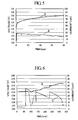
- FIG. 5 is a description figure for explaining an embodiment of the present invention; and
- FIG. 6 is a description figure for explaining an embodiment of the present invention.
- FIGS. 1-4 show one embodiment of the present invention and the embodiment explained below shows a case in which the present invention is applied to a terminal apparatus such as a cellular phone.
- FIGS. 1 and 2 are figures of a cellular phone K of this embodiment seen from oblique directions, FIG. 1 is a figure of a cellular phone K of this embodiment seen in an oblique direction from above, and FIG. 2 is a figure of a cellular phone K of this embodiment seen in an oblique direction from below.
- As shown in these figures, the cellular phone K of this embodiment has two cases including a first case 1 and a
second case 2. These twocases 1 and 2 are connected via ahinge portion 3 and are foldable, therefore, they are constituted to be open and closed. On a facingsurface 1a of the first case 1 which is facing thesecond case 2 when the twocases 1 and 2 are folded, adisplay portion 4 and aspeaker portion 5 are provided. On a facingsurface 2a of thesecond case 2 which is facing the first case 1 when two cases are folded, akey operation portion 7 and amicrophone 9 are provided. Moreover, close to thehinge portion 3 of thesecond case 2, anantenna 11 is provided for communication with a base station. Thisantenna 11 can be retracted into thesecond case 2 and can be pulled out of thesecond case 2. On thekey operation portion 7, there are keys such as: a multiplefunction operation key 12 which has a four direction key, a decision key and the like; anoperation key 13 for an operation guide; anoperation key 14 for a mail; anoperation key 15 for Web browsing; anoperation key 16 for a telephone book; andoperation keys 17 including numeric keypads such as 0-9, *, #, and the like. - The cellular phone K of this embodiment has a
charging apparatus 100, such as shown in FIG. 3, to which the photovoltaic generation is applied, and asolar panel 10, as a photovoltaic generator, which is one of its elements, is set on a back face 2b, which is a surface portion, of thesecond case 2 as shown in FIG 2. - FIG 3 is a circuit diagram of the
charging apparatus 100. As shown in this figure, thecharging apparatus 100 is constituted by providing: thesolar panel 10 which generates electric power in response to received light, in other words, thesolar panel 10 is a photovoltaic generator that converts the energy of light to electrical energy and generates electric power; asolar charging circuit 20 which is used as a generative charging circuit; abattery 30 which is rechargeable; an ACadaptor input terminal 40 to which an external power source such as a commercial power source is connected; and anexternal charging circuit 50 which converts and outputs the electrical power from the external power source connected to the ACadaptor input terminal 40. - With respect to the
charging apparatus 100, thesolar panel 10 and the ACadaptor input terminal 40 are attached and exposed on the outside of thecases 1 and 2, and other constitution elements are set inside the first case 1 or thesecond case 2. - The
solar panel 10 generates electric power in response to received light by converting the energy of light to electric energy, and is attached to the outside of the back face 2b of thesecond case 2 as described above. It should be noted that, with respect to a generally used cellular phone, an approximately 4 cm x 7 cm area can be obtained for setting thesolar panel 10. - The
solar charging circuit 20 supplies electric power generated through the power-generation of thesolar panel 10 to thebattery 30. In this embodiment, as shown in FIG. 3, thesolar charging circuit 20 has a constitution in which aregulator 60 as a voltage regulation portion and a reverse-current blocking diode 70 as a control portion are connected in series. - The
regulator 60 regulates the voltage of the electric power supplied from thesolar panel 10 to thebattery 30. - FIG. 4 is a circuit diagram showing a concrete example of the
regulator 60. As shown in this figure, theregulator 60 is constituted by providing anoperational amplifier 61, acontrol transistor 62, areference voltage circuit 63, and anovercurrent protection circuit 64. A voltage Va is obtained by operating a resistance voltage division on an output voltage from a drain of thecontrol transistor 62 by using tworesistances reference voltage circuit 63, and in theregulator 60, a gate voltage Vc is determined by comparing the voltage Va and the reference voltage Vr. As a result, an output voltage Vd from the drain of thecontrol transistor 62 is regulated to be the same as the reference voltage Vr. When an overcurrent is applied to theregulator 60, the overcurrent is prevented from reaching thebattery 30 by theovercurrent protection circuit 64. - Back to FIG. 3, the reverse-
current blocking diode 70 prevents the current flowing in the direction from thebattery 30 to thesolar panel 10. - The
battery 30 stores the supplied electric power, outputs the electric power for the operation of the cellular phone K in accordance with requirements, and can be, for example, a lithium-ion battery or the like. - The
external charging circuit 50 supplies the electric power which is supplied from an AC adaptor via the ACadaptor input terminal 40. In other words, theexternal charging circuit 50 supplies the electric power, which is output after converting from the AC electric power supplied from the external power source via the ACadaptor input terminal 40 to the DC electric power by the AC adaptor, which is not shown in the figures, to thebattery 30. Theexternal charging circuit 50 is constituted by providing a charged-current detection resistance 51, acharging transistor 52, and anelectric power IC 53. - It should be noted that, with respect to the cellular phone K of this embodiment, an
output portion 21 of thesolar charging circuit 20 is connected closer to thebattery 30 than anoutput portion 54 of theexternal charging circuit 50. - Between the AC
adaptor input terminal 40 and theexternal charging circuit 50, both afuse 80, which cuts the connection when an overcurrent or an overvoltage is applied, and a reverse-current blocking diode 90, which prevents a current flowing in the direction from theexternal charging circuit 50 to the ACadaptor input terminal 40, are provided, - It should be noted that it is constituted in a manner in which, when both the
solar charging circuit 20 and theexternal charging circuit 50 are operating, the one which is supplying an electric power of a higher voltage has a higher priority, and supplies the electric power to thebattery 30. - In other words, in the case in which the electric power is supplied from the external power source via the
external charging circuit 50 while the electric power generated by thesolar panel 10 is supplied via thesolar charging circuit 20 to thebattery 30, and the voltage of the electric power supplied from the external power source is larger than the voltage of the electric power generated by thesolar panel 10, the electric power is supplied from theexternal charging circuit 50 to thebattery 30. - Conversely, if the voltage of the electric power generated by the
solar panel 10 is larger than the voltage of the electric power supplied from the external power source, the electric power is supplied from thesolar charging circuit 20 to thebattery 30. - With respect to the cellular phone K of this embodiment which is constituted in the manner above, when the light is irradiated on the
solar panel 10, the electric power is generated by thesolar panel 10. The electric power generated by thissolar panel 10 changes in accordance with the illuminance of the light irradiated on thesolar panel 10, and continuously changes. - The electric power which changes continuously is regulated by the
regulator 60 and supplied to thebattery 30. As a result, thebattery 30 is charged. - It should be noted that, as described above, in the case in which the external power source is connected while the electric power generated by the
solar panel 10 is supplied via thesolar charging circuit 20 to thebattery 30, and the voltage of the electric power generated by thesolar panel 10 is larger than the voltage of the electric power supplied from the external power source, the electric power is not supplied from theexternal charging circuit 50 to thebattery 30. - In accordance with the
charging apparatus 100 provided in the cellular phone K of this embodiment, it is not necessary to supply the electric power generated by thesolar panel 10 to thebattery 30 via the external charging circuit for supplying the electric power from the external power source to the battery as in a conventional charging apparatus. Therefore, it is possible to design thesolar charging circuit 20 as a dedicated circuit for supplying the electric power generated by thesolar panel 10. That is, it is possible to design thesolar charging circuit 20 which is suitable for a small amount of generated power. Hence, by applying thecharging apparatus 100 of this embodiment, it is possible to improve the charging efficiency of the charging apparatus which uses the photovoltaic generator such as the solar battery. - Concretely, as shown in FIG. 4, a voltage regulation portion of the
solar charging circuit 20 is constituted from theregulator 60 including theoperational amplifier 61, and theregulator 60 does not include a charging transistor which is provided by theexternal charging circuit 50, therefore, it is possible to reduce the electric power consumed by thesolar charging circuit 20. - It should be noted that the
external charging circuit 50 is constituted based on the assumption that there is a charging apparatus to which sufficient electric power is supplied from an external power source, therefore, by applying such a constitution, a larger amount of electric power is consumed than in thesolar charging circuit 20. However, with respect to the charging apparatus of this embodiment, a structure in which the electric power from thesolar panel 10 is supplied to thebattery 30 via theexternal charging circuit 50 is not applied. Therefore, it is possible to prevent the electric power which is supplied from thesolar panel 10 to thebattery 30 from being consumed by theexternal charging circuit 20 when electric power is supplied from thesolar panel 10 to thebattery 30. Hence, it is possible to improve the charging efficiency of the charging apparatus which uses the photovoltaic generator. - With respect to the cellular phone K of this embodiment providing the
charging apparatus 100 above, it is possible to use the electric power generated by thesolar panel 10 efficiently for charging and to charge thebattery 30 in a shorter time. - With respect to the cellular phone K of this embodiment, when the light irradiated on the
solar panel 10 is weak, there can be a case in which the electric potential of thesolar panel 10 decreases and is lower than the electric potential of thebattery 30. However, with respect to thecharging apparatus 100 included in the cellular phone K of this embodiment, thesolar charging circuit 20 has a constitution in which both the reverse-current blocking diode 70, which prevents a current flowing in the direction from thebattery 30 to thesolar panel 10, and theregulator 60, which regulates voltage of the electric power supplied in the direction from thesolar panel 10 to thebattery 30, are connected in series. Therefore, a leakage of electric power toward thesolar panel 10 is prevented and it is possible to prevent thesolar panel 10 from discharging. - With respect to the
charging apparatus 100 included in the cellular phone K of this embodiment, theregulator 60 is set closer to thebattery 30 than the reverse-current blocking diode 70. In other words, it is possible to supply the electric power to thebattery 30 without fluctuation or disturbance of the voltage of the electric power. - In the case in which the electric power is supplied from the external power source via the AC
adaptor input terminal 40, the electric power from the external power source is regulated to be a predetermined voltage by theexternal charging circuit 50 and is supplied to thebattery 30. - In the case in which, as explained above, the external power source is connected and the electric power from the external power source is supplied to the
battery 30 via theexternal charging circuit 50, and the voltage of the electric power supplied from the external power source is larger than the voltage of the electric power generated by thesolar panel 10, the electric power from thesolar charging circuit 20 is not supplied to thebattery 30. - As described above, the charging
apparatus 100 of the cellular phone K of this embodiment includes theexternal charging circuit 50 which supplies the electric power from the external power source to thebattery 20. Therefore, if the electric power from thesolar charging circuit 20 is not sufficient to charge thebattery 30, it is possible to charge thebattery 30 by applying electric power from an external power source. - It should be noted that the
output portion 21 of thesolar charging circuit 20 is connected closer (or directly) to thebattery 30 than theoutput portion 54 of theexternal charging circuit 50, therefore, even in the case in which thecharging apparatus 100 includes theexternal charging circuit 50, it is possible to supply the electric power generated by thesolar panel 10 more appropriately to thebattery 30 without passing through theexternal charging circuit 50. - The cellular phone K, which is a terminal apparatus, of this embodiment includes the charging apparatus described above; therefore, it is possible to apply the electric power generated by the
solar panel 10 efficiently for charging and to charge thebattery 30 in a shorter time. - In this embodiment, the reverse-
current blocking diode 70 is applied as a control portion for controlling the current of the electric power flowing in the direction from thebattery 30 to thesolar panel 10. The present invention is not limited by this, and it is preferable to apply a switching element as the control portion. - For a solar charging circuit with low power consumption, other than the circuit including the operational amplifier described above, it is preferable to apply a circuit including a Zener diode.
- In this embodiment, the cellular phone K is described as the terminal apparatus including the
charging apparatus 100, however, the present invention is not limited by this and can be applied to all of terminal apparatuses which include a rechargeable battery. - While preferred embodiments of the invention have been described and illustrated above, it should be understood that these are exemplary of the invention and are not to be considered as limiting. Additions, omissions, substitutions, and other modifications can be made without departing from the spirit or scope of the present invention. Accordingly, the invention is not to be considered as being limited by the foregoing description, and is only limited by the scope of the appended claims.
- Hereinafter, an example of the embodiment above is described. In this example, as the
solar panel 10 of the embodiment above, a solar panel which has a maximum output current when the output voltage is 2.4-4.2 V and which is made from amorphous silicon is applied, and thissolar panel 10 is attached on the case or the main body of the cellular phone in an area of 4 cm x 7 cm. As thebattery 30, a lithium-ion battery which is rechargeable in a range of 2.8-4.2 V is applied. - In the case in which the voltage of the
battery 30 is 2.8 V and the solar panel is facing the sun, as shown in graph A of FIG. 5, the output current obtained from the solar panel is approximately 27 mA. In this case, as shown in graph B, the voltage of thebattery 30 increases from 2.8 V to 3.6V in approximately 80 minutes; therefore, it is confirmed that the battery is charged in short time. - Even in the case in which, as shown in graph C of FIG. 6, the output current fluctuates because of light irradiation on the solar panel with displacements of illuminance, it is confirmed that, as shown in graph D of FIG. 6, the
battery 30 is charged in a short time from a state in which the battery is charged to approximately 50% of full capacity (electric potential of the battery is 3.7 V). - It should be noted that the external charging circuit provided by the charging apparatus of the prior art consumes a current of 12 mA, in contrast, the solar charging circuit provided by the charging apparatus of this example consumes a current of 0.009 mA.
- In this example, the solar panel made from amorphous silicon, which has a 5-7% conversion rate and from which approximately a 30 mA output current is obtained per illuminance of 100 kLx, is applied; however, it is preferable to apply a solar panel made from polysilicon which has a 15-18% conversion rate or efficiency and from which approximately 80 mA of output current is obtained per illuminance of 100 kLx. In this case, it is expected that the battery can be charged in even less time.
- Otherwise, it is possible to apply a solar panel made from monocrystal silicon, gallium arsenide, cadmium sulfide, or the like.
Claims (10)
- A charging apparatus comprising:a battery which is rechargeable;a photovoltaic generator which generates electric power in response to received light; anda generative charging circuit which supplies electric power generated by the photovoltaic generator to the battery, the generative charging circuit comprising:a control portion which controls current in a direction from the battery to the photovoltaic generator; anda voltage regulation portion which regulates voltage of electric power supplied from the photovoltaic generator to the battery, and which is connected with the control portion in series.
- The charging apparatus according to claim 1, wherein the voltage regulation portion comprises an operational amplifier.
- The charging apparatus according to claim 1, wherein the voltage regulation portion comprises a structure excluding a transistor for charging.
- The charging apparatus according to claim 1, wherein the voltage regulation portion is set closer to the battery than the control portion.
- The charging apparatus according to claim 1, wherein the control portion is a diode element.
- The charging apparatus according to claim 1, wherein the control portion is a switching element.
- The charging apparatus according to claim 1, further comprising:an external charging circuit supplying electric power from an external power source, wherein:the generative charging circuit comprises an output portion;the external charging circuit comprises an output portion; andthe output portion of the generative charging circuit is set closer to the battery than the output portion of the external charging circuit.
- A terminal apparatus comprising:a main body;a battery which is rechargeable and which is arranged inside the main body;a photovoltaic generator which generates electric power in response to received light and which is arranged on a surface portion of the main body; anda generative charging circuit which supplies electric power generated by the photovoltaic generator to the battery, the generative charging circuit comprising:a control portion which controls current in a direction from the battery to the photovoltaic generator; anda voltage regulation portion which regulates voltage of electric power supplied from the photovoltaic generator to the battery and which is connected with the control portion in series.
- The terminal apparatus according to claim 8, wherein the voltage regulation portion is set closer to the battery than the control portion.
- The terminal apparatus according to claim 8, further comprisingan external charging circuit supplying electric power from an external power source, wherein:the generative charging circuit comprises an output portion;the external charging circuit comprises an output portion; andthe output portion of the generative charging circuit is set closer to the battery than the output portion of the external charging circuit.
Applications Claiming Priority (1)
| Application Number | Priority Date | Filing Date | Title |
|---|---|---|---|
| JP2005284497A JP2007097330A (en) | 2005-09-29 | 2005-09-29 | Charging device and terminal device |
Publications (2)
| Publication Number | Publication Date |
|---|---|
| EP1770818A1 true EP1770818A1 (en) | 2007-04-04 |
| EP1770818B1 EP1770818B1 (en) | 2009-09-02 |
Family
ID=37667665
Family Applications (1)
| Application Number | Title | Priority Date | Filing Date |
|---|---|---|---|
| EP06121270A Ceased EP1770818B1 (en) | 2005-09-29 | 2006-09-26 | Charging apparatus and terminal apparatus |
Country Status (4)
| Country | Link |
|---|---|
| US (1) | US7923963B2 (en) |
| EP (1) | EP1770818B1 (en) |
| JP (1) | JP2007097330A (en) |
| DE (1) | DE602006008872D1 (en) |
Cited By (1)
| Publication number | Priority date | Publication date | Assignee | Title |
|---|---|---|---|---|
| WO2011100040A1 (en) * | 2010-02-15 | 2011-08-18 | Liberty Hardware Mfg. Corp. | Method of charging an energy storage device |
Families Citing this family (11)
| Publication number | Priority date | Publication date | Assignee | Title |
|---|---|---|---|---|
| TWM329306U (en) * | 2007-08-22 | 2008-03-21 | Fan-Wei Chi | Bluetooth earphones with solar cells |
| CN101741280A (en) * | 2008-11-19 | 2010-06-16 | 深圳富泰宏精密工业有限公司 | Portable electronic device |
| US20100207571A1 (en) * | 2009-02-19 | 2010-08-19 | SunCore Corporation | Solar chargeable battery for portable devices |
| KR101521934B1 (en) * | 2009-03-19 | 2015-05-28 | 엘지전자 주식회사 | A mobile terminal and its display control method |
| KR20110028148A (en) * | 2009-09-11 | 2011-03-17 | 엘지전자 주식회사 | Mobile terminal |
| US8319470B2 (en) * | 2010-02-12 | 2012-11-27 | Suncore, Inc. | Stand alone solar battery charger |
| TW201225376A (en) * | 2010-12-13 | 2012-06-16 | Hon Hai Prec Ind Co Ltd | Charging apparatus |
| US20130100989A1 (en) * | 2011-10-25 | 2013-04-25 | Clarence Copeland | Multi-functional weather alert communication key chain |
| US9167106B1 (en) | 2013-09-04 | 2015-10-20 | Norman Woodley | Solar-powered cell phone |
| USD784948S1 (en) | 2015-06-09 | 2017-04-25 | Alex Brown, III | Solar-powered cellular telephone |
| USD974316S1 (en) | 2020-05-05 | 2023-01-03 | Michael Champion | Solar-powered cell phone |
Citations (7)
| Publication number | Priority date | Publication date | Assignee | Title |
|---|---|---|---|---|
| US4266178A (en) * | 1976-10-05 | 1981-05-05 | Kabushiki Kaisha Suwa Seikosha | Charge control circuit |
| JPS61294769A (en) * | 1985-06-24 | 1986-12-25 | Mitsubishi Electric Corp | Stand-alone power source unit |
| EP1058367A2 (en) * | 1999-06-04 | 2000-12-06 | Mitsubishi Denki Kabushiki Kaisha | Battery accumulating apparatus |
| JP2001037100A (en) * | 1999-07-21 | 2001-02-09 | Tokico Ltd | Solar cell system |
| JP2002238182A (en) * | 2001-02-07 | 2002-08-23 | Kaga Component Kk | Power supply using solar cells |
| JP2003229946A (en) * | 2002-02-05 | 2003-08-15 | Kukan Kikaku Co Ltd | Battery charger for portable telephone |
| JP2004023879A (en) * | 2002-06-14 | 2004-01-22 | Mitsubishi Heavy Ind Ltd | Power feeding system and its control method |
Family Cites Families (26)
| Publication number | Priority date | Publication date | Assignee | Title |
|---|---|---|---|---|
| JPS5174334A (en) | 1974-12-24 | 1976-06-28 | Nissan Motor | Sharyoyo shogaibutsukenchisochi |
| JPS5851603A (en) | 1981-09-24 | 1983-03-26 | Nec Corp | Amplitude modulator using frequency multiplier |
| JPS58111506A (en) | 1981-12-25 | 1983-07-02 | Nec Corp | Amplitude modulator |
| JPH07162560A (en) * | 1993-12-13 | 1995-06-23 | Nec Corp | Portable public telephone set |
| JPH08223067A (en) * | 1995-02-13 | 1996-08-30 | Hitachi Ltd | Portable radio |
| JPH09322425A (en) * | 1996-05-31 | 1997-12-12 | Sanyo Electric Co Ltd | Charging device |
| JP3416461B2 (en) * | 1997-05-30 | 2003-06-16 | キヤノン株式会社 | Solar battery charge control device |
| US5936380A (en) * | 1997-09-12 | 1999-08-10 | Micron Electronics, Inc. | Alternative power for a portable computer via solar cells |
| JPH11287853A (en) | 1998-04-03 | 1999-10-19 | Denso Corp | Radar equipment |
| US6084379A (en) * | 1998-07-02 | 2000-07-04 | Buniatyan; Spartak | Solar powered recharging device |
| JP2000069132A (en) * | 1998-08-24 | 2000-03-03 | Toshiba Corp | Portable communication equipment |
| JP2000156516A (en) | 1998-09-16 | 2000-06-06 | Sony Corp | Light rechargeable secondary batteries and electrical equipment |
| JP3335966B2 (en) * | 1999-10-25 | 2002-10-21 | 埼玉日本電気株式会社 | Portable communication terminal with power generator |
| KR20010086781A (en) * | 2000-03-03 | 2001-09-15 | 임성묵 | Mobile phone with a solar cell |
| JP4689812B2 (en) * | 2000-11-17 | 2011-05-25 | 富士通コンポーネント株式会社 | Wireless mouse |
| EP1209873A1 (en) | 2000-11-21 | 2002-05-29 | Koninklijke Philips Electronics N.V. | Procedure and apparatus for the transmission of signals modulated in phase and amplitude |
| US6376764B1 (en) * | 2001-01-05 | 2002-04-23 | Ching-Hsing Luo | Solar cell battery replacement unit |
| JP3731535B2 (en) | 2001-12-18 | 2006-01-05 | 株式会社村田製作所 | Line coupling structure, mixer, and transmission / reception device |
| US6586906B1 (en) * | 2002-01-31 | 2003-07-01 | Genesis Electronics Llc | Solar rechargeable battery |
| JP2004140521A (en) | 2002-10-16 | 2004-05-13 | Marine System Associates Inc | Cellular telephone device and battery charger therefor |
| JP2004222225A (en) * | 2002-11-20 | 2004-08-05 | Sony Corp | Portable communication device |
| US6949909B2 (en) * | 2003-12-04 | 2005-09-27 | Chia-Chang Chuang | Solar energy pulse charge device |
| JP2005190295A (en) * | 2003-12-26 | 2005-07-14 | Toshiba Corp | Portable information terminal |
| KR100583745B1 (en) * | 2004-01-30 | 2006-06-08 | (주)솔레이텍 | Charging method and device using portable multi-power solar cell |
| US7570010B2 (en) * | 2005-12-02 | 2009-08-04 | Southwest Electronic Energy Corporation | Solar panel with pulse charger |
| US7514900B2 (en) * | 2006-10-06 | 2009-04-07 | Apple Inc. | Portable devices having multiple power interfaces |
-
2005
- 2005-09-29 JP JP2005284497A patent/JP2007097330A/en active Pending
-
2006
- 2006-09-26 DE DE602006008872T patent/DE602006008872D1/en active Active
- 2006-09-26 EP EP06121270A patent/EP1770818B1/en not_active Ceased
- 2006-09-26 US US11/535,344 patent/US7923963B2/en not_active Expired - Fee Related
Patent Citations (7)
| Publication number | Priority date | Publication date | Assignee | Title |
|---|---|---|---|---|
| US4266178A (en) * | 1976-10-05 | 1981-05-05 | Kabushiki Kaisha Suwa Seikosha | Charge control circuit |
| JPS61294769A (en) * | 1985-06-24 | 1986-12-25 | Mitsubishi Electric Corp | Stand-alone power source unit |
| EP1058367A2 (en) * | 1999-06-04 | 2000-12-06 | Mitsubishi Denki Kabushiki Kaisha | Battery accumulating apparatus |
| JP2001037100A (en) * | 1999-07-21 | 2001-02-09 | Tokico Ltd | Solar cell system |
| JP2002238182A (en) * | 2001-02-07 | 2002-08-23 | Kaga Component Kk | Power supply using solar cells |
| JP2003229946A (en) * | 2002-02-05 | 2003-08-15 | Kukan Kikaku Co Ltd | Battery charger for portable telephone |
| JP2004023879A (en) * | 2002-06-14 | 2004-01-22 | Mitsubishi Heavy Ind Ltd | Power feeding system and its control method |
Cited By (1)
| Publication number | Priority date | Publication date | Assignee | Title |
|---|---|---|---|---|
| WO2011100040A1 (en) * | 2010-02-15 | 2011-08-18 | Liberty Hardware Mfg. Corp. | Method of charging an energy storage device |
Also Published As
| Publication number | Publication date |
|---|---|
| EP1770818B1 (en) | 2009-09-02 |
| DE602006008872D1 (en) | 2009-10-15 |
| US7923963B2 (en) | 2011-04-12 |
| US20070069685A1 (en) | 2007-03-29 |
| JP2007097330A (en) | 2007-04-12 |
Similar Documents
| Publication | Publication Date | Title |
|---|---|---|
| EP1770818B1 (en) | Charging apparatus and terminal apparatus | |
| EP2806530B1 (en) | Booster | |
| US20100231175A1 (en) | Power supply circuit, charging unit having the power supply circuit, and power supply method | |
| US20120326512A1 (en) | Electric power control apparatus, electric power control method, and electric power feeding system | |
| JP2012254004A (en) | Charge control device | |
| US20100013309A1 (en) | Power management circuitry and solar cells | |
| US20190123636A1 (en) | Start-up circuit | |
| EP1662631B1 (en) | Method and apparatus for power supply control | |
| US6246214B1 (en) | Multiple use of a single transistor for linear regulation charge control and protection of a rechargeable battery | |
| US8384356B2 (en) | Self contained power source | |
| JP2009017686A (en) | Lithium-ion battery charger using solar cells | |
| JP7052326B2 (en) | Power supply and communication equipment | |
| CN117394513A (en) | A dual-battery switching device and electronic equipment | |
| CN101989748A (en) | Solar energy charging device and charging method | |
| KR20160103456A (en) | Electricityproviding system including battery energy storage system | |
| CN101119401A (en) | Portable coat and charging method of handset | |
| KR100749238B1 (en) | Dual charging device by electric energy and solar energy and mobile communication terminal having the charging device | |
| CN201466752U (en) | solar charging device | |
| KR20060014862A (en) | Battery charging device of mobile communication terminal | |
| CN216312747U (en) | Receiver UPS circuit | |
| JPH1198709A (en) | Charging pump circuit apparatus | |
| CN222262201U (en) | Bluetooth headset with solar energy and TypeC charging function | |
| KR100802798B1 (en) | Low cost fuel cell system | |
| Bandyopadhyay | Energy efficient control for power management circuits operating from nano-watts to watts | |
| KR200165152Y1 (en) | Charge system |
Legal Events
| Date | Code | Title | Description |
|---|---|---|---|
| PUAI | Public reference made under article 153(3) epc to a published international application that has entered the european phase |
Free format text: ORIGINAL CODE: 0009012 |
|
| AK | Designated contracting states |
Kind code of ref document: A1 Designated state(s): AT BE BG CH CY CZ DE DK EE ES FI FR GB GR HU IE IS IT LI LT LU LV MC NL PL PT RO SE SI SK TR |
|
| AX | Request for extension of the european patent |
Extension state: AL BA HR MK YU |
|
| 17P | Request for examination filed |
Effective date: 20070430 |
|
| 17Q | First examination report despatched |
Effective date: 20070608 |
|
| AKX | Designation fees paid |
Designated state(s): DE GB |
|
| GRAP | Despatch of communication of intention to grant a patent |
Free format text: ORIGINAL CODE: EPIDOSNIGR1 |
|
| GRAS | Grant fee paid |
Free format text: ORIGINAL CODE: EPIDOSNIGR3 |
|
| GRAA | (expected) grant |
Free format text: ORIGINAL CODE: 0009210 |
|
| AK | Designated contracting states |
Kind code of ref document: B1 Designated state(s): DE GB |
|
| REF | Corresponds to: |
Ref document number: 602006008872 Country of ref document: DE Date of ref document: 20091015 Kind code of ref document: P |
|
| PLBE | No opposition filed within time limit |
Free format text: ORIGINAL CODE: 0009261 |
|
| STAA | Information on the status of an ep patent application or granted ep patent |
Free format text: STATUS: NO OPPOSITION FILED WITHIN TIME LIMIT |
|
| 26N | No opposition filed |
Effective date: 20100603 |
|
| REG | Reference to a national code |
Ref country code: DE Ref legal event code: R082 Ref document number: 602006008872 Country of ref document: DE Representative=s name: VIERING, JENTSCHURA & PARTNER MBB PATENT- UND , DE Ref country code: DE Ref legal event code: R082 Ref document number: 602006008872 Country of ref document: DE |
|
| PGFP | Annual fee paid to national office [announced via postgrant information from national office to epo] |
Ref country code: DE Payment date: 20170920 Year of fee payment: 12 Ref country code: GB Payment date: 20170920 Year of fee payment: 12 |
|
| REG | Reference to a national code |
Ref country code: DE Ref legal event code: R119 Ref document number: 602006008872 Country of ref document: DE |
|
| GBPC | Gb: european patent ceased through non-payment of renewal fee |
Effective date: 20180926 |
|
| PG25 | Lapsed in a contracting state [announced via postgrant information from national office to epo] |
Ref country code: DE Free format text: LAPSE BECAUSE OF NON-PAYMENT OF DUE FEES Effective date: 20190402 |
|
| PG25 | Lapsed in a contracting state [announced via postgrant information from national office to epo] |
Ref country code: GB Free format text: LAPSE BECAUSE OF NON-PAYMENT OF DUE FEES Effective date: 20180926 |