EP1768644B1 - Light protecting-effective cosmetic or dermatological preparations - Google Patents
Light protecting-effective cosmetic or dermatological preparations Download PDFInfo
- Publication number
- EP1768644B1 EP1768644B1 EP05766800A EP05766800A EP1768644B1 EP 1768644 B1 EP1768644 B1 EP 1768644B1 EP 05766800 A EP05766800 A EP 05766800A EP 05766800 A EP05766800 A EP 05766800A EP 1768644 B1 EP1768644 B1 EP 1768644B1
- Authority
- EP
- European Patent Office
- Prior art keywords
- acid
- triazine
- cosmetic
- phase
- bis
- Prior art date
- Legal status (The legal status is an assumption and is not a legal conclusion. Google has not performed a legal analysis and makes no representation as to the accuracy of the status listed.)
- Expired - Lifetime
Links
- 0 *c1nc(-c(ccc(O*)c2)c2O)nc(-c(ccc(O*)c2)c2O)n1 Chemical compound *c1nc(-c(ccc(O*)c2)c2O)nc(-c(ccc(O*)c2)c2O)n1 0.000 description 3
- WGVNPGGWAHAOAK-UHFFFAOYSA-N CCC(CC)NC1=NC(N23)=NC(C(CC)(CC)CC)=NC2=NC(N)=NC3=N1 Chemical compound CCC(CC)NC1=NC(N23)=NC(C(CC)(CC)CC)=NC2=NC(N)=NC3=N1 WGVNPGGWAHAOAK-UHFFFAOYSA-N 0.000 description 1
- WWGOSDJONUIJCS-UHFFFAOYSA-N CCC(CC)NC1=NC(N23)=NC(C(CC)(CC)N)=NC2=NC(N)=NC3=N1 Chemical compound CCC(CC)NC1=NC(N23)=NC(C(CC)(CC)N)=NC2=NC(N)=NC3=N1 WWGOSDJONUIJCS-UHFFFAOYSA-N 0.000 description 1
Classifications
-
- A—HUMAN NECESSITIES
- A61—MEDICAL OR VETERINARY SCIENCE; HYGIENE
- A61Q—SPECIFIC USE OF COSMETICS OR SIMILAR TOILETRY PREPARATIONS
- A61Q17/00—Barrier preparations; Preparations brought into direct contact with the skin for affording protection against external influences, e.g. sunlight, X-rays or other harmful rays, corrosive materials, bacteria or insect stings
- A61Q17/04—Topical preparations for affording protection against sunlight or other radiation; Topical sun tanning preparations
-
- A—HUMAN NECESSITIES
- A61—MEDICAL OR VETERINARY SCIENCE; HYGIENE
- A61K—PREPARATIONS FOR MEDICAL, DENTAL OR TOILETRY PURPOSES
- A61K8/00—Cosmetics or similar toiletry preparations
- A61K8/18—Cosmetics or similar toiletry preparations characterised by the composition
- A61K8/30—Cosmetics or similar toiletry preparations characterised by the composition containing organic compounds
- A61K8/49—Cosmetics or similar toiletry preparations characterised by the composition containing organic compounds containing heterocyclic compounds
-
- A—HUMAN NECESSITIES
- A61—MEDICAL OR VETERINARY SCIENCE; HYGIENE
- A61K—PREPARATIONS FOR MEDICAL, DENTAL OR TOILETRY PURPOSES
- A61K9/00—Medicinal preparations characterised by special physical form
- A61K9/10—Dispersions; Emulsions
- A61K9/107—Emulsions ; Emulsion preconcentrates; Micelles
-
- A—HUMAN NECESSITIES
- A61—MEDICAL OR VETERINARY SCIENCE; HYGIENE
- A61K—PREPARATIONS FOR MEDICAL, DENTAL OR TOILETRY PURPOSES
- A61K8/00—Cosmetics or similar toiletry preparations
- A61K8/02—Cosmetics or similar toiletry preparations characterised by special physical form
-
- A—HUMAN NECESSITIES
- A61—MEDICAL OR VETERINARY SCIENCE; HYGIENE
- A61K—PREPARATIONS FOR MEDICAL, DENTAL OR TOILETRY PURPOSES
- A61K2800/00—Properties of cosmetic compositions or active ingredients thereof or formulation aids used therein and process related aspects
- A61K2800/40—Chemical, physico-chemical or functional or structural properties of particular ingredients
- A61K2800/41—Particular ingredients further characterized by their size
- A61K2800/412—Microsized, i.e. having sizes between 0.1 and 100 microns
Definitions
- the present invention relates to the use of specific micronized insoluble substances for the enhancement of light protecting action in cosmetic or dermatological compositions and cosmetic or dermatological compositions comprising these specific micronized insoluble substances.
- Micronized organic UV filters are generally used as aqueous dispersions and can therefore only be formulated in the water phase.
- EP-893.119 discloses cosmetic UV-protection formulations comprising micronized organic UV-absorbers, oil-soluble, non-micronized UV-absorbers and polymeric hollow sphere microparticles.
- the present invention relates to the use of an insoluble or sparingly soluble micronized birefringent particles as defined in claim 1 which are not cosmetic UV absorbers and which are dispersed in the oil- or water-phase of a cosmetic or dermatological composition for the enhancement of light protecting action of this cosmetic or dermatological composition comprising at least one cosmetic UV filter which is soluble in the water- or oil-phase.
- the overall light ray is regarded as two perpendicular linear polarized light rays the velocity of propagation and consequently the refraction index is different for both rays.
- micronized insoluble or sparingly soluble substances have a hydrophobic or hydrophilic surface.
- compositions Preferably they are present in the composition in crystalline or in part crystalline form.
- the micronized insoluble or sparingly soluble substance has a high melting point, which is normally > 80°C, more preferable > 100°C, and most preferable > 120°C.
- the substances used have an aromatic or heteroaromatic moiety and are selected from
- micronized, insoluble substances useful for the present invention can be selected from the following metal salts:
- Calcium carbonate [471-34.-1] occurs naturally as chalk, limestone, and marble. It can be used according to the present invention.
- Preferabyl used in the present invention are ground calcium carbonate (GCC), fine-ground calcium carbonate (FGCC) andultrafine ground calcium carbonate which are often referred to as natural carbonate.
- Calcium carbonate has three polymorphic forms: calcite (rhombohedral), aragonite (orthorhombic), and vaterite (trigonal). All three forms are preferably used in the present invention. Most preferably used is calcite.
- Preferably used in the present invention are also calcium carbonates which are produced chemically by precipitation (precipitated calcium carbonate, PCC). They are characterized by greater particle fineness. There are many PCC morphologies possible that are based on rhombohedral, prismatic, scalenohedral and also spherical and needlelike crystal structures. Examples are Rhombohedral (PCC-R) or barrel-shaped calcium carbonate particles, Prismatic PCC calcium carbonate particles, Scalenohedral (PCC-S) or rosette-shaped calcium carbonate particles.
- Dolomite is alyo preferably used in the present invention.
- the typical physical properties of Calcium Carbonates are listed in the Table below: Typical physical properties of Calcium Carbonates GCC/PCC Dolomite molecular weight (Dalton) 100.09 184.4 density (kg I -1 ) 2.71 2.87 Mohs' hardness 3 - decomposition T° (K) from 1150 from 675 solubility at 288° K (kg I -1 ) 14 10 -6 320 10 -6 thermal conductivity (WK -1 m -1 ) 2.4-3.0 5-9 specific heat (kJ kg -1 K 1 ) 0.86 0.9 linear coefficient of expansion (K -1 ) 910 -6 15 10 -6 mean refractive index 1.59. 1.60 birefringence indices 1.480-1.650 1.500-1.679 % brightness (DIN 1053163) (%) 88-96 88-95 dielectric constant 6.1 7.3
- Preparation and application of ultra-fine calcium carbonate Zhongguo Fenti Jishu (2002), 8(1), 28-32 ; Qian, Haiyan; Wang, Yaqin; Ye, Xuchu; Bi, Yunhua. Production and application of ultrafine ground calcium carbonate in China.
- Coated or surface modified calcium carbonate can be used according to the present invention.
- Surface treatment methods and appropriate materials are described in: JP 54107929 Surface treatment of calcium carbonate for solvent-type coating compositions.
- JP 62148572 Pigments for coated paper JP 01090235 Polyolefin resin compositions and laminated products of metals and resin composition layers.
- JP 04006105 Surface treatment of calcium carbonate for improvement of its dispersibility.
- JP 08231760 Surface-treated, heavy calcium carbonate and its use in vinyl chloride-based polymer compositions
- JP 11349846 Surface treatment of calcium carbonate filler JP 54107929 Surface treatment of calcium carbonate for solvent-type coating compositions.
- JP 62148572 Pigments for coated paper JP 01090235 Polyolefin resin compositions and laminated products of metals and resin composition layers.
- JP 2001072890 Surface-treated calcium carbonate, their thermoplastic resin compositions, and manufacture of porous films from the compositions.
- JP 2001288371 Antibacterial polymer compositions containing surface-treated inorganic fillers and their manufacture.
- JP 2003034760 Surface-treated heavy calcium carbonate with good dispersibility, their manufacture, and resin compositions containing them.
- acid resistant calcium carbonate can be used.
- the following references describe appropriate forms of modified calcium carbonate:
- crystalline silicon dioxide can be used instead of calcium carbonate.
- Silicon dioxide occurs naturally in both the crystalline and the amorphous forms. Crystalline silicon dioxide is used mostly in the form of ground quartz.. Neuburger Kieselerde (trade name sillitin) has a particular structure. It consists of corpuscular quartz [14808-60-7] and laminar kaolinit [1318-74-7].
- clay minerals are preferably used as micronized substances in the present invention.
- silica and layered silica, preferably microcrystalline silica minerals are preferably used as micronized inorganic, insoluble substances.
- micronized insoluble substances which can be used according to the present invention are birefringent nanocomposites, birefringent glitter particles as described in US 6475609 , birefringent materials as described in WO0121678 , US4461886 , EP1134270 , anisotropic organic compounds as described in WO9216519 , birefringent polymer particles as described in: Mikhailov, N. V.; Maiboroda, V. I.; Nikolaeva, S. S. Kolloidnyi Zhurnal (1959), 21 246-7 ., WO2004024778 ; Meeten, G. H.; Navard, P. Dep. Phys., City London Polytech., London, UK.
- the insoluble or sparingly soluble micronized substances used in the present cosmetic or dermatological composition can be used as single substances or as mixtures of more than one, for example 2, 3 or 4 single components.
- the insoluble substances which are used in the micronised state, may be prepared according to any known process suitable for the preparation of microparticles, for examplewet-milling, wet-kneading spray-drying, by the expansion according to the RESS process or by reprecipitation from suitable solvents.
- micronised particles so obtained usually have an average particle size from 0.02 to 10 micrometer, preferably from 0.03 to 5 micrometer and more especially from 0.05 to 3 micrometer.
- Cosmetic UV absorbers are substances, which significantly reduce the transmission of UV light when applied on human skin. Typical is an SPF value higher than 4 if the cosmetic formulation contains at least 5 % of such a cosmetic UV absorber.
- organic UV absorbers selected from the class of the p-aminobenzoic acid derivatives, salicylic acid derivatives, benzophenone derivatives, dibenzoylmethane derivatives, diphenyl acrylate derivatives, benzofuran derivatives, polymeric UV absorbers, comprising one or more organosilicon radicals, cinnamic acid derivatives, camphor derivatives, trianilino-s-triazine derivatives, s-triazine derivatives, phenylbenzimidazolesulfonic acid and salts thereof, menthyl anthranilates and benzotriazole derivatives.
- organic UV absorbers selected from the class of the p-aminobenzoic acid derivatives, salicylic acid derivatives, benzophenone derivatives, dibenzoylmethane derivatives, diphenyl acrylate derivatives, benzofuran derivatives, polymeric UV absorbers, comprising one or more organosilicon radicals, cinnamic acid derivatives
- UV filters are of special interest:
- UV absorber present in the oil phase No. Chemical Name CAS No. 1 (+/-)-1,7,7-trimethyl-3-[(4-methylphenyl)methylene]bicyclo-[2.2.1]heptan-2-one 36861-47-9 2 1,7,7-trimethyl-3-(phenylmethylene)bicyclo[2.2.1]heptan-2-one 15087-24-8 3 (2-Hydroxy-4-methoxyphenyl)(4-methylphenyl)methanone 1641-17-4.
- UV absorber present in the water-phase No. Chemical Name CAS No. 37 2-Hydroxy-4-methoxy benzophenone-5-sulfonic acid 4065-45-6 38 Alpha-(2-oxobom-3-ylidene)toluene-4-sulphonic acid and its salts 56039-58-8 39 Methyl N,N,N-trimethyl-4-[(4,7,7-trimethyl-3-oxobicyclo[2,2,1]hept-2-ylidene)methyl]anilinium sulphate; 52793-97-2 40 4- aminobenzoic acid 150-13-0 41 2- phenyl-1 H- benzimidazole- 5- sulphonic acid 27503-81-7 42 3, 3'- (1, 4- phenylenedimethylene)bis[7, 7- dimethyl- 2- oxo-bicyclo[2.2.1]heptane- 1- methane
- composition of the present invention are the combinations of
- UV absorber Bifringent micronized particle
- B Bifringent micronized particle
- Micronized Melamine 0.1-5% Micronized Carbonate or Sulfate of Ca, Sr, Ba 0.1-5% 2-Ethylhexyl 2-cyano,3,3-diphenylacrylate
- Micronized Melamine 1-10% Micronized Carbonate or Sulfate of Ca, Sr, Ba 0-10 % 2,4-bis ⁇ [4-(2-ethylhexyloxy)-2-hydroxy]phenyl ⁇ -6-(4-methoxyphen
- a further aspect of the present invention is a cosmetic or dermatological composition
- a cosmetic or dermatological composition comprising
- the cosmetic or dermatological composition comprises as component (a), a micronized, insoluble substance which has a particle size of 0.01 to 5 ⁇ m and the average refractive index of this particle (n[parellel]+n[perpendicular]/2) differs not more than 0.3 from the refractive index of the oil phase in which the particle is dispersed.
- the concentration of the micronized, insoluble substance (a) is > 0.5 % of the cosmetic composition, more preferably > 1 %, and most preferably > 2 %.
- the LSF- and/or SPF factor indicates the prolongation of the exposure to the sun of an individual, which is enabled by the use of the sun protective agent. It is the quotient of erythema threshold time with sun protective agent and erythema threshold time without sun protective agent.
- the cosmetic or dermatological compositions are preferably used as boosters for UV-absorbance of cosmetic sunscreen formulations.
- composition of the present invention may be obtained as follows:
- the insoluble or sparingly soluble birefringent substance (dispersed phase) is slurred in water or in cosmetically acceptable oil and optionally mixed with an emulsifying agent or a surfactant as dispersing agent.
- the dispersion may also be stabilized with an electrolyte.
- the oil-soluble UV absorber can be added, or, in case of a liquid UV absorber the dispersion process can be carried out directly in the liquid UV absorber as continuous phase (for example octyl methoxy cinnamate).
- the mixture is kneadable if it is high-viscous and grindable if it is low-viscous, depending from the moiety of the continuous phase.
- the grindable slurry is grinded in a ball mill until the dispersion has a particle size from 0.03 to 10 ⁇ m, preferably from 0.03 to 5 ⁇ m, and most preferably from 0.03 to 3 ⁇ m.
- the continuous phase of this dispersion is aqueous it can be placed into the aqueous phase of a cosmetic or dermatological preparation; an oily continuous phase leads to an admixture into the oil- or fatty- or wax-phase.
- the oil-soluble UV absorber is dissolved and mixed with the non-micronized insoluble non UV-absorbing substance, or both components are mixed and the micronization is carried out in the oil phase.
- the cosmetic or pharmaceutical preparations may be, for example, creams, gels, lotions, alcoholic and aqueous/alcoholic solutions, emulsions, wax/fat compositions, stick preparations, powders or ointments.
- the cosmetic or pharmaceutical preparations may contain further adjuvants like fatty alcohols, fatty acids, natural or synthetic triglycerides including glyceryl esters and derivatives, pearlescent waxes, hydrocarbon oils, silicones or siloxanes (organosubstituted polysiloxanes), fluorinated or perfluorinated oils, emulsifiers super-fatting agents, surfactants, consistency regulators/thickeners and rheology modifiers, polymers, biogenic active ingredients, deodorising active ingredients, anti-dandruff agents, antioxidants, hydrotropic agents, preservatives and Bacteria-inhibiting agents, bacteria-inhibiting agents, perfume oils, colourants or polymeric beads
- Cosmetic or pharmaceutical formulations are contained in a wide variety of cosmetic preparations. There come into consideration, for example, skin-care preparations, -bath preparations, cosmetic personal care preparations, foot-care preparations, light-protective preparations, skin-tanning preparations, insect-repellents, deodorants, antiperspirants, preparations for cleansing and caring for blemished skin, hair-removal preparations in chemical form (depilation), having preparations, fragrance preparations or cosmetic hair-treatment preparations,
- the cosmetic preparation according to the invention is distinguished by excellent protection of human skin against the damaging effect of sunlight.
- Example 1 General dispersion formulations (in oil)
- a dispersion comprising the following components: (1a) birefringent particle 40-60 parts (1 b) emulsifier (as disclosed in chapter “emulsifier") 0-10 parts (1 c) dissolved UV filter 01 - 20 parts (1d) cosmetic oil according 0-60 parts
- a slurry is obtained, which is micronized in a laboratory agitator ball mill.
- a very coarse-grained material (a) having a starting grain size of > 0.5 ⁇ m must be precutted first, for example by milling in a corundum disk mill, a dissolver and/or a colloid mill or by kneading. Also a dry grinding process may be used.
- Examples 12 to 17 Dispersions in water (electrolyte stabilized, in % b.w.)
- a dispersion comprising the following components: (2a) birefringent particle 40-60 parts (2b) Electrolyte 0.1-10 parts (2c) water 30 - 60 parts (1 d) dissolved UV filter 0.1 - 20 parts Dispersion number Component Disp 1w Ex. 12 Disp 2w Ex. 13 Disp 3w Ex. 14 Disp 4w Ex. 15 Disp 5w (Ex. 16) Disp 6w Ex.
- Example 18 Preparation of a cosmetic formulation comprising dispersion 1 (in the oil phase)
- Phase A is prepared by incorporation of all the ingredients exept Pemulen TR-2, then the mixture is stirred under moderate speed and heat up to 80°C. At the latest stage of incorporation, Pemulen TR-2 is dispersed into the oil-phase. The phase B is heated up to 75-80°C. Phase A is poured into phase B under increase of stirring.
- Example 19 Preparation of a cosmetic formulation comprising dispersion 1 (in the water-phase)
- Phase A is prepared by incorporation of all the ingredients, then the mixture is stirred under moderate speed and heated until 80°C.
- Pemulen TR-2 is dispersed into the oil-phase.
- the phase B is heated at 75-80°C.
- Phase A is poured into phase B under accelerated stirring.
- the mixture is homogenized for 15 seconds at 10 000 rpm.
- Pemulen TR-2 is neutralized with NaOH solution.
- the components of the oil phase (a) - (d) are added together and warmed up to 75°C.
- Under stirring the water phase (e) and (f) which is also warmed up to 75°C is added and homogenized with a Ultra-Turrax (10.000 rpm).
- the formulation so obtained is applied on sand blasted PMMA plates according to a process described by Wendel et al (Wendel et al., S ⁇ FW-Journal, 127(11) ; 2001).
- Formulations having a particle content of 8 % and a content of dissolved UV absorber of 2 % are obtained.
- Table 3 Determination of the SPF factor Birefringent particles Dissolved UV-Absorber SPF with particle SPF without particle
- Example 19a Disp 3o from Ex. 2-11) Phtalimide BEMT 14 (2 % BEMT) 6.5 (2 % BEMT)
- Example 19b Disp 2o from Ex. 2-11) Melamine BEMT 13.5 (2 % BEMT) 6.5 (2 % BEMT)
- Example 19g Disp 9o from Ex.
- compositions of the present invention comprising a birefringent particle show a remarkable increase in SPF.
- dispersion 20a - 20d are homogenized using a high shear apparatus (Ultra-turrax) prior wet-milling with a bead mill, down to a particle size (calcite) of 0,5 to 5 ⁇ m.
- a high shear apparatus Ultra-turrax
- calcite particle size
- Such dispersions can be incorporated into cosmetic w/o or o/w emulsions.
- a formulation using dispersion 20a is prepared by heating all components on 60 °C prior stirring and homogenizing using an ultra-turrax:
- Both phases are heated seperatly to 80°C.
- the oil phase is added to the water phase under stirring prior emulsification.
- This emulsion is measured in a Perkin-Elmer UV-Vis-spectrometer using 8 ⁇ m cuvettes.
- dispersions 20a - 20d are incorporated in an analogous way into a commercially available w/o-lotion.
Landscapes
- Health & Medical Sciences (AREA)
- Life Sciences & Earth Sciences (AREA)
- Public Health (AREA)
- Animal Behavior & Ethology (AREA)
- General Health & Medical Sciences (AREA)
- Veterinary Medicine (AREA)
- Epidemiology (AREA)
- Dermatology (AREA)
- Birds (AREA)
- Chemical & Material Sciences (AREA)
- Medicinal Chemistry (AREA)
- Pharmacology & Pharmacy (AREA)
- Dispersion Chemistry (AREA)
- Silicates, Zeolites, And Molecular Sieves (AREA)
- Cosmetics (AREA)
Abstract
Description
- The present invention relates to the use of specific micronized insoluble substances for the enhancement of light protecting action in cosmetic or dermatological compositions and cosmetic or dermatological compositions comprising these specific micronized insoluble substances.
- It is well known that specific organic UV filters, like sparingly soluble benzotriazoles or triazine compounds exhibit pronounced UV filter properties and are therefore used in cosmetic UV filter compositions.
- A problem of these organic UV filters is their low solubility in cosmetic oils. Their use in oil phase containing cosmetic formulations is therefore limited to only low concentration levels.
- Micronized organic UV filters are generally used as aqueous dispersions and can therefore only be formulated in the water phase.
-
EP-893.119 - Surprisingly it was found that dispersions of specific micronized insoluble birefringent particles are able to enhance the light protecting action of a cosmetic or dermatological composition comprising an organic UV filter which is dissolved in the oil- or water-phase of this composition.
- Therefore, the present invention relates to the use of an insoluble or sparingly soluble micronized birefringent particles as defined in claim 1 which are not cosmetic UV absorbers and which are dispersed in the oil- or water-phase of a cosmetic or dermatological composition for the enhancement of light protecting action of this cosmetic or dermatological composition comprising at least one cosmetic UV filter which is soluble in the water- or oil-phase.
- The micronized insoluble birefringent substances have an average refraction index of n = 1 to 2.5 and a Δn = 0.001 to 0.8 n.
- "Birefringent" substances are understood as non-absorbing materials, wherein the pass of electromagnetic radiation is dependent on the propagation direction of the light (= optical anisotropy).
- If the overall light ray is regarded as two perpendicular linear polarized light rays the velocity of propagation and consequently the refraction index is different for both rays.
- Preferably the micronized insoluble or sparingly soluble substances have a hydrophobic or hydrophilic surface.
- Preferably they are present in the composition in crystalline or in part crystalline form.
- Preferably the micronized insoluble or sparingly soluble substance has a high melting point, which is normally > 80°C, more preferable > 100°C, and most preferable > 120°C.
- The substances used have an aromatic or heteroaromatic moiety and are selected from
- melamine, 2,4,6-triamino-s-triazin; melamine polyphosphate (CAS Regno. 218768-84-4); melamine cyanurate (CAS Regno. 37640-57-6); melamine phosphate (CAS Regno. 41583-09-9); melam, (1,3,5-triazine-2,4,6-triamine-n -(4,6-diamino-1,3,5- triazine-2-yl) of the formula


- benzene-1,2,4,5-tetracarboxamide, biphenyl-4,4'-dicarboxamide, biphenyl-4-carboxylic amide, isophthalamide and terephthalamide;
- cyanuric acid, diphenyl urea, propoylurea and 3-menthyl-1, 1-diphenylurea;
- Isatin;
- 5-amino-isophthalic acid;
- diphenyl sulfone, p-quaterphenyl or p-terphenyl; and
- the triazine compound of formula

- Furthermore, the micronized, insoluble substances useful for the present invention can be selected from the following metal salts:
- Aluminum salts, like aluminum hydroxide Al(OH)3 and aluminum phosphate AlPO4;
- Barium salts, like barium carbonate BaCO3, barium chromate BaCrO4, barium fluoride BaF2, barium hydroxide Ba(OH)2, barium sulfate BaSO4, barium sulfite BaSO3, barium thiosulfate BaS2O3;
- Bismut salts like bismuthyl chloride BiOCl and bismuthyl hydroxide BiOOH;
- Cadmium salts like cadmium carbonate CdCO3, cadmium hydroxide Cd(OH)2, cadmium oxalate CdC2O4 and cadmium sulfide* CdS;
- Calcium slats, like calcium carbonate CaCO3 (Calcit), calcium magnesium carbonate (dolomite), calcium chromate CaCrO4, calcium fluoride CaF2, calcium hydrogen phosphate CaHPO4, calcium hydroxide Ca(OH)2, calcium oxalate CaC2O4, calcium phosphate Ca3PO4, calcium sulfate CaSO4 and calcium sulfite CaSO3;
- Calcium carbonate [471-34.-1] occurs naturally as chalk, limestone, and marble. It can be used according to the present invention.
- Preferabyl used in the present invention are ground calcium carbonate (GCC), fine-ground calcium carbonate (FGCC) andultrafine ground calcium carbonate which are often referred to as natural carbonate.
- Calcium carbonate has three polymorphic forms: calcite (rhombohedral), aragonite (orthorhombic), and vaterite (trigonal). All three forms are preferably used in the present invention. Most preferably used is calcite.
- Preferably used in the present invention are also calcium carbonates which are produced chemically by precipitation (precipitated calcium carbonate, PCC). They are characterized by greater particle fineness. There are many PCC morphologies possible that are based on rhombohedral, prismatic, scalenohedral and also spherical and needlelike crystal structures. Examples are Rhombohedral (PCC-R) or barrel-shaped calcium carbonate particles, Prismatic PCC calcium carbonate particles, Scalenohedral (PCC-S) or rosette-shaped calcium carbonate particles.
- Dolomite is alyo preferably used in the present invention. The typical physical properties of Calcium Carbonates are listed in the Table below:
Typical physical properties of Calcium Carbonates GCC/PCC Dolomite molecular weight (Dalton) 100.09 184.4 density (kg I-1) 2.71 2.87 Mohs' hardness 3 - decomposition T° (K) from 1150 from 675 solubility at 288° K (kg I-1) 14 10-6 320 10-6 thermal conductivity (WK-1 m-1) 2.4-3.0 5-9 specific heat (kJ kg-1 K1) 0.86 0.9 linear coefficient of expansion (K-1) 910-6 15 10-6 mean refractive index 1.59. 1.60 birefringence indices 1.480-1.650 1.500-1.679 % brightness (DIN 1053163) (%) 88-96 88-95 dielectric constant 6.1 7.3 - Appropriate forms of (precipitated) calcium carbonates are described for instance in: Microemulsion-based synthesis of stacked calcium" carbonate (calcite) superstructures. Viravaidya, Chulanapa; Li, Mei; Mann, Stephen. School of Chemistry, University of Bristol, Bristol, Chemical Communications (Cambridge, United Kingdom) (2004), (19), 2182-2183; Tong, Zhongliang. Production situation of nano-calcium carbonate and its application process in China. Huagong Jinzhan (2003), 22(4), 372-375; Ma, Jing; Li, Qingshan; Yang, Zhanguo; Li, Chao; Zhang, Weixing. Manufacture and application of nano calcium carbonate. Huagong Shikan (2002), 16(7), 11-13; Hu, Qingfu; Hu, Xiaobo; Liu, Baoshu. New retrofitted spraying carbonation technology for preparation of nanometer grade calcium carbonate. Feijinshukuang (2002), 25(4), 42-44, 21; Kato, Takashi; Yabuuchi, Kazuhiro; Sugawara, Ayae; Kishimoto, Kenji. Self-assembly of nano- and micro-structured functional materials. Materia (2003), 42(6), 453-456; Colfen, Helmut. Precipitation of carbonates: recent progress in controlled production of complex shapes. Current Opinion in Colloid & Interface Science (2003), 8(1), 23-31; Sugihara, Hisao. Regulation of morphology of calcium carbonate. Nippon Setchaku Gakkaishi (2003), 39(4), 157-162; Onoe, Kaoru; Matsumoto, Masakazu; Shikata, Yohei; Furukawa, Yuko. Reactive crystallization of calcium carbonate from view point of equilibrium theory of multicomponent aqueous solution; Journal of the Society of Inorganic Materials, Japan (2003), 10(302), 3-11; Berdonosov, S. S.; Berdonosova, D. G.; Znamenskaya, I. V. Industrial synthesis, properties, and use of ultrafine calcium carbonate. Khimicheskaya Tekhnologiya (Moscow, Russian Federation) (2002), (8), 2-11.; Korenaga, Takashi. Changes of the manufacturing technique of calcium carbonate and its applications. Journal of the Society of Inorganic Materials, Japan (2002), 9(300), 346-352; Ji, Hongwei; Xu, Huan; Xin, Huizhen; Xia, Ning. Industrial synthesis and application of nano-Calcium carbonate. Qingdao Haiyang Daxue Xuebao (2002), 32(4), 634-640; Qian, Jun-min; Jin, Zhi-hao. New progress in preparation of filler CaCO3 and control of its shape and crystal types. Huagong Kuangwu Yu Jiagong (2002), 31(4), 1-4, 10; Zhao, Chun-xia; Man, Rui-lin; Yu, Jia-geng. Preparation and application of nanometer light calcium carbonate. Yingyong Huagong (2002), 31(2), 4-6; Jiang, Luhua; Du, Fanglin; Zhang, Zhikun; Cui, Zuolin. Preparation and application of ultra-fine calcium carbonate. Zhongguo Fenti Jishu (2002), 8(1), 28-32; Qian, Haiyan; Wang, Yaqin; Ye, Xuchu; Bi, Yunhua. Production and application of ultrafine ground calcium carbonate in China. Feijinshukuang (2001), 24(6), 8-9, 19; Chikazawa, Masatoshi; Fuji, Masayoshi. Nanoparticles of lime and calcium carbonate. Journal of the Society of Inorganic Materials, Japan (2001), 295 507-514; Zhu, Yingquan; Cao, Jianlin; Wang, Chengzhen; Xi, Shaohua; Tan, Jianhua. Quality of high purity CaCO3 made in China and Japan. Dianzi Yuanjian Yu Cailiao (2001), 20(4), 27-29; Han, Xiushan. Production and application of nano CaC03. Huagong Shikan (2001), 15(5), 51-53; Xiao, Pindong. Factors affecting shape and size of superfine CaC03 powder prepared by carbonation. Wujiyan Gongye (2001), 33(3), 28-30; Hu, Xiaobo; Liu, Baoshu; Hu, Qingfu. Advances in ground CaC03. Zhongguo Fenti Jishu (2001), 7(1), 24-28; Hu, Qingfu; Hu, Xiaobo; Liu, Baoshu. Production of superfine ground CaC03. Feijinshukuang (2001), 24(1), 23-25. CODEN: FEIJDJ ISSN:0253-2298; Wu, Zhijian; Lin, Yanxin; Huang, Liyao. Synthesis of inorganic non-metal films on organic substrates. Gongneng Cailiao (2000), 31(6), 587-589; Hirasawa, Izumi. Formation of calcium carbonate by reaction crystallization. Journal of the Society of Inorganic Materials, Japan (2000), 287 307-312; Imppola, Olavi. Precipitated calcium carbonate - PCC. Papermaking Science and Technology (2000), 11 140-151; Huggenberger, Ludwig; Arnold, Manfred; Koster, Hans-Heinz. Ground calcium carbonate. Papermaking Science and Technology (2000), 11 94-105; Hu, Qingfu; Hu, Xiaobo; Liu, Baoshu. Preparation methods and application of nanometer calcium carbonate. Feijinshukuang (2000), 23(4), 24-26, 12; Ji, Guangbin; Chai, Xiaoli; Chen, Weizhong. Application and preparative process of ultra-fine ground CaC03. Shanghai Huagong (2000), 25(11), 19-20,29; Hu, Qingfu; Zhao, Fengqing; Liu, Baoshu; He, Fenglin; Xu, Zhao. Economical scale of production of basic magnesium carbonate, light magnesia, and superfine magnesium-containing calcium carbonate from dolomite by carbonization. Wujiyan Gongye (1999), 31(6), 21-22, 39; Ueyama, Norikazu. Strong binding of polymer ligand to calcium carbonate. Kobunshi (1999), 48(4), 262; Ukai, Kenji; Toyokura, Ken. Reactive crystallization of calcium carbonate. Nippon Kaisui Gakkaishi (1998), 52(5), 292-298; Brown, Alan J. Ground calcium carbonate fillers. Retention of Fines and Fillers during Papermaking (1998), 271-279; Zhang, Shicheng; Zhuge, Lanjian; Han, Yaoxin; Jiang, Junhua. Preparation and application of calcium carbonate with nanometer particle size. Feijinshukuang (1997), (4), 22-25; Prescott, P. I.; Pruett, R. J. Ground calcium carbonate: ore mineralogy, processing and markets. Transactions of Society for Mining, Metallurgy, and Exploration, Inc. (1997), Volume Date 1996, 300 79-84; Ikegami, Tsukasa. Calcium carbonate filler. Kogyo Zairyo (1996), 44(10), 36-37; Chen, Ching Chih; Chen, Chih Hsien. High-purity calcium carbonate powders. Kuangye (Taipei, Taiwan) (1991), 35(4), 75-87; Nukui, Tokuzo. Development of calcium carbonate fillers. Gypsum & Lime (1990), 228 303-9; Hu, Zhitong. New types of calcium carbonate. Huaxue Shijie (1986), 27(3), 99-101; Ikegami, Tsukasa. History of calcium carbonate powder. Toso Kogaku (1981), 16(6), 224-8; Kamiya, Kanichi; Sakka, Sumio. Formation of calcium carbonate polymorphs. Gypsum & Lime (1979), 163 243-53.
- Coated or surface modified calcium carbonate can be used according to the present invention. Surface treatment methods and appropriate materials are described in:
JP 54107929 Surface treatment of calcium carbonate for solvent-type coating compositions. JP 62148572 Pigments for coated paper JP 01090235 Polyolefin resin compositions and laminated products of metals and resin composition layers. JP 04004075 Process for coating fillers with surface modifiers. JP 04006105 Surface treatment of calcium carbonate for improvement of its dispersibility. JP 08231760 Surface-treated, heavy calcium carbonate and its use in vinyl chloride-based polymer compositions JP 11349846 Surface treatment of calcium carbonate filler. JP 2001072890 Surface-treated calcium carbonate, their thermoplastic resin compositions, and manufacture of porous films from the compositions. JP 2001288371 Antibacterial polymer compositions containing surface-treated inorganic fillers and their manufacture. JP 2003034760 Surface-treated heavy calcium carbonate with good dispersibility, their manufacture, and resin compositions containing them. Zhang, Yi; Ma, Xiuqing; Jin, Riguang; Tian, Miao. Beijing University of Chemical Technology, Beijing, Peop. Rep. China. Suliao (2003), 32(3), 59-64. Surface treatment of nano CaCO3 and its composite with polymers - According to the present invention acid resistant calcium carbonate can be used. The following references describe appropriate forms of modified calcium carbonate:
-
WO 2003075874 ; Guo, Fen; Wu, Hai-xia; Chen, Jian-feng; Liu, Run-jing; Wang, Dong-guang: "Preparation of acid-resistant calcium carbonate" Huagong Kuangwu Yu Jiagong (2003),32(5), 5-7, 23;WO 9902608 WO 9856860 WO 9820079 WO 9714847 -
WO 9714651 US 5593489 A ;US 5593488 A ; Patel, M.; Panigrahi, J. C.: "Acid resistant calcium carbonate for sizing in paper manufacturing", Journal of Scientific & Industrial Research (1996), 55(11), 879-884;US 5531821 A ;US 5164006 A ; ANDDE-A-2059624 - Instead of calcium carbonate kaolins [14808-70-7], [14808-60-7], [1332-58-7] or natural calcium or magnesium silicates can be used. These products occur naturally as talc [14807-96-6], or wollastonite
- Instead of calcium carbonate, crystalline silicon dioxide can be used.
- Silicon dioxide occurs naturally in both the crystalline and the amorphous forms. Crystalline silicon dioxide is used mostly in the form of ground quartz.. Neuburger Kieselerde (trade name sillitin) has a particular structure. It consists of corpuscular quartz [14808-60-7] and laminar kaolinit [1318-74-7].
- Chromium salts, like chromium(II) hydroxide Cr(OH)2 and chromium(III) hydroxide Cr(OH)3;
- Cobalt salts like cobalt(II) carbonate CoCO3; cobalt(II) hydroxide Co(OH)2, cobalt(III) hydroxide Co(OH)3 and cobalt(II) sulfide CoS;
- Copper salts like copper(I) chloride CuCl, copper(I) iodide Cul, capper(II) carbonate CuCO3, copper(II) ferrocyanide Cu[Fe(CN)6], copper(II) hydroxide Cu(OH)2 and copper(II) sulfide CuS;
- Iron salts, like iron(II) carbonate FeCO3, iron(II) hydroxide Fe(OH)2, iron(II) sulfide Fees, iron(III) ferrocyanide Fe4[Fe(CN)6]3; iron(III) hydroxide Fe(OH)3 and iron(III) phosphate FePO4;
- Lead salts, like lead(II) fluoride PbF2, lead(II) hydroxide Pb(OH)2, lead(II) iodide Pbl2, lead(II) sulfate PbSO4, and lead(II) sulfide PbS;
- Lithium salts, like lithium carbonate Li2CO3, lithium fluoride LiF and lithium phosphate Li3PO4;
- Magnesium salts, like magnesium ammonium phosphate MgNH4PO4, magnesium carbonate MgCO3, magnesium fluoride MgF2, magnesium hydroxide Mg(OH)2, magnesium oxalate MgC2O4 and magnesium phosphate Mg3PO4;
- Manganese salts, like manganese(II) carbonate MnCO3, manganese(II) hydroxide Mn(OH)2 and manganese(II) sulfide MnS;
- Nickel salts, like nickel(II) hydroxide Ni(OH)2 and nickel(II) sulfide NiS;
- Silver salts, like silver sulfate Ag2SO4, silver sulfide Ag2S, silver sulfite Ag2SO3 and silver thiocyanate AgSCN;
- Strontium salts, like strontium carbonate SrCO3,strontium fluoride SrF2 and strontium sulfate SrSO4;
- Thallium salts like thallium(III) hydroxide TI(OH)3;
- Tin salts, like tin(II) hydroxide and tin(II) sulfide SnS;
- Zinc alts like Sn(OH)2; zinc carbonate ZnCO3; zinc hydroxide Zn(OH)2; zinc oxalate ZnC2O4; zinc phosphate Zn3PO4; and zinc sulfide ZnS.
- Furthermore, clay minerals are preferably used as micronized substances in the present invention.
-
- (I) Amorphous Allophane group, and
- (II) crystalline clay minerals, which may be categorized into
- (A) two-layer types (sheet structures composed of units of one layer of silica tetrahedrons and one layer of alumina octahedrons), for example equidimensional kaolin group, kaolinite, dickite and nacrite and elongate halloysite;
- (B) three-layer types (sheet structures composed of two layers of silica tetrahedrons and one central dioctahedral or trioctahedral layer); for example expanding lattice Smectite group (equidimensional montmorillonite, sauconite, vermiculite, elongate nontronite, saponite and hectorite) and nonexpanding lattice, Illite group;
- (C) regular mixed-layer types (ordered stacking of alternate layers of different types, Chlorite group); and
- (D) chain-structure types (hornblende-like chains of silica tetrahedrons linked together by octahedral groups of oxygens and hydroxyls containing aluminum and magnesium ions), hormite group palygorskite, (attapulgite) and sepolite.
- Furthermore, silica and layered silica, preferably microcrystalline silica minerals are preferably used as micronized inorganic, insoluble substances.
-
Mineral or phase Species Microstructure Quartz microquartz granular grains < 20 µm chalcedony length fast fibers, fiber axis <11.0> parallel fibrous spherulites of radiating fibers quartzine length slow fibers, fiber axis <00.1 > Moganite crystal blades Opal opal-CT length slow fibers (lussatite) lepidospheres of platelets opal-C parallel platy {101} massy, tangled platy - talc:
The talc lattice is composed of infinite two-dimensional

These voids are filled by positively charged magnesium ions, which compensate for the negative charges of the silicate. One magnesium ion is coordinated octahedrally by 4 O and 2 OH, the coordination number being symbolized by Mg[6]. - Pyrophyllite:
The pyrophyllite structure contains an infinite coherent two-dimensional silicate double layer of linked [SiO4] tetrahedral:
- Mica:
Micas are members of a class of silicates known as phyllo- or sheet silicates, a term which reflects their crystal structure. The general chemical formula for mica is W(X, Y)2-3Z4O10(OH, F)2, where W corresponds to K, Na, and Ca, or more rarely Ba, Rb, and Cs. The X, Y site is occupied by any two ions of AI, Mg, Fe, or Li, and less frequently of Mn, Cr, and Ti. Normally Z is Si or Al, but may also be Fe or Ti. As with other silicates the primary building unit of mica is the SiO4 tetrahedron. The tetrahedra are linked together via their three basal oxygen ions to form a network of hexagonal cells with the apical oxygen ions all pointing in the same direction. The idealized basic structural unit of mica comprises two layers of tetrahedra in which the apical oxygen ions point toward each other. The voids between the bases of tetrahedra in adjacent layers and between adjacent apical oxygen ions provide the cation sites. The interapical plane is occupied by the octahedrally coordinated X, Y ions which may be any two of AI, Mg, Fe, or Li. The W sites (filled by K, Na, and less frequently Ca cations) are in 12-fold coordination with the basal oxygen ions. Most commonly these stacking sequences lead to either one- or two-layered monoclinic cells (denoted as 1 M and 2 M1), an alternative two-layered monoclinic cell (2 M2), or a three-layered trigonal unit (3 T). - Most important types of mica are listed in the table below:
Name CAS registry number Formula Muscovite [99401-63-5] K2Al4[Si6Al2O20](OH, F)4 Biotite [112593-95-0] K2(Mg, Fe2+)6-4(Fe3+, Al, Ti)0-2[Si6-5Al2-3O20] (OH, F)4 Phlogopite [110710-26-4] K2(Mg, Fe2+)6[Si6Al2O20] (OH, F)4 Lepidolite [114705-28-1] K2(Li, Al)5-6[Si6-7Al2-1O20 (OH, F)43 K(Li, Al)2.5-3.0[Si3-3.5Al1-0.5O10] (OH, F)2 Zinnwaldite [116813-68-4] 
Paragonite [106495-33-4] Na2Al4[Si6Al2O20] (OH)4 Glauconite [102785-61-5] (K, Na, Ca)1.2-2.0(Fe3+, Al, Fe2+, Mg)4.0[Si7-7.6Al1 0.4O20] (OH)4.n (H2O) Margarite [1318-86-1] Ca2Al4[Si4Al4O20] (OH)4 Clintonite, xanthophyllite [12199-34-7] Ca2(Mg, Fe)4.6Al1.4[Si2.5Al5.5O20] (OH)4 - Bentonite:
Smectite is the name for a group of sodium, calcium, magnesium, iron, lithium aluminum silicates, which include the individual minerals sodium montmorillonite, calcium montmorillonite, nontronite, saponite, and hectorite. The rock in which these smectite minerals are usually dominant is bentonite.- Feldspar:
Feldspars [68476-25-5] are anhydrous alkali/alkaline-earth aluminosilicates that closely resemble each other in structure and properties.
The feldspars are tectosilicates. The [(Si, Al)O4] tetrahedra are linked at all four vertices yielding a framework [Si4-xAlxO8]x-. The voids within the tetrahedral framework contain alkali metal or alkaline-earth ions for charge compensation. The structure is composed of four-membered rings, [(Si, Al)4O12], containing (Al Si3) or (Al2Si2) in each ring. The rings are linked by common oxygen atoms (two on each side) in the a direction to two neighbouring rings to form zigzag bands (or "double crank-shaft chains") making use of three of the four common vertices. These bands are bonded in both the b and c direction by the fourth common oxygen atom of each (Si, Al) atom to form three-dimensional tetrahedral frameworks. As a result, the (010) and (001) planes are rather weakly bonded and readily cleaved. This property is characteristic of all feldspars. The cations K+, Na+, and Ca2+; and more rarely Sr2+ and Ba2+, occupy the large spaces within the framework of tetrahedra, and are coordinated to oxygen in a fairly irregular manner.
- Feldspar:
- Nepheline and Related Compounds:
The alkali aluminosilicate nepheline, KNa3[AlSiO4]4, a feldspathoid, belongs to the nepheline group of tectosilicates without nontetrahedral anions. The aluminum : silicon ratio is 1 : 1. Structure and Mineralogy. As in all tectosilicates, the oxygen ions at the vertices of the [AlO4] and [SiO4] tetrahedra in nepheline are linked to the four neighbouring tetrahedra. This produces a three-dimensional open framework in which the relatively large Na+ and K+ cations are located in the spaces between the tetrahedra. In tectosilicates, these spaces can be occupied by alkaline-earth ions, nontetrahedral anions (e.g., in the feldspathoids sodalite and scapolite), or water (in zeolites). In minerals of the nepheline group the tetrahedra exhibit a hexagonal or pseudohexagonal arrangement. In nepheline, alternating [AlO4] and [SiO4] tetrahedra are linked together at common vertices to form an easily distorted high-tridymite structure with six-membered rings. The apices of the [AlO4] tetrahedra point parallel to the c axis, and those of the [SiO4] tetrahedra point in the opposite direction. Unlike the high-tridymite structure, Si4+ ions in nepheline are replaced by Al3+ ions in half of the tetrahedral positions. In order to maintain charge neutrality, 3 Na+ ions and 1 K+ ion are found per formula unit in the centers of the channels parallel to the c axis. - Leucite:
The potassium aluminum silicate leucite, a feldspathoid, belongs to the analcime - leucite group of tectosilicates without nontetrahedral anions. The aluminum : silicon ratio is 1 : 2. Structure and Mineralogy. As with all the tectosilicates, the oxygen ions at the vertices of the [AlO4] and [SiO4] tetrahedra are linked to four neighbouring tetrahedra.
This produces a three-dimensional open framework in which K+ ions are located in the spaces within the framework. Whereas in the nepheline group the arrangement of tetrahedra is hexagonal or pseudo hexagonal, the minerals of the analcime - leucite group have a cubic or pseudocubic arrangement. Leucite [001302-34.-7], K[AlSi2O6], is dimorphous. Below 605 °C, it exists as low leucite and above 605 °C as high leucite - Olivine:
Olivine (peridot, chrysoiite) [1317-71-1] is a rock-forming nesosilicate (an orthosilicate, i.e., a silicate with isolated [SiO4]4 tetrahedra hold together by metallic ions) belonging to the olivine series of minerals (Mg, Fe)2[SiO4]. There is an infinite series of solid solutions of the end members forsterite (Fo) [015118-03-3], Mg2[SiO4], and fayalite (Fa), Fe2[SiO4].
The intermediate members are olivine (Mg90-70, Fe10-30)2[SiO4], hyalosiderite (Mg70-50, Fe30-50)2[SiO4], hortonolite (Mg50-30, Fe50-70)2[SiO4], and ferrohortonolite (Mg30-10, Fe70-90)2[SiO4]. Other members of the olivine series include tephroite Mn2[SiO4], knebelite, (Mn, Fe)2[SiO4], and iron knebelite (Fe, Mn)2[SiO4]. - Andalusite:
Andalusite [12183-86-1] belongs to the nesosubsilicates (orthosilicates that contain isolated [SiO4] tetrahedra and additional nontetrahedral anions), and, like kyanite (Section Kyanite and sillimanite (Section Sillimantite), is a mineral of the Al2SiO5 group.
Structure and Mineralogy. Al2SiO5 can form three different crystal structures, i.e., Al2SiO5 exhibits polymorphism in the form of andalusite, sillimanite and kyanite. In all three phases one aluminum atom always has the coordination number six, i.e., it is surrounded octahedrally by six oxygen ions. The [Al1O6] octahedra are linked by common edges to form chains parallel to the c axis. The c 0 dimension in all three minerals is therefore approximately the same (ca. 0.55 nm). The other aluminum atom in andalusite has the coordination number five, in sillimanite four, and in kyanite six. The chains of octahedra in andalusite are held together by [AlO5] and [SiO4] groups. In andalusite none of the bonds break preferentially, so that andalusite has a higher Mohs hardness (7 1/2) than sillimanite or kyanite. Libethenite Cu2[OH/PO4], adamine Zn2[OH/AsO4] and eveite Mn2[OH/AsO4] are isotypical with andalusite. - Kyanite:
Kyanite [1302-76-7] (cyanite, disthene) belongs to the nesosubsilicates (orthosilicates that contain isolated [SiO4] tetrahedra and additional nontetrahedral anions) and, like andalusite (Section Andalusite) and sillimanite (Section Sillimanite), is a mineral of the Al2SiO5 group. Structure and Mineralogy. One aluminum atom always has the coordination number six, the [Al1O6] octahedra being linked by common edges to form chains parallel to the c axis. The other aluminum atom in kyanite also has the coordination number six. The chains of [Al1O6] octahedra are joined to other [Al11O6] octahedra, which are attached alternately to the right and left and are also linked via isolated [SiO4] tetrahedra to form stable planar structures parallel to [100]. Vacant octahedra form open channels parallel to (001). - Sillimanite:
Sillimanite (fibrolite) belongs to the nesosubsilicates (orthosilicates that contain isolated [SiO4] tetrahedra and additional nontetrahedral anions) and, like andalusite (Section Andalusite), kyanite (Section Kyanite) and mullite, is a mineral of the Al2SiO5 group.
Structure and Mineralogy. One aluminum atom always has the coordination number six.
The [Al1O6] octahedra are linked by common edges to form chains parallel to the c axis. The other aluminum atom in sillimanite has the coordination number four. The chains of octahedra in sillimanite are laterally bonded by [Al11O4] and isolated [SiO4] tetrahedra which form bands of [Al2Si2O10] tetrahedra from two linked chains of (AlSiO6]. The four-coordinated aluminum in sillimanite cannot be substituted by silicon. Parallel to b (010), very strongly bonded layers are formed from the [AlO6] chains and [Al2Si2O10] bands. These can easily be cleaved from the neighbouring layers by separation at the apices of the [AlO6] octahedra. This explains the perfect cleavage of sillimanite parallel to {010}. The chain structure also accounts for the generally fibrous structure of sillimanite crystals (fibrolite). As sillimanite has chains of tetrahedra, it is classified as an inosilicate (chain silicates, i.e., silicates with infinite chains of [SiO4]4 tetrahedra). - Mullite
Mullite [1302-93-8] belongs to the nesosubsilicates (orthosilicates that contain isolated [SiO4] tetrahedra and additional nontetrahedral anions) and is very similar to sillimanite (Section Sillimanite) in its structure and properties. Structure and Mineralogy. Mullite has a sillimanite structure, but differs from sillimanite in having a deficiency of oxygen. Since some of the silicon atoms in the [SiO4] tetrahedra are replaced by Al3+ some of the positions normally occupied by oxygen atoms are left unoccupied to maintain charge balance. Therefore, mullite has a higher aluminum content than sillimanite and has a chemical composition between 3 Al2O3 · 2 SiO2 and 2 Al2O3 · SiO2. - Vermiculite:
Vermiculite belongs to the phyllosilicates (sheet or layer silicates) and has a mica-like foliated structure. It displays the typical properties of the montmorillonite - saponite group to a pronounced degree: the layers have a greater excess charge and a greater capacity for cation exchange than talc or pyrophyllite layers. The structure contains layers similar to those found in talc, pyrophyllite, biotite, and muscovite. It comprises infinite, two-dimensional double silicate layers
- Perlite:
Perlite of rhyolitic composition is a natural, volcanic glass that is usually black or gray, but sometimes brownish red. It has curved shrinkage cracks and therefore breaks up into spheroidal granules. It is usually produced by rapid cooling of rhyolitic melts (rhyolite being the volcanic equivalent of granite). Being a volcanic glass, perlite contains few crystals and only a small amount of water (2 - 6 % combined water). Naturally-occurring glasses containing 3 - 8 % water are known as pitchstone (hydrated glass). - Pumice:
Pumice [001332-09-8] is not a crystalline silicate mineral, but a light-colored, highly vesiculated, foamed volcanic glass of mainly acid character (> 66 % SiO2, rhyolite), with a high melt viscosity, high pore volume (> 50 %) and variable water content. - Wollastonite:
Wollastonite [013983-17-0], Ca3[Si3O9 ], is polymorphic. Three modifications occur naturally, the commonest being low wollastonite which has two polytypical structural modifications: triclinic wollastonite (-1T) and monoclinic wollastonite (-2M, parawollastonite).In monoclinic wollastonite, the [SiO4] tetrahedra are linked to form infinite one-dimensional dreier single chains of [Si3O9]6- units .These are bonded together by Ca2+ ions (which balance the electrical charge), and the chains lie parallel to b [010]. This explains why the crystals are always extended in the direction of b [010].
The monoclinic structure is derived from the triclinic by "inner twinning" on the (100) plane. Wollastonite (-1T) and wollastonite (-2M) are therefore inosilicates (silicates containing [SiO4] tetrahedra in infinite chains). - Further examples for micronized insoluble substances which can be used according to the present invention are birefringent nanocomposites, birefringent glitter particles as described in
US 6475609 , birefringent materials as described inWO0121678 US4461886 ,EP1134270 , anisotropic organic compounds as described inWO9216519 WO2004024778 ; Meeten, G. H.; Navard, P. Dep. Phys., City London Polytech., London, UK. Journal of Polymer Science, Polymer Physics Edition (1984), 22(12), 2159-63; Nichols, Mark E.; Robertson, Richard E. Dep. Mater. Sci. Eng., Univ. Michigan, Ann Arbor, MI, USA. Journal of Polymer Science, Part B: Polymer Physics (1994), 32(3), 573-7. - The insoluble or sparingly soluble micronized substances used in the present cosmetic or dermatological composition can be used as single substances or as mixtures of more than one, for example 2, 3 or 4 single components.
- The insoluble substances, which are used in the micronised state, may be prepared according to any known process suitable for the preparation of microparticles, for examplewet-milling, wet-kneading spray-drying, by the expansion according to the RESS process or by reprecipitation from suitable solvents.
- The micronised particles so obtained usually have an average particle size from 0.02 to 10 micrometer, preferably from 0.03 to 5 micrometer and more especially from 0.05 to 3 micrometer.
- Cosmetic UV absorbers are substances, which significantly reduce the transmission of UV light when applied on human skin. Typical is an SPF value higher than 4 if the cosmetic formulation contains at least 5 % of such a cosmetic UV absorber.
- As cosmetic UV filters which are soluble in the oil phase of the cosmetic composition especially non-micronised compounds are preferred, i.e. organic UV absorbers selected from the class of the p-aminobenzoic acid derivatives, salicylic acid derivatives, benzophenone derivatives, dibenzoylmethane derivatives, diphenyl acrylate derivatives, benzofuran derivatives, polymeric UV absorbers, comprising one or more organosilicon radicals, cinnamic acid derivatives, camphor derivatives, trianilino-s-triazine derivatives, s-triazine derivatives, phenylbenzimidazolesulfonic acid and salts thereof, menthyl anthranilates and benzotriazole derivatives.
- Preferably, the following UV filters are of special interest:
- aminobenzophenone derivatives of formula

- aminobenzophenone derivatives of the formula

- the compound of formula

- compound of formula

- hydroxyphenyltriazine compound of formula
(e21)
- dibenzoylmethane derivative of formula


- disodium phenyl dibenzimidazole tetrasulfonate (Heliopan AP).
- benzoxazole-substituted triazine of the formula

- Most preferably the UV absorber, if present in the oil phase are listed in the Table 1 below:
Table 1: UV absorber present in the oil phase No. Chemical Name CAS No. 1 (+/-)-1,7,7-trimethyl-3-[(4-methylphenyl)methylene]bicyclo-[2.2.1]heptan-2-one 36861-47-9 2 1,7,7-trimethyl-3-(phenylmethylene)bicyclo[2.2.1]heptan-2-one 15087-24-8 3 (2-Hydroxy-4-methoxyphenyl)(4-methylphenyl)methanone 1641-17-4. 4 2,4-dihydroxybenzophenone 131-56-6 5 2,2',4,4'-tetrahydroxybenzophenone 131-55-5 6 2-Hydroxy-4-methoxy benzophenone; 131-57-7 7 2,2'-dihydroxy-4,4'-dimethoxybenzophenone 131-54-4 8 2,2'-Dihydroxy-4-methoxybenzophenone 131-53-3 9 1-[4-(1,1-dimethylethyl)phenyl]-3-(4-methoxyphenyl)propane-1,3-dione 70356-09-1 10 3,3,5-Trimethyl cyclohexyl-2-hydroxy benzoate 118-56-9 11 Isopentyl p-methoxycinnamate 71617-10-2 12 Menthyl-o-aminobenzoate 134-09-8 13 Menthyl salicylate 89-46-3 14 2-Ethylhexyl 2-cyano,3,3-diphenylacrylate 6197-30-4 15 2- ethythexyl 4- (dimethylamino)benzoate 21245-02-3 16 2- ethylhexyl 4- methoxycinnamate 5466-77-3 17 2- ethylhexyl salicylate 118-60-5 18 Benzoic acid, 4, 4', 4"- (1, 3, 5- triazine- 2, 4, 6- triyltriimino)tris-, tris(2-ethylhexyl)ester; 2,4,6-Trianilino-(p-carbo-2'-ethylhexyl-1'-oxi)-1,3,5-triazine 88122-99-0 19 Benzoic acid, 4-amino-, ethyl ester, polymer with oxirane 113010-52-9 20 2-Propenamide, N-[[4-[(4,7,7-trimethyl-3-oxobicyclo[2.2.1]hept-2-ylidene)methyl]phenyl]methyl]-, homopolymer 147897-12-9 21 Triethanolamine salicylate 2174-16-5 22 2,2'-Methylene-bis-[6-(2H-benzotriazol-2-yl)-4-(1,1,3,3-tetramethylbutyl)-phenol] 103597-45-1 23 2,4-bis{[4-(2-ethylhexyloxy)-2-hydroxy]-phenyl}-6-(4-methoxyphenyl)-(1,3,5)-triazine (Tinosorb S) 187393-00-6 24 Benzoic acid, 4,4'-[[6-[[4-[[(1,1-dimethylethyl)amino]carbonyl]-phenyl]amino]1,3,5-triazine-2,4-diyl]diimino]bis-, bis(2-ethylhexyl)-ester 154702-15-5 25 Phenol, 2-(2H-benzotriazol-2-yl)-4-methyl-6-[2-methyl-3-[1,3,3,3-tetramethyl-1-[(trimethylsilyl)oxy]disiloxanyl]propyl]- 155633-54-8 26 Dimethicodiethylbezalmalonate 207574-74-1 27 Benzoic acid, 2-[4-(diethylamino)-2-hydroxybenzoyl]-, hexyl ester 302776-68-7 28 1,3,5-Triazine, 2,4,6-tris(4-methoxyphenyl)- 7753-12-0 29 1,3,5-Triazine, 2,4,6-tris[4-[(2-ethylhexyl)oxy]phenyl]- 208114-14-1 30 2-Propenoic acid, 3-(1 H-imidazol-4-yl)- 104-98-3 31 Benzoic acid, 2-hydroxy-, [4-(1-methylethyl)phenyl]methyl ester 94134-93-7 32 1,2,3-Propanetriol, 1-(4-aminobenzoate) 136-44-7 33 Benzeneacetic acid, 3,4-dimethoxy-a-oxo- 4732-70-1 34 2-Propenoic acid, 2-cyano-3,3-diphenyl-, ethyl ester 5232-99-5 35 Anthralinic acid, p-menth-3-yl ester 134-09-8 36 1,3,5-Triazine-2,4,6-triamine, N,N'-bis[4-[5-(1,1-dimethylpropyl)-2-benzoxazolyl]phenyl]-N"-(2-ethylhexyl)- or Uvasorb K2A 288254-16-0 - If an organic UV filter is present in the water-phase it is selected from the compounds listed in Table 2.
Table 2: UV absorber present in the water-phase No. Chemical Name CAS No. 37 2-Hydroxy-4-methoxy benzophenone-5-sulfonic acid 4065-45-6 38 Alpha-(2-oxobom-3-ylidene)toluene-4-sulphonic acid and its salts 56039-58-8 39 Methyl N,N,N-trimethyl-4-[(4,7,7-trimethyl-3-oxobicyclo[2,2,1]hept-2-ylidene)methyl]anilinium sulphate; 52793-97-2 40 4- aminobenzoic acid 150-13-0 41 2- phenyl-1 H- benzimidazole- 5- sulphonic acid 27503-81-7 42 3, 3'- (1, 4- phenylenedimethylene)bis[7, 7- dimethyl- 2- oxo-bicyclo[2.2.1]heptane- 1- methanesulfonic acid] 90457-82-2 43 1 H-Benzimidazole-4,6-disulfonic acid, 2,2'-(1,4-phenylene)bis-, disodium salt 180898-37-7 44 Benzenesulfonic acid, 3-(2H-benzotriazol-2-yl)-4-hydroxy-5-(1-methylpropyl)-, monosodium salt 92484-48-5 45 1-Dodecanaminium, N-[3-[[4-(dimethylamino)benzoyl]amino]-propyl]N,N-dimethyl-, salt with 4-methylbenzenesulfonic acid (1:1) 156679-41-3 46 1-Propanaminium, N,N,N-trimethyl-3-[(1-oxo-3-phenyl-2-propenyl)-amino]-, chloride 177190-98-6 47 1 H-Benzimidazole-4,6-disulfonic acid, 2,2'-(1,4-phenylene)bis- 170864-82-1 48 1-Propanaminium, 3-[[3-[3-(2H-benzotriazol-2-yl)-5-(1,1-dimethyl-ethyl)-4-hydroxyphenyl]-1-oxopropyl]amino]-N,N-diethyl-N-methyl-, methyl sulfate (salt) 340964-15-0 49 2,2'-bis(1,4-phenylene)-1H-benzimidazole-4,6-disulphonic acid mono sodium salt or Disodium phenyl dibenzimidazole tetrasulfonate or Neoheliopan AP 349580-12-7, - Preferably used in the present cosmetic dermatological composition of the present invention are the combinations of
- organic UV absorber present in the oil phase and selected from triazine compounds of formula (e21) and melamin derivatives;
- organic UV absorber present in the oil phase and selected from triazine compounds of formula (e21) and CaCo3 (cacite);
- organic UV absorber present in the oil phase and selected from triazine compounds of formula (e21) and CaMgCO3 (dolomite).
- The following combinations of micronized, insoluble particles and organic UV absorbers, soluble in the water or in the oil phase are preferred:
UV absorber (A) Bifringent micronized particle (B) 1-[4-(1,1-dimethylethyl)phenyl]-3-(4-methoxyphenyl)propane-1,3-dione Micronized Melamine 0.1-5% Micronized Carbonate or Sulfate of Ca, Sr, Ba 0.1-5% 2-Ethylhexyl 2-cyano,3,3-diphenylacrylate Micronized Melamine 1-10% Micronized Carbonate or Sulfate of Ca, Sr, Ba 1-10% 2- ethylhexyl 4-methoxycinnamate Micronized Melamine 1-10% Micronized Carbonate or Sulfate of Ca, Sr, Ba 0-10 % 2,4-bis{[4-(2-ethylhexyloxy)-2-hydroxy]phenyl}-6-(4-methoxyphenyl)-(1,3,5)-triazine Micronized Melamine 1-5% Micronized Carbonate or Sulfate of Ca, Sr, Ba 0-5% Benzoic acid, 2-[4-(diethylamino)-2-hydroxybenzoyl]-, hexyl ester Micronized Carbonate or Sulfate of Ca, Sr, Ba. 1-5% Micronized Carbonate or Sulfate of Ca, Sr, Ba 0-5% - A further aspect of the present invention is a cosmetic or dermatological composition comprising
- (a) micronized, insoluble or sparingly solulble birefringent particles according to claim 1 which are not cosmetic UV absorbers and have a refraction index of n = 1 to 2.5 and a Δn = 0.001 to 0.8 n;
- (b) a UV-Filter which can be formulated in the oil- or water-phase;
- (c) a water phase,
- (d) an oil phase,
- Preferebly, the cosmetic or dermatological composition comprises as component (a), a micronized, insoluble substance which has a particle size of 0.01 to 5 µm and the average refractive index of this particle (n[parellel]+n[perpendicular]/2) differs not more than 0.3 from the refractive index of the oil phase in which the particle is dispersed.
- Preferably, the concentration of the micronized, insoluble substance (a) is > 0.5 % of the cosmetic composition, more preferably > 1 %, and most preferably > 2 %.
- The LSF- and/or SPF factor indicates the prolongation of the exposure to the sun of an individual, which is enabled by the use of the sun protective agent. It is the quotient of erythema threshold time with sun protective agent and erythema threshold time without sun protective agent.
- The cosmetic or dermatological compositions are preferably used as boosters for UV-absorbance of cosmetic sunscreen formulations.
- A measure for the UV protection determination in the sense of the present invention is for example the light protecting factor (LSF and/or SPF (= SunProofFactor)) or also IPD values.
- The composition of the present invention may be obtained as follows:
The insoluble or sparingly soluble birefringent substance (dispersed phase) is slurred in water or in cosmetically acceptable oil and optionally mixed with an emulsifying agent or a surfactant as dispersing agent. - If water is used as continuous phase the dispersion may also be stabilized with an electrolyte.
- Using a cosmetic oil as continuous phase the oil-soluble UV absorber can be added, or, in case of a liquid UV absorber the dispersion process can be carried out directly in the liquid UV absorber as continuous phase (for example octyl methoxy cinnamate).
- The mixture is kneadable if it is high-viscous and grindable if it is low-viscous, depending from the moiety of the continuous phase.
- The grindable slurry is grinded in a ball mill until the dispersion has a particle size from 0.03 to 10 µm, preferably from 0.03 to 5 µm, and most preferably from 0.03 to 3 µm.
- If the continuous phase of this dispersion is aqueous it can be placed into the aqueous phase of a cosmetic or dermatological preparation; an oily continuous phase leads to an admixture into the oil- or fatty- or wax-phase.
- In a preferred embodiment of the present invention the oil-soluble UV absorber is dissolved and mixed with the non-micronized insoluble non UV-absorbing substance, or both components are mixed and the micronization is carried out in the oil phase.
- The cosmetic or pharmaceutical preparations may be, for example, creams, gels, lotions, alcoholic and aqueous/alcoholic solutions, emulsions, wax/fat compositions, stick preparations, powders or ointments. In addition to the above mentioned micronizable insoluble substance and the oil-soluble UV filter, the cosmetic or pharmaceutical preparations may contain further adjuvants like fatty alcohols, fatty acids, natural or synthetic triglycerides including glyceryl esters and derivatives, pearlescent waxes, hydrocarbon oils, silicones or siloxanes (organosubstituted polysiloxanes), fluorinated or perfluorinated oils, emulsifiers super-fatting agents, surfactants, consistency regulators/thickeners and rheology modifiers, polymers, biogenic active ingredients, deodorising active ingredients, anti-dandruff agents, antioxidants, hydrotropic agents, preservatives and Bacteria-inhibiting agents, bacteria-inhibiting agents, perfume oils, colourants or polymeric beads or hollow spheres as SPF enhancers.
- Cosmetic or pharmaceutical formulations are contained in a wide variety of cosmetic preparations. There come into consideration, for example, skin-care preparations, -bath preparations, cosmetic personal care preparations, foot-care preparations, light-protective preparations, skin-tanning preparations, insect-repellents, deodorants, antiperspirants, preparations for cleansing and caring for blemished skin, hair-removal preparations in chemical form (depilation), having preparations, fragrance preparations or cosmetic hair-treatment preparations,
- The final formulations listed may exist in a wide variety of presentation forms, for example:
- in the form of liquid preparations as a W/O, O/W, O/W/O, W/O/W or PIT emulsion and all kinds of microemulsions,
- in the form of a gel,
- in the form of an oil, a cream, milk or lotion,
- in the form of a powder, a lacquer, a tablet or make-up,
- in the form of a stick,
- in the form of a spray (spray with propellent gas or pump-action spray) or an aerosol,
- in the form of a foam, or
- in the form of a paste.
- The cosmetic preparation according to the invention is distinguished by excellent protection of human skin against the damaging effect of sunlight.
- A dispersion is prepared comprising the following components:
(1a) birefringent particle 40-60 parts (1 b) emulsifier (as disclosed in chapter "emulsifier") 0-10 parts (1 c) dissolved UV filter 01 - 20 parts (1d) cosmetic oil according 0-60 parts - By simple adding the materials a slurry is obtained, which is micronized in a laboratory agitator ball mill. A very coarse-grained material (a) having a starting grain size of > 0.5 µm must be precutted first, for example by milling in a corundum disk mill, a dissolver and/or a colloid mill or by kneading.
Also a dry grinding process may be used. -
Dispersion number Com ponent Ex 2 Ex 3 Ex 4 Ex 5 Ex 6 Ex 7 Ex 8 Ex 9 Ex 10 Ex 11 Disp 1o Disp 2o Disp 3o Disp 4o Disp 5o Disp 6o Disp 7o Disp 8o Disp 9o Disp 10o Melamine (1a) 55 40 0 0 0 50 0 0 0 0 Phatalimide (1a) 0 0 40 0 0 0 0 0 0 0 5-Aminophtalic acid (1a) 0 0 0 40 0 0 0 0 0 0 Montmorillonite Tonsil 414 FF (Süd-Chemie) (1a) 0 0 0 0 40 0 0 0 0 0 Compound of formula (101) (1a) 0 0 0 0 0 0 40 40 40 40 Polystearylglyce ride-PEG 30 (1 b) 5 10 10 10 10 0 10 10 10 10 Dehymuls PGHS (1b) 0 0 0 0 0 0 0 0 0 0 Compound of formula (102) (1c) 0 0 0 0 0 0 0 5 0 0 Compound of formula (103) (1c) 0 0 0 0 0 0 0 0 5 0 DHHB (1c) 0 10 BEMT (1c) 0 10 10 10 10 10 0 0 0 0 Cyprylic/Capric Triglyceride (1d) 40 0 0 0 0 40 0 0 0 0 C12-C15 Alkyl benzoate (1d) 0 40 40 40 40 0 50 45 45 40 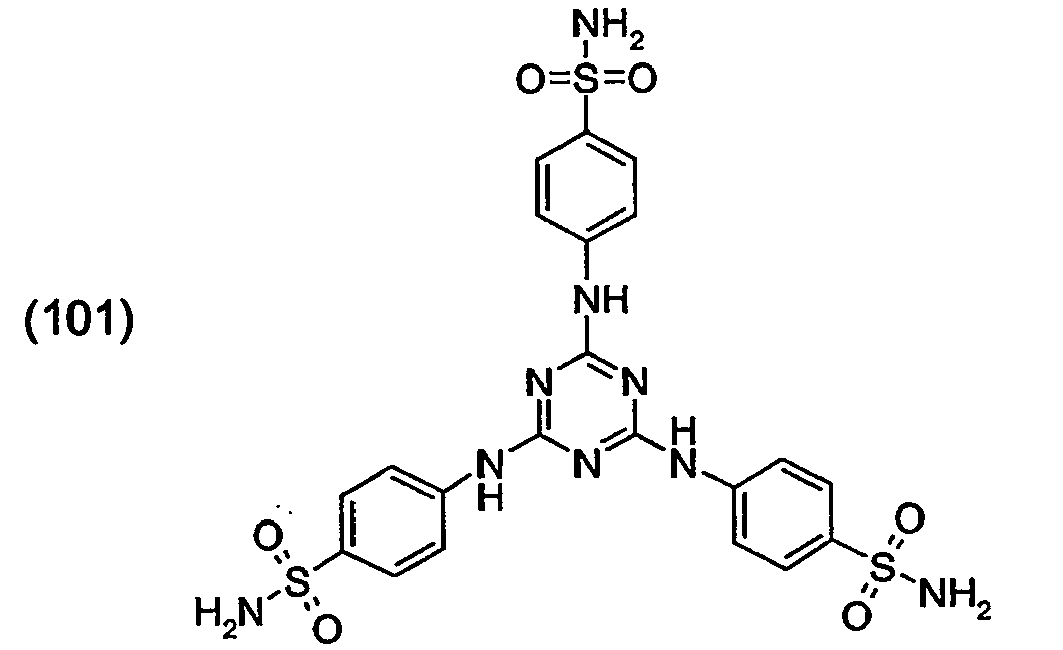


- A dispersion is prepared comprising the following components:
(2a) birefringent particle 40-60 parts (2b) Electrolyte 0.1-10 parts (2c) water 30 - 60 parts (1 d) dissolved UV filter 0.1 - 20 parts Dispersion number Component Disp 1w Ex. 12 Disp 2w Ex. 13 Disp 3w Ex. 14 Disp 4w Ex. 15 Disp 5w (Ex. 16) Disp 6w Ex. 17 Melamine (2a) 49 49 0 0 0 49 Phatalimide (2a) 0 0 49 0 0 0 5-Aminophtalic Acid (2a) 0 0 0 49 0 0 Monmorillonite Tonsil 414 FF (Süd-Chemie) (2a) 0 0 0 0 49 0 Sodium chloride (2b) 1 0 1 1 1 0 Magnesiumchloride (2b) 0 0 0 0 0 1 Potassium sulfate (2b) 0 1 0 0 0 0 Phenylbenzimidazol sulfonic acid (2d) 9 10 10 10 10 10 water, deion. (2c) 40 40 40 40 40 40 -
Trade Name INCI name % b.w Part A Axol C62 Glyceryl Stearate Citrate 1.5 Disp 1o Melamine in miglyol 812 N (55%) 10.0 Cetiol OE Dicaprylyl Ether 3.00 Eutanol G Octyl dodecanol 2.0 Lanette 18 Stearyl Alcohol 1.5 Softisan 100 Hydrogenated Cocoglycerides 1.0 Tinosorb OMC Ethylhexyl Methoxycinnamate 2.0 Tinosorb S 2,4-bis{[4-(2-ethylhexyloxy)-2-hydroxy]-phenyl}-6-(4-methoxyphenyl)-(1,3,5)-triazine 1.7 Neo Heliopan Octocrylene 1.1 Antaron V-216 PVP/Hexadecene Copolymer 1.3 Pemulen TR-2 Acrylates/C10-30 Alkyl Acrylate crosspolymer 0.15 Part B Water Aqua qs to 100 Rhodicare S Xanthan Gum 0.15 Disodium EDTA Disodium EDTA 0.1 Glycerine Glycerine 4 Part C Germaben II Diazolidinyl Urea/ Methyl paraben/ Propyl paraben/ Propylene Glycol 0.70 Part D NaOH ad 10% Sodium Hydroxide qs - Phase A is prepared by incorporation of all the ingredients exept Pemulen TR-2, then the mixture is stirred under moderate speed and heat up to 80°C.
At the latest stage of incorporation, Pemulen TR-2 is dispersed into the oil-phase.
The phase B is heated up to 75-80°C.
Phase A is poured into phase B under increase of stirring. - The mixture is homogenized for 15 seconds at 10 000 rpm.
At approximately 70°C Pemulen TR-2 is neutralized with NaOH solution.
Under 45°C phase D is added, then pH is adjusted to about 6-7.
Sunscreen: in-vitro SPF = 27; in vivo SPF = 23. -
Trade name INCI-Name % w/w (as supplied) Part A Axol C62 Glyceryl Stearate Citrate 1.5 Miglyol 8810 Butyle Glycol Dicaprylate/DiCaprate 6.0 Cetiol OE Dicaprylyl Ether 4.0 Eutanol G Octyl dodecanol 2.5 Lanette 18 Stearyl Alcohol 1.5 Softisan 100 Hydrogenated Cocoglycerides 1.0 Tinosorb OMC Ethylhexyl Methoxycinnamate 2.0 BEMT BEMT 1.7 Neo Heliopan Octocrylene 1.1 Antaron V-216 PVP/Hexadecene Copolymer 1.3 Pemulen TR-2 Acrytates/C10-30 Alkyl Acrylate crosspolymer 0.15 Part B Water Aqua qs to 100 Disp1w 10.0 Rhodicare S Xanthan Gum 0.15 Disodium EDTA Disodium EDTA 0.1 Glycerine Glycerine 4.0 Part C Germaben II Diazolidinyl Urea/ Methyl paraben/ Propyl paraben/ Propylene Glycol I 0.70 Part D NaOH ad 10% Sodium Hydroxide qs - Phase A is prepared by incorporation of all the ingredients, then the mixture is stirred under moderate speed and heated until 80°C.
At the latest incorporation, Pemulen TR-2 is dispersed into the oil-phase.
The phase B is heated at 75-80°C.
Phase A is poured into phase B under accelerated stirring.
The mixture is homogenized for 15 seconds at 10 000 rpm.
At approximately 70°C Pemulen TR-2 is neutralized with NaOH solution. - Under 45°C phase D is added, then the pH is adjusted to about 6-7.
- For determination of SPF/MPF values of the dispersions below the following formulation is prepared:
- (a) 20 parts of one of the dispersions from Examples(19a) - (19h),
- (b) 17 parts Capric/Caprylic Triglyceride,
- (c) 5 parts Brij 72 (PEG-2- Stearate),
- (d) 5 parts Eutanol G 16 (C-16 alkylalcohol),
- (e) 3 parts glycerine, and
- (f) 50 parts water, deion.
- The components of the oil phase (a) - (d) are added together and warmed up to 75°C. Under stirring the water phase (e) and (f) which is also warmed up to 75°C is added and homogenized with a Ultra-Turrax (10.000 rpm).
The formulation so obtained is applied on sand blasted PMMA plates according to a process described by Wendel et al (Wendel et al., SÖFW-Journal, 127(11); 2001). - After that the MPF values and the SPF value are determined with an Optometrix-SPF-290.
- Formulations having a particle content of 8 % and a content of dissolved UV absorber of 2 % are obtained.
Table 3: Determination of the SPF factor Birefringent particles Dissolved UV-Absorber SPF with particle SPF without particle Example 19a (a = Disp 3o from Ex. 2-11) Phtalimide BEMT 14 (2 % BEMT) 6.5 (2 % BEMT) Example 19b (a = Disp 2o from Ex. 2-11) Melamine BEMT 13.5 (2 % BEMT) 6.5 (2 % BEMT) Example 19c (a = Disp 5o from Ex. 2-11) montmorillonite Tonsil 414 FF (Süd-Chemie) BEMT 12.6 (2 % BEMT) 6.5 (2 % BEMT) Example 19d (a = Disp 4o from Ex. 2-11) 5-Aminoisophtalic acid BEMT 8 (2 % BEMT) 6.5 (2 % BEMT) Example 19e (a = Disp 7o from Ex. 2-11) Compound of formula (101) BEMT 19 (2 % BEMT) 6.5 (2 % BEMT) Example 19f (a = Disp 8o from Ex. 2-11) Compound of formula (101) DHHB 11 (1.6 % DHHB) 4.8 (1.6 % DHHB) Example 19g (a = Disp 9o from Ex. 2-11) Compound of formula (101) Compound of formula (103) 9 (1.6% Compound of formula (103)) 5.5 (1.6% Compound of formula (103)) Example 19h (a = Disp 10o from Ex. 2-11) Compound of formula (101) Compound of formula (102) 8 (1.6% Compound of formula (102)) 6.5 (1.6% Compound of formula (102)) BEMT = Bis-Ethylhexyloxyphenol Methoxyphenyl Triazine DHHB = Diethylamino Hydroxybenzoyl Hexyl Benzoate - As can be seen from Table 3 the compositions of the present invention comprising a birefringent particle show a remarkable increase in SPF.
-
- 50 wt.-%
- Calcite (CaCO3)
- 4 wt-%
- Arlacel P135 (PEG-30-Polyhydroxy stearinic acid)
- ad 100 %
- Miglyol 812N (Capric/Caprylic triglyceride)
-
- 50 wt.-%
- Calcite (CaCO3)
- 4 wt-%
- Arlacel P135 (PEG-30-Polyhydroxy stearinic acid)
- 10 wt.-%
- Ethylhexyl methoxy cinnamate
- 7,5 wt.-%
- Bis-Ethylhexyloxyphenol Methoxyphenyl Triazine
- ad 100 %
- Miglyol 812N (Capric/Caprylic triglyceride)
-
- 50 wt.-%
- Calcite (CaCO3)
- 4 wt-%
- Arlacel P135 (PEG-30-Polyhydroxy stearinic acid)
- 10 wt.%
- Ethylhexyl methoxy cinnamate
- 7,5 wt.-%
- Bis-Ethylhexyloxyphenol Methoxyphenyl Triazine
- ad 100 %
- C12-C15 Alkylbenzoate
-
- 50 wt.-%
- Calcite (CaCO3)
- 4 wt-%
- Arlacel P135 (PEG-30-Polyhydroxy stearinic acid)
- 15 wt.-%
- Octocrylene
- 7,5 wt.-%
- Bis-Ethylhexyloxyphenol Methoxyphenyl Triazine
- ad 100 %
- Miglyol 812N (Capric/Caprylic triglyceride)
- The slurries of dispersion 20a - 20d are homogenized using a high shear apparatus (Ultra-turrax) prior wet-milling with a bead mill, down to a particle size (calcite) of 0,5 to 5 µm.
Such dispersions can be incorporated into cosmetic w/o or o/w emulsions. - For the extinction measurement a formulation using dispersion 20a is prepared by heating all components on 60 °C prior stirring and homogenizing using an ultra-turrax:
- 50 %
- dispersion 20a
- 0,75 %
- Bis-Ethylhexyloxyphenol Methoxyphenyl Triazine
- 49,25 %
- w/o emulsion a
-
Oil Phase: Paraffinum Liquidum 12 Cyclomethicone 7 Isohexadecane 6 Isopropyl Palmitate 5 Cera Microcristallina 2 PEG-40 Sorbitan Perisostearate 1,8 Polyglyceryl-3-Diisostearate 1,7 Prunus Dulcis 0,7 Tocopheryl Acetate 0,5 Lanolin Alcohol 0,5 Water Phase: Sodium Lactate 1,1 Lactic Acid 1,0 MgSO4 0,8 NaHCO3 0,4 Citric Acid 0,2 Iodopropynyl Butylcarbamate 0,2 Fragrance 0,1 Water ad 100 Glycerine 8 - Both phases are heated seperatly to 80°C. The oil phase is added to the water phase under stirring prior emulsification.
- This emulsion is measured in a Perkin-Elmer UV-Vis-spectrometer using 8 µm cuvettes.
The extinction measured for this formulation is E = 1.2 at 340 nm, whereas the placebo without any calcite is E = 0.65 at 340 nm. - For SPF measurements the dispersions 20a - 20d are incorporated in an analogous way into a commercially available w/o-lotion.
Basic formulation: X % dispersion Y
ad 100 % w/o emulsion a - These preparations are applied on transpore tape (2 µl/cm2) and measured using an Optometrix-SPF 290S-analyzer.
- Results (SPF Values) are listed in Table 4
Table 4: SPF of dispersions containing micronized calcium salts X=5 X=10 X=20 X=30 Y=16b 2.7 5.3 13.7 25.3 Placebo (y=16b without Calcite) 2.1 4.1 7.6 11.1 Y=16c 3.1 5.5 14.5 28.1 Y=16d - 8.2 19 35
R1 and R2 independently from each other are; C1-C20alkyl; C2-C20alkenyl; C3-C10cycloalkyl; C3-C10cycloalkenyl; or R1 and R2 together with the linking nitrogen atom form a 5- or 6-membered heterocyclic ring;
n1 is a number from 1 to 4;
when n1 = 1,
R3 is a saturated or unsaturated heterocyclic radical; hydroxy-C1-C5alkyl; cyclohexyl optionally substituted with one or more C1-C5alkyl; phenyl optionally substituted with a heterocyclic radical, aminocarbonyl or C1-C5alkylcarboxy;
when n1 is 2,
R3 is an alkylene-, cycloalkylene, alkenylene or phenylene radical which is optionally substituted by a carbonyl- or carboxy group; a radical of formula *—CH2-C≡C-CH2—* or R3 together with A forms a bivalent radical of the formula (1a)

n2 is a number from 1 to 3;
when n1 is 3,
R3 is an alkanetriyl radical;
if n1 is 4,
R3 is an alkanetetrayl radical;
A is -O-; or-N(R5)-; and
R5 is hydrogen; C1-C5alkyl; or hydroxy-C1-C5alkyl.
R1, R2 independently from each other is hydrogen, C1-C20alkyl; C2-C20lkenyl; C3-C10cycloalkenyl; wherein R1 and R2 may form a five- or six-membered ring;
R3, R4 independently from each other is C1-C20alkyl; C2-C20alkenyl; C3-C10cycloalkenyl, C1-C20alkoxy, C1-C20alkoxycarbonyl, C1-C20alkylamino, di(C1-C20alkyl)amino, optionally substituted aryl or Heteroaryl;
X is hydrogen; COOR5; CONR6R7;
R5, R6, R7 independently from each other is hydrogen, C1-C20alkyl; C2-C20alkeny); C3-C10cycloalkyl; C3-C10cycloalkenyl; (Y-O)q-Z; optionally substituted aryl;
Y is -(CH2)2-; -(CH2)3-; -(CH2)4-; -CH(CH3)-CH2-;
Z is -CH2-CH3; -CH2-CH2-CH3; -CH2-CH2-CH2-CH3; CH(CH3)-CH3;
m is 0; 1; 2; or *;
n is 0; 1; 2; 3; or 4; and
Q is a number from 1 to 20.
R1 and R2, independently of one another, are C3-C18alkyl; C2-C18alkenyl; a radical of the formula -CH2-CH(-OH)-CH2-O-T1 or
R1 and R2 are a radical of the formula (4a)


m1 and m3, independently of one another, are 1 to 4;
p1 is 0 or a number from 1 to 5;
A1 is a radical of the formula
(1 b)

(1d)

R4 is hydrogen; M; C1-C5alkyl; or a radical of the formula -(CH2)m
R5 is hydrogen; or methyl;
T1 is hydrogen; or C1-C8alkyl;
Q1 C1-C18alkyl;
M is a metal cation;
m2 is 1 to 4; and
n1 is 1-16.
R1 and R2 are each independently of the others C1-C18alkyl; C2-C10alkenyl; or phenyl-C1-C4alkyl;
R4 is hydrogen; or C1-C5alkyl.
R1, R2 and R3 independently from each other are branched or unbranched C1-C12alkyl.
Claims (16)
- Use of insoluble or sparingly soluble micronized birefringent particles having an average refraction index of n = 1 to 2.5 and a Δn = 0.001 to 0.8 n which are not cosmetic UV absorbers and which are dispersed in the oil- or water-phase of a cosmetic or dermatological composition selected from melamine: 2,4,6-triamino-s-triazine; melamine polyphosphate: melamine cyanurate; Melamine phosphate; melam. (1,3,5- triazine-2,4,6-triamine-n -(4,6-diamino-1,3,5-triazine-2-yl) of the formula


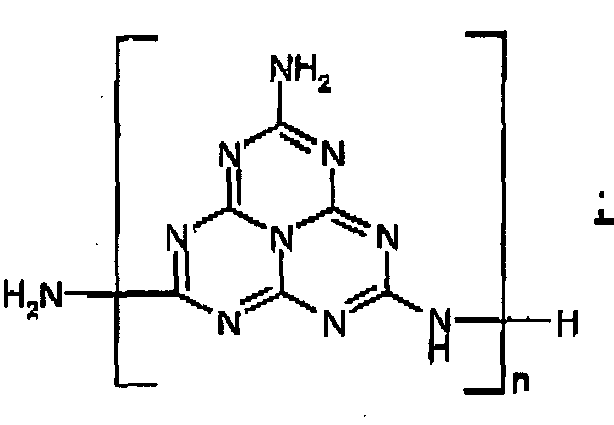


- Use according to claim 1, wherein the bifringent particle has a hydrophobic or hydrophilic surface.
- Use according to claims 1 or 2, wherein the bifringent particle is crystalline or in part crystalline,
- Use according to any of claims 1 to 3, wherein the bifringent particles is a metal salt and is selected from calcium salts.
- Use according to claim 4 wherein Calcit (CaCO3) is used as metal salt.
- Use according to claim 4 wherein dolomite (CaMgCO3) is used as metal salt.
- Use according to any of claims 1 to 6, wherein the bifringent particle has a particle size from 0.02 to 10 µm.
- Use according to any of claims 1 to 7, wherein the UV filter in the oil phase is selected from the class of p-aminobenzoic acid derivatives, salicylic acid derivatives, benzophenone derivatives, dibenzoylmethane derivatives, diphenyl acrylate derivatives, benzofuran derivatives, polymeric UV absorbers, comprising one or more organosilicon radicals, cinnamic acid derivatives, camphor derivatives, trianilino-s-triazine derivatives, s-triazinederivatives, phenylbenzimidazolesulfonic acid and salts thereof, menthyl anthranilates and benzotriazole derivatives.
- Use according to claim 1, wherein the oil-soluble UV absorber is selected from (+1-)-1,7,7-trimethyl-3-[(4-methylphenyl)methylene]bicyclo[2.2,1]heptan-2-one; 1,7,7-trimethyl-3-(phenylmethylene)bicyclo[2.2.1]heptan-2-one; (2-hydroxy-4-methoxyphenyl)(4-methylphenyl)methanone; 2,4-dihydroxybenzophenone; 2,2',4,4'-tetrahydroxybenzophenone; 2-hydroxy-4-methoxy benzophenone; 2,2'-dihydroxy-4,4'-dimethoxybenzophenone; 2,2'-dihydroxy-4-methoxybenzophenone; 1-[4-(1,1-dimethylethyl)phenyl]-3-(4-methoxyphenyl)propane-1,3-dione; 3,3,5-trimethyl cyclohexyl-2-hydroxy benzoate; Isopentyl p-methoxycinnamate; menthyl-o-aminobenzoate; menthyl salicylates; 2-ethylhexyl 2-cyano,3,3-diphenylacrylate; 2- ethylhexyl 4- (dimethylamino)benzoate; 2- ethylhexyl 4- methoxycinnamate; 2- ethylhexyl salicylates; benzoic acid, 4, 4', 4"- (1, 3, 5- triazine- 2, 4, 6- triyltriimino)tris-, tris(2-ethylhexyl)ester; 2,4,6-trianilino-(p-carbo-2'-ethylhexyl-1'-oxi)-1,3,5-triazine; benzoic acid, 4-amino-, ethyl ester, polymer with oxirane; 2-propenamide, n-[[4-[(4,7,7-trimethyl-3-oxobicyclo[2.2,1]hept-2-ylidene)methyl]phenyl]methyl-, homopolymers; triethanolamine salicylates; 2,2'-methylene-bis-[6-(2h-benzotriazol-2-yl)-4-(1,1,3,3-tetramethylbutyl)-phenol]; 2,4-bis{[4-(2-ethylhexyloxy)-2-hydroxy]-pheny}-6-(4-methoxyphenyl)-(1,3.5)-triazine; benzoic acid, 4,4'-[[6-[[4-[((1,1-dimethylethyl)amino]carbonyl]phenyl]amino]1,3,5-triazine-2,4-diyl]diimino]bis-, bis(2-ethylhexyl)ester; phenol, 2-(2h-benzotriazol-2-yl)-4-methyl-6-[2-methyl-3-[1,3,3,3-tetramethyl-1-[(trimethylsilyl)oxy]disiloxanyl]propyl]-; dimethicodiethylbezalmalonate; benzoic acid, 2-[4-(diethylamino)-2-hydroxybenzoyl]-, hexyl ester; 1,3,5-triazine, 2,4,6-tris(4-methoxyphenyl)-; 1,3,5-triazine, 2,4,6-tris[4-[(2-ethylhexyl)oxy]phenyl]-; 2-propenoic acid, 3-(1h-imidazol-4-yl)-; benzoic acid, 2-hydroxy-, [4-(1-methylethyl)phenyl]methyl ester, 1,2,3-propanetriol, 1-(4-aminobenzoate); benzeneacetic acid, 3,4-dimethoxy-a-oxo-; 2-propenoic acid, 2-cyano-3,3-diphenyl-, ethyl ester; anthralinic acid, p-menth-3-yl ester; 1,3,5-triazine-2,4,6-triamine and n,n'-bis[4-[5-(1,1-dimethylpropyl)-2-benzoxazolyl]phenyl]-n"-(2-ethylhexyl)-.
- Use according to any of claims 1 to 9, wherein the water-phase comprises at least one UV filter selected from 2-hydroxy-4-methoxy benzophenone-5-sulfonic acid; alpha-(2-oxobom-3-ylidene)toluene-4-sulphonic acid and its salts; methyl n,n,n-trimethyl-4-[(4,7,7-trimethyl-3-oxobicyclo[2,2,1]hept-2-ylidene)methyl]anilinium sulphate; 4- aminobenzoic acid; 2- phenyl- 1h- benzimidazole- 5-sulphonic acid; 3, 3'- (1, 4- phenylenedimethylene)bis[7, 7- dimethyl- 2- oxo-bicyclo[2.2.1]heptane- 1- methanesulfonic acid]: 1h-benzimidazole-4,6-disulfonic acid, 2,2'-(1,4-phenylene)bis-, disodium salt; benzenesulfonic acid, 3-(2h-benzotriazol-2-yl)-4-hydroxy-5-(1-methylpropyl)-, monosodium salt; 1-dodecanaminium, n-[3-[[4-(dimethylamino)benzoyl]-amino]propyl]n,n,dimethyl-, salt with 4-methylbenzenesulfonic acid (1:1); 1-propanaminium, n,n,n-trimethyl-3-[(1-oxo-3-phenyl-2-propenyl)amino]-, chloride; 1 h-benzimidazole-4,6-disulfonic acid, 2.2'-(1,4-phenylene)bis-; 1-propanaminium, 3-[[3-[3-(2h-benzotriazol-2-yl)-5-(1,1-dimethylethyl)-4-hydroxyphenyl]-1-oxopropyl]amino]-n,n-diethyl-n-methyl-, methyl sulfate (salt); and 2,2'-bis(1,4-phenylene)-1h-benzimidazole-4,6-disulphonic acid mono sodium salt or disodium phenyl dibenzimidazole tetrasulfonate.
- Cosmetic or dermatological composition comprising(a) micronized insoluble or sparingly soluble particles as defined in claim 1;(b) a UV-Filter which can be formulated in the oil- or water-phase;(c) a water phase,(d) an oil phase,and a cosmetically acceptable carrier.
- Cosmetic composition according to claim 11, wherein the bifringent particle (a) has a particle size of 0,01 to 5 µm and the average refractive index of the particles (n[parellel]+n[perpendicular]/2) differs not more than 0.3 from the refractive index of the oil phase in which the particles are dispersed.
- Cosmetic composition according to claim 11 or 12, wherein the concentration of the bifringent particle (a) is > 0.5 %.
- Cosmetic composition according to claim 11 or 12, wherein the concentration of the bifringent particle (a) is > 1%,
- Cosmetic composition according to claim 11 or 12, wherein the concentration of the micronized, insoluble substance (a) is > 2 %
- Use of a composition according to one of claims claim 12 to 15 as UV-booster system for sunscreen compositions.
Priority Applications (1)
| Application Number | Priority Date | Filing Date | Title |
|---|---|---|---|
| EP05766800A EP1768644B1 (en) | 2004-07-20 | 2005-07-11 | Light protecting-effective cosmetic or dermatological preparations |
Applications Claiming Priority (4)
| Application Number | Priority Date | Filing Date | Title |
|---|---|---|---|
| EP04103462 | 2004-07-20 | ||
| EP04105034 | 2004-10-14 | ||
| PCT/EP2005/053301 WO2006008252A1 (en) | 2004-07-20 | 2005-07-11 | Light protecting-effective cosmetic or dermatological preparations |
| EP05766800A EP1768644B1 (en) | 2004-07-20 | 2005-07-11 | Light protecting-effective cosmetic or dermatological preparations |
Publications (2)
| Publication Number | Publication Date |
|---|---|
| EP1768644A1 EP1768644A1 (en) | 2007-04-04 |
| EP1768644B1 true EP1768644B1 (en) | 2009-02-18 |
Family
ID=34913494
Family Applications (1)
| Application Number | Title | Priority Date | Filing Date |
|---|---|---|---|
| EP05766800A Expired - Lifetime EP1768644B1 (en) | 2004-07-20 | 2005-07-11 | Light protecting-effective cosmetic or dermatological preparations |
Country Status (9)
| Country | Link |
|---|---|
| US (1) | US9656103B2 (en) |
| EP (1) | EP1768644B1 (en) |
| KR (1) | KR101181362B1 (en) |
| AT (1) | ATE422873T1 (en) |
| BR (1) | BRPI0512183B8 (en) |
| DE (1) | DE602005012829D1 (en) |
| ES (1) | ES2319799T3 (en) |
| GB (1) | GB2417683A (en) |
| WO (1) | WO2006008252A1 (en) |
Families Citing this family (16)
| Publication number | Priority date | Publication date | Assignee | Title |
|---|---|---|---|---|
| CN101686921B (en) * | 2007-05-08 | 2016-10-05 | 巴斯夫欧洲公司 | Crystal forms of transmission dyes |
| EP2358444B1 (en) * | 2008-11-17 | 2016-12-28 | L'Oréal | Cosmetic method for treating human perspiration using particles of an expanded amorphous mineral material; compositions. |
| KR101390075B1 (en) * | 2009-07-07 | 2014-04-29 | 바스프 에스이 | Uv filter combinations comprising benzylidene malonates |
| EP2547314A2 (en) * | 2010-03-15 | 2013-01-23 | L'Oréal | Composition comprising a dibenzoylmethane screening agent and a merocyanine dicyano or cyanoacetate derivative; method for the photostabilization of the dibenzoylmethane screening agent |
| DE102014206332A1 (en) * | 2014-04-02 | 2015-10-08 | Beiersdorf Ag | COSMETIC WATER IN OIL EMULSION |
| WO2017160974A1 (en) * | 2016-03-15 | 2017-09-21 | Imerys Usa, Inc. | Compositions and methods for providing fluorescent cosmetics |
| EP3360601A1 (en) | 2017-02-09 | 2018-08-15 | Omya International AG | Functionalized calcium carbonate for sun protection boosting |
| FR3091176B1 (en) * | 2018-12-26 | 2021-04-16 | Oreal | Cosmetic composition comprising water-soluble UV filters |
| FR3091174B1 (en) * | 2018-12-26 | 2021-04-23 | Oreal | Cosmetic composition comprising water-soluble UV filters |
| KR102587341B1 (en) | 2018-12-26 | 2023-10-12 | (주)아모레퍼시픽 | Cyanuric acid derivative salt compounds and skin anti-inflammatory or anti-aging compositions comprising the same |
| KR20200095085A (en) | 2019-01-31 | 2020-08-10 | (주)아모레퍼시픽 | Novel tryptamine azide derivative compounds and skin anti-inflammatory or anti-aging compositions comprising the same |
| WO2020160236A1 (en) * | 2019-02-01 | 2020-08-06 | Beiersdorf Ag | Sunscreen compositions |
| EP4257115A4 (en) * | 2020-12-04 | 2025-11-26 | Ulsan Nat Inst Science & Tech Unist | Polymer carbon nitride, specific crystal form of polymer carbon nitride and use thereof for blocking ultraviolet rays |
| KR102545948B1 (en) * | 2020-12-04 | 2023-06-21 | 울산과학기술원 | UV protection cosmetic composition comprising polymer carbon nitride |
| CN114469779B (en) * | 2022-01-14 | 2024-05-10 | 常州纳欧新材料科技有限公司 | Refreshing and sun-proof emulsion added with attapulgite and preparation method thereof |
| KR102748582B1 (en) * | 2023-05-31 | 2025-01-03 | 한국콜마주식회사 | Sunscreening cosmetic composition with enhanced Sun Protection of Factor |
Family Cites Families (33)
| Publication number | Priority date | Publication date | Assignee | Title |
|---|---|---|---|---|
| US3988437A (en) * | 1974-03-25 | 1976-10-26 | Research Corporation | Suntan composition containing fluorescent compounds |
| JPS60149517A (en) * | 1984-01-13 | 1985-08-07 | Kanebo Ltd | Anti-sunburn composition |
| US4800076A (en) * | 1987-03-13 | 1989-01-24 | Johnson & Johnson Consumer Products, Inc. | Skin care compositions |
| US5733531A (en) * | 1991-02-05 | 1998-03-31 | Sunsmart, Inc. | Composite UV sunblock compositions |
| US5486233A (en) * | 1993-10-28 | 1996-01-23 | Western Mining Corporation Limited | Pigment extenders |
| GB9403451D0 (en) * | 1994-02-23 | 1994-04-13 | Ciba Geigy Ag | Sunscreen compositions |
| ZA966814B (en) * | 1995-08-18 | 1998-02-12 | Colgate Palmolive Co | Clear cosmetic gel composition. |
| JPH09255526A (en) * | 1996-03-27 | 1997-09-30 | Shiseido Co Ltd | Anti-aging cosmetics |
| US6159481A (en) * | 1996-12-12 | 2000-12-12 | Fallick; Harry | Sweat resistant sunblock and antioxidant composition |
| GB9715751D0 (en) * | 1997-07-26 | 1997-10-01 | Ciba Geigy Ag | Formulations |
| US6015548A (en) * | 1998-07-10 | 2000-01-18 | Shaklee Corporation | High efficiency skin protection formulation with sunscreen agents and antioxidants |
| JPH11246379A (en) * | 1998-02-27 | 1999-09-14 | Kose Corp | Sunscreen preparation |
| US6294143B1 (en) * | 1998-03-24 | 2001-09-25 | Minerals Technologies Inc. | Process for the preparation of discrete particles of calcium carbonate |
| DE59912720D1 (en) * | 1998-12-28 | 2005-12-01 | Suedzucker Ag | SUN PROTECTION AGENT WITH MICROPARTICLES BASED ON WATER-INSOLUBLE LINEAR POLYGLUCAN |
| DE19860371A1 (en) * | 1998-12-28 | 2000-06-29 | Aventis Res & Tech Gmbh & Co | Cosmetic or medical preparation for topical use |
| MX231178B (en) * | 1999-06-18 | 2005-10-10 | Ciba Sc Holding Ag | Micropigment mixture. |
| EP1068866A3 (en) * | 1999-07-12 | 2004-03-17 | Ciba SC Holding AG | Use of mixtures of micropigments for prevening tannig and to induce skin and hair lightening |
| DE19938757A1 (en) * | 1999-08-16 | 2001-02-22 | Beiersdorf Ag | Cosmetic or dermatological preparations of the oil-in-water type |
| FR2799965B1 (en) * | 1999-10-22 | 2002-10-31 | Oreal | EMULSION-FREE EMULSIONS CONTAINING AT LEAST ONE INSOLUBLE ORGANIC UV FILTER |
| DE10008896A1 (en) * | 2000-02-25 | 2001-08-30 | Beiersdorf Ag | Improving the solubility and compatibility of benzotriazole UV filters in oils, e.g. in cosmetics or dermatological compositions, by addition of dialkylnaphthalates |
| US20030161894A1 (en) * | 2001-09-05 | 2003-08-28 | 3P Technologies Ltd. | Precipitated aragonite and a process for producing it |
| DE10026791A1 (en) * | 2000-05-31 | 2001-12-06 | Solvay Barium Strontium Gmbh | Micronized barium sulfate |
| US6210658B1 (en) * | 2000-06-12 | 2001-04-03 | The C. P. Hall Corporation | Stable sunscreen composition containing a barium compound, e.g., barium sulfate, a dibenzoylmethane derivative, e.g., butyl methoxydibenzoylmethane (avobenzone), and a methoxycinnamate derivative, e.g., octyl methoxycinnamate |
| ES2254392T3 (en) * | 2000-06-27 | 2006-06-16 | E-L Management Corp. | COSMETIC AND PHARMACEUTICAL COMPOSITIONS AND METHODS THAT USE GREEN LIGHT EMISSING MATERIALS. |
| JP4146105B2 (en) * | 2001-05-30 | 2008-09-03 | 富士フイルム株式会社 | Ultraviolet absorber and method for producing the same, composition containing ultraviolet absorber, and image forming method |
| EP1455744A2 (en) * | 2001-10-13 | 2004-09-15 | Beiersdorf AG | Cosmetic and/or dermatological active ingredient combination |
| DE10154979B4 (en) * | 2001-10-31 | 2005-03-10 | Coty Bv | Cosmetic with increased moisturizing effect |
| FR2833167B1 (en) * | 2001-12-07 | 2004-05-21 | Oreal | ANTISOLAR COSMETIC COMPOSITIONS BASED ON A SYNERGISTIC MIXTURE OF FILTERS AND USES |
| CN100473374C (en) * | 2002-01-31 | 2009-04-01 | 西巴特殊化学品控股有限公司 | Micropigment mixtures |
| US6485713B1 (en) * | 2002-03-05 | 2002-11-26 | The C. P. Hall Company | Sunscreen compositions and methods and materials for producing the same |
| US7488471B2 (en) * | 2002-10-28 | 2009-02-10 | Mmp, Inc. | Transparent oil-in-water emulsion |
| DE10254548A1 (en) * | 2002-11-21 | 2004-06-17 | Basf Ag | Use of polymer powder containing UV absorbers for stabilizing polymers against the action of UV radiation |
| PT1633472E (en) * | 2003-06-13 | 2008-11-24 | Dsm Ip Assets Bv | Encapsulated materials |
-
2005
- 2005-07-11 BR BRPI0512183A patent/BRPI0512183B8/en active IP Right Grant
- 2005-07-11 AT AT05766800T patent/ATE422873T1/en not_active IP Right Cessation
- 2005-07-11 KR KR1020077000985A patent/KR101181362B1/en not_active Expired - Lifetime
- 2005-07-11 WO PCT/EP2005/053301 patent/WO2006008252A1/en not_active Ceased
- 2005-07-11 US US11/632,686 patent/US9656103B2/en active Active
- 2005-07-11 ES ES05766800T patent/ES2319799T3/en not_active Expired - Lifetime
- 2005-07-11 DE DE602005012829T patent/DE602005012829D1/en not_active Expired - Lifetime
- 2005-07-11 EP EP05766800A patent/EP1768644B1/en not_active Expired - Lifetime
- 2005-07-13 GB GB0514344A patent/GB2417683A/en not_active Withdrawn
Non-Patent Citations (1)
| Title |
|---|
| Retrieved from the Internet <URL:www.wikipedia.com> * |
Also Published As
| Publication number | Publication date |
|---|---|
| ES2319799T3 (en) | 2009-05-12 |
| BRPI0512183A (en) | 2008-02-19 |
| US20080075746A1 (en) | 2008-03-27 |
| KR20070032016A (en) | 2007-03-20 |
| BRPI0512183B8 (en) | 2016-09-13 |
| DE602005012829D1 (en) | 2009-04-02 |
| GB0514344D0 (en) | 2005-08-17 |
| KR101181362B1 (en) | 2012-09-11 |
| US9656103B2 (en) | 2017-05-23 |
| BRPI0512183B1 (en) | 2014-11-25 |
| WO2006008252A1 (en) | 2006-01-26 |
| GB2417683A (en) | 2006-03-08 |
| ATE422873T1 (en) | 2009-03-15 |
| EP1768644A1 (en) | 2007-04-04 |
Similar Documents
| Publication | Publication Date | Title |
|---|---|---|
| US9656103B2 (en) | Light protecting-effective cosmetic or dermatological preparations | |
| EP2328542B1 (en) | Sunscreen compositions comprising colour pigmens | |
| KR100569083B1 (en) | Cerium oxide solid solution, its manufacturing method, resin composition and cosmetics containing it | |
| CN104363879B (en) | cosmetic composition comprising composite particles | |
| EP2981244B1 (en) | Composition containing composite particles for screening out uv radiation, with a mean size of greater than 0.1 micron, and hydrophobic silica aerogel particles | |
| JP3471376B2 (en) | Zinc oxide particle dispersion | |
| EP0801941B1 (en) | Cosmetics | |
| KR20070050106A (en) | Cosmetic composition | |
| JP2001048764A (en) | Use of a finely divided pigment mixture to prevent sunburn and to shine skin and hair | |
| WO2012104160A2 (en) | Oil-in-water emulsion containing screening particles of composite material, non-spherical non-screening particles and at least one polar oil | |
| EP1860070A1 (en) | A particle comprising a host lattice and a guest, its preparation and use in ultraviolet light screening compositions | |
| KR100884480B1 (en) | Solid form wax-free sunscreen cosmetic composition | |
| WO2007072008A2 (en) | Particulate metal oxide | |
| KR101122743B1 (en) | A hybrid of a phenolic acid UV-screening agent with a layered metal hydroxide, a process for the preparation thereof, and a composition for UV screening comprising the same | |
| JP4882101B2 (en) | Cosmetics containing metal oxide solid solution cerium oxide coated plate-like particles and method for producing the coated plate-like particles | |
| JPH09202722A (en) | Cosmetic | |
| JP3441553B2 (en) | Cosmetic with ultraviolet shielding effect | |
| KR20210005580A (en) | Titanium dioxide | |
| RU2359657C2 (en) | Sun-protective filters | |
| KR102805228B1 (en) | titanium dioxide particles | |
| JPH09188611A (en) | Surface-coated flaky powder, its production and cosmetic formulated therewith | |
| JPH08119844A (en) | Cosmetics containing layered silicate minerals | |
| KR20220042741A (en) | Silicone-titanium dioxide composite powder for UV-screening and the method for preparing the same | |
| JP2000212029A (en) | New metal compound dispersion | |
| JPH08175949A (en) | UV protection agent and cosmetics containing it |
Legal Events
| Date | Code | Title | Description |
|---|---|---|---|
| PUAI | Public reference made under article 153(3) epc to a published international application that has entered the european phase |
Free format text: ORIGINAL CODE: 0009012 |
|
| 17P | Request for examination filed |
Effective date: 20061219 |
|
| AK | Designated contracting states |
Kind code of ref document: A1 Designated state(s): AT BE BG CH CY CZ DE DK EE ES FI FR GB GR HU IE IS IT LI LT LU LV MC NL PL PT RO SE SI SK TR |
|
| DAX | Request for extension of the european patent (deleted) | ||
| 17Q | First examination report despatched |
Effective date: 20071112 |
|
| RAP1 | Party data changed (applicant data changed or rights of an application transferred) |
Owner name: CIBA HOLDING INC. |
|
| GRAP | Despatch of communication of intention to grant a patent |
Free format text: ORIGINAL CODE: EPIDOSNIGR1 |
|
| RIC1 | Information provided on ipc code assigned before grant |
Ipc: A61Q 17/04 20060101ALI20080516BHEP Ipc: A61K 8/02 20060101AFI20080516BHEP |
|
| GRAC | Information related to communication of intention to grant a patent modified |
Free format text: ORIGINAL CODE: EPIDOSCIGR1 |
|
| GRAS | Grant fee paid |
Free format text: ORIGINAL CODE: EPIDOSNIGR3 |
|
| GRAA | (expected) grant |
Free format text: ORIGINAL CODE: 0009210 |
|
| AK | Designated contracting states |
Kind code of ref document: B1 Designated state(s): AT BE BG CH CY CZ DE DK EE ES FI FR GB GR HU IE IS IT LI LT LU LV MC NL PL PT RO SE SI SK TR |
|
| REG | Reference to a national code |
Ref country code: GB Ref legal event code: FG4D |
|
| REG | Reference to a national code |
Ref country code: CH Ref legal event code: EP |
|
| REG | Reference to a national code |
Ref country code: IE Ref legal event code: FG4D |
|
| REF | Corresponds to: |
Ref document number: 602005012829 Country of ref document: DE Date of ref document: 20090402 Kind code of ref document: P |
|
| REG | Reference to a national code |
Ref country code: ES Ref legal event code: FG2A Ref document number: 2319799 Country of ref document: ES Kind code of ref document: T3 |
|
| PG25 | Lapsed in a contracting state [announced via postgrant information from national office to epo] |
Ref country code: NL Free format text: LAPSE BECAUSE OF FAILURE TO SUBMIT A TRANSLATION OF THE DESCRIPTION OR TO PAY THE FEE WITHIN THE PRESCRIBED TIME-LIMIT Effective date: 20090218 Ref country code: LT Free format text: LAPSE BECAUSE OF FAILURE TO SUBMIT A TRANSLATION OF THE DESCRIPTION OR TO PAY THE FEE WITHIN THE PRESCRIBED TIME-LIMIT Effective date: 20090218 Ref country code: FI Free format text: LAPSE BECAUSE OF FAILURE TO SUBMIT A TRANSLATION OF THE DESCRIPTION OR TO PAY THE FEE WITHIN THE PRESCRIBED TIME-LIMIT Effective date: 20090218 Ref country code: SI Free format text: LAPSE BECAUSE OF FAILURE TO SUBMIT A TRANSLATION OF THE DESCRIPTION OR TO PAY THE FEE WITHIN THE PRESCRIBED TIME-LIMIT Effective date: 20090218 |
|
| NLV1 | Nl: lapsed or annulled due to failure to fulfill the requirements of art. 29p and 29m of the patents act | ||
| PG25 | Lapsed in a contracting state [announced via postgrant information from national office to epo] |
Ref country code: PL Free format text: LAPSE BECAUSE OF FAILURE TO SUBMIT A TRANSLATION OF THE DESCRIPTION OR TO PAY THE FEE WITHIN THE PRESCRIBED TIME-LIMIT Effective date: 20090218 Ref country code: LV Free format text: LAPSE BECAUSE OF FAILURE TO SUBMIT A TRANSLATION OF THE DESCRIPTION OR TO PAY THE FEE WITHIN THE PRESCRIBED TIME-LIMIT Effective date: 20090218 Ref country code: AT Free format text: LAPSE BECAUSE OF FAILURE TO SUBMIT A TRANSLATION OF THE DESCRIPTION OR TO PAY THE FEE WITHIN THE PRESCRIBED TIME-LIMIT Effective date: 20090218 Ref country code: SE Free format text: LAPSE BECAUSE OF FAILURE TO SUBMIT A TRANSLATION OF THE DESCRIPTION OR TO PAY THE FEE WITHIN THE PRESCRIBED TIME-LIMIT Effective date: 20090518 Ref country code: IS Free format text: LAPSE BECAUSE OF FAILURE TO SUBMIT A TRANSLATION OF THE DESCRIPTION OR TO PAY THE FEE WITHIN THE PRESCRIBED TIME-LIMIT Effective date: 20090618 |
|
| PG25 | Lapsed in a contracting state [announced via postgrant information from national office to epo] |
Ref country code: BE Free format text: LAPSE BECAUSE OF FAILURE TO SUBMIT A TRANSLATION OF THE DESCRIPTION OR TO PAY THE FEE WITHIN THE PRESCRIBED TIME-LIMIT Effective date: 20090218 |
|
| PG25 | Lapsed in a contracting state [announced via postgrant information from national office to epo] |
Ref country code: CZ Free format text: LAPSE BECAUSE OF FAILURE TO SUBMIT A TRANSLATION OF THE DESCRIPTION OR TO PAY THE FEE WITHIN THE PRESCRIBED TIME-LIMIT Effective date: 20090218 Ref country code: PT Free format text: LAPSE BECAUSE OF FAILURE TO SUBMIT A TRANSLATION OF THE DESCRIPTION OR TO PAY THE FEE WITHIN THE PRESCRIBED TIME-LIMIT Effective date: 20090727 Ref country code: EE Free format text: LAPSE BECAUSE OF FAILURE TO SUBMIT A TRANSLATION OF THE DESCRIPTION OR TO PAY THE FEE WITHIN THE PRESCRIBED TIME-LIMIT Effective date: 20090218 Ref country code: DK Free format text: LAPSE BECAUSE OF FAILURE TO SUBMIT A TRANSLATION OF THE DESCRIPTION OR TO PAY THE FEE WITHIN THE PRESCRIBED TIME-LIMIT Effective date: 20090218 |
|
| PG25 | Lapsed in a contracting state [announced via postgrant information from national office to epo] |
Ref country code: RO Free format text: LAPSE BECAUSE OF FAILURE TO SUBMIT A TRANSLATION OF THE DESCRIPTION OR TO PAY THE FEE WITHIN THE PRESCRIBED TIME-LIMIT Effective date: 20090218 Ref country code: SK Free format text: LAPSE BECAUSE OF FAILURE TO SUBMIT A TRANSLATION OF THE DESCRIPTION OR TO PAY THE FEE WITHIN THE PRESCRIBED TIME-LIMIT Effective date: 20090218 |
|
| PLBE | No opposition filed within time limit |
Free format text: ORIGINAL CODE: 0009261 |
|
| STAA | Information on the status of an ep patent application or granted ep patent |
Free format text: STATUS: NO OPPOSITION FILED WITHIN TIME LIMIT |
|
| 26N | No opposition filed |
Effective date: 20091119 |
|
| PG25 | Lapsed in a contracting state [announced via postgrant information from national office to epo] |
Ref country code: BG Free format text: LAPSE BECAUSE OF FAILURE TO SUBMIT A TRANSLATION OF THE DESCRIPTION OR TO PAY THE FEE WITHIN THE PRESCRIBED TIME-LIMIT Effective date: 20090518 |
|
| PG25 | Lapsed in a contracting state [announced via postgrant information from national office to epo] |
Ref country code: MC Free format text: LAPSE BECAUSE OF NON-PAYMENT OF DUE FEES Effective date: 20090731 |
|
| REG | Reference to a national code |
Ref country code: CH Ref legal event code: PL |
|
| PG25 | Lapsed in a contracting state [announced via postgrant information from national office to epo] |
Ref country code: LI Free format text: LAPSE BECAUSE OF NON-PAYMENT OF DUE FEES Effective date: 20090731 Ref country code: CH Free format text: LAPSE BECAUSE OF NON-PAYMENT OF DUE FEES Effective date: 20090731 |
|
| PG25 | Lapsed in a contracting state [announced via postgrant information from national office to epo] |
Ref country code: IE Free format text: LAPSE BECAUSE OF NON-PAYMENT OF DUE FEES Effective date: 20090711 |
|
| PG25 | Lapsed in a contracting state [announced via postgrant information from national office to epo] |
Ref country code: GR Free format text: LAPSE BECAUSE OF FAILURE TO SUBMIT A TRANSLATION OF THE DESCRIPTION OR TO PAY THE FEE WITHIN THE PRESCRIBED TIME-LIMIT Effective date: 20090519 |
|
| PG25 | Lapsed in a contracting state [announced via postgrant information from national office to epo] |
Ref country code: LU Free format text: LAPSE BECAUSE OF NON-PAYMENT OF DUE FEES Effective date: 20090711 |
|
| PG25 | Lapsed in a contracting state [announced via postgrant information from national office to epo] |
Ref country code: HU Free format text: LAPSE BECAUSE OF FAILURE TO SUBMIT A TRANSLATION OF THE DESCRIPTION OR TO PAY THE FEE WITHIN THE PRESCRIBED TIME-LIMIT Effective date: 20090819 |
|
| PG25 | Lapsed in a contracting state [announced via postgrant information from national office to epo] |
Ref country code: TR Free format text: LAPSE BECAUSE OF FAILURE TO SUBMIT A TRANSLATION OF THE DESCRIPTION OR TO PAY THE FEE WITHIN THE PRESCRIBED TIME-LIMIT Effective date: 20090218 |
|
| PG25 | Lapsed in a contracting state [announced via postgrant information from national office to epo] |
Ref country code: CY Free format text: LAPSE BECAUSE OF FAILURE TO SUBMIT A TRANSLATION OF THE DESCRIPTION OR TO PAY THE FEE WITHIN THE PRESCRIBED TIME-LIMIT Effective date: 20090218 |
|
| REG | Reference to a national code |
Ref country code: FR Ref legal event code: PLFP Year of fee payment: 12 |
|
| REG | Reference to a national code |
Ref country code: FR Ref legal event code: PLFP Year of fee payment: 13 |
|
| REG | Reference to a national code |
Ref country code: FR Ref legal event code: PLFP Year of fee payment: 14 |
|
| PGFP | Annual fee paid to national office [announced via postgrant information from national office to epo] |
Ref country code: DE Payment date: 20240730 Year of fee payment: 20 |
|
| PGFP | Annual fee paid to national office [announced via postgrant information from national office to epo] |
Ref country code: GB Payment date: 20240724 Year of fee payment: 20 |
|
| PGFP | Annual fee paid to national office [announced via postgrant information from national office to epo] |
Ref country code: FR Payment date: 20240725 Year of fee payment: 20 |
|
| PGFP | Annual fee paid to national office [announced via postgrant information from national office to epo] |
Ref country code: ES Payment date: 20240806 Year of fee payment: 20 |
|
| PGFP | Annual fee paid to national office [announced via postgrant information from national office to epo] |
Ref country code: IT Payment date: 20240722 Year of fee payment: 20 |
|
| REG | Reference to a national code |
Ref country code: DE Ref legal event code: R071 Ref document number: 602005012829 Country of ref document: DE |
|
| REG | Reference to a national code |
Ref country code: ES Ref legal event code: FD2A Effective date: 20250728 |
|
| REG | Reference to a national code |
Ref country code: GB Ref legal event code: PE20 Expiry date: 20250710 |
|
| PG25 | Lapsed in a contracting state [announced via postgrant information from national office to epo] |
Ref country code: ES Free format text: LAPSE BECAUSE OF EXPIRATION OF PROTECTION Effective date: 20250712 |