EP1762605A1 - Naphthalene compound with terminal hydrogen, liquid crystal composition including the compound, and LCD device including the liquid crystal composition - Google Patents
Naphthalene compound with terminal hydrogen, liquid crystal composition including the compound, and LCD device including the liquid crystal composition Download PDFInfo
- Publication number
- EP1762605A1 EP1762605A1 EP06018684A EP06018684A EP1762605A1 EP 1762605 A1 EP1762605 A1 EP 1762605A1 EP 06018684 A EP06018684 A EP 06018684A EP 06018684 A EP06018684 A EP 06018684A EP 1762605 A1 EP1762605 A1 EP 1762605A1
- Authority
- EP
- European Patent Office
- Prior art keywords
- compound
- fluorine
- formulae
- hydrogen
- independently
- Prior art date
- Legal status (The legal status is an assumption and is not a legal conclusion. Google has not performed a legal analysis and makes no representation as to the accuracy of the status listed.)
- Granted
Links
- 150000001875 compounds Chemical class 0.000 title claims abstract description 287
- 239000000203 mixture Substances 0.000 title claims abstract description 126
- 239000004973 liquid crystal related substance Chemical group 0.000 title claims abstract description 89
- 229910052739 hydrogen Inorganic materials 0.000 title claims abstract description 80
- 239000001257 hydrogen Substances 0.000 title claims abstract description 80
- -1 Naphthalene compound Chemical class 0.000 title claims abstract description 34
- 125000004435 hydrogen atom Chemical group [H]* 0.000 title claims description 10
- UFWIBTONFRDIAS-UHFFFAOYSA-N naphthalene-acid Natural products C1=CC=CC2=CC=CC=C21 UFWIBTONFRDIAS-UHFFFAOYSA-N 0.000 title description 2
- 229910052731 fluorine Inorganic materials 0.000 claims abstract description 229
- 239000011737 fluorine Substances 0.000 claims abstract description 96
- PXGOKWXKJXAPGV-UHFFFAOYSA-N Fluorine Chemical compound FF PXGOKWXKJXAPGV-UHFFFAOYSA-N 0.000 claims abstract description 85
- 239000000460 chlorine Substances 0.000 claims abstract description 80
- UFHFLCQGNIYNRP-UHFFFAOYSA-N Hydrogen Chemical compound [H][H] UFHFLCQGNIYNRP-UHFFFAOYSA-N 0.000 claims abstract description 71
- 229910052801 chlorine Inorganic materials 0.000 claims abstract description 26
- ZAMOUSCENKQFHK-UHFFFAOYSA-N Chlorine atom Chemical compound [Cl] ZAMOUSCENKQFHK-UHFFFAOYSA-N 0.000 claims abstract description 20
- 229910052736 halogen Inorganic materials 0.000 claims abstract description 8
- 150000002367 halogens Chemical class 0.000 claims abstract description 8
- 125000000876 trifluoromethoxy group Chemical group FC(F)(F)O* 0.000 claims description 89
- 125000004955 1,4-cyclohexylene group Chemical group [H]C1([H])C([H])([H])C([H])([*:1])C([H])([H])C([H])([H])C1([H])[*:2] 0.000 claims description 15
- 125000001140 1,4-phenylene group Chemical group [H]C1=C([H])C([*:2])=C([H])C([H])=C1[*:1] 0.000 claims description 13
- 125000002023 trifluoromethyl group Chemical group FC(F)(F)* 0.000 claims description 13
- 125000000217 alkyl group Chemical group 0.000 claims description 11
- 125000001153 fluoro group Chemical group F* 0.000 claims description 11
- 125000004432 carbon atom Chemical group C* 0.000 claims description 10
- 125000001309 chloro group Chemical group Cl* 0.000 claims description 7
- 125000005714 2,5- (1,3-dioxanylene) group Chemical group [H]C1([H])OC([H])([*:1])OC([H])([H])C1([H])[*:2] 0.000 claims description 3
- JNCMHMUGTWEVOZ-UHFFFAOYSA-N F[CH]F Chemical compound F[CH]F JNCMHMUGTWEVOZ-UHFFFAOYSA-N 0.000 claims description 2
- 230000003287 optical effect Effects 0.000 abstract description 30
- 230000000704 physical effect Effects 0.000 abstract description 13
- YXFVVABEGXRONW-UHFFFAOYSA-N Toluene Chemical compound CC1=CC=CC=C1 YXFVVABEGXRONW-UHFFFAOYSA-N 0.000 description 84
- IMNFDUFMRHMDMM-UHFFFAOYSA-N N-Heptane Chemical compound CCCCCCC IMNFDUFMRHMDMM-UHFFFAOYSA-N 0.000 description 30
- 239000000243 solution Substances 0.000 description 27
- 238000000034 method Methods 0.000 description 25
- 239000002904 solvent Substances 0.000 description 25
- WYURNTSHIVDZCO-UHFFFAOYSA-N Tetrahydrofuran Chemical compound C1CCOC1 WYURNTSHIVDZCO-UHFFFAOYSA-N 0.000 description 24
- CSNNHWWHGAXBCP-UHFFFAOYSA-L Magnesium sulfate Chemical compound [Mg+2].[O-][S+2]([O-])([O-])[O-] CSNNHWWHGAXBCP-UHFFFAOYSA-L 0.000 description 22
- 239000007787 solid Substances 0.000 description 22
- 238000006243 chemical reaction Methods 0.000 description 21
- XLYOFNOQVPJJNP-UHFFFAOYSA-N water Substances O XLYOFNOQVPJJNP-UHFFFAOYSA-N 0.000 description 20
- 230000015572 biosynthetic process Effects 0.000 description 17
- YMWUJEATGCHHMB-UHFFFAOYSA-N Dichloromethane Chemical compound ClCCl YMWUJEATGCHHMB-UHFFFAOYSA-N 0.000 description 16
- 239000013078 crystal Substances 0.000 description 14
- 238000003786 synthesis reaction Methods 0.000 description 14
- 0 *c1ccc(CI*c2ccc(cccc3)c3c2*)cc1 Chemical compound *c1ccc(CI*c2ccc(cccc3)c3c2*)cc1 0.000 description 13
- 239000000047 product Substances 0.000 description 13
- 238000010898 silica gel chromatography Methods 0.000 description 13
- 239000004990 Smectic liquid crystal Substances 0.000 description 12
- 125000005647 linker group Chemical group 0.000 description 12
- YLQBMQCUIZJEEH-UHFFFAOYSA-N tetrahydrofuran Natural products C=1C=COC=1 YLQBMQCUIZJEEH-UHFFFAOYSA-N 0.000 description 12
- KDLHZDBZIXYQEI-UHFFFAOYSA-N Palladium Chemical compound [Pd] KDLHZDBZIXYQEI-UHFFFAOYSA-N 0.000 description 11
- 229910052943 magnesium sulfate Inorganic materials 0.000 description 11
- LFQSCWFLJHTTHZ-UHFFFAOYSA-N Ethanol Chemical compound CCO LFQSCWFLJHTTHZ-UHFFFAOYSA-N 0.000 description 10
- 239000003480 eluent Substances 0.000 description 10
- 239000012046 mixed solvent Substances 0.000 description 10
- 239000011541 reaction mixture Substances 0.000 description 10
- 230000007704 transition Effects 0.000 description 9
- MZRVEZGGRBJDDB-UHFFFAOYSA-N N-Butyllithium Chemical compound [Li]CCCC MZRVEZGGRBJDDB-UHFFFAOYSA-N 0.000 description 8
- UIIMBOGNXHQVGW-UHFFFAOYSA-M Sodium bicarbonate Chemical compound [Na+].OC([O-])=O UIIMBOGNXHQVGW-UHFFFAOYSA-M 0.000 description 8
- YNHIGQDRGKUECZ-UHFFFAOYSA-L bis(triphenylphosphine)palladium(ii) dichloride Chemical compound [Cl-].[Cl-].[Pd+2].C1=CC=CC=C1P(C=1C=CC=CC=1)C1=CC=CC=C1.C1=CC=CC=C1P(C=1C=CC=CC=1)C1=CC=CC=C1 YNHIGQDRGKUECZ-UHFFFAOYSA-L 0.000 description 8
- 239000003054 catalyst Substances 0.000 description 8
- 150000004714 phosphonium salts Chemical class 0.000 description 8
- BWHMMNNQKKPAPP-UHFFFAOYSA-L potassium carbonate Chemical compound [K+].[K+].[O-]C([O-])=O BWHMMNNQKKPAPP-UHFFFAOYSA-L 0.000 description 8
- 239000007864 aqueous solution Substances 0.000 description 7
- VHYFNPMBLIVWCW-UHFFFAOYSA-N 4-Dimethylaminopyridine Chemical compound CN(C)C1=CC=NC=C1 VHYFNPMBLIVWCW-UHFFFAOYSA-N 0.000 description 6
- 238000009835 boiling Methods 0.000 description 6
- RIOQSEWOXXDEQQ-UHFFFAOYSA-N triphenylphosphine Chemical compound C1=CC=CC=C1P(C=1C=CC=CC=1)C1=CC=CC=C1 RIOQSEWOXXDEQQ-UHFFFAOYSA-N 0.000 description 6
- 229910052727 yttrium Inorganic materials 0.000 description 6
- ZMXDDKWLCZADIW-UHFFFAOYSA-N N,N-Dimethylformamide Chemical compound CN(C)C=O ZMXDDKWLCZADIW-UHFFFAOYSA-N 0.000 description 5
- 239000002019 doping agent Substances 0.000 description 5
- 238000002156 mixing Methods 0.000 description 5
- 230000010287 polarization Effects 0.000 description 5
- 239000000758 substrate Substances 0.000 description 5
- HEDRZPFGACZZDS-UHFFFAOYSA-N Chloroform Chemical compound ClC(Cl)Cl HEDRZPFGACZZDS-UHFFFAOYSA-N 0.000 description 4
- 239000000654 additive Substances 0.000 description 4
- CSJLBAMHHLJAAS-UHFFFAOYSA-N diethylaminosulfur trifluoride Chemical compound CCN(CC)S(F)(F)F CSJLBAMHHLJAAS-UHFFFAOYSA-N 0.000 description 4
- 239000011521 glass Substances 0.000 description 4
- NFHFRUOZVGFOOS-UHFFFAOYSA-N palladium;triphenylphosphane Chemical compound [Pd].C1=CC=CC=C1P(C=1C=CC=CC=1)C1=CC=CC=C1.C1=CC=CC=C1P(C=1C=CC=CC=1)C1=CC=CC=C1.C1=CC=CC=C1P(C=1C=CC=CC=1)C1=CC=CC=C1.C1=CC=CC=C1P(C=1C=CC=CC=1)C1=CC=CC=C1 NFHFRUOZVGFOOS-UHFFFAOYSA-N 0.000 description 4
- 229910000027 potassium carbonate Inorganic materials 0.000 description 4
- LPNYRYFBWFDTMA-UHFFFAOYSA-N potassium tert-butoxide Chemical compound [K+].CC(C)(C)[O-] LPNYRYFBWFDTMA-UHFFFAOYSA-N 0.000 description 4
- 238000010992 reflux Methods 0.000 description 4
- 229920006395 saturated elastomer Polymers 0.000 description 4
- 229910000030 sodium bicarbonate Inorganic materials 0.000 description 4
- OUPYBBPMTKBVAP-UHFFFAOYSA-N 2-(3,4-difluorophenyl)-6-propylnaphthalene Chemical compound C1=CC2=CC(CCC)=CC=C2C=C1C1=CC=C(F)C(F)=C1 OUPYBBPMTKBVAP-UHFFFAOYSA-N 0.000 description 3
- GXFPULGFQXLJJM-UHFFFAOYSA-N 2-(3-fluorophenyl)naphthalene Chemical compound FC1=CC=CC(C=2C=C3C=CC=CC3=CC=2)=C1 GXFPULGFQXLJJM-UHFFFAOYSA-N 0.000 description 3
- UOBYKYZJUGYBDK-UHFFFAOYSA-N 2-naphthoic acid Chemical compound C1=CC=CC2=CC(C(=O)O)=CC=C21 UOBYKYZJUGYBDK-UHFFFAOYSA-N 0.000 description 3
- HBXFIXSFKULBOG-UHFFFAOYSA-N Cc1cc(F)c(C)c(F)c1 Chemical compound Cc1cc(F)c(C)c(F)c1 HBXFIXSFKULBOG-UHFFFAOYSA-N 0.000 description 3
- XDTMQSROBMDMFD-UHFFFAOYSA-N Cyclohexane Chemical compound C1CCCCC1 XDTMQSROBMDMFD-UHFFFAOYSA-N 0.000 description 3
- OKKJLVBELUTLKV-UHFFFAOYSA-N Methanol Chemical compound OC OKKJLVBELUTLKV-UHFFFAOYSA-N 0.000 description 3
- 238000004458 analytical method Methods 0.000 description 3
- 125000004786 difluoromethoxy group Chemical group [H]C(F)(F)O* 0.000 description 3
- 239000000706 filtrate Substances 0.000 description 3
- 229910052740 iodine Inorganic materials 0.000 description 3
- WGOPGODQLGJZGL-UHFFFAOYSA-N lithium;butane Chemical compound [Li+].CC[CH-]C WGOPGODQLGJZGL-UHFFFAOYSA-N 0.000 description 3
- 229910052751 metal Inorganic materials 0.000 description 3
- 239000002184 metal Substances 0.000 description 3
- 150000002790 naphthalenes Chemical class 0.000 description 3
- 230000002194 synthesizing effect Effects 0.000 description 3
- JRMUNVKIHCOMHV-UHFFFAOYSA-M tetrabutylammonium bromide Chemical compound [Br-].CCCC[N+](CCCC)(CCCC)CCCC JRMUNVKIHCOMHV-UHFFFAOYSA-M 0.000 description 3
- VZUSLTBHPWDMAW-UHFFFAOYSA-N 2-(3,4-difluorophenyl)naphthalene Chemical compound C1=C(F)C(F)=CC=C1C1=CC=C(C=CC=C2)C2=C1 VZUSLTBHPWDMAW-UHFFFAOYSA-N 0.000 description 2
- IMAAFIUMAANAGT-UHFFFAOYSA-N 2-(3-fluoro-4-iodophenyl)naphthalene Chemical compound C1=C(I)C(F)=CC(C=2C=C3C=CC=CC3=CC=2)=C1 IMAAFIUMAANAGT-UHFFFAOYSA-N 0.000 description 2
- FIOPYXXNTLVEOT-UHFFFAOYSA-N 2-[2-(3-fluoro-4-iodophenyl)ethyl]naphthalene Chemical compound C1=C(I)C(F)=CC(CCC=2C=C3C=CC=CC3=CC=2)=C1 FIOPYXXNTLVEOT-UHFFFAOYSA-N 0.000 description 2
- TXYXWVYHCAEZIQ-UHFFFAOYSA-N 2-[2-(3-fluorophenyl)ethenyl]naphthalene Chemical compound FC1=CC=CC(C=CC=2C=C3C=CC=CC3=CC=2)=C1 TXYXWVYHCAEZIQ-UHFFFAOYSA-N 0.000 description 2
- TVRXBDJXAJSJFP-UHFFFAOYSA-N 2-[2-(3-fluorophenyl)ethyl]naphthalene Chemical compound FC1=CC=CC(CCC=2C=C3C=CC=CC3=CC=2)=C1 TVRXBDJXAJSJFP-UHFFFAOYSA-N 0.000 description 2
- OEYRVCDBMKGPHW-UHFFFAOYSA-N 2-[3-fluoro-4-[2-(4-fluorophenyl)ethenyl]phenyl]naphthalene Chemical compound C1=CC(F)=CC=C1C=CC1=CC=C(C=2C=C3C=CC=CC3=CC=2)C=C1F OEYRVCDBMKGPHW-UHFFFAOYSA-N 0.000 description 2
- SAEOFVASEDNFTO-UHFFFAOYSA-N 2-fluoro-4-naphthalen-2-ylbenzaldehyde Chemical compound C1=C(C=O)C(F)=CC(C=2C=C3C=CC=CC3=CC=2)=C1 SAEOFVASEDNFTO-UHFFFAOYSA-N 0.000 description 2
- ZCYVEMRRCGMTRW-UHFFFAOYSA-N 7553-56-2 Chemical compound [I] ZCYVEMRRCGMTRW-UHFFFAOYSA-N 0.000 description 2
- QOSSAOTZNIDXMA-UHFFFAOYSA-N Dicylcohexylcarbodiimide Chemical compound C1CCCCC1N=C=NC1CCCCC1 QOSSAOTZNIDXMA-UHFFFAOYSA-N 0.000 description 2
- RTZKZFJDLAIYFH-UHFFFAOYSA-N Diethyl ether Chemical compound CCOCC RTZKZFJDLAIYFH-UHFFFAOYSA-N 0.000 description 2
- XTHFKEDIFFGKHM-UHFFFAOYSA-N Dimethoxyethane Chemical compound COCCOC XTHFKEDIFFGKHM-UHFFFAOYSA-N 0.000 description 2
- ZHNUHDYFZUAESO-UHFFFAOYSA-N Formamide Chemical compound NC=O ZHNUHDYFZUAESO-UHFFFAOYSA-N 0.000 description 2
- 229910002666 PdCl2 Inorganic materials 0.000 description 2
- ISWSIDIOOBJBQZ-UHFFFAOYSA-N Phenol Chemical compound OC1=CC=CC=C1 ISWSIDIOOBJBQZ-UHFFFAOYSA-N 0.000 description 2
- CDBYLPFSWZWCQE-UHFFFAOYSA-L Sodium Carbonate Chemical compound [Na+].[Na+].[O-]C([O-])=O CDBYLPFSWZWCQE-UHFFFAOYSA-L 0.000 description 2
- FAPWRFPIFSIZLT-UHFFFAOYSA-M Sodium chloride Chemical compound [Na+].[Cl-] FAPWRFPIFSIZLT-UHFFFAOYSA-M 0.000 description 2
- 230000001476 alcoholic effect Effects 0.000 description 2
- 150000001299 aldehydes Chemical class 0.000 description 2
- 150000004945 aromatic hydrocarbons Chemical class 0.000 description 2
- 239000012298 atmosphere Substances 0.000 description 2
- 239000003795 chemical substances by application Substances 0.000 description 2
- 229910052802 copper Inorganic materials 0.000 description 2
- 239000010949 copper Substances 0.000 description 2
- 230000000694 effects Effects 0.000 description 2
- 150000002148 esters Chemical class 0.000 description 2
- 238000013213 extrapolation Methods 0.000 description 2
- 238000010438 heat treatment Methods 0.000 description 2
- 239000011630 iodine Substances 0.000 description 2
- 239000011159 matrix material Substances 0.000 description 2
- 238000005259 measurement Methods 0.000 description 2
- 239000012044 organic layer Substances 0.000 description 2
- PIBWKRNGBLPSSY-UHFFFAOYSA-L palladium(II) chloride Chemical compound Cl[Pd]Cl PIBWKRNGBLPSSY-UHFFFAOYSA-L 0.000 description 2
- 229920000642 polymer Polymers 0.000 description 2
- AKHNMLFCWUSKQB-UHFFFAOYSA-L sodium thiosulfate Chemical compound [Na+].[Na+].[O-]S([O-])(=O)=S AKHNMLFCWUSKQB-UHFFFAOYSA-L 0.000 description 2
- 238000003756 stirring Methods 0.000 description 2
- 239000000725 suspension Substances 0.000 description 2
- 239000010409 thin film Substances 0.000 description 2
- 125000005147 toluenesulfonyl group Chemical group C=1(C(=CC=CC1)S(=O)(=O)*)C 0.000 description 2
- 125000001889 triflyl group Chemical group FC(F)(F)S(*)(=O)=O 0.000 description 2
- JIAARYAFYJHUJI-UHFFFAOYSA-L zinc dichloride Chemical compound [Cl-].[Cl-].[Zn+2] JIAARYAFYJHUJI-UHFFFAOYSA-L 0.000 description 2
- KNXQDJCZSVHEIW-UHFFFAOYSA-N (3-fluorophenyl)boronic acid Chemical compound OB(O)C1=CC=CC(F)=C1 KNXQDJCZSVHEIW-UHFFFAOYSA-N 0.000 description 1
- XCGTZHIDUICFLA-UHFFFAOYSA-M (3-fluorophenyl)methyl-triphenylphosphanium;bromide Chemical compound [Br-].FC1=CC=CC(C[P+](C=2C=CC=CC=2)(C=2C=CC=CC=2)C=2C=CC=CC=2)=C1 XCGTZHIDUICFLA-UHFFFAOYSA-M 0.000 description 1
- PRTSMCXEZDIZME-UHFFFAOYSA-N (4-chloro-3-fluorophenoxy)boronic acid Chemical compound OB(O)OC1=CC=C(Cl)C(F)=C1 PRTSMCXEZDIZME-UHFFFAOYSA-N 0.000 description 1
- PHBVXHIVWULVNF-UHFFFAOYSA-N (4-fluorophenoxy)boronic acid Chemical compound OB(O)OC1=CC=C(F)C=C1 PHBVXHIVWULVNF-UHFFFAOYSA-N 0.000 description 1
- DWIYANXFWXPJQY-UHFFFAOYSA-M (4-fluorophenyl)methyl-triphenylphosphanium;bromide Chemical compound [Br-].C1=CC(F)=CC=C1C[P+](C=1C=CC=CC=1)(C=1C=CC=CC=1)C1=CC=CC=C1 DWIYANXFWXPJQY-UHFFFAOYSA-M 0.000 description 1
- DYLIWHYUXAJDOJ-OWOJBTEDSA-N (e)-4-(6-aminopurin-9-yl)but-2-en-1-ol Chemical compound NC1=NC=NC2=C1N=CN2C\C=C\CO DYLIWHYUXAJDOJ-OWOJBTEDSA-N 0.000 description 1
- MEKOFIRRDATTAG-UHFFFAOYSA-N 2,2,5,8-tetramethyl-3,4-dihydrochromen-6-ol Chemical compound C1CC(C)(C)OC2=C1C(C)=C(O)C=C2C MEKOFIRRDATTAG-UHFFFAOYSA-N 0.000 description 1
- QNIHBTRLIJORED-UHFFFAOYSA-N 2,4-bis(2-methoxyphenyl)-2,4-bis(sulfanylidene)-1,3,2$l^{5},4$l^{5}-dithiadiphosphetane Chemical compound COC1=CC=CC=C1P1(=S)SP(=S)(C=2C(=CC=CC=2)OC)S1 QNIHBTRLIJORED-UHFFFAOYSA-N 0.000 description 1
- JBZDUNZANBIGGL-UHFFFAOYSA-N 2-[2-[3-fluoro-4-(4-fluorophenyl)phenyl]ethyl]naphthalene Chemical compound C1=CC(F)=CC=C1C(C(=C1)F)=CC=C1CCC1=CC=C(C=CC=C2)C2=C1 JBZDUNZANBIGGL-UHFFFAOYSA-N 0.000 description 1
- URABXOUBDQZXJK-UHFFFAOYSA-N 2-[3-fluoro-4-[2-(4-fluorophenyl)ethyl]phenyl]naphthalene Chemical compound C1=CC(F)=CC=C1CCC1=CC=C(C=2C=C3C=CC=CC3=CC=2)C=C1F URABXOUBDQZXJK-UHFFFAOYSA-N 0.000 description 1
- OQMNXSDUBWNABQ-UHFFFAOYSA-N 2-[4-(4-chloro-3-fluorophenyl)-3-fluorophenyl]naphthalene Chemical compound C1=C(Cl)C(F)=CC(C=2C(=CC(=CC=2)C=2C=C3C=CC=CC3=CC=2)F)=C1 OQMNXSDUBWNABQ-UHFFFAOYSA-N 0.000 description 1
- QTPKZWWEVDLHAF-UHFFFAOYSA-N 2-[difluoro-[3-fluoro-4-(3,4,5-trifluorophenyl)phenoxy]methyl]naphthalene Chemical compound FC1=C(F)C(F)=CC(C=2C(=CC(OC(F)(F)C=3C=C4C=CC=CC4=CC=3)=CC=2)F)=C1 QTPKZWWEVDLHAF-UHFFFAOYSA-N 0.000 description 1
- APSMUYYLXZULMS-UHFFFAOYSA-N 2-bromonaphthalene Chemical compound C1=CC=CC2=CC(Br)=CC=C21 APSMUYYLXZULMS-UHFFFAOYSA-N 0.000 description 1
- HDECRAPHCDXMIJ-UHFFFAOYSA-N 2-methylbenzenesulfonyl chloride Chemical compound CC1=CC=CC=C1S(Cl)(=O)=O HDECRAPHCDXMIJ-UHFFFAOYSA-N 0.000 description 1
- CEBKHWWANWSNTI-UHFFFAOYSA-N 2-methylbut-3-yn-2-ol Chemical compound CC(C)(O)C#C CEBKHWWANWSNTI-UHFFFAOYSA-N 0.000 description 1
- PJKVFARRVXDXAD-UHFFFAOYSA-N 2-naphthaldehyde Chemical compound C1=CC=CC2=CC(C=O)=CC=C21 PJKVFARRVXDXAD-UHFFFAOYSA-N 0.000 description 1
- BMSYKBWEFGWDKT-UHFFFAOYSA-N 3-fluoro-4-(3,4,5-trifluorophenyl)phenol Chemical compound FC1=CC(O)=CC=C1C1=CC(F)=C(F)C(F)=C1 BMSYKBWEFGWDKT-UHFFFAOYSA-N 0.000 description 1
- NSGMZTNTQKRAFA-UHFFFAOYSA-N 4-(4-heptylcyclohexyl)benzonitrile Chemical compound C1CC(CCCCCCC)CCC1C1=CC=C(C#N)C=C1 NSGMZTNTQKRAFA-UHFFFAOYSA-N 0.000 description 1
- FURZYCFZFBYJBT-UHFFFAOYSA-N 4-(4-pentylcyclohexyl)benzonitrile Chemical compound C1CC(CCCCC)CCC1C1=CC=C(C#N)C=C1 FURZYCFZFBYJBT-UHFFFAOYSA-N 0.000 description 1
- XXUSEPRYHRDKFV-UHFFFAOYSA-N 4-(4-propylcyclohexyl)benzonitrile Chemical compound C1CC(CCC)CCC1C1=CC=C(C#N)C=C1 XXUSEPRYHRDKFV-UHFFFAOYSA-N 0.000 description 1
- QKEBUASRTJNJJS-UHFFFAOYSA-N 4-[4-(4-pentylcyclohexyl)phenyl]benzonitrile Chemical group C1CC(CCCCC)CCC1C1=CC=C(C=2C=CC(=CC=2)C#N)C=C1 QKEBUASRTJNJJS-UHFFFAOYSA-N 0.000 description 1
- IHMJKMNWFNLQNS-UHFFFAOYSA-N CC(C1F)C(C)=Cc2c1c(F)c(C)cc2 Chemical compound CC(C1F)C(C)=Cc2c1c(F)c(C)cc2 IHMJKMNWFNLQNS-UHFFFAOYSA-N 0.000 description 1
- DGGLTQBTXIQGJY-UHFFFAOYSA-N CC(CC(F)=C1C)C=C1F Chemical compound CC(CC(F)=C1C)C=C1F DGGLTQBTXIQGJY-UHFFFAOYSA-N 0.000 description 1
- FTSPVWCLZNBWQD-UHFFFAOYSA-N CC(CC1)CCC1N(c(cc1)ccc1N)I Chemical compound CC(CC1)CCC1N(c(cc1)ccc1N)I FTSPVWCLZNBWQD-UHFFFAOYSA-N 0.000 description 1
- YESRKYFQGMCQIY-UHFFFAOYSA-N Cc(cc(c(C)c1)F)c1F Chemical compound Cc(cc(c(C)c1)F)c1F YESRKYFQGMCQIY-UHFFFAOYSA-N 0.000 description 1
- JCSARZMOIZXEHH-UHFFFAOYSA-N Cc1cc([FH+])c(C)cc1F Chemical compound Cc1cc([FH+])c(C)cc1F JCSARZMOIZXEHH-UHFFFAOYSA-N 0.000 description 1
- PCLIMKBDDGJMGD-UHFFFAOYSA-N N-bromosuccinimide Chemical compound BrN1C(=O)CCC1=O PCLIMKBDDGJMGD-UHFFFAOYSA-N 0.000 description 1
- NPXOKRUENSOPAO-UHFFFAOYSA-N Raney nickel Chemical compound [Al].[Ni] NPXOKRUENSOPAO-UHFFFAOYSA-N 0.000 description 1
- 229910052772 Samarium Inorganic materials 0.000 description 1
- DWAQJAXMDSEUJJ-UHFFFAOYSA-M Sodium bisulfite Chemical compound [Na+].OS([O-])=O DWAQJAXMDSEUJJ-UHFFFAOYSA-M 0.000 description 1
- DPOPAJRDYZGTIR-UHFFFAOYSA-N Tetrazine Chemical compound C1=CN=NN=N1 DPOPAJRDYZGTIR-UHFFFAOYSA-N 0.000 description 1
- 239000002253 acid Substances 0.000 description 1
- 150000001338 aliphatic hydrocarbons Chemical class 0.000 description 1
- PYKYMHQGRFAEBM-UHFFFAOYSA-N anthraquinone Natural products CCC(=O)c1c(O)c2C(=O)C3C(C=CC=C3O)C(=O)c2cc1CC(=O)OC PYKYMHQGRFAEBM-UHFFFAOYSA-N 0.000 description 1
- 150000004056 anthraquinones Chemical class 0.000 description 1
- 125000005337 azoxy group Chemical group [N+]([O-])(=N*)* 0.000 description 1
- 239000004327 boric acid Substances 0.000 description 1
- 229910052799 carbon Inorganic materials 0.000 description 1
- 150000005323 carbonate salts Chemical class 0.000 description 1
- 150000001732 carboxylic acid derivatives Chemical class 0.000 description 1
- 238000009903 catalytic hydrogenation reaction Methods 0.000 description 1
- 230000000052 comparative effect Effects 0.000 description 1
- 239000006059 cover glass Substances 0.000 description 1
- 230000003247 decreasing effect Effects 0.000 description 1
- 238000006297 dehydration reaction Methods 0.000 description 1
- 238000011161 development Methods 0.000 description 1
- 125000005675 difluoroethenyl group Chemical group [H]C(*)=C(F)F 0.000 description 1
- 238000002474 experimental method Methods 0.000 description 1
- 150000002431 hydrogen Chemical class 0.000 description 1
- 238000006317 isomerization reaction Methods 0.000 description 1
- 229910052746 lanthanum Inorganic materials 0.000 description 1
- CFHGBZLNZZVTAY-UHFFFAOYSA-N lawesson's reagent Chemical compound C1=CC(OC)=CC=C1P1(=S)SP(=S)(C=2C=CC(OC)=CC=2)S1 CFHGBZLNZZVTAY-UHFFFAOYSA-N 0.000 description 1
- 239000007788 liquid Substances 0.000 description 1
- 238000001819 mass spectrum Methods 0.000 description 1
- VNWKTOKETHGBQD-UHFFFAOYSA-N methane Natural products C VNWKTOKETHGBQD-UHFFFAOYSA-N 0.000 description 1
- 125000001160 methoxycarbonyl group Chemical group [H]C([H])([H])OC(*)=O 0.000 description 1
- LCEDQNDDFOCWGG-UHFFFAOYSA-N morpholine-4-carbaldehyde Chemical compound O=CN1CCOCC1 LCEDQNDDFOCWGG-UHFFFAOYSA-N 0.000 description 1
- 125000001624 naphthyl group Chemical group 0.000 description 1
- 229910052757 nitrogen Inorganic materials 0.000 description 1
- 238000000655 nuclear magnetic resonance spectrum Methods 0.000 description 1
- HVRUGFJYCAFAAN-UHFFFAOYSA-N o-C2H5C6H4Br Natural products CCC1=CC=CC=C1Br HVRUGFJYCAFAAN-UHFFFAOYSA-N 0.000 description 1
- 125000000962 organic group Chemical group 0.000 description 1
- 238000006053 organic reaction Methods 0.000 description 1
- 239000007800 oxidant agent Substances 0.000 description 1
- 239000000049 pigment Substances 0.000 description 1
- 125000001436 propyl group Chemical group [H]C([*])([H])C([H])([H])C([H])([H])[H] 0.000 description 1
- GRJJQCWNZGRKAU-UHFFFAOYSA-N pyridin-1-ium;fluoride Chemical compound F.C1=CC=NC=C1 GRJJQCWNZGRKAU-UHFFFAOYSA-N 0.000 description 1
- IZMJMCDDWKSTTK-UHFFFAOYSA-N quinoline yellow Chemical compound C1=CC=CC2=NC(C3C(C4=CC=CC=C4C3=O)=O)=CC=C21 IZMJMCDDWKSTTK-UHFFFAOYSA-N 0.000 description 1
- 229910000029 sodium carbonate Inorganic materials 0.000 description 1
- 239000011780 sodium chloride Substances 0.000 description 1
- 239000007858 starting material Substances 0.000 description 1
- 230000003068 static effect Effects 0.000 description 1
- 125000005504 styryl group Chemical group 0.000 description 1
- 238000001308 synthesis method Methods 0.000 description 1
- 229920001187 thermosetting polymer Polymers 0.000 description 1
- 238000012546 transfer Methods 0.000 description 1
- ITMCEJHCFYSIIV-UHFFFAOYSA-N triflic acid Chemical compound OS(=O)(=O)C(F)(F)F ITMCEJHCFYSIIV-UHFFFAOYSA-N 0.000 description 1
- GRGCWBWNLSTIEN-UHFFFAOYSA-N trifluoromethanesulfonyl chloride Chemical compound FC(F)(F)S(Cl)(=O)=O GRGCWBWNLSTIEN-UHFFFAOYSA-N 0.000 description 1
- 125000000391 vinyl group Chemical group [H]C([*])=C([H])[H] 0.000 description 1
- 239000011592 zinc chloride Substances 0.000 description 1
- 235000005074 zinc chloride Nutrition 0.000 description 1
Classifications
-
- C—CHEMISTRY; METALLURGY
- C09—DYES; PAINTS; POLISHES; NATURAL RESINS; ADHESIVES; COMPOSITIONS NOT OTHERWISE PROVIDED FOR; APPLICATIONS OF MATERIALS NOT OTHERWISE PROVIDED FOR
- C09K—MATERIALS FOR MISCELLANEOUS APPLICATIONS, NOT PROVIDED FOR ELSEWHERE
- C09K19/00—Liquid crystal materials
- C09K19/04—Liquid crystal materials characterised by the chemical structure of the liquid crystal components, e.g. by a specific unit
- C09K19/06—Non-steroidal liquid crystal compounds
- C09K19/32—Non-steroidal liquid crystal compounds containing condensed ring systems, i.e. fused, bridged or spiro ring systems
- C09K19/322—Compounds containing a naphthalene ring or a completely or partially hydrogenated naphthalene ring
Definitions
- This invention relates to a liquid crystal (LC) compound, an LC composition and a liquid crystal display (LCD) device, and more particularly relates to a naphthalene compound with a terminal hydrogen atom, an LC composition including the compound and an LCD device including the liquid crystal composition.
- LC liquid crystal
- LCD liquid crystal display
- classification based on an operating mode of LCs includes phase change (PC), twisted nematic (TN), in-plane switching (IPS), super twisted nematic (STN), optically compensated bend (OCB), electrically controlled birefringence (ECB), vertical alignment (VA) and so forth.
- Classification based on a driving mode includes a passive matrix (PM) and an active matrix (AM). The PM is further classified into static, multiplex and so forth, and the AM is further classified into a thin film transistor (TFT), a metal-insulator-metal (MIM) and so forth.
- TFT thin film transistor
- MIM metal-insulator-metal
- Each of the LCD devices includes an LC composition with suitable properties.
- the LC compositions are required to have the following general properties: No. General property of LC compositions
- General property of LCD devices 1 being thermally stable long lifetime 2 being UV-stable long lifetime 3 wide temperature range for nematic phase wide temperature range for use 4 low viscosity short response time 5 low threshold voltage low power consumption 6 high specific resistance high voltage holding ratio
- the LC composition should allow UV to be applied in the LCD process. It is also desired that the LC composition can be injected into an LC cell in a short period.
- the above properties 1-6 are all important to an LC composition used in an AM devices, while only the properties 1-5 are important to that used in a PM device. Except the above properties, the optical anisotropy ( ⁇ n ), the dielectric anisotropy ( ⁇ ), the elastic constants and so forth are also important. For a single LC compound cannot meet all the requirements, multiple LC compounds are mixed into an LC composition in use. Hence, good compatibility between LC compounds is required, especially in low-temperature conditions. Meanwhile, because recently LCD devices are miniaturized and the device driving voltage is lowered, LC compositions with low threshold voltages are required. According to H. J. Deuling, et al., Mol. Cryst. Liq.
- ⁇ dielectric anisotropy
- LC compositions with large dielectric anisotropy are usually used, thus causing great development of LC compounds with large dielectric anisotropy.
- the cell gap tends to be smaller, especially for the AM devices of TN mode, OCB mode or the like.
- the cell gap is the distance between the two substrates, being equal to the thickness of the LC composition.
- the response time is short and a reverse domain is difficult to form.
- the transfer time from splay alignment to bend alignment becomes short, and the response time, i.e., the time needed for the alignment of the LC molecules to change in response to the change of the applied voltage, is also short.
- the product ( ⁇ n ⁇ d) of the optical anisotropy ( ⁇ n ) and the cell gap (d) is constant for the above modes.
- the optical anisotropy should be large if the cell gap is small, so that a composition with large optical anisotropy is required.
- LC compounds with large optical anisotropy are also greatly developed, as described in the following patent documents: Japan Patent Publication No. Hei 4-504571 , Japan Patent Publication No. 2001-26560 , GB 2227019A , GB 2271771A , DE 10251017A and WO 2004/029015 pamphlet.
- One object of this invention is to provided an LC compound having generally required physical properties, low viscosity, proper optical anisotropy, proper dielectric anisotropy and good compatibility with other LC compounds. Another object is to provide an LC composition that includes the LC compound and thereby has a wide temperature range for nematic phase, low viscosity, proper optical anisotropy and low threshold voltage. Still another object is to provide an LCD device that includes the LC composition and thereby has short response time, low electric power consumption, high contrast and high voltage holding ratio.
- this invention includes the following items.
- the 3 rd item is a compound of the 2 nd item, wherein in formula (1b), the ring A 1 and the ring A 2 each is selected from the ring structures (a)-(d); Z 1 , Z 2 and Z 3 are independently a single bond, -(CH 2 ) 2 -, -CF 2 O- or -COO-; X b and X f are hydrogen and X c is hydrogen or fluorine; Y is -OCF 3 , fluorine or chlorine; L a and L b are independently hydrogen or fluorine; and "1" and "m” are independently equal to 0 or 1.
- the 4 th item is a compound expressed by any one of formulae (1c-1) to (1c-3): wherein the ring A 1 and the ring A 2 each is selected from the ring structures (a)-(c); Z 1 , Z 2 and Z 3 are independently a single bond, -(CH 2 ) 2 -, -CF 2 O- or -COO-; X c is hydrogen or fluorine; Y is -OCF 3 , fluorine or chlorine; and L a and L b are independently hydrogen or fluorine.
- the 5 th item is a compound of the 4 th item, wherein in formulae (1c-1) to (1c-3), Z 1 is a single bond or -(CH 2 ) 2 -.
- the 6 th item is a compound of the 4 th item, wherein in formulae (1c-1) to (1c-3), Z 1 , Z 2 and Z 3 each is a single bond.
- the 7 th item is a compound of the 4 th item, wherein in formulae (1c-1) to (1c-3), Z 1 is -(CH 2 ) 2 - and Z 2 and Z 3 each is a single bond.
- the 8 th item is a compound of the 4 th item, wherein in formulae (1c-2) and (1c-3), Z 1 and Z 3 each is a single bond and Z 2 is -(CH 2 ) 2 -.
- the 9 th item is a compound of the 4 th item, wherein in formula (1c-3), Z 1 and Z 2 each is a single bond and Z 3 is -(CH 2 ) 2 -.
- the 10 th item is a compound of the 4 th item, wherein in formulae (1c-1) to (1c-3), one of Z 1 , Z 2 and Z 3 is -CF 2 O- and the rest is single bond.
- the 11 th item is a compound of the 4 th item, wherein in formulae (1c-1) to (1c-3), one of Z 1 , Z 2 and Z 3 is -COO- and the rest is single bond.
- the 12 th item is a compound expressed by any one of formulae (1c-1-1) to (1c-1-4) and formulae (1c-2-1) to (1c-2-12): wherein Y is -OCF 3 , fluorine or chlorine, and L a and L b are independently hydrogen or fluorine.
- the 13 th item is a compound of the 12 th item, wherein in any one of formulae (1c-1-1) to (1c-1-4) and formulae (1c-2-1) to (1c-2-12), Y is -OCF 3 and L a and L b are hydrogen.
- the 14 th item is a compound of the 12 th item, wherein in any one of formulae (1c-1-1) to (1c-1-4) and formulae (1c-2-1) to (1c-2-12), Y is -OCF 3 , L a is fluorine and L b is hydrogen.
- the 15 th item is a compound of the 12 th item, wherein in any one of formulae (1c-1-1) to (1c-1-4) and formulae (1c-2-1) to (1c-2-12), Y is -OCF 3 and L a and L b are fluorine.
- the 16 th item is a compound of the 12 th item, wherein in any one of formulae (1c-1-1) to (1c-1-4) and formulae (1c-2-1) to (1c-2-12), Y is fluorine and L a and L b are hydrogen.
- the 17 th is a compound of the 12 th item, wherein in any one of formulae (1c-1-1) to (1c-1-4) and formulae (1c-2-1) to (1c-2-12), Y is fluorine, L a is fluorine and L b is hydrogen.
- the 18 th item is a compound of the 12 th item, wherein in any one of formulae (1c-1-1) to (1c-1-4) and formulae (1c-2-1) to (1c-2-12), Y is fluorine and L a and L b are fluorine.
- the 19 th item is a compound of the 12 th item, wherein in any one of formulae (1c-1-1) to (1c-1-4) and formulae (1c-2-1) to (1c-2-12), Y is chlorine and L a and L b are hydrogen.
- the 20 th item is a compound of the 12 th item, wherein in any one of formulae (1c-1-1) to (1c-1-4) and formulae (1c-2-1) to (1c-2-12), Y is chlorine, L a is fluorine and L b is hydrogen.
- the 21 st item is a compound of the 12 th item, wherein in any one of formulae (1c-1-1) to (1c-1-4) and formulae (1c-2-1) to (1c-2-12), Y is chlorine and L a and L b are fluorine.
- the 22 nd item is a liquid crystal composition including two or more compounds, which includes at least one compound of any one of the 1 st to 21 st items.
- X 2 is -CN or -C ⁇ C-CN;
- the ring G is 1,4-cyclohexylene, 1,4-phenylene, 1,3-dioxane-2,5-diyl or pyrimidine-2,5-diyl;
- the ring J is 1,4-cyclohexylene, pyrimidine-2,5-diyl, or 1,4-phenylene in which any hydrogen can be replaced by fluorine;
- the ring K is 1,4-cyclohexylene or 1,4-phenylene;
- Z 6 is -(CH 2
- the 27 th item is a liquid crystal composition of the 23 rd item that further includes at least one compound selected from the group consisting of compounds respectively expressed by formulae (5) and (6) in the 24 th item.
- the 28 th item is a liquid crystal composition of the 23 rd item that further includes at least one compound selected from the group consisting of compounds respectively expressed by formulae (12), (13) and (14) in the 26 th item.
- the 29 th item is a liquid crystal composition of the 24 th item that further includes at least one compound selected from the group consisting of compounds respectively expressed by formulae (12), (13) and (14) in the 26 th item.
- the 30 th item is a liquid crystal composition of the 25 th item that further includes at least one compound selected from the group consisting of compounds respectively expressed by formulae (12), (13) and (14) in the 26 th item.
- the 31 st item is a liquid crystal composition of any one of the 22 nd to 30 th items that further includes at least one optically active compound.
- the 32 nd item is a liquid crystal display (LCD) device that includes the liquid crystal composition of any one of the 22 nd to 31 st items.
- LCD liquid crystal display
- the LC compound of this invention is positively large in the dielectric anisotropy and the optical anisotropy, and is also excellent in the properties generally required for an LC composition.
- the LC composition including the LC compound has the properties generally required for an LC composition, and is large in the dielectric anisotropy and the optical anisotropy.
- Such an LC composition is particularly useful in lowering the driving voltage of the LCD device, and is also particularly useful to an LCD device having a small cell gap for high-speed response.
- liquid crystal compound is a general term for a compound having a LC phase like nematic phase or smectic phase, and so forth, and for a compound having no LC phase but is useful as a component of LC composition.
- An LC compound, an LC composition and an LCD device are often simply called a compound, a composition and a device, respectively.
- LCD device is the general term for a LCD panel and a LCD module.
- the upper-limit temperature of a nematic phase is the phase transition temperature from the nematic phase to an isotropic phase, sometimes simply called an upper-limit temperature, while the lower-limit temperature of a nematic phase is sometimes simply called a lower-limit temperature.
- the compounds respectively expressed by formulae (1a), (1b), (1c-1), (1c-2) and (1c-3) are often simply called compounds (1a), (1b), (1c-1), (1c-2) and (1c-3), respectively.
- This abbreviation rule is also applied to the compounds respectively expressed by formulae (1c-1-1) to (1c-1-4), formulae (1c-2-1) to (1c-2-12) and formula (2).
- the compounds (1a), (1b), (1c-1) to (1c-3), (1c-1-1) to (1c-1-4) and (1c-2-1) to (1c-2-12) are generally called compounds (1).
- the hexagonal symbols with B, D, E and so forth respectively enclosed therein correspond to rings B, D, E and so forth, respectively.
- the amount of a compound expressed with "%" means the percentage by weight based on the total weight of the composition.
- the ring A 1 and the ring A 2 are independently 1,4-phenylene, pyridine-2,5-diyl, pyrimidine-2,5-diyl or naphthalene-2,6-diyl, in which any hydrogen can be replaced by halogen.
- ring groups in which one or more hydrogen atoms have been replaced by halogen include the following ring groups (15-1) to (15-21), wherein (15-2), (15-3), (15-4), (15-12), (15-13), (15-14), (15-15), (15-16) and (15-17) are more preferred.
- the ring A 1 and the ring A 2 are independently preferably the above ring group (15-2), (15-3), (15-4), (15-12), (15-13), (15-14), (15-15), (15-16), (15-17), (15-22), (15-23) or (15-24), more preferably the above ring group (15-2), (15-3), (15-4) or (15-22), and particularly preferably the above ring group (15-2), (15-3) or (15-22).
- X a , X b , X c , X d , X e and X f are independently hydrogen or fluorine. It is preferred that X a , X d and X e are hydrogen and x b , X c and X f are independently hydrogen or fluorine, and more preferred that X a , X b , X d , X e and X f are hydrogen and X c is hydrogen or fluorine.
- Y is -OCH 2 F, -OCHF 2 , -OCF 3 , -SCH 2 F, -SCHF 2 , -SCF 3 , -CH 2 F, -CHF 2 , -CF 3 , fluorine or chlorine, preferably is -OCH 2 F, -OCHF 2 , -OCF 3 , -CH 2 F, -CHF 2 , -CF 3 , fluorine or chlorine and more preferably is -OCF 3 , fluorine or chlorine.
- "1" and "m” are independently equal to 0 or 1, while naphthalene-2,6-diyl or a similar divalent group is considered as one ring group.
- the same definitions are also applied to any one of formulae (1b), (1c-1) to (1c-3), (1c-1-1) to (1c-1-4) and (1c-2-1) to (1c-2-12) mentioned later..
- the ring A 1 and the ring A 2 each is selected from the above ring structures (a)-(1), preferably from (a), (b), (c) and (d) and more preferably from (a), (b) and (c).
- X b , X c and X f are independently hydrogen or fluorine, while it is preferred that X b and X f are hydrogen and X c is hydrogen or fluorine.
- Y is -OCH 2 F, -OCHF 2 , -OCF 3 , -CH 2 F, -CHF 2 , -CF 3 , fluorine or chlorine, preferably -OCF 3 , fluorine or chlorine.
- the value of "1" and that of "m” are independently 0 or 1.
- ring A 1 and the ring A 2 each is selected from the ring structures (a)-(c).
- Z 1 , Z 2 and Z 3 are independently a single bond, -(CH 2 ) 2 -, -CF 2 O- or -COO-.
- X c is hydrogen or fluorine.
- Y is -OCF 3 , fluorine or chlorine.
- L a and L b are independently hydrogen or fluorine. It is preferred that Z 1 , Z 2 and Z 3 are independently a single bond or -(CH 2 ) 2 -.
- Examples of the compounds (1c-1) to (1c-3) include the compounds respectively expressed by formulae (1c-1-1) to (1c-2-12) in the 12 th item of this invention.
- the compounds (1a), (1b), (1c-1) to (1c-3), (1c-1-1) to (1c-1-4) and (1c-2-1) to (1c-2-12) of this invention are further described below.
- the compounds (1a), (1b), (1c-1) to (1c-3), (1c-1-1) to (1c-1-4) and (1c-2-1) to (1c-2-12) include two-ring, three-ring and four-ring compounds with a naphthalene group of which the position 6 is bonded with hydrogen and each of the other positions can be replaced by fluorine. These compounds are physically and chemically very stable under ordinary use conditions of the devices, and have an excellent compatibility with other LC compounds.
- a composition containing such a compound is also stable under normal use conditions of the devices, and the compound is not deposited as crystals or a smectic phase even when the composition is stored at a low temperature.
- the compounds have generally required physical properties, proper optical anisotropy and proper dielectric anisotropy.
- the rings bonding groups and terminal groups of the compounds (1a), (1b), (1c-1) to (1c-3), (1c-1-1) to (1c-1-4) and (1c-2-1) to (1c-2-12), it is possible to easily adjust the physical properties like optical anisotropy and dielectric anisotropy as required.
- the bonding groups Z 1 , Z 2 and Z 3 and the terminal groups Y, L a and L b their effects to the physical properties of the compounds (1a), (1b), (1c-1) to (1c-3), (1c-1-1) to (1c-1-4) and (1c-2-1) to (1c-2-12) are described as follows.
- the dielectric anisotropy of the compounds (1a), (1b), (1c-1) to (1c-3), (1c-1-1) to (1c-1-4) and (1c-2-1) to (1c-2-12) is positively large, and the optical anisotropy of the same is also large.
- a compound with large dielectric anisotropy is useful as a component for lowering the threshold voltage of the composition.
- a compound with large optical anisotropy is useful as a component of a quick-response composition that is used in a device with a small cell gap.
- both the dielectric anisotropy and the optical anisotropy are large.
- the bonding group is -C ⁇ C-, the optical anisotropy is large.
- the terminal group Y is -OCF 3
- the balance between dielectric anisotropy and viscosity is good.
- the terminal group is fluorine, the dielectric anisotropy is large.
- the terminal group is chlorine, the optical anisotropy is large.
- the dielectric anisotropy is large.
- one of L a and L b is hydrogen and the other is fluorine, the dielectric anisotropy is larger.
- the terminal groups L a and L b both are fluorine, the dielectric anisotropy is even larger.
- the compounds (1a), (1b), (1c-1), (1c-2), (1c-1-1) to (1c-1-4) and (1c-2-1) to (1c-2-12) having two- or three-ring structures cause a low viscosity.
- the compounds (1a), (1b), (1c-2), (1c-3) and (1c-2-1) to (1c-2-12) having three- or four-ring structures cause a high upper-limit temperature. Accordingly, by suitably selecting the species of the rings, bonding groups and terminal groups as well as the ring number, a compound with target physical properties can be obtained. Therefore, the compound (1) is useful as a component in a composition used in LCD devices of PC type, TN type, STN type, ECB type, OCB type, IPS type, VA type and so forth.
- the compounds (1a), (1b), (1c-1) to (1c-3), (1c-1-1) to (1c-1-4) and (1c-2-1) to (1c-2-12) can be synthesized with proper combinations of organic synthesis reactions.
- the methods of introducing the target terminal groups, rings and bonding groups to the starting material are described in Organic Syntheses and Organic Reactions both being published by John Wiley & Sons, Inc. , Comprehensive Organic Synthesis by Pergamon Press , Shin-Jikken-Kagaku-Kouza (New Lectures on Experiment Chemistry) by Maruzen Co., Ltd. , and so forth.
- MSG 1 or MSG 2 is a monovalent organic group with at least one ring, and the multiple groups MSG 1 or MSG 2 can be the same or be different.
- the compounds (1A) to (1G) correspond to the compounds (1a), (1b), (1c-1) to (1c-3), (1c-1-1) to (1c-1-4) and (1c-2-1) to (1c-2-12).
- An arylboric acid (21) and a compound (22) synthesized with a known method are reacted, in the presence of an aqueous solution of a carbonate salt and a catalyst like tetrakis(triphenylphosphine)palladium, to form the compound (1A).
- the compound (1A) may alternatively be formed by reacting a compound (23) synthesized with a known method with n-butyl lithium and zinc chloride in sequence and then reacting the product with the compound (22) in the presence of a catalyst like dichlorobis(triphenylphosphine)palladium.
- the compound (23) is reacted with n-butyl lithium and CO 2 in sequence to form a carboxylic acid (24).
- the compound (24) and a phenol (25) synthesized with a known method are subjected to a dehydration reaction, in the presence of 1,3-dicyclohexylcarbodiimide (DDC) and 4-dimethylaminopyridine (DMAP), to form a compound (1B) including -COO-.
- DDC 1,3-dicyclohexylcarbodiimide
- DMAP 4-dimethylaminopyridine
- a compound including -OCO- may also be synthesized with the same method.
- the compound (1B) is treated with a sulfurizing agent like Lawesson's reagent to form a compound (26).
- the compound (26) is fluorinated with HF-pyridine complex and N-bromosuccinimide (NBS) to form the compound (1C) with -CF 2 O-, as described in M. Kuroboshi et al., Chem. Lett., 1992, 827 .
- the compound (1C) may alternatively be synthesized by fluorinating the compound (26) with (diethylamino)sulfur trifluoride (DAST), as described in W. H. Bunnelle et al., J. Org. Chem., 1990, 55, 768 .
- DAST diethylamino)sulfur trifluoride
- a compound including -OCF 2 - may also be synthesized with the same method. It is also possible to form these bonding groups with the method described in Peer. Kirsch et al., Anbew. Chem. Int. Ed., 2001, 40, 1480 .
- the compound (23) is treated with n-butyl lithium and then reacted with a formamide like N,N-dimethylformamide (DMF) to form an aldehyde (28).
- a phosphorylide which is synthesized by treating a phosphonium salt (27) with a base like potassium t-butoxide, is then reacted with the aldehyde (28) to form the compound (1D). Because the compound (1D) is formed in cis-type due to the reaction conditions, if required, the trans-isomer is formed from the cis-isomer with a known isomerization method.
- the compound (1D) is hydrogenated, in the presence of a catalyst like palladium/carbon (Pd/C), to form the compound (1E) including -(CH 2 ) 2 - ⁇
- the compound (23) is reacted with 2-methyl-3-butyne-2-ol in the presence of PdCl 2 and a copper halide as a catalyst, and then the product is deprotected under a basic condition to form a compound (30).
- the compound (30) is reacted with the compound (22), in the presence of PdCl 2 and a copper halide as a catalyst, to form the compound (1G).
- the definitions of the ring A 1 , the ring A 2 , Z 1 , Z 2 , X a , X b , X c , X d , X e , X f , Y, L a , L b , "1" and "m” are the same as those in the 1 st item of this invention.
- the definitions of R a , R b and Q 1 are shown in the scheme.
- a compound (33) with R a being halogen can be synthesized by reacting the compound (31) with Br 2 directly or with I 2 in the presence of an oxidizing agent.
- the reactions are preferably conducted without a solvent, or in a solvent like CH 2 Cl 2 or CHCl 3 , and so forth, at a temperature between -75°C and the boiling point of the solvent.
- a compound (33) with R a being trifluoromethanesulfonyl or toluenesulfonyl may be synthesized by reacting the compound (32) with a sulfonylating agent like trifluoromethanesulfonyl chloride, anhydrous trifluoromethanesulfonic acid or toluenesulfonyl chloride, and so forth. These reactions are preferably conducted without a solvent, or in a solvent like CH 2 Cl 2 or CHCl 3 , and so forth, at a temperature between -75°C and the boiling point of the solvent.
- the compound (35) is synthesized by reacting the compound (33) with a boric acid ester compound (34).
- the reaction is preferably done in a solvent, such as, an aromatic hydrocarbon solvent like toluene, an alcoholic solvent like ethanol, an ether solvent like ethyleneglycol-dimethyl ether or a mixture of the same with water, and so forth, in the presence of a base like K 2 CO 3 or Na 2 CO 3 , and so forth, with a metal catalyst at a temperature between room temperature and the boiling point of the solvent.
- a solvent such as, an aromatic hydrocarbon solvent like toluene, an alcoholic solvent like ethanol, an ether solvent like ethyleneglycol-dimethyl ether or a mixture of the same with water, and so forth
- a base like K 2 CO 3 or Na 2 CO 3
- the metal catalyst utilized may be tetrakis(triphenylphosphine)palladium, dichlorobis(triphenyl- phosphine)palladium or Pd/C, and so forth.
- the definitions of the ring A 1 , the ring A 2 , Z 2 , Z 3 , X a , X b , X c , X d , X e , X f , Y, L a , L b , "1" and m are the same as those in the 1 st item of this invention.
- the definitions of R a , R b and Q 2 are shown in the scheme.
- a compound (36) with R a being halogen or with R a being trifluoromethanesulfonyl or toluenesulfonyl can be synthesized with the same method mentioned above.
- a compound (38) can also be synthesized with the same reaction scheme, by utilizing the compounds (36) and (37) instead of the reaction route of synthesizing the compound (35) from the compound (33).
- the definitions of the ring A 1 , the ring A 2 , Z 1 , Z 2 , X a , X b , X c , X d , X e , X f , Y, L a , L b , "1" and "m” are the same as those in the 1 st item of this invention.
- the definitions of G and Q 3 are shown in the scheme.
- a compound (39) synthesized with any known method is reacted with a phosphoylide, which is formed with the reaction of a phosphonium salt (40) synthesized with a known method and a base like potassium t-butoxide, NaH or butyl lithium, and so forth, to synthesize a compound (41). These reactions are preferably conducted in a solvent like tetrahydrofuran (THF) at a temperature between -75°C and room temperature.
- a compound (42) is synthesized by adding hydrogen onto the compound (41) using Pd/C or Raney-Ni as a catalyst.
- reaction are preferably conducted in a solvent, such as, an alcoholic solvent like methanol or ethanol, an aromatic hydrocarbon solvent like toluene, an aliphatic hydrocarbon solvent like heptane, or a mixture thereof, and so forth, at a temperature between room temperature and the boiling point of the solvent.
- a solvent such as, an alcoholic solvent like methanol or ethanol, an aromatic hydrocarbon solvent like toluene, an aliphatic hydrocarbon solvent like heptane, or a mixture thereof, and so forth, at a temperature between room temperature and the boiling point of the solvent.
- the hydrogen pressure is preferably between the atmospheric pressure and 10 atm.
- the definitions of the ring A 1 , the ring A 2 , Z 2 , Z 3 , X a , X b , X c , X d , X e , X f , Y, L a , L b , "1" and "m” are the same as those in the 1 st item of this invention.
- the definitions of G and Q 4 are shown in the scheme.
- a compound (46) can be synthesized with the same reaction scheme mentioned above, by utilizing the compounds (43) and (44) in replacement of the reaction route of synthesizing the compound (42) from the compound (39).
- the definitions of the ring A 1 , the ring A 2 , Z 2 , Z 3 , X a , X b , X c , X d , X e , X f , Y, L a , L b , "1" and "m” are the same as those in the 1 st item of this invention.
- the definition of Q 5 is shown in the scheme.
- the compound (48) and the compound (49) each can be synthesized by using a compound (47) synthesized with any known method, instead of the phenol intermediate, in the above methods (II) and (III) concerning the formation of the bonding group Z 1 , Z 2 or Z 3 .
- the composition of this invention is further described below.
- the components of the composition may only include multiple compounds selected from the compounds (1a), (1b), (1c-1) to (1c-3), (1c-1-1) to (1c-1-4) and (1c-2-1) to (1c-2-12).
- a preferred composition includes at least one compound selected from the compounds (1a), (1b), (1c-1) to (1c-3), (1c-1-1) to (1c-1-4) and (1c-2-1) to (1c-2-12), in an amount of 1-99%.
- the composition also includes at least a compound selected from the group consisting of compounds (2) to (14) as a main component, while in preparing the composition, the components are selected considering the dielectric anisotropy of the compound (1).
- compositions including at least one of the compounds (1a), (1b), (1c-1) to (1c-3), (1c-1-1) to (1c-1-4) and (1c-2-1) to (1c-2-12) are described as follows.
- a preferred composition includes at least one compound selected from the group consisting of the compounds (2), (3) and (4).
- Another preferred composition includes at least one compound selected from the group consisting of the compounds (5) and (6).
- Still another preferred composition includes at least two compounds respectively selected from the above two groups.
- These compositions may further include at least one compound selected from the group consisting of the compounds (12), (13) and (14) for adjusting the temperature range of LC phase, viscosity, optical anisotropy, dielectric anisotropy, V th and so forth thereof.
- compositions may further include at least one compound selected from the group consisting of the compounds (7) and (11), so as to further adjust the physical properties thereof.
- these compositions may further include other LC compounds, additives and so forth.
- compositions includes at least one compound selected from the group consisting of the compounds (12), (13) and (14). These compositions may also include at least one compound selected from the group consisting of the compounds (7) and (11), so as to further adjust the physical properties thereof. In addition, to be applicable to AM-TN devices, STN devices and so forth, these compositions may further include other LC compounds, additives and so forth.
- the compounds (2) to (4) are mainly used in a composition of AM-TN device for having large positive dielectric anisotropy.
- the amount of these compounds is 1-99%, preferably 10-97% and more preferably 40-95%.
- the amount of these compounds is preferably 60% or below, more preferably 40% or below.
- the compound (5) and the compound (6) have very large positive dielectric anisotropy, and are mainly used in a composition of STN device.
- the amount of these compounds is 1-99%, preferably 10-97% and more preferably 40-95%.
- the amount of these compounds is preferably 60% or below, more preferably 40% or below.
- the compound (7) and the compound (11) have negative dielectric anisotropy, and are mainly used in a composition of VA device.
- the amount of these compounds is preferably 80% or below, more preferably 40-80%.
- the amount of these compounds is preferably 60% or below, more preferably 40% or below.
- the compounds (12) to (14) have small dielectric anisotropy.
- the compound (12) is used mainly for adjusting the viscosity and the optical anisotropy, while (13) and (14) for raising the upper-limit temperature to widen the temperature range of the LC phase or for adjusting the optical anisotropy.
- the amount of the compounds (12) to (14) is increased, the threshold voltage of the composition is raised but the viscosity is lowered. Hence, they can be added in a large amount if only a required threshold voltage is achieved for the composition.
- Preferred examples of the compounds (2) to (14) are respectively the following compounds (2-1) to (2-9), (3-1) to (3-97), (4-1) to (4-33), (5-1) to (5-56), (6-1) to (6-3), (7-1) to (7-4), (8-1) to (8-6), (9-1) to (9-4), (10-1), (11-1), (12-1) to (12-11), (13-1) to (13-21) and (14-1) to (14-6).
- the definitions of R 1 , R 2 , R 3 , R 4 , R 5 , R 6 R 7 , X 1 and X 2 are the same as those in the above descriptions of formulae (2)-(14).
- a composition of this invention can be prepared using a known method.
- the compounds as the components of the composition are mixed and dissolved through heating, while suitable additives may be added into the composition to adjust the physical properties thereof.
- suitable additives are known to the people working in the field.
- a chiral dopant is added to cause a twist angle needed to induce a spiral structure of the liquid crystal. Examples of the chiral dopant are the optically active compounds (Op-1) to (Op-13) listed above.
- the pitch of the twisted structure is adjusted by adding a chiral dopant into the composition.
- the preferred pitch is 40-200 ⁇ m for a TN or TN-TFT device, 6- 20 ⁇ m for an STN device, or 1.5-4 ⁇ m for a BTN device.
- the composition for a PC device is added with a relatively larger amount of chiral dopant. It is also possible to add at least two chiral dopants for adjusting the temperature dependency of the pitch.
- composition of this invention can be used in devices of PC, TN, STN, BTN, ECB, OCB, IPS and VA types, and so forth, while the driving mode of each of these devices can be PM or AM mode.
- the composition can also be used in nematic curvilinear aligned phase (NCAP) devices in a micro-capsulized form, or be used in polymer dispersed (PD) devices in which 3D-network polymer is formed in the LC composition, such as a polymer network (PN) device.
- NCAP nematic curvilinear aligned phase
- PD polymer dispersed
- PN polymer network
- the symbols C, Sm, N and I respectively represent crystal, smectic, nematic and isotropic phases.
- the smectic phase may include multiple species like smectic phase A (SmA), smectic phase B (SmB) and so forth.
- SmA smectic phase A
- SmB smectic phase B
- a compound was put between a slide glass and a cover glass to prepare a thin-film sample. The sample was placed on a hot plate of a boiling measuring instrument equipped with a polarization microscope, heated in a rate of 1°C/ min and then observed for the change in the microscopic texture. After the compound was cooled and crystallized, the compound was heated.
- phase transition temperature (°C) is shown between the symbols of the corresponding two phases, while a phase transition shown in parentheses is of monotropic type.
- C 120.0 I means that the C-I point is 120.0°C
- C 60.0 Sm 80.0 N 100.0 I means that the C-Sm point is 60.0°C
- the Sm-N point is 80.0 °C
- the N-I point is 100°C
- C 120.0 (N100.0) I means that the C-I point is 120°C and the monotropic N-I point is 100.0°C.
- a monotropic phase-transition temperature is measured as the composition is being cooled in a rate of 1°C/min.
- the upper-limit temperature (N-I point; °C) of nematic phase was measured with the sample placed on a hot plate of a boiling point measuring instrument equipped with a polarization microscope and then heated in a rate of 1°C/min. The temperature at which a portion of the sample changed to an isotropic liquid from the nematic phase was recorded, and the upper-limit temperature of nematic phase is sometimes abbreviated to "upper-limit temperature".
- the lower-limit temperature (T C ; °C) of nematic phase was measured with samples having a nematic phase that were stored in different freezers respectively set at 0°C, -10°C, -20°C, -30°C and -40°C for 10 days and observed for the liquid crystal phase. For example, when the sample of-20°C had the original nematic phase but the sample of-30°C changed to the crystal or smectic phase, "T C ⁇ -20°C" was recorded for the composition.
- the lower-limit temperature of nematic phase is sometimes abbreviated to "lower-limit temperature”.
- the compound was mixed into a host liquid crystal having a nematic phase that was prepared by mixing several compounds of similar structures.
- An exemplary mixing ratio of the compound to the host LC was 15%:85%.
- the composition was stored at a low temperature like -20°C or -30°C for 30 days to see if a part of the composition changes to crystal or smectic phase, while the mixing ratio and the storage temperature may be varied if required. From the result of such measurements, the conditions under which a crystal or smectic phase separates out and the conditions under which a crystal or smectic phase does not separate out are known. These conditions can serve as an indicator of the compatibility.
- the viscosity ( ⁇ ; mPa ⁇ s) was measured at 20°C, using an E-type viscometer.
- ⁇ n was measured with the above method.
- the compound was mixed in a suitable composition, of which the ⁇ n value was measured.
- the ⁇ n value of the compound was then obtained as an extrapolated value.
- the dielectric anisotropy ( ⁇ ) was measured at 25°C.
- the compound was mixed in a suitable composition, of which the ⁇ value was measured.
- the ⁇ value of the compound was then obtained as an extrapolated value.
- V th The threshold voltage (V th ) was measured at 25°C. When a compound was to be measured, it was mixed in a suitable composition, of which the V th was measured. The V th of the compound was then obtained as an extrapolated value.
- the extract was washed thrice with water and then dried with anhydrous MgSO 4 . After the solvent was evaporated under a reduced pressure, the obtained black solid of 15.40g was purified with silica gel chromatography using heptane/toluene in a ratio of 5:1 as the eluent, thereby obtaining a white solid of 10.98g.
- the white solid was recrystallized with a mixed solvent of Solumix/heptane in a ratio of 1:1 to obtain 8.90g of 2-(3-fluorophenyl)naphthalene as white crystals.
- the extract was washed thrice with water and then dried with anhydrous MgSO 4 . After the solvent was evaporated under a reduced pressure, the obtained orange solid of 8.6 1 g was purified with silica gel chromatography using heptane/toluene in a ratio of 5:1 as the eluent to obtain a pinkish solid of 7.86g, which was recrystallized with a mixed solvent of Solumix/heptane/toluene in a ratio of 5:5:1 to obtain 6.00g of 2-(3-fluoro-4-iodophenyl)naphthalene as yellowish crystals.
- the reaction mixture obtained was extracted twice with toluene.
- the extract was washed thrice with water and then dried with anhydrous MgSO 4 .
- the obtained yellowish solid of 9.66g was purified with silica gel chromatography using heptane/toluene in a ratio of 5:1 as the eluent to obtain a white solid of 7.11g, which was recrystallized with a mixed solvent of heptane/toluene in a ratio of 8:1 to obtain a product in an amount of 4.79g, which was characterized as the target compound based on results of various instrumental analyses.
- the phase transitions of the product are notated as "C 121.9 N 128.7 I".
- the obtained gray solid of 11.18g was purified with silica gel chromatography using toluene as the eluent to obtain a white solid of 11.05g, which was recrystallized with a mixed solvent of Solumix/heptane in a ratio of 2:1 to obtain 10.43g of 2-[2-(3-fluorophenyl)ethyl]naphthalene as white crystals.
- the extract was washed thrice with water, and was then dried with anhydrous MgSO 4 . After the solvent was evaporated under a reduced pressure, the obtained orange solid of 13.05g was purified with silica gel chromatography using heptane/toluene in a ratio of 5:1 as the eluent to obtain a yellowish solid of 11.66g, which was recrystallized with a mixed solvent of Solumix/heptane in a ratio of 5:1 to obtain 10.60g of 2-[2-(3-fluoro-4-iodophenyl)ethyl]naphthalene as yellowish crystals.
- the reaction mixture obtained was extracted thrice with toluene, and then the extract was washed thrice with water and dried with anhydrous MgSO 4 . After the solvent was evaporated under a reduced pressure, the obtained orange solid of 8.48g was purified with silica gel chromatography using heptane/ toluene in a ratio of 5:1 as the eluent to obtain a white solid of 7.37g, which was further recrystallized using a mixed solvent of Solumix/heptane in a ratio of 1:1 to obtain the target compound in an amount of 5.02g. The product was characterized as the target compound based on results of various instrumental analyses, and the phase transition of the product is notated as "C 108.1 I".
- the extract was washed with water and an aqueous solution of NaHCO 3 , and then dried with anhydrous MgSO 4 . After the solvent was evaporated under a reduced pressure, the obtained yellow solid of 16.83g was purified with silica gel chromatography using toluene as the eluent to obtain a yellowish solid of 13.26g, which was further recrystallized with toluene to obtain 10.09g of 2-fluoro-4-naphthalene-2-yl-benzaldehyde as yellowish crystals.
- the obtained gray solid of 3.66g was purified with silica gel chromatography using toluene as the eluent to obtain a white solid of 3.29g, which was further recrystallized with a mixed solvent of heptane/toluene in a ratio of 5:4 to obtain a product of 3.15g.
- the product was characterized as the target compound based on results of various instrumental analyses, and the phase transition of the product is notated as "C 154.3 I".
- the organic layer formed is washed with HCl (aq) , water and saturated aqueous solution of NaHCO 3 in sequence and dried with anhydrous MgSO 4 . After the organic layer is evaporated under a reduced pressure, the product is purified with silica gel chromatography and then recrystallized to obtain the target compound.
- the product After being condensed under a reduced pressure, the product is purified with silica gel chromatography and then recrystallized to obtain naphthalene-2-carbothioacid-oxy-(2,3',4',5'-tetrafluorobiphenyl-4-yl)ester.
- composition A having a nematic phase as a host liquid crystal, which had an upper-limit temperature (N-I point) of 71.7°C, a viscosity ( ⁇ 20 ) of 27.0mPa.s, a dielectric anisotropy ( ⁇ ) of 11.0 and an optical anisotropy ( ⁇ n ) of 0.137.
- composition A and the compound of No. 5, i.e., 2-(3,4-difluorophenyl)naphthalene were mixed in amounts of 95% and 5% respectively to prepare a composition B, which had a dielectric anisotropy ( ⁇ ) of 11.6 and an optical anisotropy ( ⁇ n ) of 0.139. From the mixing ratio of the compounds and the above two values, the physical properties of the compound of No. 5 were calculated through extrapolation. The dielectric anisotropy ( ⁇ ) calculated was 11.6, and the optical anisotropy ( ⁇ n ) calculated was 0.177.
- the compound of No. 5 in this invention i.e., 2-(3,4-difluorophenyl)naphthalene
- compositions of this invention are described in Use Examples 1-14.
- the amounts (wt%) of the compounds as the composition components are shown first.
- a compound is notated by the symbols of the left terminal group, the bonding groups, the ring structures and the right terminal group in the manner shown in Table 1, wherein 1,4-cyclohexylene and 1,3-dioxane-2,5-diyl groups are in trans-configuration.
- the terminal group is hydrogen.
- the physical properties of the composition are shown subsequently in some Examples.
- Np 2 B(F) B(F,F) -F 4% Np 2 B(F) B(F) -CL 4% 1V2- B E B(F,F) -C 6% 3-HB-C 18% 2- B T B -1 10% 5- H H -VFF 22% 3-HHB-1 4% VFF-HHB-1 8% VFF2-HHB-1 11 % 3-H2BTB-2 5% 3-H2BTB-3 4% 3-H2BTB-4 4%
- the pitch becomes 59.5 ⁇ m.
Landscapes
- Chemical & Material Sciences (AREA)
- Crystallography & Structural Chemistry (AREA)
- Engineering & Computer Science (AREA)
- Materials Engineering (AREA)
- Organic Chemistry (AREA)
- Liquid Crystal Substances (AREA)
- Organic Low-Molecular-Weight Compounds And Preparation Thereof (AREA)
- Liquid Crystal (AREA)
Abstract
Description
- This invention relates to a liquid crystal (LC) compound, an LC composition and a liquid crystal display (LCD) device, and more particularly relates to a naphthalene compound with a terminal hydrogen atom, an LC composition including the compound and an LCD device including the liquid crystal composition.
- In a LCD device, classification based on an operating mode of LCs includes phase change (PC), twisted nematic (TN), in-plane switching (IPS), super twisted nematic (STN), optically compensated bend (OCB), electrically controlled birefringence (ECB), vertical alignment (VA) and so forth. Classification based on a driving mode includes a passive matrix (PM) and an active matrix (AM). The PM is further classified into static, multiplex and so forth, and the AM is further classified into a thin film transistor (TFT), a metal-insulator-metal (MIM) and so forth. Each of the LCD devices includes an LC composition with suitable properties. In order to improve the general properties of LCD devices, the LC compositions are required to have the following general properties:
No. General property of LC compositions General property of LCD devices 1 being thermally stable long lifetime 2 being UV-stable long lifetime 3 wide temperature range for nematic phase wide temperature range for use 4 low viscosity short response time 5 low threshold voltage low power consumption 6 high specific resistance high voltage holding ratio - The above properties 1-6 are all important to an LC composition used in an AM devices, while only the properties 1-5 are important to that used in a PM device. Except the above properties, the optical anisotropy (Δn), the dielectric anisotropy (Δε), the elastic constants and so forth are also important. For a single LC compound cannot meet all the requirements, multiple LC compounds are mixed into an LC composition in use. Hence, good compatibility between LC compounds is required, especially in low-temperature conditions. Meanwhile, because recently LCD devices are miniaturized and the device driving voltage is lowered, LC compositions with low threshold voltages are required. According to H. J. Deuling, et al., Mol. Cryst. Liq. Cryst., 27 (1975) 81, the threshold voltage (Vth) can be expressed by the following equation:

wherein K is the elastic constant of the composition and ε0 is the dielectric constant of vacuum. According to the equation, the Vth value can be lowered in two ways, i.e., increasing the dielectric anisotropy (Δε) or decreasing the elastic constant. However, since controlling the elastic constant of an LC composition is difficult, LC compositions with large dielectric anisotropy are usually used, thus causing great development of LC compounds with large dielectric anisotropy. - Moreover, for the techniques of fabricating LCD substrates are better recently, the cell gap tends to be smaller, especially for the AM devices of TN mode, OCB mode or the like. The cell gap is the distance between the two substrates, being equal to the thickness of the LC composition. When the cell gap of a TN-mode device is small, the response time is short and a reverse domain is difficult to form. When the cell gap of an OCB-mode device is small, the transfer time from splay alignment to bend alignment becomes short, and the response time, i.e., the time needed for the alignment of the LC molecules to change in response to the change of the applied voltage, is also short.
- In addition, the product (Δn×d) of the optical anisotropy (Δn) and the cell gap (d) is constant for the above modes. In such a case, the optical anisotropy should be large if the cell gap is small, so that a composition with large optical anisotropy is required. Hence, LC compounds with large optical anisotropy are also greatly developed, as described in the following patent documents:
Japan Patent Publication No. Hei 4-504571 Japan Patent Publication No. 2001-26560 GB 2227019A GB 2271771A DE 10251017A andWO 2004/029015 pamphlet. - One object of this invention is to provided an LC compound having generally required physical properties, low viscosity, proper optical anisotropy, proper dielectric anisotropy and good compatibility with other LC compounds. Another object is to provide an LC composition that includes the LC compound and thereby has a wide temperature range for nematic phase, low viscosity, proper optical anisotropy and low threshold voltage. Still another object is to provide an LCD device that includes the LC composition and thereby has short response time, low electric power consumption, high contrast and high voltage holding ratio.
- For the above objects, this invention includes the following items.
- The 1st item is a compound expressed by formula (1a):

- The 2nd item is a compound expressed by formula (1b):


- The 3rd item is a compound of the 2nd item, wherein in formula (1b), the ring A1 and the ring A2 each is selected from the ring structures (a)-(d); Z1, Z2 and Z3 are independently a single bond, -(CH2)2 -, -CF2 O- or -COO-; Xb and Xf are hydrogen and Xc is hydrogen or fluorine; Y is -OCF3, fluorine or chlorine; La and Lb are independently hydrogen or fluorine; and "1" and "m" are independently equal to 0 or 1.
- The 4th item is a compound expressed by any one of formulae (1c-1) to (1c-3):


- The 5th item is a compound of the 4th item, wherein in formulae (1c-1) to (1c-3), Z1 is a single bond or -(CH2)2-.
- The 6th item is a compound of the 4th item, wherein in formulae (1c-1) to (1c-3), Z1, Z2 and Z3 each is a single bond.
- The 7th item is a compound of the 4th item, wherein in formulae (1c-1) to (1c-3), Z1 is -(CH2)2 - and Z2 and Z3 each is a single bond.
- The 8th item is a compound of the 4th item, wherein in formulae (1c-2) and (1c-3), Z1 and Z3 each is a single bond and Z2 is -(CH2)2-.
- The 9th item is a compound of the 4th item, wherein in formula (1c-3), Z1 and Z2 each is a single bond and Z3 is -(CH2)2-.
- The 10th item is a compound of the 4th item, wherein in formulae (1c-1) to (1c-3), one of Z1, Z2 and Z3 is -CF2 O- and the rest is single bond.
- The 11th item is a compound of the 4th item, wherein in formulae (1c-1) to (1c-3), one of Z1, Z2 and Z3 is -COO- and the rest is single bond.
- The 12th item is a compound expressed by any one of formulae (1c-1-1) to (1c-1-4) and formulae (1c-2-1) to (1c-2-12):


- The 13th item is a compound of the 12th item, wherein in any one of formulae (1c-1-1) to (1c-1-4) and formulae (1c-2-1) to (1c-2-12), Y is -OCF3 and La and Lb are hydrogen.
- The 14th item is a compound of the 12th item, wherein in any one of formulae (1c-1-1) to (1c-1-4) and formulae (1c-2-1) to (1c-2-12), Y is -OCF3, La is fluorine and Lb is hydrogen.
- The 15th item is a compound of the 12th item, wherein in any one of formulae (1c-1-1) to (1c-1-4) and formulae (1c-2-1) to (1c-2-12), Y is -OCF3 and La and Lb are fluorine.
- The 16th item is a compound of the 12th item, wherein in any one of formulae (1c-1-1) to (1c-1-4) and formulae (1c-2-1) to (1c-2-12), Y is fluorine and La and Lb are hydrogen.
- The 17th is a compound of the 12th item, wherein in any one of formulae (1c-1-1) to (1c-1-4) and formulae (1c-2-1) to (1c-2-12), Y is fluorine, La is fluorine and Lb is hydrogen.
- The 18th item is a compound of the 12th item, wherein in any one of formulae (1c-1-1) to (1c-1-4) and formulae (1c-2-1) to (1c-2-12), Y is fluorine and La and Lb are fluorine.
- The 19th item is a compound of the 12th item, wherein in any one of formulae (1c-1-1) to (1c-1-4) and formulae (1c-2-1) to (1c-2-12), Y is chlorine and La and Lb are hydrogen.
- The 20th item is a compound of the 12th item, wherein in any one of formulae (1c-1-1) to (1c-1-4) and formulae (1c-2-1) to (1c-2-12), Y is chlorine, La is fluorine and Lb is hydrogen.
- The 21st item is a compound of the 12th item, wherein in any one of formulae (1c-1-1) to (1c-1-4) and formulae (1c-2-1) to (1c-2-12), Y is chlorine and La and Lb are fluorine.
- The 22nd item is a liquid crystal composition including two or more compounds, which includes at least one compound of any one of the 1st to 21st items.
- The 23rd item is a liquid crystal composition of the 22nd item that further includes at least one compound selected from the group consisting of compounds respectively expressed by formulae (2), (3) and (4):


- The 24th item is a liquid crystal composition of the 22nd item that further includes at least one compound selected from the group consisting of compounds respectively expressed by formulae (5) and (6):


- The 25th item is a liquid crystal composition of the 22nd item that further includes at least one compound selected from the group consisting of compounds respectively expressed by formulae (7), (8), (9), (10) and (11):


- The 26th item is a liquid crystal composition of the 22nd item that further includes at least one compound selected from the group consisting of compounds respectively expressed by formulae (12), (13) and (14):


- The 27th item is a liquid crystal composition of the 23rd item that further includes at least one compound selected from the group consisting of compounds respectively expressed by formulae (5) and (6) in the 24th item.
- The 28th item is a liquid crystal composition of the 23rd item that further includes at least one compound selected from the group consisting of compounds respectively expressed by formulae (12), (13) and (14) in the 26th item.
- The 29th item is a liquid crystal composition of the 24th item that further includes at least one compound selected from the group consisting of compounds respectively expressed by formulae (12), (13) and (14) in the 26th item.
- The 30th item is a liquid crystal composition of the 25th item that further includes at least one compound selected from the group consisting of compounds respectively expressed by formulae (12), (13) and (14) in the 26th item.
- The 31st item is a liquid crystal composition of any one of the 22nd to 30th items that further includes at least one optically active compound.
- The 32nd item is a liquid crystal display (LCD) device that includes the liquid crystal composition of any one of the 22nd to 31st items.
- The LC compound of this invention is positively large in the dielectric anisotropy and the optical anisotropy, and is also excellent in the properties generally required for an LC composition. The LC composition including the LC compound has the properties generally required for an LC composition, and is large in the dielectric anisotropy and the optical anisotropy. Such an LC composition is particularly useful in lowering the driving voltage of the LCD device, and is also particularly useful to an LCD device having a small cell gap for high-speed response.
- The terminology used is this specification is described as follows. The term "liquid crystal compound" is a general term for a compound having a LC phase like nematic phase or smectic phase, and so forth, and for a compound having no LC phase but is useful as a component of LC composition. An LC compound, an LC composition and an LCD device are often simply called a compound, a composition and a device, respectively. The term "LCD device" is the general term for a LCD panel and a LCD module. The upper-limit temperature of a nematic phase is the phase transition temperature from the nematic phase to an isotropic phase, sometimes simply called an upper-limit temperature, while the lower-limit temperature of a nematic phase is sometimes simply called a lower-limit temperature. The compounds respectively expressed by formulae (1a), (1b), (1c-1), (1c-2) and (1c-3) are often simply called compounds (1a), (1b), (1c-1), (1c-2) and (1c-3), respectively. This abbreviation rule is also applied to the compounds respectively expressed by formulae (1c-1-1) to (1c-1-4), formulae (1c-2-1) to (1c-2-12) and formula (2). Moreover, the compounds (1a), (1b), (1c-1) to (1c-3), (1c-1-1) to (1c-1-4) and (1c-2-1) to (1c-2-12) are generally called compounds (1). In formulae (2) to (14), the hexagonal symbols with B, D, E and so forth respectively enclosed therein correspond to rings B, D, E and so forth, respectively. The amount of a compound expressed with "%" means the percentage by weight based on the total weight of the composition.
- The compound expressed by formula (1a) of this invention is described below.

- The preferred examples of the ring groups in which one or more hydrogen atoms have been replaced by halogen include the following ring groups (15-1) to (15-21), wherein (15-2), (15-3), (15-4), (15-12), (15-13), (15-14), (15-15), (15-16) and (15-17) are more preferred.


- The ring A1 and the ring A2 are independently preferably the above ring group (15-2), (15-3), (15-4), (15-12), (15-13), (15-14), (15-15), (15-16), (15-17), (15-22), (15-23) or (15-24), more preferably the above ring group (15-2), (15-3), (15-4) or (15-22), and particularly preferably the above ring group (15-2), (15-3) or (15-22).
- In formula (1a), Z1, Z2 and Z3 are independently a single bond, -(CH2)2-, -(CH2)4 -, -CH=CH-, -C≡C-, -CF2 O-, -OCF2 -, -COO- or -OCO-, among which a single bond, -(CH2)2 -, -CH=CH-, -C≡C-, -CF2 O-, -OCF2 -, -COO- and -OCO- are preferred, a single bond, -(CH2)2 -, -CF2 O- and -COO- are more preferred, and a single bond and -(CH2)2- are particularly preferred. Xa, Xb, Xc, Xd, Xe and Xf are independently hydrogen or fluorine. It is preferred that Xa, Xd and Xe are hydrogen and xb, Xc and Xf are independently hydrogen or fluorine, and more preferred that Xa, Xb, Xd, Xe and Xf are hydrogen and Xc is hydrogen or fluorine. Y is -OCH2 F, -OCHF2, -OCF3, -SCH2 F, -SCHF2, -SCF3, -CH2 F, -CHF2, -CF3, fluorine or chlorine, preferably is -OCH2 F, -OCHF2, -OCF3, -CH2 F, -CHF2, -CF3, fluorine or chlorine and more preferably is -OCF3, fluorine or chlorine. In addition, "1" and "m" are independently equal to 0 or 1, while naphthalene-2,6-diyl or a similar divalent group is considered as one ring group. A compound with 1=m=0 has two rings, and is called a two-ring compound. A compound with 1=1 and m=0 or with 1=0 and m=1 has three rings, and is called a three-ring compound. A compound with 1=m=1 has four rings, and is called a four-ring compound. The same definitions are also applied to any one of formulae (1b), (1c-1) to (1c-3), (1c-1-1) to (1c-1-4) and (1c-2-1) to (1c-2-12) mentioned later..
- As a preferred example of the compound (1a), a compound of this invention expressed by formula (1b) is described below.


- In formula (1b), the ring A1 and the ring A2 each is selected from the above ring structures (a)-(1), preferably from (a), (b), (c) and (d) and more preferably from (a), (b) and (c). Z1, Z2 and Z3 are independently a single bond, -(CH2)2 -, -CH=CH-, -C≡C-, -CF2O-, -OCF2 -, -COO- or -OCO-, preferably a single bond, -(CH2)2 -, -CF2 O- or -COO- and more preferably a single bond or -(CH2)2 -. Xb, Xc and Xf are independently hydrogen or fluorine, while it is preferred that Xb and Xf are hydrogen and Xc is hydrogen or fluorine. Y is -OCH2 F, -OCHF2, -OCF3 , -CH2 F, -CHF2, -CF3, fluorine or chlorine, preferably -OCF3 , fluorine or chlorine. The value of "1" and that of "m" are independently 0 or 1.
- As preferred examples of the compound (1b), three compounds of this invention respectively expressed by formulae (1c-1) to (1c-3) are described below.


- In the formulae, ring A1 and the ring A2 each is selected from the ring structures (a)-(c). Z1, Z2 and Z3 are independently a single bond, -(CH2)2 -, -CF2 O- or -COO-. Xc is hydrogen or fluorine. Y is -OCF3, fluorine or chlorine. La and Lb are independently hydrogen or fluorine. It is preferred that Z1, Z2 and Z3 are independently a single bond or -(CH2)2 -.
- Examples of the compounds (1c-1) to (1c-3) include the compounds respectively expressed by formulae (1c-1-1) to (1c-2-12) in the 12th item of this invention.
- The compounds (1a), (1b), (1c-1) to (1c-3), (1c-1-1) to (1c-1-4) and (1c-2-1) to (1c-2-12) of this invention are further described below. The compounds (1a), (1b), (1c-1) to (1c-3), (1c-1-1) to (1c-1-4) and (1c-2-1) to (1c-2-12) include two-ring, three-ring and four-ring compounds with a naphthalene group of which the position 6 is bonded with hydrogen and each of the other positions can be replaced by fluorine. These compounds are physically and chemically very stable under ordinary use conditions of the devices, and have an excellent compatibility with other LC compounds. A composition containing such a compound is also stable under normal use conditions of the devices, and the compound is not deposited as crystals or a smectic phase even when the composition is stored at a low temperature. In addition, the compounds have generally required physical properties, proper optical anisotropy and proper dielectric anisotropy.
- By suitably selecting the rings, bonding groups and terminal groups of the compounds (1a), (1b), (1c-1) to (1c-3), (1c-1-1) to (1c-1-4) and (1c-2-1) to (1c-2-12), it is possible to easily adjust the physical properties like optical anisotropy and dielectric anisotropy as required. With respect to the species of the ring A1 and the ring A2, the bonding groups Z1, Z2 and Z3 and the terminal groups Y, La and Lb, their effects to the physical properties of the compounds (1a), (1b), (1c-1) to (1c-3), (1c-1-1) to (1c-1-4) and (1c-2-1) to (1c-2-12) are described as follows.
- The dielectric anisotropy of the compounds (1a), (1b), (1c-1) to (1c-3), (1c-1-1) to (1c-1-4) and (1c-2-1) to (1c-2-12) is positively large, and the optical anisotropy of the same is also large. A compound with large dielectric anisotropy is useful as a component for lowering the threshold voltage of the composition. A compound with large optical anisotropy is useful as a component of a quick-response composition that is used in a device with a small cell gap.
- When the ring A1 and the ring A2 are independently 1,4-phenylene in which any hydrogen can be replaced by halogen, pyridine-2,5-diyl, pyrimidine-2,5-diyl or naphthalene-2,6-diyl, both the dielectric anisotropy and the optical anisotropy are large.
- When the bonding groups Z1, Z2 and Z3 are independently a single bond, -(CH2)2 -, -CF2O-, -OCF2 -, -CH=CH- or -(CH2)4 -, the viscosity is low, wherein a single bond, -(CH2)2 -, -OCF2 -, -CF2 O- or -CH=CH- makes relatively lower viscosity. When the bonding group is -CH=CH-, the temperature range of LC phase is wide and the elastic constant ratio (K33/K11) of bend elastic constant K33 to splay elastic constant K11 is large. When the bonding group is -C≡C-, the optical anisotropy is large.
- When the terminal group Y is -OCF3, the balance between dielectric anisotropy and viscosity is good. When the terminal group is fluorine, the dielectric anisotropy is large. When the terminal group is chlorine, the optical anisotropy is large.
- When the terminal groups La and Lb both are hydrogen, the dielectric anisotropy is large. When one of La and Lb is hydrogen and the other is fluorine, the dielectric anisotropy is larger. When the terminal groups La and Lb both are fluorine, the dielectric anisotropy is even larger.
- The compounds (1a), (1b), (1c-1), (1c-2), (1c-1-1) to (1c-1-4) and (1c-2-1) to (1c-2-12) having two- or three-ring structures cause a low viscosity. The compounds (1a), (1b), (1c-2), (1c-3) and (1c-2-1) to (1c-2-12) having three- or four-ring structures cause a high upper-limit temperature. Accordingly, by suitably selecting the species of the rings, bonding groups and terminal groups as well as the ring number, a compound with target physical properties can be obtained. Therefore, the compound (1) is useful as a component in a composition used in LCD devices of PC type, TN type, STN type, ECB type, OCB type, IPS type, VA type and so forth.
- The compounds (1a), (1b), (1c-1) to (1c-3), (1c-1-1) to (1c-1-4) and (1c-2-1) to (1c-2-12) can be synthesized with proper combinations of organic synthesis reactions. The methods of introducing the target terminal groups, rings and bonding groups to the starting material are described in Organic Syntheses and Organic Reactions both being published by John Wiley & Sons, Inc., Comprehensive Organic Synthesis by Pergamon Press, Shin-Jikken-Kagaku-Kouza (New Lectures on Experiment Chemistry) by Maruzen Co., Ltd., and so forth.
- For exemplary methods of forming the bonding group Z1, Z2 or Z3, a scheme is shown below and explained in the following points (I) to (VII). In the scheme, MSG1 or MSG2 is a monovalent organic group with at least one ring, and the multiple groups MSG1 or MSG2 can be the same or be different. The compounds (1A) to (1G) correspond to the compounds (1a), (1b), (1c-1) to (1c-3), (1c-1-1) to (1c-1-4) and (1c-2-1) to (1c-2-12).


- An arylboric acid (21) and a compound (22) synthesized with a known method are reacted, in the presence of an aqueous solution of a carbonate salt and a catalyst like tetrakis(triphenylphosphine)palladium, to form the compound (1A). The compound (1A) may alternatively be formed by reacting a compound (23) synthesized with a known method with n-butyl lithium and zinc chloride in sequence and then reacting the product with the compound (22) in the presence of a catalyst like dichlorobis(triphenylphosphine)palladium.
- The compound (23) is reacted with n-butyl lithium and CO2 in sequence to form a carboxylic acid (24). The compound (24) and a phenol (25) synthesized with a known method are subjected to a dehydration reaction, in the presence of 1,3-dicyclohexylcarbodiimide (DDC) and 4-dimethylaminopyridine (DMAP), to form a compound (1B) including -COO-. A compound including -OCO- may also be synthesized with the same method.
- The compound (1B) is treated with a sulfurizing agent like Lawesson's reagent to form a compound (26). The compound (26) is fluorinated with HF-pyridine complex and N-bromosuccinimide (NBS) to form the compound (1C) with -CF2O-, as described in M. Kuroboshi et al., Chem. Lett., 1992, 827. The compound (1C) may alternatively be synthesized by fluorinating the compound (26) with (diethylamino)sulfur trifluoride (DAST), as described in W. H. Bunnelle et al., J. Org. Chem., 1990, 55, 768. A compound including -OCF2- may also be synthesized with the same method. It is also possible to form these bonding groups with the method described in Peer. Kirsch et al., Anbew. Chem. Int. Ed., 2001, 40, 1480.
- The compound (23) is treated with n-butyl lithium and then reacted with a formamide like N,N-dimethylformamide (DMF) to form an aldehyde (28). A phosphorylide, which is synthesized by treating a phosphonium salt (27) with a base like potassium t-butoxide, is then reacted with the aldehyde (28) to form the compound (1D). Because the compound (1D) is formed in cis-type due to the reaction conditions, if required, the trans-isomer is formed from the cis-isomer with a known isomerization method.
- The compound (1D) is hydrogenated, in the presence of a catalyst like palladium/carbon (Pd/C), to form the compound (1E) including -(CH2)2-·
- A compound including -(CH2)2-CH=CH- is obtained using the method described in Point (IV) with the phosphonium salt (27) being replaced by a phosphonium salt (29). The compound is then subjected to catalytic hydrogenation to form the compound (1F).
- The compound (23) is reacted with 2-methyl-3-butyne-2-ol in the presence of PdCl2 and a copper halide as a catalyst, and then the product is deprotected under a basic condition to form a compound (30). The compound (30) is reacted with the compound (22), in the presence of PdCl2 and a copper halide as a catalyst, to form the compound (1G).
- Next, an exemplary method of synthesizing naphthalene derivatives respectively expressed by formulae (1a), (1b) and (1c-1) to (1c-3) is described.
-

- In these compounds, the definitions of the ring A1, the ring A2, Z1, Z2, Xa, Xb, Xc, Xd, Xe, Xf, Y, La, Lb, "1" and "m" are the same as those in the 1st item of this invention. The definitions of Ra, Rb and Q1 are shown in the scheme.
- A compound (33) with Ra being halogen can be synthesized by reacting the compound (31) with Br2 directly or with I2 in the presence of an oxidizing agent. The reactions are preferably conducted without a solvent, or in a solvent like CH2Cl2 or CHCl3, and so forth, at a temperature between -75°C and the boiling point of the solvent. A compound (33) with Ra being trifluoromethanesulfonyl or toluenesulfonyl may be synthesized by reacting the compound (32) with a sulfonylating agent like trifluoromethanesulfonyl chloride, anhydrous trifluoromethanesulfonic acid or toluenesulfonyl chloride, and so forth. These reactions are preferably conducted without a solvent, or in a solvent like CH2Cl2 or CHCl3, and so forth, at a temperature between -75°C and the boiling point of the solvent. The compound (35) is synthesized by reacting the compound (33) with a boric acid ester compound (34). The reaction is preferably done in a solvent, such as, an aromatic hydrocarbon solvent like toluene, an alcoholic solvent like ethanol, an ether solvent like ethyleneglycol-dimethyl ether or a mixture of the same with water, and so forth, in the presence of a base like K2CO3 or Na2CO3, and so forth, with a metal catalyst at a temperature between room temperature and the boiling point of the solvent. The metal catalyst utilized may be tetrakis(triphenylphosphine)palladium, dichlorobis(triphenyl- phosphine)palladium or Pd/C, and so forth.
- Though the above scheme depicts the syntheses of some naphthalene derivatives expressed by formula (1a) only, the naphthalene derivatives respectively expressed by formulae (1b) and (1c-1) to (1c-3) can also be synthesized with the same method. The cases of the following schemes are similar to the above-mentioned case.
-

- In these compounds, the definitions of the ring A1, the ring A2, Z2, Z3, Xa, Xb, Xc, Xd, Xe, Xf, Y, La, Lb, "1" and m are the same as those in the 1st item of this invention. The definitions of Ra, Rb and Q2 are shown in the scheme.
- A compound (36) with Ra being halogen or with Ra being trifluoromethanesulfonyl or toluenesulfonyl can be synthesized with the same method mentioned above. A compound (38) can also be synthesized with the same reaction scheme, by utilizing the compounds (36) and (37) instead of the reaction route of synthesizing the compound (35) from the compound (33).
-


- In these compounds, the definitions of the ring A1, the ring A2, Z1, Z2, Xa, Xb, Xc, Xd, Xe, Xf, Y, La, Lb, "1" and "m" are the same as those in the 1st item of this invention. The definitions of G and Q3 are shown in the scheme.
- A compound (39) synthesized with any known method is reacted with a phosphoylide, which is formed with the reaction of a phosphonium salt (40) synthesized with a known method and a base like potassium t-butoxide, NaH or butyl lithium, and so forth, to synthesize a compound (41). These reactions are preferably conducted in a solvent like tetrahydrofuran (THF) at a temperature between -75°C and room temperature. A compound (42) is synthesized by adding hydrogen onto the compound (41) using Pd/C or Raney-Ni as a catalyst. These reactions are preferably conducted in a solvent, such as, an alcoholic solvent like methanol or ethanol, an aromatic hydrocarbon solvent like toluene, an aliphatic hydrocarbon solvent like heptane, or a mixture thereof, and so forth, at a temperature between room temperature and the boiling point of the solvent. The hydrogen pressure is preferably between the atmospheric pressure and 10 atm.
-

- In these compounds, the definitions of the ring A1, the ring A2, Z2, Z3, Xa, Xb, Xc, Xd, Xe, Xf, Y, La, Lb, "1" and "m" are the same as those in the 1st item of this invention. The definitions of G and Q4 are shown in the scheme.
- A compound (46) can be synthesized with the same reaction scheme mentioned above, by utilizing the compounds (43) and (44) in replacement of the reaction route of synthesizing the compound (42) from the compound (39).
- V. Syntheses of a compound (48) with 1=m=0 and Z1 being -COO-, with 1=1, m=0 and Z1 being -COO- or with 1=m=1 and Z1 being -COO- and a compound (49) with 1=m=0 and Z1 being -CF2O-, with 1=1, m=0 and Z1 being -CF2O- or with 1=m=1 and Z1 being -CF2O-:

- In these compounds, the definitions of the ring A1, the ring A2, Z2, Z3, Xa, Xb, Xc, Xd, Xe, Xf, Y, La, Lb, "1" and "m" are the same as those in the 1st item of this invention. The definition of Q5 is shown in the scheme.
- The compound (48) and the compound (49) each can be synthesized by using a compound (47) synthesized with any known method, instead of the phenol intermediate, in the above methods (II) and (III) concerning the formation of the bonding group Z1, Z2 or Z3.
- The composition of this invention is further described below. The components of the composition may only include multiple compounds selected from the compounds (1a), (1b), (1c-1) to (1c-3), (1c-1-1) to (1c-1-4) and (1c-2-1) to (1c-2-12). A preferred composition includes at least one compound selected from the compounds (1a), (1b), (1c-1) to (1c-3), (1c-1-1) to (1c-1-4) and (1c-2-1) to (1c-2-12), in an amount of 1-99%. The composition also includes at least a compound selected from the group consisting of compounds (2) to (14) as a main component, while in preparing the composition, the components are selected considering the dielectric anisotropy of the compound (1).
- The preferred compositions including at least one of the compounds (1a), (1b), (1c-1) to (1c-3), (1c-1-1) to (1c-1-4) and (1c-2-1) to (1c-2-12) are described as follows. A preferred composition includes at least one compound selected from the group consisting of the compounds (2), (3) and (4). Another preferred composition includes at least one compound selected from the group consisting of the compounds (5) and (6). Still another preferred composition includes at least two compounds respectively selected from the above two groups. These compositions may further include at least one compound selected from the group consisting of the compounds (12), (13) and (14) for adjusting the temperature range of LC phase, viscosity, optical anisotropy, dielectric anisotropy, Vth and so forth thereof. These compositions may further include at least one compound selected from the group consisting of the compounds (7) and (11), so as to further adjust the physical properties thereof. In addition, to be applicable to AM-TN devices, STN devices and so forth, these compositions may further include other LC compounds, additives and so forth.
- Yet another preferred composition includes at least one compound selected from the group consisting of the compounds (12), (13) and (14). These compositions may also include at least one compound selected from the group consisting of the compounds (7) and (11), so as to further adjust the physical properties thereof. In addition, to be applicable to AM-TN devices, STN devices and so forth, these compositions may further include other LC compounds, additives and so forth.
- The compounds (2) to (4) are mainly used in a composition of AM-TN device for having large positive dielectric anisotropy. In the composition, the amount of these compounds is 1-99%, preferably 10-97% and more preferably 40-95%. In cases where the compound (12), (13) or (14) is further added in the composition, the amount of these compounds is preferably 60% or below, more preferably 40% or below.
- The compound (5) and the compound (6) have very large positive dielectric anisotropy, and are mainly used in a composition of STN device. In the composition, the amount of these compounds is 1-99%, preferably 10-97% and more preferably 40-95%. In cases where the compound (12), (13) or (14) is further added into the composition, the amount of these compounds is preferably 60% or below, more preferably 40% or below.
- The compound (7) and the compound (11) have negative dielectric anisotropy, and are mainly used in a composition of VA device. The amount of these compounds is preferably 80% or below, more preferably 40-80%. In cases where the compound (12), (13) or (14) is further added into the composition, the amount of these compounds is preferably 60% or below, more preferably 40% or below.
- The compounds (12) to (14) have small dielectric anisotropy. The compound (12) is used mainly for adjusting the viscosity and the optical anisotropy, while (13) and (14) for raising the upper-limit temperature to widen the temperature range of the LC phase or for adjusting the optical anisotropy. When the amount of the compounds (12) to (14) is increased, the threshold voltage of the composition is raised but the viscosity is lowered. Hence, they can be added in a large amount if only a required threshold voltage is achieved for the composition.
- Preferred examples of the compounds (2) to (14) are respectively the following compounds (2-1) to (2-9), (3-1) to (3-97), (4-1) to (4-33), (5-1) to (5-56), (6-1) to (6-3), (7-1) to (7-4), (8-1) to (8-6), (9-1) to (9-4), (10-1), (11-1), (12-1) to (12-11), (13-1) to (13-21) and (14-1) to (14-6). In these compounds, the definitions of R1, R2, R3, R4, R5, R6 R7, X1 and X2 are the same as those in the above descriptions of formulae (2)-(14).
-


-


-


-
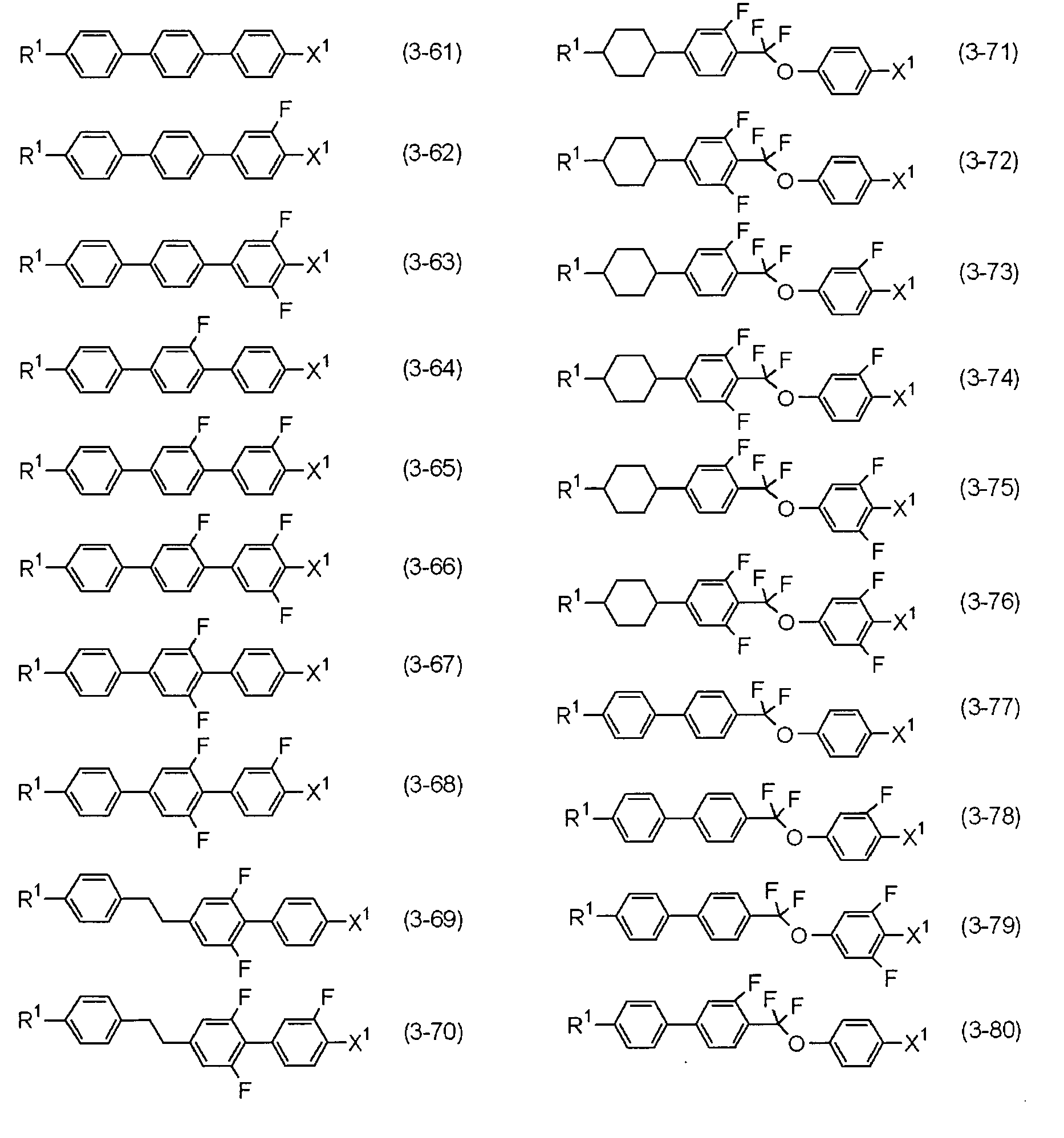
-

-





-





-





-


-


-


-









-


-


-



- A composition of this invention can be prepared using a known method. For example, the compounds as the components of the composition are mixed and dissolved through heating, while suitable additives may be added into the composition to adjust the physical properties thereof. Such additives are known to the people working in the field. It is also possible to add a dichromic pigment as a compound of melocyanine, styryl, azo, azomethine, azoxy, quinophthalone, anthraquinone or tetrazine type, and so forth, so as to prepare a composition for a GH device. In addition, to cause a twist angle needed to induce a spiral structure of the liquid crystal, a chiral dopant is added. Examples of the chiral dopant are the optically active compounds (Op-1) to (Op-13) listed above.
- The pitch of the twisted structure is adjusted by adding a chiral dopant into the composition. The preferred pitch is 40-200µm for a TN or TN-TFT device, 6- 20µm for an STN device, or 1.5-4µm for a BTN device. The composition for a PC device is added with a relatively larger amount of chiral dopant. It is also possible to add at least two chiral dopants for adjusting the temperature dependency of the pitch.
- The composition of this invention can be used in devices of PC, TN, STN, BTN, ECB, OCB, IPS and VA types, and so forth, while the driving mode of each of these devices can be PM or AM mode. The composition can also be used in nematic curvilinear aligned phase (NCAP) devices in a micro-capsulized form, or be used in polymer dispersed (PD) devices in which 3D-network polymer is formed in the LC composition, such as a polymer network (PN) device.
- This invention is further explained based on some Examples, but is not limited by them. The structures of the compounds with specific numbers like "No. 1" are shown in the subsequent lists, while the structures of the compounds as synthesized were identified with NMR spectra, mass spectra and so forth.
- In the descriptions of the phase transition temperatures of the compounds, the symbols C, Sm, N and I respectively represent crystal, smectic, nematic and isotropic phases. The smectic phase may include multiple species like smectic phase A (SmA), smectic phase B (SmB) and so forth. At first, a compound was put between a slide glass and a cover glass to prepare a thin-film sample. The sample was placed on a hot plate of a boiling measuring instrument equipped with a polarization microscope, heated in a rate of 1°C/ min and then observed for the change in the microscopic texture. After the compound was cooled and crystallized, the compound was heated. After a smectic or nematic phase appears in the crystal, the compound was further heated until the crystal entirely disappears, at which moment the temperature was recorded as a C-Sm point or a C-N point. The heating was continued until a nematic phase appears in the smectic phase or until an isotropic phase appears in the nematic phase, at which moment the temperature was recorded as an Sm-N point or an N-I point. When an isotropic phase directly appeared in a crystal phase through no LC phase, a C-I point was recorded. In the notations of phase transitions in the following texts, a phase transition temperature (°C) is shown between the symbols of the corresponding two phases, while a phase transition shown in parentheses is of monotropic type. For example, the notation of "C 120.0 I" means that the C-I point is 120.0°C, "C 60.0 Sm 80.0 N 100.0 I" means that the C-Sm point is 60.0°C, the Sm-N point is 80.0 °C and the N-I point is 100°C, "C 120.0 (N100.0) I" means that the C-I point is 120°C and the monotropic N-I point is 100.0°C. A monotropic phase-transition temperature is measured as the composition is being cooled in a rate of 1°C/min.
- The measurements of the physical properties of the compositions were based on the methods described in Standard ED-2521A of the Electronic Industries Association of Japan (EIAJ ·ED-2521A) or modified versions of the methods.
- The upper-limit temperature (N-I point; °C) of nematic phase was measured with the sample placed on a hot plate of a boiling point measuring instrument equipped with a polarization microscope and then heated in a rate of 1°C/min. The temperature at which a portion of the sample changed to an isotropic liquid from the nematic phase was recorded, and the upper-limit temperature of nematic phase is sometimes abbreviated to "upper-limit temperature".
- The lower-limit temperature (TC; °C) of nematic phase was measured with samples having a nematic phase that were stored in different freezers respectively set at 0°C, -10°C, -20°C, -30°C and -40°C for 10 days and observed for the liquid crystal phase. For example, when the sample of-20°C had the original nematic phase but the sample of-30°C changed to the crystal or smectic phase, "TC ≤ -20°C" was recorded for the composition. The lower-limit temperature of nematic phase is sometimes abbreviated to "lower-limit temperature".
- To evaluate the compatibility of a compound, the compound was mixed into a host liquid crystal having a nematic phase that was prepared by mixing several compounds of similar structures. An exemplary mixing ratio of the compound to the host LC was 15%:85%. The composition was stored at a low temperature like -20°C or -30°C for 30 days to see if a part of the composition changes to crystal or smectic phase, while the mixing ratio and the storage temperature may be varied if required. From the result of such measurements, the conditions under which a crystal or smectic phase separates out and the conditions under which a crystal or smectic phase does not separate out are known. These conditions can serve as an indicator of the compatibility.
- The viscosity (η; mPa ·s) was measured at 20°C, using an E-type viscometer.
- The optical anisotropy (refraction-index anisotropy; Δn) was measured at 25°C, using light with a wavelength of 589nm and an Abbe refractometer with a polarization plate mounted on the eyepiece. After the surface of the primary prism was rubbed in one direction, the sample was dropped on the primary prism. The refractive index n ∥ was measured when the polarization direction was parallel to the rubbing direction, and the refractive index n⊥ was measured when the polarization direction was perpendicular to the rubbing direction. The optical anisotropy (Δn) was calculated with the equation of "Δn = n ∥ - n⊥". When the sample was a composition, Δn was measured with the above method. When a compound was to be measured, the compound was mixed in a suitable composition, of which the Δn value was measured. The Δn value of the compound was then obtained as an extrapolated value.
- The dielectric anisotropy (Δε) was measured at 25°C. When a compound was to be measured, the compound was mixed in a suitable composition, of which the Δε value was measured. The Δε value of the compound was then obtained as an extrapolated value.
- 1) For a composition having a positive dielectric anisotropy, the sample was injected into an LC cell with a gap between the two glass substrates being about 9µm and a twist angle being 80°. The LC cell was applied with 20V as the dielectric constant ε∥ in the long-axis direction was measured, and was applied with 0.5V as the dielectric constant ε⊥ in the short-axis direction was measured. The dielectric anisotropy (Δε) was calculated with the equation of "Δε=ε∥-ε⊥".
- 2) For a composition having a negative dielectric anisotropy, the sample was injected into an LC cell treated in homeotropic alignment to measure ε∥ with 0.5V applied, and into an LC cell treated in homogeneous alignment to measure ε⊥ with 0.5V applied. The dielectric anisotropy (Δε) was calculated with the equation of "Δε = ε∥-ε⊥".
- The threshold voltage (Vth) was measured at 25°C. When a compound was to be measured, it was mixed in a suitable composition, of which the Vth was measured. The Vth of the compound was then obtained as an extrapolated value.
- 1) For a composition having a positive dielectric anisotropy, the sample was injected into an LCD device of normally white mode with a gap between the two glass substrates being (0.5/Δn)µm and a twist angle of 80°, wherein Δn is the optical anisotropy measured with the above method. The LCD device was applied with a square wave of 32Hz in frequency. The voltage of the square wave was gradually raised, and the voltage at which the transparency of light through the device was 90% was recorded.
- 2) For a composition having a negative dielectric anisotropy, the sample was injected into an LCD device of normally black mode having been treated in homeotropic alignment, in which the gap between the two glass substrates was about 9µm. The LCD device was applied with a square wave of 32Hz in frequency. The voltage of the square wave was gradually raised, and the voltage at which the transparency of light through the device was 10% was recorded.
- A mixture of 10.00g (=47.33mmol) of 2-bromonaphthalene, 7.95g (=56.82mmol) of 3-fluorophenylboric acid, 9.81g (=70.98mmol) of K2CO3, 3.81g (=11.82mmol) of tetrabutylammonium bromide, 1.00g (=1.42mmol) of dichlorobis(triphenylphosphine) palladium(II), 0.76g (=2.84mmol) of triphenylphosphine and a 100ml mixed solvent of toluene/water/ethanol in a ratio of 1:1:1 was stirred for 7 hours with reflux. The reaction mixture obtained was extracted twice with toluene. The extract was washed thrice with water and then dried with anhydrous MgSO4. After the solvent was evaporated under a reduced pressure, the obtained black solid of 15.40g was purified with silica gel chromatography using heptane/toluene in a ratio of 5:1 as the eluent, thereby obtaining a white solid of 10.98g. The white solid was recrystallized with a mixed solvent of Solumix/heptane in a ratio of 1:1 to obtain 8.90g of 2-(3-fluorophenyl)naphthalene as white crystals.
- A 50.21ml cyclohexane solution of sec-butyl lithium in a concentration of 1.01M was dropped into a 200ml THF solution of 4.90g (=22.05mmol) of the above 2-(3-fluorophenyl)naphthalene at -70°C. After the dropping was finished, the reaction solution was stirred at the same temperature for 1 hour, added with a 200ml THF solution of 12.87g (=50.71mmo1) of iodine through dropping and then slowly heated to room temperature. After being stirred for 18 hours, the reaction solution was added into iced water dissolved with Na2S2O3 ·5H2O, and then the reaction mixture was extracted twice with toluene. The extract was washed thrice with water and then dried with anhydrous MgSO4. After the solvent was evaporated under a reduced pressure, the obtained orange solid of 8.6 1 g was purified with silica gel chromatography using heptane/toluene in a ratio of 5:1 as the eluent to obtain a pinkish solid of 7.86g, which was recrystallized with a mixed solvent of Solumix/heptane/toluene in a ratio of 5:5:1 to obtain 6.00g of 2-(3-fluoro-4-iodophenyl)naphthalene as yellowish crystals.
- A mixture of 6.66g (19.13mmol) of the above-obtained 2-(3-fluoro-4-iodophenyl)naphthalene, 4.00g (22.94mmol) of 4-chloro-3-fluorophenylboric acid, 3.97g (=28.72 mmol) of potassium carbonate, 1.54g (=4.78mmol) of tetrabutylammonium bromide, 0.40g (=0.57mmol) of dichlorobis(triphenylphosphine)palladium(II), 0.31g (=1.16 mmol) of triphenylphosphine and a 60ml mixed solvent of toluene/water/ethanol in a ratio of 1:1:1 was stirred for 44 hours with reflux. The reaction mixture obtained was extracted twice with toluene. The extract was washed thrice with water and then dried with anhydrous MgSO4. After the solvent was evaporated under a reduced pressure, the obtained yellowish solid of 9.66g was purified with silica gel chromatography using heptane/toluene in a ratio of 5:1 as the eluent to obtain a white solid of 7.11g, which was recrystallized with a mixed solvent of heptane/toluene in a ratio of 8:1 to obtain a product in an amount of 4.79g, which was characterized as the target compound based on results of various instrumental analyses. The phase transitions of the product are notated as "C 121.9 N 128.7 I".
- In the step, 35.00g (77.55mmol) of (3-fluorobenzyl)triphenylphosphonium bromide was suspended in 150ml of THF, and the suspension was cooled to -30°C and added with 10.25g (=88.61mmols) of potassium t-butoxide under stirring. After the addition was finished, the reaction solution was stirred at the same temperature for 1 hour, a 50ml THF solution of 8.65g (=55.38mmol) of 2-naphthoaldehyde was dropped into the same, and then the mixture was slowly heated to room temperature. After being stirred for 18 hours, the reaction mixture was added into iced water, and the mixture was extracted thrice with toluene. The extract was washed thrice with water and then dried with anhydrous MgSO4. After the solvent was evaporated under a reduced pressure, the obtained yellow solid of 43.34g was purified with silica gel chromatography using heptane as the eluent to obtain 11.54g of 2-[2-(3-fluorophenyl)vinyl]naphthalene as a white solid.
- A 60ml Solumix/toluene (1:1) solution of 11.54g (46.48mmol) of the above 2-[2-(3-fluorophenyl)vinyl]naphthalene was added with 0.58g of 5%-Pd/C and then stirred for 20 hours in an H2-atmosphere. The 5%-Pd/C was filtrated away from the reaction solution, and then the filtrate was condensed under a reduced pressure. The obtained gray solid of 11.18g was purified with silica gel chromatography using toluene as the eluent to obtain a white solid of 11.05g, which was recrystallized with a mixed solvent of Solumix/heptane in a ratio of 2:1 to obtain 10.43g of 2-[2-(3-fluorophenyl)ethyl]naphthalene as white crystals.
- A 53.35ml cyclohexane solution of sec-butyl lithium in a concentration of 1.01M was dropped into a 200ml THF solution of 8.43g (33.68mmol) of the above 2-[2-(3-fluorophenyl)ethyl]naphthalene at -70°C. After the dropping was finished, the reaction solution was stirred at the same temperature for 1 hour, added with a 200ml THF solution of 13.68g (=53.90mmol) of iodine through dropping and then slowly heated to room temperature. After being stirred for 18 hours, the reaction solution was added in iced water dissolved with Na2S2O3 · 5H2O, and then the reaction mixture was extracted twice with toluene. The extract was washed thrice with water, and was then dried with anhydrous MgSO4. After the solvent was evaporated under a reduced pressure, the obtained orange solid of 13.05g was purified with silica gel chromatography using heptane/toluene in a ratio of 5:1 as the eluent to obtain a yellowish solid of 11.66g, which was recrystallized with a mixed solvent of Solumix/heptane in a ratio of 5:1 to obtain 10.60g of 2-[2-(3-fluoro-4-iodophenyl)ethyl]naphthalene as yellowish crystals.
- A mixture of 7.00g (=18.61mmo1) of the above 2-[2-(3-fluoro-4-iodophenyl)ethyl]naphthalene, 3.12g (=22.30mmol) of 4-fluorophenylboric acid, 3.86g (=27.93 mmol) of K2CO3, 1.50g (=4.65mmol) of tetrabutylammonium bromide, 0.39g (=0.56mmol) of dichlorobis(triphenylphosphine)palladium(II), 0.30g (1.12mmol) of triphenylphosphine and 60ml of a mixed solvent of toluene/water/ethanol in a ratio of 1:1:1 was stirred for 4 hours with reflux. The reaction mixture obtained was extracted thrice with toluene, and then the extract was washed thrice with water and dried with anhydrous MgSO4. After the solvent was evaporated under a reduced pressure, the obtained orange solid of 8.48g was purified with silica gel chromatography using heptane/ toluene in a ratio of 5:1 as the eluent to obtain a white solid of 7.37g, which was further recrystallized using a mixed solvent of Solumix/heptane in a ratio of 1:1 to obtain the target compound in an amount of 5.02g. The product was characterized as the target compound based on results of various instrumental analyses, and the phase transition of the product is notated as "C 108.1 I".
- A 86.86ml cyclohexane solution of sec-butyl lithium in a concentration of 1.01M was dropped into a 300ml THF solution of 15.00g (=67.49mmol) of 2-(3-fluorophenyl)naphthalene at -70°C. After the dropping was finished, the reaction solution was stirred at the same temperature for 1 hour, added with a 150ml THF solution of 10.88g (=94.49 mmol) of 4-formylmorpholine through dropping and then slowly heated to room temperature. After being stirred for 18 hours, 25ml of 6N HCl(aq) was dropped into the reaction solution, and then the reaction mixture was extracted thrice with toluene. The extract was washed with water and an aqueous solution of NaHCO3, and then dried with anhydrous MgSO4. After the solvent was evaporated under a reduced pressure, the obtained yellow solid of 16.83g was purified with silica gel chromatography using toluene as the eluent to obtain a yellowish solid of 13.26g, which was further recrystallized with toluene to obtain 10.09g of 2-fluoro-4-naphthalene-2-yl-benzaldehyde as yellowish crystals.
- In the step, 6.30g (15.48mmol) of (4-fluorobenzyl)triphenylphosphonium bromide was suspended in 50ml of THF, and the suspension was cooled to -30°C and added with 1.74g (=15.48mmols) of potassium t-butoxide under stirring. After the addition was finished, the reaction solution was stirred at the same temperature for 1 hour, a 25ml THF solution of 3.00g (11.99mmol) of 2-fluoro-4-naphthalene-2-yl-benzaldehyde was dropped into the same, and then the mixture was slowly heated to room temperature. After being stirred for 18 hours, the reaction mixture was added into iced water, and the mixture was extracted thrice with toluene. The extract was washed thrice with water and then dried with anhydrous MgSO4. After the solvent was evaporated under a reduced pressure, the obtained yellow solid of 12.73g was purified with silica gel chromatography using heptane as the eluent to obtain 3.44g of 2- {3-fluoro-4-[2-(4-fluorophenyl)vinyl]phenyl}naphthalene as a white solid.
- A 30ml Solumix/toluene (1:1) solution of 3.44g (=10.05mmol) of the above 2-{3-fluoro-4-[2-(4-fluorophenyl)vinyl]phenyl}naphthalene was added with 0.17g of 5%-Pd/C and then stirred for 20 hours in an H2-atmosphere. The 5%-Pd/C was filtrated away from the reaction solution, and the filtrate was condensed under a reduced pressure. The obtained gray solid of 3.66g was purified with silica gel chromatography using toluene as the eluent to obtain a white solid of 3.29g, which was further recrystallized with a mixed solvent of heptane/toluene in a ratio of 5:4 to obtain a product of 3.15g. The product was characterized as the target compound based on results of various instrumental analyses, and the phase transition of the product is notated as "C 154.3 I".
- Firstly, 34.10mmol of 4-dimethylaminopyridine is dropped into a mixture of 28.40 mmol of naphthalene-2-carboxylic acid, 28.40mmol of 2,3',4',5'-tetrafluorobiphenyl-4-ol and 100ml of dichloromethane. Then, a 100ml dichloromethane solution of 34.10 mmol of 1,3-dicyclohexylcarbodiimide is dropped into the resulting mixture. After the dropping is finished, the mixture is stirred at room temperature for 18 hours. The solid formed thereby is filtrated away, and a saturated aqueous solution of NaCl is dropped into the filtrate. The organic layer formed is washed with HCl(aq), water and saturated aqueous solution of NaHCO3 in sequence and dried with anhydrous MgSO4. After the organic layer is evaporated under a reduced pressure, the product is purified with silica gel chromatography and then recrystallized to obtain the target compound.
- In this step, a mixture of 77.60mmol of 2,3',4',5'-tetrafluorobiphenyl-4-yl ester of naphthalene-2-carboxylic acid, 155.20mmol of 2,4-bis(methoxyphenyl)-1,3-dithia-2,4-diphosphetane-2,4-disulfide and 400ml of toluene is stirred for 60 hours with reflux. The reaction mixture obtained is washed with water, a saturated aqueous solution of NaHCO3, a 10% aqueous solution of NaHSO3 and water in sequence and then dried with anhydrous MgSO4. After being condensed under a reduced pressure, the product is purified with silica gel chromatography and then recrystallized to obtain naphthalene-2-carbothioacid-oxy-(2,3',4',5'-tetrafluorobiphenyl-4-yl)ester.
- In this step, 76.50mmol of (diethylamino)sulfur trifluoride is dropped into a 100ml dichloromethane solution of 30.60mmol of the above naphthalene-2-carbothioacid-oxy-(2,3',4',5'-tetrafluorobiphenyl-4-yl)ester. After the dropping is finished, the solution is stirred at room temperature for 20 hours. The reaction mixture obtained is added in a saturated aqueous solution of NaHCO3 and then extracted with dichloromethane. The extract is then washed with water and dried with anhydrous MgSO4. After being condensed under a reduced pressure, the product is purified with silica gel chromatography and then recrystallized to obtain the target compound.
- he following compounds of No. 1 to No. 162 are synthesized with the methods in Examples 1-5 and other known synthesis methods. The phase transition temperatures measured for some of the compounds are also shown in the following tables.
-

No. Xa Xb Xc Xd Xe Xf Z1 A1 Z2 A2 Z3 La Lb Y 1 H H H H H H - H H OCF3 2 H H H H H H - F H OCF3 3 H H H H H H - F F OCF3 4 H H H H H H - H H F C104.3I 5 H H H H H H - F H F C 137.1I 6 H H H H H H - F F F 7 H H H H H H - H H Cl 163.8I 8 H H H H H H - F H Cl 162.8I 9 H H H H H H - F F Cl 10 H H F H H H - H H OCF3 11 H H F H H H - F H OCF3 12 H H F H H H - F F OCF3 13 H H F H H H - H H F 14 H H F H H H - F H F 15 H H F H H H - F F F C 101.5I 16 H H F H H H - H H Cl C 98.5I 17 H H F H H H - F H Cl 18 H H F H H H - F F Cl 19 H H H H H H -(CH2)2- H H OCF3 20 H H H H H H -(CH2)2- F H OCF3 21 H H H H H H -(CH2)2- F F OCF3 22 H H H H H H -(CH2)2- H H F 23 H H H H H H -(CH2)2- F H F C77.5I 24 H H H H H H -(CH2)2- F F F 25 H H H H H H -(CH2)2- H H Cl 26 H H H H H H -(CH2)2- F H Cl 27 H H H H H H -(CH2)2- F F Cl 28 H H F H H H -(CH2)2- H H OCF3 29 H H F H H H -(CH2)2- F H OCF3 30 H H F H H H -(CH2)2- F F OCF3 31 H H F H H H -(CH2)2- H H F 32 H H F H H H -(CH2)2- F H F 33 H H F H H H -(CH2)2- F F F 34 H H F H H H -(CH2)2- H H Cl 35 H H F H H H -(CH2)2- F H Cl 36 H H F H H H -(CH2)2- F F Cl 37 H H H H H H - 
- H H OCF3 38 H H H H H H - 
- F H OCF3 39 H H H H H H - 
- F F OCF3 40 H H H H H H - 
- H H F 41 H H H H H H - 
- F H F 42 H H H H H H - 
- F F F 43 H H H H H H - 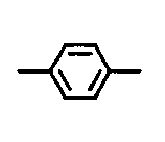
- H H Cl 44 H H H H H H - 
- F H Cl 45 H H H H H H - 
- F F Cl 46 H H H H H H - 
- H H OCF3 47 H H H H H H - 
- F H OCF3 48 H H H H H H - 
- F F OCF3 C13 2.3 (N 100.1)I 49 H H H H H H - 
- H H F C 155.31 50 H H H H H H - 
- F H F 51 H H H H H H - 
- F F F C 140.4I 52 H H H H H H - 
- H H Cl 53 H H H H H H - 
- F H Cl C 121.9 N 128.7I 54 H H H H H H - 
- F F Cl 55 H H H H H H - 
- H H OCF3 56 H H H H H H - 
- F H OCF3 57 H H H H H H - 
- F F OCF3 58 H H H H H H - 
- H H F 59 H H H H H H - 
- F H F 60 H H H H H H - 
- F F F 61 H H H H H H - 
- H H Cl 62 H H H H H H - 
- F H Cl C 162.5 C166.3I 63 H H H H H H - 
- F F Cl 64 H H F H H H - 
- H H OCF3 65 H H F H H H - 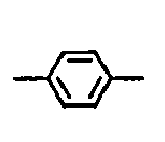
- F H OCF3 66 H H F H H H - 
- F F OCF3 67 H H F H H H - 
- H H F 68 H H F H H H - 
- F H F 69 H H F H H H - 
- F F F 70 H H F H H H - 
- H H Cl 71 H H F H H H - 
- F H Cl 72 H H F H H H - 
- F F Cl 73 H H F H H H - 
- H H OCF3 74 H H F H H H - 
- F H OCF3 75 H H F H H H - 
- F F OCF3 76 H H F H H H - 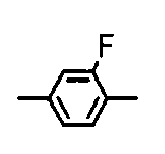
- H H F 77 H H F H H H - 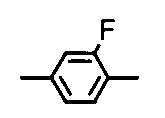
- F H F 78 H H F H H H - 
- F F F C 177.3I 79 H H F H H H - 
- H H Cl 80 H H F H H H - 
- F H Cl C 161.9I 81 H H F H H H - 
- F F Cl 82 H H F H H H - 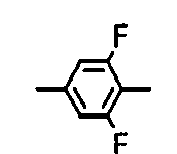
- H H OCF3 83 H H F H H H - 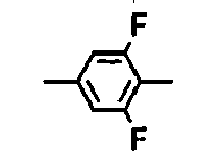
- F H OCF3 84 H H F H H H - 
- F F OCF3 85 H H F H H H - 
- H H F 86 H H F H H H - 
- F H F 87 H H F H H H - 
- F F F C 230.5I 88 H H F H H H - 
- H H Cl 89 H H F H H H - 
- F H Cl C 215.6I 90 H H F H H H - 
- F F Cl 91 H H H H H H -(CH2)2- 
- H H OCF3 92 H H H H H H -(CH2)2- 
- F H OCF3 93 H H H H H H -(CH2)2- 
- F F OCF3 94 H H H H H H -(CH2)2- 
- H H F 95 H H H H H H -(CH2)2- 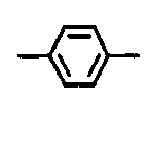
- F H F 96 H H H H H H -(CH2)2- 
- F F F 97 H H H H H H -(CH2)2- 
- H H Cl 98 H H H H H H -(CH2)2- 
- F H Cl 99 H H H H H H -(CH2)2- 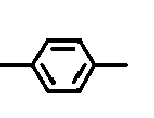
- F F Cl 100 H H H H H H -(CH2)2- 
- H H OCF3 101 H H H H H H -(CH2)2- 
- F H OCF3 102 H H H H H H -(CH2)2- 
- F F OCF3 103 H H H H H H -(CH2)2- 
- H H F C108.9I 104 H H H H H H -(CH2)2- 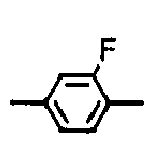
- F H F C 101.0I 105 H H H H H H -(CH2)2- 
- F F F 106 H H H H H H -(CH2)2- 
- H H Cl C 119.2I 107 H H H H H H -(CH2)2- 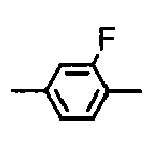
- F H Cl 108 H H H H H H -(CH2)2- 
- F F Cl 109 H H H H H H -(CH2)2- 
- H H OCF3 110 H H H H H H -(CH2)2- 
- F H OCF3 111 H H H H H H -(CH2)2- 
- F F OCF3 112 H H H H H H -(CH2)2- 
- H H F C 116.4I 113 H H H H H H -(CH2)2- 
- F H F C 117.9 I 114 H H H H H H -(CH2)2- 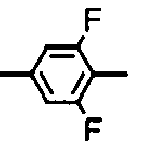
- F F F 115 H H H H H H -(CH2)2- 
- H H Cl 116 H H H H H H -(CH2)2- 
- F H Cl 117 H H H H H H -(CH2)2- 
- F F Cl 118 H H F H H H -(CH2)2- 
- H H OCF3 119 H H F H H H -(CH2)2- 
- F H OCF3 120 H H F H H H -(CH2)2- 
- F F OCF3 121 H H F H H H -(CH2)2- 
- H H F 122 H H F H H H -(CH2)2- 
- F H F 123 H H F H H H -(CH2)2- 
- F F F 124 H H F H H H -(CH2)2- 
- H H Cl 125 H H F H H H -(CH2)2- 
- F H Cl 126 H H F H H H -(CH2)2- 
- F F Cl 127 H H F H H H -(CH2)2- 
- H H OCF3 128 H H F H H H -(CH2)2- 
- F H OCF3 129 H H F H H H -(CH2)2- 
- F F OCF3 130 H H F H H H -(CH2)2- 
- H H F 131 H H F H H H -(CH2)2- 
- F H F 132 H H F H H H -(CH2)2- 
- F F F 133 H H F H H H -(CH2)2- 
- H H Cl 134 H H F H H H -(CH2)2- 
- F H Cl 135 H H F H H H -(CH2)2- 
- F F Cl 136 H H F H H H -(CH2)2- 
- H H OCF3 137 H H F H H H -(CH2)2- 
- F H OCF3 138 H H F H H H -(CH2)2- 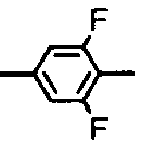
- F F OCF3 139 H H F H H H -(CH2)2- 
- H H F 140 H H F H H H -(CH2)2- 
- F H F 141 H H F H H H -(CH2)2- 
- F F F 142 H H F H H H -(CH2)2- 
- H H Cl 143 H H F H H H -(CH2)2- 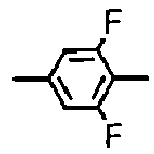
- F H Cl 144 H H F H H H -(CH2)2- 
- F F Cl 145 H H H H H H - 
-(CH2)2- H H F C 154.3I 146 H H H H H H - 
- 
- F H Cl C 215.0 N 307.4I 147 H H H H H H -COO- 
- F F F 148 H H H H H H -COO- 
- F H Cl 149 H H H H H H -CF2O- 
- F F F 150 H H H H H H -CF2O- 
- F H Cl 151 H H H H H H - 
- F H F 152 H H F H H H -(CH2)2- 
- F H Cl 153 H H F H H H - 
- F H Cl 154 H H F H H F - 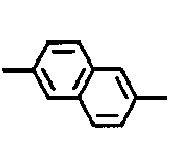
- F F F 155 H F F H H F -(CH2)2- 
- H H Cl 156 H H H H H H - 
- F F F 157 H H F H H H - 
- F H F 158 H F H H H F - 
- H H OCF3 159 H H H H H H -(CH2)2- 
- H H F 160 H H F H H H -(CH2)2- 
- H H Cl 161 H H F H H F -(CH2)2- 
- F H OCF3 162 H H F H H H - 
-(CH2)2- F F Cl - Four compounds, i.e., 4-(4-propylcyclohexyl)benzonitrile, 4-(4-pentylcyclohexyl)benzonitrile, 4-(4-heptylcyclohexyl)benzonitrile and 4-(4-pentylcyclohexyl)-4'-cyanobiphenyl, were mixed in amounts of 24%, 36%, 25% and 15% respectively to prepare a composition A having a nematic phase as a host liquid crystal, which had an upper-limit temperature (N-I point) of 71.7°C, a viscosity (η20) of 27.0mPa.s, a dielectric anisotropy (Δε) of 11.0 and an optical anisotropy (Δn) of 0.137. The composition A and the compound of No. 5, i.e., 2-(3,4-difluorophenyl)naphthalene, were mixed in amounts of 95% and 5% respectively to prepare a composition B, which had a dielectric anisotropy (Δε) of 11.6 and an optical anisotropy (Δn) of 0.139. From the mixing ratio of the compounds and the above two values, the physical properties of the compound of No. 5 were calculated through extrapolation. The dielectric anisotropy (Δε) calculated was 11.6, and the optical anisotropy (Δn) calculated was 0.177.
- The composition A in Example 7 and 2-(3,4-difluorophenyl)-6-propylnaphthalene, which is the right-side compound in claim 6 of
Japan Patent Publication No. Hei 4-504571 - Accordingly, the compound of No. 5 in this invention, i.e., 2-(3,4-difluorophenyl)naphthalene, has a large positive dielectric anisotropy as well as a large optical anisotropy, each of which is even larger than that of 2-(3,4-difluorophenyl)-6-propylnaphthalene as a compound known in the prior art.
- Representative compositions of this invention are described in Use Examples 1-14. The amounts (wt%) of the compounds as the composition components are shown first. A compound is notated by the symbols of the left terminal group, the bonding groups, the ring structures and the right terminal group in the manner shown in Table 1, wherein 1,4-cyclohexylene and 1,3-dioxane-2,5-diyl groups are in trans-configuration. Moreover, when no symbol of terminal group is shown, the terminal group is hydrogen. The physical properties of the composition are shown subsequently in some Examples.
-
Table 1: Notation of the compounds using symbols [R-(A1)-Z1-.....-Zn-(An)-R'] 1) Left terminal group R- Symbol 3) Bonding group -Zn- Symbol H- none -C2H4- 2 CnH2n+1- n- -C4H8- 4 CnH2n+1OCmH2m- nOm- -CH=CH- V CH2=CH- V- -COO- E CnH2n+1CH=CH- nV- -C≡C- T CH2=CHCnH2n- Vn- -CF2O- X CnH2n+1CH=CHCmH2m- nVm- CF2=CH- VFF- CF2=CHCnH2n- VFFn- 2) Ring structure -An- Symbol 4) Right terminal group -R' Symbol 
B -F -F -Cl -CL 
B(F) -CN -C -OCF2H -OCF2H 
B(F, F) -OCF3 -OCF3 -CF3 -CF3 
B(2F, 5F) -CnH2n+1 -n -OCnH2n+1 -On -CH=CH2 -V 
Py -CnH2nCH=CH2 -nV -CH=CHCnH2n+1 -Vn 
H -CnH2nCH=CHCmH2m+1 -nVm 
G -CH=CF2 -VFF -COOCH3 -EMe 
Np 
Np(F) 5) Notation examples Example 1: 3- B B(F, F) X B(F, F) -F Example 3: Np B(F) B(F) -CL 

Example 2: 1O1- H B B H -5 
-
Np B(F) B(F) -CL 5% Np2B(F)B-F 5% 2-BEB(F)-C 5% 3-BEB(F)-C 4% 4-BEB(F)-C 12% 1V2- B E B(F, F) -C 15% 3-HB-02 5% 3-HH-4 3% 3-HHB-F 3% 3-HHB-1 4% 3-HHB-O1 4% 3-HB EB-F 4% 3-HHEB-F 7% 5-HHEB-F 7% 3-H2BTB-2 4% 3-H2BTB-3 4% 3-H2BTB-4 4% 3- H B(F) T B -2 5% N-I temperature = 85.8°C; Δn = 0.145; Δε = 27.9; Vth= 1.10V. -
Np(F) B(F, F) -F 4% Np B(F) B(F, F) -F 3% 2-HB-C 5% 3-HB-C 12% 3-HB-O2 14% 2-BTB-1 3% 3-HHB-F 4% 3-HHB-1 8% 3-HHB-O1 5% 3-HHB-3 14% 3-HHEB-F 4% 5-HHEB-F 4% 2-HHB(F)-F 5% 3-HHB(F)-F 5% 5- HH B(F) -F 5% 3-HHB(F, F)-F 5% -
Np B -CL 3% Np B(F, F) B(F) -CL 3% Np(F) 2 B(F) -F 3% 3- B E B(F) -C 8% 3-HB-C 8% V-HB-C 8% 1V-HB-C 8% 3-HB-02 3% 3-HH-2V 10% 3-HH-2V1 7% V2-HHB-1 10% 3-HHB-1 5% 3-HHEB-F 7% 3-H2BTB-2 6% 3-H2BTB-3 6% 3-H2BTB-4 5% -
Np 2 B(F, F) B -F 4% Np 2 B (F, F) B(F) -F 5% 5- B E B(F) -C 5% V- HB -C 11% 5- Py B -C 6% 4- B B -3 8% 3- H H -2V 10% 5-HH-V 11% V-HHB-1 7% V2- H H B -1 9% 3-HHB-1 9% 1V2-HBB-2 10% 3-HHEBH-3 5% -
Np 2 B(F) B(F,F) -F 4% Np 2 B(F) B(F) -CL 4% 1V2- B E B(F,F) -C 6% 3-HB-C 18% 2- B T B -1 10% 5- H H -VFF 22% 3-HHB-1 4% VFF-HHB-1 8% VFF2-HHB-1 11 % 3-H2BTB-2 5% 3-H2BTB-3 4% 3-H2BTB-4 4% -
Np B(F) B(F) -CL 4% Np 2 B(F) B -F 4% 5-HB-CL 16% 3-HH-4 12% 3-HH-5 4% 3-HHB-F 4% 3- H H B -CL 3% 4-HHB-CL 4% 3-HHB(F)-F 7% 4-HHB(F)-F 7% 5-H H B(F) -F 7% 7-HHB(F)-F 6% 5-HBB(F)-F 5% 101-HBBH-5 3% 3-HHBB(F,F)-F 2% 4-HHBB(F,F)-F 3% 5- H H B B(F, F) -F 3% 3- HH2BB(F,F) -F 3% 4-HH2BB(F,F)-F 3% N-I temperature = 109.8°C; Δn = 0.094; Δε = 3.8; Vth = 2.61 V. - When the above optically active compound Op-05 is further added in an amount of 0.25 part relative to 100 parts of the above composition, the pitch becomes 59.5µm.
-
Np B(F) B(F, F) -OCF3 3% Np X B(F) B(F, F) -F 3% Np X B(F) B(F) -CL 3% 3- H H B(F, F) -F 9% 3-H2HB(F,F)-F 8% 4- H 2 H B(F, F) -F 8% 5-H2HB(F,F)-F 8% 3-HBB(F,F)-F 22% 5-HBB(F,F)-F 10% 3- H 2 B B(F, F) -F 10% 5-HHBB(F,F)-F 3% 5-HHEBB-F 3% 3-HH2BB(F,F)-F 2% 1O1-H B B H-4 4% 1O1-H B B H-5 4% -
Np E B(F) B(F, F) -F 3% Np E B(F) B(F) -CL 4% 5-HB-F 12% 6-HB-F 9% 7- H B -F 7% 2- H H B -OCF3 7% 3- H H B -OCF3 7% 4- H H B -OCF3 7% 5- H H B -OCF3 5% 3- H H 2 B -OCF3 4% 5- H H 2 B -OCF3 4% 3- H H B(F, F) -OCF2H 4% 3- H H B(F, F) -OCF3 4% 3-HH2B(F)-F 3% 3-HBB(F)-F 7% 5-HBB(F)-F 7% 5-HBBH-3 3% 3- H B(F) B H -3 3% -
Np(F) B(F, F) -F 5% Np(F) 2 B(F) -F 5% 5 H B -CL 11% 3-HH-4 8% 3-HHB-1 5% 3- H H B(F, F) -F 8% 3- H B B(F, F) -F 20% 5- H B B(F, F) -F 5% 3-HHEB(F,F)-F 10% 4-HHEB(F,F)-F 3% 5-HHEB(F,F)-F 3% 2- H B E B(F, F) -F 3% 3- H B E B(F, F) -F 5% 5-HBEB(F,F)-F 3% 3- H H B B(F, F) -F 6% -
Np 2 B(F, F) B(F) -F 4% Np 2 B(F) B(F) -CL 4% 3- H B -CL 6% 5- H B -CL 4% 3- H H B -OCF3 5% 3- H 2 H B -OCF3 5% 5- H 4 H B -OCF3 11 % V- H H B(F) -F 5% 3- H H B(F) -F 4% 5- H H B(F) -F 4% 3- H 4 H B(F, F) -CF3 8% 5- H 4 H B(F, F) -CF3 10% 5- H 2 H B(F, F) -F 5% 5- H 4 H B(F, F) -F 7% 2- H 2 B B(F) -F 5% 3-H2BB(F)-F 8% 3- H B E B(F, F) -F 5% -
Np 2 B(F) B(F, F) -F 5% Np X B(F) B(F, F) -F 5% 5- H B -CL 17% 7- H B(F, F) -F 3% 3-HH-4 10% 3-HH-5 5% 3- H B -O2 11% 3- H H B -1 8% 3- HH B -O1 5% 2- H H B(F) -F 5% 3- H H B(F) -F 5% 5- H H B(F) -F 5% 3- H H B(F, F) -F 6% 3- H 2 H B(F, F) -F 5% 4-H2HB(F,F)-F 5% -
Np X B(F) B(F) -CL 4% Np E B(F) B(F) -CL 4% 5-HB-CL 3% 7- H B(F) -F 7% 3-HH-4 9% 3-HH-EMe 15% 3-HHEB-F 8% 5-HHEB-F 8% 3-HHEB(F,F)-F 10% 4- H H E B(F, F) -F 5% 4- H G B(F, F) -F 5% 5- H G B(F, F) -F 6% 2- H 2 G B(F, F) -F 4% 3- H 2 G B(F, F) -F 5% 5- G H B(F, F) -F 7% -
Np B(F) B(F, F) -OCF3 3% Np 2 B(F, F) B(F) -F 4% 3-HH-4 8% 3-HHB-1 6% 3-HHB(F, F)-F 10% 3- H 2 H B(F, F) -F 9% 3- H B B(F, F) -F 15% 3- B B(F, F) X B(F, F) -F 28% 101- HBBH -5 7% 2- H H B B(F, F) -F 3% 3- H H B B(F, F) -F 3% 3-HH2BB(F,F)-F 4% -
Np 2 B(F) B -CL 5% 3- H B B(F, F) -F 33% 5- H B B(F, F) -F 5% 2- B B(2F, 5F) B -2 8% 3- B B(2F, 5F) B -3 10% 3- B B(F, F) X B(F, F) -F 20% 2- H H B B(F, F) -F 3% 5- H B B(F) B -2 9% 5- H B B(F) B -3 7% N-I temperature = 97.0°C; Δn = 0.180; Δε = 9.8; Vth = 1.59V.
Claims (32)
- A compound expressed by formula (la):

- A compound expressed by formula (1b):


- The compound of claim 2, wherein in formula (1b), the ring A1 and the ring A2 each is selected from the ring structures (a)-(d); Z1, Z2 and Z3 are independently a single bond, -(CH2)2 -, -CF2 O- or -COO-; Xb and Xf are hydrogen and Xc is hydrogen or fluorine; Y is -OCF3, fluorine or chlorine; La and Lb are independently hydrogen or fluorine; and "1" and "m" are independently equal to 0 or 1.
- A compound expressed by any one of formulae (1c-1) to (1c-3):


- The compound of claim 4, wherein in formulae (1c-1) to (1c-3), Z1 is a single bond or -(CH2)2-.
- The compound of claim 4, wherein in formulae (1c-1) to (1c-3), Z1, Z2 and Z3 each is a single bond.
- The compound of claim 4, wherein in formulae (1c-1) to (1c-3), Z1 is -(CH2)2- and Z2 and Z3 each is a single bond.
- The compound of claim 4, wherein in formulae (1c-2) and (1c-3), Z1 and Z3 each is a single bond and Z2 is -(CH2)2-.
- The compound of claim 4, wherein in formula (1c-3), Z1 and Z2 each is a single bond and Z3 is -(CH2)2-.
- The compound of claim 4, wherein in formulae (1c-1) to (1c-3), one of Z1, Z2 and Z3 is -CF2 O- and the rest of Z1, Z2 and Z3 is single bond.
- The compound of claim 4, wherein in formulae (1c-1) to (1c-3), one of Z1, Z2 and Z3 is -COO- and the rest of Z1, Z2 and Z3 is single bond.
- A compound expressed by any one of formulae (1c-1-1) to (1c-1-4) and formulae (1c-2-1) to (1c-2-12):


- The compound of claim 12, wherein in any one of formulae (1c-1-1) to (1c-1-4) and formulae (1c-2-1) to (1c-2-12), Y is -OCF3 and La and Lb are hydrogen.
- The compound of claim 12, wherein in any one of formulae (1c-1-1) to (1c-1-4) and formulae (1c-2-1) to (1c-2-12), Y is -OCF3, La is fluorine and Lb is hydrogen.
- The compound of claim 12, wherein in any one of formulae (1c-1-1) to (1c-1-4) and formulae (1c-2-1) to (1c-2-12), Y is -OCF3 and La and Lb are fluorine.
- The compound of claim 12, wherein in any one of formulae (1c-1-1) to (1c-1-4) and formulae (1c-2-1) to (1c-2-12), Y is fluorine and La and Lb are hydrogen.
- The compound of claim 12, wherein in any one of formulae (1c-1-1) to (1c-1-4) and formulae (1c-2-1) to (1c-2-12), Y is fluorine, La is fluorine and Lb is hydrogen.
- The compound of claim 12, wherein in any one of formulae (1c-1-1) to (1c-1-4) and formulae (1c-2-1) to (1c-2-12), Y is fluorine and La and Lb are fluorine.
- The compound of claim 12, wherein in any one of formulae (1c-1-1) to (1c-1-4) and formulae (1c-2-1) to (1c-2-12), Y is chlorine and La and Lb are hydrogen.
- The compound of claim 12, wherein in any one of formulae (1c-1-1) to (1c-1-4) and formulae (1c-2-1) to (1c-2-12), Y is chlorine, La is fluorine and Lb is hydrogen.
- The compound of claim 12, wherein in any one of formulae (1c-1-1) to (1c-1-4) and formulae (1c-2-1) to (1c-2-12), Y is chlorine and La and Lb are fluorine.
- A liquid crystal composition comprising two or more compounds, which comprising at least one compound of any one of claims 1 to 21.
- The liquid crystal composition of claim 22, further comprising at least one compound selected from the group consisting of compounds respectively expressed by formulae (2), (3) and (4):


- The liquid crystal composition of claim 22, further comprising at least one compound selected from the group consisting of compounds respectively expressed by formulae (5) and (6):


- The liquid crystal composition of claim 22, further comprising at least one compound selected from the group consisting of compounds respectively expressed by formulae (7), (8), (9), (10) and (11):


- The liquid crystal composition of claim 22, further comprising at least one compound selected from the group consisting of compounds respectively expressed by formulae (12), (13) and (14):


- The liquid crystal composition of claim 23, further comprising at least one compound selected from the group consisting of compounds respectively expressed by formulae (5) and (6) in claim 24.
- The liquid crystal composition of claim 23, further comprising at least one compound selected from the group consisting of compounds respectively expressed by formulae (12), (13) and (14) in claim 26.
- The liquid crystal composition of claim 24, further comprising at least one compound selected from the group consisting of compounds respectively expressed by formulae (12), (13) and (14) in claim 26.
- The liquid crystal composition of claim 25, further comprising at least one compound selected from the group consisting of compounds respectively expressed by formulae (12), (13) and (14) in claim 26.
- The liquid crystal composition of any one of claims 22-30, further comprising at least one optically active compound.
- A liquid crystal display device, comprising the liquid crystal composition of any one of claims 22-31.
Applications Claiming Priority (1)
| Application Number | Priority Date | Filing Date | Title |
|---|---|---|---|
| JP2005260157A JP4961700B2 (en) | 2005-09-08 | 2005-09-08 | Naphthalene derivative having terminal hydrogen, liquid crystal composition containing the derivative, and liquid crystal display device containing the liquid crystal composition |
Publications (2)
| Publication Number | Publication Date |
|---|---|
| EP1762605A1 true EP1762605A1 (en) | 2007-03-14 |
| EP1762605B1 EP1762605B1 (en) | 2010-10-13 |
Family
ID=37450861
Family Applications (1)
| Application Number | Title | Priority Date | Filing Date |
|---|---|---|---|
| EP06018684A Ceased EP1762605B1 (en) | 2005-09-08 | 2006-09-06 | Naphthalene compound with terminal hydrogen, liquid crystal composition including the compound, and LCD device including the liquid crystal composition |
Country Status (4)
| Country | Link |
|---|---|
| US (1) | US7790915B2 (en) |
| EP (1) | EP1762605B1 (en) |
| JP (1) | JP4961700B2 (en) |
| DE (1) | DE602006017482D1 (en) |
Cited By (2)
| Publication number | Priority date | Publication date | Assignee | Title |
|---|---|---|---|---|
| CN103666481A (en) * | 2012-08-31 | 2014-03-26 | 默克专利股份有限公司 | Liquid-crystalline medium |
| WO2017097400A1 (en) * | 2015-12-09 | 2017-06-15 | Merck Patent Gmbh | Naphthalene compounds for liquid-crystalline mixtures |
Families Citing this family (8)
| Publication number | Priority date | Publication date | Assignee | Title |
|---|---|---|---|---|
| JP2009067780A (en) * | 2007-08-22 | 2009-04-02 | Chisso Corp | Liquid crystal compound having chloronaphthalene moiety, liquid crystal composition and optical device |
| JP5622066B2 (en) * | 2012-10-09 | 2014-11-12 | Dic株式会社 | Compound having fluorinated naphthalene structure and liquid crystal composition thereof |
| WO2015012156A1 (en) | 2013-07-25 | 2015-01-29 | Dic株式会社 | Liquid crystalline compound having 2,6-difluorophenyl ether structure and liquid crystal composition thereof |
| JP5776864B1 (en) | 2013-08-30 | 2015-09-09 | Dic株式会社 | Nematic liquid crystal composition |
| KR101649180B1 (en) | 2013-10-03 | 2016-08-19 | 디아이씨 가부시끼가이샤 | Liquid crystalline compound having 2,6-difluorophenyl ether structure and liquid crystal composition containing same |
| JP5910800B1 (en) | 2014-07-31 | 2016-04-27 | Dic株式会社 | Nematic liquid crystal composition |
| WO2016017615A1 (en) | 2014-07-31 | 2016-02-04 | Dic株式会社 | Nematic liquid crystal composition |
| JP6607420B2 (en) * | 2017-03-23 | 2019-11-20 | Dic株式会社 | Charge indicator |
Citations (7)
| Publication number | Priority date | Publication date | Assignee | Title |
|---|---|---|---|---|
| GB2227019A (en) | 1989-01-16 | 1990-07-18 | Secr Defence | Naphthyl compounds and their use in liquid crystal materials and devices |
| GB2271771A (en) | 1992-10-22 | 1994-04-27 | Merck Patent Gmbh | Liquid crystalline naphthalenes |
| US6159561A (en) | 1996-12-16 | 2000-12-12 | Hoechst Aktiengesellschaft | 1,3-difluoronapthalene derivatives for liquid crystal mixtures |
| JP2001026560A (en) | 1999-07-13 | 2001-01-30 | Dainippon Ink & Chem Inc | Novel liquid crystalline compound which is a naphthalene derivative and liquid crystal composition containing the same |
| US6468607B1 (en) | 1998-04-22 | 2002-10-22 | Dainippon Ink And Chemicals, Inc. | Naphthalene derivative and liquid crystal composition comprising the same |
| DE10251017A1 (en) | 2001-11-27 | 2003-05-28 | Merck Patent Gmbh | Liquid crystalline or mesogenic naphthalene derivative preparation, by reacting side-chain component with naphthalene endo-oxide derivative followed by dehydration or hydrogenation |
| WO2004029015A1 (en) | 2002-09-27 | 2004-04-08 | Dainippon Ink And Chemicals, Inc. | 1,7,8-trifluoronaphthalene-2-naphthol, and method for producing liquid crystal compound using same |
Family Cites Families (8)
| Publication number | Priority date | Publication date | Assignee | Title |
|---|---|---|---|---|
| JPS4840726B1 (en) * | 1967-01-13 | 1973-12-03 | ||
| JPH0610166B2 (en) * | 1986-03-26 | 1994-02-09 | 旭化成工業株式会社 | Process for producing fluorine-substituted aromatic carboxylic acid aryl ester |
| US5049557A (en) | 1986-05-13 | 1991-09-17 | Chai-Tech Corporation | Metallo-organic salt compounds and pharmaceutical uses thereof |
| JPH10221890A (en) * | 1997-02-07 | 1998-08-21 | Mitsubishi Chem Corp | Charge control agent for electrostatic image development, and toner and charge providing material using the same |
| CN1140868C (en) | 1999-01-04 | 2004-03-03 | 字原技术有限公司 | Text input systems for ideographic and non-ideographic languages |
| JP4742207B2 (en) * | 1999-08-31 | 2011-08-10 | Jnc株式会社 | 2,3-difluorophenyl derivative having negative dielectric anisotropy, liquid crystal composition, and liquid crystal display device |
| JP4654474B2 (en) * | 1999-10-13 | 2011-03-23 | チッソ株式会社 | Liquid crystalline compound having branched methyl group, liquid crystal composition and liquid crystal display device |
| JP2003261584A (en) * | 2002-03-07 | 2003-09-19 | Nissan Chem Ind Ltd | Solid-phase carried bidentate chelate phosphine and solid-phase supported bidentate chelate phosphine catalyst |
-
2005
- 2005-09-08 JP JP2005260157A patent/JP4961700B2/en not_active Expired - Fee Related
-
2006
- 2006-09-06 US US11/470,538 patent/US7790915B2/en not_active Expired - Fee Related
- 2006-09-06 DE DE602006017482T patent/DE602006017482D1/en active Active
- 2006-09-06 EP EP06018684A patent/EP1762605B1/en not_active Ceased
Patent Citations (8)
| Publication number | Priority date | Publication date | Assignee | Title |
|---|---|---|---|---|
| GB2227019A (en) | 1989-01-16 | 1990-07-18 | Secr Defence | Naphthyl compounds and their use in liquid crystal materials and devices |
| GB2271771A (en) | 1992-10-22 | 1994-04-27 | Merck Patent Gmbh | Liquid crystalline naphthalenes |
| US6159561A (en) | 1996-12-16 | 2000-12-12 | Hoechst Aktiengesellschaft | 1,3-difluoronapthalene derivatives for liquid crystal mixtures |
| US6468607B1 (en) | 1998-04-22 | 2002-10-22 | Dainippon Ink And Chemicals, Inc. | Naphthalene derivative and liquid crystal composition comprising the same |
| JP2001026560A (en) | 1999-07-13 | 2001-01-30 | Dainippon Ink & Chem Inc | Novel liquid crystalline compound which is a naphthalene derivative and liquid crystal composition containing the same |
| DE10251017A1 (en) | 2001-11-27 | 2003-05-28 | Merck Patent Gmbh | Liquid crystalline or mesogenic naphthalene derivative preparation, by reacting side-chain component with naphthalene endo-oxide derivative followed by dehydration or hydrogenation |
| WO2004029015A1 (en) | 2002-09-27 | 2004-04-08 | Dainippon Ink And Chemicals, Inc. | 1,7,8-trifluoronaphthalene-2-naphthol, and method for producing liquid crystal compound using same |
| EP1544187A1 (en) * | 2002-09-27 | 2005-06-22 | Dainippon Ink And Chemicals, Inc. | 1,7,8-trifluoronaphthalene-2-naphthol, and method for producing liquid crystal compound using same |
Non-Patent Citations (8)
| Title |
|---|
| "Comprehensive Organic Synthesis", JOHN WILEY & SONS, INC., article "Organic Syntheses and Organic Reactions" |
| A. K. PRAJAPATI: "Effect of lateral methyl group on azo-mesogenes containing the naphthalene moiety", LIQUID CRYSTALS, vol. 27, no. 8, 2000, pages 1017 - 1020 |
| H. J. DEULING ET AL., MOL. CRYST. LIQ. CRYST., vol. 27, 1975, pages 81 |
| M. KUROBOSHI ET AL., CHEM. LETT., 1992, pages 827 |
| PEER. KIRSCH ET AL., ANBEW. CHEM. INT. ED., vol. 40, 2001, pages 1480 |
| PRAJAPATI A K: "EFFECT OF A LATERAL METHYL GROUP ON AZO-MESOGENS CONTAINING THE NAPHTHALENE MOIETY", LIQUID CRYSTALS, TAYLOR AND FRANCIS, ABINGDON, GB, vol. 27, no. 8, August 2000 (2000-08-01), pages 1017 - 1020, XP000932259, ISSN: 0267-8292 * |
| SHIN-JIKKEN-KAGAKU-KOUZA: "New Lectures on Experiment Chemistry", MARUZEN CO., LTD. |
| W. H. BUNNELLE ET AL., J. ORG. CHEM., vol. 55, 1990, pages 768 |
Cited By (4)
| Publication number | Priority date | Publication date | Assignee | Title |
|---|---|---|---|---|
| CN103666481A (en) * | 2012-08-31 | 2014-03-26 | 默克专利股份有限公司 | Liquid-crystalline medium |
| CN103666481B (en) * | 2012-08-31 | 2018-01-19 | 默克专利股份有限公司 | Liquid crystal media |
| WO2017097400A1 (en) * | 2015-12-09 | 2017-06-15 | Merck Patent Gmbh | Naphthalene compounds for liquid-crystalline mixtures |
| US10723951B2 (en) | 2015-12-09 | 2020-07-28 | Merck Patent Gmbh | Naphthalene compounds for liquid-crystalline mixtures |
Also Published As
| Publication number | Publication date |
|---|---|
| EP1762605B1 (en) | 2010-10-13 |
| JP4961700B2 (en) | 2012-06-27 |
| JP2007070295A (en) | 2007-03-22 |
| US20070051919A1 (en) | 2007-03-08 |
| DE602006017482D1 (en) | 2010-11-25 |
| US7790915B2 (en) | 2010-09-07 |
Similar Documents
| Publication | Publication Date | Title |
|---|---|---|
| JP5488628B2 (en) | Tetrahydropyran compound, liquid crystal composition, and liquid crystal display device containing the liquid crystal composition | |
| JP4244556B2 (en) | Liquid crystalline compound having bis (trifluoromethyl) phenyl ring, liquid crystal composition and liquid crystal display device | |
| JP5145753B2 (en) | Compound having fluoroisopropyl group as side chain and liquid crystal composition using the same | |
| WO2010047260A1 (en) | Pentacyclic liquid crystal compound having nitrogen-containing heterocyclic ring, liquid crystal composition, and liquid crystal display element | |
| JP4186493B2 (en) | Liquid crystalline compound having naphthalene ring, liquid crystal composition and liquid crystal display element | |
| EP1477546B1 (en) | Perfluoropropenyl-containing compound, liquid crystal composition and liquid crystal display element | |
| JP4654474B2 (en) | Liquid crystalline compound having branched methyl group, liquid crystal composition and liquid crystal display device | |
| JP2004115475A (en) | Liquid crystalline compound having difluoromethyl and trifluoromethyl groups on benzene ring, liquid crystal composition and liquid crystal display device | |
| EP1762605B1 (en) | Naphthalene compound with terminal hydrogen, liquid crystal composition including the compound, and LCD device including the liquid crystal composition | |
| JP4492206B2 (en) | Compound having perfluoropropenyl, liquid crystal composition, and liquid crystal display device | |
| JP5736670B2 (en) | Liquid crystal compound comprising fused ring having two oxygens and liquid crystal composition using the same | |
| KR100982763B1 (en) | Liquid crystal compound having hydrogen as a terminal group, composition comprising the compound, and liquid crystal display element comprising the composition | |
| JP5422898B2 (en) | Novel compound having 2,2,2-bicyclooctane bonded to halogenated alkyl group and liquid crystal composition using the same | |
| JP4311055B2 (en) | Liquid crystalline compound in which one of terminal groups is hydrogen, composition thereof, and liquid crystal display device containing the same | |
| JP4595293B2 (en) | Propionate derivative, liquid crystal composition containing the derivative, and liquid crystal display device containing the liquid crystal composition | |
| JP2004262933A (en) | Liquid crystal compound having a fluorinated alkyl group as a bonding group, liquid crystal composition, and liquid crystal display device | |
| EP1731493B1 (en) | Benzene derivative, liquid crystal composition and liquid crystal display | |
| JP2011184388A (en) | Indole ring-bearing compound, liquid crystal composition, and liquid crystal display element | |
| JP4042423B2 (en) | Fluoroazomethine compound, liquid crystal composition, and liquid crystal display device | |
| JP4423877B2 (en) | 2-trifluoromethyldihydropyran derivative, liquid crystal composition and liquid crystal display device | |
| JP5013110B2 (en) | Liquid crystalline compound having naphthalene ring, liquid crystal composition and liquid crystal display device | |
| JP4892853B2 (en) | Liquid crystal compound having carbonate bond group, liquid crystal composition containing this compound, and liquid crystal display device containing this liquid crystal composition | |
| JP2003300972A (en) | Compound having a trifluoromethylfuran ring | |
| JP2003277359A (en) | Liquid crystalline 3,4-substituted pyrrole | |
| JP2007210932A (en) | Benzodioxin derivative, liquid crystal composition containing the same, and liquid crystal display device |
Legal Events
| Date | Code | Title | Description |
|---|---|---|---|
| PUAI | Public reference made under article 153(3) epc to a published international application that has entered the european phase |
Free format text: ORIGINAL CODE: 0009012 |
|
| AK | Designated contracting states |
Kind code of ref document: A1 Designated state(s): AT BE BG CH CY CZ DE DK EE ES FI FR GB GR HU IE IS IT LI LT LU LV MC NL PL PT RO SE SI SK TR |
|
| AX | Request for extension of the european patent |
Extension state: AL BA HR MK YU |
|
| 17P | Request for examination filed |
Effective date: 20070615 |
|
| 17Q | First examination report despatched |
Effective date: 20071012 |
|
| AKX | Designation fees paid |
Designated state(s): DE GB |
|
| GRAP | Despatch of communication of intention to grant a patent |
Free format text: ORIGINAL CODE: EPIDOSNIGR1 |
|
| GRAS | Grant fee paid |
Free format text: ORIGINAL CODE: EPIDOSNIGR3 |
|
| GRAA | (expected) grant |
Free format text: ORIGINAL CODE: 0009210 |
|
| AK | Designated contracting states |
Kind code of ref document: B1 Designated state(s): DE GB |
|
| REG | Reference to a national code |
Ref country code: GB Ref legal event code: FG4D |
|
| REF | Corresponds to: |
Ref document number: 602006017482 Country of ref document: DE Date of ref document: 20101125 Kind code of ref document: P |
|
| RAP2 | Party data changed (patent owner data changed or rights of a patent transferred) |
Owner name: JNC CORPORATION Owner name: CHISSO PETROCHEMICAL CORPORATION |
|
| PLBE | No opposition filed within time limit |
Free format text: ORIGINAL CODE: 0009261 |
|
| STAA | Information on the status of an ep patent application or granted ep patent |
Free format text: STATUS: NO OPPOSITION FILED WITHIN TIME LIMIT |
|
| 26N | No opposition filed |
Effective date: 20110714 |
|
| REG | Reference to a national code |
Ref country code: DE Ref legal event code: R097 Ref document number: 602006017482 Country of ref document: DE Effective date: 20110714 |
|
| REG | Reference to a national code |
Ref country code: DE Ref legal event code: R082 Ref document number: 602006017482 Country of ref document: DE Representative=s name: ABK PATENTANWAELTE, DE |
|
| REG | Reference to a national code |
Ref country code: DE Ref legal event code: R081 Ref document number: 602006017482 Country of ref document: DE Owner name: JNC CORPORATION, JP Free format text: FORMER OWNER: CHISSO CORP., CHISSO PETROCHEMICAL CORP., , JP Effective date: 20120117 Ref country code: DE Ref legal event code: R082 Ref document number: 602006017482 Country of ref document: DE Representative=s name: ABK PATENTANWAELTE, DE Effective date: 20120215 Ref country code: DE Ref legal event code: R081 Ref document number: 602006017482 Country of ref document: DE Owner name: JNC CORPORATION, JP Free format text: FORMER OWNER: CHISSO PETROCHEMICAL CORP., JNC CORPORATION, , JP Effective date: 20120215 Ref country code: DE Ref legal event code: R081 Ref document number: 602006017482 Country of ref document: DE Owner name: JNC PETROCHEMICAL CORPORATION, JP Free format text: FORMER OWNER: CHISSO PETROCHEMICAL CORP., JNC CORPORATION, , JP Effective date: 20120215 Ref country code: DE Ref legal event code: R081 Ref document number: 602006017482 Country of ref document: DE Owner name: JNC PETROCHEMICAL CORPORATION, JP Free format text: FORMER OWNER: CHISSO CORP., CHISSO PETROCHEMICAL CORP., , JP Effective date: 20120117 Ref country code: DE Ref legal event code: R082 Ref document number: 602006017482 Country of ref document: DE Representative=s name: ABK PATENTANWAELTE, DE Effective date: 20120117 Ref country code: DE Ref legal event code: R081 Ref document number: 602006017482 Country of ref document: DE Owner name: JNC CORPORATION, JP Free format text: FORMER OWNERS: CHISSO CORP., OSAKA, JP; CHISSO PETROCHEMICAL CORP., TOKIO/TOKYO, JP Effective date: 20120117 Ref country code: DE Ref legal event code: R081 Ref document number: 602006017482 Country of ref document: DE Owner name: JNC CORPORATION, JP Free format text: FORMER OWNERS: CHISSO PETROCHEMICAL CORP., TOKIO/TOKYO, JP; JNC CORPORATION, TOKYO, JP Effective date: 20120215 Ref country code: DE Ref legal event code: R081 Ref document number: 602006017482 Country of ref document: DE Owner name: JNC PETROCHEMICAL CORPORATION, JP Free format text: FORMER OWNERS: CHISSO CORP., OSAKA, JP; CHISSO PETROCHEMICAL CORP., TOKIO/TOKYO, JP Effective date: 20120117 Ref country code: DE Ref legal event code: R081 Ref document number: 602006017482 Country of ref document: DE Owner name: JNC PETROCHEMICAL CORPORATION, JP Free format text: FORMER OWNERS: CHISSO PETROCHEMICAL CORP., TOKIO/TOKYO, JP; JNC CORPORATION, TOKYO, JP Effective date: 20120215 |
|
| GBPC | Gb: european patent ceased through non-payment of renewal fee |
Effective date: 20110906 |
|
| PG25 | Lapsed in a contracting state [announced via postgrant information from national office to epo] |
Ref country code: GB Free format text: LAPSE BECAUSE OF NON-PAYMENT OF DUE FEES Effective date: 20110906 |
|
| PGFP | Annual fee paid to national office [announced via postgrant information from national office to epo] |
Ref country code: DE Payment date: 20190827 Year of fee payment: 14 |
|
| REG | Reference to a national code |
Ref country code: DE Ref legal event code: R119 Ref document number: 602006017482 Country of ref document: DE |
|
| PG25 | Lapsed in a contracting state [announced via postgrant information from national office to epo] |
Ref country code: DE Free format text: LAPSE BECAUSE OF NON-PAYMENT OF DUE FEES Effective date: 20210401 |