EP1759703A1 - Immunistimulative and interferonogenous agent - Google Patents
Immunistimulative and interferonogenous agent Download PDFInfo
- Publication number
- EP1759703A1 EP1759703A1 EP04808945A EP04808945A EP1759703A1 EP 1759703 A1 EP1759703 A1 EP 1759703A1 EP 04808945 A EP04808945 A EP 04808945A EP 04808945 A EP04808945 A EP 04808945A EP 1759703 A1 EP1759703 A1 EP 1759703A1
- Authority
- EP
- European Patent Office
- Prior art keywords
- activity
- acid
- immunostimulating
- interferonogenic
- agents
- Prior art date
- Legal status (The legal status is an assumption and is not a legal conclusion. Google has not performed a legal analysis and makes no representation as to the accuracy of the status listed.)
- Withdrawn
Links
- 150000003839 salts Chemical class 0.000 claims abstract description 33
- 150000001875 compounds Chemical class 0.000 claims abstract description 28
- 229920001577 copolymer Polymers 0.000 claims abstract description 28
- 230000003308 immunostimulating effect Effects 0.000 claims abstract description 20
- 230000000286 interferogenic effect Effects 0.000 claims abstract description 19
- DUCJNKWNTVBRKF-UHFFFAOYSA-N 2-(ethenylamino)butanedioic acid Chemical compound OC(=O)CC(C(O)=O)NC=C DUCJNKWNTVBRKF-UHFFFAOYSA-N 0.000 claims abstract description 17
- 239000003795 chemical substances by application Substances 0.000 claims abstract description 15
- 239000002253 acid Substances 0.000 claims abstract description 9
- WHNWPMSKXPGLAX-UHFFFAOYSA-N N-Vinyl-2-pyrrolidone Chemical compound C=CN1CCCC1=O WHNWPMSKXPGLAX-UHFFFAOYSA-N 0.000 claims abstract description 7
- IMROMDMJAWUWLK-UHFFFAOYSA-N Ethenol Chemical compound OC=C IMROMDMJAWUWLK-UHFFFAOYSA-N 0.000 claims abstract description 6
- 229920000642 polymer Polymers 0.000 claims description 28
- 239000000126 substance Substances 0.000 claims description 7
- 230000000694 effects Effects 0.000 abstract description 35
- 239000003814 drug Substances 0.000 abstract description 26
- 238000004458 analytical method Methods 0.000 abstract description 13
- 230000000840 anti-viral effect Effects 0.000 abstract description 7
- 238000003918 potentiometric titration Methods 0.000 abstract description 5
- 231100000419 toxicity Toxicity 0.000 abstract description 5
- 230000001988 toxicity Effects 0.000 abstract description 5
- 239000013543 active substance Substances 0.000 abstract description 4
- 230000002265 prevention Effects 0.000 abstract description 3
- 230000009471 action Effects 0.000 abstract description 2
- 238000001308 synthesis method Methods 0.000 abstract description 2
- 238000010835 comparative analysis Methods 0.000 abstract 1
- 201000010099 disease Diseases 0.000 abstract 1
- 208000037265 diseases, disorders, signs and symptoms Diseases 0.000 abstract 1
- 230000003612 virological effect Effects 0.000 abstract 1
- RTZKZFJDLAIYFH-UHFFFAOYSA-N Diethyl ether Chemical compound CCOCC RTZKZFJDLAIYFH-UHFFFAOYSA-N 0.000 description 25
- 229940079593 drug Drugs 0.000 description 24
- VEXZGXHMUGYJMC-UHFFFAOYSA-N Hydrochloric acid Chemical compound Cl VEXZGXHMUGYJMC-UHFFFAOYSA-N 0.000 description 14
- 210000000822 natural killer cell Anatomy 0.000 description 14
- 230000004071 biological effect Effects 0.000 description 9
- 230000015572 biosynthetic process Effects 0.000 description 9
- 210000004027 cell Anatomy 0.000 description 9
- 229940079322 interferon Drugs 0.000 description 9
- 239000000243 solution Substances 0.000 description 9
- 102000014150 Interferons Human genes 0.000 description 8
- 108010050904 Interferons Proteins 0.000 description 8
- 238000002483 medication Methods 0.000 description 8
- 238000000034 method Methods 0.000 description 8
- 238000003786 synthesis reaction Methods 0.000 description 8
- 241000700605 Viruses Species 0.000 description 7
- 230000006698 induction Effects 0.000 description 7
- 239000000047 product Substances 0.000 description 7
- XLYOFNOQVPJJNP-UHFFFAOYSA-N water Substances O XLYOFNOQVPJJNP-UHFFFAOYSA-N 0.000 description 7
- CSCPPACGZOOCGX-UHFFFAOYSA-N Acetone Chemical compound CC(C)=O CSCPPACGZOOCGX-UHFFFAOYSA-N 0.000 description 6
- LFQSCWFLJHTTHZ-UHFFFAOYSA-N Ethanol Chemical compound CCO LFQSCWFLJHTTHZ-UHFFFAOYSA-N 0.000 description 6
- BAVYZALUXZFZLV-UHFFFAOYSA-N Methylamine Chemical compound NC BAVYZALUXZFZLV-UHFFFAOYSA-N 0.000 description 6
- 206010022000 influenza Diseases 0.000 description 6
- 239000000203 mixture Substances 0.000 description 6
- 210000005087 mononuclear cell Anatomy 0.000 description 6
- 210000005259 peripheral blood Anatomy 0.000 description 6
- 239000011886 peripheral blood Substances 0.000 description 6
- 241000699670 Mus sp. Species 0.000 description 5
- 230000008859 change Effects 0.000 description 5
- 230000008569 process Effects 0.000 description 5
- HEDRZPFGACZZDS-UHFFFAOYSA-N Chloroform Chemical compound ClC(Cl)Cl HEDRZPFGACZZDS-UHFFFAOYSA-N 0.000 description 4
- IAZDPXIOMUYVGZ-UHFFFAOYSA-N Dimethylsulphoxide Chemical compound CS(C)=O IAZDPXIOMUYVGZ-UHFFFAOYSA-N 0.000 description 4
- 241000700159 Rattus Species 0.000 description 4
- 238000010521 absorption reaction Methods 0.000 description 4
- ORILYTVJVMAKLC-UHFFFAOYSA-N adamantane Chemical class C1C(C2)CC3CC1CC2C3 ORILYTVJVMAKLC-UHFFFAOYSA-N 0.000 description 4
- 238000006243 chemical reaction Methods 0.000 description 4
- 230000005714 functional activity Effects 0.000 description 4
- 238000001556 precipitation Methods 0.000 description 4
- 239000012266 salt solution Substances 0.000 description 4
- ZWEHNKRNPOVVGH-UHFFFAOYSA-N 2-Butanone Chemical compound CCC(C)=O ZWEHNKRNPOVVGH-UHFFFAOYSA-N 0.000 description 3
- 229920002307 Dextran Polymers 0.000 description 3
- ZNZYKNKBJPZETN-WELNAUFTSA-N Dialdehyde 11678 Chemical compound N1C2=CC=CC=C2C2=C1[C@H](C[C@H](/C(=C/O)C(=O)OC)[C@@H](C=C)C=O)NCC2 ZNZYKNKBJPZETN-WELNAUFTSA-N 0.000 description 3
- 125000003178 carboxy group Chemical group [H]OC(*)=O 0.000 description 3
- 239000003153 chemical reaction reagent Substances 0.000 description 3
- 230000007423 decrease Effects 0.000 description 3
- 239000012153 distilled water Substances 0.000 description 3
- 238000001035 drying Methods 0.000 description 3
- 235000019441 ethanol Nutrition 0.000 description 3
- 210000000987 immune system Anatomy 0.000 description 3
- SBUJHOSQTJFQJX-NOAMYHISSA-N kanamycin Chemical compound O[C@@H]1[C@@H](O)[C@H](O)[C@@H](CN)O[C@@H]1O[C@H]1[C@H](O)[C@@H](O[C@@H]2[C@@H]([C@@H](N)[C@H](O)[C@@H](CO)O2)O)[C@H](N)C[C@@H]1N SBUJHOSQTJFQJX-NOAMYHISSA-N 0.000 description 3
- 238000004519 manufacturing process Methods 0.000 description 3
- LDDHMLJTFXJGPI-UHFFFAOYSA-N memantine hydrochloride Chemical compound Cl.C1C(C2)CC3(C)CC1(C)CC2(N)C3 LDDHMLJTFXJGPI-UHFFFAOYSA-N 0.000 description 3
- 230000002035 prolonged effect Effects 0.000 description 3
- 238000000859 sublimation Methods 0.000 description 3
- 230000008022 sublimation Effects 0.000 description 3
- QTBSBXVTEAMEQO-UHFFFAOYSA-N Acetic acid Chemical compound CC(O)=O QTBSBXVTEAMEQO-UHFFFAOYSA-N 0.000 description 2
- UHOVQNZJYSORNB-UHFFFAOYSA-N Benzene Chemical compound C1=CC=CC=C1 UHOVQNZJYSORNB-UHFFFAOYSA-N 0.000 description 2
- 208000027089 Parkinsonian disease Diseases 0.000 description 2
- 206010034010 Parkinsonism Diseases 0.000 description 2
- HEMHJVSKTPXQMS-UHFFFAOYSA-M Sodium hydroxide Chemical compound [OH-].[Na+] HEMHJVSKTPXQMS-UHFFFAOYSA-M 0.000 description 2
- 208000036142 Viral infection Diseases 0.000 description 2
- DKNWSYNQZKUICI-UHFFFAOYSA-N amantadine Chemical compound C1C(C2)CC3CC2CC1(N)C3 DKNWSYNQZKUICI-UHFFFAOYSA-N 0.000 description 2
- 229960003805 amantadine Drugs 0.000 description 2
- WOLHOYHSEKDWQH-UHFFFAOYSA-N amantadine hydrochloride Chemical compound [Cl-].C1C(C2)CC3CC2CC1([NH3+])C3 WOLHOYHSEKDWQH-UHFFFAOYSA-N 0.000 description 2
- 150000001412 amines Chemical class 0.000 description 2
- 229960000723 ampicillin Drugs 0.000 description 2
- AVKUERGKIZMTKX-NJBDSQKTSA-N ampicillin Chemical compound C1([C@@H](N)C(=O)N[C@H]2[C@H]3SC([C@@H](N3C2=O)C(O)=O)(C)C)=CC=CC=C1 AVKUERGKIZMTKX-NJBDSQKTSA-N 0.000 description 2
- 239000003242 anti bacterial agent Substances 0.000 description 2
- 229940124977 antiviral medication Drugs 0.000 description 2
- 230000003115 biocidal effect Effects 0.000 description 2
- 230000009089 cytolysis Effects 0.000 description 2
- 238000005755 formation reaction Methods 0.000 description 2
- 238000007429 general method Methods 0.000 description 2
- 235000011167 hydrochloric acid Nutrition 0.000 description 2
- 238000002329 infrared spectrum Methods 0.000 description 2
- 230000003993 interaction Effects 0.000 description 2
- 229960004640 memantine Drugs 0.000 description 2
- 238000002156 mixing Methods 0.000 description 2
- 230000002269 spontaneous effect Effects 0.000 description 2
- 239000007921 spray Substances 0.000 description 2
- 238000012360 testing method Methods 0.000 description 2
- 231100000816 toxic dose Toxicity 0.000 description 2
- 230000009385 viral infection Effects 0.000 description 2
- 0 *C(CC(C1)C2)(CC1(C1)N)CC21N Chemical compound *C(CC(C1)C2)(CC1(C1)N)CC21N 0.000 description 1
- XQFRJNBWHJMXHO-RRKCRQDMSA-N IDUR Chemical compound C1[C@H](O)[C@@H](CO)O[C@H]1N1C(=O)NC(=O)C(I)=C1 XQFRJNBWHJMXHO-RRKCRQDMSA-N 0.000 description 1
- 102000006992 Interferon-alpha Human genes 0.000 description 1
- 108010047761 Interferon-alpha Proteins 0.000 description 1
- OKIBNKKYNPBDRS-UHFFFAOYSA-N Mefluidide Chemical compound CC(=O)NC1=CC(NS(=O)(=O)C(F)(F)F)=C(C)C=C1C OKIBNKKYNPBDRS-UHFFFAOYSA-N 0.000 description 1
- 108010026414 Megacins Proteins 0.000 description 1
- 241001465754 Metazoa Species 0.000 description 1
- 125000000815 N-oxide group Chemical group 0.000 description 1
- 150000001204 N-oxides Chemical class 0.000 description 1
- 206010028980 Neoplasm Diseases 0.000 description 1
- 208000018737 Parkinson disease Diseases 0.000 description 1
- OZBDFBJXRJWNAV-UHFFFAOYSA-N Rimantadine hydrochloride Chemical compound Cl.C1C(C2)CC3CC2CC1(C(N)C)C3 OZBDFBJXRJWNAV-UHFFFAOYSA-N 0.000 description 1
- FAPWRFPIFSIZLT-UHFFFAOYSA-M Sodium chloride Chemical compound [Na+].[Cl-] FAPWRFPIFSIZLT-UHFFFAOYSA-M 0.000 description 1
- 208000004006 Tick-borne encephalitis Diseases 0.000 description 1
- 235000011054 acetic acid Nutrition 0.000 description 1
- 150000007513 acids Chemical class 0.000 description 1
- 230000007059 acute toxicity Effects 0.000 description 1
- 231100000403 acute toxicity Toxicity 0.000 description 1
- 125000002947 alkylene group Chemical group 0.000 description 1
- 150000003863 ammonium salts Chemical class 0.000 description 1
- 230000000844 anti-bacterial effect Effects 0.000 description 1
- 229940088710 antibiotic agent Drugs 0.000 description 1
- 239000003443 antiviral agent Substances 0.000 description 1
- 230000008901 benefit Effects 0.000 description 1
- 210000004369 blood Anatomy 0.000 description 1
- 239000008280 blood Substances 0.000 description 1
- 125000003636 chemical group Chemical group 0.000 description 1
- 230000000052 comparative effect Effects 0.000 description 1
- 229960000459 cridanimod Drugs 0.000 description 1
- 231100000433 cytotoxic Toxicity 0.000 description 1
- 230000001472 cytotoxic effect Effects 0.000 description 1
- 238000011161 development Methods 0.000 description 1
- 230000018109 developmental process Effects 0.000 description 1
- 238000000605 extraction Methods 0.000 description 1
- 238000004108 freeze drying Methods 0.000 description 1
- 238000011990 functional testing Methods 0.000 description 1
- 238000000265 homogenisation Methods 0.000 description 1
- 210000005260 human cell Anatomy 0.000 description 1
- DKAGJZJALZXOOV-UHFFFAOYSA-N hydrate;hydrochloride Chemical compound O.Cl DKAGJZJALZXOOV-UHFFFAOYSA-N 0.000 description 1
- 238000000338 in vitro Methods 0.000 description 1
- 239000000411 inducer Substances 0.000 description 1
- 239000002799 interferon inducing agent Substances 0.000 description 1
- 239000013067 intermediate product Substances 0.000 description 1
- 230000035987 intoxication Effects 0.000 description 1
- 231100000566 intoxication Toxicity 0.000 description 1
- 238000002955 isolation Methods 0.000 description 1
- 231100001231 less toxic Toxicity 0.000 description 1
- 239000007788 liquid Substances 0.000 description 1
- 230000007774 longterm Effects 0.000 description 1
- 210000004698 lymphocyte Anatomy 0.000 description 1
- 229940032007 methylethyl ketone Drugs 0.000 description 1
- 239000000178 monomer Substances 0.000 description 1
- 210000001167 myeloblast Anatomy 0.000 description 1
- OHDXDNUPVVYWOV-UHFFFAOYSA-N n-methyl-1-(2-naphthalen-1-ylsulfanylphenyl)methanamine Chemical compound CNCC1=CC=CC=C1SC1=CC=CC2=CC=CC=C12 OHDXDNUPVVYWOV-UHFFFAOYSA-N 0.000 description 1
- 230000007935 neutral effect Effects 0.000 description 1
- 231100000252 nontoxic Toxicity 0.000 description 1
- 230000003000 nontoxic effect Effects 0.000 description 1
- 210000003819 peripheral blood mononuclear cell Anatomy 0.000 description 1
- 230000001766 physiological effect Effects 0.000 description 1
- 239000000843 powder Substances 0.000 description 1
- 238000002360 preparation method Methods 0.000 description 1
- 230000000069 prophylactic effect Effects 0.000 description 1
- 239000012429 reaction media Substances 0.000 description 1
- 239000011541 reaction mixture Substances 0.000 description 1
- 238000011084 recovery Methods 0.000 description 1
- 238000012552 review Methods 0.000 description 1
- 239000013049 sediment Substances 0.000 description 1
- 239000011780 sodium chloride Substances 0.000 description 1
- 235000011121 sodium hydroxide Nutrition 0.000 description 1
- FQMLTEAEJZVTAJ-UHFFFAOYSA-M sodium;2-(9-oxoacridin-10-yl)acetate Chemical compound [Na+].C1=CC=C2N(CC(=O)[O-])C3=CC=CC=C3C(=O)C2=C1 FQMLTEAEJZVTAJ-UHFFFAOYSA-M 0.000 description 1
- 230000004936 stimulating effect Effects 0.000 description 1
- 208000003265 stomatitis Diseases 0.000 description 1
- 230000001225 therapeutic effect Effects 0.000 description 1
- 238000002560 therapeutic procedure Methods 0.000 description 1
- 230000002588 toxic effect Effects 0.000 description 1
- 231100000563 toxic property Toxicity 0.000 description 1
- 208000005925 vesicular stomatitis Diseases 0.000 description 1
Classifications
-
- A—HUMAN NECESSITIES
- A61—MEDICAL OR VETERINARY SCIENCE; HYGIENE
- A61K—PREPARATIONS FOR MEDICAL, DENTAL OR TOILETRY PURPOSES
- A61K31/00—Medicinal preparations containing organic active ingredients
- A61K31/13—Amines
-
- A—HUMAN NECESSITIES
- A61—MEDICAL OR VETERINARY SCIENCE; HYGIENE
- A61P—SPECIFIC THERAPEUTIC ACTIVITY OF CHEMICAL COMPOUNDS OR MEDICINAL PREPARATIONS
- A61P31/00—Antiinfectives, i.e. antibiotics, antiseptics, chemotherapeutics
-
- A—HUMAN NECESSITIES
- A61—MEDICAL OR VETERINARY SCIENCE; HYGIENE
- A61P—SPECIFIC THERAPEUTIC ACTIVITY OF CHEMICAL COMPOUNDS OR MEDICINAL PREPARATIONS
- A61P37/00—Drugs for immunological or allergic disorders
- A61P37/02—Immunomodulators
- A61P37/04—Immunostimulants
Definitions
- This invention relates to the fields of biology and medicine, to the production of new biologically active substances, and is intended for the use as immunostimulating and interferonogenic agents for medical, prophylactic and explorative purposes.
- Likopide and Cycloferone are used successfully in the therapy of a wide range of viral infections.
- immunostimulating and interferonogenic drugs have side effects different by force, direction, and duration.
- long-term taking of one and the same drug leads to accustomitization, and its effectiveness decreases considerably with the time. That is why new medications, which are more effective, less toxic, and with longer and directional effect and fewer side effects are always searched for. This search is implemented in different classes of natural and synthetic compounds, including adamantine derivatives.
- the drug memantine is known, it is hydrochloride 3.5-dimethyl-1-adamantylamine and is recommended for treatment of Parkinson's disease ( M.D. Mashkovski "Medicinal Agents", in 2 volumes, M, “New Wave”. 2002, vol.1, p. 143 ).
- Midantan medication (hydrochloride 1-adamantylamine) is used for treatment of Parkinsonism. Besides, it shows antiviral effect against the virus of A type influenza of (ibid, vol.1, p.142 ).
- Hydrochloride ⁇ -methyl- ⁇ -(1-adamantl)methylamine which is a substance of the medication remantadine, is efficient against the virus of A type influenza of (ibid., vol.2, p.325 ), but there is no information as to its activity for treatment of Parkinsonism.
- a different degree of decrease in the activity of kanamycine and ampicillin when they are adjoined to dialdehyde dextran depends on the influence of a polymer molecule on the electrolytic resistance of linking, even of one type ( V.A. Snezhko et al. - Antibiotics, 1972, vol.17, No1, pp.48 - 52 ).
- polymer analogs can lose their biological properties characteristic for low-molecular structures.
- poly-2-vinylpiridine-N-oxide and some other N-oxides are well known for their antisilicosis activity; at the same time polymers containing N-oxide groups screened by an alkylene chemical group do not feature this activity.
- E.F. Razvodovski in col. Progress of Polymer Chemistry and Physics, M, Chemistry, 1973, p.305 ).
- the medication polyrem was found to have not only a prolonged action against the virus of A type influenza, but also (different from polymeric compounds of adamantylamine) an antiviral activity against viruses of herpes of I and II types, and tick-borne encephalitis. It induces interferon and has an immunostimulating effect.
- the medication polyrem is mainly used for prevention and treatment of the said viral infections (patent of the RF No2071323, Mcl. 6 A61 K 31/785; A61K 9/06, 9/20 "Antiviral medication POLYREM" published on 10.01.1997; F.I. Ershov Antiviral Medications, M, Medicine, 1998, pp. 141- 142 ).
- This medication is the closest to the claimed compounds by its purpose and chemical composition; it is selected as a prototype.
- the producing method for polymeric salts of 3.5-dimethyl-1-adamantylammonium is the interaction of a carboxylated (co)polymer with 3.5-dimethyl-1-adamantylamine in the aquatic medium at 15 - 25 C° with mixing of the components for 0.5 - 1 hour and introduction of equimolecular ratios of reagents as calculated per actual or given carboxyl groups content in a (co)polymer and further recovery of salts from the solution by precipitation or using one of the spray or sublimation drying types.
- a general initial reagent in the synthesis of polymeric salts, 3.5-dimethyl-1-adamantylamine can be produced and used as an intermediate product in the synthesis of its hydrochloride or can be isolated from commercial-grade hydrochloride (memantine) by its treatment with 5% water solution of sodium hydrate and further extraction by ethyl ether or chloroform. Then ether (chloroform) is distilled and 3.5-dimethyl-1-adamantylamine is distilled under vacuum.
- Produced 3.5-dimethyl-1-adamantylamine does not change its biological activity and is a colorless oily liquid, insoluble in water but soluble in dimethyl sulfoxide, as well as concentrated and weak acetic and hydrochloric acid.
- a polymeric base - compositionally homogeneous (by their chemical composition and molecular weight) carboxylated, water soluble, and non-toxic (co)polymers were selected:
- the listed polymers can be produced according to the earlier described method ( A.F. Nikolaev et al. The Journal of Applied Chemistry, 1970, vol..43, No6, pp. 1339 - 1343 ; A.F. Nikolaev et al. High-molecular Compounds, 1972, vol. 14A, No11, pp. 2368 - 2370 ).
- Molecular weight of used polymers is in the range of 20 - 80kDa, the number of carboxylated links in co(polymers) is from 1 to 100 mol%.
- Salt formation reaction of 3.5-dimethyl-1-adamantylamine with carboxylated polymers is implemented in the aquatic medium at the temperature of 15 - 25 C°, with mixing of the components for 0.5 - 1 hour and introduction of equimolecular ratios of reagents as calculated per actual (or rated) carboxyl groups content in a (co)polymer with further isolation of salts from the solution by precipitation into acetone or methyl-ethyl ketone, or the mixture of ethyl alcohol and diethyl ether, or diethyl ether and benzol, or using one of the spray or sublimation drying types.
- Produced compounds are polymeric salts of polycarboxilic acids and 3.5-dimethyl-1-adamantylamine (3.5-dimethyl-1-adamantylammonium - (DMAAM).
- DMAAM 3.5-dimethyl-1-adamantylammonium -
- absorption bands at 1560 - 1610 cm -1 are observed as corresponding to the valence vibrations of a C-O link of ionized group -COO -1 ; during formation of a salt link, absorption bands at 800 cm -1 are detected characterizing the presence of N + H 3 groups of ammonium salt, and there is no absorption band at 1720 cm -1 (or the intensity of an initial polymer is reduced) corresponding to non-ionized -COOH groups in a polymer.
- Immunostimulating activity Determination of the effect of claimed compounds on functional activity of immunocomptent human cells.
- Immunocompetent cells - natural killers (NK-cells) - relate to the system of natural human body resistance. Identification of the status of this immune system link gives important information about the state of the body immune status. To assess the state of this immune system link depending on the presence of studied compounds a functional test was used to determine the NK-cells capacity to expose to lysis the target cells of tumor myeloblast culture K-562, the identification of which was implemented using a fluorescent tag. NK-cells activity was identified in accordance with the number of the target cells K-562 "killed" by them which were evaluated based on the intensity of fluorescent glowing in the area characteristic for killed cells and against control results (i.e. when NK-cells are absent).
- the influence level of the studied drugs on NK-cells activity was assessed based on the value of the NK-cells activity ratio when treated with these medications to the activity of untreated NK-cells in the lysis process of target cells of the test culture, line K-562.
- immunostimulating effect mainly occurs in polymeric compounds (PVASA - DMAAM, VA - VASA - DMAAM, VP - VASA - DMAAM), and with an increase of drug concentration their stimulating impact on NK-cells activity enhances.
- PVASA - DMAAM polymeric compounds
- VA - VASA - DMAAM VA - VASA - DMAAM
- VP - VASA - DMAAM polymeric compounds
- interferon induction characterizes one of the levels of body shielding effect.
- Interferon induction by cells under the influence of some medications characterizes interferoninducing activity of these medications.
- NK-cells natural killer cells
- the maximum used concentration of the compounds was 50mkg/ml (as calculated per DMAAM) which corresponds to the minimal toxic dose of medications for mononuclear cells of peripheral blood and test-culture.
- Interferonoinducing activity of the agents (Table 2) is expressed in international units (IU) of interferon antiviral activity as regards the virus of vesicular stomatitis. It was identified based on the calibration of the standard activity of test-interferon (IFN- ⁇ ).
- IFN- ⁇ test-interferon
- Table 2 Interferon induction activity of mononuclear cells of peripheral blood (NK-cells) depending on the presence of DMAAM-compounds.
- polymeric compounds have a noticeable immunostimulating and interferonogenic effect. They have potential to correct the activity of immunocompetent cells of peripheral blood mononuclear cells - natural killers, and of the interferoninducing activity of blood mononuclear cells, that is to improve the functional activity level of human immune system.
- the toxicity level of claimed compounds was assessed according to a general index of acute toxicity - average fatal dose of LD 50 .
- the study was held with a single oral administration of the medication to white mice of both sexes, line "Balb", weight 18 - 20 g, and to white rats, line "Vistar”, weight 130 - 250 g (female) and 225 - 370 g (male).
- the medications were administered to mice in the dose ranging from 25 to 1100 mg/kg, and to rats in the range of 480 - 2315 mg/kg.
- LD 50 values of claimed polymeric compounds DMAAM for mice are in the range from 445 to 806 mg/kg, and for rats - from 647 to 1180 mg/kg depending on the qualitative and quantitative composition of polymeric salts.
- Offered salts in accordance with the toxicity indices determined for mice and rats refer to low-toxic compounds.
- the inventors detected for the first time some immunostimulating and interferonogenic activity of a low-molecular compound from the offered compounds - hydrochloride 3.5-dimethyl-1-adamantylamine - which is considerably lower than the activity of offered polymers.
Landscapes
- Health & Medical Sciences (AREA)
- General Health & Medical Sciences (AREA)
- Life Sciences & Earth Sciences (AREA)
- Chemical & Material Sciences (AREA)
- Immunology (AREA)
- Veterinary Medicine (AREA)
- Medicinal Chemistry (AREA)
- Animal Behavior & Ethology (AREA)
- Public Health (AREA)
- Pharmacology & Pharmacy (AREA)
- Nuclear Medicine, Radiotherapy & Molecular Imaging (AREA)
- General Chemical & Material Sciences (AREA)
- Chemical Kinetics & Catalysis (AREA)
- Organic Chemistry (AREA)
- Bioinformatics & Cheminformatics (AREA)
- Communicable Diseases (AREA)
- Engineering & Computer Science (AREA)
- Oncology (AREA)
- Epidemiology (AREA)
- Medicines That Contain Protein Lipid Enzymes And Other Medicines (AREA)
- Pharmaceuticals Containing Other Organic And Inorganic Compounds (AREA)
- Addition Polymer Or Copolymer, Post-Treatments, Or Chemical Modifications (AREA)
- Medicinal Preparation (AREA)
- Acyclic And Carbocyclic Compounds In Medicinal Compositions (AREA)
Abstract

and carboxylated (co)polymers are selected from the group:
polyvinylaminosuccinic acid, a copolymer of vinyl alcohol and N-vinylaminosuccinic acid, a copolymer of N-vinylpyrrolidone and N-vinylaminosuccinic acid. The results of comparative analysis of the immunostimulating and interferonogenic activity and toxicity of compounds are given. They showed rather high claimed activity (higher than polyrem); at that, they compare favourably by the nature of their antiviral durable action, which allows using the said polymeric salts as immunostimulating and interferonogenic agents for sparing treatment and prevention of viral diseases. A general synthesis method and examples of each of the offered agents are described. Produced compounds are expressly identified by IR analysis, elements analysis, and potentiometric titration.
Description
- This invention relates to the fields of biology and medicine, to the production of new biologically active substances, and is intended for the use as immunostimulating and interferonogenic agents for medical, prophylactic and explorative purposes.
- Many immunostimulating and interferongenic medications are known, they are described both in reference editions (e.g., see M.D. Mashkovski "Medicinal Agents", M, "New Wave". 2002; Yu.F. Krylov "Encyclopedia of Drugs/Register of Medicinal Agents of Russia". M, 2000) and special literature. The most famous among them are Larifan, Ridostine, Kagocel, Rogaxin, Gozalidon, Savrats, Megacin, Amixine, Cycloferone, Neovir, Ampligen, Poludan, and Polyguatsil. From the drugs offered lately Polyrem - an antiviral agent possessing interferonogenic properties and a capacity to enhance the cytotoxic function of lymphocytes (natural killers) - is worth noting.
- Many of them are extensively and effectively used in medical practice, e.g., Likopide and Cycloferone are used successfully in the therapy of a wide range of viral infections. At that, as all other medicinal agents, besides curative effect, immunostimulating and interferonogenic drugs have side effects different by force, direction, and duration. Moreover, long-term taking of one and the same drug leads to accustomitization, and its effectiveness decreases considerably with the time. That is why new medications, which are more effective, less toxic, and with longer and directional effect and fewer side effects are always searched for. This search is implemented in different classes of natural and synthetic compounds, including adamantine derivatives.
- The drug memantine is known, it is hydrochloride 3.5-dimethyl-1-adamantylamine and is recommended for treatment of Parkinson's disease (M.D. Mashkovski "Medicinal Agents", in 2 volumes, M, "New Wave". 2002, vol.1, p. 143).
- Midantan medication (hydrochloride 1-adamantylamine) is used for treatment of Parkinsonism. Besides, it shows antiviral effect against the virus of A type influenza of (ibid, vol.1, p.142).
- Hydrochloride α-methyl-α-(1-adamantl)methylamine, which is a substance of the medication remantadine, is efficient against the virus of A type influenza of (ibid., vol.2, p.325), but there is no information as to its activity for treatment of Parkinsonism.
- The above short review of biological properties of the amino derivatives of adamantan shows that even a slight structural change of these homotypes and isomers causes rather significant and complex changes of their properties which are unobvious for a specialist in advance.
- The above listed medications are rather effective in the said usage directions but are quickly excreted from the organism. This requires their frequent intake and a dose increase which causes unfavourable side effects, and intoxication of the organism (ibid., pp. 142, 143, 325).
- It is also known that the effectiveness of the therapeutic action of a physiologically active substance in the result of its adjoining to a polymer can change considerably. Production of the polymeric structure of a physiologically active substance may cause appearance of new properties, enhancement of the existing ones as well as loss of physiological activity. Thus, the antibacterial activity of the product of kanamycine interaction with dialdehyde dextran where an antibiotic is adjoined by a covalent bond is close to the activity of an initial kanamycine. At the same time ampicillin adjoining to dialdehyde dextran is accompanied by a considerable (10 - 15 times) decrease of this antibiotic activity. A different degree of decrease in the activity of kanamycine and ampicillin when they are adjoined to dialdehyde dextran depends on the influence of a polymer molecule on the electrolytic resistance of linking, even of one type (V.A. Snezhko et al. - Antibiotics, 1972, vol.17, Nº1, pp.48 - 52).
- In a number of cases polymer analogs can lose their biological properties characteristic for low-molecular structures. Thus, e.g. poly-2-vinylpiridine-N-oxide and some other N-oxides are well known for their antisilicosis activity; at the same time polymers containing N-oxide groups screened by an alkylene chemical group do not feature this activity. (E.F. Razvodovski in col. Progress of Polymer Chemistry and Physics, M, Chemistry, 1973, p.305).
- As the analysis of known and partially listed developments shows, search and exploration of new polymeric compounds in the row of amino derivatives of adamantan is prospective for significant enhancement of biological properties as compared to the initial low-molecular aminocompound, for extension of its efficacy time and expansion of a biological activity range. However, unfortunately, till now this search has been based not on an accurate theoretical analysis but on a researcher's intuition and numerous tests.
- An unexpected and fortunate finding was polymeric compounds of adamantylamine (USSR, author's certificate Nº523618, Mcl. C08F 8/32, 1975) and polymeric salts of α-methyl-α-(1-adamantil) methylamine (USSR, author's certificate Nº640544, Mcl. C08F 220/04, C08F 8/32, 1978) which possessed a prolonged antiviral action against the virus of A type influenza. In particular, based on a vinyl alcohol copolymer with N-vinylaminosuccinic acid and α-methyl-α-(1-adamantil) methylamine their polymeric salt was produced; it is a substance of the medication polyrem. The medication polyrem was found to have not only a prolonged action against the virus of A type influenza, but also (different from polymeric compounds of adamantylamine) an antiviral activity against viruses of herpes of I and II types, and tick-borne encephalitis. It induces interferon and has an immunostimulating effect. The medication polyrem is mainly used for prevention and treatment of the said viral infections (patent of the RF Nº2071323, Mcl. 6 A61 K 31/785; A61K 9/06, 9/20 "Antiviral medication POLYREM" published on 10.01.1997; F.I. Ershov Antiviral Medications, M, Medicine, 1998, pp. 141- 142).
- This medication is the closest to the claimed compounds by its purpose and chemical composition; it is selected as a prototype.
- It is an object of the invention to produce new polymeric compounds possessing an immunostimulating and interferonogenic effect.
- The determined task is solved by using salts of 3.5-dimethyl-1-adamantylammonium and water-soluble carboxylated copolymers of a general formula
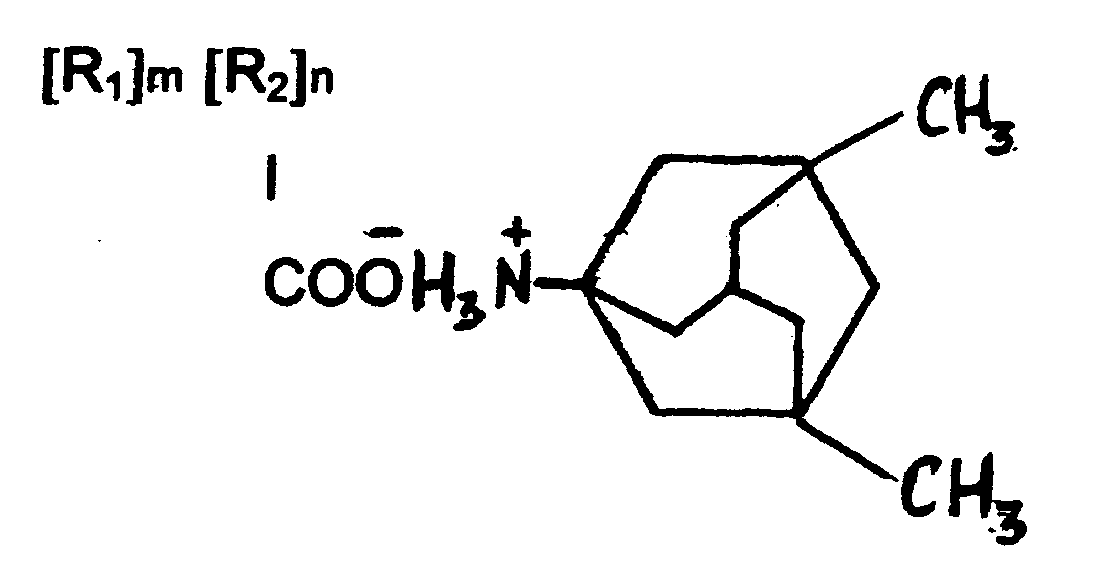
and carboxylated copolymers are selected from the group:
polyvinylaminosuccinic acid,
copolymer of vinyl alcohol and N-vinylaminosuccinic acid,
copolymer of N-vinylpyrrolidone and N-vinylaminosuccinic acid. - 1) Polyvinylaminosuccinic acid (PVASA)

- 2) Copolymer of vinyl alcohol and N-vinylaminosuccinic acid (VA)m - (VASA)n

- 3) Copolymer of N-vinylpyrrolidone and N-vinylaminosuccinic acid (VP)m - (VASA)n
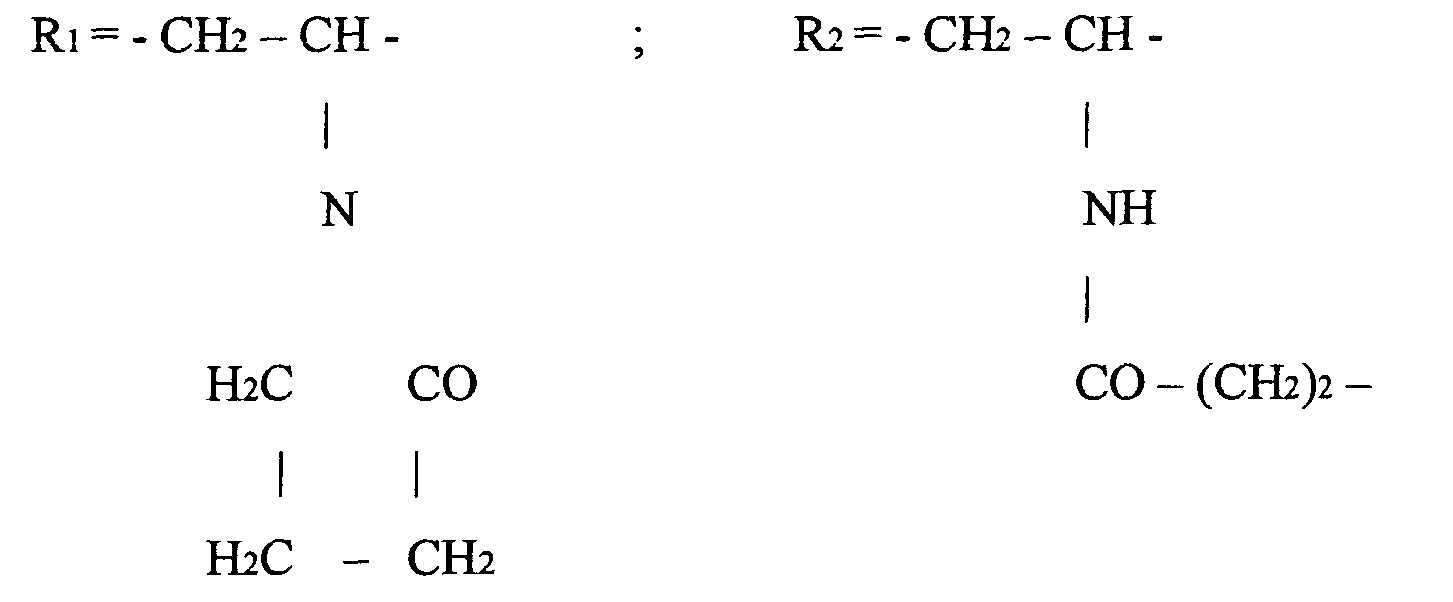
- The possibility of production of neutral and acid salts of PVASA with claimed properties corresponds to the values n=1- 100.
In copolymers of (VA)m - (VASA)n and (VP)m - (VASA)n the values m and n in accordance with the reaction capacity of the monomers used in the polymer preparation method can be in the range n = 1 - 99 and m = 100 - n - The efficacy level of the immunostimulating and interferonogenic activity is achieved with n ≥ 5 and the increase of n-values over 50 influences the activity level insignificantly. That is why to ensure claimed properties of polymeric salts the use of the value n = 5 - 50 is necessary and sufficient.
- Offered salts were first announced in the international application
PCT/RU2003/000417 dated September 23, 2003 WO 2005/028528 A1, published March 31, 2005 . It gives full description of the structures of these salts, their synthesis, identification, as well as the results of biological properties study. The inventors managed to find in offered compounds only antiviral activity against the viruses of A and B types influenza. At that an important advantage of these substances is their prolonged effect allowing their use for sparing treatment and prevention of influenza. The application does not contain any assumptions concerning their possible immunostimulating and interferonogenic properties. These properties are in no way related to antiviral activity and do not follow explicitly from the current knowledge level in this area. - The essence of the invention is explained by the information stated further, and namely:
- general method of claimed salts synthesis;
- 3 examples of synthesis (for each of claimed salts);
- identification of produced compounds;
- determination of biological properties of synthesized salts (immunostimulating activity, interferonogenic activity and toxicity).
- The producing method for polymeric salts of 3.5-dimethyl-1-adamantylammonium is the interaction of a carboxylated (co)polymer with 3.5-dimethyl-1-adamantylamine in the aquatic medium at 15 - 25 C° with mixing of the components for 0.5 - 1 hour and introduction of equimolecular ratios of reagents as calculated per actual or given carboxyl groups content in a (co)polymer and further recovery of salts from the solution by precipitation or using one of the spray or sublimation drying types.
- A general initial reagent in the synthesis of polymeric salts, 3.5-dimethyl-1-adamantylamine, can be produced and used as an intermediate product in the synthesis of its hydrochloride or can be isolated from commercial-grade hydrochloride (memantine) by its treatment with 5% water solution of sodium hydrate and further extraction by ethyl ether or chloroform. Then ether (chloroform) is distilled and 3.5-dimethyl-1-adamantylamine is distilled under vacuum. Produced 3.5-dimethyl-1-adamantylamine does not change its biological activity and is a colorless oily liquid, insoluble in water but soluble in dimethyl sulfoxide, as well as concentrated and weak acetic and hydrochloric acid.
- The pureness of produced 3.5-dimethyl-1-adamantylamine was assessed by the data of the element analysis and infrared analysis. The results of the element analysis of C12N21N:
Calculated, %: C=80.37; H=11.80; N=7.81 Found, %: C=80.41; H=11.95; N=7.70 - As the second component - a polymeric base - compositionally homogeneous (by their chemical composition and molecular weight) carboxylated, water soluble, and non-toxic (co)polymers were selected:
- 1) polyvinylaminosuccinic acid (PVASA);
- 2) copolymer of vinyl alcohol and N-vinylaminosuccinic acid (VA)m - (VASA)n;
- 3) copolymer of N-vinylpyrrolidone and N-vinylaminosuccinic acid (VP)m - (VASA)n.
- The listed polymers can be produced according to the earlier described method (A.F. Nikolaev et al. The Journal of Applied Chemistry, 1970, vol..43, Nº6, pp. 1339 - 1343; A.F. Nikolaev et al. High-molecular Compounds, 1972, vol. 14A, Nº11, pp. 2368 - 2370).
- Molecular weight of used polymers is in the range of 20 - 80kDa, the number of carboxylated links in co(polymers) is from 1 to 100 mol%.
- Salt formation reaction of 3.5-dimethyl-1-adamantylamine with carboxylated polymers is implemented in the aquatic medium at the temperature of 15 - 25 C°, with mixing of the components for 0.5 - 1 hour and introduction of equimolecular ratios of reagents as calculated per actual (or rated) carboxyl groups content in a (co)polymer with further isolation of salts from the solution by precipitation into acetone or methyl-ethyl ketone, or the mixture of ethyl alcohol and diethyl ether, or diethyl ether and benzol, or using one of the spray or sublimation drying types. Produced compounds are polymeric salts of polycarboxilic acids and 3.5-dimethyl-1-adamantylamine (3.5-dimethyl-1-adamantylammonium - (DMAAM). The composition and structure of produced salts were identified based on the data of element analysis, infrared analysis, and potentiometric titration in non-aquatic medium.
- Synthesis method and other examples are described in much detail in the international application
PCT/RU2003/000417 WO 2005/028528 published March 31, 2005 ). -
- Example 1. Into a kettle (retort) equipped with a mixer, 0.858g of poly-N-vinylaminosuccinic acid (PVASA) and 30cm3 of distilled water are loaded. After solution of the polymer, 1.074g of 3.5-dimethyl-1-adamantylamine (DMAAM) is introduced. The initial molecular ratio of VASA:DMAAM is 1:1. The reaction takes place at the temperature of 15 C° during 1 hour, after that 30m3 of ethyl alcohol is poured into the reaction mixture and the product is produced by precipitation into the mixture of benzol and diethyl ether (ratio 1:3). Sediment is filtrated, irrigated with diethyl ether and dried at 30 - 35 C°/6.65Pa. Based on the results of the elements analysis and potentiometric titration DMAAM content in the produced salt is 54.32 wt% which corresponds to the links content of 3.5-dimethyl-1-adamantylamine-ammonium salt of vinylaminosuccinic acid (VASA - DMAAM) in the amount of 95 mol%. Product output (PVASA - DMAAM) was 89%. Characterizing viscosity of a polymeric salt solution in HCl concentration c(HCl) 0. 1mol/dm3 at 25 C° has the value:

- Example 2. The process is similar to the one described in Example 1, but into a retort 1.0 g of vinyl alcohol copolymer with N-vinylaminosuccinic acid (VA - VASA) (VASA content is 25 mol%, i.e. 52 wt%. 0.520g) and 20 cm3 of distilled water are loaded, and then a mixer is turned on. After complete polymer solution, 0.650 g of 3.5-dimethyl-1-adamantylamine (DMAAM) is loaded. The initial equimolecular ratio of VASA:DMAAM is 1:1. The process is implemented at room temperature (20 - 25 C°) during 0.5 hour until complete homogenization of aquatic reaction medium. The product is produced by precipitation into acetone; it is filtrated, rinsed with acetone and diethyl ether and dried at 30 - 35 C°/6.65Pa. Based on the results of the elements analysis and potentiometric titration DMAAM content in a produced salt is 39.42 wt% which corresponds to 25 mol% of the VASA - DMAAM links (the links of 3.5-dimethyl-1-adamantylamine-ammonium salt of vinylaminosuccinic acid). Product output (VA - VASA - DMAAM) is 95%. Characterizing viscosity of a polymeric salt solution in HCl concentration c(HCl) 0.1mol/ dm3 at 25 C° constitutes:

- Example 3. The process is similar to the one described in Example 1, but into a reaction retort 0.991 g of the copolymer of N-vinylpyrrolidone with N-vinylaminosuccinic acid (VP - VASA) with the VASA links content 27 mol% and 50 cm3 of distilled water are loaded. After polymer solution, 0.4 g of DMAAM is introduced. The reaction takes place at the temperature of 20 C° during 40 minutes. The product is produced by lyophilization (sublimation drying) of the solution, is irrigated by diethyl ether and dried at 30 - 35 C°/6.65 Pa. Produced salt contains 28.75 wt% of DMAAM corresponding to 27 mol% of the saline VASA - DMAAM links in the copolymer VP - VASA - DMAAM) Product output is 93%.
The value of characterizing viscosity of a polymeric salt solution in HCl concentration c(HCl) 0.1mol/dm3 at 25 C° constitutes
- All produced polymeric salts of 3.5-dimethyl-1-adamantylammonium are white amorphous powders, soluble in water, diluted acetic and hydrochloric acids, and dimethyl sulfoxide.
- They are practically insoluble in 95% ethyl alcohol and diethyl ether. The values of characterizing viscosity of polymeric salt solutions in HCl water solution with the concentration c(HCl) 0.1 mol/dm3 at 25 C° are in the range of 10 - 30 cm3/g.
- In the IR spectrum of dry polymeric compounds being the invention essence, absorption bands at 1560 - 1610 cm-1 are observed as corresponding to the valence vibrations of a C-O link of ionized group
-COO-1; during formation of a salt link, absorption bands at 800 cm-1 are detected characterizing the presence of N+ H3 groups of ammonium salt, and there is no absorption band at 1720 cm-1 (or the intensity of an initial polymer is reduced) corresponding to non-ionized -COOH groups in a polymer. - In the IR spectrum of produced salts there are also absorption bands at 1350 cm-1 and 1000 cm-1 characteristic for adamantan structure.
- Immunostimulating activity. Determination of the effect of claimed compounds on functional activity of immunocomptent human cells.
- Immunocompetent cells - natural killers (NK-cells) - relate to the system of natural human body resistance. Identification of the status of this immune system link gives important information about the state of the body immune status. To assess the state of this immune system link depending on the presence of studied compounds a functional test was used to determine the NK-cells capacity to expose to lysis the target cells of tumor myeloblast culture K-562, the identification of which was implemented using a fluorescent tag. NK-cells activity was identified in accordance with the number of the target cells K-562 "killed" by them which were evaluated based on the intensity of fluorescent glowing in the area characteristic for killed cells and against control results (i.e. when NK-cells are absent).
- The influence level of the studied drugs on NK-cells activity was assessed based on the value of the NK-cells activity ratio when treated with these medications to the activity of untreated NK-cells in the lysis process of target cells of the test culture, line K-562.
- To select medication doses and concentrations while studying their activity, their minimal toxic dose against target cells and mononuclear cells of peripheral blood was preliminarily measured. This dose did not exceed 50 mkg/ml (as calculated per DMAAM).
- In the result of studies it was found that with a low initial functional activity of immunocompetent cells of natural killers (NK-cells) of the mononuclear cells in peripheral blood the use of offered salts of 3.5-dimethyl-1-adamantylammonium leads to the increase of functional activity (Table 1). This defines a considerable immunostimulating effect of offered substances.
- In addition immunostimulating effect mainly occurs in polymeric compounds (PVASA - DMAAM, VA - VASA - DMAAM, VP - VASA - DMAAM), and with an increase of drug concentration their stimulating impact on NK-cells activity enhances.
Table 1. Change of NK-cells activity over 3.5-dimethyl-1-adamantylamine. Nº Compound Relative value of change of NK-activity over DMAAM compounds with concentrations mcg/ml (as calculated per DMAAM): 2 10 50 1 HC - DMAAM 1.0 1.2 1.6 2 PVASA - DMAAM 1.1 1.4 1.8 3 VA - VASA - DMAAM 1.1 1.4 1.8 4 VP - VASA - DMAAM 1.1 1.3 1.7 - The capacity of interferon induction characterizes one of the levels of body shielding effect. Interferon induction by cells under the influence of some medications characterizes interferoninducing activity of these medications.
- To measure the interferonogenic activity of the agents of claimed compounds, their activity in vitro was studied in relation to natural killer cells (NK-cells) of human (donors') peripheral blood with their spontaneous and induced interferonogenic activity.
- The maximum used concentration of the compounds was 50mkg/ml (as calculated per DMAAM) which corresponds to the minimal toxic dose of medications for mononuclear cells of peripheral blood and test-culture. Interferonoinducing activity of the agents (Table 2) is expressed in international units (IU) of interferon antiviral activity as regards the virus of vesicular stomatitis. It was identified based on the calibration of the standard activity of test-interferon (IFN-α).
Table 2. Interferon induction activity of mononuclear cells of peripheral blood (NK-cells) depending on the presence of DMAAM-compounds. Nº Compound, interferon inducer Interferon induction activity (IU/ml) of NK-cells over studied compounds with the said concentrations mcg/ml (as calculated per DMAAM): 0 2 10 50 1 HC-DMAAM - 5.77 13.00 14.46 2 PVASA - DMAAM - 10.25 24.23 25.52 3 VA - VASA - DMAAM - 9.46 23.92 25.77 4 VP - VASA - DMAAM - 8.45 23.80 25.20 5 POLYREM - 8.12 20.50 21.68 6 No inducer (spontaneous induction) Less than 5 - The results of determinations presented in Table 2 show that offered compounds possess a rather effective level of interferon induction by mononuclear cells of peripheral blood. The interferon induction activity of the offered polymeric compounds PVASA-DMAAM, VA-VASA-DMAAM, VP-VASA-DMAAM 1.5 - 1.6 times exceeds the activity of a low-molecular HC-DMAAM hydrochloride.
- It is important to notice that polymeric compounds DMAAM have greater interferonogenic activity than POLYREM (prototype) tested in the same conditions for comparison.
- Thus, offered polymeric compounds have a noticeable immunostimulating and interferonogenic effect. They have potential to correct the activity of immunocompetent cells of peripheral blood mononuclear cells - natural killers, and of the interferoninducing activity of blood mononuclear cells, that is to improve the functional activity level of human immune system.
- The toxicity level of claimed compounds was assessed according to a general index of acute toxicity - average fatal dose of LD50. The study was held with a single oral administration of the medication to white mice of both sexes, line "Balb", weight 18 - 20 g, and to white rats, line "Vistar", weight 130 - 250 g (female) and 225 - 370 g (male). The medications were administered to mice in the dose ranging from 25 to 1100 mg/kg, and to rats in the range of 480 - 2315 mg/kg.
- It was determined that LD50 values of claimed polymeric compounds DMAAM for mice are in the range from 445 to 806 mg/kg, and for rats - from 647 to 1180 mg/kg depending on the qualitative and quantitative composition of polymeric salts.
- These results showed that claimed polymeric salts possessed lower toxicity as compared to memantin (LD50 for mice 363 mg/kg) when agents with the equimolecular dose of 3.5-dimethyl-1-adamantylamine were administered to animals.
- Offered salts in accordance with the toxicity indices determined for mice and rats refer to low-toxic compounds.
- The information given in the sections "Summary of the invention" and "Determination of the biological properties of offered salts" proves that the synthesis of claimed salts is quite possible by the means described in the application. Produced compounds are expressly identified by IR analysis, elements analysis, and potentiometric titration methods. Offered compounds have high immunostimulating and interferonogenic activity. This activity is noticeably higher than the one of their prototype - polyrem.
- In the process of comparative study, the inventors detected for the first time some immunostimulating and interferonogenic activity of a low-molecular compound from the offered compounds - hydrochloride 3.5-dimethyl-1-adamantylamine - which is considerably lower than the activity of offered polymers.
- Thus, offered agents comply with all the requirements specified for an invention - they are new, unobvious for a specialist (have an invention level) and are exploitable.
Claims (5)
- Use of polymeric salts of 3.5-dimethyl-1-adamantylammonium and water-soluble carboxylated (co)polymers of the general formula

and carboxylated (co)polymers are selected from the group:
polyvinylaminosuccinic acid,
copolymer of vinyl alcohol and N-vinylaminosuccinic acid,
copolymer of N-vinylpyrrolidone and N-vinylaminosuccinic acid, as immunostimulating and interferonogenic agents. - Use as in claim 1, wherein polyvinylaminosuccinic acid (PVASA), where n = 1- 100mol%, and better n = 5 - 100mol% is selected as a carboxylated polymer.
- Use as in claim 1, wherein a copolymer of vinyl alcohol and N-vinylaminosuccinic acid (VA)m - (VASA)n, where n = 1 - 99mol%, and better n = 5 - 50mol% is selected as a carboxylated polymer.
- Use as in claim 1, wherein a copolymer of N-vinylpyrrolidone and N-vinylaminosuccinic acid (VP)m - (VASA)n, where n = 1 - 99mol%, and better n = 5 - 50mol% is selected as a carboxylated polymer.
- A medicinal agent, wherein, any compound as in claims 1 - 4 is selected as an immunostimulating and interferonogenic substance.
Applications Claiming Priority (1)
| Application Number | Priority Date | Filing Date | Title |
|---|---|---|---|
| PCT/RU2004/000242 WO2006011823A1 (en) | 2004-06-24 | 2004-06-24 | Immunistimulative and interferonogenous agent |
Publications (2)
| Publication Number | Publication Date |
|---|---|
| EP1759703A1 true EP1759703A1 (en) | 2007-03-07 |
| EP1759703A4 EP1759703A4 (en) | 2007-08-01 |
Family
ID=35786482
Family Applications (1)
| Application Number | Title | Priority Date | Filing Date |
|---|---|---|---|
| EP04808945A Withdrawn EP1759703A4 (en) | 2004-06-24 | 2004-06-24 | Immunistimulative and interferonogenous agent |
Country Status (4)
| Country | Link |
|---|---|
| EP (1) | EP1759703A4 (en) |
| EA (1) | EA200600428A1 (en) |
| UA (1) | UA79908C2 (en) |
| WO (1) | WO2006011823A1 (en) |
Family Cites Families (6)
| Publication number | Priority date | Publication date | Assignee | Title |
|---|---|---|---|---|
| DE4014672A1 (en) * | 1990-05-08 | 1991-11-14 | Werner E G Prof Dr Mueller | Adamantane derivs. for cyto-protection of cells - protects infected and non-infected lymphocytes and other cells, and can be used in treating e.g. AIDs and ARC |
| RU2071323C1 (en) * | 1994-09-30 | 1997-01-10 | Санкт-Петербургский государственный технологический институт (технический университет) | Antiviral preparation |
| DE19531342B4 (en) * | 1995-08-25 | 2007-11-29 | Merz Pharma Gmbh & Co. Kgaa | Use of aminoadamantane compounds as immunoregulators |
| US6613507B1 (en) * | 2000-03-21 | 2003-09-02 | Yu-an Chang | Boraadamantane compounds for the treatment of pathogenic viruses and other medical applications |
| RU2185822C2 (en) * | 2000-08-01 | 2002-07-27 | Общество с ограниченной ответственностью "Фармаген" | Preparation for treatment and prophylaxis of viral diseases |
| WO2005028528A1 (en) * | 2003-09-23 | 2005-03-31 | Akciju Sabiedriba 'olainfarm' | 3,5-dimethyl-1-adamantyl-ammonium polymeric salts and the use thereof in the form of antiviral agents |
-
2004
- 2004-06-24 WO PCT/RU2004/000242 patent/WO2006011823A1/en not_active Ceased
- 2004-06-24 EA EA200600428A patent/EA200600428A1/en unknown
- 2004-06-24 EP EP04808945A patent/EP1759703A4/en not_active Withdrawn
- 2004-06-24 UA UAA200604494A patent/UA79908C2/en unknown
Also Published As
| Publication number | Publication date |
|---|---|
| EP1759703A4 (en) | 2007-08-01 |
| WO2006011823A1 (en) | 2006-02-02 |
| EA200600428A1 (en) | 2007-04-27 |
| UA79908C2 (en) | 2007-07-25 |
Similar Documents
| Publication | Publication Date | Title |
|---|---|---|
| JP5243466B2 (en) | Polyallylamine in low salt form | |
| DE69534974T2 (en) | PHARMACEUTICAL COMPOSITION CONTAINING NITROGEN OXYFIDENT POLYSACCHARIDES | |
| US6004583A (en) | Protein-containing polymer composition for oral administration | |
| DE3885317T2 (en) | Macromolecular platinum anti-tumor compounds. | |
| Donaruma | Synthetic biologically active polymers | |
| KR960008009B1 (en) | Synergistic composition comprising interleukin and double-stranded RNA | |
| JPH06506212A (en) | Use of riboflavin for the treatment of HIV viral diseases, herpes, retinitis pigmentosa and malaria | |
| RU2083221C1 (en) | Ridostin as interferon inductor | |
| EP0616813B1 (en) | Antitumor mitoxantrone polymeric compositions | |
| EP1759703A1 (en) | Immunistimulative and interferonogenous agent | |
| US20100266527A1 (en) | Anti-microbial polymers and their compositions | |
| EP1669379B1 (en) | 3,5-dimethyl-1-adamantyl-ammonium polymeric salts and the use thereof in the form of antiviral agents | |
| KR100266929B1 (en) | Pharmaceutical lysine-containing polypeptide compositions and methods of use thereof. | |
| JP4177604B2 (en) | Bioactive complex | |
| EP4169577A1 (en) | 4-aminophenylphosphorylcholine compounds for the inhibition of c-reactive protein | |
| WO2020115722A1 (en) | Polymer-active ingredient conjugate | |
| Melamed et al. | GI pharmacology of polyethyleneimine I: Effects on gastric emptying in rats | |
| Carraher Jr et al. | Polymeric platinol derivative of methotrexate for the treatment of virally related juvenile diabetes | |
| AU2018272839A2 (en) | Fractionated antimicrobial compositions and use thereof | |
| DE69019148T2 (en) | D-ASPARAGIC ACID BETA HYDROXAMATE FOR TREATING VIRAL INFECTIONS AND TUMORS. | |
| Roner et al. | Cisplatin derivatives as antiviral agents | |
| AT326823B (en) | PROCESS FOR THE MANUFACTURING OF VIRUS INHIBITIVE PHARMACEUTICAL PREPARATIONS | |
| WO2005046715A1 (en) | Physiologically active complex | |
| PT87923B (en) | The present invention relates to a method for the preparation and manufacture of pharmaceutical compositions useful for the preparation of non-nucleoside resistant cells |
Legal Events
| Date | Code | Title | Description |
|---|---|---|---|
| PUAI | Public reference made under article 153(3) epc to a published international application that has entered the european phase |
Free format text: ORIGINAL CODE: 0009012 |
|
| 17P | Request for examination filed |
Effective date: 20060621 |
|
| AK | Designated contracting states |
Kind code of ref document: A1 Designated state(s): AT BE BG CH CY CZ DE DK EE ES FI FR GB GR HU IE IT LI LU MC NL PL PT RO SE SI SK TR |
|
| A4 | Supplementary search report drawn up and despatched |
Effective date: 20070703 |
|
| RIC1 | Information provided on ipc code assigned before grant |
Ipc: A61K 31/13 20060101ALI20070627BHEP Ipc: A61P 31/00 20060101ALI20070627BHEP Ipc: A61K 31/785 20060101AFI20060217BHEP |
|
| DAX | Request for extension of the european patent (deleted) | ||
| 17Q | First examination report despatched |
Effective date: 20071121 |
|
| GRAP | Despatch of communication of intention to grant a patent |
Free format text: ORIGINAL CODE: EPIDOSNIGR1 |
|
| STAA | Information on the status of an ep patent application or granted ep patent |
Free format text: STATUS: THE APPLICATION IS DEEMED TO BE WITHDRAWN |
|
| 18D | Application deemed to be withdrawn |
Effective date: 20100810 |