EP1758164A1 - Quinolinols and quinolinol derivatives as adhesion promoters in die attach adhesives - Google Patents
Quinolinols and quinolinol derivatives as adhesion promoters in die attach adhesives Download PDFInfo
- Publication number
- EP1758164A1 EP1758164A1 EP06017529A EP06017529A EP1758164A1 EP 1758164 A1 EP1758164 A1 EP 1758164A1 EP 06017529 A EP06017529 A EP 06017529A EP 06017529 A EP06017529 A EP 06017529A EP 1758164 A1 EP1758164 A1 EP 1758164A1
- Authority
- EP
- European Patent Office
- Prior art keywords
- quinolinol
- resin
- die attach
- poly
- acrylate
- Prior art date
- Legal status (The legal status is an assumption and is not a legal conclusion. Google has not performed a legal analysis and makes no representation as to the accuracy of the status listed.)
- Granted
Links
- MCJGNVYPOGVAJF-UHFFFAOYSA-N Oc1cccc2c1nccc2 Chemical compound Oc1cccc2c1nccc2 MCJGNVYPOGVAJF-UHFFFAOYSA-N 0.000 description 1
Classifications
-
- C—CHEMISTRY; METALLURGY
- C09—DYES; PAINTS; POLISHES; NATURAL RESINS; ADHESIVES; COMPOSITIONS NOT OTHERWISE PROVIDED FOR; APPLICATIONS OF MATERIALS NOT OTHERWISE PROVIDED FOR
- C09J—ADHESIVES; NON-MECHANICAL ASPECTS OF ADHESIVE PROCESSES IN GENERAL; ADHESIVE PROCESSES NOT PROVIDED FOR ELSEWHERE; USE OF MATERIALS AS ADHESIVES
- C09J139/00—Adhesives based on homopolymers or copolymers of compounds having one or more unsaturated aliphatic radicals, each having only one carbon-to-carbon double bond, and at least one being terminated by a single or double bond to nitrogen or by a heterocyclic ring containing nitrogen; Adhesives based on derivatives of such polymers
- C09J139/04—Homopolymers or copolymers of monomers containing heterocyclic rings having nitrogen as ring member
-
- C—CHEMISTRY; METALLURGY
- C09—DYES; PAINTS; POLISHES; NATURAL RESINS; ADHESIVES; COMPOSITIONS NOT OTHERWISE PROVIDED FOR; APPLICATIONS OF MATERIALS NOT OTHERWISE PROVIDED FOR
- C09J—ADHESIVES; NON-MECHANICAL ASPECTS OF ADHESIVE PROCESSES IN GENERAL; ADHESIVE PROCESSES NOT PROVIDED FOR ELSEWHERE; USE OF MATERIALS AS ADHESIVES
- C09J11/00—Features of adhesives not provided for in group C09J9/00, e.g. additives
- C09J11/02—Non-macromolecular additives
- C09J11/06—Non-macromolecular additives organic
-
- C—CHEMISTRY; METALLURGY
- C09—DYES; PAINTS; POLISHES; NATURAL RESINS; ADHESIVES; COMPOSITIONS NOT OTHERWISE PROVIDED FOR; APPLICATIONS OF MATERIALS NOT OTHERWISE PROVIDED FOR
- C09J—ADHESIVES; NON-MECHANICAL ASPECTS OF ADHESIVE PROCESSES IN GENERAL; ADHESIVE PROCESSES NOT PROVIDED FOR ELSEWHERE; USE OF MATERIALS AS ADHESIVES
- C09J139/00—Adhesives based on homopolymers or copolymers of compounds having one or more unsaturated aliphatic radicals, each having only one carbon-to-carbon double bond, and at least one being terminated by a single or double bond to nitrogen or by a heterocyclic ring containing nitrogen; Adhesives based on derivatives of such polymers
-
- C—CHEMISTRY; METALLURGY
- C08—ORGANIC MACROMOLECULAR COMPOUNDS; THEIR PREPARATION OR CHEMICAL WORKING-UP; COMPOSITIONS BASED THEREON
- C08L—COMPOSITIONS OF MACROMOLECULAR COMPOUNDS
- C08L33/00—Compositions of homopolymers or copolymers of compounds having one or more unsaturated aliphatic radicals, each having only one carbon-to-carbon double bond, and only one being terminated by only one carboxyl radical, or of salts, anhydrides, esters, amides, imides or nitriles thereof; Compositions of derivatives of such polymers
-
- C—CHEMISTRY; METALLURGY
- C08—ORGANIC MACROMOLECULAR COMPOUNDS; THEIR PREPARATION OR CHEMICAL WORKING-UP; COMPOSITIONS BASED THEREON
- C08L—COMPOSITIONS OF MACROMOLECULAR COMPOUNDS
- C08L63/00—Compositions of epoxy resins; Compositions of derivatives of epoxy resins
-
- C—CHEMISTRY; METALLURGY
- C08—ORGANIC MACROMOLECULAR COMPOUNDS; THEIR PREPARATION OR CHEMICAL WORKING-UP; COMPOSITIONS BASED THEREON
- C08L—COMPOSITIONS OF MACROMOLECULAR COMPOUNDS
- C08L79/00—Compositions of macromolecular compounds obtained by reactions forming in the main chain of the macromolecule a linkage containing nitrogen with or without oxygen or carbon only, not provided for in groups C08L61/00 - C08L77/00
- C08L79/04—Polycondensates having nitrogen-containing heterocyclic rings in the main chain; Polyhydrazides; Polyamide acids or similar polyimide precursors
- C08L79/08—Polyimides; Polyester-imides; Polyamide-imides; Polyamide acids or similar polyimide precursors
-
- H—ELECTRICITY
- H10—SEMICONDUCTOR DEVICES; ELECTRIC SOLID-STATE DEVICES NOT OTHERWISE PROVIDED FOR
- H10W—GENERIC PACKAGES, INTERCONNECTIONS, CONNECTORS OR OTHER CONSTRUCTIONAL DETAILS OF DEVICES COVERED BY CLASS H10
- H10W72/00—Interconnections or connectors in packages
- H10W72/071—Connecting or disconnecting
- H10W72/073—Connecting or disconnecting of die-attach connectors
- H10W72/07331—Connecting techniques
- H10W72/07337—Connecting techniques using a polymer adhesive, e.g. an adhesive based on silicone or epoxy
-
- H—ELECTRICITY
- H10—SEMICONDUCTOR DEVICES; ELECTRIC SOLID-STATE DEVICES NOT OTHERWISE PROVIDED FOR
- H10W—GENERIC PACKAGES, INTERCONNECTIONS, CONNECTORS OR OTHER CONSTRUCTIONAL DETAILS OF DEVICES COVERED BY CLASS H10
- H10W72/00—Interconnections or connectors in packages
- H10W72/30—Die-attach connectors
-
- H—ELECTRICITY
- H10—SEMICONDUCTOR DEVICES; ELECTRIC SOLID-STATE DEVICES NOT OTHERWISE PROVIDED FOR
- H10W—GENERIC PACKAGES, INTERCONNECTIONS, CONNECTORS OR OTHER CONSTRUCTIONAL DETAILS OF DEVICES COVERED BY CLASS H10
- H10W72/00—Interconnections or connectors in packages
- H10W72/30—Die-attach connectors
- H10W72/321—Structures or relative sizes of die-attach connectors
- H10W72/325—Die-attach connectors having a filler embedded in a matrix
-
- H—ELECTRICITY
- H10—SEMICONDUCTOR DEVICES; ELECTRIC SOLID-STATE DEVICES NOT OTHERWISE PROVIDED FOR
- H10W—GENERIC PACKAGES, INTERCONNECTIONS, CONNECTORS OR OTHER CONSTRUCTIONAL DETAILS OF DEVICES COVERED BY CLASS H10
- H10W72/00—Interconnections or connectors in packages
- H10W72/30—Die-attach connectors
- H10W72/351—Materials of die-attach connectors
- H10W72/352—Materials of die-attach connectors comprising metals or metalloids, e.g. solders
-
- H—ELECTRICITY
- H10—SEMICONDUCTOR DEVICES; ELECTRIC SOLID-STATE DEVICES NOT OTHERWISE PROVIDED FOR
- H10W—GENERIC PACKAGES, INTERCONNECTIONS, CONNECTORS OR OTHER CONSTRUCTIONAL DETAILS OF DEVICES COVERED BY CLASS H10
- H10W72/00—Interconnections or connectors in packages
- H10W72/30—Die-attach connectors
- H10W72/351—Materials of die-attach connectors
- H10W72/353—Materials of die-attach connectors not comprising solid metals or solid metalloids, e.g. ceramics
-
- H—ELECTRICITY
- H10—SEMICONDUCTOR DEVICES; ELECTRIC SOLID-STATE DEVICES NOT OTHERWISE PROVIDED FOR
- H10W—GENERIC PACKAGES, INTERCONNECTIONS, CONNECTORS OR OTHER CONSTRUCTIONAL DETAILS OF DEVICES COVERED BY CLASS H10
- H10W72/00—Interconnections or connectors in packages
- H10W72/30—Die-attach connectors
- H10W72/351—Materials of die-attach connectors
- H10W72/353—Materials of die-attach connectors not comprising solid metals or solid metalloids, e.g. ceramics
- H10W72/354—Materials of die-attach connectors not comprising solid metals or solid metalloids, e.g. ceramics comprising polymers
-
- H—ELECTRICITY
- H10—SEMICONDUCTOR DEVICES; ELECTRIC SOLID-STATE DEVICES NOT OTHERWISE PROVIDED FOR
- H10W—GENERIC PACKAGES, INTERCONNECTIONS, CONNECTORS OR OTHER CONSTRUCTIONAL DETAILS OF DEVICES COVERED BY CLASS H10
- H10W74/00—Encapsulations, e.g. protective coatings
Definitions
- This invention relates to die attach adhesives containing quinolinols and quinolinol derivatives as adhesion promoters.
- an integrated circuit chip or die is attached to a lead frame with adhesive and wire bonding and the die and inner lead frame assembly encapsulated in a molding resin. After encapsulation, the outer leads of the lead frame are attached to a printed circuit board or other external device. Any exposed copper surfaces on lead frames or printed wire boards are subject to oxidation with exposure to air and are routinely coated with antioxidants. However, the presence of antioxidants is suspected of interfering with the bonding process during the die attach, wire bonding, encapsulation, and final soldering operations in the manufacture of the semiconductor package and its attachment to a printed circuit board.
- This invention is a die attach adhesive composition
- a curable resin optionally a curing agent for the resin, a filler, and a quinolinol or a quinolinol derivative.
- the quinolinols or quinolinol derivatives (hereinafter quinolinol(s)) in these compositions act as adhesion promoters.
- quinolinol is synonymous with "hydroxy quinoline”.
- the adhesion promoters of this invention are quinolinol compounds or compounds derived from quinolinol (hereinafter quinolinol derivatives), by which is meant, compounds that contain a quinolinol moiety.
- quinolinol derivatives compounds that contain a quinolinol moiety.
- Exemplary quinolinol compounds are
- Exemplary quinolinol derivatives are those having the following bis-quinolinol structure: which can be prepared by the reaction of hydroxyl-functionalized quinolinol with a selected di-acid via Fisher esterification.
- the nature of the bridge between the quinolinol functionalities is determined by the structure of the acid. Properties such as melting point and solubility can be controlled through selection of the proper di-acid.
- R is any organic moiety:
- suitable compounds include those in which R is an alkyl group, and in particular, a pentyl, hexyl, heptyl or octyl group.
- Other compounds include those in which R is an organic group. These compounds have reduced volatility due to their increased molecular weight
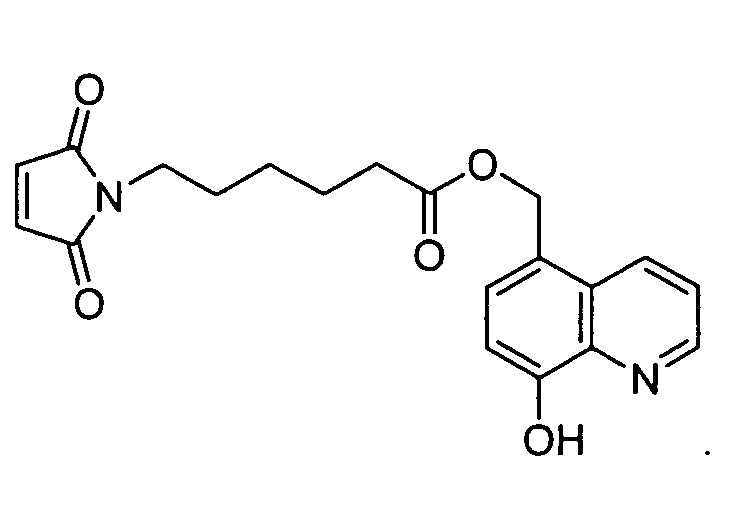
- quinolinol derivatives are exemplified by the following compounds, which contain polymerizable functionality and can be reacted into the die attach composition during cure; consequently, they are not subject to volatilization and their use reduces voiding at increased temperatures. Examples include the following:
- the reactive functionalities in the above Compounds A, B, and C, respectively are acrylate, styrenic, and maleimide functionalities.
- Other suitable reactive functionalities include epoxies, oxetanes, benzotriazoles, cinnamyl compounds, styrenic compounds, and vinyl ethers.
- the curable resin will be present in an amount from 10 to 99.5 weight %; the curing agent will be present in an effective amount, typically up to 30 weight %; the fillers, if present, will be present in an amount up to 90 weight %; and the adhesion promoter will be present in an effective amount, which can be up to 30 weight %.
- the adhesion promoter is present at a low level, more usually from 0.1 to 10 weight %.
- Suitable curable resins for the composition include thermoset and thermoplastic polymers, and in particular are selected from the group consisting of epoxy, maleimide (including bismaleimide), acrylates and methacrylates, and cyanate esters.
- Other useful resins include vinyl ethers, vinyl silanes, thiol-enes, and resins that contain carbon to carbon double bonds attached to an aromatic ring and conjugated with the unsaturation in the aromatic ring (such as compounds derived from cinnamyl and styrenic starting compounds), and fumarates and maleates.
- polystyrenes polycarbonates, polypropylenes, poly(vinyl chloride)s, polyisobutylenes, polyacrylonitriles, poly(vinyl acetate)s, poly(2-vinylpyridine)s, cis-1,4-polyisoprenes, 3,4-polychloroprenes, vinyl copolymers, poly(ethylene oxide)s, poly(ethylene glycol)s, polyformaldehydes, polyacetaldehydes, poly(b-propiolacetone)s, poly(10-decanoate)s, poly(ethylene terephthalate)s, polycaprolactams, poly(11-undecanoamide)s, poly(m-phenylene-terephthalamide)s, polyamides, poly(ethylene oxide)s, poly(m-phenylene-terephthalamide)s, poly(ethylene terephthalamide)s, polystyrenes, polycarbonates, polypropylenes, poly(vinyl chloride)s
- Suitable cyanate ester resins include those having the generic structure in which n is 1 or larger, and X is a hydrocarbon group.
- exemplary X entities include, but are not limited to, bisphenol A, bisphenol F, bisphenol S, bisphenol E, bisphenol O, phenol or cresol novolac, dicyclopentadiene, polybutadiene, polycarbonate, polyurethane, polyether, or polyester.
- cyanate ester materials include; AroCy L-10, AroCy XU366, AroCy XU371, AroCy XU378, XU71787.02L, and XU 71787.07L, available from Huntsman LLC; Primaset PT30, Primaset PT30 S75, Primaset PT60, Primaset PT60S, Primaset BADCY, Primaset DA230S, Primaset MethylCy, and Primaset LECY, available from Lonza Group Limited; 2-allyphenol cyanate ester, 4-methoxyphenol cyanate ester, 2,2-bis(4-cyanatophenol)-1,1,1,3,3,3-hexafluoropropane, bisphenol A cyanate ester, diallylbisphenol A cyanate ester, 4-phenylphenol cyanate ester, 1,1,1-tris(4-cyanatophenyl)ethane, 4-cumylphenol cyanate ester, 1,1-bis(4-cyana)
- cyanate esters include cyanate esters having the structure: in which R 1 to R 4 independently are hydrogen, C 1 - C 10 alkyl, C 3 -C 8 cycloalkyl, C 1 -C 10 alkoxy, halogen, phenyl, phenoxy, and partially or fully fluorinated alkyl or aryl groups (an example is phenylene-1,3-dicyanate);
- cyanate esters having the structure: in which R 1 to R 5 independently are hydrogen, C 1 - C 10 alkyl, C 3 -C 8 cycloalkyl, C 1 -C 10 alkoxy, halogen, phenyl, phenoxy, and partially or fully fluorinated alkyl or aryl groups;
- cyanate esters having the structure: in which R 6 is hydrogen or C 1 - C 10 alkyl and X is CH 2 or one of the following structures and n is a number from 0 to 20 (examples include XU366 and XU71787.07, commercial products from Vantico);
- cyanate esters having the structure: N ⁇ C ⁇ O ⁇ R 7 ⁇ O ⁇ C ⁇ N, and
- cyanate esters having the structure: N ⁇ C ⁇ O ⁇ R 7 , in which R 7 is a non-aromatic hydrocarbon chain with 3 to 12 carbon atoms, which hydrocarbon chain may be optionally partially or fully fluorinated.
- Suitable epoxy resins include bisphenol, naphthalene, and aliphatic type epoxies.
- Commercially available materials include bisphenol type epoxy resins (Epiclon 830LVP, 830CRP, 835LV, 850CRP) available from Dainippon Ink & Chemicals, Inc.; naphthalene type epoxy (Epiclon HP4032) available from Dainippon Ink & Chemicals, Inc.; aliphatic epoxy resins (Araldite CY179, 184, 192, 175, 179) available from Ciba Specialty Chemicals, (Epoxy 1234, 249, 206) available from Dow Corporation, and (EHPE-3150) available from Daicel Chemical Industries, Ltd.
- epoxy resins include cycloaliphatic epoxy resins, bisphenol-A type epoxy resins, bisphenol-F type epoxy resins, epoxy novolac resins, biphenyl type epoxy resins, naphthalene type epoxy resins, dicyclopentadienephenol type epoxy resins,
- Suitable maleimide resins include those having the generic structure in which n is 1 to 3 and X 1 is an aliphatic or aromatic group.
- exemplary X 1 entities include, poly(butadienes), poly(carbonates), poly(urethanes), poly(ethers), poly(esters), simple hydrocarbons, and simple hydrocarbons containing functionalities such as carbonyl, carboxyl, amide, carbamate, urea, ester, or ether. These types of resins are commercially available and can be obtained, for example, from Dainippon Ink and Chemical, Inc.
- Additional suitable maleimide resins include, but are not limited to, solid aromatic bismaleimide (BMI) resins, particularly those having the structure in which Q is an aromatic group.
- BMI solid aromatic bismaleimide
- Exemplary aromatic groups include: in which n is 1 - 3, Bismaleimide resins having these Q bridging groups are commercially available, and can be obtained, for example, from Sartomer (USA) or HOS-Technic GmbH (Austria).
- Suitable maleimide resins include the following: in which C 36 represents a linear or branched chain hydrocarbon chain (with or without cyclic moieties) of 36 carbon atoms; and
- Suitable acrylate and methacrylate resins include those having the generic structure in which n is 1 to 6, R 1 is -H or -CH 3 . and X 2 is an aromatic or aliphatic group.
- Exemplary X 2 entities include poly(butadienes), poly-(carbonates), poly(urethanes), poly(ethers), poly(esters), simple hydrocarbons, and simple hydrocarbons containing functionalities such as carbonyl, carboxyl, amide, carbamate, urea, ester, or ether.
- the acrylate resins are selected from the group consisting of isobornyl acrylate, isobornyl methacrylate, lauryl acrylate, lauryl methacrylate, poly(butadiene) with acrylate functionality and poly(butadiene) with methacrylate functionality.
- Suitable vinyl ether resins are any containing vinyl ether functionality and include poly(butadienes), poly(carbonates), poly(urethanes), poly(ethers), poly(esters), simple hydrocarbons, and simple hydrocarbons containing functionalities such as carbonyl, carboxyl, amide, carbamate, urea, ester, or ether.
- resins include cyclohenanedimethanol divinylether, dodecylvinylether, cyclohexyl vinylether, 2-ethylhexyl vinylether, dipropyleneglycol divinylether, hexanediol divinylether, octadecylvinylether, and butandiol divinylether available from International Speciality Products (ISP); Vectomer 4010, 4020, 4030, 4040, 4051, 4210, 4220, 4230, 4060, 5015 available from Sigma-Aldrich, Inc.
- ISP International Speciality Products
- the curing agent can be either a free radical initiator or ionic initiator (either cationic or anionic), depending on whether a radical or ionic curing resin is chosen, and will be present in an effective amount.
- a free radical curing agents an effective amount typically is 0.1 to 10 percent by weight of the organic compounds (excluding any filler), but can be as high as 30 percent by weight.
- ionic curing agents or initiators an effective amount typically is 0.1 to 10 percent by weight of the organic compounds (excluding any filler), but can be as high as 30 percent by weight.
- Examples of curing agents include imidazoles, tertiary amines, organic metal salts, amine salts and modified imidazole compounds, inorganic metal salts, phenols, acid anhydrides, and other such compounds.
- Exemplary imidazoles include but are not limited to: 2-methyl-imidazole, 2-undecyl-imidazole, 2-heptadecyl imidazole, 2-phenylimidazole, 2-ethyl 4-methyl-imidazole, 1-benzyl-2-methylimidazole, 1-propyl-2-methyl-imidazole, 1-cyano-ethyl-2-methylimidazole, 1-cyanoethyl-2-ethyl-4-methyl-imidazole, 1-cyanoethyl-2-undecylimidazole, 1-cyanoethyl-2-phenylimidazole, 1-guanaminoethyl-2-methylimidazole, and addition products of an imidazole and trimellitic acid.
- Exemplary tertiary amines include but are not limited to: N,N-dimethyl benzylamine, N,N-dimethylaniline, N,N-dimethyl-toluidine, N,N-dimethyl-p-anisidine, p-halogeno-N,N-dimethylaniline, 2-N-ethylanilino ethanol, tri-n-butylamine, pyridine, quinoline, N-methylmorpholine, triethanolamine, triethylenediamine, N,N,N',N'-tetramethylbutanediamine, N-methylpiperidine.
- Other suitable nitrogen containing compounds include dicyandiamide, diallylmelamine, diaminomalconitrile, amine salts, and modified imidazole compounds.
- Exemplary phenols include but are not limited to: phenol, cresol, xylenol, resorcine, phenol novolac, and phloroglucin.
- organic metal salts include but are not limited to: lead naphthenate, lead stearate, zinc naphthenate, zinc octolate, tin oleate, dibutyl tin maleate, manganese naphthenate, cobalt naphthenate, and acetyl aceton iron.
- metal compounds include but are not limited to: metal acetoacetonates, metal octoates, metal acetates, metal halides, metal imidazole complexes, Co(II)(acetoacetonate), Cu(II)(acetoacetonate), Mn(II)(acetoacetonate), Ti(acetoacetonate), and Fe(II)(acetoacetonate).
- exemplary inorganic metal salts include but are not limited to: stannic chloride, zinc chloride and aluminum chloride.
- Exemplary peroxides include but are not limited to: benzoyl peroxide, lauroyl peroxide, octanoyl peroxide, butyl peroctoate, dicumyl peroxide, acetyl peroxide, para-chlorobenzoyl peroxide and di-t-butyl diperphthalate;
- Exemplary acid anhydrides include but are not limited to: maleic anhydride, phthalic anhydride, lauric anhydride, pyromellitic anhydride, trimellitic anhydride, hexahydrophthalic anhydride; hexahydropyromellitic anhydride and hexahydrotrimellitic anhydride.
- Exemplary azo compounds include but are not limited to: azoisobutylonitrile, 2,2'-azobispropane, 2,2'-azobis(2-methylbutanenitrile), m,m'-azoxystyrene.
- Other suitable compounds include hydrozones; adipic dihydrazide and BF3-amine complexes.
- both cationic and free radical initiation in which case both free radical cure and ionic cure resins can be used in the composition.
- Such a composition would permit, for example, the curing process to be started by cationic initiation using UV irradiation, and in a later processing step, to be completed by free radical initiation upon the application of heat
- curing accelerators may be used to optimize the cure rate.
- Cure accelerators include, but are not limited to, metal napthenates, metal acetylacetonates (chelates), metal octoates, metal acetates, metal halides, metal imidazole complexes, metal amine complexes, triphenylphosphine, alkylsubstituted imidazoles, imidazolium salts, and onium borates.
- one or more fillers may be included in the composition and usually are added for improved rheological properties and stress reduction.
- suitable nonconductive fillers include alumina, aluminum hydroxide, silica, fused silica, fumed silica, vermiculite, mica, wollastonite, calcium carbonate, titania, sand, glass, barium sulfate, zirconium, carbon black, organic fillers, and halogenated ethylene polymers, such as, tetrafluoroethylene, trifluoroethylene, vinylidene fluoride, vinyl fluoride, vinylidene chloride, and vinyl chloride.
- suitable conductive fillers include carbon black, graphite, gold, silver, copper, platinum, palladium, nickel, aluminum, silicon carbide, boron nitride, diamond, and alumina.
- the filler particles may be of any appropriate size ranging from nano size to several mm. The choice of such size for any particular end use is within the expertise of one skilled in the art. Filler may be present in an amount from 10 to 90% by weight of the total composition. More than one filler type may be used in a composition and the fillers may or may not be surface treated. Appropriate filler sizes can be determined by the practitioner, but, in general, will be within the range of 20 nanometers to 100 microns.
- the reaction was mixed for 70 minutes resulting in a creamy white mixture of fine particle size.
- the final pH of the reaction was 10.08.
- a light grey powder cake was filtered from the mixture leaving a clear gold liquor.
- the cake was added to 300 mL of dimethylformamide and mixed vigorously for 30 minutes. Upon filtering, a white cake was collected; the filtrate was a light purple liquor.
- the cake was added damp to 300 mL of acetone, mixed for 30 minutes and filtered. This wash was then repeated, leaving a white cake and a clear colorless filtrate.
- the white cake was air dried, pulverized to a white powder and dried further under vacuum at 50°C over night. A 36% yield was obtained from this reaction.
- Quinolinol can be volatile, and in this example, a quinolinol/piperidine derivative was prepared in order to increase the bulk and reduce the volatility of quinolinol. The asymmetry of this derivative promoted a lower melting point than that found for the bis-quinolinol. Quinolinol/piperidine was prepared in a melt by the reaction of equimolar amounts of 8-quinolinol, piperidine and paraformaldehyde.
- the product was a dark amber syrup. Residual starting materials were removed from the syrup via a Kugelrohr apparatus at 85°C. The resulting clear gold viscous liquid (33 grams) was combined with 33 mL of petroleum ether and triturated. A pale ivory powder thus formed from the syrup. The powder was washed twice more in petroleum ether and dried in the vacuum oven over two days at 70°C. The structure of this material was confirmed by both 1 HNMR and GC/MS, with the results conforming to those found in the literature. A 41% yield was obtained from this reaction. The DSC melting point of 116°C matched the melting point found in the literature ( Donald. S. Noyce and Lloyd J.
- the solids were filtered from the clear yellow mother liquor and dissolved in ⁇ 800 mL of water.
- the pH of the resulting deep yellow solution measured between 0 and 1.
- Concentrated ammonium hydroxide was slowly added to neutralize the solution. At a pH between 3 and 4, the clear yellow solution turned opaque red-orange. At pH 5, fine particles started forming and the reaction thickened. More ammonium hydroxide was added to a pH of 10.0. The add was complete within 50 minutes and during this time the temperature of the reaction solution/mixture never exceeded 35°C.
- the reaction was mixed for 60 minutes resulting in a yellow slurry of fine particle size. It was then mixed over night and the final pH of the reaction was 10.15.
- a tan powder cake was filtered from the mixture leaving a dark amber liquor.
- the cake was added to 500 mL of dimethylformamide and mixed vigorously for 30 minutes. Upon filtering, a white cake was collected; the filtrate was a light clear gold liquor. This water wash was repeated.
- the white cake was air dried, pulverized to a powder and dried further under vacuum at 45°C over night. A 42 % yield was obtained from this reaction.
- the structure of this material was confirmed by both 1 HNMR and GC/MS.
- a DSC scan was performed to yield a melting point of 137°C, which was very close to the melting point of 138-139°C found in the above referenced literature.
- the efficacy of the bis-quinolinol from Example 1 was tested as an adhesion promoter in a die attach adhesive prepared to contain 30 parts by weight of a bismaleimide resin, 70 parts by weight of acrylate resins, and 17.1 parts by weight of a poly(butadiene). This resin formulation was mixed at 15 weight percent with 85 weight percent silver flakes and used as the control composition.
- compositions were tested for adhesive strength using a Dage Die Shear Tester. Each composition was disposed between a 5X5 mil silicon die and a copper coated lead frame to a thickness of 10 mil and cured according to the cure protocols described herein, for which Cu is copper, Ag is silver, PPF is pre-plated leadframe containing Ni/Pd/Au alloy, HW is hot/wet, and DSS is die shear strength.
- Cu-HW-DSS 30 minutes ramp from 25°C to 175°C, hold 15 minutes at 175°C, hold one minute at 240°C (wire bond simulation), hold four hours at 175°C (post mold bake simulation), hold 16 hours at 121°C/100%-relative humidity (pressure cooker test environment).
- Cu-HW-DSS + 5-min 270°C 30 minutes ramp from 25°C to 175°C, hold 15 minutes at 175°C, hold one minute at 240°C (wire bond simulation), hold four hours at 175°C (post mold bake simulation), hold 16 hours at 121°C/100%-relative humidity (pressure cooker test environment), hold five minutes at 270°C.
- the efficacy of the bis-quinolinol from Example 1 was tested as an adhesion promoter in a die attach adhesive prepared to contain 6.5 parts by weight bismaleimide resin, 93.5 parts by weight acrylate resins, and 4.0 parts by weight epoxy resin.
- This resin formulation was mixed at 20 weight percent with 80 weight percent silver flakes and used as the control composition.
- two additional samples were prepared, one containing 19.5 weight percent of the resin formulation, 0.5 weight percent of the bis-Q from example 1, and 80 weight percent silver flakes, and the second containing 19 weight percent of the resin formulation, 1.0 weight percent of the bis-Q from example 1, and 80 weight percent silver flakes.
- compositions were tested for adhesive strength using a Dage Die Shear Tester. Each composition was disposed between a 5X5 mil silicon die and a silver (Ag) coated lead frame or a Ni/Pd/Au alloy coated lead frame (PPF) to a thickness of 10 mil and cured according to the following cure protocols.
- Ag-HW-DSS 30 minutes ramp from 25°C to 175°C, hold 15 minutes at 175°C, hold one minute at 240°C (wire bond simulation), hold four hours at 175°C (post mold bake simulation), 16 hours at 121°C/100%-relative humidity.
- Ag-HW-DSS + 5-min 270°C 30 minutes ramp from 25°C to 175°C, hold 15 minutes at 175°C, hold one minute at 240°C (wire bond simulation), hold four hours at 175°C (post mold bake simulation), 16 hours at 121°C/100%-relative humidity, five minutes at 270°C.
- PPF-HW-DSS 30 minutes ramp from 25°C to 175°C, hold 15 minutes at 175°C, hold one minute at 240°C (wire bond simulation), hold four hours at 175°C (post mold bake simulation), 16 hours at 121°C/100%-relative humidity.
- PPF-HW-DSS + 5 min 270C 30 minutes ramp from 25°C to 175°C, hold 15 minutes at 175°C, hold one minute at 240°C (wire bond simulation), hold four hours at 175°C (post mold bake simulation), 16 hours at 121°C/100%-relative humidity, five minutes at 270°C.
- the efficacy of the bis-quinolinol from Example 1 was tested as an adhesion promoter in a die attach adhesive prepared to contain 100 parts by weight bismaleimide resin, 7.5 parts by weight poly(butadiene), 10 parts by weight of a cinnamyl compound, and 10 parts by weight of trivinylcyclohexene.
- This resin formulation was mixed at 23 weight percent with 77 weight percent silver flakes and used as the control composition.
- Two additional samples were prepared, one containing 22 weight percent of the resin formulation, 1.0 weight percent of the bis-Q from example 1, and 77 weight percent silver flakes, and the second containing 20.5 weight percent of the resin formulation, 2.5 weight percent of the bis-Q from example 1, and 77 weight percent silver flakes.
- composition was disposed between a 5X5 mil silicon die and a silver (Ag) coated lead frame or a PPF coated lead frame to a thickness of 10 mil and cured according to the cure protocols outlined in paragraphs [0056] to [0059] of this specification.
- Each was tested for die shear strength and each test was conducted four times per sample. The results were pooled and averaged and the shear strength (DSS) results in Kg force reported in Table C. The results indicate that the addition of the bis-quinolinol improved adhesion.
- OH-Q hydroxyl-functionalized quinolinol from Example 3
- a die attach adhesive prepared to contain 63.5 parts by weight acrylate resins, 6.5 parts by weight bismaleimide resin, 30 parts by weight poly(butadiene), 4 parts by weight of an allyl-functionalized epoxy compound, and 1.74 parts by weight of a sulfide silane, and minor amounts of peroxide and imidazole as curing agents.
- This resin formulation was mixed at 20 weight percent with 80 weight percent silver flakes and used as the control composition.
Landscapes
- Chemical & Material Sciences (AREA)
- Organic Chemistry (AREA)
- Adhesives Or Adhesive Processes (AREA)
- Die Bonding (AREA)
Abstract
Description
- This invention relates to die attach adhesives containing quinolinols and quinolinol derivatives as adhesion promoters.
- In the fabrication and assembly of semiconductor packages, an integrated circuit chip or die is attached to a lead frame with adhesive and wire bonding and the die and inner lead frame assembly encapsulated in a molding resin. After encapsulation, the outer leads of the lead frame are attached to a printed circuit board or other external device. Any exposed copper surfaces on lead frames or printed wire boards are subject to oxidation with exposure to air and are routinely coated with antioxidants. However, the presence of antioxidants is suspected of interfering with the bonding process during the die attach, wire bonding, encapsulation, and final soldering operations in the manufacture of the semiconductor package and its attachment to a printed circuit board.
- This invention is a die attach adhesive composition comprising a curable resin, optionally a curing agent for the resin, a filler, and a quinolinol or a quinolinol derivative. The quinolinols or quinolinol derivatives (hereinafter quinolinol(s)) in these compositions act as adhesion promoters. As used herein the term "quinolinol" is synonymous with "hydroxy quinoline".
- The adhesion promoters of this invention are quinolinol compounds or compounds derived from quinolinol (hereinafter quinolinol derivatives), by which is meant, compounds that contain a quinolinol moiety. Exemplary quinolinol compounds are

- Exemplary quinolinol derivatives are those having the following bis-quinolinol structure:

- The reaction can be exemplified by the reaction scheme here, in which R is any organic moiety:

- Other quinolinol derivatives are exemplified by the following compounds, which contain polymerizable functionality and can be reacted into the die attach composition during cure; consequently, they are not subject to volatilization and their use reduces voiding at increased temperatures. Examples include the following:

- The reactive functionalities in the above Compounds A, B, and C, respectively are acrylate, styrenic, and maleimide functionalities. Other suitable reactive functionalities include epoxies, oxetanes, benzotriazoles, cinnamyl compounds, styrenic compounds, and vinyl ethers.
- The syntheses of these and similar compounds is within the expertise of one skilled in the art of organic synthesis; the synthetic scheme for Compounds A, B, and C are shown here:

- In one embodiment, the curable resin will be present in an amount from 10 to 99.5 weight %; the curing agent will be present in an effective amount, typically up to 30 weight %; the fillers, if present, will be present in an amount up to 90 weight %; and the adhesion promoter will be present in an effective amount, which can be up to 30 weight %. In typical embodiments, the adhesion promoter is present at a low level, more usually from 0.1 to 10 weight %.
- Suitable curable resins for the composition include thermoset and thermoplastic polymers, and in particular are selected from the group consisting of epoxy, maleimide (including bismaleimide), acrylates and methacrylates, and cyanate esters. Other useful resins include vinyl ethers, vinyl silanes, thiol-enes, and resins that contain carbon to carbon double bonds attached to an aromatic ring and conjugated with the unsaturation in the aromatic ring (such as compounds derived from cinnamyl and styrenic starting compounds), and fumarates and maleates.
- Other exemplary polymers include polyamides, phenoxy compounds, benzoxazines, polybenzoxazines, polyether sulfones, polyimides, siliconized olefins, polyolefins, polyesters, polystyrenes, polycarbonates, polypropylenes, poly(vinyl chloride)s, polyisobutylenes, polyacrylonitriles, poly(vinyl acetate)s, poly(2-vinylpyridine)s, cis-1,4-polyisoprenes, 3,4-polychloroprenes, vinyl copolymers, poly(ethylene oxide)s, poly(ethylene glycol)s, polyformaldehydes, polyacetaldehydes, poly(b-propiolacetone)s, poly(10-decanoate)s, poly(ethylene terephthalate)s, polycaprolactams, poly(11-undecanoamide)s, poly(m-phenylene-terephthalamide)s, poly(tetramethlyene-m-benzenesulfonamide)s, polyester polyarylates, poly(phenylene oxide)s, poly(phenylene sulfide)s, poly(sulfone)s, polyetherketones, polyetherimides, fluorinated polyimides, polyimide siloxanes, poly-isoindolo-quinazolinediones, polythioetherimide poly-phenyl-quinoxalines, polyquinixalones, imide-aryl ether phenylquinoxaline copolymers, polyquinoxalines, polybenzimidazoles, polybenzoxazoles, polynorbornenes, poly(arylene ethers), polysilanes, parylenes, benzocyclobutenes, hydroxyl-(benzoxazole) copolymers, and poly(silarylene siloxanes).
- Suitable cyanate ester resins include those having the generic structure

- Other suitable cyanate esters include cyanate esters having the structure:

- cyanate esters having the structure:

- cyanate esters having the structure:


- cyanate esters having the structure:


- cyanate esters having the structure: N≡C―O―R7―O―C≡N, and
- cyanate esters having the structure: N≡C―O―R7, in which R7 is a non-aromatic hydrocarbon chain with 3 to 12 carbon atoms, which hydrocarbon chain may be optionally partially or fully fluorinated.
- Suitable epoxy resins include bisphenol, naphthalene, and aliphatic type epoxies. Commercially available materials include bisphenol type epoxy resins (Epiclon 830LVP, 830CRP, 835LV, 850CRP) available from Dainippon Ink & Chemicals, Inc.; naphthalene type epoxy (Epiclon HP4032) available from Dainippon Ink & Chemicals, Inc.; aliphatic epoxy resins (Araldite CY179, 184, 192, 175, 179) available from Ciba Specialty Chemicals, (Epoxy 1234, 249, 206) available from Dow Corporation, and (EHPE-3150) available from Daicel Chemical Industries, Ltd.
- Other suitable epoxy resins include cycloaliphatic epoxy resins, bisphenol-A type epoxy resins, bisphenol-F type epoxy resins, epoxy novolac resins, biphenyl type epoxy resins, naphthalene type epoxy resins, dicyclopentadienephenol type epoxy resins,
- Suitable maleimide resins include those having the generic structure

- Additional suitable maleimide resins include, but are not limited to, solid aromatic bismaleimide (BMI) resins, particularly those having the structure


- Other suitable maleimide resins include the following:


- Suitable acrylate and methacrylate resins include those having the generic structure

- Suitable vinyl ether resins are any containing vinyl ether functionality and include poly(butadienes), poly(carbonates), poly(urethanes), poly(ethers), poly(esters), simple hydrocarbons, and simple hydrocarbons containing functionalities such as carbonyl, carboxyl, amide, carbamate, urea, ester, or ether. Commercially available resins include cyclohenanedimethanol divinylether, dodecylvinylether, cyclohexyl vinylether, 2-ethylhexyl vinylether, dipropyleneglycol divinylether, hexanediol divinylether, octadecylvinylether, and butandiol divinylether available from International Speciality Products (ISP); Vectomer 4010, 4020, 4030, 4040, 4051, 4210, 4220, 4230, 4060, 5015 available from Sigma-Aldrich, Inc.
- The curing agent can be either a free radical initiator or ionic initiator (either cationic or anionic), depending on whether a radical or ionic curing resin is chosen, and will be present in an effective amount. For free radical curing agents, an effective amount typically is 0.1 to 10 percent by weight of the organic compounds (excluding any filler), but can be as high as 30 percent by weight. For ionic curing agents or initiators, an effective amount typically is 0.1 to 10 percent by weight of the organic compounds (excluding any filler), but can be as high as 30 percent by weight. Examples of curing agents include imidazoles, tertiary amines, organic metal salts, amine salts and modified imidazole compounds, inorganic metal salts, phenols, acid anhydrides, and other such compounds.
- Exemplary imidazoles include but are not limited to: 2-methyl-imidazole, 2-undecyl-imidazole, 2-heptadecyl imidazole, 2-phenylimidazole, 2-ethyl 4-methyl-imidazole, 1-benzyl-2-methylimidazole, 1-propyl-2-methyl-imidazole, 1-cyano-ethyl-2-methylimidazole, 1-cyanoethyl-2-ethyl-4-methyl-imidazole, 1-cyanoethyl-2-undecylimidazole, 1-cyanoethyl-2-phenylimidazole, 1-guanaminoethyl-2-methylimidazole, and addition products of an imidazole and trimellitic acid.
- Exemplary tertiary amines include but are not limited to: N,N-dimethyl benzylamine, N,N-dimethylaniline, N,N-dimethyl-toluidine, N,N-dimethyl-p-anisidine, p-halogeno-N,N-dimethylaniline, 2-N-ethylanilino ethanol, tri-n-butylamine, pyridine, quinoline, N-methylmorpholine, triethanolamine, triethylenediamine, N,N,N',N'-tetramethylbutanediamine, N-methylpiperidine. Other suitable nitrogen containing compounds include dicyandiamide, diallylmelamine, diaminomalconitrile, amine salts, and modified imidazole compounds.
- Exemplary phenols include but are not limited to: phenol, cresol, xylenol, resorcine, phenol novolac, and phloroglucin.
- Exemplary organic metal salts include but are not limited to: lead naphthenate, lead stearate, zinc naphthenate, zinc octolate, tin oleate, dibutyl tin maleate, manganese naphthenate, cobalt naphthenate, and acetyl aceton iron. Other suitable metal compounds include but are not limited to: metal acetoacetonates, metal octoates, metal acetates, metal halides, metal imidazole complexes, Co(II)(acetoacetonate), Cu(II)(acetoacetonate), Mn(II)(acetoacetonate), Ti(acetoacetonate), and Fe(II)(acetoacetonate). Exemplary inorganic metal salts include but are not limited to: stannic chloride, zinc chloride and aluminum chloride.
- Exemplary peroxides include but are not limited to: benzoyl peroxide, lauroyl peroxide, octanoyl peroxide, butyl peroctoate, dicumyl peroxide, acetyl peroxide, para-chlorobenzoyl peroxide and di-t-butyl diperphthalate;
- Exemplary acid anhydrides include but are not limited to: maleic anhydride, phthalic anhydride, lauric anhydride, pyromellitic anhydride, trimellitic anhydride, hexahydrophthalic anhydride; hexahydropyromellitic anhydride and hexahydrotrimellitic anhydride.
- Exemplary azo compounds include but are not limited to: azoisobutylonitrile, 2,2'-azobispropane, 2,2'-azobis(2-methylbutanenitrile), m,m'-azoxystyrene. Other suitable compounds include hydrozones; adipic dihydrazide and BF3-amine complexes.
- In some cases, it may be desirable to use more than one type of cure, for example, both cationic and free radical initiation, in which case both free radical cure and ionic cure resins can be used in the composition. Such a composition would permit, for example, the curing process to be started by cationic initiation using UV irradiation, and in a later processing step, to be completed by free radical initiation upon the application of heat
- In some systems in addition to curing agents, curing accelerators may be used to optimize the cure rate. Cure accelerators include, but are not limited to, metal napthenates, metal acetylacetonates (chelates), metal octoates, metal acetates, metal halides, metal imidazole complexes, metal amine complexes, triphenylphosphine, alkylsubstituted imidazoles, imidazolium salts, and onium borates.
- Depending on the end application, one or more fillers may be included in the composition and usually are added for improved rheological properties and stress reduction. Examples of suitable nonconductive fillers include alumina, aluminum hydroxide, silica, fused silica, fumed silica, vermiculite, mica, wollastonite, calcium carbonate, titania, sand, glass, barium sulfate, zirconium, carbon black, organic fillers, and halogenated ethylene polymers, such as, tetrafluoroethylene, trifluoroethylene, vinylidene fluoride, vinyl fluoride, vinylidene chloride, and vinyl chloride. Examples of suitable conductive fillers include carbon black, graphite, gold, silver, copper, platinum, palladium, nickel, aluminum, silicon carbide, boron nitride, diamond, and alumina.
- The filler particles may be of any appropriate size ranging from nano size to several mm. The choice of such size for any particular end use is within the expertise of one skilled in the art. Filler may be present in an amount from 10 to 90% by weight of the total composition. More than one filler type may be used in a composition and the fillers may or may not be surface treated. Appropriate filler sizes can be determined by the practitioner, but, in general, will be within the range of 20 nanometers to 100 microns.
-

- After 14 hours, it was observed that more solids had crystallized and that the flask was now choked with precipitate. The yellow solids were filtered from the clear gold mother liquor and dissolved in ~850 mL of water. The pH of the resulting yellow solution measured between 0 and 1. Concentrated ammonium hydroxide was slowly added to neutralize the solution. At a pH between 3 and 4, the clear yellow solution turned opaque and at a pH of 5, fine particles started forming. More ammonium hydroxide was added to a pH of 10.02. The add was complete within 90 minutes and during this time the temperature of the reaction solution/mixture never exceeded 27 °C.
- The reaction was mixed for 70 minutes resulting in a creamy white mixture of fine particle size. The final pH of the reaction was 10.08. A light grey powder cake was filtered from the mixture leaving a clear gold liquor. The cake was added to 300 mL of dimethylformamide and mixed vigorously for 30 minutes. Upon filtering, a white cake was collected; the filtrate was a light purple liquor. Next, the cake was added damp to 300 mL of acetone, mixed for 30 minutes and filtered. This wash was then repeated, leaving a white cake and a clear colorless filtrate. The white cake was air dried, pulverized to a white powder and dried further under vacuum at 50°C over night. A 36% yield was obtained from this reaction.
- The structure of this material was confirmed by 1HNMR, with the same peaks presented as disclosed in the literature, at a purity of about 95%, DSC results for bis-quinolinol indicated that the mp is 285°C, which value matches the melting point found in the literature. TGA results indicated a weight loss of only 1.2 % at 200°C.
-

- 8-Quinolinol (29.0 grams, 0.2000 mol), piperidine (17.0 grams, 0.2000 mol) and paraformaldehyde (6.0 grams, 0.2000 mol) were charged to a 100 mL 3-neck round bottom flask equipped with a mechanical mixer, thermometer and reflux condenser. With mixing, the solids partially dissolved to an opaque gold liquid and the reaction temperature rose from room temperature to 71 °C within five minutes. Mixing was continued until the reaction temperature dropped to ~60°C. At this point, the flask was placed in a hot oil bath preheated to 100°C. The reaction was mixed in the bath over ~ 3.5 hours, during which time the reaction temperature ranged between 80 and 90°C.
- At the end of the reaction, the product was a dark amber syrup.
Residual starting materials were removed from the syrup via a Kugelrohr apparatus at 85°C. The resulting clear gold viscous liquid (33 grams) was combined with 33 mL of petroleum ether and triturated. A pale ivory powder thus formed from the syrup. The powder was washed twice more in petroleum ether and dried in the vacuum oven over two days at 70°C. The structure of this material was confirmed by both 1HNMR and GC/MS, with the results conforming to those found in the literature. A 41% yield was obtained from this reaction. The DSC melting point of 116°C matched the melting point found in the literature (Donald. S. Noyce and Lloyd J. Dolby, Amino- and Chloromethylation of 8-Quinolinol. Mechanism of Preponderant ortho Substitution in Phenols under Mannich Conditions, in The Journal of Organic Chemistry, Volume 26, number 10, October 24, 1961, at pages 4078 to 4083). -

- 8-Quinolinol (120.0 grams, 0.8267 mol), hydrochloric acid (37 %, 352 mL) and formaldehyde (37 %, 67.7 grams), were combined in a four-neck one liter round bottom flask equipped with a magnetic stir bar, thermometer, reflux condenser and hot oil bath. Upon mixing these reagents, an exotherm of ~20°C was observed. The reaction became a clear gold solution. Next, the reaction was heated in a 125°C oil bath and almost immediately yellow solids precipitated from solution. Heating was continued at reflux (95 to 111°C) for ~65 minutes. The bright yellow reaction mixture then was cooled to room temperature.
- The solids were filtered from the clear yellow mother liquor and dissolved in ~800 mL of water. The pH of the resulting deep yellow solution measured between 0 and 1. Concentrated ammonium hydroxide was slowly added to neutralize the solution. At a pH between 3 and 4, the clear yellow solution turned opaque red-orange. At pH 5, fine particles started forming and the reaction thickened. More ammonium hydroxide was added to a pH of 10.0. The add was complete within 50 minutes and during this time the temperature of the reaction solution/mixture never exceeded 35°C. The reaction was mixed for 60 minutes resulting in a yellow slurry of fine particle size. It was then mixed over night and the final pH of the reaction was 10.15.
- A tan powder cake was filtered from the mixture leaving a dark amber liquor. The cake was added to 500 mL of dimethylformamide and mixed vigorously for 30 minutes. Upon filtering, a white cake was collected; the filtrate was a light clear gold liquor. This water wash was repeated. The white cake was air dried, pulverized to a powder and dried further under vacuum at 45°C over night. A 42 % yield was obtained from this reaction. The structure of this material was confirmed by both 1HNMR and GC/MS. In addition, a DSC scan was performed to yield a melting point of 137°C, which was very close to the melting point of 138-139°C found in the above referenced literature.
- The efficacy of the bis-quinolinol from Example 1 (bis-Q) was tested as an adhesion promoter in a die attach adhesive prepared to contain 30 parts by weight of a bismaleimide resin, 70 parts by weight of acrylate resins, and 17.1 parts by weight of a poly(butadiene). This resin formulation was mixed at 15 weight percent with 85 weight percent silver flakes and used as the control composition.
- Two additional samples were prepared, one containing 14.5 weight percent of the resin formulation, 0.5 weight percent of the bis-Q from example 1, and 85 weight percent silver flakes, and the second containing 14 weight percent of the resin formulation, 1.0 weight percent of the bis-Q from example 1, and 85 weight percent silver flakes. These compositions were tested for adhesive strength using a Dage Die Shear Tester. Each composition was disposed between a 5X5 mil silicon die and a copper coated lead frame to a thickness of 10 mil and cured according to the cure protocols described herein, for which Cu is copper, Ag is silver, PPF is pre-plated leadframe containing Ni/Pd/Au alloy, HW is hot/wet, and DSS is die shear strength.
- Cu-HW-DSS: 30 minutes ramp from 25°C to 175°C, hold 15 minutes at 175°C, hold one minute at 240°C (wire bond simulation), hold four hours at 175°C (post mold bake simulation), hold 16 hours at 121°C/100%-relative humidity (pressure cooker test environment).
- Cu-HW-DSS + 5-min 270°C: 30 minutes ramp from 25°C to 175°C, hold 15 minutes at 175°C, hold one minute at 240°C (wire bond simulation), hold four hours at 175°C (post mold bake simulation), hold 16 hours at 121°C/100%-relative humidity (pressure cooker test environment), hold five minutes at 270°C.
- Each sample was tested for die shear strength and each test was conducted four times per sample. The results were pooled and averaged and the die shear strength (DSS) reported in Kg force in Table A. The results indicate that the addition of the bisquinolinol improved adhesion.
TABLE A. DIE SHEAR STRENGTH IN KG FORCE Cu- HW-DSS Cu- HW- DSS + 5MIN 270C EXAMPLE 4 COMPOSITION 0.5 0.8 EXAMPLE 4 COMPOSITION PLUS 0.5% Bis-Q 1.12 2.3 EXAMPLE 4 COMPOSITION PLUS 1.0% BIS-Q 1.0 1.5 - The efficacy of the bis-quinolinol from Example 1 (bis-Q) was tested as an adhesion promoter in a die attach adhesive prepared to contain 6.5 parts by weight bismaleimide resin, 93.5 parts by weight acrylate resins, and 4.0 parts by weight epoxy resin. This resin formulation was mixed at 20 weight percent with 80 weight percent silver flakes and used as the control composition. For each of a silver coated lead frame and a PPF lead frame, two additional samples were prepared, one containing 19.5 weight percent of the resin formulation, 0.5 weight percent of the bis-Q from example 1, and 80 weight percent silver flakes, and the second containing 19 weight percent of the resin formulation, 1.0 weight percent of the bis-Q from example 1, and 80 weight percent silver flakes. These compositions were tested for adhesive strength using a Dage Die Shear Tester. Each composition was disposed between a 5X5 mil silicon die and a silver (Ag) coated lead frame or a Ni/Pd/Au alloy coated lead frame (PPF) to a thickness of 10 mil and cured according to the following cure protocols.
- Ag-HW-DSS: 30 minutes ramp from 25°C to 175°C, hold 15 minutes at 175°C, hold one minute at 240°C (wire bond simulation), hold four hours at 175°C (post mold bake simulation), 16 hours at 121°C/100%-relative humidity.
- Ag-HW-DSS + 5-min 270°C: 30 minutes ramp from 25°C to 175°C, hold 15 minutes at 175°C, hold one minute at 240°C (wire bond simulation), hold four hours at 175°C (post mold bake simulation), 16 hours at 121°C/100%-relative humidity, five minutes at 270°C.
- PPF-HW-DSS: 30 minutes ramp from 25°C to 175°C, hold 15 minutes at 175°C, hold one minute at 240°C (wire bond simulation), hold four hours at 175°C (post mold bake simulation), 16 hours at 121°C/100%-relative humidity.
- PPF-HW-DSS + 5 min 270C: 30 minutes ramp from 25°C to 175°C, hold 15 minutes at 175°C, hold one minute at 240°C (wire bond simulation), hold four hours at 175°C (post mold bake simulation), 16 hours at 121°C/100%-relative humidity, five minutes at 270°C.
- Each sample was tested for die shear strength (DSS) and each test was conducted four times per sample. The results were pooled and averaged and are reported in Kg force in Table B. The results indicate that the addition of the bis-quinolinol improved adhesion.
TABLE B. DIE SHEAR STRENGTH IN KG FORCE AG HW DSS AG HW DSS + 5 MIN 270C PPF HW DSS PPF HW DSS + 5 MIN 270C EXAMPLE 5 COMPOSITION 1.9 2.5 3.1 3.0 EXAMPLE 5 COMPOSITION PLUS 0.5% BIS-Q 4.5 5.9 6.4 6.0 EXAMPLE 5 COMPOSITION PLUS 1.0% BIS-Q 5.2 7.2 5.5 8.3 - The efficacy of the bis-quinolinol from Example 1 (bis-Q) was tested as an adhesion promoter in a die attach adhesive prepared to contain 100 parts by weight bismaleimide resin, 7.5 parts by weight poly(butadiene), 10 parts by weight of a cinnamyl compound, and 10 parts by weight of trivinylcyclohexene. This resin formulation was mixed at 23 weight percent with 77 weight percent silver flakes and used as the control composition. Two additional samples were prepared, one containing 22 weight percent of the resin formulation, 1.0 weight percent of the bis-Q from example 1, and 77 weight percent silver flakes, and the second containing 20.5 weight percent of the resin formulation, 2.5 weight percent of the bis-Q from example 1, and 77 weight percent silver flakes.
- Each composition was disposed between a 5X5 mil silicon die and a silver (Ag) coated lead frame or a PPF coated lead frame to a thickness of 10 mil and cured according to the cure protocols outlined in paragraphs [0056] to [0059] of this specification. Each was tested for die shear strength and each test was conducted four times per sample. The results were pooled and averaged and the shear strength (DSS) results in Kg force reported in Table C. The results indicate that the addition of the bis-quinolinol improved adhesion.
-
TABLE C. DIE SHEAR STRENGTH IN KG FORCE AG HW DSS AG HW DSS + 5 MIN 270C PPF HW DSS PPF HW DSS + 5 MIN 270C EXAMPLE 6 COMPOSITION 2.8 0.9 0.6 0.7 EXAMPLE 6 COMPOSITION PLUS 0.5% BIS-Q 5.4 3.4 1.6 1.4 EXAMPLE 6 COMPOSITION PLUS 1.0% BIS-Q 4.1 2.7 1.9 1.7 - The efficacy of the hydroxyl-functionalized quinolinol from Example 3 (OH-Q) was tested as an adhesion promoter in a die attach adhesive prepared to contain 63.5 parts by weight acrylate resins, 6.5 parts by weight bismaleimide resin, 30 parts by weight poly(butadiene), 4 parts by weight of an allyl-functionalized epoxy compound, and 1.74 parts by weight of a sulfide silane, and minor amounts of peroxide and imidazole as curing agents. This resin formulation was mixed at 20 weight percent with 80 weight percent silver flakes and used as the control composition. For both silver (Ag) and PPF leadframes, two additional samples for each type of leadframe were prepared, one containing 19.5 weight percent of the resin formulation, 0.5 weight percent of the OH-Q from example 3, and 80 weight percent silver flakes, and the second containing 19 weight percent of the resin formulation, 1.0 weight percent of the OH-Q from example 3, and 80 weight percent silver flakes.
- Each composition was disposed between a 5X5 mil silicon die and lead frame to a thickness of 10 mil and cured according to the cure protocols outlined in paragraphs [0056] to [0059] of this specification and tested for die shear strength. Each test was conducted four times per sample and the results pooled and averaged. The die shear strength (DSS) results in Kg force are reported in Table D and indicate that the addition of the hydroxy-functionalized quinolinol improved adhesion.
-
TABLE D. DIE SHEAR STRENGTH IN KG FORCE AG HW DSS AG HW DSS + 5 MIN 270C PPF HW DSS PPF HW DSS + 5 MIN 270C EXAMPLE 7 COMPOSITION 2.5 3.5 2.6 3.0 EXAMPLE 7 COMPOSITION PLUS 0.5% OH-Q 8.1 8.5 8.0 10.2 EXAMPLE 7 COMPOSITION PLUS 1.0% OH-Q 7.2 8.0 6.0 8.0 - The efficacy of the piperidine-quinolinol from Example 2 (Pr-Q) at a level of 0.5 weight percent (excluding silver filler) was tested as an adhesion promoter in the control die attach adhesive prepared according to Example 7. The die shear strength (of a silicon die) on a silver lead frame and a PPF lead frame was tested as in the above examples. The results are reported in TABLE E and indicate that the addition of the piperidine-quinolinol improved adhesion.
-
TABLE E. DIE SHEAR STRENGTH IN KG FORCE AG HW DSS + 5 MIN 270C PPF HW DSS + 5 MIN 270C EXAMPLE 8 COMPOSITION 3.5 3.0 EXAMPLE 8 COMPOSITION PLUS 0.5% PR-Q 6.0 5.2 - The efficacy of 8-hydroxyquinoline (8-HQ) at levels of 0.5 and 1.0 weight percent (excluding silver filler) was tested as an adhesion promoter in a die attach adhesive prepared according to Example 7. The die shear strength (of a silicon die) on a silver lead frame and a PPF lead frame was tested as in the above examples. The results are reported in TABLE F and indicate that the addition of the 8-hydroxy-quinoline improved adhesion.
- [0068]
TABLE F. DIE SHEAR STRENGTH IN KG FORCE AG HW DSS PPF HW DSS EXAMPLE 9 COMPOSITION 2.5 2.6 EXAMPLE 9 COMPOSITION PLUS 0.5% 8-HQ 7.9 9.1 EXAMPLE 9 COMPOSITION PLUS 1.0% 8-HQ 10.0 5.4
Claims (8)
- A die attach composition with improved adhesion, the die attach composition comprising a curable resin, a filler, and optionally a curing agent for the resin, in which the composition further comprises a quniolinol or a quinolinol derivative as an adhesion promoter.
- The die attach composition according to claim 1 in which the quinolinol or quiniolinol derivative is selected from the group consisting of


- The die attach composition according to claim 1 in which the quinolinol or quiniolinol derivative is selected from the group consisting of

- The die attach composition according to claim 1, 2, or 3 in which the curable resin is a maleimide resin, an acrylate or methacrylate resin, an epoxy resin, or a cyanate ester resin.
- A method of improving adhesion of a die attach adhesive comprising a curable resin, a filler, and optionally a curing agent for the resin, the method comprising adding a quinolinol or a quinolinol derivative to the composition.
- The method according to claim 5 in which the quinolinol or quinolinol derivative is selected from the group consisting of:


- The method according to claim 5 in which the quinolinol or quiniolinol derivative is selected from the group consisting of


- The method according to claim 5 in which the curable resin is a maleimide resin, an acrylate or methacrylate resin, an epoxy resin, or a cyanate ester resin.
Applications Claiming Priority (1)
| Application Number | Priority Date | Filing Date | Title |
|---|---|---|---|
| US11/211,920 US20070049665A1 (en) | 2005-08-25 | 2005-08-25 | Quinolinols and quinolinol derivatives as adhesion promoters in die attach adhesives |
Publications (2)
| Publication Number | Publication Date |
|---|---|
| EP1758164A1 true EP1758164A1 (en) | 2007-02-28 |
| EP1758164B1 EP1758164B1 (en) | 2008-10-15 |
Family
ID=37478757
Family Applications (1)
| Application Number | Title | Priority Date | Filing Date |
|---|---|---|---|
| EP06017529A Not-in-force EP1758164B1 (en) | 2005-08-25 | 2006-08-23 | Quinolinol derivatives as adhesion promoters in die attach adhesives |
Country Status (10)
| Country | Link |
|---|---|
| US (1) | US20070049665A1 (en) |
| EP (1) | EP1758164B1 (en) |
| JP (1) | JP4823809B2 (en) |
| KR (1) | KR101233224B1 (en) |
| CN (1) | CN1919953A (en) |
| AT (1) | ATE411614T1 (en) |
| DE (1) | DE602006003151D1 (en) |
| PT (1) | PT1758164E (en) |
| SG (1) | SG130162A1 (en) |
| TW (1) | TWI415886B (en) |
Families Citing this family (5)
| Publication number | Priority date | Publication date | Assignee | Title |
|---|---|---|---|---|
| US8120153B1 (en) * | 2005-09-16 | 2012-02-21 | University Of Central Florida Research Foundation, Inc. | High-temperature, wirebondless, injection-molded, ultra-compact hybrid power module |
| US7468407B2 (en) * | 2005-09-26 | 2008-12-23 | National Starch And Chemical Investment Holding Copporation | Metal salts of quinolinols and quinolinol derivatives in curable compositions |
| KR100918345B1 (en) * | 2007-11-23 | 2009-09-22 | 제일모직주식회사 | Compositions for Anisotropic Conductive Films & Anisotropic Conductive Films Using the Same |
| CN107709418B (en) | 2015-05-08 | 2021-04-27 | 汉高知识产权控股有限责任公司 | Sinterable films and pastes and methods of using the same |
| CN119351027B (en) * | 2024-11-14 | 2025-12-05 | 广东荣昇化工制品有限公司 | A method for preparing an environmentally friendly adhesive for aluminum alloys |
Citations (2)
| Publication number | Priority date | Publication date | Assignee | Title |
|---|---|---|---|---|
| EP1231248A1 (en) * | 2001-02-13 | 2002-08-14 | National Starch and Chemical Investment Holding Corporation | Conductive and resistive materials with electrical stability for use in electronics devices |
| US20040169162A1 (en) * | 2003-02-28 | 2004-09-02 | Yue Xiao | Conductive materials with electrical stability and good impact resistance for use in electronics devices |
Family Cites Families (11)
| Publication number | Priority date | Publication date | Assignee | Title |
|---|---|---|---|---|
| US2874080A (en) * | 1953-07-18 | 1959-02-17 | Deutsch Goldund Silber Scheide | Self-hardening surface coating compositions |
| JPH05125118A (en) * | 1991-11-02 | 1993-05-21 | Nippon Oil & Fats Co Ltd | Ultraviolet light-absorbing polymer |
| JPH05247220A (en) * | 1992-02-28 | 1993-09-24 | Nippon Steel Chem Co Ltd | Polymer having 8-hydroxyquinoline skeleton and method for producing the same |
| US6482503B1 (en) * | 1993-03-19 | 2002-11-19 | Xerox Corporation | Recording sheets containing pyrrole, pyrrolidine, pyridine, piperidine, homopiperidine, quinoline, isoquinoline, quinuclidine, indole, and indazole compounds |
| US5744533A (en) * | 1997-06-04 | 1998-04-28 | Johnson Matthey, Inc. | Adhesive composition for bonding a semiconductor device |
| US6124374A (en) * | 1998-05-29 | 2000-09-26 | Block Drug Company, Inc. | Antimicrobial denture adhesive and cleanser compositions |
| JP3816697B2 (en) * | 1999-07-07 | 2006-08-30 | 大日精化工業株式会社 | Functional agent bound with polymer, method for producing the same, method for using them, and article using the same |
| US6583201B2 (en) * | 2001-04-25 | 2003-06-24 | National Starch And Chemical Investment Holding Corporation | Conductive materials with electrical stability for use in electronics devices |
| US20030111519A1 (en) * | 2001-09-04 | 2003-06-19 | 3M Innovative Properties Company | Fluxing compositions |
| JP4295047B2 (en) * | 2003-06-02 | 2009-07-15 | 日本軽金属株式会社 | Luminescent organic polymer metal complex, luminescent organic polymer metal complex composition capable of wet film formation and method for producing the same |
| CN1246368C (en) * | 2004-06-18 | 2006-03-22 | 中国科学院广州化学研究所 | Cross-linked high polymer containing 8-hydroxyquinoline metal complex and its preparation and use |
-
2005
- 2005-08-25 US US11/211,920 patent/US20070049665A1/en not_active Abandoned
-
2006
- 2006-08-22 CN CNA2006101265039A patent/CN1919953A/en active Pending
- 2006-08-22 SG SG200605716-0A patent/SG130162A1/en unknown
- 2006-08-23 PT PT06017529T patent/PT1758164E/en unknown
- 2006-08-23 EP EP06017529A patent/EP1758164B1/en not_active Not-in-force
- 2006-08-23 AT AT06017529T patent/ATE411614T1/en not_active IP Right Cessation
- 2006-08-23 DE DE602006003151T patent/DE602006003151D1/en active Active
- 2006-08-23 JP JP2006226254A patent/JP4823809B2/en not_active Expired - Fee Related
- 2006-08-24 KR KR1020060080520A patent/KR101233224B1/en not_active Expired - Fee Related
- 2006-08-24 TW TW095131062A patent/TWI415886B/en not_active IP Right Cessation
Patent Citations (2)
| Publication number | Priority date | Publication date | Assignee | Title |
|---|---|---|---|---|
| EP1231248A1 (en) * | 2001-02-13 | 2002-08-14 | National Starch and Chemical Investment Holding Corporation | Conductive and resistive materials with electrical stability for use in electronics devices |
| US20040169162A1 (en) * | 2003-02-28 | 2004-09-02 | Yue Xiao | Conductive materials with electrical stability and good impact resistance for use in electronics devices |
Non-Patent Citations (1)
| Title |
|---|
| DONALD. S. NOYCE; LLOYD J. DOLBY: "Amino- and Chloromethylation of 8-Quinolinol. Mechanism of Preponderant ortho Substitution in Phenols under Mannich Conditions", THE JOURNAL OF ORGANIC CHEMISTRY, vol. 26, no. 10, 24 October 1961 (1961-10-24), pages 4078 - 4083 |
Also Published As
| Publication number | Publication date |
|---|---|
| KR101233224B1 (en) | 2013-02-14 |
| EP1758164B1 (en) | 2008-10-15 |
| CN1919953A (en) | 2007-02-28 |
| KR20070024403A (en) | 2007-03-02 |
| JP4823809B2 (en) | 2011-11-24 |
| PT1758164E (en) | 2008-11-26 |
| JP2007056265A (en) | 2007-03-08 |
| US20070049665A1 (en) | 2007-03-01 |
| ATE411614T1 (en) | 2008-10-15 |
| SG130162A1 (en) | 2007-03-20 |
| TW200722470A (en) | 2007-06-16 |
| DE602006003151D1 (en) | 2008-11-27 |
| TWI415886B (en) | 2013-11-21 |
Similar Documents
| Publication | Publication Date | Title |
|---|---|---|
| KR101556802B1 (en) | Alcohols containing imide moieties and reactive oligomers prepared therefrom | |
| US20100121022A1 (en) | 1,3-dipolar cycloaddition of azides to alkynes | |
| JP2012094876A (en) | Metal salts of quinolinols and quinolinol derivatives as adhesion and conductivity promoters in die attach adhesives | |
| EP1728585A1 (en) | Fluxing compositions | |
| US20100062260A1 (en) | Composition Containing Porphyrin to Improve Adhesion | |
| EP1758164B1 (en) | Quinolinol derivatives as adhesion promoters in die attach adhesives | |
| WO2008111980A1 (en) | Composition containing porphyrin to improve adhesion | |
| EP1758163B1 (en) | Quinolinols as fluxing and accelerating agents for underfill compositions | |
| WO2008097225A1 (en) | Maleimide containing ester and sulfide functionalities | |
| US20110046268A1 (en) | Self-Filleting Die Attach Paste | |
| US20100311207A1 (en) | Compounds Having A Diphenyl Oxide Backbone and Maleimide Functional Group | |
| HK1102606A (en) | Metal salts of quinolinols and quinolinol derivatives as adhesion and conductivity promoters in die attach adhesives | |
| US20100036136A1 (en) | Maleimide Containing Ester and Sulfide Functionalities | |
| WO2009078878A1 (en) | Compounds having a diphenyl oxide backbone and maleimide functional group |
Legal Events
| Date | Code | Title | Description |
|---|---|---|---|
| PUAI | Public reference made under article 153(3) epc to a published international application that has entered the european phase |
Free format text: ORIGINAL CODE: 0009012 |
|
| AK | Designated contracting states |
Kind code of ref document: A1 Designated state(s): AT BE BG CH CY CZ DE DK EE ES FI FR GB GR HU IE IS IT LI LT LU LV MC NL PL PT RO SE SI SK TR |
|
| AX | Request for extension of the european patent |
Extension state: AL BA HR MK YU |
|
| 17P | Request for examination filed |
Effective date: 20070726 |
|
| 17Q | First examination report despatched |
Effective date: 20070827 |
|
| AKX | Designation fees paid |
Designated state(s): AT BE BG CH CY CZ DE DK EE ES FI FR GB GR HU IE IS IT LI LT LU LV MC NL PL PT RO SE SI SK TR |
|
| GRAP | Despatch of communication of intention to grant a patent |
Free format text: ORIGINAL CODE: EPIDOSNIGR1 |
|
| RTI1 | Title (correction) |
Free format text: QUINOLINOL DERIVATIVES AS ADHESION PROMOTERS IN DIE ATTACH ADHESIVES |
|
| GRAS | Grant fee paid |
Free format text: ORIGINAL CODE: EPIDOSNIGR3 |
|
| GRAA | (expected) grant |
Free format text: ORIGINAL CODE: 0009210 |
|
| AK | Designated contracting states |
Kind code of ref document: B1 Designated state(s): AT BE BG CH CY CZ DE DK EE ES FI FR GB GR HU IE IS IT LI LT LU LV MC NL PL PT RO SE SI SK TR |
|
| REG | Reference to a national code |
Ref country code: CH Ref legal event code: EP Ref country code: GB Ref legal event code: FG4D |
|
| REG | Reference to a national code |
Ref country code: PT Ref legal event code: SC4A Free format text: AVAILABILITY OF NATIONAL TRANSLATION Effective date: 20081117 Ref country code: IE Ref legal event code: FG4D |
|
| REF | Corresponds to: |
Ref document number: 602006003151 Country of ref document: DE Date of ref document: 20081127 Kind code of ref document: P |
|
| NLV1 | Nl: lapsed or annulled due to failure to fulfill the requirements of art. 29p and 29m of the patents act | ||
| PG25 | Lapsed in a contracting state [announced via postgrant information from national office to epo] |
Ref country code: LT Free format text: LAPSE BECAUSE OF FAILURE TO SUBMIT A TRANSLATION OF THE DESCRIPTION OR TO PAY THE FEE WITHIN THE PRESCRIBED TIME-LIMIT Effective date: 20081015 Ref country code: AT Free format text: LAPSE BECAUSE OF FAILURE TO SUBMIT A TRANSLATION OF THE DESCRIPTION OR TO PAY THE FEE WITHIN THE PRESCRIBED TIME-LIMIT Effective date: 20081015 Ref country code: BG Free format text: LAPSE BECAUSE OF FAILURE TO SUBMIT A TRANSLATION OF THE DESCRIPTION OR TO PAY THE FEE WITHIN THE PRESCRIBED TIME-LIMIT Effective date: 20090115 Ref country code: ES Free format text: LAPSE BECAUSE OF FAILURE TO SUBMIT A TRANSLATION OF THE DESCRIPTION OR TO PAY THE FEE WITHIN THE PRESCRIBED TIME-LIMIT Effective date: 20090126 |
|
| PG25 | Lapsed in a contracting state [announced via postgrant information from national office to epo] |
Ref country code: PL Free format text: LAPSE BECAUSE OF FAILURE TO SUBMIT A TRANSLATION OF THE DESCRIPTION OR TO PAY THE FEE WITHIN THE PRESCRIBED TIME-LIMIT Effective date: 20081015 Ref country code: IS Free format text: LAPSE BECAUSE OF FAILURE TO SUBMIT A TRANSLATION OF THE DESCRIPTION OR TO PAY THE FEE WITHIN THE PRESCRIBED TIME-LIMIT Effective date: 20090215 Ref country code: LV Free format text: LAPSE BECAUSE OF FAILURE TO SUBMIT A TRANSLATION OF THE DESCRIPTION OR TO PAY THE FEE WITHIN THE PRESCRIBED TIME-LIMIT Effective date: 20081015 Ref country code: SI Free format text: LAPSE BECAUSE OF FAILURE TO SUBMIT A TRANSLATION OF THE DESCRIPTION OR TO PAY THE FEE WITHIN THE PRESCRIBED TIME-LIMIT Effective date: 20081015 Ref country code: NL Free format text: LAPSE BECAUSE OF FAILURE TO SUBMIT A TRANSLATION OF THE DESCRIPTION OR TO PAY THE FEE WITHIN THE PRESCRIBED TIME-LIMIT Effective date: 20081015 |
|
| REG | Reference to a national code |
Ref country code: PT Ref legal event code: PC4A Owner name: HENKEL AG & CO. KGAA, DE Effective date: 20090602 |
|
| REG | Reference to a national code |
Ref country code: GB Ref legal event code: 732E Free format text: REGISTERED BETWEEN 20090528 AND 20090603 |
|
| PG25 | Lapsed in a contracting state [announced via postgrant information from national office to epo] |
Ref country code: EE Free format text: LAPSE BECAUSE OF FAILURE TO SUBMIT A TRANSLATION OF THE DESCRIPTION OR TO PAY THE FEE WITHIN THE PRESCRIBED TIME-LIMIT Effective date: 20081015 Ref country code: BE Free format text: LAPSE BECAUSE OF FAILURE TO SUBMIT A TRANSLATION OF THE DESCRIPTION OR TO PAY THE FEE WITHIN THE PRESCRIBED TIME-LIMIT Effective date: 20081015 Ref country code: DK Free format text: LAPSE BECAUSE OF FAILURE TO SUBMIT A TRANSLATION OF THE DESCRIPTION OR TO PAY THE FEE WITHIN THE PRESCRIBED TIME-LIMIT Effective date: 20081015 Ref country code: RO Free format text: LAPSE BECAUSE OF FAILURE TO SUBMIT A TRANSLATION OF THE DESCRIPTION OR TO PAY THE FEE WITHIN THE PRESCRIBED TIME-LIMIT Effective date: 20081015 |
|
| PLBE | No opposition filed within time limit |
Free format text: ORIGINAL CODE: 0009261 |
|
| STAA | Information on the status of an ep patent application or granted ep patent |
Free format text: STATUS: NO OPPOSITION FILED WITHIN TIME LIMIT |
|
| PG25 | Lapsed in a contracting state [announced via postgrant information from national office to epo] |
Ref country code: SE Free format text: LAPSE BECAUSE OF FAILURE TO SUBMIT A TRANSLATION OF THE DESCRIPTION OR TO PAY THE FEE WITHIN THE PRESCRIBED TIME-LIMIT Effective date: 20090115 Ref country code: CZ Free format text: LAPSE BECAUSE OF FAILURE TO SUBMIT A TRANSLATION OF THE DESCRIPTION OR TO PAY THE FEE WITHIN THE PRESCRIBED TIME-LIMIT Effective date: 20081015 |
|
| 26N | No opposition filed |
Effective date: 20090716 |
|
| PG25 | Lapsed in a contracting state [announced via postgrant information from national office to epo] |
Ref country code: SK Free format text: LAPSE BECAUSE OF FAILURE TO SUBMIT A TRANSLATION OF THE DESCRIPTION OR TO PAY THE FEE WITHIN THE PRESCRIBED TIME-LIMIT Effective date: 20081015 |
|
| PG25 | Lapsed in a contracting state [announced via postgrant information from national office to epo] |
Ref country code: MC Free format text: LAPSE BECAUSE OF NON-PAYMENT OF DUE FEES Effective date: 20090831 |
|
| REG | Reference to a national code |
Ref country code: PT Ref legal event code: MM4A Free format text: LAPSE DUE TO NON-PAYMENT OF FEES Effective date: 20100524 |
|
| PG25 | Lapsed in a contracting state [announced via postgrant information from national office to epo] |
Ref country code: PT Free format text: LAPSE BECAUSE OF NON-PAYMENT OF DUE FEES Effective date: 20100524 Ref country code: IE Free format text: LAPSE BECAUSE OF NON-PAYMENT OF DUE FEES Effective date: 20090823 |
|
| PG25 | Lapsed in a contracting state [announced via postgrant information from national office to epo] |
Ref country code: GR Free format text: LAPSE BECAUSE OF FAILURE TO SUBMIT A TRANSLATION OF THE DESCRIPTION OR TO PAY THE FEE WITHIN THE PRESCRIBED TIME-LIMIT Effective date: 20090116 |
|
| REG | Reference to a national code |
Ref country code: CH Ref legal event code: PL |
|
| PG25 | Lapsed in a contracting state [announced via postgrant information from national office to epo] |
Ref country code: CH Free format text: LAPSE BECAUSE OF NON-PAYMENT OF DUE FEES Effective date: 20100831 Ref country code: LU Free format text: LAPSE BECAUSE OF NON-PAYMENT OF DUE FEES Effective date: 20090823 Ref country code: LI Free format text: LAPSE BECAUSE OF NON-PAYMENT OF DUE FEES Effective date: 20100831 |
|
| PG25 | Lapsed in a contracting state [announced via postgrant information from national office to epo] |
Ref country code: HU Free format text: LAPSE BECAUSE OF FAILURE TO SUBMIT A TRANSLATION OF THE DESCRIPTION OR TO PAY THE FEE WITHIN THE PRESCRIBED TIME-LIMIT Effective date: 20090416 |
|
| PG25 | Lapsed in a contracting state [announced via postgrant information from national office to epo] |
Ref country code: TR Free format text: LAPSE BECAUSE OF FAILURE TO SUBMIT A TRANSLATION OF THE DESCRIPTION OR TO PAY THE FEE WITHIN THE PRESCRIBED TIME-LIMIT Effective date: 20081015 |
|
| PG25 | Lapsed in a contracting state [announced via postgrant information from national office to epo] |
Ref country code: CY Free format text: LAPSE BECAUSE OF FAILURE TO SUBMIT A TRANSLATION OF THE DESCRIPTION OR TO PAY THE FEE WITHIN THE PRESCRIBED TIME-LIMIT Effective date: 20081015 |
|
| REG | Reference to a national code |
Ref country code: FR Ref legal event code: PLFP Year of fee payment: 11 |
|
| PGFP | Annual fee paid to national office [announced via postgrant information from national office to epo] |
Ref country code: GB Payment date: 20160819 Year of fee payment: 11 Ref country code: DE Payment date: 20160822 Year of fee payment: 11 Ref country code: FI Payment date: 20160811 Year of fee payment: 11 Ref country code: IT Payment date: 20160825 Year of fee payment: 11 |
|
| PGFP | Annual fee paid to national office [announced via postgrant information from national office to epo] |
Ref country code: FR Payment date: 20160822 Year of fee payment: 11 |
|
| REG | Reference to a national code |
Ref country code: DE Ref legal event code: R119 Ref document number: 602006003151 Country of ref document: DE |
|
| GBPC | Gb: european patent ceased through non-payment of renewal fee |
Effective date: 20170823 |
|
| PG25 | Lapsed in a contracting state [announced via postgrant information from national office to epo] |
Ref country code: FI Free format text: LAPSE BECAUSE OF NON-PAYMENT OF DUE FEES Effective date: 20170823 |
|
| REG | Reference to a national code |
Ref country code: FR Ref legal event code: ST Effective date: 20180430 |
|
| PG25 | Lapsed in a contracting state [announced via postgrant information from national office to epo] |
Ref country code: DE Free format text: LAPSE BECAUSE OF NON-PAYMENT OF DUE FEES Effective date: 20180301 Ref country code: GB Free format text: LAPSE BECAUSE OF NON-PAYMENT OF DUE FEES Effective date: 20170823 |
|
| PG25 | Lapsed in a contracting state [announced via postgrant information from national office to epo] |
Ref country code: FR Free format text: LAPSE BECAUSE OF NON-PAYMENT OF DUE FEES Effective date: 20170831 Ref country code: IT Free format text: LAPSE BECAUSE OF NON-PAYMENT OF DUE FEES Effective date: 20170823 |