EP1748623A1 - Method of admission control for inelastic applications traffic on communication networks - Google Patents
Method of admission control for inelastic applications traffic on communication networks Download PDFInfo
- Publication number
- EP1748623A1 EP1748623A1 EP06253898A EP06253898A EP1748623A1 EP 1748623 A1 EP1748623 A1 EP 1748623A1 EP 06253898 A EP06253898 A EP 06253898A EP 06253898 A EP06253898 A EP 06253898A EP 1748623 A1 EP1748623 A1 EP 1748623A1
- Authority
- EP
- European Patent Office
- Prior art keywords
- traffic
- iat
- network
- performance measurements
- accs
- Prior art date
- Legal status (The legal status is an assumption and is not a legal conclusion. Google has not performed a legal analysis and makes no representation as to the accuracy of the status listed.)
- Granted
Links
- 238000000034 method Methods 0.000 title claims abstract description 65
- 238000004891 communication Methods 0.000 title claims description 12
- 238000005259 measurement Methods 0.000 claims description 37
- 238000012360 testing method Methods 0.000 claims description 20
- 230000007704 transition Effects 0.000 claims description 13
- 230000001934 delay Effects 0.000 claims description 8
- 238000012544 monitoring process Methods 0.000 claims description 2
- 230000001960 triggered effect Effects 0.000 claims description 2
- 238000004088 simulation Methods 0.000 claims 1
- 230000000694 effects Effects 0.000 abstract description 6
- 238000000691 measurement method Methods 0.000 abstract description 3
- 230000008901 benefit Effects 0.000 description 4
- 230000008569 process Effects 0.000 description 3
- 238000010586 diagram Methods 0.000 description 2
- 239000011159 matrix material Substances 0.000 description 2
- 238000006467 substitution reaction Methods 0.000 description 2
- 230000003044 adaptive effect Effects 0.000 description 1
- 230000003466 anti-cipated effect Effects 0.000 description 1
- 230000008859 change Effects 0.000 description 1
- 238000004590 computer program Methods 0.000 description 1
- 230000007812 deficiency Effects 0.000 description 1
- 238000012545 processing Methods 0.000 description 1
- 230000009467 reduction Effects 0.000 description 1
- 230000004044 response Effects 0.000 description 1
- 230000001052 transient effect Effects 0.000 description 1
Images

Classifications
-
- H—ELECTRICITY
- H04—ELECTRIC COMMUNICATION TECHNIQUE
- H04L—TRANSMISSION OF DIGITAL INFORMATION, e.g. TELEGRAPHIC COMMUNICATION
- H04L65/00—Network arrangements, protocols or services for supporting real-time applications in data packet communication
- H04L65/80—Responding to QoS
-
- H—ELECTRICITY
- H04—ELECTRIC COMMUNICATION TECHNIQUE
- H04L—TRANSMISSION OF DIGITAL INFORMATION, e.g. TELEGRAPHIC COMMUNICATION
- H04L43/00—Arrangements for monitoring or testing data switching networks
-
- H—ELECTRICITY
- H04—ELECTRIC COMMUNICATION TECHNIQUE
- H04L—TRANSMISSION OF DIGITAL INFORMATION, e.g. TELEGRAPHIC COMMUNICATION
- H04L43/00—Arrangements for monitoring or testing data switching networks
- H04L43/50—Testing arrangements
-
- H—ELECTRICITY
- H04—ELECTRIC COMMUNICATION TECHNIQUE
- H04L—TRANSMISSION OF DIGITAL INFORMATION, e.g. TELEGRAPHIC COMMUNICATION
- H04L47/00—Traffic control in data switching networks
- H04L47/10—Flow control; Congestion control
- H04L47/15—Flow control; Congestion control in relation to multipoint traffic
-
- H—ELECTRICITY
- H04—ELECTRIC COMMUNICATION TECHNIQUE
- H04L—TRANSMISSION OF DIGITAL INFORMATION, e.g. TELEGRAPHIC COMMUNICATION
- H04L47/00—Traffic control in data switching networks
- H04L47/70—Admission control; Resource allocation
-
- H—ELECTRICITY
- H04—ELECTRIC COMMUNICATION TECHNIQUE
- H04L—TRANSMISSION OF DIGITAL INFORMATION, e.g. TELEGRAPHIC COMMUNICATION
- H04L47/00—Traffic control in data switching networks
- H04L47/70—Admission control; Resource allocation
- H04L47/80—Actions related to the user profile or the type of traffic
- H04L47/801—Real time traffic
-
- H—ELECTRICITY
- H04—ELECTRIC COMMUNICATION TECHNIQUE
- H04L—TRANSMISSION OF DIGITAL INFORMATION, e.g. TELEGRAPHIC COMMUNICATION
- H04L47/00—Traffic control in data switching networks
- H04L47/70—Admission control; Resource allocation
- H04L47/82—Miscellaneous aspects
- H04L47/822—Collecting or measuring resource availability data
-
- H—ELECTRICITY
- H04—ELECTRIC COMMUNICATION TECHNIQUE
- H04L—TRANSMISSION OF DIGITAL INFORMATION, e.g. TELEGRAPHIC COMMUNICATION
- H04L47/00—Traffic control in data switching networks
- H04L47/70—Admission control; Resource allocation
- H04L47/82—Miscellaneous aspects
- H04L47/826—Involving periods of time
-
- H—ELECTRICITY
- H04—ELECTRIC COMMUNICATION TECHNIQUE
- H04L—TRANSMISSION OF DIGITAL INFORMATION, e.g. TELEGRAPHIC COMMUNICATION
- H04L43/00—Arrangements for monitoring or testing data switching networks
- H04L43/08—Monitoring or testing based on specific metrics, e.g. QoS, energy consumption or environmental parameters
- H04L43/0823—Errors, e.g. transmission errors
- H04L43/0829—Packet loss
-
- H—ELECTRICITY
- H04—ELECTRIC COMMUNICATION TECHNIQUE
- H04L—TRANSMISSION OF DIGITAL INFORMATION, e.g. TELEGRAPHIC COMMUNICATION
- H04L43/00—Arrangements for monitoring or testing data switching networks
- H04L43/08—Monitoring or testing based on specific metrics, e.g. QoS, energy consumption or environmental parameters
- H04L43/0852—Delays
-
- H—ELECTRICITY
- H04—ELECTRIC COMMUNICATION TECHNIQUE
- H04L—TRANSMISSION OF DIGITAL INFORMATION, e.g. TELEGRAPHIC COMMUNICATION
- H04L43/00—Arrangements for monitoring or testing data switching networks
- H04L43/08—Monitoring or testing based on specific metrics, e.g. QoS, energy consumption or environmental parameters
- H04L43/0852—Delays
- H04L43/0864—Round trip delays
-
- H—ELECTRICITY
- H04—ELECTRIC COMMUNICATION TECHNIQUE
- H04L—TRANSMISSION OF DIGITAL INFORMATION, e.g. TELEGRAPHIC COMMUNICATION
- H04L43/00—Arrangements for monitoring or testing data switching networks
- H04L43/16—Threshold monitoring
Definitions
- the present invention relates to communication networks and, in particular, to methods of admission control for inelastic applications such as Voice-over- Internet-Protocol (VoIP)-based telephony that generate packet traffic on a packet-switched communication network using the Internet Protocol (IP).
- VoIP Voice-over- Internet-Protocol
- IP Internet Protocol
- VoIP-based applications traffic as well as traffic sourced by other real-time applications such as videoconferencing, are among the fastest growing segments of traffic on IP-based networks.
- these real-time applications are often inelastic in the sense that they have stringent bandwidth or throughput requirements and cannot tolerate excessive delays or packet losses that may occur when a packet-switched network is congested.
- admission control The process of determining, at the session setup time, whether or not the network can support the application transport requirements and then deciding to admit or reject the setup request is commonly referred to as admission control.
- Admission control in IP-based networks may be performed using measurement-based admission control (MBAC) methods.
- MBAC measurement-based admission control
- An MBAC method makes admit/reject decisions for new VolP calls based on the results of measuring transport performance characteristics of the communication paths between the respective source and destination nodes in the network and refuses the admission when such measurements cross certain thresholds.
- the measurements may be collected either from actual VolP sessions, a method called passive measurement, or from synthetic test traffic injected between pre-selected nodes of the network, a method called active measurement.
- passive measurements is that no additional load is placed on the network; however, fresh passive measurements are often not available.
- the advantage of active measurements is that, with appropriate test scheduling, fresh performance measurements can always be available; however, active measurements consume capacity that would otherwise be available for actual sessions, thus reducing the utility of the network.
- continual and on-demand There are two methods for collecting active measurements: continual and on-demand.
- a continual method active traffic is transmitted across paths at a sufficiently high frequency such that fresh performance data is always available.
- an on-demand method at session setup time, a short burst of synthetic traffic is transmitted across a path between session endpoints.
- the advantage of a continual method is that a post-dial delay is minimized, at the cost of an additional network load.
- the disadvantage of the continual method is that it does not scale to large networks.
- WAN wide-area network
- the advantage of an on-demand method is that it scales, while the disadvantage of this method is that it adds to the post-dial delay and may have poor accuracy. Accuracy of the on-demand method may be improved by extending the duration of the burst; however, such means may lead to exceeding budgets for the post-dial delay.
- the present invention of a state-based method for admission control of VoIP and other inelastic real-time traffic on an IP-based network.
- the inventive method minimizes volume of test traffic on the network and reduces post-dial delays for placed VolP calls.
- the method configures specific passive, active-on-demand, and active-continual control states for performance measurements on the network.
- Each control state uses the history of VoIP activity on monitored paths to determine when control state change is required. Selection of the control states and transitions between the control states are governed by intensity of the VoIP traffic on the monitored communication paths.
- Each control state uses a predetermined technique for measuring the network's real-time performance.
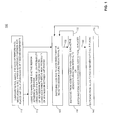
- FIG. 1 depicts a flow diagram of a method of admission control for VoIP traffic on an IP-based network in accordance with one embodiment of the present invention
- FIG. 2 depicts a high-level schematic diagram illustrating execution of the method of FIG.1.
- the present invention provides a state-based method for admission control in IP-based networks of inelastic applications traffic (e.g., VolP traffic, videoconferencing traffic, multimedia traffic, circuit emulation traffic, and the like), as well as real-time applications traffic and traffic of applications using the Real-time Transport Protocol (RTP).
- VoIP traffic Real-time Transport Protocol
- the method simultaneously minimizes the test traffic in the network and reduces post-dial delay for placed VolP calls by providing scalable and responsive admission control solutions.
- the method 100 includes processing steps performed for making an admit/reject decision for VolP calls placed within an exemplary cell of a network (i.e., on a communication path between arbitrarily selected source and destination nodes of the network).
- the method 100 may by applied to a network-wide plurality of communication paths between nodes of the network.
- the method 100 starts at step 110 where specific individual control states are defined and configured on an IP-based network (not shown) using a state-based admission control (SBAC) method of the present invention.
- SBAC state-based admission control
- specific admission control states include a passive control state (PCS) 210, an active-on-demand control state (AoDCS) 220, and an active-continual control state (ACCS) 230.
- PCS passive control state
- AoDCS active-on-demand control state
- ACCS active-continual control state
- the method 100 is implemented in the form of a computer program, or software, which is a portion of a management system (not shown) of the IP-based network. When activated, the program executes the method 100.
- Admit/reject decisions for placed VoIP calls are made based on the results of active (AoDCS 220, ACCS 230) or passive (PCS 210) measurements performed in each of the respective control states.
- the VolP call when the VolP call is placed during a transition from one control state to another (e.g., transitions PCS-to-ACCS, ACCS-to-AoDCS, etc.), such admit/reject decisions are made using the results of the measurements performed in the control state from which the transition was originated, thus reducing post-dial delays for these VoIP calls.
- the decisions may be made in the control state when the transition ends.
- transitions between the control states are governed by configurable time intervals, or time-outs, T1 and T2 (discussed in detail in reference to steps 120 and 130 below).
- the time intervals T1 and T2 may be either pre-set or automatically tuned to facilitate, during the respective control state, execution of a flexible and adaptive decision-making process.
- measured performance attributes include link bandwidth, the outputs of standard interface queries, path delays, packet loss probabilities, jitter parameters, a list of recent rejections, a list of problematic calls (typically, indicative of transient problems on the network or a need to adjust the SBAC settings), a list of infrastructure problems, and weighted error probability.
- admit and reject decisions are made based upon comparison of the results of these measurements against a plurality of pre-determined thresholds for performance properties of the network.
- the thresholds may either be absolute or relative, as well as be a function of other performance properties or topology of the network.
- the method 100 may occasionally utilize statistical and/or historic values to estimate the network's performance.
- a typical IP-based network includes multiple communication links (e.g., individual interconnect segments or grouped/aggregated interconnect segments (subnets)) that provide connectivity to the VoIP-based devices.
- the performance metrics in the control states of the method 100 may vary depending on topology of the network and paths to VoIP-based devices (e.g., endpoints, media servers, media gateways, test endpoints, etc.).
- a network-wide SBAC state may be represented in a form of a matrix NxN, where N is a number of interconnect segments and each cell of the matrix holds the control state for specific destination/source pair of the network's nodes.
- selection of the control state, as well as transitions between the control states, are governed by a level of intensity of the real-time VolP traffic on the respective paths of the network.
- the method 100 exploits the history of the VoIP application activity between the destination/source pairs of the nodes to select either a passive measurement technique (in PCS 210) or an active measurement technique (in AoDCS 220 and ACCS 230) for monitoring network performance and making the admit/reject decisions for VoIP calls placed on the corresponding segments.
- the PCS 210 is selected when there is an active application session between the VoIP-based devices (or their proxies) on the respective path(s) and no active network performance testing is required. As such, in PCS 210, no test traffic is injected into the network. However, the actual VolP traffic is continually monitored and the performance data for making the admit/reject decision for the placed VolP call 212 is readily available to the method 100. In one embodiment, the performance data is available in a format compatible with the Real-time Control Protocol (RTCP).
- RTCP Real-time Control Protocol
- the AoDCS 220 is selected when, based on the history of the VoIP activity on the respective path(s), there is low probability of a new VoIP session between the corresponding VoIP-based devices. To reduce volume of the test traffic on the network, no active testing of network performance is conducted in this control state. However, such testing may be triggered by the incoming VolP call 214 or the Call Admission Request (CAR) command (illustratively shown in FIG. 2 using an arrow 218), thus trading reduction in the test traffic for respectively increased post-dial delay for incoming VolP calls.
- CAR Call Admission Request
- the ACCS 230 is selected when, based on the recent history of VolP activity on the respective path(s), there is high probability of a new VolP session between the corresponding VolP-based devices occurring in the near future. In this control state, active testing of network performance is continually performed on the affected segments using synthetic test traffic. Analysis of the collected data produces information to the admit/reject decision process for the placed (or anticipated) VoIP calls 216 and minimizes the post-dial delays for these calls.
- Transitions between the control states are performed based on a combination of the history of VoIP activities on the monitored segments and the real-time VoIP traffic on the same segments.
- an initial control state is shown as PCS 210.
- the PCS 210 is maintained while there is available passive measurement data, i.e., while there is an actual call traversing the associated path.
- the method 100 passively monitors the network performance data during the existing, or active, VoIP sessions and makes the admit/reject decisions for the placed (i.e., new) VoIP calls 212.
- the PCS 210 switches to the ACCS 220 (link 122).
- the ACCS 220 is maintained during a second predetermined time interval T2.
- the method 100 uses the synthetic test traffic injected between the respective test endpoints of the network to measure the network's real-time performance and make the admit/reject decisions regarding the new VoIP calls. The measurements are performed in the background and do not interfere with the real-time VoIP traffic.
- the ACCS 220 makes the admit/reject decisions for that call and then switches to the PCS 210 (link 132). If no new VoIP call is placed for a duration of time that is longer than T2, the ACCS 220 switches to the AoDCS 230 (link 142).
- the AoDCS 230 is maintained until a new VoIP call 214 is placed or the CAR command 218 has been received.
- the AoDCS 230 makes the admit/reject decision for that call (by performing active measurements), and then switches to the PCS 210 (link 112).
- the method 100 uses the synthetic test traffic injected between the respective test endpoints to measure the real-time performance of the network. Based on the results of such measurements, the AoDCS 230 may either be extended in time or switched to the PCS 210. In both cases, the measurements are performed in the background and do not interfere with the real-time VoIP traffic.
Landscapes
- Engineering & Computer Science (AREA)
- Computer Networks & Wireless Communication (AREA)
- Signal Processing (AREA)
- Multimedia (AREA)
- Data Exchanges In Wide-Area Networks (AREA)
- Telephonic Communication Services (AREA)
Abstract
Description
- The present invention relates to communication networks and, in particular, to methods of admission control for inelastic applications such as Voice-over- Internet-Protocol (VoIP)-based telephony that generate packet traffic on a packet-switched communication network using the Internet Protocol (IP).
- VoIP-based applications traffic, as well as traffic sourced by other real-time applications such as videoconferencing, are among the fastest growing segments of traffic on IP-based networks. Unlike many legacy data applications, these real-time applications are often inelastic in the sense that they have stringent bandwidth or throughput requirements and cannot tolerate excessive delays or packet losses that may occur when a packet-switched network is congested. Thus, it is important for an inelastic application to know at the time of session setup if a path or paths between the session endpoints provide a required level of performance with respect to throughput, delays, and packet losses. If the application determines that the path performance is sufficient, it will continue to setup, or admit, the session; otherwise, the application will reject the session setup request. The process of determining, at the session setup time, whether or not the network can support the application transport requirements and then deciding to admit or reject the setup request is commonly referred to as admission control.
- Admission control in IP-based networks may be performed using measurement-based admission control (MBAC) methods. An MBAC method makes admit/reject decisions for new VolP calls based on the results of measuring transport performance characteristics of the communication paths between the respective source and destination nodes in the network and refuses the admission when such measurements cross certain thresholds. In the MBAC method, the measurements may be collected either from actual VolP sessions, a method called passive measurement, or from synthetic test traffic injected between pre-selected nodes of the network, a method called active measurement. The advantage of passive measurements is that no additional load is placed on the network; however, fresh passive measurements are often not available. The advantage of active measurements is that, with appropriate test scheduling, fresh performance measurements can always be available; however, active measurements consume capacity that would otherwise be available for actual sessions, thus reducing the utility of the network.
- There are two methods for collecting active measurements: continual and on-demand. In a continual method, active traffic is transmitted across paths at a sufficiently high frequency such that fresh performance data is always available. In an on-demand method, at session setup time, a short burst of synthetic traffic is transmitted across a path between session endpoints. The advantage of a continual method is that a post-dial delay is minimized, at the cost of an additional network load. The disadvantage of the continual method is that it does not scale to large networks. In a typical wide-area network (WAN), a volume of synthetic test traffic necessary to make accurate performance data immediately available for any and all paths between endpoints is excessive and may consume most, if not all, of the network capacity. The advantage of an on-demand method is that it scales, while the disadvantage of this method is that it adds to the post-dial delay and may have poor accuracy. Accuracy of the on-demand method may be improved by extending the duration of the burst; however, such means may lead to exceeding budgets for the post-dial delay.
- Therefore, there is a need in the art for an improved method for measurement-based admission control for VolP traffic in lP-based networks that will simultaneously minimize the volume of active measurement traffic and the post-dial delays while ensuring that fresh performance measurement data is always available.
- Various deficiencies of the prior art are addressed by the present invention of a state-based method for admission control of VoIP and other inelastic real-time traffic on an IP-based network. The inventive method minimizes volume of test traffic on the network and reduces post-dial delays for placed VolP calls.
- In one embodiment, to make the admit/reject decision for a placed VolP call, the method configures specific passive, active-on-demand, and active-continual control states for performance measurements on the network. Each control state uses the history of VoIP activity on monitored paths to determine when control state change is required. Selection of the control states and transitions between the control states are governed by intensity of the VoIP traffic on the monitored communication paths. Each control state uses a predetermined technique for measuring the network's real-time performance.
- Other objects and features of the present invention will become apparent from the following detailed description considered in conjunction with the accompanying drawings. It is to be understood, however, that the drawings are designed solely for purposes of illustration and not as a definition of the limits of the invention, for which reference should be made to the appended claims. It should be further understood that the drawings are not necessarily drawn to scale and that, unless otherwise indicated, they are merely intended to conceptually illustrate the structures and procedures described herein.
- In the drawings:
- The teachings of the present invention will become apparent by considering the following detailed description in conjunction with the accompanying drawings, in which:
- FIG. 1 depicts a flow diagram of a method of admission control for VoIP traffic on an IP-based network in accordance with one embodiment of the present invention; and
- FIG. 2 depicts a high-level schematic diagram illustrating execution of the method of FIG.1.
- The present invention provides a state-based method for admission control in IP-based networks of inelastic applications traffic (e.g., VolP traffic, videoconferencing traffic, multimedia traffic, circuit emulation traffic, and the like), as well as real-time applications traffic and traffic of applications using the Real-time Transport Protocol (RTP). Hereafter, such traffic is collectively referred to as VoIP traffic. In operation, the method simultaneously minimizes the test traffic in the network and reduces post-dial delay for placed VolP calls by providing scalable and responsive admission control solutions.
- With reference to FIGs. 1 and 2, the
method 100 includes processing steps performed for making an admit/reject decision for VolP calls placed within an exemplary cell of a network (i.e., on a communication path between arbitrarily selected source and destination nodes of the network). In operation, themethod 100 may by applied to a network-wide plurality of communication paths between nodes of the network. Themethod 100 starts atstep 110 where specific individual control states are defined and configured on an IP-based network (not shown) using a state-based admission control (SBAC) method of the present invention. In one embodiment, such specific admission control states include a passive control state (PCS) 210, an active-on-demand control state (AoDCS) 220, and an active-continual control state (ACCS) 230. - Typically, the
method 100 is implemented in the form of a computer program, or software, which is a portion of a management system (not shown) of the IP-based network. When activated, the program executes themethod 100. - Admit/reject decisions for placed VoIP calls (such calls are illustratively shown in FIG. 2 using
arrows - In one embodiment, when the VolP call is placed during a transition from one control state to another (e.g., transitions PCS-to-ACCS, ACCS-to-AoDCS, etc.), such admit/reject decisions are made using the results of the measurements performed in the control state from which the transition was originated, thus reducing post-dial delays for these VoIP calls. However, in an alternate embodiment, the decisions may be made in the control state when the transition ends.
- In the
method 100, transitions between the control states are governed by configurable time intervals, or time-outs, T1 and T2 (discussed in detail in reference tosteps - In one embodiment, measured performance attributes include link bandwidth, the outputs of standard interface queries, path delays, packet loss probabilities, jitter parameters, a list of recent rejections, a list of problematic calls (typically, indicative of transient problems on the network or a need to adjust the SBAC settings), a list of infrastructure problems, and weighted error probability.
- Generally, admit and reject decisions are made based upon comparison of the results of these measurements against a plurality of pre-determined thresholds for performance properties of the network. For each measured property, the thresholds may either be absolute or relative, as well as be a function of other performance properties or topology of the network. Alternatively, for a portion of performance metrics, the
method 100 may occasionally utilize statistical and/or historic values to estimate the network's performance. - A typical IP-based network includes multiple communication links (e.g., individual interconnect segments or grouped/aggregated interconnect segments (subnets)) that provide connectivity to the VoIP-based devices. In operation, the performance metrics in the control states of the
method 100 may vary depending on topology of the network and paths to VoIP-based devices (e.g., endpoints, media servers, media gateways, test endpoints, etc.). - To make the admit/reject decision for a placed VoIP call, the performance measurements should be performed and the results analyzed for all communication links interconnecting the respective source and destination nodes. In the
method 100, data collected for interconnect segments and subnets that are common to other communication paths of the network, may be utilized for making the admit/reject decisions regarding the VoIP calls placed between nodes of such common paths. A network-wide SBAC state may be represented in a form of a matrix NxN, where N is a number of interconnect segments and each cell of the matrix holds the control state for specific destination/source pair of the network's nodes. - Referring to
box 115, selection of the control state, as well as transitions between the control states, are governed by a level of intensity of the real-time VolP traffic on the respective paths of the network. In operation, themethod 100 exploits the history of the VoIP application activity between the destination/source pairs of the nodes to select either a passive measurement technique (in PCS 210) or an active measurement technique (in AoDCS 220 and ACCS 230) for monitoring network performance and making the admit/reject decisions for VoIP calls placed on the corresponding segments. - The
PCS 210 is selected when there is an active application session between the VoIP-based devices (or their proxies) on the respective path(s) and no active network performance testing is required. As such, inPCS 210, no test traffic is injected into the network. However, the actual VolP traffic is continually monitored and the performance data for making the admit/reject decision for the placed VolP call 212 is readily available to themethod 100. In one embodiment, the performance data is available in a format compatible with the Real-time Control Protocol (RTCP). - The
AoDCS 220 is selected when, based on the history of the VoIP activity on the respective path(s), there is low probability of a new VoIP session between the corresponding VoIP-based devices. To reduce volume of the test traffic on the network, no active testing of network performance is conducted in this control state. However, such testing may be triggered by the incoming VolP call 214 or the Call Admission Request (CAR) command (illustratively shown in FIG. 2 using an arrow 218), thus trading reduction in the test traffic for respectively increased post-dial delay for incoming VolP calls. - The
ACCS 230 is selected when, based on the recent history of VolP activity on the respective path(s), there is high probability of a new VolP session between the corresponding VolP-based devices occurring in the near future. In this control state, active testing of network performance is continually performed on the affected segments using synthetic test traffic. Analysis of the collected data produces information to the admit/reject decision process for the placed (or anticipated) VoIP calls 216 and minimizes the post-dial delays for these calls. - Transitions between the control states (illustratively shown in FIG. 1 using
links PCS 210. - At
step 120, thePCS 210 is maintained while there is available passive measurement data, i.e., while there is an actual call traversing the associated path. In this control state, themethod 100 passively monitors the network performance data during the existing, or active, VoIP sessions and makes the admit/reject decisions for the placed (i.e., new) VoIP calls 212. After the last actual call terminates, if nonew VoIP call 212 is placed for a duration of time since the last call termination that is longer than T1, thePCS 210 switches to the ACCS 220 (link 122). - At
step 130, theACCS 220 is maintained during a second predetermined time interval T2. In this control state, themethod 100 uses the synthetic test traffic injected between the respective test endpoints of the network to measure the network's real-time performance and make the admit/reject decisions regarding the new VoIP calls. The measurements are performed in the background and do not interfere with the real-time VoIP traffic. After anew VoIP call 216 is placed, theACCS 220 makes the admit/reject decisions for that call and then switches to the PCS 210 (link 132). If no new VoIP call is placed for a duration of time that is longer than T2, theACCS 220 switches to the AoDCS 230 (link 142). - At
step 140, theAoDCS 230 is maintained until anew VoIP call 214 is placed or theCAR command 218 has been received. When thenew VoIP call 214 is placed, theAoDCS 230 makes the admit/reject decision for that call (by performing active measurements), and then switches to the PCS 210 (link 112). Correspondingly, in response to theCAR command 218, themethod 100 uses the synthetic test traffic injected between the respective test endpoints to measure the real-time performance of the network. Based on the results of such measurements, theAoDCS 230 may either be extended in time or switched to thePCS 210. In both cases, the measurements are performed in the background and do not interfere with the real-time VoIP traffic. - In operation, sequential transitions between the control states of the
method 100 are repetitively executed in an order discussed above in reference tosteps - Thus, while there have been shown and described and pointed out fundamental novel features of the present invention as applied to preferred embodiments thereof, it will be understood that various omissions and substitutions and changes in the form and details of the devices described and illustrated, and in their operation, and of the methods described may be made by those skilled in the art without departing from the spirit of the present invention. For example, it is expressly intended that all combinations of those elements and/or method steps which perform substantially the same function in substantially the same way to achieve the same results are within the scope of the invention. Substitutions of elements from one described embodiment to another are also fully intended and contemplated. It is the intention, therefore, to be limited only as indicated by the scope of the claims appended hereto.
Claims (17)
- A method of admission control for inelastic applications traffic (IAT) in a communication network, comprising:(a) configuring a passive control state (PCS), an active on-demand control state (AoDCS), and an active continual control state (ACCS) for performance measurements in the network;(b) executing the PCS when there is an active session between IAT-based devices on monitored interconnect segments of the network;(c) executing the AoDCS when there is low probability of a new session between the IAT-based devices;(d) executing the ACCS when there is high probability of a new session between the IAT-based devices;(e) switching from the PCS to ACCS when there is no active session during a first pre-determined time interval T1;(f) switching from the ACCS to AoDCS when there no active session during a second pre-determined time interval T2;(g) switching from the ACCS to PCS when an IAT call is placed; and(h) switching from the AoDCS to PCS when an IAT call is placed;wherein admit and reject decisions for placed IAT calls are made based on the results of the performance measurements performed during the respective control state.
- The method of claim 1 wherein the IAT is selected from the group consisting of Voice over Internet Protocol (VoIP) traffic, videoconferencing traffic, multimedia traffic, circuit simulation traffic, real-time applications traffic, and traffic of applications using the Real-time Transport Protocol (RTP).
- The method of claim 1 wherein the duration of each of the time intervals T1 and T2 is an independently selectable parameter.
- The method of claim 1 wherein the communication network is a network using the Internet Protocol (IP).
- The method of claim 1 wherein the performance measurements are performed in the background and do not interfere with the IAT traffic.
- The method of claim 1 wherein the performance measurements during the AoDCS and the ACCS use synthetic test traffic injected between test endpoints of the network.
- The method of claim 6 wherein during the ACCS the performance measurements are performed continually.
- The method of claim 6 wherein during the AoDCS execution of the performance measurements may be triggered by a placed IAT call and the Call Admission Request (CAR) command.
- The method of claim 1 wherein the performance measurements performed during the PCS comprise passive monitoring of the IAT traffic.
- The method of claim 1 wherein the performance measurements are performed on at least one interconnect segment and at least one group of interconnect segments.
- The method of claim 1 wherein the performance measurements are performed on paths between the subnet nodes and on paths between the source/destination nodes and the respective subnet nodes.
- The method of claim 11 wherein the performance measurements on paths between the source and destination nodes and the respective subnet nodes are performed in the AoDCS and the ACCS.
- The method of claim 1 wherein the admit and reject decisions for the placed IAT call are made upon comparison of the results of said performance measurements against pre-determined thresholds for performance properties of the network.
- The method of claim 13 wherein the pre-determined thresholds are selected from the group consisting of absolute thresholds and relative thresholds.
- The method of claim 13 wherein the performance properties comprise at least one of link bandwidth, interface queries, path delays, packet loss probabilities, jitter parameters, a list of recent rejections, a list of problematic calls, a list of infrastructure problems, and weighted error probability.
- The method of claim 1 wherein the admit and reject decisions for the IAT call placed during a transition between the control states are made using the results of the performance measurements performed in the control state from which the transition was originated.
- The method of claim 1 wherein the admit and reject decisions for the IAT call placed during a transition between the control states are made using the results of the performance measurements performed in the control state where the transition ends.
Applications Claiming Priority (1)
| Application Number | Priority Date | Filing Date | Title |
|---|---|---|---|
| US11/191,699 US7423965B2 (en) | 2005-07-28 | 2005-07-28 | Method of admission control for inelastic applications traffic on communication networks |
Publications (2)
| Publication Number | Publication Date |
|---|---|
| EP1748623A1 true EP1748623A1 (en) | 2007-01-31 |
| EP1748623B1 EP1748623B1 (en) | 2008-09-03 |
Family
ID=37306571
Family Applications (1)
| Application Number | Title | Priority Date | Filing Date |
|---|---|---|---|
| EP06253898A Not-in-force EP1748623B1 (en) | 2005-07-28 | 2006-07-26 | Method of admission control for inelastic applications traffic on communication networks |
Country Status (3)
| Country | Link |
|---|---|
| US (1) | US7423965B2 (en) |
| EP (1) | EP1748623B1 (en) |
| DE (1) | DE602006002569D1 (en) |
Cited By (1)
| Publication number | Priority date | Publication date | Assignee | Title |
|---|---|---|---|---|
| EP2075953A1 (en) | 2007-12-20 | 2009-07-01 | Deutsche Thomson OHG | Method for evaluating network performances with low impact on existing network traffic and associated apparatus |
Families Citing this family (5)
| Publication number | Priority date | Publication date | Assignee | Title |
|---|---|---|---|---|
| US7251216B2 (en) * | 2003-04-23 | 2007-07-31 | At&T Corp. | Methods and systems for configuring voice over internet protocol network quality of service |
| US7796532B2 (en) * | 2006-05-31 | 2010-09-14 | Cisco Technology, Inc. | Media segment monitoring |
| CN101796775B (en) * | 2007-09-07 | 2014-03-12 | 爱立信电话股份有限公司 | Dynamic admission control for media gateways |
| US9609041B2 (en) * | 2014-11-18 | 2017-03-28 | International Business Machines Corporation | System for monitoring conversational audio call quality |
| JP7061060B2 (en) * | 2018-12-20 | 2022-04-27 | ルネサスエレクトロニクス株式会社 | Control circuit, drive system and inverter control method |
Family Cites Families (2)
| Publication number | Priority date | Publication date | Assignee | Title |
|---|---|---|---|---|
| WO2001013557A1 (en) * | 1999-08-13 | 2001-02-22 | Fujitsu Network Communications, Inc. | Supporting multiple application traffic types over connection oriented networks |
| US7251216B2 (en) * | 2003-04-23 | 2007-07-31 | At&T Corp. | Methods and systems for configuring voice over internet protocol network quality of service |
-
2005
- 2005-07-28 US US11/191,699 patent/US7423965B2/en active Active
-
2006
- 2006-07-26 DE DE602006002569T patent/DE602006002569D1/en active Active
- 2006-07-26 EP EP06253898A patent/EP1748623B1/en not_active Not-in-force
Non-Patent Citations (3)
| Title |
|---|
| LIMA S ET AL: "A distributed admission control model for class-based networks using edge-to-edge qos and sls monitoring", COMMUNICATION SYSTTEMS, 2002. ICCS 2002. THE 8TH INTERNATIONAL CONFERENCE ON NOV. 25-28, 2002, PISCATAWAY, NJ, USA,IEEE, vol. 1, 25 November 2002 (2002-11-25), pages 122 - 127, XP010629194, ISBN: 0-7803-7510-6 * |
| MASE K ET AL: "An efficient end-to-end measurement based admission control for VoIP networks", COMMUNICATIONS, 2004 IEEE INTERNATIONAL CONFERENCE ON PARIS, FRANCE 20-24 JUNE 2004, PISCATAWAY, NJ, USA,IEEE, 20 June 2004 (2004-06-20), pages 1877 - 1881, XP010710178, ISBN: 0-7803-8533-0 * |
| MASE K ET AL: "QOS MANAGEMENT VOR VOIP NETWORKS WITH EDGE-TO-EDGE ADMISSION CONTROL", GLOBECOM'01. 2001 IEEE GLOBAL TELECOMMUNICATIONS CONFERENCE. SAN ANTONIO, TX, NOV. 25 - 29, 2001, IEEE GLOBAL TELECOMMUNICATIONS CONFERENCE, NEW YORK, NY : IEEE, US, vol. VOL. 4 OF 6, 25 November 2001 (2001-11-25), pages 2556 - 2560, XP001060603, ISBN: 0-7803-7206-9 * |
Cited By (1)
| Publication number | Priority date | Publication date | Assignee | Title |
|---|---|---|---|---|
| EP2075953A1 (en) | 2007-12-20 | 2009-07-01 | Deutsche Thomson OHG | Method for evaluating network performances with low impact on existing network traffic and associated apparatus |
Also Published As
| Publication number | Publication date |
|---|---|
| US7423965B2 (en) | 2008-09-09 |
| EP1748623B1 (en) | 2008-09-03 |
| US20070025248A1 (en) | 2007-02-01 |
| DE602006002569D1 (en) | 2008-10-16 |
Similar Documents
| Publication | Publication Date | Title |
|---|---|---|
| US8929382B2 (en) | Method, device, and computer program product for detecting and encoding states for accurate measurement | |
| US20050243729A1 (en) | Method and apparatus for automating and scaling active probing-based IP network performance monitoring and diagnosis | |
| EP2686982B1 (en) | Quantifying available service-level capacity of a network for projected network traffic | |
| US9306812B2 (en) | System and method for providing network application performance management in a network | |
| He et al. | OpenFlow‐based low‐overhead and high‐accuracy SDN measurement framework | |
| CA3149650C (en) | Methods and system for adaptive measurements applied to real time performance monitoring in a packet network | |
| US20080137540A1 (en) | Method And Apparatus For Analysing Traffic In A Network | |
| Ivars et al. | PBAC: Probe-based admission control | |
| Tiwana et al. | Enhancing multimedia forwarding in software-defined networks: An optimal flow mechanism approach | |
| US7423965B2 (en) | Method of admission control for inelastic applications traffic on communication networks | |
| Mitra et al. | QoE estimation and prediction using hidden Markov models in heterogeneous access networks | |
| EP3895393A1 (en) | Technique for user plane traffic quality analysis | |
| CN101145977B (en) | An IP data network Qos monitoring system and its measuring method | |
| Handurukande et al. | Magneto approach to qos monitoring | |
| Mondragon et al. | Analysis, simulation and measurement in large-scale packet networks | |
| Liu et al. | Dynamic routing with online traffic estimation for video streaming over software defined networks | |
| Siniarski et al. | FlowVista: Low-bandwidth SDN monitoring driven by business application interaction | |
| Mishra et al. | An analytical cross layer model for multipath TCP (MPTCP) | |
| Shi et al. | Multi-path forwarding strategy for named data networking based on pending interests and available bandwidth | |
| Kamyod et al. | IMS intra-and inter domain end-to-end resilience analysis | |
| Lai et al. | Pathpair: a fast available bandwidth estimation tool with the asymptotic one way delay comparison model | |
| Koitani et al. | Measuring available bandwidth of multiple parts on end-to-end network path | |
| Ulinic et al. | Openflow-based implementation of a gearbox-like routing algorithm selection in runtime | |
| US7876690B1 (en) | Distributed measurement system configurator tool | |
| Tan et al. | Abshoot: A reliable and efficient scheme for end-to-end available bandwidth measurement |
Legal Events
| Date | Code | Title | Description |
|---|---|---|---|
| PUAI | Public reference made under article 153(3) epc to a published international application that has entered the european phase |
Free format text: ORIGINAL CODE: 0009012 |
|
| AK | Designated contracting states |
Kind code of ref document: A1 Designated state(s): AT BE BG CH CY CZ DE DK EE ES FI FR GB GR HU IE IS IT LI LT LU LV MC NL PL PT RO SE SI SK TR |
|
| AX | Request for extension of the european patent |
Extension state: AL BA HR MK YU |
|
| 17P | Request for examination filed |
Effective date: 20070731 |
|
| AKX | Designation fees paid |
Designated state(s): DE FR GB |
|
| GRAP | Despatch of communication of intention to grant a patent |
Free format text: ORIGINAL CODE: EPIDOSNIGR1 |
|
| GRAS | Grant fee paid |
Free format text: ORIGINAL CODE: EPIDOSNIGR3 |
|
| GRAA | (expected) grant |
Free format text: ORIGINAL CODE: 0009210 |
|
| AK | Designated contracting states |
Kind code of ref document: B1 Designated state(s): DE FR GB |
|
| REG | Reference to a national code |
Ref country code: GB Ref legal event code: FG4D |
|
| REF | Corresponds to: |
Ref document number: 602006002569 Country of ref document: DE Date of ref document: 20081016 Kind code of ref document: P |
|
| REG | Reference to a national code |
Ref country code: GB Ref legal event code: 732E Free format text: REGISTERED BETWEEN 20090122 AND 20090128 |
|
| PLBE | No opposition filed within time limit |
Free format text: ORIGINAL CODE: 0009261 |
|
| STAA | Information on the status of an ep patent application or granted ep patent |
Free format text: STATUS: NO OPPOSITION FILED WITHIN TIME LIMIT |
|
| 26N | No opposition filed |
Effective date: 20090604 |
|
| PGFP | Annual fee paid to national office [announced via postgrant information from national office to epo] |
Ref country code: DE Payment date: 20120718 Year of fee payment: 7 Ref country code: FR Payment date: 20120719 Year of fee payment: 7 |
|
| PGFP | Annual fee paid to national office [announced via postgrant information from national office to epo] |
Ref country code: GB Payment date: 20130724 Year of fee payment: 8 |
|
| REG | Reference to a national code |
Ref country code: FR Ref legal event code: ST Effective date: 20140331 |
|
| PG25 | Lapsed in a contracting state [announced via postgrant information from national office to epo] |
Ref country code: DE Free format text: LAPSE BECAUSE OF NON-PAYMENT OF DUE FEES Effective date: 20140201 |
|
| REG | Reference to a national code |
Ref country code: DE Ref legal event code: R119 Ref document number: 602006002569 Country of ref document: DE Effective date: 20140201 |
|
| PG25 | Lapsed in a contracting state [announced via postgrant information from national office to epo] |
Ref country code: FR Free format text: LAPSE BECAUSE OF NON-PAYMENT OF DUE FEES Effective date: 20130731 |
|
| GBPC | Gb: european patent ceased through non-payment of renewal fee |
Effective date: 20140726 |
|
| PG25 | Lapsed in a contracting state [announced via postgrant information from national office to epo] |
Ref country code: GB Free format text: LAPSE BECAUSE OF NON-PAYMENT OF DUE FEES Effective date: 20140726 |