EP1748384B1 - Verarbeitung von Kompensationsbereichen in Arbeitsflussverwaltungssystemen - Google Patents
Verarbeitung von Kompensationsbereichen in Arbeitsflussverwaltungssystemen Download PDFInfo
- Publication number
- EP1748384B1 EP1748384B1 EP06112116A EP06112116A EP1748384B1 EP 1748384 B1 EP1748384 B1 EP 1748384B1 EP 06112116 A EP06112116 A EP 06112116A EP 06112116 A EP06112116 A EP 06112116A EP 1748384 B1 EP1748384 B1 EP 1748384B1
- Authority
- EP
- European Patent Office
- Prior art keywords
- scope
- compensation
- atomic
- behavior
- transaction
- Prior art date
- Legal status (The legal status is an assumption and is not a legal conclusion. Google has not performed a legal analysis and makes no representation as to the accuracy of the status listed.)
- Expired - Lifetime
Links
Images


Classifications
-
- G—PHYSICS
- G06—COMPUTING OR CALCULATING; COUNTING
- G06Q—INFORMATION AND COMMUNICATION TECHNOLOGY [ICT] SPECIALLY ADAPTED FOR ADMINISTRATIVE, COMMERCIAL, FINANCIAL, MANAGERIAL OR SUPERVISORY PURPOSES; SYSTEMS OR METHODS SPECIALLY ADAPTED FOR ADMINISTRATIVE, COMMERCIAL, FINANCIAL, MANAGERIAL OR SUPERVISORY PURPOSES, NOT OTHERWISE PROVIDED FOR
- G06Q10/00—Administration; Management
- G06Q10/06—Resources, workflows, human or project management; Enterprise or organisation planning; Enterprise or organisation modelling
-
- G—PHYSICS
- G06—COMPUTING OR CALCULATING; COUNTING
- G06F—ELECTRIC DIGITAL DATA PROCESSING
- G06F9/00—Arrangements for program control, e.g. control units
- G06F9/06—Arrangements for program control, e.g. control units using stored programs, i.e. using an internal store of processing equipment to receive or retain programs
- G06F9/46—Multiprogramming arrangements
- G06F9/466—Transaction processing
Definitions
- the present invention relates to Workflow Management System or a computer system with comparable functionality (WFMS). More particularly the invention relates to a method and means for processing of compensation scopes in a process model in the particular instance that the compensation scopes are comprised within atomic scopes.
- WFMS Workflow-Management-Systems
- IBM WebSphere Business Process Choreographer represents such a typical modern, sophisticated, and powerful workflow management system. It supports the modeling of business processes as a network of activities.
- This network of activities, the process model is constructed as a directed, acyclic, weighted, colored graph.
- the nodes of the graph represent the activities, which define the individual tasks that need to be carried out. In general, each of the activities is associated with a piece of code that implements the appropriate task.
- the edges of the graph, the control connectors describe the potential sequence of execution of the activities. Definition of the process graph is via a graphical editor or a flow definition language, such as Business Process Execution Language for Web Services (BPELWS).
- BPELWS Business Process Execution Language for Web Services
- scopes also named spheres.
- a scope provides the capability to assign a set of properties or handlers to a set of activities.
- scopes are used to specify transaction boundaries:
- the combined rollback and restart processing may cause certain anomalies.
- the current invention relates to a technology for processing of compensation scopes comprised within atomic scopes of a process model by a Workflow Management System or a computer system with comparable functionality (WFMS).
- WFMS Workflow Management System
- the method comprises a step of checking whether the atomic scope of the process instance of that process model has been aborted abnormally. If this is the case, in a further step it is analyzed if in the process model the compensation scope has been associated with a specific atomic scope behavior specification, defining a specific abort handling for the compensation scope in the particular case that the compensation scope is comprised within an atomic scope and the atomic scope has been aborted. In a final step the compensation scope is processed according to the specific atomic scope behavior specification.
- the WFMS is enabled to re-execute compensation scopes comprised within transaction scopes after abnormal termination of the transaction scope in a manner of avoiding processing anomalies which occur in prior art technologies.
- the present invention can be realized in hardware, software, or a combination of hardware and software. Any kind of computer system - or other apparatus adapted for carrying out the methods described herein - is suited. A typical combination of hardware and software could be a general-purpose computer system with a computer program that, when being loaded and executed, controls the computer system such that it carries out the methods described herein.
- the present invention can also be embedded in a computer program product, which comprises all the features enabling the implementation of the methods described herein, and which - when being loaded in a computer system - is able to carry out these methods.
- Computer program means or computer program in the present context mean any expression, in any language, code or notation, of a set of instructions intended to cause a system having an information processing capability to perform a particular function either directly or after either or both of the following a) conversion to another language, code or notation; b) reproduction in a different material form.
- the current invention is illustrated based on IBM's WebSphere Business Process Choreographer using Business Process Execution Language for Web Services (BPEL4WS) as the language for describing business processes.
- BPEL4WS Business Process Execution Language for Web Services
- any other WFMS using any other language for describing business processes could be used instead.
- Web Services are just one particular type of executable; they are used for illustration only; any type of executable implemented in any type of software and hardware can be used.
- the current teaching applies also to any other type of system, which offers WFMS functionalities not as a separate WFMS but within some other type of system.
- Web services are components, which are based on the industry standards Web Services Definition Language (WSDL), Universal Description, Discovery & Integration (UDDI), and Simple Object Application Protocol (SOAP). They enable to connect different components even across organizational boundaries in a platform and language independent manner.
- WSDL Web Services Definition Language
- UDDI Universal Description, Discovery & Integration
- SOAP Simple Object Application Protocol
- BPEL4WS or BPEL provides for the specification of business processes which invoke Web services and for providing business processes as Web services.
- the piece of software that carries out business processes is normally called a Workflow Management System (WFMS) or sometimes, more specifically, a BPEL engine.
- WFMS Workflow Management System
- the component implements all the constructs prescribed by the BPEL specifications. In particular, the component must make sure that the invoked Web services are carried out as prescribed. For any failure of the process or a Web service it must perform the appropriate error correction that means it must make sure that the actions already carried out are undone.
- the actions that need to be carried out in case of a failure depend primarily on the implementation of the individual Web services; the following approaches are available:
- ACID transactions can be established when the process starts. All invoked Web services would participate in the transaction. The transaction commits when the process finishes. If an error occurs, the transaction is rolled back and possibly restarted.
- BPEL exploits the notion of compensation that means application-specific activities that attempt to reverse the effects of the original activity. That means each activity is associated with a compensation handler; the activity in the compensation handler specifies the compensating activity. From a business perspective this means a process model comprises one or more so-called compensation scopes.
- scopes In general BPEL provides the notion of scopes to provide the behavior context for the activities enclosed in the scope.
- a scope can provide fault handlers, event handler, compensation handlers, correlation sets, and data variables.
- scopes can be nested arbitrarily. If necessary, default compensation handlers, or fault handlers are established to provide for a consistent handling.
- BPEL4J extends the usage of BPEL as a process execution language to the Java environment. It supports in addition to the Web Services model the Enterprise Java Beans (EJB) component model of the Java 2 Enterprise Edition (J2EE). In this environment, the business process can expose itself as an EJB and invokes EJBs. As the EJB container (for example WebSphere) supports the notion of ACID transactions as a major capability, BPEL4J must support ACID transactions. For that purpose, scopes can be flagged with an attribute named "acid" to designate the scope as requiring the enclosed activities to be run in an ACID transaction.
- EJB Enterprise Java Beans
- J2EE Java 2 Enterprise Edition
- an atomic scope comprises one or more compensation scopes
- undesirable situations can occur when the transaction manager unilaterally aborts the atomic scope; for example when the transaction manager detects a deadlock situation.
- the current invention proposes a method that helps overcome those anomalies by refining the processing of compensation scopes when enclosed in atomic scopes.
- Atomic scopes are, as already indicated, implemented as ACID transactions. Implementation of the transactions is done via the 2PC (two phase commit) protocol.
- the workflow management system requests, when the flow of control enters the atomic scope, from the underlying transaction manager the creation of a new transaction.
- the transaction manager responds to the request with an appropriate transaction context; this context is unique to the newly initiated transaction.
- the workflow management system invokes one of the enclosed Web services, it passes this transaction context as part of the invocation.
- the called Web service uses the passed transaction context to register with the transaction coordinator.
- the workflow management system finishes the transaction when the flow of control leaves the atomic scope by informing the transaction manager about the successful completion.
- the transaction manager informs the individual Web services about the successful completion and asks the Web services whether they can commit.
- the transaction is committed. If one of the Web services can not commit, the transaction is aborted. Whether an aborted transaction is restarted is an implementation choice; most workflow management systems do this. If the atomic scope fails more often than a pre-defined number of times, the workflow management system puts, as one option to cope with the situation, the process instance into an error state.
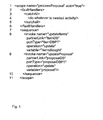
- the fragment of an example of a process model shown in Fig. 1 helps illustrate the current processing of an atomic scope. It is a part of a larger order process; the shown activities are carried out one after the other as indicated via the "sequence" activity which starts in line 7 and ends in line 10.
- the "invoke” activity in line 8 reserves the items the customer has requested/bought by updating the appropriate items database.
- the activity in line 9 stores the appropriate proposal into a database. Both activities, the reserving of the items in the item database, and the storing of the proposal in the proposal database need to be carried out together; their combined result must not be shown before they both have completed. Thus the two activities are made part of an ACID transaction. This is indicated by enclosing the "sequence” activity within a "scope” activity and setting the acid attribute to "true” (refer to line 1 in Fig. 1 ).
- the atomic scope is not aborted if one of the activities (Web services in this example) signals an error using the standard WSDL mechanism; those errors are caught by the fault handler.
- the processing within the fault handler is considered part of the transaction and thus not handled by the underlying transaction management system.
- Compensation is an approach to achieve transactional behavior for Web services that can not participate in an ACID transaction.
- Each Web service or set of Web services must provide a compensation activity. This activity is carried out when the actions of a Web service or set of Web services need to be undone.
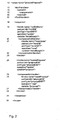
- Fig. 2 represents the example of a process model fragment according to Fig. 1 with the simple difference that the activities/Web services can not participate in a transaction. Thus they are enclosed in a compensation scope.
- Both activities (line 19, 24) have a compensation handler (line 21, 26) associated with it (note that this particular notation is a BPEL shortcut for an activity enclosed in an outer scope (line 12)).
- the activity embedded in the compensation handler is typically called the compensation activity of the activity the compensation handler is attached to.
- the compensation handler is made active when the associated activity or scope has completed successfully. The reason for activating a compensation activity after a compensation scope completed is, that only if the compensation scope actually has been executed, there might be an need to compensate in case of error situations. When an error occurs, the fault handler gets control.
- the enclosed "compensate" activity (line 15) causes the compensation handlers associated with the enclosed activities to be carried out in reverse order of execution.
- the fault handler gets control and carries out the enclosed "compensate” activity which causes the contents of the active compensation handlers associated with the enclosed activities to be executed; that means only the compensation activities of successfully completed activities are carried out.
- this causes the "reset" operation (line 21) of the "itemDBPT" (line 21) port type to be carried out undoing the changes made by the original "update” operation of the "itemDBPT" port type (line 19).
- Fig. 3 depicts an extended version of the process model example of Fig. 1 by further adding a non-transactional activity/Web service (line 38) that sends an e-mail to the customer. It is added to the atomic scope (line 31) as it is expected that all three activities are carried out or none of them; i.e. all activities are to be executed in a single transaction. It is obvious that the added activity/Web service must also participate in the transaction processing of the two other activities as it belongs to the same business process. If an error occurs somewhere in the atomic scope (line 31 - 42), not only need the database changes made by the two original activities (line 33, 40) need to be undone but also the customer must be informed that the proposal does not hold anymore.
- a non-transactional activity/Web service line 38
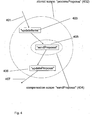
- Fig. 4 shows the process model of Fig. 3 in a representation based on a graph.
- control enters the atomic scope "processProposal” (402) to start the first activity “updateItems” (403) within the atomic scope.
- processing enters the compensation scope "sendProposal" (404) comprised within the atomic scope to start the activity "sendProposal” (405).
- compensation scope will be left to pass control to the last activity "updateProposal" (406) before leaving the transaction scope (407) again.
- IBM WebSphere Business Process Choreographer has the following architecture to implement the combined rollback handling of compensation scopes enclosed in atomic scopes:
- the compensation manager collects information about the actual execution of the process within the compensation scope including the values that have been passed to the invoked activities/Web services or returned by the invoked Web services. This allows the compensation manager to maintain the precise state information of the compensation scope currently being executed.
- the compensation manager is invoked to carry out compensation by invoking the appropriate compensation activities.
- the compensation manager registers itself with the transaction manager as a participant. When the transaction manager needs to abort the transaction associated with the atomic scope, it informs all participants, including the compensation manager. The compensation manager then carries out compensation of the compensation scope.
- the described approach has a number of problems. Some of them can be avoided through better process design; some of them need changes to the current processing including a new set of new process model specifications triggering a new behavior of the WFMS.
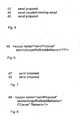
- a typical problem that can occur for the shown example is the strange externally observable behavior shown in Fig. 5 where the same proposal is sent twice intertwined with a revocation of the proposal. It can occur for example as the result of a deadlock encountered by the database management system used by the invoked activities/Web service(s) or used by the workflow management system.
- the proposal Fig. 3 line 38
- the database management system informs the transaction manager and requests the killing of the transaction.
- the transaction manager kills the transaction associated with the shown business process fragment, i.e.
- transaction manager is involving the compensation manager of the comprised compensation scope which in turn calls their corresponding compensation activity ( Fig. 3 line 36) and sends out the countermanding e-mail of Fig. 5 line 44.
- the transaction manager automatically restarts the transaction which results in the second execution of the "sendProposal" activity ( Fig. 3 line 38) and the sending of proposal a second time ( Fig. 5 line 45).
- the illustrated problem situation where the undo of the transaction scope (and implicitly the undo of the compensation scope) is followed by the redo of the transaction scope (and also implicitly the redo of the compensation scope) can be solved by enhancing the process model with a new specification within the process model (called "tagging").
- the new specification is analyzed by the WFMS at runtime and triggers a specific processing of atomic scopes/compensation scopes by the WFMS in cases the atomic scope is aborted.
- atomic scope behavior specification It is suggested to introduce this new process model specification either in the specification of the compensation scope or in the specification of the atomic scope. The potential enhancement of the compensation scope is discussed first, whereas an enhancement of the atomic scope is illustrated later.
- the suggested tagging of compensation scope is done by adding the "atomicScopeRollbackBehavior" attribute to the compensation scope as shown in Fig. 6 as a replacement of line 34 Fig. 3 .
- the values specified for the "atomicScopeRollbackBehavior” attribute specify the action to be taken when the atomic scope that encloses the compensation scope is aborted and restarted.
- the following values are suggested for the "atomicScopeRollbackBehavior” attribute:
- the WFMS carries out processing of the atomic scope as described in Fig. 5 and corresponding description above.
- the WFMS does not run compensation for the compensation scope if the atomic scope is abnormally terminated. With respect to the process model example above, this would mean that the revoke proposal e-mail is not sent out. After the transaction is restarted, the compensation scope is processed as usual. The appropriate external behavior is shown in Fig. 7 thus preventing some of the undesired behavior explained in context of Fig. 5 .
- the atomic scope behavior specification is established as a cause-behavior specification made up of two parts: the first part reflecting the cause of the abnormal handling (condition) and the second part (action) reflecting the type of handling to be performed if the condition of the first part applies.
- a typical value for the cause of an undo operation could be of a deadlock situation indicated by a cause of "deadlock". Then the specification according Fig. 9 would indicate that no actions (“noAction") should be carried out when a deadlock has occurred.
- Tagging the individual compensation scopes is just one way of specifying the outlined behavior. Another option would be to provide the attribute on the process level and have all compensation scopes that are enclosed in an atomic scope to adopt the behavior. Alternatively, one could provide an attribute for the atomic scopes and have all enclosed compensation scopes adopted the behavior.
- the WFMS is analyzing if an atomic scope contains a compensation scope and if the compensation scope has been associated with a atomic scope behavior specification as described above.
- the WFMS is responsive to this specification in case the atomic scope has been aborted by applying the abort handling as defined in the atomic scope behavior specification.
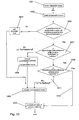
- steps 1001 and 1002 the WFMS is keeping control whether a compensation scope is comprised by an enclosing transaction scope.
- the WFMS checks in step 1003 whether the atomic scope has been aborted abnormally. This check is based on analyzing whether a persistent lock for the compensation scope has been set; if a persistent lock has been detected, this indicates that the lock must have been set during a prior execution of the compensation scope which in turn indicates that the current re-execution of the compensation scope is due to an abort of the compensation scope.
- the persistent lock will be set in step 1004 followed by the normal execution of the compensation scope in step 1005 and further followed by proceeding execution of the process instance in step 1006.
- step 1003 the WFMS analyzes in step 1007 if the compensation scope has been associated with a specific atomic scope behavior specification according to the current invention. In particular this means investigating whether the "atomicScopeRollbackBehavior" attribute has been set to a value of "noRollback" or "noAction".
- the WFMS performs the standard processing to compensate for the previous execution of the compensation scope by executing the compensation activities associated with the compensation scope in step 1008. Then, standard processing continues by executing the compensation scope again in step 1005 finally followed by proceeding execution of the process instance in step 1006.
- the compensation scope will be processed in step 1009 in accordance to the specific atomic scope behavior specification. This means, if the "atomicScopeRollbackBehavior" attribute has been set to a value of "noAction" the WFMS completely skips re-execution of the compensation scope by moving control along the path 1010 and proceeding execution of the rest of the process instance in step 1006.
- the WFMS proceeds along path 1011 by suppressing execution of the compensation scope's compensation activities (1008); instead, the compensation scope is re-executed directly in step 1005 followed by proceeding execution of the rest of the process instance in step 1006.
- the current invention is discussed in terms of a workflow management system executing the atomic scope and enclosing compensation scopes.
- teaching is not limited to WFMS, the teaching can be applied to any system that is capable of handling compensation scopes within atomic scopes (or business transactions within atomic transactions); i.e. by systems with functionality comparable to WFMS.
Landscapes
- Engineering & Computer Science (AREA)
- Business, Economics & Management (AREA)
- Theoretical Computer Science (AREA)
- General Physics & Mathematics (AREA)
- Physics & Mathematics (AREA)
- Entrepreneurship & Innovation (AREA)
- Software Systems (AREA)
- Human Resources & Organizations (AREA)
- Strategic Management (AREA)
- Economics (AREA)
- Tourism & Hospitality (AREA)
- Quality & Reliability (AREA)
- Educational Administration (AREA)
- Operations Research (AREA)
- General Business, Economics & Management (AREA)
- Marketing (AREA)
- Development Economics (AREA)
- Game Theory and Decision Science (AREA)
- General Engineering & Computer Science (AREA)
- Management, Administration, Business Operations System, And Electronic Commerce (AREA)
- Information Retrieval, Db Structures And Fs Structures Therefor (AREA)
Claims (8)
- Rechnergestütztes Verfahren zur Verarbeitung eines Kompensationsbereichs einer Prozessinstanz von einem Prozessmodell durch ein Arbeitsablauf-Verwaltungssystem (Workflow Management System, WFMS) oder durch ein Rechnersystem mit vergleichbarer Funktionalität,
wobei das Verfahren Folgendes umfasst:einen Schritt des Feststellens, ob der Kompensationsbereich in einem atomaren Bereich des Prozessmodells enthalten ist, undeinen Schritt (1003) des Prüfens, ob der atomare Bereich der Prozessinstanz abnormal abgebrochen worden ist, und wenn ja,einen Schritt (1007, 1009) des Ermittelns, ob der Kompensationsbereich in dem Prozessmodell einer Verhaltensbeschreibung eines bestimmten atomaren Bereichs zugeordnet wurde, welche eine bestimmte Abbruchbehandlung des Kompensationsbereichs in einem bestimmten Fall festlegt, dass der Kompensationsbereich in dem atomaren Bereich enthalten und der atomare Bereich abgebrochen worden ist, und wenn ja,einen Schritt des Verarbeitens des Kompensationsbereichs entsprechend der Verhaltensbeschreibung des bestimmten atomaren Bereichs. - Rechnergestütztes Verfahren nach Anspruch 1,
wobei der Schritt des Ermittelns die Verhaltensbeschreibung des bestimmten atomaren Bereichs für eine erste Beschreibung (noAction) ermittelt und, als Reaktion auf die erste Verhaltensbeschreibung,
wobei der Schritt des Verarbeitens (1010) eine erneute Ausführung des Kompensationsbereichs überspringt, ohne eine Kompensationsaktivität, die zu dem Kompensationsbereich gehört, auszuführen,
oder
wobei der Schritt des Ermittelns die Verhaltensbeschreibung des bestimmten atomaren Bereichs für eine zweite Beschreibung (noRollback) ermittelt und, als Reaktion auf die zweite Verhaltensbeschreibung,
wobei der Schritt des Verarbeitens (1011) den Kompensationsbereich erneut ausführt, ohne eine Kompensationsaktivität, die zu dem Kompensationsbereich gehört, auszuführen. - Rechnergestütztes Verfahren nach Anspruch 2,
wobei die Verhaltensbeschreibung des bestimmten atomaren Bereichs insbesondere zu dem Kompensationsbereich gehört und wobei das Verfahren nur auf den Kompensationsbereich anspricht oder
wobei die Verhaltensbeschreibung des bestimmten atomaren Bereichs insbesondere zu dem atomaren Bereich gehört und
wobei das Verfahren auf den Kompensationsbereich sowie andere Kompensationsbereiche, die der atomare Bereich umfasst, anspricht oder
wobei die Verhaltensbeschreibung des bestimmten atomaren Bereichs insbesondere zu dem Prozessmodell gehört und wobei das Verfahren auf den atomaren Bereich und auf alle anderen atomaren Bereiche in dem Prozessmodell anspricht. - Rechnergestütztes Verfahren nach einem der vorhergehenden Ansprüche,
wobei der Schritt des Prüfens, ob der atomare Bereich der Prozessinstanz abnormal abgebrochen worden ist, eine Prüfung (1003) beinhaltet, ob eine dauerhafte Sperre, die zu dem Kompensationsbereich gehört, gesetzt worden ist, wobei die dauerhafte Sperre gesetzt werden muss, bevor der atomare Bereich abgebrochen wird (1004). - Rechnergestütztes Verfahren nach Anspruch 2,
wobei die Verhaltensbeschreibung des bestimmten atomaren Bereichs mindestens ein Paar einer Ursache-Verhalten-Beschreibung umfasst, wobei die Ursache-Verhalten-Beschreibung
eine Verhaltensteil-Beschreibung umfasst, die des Weiteren die erste oder die zweite Verhaltensbeschreibung umfasst, und
eine Ursachenteil-Beschreibung umfasst, die eine Ursache für den Abbruch des atomaren Bereichs angibt, und
wobei der Schritt des Ermittelns ermittelt, ob der Ursache-Teil mit einer tatsächlichen Ursache für den Abbruch des atomaren Bereichs übereinstimmt und wenn ja,
wobei der Schritt des Verarbeitens den Kompensationsbereich entsprechend der Verhaltensbeschreibung verarbeitet. - Rechnersystem, das ein Mittel umfasst, das so ausgelegt ist, dass es die Schritte des Verfahrens nach einem der vorhergehenden Ansprüche 1 bis 5 durchführt.
- Datenverarbeitungsprogramm zur Ausführung in einem Datenverarbeitungssystem, das Teile von Softwarecode umfasst, um ein Verfahren nach einem der vorhergehenden Ansprüche 1 bis 5 durchzuführen, wenn das Programm auf dem Datenverarbeitungssystem ausgeführt wird.
- Rechnerprogrammprodukt, das auf einem von einem Rechner nutzbaren Datenträger gespeichert wird, der ein rechnerlesbares Programm-Mittel umfasst, um zu bewirken, dass ein Rechner ein Verfahren nach einem der vorhergehenden Ansprüche 1 bis 5 durchführt, wenn das Programm auf dem Rechner ausgeführt wird.
Priority Applications (1)
| Application Number | Priority Date | Filing Date | Title |
|---|---|---|---|
| EP06112116A EP1748384B1 (de) | 2005-04-06 | 2006-03-31 | Verarbeitung von Kompensationsbereichen in Arbeitsflussverwaltungssystemen |
Applications Claiming Priority (2)
| Application Number | Priority Date | Filing Date | Title |
|---|---|---|---|
| EP05102711 | 2005-04-06 | ||
| EP06112116A EP1748384B1 (de) | 2005-04-06 | 2006-03-31 | Verarbeitung von Kompensationsbereichen in Arbeitsflussverwaltungssystemen |
Publications (3)
| Publication Number | Publication Date |
|---|---|
| EP1748384A2 EP1748384A2 (de) | 2007-01-31 |
| EP1748384A3 EP1748384A3 (de) | 2008-05-28 |
| EP1748384B1 true EP1748384B1 (de) | 2009-07-22 |
Family
ID=37508281
Family Applications (1)
| Application Number | Title | Priority Date | Filing Date |
|---|---|---|---|
| EP06112116A Expired - Lifetime EP1748384B1 (de) | 2005-04-06 | 2006-03-31 | Verarbeitung von Kompensationsbereichen in Arbeitsflussverwaltungssystemen |
Country Status (1)
| Country | Link |
|---|---|
| EP (1) | EP1748384B1 (de) |
Family Cites Families (3)
| Publication number | Priority date | Publication date | Assignee | Title |
|---|---|---|---|---|
| US5913061A (en) * | 1997-01-08 | 1999-06-15 | Crossroads Software, Inc. | Modular application collaboration |
| US6526416B1 (en) * | 1998-06-30 | 2003-02-25 | Microsoft Corporation | Compensating resource managers |
| EP1540477A2 (de) * | 2002-09-12 | 2005-06-15 | International Business Machines Corporation | System zur integration nicht-transaktionaler resourcen in eine verteilte transaktion |
-
2006
- 2006-03-31 EP EP06112116A patent/EP1748384B1/de not_active Expired - Lifetime
Also Published As
| Publication number | Publication date |
|---|---|
| EP1748384A3 (de) | 2008-05-28 |
| EP1748384A2 (de) | 2007-01-31 |
Similar Documents
| Publication | Publication Date | Title |
|---|---|---|
| US7949551B2 (en) | Processing of compensation scopes in workflow management systems | |
| US6275863B1 (en) | System and method for programming and executing long running transactions | |
| US6526416B1 (en) | Compensating resource managers | |
| Greenfield et al. | Compensation is not enough [fault-handling and compensation mechanism] | |
| CN102282548B (zh) | 事务性的存储器中的事务处理 | |
| US8381030B2 (en) | Business methods retry optimization | |
| AU771514B2 (en) | Preserving consistency of passively-replicated non-deterministic objects | |
| US7284018B1 (en) | Logless transaction coordination | |
| US7584454B1 (en) | Semantic-based transactional support and recovery for nested composite software services | |
| Silaghi et al. | Porting OMTTs to CORBA | |
| Casati et al. | Error handling in process support systems | |
| EP1748384B1 (de) | Verarbeitung von Kompensationsbereichen in Arbeitsflussverwaltungssystemen | |
| Gao et al. | A survey of transactional issues for web service composition and recovery | |
| US9092216B2 (en) | Transactional object container | |
| Kienzle et al. | Open multithreaded transactions: Keeping threads and exceptions under control | |
| Kienzle et al. | Transaction support for ada | |
| Christudas et al. | Transactions Optimized for Microservices | |
| Richards | Java transaction design strategies | |
| Deinum et al. | Spring Transaction Management | |
| Little et al. | The evolution of the Arjuna transaction processing system | |
| Portilla et al. | A survey for analyzing transactional behavior in service based applications | |
| Xiao et al. | The DeltaGrid abstract execution model: service composition and process interference handling | |
| Li et al. | Transactions and Serverless are Made for Each Other: If serverless platforms could wrap functions in database transactions, they would be a good fit for database-backed applications. | |
| Greenfield et al. | What are the consistency requirements for B2B systems? | |
| Christudas et al. | Transactions and Microservices |
Legal Events
| Date | Code | Title | Description |
|---|---|---|---|
| PUAI | Public reference made under article 153(3) epc to a published international application that has entered the european phase |
Free format text: ORIGINAL CODE: 0009012 |
|
| AK | Designated contracting states |
Kind code of ref document: A2 Designated state(s): AT BE BG CH CY CZ DE DK EE ES FI FR GB GR HU IE IS IT LI LT LU LV MC NL PL PT RO SE SI SK TR |
|
| AX | Request for extension of the european patent |
Extension state: AL BA HR MK YU |
|
| PUAL | Search report despatched |
Free format text: ORIGINAL CODE: 0009013 |
|
| AK | Designated contracting states |
Kind code of ref document: A3 Designated state(s): AT BE BG CH CY CZ DE DK EE ES FI FR GB GR HU IE IS IT LI LT LU LV MC NL PL PT RO SE SI SK TR |
|
| AX | Request for extension of the european patent |
Extension state: AL BA HR MK YU |
|
| RIC1 | Information provided on ipc code assigned before grant |
Ipc: G06F 9/46 20060101AFI20080421BHEP |
|
| 17P | Request for examination filed |
Effective date: 20080513 |
|
| AKX | Designation fees paid |
Designated state(s): AT BE BG CH CY CZ DE DK EE ES FI FR GB GR HU IE IS IT LI LT LU LV MC NL PL PT RO SE SI SK TR |
|
| GRAP | Despatch of communication of intention to grant a patent |
Free format text: ORIGINAL CODE: EPIDOSNIGR1 |
|
| GRAS | Grant fee paid |
Free format text: ORIGINAL CODE: EPIDOSNIGR3 |
|
| GRAA | (expected) grant |
Free format text: ORIGINAL CODE: 0009210 |
|
| AK | Designated contracting states |
Kind code of ref document: B1 Designated state(s): AT BE BG CH CY CZ DE DK EE ES FI FR GB GR HU IE IS IT LI LT LU LV MC NL PL PT RO SE SI SK TR |
|
| REG | Reference to a national code |
Ref country code: GB Ref legal event code: FG4D |
|
| REG | Reference to a national code |
Ref country code: CH Ref legal event code: NV Representative=s name: IBM RESEARCH GMBH ZURICH RESEARCH LABORATORY INTEL Ref country code: CH Ref legal event code: EP |
|
| REG | Reference to a national code |
Ref country code: IE Ref legal event code: FG4D |
|
| REF | Corresponds to: |
Ref document number: 602006007919 Country of ref document: DE Date of ref document: 20090903 Kind code of ref document: P |
|
| NLV1 | Nl: lapsed or annulled due to failure to fulfill the requirements of art. 29p and 29m of the patents act | ||
| PG25 | Lapsed in a contracting state [announced via postgrant information from national office to epo] |
Ref country code: SE Free format text: LAPSE BECAUSE OF FAILURE TO SUBMIT A TRANSLATION OF THE DESCRIPTION OR TO PAY THE FEE WITHIN THE PRESCRIBED TIME-LIMIT Effective date: 20090722 Ref country code: LT Free format text: LAPSE BECAUSE OF FAILURE TO SUBMIT A TRANSLATION OF THE DESCRIPTION OR TO PAY THE FEE WITHIN THE PRESCRIBED TIME-LIMIT Effective date: 20090722 Ref country code: IS Free format text: LAPSE BECAUSE OF FAILURE TO SUBMIT A TRANSLATION OF THE DESCRIPTION OR TO PAY THE FEE WITHIN THE PRESCRIBED TIME-LIMIT Effective date: 20091122 Ref country code: FI Free format text: LAPSE BECAUSE OF FAILURE TO SUBMIT A TRANSLATION OF THE DESCRIPTION OR TO PAY THE FEE WITHIN THE PRESCRIBED TIME-LIMIT Effective date: 20090722 Ref country code: ES Free format text: LAPSE BECAUSE OF FAILURE TO SUBMIT A TRANSLATION OF THE DESCRIPTION OR TO PAY THE FEE WITHIN THE PRESCRIBED TIME-LIMIT Effective date: 20091102 Ref country code: AT Free format text: LAPSE BECAUSE OF FAILURE TO SUBMIT A TRANSLATION OF THE DESCRIPTION OR TO PAY THE FEE WITHIN THE PRESCRIBED TIME-LIMIT Effective date: 20090722 |
|
| REG | Reference to a national code |
Ref country code: GB Ref legal event code: 746 Effective date: 20100202 |
|
| PG25 | Lapsed in a contracting state [announced via postgrant information from national office to epo] |
Ref country code: NL Free format text: LAPSE BECAUSE OF FAILURE TO SUBMIT A TRANSLATION OF THE DESCRIPTION OR TO PAY THE FEE WITHIN THE PRESCRIBED TIME-LIMIT Effective date: 20090722 Ref country code: PL Free format text: LAPSE BECAUSE OF FAILURE TO SUBMIT A TRANSLATION OF THE DESCRIPTION OR TO PAY THE FEE WITHIN THE PRESCRIBED TIME-LIMIT Effective date: 20090722 Ref country code: LV Free format text: LAPSE BECAUSE OF FAILURE TO SUBMIT A TRANSLATION OF THE DESCRIPTION OR TO PAY THE FEE WITHIN THE PRESCRIBED TIME-LIMIT Effective date: 20090722 Ref country code: SI Free format text: LAPSE BECAUSE OF FAILURE TO SUBMIT A TRANSLATION OF THE DESCRIPTION OR TO PAY THE FEE WITHIN THE PRESCRIBED TIME-LIMIT Effective date: 20090722 |
|
| PG25 | Lapsed in a contracting state [announced via postgrant information from national office to epo] |
Ref country code: BG Free format text: LAPSE BECAUSE OF FAILURE TO SUBMIT A TRANSLATION OF THE DESCRIPTION OR TO PAY THE FEE WITHIN THE PRESCRIBED TIME-LIMIT Effective date: 20091022 Ref country code: PT Free format text: LAPSE BECAUSE OF FAILURE TO SUBMIT A TRANSLATION OF THE DESCRIPTION OR TO PAY THE FEE WITHIN THE PRESCRIBED TIME-LIMIT Effective date: 20091122 |
|
| PG25 | Lapsed in a contracting state [announced via postgrant information from national office to epo] |
Ref country code: RO Free format text: LAPSE BECAUSE OF FAILURE TO SUBMIT A TRANSLATION OF THE DESCRIPTION OR TO PAY THE FEE WITHIN THE PRESCRIBED TIME-LIMIT Effective date: 20090722 Ref country code: EE Free format text: LAPSE BECAUSE OF FAILURE TO SUBMIT A TRANSLATION OF THE DESCRIPTION OR TO PAY THE FEE WITHIN THE PRESCRIBED TIME-LIMIT Effective date: 20090722 Ref country code: DK Free format text: LAPSE BECAUSE OF FAILURE TO SUBMIT A TRANSLATION OF THE DESCRIPTION OR TO PAY THE FEE WITHIN THE PRESCRIBED TIME-LIMIT Effective date: 20090722 Ref country code: CZ Free format text: LAPSE BECAUSE OF FAILURE TO SUBMIT A TRANSLATION OF THE DESCRIPTION OR TO PAY THE FEE WITHIN THE PRESCRIBED TIME-LIMIT Effective date: 20090722 |
|
| PLBE | No opposition filed within time limit |
Free format text: ORIGINAL CODE: 0009261 |
|
| STAA | Information on the status of an ep patent application or granted ep patent |
Free format text: STATUS: NO OPPOSITION FILED WITHIN TIME LIMIT |
|
| PG25 | Lapsed in a contracting state [announced via postgrant information from national office to epo] |
Ref country code: SK Free format text: LAPSE BECAUSE OF FAILURE TO SUBMIT A TRANSLATION OF THE DESCRIPTION OR TO PAY THE FEE WITHIN THE PRESCRIBED TIME-LIMIT Effective date: 20090722 Ref country code: BE Free format text: LAPSE BECAUSE OF FAILURE TO SUBMIT A TRANSLATION OF THE DESCRIPTION OR TO PAY THE FEE WITHIN THE PRESCRIBED TIME-LIMIT Effective date: 20090722 |
|
| 26N | No opposition filed |
Effective date: 20100423 |
|
| PG25 | Lapsed in a contracting state [announced via postgrant information from national office to epo] |
Ref country code: MC Free format text: LAPSE BECAUSE OF NON-PAYMENT OF DUE FEES Effective date: 20100331 Ref country code: GR Free format text: LAPSE BECAUSE OF FAILURE TO SUBMIT A TRANSLATION OF THE DESCRIPTION OR TO PAY THE FEE WITHIN THE PRESCRIBED TIME-LIMIT Effective date: 20091023 |
|
| REG | Reference to a national code |
Ref country code: CH Ref legal event code: PL |
|
| PG25 | Lapsed in a contracting state [announced via postgrant information from national office to epo] |
Ref country code: IE Free format text: LAPSE BECAUSE OF NON-PAYMENT OF DUE FEES Effective date: 20100331 |
|
| PG25 | Lapsed in a contracting state [announced via postgrant information from national office to epo] |
Ref country code: LI Free format text: LAPSE BECAUSE OF NON-PAYMENT OF DUE FEES Effective date: 20100331 Ref country code: CH Free format text: LAPSE BECAUSE OF NON-PAYMENT OF DUE FEES Effective date: 20100331 |
|
| PG25 | Lapsed in a contracting state [announced via postgrant information from national office to epo] |
Ref country code: IT Free format text: LAPSE BECAUSE OF FAILURE TO SUBMIT A TRANSLATION OF THE DESCRIPTION OR TO PAY THE FEE WITHIN THE PRESCRIBED TIME-LIMIT Effective date: 20090722 |
|
| PGFP | Annual fee paid to national office [announced via postgrant information from national office to epo] |
Ref country code: FR Payment date: 20120406 Year of fee payment: 7 |
|
| PG25 | Lapsed in a contracting state [announced via postgrant information from national office to epo] |
Ref country code: CY Free format text: LAPSE BECAUSE OF FAILURE TO SUBMIT A TRANSLATION OF THE DESCRIPTION OR TO PAY THE FEE WITHIN THE PRESCRIBED TIME-LIMIT Effective date: 20090722 |
|
| PG25 | Lapsed in a contracting state [announced via postgrant information from national office to epo] |
Ref country code: HU Free format text: LAPSE BECAUSE OF FAILURE TO SUBMIT A TRANSLATION OF THE DESCRIPTION OR TO PAY THE FEE WITHIN THE PRESCRIBED TIME-LIMIT Effective date: 20100123 Ref country code: LU Free format text: LAPSE BECAUSE OF NON-PAYMENT OF DUE FEES Effective date: 20100331 |
|
| PG25 | Lapsed in a contracting state [announced via postgrant information from national office to epo] |
Ref country code: TR Free format text: LAPSE BECAUSE OF FAILURE TO SUBMIT A TRANSLATION OF THE DESCRIPTION OR TO PAY THE FEE WITHIN THE PRESCRIBED TIME-LIMIT Effective date: 20090722 |
|
| REG | Reference to a national code |
Ref country code: FR Ref legal event code: ST Effective date: 20131129 |
|
| PG25 | Lapsed in a contracting state [announced via postgrant information from national office to epo] |
Ref country code: FR Free format text: LAPSE BECAUSE OF NON-PAYMENT OF DUE FEES Effective date: 20130402 |
|
| PGFP | Annual fee paid to national office [announced via postgrant information from national office to epo] |
Ref country code: GB Payment date: 20180329 Year of fee payment: 13 |
|
| GBPC | Gb: european patent ceased through non-payment of renewal fee |
Effective date: 20190331 |
|
| PG25 | Lapsed in a contracting state [announced via postgrant information from national office to epo] |
Ref country code: GB Free format text: LAPSE BECAUSE OF NON-PAYMENT OF DUE FEES Effective date: 20190331 |
|
| REG | Reference to a national code |
Ref country code: DE Ref legal event code: R082 Ref document number: 602006007919 Country of ref document: DE Representative=s name: KUISMA, SIRPA, FI |
|
| PGFP | Annual fee paid to national office [announced via postgrant information from national office to epo] |
Ref country code: DE Payment date: 20220223 Year of fee payment: 17 |
|
| REG | Reference to a national code |
Ref country code: DE Ref legal event code: R119 Ref document number: 602006007919 Country of ref document: DE |
|
| PG25 | Lapsed in a contracting state [announced via postgrant information from national office to epo] |
Ref country code: DE Free format text: LAPSE BECAUSE OF NON-PAYMENT OF DUE FEES Effective date: 20231003 |