EP1741697A1 - Crystal comprising (2r)-2-propyloctoic acid and amine - Google Patents
Crystal comprising (2r)-2-propyloctoic acid and amine Download PDFInfo
- Publication number
- EP1741697A1 EP1741697A1 EP05739057A EP05739057A EP1741697A1 EP 1741697 A1 EP1741697 A1 EP 1741697A1 EP 05739057 A EP05739057 A EP 05739057A EP 05739057 A EP05739057 A EP 05739057A EP 1741697 A1 EP1741697 A1 EP 1741697A1
- Authority
- EP
- European Patent Office
- Prior art keywords
- crystal
- propyloctanoic acid
- acid
- solvent
- ethylamine
- Prior art date
- Legal status (The legal status is an assumption and is not a legal conclusion. Google has not performed a legal analysis and makes no representation as to the accuracy of the status listed.)
- Granted
Links
- 239000013078 crystal Substances 0.000 title claims abstract description 328
- 150000001412 amines Chemical class 0.000 title claims abstract description 70
- 239000002253 acid Substances 0.000 title description 7
- YCYMCMYLORLIJX-SNVBAGLBSA-N (2r)-2-propyloctanoic acid Chemical compound CCCCCC[C@H](C(O)=O)CCC YCYMCMYLORLIJX-SNVBAGLBSA-N 0.000 claims abstract description 228
- BWLUMTFWVZZZND-UHFFFAOYSA-N Dibenzylamine Chemical compound C=1C=CC=CC=1CNCC1=CC=CC=C1 BWLUMTFWVZZZND-UHFFFAOYSA-N 0.000 claims abstract description 59
- 230000003287 optical effect Effects 0.000 claims abstract description 56
- 239000003814 drug Substances 0.000 claims abstract description 51
- 229940079593 drug Drugs 0.000 claims abstract description 24
- 238000002360 preparation method Methods 0.000 claims abstract description 17
- 238000000034 method Methods 0.000 claims description 86
- 239000002904 solvent Substances 0.000 claims description 84
- 239000000203 mixture Substances 0.000 claims description 36
- 230000008569 process Effects 0.000 claims description 32
- RQEUFEKYXDPUSK-SSDOTTSWSA-N (1R)-1-phenylethanamine Chemical compound C[C@@H](N)C1=CC=CC=C1 RQEUFEKYXDPUSK-SSDOTTSWSA-N 0.000 claims description 29
- 208000037265 diseases, disorders, signs and symptoms Diseases 0.000 claims description 24
- 201000010099 disease Diseases 0.000 claims description 23
- 210000005036 nerve Anatomy 0.000 claims description 23
- ANOUKFYBOAKOIR-UHFFFAOYSA-N 3,4-dimethoxyphenylethylamine Chemical compound COC1=CC=C(CCN)C=C1OC ANOUKFYBOAKOIR-UHFFFAOYSA-N 0.000 claims description 19
- PAFZNILMFXTMIY-UHFFFAOYSA-N cyclohexylamine Chemical compound NC1CCCCC1 PAFZNILMFXTMIY-UHFFFAOYSA-N 0.000 claims description 19
- 239000003795 chemical substances by application Substances 0.000 claims description 16
- 230000008929 regeneration Effects 0.000 claims description 16
- 238000011069 regeneration method Methods 0.000 claims description 16
- 230000004770 neurodegeneration Effects 0.000 claims description 15
- 208000015122 neurodegenerative disease Diseases 0.000 claims description 15
- 230000002265 prevention Effects 0.000 claims description 12
- 230000001629 suppression Effects 0.000 claims description 12
- 208000024891 symptom Diseases 0.000 claims description 12
- PEDCQBHIVMGVHV-UHFFFAOYSA-N Glycerine Chemical compound OCC(O)CO PEDCQBHIVMGVHV-UHFFFAOYSA-N 0.000 claims description 11
- 239000008194 pharmaceutical composition Substances 0.000 claims description 11
- SOZMSEPDYJGBEK-ZCFIWIBFSA-N (1r)-1-(4-bromophenyl)ethanamine Chemical compound C[C@@H](N)C1=CC=C(Br)C=C1 SOZMSEPDYJGBEK-ZCFIWIBFSA-N 0.000 claims description 10
- RTCUCQWIICFPOD-SECBINFHSA-N (1r)-1-naphthalen-1-ylethanamine Chemical compound C1=CC=C2C([C@H](N)C)=CC=CC2=C1 RTCUCQWIICFPOD-SECBINFHSA-N 0.000 claims description 10
- AQFLVLHRZFLDDV-SECBINFHSA-N (1r)-1-phenylpropan-1-amine Chemical compound CC[C@@H](N)C1=CC=CC=C1 AQFLVLHRZFLDDV-SECBINFHSA-N 0.000 claims description 10
- GEJJWYZZKKKSEV-UONOGXRCSA-N (1r,2s)-2-amino-1,2-diphenylethanol Chemical compound C1([C@@H](O)[C@@H](N)C=2C=CC=CC=2)=CC=CC=C1 GEJJWYZZKKKSEV-UONOGXRCSA-N 0.000 claims description 10
- RTCUCQWIICFPOD-VIFPVBQESA-N (1s)-1-naphthalen-1-ylethanamine Chemical compound C1=CC=C2C([C@@H](N)C)=CC=CC2=C1 RTCUCQWIICFPOD-VIFPVBQESA-N 0.000 claims description 10
- GEJJWYZZKKKSEV-KGLIPLIRSA-N (1s,2r)-2-amino-1,2-diphenylethanol Chemical compound C1([C@H](O)[C@H](N)C=2C=CC=CC=2)=CC=CC=C1 GEJJWYZZKKKSEV-KGLIPLIRSA-N 0.000 claims description 10
- STVVMTBJNDTZBF-SECBINFHSA-N (2r)-2-amino-3-phenylpropan-1-ol Chemical compound OC[C@H](N)CC1=CC=CC=C1 STVVMTBJNDTZBF-SECBINFHSA-N 0.000 claims description 10
- DTGGNTMERRTPLR-UHFFFAOYSA-N 1,2-diphenylethanamine Chemical compound C=1C=CC=CC=1C(N)CC1=CC=CC=C1 DTGGNTMERRTPLR-UHFFFAOYSA-N 0.000 claims description 10
- VDVUCLWJZJHFAV-UHFFFAOYSA-N 2,2,6,6-tetramethylpiperidin-4-ol Chemical compound CC1(C)CC(O)CC(C)(C)N1 VDVUCLWJZJHFAV-UHFFFAOYSA-N 0.000 claims description 10
- WSWPCNMLEVZGSM-UHFFFAOYSA-N 2-(2-methoxyphenyl)ethanamine Chemical compound COC1=CC=CC=C1CCN WSWPCNMLEVZGSM-UHFFFAOYSA-N 0.000 claims description 10
- XBPCUCUWBYBCDP-UHFFFAOYSA-N Dicyclohexylamine Chemical compound C1CCCCC1NC1CCCCC1 XBPCUCUWBYBCDP-UHFFFAOYSA-N 0.000 claims description 10
- PQFMNVGMJJMLAE-QMMMGPOBSA-N L-tyrosinamide Chemical compound NC(=O)[C@@H](N)CC1=CC=C(O)C=C1 PQFMNVGMJJMLAE-QMMMGPOBSA-N 0.000 claims description 10
- JVVXZOOGOGPDRZ-SLFFLAALSA-N [(1R,4aS,10aR)-1,4a-dimethyl-7-propan-2-yl-2,3,4,9,10,10a-hexahydrophenanthren-1-yl]methanamine Chemical group NC[C@]1(C)CCC[C@]2(C)C3=CC=C(C(C)C)C=C3CC[C@H]21 JVVXZOOGOGPDRZ-SLFFLAALSA-N 0.000 claims description 10
- BRQFIORUNWWNBM-KBPBESRZSA-N [(1r,2s)-2-(benzylamino)cyclohexyl]methanol Chemical compound OC[C@@H]1CCCC[C@@H]1NCC1=CC=CC=C1 BRQFIORUNWWNBM-KBPBESRZSA-N 0.000 claims description 10
- BRQFIORUNWWNBM-ZIAGYGMSSA-N [(1s,2r)-2-(benzylamino)cyclohexyl]methanol Chemical compound OC[C@H]1CCCC[C@H]1NCC1=CC=CC=C1 BRQFIORUNWWNBM-ZIAGYGMSSA-N 0.000 claims description 10
- SYJBFPCQIJQYNV-CIUDSAMLSA-N [(1s,4r,5s)-6,6-dimethyl-4-bicyclo[3.1.1]heptanyl]methanamine Chemical compound C1[C@@H]2C(C)(C)[C@H]1CC[C@H]2CN SYJBFPCQIJQYNV-CIUDSAMLSA-N 0.000 claims description 10
- VXVVUHQULXCUPF-UHFFFAOYSA-N cycloheptanamine Chemical compound NC1CCCCCC1 VXVVUHQULXCUPF-UHFFFAOYSA-N 0.000 claims description 10
- LYBKPDDZTNUNNM-UHFFFAOYSA-N isopropylbenzylamine Chemical compound CC(C)NCC1=CC=CC=C1 LYBKPDDZTNUNNM-UHFFFAOYSA-N 0.000 claims description 10
- HIPXPABRMMYVQD-UHFFFAOYSA-N n-benzylbutan-1-amine Chemical compound CCCCNCC1=CC=CC=C1 HIPXPABRMMYVQD-UHFFFAOYSA-N 0.000 claims description 10
- AGVKXDPPPSLISR-UHFFFAOYSA-N n-ethylcyclohexanamine Chemical compound CCNC1CCCCC1 AGVKXDPPPSLISR-UHFFFAOYSA-N 0.000 claims description 10
- UZDDXUMOXKDXNE-MRVPVSSYSA-N (1r)-1-(4-methylphenyl)ethanamine Chemical compound C[C@@H](N)C1=CC=C(C)C=C1 UZDDXUMOXKDXNE-MRVPVSSYSA-N 0.000 claims description 9
- MGHPNCMVUAKAIE-UHFFFAOYSA-N diphenylmethanamine Chemical compound C=1C=CC=CC=1C(N)C1=CC=CC=C1 MGHPNCMVUAKAIE-UHFFFAOYSA-N 0.000 claims description 9
- 229940124597 therapeutic agent Drugs 0.000 claims description 9
- IJXJGQCXFSSHNL-MRVPVSSYSA-N (2s)-2-amino-2-phenylethanol Chemical compound OC[C@@H](N)C1=CC=CC=C1 IJXJGQCXFSSHNL-MRVPVSSYSA-N 0.000 claims description 8
- IJXJGQCXFSSHNL-QMMMGPOBSA-N (R)-(-)-2-Phenylglycinol Chemical compound OC[C@H](N)C1=CC=CC=C1 IJXJGQCXFSSHNL-QMMMGPOBSA-N 0.000 claims description 8
- STVVMTBJNDTZBF-VIFPVBQESA-N L-phenylalaninol Chemical compound OC[C@@H](N)CC1=CC=CC=C1 STVVMTBJNDTZBF-VIFPVBQESA-N 0.000 claims description 7
- 239000004480 active ingredient Substances 0.000 claims description 7
- 230000002490 cerebral effect Effects 0.000 claims description 7
- 238000004519 manufacturing process Methods 0.000 claims description 7
- 206010002026 amyotrophic lateral sclerosis Diseases 0.000 claims description 6
- 239000003146 anticoagulant agent Substances 0.000 claims description 6
- YCYMCMYLORLIJX-UHFFFAOYSA-N 2-propyloctanoic acid Chemical compound CCCCCCC(C(O)=O)CCC YCYMCMYLORLIJX-UHFFFAOYSA-N 0.000 claims description 5
- 102000013455 Amyloid beta-Peptides Human genes 0.000 claims description 5
- 108010090849 Amyloid beta-Peptides Proteins 0.000 claims description 5
- 239000003963 antioxidant agent Substances 0.000 claims description 5
- 230000003078 antioxidant effect Effects 0.000 claims description 5
- 235000011187 glycerol Nutrition 0.000 claims description 5
- 239000003112 inhibitor Substances 0.000 claims description 5
- 208000031226 Hyperlipidaemia Diseases 0.000 claims description 4
- 108010025020 Nerve Growth Factor Proteins 0.000 claims description 4
- 102000007072 Nerve Growth Factors Human genes 0.000 claims description 4
- 239000003900 neurotrophic factor Substances 0.000 claims description 4
- 229940100578 Acetylcholinesterase inhibitor Drugs 0.000 claims description 3
- 229940118148 Aldose reductase inhibitor Drugs 0.000 claims description 3
- 229940088872 Apoptosis inhibitor Drugs 0.000 claims description 3
- 229940098778 Dopamine receptor agonist Drugs 0.000 claims description 3
- 229940082863 Factor VIIa inhibitor Drugs 0.000 claims description 3
- 229940123583 Factor Xa inhibitor Drugs 0.000 claims description 3
- 241000124008 Mammalia Species 0.000 claims description 3
- 239000012190 activator Substances 0.000 claims description 3
- 239000003288 aldose reductase inhibitor Substances 0.000 claims description 3
- 230000001773 anti-convulsant effect Effects 0.000 claims description 3
- 230000002785 anti-thrombosis Effects 0.000 claims description 3
- 239000001961 anticonvulsive agent Substances 0.000 claims description 3
- 229960003965 antiepileptics Drugs 0.000 claims description 3
- 229940127218 antiplatelet drug Drugs 0.000 claims description 3
- 239000004019 antithrombin Substances 0.000 claims description 3
- 239000000158 apoptosis inhibitor Substances 0.000 claims description 3
- 239000002439 beta secretase inhibitor Substances 0.000 claims description 3
- 239000003543 catechol methyltransferase inhibitor Substances 0.000 claims description 3
- 230000003727 cerebral blood flow Effects 0.000 claims description 3
- 239000000812 cholinergic antagonist Substances 0.000 claims description 3
- 239000000544 cholinesterase inhibitor Substances 0.000 claims description 3
- 230000004069 differentiation Effects 0.000 claims description 3
- 239000003136 dopamine receptor stimulating agent Substances 0.000 claims description 3
- 239000003527 fibrinolytic agent Substances 0.000 claims description 3
- MNQZXJOMYWMBOU-UHFFFAOYSA-N glyceraldehyde Chemical compound OCC(O)C=O MNQZXJOMYWMBOU-UHFFFAOYSA-N 0.000 claims description 3
- 239000003163 gonadal steroid hormone Substances 0.000 claims description 3
- 230000004060 metabolic process Effects 0.000 claims description 3
- 239000000041 non-steroidal anti-inflammatory agent Substances 0.000 claims description 3
- 229940021182 non-steroidal anti-inflammatory drug Drugs 0.000 claims description 3
- 230000004845 protein aggregation Effects 0.000 claims description 3
- 150000003431 steroids Chemical class 0.000 claims description 3
- 229960000103 thrombolytic agent Drugs 0.000 claims description 3
- 229940123685 Monoamine oxidase inhibitor Drugs 0.000 claims description 2
- 239000002899 monoamine oxidase inhibitor Substances 0.000 claims description 2
- 239000007787 solid Substances 0.000 abstract description 23
- 230000000144 pharmacologic effect Effects 0.000 abstract description 6
- WEVYAHXRMPXWCK-UHFFFAOYSA-N Acetonitrile Chemical compound CC#N WEVYAHXRMPXWCK-UHFFFAOYSA-N 0.000 description 157
- XEKOWRVHYACXOJ-UHFFFAOYSA-N Ethyl acetate Chemical compound CCOC(C)=O XEKOWRVHYACXOJ-UHFFFAOYSA-N 0.000 description 63
- XLYOFNOQVPJJNP-UHFFFAOYSA-N water Chemical compound O XLYOFNOQVPJJNP-UHFFFAOYSA-N 0.000 description 54
- KFZMGEQAYNKOFK-UHFFFAOYSA-N Isopropanol Chemical compound CC(C)O KFZMGEQAYNKOFK-UHFFFAOYSA-N 0.000 description 48
- LFQSCWFLJHTTHZ-UHFFFAOYSA-N Ethanol Chemical compound CCO LFQSCWFLJHTTHZ-UHFFFAOYSA-N 0.000 description 47
- VLKZOEOYAKHREP-UHFFFAOYSA-N n-Hexane Chemical compound CCCCCC VLKZOEOYAKHREP-UHFFFAOYSA-N 0.000 description 45
- 238000001228 spectrum Methods 0.000 description 44
- 238000002441 X-ray diffraction Methods 0.000 description 43
- 238000000862 absorption spectrum Methods 0.000 description 34
- 238000002844 melting Methods 0.000 description 31
- 230000008018 melting Effects 0.000 description 31
- 150000001875 compounds Chemical class 0.000 description 30
- 239000000243 solution Substances 0.000 description 29
- CSCPPACGZOOCGX-UHFFFAOYSA-N Acetone Chemical compound CC(C)=O CSCPPACGZOOCGX-UHFFFAOYSA-N 0.000 description 27
- OKKJLVBELUTLKV-UHFFFAOYSA-N Methanol Chemical compound OC OKKJLVBELUTLKV-UHFFFAOYSA-N 0.000 description 27
- 238000001953 recrystallisation Methods 0.000 description 27
- 230000003595 spectral effect Effects 0.000 description 26
- 238000000634 powder X-ray diffraction Methods 0.000 description 25
- IMNFDUFMRHMDMM-UHFFFAOYSA-N N-Heptane Chemical compound CCCCCCC IMNFDUFMRHMDMM-UHFFFAOYSA-N 0.000 description 23
- -1 alkali metal salt Chemical class 0.000 description 23
- YXFVVABEGXRONW-UHFFFAOYSA-N Toluene Chemical compound CC1=CC=CC=C1 YXFVVABEGXRONW-UHFFFAOYSA-N 0.000 description 21
- RTZKZFJDLAIYFH-UHFFFAOYSA-N Diethyl ether Chemical compound CCOCC RTZKZFJDLAIYFH-UHFFFAOYSA-N 0.000 description 20
- 235000019441 ethanol Nutrition 0.000 description 18
- OIFBSDVPJOWBCH-UHFFFAOYSA-N Diethyl carbonate Chemical compound CCOC(=O)OCC OIFBSDVPJOWBCH-UHFFFAOYSA-N 0.000 description 17
- HEMHJVSKTPXQMS-UHFFFAOYSA-M Sodium hydroxide Chemical compound [OH-].[Na+] HEMHJVSKTPXQMS-UHFFFAOYSA-M 0.000 description 15
- 239000012046 mixed solvent Substances 0.000 description 15
- 239000007924 injection Substances 0.000 description 14
- 238000002347 injection Methods 0.000 description 14
- LYCAIKOWRPUZTN-UHFFFAOYSA-N Ethylene glycol Chemical compound OCCO LYCAIKOWRPUZTN-UHFFFAOYSA-N 0.000 description 12
- 238000002425 crystallisation Methods 0.000 description 12
- 230000008025 crystallization Effects 0.000 description 12
- 238000005259 measurement Methods 0.000 description 12
- 150000003839 salts Chemical class 0.000 description 12
- KWYUFKZDYYNOTN-UHFFFAOYSA-M Potassium hydroxide Chemical compound [OH-].[K+] KWYUFKZDYYNOTN-UHFFFAOYSA-M 0.000 description 10
- 229960003511 macrogol Drugs 0.000 description 10
- 239000011541 reaction mixture Substances 0.000 description 10
- BZLVMXJERCGZMT-UHFFFAOYSA-N Methyl tert-butyl ether Chemical compound COC(C)(C)C BZLVMXJERCGZMT-UHFFFAOYSA-N 0.000 description 9
- 238000001816 cooling Methods 0.000 description 9
- 239000000463 material Substances 0.000 description 9
- XTHFKEDIFFGKHM-UHFFFAOYSA-N Dimethoxyethane Chemical compound COCCOC XTHFKEDIFFGKHM-UHFFFAOYSA-N 0.000 description 8
- FAPWRFPIFSIZLT-UHFFFAOYSA-M Sodium chloride Chemical compound [Na+].[Cl-] FAPWRFPIFSIZLT-UHFFFAOYSA-M 0.000 description 8
- WYURNTSHIVDZCO-UHFFFAOYSA-N Tetrahydrofuran Chemical compound C1CCOC1 WYURNTSHIVDZCO-UHFFFAOYSA-N 0.000 description 8
- 239000000543 intermediate Substances 0.000 description 8
- 239000007858 starting material Substances 0.000 description 8
- 239000007788 liquid Substances 0.000 description 7
- 238000004809 thin layer chromatography Methods 0.000 description 7
- QTBSBXVTEAMEQO-UHFFFAOYSA-N Acetic acid Chemical compound CC(O)=O QTBSBXVTEAMEQO-UHFFFAOYSA-N 0.000 description 6
- UHOVQNZJYSORNB-UHFFFAOYSA-N Benzene Chemical compound C1=CC=CC=C1 UHOVQNZJYSORNB-UHFFFAOYSA-N 0.000 description 6
- VEXZGXHMUGYJMC-UHFFFAOYSA-N Hydrochloric acid Chemical compound Cl VEXZGXHMUGYJMC-UHFFFAOYSA-N 0.000 description 6
- WMFOQBRAJBCJND-UHFFFAOYSA-M Lithium hydroxide Chemical compound [Li+].[OH-] WMFOQBRAJBCJND-UHFFFAOYSA-M 0.000 description 6
- QAOWNCQODCNURD-UHFFFAOYSA-N Sulfuric acid Chemical compound OS(O)(=O)=O QAOWNCQODCNURD-UHFFFAOYSA-N 0.000 description 6
- 230000009102 absorption Effects 0.000 description 6
- 238000010521 absorption reaction Methods 0.000 description 6
- 239000002585 base Substances 0.000 description 6
- 230000037396 body weight Effects 0.000 description 6
- 210000004027 cell Anatomy 0.000 description 6
- 230000000052 comparative effect Effects 0.000 description 6
- 238000000113 differential scanning calorimetry Methods 0.000 description 6
- 238000009472 formulation Methods 0.000 description 6
- 238000010438 heat treatment Methods 0.000 description 6
- 238000004811 liquid chromatography Methods 0.000 description 6
- 239000000825 pharmaceutical preparation Substances 0.000 description 6
- 238000003756 stirring Methods 0.000 description 6
- 206010012289 Dementia Diseases 0.000 description 5
- 239000012300 argon atmosphere Substances 0.000 description 5
- SBZXBUIDTXKZTM-UHFFFAOYSA-N diglyme Chemical compound COCCOCCOC SBZXBUIDTXKZTM-UHFFFAOYSA-N 0.000 description 5
- 239000012153 distilled water Substances 0.000 description 5
- 230000000694 effects Effects 0.000 description 5
- JMMWKPVZQRWMSS-UHFFFAOYSA-N isopropanol acetate Natural products CC(C)OC(C)=O JMMWKPVZQRWMSS-UHFFFAOYSA-N 0.000 description 5
- 229940011051 isopropyl acetate Drugs 0.000 description 5
- GWYFCOCPABKNJV-UHFFFAOYSA-N isovaleric acid Chemical compound CC(C)CC(O)=O GWYFCOCPABKNJV-UHFFFAOYSA-N 0.000 description 5
- 239000003921 oil Substances 0.000 description 5
- 239000012044 organic layer Substances 0.000 description 5
- 239000008247 solid mixture Substances 0.000 description 5
- 241000894007 species Species 0.000 description 5
- PAMIQIKDUOTOBW-UHFFFAOYSA-N 1-methylpiperidine Chemical compound CN1CCCCC1 PAMIQIKDUOTOBW-UHFFFAOYSA-N 0.000 description 4
- 208000024827 Alzheimer disease Diseases 0.000 description 4
- XDTMQSROBMDMFD-UHFFFAOYSA-N Cyclohexane Chemical compound C1CCCCC1 XDTMQSROBMDMFD-UHFFFAOYSA-N 0.000 description 4
- QUSNBJAOOMFDIB-UHFFFAOYSA-N Ethylamine Chemical compound CCN QUSNBJAOOMFDIB-UHFFFAOYSA-N 0.000 description 4
- DGAQECJNVWCQMB-PUAWFVPOSA-M Ilexoside XXIX Chemical compound C[C@@H]1CC[C@@]2(CC[C@@]3(C(=CC[C@H]4[C@]3(CC[C@@H]5[C@@]4(CC[C@@H](C5(C)C)OS(=O)(=O)[O-])C)C)[C@@H]2[C@]1(C)O)C)C(=O)O[C@H]6[C@@H]([C@H]([C@@H]([C@H](O6)CO)O)O)O.[Na+] DGAQECJNVWCQMB-PUAWFVPOSA-M 0.000 description 4
- KDXKERNSBIXSRK-YFKPBYRVSA-N L-lysine Chemical compound NCCCC[C@H](N)C(O)=O KDXKERNSBIXSRK-YFKPBYRVSA-N 0.000 description 4
- 150000001338 aliphatic hydrocarbons Chemical class 0.000 description 4
- 235000006708 antioxidants Nutrition 0.000 description 4
- HUCVOHYBFXVBRW-UHFFFAOYSA-M caesium hydroxide Inorganic materials [OH-].[Cs+] HUCVOHYBFXVBRW-UHFFFAOYSA-M 0.000 description 4
- 239000002775 capsule Substances 0.000 description 4
- NISGSNTVMOOSJQ-UHFFFAOYSA-N cyclopentanamine Chemical compound NC1CCCC1 NISGSNTVMOOSJQ-UHFFFAOYSA-N 0.000 description 4
- 230000004064 dysfunction Effects 0.000 description 4
- JBTWLSYIZRCDFO-UHFFFAOYSA-N ethyl methyl carbonate Chemical compound CCOC(=O)OC JBTWLSYIZRCDFO-UHFFFAOYSA-N 0.000 description 4
- 239000012535 impurity Substances 0.000 description 4
- CGIGDMFJXJATDK-UHFFFAOYSA-N indomethacin Chemical compound CC1=C(CC(O)=O)C2=CC(OC)=CC=C2N1C(=O)C1=CC=C(Cl)C=C1 CGIGDMFJXJATDK-UHFFFAOYSA-N 0.000 description 4
- HQKMJHAJHXVSDF-UHFFFAOYSA-L magnesium stearate Chemical compound [Mg+2].CCCCCCCCCCCCCCCCCC([O-])=O.CCCCCCCCCCCCCCCCCC([O-])=O HQKMJHAJHXVSDF-UHFFFAOYSA-L 0.000 description 4
- 210000002569 neuron Anatomy 0.000 description 4
- 201000001119 neuropathy Diseases 0.000 description 4
- 230000007823 neuropathy Effects 0.000 description 4
- 238000007911 parenteral administration Methods 0.000 description 4
- 208000033808 peripheral neuropathy Diseases 0.000 description 4
- 239000002504 physiological saline solution Substances 0.000 description 4
- BWHMMNNQKKPAPP-UHFFFAOYSA-L potassium carbonate Chemical compound [K+].[K+].[O-]C([O-])=O BWHMMNNQKKPAPP-UHFFFAOYSA-L 0.000 description 4
- 229910052708 sodium Inorganic materials 0.000 description 4
- 239000011734 sodium Substances 0.000 description 4
- 239000011780 sodium chloride Substances 0.000 description 4
- YLQBMQCUIZJEEH-UHFFFAOYSA-N tetrahydrofuran Natural products C=1C=COC=1 YLQBMQCUIZJEEH-UHFFFAOYSA-N 0.000 description 4
- PXJACNDVRNAFHD-UHFFFAOYSA-N (2-methoxyphenyl)methanamine Chemical compound COC1=CC=CC=C1CN PXJACNDVRNAFHD-UHFFFAOYSA-N 0.000 description 3
- YCYMCMYLORLIJX-JTQLQIEISA-N (2s)-2-propyloctanoic acid Chemical compound CCCCCC[C@@H](C(O)=O)CCC YCYMCMYLORLIJX-JTQLQIEISA-N 0.000 description 3
- UWYZHKAOTLEWKK-UHFFFAOYSA-N 1,2,3,4-tetrahydroisoquinoline Chemical compound C1=CC=C2CNCCC2=C1 UWYZHKAOTLEWKK-UHFFFAOYSA-N 0.000 description 3
- IDPURXSQCKYKIJ-UHFFFAOYSA-N 1-(4-methoxyphenyl)methanamine Chemical compound COC1=CC=C(CN)C=C1 IDPURXSQCKYKIJ-UHFFFAOYSA-N 0.000 description 3
- RKMGAJGJIURJSJ-UHFFFAOYSA-N 2,2,6,6-tetramethylpiperidine Chemical compound CC1(C)CCCC(C)(C)N1 RKMGAJGJIURJSJ-UHFFFAOYSA-N 0.000 description 3
- HZAXFHJVJLSVMW-UHFFFAOYSA-N 2-Aminoethan-1-ol Chemical compound NCCO HZAXFHJVJLSVMW-UHFFFAOYSA-N 0.000 description 3
- LTPVSOCPYWDIFU-UHFFFAOYSA-N 4-methoxyphenylethylamine Chemical compound COC1=CC=C(CCN)C=C1 LTPVSOCPYWDIFU-UHFFFAOYSA-N 0.000 description 3
- WHUUTDBJXJRKMK-UHFFFAOYSA-N Glutamic acid Natural products OC(=O)C(N)CCC(O)=O WHUUTDBJXJRKMK-UHFFFAOYSA-N 0.000 description 3
- HNDVDQJCIGZPNO-YFKPBYRVSA-N L-histidine Chemical compound OC(=O)[C@@H](N)CC1=CN=CN1 HNDVDQJCIGZPNO-YFKPBYRVSA-N 0.000 description 3
- JGFZNNIVVJXRND-UHFFFAOYSA-N N,N-Diisopropylethylamine (DIPEA) Chemical compound CCN(C(C)C)C(C)C JGFZNNIVVJXRND-UHFFFAOYSA-N 0.000 description 3
- 206010029216 Nervousness Diseases 0.000 description 3
- 208000018737 Parkinson disease Diseases 0.000 description 3
- 206010034010 Parkinsonism Diseases 0.000 description 3
- DNIAPMSPPWPWGF-UHFFFAOYSA-N Propylene glycol Chemical compound CC(O)CO DNIAPMSPPWPWGF-UHFFFAOYSA-N 0.000 description 3
- LSNNMFCWUKXFEE-UHFFFAOYSA-N Sulfurous acid Chemical compound OS(O)=O LSNNMFCWUKXFEE-UHFFFAOYSA-N 0.000 description 3
- ZMANZCXQSJIPKH-UHFFFAOYSA-N Triethylamine Chemical compound CCN(CC)CC ZMANZCXQSJIPKH-UHFFFAOYSA-N 0.000 description 3
- 239000013543 active substance Substances 0.000 description 3
- 229910052783 alkali metal Inorganic materials 0.000 description 3
- AXCZMVOFGPJBDE-UHFFFAOYSA-L calcium dihydroxide Chemical compound [OH-].[OH-].[Ca+2] AXCZMVOFGPJBDE-UHFFFAOYSA-L 0.000 description 3
- KRKNYBCHXYNGOX-UHFFFAOYSA-N citric acid Chemical compound OC(=O)CC(O)(C(O)=O)CC(O)=O KRKNYBCHXYNGOX-UHFFFAOYSA-N 0.000 description 3
- AVKNGPAMCBSNSO-UHFFFAOYSA-N cyclohexylmethanamine Chemical compound NCC1CCCCC1 AVKNGPAMCBSNSO-UHFFFAOYSA-N 0.000 description 3
- 238000004821 distillation Methods 0.000 description 3
- 238000000921 elemental analysis Methods 0.000 description 3
- 208000019995 familial amyotrophic lateral sclerosis Diseases 0.000 description 3
- 235000013922 glutamic acid Nutrition 0.000 description 3
- 239000004220 glutamic acid Substances 0.000 description 3
- 238000002329 infrared spectrum Methods 0.000 description 3
- 238000001802 infusion Methods 0.000 description 3
- BMFVGAAISNGQNM-UHFFFAOYSA-N isopentylamine Chemical compound CC(C)CCN BMFVGAAISNGQNM-UHFFFAOYSA-N 0.000 description 3
- 239000003960 organic solvent Substances 0.000 description 3
- 239000000244 polyoxyethylene sorbitan monooleate Substances 0.000 description 3
- 235000010482 polyoxyethylene sorbitan monooleate Nutrition 0.000 description 3
- 229940068968 polysorbate 80 Drugs 0.000 description 3
- 229920000053 polysorbate 80 Polymers 0.000 description 3
- 239000002244 precipitate Substances 0.000 description 3
- HPALAKNZSZLMCH-UHFFFAOYSA-M sodium;chloride;hydrate Chemical class O.[Na+].[Cl-] HPALAKNZSZLMCH-UHFFFAOYSA-M 0.000 description 3
- 239000007901 soft capsule Substances 0.000 description 3
- 239000000829 suppository Substances 0.000 description 3
- GETQZCLCWQTVFV-UHFFFAOYSA-N trimethylamine Chemical compound CN(C)C GETQZCLCWQTVFV-UHFFFAOYSA-N 0.000 description 3
- JBUQQOGINNIJKP-LLVKDONJSA-N (2r)-2-propyloctanenitrile Chemical compound CCCCCC[C@H](C#N)CCC JBUQQOGINNIJKP-LLVKDONJSA-N 0.000 description 2
- ZILSBZLQGRBMOR-UHFFFAOYSA-N 1,3-benzodioxol-5-ylmethanamine Chemical compound NCC1=CC=C2OCOC2=C1 ZILSBZLQGRBMOR-UHFFFAOYSA-N 0.000 description 2
- RYHBNJHYFVUHQT-UHFFFAOYSA-N 1,4-Dioxane Chemical compound C1COCCO1 RYHBNJHYFVUHQT-UHFFFAOYSA-N 0.000 description 2
- BPPZXJZYCOETDA-UHFFFAOYSA-N 1-benzylpiperidin-4-ol Chemical compound C1CC(O)CCN1CC1=CC=CC=C1 BPPZXJZYCOETDA-UHFFFAOYSA-N 0.000 description 2
- JSHASCFKOSDFHY-UHFFFAOYSA-N 1-butylpyrrolidine Chemical compound CCCCN1CCCC1 JSHASCFKOSDFHY-UHFFFAOYSA-N 0.000 description 2
- BAUWRHPMUVYFOD-UHFFFAOYSA-N 1-methylpiperidin-4-ol Chemical compound CN1CCC(O)CC1 BAUWRHPMUVYFOD-UHFFFAOYSA-N 0.000 description 2
- AVFZOVWCLRSYKC-UHFFFAOYSA-N 1-methylpyrrolidine Chemical compound CN1CCCC1 AVFZOVWCLRSYKC-UHFFFAOYSA-N 0.000 description 2
- XNIOWJUQPMKCIJ-UHFFFAOYSA-N 2-(benzylamino)ethanol Chemical compound OCCNCC1=CC=CC=C1 XNIOWJUQPMKCIJ-UHFFFAOYSA-N 0.000 description 2
- LJDSTRZHPWMDPG-UHFFFAOYSA-N 2-(butylamino)ethanol Chemical compound CCCCNCCO LJDSTRZHPWMDPG-UHFFFAOYSA-N 0.000 description 2
- IWSZDQRGNFLMJS-UHFFFAOYSA-N 2-(dibutylamino)ethanol Chemical compound CCCCN(CCO)CCCC IWSZDQRGNFLMJS-UHFFFAOYSA-N 0.000 description 2
- KKFDCBRMNNSAAW-UHFFFAOYSA-N 2-(morpholin-4-yl)ethanol Chemical compound OCCN1CCOCC1 KKFDCBRMNNSAAW-UHFFFAOYSA-N 0.000 description 2
- KZTWONRVIPPDKH-UHFFFAOYSA-N 2-(piperidin-1-yl)ethanol Chemical compound OCCN1CCCCC1 KZTWONRVIPPDKH-UHFFFAOYSA-N 0.000 description 2
- ZWEHNKRNPOVVGH-UHFFFAOYSA-N 2-Butanone Chemical compound CCC(C)=O ZWEHNKRNPOVVGH-UHFFFAOYSA-N 0.000 description 2
- MFGOFGRYDNHJTA-UHFFFAOYSA-N 2-amino-1-(2-fluorophenyl)ethanol Chemical compound NCC(O)C1=CC=CC=C1F MFGOFGRYDNHJTA-UHFFFAOYSA-N 0.000 description 2
- UXFQFBNBSPQBJW-UHFFFAOYSA-N 2-amino-2-methylpropane-1,3-diol Chemical compound OCC(N)(C)CO UXFQFBNBSPQBJW-UHFFFAOYSA-N 0.000 description 2
- BFSVOASYOCHEOV-UHFFFAOYSA-N 2-diethylaminoethanol Chemical compound CCN(CC)CCO BFSVOASYOCHEOV-UHFFFAOYSA-N 0.000 description 2
- BPGIOCZAQDIBPI-UHFFFAOYSA-N 2-ethoxyethanamine Chemical compound CCOCCN BPGIOCZAQDIBPI-UHFFFAOYSA-N 0.000 description 2
- IBZKBSXREAQDTO-UHFFFAOYSA-N 2-methoxy-n-(2-methoxyethyl)ethanamine Chemical compound COCCNCCOC IBZKBSXREAQDTO-UHFFFAOYSA-N 0.000 description 2
- ASUDFOJKTJLAIK-UHFFFAOYSA-N 2-methoxyethanamine Chemical compound COCCN ASUDFOJKTJLAIK-UHFFFAOYSA-N 0.000 description 2
- PYSGFFTXMUWEOT-UHFFFAOYSA-N 3-(dimethylamino)propan-1-ol Chemical compound CN(C)CCCO PYSGFFTXMUWEOT-UHFFFAOYSA-N 0.000 description 2
- SNKZJIOFVMKAOJ-UHFFFAOYSA-N 3-Aminopropanesulfonate Chemical compound NCCCS(O)(=O)=O SNKZJIOFVMKAOJ-UHFFFAOYSA-N 0.000 description 2
- SOYBEXQHNURCGE-UHFFFAOYSA-N 3-ethoxypropan-1-amine Chemical compound CCOCCCN SOYBEXQHNURCGE-UHFFFAOYSA-N 0.000 description 2
- FAXDZWQIWUSWJH-UHFFFAOYSA-N 3-methoxypropan-1-amine Chemical compound COCCCN FAXDZWQIWUSWJH-UHFFFAOYSA-N 0.000 description 2
- ABGXADJDTPFFSZ-UHFFFAOYSA-N 4-benzylpiperidine Chemical compound C=1C=CC=CC=1CC1CCNCC1 ABGXADJDTPFFSZ-UHFFFAOYSA-N 0.000 description 2
- UZOFELREXGAFOI-UHFFFAOYSA-N 4-methylpiperidine Chemical compound CC1CCNCC1 UZOFELREXGAFOI-UHFFFAOYSA-N 0.000 description 2
- YYROPELSRYBVMQ-UHFFFAOYSA-N 4-toluenesulfonyl chloride Chemical compound CC1=CC=C(S(Cl)(=O)=O)C=C1 YYROPELSRYBVMQ-UHFFFAOYSA-N 0.000 description 2
- 239000004475 Arginine Substances 0.000 description 2
- XKRFYHLGVUSROY-UHFFFAOYSA-N Argon Chemical compound [Ar] XKRFYHLGVUSROY-UHFFFAOYSA-N 0.000 description 2
- CIWBSHSKHKDKBQ-JLAZNSOCSA-N Ascorbic acid Natural products OC[C@H](O)[C@H]1OC(=O)C(O)=C1O CIWBSHSKHKDKBQ-JLAZNSOCSA-N 0.000 description 2
- BSYNRYMUTXBXSQ-UHFFFAOYSA-N Aspirin Chemical compound CC(=O)OC1=CC=CC=C1C(O)=O BSYNRYMUTXBXSQ-UHFFFAOYSA-N 0.000 description 2
- 229920002134 Carboxymethyl cellulose Polymers 0.000 description 2
- 206010008190 Cerebrovascular accident Diseases 0.000 description 2
- HTJDQJBWANPRPF-UHFFFAOYSA-N Cyclopropylamine Chemical compound NC1CC1 HTJDQJBWANPRPF-UHFFFAOYSA-N 0.000 description 2
- FBPFZTCFMRRESA-KVTDHHQDSA-N D-Mannitol Chemical compound OC[C@@H](O)[C@@H](O)[C@H](O)[C@H](O)CO FBPFZTCFMRRESA-KVTDHHQDSA-N 0.000 description 2
- ROSDSFDQCJNGOL-UHFFFAOYSA-N Dimethylamine Chemical compound CNC ROSDSFDQCJNGOL-UHFFFAOYSA-N 0.000 description 2
- IAZDPXIOMUYVGZ-UHFFFAOYSA-N Dimethylsulphoxide Chemical compound CS(C)=O IAZDPXIOMUYVGZ-UHFFFAOYSA-N 0.000 description 2
- 206010017577 Gait disturbance Diseases 0.000 description 2
- 108010010803 Gelatin Proteins 0.000 description 2
- MHAJPDPJQMAIIY-UHFFFAOYSA-N Hydrogen peroxide Chemical compound OO MHAJPDPJQMAIIY-UHFFFAOYSA-N 0.000 description 2
- 229920002153 Hydroxypropyl cellulose Polymers 0.000 description 2
- ODKSFYDXXFIFQN-BYPYZUCNSA-N L-arginine Chemical compound OC(=O)[C@@H](N)CCCN=C(N)N ODKSFYDXXFIFQN-BYPYZUCNSA-N 0.000 description 2
- ODKSFYDXXFIFQN-BYPYZUCNSA-P L-argininium(2+) Chemical compound NC(=[NH2+])NCCC[C@H]([NH3+])C(O)=O ODKSFYDXXFIFQN-BYPYZUCNSA-P 0.000 description 2
- CKLJMWTZIZZHCS-REOHCLBHSA-N L-aspartic acid Chemical compound OC(=O)[C@@H](N)CC(O)=O CKLJMWTZIZZHCS-REOHCLBHSA-N 0.000 description 2
- WHUUTDBJXJRKMK-VKHMYHEASA-N L-glutamic acid Chemical compound OC(=O)[C@@H](N)CCC(O)=O WHUUTDBJXJRKMK-VKHMYHEASA-N 0.000 description 2
- 239000004472 Lysine Substances 0.000 description 2
- 229930195725 Mannitol Natural products 0.000 description 2
- AFVFQIVMOAPDHO-UHFFFAOYSA-N Methanesulfonic acid Chemical compound CS(O)(=O)=O AFVFQIVMOAPDHO-UHFFFAOYSA-N 0.000 description 2
- BAVYZALUXZFZLV-UHFFFAOYSA-N Methylamine Chemical compound NC BAVYZALUXZFZLV-UHFFFAOYSA-N 0.000 description 2
- 229920000168 Microcrystalline cellulose Polymers 0.000 description 2
- 102000010909 Monoamine Oxidase Human genes 0.000 description 2
- 108010062431 Monoamine oxidase Proteins 0.000 description 2
- SVYKKECYCPFKGB-UHFFFAOYSA-N N,N-dimethylcyclohexylamine Chemical compound CN(C)C1CCCCC1 SVYKKECYCPFKGB-UHFFFAOYSA-N 0.000 description 2
- UEEJHVSXFDXPFK-UHFFFAOYSA-N N-dimethylaminoethanol Chemical compound CN(C)CCO UEEJHVSXFDXPFK-UHFFFAOYSA-N 0.000 description 2
- HTLZVHNRZJPSMI-UHFFFAOYSA-N N-ethylpiperidine Chemical compound CCN1CCCCC1 HTLZVHNRZJPSMI-UHFFFAOYSA-N 0.000 description 2
- QCOGKXLOEWLIDC-UHFFFAOYSA-N N-methylbutylamine Chemical compound CCCCNC QCOGKXLOEWLIDC-UHFFFAOYSA-N 0.000 description 2
- XTUVJUMINZSXGF-UHFFFAOYSA-N N-methylcyclohexylamine Chemical compound CNC1CCCCC1 XTUVJUMINZSXGF-UHFFFAOYSA-N 0.000 description 2
- YSEXMKHXIOCEJA-FVFQAYNVSA-N Nicergoline Chemical compound C([C@@H]1C[C@]2([C@H](N(C)C1)CC=1C3=C2C=CC=C3N(C)C=1)OC)OC(=O)C1=CN=CC(Br)=C1 YSEXMKHXIOCEJA-FVFQAYNVSA-N 0.000 description 2
- CTQNGGLPUBDAKN-UHFFFAOYSA-N O-Xylene Chemical compound CC1=CC=CC=C1C CTQNGGLPUBDAKN-UHFFFAOYSA-N 0.000 description 2
- 102000003982 Parathyroid hormone Human genes 0.000 description 2
- 108090000445 Parathyroid hormone Proteins 0.000 description 2
- BHHGXPLMPWCGHP-UHFFFAOYSA-N Phenethylamine Chemical compound NCCC1=CC=CC=C1 BHHGXPLMPWCGHP-UHFFFAOYSA-N 0.000 description 2
- NBIIXXVUZAFLBC-UHFFFAOYSA-N Phosphoric acid Chemical compound OP(O)(O)=O NBIIXXVUZAFLBC-UHFFFAOYSA-N 0.000 description 2
- NQRYJNQNLNOLGT-UHFFFAOYSA-N Piperidine Chemical compound C1CCNCC1 NQRYJNQNLNOLGT-UHFFFAOYSA-N 0.000 description 2
- 229920001213 Polysorbate 20 Polymers 0.000 description 2
- 229920001214 Polysorbate 60 Polymers 0.000 description 2
- 229920002642 Polysorbate 65 Polymers 0.000 description 2
- RJKFOVLPORLFTN-LEKSSAKUSA-N Progesterone Chemical compound C1CC2=CC(=O)CC[C@]2(C)[C@@H]2[C@@H]1[C@@H]1CC[C@H](C(=O)C)[C@@]1(C)CC2 RJKFOVLPORLFTN-LEKSSAKUSA-N 0.000 description 2
- FTALBRSUTCGOEG-UHFFFAOYSA-N Riluzole Chemical compound C1=C(OC(F)(F)F)C=C2SC(N)=NC2=C1 FTALBRSUTCGOEG-UHFFFAOYSA-N 0.000 description 2
- CDBYLPFSWZWCQE-UHFFFAOYSA-L Sodium Carbonate Chemical compound [Na+].[Na+].[O-]C([O-])=O CDBYLPFSWZWCQE-UHFFFAOYSA-L 0.000 description 2
- 208000006011 Stroke Diseases 0.000 description 2
- 229960001138 acetylsalicylic acid Drugs 0.000 description 2
- 150000001340 alkali metals Chemical class 0.000 description 2
- 229910052784 alkaline earth metal Inorganic materials 0.000 description 2
- 150000001342 alkaline earth metals Chemical class 0.000 description 2
- CBTVGIZVANVGBH-UHFFFAOYSA-N aminomethyl propanol Chemical compound CC(C)(N)CO CBTVGIZVANVGBH-UHFFFAOYSA-N 0.000 description 2
- ODKSFYDXXFIFQN-UHFFFAOYSA-N arginine Natural products OC(=O)C(N)CCCNC(N)=N ODKSFYDXXFIFQN-UHFFFAOYSA-N 0.000 description 2
- 235000009697 arginine Nutrition 0.000 description 2
- 150000004945 aromatic hydrocarbons Chemical class 0.000 description 2
- 235000010323 ascorbic acid Nutrition 0.000 description 2
- 229960005070 ascorbic acid Drugs 0.000 description 2
- 239000011668 ascorbic acid Substances 0.000 description 2
- 235000003704 aspartic acid Nutrition 0.000 description 2
- ZSIQJIWKELUFRJ-UHFFFAOYSA-N azepane Chemical compound C1CCCNCC1 ZSIQJIWKELUFRJ-UHFFFAOYSA-N 0.000 description 2
- ZUDYPQRUOYEARG-UHFFFAOYSA-L barium(2+);dihydroxide;octahydrate Chemical compound O.O.O.O.O.O.O.O.[OH-].[OH-].[Ba+2] ZUDYPQRUOYEARG-UHFFFAOYSA-L 0.000 description 2
- WGQKYBSKWIADBV-UHFFFAOYSA-N benzylamine Chemical compound NCC1=CC=CC=C1 WGQKYBSKWIADBV-UHFFFAOYSA-N 0.000 description 2
- OQFSQFPPLPISGP-UHFFFAOYSA-N beta-carboxyaspartic acid Natural products OC(=O)C(N)C(C(O)=O)C(O)=O OQFSQFPPLPISGP-UHFFFAOYSA-N 0.000 description 2
- 239000006172 buffering agent Substances 0.000 description 2
- 239000000920 calcium hydroxide Substances 0.000 description 2
- 229910001861 calcium hydroxide Inorganic materials 0.000 description 2
- 239000001768 carboxy methyl cellulose Substances 0.000 description 2
- 235000010948 carboxy methyl cellulose Nutrition 0.000 description 2
- 239000008112 carboxymethyl-cellulose Substances 0.000 description 2
- 229940105329 carboxymethylcellulose Drugs 0.000 description 2
- 238000006243 chemical reaction Methods 0.000 description 2
- OSASVXMJTNOKOY-UHFFFAOYSA-N chlorobutanol Chemical compound CC(C)(O)C(Cl)(Cl)Cl OSASVXMJTNOKOY-UHFFFAOYSA-N 0.000 description 2
- 230000001054 cortical effect Effects 0.000 description 2
- DDRJAANPRJIHGJ-UHFFFAOYSA-N creatinine Chemical compound CN1CC(=O)NC1=N DDRJAANPRJIHGJ-UHFFFAOYSA-N 0.000 description 2
- 230000007850 degeneration Effects 0.000 description 2
- 238000011161 development Methods 0.000 description 2
- 230000018109 developmental process Effects 0.000 description 2
- 239000003995 emulsifying agent Substances 0.000 description 2
- 239000000839 emulsion Substances 0.000 description 2
- 238000005516 engineering process Methods 0.000 description 2
- XBRDBODLCHKXHI-UHFFFAOYSA-N epolamine Chemical compound OCCN1CCCC1 XBRDBODLCHKXHI-UHFFFAOYSA-N 0.000 description 2
- NUVBSKCKDOMJSU-UHFFFAOYSA-N ethylparaben Chemical compound CCOC(=O)C1=CC=C(O)C=C1 NUVBSKCKDOMJSU-UHFFFAOYSA-N 0.000 description 2
- 238000002474 experimental method Methods 0.000 description 2
- 238000000605 extraction Methods 0.000 description 2
- ASUTZQLVASHGKV-JDFRZJQESA-N galanthamine Chemical compound O1C(=C23)C(OC)=CC=C2CN(C)CC[C@]23[C@@H]1C[C@@H](O)C=C2 ASUTZQLVASHGKV-JDFRZJQESA-N 0.000 description 2
- BTCSSZJGUNDROE-UHFFFAOYSA-N gamma-aminobutyric acid Chemical compound NCCCC(O)=O BTCSSZJGUNDROE-UHFFFAOYSA-N 0.000 description 2
- 239000008273 gelatin Substances 0.000 description 2
- 229920000159 gelatin Polymers 0.000 description 2
- 235000019322 gelatine Nutrition 0.000 description 2
- 235000011852 gelatine desserts Nutrition 0.000 description 2
- 239000001863 hydroxypropyl cellulose Substances 0.000 description 2
- 235000010977 hydroxypropyl cellulose Nutrition 0.000 description 2
- 229960000905 indomethacin Drugs 0.000 description 2
- 239000004615 ingredient Substances 0.000 description 2
- 150000002576 ketones Chemical class 0.000 description 2
- TYQCGQRIZGCHNB-JLAZNSOCSA-N l-ascorbic acid Chemical compound OC[C@H](O)[C@H]1OC(O)=C(O)C1=O TYQCGQRIZGCHNB-JLAZNSOCSA-N 0.000 description 2
- 239000010410 layer Substances 0.000 description 2
- 239000000314 lubricant Substances 0.000 description 2
- 235000019359 magnesium stearate Nutrition 0.000 description 2
- 239000000594 mannitol Substances 0.000 description 2
- 235000010355 mannitol Nutrition 0.000 description 2
- 239000004292 methyl p-hydroxybenzoate Substances 0.000 description 2
- 235000010270 methyl p-hydroxybenzoate Nutrition 0.000 description 2
- 229960002216 methylparaben Drugs 0.000 description 2
- 239000008108 microcrystalline cellulose Substances 0.000 description 2
- 229940016286 microcrystalline cellulose Drugs 0.000 description 2
- 235000019813 microcrystalline cellulose Nutrition 0.000 description 2
- CIXSDMKDSYXUMJ-UHFFFAOYSA-N n,n-diethylcyclohexanamine Chemical compound CCN(CC)C1CCCCC1 CIXSDMKDSYXUMJ-UHFFFAOYSA-N 0.000 description 2
- DAZXVJBJRMWXJP-UHFFFAOYSA-N n,n-dimethylethylamine Chemical compound CCN(C)C DAZXVJBJRMWXJP-UHFFFAOYSA-N 0.000 description 2
- VMOWKUTXPNPTEN-UHFFFAOYSA-N n,n-dimethylpropan-2-amine Chemical compound CC(C)N(C)C VMOWKUTXPNPTEN-UHFFFAOYSA-N 0.000 description 2
- TZBAVQKIEKDGFH-UHFFFAOYSA-N n-[2-(diethylamino)ethyl]-1-benzothiophene-2-carboxamide;hydrochloride Chemical compound [Cl-].C1=CC=C2SC(C(=O)NCC[NH+](CC)CC)=CC2=C1 TZBAVQKIEKDGFH-UHFFFAOYSA-N 0.000 description 2
- QHCCDDQKNUYGNC-UHFFFAOYSA-N n-ethylbutan-1-amine Chemical compound CCCCNCC QHCCDDQKNUYGNC-UHFFFAOYSA-N 0.000 description 2
- RIWRFSMVIUAEBX-UHFFFAOYSA-N n-methyl-1-phenylmethanamine Chemical compound CNCC1=CC=CC=C1 RIWRFSMVIUAEBX-UHFFFAOYSA-N 0.000 description 2
- 229960003642 nicergoline Drugs 0.000 description 2
- 150000002825 nitriles Chemical class 0.000 description 2
- 239000000199 parathyroid hormone Substances 0.000 description 2
- 229960001319 parathyroid hormone Drugs 0.000 description 2
- DPBLXKKOBLCELK-UHFFFAOYSA-N pentan-1-amine Chemical compound CCCCCN DPBLXKKOBLCELK-UHFFFAOYSA-N 0.000 description 2
- HDOWRFHMPULYOA-UHFFFAOYSA-N piperidin-4-ol Chemical compound OC1CCNCC1 HDOWRFHMPULYOA-UHFFFAOYSA-N 0.000 description 2
- 239000000256 polyoxyethylene sorbitan monolaurate Substances 0.000 description 2
- 235000010486 polyoxyethylene sorbitan monolaurate Nutrition 0.000 description 2
- 239000001818 polyoxyethylene sorbitan monostearate Substances 0.000 description 2
- 235000010989 polyoxyethylene sorbitan monostearate Nutrition 0.000 description 2
- 239000001816 polyoxyethylene sorbitan tristearate Substances 0.000 description 2
- 235000010988 polyoxyethylene sorbitan tristearate Nutrition 0.000 description 2
- 229920000136 polysorbate Polymers 0.000 description 2
- 229940068977 polysorbate 20 Drugs 0.000 description 2
- 229940113124 polysorbate 60 Drugs 0.000 description 2
- 229940099511 polysorbate 65 Drugs 0.000 description 2
- 229940068965 polysorbates Drugs 0.000 description 2
- 229910000027 potassium carbonate Inorganic materials 0.000 description 2
- 239000000843 powder Substances 0.000 description 2
- 239000003755 preservative agent Substances 0.000 description 2
- 239000000047 product Substances 0.000 description 2
- 238000011084 recovery Methods 0.000 description 2
- 229960004181 riluzole Drugs 0.000 description 2
- MEZLKOACVSPNER-GFCCVEGCSA-N selegiline Chemical compound C#CCN(C)[C@H](C)CC1=CC=CC=C1 MEZLKOACVSPNER-GFCCVEGCSA-N 0.000 description 2
- 159000000000 sodium salts Chemical class 0.000 description 2
- 239000007921 spray Substances 0.000 description 2
- 239000003381 stabilizer Substances 0.000 description 2
- 210000000130 stem cell Anatomy 0.000 description 2
- 239000000375 suspending agent Substances 0.000 description 2
- 239000000725 suspension Substances 0.000 description 2
- 239000003826 tablet Substances 0.000 description 2
- 230000001988 toxicity Effects 0.000 description 2
- 231100000419 toxicity Toxicity 0.000 description 2
- IMFACGCPASFAPR-UHFFFAOYSA-N tributylamine Chemical compound CCCCN(CCCC)CCCC IMFACGCPASFAPR-UHFFFAOYSA-N 0.000 description 2
- YFTHZRPMJXBUME-UHFFFAOYSA-N tripropylamine Chemical compound CCCN(CCC)CCC YFTHZRPMJXBUME-UHFFFAOYSA-N 0.000 description 2
- LENZDBCJOHFCAS-UHFFFAOYSA-N tris Chemical compound OCC(N)(CO)CO LENZDBCJOHFCAS-UHFFFAOYSA-N 0.000 description 2
- 239000008096 xylene Substances 0.000 description 2
- OGNSCSPNOLGXSM-UHFFFAOYSA-N (+/-)-DABA Natural products NCCC(N)C(O)=O OGNSCSPNOLGXSM-UHFFFAOYSA-N 0.000 description 1
- NJWSNNWLBMSXQR-MRVPVSSYSA-N (2r)-2-hexyloxirane Chemical compound CCCCCC[C@@H]1CO1 NJWSNNWLBMSXQR-MRVPVSSYSA-N 0.000 description 1
- GDDJVAPPUNRHSX-SNVBAGLBSA-N (2r)-2-propyloctanamide Chemical compound CCCCCC[C@H](C(N)=O)CCC GDDJVAPPUNRHSX-SNVBAGLBSA-N 0.000 description 1
- SCVHJVCATBPIHN-SJCJKPOMSA-N (3s)-3-[[(2s)-2-[[2-(2-tert-butylanilino)-2-oxoacetyl]amino]propanoyl]amino]-4-oxo-5-(2,3,5,6-tetrafluorophenoxy)pentanoic acid Chemical compound N([C@@H](C)C(=O)N[C@@H](CC(O)=O)C(=O)COC=1C(=C(F)C=C(F)C=1F)F)C(=O)C(=O)NC1=CC=CC=C1C(C)(C)C SCVHJVCATBPIHN-SJCJKPOMSA-N 0.000 description 1
- CYSGHNMQYZDMIA-UHFFFAOYSA-N 1,3-Dimethyl-2-imidazolidinon Chemical compound CN1CCN(C)C1=O CYSGHNMQYZDMIA-UHFFFAOYSA-N 0.000 description 1
- GNIFCOAVDWXENW-UHFFFAOYSA-N 1-[6-[[4-(4-methoxyphenyl)phenyl]methoxy]-1,2,3,4-tetrahydronaphthalen-2-yl]-n,n-dimethylmethanamine Chemical compound C1=CC(OC)=CC=C1C(C=C1)=CC=C1COC1=CC=C(CC(CN(C)C)CC2)C2=C1 GNIFCOAVDWXENW-UHFFFAOYSA-N 0.000 description 1
- VOXZDWNPVJITMN-ZBRFXRBCSA-N 17β-estradiol Chemical compound OC1=CC=C2[C@H]3CC[C@](C)([C@H](CC4)O)[C@@H]4[C@@H]3CCC2=C1 VOXZDWNPVJITMN-ZBRFXRBCSA-N 0.000 description 1
- ZCXJRINSEWQWEZ-UHFFFAOYSA-N 2-[6-[[4-(1,3-benzodioxol-5-yl)phenyl]methoxy]-1,2,3,4-tetrahydronaphthalen-2-yl]-n,n-dimethylethanamine Chemical compound C1=C2OCOC2=CC(C2=CC=C(C=C2)COC=2C=C3CCC(CC3=CC=2)CCN(C)C)=C1 ZCXJRINSEWQWEZ-UHFFFAOYSA-N 0.000 description 1
- NLRUARYEZONILC-UHFFFAOYSA-N 2-[6-[[4-(2,4-dimethoxyphenyl)phenyl]methoxy]-1,2,3,4-tetrahydronaphthalen-2-yl]-n,n-dimethylethanamine Chemical compound COC1=CC(OC)=CC=C1C(C=C1)=CC=C1COC1=CC=C(CC(CCN(C)C)CC2)C2=C1 NLRUARYEZONILC-UHFFFAOYSA-N 0.000 description 1
- HMFTWQCNVNUOMF-UHFFFAOYSA-N 2-[6-[[4-(3,4-dimethoxyphenyl)phenyl]methoxy]-1,2,3,4-tetrahydronaphthalen-2-yl]-n,n-dimethylethanamine Chemical compound C1=C(OC)C(OC)=CC=C1C(C=C1)=CC=C1COC1=CC=C(CC(CCN(C)C)CC2)C2=C1 HMFTWQCNVNUOMF-UHFFFAOYSA-N 0.000 description 1
- OPKKNOGRCALYKB-UHFFFAOYSA-N 2-[6-[[4-(4-methoxyphenyl)phenyl]methoxy]-1,2,3,4-tetrahydronaphthalen-2-yl]-n,n-dimethylethanamine Chemical compound C1=CC(OC)=CC=C1C(C=C1)=CC=C1COC1=CC=C(CC(CCN(C)C)CC2)C2=C1 OPKKNOGRCALYKB-UHFFFAOYSA-N 0.000 description 1
- 229940058020 2-amino-2-methyl-1-propanol Drugs 0.000 description 1
- YSGASDXSLKIKOD-UHFFFAOYSA-N 2-amino-N-(1,2-diphenylpropan-2-yl)acetamide Chemical compound C=1C=CC=CC=1C(C)(NC(=O)CN)CC1=CC=CC=C1 YSGASDXSLKIKOD-UHFFFAOYSA-N 0.000 description 1
- CRFFPDBJLGAGQL-UHFFFAOYSA-N 2-azaniumyl-3-[4-(trifluoromethyl)phenyl]propanoate Chemical compound OC(=O)C(N)CC1=CC=C(C(F)(F)F)C=C1 CRFFPDBJLGAGQL-UHFFFAOYSA-N 0.000 description 1
- 229940013085 2-diethylaminoethanol Drugs 0.000 description 1
- MWFMGBPGAXYFAR-UHFFFAOYSA-N 2-hydroxy-2-methylpropanenitrile Chemical compound CC(C)(O)C#N MWFMGBPGAXYFAR-UHFFFAOYSA-N 0.000 description 1
- KWBNQXQUIZBELR-UHFFFAOYSA-N 2-propylpent-4-ynoic acid Chemical compound CCCC(C(O)=O)CC#C KWBNQXQUIZBELR-UHFFFAOYSA-N 0.000 description 1
- WGTASENVNYJZBK-UHFFFAOYSA-N 3,4,5-trimethoxyamphetamine Chemical compound COC1=CC(CC(C)N)=CC(OC)=C1OC WGTASENVNYJZBK-UHFFFAOYSA-N 0.000 description 1
- CWEHWZPCDBRUNO-WLHGVMLRSA-N 3-(1-benzylpiperidin-4-yl)-1-(2,3,4,5-tetrahydro-1h-1-benzazepin-8-yl)propan-1-one;(e)-but-2-enedioic acid Chemical compound OC(=O)\C=C\C(O)=O.C=1C=C2CCCCNC2=CC=1C(=O)CCC(CC1)CCN1CC1=CC=CC=C1 CWEHWZPCDBRUNO-WLHGVMLRSA-N 0.000 description 1
- IBWPUTAKVGZXRB-UHFFFAOYSA-N 4-(1,3-benzodioxol-5-yl)butan-2-ylhydrazine Chemical compound NNC(C)CCC1=CC=C2OCOC2=C1 IBWPUTAKVGZXRB-UHFFFAOYSA-N 0.000 description 1
- PBBGSZCBWVPOOL-HDICACEKSA-N 4-[(1r,2s)-1-ethyl-2-(4-hydroxyphenyl)butyl]phenol Chemical compound C1([C@H](CC)[C@H](CC)C=2C=CC(O)=CC=2)=CC=C(O)C=C1 PBBGSZCBWVPOOL-HDICACEKSA-N 0.000 description 1
- DJKNRCWSXSZACF-UHFFFAOYSA-N 4-acetamido-n-tert-butylbenzamide Chemical compound CC(=O)NC1=CC=C(C(=O)NC(C)(C)C)C=C1 DJKNRCWSXSZACF-UHFFFAOYSA-N 0.000 description 1
- VFEKMAOUJHONFD-UHFFFAOYSA-N 5-[[[5-hydroxy-4-(hydroxymethyl)-6-methylpyridin-3-yl]methyldisulfanyl]methyl]-4-(hydroxymethyl)-2-methylpyridin-3-ol;hydrate;dihydrochloride Chemical compound O.Cl.Cl.OCC1=C(O)C(C)=NC=C1CSSCC1=CN=C(C)C(O)=C1CO VFEKMAOUJHONFD-UHFFFAOYSA-N 0.000 description 1
- DHSSDEDRBUKTQY-UHFFFAOYSA-N 6-prop-2-enyl-4,5,7,8-tetrahydrothiazolo[4,5-d]azepin-2-amine Chemical compound C1CN(CC=C)CCC2=C1N=C(N)S2 DHSSDEDRBUKTQY-UHFFFAOYSA-N 0.000 description 1
- 208000030507 AIDS Diseases 0.000 description 1
- 206010000117 Abnormal behaviour Diseases 0.000 description 1
- GUBGYTABKSRVRQ-XLOQQCSPSA-N Alpha-Lactose Chemical compound O[C@@H]1[C@@H](O)[C@@H](O)[C@@H](CO)O[C@H]1O[C@@H]1[C@@H](CO)O[C@H](O)[C@H](O)[C@H]1O GUBGYTABKSRVRQ-XLOQQCSPSA-N 0.000 description 1
- 206010003571 Astrocytoma Diseases 0.000 description 1
- 102000007371 Ataxin-3 Human genes 0.000 description 1
- 102000014461 Ataxins Human genes 0.000 description 1
- 108010078286 Ataxins Proteins 0.000 description 1
- 208000009017 Athetosis Diseases 0.000 description 1
- XUKUURHRXDUEBC-KAYWLYCHSA-N Atorvastatin Chemical compound C=1C=CC=CC=1C1=C(C=2C=CC(F)=CC=2)N(CC[C@@H](O)C[C@@H](O)CC(O)=O)C(C(C)C)=C1C(=O)NC1=CC=CC=C1 XUKUURHRXDUEBC-KAYWLYCHSA-N 0.000 description 1
- XUKUURHRXDUEBC-UHFFFAOYSA-N Atorvastatin Natural products C=1C=CC=CC=1C1=C(C=2C=CC(F)=CC=2)N(CCC(O)CC(O)CC(O)=O)C(C(C)C)=C1C(=O)NC1=CC=CC=C1 XUKUURHRXDUEBC-UHFFFAOYSA-N 0.000 description 1
- 206010003840 Autonomic nervous system imbalance Diseases 0.000 description 1
- UYIFTLBWAOGQBI-BZDYCCQFSA-N Benzhormovarine Chemical compound C([C@@H]1[C@@H](C2=CC=3)CC[C@]4([C@H]1CC[C@@H]4O)C)CC2=CC=3OC(=O)C1=CC=CC=C1 UYIFTLBWAOGQBI-BZDYCCQFSA-N 0.000 description 1
- MEAHDXWXNNDSAK-UHFFFAOYSA-N Bifemelane hydrochloride Chemical compound [Cl-].C[NH2+]CCCCOC1=CC=CC=C1CC1=CC=CC=C1 MEAHDXWXNNDSAK-UHFFFAOYSA-N 0.000 description 1
- 208000020925 Bipolar disease Diseases 0.000 description 1
- 241000283690 Bos taurus Species 0.000 description 1
- 208000004020 Brain Abscess Diseases 0.000 description 1
- 208000003174 Brain Neoplasms Diseases 0.000 description 1
- KORNTPPJEAJQIU-KJXAQDMKSA-N Cabaser Chemical compound C1=CC([C@H]2C[C@H](CN(CC=C)[C@@H]2C2)C(=O)N(CCCN(C)C)C(=O)NCC)=C3C2=CNC3=C1 KORNTPPJEAJQIU-KJXAQDMKSA-N 0.000 description 1
- OYPRJOBELJOOCE-UHFFFAOYSA-N Calcium Chemical compound [Ca] OYPRJOBELJOOCE-UHFFFAOYSA-N 0.000 description 1
- 229940123613 Calcium receptor antagonist Drugs 0.000 description 1
- OKTJSMMVPCPJKN-UHFFFAOYSA-N Carbon Chemical compound [C] OKTJSMMVPCPJKN-UHFFFAOYSA-N 0.000 description 1
- 241000282693 Cercopithecidae Species 0.000 description 1
- 206010008025 Cerebellar ataxia Diseases 0.000 description 1
- 206010008027 Cerebellar atrophy Diseases 0.000 description 1
- 206010008132 Cerebral thrombosis Diseases 0.000 description 1
- 206010008748 Chorea Diseases 0.000 description 1
- 229910021591 Copper(I) chloride Inorganic materials 0.000 description 1
- ITRJWOMZKQRYTA-RFZYENFJSA-N Cortisone acetate Chemical compound C1CC2=CC(=O)CC[C@]2(C)[C@@H]2[C@@H]1[C@@H]1CC[C@@](C(=O)COC(=O)C)(O)[C@@]1(C)CC2=O ITRJWOMZKQRYTA-RFZYENFJSA-N 0.000 description 1
- 208000020406 Creutzfeldt Jacob disease Diseases 0.000 description 1
- 208000003407 Creutzfeldt-Jakob Syndrome Diseases 0.000 description 1
- 208000010859 Creutzfeldt-Jakob disease Diseases 0.000 description 1
- 208000019505 Deglutition disease Diseases 0.000 description 1
- 206010067889 Dementia with Lewy bodies Diseases 0.000 description 1
- 208000016192 Demyelinating disease Diseases 0.000 description 1
- 201000008163 Dentatorubral pallidoluysian atrophy Diseases 0.000 description 1
- FEWJPZIEWOKRBE-JCYAYHJZSA-N Dextrotartaric acid Chemical compound OC(=O)[C@H](O)[C@@H](O)C(O)=O FEWJPZIEWOKRBE-JCYAYHJZSA-N 0.000 description 1
- 206010013887 Dysarthria Diseases 0.000 description 1
- 208000014094 Dystonic disease Diseases 0.000 description 1
- SHWNNYZBHZIQQV-UHFFFAOYSA-J EDTA monocalcium diisodium salt Chemical compound [Na+].[Na+].[Ca+2].[O-]C(=O)CN(CC([O-])=O)CCN(CC([O-])=O)CC([O-])=O SHWNNYZBHZIQQV-UHFFFAOYSA-J 0.000 description 1
- 241000283073 Equus caballus Species 0.000 description 1
- 108010022535 Farnesyl-Diphosphate Farnesyltransferase Proteins 0.000 description 1
- 241000282326 Felis catus Species 0.000 description 1
- 201000011240 Frontotemporal dementia Diseases 0.000 description 1
- 229940125373 Gamma-Secretase Inhibitor Drugs 0.000 description 1
- 229920001503 Glucan Polymers 0.000 description 1
- WQZGKKKJIJFFOK-GASJEMHNSA-N Glucose Natural products OC[C@H]1OC(O)[C@H](O)[C@@H](O)[C@@H]1O WQZGKKKJIJFFOK-GASJEMHNSA-N 0.000 description 1
- 208000035895 Guillain-Barré syndrome Diseases 0.000 description 1
- 229940121710 HMGCoA reductase inhibitor Drugs 0.000 description 1
- 208000032843 Hemorrhage Diseases 0.000 description 1
- HTTJABKRGRZYRN-UHFFFAOYSA-N Heparin Chemical compound OC1C(NC(=O)C)C(O)OC(COS(O)(=O)=O)C1OC1C(OS(O)(=O)=O)C(O)C(OC2C(C(OS(O)(=O)=O)C(OC3C(C(O)C(O)C(O3)C(O)=O)OS(O)(=O)=O)C(CO)O2)NS(O)(=O)=O)C(C(O)=O)O1 HTTJABKRGRZYRN-UHFFFAOYSA-N 0.000 description 1
- SQUHHTBVTRBESD-UHFFFAOYSA-N Hexa-Ac-myo-Inositol Natural products CC(=O)OC1C(OC(C)=O)C(OC(C)=O)C(OC(C)=O)C(OC(C)=O)C1OC(C)=O SQUHHTBVTRBESD-UHFFFAOYSA-N 0.000 description 1
- 208000023105 Huntington disease Diseases 0.000 description 1
- 206010020772 Hypertension Diseases 0.000 description 1
- HEFNNWSXXWATRW-UHFFFAOYSA-N Ibuprofen Chemical compound CC(C)CC1=CC=C(C(C)C(O)=O)C=C1 HEFNNWSXXWATRW-UHFFFAOYSA-N 0.000 description 1
- 208000008574 Intracranial Hemorrhages Diseases 0.000 description 1
- 201000001429 Intracranial Thrombosis Diseases 0.000 description 1
- WTDRDQBEARUVNC-LURJTMIESA-N L-DOPA Chemical compound OC(=O)[C@@H](N)CC1=CC=C(O)C(O)=C1 WTDRDQBEARUVNC-LURJTMIESA-N 0.000 description 1
- WTDRDQBEARUVNC-UHFFFAOYSA-N L-Dopa Natural products OC(=O)C(N)CC1=CC=C(O)C(O)=C1 WTDRDQBEARUVNC-UHFFFAOYSA-N 0.000 description 1
- 235000019766 L-Lysine Nutrition 0.000 description 1
- 229930064664 L-arginine Natural products 0.000 description 1
- 235000014852 L-arginine Nutrition 0.000 description 1
- GUBGYTABKSRVRQ-QKKXKWKRSA-N Lactose Natural products OC[C@H]1O[C@@H](O[C@H]2[C@H](O)[C@@H](O)C(O)O[C@@H]2CO)[C@H](O)[C@@H](O)[C@H]1O GUBGYTABKSRVRQ-QKKXKWKRSA-N 0.000 description 1
- 208000009829 Lewy Body Disease Diseases 0.000 description 1
- KDXKERNSBIXSRK-UHFFFAOYSA-N Lysine Natural products NCCCCC(N)C(O)=O KDXKERNSBIXSRK-UHFFFAOYSA-N 0.000 description 1
- 229940122696 MAP kinase inhibitor Drugs 0.000 description 1
- 208000002569 Machado-Joseph Disease Diseases 0.000 description 1
- FYYHWMGAXLPEAU-UHFFFAOYSA-N Magnesium Chemical compound [Mg] FYYHWMGAXLPEAU-UHFFFAOYSA-N 0.000 description 1
- XZTYGFHCIAKPGJ-UHFFFAOYSA-N Meclofenoxate Chemical compound CN(C)CCOC(=O)COC1=CC=C(Cl)C=C1 XZTYGFHCIAKPGJ-UHFFFAOYSA-N 0.000 description 1
- 208000006395 Meigs Syndrome Diseases 0.000 description 1
- ZRVUJXDFFKFLMG-UHFFFAOYSA-N Meloxicam Chemical compound OC=1C2=CC=CC=C2S(=O)(=O)N(C)C=1C(=O)NC1=NC=C(C)S1 ZRVUJXDFFKFLMG-UHFFFAOYSA-N 0.000 description 1
- 201000009906 Meningitis Diseases 0.000 description 1
- FWJKNZONDWOGMI-UHFFFAOYSA-N Metharbital Chemical compound CCC1(CC)C(=O)NC(=O)N(C)C1=O FWJKNZONDWOGMI-UHFFFAOYSA-N 0.000 description 1
- 206010049567 Miller Fisher syndrome Diseases 0.000 description 1
- 208000026072 Motor neurone disease Diseases 0.000 description 1
- 208000001089 Multiple system atrophy Diseases 0.000 description 1
- 241000699666 Mus <mouse, genus> Species 0.000 description 1
- 208000010428 Muscle Weakness Diseases 0.000 description 1
- 206010028289 Muscle atrophy Diseases 0.000 description 1
- 206010028372 Muscular weakness Diseases 0.000 description 1
- AHVYPIQETPWLSZ-UHFFFAOYSA-N N-methyl-pyrrolidine Natural products CN1CC=CC1 AHVYPIQETPWLSZ-UHFFFAOYSA-N 0.000 description 1
- MBBZMMPHUWSWHV-BDVNFPICSA-N N-methylglucamine Chemical compound CNC[C@H](O)[C@@H](O)[C@H](O)[C@H](O)CO MBBZMMPHUWSWHV-BDVNFPICSA-N 0.000 description 1
- 206010029333 Neurosis Diseases 0.000 description 1
- 102000019315 Nicotinic acetylcholine receptors Human genes 0.000 description 1
- 108050006807 Nicotinic acetylcholine receptors Proteins 0.000 description 1
- 241000283973 Oryctolagus cuniculus Species 0.000 description 1
- 108010066788 PPI 368 Proteins 0.000 description 1
- 241001494479 Pecora Species 0.000 description 1
- 108091005804 Peptidases Proteins 0.000 description 1
- 241000009328 Perro Species 0.000 description 1
- CXOFVDLJLONNDW-UHFFFAOYSA-N Phenytoin Chemical compound N1C(=O)NC(=O)C1(C=1C=CC=CC=1)C1=CC=CC=C1 CXOFVDLJLONNDW-UHFFFAOYSA-N 0.000 description 1
- 208000000609 Pick Disease of the Brain Diseases 0.000 description 1
- 239000002202 Polyethylene glycol Substances 0.000 description 1
- ZLMJMSJWJFRBEC-UHFFFAOYSA-N Potassium Chemical compound [K] ZLMJMSJWJFRBEC-UHFFFAOYSA-N 0.000 description 1
- TUZYXOIXSAXUGO-UHFFFAOYSA-N Pravastatin Natural products C1=CC(C)C(CCC(O)CC(O)CC(O)=O)C2C(OC(=O)C(C)CC)CC(O)C=C21 TUZYXOIXSAXUGO-UHFFFAOYSA-N 0.000 description 1
- 208000033063 Progressive myoclonic epilepsy Diseases 0.000 description 1
- RBQOQRRFDPXAGN-UHFFFAOYSA-N Propentofylline Chemical compound CN1C(=O)N(CCCCC(C)=O)C(=O)C2=C1N=CN2CCC RBQOQRRFDPXAGN-UHFFFAOYSA-N 0.000 description 1
- 239000004365 Protease Substances 0.000 description 1
- 208000035755 Psychosomatic disease Diseases 0.000 description 1
- 241000700159 Rattus Species 0.000 description 1
- 208000019417 Respiration disease Diseases 0.000 description 1
- 102100037486 Reverse transcriptase/ribonuclease H Human genes 0.000 description 1
- XSVMFMHYUFZWBK-NSHDSACASA-N Rivastigmine Chemical compound CCN(C)C(=O)OC1=CC=CC([C@H](C)N(C)C)=C1 XSVMFMHYUFZWBK-NSHDSACASA-N 0.000 description 1
- RYMZZMVNJRMUDD-UHFFFAOYSA-N SJ000286063 Natural products C12C(OC(=O)C(C)(C)CC)CC(C)C=C2C=CC(C)C1CCC1CC(O)CC(=O)O1 RYMZZMVNJRMUDD-UHFFFAOYSA-N 0.000 description 1
- 206010039966 Senile dementia Diseases 0.000 description 1
- VYPSYNLAJGMNEJ-UHFFFAOYSA-N Silicium dioxide Chemical compound O=[Si]=O VYPSYNLAJGMNEJ-UHFFFAOYSA-N 0.000 description 1
- UIIMBOGNXHQVGW-DEQYMQKBSA-M Sodium bicarbonate-14C Chemical compound [Na+].O[14C]([O-])=O UIIMBOGNXHQVGW-DEQYMQKBSA-M 0.000 description 1
- 208000009415 Spinocerebellar Ataxias Diseases 0.000 description 1
- 208000036834 Spinocerebellar ataxia type 3 Diseases 0.000 description 1
- 229920002472 Starch Polymers 0.000 description 1
- 208000032851 Subarachnoid Hemorrhage Diseases 0.000 description 1
- KDYFGRWQOYBRFD-UHFFFAOYSA-N Succinic acid Natural products OC(=O)CCC(O)=O KDYFGRWQOYBRFD-UHFFFAOYSA-N 0.000 description 1
- FEWJPZIEWOKRBE-UHFFFAOYSA-N Tartaric acid Natural products [H+].[H+].[O-]C(=O)C(O)C(O)C([O-])=O FEWJPZIEWOKRBE-UHFFFAOYSA-N 0.000 description 1
- 108090000373 Tissue Plasminogen Activator Proteins 0.000 description 1
- 102000003978 Tissue Plasminogen Activator Human genes 0.000 description 1
- 108050006955 Tissue-type plasminogen activator Proteins 0.000 description 1
- 208000032109 Transient ischaemic attack Diseases 0.000 description 1
- 206010044565 Tremor Diseases 0.000 description 1
- GSEJCLTVZPLZKY-UHFFFAOYSA-N Triethanolamine Chemical compound OCCN(CCO)CCO GSEJCLTVZPLZKY-UHFFFAOYSA-N 0.000 description 1
- HWHLPVGTWGOCJO-UHFFFAOYSA-N Trihexyphenidyl Chemical group C1CCCCC1C(C=1C=CC=CC=1)(O)CCN1CCCCC1 HWHLPVGTWGOCJO-UHFFFAOYSA-N 0.000 description 1
- 239000007983 Tris buffer Substances 0.000 description 1
- 108090000435 Urokinase-type plasminogen activator Proteins 0.000 description 1
- 102000003990 Urokinase-type plasminogen activator Human genes 0.000 description 1
- BRIXWTOHJXVTDM-INIZCTEOSA-N [(4s)-decan-4-yl] 4-methylbenzenesulfonate Chemical compound CCCCCC[C@H](CCC)OS(=O)(=O)C1=CC=C(C)C=C1 BRIXWTOHJXVTDM-INIZCTEOSA-N 0.000 description 1
- SRXKIZXIRHMPFW-UHFFFAOYSA-N [4-[6-[amino(azaniumylidene)methyl]naphthalen-2-yl]oxycarbonylphenyl]-(diaminomethylidene)azanium;methanesulfonate Chemical compound CS([O-])(=O)=O.CS([O-])(=O)=O.C1=CC(N=C([NH3+])N)=CC=C1C(=O)OC1=CC=C(C=C(C=C2)C([NH3+])=N)C2=C1 SRXKIZXIRHMPFW-UHFFFAOYSA-N 0.000 description 1
- HXRNADMHJBXZGO-UHFFFAOYSA-N [5-chloro-2-(4-methoxyphenyl)-1-benzofuran-3-yl]-[4-[3-(diethylamino)propoxy]phenyl]methanone Chemical compound C1=CC(OCCCN(CC)CC)=CC=C1C(=O)C1=C(C=2C=CC(OC)=CC=2)OC2=CC=C(Cl)C=C12 HXRNADMHJBXZGO-UHFFFAOYSA-N 0.000 description 1
- MZSHDFHARCUCET-UHFFFAOYSA-M [Cl-].CC[Mg+].C1CCOC1 Chemical compound [Cl-].CC[Mg+].C1CCOC1 MZSHDFHARCUCET-UHFFFAOYSA-M 0.000 description 1
- ITBPIKUGMIZTJR-UHFFFAOYSA-N [bis(hydroxymethyl)amino]methanol Chemical compound OCN(CO)CO ITBPIKUGMIZTJR-UHFFFAOYSA-N 0.000 description 1
- BZKPWHYZMXOIDC-UHFFFAOYSA-N acetazolamide Chemical compound CC(=O)NC1=NN=C(S(N)(=O)=O)S1 BZKPWHYZMXOIDC-UHFFFAOYSA-N 0.000 description 1
- 229960000571 acetazolamide Drugs 0.000 description 1
- 230000004913 activation Effects 0.000 description 1
- 208000002552 acute disseminated encephalomyelitis Diseases 0.000 description 1
- 230000001154 acute effect Effects 0.000 description 1
- 239000000654 additive Substances 0.000 description 1
- 239000000853 adhesive Substances 0.000 description 1
- 230000001070 adhesive effect Effects 0.000 description 1
- 150000001298 alcohols Chemical class 0.000 description 1
- 150000008044 alkali metal hydroxides Chemical class 0.000 description 1
- 229910001860 alkaline earth metal hydroxide Inorganic materials 0.000 description 1
- 229910052782 aluminium Inorganic materials 0.000 description 1
- XAGFODPZIPBFFR-UHFFFAOYSA-N aluminium Chemical compound [Al] XAGFODPZIPBFFR-UHFFFAOYSA-N 0.000 description 1
- 229910000147 aluminium phosphate Inorganic materials 0.000 description 1
- DKNWSYNQZKUICI-UHFFFAOYSA-N amantadine Chemical compound C1C(C2)CC3CC2CC1(N)C3 DKNWSYNQZKUICI-UHFFFAOYSA-N 0.000 description 1
- 229960003805 amantadine Drugs 0.000 description 1
- WOLHOYHSEKDWQH-UHFFFAOYSA-N amantadine hydrochloride Chemical compound [Cl-].C1C(C2)CC3CC2CC1([NH3+])C3 WOLHOYHSEKDWQH-UHFFFAOYSA-N 0.000 description 1
- 229960001280 amantadine hydrochloride Drugs 0.000 description 1
- 150000003863 ammonium salts Chemical class 0.000 description 1
- 239000003708 ampul Substances 0.000 description 1
- 229960000793 aniracetam Drugs 0.000 description 1
- ZXNRTKGTQJPIJK-UHFFFAOYSA-N aniracetam Chemical compound C1=CC(OC)=CC=C1C(=O)N1C(=O)CCC1 ZXNRTKGTQJPIJK-UHFFFAOYSA-N 0.000 description 1
- 230000003092 anti-cytokine Effects 0.000 description 1
- 230000001430 anti-depressive effect Effects 0.000 description 1
- 230000003356 anti-rheumatic effect Effects 0.000 description 1
- 239000000935 antidepressant agent Substances 0.000 description 1
- 229940005513 antidepressants Drugs 0.000 description 1
- 239000002249 anxiolytic agent Substances 0.000 description 1
- 239000007864 aqueous solution Substances 0.000 description 1
- KXNPVXPOPUZYGB-XYVMCAHJSA-N argatroban Chemical compound OC(=O)[C@H]1C[C@H](C)CCN1C(=O)[C@H](CCCN=C(N)N)NS(=O)(=O)C1=CC=CC2=C1NC[C@H](C)C2 KXNPVXPOPUZYGB-XYVMCAHJSA-N 0.000 description 1
- 229960003856 argatroban Drugs 0.000 description 1
- 229910052786 argon Inorganic materials 0.000 description 1
- 210000001130 astrocyte Anatomy 0.000 description 1
- 229960005370 atorvastatin Drugs 0.000 description 1
- 210000003403 autonomic nervous system Anatomy 0.000 description 1
- 201000004562 autosomal dominant cerebellar ataxia Diseases 0.000 description 1
- 239000012752 auxiliary agent Substances 0.000 description 1
- RQPZNWPYLFFXCP-UHFFFAOYSA-L barium dihydroxide Chemical compound [OH-].[OH-].[Ba+2] RQPZNWPYLFFXCP-UHFFFAOYSA-L 0.000 description 1
- 159000000009 barium salts Chemical class 0.000 description 1
- 229960002890 beraprost Drugs 0.000 description 1
- YTCZZXIRLARSET-VJRSQJMHSA-M beraprost sodium Chemical compound [Na+].O([C@H]1C[C@@H](O)[C@@H]([C@@H]21)/C=C/[C@@H](O)C(C)CC#CC)C1=C2C=CC=C1CCCC([O-])=O YTCZZXIRLARSET-VJRSQJMHSA-M 0.000 description 1
- WQZGKKKJIJFFOK-VFUOTHLCSA-N beta-D-glucose Chemical compound OC[C@H]1O[C@@H](O)[C@H](O)[C@@H](O)[C@@H]1O WQZGKKKJIJFFOK-VFUOTHLCSA-N 0.000 description 1
- 229960004933 bifemelane Drugs 0.000 description 1
- 239000011230 binding agent Substances 0.000 description 1
- 230000015572 biosynthetic process Effects 0.000 description 1
- YSXKPIUOCJLQIE-UHFFFAOYSA-N biperiden Chemical compound C1C(C=C2)CC2C1C(C=1C=CC=CC=1)(O)CCN1CCCCC1 YSXKPIUOCJLQIE-UHFFFAOYSA-N 0.000 description 1
- 229960003003 biperiden Drugs 0.000 description 1
- 208000028683 bipolar I disease Diseases 0.000 description 1
- 230000000740 bleeding effect Effects 0.000 description 1
- OZVBMTJYIDMWIL-AYFBDAFISA-N bromocriptine Chemical compound C1=CC(C=2[C@H](N(C)C[C@@H](C=2)C(=O)N[C@]2(C(=O)N3[C@H](C(N4CCC[C@H]4[C@]3(O)O2)=O)CC(C)C)C(C)C)C2)=C3C2=C(Br)NC3=C1 OZVBMTJYIDMWIL-AYFBDAFISA-N 0.000 description 1
- 229960002802 bromocriptine Drugs 0.000 description 1
- KDYFGRWQOYBRFD-NUQCWPJISA-N butanedioic acid Chemical compound O[14C](=O)CC[14C](O)=O KDYFGRWQOYBRFD-NUQCWPJISA-N 0.000 description 1
- 239000006227 byproduct Substances 0.000 description 1
- 229960004596 cabergoline Drugs 0.000 description 1
- 229910052792 caesium Inorganic materials 0.000 description 1
- 239000011575 calcium Substances 0.000 description 1
- 229910052791 calcium Inorganic materials 0.000 description 1
- LFVHYFHOQOHYOU-KCONRHHUSA-L calcium (2R)-2-propyloctanoate Chemical compound [Ca++].CCCCCC[C@@H](CCC)C([O-])=O.CCCCCC[C@@H](CCC)C([O-])=O LFVHYFHOQOHYOU-KCONRHHUSA-L 0.000 description 1
- 239000001201 calcium disodium ethylene diamine tetra-acetate Substances 0.000 description 1
- 235000011188 calcium disodium ethylene diamine tetraacetate Nutrition 0.000 description 1
- 159000000007 calcium salts Chemical class 0.000 description 1
- JBNULYRBVMNPIS-OWJCAWTQSA-L calcium;4-[[(2r)-2,4-dihydroxy-3,3-dimethylbutanoyl]amino]butanoate;hydrate Chemical compound O.[Ca+2].OCC(C)(C)[C@@H](O)C(=O)NCCCC([O-])=O.OCC(C)(C)[C@@H](O)C(=O)NCCCC([O-])=O JBNULYRBVMNPIS-OWJCAWTQSA-L 0.000 description 1
- FFGPTBGBLSHEPO-UHFFFAOYSA-N carbamazepine Chemical compound C1=CC2=CC=CC=C2N(C(=O)N)C2=CC=CC=C21 FFGPTBGBLSHEPO-UHFFFAOYSA-N 0.000 description 1
- 229960000623 carbamazepine Drugs 0.000 description 1
- 150000001720 carbohydrates Chemical class 0.000 description 1
- 235000014633 carbohydrates Nutrition 0.000 description 1
- 229910052799 carbon Inorganic materials 0.000 description 1
- 125000003178 carboxy group Chemical group [H]OC(*)=O 0.000 description 1
- 229940084030 carboxymethylcellulose calcium Drugs 0.000 description 1
- 229960000590 celecoxib Drugs 0.000 description 1
- RZEKVGVHFLEQIL-UHFFFAOYSA-N celecoxib Chemical compound C1=CC(C)=CC=C1C1=CC(C(F)(F)F)=NN1C1=CC=C(S(N)(=O)=O)C=C1 RZEKVGVHFLEQIL-UHFFFAOYSA-N 0.000 description 1
- 206010008118 cerebral infarction Diseases 0.000 description 1
- 208000026106 cerebrovascular disease Diseases 0.000 description 1
- 238000012512 characterization method Methods 0.000 description 1
- 229960004926 chlorobutanol Drugs 0.000 description 1
- 208000012601 choreatic disease Diseases 0.000 description 1
- RRGUKTPIGVIEKM-UHFFFAOYSA-N cilostazol Chemical compound C=1C=C2NC(=O)CCC2=CC=1OCCCCC1=NN=NN1C1CCCCC1 RRGUKTPIGVIEKM-UHFFFAOYSA-N 0.000 description 1
- 229960004588 cilostazol Drugs 0.000 description 1
- 229960001214 clofibrate Drugs 0.000 description 1
- KNHUKKLJHYUCFP-UHFFFAOYSA-N clofibrate Chemical compound CCOC(=O)C(C)(C)OC1=CC=C(Cl)C=C1 KNHUKKLJHYUCFP-UHFFFAOYSA-N 0.000 description 1
- 239000011248 coating agent Substances 0.000 description 1
- OXBLHERUFWYNTN-UHFFFAOYSA-M copper(I) chloride Chemical compound [Cu]Cl OXBLHERUFWYNTN-UHFFFAOYSA-M 0.000 description 1
- 229960003290 cortisone acetate Drugs 0.000 description 1
- 239000006071 cream Substances 0.000 description 1
- 229940109239 creatinine Drugs 0.000 description 1
- 229940045803 cuprous chloride Drugs 0.000 description 1
- 230000006378 damage Effects 0.000 description 1
- 239000007857 degradation product Substances 0.000 description 1
- 230000006866 deterioration Effects 0.000 description 1
- UREBDLICKHMUKA-CXSFZGCWSA-N dexamethasone Chemical compound C1CC2=CC(=O)C=C[C@]2(C)[C@]2(F)[C@@H]1[C@@H]1C[C@@H](C)[C@@](C(=O)CO)(O)[C@@]1(C)C[C@@H]2O UREBDLICKHMUKA-CXSFZGCWSA-N 0.000 description 1
- 229960003957 dexamethasone Drugs 0.000 description 1
- NIJJYAXOARWZEE-UHFFFAOYSA-N di-n-propyl-acetic acid Natural products CCCC(C(O)=O)CCC NIJJYAXOARWZEE-UHFFFAOYSA-N 0.000 description 1
- 206010012601 diabetes mellitus Diseases 0.000 description 1
- JAUGGEIKQIHSMF-UHFFFAOYSA-N dialuminum;dimagnesium;dioxido(oxo)silane;oxygen(2-);hydrate Chemical compound O.[O-2].[O-2].[Mg+2].[Mg+2].[Al+3].[Al+3].[O-][Si]([O-])=O.[O-][Si]([O-])=O.[O-][Si]([O-])=O JAUGGEIKQIHSMF-UHFFFAOYSA-N 0.000 description 1
- AAOVKJBEBIDNHE-UHFFFAOYSA-N diazepam Chemical compound N=1CC(=O)N(C)C2=CC=C(Cl)C=C2C=1C1=CC=CC=C1 AAOVKJBEBIDNHE-UHFFFAOYSA-N 0.000 description 1
- 229960003529 diazepam Drugs 0.000 description 1
- 229940111685 dibasic potassium phosphate Drugs 0.000 description 1
- 229940061607 dibasic sodium phosphate Drugs 0.000 description 1
- ZBCBWPMODOFKDW-UHFFFAOYSA-N diethanolamine Chemical compound OCCNCCO ZBCBWPMODOFKDW-UHFFFAOYSA-N 0.000 description 1
- 238000007865 diluting Methods 0.000 description 1
- 239000003085 diluting agent Substances 0.000 description 1
- 238000010790 dilution Methods 0.000 description 1
- 239000012895 dilution Substances 0.000 description 1
- FSBVERYRVPGNGG-UHFFFAOYSA-N dimagnesium dioxido-bis[[oxido(oxo)silyl]oxy]silane hydrate Chemical compound O.[Mg+2].[Mg+2].[O-][Si](=O)O[Si]([O-])([O-])O[Si]([O-])=O FSBVERYRVPGNGG-UHFFFAOYSA-N 0.000 description 1
- IEJIGPNLZYLLBP-UHFFFAOYSA-N dimethyl carbonate Chemical compound COC(=O)OC IEJIGPNLZYLLBP-UHFFFAOYSA-N 0.000 description 1
- ZPWVASYFFYYZEW-UHFFFAOYSA-L dipotassium hydrogen phosphate Chemical compound [K+].[K+].OP([O-])([O-])=O ZPWVASYFFYYZEW-UHFFFAOYSA-L 0.000 description 1
- 229960002768 dipyridamole Drugs 0.000 description 1
- IZEKFCXSFNUWAM-UHFFFAOYSA-N dipyridamole Chemical compound C=12N=C(N(CCO)CCO)N=C(N3CCCCC3)C2=NC(N(CCO)CCO)=NC=1N1CCCCC1 IZEKFCXSFNUWAM-UHFFFAOYSA-N 0.000 description 1
- BNIILDVGGAEEIG-UHFFFAOYSA-L disodium hydrogen phosphate Chemical compound [Na+].[Na+].OP([O-])([O-])=O BNIILDVGGAEEIG-UHFFFAOYSA-L 0.000 description 1
- 208000035475 disorder Diseases 0.000 description 1
- XWAIAVWHZJNZQQ-UHFFFAOYSA-N donepezil hydrochloride Chemical compound [H+].[Cl-].O=C1C=2C=C(OC)C(OC)=CC=2CC1CC(CC1)CCN1CC1=CC=CC=C1 XWAIAVWHZJNZQQ-UHFFFAOYSA-N 0.000 description 1
- 229960003135 donepezil hydrochloride Drugs 0.000 description 1
- 208000019479 dysautonomia Diseases 0.000 description 1
- 208000010118 dystonia Diseases 0.000 description 1
- QELUYTUMUWHWMC-UHFFFAOYSA-N edaravone Chemical compound O=C1CC(C)=NN1C1=CC=CC=C1 QELUYTUMUWHWMC-UHFFFAOYSA-N 0.000 description 1
- 229950009041 edaravone Drugs 0.000 description 1
- 229950000234 emricasan Drugs 0.000 description 1
- 230000001804 emulsifying effect Effects 0.000 description 1
- 206010014599 encephalitis Diseases 0.000 description 1
- 230000002708 enhancing effect Effects 0.000 description 1
- JRURYQJSLYLRLN-BJMVGYQFSA-N entacapone Chemical compound CCN(CC)C(=O)C(\C#N)=C\C1=CC(O)=C(O)C([N+]([O-])=O)=C1 JRURYQJSLYLRLN-BJMVGYQFSA-N 0.000 description 1
- 229960003337 entacapone Drugs 0.000 description 1
- 206010015037 epilepsy Diseases 0.000 description 1
- 229930182833 estradiol Natural products 0.000 description 1
- 229960005309 estradiol Drugs 0.000 description 1
- 229950002007 estradiol benzoate Drugs 0.000 description 1
- 229960002767 ethosuximide Drugs 0.000 description 1
- HAPOVYFOVVWLRS-UHFFFAOYSA-N ethosuximide Chemical compound CCC1(C)CC(=O)NC1=O HAPOVYFOVVWLRS-UHFFFAOYSA-N 0.000 description 1
- 229960003533 ethotoin Drugs 0.000 description 1
- SZQIFWWUIBRPBZ-UHFFFAOYSA-N ethotoin Chemical compound O=C1N(CC)C(=O)NC1C1=CC=CC=C1 SZQIFWWUIBRPBZ-UHFFFAOYSA-N 0.000 description 1
- 239000004403 ethyl p-hydroxybenzoate Substances 0.000 description 1
- 235000010228 ethyl p-hydroxybenzoate Nutrition 0.000 description 1
- 239000003889 eye drop Substances 0.000 description 1
- 229940012356 eye drops Drugs 0.000 description 1
- 229940125753 fibrate Drugs 0.000 description 1
- 238000001914 filtration Methods 0.000 description 1
- 239000000796 flavoring agent Substances 0.000 description 1
- 235000013355 food flavoring agent Nutrition 0.000 description 1
- 235000003599 food sweetener Nutrition 0.000 description 1
- 125000000524 functional group Chemical group 0.000 description 1
- 229950000501 gabexate Drugs 0.000 description 1
- DNTNDFLIKUKKOC-UHFFFAOYSA-N gabexate methanesulfonate Chemical compound CS([O-])(=O)=O.CCOC(=O)C1=CC=C(OC(=O)CCCCCN=C(N)[NH3+])C=C1 DNTNDFLIKUKKOC-UHFFFAOYSA-N 0.000 description 1
- 229960003980 galantamine Drugs 0.000 description 1
- ASUTZQLVASHGKV-UHFFFAOYSA-N galanthamine hydrochloride Natural products O1C(=C23)C(OC)=CC=C2CN(C)CCC23C1CC(O)C=C2 ASUTZQLVASHGKV-UHFFFAOYSA-N 0.000 description 1
- 229960003692 gamma aminobutyric acid Drugs 0.000 description 1
- 239000003540 gamma secretase inhibitor Substances 0.000 description 1
- 239000007789 gas Substances 0.000 description 1
- 238000004817 gas chromatography Methods 0.000 description 1
- 239000000499 gel Substances 0.000 description 1
- 239000008103 glucose Substances 0.000 description 1
- 235000001727 glucose Nutrition 0.000 description 1
- 239000008187 granular material Substances 0.000 description 1
- SCMLRESZJCKCTC-KMYQRJGFSA-N gtpl8173 Chemical compound C12=CC=C(CSCC)C=C2C2=C(CNC3=O)C3=C3C4=CC(CSCC)=CC=C4N4C3=C2N1[C@]1(C)[C@@](O)(C(=O)OC)C[C@H]4O1 SCMLRESZJCKCTC-KMYQRJGFSA-N 0.000 description 1
- 239000007902 hard capsule Substances 0.000 description 1
- 229910001385 heavy metal Inorganic materials 0.000 description 1
- 229960002897 heparin Drugs 0.000 description 1
- 229920000669 heparin Polymers 0.000 description 1
- 208000008675 hereditary spastic paraplegia Diseases 0.000 description 1
- 229950001996 hexestrol Drugs 0.000 description 1
- 238000004128 high performance liquid chromatography Methods 0.000 description 1
- 229960002885 histidine Drugs 0.000 description 1
- 229950001260 hopantenic acid Drugs 0.000 description 1
- 150000004677 hydrates Chemical class 0.000 description 1
- KEBHLNDPKPIPLI-UHFFFAOYSA-N hydron;2-(3h-inden-4-yloxymethyl)morpholine;chloride Chemical compound Cl.C=1C=CC=2C=CCC=2C=1OCC1CNCCO1 KEBHLNDPKPIPLI-UHFFFAOYSA-N 0.000 description 1
- 229940031704 hydroxypropyl methylcellulose phthalate Drugs 0.000 description 1
- 229920003132 hydroxypropyl methylcellulose phthalate Polymers 0.000 description 1
- 230000001631 hypertensive effect Effects 0.000 description 1
- 229960001680 ibuprofen Drugs 0.000 description 1
- JGPMMRGNQUBGND-UHFFFAOYSA-N idebenone Chemical compound COC1=C(OC)C(=O)C(CCCCCCCCCCO)=C(C)C1=O JGPMMRGNQUBGND-UHFFFAOYSA-N 0.000 description 1
- 229960004135 idebenone Drugs 0.000 description 1
- 229960003341 indeloxazine hydrochloride Drugs 0.000 description 1
- 208000015181 infectious disease Diseases 0.000 description 1
- 230000002401 inhibitory effect Effects 0.000 description 1
- 150000007529 inorganic bases Chemical class 0.000 description 1
- CDAISMWEOUEBRE-GPIVLXJGSA-N inositol Chemical compound O[C@H]1[C@H](O)[C@@H](O)[C@H](O)[C@H](O)[C@@H]1O CDAISMWEOUEBRE-GPIVLXJGSA-N 0.000 description 1
- 229960000367 inositol Drugs 0.000 description 1
- 201000010849 intracranial embolism Diseases 0.000 description 1
- 239000008101 lactose Substances 0.000 description 1
- JMPOIZCOJJMTHI-UHFFFAOYSA-N leteprinim Chemical compound C1=CC(C(=O)O)=CC=C1NC(=O)CCN1C(NC=NC2=O)=C2N=C1 JMPOIZCOJJMTHI-UHFFFAOYSA-N 0.000 description 1
- 229950011566 leteprinim Drugs 0.000 description 1
- 239000000865 liniment Substances 0.000 description 1
- 239000011344 liquid material Substances 0.000 description 1
- 229960000418 lisuride maleate Drugs 0.000 description 1
- CVQFAMQDTWVJSV-BAXNFHPCSA-N lisuride maleate Chemical compound [H+].[H+].[O-]C(=O)\C=C/C([O-])=O.C1=CC(C=2[C@H](N(C)C[C@H](C=2)NC(=O)N(CC)CC)C2)=C3C2=CNC3=C1 CVQFAMQDTWVJSV-BAXNFHPCSA-N 0.000 description 1
- 235000018977 lysine Nutrition 0.000 description 1
- 239000011777 magnesium Substances 0.000 description 1
- 229910052749 magnesium Inorganic materials 0.000 description 1
- 239000000391 magnesium silicate Substances 0.000 description 1
- 229910052919 magnesium silicate Inorganic materials 0.000 description 1
- 235000019792 magnesium silicate Nutrition 0.000 description 1
- 230000007246 mechanism Effects 0.000 description 1
- 229960001637 meclofenoxate hydrochloride Drugs 0.000 description 1
- 229960003194 meglumine Drugs 0.000 description 1
- 229960001929 meloxicam Drugs 0.000 description 1
- 230000003340 mental effect Effects 0.000 description 1
- ALARQZQTBTVLJV-UHFFFAOYSA-N mephobarbital Chemical compound C=1C=CC=CC=1C1(CC)C(=O)NC(=O)N(C)C1=O ALARQZQTBTVLJV-UHFFFAOYSA-N 0.000 description 1
- 229940098779 methanesulfonic acid Drugs 0.000 description 1
- 229960002057 metharbital Drugs 0.000 description 1
- LXCFILQKKLGQFO-UHFFFAOYSA-N methylparaben Chemical compound COC(=O)C1=CC=C(O)C=C1 LXCFILQKKLGQFO-UHFFFAOYSA-N 0.000 description 1
- 229960001703 methylphenobarbital Drugs 0.000 description 1
- 150000007522 mineralic acids Chemical class 0.000 description 1
- 239000002829 mitogen activated protein kinase inhibitor Substances 0.000 description 1
- 229910000402 monopotassium phosphate Inorganic materials 0.000 description 1
- 235000019796 monopotassium phosphate Nutrition 0.000 description 1
- 229910000403 monosodium phosphate Inorganic materials 0.000 description 1
- 235000019799 monosodium phosphate Nutrition 0.000 description 1
- 208000005264 motor neuron disease Diseases 0.000 description 1
- 201000006417 multiple sclerosis Diseases 0.000 description 1
- 230000020763 muscle atrophy Effects 0.000 description 1
- 201000000585 muscular atrophy Diseases 0.000 description 1
- GTBJYTBQCWBFSB-UHFFFAOYSA-N n,n-diethyl-2-[6-[(4-phenylphenyl)methoxy]-1,2,3,4-tetrahydronaphthalen-2-yl]ethanamine Chemical compound C=1C=C2CC(CCN(CC)CC)CCC2=CC=1OCC(C=C1)=CC=C1C1=CC=CC=C1 GTBJYTBQCWBFSB-UHFFFAOYSA-N 0.000 description 1
- CGDBCIYMFHAYPA-UHFFFAOYSA-N n,n-dimethyl-1-[6-[(4-phenylphenyl)methoxy]-1,2,3,4-tetrahydronaphthalen-2-yl]methanamine Chemical compound C=1C=C2CC(CN(C)C)CCC2=CC=1OCC(C=C1)=CC=C1C1=CC=CC=C1 CGDBCIYMFHAYPA-UHFFFAOYSA-N 0.000 description 1
- SETMAZMOXYOEJA-UHFFFAOYSA-N n,n-dimethyl-2-[6-[(4-phenylphenyl)methoxy]-1,2,3,4-tetrahydronaphthalen-2-yl]ethanamine Chemical compound C=1C=C2CC(CCN(C)C)CCC2=CC=1OCC(C=C1)=CC=C1C1=CC=CC=C1 SETMAZMOXYOEJA-UHFFFAOYSA-N 0.000 description 1
- JFRXWGWCGCALAV-UHFFFAOYSA-N n,n-dimethyl-2-[6-[[4-(4-methylphenyl)phenyl]methoxy]-1,2,3,4-tetrahydronaphthalen-2-yl]ethanamine Chemical compound C=1C=C2CC(CCN(C)C)CCC2=CC=1OCC(C=C1)=CC=C1C1=CC=C(C)C=C1 JFRXWGWCGCALAV-UHFFFAOYSA-N 0.000 description 1
- SMSZNAVVCLMNFU-UHFFFAOYSA-N n-[[6-[(4-phenylphenyl)methoxy]-1,2,3,4-tetrahydronaphthalen-2-yl]methyl]-n-propylpropan-1-amine Chemical compound C=1C=C2CC(CN(CCC)CCC)CCC2=CC=1OCC(C=C1)=CC=C1C1=CC=CC=C1 SMSZNAVVCLMNFU-UHFFFAOYSA-N 0.000 description 1
- 229950009865 nafamostat Drugs 0.000 description 1
- 239000007923 nasal drop Substances 0.000 description 1
- 229940100662 nasal drops Drugs 0.000 description 1
- 230000001537 neural effect Effects 0.000 description 1
- 210000004498 neuroglial cell Anatomy 0.000 description 1
- 208000015238 neurotic disease Diseases 0.000 description 1
- 239000002674 ointment Substances 0.000 description 1
- 208000031237 olivopontocerebellar atrophy Diseases 0.000 description 1
- 229950003837 ozagrel Drugs 0.000 description 1
- 239000003002 pH adjusting agent Substances 0.000 description 1
- 210000005037 parasympathetic nerve Anatomy 0.000 description 1
- 239000002245 particle Substances 0.000 description 1
- 229960004851 pergolide Drugs 0.000 description 1
- YEHCICAEULNIGD-MZMPZRCHSA-N pergolide Chemical compound C1=CC([C@H]2C[C@@H](CSC)CN([C@@H]2C2)CCC)=C3C2=CNC3=C1 YEHCICAEULNIGD-MZMPZRCHSA-N 0.000 description 1
- 210000000578 peripheral nerve Anatomy 0.000 description 1
- 239000000546 pharmaceutical excipient Substances 0.000 description 1
- 229960002695 phenobarbital Drugs 0.000 description 1
- DDBREPKUVSBGFI-UHFFFAOYSA-N phenobarbital Chemical compound C=1C=CC=CC=1C1(CC)C(=O)NC(=O)NC1=O DDBREPKUVSBGFI-UHFFFAOYSA-N 0.000 description 1
- 229960002036 phenytoin Drugs 0.000 description 1
- PJNZPQUBCPKICU-UHFFFAOYSA-N phosphoric acid;potassium Chemical compound [K].OP(O)(O)=O PJNZPQUBCPKICU-UHFFFAOYSA-N 0.000 description 1
- 239000006187 pill Substances 0.000 description 1
- 239000010773 plant oil Substances 0.000 description 1
- 229920001223 polyethylene glycol Polymers 0.000 description 1
- 239000001267 polyvinylpyrrolidone Substances 0.000 description 1
- 229920000036 polyvinylpyrrolidone Polymers 0.000 description 1
- 235000013855 polyvinylpyrrolidone Nutrition 0.000 description 1
- 230000001144 postural effect Effects 0.000 description 1
- 239000011591 potassium Substances 0.000 description 1
- 229910052700 potassium Inorganic materials 0.000 description 1
- XAEFZNCEHLXOMS-UHFFFAOYSA-M potassium benzoate Chemical compound [K+].[O-]C(=O)C1=CC=CC=C1 XAEFZNCEHLXOMS-UHFFFAOYSA-M 0.000 description 1
- FASDKYOPVNHBLU-ZETCQYMHSA-N pramipexole Chemical compound C1[C@@H](NCCC)CCC2=C1SC(N)=N2 FASDKYOPVNHBLU-ZETCQYMHSA-N 0.000 description 1
- 229960003089 pramipexole Drugs 0.000 description 1
- 229960002965 pravastatin Drugs 0.000 description 1
- TUZYXOIXSAXUGO-PZAWKZKUSA-N pravastatin Chemical compound C1=C[C@H](C)[C@H](CC[C@@H](O)C[C@@H](O)CC(O)=O)[C@H]2[C@@H](OC(=O)[C@@H](C)CC)C[C@H](O)C=C21 TUZYXOIXSAXUGO-PZAWKZKUSA-N 0.000 description 1
- 239000002243 precursor Substances 0.000 description 1
- 230000002335 preservative effect Effects 0.000 description 1
- 208000018290 primary dysautonomia Diseases 0.000 description 1
- 229960002393 primidone Drugs 0.000 description 1
- DQMZLTXERSFNPB-UHFFFAOYSA-N primidone Chemical compound C=1C=CC=CC=1C1(CC)C(=O)NCNC1=O DQMZLTXERSFNPB-UHFFFAOYSA-N 0.000 description 1
- 239000000186 progesterone Substances 0.000 description 1
- 229960003387 progesterone Drugs 0.000 description 1
- 201000002212 progressive supranuclear palsy Diseases 0.000 description 1
- 229960002934 propentofylline Drugs 0.000 description 1
- 235000010232 propyl p-hydroxybenzoate Nutrition 0.000 description 1
- 239000004405 propyl p-hydroxybenzoate Substances 0.000 description 1
- QELSKZZBTMNZEB-UHFFFAOYSA-N propylparaben Chemical compound CCCOC(=O)C1=CC=C(O)C=C1 QELSKZZBTMNZEB-UHFFFAOYSA-N 0.000 description 1
- 208000020016 psychiatric disease Diseases 0.000 description 1
- 238000000746 purification Methods 0.000 description 1
- 239000008213 purified water Substances 0.000 description 1
- 239000002994 raw material Substances 0.000 description 1
- 239000013557 residual solvent Substances 0.000 description 1
- 229960004136 rivastigmine Drugs 0.000 description 1
- 229960000371 rofecoxib Drugs 0.000 description 1
- RZJQGNCSTQAWON-UHFFFAOYSA-N rofecoxib Chemical compound C1=CC(S(=O)(=O)C)=CC=C1C1=C(C=2C=CC=CC=2)C(=O)OC1 RZJQGNCSTQAWON-UHFFFAOYSA-N 0.000 description 1
- 229960000672 rosuvastatin Drugs 0.000 description 1
- BPRHUIZQVSMCRT-VEUZHWNKSA-N rosuvastatin Chemical compound CC(C)C1=NC(N(C)S(C)(=O)=O)=NC(C=2C=CC(F)=CC=2)=C1\C=C\[C@@H](O)C[C@@H](O)CC(O)=O BPRHUIZQVSMCRT-VEUZHWNKSA-N 0.000 description 1
- 201000000980 schizophrenia Diseases 0.000 description 1
- CDAISMWEOUEBRE-UHFFFAOYSA-N scyllo-inosotol Natural products OC1C(O)C(O)C(O)C(O)C1O CDAISMWEOUEBRE-UHFFFAOYSA-N 0.000 description 1
- 229960003946 selegiline Drugs 0.000 description 1
- 238000000926 separation method Methods 0.000 description 1
- 239000000741 silica gel Substances 0.000 description 1
- 229910002027 silica gel Inorganic materials 0.000 description 1
- 229960002855 simvastatin Drugs 0.000 description 1
- RYMZZMVNJRMUDD-HGQWONQESA-N simvastatin Chemical compound C([C@H]1[C@@H](C)C=CC2=C[C@H](C)C[C@@H]([C@H]12)OC(=O)C(C)(C)CC)C[C@@H]1C[C@@H](O)CC(=O)O1 RYMZZMVNJRMUDD-HGQWONQESA-N 0.000 description 1
- 229910000029 sodium carbonate Inorganic materials 0.000 description 1
- 239000001509 sodium citrate Substances 0.000 description 1
- NLJMYIDDQXHKNR-UHFFFAOYSA-K sodium citrate Chemical compound O.O.[Na+].[Na+].[Na+].[O-]C(=O)CC(O)(CC([O-])=O)C([O-])=O NLJMYIDDQXHKNR-UHFFFAOYSA-K 0.000 description 1
- AJPJDKMHJJGVTQ-UHFFFAOYSA-M sodium dihydrogen phosphate Chemical compound [Na+].OP(O)([O-])=O AJPJDKMHJJGVTQ-UHFFFAOYSA-M 0.000 description 1
- 239000001488 sodium phosphate Substances 0.000 description 1
- AEQFSUDEHCCHBT-UHFFFAOYSA-M sodium valproate Chemical compound [Na+].CCCC(C([O-])=O)CCC AEQFSUDEHCCHBT-UHFFFAOYSA-M 0.000 description 1
- 229940084026 sodium valproate Drugs 0.000 description 1
- NCNYJCOBUTXCBR-IPZCTEOASA-M sodium;(e)-3-[4-(imidazol-1-ylmethyl)phenyl]prop-2-enoate Chemical compound [Na+].C1=CC(/C=C/C(=O)[O-])=CC=C1CN1C=NC=C1 NCNYJCOBUTXCBR-IPZCTEOASA-M 0.000 description 1
- 239000011343 solid material Substances 0.000 description 1
- 230000003381 solubilizing effect Effects 0.000 description 1
- 210000001032 spinal nerve Anatomy 0.000 description 1
- 239000008107 starch Substances 0.000 description 1
- 235000019698 starch Nutrition 0.000 description 1
- 208000003755 striatonigral degeneration Diseases 0.000 description 1
- 235000000346 sugar Nutrition 0.000 description 1
- 239000003765 sweetening agent Substances 0.000 description 1
- 230000002889 sympathetic effect Effects 0.000 description 1
- 239000006188 syrup Substances 0.000 description 1
- 235000020357 syrup Nutrition 0.000 description 1
- 229950008418 talipexole Drugs 0.000 description 1
- 239000011975 tartaric acid Substances 0.000 description 1
- 235000002906 tartaric acid Nutrition 0.000 description 1
- 230000002123 temporal effect Effects 0.000 description 1
- WZWYJBNHTWCXIM-UHFFFAOYSA-N tenoxicam Chemical compound O=C1C=2SC=CC=2S(=O)(=O)N(C)C1=C(O)NC1=CC=CC=N1 WZWYJBNHTWCXIM-UHFFFAOYSA-N 0.000 description 1
- 229960002871 tenoxicam Drugs 0.000 description 1
- QEMXHQIAXOOASZ-UHFFFAOYSA-N tetramethylammonium Chemical compound C[N+](C)(C)C QEMXHQIAXOOASZ-UHFFFAOYSA-N 0.000 description 1
- 230000001225 therapeutic effect Effects 0.000 description 1
- 238000002560 therapeutic procedure Methods 0.000 description 1
- 229960002961 ticlopidine hydrochloride Drugs 0.000 description 1
- MTKNGOHFNXIVOS-UHFFFAOYSA-N ticlopidine hydrochloride Chemical compound [H+].[Cl-].ClC1=CC=CC=C1CN1CC(C=CS2)=C2CC1 MTKNGOHFNXIVOS-UHFFFAOYSA-N 0.000 description 1
- 231100000331 toxic Toxicity 0.000 description 1
- 230000002588 toxic effect Effects 0.000 description 1
- 230000009466 transformation Effects 0.000 description 1
- 238000000844 transformation Methods 0.000 description 1
- 201000010875 transient cerebral ischemia Diseases 0.000 description 1
- 238000002054 transplantation Methods 0.000 description 1
- 208000009174 transverse myelitis Diseases 0.000 description 1
- 229960001032 trihexyphenidyl Drugs 0.000 description 1
- 229960004453 trimethadione Drugs 0.000 description 1
- IRYJRGCIQBGHIV-UHFFFAOYSA-N trimethadione Chemical compound CN1C(=O)OC(C)(C)C1=O IRYJRGCIQBGHIV-UHFFFAOYSA-N 0.000 description 1
- RYFMWSXOAZQYPI-UHFFFAOYSA-K trisodium phosphate Chemical compound [Na+].[Na+].[Na+].[O-]P([O-])([O-])=O RYFMWSXOAZQYPI-UHFFFAOYSA-K 0.000 description 1
- 229910000406 trisodium phosphate Inorganic materials 0.000 description 1
- 235000019801 trisodium phosphate Nutrition 0.000 description 1
- 229940046728 tumor necrosis factor alpha inhibitor Drugs 0.000 description 1
- 239000002451 tumor necrosis factor inhibitor Substances 0.000 description 1
- 210000001364 upper extremity Anatomy 0.000 description 1
- 229960005356 urokinase Drugs 0.000 description 1
- 229960005486 vaccine Drugs 0.000 description 1
- PJVWKTKQMONHTI-UHFFFAOYSA-N warfarin Chemical compound OC=1C2=CC=CC=C2OC(=O)C=1C(CC(=O)C)C1=CC=CC=C1 PJVWKTKQMONHTI-UHFFFAOYSA-N 0.000 description 1
- 229960005080 warfarin Drugs 0.000 description 1
- 238000005406 washing Methods 0.000 description 1
- 239000000080 wetting agent Substances 0.000 description 1
- WJJYZXPHLSLMGE-UHFFFAOYSA-N xaliproden Chemical compound FC(F)(F)C1=CC=CC(C=2CCN(CCC=3C=C4C=CC=CC4=CC=3)CC=2)=C1 WJJYZXPHLSLMGE-UHFFFAOYSA-N 0.000 description 1
- 229960004664 xaliproden Drugs 0.000 description 1
Images


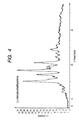


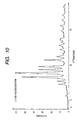
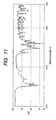

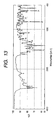


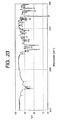

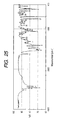
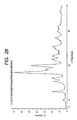


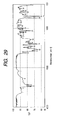

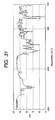
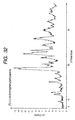

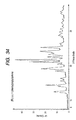


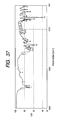
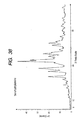

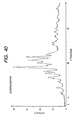


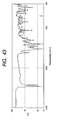


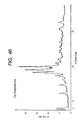
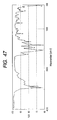
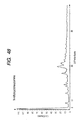
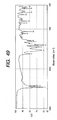
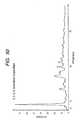


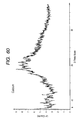
Classifications
-
- C—CHEMISTRY; METALLURGY
- C07—ORGANIC CHEMISTRY
- C07C—ACYCLIC OR CARBOCYCLIC COMPOUNDS
- C07C53/00—Saturated compounds having only one carboxyl group bound to an acyclic carbon atom or hydrogen
- C07C53/126—Acids containing more than four carbon atoms
- C07C53/128—Acids containing more than four carbon atoms the carboxylic group being bound to a carbon atom bound to at least two other carbon atoms, e.g. neo-acids
-
- A—HUMAN NECESSITIES
- A61—MEDICAL OR VETERINARY SCIENCE; HYGIENE
- A61P—SPECIFIC THERAPEUTIC ACTIVITY OF CHEMICAL COMPOUNDS OR MEDICINAL PREPARATIONS
- A61P25/00—Drugs for disorders of the nervous system
-
- A—HUMAN NECESSITIES
- A61—MEDICAL OR VETERINARY SCIENCE; HYGIENE
- A61P—SPECIFIC THERAPEUTIC ACTIVITY OF CHEMICAL COMPOUNDS OR MEDICINAL PREPARATIONS
- A61P25/00—Drugs for disorders of the nervous system
- A61P25/14—Drugs for disorders of the nervous system for treating abnormal movements, e.g. chorea, dyskinesia
- A61P25/16—Anti-Parkinson drugs
-
- A—HUMAN NECESSITIES
- A61—MEDICAL OR VETERINARY SCIENCE; HYGIENE
- A61P—SPECIFIC THERAPEUTIC ACTIVITY OF CHEMICAL COMPOUNDS OR MEDICINAL PREPARATIONS
- A61P25/00—Drugs for disorders of the nervous system
- A61P25/18—Antipsychotics, i.e. neuroleptics; Drugs for mania or schizophrenia
-
- A—HUMAN NECESSITIES
- A61—MEDICAL OR VETERINARY SCIENCE; HYGIENE
- A61P—SPECIFIC THERAPEUTIC ACTIVITY OF CHEMICAL COMPOUNDS OR MEDICINAL PREPARATIONS
- A61P25/00—Drugs for disorders of the nervous system
- A61P25/28—Drugs for disorders of the nervous system for treating neurodegenerative disorders of the central nervous system, e.g. nootropic agents, cognition enhancers, drugs for treating Alzheimer's disease or other forms of dementia
-
- A—HUMAN NECESSITIES
- A61—MEDICAL OR VETERINARY SCIENCE; HYGIENE
- A61P—SPECIFIC THERAPEUTIC ACTIVITY OF CHEMICAL COMPOUNDS OR MEDICINAL PREPARATIONS
- A61P31/00—Antiinfectives, i.e. antibiotics, antiseptics, chemotherapeutics
- A61P31/04—Antibacterial agents
-
- A—HUMAN NECESSITIES
- A61—MEDICAL OR VETERINARY SCIENCE; HYGIENE
- A61P—SPECIFIC THERAPEUTIC ACTIVITY OF CHEMICAL COMPOUNDS OR MEDICINAL PREPARATIONS
- A61P31/00—Antiinfectives, i.e. antibiotics, antiseptics, chemotherapeutics
- A61P31/12—Antivirals
- A61P31/14—Antivirals for RNA viruses
- A61P31/18—Antivirals for RNA viruses for HIV
-
- A—HUMAN NECESSITIES
- A61—MEDICAL OR VETERINARY SCIENCE; HYGIENE
- A61P—SPECIFIC THERAPEUTIC ACTIVITY OF CHEMICAL COMPOUNDS OR MEDICINAL PREPARATIONS
- A61P35/00—Antineoplastic agents
-
- A—HUMAN NECESSITIES
- A61—MEDICAL OR VETERINARY SCIENCE; HYGIENE
- A61P—SPECIFIC THERAPEUTIC ACTIVITY OF CHEMICAL COMPOUNDS OR MEDICINAL PREPARATIONS
- A61P43/00—Drugs for specific purposes, not provided for in groups A61P1/00-A61P41/00
-
- A—HUMAN NECESSITIES
- A61—MEDICAL OR VETERINARY SCIENCE; HYGIENE
- A61P—SPECIFIC THERAPEUTIC ACTIVITY OF CHEMICAL COMPOUNDS OR MEDICINAL PREPARATIONS
- A61P9/00—Drugs for disorders of the cardiovascular system
- A61P9/10—Drugs for disorders of the cardiovascular system for treating ischaemic or atherosclerotic diseases, e.g. antianginal drugs, coronary vasodilators, drugs for myocardial infarction, retinopathy, cerebrovascula insufficiency, renal arteriosclerosis
Definitions
- the present invention relates to crystals comprising (2R)-2-propyloctanoic acid and amines useful as bulk drugs for pharmaceuticals.
- Orally administrable pharmaceuticals are mainly prescribed as oral solid pharmaceutical preparations such as tablets, powders, capsules, and the like.
- oral solid pharmaceutical preparations such as tablets, powders, capsules, and the like.
- tablets have been most often used at home and abroad because they can easily be administered and handled.
- (2R)-2-propyloctanoic acid has been known to be a useful compound in a variety of diseases including cerebral apoplexy since it acts to improve the function of astrocytes ( EP Patent 0632008 and EP-A-1174131 ).
- the bulk drugs for pharmaceuticals are those obtained as crystals since the crystals allow a stable supply in large quantities and relatively easy formulation into such a form as tablets.
- the materials which are intended to use as oral solid preparations are tried to crystallize by performing such an operation as formation of salts, when they are amorphous or liquid materials in a free state.
- (2R)-2-propyloctanoic acid may be formed into salts including salts with alkali metals (potassium, sodium, etc. ), salts with alkaline earth metals (e.g., calcium, magnesium, etc. ), ammonium salt, salts with organic amines (e.g., tetramethylammonium, triethylamine, methylamine, dimethylamine, cyclopentylamine, benzylamine, phenethylamine, piperidine, monoethanolamine, diethanolamine, tris(hydroxymethyl)amine, lysine, arginine, N-methyl-D-glucan, etc. ), and the like.
- alkali metals potassium, sodium, etc.
- alkaline earth metals e.g., calcium, magnesium, etc.
- ammonium salt salts with organic amines (e.g., tetramethylammonium, triethylamine, methylamine, dimethylamine, cyclopenty
- the sodium salt of (2R)-2-propyloctanoic acid i.e., alkali metal salt, however, was obtained not as crystals but as waxy solid in practical preparation; this was difficult to handle and had no desired physicochemical properties adaptable as a bulk drug for pharmaceuticals directed to oral solid preparations.
- the problem to be solved by the present invention accordingly, is to provide a crystal comprising (2R)-2-propyloctanoic acid and an amine, which can be used safely, for example, as a bulk drug for oral solid pharmaceutical preparations with keeping the pharmacological activity of (2R)-2-propyloctanoic acid.
- the present inventors tried assiduously to obtain crystals comprising (2R)-2-propyloctanoic acid and an amine using a variety of amines and a variety of solvents. As a result, they succeeded in obtaining some crystals from a large number of combinations, which crystals can be used as bulk drugs for oral solid pharmaceutical preparations. Thus, the present invention was completed.
- the present invention relates to the followings:
- (2R)-2-propyloctanoic acid means a compound of formula (I): wherein indicates a ⁇ -configuration.
- (2R)-2-propyloctanoic acid is not limited to a practically pure single material but includes a mixture of (2R)-2-propyloctanoic acid and (2S)-2-propyloctanoic acid of formula (II): wherein indicates an ⁇ -configuration, that is, as far as (2R)-2-propyloctanoic acid is preferentially contained, it is defined as (2R)-2-propyloctanoic acid.
- (2R)-2-propyloctanoic acid may contain, for example, impurities such as by-product, solvent, raw material, or degradation product.
- the content of these impurities is variable depending on the kind of impurities contained and the subsequent intended use, and there is no limitation in the content, accordingly.
- the content is preferably, for example, about 20 ppm or lower for heavy metals, about 1.49% by mass or less for (2S)-2-propyloctanoic acid, about 5000 ppm or less in total for the residual solvent 2-propanol or heptane, and about 0.2% by mass or less for moisture.
- (2R)-2-Propyloctanoic acid may be produced according to the per se known processes as described in, for example, JP Patent 3032447 , JP Patent 3084345 , EP Patent 0632008 , EP Patent 1078921 , US Patent 6608221 , WO03/051852 , WO03/097851 , and WO04/110972 ; process as described in Comprehensive Organic Transformations: A Guide to Functional Group Preparation, 2nd Edition (Richard C. Larock, John Wiley & Sons Inc., 1999 ); for example, according to the process as described in Examples as mentioned below; or in proper combination of those processes.
- the resulting (2R)-2-propyloctanoic acid can be purified by a conventional purification method, for example, distillation under atmospheric pressure or reduced pressure, high performance liquid chromatography using silica gel or magnesium silicate, thin layer chromatography, or column chromatography or washing.
- the present invention discloses such a crystal comprising (2R)-2-propyloctanoic acid and an amine.
- the crystal means a solid material in which the constitutive molecules are arranged in three-dimensional periodism and which has approximately a definite melting point and definite constitution.
- the amine may be in any type including optically active amines and optically inactive amines, as far as it can form a crystal with (2R)-2-propyloctanoic acid.
- the optically active amine means those having an optical rotating power
- the optically inactive amine means those having no optical rotating power. This classification is not affected by the presence or absence of an asymmetric carbon. The racemates of amines are classified into an optically inactive amines in this invention.
- the following amines are preferably used. All of those amines are known clearly as seen from the CAS number indicated in the parenthesis.
- the optically active amine includes preferably, for example, (a-1) (+)-dehydroabietylamine [CAS: #1446-61-3], (a-2) (R)-(-)-2-phenylglycinol [CAS: #56613-80-0], (a-3) (S)-(+)-2-phenylglycinol [CAS: #20989-17-7], (a-4) (-)- cis -myrtanylamine [CAS: #38235-68-6], (a-5) (R)-(+)-1-(p-tolyl)ethylamine [CAS: #4187-38-6], (a-6) (R)-(+)-1-(1-naphthyl)ethylamine [CAS: #3886-70-2], (a-7) (S)-(-)-1-(1-naphthyl)ethylamine [CAS: #10420-89-0], (a-8) L-tyrosinamide [CAS: #1446
- the optically inactive amine includes preferably, for example, (b-1) dibenzylamine [CAS: #103-49-1], (b-2) 1,2-diphenylethylamine [CAS: #25611-78-3], (b-3) benzhydrylamine [CAS: #911-00-9], (b-4) cyclohexylamine [CAS: #108-91-8], (b-5) dicyclohexylamine [CAS: #101-83-7], (b-6) cycloheptylamine [CAS: #5452-35-7], (b-7) N-ethylcyclohexylamine [CAS: #5459-93-8], (b-8) 2,2,6,6-tetramethyl-4-piperidinol [CAS: #2403-88-5], (b-9) 2-(2-methoxyphenyl)ethylamine [CAS: #2045-79-6], (b-10) 2-(3,4-dimethoxyphenyl)ethylamine [CAS: #120
- the preferred amines used in the present invention are low toxic amines contained in the pharmaceuticals approved by Food and Drug Administration (FDA) in USA, with which active ingredients can form salts.
- FDA Food and Drug Administration
- the particularly preferred amine in the present invention includes dibenzylamine.
- the crystal comprising (2R)-2-propyloctanoic acid and dibenzylamine may be produced by a process as mentioned below.
- the crystal with dibenzylamine produced by such a process was a new crystal comprising 2 molecules of (2R)-2-propyloctanoic acid and 1 molecule of dibenzylamine, as seen clearly from the results of elemental analysis as mentioned in Example below.
- the crystal with dibenzylamine can be characterized by the following data. Specifically, the crystal is characterized by a chart (Fig. 1) of powdered X-ray diffraction spectrum obtained by irradiation of Cu-K ⁇ ray or the diffraction angle (2 ⁇ ) as shown in Table 1 below, the half width and relative intensity. In the present invention, the relative intensity is represented by the rate of the peaks to the highest peak which is regarded as 100%.
- Table 1 Crystal with dibenzylamine Diffraction angle (2 ⁇ ) (degree) Half width ( ⁇ ) Relative intensity (%) 15.27 5.80 64.9 17.03 5.20 34.5 19.04 4.66 100.0 19.99 4.44 85.7 21.36 4.16 25.8 22.91 3.88 80.4 24.21 3.67 89.1 26.09 3.41 30.7 26.70 3.34 28.9 28.42 3.14 23.8 30.83 2.90 24.6 34.06 2.63 22.3
- the crystal with dibenzylamine can be characterized by a chart of infrared absorption (IR) spectrum measured by the KBr method (Fig. 2) or absorption peaks of 3434, 3068, 3036, 2957, 2926, 2872, 2853, 2756, 2621, 2454, 1948, 1638, 1498, 1466, 1457, 1415, 1379, 1342, 1321, 1212, 1141, 1112, 1096, 1044, 989, 936, 905, 812, 763, 744 and 694 cm -1 .
- IR infrared absorption
- crystal with dibenzylamine is also characterized by a chart (Fig. 3) of differential scanning calorimetry (DSC) or by an endothermic peak at approximately 81.8°C.
- the crystal with dibenzylamine disclosed in the present invention is characterized by the physicochemical properties as described herein, but the data such as respective spectra or specific rotation should not be construed strictly because they are somewhat variable substantially.
- the diffraction angle (2 ⁇ ) or their overall patterns are important, and the relative intensity is somewhat variable depending on direction of crystal growth, size of particle, and the condition of measurement.
- the overall patterns are important but somewhat variable depending on the condition of measurement.
- DSC in confirming the identity of crystals, the overall patterns are important but somewhat variable depending on the condition of measurement.
- the specific rotation is also variable depending on the optical purity of crystal, concentration, solvent used in measurement, temperature, the presence or absence of impurities, and so on.
- the crystal comprising (2R)-2-propyloctanoic acid and an amine of the above (a-1) to (a-16) or (b-2) to (b-12) may be produced according to the process as mentioned below.
- the crystals with amines produced according to such a process all are new crystals.
- crystals can be characterized by the following data. Specifically, the crystal is characterized by a chart of powdered X-ray diffraction spectrum obtained by irradiation of Cu-K ⁇ , ray (Fig. 4, Fig. 6, Fig. 8, Fig. 10, Fig. 12, Fig. 14, Fig. 16, Fig. 18, Fig. 20, Fig. 22, Fig. 24, Fig. 26, Fig. 28, Fig. 30, Fig. 32, Fig. 34, Fig. 36, Fig. 38, Fig. 40, Fig. 42, Fig. 46, Fig. 48, Fig. 50, Fig. 52, Fig. 54, Fig. 56, Fig.
- Table 2 Crystal with (+)-dehydroabietylamine Diffraction angle (2 ⁇ ) (degree) Half width ( ⁇ ) Relative intensity (%) 12.16 7.27 15.2 12.90 6.86 14.2 14.04 6.30 17.1 15.15 5.84 88.6 15.70 5.64 40.2 16.46 5.38 32.4 17.08 5.19 63.7 18.35 4.83 100.0 18.96 4.68 44.3 19.45 4.56 44.2 20.56 4.32 67.1 22.31 3.98 26.9 23.35 3.81 25.5 24.44 3.64 37.5 25.65 3.47 24.8
- Table 3 Crystal with (-)- cis- myrtanylamine Diffraction angle (2 ⁇ ) (degree) Half width ( ⁇ ) Relative intensity (%) 11.23 7.88 6.3 14.53 6.09 19.6 15.43 5.74 21.4 16.55 5.35 87.6 17.74 5.00 100.0 18.71 4.74 56.0 19.57 4.53 56.4 21.44 4.14 45
- Crystals are characterized by the chart of IR spectra measured by the ATR method (Fig. 5, Fig. 7, Fig. 9, Fig. 11, Fig. 13, Fig. 15, Fig. 17, Fig. 19, Fig. 21, Fig. 23, Fig. 25, Fig. 27, Fig. 29, Fig. 31, Fig. 33, Fig. 35, Fig. 37, Fig. 39, Fig. 41, Fig. 43, Fig. 47, Fig. 49, Fig. 51, Fig. 53, Fig. 55, Fig. 57, Fig. 59) and the following absorption peaks.
- crystals with the above (a-1) to (a-16) or (b-2) to (b-12) are also characterized by their physicochemical properties as described herein in the same way as in the above crystal with dibenzylamine, but the spectral data should not be construed strictly because they are somewhat variable substantially.
- the crystal comprising (2R)-2-propyloctanoic acid and an amine obtained in the present invention is per se excellent in availability as a bulk drug of pharmaceuticals since it is (1) stable as a material, (2) possible to stably supply in large quantities, and/or (3) relatively readily convertible into a pharmaceutical preparation such as tablets.
- compositions in which these crystals can be used as bulk drugs include, for example, solid compositions for oral administration, liquid compositions for oral administration, injections, agents for external use and suppositories for parenteral administration, and the like.
- solid compositions such as solid compositions for oral administration, agents for external use and suppositories are preferable by utilizing such characterization that solids as crystals can be obtained.
- Solid compositions for oral administration include tablets, pills, capsules, dispersible powders, granules and the like.
- Capsules include hard capsules and soft capsules.
- the solid composition for oral administration is used by formulating a crystal comprising (2R)-2-propyloctanoic acid and amine (hereinafter referred to as "active compounds") as it is or as a mixture with an excipient (e.g., lactose, mannitol, glucose, microcrystalline cellulose, starch, etc. ), a binding agent (e.g., hydroxypropylcellulose, polyvinylpyrrolidone, magnesium aluminometasilicate, etc.), a disintegrating agent (e.g., calcium disodium ethylenediaminetetraacetate, etc.), a lubricant (e.g., magnesium stearate, etc.
- an excipient e.g., lactose, mannitol, glucose, microcrystalline cellulose, starch, etc.
- a binding agent e.g., hydroxypropylcellulose, polyvinylpyrrolidone, magnesium aluminometasilicate
- a stabilizer e.g., antioxidant (e.g., sulfite, sodium pyrosulfife, ascorbic acid, etc. ), etc.
- a solubilizer e.g., glutamic acid, aspartic acid, polysorbates (e.g., POLYSORBATE 20, POLYSORBATE 60, POLYSORBATE 65, POLYSORBATE 80, etc. ), macrogols (e.g., MACROGOL 200, MACROGOL 400, MACROGOL 1000, MACROGOL 1500, MACROGOL 4000, MACROGOL 6000, MACROGOL 20000, etc. ), ethanol, glycerine, carboxymethyl cellulose, etc.
- ком ⁇ онент e.g., sugar, gelatin, hydroxypropyl cellulose, hydroxypropylmethyl cellulose phthalate, etc.
- a coating agent e.g., sugar, gelatin, hydroxypropyl cellulose, hydroxypropylmethyl cellulose phthalate, etc.
- capsules of absorbable materials such as gelatin are included.
- Liquid compositions for oral administration include pharmaceutically acceptable solutions, suspensions, emulsions, syrups, elixirs and the like.
- one or more of the active compounds may be dissolved, suspended or emulsified into diluent(s) commonly used in the art (such as purified water, ethanol, a mixture thereof, etc. ).
- diluent(s) commonly used in the art (such as purified water, ethanol, a mixture thereof, etc. ).
- Besides such liquid forms may also comprise some additives, such as wetting agents, suspending agents, emulsifying agents, sweetening agents, flavoring agents, aroma, preservative or buffering agent.
- Injections for parenteral administration include solutions, suspensions and emulsions, solid injections which are to be dissolved or suspended in solvents upon use, and the like.
- the injections are prepared by dissolving, suspending or emulsifying the active substances in a solvent.
- the solvent include distilled water for injection, physiological saline, plant oil, alcohols such as propylene glycol, polyethylene glycol and ethanol, combinations thereof, and the like.
- the injection may contain a stabilizer (e.g., antioxidant (e.g., sulfite, sodium pyrosulfife, ascorbic acid, etc.
- a solubilizer e.g., glutamic acid, arpartic acid, polysorbates (e.g., POLYSORBATE 20, POLYSORBATE 60, POLYSORBATE 65, POLYSORBATE 80, etc .), macrogols (e.g., MACROGOL 200, MACROGOL 400, MACROGOL 1000, MACROGOL 1500, MACROGOL 4000, MACROGOL 6000, MACROGOL 20000, etc .), ethanol, glycerine, carboxymethyl cellulose, etc .), a solubilizing auxiliary agent such as glutamic acid, aspartic acid and POLYSORBATE 80 (registered trade mark) etc.
- a solubilizer e.g., glutamic acid, arpartic acid, polysorbates (e.g., POLYSORBATE 20, POLYSORBATE 60, POLYSORBATE 65, POLYSORBATE 80, etc .
- macrogols e.g
- a pH adjusting agent e.g., hydrochloric acid, citric acid, sodium citrate, acetic acid, tartaric acid, succinic acid, arginine, monoethanolamine, monoethanolamine, triethanolamine, meglumine, sodium hydroxide, potassium hydroxide, sodium bicarbonate, sodium carbonate, etc.
- a suspending agent e.g., an emulsifying agent, a soothing agent (e.g., chlorobutanol, creatinine, inositol, etc.)
- a buffering agent e.g., phosphoric acid, trisodium phosphate, dibasic sodium phosphate, dibasic potassium phosphate, potassium dihydrogen phosphate, sodium dihydrogen phosphate, etc.
- a preservative agent e.g., methyl parahydroxybenzoate, ethyl parahydroxybenzoate, propyl parahydroxybenzoate, butyl methyl parahydroxybenzoate, etc .
- the injection may be sterilized in the final step of the preparation process or the whole preparation process may be prepared under sterile conditions.
- the liquid injection may be used as it is or may be used by dissolving it in an appropriate solvent (e.g., distilled water for injection, physiological saline, various infusions, etc .).
- the solid injection e.g., freeze-dry product, etc .
- a solvent e.g., distilled water for injection, physiological saline, carbohydrate solution, etc.
- an appropriate medium for dilution e.g., distilled water for injection, physiological saline, various infusions, etc .
- the agents for external use for parenteral administration include, for example, ointments, gels, creams, poultices, adhesive preparations, liniments, air sprays, inhalants, sprays, eye-drops, nasal-drops and the like.
- the agents for external use can be prepared by formulating the active substance by a known method or a generally used formulation method.
- compositions for parenteral administration include suppositories for intrarectal administration, pessaries for intravaginal administration, and the like. These preparations can be prepared by formulating the active substance by a known method or a generally used formulation method.
- the crystal comprising (2R)-2-propyloctanoic acid and an amine in the present invention (hereinafter abbreviated to crystal of the present invention) can be produced by the process as mentioned below, or its relative process, or the process as described in Examples.
- the crystal of the present invention can be produced by dissolving (2R)-2-propyloctanoic acid in water and/or an organic solvent [for example, alcohol solvent (e.g., methanol, ethanol, isopropyl alcohol, etc.), ether solvent (e.g., diethyl ether, methyl t-butyl ether, dimethoxyethane, diethylene glycol dimethyl ether, tetrahydrofuran, 1,4-dioxane, etc .), ketone solvent (e.g., acetone, 2-butanone, etc .), ester solvent (e.g., ethyl acetate, diethyl carbonate, etc .), nitrile solvent (e.g., acetonitrile, etc .), aliphatic hydrocarbon solvent (e.g., n-hexane, n-heptane, cyclohexane, etc .), aromatic hydrocarbon solvent (e.g.
- (2R)-2-propyloctanoic acid is an oil
- this is mixed with the above amine without using any solvent, and the mixture is treated in the same manner as described above to give the objective crystal of the present invention.
- the (2R)-2-propyloctanoic acid used in production of the crystal as a starting material in the present invention is a known compound, and can be produced by the known processes as described in, for example, JP Patent 3032447 , JP Patent 3084345 , EP Patent 0632008 , EP Patent 1078921 , US Patent 6608221 , WO03/051852 , WO03/097851 , and WO04/110972 ; or according to the process as described in Examples as mentioned below; or in proper combination of those processes.
- a process for producing an optically highly pure (2R)-2-propyloctanoic acid is disclosed.
- the crystal with dibenzylamine, among the crystals comprising (2R)-2-propyloctanoic acid and amines may be used. That is, the crystal is per se useful as a bulk drug in production of pharmaceuticals as mentioned above, and also useful as an intermediate for obtaining optically highly pure (2R)-2-propyloctanoic acid.
- Such a process i.e. process for producing optically highly pure (2R)-2-propyloctanoic acid using the crystal with dibenzylamine as an intermediate, may be carried out as follows.
- (2R)-2-propyloctanoic acid as a starting material and an optically inactive amine are dissolved in a solvent to give a solution, which is applied to the following steps (1) to (3):
- This process is repeated with optional frequency to preferentially crystallizing the crystal comprising (2R)-2-propyloctanoic acid and the optically inactive amine, from which crystal (2R)-2-propyloctanoic acid is recovered in a free form.
- steps (1) to (3) are repeated in optional frequency, such an operation is sometimes regarded as recrystallization.
- the recrystallization may be repeated again and again, but in view of efficiency it may preferably be repeated 0 to 5 times, more preferably 0 to 3 times and particularly 0 to 1 time.
- the procedure for dissolving (2R)-2-propyloctanoic acid as a starting material and an optically inactive amine (e.g., dibenzylamine) in a solvent to give a solution may be carried out as mentioned above by dissolving (2R)-2-propyloctanoic acid as a starting material and about 0.5 to about 1.1 equivalent of an optically inactive amine (e.g., dibenzylamine) in water and/or an organic solvent [for example, alcohol solvent (e.g., methanol, ethanol, isopropyl alcohol, etc .), ether solvent (e.g., diethyl ether, methyl t-butyl ether, dimethoxyethane, diethylene glycol dimethyl ether, tetrahydrofuran, 1,4-dioxane, etc .), ketone solvent (e.g., acetone, 2-butanone, etc .), ester solvent (e.g., ethyl alcohol
- the (2R)-2-propyloctanoic acid used as a starting material may be used in an optical purity of about 50%e.e. or more.
- (2R)-2-propyloctanoic acid may be used in an optical purity of about 70%e.e. or more, more preferably in about 80%e.e. or more, particularly, about 90%e.e. or more.
- the step of preferentially crystallizing the crystal out of the solution is carried out in the same manner as above by stirring the solution at a temperature of about 40 to about 100°C for a period of about 5 to about 60 minutes, followed by cooling to about -20°C to 20°C and continuing the stirring for about 5 to about 60 minutes.
- dibenzylamine is used as an amine
- the crystal comprising (2R)-2-propyloctanoic acid and dibenzylamine can be crystallized preferentially to the crystal comprising (2S)-2-propyloctanoic acid and dibenzylamine (preferential crystallization).
- Separation of the free form of (2R)-2-propyloctanoic acid from the isolated crystal of (2R)-2-propyloctanoic acid with an amine may be conducted, for example, according to the following known method.
- an aqueous solution of about 1 to about 5 equivalent of inorganic base e.g., potassium hydroxide, sodium hydroxide, lithium hydroxide, calcium hydroxide, etc .
- inorganic base e.g., potassium hydroxide, sodium hydroxide, lithium hydroxide, calcium hydroxide, etc .
- an organic solvent for example, ether solvent (e.g., diethyl ether, methyl t-butyl ether, etc .), ester solvent (e.g., ethyl acetate, isopropyl acetate, diethyl carbonate, etc .), aliphatic hydrocarbon solvent (e.g., n-hexane, n-heptane, cyclohexane, etc.
- the resulting aqueous layer is acidified with addition of an inorganic acid (e.g., hydrochloric acid, sulfuric acid, etc. ) at about 0 to about 20°C and extracted with an extraction solvent [for example, ether solvent (e.g., diethyl ether, methyl t-butyl ether, etc.), ester solvent (e.g., ethyl acetate, isopropyl acetate, diethyl carbonate, etc .), aliphatic hydrocarbon solvent (e.g., n-hexane, n-heptane, cyclohexane, etc .), or a mixture of them at an optional rate].
- an extraction solvent for example, ether solvent (e.g., diethyl ether, methyl t-butyl ether, etc.), ester solvent (e.g., ethyl acetate, isopropyl acetate, diethyl carbonate, etc .),
- a carboxyl-containing compound which contains its racemate or its R-isomer or S-isomer preferentially can be crystallized with an optically active amine to increase the optical purity.
- (2R)-2-propyloctanoic acid is known to be optically purified by using an optically active (R)-(+)-1-phenylethylamine (see: WO03/051852 pamphlet).
- dibenzylamine is an optically inactive amine, it can work to enhance the optical purity of (2R)-2-propyloctanoic acid, and the effect of improving the optical purity is excellent in both of yield and efficiency.
- the process for increasing the optical purity of a material using an optically inactive amine can be applied to large scale treatment and is convenient and inexpensive in comparison with the above process using an optically active amine.
- this process is industrially excellent.
- the crystals of the present invention as they contain a crystal comprising (2R)-2-propyloctanoic acid as an active ingredient and an amine, are useful in prevention, treatment and/or suppression of, for example, neurodegenerative disease, neuropathy, or disease in need of nerve regeneration, or their progress, in a mammal (for example, human, non-human animal, e.g., monkey, sheep, bovine, equine, dog, cat, rabbit, rat, mouse, etc .).
- a mammal for example, human, non-human animal, e.g., monkey, sheep, bovine, equine, dog, cat, rabbit, rat, mouse, etc .
- neurodegenerative disease includes all of diseases accompanied by degeneration of nerve cell, and is not limited by its cause.
- the neurodegenerative disease in the present invention also includes neuropathy or disease in need of nerve regeneration.
- the nerve cell may be any type of nerve cells in the living body, including, for example, central nerves (e.g., cerebral nerves, spinal nerves, etc .), peripheral nerves (e.g., autonomic nervous system (e.g., sympathetic nerve, parasympathetic nerve, etc .), etc .) and so on.
- the neurodegenerative disease is, for example, a disease of central nerve, including Parkinson's disease, Parkinson syndrome, Alzheimer's disease, Down's disease, amyotrophic lateral sclerosis, familial amyotrophic lateral sclerosis, progressive supranuclear palsy, Huntington's disease, spinocerebellar ataxia, dentatorubral-pallidoluysian atrophy, olivopontocerebellar atrophy, cortical basal degeneration, familial dementia, frontal temporal dementia, senile dementia, diffuse Lewy body disease, striatonigral degeneration, chorea athetosis, dystonia, Meigs's syndrome, late cortical cerebellar atrophy, familial spastic paraplegia, motor neuron disease, Machado-Joseph disease, Pick's disease, nervous dysfunction after cerebral apoplexy (for example, brain hemorrhage (e.g., hypertensive intracerebral bleeding, etc
- the neurodegenerative disease is more preferably Parkinson's disease, Parkinson syndrome, Alzheimer's disease, amyotrophic lateral sclerosis, familial amyotrophic lateral sclerosis, or the like.
- the neuropathy includes all of the nervous dysfunction. That is, the neuropathy generally includes disorders recognized as a symptom during disease.
- Parkinson's disease or Parkinson syndrome is accompanied by for example tremor, myospasm (rigidity), bradypragia, postural disturbance, dysautonomia, pulsion phenomenon, gait disorder, mental symptom, and so on.
- Alzheimer disease is accompanied by dementia symptom; the amyotrophic lateral sclerosis or familial amyotrophic lateral sclerosis is accompanied by muscle atrophy, muscle weakness, dysfunction of upper extremity, gait disorder, dysarthria, dysphagia, respiration disorder, and so on.
- the disease in need of nerve regeneration is means those in which the absolute number of the neurocytes are reduced by lack of neurocytes to spoil normal neural function, including, for example, the above neurodegenerative disease in such a state.
- a cell capable of generating normal nerves for example, nerve stem cell, nerve precursor cell, nerve cell, other stem cell, glia cell, etc.
- the crystal of the present invention may be administered temporarily or continuously at the time of transplantation of the above cell or of activation of the intrinsic cell to accelerate nerve regeneration.
- the crystal of the present invention is also useful as a nerve regeneration accelerator or S100 ⁇ -increase inhibitor.
- the crystal of the present invention may be formulated into the above pharmaceutical preparations for administration to the living body with the aim of prevention, treatment and/or suppression of progress of the above-mentioned diseases.
- prevention means to prevent the onset of disease itself;
- treatment means to lead the state of disease to cure; and
- suppression of progress means to suppress the deterioration or stop the progress of the state.
- the dosage depends on age, body weight, condition, therapeutic effect, method of administration, time of treatment, and so on, though it may be administered orally at a dose of 1 mg to 5000 mg for an adult once or several times a day, or parenterally (preferably intravenously) at a dose of 1 mg to 1200 mg once or several times a day, or infused intravenously continuously for 1 hour to 24 hours a day.
- the dosage is variable depending on various conditions, and accordingly the dosage may be lower than or over the above defined dosage in some cases.
- (2R)-2-propyloctanoic acid with the optical purity over 99.5%e.e. in the present invention is effective in prevention, treatment and/or suppression of progress of the above diseases.
- Such (2R)-2-propyloctanoic acid may be formulated into a pharmaceutical preparation as mentioned above; as it has a property of oil, it is preferably formulated into injection or filled in soft capsules, utilizing the characteristics of liquid.
- the dosage may be the same as mentioned above, but a daily dosage is preferably about 50 to about 5000 mg, particularly about 100 to about 1200 mg.
- the dosage as injection is variable depending on the degree of symptom; age of the subject, gender, body weight; timing of administration, or intervals of administration, and there is no particular limitation; for example, it may be in the same range as mentioned above, or it may be intravenously injected as infusion, for example, as an agent for neurodegenerative disease such as cerebral infaction at a daily dose of about 2 to about 12 mg per kg body weight of a patient. More preferably, it may be administered at a daily dose of about 2 mg, about 4 mg, about 6 mg, about 8 mg, about 10 mg, or about 12 mg per kg body weight of a patient. Even more preferably, it may be administered at a daily dose of about 4 mg, about 6 mg, about 8 mg, or about 10 mg per kg body weight of a patient. Particularly, the daily dose is about 4 mg or about 8 mg per kg body weight of a patient.
- the pharmaceutical composition containing the crystal of the present invention or (2R)-2-propyloctanoic acid having an optical purity of more than 99.5%e.e. as active ingredient may be also combined with, for example, an anticonvulsant (e.g., phenobarbital, mephobarbital, metharbital, primidone, phenytoin, ethotoin, trimethadione, ethosuximide, acetylphenetride, carbamazepine, acetazolamide, diazepam, sodium valproate, etc.), an acetylcholinesterase inhibitor (e.g., donepezil hydrochloride, TAK-147, rivastigmine, galantamine, etc.), a neurotrophic factor (e.g., ABS-205, etc.
- an anticonvulsant e.g., phenobarbital, mephobarbital, metharbital, primidone, phenytoin
- an aldose reductase inhibitor e.g., t-PA, heparin
- an oral anticoagulant e.g., warfarin, etc.
- a synthetic antithrombin drug e.g., gabexate mesylate, nafamostat mesylate, argatroban, etc.
- an antiplatelet drug e.g., aspirin, dipyridamole, ticlopidine hydrochloride, beraprost sodium, cilostazol, sodium ozagrel, etc .
- a thrombolytic agent e.g., urokinase, tisokinase, alteprase, etc.
- a Factor Xa inhibitor e.g., a Factor VIIa inhibitor
- a cerebral blood flow and metabolism improver e.g., idebenone, calcium hopantenate, amantadine hydrochloride, meclofenoxate hydrochloride, dihydr
- a cerebral function activator e.g., aniracetam, nicergoline, etc.
- a dopamine receptor agonist e.g., L-dopa, bromocriptine, pergolide, talipexole, pramipexole, cabergoline, amantadine, etc.
- a monoamine oxidase (MAO) inhibitor e.g., safrazine, deprenyl, selegiline, ramacemide, riluzole, etc.
- an anticholinergic drug e.g., trihexyphenidyl, biperiden, etc .
- a COMT inhibitor e.g., entacapone, etc .
- a therapeutic agent for amyotrophic lateral sclerosis e.g., riluzole, a neurotrophic factor, etc .
- a statin-based therapeutic agent for hyperlipidemia e.g., sodium pravastatin, atorvastatin, simvastatin, rosuvastatin, etc .
- a fibrate-based therapeutic agent for hyperlipidemia e.g., clofibrate, etc .
- an apoptosis inhibitor e.g., CPI-1189, IDN-6556, CEP-1347, etc .
- a nerve differentiation and regeneration promoter e.g., leteprinim, xaliproden (SR-57746-A), SB-216763, etc.
- a steroid drug e.g., dexamethasone, hexestrol, cortisone acetate, etc.
- a sexual hormone or derivatives thereof e.g., progesterone, estradiol, estradiol benzoate, etc.
- a nicotinic receptor regulator a ⁇ -secretase inhibitor, a ⁇ -amyloid vaccine, a ⁇ -amyloid protease, a squalene synthetase inhibiting agent, a therapeutic agent for the abnormal behavior, wandering or the like associated with progress of dementia, a hypotensor, a therapeutic agent for diabetes mellitus, an antidepressant, an antianxiety agent, a disease-modifying antirheumatoid agent, an anticytokine agent (e.g., a TNF inhibitor, a MAP kinase inhibitor, etc .), a parathyroid hormone (PTH), a calcium receptor antagonist or the like.
- a nicotinic receptor regulator e.g., a ⁇ -secretase inhibitor, a ⁇ -amyloid vaccine, a ⁇ -amyloid protease, a squalene synthetase inhibiting agent, a therapeutic agent for the
- medicaments may be administered in any combination of two or more.
- the medicaments for combined use include those that have been discovered as well as those that are to be discovered afterward, based on the mechanism described above.
- Toxicity of (2R)-2-propyloctanoic acid or a salt thereof is very low, and it is considered to be sufficiently safe for the use as a pharmaceutical drug.
- crystals comprising (2R)-2-propyloctanoic acid and an amine, which can be used as bulk drugs for safely orally administrable solid preparations with keeping the pharmacological effect, are provided.
- the crystal with dibenzylamine per se is particularly useful not only as bulk drug for pharmaceuticals but also as an intermediate to produce (2R)-2-propyloctanoic acid having a remarkably high optical purity of more than 99.5%e.e.
- cuprous chloride (4.6 g) was added to a solution of (2R)-2-hexyloxirane (300 g) in tetrahydrofuran (642 mL), and then ethylmagnesium chloride tetrahydrofuran solution (2.1 mol/L, 1309 g) was added dropwise at -40 to -20°C (inner temperature).
- the reaction mixture was stirred at -30 to -20°C (inner temperature) for about 30 minutes, and then tosyl chloride (491 g) was added, and the mixture was stirred at 0-20°C (inner temperature) for about 4 hours.
- To the reaction mixture was then added 10 v/v% sulfuric acid (conc.
- dimethylsulfoxide (177 g) and potassium carbonate (16.5 g) were added to a solution of the compound (122g [82.0 area%], 96.2%e.e.) produced in the same manner as in Reference Example 2, and 35% hydrogen peroxide (8.7 g) was added dropwise thereto at 50-70°C (inner temperature), followed by stirring for about 1 hour.
- a solution of sulfurous acid (9.3 g) in water (720 mL) was added to the reaction mixture, cooled to about 10°C (inner temperature) and stirred for 30 minutes.
- the reaction mixture was filtered, washed with an acetonitrile : water (1 : 2) mixture (435 mL) and with water (632 mL) to give crude crystals of the title compound (133 g [84.3 area%], 96.5%e.e., moisture content 15 w/w%).
- acetonitrile 240 mL
- water 160 mL
- the mixture was warmed up at 56-60°C (inner temperature) to dissolve the crude crystals.
- the solution was cooled down to about 29°C (inner temperature) at a cooling rate of 10-15°C/60 minutes, and after addition of water (80 mL) down to 15°C - 16°C at a cooling rate of 10-15°C/60 minutes.
- the reaction mixture was stirred at this temperature for about 30 minutes, filtered, and washed with a acetonitril : water (1 : 2) mixture (80 mL) to give the crystals of the title compound having the following physicochemical properties (30.8 g [97.8 area%], 99.7%e.e., moisture content 11.6 w/w%).
- the optical purity of the compound of the present invention was determined by liquid chromatography as a phenacyl ester derived from the compound of the present invention through the free form according to the method as shown in Example 2 below.
- a chart of powdered X-ray diffraction spectrum is shown in Fig. 1, a chart of infrared absorption spectrum (IR) in Fig. 2, and a chart of differential scanning calorimetry (DSC) in Fig. 3, respectively.
- IR infrared absorption spectrum
- DSC differential scanning calorimetry
- Fig. 26 shows the results.
- Table 26 Crystal with dibenzylamine Diffraction angle (2 ⁇ ) (degree) Half width ( ⁇ ) Relative intensity (%) 15.27 5.80 64.9 17.03 5.20 34.5 19.04 4.66 100.0 19.99 4.44 85.7 21.36 4.16 25.8 22.91 3.88 80.4 24.21 3.67 89.1 26.09 3.41 30.7 26.70 3.34 28.9 28.42 3.14 23.8 30.83 2.90 24.6 34.06 2.63 22.3
- Apparatus JASCO Corporation, FTIR-660Plus/Sens IR TECHNOLOGIES, DuraScope Method of Measurement: measured by a KBr method Resolution: 4 cm -1 Frequency of scanning: 16 times
- IR (KBr method): 3434, 3068, 3036, 2957, 2926, 2872, 2853, 2756, 2621, 2454, 1948, 1638, 1498, 1466, 1457, 1415, 1379, 1342, 1321, 1212, 1141, 1112, 1096, 1044, 989, 936, 905, 812, 763, 744, 694 cm -1 .
- aqueous 1N-potassium hydroxide solution 400 mL was added to the compound (100 g) produced in Example 1 at about 20°C (inner temperature), and the mixture was stirred for about 10 minutes. This solution was back-extracted with isopropyl acetate (250mL x 2). The resulting aqueous layer was extracted with addition of a mixture of n-heptane : isopropyl acetate (1 :1) (500 mL) and conc. hydrochloric acid (40 mL). The resulting organic layer was washed with water (200 mL) and saturated brine (200 mL) in order and concentrated. The resulting residue was purified by distillation to give the compound of the present invention having the following physicochemical properties (63.5 g [100 area%], 99.8% e.e.; yield 97%).
- Example 2 Using a variety of solvent in place of acetonitrile, the same operation as in Example 1 was repeated to elucidate the yield of the title crystal. In addition, using those crystals, the same operation as in Example 2 was repeated to elucidate the optical purity of the resulting (2R)-2-propyloctanoic acid.
- the following table shows the solvent used, the amount of the solvent used, yield and optical purity.
- the amount of the solvent used was represented by a volume ratio for the total weight of solute.
- (2R)-2-propyloctanoic acid used as a starting material had 99.2%e.e. of optical purity.
- Example II Using a variety of amines in place of dibenzylamine, the same operation as in Example I was repeated to give compounds having the following physicochemical properties.
- the resulting compounds of the present invention were crystals.
- the experiment was carried out in the presence or absence of a variety of solvents. The solvents used in crystallization are respectively described in each item (when no solvent was used, no solvent is indicated).
- Apparatus JASCO Corporation, FTIR-660Plus/Sens IR TECHNOLOGIES, DuraScope Method of Measurement: measured by an ATR method Resolution: 4 cm -1 Frequency of scanning: 16 times
- Powder X-ray diffraction spectral data Table 28: Crystal with (+)-dehydroabietylamine Diffraction angle (2 ⁇ ) (degree) Half width ( ⁇ ) Relative intensity (%) 12.16 7.27 15.2 12.90 6.86 14.2 14.04 6.30 17.1 15.15 5.84 88.6 15.70 5.64 40.2 16.46 5.38 32.4 17.08 5.19 63.7 18.35 4.83 100.0 18.96 4.68 44.3 19.45 4.56 44.2 20.56 4.32 67.1 22.31 3.98 26.9 23.35 3.81 25.5 24.44 3.64 37.5 25.65 3.47 24.8
- Table 29 Crystal with (-)- cis -myrtanylamine Diffraction angle (2 ⁇ ) (degree) Half width ( ⁇ ) Relative intensity (%) 11.23 7.88 6.3 14.53 6.09 19.6 15.43 5.74 21.4 16.55 5.35 87.6 17.74 5.00 100.0 18.71 4.74 56.0 19.57 4.53 56.4 21.44 4.14 45.9 22.45 3.96 22.2 23.29 3.82 11.2 24.45 3.64 16.1 25.60 3.48 18.7 26.57 3.35 14.1 27.20 3.28 16.4 27.50 3.24 16.0 29.74 3.00 13.6 31.20 2.86 16.1 32.92 2.72 12.6 34.22 2.62 12.1 35.79 2.51 8.7 36.59 2.45 9.7 IR (ATR method): 2989, 2952, 2919, 2869, 2852, 2611, 2196, 1626, 1517, 1458, 1397, 1363, 1320, 1230, 1214, 1139, 1116, 1035, 1005, 978, 919, 8
- Powder X-ray diffraction spectral data Table 32: Crystal with (S)-(-)-1-(1-naphthyl)ethylamine Diffraction angle (2 ⁇ ) (degree) Half width ( ⁇ ) Relative intensity (%) 12.41 7.13 22.8 13.71 6.45 24.6 14.05 6.30 20.6 15.12 5.86 41.4 16.27 5.45 35.1 16.80 5.27 54.0 17.57 5.04 57.3 18.72 4.74 53.3 19.35 4.58 94.0 19.96 4.45 57.4 21.00 4.23 74.1 21.50 4.13 57.6 22.41 3.96 100.0 23.56 3.77 27.5 23.95 3.71 28.0 25.55 3.48 49.7 26.21 3.40 41.1 27.79 3.21 32.9 28.56 3.12 25.9 30.92 2.89 26.0 IR (ATR method): 2952, 2922, 2850, 2219, 1624, 1601, 1557, 1514, 1467, 1454, 1395, 1377, 1317, 1279, 1223, 1177,
- Powder X-ray diffraction spectral data Table 33: Crystal with L-tyrosinamide Diffraction angle (2 ⁇ ) (degree) Half width ( ⁇ ) Relative intensity (%) 12.10 7.31 10.7 12.83 6.89 8.7 14.67 6.03 15.3 15.44 5.73 17.4 16.46 5.38 57.5 17.08 5.19 100.0 18.19 4.87 40.7 19.89 4.46 91.5 21.30 4.17 66.1 22.12 4.02 40.1 23.31 3.81 61.6 24.15 3.68 48.1 25.81 3.45 37.5 27.36 3.26 43.0 28.66 3.11 20.8 29.85 2.99 19.7 30.95 2.89 23.2 32.97 2.71 29.2 33.48 2.67 21.9 35.00 2.56 17.7 36.64 2.45 20.7 IR (ATR method): 3430, 2953, 2923, 2856, 1673, 1559, 1512, 1449, 1407, 1376, 1349, 1324, 1266, 1242, 1210, 1175, 1108, 1078, 1037, 997,
- Powder X-ray diffraction spectral data Table 34: Crystal with (1S,2R)-(+)-2-amino-1,2-diphenylethanol Diffraction angle (2 ⁇ ) (degree) Half width ( ⁇ ) Relative intensity (%) 13.60 6.51 25.5 14.18 6.24 20.4 15.96 5.55 100.0 17.33 5.11 44.1 18.35 4.83 22.5 19.47 4.56 62.7 20.46 4.34 82.6 21.41 4.15 59.3 22.45 3.96 37.5 23.55 3.77 64.9 24.78 3.59 61.9 25.97 3.43 25.8 27.53 3.24 22.8 28.63 3.12 19.6 29.79 3.00 24.1 32.31 2.77 16.5 33.54 2.67 20.2 35.51 2.53 21.9 IR (ATR method): 2925, 2851, 1617, 1559, 1507, 1455, 1406, 1320, 1272, 1204, 1134, 1081, 1047, 1007, 919, 848, 782, 765, 742, 699, 567 cm
- Powder X-ray diffraction spectral data Table 35: Crystal with (1R,2S)-(-)-2-amino-1,2-diphenylethanol Diffraction angle (2 ⁇ ) (degree) Half width ( ⁇ ) Relative intensity (%) 10.06 8.79 8.9 11.94 7.41 21.5 12.88 6.87 8.8 15.11 5.86 37.0 15.97 5.54 73.4 16.52 5.36 44.3 17.91 4.95 89.4 19.15 4.63 55.9 19.77 4.49 80.0 21.29 4.17 83.6 23.04 3.86 100.0 24.07 3.69 36.8 25.40 3.50 59.4 25.76 3.46 58.2 28.44 3.14 27.0 29.57 3.02 23.2 30.70 2.91 27.4 35.72 2.51 26.0 IR (ATR method): 3275, 2953, 2925, 2856, 2605, 1617, 1560, 1542, 1508, 1455, 1408, 1307, 1277, 1239, 1205, 1132, 1110, 1081, 1046, 1006, 921
- Powder X-ray diffraction spectral data Table 36: Crystal with (+)- cis -2-benzylaminocyclohexanemethanol Diffraction angle (2 ⁇ ) (degree) Half width ( ⁇ ) Relative intensity (%) 10.49 8.43 6.5 12.01 7.36 9.8 13.37 6.62 5.2 15.92 5.56 14.1 16.68 5.31 18.7 17.90 4.95 100.0 19.83 4.47 28.8 21.16 4.20 34.2 22.75 3.91 13.9 24.34 3.65 9.4 26.06 3.42 12.5 27.68 3.22 13.5 28.56 3.12 10.8 30.37 2.94 9.9 32.05 2.79 11.1 IR (ATR method): 3034, 2951, 2926, 2853, 1622, 1526, 1498, 1450, 1406, 1341, 1310, 1261, 1218, 1141, 1117, 1087, 1063, 1051, 1034, 1013, 974, 914, 862, 841, 812, 785, 750, 696, 645 cm
- Powder X-ray diffraction spectral data Table 37: Crystal with (-)- cis -2-benzylaminocyclohexanemethanol Diffraction angle (2 ⁇ ) (degree) Half width ( ⁇ ) Relative intensity (%) 10.01 8.83 6.9 12.38 7.15 28.3 15.35 5.77 24.7 16.29 5.44 27.7 17.99 4.93 100.0 19.02 4.66 39.6 20.00 4.44 68.1 21.52 4.13 23.5 21.85 4.06 28.8 22.84 3.89 24.8 23.93 3.71 15.3 24.87 3.58 21.4 25.46 3.50 27.2 28.03 3.18 21.2 29.91 2.99 17.5 31.21 2.86 16.7 35.00 2.56 11.3 35.89 2.50 13.1 IR (ATR method): 3033, 2949, 2925, 2854, 1622, 1524, 1497, 1454, 1397, 1341, 1324, 1261, 1219, 1115, 1087, 1075, 1061, 1037, 1010, 975, 914,
- Powder X-ray diffraction spectral data Table 39: Crystal with (R)-(+)-1-(4-bromophenyl)ethylamine Diffraction angle (2 ⁇ ) (degree) Half width ( ⁇ ) Relative intensity (%) 9.47 9.33 16.2 11.43 7.74 23.8 12.02 7.36 27.5 15.06 5.88 33.5 16.10 5.50 23.1 17.45 5.08 21.5 19.00 4.67 100.0 20.17 4.40 47.4 20.69 4.29 34.0 22.01 4.04 51.5 23.12 3.84 82.2 24.11 3.69 68.3 25.55 3.48 46.5 27.43 3.25 62.7 29.75 3.00 44.1 32.38 2.76 35.8 34.67 2.59 32.7 35.94 2.50 31.5 IR (ATR method): 2954, 2925, 2855, 2703, 2195, 1621, 1571, 1515, 1491, 1466, 1440, 1404, 1381, 1306, 1281, 1231, 1186, 1110, 1090, 1011, 898
- Powder X-ray diffraction spectral data Table 40: Crystal with (R)-(+)-1-phenylpropylamine Diffraction angle (2 ⁇ ) (degree) Half width ( ⁇ ) Relative intensity (%) 12.49 7.08 28.2 13.98 6.33 17.6 14.44 6.13 42.9 15.63 5.66 15.1 16.38 5.41 15.1 18.50 4.79 24.7 19.18 4.62 51.2 20.53 4.32 20.6 21.17 4.19 72.8 21.76 4.08 100.0 22.61 3.93 39.7 23.35 3.81 36.6 24.23 3.67 52.0 25.36 3.51 52.3 26.46 3.37 16.1 28.22 3.16 13.3 28.81 3.10 18.7 29.75 3.00 17.2 30.62 2.92 15.6 31.41 2.85 12.3 32.45 2.76 13.2 33.49 2.67 11.5 35.16 2.55 14.7 35.72 2.51 15.0 IR (ATR method): 2950, 2926, 2855, 2665, 2215, 1622, 1561, 1525, 1457, 14
- Powder X-ray diffraction spectral data Table 41: Crystal with 1,2-diphenylethylamine Diffraction angle (2 ⁇ ) (degree) Half width ( ⁇ ) Relative intensity (%) 12.38 7.14 12.3 13.37 6.62 25.1 14.04 6.30 18.2 16.50 5.37 56.3 17.73 5.00 100.0 18.80 4.72 77.8 19.83 4.47 77.3 21.17 4.19 34.2 22.80 3.90 44.5 24.07 3.69 41.2 25.14 3.54 40.0 27.06 3.29 29.8 28.35 3.15 20.0 29.25 3.05 18.5 30.66 2.91 18.6 IR (ATR method): 3030, 2953, 2925, 2852, 2663, 2176, 1627, 1536, 1497, 1467, 1455, 1431, 1396, 1338, 1310, 1275, 1232, 1110, 1074, 1024, 976, 935, 910, 846, 795, 775, 758, 740, 697 cm -1 ; Solvent: ace
- Powder X-ray diffraction spectral data Table 42: Crystal with benzhydrylamine Diffraction angle (2 ⁇ ) (degree) Half width ( ⁇ ) Relative intensity (%) 13.58 6.52 8.6 14.50 6.11 13.5 16.05 5.52 15.4 16.85 5.26 43.4 18.38 4.82 42.9 19.27 4.60 60.7 21.28 4.17 100.0 21.63 4.10 76.2 22.70 3.91 42.5 23.46 3.79 52.0 24.59 3.62 21.2 25.85 3.44 35.0 26.48 3.36 40.7 26.93 3.31 27.8 28.31 3.15 19.5 30.03 2.97 15.9 31.38 2.85 17.5 33.55 2.67 15.8 36.60 2.45 15.3 IR (ATR method): 2995, 2925, 2853, 2614, 2194, 1617, 1573, 1519, 1497, 1457, 1446, 1395, 1303, 1226, 1198, 1151, 1075, 1032, 1010, 998, 917, 837, 809, 755, 735,
- Powder X-ray diffraction spectral data Table 43: Crystal with cyclohexylamine Diffraction angle (2 ⁇ ) (degree) Half width ( ⁇ ) Relative intensity (%) 10.98 8.05 8.9 11.37 7.77 11.6 12.84 6.89 18.0 14.68 6.03 15.2 15.86 5.58 33.3 17.03 5.20 39.0 17.62 5.03 42.1 18.82 4.71 100.0 20.09 4.42 54.8 20.90 4.25 71.7 21.83 4.07 75.9 22.54 3.94 35.6 25.40 3.50 25.2 25.98 3.43 26.5 27.91 3.19 19.8 29.07 3.07 21.4 30.03 2.97 21.5 31.64 2.83 18.8 33.24 2.69 16.0 35.89 2.50 17.5 IR (ATR method): 2922, 2855, 2625, 2569, 2224, 1634, 1525, 1455, 1399, 1340, 1313, 1285, 1246, 1140, 1115, 1073, 1050, 920, 891, 849, 801, 780,
- Powder X-ray diffraction spectral data Table 44: Crystal with dicyclohexylamine Diffraction angle (2 ⁇ ) (degree) Half width ( ⁇ ) Relative intensity (%) 11.16 7.92 12.3 12.22 7.24 5.9 14.59 6.07 8.6 15.30 5.78 14.6 16.75 5.29 19.1 18.28 4.85 35.2 19.13 4.64 100.0 19.80 4.48 38.1 21.27 4.17 25.0 22.42 3.96 26.1 23.51 3.78 25.9 25.20 3.53 20.3 30.38 2.94 12.4 31.17 2.87 15.4 33.03 2.71 12.9 IR (ATR method): 2926, 2853, 1622, 1524, 1488, 1455, 1401, 1352, 1306, 1253, 1186, 1113, 1084, 1064, 1037, 980, 921, 887, 849, 805, 758, 640, 596 cm -1 ; Solvent: acetonitrile.
- Powder X-ray diffraction spectral data Table 45: Crystal with cycloheptylamine Diffraction angle (2 ⁇ ) (degree) Half width ( ⁇ ) Relative intensity (%) 7.98 11.07 26.6 12.29 7.20 20.7 14.68 6.03 22.2 16.19 5.47 16.3 17.39 5.10 29.1 18.34 4.83 71.6 19.07 4.65 86.4 20.01 4.43 100.0 20.98 4.23 28.7 22.05 4.03 22.8 24.19 3.68 21.5 25.56 3.48 21.7 27.02 3.30 22.0 30.80 2.90 21.4 32.65 2.74 23.1 IR (ATR method): 2924, 1624, 1523, 1457, 1396 cm -1 ; Solvent: acetonitrile, absence of solvent.
- Powder X-ray diffraction spectral data Table 46: Crystal with N-ethylcyclohexylamine Diffraction angle (2 ⁇ ) (degree) Half width ( ⁇ ) Relative intensity (%) 7.70 11.47 100.0 9.27 9.53 8.9 12.09 7.31 8.4 14.09 6.28 7.7 14.60 6.06 10.7 15.21 5.82 7.2 16.62 5.33 5.2 17.85 4.96 15.0 18.19 4.87 8.5 19.82 4.48 23.2 20.78 4.27 16.6 21.74 4.09 10.6 22.61 3.93 9.4 23.42 3.80 8.8 25.09 3.55 8.2 IR (ATR method): 2925, 1622, 1531, 1449, 1402 cm -1 ; Solvent: acetonitrile, absence of solvent.
- Powder X-ray diffraction spectral data Table 47: Crystal with 2,2,6,6-tetramethyl-4-piperidinol Diffraction angle (2 ⁇ ) (degree) Half width ( ⁇ ) Relative intensity (%) 9.11 9.70 100.0 13.47 6.57 16.3 14.84 5.96 9.2 17.25 5.14 25.8 18.18 4.88 17.9 19.93 4.45 21.8 21.24 4.18 19.7 22.30 3.98 14.6 23.80 3.74 11.8 24.78 3.59 11.0 25.96 3.43 11.5 30.28 2.95 8.5
- Powder X-ray diffraction spectral data Table 48: Crystal with 2-(2-methoxyphenyl)ethylamine Diffraction angle (2 ⁇ ) (degree) Half width ( ⁇ ) Relative intensity (%) 9.56 9.25 16.1 12.26 7.21 30.0 13.28 6.66 18.3 13.93 6.35 27.0 15.34 5.77 53.4 15.99 5.54 35.3 16.50 5.37 32.5 17.31 5.12 23.5 18.57 4.77 32.3 19.15 4.63 58.6 20.04 4.43 100.0 20.74 4.28 90.6 21.65 4.10 69.2 23.52 3.78 44.1 24.48 3.63 35.2 25.76 3.46 37.7 26.35 3.38 45.4 27.52 3.24 28.1 29.20 3.06 34.4 30.87 2.89 16.7 32.10 2.79 17.0 35.28 2.54 17.1 IR (ATR method): 2921, 1634, 1494, 1242 cm -1 ; Solvent: acetonitrile, absence of solvent.
- Powder X-ray diffraction spectral data Table 49: Crystal with 2-(3,4-dimethoxyphenyl)ethylamine Diffraction angle (2 ⁇ ) (degree) Half width ( ⁇ ) Relative intensity (%) 8.56 10.32 15.3 10.44 8.47 17.8 11.98 7.38 7.7 14.64 6.05 15.0 15.34 5.77 23.6 16.88 5.25 28.3 18.73 4.73 11.9 19.17 4.63 10.3 20.57 4.31 96.5 22.05 4.03 21.6 22.95 3.87 100.0 25.22 3.53 19.2 27.65 3.22 9.5 29.07 3.07 8.0 32.33 2.77 7.8 IR (ATR method): 2920, 1515, 1449, 1402, 1237 cm -1 ; Solvent: acetonitrile, absence of solvent.
- Powder X-ray diffraction spectral data Table 50: Crystal with N-isopropylbenzylamine Diffraction angle (2 ⁇ ) (degree) Half width ( ⁇ ) Relative intensity (%) 7.97 11.08 100.0 11.34 7.80 19.8 12.91 6.85 11.8 13.36 6.62 7.8 15.27 5.80 16.1 17.21 5.15 30.1 17.68 5.01 18.8 18.83 4.71 39.2 20.06 4.42 19.3 21.88 4.06 44.2 23.29 3.82 21.2 24.01 3.70 15.9 26.76 3.33 11.4 27.67 3.22 9.5 31.83 2.81 8.8 32.94 2.72 9.1 JR (ATR method): 2926, 1529, 1442, 1401 cm -1 ; Solvent: absence of solvent.
- the frequency of recrystallization required for increasing the optical purity from 95.0%e.e. to 99.5% or more was examined using dibenzylamine.
- the optical purity of the crystal comprising (2R)-2-propyloctanoic acid and dibenzylamine was determined by liquid chromatography according to the method as described in Example 2 through a free (2R)-2-propyloctanoic acid and its phenacyl ester derivative.
- (2R)-2-Propyloctanoic acid (5.0 g) of 95.0%e.e. in optical purity was dissolved in acetonitrile (75 mL) and dibenzylamine (2.9 g) under heating at about 70°C (outer temperature) and stirred for about 15 minutes. The reaction mixture was allowed to stand for cooling for about 1 hour, then cooled at about 5°C for about 40 minutes, and filtered. The resulting crystals were washed with acetonitrile (10 mL) and dried in vacuo at about 35°C to give the crystal comprising (2R)-2-propyloctanoic acid and dibenzylamine (7.1 g, 98.2%e.e.; yield 93%).
- the crystal comprising (2R)-2-propyloctanoic acid and dibenzylamine (6.8 g) produced in the first recrystallization was dissolved in acetonitrile (102 mL) under heating at about 70°C (outer temperature) and stirred for about 15 minutes.
- the reaction mixture was allowed to stand for cooling for about 1 hour, then cooled at about 8°C for about 40 minutes, and filtered.
- the resulting crystals were washed with acetonitrile (10 mL) and dried in vacuo at about 35°C to give the crystal comprising (2R)-2-propyloctanoic acid and dibenzylamine (4.8 g, 99.5%e.e.; yield 71%).
- Example 2 Using (R)-(+)-1-phenylethylamine in place of dibenzylamine, the same operation as in Example 1 was performed to give the title compound having the following physicochemical properties. The resulting compounds was crystals. In this Comparative Example, a variety of solvents were examined in the same manner as described above. The solvents used in obtaining the crystals are described in respective items. The optical purity of (2R)-2-propyloctanoic acid used as a starting material was 95.0%e.e.
- the frequency of recrystallization required for increasing the optical purity from 95.0%e.e. to 99.5%e.e. or more was examined using (R)-(+)-1-phenylethylamine
- the optical purity of the crystal comprising (2R)-2-propyloctanoic acid and (R)-(+)-1-phenylethylamine was determined by liquid chromatography according to the method as described in Example 2 through a free (2R)-2-propyloctanoic acid and its phenacyl ester derivative.
- (2R)-2-Propyloctanoic acid (5.0 g) of 95.0%e.e. in optical purity was dissolved in acetonitrile (75 mL) and (R)-(+)-1-phenylethylamine (3.6 g) under heating at about 70°C (outer temperature) and stirred for about 15 minutes. The reaction mixture was allowed to stand for cooling for about 1 hour, then cooled at about 5°C for about 40 minutes, and filtered.
- the crystal comprising (2R)-2-propyloctanoic acid and (R)-(+)-1-phenylethylamine (7.8 g) produced in the first recrystallization was dissolved in acetonitrile (117 mL) under heating at about 70°C (outer temperature) and stirred for about 20 minutes. The reaction mixture was allowed to stand for cooling for about 1 hour, then cooled at about 5°C for about 40 minutes, and filtered.
- (2R)-2-propyloctanoic acid having the optical purity of 99.5%e.e. or more was obtained by 7 repeated crystallizations. Recovery of 7 repeated crystallizations was 40%.
- (2R)-2-Propyloctanoic acid (1 g, 5.4 mmole) produced in Reference Example 4 was mixed with the following respective amines (5.4 mmole), and the mixture was heated for dissolving, then allowed to stand at room temperature for about 24 hours, and further at about 5°C for about 24 hours. Thus, it was confirmed whether solids were precipitated or not.
- Cyclopropylamine [CAS: #765-30-0], 2-methoxyethylamine [CAS: #109-85-3], trimethylamine [CAS: #75-50-3], 2-dimethylaminoethanol [CAS: #108-01-0], 2-amino-2-methyl-1-propanol [CAS: #124-68-5], N,N-dimethylethylamine [CAS: #598-56-1], 3-methoxypropylamine [CAS: #5332-73-0], 2-ethoxyethylamine [CAS: #110-76-9], 1-methylpyrrolidine [CAS: #120-94-5], N-amylamine [CAS: #110-58-7], N-methylbutylamine [CAS: #110-68-9], N,N-dimethylisopropylamine [CAS: #996-35-0], 3-dimethylamino-1-propanol [CAS: #3179-63-3], cyclopentylamine [CAS: #1003-03-8], isoamylamine [CAS: #10
- the resulting 5 species of solids were analyzed by a powdered X-ray diffraction analysis (under the condition as described in Example 1), indicating that the precipitates were not crystal.
- (2R)-2-Propyloctanoic acid (1 g, 5.4 mmole) produced in Reference Example 4 was mixed with acetonitrile (10 mL) and the following 8 species of amines (5.4 mmole), and the mixture was heated for dissolving, then allowed to stand at room temperature for about 24 hours, and further at about 5°C for about 24 hours. Thus, it was confirmed whether solids were precipitated or not. When no dissolving occurred under heating, after addition of water (1 mL), the same operation was made, or using methanol or ethanol in place of acetonitirle, the same operation was made.
- 2-Amino-2-methyl-1,3-propanediol [CAS: #115-69-5], 4-hydroxypiperidine [CAS: #5382-16-1], 4-hydroxy-1-methylpiperidine [CAS: #106-52-5], 1-benzyl-4-hydroxypiperidine [CAS: #4727-72-4], Tris [CAS: #77-86-1], L-arginine [CAS: #74-79-3], L-lysine [CAS: #56-87-1], and L-histidine [CAS: #71-00-1].
- (2R)-2-propyloctanoic acid produced in Reference Example 4 was mixed with an alkali metal hydroxide or an alkaline earth metal hydroxide under stirring, then concentrated, and then lyophilized; thus, it was confirmed whether solids were precipitated or not.
- Crystals comprising (2R)-2-propyloctanoic acid and dibenzylamine (10 kg); carboxymethylcellulose calcium (disintegrator) (2 kg); magnesium stearate (lubricant) (1 kg); and microcrystalline cellulose (87 kg).
- the following ingredients were mixed in a conventional manner, then filtered through a dust-removal filter, sterilized under heating in an autoclave, and then 5 mL each distributed into 1,000,000 ampoules containing 20 mg/ampoule of active ingredient.
- Crystals comprising (2R)-2-propyloctanoic acid and dibenzylamine (20 kg); mannitol (200 kg); and distilled water (5 kL).
- the crystals comprising (2R)-2-propyloctanoic acid and amines obtained in the present invention are excellent materials of which the pharmacological activity of (2R)-2-propyloctanoic acid is maintained and by which a problem in pharmaceutical formulation that the material is oil can be overcome.
- the crystals can be used, for example, as pharmaceuticals in orally administrable solid preparations such as tablets.
- the crystals comprising (2R)-2-propyloctanoic acid and dibenzylamine are useful as intermediates convertible into (2R)-2-propyloctanoic acid having the optical purity over 99.5%e.e., which so far cannot be obtained and is very useful as pharmaceutical.
Landscapes
- Health & Medical Sciences (AREA)
- Organic Chemistry (AREA)
- Chemical & Material Sciences (AREA)
- Life Sciences & Earth Sciences (AREA)
- Bioinformatics & Cheminformatics (AREA)
- Engineering & Computer Science (AREA)
- Medicinal Chemistry (AREA)
- Pharmacology & Pharmacy (AREA)
- Nuclear Medicine, Radiotherapy & Molecular Imaging (AREA)
- Animal Behavior & Ethology (AREA)
- General Health & Medical Sciences (AREA)
- Public Health (AREA)
- Veterinary Medicine (AREA)
- General Chemical & Material Sciences (AREA)
- Chemical Kinetics & Catalysis (AREA)
- Neurosurgery (AREA)
- Neurology (AREA)
- Biomedical Technology (AREA)
- Virology (AREA)
- Oncology (AREA)
- Communicable Diseases (AREA)
- Psychiatry (AREA)
- Vascular Medicine (AREA)
- Cardiology (AREA)
- Heart & Thoracic Surgery (AREA)
- Urology & Nephrology (AREA)
- Molecular Biology (AREA)
- Tropical Medicine & Parasitology (AREA)
- AIDS & HIV (AREA)
- Hospice & Palliative Care (AREA)
- Psychology (AREA)
- Organic Low-Molecular-Weight Compounds And Preparation Thereof (AREA)
- Acyclic And Carbocyclic Compounds In Medicinal Compositions (AREA)
- Hydrogenated Pyridines (AREA)
Abstract
Description
- The present invention relates to crystals comprising (2R)-2-propyloctanoic acid and amines useful as bulk drugs for pharmaceuticals.
- Orally administrable pharmaceuticals are mainly prescribed as oral solid pharmaceutical preparations such as tablets, powders, capsules, and the like. Among these preparations, tablets have been most often used at home and abroad because they can easily be administered and handled.
- On the other hand, (2R)-2-propyloctanoic acid has been known to be a useful compound in a variety of diseases including cerebral apoplexy since it acts to improve the function of astrocytes (
EP Patent 0632008 andEP-A-1174131 ). However, it was hard to formulate (2R)-2-propyloctanoic acid into such a formulation as tablets and to administer it to patients, because it is oil. - In general, it is considered preferable that the bulk drugs for pharmaceuticals, particularly the materials used as the bulk drugs for pharmaceuticals for oral solid preparations, are those obtained as crystals since the crystals allow a stable supply in large quantities and relatively easy formulation into such a form as tablets.
- Accordingly, the materials which are intended to use as oral solid preparations are tried to crystallize by performing such an operation as formation of salts, when they are amorphous or liquid materials in a free state.
- The above Patent Documents describe that (2R)-2-propyloctanoic acid may be formed into salts including salts with alkali metals (potassium, sodium, etc.), salts with alkaline earth metals (e.g., calcium, magnesium, etc.), ammonium salt, salts with organic amines (e.g., tetramethylammonium, triethylamine, methylamine, dimethylamine, cyclopentylamine, benzylamine, phenethylamine, piperidine, monoethanolamine, diethanolamine, tris(hydroxymethyl)amine, lysine, arginine, N-methyl-D-glucan, etc.), and the like.
- The sodium salt of (2R)-2-propyloctanoic acid, i.e., alkali metal salt, however, was obtained not as crystals but as waxy solid in practical preparation; this was difficult to handle and had no desired physicochemical properties adaptable as a bulk drug for pharmaceuticals directed to oral solid preparations.
- On the other hand, it is known that as for (2R)-2-propyloctanoic acid amine salts, a salt of (2R)-2-propyloctanoic acid with (R)-(+)-1-phenylethylamine can be obtained as a salt, which is used as an intermediate in production of optically highly pure (2R)-2-propyloctanoic acid (see:
WO03/051852 - The problem to be solved by the present invention, accordingly, is to provide a crystal comprising (2R)-2-propyloctanoic acid and an amine, which can be used safely, for example, as a bulk drug for oral solid pharmaceutical preparations with keeping the pharmacological activity of (2R)-2-propyloctanoic acid.
- In general, whether a compound formed by an acid and a base can be crystallized or not, depends on the combination of an acid and base, and further on the solvent used in crystallization. In other words, successful crystallization does not depend on the property of an acid or base itself. Therefore, even if combination of a certain acid and a certain base gives crystals successfully, the acid does not necessarily give crystals in combination with any kind of base.
- The present inventors tried assiduously to obtain crystals comprising (2R)-2-propyloctanoic acid and an amine using a variety of amines and a variety of solvents. As a result, they succeeded in obtaining some crystals from a large number of combinations, which crystals can be used as bulk drugs for oral solid pharmaceutical preparations. Thus, the present invention was completed.
- In addition, the present inventors found that among the resulting crystals a crystal comprising (2R)-2-propyloctanoic acid and dibenzylamine is also useful as an intermediate to obtain very highly optically pure (2R)-2-propyloctanoic acid.
- That is, the present invention relates to the followings:
- 1. An isolated crystal comprising (2R)-2-propyloctanoic acid and amine, excluding (R)-(+)-1-phenylethylamine;
- 2. The crystal according to the above 1, wherein the amine is (+)-dehydroabietylamine, (R)-(-)-2-phenylglycinol, (S)-(+)-2-phenylglycinol, (-)-cis-myrtanylamine, (R)-(+)-1-(p-tolyl)ethylamine, (R)-(+)-1-(1-naphthyl)ethylamine, (S)-(-)-1-(1-naphthyl)ethylamine, L-tyrosinamide, (1S,2R)-(+)-2-amino-1,2-diphenylethanol, (1R,2S)-(-)-2-amino-1,2-diphenylethanol, (+)-cis-2-benzylaminocyclohexanemethanol, (-)-cis-2-benzylaminocyclohexanemethanol, (S)-(-)-2-amino-3-phenyl-1-propanol, (R)-(+)-2-amino-3-phenyl-1-propanol, (R-(+)-1-(4-bromophenyl)ethylamine, (R)-(+)-1-phenylpropylamine, dibenzylamine, 1,2-diphenylethylamine, benzhydrylamine, cyclohexylamine, dicyclohexylamine, cycloheptylamine, N-ethylcyclohexylamine, 2,2,6,6-tetramethyl-4-piperidinol, 2-(2-methoxyphenyl)ethylamine, 2-(3,4-dimethoxyphenyl)ethylamine, N-isopropylbenzylamine, or N-butylbenzylamine;
- 3. A phrmaceutical composition, comprising the crystal according to the above 2 as an active ingredient;
- 4. The pharmaceutical composition according to the above 3, which is an agent for prevention, treatment and/or suppression of symptom progressionsymptom progression for neurodegenerative diseases, neruropathies or diseases in need of nerve regeneration;
- 5. A pharmaceutical composition, comprising the crystal according to the above 2 in combination with at least one selected from an anticonvulsant, an acetylcholinesterase inhibitor, a neurotrophic factor, an aldose reductase inhibitor, an antithrombotic, an oral anticoagulant, a synthetic antithrombin drug, an antiplatelet drug, a thrombolytic agent, a Factor Xa inhibitor, a Factor VIIa inhibitor, a cerebral blood flow and metabolism improver, an antioxidant, a glycerin preparation, a β-secretase inhibitor, a β-amyloid protein aggregation inhibitor, a cerebral function activator, a dopamine receptor agonist, a monoamine oxidase inhibitor, an anticholinergic drug, a COMT inhibitor, a therapeutic agent for amyotrophic lateral sclerosis, a therapeutic agent for hyperlipidemia, an apoptosis inhibitor, a nerve differentiation and regeneration promoter, a non-steroidal anti-inflammatory drug, a steroid drug, and a sexual hormone or its derivative;
- 6. A method for prevention, treatment and/or suppression of symptom progressionsymptom progression for neurodegenerative diseases, neruropathies or diseases in need of nerve regeneration, which comprises administering to a mammal an effective amount of the crystal according to the above 2;
- 7. Use of the crystal according to the above 2 for the manufacture of an agent for prevention, treatment and/or suppression of symptom progressionsymptom progression for neurodegenerative diseases, neruropathies or diseases in need of nerve regeneration;
- 8. An isolated crystal comprising 2-propyloctanoic acid and dibenzylamine;
- 9. The isolated crystal according to the above 2, wherein the 2-propyloctanoic acid is (2R)-2-propyloctanoic acid;
- 10. The isolated crystal according to the above 9, which has an optical purity of 97%e.e. or more;
- 11. The isolated crystal according to the above 9, which has a specific rotation of -3.6°;
- 12. A process for producing (2R)-2-propyloctanoic acid having an optical purity of 97%e.e. or more, which comprises:
- dissolving (2R)-2-propyloctanoic acid having an optical purity of 70%e.e. or more and an optically inactive amine in a solvent to give a solution;
- repeating the following steps (1)-(3) 0 to 3 times
- (1) preferentially crystallizing a crystal comprising the (2R)-2-propyloctanoic acid with the optically inactive amine from the solution;
- (2) separating and collecting the precipitated crystal;
- (3) dissolving the crystal in a solvent to give a solution;
- preferentially crystallizing a crystal comprising the (2R)-2-propyloctanoic acid with the optically inactive amine from the solution; and
- separating and collecting the precipitated crystal to give a free (2R)-2-propyloctanoic acid;
- 13. The process according to the above 12, wherein the optically inactive amine is dibenzylamine;
- 14. (2R)-2-propyloctanoic acid having an optical purity of more than 99.5%e.e.;
- 15. The (2R)-2-propyloctanoic acid according to the above 14, which is obtainable by the process according to the above 13;
- 16. A pharmaceutical composition, comprising (2R)-2-propyloctanoic acid according to the above 14;
- 17. The pharmaceutical composition according to the above 16, which is an agent for prevention, treatment and/or suppression of symptom progression for neurodegenerative diseases, neruropathies or diseases in need of nerve regeneration;
- 18. The isolated crystal according to the above 9, which has a melting point of about 79.0 to about 80.2°C;
- 19. The isolated crystal according to the above 9, which has diffraction angles (2θ) of 15.27, 17.03, 19.04, 19.99, 21.36, 22.91, 24.21, 26.09, 26.70, 28.42, 30.83, 34.06 in powdered X-ray diffraction spectrum;
- 20. The isolated crystal according to the above 9, wherein the powdered X-ray diffraction spectrum is powdered X-ray diffraction spectrum shown in Fig. 1;
- 21. The isolated crystal according to the above 9, which has absorptions at 3434, 3068, 3036, 2957, 2926, 2872, 2853, 2756, 2621, 2454, 1948, 1638, 1498, 1466, 1457, 1415, 1379, 1342, 1321, 1212, 1141, 1112, 1096, 1044, 989, 936, 905, 812, 763, 744, 694 cm-1 in infrared absorption spectrum;
- 22. The isolated crystal according to the above 9, wherein the infrared absorption spectrum is infrared absorption spectrum shown in Fig. 2;
- 23. A production process of the crystal according to the above 1;
- 24. A method for improving the optical purity of (2R)-2-propyloctanoic acid, which comprises using dibenzylamine; and the like.
-
- Fig. 1 shows a chart of powdered X-ray diffraction spectrum of a crystal comprising (2R)-2-propyloctanoic acid and dibenzylamine.
- Fig. 2 shows a chart of infrared absorption spectrum (IR) of a crystal comprising (2R)-2-propyloctanoic acid and dibenzylamine.
- Fig. 3 shows a chart of differential scanning calorimetry (DSC) of a crystal comprising (2R)-2-propyloctanoic acid and dibenzylamine.
- Fig. 4 shows a chart of powdered X-ray diffraction spectrum of a crystal comprising (2R)-2-propyloctanoic acid and (+)-dehydroabietylamine.
- Fig. 5 shows a chart of infrared absorption spectrum (IR) of a crystal comprising (2R)-2-propyloctanoic acid and (+)-dehydroabietylamine.
- Fig. 6 shows a chart of powdered X-ray diffraction spectrum of a crystal comprising (2R)-2-propyloctanoic acid and (R)-(-)-2-phenylglycinol.
- Fig. 7 shows a chart of infrared absorption spectrum (IR) of a crystal comprising (2R)-2-propyloctanoic acid and (R)-(-)-2-phenylglycinol.
- Fig. 8 shows a chart of powdered X-ray diffraction spectrum of a crystal comprising (2R)-2-propyloctanoic acid and (S)-(+)-2-phenylglycinol.
- Fig. 9 shows a chart of infrared absorption spectrum (IR) of a crystal comprising (2R)-2-propyloctanoic acid and (S)-(+)-2-phenylglycinol.
- Fig. 10 shows a chart of powdered X-ray diffraction spectrum of a crystal comprising (2R)-2-propyloctanoic acid and (-)-cis-myrtanylamine.
- Fig. 11 shows a chart of infrared absorption spectrum (IR) of a crystal comprising (2R)-2-propyloctanoic acid and (-)-cis-myrtanylamine.
- Fig. 12 shows a chart of powdered X-ray diffraction spectrum of a crystal comprising (2R)-2-propyloctanoic acid and (R)-(+)-1-(p-tolyl)ethylamine.
- Fig. 13 shows a chart of infrared absorption spectrum (IR) of a crystal comprising (2R)-2-propyloctanoic acid and (R)-(+)-1-(p-tolyl)ethylamine.
- Fig. 14 shows a chart of powdered X-ray diffraction spectrum of a crystal comprising (2R)-2-propyloctanoic acid and (R)-(+)-1-(1-naphthyl)ethylamine.
- Fig. 15 shows a chart of infrared absorption spectrum (IR) of a crystal comprising (2R)-2-propyloctanoic acid and (R)-(+)-1-(1-naphthyl)ethylamine.
- Fig. 16 shows a chart of powdered X-ray diffraction spectrum of a crystal comprising (2R)-2-propyloctanoic acid and (S)-(-)-1-(1-naphthyl)ethylamine.
- Fig. 17 shows a chart of infrared absorption spectrum (IR) of a crystal comprising (2R)-2-propyloctanoic acid and (S)-(-)-1-(1-naphthyl)ethylamine.
- Fig. 18 shows a chart of powdered X-ray diffraction spectrum of a crystal comprising (2R)-2-propyloctanoic acid and L-tyrosinamide.
- Fig. 19 shows a chart of infrared absorption spectrum (IR) of a crystal comprising (2R)-2-propyloctanoic acid and L-tyrosinamide.
- Fig. 20 shows a chart of powdered X-ray diffraction spectrum of a crystal comprising (2R)-2-propyloctanoic acid and (1S,2R)-(+)-2-amino- 1,2-diphenylethanol.
- Fig. 21 shows a chart of infrared absorption spectrum (IR) of a crystal comprising (2R)-2-propyloctanoic acid and (1S,2R)-(+)-2-amino-1,2-diphenylethanol.
- Fig. 22 shows a chart of powdered X-ray diffraction spectrum of a crystal comprising (2R)-2-propyloctanoic acid and (1R,2S)-(-)-2-amino-1,2-diphenylethanol.
- Fig. 23 shows a chart of infrared absorption spectrum (IR) of a crystal comprising (2R)-2-propyloctanoic acid and (1R,2S)-(-)-2-amino-1,2-diphenylethanol.
- Fig. 24 shows a chart of powdered X-ray diffraction spectrum of a crystal comprising (2R)-2-propyloctanoic acid and (+)-cis-2-benzylaminocyclohexanemethanol.
- Fig. 25 shows a chart of infrared absorption spectrum (IR) of a crystal comprising (2R)-2-propyloctanoic acid and (+)-cis-2-benzylaminocyclohexanemethanol.
- Fig. 26 shows a chart of powdered X-ray diffraction spectrum of a crystal comprising (2R)-2-propyloctanoic acid and (-)-cis-2-benzylaminocyclohexanemethanol.
- Fig. 27 shows a chart of infrared absorption spectrum (IR) of a crystal comprising (2R)-2-propyloctanoic acid and (-)-cis-2-benzylaminocyclohexanemethanol.
- Fig. 28 shows a chart of powdered X-ray diffraction spectrum of a crystal comprising (2R)-2-propyloctanoic acid and (S)-(-)-2-amino-3-phenyl-1-propanol.
- Fig. 29 shows a chart of infrared absorption spectrum (IR) of a crystal comprising (2R)-2-propyloctanoic acid and (S)-(-)-2-amino-3-phenyl-1-propanol,
- Fig. 30 shows a chart of powdered X-ray diffraction spectrum of a crystal comprising (2R)-2-propyloctanoic acid and (R)-(+)-2-amino-3-phenyl-1-propanol.
- Fig. 31 shows a chart of infrared absorption spectrum (IR) of a crystal comprising (2R)-2-propyloctanoic acid and (R)-(+)-2-amino-3-phenyl-1-propanol.
- Fig. 32 shows a chart of powdered X-ray diffraction spectrum of a crystal comprising (2R)-2-propyloctanoic acid and (R)-(+)-1-(4-bromophenyl)ethylamine.
- Fig. 33 shows a chart of infrared absorption spectrum (IR) of a crystal comprising (2R)-2-propyloctanoic acid and (R)-(+)-1-(4-bromophenyl) ethylamine.
- Fig. 34 shows a chart of powdered X-ray diffraction spectrum of a crystal comprising (2R)-2-propyloctanoic acid and (R)-(+)-1-phenylpropylamine.
- Fig. 35 shows a chart of infrared absorption spectrum (IR) of a crystal comprising (2R)-2-propyloctanoic acid and (R)-(+)-1-phenylpropylamine.
- Fig. 36 shows a chart of powdered X-ray diffraction spectrum of a crystal comprising (2R)-2-propyloctanoic acid and 1,2-diphenylethylamine.
- Fig. 37 shows a chart of infrared absorption spectrum (IR) of a crystal comprising (2R)-2-propyloctanoic acid and 1,2-diphenylethylamine.
- Fig. 38 shows a chart of powdered X-ray diffraction spectrum of a crystal comprising (2R)-2-propyloctanoic acid and benzhydrylamine.
- Fig. 39 shows a chart of infrared absorption spectrum (IR) of a crystal comprising (2R)-2-propyloctanoic acid and benzhydrylamine.
- Fig. 40 shows a chart of powdered X-ray diffraction spectrum of a crystal comprising (2R)-2-propyloctanoic acid and cyclohexylamine.
- Fig. 41 shows a chart of infrared absorption spectrum (IR) of a crystal comprising (2R)-2-propyloctanoic acid and cyclohexylamine.
- Fig. 42 shows a chart of powdered X-ray diffraction spectrum of a crystal comprising (2R)-2-propyloctanoic acid and dicyclohexylamine.
- Fig. 43 shows a chart of infrared absorption spectrum (IR) of a crystal comprising (2R)-2-propyloctanoic acid and dicyclohexylamine.
- Fig. 44 shows a chart of powdered X-ray diffraction spectrum of a crystal comprising (2R)-2-propyloctanoic acid and (R)-(+)-1-phenylethylamine.
- Fig. 45 shows a chart of infrared absorption spectrum (IR) of a crystal comprising (2R)-2-propyloctanoic acid and (R)-(+)-1-phenylethylamine.
- Fig. 46 shows a chart of powdered X-ray diffraction spectrum of a crystal comprising (2R)-2-propyloctanoic acid and cycloheptylamine.
- Fig. 47 shows a chart of infrared absorption spectrum (IR) of a crystal comprising (2R)-2-propyloctanoic acid and cycloheptylamine.
- Fig. 48 shows a chart of powdered X-ray diffraction spectrum of a crystal comprising (2R)-2-propyloctanoic acid and N-ethylcyclohexylamine.
- Fig. 49 shows a chart of infrared absorption spectrum (IR) of a crystal comprising (2R)-2-propyloctanoic acid and N-ethylcyclohexylamine.
- Fig. 50 shows a chart of powdered X-ray diffraction spectrum of a crystal comprising (2R)-2-propyloctanoic acid and 2,2,6,6-tetramethyl-4-piperidinol.
- Fig. 51 shows a chart of infrared absorption spectrum (IR) of a crystal comprising (2R)-2-propyloctanoic acid and 2,2,6,6-tetramethyl-4-piperidinol.
- Fig. 52 shows a chart of powdered X-ray diffraction spectrum of a crystal comprising (2R)-2-propyloctanoic acid and 2-(2-methoxyphenyl)ethylamine.
- Fig. 53 shows a chart of infrared absorption spectrum (IR) of a crystal comprising (2R)-2-propyloctanoic acid and 2-(2-methoxyphenyl)ethylamine.
- Fig. 54 shows a chart of powdered X-ray diffraction spectrum of a crystal comprising (2R)-2-propyloctanoic acid and 2-(3,4-dimethoxyphenyl)ethylamine.
- Fig. 55 shows a chart of infrared absorption spectrum (IR) of a crystal comprising (2R)-2-propyloctanoic acid and 2-(3,4-dimethoxyphenyl)ethylamine.
- Fig. 56 shows a chart of powdered X-ray diffraction spectrum of a crystal comprising (2R)-2-propyloctanoic acid and N-isopropylbenzylamine.
- Fig. 57 shows a chart of infrared absorption spectrum (IR) of a crystal comprising (2R)-2-propyloctanoic acid and N-isopropylbenzylamine.
- Fig. 58 shows a chart of powdered X-ray diffraction spectrum of a crystal comprising (2R)-2-propyloctanoic acid and N-butylbenzylamine.
- Fig. 59 shows a chart of infrared absorption spectrum (IR) of a crystal comprising (2R)-2-propyloctanoic acid and N-butylbenzylamine.
- Fig. 60 shows a chart of powdered X-ray diffraction spectrum of calcium (2R)-2-propyloctanoate.
- In the present invention, (2R)-2-propyloctanoic acid means a compound of formula (I):
 indicates a β-configuration.
- In the present invention, (2R)-2-propyloctanoic acid is not limited to a practically pure single material but includes a mixture of (2R)-2-propyloctanoic acid and (2S)-2-propyloctanoic acid of formula (II):
 indicates an α-configuration,
that is, as far as (2R)-2-propyloctanoic acid is preferentially contained, it is defined as (2R)-2-propyloctanoic acid. In addition, (2R)-2-propyloctanoic acid may contain, for example, impurities such as by-product, solvent, raw material, or degradation product. - The content of these impurities is variable depending on the kind of impurities contained and the subsequent intended use, and there is no limitation in the content, accordingly. When (2R)-2-propyloctanoic acid is used as a bulk drug for pharmaceuticals, the content is preferably, for example, about 20 ppm or lower for heavy metals, about 1.49% by mass or less for (2S)-2-propyloctanoic acid, about 5000 ppm or less in total for the residual solvent 2-propanol or heptane, and about 0.2% by mass or less for moisture.
- (2R)-2-Propyloctanoic acid may be produced according to the per se known processes as described in, for example,
JP Patent 3032447 JP Patent 3084345 EP Patent 0632008 ,EP Patent 1078921 ,US Patent 6608221 ,WO03/051852 WO03/097851 WO04/110972 - The present invention discloses such a crystal comprising (2R)-2-propyloctanoic acid and an amine. In this specification, the crystal means a solid material in which the constitutive molecules are arranged in three-dimensional periodism and which has approximately a definite melting point and definite constitution.
- In this invention, the amine may be in any type including optically active amines and optically inactive amines, as far as it can form a crystal with (2R)-2-propyloctanoic acid. Herein, the optically active amine means those having an optical rotating power, and the optically inactive amine means those having no optical rotating power. This classification is not affected by the presence or absence of an asymmetric carbon. The racemates of amines are classified into an optically inactive amines in this invention.
- As for the amines in the present invention, for example, the following amines are preferably used. All of those amines are known clearly as seen from the CAS number indicated in the parenthesis.
- In the present invention, the optically active amine includes preferably, for example, (a-1) (+)-dehydroabietylamine [CAS: #1446-61-3], (a-2) (R)-(-)-2-phenylglycinol [CAS: #56613-80-0], (a-3) (S)-(+)-2-phenylglycinol [CAS: #20989-17-7], (a-4) (-)-cis-myrtanylamine [CAS: #38235-68-6], (a-5) (R)-(+)-1-(p-tolyl)ethylamine [CAS: #4187-38-6], (a-6) (R)-(+)-1-(1-naphthyl)ethylamine [CAS: #3886-70-2], (a-7) (S)-(-)-1-(1-naphthyl)ethylamine [CAS: #10420-89-0], (a-8) L-tyrosinamide [CAS: #4985-46-0], (a-9) (1S,2R)-(+)-2-amino-1,2-diphenylethanol [CAS: #23364-44-5], (a-10) (1R,2S)-(-)-2-amino-1,2-diphenylethanol [CAS: #23190-16-1], (a-11) (+)-cis-2-benzylaminocyclohexanemethanol [CAS: #71581-92-5], (a-12) (-)-cis-2-benzylaminocyclohexanemethanol [CAS: #71581-93-6], (a-13) (S)-(-)-2-amino-3-phenyl-1-propanol [CAS: #3182-95-6], (a-14) (R)-(+)-2-amino-3-phenyl-1-propanol [CAS: #5267-64-1], (a-15) (R)-(+)-1-(4-bromophenyl)ethylamine [CAS: #45791-36-4] and (a-16) (R)-(+)-1-phenylpropylamine [CAS: #3082-64-2].
- In the present invention, the optically inactive amine includes preferably, for example, (b-1) dibenzylamine [CAS: #103-49-1], (b-2) 1,2-diphenylethylamine [CAS: #25611-78-3], (b-3) benzhydrylamine [CAS: #911-00-9], (b-4) cyclohexylamine [CAS: #108-91-8], (b-5) dicyclohexylamine [CAS: #101-83-7], (b-6) cycloheptylamine [CAS: #5452-35-7], (b-7) N-ethylcyclohexylamine [CAS: #5459-93-8], (b-8) 2,2,6,6-tetramethyl-4-piperidinol [CAS: #2403-88-5], (b-9) 2-(2-methoxyphenyl)ethylamine [CAS: #2045-79-6], (b-10) 2-(3,4-dimethoxyphenyl)ethylamine [CAS: #120-20-7], (b-11) N-isopropylbenzylamine [CAS: #102-97-6] and (b-12) N-butylbenzylamine [CAS: #2403-22-7].
- The preferred amines used in the present invention are low toxic amines contained in the pharmaceuticals approved by Food and Drug Administration (FDA) in USA, with which active ingredients can form salts.
- The particularly preferred amine in the present invention includes dibenzylamine.
- In the present invention, the crystal comprising (2R)-2-propyloctanoic acid and dibenzylamine (hereinafter sometimes referred to as "crystal with dibenzylamine") may be produced by a process as mentioned below. The crystal with dibenzylamine produced by such a process was a new crystal comprising 2 molecules of (2R)-2-propyloctanoic acid and 1 molecule of dibenzylamine, as seen clearly from the results of elemental analysis as mentioned in Example below.
- The crystal with dibenzylamine can be characterized by the following data. Specifically, the crystal is characterized by a chart (Fig. 1) of powdered X-ray diffraction spectrum obtained by irradiation of Cu-Kα ray or the diffraction angle (2θ) as shown in Table 1 below, the half width and relative intensity. In the present invention, the relative intensity is represented by the rate of the peaks to the highest peak which is regarded as 100%.
Table 1: Crystal with dibenzylamine Diffraction angle (2θ) (degree) Half width (Å) Relative intensity (%) 15.27 5.80 64.9 17.03 5.20 34.5 19.04 4.66 100.0 19.99 4.44 85.7 21.36 4.16 25.8 22.91 3.88 80.4 24.21 3.67 89.1 26.09 3.41 30.7 26.70 3.34 28.9 28.42 3.14 23.8 30.83 2.90 24.6 34.06 2.63 22.3 - The crystal with dibenzylamine can be characterized by a chart of infrared absorption (IR) spectrum measured by the KBr method (Fig. 2) or absorption peaks of 3434, 3068, 3036, 2957, 2926, 2872, 2853, 2756, 2621, 2454, 1948, 1638, 1498, 1466, 1457, 1415, 1379, 1342, 1321, 1212, 1141, 1112, 1096, 1044, 989, 936, 905, 812, 763, 744 and 694 cm-1.
- Further, the crystal with dibenzylamine is also characterized by a chart (Fig. 3) of differential scanning calorimetry (DSC) or by an endothermic peak at approximately 81.8°C.
- The crystal with dibenzylamine is also characterized in that the specific rotation [α]D 20 is about -3.6 (c=2.00; ethanol) when the optical purity of the crystal is about 99.8%e.e.
- The crystal with dibenzylamine disclosed in the present invention is characterized by the physicochemical properties as described herein, but the data such as respective spectra or specific rotation should not be construed strictly because they are somewhat variable substantially.
- For example, in the powdered X-ray diffraction spectra in confirming the identity of crystals, the diffraction angle (2θ) or their overall patterns are important, and the relative intensity is somewhat variable depending on direction of crystal growth, size of particle, and the condition of measurement. In IR spectra in confirming the identity of crystals, the overall patterns are important but somewhat variable depending on the condition of measurement. Further, in DSC in confirming the identity of crystals, the overall patterns are important but somewhat variable depending on the condition of measurement.
- In addition, for example, the specific rotation is also variable depending on the optical purity of crystal, concentration, solvent used in measurement, temperature, the presence or absence of impurities, and so on.
- Therefore, any crystal in which the data or chart pattern in the powdered X-ray diffraction spectrum, IR spectrum and/or DSC are generally the same as that of the crystal with dibenzylamine or shows the same specific rotation, is included in the crystal with dibenzylamine of the present invention.
- In the present invention, the crystal comprising (2R)-2-propyloctanoic acid and an amine of the above (a-1) to (a-16) or (b-2) to (b-12) may be produced according to the process as mentioned below. The crystals with amines produced according to such a process, all are new crystals.
- These crystals can be characterized by the following data. Specifically, the crystal is characterized by a chart of powdered X-ray diffraction spectrum obtained by irradiation of Cu-Kα, ray (Fig. 4, Fig. 6, Fig. 8, Fig. 10, Fig. 12, Fig. 14, Fig. 16, Fig. 18, Fig. 20, Fig. 22, Fig. 24, Fig. 26, Fig. 28, Fig. 30, Fig. 32, Fig. 34, Fig. 36, Fig. 38, Fig. 40, Fig. 42, Fig. 46, Fig. 48, Fig. 50, Fig. 52, Fig. 54, Fig. 56, Fig. 58) or the diffraction angle (2θ) as shown in Table 2 to Table 25 below, the half width and relative intensity.
Table 2: Crystal with (+)-dehydroabietylamine Diffraction angle (2θ) (degree) Half width (Å) Relative intensity (%) 12.16 7.27 15.2 12.90 6.86 14.2 14.04 6.30 17.1 15.15 5.84 88.6 15.70 5.64 40.2 16.46 5.38 32.4 17.08 5.19 63.7 18.35 4.83 100.0 18.96 4.68 44.3 19.45 4.56 44.2 20.56 4.32 67.1 22.31 3.98 26.9 23.35 3.81 25.5 24.44 3.64 37.5 25.65 3.47 24.8 Table 3: Crystal with (-)-cis-myrtanylamine Diffraction angle (2θ) (degree) Half width (Å) Relative intensity (%) 11.23 7.88 6.3 14.53 6.09 19.6 15.43 5.74 21.4 16.55 5.35 87.6 17.74 5.00 100.0 18.71 4.74 56.0 19.57 4.53 56.4 21.44 4.14 45.9 22.45 3.96 22.2 23.29 3.82 11.2 24.45 3.64 16.1 25.60 3.48 18.7 26.57 3.35 14.1 27.20 3.28 16.4 27.50 3.24 16.0 29.74 3.00 13.6 31.20 2.86 16.1 32.92 2.72 12.6 34.22 2.62 12.1 35.79 2.51 8.7 36.59 2.45 9.7 Table 4: Crystal with (R)-(+)-1-(p-totyl)ethylamine Diffraction angle (2θ) (degree) Half width (Å) Relative intensity (%) 11.34 7.79 24.4 12.01 7.36 8.7 12.81 6.91 31.7 13.69 6.46 6.7 15.08 5.87 8.8 16.15 5.48 45.5 17.47 5.07 20.9 18.84 4.71 100.0 20.08 4.42 28.2 20.68 4.29 71.7 22.03 4.03 19.3 23.00 3.86 89.2 24.14 3.68 27.1 25.65 3.47 54.2 27.41 3.25 29.2 28.22 3.16 17.1 29.92 2.98 14.6 30.99 2.88 14.0 32.64 2.74 15.6 33.22 2.70 14.6 34.46 2.60 12.3 Table 5: Crystal with (R)-(+)-1-(1-naphthyl)ethylamine Diffraction angle (2θ) (degree) Half width (Å) Relative intensity (%) 10.97 8.06 14.4 13.38 6.61 58.1 15.84 5.59 48.9 16.91 5.24 31.0 17.67 5.02 40.8 19.31 4.59 54.2 20.46 4.34 34.3 21.52 4.13 43.2 22.21 4.00 100.0 23.49 3.78 67.5 24.41 3.64 24.2 25.11 3.54 24.1 26.78 3.33 22.7 28.12 3.17 14.7 28.96 3.08 21.3 31.28 2.86 20.6 33.79 2.65 13.8 35.87 2.50 12.9 36.77 2.44 12.4 Table 6: Crystal with (S)-(-)-1-(1-naphthyl)ethylamine Diffraction angle (2θ) (degree) Half width (Å) Relative intensity (%) 12.41 7.13 22.8 13.71 6.45 24.6 14.05 6.30 20.6 15.12 5.86 41.4 16.27 5.45 35.1 16.80 5.27 54.0 17.57 5.04 57.3 18.72 4.74 53.3 19.35 4.58 94.0 19.96 4.45 57.4 21.00 4.23 74.1 21.50 4.13 57.6 22.41 3.96 100.0 23.56 3.77 27.5 23.95 3.71 28.0 25.55 3.48 49.7 26.21 3.40 41.1 27.79 3.21 32.9 28.56 3.12 25.9 30.92 2.89 26.0 Table 7: Crystal with L-tyrosinamide Diffraction angle (2θ) (degree) Half width (Å) Relative intensity (%) 12.10 7.31 10.7 12.83 6.89 8.7 14.67 6.03 15.3 15.44 5.73 17.4 16.46 5.38 57.5 17.08 5.19 100.0 18.19 4.87 40.7 19.89 4.46 91.5 21.30 4.17 66.1 22.12 4.02 40.1 23.31 3.81 61.6 24.15 3.68 48.1 25.81 3.45 37.5 27.36 3.26 43.0 28.66 3.11 20.8 29.85 2.99 19.7 30.95 2.89 23.2 32.97 2.71 29.2 33.48 2.67 21.9 35.00 2.56 17.7 36.64 2.45 20.7 Table 8: Crystal with (1S,2R)-(+)-2-amino-1,2-diphenylethanol Diffraction angle (2θ) (degree) Half width (Å) Relative intensity (%) 13.60 6.51 25.5 14.18 6.24 20.4 15.96 5.55 100.0 17.33 5.11 44.1 18.35 4.83 22.5 19.47 4.56 62.7 20.46 4.34 82.6 21.41 4.15 59.3 22.45 3.96 37.5 23.55 3.77 64.9 24.78 3.59 61.9 25.97 3.43 25.8 27.53 3.24 22.8 28.63 3.12 19.6 29.79 3.00 24.1 32.31 2.77 16.5 33.54 2.67 20.2 35.51 2.53 21.9 Table 9: Crystal with (1R,2S)-(-)-2-amino-1,2-diphenylethanol Diffraction angle (2θ) (degree) Half width (Å) Relative intensity (%) 10.06 8.79 8.9 11.94 7.41 21.5 12.88 6.87 8.8 15.11 5.86 37.0 15.97 5.54 73.4 16.52 5.36 44.3 17.91 4.95 89.4 19.15 4.63 55.9 19.77 4.49 80.0 21.29 4.17 83.6 23.04 3.86 100.0 24.07 3.69 36.8 25.40 3.50 59.4 25.76 3.46 58.2 28.44 3.14 27.0 29.57 3.02 23.2 30.70 2.91 27.4 35.72 2.51 26.0 Table 10: Crystal with (+)-cis-2-benzylaminocyclohexanemethanol Diffraction angle (2θ) (degree) Half width (Å) Relative intensity (%) 10.49 8.43 6.5 12.01 7.36 9.8 13.37 6.62 5.2 15.92 5.56 14.1 16.68 5.31 18.7 17.90 4.95 100.0 19.83 4.47 28.8 21.16 4.20 34.2 22.75 3.91 13.9 24.34 3.65 9.4 26.06 3.42 12.5 27.68 3.22 13.5 28.56 3.12 10.8 30.37 2.94 9.9 32.05 2.79 11.1 Table 11: Crystal with (-)-cis-2-benzylaminocyclohexanemethanol Diffraction angle (2θ) (degree) Half width (Å) Relative intensity (%) 10.01 8.83 6.9 12.38 7.15 28.3 15.35 5.77 24.7 16.29 5.44 27.7 17.99 4.93 100.0 19.02 4.66 39.6 20.00 4.44 68.1 21.52 4.13 23.5 21.85 4.06 28.8 22.84 3.89 24.8 23.93 3.71 15.3 24.87 3.58 21.4 25.46 3.50 27.2 28.03 3.18 21.2 29.91 2.99 17.5 31.21 2.86 16.7 35.00 2.56 11.3 35.89 2.50 13.1 Table 12: Crystal with (R)-(+)-2-amino-3-phenyl-1-propanol Diffraction angle (2θ) (degree) Half width (Å) Relative intensity (%) 8.29 10.66 5.1 10.15 8.71 5.2 13.33 6.64 12.0 15.94 5.56 31.2 16.61 5.33 24.8 17.87 4.96 23.1 19.83 4.47 100.0 21.48 4.13 41.0 24.51 3.63 14.7 26.22 3.40 27.5 27.48 3.24 17.4 30.09 2.97 19.8 32.33 2.77 11.6 33.73 2.66 10.6 36.36 2.47 10.8 Table 13: Crystal with (R)-(+)-1-(4-bromophenyl)ethylamine Diffraction angle (2θ) (degree) Half width (Å) Relative intensity (%) 9.47 9.33 16.2 11.43 7.74 23.8 12.02 7.36 27.5 15.06 5.88 33.5 16.10 5.50 23.1 17.45 5.08 21.5 19.00 4.67 100.0 20.17 4.40 47.4 20.69 4.29 34.0 22.01 4.04 51.5 23.12 3.84 82.2 24.11 3.69 68.3 25.55 3.48 46.5 27.43 3.25 62.7 29.75 3.00 44.1 32.38 2.76 35.8 34.67 2.59 32.7 35.94 2.50 31.5 Table 14: Crystal with (R)-(+)-1-phenylpropylamine Diffraction angle (2θ) (degree) Half width (Å) Relative intensity (%) 12.49 7.08 28.2 13.98 6.33 17.6 14.44 6.13 42.9 15.63 5.66 15.1 16.38 5.41 15.1 18.50 4.79 24.7 19.18 4.62 51.2 20.53 4.32 20.6 21.17 4.19 72.8 21.76 4.08 100.0 22.61 3.93 39.7 23.35 3.81 36.6 24.23 3.67 52.0 25.36 3.51 52.3 26.46 3.37 16.1 28.22 3.16 13.3 28.81 3.10 18.7 29.75 3.00 17.2 30.62 2.92 15.6 31.41 2.85 12.3 32.45 2.76 13.2 33.49 2.67 11.5 35.16 2.55 14.7 35.72 2.51 15.0 Table 15: Crystal with 1,2-diphenylethylamine Diffraction angle (2θ) (degree) Half width (Å) Relative intensity (%) 12.38 7.14 12.3 13.37 6.62 25.1 14.04 6.30 18.2 16.50 5.37 56.3 17.73 5.00 100.0 18.80 4.72 77.8 19.83 4.47 77.3 21.17 4.19 34.2 22.80 3.90 44.5 24.07 3.69 41.2 25.14 3.54 40.0 27.06 3.29 29.8 28.35 3.15 20.0 29.25 3.05 18.5 30.66 2.91 18.6 Table 16: Crystal with benzhydrylamine Diffraction angle (2θ) (degree) Half width (Å) Relative intensity (%) 13.58 6.52 8.6 14.50 6.11 13.5 16.05 5.52 15.4 16.85 5.26 43.4 18.38 4.82 42.9 19.27 4.60 60.7 21.28 4.17 100.0 21.63 4.10 76.2 22.70 3.91 42.5 23.46 3.79 52.0 24.59 3.62 21.2 25.85 3.44 35.0 26.48 3.36 40.7 26.93 3.31 27.8 28.31 3.15 19.5 30.03 2.97 15.9 31.38 2.85 17.5 33.55 2.67 15.8 36.60 2.45 15.3 Table 17: Crystal with cyclohexylamine Diffraction angle (2θ) (degree) Half width (Å) Relative intensity (%) 10.98 8.05 8.9 11.37 7.77 11.6 12.84 6.89 18.0 14.68 6.03 15.2 15.86 5.58 33.3 17.03 5.20 39.0 17.62 5.03 42.1 18.82 4.71 100.0 20.09 4.42 54.8 20.90 4.25 71.7 21.83 4.07 75.9 22.54 3.94 35.6 25.40 3.50 25.2 25.98 3.43 26.5 27.91 3.19 19.8 29.07 3.07 21.4 30.03 2.97 21.5 31.64 2.83 18.8 33.24 2.69 16.0 35.89 2.50 17.5 Table 18: Crystal with dicyclohexylamine Diffraction angle (2θ) (degree) Half width (Å) Relative intensity (%) 11.16 7.92 12.3 12.22 7.24 5.9 14.59 6.07 8.6 15.30 5.78 14.6 16.75 5.29 19.1 18.28 4.85 35.2 19.13 4.64 100.0 19.80 4.48 38.1 21.27 4.17 25.0 22.42 3.96 26.1 23.51 3.78 25.9 25.20 3.53 20.3 30.38 2.94 12.4 31.17 2.87 15.4 33.03 2.71 12.9 Table 19: Crystal with cycloheptylamine Diffraction angle (2θ) (degree) Half width (Å) Relative intensity (%) 7.98 11.07 26.6 12.29 7.20 20.7 14.68 6.03 22.2 16.19 5.47 16.3 17.39 5.10 29.1 18.34 4.83 71.6 19.07 4.65 86.4 20.01 4.43 100.0 20.98 4.23 28.7 22.05 4.03 22.8 24.19 3.68 21.5 25.56 3.48 21.7 27.02 3.30 22.0 30.80 2.90 21.4 32.65 2.74 23.1 Table 20: Crystal with N-ethylcyclohexylamine Diffraction angle (2θ) (degree) Half width (Å) Relative intensity (%) 7.70 11.47 100.0 9.27 9.53 8.9 12.09 7.31 8.4 14.09 6.28 7.7 14.60 6.06 10.7 15.21 5.82 7.2 16.62 5.33 5.2 17.85 4.96 15.0 18.19 4.87 8.5 19.82 4.48 23.2 20.78 4.27 16.6 21.74 4.09 10.6 22.61 3.93 9.4 23.42 3.80 8.8 25.09 3.55 8.2 Table 21: Crystal with 2,2,6,6-tetramethyl-4-piperidinol Diffraction angle (2θ) (degree) Half width (Å) Relative intensity (%) 9.11 9.70 100.0 13.47 6.57 16.3 14.84 5.96 9.2 17.25 5.14 25.8 18.18 4.88 17.9 19.93 4.45 21.8 21.24 4.18 19.7 22.30 3.98 14.6 23.80 3.74 11.8 24.78 3.59 11.0 25.96 3.43 11.5 30.28 2.95 8.5 Table 22: Crystal with 2-(2-methoxyphenyl)ethylamine Diffraction angle (2θ) (degree) Half width (Å) Relative intensity (%) 9.56 9.25 16.1 12.26 7.21 30.0 13.28 6.66 18.3 13.93 6.35 27.0 15.34 5.77 53.4 15.99 5.54 35.3 16.50 5.37 32.5 17.31 5.12 23.5 18.57 4.77 32.3 19.15 4.63 58.6 20.04 4.43 100.0 20.74 4.28 90.6 21.65 4.10 69.2 23.52 3.78 44.1 24.48 3.63 35.2 25.76 3.46 37.7 26.35 3.38 45.4 27.52 3.24 28.1 29.20 3.06 34.4 30.87 2.89 16.7 32.10 2.79 17.0 35.28 2.54 17.1 Table 23: Crystal with 2-(3,4-dimethoxyphenyl)ethylamine Diffraction angle (2θ) (degree) Half width (Å) Relative intensity (%) 8.56 10.32 15.3 10.44 8.47 17.8 11.98 7.38 7.7 14.64 6.05 15.0 15.34 5.77 23.6 16.88 5.25 28.3 18.73 4.73 11.9 19.17 4.63 10.3 20.57 4.31 96.5 22.05 4.03 21.6 22.95 3.87 100.0 25.22 3.53 19.2 27.65 3.22 9.5 29.07 3.07 8.0 32.33 Z.77 7.8 Table 24: Crystal with N-isopropylbenzylamine Diffraction angle (2θ) (degree) Half width (Å) Relative intensity (%) 7.97 11.08 100.0 11.34 7.80 19.8 12.91 6.85 11.8 13.36 6.62 7.8 15.27 5.80 16.1 17.21 5.15 30.1 17.68 5.01 18.8 18.83 4.71 39.2 20.06 4.42 19.3 21.88 4.06 44.2 23.29 3.82 21.2 24.01 3.70 15.9 26.76 3.33 11.4 27.67 3.22 9.5 31.83 2.81 8.8 32.94 2.72 9.1 Table 25: Crystal with N-butylbenzylamine Diffraction angle (2θ) (degree) Half width (Å) Relative intensity (%) 11.71 7.55 10.1 13.84 6.39 12.8 19.81 4.48 38.2 20.67 4.29 100.0 24.64 3.61 22.3 - These crystals are characterized by the chart of IR spectra measured by the ATR method (Fig. 5, Fig. 7, Fig. 9, Fig. 11, Fig. 13, Fig. 15, Fig. 17, Fig. 19, Fig. 21, Fig. 23, Fig. 25, Fig. 27, Fig. 29, Fig. 31, Fig. 33, Fig. 35, Fig. 37, Fig. 39, Fig. 41, Fig. 43, Fig. 47, Fig. 49, Fig. 51, Fig. 53, Fig. 55, Fig. 57, Fig. 59) and the following absorption peaks.
- 2954, 2925, 2850, 2663, 2197, 1560, 1534, 1497, 1456, 1436, 1394, 1360, 1298, 1210, 1173, 1147, 1109, 1056, 1005, 911, 883, 854, 822, 777, 752, 726, 674, 630 cm-1.
- 3034, 2953, 2926, 2854, 2668, 2509, 2143, 1640, 1605, 1522, 1457, 1400, 1376, 1339, 1316, 1281, 1228, 1207, 1186, 1119, 1065, 1049, 994, 919, 891, 854, 787, 758, 700, 537 cm-1.
- 3033, 2953, 2925, 2870, 2850, 2670, 2516, 2155, 1641, 1567, 1524, 1496, 1457, 1433, 1393, 1308, 1208, 1182, 1149, 1112, 1067, 1054, 1030, 1000, 920, 893, 860, 801, 758, 701 cm-1.
- 2989, 2952, 2919, 2869, 2852, 2611, 2196, 1626, 1517, 1458, 1397, 1363, 1320, 1230, 1214, 1139, 1116, 1035, 1005, 978, 919, 874, 848, 809, 779, 747, 721, 637 cm-1.
- 2954, 2925, 2856, 2702, 2536, 2210, 1621, 1567, 1518, 1464, 1440, 1405, 1381, 1315, 1306, 1231, 1172, 1111, 1090, 1021, 993, 898, 868, 849, 813, 779, 744, 722, 685 cm-1.
- 2952, 2924, 2854, 2759, 2582, 2180, 1629, 1571, 1509, 1467, 1454, 1433, 1402, 1389, 1378, 1335, 1305, 1275, 1253, 1231, 1173, 1110, 1076, 1004, 950, 900, 860, 801, 774 cm-1.
- 2952, 2922, 2850, 2219, 1624, 1601, 1557, 1514, 1467, 1454, 1395, 1377, 1317, 1279, 1223, 1177, 1108, 1075, 1030, 1002, 950, 923, 898, 860, 849, 799, 775, 749 cm-1,
- 3430, 2953, 2923, 2856, 1673, 1559, 1512, 1449, 1407, 1376, 1349, 1324, 1266, 1242, 1210, 1175, 1108, 1078, 1037, 997, 850, 830, 785, 736, 645 cm-1.
- 2925, 2851, 1617, 1559, 1507, 1455, 1406, 1320, 1272, 1204, 1134, 1081, 1047, 1007, 919, 848, 782, 765, 742, 699, 567 cm-1.
- 3275, 2953, 2925, 2856, 2605, 1617, 1560, 1542, 1508, 1455, 1408, 1307, 1277, 1239, 1205, 1132, 1110, 1081, 1046, 1006, 921, 907, 849, 811, 783, 765, 742, 700 cm-1.
- 3034, 2951, 2926, 2853, 1622, 1526, 1498, 1450, 1406, 1341, 1310, 1261, 1218, 1141, 1117, 1087, 1063, 1051, 1034, 1013, 974, 914, 862, 841, 812, 785, 750, 696, 645 cm-1.
- 3033, 2949, 2925, 2854, 1622, 1524, 1497, 1454, 1397, 1341, 1324, 1261, 1219, 1115, 1087, 1075, 1061, 1037, 1010, 975, 914, 781, 750, 697, 634 cm-1.
- 3241, 3029, 2953, 2925, 2853, 2546, 2163, 1623, 1576, 1541, 1497, 1456, 1398, 1374, 1338, 1285, 1206, 1175, 1113, 1093, 1065, 1031, 997, 944, 915, 850, 806, 740, 697 cm-1.
- 3255, 3065, 3030, 2954, 2925, 2854, 2547, 2153, 1622, 1574, 1541, 1496, 1456, 1395, 1375, 1338, 1309, 1279, 1207, 1175, 1113, 1093, 1065, 1031, 997, 945, 913, 850, 787, 740, 697 cm-1.
- 2954, 2925, 2855, 2703, 2195, 1621, 1571, 1515, 1491, 1466, 1440, 1404, 1381, 1306, 1281, 1231, 1186, 1110, 1090, 1011, 898, 850, 832, 819, 779, 742, 725, 716, 686 cm-1.
- 2950, 2926, 2855, 2665, 2215, 1622, 1561, 1525, 1457, 1436, 1400, 1380, 1329, 1297, 1274, 1214, 1185, 1153, 1114, 1032, 998, 913, 892, 849, 778, 760, 750, 741, 695, 673 cm-1.
- 3030, 2953, 2925, 2852, 2663, 2176, 1627, 1536, 1497, 1467, 1455, 1431, 1396, 1338, 1310, 1275, 1232, 1110, 1074, 1024, 976, 935, 910, 846, 795, 775, 758, 740, 697 cm-1.
- 2995, 2925, 2853, 2614, 2194, 1617, 1573, 1519, 1497, 1457, 1446, 1395, 1303, 1226, 1198, 1151, 1075, 1032, 1010, 998, 917, 837, 809, 755, 735, 695, 641, 542 cm-1.
- 2922, 2855, 2625, 2569, 2224, 1634, 1525, 1455, 1399, 1340, 1313, 1285, 1246, 1140, 1115, 1073, 1050, 920, 891, 849, 801, 780, 748, 641, 554 cm-1.
- 2926, 2853, 1622, 1524, 1488, 1455, 1401, 1352, 1306, 1253, 1186, 1113, 1084, 1064, 1037, 980, 921, 887, 849, 805, 758, 640, 596 cm-1.
- 2924, 1624, 1523, 1457, 1396 cm-1.
- 2925, 1622, 1531, 1449, 1402 cm-1.
- 3272, 2927, 1605, 1522 cm-1.
- 2921, 1634, 1494, 1242 cm-1.
- 2920, 1515, 1449, 1402, 1237 cm-1.
- 2926, 1529, 1442, 1401 cm-1.
- 2925, 1545, 14.58, 1398 cm-1.
- The crystals with the above (a-1) to (a-16) or (b-2) to (b-12) are also characterized by their physicochemical properties as described herein in the same way as in the above crystal with dibenzylamine, but the spectral data should not be construed strictly because they are somewhat variable substantially.
- The crystal comprising (2R)-2-propyloctanoic acid and an amine obtained in the present invention is per se excellent in availability as a bulk drug of pharmaceuticals since it is (1) stable as a material, (2) possible to stably supply in large quantities, and/or (3) relatively readily convertible into a pharmaceutical preparation such as tablets.
- Pharmaceutical compositions in which these crystals can be used as bulk drugs include, for example, solid compositions for oral administration, liquid compositions for oral administration, injections, agents for external use and suppositories for parenteral administration, and the like. Particularly, solid compositions such as solid compositions for oral administration, agents for external use and suppositories are preferable by utilizing such characterization that solids as crystals can be obtained.
- Solid compositions for oral administration include tablets, pills, capsules, dispersible powders, granules and the like. Capsules include hard capsules and soft capsules.
- The solid composition for oral administration is used by formulating a crystal comprising (2R)-2-propyloctanoic acid and amine (hereinafter referred to as "active compounds") as it is or as a mixture with an excipient (e.g., lactose, mannitol, glucose, microcrystalline cellulose, starch, etc.), a binding agent (e.g., hydroxypropylcellulose, polyvinylpyrrolidone, magnesium aluminometasilicate, etc.), a disintegrating agent (e.g., calcium disodium ethylenediaminetetraacetate, etc.), a lubricant (e.g., magnesium stearate, etc.), a stabilizer (e.g., antioxidant (e.g., sulfite, sodium pyrosulfife, ascorbic acid, etc.), etc.), a solubilizer (e.g., glutamic acid, aspartic acid, polysorbates (e.g.,
POLYSORBATE 20,POLYSORBATE 60,POLYSORBATE 65,POLYSORBATE 80, etc.), macrogols (e.g.,MACROGOL 200,MACROGOL 400,MACROGOL 1000, MACROGOL 1500,MACROGOL 4000, MACROGOL 6000, MACROGOL 20000, etc.), ethanol, glycerine, carboxymethyl cellulose, etc.) or the like according to the generally used methods. Also, if necessary, they may be coated with a coating agent (e.g., sugar, gelatin, hydroxypropyl cellulose, hydroxypropylmethyl cellulose phthalate, etc.), or be coated with two or more films. Moreover, capsules of absorbable materials such as gelatin are included. - Liquid compositions for oral administration include pharmaceutically acceptable solutions, suspensions, emulsions, syrups, elixirs and the like. In such liquid compositions, one or more of the active compounds may be dissolved, suspended or emulsified into diluent(s) commonly used in the art (such as purified water, ethanol, a mixture thereof, etc.). Besides such liquid forms may also comprise some additives, such as wetting agents, suspending agents, emulsifying agents, sweetening agents, flavoring agents, aroma, preservative or buffering agent.
- Injections for parenteral administration include solutions, suspensions and emulsions, solid injections which are to be dissolved or suspended in solvents upon use, and the like. The injections are prepared by dissolving, suspending or emulsifying the active substances in a solvent. Examples of the solvent include distilled water for injection, physiological saline, plant oil, alcohols such as propylene glycol, polyethylene glycol and ethanol, combinations thereof, and the like. Further, the injection may contain a stabilizer (e.g., antioxidant (e.g., sulfite, sodium pyrosulfife, ascorbic acid, etc.), etc.), a solubilizer (e.g., glutamic acid, arpartic acid, polysorbates (e.g., POLYSORBATE 20, POLYSORBATE 60, POLYSORBATE 65, POLYSORBATE 80, etc.), macrogols (e.g., MACROGOL 200, MACROGOL 400, MACROGOL 1000, MACROGOL 1500, MACROGOL 4000, MACROGOL 6000, MACROGOL 20000, etc.), ethanol, glycerine, carboxymethyl cellulose, etc.), a solubilizing auxiliary agent such as glutamic acid, aspartic acid and POLYSORBATE 80 (registered trade mark) etc.), a pH adjusting agent (e.g., hydrochloric acid, citric acid, sodium citrate, acetic acid, tartaric acid, succinic acid, arginine, monoethanolamine, monoethanolamine, triethanolamine, meglumine, sodium hydroxide, potassium hydroxide, sodium bicarbonate, sodium carbonate, etc.), a suspending agent, an emulsifying agent, a soothing agent (e.g., chlorobutanol, creatinine, inositol, etc.), a buffering agent (e.g., phosphoric acid, trisodium phosphate, dibasic sodium phosphate, dibasic potassium phosphate, potassium dihydrogen phosphate, sodium dihydrogen phosphate, etc.), a preservative agent (e.g., methyl parahydroxybenzoate, ethyl parahydroxybenzoate, propyl parahydroxybenzoate, butyl methyl parahydroxybenzoate, etc.) and the like. The injection may be sterilized in the final step of the preparation process or the whole preparation process may be prepared under sterile conditions. The liquid injection may be used as it is or may be used by dissolving it in an appropriate solvent (e.g., distilled water for injection, physiological saline, various infusions, etc.). Also, the solid injection(e.g., freeze-dry product, etc.) is used by dissolving it in a solvent (e.g., distilled water for injection, physiological saline, carbohydrate solution, etc.) upon use, and if desired, by further diluting it by an appropriate medium for dilution (e.g., distilled water for injection, physiological saline, various infusions, etc.).
- The agents for external use for parenteral administration include, for example, ointments, gels, creams, poultices, adhesive preparations, liniments, air sprays, inhalants, sprays, eye-drops, nasal-drops and the like. The agents for external use can be prepared by formulating the active substance by a known method or a generally used formulation method.
- Other compositions for parenteral administration include suppositories for intrarectal administration, pessaries for intravaginal administration, and the like. These preparations can be prepared by formulating the active substance by a known method or a generally used formulation method.
- The crystal comprising (2R)-2-propyloctanoic acid and an amine in the present invention (hereinafter abbreviated to crystal of the present invention) can be produced by the process as mentioned below, or its relative process, or the process as described in Examples.
- The crystal of the present invention can be produced by dissolving (2R)-2-propyloctanoic acid in water and/or an organic solvent [for example, alcohol solvent (e.g., methanol, ethanol, isopropyl alcohol, etc.), ether solvent (e.g., diethyl ether, methyl t-butyl ether, dimethoxyethane, diethylene glycol dimethyl ether, tetrahydrofuran, 1,4-dioxane, etc.), ketone solvent (e.g., acetone, 2-butanone, etc.), ester solvent (e.g., ethyl acetate, diethyl carbonate, etc.), nitrile solvent (e.g., acetonitrile, etc.), aliphatic hydrocarbon solvent (e.g., n-hexane, n-heptane, cyclohexane, etc.), aromatic hydrocarbon solvent (e.g., benzene, toluene, xylene, etc.) and the like, and a mixture of them at an optional ratio], adding about 0.5-about 1.1 equivalent of the above amine, then stirring the resulting mixture at a temperature of about 40 to about 100°C for a period of about 5 minutes to about 60 minutes, then cooling it at a temperature of about -20 to about 20°C, and stirring it at the same temperature for a period of about 5 to about 60 minutes to yield precipitate. The precipitated crystals are collected by filtration, washed with the above solvent, and dried to give the objective crystals.
- Since (2R)-2-propyloctanoic acid is an oil, this is mixed with the above amine without using any solvent, and the mixture is treated in the same manner as described above to give the objective crystal of the present invention.
- The (2R)-2-propyloctanoic acid used in production of the crystal as a starting material in the present invention is a known compound, and can be produced by the known processes as described in, for example,
JP Patent 3032447 JP Patent 3084345 EP Patent 0632008 ,EP Patent 1078921 ,US Patent 6608221 ,WO03/051852 WO03/097851 WO04/110972 - Furthermore, in the present invention, a process for producing an optically highly pure (2R)-2-propyloctanoic acid is disclosed. In such a process, the crystal with dibenzylamine, among the crystals comprising (2R)-2-propyloctanoic acid and amines, may be used. That is, the crystal is per se useful as a bulk drug in production of pharmaceuticals as mentioned above, and also useful as an intermediate for obtaining optically highly pure (2R)-2-propyloctanoic acid.
- Such a process, i.e. process for producing optically highly pure (2R)-2-propyloctanoic acid using the crystal with dibenzylamine as an intermediate, may be carried out as follows.
- That is, (2R)-2-propyloctanoic acid as a starting material and an optically inactive amine (for example, dibenzylamine) are dissolved in a solvent to give a solution, which is applied to the following steps (1) to (3):
- (1) a step of preferentially crystallizing the crystal comprising (2R)-2-propyloctanoic acid and an optically inactive amine out of the solution;
- (2) a step of separating and collecting the precipitated crystal;
- (3) a step of dissolving the crystal in a solvent to give a solution.
- This process is repeated with optional frequency to preferentially crystallizing the crystal comprising (2R)-2-propyloctanoic acid and the optically inactive amine, from which crystal (2R)-2-propyloctanoic acid is recovered in a free form. When the steps (1) to (3) are repeated in optional frequency, such an operation is sometimes regarded as recrystallization. The recrystallization may be repeated again and again, but in view of efficiency it may preferably be repeated 0 to 5 times, more preferably 0 to 3 times and particularly 0 to 1 time.
- One specific example of these steps is described in Example below, but in general, the step may be carried out as follows. In this connection, all the step specifically not indicated below may be carried out according to the known process.
- First, the procedure for dissolving (2R)-2-propyloctanoic acid as a starting material and an optically inactive amine (e.g., dibenzylamine) in a solvent to give a solution, may be carried out as mentioned above by dissolving (2R)-2-propyloctanoic acid as a starting material and about 0.5 to about 1.1 equivalent of an optically inactive amine (e.g., dibenzylamine) in water and/or an organic solvent [for example, alcohol solvent (e.g., methanol, ethanol, isopropyl alcohol, etc.), ether solvent (e.g., diethyl ether, methyl t-butyl ether, dimethoxyethane, diethylene glycol dimethyl ether, tetrahydrofuran, 1,4-dioxane, etc.), ketone solvent (e.g., acetone, 2-butanone, etc.), ester solvent (e.g., ethyl acetate, diethyl carbonate, etc.), nitrile solvent (e.g., acetonitrile, etc.), aliphatic hydrocarbon solvent (e.g., n-hexane, n-heptane, cyclohexane, etc.), aromatic hydrocarbon solvent (e.g., benzene, toluene, xylene, etc.) or a mixture of these solvents at an optional rate]. The (2R)-2-propyloctanoic acid used as a starting material may be used in an optical purity of about 50%e.e. or more. Preferably, (2R)-2-propyloctanoic acid may be used in an optical purity of about 70%e.e. or more, more preferably in about 80%e.e. or more, particularly, about 90%e.e. or more.
- The step of preferentially crystallizing the crystal out of the solution is carried out in the same manner as above by stirring the solution at a temperature of about 40 to about 100°C for a period of about 5 to about 60 minutes, followed by cooling to about -20°C to 20°C and continuing the stirring for about 5 to about 60 minutes. When dibenzylamine is used as an amine, in this step, the crystal comprising (2R)-2-propyloctanoic acid and dibenzylamine can be crystallized preferentially to the crystal comprising (2S)-2-propyloctanoic acid and dibenzylamine (preferential crystallization). Thus, much more optically pure (2R)-2-propyloctanoic acid, preferably of the optical purity of over 99.5%e.e., than the starting (2R)-2-propyloctanoic acid, can be obtained by separating a free form of (2R)-2-propyloctanoic acid.
- Separation of the free form of (2R)-2-propyloctanoic acid from the isolated crystal of (2R)-2-propyloctanoic acid with an amine (e.g., dibenzylamine) may be conducted, for example, according to the following known method.
- That is, an aqueous solution of about 1 to about 5 equivalent of inorganic base (e.g., potassium hydroxide, sodium hydroxide, lithium hydroxide, calcium hydroxide, etc.) is added to the crystal, and the mixture is stirred for a period of about 5 to about 30 minutes and then back-extracted with addition of an organic solvent [for example, ether solvent (e.g., diethyl ether, methyl t-butyl ether, etc.), ester solvent (e.g., ethyl acetate, isopropyl acetate, diethyl carbonate, etc.), aliphatic hydrocarbon solvent (e.g., n-hexane, n-heptane, cyclohexane, etc.), or a mixture of them at an optional rate]. The resulting aqueous layer is acidified with addition of an inorganic acid (e.g., hydrochloric acid, sulfuric acid, etc.) at about 0 to about 20°C and extracted with an extraction solvent [for example, ether solvent (e.g., diethyl ether, methyl t-butyl ether, etc.), ester solvent (e.g., ethyl acetate, isopropyl acetate, diethyl carbonate, etc.), aliphatic hydrocarbon solvent (e.g., n-hexane, n-heptane, cyclohexane, etc.), or a mixture of them at an optional rate]. Thus resulting organic layer is washed, concentrated, and purified to give a free form of (2R)-2-propyloctanoic acid.
- It is very important to obtain an optically highly pure compound (bulk drug) in development of pharmaceuticals, and the purity is required to be close to 100% without limit. Therefore, it is a very important problem in development of pharmaceuticals to find a process for enhancing the optical purity and an intermediate for use in such a process.
- In general, it is well known that a carboxyl-containing compound which contains its racemate or its R-isomer or S-isomer preferentially can be crystallized with an optically active amine to increase the optical purity. For example, (2R)-2-propyloctanoic acid is known to be optically purified by using an optically active (R)-(+)-1-phenylethylamine (see:
WO03/051852 - Moreover, as shown in Example below, the effect of improving the optical purity of(2R)-2-propyloctanoic acid of 95.0%e.e. was examined with (R)-(+)-1-phenylethylamine and dibenzylamine for comparison; as a result, it was found that (R)-(+)-1-phenylethylamine required 7 times recrystallization to give (2R)-2-propyloctanoic acid with the optical purity of 99.5%e.e., but dibenzylamine required only twice recrystallization. Further, in comparison of their total yield, (R)-(+)-1-phenylethylamine gives the product in 40% yield, and on the other hand, dibenzylamine does in 61% yield.
- That is, though dibenzylamine is an optically inactive amine, it can work to enhance the optical purity of (2R)-2-propyloctanoic acid, and the effect of improving the optical purity is excellent in both of yield and efficiency.
- Thus, the process for increasing the optical purity of a material using an optically inactive amine can be applied to large scale treatment and is convenient and inexpensive in comparison with the above process using an optically active amine. Thus, this process is industrially excellent.
- The crystals of the present invention, as they contain a crystal comprising (2R)-2-propyloctanoic acid as an active ingredient and an amine, are useful in prevention, treatment and/or suppression of, for example, neurodegenerative disease, neuropathy, or disease in need of nerve regeneration, or their progress, in a mammal (for example, human, non-human animal, e.g., monkey, sheep, bovine, equine, dog, cat, rabbit, rat, mouse, etc.).
- The term neurodegenerative disease includes all of diseases accompanied by degeneration of nerve cell, and is not limited by its cause. The neurodegenerative disease in the present invention also includes neuropathy or disease in need of nerve regeneration. The nerve cell may be any type of nerve cells in the living body, including, for example, central nerves (e.g., cerebral nerves, spinal nerves, etc.), peripheral nerves (e.g., autonomic nervous system (e.g., sympathetic nerve, parasympathetic nerve, etc.), etc.) and so on. The neurodegenerative disease is, for example, a disease of central nerve, including Parkinson's disease, Parkinson syndrome, Alzheimer's disease, Down's disease, amyotrophic lateral sclerosis, familial amyotrophic lateral sclerosis, progressive supranuclear palsy, Huntington's disease, spinocerebellar ataxia, dentatorubral-pallidoluysian atrophy, olivopontocerebellar atrophy, cortical basal degeneration, familial dementia, frontal temporal dementia, senile dementia, diffuse Lewy body disease, striatonigral degeneration, chorea athetosis, dystonia, Meigs's syndrome, late cortical cerebellar atrophy, familial spastic paraplegia, motor neuron disease, Machado-Joseph disease, Pick's disease, nervous dysfunction after cerebral apoplexy (for example, brain hemorrhage (e.g., hypertensive intracerebral bleeding, etc.), cerebral infarction (e.g., cerebral thrombosis, cerebral embolus, etc.), transient ischemic attack, subarachnoid hemorrhage, etc.), nervous dysfunction after spinal damage, demyelinating disease (for example, multiple sclerosis, Guillain-Barré syndrome, acute disseminated encephalomyelitis, acute cerebellitis, transverse myelitis, etc.), brain tumor (for example, astrocytoma, etc.), cerebrospinal disease caused by infection (for example, meningitis, cerebral abscess, Creutzfeldt-Jakob disease, AIDS dementia, etc.), mental disease (schizophrenia, manic-depressive psychosis, neurosis, psychosomatic disease, epilepsy, etc.) and the like. The neurodegenerative disease is more preferably Parkinson's disease, Parkinson syndrome, Alzheimer's disease, amyotrophic lateral sclerosis, familial amyotrophic lateral sclerosis, or the like.
- The neuropathy includes all of the nervous dysfunction. That is, the neuropathy generally includes disorders recognized as a symptom during disease. For example, Parkinson's disease or Parkinson syndrome is accompanied by for example tremor, myospasm (rigidity), bradypragia, postural disturbance, dysautonomia, pulsion phenomenon, gait disorder, mental symptom, and so on. For example, Alzheimer disease is accompanied by dementia symptom; the amyotrophic lateral sclerosis or familial amyotrophic lateral sclerosis is accompanied by muscle atrophy, muscle weakness, dysfunction of upper extremity, gait disorder, dysarthria, dysphagia, respiration disorder, and so on.
- The disease in need of nerve regeneration is means those in which the absolute number of the neurocytes are reduced by lack of neurocytes to spoil normal neural function, including, for example, the above neurodegenerative disease in such a state. In such a disease, a cell capable of generating normal nerves (for example, nerve stem cell, nerve precursor cell, nerve cell, other stem cell, glia cell, etc.) is transplanted surgically or an intrinsic cell of them is activated to regenerate the nerve for therapy. The crystal of the present invention may be administered temporarily or continuously at the time of transplantation of the above cell or of activation of the intrinsic cell to accelerate nerve regeneration.
- Further, the crystal of the present invention is also useful as a nerve regeneration accelerator or S100β-increase inhibitor. The crystal of the present invention may be formulated into the above pharmaceutical preparations for administration to the living body with the aim of prevention, treatment and/or suppression of progress of the above-mentioned diseases. In the present invention, the term "prevention" means to prevent the onset of disease itself; "treatment" means to lead the state of disease to cure; and "suppression of progress" means to suppress the deterioration or stop the progress of the state.
- The dosage depends on age, body weight, condition, therapeutic effect, method of administration, time of treatment, and so on, though it may be administered orally at a dose of 1 mg to 5000 mg for an adult once or several times a day, or parenterally (preferably intravenously) at a dose of 1 mg to 1200 mg once or several times a day, or infused intravenously continuously for 1 hour to 24 hours a day.
- As mentioned above, however, the dosage is variable depending on various conditions, and accordingly the dosage may be lower than or over the above defined dosage in some cases.
- In addition, naturally, (2R)-2-propyloctanoic acid with the optical purity over 99.5%e.e. in the present invention is effective in prevention, treatment and/or suppression of progress of the above diseases. Such (2R)-2-propyloctanoic acid may be formulated into a pharmaceutical preparation as mentioned above; as it has a property of oil, it is preferably formulated into injection or filled in soft capsules, utilizing the characteristics of liquid. For example, in a soft capsule, the dosage may be the same as mentioned above, but a daily dosage is preferably about 50 to about 5000 mg, particularly about 100 to about 1200 mg. The dosage as injection is variable depending on the degree of symptom; age of the subject, gender, body weight; timing of administration, or intervals of administration, and there is no particular limitation; for example, it may be in the same range as mentioned above, or it may be intravenously injected as infusion, for example, as an agent for neurodegenerative disease such as cerebral infaction at a daily dose of about 2 to about 12 mg per kg body weight of a patient. More preferably, it may be administered at a daily dose of about 2 mg, about 4 mg, about 6 mg, about 8 mg, about 10 mg, or about 12 mg per kg body weight of a patient. Even more preferably, it may be administered at a daily dose of about 4 mg, about 6 mg, about 8 mg, or about 10 mg per kg body weight of a patient. Particularly, the daily dose is about 4 mg or about 8 mg per kg body weight of a patient.
- The pharmaceutical composition containing the crystal of the present invention or (2R)-2-propyloctanoic acid having an optical purity of more than 99.5%e.e. as active ingredient may be also combined with, for example, an anticonvulsant (e.g., phenobarbital, mephobarbital, metharbital, primidone, phenytoin, ethotoin, trimethadione, ethosuximide, acetylphenetride, carbamazepine, acetazolamide, diazepam, sodium valproate, etc.), an acetylcholinesterase inhibitor (e.g., donepezil hydrochloride, TAK-147, rivastigmine, galantamine, etc.), a neurotrophic factor (e.g., ABS-205, etc.), an aldose reductase inhibitor, an antithrombotic (e.g., t-PA, heparin), an oral anticoagulant (e.g., warfarin, etc.), a synthetic antithrombin drug (e.g., gabexate mesylate, nafamostat mesylate, argatroban, etc.), an antiplatelet drug (e.g., aspirin, dipyridamole, ticlopidine hydrochloride, beraprost sodium, cilostazol, sodium ozagrel, etc.), a thrombolytic agent (e.g., urokinase, tisokinase, alteprase, etc.), a Factor Xa inhibitor, a Factor VIIa inhibitor, a cerebral blood flow and metabolism improver (e.g., idebenone, calcium hopantenate, amantadine hydrochloride, meclofenoxate hydrochloride, dihydroergotoxine mesylate, pyrithioxin hydrochloride, γ-aminobutyric acid, bifemelane hydrochloride, lisuride maleate, indeloxazine hydrochloride, nicergoline, propentofylline, etc.), an antioxidant (e.g., edaravone, etc.), a glycerin preparation (e.g., glyceol, etc.), a β-secretase inhibitor (e.g., 6-(4-biphenylyl)methoxy-2-[2-(N,N-dimethylamino)ethyl]tetraline, 6-(4-biphenylyl)methoxy-2-(N,N-dimethylamino)methyltetraline, 6-(4-biphenylyl)methoxy-2-(N,N-dipropylamino)methyltetraline, 2-(N,N-dimethylamino)methyl-6-(4'-methoxybiphenyl-4-yl)methoxytetraline, 6-(4-biphenylyl)methoxy-2-[2-(N,N-diethylamino)ethyl]tetraline, 2-[2-(N,N-dimethylamino)ethyl]-6-(4'-methylbiphenyl-4-yl)methoxytetraline, 2-[2-(N,N-dimethylamino)ethyl]-6-(4'-methoxybiphenyl-4-yl)methoxytetraline, 6-(2',4'-dimethoxybiphenyl-4-yl)methoxy-2-[2-(N,N-dimethylamino)ethyl]tetraline, 6-[4-(1,3-benzodioxol-5-yl)phenyl]methoxy-2-[2-(N,N-dimethylamino)ethyl]tetraline, 6-(3',4'-dimethoxybiphenyl-4-yl)methoxy-2-[2-(N,N-dimethylamino)ethyl]tetraline, and optical isomers, salts and hydrates thereof, OM99-2 (
WO 01/00663 JP-T-11-514333 JP-T-2001-500852 - These combination medicaments are only exemplary and are not limited to these.
- Other medicaments may be administered in any combination of two or more. Furthermore, the medicaments for combined use include those that have been discovered as well as those that are to be discovered afterward, based on the mechanism described above.
- It can be confirmed by a known method, for example, a method described in the specification of
EP Patent 0632008 ,EP-A-1174131 or the like that the crystal of the present invention has high pharmacological activity similar to (2R)-2-propyloctanoic acid. - Toxicity of (2R)-2-propyloctanoic acid or a salt thereof is very low, and it is considered to be sufficiently safe for the use as a pharmaceutical drug.
- According to the present invention, crystals comprising (2R)-2-propyloctanoic acid and an amine, which can be used as bulk drugs for safely orally administrable solid preparations with keeping the pharmacological effect, are provided. Among these crystals, the crystal with dibenzylamine per se is particularly useful not only as bulk drug for pharmaceuticals but also as an intermediate to produce (2R)-2-propyloctanoic acid having a remarkably high optical purity of more than 99.5%e.e.
- Hereinafter, the present invention will be explained in detail by way of Examples, which are not intended as a limitation thereof They may be changed within the scope of the present invention as far as they do not departure from the scope of the present invention.
-

- Under an argon atmosphere, cuprous chloride (4.6 g) was added to a solution of (2R)-2-hexyloxirane (300 g) in tetrahydrofuran (642 mL), and then ethylmagnesium chloride tetrahydrofuran solution (2.1 mol/L, 1309 g) was added dropwise at -40 to -20°C (inner temperature). The reaction mixture was stirred at -30 to -20°C (inner temperature) for about 30 minutes, and then tosyl chloride (491 g) was added, and the mixture was stirred at 0-20°C (inner temperature) for about 4 hours. To the reaction mixture was then added 10 v/v% sulfuric acid (conc. sulfuric acid : water = 65 mL : 650 mL), aqueous sodium chloride (13.6 g) solution (272 mL) and ethyl acetate (1.5 L) for extraction. The resulting organic layer was washed with (1) a solution of sodium chloride (32 g) in water (636 mL), (2) a mixture of a solution of potassium carbonate (73 g) in water (730 mg) and a saturated brine (200 mL), and (3) a saturated brine (600 mL) in order, and then concentrated to give the title compound (758.7 g; yield 89%).
TLC: Rf 0.44 (hexane:ethyl acetate=10:1);
NMR (CDCl3):δ 0.83(t, J=7.3Hz, 3H), 0.85 (t, J=7.1Hz, 3H), 1.24 (m, 10H), 1.56 (m, 4H), 2.44 (s, 3H), 4.56 (m, 1H), 7.32 (d, J=8.1Hz, 2H), 7.79 (d, J=8.1Hz, 2H). -

- Under an argon atmosphere, 1,3-dimethyl-2-imidazolidinone (624 mL) and acetone cyanohydrin (394 g) were added to a solution of the compound (758.7 g) produced in Reference Example 1 in tetrahydrofuran (1458 mL), and additionally lithium hydroxide (96.8 g) was added at room temperature, and the mixture was stirred at 50-55°C (inner temperature) for about 14 hours. A solution of sodium chloride (400 g) in water (2.2 L) was added to the reaction mixture and extracted with a mixture of n-hexane and ethyl acetate (2 : 1) (1660 mL). The resulting organic layer was washed with a solution of sodium chloride (150 g) in water (830 mL) and concentrated. The residue was purified by distillation to give the title compound having the following physicochemical properties (335 g [92.1 area%], 97.1%e.e.; 89% yield).
- The optical purity of the title compound was determined by gas chromatography.
TLC: Rf 0.54 (hexane:ethyl acetate=10:1);
NMR (CDCl3):δ 0.89 (t, J=6.59Hz, 3H), 0.95 (t, J=7.05Hz, 3H), 1.46 (m, 14H), 2.52 (m, 1H). -

- Under an argon atmosphere, dimethylsulfoxide (177 g) and potassium carbonate (16.5 g) were added to a solution of the compound (122g [82.0 area%], 96.2%e.e.) produced in the same manner as in Reference Example 2, and 35% hydrogen peroxide (8.7 g) was added dropwise thereto at 50-70°C (inner temperature), followed by stirring for about 1 hour. A solution of sulfurous acid (9.3 g) in water (720 mL) was added to the reaction mixture, cooled to about 10°C (inner temperature) and stirred for 30 minutes. The reaction mixture was filtered, washed with an acetonitrile : water (1 : 2) mixture (435 mL) and with water (632 mL) to give crude crystals of the title compound (133 g [84.3 area%], 96.5%e.e., moisture content 15 w/w%). To the crude crystals (40 g) was added acetonitrile (240 mL) and water (160 mL), and the mixture was warmed up at 56-60°C (inner temperature) to dissolve the crude crystals. The solution was cooled down to about 29°C (inner temperature) at a cooling rate of 10-15°C/60 minutes, and after addition of water (80 mL) down to 15°C - 16°C at a cooling rate of 10-15°C/60 minutes. The reaction mixture was stirred at this temperature for about 30 minutes, filtered, and washed with a acetonitril : water (1 : 2) mixture (80 mL) to give the crystals of the title compound having the following physicochemical properties (30.8 g [97.8 area%], 99.7%e.e., moisture content 11.6 w/w%).
- The optical purity of the title compound was determined by liquid chromatography.
TLC: Rf0.24 (hexane:ethyl acetate=1:1);
NMR (CDCl3):δ 0.89 (m, 6H), 1.34 (m, 12H), 1.58 (m, 2H), 2.1 (m, 1H), 5.40 (brs., 1H), 5.51 (brs., 1H);
IR (KBr method): 3373, 3181, 2954, 2928, 2871, 2851, 1657, 1465, 1452, 1424, 1377, 1319, 1298, 1285, 1242, 1230, 1214, 1192, 1148, 1136, 1106, 987, 899, 830, 784, 762, 743, 729, 683, 627 cm-1. -

- Under an argon atmosphere, the compound (100 g) produced in Reference Example 3 was dissolved in acetic acid (230 mL) at about 40°C (inner temperature). A solution of methanesulfonic acid (130 g) in water (182 mL) was added to the above solution, then stirred at about 105-112°C (inner temperature) for about 13 hours, and cooled to about 28°C (inner temperature). Then, water (400 mL) and a mixture of n-heptane : isopropyl acetate (5 : 1) (500 mL) were added and the mixture was extracted. The organic layer was washed twice with water (400 mL) and concentrated to give (2R)-2-propyloctanoic acid having the following physicochemical properties (103 g, 99.3%e.e.).
- The optical purity was determined by liquid chromatography after conversion into the phenacyl ester.
TLC: Rf 0.54 (hexane:ethyl acetate=7:3);
NMR (CDCl3):δ 0.86-0.93(m, 6H), 1.25-1.50(m, 2H), 2.36(m, 1H). -

- To (2R)-2-propyloctanoic acid (103 g) produced in Reference Example 4 was added acetonitrile (1.5 L) and dibenzylamine (58.6 g), and the mixture was stirred at about 60°C (inner temperature) for 10-25 minutes, then cooled to 10-20°C (inner temperature) at a cooling rate of 10°C/60 minutes, then stirred for about 30 minutes, and filtered. The resulting crystals were washed with acetonitrile (200 mL) and dried in vacuo at about 40°C to give the compound of the present invention having the following physicochemical properties (136 g, 99.8%e.e.; yield 88%). The resulting compound of the present invention was crystals.
- The optical purity of the compound of the present invention was determined by liquid chromatography as a phenacyl ester derived from the compound of the present invention through the free form according to the method as shown in Example 2 below. NMR (CDCl3):δ 0.87 (t, J=6.78Hz, 6H), 0.91 (t, J=7.23Hz, 6H), 1.35 (m, 24H), 1.60 (m, 4H), 2.33 (tt, J=8.79, 5.22Hz, 2H), 3.87 (s, 4H), 7.30 (m, 10H);
Melting point: 79.5-79.7°C. - For the compound produced in Example 1, a chart of powdered X-ray diffraction spectrum is shown in Fig. 1, a chart of infrared absorption spectrum (IR) in Fig. 2, and a chart of differential scanning calorimetry (DSC) in Fig. 3, respectively. In addition, the results of elemental analysis and specific rotation are described.
-
Apparatus: BRUKER axs, BRUKER D8 DISCOVER with GADD(C2) Target: Cu Filter: none Voltage: 40kV Current: 40mA Time of Exposure: 5 min - Fig. 26 shows the results.
Table 26: Crystal with dibenzylamine Diffraction angle (2θ) (degree) Half width (Å) Relative intensity (%) 15.27 5.80 64.9 17.03 5.20 34.5 19.04 4.66 100.0 19.99 4.44 85.7 21.36 4.16 25.8 22.91 3.88 80.4 24.21 3.67 89.1 26.09 3.41 30.7 26.70 3.34 28.9 28.42 3.14 23.8 30.83 2.90 24.6 34.06 2.63 22.3 -
Apparatus: JASCO Corporation, FTIR-660Plus/Sens IR TECHNOLOGIES, DuraScope Method of Measurement: measured by a KBr method Resolution: 4 cm-1 Frequency of scanning: 16 times - IR (KBr method): 3434, 3068, 3036, 2957, 2926, 2872, 2853, 2756, 2621, 2454, 1948, 1638, 1498, 1466, 1457, 1415, 1379, 1342, 1321, 1212, 1141, 1112, 1096, 1044, 989, 936, 905, 812, 763, 744, 694 cm-1.
-
Apparatus: METTLER TOLEDO, DSC822e Amount of Sample: 1.15 mg Sample Cell: Aluminum open cell Flow Rate of Argon Gas: 40 mL/min Programming Rate: 5°C/min - Endothermic peak was found at approximately 81.8°C.
- Anal. Calcd for C36H59N: C, 75.88; H, 10.44; N, 2.46;
Found: C, 75.78; H, 10.25, N, 2.50. - [α]D 20 = -3.6° (c=2.00, ethanol).
-

- Under an argon atmosphere, aqueous 1N-potassium hydroxide solution (400 mL) was added to the compound (100 g) produced in Example 1 at about 20°C (inner temperature), and the mixture was stirred for about 10 minutes. This solution was back-extracted with isopropyl acetate (250mL x 2). The resulting aqueous layer was extracted with addition of a mixture of n-heptane : isopropyl acetate (1 :1) (500 mL) and conc. hydrochloric acid (40 mL). The resulting organic layer was washed with water (200 mL) and saturated brine (200 mL) in order and concentrated. The resulting residue was purified by distillation to give the compound of the present invention having the following physicochemical properties (63.5 g [100 area%], 99.8% e.e.; yield 97%).
- The optical purity was determined by liquid chromatography after conversion into the phenacyl ester.
TLC: Rf 0.54 (hexane:ethyl acetate=7:3);
NMR (CDCl3):δ 0.86-0.93 (m, 6H), 1.25-1.50 (m, 2H), 2.36 (m, 1H);
IR (liquid film method): 2958, 2930, 2859, 2360, 1706, 1466, 1417, 1381, 1289, 1254, 1216, 1110, 943, 565 cm-1. - In this connection, in (2R)-2-propyloctanoic acid obtained from (2R)-2-propyloctanoic acid of optical purity 99.0%e.e, through the same operation as that from Example 1 to Example 2, the optical purity was 99.6%e.e., and the specific rotation was [α]D 20 = -6.2° (c = 2.0; ethanol).
- Using a variety of solvent in place of acetonitrile, the same operation as in Example 1 was repeated to elucidate the yield of the title crystal. In addition, using those crystals, the same operation as in Example 2 was repeated to elucidate the optical purity of the resulting (2R)-2-propyloctanoic acid.
- The following table shows the solvent used, the amount of the solvent used, yield and optical purity. The amount of the solvent used was represented by a volume ratio for the total weight of solute. In this examination, (2R)-2-propyloctanoic acid used as a starting material had 99.2%e.e. of optical purity.
Table 27 Solvent Solvent amount Yield Optical purity acetonitrile 10 95% 99.6%e.e. acetonitrile 15 100% 99.6%e.e. acetonitrile 20 95% 99.7%e.e. acetonitrile 25 71% 99.7%e.e. acetonitrile : isopropyl alcohol = 50 : 1 15 85% 99.7%e.e. acetonitrile : water = 50 : 1 15 79% 99.7%e.e. dimethyl carbonate 34% 99.8%e.e. isopropyl alcohol : water = 1 : 1 10 71% 99.7%e.e. isopropyl alcohol : water = 1.5 : 1 10 50% 99.7%e.e. isopropyl alcohol: water = 1.2 : 1 10 54% 99.8%e.e. isopropyl alcohol : water = 1 : 1.2 10 83% 99.6%e.e. isopropyl alcohol : water = 1 : 1.5 10 96% 99.5%e.e. isopropyl alcohol : water = 1 : 2 10 100% 99.4%e.e. isopropyl alcohol : water = 5.1 : 3.5 8.6 41% 99.8%e.e. methanol : water = 5.5 : 2.5 8 41% 99.8%e.e. ethanol : water = 5.3 : 3.5 8.8 46% 99.8%e.e. dimethoxyethane : water = 5 : 3 8 100% 99.3%e.e. - It was found that the use of the crystal comprising (2R)-2-propyloctanoic acid and dibenzylamine as an intermediate for producing optically highly pure (2R)-2-propyloctanoic acid gives (2R)-2-propyloctanoic acid having the optical purity of over 99.5%e.e., efficiently.
- Using a variety of amines in place of dibenzylamine, the same operation as in Example I was repeated to give compounds having the following physicochemical properties. The resulting compounds of the present invention were crystals. In this example, the experiment was carried out in the presence or absence of a variety of solvents. The solvents used in crystallization are respectively described in each item (when no solvent was used, no solvent is indicated). The optical purity of (2R)-2-propyloctanoic acid used as a starting material in this experiment, was 95.0%e.e. in Examples 4(1)-4(16), 99.2%e.e. in Examples 4(17)-4(20), and 99.4%e.e. in Examples 4(21)-4(27).
- For the compound produced in Example 4(1)-4(27), charts of powdered X-ray diffraction spectrum and charts of infrared absorption spectrum (IR) are shown in Figs. below. The condition of measurement was as follows.
- Apparatus: BRUKER axs, BRUKER D8 DISCOVER with GADD(C2)
Target: Cu Filter: none Voltage: 40kV Current: 40mA Time of Exposure: 5 min -
Apparatus: JASCO Corporation, FTIR-660Plus/Sens IR TECHNOLOGIES, DuraScope Method of Measurement: measured by an ATR method Resolution: 4 cm-1 Frequency of scanning: 16 times - Crystal comprising (2R)-2-propyloctanoic acid and (+)-dehydroabietylamine
NMR (CDCl3):δ 7.15 (1H, d, J=8.0Hz), 6.98 (1H, d, J=9.6Hz), 6.88 (1H, brs), 2.91-2.77 (3H, m), 2.60 (2H, brs), 2.27 (2H, m), 1.78-1.20 (31H, m), 0.94-0.84 (9H, m);
Melting point: 118.4-122.0°C; - Powder X-ray diffraction spectral data:
Table 28: Crystal with (+)-dehydroabietylamine Diffraction angle (2θ) (degree) Half width (Å) Relative intensity (%) 12.16 7.27 15.2 12.90 6.86 14.2 14.04 6.30 17.1 15.15 5.84 88.6 15.70 5.64 40.2 16.46 5.38 32.4 17.08 5.19 63.7 18.35 4.83 100.0 18.96 4.68 44.3 19.45 4.56 44.2 20.56 4.32 67.1 22.31 3.98 26.9 23.35 3.81 25.5 24.44 3.64 37.5 25.65 3.47 24.8
Solvent: a mixed solvent of methanol and water, a mixed solvent of ethanol and water, isopropyl alcohol, acetone, acetonitrile, dimethoxyethane, ethyl acetate, diethyl carbonate, toluene, methyl t-butyl ether, n-hexane, diethyleneglycol dimethyl ether. - Crystal comprising (2R)-2-propyloctanoic acid and (R)-(-)-2-phenylglycinol
NMR (CDCl3):δ 7.38-7.28(5H, m), 4.15 (1H, dd, J=4.4, 8.8Hz), 3.78 (1H, dd, J=4.4, 11.6Hz), 3.67 (1H, dd, J=8.8, 11.6Hz), 2.28 (1H, m), 1.62-1.23 (14H, m), 0.89 (3H, t, J=7.2Hz), 0.87 (3H, t, J=6.8Hz);
Melting point: 82.8-83.6°C;
IR (ATR method): 3034, 2953, 2926, 2854, 2668, 2509, 2143, 1640, 1605, 1522, 1457, 1400, 1376, 1339, 1316, 1281, 1228, 1207, 1186, 1119, 1065, 1049, 994, 919, 891, 854, 787, 758, 700, 537 cm-1;
Solvent: isopropyl alcohol, acetonitrile, ethyl acetate, diethyl carbonate, toluene, methyl t-butyl ether, n-hexane, diethyleneglycol dimethyl ether. - Crystal comprising (2R)-2-propyloctanoic acid and (S)-(+)-2-phenylglycinol
NMR (CDCl3):δ 7.38-7.22(5H, m), 4.15 (1H, dd, J=4.0, 8.4Hz), 3.78 (1H, dd, J=4.0, 11.2Hz), 3.66 (1H, dd, J=8.4, 11.2Hz), 2.28 (1H, m), 1.62-1.19 (14H, m), 0.90 (3H, t, J=7.2), 0.87 (3H, t, J=7.2);
Melting point: 86.1-86.7°C;
IR (ATR method): 3033, 2953, 2925, 2870, 2850, 2670, 2516, 2155, 1641, 1567, 1524, 1496, 1457, 1433, 1393, 1308, 1208, 1182, 1149, 1112, 1067, 1054, 1030, 1000, 920, 893, 860, 801, 758, 701 cm-1;
Solvent: acetonitrile, ethyl acetate, diethyl carbonate, methyl t-butyl ether, n-hexane. - Crystal comprising (2R)-2-propyloctanoic acid and (-)-cis-myrtanylamine
NMR (CDCl3):δ 2.77 (2H, d, J=7.2Hz), 2.36 (1H, m), 2.21 (2H, m), 2.04-1.85 (5H, m), 1.59-1.21 (16H, m), 0.97 (3H, s), 0.93-0.86 (9H, m);
Melting point: 70.3-73.2°C;
Powder X-ray diffraction spectral data: - Table 29: Crystal with (-)-cis-myrtanylamine
Diffraction angle (2θ) (degree) Half width (Å) Relative intensity (%) 11.23 7.88 6.3 14.53 6.09 19.6 15.43 5.74 21.4 16.55 5.35 87.6 17.74 5.00 100.0 18.71 4.74 56.0 19.57 4.53 56.4 21.44 4.14 45.9 22.45 3.96 22.2 23.29 3.82 11.2 24.45 3.64 16.1 25.60 3.48 18.7 26.57 3.35 14.1 27.20 3.28 16.4 27.50 3.24 16.0 29.74 3.00 13.6 31.20 2.86 16.1 32.92 2.72 12.6 34.22 2.62 12.1 35.79 2.51 8.7 36.59 2.45 9.7
Solvent: acetonitrile, ethyl acetate, diethyl carbonate, toluene, methyl t-butyl ether, n-hexane. - Crystal comprising (2R)-2-propyloctanoic acid and (R)-(+)-1-(p-tolyl)ethylamine
NMR (CDCl3):δ 7.26-7.13 (4H, m), 4.14 (1H, q, J=6.4Hz), 2.33 (3H, s), 2.26 (1H, m), 1.61-120 (17H, m), 0.91-0.85 (6H, m);
Melting point: 86.3-87.3°C;
Powder X-ray diffraction spectral data:Table 30: Crystal with (R)-(+)-1-(p-tolyl)ethylamine Diffraction angle (2θ) (degree) Half width (Å) Relative intensity (%) 11.34 7.79 24.4 12.01 7.36 8.7 12.81 6.91 31.7 13.69 6.46 6.7 15.08 5.87 8.8 16.15 5.48 45.5 17.47 5.07 20.9 18.84 4.71 100.0 20.08 4.42 28.2 20.68 4.29 71.7 22.03 4.03 19.3 23.00 3.86 89.2 24.14 3.68 27.1 25.65 3.47 54.2 27.41 3.25 29.2 28.22 3.16 17.1 29.92 2.98 14.6 30.99 2.88 14.0 32.64 2.74 15.6 33.22 2.70 14.6 34.46 2.60 12.3
Solvent: a mixed solvent of methanol and water, a mixed solvent of acetone and water, acetonitrile, dimethoxyethane, ethyl acetate, diethyl carbonate, n-hexane. - Crystal comprising (2R)-2-propyloctanoic acid and (R)-(+)-1-(1-naphthyl)ethylamine
NMR (CDCl3):δ 8.10 (1H, d, J=8.4Hz), 7.88 (1H, d, J=8.4Hz), 7.77 (1H, d, J=8.4Hz), 7.63 (1H, d, J=6.8Hz), 7.56-7.46 (3H, m), 5.04 (1H, q, J=6.8Hz), 2.29 (1H, m), 1.60 (3H, d, J=6.8Hz), 1.61-1.26 (14H, m), 0.91-0.85 (6H, m);
Melting point: 73.4-76.7°C;
Powder X-ray diffraction spectral data:Table 31: Crystal with (R)-(+)-1-(1-naphthyl)ethylamine Diffraction angle (2θ) (degree) Half width (Å) Relative intensity (%) 10.97 8.06 14.4 13.38 6.61 58.1 15.84 5.59 48.9 16.91 5.24 31.0 17.67 5.02 40.8 19.31 4.59 54.2 20.46 4.34 34.3 21.52 4.13 43.2 22.21 4.00 100.0 23.49 3.78 67.5 24.41 3.64 24.2 25.11 3.54 24.1 26.78 3.33 22.7 28.12 3.17 14.7 28.96 3.08 21.3 31.28 2.86 20.6 33.79 2.65 13.8 35.87 2.50 12.9 36.77 2.44 12.4
900, 860, 801, 774 cm-1;
Solvent: acetonitrile, n-hexane. - Crystal comprising (2R)-2-propyloctanoic acid and (S)-(-)-1-(1-naphthyl)ethylamine
NMR (CDCl3):δ 8.12 (1H, d, J=8.4Hz), 7.88 (1H, d, J=8.4Hz), 7.76 (1H, d, J=8.4Hz), 7.63 (1H, d, J=7.2Hz), 7.56-7.46 (3H, m), 5.02 (1H q, J=6.8Hz), 2.32 (1H, m), 1.64-1.21 (17H, m), 0.92-0.85 (6H, m);
Melting point: 74.4-75.5°C; - Powder X-ray diffraction spectral data:
Table 32: Crystal with (S)-(-)-1-(1-naphthyl)ethylamine Diffraction angle (2θ) (degree) Half width (Å) Relative intensity (%) 12.41 7.13 22.8 13.71 6.45 24.6 14.05 6.30 20.6 15.12 5.86 41.4 16.27 5.45 35.1 16.80 5.27 54.0 17.57 5.04 57.3 18.72 4.74 53.3 19.35 4.58 94.0 19.96 4.45 57.4 21.00 4.23 74.1 21.50 4.13 57.6 22.41 3.96 100.0 23.56 3.77 27.5 23.95 3.71 28.0 25.55 3.48 49.7 26.21 3.40 41.1 27.79 3.21 32.9 28.56 3.12 25.9 30.92 2.89 26.0
Solvent: acetonitrile, n-hexane. - Crystal comprising (2R)-2-propyloctanoic acid and L-tyrosinamide
NMR (CDCl3):δ 7.07 (2H, d, J=8.4Hz), 6.74 (2H, d, J=8.4Hz), 3.70 (1H, dd, J=6.0, 8.0Hz), 3.00 (1H, dd, J=6.0, 13.6Hz), 2.80 (1H, dd, J=8.0, 13.6Hz), 2.22 (1H, m), 1.59-1.22 (14H, m), 0.92-0.86 (6H, m);
Melting point: 109.3-111.1°C; - Powder X-ray diffraction spectral data:
Table 33: Crystal with L-tyrosinamide Diffraction angle (2θ) (degree) Half width (Å) Relative intensity (%) 12.10 7.31 10.7 12.83 6.89 8.7 14.67 6.03 15.3 15.44 5.73 17.4 16.46 5.38 57.5 17.08 5.19 100.0 18.19 4.87 40.7 19.89 4.46 91.5 21.30 4.17 66.1 22.12 4.02 40.1 23.31 3.81 61.6 24.15 3.68 48.1 25.81 3.45 37.5 27.36 3.26 43.0 28.66 3.11 20.8 29.85 2.99 19.7 30.95 2.89 23.2 32.97 2.71 29.2 33.48 2.67 21.9 35.00 2.56 17.7 36.64 2.45 20.7
Solvent: acetonitrile. - Crystal comprising (2R)-2-propyloctanoic acid and (1S,2R)-(+)-2-amino-1,2-diphenylethanol
NMR (CDCl3):δ 7.32-7.18 (10H, m), 4.85 (1H, d, J=6.0Hz), 4.20 (1H, d, J=6.0Hz), 2.34 (1H, m), 1.66-1.22 (14H, m), 0.91 (3H, t, J=7.2Hz), 0.88 (3H, t, J=6.8Hz);
Melting point: 109.5-111.7°C; - Powder X-ray diffraction spectral data:
Table 34: Crystal with (1S,2R)-(+)-2-amino-1,2-diphenylethanol Diffraction angle (2θ) (degree) Half width (Å) Relative intensity (%) 13.60 6.51 25.5 14.18 6.24 20.4 15.96 5.55 100.0 17.33 5.11 44.1 18.35 4.83 22.5 19.47 4.56 62.7 20.46 4.34 82.6 21.41 4.15 59.3 22.45 3.96 37.5 23.55 3.77 64.9 24.78 3.59 61.9 25.97 3.43 25.8 27.53 3.24 22.8 28.63 3.12 19.6 29.79 3.00 24.1 32.31 2.77 16.5 33.54 2.67 20.2 35.51 2.53 21.9
Solvent: a mixed solvent of methanol and water, a mixed solvent of ethanol and water, isopropyl alcohol, a mixed solvent of acetone and water, acetonitrile, dimethoxyethane, ethyl acetate, diethyl carbonate, toluene. - Crystal comprising (2R)-2-propyloctanoic acid and (1R,2S)-(-)-2-amino-1,2-diphenylethanol
NMR (CDCl3):δ 7.32-7.18 (10H, m), 4.84 (1H, d, J=6.0Hz), 4.19 (1H, d, J=6.0Hz), 2.33 (1H, m), 1.65-1.22 (14H, m), 0.91 (3H, t, J=7.2Hz), 0.88 (3H, t, J=7.2Hz);
Melting point: 110.8-112.8°C; - Powder X-ray diffraction spectral data:
Table 35: Crystal with (1R,2S)-(-)-2-amino-1,2-diphenylethanol Diffraction angle (2θ) (degree) Half width (Å) Relative intensity (%) 10.06 8.79 8.9 11.94 7.41 21.5 12.88 6.87 8.8 15.11 5.86 37.0 15.97 5.54 73.4 16.52 5.36 44.3 17.91 4.95 89.4 19.15 4.63 55.9 19.77 4.49 80.0 21.29 4.17 83.6 23.04 3.86 100.0 24.07 3.69 36.8 25.40 3.50 59.4 25.76 3.46 58.2 28.44 3.14 27.0 29.57 3.02 23.2 30.70 2.91 27.4 35.72 2.51 26.0
Solvent: a mixed solvent of methanol and water, a mixed solvent of ethanol and water, isopropyl alcohol, a mixed solvent of acetone and water, acetonitrile, dimethoxyethane, ethyl acetate, diethyl carbonate, toluene. - Crystal comprising (2R)-2-propyloctanoic acid and (+)-cis-2-benzylaminocyclohexanemethanol
NMR (CDCl3):δ 7.37-7.27 (5H, m), 4.05-3.90 (3H, m), 3.69 (1H, dd, J=3.2, 11.2Hz), 3.05 (1H, m), 2.26 (1H, m), 2.22 (1H, m), 2.16 (1H, m), 1.87 (1H, m), 1.68-1.21 (21H, m), 0.90 (3H, t, J=7.2Hz), 0.87 (3H, t, J=6.8Hz);
Melting point: 64.6-67.0°C; - Powder X-ray diffraction spectral data:
Table 36: Crystal with (+)-cis-2-benzylaminocyclohexanemethanol Diffraction angle (2θ) (degree) Half width (Å) Relative intensity (%) 10.49 8.43 6.5 12.01 7.36 9.8 13.37 6.62 5.2 15.92 5.56 14.1 16.68 5.31 18.7 17.90 4.95 100.0 19.83 4.47 28.8 21.16 4.20 34.2 22.75 3.91 13.9 24.34 3.65 9.4 26.06 3.42 12.5 27.68 3.22 13.5 28.56 3.12 10.8 30.37 2.94 9.9 32.05 2.79 11.1
Solvent: a mixed solvent of acetone and water, acetonitrile, n-hexane. - Crystal comprising (2R)-2-propyloctanoic acid and (-)-cis-2-benzylaminocyclohexanemethanol
NMR (CDCl3):δ 7.37-7.29 (5H, m), 4.05-3.90 (3H, m), 3.70 (1H, dd, J=3.2, 11.2Hz), 3.05 (1H, m), 2.26 (1H, m), 2.14 (1H, m), 2.14 (1H, m), 1.87 (1H, m), 1.68-1.23 (21H, m), 0.91-0.85 (6H, m);
Melting point: 71.6-73.1°C; - Powder X-ray diffraction spectral data:
Table 37: Crystal with (-)-cis-2-benzylaminocyclohexanemethanol Diffraction angle (2θ) (degree) Half width (Å) Relative intensity (%) 10.01 8.83 6.9 12.38 7.15 28.3 15.35 5.77 24.7 16.29 5.44 27.7 17.99 4.93 100.0 19.02 4.66 39.6 20.00 4.44 68.1 21.52 4.13 23.5 21.85 4.06 28.8 22.84 3.89 24.8 23.93 3.71 15.3 24.87 3.58 21.4 25.46 3.50 27.2 28.03 3.18 21.2 29.91 2.99 17.5 31.21 2.86 16.7 35.00 2.56 11.3 35.89 2.50 13.1
Solvent: a mixed solvent of methanol and water, a mixed solvent of ethanol and water, a mixed solvent of isopropyl alcohol and water, acetone, acetonitrile, a mixed solvent of dimethoxyethane and water, ethyl acetate, diethyl carbonate, methyl t-butyl ether, n-hexane. - Crystal comprising (2R)-2-propyloctanoic acid and (S)-(-)-2-amino-3-phenyl-1-propanol
NMR (CDCl3):δ 7.33-7.13 (5H, m), 3.72 (1H, dd, J=4.0, 11.6Hz), 3.49 (1H, dd, J=7.2, 11.6Hz), 3.22 (1H, m), 2.84 (1H, dd, J=5.6, 13.6Hz), 2.65 (1H, dd, J=8.8, 13.6Hz), 2.28 (1H, m), 1.62-1.18 (14H, m), 0.90 (3H, t, J=7.6Hz), 0.86 (3H, t, J=7.6Hz);
Melting point: 67.4-69.7°C;
IR (ATR method): 3241, 3029, 2953, 2925, 2853, 2546, 2163, 1623, 1576, 1541, 1497, 1456, 1398, 1374, 1338, 1285, 1206, 1175, 1113, 1093, 1065, 1031, 997, 944, 915, 850, 806, 740, 697 cm-1;
Solvent: acetonitrile, ethyl acetate, diethyl carbonate, n-hexane. - Crystal comprising (2R)-2-propyloctanoic acid and (R)-(+)-2-amino-3-phenyl-1-propanol
NMR (CDCl3):δ 7.33-7.14 (5H, m), 3.72 (1H, dd, J=3.6, 11.6Hz), 3.50 (1H, dd, J=6.8, 11.6Hz), 3.23 (1H, m), 2.84 (1H, dd, J=6.0, 13.6Hz), 2.67 (1H, dd, J=8.4, 13.6Hz), 2.26 (1H, m), 1.61-1.17 (14H, m), 0.89 (3H, t, J=7.2Hz), 0.86 (3H, t, J=7.2Hz);
Melting point: 62.6-66.1°C;
Powder X-ray diffraction spectral data:Table 38: Crystal with (R)-(+)-2-amino-3-phenyl-1-propanol Diffraction angle (2θ) (degree) Half width (Å) Relative intensity (%) 8.29 10.66 5.1 10.15 8.71 5.2 13.33 6.64 12.0 15.94 5.56 31.2 16.61 5.33 24.8 17.87 4.96 23.1 19.83 4.47 100.0 21.48 4.13 41.0 24.51 3.63 14.7 26.22 3.40 27.5 27.48 3.24 17.4 30.09 2.97 19.8 32.33 2.77 11.6 33.73 2.66 10.6 36.36 2.47 10.8
Solvent: acetonitrile, diethyl carbonate. - Crystal comprising (2R)-2-propyloctanoic acid and (R)-(+)-1-(4-bromophenyl)ethylamine
NMR (CDCl3):δ 7.45 (2H, d, J=8.0Hz), 7.23 (2H, d, J=8.0Hz), 4.14 (1H, m), 2.30 (1H, m), 1.61-1.21 (17H, m), 0.92-0.86 (6H, m);
Melting point: 71.4-72.0°C. - Powder X-ray diffraction spectral data:
Table 39: Crystal with (R)-(+)-1-(4-bromophenyl)ethylamine Diffraction angle (2θ) (degree) Half width (Å) Relative intensity (%) 9.47 9.33 16.2 11.43 7.74 23.8 12.02 7.36 27.5 15.06 5.88 33.5 16.10 5.50 23.1 17.45 5.08 21.5 19.00 4.67 100.0 20.17 4.40 47.4 20.69 4.29 34.0 22.01 4.04 51.5 23.12 3.84 82.2 24.11 3.69 68.3 25.55 3.48 46.5 27.43 3.25 62.7 29.75 3.00 44.1 32.38 2.76 35.8 34.67 2.59 32.7 35.94 2.50 31.5
Solvent: diethyl carbonate, acetonitrile. - Crystal comprising (2R)-2-propyloctanoic acid and (R)-(+)-1-phenylpropylamine
NMR (CDCl3):δ 7.35-7.23 (5H, m), 3.85 (1H, t, J=6.8Hz), 2.23 (1H, m), 1.84-1.69 (2H, m), 1.50-1.20 (14H, m), 0.91-0.83 (9H, m);
Melting point: 85.5-86.9°C; - Powder X-ray diffraction spectral data:
Table 40: Crystal with (R)-(+)-1-phenylpropylamine Diffraction angle (2θ) (degree) Half width (Å) Relative intensity (%) 12.49 7.08 28.2 13.98 6.33 17.6 14.44 6.13 42.9 15.63 5.66 15.1 16.38 5.41 15.1 18.50 4.79 24.7 19.18 4.62 51.2 20.53 4.32 20.6 21.17 4.19 72.8 21.76 4.08 100.0 22.61 3.93 39.7 23.35 3.81 36.6 24.23 3.67 52.0 25.36 3.51 52.3 26.46 3.37 16.1 28.22 3.16 13.3 28.81 3.10 18.7 29.75 3.00 17.2 30.62 2.92 15.6 31.41 2.85 12.3 32.45 2.76 13.2 33.49 2.67 11.5 35.16 2.55 14.7 35.72 2.51 15.0
Solvent: diethyl carbonate. - Crystal comprising (2R)-2-propyloctanoic acid and 1,2-diphenylethylamine
NMR (CDCl3):δ 7.35-7.14 (10H, m), 4.22 (1H, dd, J=5.2, 8.4Hz), 3.03 (1H, dd, J=5.2, 13.2Hz), 2.91 (1H, dd, J=8.4, 13.2Hz), 2.33 (1H, m), 1.60 (2H, m), 1.47-1.23 (12H, m), 0.91 (3H, t, J=7.2Hz), 087 (3H, t, J=6.8Hz);
Melting point: 68.2-70.0°C; - Powder X-ray diffraction spectral data:
Table 41: Crystal with 1,2-diphenylethylamine Diffraction angle (2θ) (degree) Half width (Å) Relative intensity (%) 12.38 7.14 12.3 13.37 6.62 25.1 14.04 6.30 18.2 16.50 5.37 56.3 17.73 5.00 100.0 18.80 4.72 77.8 19.83 4.47 77.3 21.17 4.19 34.2 22.80 3.90 44.5 24.07 3.69 41.2 25.14 3.54 40.0 27.06 3.29 29.8 28.35 3.15 20.0 29.25 3.05 18.5 30.66 2.91 18.6
Solvent: acetonitrile. - Crystal comprising (2R)-2-propyloctanoic acid and benzhydrylamine
NMR (CDCl3):δ 7.37-7.21 (10H, m), 5.24 (1H, s), 2.35 (1R, m), 1.60 (2H, m), 1.65-1.22 (14H, m), 0.91 (3H, t, J=7.2Hz), 0.88 (3H, t, J=6.8Hz);
Melting point: 70.5-71.1°C; - Powder X-ray diffraction spectral data:
Table 42: Crystal with benzhydrylamine Diffraction angle (2θ) (degree) Half width (Å) Relative intensity (%) 13.58 6.52 8.6 14.50 6.11 13.5 16.05 5.52 15.4 16.85 5.26 43.4 18.38 4.82 42.9 19.27 4.60 60.7 21.28 4.17 100.0 21.63 4.10 76.2 22.70 3.91 42.5 23.46 3.79 52.0 24.59 3.62 21.2 25.85 3.44 35.0 26.48 3.36 40.7 26.93 3.31 27.8 28.31 3.15 19.5 30.03 2.97 15.9 31.38 2.85 17.5 33.55 2.67 15.8 36.60 2.45 15.3
Solvent: acetonitrile. - Crystal comprising (2R)-2-propyloctanoic acid and cyclohexylamine
NMR (CDCl3):δ 2.80 (1H, m), 2.16 (1H, m), 1.98 (2H, m), 1.77 (2H, m), 1.63 (1H, m), 1.53 (2H, m), 1.41-1.12 (17H, m), 0.91-0.85 (6H, m);
Melting point: 99.1-101.1°C; - Powder X-ray diffraction spectral data:
Table 43: Crystal with cyclohexylamine Diffraction angle (2θ) (degree) Half width (Å) Relative intensity (%) 10.98 8.05 8.9 11.37 7.77 11.6 12.84 6.89 18.0 14.68 6.03 15.2 15.86 5.58 33.3 17.03 5.20 39.0 17.62 5.03 42.1 18.82 4.71 100.0 20.09 4.42 54.8 20.90 4.25 71.7 21.83 4.07 75.9 22.54 3.94 35.6 25.40 3.50 25.2 25.98 3.43 26.5 27.91 3.19 19.8 29.07 3.07 21.4 30.03 2.97 21.5 31.64 2.83 18.8 33.24 2.69 16.0 35.89 2.50 17.5
Solvent: acetonitrile. - Crystal comprising (2R)-2-propyloctanoic acid and dicyclohexylamine
NMR (CDCl3):δ 2.80 (2H, m), 2.19 (1H, m), 1.97 (4H, m), 1.76 (4H, m), 1.59 (4H, m), 1.43-1.13 (22H, m), 0.90 (3H, t, J=7.2Hz), 0.87 (3H, t, J=6.8Hz);
Melting point: 79.9-82.2°C; - Powder X-ray diffraction spectral data:
Table 44: Crystal with dicyclohexylamine Diffraction angle (2θ) (degree) Half width (Å) Relative intensity (%) 11.16 7.92 12.3 12.22 7.24 5.9 14.59 6.07 8.6 15.30 5.78 14.6 16.75 5.29 19.1 18.28 4.85 35.2 19.13 4.64 100.0 19.80 4.48 38.1 21.27 4.17 25.0 22.42 3.96 26.1 23.51 3.78 25.9 25.20 3.53 20.3 30.38 2.94 12.4 31.17 2.87 15.4 33.03 2.71 12.9
Solvent: acetonitrile. - Crystal comprising (2R)-2-propyloctanoic acid and cycloheptylamine
NMR (CDCl3):δ 6.60-5.40 (br, 3H), 3.06-2.96 (m, 1H), 2.22-2.12 (m, 1H), 2.03-1.94 (m, 2H), 1.74-1.20 (m, 24H), 0.89 (t, J=7.2Hz, 3H), 0.88 (t, J=8.8Hz, 3H);
Melting point: 81.8-85.7°C; - Powder X-ray diffraction spectral data:
Table 45: Crystal with cycloheptylamine Diffraction angle (2θ) (degree) Half width (Å) Relative intensity (%) 7.98 11.07 26.6 12.29 7.20 20.7 14.68 6.03 22.2 16.19 5.47 16.3 17.39 5.10 29.1 18.34 4.83 71.6 19.07 4.65 86.4 20.01 4.43 100.0 20.98 4.23 28.7 22.05 4.03 22.8 24.19 3.68 21.5 25.56 3.48 21.7 27.02 3.30 22.0 30.80 2.90 21.4 32.65 2.74 23.1
Solvent: acetonitrile, absence of solvent. - Crystal comprising (2R)-2-propyloctanoic acid and N-ethylcyclohexylamine
NMR (CDCl3):δ 8.05-7.70 (br, 2H), 2.86 (q, J=7.2Hz, 2H), 2.77-2.67 (m, 1H), 2.22-2.13 (m, 1H), 2.06-1.98 (m, 2H), 1.82-1.74 (m, 2H), 1.67-1.48 (m, 3H), 1.45-1.05 (m, 20H), 0.89 (t, J=7.2Hz, 3H), 0.87 (t, J=7.2Hz, 3H);
Melting point: 64.6-67.6°C; - Powder X-ray diffraction spectral data:
Table 46: Crystal with N-ethylcyclohexylamine Diffraction angle (2θ) (degree) Half width (Å) Relative intensity (%) 7.70 11.47 100.0 9.27 9.53 8.9 12.09 7.31 8.4 14.09 6.28 7.7 14.60 6.06 10.7 15.21 5.82 7.2 16.62 5.33 5.2 17.85 4.96 15.0 18.19 4.87 8.5 19.82 4.48 23.2 20.78 4.27 16.6 21.74 4.09 10.6 22.61 3.93 9.4 23.42 3.80 8.8 25.09 3.55 8.2
Solvent: acetonitrile, absence of solvent. - Crystal comprising (2R)-2-propyloctanoic acid and 2,2,6,6-tetramethyl-4-piperidinol
NMR (CDCl3):δ 5.00-4.60 (br, 3H), 4.15-4.02 (m, 1H), 2.29-2.21 (m, 1H), 1.94 (dd, J=12.8, 4.0Hz, 2H), 1.65-1.50 (m, 2H), 1.45-1.15 (m, 26H), 0.89 (t, J=7.2Hz, 3H), 0.87 (t, J=7.0Hz, 3H);
Melting point: 113.2-117.0°C; - Powder X-ray diffraction spectral data:
Table 47: Crystal with 2,2,6,6-tetramethyl-4-piperidinol Diffraction angle (2θ) (degree) Half width (Å) Relative intensity (%) 9.11 9.70 100.0 13.47 6.57 16.3 14.84 5.96 9.2 17.25 5.14 25.8 18.18 4.88 17.9 19.93 4.45 21.8 21.24 4.18 19.7 22.30 3.98 14.6 23.80 3.74 11.8 24.78 3.59 11.0 25.96 3.43 11.5 30.28 2.95 8.5
Solvent: acetonitrile. - Crystal comprising (2R)-2-propyloctanoic acid and 2-(2-methoxyphenyl)ethylamine
NMR (CDCl3):δ 7.21 (dt, J=7.6, 1.6Hz, 1H), 7.14 (dd, J=7.4, 1.8Hz, 1H), 6.91-6.83 (m, 2H), 5.25-4.95 (br, 3H), 3.81 (s, 3H), 3.00 (t, J=7.0Hz, 2H), 2.84 (t, J=7.0Hz, 2H), 2.30-2.20 (m, 1H), 1.65-1.50 (m, 2H), 1.45-1.20 (m, 12H), 0.89 (t, J=7.2Hz, 3H), 0.86 (t, J=7.2Hz, 3H);
Melting point: 59.0-60.4°C; - Powder X-ray diffraction spectral data:
Table 48: Crystal with 2-(2-methoxyphenyl)ethylamine Diffraction angle (2θ) (degree) Half width (Å) Relative intensity (%) 9.56 9.25 16.1 12.26 7.21 30.0 13.28 6.66 18.3 13.93 6.35 27.0 15.34 5.77 53.4 15.99 5.54 35.3 16.50 5.37 32.5 17.31 5.12 23.5 18.57 4.77 32.3 19.15 4.63 58.6 20.04 4.43 100.0 20.74 4.28 90.6 21.65 4.10 69.2 23.52 3.78 44.1 24.48 3.63 35.2 25.76 3.46 37.7 26.35 3.38 45.4 27.52 3.24 28.1 29.20 3.06 34.4 30.87 2.89 16.7 32.10 2.79 17.0 35.28 2.54 17.1
Solvent: acetonitrile, absence of solvent. - Crystal comprising (2R)-2-propyloctanoic acid and 2-(3,4-dimethoxyphenyl)ethylamine
NMR (CDCl3):δ 6.81 (d, J=8.0Hz, 1H), 6.76-6.72 (m, 2H), 4.50-4.25 (br, 3H), 3.88 (s, 3H), 3.86 (s, 3H), 3.00 (t, J=7.0Hz, 2H), 2.76 (t, J=7.0Hz, 2H), 2.35-2.05 (m, 1H), 1.65-1.50 (m, 2H), 1.50-1.20 (m, 12H), 0.90 (t, J=7.2Hz, 3H), 0.86 (t, J=7.2Hz, 3H);
Melting point: 54.3-56.6°C; - Powder X-ray diffraction spectral data:
Table 49: Crystal with 2-(3,4-dimethoxyphenyl)ethylamine Diffraction angle (2θ) (degree) Half width (Å) Relative intensity (%) 8.56 10.32 15.3 10.44 8.47 17.8 11.98 7.38 7.7 14.64 6.05 15.0 15.34 5.77 23.6 16.88 5.25 28.3 18.73 4.73 11.9 19.17 4.63 10.3 20.57 4.31 96.5 22.05 4.03 21.6 22.95 3.87 100.0 25.22 3.53 19.2 27.65 3.22 9.5 29.07 3.07 8.0 32.33 2.77 7.8
Solvent: acetonitrile, absence of solvent. - Crystal comprising (2R)-2-propyloctanoic acid and N-isopropylbenzylamine
NMR. (CDCl3):δ 7.40-7.25 (m, 5H), 5.50-5.00 (br, 2H), 3.88 (s, 2H), 3.00-2.90 (m, 1H), 2.32-2.22 (m, 1H), 1.65-1.50 (m, 2H), 1.45-1.20 (m, 12H), 1.17 (d, J=6.4Hz, 6H), 0.90 (t, J=7.4Hz, 3H), 0.87 (t, J=7.0Hz, 3H);
Melting point: 50.2-50.6°C; - Powder X-ray diffraction spectral data:
Table 50: Crystal with N-isopropylbenzylamine Diffraction angle (2θ) (degree) Half width (Å) Relative intensity (%) 7.97 11.08 100.0 11.34 7.80 19.8 12.91 6.85 11.8 13.36 6.62 7.8 15.27 5.80 16.1 17.21 5.15 30.1 17.68 5.01 18.8 18.83 4.71 39.2 20.06 4.42 19.3 21.88 4.06 44.2 23.29 3.82 21.2 24.01 3.70 15.9 26.76 3.33 11.4 27.67 3.22 9.5 31.83 2.81 8.8 32.94 2.72 9.1
Solvent: absence of solvent. - Crystal comprising (2R)-2-propyloctanoic acid and N-butylbenzylamine
NMR (CDCl3):δ 7.40-7.25 (m, 5H), 5.55-5.20 (br, 2H), 3.87 (s, 2H), 2.68 (t, J=7.4Hz, 2H), 2.32-2.24 (m, 1H), 1.65-1.50 (m, 4H), 1.45-1.20 (m, 14H), 0.93-0.84 (m, 9H);
Melting point: 61.3-62.8°C;
Powder X-ray diffraction spectral data:Table 51: Crystal with N-butylbenzylamine Diffraction angle (2θ) (degree) Half width (Å) Relative intensity (%) 11.71 7.55 10.1 13.84 6.39 12.8 19.81 4.48 38.2 20.67 4.29 100.0 24.64 3.61 22.3
Solvent: absence of solvent. - The frequency of recrystallization required for increasing the optical purity from 95.0%e.e. to 99.5% or more was examined using dibenzylamine. The optical purity of the crystal comprising (2R)-2-propyloctanoic acid and dibenzylamine was determined by liquid chromatography according to the method as described in Example 2 through a free (2R)-2-propyloctanoic acid and its phenacyl ester derivative.
- (2R)-2-Propyloctanoic acid (5.0 g) of 95.0%e.e. in optical purity was dissolved in acetonitrile (75 mL) and dibenzylamine (2.9 g) under heating at about 70°C (outer temperature) and stirred for about 15 minutes. The reaction mixture was allowed to stand for cooling for about 1 hour, then cooled at about 5°C for about 40 minutes, and filtered. The resulting crystals were washed with acetonitrile (10 mL) and dried in vacuo at about 35°C to give the crystal comprising (2R)-2-propyloctanoic acid and dibenzylamine (7.1 g, 98.2%e.e.; yield 93%).
- The crystal comprising (2R)-2-propyloctanoic acid and dibenzylamine (6.8 g) produced in the first recrystallization was dissolved in acetonitrile (102 mL) under heating at about 70°C (outer temperature) and stirred for about 15 minutes. The reaction mixture was allowed to stand for cooling for about 1 hour, then cooled at about 8°C for about 40 minutes, and filtered. The resulting crystals were washed with acetonitrile (10 mL) and dried in vacuo at about 35°C to give the crystal comprising (2R)-2-propyloctanoic acid and dibenzylamine (4.8 g, 99.5%e.e.; yield 71%).
- By twice repeated crystallization, the optical purity of (2R)-2-propyloctanoic acid reached 99.5%e.e. Recovery of the twice repeated crystallization was 66%.
- Using (R)-(+)-1-phenylethylamine in place of dibenzylamine, the same operation as in Example 1 was performed to give the title compound having the following physicochemical properties. The resulting compounds was crystals. In this Comparative Example, a variety of solvents were examined in the same manner as described above. The solvents used in obtaining the crystals are described in respective items. The optical purity of (2R)-2-propyloctanoic acid used as a starting material was 95.0%e.e.
NMR (CDCl3):δ 7.35-7.25 (5H, m), 4.18 (1H, q, J=6.4Hz), 2.28 (1H, m), 1.59-1.26 (14H, m), 1.44 (3H, d, J=6.4Hz), 0.91-0.85 (6H, m);
Melting point: 74.3-74.8°C;
Powder X-ray diffraction spectral data:Table 52: Crystal with (R)-(+)-1-phenylethylamine Diffraction angle (2θ) (degree) Half width (Å) Relative intensity (%) 8.46 10.44 8.5 9.29 9.51 14.0 10.94 8.08 54.2 11.36 7.78 38.1 12.70 6.96 38.8 15.00 5.90 74.8 15.91 5.57 22.0 16.70 5.30 32.7 17.27 5.13 29.0 18.46 4.80 22.4 19.22 4.62 50.6 19.92 4.45 35.7 21.32 4.16 59.3 21.94 4.05 100.0 23.08 3.85 32.8 24.15 3.68 21.7 25.71 3.46 28.4 27.99 3.19 30.5 31.30 2.86 19.0 32.39 2.76 17.1 36.00 2.49 16.3 36.96 2.43 17.2
Solvent: acetone, acetonitrile, ethyl acetate, diethyl carbonate, n-heptane, diethyleneglycol dimethyl ether, water. - The frequency of recrystallization required for increasing the optical purity from 95.0%e.e. to 99.5%e.e. or more was examined using (R)-(+)-1-phenylethylamine The optical purity of the crystal comprising (2R)-2-propyloctanoic acid and (R)-(+)-1-phenylethylamine was determined by liquid chromatography according to the method as described in Example 2 through a free (2R)-2-propyloctanoic acid and its phenacyl ester derivative.
- (2R)-2-Propyloctanoic acid (5.0 g) of 95.0%e.e. in optical purity was dissolved in acetonitrile (75 mL) and (R)-(+)-1-phenylethylamine (3.6 g) under heating at about 70°C (outer temperature) and stirred for about 15 minutes. The reaction mixture was allowed to stand for cooling for about 1 hour, then cooled at about 5°C for about 40 minutes, and filtered. The resulting crystals were washed with acetonitrile (10 mL) and dried in vacuo at about 35°C to give the crystal comprising (2R)-2-propyloctanoic acid and (R)-(+)-1-phenylethylamine (7.9 g, 97.7%e.e.; yield 96%).
- The crystal comprising (2R)-2-propyloctanoic acid and (R)-(+)-1-phenylethylamine (7.8 g) produced in the first recrystallization was dissolved in acetonitrile (117 mL) under heating at about 70°C (outer temperature) and stirred for about 20 minutes. The reaction mixture was allowed to stand for cooling for about 1 hour, then cooled at about 5°C for about 40 minutes, and filtered. The resulting crystals were washed with acetonitrile (10 mL) and dried in vacuo at about 35°C to give the crystal comprising (2R)-2-propyloctanoic acid and (R)-(+)-1-phenylethylamine (6.9 g, 98.8%e.e.; yield 87%).
- Using the crystal comprising (2R)-2-propyloctanoic acid and (R)-(+)-1-phenylethylamine (6.8 g) produced in the second recrystallization and acetonitrile (102 mL), the same operation as in the second recrystallization was made to give the crystal comprising (2R)-2-propyloctanoic acid and (R)-(+)-1-phenylethylamine (6.0 g, 98.9%e.e.; yield 88%).
- Using the crystal comprising (2R)-2-propyloctanoic acid and (R)-(+)-1-phenylethylamine (5.9 g) produced in the third recrystallization and acetonitrile (89 mL), the same operation as in the second recrystallization was made to give the crystal comprising (2R)-2-propyloctanoic acid and (R)-(+)-1-phenylethylamine (5.2 g, 99.1%e.e.; yield 88%).
- Using the crystal comprising (2R)-2-propyloctanoic acid and (R)-(+)-1-phenylethylamine (5.1 g) produced in the fourth recrystallization and acetonitrile (77 mL), the same operation as in the second recrystallization was made to give the crystal comprising (2R)-2-propyloctanoic acid and (R)-(+)-1-phenylethylamine (4.4 g, 99.3%e.e.; yield 87%).
- Using the crystal comprising (2R)-2-propyloctanoic acid and (R)-(+)-1-phenylethylamine (4.3 g) produced in the fifth recrystallization and acetonitrile (65 mL), the same operation as in the second recrystallization was made to give the crystal comprising (2R)-2-propyloctanoic acid and (R)-(+)-1-phenylethylamine (3.7 g, 99.4%e.e.; yield 86%).
- Using the crystal comprising (2R)-2-propyloctanoic acid and (R)-(+)-1-phenylethylamine (3.6 g) produced in the sixth recrystallization and acetonitrile (54 mL), the same operation as in the second recrystallization was made to give the crystal comprising (2R)-2-propyloctanoic acid and (R)-(+)-1-phenylethylamine (3.0 g, 99.6%e.e.; yield 83%).
- (2R)-2-propyloctanoic acid having the optical purity of 99.5%e.e. or more was obtained by 7 repeated crystallizations. Recovery of 7 repeated crystallizations was 40%.
- (2R)-2-Propyloctanoic acid (1 g, 5.4 mmole) produced in Reference Example 4 was mixed with the following respective amines (5.4 mmole), and the mixture was heated for dissolving, then allowed to stand at room temperature for about 24 hours, and further at about 5°C for about 24 hours. Thus, it was confirmed whether solids were precipitated or not.
- Cyclopropylamine [CAS: #765-30-0], 2-methoxyethylamine [CAS: #109-85-3], trimethylamine [CAS: #75-50-3], 2-dimethylaminoethanol [CAS: #108-01-0], 2-amino-2-methyl-1-propanol [CAS: #124-68-5], N,N-dimethylethylamine [CAS: #598-56-1], 3-methoxypropylamine [CAS: #5332-73-0], 2-ethoxyethylamine [CAS: #110-76-9], 1-methylpyrrolidine [CAS: #120-94-5], N-amylamine [CAS: #110-58-7], N-methylbutylamine [CAS: #110-68-9], N,N-dimethylisopropylamine [CAS: #996-35-0], 3-dimethylamino-1-propanol [CAS: #3179-63-3], cyclopentylamine [CAS: #1003-03-8], isoamylamine [CAS: #107-85-7], 3-ethoxypropylamine [CAS: #6291-85-6], 2-diethylaminoethanol [CAS: #100-37-8], 1-(2-hydroxyethyl)pyrrolidine [CAS: #2955-88-6], 4-methylpiperidine [CAS: #626-58-4], N-(2-hydroxyethyl)morpholine [CAS: #622-40-2], 1-methylpiperidine [CAS: #626-67-5], hexamethyleneimine [CAS: #111-49-9], N-ethyl-N-butylamine [CAS: #13360-63-9], 2-(butylamino)ethanol [CAS: #111-75-1], bis(2-methoxyethyl)amine [CAS: #111-95-5], aminomethylcyclohexane [CAS: #3218-02-8], N-methylcyclohexylamine [CAS: #100-60-7], 1-ethylpiperidine [CAS: #766-09-6], N-piperidineethanol [CAS: #3040-44-6], 2-methoxybenzylamine [CAS: #6850-57-3], 2-phenylethylamine [CAS: #3600-86-0], N-methylbenzylamine [CAS: #103-67-3], 1-butylpyrrolidine [CAS: #767-10-2], N,N-dimethylcyclohexylamine [CAS: #98-94-2], piperonylamine [CAS: #2620-50-0], 4-methoxybenzylamine [CAS: #2393-23-9], N,N-diisopropylethylamine [CAS: #7087-68-5], N-benzylethanolamine [CAS: #104-63-2], 2,2,6,6-tetramethylpiperidine [CAS: #768-66-1], 1,2,3,4-tetrahydroisoquinoline [CAS: #91-21-4], 2-(4-methxoyphenyl)ethylamine [CAS: #55-81-2], tripropylamine [CAS: #102-69-2], N,N-diethylcyclohexylamine [CAS: #91-65-6], 2-(dibutylamino)ethanol [CAS: #102-81-8], 4-benzylpiperidine [CAS: #31252-42-3], and tributylamine [CAS: #102-82-9].
- Among the above 46 species of amines, when cyclopentylamine, aminomethylcyclohexane, 2-methoxybenzylamine, 4-methoxybenzylamine, and 2-(4-methoxyphenyl)ethylamine were used, solids were precipitated, but the remaining other amines precipitated no solid.
- The resulting 5 species of solids were analyzed by a powdered X-ray diffraction analysis (under the condition as described in Example 1), indicating that the precipitates were not crystal.
- (2R)-2-Propyloctanoic acid (1 g, 5.4 mmole) produced in Reference Example 4 was mixed with acetonitrile (10 mL) and the following 8 species of amines (5.4 mmole), and the mixture was heated for dissolving, then allowed to stand at room temperature for about 24 hours, and further at about 5°C for about 24 hours. Thus, it was confirmed whether solids were precipitated or not. When no dissolving occurred under heating, after addition of water (1 mL), the same operation was made, or using methanol or ethanol in place of acetonitirle, the same operation was made.
- 2-Amino-2-methyl-1,3-propanediol [CAS: #115-69-5], 4-hydroxypiperidine [CAS: #5382-16-1], 4-hydroxy-1-methylpiperidine [CAS: #106-52-5], 1-benzyl-4-hydroxypiperidine [CAS: #4727-72-4], Tris [CAS: #77-86-1], L-arginine [CAS: #74-79-3], L-lysine [CAS: #56-87-1], and L-histidine [CAS: #71-00-1].
- No solid was precipitated in all of the above 8 amines.
- According to the following table, (2R)-2-propyloctanoic acid produced in Reference Example 4 was mixed with an alkali metal hydroxide or an alkaline earth metal hydroxide under stirring, then concentrated, and then lyophilized; thus, it was confirmed whether solids were precipitated or not.
Table 53 (2R)-2-Propyloctanoic acid Base 1.86 g, 10 mmol aqueous 1 mol/L sodium hydroxide (NaOH) solution (10 mL, 10 mmol) 1.86 g, 10 mmol aqueous 1 mol/L potassium hydroxide (KOH) solution (10 mL, 10 mmol) 0.186 g, 1 mmol Calcium hydroxide (Ca(OH)2) (37 mg)/water (30 mL) 0.186 g, 1 mmol Barium hydroxide octahydrate (Ba(OH)2·8H2O) (157 mg)/ water (10 mL) 1.86 g, 10 mmol Cesium hydroxide (CsOH) (1.49 g)/water(5 mL) - When sodium hydroxide, potassium hydroxide, barium hydroxide octahydrate, and cesium hydroxide were used, the resulting salts (sodium salt, potassium salt, barium salt, cesium salt) were oil and precipitated no solid.
- When calcium hydroxide was used, a solid (calcium salt) was precipitated; the precipitate was analyzed by a powdered X-ray diffraction analysis (under the condition as described in Example 1), indicating that it was not crystal but amorphous.
- The following ingredients were mixed in a conventional manner and then made tablets; thus, 1,000,000 tablets containing 10 mg/tablet of an active ingredient were prepared.
- Crystals comprising (2R)-2-propyloctanoic acid and dibenzylamine (10 kg); carboxymethylcellulose calcium (disintegrator) (2 kg); magnesium stearate (lubricant) (1 kg); and microcrystalline cellulose (87 kg).
- The following ingredients were mixed in a conventional manner, then filtered through a dust-removal filter, sterilized under heating in an autoclave, and then 5 mL each distributed into 1,000,000 ampoules containing 20 mg/ampoule of active ingredient.
- Crystals comprising (2R)-2-propyloctanoic acid and dibenzylamine (20 kg); mannitol (200 kg); and distilled water (5 kL).
- The crystals comprising (2R)-2-propyloctanoic acid and amines obtained in the present invention are excellent materials of which the pharmacological activity of (2R)-2-propyloctanoic acid is maintained and by which a problem in pharmaceutical formulation that the material is oil can be overcome. Thus, the crystals can be used, for example, as pharmaceuticals in orally administrable solid preparations such as tablets. In addition, the crystals comprising (2R)-2-propyloctanoic acid and dibenzylamine are useful as intermediates convertible into (2R)-2-propyloctanoic acid having the optical purity over 99.5%e.e., which so far cannot be obtained and is very useful as pharmaceutical.
Claims (17)
- An isolated crystal comprising (2R)-2-propyloctanoic acid and amine, excluding (R)-(+)-1-phenylethylamine.
- The crystal according to claim 1, wherein the amine is (+)-dehydroabietylamine, (R)-(-)-2-phenylglycinol, (S)-(+)-2-phenylglycinol, (-)-cis-myrtanylamine, (R)-(+)-1-(p-tolyl)ethylamine, (R)-(+)-1-(1-naphthyl)ethylamine, (S)-(-)-1-(1-naphthyl)ethylamine, L-tyrosinamide, (1 S,2R)-(+)-2-amino-1,2-diphenylethanol, (1R,2S)-(-)-2-amino-1,2-diphenylethanol, (+)-cis-2-benzylaminocyclohexanemethanol, (-)-cis-2-benzylaminocyclohexanemethanol, (S)-(-)-2-amino-3-phenyl-1-propanol, (R)-(+)-2-amino-3 -phenyl-1-propanol, (R)-(+)-1-(4-bromophenyl)ethylamine, (R)-(+)-1-phenylpropylamine, dibenzylamine, 1,2-diphenylethylamine, benzhydrylamine, cyclohexylamine, dicyclohexylamine, cycloheptylamine, N-ethylcyclohexylamine, 2,2,6,6-tetramethyl-4-piperidinol, 2-(2-methoxyphenyl)ethylamine, 2-(3,4-dimethoxyphenyl)ethylamine, N-isopropylbenzylamine, or N-butylbenzylamine.
- A phrmaceutical composition, comprising the crystal according to claim 2 as an active ingredient.
- The pharmaceutical composition according to claim 3, which is an agent for prevention, treatment and/or suppression of symptom progression for neurodegenerative diseases, neruropathies or diseases in need of nerve regeneration.
- A pharmaceutical composition, comprising the crystal according to claim 2 in combination with at least one selected from an anticonvulsant, an acetylcholinesterase inhibitor, a neurotrophic factor, an aldose reductase inhibitor, an antithrombotic, an oral anticoagulant, a synthetic antithrombin drug, an antiplatelet drug, a thrombolytic agent, a Factor Xa inhibitor, a Factor VIIa inhibitor, a cerebral blood flow and metabolism improver, an antioxidant, a glycerin preparation, a β-secretase inhibitor, a β-amyloid protein aggregation inhibitor, a cerebral function activator, a dopamine receptor agonist, a monoamine oxidase inhibitor, an anticholinergic drug, a COMT inhibitor, a therapeutic agent for amyotrophic lateral sclerosis, a therapeutic agent for hyperlipidemia, an apoptosis inhibitor, a nerve differentiation and regeneration promoter, a non-steroidal anti-inflammatory drug, a steroid drug, and a sexual hormone or its derivative.
- A method for prevention, treatment and/or suppression of symptom progression for neurodegenerative diseases, neruropathies or diseases in need of nerve regeneration, which comprises administering to a mammal an effective amount of the crystal according to claim 2.
- Use of the crystal according to claim 2 for the manufacture of an agent for prevention, treatment and/or suppression of symptom progression for neurodegenerative diseases, neruropathies or diseases in need of nerve regeneration.
- An isolated crystal comprising 2-propyloctanoic acid and dibenzylamine.
- The isolated crystal according to claim 2, wherein the 2-propyloctanoic acid is (2R)-2-propyloctanoic acid.
- The isolated crystal according to claim 9, which has an optical purity of 97%e.e. or more.
- The isolated crystal according to claim 9, which has a specific rotation of -3.6°.
- A process for producing (2R)-2-propyloctanoic acid having an optical purity of 99.5%e.e. or more, which comprises:dissolving (2R)-2-propyloctanoic acid having an optical purity of 70%e.e. or more and an optically inactive amine in a solvent to give a solution;repeating the following steps (1)-(3) 0 to 3 times:(1) preferentially crystallizing a crystal comprising the (2R)-2-propyloctanoic acid with the optically inactive amine from the solution;(2) separating and collecting the precipitated crystal;(3) dissolving the crystal in a solvent to give a solution;preferentially crystallizing a crystal comprising the (2R)-2-propyloctanoic acid with the optically inactive amine from the solution; andseparating and collecting the precipitated crystal to give a free (2R)-2-propyloctanoic acid.
- The process according to claim 12, wherein the optically inactive amine is dibenzylamine.
- (2R)-2-propyloctanoic acid having an optical purity of more than 99.5%e.e.
- The (2R)-2-propyloctanoic acid according to claim 14, which is obtainable by the process according to claim 13.
- A pharmaceutical composition, comprising (2R)-2-propyloctanoic acid according to claim 14.
- The pharmaceutical composition according to claim 16, which is an agent for prevention, treatment and/or suppression of symptom progression for neurodegenerative diseases, neruropathies or diseases in need of nerve regeneration.
Applications Claiming Priority (2)
| Application Number | Priority Date | Filing Date | Title |
|---|---|---|---|
| JP2004134655 | 2004-04-28 | ||
| PCT/JP2005/008462 WO2005105722A1 (en) | 2004-04-28 | 2005-04-27 | Crystal comprising (2r)-2-propyloctoic acid and amine |
Publications (3)
| Publication Number | Publication Date |
|---|---|
| EP1741697A1 true EP1741697A1 (en) | 2007-01-10 |
| EP1741697A4 EP1741697A4 (en) | 2008-04-23 |
| EP1741697B1 EP1741697B1 (en) | 2012-12-19 |
Family
ID=35241601
Family Applications (1)
| Application Number | Title | Priority Date | Filing Date |
|---|---|---|---|
| EP05739057A Expired - Lifetime EP1741697B1 (en) | 2004-04-28 | 2005-04-27 | Crystal comprising (2r)-2-propyloctanoic acid and dibenzylamine |
Country Status (4)
| Country | Link |
|---|---|
| US (2) | US7820715B2 (en) |
| EP (1) | EP1741697B1 (en) |
| JP (1) | JP4730303B2 (en) |
| WO (1) | WO2005105722A1 (en) |
Cited By (1)
| Publication number | Priority date | Publication date | Assignee | Title |
|---|---|---|---|---|
| EP2249823A4 (en) * | 2008-02-15 | 2011-05-18 | Us Gov Health & Human Serv | OCTANOIC ACID FORMULATION AND METHODS OF TREATMENT EMPLOYING THE SAME |
Families Citing this family (7)
| Publication number | Priority date | Publication date | Assignee | Title |
|---|---|---|---|---|
| TWI268921B (en) * | 1999-02-18 | 2006-12-21 | Ono Pharmaceutical Co | A process for preparing (2R)-2-propyloctanoic acid |
| CA2625341A1 (en) | 2005-10-18 | 2007-04-26 | Ono Pharmaceutical Co., Ltd. | Pharmaceutical for protection of motor nerve in patient with amyotrophic lateral sclerosis |
| EP1974727A4 (en) | 2005-12-22 | 2009-12-09 | Ono Pharmaceutical Co | Therapeutic agent for acute cerebral infarct |
| WO2007149593A2 (en) | 2006-06-22 | 2007-12-27 | Ams Research Corporation | Adjustable tension incontinence sling assemblies |
| US8138269B2 (en) | 2007-12-20 | 2012-03-20 | Exxonmobil Research And Engineering Company | Polypropylene ethylene-propylene copolymer blends and in-line process to produce them |
| JP6596697B2 (en) * | 2016-10-03 | 2019-10-30 | ブリベンションファーマシューティカル(シャンハイ)インコーポレイテッド | Composition comprising a combination of TRH analog and arundoic acid, and a pharmaceutically acceptable salt of arundoic acid |
| CN120058513B (en) * | 2025-03-04 | 2026-04-10 | 河北晨光同晟制药有限公司 | Sodium valproate crystal and preparation method and application thereof |
Family Cites Families (10)
| Publication number | Priority date | Publication date | Assignee | Title |
|---|---|---|---|---|
| US5302751A (en) * | 1992-01-21 | 1994-04-12 | Ethyl Corporation | Profen resolution |
| TW248552B (en) * | 1993-06-01 | 1995-06-01 | Onoda Yakuhin Kogyo Kk | |
| JP3032447B2 (en) * | 1995-04-24 | 2000-04-17 | 小野薬品工業株式会社 | Method for producing optically active 2-propyloctanoic acid |
| JP3084345B2 (en) * | 1995-04-26 | 2000-09-04 | 小野薬品工業株式会社 | Method for producing optically active 2-propyloctanoic acid |
| TW509672B (en) | 1998-05-12 | 2002-11-11 | Ono Pharmaceutical Co | Novel intermediate compounds and processes for the production of optical active octanoic acid derivatives |
| TWI268921B (en) * | 1999-02-18 | 2006-12-21 | Ono Pharmaceutical Co | A process for preparing (2R)-2-propyloctanoic acid |
| KR100759771B1 (en) * | 2000-07-18 | 2007-10-04 | 오노 야꾸힝 고교 가부시키가이샤 | Agent for treating parkinson's disease comprising astrocyte function-improving agent as active ingredient |
| JP2005298334A (en) | 2001-12-19 | 2005-10-27 | Ono Pharmaceut Co Ltd | NOVEL INTERMEDIATE COMPOUND AND METHOD FOR PRODUCING COMPOUND USING THE SAME |
| WO2003097851A1 (en) | 2002-05-15 | 2003-11-27 | Ono Pharmaceutical Co., Ltd. | Process for producing optically active alkylcarboxylic acid derivative |
| US7589221B2 (en) * | 2003-06-10 | 2009-09-15 | Ono Pharmaceutical Co., Ltd. | Process for producing (2R)-2-propyloctanoic acid and intermediate therefor |
-
2005
- 2005-04-27 US US11/579,071 patent/US7820715B2/en not_active Expired - Fee Related
- 2005-04-27 EP EP05739057A patent/EP1741697B1/en not_active Expired - Lifetime
- 2005-04-27 WO PCT/JP2005/008462 patent/WO2005105722A1/en not_active Ceased
- 2005-04-27 JP JP2006512871A patent/JP4730303B2/en not_active Expired - Fee Related
-
2010
- 2010-08-31 US US12/872,384 patent/US8273916B2/en not_active Expired - Fee Related
Non-Patent Citations (3)
| Title |
|---|
| "Pure and Ultrapure Enantiomers; Classical Final Purification" In: J. Jacques, A. Collet, S. H. Wilen: "Enantiomers, Racemates, and Resolutions", 1991, Krieger, Malabar pages 423-428, * |
| No further relevant documents disclosed * |
| See also references of WO2005105722A1 * |
Cited By (1)
| Publication number | Priority date | Publication date | Assignee | Title |
|---|---|---|---|---|
| EP2249823A4 (en) * | 2008-02-15 | 2011-05-18 | Us Gov Health & Human Serv | OCTANOIC ACID FORMULATION AND METHODS OF TREATMENT EMPLOYING THE SAME |
Also Published As
| Publication number | Publication date |
|---|---|
| US20100331414A1 (en) | 2010-12-30 |
| JP4730303B2 (en) | 2011-07-20 |
| US7820715B2 (en) | 2010-10-26 |
| EP1741697B1 (en) | 2012-12-19 |
| US20080090907A1 (en) | 2008-04-17 |
| JPWO2005105722A1 (en) | 2008-03-13 |
| WO2005105722A1 (en) | 2005-11-10 |
| US8273916B2 (en) | 2012-09-25 |
| EP1741697A4 (en) | 2008-04-23 |
Similar Documents
| Publication | Publication Date | Title |
|---|---|---|
| US8273916B2 (en) | Crystal comprising (2R)-2-propyloctanoic acid and amine | |
| TWI727362B (en) | Ketamine derivatives and compositions thereof | |
| EP2493845B1 (en) | Substituted 3-phenylpropionic acids and the use thereof | |
| DE69802389T2 (en) | CONNECTIONS USED AS EFFECTORS OF NEUROEXCITATORY AMINO ACID SENSITIVE RECEPTORS OF THE CENTRAL VENEER SYSTEM, THEIR PRODUCTION AND THEIR BIOLOGICAL USE | |
| KR20240019064A (en) | Crystalline forms of pyridine nitrogen oxide compounds and their uses | |
| DD283802A5 (en) | PROCESS FOR OBTAINING ENANTIOMERS | |
| EP2647619B1 (en) | Novel compound and medical use thereof | |
| JP2010248198A (en) | Method for producing (2R) -2-propyloctanoic acid | |
| JP2002503646A (en) | Stable hyperforin salts, methods for their preparation, and their use for the treatment of Alzheimer's disease | |
| WO2019038637A1 (en) | Crystalline salt forms of levodopa amide and methods of making and using same | |
| HUE029847T2 (en) | Optimized synthesis of pure, non-polymorphic, crystalline bile acids with defined particle size | |
| JP2883187B2 (en) | Esters of L-carnitine and γ-hydroxybutyric acid | |
| EP1650182B1 (en) | Branched carboxylic acid compound and use thereof | |
| CN119095832A (en) | Gamma-hydroxybutyrate delivery compounds and methods of making and using the same | |
| JP2013028537A (en) | N-benzyl amide derivative and pharmaceutical composition containing the same | |
| CA2265276C (en) | Modified enantiomer content of crystalline alpha-lipoic acid (rs-thioctic acid) | |
| DE68906572T2 (en) | PEPTIDES WITH INHIBITORIC EFFECT ON ENZYMATIC SYSTEMS, METHOD FOR THE PRODUCTION THEREOF AND PHARMACEUTICAL COMPOSITIONS CONTAINING THEM. | |
| EP0703893A1 (en) | Salts of 2-(3-benzoylphenyl) propionic acid with achiral and chiral organic bases and pharmaceutical compositions thereof | |
| WO2008138874A1 (en) | Process for preparing (s)-pregabalin by optical resolution of racemic pregabalin | |
| JP7126520B2 (en) | Method for producing L-ornithine phenylacetate | |
| US20240217954A1 (en) | Crystal form iv of organic acid salts of melanocortin receptor agonist compound, and preparation method thereof | |
| JP7233114B2 (en) | Efficient crystallization process for preparing ultrapure treprostinil and crystals prepared therefrom | |
| CH517688A (en) | Aryloxy and arylthio-acetic acid derivs | |
| WO2003016259A2 (en) | Compounds containing lactic acid elements, method for the production and use thereof as pharmaceutically active substances | |
| KR20160002732A (en) | Method of preparing fatty acid derivatives |
Legal Events
| Date | Code | Title | Description |
|---|---|---|---|
| PUAI | Public reference made under article 153(3) epc to a published international application that has entered the european phase |
Free format text: ORIGINAL CODE: 0009012 |
|
| 17P | Request for examination filed |
Effective date: 20061109 |
|
| AK | Designated contracting states |
Kind code of ref document: A1 Designated state(s): AT BE BG CH CY CZ DE DK EE ES FI FR GB GR HU IE IS IT LI LT LU MC NL PL PT RO SE SI SK TR |
|
| DAX | Request for extension of the european patent (deleted) | ||
| A4 | Supplementary search report drawn up and despatched |
Effective date: 20080320 |
|
| 17Q | First examination report despatched |
Effective date: 20110225 |
|
| GRAP | Despatch of communication of intention to grant a patent |
Free format text: ORIGINAL CODE: EPIDOSNIGR1 |
|
| GRAS | Grant fee paid |
Free format text: ORIGINAL CODE: EPIDOSNIGR3 |
|
| GRAA | (expected) grant |
Free format text: ORIGINAL CODE: 0009210 |
|
| AK | Designated contracting states |
Kind code of ref document: B1 Designated state(s): AT BE BG CH CY CZ DE DK EE ES FI FR GB GR HU IE IS IT LI LT LU MC NL PL PT RO SE SI SK TR |
|
| REG | Reference to a national code |
Ref country code: GB Ref legal event code: FG4D |
|
| REG | Reference to a national code |
Ref country code: CH Ref legal event code: EP |
|
| REG | Reference to a national code |
Ref country code: AT Ref legal event code: REF Ref document number: 589325 Country of ref document: AT Kind code of ref document: T Effective date: 20130115 |
|
| REG | Reference to a national code |
Ref country code: DE Ref legal event code: R096 Ref document number: 602005037489 Country of ref document: DE Effective date: 20130221 |
|
| PG25 | Lapsed in a contracting state [announced via postgrant information from national office to epo] |
Ref country code: SE Free format text: LAPSE BECAUSE OF FAILURE TO SUBMIT A TRANSLATION OF THE DESCRIPTION OR TO PAY THE FEE WITHIN THE PRESCRIBED TIME-LIMIT Effective date: 20121219 Ref country code: LT Free format text: LAPSE BECAUSE OF FAILURE TO SUBMIT A TRANSLATION OF THE DESCRIPTION OR TO PAY THE FEE WITHIN THE PRESCRIBED TIME-LIMIT Effective date: 20121219 Ref country code: ES Free format text: LAPSE BECAUSE OF FAILURE TO SUBMIT A TRANSLATION OF THE DESCRIPTION OR TO PAY THE FEE WITHIN THE PRESCRIBED TIME-LIMIT Effective date: 20130330 Ref country code: FI Free format text: LAPSE BECAUSE OF FAILURE TO SUBMIT A TRANSLATION OF THE DESCRIPTION OR TO PAY THE FEE WITHIN THE PRESCRIBED TIME-LIMIT Effective date: 20121219 |
|
| REG | Reference to a national code |
Ref country code: NL Ref legal event code: VDEP Effective date: 20121219 Ref country code: AT Ref legal event code: MK05 Ref document number: 589325 Country of ref document: AT Kind code of ref document: T Effective date: 20121219 |
|
| REG | Reference to a national code |
Ref country code: LT Ref legal event code: MG4D |
|
| PG25 | Lapsed in a contracting state [announced via postgrant information from national office to epo] |
Ref country code: SI Free format text: LAPSE BECAUSE OF FAILURE TO SUBMIT A TRANSLATION OF THE DESCRIPTION OR TO PAY THE FEE WITHIN THE PRESCRIBED TIME-LIMIT Effective date: 20121219 Ref country code: GR Free format text: LAPSE BECAUSE OF FAILURE TO SUBMIT A TRANSLATION OF THE DESCRIPTION OR TO PAY THE FEE WITHIN THE PRESCRIBED TIME-LIMIT Effective date: 20130320 |
|
| PG25 | Lapsed in a contracting state [announced via postgrant information from national office to epo] |
Ref country code: CZ Free format text: LAPSE BECAUSE OF FAILURE TO SUBMIT A TRANSLATION OF THE DESCRIPTION OR TO PAY THE FEE WITHIN THE PRESCRIBED TIME-LIMIT Effective date: 20121219 Ref country code: BE Free format text: LAPSE BECAUSE OF FAILURE TO SUBMIT A TRANSLATION OF THE DESCRIPTION OR TO PAY THE FEE WITHIN THE PRESCRIBED TIME-LIMIT Effective date: 20121219 Ref country code: SK Free format text: LAPSE BECAUSE OF FAILURE TO SUBMIT A TRANSLATION OF THE DESCRIPTION OR TO PAY THE FEE WITHIN THE PRESCRIBED TIME-LIMIT Effective date: 20121219 Ref country code: AT Free format text: LAPSE BECAUSE OF FAILURE TO SUBMIT A TRANSLATION OF THE DESCRIPTION OR TO PAY THE FEE WITHIN THE PRESCRIBED TIME-LIMIT Effective date: 20121219 Ref country code: BG Free format text: LAPSE BECAUSE OF FAILURE TO SUBMIT A TRANSLATION OF THE DESCRIPTION OR TO PAY THE FEE WITHIN THE PRESCRIBED TIME-LIMIT Effective date: 20130319 Ref country code: IS Free format text: LAPSE BECAUSE OF FAILURE TO SUBMIT A TRANSLATION OF THE DESCRIPTION OR TO PAY THE FEE WITHIN THE PRESCRIBED TIME-LIMIT Effective date: 20130419 Ref country code: EE Free format text: LAPSE BECAUSE OF FAILURE TO SUBMIT A TRANSLATION OF THE DESCRIPTION OR TO PAY THE FEE WITHIN THE PRESCRIBED TIME-LIMIT Effective date: 20121219 |
|
| PG25 | Lapsed in a contracting state [announced via postgrant information from national office to epo] |
Ref country code: PL Free format text: LAPSE BECAUSE OF FAILURE TO SUBMIT A TRANSLATION OF THE DESCRIPTION OR TO PAY THE FEE WITHIN THE PRESCRIBED TIME-LIMIT Effective date: 20121219 Ref country code: PT Free format text: LAPSE BECAUSE OF FAILURE TO SUBMIT A TRANSLATION OF THE DESCRIPTION OR TO PAY THE FEE WITHIN THE PRESCRIBED TIME-LIMIT Effective date: 20130419 Ref country code: RO Free format text: LAPSE BECAUSE OF FAILURE TO SUBMIT A TRANSLATION OF THE DESCRIPTION OR TO PAY THE FEE WITHIN THE PRESCRIBED TIME-LIMIT Effective date: 20121219 Ref country code: NL Free format text: LAPSE BECAUSE OF FAILURE TO SUBMIT A TRANSLATION OF THE DESCRIPTION OR TO PAY THE FEE WITHIN THE PRESCRIBED TIME-LIMIT Effective date: 20121219 |
|
| PLBE | No opposition filed within time limit |
Free format text: ORIGINAL CODE: 0009261 |
|
| STAA | Information on the status of an ep patent application or granted ep patent |
Free format text: STATUS: NO OPPOSITION FILED WITHIN TIME LIMIT |
|
| PG25 | Lapsed in a contracting state [announced via postgrant information from national office to epo] |
Ref country code: DK Free format text: LAPSE BECAUSE OF FAILURE TO SUBMIT A TRANSLATION OF THE DESCRIPTION OR TO PAY THE FEE WITHIN THE PRESCRIBED TIME-LIMIT Effective date: 20121219 |
|
| 26N | No opposition filed |
Effective date: 20130920 |
|
| PG25 | Lapsed in a contracting state [announced via postgrant information from national office to epo] |
Ref country code: MC Free format text: LAPSE BECAUSE OF FAILURE TO SUBMIT A TRANSLATION OF THE DESCRIPTION OR TO PAY THE FEE WITHIN THE PRESCRIBED TIME-LIMIT Effective date: 20121219 Ref country code: CY Free format text: LAPSE BECAUSE OF FAILURE TO SUBMIT A TRANSLATION OF THE DESCRIPTION OR TO PAY THE FEE WITHIN THE PRESCRIBED TIME-LIMIT Effective date: 20121219 |
|
| REG | Reference to a national code |
Ref country code: CH Ref legal event code: PL |
|
| PG25 | Lapsed in a contracting state [announced via postgrant information from national office to epo] |
Ref country code: IT Free format text: LAPSE BECAUSE OF FAILURE TO SUBMIT A TRANSLATION OF THE DESCRIPTION OR TO PAY THE FEE WITHIN THE PRESCRIBED TIME-LIMIT Effective date: 20121219 |
|
| REG | Reference to a national code |
Ref country code: DE Ref legal event code: R097 Ref document number: 602005037489 Country of ref document: DE Effective date: 20130920 |
|
| REG | Reference to a national code |
Ref country code: IE Ref legal event code: MM4A |
|
| PG25 | Lapsed in a contracting state [announced via postgrant information from national office to epo] |
Ref country code: LI Free format text: LAPSE BECAUSE OF NON-PAYMENT OF DUE FEES Effective date: 20130430 Ref country code: CH Free format text: LAPSE BECAUSE OF NON-PAYMENT OF DUE FEES Effective date: 20130430 |
|
| PG25 | Lapsed in a contracting state [announced via postgrant information from national office to epo] |
Ref country code: IE Free format text: LAPSE BECAUSE OF NON-PAYMENT OF DUE FEES Effective date: 20130427 |
|
| PGFP | Annual fee paid to national office [announced via postgrant information from national office to epo] |
Ref country code: GB Payment date: 20140423 Year of fee payment: 10 |
|
| PGFP | Annual fee paid to national office [announced via postgrant information from national office to epo] |
Ref country code: DE Payment date: 20140430 Year of fee payment: 10 Ref country code: FR Payment date: 20140409 Year of fee payment: 10 |
|
| PG25 | Lapsed in a contracting state [announced via postgrant information from national office to epo] |
Ref country code: TR Free format text: LAPSE BECAUSE OF FAILURE TO SUBMIT A TRANSLATION OF THE DESCRIPTION OR TO PAY THE FEE WITHIN THE PRESCRIBED TIME-LIMIT Effective date: 20121219 |
|
| PG25 | Lapsed in a contracting state [announced via postgrant information from national office to epo] |
Ref country code: LU Free format text: LAPSE BECAUSE OF NON-PAYMENT OF DUE FEES Effective date: 20130427 Ref country code: HU Free format text: LAPSE BECAUSE OF FAILURE TO SUBMIT A TRANSLATION OF THE DESCRIPTION OR TO PAY THE FEE WITHIN THE PRESCRIBED TIME-LIMIT; INVALID AB INITIO Effective date: 20050427 |
|
| REG | Reference to a national code |
Ref country code: DE Ref legal event code: R119 Ref document number: 602005037489 Country of ref document: DE |
|
| GBPC | Gb: european patent ceased through non-payment of renewal fee |
Effective date: 20150427 |
|
| PG25 | Lapsed in a contracting state [announced via postgrant information from national office to epo] |
Ref country code: GB Free format text: LAPSE BECAUSE OF NON-PAYMENT OF DUE FEES Effective date: 20150427 Ref country code: DE Free format text: LAPSE BECAUSE OF NON-PAYMENT OF DUE FEES Effective date: 20151103 |
|
| REG | Reference to a national code |
Ref country code: FR Ref legal event code: ST Effective date: 20151231 |
|
| PG25 | Lapsed in a contracting state [announced via postgrant information from national office to epo] |
Ref country code: FR Free format text: LAPSE BECAUSE OF NON-PAYMENT OF DUE FEES Effective date: 20150430 |