EP1735698B1 - Verfahren und struktur zur expliziten softwaresteuerung unter verwendung von scoreboard-statusinformationen - Google Patents
Verfahren und struktur zur expliziten softwaresteuerung unter verwendung von scoreboard-statusinformationen Download PDFInfo
- Publication number
- EP1735698B1 EP1735698B1 EP05730402A EP05730402A EP1735698B1 EP 1735698 B1 EP1735698 B1 EP 1735698B1 EP 05730402 A EP05730402 A EP 05730402A EP 05730402 A EP05730402 A EP 05730402A EP 1735698 B1 EP1735698 B1 EP 1735698B1
- Authority
- EP
- European Patent Office
- Prior art keywords
- instruction
- status
- branch
- computer
- ready
- Prior art date
- Legal status (The legal status is an assumption and is not a legal conclusion. Google has not performed a legal analysis and makes no representation as to the accuracy of the status listed.)
- Expired - Lifetime
Links
Images




Classifications
-
- G—PHYSICS
- G06—COMPUTING OR CALCULATING; COUNTING
- G06F—ELECTRIC DIGITAL DATA PROCESSING
- G06F9/00—Arrangements for program control, e.g. control units
- G06F9/06—Arrangements for program control, e.g. control units using stored programs, i.e. using an internal store of processing equipment to receive or retain programs
- G06F9/30—Arrangements for executing machine instructions, e.g. instruction decode
- G06F9/38—Concurrent instruction execution, e.g. pipeline or look ahead
- G06F9/3824—Operand accessing
- G06F9/383—Operand prefetching
-
- G—PHYSICS
- G06—COMPUTING OR CALCULATING; COUNTING
- G06F—ELECTRIC DIGITAL DATA PROCESSING
- G06F9/00—Arrangements for program control, e.g. control units
- G06F9/06—Arrangements for program control, e.g. control units using stored programs, i.e. using an internal store of processing equipment to receive or retain programs
- G06F9/30—Arrangements for executing machine instructions, e.g. instruction decode
- G06F9/30003—Arrangements for executing specific machine instructions
- G06F9/3005—Arrangements for executing specific machine instructions to perform operations for flow control
- G06F9/30054—Unconditional branch instructions
-
- G—PHYSICS
- G06—COMPUTING OR CALCULATING; COUNTING
- G06F—ELECTRIC DIGITAL DATA PROCESSING
- G06F9/00—Arrangements for program control, e.g. control units
- G06F9/06—Arrangements for program control, e.g. control units using stored programs, i.e. using an internal store of processing equipment to receive or retain programs
- G06F9/30—Arrangements for executing machine instructions, e.g. instruction decode
- G06F9/38—Concurrent instruction execution, e.g. pipeline or look ahead
- G06F9/3836—Instruction issuing, e.g. dynamic instruction scheduling or out of order instruction execution
- G06F9/3838—Dependency mechanisms, e.g. register scoreboarding
-
- G—PHYSICS
- G06—COMPUTING OR CALCULATING; COUNTING
- G06F—ELECTRIC DIGITAL DATA PROCESSING
- G06F9/00—Arrangements for program control, e.g. control units
- G06F9/06—Arrangements for program control, e.g. control units using stored programs, i.e. using an internal store of processing equipment to receive or retain programs
- G06F9/30—Arrangements for executing machine instructions, e.g. instruction decode
- G06F9/38—Concurrent instruction execution, e.g. pipeline or look ahead
- G06F9/3836—Instruction issuing, e.g. dynamic instruction scheduling or out of order instruction execution
- G06F9/3842—Speculative instruction execution
Definitions
- the present invention relates generally to enhancing performance of processors, and more particularly to methods for enhancing memory level parallelism.
- a processor 170 used a scoreboard 173 to monitor instructions in flight and to provide status information for each instruction waiting to be dispatched.
- a processor 170 used a scoreboard 173 to monitor instructions in flight and to provide status information for each instruction waiting to be dispatched.
- the instruction was dispatched for execution. This centralized the decision-making.
- Out-of-order execution exposes more instruction level parallelism to reduce the execution time of source program 130.
- out-of-order execution a number of sequential instructions are fetched into a window where the instructions are executed according only to data dependencies, potentially out-of-order with respect to sequential order.
- memory-level parallelism is needed to significantly reduce execution times for such memory intensive workloads.
- memory-level parallelism is currently the number one target for a variety of techniques such as on-chip multiprocessor (CMP), coarse-grained multithreading (CMT), hardware scout, which uses multithreaded capability to scan ahead in the instruction stream to look for opportunities to prefetch data and speculatively traverse an instruction path, deep instruction windows, execute ahead, etc.
- CMP on-chip multiprocessor
- CMT coarse-grained multithreading
- hardware scout which uses multithreaded capability to scan ahead in the instruction stream to look for opportunities to prefetch data and speculatively traverse an instruction path, deep instruction windows, execute ahead, etc.
- EP-A-0,933,698 discloses a computer system including a data structure that maintains availability status for registers of a processor of the computer system.
- the availability status indicates whether an instruction attempting to read a particular register will stall.
- the computer system also includes instruction decode and execution circuitry that is capable of decoding and executing one or more instructions that alter a path of program execution based on the availability status of one or more of the registers.
- a latency probe instruction retrieves the availability status of a register from the data structure and stores the availability status in a register. Thereafter, a conditional branch instruction determines the path of program execution based on the availability status stored in the register.
- a conditional branch instruction queries the data structure directly to determine the availability status of a register, and determines the execution path based on the availability status.
- An embodiment of the present invention provides a user with means to sample the memory hierarchy via software. This allows a user to enhance memory-level parallelism via software
- a status of information needed for execution of a second computer program instruction is read in response to execution of a first computer program instruction. Execution continues with execution of the second computer program instruction upon the status being a first status. Alternatively, a third computer program instruction is executed upon the status being a second status different from the first status. Thus, execution of the first computer program instruction allows control of the memory hierarchy.
- the first computer instruction is a branch on status instruction. In one embodiment, the first computer instruction is a branch on ready instruction and an example of the branch on ready instruction is a branch on integer register ready instruction. In another embodiment, the first computer instruction is a branch on not ready instruction and an example of the branch on not ready instruction is a branch on integer register not ready instruction.
- An example structure includes means for reading a status of information needed for execution of a second computer program instruction in response to execution of a first computer program instruction.
- the structure also includes means for continuing with execution of the second computer program instruction upon the status being a first status, and means for continuing, alternatively, with execution of a third computer program instruction upon the status being a second status different from the first status.
- the computer system can be a workstation, a portable computer, a client-server system, or a combination of networked computers, storage media, etc.
- a computer system for an embodiment, includes a processor and a memory coupled to the processor and having stored therein instructions wherein upon execution of the instructions on the processor, a method includes: reading a status of information needed for execution of a second computer program instruction in response to execution of a first computer program instruction; continuing with execution of the second computer program instruction upon the status being a first status; and continuing, alternatively, with execution of a third computer program instruction upon the status being a second status different from the first status.
- a computer-program product includes a medium configured to store or transport computer readable code for a method including: reading a status of information needed for execution of a second computer program instruction in response to execution of a first computer program instruction; continuing with execution of the second computer program instruction upon the status being a first status; and continuing, alternatively, with execution of a third computer program instruction upon the status being a second status different from the first status
- a branch on status software instruction is used to expose a scoreboard of a processor. Status information in the scoreboard is used upon execution of the branch on status software instruction to explicitly control which software instruction of a multiplicity of software instructions in a computer source program is executed after execution of the branch on status software instruction.
- a system includes a processor and a memory, coupled to the processor, storing a branch on status instruction.
- the system also includes a scoreboard wherein execution of the branch of status instruction on the processor exposes the scoreboard.
- a structure includes means for using a branch on status software instruction to expose a scoreboard of a processor.
- the structure also includes means for using status information in the scoreboard upon execution of the branch on status software instruction to explicitly control which software instruction of a multiplicity of software instructions in a computer source program is executed after execution of the branch on status software instruction.
- the computer system can be a workstation, a portable computer, a client-server system, or a combination of networked computers, storage media, etc.
- a computer-program product includes a medium configured to store or transport computer readable code for a method including: using a branch on status software instruction to expose a scoreboard of a processor; and using status information in the scoreboard upon execution of the branch on status software instruction to explicitly control which software instruction of a multiplicity of software instructions in a computer source program is executed after execution of the branch on status software instruction.
- a structure includes means for explicit software control of memory-level parallelism by exposing a scoreboard of a processor.
- the structure also includes means for using status information from the scoreboard in the explicit software control of memory-level parallelism.
- the computer system can be a workstation, a portable computer, a client-server system, or a combination of networked computers, storage media, etc.
- memory-level parallelism is placed under explicit software control by exposing a scoreboard of a processor. Status information from the scoreboard is used in the explicit software control of memory-level parallelism.
- a computer-program product includes a medium configured to store or transport computer readable code for a method including: placing memory-level parallelism under explicit software control by exposing a scoreboard of a processor; and using status information from the scoreboard in the explicit software control of memory-level parallelism.
- FIG. 1 is a block diagram of a prior art system that included a scoreboard that was visible only to the processor.
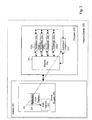
- FIG. 2 is a block diagram of a system that includes an instruction that upon execution on a processor provides software control of memory-level parallelism, according to an embodiment of the present invention.
- FIG. 3 is a process flow diagram for a branch on status method that results from executing an embodiment of the branch on status instruction, according to an embodiment of the present invention.
- FIG. 4 is a process flow diagram for a branch on status method that results from executing another embodiment of the branch on status instruction, according to an embodiment of the present invention.
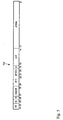
- FIG. 5 is an illustration of a specific embodiment of the branch on status instruction, according to an embodiment of the present invention.
- Fig. 6 is a high-level network system diagram that illustrates several alternative embodiments for using a source program including a branch on status instruction that provides explicit software control of the memory-level parallelism.
- scoreboard 273 ( Fig. 2 ) is made visible to the programmer via execution of an instruction 235 on processor 170. Consequently, the programmer can use information in scoreboard 273, e.g., status information, to explicitly control execution of source program 230. This allows the programmer to use software to enhance memory-level parallelism because instruction 235 gives the programmer explicit control to go somewhere else in program 230 when status information in scoreboard 273 shows that needed data, or perhaps resources, are unavailable.
- code segment 231 includes instruction 235 that determines the status, e.g., available or unavailable, of a source operand, for example, and then takes an appropriate action depending upon whether the source operand is available. If instruction 235 determines that the source operand is available, execution of code segment 231 continues. Conversely, if instruction 235 determines that the source operand is unavailable, code in second code segment 232 of source program 230 is executed.
- instruction 235 determines the status, e.g., available or unavailable, of a source operand, for example, and then takes an appropriate action depending upon whether the source operand is available. If instruction 235 determines that the source operand is available, execution of code segment 231 continues. Conversely, if instruction 235 determines that the source operand is unavailable, code in second code segment 232 of source program 230 is executed.
- instruction 235 determines that a load instruction will miss based upon information in scoreboard 273, instruction 235 jumps to code segment 232 that is another linked list.
- source program 230 detects the miss and jumps to another linked list 232 and tries to traverse it. If there is another miss in linked list 232, the memory-level parallelism is higher. If there is not a miss, great progress is achieved.
- a processor 270 may include multiple processors on a single chip. Each of the multiple processors may have an independent register file and scoreboard or the register file and scoreboard may, in some manner, be shared or coupled. Similarly, register file 271 may be made of one or more register files.
- instruction 235 for a particular processor architecture and operating system of interest. Also, when it is stated herein that an instruction, software, source program, or program code takes an action or actions, those of skill in the art appreciate that the action or actions are the result of execution of an appropriate computer program instruction or instructions.
- Instruction 235 which makes scoreboard 273 visible to the programmer, provides a new level of control and information to the programmer and allows the programmer to explicitly control program flow to achieve greater memory-level parallelism. This new functionality also is particularly useful for explicit programmer control of garbage collection and data speculation, for example.
- instruction 235 is a branch on status instruction.
- An embodiment of the branch on status instruction is a branch on register status instruction that in turn is, in one embodiment, a branch if not ready instruction, e.g., the register status is "not ready.”
- Fig. 3 is a process flow diagram of one embodiment of a method 300 that results from execution of the branch if not ready instruction.
- the format for one embodiment of the branch if not ready instruction is: Branch_if_not_ready %reg label where
- a pseudo code example using this instruction is: load % reg ⁇ ⁇ ⁇ ⁇ Branch_if_not_ready % reg , label use % reg ⁇ ⁇ ⁇ ⁇ First Code Segment label : ⁇ ⁇ ⁇ ⁇ Second Code Segment
- processor 270 reads the status, and not the value, of register %reg from hardware instruction scoreboard 273. Operation 301 transfers processing to status check operation 302.
- Status check operation 302 determines the status of register %reg, as read from scoreboard 273. If the status of register %reg is "not ready,” status check operation 302 transfers processing to branch to label operation 303. Branch to label operation 303 in turn transfers processing to label in the second code segment. If the status of register %reg is "ready,” status check operation 302 transfers processing to continue execution operation 304. Continue execution operation 304 continues execution of the first code segment because the value in register %reg is ready for use.
- FIG. 4 is a process flow diagram of one embodiment of a method 400 that results from execution of the branch if ready instruction.
- the format for one embodiment of the branch if ready instruction is: Branch_if_ready %reg label where
- a pseudo code example using this instruction is: load % reg ⁇ ⁇ ⁇ ⁇ Branch_if_ready % reg , label ⁇ ⁇ ⁇ ⁇ First Code Segment label : use % reg ⁇ ⁇ ⁇ ⁇ Second Code Segment
- Method 400 is equivalent to method 300 described above except status check operation 402 transfers processing to branch to label operation 303 if the status is "ready” and to continue execution operation 304 if the status is "not ready.”
- status check operation 402 transfers processing to branch to label operation 303 if the status is "ready” and to continue execution operation 304 if the status is "not ready.”
- processor 170 includes two new branch instructions that enable software to test scoreboard 273 that also is used in hardware scheduling. These novel branch on status instructions check if an instruction that used the register as a source operand would stall waiting for a previous operation to complete or would be able to execute immediately. These instructions enable software to dynamically adapt to data dependencies.
- branch on status instructions A common use of these branch on status instructions is to check if a load instruction had completed.
- a program can issue a load instruction and then wait an appropriate time and issue one of these new branch on status instructions to test if the load had completed or is still waiting on a cache miss.
- the software could either issue a use for the load data or perform potentially independent work before using the load data.
- branch on status instructions also could be based on the status of functional units since the status of functional units is typically included in the scoreboard.
- the branch on status test could be used for variable latency operations such as a division operation.
- Using the branch instructions for results from functional units provides an enhancement of both instruction level parallelism and memory level parallelism.
- the two novel branch on status instructions are defined based on the SPARC Architecture. See for example, David L. Weaver / Tom Germond, Editors, The SPARC Architecture Manual, Version 9, SPARC International, Inc., San Jose, California, SA-V09-R147-Jul2003, which is published by Prentice Hall, Englewood Cliffs, New Jersey 07632, U.S.A. with ISBN 0-13-825001-4 , to show information known to those of skill-in-the-art.
- the two instructions are (i) a branch on integer register not ready with prediction instruction, and (ii) a branch on integer register ready with prediction instruction.
- these branch on status instructions are implemented by using experimental instructions that utilize opcodes that are otherwise illegal instructions in the SPARC Architecture.
- An Experimental Control Register enables experimental instructions. If an experimental instruction is not enabled, an attempt to execute that opcode causes an illegal instruction trap.
- TABLE 1 defines opcodes for the two branch on integer register status with prediction instructions along with the values of field rcond that uniquely identifies the instructions.
- Fig. 5 is an illustration of a format 500 for the instructions of TABLE 1.
- two-bit field d16hi and fourteen-bit field d16lo together are a word-aligned, sign-extended, program counter relative displacement for the branch.
- Five-bit field rs1 is the address of the first integer register r source operand.
- One-bit branch prediction field p encodes a static prediction for the instructions as presented in TABLE 2.
- Three-bit field rcond selects the register-contents status to test for a branch on integer register status with prediction instruction.
- One-bit annul field a upon being set, annuls the execution of the following instruction if the branch is conditional and untaken, or if the branch is unconditional and taken.
- annul bit a For example, use “brr,a %i3, label .” In TABLE 3, braces signify that the ",a” is optional.
- branch prediction bit p append either “,pt” for predict taken or ",pn” for predict not taken to the opcode mnemonic. If neither ",pt” nor ",pn” is specified, the assembler defaults to ",pt” in this embodiment.
- a storage medium 611 has thereon installed computer-readable program code that includes instruction 235, and execution of the computer-readable program code causes processor 270 to perform the individual operations explained above for methods 300 and/or method 400.
- computer system 200 is a hardware configuration like a personal computer or workstation. However, in another embodiment, computer system 200 is a client-server computer system 600. For either a client-server computer system or a stand-alone computer system, memory 220 typically includes both volatile memory 610, such as main memory, and non-volatile memory 611, such as hard disk drives. In still another embodiment, computer system 200 is contained in a single package.
- memory 220 ( Fig. 2 ) is illustrated as a unified structure, this should not be interpreted as requiring that all memory in memory 220 be at the same physical location. All or part of memory 220 can be in a different physical location than processor 270. For example, instruction 235 may be stored in memory that is physically located in a location different from processor 270.
- Processor 270 should be coupled to the memory containing instruction 235. This could be accomplished in a client-server system 600, or alternatively via a connection to another computer via modems and analog lines, or digital interfaces and a digital carrier line. For example, all of part of memory 220 could be in a World Wide Web portal, while processor 270 is in a personal computer, for example.
- computer system 200 in one embodiment, can be a portable computer, a workstation, a server computer, or any other device that can execute instruction 235.
- computer system 200 can be comprised of multiple different computers, wireless devices, server computers, or any desired combination of these devices that are interconnected to perform, method 300 and/or method 400, as described herein.
- a computer program product comprises a medium configured to store or transport computer readable code for instruction 235 or in which computer readable code for instruction 235 is stored.
- Some examples of computer program products are CD-ROM discs, ROM cards, floppy discs, magnetic tapes, computer hard drives, servers on a network and signals transmitted over a network representing computer readable program code.
- a computer memory refers to a volatile memory, a non-volatile memory, or a combination of the two.
- a computer input unit e.g., keyboard 615 and/or mouse 618
- a display unit 616 refer to the features providing the required functionality to input the information described herein, and to display the information described herein, respectively, in any one of the aforementioned or equivalent devices.
- instruction 235 can be implemented in a wide variety of computer system configurations using an operating system and computer programming language of interest to the user.
- instruction 235 could be stored on a first device and executed on a different device.
- instruction 235 could initially be stored in a server computer, and then as necessary, a module of containing instruction 235 could be transferred to a client device and executed on the client device.
- the module containing instruction 235 is stored in a memory of another computer system.
- the stored module is transferred, over a network to memory 220 in system 200.
- the computer program including instruction 235 may be stored on any common data carrier like, for example, a floppy disk or a compact disc (CD), as well as on any common computer system's storage facilities like hard disks. Therefore, one embodiment of the present invention also relates to a data carrier for storing a computer program for carrying out the inventive method. Another embodiment of the present invention also relates to a method for using a computer system for carrying out method 300 and/or method 400. Still another embodiment of the present invention relates to a computer system with a storage medium on which a computer program including instruction 235 is stored.
Landscapes
- Engineering & Computer Science (AREA)
- Software Systems (AREA)
- Theoretical Computer Science (AREA)
- Physics & Mathematics (AREA)
- General Engineering & Computer Science (AREA)
- General Physics & Mathematics (AREA)
- Advance Control (AREA)
- Devices For Executing Special Programs (AREA)
Claims (13)
- Computergestütztes Verfahren, das auf einem Computersystem ausgeführt wird, mit:einem Prozessor (270),einem Scoreboard (Wertetabelle) (273) mit wenigstens einem Register, undeinem Speicher (220), der mit dem Prozessor verbunden ist und in dem Anweisungen eines Computerprogramms gespeichert sind, wobei das Verfahren folgende Schritte aufweist:Einlesen eines informationsstatus, der für die Ausführung einer zweiten Anweisung eines Computerprogramms in Reaktion auf die Ausführung einer ersten Anweisung eines Computerprogramms benötigt wird, wobei die Information entweder in einem Bereitschafts- oder Nichtbereitschaftsstatus des Scoreboard-Registers besteht, und wobei die erste Anweisung eines Computerprogramms eine Anweisung zur statusbezogenen Verzweigung ist, die auf den Status Bereitschaft / Nichtbereitschaft des Scoreboard-Registers reagiert,Fortfahren mit der Ausführung der zweiten Anweisung eines Computerprogramms, wenn der Status ein erster Status ist, undalternativ Fortfahren mit der Ausführung einer dritten Anweisung eines Computerprogramms, wenn der Status ein zweiter Status ist, der von dem ersten Status verschieden ist.
- Computerbasiertes Verfahren nach Anspruch 1, bei dem die erste Computeranweisung eine Anweisung zur Verzweigung bei Bereitschaft aufweist.
- Computerbasiertes Verfahren nach Anspruch 2, bei dem die Anweisung zur Verzweigung bei Bereitschaft eine Anweisung zur Verzweigung bei Bereitschaft eines Integer-Registers aufweist
- Computerbasiertes Verfahren nach Anspruch 1, bei dem die erste Computeranweisung eine Anweisung zur Verzweigung bei Nichtbereitschaft aufweist.
- Computerbasiertes Verfahren nach Anspruch 4, bei dem die Anweisung zur Verzweigung bei Nichtbereftschaft eine Anweisung zur Verzweigung bei Nichtbereitschaft eines Integer-Registers aufweist
- Computerbasiertes Verfahren nach einem der vorangehenden Ansprüche, bei dem das Scoreboard in dem Prozessor enthalten ist.
- Computersystem mit:einem Prozessor (270),einem Scoreboard (273) mit wenigstens einem Register,einem Speicher (220), der mit dem Prozessor verbunden ist, und in dem Anweisungen eines Computerprogramms gespeichert sind, wobei der Prozessor so eingerichtet ist, dass er bei der Ausführung der Anweisungen auf dem Prozessoreinen informationsstatus einliest, der für die Ausführung einer zweiten Anweisung eines Computerprogramms als Reaktion auf eine erste Anweisung eines Computerprogramms benötigt wird, wobei die Information entweder in einem Bereitschaftsstatus oder in einem Nichtbereitschaftsstatus des Scoreboard-Registers besteht, und wobei die erste Anweisung des Computerprogramms eine statusbezogene Verzweigungsanweisung ist, die auf den Status Bereitschaft / Nichtbereitschaft des Scoreboard-Registers reagiert,mit der Ausführung der zweiten Anweisung eines Computerprogramms fortfährt, wenn der Status ein erster Status ist, undalternativ mit der Ausführung mit einer dritten Anweisung eines Computerprogramms fortfährt, wenn der Status ein zweiter Status ist, der von dem ersten Status verschieden ist.
- Computersystem nach Anspruch 7, bei dem die erste Computeranweisung eine Anweisung zur Verzweigung bei Bereitschaft aufweist.
- Computersystem nach Anspruch 8, bei dem die Anweisung zur Verzweigung bei Bereitschaft eine Anweisung zur Verzweigung bei Bereitschaft eines Integer-Registers aufweist.
- Computersystem nach Anspruch 7, bei dem die erste Computeranweisung eine Anweisung zur Verzweigung bei Nichtbereitschaft aufweist.
- Computersystem nach Anspruch 10, bei dem die Anweisung zur Verzweigung bei Bereitschaft eine Anweisung zur Verzweigung bei Nichtbereitschaft eines Integer-Registers aufweist.
- Computersystem nach einem der Ansprüche 7 bis 11, bei dem das Scoreboard in dem Prozessor enthalten ist.
- Computerprogrammprodukt mit einem Medium, das dazu eingerichtet ist, computerlesbare Programmanweisungen zu speichern oder zu transportieren, wobei die computerlesbaren Programmanweisungen dazu verwendet werden können, das Verfahren nach einem der Ansprüche 1 bis 6 durchzuführen, wenn sie von einem Prozessor ausgeführt werden.
Applications Claiming Priority (3)
| Application Number | Priority Date | Filing Date | Title |
|---|---|---|---|
| US55839104P | 2004-03-31 | 2004-03-31 | |
| US11/082,282 US7711928B2 (en) | 2004-03-31 | 2005-03-16 | Method and structure for explicit software control using scoreboard status information |
| PCT/US2005/010107 WO2005098614A2 (en) | 2004-03-31 | 2005-03-29 | Method and structure for explicit software control using scoreboard status information |
Publications (3)
| Publication Number | Publication Date |
|---|---|
| EP1735698A2 EP1735698A2 (de) | 2006-12-27 |
| EP1735698A4 EP1735698A4 (de) | 2008-11-19 |
| EP1735698B1 true EP1735698B1 (de) | 2010-05-05 |
Family
ID=35055734
Family Applications (1)
| Application Number | Title | Priority Date | Filing Date |
|---|---|---|---|
| EP05730402A Expired - Lifetime EP1735698B1 (de) | 2004-03-31 | 2005-03-29 | Verfahren und struktur zur expliziten softwaresteuerung unter verwendung von scoreboard-statusinformationen |
Country Status (4)
| Country | Link |
|---|---|
| US (1) | US7711928B2 (de) |
| EP (1) | EP1735698B1 (de) |
| DE (1) | DE602005021081D1 (de) |
| WO (1) | WO2005098614A2 (de) |
Families Citing this family (2)
| Publication number | Priority date | Publication date | Assignee | Title |
|---|---|---|---|---|
| US7539851B2 (en) * | 2006-05-18 | 2009-05-26 | Sun Microsystems, Inc. | Using register readiness to facilitate value prediction |
| US11526299B2 (en) * | 2019-12-19 | 2022-12-13 | Micron Technology, Inc. | Elastic buffer for media management of a memory sub-system |
Family Cites Families (34)
| Publication number | Priority date | Publication date | Assignee | Title |
|---|---|---|---|---|
| US3577189A (en) * | 1969-01-15 | 1971-05-04 | Ibm | Apparatus and method in a digital computer for allowing improved program branching with branch anticipation reduction of the number of branches, and reduction of branch delays |
| US5276828A (en) | 1989-03-01 | 1994-01-04 | Digital Equipment Corporation | Methods of maintaining cache coherence and processor synchronization in a multiprocessor system using send and receive instructions |
| US6253307B1 (en) | 1989-05-04 | 2001-06-26 | Texas Instruments Incorporated | Data processing device with mask and status bits for selecting a set of status conditions |
| WO1991004536A1 (en) * | 1989-09-20 | 1991-04-04 | Dolphin Server Technology A/S | Instruction cache architecture for parallel issuing of multiple instructions |
| US5511172A (en) * | 1991-11-15 | 1996-04-23 | Matsushita Electric Co. Ind, Ltd. | Speculative execution processor |
| US5454117A (en) | 1993-08-25 | 1995-09-26 | Nexgen, Inc. | Configurable branch prediction for a processor performing speculative execution |
| US5682493A (en) * | 1993-10-21 | 1997-10-28 | Sun Microsystems, Inc. | Scoreboard table for a counterflow pipeline processor with instruction packages and result packages |
| US5627981A (en) | 1994-07-01 | 1997-05-06 | Digital Equipment Corporation | Software mechanism for accurately handling exceptions generated by instructions scheduled speculatively due to branch elimination |
| US5692168A (en) | 1994-10-18 | 1997-11-25 | Cyrix Corporation | Prefetch buffer using flow control bit to identify changes of flow within the code stream |
| US5651124A (en) | 1995-02-14 | 1997-07-22 | Hal Computer Systems, Inc. | Processor structure and method for aggressively scheduling long latency instructions including load/store instructions while maintaining precise state |
| JP3218932B2 (ja) | 1995-07-06 | 2001-10-15 | 株式会社日立製作所 | データプリフェッチコード生成方法 |
| US5881264A (en) * | 1996-01-31 | 1999-03-09 | Kabushiki Kaisha Toshiba | Memory controller and memory control system |
| US5761515A (en) | 1996-03-14 | 1998-06-02 | International Business Machines Corporation | Branch on cache hit/miss for compiler-assisted miss delay tolerance |
| US5901308A (en) | 1996-03-18 | 1999-05-04 | Digital Equipment Corporation | Software mechanism for reducing exceptions generated by speculatively scheduled instructions |
| US5860148A (en) * | 1996-05-09 | 1999-01-12 | Maker Communications, Inc. | Asynchronous transfer mode cell processing system with cell buffer space gathering |
| US5794025A (en) * | 1996-05-09 | 1998-08-11 | Maker Communications, Inc. | Method and device for performing modulo-based arithmetic operations in an asynchronous transfer mode cell processing system |
| US5748631A (en) * | 1996-05-09 | 1998-05-05 | Maker Communications, Inc. | Asynchronous transfer mode cell processing system with multiple cell source multiplexing |
| US6128303A (en) * | 1996-05-09 | 2000-10-03 | Maker Communications, Inc. | Asynchronous transfer mode cell processing system with scoreboard scheduling |
| US5748630A (en) * | 1996-05-09 | 1998-05-05 | Maker Communications, Inc. | Asynchronous transfer mode cell processing system with load multiple instruction and memory write-back |
| US5860017A (en) | 1996-06-28 | 1999-01-12 | Intel Corporation | Processor and method for speculatively executing instructions from multiple instruction streams indicated by a branch instruction |
| JPH10143365A (ja) * | 1996-11-15 | 1998-05-29 | Toshiba Corp | 並列処理装置及びその命令発行方式 |
| US6016542A (en) | 1997-12-31 | 2000-01-18 | Intel Corporation | Detecting long latency pipeline stalls for thread switching |
| JPH11212788A (ja) | 1998-01-28 | 1999-08-06 | Toshiba Corp | プロセッサのデータ供給装置 |
| US6308261B1 (en) | 1998-01-30 | 2001-10-23 | Hewlett-Packard Company | Computer system having an instruction for probing memory latency |
| US6370639B1 (en) | 1998-10-10 | 2002-04-09 | Institute For The Development Of Emerging Architectures L.L.C. | Processor architecture having two or more floating-point status fields |
| US6304955B1 (en) * | 1998-12-30 | 2001-10-16 | Intel Corporation | Method and apparatus for performing latency based hazard detection |
| US6219781B1 (en) * | 1998-12-30 | 2001-04-17 | Intel Corporation | Method and apparatus for performing register hazard detection |
| US6393553B1 (en) | 1999-06-25 | 2002-05-21 | International Business Machines Corporation | Acknowledgement mechanism for just-in-time delivery of load data |
| US6662360B1 (en) | 1999-09-27 | 2003-12-09 | International Business Machines Corporation | Method and system for software control of hardware branch prediction mechanism in a data processor |
| US6715060B1 (en) * | 2000-01-28 | 2004-03-30 | Hewlett-Packard Development Company, L.P. | Utilizing a scoreboard with multi-bit registers to indicate a progression status of an instruction that retrieves data |
| US6877088B2 (en) | 2001-08-08 | 2005-04-05 | Sun Microsystems, Inc. | Methods and apparatus for controlling speculative execution of instructions based on a multiaccess memory condition |
| US6854048B1 (en) | 2001-08-08 | 2005-02-08 | Sun Microsystems | Speculative execution control with programmable indicator and deactivation of multiaccess recovery mechanism |
| US7100157B2 (en) | 2002-09-24 | 2006-08-29 | Intel Corporation | Methods and apparatus to avoid dynamic micro-architectural penalties in an in-order processor |
| US7500087B2 (en) | 2004-03-09 | 2009-03-03 | Intel Corporation | Synchronization of parallel processes using speculative execution of synchronization instructions |
-
2005
- 2005-03-16 US US11/082,282 patent/US7711928B2/en active Active
- 2005-03-29 EP EP05730402A patent/EP1735698B1/de not_active Expired - Lifetime
- 2005-03-29 WO PCT/US2005/010107 patent/WO2005098614A2/en not_active Ceased
- 2005-03-29 DE DE602005021081T patent/DE602005021081D1/de not_active Expired - Lifetime
Also Published As
| Publication number | Publication date |
|---|---|
| DE602005021081D1 (de) | 2010-06-17 |
| WO2005098614A2 (en) | 2005-10-20 |
| EP1735698A4 (de) | 2008-11-19 |
| US20050223194A1 (en) | 2005-10-06 |
| WO2005098614A3 (en) | 2007-06-14 |
| US7711928B2 (en) | 2010-05-04 |
| EP1735698A2 (de) | 2006-12-27 |
Similar Documents
| Publication | Publication Date | Title |
|---|---|---|
| US5890008A (en) | Method for dynamically reconfiguring a processor | |
| US5838988A (en) | Computer product for precise architectural update in an out-of-order processor | |
| US6035374A (en) | Method of executing coded instructions in a multiprocessor having shared execution resources including active, nap, and sleep states in accordance with cache miss latency | |
| US7600221B1 (en) | Methods and apparatus of an architecture supporting execution of instructions in parallel | |
| US6240502B1 (en) | Apparatus for dynamically reconfiguring a processor | |
| US5692169A (en) | Method and system for deferring exceptions generated during speculative execution | |
| US6058466A (en) | System for allocation of execution resources amongst multiple executing processes | |
| US5958047A (en) | Method for precise architectural update in an out-of-order processor | |
| CN113703834B (zh) | 基于块的处理器核复合寄存器 | |
| US5941983A (en) | Out-of-order execution using encoded dependencies between instructions in queues to determine stall values that control issurance of instructions from the queues | |
| Akkary et al. | A dynamic multithreading processor | |
| US5860018A (en) | Method for tracking pipeline resources in a superscalar processor | |
| US6574727B1 (en) | Method and apparatus for instruction sampling for performance monitoring and debug | |
| US6330662B1 (en) | Apparatus including a fetch unit to include branch history information to increase performance of multi-cylce pipelined branch prediction structures | |
| US6301705B1 (en) | System and method for deferring exceptions generated during speculative execution | |
| US7257699B2 (en) | Selective execution of deferred instructions in a processor that supports speculative execution | |
| US20030163671A1 (en) | Method and apparatus for prioritized instruction issue queue | |
| US6539502B1 (en) | Method and apparatus for identifying instructions for performance monitoring in a microprocessor | |
| US6260189B1 (en) | Compiler-controlled dynamic instruction dispatch in pipelined processors | |
| US6094719A (en) | Reducing data dependent conflicts by converting single precision instructions into microinstructions using renamed phantom registers in a processor having double precision registers | |
| CN108027769A (zh) | 使用寄存器访问指令发起指令块执行 | |
| US6640315B1 (en) | Method and apparatus for enhancing instruction level parallelism | |
| US6085305A (en) | Apparatus for precise architectural update in an out-of-order processor | |
| US20040133769A1 (en) | Generating prefetches by speculatively executing code through hardware scout threading | |
| US7051193B2 (en) | Register rotation prediction and precomputation |
Legal Events
| Date | Code | Title | Description |
|---|---|---|---|
| PUAI | Public reference made under article 153(3) epc to a published international application that has entered the european phase |
Free format text: ORIGINAL CODE: 0009012 |
|
| 17P | Request for examination filed |
Effective date: 20060927 |
|
| AK | Designated contracting states |
Kind code of ref document: A2 Designated state(s): AT BE BG CH CY CZ DE DK EE ES FI FR GB GR HU IE IS IT LI LT LU MC NL PL PT RO SE SI SK TR |
|
| AX | Request for extension of the european patent |
Extension state: AL BA HR LV MK YU |
|
| PUAK | Availability of information related to the publication of the international search report |
Free format text: ORIGINAL CODE: 0009015 |
|
| DAX | Request for extension of the european patent (deleted) | ||
| RBV | Designated contracting states (corrected) |
Designated state(s): DE GB |
|
| A4 | Supplementary search report drawn up and despatched |
Effective date: 20081020 |
|
| 17Q | First examination report despatched |
Effective date: 20081212 |
|
| GRAP | Despatch of communication of intention to grant a patent |
Free format text: ORIGINAL CODE: EPIDOSNIGR1 |
|
| GRAS | Grant fee paid |
Free format text: ORIGINAL CODE: EPIDOSNIGR3 |
|
| GRAA | (expected) grant |
Free format text: ORIGINAL CODE: 0009210 |
|
| AK | Designated contracting states |
Kind code of ref document: B1 Designated state(s): DE GB |
|
| REG | Reference to a national code |
Ref country code: GB Ref legal event code: FG4D |
|
| REF | Corresponds to: |
Ref document number: 602005021081 Country of ref document: DE Date of ref document: 20100617 Kind code of ref document: P |
|
| PLBE | No opposition filed within time limit |
Free format text: ORIGINAL CODE: 0009261 |
|
| STAA | Information on the status of an ep patent application or granted ep patent |
Free format text: STATUS: NO OPPOSITION FILED WITHIN TIME LIMIT |
|
| 26N | No opposition filed |
Effective date: 20110208 |
|
| REG | Reference to a national code |
Ref country code: DE Ref legal event code: R097 Ref document number: 602005021081 Country of ref document: DE Effective date: 20110207 |
|
| REG | Reference to a national code |
Ref country code: DE Ref legal event code: R082 Ref document number: 602005021081 Country of ref document: DE Representative=s name: DENDORFER & HERRMANN PATENTANWAELTE PARTNERSCH, DE |
|
| REG | Reference to a national code |
Ref country code: DE Ref legal event code: R081 Ref document number: 602005021081 Country of ref document: DE Owner name: ORACLE AMERICA, INC., REDWOOD SHORES, US Free format text: FORMER OWNER: SUN MICROSYSTEMS, INC., SANTA CLARA, CALIF., US |
|
| REG | Reference to a national code |
Ref country code: GB Ref legal event code: 732E Free format text: REGISTERED BETWEEN 20230223 AND 20230301 |
|
| P01 | Opt-out of the competence of the unified patent court (upc) registered |
Effective date: 20230522 |
|
| PGFP | Annual fee paid to national office [announced via postgrant information from national office to epo] |
Ref country code: DE Payment date: 20240130 Year of fee payment: 20 Ref country code: GB Payment date: 20240208 Year of fee payment: 20 |
|
| REG | Reference to a national code |
Ref country code: DE Ref legal event code: R071 Ref document number: 602005021081 Country of ref document: DE |
|
| REG | Reference to a national code |
Ref country code: GB Ref legal event code: PE20 Expiry date: 20250328 |
|
| PG25 | Lapsed in a contracting state [announced via postgrant information from national office to epo] |
Ref country code: GB Free format text: LAPSE BECAUSE OF EXPIRATION OF PROTECTION Effective date: 20250328 |