EP1734718A2 - Computer-eingeführte Methode mit Realzeitwarteeinheit für das Ermitteln der Viren in der Datenübertragung auf einer Stromgrundlage - Google Patents
Computer-eingeführte Methode mit Realzeitwarteeinheit für das Ermitteln der Viren in der Datenübertragung auf einer Stromgrundlage Download PDFInfo
- Publication number
- EP1734718A2 EP1734718A2 EP05021656A EP05021656A EP1734718A2 EP 1734718 A2 EP1734718 A2 EP 1734718A2 EP 05021656 A EP05021656 A EP 05021656A EP 05021656 A EP05021656 A EP 05021656A EP 1734718 A2 EP1734718 A2 EP 1734718A2
- Authority
- EP
- European Patent Office
- Prior art keywords
- packet
- virus
- network platform
- virus code
- protocol
- Prior art date
- Legal status (The legal status is an assumption and is not a legal conclusion. Google has not performed a legal analysis and makes no representation as to the accuracy of the status listed.)
- Withdrawn
Links
Images




Classifications
-
- H—ELECTRICITY
- H04—ELECTRIC COMMUNICATION TECHNIQUE
- H04L—TRANSMISSION OF DIGITAL INFORMATION, e.g. TELEGRAPHIC COMMUNICATION
- H04L63/00—Network architectures or network communication protocols for network security
- H04L63/14—Network architectures or network communication protocols for network security for detecting or protecting against malicious traffic
- H04L63/1408—Network architectures or network communication protocols for network security for detecting or protecting against malicious traffic by monitoring network traffic
- H04L63/1416—Event detection, e.g. attack signature detection
-
- H—ELECTRICITY
- H04—ELECTRIC COMMUNICATION TECHNIQUE
- H04L—TRANSMISSION OF DIGITAL INFORMATION, e.g. TELEGRAPHIC COMMUNICATION
- H04L63/00—Network architectures or network communication protocols for network security
- H04L63/14—Network architectures or network communication protocols for network security for detecting or protecting against malicious traffic
- H04L63/1441—Countermeasures against malicious traffic
- H04L63/145—Countermeasures against malicious traffic the attack involving the propagation of malware through the network, e.g. viruses, trojans or worms
Definitions
- the present invention relates to a computer-implemented method for detecting a virus according to the pre-characterizing clause of claim 1.
- a computer virus is a program that disrupts operations of a computer by modifying other executable programs.
- a virus may also delete or corrupt crucial system files, user data files or application programs.
- computer viruses may make copies of themselves to distribute to other computers connected to a communications network, thereby causing damage to computers at several locations.
- a user at an individual PC or workstation that wishes to access the Internet typically does so using a software application known as a web browser.
- a web browser makes a connection via the Internet to other computers known as web servers, and receives information from the web servers that is rendered to the web client.
- One common type of information transmitted from a web server to a web client is known as a "web page", generally formatted using a specialized language called Hypertext Markup Language (HTML).
- HTML Hypertext Markup Language
- Another type of information transmitted from a web server to a web client is e-mail messages and any files or other information attached to those messages.
- Yet another type of information transmitted from a web server to a web client are files that may be downloaded from a web site.
- virus-checking techniques are implemented on the web servers and mail servers for protecting against possible network intrusion.
- the prior art virus-checking techniques implemented on a computer network scan files for virus signatures, searching in code fragments for known patterns used for viruses. Geared for virus detection in a compromised computer system, the prior art anti-virus software is designed to work on entire files and does not provide real-time monitoring of network traffic to protect the modern networked computer against breaches. Files are completely stored into a temporary space of a server installed with the anti-virus software, scanned for virus signatures, optionally cleaned of viruses, and may then be either blocked or passed on to the destination address.
- the prior art anti-virus method has several disadvantages. Since the virus scanning is not performed until the whole file has been downloaded, the prior art results in slowed network performance. Since a temporary space is required on the server, the download size of the file has limit.
- the present invention aims at providing a computer-implemented method with real-time response mechanism for detecting viruses in data transfer on a stream basis that reduces the performance problems and limitations of the prior art.
- the claimed computer-implemented method includes steps of determining a type of a packet if input data comprises a plurality of packets, determining whether the packet contains virus code, and performing a predetermined action on the packet if the packet contains virus code.
- the present invention provides a computer-implemented method for detecting viruses in data transfer on a stream basis. Unlike the prior art virus-detecting method that is designed to work on entire files, the present invention works on a stream basis and provides a real-time response mechanism once a malicious packet with virus code is detected.
- Fig. 1 For a network system installed with a virus-detecting method of the present invention.
- the network system in Fig.1 operates on a packet-switching technology which most modern networks are based on. Packet switching is more efficient and robust for data that can withstand some delays in transmission, such as electronic mail (e-mail) messages.
- a packet switching network system a file is divided into a plurality of packets, which, together with control signals and possibly error information, are then transmitted to the destination address.
- the packet, control signals and the error control information are usually arranged in a specific format called protocol.
- a protocol determines the type of error checking to be used, the data compression method (if any), how the sending device will indicate that it has finished sending a message, and how the receiving device will indicate that it has received a message.
- Each packet is transmitted individually and packets can even follow different routes to the destination. Once all the packets forming a message arrive at the destination, they are recompiled into the original message.
- the network system installed with the present virus-detecting method represents an e-mail system that comprises a router, a mail server and the Internet.
- the mail server provides services to several hosts, Host 1 and Host 2 (a plurality of hosts are possible), and is connected to a remote host through the router and the Internet.
- the remote host can be an attacker, an infected system or simply an innocent system free of viruses.
- a router is a network platform device that forwards data packets along networks and determines the best path for forwarding the packets.
- the present invention can be implemented on the router in Fig.1.
- the most common protocol for sending e-mail messages between clients and servers is called Simple Mail Transfer Protocol (SMTP).
- SMTP Simple Mail Transfer Protocol
- the packets forming the e-mail message arrives first at the router.
- the virus-detecting method of the present invention scans each packet for possible virus code before sending it to the mail server. If none of the packets forming the e-mail message contains virus code, the router records relevant information of each packet and then sends it to the destination address. Then the original e-mail message sent from the remote host is recomposed at the mail server.
- a user of Host 1 uses a web browser to receive e-mails, the mail server then sends the message to Host 1.
- the present invention method removes the virus code and replaces the segment previously occupied by the virus code with information indicating the existence of the virus code.
- the present invention method then creates a modified packet by reconstructing a header and a checksum of the packet. After storing the relevant information on the router, the modified packet is sent to the mail server.
- a modified e-mail message instead of the original e-mail message, is re-composed at the mail server. When a user of Host 1 accesses his mailbox, he receives this modified e-mail message notifying the existence and the removal of the virus in the original e-mail message.
- FIG. 2 a flowchart illustrating a computer-implemented and stream-based method with real-time response mechanism for detecting viruses in data transfer according to the present invention.
- the flowchart in Fig. 2 includes the following steps:
- the present invention method illustrated in Fig. 2 scans each incoming packet for existing virus code, and determines the next step based on the result. Unlike the prior art virus-detecting method, each incoming packet forming the input data is handled immediately instead of waiting for all of the packets to arrive. If a packet does not contain virus code, it is sent to its destination address; if a packet contains virus code, then the removal, header and checksum reconstruction steps of steps 240 and 250 in Fig. 2 are performed, and a modified packet with information indicating the existence of the virus code is sent to its destination address. In either case, each incoming packet is dealt with immediately when received by the router.
- the predetermined format of the packet is firstly stored at the router; the packet is secondly scanned for virus code, optionally cleaned of viruses and optionally reconstructed, and then thirdly passed on to the destination address.
- the router since the router does not need to wait for all packets before performing virus scanning, the effectiveness of the network system is largely improved and the network communication is not interrupted. And since a packet naturally takes less space than a complete file, it requires less space at the router for temporary data storage. After completing the scanning and any necessary virus removal steps, the packet is sent to the destination address and the temporary space can be used again for subsequent packet storage. Therefore, the present invention does not have the download size limit as in the prior art.
- FIG. 2 shows how the virus-detecting method of the present invention is implemented on a router of an e-mail system for scanning e-mail messages with SMTP format.
- the present invention method is not limited to implementation on a router of an e-mail system, such as that illustrated in Fig. 1, it can also be implemented on other network platforms such as proxy server.
- the method illustrated by steps in Fig. 2 can be applied to encapsulated format protocols, such as simple mail transfer protocol (SMTP), post office protocol 3 (POP3), hypertext transfer protocol (HTTP)...etc.
- encapsulated format protocols such as simple mail transfer protocol (SMTP), post office protocol 3 (POP3), hypertext transfer protocol (HTTP)...etc.
- SMTP simple mail transfer protocol
- POP3 post office protocol 3
- HTTP hypertext transfer protocol
- the present invention method can create a modified packet from the original malicious packet by executing step 250 in Fig. 2.
- step 260 can still be executed to remove virus code
- step 270 cannot be applied due to lack of an encapsulated format protocol.
- the header and the checksum of a malicious packet cannot be reconstructed due to lack of an agreed-upon format.
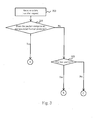
- FIG. 3 illustrates the steps of another computer-implemented virus removal and response mechanism when detecting viruses with a stream-based method according to the present invention.
- Fig. 3 different approaches are used for packets forming input data depending on the exact packet type. Packet types are typically the following: a packet with an encapsulated format protocol and a packet without an encapsulated format protocol. The steps in Fig. 3 are illustrated as follows:
- Fig. 4 illustrates the flowchart connected to the link A of Fig. 3. This process is used if the packet forming the input data comprises an encapsulated format protocol. Fig. 4 includes the following steps:
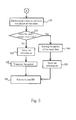
- Fig. 5 illustrates the flowchart connected to the link B of Fig. 3. This process is used when the packet forming the input data does not comprise an encapsulated format protocol and when the packet is the last packet of the input data.
- Fig. 5 includes the following steps:
- the present invention method uses another approach to prevent the virus from reaching the destination. Since the header and the checksum cannot be reconstructed after virus code has been removed from a malicious packet of this type, the present invention method keeps the last packet of the data on the network platform and withholds the last packet from reaching the destination address. By keeping the last packet of the data, it is not possible to recompose the original data at the client side. Therefore the present invention method can successfully prevent a virus in a packet without an encapsulated format protocol from spreading without influencing the original communication.
- Fig. 6 illustrates the flowchart connected to the link C of Fig. 3. This process is used when the packet forming the input data does not comprise an encapsulated format protocol and when the packet is not the last packet of the input data.
- Fig. 6 includes the following steps:
- the present invention method uses another approach to prevent the virus from reaching the destination. If a packet does not comprise an encapsulated format protocol, the header and the checksum of a malicious packet cannot be reconstructed due to lack of an agreed-upon format. The present invention method instead removes the virus code without creating a modified packet.
- the prior art virus-detecting method is designed to operate on complete files and hence has several disadvantages such as slow system performance and download size limitations.
- the present invention functions on a packet basis. Using a temporary space at a network platform, the present invention scans each incoming packet for malicious content immediately instead of waiting for the complete file to be downloaded. Unlike the prior art method, the present invention provides a real-time response mechanism for virus detection in data transfer in a network system that features better system efficiency without affecting the original communication. Also, by scanning each packet instead of the complete file, only small space at the network platform is required for temporary data storage. Therefore the present invention does not have the download size limitations in the prior art method. In conclusion, the present invention provides a real-time and efficient virus-detecting method used for network system.
Landscapes
- Engineering & Computer Science (AREA)
- Computer Security & Cryptography (AREA)
- Computer Hardware Design (AREA)
- Computing Systems (AREA)
- General Engineering & Computer Science (AREA)
- Computer Networks & Wireless Communication (AREA)
- Signal Processing (AREA)
- Health & Medical Sciences (AREA)
- General Health & Medical Sciences (AREA)
- Virology (AREA)
- Data Exchanges In Wide-Area Networks (AREA)
Applications Claiming Priority (1)
| Application Number | Priority Date | Filing Date | Title |
|---|---|---|---|
| US11/160,230 US20060288418A1 (en) | 2005-06-15 | 2005-06-15 | Computer-implemented method with real-time response mechanism for detecting viruses in data transfer on a stream basis |
Publications (1)
| Publication Number | Publication Date |
|---|---|
| EP1734718A2 true EP1734718A2 (de) | 2006-12-20 |
Family
ID=37052589
Family Applications (1)
| Application Number | Title | Priority Date | Filing Date |
|---|---|---|---|
| EP05021656A Withdrawn EP1734718A2 (de) | 2005-06-15 | 2005-10-04 | Computer-eingeführte Methode mit Realzeitwarteeinheit für das Ermitteln der Viren in der Datenübertragung auf einer Stromgrundlage |
Country Status (3)
| Country | Link |
|---|---|
| US (1) | US20060288418A1 (de) |
| EP (1) | EP1734718A2 (de) |
| TW (1) | TW200643701A (de) |
Families Citing this family (35)
| Publication number | Priority date | Publication date | Assignee | Title |
|---|---|---|---|---|
| US7996894B1 (en) * | 2005-02-15 | 2011-08-09 | Sonicwall, Inc. | MAC address modification of otherwise locally bridged client devices to provide security |
| FR2887385B1 (fr) * | 2005-06-15 | 2007-10-05 | Advestigo Sa | Procede et systeme de reperage et de filtrage d'informations multimedia sur un reseau |
| US8255999B2 (en) * | 2007-05-24 | 2012-08-28 | Microsoft Corporation | Anti-virus scanning of partially available content |
| US8291495B1 (en) | 2007-08-08 | 2012-10-16 | Juniper Networks, Inc. | Identifying applications for intrusion detection systems |
| US8112800B1 (en) | 2007-11-08 | 2012-02-07 | Juniper Networks, Inc. | Multi-layered application classification and decoding |
| US20090144822A1 (en) * | 2007-11-30 | 2009-06-04 | Barracuda Inc. | Withholding last packet of undesirable file transfer |
| US8572717B2 (en) | 2008-10-09 | 2013-10-29 | Juniper Networks, Inc. | Dynamic access control policy with port restrictions for a network security appliance |
| US9398043B1 (en) * | 2009-03-24 | 2016-07-19 | Juniper Networks, Inc. | Applying fine-grain policy action to encapsulated network attacks |
| US8024462B1 (en) * | 2009-10-05 | 2011-09-20 | Mcafee, Inc. | System, method, and computer program product for preventing communication of unwanted network traffic by holding only a last portion of the network traffic |
| US8683573B2 (en) | 2011-06-27 | 2014-03-25 | International Business Machines Corporation | Detection of rogue client-agnostic nat device tunnels |
| US9904564B2 (en) * | 2011-11-15 | 2018-02-27 | Red Hat Israel, Ltd. | Policy enforcement by hypervisor paravirtualized ring copying |
| US9158893B2 (en) * | 2012-02-17 | 2015-10-13 | Shape Security, Inc. | System for finding code in a data flow |
| US20140041030A1 (en) * | 2012-02-17 | 2014-02-06 | Shape Security, Inc | System for finding code in a data flow |
| US9208316B1 (en) * | 2012-02-27 | 2015-12-08 | Amazon Technologies, Inc. | Selective disabling of content portions |
| US10135732B2 (en) | 2012-12-31 | 2018-11-20 | Juniper Networks, Inc. | Remotely updating routing tables |
| US9225737B2 (en) | 2013-03-15 | 2015-12-29 | Shape Security, Inc. | Detecting the introduction of alien content |
| US10073971B2 (en) * | 2013-06-28 | 2018-09-11 | Microsoft Technology Licensing, Llc | Traffic processing for network performance and security |
| US9225729B1 (en) | 2014-01-21 | 2015-12-29 | Shape Security, Inc. | Blind hash compression |
| US8997226B1 (en) | 2014-04-17 | 2015-03-31 | Shape Security, Inc. | Detection of client-side malware activity |
| US9405910B2 (en) | 2014-06-02 | 2016-08-02 | Shape Security, Inc. | Automatic library detection |
| US10298599B1 (en) | 2014-09-19 | 2019-05-21 | Shape Security, Inc. | Systems for detecting a headless browser executing on a client computer |
| US9954893B1 (en) | 2014-09-23 | 2018-04-24 | Shape Security, Inc. | Techniques for combating man-in-the-browser attacks |
| US9800602B2 (en) | 2014-09-30 | 2017-10-24 | Shape Security, Inc. | Automated hardening of web page content |
| US9479526B1 (en) | 2014-11-13 | 2016-10-25 | Shape Security, Inc. | Dynamic comparative analysis method and apparatus for detecting and preventing code injection and other network attacks |
| US9986058B2 (en) | 2015-05-21 | 2018-05-29 | Shape Security, Inc. | Security systems for mitigating attacks from a headless browser executing on a client computer |
| WO2017007705A1 (en) | 2015-07-06 | 2017-01-12 | Shape Security, Inc. | Asymmetrical challenges for web security |
| WO2017007936A1 (en) | 2015-07-07 | 2017-01-12 | Shape Security, Inc. | Split serving of computer code |
| US10375026B2 (en) | 2015-10-28 | 2019-08-06 | Shape Security, Inc. | Web transaction status tracking |
| US10212130B1 (en) | 2015-11-16 | 2019-02-19 | Shape Security, Inc. | Browser extension firewall |
| US10075416B2 (en) | 2015-12-30 | 2018-09-11 | Juniper Networks, Inc. | Network session data sharing |
| US9917850B2 (en) | 2016-03-03 | 2018-03-13 | Shape Security, Inc. | Deterministic reproduction of client/server computer state or output sent to one or more client computers |
| US10567363B1 (en) | 2016-03-03 | 2020-02-18 | Shape Security, Inc. | Deterministic reproduction of system state using seeded pseudo-random number generators |
| US10129289B1 (en) | 2016-03-11 | 2018-11-13 | Shape Security, Inc. | Mitigating attacks on server computers by enforcing platform policies on client computers |
| US11431801B2 (en) * | 2018-11-05 | 2022-08-30 | Netapp Inc. | Storage offload engine for distributed network device data |
| TWI760655B (zh) * | 2019-09-26 | 2022-04-11 | 阿證科技股份有限公司 | 資料掃描系統 |
Family Cites Families (18)
| Publication number | Priority date | Publication date | Assignee | Title |
|---|---|---|---|---|
| CA2301147C (en) * | 1997-07-24 | 2010-07-13 | Worldtalk Corporation | E-mail firewall with stored key encryption/decryption |
| US20020069356A1 (en) * | 2000-06-12 | 2002-06-06 | Kwang Tae Kim | Integrated security gateway apparatus |
| US20040064737A1 (en) * | 2000-06-19 | 2004-04-01 | Milliken Walter Clark | Hash-based systems and methods for detecting and preventing transmission of polymorphic network worms and viruses |
| US7328349B2 (en) * | 2001-12-14 | 2008-02-05 | Bbn Technologies Corp. | Hash-based systems and methods for detecting, preventing, and tracing network worms and viruses |
| US6732279B2 (en) * | 2001-03-14 | 2004-05-04 | Terry George Hoffman | Anti-virus protection system and method |
| US7340535B1 (en) * | 2002-06-04 | 2008-03-04 | Fortinet, Inc. | System and method for controlling routing in a virtual router system |
| US6826627B2 (en) * | 2002-09-03 | 2004-11-30 | Burnbag, Ltd. | Data transformation architecture |
| US7418730B2 (en) * | 2002-12-17 | 2008-08-26 | International Business Machines Corporation | Automatic client responses to worm or hacker attacks |
| FR2850503B1 (fr) * | 2003-01-23 | 2005-04-08 | Everbee Networks | Procede et systeme dynamique de securisation d'un reseau de communication au moyen d'agents portables |
| US20050216770A1 (en) * | 2003-01-24 | 2005-09-29 | Mistletoe Technologies, Inc. | Intrusion detection system |
| US7246227B2 (en) * | 2003-02-10 | 2007-07-17 | Symantec Corporation | Efficient scanning of stream based data |
| AU2004303220B2 (en) * | 2003-09-11 | 2008-05-22 | Bae Systems Plc | Real-time network monitoring and security |
| US7434297B1 (en) * | 2003-11-17 | 2008-10-14 | Symantec Corporation | Tracking computer infections |
| US20050193429A1 (en) * | 2004-01-23 | 2005-09-01 | The Barrier Group | Integrated data traffic monitoring system |
| US20060074621A1 (en) * | 2004-08-31 | 2006-04-06 | Ophir Rachman | Apparatus and method for prioritized grouping of data representing events |
| US7797749B2 (en) * | 2004-11-03 | 2010-09-14 | Intel Corporation | Defending against worm or virus attacks on networks |
| US20060174345A1 (en) * | 2004-11-30 | 2006-08-03 | Sensory Networks, Inc. | Apparatus and method for acceleration of malware security applications through pre-filtering |
| CA2596930A1 (en) * | 2005-02-07 | 2006-08-10 | Adzilla, Inc. | Method and system of targeting content |
-
2005
- 2005-06-15 US US11/160,230 patent/US20060288418A1/en not_active Abandoned
- 2005-10-04 EP EP05021656A patent/EP1734718A2/de not_active Withdrawn
- 2005-11-03 TW TW094138582A patent/TW200643701A/zh unknown
Also Published As
| Publication number | Publication date |
|---|---|
| TW200643701A (en) | 2006-12-16 |
| US20060288418A1 (en) | 2006-12-21 |
Similar Documents
| Publication | Publication Date | Title |
|---|---|---|
| EP1734718A2 (de) | Computer-eingeführte Methode mit Realzeitwarteeinheit für das Ermitteln der Viren in der Datenübertragung auf einer Stromgrundlage | |
| US7809796B1 (en) | Method of controlling access to network resources using information in electronic mail messages | |
| US7461403B1 (en) | System and method for providing passive screening of transient messages in a distributed computing environment | |
| US7134142B2 (en) | System and method for providing exploit protection for networks | |
| US8145904B2 (en) | System and method for network edge data protection | |
| US7117533B1 (en) | System and method for providing dynamic screening of transient messages in a distributed computing environment | |
| US7796515B2 (en) | Propagation of viruses through an information technology network | |
| US9648038B2 (en) | Propagation of viruses through an information technology network | |
| US20050060535A1 (en) | Methods and apparatus for monitoring local network traffic on local network segments and resolving detected security and network management problems occurring on those segments | |
| EP1122932B1 (de) | Schutz von Computernetzen gegen böswillige Inhalte | |
| US20030145228A1 (en) | System and method of providing virus protection at a gateway | |
| US20080077995A1 (en) | Network-Based Security Platform | |
| JPWO2008084729A1 (ja) | アプリケーション連鎖性ウイルス及びdns攻撃発信元検知装置、その方法及びそのプログラム | |
| JP2007528040A (ja) | メッセージプロテクションシステムにおける二段階ハッシュ値マッチング法 | |
| CN103634306A (zh) | 网络数据的安全检测方法和安全检测服务器 | |
| US7437758B2 (en) | Propagation of viruses through an information technology network | |
| US7634543B1 (en) | Method of controlling access to network resources referenced in electronic mail messages | |
| US7784096B2 (en) | Outgoing connection attempt limiting to slow down spreading of viruses | |
| US7761915B2 (en) | Terminal and related computer-implemented method for detecting malicious data for computer network | |
| US9143524B2 (en) | Propagation of malicious code through an information technology network | |
| WO2003014932A2 (en) | System and method for providing passive screening of transient messages in a distributed computing environment | |
| US20110173675A9 (en) | Propagation of malicious code through an information technology network | |
| WIENS et al. | STICKY WORMS OR: RESPONDING TO A DISTRIBUTED DENIAL OF SERVICE ATTACK WITH A SELECTIVE TARPIT |
Legal Events
| Date | Code | Title | Description |
|---|---|---|---|
| PUAI | Public reference made under article 153(3) epc to a published international application that has entered the european phase |
Free format text: ORIGINAL CODE: 0009012 |
|
| AK | Designated contracting states |
Kind code of ref document: A2 Designated state(s): AT BE BG CH CY CZ DE DK EE ES FI FR GB GR HU IE IS IT LI LT LU LV MC NL PL PT RO SE SI SK TR |
|
| AX | Request for extension of the european patent |
Extension state: AL BA HR MK YU |
|
| STAA | Information on the status of an ep patent application or granted ep patent |
Free format text: STATUS: THE APPLICATION IS DEEMED TO BE WITHDRAWN |
|
| 18D | Application deemed to be withdrawn |
Effective date: 20100501 |