EP1733586B1 - Method and arrangement for improved inter-rat handover - Google Patents
Method and arrangement for improved inter-rat handover Download PDFInfo
- Publication number
- EP1733586B1 EP1733586B1 EP04721414.3A EP04721414A EP1733586B1 EP 1733586 B1 EP1733586 B1 EP 1733586B1 EP 04721414 A EP04721414 A EP 04721414A EP 1733586 B1 EP1733586 B1 EP 1733586B1
- Authority
- EP
- European Patent Office
- Prior art keywords
- parameter
- radio access
- user equipment
- access network
- dbm
- Prior art date
- Legal status (The legal status is an assumption and is not a legal conclusion. Google has not performed a legal analysis and makes no representation as to the accuracy of the status listed.)
- Expired - Lifetime
Links
- 238000000034 method Methods 0.000 title claims description 31
- 238000005259 measurement Methods 0.000 claims description 28
- 238000005516 engineering process Methods 0.000 claims description 14
- 230000000977 initiatory effect Effects 0.000 claims 3
- 238000010586 diagram Methods 0.000 description 5
- 238000004891 communication Methods 0.000 description 2
- 230000001419 dependent effect Effects 0.000 description 2
- 238000011156 evaluation Methods 0.000 description 2
- 230000007423 decrease Effects 0.000 description 1
- 230000003247 decreasing effect Effects 0.000 description 1
- 230000009977 dual effect Effects 0.000 description 1
- 230000000694 effects Effects 0.000 description 1
- 210000003127 knee Anatomy 0.000 description 1
- 238000010295 mobile communication Methods 0.000 description 1
- 238000012986 modification Methods 0.000 description 1
- 230000004048 modification Effects 0.000 description 1
Images

Classifications
-
- H—ELECTRICITY
- H04—ELECTRIC COMMUNICATION TECHNIQUE
- H04W—WIRELESS COMMUNICATION NETWORKS
- H04W36/00—Hand-off or reselection arrangements
- H04W36/0005—Control or signalling for completing the hand-off
- H04W36/0083—Determination of parameters used for hand-off, e.g. generation or modification of neighbour cell lists
- H04W36/0085—Hand-off measurements
-
- H—ELECTRICITY
- H04—ELECTRIC COMMUNICATION TECHNIQUE
- H04W—WIRELESS COMMUNICATION NETWORKS
- H04W36/00—Hand-off or reselection arrangements
- H04W36/14—Reselecting a network or an air interface
- H04W36/144—Reselecting a network or an air interface over a different radio air interface technology
- H04W36/1443—Reselecting a network or an air interface over a different radio air interface technology between licensed networks
-
- H—ELECTRICITY
- H04—ELECTRIC COMMUNICATION TECHNIQUE
- H04W—WIRELESS COMMUNICATION NETWORKS
- H04W36/00—Hand-off or reselection arrangements
- H04W36/14—Reselecting a network or an air interface
- H04W36/144—Reselecting a network or an air interface over a different radio air interface technology
- H04W36/1446—Reselecting a network or an air interface over a different radio air interface technology wherein at least one of the networks is unlicensed
Definitions
- the invention relates to communication networks in general, and specifically to handover between different radio access technologies.
- RAT radio access technologies
- third generation mobile terminals are equipped with so called dual RAT, e.g. both WCDMA (Wideband Code-Division Multiple Access) and GSM technology (Global System for Mobile communications) i.e. TDMA, whereby the mobile terminal is able to communicate with both RAT.
- dual RAT e.g. both WCDMA (Wideband Code-Division Multiple Access) and GSM technology (Global System for Mobile communications) i.e. TDMA
- WCDMA Wideband Code-Division Multiple Access
- GSM technology Global System for Mobile communications
- TDMA Global System for Mobile communications
- Handover between networks utilizing different RAT require that a dual-mode user equipment or mobile terminal, while communicating over a first radio access network utilizing a first RAT, has to perform measurements on neighboring cells in a second radio access network utilizing a second RAT.
- either the mobile terminal itself decides when to change from one cell to another, or the decision is performed at a network node such as a base station controller in the first network.
- a network node such as a base station controller in the first network.
- the latter case suggests that the mobile terminal has to report some measured parameters to the base station.
- the mobile During handover from a GSM network to a network utilizing WCDMA e.g. UTRAN, the mobile transmits a standardized measurement report to the base station controller of the GSM network. Consequently, the base station controller, based on the received measurement report, decides to which target UTRAN cell the handover will be effected.
- WCDMA Wideband Code Division Multiple Access
- US 2002/093922 A1 discloses handover from CDMA cells to cells that use a different Radio Access Technology, RAT.
- a general object of the present invention is to provide an improved handover between different radio access technologies.
- a further object is to provide a method for improved inter-RAT handover to radio access networks utilizing WCDMA.
- Yet another object is to provide a method for stable handover performance during variations in traffic load.
- the main aspect of the present invention is to enhance the UTRAN/WCDMA measurements in the measurement result message sent from a multi-RAT mobile, so that both a first parameter e.g. the Ec/No value and a second parameter e.g. the RSCP value are included.
- the base station controller will then have the possibility to use both measures to make an optimal UTRAN handover decision. This will make the handover performance more optimized and stable during traffic load variations.
- the advantage of this invention is that the handover to UTRAN decision will be optimized.
- the decision will be more independent of the traffic load situation, and the implementation can be made in such a way that the operator can select to trigger UTRAN handover based on Ec/No measurements, RSCP measurements, or both.
- This invention improves the reporting from Mobile Stations/User Equipment sent to the BSC in GSM mode, by including both quality and signal strength measurements of WCDMA/UTRAN neighbors.
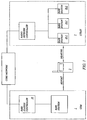
- a dual-mode mobile terminal 3 also referred to as mobile node, mobile station, wireless unit or user equipment, communicating with/over a GSM network 1.
- the user equipment 3 measures quality parameters for a plurality of neighboring cells or radio base stations 20 in a UTRAN network 2. The measurements can be performed continuously, or at predetermined time intervals.
- an existing dual-mode mobile terminal or user equipment 3 measures and reports only the UTRAN quality measure CPICH Ec/No of neighboring UTRAN cells when communicating in GSM mode. (Ref. 3GPP 04.18.)
- the existing GSM measurement report is used and the measured CPICH Ec/No value is reported for one or more UTRAN cells.
- the present invention is based on the recognition that the existing solution, where the user equipment 3 reports only the Ec/No values, has some important drawbacks.
- the main problem is that the Ec/No and the RSCP values have little or no correlation, but are both important for the quality.
- FIG. 2 illustrates schematically how both the Ec/No and the RSCP values vary as functions of the distance from a measured base station.
- RSCP typically has an exponentially decreasing behavior, more or less independent of the load situation of the base station.
- the Ec/No decreases slowly until it drops abruptly, resulting in a pronounced knee on the curve.
- Ec/No is load dependent (since No is a measure of the power density in the band) and as a result the curve is displaced downward when the traffic load increases.
- both the Ec/No and the RSCP value at a certain geographical location can be very good at a low traffic load in the network, while the same spot may show a quite bad Ec/No value at a higher traffic load (and the RSCP value is still good) (see point A in FIG. 2 ). Or, the Ec/No may be very good and the RSCP may be bad at low traffic load (see point B in FIG. 2 ). In especially new UTRAN markets where the traffic load most probably will change quite substantially, this will cause a problem for defining an optimal GSM to UTRAN (GTU) handover parameter setting.
- GTU GSM to UTRAN
- the present invention proposes a solution wherein also the RSCP value is measured and reported to the base station controller of the first radio access network.
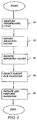
- a mobile terminal 3 communicates with a node such as a base station controller 10 in a GSM network 1 and performs, in a first step S1, measurements on neighboring radio base stations 20 or cells of a UTRAN network 2 utilizing WCDMA radio access technology.
- the mobile terminal 3 measures first and second parameters for neighboring UTRAN cell 20.
- the measured first parameter comprises information relating to the quality of the received signal at the user equipment 3.
- the first parameter represents the energy per chip over noise (Ec/No).
- the second parameter comprises information relating to the strength of the received signal at the user equipment 3.
- the second parameter represents the received signal code power (RSCP).
- the mobile terminal 3 reports the measured first and second parameters for each neighboring UTRAN cell 20 to the GSM base station controller 10. According to a first embodiment of the invention, the mobile terminal 3 reports both parameters for each cell at the same time. According to another embodiment of the invention, the mobile terminal 3 reports the values alternately to the base station controller 10.
- the base station controller 10 receives the measured first and second parameters for each neighboring UTRAN cell 20.
- a fourth step S4 the node or base station 10 or typically the base station controller, based on the received first and second parameters selects which UTRAN cell 20 from the plurality of neighboring UTRAN cells 20 should be the target cell and consequently receive the handover.
- the UTRAN cell 20 with the combination of the highest values for both of said two parameters is selected.
- some other selection algorithm can be utilized in order to determine the handover.
- a fifth step S5 the base station controller 10 initiates the handover to said selected target UTRAN cell 20.
- the reporting step S2 is performed by including the measured parameters in a measurement report (as defined by 3GPP-standard), such as the Measurement Report of 3GPP TS 04.18.
- the existing Measurement Report message specified in the 3GPP TS 04.18 includes fields for GSM RXQUAL values, or UTRAN/WCDMA Ec/No values.
- the message can, according to the invention, be modified to include both Ec/No and RSCP, or alternating Ec/No or RSCP values.
- the RXLEV-NCELL n field (where 'n' is one of the 6 reported neighbors) consists of 6 bits. See Table 1 below.
- the Measurement Results is a type 3 information element with 17 octets length.
- Table 1 Measurement report 8 7 6 5 4 3 2 1 Measurement Results IEI octet 1 BA-USED DTX USED RXLEV-FULL-SERVING-CELL octet 2 3G-BA-USED MEAS-VALID RXLEV-SUB-SERVING-CELL octet 3 0 spare RXQUAL-FULL SERVING-CELL RXQUAL-SUB SERVING-CELL NO-NCELL M (high part) octet 4 NO-NCELL-M (low part) RXLEV-NCELL 1 octet 5 BCCH-FREQ-NCELL 1 BSIC-NCELL 1 (high part) octet 6 BSIC-NCELL 1 (low part) RXLEV-NCELL 2 (high part) octet 7 RXLEV NCELL 2 (low part) BCCH-FREQ-NC
- both Ec/No and RSCP values are included in the Measurement Report.
- the 6 bits (below called B'0-B'5) in the RXLEV-NCELL n field are enough to include both relevant Ec/No values and relevant RSCP values, if a limited value range for each parameter is used.
- B'0-B'5 000000-000111 -14 dB or lower -110 or lower to -75 dBm or higher
- B'0-B'5 001000-001111 -13 dB -110 or lower to -75 dBm or higher
- B'0-B'5 010000-010111 -12 dB -110 or lower to -75 dBm or higher
- B'0-B'5 011000-011111 -11 dB -110 or lower to -75 dBm or higher
- B'0-B'5 100000-100111 -10 dB -110 or lower to -75 dBm or higher
- B'0-B'5 101000-101111 -9 dB -110 or lower to -75 dBm or higher
- B'0-B'5 110000-110111 -8 dB -110
- the 6 bits can report the Ec/No values [-14 dB or lower; -13 dB; -12 dB; -11 dB; -10 dB; -9 dB; -8 dB; -7 dB or higher] and the CPICH RSCP values [-110 dBm or lower; -105 dBm; -100 dBm; -95 dBm; -90 dBm; -85 dBm; -80 dBm; -75 dBm or higher].
- each reported value for Ec/No is reported together with one of eight different values or intervals for RSCP.
- alternating Ec/No and RSCP values are included in the Measurement report.
- An alternative to the method is to order the user equipment 3 to report alternating Ec/No and RSCP values.
- the method of reporting, and reported quantity can e.g. be indicated by using bits (/spare bits) in the Measurement Result message. This method could for instance be selected if the impact on the mobile terminal or user equipment implementation in the first method is high. With this method, the base station controller 10 keeps track of the values of both measured parameters, to be able to use both values in the handover evaluation.
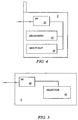
- FIG. 4 illustrates an embodiment of a user equipment according to the invention.
- the user equipment 3 is equipped with multi-RAT capabilities 30, e.g. GSM/TDMA and UTRAN/WCDMA. Further, the user equipment 3 comprises means 31 for measuring first and second (quality) parameters for neighboring UTRAN cells 20, and means 32 for reporting the measured parameters to a node such as a base station or base station controller 10 of a first network 1. In practice, the reporting means 32 are provided as part of an I/O unit.
- the reporting means 32 are adapted to report both parameters at the same time. According to another embodiment of a user equipment 3, the reporting means 32 are adapted to report the first and second parameters alternately.
- the Measurement Result Report contains an indication of whether the user equipment 3 can report Ec/No and RSCP simultaneously or alternating. This can for instance be implemented through a minor addition to the Classmark Change message specified in the 3GPP TS 04.18 and 24.008.
- FIG. 5 illustrates a network node 4 in a first radio access network, e.g. a GSM network.
- the node 4 comprises means 40 for receiving measured first and second parameters from a multi-RAT user equipment, and means 41 for selecting a target UTRAN cell for potential handover in a UTRAN network.
- the node 4 is typically adapted to command the user equipment to switch to the selected target cell.
- the receiving means 40 are adapted for receiving said first and second parameters at the same time.
- the selecting means 41 are adapted for selecting a target cell based on first and second parameters received at the same time.
- said parameters are Ec/No and RSCP for a UTRAN cell.
- the reporting means 40 are an I/O unit, which also is adapted to command the handover.
- the network node 4 is a base station controller or a base station in a GSM network 1.
- the receiving means 40 are adapted for receiving said first and second parameters alternately. Consequently, the selecting means 41 are adapted for selecting a target cell based on alternately received first and second parameters.
- said parameters are Ec/No and RSCP.
- a major advantage of this invention is that decisions on handover to UTRAN will be optimized. The decision will be more independent of the traffic load situation, and the implementation can be made in such a way that the operator can select to trigger GSM to UTRAN handover based on Ec/No measurements, RSCP measurements, or both.
- the invention has primarily been discussed in the context of a handover of a dual-mode mobile terminal or user equipment from a GSM network to an UTRAN network.
- the invention is equally applicable to handover from any type of network i.e. WLAN, CDMA2000 to a network utilizing WCDMA. Also, it is equally applicable to a multi-mode user equipment.
Landscapes
- Engineering & Computer Science (AREA)
- Computer Networks & Wireless Communication (AREA)
- Signal Processing (AREA)
- Mobile Radio Communication Systems (AREA)
Description
- The invention relates to communication networks in general, and specifically to handover between different radio access technologies.
- Throughout the world, third-generation mobile services are being introduced. As a consequence, a plurality of different radio access technologies (RAT) coexist, e.g. TDMA, WCDMA, CDMA2000, WLAN etc.
- In order to enable almost seamless services for the end-users, third generation mobile terminals are equipped with so called dual RAT, e.g. both WCDMA (Wideband Code-Division Multiple Access) and GSM technology (Global System for Mobile communications) i.e. TDMA, whereby the mobile terminal is able to communicate with both RAT. Likewise, the mobile terminal and the radio access network have to be able to support handover between the two technologies.
- Handover between networks utilizing different RAT require that a dual-mode user equipment or mobile terminal, while communicating over a first radio access network utilizing a first RAT, has to perform measurements on neighboring cells in a second radio access network utilizing a second RAT.
- Depending on the type of network, either the mobile terminal itself decides when to change from one cell to another, or the decision is performed at a network node such as a base station controller in the first network. The latter case suggests that the mobile terminal has to report some measured parameters to the base station.
- During handover from a GSM network to a network utilizing WCDMA e.g. UTRAN, the mobile transmits a standardized measurement report to the base station controller of the GSM network. Consequently, the base station controller, based on the received measurement report, decides to which target UTRAN cell the handover will be effected.
-
US 2002/093922 A1 discloses handover from CDMA cells to cells that use a different Radio Access Technology, RAT. - Various problems are associated with such inter-RAT handovers, typically due to the inherent differences in the radio access technologies.
- A general object of the present invention is to provide an improved handover between different radio access technologies.
- A further object is to provide a method for improved inter-RAT handover to radio access networks utilizing WCDMA.
- Yet another object is to provide a method for stable handover performance during variations in traffic load.
- The above mentioned objects and other objects are achieved by a method, a user equipment and a network node which are characterised by what is stated in the
independent claims 1, 11, 16, 22 and 23. Particular embodiments of the invention are disclosed in the dependent claims. - The main aspect of the present invention is to enhance the UTRAN/WCDMA measurements in the measurement result message sent from a multi-RAT mobile, so that both a first parameter e.g. the Ec/No value and a second parameter e.g. the RSCP value are included. The base station controller will then have the possibility to use both measures to make an optimal UTRAN handover decision. This will make the handover performance more optimized and stable during traffic load variations.
- The advantage of this invention is that the handover to UTRAN decision will be optimized. The decision will be more independent of the traffic load situation, and the implementation can be made in such a way that the operator can select to trigger UTRAN handover based on Ec/No measurements, RSCP measurements, or both.
- This invention improves the reporting from Mobile Stations/User Equipment sent to the BSC in GSM mode, by including both quality and signal strength measurements of WCDMA/UTRAN neighbors.
- Advantages of the present inventions include:
- Improved measurement report
- Stable handover
- Optimized handover decision
- Prevented ping-pong handover
- The invention, together with further objects and advantages thereof, may best be understood by making reference to the following description taken together with the accompanying drawings, in which:
-
Fig. 1 is a schematic block diagram of a communication system in which the present invention can be utilized, -
Fig. 2 is a schematic diagram illustrating how RSCP and Ec/No varies with the distance from a base station, -
Fig. 3 is a flow diagram of an embodiment of a method according to the invention, -
Fig. 4 is a schematic block diagram of an embodiment of a mobile equipment according to the invention, and -
Fig. 5 is a schematic block diagram of an embodiment of a node in a radio access network according to the invention. - Frequently mentioned abbreviations are listed below:
Ec/No Chip Energy divided by Noise HO Hand Over IRAT Inter Radio Access Technology MS Mobile Station RSCP Received Signal strength per chip UE User Equipment RXQUAL Received Signal Quality RXLEV Received Signal Level CPICH Common Pilot Channel - In order to fully appreciate the merits of the present invention a more in-depth identification and description of the problems with prior art will be described below.
- Referring to
FIG. 1 , consider a user with a dual-modemobile terminal 3, also referred to as mobile node, mobile station, wireless unit or user equipment, communicating with/over aGSM network 1. At the same time theuser equipment 3 measures quality parameters for a plurality of neighboring cells orradio base stations 20 in a UTRANnetwork 2. The measurements can be performed continuously, or at predetermined time intervals. - According to prior art an existing dual-mode mobile terminal or
user equipment 3 measures and reports only the UTRAN quality measure CPICH Ec/No of neighboring UTRAN cells when communicating in GSM mode. (Ref. 3GPP 04.18.) The existing GSM measurement report is used and the measured CPICH Ec/No value is reported for one or more UTRAN cells. - Referring to
FIG.2 , the present invention is based on the recognition that the existing solution, where theuser equipment 3 reports only the Ec/No values, has some important drawbacks. The main problem is that the Ec/No and the RSCP values have little or no correlation, but are both important for the quality. -
FIG. 2 illustrates schematically how both the Ec/No and the RSCP values vary as functions of the distance from a measured base station. RSCP typically has an exponentially decreasing behavior, more or less independent of the load situation of the base station. The Ec/No decreases slowly until it drops abruptly, resulting in a pronounced knee on the curve. Also, Ec/No is load dependent (since No is a measure of the power density in the band) and as a result the curve is displaced downward when the traffic load increases. - Consequently, both the Ec/No and the RSCP value at a certain geographical location can be very good at a low traffic load in the network, while the same spot may show a quite bad Ec/No value at a higher traffic load (and the RSCP value is still good) (see point A in
FIG. 2 ). Or, the Ec/No may be very good and the RSCP may be bad at low traffic load (see point B inFIG. 2 ). In especially new UTRAN markets where the traffic load most probably will change quite substantially, this will cause a problem for defining an optimal GSM to UTRAN (GTU) handover parameter setting. - Field Trial activities have proven that the above problems exist, and that an optimal GSM to UTRAN handover decision cannot be guaranteed based on only the Ec/No value. This may cause dropped calls due to too low signal strength in downlink or uplink.
- In present implementations of UTRAN to GSM, it is also possible to base the handover decision on RSCP values. However, since the GSM to UTRAN decision is based solely on Ec/No this may cause unbalanced handover borders, resulting in so called ping-pong handovers, or unnecessary large hysteresis areas.
- In order to overcome the above mentioned problem, and provide a more stable handover for GSM to UTRAN the present invention proposes a solution wherein also the RSCP value is measured and reported to the base station controller of the first radio access network.
- An embodiment of a method according to the invention will be described with reference to
FIG .1 andFIG. 3 . - A
mobile terminal 3 communicates with a node such as abase station controller 10 in aGSM network 1 and performs, in a first step S1, measurements on neighboringradio base stations 20 or cells of a UTRANnetwork 2 utilizing WCDMA radio access technology. Themobile terminal 3 measures first and second parameters for neighboringUTRAN cell 20. - According to the invention, the measured first parameter comprises information relating to the quality of the received signal at the
user equipment 3. Preferably, the first parameter represents the energy per chip over noise (Ec/No). Also, according to the invention, the second parameter comprises information relating to the strength of the received signal at theuser equipment 3. Preferably, the second parameter represents the received signal code power (RSCP). - In a second step S2, the
mobile terminal 3 reports the measured first and second parameters for each neighboringUTRAN cell 20 to the GSMbase station controller 10. According to a first embodiment of the invention, themobile terminal 3 reports both parameters for each cell at the same time. According to another embodiment of the invention, themobile terminal 3 reports the values alternately to thebase station controller 10. - In a third step S3; the
base station controller 10 receives the measured first and second parameters for each neighboringUTRAN cell 20. - Subsequently, in a fourth step S4, according to the invention, the node or
base station 10 or typically the base station controller, based on the received first and second parameters selects whichUTRAN cell 20 from the plurality of neighboringUTRAN cells 20 should be the target cell and consequently receive the handover. - Preferably, the
UTRAN cell 20 with the combination of the highest values for both of said two parameters is selected. However, it is understood that some other selection algorithm can be utilized in order to determine the handover. - Consequently, in a fifth step S5, the
base station controller 10 initiates the handover to said selectedtarget UTRAN cell 20. - Finally, the handover is completed.
- Conventional procedures for handover and synchronization are not part of the invention, and therefore not described in any detail.
- According to another embodiment of the method according to the invention the reporting step S2 is performed by including the measured parameters in a measurement report (as defined by 3GPP-standard), such as the Measurement Report of 3GPP TS 04.18.
- The existing Measurement Report message specified in the 3GPP TS 04.18 includes fields for GSM RXQUAL values, or UTRAN/WCDMA Ec/No values. The message can, according to the invention, be modified to include both Ec/No and RSCP, or alternating Ec/No or RSCP values. The RXLEV-NCELL n field (where 'n' is one of the 6 reported neighbors) consists of 6 bits. See Table 1 below.
- The Measurement Results is a
type 3 information element with 17 octets length.Table 1: Measurement report 8 7 6 5 4 3 2 1 Measurement Results IEI octet 1 BA-USED DTX USED RXLEV-FULL-SERVING-CELL octet 2 3G-BA-USED MEAS-VALID RXLEV-SUB-SERVING-CELL octet 3 0 spare RXQUAL-FULL SERVING-CELL RXQUAL-SUB SERVING-CELL NO-NCELL M (high part) octet 4 NO-NCELL-M (low part) RXLEV-NCELL 1 octet 5 BCCH-FREQ-NCELL 1 BSIC-NCELL 1 (high part) octet 6 BSIC-NCELL 1 (low part) RXLEV-NCELL 2 (high part) octet 7 RXLEV NCELL 2 (low part) BCCH-FREQ-NCELL 2 BSIC-NCELL 2 (high part) octet 8 BSIC-NCELL 2 (low part) RXLEV-NCELL 3 (high part) octet 9 RXLEV-NCELL 3 (low part) BCCH-FREQ-NCELL 3 BSIC-NCELL 3 (high part) octet 10 BSIC-NCELL 3 (low part) RXLEV-NCELL 4 (high part) octet 11 RXLEV-NCELL 4 (low part) BCCH-FREQ-NCELL 4 octet 12 BSIC-NCELL 4 RXLEV-NCELL 5 (high part) octet 13 RXLEV-NCELL 5 (low part) BCCH-FREQ-NCELL 5 (high part) octet 14 BCCH-FREQ-NCELL 5 (low part) BSIC-NCELL 5 RXLEV NCELL 6 (high part) octet 15 RXLEV-NCELL 6 (low part) BCCH-FREQ-NCELL 6 (high part) octet 16 BCCH-FREQ-NCELL 6 (low part) BSIC-NCELL 6 octet 17 - According to one embodiment of the method according to the invention, both Ec/No and RSCP values are included in the Measurement Report. The 6 bits (below called B'0-B'5) in the RXLEV-NCELL n field are enough to include both relevant Ec/No values and relevant RSCP values, if a limited value range for each parameter is used.
Table 2: RXLEV-NCELL field Reported value Corresponds to Ec/No Corresponds to RSCP (in ranges with 5 dBm steps) B'0-B'5 = 000000-000111 -14 dB or lower -110 or lower to -75 dBm or higher B'0-B'5 = 001000-001111 -13 dB -110 or lower to -75 dBm or higher B'0-B'5 = 010000-010111 -12 dB -110 or lower to -75 dBm or higher B'0-B'5 = 011000-011111 -11 dB -110 or lower to -75 dBm or higher B'0-B'5 = 100000-100111 -10 dB -110 or lower to -75 dBm or higher B'0-B'5 = 101000-101111 -9 dB -110 or lower to -75 dBm or higher B'0-B'5 = 110000-110111 -8 dB -110 or lower to -75 dBm or higher B'0-B'5 = 111000-111111 -7 dB or higher -110 or lower to -75 dBm or higher - With this method the 6 bits can report the Ec/No values [-14 dB or lower; -13 dB; -12 dB; -11 dB; -10 dB; -9 dB; -8 dB; -7 dB or higher] and the CPICH RSCP values [-110 dBm or lower; -105 dBm; -100 dBm; -95 dBm; -90 dBm; -85 dBm; -80 dBm; -75 dBm or higher].
- As a consequence, each reported value for Ec/No is reported together with one of eight different values or intervals for RSCP.
- It is understood that each value is valid for a specific Frequency and Scrambling Code in the UTRAN/WCDMA network.
- According to another embodiment of a method according to the invention, alternating Ec/No and RSCP values are included in the Measurement report.
- An alternative to the method is to order the
user equipment 3 to report alternating Ec/No and RSCP values. The method of reporting, and reported quantity, can e.g. be indicated by using bits (/spare bits) in the Measurement Result message. This method could for instance be selected if the impact on the mobile terminal or user equipment implementation in the first method is high. With this method, thebase station controller 10 keeps track of the values of both measured parameters, to be able to use both values in the handover evaluation. -
FIG. 4 illustrates an embodiment of a user equipment according to the invention. Theuser equipment 3 is equipped withmulti-RAT capabilities 30, e.g. GSM/TDMA and UTRAN/WCDMA. Further, theuser equipment 3 comprises means 31 for measuring first and second (quality) parameters for neighboringUTRAN cells 20, and means 32 for reporting the measured parameters to a node such as a base station orbase station controller 10 of afirst network 1. In practice, the reporting means 32 are provided as part of an I/O unit. - The reporting means 32, according to a first embodiment, are adapted to report both parameters at the same time. According to another embodiment of a
user equipment 3, the reporting means 32 are adapted to report the first and second parameters alternately. - In a preferred embodiment, the Measurement Result Report contains an indication of whether the
user equipment 3 can report Ec/No and RSCP simultaneously or alternating. This can for instance be implemented through a minor addition to the Classmark Change message specified in the 3GPP TS 04.18 and 24.008. - The implementations of this solution should be able to handle
user equipment 3 that are unable to report both Ec/No and RSCP values i.e. backward compatibility has to be considered. -
FIG. 5 illustrates anetwork node 4 in a first radio access network, e.g. a GSM network. Thenode 4 comprises means 40 for receiving measured first and second parameters from a multi-RAT user equipment, and means 41 for selecting a target UTRAN cell for potential handover in a UTRAN network. Finally, thenode 4 is typically adapted to command the user equipment to switch to the selected target cell. - The receiving means 40, according to a first embodiment according to the invention, are adapted for receiving said first and second parameters at the same time.
- According to said first embodiment, the selecting
means 41 are adapted for selecting a target cell based on first and second parameters received at the same time. Preferably, said parameters are Ec/No and RSCP for a UTRAN cell. - Typically, the reporting means 40 are an I/O unit, which also is adapted to command the handover.
- Preferably, the
network node 4 is a base station controller or a base station in aGSM network 1. - According to a second embodiment, the receiving means 40 are adapted for receiving said first and second parameters alternately. Consequently, the selecting
means 41 are adapted for selecting a target cell based on alternately received first and second parameters. Preferably, said parameters are Ec/No and RSCP. - A major advantage of this invention is that decisions on handover to UTRAN will be optimized. The decision will be more independent of the traffic load situation, and the implementation can be made in such a way that the operator can select to trigger GSM to UTRAN handover based on Ec/No measurements, RSCP measurements, or both.
- The invention has primarily been discussed in the context of a handover of a dual-mode mobile terminal or user equipment from a GSM network to an UTRAN network.
- However, the invention is equally applicable to handover from any type of network i.e. WLAN, CDMA2000 to a network utilizing WCDMA. Also, it is equally applicable to a multi-mode user equipment.
- Since the basic idea of invention is general, it can also be applied in the evaluation of any radio network existing today or in the future.
- It will be understood by those skilled in the art that various modifications and changes may be made to the present invention without departure from the scope thereof, which is defined by the appended claims.
Claims (23)
- A method for enabling improved handover of a user equipment (3) communicating in a first radio access network (1) utilizing a first radio access technology, RAT, said method comprising:measuring, at said user equipment (3), a first parameter for at least one of a plurality of neighboring cells (20) of at least a second radio access network (2) utilizing WCDMA;reporting said first parameter to a node (10) in said first radio access network (1), andinitiating handover to one of said plurality of neighboring cells (20) in said second radio access network (2) based on said reported first parameter,characterized by:measuring (S1) at least a second parameter for said at least one of said plurality of neighboring cells (20) of said second radio access network (2), andreporting (S2) said second measured parameter to said node (10) in said first radio access network (1),wherein said initiating (S3) handover to said one of said plurality of neighboring cells (20) in said second radio access network (2) is based on both of said first and second measured parameters, andwherein both said first and said second parameters are reported simultaneously and said first parameter is reported according to one of a limited range of values, and said second parameter is reported in the same field using a limited value range, whereby each first parameter value is reported together with one of a plurality of possible limited value ranges.
- The method according to claim 1, further characterized in that said first radio access network (1) comprises one of GSM, WLAN and CDMA2000.
- The method according to claim 2, further characterized in that said node (10) is a base station controller (10) in a GSM radio access network (1).
- The method according to claim 1, further characterized by reporting said first parameter according to one of the ranges -14 dB or lower, -13 dB, -12 dB, -10 dB, -9 dB, -8 dB, -7 dB or higher, and reporting said second parameter according to one of the ranges -110 dBm or lower, -105 dBm, -100 dBm, -95 dBm, -90 dBm, -85 dBm, -80 dBm, -75dBm or higher.
- The method according to claim 1, further characterized by said first parameter comprising information regarding the quality of the received signal at the user equipment.
- The method according to claim 5, further characterized by said first parameter representing the chip energy divided by noise, Ec/No.
- The method according to claim 1, further characterized by said second parameter comprising information regarding the signal strength of the received signal at the user equipment.
- The method according to claim 7, further characterized by said second parameter representing the Received Signal Code Power, RSCP.
- The method according to claim 1, further characterized in that initiating handover to said second network (2) is based on optimizing a predetermined function depending on said first and second parameter.
- The method according to claim 1, further characterized in that said handover is initiated to a said cell (20) of said plurality of neighboring cells in said second network (2) with the highest values on both said first and second parameters.
- A user equipment (3) adapted for communicating with a first radio access network (1) utilizing a first radio access technology, RAT, and at least a second radio access network (2) utilizing WCDMA, said user equipment (3) being adapted to perform measurements of at least one of a plurality of neighboring cells (20) in the second network (2) in order to determine a suitable handover cell while communicating over said first radio access network (1), said user equipment (3) comprising:means for measuring a first parameter of said at least one of a plurality of neighboring cells (20) in the second radio access network (2), andmeans for reporting said first parameter to the first radio access network (1),said user equipment is characterized by further comprising:means (31) for measuring at least a second parameter of said at least one of a plurality of neighboring cells (20) in the second radio access network (2), andmeans (32) for reporting both said measured first and second parameters simultaneously to a node (10) in said first radio access network, wherein said means (32) are configured for reporting said first parameter according to one of a limited range of values, and for reporting said second parameter in the same field using a limited value range, whereby each first parameter value is reported together with one of a plurality of possible limited value ranges.
- The user equipment according to claim 11, further characterized in that said reporting means are adapted for reporting said first parameter according to one of the ranges -14 dB or lower, -13 dB, -12 dB, -10 dB, -9 dB, -8 dB, -7 dB or higher, and reporting said second parameter according to one of the ranges -110 dBm or lower, - 105 dBm, -100 dBm, -95 dBm, -90 dBm, -85 dBm, -80 dBm, -75 dBm or higher.
- The user equipment according to claim 11, further characterized by said first parameter comprising information regarding the quality of the received signal at the user equipment (3).
- The user equipment according to claim 11, further characterized by said second parameter comprising information regarding the signal strength of received signals at the user equipment (3).
- The user equipment according to any of claims 11-14, further characterized in that said first parameter is the chip energy divided by noise, Ec/No, and said second parameter is the signal strength of the received signal at the user equipment, RSCP.
- A network node (4) in a first radio access network (1), utilizing a first radio access technology, RAT, adapted to communicate with a user equipment (3) and to receive measurements of at least one of a plurality of neighboring cells (20) of at least a second radio access network (2) utilizing WCDMA from the user equipment, characterized by
means (40) for simultaneously receiving measured first and second parameters for said at least one of said plurality of neighboring cells (20) of the second radio access network (2) from the user equipment (3), wherein said receiving means (40) are configured for receiving said first parameter according to one of a limited range of values, and for receiving said second parameter in the same field using a limited value range, whereby each first parameter value is received together with one of a plurality of possible limited value ranges, and
means for selecting (41) a target cell of said at least one of a plurality of neighboring cells (20) of said second network (2) for handover based on said received first and second parameters. - The network node according to claim 16, further characterized in that said receiving means (40) are adapted for receiving said first parameter according to one of the ranges -14 dB or lower, -13 dB, -12 dB, -10 dB, -9 dB, -8 dB, -7 dB or higher, and receiving said second parameter according to one of the ranges -110 dBm or lower, - 105 dBm, -100 dBm, -95 dBm, -90 dBm, -85 dBm, -80 dBm, -75 dBm or higher.
- The network node according to claim 16, further characterized in that said first parameter comprises information regarding the quality of received signals at the user equipment (3).
- The network node according to claim 16, further characterized in that said second parameter comprises information regarding the signal strength of received signals at the user equipment (3).
- The network node according to any of claims 16-19, further characterized in that said received first and second parameters are the Received Signal Code Power, RSCP, and/or the chip energy divided by noise, Ec/No.
- The network node according to any of claims 16-20, further characterized in that said node comprises a base station controller.
- A method of operating a user equipment (3) adapted for communicating with a first radio access network (1) utilizing a first radio access technology, RAT, and at least a second radio access network (2) utilizing WCDMA, said user equipment (3) being adapted to perform measurements of at least one of a plurality of neighboring cells (20) in the second network (2) in order to determine a suitable handover cell while communicating over said first radio access network (1), said method comprising:measuring, at said user equipment (3), a first parameter for at least one of a plurality of neighboring cells (20) in the second radio access network (2);reporting said first parameter to the first radio access network (1),characterized by:measuring (S1) at least a second parameter for said at least one of said plurality of neighboring cells (20) of said second radio access network (2), andreporting (S2) said second measured parameter to the first radio access network (1), whereinboth said first and said second parameter are reported simultaneously to a node (10) in the first radio access network and said first parameter is reported according to one of a limited range of values, and said second parameter is reported in the same field using a limited value range, whereby each first parameter value is reported together with one of a plurality of possible limited value ranges.
- A method for operating a network node (4) in a first radio access network (1), utilizing a first radio access technology, RAT, adapted to communicate with a user equipment (3) and to receive measurements of at least one of a plurality of neighboring cells (20) of at least a second radio access network (2) utilizing WCDMA from the user equipment, said method being characterized by:simultaneously receiving (S3) measured first and second parameters for said at least one of said plurality of neighboring cells (20) of the second radio access network (2) from the user equipment (3), wherein said first parameter is received according to one of a limited range of values, said second parameter is received in the same field using a limited value range, and whereby each first parameter value is received together with one of a plurality of possible limited value ranges, andselecting (S4) a target cell of said at least one of a plurality of neighboring cells (20) of said second network (2) for handover based on said received first and second parameters.
Applications Claiming Priority (1)
| Application Number | Priority Date | Filing Date | Title |
|---|---|---|---|
| PCT/SE2004/000395 WO2005089009A1 (en) | 2004-03-17 | 2004-03-17 | Method and arrangement for improved inter-rat handover |
Publications (2)
| Publication Number | Publication Date |
|---|---|
| EP1733586A1 EP1733586A1 (en) | 2006-12-20 |
| EP1733586B1 true EP1733586B1 (en) | 2016-03-09 |
Family
ID=34975992
Family Applications (1)
| Application Number | Title | Priority Date | Filing Date |
|---|---|---|---|
| EP04721414.3A Expired - Lifetime EP1733586B1 (en) | 2004-03-17 | 2004-03-17 | Method and arrangement for improved inter-rat handover |
Country Status (3)
| Country | Link |
|---|---|
| US (1) | US7970399B2 (en) |
| EP (1) | EP1733586B1 (en) |
| WO (1) | WO2005089009A1 (en) |
Families Citing this family (31)
| Publication number | Priority date | Publication date | Assignee | Title |
|---|---|---|---|---|
| US7047036B2 (en) | 2002-07-02 | 2006-05-16 | Interdigital Technology Corporation | Method and apparatus for handoff between a wireless local area network (WLAN) and a universal mobile telecommunication system (UMTS) |
| TWI366385B (en) | 2003-11-13 | 2012-06-11 | Interdigital Tech Corp | Method and system for facilitating inter-system handover |
| CA2559268A1 (en) | 2004-03-12 | 2005-09-29 | Interdigital Technology Corporation | Method and system for switching a radio access technology between wireless communicaiton systems with a multi-mode wireless transmit/receive unit |
| KR101087694B1 (en) * | 2004-08-20 | 2011-11-30 | 에스케이 텔레콤주식회사 | Method and system for target cell search of multimode-multiband terminal in mobile communication environment |
| US8036665B2 (en) * | 2004-10-28 | 2011-10-11 | At&T Mobility Ii Llc | Wireless mobile station call handoff |
| US7680082B2 (en) | 2005-11-29 | 2010-03-16 | Telefonaktiebolaget L M Ericsson (Publ) | Cell selection in high-speed downlink packet access communication systems |
| US8396141B2 (en) | 2005-11-29 | 2013-03-12 | Telefonaktiebolaget L M Ericsson (Publ) | Efficient cell selection |
| KR100752770B1 (en) * | 2006-02-01 | 2007-08-29 | 주식회사 팬택 | Efficient Timer Operation Method and Apparatus for Mobile Communication Terminal for High-speed Internet Handover |
| CN100461964C (en) * | 2006-06-05 | 2009-02-11 | 中国移动通信集团公司 | Method for switching between mobile communication systems |
| US7643830B2 (en) * | 2006-07-17 | 2010-01-05 | Qualcomm Incorporated | Methods and apparatus for soft-decision based inter-radio access technology handover triggering |
| EP1916858A1 (en) * | 2006-10-24 | 2008-04-30 | Motorola, Inc. | Inter-RAT handover optimization |
| US8620320B2 (en) * | 2007-06-19 | 2013-12-31 | Motorola Mobility Llc | Methods for handing over calls between communication networks using dissimilar air interfaces |
| JP5325885B2 (en) | 2007-10-02 | 2013-10-23 | テレフオンアクチーボラゲット エル エム エリクソン(パブル) | Include an indication in the uplink grant indicating the specific amount of CQI to be reported |
| US8125956B2 (en) | 2008-07-17 | 2012-02-28 | Research In Motion Limited | Method of cell reselection in a wireless telecommunications device operative with a plurality of radio access networks |
| KR101555061B1 (en) * | 2008-08-22 | 2015-09-23 | 엘지전자 주식회사 | How to perform cell re-discovery between heterogeneous networks |
| JP2010166532A (en) * | 2009-01-19 | 2010-07-29 | Toshiba Corp | Mobile radio terminal device and base station search method |
| US8014311B2 (en) * | 2009-06-08 | 2011-09-06 | Telefonaktiebolaget L M Ericsson (Publ) | Signal measurements based on sync signals |
| US8086236B2 (en) * | 2010-01-06 | 2011-12-27 | Htc Corporation | Methods to configure proximity indication in wireless communications systems |
| EP2537393A1 (en) * | 2010-02-15 | 2012-12-26 | Nokia Siemens Networks Oy | Base station aided synchronization |
| WO2011147439A1 (en) * | 2010-05-25 | 2011-12-01 | Nokia Siemens Networks Oy | Method and apparatus for controlling handover and reselection |
| KR20120001353A (en) * | 2010-06-29 | 2012-01-04 | 주식회사 케이티 | Method for performing handover between heterogeneous wireless systems using SSM and method for providing handover information thereof |
| KR20120001360A (en) | 2010-06-29 | 2012-01-04 | 주식회사 케이티 | Method of performing handover between heterogeneous wireless systems using voice call and providing method thereof |
| KR20120002251A (en) * | 2010-06-30 | 2012-01-05 | 주식회사 케이티 | Handover Method and Multimode Terminal Device between Mobile Communication Network and Portable Internet Network |
| CN102630389B (en) | 2010-08-13 | 2016-01-20 | 华为技术有限公司 | Method for providing information in a cellular radio communication system |
| US8547932B2 (en) * | 2010-11-01 | 2013-10-01 | Intel Corporation | Handover architecture for non-integrated radio access technologies |
| CN102026264B (en) * | 2010-12-17 | 2013-10-16 | 大唐移动通信设备有限公司 | Method and equipment for terminal measurement report and intersystem interoperation |
| CN102076013B (en) * | 2011-02-17 | 2013-08-14 | 惠州Tcl移动通信有限公司 | Measuring and compensating method and device for reselecting and switching different systems of dual-mode terminal |
| CN103477684B (en) * | 2011-04-01 | 2017-02-15 | Lg电子株式会社 | Method and apparatus for transceiving data in radio access system supporting multi-radio access technology |
| CN103974351B (en) * | 2013-01-24 | 2017-11-28 | 中国移动通信集团北京有限公司 | A switching method and network side equipment |
| US9756543B2 (en) * | 2013-03-01 | 2017-09-05 | Apple Inc. | Application-based radio-access technology switching |
| US11356911B1 (en) | 2020-08-10 | 2022-06-07 | Sprint Communications Company L.P. | Wireless communication handover control based on user equipment (UE) throughput |
Family Cites Families (15)
| Publication number | Priority date | Publication date | Assignee | Title |
|---|---|---|---|---|
| US5313652A (en) * | 1992-03-25 | 1994-05-17 | Motorola, Inc. | Method and apparatus for providing a communication path using common sites |
| DE69840539D1 (en) * | 1998-05-29 | 2009-03-26 | Ericsson Telefon Ab L M | Method for passing in a radio communication environment |
| US6587446B2 (en) | 1999-02-11 | 2003-07-01 | Qualcomm Incorporated | Handoff in a wireless communication system |
| US7006841B2 (en) * | 2000-12-20 | 2006-02-28 | Lucent Technologies Inc | Method to control base station transmit power drift during soft handoffs |
| US6615044B2 (en) * | 2001-06-06 | 2003-09-02 | Nokia Mobile Phones, Ltd. | Method of WCDMA coverage based handover triggering |
| EP1405538B1 (en) * | 2001-07-03 | 2009-09-09 | Telefonaktiebolaget LM Ericsson (publ) | A method of ranking neighbour cells as candidates for an hand over |
| US20040022217A1 (en) * | 2002-04-29 | 2004-02-05 | Sari Korpela | Method and apparatus for soft handover area detection using inter-band measurements |
| TWI225373B (en) * | 2002-05-03 | 2004-12-11 | Asustek Comp Inc | A flexible scheme for configuring traffic volume measurement reporting criteria |
| US7076249B2 (en) * | 2002-05-06 | 2006-07-11 | Telefonaktiebolaget Lm Ericsson (Publ) | Method and apparatus for generating management data for drifting mobile radios |
| US7535846B2 (en) * | 2002-05-21 | 2009-05-19 | Samsung Electronics Co., Ltd | Method for handling inter-RAT measurement and report in a dual-mode user equipment |
| US7408900B2 (en) * | 2002-06-28 | 2008-08-05 | Interdigital Technology Corporation | Method and system for automated determination of inter-system border thresholds |
| AU2002336117A1 (en) * | 2002-10-23 | 2004-05-25 | Nokia Corporation | Radio resource control method in mobile communication system, and mobile communication system |
| US6978138B2 (en) * | 2002-10-28 | 2005-12-20 | Qualcomm Incorporated | Inter-RAT cell reselection in a wireless communication network |
| US7830853B2 (en) * | 2002-12-06 | 2010-11-09 | Qualcomm Incorporated | Techniques for supporting GSM to W-CDMA reselection |
| WO2005060294A1 (en) * | 2003-12-17 | 2005-06-30 | Telefonaktiebolaget Lm Ericsson (Publ) | System and method for radio resource management in a communication system |
-
2004
- 2004-03-17 US US10/593,306 patent/US7970399B2/en not_active Expired - Fee Related
- 2004-03-17 WO PCT/SE2004/000395 patent/WO2005089009A1/en not_active Ceased
- 2004-03-17 EP EP04721414.3A patent/EP1733586B1/en not_active Expired - Lifetime
Also Published As
| Publication number | Publication date |
|---|---|
| US20070213055A1 (en) | 2007-09-13 |
| EP1733586A1 (en) | 2006-12-20 |
| WO2005089009A1 (en) | 2005-09-22 |
| US7970399B2 (en) | 2011-06-28 |
Similar Documents
| Publication | Publication Date | Title |
|---|---|---|
| US7970399B2 (en) | Method and arrangement for improved inter-RAT handover | |
| CA2443997C (en) | Method of wcdma coverage based handover triggering | |
| US6845238B1 (en) | Inter-frequency measurement and handover for wireless communications | |
| US6983149B2 (en) | Method for determining a monitored set of cells associated with an active set of cells | |
| EP1356692B1 (en) | Method and system for inter-operator handover between wcdma and gsm | |
| CN103517352B (en) | Cell switching control method, cell switching method and device and system | |
| US20080298281A1 (en) | Method and system for automated determination of inter-system border thresholds | |
| JPH10501391A (en) | Power control method and structure for handover in mobile communication system | |
| US20060187869A1 (en) | Method and apparatus for initiating a reverse link intergenerational handoff in a CDMA communication system | |
| WO2016025157A1 (en) | Power scan for establishing circuit switched fallback (csfb) call | |
| JP2003503922A (en) | Mobile and base station assisted network-evaluated handover | |
| US20160057686A1 (en) | Inter radio access technology (irat) cell reselection | |
| US9363731B1 (en) | Traffic volume measurement reporting | |
| CN100433895C (en) | A Parallel Control Method for Different Frequency and Different System Switching | |
| CN100370878C (en) | Different frequency and different system switching control method | |
| EP1740010A1 (en) | Enhanced inter-system handover in a telecommunications system | |
| ZA200201554B (en) | Inter-frequency measurement and handover for wireless communications. |
Legal Events
| Date | Code | Title | Description |
|---|---|---|---|
| PUAI | Public reference made under article 153(3) epc to a published international application that has entered the european phase |
Free format text: ORIGINAL CODE: 0009012 |
|
| 17P | Request for examination filed |
Effective date: 20061017 |
|
| AK | Designated contracting states |
Kind code of ref document: A1 Designated state(s): AT BE BG CH CY CZ DE DK EE ES FI FR GB GR HU IE IT LI LU MC NL PL PT RO SE SI SK TR |
|
| DAX | Request for extension of the european patent (deleted) | ||
| RAP1 | Party data changed (applicant data changed or rights of an application transferred) |
Owner name: UNWIRED PLANET, LLC |
|
| REG | Reference to a national code |
Ref country code: DE Ref legal event code: R079 Ref document number: 602004048762 Country of ref document: DE Free format text: PREVIOUS MAIN CLASS: H04Q0007380000 Ipc: H04W0036000000 |
|
| GRAP | Despatch of communication of intention to grant a patent |
Free format text: ORIGINAL CODE: EPIDOSNIGR1 |
|
| RIC1 | Information provided on ipc code assigned before grant |
Ipc: H04W 36/00 20090101AFI20140124BHEP |
|
| INTG | Intention to grant announced |
Effective date: 20140219 |
|
| RIN1 | Information on inventor provided before grant (corrected) |
Inventor name: SUNDBERG, KRISTER Inventor name: MUELLER, WALTER Inventor name: STROEM, STEFAN |
|
| RAP1 | Party data changed (applicant data changed or rights of an application transferred) |
Owner name: UNWIRED PLANET INTERNATIONAL LIMITED |
|
| 17Q | First examination report despatched |
Effective date: 20140908 |
|
| GRAP | Despatch of communication of intention to grant a patent |
Free format text: ORIGINAL CODE: EPIDOSNIGR1 |
|
| INTG | Intention to grant announced |
Effective date: 20150216 |
|
| GRAP | Despatch of communication of intention to grant a patent |
Free format text: ORIGINAL CODE: EPIDOSNIGR1 |
|
| INTG | Intention to grant announced |
Effective date: 20150903 |
|
| GRAS | Grant fee paid |
Free format text: ORIGINAL CODE: EPIDOSNIGR3 |
|
| GRAA | (expected) grant |
Free format text: ORIGINAL CODE: 0009210 |
|
| AK | Designated contracting states |
Kind code of ref document: B1 Designated state(s): AT BE BG CH CY CZ DE DK EE ES FI FR GB GR HU IE IT LI LU MC NL PL PT RO SE SI SK TR |
|
| REG | Reference to a national code |
Ref country code: GB Ref legal event code: FG4D |
|
| REG | Reference to a national code |
Ref country code: AT Ref legal event code: REF Ref document number: 780274 Country of ref document: AT Kind code of ref document: T Effective date: 20160315 Ref country code: CH Ref legal event code: EP |
|
| REG | Reference to a national code |
Ref country code: IE Ref legal event code: FG4D |
|
| REG | Reference to a national code |
Ref country code: DE Ref legal event code: R096 Ref document number: 602004048762 Country of ref document: DE |
|
| REG | Reference to a national code |
Ref country code: NL Ref legal event code: MP Effective date: 20160309 |
|
| PG25 | Lapsed in a contracting state [announced via postgrant information from national office to epo] |
Ref country code: GR Free format text: LAPSE BECAUSE OF FAILURE TO SUBMIT A TRANSLATION OF THE DESCRIPTION OR TO PAY THE FEE WITHIN THE PRESCRIBED TIME-LIMIT Effective date: 20160610 Ref country code: FI Free format text: LAPSE BECAUSE OF FAILURE TO SUBMIT A TRANSLATION OF THE DESCRIPTION OR TO PAY THE FEE WITHIN THE PRESCRIBED TIME-LIMIT Effective date: 20160309 Ref country code: ES Free format text: LAPSE BECAUSE OF FAILURE TO SUBMIT A TRANSLATION OF THE DESCRIPTION OR TO PAY THE FEE WITHIN THE PRESCRIBED TIME-LIMIT Effective date: 20160309 |
|
| REG | Reference to a national code |
Ref country code: AT Ref legal event code: MK05 Ref document number: 780274 Country of ref document: AT Kind code of ref document: T Effective date: 20160309 |
|
| PG25 | Lapsed in a contracting state [announced via postgrant information from national office to epo] |
Ref country code: PL Free format text: LAPSE BECAUSE OF FAILURE TO SUBMIT A TRANSLATION OF THE DESCRIPTION OR TO PAY THE FEE WITHIN THE PRESCRIBED TIME-LIMIT Effective date: 20160309 Ref country code: BE Free format text: LAPSE BECAUSE OF NON-PAYMENT OF DUE FEES Effective date: 20160331 Ref country code: SE Free format text: LAPSE BECAUSE OF FAILURE TO SUBMIT A TRANSLATION OF THE DESCRIPTION OR TO PAY THE FEE WITHIN THE PRESCRIBED TIME-LIMIT Effective date: 20160309 Ref country code: NL Free format text: LAPSE BECAUSE OF FAILURE TO SUBMIT A TRANSLATION OF THE DESCRIPTION OR TO PAY THE FEE WITHIN THE PRESCRIBED TIME-LIMIT Effective date: 20160309 |
|
| REG | Reference to a national code |
Ref country code: DE Ref legal event code: R119 Ref document number: 602004048762 Country of ref document: DE |
|
| PG25 | Lapsed in a contracting state [announced via postgrant information from national office to epo] |
Ref country code: EE Free format text: LAPSE BECAUSE OF FAILURE TO SUBMIT A TRANSLATION OF THE DESCRIPTION OR TO PAY THE FEE WITHIN THE PRESCRIBED TIME-LIMIT Effective date: 20160309 |
|
| REG | Reference to a national code |
Ref country code: CH Ref legal event code: PL |
|
| PG25 | Lapsed in a contracting state [announced via postgrant information from national office to epo] |
Ref country code: CZ Free format text: LAPSE BECAUSE OF FAILURE TO SUBMIT A TRANSLATION OF THE DESCRIPTION OR TO PAY THE FEE WITHIN THE PRESCRIBED TIME-LIMIT Effective date: 20160309 Ref country code: SK Free format text: LAPSE BECAUSE OF FAILURE TO SUBMIT A TRANSLATION OF THE DESCRIPTION OR TO PAY THE FEE WITHIN THE PRESCRIBED TIME-LIMIT Effective date: 20160309 Ref country code: RO Free format text: LAPSE BECAUSE OF FAILURE TO SUBMIT A TRANSLATION OF THE DESCRIPTION OR TO PAY THE FEE WITHIN THE PRESCRIBED TIME-LIMIT Effective date: 20160309 Ref country code: AT Free format text: LAPSE BECAUSE OF FAILURE TO SUBMIT A TRANSLATION OF THE DESCRIPTION OR TO PAY THE FEE WITHIN THE PRESCRIBED TIME-LIMIT Effective date: 20160309 Ref country code: PT Free format text: LAPSE BECAUSE OF FAILURE TO SUBMIT A TRANSLATION OF THE DESCRIPTION OR TO PAY THE FEE WITHIN THE PRESCRIBED TIME-LIMIT Effective date: 20160711 |
|
| REG | Reference to a national code |
Ref country code: IE Ref legal event code: MM4A |
|
| PG25 | Lapsed in a contracting state [announced via postgrant information from national office to epo] |
Ref country code: BE Free format text: LAPSE BECAUSE OF FAILURE TO SUBMIT A TRANSLATION OF THE DESCRIPTION OR TO PAY THE FEE WITHIN THE PRESCRIBED TIME-LIMIT Effective date: 20160309 Ref country code: IT Free format text: LAPSE BECAUSE OF FAILURE TO SUBMIT A TRANSLATION OF THE DESCRIPTION OR TO PAY THE FEE WITHIN THE PRESCRIBED TIME-LIMIT Effective date: 20160309 |
|
| PLBE | No opposition filed within time limit |
Free format text: ORIGINAL CODE: 0009261 |
|
| STAA | Information on the status of an ep patent application or granted ep patent |
Free format text: STATUS: NO OPPOSITION FILED WITHIN TIME LIMIT |
|
| PG25 | Lapsed in a contracting state [announced via postgrant information from national office to epo] |
Ref country code: IE Free format text: LAPSE BECAUSE OF NON-PAYMENT OF DUE FEES Effective date: 20160317 Ref country code: CH Free format text: LAPSE BECAUSE OF NON-PAYMENT OF DUE FEES Effective date: 20160331 Ref country code: LI Free format text: LAPSE BECAUSE OF NON-PAYMENT OF DUE FEES Effective date: 20160331 Ref country code: DK Free format text: LAPSE BECAUSE OF FAILURE TO SUBMIT A TRANSLATION OF THE DESCRIPTION OR TO PAY THE FEE WITHIN THE PRESCRIBED TIME-LIMIT Effective date: 20160309 Ref country code: DE Free format text: LAPSE BECAUSE OF NON-PAYMENT OF DUE FEES Effective date: 20161001 |
|
| REG | Reference to a national code |
Ref country code: FR Ref legal event code: ST Effective date: 20170111 |
|
| 26N | No opposition filed |
Effective date: 20161212 |
|
| PG25 | Lapsed in a contracting state [announced via postgrant information from national office to epo] |
Ref country code: BG Free format text: LAPSE BECAUSE OF FAILURE TO SUBMIT A TRANSLATION OF THE DESCRIPTION OR TO PAY THE FEE WITHIN THE PRESCRIBED TIME-LIMIT Effective date: 20160609 |
|
| GBPC | Gb: european patent ceased through non-payment of renewal fee |
Effective date: 20160609 |
|
| PG25 | Lapsed in a contracting state [announced via postgrant information from national office to epo] |
Ref country code: FR Free format text: LAPSE BECAUSE OF NON-PAYMENT OF DUE FEES Effective date: 20160509 |
|
| PG25 | Lapsed in a contracting state [announced via postgrant information from national office to epo] |
Ref country code: SI Free format text: LAPSE BECAUSE OF FAILURE TO SUBMIT A TRANSLATION OF THE DESCRIPTION OR TO PAY THE FEE WITHIN THE PRESCRIBED TIME-LIMIT Effective date: 20160309 Ref country code: GB Free format text: LAPSE BECAUSE OF NON-PAYMENT OF DUE FEES Effective date: 20160609 |
|
| PG25 | Lapsed in a contracting state [announced via postgrant information from national office to epo] |
Ref country code: CY Free format text: LAPSE BECAUSE OF FAILURE TO SUBMIT A TRANSLATION OF THE DESCRIPTION OR TO PAY THE FEE WITHIN THE PRESCRIBED TIME-LIMIT Effective date: 20160309 Ref country code: HU Free format text: LAPSE BECAUSE OF FAILURE TO SUBMIT A TRANSLATION OF THE DESCRIPTION OR TO PAY THE FEE WITHIN THE PRESCRIBED TIME-LIMIT; INVALID AB INITIO Effective date: 20040317 |
|
| REG | Reference to a national code |
Ref country code: GB Ref legal event code: 732E Free format text: REGISTERED BETWEEN 20180510 AND 20180516 |
|
| PG25 | Lapsed in a contracting state [announced via postgrant information from national office to epo] |
Ref country code: TR Free format text: LAPSE BECAUSE OF FAILURE TO SUBMIT A TRANSLATION OF THE DESCRIPTION OR TO PAY THE FEE WITHIN THE PRESCRIBED TIME-LIMIT Effective date: 20160309 Ref country code: MC Free format text: LAPSE BECAUSE OF FAILURE TO SUBMIT A TRANSLATION OF THE DESCRIPTION OR TO PAY THE FEE WITHIN THE PRESCRIBED TIME-LIMIT Effective date: 20160309 Ref country code: LU Free format text: LAPSE BECAUSE OF NON-PAYMENT OF DUE FEES Effective date: 20160317 |