EP1732578B1 - Plant-based medicament for the treatment of hepatitis c - Google Patents
Plant-based medicament for the treatment of hepatitis c Download PDFInfo
- Publication number
- EP1732578B1 EP1732578B1 EP05717739A EP05717739A EP1732578B1 EP 1732578 B1 EP1732578 B1 EP 1732578B1 EP 05717739 A EP05717739 A EP 05717739A EP 05717739 A EP05717739 A EP 05717739A EP 1732578 B1 EP1732578 B1 EP 1732578B1
- Authority
- EP
- European Patent Office
- Prior art keywords
- botanical drug
- spp
- botanical
- salvia
- schisandra
- Prior art date
- Legal status (The legal status is an assumption and is not a legal conclusion. Google has not performed a legal analysis and makes no representation as to the accuracy of the status listed.)
- Expired - Lifetime
Links
Images




Classifications
-
- A—HUMAN NECESSITIES
- A61—MEDICAL OR VETERINARY SCIENCE; HYGIENE
- A61K—PREPARATIONS FOR MEDICAL, DENTAL OR TOILETRY PURPOSES
- A61K36/00—Medicinal preparations of undetermined constitution containing material from algae, lichens, fungi or plants, or derivatives thereof, e.g. traditional herbal medicines
-
- A—HUMAN NECESSITIES
- A61—MEDICAL OR VETERINARY SCIENCE; HYGIENE
- A61K—PREPARATIONS FOR MEDICAL, DENTAL OR TOILETRY PURPOSES
- A61K36/00—Medicinal preparations of undetermined constitution containing material from algae, lichens, fungi or plants, or derivatives thereof, e.g. traditional herbal medicines
- A61K36/18—Magnoliophyta (angiosperms)
- A61K36/185—Magnoliopsida (dicotyledons)
- A61K36/28—Asteraceae or Compositae (Aster or Sunflower family), e.g. chamomile, feverfew, yarrow or echinacea
-
- A—HUMAN NECESSITIES
- A61—MEDICAL OR VETERINARY SCIENCE; HYGIENE
- A61K—PREPARATIONS FOR MEDICAL, DENTAL OR TOILETRY PURPOSES
- A61K36/00—Medicinal preparations of undetermined constitution containing material from algae, lichens, fungi or plants, or derivatives thereof, e.g. traditional herbal medicines
- A61K36/18—Magnoliophyta (angiosperms)
- A61K36/185—Magnoliopsida (dicotyledons)
- A61K36/48—Fabaceae or Leguminosae (Pea or Legume family); Caesalpiniaceae; Mimosaceae; Papilionaceae
-
- A—HUMAN NECESSITIES
- A61—MEDICAL OR VETERINARY SCIENCE; HYGIENE
- A61K—PREPARATIONS FOR MEDICAL, DENTAL OR TOILETRY PURPOSES
- A61K36/00—Medicinal preparations of undetermined constitution containing material from algae, lichens, fungi or plants, or derivatives thereof, e.g. traditional herbal medicines
- A61K36/18—Magnoliophyta (angiosperms)
- A61K36/185—Magnoliopsida (dicotyledons)
- A61K36/48—Fabaceae or Leguminosae (Pea or Legume family); Caesalpiniaceae; Mimosaceae; Papilionaceae
- A61K36/481—Astragalus (milkvetch)
-
- A—HUMAN NECESSITIES
- A61—MEDICAL OR VETERINARY SCIENCE; HYGIENE
- A61K—PREPARATIONS FOR MEDICAL, DENTAL OR TOILETRY PURPOSES
- A61K36/00—Medicinal preparations of undetermined constitution containing material from algae, lichens, fungi or plants, or derivatives thereof, e.g. traditional herbal medicines
- A61K36/18—Magnoliophyta (angiosperms)
- A61K36/185—Magnoliopsida (dicotyledons)
- A61K36/53—Lamiaceae or Labiatae (Mint family), e.g. thyme, rosemary or lavender
- A61K36/537—Salvia (sage)
-
- A—HUMAN NECESSITIES
- A61—MEDICAL OR VETERINARY SCIENCE; HYGIENE
- A61K—PREPARATIONS FOR MEDICAL, DENTAL OR TOILETRY PURPOSES
- A61K36/00—Medicinal preparations of undetermined constitution containing material from algae, lichens, fungi or plants, or derivatives thereof, e.g. traditional herbal medicines
- A61K36/18—Magnoliophyta (angiosperms)
- A61K36/185—Magnoliopsida (dicotyledons)
- A61K36/79—Schisandraceae (Schisandra family)
-
- A—HUMAN NECESSITIES
- A61—MEDICAL OR VETERINARY SCIENCE; HYGIENE
- A61P—SPECIFIC THERAPEUTIC ACTIVITY OF CHEMICAL COMPOUNDS OR MEDICINAL PREPARATIONS
- A61P1/00—Drugs for disorders of the alimentary tract or the digestive system
- A61P1/16—Drugs for disorders of the alimentary tract or the digestive system for liver or gallbladder disorders, e.g. hepatoprotective agents, cholagogues, litholytics
-
- A—HUMAN NECESSITIES
- A61—MEDICAL OR VETERINARY SCIENCE; HYGIENE
- A61P—SPECIFIC THERAPEUTIC ACTIVITY OF CHEMICAL COMPOUNDS OR MEDICINAL PREPARATIONS
- A61P31/00—Antiinfectives, i.e. antibiotics, antiseptics, chemotherapeutics
- A61P31/12—Antivirals
-
- A—HUMAN NECESSITIES
- A61—MEDICAL OR VETERINARY SCIENCE; HYGIENE
- A61P—SPECIFIC THERAPEUTIC ACTIVITY OF CHEMICAL COMPOUNDS OR MEDICINAL PREPARATIONS
- A61P31/00—Antiinfectives, i.e. antibiotics, antiseptics, chemotherapeutics
- A61P31/12—Antivirals
- A61P31/20—Antivirals for DNA viruses
Definitions
- the present invention relates to a botanical drug or dietary supplement for use in the treatment of patients suffering from Hepatitis C virus infection. More particularly, it relates to a botanical drug consisting essentially of four botanical drug substances, optionally formulated with excipients, for use either in alleviating the symptoms of Hepatitis, particularly chronic Hepatitis C, and / or inhibiting the activity of the causative Hepatitis C virus.
- HCV Hepatitis C virus
- TCM plant based formulations for HCV treatment usually contain many ingredients, typically ten or more. For practical purposes it would clearly be desirable and advantageous to minimise the number of botanical ingredients or botanical drug substances without in any way compromising therapeutic efficacy.
- a botanical drug or dietary supplement as claimed for the treatment of or for use in patients with Hepatitis C infection consisting essentially of botanical raw materials, botanical drug substances or botanical ingredients from a species of each of the genera:
- the Silybum species is Silybum marianum.
- the plant material of the Silybum species which is used in the composition of the invention is the fruit.
- the fruit of Silybum marianum is known in TCM as Sui Fei Ji and in Western Europe as milk thistle fruit.
- the Astragalus species is typically Astragalus membranaceus var mongholicus.
- the plant material of the Astragalus species which is used is the root.
- the root of Astragalus membranaceus var mongholicus is known in TCM as Huang Qi and in Western Europe as Astragalus root.
- Astragalus membranaceus var m o ngholicus another Astragalus species, A. membranaceus or a Hedysarum species may be used.
- the Hedysarum species is Hedysarum polybotyrs.
- the root of Hedysarum polybotyrs is known in TCM as Hong Qi.
- the Astragalus species and Hedysarum species disclosed in this application may be used interchangeably in TCM.
- the Salvia species is typically Salvia miltiorrhiza.
- the plant material of the Salvia species which is used in the composition of the invention is the root.
- the root of Salvia miltiorrhiza is known in TCM as Dan Shen and in Western Europe as Chinese sage root.
- Salvia bowleyana or Salvia gravwalskii may be used.
- the Salvia species disclosed in this application may be used interchangeably in TCM
- the Schisandra species is typically Schisandra chinensis.
- the plant material of the Schisandra species which is used in the composition of the invention is the fruit.
- the fruit of Schisandra chinensis is known in TCM as Wu Wei Zi, and in Western Europe as Schisandra fruit.
- Schisandra sphenanthera may be used.
- the Schisandra species disclosed in this application may be used interchangeably in TCM
- Astragalus membranaceus var mongholicus may be substituted with Astragalus membranaceus or Hedysarum polybotyrs.
- a particularly preferred composition of the invention comprises: Sui Fei Ji; Dan Shen; Wu Wei Zi; and Huang Qi.
- the invention takes the form of a botanical drug, comprising or consisting essentially of botanical drug substances of each of the four plant species in further embodiments the botanical drug may comprise or consist essentially of botanical ingredients of each of the species. Where the product is a dietary supplement the four plant species may additionally be in the form of botanical raw materials.
- a dietary supplement there may be present in addition to the botanical raw materials, botanical drug substances or botanical ingredients one or more dietetically acceptable excipients.
- the present invention also provides a method of treatment or dietary supplementation which comprises administering to a human a composition of the invention in an amount sufficient to support healthy liver function and/ or relieve the symptoms of Hepatitis C viral infection and/ or to reduce viral load.
- the plant materials may be employed in the composition of the invention in any suitable form. This may for instance be as crude plant material, which is either fresh or dried, or as an extract of fresh or dried plant material, i.e. a botanical drug substance.
- the extract is preferably a total plant extract defined with reference to one or more chemical markers although defined fractions and botanical ingredients may also be used.
- the extract most usually a botanical drug substance, is typically dried and used in powder form, most preferably as a lyophilised extract.
- botanical drug substance When botanical drug substance is used it is preferably pulverized.
- the botanical drug substance is dried and ground to a powder.
- the resulting powder of the or each botanical drug substance is then conveniently mixed together to form a plant based composition of the invention in powder form.
- This powder can be administered directly, for instance by being dispersed in a liquid for human subjects to drink.
- the powder can be processed into any other conventional dosage form such as capsules, tablets or granules.
- the applicant has developed a suspension formulation which is suspendable in a relatively small volume of a cold liquid, such as water.
- the suspension formulation can be suspended in less than 50ml, more typically less than 25 ml of water.
- the packaged medicament is supplied with a dispensing container.
- a botanical drug substance for instance a total extract
- the extracts are ethanolic extracts, such as those obtained using 70% ethanol.
- the extracts are most preferably standardised extract, for instance a standardised total extract.
- the preferred standardised total extracts are pharmaceutical grade extracts.
- An extract is typically prepared by immersing or macerating or refluxing fresh or dry plant material, for instance powdered dry plant material, in a suitable solvent; separating solid residue from the solution, removing the solvent from the solution; and recovering the resulting concentrates.
- a liquid extract may be dried before being formulated into a botanical drug or dietary supplement of the invention, for instance by spray drying or by freeze drying (lyophilisation).
- the dried extract of one or more of the constituent plant species of the composition of the invention may be mixed with pulverized dried plant material of one or more of the other constituent plant species, to form a powder for direct administration to human subjects or for encapsulation or tabletting into unit dosage forms.
- the extract may be used directly without prior drying.
- the botanical raw materials or botanical drug substances or botanical ingredients may be combined together using any conventional technique that is suitable for ingredients of this type.
- the botanical raw materials, drug substances or botanical ingredients are all in dry form they are conveniently mixed together, for instance by hand or by means of a mechanical mixer.
- a mixing procedure of this type may also be suitable if some, but not all, of the components of the plant based composition are in dry form.
- the Silybum marianum is preferably employed in the form of a pharmaceutical grade extract that can be obtained commercially from, for example, an Italian manufacturer, Indena.
- the pharmaceutical grade Silybum marianum extract manufactured by Indena is standardized for silymarin content of no less than 30% weight percent by HPLC .
- the pharmaceutical grade extract must pass extensive safety and efficacy procedures.
- the Silybum marianum extract has a minimum silymarin content of at least 30% by HPLC analysis.
- the Astragalus membranaceus var mongholicus is preferably employed in the form of a pharmaceutical grade extract that can be obtained commercially from, for example, a Chinese manufacturer, the Institute of Medicinal Plant Development, Haiding District, Xibeiwang, Beijing 100094, China.
- Pharmaceutical grade Astragalus membranaceus var mongholicus extract manufactured in China is standardized for an Astragaloside IV content of about 0.4 weight percent.
- the pharmaceutical grade extract must pass extensive safety and efficacy procedures.
- the Astragalus membranaceus var mongholicus extract has an Astragaloside IV content of from 0.1 to about 10 weight percentage.
- the Astragalus membranaceus var mongholicus extract used in the present invention has a minimum Astragaloside IV content of at least 0.4 percent.
- the Salvia miltiorrhiza is preferably employed in the form of a pharmaceutical grade extract that can be obtained commercially from, for example, a Chinese manufacturer, the Institute of Medicinal Plant Development, Haiding District, Xibeiwang, Beijing 100094, China.
- Pharmaceutical grade Salvia miltiorrhiza extract manufactured in China is standardized for a Tanshinone IIa content of about 1.5 weight percent.
- the pharmaceutical grade extract must pass extensive safety and efficacy procedures.
- the Salvia miltiorrhiza extract has a Tanshinone IIa content of from 1.5 to about 50% weight percentage.
- the Salvia miltiorrhiza extract used in the present invention has a minimum Tanshinone IIa content of at least 2.0 percent.
- the Schisandra chinensis is preferably employed in the form of a pharmaceutical grade extract that can be obtained commercially from, for example, a Chinese manufacturer, the Institute of Medicinal Plant Development, Haiding District, Xibeiwang, Beijing 100094, China.
- Pharmaceutical grade Schisandra chinensis extract manufactured in China is standardized for a Schisandrol A content of no less than 2.0 weight percent.
- the pharmaceutical grade extract must pass extensive safety and efficacy procedures.
- the Schisandra chinensis extract has a Schisandrol A content of from 1.0 to 50 weight percentage.
- the Schisandra chinensis extract used in the present invention has a minimum Schisandrol A content of at least 2.0 weight percent.
- the species of the present invention each support healthy liver function and in combination may be used to reduce or alleviate the symptoms associated with Hepatitis viral infection, especially Hepatitis C viral infection.
- a method of treating a patient to reduce or alleviate the symptoms of Hepatitis, particularly Hepatitis C, or to support healthy liver function comprising administering a botanical drug, or dietary supplement according to the first aspect of the present invention.
- a botanical drug or dietary supplement according to the first aspect of the present invention in combination with another drug to reduce or alleviate the symptoms of Hepatitis, particularly Hepatitis C, or to support healthy liver function.
- the another drug is preferably interferon and the composition of the invention may be provided simultaneously or sequentially with the interferon.
- the invention also provides a method of treating, reducing or alleviating the symptoms of Hepatitis C in human subjects, which method comprises the administration thereto of a therapeutically effective amount of a botanical drug of the invention.
- the invention also provides a method of supporting healthy liver function in human subjects, which method comprises the administration thereto of a therapeutically effective amount of botanical drug of the invention.
- the herbal composition may also be used to supplement the diet.
- the invention accordingly provides a method of dietary supplementation which comprises the administration to human subjects of a composition of the invention as described above in an amount effective to support healthy liver function.
- the botanical drug or dietary supplement preferably contains each species in an amount, relative to the total weight of all of the botanical raw materials or botanical ingredients, as follows:
- each species is present in an amount as follows:
- a botanical drug or dietary supplement as claimed for the treatment of or for use in patients with Hepatitis C infection comprising botanical raw materials, botanical drug substances or botanical ingredients from a species of each of the genera:
- a therapeutically effective amount of the compositions of the invention are amounts sufficient to reduce or alleviate the symptoms of HCV infection while minimizing harmful side effects.
- the therapeutically effective amount is an amount sufficient to reduce or alleviate the symptoms of chronic Hepatitis C without causing harmful side effects.
- the therapeutically effective amount is an amount sufficient to normalize or support healthy liver function without causing harmful side effects.
- the dosage to be administered will vary and depend on the age, weight, sex and condition of the patient.
- Typical daily dosages of each of the plant based components are as follows (weights refer to a dry botanical raw material equivalent): Silybum marianum : 2 - 15g Astragalus membranaceus var mongholicus : 9 - 30g Salvia miltiorrhiza : 9 - 15g Schisandra chinensis : 1.5g - 6g
- Dosages can be readily determined by one of ordinary skill in the art and can be readily formulated into the present supplemental and pharmaceutical compositions.
- Botanical raw materials, botanical drug substances and botanical ingredients can be formulated into a medicament, dietary supplement or nutraceutical by conventional methods.
- a nutraceutical is a food ingredient, food supplement or food product which is considered to provide a medical or health benefit, including the prevention and treatment of disease.
- a nutraceutical is specifically adapted to confer a particular health benefit on the consumer.
- a nutraceutical typically comprises a micronutrient such as a vitamin, mineral, herb or phytochemical at a higher level than would be found in a corresponding regular food product. That level is typically selected to optimise the intended health benefit of the nutraceutical when taken either as a single serving or as part of a diet regimen or course of nutritional therapy.
- a botanical drug or dietary supplement of the present invention may be formulated into a medicament or dietary supplement by mixing with a dietetically or pharmaceutically acceptable carrier or excipient.
- a carrier or excipient may be a solvent, dispersion medium, coating, isotonic or absorption delaying agent, sweetener or the like.
- Suitable carriers may be prepared from a wide range of materials including, but not limited to, diluents, binders and adhesives, lubricants, disintegrants, colouring agents, bulking agents, flavouring agents, sweetening agents and miscellaneous materials such as buffers and adsorbents that may be needed in order to prepare a particular dosage form.
- the use of such media and agents for pharmaceutically active substances is well known in the art. Except insofar as any conventional media or agent is known to be incompatible with the plant based composition of the present invention, its use in the present compositions is contemplated.
- a solid oral forms may contain, together with the active components, diluents such as lactose, dextrose, saccharose, cellulose, corn starch or potato starch; lubricants such as silica, talc, stearic acid, magnesium or calcium stearate and/or polyethylene glycols; binding agents such as starches, arabic gums, gelatin, methylcellulose, carboxymethylcellulose, or polyvinyl pyrrolidone; disintegrating agents such as starch, alginic acid, alginates or sodium starch glycolate; effervescing mixtures; dyestuffs, sweeteners; wetting agents such as lecithin, polysorbates, lauryl sulphates and macrogol (polyethylene glycol).
- diluents such as lactose, dextrose, saccharose, cellulose, corn starch or potato starch
- lubricants such as silica, talc, stearic acid, magnesium or calcium ste
- Liquid dispersions for oral administration may include water solutions, tinctures, syrups, emulsions and suspensions.
- the syrups may contain as carrier, for example, saccharose or saccharose with glycerol and/or mannitol and/or sorbitol.
- a syrup for diabetic patients can contain as carriers only products, for example sorbitol, which do not metabolise to glucose or which only metabolise a very small amount to glucose.
- the suspensions and the emulsions may contain as carrier, for example, a natural gum, agar, sodium alginate, pectin, methylcellulose, carboxymethylcellulose or polyvinyl alcohol.
- the botanical drug or dietary supplement of the present invention is also suitably formulated into granules or a powder. In this form it can be readily dispersed in water or other liquid such as tea or a soft drink for human patients to drink. It may also be encapsulated, tabletted or formulated with a physiologically acceptable vehicle into unit dosage forms.
- a unit dosage can comprise a therapeutically effective amount of the extract for a single daily administration, or it can be formulated into smaller quantities to provide for multiple doses in a day.
- the composition may thus, for instance, be formulated into tablets, capsules, syrups, elixirs, enteral formulations or any other orally administrable form.
- physiologically acceptable carriers include water, oil, emulsions, alcohol or any other suitable material
- Standardised extracts of Silybum marianum (fruit), Salvia miltirrhiza (root), Schisandra chinensis (fruit), and Astragalus membranaceus var mongholicus _(root) were made separately using extraction procedures designed specifically for each herb in order to achieve the desired therapeutic potency of the extracts.
- the extracts were dried and the resulting dry powdered extracts mixed in the proportions shown below (the weights are given both for the extracts and as an equivalent by weight of dry botanical raw material).
- Example 1 The spray-dried botanical drug substances of Example 1 were formulated into a suspension dosage form by mixing the spray-dried botanical drug substances with:
- the resulting formulation referred to as the PYN17 suspension powder mixture, contained the following: Composition: per sachet Active ingredients: Milk Thistle Fruit dry extract : 0,200 g Chinese Sage Root dry extract : 0,225 g Schisandra Fruit dry extract : 0,400 g Astralagus Root dry extract : 0,585 g Excipients: Macrogol 6000 powder : 0,600 g Ferwogel 30.385 (molecular weight 3.5-4.0 x10 6 ) : 0,070g Mannitol EZ : 0,160g Aerosil 200 : 0,050g Aspartame : 0,050 g Caramel powder : 0,100 g Peppermint powder aroma : 0,060g
- a sachet of the suspension powder was re-suspended in 2.5ml water and further diluted 1 in 7. The incompletely dissolved suspension was filtered and the soluble fraction tested.
- the cells were cultured with Replicon cells for 72 hours, and tritiated thymidine was added 18 hours prior to harvesting.
- Fig 10 there is illustrated a process for producing a botanical drug substance of a Silybum spp.
- the fruits are prepared for extraction, undergo an extraction, the resulting solution is filtered, and concentrated.
- the concentrated purified extract then undergoes a further clean up process in which purified product is precipitated, filtered and the filtrate dried and ground for packing.
- Such a product can be obtained from Indena SpA.
- Astragalus spp. root material is dried in an oven at 60°C for 3 hours, pulverised into a coarse powder, passed through a sieve (10 mesh) and subjected to extraction as per the flow chart.
- the extraction process is an ethanolic extraction.
- the concentrate obtained is re-dissolved in ethanol, any precipitate removed and the product concentrated and dried.
- the method yields a solid content in excess of 10% with an Astragaloside content of greater than 0.4%.
- the Salvia spp. root material is dried in an oven at 60°C for 3 hours, pulverised into a coarse powder, passed through a sieve (10 mesh) and subjected to extraction as per the flow chart.
- the extraction process is an ethanolic extraction and the resulting concentrate is dried.
- the method yields a solid content in excess of 4% with a Tanshinone IIA content of greater than 1.5%.
- the Salvia spp. fruit is macerated in water and filtered.
- the filtrate residues are dried, powdered and subjected to an ethanolic extraction, and the resulting concentrate is dried.
- the method yields a solid content in excess of 4% with a Schisandrol A content of greater than 2%.
- the botanical drug substance from the Astragalus spp. was shown by analysis to have the following characteristics:
- the botanical drug substance from the Salvia spp. was shown by analysis to have the following characteristics:
- the botanical drug substance from the Schisandra spp. was shown by analysis to have the following characteristics:
Landscapes
- Health & Medical Sciences (AREA)
- Natural Medicines & Medicinal Plants (AREA)
- Life Sciences & Earth Sciences (AREA)
- General Health & Medical Sciences (AREA)
- Pharmacology & Pharmacy (AREA)
- Veterinary Medicine (AREA)
- Medicinal Chemistry (AREA)
- Public Health (AREA)
- Chemical & Material Sciences (AREA)
- Animal Behavior & Ethology (AREA)
- Engineering & Computer Science (AREA)
- Biotechnology (AREA)
- Alternative & Traditional Medicine (AREA)
- Microbiology (AREA)
- Epidemiology (AREA)
- Mycology (AREA)
- Botany (AREA)
- Medical Informatics (AREA)
- Nuclear Medicine, Radiotherapy & Molecular Imaging (AREA)
- General Chemical & Material Sciences (AREA)
- Chemical Kinetics & Catalysis (AREA)
- Organic Chemistry (AREA)
- Virology (AREA)
- Oncology (AREA)
- Communicable Diseases (AREA)
- Molecular Biology (AREA)
- Gastroenterology & Hepatology (AREA)
- Bioinformatics & Cheminformatics (AREA)
- Medicines Containing Plant Substances (AREA)
- Pharmaceuticals Containing Other Organic And Inorganic Compounds (AREA)
- Medicines Containing Material From Animals Or Micro-Organisms (AREA)
- Acyclic And Carbocyclic Compounds In Medicinal Compositions (AREA)
- Coloring Foods And Improving Nutritive Qualities (AREA)
- Medicinal Preparation (AREA)
- Medicines That Contain Protein Lipid Enzymes And Other Medicines (AREA)
Abstract
Description
- The present invention relates to a botanical drug or dietary supplement for use in the treatment of patients suffering from Hepatitis C virus infection. More particularly, it relates to a botanical drug consisting essentially of four botanical drug substances, optionally formulated with excipients, for use either in alleviating the symptoms of Hepatitis, particularly chronic Hepatitis C, and / or inhibiting the activity of the causative Hepatitis C virus.
- Chronic infection with the Hepatitis C virus (HCV) is common, affecting up to 1% of the UK population. It is well recognised that chronic HCV infection is associated with a wide variety of symptoms including fatigue, upper abdominal pain and dyspepsia, which lead to an overall reduction in the quality of life. Conventional therapy with pharmaceutical agents leads to an improvement in symptoms but is effective in only 40% of patients. There is thus a need for effective treatments that can reduce the symptoms associated with chronic Hepatitis C virus (HCV) infection and thereby improve the quality of life of a greater percentage of HCV patients.
- In the specification the following definitions, taken from the U.S. Department of Health and Human Services, Food and Drug Administration, Center for Drug Evaluation and Research (CDER), August 2000 Guidance for Industry, Botanical Drug Products, are intended:
- Active Constituent: The chemical constituent in a botanical raw material, drug substance, or drug product that is responsible for the intended pharmacological activity or therapeutic effect.
- Botanical Product; Botanical: A finished, labelled product that contains vegetable matter, which may include plant materials (see below), algae, macroscopic fungi, or combinations of these. Depending in part on its intended use, a botanical product may be a food, drug, medical device, or cosmetic.
- Botanical Drug Product; Botanical Drug: A botanical product that is intended for use as a drug; a drug product that is prepared from a botanical drug substance. Botanical drug products are available in a variety of dosage forms, such as solutions (e.g., teas), powders, tablets, capsules, elixirs, and topicals.
- Botanical Drug Substance: A drug substance derived from one or more plants, algae, or macroscopic fungi. It is prepared from botanical raw materials by one or more of the following processes: pulverization, decoction, expression, aqueous extraction, ethanolic extraction, or other similar process. It may be available in a variety of physical forms, such as powder, paste, concentrated liquid, juice, gum, syrup, or oil. A botanical drug substance can be made from one or more botanical raw materials (see Single-Herb and Multi-Herb botanical drug substance or product). A botanical drug substance does not include a highly purified or chemically modified substance derived from natural sources.
- Botanical Ingredient: A component of a botanical drug substance or product that originates from a botanical raw material.
- Botanical Raw Material: Fresh or processed (e.g., cleaned, frozen, dried, or sliced) part of a single species of plant or a fresh or processed alga or macroscopic fungus.
- Chromatographic Fingerprint: A chromatographic profile of a botanical raw material or drug substance that is matched qualitatively and quantitatively against that of a reference sample or standard to ensure the identity and quality of a batch and consistency from batch to batch.
- Dietary Supplement: [A] product (other than tobacco) intended to supplement the diet that bears or contains one or more of the following dietary ingredients: (A) a vitamin; (B) a mineral; (C) an herb or other botanical; (D) an amino acid; (E) a dietary substance for use by man to supplement the diet by increasing the total dietary intake; or (F) a concentrate, metabolite, constituent, extract, or combination of any ingredient described in clause (A), (B), (C), (D), or (E); (2) means a product that (A) is intended for ingestion in a form described in section 41 (c)(1)(B)(i) [of the FD&C Act]; or complies with section 41 (c)(1)(B)(ii); is not represented for use as a conventional food or as a sole item of a meal or the diet; and is labeled as a dietary supplement; and (3) does (A) include an article that is approved as a new drug under section 505 or licensed as a biologic under section 351 of the Public Health Service Act (42 U.S.C. 262) and was, prior to such approval, certification, or license, marketed as a dietary supplement or as a food unless [FDA] has issued a regulation, after notice and comment, finding that the article, when used as or in a dietary supplement under the conditions of use and dosages set forth in the labelling for such dietary supplement, is unlawful under section 402(f); and (B) not include (i) an article that is approved as a new drug under section 505, certified as an antibiotic under section 507, or licensed as a biologic under section 351 of the Public Health Service Act (42 U.S.C. 262), or (ii) an article authorized for investigation as a new drug, antibiotic, or biological for which substantial clinical investigations have been instituted and for which the existence of such investigations has been made public, which was not before such approval, certification, licensing, or authorization marketed as a dietary supplement or as a food unless [FDA], in [its] discretion, has issued a regulation, after notice and comment, finding that the article would be lawful under this Act_ (21 U.S.C. 321(ff)).
- Dosage Form: A pharmaceutical product type, for example, tablet, capsule, solution, or cream, that contains a drug ingredient (substance) generally, but not necessarily, in association with excipients.
- Drug: Means (A) articles recognized in the official United States Pharmacopeia, official Homeopathic Pharmacopeia of the United States, or official National Formulary, or any supplement to any of them; and (B) articles intended for use in the diagnosis, cure, mitigation, treatment, or prevention of disease in man or other animals; and (C) articles (other than food) intended to affect the structure or any function of the body of man or other animals; and (D) articles intended for use as a component of any articles specified in clause (A), (B), or (C). A food or dietary supplement for which a claim, subject to sections 403(r)(1)(B) and 403(r)(3) [of the FD&C Act] or sections 403(r)(1)(B) and (r)(5)(D), is made in accordance with the requirements of section 403(r) is not a drug solely because the label or the labeling contains such a claim. A food, dietary ingredient, or dietary supplement for which a truthful and not misleading statement is made in accordance with section 403(r)(6) is not a drug under clause (C) solely because the label or the labelling contains such a statement (21 U.S.C. 321(g)(1)).
- Drug Substance: An active ingredient that is intended to furnish pharmacological activity or other direct effect in the diagnosis, cure, mitigation, treatment, or prevention of disease or to affect the structure or any function of the human body (21 CFR 314.3(b)).
- Drug Product: The dosage form in the final immediate packaging intended for marketing.
- Food: The term food means (1) articles used for food or drink, (2) chewing gum, and (3) articles used for components of such articles (21 U.S.C. 321(f)).
- Formulation: A formula that lists the components (or ingredients) and composition of the dosage form. The components and composition of a multi-herb botanical drug substance should be part of the total formulation.
- Marker: A chemical constituent of a botanical raw material, drug substance, or drug product that is used for identification and/or quality control purposes, especially when the active constituents are not known or identified.
- Multi-Herb (Botanical Drug) Substance or Product: A botanical drug substance or drug product that is derived from more than one botanical raw material, each of which is considered a botanical ingredient. A multi-herb botanical drug substance may be prepared by processing together two or more botanical raw materials, or by combining two or more single-herb botanical drug substances that have been individually processed from their corresponding raw materials. In the latter case, the individual single-herb botanical drug substances may be introduced simultaneously or at different stages during the manufacturing process of the dosage form.
- Plant Material: A plant or plant part (e.g., bark, wood, leaves, stems, roots, flowers, fruits, seeds, berries, or parts thereof) as well as exudates.
- Single-Herb (Botanical Drug) Substance or Product: A botanical drug substance or drug product that is derived from one botanical raw material. Therefore, a single-herb substance or product generally contains only one botanical ingredient.
- In addition the terms:
- Consisting essentially is intended to refer back only to the presence of the botanical raw materials and their derivatives and excludes the presence of e.g. excipients used in the formulation;
- Treatment is intended to refer to both symptomatic relief and/ or activity against the causative factor.
- In Traditional Chinese Medicine (TCM), HCV infection is regarded as causing the following pathological changes in the body:
- accumulation of toxin and heat in the blood;
- consumption of vital energy and body fluid;
- stagnation of blood; and
- injury of liver and spleen function.
- In order to address these different aspects existing TCM plant based formulations for HCV treatment usually contain many ingredients, typically ten or more. For practical purposes it would clearly be desirable and advantageous to minimise the number of botanical ingredients or botanical drug substances without in any way compromising therapeutic efficacy.
- Surprisingly the applicant has found that a combination of only four plant species demonstrates activity against Hepatitis C virus.
- According to a first aspect of the present invention there is provided a botanical drug or dietary supplement as claimed for the treatment of or for use in patients with Hepatitis C infection, consisting essentially of botanical raw materials, botanical drug substances or botanical ingredients from a species of each of the genera:
- (a) Silybum;
- (b) Astragalus or Hedysarum;
- (c) Salvia; and
- (d) Schisandra.
- The species of each of the four botanical raw materials is set out below:
- The Silybum species is Silybum marianum. The plant material of the Silybum species which is used in the composition of the invention is the fruit. The fruit of Silybum marianum is known in TCM as Sui Fei Ji and in Western Europe as milk thistle fruit.
- The Astragalus species: is typically Astragalus membranaceus var mongholicus. Preferably the plant material of the Astragalus species which is used is the root. The root of Astragalus membranaceus var mongholicus is known in TCM as Huang Qi and in Western Europe as Astragalus root. As alternatives to Astragalus membranaceus var mongholicus, another Astragalus species, A. membranaceus or a Hedysarum species may be used. The Hedysarum species is Hedysarum polybotyrs. The root of Hedysarum polybotyrs is known in TCM as Hong Qi. The Astragalus species and Hedysarum species disclosed in this application may be used interchangeably in TCM.
- The Salvia species is typically Salvia miltiorrhiza. Preferably the plant material of the Salvia species which is used in the composition of the invention is the root. The root of Salvia miltiorrhiza is known in TCM as Dan Shen and in Western Europe as Chinese sage root. Alternatively Salvia bowleyana or Salvia przewalskii may be used. Similarly, the Salvia species disclosed in this application may be used interchangeably in TCM
- The Schisandra species is typically Schisandra chinensis. The plant material of the Schisandra species which is used in the composition of the invention is the fruit. The fruit of Schisandra chinensis is known in TCM as Wu Wei Zi, and in Western Europe as Schisandra fruit. Alternatively Schisandra sphenanthera may be used. Similarly, the Schisandra species disclosed in this application may be used interchangeably in TCM
- In a preferred embodiment the plant species are:
- a) Silybum marianum;
- b) Astragalus membranaceus var mongholicus;
- c) Salvia miltiorrhiza; and
- d) Schisandra chinensis.
- In alternative embodiments the Astragalus membranaceus var mongholicus may be substituted with Astragalus membranaceus or Hedysarum polybotyrs.
- A particularly preferred composition of the invention comprises: Sui Fei Ji; Dan Shen; Wu Wei Zi; and Huang Qi.
- Whilst in a favoured embodiment the invention takes the form of a botanical drug, comprising or consisting essentially of botanical drug substances of each of the four plant species in further embodiments the botanical drug may comprise or consist essentially of botanical ingredients of each of the species. Where the product is a dietary supplement the four plant species may additionally be in the form of botanical raw materials.
- In the case of a botanical drug there may be present, in addition to the botanical drug substances, pharmaceutically acceptable excipients.
- In the case of a dietary supplement there may be present in addition to the botanical raw materials, botanical drug substances or botanical ingredients one or more dietetically acceptable excipients.
- The present invention also provides a method of treatment or dietary supplementation which comprises administering to a human a composition of the invention in an amount sufficient to support healthy liver function and/ or relieve the symptoms of Hepatitis C viral infection and/ or to reduce viral load.
- The plant materials may be employed in the composition of the invention in any suitable form. This may for instance be as crude plant material, which is either fresh or dried, or as an extract of fresh or dried plant material, i.e. a botanical drug substance. The extract is preferably a total plant extract defined with reference to one or more chemical markers although defined fractions and botanical ingredients may also be used. The extract, most usually a botanical drug substance, is typically dried and used in powder form, most preferably as a lyophilised extract.
- When botanical drug substance is used it is preferably pulverized. In this embodiment the botanical drug substance is dried and ground to a powder. The resulting powder of the or each botanical drug substance is then conveniently mixed together to form a plant based composition of the invention in powder form. This powder can be administered directly, for instance by being dispersed in a liquid for human subjects to drink. Alternatively the powder can be processed into any other conventional dosage form such as capsules, tablets or granules. In a preferred embodiment the applicant has developed a suspension formulation which is suspendable in a relatively small volume of a cold liquid, such as water. Typically the suspension formulation can be suspended in less than 50ml, more typically less than 25 ml of water. Preferably the packaged medicament is supplied with a dispensing container.
- A botanical drug substance, for instance a total extract, may be prepared by any conventional technique known for the extraction of ingredients from botanical materials. These include solvent extraction including supercritical fluid extraction using a liquefied gas such as carbon dioxide. In one embodiment the extracts are ethanolic extracts, such as those obtained using 70% ethanol. The extracts are most preferably standardised extract, for instance a standardised total extract. The preferred standardised total extracts are pharmaceutical grade extracts.
- An extract is typically prepared by immersing or macerating or refluxing fresh or dry plant material, for instance powdered dry plant material, in a suitable solvent; separating solid residue from the solution, removing the solvent from the solution; and recovering the resulting concentrates.
- If desired a liquid extract may be dried before being formulated into a botanical drug or dietary supplement of the invention, for instance by spray drying or by freeze drying (lyophilisation). In that case the dried extract of one or more of the constituent plant species of the composition of the invention may be mixed with pulverized dried plant material of one or more of the other constituent plant species, to form a powder for direct administration to human subjects or for encapsulation or tabletting into unit dosage forms. Alternatively the extract may be used directly without prior drying.
- The botanical raw materials or botanical drug substances or botanical ingredients may be combined together using any conventional technique that is suitable for ingredients of this type. When the botanical raw materials, drug substances or botanical ingredients are all in dry form they are conveniently mixed together, for instance by hand or by means of a mechanical mixer. A mixing procedure of this type may also be suitable if some, but not all, of the components of the plant based composition are in dry form.
- The Silybum marianum is preferably employed in the form of a pharmaceutical grade extract that can be obtained commercially from, for example, an Italian manufacturer, Indena. The pharmaceutical grade Silybum marianum extract manufactured by Indena is standardized for silymarin content of no less than 30% weight percent by HPLC . The pharmaceutical grade extract must pass extensive safety and efficacy procedures. Preferably, when employed in the practice of the present invention the Silybum marianum extract has a minimum silymarin content of at least 30% by HPLC analysis.
- The Astragalus membranaceus var mongholicus is preferably employed in the form of a pharmaceutical grade extract that can be obtained commercially from, for example, a Chinese manufacturer, the Institute of Medicinal Plant Development, Haiding District, Xibeiwang, Beijing 100094, China. Pharmaceutical grade Astragalus membranaceus var mongholicus extract manufactured in China is standardized for an Astragaloside IV content of about 0.4 weight percent. The pharmaceutical grade extract must pass extensive safety and efficacy procedures. Preferably, when employed in the practice of the present invention the Astragalus membranaceus var mongholicus extract has an Astragaloside IV content of from 0.1 to about 10 weight percentage. Preferably, the Astragalus membranaceus var mongholicus extract used in the present invention has a minimum Astragaloside IV content of at least 0.4 percent.
- The Salvia miltiorrhiza is preferably employed in the form of a pharmaceutical grade extract that can be obtained commercially from, for example, a Chinese manufacturer, the Institute of Medicinal Plant Development, Haiding District, Xibeiwang, Beijing 100094, China. Pharmaceutical grade Salvia miltiorrhiza extract manufactured in China is standardized for a Tanshinone IIa content of about 1.5 weight percent. The pharmaceutical grade extract must pass extensive safety and efficacy procedures. Preferably, when employed in the practice of the present invention the Salvia miltiorrhiza extract has a Tanshinone IIa content of from 1.5 to about 50% weight percentage. Preferably, the Salvia miltiorrhiza extract used in the present invention has a minimum Tanshinone IIa content of at least 2.0 percent.
- The Schisandra chinensis is preferably employed in the form of a pharmaceutical grade extract that can be obtained commercially from, for example, a Chinese manufacturer, the Institute of Medicinal Plant Development, Haiding District, Xibeiwang, Beijing 100094, China. Pharmaceutical grade Schisandra chinensis extract manufactured in China is standardized for a Schisandrol A content of no less than 2.0 weight percent. The pharmaceutical grade extract must pass extensive safety and efficacy procedures. Preferably, when employed in the practice of the present invention the Schisandra chinensis extract has a Schisandrol A content of from 1.0 to 50 weight percentage. Preferably, the Schisandra chinensis extract used in the present invention has a minimum Schisandrol A content of at least 2.0 weight percent.
- The species of the present invention each support healthy liver function and in combination may be used to reduce or alleviate the symptoms associated with Hepatitis viral infection, especially Hepatitis C viral infection.
- According the present disclosure there is provided method of treating a patient to reduce or alleviate the symptoms of Hepatitis, particularly Hepatitis C, or to support healthy liver function comprising administering a botanical drug, or dietary supplement according to the first aspect of the present invention.
- According to the present disclosure there is provided the use of a botanical drug or dietary supplement according to the first aspect of the present invention in combination with another drug to reduce or alleviate the symptoms of Hepatitis, particularly Hepatitis C, or to support healthy liver function.
- The another drug is preferably interferon and the composition of the invention may be provided simultaneously or sequentially with the interferon.
- Thus, the invention also provides a method of treating, reducing or alleviating the symptoms of Hepatitis C in human subjects, which method comprises the administration thereto of a therapeutically effective amount of a botanical drug of the invention. The invention also provides a method of supporting healthy liver function in human subjects, which method comprises the administration thereto of a therapeutically effective amount of botanical drug of the invention.
- The herbal composition may also be used to supplement the diet. The invention accordingly provides a method of dietary supplementation which comprises the administration to human subjects of a composition of the invention as described above in an amount effective to support healthy liver function.
- The botanical drug or dietary supplement preferably contains each species in an amount, relative to the total weight of all of the botanical raw materials or botanical ingredients, as follows:
- (a) Silybum spp. from 22-48%;
- (b) Astragalus spp. or Hedysarum spp. from 20-63%;
- (c) Salvia spp. from 13-48%; and
- (d) Schisandra spp. from 2-19%.
- More preferably still each species is present in an amount as follows:
- (a) Silybum spp. from 30-40%;
- (b) Astragalu spp. or Hedysarum spp. from 20-30%;
- (c) Salviaspp. from 20-30%; and
- (d) Schisandraspp. from 7.5-15%.
- According to yet a further aspect of the present invention there is provided a botanical drug or dietary supplement as claimed for the treatment of or for use in patients with Hepatitis C infection, comprising botanical raw materials, botanical drug substances or botanical ingredients from a species of each of the genera:
- (a) Silybum;
- (b) Astragalus or Hedysarum;
- (c) Salvia; and
- (d) Schisandra
- (a) Silybum spp. no less than 22% and more preferably no less than 30%;
- (b) Astragalus spp. or Hedysarum spp. no less than 20%
- (c) Salvia spp. no less than 13% and more preferably no less than 20%; and
- (d) Schisandra spp. no less than 2% and more preferably no less than 7.5%.
- According to the present invention, a therapeutically effective amount of the compositions of the invention are amounts sufficient to reduce or alleviate the symptoms of HCV infection while minimizing harmful side effects. In one embodiment, the therapeutically effective amount is an amount sufficient to reduce or alleviate the symptoms of chronic Hepatitis C without causing harmful side effects. In another embodiment, the therapeutically effective amount is an amount sufficient to normalize or support healthy liver function without causing harmful side effects.
- The dosage to be administered will vary and depend on the age, weight, sex and condition of the patient. Typical daily dosages of each of the plant based components (illustrated by way of example only with reference to the preferred species) are as follows (weights refer to a dry botanical raw material equivalent):
Silybum marianum: 2 - 15g Astragalus membranaceus var mongholicus: 9 - 30g Salvia miltiorrhiza: 9 - 15g Schisandra chinensis: 1.5g - 6g - Dosages can be readily determined by one of ordinary skill in the art and can be readily formulated into the present supplemental and pharmaceutical compositions.
- Botanical raw materials, botanical drug substances and botanical ingredients can be formulated into a medicament, dietary supplement or nutraceutical by conventional methods.
- A nutraceutical is a food ingredient, food supplement or food product which is considered to provide a medical or health benefit, including the prevention and treatment of disease. In general a nutraceutical is specifically adapted to confer a particular health benefit on the consumer. A nutraceutical typically comprises a micronutrient such as a vitamin, mineral, herb or phytochemical at a higher level than would be found in a corresponding regular food product. That level is typically selected to optimise the intended health benefit of the nutraceutical when taken either as a single serving or as part of a diet regimen or course of nutritional therapy.
- A botanical drug or dietary supplement of the present invention may be formulated into a medicament or dietary supplement by mixing with a dietetically or pharmaceutically acceptable carrier or excipient. Such a carrier or excipient may be a solvent, dispersion medium, coating, isotonic or absorption delaying agent, sweetener or the like. Suitable carriers may be prepared from a wide range of materials including, but not limited to, diluents, binders and adhesives, lubricants, disintegrants, colouring agents, bulking agents, flavouring agents, sweetening agents and miscellaneous materials such as buffers and adsorbents that may be needed in order to prepare a particular dosage form. The use of such media and agents for pharmaceutically active substances is well known in the art. Except insofar as any conventional media or agent is known to be incompatible with the plant based composition of the present invention, its use in the present compositions is contemplated.
- For example, a solid oral forms may contain, together with the active components, diluents such as lactose, dextrose, saccharose, cellulose, corn starch or potato starch; lubricants such as silica, talc, stearic acid, magnesium or calcium stearate and/or polyethylene glycols; binding agents such as starches, arabic gums, gelatin, methylcellulose, carboxymethylcellulose, or polyvinyl pyrrolidone; disintegrating agents such as starch, alginic acid, alginates or sodium starch glycolate; effervescing mixtures; dyestuffs, sweeteners; wetting agents such as lecithin, polysorbates, lauryl sulphates and macrogol (polyethylene glycol). Such preparations may be manufactured in known manners, for example by means of mixing, granulating, tabletting, sugar coating, or film-coating processes.
- Liquid dispersions for oral administration may include water solutions, tinctures, syrups, emulsions and suspensions. The syrups may contain as carrier, for example, saccharose or saccharose with glycerol and/or mannitol and/or sorbitol. In particular, a syrup for diabetic patients can contain as carriers only products, for example sorbitol, which do not metabolise to glucose or which only metabolise a very small amount to glucose. The suspensions and the emulsions may contain as carrier, for example, a natural gum, agar, sodium alginate, pectin, methylcellulose, carboxymethylcellulose or polyvinyl alcohol.
- The botanical drug or dietary supplement of the present invention is also suitably formulated into granules or a powder. In this form it can be readily dispersed in water or other liquid such as tea or a soft drink for human patients to drink. It may also be encapsulated, tabletted or formulated with a physiologically acceptable vehicle into unit dosage forms. A unit dosage can comprise a therapeutically effective amount of the extract for a single daily administration, or it can be formulated into smaller quantities to provide for multiple doses in a day. The composition may thus, for instance, be formulated into tablets, capsules, syrups, elixirs, enteral formulations or any other orally administrable form. Examples of physiologically acceptable carriers include water, oil, emulsions, alcohol or any other suitable material
- The present invention will be further illustrated, by way of Example, only with reference to the following formulations and data in which:
-
-
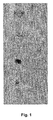
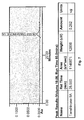
Fig 1 is a TCL picture of the BDS of Astragalus membranaceus var mongholicus; -
Fig 2 is a TCL picture of the BDS of Salvia miltiorrhiza; -
Fig 3 is a TCL picture of the BDS of Schisandra chinensis. -
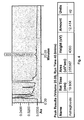
Fig 4 is a HPLC chromatogram of the BDS of Astragalus membranaceus; -
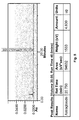
Fig 5 is a HPLC chromatogram of Astragaloside (a marker of Astragalus membranaceus var mongholicus) -
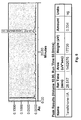
Fig 6 is a HPLC chromatogram of the BDS of Salvia miltiorrhiza; -
Fig 7 is a HPLC chromatogram of Tanoshone-IIA (a marker of Salvia miltiorrhiza) -
Fig 8 is a HPLC chromatogram of the BDS of Schisandra chinensis; -
Fig 9 is a HPLC chromatogram of Schisandrin (a marker of Schisandra chinensis); -
Fig 10 is a flow chart showing the manufacture process for producing a botanical drug substance from Silybum spp.; -
Fig 11 is a flow chart showing the manufacture process for producing a botanical drug substance from Astragalus spp.; -
Fig 12 is a flow chart showing the manufacture process for producing a botanical drug substance from Salvia spp.; and -
Fig 13 is a flow chart showing the manufacture process for producing a botanical drug substance from Schisandra spp. - Standardised extracts of Silybum marianum (fruit), Salvia miltirrhiza (root), Schisandra chinensis (fruit), and Astragalus membranaceus var mongholicus_(root) were made separately using extraction procedures designed specifically for each herb in order to achieve the desired therapeutic potency of the extracts. The extracts were dried and the resulting dry powdered extracts mixed in the proportions shown below (the weights are given both for the extracts and as an equivalent by weight of dry botanical raw material).
- (a) Silybum marianum; from 0.200g to 0.250g (equivalent to 12g to 15g of botanical raw material),
- (b) Astragalus membranaceus var mongholicus; 0.585g to 1.95g (equivalent to 9g to 30g of botanical raw material)
- (c) Salvia miltirrhiza; 0.225g to 0.375g (equivalent to 9g to 15g f botanical raw material) and
- (d) Schisandra chinensis; 0.150g to 0.600g (equivalent to 1.5g to 6g of botanical raw material).
- The spray-dried botanical drug substances of Example 1 were formulated into a suspension dosage form by mixing the spray-dried botanical drug substances with:
- a) one or more gellants or thickeners comprising at least one xanthum gum having a particle size distribution such that 100% by weight of the particles pass a 60 mesh sieve, 95% by weight of the particles pass a 80 mesh sieve and 70% by weight of the particles pass a 200 mesh sieve,
- b) one or more fillers; and
- c) one or more wetting agents and or surfactants.
- The resulting formulation, referred to as the PYN17 suspension powder mixture, contained the following:
Composition: per sachet Active ingredients: Milk Thistle Fruit dry extract : 0,200 g Chinese Sage Root dry extract : 0,225 g Schisandra Fruit dry extract : 0,400 g Astralagus Root dry extract : 0,585 g Excipients: Macrogol 6000 powder : 0,600 g Ferwogel 30.385 (molecular weight 3.5-4.0 x10⁶) : 0,070g Mannitol EZ : 0,160g Aerosil 200 : 0,050g Aspartame : 0,050 g Caramel powder : 0,100 g Peppermint powder aroma : 0,060g - A sachet of the suspension powder was re-suspended in 2.5ml water and further diluted 1 in 7. The incompletely dissolved suspension was filtered and the soluble fraction tested.
- 10 µl of solution was tested in 100µl culture of cells at a concentration of 1/70. Concentrations of 1/350 and 1/1750 were also used to determine toxicity.
- To test toxicity the cells were cultured with Replicon cells for 72 hours, and tritiated thymidine was added 18 hours prior to harvesting.
- Tritiated thymidine incorporation.
Dilution Well 1 Well 2Well 3 Well 4Well 5Mean PYN-17 cpm cpm cpm cpm cpm cpm 1/70 18 24 65 51 77 1/350 41010 32432 34719 30311 32371 34169 1/1750 36210 28315 32424 38230 39815 34999 0 31609 35373 36199 36281 36210 35134 - Inhibition of replication measured by expression of Renilla luciferase.
- The 1/70 dilution was toxic to the cells (as under the microscope the cells were dead). This dilution was not used in the Replicon assay and a further lower dilution was used.
Dilution Well 1 Well 2Well 3 Well 4Well 5Mean +/- SD PYN17 luciferase luciferase activity activity 1/350 531292 234958 614669 479425 725350 517139 183108 1/1750 594920 972891 889324 595922 - 763264 196789 1/8750 880338 1005370 608077 644105 806756 788929 165228 0 1139829 870757 820645 724027 - 888815 178079 - At a 1/350 dilution an inhibition of 41.8 % was noted indicating activity against Hepatitis C virus.
The results may be slightly skewed by one very low result (well 2).
The control (no suspension powder) may also be skewed by the one high result (well 1). - At 1/350 the mean without the low result was 587684
The control without the high result (well 1) was 805143
Excluding the single high and low results the % inhibition was 27%. - These illustrate the extraction methods used in the preparation of the botanical drug substances used in the botanical drug of the invention.
- Referring to
Fig 10 there is illustrated a process for producing a botanical drug substance of a Silybum spp. The fruits are prepared for extraction, undergo an extraction, the resulting solution is filtered, and concentrated. The concentrated purified extract then undergoes a further clean up process in which purified product is precipitated, filtered and the filtrate dried and ground for packing. Such a product can be obtained from Indena SpA. - (The preparation of a botanical drug substance from a Hedysarum spp. is equivalent) Referring to
Fig 11 Astragalus spp. root material is dried in an oven at 60°C for 3 hours, pulverised into a coarse powder, passed through a sieve (10 mesh) and subjected to extraction as per the flow chart. The extraction process is an ethanolic extraction. The concentrate obtained is re-dissolved in ethanol, any precipitate removed and the product concentrated and dried. The method yields a solid content in excess of 10% with an Astragaloside content of greater than 0.4%. - Referring to
Fig 12 the Salvia spp. root material is dried in an oven at 60°C for 3 hours, pulverised into a coarse powder, passed through a sieve (10 mesh) and subjected to extraction as per the flow chart. The extraction process is an ethanolic extraction and the resulting concentrate is dried. The method yields a solid content in excess of 4% with a Tanshinone IIA content of greater than 1.5%. - Referring to
Fig 13 the Salvia spp. fruit is macerated in water and filtered. The filtrate residues are dried, powdered and subjected to an ethanolic extraction, and the resulting concentrate is dried. The method yields a solid content in excess of 4% with a Schisandrol A content of greater than 2%. - A botanical drug substance obtained from the sources identified, and by the methods described was subject to analysis and the results are given below:
- The botanical drug substance from a Silybum spp. was shown by analysis to have the following characteristics
DETERMINATION RESULTS SPECIFICATIONS U.M SPECTROPHOTOMETRIC CONTENTS of silymarin, calculated as silybin, according to DAB10 70.9 >=65.0 % HPLC CONTENTS As sum of silybin and isosilybin 38.8 >=30.0 % CHARACTERS Brownish yellow powder Complies Complies SOLUBLE SUBSTANCES in pantane 0.25 <=0.5 % HPLC: IDENTIFICATION LOSS ON DRYING Complies Complies (T=80°C, in vacuum t=3h 0.0 <=5.0 % SULPHATED ASH According to Ph. Eur. 0.33 <=1.0 % HEAVY METALS According to Ph. Eur. Method A Complies <=100 ppm RESIDUAL ORGANIC SOLVENTS Ethanol 0.4 <= 1.0 % Ethyl Acetate <0.0008 <=0.01 % Hexane Complies <=0.01 % MICRBIOLOGICAL CONTROL According to Ph. Eur. BACTERIA <1000.0 <=1000.0 cfu/g Maximum limit of acceptance: 5 x 1000 cfu/g TM/0113 FUNGI <100.0 <=100.0 cfu/g Maximum limit of acceptance: 5 x 100 cfu/g TM/0118 ENTEROBACTERIA <100.0 <=100.0 cfu/g TM/0015 and TM/0075 STAPHYLOCOCCUS AUREUS. SALMONELLA Absent Absent TM/0008, TM/0009, TM/0017 and TM/0075 ESCHERICHIA COLI, PSEUDOMONAS Absent Absent AERUGINOSA TM/0010, TM0011, TM0016 and TM/0075 - The botanical drug substance from the Astragalus spp. was shown by analysis to have the following characteristics:
-
Product Name: Astragalus Root Extract (Astragalus membranaceus var mongholicus)
Batch Number: AMR-200201PETESTS SPECIFICATION RESULT Appearance Pale yellow colour Pass Loss on Drying: <5% (CP) 2.65% Particle Size: 80 mesh Pass Total Ash <5.0% 0.14% Heavy Metals: Lead <5ppm 0.55 Mercury <1ppm 0.84 Arsenic <1ppm 0.61 Cadmium <0.5ppm 0.21 Acid Insoluble Ash <2.0% 0.026% Microbial Total viable aerobic count: < 103 cfu/ g 80 Fungal & Yeast: < 102 cfu/ g 10 Escherichia coli: Absent in 10g Absent Salmonella spp.: Absent in 109 Absent Content Assay : Astragaloside IV >0.4% 0.44% -
- Name of the Product: Astragalus Root Extract (Astragalus membranaceus var mongholicus)
- Batch Number: AMR-200201PE
-
Chemical Analysis:
- i) TLC Fingerprint: See
Fig 1 which is a TLC picture of the BDS of Astragalus membranaceus var mongholicus. The left is the BDS sample and the right the standard reference chemical Astragaloside IV- Preparation of test solutions:
Add 40ml of methanol to 1 g of powder extract, shake well and filter. Apply the filtrates to a prepared neutral aluminium oxide column, then follow the method described in Chinese Pharmacopoeia (English Edition, 2000), Page 161, Identification (2), - Reference solution: Dissolve chemical reference standard (CRS) Astragaloside IV in methanol to produce a 1mg/1ml reference solution.
- Loadings: Load 2µl of the test solution and 2µl of the reference solution, respectively, on foil-backed Silica gel F254 plate (Merck).
- Developing solvent system: chloroform: methanol: water (13: 7: 2) (Lower layer)
- Developing: Add mixed developing solution to a TLC tank and stand for 15 Minute for equilibrium. Put the TLC plate in and develop for 7.5 cm.
- Detection:
When sprayed with 10% of sulphuric acid in ethanol and heated at 105°C a brown spot is obtained in TLC chromatogram of the test solution corresponds in position and colour to the spot of the reference solution. Observe the developed TLC plate under UV365nm light, both reference chemical Astragaloside IV and test solution showed a orange yellow spot at Rf 0.49,
- Preparation of test solutions:
- ii) HPLC analysis
- Equipment: Waters HPLC System, LC 600 pump and UV detector (Model 486).
- Column: Spherisorb S100Ds1, 25cm x 4.6mm
- Column temperature: 25 °C
- Flow rate: 1.0ml/min
- Detection wavelength: UV200nm
- Mobile phase: acetonitrile: water (1: 2)
- Preparation of CRS solution: Dissolve 2 mg of Astragaloside IV in mobile phase solution in a 10ml volumetric flask.
- Preparation of test solutions:
Weigh accurately 1.0g of powder extract, add 50ml of 2% KOH in methanol, heat and reflux on water bath for 1 hour and filter. Repeat the procedure for three times. Combine the filtrates and recover the solvent. Add 25ml of water to dissolve the residue, wash with 50ml of ether. To the aqueous solution, extract with 25ml of n-butanol (saturated in water) for three times. Combine butanol solution, wash twice with 25ml of water, respectively, then wash with 25ml of potassium dihydrogen phosphate, recover the solvent. Add accurately 10ml of mobile phase solution to the residue shake well, filter through milipore (0.45 µm) as test solution. - Quantity of injection: Inject 20 µl of CRS solution and 20 µl of test solution, respectively.
- Result: See chromatograms in
Figs 4 and5 .Fig 4 (the BDS) shows at least 10 clearly identifiable peaks including Astragaloside IV at a retention time of about 20 minutes. The area under the graph indicates a presence of at least 0.4% by weight of Astragaloside IV. TheFig 5 chromatogram is a control with the marker alone.
- i) TLC Fingerprint: See
- The botanical drug substance from the Salvia spp. was shown by analysis to have the following characteristics:
-
Product Name: Salvia Miltiorrhiza Root Extract (salvia miltiorrhiza)
Batch Number: SMR-200201PETESTS SPECIFICATION RESULT Appearance Dark red colour Pass Loss on Drying: <5% (CP) 3.24% Particle Size: 80 mesh Pass Total Ash <5.0% 0.38% Acid Insoluble Ash <2.0% 0.04% Heavy Metals: Lead <5ppm 0.65 Mercury <1ppm 0.14 Arsenic <1ppm 0.62 Cadmium <0.5ppm 0.38 Microbial Total viable aerobic count: < 103 cfu/ g 100 Fungal & Yeast: < 102 cfu/g 20 Escherichia coli: Absent in 10g Absent Salmonella spp.: Absent in 10g Absent Content Assay : Tanshinone□A> 1.5% 1.98% -
- Name of the Product: Salvia Miltiorrhiza Root Extract (Salvia miltiorrhiza)
- Batch Number: SMR-200201PE
-
Chemical Analysis:
- i) TLC Fingerprints: See
Fig 2 which is a TLC picture of the BDS of Salvia miltiorrhiza. The left is the BDS sample and the right the standard reference chemical Tanshinone IIA- Preparation of Test solutions: Add 1ml of ethyl acetate to 100mg of powder extract.
- Reference solution: Dissolve chemical reference standard (CRS) Tanshinone IIA in ethyl acetate to produce a 2mg/lml reference solution.
- Loadings: Load 5µl of the test solution and 5µl of the reference solution, respectively, on foil-backed Silica gel plate (Merck).
- Developing solvent system: benzene: ethyl acetate (19: 1)
- Developing: Add mixed developing solution to a TLC tank and stand for 15 Minute for equilibrium. Put the TLC plate in and develop for 7.5 cm.
- Detection: Dry the developed plate in air, a dark red spot obtained in TLC chromatogram of the test solution corresponds in position and colour to the spot of the reference solution at Rf 0.46.
-
ii) HPLC analysis
- Equipment: Waters HPLC System, LC 600 pump and UV detector (Model 486).
- Column: Spherisorb S100Ds1, 25cm x 4.6mm
- Column temperature: 25 °C
- Flow rate: 1.0ml/min
- Detection wavelength: LTV270nm
- Mobile phase: Methanol: Water (15: 5)
- Preparation of CRS solution: Weight accurately 10 mg of Tanshinone IIA to a 50ml amber volumetric flask and dissolve with methanol to the volume. Accurately measure 2ml to a 25ml amber volumetric flask and add methanol to the volume.
- Preparation of test solutions: Weigh accurately 30mg of powder extract to a 25ml volumetric flask, add 18ml of methanol and treat under ultrasonic for 5 minutes, then add methanol to the volume.
- Quantity of injection: Inject 5µl of CRS solution and 5 µl of test solution, respectively.
- Result: See chromatograms in
Figs 6 and7 .Fig 6 (the BDS) shows at least 6 identifiable peaks including Tanshinone IIA at a retention time of about 28/29 minutes. The area under the graph indicates a presence of at least 1.5% by weight of Tanshinone IIA. TheFig 7 chromatogram is a control with the marker alone.
- i) TLC Fingerprints: See
- The botanical drug substance from the Schisandra spp. was shown by analysis to have the following characteristics:
-
Product Name: Schisandra Fruit Extract (Schisandra chinensis)
Batch Number: SCF-200201PETESTS SPECIFICATION RESULT Appearance Brownish red colour Pass Loss on Drying: <5% (CP) 4.5% Particle Size: 80 mesh Pass Total Ash <5.0% 0.25% Acid Insoluble Ash <2.0% 0.06% Heavy Metals: Lead <5ppm 0.45 Mercury < 1 ppm 0.47 Arsenic < 1 ppm 0.74 Cadmium <0.5ppm 0.36 Microbial Total viable aerobic count: < 103 cfu/g 90 Fungal & Yeast: < 102 cfu/ g 10 Escherichia coli: Absent in 10g Absent Salmonella spp.: Absent in 10g Absent Content Assay : Schizandrol A >2.0% 2.4% -
- Name of the Product: Schisandra Fruit Extract (Schisandra chinensis)
- Batch Number: SCF-200201PE
-
Chemical Analysis:
- i) TLC Fingerprints: See
Fig 3 which is a TLC picture of the BDS of Schisandra chinensis. The left is the BDS sample and the right the standard reference chemical Schisandrin A- Preparation of Test solutions:
Add 20ml of chloroform to 0.5g of powder extract, ultrasonicate for 10 minutes and filter. Evaporate the filtrates to dryness and dissolve the residue in 1ml of chloroform as test solution. - Reference solution: Dissolve chemical reference standard (CRS) Schizandrol A in chloroform to produce a 1mg/1ml reference solution.
- Loadings: Load 2µl of the test solution and 2µl of the reference solution, respectively, on foil-backed Silica gel F254 plate (Merck).
- Developing solvent system: Petroleum ether (30-60° C): ethyl formate: formic Acid (15:5:1) (upper layer)
- Developing: Add mixed developing solution to a TLC tank and stand for 15 minute for equilibrium. Put the TLC plate in and develop for 7.5 cm.
- Detection: Dry the developed plate in air, observe the plate under UV 254nm, a dark spot obtained in TLC chromatogram of the test solution corresponds in position and colour to the spot of the reference solution at Rf 0.14.
- Preparation of Test solutions:
-
ii) HPLC analysis
- Equipment: Waters HPLC System, LC 600 pump and UV detector (Model 2487).
- Column: Spherisorb S100Ds1, 25cm x 4.6mm
- Column temperature: 25 °C
- Flow rate: 1.0ml/min
- Detection wavelength: UV250nm
- Mobile phase: Methanol: Water (13: 7)
- Preparation of CRS solution: Weight accurately 15 mg of Schizandrol A to a 50ml volumetric flask and dissolve with methanol to the volume to produce a solution with 0.3mg Schizandrol A / per ml.
- Preparation of test solutions: Place 0.25g of raw material powder (Trough No.3 sieve) into a volumetric flask, add 18ml of methanol and ultrasonicate (power 250w, frequency 20 kHz) for 20 minutes. Add methanol to the volume, mix well and filter.
- Quantity of injection: Inject 10µl of CRS solution and 10 µl of test solution, respectively.
- Result: See chromatograms in
Figs 8 and9 .Fig 8 (the BDS) shows at least 6 identifiable peaks including Schizandrol A at a retention time of about 14/15 minutes. The area under the graph indicates a presence of at least 2% by weight of Schizandrol A. TheFig 9 chromatogram is a control with the marker alone.
- i) TLC Fingerprints: See
| Specifications for Astragaloside IV content | Result (% w/w) |
| (% w/w) | |
| >0.4 | 0.44 |
| Specifications for Tanshinone IIA content | Result (% w/w) |
| (% w/w) | |
| >1.5 | 1.98 |
| Specifications for Schizandrol A content (% | Result (% w/w) |
| w/w) | |
| >2.0 | 2.4 |
Claims (41)
- A botanical drug or dietary supplement, for the treatment of or for use in patients with Hepatitis C infection, consisting essentially of botanical raw materials or botanical drug substances from each of:(a) The fruit of Silybum marianum;(b) The root of Astragalus membranaceus var mongholicus or Astragalus membranaceus or Hedysarum polybotrys;(c) The root of Salvia miltiorrhiza, Salvia bowleyana or Salvia przewalskii; and(d) The fruit of Schisandra chinensis or Schisandra sphenanthera.
- A botanical drug or dietary supplement as claimed in claim 1 wherein each species is present in an amount, relative to the total weight of all of the botanical raw materials or botanical drug substances, as follows:a) Silybum spp. from 22-48%;b) Astragalus spp. or Hedysarum spp. from 20-63%;c) Salvia spp. from 13-48%; andd) Schisandra spp. from 2-19%.
- A botanical drug or dietary supplement as claimed in claim 2 wherein each species is present in an amount as follows:(a) Silybum spp. from 30-40%;(b) Astragalus or Hedysarum spp. from 20-30%;(c) Salvia spp. from 20-30%; and(d) Schisandra spp. from 7.5-15%.
- A botanical drug or dietary supplement as claimed in claim 2 or 3 wherein each species is present in an amount as follows:(a) Silybum spp. 35.3% plus or minus 10%;(b) Astragalus or Hedysarum spp. 26.5% plus or minus 10%;(c) Salvia spp. 26.5% plus or minus 10%; and(d) Schisandra spp. 11.7% plus or minus 10%.
- A botanical drug as claimed in any of the preceding claims which consists essentially of botanical drug substances.
- A botanical drug as claimed in claim 5 further comprising excipients.
- A botanical drug as claimed in claim 5 wherein the botanical drug substances comprise total extracts derived from each of the botanical raw materials.
- A botanical drug as claimed in claim 5 wherein the botanical drug substances comprise one or more defined extract fractions derived from each of the botanical raw materials.
- A botanical drug as claimed in any of claims 5 to 8 in which the botanical drug substances are standardised extracts.
- A botanical drug as claimed in claim 9 wherein the botanical drug substance from the Silybum spp. is standardised against a marker of silybin.
- A botanical drug as claimed in claim 9 wherein the botanical drug substance from the Silybum spp. comprises at least 30% by weight silybin and isosilybin when calculated by HPLC method.
- A botanical drug as claimed in any of claims 9 to 11 wherein the standardised extract of the Silybum spp. is a brownish yellow powder which is or has:(i) no less than 30% silybin by HPLC;(ii) no more than 0.5% soluble in pentane;(iii) a sulphated ash content of no more than 1%;(iv) a heavy metal content of no more than 100ppm;(v) a residual organic solvent content of no more than 1% ethanol, no more than 0.01% ethyl acetate and no more than 0.01% hexane;(vi) a bacterial content of no more than 1000 cfu/g; and(vii) a fungal content of no more than 100cfu/g.
- A botanical drug as claimed in claim 9 wherein the botanical drug substance from the Astragalus spp. is standardised against a marker of Astragaloside IV.
- A botanical drug as claimed in claim 13 wherein the botanical drug substance from the Astragalus spp. comprises at least 0.4% by (weight) Astragaloside IV as calculated by HPLC method.
- A botanical drug as claimed in either claim 13 or 14 wherein the botanical drug substance from the Astragalus spp. has a TLC chromatographic fingerprint substantially as illustrated in Fig 1 or a HPLC fingerprint substantially as illustrated in Fig 4.
- A botanical drug as claimed in any of claims 13 to 15 wherein the standardised extract of Astragalus spp. is a pale yellow powder which is or has:(i) no less than 0.4% Astragaloside IV;(ii) a total ash content of no more than 5%;iii) an acid insoluble ash content of no more than 2%; andiv) a microbial total viable aerobic count of no more than of 1000 cfu/g.
- A botanical drug as claimed in claim 9 wherein the botanical drug substance from the Salvia spp. is standardised against a marker of Tanshinone II A.
- A botanical drug as claimed in claim 17 wherein the botanical drug substance from the Salvia spp. comprises at least 1.5% by (weight) of Tanshinone IIA as calculated by HPLC method.
- A botanical drug as claimed in either claim 17 or 18 wherein the botanical drug substance from the Salvia spp. has a TLC chromatographic fingerprint substantially as illustrated in Fig 2 or a HPLC fingerprint substantially as illustrated in Fig 6.
- A botanical drug as claimed in any of claims 17 to 19 wherein the standardised extract of the Salvia spp. is a dark red powder which is or has:(i) no less than 1.5% Tanshinone IIA by HPLC;(ii) a total ash content of no more than 5%;iii) an acid insoluble ash content of no more than 2%; andiv) a microbial total viable aerobic count of no more than of 1000 cfu/g.
- A botanical drug as claimed in claim 9 wherein botanical drug substance from the Schisandra spp. is standardised against a marker of Schizandrol A.
- A botanical drug as claimed in claim 21 wherein the botanical drug substance from the Schisandra spp. comprises at least 2.0% by weight Schizandrol A by HPLC method.
- A botanical drug substance, as claimed in either claim 21 or 22 wherein the botanical drug substance from the Schisandra spp. has a TLC chromatographic fingerprint substantially as illustrated in Fig 3 or a HPLC fingerprint substantially as illustrated in Fig 8.
- A botanical drug substance as claimed in either claim 22 or 23 wherein the standardised extract of Schisandra spp. is a brownish red powder which is or has:(i) no less than 2.0 % Schizandrol A;(ii) a total ash content of no more than 5%;iii) an acid insoluble ash content of no more than 2%; andiv) a microbial total viable aerobic count of no more than of 1000 cfu/g.
- A botanical drug as claimed in any of claims 9 - 24 wherein each standardised extract is a dried ethanolic extract.
- A botanical drug as claimed in any of claims 9 - 25 wherein the Silybum spp. is extracted according to a process substantially as illustrated in Fig 10.
- A botanical drug as claimed in any of claims 9 - 25 wherein the Astragalus spp. is extracted according to a process substantially as illustrated in Fig 11.
- A botanical drug as claimed in any of claims 9 - 25 wherein the:Salvia spp. is extracted according to a process substantially as illustrated in Fig 12.
- A botanical drug as claimed in any of claims 9 - 25 wherein the Schisandra spp. is extracted according to the process substantially as illustrated in Fig 13.
- A botanical drug as claimed in any of claims 9 - 29 which is provided in a unit dosage form.
- A botanical drug as claimed in claims 30 which is a suspension powder mixture.
- A botanical drug as claimed in claims 31 further comprising as excipients:a) one or more gellants or thickeners comprising at least one xanthum gum having a particle size distribution such that 100% by weight of the particles pass a 60 mesh sieve, 95% by weight of the particles pass a 80 mesh sieve and 70% by weight of the particles pass a 200 mesh sieve,b) one or more fillers; andc) one or more wetting agents and or surfactants.
- A botanical drug as claimed in claims 32 wherein the xanthan gum has a molecular weight of from 3.5 to 4.0 x10⁶.
- A botanical drug as claimed in claims 32 wherein the wetting agent is a polyethylene glycol or macrogol.
- A botanical drug as claimed in any of claims 30 to 34 further comprising one or more of a disintegrating agent, a lubricant, a sweetening agent, a flavouring agent and a viscosifying agent.
- A botanical drug as claimed in any of claims 30 to 35 which is packaged in a sachet.
- A botanical drug as claimed in any of claims 30 to 36 which is packaged with a dispensing container.
- A botanical drug as claimed in claim 37 wherein the dispensing container has a sealable lid.
- A botanical drug as claimed in any of claims 9 to 38 comprising in a unit dose:i) 0.200g to 0.250g of a botanical drug substance from a Silybum spp. (equivalent to 12g to 15g of botanical raw material);ii) 0.585g to 1.95g of a botanical drug substance from a Astragalus spp. (equivalent to 9g to 30g of botanical raw material);iii) 0.225g to 0.375g of a botanical drug substance from a Salvia spp. (equivalent to 9g to 15g f botanical raw material) andiv) 0.150g to 0.600g of a botanical drug substance from a Schisandra spp. (equivalent to 1.5g to 6g of botanical raw material).
- A botanical drug or dietary supplement, for the treatment of or for use in patients with Hepatitis C infection, comprising botanical raw materials, botanical drug substances or botanical ingredients from each of:(a) The fruit of Silybum marianum;(b) The root of Astragalus membranaceus var mongholicus or Hedysarum polybotrys;(c) The root of Salvia miltiorrhiza, Salvia bowleyana or Salvia przewalskii; and(d) The fruit of Schisandra chinensis or Schisandra sphenantherain an amount by weight relative to the total weight of the botanical raw materials or botanical drug substances as follows:(a) Silybum spp. no less than 22%(b) Astragalus or Hedysarum spp.no less than 20%;(c) Salvia spp. no less than 13%; and(d) Schisandra spp. no less than 2%.
- A botanical drug or dietary supplement as claimed in claim 40 in which each species is present in an amount by weight relative to the total weight of the botanical raw materials or botanical drug substances as follows:(a) Silybum spp. no less than 22%;(b) Astragalus or Hedysarum spp.no less than 20%;(c) Salvia spp. no less than 13%; and(d) Schisandra spp. no less than 2%
Applications Claiming Priority (2)
| Application Number | Priority Date | Filing Date | Title |
|---|---|---|---|
| GB0403708A GB2411114B (en) | 2004-02-19 | 2004-02-19 | A botanical drug or dietary supplement |
| PCT/GB2005/000559 WO2005079823A1 (en) | 2004-02-19 | 2005-02-17 | Plant-based medicament for the treatment of hepatitis c |
Publications (2)
| Publication Number | Publication Date |
|---|---|
| EP1732578A1 EP1732578A1 (en) | 2006-12-20 |
| EP1732578B1 true EP1732578B1 (en) | 2009-05-06 |
Family
ID=32040026
Family Applications (1)
| Application Number | Title | Priority Date | Filing Date |
|---|---|---|---|
| EP05717739A Expired - Lifetime EP1732578B1 (en) | 2004-02-19 | 2005-02-17 | Plant-based medicament for the treatment of hepatitis c |
Country Status (15)
| Country | Link |
|---|---|
| US (1) | US7422760B2 (en) |
| EP (1) | EP1732578B1 (en) |
| JP (1) | JP2007523144A (en) |
| KR (1) | KR20070026422A (en) |
| CN (1) | CN1925864B (en) |
| AT (1) | ATE430574T1 (en) |
| AU (1) | AU2005215225A1 (en) |
| BR (1) | BRPI0507747A (en) |
| CA (1) | CA2555235C (en) |
| DE (1) | DE602005014348D1 (en) |
| EA (1) | EA014234B1 (en) |
| ES (1) | ES2327052T3 (en) |
| GB (1) | GB2411114B (en) |
| MX (1) | MXPA06009232A (en) |
| WO (1) | WO2005079823A1 (en) |
Families Citing this family (23)
| Publication number | Priority date | Publication date | Assignee | Title |
|---|---|---|---|---|
| GB0500020D0 (en) | 2005-01-04 | 2005-02-09 | Novartis Ag | Organic compounds |
| GB2411114B (en) | 2004-02-19 | 2006-08-16 | Phynova Ltd | A botanical drug or dietary supplement |
| US20060292251A1 (en) * | 2005-06-23 | 2006-12-28 | Nuliv Science Inc. - A Taiwan, R.O.C. Corporation | Method for enhancing nutrient absorption with astragalosides |
| US8197860B2 (en) * | 2005-06-23 | 2012-06-12 | Nuliv Holding Inc. | Method for enhancing nutrient absorption with astragalosides |
| GB2428974B (en) * | 2005-08-12 | 2010-02-03 | Phynova Ltd | Further medical use of a botanical drug or dietary supplement |
| GB0600134D0 (en) | 2006-01-05 | 2006-02-15 | Vernique Biotech Ltd | Use of epoxidised molecules |
| GB2439046B (en) * | 2006-06-16 | 2010-12-08 | Phynova Ltd | Antiviral product |
| CN101334386B (en) | 2007-04-27 | 2012-07-11 | 上海现代中医药股份有限公司 | Determination method for plant medicine blood plasma amygdalin for strengthening the body resistance |
| CN101042380A (en) | 2007-04-27 | 2007-09-26 | 上海现代中医药技术发展有限公司 | Method for measuring strengthen the body resistance and absorbing clots plant medicine plasma gamma-schizandrin |
| CN101078712A (en) | 2007-04-27 | 2007-11-28 | 上海现代中医药技术发展有限公司 | Method for determining plasma tanshinol and salvianolic acid B for strengthening body resistance and eliminating stasis |
| CN101045092A (en) | 2007-04-29 | 2007-10-03 | 上海现代中医药技术发展有限公司 | Application of plant medicine composition for strengthening the body resistance and resolving stagnate |
| CN101968465B (en) * | 2009-07-28 | 2013-07-17 | 秦引林 | Liquid chromatography analytical method of tanshinone II A acrylate |
| US20110038915A1 (en) * | 2009-08-14 | 2011-02-17 | Eduardo Jose Gonzalez | Chewing Gum Formula for Enhancing Psycho-Spirituality |
| US20120213870A1 (en) * | 2011-02-17 | 2012-08-23 | Maher El-Aaser | Composition and method for treating liver disease |
| CN102696481A (en) * | 2012-05-15 | 2012-10-03 | 复旦大学 | Method for increasing output of active tanshinone ingredients in hairy roots of salvia miltiorrhiza |
| CN103901154B (en) * | 2014-03-28 | 2016-01-20 | 成都九芝堂金鼎药业有限公司 | A kind of thin-layer identification method for the treatment of the Chinese medicine preparation of diabetes |
| CN103940943B (en) * | 2014-04-03 | 2016-01-20 | 王志敏 | A kind of discrimination method of field pennycress medicinal material |
| CN105287856A (en) * | 2015-11-25 | 2016-02-03 | 史克勇 | Liver protection medicine |
| CN105403654B (en) * | 2015-12-11 | 2017-04-05 | 陇西保和堂药业有限责任公司 | A kind of method for improving the identification of Radix Astragali thin-layer chromatography |
| CN111132685A (en) * | 2017-04-25 | 2020-05-08 | 瑞阳公司 | Compositions and methods of schisandra extract |
| RU2654709C1 (en) * | 2017-04-26 | 2018-05-22 | Федеральное государственное бюджетное образовательное учреждение высшего образования "Смоленский государственный медицинский университет" министерства здравоохранения Российской Федерации | Anti-inflammatory agent |
| CN109444319B (en) * | 2018-10-25 | 2020-10-02 | 吕梁学院 | A kind of method for determining the content of astragaloside in Beiqi mushroom |
| CN118838282B (en) * | 2024-06-28 | 2025-03-28 | 宜宾市博汇生物科技有限公司 | A plant medicine preparation production control method, system and storage medium |
Family Cites Families (15)
| Publication number | Priority date | Publication date | Assignee | Title |
|---|---|---|---|---|
| CN1071581A (en) * | 1991-10-19 | 1993-05-05 | 孙明君 | The compound method of Antiheptitic " Ganyanling " |
| AUPN411195A0 (en) * | 1995-07-10 | 1995-08-03 | Cathay Herbal Laboratories Pty Ltd | Medicinal composition |
| CN1053825C (en) * | 1995-09-15 | 2000-06-28 | 李永光 | Wuling C-hepatitis powder |
| CN1053375C (en) * | 1996-05-27 | 2000-06-14 | 刘智华 | Chinese medicine preparation for hepatosis |
| CN1151312A (en) * | 1996-07-14 | 1997-06-11 | 江洋 | Hepatitis C capsule and its prepn. method |
| CN1183288A (en) * | 1996-11-23 | 1998-06-03 | 邹长青 | Yiai pill (powder) and method for manufacturing same |
| US6043276A (en) * | 1998-06-25 | 2000-03-28 | Georgetown University School Of Medicine | Compounds obtained from salvia species having antiviral activity |
| JP2001039868A (en) * | 1999-07-30 | 2001-02-13 | Soutetsu Cho | Antiviral pharmaceutical preparation and prophylaxis and therapy for viral infectious disease using the same pharmaceutical preparation |
| US6455078B1 (en) * | 2000-10-18 | 2002-09-24 | Tzu-Sheng Wu | Medicinal herbal composition for treating liver diseases and HIV |
| US20020102237A1 (en) * | 2000-11-13 | 2002-08-01 | Milton Hammerly | Compositions and methods for hepatitis treatment |
| CN1393255A (en) * | 2001-06-25 | 2003-01-29 | 刘玉璋 | Medicine for treating viral hepatitis C |
| CN1371713A (en) * | 2002-03-25 | 2002-10-02 | 刘振顺 | Yilidan Chinese patent medicine |
| CN100348199C (en) * | 2002-12-19 | 2007-11-14 | 王登之 | Silicibinin-N-methylglucamine disperser for treating hepatitis, and its prepn. method |
| BR0318380A (en) | 2003-06-30 | 2006-09-12 | Pirelli | process for manufacturing elastomeric components of a tire |
| GB2411114B (en) | 2004-02-19 | 2006-08-16 | Phynova Ltd | A botanical drug or dietary supplement |
-
2004
- 2004-02-19 GB GB0403708A patent/GB2411114B/en not_active Expired - Fee Related
-
2005
- 2005-02-17 MX MXPA06009232A patent/MXPA06009232A/en active IP Right Grant
- 2005-02-17 JP JP2006553655A patent/JP2007523144A/en active Pending
- 2005-02-17 AT AT05717739T patent/ATE430574T1/en not_active IP Right Cessation
- 2005-02-17 CA CA2555235A patent/CA2555235C/en not_active Expired - Fee Related
- 2005-02-17 WO PCT/GB2005/000559 patent/WO2005079823A1/en not_active Ceased
- 2005-02-17 CN CN2005800052927A patent/CN1925864B/en not_active Expired - Fee Related
- 2005-02-17 US US10/589,738 patent/US7422760B2/en not_active Expired - Fee Related
- 2005-02-17 ES ES05717739T patent/ES2327052T3/en not_active Expired - Lifetime
- 2005-02-17 EA EA200601523A patent/EA014234B1/en not_active IP Right Cessation
- 2005-02-17 EP EP05717739A patent/EP1732578B1/en not_active Expired - Lifetime
- 2005-02-17 BR BRPI0507747-8A patent/BRPI0507747A/en not_active IP Right Cessation
- 2005-02-17 AU AU2005215225A patent/AU2005215225A1/en not_active Abandoned
- 2005-02-17 DE DE602005014348T patent/DE602005014348D1/en not_active Expired - Lifetime
- 2005-02-17 KR KR1020067019268A patent/KR20070026422A/en not_active Withdrawn
Also Published As
| Publication number | Publication date |
|---|---|
| GB2411114B (en) | 2006-08-16 |
| CA2555235C (en) | 2013-10-15 |
| CA2555235A1 (en) | 2005-09-01 |
| AU2005215225A1 (en) | 2005-09-01 |
| WO2005079823A1 (en) | 2005-09-01 |
| ATE430574T1 (en) | 2009-05-15 |
| MXPA06009232A (en) | 2007-01-26 |
| CN1925864B (en) | 2011-07-06 |
| EA014234B1 (en) | 2010-10-29 |
| GB2411114A (en) | 2005-08-24 |
| US7422760B2 (en) | 2008-09-09 |
| DE602005014348D1 (en) | 2009-06-18 |
| BRPI0507747A (en) | 2007-07-10 |
| EA200601523A1 (en) | 2007-02-27 |
| ES2327052T3 (en) | 2009-10-23 |
| US20070160693A1 (en) | 2007-07-12 |
| KR20070026422A (en) | 2007-03-08 |
| HK1098959A1 (en) | 2007-08-03 |
| GB0403708D0 (en) | 2004-03-24 |
| EP1732578A1 (en) | 2006-12-20 |
| CN1925864A (en) | 2007-03-07 |
| JP2007523144A (en) | 2007-08-16 |
Similar Documents
| Publication | Publication Date | Title |
|---|---|---|
| EP1732578B1 (en) | Plant-based medicament for the treatment of hepatitis c | |
| US20080233220A1 (en) | Further Medical Use Of A Botanical Drug Or Dietary Supplement | |
| Cassileth et al. | Herb-drug interactions in oncology | |
| US20010006983A1 (en) | Multicomponent biological vehicle | |
| KR100980819B1 (en) | Composition containing the herbal extracts as an active ingredient and a method for producing the same | |
| GB2425476A (en) | Multi-herb medicament for the treatment of SARS | |
| CN102014944B (en) | Pharmaceutical composition using herbal extract for prevention and treatment of obesity and metabolic disorders | |
| CN107853517A (en) | A kind of antifatigue Chinese medicinal drink and preparation method thereof of refreshing oneself | |
| EP1846106B1 (en) | Pharmaceutical composition for treating nephropathy and healthy food comprising herb extracts | |
| CN120531846A (en) | A medicinal and edible alcohol-relieving composition and its preparation method | |
| CN102349956B (en) | Compound extract for moisturizeing pathogenic dryness and relieving itching and preparation thereof | |
| CN107551001A (en) | A kind of Chinese herbal compounds and its preparation method for being used to prevent and treat alcoholic liver injury | |
| Miller et al. | Popularity, diversity, and quality of Echinacea | |
| CN112107665A (en) | Turbidity-reducing and fat-reducing capsule | |
| CN112057535B (en) | Preparation method of traditional Chinese medicine composition for preventing or/and treating dyslipidemia | |
| HK1098959B (en) | Plant-based medicament for the treatment of hepatitis c | |
| Nawaz et al. | Evaluation of acute and repeated dose toxicity of the polyherbal formulation Linkus syrup in experimental animals | |
| KR100642801B1 (en) | Antidiabetic Food Composition Combining Herbal Medicines and Pear Extracts and Manufacturing Method Thereof | |
| CN103463207B (en) | Prevent and treat the composition of diabetes | |
| KR20210157522A (en) | Composition for preventing, ameliorating or treating diabetic nepropathy comprising bangpungtongseongsan extract as effective component | |
| CN101816708A (en) | Treat rheumatismal Chinese medicine composition and preparation method thereof | |
| Al-Jayid et al. | Aloe vera (L.) Burm: A Review of its Pharmacological and Therapeutic Potential | |
| CN117919305A (en) | A Chinese medicine formula for lowering blood sugar from bitter melon known as plant insulin | |
| CN105664048A (en) | A pharmaceutical composition for inhibiting the proliferation of gastric cancer cells and its application | |
| CN112205494A (en) | A kind of Shengdi Qingre tea and preparation method thereof |
Legal Events
| Date | Code | Title | Description |
|---|---|---|---|
| PUAI | Public reference made under article 153(3) epc to a published international application that has entered the european phase |
Free format text: ORIGINAL CODE: 0009012 |
|
| 17P | Request for examination filed |
Effective date: 20060918 |
|
| AK | Designated contracting states |
Kind code of ref document: A1 Designated state(s): AT BE BG CH CY CZ DE DK EE ES FI FR GB GR HU IE IS IT LI LT LU MC NL PL PT RO SE SI SK TR |
|
| DAX | Request for extension of the european patent (deleted) | ||
| REG | Reference to a national code |
Ref country code: HK Ref legal event code: DE Ref document number: 1098959 Country of ref document: HK |
|
| 17Q | First examination report despatched |
Effective date: 20071002 |
|
| GRAP | Despatch of communication of intention to grant a patent |
Free format text: ORIGINAL CODE: EPIDOSNIGR1 |
|
| GRAS | Grant fee paid |
Free format text: ORIGINAL CODE: EPIDOSNIGR3 |
|
| GRAA | (expected) grant |
Free format text: ORIGINAL CODE: 0009210 |
|
| AK | Designated contracting states |
Kind code of ref document: B1 Designated state(s): AT BE BG CH CY CZ DE DK EE ES FI FR GB GR HU IE IS IT LI LT LU MC NL PL PT RO SE SI SK TR |
|
| REG | Reference to a national code |
Ref country code: GB Ref legal event code: FG4D |
|
| REG | Reference to a national code |
Ref country code: CH Ref legal event code: EP |
|
| REG | Reference to a national code |
Ref country code: IE Ref legal event code: FG4D |
|
| REF | Corresponds to: |
Ref document number: 602005014348 Country of ref document: DE Date of ref document: 20090618 Kind code of ref document: P |
|
| REG | Reference to a national code |
Ref country code: CH Ref legal event code: NV Representative=s name: KIRKER & CIE S.A. |
|
| REG | Reference to a national code |
Ref country code: ES Ref legal event code: FG2A Ref document number: 2327052 Country of ref document: ES Kind code of ref document: T3 |
|
| PG25 | Lapsed in a contracting state [announced via postgrant information from national office to epo] |
Ref country code: FI Free format text: LAPSE BECAUSE OF FAILURE TO SUBMIT A TRANSLATION OF THE DESCRIPTION OR TO PAY THE FEE WITHIN THE PRESCRIBED TIME-LIMIT Effective date: 20090506 Ref country code: LT Free format text: LAPSE BECAUSE OF FAILURE TO SUBMIT A TRANSLATION OF THE DESCRIPTION OR TO PAY THE FEE WITHIN THE PRESCRIBED TIME-LIMIT Effective date: 20090506 Ref country code: PT Free format text: LAPSE BECAUSE OF FAILURE TO SUBMIT A TRANSLATION OF THE DESCRIPTION OR TO PAY THE FEE WITHIN THE PRESCRIBED TIME-LIMIT Effective date: 20090906 Ref country code: AT Free format text: LAPSE BECAUSE OF FAILURE TO SUBMIT A TRANSLATION OF THE DESCRIPTION OR TO PAY THE FEE WITHIN THE PRESCRIBED TIME-LIMIT Effective date: 20090506 |
|
| REG | Reference to a national code |
Ref country code: HK Ref legal event code: GR Ref document number: 1098959 Country of ref document: HK |
|
| NLV1 | Nl: lapsed or annulled due to failure to fulfill the requirements of art. 29p and 29m of the patents act | ||
| PG25 | Lapsed in a contracting state [announced via postgrant information from national office to epo] |
Ref country code: SE Free format text: LAPSE BECAUSE OF FAILURE TO SUBMIT A TRANSLATION OF THE DESCRIPTION OR TO PAY THE FEE WITHIN THE PRESCRIBED TIME-LIMIT Effective date: 20090806 Ref country code: PL Free format text: LAPSE BECAUSE OF FAILURE TO SUBMIT A TRANSLATION OF THE DESCRIPTION OR TO PAY THE FEE WITHIN THE PRESCRIBED TIME-LIMIT Effective date: 20090506 Ref country code: NL Free format text: LAPSE BECAUSE OF FAILURE TO SUBMIT A TRANSLATION OF THE DESCRIPTION OR TO PAY THE FEE WITHIN THE PRESCRIBED TIME-LIMIT Effective date: 20090506 Ref country code: IS Free format text: LAPSE BECAUSE OF FAILURE TO SUBMIT A TRANSLATION OF THE DESCRIPTION OR TO PAY THE FEE WITHIN THE PRESCRIBED TIME-LIMIT Effective date: 20090906 Ref country code: SI Free format text: LAPSE BECAUSE OF FAILURE TO SUBMIT A TRANSLATION OF THE DESCRIPTION OR TO PAY THE FEE WITHIN THE PRESCRIBED TIME-LIMIT Effective date: 20090506 |
|
| PG25 | Lapsed in a contracting state [announced via postgrant information from national office to epo] |
Ref country code: DK Free format text: LAPSE BECAUSE OF FAILURE TO SUBMIT A TRANSLATION OF THE DESCRIPTION OR TO PAY THE FEE WITHIN THE PRESCRIBED TIME-LIMIT Effective date: 20090506 Ref country code: EE Free format text: LAPSE BECAUSE OF FAILURE TO SUBMIT A TRANSLATION OF THE DESCRIPTION OR TO PAY THE FEE WITHIN THE PRESCRIBED TIME-LIMIT Effective date: 20090506 Ref country code: RO Free format text: LAPSE BECAUSE OF FAILURE TO SUBMIT A TRANSLATION OF THE DESCRIPTION OR TO PAY THE FEE WITHIN THE PRESCRIBED TIME-LIMIT Effective date: 20090506 Ref country code: CZ Free format text: LAPSE BECAUSE OF FAILURE TO SUBMIT A TRANSLATION OF THE DESCRIPTION OR TO PAY THE FEE WITHIN THE PRESCRIBED TIME-LIMIT Effective date: 20090506 |
|
| PG25 | Lapsed in a contracting state [announced via postgrant information from national office to epo] |
Ref country code: SK Free format text: LAPSE BECAUSE OF FAILURE TO SUBMIT A TRANSLATION OF THE DESCRIPTION OR TO PAY THE FEE WITHIN THE PRESCRIBED TIME-LIMIT Effective date: 20090506 Ref country code: BE Free format text: LAPSE BECAUSE OF FAILURE TO SUBMIT A TRANSLATION OF THE DESCRIPTION OR TO PAY THE FEE WITHIN THE PRESCRIBED TIME-LIMIT Effective date: 20090506 |
|
| PLBE | No opposition filed within time limit |
Free format text: ORIGINAL CODE: 0009261 |
|
| STAA | Information on the status of an ep patent application or granted ep patent |
Free format text: STATUS: NO OPPOSITION FILED WITHIN TIME LIMIT |
|
| PG25 | Lapsed in a contracting state [announced via postgrant information from national office to epo] |
Ref country code: BG Free format text: LAPSE BECAUSE OF FAILURE TO SUBMIT A TRANSLATION OF THE DESCRIPTION OR TO PAY THE FEE WITHIN THE PRESCRIBED TIME-LIMIT Effective date: 20090806 |
|
| 26N | No opposition filed |
Effective date: 20100209 |
|
| PG25 | Lapsed in a contracting state [announced via postgrant information from national office to epo] |
Ref country code: MC Free format text: LAPSE BECAUSE OF NON-PAYMENT OF DUE FEES Effective date: 20100301 Ref country code: GR Free format text: LAPSE BECAUSE OF FAILURE TO SUBMIT A TRANSLATION OF THE DESCRIPTION OR TO PAY THE FEE WITHIN THE PRESCRIBED TIME-LIMIT Effective date: 20090807 |
|
| REG | Reference to a national code |
Ref country code: IE Ref legal event code: MM4A |
|
| PG25 | Lapsed in a contracting state [announced via postgrant information from national office to epo] |
Ref country code: IE Free format text: LAPSE BECAUSE OF NON-PAYMENT OF DUE FEES Effective date: 20100217 |
|
| PG25 | Lapsed in a contracting state [announced via postgrant information from national office to epo] |
Ref country code: IT Free format text: LAPSE BECAUSE OF NON-PAYMENT OF DUE FEES Effective date: 20100217 |
|
| PGRI | Patent reinstated in contracting state [announced from national office to epo] |
Ref country code: IT Effective date: 20110616 |
|
| PGFP | Annual fee paid to national office [announced via postgrant information from national office to epo] |
Ref country code: IT Payment date: 20120224 Year of fee payment: 8 |
|
| PG25 | Lapsed in a contracting state [announced via postgrant information from national office to epo] |
Ref country code: CY Free format text: LAPSE BECAUSE OF FAILURE TO SUBMIT A TRANSLATION OF THE DESCRIPTION OR TO PAY THE FEE WITHIN THE PRESCRIBED TIME-LIMIT Effective date: 20090506 |
|
| PG25 | Lapsed in a contracting state [announced via postgrant information from national office to epo] |
Ref country code: LU Free format text: LAPSE BECAUSE OF NON-PAYMENT OF DUE FEES Effective date: 20100217 Ref country code: HU Free format text: LAPSE BECAUSE OF FAILURE TO SUBMIT A TRANSLATION OF THE DESCRIPTION OR TO PAY THE FEE WITHIN THE PRESCRIBED TIME-LIMIT Effective date: 20091107 |
|
| PG25 | Lapsed in a contracting state [announced via postgrant information from national office to epo] |
Ref country code: TR Free format text: LAPSE BECAUSE OF FAILURE TO SUBMIT A TRANSLATION OF THE DESCRIPTION OR TO PAY THE FEE WITHIN THE PRESCRIBED TIME-LIMIT Effective date: 20090506 |
|
| PGFP | Annual fee paid to national office [announced via postgrant information from national office to epo] |
Ref country code: FR Payment date: 20130301 Year of fee payment: 9 Ref country code: ES Payment date: 20130225 Year of fee payment: 9 Ref country code: DE Payment date: 20130222 Year of fee payment: 9 Ref country code: CH Payment date: 20130221 Year of fee payment: 9 |
|
| REG | Reference to a national code |
Ref country code: DE Ref legal event code: R119 Ref document number: 602005014348 Country of ref document: DE |
|
| REG | Reference to a national code |
Ref country code: CH Ref legal event code: PL |
|
| PG25 | Lapsed in a contracting state [announced via postgrant information from national office to epo] |
Ref country code: CH Free format text: LAPSE BECAUSE OF NON-PAYMENT OF DUE FEES Effective date: 20140228 Ref country code: LI Free format text: LAPSE BECAUSE OF NON-PAYMENT OF DUE FEES Effective date: 20140228 |
|
| REG | Reference to a national code |
Ref country code: FR Ref legal event code: ST Effective date: 20141031 |
|
| REG | Reference to a national code |
Ref country code: DE Ref legal event code: R119 Ref document number: 602005014348 Country of ref document: DE Effective date: 20140902 |
|
| PG25 | Lapsed in a contracting state [announced via postgrant information from national office to epo] |
Ref country code: DE Free format text: LAPSE BECAUSE OF NON-PAYMENT OF DUE FEES Effective date: 20140902 Ref country code: FR Free format text: LAPSE BECAUSE OF NON-PAYMENT OF DUE FEES Effective date: 20140228 |
|
| REG | Reference to a national code |
Ref country code: ES Ref legal event code: FD2A Effective date: 20150327 |
|
| PG25 | Lapsed in a contracting state [announced via postgrant information from national office to epo] |
Ref country code: ES Free format text: LAPSE BECAUSE OF NON-PAYMENT OF DUE FEES Effective date: 20140218 |
|
| PGFP | Annual fee paid to national office [announced via postgrant information from national office to epo] |
Ref country code: GB Payment date: 20150204 Year of fee payment: 11 |
|
| PG25 | Lapsed in a contracting state [announced via postgrant information from national office to epo] |
Ref country code: IT Free format text: LAPSE BECAUSE OF NON-PAYMENT OF DUE FEES Effective date: 20140217 |
|
| GBPC | Gb: european patent ceased through non-payment of renewal fee |
Effective date: 20160217 |
|
| PG25 | Lapsed in a contracting state [announced via postgrant information from national office to epo] |
Ref country code: GB Free format text: LAPSE BECAUSE OF NON-PAYMENT OF DUE FEES Effective date: 20160217 |