EP1731166B1 - Streptococcus pneumoniae proteins and vaccines - Google Patents
Streptococcus pneumoniae proteins and vaccines Download PDFInfo
- Publication number
- EP1731166B1 EP1731166B1 EP06009322A EP06009322A EP1731166B1 EP 1731166 B1 EP1731166 B1 EP 1731166B1 EP 06009322 A EP06009322 A EP 06009322A EP 06009322 A EP06009322 A EP 06009322A EP 1731166 B1 EP1731166 B1 EP 1731166B1
- Authority
- EP
- European Patent Office
- Prior art keywords
- polypeptide
- vaccine
- polypeptides
- seq
- sentence
- Prior art date
- Legal status (The legal status is an assumption and is not a legal conclusion. Google has not performed a legal analysis and makes no representation as to the accuracy of the status listed.)
- Expired - Lifetime
Links
Images


Classifications
-
- C—CHEMISTRY; METALLURGY
- C07—ORGANIC CHEMISTRY
- C07K—PEPTIDES
- C07K16/00—Immunoglobulins [IG], e.g. monoclonal or polyclonal antibodies
- C07K16/12—Immunoglobulins [IG], e.g. monoclonal or polyclonal antibodies against material from bacteria
- C07K16/1267—Gram-positive bacteria
- C07K16/1275—Streptococcus (G)
-
- A—HUMAN NECESSITIES
- A61—MEDICAL OR VETERINARY SCIENCE; HYGIENE
- A61P—SPECIFIC THERAPEUTIC ACTIVITY OF CHEMICAL COMPOUNDS OR MEDICINAL PREPARATIONS
- A61P31/00—Antiinfectives, i.e. antibiotics, antiseptics, chemotherapeutics
- A61P31/04—Antibacterial agents
-
- C—CHEMISTRY; METALLURGY
- C07—ORGANIC CHEMISTRY
- C07K—PEPTIDES
- C07K14/00—Peptides having more than 20 amino acids; Gastrins; Somatostatins; Melanotropins; Derivatives thereof
- C07K14/195—Peptides having more than 20 amino acids; Gastrins; Somatostatins; Melanotropins; Derivatives thereof from bacteria
- C07K14/315—Peptides having more than 20 amino acids; Gastrins; Somatostatins; Melanotropins; Derivatives thereof from bacteria from Streptococcus (G), e.g. Enterococci
- C07K14/3156—Peptides having more than 20 amino acids; Gastrins; Somatostatins; Melanotropins; Derivatives thereof from bacteria from Streptococcus (G), e.g. Enterococci from Streptococcus pneumoniae (Pneumococcus)
-
- A—HUMAN NECESSITIES
- A61—MEDICAL OR VETERINARY SCIENCE; HYGIENE
- A61K—PREPARATIONS FOR MEDICAL, DENTAL OR TOILETRY PURPOSES
- A61K39/00—Medicinal preparations containing antigens or antibodies
- A61K2039/505—Medicinal preparations containing antigens or antibodies comprising antibodies
-
- A—HUMAN NECESSITIES
- A61—MEDICAL OR VETERINARY SCIENCE; HYGIENE
- A61K—PREPARATIONS FOR MEDICAL, DENTAL OR TOILETRY PURPOSES
- A61K39/00—Medicinal preparations containing antigens or antibodies
- A61K2039/51—Medicinal preparations containing antigens or antibodies comprising whole cells, viruses or DNA/RNA
- A61K2039/52—Bacterial cells; Fungal cells; Protozoal cells
- A61K2039/523—Bacterial cells; Fungal cells; Protozoal cells expressing foreign proteins
-
- A—HUMAN NECESSITIES
- A61—MEDICAL OR VETERINARY SCIENCE; HYGIENE
- A61K—PREPARATIONS FOR MEDICAL, DENTAL OR TOILETRY PURPOSES
- A61K39/00—Medicinal preparations containing antigens or antibodies
Definitions
- Streptococcus pneumoniae is a gram positive bacterium which is a major causative agent in invasive infections in animals and humans, such as sepsis, meningitis, otitis media and lobar pneumonia ( Tuomanen, et al. NEJM 322:1280-1284 (1995 )).
- pneumococci readily bind to non-inflamed human epithelial cells of the upper and lower respiratory tract by binding to eukaryotic carbohydrates in a lectin-like manner ( Cundell et al., Micro. Path. 17:361-374 (1994 )).
- Conversion to invasive pneumococcal infections for bound bacteria may involve the local generation of inflammatory factors which may activate the epithelial cells to change the number and type of receptors on their surface ( Cundell, et al., Nature, 377:435-438 (1995 )).
- PAF platelet activating factor
- pneumococci exhibit strongly enhanced adherence and invasion of tissue.
- Certain soluble receptor analogs have been shown to prevent the progression of pneumococcal infections ( Idanpaan-Heikkila et al., J. Inf. Dis., 176:704-712 (1997 )).
- WO 98/18930 discloses Streptococcus pneumoniae antigens which are potential candidates for the preparation of vaccine.
- the invention disclosed herein relates to a vaccine comprising as active ingredient a polypeptide of the pneumococcal organism Streptococcus pneumoniae , comprising the seq ID no 6.
- Sp128 (SEQ ID NO:6), composed of 664 amino acid residues. Sp128 has been found to confer protective properties on animals immunized with said polypeptide .
- the present invention also relates to the field of bacterial antigens and their use, for example, as immunogenic agents in humans and animals to stimulate an immune response. More specifically, it relates to the vaccination of mammalian species with one or more recombinant polypeptides produced according to the invention disclosed herein, such recombinant polypeptides being derived from Streptococcus pneumoniae.
- such proteins serve as a mechanism for stimulating production of antibodies that protect the vaccine recipient against infection by a wide range of capsular serotypes of pathogenic S. pneumoniae.
- the present invention relates to the prevention and treatment of pneumococcal infections such as infections of the middle ear, nasopharynx, lung and bronchial areas, blood, CSF, and the like, that are caused by pneumococcal bacteria.
- pneumococcal infections such as infections of the middle ear, nasopharynx, lung and bronchial areas, blood, CSF, and the like, that are caused by pneumococcal bacteria.
- the present invention further relates to vaccines prepared from the novel polypeptide, disclosed herein.
- examples of the use of such polypeptide as a vaccine for the protection of mammals are likewise disclosed.
- the polypeptide, of the vaccines disclosed as expression products according to the invention may be in "enriched form.”
- enriched means that the concentration of the material is at least about 2, 5, 10, 100, or 1000 times its natural concentration (for example), advantageously 0.01%, by weight, preferably at least about 0.1% by weight. Enriched preparations of about 0.5%, 1%, 5%, 10%, and 20% by weight are also contemplated.
- isolated in the context of the present invention with respect to polypeptides means that the material is removed from its original environment (e.g., the natural environment if it is naturally occurring).
- a naturally-occurring polynucleotide or polypeptide present in a living organism is not isolated, but the same polypeptide, separated from some or all of the co-existing materials in the natural system, is isolated.
- Such polypeptides could be part of a composition, and still be isolated in that such composition is not part of its natural environment.
- the polypeptides of the vaccines disclosed herein are preferably provided in an isolated form, and preferably are purified to homogeneity.
- the recombinant or immunogenic polypeptides disclosed in accordance with the present invention may also be in " purified” form.
- the term " purified” does not require absolute purity; rather, it is intended as a relative definition, and can include preparations that are highly purified or preparations that are only partially purified, as those terms are understood by those of skill in the relevant art.
- individual clones isolated from a cDNA library have been conventionally purified to electrophoretic homogeneity. Purification of starting material or natural material to at least one order of magnitude, preferably two or three orders, and more preferably four or five orders of magnitude is expressly contemplated.
- claimed polypeptide which has a purity of preferably 0.001%, or at least 0.01% or 0.1%; and even desirably 1% by weight or greater is expressly contemplated.
- amino acid sequence corresponding to all or part of the polypeptide according to the present invention can be synthesized using commercially available peptide synthesizers.
- polypeptide vaccines of the present invention may be recombinant polypeptides, natural polypeptides or synthetic polypeptides, preferably recombinant polypeptides.
- Recombinant means that a protein is derived from recombinant (e.g., microbial or mammalian) expression systems.
- Microbial refers to recombinant proteins made in bacterial or fungal (e.g., yeast) expression systems.
- recombinant microbial defines a protein essentially free of native endogenous substances and unaccompanied by associated native glycosylation. Protein expressed in most bacterial cultures, e.g., E. coli, will be free of glycosylation modifications that might normally accur in yeast or mammalian expression systems. Thus, the patterns of such post-translational modifications will differ with the expression system. However, all such variants are considered to lie within the disclosure of the present invention.
- an isolated antibody that binds specifically to a polypeptide of the invention.
- Such an antibody may be a monoclonal antibody, possibly produced by a hybridoma cell line, and may also include a recombinantly produced antibody formed by introducing into a suitable cell line the gene sequences required for producing an antibody specific for the polypeptide vaccines disclosed herein.
- the present invention is also directed to a vaccine comprising a S. pneumoniae polypeptide, disclosed herein, suspended in a pharmaceutically acceptable diluent, carrier or excipient, provided that said polypeptide is present in an amount effective to elicit protective antibodies in an animal against an organism related to the genus Streptococcus, preferably an organism of the genus Streptococcus, and most preferably where the organism is Streptococcus pneumoniae.
- a vaccine disclosed according to the present invention may also include a vaccine comprising a microbial organism transformed with polynucleotides, and thereby expressing the polypeptide, of Sp128 (SEQ ID NOS: 6).
- the transformed microorganism is selected from the group consisting of Salmonella, Mycobacteria, Streptococcus, poxviruses, and adenoviruses.
- Fragments or portions of the polypeptides of the present invention may be employed for producing the corresponding full-length polypeptide by peptide synthesis; therefore, the fragments may be employed as intermediates for producing the full-length polypeptides.
- polypeptides, or cells expressing them can be used as an immunogen to produce antibodies thereto.
- These antibodies can be, for example, polyclonal, monoclonal, chimeric, single chain, Fab fragments, or the product of an Fab expression library.
- Various procedures known in the art may be used for the production of polyclonal antibodies, especially where these are in the form of antisera raised against the polypeptides, or fragments thereof, according to the present invention. Such antisera find use in immunization against pneumococcal infection.
- Antibodies generated against a polypeptide vaccine corresponding to a sequence of the present invention can be obtained by direct injection of the polypeptide into an animal or by administering the polypeptide to an animal, preferably a nonhuman. The antibody so obtained will then bind the polypeptide itself. In this manner, even a sequence encoding only a fragment of the polypeptide can be used to generate antibodies binding the whole native polypeptide.
- any technique which provides antibodies produced by continuous cell line cultures can be used. Examples include the hybridoma technique ( Kohler and Milstein, 1975, Nature, 256:495-497 ), the trioma technique, the human B-cell hybridoma technique ( Kozbor et al., 1983, Immunology Today 4:72 ), and the EBV-hybridoma technique to produce human monoclonal antibodies ( Cole, et al., 1985, in Monoclonal Antibodies and Cancer Therapy, Alan R. Liss, Inc., pp. 77-96 ).
- the present invention also relates to the use of the novel polypeptides disclosed herein, for the production of lymphocytes, or hybridoma cells, producing monoclonal antibodies against such polypeptides, for preventing or attenuating an infection caused by a member of the genus streptococcus in an animal.
- a vaccine in accordance with the present invention includes the polypeptide hereinabove described.
- more than one polypeptide such as two or more polypeptides may be used as a physical mixture or as a fusion of two or more polypeptides.
- the fusion fragment or fusion polypeptide may be produced, for example, by recombinant techniques or by the use of appropriate linkers for fusing previously prepared polypeptides or active fragments.
- the invention relates to passive immunity vaccines formulated from antibodies against a polypeptide of the present invention.
- passive immunity vaccines can be utilized to prevent and/or treat streptococcal infections in patients.
- a vaccine can be produced from a synthetic or recombinant polypeptide of the present invention or an antibody against such polypeptide.
- the present invention relates to one or more antibodies (monoclonal, polyclonal or sera) to the polypeptide of the invention as described above for the prophylaxis and/or treatment of diseases that are caused by streptococcal bacteria.
- the invention relates to the prophylaxis and/or treatment of infectious diseases that are caused by S. pneumoniae.
- the invention relates to the prophylaxis and/or treatment of otitis media, nasopharyngeal and bronchial infections, and the like in humans by utilizing a vaccine of the present invention.
- vaccines are prepared as injectables, in the form of aqueous solutions or suspensions. Vaccines in an oil base are also well known such as for inhaling. Solid forms which are dissolved or suspended prior to use may also be formulated.
- Pharmaceutical carriers, diluents and excipients are generally added that are compatible with the active ingredients and acceptable for pharmaceutical use. Examples of such carriers include, but are not limited to, water, saline solutions, dextrose, or glycerol. Combinations of carriers may also be used.
- Vaccine compositions may further incorporate additional substances to stabilize pH, or to function as adjuvants, wetting agents, or emulsifying agents, which can serve to improve the effectiveness of the vaccine.
- Vaccines are generally formulated for parenteral administration and are injected either subcutaneously or intramuscularly. Such vaccines can also be formulated as suppositories or for oral administration, using methods known in the art, or for administration through nasal or respiratory routes.
- the amount of vaccine sufficient to confer immunity to pathogenic bacteria is determined by methods well known to those skilled in the art. This quantity will be determined based upon the characteristics of the vaccine recipient and the level of immunity required. Typically, the amount of vaccine to be administered will be determined based upon the judgment of a skilled physician. Where vaccines are administered by subcutaneous or intramuscular injection, a range of .5 to 500 ⁇ g purified protein may be given.
- the present invention is also directed to a vaccine in which a polypeptide of the present invention is delivered or administered in the form of a polynucleotide encoding the polypeptide or active fragment, whereby the polypeptide or active fragment is produced in vivo.
- the polynucleotide may be included in a suitable expression vector and combined with a pharmaceutically acceptable carrier.
- polypeptides of the present invention can be used as immunogens to stimulate the production of antibodies for use in passive immunotherapy.
- polypeptides of the invention can be synthetically produced by conventional peptide synthesizers.
- Mature proteins can be expressed in mammalian cells, yeast, bacteria, or other cells under the control of appropriate promoters. Cell-free translation systems can also be employed to produce such proteins using RNAs derived from the DNA constructs of the present invention. Appropriate cloning and expression vectors for use with prokaryotic and eukaryotic hosts are described by Sambrook, et al., Molecular Cloning: A Laboratory Manual, Second Edition, Cold Spring Harbor, N.Y., (1989 ).
- Enhancers are cis-acting elements of DNA, usually about from 10 to 300 bp that act on a promoter to increase its transcription. Examples including the SV40 enhancer on the late side of the replication origin bp 100 to 270, a cytomegalovirus early promoter enhancer, the polyoma enhancer on the late side of the replication origin, and adenovirus enhancers.
- recombinant expression vectors will include origins of replication and selectable markers permitting transformation of the host cell, e.g., the ampicillin resistance gene of E. coli and S. cerevisiae TRP1 gene, and a promoter derived from a highly-expressed gene to direct transcription of a downstream structural sequence.
- promoters can be derived from operons encoding glycolytic enzymes such as 3-phosphoglycerate kinase (PGK), ⁇ -factor, acid phosphatase; or heat shock proteins, among others.
- the heterologous structural sequence is assembled in appropriate phase with translation initiation and termination sequences.
- the heterologous sequence can encode a fusion protein including an N-terminal identification peptide imparting desired characteristics, e.g., stabilization or simplified purification of expressed recombinant product.
- Useful expression vectors for bacterial use are constructed by inserting a structural DNA sequence encoding a desired protein- together with suitable translation initiation and termination signals in operable reading phase with a functional promoter.
- the vector will comprise one or more phenotypic selectable markers and an origin of replication to ensure maintenance of the vector and to, if desirable, provide amplification within the host.
- Suitable prokaryotic hosts for transformation include E. coli , Bacillus subtilis , Salmonella typhimurium and various species within the genera Pseudomonas, Streptomyces, and Staphylococcus, although others may also be employed as a matter of choice, including streptococcal species, especially S. pneumoniae.
- microbial organisms genetically transformed with polynucleotides expressing Sp128, may themselves be used as living vaccine delivery vehicles.
- examples include, but are in no way limited to, Salmonella species, Mycobacterium species, Streptococcus species, poxviruses, adenoviruses, and the like.
- transgenic edible plants may also be candidates for vaccine delivery.
- useful expression vectors for bacterial use can comprise a selectable marker and bacterial origin of replication derived from commercially available plasmids comprising genetic elements of the well known cloning vector pBR322 (ATCC 37017).
- cloning vector pBR322 ATCC 37017
- Such commercial vectors include, for example, pKK223-3 (Amersham Pharmacia Biotech, Piscataway, NJ, USA) and pGEM1 (Promega, Madison, WI, USA). These pBR322 "backbone" sections are combined with an appropriate promoter and the structural sequence to be expressed.
- the selected promoter is induced by appropriate means (e.g., temperature shift or chemical induction) and cells are cultured for an additional period.
- Cells are typically harvested by centrifugation, disrupted by physical or chemical means, and the resulting crude extract retained for further purification.
- Microbial cells employed in expression of proteins can be disrupted by any convenient method, including freeze-thaw cycling, sonication, a french press, mechanical disruption, or use of cell lysing agents, such methods are well know to those skilled in the art.
- preferred are host cells which secrete the polypeptide of the invention and permit recovery of the polypeptide from the culture media.
- mammalian cell culture systems can also be employed to express recombinant protein.
- mammalian expression systems include the COS-7 lines of monkey kidney fibroblasts, described by Gluzman, Cell, 23:175 (1981 ), and other cell lines capable of expressing a compatible vector, for example, the C127, 3T3, CHO, HeLa and BHK cell lines.
- Mammalian expression vectors will comprise an origin of replication, a suitable promoter and enhancer, and also any necessary ribosome binding sites, polyadenylation site, splice donor and acceptor sites, transcriptional termination sequences, and 5' flanking nontranscribed sequences. DNA sequences derived from the SV40 splice, and polyadenylation sites may be used to provide the required nontranscribed genetic elements.
- the polypeptides can be recovered and/or purified from recombinant cell cultures by well-known protein recovery and purification methods. Such methodology may include ammonium sulfate or ethanol precipitation, acid extraction, anion or cation exchange chromatography, phosphocellulose chromatography, hydrophobic interaction chromatography, affinity chromatography, hydroxylapatite chromatography and lectin chromatography. Protein refolding steps can be used, as necessary, in completing configuration of the mature protein. In this respect, chaperones may be used in such a refolding procedure. Finally, high performance liquid chromatography (HPLC) can be employed for final purification steps.
- HPLC high performance liquid chromatography
- polypeptides that are useful as immunogens in the present invention may be a naturally purified product, or a product of chemical synthetic procedures, or produced by recombinant techniques from a prokaryotic or eukaryotic host (for example, by bacterial, yeast, higher plant, insect and mammalian cells in culture). Depending upon the host employed in a recombinant production procedure, the polypeptides of the present invention may be glycosylated or may be non-glycosylated.
- Procedures for the isolation of the individually expressed polypeptides may be isolated by recombinant expression/isolation methods that are well-known in the art. Typical examples for such isolation may utilize an antibody to a conserved area of the protein or to a His tag or cleavable leader or tail that is expressed as part of the protein structure.
- the genomic DNA used as target for amplification using the polymerase chain reaction was isolated from Streptococcus pneumoniae (Norway strain - serotype 4), the same strain used for genomic sequencing.
- the nucleotide sequence of the gene fragments encoding Sp128 (SEQ ID NO: 5) and Sp130 (SEQ ID NO: 7) with the corresponding amino acid sequence for polypeptides Sp128 (SEQ ID NO: 6) and Sp130 (SEQ ID NO: 8) are provided in the Sequence Listing.
- Primers (SEQ ID NOS: 1 - 4) were designed so as to amplify either Sp128 or Sp130 gene fragments and allow their cloning into the E. coli expresssion vector pQE10 with, for example, subsequent expression of a histidine-tagged protein product for purification by Nickel-affinity chromatography.
- C3H/HeJ mice (10 per group) were immunized intraperitoneally (i.p.) with either Sp128 or Sp130 protein (15 ⁇ g in 50 ⁇ l PBS (phosphate buffered saline) emulsified in 50 ⁇ l complete Freund's adjuvant (CFA)).
- PBS phosphate buffered saline
- CFA complete Freund's adjuvant
- a New Zealand White rabbit was immunized with 250 ⁇ g of Sp130 (SEQ ID NO:8) in complete Freund's adjuvant. The rabbit was given 2 boosts of 125 ⁇ g Sp130 in incomplete Freund's adjuvant on days 21 and 52, and bled on days 31 and 62.
- BALB/cByJ mice (10 per group) were passively immunized by 2 i.p. injections of 100 ⁇ l of rabbit serum. The first injection was administered 24 hours before challenge with 1400 CFU of S. pneumoniae strain WU2, and the second injection was given 4 hours after challenge.
- Figure 2 shows the survival of mice after infection with WU2 (capsular serotype 3) strain. In preliminary experiments, the LD 50 of this strain was determined to be approximately 100 CFU.
- Figure 2 shows the survival of mice injected with 1400 CFU of strain WU2. As shown therein, 70% of the mice immunized with rabbit immune serum raised against Sp130 protein survived the 10 day observation period. Of the mice immunized with the control serum (collected from a rabbit prior to immunization), 100% died by day 4.
- the pneumococcal strains used in this experiment were obtained from the American Type Culture Collection (Rockville, MD) and include one isolate from each of the serotypes in the currently used multivalent pneumococcal vaccine.
- pneumocci were grown to mid-logarithmic phase (absorbance at 620 nm was 0.4 to 0.6) in 2 ml Todd-Hewitt broth with 5% yeast extract (from Difco, Detroit, MI) at 37°C. Bacteria were harvested by centrifugation and washed twice with water. Pellets (consisting of sedimented cells) were resuspended in 200 ⁇ l of lysis buffer (0.01% sodium dodecyl sulfate, 0.15 M sodium citrate, and 0.1% sodium deoxycholate) and incubated at 37°C for 30 min, then diluted in an equal volume of 2X SSC (0.3 M NaCl, 0.03 M sodium citrate).
- lysis buffer 0.01% sodium dodecyl sulfate, 0.15 M sodium citrate, and 0.1% sodium deoxycholate
- Polypeptides in the lysates were resolved on SDS-PAGE (sodium dodecyl sulfate polyacrylamide gel electrophoresis), transferred to nitrocellulose membranes (Bio-Rad Laboratories, Hercules, CA) and probed with antibody by conventional Western Blotting procedures. Sera from a New Zealand White rabbit immunized with Sp130 (as per Example 2, supra) was used at a dilution of 1:3000. Bound antibody was detected with peroxidase-conjugated sheep anti-rabbit IgG using a chemiluminescence kit from Amersham Inc. (Cambridge, MA).
- the rabbit anti-Sp130 sera revealed 2 major bands with apparent molecular weights of 110 kD and 220 kD in all 23 pneumococcal lysates tested (as shown in Figure 3 ) .
- Sera from patients with culture-proven pneumococcal bacteremia were used in Western blots containing recombinant Sp128 or Sp130 protein.
- sera from 5 patients (indicated by numerals 1 through 5) were diluted 1:3000 and used to probe blots containing Sp128 (SEQ ID NO:6) or Sp130 (SEQ ID N0:8).
- lanes labeled "A” for "acute" were probed with serum collected shortly after diagnosis of pneumococcal infection; lanes denoted “C” (for "convalescent") were probed with serum collected either 1 month later (patients 1, 2, and 3) or 8 days after the first serum collection (patients 4 and 5).
- C for “convalescent
Landscapes
- Health & Medical Sciences (AREA)
- Chemical & Material Sciences (AREA)
- Organic Chemistry (AREA)
- Life Sciences & Earth Sciences (AREA)
- General Health & Medical Sciences (AREA)
- Medicinal Chemistry (AREA)
- Proteomics, Peptides & Aminoacids (AREA)
- Biochemistry (AREA)
- Biophysics (AREA)
- Genetics & Genomics (AREA)
- Molecular Biology (AREA)
- Communicable Diseases (AREA)
- Animal Behavior & Ethology (AREA)
- Immunology (AREA)
- Pulmonology (AREA)
- Oncology (AREA)
- Chemical Kinetics & Catalysis (AREA)
- General Chemical & Material Sciences (AREA)
- Nuclear Medicine, Radiotherapy & Molecular Imaging (AREA)
- Pharmacology & Pharmacy (AREA)
- Gastroenterology & Hepatology (AREA)
- Public Health (AREA)
- Veterinary Medicine (AREA)
- Medicines Containing Antibodies Or Antigens For Use As Internal Diagnostic Agents (AREA)
- Peptides Or Proteins (AREA)
- Micro-Organisms Or Cultivation Processes Thereof (AREA)
- Medicines That Contain Protein Lipid Enzymes And Other Medicines (AREA)
- Medicines Containing Material From Animals Or Micro-Organisms (AREA)
Abstract
Description
- Streptococcus pneumoniae is a gram positive bacterium which is a major causative agent in invasive infections in animals and humans, such as sepsis, meningitis, otitis media and lobar pneumonia (Tuomanen, et al. NEJM 322:1280-1284 (1995)). As part of the infective process, pneumococci readily bind to non-inflamed human epithelial cells of the upper and lower respiratory tract by binding to eukaryotic carbohydrates in a lectin-like manner (Cundell et al., Micro. Path. 17:361-374 (1994)). Conversion to invasive pneumococcal infections for bound bacteria may involve the local generation of inflammatory factors which may activate the epithelial cells to change the number and type of receptors on their surface (Cundell, et al., Nature, 377:435-438 (1995)). Apparently, one such receptor, platelet activating factor (PAF) is engaged by the pneumococcal bacteria and within a very short period of time (minutes) from the appearance of PAF, pneumococci exhibit strongly enhanced adherence and invasion of tissue. Certain soluble receptor analogs have been shown to prevent the progression of pneumococcal infections (Idanpaan-Heikkila et al., J. Inf. Dis., 176:704-712 (1997)). A number of various other proteins have been suggested as being involved in the pathogenicity of S. pneumoniae but only some have been confirmed as virulence factors. Despite the fact that there are capsule conjugates currently in trial, there still remains a need for identifying additional polypeptides having epitopes in common from various strains of S. pneumoniae in order to utilize such polypeptides as vaccines to provide protection against a wide variety of S. pneumoniae serotypes.
-
WO 98/18930 - The invention disclosed herein relates to a vaccine comprising as active ingredient a polypeptide of the pneumococcal organism Streptococcus pneumoniae, comprising the
seq ID no 6. - More specifically, the present invention discloses Sp128 (SEQ ID NO:6), composed of 664 amino acid residues. Sp128 has been found to confer protective properties on animals immunized with said polypeptide.
- The present invention also relates to the field of bacterial antigens and their use, for example, as immunogenic agents in humans and animals to stimulate an immune response. More specifically, it relates to the vaccination of mammalian species with one or more recombinant polypeptides produced according to the invention disclosed herein, such recombinant polypeptides being derived from Streptococcus pneumoniae.
- In accordance with the present invention, such proteins serve as a mechanism for stimulating production of antibodies that protect the vaccine recipient against infection by a wide range of capsular serotypes of pathogenic S. pneumoniae.
- In a particular aspect, the present invention relates to the prevention and treatment of pneumococcal infections such as infections of the middle ear, nasopharynx, lung and bronchial areas, blood, CSF, and the like, that are caused by pneumococcal bacteria.
- The present invention further relates to vaccines prepared from the novel polypeptide, disclosed herein. In addition, examples of the use of such polypeptide as a vaccine for the protection of mammals are likewise disclosed.
-
-
Figure 1 shows the results of 2 experiments (Figs 1A and 1B , respectively), using the same preparations of Sp128 and Sp130 (for background purposes) polypeptides. The results demonstrate that active immunization with recombinant Sp128 or Sp130 polypeptides derived from the pneumococcal strain Norwayserotype 4 is able to protect mice from death in a model of pneumococcal sepsis using the heterologous strain SJ2 (serotype 6B). In these 2 experiments, 90% and 100%, respectively, of the mice immunized with Sp130 survived the 14 day observation period following challenge with about 400 CFU (colony forming units) of pneumococci. Conversely, 100% of sham immunized mice (injected only with PBS (phosphate-buffered saline) plus adjuvant) died during the same period. In addition, for both experiments, 90% of the mice immunized with Sp128 survived the same 14 day observation period. -
Figure 2 shows the results of passive administration of rabbit antiserum raised against Sp130 derived from Norwayserotype 4. Such administration was able to protect mice in the pneumococcal sepsis model using a heterologous strain. More specifically, 70% of the mice immunized with the Sp130 antiserum survived the 10 day observation period after challenge with 1400 CFU of strain WU2 (serotype 3). In addition, 100% of the mice immunized with a control serum (collected before immunization) died byday 4. -
Figure 3 is a western blot showing reactivity of antisera raised against recombinant Sp130 (derived from strain Norway serotype 4) with whole cell lysates of heterologous strains. All S. pneumoniae strains tested showed a band of molecular weight about 220 kD, the expected mass for a protein containing both the Sp128 and Sp130 sequences, indicating that this protein was present in all of the tested strains. Tested strains included isolates from each of the pneumococcal serotypes represented in the currently used 23-valent polysaccharide vaccine. -
Figure 4 is a western blot showing the reactivity of patient sera with either Sp128 or Sp130.Fig. 4A shows the results for Sp128.Fig. 4B shows the results for Sp130. The recombinant proteins were resolved by SDS-PAGE and transferred to nitrocellulose. Sera were collected from 5 patients (indicated by number at the top) at two different times. First collection (denoted "A" for "acute serum") was soon after onset of illness; second collection (denoted "C" for "convalescent") was made 8 to 30 days later. These sera were used to probe the blots. The results show that forpatients - In accordance with the present invention there is disclosed herein a recombinant polypeptide corresponding to Sp128 (SEQ ID NO: 6).
- It is an object of the present invention to provide methods of utilizing these recombinant polypeptide, as a means of immunizing animals, especially mammals, most especially humans, against a variety of microbial infections, especially pneumococcal infections.
- It is a further object of the present invention to provide a polypeptide, as disclosed herein, whether derived from natural sources or prepared by means of recombinant technology, for use in immunizing animals, especially mammals, most especially humans, against pneumococcal infection.
- It is a still further object of the present invention to provide vaccines that include the polypeptide obtained from S. pneumoniae, including the polypeptide prepared by recombinant means (i.e., recombinant polypeptides and proteins).
- The polypeptide, of the vaccines disclosed as expression products according to the invention may be in "enriched form." As used herein, the term " enriched" means that the concentration of the material is at least about 2, 5, 10, 100, or 1000 times its natural concentration (for example), advantageously 0.01%, by weight, preferably at least about 0.1% by weight. Enriched preparations of about 0.5%, 1%, 5%, 10%, and 20% by weight are also contemplated.
- "Isolated" in the context of the present invention with respect to polypeptides means that the material is removed from its original environment (e.g., the natural environment if it is naturally occurring). For example, a naturally-occurring polynucleotide or polypeptide present in a living organism is not isolated, but the same polypeptide, separated from some or all of the co-existing materials in the natural system, is isolated. Such polypeptides could be part of a composition, and still be isolated in that such composition is not part of its natural environment. The polypeptides of the vaccines disclosed herein are preferably provided in an isolated form, and preferably are purified to homogeneity.
- The recombinant or immunogenic polypeptides disclosed in accordance with the present invention may also be in " purified" form. The term " purified" does not require absolute purity; rather, it is intended as a relative definition, and can include preparations that are highly purified or preparations that are only partially purified, as those terms are understood by those of skill in the relevant art. For example, individual clones isolated from a cDNA library have been conventionally purified to electrophoretic homogeneity. Purification of starting material or natural material to at least one order of magnitude, preferably two or three orders, and more preferably four or five orders of magnitude is expressly contemplated. Furthermore, claimed polypeptide which has a purity of preferably 0.001%, or at least 0.01% or 0.1%; and even desirably 1% by weight or greater is expressly contemplated.
- At the simplest level, the amino acid sequence corresponding to all or part of the polypeptide according to the present invention can be synthesized using commercially available peptide synthesizers.
- The polypeptide vaccines of the present invention may be recombinant polypeptides, natural polypeptides or synthetic polypeptides, preferably recombinant polypeptides.
- "Recombinant," as used herein, means that a protein is derived from recombinant (e.g., microbial or mammalian) expression systems. "Microbial" refers to recombinant proteins made in bacterial or fungal (e.g., yeast) expression systems. As a product, "recombinant microbial" defines a protein essentially free of native endogenous substances and unaccompanied by associated native glycosylation. Protein expressed in most bacterial cultures, e.g., E. coli, will be free of glycosylation modifications that might normally accur in yeast or mammalian expression systems. Thus, the patterns of such post-translational modifications will differ with the expression system. However, all such variants are considered to lie within the disclosure of the present invention.
- Described is also an isolated antibody that binds specifically to a polypeptide of the invention. Such an antibody may be a monoclonal antibody, possibly produced by a hybridoma cell line, and may also include a recombinantly produced antibody formed by introducing into a suitable cell line the gene sequences required for producing an antibody specific for the polypeptide vaccines disclosed herein.
- The present invention is also directed to a vaccine comprising a S. pneumoniae polypeptide, disclosed herein, suspended in a pharmaceutically acceptable diluent, carrier or excipient, provided that said polypeptide is present in an amount effective to elicit protective antibodies in an animal against an organism related to the genus Streptococcus, preferably an organism of the genus Streptococcus, and most preferably where the organism is Streptococcus pneumoniae.
- A vaccine disclosed according to the present invention may also include a vaccine comprising a microbial organism transformed with polynucleotides, and thereby expressing the polypeptide, of Sp128 (SEQ ID NOS: 6). The transformed microorganism is selected from the group consisting of Salmonella, Mycobacteria, Streptococcus, poxviruses, and adenoviruses.
- Fragments or portions of the polypeptides of the present invention may be employed for producing the corresponding full-length polypeptide by peptide synthesis; therefore, the fragments may be employed as intermediates for producing the full-length polypeptides.
- As noted, the polypeptides, or cells expressing them, can be used as an immunogen to produce antibodies thereto. These antibodies can be, for example, polyclonal, monoclonal, chimeric, single chain, Fab fragments, or the product of an Fab expression library. Various procedures known in the art may be used for the production of polyclonal antibodies, especially where these are in the form of antisera raised against the polypeptides, or fragments thereof, according to the present invention. Such antisera find use in immunization against pneumococcal infection.
- Antibodies generated against a polypeptide vaccine corresponding to a sequence of the present invention can be obtained by direct injection of the polypeptide into an animal or by administering the polypeptide to an animal, preferably a nonhuman. The antibody so obtained will then bind the polypeptide itself. In this manner, even a sequence encoding only a fragment of the polypeptide can be used to generate antibodies binding the whole native polypeptide.
- For preparation of monoclonal antibodies, any technique which provides antibodies produced by continuous cell line cultures can be used. Examples include the hybridoma technique (Kohler and Milstein, 1975, Nature, 256:495-497), the trioma technique, the human B-cell hybridoma technique (Kozbor et al., 1983, Immunology Today 4:72), and the EBV-hybridoma technique to produce human monoclonal antibodies (Cole, et al., 1985, in Monoclonal Antibodies and Cancer Therapy, Alan R. Liss, Inc., pp. 77-96).
- Thus, the present invention also relates to the use of the novel polypeptides disclosed herein, for the production of lymphocytes, or hybridoma cells, producing monoclonal antibodies against such polypeptides, for preventing or attenuating an infection caused by a member of the genus streptococcus in an animal.
- Techniques described for the production of single chain antibodies (
U.S. Patent 4,946,778 ) can be adapted to produce single chain antibodies to immunogenic polypeptide products of this invention. - A vaccine in accordance with the present invention includes the polypeptide hereinabove described. When employing more than one polypeptide, such as two or more polypeptides may be used as a physical mixture or as a fusion of two or more polypeptides. The fusion fragment or fusion polypeptide may be produced, for example, by recombinant techniques or by the use of appropriate linkers for fusing previously prepared polypeptides or active fragments.
- In another aspect, the invention relates to passive immunity vaccines formulated from antibodies against a polypeptide of the present invention. Such passive immunity vaccines can be utilized to prevent and/or treat streptococcal infections in patients. In this manner, according to a further aspect of the invention, a vaccine can be produced from a synthetic or recombinant polypeptide of the present invention or an antibody against such polypeptide.
- As already described, another aspect the present invention relates to one or more antibodies (monoclonal, polyclonal or sera) to the polypeptide of the invention as described above for the prophylaxis and/or treatment of diseases that are caused by streptococcal bacteria. In particular, the invention relates to the prophylaxis and/or treatment of infectious diseases that are caused by S. pneumoniae. In a still further preferred aspect, the invention relates to the prophylaxis and/or treatment of otitis media, nasopharyngeal and bronchial infections, and the like in humans by utilizing a vaccine of the present invention.
- Generally, vaccines are prepared as injectables, in the form of aqueous solutions or suspensions. Vaccines in an oil base are also well known such as for inhaling. Solid forms which are dissolved or suspended prior to use may also be formulated. Pharmaceutical carriers, diluents and excipients are generally added that are compatible with the active ingredients and acceptable for pharmaceutical use. Examples of such carriers include, but are not limited to, water, saline solutions, dextrose, or glycerol. Combinations of carriers may also be used.
- Vaccine compositions may further incorporate additional substances to stabilize pH, or to function as adjuvants, wetting agents, or emulsifying agents, which can serve to improve the effectiveness of the vaccine.
- Vaccines are generally formulated for parenteral administration and are injected either subcutaneously or intramuscularly. Such vaccines can also be formulated as suppositories or for oral administration, using methods known in the art, or for administration through nasal or respiratory routes.
- The amount of vaccine sufficient to confer immunity to pathogenic bacteria is determined by methods well known to those skilled in the art. This quantity will be determined based upon the characteristics of the vaccine recipient and the level of immunity required. Typically, the amount of vaccine to be administered will be determined based upon the judgment of a skilled physician. Where vaccines are administered by subcutaneous or intramuscular injection, a range of .5 to 500 µg purified protein may be given.
- The present invention is also directed to a vaccine in which a polypeptide of the present invention is delivered or administered in the form of a polynucleotide encoding the polypeptide or active fragment, whereby the polypeptide or active fragment is produced in vivo. The polynucleotide may be included in a suitable expression vector and combined with a pharmaceutically acceptable carrier.
- In addition, the polypeptides of the present invention can be used as immunogens to stimulate the production of antibodies for use in passive immunotherapy.
- The polypeptides of the invention can be synthetically produced by conventional peptide synthesizers.
- Mature proteins can be expressed in mammalian cells, yeast, bacteria, or other cells under the control of appropriate promoters. Cell-free translation systems can also be employed to produce such proteins using RNAs derived from the DNA constructs of the present invention. Appropriate cloning and expression vectors for use with prokaryotic and eukaryotic hosts are described by Sambrook, et al., Molecular Cloning: A Laboratory Manual, Second Edition, Cold Spring Harbor, N.Y., (1989).
- Transcription of the DNA encoding the polypeptides of the present invention by higher eukaryotes is increased by inserting an enhancer sequence into the vector. Enhancers are cis-acting elements of DNA, usually about from 10 to 300 bp that act on a promoter to increase its transcription. Examples including the SV40 enhancer on the late side of the
replication origin bp 100 to 270, a cytomegalovirus early promoter enhancer, the polyoma enhancer on the late side of the replication origin, and adenovirus enhancers. - Generally, recombinant expression vectors will include origins of replication and selectable markers permitting transformation of the host cell, e.g., the ampicillin resistance gene of E. coli and S. cerevisiae TRP1 gene, and a promoter derived from a highly-expressed gene to direct transcription of a downstream structural sequence. Such promoters can be derived from operons encoding glycolytic enzymes such as 3-phosphoglycerate kinase (PGK), α-factor, acid phosphatase; or heat shock proteins, among others. The heterologous structural sequence is assembled in appropriate phase with translation initiation and termination sequences. Optionally, the heterologous sequence can encode a fusion protein including an N-terminal identification peptide imparting desired characteristics, e.g., stabilization or simplified purification of expressed recombinant product.
- Useful expression vectors for bacterial use are constructed by inserting a structural DNA sequence encoding a desired protein- together with suitable translation initiation and termination signals in operable reading phase with a functional promoter. The vector will comprise one or more phenotypic selectable markers and an origin of replication to ensure maintenance of the vector and to, if desirable, provide amplification within the host. Suitable prokaryotic hosts for transformation include E. coli, Bacillus subtilis, Salmonella typhimurium and various species within the genera Pseudomonas, Streptomyces, and Staphylococcus, although others may also be employed as a matter of choice, including streptococcal species, especially S. pneumoniae.
- In accordance with the invention, microbial organisms genetically transformed with polynucleotides expressing Sp128, may themselves be used as living vaccine delivery vehicles. Examples include, but are in no way limited to, Salmonella species, Mycobacterium species, Streptococcus species, poxviruses, adenoviruses, and the like. In addition, transgenic edible plants may also be candidates for vaccine delivery.
- As a representative but nonlimiting example, useful expression vectors for bacterial use can comprise a selectable marker and bacterial origin of replication derived from commercially available plasmids comprising genetic elements of the well known cloning vector pBR322 (ATCC 37017). Such commercial vectors include, for example, pKK223-3 (Amersham Pharmacia Biotech, Piscataway, NJ, USA) and pGEM1 (Promega, Madison, WI, USA). These pBR322 "backbone" sections are combined with an appropriate promoter and the structural sequence to be expressed.
- Following transformation of a suitable host strain and growth of the host strain to an appropriate cell density, the selected promoter is induced by appropriate means (e.g., temperature shift or chemical induction) and cells are cultured for an additional period.
- Cells are typically harvested by centrifugation, disrupted by physical or chemical means, and the resulting crude extract retained for further purification.
- Microbial cells employed in expression of proteins can be disrupted by any convenient method, including freeze-thaw cycling, sonication, a french press, mechanical disruption, or use of cell lysing agents, such methods are well know to those skilled in the art. However, preferred are host cells which secrete the polypeptide of the invention and permit recovery of the polypeptide from the culture media.
- Various mammalian cell culture systems can also be employed to express recombinant protein. Examples of mammalian expression systems include the COS-7 lines of monkey kidney fibroblasts, described by Gluzman, Cell, 23:175 (1981), and other cell lines capable of expressing a compatible vector, for example, the C127, 3T3, CHO, HeLa and BHK cell lines. Mammalian expression vectors will comprise an origin of replication, a suitable promoter and enhancer, and also any necessary ribosome binding sites, polyadenylation site, splice donor and acceptor sites, transcriptional termination sequences, and 5' flanking nontranscribed sequences. DNA sequences derived from the SV40 splice, and polyadenylation sites may be used to provide the required nontranscribed genetic elements.
- The polypeptides can be recovered and/or purified from recombinant cell cultures by well-known protein recovery and purification methods. Such methodology may include ammonium sulfate or ethanol precipitation, acid extraction, anion or cation exchange chromatography, phosphocellulose chromatography, hydrophobic interaction chromatography, affinity chromatography, hydroxylapatite chromatography and lectin chromatography. Protein refolding steps can be used, as necessary, in completing configuration of the mature protein. In this respect, chaperones may be used in such a refolding procedure. Finally, high performance liquid chromatography (HPLC) can be employed for final purification steps.
- The polypeptides that are useful as immunogens in the present invention may be a naturally purified product, or a product of chemical synthetic procedures, or produced by recombinant techniques from a prokaryotic or eukaryotic host (for example, by bacterial, yeast, higher plant, insect and mammalian cells in culture). Depending upon the host employed in a recombinant production procedure, the polypeptides of the present invention may be glycosylated or may be non-glycosylated.
- Procedures for the isolation of the individually expressed polypeptides may be isolated by recombinant expression/isolation methods that are well-known in the art. Typical examples for such isolation may utilize an antibody to a conserved area of the protein or to a His tag or cleavable leader or tail that is expressed as part of the protein structure.
- Specific embodiments of the invention will now be further described in more detail in the following nonlimiting examples.
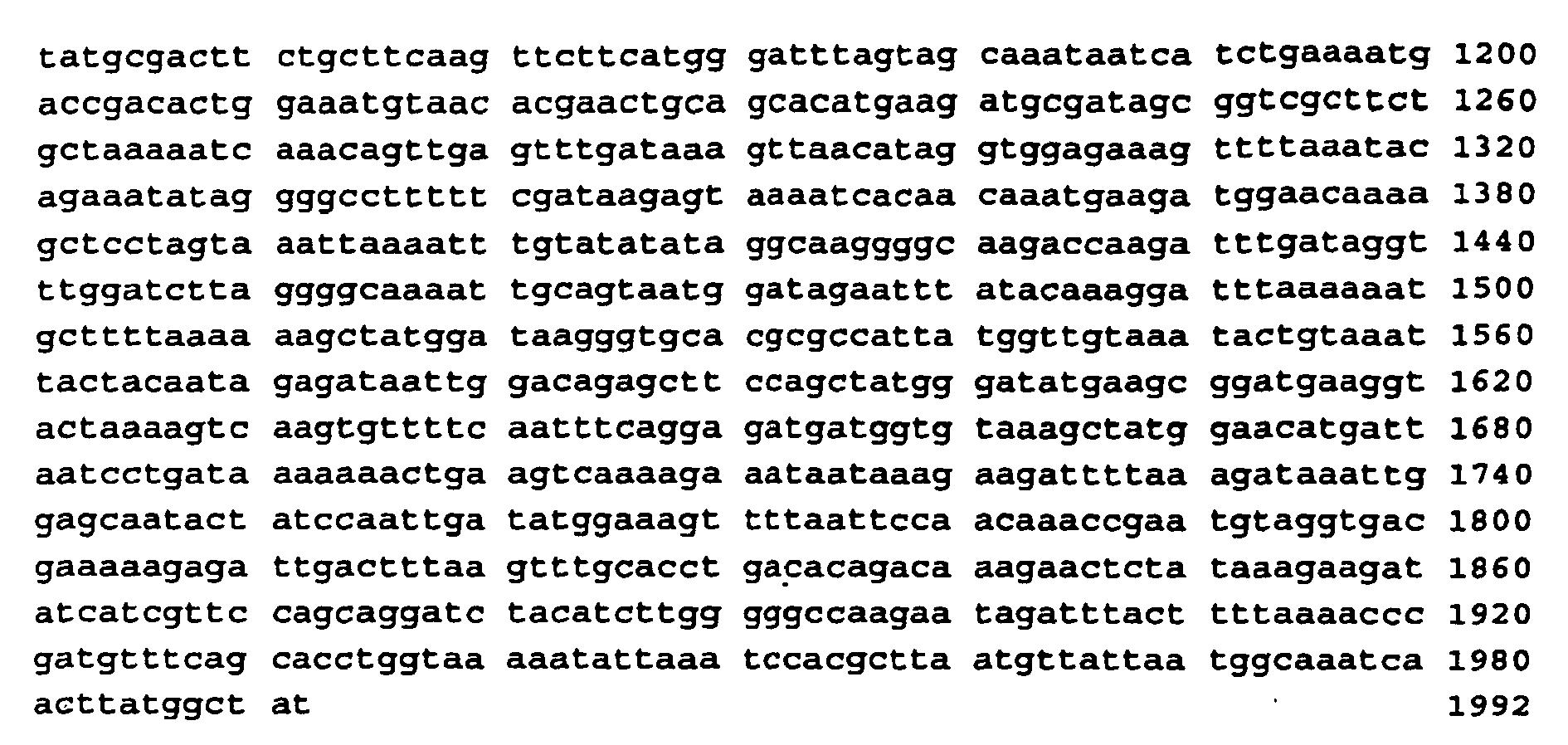
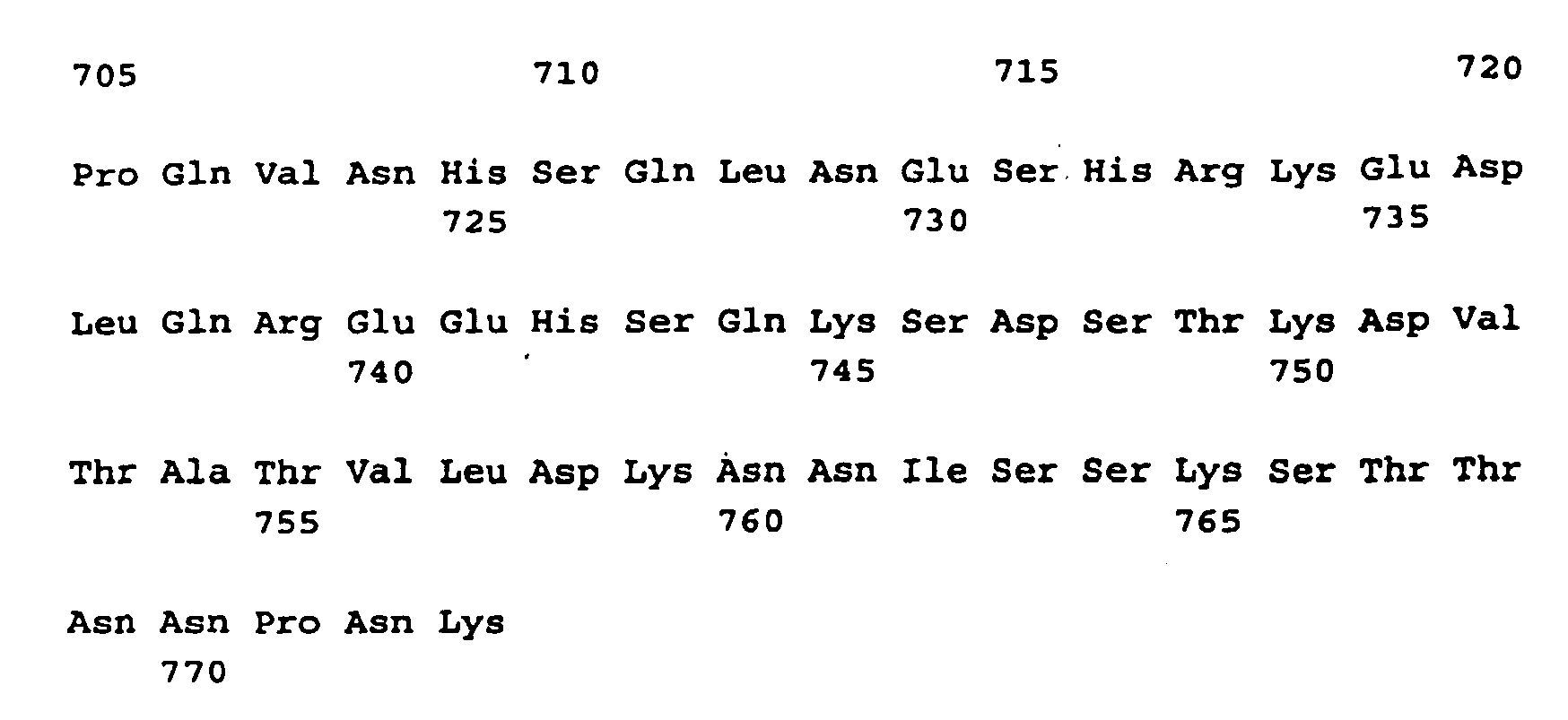
- The genomic DNA used as target for amplification using the polymerase chain reaction was isolated from Streptococcus pneumoniae (Norway strain - serotype 4), the same strain used for genomic sequencing. The nucleotide sequence of the gene fragments encoding Sp128 (SEQ ID NO: 5) and Sp130 (SEQ ID NO: 7) with the corresponding amino acid sequence for polypeptides Sp128 (SEQ ID NO: 6) and Sp130 (SEQ ID NO: 8) are provided in the Sequence Listing.
- Primers (SEQ ID NOS: 1 - 4) were designed so as to amplify either Sp128 or Sp130 gene fragments and allow their cloning into the E. coli expresssion vector pQE10 with, for example, subsequent expression of a histidine-tagged protein product for purification by Nickel-affinity chromatography.
- Thus, cloning of the fragments amplified by the primers of SEQ ID NOS: 1 and 2 results in the polypeptide of SEQ ID NO: 6 (denoted Sp128), while cloning of the fragment amplified using the primers disclosed in SEQ ID NOS: 3 and 4 result in the polypeptide of SEQ ID NO: 8 (denoted Sp130).
- In each of the experiments shown in
Figure 1 , C3H/HeJ mice (10 per group) were immunized intraperitoneally (i.p.) with either Sp128 or Sp130 protein (15 µg in 50 µl PBS (phosphate buffered saline) emulsified in 50 µl complete Freund's adjuvant (CFA)). A group of 10 mice were sham-immunized with PBS and CFA only. - A second immunization of 15 µg protein with incomplete Freund's adjuvant (IFA) was administered 3 weeks later (with the sham-immunized group receiving PBS and IFA).
- Blood was drawn (retro-orbital bleed) at
week 7. Sera from each group were pooled for analysis of anti-Sp128 and anti-Sp130 antibody by ELISA. Mice were challenged atweek 8 by intraperitoneal injection of approximately 400 CFU (colony forming units) of S. pneumoniae strain SJ2 (capsular serotype 6B). In preliminary experiments, the median infection dose (LD50) of this strain was determined to be approximately 10 CFU. Mice were monitored for 14 days of survival. - Both experiments shown in
Figure 1 used the same preparations of recombinant Sp128 and Sp130. - In the experiment shown in
Figure 1A , 7-week serum collected from the 10 mice immunized with either Sp128 or Sp130 each had an endpoint ELISA titer of 1:2,048,000 and 1:1,024,000, respectively. No anti-Sp128 or anti-Sp130 antibody was detected in sera from sham-imunized mice. Ninety percent of the mice immunized with either Sp128 or Sp130 protein survived the challenge (406 CFU of pneumococci) for the extent of the study (14 days). One hundred percent of sham-immunized mice were dead byday 7. - In the experiment shown in
Figure 1B , 7-week sera collected from the 10 mice immunized with either Sp128 or Sp130 each had an endpoint ELISA titer of 1:1,024,000 and 1:512,000, respectively. No anti-Sp128 or anti-Sp130 antibody was detected in sera from sham-imunized mice. Ninety and one hundred percent of the mice immunized with either Sp128 or Sp130 protein, respectively, survived the challenge (404 CFU of pneumococci) for the extent of the study (14 days). One hundred percent of sham-immunized mice were dead byday 5. - These data indicate that immunization of mice with either recombinant Sp128 or Sp130 proteins elicit a response capable of protecting against systemic pneumococcal infection and subsequent death. Cross protection is demonstrated by the fact that the recombinant pneumococcal protein was generated based on
capsular serotype 4 DNA sequence, while the challenge was with the heterologous strain SJ2 (capsular serotype 6B). - Following collection of pre-immune serum, a New Zealand White rabbit was immunized with 250 µg of Sp130 (SEQ ID NO:8) in complete Freund's adjuvant. The rabbit was given 2 boosts of 125 µg Sp130 in incomplete Freund's adjuvant on days 21 and 52, and bled on
days 31 and 62. - BALB/cByJ mice (10 per group) were passively immunized by 2 i.p. injections of 100 µl of rabbit serum. The first injection was administered 24 hours before challenge with 1400 CFU of S. pneumoniae strain WU2, and the second injection was given 4 hours after challenge.
Figure 2 shows the survival of mice after infection with WU2 (capsular serotype 3) strain. In preliminary experiments, the LD50 of this strain was determined to be approximately 100 CFU. -
Figure 2 shows the survival of mice injected with 1400 CFU of strain WU2. As shown therein, 70% of the mice immunized with rabbit immune serum raised against Sp130 protein survived the 10 day observation period. Of the mice immunized with the control serum (collected from a rabbit prior to immunization), 100% died byday 4. - These data suggest that the protection against pneumococcal infection resulting from immunization with Sp130 is antibody-mediated, since the mice were protected by passive transfer of serum from a hyperimmunized rabbit. As seen in the previously described mouse active challenge experiments, serum directed against recombinant Sp130 protein cloned from a
serotype 4 strain was protective against challenge with a heterologous strain, WU2 (capsular serotype 3). - The pneumococcal strains used in this experiment were obtained from the American Type Culture Collection (Rockville, MD) and include one isolate from each of the serotypes in the currently used multivalent pneumococcal vaccine.
- For total cell lysates, pneumocci were grown to mid-logarithmic phase (absorbance at 620 nm was 0.4 to 0.6) in 2 ml Todd-Hewitt broth with 5% yeast extract (from Difco, Detroit, MI) at 37°C. Bacteria were harvested by centrifugation and washed twice with water. Pellets (consisting of sedimented cells) were resuspended in 200 µl of lysis buffer (0.01% sodium dodecyl sulfate, 0.15 M sodium citrate, and 0.1% sodium deoxycholate) and incubated at 37°C for 30 min, then diluted in an equal volume of 2X SSC (0.3 M NaCl, 0.03 M sodium citrate). Polypeptides in the lysates were resolved on SDS-PAGE (sodium dodecyl sulfate polyacrylamide gel electrophoresis), transferred to nitrocellulose membranes (Bio-Rad Laboratories, Hercules, CA) and probed with antibody by conventional Western Blotting procedures. Sera from a New Zealand White rabbit immunized with Sp130 (as per Example 2, supra) was used at a dilution of 1:3000. Bound antibody was detected with peroxidase-conjugated sheep anti-rabbit IgG using a chemiluminescence kit from Amersham Inc. (Cambridge, MA).
- The rabbit anti-Sp130 sera revealed 2 major bands with apparent molecular weights of 110 kD and 220 kD in all 23 pneumococcal lysates tested (as shown in
Figure 3 ) . - These data show that Sp130 is expressed and shares common antigenic epitopes among strains of the 23 pneumococcal capsular serotypes represented in the currently used polysaccharide vaccine.
- Sera from patients with culture-proven pneumococcal bacteremia were used in Western blots containing recombinant Sp128 or Sp130 protein. In the experiment shown in
Figure 4 , sera from 5 patients (indicated bynumerals 1 through 5) were diluted 1:3000 and used to probe blots containing Sp128 (SEQ ID NO:6) or Sp130 (SEQ ID N0:8). - The lanes labeled "A" (for "acute") were probed with serum collected shortly after diagnosis of pneumococcal infection; lanes denoted "C" (for "convalescent") were probed with serum collected either 1 month later (
patients patients 4 and 5). Forpatients - Other experiments (not depicted in the figure) showed that convalescent sera from 17 patients with pneumococcal infections were tested individually for reactivity with either Sp128 or Sp130. Thus, 10 and 15 of the 23 sera were found to bind (on a Western Blot) Sp128 and Sp130, respectively.
- These experiments indicate that Sp128 and Sp130 (the latter to a greater extent), are recognized by the human immune system and suggest that antibodies able to bind the Sp128-Sp130 protein may be produced during natural S. pneumoniae infection in humans. Further, this provides indirect evidence that Sp128 and Sp130 are expressed in vivo by S. pneumoniae during this phase of infection, and thus may be available as targets for immunoprophylaxis, immunotherapy, or to provide anamnestic immune responses in subjects vaccinated with these proteins. Since the patients were infected with a variety of pneumococcal strains, these data also support the idea that Sp130 is more antigenically conserved than Sp128.
-
Sentence 1. A vaccine comprising a polypeptide, including immunogenic fragments thereof, having an amino acid sequence at least 65% identical to the amino acid sequence of SEQ ID NO:6. -
Sentence 2. The vaccine ofsentence 1 wherein said amino acid sequence is at least 80% identical to the amino acid sequence of SEQ ID NO:6. -
Sentence 3. Thevaccine sentence 1 wherein said amino acid sequence is at least 95% identical to the amino acid sequence of SEQ ID NO:6. -
Sentence 4. The vaccine ofsentence 1 wherein said amino acid sequence is identical to the amino acid sequence of SEQ ID N0:6. -
Sentence 5. A vaccine comprising a polypeptide, including immunogenic fragments thereof, having an amino acid sequence at least 65% identical to the amino acid sequence of SEQ ID NO:8. -
Sentence 6. The vaccine ofsentence 5 wherein said amino acid sequence is at least 80% identical to the amino acid sequence of SEQ ID NO:8. -
Sentence 7. The vaccine ofsentence 5 wherein said amino acid sequence is at least 95% identical to the amino acid sequence of SEQ ID NO:8. -
Sentence 8. The vaccine ofsentence 5 wherein said amino acid sequence is identical to the amino acid sequence of SEQ ID N0:8. -
Sentence 9. An antiserum produced by immunizing an animal with a polypeptide selected from the group consisting of the polypeptides ofsentences -
Sentence 10. An isolated antibody that binds specifically to a polypeptide selected from the group consisting of the polypeptides according tosentences -
Sentence 11. The antibody ofsentence 10 wherein the antibody is a monoclonal antibody. -
Sentence 12. An engineered cell producing a monoclonal antibody ofsentence 11. -
Sentence 13. An antiserum produced by immunizing an animal with the polypeptide of SEQ ID NO: 6. -
Sentence 14. An antiserum produced by immunizing an animal with the polypeptide of SEQ-ID NO: 8. - Sentence 15. An isolated recombinant antibody that binds specifically to a polypeptide selected from the group consisting of the polypeptides of
sentences - Sentence 16. A vaccine comprising:
- a. one or more S. pneumoniae polypeptides selected from the group consisting of the polypeptides of
sentences - b. a pharmaceutically acceptable diluent , carrier or excipient;
- a. one or more S. pneumoniae polypeptides selected from the group consisting of the polypeptides of
- Sentence 17. A method of preventing or attenuating an infection caused by a member of the genus Streptococcus in an animal, comprising administering to said animal a polypeptide selected from the group consisting of the polypeptides of
sentences - Sentence 18. A method of preventing pneumococcal infection by administering to an animal the vaccine according to claim 16.
- Sentence 19. A method of preventing or attenuating an infection caused by a member of the genus Streptococcus in an animal, comprisin administering to said animal an
antibody according sentence 10, wherein said antibody is administered in an amount effective to prevent or attenuate said infection. -
Sentence 20. A vaccine comprising a microbial organism transformed with polynucleotides, and thereby expressing the polypeptides, or fragments thereof, selected from the group consisting of Sp128 and Sp130. - Sentence 21. A method of preventing or attenuating an infection caused by a member of the genus Streptococcus in an animal, comprising administering to said animal a vaccine according to
sentence 20, wherein said antibody is administered in an amount effective to prevent or attenuate said infection. - Sentence 22. The vaccine according to
Sentence 20, wherein said transformed microorganism is selected from the group consisting of Salmonella, Mycobacteria, Streptococcus, poxviruses, and adenoviruses. -
- <110> Adamou, John
Choi, Gil - <120> Streptococcus Pneumoniae Proteins and Vaccines
- <130> 469201-475
- <140>
<141> - <150>
U.S. 60/138,453 - <160> 8
- <170> Patent In Ver. 2.1
- <210> 1
<211> 21
<212> DNA
<213> Artificial Sequence - <220>
<223> Description of Artificial Sequence:Forward primer for PCR amplification of Sp128 genomic sequences - <400> 1
tacccggtag tcttagcaga c 21 - <210> 2
<211> 25
<212> DNA
<213> Artificial Sequence - <220>
<223> Description of Artificial Sequence:Reverse primer for PCR amplification of Sp128 genomic sequence - <400> 2
atagccataa gttgatttgc catta 25 - <210> 3
<211> 21
<212> DNA
<213> Artificial Sequence - <220>
<223> Description of Artificial Sequence:Forward primer for PCR amplification of Sp130 genomic sequence - <400> 3
aagcttggcg agattgcaga a 21 - <210> 4
<211> 27
<212> DNA
<213> Artificial Sequence - <220>
<223> Description of Artificial Sequence:Reverse primer for PCR amplification of Sp130 genomic sequence - <400> 4
cttattagga ttgttagtag ttgattt 27 - <210> 5
<211> 1992
<212> DNA
<213> Streptococcus pneumoniae - <400> 5

- <210> 6
<211> 664
<212> PRT
<213> Streptococcus pneumoniae - <400> 6


- <210> 7
<211> 2319
<212> DNA
<213> Streptococcus pneumoniae - <400> 7


- <210> 8
<211> 773
<212> PRT
<213> Streptococcus pneumoniae - <400> 8


Claims (7)
- A vaccine comprising as an active ingredient a polypeptide, comprising the sequence of SEQ ID NO: 6.
- A vaccine composition, according to claim 1 together with a pharmaceutically acceptable carrier; wherein the polypeptide is present in an amount effective to elicit antibodies in an animal against an organism of the genus Streptococcus.
- A vaccine according to claim 1 wherein the polypeptide is provided by a microbial organism transformed with polynucleotides, and thereby expressing the polypeptide of SEQ ID NO: 6, as an active ingredient of said vaccine.
- The vaccine according to claim 3 for use in preventing or attenuating an infection caused by a member of the genus Streptococcus in an animal
- The vaccine according to claim 3, wherein said transformed microorganism is selected from the group consisting of Salmonella, Mycobacteria, Streptococcus, poxviruses, and adenoviruses.
- Use of a polypeptide comprising the sequence of SEQ ID NO: 6 for the manufacture of a pharmaceutical preparation for preventing or attenuating an infection caused by a member of the genus Streptococcus in an animal.
- Use of an antibody that binds specifically to a polypeptide comprising the sequence of SEQ ID NO: 6 for the manufacture of a pharmaceutical preparation for preventing or attenuating an infection caused by a member of the genus Streptococcus in an animal.
Applications Claiming Priority (2)
| Application Number | Priority Date | Filing Date | Title |
|---|---|---|---|
| US13845399P | 1999-06-10 | 1999-06-10 | |
| EP00939739A EP1185297B1 (en) | 1999-06-10 | 2000-06-09 | Streptococcus pneumoniae proteins and vaccines |
Related Parent Applications (2)
| Application Number | Title | Priority Date | Filing Date |
|---|---|---|---|
| EP00939739A Division EP1185297B1 (en) | 1999-06-10 | 2000-06-09 | Streptococcus pneumoniae proteins and vaccines |
| EP00939739.9 Division | 2000-06-09 |
Publications (3)
| Publication Number | Publication Date |
|---|---|
| EP1731166A2 EP1731166A2 (en) | 2006-12-13 |
| EP1731166A3 EP1731166A3 (en) | 2007-02-21 |
| EP1731166B1 true EP1731166B1 (en) | 2011-03-09 |
Family
ID=22482080
Family Applications (2)
| Application Number | Title | Priority Date | Filing Date |
|---|---|---|---|
| EP06009322A Expired - Lifetime EP1731166B1 (en) | 1999-06-10 | 2000-06-09 | Streptococcus pneumoniae proteins and vaccines |
| EP00939739A Expired - Lifetime EP1185297B1 (en) | 1999-06-10 | 2000-06-09 | Streptococcus pneumoniae proteins and vaccines |
Family Applications After (1)
| Application Number | Title | Priority Date | Filing Date |
|---|---|---|---|
| EP00939739A Expired - Lifetime EP1185297B1 (en) | 1999-06-10 | 2000-06-09 | Streptococcus pneumoniae proteins and vaccines |
Country Status (9)
| Country | Link |
|---|---|
| EP (2) | EP1731166B1 (en) |
| JP (1) | JP2003501110A (en) |
| AT (2) | ATE325620T1 (en) |
| AU (1) | AU777856B2 (en) |
| CA (1) | CA2371714C (en) |
| DE (2) | DE60027890T2 (en) |
| ES (2) | ES2264419T3 (en) |
| HK (1) | HK1043943A1 (en) |
| WO (1) | WO2000076540A2 (en) |
Families Citing this family (31)
| Publication number | Priority date | Publication date | Assignee | Title |
|---|---|---|---|---|
| US7129340B1 (en) | 1997-07-02 | 2006-10-31 | sanofi pasteur limited/sanofi pasteur limitée | Nucleic acid and amino acid sequences relating to streptococcus pneumoniae for diagnostics and therapeutics |
| US6800744B1 (en) | 1997-07-02 | 2004-10-05 | Genome Therapeutics Corporation | Nucleic acid and amino acid sequences relating to Streptococcus pneumoniae for diagnostics and therapeutics |
| US7128918B1 (en) | 1998-12-23 | 2006-10-31 | Id Biomedical Corporation | Streptococcus antigens |
| US7074415B2 (en) | 2000-06-20 | 2006-07-11 | Id Biomedical Corporation | Streptococcus antigens |
| GB0022742D0 (en) | 2000-09-15 | 2000-11-01 | Smithkline Beecham Biolog | Vaccine |
| EP1456231A2 (en) | 2001-12-20 | 2004-09-15 | Shire Biochem Inc. | Streptococcus antigens |
| TWI457133B (en) | 2005-12-13 | 2014-10-21 | Glaxosmithkline Biolog Sa | Novel composition |
| BRPI0620460B8 (en) | 2005-12-22 | 2021-05-25 | Glaxosmithkline Biologicals Sa | use of immunogenic composition for babies, and process to produce a vaccine |
| GB0607088D0 (en) | 2006-04-07 | 2006-05-17 | Glaxosmithkline Biolog Sa | Vaccine |
| BRPI0813644B8 (en) | 2007-06-26 | 2021-05-25 | Glaxosmithkline Biologicals Sa | immunogenic composition, vaccine, process to manufacture the same, and use of the immunogenic composition or vaccine |
| GB0714963D0 (en) | 2007-08-01 | 2007-09-12 | Novartis Ag | Compositions comprising antigens |
| AU2008336295B2 (en) | 2007-12-13 | 2013-07-11 | Intervacc Ab | Improved immunizing composition |
| ES2546213T3 (en) | 2008-03-03 | 2015-09-21 | Novartis Ag | Compounds and compositions as modulators of TLR activity |
| US20120164178A1 (en) | 2008-04-16 | 2012-06-28 | Ballou Jr William Ripley | Vaccine |
| CA2765112A1 (en) | 2009-06-10 | 2010-12-16 | Novartis Ag | Benzonaphthyridine-containing vaccines |
| CN107126557A (en) | 2009-06-29 | 2017-09-05 | 健诺西生物科学公司 | Vaccines and compositions against streptococcus pneumoniae |
| AU2010290896B2 (en) | 2009-09-02 | 2014-07-03 | Glaxosmithkline Biologicals S.A. | Immunogenic compositions including TLR activity modulators |
| JO3257B1 (en) | 2009-09-02 | 2018-09-16 | Novartis Ag | Vehicles and installations as TLR |
| WO2011030218A1 (en) | 2009-09-10 | 2011-03-17 | Novartis Ag | Combination vaccines against respiratory tract diseases |
| WO2011057148A1 (en) | 2009-11-05 | 2011-05-12 | Irm Llc | Compounds and compositions as tlr-7 activity modulators |
| US9408907B2 (en) | 2009-12-15 | 2016-08-09 | Glaxosmithkline Biologicals Sa | Homogenous suspension of immunopotentiating compounds and uses thereof |
| GB201003924D0 (en) | 2010-03-09 | 2010-04-21 | Glaxosmithkline Biolog Sa | Immunogenic composition |
| AU2011232421B2 (en) | 2010-03-23 | 2015-08-13 | Novartis Ag | Compounds (cystein based lipopeptides) and compositions as TLR2 agonists used for treating infections, inflammations, respiratory diseases etc. |
| WO2012072769A1 (en) | 2010-12-01 | 2012-06-07 | Novartis Ag | Pneumococcal rrgb epitopes and clade combinations |
| WO2012100234A1 (en) | 2011-01-20 | 2012-07-26 | Genocea Biosciences, Inc. | Vaccines and compositions against streptococcus pneumoniae |
| SG194733A1 (en) | 2011-05-17 | 2013-12-30 | Glaxosmithkline Biolog Sa | Vaccine against streptococcus pneumoniae |
| CN104519910B (en) | 2012-03-07 | 2017-05-03 | 诺华股份有限公司 | Adjuvanted formulations of streptococcus pneumoniae antigens |
| TR201807340T4 (en) | 2013-02-01 | 2018-06-21 | Glaxosmithkline Biologicals Sa | Intradermal administration of immunological compositions comprising bell-like receptor agonists. |
| GB201711635D0 (en) | 2017-07-19 | 2017-08-30 | Glaxosmithkline Biologicals Sa | Immunogenic composition |
| PL3752182T3 (en) | 2018-02-12 | 2024-11-25 | Inimmune Corporation | Toll-like receptor ligands |
| CA3198876A1 (en) | 2020-11-04 | 2022-05-12 | Eligo Bioscience | Cutibacterium acnes recombinant phages, method of production and uses thereof |
Family Cites Families (2)
| Publication number | Priority date | Publication date | Assignee | Title |
|---|---|---|---|---|
| CA2271720A1 (en) * | 1996-10-31 | 1998-05-07 | Human Genome Sciences, Inc. | Streptococcus pneumoniae polynucleotides and sequences |
| WO2000006738A2 (en) * | 1998-07-27 | 2000-02-10 | Microbial Technics Limited | NUCLEIC ACIDS AND PROTEINS FROM $i(STREPTOCOCCUS PNEUMONIAE) |
-
2000
- 2000-06-09 WO PCT/US2000/015925 patent/WO2000076540A2/en not_active Ceased
- 2000-06-09 DE DE60027890T patent/DE60027890T2/en not_active Expired - Lifetime
- 2000-06-09 CA CA2371714A patent/CA2371714C/en not_active Expired - Fee Related
- 2000-06-09 AT AT00939739T patent/ATE325620T1/en not_active IP Right Cessation
- 2000-06-09 JP JP2001502873A patent/JP2003501110A/en active Pending
- 2000-06-09 AT AT06009322T patent/ATE500843T1/en not_active IP Right Cessation
- 2000-06-09 AU AU54778/00A patent/AU777856B2/en not_active Ceased
- 2000-06-09 ES ES00939739T patent/ES2264419T3/en not_active Expired - Lifetime
- 2000-06-09 ES ES06009322T patent/ES2360296T3/en not_active Expired - Lifetime
- 2000-06-09 HK HK02105081.7A patent/HK1043943A1/en unknown
- 2000-06-09 EP EP06009322A patent/EP1731166B1/en not_active Expired - Lifetime
- 2000-06-09 EP EP00939739A patent/EP1185297B1/en not_active Expired - Lifetime
- 2000-06-09 DE DE60045721T patent/DE60045721D1/en not_active Expired - Lifetime
Also Published As
| Publication number | Publication date |
|---|---|
| CA2371714C (en) | 2012-12-04 |
| WO2000076540A2 (en) | 2000-12-21 |
| HK1043943A1 (en) | 2002-10-04 |
| AU777856B2 (en) | 2004-11-04 |
| EP1185297B1 (en) | 2006-05-10 |
| CA2371714A1 (en) | 2000-12-21 |
| ES2264419T3 (en) | 2007-01-01 |
| EP1731166A3 (en) | 2007-02-21 |
| ATE500843T1 (en) | 2011-03-15 |
| WO2000076540A3 (en) | 2001-02-08 |
| DE60027890D1 (en) | 2006-06-14 |
| DE60027890T2 (en) | 2007-04-19 |
| EP1185297A2 (en) | 2002-03-13 |
| JP2003501110A (en) | 2003-01-14 |
| DE60045721D1 (en) | 2011-04-21 |
| AU5477800A (en) | 2001-01-02 |
| ES2360296T3 (en) | 2011-06-02 |
| EP1731166A2 (en) | 2006-12-13 |
| ATE325620T1 (en) | 2006-06-15 |
Similar Documents
| Publication | Publication Date | Title |
|---|---|---|
| EP1185297B1 (en) | Streptococcus pneumoniae proteins and vaccines | |
| EP2050464B1 (en) | Streptococcus pneumoniae proteins and immunogenic fragments for vaccines | |
| US7262024B2 (en) | Streptococcus antigens | |
| EP2261358B1 (en) | Novel streptococcus antigen | |
| KR100771148B1 (en) | Group B Streptococcus antigens | |
| US6689369B2 (en) | Immunogenic pneumococcal protein and vaccine compositions thereof | |
| US20130337003A1 (en) | Engineered Type IV Pilin of Clostridium difficile | |
| US6887480B1 (en) | Streptococcus pneumoniae proteins and vaccines | |
| EP1950302B1 (en) | Streptococcus antigens |
Legal Events
| Date | Code | Title | Description |
|---|---|---|---|
| PUAI | Public reference made under article 153(3) epc to a published international application that has entered the european phase |
Free format text: ORIGINAL CODE: 0009012 |
|
| 17P | Request for examination filed |
Effective date: 20060505 |
|
| AC | Divisional application: reference to earlier application |
Ref document number: 1185297 Country of ref document: EP Kind code of ref document: P |
|
| AK | Designated contracting states |
Kind code of ref document: A2 Designated state(s): AT BE CH CY DE DK ES FI FR GB GR IE IT LI LU MC NL PT SE |
|
| PUAL | Search report despatched |
Free format text: ORIGINAL CODE: 0009013 |
|
| AK | Designated contracting states |
Kind code of ref document: A3 Designated state(s): AT BE CH CY DE DK ES FI FR GB GR IE IT LI LU MC NL PT SE |
|
| 17Q | First examination report despatched |
Effective date: 20070716 |
|
| AKX | Designation fees paid |
Designated state(s): AT BE CH CY DE DK ES FI FR GB GR IE IT LI LU MC NL PT SE |
|
| GRAP | Despatch of communication of intention to grant a patent |
Free format text: ORIGINAL CODE: EPIDOSNIGR1 |
|
| GRAS | Grant fee paid |
Free format text: ORIGINAL CODE: EPIDOSNIGR3 |
|
| RAP1 | Party data changed (applicant data changed or rights of an application transferred) |
Owner name: MEDIMMUNE, LLC Owner name: HUMAN GENOME SCIENCES, INC. |
|
| GRAA | (expected) grant |
Free format text: ORIGINAL CODE: 0009210 |
|
| AC | Divisional application: reference to earlier application |
Ref document number: 1185297 Country of ref document: EP Kind code of ref document: P |
|
| AK | Designated contracting states |
Kind code of ref document: B1 Designated state(s): AT BE CH CY DE DK ES FI FR GB GR IE IT LI LU MC NL PT SE |
|
| REG | Reference to a national code |
Ref country code: GB Ref legal event code: FG4D |
|
| REG | Reference to a national code |
Ref country code: CH Ref legal event code: EP |
|
| REG | Reference to a national code |
Ref country code: IE Ref legal event code: FG4D |
|
| REF | Corresponds to: |
Ref document number: 60045721 Country of ref document: DE Date of ref document: 20110421 Kind code of ref document: P |
|
| REG | Reference to a national code |
Ref country code: DE Ref legal event code: R096 Ref document number: 60045721 Country of ref document: DE Effective date: 20110421 |
|
| REG | Reference to a national code |
Ref country code: ES Ref legal event code: FG2A Ref document number: 2360296 Country of ref document: ES Kind code of ref document: T3 Effective date: 20110602 |
|
| REG | Reference to a national code |
Ref country code: NL Ref legal event code: VDEP Effective date: 20110309 |
|
| PG25 | Lapsed in a contracting state [announced via postgrant information from national office to epo] |
Ref country code: GR Free format text: LAPSE BECAUSE OF FAILURE TO SUBMIT A TRANSLATION OF THE DESCRIPTION OR TO PAY THE FEE WITHIN THE PRESCRIBED TIME-LIMIT Effective date: 20110610 Ref country code: SE Free format text: LAPSE BECAUSE OF FAILURE TO SUBMIT A TRANSLATION OF THE DESCRIPTION OR TO PAY THE FEE WITHIN THE PRESCRIBED TIME-LIMIT Effective date: 20110309 |
|
| PG25 | Lapsed in a contracting state [announced via postgrant information from national office to epo] |
Ref country code: FI Free format text: LAPSE BECAUSE OF FAILURE TO SUBMIT A TRANSLATION OF THE DESCRIPTION OR TO PAY THE FEE WITHIN THE PRESCRIBED TIME-LIMIT Effective date: 20110309 Ref country code: NL Free format text: LAPSE BECAUSE OF FAILURE TO SUBMIT A TRANSLATION OF THE DESCRIPTION OR TO PAY THE FEE WITHIN THE PRESCRIBED TIME-LIMIT Effective date: 20110309 Ref country code: CY Free format text: LAPSE BECAUSE OF FAILURE TO SUBMIT A TRANSLATION OF THE DESCRIPTION OR TO PAY THE FEE WITHIN THE PRESCRIBED TIME-LIMIT Effective date: 20110309 Ref country code: AT Free format text: LAPSE BECAUSE OF FAILURE TO SUBMIT A TRANSLATION OF THE DESCRIPTION OR TO PAY THE FEE WITHIN THE PRESCRIBED TIME-LIMIT Effective date: 20110309 |
|
| PG25 | Lapsed in a contracting state [announced via postgrant information from national office to epo] |
Ref country code: PT Free format text: LAPSE BECAUSE OF FAILURE TO SUBMIT A TRANSLATION OF THE DESCRIPTION OR TO PAY THE FEE WITHIN THE PRESCRIBED TIME-LIMIT Effective date: 20110711 |
|
| PLBE | No opposition filed within time limit |
Free format text: ORIGINAL CODE: 0009261 |
|
| STAA | Information on the status of an ep patent application or granted ep patent |
Free format text: STATUS: NO OPPOSITION FILED WITHIN TIME LIMIT |
|
| REG | Reference to a national code |
Ref country code: CH Ref legal event code: PL |
|
| 26N | No opposition filed |
Effective date: 20111212 |
|
| PG25 | Lapsed in a contracting state [announced via postgrant information from national office to epo] |
Ref country code: DK Free format text: LAPSE BECAUSE OF FAILURE TO SUBMIT A TRANSLATION OF THE DESCRIPTION OR TO PAY THE FEE WITHIN THE PRESCRIBED TIME-LIMIT Effective date: 20110309 |
|
| REG | Reference to a national code |
Ref country code: IE Ref legal event code: MM4A |
|
| REG | Reference to a national code |
Ref country code: DE Ref legal event code: R097 Ref document number: 60045721 Country of ref document: DE Effective date: 20111212 |
|
| PG25 | Lapsed in a contracting state [announced via postgrant information from national office to epo] |
Ref country code: IE Free format text: LAPSE BECAUSE OF NON-PAYMENT OF DUE FEES Effective date: 20110609 Ref country code: LI Free format text: LAPSE BECAUSE OF NON-PAYMENT OF DUE FEES Effective date: 20110630 Ref country code: CH Free format text: LAPSE BECAUSE OF NON-PAYMENT OF DUE FEES Effective date: 20110630 |
|
| PG25 | Lapsed in a contracting state [announced via postgrant information from national office to epo] |
Ref country code: MC Free format text: LAPSE BECAUSE OF NON-PAYMENT OF DUE FEES Effective date: 20110630 |
|
| PG25 | Lapsed in a contracting state [announced via postgrant information from national office to epo] |
Ref country code: LU Free format text: LAPSE BECAUSE OF NON-PAYMENT OF DUE FEES Effective date: 20110609 |
|
| REG | Reference to a national code |
Ref country code: FR Ref legal event code: PLFP Year of fee payment: 16 |
|
| PGFP | Annual fee paid to national office [announced via postgrant information from national office to epo] |
Ref country code: ES Payment date: 20150626 Year of fee payment: 16 Ref country code: GB Payment date: 20150629 Year of fee payment: 16 Ref country code: DE Payment date: 20150629 Year of fee payment: 16 |
|
| PGFP | Annual fee paid to national office [announced via postgrant information from national office to epo] |
Ref country code: FR Payment date: 20150617 Year of fee payment: 16 |
|
| PGFP | Annual fee paid to national office [announced via postgrant information from national office to epo] |
Ref country code: BE Payment date: 20150629 Year of fee payment: 16 |
|
| PGFP | Annual fee paid to national office [announced via postgrant information from national office to epo] |
Ref country code: IT Payment date: 20150625 Year of fee payment: 16 |
|
| PG25 | Lapsed in a contracting state [announced via postgrant information from national office to epo] |
Ref country code: BE Free format text: LAPSE BECAUSE OF NON-PAYMENT OF DUE FEES Effective date: 20160630 |
|
| REG | Reference to a national code |
Ref country code: DE Ref legal event code: R119 Ref document number: 60045721 Country of ref document: DE |
|
| GBPC | Gb: european patent ceased through non-payment of renewal fee |
Effective date: 20160609 |
|
| REG | Reference to a national code |
Ref country code: FR Ref legal event code: ST Effective date: 20170228 |
|
| PG25 | Lapsed in a contracting state [announced via postgrant information from national office to epo] |
Ref country code: FR Free format text: LAPSE BECAUSE OF NON-PAYMENT OF DUE FEES Effective date: 20160630 Ref country code: DE Free format text: LAPSE BECAUSE OF NON-PAYMENT OF DUE FEES Effective date: 20170103 |
|
| PG25 | Lapsed in a contracting state [announced via postgrant information from national office to epo] |
Ref country code: GB Free format text: LAPSE BECAUSE OF NON-PAYMENT OF DUE FEES Effective date: 20160609 |
|
| PG25 | Lapsed in a contracting state [announced via postgrant information from national office to epo] |
Ref country code: IT Free format text: LAPSE BECAUSE OF NON-PAYMENT OF DUE FEES Effective date: 20160609 |
|
| PG25 | Lapsed in a contracting state [announced via postgrant information from national office to epo] |
Ref country code: ES Free format text: LAPSE BECAUSE OF NON-PAYMENT OF DUE FEES Effective date: 20160610 |
|
| REG | Reference to a national code |
Ref country code: ES Ref legal event code: FD2A Effective date: 20181128 |