EP1729184A1 - Volume hologram recording material and volume hologram recording medium - Google Patents
Volume hologram recording material and volume hologram recording medium Download PDFInfo
- Publication number
- EP1729184A1 EP1729184A1 EP05710023A EP05710023A EP1729184A1 EP 1729184 A1 EP1729184 A1 EP 1729184A1 EP 05710023 A EP05710023 A EP 05710023A EP 05710023 A EP05710023 A EP 05710023A EP 1729184 A1 EP1729184 A1 EP 1729184A1
- Authority
- EP
- European Patent Office
- Prior art keywords
- volume hologram
- hologram recording
- meth
- polymerizable monomer
- recording
- Prior art date
- Legal status (The legal status is an assumption and is not a legal conclusion. Google has not performed a legal analysis and makes no representation as to the accuracy of the status listed.)
- Withdrawn
Links
Images


Classifications
-
- G—PHYSICS
- G03—PHOTOGRAPHY; CINEMATOGRAPHY; ANALOGOUS TECHNIQUES USING WAVES OTHER THAN OPTICAL WAVES; ELECTROGRAPHY; HOLOGRAPHY
- G03H—HOLOGRAPHIC PROCESSES OR APPARATUS
- G03H1/00—Holographic processes or apparatus using light, infrared or ultraviolet waves for obtaining holograms or for obtaining an image from them; Details peculiar thereto
- G03H1/02—Details of features involved during the holographic process; Replication of holograms without interference recording
-
- G—PHYSICS
- G03—PHOTOGRAPHY; CINEMATOGRAPHY; ANALOGOUS TECHNIQUES USING WAVES OTHER THAN OPTICAL WAVES; ELECTROGRAPHY; HOLOGRAPHY
- G03F—PHOTOMECHANICAL PRODUCTION OF TEXTURED OR PATTERNED SURFACES, e.g. FOR PRINTING, FOR PROCESSING OF SEMICONDUCTOR DEVICES; MATERIALS THEREFOR; ORIGINALS THEREFOR; APPARATUS SPECIALLY ADAPTED THEREFOR
- G03F7/00—Photomechanical, e.g. photolithographic, production of textured or patterned surfaces, e.g. printing surfaces; Materials therefor, e.g. comprising photoresists; Apparatus specially adapted therefor
- G03F7/004—Photosensitive materials
- G03F7/027—Non-macromolecular photopolymerisable compounds having carbon-to-carbon double bonds, e.g. ethylenic compounds
- G03F7/032—Non-macromolecular photopolymerisable compounds having carbon-to-carbon double bonds, e.g. ethylenic compounds with binders
- G03F7/035—Non-macromolecular photopolymerisable compounds having carbon-to-carbon double bonds, e.g. ethylenic compounds with binders the binders being polyurethanes
-
- G—PHYSICS
- G03—PHOTOGRAPHY; CINEMATOGRAPHY; ANALOGOUS TECHNIQUES USING WAVES OTHER THAN OPTICAL WAVES; ELECTROGRAPHY; HOLOGRAPHY
- G03F—PHOTOMECHANICAL PRODUCTION OF TEXTURED OR PATTERNED SURFACES, e.g. FOR PRINTING, FOR PROCESSING OF SEMICONDUCTOR DEVICES; MATERIALS THEREFOR; ORIGINALS THEREFOR; APPARATUS SPECIALLY ADAPTED THEREFOR
- G03F7/00—Photomechanical, e.g. photolithographic, production of textured or patterned surfaces, e.g. printing surfaces; Materials therefor, e.g. comprising photoresists; Apparatus specially adapted therefor
- G03F7/0005—Production of optical devices or components in so far as characterised by the lithographic processes or materials used therefor
- G03F7/001—Phase modulating patterns, e.g. refractive index patterns
-
- G—PHYSICS
- G03—PHOTOGRAPHY; CINEMATOGRAPHY; ANALOGOUS TECHNIQUES USING WAVES OTHER THAN OPTICAL WAVES; ELECTROGRAPHY; HOLOGRAPHY
- G03H—HOLOGRAPHIC PROCESSES OR APPARATUS
- G03H1/00—Holographic processes or apparatus using light, infrared or ultraviolet waves for obtaining holograms or for obtaining an image from them; Details peculiar thereto
- G03H1/02—Details of features involved during the holographic process; Replication of holograms without interference recording
- G03H1/024—Hologram nature or properties
- G03H1/0248—Volume holograms
-
- G—PHYSICS
- G11—INFORMATION STORAGE
- G11B—INFORMATION STORAGE BASED ON RELATIVE MOVEMENT BETWEEN RECORD CARRIER AND TRANSDUCER
- G11B7/00—Recording or reproducing by optical means, e.g. recording using a thermal beam of optical radiation by modifying optical properties or the physical structure, reproducing using an optical beam at lower power by sensing optical properties; Record carriers therefor
- G11B7/24—Record carriers characterised by shape, structure or physical properties, or by the selection of the material
- G11B7/2403—Layers; Shape, structure or physical properties thereof
- G11B7/24035—Recording layers
- G11B7/24044—Recording layers for storing optical interference patterns, e.g. holograms; for storing data in three dimensions [3D], e.g. volume storage
-
- G—PHYSICS
- G11—INFORMATION STORAGE
- G11B—INFORMATION STORAGE BASED ON RELATIVE MOVEMENT BETWEEN RECORD CARRIER AND TRANSDUCER
- G11B7/00—Recording or reproducing by optical means, e.g. recording using a thermal beam of optical radiation by modifying optical properties or the physical structure, reproducing using an optical beam at lower power by sensing optical properties; Record carriers therefor
- G11B7/24—Record carriers characterised by shape, structure or physical properties, or by the selection of the material
- G11B7/241—Record carriers characterised by shape, structure or physical properties, or by the selection of the material characterised by the selection of the material
- G11B7/242—Record carriers characterised by shape, structure or physical properties, or by the selection of the material characterised by the selection of the material of recording layers
- G11B7/244—Record carriers characterised by shape, structure or physical properties, or by the selection of the material characterised by the selection of the material of recording layers comprising organic materials only
- G11B7/245—Record carriers characterised by shape, structure or physical properties, or by the selection of the material characterised by the selection of the material of recording layers comprising organic materials only containing a polymeric component
-
- G—PHYSICS
- G03—PHOTOGRAPHY; CINEMATOGRAPHY; ANALOGOUS TECHNIQUES USING WAVES OTHER THAN OPTICAL WAVES; ELECTROGRAPHY; HOLOGRAPHY
- G03H—HOLOGRAPHIC PROCESSES OR APPARATUS
- G03H2260/00—Recording materials or recording processes
- G03H2260/12—Photopolymer
Definitions
- the present invention relates to a material suitable for volume holographic recording and a medium useful for use in a holographic data recording system.
- a pattern formed from two interference fringes is recorded on a photosensitive material, and by shining laser light thereon from the same direction as a reference light, a replica stereoimage is reproduced at a position where an original subject was present.
- This hologram technique has promise in the fields of three-dimensional image display devices and large capacity memories for image or bit information.
- Holograms are classified into several types according to the recording configuration of interference fringes.
- the so-called volume hologram in which interference fringes are recorded by utilizing differences in refractive index inside a recording layer has been put into practical use in three-dimensional displays and optical devices because of high diffraction efficiency and excellent wavelength selectivity.
- photosensitive materials for recording such volume holograms silver halide and dichromated gelatin have been used conventionally, but since they require wet development or a complicated development fixation treatment, they are not suitable for the industrial production of holograms, and there is also the problem that images might disappear after being recorded due to moisture absorption.
- JP-B-6-100827 JP-B denotes a Japanese examined Patent application publication
- JP-B has as main components a radically polymerizable monomer, a binder polymer, a radical photopolymerization initiator, and a sensitizing dye, and utilizes a difference in refractive index between the radically polymerizable monomer and the binder polymer.
- Japanese registered Patent No. 2873126 discloses a system employing a monomer having a diarylfluorene framework as a high refractive index radically polymerizable monomer and a cationically polymerizable monomer having a refractive index that is smaller than that of the radically polymerizable monomer.
- the high refractive index component undergoes radical polymerization during hologram exposure, and an image is subsequently fixed by cationic polymerization during exposure for fixation, but the sensitivity during the hologram exposure is insufficient.
- a material system employing cationic polymerization is disclosed in, for example, Published Japanese translation No. 2001-523842 of a PCT application.
- a recorded hologram has high dimensional stability since this material system has a low curing shrinkage, and polymerization is not inhibited by oxygen, there are the disadvantages that storage stability before exposure is poor and recording speed depends greatly on temperature.
- a nonreactive plasticizer, etc. since in order to improve the ability to modulate the refractive index a nonreactive plasticizer, etc. is used, there is a problem with the coating strength of the hologram formed, and in addition the refractive index modulation is not sufficient.
- JP-A-5-107999 JP-A denotes a Japanese unexamined patent application publication
- a photopolymer system composition that is, a composition comprising (a) a cationically polymerizable compound, (b) a radically polymerizable compound, (c) a radical photopolymerization initiator system component for polymerizing the above (b), and (d) a cationic polymerization initiator system component for polymerizing the above (a), the average refractive index of the above (a) being lower than the average refractive index of the above (b), and it is reported that in accordance with this composition, a hologram having an excellent diffraction effect, wavelength selectivity, refractive index modulation, coating strength, etc., can be obtained.
- JP-A-11-352303 discloses an optical product comprising a three-dimensional crosslinking polymer matrix and one or a plurality of photoactive monomers, at least one type of photoactive monomer comprising, in addition to a monomer functional group, a moiety that is substantially absent in the polymer matrix, and a polymer formed by polymerization of said one or plurality of photoactive monomers being compatible with the matrix polymer.
- the three-dimensional crosslinking polymer matrix is formed by injecting between transparent substrates a precursor for the three-dimensional crosslinking polymer matrix and crosslinking it. In this process, since the monomer is independent of the crosslinking reaction and is inactive, it is not incorporated into the matrix.
- the matrix in order to impart transparency, not only is it necessary for the three-dimensional crosslinking polymer matrix and the monomer to be compatible with each other, but it is also necessary for the matrix to be compatible with a polymer formed by polymerization of the monomer during recording; combinations of the polymer matrix precursor and the monomer that can satisfy the independence from the crosslinking reaction of the polymer matrix precursor and compatibility before and after recording are limited, and with respect to the optical product disclosed in JP-A-11-352303 , the sensitivity is insufficient, the difference in refractive index is small, and the storage stability after recording is insufficient.
- the present invention has been accomplished under the above-mentioned circumstances, and it is an object thereof to provide a hologram recording material that has high sensitivity, gives a large refractive index difference, and has excellent storage stability after recording, and a volume hologram recording medium employing same.
- the present invention relates to a volume hologram recording material comprising as constituents a polymer matrix having a three-dimensional crosslinking structure, a polymerizable monomer, and a tertiary amine compound, the polymer matrix being formed in the presence of the polymerizable monomer by a polymerization reaction that is different from a polymerization reaction of the polymerizable monomer, and to a volume hologram recording medium comprising the material.
- volume hologram recording material of the present invention it is possible to produce a volume hologram recording medium that has high sensitivity and diffraction efficiency, enables a clear image to be recorded, has excellent storage stability after recording, and requires no step of dissolving in a solvent and drying when forming a recording layer.
- a polymerizable monomer in the present invention is preferably a compound having a radically polymerizable group or a radical addition polymerizable group.
- Preferred examples of the polymerizable monomer include a (meth)acrylate, a (meth)acrylamide, styrene, a substituted styrene, vinylnaphthalene, a substituted vinylnaphthalene, a mixture of a maleate and a vinyl ether, a mixture of a polyene and a polythiol, a vinyl ether, an alkenyl ether, an allene ether, a ketene acetal, an epoxy, and an oxetane.
- the (meth)acrylate and the mixture of a polyene and a polythiol are preferable since the polymerization speed is high.
- Examples of the (meth)acrylate include hydroxyalkyl (meth)acrylates such as 2-hydroxyethyl (meth)acrylate and 2-hydroxypropyl (meth)acrylate; acrylates of an alkylene oxide adduct of phenol such as phenoxyethyl (meth)acrylate and halogen-substituted derivatives thereof; mono- or di(meth)acrylates of a glycol, such as mono- or di(meth)acrylates of ethylene glycol, the mono(meth)acrylate of methoxyethylene glycol, mono- or di(meth)acrylates of tetraethylene glycol, and mono- or di(meth)acrylates of tripropylene glycol; (meth)acrylates of a polyol, such as tricyclodecanedimethanol di(meth)acrylate, trimethylolpropane tri(meth)acrylate, trihydroxyethyl isocyanurate tri(meth)acrylate, pentaerythri
- polyene examples include o -, m -, or p -diallylphthalate, trimethylolpropane diallyl ether, pentaerythritol triallyl ether, triallyl isocyanurate, diallylbisphenol A, triethylene glycol divinyl ether, cyclohexanedimethanol divinyl ether, cyclohexanediol divinyl ether, and divinylbenzene.
- polythiol examples include ethylene glycol bisthioglycolate, butanediol bisthioglycolate, hexanediol bisthioglycolate, ethylene glycol bisthiopropionate, butanediol bisthiopropionate, trimethylolpropane tristhiopropionate, pentaerythritol tetrakisthiopropionate, and trihydroxyethyl triisocyanuric acid tristhiopropionate.
- the polymerizable monomer has a refractive index after curing of equal to or greater than 1.55 but less than 1.65.
- the curing in this case is not always one with a 100% degree of curing, but means a state obtained by curing sufficiently by normal photocuring means. A small proportion of the polymerizable monomer often remains uncured by normal photocuring means.
- a difference ( ⁇ n) between the refractive index after curing of the polymerizable monomer and the refractive index of the polymer matrix is equal to or greater than 3 x 10 -3 .
- phenyl (meth)acrylate tribromophenyl (meth)acrylate, dibromophenyl (meth)acrylate, monobromophenyl (meth)acrylate, phenylphenyl (meth)acrylate, cumylphenyl (meth)acrylate, and alkylene oxide-modified forms thereof, bromostyrene, dibromostyrene, tribromostyrene, etc., which have high refractive index.
- Examples of polymerization reactions that can be used for formation of a matrix polymer having a three-dimensional crosslinking structure in the present invention include cationic epoxy polymerization, cationic vinyl ether polymerization, cationic alkenyl ether polymerization, cationic allene ether polymerization, cationic ketene acetal polymerization, epoxy-amine addition polymerization, epoxy-thiol addition polymerization, unsaturated ester-amine addition polymerization (involving Michael addition), unsaturated ester-thiol addition polymerization (involving Michael addition), vinyl-silicon hydride addition polymerization (hydrosilylation), isocyanate-hydroxyl addition polymerization (urethane formation), isocyanate-thiol addition polymerization, and isocyanate-amine addition polymerization (urea formation).
- cationic epoxy polymerization proceeds rapidly at room temperature by the use of a catalyst containing BF 3 as a main component, other cationic polymerizations proceed in the presence of protons, an epoxy-mercaptan reaction and Michael addition are promoted by a base such as an amine, hydrosilylation proceeds rapidly in the presence of a transition metal catalyst such as platinum, and the formation of a urethane or a urea proceeds rapidly by the use of a tin catalyst.
- a catalyst containing BF 3 as a main component
- other cationic polymerizations proceed in the presence of protons
- an epoxy-mercaptan reaction and Michael addition are promoted by a base such as an amine
- hydrosilylation proceeds rapidly in the presence of a transition metal catalyst such as platinum
- the formation of a urethane or a urea proceeds rapidly by the use of a tin catalyst.
- isocyanate-hydroxyl addition polymerization isocyanate-thiol addition polymerization, or epoxy-thiol addition polymerization since it is possible to ensure an appropriate pot life and to use them at a moderate curing temperature.
- polyisocyanates that can be used in the isocyanate-hydroxyl addition polymerization or the isocyanate-thiol addition polymerization include tolylene diisocyanate, 4,4'-diphenylmethane diisocyanate, 4,4'-dicyclohexylmethane diisocyanate, hexamethylene diisocyanate, isophorone diisocyanate, and biurets, isocyanurates, adducts, and prepolymers of these isocyanates.
- low molecular weight polyol include ethylene glycol, propylene glycol, cyclohexanedimethanol, 3-methyl-1,5-pentanediol, glycerol, trimethylolpropane, ethylene oxide-modified forms thereof, and propylene oxide-modified forms thereof.
- polyether polyols examples include polyethylene glycol, polypropylene glycol, and polytetramethylene glycol
- polyester polyols include reaction products of ethylene glycol, propylene glycol, cyclohexanedimethanol, or 3-methyl-1,5-pentanediol with an acid component such as a dibasic acid such as adipic acid, succinic acid, phthalic acid, hexahydrophthalic acid, or terephthalic acid, or the acid anhydride thereof.
- simple thiols include o- , m- , and p -xylenedithiols.
- thioglycolic acid derivatives examples include ethylene glycol bisthioglycolate, butanediol bisthioglycolate, and hexanediol bisthioglycolate.
- Examples of the mercaptopropionic acid derivatives include ethylene glycol bisthiopropionate, butanediol bisthiopropionate, trimethylolpropane tristhiopropionate, pentaerythritol tetrakisthiopropionate, and trihydroxyethyltriisocyanuric acid tristhiopropionate.
- the reactive group of the three-dimensional crosslinking polymer matrix and the polymerizable monomer can be copolymerized during recording. Since this copolymer has high compatibility with the polymerizable monomer and a polymer thereof, high transparency can be maintained after recording.
- the diffraction efficiency after recording can be made high, and reading of recorded data can easily be carried out.
- the polymer matrix having a three-dimensional crosslinking structure which is not thermoplastic, can be copolymerized with the polymer of the polymerizable monomer during recording or by a post-treatment, the storage stability after recording can be improved.
- the reactive group of the polymer matrix having a three-dimensional crosslinking structure is preferably a (meth)acryloyl group because of good material stability prior to recording and high recording speed.
- a compound having both a hydroxyl group and a reactive group, or a compound having both an isocyanate group and a reactive group may be used; the compound having a hydroxyl group and a reactive group, which is readily available industrially, is preferable, and examples thereof include a (meth)acrylate compound having a hydroxyl group.
- Examples of the (meth)acrylate compound having a hydroxyl group include an adduct between an epoxy compound and (meth)acrylic acid, which is known as an epoxy (meth)acrylate and, furthermore, the (meth)acrylic acid adduct of a polyglycidyl ether of a polyol such as (poly)ethylene glycol, (poly)propylene glycol, trimethylolpropane, or glycerol, the (meth)acrylate of a bisphenol A epoxy resin, and the (meth)acrylate of a phenol or cresol novolac epoxy resin.
- an epoxy (meth)acrylate which is known as an epoxy (meth)acrylate and, furthermore, the (meth)acrylic acid adduct of a polyglycidyl ether of a polyol such as (poly)ethylene glycol, (poly)propylene glycol, trimethylolpropane, or glycerol, the (meth)acrylate of
- a method for incorporating the reactive group a method may be selected in which a matrix is cured in the presence of a polyene monomer using an excess amount of a thiol compound, and the polyene and the thiol group remaining in the matrix are then subjected to radical addition polymerization.
- the concentration of the reactive group in the polymer matrix having a three-dimensional crosslinking structure is preferably 0.2 to 10 mol/kg, and more preferably 0.4 to 5 mol/kg. If there are too many reactive groups, a recorded image might be distorted due to curing shrinkage of the matrix during recording, and if there are too few reactive groups, there is a possibility that sufficient diffraction efficiency might not be obtained or that storage stability after recording might become poor.
- adding a tertiary amine enables the sensitivity to be enhanced.
- Preferred specific examples thereof include triethylamine, tributylamine, triethanolamine, N,N-dimethylbenzylamine, methyl dimethylaminobenzoate, and amino (meth)acrylates having a tertiary amino group such as dimethylaminoethyl acrylate and amine (meth)acrylates formed by partially or fully adding a primary or secondary amine to the (meth)acryloyl group of a monofunctional or polyfunctional (meth)acrylate.
- a preferred amount thereof added is 0.1 to 10 mass %.
- Another additive such as an inert plasticizer (diffusing agent) exhibiting a low refractive index may further be used.
- the low refractive index plasticizer include dioctyl adipate and acetyl tributyl citrate.
- the photopolymerization initiator is appropriately selected from a radical photopolymerization initiator, a cationic photopolymerization initiator, etc. according to the type of polymerization reaction of monomer.
- radical photopolymerization initiator examples include 1,3-di( t- butyldioxycarbonyl)benzophenone, 3,3',4,4'-tetrakis( t -butyldioxycarbonyl)benzophenone, N-phenylglycine, 2,4,6-tris(trichloromethyl)-s-triazine, 3-phenyl-5-isooxazolone, 2-mercaptobenzimidazole, imidazole dimers, bis( ⁇ -5-2,4-cydopentadien-1-yl)bis[2,6-difluoro-3-(1H-pyrrol-1-yl)phenyl]titanium, which is commercially available as CGI-784 from Ciba, and 5,7-diiodo-3-butoxy-6-fluorone, which is commercially available as H-Nu470 from Spectra Group Limited.
- cationic photopolymerization initiator examples include aromatic diazonium salts, aromatic iodonium salts, aromatic sulfonium salts, aromatic phosphonium salts, mixed-ligand metal salts such as, for example, ( ⁇ 6-benzene)( ⁇ 5-cyclopentadienyl) iron (II), and silanol-aluminum complexes.
- a sensitizing dye may be added.
- the sensitizing dye include xanthene, thioxanthene, cyanine, merocyanine, coumarin, ketocoumarin, eosin, erythrosin, titanocene, naphthacene, thiopyrylium, quinoline, styrylquinoline, oxonole, cyanine, rhodamine, and pyrylium-based compounds.
- a sensitizing dye that has an absorption wavelength in the visible light region is preferably one that becomes colorless as a result of decomposition, etc. by heating or UV irradiation in a post-treatment subsequent to hologram recording.
- a preferred ratio of the polymerizable monomer and the polymer matrix components is 1:99 to 50:50 as a ratio by weight of each component, and more preferably 5:95 to 30:70.
- a method for producing a volume hologram recording medium there is a method in which the composition of the present invention is injected into a transparent support.
- a specific method for injecting into a transparent support there are a method in which a pair of transparent supports are disposed so that the transparent supports are provided on either side of a recording layer that is to be formed, and a composition is injected between the two transparent supports, a method in which an injection hole is provided in a box-shaped transparent support and a composition is injected therefrom, and a method in which one face of a box-shaped transparent support is made open, a composition is injected or added dropwise, and the open face is then sealed by covering with a transparent support.
- coating of an appropriate substrate may be carried out by a method employing a spin coater, a gravure coater, a comma coater, a bar coater, etc.
- the thickness of the volume hologram recording material layer is 10 to 2000 ⁇ m, and preferably 100 to 1000 ⁇ m.
- the substrate of a volume hologram recording photosensitive medium is one having transparency, and examples thereof include a glass and resins such as polycarbonate, polyethylene, polypropylene, polyethylene fluoride, polyvinylidene fluoride, polyvinyl chloride, polyvinylidene chloride, ethylene-vinyl alcohol, polyvinyl alcohol, polymethyl methacrylate, polyether sulfone, polyether ether ketone, polyamide, a tetrafluoroethylene-perfluoroalkyl vinyl ether copolymer, polyesters such as polyethylene terephthalate, and polyimide.
- a glass and resins such as polycarbonate, polyethylene, polypropylene, polyethylene fluoride, polyvinylidene fluoride, polyvinyl chloride, polyvinylidene chloride, ethylene-vinyl alcohol, polyvinyl alcohol, polymethyl methacrylate, polyether sulfone, polyether ether ketone, polyamide, a
- the modulus of elasticity of the recording layer is preferably in the range of 10 5 Pa to 10 9 Pa at a normal temperature of use of 0°C to 50°C. If it is less than 10 5 Pa, sufficient diffraction efficiency might not be obtained, or the storage stability after recording might become poor. If it is greater than 10 9 Pa, the sensitivity might be degraded.
- visible laser light is used, for example, laser light from an argon ion laser (458 nm, 488 nm, 514.5 nm ), a krypton ion laser (647.1 nm ), a YAG laser (532 nm ), etc., and hologram data are recorded in a recording layer by a standard method.
- the hologram recording method there are a polarized collinear hologram recording method, a multiple angle of incidence reference light hologram recording method, etc., and when the volume hologram recording material of the present invention is used as a recording medium, since reference light and information light are on the same axis, high precision positioning is possible and anti-vibration measures are easily carried out, and the polarized collinear hologram recording method is therefore preferable.
- volume hologram recording material of the present invention uses and application fields for the volume hologram recording material of the present invention include optical devices, incorporation into displays/designs, interference measurement, optical information processing, and optical information recording.
- optical devices include diffraction gratings, POS scanners, CD/DVD player optical heads, beam splitters, interference filters, and airplane/automobile head-up displays.
- interference measurement examples include measurement of displacement and deformation of an object, measurement of vibration of an object, and measurement of precision of an optical face (computer-generated hologram).
- optical information processing examples include pattern identification employing a holographic matched filter, and finger print verification.
- optical information recording examples include image recording for (high-definition or digital) television broadcasting, video camera pictures, and surveillance camera pictures, information retrieval recording, graphic character input devices, and holographic associative memory.
- a mixture of Table 1 below was stirred at 30°C to 40°C for 2 hours so as to fully dissolve it.
- 200 ⁇ m thick ethylene tetrafluoride sheets were affixed as spacers to three edges of a slide glass, a further slide glass was laid on top, and the periphery was fixed by clips to give a sample cell.
- the mixture was injected into the cell from one edge of the sample cell, and the matrix was cured by allowing it to stand at room temperature overnight, thus giving a recording layer formed from a polymerizable monomer and a polymer matrix having a three-dimensional crosslinking structure with a reactive group incorporated therein.
- DBTL dibutyltin dilaurate, manufactured by Asahi Denka Co., Ltd.
- DBPA dibromophenyl acrylate
- Irgacure 784 bis( ⁇ -5-2,4-cyclopentadien-1-yl)bis[2,6-difluoro-3-(1H-pyrrol-1-yl)phenyl] titanium, manufactured by Ciba Specialty Chemicals 7)
- DMBA N,N -dimethylbenzylamine
- the recording layer formed as above was subjected to two beam interference exposure using a green laser at a wavelength of 532 nm (Compass 215M, manufactured by Coherent) (FIG. 1).
- a green laser at a wavelength of 532 nm (Compass 215M, manufactured by Coherent)
- the hologram formation process was monitored using a red laser at a wavelength of 635 nm (LabLasers, manufactured by Coherent), and the diffraction efficiency was evaluated.
- the diffraction light intensity was measured using a power meter (Optical Power Multimeter, manufactured by Advantest).
- the intensity of the green laser was 20 mW/cm 2 (measured at the front face of the substrate), and the intensity of the red laser was 1 ⁇ W/cm 2 (measured at the front face of the substrate).
- the sample cell was exposed to light under the above-mentioned conditions for diffraction efficiency measurement for 40 sec. and then left to stand for 1 hour, it was heated in an oven at 40°C for 24 hours, and cooled to room temperature, and the diffraction efficiency was then measured using a red laser at a wavelength of 635 nm.
- a sample cell was prepared by the same procedure as in Example 1. However, one of the glass substrates (50 x 50 x 1 mm) was changed for one with a vapor-deposited aluminum layer (reflection layer), the spacers were 500 ⁇ m, and the thickness of the recording layer was 500 ⁇ m (the cross section is shown in FIG. 2).
- a heating step for forming a polymer matrix employed 80°C and 2 hours instead of the heating conditions (30°C to 40°C, 2 hours) of Example 1.
- Data recording was carried out using the sample cell on which the recording layer had been formed by the above-mentioned procedure by means of an SVRD collinear hologram information recorder manufactured by Optware under the conditions below.
- the recording medium was set in a holder so that laser irradiation during playback was carried out from the direction of the top in FIG. 2, and the position was adjusted so that the laser came to focus on the vapor-deposited aluminum layer (reflection layer). Reading was carried out 30 sec. after writing.
- the information pattern employed a standard pattern (test information pattern having about 1600 bytes).
- Read laser intensity 0.75 mW to 0.1 mW (pulse width 10 nsec, repetition interval 50 ⁇ sec, adjusted by intensity of CMOS image)
- the recording material of the present invention is suitable for a volume hologram recording medium, and when forming a recording layer, it does not require a step of dissolving in a solvent and drying.
- the recording medium comprising the recording material of the present invention can record a clear image having high diffraction efficiency, high sensitivity, and no blurring. Furthermore, since storage stability after recording is excellent, it is useful as a recording medium for storing high capacity hologram data for a long period of time.
Landscapes
- Physics & Mathematics (AREA)
- General Physics & Mathematics (AREA)
- Spectroscopy & Molecular Physics (AREA)
- Holo Graphy (AREA)
Abstract
A volume hologram recording material is provided that has high sensitivity, good storage stability after recording, and a large interference fringe refractive index difference, the material being used for forming a volume hologram recording film desirable as a data recording system. A volume hologram recording medium comprising same is also provided.
The hologram recording material comprises as constituents a polymer matrix having a three-dimensional crosslinking structure, a polymerizable monomer, and a tertiary amine compound, and the polymer matrix is formed in the presence of the polymerizable monomer by a polymerization reaction that is different from a polymerization reaction of the polymerizable monomer.
Description
- The present invention relates to a material suitable for volume holographic recording and a medium useful for use in a holographic data recording system.
- In a hologram, a pattern formed from two interference fringes is recorded on a photosensitive material, and by shining laser light thereon from the same direction as a reference light, a replica stereoimage is reproduced at a position where an original subject was present. This hologram technique has promise in the fields of three-dimensional image display devices and large capacity memories for image or bit information.
- Holograms are classified into several types according to the recording configuration of interference fringes. In recent years, the so-called volume hologram in which interference fringes are recorded by utilizing differences in refractive index inside a recording layer has been put into practical use in three-dimensional displays and optical devices because of high diffraction efficiency and excellent wavelength selectivity. With regard to photosensitive materials for recording such volume holograms, silver halide and dichromated gelatin have been used conventionally, but since they require wet development or a complicated development fixation treatment, they are not suitable for the industrial production of holograms, and there is also the problem that images might disappear after being recorded due to moisture absorption.
- With regard to photosensitive materials for the volume holograms, in which interference fringes of light are recorded as fringes of refractive index difference, in recent years various types of photopolymer materials have been proposed. Since they do not require any complicated development treatment, which is needed when using conventional silver salt photosensitive materials or dichromated gelatin, and a volume hologram can be recorded merely by a dry process, they can be said to be useful for the industrial production of holograms.
- With regard to a photosensitive composition used for producing a volume hologram, there is one, as disclosed in
JP-B-6-100827 - Furthermore, a material system employing a combination of radical polymerization and cationic polymerization has been reported. For example,
Japanese registered Patent No. 2873126 - Furthermore, a material system employing cationic polymerization is disclosed in, for example, Published Japanese translation No. 2001-523842 of a PCT application. Although there are the advantages that a recorded hologram has high dimensional stability since this material system has a low curing shrinkage, and polymerization is not inhibited by oxygen, there are the disadvantages that storage stability before exposure is poor and recording speed depends greatly on temperature. Furthermore, since in order to improve the ability to modulate the refractive index a nonreactive plasticizer, etc. is used, there is a problem with the coating strength of the hologram formed, and in addition the refractive index modulation is not sufficient.
- In
JP-A-5-107999 - However, when forming a recording layer of a volume hologram, it is normally necessary to employ a step of dissolving in a solvent and drying, and the recording layer easily becomes nonuniform due to the occurrence of voids, etc., which are not desirable for industrial production. Furthermore, it is difficult to form an injection type recording layer in which transparent substrates are laminated via a spacer.
- With regard to one in which an injection type recording layer is easily formed,
JP-A-11-352303 JP-A-11-352303 - [Patent Publication 1]
JP-B-06-100827 - [Patent Publication 2]
Japanese registered patent No. 2873126 - [Patent Publication 3] Published
Japanese translation No. 2001-523842 - [Patent Publication 4]
JP-A-05-107999 - [Patent Publication 5]
JP-A-11-352303 - As described above, various types of material systems have been disclosed for forming volume hologram recording films, but no material has been provided that has high sensitivity with good storage stability after recording, a large interference fringe refractive index difference, and is suitable for use in a data recording system.
- The present invention has been accomplished under the above-mentioned circumstances, and it is an object thereof to provide a hologram recording material that has high sensitivity, gives a large refractive index difference, and has excellent storage stability after recording, and a volume hologram recording medium employing same.
- The present invention relates to a volume hologram recording material comprising as constituents a polymer matrix having a three-dimensional crosslinking structure, a polymerizable monomer, and a tertiary amine compound, the polymer matrix being formed in the presence of the polymerizable monomer by a polymerization reaction that is different from a polymerization reaction of the polymerizable monomer, and to a volume hologram recording medium comprising the material.
- In accordance with use of the volume hologram recording material of the present invention, it is possible to produce a volume hologram recording medium that has high sensitivity and diffraction efficiency, enables a clear image to be recorded, has excellent storage stability after recording, and requires no step of dissolving in a solvent and drying when forming a recording layer.
- [FIG. 1] A diagram showing the constitution of diffraction efficiency measurement equipment.
- [FIG. 2] A cross-sectional view of a sample cell prepared in Example 2 and Comparative Example 2.
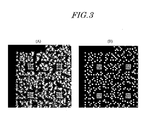
- [FIG. 3] Reproduced images of data recorded with an energy of 1000 pulses in Example 2 and Comparative Example 2, (A) is a reproduced image of Comparative Example 2, and (B) is a reproduced image of Example 2.
- A polymerizable monomer in the present invention is preferably a compound having a radically polymerizable group or a radical addition polymerizable group.
- Preferred examples of the polymerizable monomer include a (meth)acrylate, a (meth)acrylamide, styrene, a substituted styrene, vinylnaphthalene, a substituted vinylnaphthalene, a mixture of a maleate and a vinyl ether, a mixture of a polyene and a polythiol, a vinyl ether, an alkenyl ether, an allene ether, a ketene acetal, an epoxy, and an oxetane.
- The (meth)acrylate and the mixture of a polyene and a polythiol are preferable since the polymerization speed is high.
- Examples of the (meth)acrylate include hydroxyalkyl (meth)acrylates such as 2-hydroxyethyl (meth)acrylate and 2-hydroxypropyl (meth)acrylate; acrylates of an alkylene oxide adduct of phenol such as phenoxyethyl (meth)acrylate and halogen-substituted derivatives thereof; mono- or di(meth)acrylates of a glycol, such as mono- or di(meth)acrylates of ethylene glycol, the mono(meth)acrylate of methoxyethylene glycol, mono- or di(meth)acrylates of tetraethylene glycol, and mono- or di(meth)acrylates of tripropylene glycol; (meth)acrylates of a polyol, such as tricyclodecanedimethanol di(meth)acrylate, trimethylolpropane tri(meth)acrylate, trihydroxyethyl isocyanurate tri(meth)acrylate, pentaerythritol tri(meth)acrylate, pentaerythritol tetra(meth)acrylate, and dipentaerythritol hexaacrylate, and (meth)acrylates of alkylene oxide adducts of these polyols.
- Examples of the polyene include o-, m-, or p-diallylphthalate, trimethylolpropane diallyl ether, pentaerythritol triallyl ether, triallyl isocyanurate, diallylbisphenol A, triethylene glycol divinyl ether, cyclohexanedimethanol divinyl ether, cyclohexanediol divinyl ether, and divinylbenzene.
- Examples of the polythiol include ethylene glycol bisthioglycolate, butanediol bisthioglycolate, hexanediol bisthioglycolate, ethylene glycol bisthiopropionate, butanediol bisthiopropionate, trimethylolpropane tristhiopropionate, pentaerythritol tetrakisthiopropionate, and trihydroxyethyl triisocyanuric acid tristhiopropionate.
- It is preferable that the polymerizable monomer has a refractive index after curing of equal to or greater than 1.55 but less than 1.65.
- The curing in this case is not always one with a 100% degree of curing, but means a state obtained by curing sufficiently by normal photocuring means. A small proportion of the polymerizable monomer often remains uncured by normal photocuring means.
- It is preferable that a difference (Δn) between the refractive index after curing of the polymerizable monomer and the refractive index of the polymer matrix is equal to or greater than 3 x 10⁻³.
- In order to increase the modulation of the refractive index relative to the matrix, when the refractive index of the matrix is relatively low, it is preferable to use phenyl (meth)acrylate, tribromophenyl (meth)acrylate, dibromophenyl (meth)acrylate, monobromophenyl (meth)acrylate, phenylphenyl (meth)acrylate, cumylphenyl (meth)acrylate, and alkylene oxide-modified forms thereof, bromostyrene, dibromostyrene, tribromostyrene, etc., which have high refractive index.
- Examples of polymerization reactions that can be used for formation of a matrix polymer having a three-dimensional crosslinking structure in the present invention include cationic epoxy polymerization, cationic vinyl ether polymerization, cationic alkenyl ether polymerization, cationic allene ether polymerization, cationic ketene acetal polymerization, epoxy-amine addition polymerization, epoxy-thiol addition polymerization, unsaturated ester-amine addition polymerization (involving Michael addition), unsaturated ester-thiol addition polymerization (involving Michael addition), vinyl-silicon hydride addition polymerization (hydrosilylation), isocyanate-hydroxyl addition polymerization (urethane formation), isocyanate-thiol addition polymerization, and isocyanate-amine addition polymerization (urea formation).
- The above-mentioned reactions are made possible or promoted by an appropriate catalyst. For example, cationic epoxy polymerization proceeds rapidly at room temperature by the use of a catalyst containing BF3 as a main component, other cationic polymerizations proceed in the presence of protons, an epoxy-mercaptan reaction and Michael addition are promoted by a base such as an amine, hydrosilylation proceeds rapidly in the presence of a transition metal catalyst such as platinum, and the formation of a urethane or a urea proceeds rapidly by the use of a tin catalyst.
- It is preferable to employ isocyanate-hydroxyl addition polymerization, isocyanate-thiol addition polymerization, or epoxy-thiol addition polymerization since it is possible to ensure an appropriate pot life and to use them at a moderate curing temperature.
- Starting compounds that can be used for the above addition polymerizations are explained below.
- Examples of polyisocyanates that can be used in the isocyanate-hydroxyl addition polymerization or the isocyanate-thiol addition polymerization include tolylene diisocyanate, 4,4'-diphenylmethane diisocyanate, 4,4'-dicyclohexylmethane diisocyanate, hexamethylene diisocyanate, isophorone diisocyanate, and biurets, isocyanurates, adducts, and prepolymers of these isocyanates.
- Examples of polyols that can be used in the isocyanate-hydroxyl addition polymerization include low molecular weight polyols, polyether polyols, polyester polyols, polycaprolactones, and polycarbonate diols. Examples of the low molecular weight polyol include ethylene glycol, propylene glycol, cyclohexanedimethanol, 3-methyl-1,5-pentanediol, glycerol, trimethylolpropane, ethylene oxide-modified forms thereof, and propylene oxide-modified forms thereof.
- Examples of the polyether polyols include polyethylene glycol, polypropylene glycol, and polytetramethylene glycol, and examples of the polyester polyols include reaction products of ethylene glycol, propylene glycol, cyclohexanedimethanol, or 3-methyl-1,5-pentanediol with an acid component such as a dibasic acid such as adipic acid, succinic acid, phthalic acid, hexahydrophthalic acid, or terephthalic acid, or the acid anhydride thereof.
- Examples of thiol compounds that can be used in the isocyanate-thiol addition polymerization include simple thiols, thioglycolic acid derivatives, and mercaptopropionic acid derivatives. Examples of the simple thiols include o-, m-, and p-xylenedithiols.
- Examples of the thioglycolic acid derivatives include ethylene glycol bisthioglycolate, butanediol bisthioglycolate, and hexanediol bisthioglycolate.
- Examples of the mercaptopropionic acid derivatives include ethylene glycol bisthiopropionate, butanediol bisthiopropionate, trimethylolpropane tristhiopropionate, pentaerythritol tetrakisthiopropionate, and trihydroxyethyltriisocyanuric acid tristhiopropionate.
- Examples of epoxy compounds that can be used in the epoxy-thiol addition polymerization include polyglycidyl ethers of polyols such as (poly)ethylene glycol, (poly)propylene glycol, trimethylolpropane, and glycerol, alicyclic epoxies, bisphenol A epoxy resins, and phenol or cresol novolac epoxy resins.
- In the present invention, by introducing into the polymer matrix having a three-dimensional crosslinking structure a reactive group that can copolymerize with the polymerizable monomer, the reactive group of the three-dimensional crosslinking polymer matrix and the polymerizable monomer can be copolymerized during recording. Since this copolymer has high compatibility with the polymerizable monomer and a polymer thereof, high transparency can be maintained after recording.
- As a result, the diffraction efficiency after recording can be made high, and reading of recorded data can easily be carried out.
- Furthermore, since it is possible to use a polymerizable monomer that has a large difference in refractive index from that of the polymer matrix even if the polymerizable monomer has poor compatibility with the matrix as it is, a large refractive index difference in interference fringes formed after recording can be obtained.
- Moreover, since the polymer matrix having a three-dimensional crosslinking structure, which is not thermoplastic, can be copolymerized with the polymer of the polymerizable monomer during recording or by a post-treatment, the storage stability after recording can be improved.
- The reactive group of the polymer matrix having a three-dimensional crosslinking structure is preferably a (meth)acryloyl group because of good material stability prior to recording and high recording speed.
- When the isocyanate-hydroxyl addition polymerization is utilized, with regard to a starting compound that can be used for incorporating the reactive group, a compound having both a hydroxyl group and a reactive group, or a compound having both an isocyanate group and a reactive group may be used; the compound having a hydroxyl group and a reactive group, which is readily available industrially, is preferable, and examples thereof include a (meth)acrylate compound having a hydroxyl group.
- Examples of the (meth)acrylate compound having a hydroxyl group include an adduct between an epoxy compound and (meth)acrylic acid, which is known as an epoxy (meth)acrylate and, furthermore, the (meth)acrylic acid adduct of a polyglycidyl ether of a polyol such as (poly)ethylene glycol, (poly)propylene glycol, trimethylolpropane, or glycerol, the (meth)acrylate of a bisphenol A epoxy resin, and the (meth)acrylate of a phenol or cresol novolac epoxy resin.
- When the isocyanate-thiol addition polymerization or the epoxy-thiol addition polymerization is utilized, with regard to a method for incorporating the reactive group, a method may be selected in which a matrix is cured in the presence of a polyene monomer using an excess amount of a thiol compound, and the polyene and the thiol group remaining in the matrix are then subjected to radical addition polymerization.
- The concentration of the reactive group in the polymer matrix having a three-dimensional crosslinking structure is preferably 0.2 to 10 mol/kg, and more preferably 0.4 to 5 mol/kg. If there are too many reactive groups, a recorded image might be distorted due to curing shrinkage of the matrix during recording, and if there are too few reactive groups, there is a possibility that sufficient diffraction efficiency might not be obtained or that storage stability after recording might become poor.
- In the present invention, adding a tertiary amine enables the sensitivity to be enhanced.
- Preferred specific examples thereof include triethylamine, tributylamine, triethanolamine, N,N-dimethylbenzylamine, methyl dimethylaminobenzoate, and amino (meth)acrylates having a tertiary amino group such as dimethylaminoethyl acrylate and amine (meth)acrylates formed by partially or fully adding a primary or secondary amine to the (meth)acryloyl group of a monofunctional or polyfunctional (meth)acrylate. A preferred amount thereof added is 0.1 to 10 mass %.
- Another additive such as an inert plasticizer (diffusing agent) exhibiting a low refractive index may further be used. Examples of the low refractive index plasticizer include dioctyl adipate and acetyl tributyl citrate.
- The photopolymerization initiator is appropriately selected from a radical photopolymerization initiator, a cationic photopolymerization initiator, etc. according to the type of polymerization reaction of monomer.
- Examples of the radical photopolymerization initiator include 1,3-di(t-butyldioxycarbonyl)benzophenone, 3,3',4,4'-tetrakis(t-butyldioxycarbonyl)benzophenone, N-phenylglycine, 2,4,6-tris(trichloromethyl)-s-triazine, 3-phenyl-5-isooxazolone, 2-mercaptobenzimidazole, imidazole dimers, bis(η-5-2,4-cydopentadien-1-yl)bis[2,6-difluoro-3-(1H-pyrrol-1-yl)phenyl]titanium, which is commercially available as CGI-784 from Ciba, and 5,7-diiodo-3-butoxy-6-fluorone, which is commercially available as H-Nu470 from Spectra Group Limited.
- Examples of the cationic photopolymerization initiator include aromatic diazonium salts, aromatic iodonium salts, aromatic sulfonium salts, aromatic phosphonium salts, mixed-ligand metal salts such as, for example, (η6-benzene)(η5-cyclopentadienyl) iron (II), and silanol-aluminum complexes.
- In order to enhance the sensitivity toward each laser light wavelength, a sensitizing dye may be added.
- Preferred examples of the sensitizing dye include xanthene, thioxanthene, cyanine, merocyanine, coumarin, ketocoumarin, eosin, erythrosin, titanocene, naphthacene, thiopyrylium, quinoline, styrylquinoline, oxonole, cyanine, rhodamine, and pyrylium-based compounds. When high transparency is required, a sensitizing dye that has an absorption wavelength in the visible light region is preferably one that becomes colorless as a result of decomposition, etc. by heating or UV irradiation in a post-treatment subsequent to hologram recording.
- A preferred ratio of the polymerizable monomer and the polymer matrix components is 1:99 to 50:50 as a ratio by weight of each component, and more preferably 5:95 to 30:70.
- With regard to a preferred embodiment of a process for producing a volume hologram recording medium, there is a method in which the composition of the present invention is injected into a transparent support. With regard to a specific method for injecting into a transparent support, there are a method in which a pair of transparent supports are disposed so that the transparent supports are provided on either side of a recording layer that is to be formed, and a composition is injected between the two transparent supports, a method in which an injection hole is provided in a box-shaped transparent support and a composition is injected therefrom, and a method in which one face of a box-shaped transparent support is made open, a composition is injected or added dropwise, and the open face is then sealed by covering with a transparent support.
- Alternatively, coating of an appropriate substrate may be carried out by a method employing a spin coater, a gravure coater, a comma coater, a bar coater, etc.
- The thickness of the volume hologram recording material layer is 10 to 2000 µm, and preferably 100 to 1000 µm.
- The substrate of a volume hologram recording photosensitive medium is one having transparency, and examples thereof include a glass and resins such as polycarbonate, polyethylene, polypropylene, polyethylene fluoride, polyvinylidene fluoride, polyvinyl chloride, polyvinylidene chloride, ethylene-vinyl alcohol, polyvinyl alcohol, polymethyl methacrylate, polyether sulfone, polyether ether ketone, polyamide, a tetrafluoroethylene-perfluoroalkyl vinyl ether copolymer, polyesters such as polyethylene terephthalate, and polyimide.
- The modulus of elasticity of the recording layer is preferably in the range of 105 Pa to 109 Pa at a normal temperature of use of 0°C to 50°C. If it is less than 105 Pa, sufficient diffraction efficiency might not be obtained, or the storage stability after recording might become poor. If it is greater than 109 Pa, the sensitivity might be degraded.
- For recording a hologram, visible laser light is used, for example, laser light from an argon ion laser (458 nm, 488 nm, 514.5 nm ), a krypton ion laser (647.1 nm ), a YAG laser (532 nm ), etc., and hologram data are recorded in a recording layer by a standard method.
- With regard to the hologram recording method, there are a polarized collinear hologram recording method, a multiple angle of incidence reference light hologram recording method, etc., and when the volume hologram recording material of the present invention is used as a recording medium, since reference light and information light are on the same axis, high precision positioning is possible and anti-vibration measures are easily carried out, and the polarized collinear hologram recording method is therefore preferable.
- Other than the volume hologram recording medium, uses and application fields for the volume hologram recording material of the present invention include optical devices, incorporation into displays/designs, interference measurement, optical information processing, and optical information recording.
- Specific examples of the optical devices include diffraction gratings, POS scanners, CD/DVD player optical heads, beam splitters, interference filters, and airplane/automobile head-up displays.
- Specific examples of the incorporation into displays/designs include hologram art, indoor/outdoor decoration, recording of arts and crafts, educational materials, book/magazine covers and illustrations, embellishment and forgery prevention of securities, ID cards, credit cards, cash cards, telephone cards, etc., and stereoscopic viewing of a CT image.
- Specific examples of the interference measurement include measurement of displacement and deformation of an object, measurement of vibration of an object, and measurement of precision of an optical face (computer-generated hologram).
- Specific examples of the optical information processing include pattern identification employing a holographic matched filter, and finger print verification.
- Specific examples of the optical information recording include image recording for (high-definition or digital) television broadcasting, video camera pictures, and surveillance camera pictures, information retrieval recording, graphic character input devices, and holographic associative memory.
- A mixture of Table 1 below was stirred at 30°C to 40°C for 2 hours so as to fully dissolve it. 200 µm thick ethylene tetrafluoride sheets were affixed as spacers to three edges of a slide glass, a further slide glass was laid on top, and the periphery was fixed by clips to give a sample cell. The mixture was injected into the cell from one edge of the sample cell, and the matrix was cured by allowing it to stand at room temperature overnight, thus giving a recording layer formed from a polymerizable monomer and a polymer matrix having a three-dimensional crosslinking structure with a reactive group incorporated therein.
(Table 1) Composition of liquid mixture formulation 80MFA1) G-4002) HDI3) DBTL4) DBPA5) Irg7846) DMBA7) Ex. 1 20 80 62 0.02 10 2.8 3.9 Comp. Ex. 1 20 80 62 0.02 10 2.8 1) 80MFA: Epolite 80MFA, the epoxy diacrylate of glycerol diglycidyl ether, manufactured by Kyoeisha Chemical Co., Ltd.
2) G-400: glycerol propylene oxide-modified form (molecular weight 400) manufactured by Asahi Denka Co., Ltd.
3) Duranate HDI: hexamethylene diisocyanate, manufactured by Asahi Kasei Corp.
4) DBTL: dibutyltin dilaurate, manufactured by Asahi Denka Co., Ltd.
5) DBPA: dibromophenyl acrylate
6) Irgacure 784: bis(η-5-2,4-cyclopentadien-1-yl)bis[2,6-difluoro-3-(1H-pyrrol-1-yl)phenyl] titanium, manufactured by Ciba Specialty Chemicals
7) DMBA: N,N-dimethylbenzylamine - The recording layer formed as above was subjected to two beam interference exposure using a green laser at a wavelength of 532 nm (
Compass 215M, manufactured by Coherent) (FIG. 1). At the same time as the two beam interference exposure, the hologram formation process was monitored using a red laser at a wavelength of 635 nm (LabLasers, manufactured by Coherent), and the diffraction efficiency was evaluated. The diffraction light intensity was measured using a power meter (Optical Power Multimeter, manufactured by Advantest). The intensity of the green laser was 20 mW/cm2 (measured at the front face of the substrate), and the intensity of the red laser was 1 µW/cm2 (measured at the front face of the substrate). - Furthermore, after the sample cell was exposed to light under the above-mentioned conditions for diffraction efficiency measurement for 40 sec. and then left to stand for 1 hour, it was heated in an oven at 40°C for 24 hours, and cooled to room temperature, and the diffraction efficiency was then measured using a red laser at a wavelength of 635 nm.
- The results of measurement of diffraction efficiency carried out as described above are given in Table 2.
(Table 2) Diffraction efficiency results After 5 sec. exposure time After 40 sec. exposure time After storage stability test Ex. 1 19% 35% 35% Comp. Ex. 1 10% 33% 30% - It can be seen from Table 2 above that by including a tertiary amine the diffraction efficiency of the recorded layer is improved. It can also be seen that the diffraction efficiency improved by a tertiary amine is maintained even after the storage stability test.
- It is therefore clear that by including a tertiary amine both the sensitivity and the reliability of the volume hologram recording medium can be improved.
- A sample cell was prepared by the same procedure as in Example 1. However, one of the glass substrates (50 x 50 x 1 mm) was changed for one with a vapor-deposited aluminum layer (reflection layer), the spacers were 500 µm, and the thickness of the recording layer was 500 µm (the cross section is shown in FIG. 2).
- Furthermore, a heating step for forming a polymer matrix employed 80°C and 2 hours instead of the heating conditions (30°C to 40°C, 2 hours) of Example 1.
- Data recording was carried out using the sample cell on which the recording layer had been formed by the above-mentioned procedure by means of an SVRD collinear hologram information recorder manufactured by Optware under the conditions below. The recording medium was set in a holder so that laser irradiation during playback was carried out from the direction of the top in FIG. 2, and the position was adjusted so that the laser came to focus on the vapor-deposited aluminum layer (reflection layer). Reading was carried out 30 sec. after writing. The information pattern employed a standard pattern (test information pattern having about 1600 bytes).
-
- Playback laser wavelength: 532 nm (Nd: YV04)
- Recording laser intensity: 1.5 mW (pulse width 10 nsec, repetition interval 50 µsec)
- Information light / reference light intensity ratio = 3
- Number of recording pulses: 200, 1000, 2000 pulses
- The error rate when recording data in the above-mentioned way is shown in Table 3 below.
(Table 3) Error rate of recorded data (bit error rate) Number of pulses 200 1000 2000 Ex. 2 <10-4 <10-4 <10-4 Comp. Ex. 2 >10-1 6 × 10⁻³ 1 × 10⁻³ - In Comparative Example 2 the bit error rate can be seen to have deteriorated when recording was carried out with an energy of 200 pulses, but in Example 2, no deterioration in the bit error rate could be seen.
- In Comparative Example 2, when recording was carried out with an energy of 1000 pulses, there was distortion and blurring in the reproduced image, but in Example 2 there was no distortion or blurring in the reproduced image (FIG. 3) .
- The recording material of the present invention is suitable for a volume hologram recording medium, and when forming a recording layer, it does not require a step of dissolving in a solvent and drying.
- The recording medium comprising the recording material of the present invention can record a clear image having high diffraction efficiency, high sensitivity, and no blurring. Furthermore, since storage stability after recording is excellent, it is useful as a recording medium for storing high capacity hologram data for a long period of time.
Claims (8)
- A volume hologram recording material comprising as constituents a polymer matrix having a three-dimensional crosslinking structure, a polymerizable monomer, and a tertiary amine compound, the polymer matrix being formed in the presence of the polymerizable monomer by a polymerization reaction that is different from a polymerization reaction of the polymerizable monomer.
- The volume hologram recording material according to Claim 1, wherein the polymer matrix having a three-dimensional crosslinking structure has a reactive group that can copolymerize with the polymerizable monomer.
- The volume hologram recording material according to Claim 2, wherein the polymer matrix reactive group that can copolymerize with the polymerizable monomer is a (meth)acryloyl group.
- The volume hologram recording material according to any one of Claim 1 to Claim 3, wherein the polymer matrix is formed by addition polymerization of a polyol and a polyisocyanate.
- The volume hologram recording mediam according to any one of Claim 1 to Claim 4, wherein it further comprises a catalyst and a photopolymerization initiator.
- The volume hologram recording mediam according to any one of Claim 1 to Claim 5, wherein the tertiary amine compound is at least one selected from the group consinting of triethylamine, tributylamine, triethanolamine, N,N-dimethylbenzylamine, methyl dimethylaminobenzoate, and amino (meth)acrylates having a tertiary amino group such as dimethylaminoethyl acrylate and amine (meth)acrylates formed by partially or fully adding a primary or secondary amine to the (meth)acryloyl group of a monofunctional or polyfunctional (meth)acrylate.
- The volume hologram recording mediam according to any one of Claim 1 to Claim 6, wherein the polymerizable monomer is (meth)acrylate.
- A volume hologram recording medium for recording, by means of refractive index difference, interference fringes that result from the interference of coherent light, the medium comprising a recording layer having a thickness of 100 µm or greater, and the recording layer comprising the volume hologram recording material according to any one of Claim 1 to Claim 7.
Applications Claiming Priority (2)
| Application Number | Priority Date | Filing Date | Title |
|---|---|---|---|
| JP2004037504 | 2004-02-13 | ||
| PCT/JP2005/001971 WO2005078532A1 (en) | 2004-02-13 | 2005-02-09 | Volume hologram recording material and volume hologram recording medium |
Publications (1)
| Publication Number | Publication Date |
|---|---|
| EP1729184A1 true EP1729184A1 (en) | 2006-12-06 |
Family
ID=34857769
Family Applications (1)
| Application Number | Title | Priority Date | Filing Date |
|---|---|---|---|
| EP05710023A Withdrawn EP1729184A1 (en) | 2004-02-13 | 2005-02-09 | Volume hologram recording material and volume hologram recording medium |
Country Status (5)
| Country | Link |
|---|---|
| US (1) | US20070184353A1 (en) |
| EP (1) | EP1729184A1 (en) |
| JP (1) | JPWO2005078532A1 (en) |
| KR (1) | KR20060110365A (en) |
| WO (1) | WO2005078532A1 (en) |
Cited By (3)
| Publication number | Priority date | Publication date | Assignee | Title |
|---|---|---|---|---|
| EP2003500A3 (en) * | 2007-06-11 | 2009-01-07 | FUJIFILM Corporation | Optical recording composition, holographic recording medium, and method of recording and reproducing information |
| EP1906265A4 (en) * | 2005-07-11 | 2010-07-28 | Toagosei Co Ltd | Volume phase hologram recording material, process for producing the same, and recorded material |
| EP2110718B1 (en) * | 2007-02-05 | 2012-10-10 | Nippon Steel Chemical Co., Ltd. | Volume phase hologram recording material and optical information recording medium |
Families Citing this family (12)
| Publication number | Priority date | Publication date | Assignee | Title |
|---|---|---|---|---|
| JP5097374B2 (en) * | 2005-09-30 | 2012-12-12 | 富士フイルム株式会社 | Optical recording composition, optical recording medium, method for producing the same, optical recording method, and optical recording apparatus |
| EP2063324B1 (en) * | 2006-09-05 | 2012-03-21 | Mitsubishi Chemical Corporation | Volume hologram optical recording medium, composition for forming volume hologram recording layer, volume hologram recording material, and volume hologram optical recording method |
| EP2077471B1 (en) | 2006-10-25 | 2012-07-25 | Mitsubishi Chemical Corporation | Volume hologram optical recording medium, composition for volume hologram recording layer formation, and volume hologram recording material |
| JP2008139768A (en) * | 2006-12-05 | 2008-06-19 | Mitsubishi Chemicals Corp | Hologram optical recording medium |
| JPWO2008123302A1 (en) * | 2007-03-30 | 2010-07-15 | ダイキン工業株式会社 | Photosensitive composition for fluorine-containing volume hologram recording, photosensitive medium for fluorine-containing volume hologram recording and fluorine-containing volume hologram using the same |
| WO2008123303A1 (en) * | 2007-03-30 | 2008-10-16 | Daikin Industries, Ltd. | Composition for fluorine-containing volume hologram optical information recording material and fluorine-containing volume hologram optical information recording medium using the same |
| EP2177956B1 (en) | 2007-07-24 | 2013-10-16 | Kyoeisha Chemical Co., Ltd. | Composition for holographic recording medium |
| JP2009295233A (en) * | 2008-06-05 | 2009-12-17 | Tdk Corp | Optical recording medium and manufacturing method of optical recording medium |
| JP2010026450A (en) * | 2008-07-24 | 2010-02-04 | Toshiba Corp | Hologram recording medium and optical information recording and reproducing device |
| JP2010230911A (en) * | 2009-03-26 | 2010-10-14 | Tdk Corp | Optical device |
| KR102239212B1 (en) | 2018-12-14 | 2021-04-12 | 주식회사 엘지화학 | Photopolymer composition |
| US11619880B2 (en) * | 2019-05-17 | 2023-04-04 | The Regents Of The University Of Colorado | Holographic photopolymer compositions and composites |
Family Cites Families (12)
| Publication number | Priority date | Publication date | Assignee | Title |
|---|---|---|---|---|
| US5212210A (en) * | 1992-03-18 | 1993-05-18 | Minnesota Mining And Manufacturing Company | Energy curable compositions having improved cure speeds |
| US6359025B1 (en) * | 1997-05-16 | 2002-03-19 | Dsm N.V. | Radiation-curable liquid resin composition for coating optical fibers |
| US6482551B1 (en) * | 1998-03-24 | 2002-11-19 | Inphase Technologies | Optical article and process for forming article |
| EP2309339B1 (en) * | 1999-01-19 | 2016-11-30 | Dai Nippon Printing Co., Ltd. | Relief hologram or diffraction grating sheet and forgery-preventing sheet comprising the same |
| ES2208250T3 (en) * | 1999-12-08 | 2004-06-16 | Ciba Specialty Chemicals Holding Inc. | NEW SYSTEMS OF PHOSPHINE OXIDE PHOTOINITIZERS AND RETICULABLE LOW COLOR COMPOSITIONS. |
| US20040067323A1 (en) * | 2000-11-10 | 2004-04-08 | Clabburn Robin J.T. | Optical recording materials |
| JP4659288B2 (en) * | 2001-07-19 | 2011-03-30 | 独立行政法人産業技術総合研究所 | Composition for hologram recording material, hologram recording medium and method for producing the same |
| JP2002318319A (en) * | 2001-04-24 | 2002-10-31 | Mitsubishi Gas Chem Co Inc | Method for producing film having refractive index distribution |
| US7295356B2 (en) * | 2001-06-08 | 2007-11-13 | Inphase Technologies, Inc. | Method for improved holographic recording using beam apodization |
| US20030044690A1 (en) * | 2001-06-27 | 2003-03-06 | Imation Corp. | Holographic photopolymer data recording media, method of manufacture and method of holographically reading, recording and storing data |
| US20030129501A1 (en) * | 2002-01-04 | 2003-07-10 | Mischa Megens | Fabricating artificial crystalline structures |
| US20030206320A1 (en) * | 2002-04-11 | 2003-11-06 | Inphase Technologies, Inc. | Holographic media with a photo-active material for media protection and inhibitor removal |
-
2005
- 2005-02-09 EP EP05710023A patent/EP1729184A1/en not_active Withdrawn
- 2005-02-09 WO PCT/JP2005/001971 patent/WO2005078532A1/en not_active Ceased
- 2005-02-09 JP JP2005517958A patent/JPWO2005078532A1/en active Pending
- 2005-02-09 KR KR1020067016316A patent/KR20060110365A/en not_active Withdrawn
- 2005-02-09 US US10/588,714 patent/US20070184353A1/en not_active Abandoned
Non-Patent Citations (1)
| Title |
|---|
| See references of WO2005078532A1 * |
Cited By (5)
| Publication number | Priority date | Publication date | Assignee | Title |
|---|---|---|---|---|
| EP1906265A4 (en) * | 2005-07-11 | 2010-07-28 | Toagosei Co Ltd | Volume phase hologram recording material, process for producing the same, and recorded material |
| EP2110718B1 (en) * | 2007-02-05 | 2012-10-10 | Nippon Steel Chemical Co., Ltd. | Volume phase hologram recording material and optical information recording medium |
| US8298726B2 (en) * | 2007-02-05 | 2012-10-30 | Nippon Steel Chemical Co., Ltd. | Volume phase hologram recording material and optical information recording medium |
| TWI427090B (en) * | 2007-02-05 | 2014-02-21 | Nippon Steel & Sumikin Chem Co | Volume phase type full phase diagram recording material and optical information recording medium |
| EP2003500A3 (en) * | 2007-06-11 | 2009-01-07 | FUJIFILM Corporation | Optical recording composition, holographic recording medium, and method of recording and reproducing information |
Also Published As
| Publication number | Publication date |
|---|---|
| KR20060110365A (en) | 2006-10-24 |
| JPWO2005078532A1 (en) | 2007-10-18 |
| US20070184353A1 (en) | 2007-08-09 |
| WO2005078532A1 (en) | 2005-08-25 |
Similar Documents
| Publication | Publication Date | Title |
|---|---|---|
| KR100920260B1 (en) | Methods and compositions for rapid mass production of holographic recording products | |
| US20070184353A1 (en) | Volume hologram recording material and volume hologram recording medium | |
| KR101424846B1 (en) | Advantageous recording media for holographic applications | |
| US8192898B2 (en) | Composition for fluorine-containing volume holographic data recording material and fluorine-containing volume holographic data recording media made of same | |
| EP0824222B1 (en) | Photorecording medium and method | |
| EP1696266A2 (en) | Hologram recording material and optical recording medium | |
| KR102166846B1 (en) | Photopolymer composition | |
| EP1906265A1 (en) | Volume phase hologram recording material, process for producing the same, and recorded material | |
| KR20110066926A (en) | Volume holographic recording media on self-developing polymer substrates | |
| TW201932439A (en) | Unreactive fluoro compound and photopolymer composition comprising the same | |
| US20220299938A1 (en) | Spatially varying dynamic range in holographic gratings | |
| EP1731975A1 (en) | Volume hologram recording material and volume hologram recording medium | |
| WO2005029201A1 (en) | Holographic recording medium, holographic recording method, and holographic information medium | |
| US6864019B2 (en) | Recording material formulations for holographic media | |
| EP2077471B1 (en) | Volume hologram optical recording medium, composition for volume hologram recording layer formation, and volume hologram recording material | |
| EP3966632A1 (en) | Thermally reversible and reorganizable crosslinking polymers for volume bragg gratings | |
| EP3543260B1 (en) | Photopolymer composition | |
| TWI429674B (en) | And a composition for holographic recording medium | |
| JPH08101501A (en) | Photosensitive composition for three-dimensional hologram recording, recording medium using that and forming method of three-dimensional hologram | |
| WO2022198121A1 (en) | Recording a latent holographic grating and amplification of its dynamic range | |
| WO2024005139A1 (en) | Method for producing optical element | |
| JP5108873B2 (en) | Volume phase hologram recording material and optical information recording medium using the same | |
| JPWO2008123303A1 (en) | Composition for fluorine-containing volume hologram optical information recording material and fluorine-containing volume hologram optical information recording medium using the same | |
| JP4550616B2 (en) | Photosensitive composition for volume hologram recording and method for producing volume hologram recording medium using the same | |
| JP2008268520A (en) | Volume phase type hologram recording material and recording medium using matrix with functional group |
Legal Events
| Date | Code | Title | Description |
|---|---|---|---|
| PUAI | Public reference made under article 153(3) epc to a published international application that has entered the european phase |
Free format text: ORIGINAL CODE: 0009012 |
|
| 17P | Request for examination filed |
Effective date: 20060908 |
|
| AK | Designated contracting states |
Kind code of ref document: A1 Designated state(s): AT BE BG CH CY CZ DE DK EE ES FI FR GB GR HU IE IS IT LI LT LU MC NL PL PT RO SE SI SK TR |
|
| DAX | Request for extension of the european patent (deleted) | ||
| STAA | Information on the status of an ep patent application or granted ep patent |
Free format text: STATUS: THE APPLICATION IS DEEMED TO BE WITHDRAWN |
|
| 18D | Application deemed to be withdrawn |
Effective date: 20090901 |