EP1728838A1 - Ink composition for ink jet-recording and method for preparing lithographic printing plate using the same - Google Patents
Ink composition for ink jet-recording and method for preparing lithographic printing plate using the same Download PDFInfo
- Publication number
- EP1728838A1 EP1728838A1 EP20060011082 EP06011082A EP1728838A1 EP 1728838 A1 EP1728838 A1 EP 1728838A1 EP 20060011082 EP20060011082 EP 20060011082 EP 06011082 A EP06011082 A EP 06011082A EP 1728838 A1 EP1728838 A1 EP 1728838A1
- Authority
- EP
- European Patent Office
- Prior art keywords
- group
- bis
- groups
- phenyl
- substituted
- Prior art date
- Legal status (The legal status is an assumption and is not a legal conclusion. Google has not performed a legal analysis and makes no representation as to the accuracy of the status listed.)
- Granted
Links
- 239000000203 mixture Substances 0.000 title claims abstract description 100
- 238000007639 printing Methods 0.000 title claims abstract description 43
- 238000000034 method Methods 0.000 title claims description 63
- 150000001875 compounds Chemical class 0.000 claims abstract description 97
- 239000003505 polymerization initiator Substances 0.000 claims abstract description 67
- 125000005842 heteroatom Chemical group 0.000 claims abstract description 44
- 125000005843 halogen group Chemical group 0.000 claims abstract description 33
- 125000004435 hydrogen atom Chemical group [H]* 0.000 claims abstract description 29
- 239000000463 material Substances 0.000 claims abstract description 19
- 238000002360 preparation method Methods 0.000 claims abstract description 18
- 125000002915 carbonyl group Chemical group [*:2]C([*:1])=O 0.000 claims abstract description 14
- 238000004040 coloring Methods 0.000 claims abstract description 14
- 125000000962 organic group Chemical group 0.000 claims abstract description 14
- 125000004093 cyano group Chemical group *C#N 0.000 claims abstract description 10
- 229910052705 radium Inorganic materials 0.000 claims abstract description 9
- 229910052701 rubidium Inorganic materials 0.000 claims abstract description 9
- 229910052799 carbon Inorganic materials 0.000 claims abstract description 5
- -1 acryl group Chemical group 0.000 claims description 214
- 125000003118 aryl group Chemical group 0.000 claims description 64
- 239000000758 substrate Substances 0.000 claims description 36
- 125000001476 phosphono group Chemical group [H]OP(*)(=O)O[H] 0.000 claims description 17
- 125000003277 amino group Chemical group 0.000 claims description 16
- 125000004149 thio group Chemical group *S* 0.000 claims description 16
- 238000006116 polymerization reaction Methods 0.000 claims description 14
- 150000008365 aromatic ketones Chemical class 0.000 claims description 12
- 229910052736 halogen Inorganic materials 0.000 claims description 11
- ABLZXFCXXLZCGV-UHFFFAOYSA-N Phosphorous acid Chemical group OP(O)=O ABLZXFCXXLZCGV-UHFFFAOYSA-N 0.000 claims description 10
- 125000001820 oxy group Chemical group [*:1]O[*:2] 0.000 claims description 10
- 125000005235 azinium group Chemical group 0.000 claims description 9
- 150000002430 hydrocarbons Chemical class 0.000 claims description 9
- 125000002887 hydroxy group Chemical group [H]O* 0.000 claims description 9
- 125000005641 methacryl group Chemical group 0.000 claims description 9
- 150000004945 aromatic hydrocarbons Chemical class 0.000 claims description 8
- 230000000977 initiatory effect Effects 0.000 claims description 8
- 150000001451 organic peroxides Chemical class 0.000 claims description 8
- 125000000449 nitro group Chemical group [O-][N+](*)=O 0.000 claims description 7
- 125000001273 sulfonato group Chemical group [O-]S(*)(=O)=O 0.000 claims description 7
- 125000004429 atom Chemical group 0.000 claims description 6
- 150000001642 boronic acid derivatives Chemical class 0.000 claims description 6
- 229930195733 hydrocarbon Natural products 0.000 claims description 6
- 125000000475 sulfinyl group Chemical group [*:2]S([*:1])=O 0.000 claims description 6
- 125000000020 sulfo group Chemical group O=S(=O)([*])O[H] 0.000 claims description 6
- 125000000472 sulfonyl group Chemical group *S(*)(=O)=O 0.000 claims description 6
- 125000003396 thiol group Chemical group [H]S* 0.000 claims description 6
- 125000003903 2-propenyl group Chemical group [H]C([*])([H])C([H])=C([H])[H] 0.000 claims description 5
- 125000000391 vinyl group Chemical group [H]C([*])=C([H])[H] 0.000 claims description 4
- 230000001678 irradiating effect Effects 0.000 claims description 3
- 125000005504 styryl group Chemical group 0.000 claims description 3
- 150000001450 anions Chemical class 0.000 claims description 2
- 229910052727 yttrium Inorganic materials 0.000 claims description 2
- 239000004215 Carbon black (E152) Substances 0.000 claims 2
- 238000011282 treatment Methods 0.000 abstract description 46
- 238000003860 storage Methods 0.000 abstract description 17
- 230000015572 biosynthetic process Effects 0.000 abstract description 12
- 239000000976 ink Substances 0.000 description 191
- 125000001997 phenyl group Chemical group [H]C1=C([H])C([H])=C(*)C([H])=C1[H] 0.000 description 111
- RTAQQCXQSZGOHL-UHFFFAOYSA-N Titanium Chemical compound [Ti] RTAQQCXQSZGOHL-UHFFFAOYSA-N 0.000 description 102
- 239000010936 titanium Substances 0.000 description 102
- 229910052719 titanium Inorganic materials 0.000 description 102
- ZSWFCLXCOIISFI-UHFFFAOYSA-N endo-cyclopentadiene Natural products C1C=CC=C1 ZSWFCLXCOIISFI-UHFFFAOYSA-N 0.000 description 95
- 125000000058 cyclopentadienyl group Chemical group C1(=CC=CC1)* 0.000 description 88
- 0 C1/N=N/C=C/C=C/*1 Chemical compound C1/N=N/C=C/C=C/*1 0.000 description 51
- 125000000217 alkyl group Chemical group 0.000 description 51
- 125000001424 substituent group Chemical group 0.000 description 48
- 239000000049 pigment Substances 0.000 description 36
- 229910052782 aluminium Inorganic materials 0.000 description 32
- XAGFODPZIPBFFR-UHFFFAOYSA-N aluminium Chemical compound [Al] XAGFODPZIPBFFR-UHFFFAOYSA-N 0.000 description 32
- 239000003999 initiator Substances 0.000 description 32
- 125000000547 substituted alkyl group Chemical group 0.000 description 31
- 239000006185 dispersion Substances 0.000 description 29
- 125000004432 carbon atom Chemical group C* 0.000 description 24
- 239000002609 medium Substances 0.000 description 20
- 238000007789 sealing Methods 0.000 description 20
- 239000002585 base Substances 0.000 description 19
- 125000003107 substituted aryl group Chemical group 0.000 description 19
- 238000001723 curing Methods 0.000 description 18
- NIXOWILDQLNWCW-UHFFFAOYSA-M Acrylate Chemical compound [O-]C(=O)C=C NIXOWILDQLNWCW-UHFFFAOYSA-M 0.000 description 17
- 239000007864 aqueous solution Substances 0.000 description 17
- 239000000126 substance Substances 0.000 description 17
- 230000000740 bleeding effect Effects 0.000 description 15
- UHESRSKEBRADOO-UHFFFAOYSA-N ethyl carbamate;prop-2-enoic acid Chemical compound OC(=O)C=C.CCOC(N)=O UHESRSKEBRADOO-UHFFFAOYSA-N 0.000 description 14
- 125000002496 methyl group Chemical group [H]C([H])([H])* 0.000 description 14
- 230000035945 sensitivity Effects 0.000 description 14
- 230000006872 improvement Effects 0.000 description 13
- 238000002347 injection Methods 0.000 description 12
- 239000007924 injection Substances 0.000 description 12
- 239000000178 monomer Substances 0.000 description 12
- JTHZUSWLNCPZLX-UHFFFAOYSA-N 6-fluoro-3-methyl-2h-indazole Chemical compound FC1=CC=C2C(C)=NNC2=C1 JTHZUSWLNCPZLX-UHFFFAOYSA-N 0.000 description 11
- 125000001931 aliphatic group Chemical group 0.000 description 11
- 125000003342 alkenyl group Chemical group 0.000 description 11
- 125000000304 alkynyl group Chemical group 0.000 description 10
- 150000001768 cations Chemical class 0.000 description 10
- 229910052731 fluorine Inorganic materials 0.000 description 10
- 125000001153 fluoro group Chemical group F* 0.000 description 10
- 125000002924 primary amino group Chemical group [H]N([H])* 0.000 description 10
- 238000007788 roughening Methods 0.000 description 10
- XLYOFNOQVPJJNP-UHFFFAOYSA-N water Substances O XLYOFNOQVPJJNP-UHFFFAOYSA-N 0.000 description 10
- 239000002270 dispersing agent Substances 0.000 description 9
- 238000011156 evaluation Methods 0.000 description 9
- 125000002252 acyl group Chemical group 0.000 description 8
- 125000003178 carboxy group Chemical group [H]OC(*)=O 0.000 description 8
- 239000000460 chlorine Substances 0.000 description 8
- 125000000623 heterocyclic group Chemical group 0.000 description 8
- 229910052755 nonmetal Inorganic materials 0.000 description 8
- 125000002030 1,2-phenylene group Chemical group [H]C1=C([H])C([*:1])=C([*:2])C([H])=C1[H] 0.000 description 7
- 125000002947 alkylene group Chemical group 0.000 description 7
- QGZKDVFQNNGYKY-UHFFFAOYSA-O ammonium group Chemical group [NH4+] QGZKDVFQNNGYKY-UHFFFAOYSA-O 0.000 description 7
- 239000003792 electrolyte Substances 0.000 description 7
- 229910052760 oxygen Inorganic materials 0.000 description 7
- 239000002245 particle Substances 0.000 description 7
- 125000005017 substituted alkenyl group Chemical group 0.000 description 7
- 229910052717 sulfur Inorganic materials 0.000 description 7
- 125000003866 trichloromethyl group Chemical group ClC(Cl)(Cl)* 0.000 description 7
- 239000002253 acid Substances 0.000 description 6
- 125000001951 carbamoylamino group Chemical group C(N)(=O)N* 0.000 description 6
- 238000007598 dipping method Methods 0.000 description 6
- 230000000694 effects Effects 0.000 description 6
- 239000010408 film Substances 0.000 description 6
- 230000035515 penetration Effects 0.000 description 6
- 150000003839 salts Chemical class 0.000 description 6
- 230000035943 smell Effects 0.000 description 6
- 239000011734 sodium Substances 0.000 description 6
- 229910052708 sodium Inorganic materials 0.000 description 6
- 239000002904 solvent Substances 0.000 description 6
- DGAQECJNVWCQMB-PUAWFVPOSA-M Ilexoside XXIX Chemical compound C[C@@H]1CC[C@@]2(CC[C@@]3(C(=CC[C@H]4[C@]3(CC[C@@H]5[C@@]4(CC[C@@H](C5(C)C)OS(=O)(=O)[O-])C)C)[C@@H]2[C@]1(C)O)C)C(=O)O[C@H]6[C@@H]([C@H]([C@@H]([C@H](O6)CO)O)O)O.[Na+] DGAQECJNVWCQMB-PUAWFVPOSA-M 0.000 description 5
- 125000003545 alkoxy group Chemical group 0.000 description 5
- 230000003373 anti-fouling effect Effects 0.000 description 5
- 239000000975 dye Substances 0.000 description 5
- 125000002485 formyl group Chemical group [H]C(*)=O 0.000 description 5
- 125000000959 isobutyl group Chemical group [H]C([H])([H])C([H])(C([H])([H])[H])C([H])([H])* 0.000 description 5
- 125000001624 naphthyl group Chemical group 0.000 description 5
- 229910052757 nitrogen Inorganic materials 0.000 description 5
- 239000001301 oxygen Substances 0.000 description 5
- 238000012360 testing method Methods 0.000 description 5
- 229910000838 Al alloy Inorganic materials 0.000 description 4
- IJGRMHOSHXDMSA-UHFFFAOYSA-N Atomic nitrogen Chemical compound N#N IJGRMHOSHXDMSA-UHFFFAOYSA-N 0.000 description 4
- VEXZGXHMUGYJMC-UHFFFAOYSA-N Hydrochloric acid Chemical compound Cl VEXZGXHMUGYJMC-UHFFFAOYSA-N 0.000 description 4
- 229910018830 PO3H Inorganic materials 0.000 description 4
- HEMHJVSKTPXQMS-UHFFFAOYSA-M Sodium hydroxide Chemical compound [OH-].[Na+] HEMHJVSKTPXQMS-UHFFFAOYSA-M 0.000 description 4
- NINIDFKCEFEMDL-UHFFFAOYSA-N Sulfur Chemical compound [S] NINIDFKCEFEMDL-UHFFFAOYSA-N 0.000 description 4
- 125000004442 acylamino group Chemical group 0.000 description 4
- 125000004423 acyloxy group Chemical group 0.000 description 4
- 125000004453 alkoxycarbonyl group Chemical group 0.000 description 4
- 125000000129 anionic group Chemical group 0.000 description 4
- 125000005161 aryl oxy carbonyl group Chemical group 0.000 description 4
- GDTBXPJZTBHREO-UHFFFAOYSA-N bromine Chemical compound BrBr GDTBXPJZTBHREO-UHFFFAOYSA-N 0.000 description 4
- 150000007942 carboxylates Chemical group 0.000 description 4
- 230000000052 comparative effect Effects 0.000 description 4
- ZUOUZKKEUPVFJK-UHFFFAOYSA-N diphenyl Chemical compound C1=CC=CC=C1C1=CC=CC=C1 ZUOUZKKEUPVFJK-UHFFFAOYSA-N 0.000 description 4
- 239000002612 dispersion medium Substances 0.000 description 4
- 150000002148 esters Chemical class 0.000 description 4
- 238000010438 heat treatment Methods 0.000 description 4
- 229910052751 metal Inorganic materials 0.000 description 4
- 239000002184 metal Substances 0.000 description 4
- 229910021645 metal ion Inorganic materials 0.000 description 4
- 150000004010 onium ions Chemical class 0.000 description 4
- 125000005496 phosphonium group Chemical group 0.000 description 4
- 239000002985 plastic film Substances 0.000 description 4
- 229920006255 plastic film Polymers 0.000 description 4
- 238000005498 polishing Methods 0.000 description 4
- 150000003254 radicals Chemical class 0.000 description 4
- 230000009467 reduction Effects 0.000 description 4
- AJPJDKMHJJGVTQ-UHFFFAOYSA-M sodium dihydrogen phosphate Chemical compound [Na+].OP(O)([O-])=O AJPJDKMHJJGVTQ-UHFFFAOYSA-M 0.000 description 4
- PUZPDOWCWNUUKD-UHFFFAOYSA-M sodium fluoride Chemical compound [F-].[Na+] PUZPDOWCWNUUKD-UHFFFAOYSA-M 0.000 description 4
- RWSOTUBLDIXVET-UHFFFAOYSA-O sulfonium group Chemical group [SH3+] RWSOTUBLDIXVET-UHFFFAOYSA-O 0.000 description 4
- 239000011593 sulfur Substances 0.000 description 4
- 238000012546 transfer Methods 0.000 description 4
- 229920002554 vinyl polymer Polymers 0.000 description 4
- PSGCQDPCAWOCSH-UHFFFAOYSA-N (4,7,7-trimethyl-3-bicyclo[2.2.1]heptanyl) prop-2-enoate Chemical compound C1CC2(C)C(OC(=O)C=C)CC1C2(C)C PSGCQDPCAWOCSH-UHFFFAOYSA-N 0.000 description 3
- AZQWKYJCGOJGHM-UHFFFAOYSA-N 1,4-benzoquinone Chemical compound O=C1C=CC(=O)C=C1 AZQWKYJCGOJGHM-UHFFFAOYSA-N 0.000 description 3
- MYMOFIZGZYHOMD-UHFFFAOYSA-N Dioxygen Chemical compound O=O MYMOFIZGZYHOMD-UHFFFAOYSA-N 0.000 description 3
- 125000005118 N-alkylcarbamoyl group Chemical group 0.000 description 3
- MUBZPKHOEPUJKR-UHFFFAOYSA-N Oxalic acid Chemical compound OC(=O)C(O)=O MUBZPKHOEPUJKR-UHFFFAOYSA-N 0.000 description 3
- NBIIXXVUZAFLBC-UHFFFAOYSA-N Phosphoric acid Chemical class OP(O)(O)=O NBIIXXVUZAFLBC-UHFFFAOYSA-N 0.000 description 3
- 239000002202 Polyethylene glycol Substances 0.000 description 3
- KWYUFKZDYYNOTN-UHFFFAOYSA-M Potassium hydroxide Chemical compound [OH-].[K+] KWYUFKZDYYNOTN-UHFFFAOYSA-M 0.000 description 3
- 150000001252 acrylic acid derivatives Chemical class 0.000 description 3
- 150000001253 acrylic acids Chemical class 0.000 description 3
- 125000005035 acylthio group Chemical group 0.000 description 3
- 125000004644 alkyl sulfinyl group Chemical group 0.000 description 3
- 125000004414 alkyl thio group Chemical group 0.000 description 3
- 238000002048 anodisation reaction Methods 0.000 description 3
- 125000005135 aryl sulfinyl group Chemical group 0.000 description 3
- 125000005110 aryl thio group Chemical group 0.000 description 3
- 125000004104 aryloxy group Chemical group 0.000 description 3
- 239000012752 auxiliary agent Substances 0.000 description 3
- 239000012965 benzophenone Substances 0.000 description 3
- 125000003917 carbamoyl group Chemical group [H]N([H])C(*)=O 0.000 description 3
- 238000006243 chemical reaction Methods 0.000 description 3
- 125000001309 chloro group Chemical group Cl* 0.000 description 3
- 238000005520 cutting process Methods 0.000 description 3
- 125000004122 cyclic group Chemical group 0.000 description 3
- PESYEWKSBIWTAK-UHFFFAOYSA-N cyclopenta-1,3-diene;titanium(2+) Chemical class [Ti+2].C=1C=C[CH-]C=1.C=1C=C[CH-]C=1 PESYEWKSBIWTAK-UHFFFAOYSA-N 0.000 description 3
- MNNHAPBLZZVQHP-UHFFFAOYSA-N diammonium hydrogen phosphate Chemical compound [NH4+].[NH4+].OP([O-])([O-])=O MNNHAPBLZZVQHP-UHFFFAOYSA-N 0.000 description 3
- 239000012954 diazonium Substances 0.000 description 3
- 238000010894 electron beam technology Methods 0.000 description 3
- 239000003112 inhibitor Substances 0.000 description 3
- 125000005395 methacrylic acid group Chemical group 0.000 description 3
- 125000000956 methoxy group Chemical group [H]C([H])([H])O* 0.000 description 3
- 229920001223 polyethylene glycol Polymers 0.000 description 3
- 229920000139 polyethylene terephthalate Polymers 0.000 description 3
- 239000005020 polyethylene terephthalate Substances 0.000 description 3
- GNSKLFRGEWLPPA-UHFFFAOYSA-M potassium dihydrogen phosphate Chemical compound [K+].OP(O)([O-])=O GNSKLFRGEWLPPA-UHFFFAOYSA-M 0.000 description 3
- 230000001235 sensitizing effect Effects 0.000 description 3
- 125000004426 substituted alkynyl group Chemical group 0.000 description 3
- 239000012855 volatile organic compound Substances 0.000 description 3
- JNELGWHKGNBSMD-UHFFFAOYSA-N xanthone Chemical compound C1=CC=C2C(=O)C3=CC=CC=C3OC2=C1 JNELGWHKGNBSMD-UHFFFAOYSA-N 0.000 description 3
- 239000001052 yellow pigment Substances 0.000 description 3
- UHLWGJNVYHBNBV-UHFFFAOYSA-N 1-(1-hydroxypropan-2-yloxy)-3-methoxypropan-2-ol;prop-2-enoic acid Chemical compound OC(=O)C=C.COCC(O)COC(C)CO UHLWGJNVYHBNBV-UHFFFAOYSA-N 0.000 description 2
- OBNIRVVPHSLTEP-UHFFFAOYSA-N 1-ethoxy-2-(2-hydroxyethoxy)ethanol;prop-2-enoic acid Chemical compound OC(=O)C=C.CCOC(O)COCCO OBNIRVVPHSLTEP-UHFFFAOYSA-N 0.000 description 2
- STFXXRRQKFUYEU-UHFFFAOYSA-N 16-methylheptadecyl prop-2-enoate Chemical compound CC(C)CCCCCCCCCCCCCCCOC(=O)C=C STFXXRRQKFUYEU-UHFFFAOYSA-N 0.000 description 2
- FTALTLPZDVFJSS-UHFFFAOYSA-N 2-(2-ethoxyethoxy)ethyl prop-2-enoate Chemical compound CCOCCOCCOC(=O)C=C FTALTLPZDVFJSS-UHFFFAOYSA-N 0.000 description 2
- 125000004974 2-butenyl group Chemical group C(C=CC)* 0.000 description 2
- POSWICCRDBKBMH-UHFFFAOYSA-N 3,3,5-trimethylcyclohexan-1-one Chemical compound CC1CC(=O)CC(C)(C)C1 POSWICCRDBKBMH-UHFFFAOYSA-N 0.000 description 2
- ZVYGIPWYVVJFRW-UHFFFAOYSA-N 3-methylbutyl prop-2-enoate Chemical compound CC(C)CCOC(=O)C=C ZVYGIPWYVVJFRW-UHFFFAOYSA-N 0.000 description 2
- UQRONKZLYKUEMO-UHFFFAOYSA-N 4-methyl-1-(2,4,6-trimethylphenyl)pent-4-en-2-one Chemical group CC(=C)CC(=O)Cc1c(C)cc(C)cc1C UQRONKZLYKUEMO-UHFFFAOYSA-N 0.000 description 2
- OMPJBNCRMGITSC-UHFFFAOYSA-N Benzoylperoxide Chemical compound C=1C=CC=CC=1C(=O)OOC(=O)C1=CC=CC=C1 OMPJBNCRMGITSC-UHFFFAOYSA-N 0.000 description 2
- VUFAAPYZMPEFBU-UHFFFAOYSA-N C1(C=CC=C1)[Ti](C1=C(C(=CC=C1F)NC(CCC)=O)F)(C1=C(C(=CC=C1F)NC(CCC)=O)F)C1C=CC=C1 Chemical compound C1(C=CC=C1)[Ti](C1=C(C(=CC=C1F)NC(CCC)=O)F)(C1=C(C(=CC=C1F)NC(CCC)=O)F)C1C=CC=C1 VUFAAPYZMPEFBU-UHFFFAOYSA-N 0.000 description 2
- OKTJSMMVPCPJKN-UHFFFAOYSA-N Carbon Chemical compound [C] OKTJSMMVPCPJKN-UHFFFAOYSA-N 0.000 description 2
- RYGMFSIKBFXOCR-UHFFFAOYSA-N Copper Chemical compound [Cu] RYGMFSIKBFXOCR-UHFFFAOYSA-N 0.000 description 2
- QIGBRXMKCJKVMJ-UHFFFAOYSA-N Hydroquinone Chemical compound OC1=CC=C(O)C=C1 QIGBRXMKCJKVMJ-UHFFFAOYSA-N 0.000 description 2
- XEEYBQQBJWHFJM-UHFFFAOYSA-N Iron Chemical compound [Fe] XEEYBQQBJWHFJM-UHFFFAOYSA-N 0.000 description 2
- PXHVJJICTQNCMI-UHFFFAOYSA-N Nickel Chemical compound [Ni] PXHVJJICTQNCMI-UHFFFAOYSA-N 0.000 description 2
- 239000004698 Polyethylene Substances 0.000 description 2
- 239000004743 Polypropylene Substances 0.000 description 2
- 239000004793 Polystyrene Substances 0.000 description 2
- 229910006069 SO3H Inorganic materials 0.000 description 2
- QAOWNCQODCNURD-UHFFFAOYSA-N Sulfuric acid Chemical compound OS(O)(=O)=O QAOWNCQODCNURD-UHFFFAOYSA-N 0.000 description 2
- HCHKCACWOHOZIP-UHFFFAOYSA-N Zinc Chemical compound [Zn] HCHKCACWOHOZIP-UHFFFAOYSA-N 0.000 description 2
- HVVWZTWDBSEWIH-UHFFFAOYSA-N [2-(hydroxymethyl)-3-prop-2-enoyloxy-2-(prop-2-enoyloxymethyl)propyl] prop-2-enoate Chemical compound C=CC(=O)OCC(CO)(COC(=O)C=C)COC(=O)C=C HVVWZTWDBSEWIH-UHFFFAOYSA-N 0.000 description 2
- 239000000654 additive Substances 0.000 description 2
- 239000003513 alkali Substances 0.000 description 2
- 229910052783 alkali metal Inorganic materials 0.000 description 2
- 125000004183 alkoxy alkyl group Chemical group 0.000 description 2
- 125000004466 alkoxycarbonylamino group Chemical group 0.000 description 2
- 125000004390 alkyl sulfonyl group Chemical group 0.000 description 2
- 125000005332 alkyl sulfoxy group Chemical group 0.000 description 2
- 229910000147 aluminium phosphate Inorganic materials 0.000 description 2
- LFVGISIMTYGQHF-UHFFFAOYSA-N ammonium dihydrogen phosphate Chemical compound [NH4+].OP(O)([O-])=O LFVGISIMTYGQHF-UHFFFAOYSA-N 0.000 description 2
- 125000003710 aryl alkyl group Chemical group 0.000 description 2
- 125000005162 aryl oxy carbonyl amino group Chemical group 0.000 description 2
- 125000004391 aryl sulfonyl group Chemical group 0.000 description 2
- QVGXLLKOCUKJST-UHFFFAOYSA-N atomic oxygen Chemical compound [O] QVGXLLKOCUKJST-UHFFFAOYSA-N 0.000 description 2
- ISAOCJYIOMOJEB-UHFFFAOYSA-N benzoin Chemical class C=1C=CC=CC=1C(O)C(=O)C1=CC=CC=C1 ISAOCJYIOMOJEB-UHFFFAOYSA-N 0.000 description 2
- RWCCWEUUXYIKHB-UHFFFAOYSA-N benzophenone Chemical compound C=1C=CC=CC=1C(=O)C1=CC=CC=C1 RWCCWEUUXYIKHB-UHFFFAOYSA-N 0.000 description 2
- 235000010290 biphenyl Nutrition 0.000 description 2
- 239000004305 biphenyl Substances 0.000 description 2
- NENAMKMSJOINIR-UHFFFAOYSA-N bis(2,4,4-trimethylpentan-2-yl) 4-[3,4-bis(2,4,4-trimethylpentan-2-ylperoxycarbonyl)benzoyl]benzene-1,2-dicarboperoxoate Chemical group C1=C(C(=O)OOC(C)(C)CC(C)(C)C)C(C(=O)OOC(C)(C)CC(C)(C)C)=CC=C1C(=O)C1=CC=C(C(=O)OOC(C)(C)CC(C)(C)C)C(C(=O)OOC(C)(C)CC(C)(C)C)=C1 NENAMKMSJOINIR-UHFFFAOYSA-N 0.000 description 2
- ITXCLKMRLHBUEP-UHFFFAOYSA-N bis(2-methylbutan-2-yl) 4-[3,4-bis(2-methylbutan-2-ylperoxycarbonyl)benzoyl]benzene-1,2-dicarboperoxoate Chemical group C1=C(C(=O)OOC(C)(C)CC)C(C(=O)OOC(C)(C)CC)=CC=C1C(=O)C1=CC=C(C(=O)OOC(C)(C)CC)C(C(=O)OOC(C)(C)CC)=C1 ITXCLKMRLHBUEP-UHFFFAOYSA-N 0.000 description 2
- YGWAFVKXCAQAGJ-UHFFFAOYSA-N bis(2-methylpentan-2-yl) 4-[3,4-bis(2-methylpentan-2-ylperoxycarbonyl)benzoyl]benzene-1,2-dicarboperoxoate Chemical group C1=C(C(=O)OOC(C)(C)CCC)C(C(=O)OOC(C)(C)CCC)=CC=C1C(=O)C1=CC=C(C(=O)OOC(C)(C)CCC)C(C(=O)OOC(C)(C)CCC)=C1 YGWAFVKXCAQAGJ-UHFFFAOYSA-N 0.000 description 2
- VRZQMDDQCTXMKG-UHFFFAOYSA-N bis(2-phenylpropan-2-yl) 4-[3,4-bis(2-phenylpropan-2-ylperoxycarbonyl)benzoyl]benzene-1,2-dicarboperoxoate Chemical group C=1C=CC=CC=1C(C)(C)OOC(=O)C1=CC=C(C(=O)C=2C=C(C(C(=O)OOC(C)(C)C=3C=CC=CC=3)=CC=2)C(=O)OOC(C)(C)C=2C=CC=CC=2)C=C1C(=O)OOC(C)(C)C1=CC=CC=C1 VRZQMDDQCTXMKG-UHFFFAOYSA-N 0.000 description 2
- LZZMTLWFWQRJIS-UHFFFAOYSA-N bis[2-(4-propan-2-ylphenyl)propan-2-yl] 4-[3,4-bis[2-(4-propan-2-ylphenyl)propan-2-ylperoxycarbonyl]benzoyl]benzene-1,2-dicarboperoxoate Chemical group C1=CC(C(C)C)=CC=C1C(C)(C)OOC(=O)C1=CC=C(C(=O)C=2C=C(C(C(=O)OOC(C)(C)C=3C=CC(=CC=3)C(C)C)=CC=2)C(=O)OOC(C)(C)C=2C=CC(=CC=2)C(C)C)C=C1C(=O)OOC(C)(C)C1=CC=C(C(C)C)C=C1 LZZMTLWFWQRJIS-UHFFFAOYSA-N 0.000 description 2
- 229910052797 bismuth Inorganic materials 0.000 description 2
- IISBACLAFKSPIT-UHFFFAOYSA-N bisphenol A Chemical compound C=1C=C(O)C=CC=1C(C)(C)C1=CC=C(O)C=C1 IISBACLAFKSPIT-UHFFFAOYSA-N 0.000 description 2
- 229910052794 bromium Inorganic materials 0.000 description 2
- 125000004799 bromophenyl group Chemical group 0.000 description 2
- 125000000484 butyl group Chemical group [H]C([*])([H])C([H])([H])C([H])([H])C([H])([H])[H] 0.000 description 2
- 150000001721 carbon Chemical group 0.000 description 2
- 229910052801 chlorine Inorganic materials 0.000 description 2
- 125000000068 chlorophenyl group Chemical group 0.000 description 2
- 125000000490 cinnamyl group Chemical group C(C=CC1=CC=CC=C1)* 0.000 description 2
- 239000003086 colorant Substances 0.000 description 2
- 238000007796 conventional method Methods 0.000 description 2
- 229910052802 copper Inorganic materials 0.000 description 2
- 239000010949 copper Substances 0.000 description 2
- 230000008878 coupling Effects 0.000 description 2
- 238000010168 coupling process Methods 0.000 description 2
- 238000005859 coupling reaction Methods 0.000 description 2
- 125000002592 cumenyl group Chemical group C1(=C(C=CC=C1)*)C(C)C 0.000 description 2
- 125000006165 cyclic alkyl group Chemical group 0.000 description 2
- 125000000113 cyclohexyl group Chemical group [H]C1([H])C([H])([H])C([H])([H])C([H])(*)C([H])([H])C1([H])[H] 0.000 description 2
- 125000001511 cyclopentyl group Chemical group [H]C1([H])C([H])([H])C([H])([H])C([H])(*)C1([H])[H] 0.000 description 2
- 230000007547 defect Effects 0.000 description 2
- 230000006866 deterioration Effects 0.000 description 2
- 125000004386 diacrylate group Chemical group 0.000 description 2
- 150000001989 diazonium salts Chemical class 0.000 description 2
- ZPWVASYFFYYZEW-UHFFFAOYSA-L dipotassium hydrogen phosphate Chemical compound [K+].[K+].OP([O-])([O-])=O ZPWVASYFFYYZEW-UHFFFAOYSA-L 0.000 description 2
- BJZIJOLEWHWTJO-UHFFFAOYSA-H dipotassium;hexafluorozirconium(2-) Chemical compound [F-].[F-].[F-].[F-].[F-].[F-].[K+].[K+].[Zr+4] BJZIJOLEWHWTJO-UHFFFAOYSA-H 0.000 description 2
- BNIILDVGGAEEIG-UHFFFAOYSA-L disodium hydrogen phosphate Chemical compound [Na+].[Na+].OP([O-])([O-])=O BNIILDVGGAEEIG-UHFFFAOYSA-L 0.000 description 2
- 125000004119 disulfanediyl group Chemical group *SS* 0.000 description 2
- KGGOIDKBHYYNIC-UHFFFAOYSA-N ditert-butyl 4-[3,4-bis(tert-butylperoxycarbonyl)benzoyl]benzene-1,2-dicarboperoxoate Chemical group C1=C(C(=O)OOC(C)(C)C)C(C(=O)OOC(C)(C)C)=CC=C1C(=O)C1=CC=C(C(=O)OOC(C)(C)C)C(C(=O)OOC(C)(C)C)=C1 KGGOIDKBHYYNIC-UHFFFAOYSA-N 0.000 description 2
- 230000007613 environmental effect Effects 0.000 description 2
- 125000001495 ethyl group Chemical group [H]C([H])([H])C([H])([H])* 0.000 description 2
- 238000001914 filtration Methods 0.000 description 2
- 125000001207 fluorophenyl group Chemical group 0.000 description 2
- 230000004927 fusion Effects 0.000 description 2
- 125000004051 hexyl group Chemical group [H]C([H])([H])C([H])([H])C([H])([H])C([H])([H])C([H])([H])C([H])([H])* 0.000 description 2
- 125000004464 hydroxyphenyl group Chemical group 0.000 description 2
- 229910001506 inorganic fluoride Inorganic materials 0.000 description 2
- 229910052740 iodine Inorganic materials 0.000 description 2
- 125000001449 isopropyl group Chemical group [H]C([H])([H])C([H])(*)C([H])([H])[H] 0.000 description 2
- PBOSTUDLECTMNL-UHFFFAOYSA-N lauryl acrylate Chemical compound CCCCCCCCCCCCOC(=O)C=C PBOSTUDLECTMNL-UHFFFAOYSA-N 0.000 description 2
- KWGKDLIKAYFUFQ-UHFFFAOYSA-M lithium chloride Chemical compound [Li+].[Cl-] KWGKDLIKAYFUFQ-UHFFFAOYSA-M 0.000 description 2
- 238000002156 mixing Methods 0.000 description 2
- 125000004433 nitrogen atom Chemical group N* 0.000 description 2
- 125000002347 octyl group Chemical group [H]C([*])([H])C([H])([H])C([H])([H])C([H])([H])C([H])([H])C([H])([H])C([H])([H])C([H])([H])[H] 0.000 description 2
- 239000003960 organic solvent Substances 0.000 description 2
- 125000004043 oxo group Chemical group O=* 0.000 description 2
- 125000001147 pentyl group Chemical group C(CCCC)* 0.000 description 2
- 125000002467 phosphate group Chemical group [H]OP(=O)(O[H])O[*] 0.000 description 2
- 229910052698 phosphorus Inorganic materials 0.000 description 2
- 229920006267 polyester film Polymers 0.000 description 2
- 229920000573 polyethylene Polymers 0.000 description 2
- 229920000098 polyolefin Polymers 0.000 description 2
- 229920001155 polypropylene Polymers 0.000 description 2
- 229920002223 polystyrene Polymers 0.000 description 2
- NROKBHXJSPEDAR-UHFFFAOYSA-M potassium fluoride Chemical compound [F-].[K+] NROKBHXJSPEDAR-UHFFFAOYSA-M 0.000 description 2
- 125000001436 propyl group Chemical group [H]C([*])([H])C([H])([H])C([H])([H])[H] 0.000 description 2
- 230000005855 radiation Effects 0.000 description 2
- 238000003847 radiation curing Methods 0.000 description 2
- 238000001454 recorded image Methods 0.000 description 2
- 229920005989 resin Polymers 0.000 description 2
- 239000011347 resin Substances 0.000 description 2
- 229910052711 selenium Inorganic materials 0.000 description 2
- 239000011669 selenium Substances 0.000 description 2
- 239000011775 sodium fluoride Substances 0.000 description 2
- 235000013024 sodium fluoride Nutrition 0.000 description 2
- 239000001488 sodium phosphate Substances 0.000 description 2
- 239000000243 solution Substances 0.000 description 2
- 125000004079 stearyl group Chemical group [H]C([*])([H])C([H])([H])C([H])([H])C([H])([H])C([H])([H])C([H])([H])C([H])([H])C([H])([H])C([H])([H])C([H])([H])C([H])([H])C([H])([H])C([H])([H])C([H])([H])C([H])([H])C([H])([H])C([H])([H])C([H])([H])[H] 0.000 description 2
- 230000003746 surface roughness Effects 0.000 description 2
- 238000004381 surface treatment Methods 0.000 description 2
- 239000004094 surface-active agent Substances 0.000 description 2
- 238000010189 synthetic method Methods 0.000 description 2
- YRHRIQCWCFGUEQ-UHFFFAOYSA-N thioxanthen-9-one Chemical group C1=CC=C2C(=O)C3=CC=CC=C3SC2=C1 YRHRIQCWCFGUEQ-UHFFFAOYSA-N 0.000 description 2
- 125000003944 tolyl group Chemical group 0.000 description 2
- ZBZJXHCVGLJWFG-UHFFFAOYSA-N trichloromethyl(.) Chemical compound Cl[C](Cl)Cl ZBZJXHCVGLJWFG-UHFFFAOYSA-N 0.000 description 2
- 125000002023 trifluoromethyl group Chemical group FC(F)(F)* 0.000 description 2
- 125000005023 xylyl group Chemical group 0.000 description 2
- 229910052725 zinc Inorganic materials 0.000 description 2
- 239000011701 zinc Substances 0.000 description 2
- PRBBFHSSJFGXJS-UHFFFAOYSA-N (2,2-dimethyl-3-prop-2-enoyloxypropyl) prop-2-enoate;3-hydroxy-2,2-dimethylpropanoic acid Chemical compound OCC(C)(C)C(O)=O.C=CC(=O)OCC(C)(C)COC(=O)C=C PRBBFHSSJFGXJS-UHFFFAOYSA-N 0.000 description 1
- WRXCBRHBHGNNQA-UHFFFAOYSA-N (2,4-dichlorobenzoyl) 2,4-dichlorobenzenecarboperoxoate Chemical compound ClC1=CC(Cl)=CC=C1C(=O)OOC(=O)C1=CC=C(Cl)C=C1Cl WRXCBRHBHGNNQA-UHFFFAOYSA-N 0.000 description 1
- BNEHRVDFRFPIFR-UHFFFAOYSA-N (2,5-dimethylbenzoyl) 2,5-dimethylbenzenecarboperoxoate Chemical compound CC1=CC=C(C)C(C(=O)OOC(=O)C=2C(=CC=C(C)C=2)C)=C1 BNEHRVDFRFPIFR-UHFFFAOYSA-N 0.000 description 1
- HCXVPNKIBYLBIT-UHFFFAOYSA-N (2-methylpropan-2-yl)oxy 3,5,5-trimethylhexaneperoxoate Chemical compound CC(C)(C)CC(C)CC(=O)OOOC(C)(C)C HCXVPNKIBYLBIT-UHFFFAOYSA-N 0.000 description 1
- ZORJPNCZZRLEDF-UHFFFAOYSA-N (3-methoxy-3-methylbutoxy)carbonyloxy (3-methoxy-3-methylbutyl) carbonate Chemical compound COC(C)(C)CCOC(=O)OOC(=O)OCCC(C)(C)OC ZORJPNCZZRLEDF-UHFFFAOYSA-N 0.000 description 1
- NLBJAOHLJABDAU-UHFFFAOYSA-N (3-methylbenzoyl) 3-methylbenzenecarboperoxoate Chemical compound CC1=CC=CC(C(=O)OOC(=O)C=2C=C(C)C=CC=2)=C1 NLBJAOHLJABDAU-UHFFFAOYSA-N 0.000 description 1
- PGSHZSDDBWTHDU-UHFFFAOYSA-N (3-oxobutan-2-ylideneamino) 4-methylbenzenesulfonate Chemical compound CC(=O)C(C)=NOS(=O)(=O)C1=CC=C(C)C=C1 PGSHZSDDBWTHDU-UHFFFAOYSA-N 0.000 description 1
- HQLZSJJJXHJANW-UHFFFAOYSA-N (3-oxopentan-2-ylideneamino) acetate Chemical compound CCC(=O)C(C)=NOC(C)=O HQLZSJJJXHJANW-UHFFFAOYSA-N 0.000 description 1
- ZPBANWSYKVRORQ-UHFFFAOYSA-N (4-imino-3-oxobutan-2-yl) benzoate Chemical compound N=CC(=O)C(C)OC(=O)C1=CC=CC=C1 ZPBANWSYKVRORQ-UHFFFAOYSA-N 0.000 description 1
- HPQOZLRGTMSOBA-UHFFFAOYSA-N (4-imino-3-oxobutan-2-yl) propanoate Chemical compound CCC(=O)OC(C)C(=O)C=N HPQOZLRGTMSOBA-UHFFFAOYSA-N 0.000 description 1
- NALFRYPTRXKZPN-UHFFFAOYSA-N 1,1-bis(tert-butylperoxy)-3,3,5-trimethylcyclohexane Chemical compound CC1CC(C)(C)CC(OOC(C)(C)C)(OOC(C)(C)C)C1 NALFRYPTRXKZPN-UHFFFAOYSA-N 0.000 description 1
- HSLFISVKRDQEBY-UHFFFAOYSA-N 1,1-bis(tert-butylperoxy)cyclohexane Chemical compound CC(C)(C)OOC1(OOC(C)(C)C)CCCCC1 HSLFISVKRDQEBY-UHFFFAOYSA-N 0.000 description 1
- BEQKKZICTDFVMG-UHFFFAOYSA-N 1,2,3,4,6-pentaoxepane-5,7-dione Chemical compound O=C1OOOOC(=O)O1 BEQKKZICTDFVMG-UHFFFAOYSA-N 0.000 description 1
- MYWOJODOMFBVCB-UHFFFAOYSA-N 1,2,6-trimethylphenanthrene Chemical compound CC1=CC=C2C3=CC(C)=CC=C3C=CC2=C1C MYWOJODOMFBVCB-UHFFFAOYSA-N 0.000 description 1
- CCNDOQHYOIISTA-UHFFFAOYSA-N 1,2-bis(2-tert-butylperoxypropan-2-yl)benzene Chemical compound CC(C)(C)OOC(C)(C)C1=CC=CC=C1C(C)(C)OOC(C)(C)C CCNDOQHYOIISTA-UHFFFAOYSA-N 0.000 description 1
- SPTHWAJJMLCAQF-UHFFFAOYSA-N 1,2-di(propan-2-yl)benzene;hydrogen peroxide Chemical compound OO.CC(C)C1=CC=CC=C1C(C)C SPTHWAJJMLCAQF-UHFFFAOYSA-N 0.000 description 1
- UICXTANXZJJIBC-UHFFFAOYSA-N 1-(1-hydroperoxycyclohexyl)peroxycyclohexan-1-ol Chemical compound C1CCCCC1(O)OOC1(OO)CCCCC1 UICXTANXZJJIBC-UHFFFAOYSA-N 0.000 description 1
- 125000004973 1-butenyl group Chemical group C(=CCC)* 0.000 description 1
- 125000004972 1-butynyl group Chemical group [H]C([H])([H])C([H])([H])C#C* 0.000 description 1
- OEURXIFGOPBMJF-UHFFFAOYSA-N 1-o-(2-hydroxyethyl) 2-o-(2-prop-2-enoyloxyethyl) benzene-1,2-dicarboxylate Chemical compound OCCOC(=O)C1=CC=CC=C1C(=O)OCCOC(=O)C=C OEURXIFGOPBMJF-UHFFFAOYSA-N 0.000 description 1
- 125000006017 1-propenyl group Chemical group 0.000 description 1
- 125000000530 1-propynyl group Chemical group [H]C([H])([H])C#C* 0.000 description 1
- YBYIRNPNPLQARY-UHFFFAOYSA-N 1H-indene Natural products C1=CC=C2CC=CC2=C1 YBYIRNPNPLQARY-UHFFFAOYSA-N 0.000 description 1
- GKZPEYIPJQHPNC-UHFFFAOYSA-N 2,2-bis(hydroxymethyl)propane-1,3-diol prop-2-enoic acid Chemical compound OC(=O)C=C.OC(=O)C=C.OC(=O)C=C.OC(=O)C=C.OC(=O)C=C.OC(=O)C=C.OCC(CO)(CO)CO GKZPEYIPJQHPNC-UHFFFAOYSA-N 0.000 description 1
- XYRRJTMWSSGQGR-UHFFFAOYSA-N 2,2-bis(hydroxymethyl)propane-1,3-diol;prop-2-enoic acid Chemical class OC(=O)C=C.OC(=O)C=C.OC(=O)C=C.OC(=O)C=C.OC(=O)C=C.OC(=O)C=C.OCC(CO)(CO)CO.OCC(CO)(CO)CO XYRRJTMWSSGQGR-UHFFFAOYSA-N 0.000 description 1
- HQOVXPHOJANJBR-UHFFFAOYSA-N 2,2-bis(tert-butylperoxy)butane Chemical compound CC(C)(C)OOC(C)(CC)OOC(C)(C)C HQOVXPHOJANJBR-UHFFFAOYSA-N 0.000 description 1
- RNIPJYFZGXJSDD-UHFFFAOYSA-N 2,4,5-triphenyl-1h-imidazole Chemical class C1=CC=CC=C1C1=NC(C=2C=CC=CC=2)=C(C=2C=CC=CC=2)N1 RNIPJYFZGXJSDD-UHFFFAOYSA-N 0.000 description 1
- CCZNFGBAORROPB-UHFFFAOYSA-N 2,4,6-tris(dibromomethyl)-1,3,5-triazine Chemical compound BrC(Br)C1=NC(C(Br)Br)=NC(C(Br)Br)=N1 CCZNFGBAORROPB-UHFFFAOYSA-N 0.000 description 1
- URJAUSYMVIZTHC-UHFFFAOYSA-N 2,4,6-tris(tribromomethyl)-1,3,5-triazine Chemical compound BrC(Br)(Br)C1=NC(C(Br)(Br)Br)=NC(C(Br)(Br)Br)=N1 URJAUSYMVIZTHC-UHFFFAOYSA-N 0.000 description 1
- DXUMYHZTYVPBEZ-UHFFFAOYSA-N 2,4,6-tris(trichloromethyl)-1,3,5-triazine Chemical compound ClC(Cl)(Cl)C1=NC(C(Cl)(Cl)Cl)=NC(C(Cl)(Cl)Cl)=N1 DXUMYHZTYVPBEZ-UHFFFAOYSA-N 0.000 description 1
- DMWVYCCGCQPJEA-UHFFFAOYSA-N 2,5-bis(tert-butylperoxy)-2,5-dimethylhexane Chemical compound CC(C)(C)OOC(C)(C)CCC(C)(C)OOC(C)(C)C DMWVYCCGCQPJEA-UHFFFAOYSA-N 0.000 description 1
- GUKYYIQMUCVKHI-UHFFFAOYSA-N 2-(2,4-dichlorophenyl)-4,6-bis(trichloromethyl)-1,3,5-triazine Chemical compound ClC1=CC(Cl)=CC=C1C1=NC(C(Cl)(Cl)Cl)=NC(C(Cl)(Cl)Cl)=N1 GUKYYIQMUCVKHI-UHFFFAOYSA-N 0.000 description 1
- XMNIXWIUMCBBBL-UHFFFAOYSA-N 2-(2-phenylpropan-2-ylperoxy)propan-2-ylbenzene Chemical compound C=1C=CC=CC=1C(C)(C)OOC(C)(C)C1=CC=CC=C1 XMNIXWIUMCBBBL-UHFFFAOYSA-N 0.000 description 1
- UECGJSXCVLTIMQ-UHFFFAOYSA-N 2-(2-prop-2-enoyloxyethoxycarbonyl)cyclohexane-1-carboxylic acid Chemical compound OC(=O)C1CCCCC1C(=O)OCCOC(=O)C=C UECGJSXCVLTIMQ-UHFFFAOYSA-N 0.000 description 1
- MALIONKMKPITBV-UHFFFAOYSA-N 2-(3-chloro-4-hydroxyphenyl)-n-[2-(4-sulfamoylphenyl)ethyl]acetamide Chemical compound C1=CC(S(=O)(=O)N)=CC=C1CCNC(=O)CC1=CC=C(O)C(Cl)=C1 MALIONKMKPITBV-UHFFFAOYSA-N 0.000 description 1
- WJKHYAJKIXYSHS-UHFFFAOYSA-N 2-(4-chlorophenyl)-4,6-bis(trichloromethyl)-1,3,5-triazine Chemical compound C1=CC(Cl)=CC=C1C1=NC(C(Cl)(Cl)Cl)=NC(C(Cl)(Cl)Cl)=N1 WJKHYAJKIXYSHS-UHFFFAOYSA-N 0.000 description 1
- QRHHZFRCJDAUNA-UHFFFAOYSA-N 2-(4-methoxyphenyl)-4,6-bis(trichloromethyl)-1,3,5-triazine Chemical compound C1=CC(OC)=CC=C1C1=NC(C(Cl)(Cl)Cl)=NC(C(Cl)(Cl)Cl)=N1 QRHHZFRCJDAUNA-UHFFFAOYSA-N 0.000 description 1
- MPNIGZBDAMWHSX-UHFFFAOYSA-N 2-(4-methylphenyl)-4,6-bis(trichloromethyl)-1,3,5-triazine Chemical compound C1=CC(C)=CC=C1C1=NC(C(Cl)(Cl)Cl)=NC(C(Cl)(Cl)Cl)=N1 MPNIGZBDAMWHSX-UHFFFAOYSA-N 0.000 description 1
- BPSUVCAKLAPDJU-UHFFFAOYSA-N 2-[1-(oxiran-2-ylmethoxy)propan-2-yloxymethyl]oxirane;prop-2-enoic acid Chemical compound OC(=O)C=C.C1OC1COC(C)COCC1CO1 BPSUVCAKLAPDJU-UHFFFAOYSA-N 0.000 description 1
- OADIZUFHUPTFAG-UHFFFAOYSA-N 2-[2-(2-ethylhexoxy)ethoxy]ethanol Chemical compound CCCCC(CC)COCCOCCO OADIZUFHUPTFAG-UHFFFAOYSA-N 0.000 description 1
- MCNPOZMLKGDJGP-UHFFFAOYSA-N 2-[2-(4-methoxyphenyl)ethenyl]-4,6-bis(trichloromethyl)-1,3,5-triazine Chemical compound C1=CC(OC)=CC=C1C=CC1=NC(C(Cl)(Cl)Cl)=NC(C(Cl)(Cl)Cl)=N1 MCNPOZMLKGDJGP-UHFFFAOYSA-N 0.000 description 1
- JENKIIWNWASCFW-UHFFFAOYSA-N 2-[2-(4-methylphenyl)ethenyl]-4,6-bis(trichloromethyl)-1,3,5-triazine Chemical compound C1=CC(C)=CC=C1C=CC1=NC(C(Cl)(Cl)Cl)=NC(C(Cl)(Cl)Cl)=N1 JENKIIWNWASCFW-UHFFFAOYSA-N 0.000 description 1
- XKBHBVFIWWDGQX-UHFFFAOYSA-N 2-bromo-3,3,4,4,5,5,5-heptafluoropent-1-ene Chemical compound FC(F)(F)C(F)(F)C(F)(F)C(Br)=C XKBHBVFIWWDGQX-UHFFFAOYSA-N 0.000 description 1
- PTJDGKYFJYEAOK-UHFFFAOYSA-N 2-butoxyethyl prop-2-enoate Chemical compound CCCCOCCOC(=O)C=C PTJDGKYFJYEAOK-UHFFFAOYSA-N 0.000 description 1
- 125000000069 2-butynyl group Chemical group [H]C([H])([H])C#CC([H])([H])* 0.000 description 1
- 125000001340 2-chloroethyl group Chemical group [H]C([H])(Cl)C([H])([H])* 0.000 description 1
- VGZZAZYCLRYTNQ-UHFFFAOYSA-N 2-ethoxyethoxycarbonyloxy 2-ethoxyethyl carbonate Chemical compound CCOCCOC(=O)OOC(=O)OCCOCC VGZZAZYCLRYTNQ-UHFFFAOYSA-N 0.000 description 1
- GTELLNMUWNJXMQ-UHFFFAOYSA-N 2-ethyl-2-(hydroxymethyl)propane-1,3-diol;prop-2-enoic acid Chemical class OC(=O)C=C.OC(=O)C=C.OC(=O)C=C.CCC(CO)(CO)CO GTELLNMUWNJXMQ-UHFFFAOYSA-N 0.000 description 1
- WFUGQJXVXHBTEM-UHFFFAOYSA-N 2-hydroperoxy-2-(2-hydroperoxybutan-2-ylperoxy)butane Chemical compound CCC(C)(OO)OOC(C)(CC)OO WFUGQJXVXHBTEM-UHFFFAOYSA-N 0.000 description 1
- NLGDWWCZQDIASO-UHFFFAOYSA-N 2-hydroxy-1-(7-oxabicyclo[4.1.0]hepta-1,3,5-trien-2-yl)-2-phenylethanone Chemical class OC(C(=O)c1cccc2Oc12)c1ccccc1 NLGDWWCZQDIASO-UHFFFAOYSA-N 0.000 description 1
- URPRWILECKGGKP-UHFFFAOYSA-N 2-methoxy-4-methyl-6-(trichloromethyl)-1,3,5-triazine Chemical compound COC1=NC(C)=NC(C(Cl)(Cl)Cl)=N1 URPRWILECKGGKP-UHFFFAOYSA-N 0.000 description 1
- GOTIJEQQGSMAIN-UHFFFAOYSA-N 2-methyl-4,6-bis(tribromomethyl)-1,3,5-triazine Chemical compound CC1=NC(C(Br)(Br)Br)=NC(C(Br)(Br)Br)=N1 GOTIJEQQGSMAIN-UHFFFAOYSA-N 0.000 description 1
- LETDRANQSOEVCX-UHFFFAOYSA-N 2-methyl-4,6-bis(trichloromethyl)-1,3,5-triazine Chemical compound CC1=NC(C(Cl)(Cl)Cl)=NC(C(Cl)(Cl)Cl)=N1 LETDRANQSOEVCX-UHFFFAOYSA-N 0.000 description 1
- 125000003229 2-methylhexyl group Chemical group [H]C([H])([H])C([H])([H])C([H])([H])C([H])([H])C([H])(C([H])([H])[H])C([H])([H])* 0.000 description 1
- DYBIGIADVHIODH-UHFFFAOYSA-N 2-nonylphenol;oxirane Chemical compound C1CO1.CCCCCCCCCC1=CC=CC=C1O DYBIGIADVHIODH-UHFFFAOYSA-N 0.000 description 1
- 125000004135 2-norbornyl group Chemical group [H]C1([H])C([H])([H])C2([H])C([H])([H])C1([H])C([H])([H])C2([H])* 0.000 description 1
- HAZQZUFYRLFOLC-UHFFFAOYSA-N 2-phenyl-4,6-bis(trichloromethyl)-1,3,5-triazine Chemical compound ClC(Cl)(Cl)C1=NC(C(Cl)(Cl)Cl)=NC(C=2C=CC=CC=2)=N1 HAZQZUFYRLFOLC-UHFFFAOYSA-N 0.000 description 1
- 125000000094 2-phenylethyl group Chemical group [H]C1=C([H])C([H])=C(C([H])=C1[H])C([H])([H])C([H])([H])* 0.000 description 1
- 125000001494 2-propynyl group Chemical group [H]C#CC([H])([H])* 0.000 description 1
- BIISIZOQPWZPPS-UHFFFAOYSA-N 2-tert-butylperoxypropan-2-ylbenzene Chemical compound CC(C)(C)OOC(C)(C)C1=CC=CC=C1 BIISIZOQPWZPPS-UHFFFAOYSA-N 0.000 description 1
- FRIBMENBGGCKPD-UHFFFAOYSA-N 3-(2,3-dimethoxyphenyl)prop-2-enal Chemical compound COC1=CC=CC(C=CC=O)=C1OC FRIBMENBGGCKPD-UHFFFAOYSA-N 0.000 description 1
- 125000000474 3-butynyl group Chemical group [H]C#CC([H])([H])C([H])([H])* 0.000 description 1
- MKTOIPPVFPJEQO-UHFFFAOYSA-N 4-(3-carboxypropanoylperoxy)-4-oxobutanoic acid Chemical compound OC(=O)CCC(=O)OOC(=O)CCC(O)=O MKTOIPPVFPJEQO-UHFFFAOYSA-N 0.000 description 1
- FWTBRYBHCBCJEQ-UHFFFAOYSA-N 4-[(4-phenyldiazenylnaphthalen-1-yl)diazenyl]phenol Chemical compound C1=CC(O)=CC=C1N=NC(C1=CC=CC=C11)=CC=C1N=NC1=CC=CC=C1 FWTBRYBHCBCJEQ-UHFFFAOYSA-N 0.000 description 1
- VNGLVZLEUDIDQH-UHFFFAOYSA-N 4-[2-(4-hydroxyphenyl)propan-2-yl]phenol;2-methyloxirane Chemical compound CC1CO1.C=1C=C(O)C=CC=1C(C)(C)C1=CC=C(O)C=C1 VNGLVZLEUDIDQH-UHFFFAOYSA-N 0.000 description 1
- WPSWDCBWMRJJED-UHFFFAOYSA-N 4-[2-(4-hydroxyphenyl)propan-2-yl]phenol;oxirane Chemical compound C1CO1.C=1C=C(O)C=CC=1C(C)(C)C1=CC=C(O)C=C1 WPSWDCBWMRJJED-UHFFFAOYSA-N 0.000 description 1
- XZWUBUYHFCOTFC-UHFFFAOYSA-N 4-[2-(4-methoxyphenyl)ethenyl]-6-(3,3,3-trichloroprop-1-enyl)pyran-2-one Chemical compound C1=CC(OC)=CC=C1C=CC1=CC(=O)OC(C=CC(Cl)(Cl)Cl)=C1 XZWUBUYHFCOTFC-UHFFFAOYSA-N 0.000 description 1
- VBNIYPOGDJUMEM-UHFFFAOYSA-N 4-[2-(4-methoxyphenyl)ethenyl]-6-(trichloromethyl)-1,3,5-triazin-2-amine Chemical compound C1=CC(OC)=CC=C1C=CC1=NC(N)=NC(C(Cl)(Cl)Cl)=N1 VBNIYPOGDJUMEM-UHFFFAOYSA-N 0.000 description 1
- WTQZSMDDRMKJRI-UHFFFAOYSA-N 4-diazoniophenolate Chemical compound [O-]C1=CC=C([N+]#N)C=C1 WTQZSMDDRMKJRI-UHFFFAOYSA-N 0.000 description 1
- AEAYCTGEHOJKBI-UHFFFAOYSA-N 4-methyl-6-(tribromomethyl)-1,3,5-triazin-2-amine Chemical compound CC1=NC(N)=NC(C(Br)(Br)Br)=N1 AEAYCTGEHOJKBI-UHFFFAOYSA-N 0.000 description 1
- VGVHNLRUAMRIEW-UHFFFAOYSA-N 4-methylcyclohexan-1-one Chemical compound CC1CCC(=O)CC1 VGVHNLRUAMRIEW-UHFFFAOYSA-N 0.000 description 1
- UZDMJPAQQFSMMV-UHFFFAOYSA-N 4-oxo-4-(2-prop-2-enoyloxyethoxy)butanoic acid Chemical compound OC(=O)CCC(=O)OCCOC(=O)C=C UZDMJPAQQFSMMV-UHFFFAOYSA-N 0.000 description 1
- JHWGFJBTMHEZME-UHFFFAOYSA-N 4-prop-2-enoyloxybutyl prop-2-enoate Chemical compound C=CC(=O)OCCCCOC(=O)C=C JHWGFJBTMHEZME-UHFFFAOYSA-N 0.000 description 1
- LSHVNTBFTNATGD-UHFFFAOYSA-N 6-(trichloromethyl)-4-[2-(3,4,5-trimethoxyphenyl)ethenyl]pyran-2-one Chemical compound COC1=C(OC)C(OC)=CC(C=CC2=CC(=O)OC(=C2)C(Cl)(Cl)Cl)=C1 LSHVNTBFTNATGD-UHFFFAOYSA-N 0.000 description 1
- 125000003341 7 membered heterocyclic group Chemical group 0.000 description 1
- ZCYVEMRRCGMTRW-UHFFFAOYSA-N 7553-56-2 Chemical group [I] ZCYVEMRRCGMTRW-UHFFFAOYSA-N 0.000 description 1
- RZVAJINKPMORJF-UHFFFAOYSA-N Acetaminophen Chemical compound CC(=O)NC1=CC=C(O)C=C1 RZVAJINKPMORJF-UHFFFAOYSA-N 0.000 description 1
- 229920000178 Acrylic resin Polymers 0.000 description 1
- 239000004925 Acrylic resin Substances 0.000 description 1
- 239000004254 Ammonium phosphate Substances 0.000 description 1
- KHBQMWCZKVMBLN-UHFFFAOYSA-N Benzenesulfonamide Chemical compound NS(=O)(=O)C1=CC=CC=C1 KHBQMWCZKVMBLN-UHFFFAOYSA-N 0.000 description 1
- 239000004342 Benzoyl peroxide Substances 0.000 description 1
- LSNNMFCWUKXFEE-UHFFFAOYSA-M Bisulfite Chemical compound OS([O-])=O LSNNMFCWUKXFEE-UHFFFAOYSA-M 0.000 description 1
- AACULSGMRGFXPQ-UHFFFAOYSA-N C(C)(=O)OC(C(C=N)=O)C Chemical compound C(C)(=O)OC(C(C=N)=O)C AACULSGMRGFXPQ-UHFFFAOYSA-N 0.000 description 1
- MCGMPJVTOLAOIT-YPKPFQOOSA-N C/N=C(/C1CC1)\C1C2C=CC#CCC12 Chemical compound C/N=C(/C1CC1)\C1C2C=CC#CCC12 MCGMPJVTOLAOIT-YPKPFQOOSA-N 0.000 description 1
- LKAIFSREAAPBJH-UHFFFAOYSA-N C1(C=CC=C1)[Ti](C1=C(C(=CC=C1F)N(C)C(CCC)=O)F)(C1=C(C(=CC=C1F)N(C)C(CCC)=O)F)C1C=CC=C1 Chemical compound C1(C=CC=C1)[Ti](C1=C(C(=CC=C1F)N(C)C(CCC)=O)F)(C1=C(C(=CC=C1F)N(C)C(CCC)=O)F)C1C=CC=C1 LKAIFSREAAPBJH-UHFFFAOYSA-N 0.000 description 1
- WZMXYXDYVIRLSC-UHFFFAOYSA-N C1(C=CC=C1)[Ti](C1=C(C(=CC=C1F)N(C)C(CCCC)=O)F)(C1=C(C(=CC=C1F)N(C)C(CCCC)=O)F)C1C=CC=C1 Chemical compound C1(C=CC=C1)[Ti](C1=C(C(=CC=C1F)N(C)C(CCCC)=O)F)(C1=C(C(=CC=C1F)N(C)C(CCCC)=O)F)C1C=CC=C1 WZMXYXDYVIRLSC-UHFFFAOYSA-N 0.000 description 1
- VLUZOYLMYRWNJG-UHFFFAOYSA-N C1(C=CC=C1)[Ti](C1=C(C(=CC=C1F)N(C1CCCCC1)C(C(CC)(C)C)=O)F)(C1=C(C(=CC=C1F)N(C1CCCCC1)C(C(CC)(C)C)=O)F)C1C=CC=C1 Chemical compound C1(C=CC=C1)[Ti](C1=C(C(=CC=C1F)N(C1CCCCC1)C(C(CC)(C)C)=O)F)(C1=C(C(=CC=C1F)N(C1CCCCC1)C(C(CC)(C)C)=O)F)C1C=CC=C1 VLUZOYLMYRWNJG-UHFFFAOYSA-N 0.000 description 1
- LHMUKVIWHBAMAL-UHFFFAOYSA-N C1(C=CC=C1)[Ti](C1=C(C(=CC=C1F)N(C1CCCCC1)C(C1=C(C=CC=C1)Cl)=O)F)(C1=C(C(=CC=C1F)N(C1CCCCC1)C(C1=C(C=CC=C1)Cl)=O)F)C1C=CC=C1 Chemical compound C1(C=CC=C1)[Ti](C1=C(C(=CC=C1F)N(C1CCCCC1)C(C1=C(C=CC=C1)Cl)=O)F)(C1=C(C(=CC=C1F)N(C1CCCCC1)C(C1=C(C=CC=C1)Cl)=O)F)C1C=CC=C1 LHMUKVIWHBAMAL-UHFFFAOYSA-N 0.000 description 1
- YHILSBUYSFECAY-UHFFFAOYSA-N C1(C=CC=C1)[Ti](C1=C(C(=CC=C1F)N(C1CCCCC1)C(C1=CC=C(C=C1)Cl)=O)F)(C1=C(C(=CC=C1F)N(C1CCCCC1)C(C1=CC=C(C=C1)Cl)=O)F)C1C=CC=C1 Chemical compound C1(C=CC=C1)[Ti](C1=C(C(=CC=C1F)N(C1CCCCC1)C(C1=CC=C(C=C1)Cl)=O)F)(C1=C(C(=CC=C1F)N(C1CCCCC1)C(C1=CC=C(C=C1)Cl)=O)F)C1C=CC=C1 YHILSBUYSFECAY-UHFFFAOYSA-N 0.000 description 1
- IYYLKTVPSCDZJD-UHFFFAOYSA-N C1(C=CC=C1)[Ti](C1=C(C(=CC=C1F)N(CC(C)C)C(C1=CC=CC=C1)=O)F)(C1=C(C(=CC=C1F)N(CC(C)C)C(C1=CC=CC=C1)=O)F)C1C=CC=C1 Chemical compound C1(C=CC=C1)[Ti](C1=C(C(=CC=C1F)N(CC(C)C)C(C1=CC=CC=C1)=O)F)(C1=C(C(=CC=C1F)N(CC(C)C)C(C1=CC=CC=C1)=O)F)C1C=CC=C1 IYYLKTVPSCDZJD-UHFFFAOYSA-N 0.000 description 1
- UMMMKPHSPJKXND-UHFFFAOYSA-N C1(C=CC=C1)[Ti](C1=C(C(=CC=C1F)N(CC(C)C)C1=CC=C(C=C1)C)F)(C1=C(C(=CC=C1F)N(CC(C)C)C1=CC=C(C=C1)C)F)C1C=CC=C1 Chemical compound C1(C=CC=C1)[Ti](C1=C(C(=CC=C1F)N(CC(C)C)C1=CC=C(C=C1)C)F)(C1=C(C(=CC=C1F)N(CC(C)C)C1=CC=C(C=C1)C)F)C1C=CC=C1 UMMMKPHSPJKXND-UHFFFAOYSA-N 0.000 description 1
- ZBKULSWTXSLFHH-UHFFFAOYSA-N C1(C=CC=C1)[Ti](C1=C(C(=CC=C1F)N(CC)C(=O)C1CCCCC1)F)(C1=C(C(=CC=C1F)N(CC)C(=O)C1CCCCC1)F)C1C=CC=C1 Chemical compound C1(C=CC=C1)[Ti](C1=C(C(=CC=C1F)N(CC)C(=O)C1CCCCC1)F)(C1=C(C(=CC=C1F)N(CC)C(=O)C1CCCCC1)F)C1C=CC=C1 ZBKULSWTXSLFHH-UHFFFAOYSA-N 0.000 description 1
- MOJOPRWRIRWFFP-UHFFFAOYSA-N C1(C=CC=C1)[Ti](C1=C(C(=CC=C1F)N(CC)C(C(C)C)=O)F)(C1=C(C(=CC=C1F)N(CC)C(C(C)C)=O)F)C1C=CC=C1 Chemical compound C1(C=CC=C1)[Ti](C1=C(C(=CC=C1F)N(CC)C(C(C)C)=O)F)(C1=C(C(=CC=C1F)N(CC)C(C(C)C)=O)F)C1C=CC=C1 MOJOPRWRIRWFFP-UHFFFAOYSA-N 0.000 description 1
- FYOPZQRAFMSNDF-UHFFFAOYSA-N C1(C=CC=C1)[Ti](C1=C(C(=CC=C1F)N(CC)C(C(CC)(C)C)=O)F)(C1=C(C(=CC=C1F)N(CC)C(C(CC)(C)C)=O)F)C1C=CC=C1 Chemical compound C1(C=CC=C1)[Ti](C1=C(C(=CC=C1F)N(CC)C(C(CC)(C)C)=O)F)(C1=C(C(=CC=C1F)N(CC)C(C(CC)(C)C)=O)F)C1C=CC=C1 FYOPZQRAFMSNDF-UHFFFAOYSA-N 0.000 description 1
- SMENQZDTVIUDOT-UHFFFAOYSA-N C1(C=CC=C1)[Ti](C1=C(C(=CC=C1F)N(CC)[Si](C(C(C)C)(C)C)(C)C)F)(C1=C(C(=CC=C1F)N(CC)[Si](C)(C)C(C(C)C)(C)C)F)C1C=CC=C1 Chemical compound C1(C=CC=C1)[Ti](C1=C(C(=CC=C1F)N(CC)[Si](C(C(C)C)(C)C)(C)C)F)(C1=C(C(=CC=C1F)N(CC)[Si](C)(C)C(C(C)C)(C)C)F)C1C=CC=C1 SMENQZDTVIUDOT-UHFFFAOYSA-N 0.000 description 1
- KNUQZHHKKKOALV-UHFFFAOYSA-N C1(C=CC=C1)[Ti](C1=C(C(=CC=C1F)N(CC1=CC=C(C=C1)C)C(C1=CC=CC=C1)=O)F)(C1=C(C(=CC=C1F)N(CC1=CC=C(C=C1)C)C(C1=CC=CC=C1)=O)F)C1C=CC=C1 Chemical compound C1(C=CC=C1)[Ti](C1=C(C(=CC=C1F)N(CC1=CC=C(C=C1)C)C(C1=CC=CC=C1)=O)F)(C1=C(C(=CC=C1F)N(CC1=CC=C(C=C1)C)C(C1=CC=CC=C1)=O)F)C1C=CC=C1 KNUQZHHKKKOALV-UHFFFAOYSA-N 0.000 description 1
- AAOWFLWUPZVUHX-UHFFFAOYSA-N C1(C=CC=C1)[Ti](C1=C(C(=CC=C1F)N(CC1=CC=C(C=C1)C)C1=CC=C(C=C1)C)F)(C1=C(C(=CC=C1F)N(CC1=CC=C(C=C1)C)C1=CC=C(C=C1)C)F)C1C=CC=C1 Chemical compound C1(C=CC=C1)[Ti](C1=C(C(=CC=C1F)N(CC1=CC=C(C=C1)C)C1=CC=C(C=C1)C)F)(C1=C(C(=CC=C1F)N(CC1=CC=C(C=C1)C)C1=CC=C(C=C1)C)F)C1C=CC=C1 AAOWFLWUPZVUHX-UHFFFAOYSA-N 0.000 description 1
- XGHHFSOQQCYBHK-UHFFFAOYSA-N C1(C=CC=C1)[Ti](C1=C(C(=CC=C1F)N(CC1=CC=CC=C1)C(C(C)(C)C)=O)F)(C1=C(C(=CC=C1F)N(CC1=CC=CC=C1)C(C(C)(C)C)=O)F)C1C=CC=C1 Chemical compound C1(C=CC=C1)[Ti](C1=C(C(=CC=C1F)N(CC1=CC=CC=C1)C(C(C)(C)C)=O)F)(C1=C(C(=CC=C1F)N(CC1=CC=CC=C1)C(C(C)(C)C)=O)F)C1C=CC=C1 XGHHFSOQQCYBHK-UHFFFAOYSA-N 0.000 description 1
- USNAGIMZLYUOBM-UHFFFAOYSA-N C1(C=CC=C1)[Ti](C1=C(C(=CC=C1F)N(CCC(CCCC(C)(C)OC)C)C(C1=CC=CC=C1)=O)F)(C1=C(C(=CC=C1F)N(CCC(CCCC(C)(OC)C)C)C(C1=CC=CC=C1)=O)F)C1C=CC=C1 Chemical compound C1(C=CC=C1)[Ti](C1=C(C(=CC=C1F)N(CCC(CCCC(C)(C)OC)C)C(C1=CC=CC=C1)=O)F)(C1=C(C(=CC=C1F)N(CCC(CCCC(C)(OC)C)C)C(C1=CC=CC=C1)=O)F)C1C=CC=C1 USNAGIMZLYUOBM-UHFFFAOYSA-N 0.000 description 1
- PIIZYUATHLTUEW-UHFFFAOYSA-N C1(C=CC=C1)[Ti](C1=C(C(=CC=C1F)N(CCC(CCCC)CC)C(C(CC)(C)C)=O)F)(C1=C(C(=CC=C1F)N(CCC(CCCC)CC)C(C(CC)(C)C)=O)F)C1C=CC=C1 Chemical compound C1(C=CC=C1)[Ti](C1=C(C(=CC=C1F)N(CCC(CCCC)CC)C(C(CC)(C)C)=O)F)(C1=C(C(=CC=C1F)N(CCC(CCCC)CC)C(C(CC)(C)C)=O)F)C1C=CC=C1 PIIZYUATHLTUEW-UHFFFAOYSA-N 0.000 description 1
- DRTXSINXAKYXPO-UHFFFAOYSA-N C1(C=CC=C1)[Ti](C1=C(C(=CC=C1F)N(CCC(CCCC)CC)C(C(CCC)(C)C)=O)F)(C1=C(C(=CC=C1F)N(CCC(CCCC)CC)C(C(CCC)(C)C)=O)F)C1C=CC=C1 Chemical compound C1(C=CC=C1)[Ti](C1=C(C(=CC=C1F)N(CCC(CCCC)CC)C(C(CCC)(C)C)=O)F)(C1=C(C(=CC=C1F)N(CCC(CCCC)CC)C(C(CCC)(C)C)=O)F)C1C=CC=C1 DRTXSINXAKYXPO-UHFFFAOYSA-N 0.000 description 1
- MOBJPVBUTMLOIG-UHFFFAOYSA-N C1(C=CC=C1)[Ti](C1=C(C(=CC=C1F)N(CCCC)C(C(CC)(C)C)=O)F)(C1=C(C(=CC=C1F)N(CCCC)C(C(CC)(C)C)=O)F)C1C=CC=C1 Chemical compound C1(C=CC=C1)[Ti](C1=C(C(=CC=C1F)N(CCCC)C(C(CC)(C)C)=O)F)(C1=C(C(=CC=C1F)N(CCCC)C(C(CC)(C)C)=O)F)C1C=CC=C1 MOBJPVBUTMLOIG-UHFFFAOYSA-N 0.000 description 1
- RNVHYVJJKFILJN-UHFFFAOYSA-N C1(C=CC=C1)[Ti](C1=C(C(=CC=C1F)N(CCCC)C(C1=CC=CC=C1)=O)F)(C1=C(C(=CC=C1F)N(CCCC)C(C1=CC=CC=C1)=O)F)C1C=CC=C1 Chemical compound C1(C=CC=C1)[Ti](C1=C(C(=CC=C1F)N(CCCC)C(C1=CC=CC=C1)=O)F)(C1=C(C(=CC=C1F)N(CCCC)C(C1=CC=CC=C1)=O)F)C1C=CC=C1 RNVHYVJJKFILJN-UHFFFAOYSA-N 0.000 description 1
- RAVMKDVSCITIRE-UHFFFAOYSA-N C1(C=CC=C1)[Ti](C1=C(C(=CC=C1F)N(CCCC)C1=CC=C(C=C1)C)F)(C1=C(C(=CC=C1F)N(CCCC)C1=CC=C(C=C1)C)F)C1C=CC=C1 Chemical compound C1(C=CC=C1)[Ti](C1=C(C(=CC=C1F)N(CCCC)C1=CC=C(C=C1)C)F)(C1=C(C(=CC=C1F)N(CCCC)C1=CC=C(C=C1)C)F)C1C=CC=C1 RAVMKDVSCITIRE-UHFFFAOYSA-N 0.000 description 1
- YONWNOHDCQUGGL-UHFFFAOYSA-N C1(C=CC=C1)[Ti](C1=C(C(=CC=C1F)N(CCCC)[Si](CCCCCC)(C)C)F)(C1=C(C(=CC=C1F)N(CCCC)[Si](C)(C)CCCCCC)F)C1C=CC=C1 Chemical compound C1(C=CC=C1)[Ti](C1=C(C(=CC=C1F)N(CCCC)[Si](CCCCCC)(C)C)F)(C1=C(C(=CC=C1F)N(CCCC)[Si](C)(C)CCCCCC)F)C1C=CC=C1 YONWNOHDCQUGGL-UHFFFAOYSA-N 0.000 description 1
- OLYWXRHPHWXUFH-UHFFFAOYSA-N C1(C=CC=C1)[Ti](C1=C(C(=CC=C1F)N(CCCCC)C(C(CC)(C)C)=O)F)(C1=C(C(=CC=C1F)N(CCCCC)C(C(CC)(C)C)=O)F)C1C=CC=C1 Chemical compound C1(C=CC=C1)[Ti](C1=C(C(=CC=C1F)N(CCCCC)C(C(CC)(C)C)=O)F)(C1=C(C(=CC=C1F)N(CCCCC)C(C(CC)(C)C)=O)F)C1C=CC=C1 OLYWXRHPHWXUFH-UHFFFAOYSA-N 0.000 description 1
- NWRTZBQBLJWZKY-UHFFFAOYSA-N C1(C=CC=C1)[Ti](C1=C(C(=CC=C1F)N(CCCCCC)C1=CC=C(C=C1)C)F)(C1=C(C(=CC=C1F)N(CCCCCC)C1=CC=C(C=C1)C)F)C1C=CC=C1 Chemical compound C1(C=CC=C1)[Ti](C1=C(C(=CC=C1F)N(CCCCCC)C1=CC=C(C=C1)C)F)(C1=C(C(=CC=C1F)N(CCCCCC)C1=CC=C(C=C1)C)F)C1C=CC=C1 NWRTZBQBLJWZKY-UHFFFAOYSA-N 0.000 description 1
- SQAJWIBFKBHBEK-UHFFFAOYSA-N C1(C=CC=C1)[Ti](C1=C(C(=CC=C1F)N(CCOC)[Si](C)(C)C)F)(C1=C(C(=CC=C1F)N(CCOC)[Si](C)(C)C)F)C1C=CC=C1 Chemical compound C1(C=CC=C1)[Ti](C1=C(C(=CC=C1F)N(CCOC)[Si](C)(C)C)F)(C1=C(C(=CC=C1F)N(CCOC)[Si](C)(C)C)F)C1C=CC=C1 SQAJWIBFKBHBEK-UHFFFAOYSA-N 0.000 description 1
- DDPYRNGJCWRGDW-UHFFFAOYSA-N C1(C=CC=C1)[Ti](C1=C(C(=CC=C1F)N(CCOCCOCCCC)C(C(CCC)(C)C)=O)F)(C1=C(C(=CC=C1F)N(CCOCCOCCCC)C(C(CCC)(C)C)=O)F)C1C=CC=C1 Chemical compound C1(C=CC=C1)[Ti](C1=C(C(=CC=C1F)N(CCOCCOCCCC)C(C(CCC)(C)C)=O)F)(C1=C(C(=CC=C1F)N(CCOCCOCCCC)C(C(CCC)(C)C)=O)F)C1C=CC=C1 DDPYRNGJCWRGDW-UHFFFAOYSA-N 0.000 description 1
- MEOOUNRKLKTHSP-UHFFFAOYSA-N C1(C=CC=C1)[Ti](C1=C(C(=CC=C1F)N1C(C(C1)(C)C)=O)F)(C1=C(C(=CC=C1F)N1C(C(C1)(C)C)=O)F)C1C=CC=C1 Chemical compound C1(C=CC=C1)[Ti](C1=C(C(=CC=C1F)N1C(C(C1)(C)C)=O)F)(C1=C(C(=CC=C1F)N1C(C(C1)(C)C)=O)F)C1C=CC=C1 MEOOUNRKLKTHSP-UHFFFAOYSA-N 0.000 description 1
- ARZZJQXBFGXCES-UHFFFAOYSA-N C1(C=CC=C1)[Ti](C1=C(C(=CC=C1F)N1C(C(C1)(CCl)C)=O)F)(C1=C(C(=CC=C1F)N1C(C(C1)(C)CCl)=O)F)C1C=CC=C1 Chemical compound C1(C=CC=C1)[Ti](C1=C(C(=CC=C1F)N1C(C(C1)(CCl)C)=O)F)(C1=C(C(=CC=C1F)N1C(C(C1)(C)CCl)=O)F)C1C=CC=C1 ARZZJQXBFGXCES-UHFFFAOYSA-N 0.000 description 1
- NQWWRBDZIUYGNT-UHFFFAOYSA-N C1(C=CC=C1)[Ti](C1=C(C(=CC=C1F)N1C(CCCC1(C1=CC=CC=C1)C1=CC=CC=C1)=O)F)(C1=C(C(=CC=C1F)N1C(CCCC1(C1=CC=CC=C1)C1=CC=CC=C1)=O)F)C1C=CC=C1 Chemical compound C1(C=CC=C1)[Ti](C1=C(C(=CC=C1F)N1C(CCCC1(C1=CC=CC=C1)C1=CC=CC=C1)=O)F)(C1=C(C(=CC=C1F)N1C(CCCC1(C1=CC=CC=C1)C1=CC=CC=C1)=O)F)C1C=CC=C1 NQWWRBDZIUYGNT-UHFFFAOYSA-N 0.000 description 1
- LKPVFBDTVINSFP-UHFFFAOYSA-N C1(C=CC=C1)[Ti](C1=C(C(=CC=C1F)N1[Si](CC[Si]1(C)C)(C)C)F)(C1=C(C(=CC=C1F)N1[Si](CC[Si]1(C)C)(C)C)F)C1C=CC=C1 Chemical compound C1(C=CC=C1)[Ti](C1=C(C(=CC=C1F)N1[Si](CC[Si]1(C)C)(C)C)F)(C1=C(C(=CC=C1F)N1[Si](CC[Si]1(C)C)(C)C)F)C1C=CC=C1 LKPVFBDTVINSFP-UHFFFAOYSA-N 0.000 description 1
- IQDIJLHRNOUXDT-UHFFFAOYSA-N C1(C=CC=C1)[Ti](C1=C(C(=CC=C1F)NC(=O)C1=CC(=C(C=C1)C)C)F)(C1=C(C(=CC=C1F)NC(=O)C1=CC(=C(C=C1)C)C)F)C1C=CC=C1 Chemical compound C1(C=CC=C1)[Ti](C1=C(C(=CC=C1F)NC(=O)C1=CC(=C(C=C1)C)C)F)(C1=C(C(=CC=C1F)NC(=O)C1=CC(=C(C=C1)C)C)F)C1C=CC=C1 IQDIJLHRNOUXDT-UHFFFAOYSA-N 0.000 description 1
- BHFPVXMIPUKVPJ-UHFFFAOYSA-N C1(C=CC=C1)[Ti](C1=C(C(=CC=C1F)NC(=O)C1CCCCC1)F)(C1=C(C(=CC=C1F)NC(=O)C1CCCCC1)F)C1C=CC=C1 Chemical compound C1(C=CC=C1)[Ti](C1=C(C(=CC=C1F)NC(=O)C1CCCCC1)F)(C1=C(C(=CC=C1F)NC(=O)C1CCCCC1)F)C1C=CC=C1 BHFPVXMIPUKVPJ-UHFFFAOYSA-N 0.000 description 1
- NYTBHPLHMKHMSR-UHFFFAOYSA-N C1(C=CC=C1)[Ti](C1=C(C(=CC=C1F)NC(=O)NC1=CC=CC=C1)F)(C1=C(C(=CC=C1F)NC(=O)NC1=CC=CC=C1)F)C1C=CC=C1 Chemical compound C1(C=CC=C1)[Ti](C1=C(C(=CC=C1F)NC(=O)NC1=CC=CC=C1)F)(C1=C(C(=CC=C1F)NC(=O)NC1=CC=CC=C1)F)C1C=CC=C1 NYTBHPLHMKHMSR-UHFFFAOYSA-N 0.000 description 1
- FWEBNTFAGPJYJC-UHFFFAOYSA-N C1(C=CC=C1)[Ti](C1=C(C(=CC=C1F)NC(=O)NCCCC)F)(C1=C(C(=CC=C1F)NC(=O)NCCCC)F)C1C=CC=C1 Chemical compound C1(C=CC=C1)[Ti](C1=C(C(=CC=C1F)NC(=O)NCCCC)F)(C1=C(C(=CC=C1F)NC(=O)NCCCC)F)C1C=CC=C1 FWEBNTFAGPJYJC-UHFFFAOYSA-N 0.000 description 1
- DOPFSCWLLNYJDH-UHFFFAOYSA-N C1(C=CC=C1)[Ti](C1=C(C(=CC=C1F)NC(=O)OC1=CC=CC=C1)F)(C1=C(C(=CC=C1F)NC(=O)OC1=CC=CC=C1)F)C1C=CC=C1 Chemical compound C1(C=CC=C1)[Ti](C1=C(C(=CC=C1F)NC(=O)OC1=CC=CC=C1)F)(C1=C(C(=CC=C1F)NC(=O)OC1=CC=CC=C1)F)C1C=CC=C1 DOPFSCWLLNYJDH-UHFFFAOYSA-N 0.000 description 1
- ABSDZQSIHXJJMR-UHFFFAOYSA-N C1(C=CC=C1)[Ti](C1=C(C(=CC=C1F)NC(=O)OCC(C)C)F)(C1=C(C(=CC=C1F)NC(=O)OCC(C)C)F)C1C=CC=C1 Chemical compound C1(C=CC=C1)[Ti](C1=C(C(=CC=C1F)NC(=O)OCC(C)C)F)(C1=C(C(=CC=C1F)NC(=O)OCC(C)C)F)C1C=CC=C1 ABSDZQSIHXJJMR-UHFFFAOYSA-N 0.000 description 1
- GIBQWLLQBIYHAJ-UHFFFAOYSA-N C1(C=CC=C1)[Ti](C1=C(C(=CC=C1F)NC(=O)OCC)F)(C1=C(C(=CC=C1F)NC(=O)OCC)F)C1C=CC=C1 Chemical compound C1(C=CC=C1)[Ti](C1=C(C(=CC=C1F)NC(=O)OCC)F)(C1=C(C(=CC=C1F)NC(=O)OCC)F)C1C=CC=C1 GIBQWLLQBIYHAJ-UHFFFAOYSA-N 0.000 description 1
- LHWPNINJHNNTPO-UHFFFAOYSA-N C1(C=CC=C1)[Ti](C1=C(C(=CC=C1F)NC(=S)NCCCC)F)(C1=C(C(=CC=C1F)NC(=S)NCCCC)F)C1C=CC=C1 Chemical compound C1(C=CC=C1)[Ti](C1=C(C(=CC=C1F)NC(=S)NCCCC)F)(C1=C(C(=CC=C1F)NC(=S)NCCCC)F)C1C=CC=C1 LHWPNINJHNNTPO-UHFFFAOYSA-N 0.000 description 1
- YOZQLMLPJPMPPV-UHFFFAOYSA-N C1(C=CC=C1)[Ti](C1=C(C(=CC=C1F)NC(C(C)(C)C)=O)F)(C1=C(C(=CC=C1F)NC(C(C)(C)C)=O)F)C1C=CC=C1 Chemical compound C1(C=CC=C1)[Ti](C1=C(C(=CC=C1F)NC(C(C)(C)C)=O)F)(C1=C(C(=CC=C1F)NC(C(C)(C)C)=O)F)C1C=CC=C1 YOZQLMLPJPMPPV-UHFFFAOYSA-N 0.000 description 1
- XVGVTUBBZGMFRD-UHFFFAOYSA-N C1(C=CC=C1)[Ti](C1=C(C(=CC=C1F)NC(C(C)C)=O)F)(C1=C(C(=CC=C1F)NC(C(C)C)=O)F)C1C=CC=C1 Chemical compound C1(C=CC=C1)[Ti](C1=C(C(=CC=C1F)NC(C(C)C)=O)F)(C1=C(C(=CC=C1F)NC(C(C)C)=O)F)C1C=CC=C1 XVGVTUBBZGMFRD-UHFFFAOYSA-N 0.000 description 1
- GUEVUOSIZQFZNX-UHFFFAOYSA-N C1(C=CC=C1)[Ti](C1=C(C(=CC=C1F)NC(C(CC)(C)C)=O)F)(C1=C(C(=CC=C1F)NC(C(CC)(C)C)=O)F)C1C=CC=C1 Chemical compound C1(C=CC=C1)[Ti](C1=C(C(=CC=C1F)NC(C(CC)(C)C)=O)F)(C1=C(C(=CC=C1F)NC(C(CC)(C)C)=O)F)C1C=CC=C1 GUEVUOSIZQFZNX-UHFFFAOYSA-N 0.000 description 1
- QWRUNYDMYZGEES-UHFFFAOYSA-N C1(C=CC=C1)[Ti](C1=C(C(=CC=C1F)NC(C(CCCC)CC)=O)F)(C1=C(C(=CC=C1F)NC(C(CCCC)CC)=O)F)C1C=CC=C1 Chemical compound C1(C=CC=C1)[Ti](C1=C(C(=CC=C1F)NC(C(CCCC)CC)=O)F)(C1=C(C(=CC=C1F)NC(C(CCCC)CC)=O)F)C1C=CC=C1 QWRUNYDMYZGEES-UHFFFAOYSA-N 0.000 description 1
- BWCQOGSEPBMGEJ-UHFFFAOYSA-N C1(C=CC=C1)[Ti](C1=C(C(=CC=C1F)NC(C(CCCCC)(CC)C)=O)F)(C1=C(C(=CC=C1F)NC(C(CCCCC)(C)CC)=O)F)C1C=CC=C1 Chemical compound C1(C=CC=C1)[Ti](C1=C(C(=CC=C1F)NC(C(CCCCC)(CC)C)=O)F)(C1=C(C(=CC=C1F)NC(C(CCCCC)(C)CC)=O)F)C1C=CC=C1 BWCQOGSEPBMGEJ-UHFFFAOYSA-N 0.000 description 1
- JKIKFIAWDQECJB-UHFFFAOYSA-N C1(C=CC=C1)[Ti](C1=C(C(=CC=C1F)NC(C(CCl)(C)C)=O)F)(C1=C(C(=CC=C1F)NC(C(CCl)(C)C)=O)F)C1C=CC=C1 Chemical compound C1(C=CC=C1)[Ti](C1=C(C(=CC=C1F)NC(C(CCl)(C)C)=O)F)(C1=C(C(=CC=C1F)NC(C(CCl)(C)C)=O)F)C1C=CC=C1 JKIKFIAWDQECJB-UHFFFAOYSA-N 0.000 description 1
- KJHAXGAFPMTITH-UHFFFAOYSA-N C1(C=CC=C1)[Ti](C1=C(C(=CC=C1F)NC(C1=CC=C(C=C1)CC)=O)F)(C1=C(C(=CC=C1F)NC(C1=CC=C(C=C1)CC)=O)F)C1C=CC=C1 Chemical compound C1(C=CC=C1)[Ti](C1=C(C(=CC=C1F)NC(C1=CC=C(C=C1)CC)=O)F)(C1=C(C(=CC=C1F)NC(C1=CC=C(C=C1)CC)=O)F)C1C=CC=C1 KJHAXGAFPMTITH-UHFFFAOYSA-N 0.000 description 1
- DDPLTXAATIEDEB-UHFFFAOYSA-N C1(C=CC=C1)[Ti](C1=C(C(=CC=C1F)NC(CCC1=CC=CC=C1)=O)F)(C1=C(C(=CC=C1F)NC(CCC1=CC=CC=C1)=O)F)C1C=CC=C1 Chemical compound C1(C=CC=C1)[Ti](C1=C(C(=CC=C1F)NC(CCC1=CC=CC=C1)=O)F)(C1=C(C(=CC=C1F)NC(CCC1=CC=CC=C1)=O)F)C1C=CC=C1 DDPLTXAATIEDEB-UHFFFAOYSA-N 0.000 description 1
- ORGMJCJUUQRGCP-UHFFFAOYSA-N C1(C=CC=C1)[Ti](C1=C(C(=CC=C1F)NC(CCCCCCCCC)=O)F)(C1=C(C(=CC=C1F)NC(CCCCCCCCC)=O)F)C1C=CC=C1 Chemical compound C1(C=CC=C1)[Ti](C1=C(C(=CC=C1F)NC(CCCCCCCCC)=O)F)(C1=C(C(=CC=C1F)NC(CCCCCCCCC)=O)F)C1C=CC=C1 ORGMJCJUUQRGCP-UHFFFAOYSA-N 0.000 description 1
- DKCHTBSQGKBERE-UHFFFAOYSA-N C1(C=CC=C1)[Ti](C1=C(C(=CC=C1F)NC(CCCCCCCCCCCCCCCCC)=O)F)(C1=C(C(=CC=C1F)NC(CCCCCCCCCCCCCCCCC)=O)F)C1C=CC=C1 Chemical compound C1(C=CC=C1)[Ti](C1=C(C(=CC=C1F)NC(CCCCCCCCCCCCCCCCC)=O)F)(C1=C(C(=CC=C1F)NC(CCCCCCCCCCCCCCCCC)=O)F)C1C=CC=C1 DKCHTBSQGKBERE-UHFFFAOYSA-N 0.000 description 1
- FZTUBBHKSNIHRC-UHFFFAOYSA-N CC(=O)N(C(C)=O)c1ccc(F)c(c1F)[Ti](C1=CC=CC1)(C1=CC=CC1)c1c(F)ccc(N(C(C)=O)C(C)=O)c1F Chemical compound CC(=O)N(C(C)=O)c1ccc(F)c(c1F)[Ti](C1=CC=CC1)(C1=CC=CC1)c1c(F)ccc(N(C(C)=O)C(C)=O)c1F FZTUBBHKSNIHRC-UHFFFAOYSA-N 0.000 description 1
- HUSRPSGRVOYTOU-UHFFFAOYSA-N CC(=O)Nc1ccc(F)c(c1F)[Ti](C1=CC=CC1)(C1=CC=CC1)c1c(F)ccc(NC(C)=O)c1F Chemical compound CC(=O)Nc1ccc(F)c(c1F)[Ti](C1=CC=CC1)(C1=CC=CC1)c1c(F)ccc(NC(C)=O)c1F HUSRPSGRVOYTOU-UHFFFAOYSA-N 0.000 description 1
- PWAIKIXYSXHXOK-UHFFFAOYSA-N CC(CCl)(CCl)C(=O)Nc1ccc(F)c(c1F)[Ti](C1C=CC=C1)(C1C=CC=C1)c1c(F)ccc(NC(=O)C(C)(CCl)CCl)c1F Chemical compound CC(CCl)(CCl)C(=O)Nc1ccc(F)c(c1F)[Ti](C1C=CC=C1)(C1C=CC=C1)c1c(F)ccc(NC(=O)C(C)(CCl)CCl)c1F PWAIKIXYSXHXOK-UHFFFAOYSA-N 0.000 description 1
- QPZVBLSXXFGYMK-UHFFFAOYSA-N CC1(C)CCC(=O)N1c1ccc(F)c(c1F)[Ti](C1C=CC=C1)(C1C=CC=C1)c1c(F)ccc(N2C(=O)CCC2(C)C)c1F Chemical compound CC1(C)CCC(=O)N1c1ccc(F)c(c1F)[Ti](C1C=CC=C1)(C1C=CC=C1)c1c(F)ccc(N2C(=O)CCC2(C)C)c1F QPZVBLSXXFGYMK-UHFFFAOYSA-N 0.000 description 1
- SKCVFJGMMFDTBX-UHFFFAOYSA-N CC1(C=CC=C1)[Ti](C1=C(C(=CC=C1F)N(CC)C(C)=O)F)(C1=C(C(=CC=C1F)N(CC)C(C)=O)F)C1(C=CC=C1)C Chemical compound CC1(C=CC=C1)[Ti](C1=C(C(=CC=C1F)N(CC)C(C)=O)F)(C1=C(C(=CC=C1F)N(CC)C(C)=O)F)C1(C=CC=C1)C SKCVFJGMMFDTBX-UHFFFAOYSA-N 0.000 description 1
- SIGKUCJDUGSDNP-UHFFFAOYSA-N CC1(C=CC=C1)[Ti](C1=C(C(=CC=C1F)N(CCCCCC)C(C(CCC)(C)C)=O)F)(C1=C(C(=CC=C1F)N(CCCCCC)C(C(CCC)(C)C)=O)F)C1(C=CC=C1)C Chemical compound CC1(C=CC=C1)[Ti](C1=C(C(=CC=C1F)N(CCCCCC)C(C(CCC)(C)C)=O)F)(C1=C(C(=CC=C1F)N(CCCCCC)C(C(CCC)(C)C)=O)F)C1(C=CC=C1)C SIGKUCJDUGSDNP-UHFFFAOYSA-N 0.000 description 1
- SOYHRFDWSIYLLT-UHFFFAOYSA-N CC1C2=C(C)C2C=CC1 Chemical compound CC1C2=C(C)C2C=CC1 SOYHRFDWSIYLLT-UHFFFAOYSA-N 0.000 description 1
- RGUGVPQIZNBHFQ-UHFFFAOYSA-N CCC(C)C(=O)Nc1ccc(F)c(c1F)[Ti](C1C=CC=C1)(C1C=CC=C1)c1c(F)ccc(NC(=O)C(C)CC)c1F Chemical compound CCC(C)C(=O)Nc1ccc(F)c(c1F)[Ti](C1C=CC=C1)(C1C=CC=C1)c1c(F)ccc(NC(=O)C(C)CC)c1F RGUGVPQIZNBHFQ-UHFFFAOYSA-N 0.000 description 1
- NJHIVVZAIKKGGF-UHFFFAOYSA-N CCCC(=O)Nc1ccc(F)c(c1F)[Ti](C1=CC=CC1)(C1=CC=CC1)c1c(F)ccc(NC(=O)CCC)c1F Chemical compound CCCC(=O)Nc1ccc(F)c(c1F)[Ti](C1=CC=CC1)(C1=CC=CC1)c1c(F)ccc(NC(=O)CCC)c1F NJHIVVZAIKKGGF-UHFFFAOYSA-N 0.000 description 1
- AIUYCZLTUIQZDJ-UHFFFAOYSA-N CN(C)C(=O)Nc1ccc(F)c(c1F)[Ti](C1=CC=CC1)(C1=CC=CC1)c1c(F)ccc(NC(=O)N(C)C)c1F Chemical compound CN(C)C(=O)Nc1ccc(F)c(c1F)[Ti](C1=CC=CC1)(C1=CC=CC1)c1c(F)ccc(NC(=O)N(C)C)c1F AIUYCZLTUIQZDJ-UHFFFAOYSA-N 0.000 description 1
- UJBKTVGPSJWGSV-UKTHLTGXSA-N COS(C(c(cccc1)c1C1=O)=C/C1=N\I)(=O)=O Chemical compound COS(C(c(cccc1)c1C1=O)=C/C1=N\I)(=O)=O UJBKTVGPSJWGSV-UKTHLTGXSA-N 0.000 description 1
- JHOFDGBLQAZHGL-UHFFFAOYSA-N COS(C(c(cccc1)c1C1=O)=CC1=N)(=O)=O Chemical compound COS(C(c(cccc1)c1C1=O)=CC1=N)(=O)=O JHOFDGBLQAZHGL-UHFFFAOYSA-N 0.000 description 1
- VTYYLEPIZMXCLO-UHFFFAOYSA-L Calcium carbonate Chemical compound [Ca+2].[O-]C([O-])=O VTYYLEPIZMXCLO-UHFFFAOYSA-L 0.000 description 1
- HYEBVXSTZBTMKW-UHFFFAOYSA-N Cc1ccc(cc1)N(CC1CCCO1)c1ccc(F)c(c1F)[Ti](C1=CC=CC1)(C1=CC=CC1)c1c(F)ccc(N(CC2CCCO2)c2ccc(C)cc2)c1F Chemical compound Cc1ccc(cc1)N(CC1CCCO1)c1ccc(F)c(c1F)[Ti](C1=CC=CC1)(C1=CC=CC1)c1c(F)ccc(N(CC2CCCO2)c2ccc(C)cc2)c1F HYEBVXSTZBTMKW-UHFFFAOYSA-N 0.000 description 1
- 229920000298 Cellophane Polymers 0.000 description 1
- 229920001747 Cellulose diacetate Polymers 0.000 description 1
- DQEFEBPAPFSJLV-UHFFFAOYSA-N Cellulose propionate Chemical compound CCC(=O)OCC1OC(OC(=O)CC)C(OC(=O)CC)C(OC(=O)CC)C1OC1C(OC(=O)CC)C(OC(=O)CC)C(OC(=O)CC)C(COC(=O)CC)O1 DQEFEBPAPFSJLV-UHFFFAOYSA-N 0.000 description 1
- 229920002284 Cellulose triacetate Polymers 0.000 description 1
- KZBUYRJDOAKODT-UHFFFAOYSA-N Chlorine Chemical compound ClCl KZBUYRJDOAKODT-UHFFFAOYSA-N 0.000 description 1
- VYZAMTAEIAYCRO-UHFFFAOYSA-N Chromium Chemical compound [Cr] VYZAMTAEIAYCRO-UHFFFAOYSA-N 0.000 description 1
- SNRUBQQJIBEYMU-UHFFFAOYSA-N Dodecane Natural products CCCCCCCCCCCC SNRUBQQJIBEYMU-UHFFFAOYSA-N 0.000 description 1
- JOYRKODLDBILNP-UHFFFAOYSA-N Ethyl urethane Chemical compound CCOC(N)=O JOYRKODLDBILNP-UHFFFAOYSA-N 0.000 description 1
- 239000005977 Ethylene Substances 0.000 description 1
- NMOXRGOIQIXPSQ-UHFFFAOYSA-N Fc1ccc(N(C2CCCCC2)C(=O)c2ccccc2)c(F)c1[Ti](C1C=CC=C1)(C1C=CC=C1)c1c(F)ccc(N(C2CCCCC2)C(=O)c2ccccc2)c1F Chemical compound Fc1ccc(N(C2CCCCC2)C(=O)c2ccccc2)c(F)c1[Ti](C1C=CC=C1)(C1C=CC=C1)c1c(F)ccc(N(C2CCCCC2)C(=O)c2ccccc2)c1F NMOXRGOIQIXPSQ-UHFFFAOYSA-N 0.000 description 1
- MILGBXZCRWYTCG-UHFFFAOYSA-N Fc1ccc(N2C(=O)CCC2=O)c(F)c1[Ti](C1C=CC=C1)(C1C=CC=C1)c1c(F)ccc(N2C(=O)CCC2=O)c1F Chemical compound Fc1ccc(N2C(=O)CCC2=O)c(F)c1[Ti](C1C=CC=C1)(C1C=CC=C1)c1c(F)ccc(N2C(=O)CCC2=O)c1F MILGBXZCRWYTCG-UHFFFAOYSA-N 0.000 description 1
- UBNSIFSPNISRKC-UHFFFAOYSA-N Fc1ccc(NC(=O)OCCCl)c(F)c1[Ti](C1=CC=CC1)(C1=CC=CC1)c1c(F)ccc(NC(=O)OCCCl)c1F Chemical compound Fc1ccc(NC(=O)OCCCl)c(F)c1[Ti](C1=CC=CC1)(C1=CC=CC1)c1c(F)ccc(NC(=O)OCCCl)c1F UBNSIFSPNISRKC-UHFFFAOYSA-N 0.000 description 1
- 239000005955 Ferric phosphate Substances 0.000 description 1
- PEDCQBHIVMGVHV-UHFFFAOYSA-N Glycerol Natural products OCC(O)CO PEDCQBHIVMGVHV-UHFFFAOYSA-N 0.000 description 1
- MHAJPDPJQMAIIY-UHFFFAOYSA-N Hydrogen peroxide Chemical compound OO MHAJPDPJQMAIIY-UHFFFAOYSA-N 0.000 description 1
- FUCOMWZKWIEKRK-UHFFFAOYSA-N IC1CCCCC1 Chemical compound IC1CCCCC1 FUCOMWZKWIEKRK-UHFFFAOYSA-N 0.000 description 1
- FYYHWMGAXLPEAU-UHFFFAOYSA-N Magnesium Chemical compound [Mg] FYYHWMGAXLPEAU-UHFFFAOYSA-N 0.000 description 1
- PPEOCEGDVJHPLS-UHFFFAOYSA-N N=C(C=C(c1c2cccc1)S(Cl)(=O)=O)C2=O Chemical compound N=C(C=C(c1c2cccc1)S(Cl)(=O)=O)C2=O PPEOCEGDVJHPLS-UHFFFAOYSA-N 0.000 description 1
- GNULGOSSPWDTMD-UHFFFAOYSA-N NC(=O)OCC.C(CCCCCN=C=O)N=C=O.C(C=C)(=O)OCC(COC(C=C)=O)(COC(C=C)=O)CO Chemical compound NC(=O)OCC.C(CCCCCN=C=O)N=C=O.C(C=C)(=O)OCC(COC(C=C)=O)(COC(C=C)=O)CO GNULGOSSPWDTMD-UHFFFAOYSA-N 0.000 description 1
- FTNVQJOBUNFEIH-UPHRSURJSA-N NC(C1)C1N/C=C\O Chemical compound NC(C1)C1N/C=C\O FTNVQJOBUNFEIH-UPHRSURJSA-N 0.000 description 1
- GRYLNZFGIOXLOG-UHFFFAOYSA-N Nitric acid Chemical compound O[N+]([O-])=O GRYLNZFGIOXLOG-UHFFFAOYSA-N 0.000 description 1
- 239000000020 Nitrocellulose Substances 0.000 description 1
- LAMJRIRNANGUAM-UHFFFAOYSA-N O=C(C1C2=CC=CC1)c(cccc1)c1C2=O Chemical compound O=C(C1C2=CC=CC1)c(cccc1)c1C2=O LAMJRIRNANGUAM-UHFFFAOYSA-N 0.000 description 1
- AEEQLIBCZZCWEH-UHFFFAOYSA-N O=C(C1C=CC=CC1)C(c1ccccc1)=O Chemical compound O=C(C1C=CC=CC1)C(c1ccccc1)=O AEEQLIBCZZCWEH-UHFFFAOYSA-N 0.000 description 1
- RLHAPXQQFYBPJV-UHFFFAOYSA-N OC(=O)C=C.OC(=O)C=C.C1CCCC1.C1CCCC1 Chemical compound OC(=O)C=C.OC(=O)C=C.C1CCCC1.C1CCCC1 RLHAPXQQFYBPJV-UHFFFAOYSA-N 0.000 description 1
- BUGBHKTXTAQXES-UHFFFAOYSA-N Selenium Chemical group [Se] BUGBHKTXTAQXES-UHFFFAOYSA-N 0.000 description 1
- 206010070834 Sensitisation Diseases 0.000 description 1
- 229910007157 Si(OH)3 Inorganic materials 0.000 description 1
- XUIMIQQOPSSXEZ-UHFFFAOYSA-N Silicon Chemical compound [Si] XUIMIQQOPSSXEZ-UHFFFAOYSA-N 0.000 description 1
- 239000004115 Sodium Silicate Substances 0.000 description 1
- 235000000126 Styrax benzoin Nutrition 0.000 description 1
- 244000028419 Styrax benzoin Species 0.000 description 1
- 235000008411 Sumatra benzointree Nutrition 0.000 description 1
- GWEVSGVZZGPLCZ-UHFFFAOYSA-N Titan oxide Chemical compound O=[Ti]=O GWEVSGVZZGPLCZ-UHFFFAOYSA-N 0.000 description 1
- DPQRMIPRAHPPNE-UHFFFAOYSA-N [(1-oxo-1-phenylpropan-2-ylidene)amino] acetate Chemical compound CC(=O)ON=C(C)C(=O)C1=CC=CC=C1 DPQRMIPRAHPPNE-UHFFFAOYSA-N 0.000 description 1
- ZNZDJSGUWLGTLA-UHFFFAOYSA-N [(1-oxo-1-phenylpropan-2-ylidene)amino] benzoate Chemical compound C=1C=CC=CC=1C(=O)C(C)=NOC(=O)C1=CC=CC=C1 ZNZDJSGUWLGTLA-UHFFFAOYSA-N 0.000 description 1
- NNLVGZFZQQXQNW-ADJNRHBOSA-N [(2r,3r,4s,5r,6s)-4,5-diacetyloxy-3-[(2s,3r,4s,5r,6r)-3,4,5-triacetyloxy-6-(acetyloxymethyl)oxan-2-yl]oxy-6-[(2r,3r,4s,5r,6s)-4,5,6-triacetyloxy-2-(acetyloxymethyl)oxan-3-yl]oxyoxan-2-yl]methyl acetate Chemical compound O([C@@H]1O[C@@H]([C@H]([C@H](OC(C)=O)[C@H]1OC(C)=O)O[C@H]1[C@@H]([C@@H](OC(C)=O)[C@H](OC(C)=O)[C@@H](COC(C)=O)O1)OC(C)=O)COC(=O)C)[C@@H]1[C@@H](COC(C)=O)O[C@@H](OC(C)=O)[C@H](OC(C)=O)[C@H]1OC(C)=O NNLVGZFZQQXQNW-ADJNRHBOSA-N 0.000 description 1
- FJWGYAHXMCUOOM-QHOUIDNNSA-N [(2s,3r,4s,5r,6r)-2-[(2r,3r,4s,5r,6s)-4,5-dinitrooxy-2-(nitrooxymethyl)-6-[(2r,3r,4s,5r,6s)-4,5,6-trinitrooxy-2-(nitrooxymethyl)oxan-3-yl]oxyoxan-3-yl]oxy-3,5-dinitrooxy-6-(nitrooxymethyl)oxan-4-yl] nitrate Chemical compound O([C@@H]1O[C@@H]([C@H]([C@H](O[N+]([O-])=O)[C@H]1O[N+]([O-])=O)O[C@H]1[C@@H]([C@@H](O[N+]([O-])=O)[C@H](O[N+]([O-])=O)[C@@H](CO[N+]([O-])=O)O1)O[N+]([O-])=O)CO[N+](=O)[O-])[C@@H]1[C@@H](CO[N+]([O-])=O)O[C@@H](O[N+]([O-])=O)[C@H](O[N+]([O-])=O)[C@H]1O[N+]([O-])=O FJWGYAHXMCUOOM-QHOUIDNNSA-N 0.000 description 1
- XRMBQHTWUBGQDN-UHFFFAOYSA-N [2-[2,2-bis(prop-2-enoyloxymethyl)butoxymethyl]-2-(prop-2-enoyloxymethyl)butyl] prop-2-enoate Chemical compound C=CC(=O)OCC(COC(=O)C=C)(CC)COCC(CC)(COC(=O)C=C)COC(=O)C=C XRMBQHTWUBGQDN-UHFFFAOYSA-N 0.000 description 1
- NAFPFXIAMAYOHO-UHFFFAOYSA-N [4-(2-amino-3,4-dimethylbenzoyl)phenyl]-(2-amino-3,4-dimethylphenyl)methanone Chemical compound NC1=C(C)C(C)=CC=C1C(=O)C1=CC=C(C(=O)C=2C(=C(C)C(C)=CC=2)N)C=C1 NAFPFXIAMAYOHO-UHFFFAOYSA-N 0.000 description 1
- 230000001133 acceleration Effects 0.000 description 1
- 125000004062 acenaphthenyl group Chemical group C1(CC2=CC=CC3=CC=CC1=C23)* 0.000 description 1
- DHKHKXVYLBGOIT-UHFFFAOYSA-N acetaldehyde Diethyl Acetal Natural products CCOC(C)OCC DHKHKXVYLBGOIT-UHFFFAOYSA-N 0.000 description 1
- 150000001241 acetals Chemical class 0.000 description 1
- 125000000738 acetamido group Chemical group [H]C([H])([H])C(=O)N([H])[*] 0.000 description 1
- 125000001539 acetonyl group Chemical group [H]C([H])([H])C(=O)C([H])([H])* 0.000 description 1
- 125000002777 acetyl group Chemical group [H]C([H])([H])C(*)=O 0.000 description 1
- YRKCREAYFQTBPV-UHFFFAOYSA-N acetylacetone Natural products CC(=O)CC(C)=O YRKCREAYFQTBPV-UHFFFAOYSA-N 0.000 description 1
- 230000009471 action Effects 0.000 description 1
- 239000002998 adhesive polymer Substances 0.000 description 1
- 230000002411 adverse Effects 0.000 description 1
- 150000001298 alcohols Chemical class 0.000 description 1
- 229910052910 alkali metal silicate Inorganic materials 0.000 description 1
- 150000001340 alkali metals Chemical class 0.000 description 1
- 229910052784 alkaline earth metal Inorganic materials 0.000 description 1
- 150000001342 alkaline earth metals Chemical class 0.000 description 1
- 125000004450 alkenylene group Chemical group 0.000 description 1
- 125000005370 alkoxysilyl group Chemical group 0.000 description 1
- 125000005138 alkoxysulfonyl group Chemical group 0.000 description 1
- 125000005600 alkyl phosphonate group Chemical group 0.000 description 1
- 125000005336 allyloxy group Chemical group 0.000 description 1
- HSFWRNGVRCDJHI-UHFFFAOYSA-N alpha-acetylene Natural products C#C HSFWRNGVRCDJHI-UHFFFAOYSA-N 0.000 description 1
- ILRRQNADMUWWFW-UHFFFAOYSA-K aluminium phosphate Chemical compound O1[Al]2OP1(=O)O2 ILRRQNADMUWWFW-UHFFFAOYSA-K 0.000 description 1
- 125000004397 aminosulfonyl group Chemical group NS(=O)(=O)* 0.000 description 1
- 229910000387 ammonium dihydrogen phosphate Inorganic materials 0.000 description 1
- 229910000148 ammonium phosphate Inorganic materials 0.000 description 1
- 235000019289 ammonium phosphates Nutrition 0.000 description 1
- 125000005428 anthryl group Chemical group [H]C1=C([H])C([H])=C2C([H])=C3C(*)=C([H])C([H])=C([H])C3=C([H])C2=C1[H] 0.000 description 1
- 229910052787 antimony Inorganic materials 0.000 description 1
- 125000001204 arachidyl group Chemical group [H]C([*])([H])C([H])([H])C([H])([H])C([H])([H])C([H])([H])C([H])([H])C([H])([H])C([H])([H])C([H])([H])C([H])([H])C([H])([H])C([H])([H])C([H])([H])C([H])([H])C([H])([H])C([H])([H])C([H])([H])C([H])([H])C([H])([H])C([H])([H])[H] 0.000 description 1
- 125000006615 aromatic heterocyclic group Chemical group 0.000 description 1
- 229910052785 arsenic Inorganic materials 0.000 description 1
- 125000005142 aryl oxy sulfonyl group Chemical group 0.000 description 1
- ZYGHJZDHTFUPRJ-UHFFFAOYSA-N benzo-alpha-pyrone Natural products C1=CC=C2OC(=O)C=CC2=C1 ZYGHJZDHTFUPRJ-UHFFFAOYSA-N 0.000 description 1
- 229960002130 benzoin Drugs 0.000 description 1
- 125000003236 benzoyl group Chemical group [H]C1=C([H])C([H])=C(C([H])=C1[H])C(*)=O 0.000 description 1
- 235000019400 benzoyl peroxide Nutrition 0.000 description 1
- 125000001797 benzyl group Chemical group [H]C1=C([H])C([H])=C(C([H])=C1[H])C([H])([H])* 0.000 description 1
- HUTDDBSSHVOYJR-UHFFFAOYSA-H bis[(2-oxo-1,3,2$l^{5},4$l^{2}-dioxaphosphaplumbetan-2-yl)oxy]lead Chemical compound [Pb+2].[Pb+2].[Pb+2].[O-]P([O-])([O-])=O.[O-]P([O-])([O-])=O HUTDDBSSHVOYJR-UHFFFAOYSA-H 0.000 description 1
- JCXGWMGPZLAOME-UHFFFAOYSA-N bismuth atom Chemical compound [Bi] JCXGWMGPZLAOME-UHFFFAOYSA-N 0.000 description 1
- 125000005997 bromomethyl group Chemical group 0.000 description 1
- 244000309464 bull Species 0.000 description 1
- YYRMJZQKEFZXMX-UHFFFAOYSA-L calcium bis(dihydrogenphosphate) Chemical compound [Ca+2].OP(O)([O-])=O.OP(O)([O-])=O YYRMJZQKEFZXMX-UHFFFAOYSA-L 0.000 description 1
- WUKWITHWXAAZEY-UHFFFAOYSA-L calcium difluoride Chemical compound [F-].[F-].[Ca+2] WUKWITHWXAAZEY-UHFFFAOYSA-L 0.000 description 1
- 229910001634 calcium fluoride Inorganic materials 0.000 description 1
- 239000001506 calcium phosphate Substances 0.000 description 1
- 229910000389 calcium phosphate Inorganic materials 0.000 description 1
- 235000011010 calcium phosphates Nutrition 0.000 description 1
- 125000005587 carbonate group Chemical group 0.000 description 1
- HRYGOPGASPGRAD-UHFFFAOYSA-N carboxyoxy 1,2-dimethoxypropan-2-yl carbonate Chemical compound COCC(C)(OC)OC(=O)OOC(O)=O HRYGOPGASPGRAD-UHFFFAOYSA-N 0.000 description 1
- 229920006217 cellulose acetate butyrate Polymers 0.000 description 1
- 229920001727 cellulose butyrate Polymers 0.000 description 1
- 229920006218 cellulose propionate Polymers 0.000 description 1
- 230000008859 change Effects 0.000 description 1
- 239000003795 chemical substances by application Substances 0.000 description 1
- 125000004218 chloromethyl group Chemical group [H]C([H])(Cl)* 0.000 description 1
- KRVSOGSZCMJSLX-UHFFFAOYSA-L chromic acid Substances O[Cr](O)(=O)=O KRVSOGSZCMJSLX-UHFFFAOYSA-L 0.000 description 1
- 229910052804 chromium Inorganic materials 0.000 description 1
- 239000011651 chromium Substances 0.000 description 1
- 238000005345 coagulation Methods 0.000 description 1
- 239000000084 colloidal system Substances 0.000 description 1
- 229920001577 copolymer Polymers 0.000 description 1
- XCJYREBRNVKWGJ-UHFFFAOYSA-N copper(II) phthalocyanine Chemical compound [Cu+2].C12=CC=CC=C2C(N=C2[N-]C(C3=CC=CC=C32)=N2)=NC1=NC([C]1C=CC=CC1=1)=NC=1N=C1[C]3C=CC=CC3=C2[N-]1 XCJYREBRNVKWGJ-UHFFFAOYSA-N 0.000 description 1
- 235000001671 coumarin Nutrition 0.000 description 1
- 125000000332 coumarinyl group Chemical class O1C(=O)C(=CC2=CC=CC=C12)* 0.000 description 1
- 238000005336 cracking Methods 0.000 description 1
- GDEBSAWXIHEMNF-UHFFFAOYSA-O cupferron Chemical compound [NH4+].O=NN([O-])C1=CC=CC=C1 GDEBSAWXIHEMNF-UHFFFAOYSA-O 0.000 description 1
- 125000004802 cyanophenyl group Chemical group 0.000 description 1
- 125000001995 cyclobutyl group Chemical group [H]C1([H])C([H])([H])C([H])(*)C1([H])[H] 0.000 description 1
- 125000002704 decyl group Chemical group [H]C([H])([H])C([H])([H])C([H])([H])C([H])([H])C([H])([H])C([H])([H])C([H])([H])C([H])([H])C([H])([H])C([H])([H])* 0.000 description 1
- 238000011161 development Methods 0.000 description 1
- LSXWFXONGKSEMY-UHFFFAOYSA-N di-tert-butyl peroxide Chemical compound CC(C)(C)OOC(C)(C)C LSXWFXONGKSEMY-UHFFFAOYSA-N 0.000 description 1
- SAEOCANGOMBQSP-UHFFFAOYSA-N diazanium;fluoro-dioxido-oxo-$l^{5}-phosphane Chemical compound [NH4+].[NH4+].[O-]P([O-])(F)=O SAEOCANGOMBQSP-UHFFFAOYSA-N 0.000 description 1
- MHJAJDCZWVHCPF-UHFFFAOYSA-L dimagnesium phosphate Chemical compound [Mg+2].OP([O-])([O-])=O MHJAJDCZWVHCPF-UHFFFAOYSA-L 0.000 description 1
- 229910000395 dimagnesium phosphate Inorganic materials 0.000 description 1
- RXCBCUJUGULOGC-UHFFFAOYSA-H dipotassium;tetrafluorotitanium;difluoride Chemical compound [F-].[F-].[F-].[F-].[F-].[F-].[K+].[K+].[Ti+4] RXCBCUJUGULOGC-UHFFFAOYSA-H 0.000 description 1
- 238000007599 discharging Methods 0.000 description 1
- 238000010494 dissociation reaction Methods 0.000 description 1
- 230000005593 dissociations Effects 0.000 description 1
- 125000003438 dodecyl group Chemical group [H]C([H])([H])C([H])([H])C([H])([H])C([H])([H])C([H])([H])C([H])([H])C([H])([H])C([H])([H])C([H])([H])C([H])([H])C([H])([H])C([H])([H])* 0.000 description 1
- 238000001035 drying Methods 0.000 description 1
- 229920001971 elastomer Polymers 0.000 description 1
- 229940021013 electrolyte solution Drugs 0.000 description 1
- 239000008151 electrolyte solution Substances 0.000 description 1
- 230000008030 elimination Effects 0.000 description 1
- 238000003379 elimination reaction Methods 0.000 description 1
- 238000005516 engineering process Methods 0.000 description 1
- 238000005530 etching Methods 0.000 description 1
- 125000001301 ethoxy group Chemical group [H]C([H])([H])C([H])([H])O* 0.000 description 1
- JPZYWLWSLROXQG-UHFFFAOYSA-N ethyl 2-prop-2-enoylperoxycarbonylbenzoate Chemical compound CCOC(=O)C1=CC=CC=C1C(=O)OOC(=O)C=C JPZYWLWSLROXQG-UHFFFAOYSA-N 0.000 description 1
- YDMWUMUNUXUYKT-UHFFFAOYSA-N ethyl [(1-oxo-1-phenylpropan-2-ylidene)amino] carbonate Chemical compound CCOC(=O)ON=C(C)C(=O)C1=CC=CC=C1 YDMWUMUNUXUYKT-UHFFFAOYSA-N 0.000 description 1
- 125000002534 ethynyl group Chemical group [H]C#C* 0.000 description 1
- 229920006379 extruded polypropylene Polymers 0.000 description 1
- 229940032958 ferric phosphate Drugs 0.000 description 1
- 229940116007 ferrous phosphate Drugs 0.000 description 1
- 125000003983 fluorenyl group Chemical group C1(=CC=CC=2C3=CC=CC=C3CC12)* 0.000 description 1
- 239000011888 foil Substances 0.000 description 1
- 238000009472 formulation Methods 0.000 description 1
- FATAVLOOLIRUNA-UHFFFAOYSA-N formylmethyl Chemical group [CH2]C=O FATAVLOOLIRUNA-UHFFFAOYSA-N 0.000 description 1
- AWJWCTOOIBYHON-UHFFFAOYSA-N furo[3,4-b]pyrazine-5,7-dione Chemical compound C1=CN=C2C(=O)OC(=O)C2=N1 AWJWCTOOIBYHON-UHFFFAOYSA-N 0.000 description 1
- 235000011187 glycerol Nutrition 0.000 description 1
- 239000001056 green pigment Substances 0.000 description 1
- 235000019382 gum benzoic Nutrition 0.000 description 1
- 125000003187 heptyl group Chemical group [H]C([*])([H])C([H])([H])C([H])([H])C([H])([H])C([H])([H])C([H])([H])C([H])([H])[H] 0.000 description 1
- 150000002433 hydrophilic molecules Chemical class 0.000 description 1
- 230000001771 impaired effect Effects 0.000 description 1
- 238000010348 incorporation Methods 0.000 description 1
- 125000003454 indenyl group Chemical group C1(C=CC2=CC=CC=C12)* 0.000 description 1
- 230000005764 inhibitory process Effects 0.000 description 1
- 239000001023 inorganic pigment Substances 0.000 description 1
- 229910017053 inorganic salt Inorganic materials 0.000 description 1
- 238000007689 inspection Methods 0.000 description 1
- 239000011630 iodine Substances 0.000 description 1
- PNDPGZBMCMUPRI-UHFFFAOYSA-N iodine Chemical compound II PNDPGZBMCMUPRI-UHFFFAOYSA-N 0.000 description 1
- 229910052742 iron Inorganic materials 0.000 description 1
- WBJZTOZJJYAKHQ-UHFFFAOYSA-K iron(3+) phosphate Chemical compound [Fe+3].[O-]P([O-])([O-])=O WBJZTOZJJYAKHQ-UHFFFAOYSA-K 0.000 description 1
- 229910000155 iron(II) phosphate Inorganic materials 0.000 description 1
- 229910000399 iron(III) phosphate Inorganic materials 0.000 description 1
- SDEKDNPYZOERBP-UHFFFAOYSA-H iron(ii) phosphate Chemical compound [Fe+2].[Fe+2].[Fe+2].[O-]P([O-])([O-])=O.[O-]P([O-])([O-])=O SDEKDNPYZOERBP-UHFFFAOYSA-H 0.000 description 1
- SHXXPRJOPFJRHA-UHFFFAOYSA-K iron(iii) fluoride Chemical compound F[Fe](F)F SHXXPRJOPFJRHA-UHFFFAOYSA-K 0.000 description 1
- 239000012948 isocyanate Substances 0.000 description 1
- 125000004491 isohexyl group Chemical group C(CCC(C)C)* 0.000 description 1
- 125000001972 isopentyl group Chemical group [H]C([H])([H])C([H])(C([H])([H])[H])C([H])([H])C([H])([H])* 0.000 description 1
- 239000007788 liquid Substances 0.000 description 1
- 229910001386 lithium phosphate Inorganic materials 0.000 description 1
- 235000010187 litholrubine BK Nutrition 0.000 description 1
- 229910052749 magnesium Inorganic materials 0.000 description 1
- 239000011777 magnesium Substances 0.000 description 1
- ORUIBWPALBXDOA-UHFFFAOYSA-L magnesium fluoride Chemical compound [F-].[F-].[Mg+2] ORUIBWPALBXDOA-UHFFFAOYSA-L 0.000 description 1
- 229910001635 magnesium fluoride Inorganic materials 0.000 description 1
- GVALZJMUIHGIMD-UHFFFAOYSA-H magnesium phosphate Chemical compound [Mg+2].[Mg+2].[Mg+2].[O-]P([O-])([O-])=O.[O-]P([O-])([O-])=O GVALZJMUIHGIMD-UHFFFAOYSA-H 0.000 description 1
- 239000004137 magnesium phosphate Substances 0.000 description 1
- 229910000157 magnesium phosphate Inorganic materials 0.000 description 1
- 229960002261 magnesium phosphate Drugs 0.000 description 1
- 235000010994 magnesium phosphates Nutrition 0.000 description 1
- WPBNNNQJVZRUHP-UHFFFAOYSA-L manganese(2+);methyl n-[[2-(methoxycarbonylcarbamothioylamino)phenyl]carbamothioyl]carbamate;n-[2-(sulfidocarbothioylamino)ethyl]carbamodithioate Chemical compound [Mn+2].[S-]C(=S)NCCNC([S-])=S.COC(=O)NC(=S)NC1=CC=CC=C1NC(=S)NC(=O)OC WPBNNNQJVZRUHP-UHFFFAOYSA-L 0.000 description 1
- 238000004519 manufacturing process Methods 0.000 description 1
- 239000011159 matrix material Substances 0.000 description 1
- 239000006224 matting agent Substances 0.000 description 1
- 239000000155 melt Substances 0.000 description 1
- 229910001512 metal fluoride Inorganic materials 0.000 description 1
- 150000002739 metals Chemical class 0.000 description 1
- 125000005394 methallyl group Chemical group 0.000 description 1
- HRDXJKGNWSUIBT-UHFFFAOYSA-N methoxybenzene Chemical group [CH2]OC1=CC=CC=C1 HRDXJKGNWSUIBT-UHFFFAOYSA-N 0.000 description 1
- 125000001160 methoxycarbonyl group Chemical group [H]C([H])([H])OC(*)=O 0.000 description 1
- 125000004184 methoxymethyl group Chemical group [H]C([H])([H])OC([H])([H])* 0.000 description 1
- GDOPTJXRTPNYNR-UHFFFAOYSA-N methyl-cyclopentane Natural products CC1CCCC1 GDOPTJXRTPNYNR-UHFFFAOYSA-N 0.000 description 1
- 125000004092 methylthiomethyl group Chemical group [H]C([H])([H])SC([H])([H])* 0.000 description 1
- CUXQLKLUPGTTKL-UHFFFAOYSA-M microcosmic salt Chemical compound [NH4+].[Na+].OP([O-])([O-])=O CUXQLKLUPGTTKL-UHFFFAOYSA-M 0.000 description 1
- 239000006012 monoammonium phosphate Substances 0.000 description 1
- 235000019837 monoammonium phosphate Nutrition 0.000 description 1
- 125000002950 monocyclic group Chemical group 0.000 description 1
- 229910000402 monopotassium phosphate Inorganic materials 0.000 description 1
- 235000019796 monopotassium phosphate Nutrition 0.000 description 1
- 229910000403 monosodium phosphate Inorganic materials 0.000 description 1
- 235000019799 monosodium phosphate Nutrition 0.000 description 1
- 125000006518 morpholino carbonyl group Chemical group [H]C1([H])OC([H])([H])C([H])([H])N(C(*)=O)C1([H])[H] 0.000 description 1
- RHFUXPCCELGMFC-UHFFFAOYSA-N n-(6-cyano-3-hydroxy-2,2-dimethyl-3,4-dihydrochromen-4-yl)-n-phenylmethoxyacetamide Chemical compound OC1C(C)(C)OC2=CC=C(C#N)C=C2C1N(C(=O)C)OCC1=CC=CC=C1 RHFUXPCCELGMFC-UHFFFAOYSA-N 0.000 description 1
- 125000001971 neopentyl group Chemical group [H]C([*])([H])C(C([H])([H])[H])(C([H])([H])[H])C([H])([H])[H] 0.000 description 1
- 238000006386 neutralization reaction Methods 0.000 description 1
- 229910052759 nickel Inorganic materials 0.000 description 1
- DBJLJFTWODWSOF-UHFFFAOYSA-L nickel(ii) fluoride Chemical compound F[Ni]F DBJLJFTWODWSOF-UHFFFAOYSA-L 0.000 description 1
- 229910017604 nitric acid Inorganic materials 0.000 description 1
- 229920001220 nitrocellulos Polymers 0.000 description 1
- 125000006501 nitrophenyl group Chemical group 0.000 description 1
- 125000001400 nonyl group Chemical group [H]C([*])([H])C([H])([H])C([H])([H])C([H])([H])C([H])([H])C([H])([H])C([H])([H])C([H])([H])C([H])([H])[H] 0.000 description 1
- 239000013307 optical fiber Substances 0.000 description 1
- 150000002894 organic compounds Chemical class 0.000 description 1
- 239000012860 organic pigment Substances 0.000 description 1
- 235000006408 oxalic acid Nutrition 0.000 description 1
- AUONHKJOIZSQGR-UHFFFAOYSA-N oxophosphane Chemical compound P=O AUONHKJOIZSQGR-UHFFFAOYSA-N 0.000 description 1
- 125000004430 oxygen atom Chemical group O* 0.000 description 1
- NWVVVBRKAWDGAB-UHFFFAOYSA-N p-methoxyphenol Chemical compound COC1=CC=C(O)C=C1 NWVVVBRKAWDGAB-UHFFFAOYSA-N 0.000 description 1
- 239000003973 paint Substances 0.000 description 1
- 125000000913 palmityl group Chemical group [H]C([*])([H])C([H])([H])C([H])([H])C([H])([H])C([H])([H])C([H])([H])C([H])([H])C([H])([H])C([H])([H])C([H])([H])C([H])([H])C([H])([H])C([H])([H])C([H])([H])C([H])([H])C([H])([H])[H] 0.000 description 1
- 229940059574 pentaerithrityl Drugs 0.000 description 1
- 230000000737 periodic effect Effects 0.000 description 1
- 125000000864 peroxy group Chemical group O(O*)* 0.000 description 1
- 125000005561 phenanthryl group Chemical group 0.000 description 1
- 125000000951 phenoxy group Chemical group [H]C1=C([H])C([H])=C(O*)C([H])=C1[H] 0.000 description 1
- WRAQQYDMVSCOTE-UHFFFAOYSA-N phenyl prop-2-enoate Chemical class C=CC(=O)OC1=CC=CC=C1 WRAQQYDMVSCOTE-UHFFFAOYSA-N 0.000 description 1
- UEZVMMHDMIWARA-UHFFFAOYSA-M phosphonate Chemical group [O-]P(=O)=O UEZVMMHDMIWARA-UHFFFAOYSA-M 0.000 description 1
- IYDGMDWEHDFVQI-UHFFFAOYSA-N phosphoric acid;trioxotungsten Chemical compound O=[W](=O)=O.O=[W](=O)=O.O=[W](=O)=O.O=[W](=O)=O.O=[W](=O)=O.O=[W](=O)=O.O=[W](=O)=O.O=[W](=O)=O.O=[W](=O)=O.O=[W](=O)=O.O=[W](=O)=O.O=[W](=O)=O.OP(O)(O)=O IYDGMDWEHDFVQI-UHFFFAOYSA-N 0.000 description 1
- 125000004437 phosphorous atom Chemical group 0.000 description 1
- 229910000073 phosphorus hydride Inorganic materials 0.000 description 1
- 230000000704 physical effect Effects 0.000 description 1
- 229940110337 pigment blue 1 Drugs 0.000 description 1
- 239000004417 polycarbonate Substances 0.000 description 1
- 229920000515 polycarbonate Polymers 0.000 description 1
- 229920000728 polyester Polymers 0.000 description 1
- 229920001225 polyester resin Polymers 0.000 description 1
- 239000004645 polyester resin Substances 0.000 description 1
- 229920000642 polymer Polymers 0.000 description 1
- 229920005749 polyurethane resin Polymers 0.000 description 1
- 239000004800 polyvinyl chloride Substances 0.000 description 1
- 229920000915 polyvinyl chloride Polymers 0.000 description 1
- 239000011698 potassium fluoride Substances 0.000 description 1
- 235000003270 potassium fluoride Nutrition 0.000 description 1
- LWIHDJKSTIGBAC-UHFFFAOYSA-K potassium phosphate Substances [K+].[K+].[K+].[O-]P([O-])([O-])=O LWIHDJKSTIGBAC-UHFFFAOYSA-K 0.000 description 1
- 239000002243 precursor Substances 0.000 description 1
- 230000002265 prevention Effects 0.000 description 1
- 230000008569 process Effects 0.000 description 1
- BWJUFXUULUEGMA-UHFFFAOYSA-N propan-2-yl propan-2-yloxycarbonyloxy carbonate Chemical compound CC(C)OC(=O)OOC(=O)OC(C)C BWJUFXUULUEGMA-UHFFFAOYSA-N 0.000 description 1
- 125000001453 quaternary ammonium group Chemical group 0.000 description 1
- 239000007870 radical polymerization initiator Substances 0.000 description 1
- 238000007670 refining Methods 0.000 description 1
- 239000013557 residual solvent Substances 0.000 description 1
- 230000004044 response Effects 0.000 description 1
- 239000010731 rolling oil Substances 0.000 description 1
- 238000005096 rolling process Methods 0.000 description 1
- 239000005060 rubber Substances 0.000 description 1
- 239000004576 sand Substances 0.000 description 1
- 229920006395 saturated elastomer Polymers 0.000 description 1
- 229930195734 saturated hydrocarbon Natural products 0.000 description 1
- 125000002914 sec-butyl group Chemical group [H]C([H])([H])C([H])([H])C([H])(*)C([H])([H])[H] 0.000 description 1
- 125000003548 sec-pentyl group Chemical group [H]C([H])([H])C([H])([H])C([H])([H])C([H])(*)C([H])([H])[H] 0.000 description 1
- 230000008313 sensitization Effects 0.000 description 1
- 229910052710 silicon Inorganic materials 0.000 description 1
- 239000010703 silicon Substances 0.000 description 1
- FQENQNTWSFEDLI-UHFFFAOYSA-J sodium diphosphate Chemical compound [Na+].[Na+].[Na+].[Na+].[O-]P([O-])(=O)OP([O-])([O-])=O FQENQNTWSFEDLI-UHFFFAOYSA-J 0.000 description 1
- 229910000162 sodium phosphate Inorganic materials 0.000 description 1
- 235000011008 sodium phosphates Nutrition 0.000 description 1
- 229940048086 sodium pyrophosphate Drugs 0.000 description 1
- NTHWMYGWWRZVTN-UHFFFAOYSA-N sodium silicate Chemical compound [Na+].[Na+].[O-][Si]([O-])=O NTHWMYGWWRZVTN-UHFFFAOYSA-N 0.000 description 1
- 229910052911 sodium silicate Inorganic materials 0.000 description 1
- 235000019832 sodium triphosphate Nutrition 0.000 description 1
- 238000005507 spraying Methods 0.000 description 1
- 230000000087 stabilizing effect Effects 0.000 description 1
- 125000005415 substituted alkoxy group Chemical group 0.000 description 1
- FDDDEECHVMSUSB-UHFFFAOYSA-N sulfanilamide Chemical compound NC1=CC=C(S(N)(=O)=O)C=C1 FDDDEECHVMSUSB-UHFFFAOYSA-N 0.000 description 1
- 229940124530 sulfonamide Drugs 0.000 description 1
- 125000004434 sulfur atom Chemical group 0.000 description 1
- 230000002195 synergetic effect Effects 0.000 description 1
- 229910052714 tellurium Inorganic materials 0.000 description 1
- OPQYOFWUFGEMRZ-UHFFFAOYSA-N tert-butyl 2,2-dimethylpropaneperoxoate Chemical compound CC(C)(C)OOC(=O)C(C)(C)C OPQYOFWUFGEMRZ-UHFFFAOYSA-N 0.000 description 1
- NMOALOSNPWTWRH-UHFFFAOYSA-N tert-butyl 7,7-dimethyloctaneperoxoate Chemical compound CC(C)(C)CCCCCC(=O)OOC(C)(C)C NMOALOSNPWTWRH-UHFFFAOYSA-N 0.000 description 1
- SWAXTRYEYUTSAP-UHFFFAOYSA-N tert-butyl ethaneperoxoate Chemical compound CC(=O)OOC(C)(C)C SWAXTRYEYUTSAP-UHFFFAOYSA-N 0.000 description 1
- 125000000999 tert-butyl group Chemical group [H]C([H])([H])C(*)(C([H])([H])[H])C([H])([H])[H] 0.000 description 1
- BWSZXUOMATYHHI-UHFFFAOYSA-N tert-butyl octaneperoxoate Chemical compound CCCCCCCC(=O)OOC(C)(C)C BWSZXUOMATYHHI-UHFFFAOYSA-N 0.000 description 1
- CIHOLLKRGTVIJN-UHFFFAOYSA-N tert‐butyl hydroperoxide Chemical compound CC(C)(C)OO CIHOLLKRGTVIJN-UHFFFAOYSA-N 0.000 description 1
- 235000019818 tetrasodium diphosphate Nutrition 0.000 description 1
- 239000001577 tetrasodium phosphonato phosphate Substances 0.000 description 1
- 238000012719 thermal polymerization Methods 0.000 description 1
- 239000010409 thin film Substances 0.000 description 1
- XDDVRYDDMGRFAZ-UHFFFAOYSA-N thiobenzophenone Chemical class C=1C=CC=CC=1C(=S)C1=CC=CC=C1 XDDVRYDDMGRFAZ-UHFFFAOYSA-N 0.000 description 1
- 235000010215 titanium dioxide Nutrition 0.000 description 1
- DVKJHBMWWAPEIU-UHFFFAOYSA-N toluene 2,4-diisocyanate Chemical compound CC1=CC=C(N=C=O)C=C1N=C=O DVKJHBMWWAPEIU-UHFFFAOYSA-N 0.000 description 1
- RIAJLMJRHLGNMZ-UHFFFAOYSA-N triazanium;trioxomolybdenum;phosphate Chemical compound [NH4+].[NH4+].[NH4+].O=[Mo](=O)=O.O=[Mo](=O)=O.O=[Mo](=O)=O.O=[Mo](=O)=O.O=[Mo](=O)=O.O=[Mo](=O)=O.O=[Mo](=O)=O.O=[Mo](=O)=O.O=[Mo](=O)=O.O=[Mo](=O)=O.O=[Mo](=O)=O.O=[Mo](=O)=O.[O-]P([O-])([O-])=O RIAJLMJRHLGNMZ-UHFFFAOYSA-N 0.000 description 1
- QORWJWZARLRLPR-UHFFFAOYSA-H tricalcium bis(phosphate) Chemical compound [Ca+2].[Ca+2].[Ca+2].[O-]P([O-])([O-])=O.[O-]P([O-])([O-])=O QORWJWZARLRLPR-UHFFFAOYSA-H 0.000 description 1
- 125000002889 tridecyl group Chemical group [H]C([*])([H])C([H])([H])C([H])([H])C([H])([H])C([H])([H])C([H])([H])C([H])([H])C([H])([H])C([H])([H])C([H])([H])C([H])([H])C([H])([H])C([H])([H])[H] 0.000 description 1
- 125000004385 trihaloalkyl group Chemical group 0.000 description 1
- TWQULNDIKKJZPH-UHFFFAOYSA-K trilithium;phosphate Chemical compound [Li+].[Li+].[Li+].[O-]P([O-])([O-])=O TWQULNDIKKJZPH-UHFFFAOYSA-K 0.000 description 1
- RYFMWSXOAZQYPI-UHFFFAOYSA-K trisodium phosphate Chemical compound [Na+].[Na+].[Na+].[O-]P([O-])([O-])=O RYFMWSXOAZQYPI-UHFFFAOYSA-K 0.000 description 1
- NCPXQVVMIXIKTN-UHFFFAOYSA-N trisodium;phosphite Chemical compound [Na+].[Na+].[Na+].[O-]P([O-])[O-] NCPXQVVMIXIKTN-UHFFFAOYSA-N 0.000 description 1
- 125000002948 undecyl group Chemical group [H]C([*])([H])C([H])([H])C([H])([H])C([H])([H])C([H])([H])C([H])([H])C([H])([H])C([H])([H])C([H])([H])C([H])([H])C([H])([H])[H] 0.000 description 1
- 229930195735 unsaturated hydrocarbon Natural products 0.000 description 1
- 239000002699 waste material Substances 0.000 description 1
- 239000001993 wax Substances 0.000 description 1
- 239000002023 wood Substances 0.000 description 1
- LRXTYHSAJDENHV-UHFFFAOYSA-H zinc phosphate Chemical compound [Zn+2].[Zn+2].[Zn+2].[O-]P([O-])([O-])=O.[O-]P([O-])([O-])=O LRXTYHSAJDENHV-UHFFFAOYSA-H 0.000 description 1
- 229910000165 zinc phosphate Inorganic materials 0.000 description 1
Classifications
-
- B—PERFORMING OPERATIONS; TRANSPORTING
- B41—PRINTING; LINING MACHINES; TYPEWRITERS; STAMPS
- B41C—PROCESSES FOR THE MANUFACTURE OR REPRODUCTION OF PRINTING SURFACES
- B41C1/00—Forme preparation
- B41C1/10—Forme preparation for lithographic printing; Master sheets for transferring a lithographic image to the forme
- B41C1/1066—Forme preparation for lithographic printing; Master sheets for transferring a lithographic image to the forme by spraying with powders, by using a nozzle, e.g. an ink jet system, by fusing a previously coated powder, e.g. with a laser
-
- C—CHEMISTRY; METALLURGY
- C09—DYES; PAINTS; POLISHES; NATURAL RESINS; ADHESIVES; COMPOSITIONS NOT OTHERWISE PROVIDED FOR; APPLICATIONS OF MATERIALS NOT OTHERWISE PROVIDED FOR
- C09D—COATING COMPOSITIONS, e.g. PAINTS, VARNISHES OR LACQUERS; FILLING PASTES; CHEMICAL PAINT OR INK REMOVERS; INKS; CORRECTING FLUIDS; WOODSTAINS; PASTES OR SOLIDS FOR COLOURING OR PRINTING; USE OF MATERIALS THEREFOR
- C09D11/00—Inks
- C09D11/02—Printing inks
- C09D11/10—Printing inks based on artificial resins
- C09D11/101—Inks specially adapted for printing processes involving curing by wave energy or particle radiation, e.g. with UV-curing following the printing
Definitions
- the present invention relates to an ink composition for use in the ink jet-recording technique (ink jet-recording ink composition) and a method for the preparation of a lithographic printing plate using the ink composition and, more particularly, to an ink jet-recording ink composition, which is highly sensitive to the irradiation with radiant rays, permits the formation of a high quality image and is excellent in the storage stability as well as a method for the preparation of a lithographic printing plate, which is free of any developing treatment and permits the formation of images having high printing durability and high quality.
- the electrophotogaphy technique requires the use of a process for forming an electrostatic latent image on a drum made of a light-sensitive material through charging and light-exposure operations and therefore, this technique suffers from various problems. For instance, the technique requires the use of a complicated system and this in turn results in an increase in the production cost.
- the device used in the thermal ink-transfer technique is rather cheap, but this technique suffers from problems in that the technique requires the use of an ink ribbon, and this in turn leads to an increase in the running cost and the generation of a large amount of waste matter.
- the ink jet-recording technique uses a cheap device and is a technique in which images are directly formed on a recording medium by discharging ink only on the desired image area. Accordingly, this technique permits the efficient use of the ink and requires a reduced running cost. Furthermore, this technique is less noisy and therefore, it is quite excellent as an image-recording technique.
- Patent Document 1 a composition comprising a polymerizable compound selected from the group consisting of specific acrylate compounds and a coloring material for the purpose of providing a highly safe ink jet-recording ink, which can record images even on a substrate whose direct image-recording through the ink jet-recording technique has in general been believed to be considerably difficult, without causing any bleeding, while ensuring high sensitivity and high adhesion to a recording medium and which has only a reduced skin-irritating effect and/or only a slight sensitization.
- a composition comprising a polymerizable compound selected from the group consisting of specific acrylate compounds and a coloring material for the purpose of providing a highly safe ink jet-recording ink, which can record images even on a substrate whose direct image-recording through the ink jet-recording technique has in general been believed to be considerably difficult, without causing any bleeding, while ensuring high sensitivity and high adhesion to a recording medium and which has only a reduced skin-irrit
- Patent Document 1 Japanese Un-Examined Patent Publication (hereunder referred to as " J.P. KOKAI”) 2003-192943
- the ink jet-recording ink capable of being cured through the irradiation thereof with radiant rays such as ultraviolet light rays should not only have sufficiently high sensitivity, but also provide high quality images.
- radiant rays such as ultraviolet light rays
- a variety of advantages can be obtained by the development of a radiation-curable ink jet-recording ink having high sensitivity. For instance, a high radiation-curing ability is imparted to the resulting ink, the electric power consumption of the ink jet-recording can be reduced, the service life of a source of radiant rays is improved through the reduction of the load to be applied thereto and the generation of any low molecular weight substances due to any insufficient curing of the ink can be prevented.
- the improvement of the ink-sensitivity leads to the improvement of the strength of the cured images, in particular, when the ink jet-recording ink is used as the image area of a lithographic printing plate and this in turn results in the formation of such a printing plate having high printing durability.
- the ink jet-recording ink should satisfy the following requirements: the ink particles injected on the surface of a recording medium should maintain their shape (uncrushable) even after the injection thereof; and the ink particles never undergo any deformation (free of any bleeding and/or penetration) on the surface of the recording medium till the ink particles injected in a predetermined pattern or shape are cured by the irradiation with radiant rays and thus fixed thereon.
- any conventional technique including that disclosed in the foregoing Patent Document 1 has not yet provided any radiation-curable ink jet-recording ink which has sufficient sensitivity and can ensure the formation of high quality images.
- an object of the present invention to provide an ink jet-recording ink composition, which is highly sensitive to the irradiation with radiant rays, permits the formation of a high quality image and is excellent in the storage stability as well as a method for the preparation of a lithographic printing plate, which is free of any developing treatment and permits the formation of images having high printing durability and high quality.
- the inventors of this invention have conducted various studies and have found that the curing ability of an ink jet-recording ink composition can be improved by the use of a polymerization initiator having a polymerizable group, in particular, a structure represented by the foregoing general formula (I) in the molecule (hereunder sometimes referred to as " ⁇ -hetero (atom-containing) methacrylic initiator").
- a polymerization initiator having a polymerizable group
- a structure represented by the foregoing general formula (I) in the molecule hereunder sometimes referred to as " ⁇ -hetero (atom-containing) methacrylic initiator”
- the radicals generated through the irradiation thereof with radiant rays permits the improvement of the polymerization-initiating rate through the immediate transfer of the radicals to the nearest polymerizable groups within the molecule as compared with the initiator free of any polymerizable group.
- the initiator would be incorporated into the cured matrix formed from a large amount of the polymerizable compound when the composition is exposed to light to cure the same and to thus improve the strength of the cured product, and this may in turn leads to the improvement of the apparent degree of curing.
- the use of an ⁇ -hetero atom-containing methacrylic initiator would permit the further improvement of the effects described above as compared with the acrylate type initiators each carrying the usual polymerizable group, since the former has a quite excellent self-coagulation ability and ensures a high polymerization rate in the presence of oxygen.
- the method for the preparation of a lithographic printing plate according to the present invention employs the ink jet-recording ink composition likewise according to the present invention and therefore, the resulting product is improved in the strength of the cured image area and the adhesion between the image area and the surface of a substrate, as compared with those prepared according to the conventional method.
- the ⁇ -hetero methacrylic initiator has an ability of undergoing thermal polymerization lower than that observed for the acrylic compound and accordingly, the resulting ink composition is also excellent in the storage stability.
- the present invention can thus provide an ink jet-recording ink composition, which is highly sensitive to the irradiation with radiant rays, permits the formation of a high quality image and is excellent in the storage stability as well as a method for the preparation of a lithographic printing plate, which is free of any developing treatment and permits the formation of images having high printing durability and high quality.
- the ink composition of the invention is characterized in that it can be cured through the irradiation with radiant rays and that it comprises a coloring material and a polymerizable compound having a specific structure.
- radiation rays (radiation) used herein means wide variety of radiations such as ⁇ -beams, y -beams, X-rays, ultraviolet light rays, visible light rays and electron beams and the present invention is intended to provide an ink composition which can be cured by the irradiation with ultraviolet light rays and electron beams among others and, in particular, ultraviolet light rays.
- the polymerization initiator used in the ink composition of the present invention is a compound having a polymerizable structure (also referred to as "polymerizable group") in the molecule and it is not restricted to any specific one inasmuch as it simultaneously comprises the structure of an initiator as will be detailed below and a polymerizable group in the same molecule.
- Such polymerizable groups may be, for instance, acryl, methacryl, styryl, allyl and vinyl groups, and ⁇ -hetero methacryl group represented by the general formula (I).
- ⁇ -hetero methacryl groups because of their excellent balance between the polymerizability and the storage stability.
- Particularly preferred compounds as those each having a polymerizable structure in the molecule are ones each having at least one structure represented by the general formula (I).
- the structure represented by the general formula (I) is in the form of a monovalent or divalent substituent and at least one of R a , R b , X and Y has at least one bonding arm.
- X and Y may serve as a connecting group having n connectable sites and at least one structure of an initiator and a group represented by the general formula (I) may be linked to the terminals thereof (n is an integer of not less than 2) (multimer).
- X and Y each represent a hetero atom or a halogen atom, each of them may be a terminal group or a connecting group and the connecting group may further be linked to another substituent (in this respect, the substituent may also include the structures of Formula (I) and the initiator structure as has been described above).
- the hetero atoms as a part of the initiator structures may serve as the hetero atoms represented by X, Y
- the substituent X preferably represents a halogen atom, or an initiator structure having at least one bonding arm as a group, in which X serves as a connecting group and it is linked to another substituent, or a hydroxyl group, a substituted oxy group, a mercapto group, a substituted thio group, an amino group, substituted amino group, a sulfo group, a sulfonate group, a substituted sulfinyl group, a substituted sulfonyl group, a phosphono group, a substituted phosphono group, a phosphonate group, a substituted phosphonate group, a substituted phosphonate group, a nitro group or a hetero ring-containing group (provided that it is connected through the hetero atom).
- the substituent Y may be, for instance, a halogen atom, or an initiator structure having at least one bonding arm as a group, in which Y serves as a connecting group and it is linked to another substituent, or a hydroxyl group, a substituted oxy group, a mercapto group, a substituted thio group, an amino group, substituted amino group or a hetero ring-containing group (provided that it is connected through the hetero atom).
- X or Y serves as a connecting group and it is linked to another substituent to form a group
- the group may be converted into a connecting group having n connectable sites through the elimination of n hydrogen atoms therefrom and then n groups represented by Formula (I) may be linked to the connecting group (n is an integer of not less than 2).
- n groups represented by Formula (I) may be linked to the connecting group (n is an integer of not less than 2).
- X and Y may be bonded together to form a ring-like structure.
- R a and R b each independently represents a hydrogen atom, a halogen atom, a cyano group or an organic group such as a substituted or unsubstituted, saturated or unsaturated hydrocarbon group, a substituted oxy group, a substituted thio group, a substituted amino group, a substituted carbonyl group or a carboxylate group, or R a and R b may be bonded together to form a ring-like structure.
- polymerization initiators used in the present invention and represented by the foregoing formula (I) are more preferably compounds represented by the following general formula (II):
- R a1 and R b1 each independently represents a hydrogen atom, a halogen atom, a cyano group or a monovalent organic group;
- X 1 represents a halogen atom, a monovalent or divalent group bonded through a hetero atom, or a divalent hetero atom;
- Z 1 represents CN or COY 1 ;
- Y 1 represents a monovalent or divalent group bonded to a carbonyl group through a hetero atom, or a halogen atom.
- R d represents a monovalent to hexa-valent structure for initiating polymerization derived from a polymerization initiator (the structure of the polymerization initiator will be described later).
- At least one of X 1 and Y 1 represents a divalent group.
- the dotted line represents a bonding arm when X 1 or Y 1 and R d are linked together and the number of the bonding arms present in the structure of Formula (II) ranges from 1 to 6 in total.
- X 1 and Y 1 , R a1 and R b1 , or X 1 and R a1 or R b1 may be linked together to thus form a ring-like structure.
- the "hetero atom” may preferably be non-metallic atom and more specifically, it may be, for instance, an oxygen, sulfur, nitrogen or phosphorus atom.
- the hetero atom may have a charge.
- the "monovalent group bonded through a hetero atom” may preferably be, for instance, a hydroxyl group, a substituted oxy group, a mercapto group, a substituted thio group, an amino group, a substituted amino group, a sulfo group, a sulfonate group, a substituted sulfinyl group, a substituted sulfonyl group, a phosphono group, a substituted phosphono group, a phosphonate group, a substituted phosphonate group, a substituted phosphonate group, a nitro group or a hetero ring-containing group (provided that this group is linked through the hetero atom).
- halogen atom used herein means, for instance, a chlorine, bromine, iodine or fluorine atom.
- the "organic group” or “monovalent organic group” means, for instance, a hydrocarbon group which may have a substituent and which may have an unsaturated bond, a substituted oxy group, a substituted thio group, a substituted amino group, a substituted carbonyl group, or a carboxylate group.
- the "divalent (or higher-valent) organic group” may be one derived in the monovalent organic group from which one or more hydrogen atoms or other atoms or groups are replaced with a bonding arm or arms.
- hydrocarbon group which may have a substituent and which may have an unsaturated bond may be, for instance, (i) an alkyl group, (ii) a substituted alkyl group, (iii) an aryl group, (iv) a substituted aryl group, (v) an alkenyl group, (vi) a substituted alkenyl group, (vii) an alkynyl group and (viii) a substituted alkynyl group.
- the alkyl group (i) may be, for instance, linear, branched or cyclic alkyl groups having 1 to 20 carbon atoms and specific examples thereof are methyl, ethyl, propyl, butyl, pentyl, hexyl, heptyl, octyl, nonyl, decyl, undecyl, dodecyl, tridecyl, hexadecyl, octadecyl, eicosyl, isopropyl, isobutyl, s-butyl, t-butyl, isopentyl, neopentyl, 1-methylbutyl, isohexyl, 2-ethylhexyl, 2-methylhexyl, cyclohexyl, cyclopentyl, and 2-norbornyl groups.
- more preferably used herein are linear alkyl groups having 1 to 12 carbon atoms, branched alky
- the substituted alkyl group (ii) is constituted by bonding a substituent with an alkylene group and such a substituent may be a monovalent non-metallic atomic group other than hydrogen atom and examples thereof preferably used herein are halogen atoms (such as -F, -Br, -Cl, -I), hydroxyl group, alkoxy groups, aryloxy groups, mercapto groups, alkylthio groups, arylthio groups, alkyl dithio groups, aryl dithio groups, amino groups, N-alkylamino groups, N,N-dialkylamino groups, N-arylamino groups, N,N-diarylamino groups, N-alkyl-N-arylamino groups, acyloxy groups, carbamoyloxy groups, N-alkyl carbamoyloxy groups, N-aryl carbamoyloxy groups, N,N-dialkyl carbamoyloxy groups, N,N-
- alkyl groups as the substituents thereof are alkyl groups specified above and specific examples of the aryl groups as the substituents thereof are phenyl, biphenyl, naphthyl, tolyl, xylyl, mesityl, cumenyl, fluorophenyl, chlorophenyl, bromophenyl, chloromethyl-phenyl, hydroxyphenyl, methoxyphenyl, ethoxyphenyl, phenoxy-phenyl, acetoxyphenyl, benzoyloxy-phenyl, methylthio-phenyl, phenylthio-phenyl, methylamino-phenyl, di-methylamino-phenyl, acetylamino-phenyl, carboxyphenyl, methoxycarboxy-phenyl, ethoxy-carboxyphenyl, phenoxy-carboxyphenyl
- examples of the alkenyl groups as the substituents thereof are vinyl, 1-propenyl, 1-butenyl, cinnamyl and 2-chloro-1-ethenyl
- examples of the alkynyl groups thereof are ethynyl, 1-propynyl, 1-butynyl, trimethylsilyl-ethynyl, and phenyl-ethynyl groups.
- Examples of the acyl groups present as the substituents of the foregoing substituted alkyl groups are those represented by the general formula: R 4 CO-, wherein R 4 may be, for instance, a hydrogen atom, and the aforementioned alkyl, aryl, alkenyl and alkynyl groups.
- the alkylene groups in the foregoing substituted alkyl groups may be, for instance, divalent organic groups derived from the foregoing alkyl groups having 1 to 20 carbon atoms, in which either of the hydrogen atoms is removed, and preferably used herein may be, for instance, linear alkylene groups having 1 to 12 carbon atoms, branched alkylene groups having 3 to 12 carbon atoms and cyclic alkylene groups having 5 to 10 carbon atoms.
- substituted alkyl groups preferably used herein are chloromethyl, bromomethyl, 2-chloroethyl, trifluoromethyl, methoxymethyl, methoxy-ethoxyethyl, allyloxy- methyl, phenoxy-methyl, methylthio-methyl, tolylthio-methyl, ethyl-aminoethyl, diethylamino-propyl, morpholino-propyl, acetyloxy-methyl, benzoyloxy-methyl, N- cyclohexyl-carbamoyloxy-ethyl, N-phenyl-carbamoyloxy-ethyl, acetylamino-ethyl, N-methylbenzoyl-aminopropyl, 2-oxoethyl, 2-oxopropyl, carboxypropyl, methoxy- carbonyl-ethyl, methoxycarbonyl-methyl, methoxy
- the aryl groups (iii) may be, for instance, fused rings each formed from 1 to 3 benzene rings through fusion, and fused rings each formed from a benzene ring and a 5-membered unsaturated ring through fusion and specific examples thereof are phenyl, naphthyl, anthryl, phenanthryl, indenyl, acenaphthenyl and fluorenyl groups, with phenyl and naphthyl groups being more preferably used herein among others.
- the substituted aryl group (iv) is an aryl group to which a substituent is linked and usable herein may be, for instance, the foregoing aryl groups carrying, on the ring-constituting carbon atom(s), one or more of monovalent non-metal atomic groups except for hydrogen atom.
- substituents preferably used herein are the aforementioned alkyl and substituted alkyl groups and those listed above as substituents in the substituted alkyl groups.
- substituted aryl groups preferably used in the invention include biphenyl, tolyl, xylyl, mesityl, cumenyl, chlorophenyl, bromophenyl, fluorophenyl, chloro- methyl-phenyl, trifluoromethyl-phenyl, hydroxyphenyl, methoxy-phenyl, methoxy- ethoxy-phenyl, allyloxy-phenyl, phenoxy-phenyl, methylthio-phenyl, tolyl-thio- phenyl, phenylthio-phenyl, ethylamino-phenyl, diethylamino-phenyl, morpholino- phenyl, acetyloxy-phenyl, benzoyloxy-phenyl, N-cyclohexyl-carbamoyloxy-phenyl, N-phenyl-carbamoyloxyphenyl, acetyla
- the alkenyl groups (v) may be, for instance, those listed above.
- the substituted alkenyl group (vi) is an alkenyl group in which one or more of the hydrogen atoms thereof are replaced with one or more of substituents and the substituent may be, for instance, those discussed above in connection with the substituted alkyl group.
- the alkenyl groups in this case may be those described above. Examples of such substituted alkenyl groups preferably used herein include those represented by the following structural formulas:
- the alkynyl group (vii) may be, for instance, those described above.
- the substituted alkynyl group (viii) is an alkynyl group in which one or more of the hydrogen atoms of an alkynyl group are replaced with one or more of substituents and such substituents may be, for instance, those described above in connection with the substituted alkyl group.
- the alkynyl groups may be those described above.
- hetero ring-containing group used in this specification may be, for instance, a monovalent group obtained by removing one hydrogen atom present on the hetero ring, and a monovalent group obtained by further replacing a hydrogen atom present on the foregoing monovalent group with a substituent selected from those described above in connection with the substituted alkyl group (substituted hetero ring-containing group).
- preferred hetero rings are those represented by the following chemical formulas:
- the substituted oxy group used in this specification can be represented by the general formula: R 5 O-, wherein R 5 represents a monovalent nonmetal atomic group except for hydrogen atom.
- R 5 represents a monovalent nonmetal atomic group except for hydrogen atom.
- preferred substituted oxy groups include alkoxy, aryloxy, acyloxy, carbamoyloxy, N-alkyl-carbamoyloxy, N-aryl-carbamoyloxy, N,N-dialkyl-carbamoyloxy, N,N-diaryl-carbamoyloxy, N-alkyl-N-aryl-carbamoyloxy, alkylsulfoxy, arylsulfoxy, phosphono-oxy and phosphonato-oxy groups.
- alkyl and aryl groups in these groups may be alkyl and substituted alkyl groups and aryl and substituted aryl groups, as has been described above.
- the acyl group present in the acyloxy group may be one represented by the following general formula: R 6 CO-, wherein R 6 may be an alkyl or a substituted alkyl group, or an aryl or a substituted aryl group, as has been described above.
- substituents more preferably used herein are alkoxy, aryloxy, acyloxy and arylsulfoxy groups.
- substituted oxy groups preferably used herein include methoxy, ethoxy, propyloxy, isopropyloxy, butyloxy, pentyloxy, hexyloxy, dodecyloxy, benzyloxy, allyloxy, phenethyloxy, carboxy-ethyloxy, methoxy- carbonylethyloxy, ethoxycarbonyl-ethyloxy, methoxyethoxy, phenoxyethoxy, methoxy-ethoxyethoxy, ethoxy-ethoxyethoxy, morpholino-ethoxy, morpholinopropyl- oxy, allyloxy-ethoxyethoxy, phenoxy, tolyloxy, xylyloxy, mesityloxy, cumenyloxy, methoxy-phenyloxy, ethoxy-phenyloxy, chlorophenyl-oxy, bromophenyl-oxy, acetyloxy, be
- the substituted thio group used herein and disclosed in this specification is one represented by the following general formula: R 7 S-, wherein R 7 represents a monovalent non-metal atomic group except for hydrogen atom.
- R 7 represents a monovalent non-metal atomic group except for hydrogen atom.
- preferred substituted thio groups are alkylthio, arylthio, alkyldithio, aryldithio and acylthio groups.
- the alkyl and aryl groups in these groups may be alkyl and substituted alkyl groups and aryl and substituted aryl groups, as has been described above and the substituent R 6 appearing in the acyl group (R 6 CO-) present in the acylthio group may be the same as that specified above.
- alkylthio and arylthio groups among others.
- preferred substituted thio groups are methylthio, ethylthio, phenylthio, ethoxy-ethylthio, carboxy-ethylthio and methoxycarbonyl-thio groups.
- the substituted amino group used herein and disclosed in this specification is one represented by the following general formula: R 8 NH- or (R 9 )(R 10 )N-, wherein R 8 , R 9 and R 10 each represents a monovalent non-metal atomic group except for hydrogen atom.
- substituted amino groups preferably used in the invention include N-alkylamino, N,N-dialkylamino, N-arylamino, N,N-diarylamino, N-alkyl-N-arylamino, acylamino, N-alkyl-acylamino, N-aryl-acylamino, ureido, N'-alkylureido, N',N'-dialkyl-ureido, N'-arylureido, N',N'-diaryl-ureido, N'-alkyl-N'- arylureido, N-alkylureido, N-arylureido, N'-alkyl-N-alkylureido, N'-alkyl-N-aryl- ureido, N',N'-dialkyl-N-alkylureido, N',N'-dialkyl-N-alkylurei
- the alkyl and aryl groups in these groups may be alkyl and substituted alkyl groups and aryl and substituted aryl groups, as has been described above.
- the acyl group present in the acylamino, N-alkyl-acylamino, and N-aryl-acylamino groups may be one represented by the following general formula: R 6 CO-, wherein R 6 may be the same as that defined above.
- R 6 may be the same as that defined above.
- more preferably used herein are N-alkylamino, N,N-dialkyl- amino, N-arylamino, and acylamino groups.
- Examples of preferred substituted amino groups are methylamino, ethylamino, diethylamino, morpholino, piperidino, pyrrolidino, phenylamino, benzoylamino and acetylamino groups.
- the substituted carbonyl group used herein and disclosed in this specification may be one represented by the following general formula: R 11 CO-, wherein R 11 represents a monovalent non-metal atomic group.
- R 11 represents a monovalent non-metal atomic group.
- substituted carbonyl groups preferably used in the invention are formyl, acyl, carboxyl, alkoxycarbonyl, aryloxycarbonyl, carbamoyl, N-alkyl-carbamoyl, N,N-di-alkyl- carbamoyl, N-aryl-carbamoyl, N,N-diaryl-carbamoyl and N-alkyl-N-aryl-carbamoyl groups.
- alkyl and aryl groups in these groups may be alkyl and substituted alkyl groups and aryl and substituted aryl groups, as has been described above.
- substituted carbonyl groups are formyl, acyl, carboxyl, alkoxycarbonyl, aryloxycarbonyl, carbamoyl, N-alkyl- carbamoyl, N,N-di- alkyl-carbamoyl and N-aryl-carbamoyl groups, with formyl, acyl, alkoxycarbonyl and aryloxycarbonyl being more preferably used in the invention.
- substituted carbonyl groups preferably used herein are formyl, acetyl, benzoyl, carboxyl, methoxycarbonyl, allyloxy-carbonyl, N-methyl-carbamoyl, N-phenyl-carbamoyl, N,N-diethyl-carbamoyl and morpholino-carbonyl groups.
- the substituted sulfinyl group used herein and described in this specification may be one represented by the following general formula: R 12 SO-, wherein R 12 represents a monovalent non-metal atomic group.
- R 12 represents a monovalent non-metal atomic group.
- Examples thereof preferably used herein are alkylsulfinyl, arylsulfinyl, sulfinamoyl, N-alkyl-sulfinamoyl, N,N-di- alkyl-sulfinamoyl, N-aryl-sulfinamoyl, N,N-diaryl-sulfinamoyl and N-alkyl-N-aryl- sulfinamoyl groups.
- alkyl and aryl groups in these groups may be alkyl and substituted alkyl groups and aryl and substituted aryl groups, as has been described above.
- alkylsulfinyl groups and arylsulfinyl groups are alkylsulfinyl groups and arylsulfinyl groups.
- substituted sulfinyl groups include hexyl-sulfinyl group, benzyl-sulfinyl group and tolyl-sulfinyl group.
- the substituted sulfonyl group used herein and described in this specification may be one represented by the following general formula: R 13 -SO 2 -, wherein R 13 represents a monovalent non-metal atomic group. More preferably used herein may be, for instance, alkylsulfonyl and arylsulfonyl groups. In this respect, the alkyl and aryl groups in these groups may be alkyl and substituted alkyl groups and aryl and substituted aryl groups, as has been described above. Specific examples of such substituted sulfonyl groups are butyl-sulfonyl and chlorophenyl-sulfonyl groups.
- the sulfonate group (-SO 3 -) used in the specification means anionic conjugated base groups derived from sulfo group (-SO 3 H) and preferably, it is usually used in combination with a counter cation thereof.
- Such counter cations may be, for instance, currently known ones or a variety of onium ions (such as ammoniums, sulfoniums, phosphoniums, iodoniums and aziniums) and metal ions (such as Na + , K + , Ca 2+ and Zn 2+ ).
- the carboxylate group (-CO 2 -) used in this specification means anionic conjugated base groups derived from a carboxyl group (-CO 2 H).
- a counter cation thereof may be, for instance, currently known ones or a variety of onium ions (such as ammoniums, sulfoniums, phosphoniums, iodoniums and aziniums) and metal ions (such as Na + , K + , Ca 2+ and Zn 2+ ).
- the substituted phosphono group used in the specification means a group corresponding to a phosphono group in which one or two hydroxyl groups present thereon are substituted with one or two other organic oxo groups and preferred examples thereof include dialkyl-phosphono, diaryl-phosphono, alkylaryl-phosphono, mono-alkyl-phosphono and monoaryl-phosphono groups. Among these phosphono groups, more preferably used herein are dialkyl-phosphono and diaryl-phosphono groups. Specific examples of such substituted phosphono groups include diethyl-phosphono, dibutyl-phosphono and diphenyl-phosphono groups.
- the phosphonate group (-PO 3 2- , -PO 3 H - ) used in this specification means an anionic conjugated base group derived from the acid-primary or secondary dissociation of a phosphono group (-PO 3 H 2 ), as has been described above. Preferably, it is usually used in combination with a counter cation thereof.
- Such counter cations may be, for instance, currently known ones or a variety of onium ions (such as ammoniums, sulfoniums, phosphoniums, iodoniums and aziniums) and metal ions (such as Na + , K + , Ca 2+ and Zn 2+ ).
- the substituted phosphonate group used in this specification means an anionic conjugated base group derived from a product obtained by replacing, with an organic oxo group, one of the hydroxyl groups present in the foregoing substituted phosphono group and specific examples thereof are conjugated bases of monoalkyl-phosphono groups (-PO 3 H(alkyl)) and monoaryl-phosphono groups (-PO 3 H(aryl)) as has been described above. Preferably, it is usually used in combination with a counter cation thereof.
- Such counter cations may be, for instance, currently known ones, or a variety of onium ions (such as ammoniums, sulfoniums, phosphoniums, iodoniums and aziniums) and metal ions (such as Na + , K + , Ca 2+ and Zn 2+ ). (or X 1 )
- the rings may be, for instance, 5-, 6-, 7- and 8-membered aliphatic rings and more preferably 5- and 6-membered aliphatic rings.
- These rings each may further have a substituent on a carbon atom constituting the same (examples of such substituents are those listed above in connection with the substituted alkyl group), or a part of the ring-forming carbon atoms may be replaced with a hetero atom (such as an oxygen, sulfur or nitrogen atom). Furthermore, a part of the aliphatic ring may form a part of an aromatic ring.
- the structure for initiating polymerization (hereunder referred to as "initiator structure") are, for instance, those derived from (a) aromatic ketones, (b) aromatic onium salt compounds, (c) organic peroxides, (d) thio compounds, (e) hexaaryl- biimidazole compounds, (f) ketoxime ester compounds, (g) borate compounds, (h) azinium compounds, (i) metallocene compounds, (j) activated ester compounds, (k) carbon-halogen bond-containing compounds.
- the structure represented by Formula (I) is preferably linked to the initiator structure at the position of X or Y.
- the initiator structure may be linked to the structure of Formula (I) at any position thereof inasmuch as the resulting composition can surely ensure the intended effect of the present invention.
- a connecting group may be present between the structure represented by Formula (I) and the initiator structure.
- a connecting group may be, for instance, an alkylene group having 1 to 10 carbon atoms which may comprise an oxygen, nitrogen or sulfur atom or a single bond.
- initiator structure of the polymerization initiator having the structure represented by Formula (I) or (II) will be described below in detail.
- initiator structures preferably used in the invention are (a) aromatic ketones, (b) aromatic onium salt compounds, (c) organic peroxides, (d) thio compounds, (e) hexaaryl-biimidazole compounds, (f) ketoxime ester compounds, (g) borate compounds, (h) azinium compounds, (i) metallocene compounds, (j) activated ester compounds, (k) carbon-halogen bond-containing compounds, as has been described above.
- the polymerization initiator for the initiator structure is selected from the group consisting of (a) aromatic ketones, (b) aromatic onium salt compounds, (f) ketoxime ester compounds, and (k) carbon-halogen bond-containing compounds.
- (a) aromatic ketones are represented by the following general formula Rd-1: wherein Ar 1 is an optionally substituted C6-C18 aromatic hydrocarbon, and R 1 is an optionally substituted C1-C18 hydrocarbons.
- Rd-1 aromatic ketones
- substituents in the definition of Ar 1 and R 1 include those listed above as substituents in the "(ii) substituted alkyl group”.
- ketoxime ester compounds are represented by the following general formula Rd-2: wherein Ar 1 is an optionally substituted C6-C18 aromatic hydrocarbon, and R 1 and R 2 independently represent an optionally substituted C1-C18 hydrocarbons.
- Rd-2 general formula Rd-2: wherein Ar 1 is an optionally substituted C6-C18 aromatic hydrocarbon, and R 1 and R 2 independently represent an optionally substituted C1-C18 hydrocarbons.
- substituents in the definition of Ar 1 , R 1 and R 2 include those listed above as substituents in the "(ii) substituted alkyl group".
- aromatic onium salt compounds are represented by the following general formula Rd-3, Rd-4, Rd-5 or Rd-6: wherein Ar 1 is an optionally substituted C6-C18 aromatic hydrocarbon, R 1 , R 2 , R 3 , R 4 , R 5 , R 6 independently represent an optionally substituted C1-C18 hydrocarbons, and X represents a counter anion.
- substituents in the definition of Ar 1 , R 1 , R 2 , R 3 , R 4 , R 5 and R 6 include those listed above as substituents in the "(ii) substituted alkyl group".
- (k) carbon-halogen bond-containing compounds are represented by the following general formula Rd-7: Ar 2 ( ⁇ CCl 3 ) n Rd-7 wherein Ar 2 is an optionally substituted C6-C18 hetero atom-containing aromatic hydrocarbon, and n is an integer from 1 to 3.
- substituents in the definition of Ar 2 include those listed above as substituents in the "(ii) substituted alkyl group".
- aromatic ketones (a) are benzophenone or thioxanthone skeleton-containing compounds disclosed in J.P. FOUASSIER, J.F. RABEK, "Radiation Curing in Polymer Science and Technology", 1993, pp. 77-117 , for instance, those represented by the following chemical formulas:
- aromatic ketones (a) more preferably used herein are those listed below:
- J.P. KOKOKU ⁇ Thiobenzophenone compounds disclosed in Japanese Examined Patent Publication (hereunder referred to as " J.P. KOKOKU”) Sho 47-6416 and benzoin ether compounds disclosed in J.P. KOKOKU Sho 47-3981 such as those represented by the following chemical formulas:
- Benzoin ethers disclosed in J.P. KOKOKU Sho 60-26403 and J.P. KOKAI Sho 62-81345 such as those represented by the following chemical formulas:
- aromatic onium salts (b) as another origin of the initiator structures include aromatic onium salts with elements belonging to Groups V, VI and VII of Periodic Table such as N, P, As, Sb, Bi, O, S, Se, Te, or I.
- aromatic onium salts include compounds disclosed in J.P. KOKOKU Nos. Sho 52-14277 , Sho 52-14278 and Sho 52-14279 . Specific examples thereof are those listed below:
- the "organic peroxides" (c) as a further example of the polymerization initiator which can provide the initiator structure used in the present invention may include almost all of the organic compounds each having at least one oxygen-oxygen bond within the molecule and specific examples thereof are methyl ethyl ketone peroxide, cyclohexanone peroxide, 3,3,5-trimethyl-cyclohexanone peroxide, methyl-cyclohexanone peroxide, acetylacetone peroxide, 1,1-bis(t-butylperoxy)-3,3,5-trimethyl-cyclohexane, 1,1-bis(t-butyl-peroxy)-cyclohexane, 2,2-bis(t- butylperoxy)-butane, t-butyl-hydroperoxide, cumene hydroperoxide, di-isopropyl- benzene hydroperoxide, paramethane hydroperoxide, 2,5-dimethylhexane-2,
- peroxy esters such as 3,3',4,4'-tetra- (t-butyl-peroxycarbonyl) benzophenone, 3,3',4,4'-tetra-(t-amylperoxy-carbonyl) benzophenone, 3,3',4,4'-tetra-(t-hexylperoxy-carbonyl) benzophenone, 3,3',4,4'-tetra-(t-octylperoxy-carbonyl) benzophenone, 3,3',4,4'-tetra-(cumylperoxy-carbonyl) benzophenone, 3,3',4,4'-tetra-(p-isopropyl-cumyl-peroxycarbonyl) benzophenone, and di-t-butyl di-peroxy isophthalate.
- peroxy esters such as 3,3',4,4'-tetra- (t-butyl-peroxycarbonyl) benzophenone, 3,3',4,4
- the alkyl group present in the foregoing general formula (II) is preferably one having 1 to 4 carbon atoms.
- the aryl group is preferably one having 6 to 10 carbon atoms such as a phenyl or naphthyl group and the substituted aryl groups include, for instance, the foregoing aryl groups each substituted with a halogen atom, an alkyl group such as a methyl group, or an alkoxy group such as a methoxy or ethoxy group.
- R 21 preferably represents an alkyl group having 1 to 4 carbon atoms.
- Specific examples of the thio compounds represented by the general formula (II) include those represented by the following compounds: No.
- the hexaaryl-biimidazole compounds (e) as further examples of the polymerization initiators capable of providing the initiator structures used in the present invention may be lophine dimers disclosed in J.P. KOKOKU Nos. Sho 45-37377 and Sho 44-86516 such as 2,2'-bis(o-chlorophenyl)-4,4'5,5'-tetraphenyl biimidazole, 2,2'-bis(o-bromophenyl)-4,4'5,5'-tetraphenyl biimidazole, 2,2'-bis(o,p-di- chlorophenyl)-4,4'5,5'-tetraphenyl biimidazole, 2,2'-bis(o-chlorophenyl)-4,4'5,5'- tetra-(m-methoxyphenyl) biimidazole, 2,2'-bis(o,o'-dichlorophenyl)-4,4'5,5'-t
- ketoxime ester compounds (f) as further examples of the polymerization initiators capable of providing the initiator structures used in the present invention may be, for instance, 3-benzoyloxy-iminobutan-2-one, 3-acetoxy-iminobutan-2-one, 3-propionyloxy-iminobutan-2-one, 2-acetoxyimino-pentan-3-one, 2-acetoxyimino-1- phenylpropan-1-one, 2-benzoyloxyimino-1-phenylpropan-1-one, 3-p-toluenesulfonyl-oxyiminobutan-2-one, and 2-ethoxycarbonyloxyimino-1-phenylpropan-1-one.
- Z + represents an alkali metal cation or a quaternary ammonium cation).
- the alkyl groups represented by the foregoing substituents R 22 to R 25 may be linear, branched or cyclic ones and preferably those having 1 to 18 carbon atoms. Specific examples thereof are methyl, ethyl, propyl, isopropyl, butyl, pentyl, hexyl, octyl, stearyl, cyclobutyl, cyclopentyl, and cyclohexyl groups.
- substituted alkyl groups are alkyl groups listed above which are substituted with the following substituents: halogen atoms (such as -Cl, and -Br), cyano group, nitro group, aryl groups (preferably phenyl group), hydroxyl group, the group represented by the following general formula: -N(R 26 )(R 27 ) (wherein R 26 and R 27 each independently represents a hydrogen atom, an alkyl group having 1 to 14 carbon atoms or an aryl group), -COOR 28 (wherein R 28 represents a hydrogen atom, an alkyl group having 1 to 14 carbon atoms or an aryl group), -OCOR 29 or -OR 30 (wherein each of R 29 and R 30 represents an alkyl group having 1 to 14 carbon atoms or an aryl group).
- substituents such as -Cl, and -Br
- cyano group such as -Cl, and -Br
- cyano group such as -Cl
- the aryl groups represented by R 22 to R 25 may be, for instance, monocyclic to tricyclic aryl groups such as phenyl and naphthyl groups and the substituted aryl groups may be, for instance, those described above which are substituted with substituents such as those listed above in connection with the substituted alkyl groups, or alkyl groups having 1 to 14 carbon atoms.
- the alkenyl groups represented by the foregoing substituents R 22 to R 25 may be linear, branched or cyclic ones having 2 to 18 carbon atoms and examples of substituents for the substituted alkenyl groups may be, for instance, those listed above in connection with the substituted alkyl groups.
- the alkynyl groups represented by the foregoing substituents R 22 to R 25 may be linear or branched ones having 2 to 28 carbon atoms and examples of substituents for the substituted alkynyl groups may be, for instance, those listed above in connection with the substituted alkyl groups.
- the heterocyclic groups represented by the foregoing substituents R 22 to R 25 may be, for instance, 5-membered or higher heterocyclic groups each having at least one member selected from N, S and O and preferably 5- to 7-membered heterocyclic groups and these heterocyclic groups each may comprise a fused ring.
- each of thee heterocyclic group may further comprise a substituent selected from those listed above in connection with the substituted aryl groups.
- Specific examples of the compounds represented by Formula (III) those disclosed in USP Nos. 3,567,453 and 4,343,891 and EP Nos. 109,772 and 109,773 ; and those listed below:
- azinium compounds (h) as further examples of the polymerization initiators capable of providing the initiator structures used in the present invention include, for instance, a group of N-O bond-containing compounds disclosed in J.P. KOKAI Nos. Sho 63-138345 , Sho 63-142345 and Sho 63-142346 and 63-143537 and J.P. KOKOKU Sho 46-42363 .
- the metallocene compounds (i) as further examples of the polymerization initiators capable of providing the initiator structures include, for instance, titanocene compounds disclosed in J.P. KOKAI Nos. Sho 59-152396 , Sho 61-151197 , Sho 63-41484 , Hei 2-249 and Hei 2-4705 ; and iron-arene complexes disclosed in J.P. KOKAI Nos. Hei 1-304453 and Hei 1-152109 .
- titanocene compounds include di-cyclopentadienyl-Ti-di-chloride, di-cyclopentadienyl-Ti-bis-phenyl, di-cyclopentadienyl-Ti-bis-2,3,4,5,6-pentafluorophen-1-yl, di-cyclopentadienyl-Ti-bis-2,3,5,6-tetrafluoro- phen-1-yl, di-cyclopentadienyl-Ti-bis-2,4,6-trifluorophen-1-yl, di-cyclopentadienyl-Ti-2,6-difluorophen-1-yl, di-cyclopentadienyl-Ti-bis-2,4-difluorophen-1-yl, dimethyl- cyclopentadienyl-Ti-bis-2,3,4,5,6-pentafluorophen-1-yl, dimethyl-cyclopentadienyl-T
- the activated ester compounds (j) as further examples of the polymerization initiators capable of providing the initiator structures used herein include, for instance, imidosulfonate compounds disclosed in J.P. KOKOKU Sho 62-6223 and activated sulfonate compounds disclosed in J.P. KOKOKU Sho 63-14340 and J.P. KOKAI Sho 59-174831 .
- the carbon-halogen bond-containing compounds (k) as further examples of the polymerization initiators capable of providing the initiator structures preferably used herein include, for instance, those represented by the following general formulas (IV) to (X):
- X 2 represents a halogen atom.
- Y 2 represents a group: -C(X 2 ) 3 , -NH 2 , -NHR 32 , -NR 32 or -OR 32 .
- R 32 represents an alkyl group, a substituted alkyl group, an aryl group or a substituted aryl group.
- R 31 represents a group: -C(X 2 ) 3 , an alkyl group, a substituted alkyl group, an aryl group, a substituted aryl group or a substituted alkenyl group.
- R 33 represents an alkyl group, a substituted alkyl group, an alkenyl group, a substituted alkenyl group, an aryl group, a substituted aryl group, a halogen atom, an alkoxy group, a substituted alkoxy group, a nitro group or a cyano group
- X 3 represents a halogen atom
- n is an integer ranging from 1 to 3).
- R 34 represents an aryl or substituted aryl group
- R 35 represents a halogen atom or a group represented by the following formula:
- R 36 and R 37 each represents an alkyl group, a substituted alkyl group, an alkenyl group, a substituted alkenyl group, an aryl group or a substituted aryl group
- R 38 is identical to R 32 defined above in connection with Formula (IV);
- X 3 represents a halogen atom; and m is 1 or 2).
- R 39 represents an aryl or heterocyclic group which may be substituted;
- R 40 represents a trihalo-alkyl group or a trihalo-alkenyl group having 1 to 3 carbon atoms;
- p is 1, 2 or 3).
- L represents a hydrogen atom or a substituent of the group represented by the formula: CO-(R 41 ) q (C(X 4 ) 3 ) r ;
- Q represents a sulfur, selenium or oxygen atom, a dialkyl-methylene group, an alken-1,2-ylene group, a 1,2-phenylene group or an N-R group;
- M represents a substituted or unsubstituted alkylene or alkenylene group, or a 1,2-arylene group;
- R 42 represents an alkyl, aralkyl or alkoxyalkyl group;
- R 41 represents a divalent non-heterocyclic or heterocyclic aromatic group;
- X 5 represents a halogen atom
- t is an integer ranging from 1 to 3
- s is an integer ranging from 1 to 4
- R 43 represents a hydrogen atom or a group: CH 3-t (X 5 ) t
- R 44 represents an s-valent unsaturated organic group which may be substituted) or 4-halogeno-5-(halogenomethyl-phenyl)-oxazole derivatives.
- X 6 represents a halogen atom
- v is an integer ranging from 1 to 3
- u is an integer ranging from 1 to 4
- R 45 represents a hydrogen atom or a group: CH 3-v (X 6 ) v
- R 46 represents an u-valent unsaturated organic group which may be substituted) or 2-(halogenomethyl-phenyl)-4-halogeno-oxazole derivatives.
- carbon-halogen bond-containing compounds include compounds disclosed in WAKABAYASHI et al., Bull. Chem. Soc. Japan, 1969, 42:2924 such as 2-phenyl-4,6-bis(trichloromethyl)-S-triazine, 2-(p-chlorophenyl)-4,6-bis(trichloromethyl)-S-triazine, 2-(p-tolyl)-4,6-bis(trichloromethyl)-S-triazine, 2-(p-methoxyphenyl)-4,6-bis(trichloromethyl)-S-triazine, 2-(2',4'-dichlorophenyl)-4,6-bis(trichloromethyl)-S-triazine, 2,4,6-tris(trichloromethyl)-S-triazine, 2- methyl-4,6-bis(trichloromethyl)-S-triazine, 2-n-nonyl-4,6-bis(trichloromethyl
- GBP British Patent
- 1,388,492 such as 2-styryl-4,6-bis(trichloromethyl)-S-tri- azine, 2-(p-methyl-styryl)-4,6-bis(trichloro-methyl)-S-triazine, 2-(p-methoxy-styryl)-4,6-bis(trichloro-methyl)-S-triazine, and 2-(p-methoxy-styryl)-4-amino-6-trichloromethyl-S-triazine; compounds disclosed in J.P.
- KOKAI Sho 53-133428 such as 2-(4- methoxy-naphtho-1-yl)-4,6-bis(trichloromethyl)-S-triazine, 2-(4-ethoxy-naphtho-1- yl)-4,6-bis(trichloromethyl)-S-triazine, 2-[4-(2-ethoxyethyl)-naphtho-1-yl]-4,6-bis- (trichloromethyl)-S-triazine, 2-(4,7-dimethoxy-naphtho-1-yl)-4,6-bis(trichloro- methyl)-S-triazine and 2-(acenaphtho-5-yl)-4,6-bis(trichloromethyl)-S-triazine; compounds disclosed in German Patent (hereunder referred to as "GP") No. 3,337,024 such as those represented by the following chemical formulas:
- Examples of the compounds (k) likewise include those disclosed in F.C. Schaefer et al., J. Org. Chem., 1964, 29:1527 such as 2-methyl-4,6-bis(tribromomethyl)-S-triazine, 2,4,6-tris(tribromomethyl)-S-triazine, 2,4,6-tris(di-bromomethyl)-S-triazine, 2-amino-4-methyl-6-tribromomethyl-S-triazine and 2-methoxy- 4-methyl-6-trichloromethyl-S-triazine. Further, examples of the compounds (k) also include those disclosed in J.P. KOKAI Sho 62-58241 such as those represented by the following chemical formulas:
- Examples of the compounds (k) likewise include those disclosed in J.P. KOKAI Hei 5-281728 such as those represented by the following chemical formulas:
- Examples of the compounds (k) likewise include a group of the following compounds which can easily be prepared by one of ordinary skill in the art according to the synthetic method disclosed by M.P. Hutt, E.F. Elslager and L.M. Herbel et al. in "Journal of Heterocyclic Chemistry", 1970, Vol. 7 (No. 3), infra p. 511 :
- Examples of the compounds (k) likewise include those disclosed in GP No. 2,641,100 such as 4-(4-methoxy-styryl)-6-(3,3,3-trichloropropenyl)-2-pyrone and 4-(3,4,5-trimethoxy-styryl)-6-trichloromethyl-2-pyrone, or compounds disclosed in GP No. 3,333,450 such as those represented by the following general formulas:
- R 41 represents a benzene ring and R 42 represents an alkyl group, an aralkyl group or an alkoxyalkyl group.
- examples of the compounds (k) likewise include a groups of compounds disclosed in GP No. 3,021590 such as those represented by the following general formula: R 47 X 7 1 Cl 2 Cl 3 Cl
- Examples of the compounds (k) likewise include a groups of compounds disclosed in GP No. 3,021,599 such as those represented by the following chemical formula:
- Examples of the polymerization initiators having the structures represented by Formula (I) more preferably used in the present invention are those capable of generating radicals by the action of laser light beams whose wavelength falls within the range of from 300 nm to 1200 nm.
- Examples of the polymerization initiators further preferably used herein are compounds having, as skeletal structures, those derived from (a) aromatic ketones, (b) aromatic onium salts, (c) organic peroxides, (e) hexaaryl-biimidazoles, (i) metallocene compounds and (k) carbon-halogen bond- containing compounds.
- examples of polymerization initiators most preferably used herein are aromatic iodonium salts, aromatic diazonium salts, titanocene compounds, and trihalomethyl-S-triazine compounds represented by Formula (IV).
- Group A (A-1)-(A-40) Compound No. Ini A-1 A-2 A-3 A-4 A-5 A-6 A-7 A-8 A-9 A-10 A-11 A-12 A-13 A-14 A-15 A-16 A-17 A-18 A-19 A-20 A-21 A-22 A-23 A-24 A-25 A-26 A-27 A-28 A-29 A-30 A-31 A-32 A-33 A-34 A-35 A-36 A-37 A-38 A-39 A-40
- Group B (B-1)-(B-40) Compound No.
- the polymerization initiators employed in the present invention may suitably be used alone or in any combination of at least two of them.
- the polymerization initiators each having a structure represented by the foregoing general formula (I) can in general be easily synthesized according to the method as shown in the following reaction scheme.
- the present invention is not restricted to the initiators prepared according to this specific method at all.
- ⁇ represents -CO 2 H, -OH, -SH, -N(R) 2 (wherein R represents an alkyl group or an aryl group); ⁇ represents Br or OH; ⁇ represents Cl or OH; and T 1 and T 2 each represents a divalent coupling group generated through the reaction of ⁇ or ⁇ with ⁇ or a single bond.
- a desired polymerization initiator having a structure represented by the foregoing Formula (I) can be prepared by reacting and coupling a polymerization initiator having, at the terminal of the molecular structure, a reactive group mainly selected from the group consisting of -CO 2 H, -OH, -SH, -N(R) 2 groups (wherein R represents an alkyl group or an aryl group) with a compound as a precursor for the structure of Formula (I) (such as a Br-, OH-, CO 2 H- or COCl-carrying derivative).
- a reactive group mainly selected from the group consisting of -CO 2 H, -OH, -SH, -N(R) 2 groups (wherein R represents an alkyl group or an aryl group
- R represents an alkyl group or an aryl group
- the amount of the polymerization initiator to be incorporated into the ink composition of the present invention preferably ranges from 0.01 to 60% by mass and more preferably 0.05 to 30% by mass on the basis of the mass of the whole components of the composition.
- the molar ratio of the polymerization initiator to the sensitizing dye as will be detailed later preferably ranges from 100:0 to 1:99 and more preferably 90:10 to 10:90 and most preferably 80:20 to 20:80, in the ink composition of the present invention.
- a co-sensitizing agent as will be described later, it is suitably used in an amount preferably ranging from 0.01 to 50 parts by mass, more preferably 0.02 to 20 parts by mass and most preferably 0.05 to 10 parts by mass, per one part by mass of the polymerization initiator used.
- polymerizable compound there can be used herein, for instance, ⁇ -hetero atom-containing methacrylic compounds, monoacrylate compounds, polyfunctional acrylate monomers and polyfunctional acrylate oligomers, which may be used herein alone or in any combination.
- Examples of such other polymerizable compounds are isomyristyl acrylate, isostearyl acrylate, lauryl acrylate, isoamyl acrylate, stearyl acrylate, ethoxy-diethylene glycol acrylate, methoxy-polyethylene glycol acrylate, methoxy-dipropylene glycol acrylate, 2-(2-ethoxyethoxy) ethyl acrylate, butoxy ethyl acrylate, isobornyl acrylate, phenoxy polyethylene glycol acrylate, 2-ethylhexyl-diglycol acrylate, 2-acryloyloxyethyl phthalate, 2-acryloyloxyethyl-2-hydroxyethyl phthalate, ethoxylated phenyl acrylate, 2-acryloyloxyethyl succinate, nonylphenol-ethylene oxide adduct acrylate, 2-acryloyloxyethyl hexa
- a polymerizable monomer or oligomer having a molecular weight of not less than 400 such as an acrylate monomer or an acrylate oligomer having a molecular weight of not less than 400
- simultaneous with the foregoing polymerizable compounds such as an acrylate monomer or an acrylate oligomer having a molecular weight of not less than 400
- polymerizable compounds are at least one member selected from the group consisting of isomyristyl acrylate, isostearyl acrylate, lauryl acrylate, isoamyl acrylate, stearyl acrylate, ethoxy-diethylene glycol acrylate, methoxy-polyethylene glycol acrylate, methoxy-dipropylene glycol acrylate, 2-(2-ethoxyethoxy) ethyl acrylate and lactone-modified flexible acrylate.
- the polymerizable compound can be used in the ink composition of the present invention in an amount preferably ranging from 0.01 to 50.0% by mass, more preferably 0.1 to 10.0% by mass and most preferably 0.1 to 5.0% by mass on the basis of the total mass of the ink composition.
- the amount of the polymerizable compound thus preferably falls within the foregoing range from the viewpoint of the degree of curing and the storage stability of the resulting ink composition.
- the coloring material usable herein is not restricted to any specific one and preferably used herein are pigments excellent in the weatherability, but it is possible to use, in the present invention, any known coloring material such as water- soluble dyes and oil-soluble dyes.
- the ink composition of the present invention may comprise pigments which cannot practically be applied to the ink jet-recording ink composition because they do not necessarily have high color-developing ability (color density per unitary concentration thereof added), while the use thereof at a high concentration would results in such a phenomenon that the melt viscosity of the resulting ink composition increases up to an extremely high level due to the difficulty in the preparation of a uniform fine particle-dispersion.
- the coloring materials used in the present invention are not restricted to specific ones, but specific examples thereof are organic and inorganic pigments specified by the following numerals and disclosed in, for instance, Color Index:
- red or magenta pigments such as Pigment Red 3, 5, 19, 22, 31, 38, 43, 48:1, 48:2, 48:3, 48:4, 48:5, 49:1, 53:1, 57:1, 57:2, 58:4, 63:1, 81, 81:1, 81:2, 81:3, 81:4, 88, 104, 108, 112, 122, 123, 144, 146, 149, 166, 168, 169, 170, 177, 178, 179, 184, 185, 208, 216, 226, and 257, Pigment Violet 3, 19, 23, 29, 30, 37, 50, and 88, and Pigment Orange 13, 16, 20 and 36; blue or cyan pigments such as Pigment Blue 1, 15, 15:1, 15:2, 15:3, 15:4, 15:6, 16, 17-1, 22, 27, 28, 29, 36, and 60; green pigments such as Pigment Green 7, 26, 36, and 50; yellow pigments such as Pigment Yellow 1, 3, 12, 13, 14, 17, 34, 35, 37, 55, 74, 81,
- the coloring material can be dispersed in the composition using a various kinds of dispersion devices such as a ball mill, a sand mill, an attritor, a roll mill, an agitator, a Henschel mixer, a colloid mill, an ultrasonic homogenizer, a pearl mill, a wet jet-mill, and a paint shaker.
- a dispersant may be used when the coloring material is dispersed within the composition.
- a dispersant is not restricted to any specific one, but preferably used herein are polymeric dispersants and examples thereof include those available from Zeneca Company under the trade name of Solsperse series.
- a synergist corresponding to each pigment.
- These dispersants and auxiliary agents for dispersion are preferably added to the ink composition in an amount ranging from 1 to 50 parts by mass per 100 parts of the pigment used in the invention.
- a dispersion medium may be used.
- the dispersion medium may be a solvent or the polymerizable compound used in the present invention, but the radiation-curable ink composition of the present invention is preferably free of any solvent, since it should be cured through the reaction thereof immediately after the bombardment of a subject with the ink composition.
- the dispersion medium used herein is not a solvent, but a polymerizable compound, in particular, a monomer preferably selected from those having a lowest possible viscosity, from the viewpoint of the dispersibility of the pigment.
- a pigment, a dispersant and a dispersion medium, the conditions for the dispersion thereof and the conditions for the filtration thereof should appropriately be selected in such a manner that the average particle size of the pigment used in the invention preferably ranges from 0.08 to 0.5 ⁇ m; and the maximum particle size thereof suitably ranges, for instance, from 0.3 to 10 ⁇ m and preferably 0.3 to 3 ⁇ m.
- Such particle size control would permit and ensure the inhibition of the occurrence of any clogging of head nozzles, and the improvement or conservation of storage stability, transparency and sensitivity to curing of the resulting ink.
- the amount thereof to be added ranges from 1 to 10% by mass and preferably 2 to 8% by mass on the basis of the total mass of the ink composition.
- UV light rays ultraviolet rays
- visible or infrared light rays visible or infrared light rays
- a radical polymerization initiator an auxiliary agent for initiating polymerization, a sensitizing dye or the like is added to the composition while taking into consideration the wavelength of the radiant rays selected.
- the amount of these compounds to be added in general ranges from 1 to 10% by mass on the basis of the total mass of the ink composition.
- Such a polymerization initiator used herein may be a variety of known compounds, but it is preferred to select the same from those soluble in the polymerizable compounds used in the invention and specific examples thereof are xanthone or thioxanthone type polymerization initiators, benzophenone type polymerization initiators, quinone type polymerization initiators and phosphine oxide type polymerization initiators.
- a polymerization inhibitor is preferably added to the ink composition in an amount ranging from 200 to 20000 ppm, in order to improve the shelf stability of the resulting composition.
- the ink jet-recording ink composition of the present invention is preferably heated to a temperature ranging from 40 to 80°C to thus reduce the viscosity thereof prior to the injection thereof and
- a polymerization inhibitor is preferably added to the composition to prevent any clogging of the head due to the heat polymerization thereof.
- examples of such polymerization inhibitors are hydroquinone, benzoquinone, p-methoxy-phenol, TEMPO, TEMPOL and Cupferron Al.
- any known compound may if necessary be added to the ink composition of the invention.
- Such known compounds may appropriately be selected from the group consisting of, for instance, surfactants, additives for leveling, matting agents, and additives for adjusting the physical properties of the ink film such as polyester resins, polyurethane resins, vinyl resins, acrylic resins, rubber type resins and waxes.
- a tackifier which never adversely affects the polymerization, is incorporated into the ink composition for the improvement of the ink in the adhesion to the recording medium made of, for instance, polyolefin and/or PET.
- tackifiers are high molecular weight adhesive polymers (such as copolymers derived from esters of (meth)acrylic acids and alcohols carrying alkyl groups each having 1 to 20 carbon atoms, esters of (meth)acrylic acids and alicyclic alcohols having 3 to 14 carbon atoms, and esters of (meth)acrylic acids and aromatic alcohols having 6 to 14 carbon atoms) disclosed in J.P. KOKAI 2001-49200 (the description appearing on pages 5 to 6), and polymerizable unsaturated bond-containing low molecular weight tackiness-imparting resins.
- high molecular weight adhesive polymers such as copolymers derived from esters of (meth)acrylic acids and alcohols carrying alkyl groups each having 1 to 20 carbon atoms, esters of (meth)acrylic acids and alicyclic alcohols having 3 to 14 carbon atoms, and esters of (meth)acrylic acids and aromatic alcohols having 6 to 14 carbon atoms
- the amount thereof preferably ranges from 0.1 to 5% by mass and more preferably 0.1 to 3% by mass on the basis of the total mass of the ink composition.
- a cation polymerizable monomer having a long service life as a polymerization initiator is used in combination with a polymerization initiator as a means for preventing any reduction of the sensitivity of the ink due to the light-shielding effect of the coloring material incorporated into the ink to thus give a radical/cation hybrid type curable ink.
- the ink composition of the present invention preferably has a viscosity, at the temperature encountered when it is injected, on the order of, for instance, 7 to 30 mPa ⁇ sec and more preferably 7 to 20 mPa ⁇ sec, or the mixing ratio of the components of the composition is preferably controlled and determined in such a manner that the viscosity of the resulting composition falls within the range specified above.
- the viscosity of the ink composition as determined at a temperature ranging from 25 to 30°C, ranges from 35 to 500 mPa ⁇ sec and preferably 35 to 200 mPa ⁇ sec.
- an ink composition whose viscosity at room temperature is set at a higher level would permit the prevention of any penetration thereof into a recording medium even when using a porous recording medium, the reduction of the amount of uncured monomer and the reduction of the quantity of bad smells. Further, this likewise suppresses the occurrence of any bleeding upon the impact of the ink on the recording medium and as a result, the quality of the image obtained is considerably improved. If the viscosity of the ink, as determined at a temperature ranging from 25 to 30°C, is less than 35 mPa ⁇ sec, the resulting effect of controlling the bleeding is too low, while it exceeds 500 mPa ⁇ sec, the resulting ink liquid suffers from a problem concerning the delivery thereof.
- the surface tension of the ink composition according to the present invention preferably ranges, for instance, from 20 to 30 mN/m and more preferably 23 to 28 mN/m.
- the surface tension of the ink composition is preferably not less than 20 mN/m from the viewpoint of the bleeding and penetration of the resulting ink, while it is preferably not more than 30 mN/m from the viewpoint of the wettability.
- the substrate will be described hereunder in detail, which can be used in the method for the preparation of a lithographic printing plate, according to the present invention.
- the substrate (recording medium) used in the present invention is not restricted to any specific one inasmuch as it is a dimensionally stable plate-like hydrophilic substrate.
- Specific examples thereof include paper, paper laminated with a plastic film (such as a polyethylene, polypropylene or polystyrene film), a metal plate (such as an aluminum, zinc or copper plate), a plastic film (such as a film of, for instance, cellulose diacetate, cellulose triacetate, cellulose propionate, cellulose butyrate, cellulose acetate butyrate, cellulose nitrate, polyethylene terephthalate, polyethylene, polystyrene, polypropylene, polycarbonate and polyvinyl acetal), and paper or a plastic film laminated with the foregoing metal foil or on which the foregoing metal is vapor-deposited.
- Preferred substrates are, for instance, polyester films and aluminum plates.
- polyester films and aluminum plates are particularly preferred, since they have high
- the aluminum plate may be a pure aluminum plate, a plate of an aluminum alloy comprising aluminum as a main component and a trace amount of foreign elements or a thin film of aluminum or an aluminum alloy, which is laminated with a plastic film.
- foreign elements included in the aluminum alloy are silicon, iron, manganese, copper, magnesium, chromium, zinc, bismuth, nickel and titanium.
- the content of these foreign elements present in the aluminum alloy is preferably not more than 10% by mass.
- a pure aluminum plate is preferably used as such a substrate, but it would be difficult to form a completely pure aluminum plate because of the limit in the refining technique and therefore, preferably used herein may be aluminum plates containing trace amounts of foreign elements.
- the aluminum plate usable herein is not restricted in its composition and those prepared from any known and currently used aluminum material can appropriately be used without any restriction.
- the thickness of the substrate preferably ranges from 0.1 to 0.6 mm and more preferably 0.15 to 0.4 mm.
- the aluminum plate Prior to the practical use of the aluminum plate, it is preferably subjected to a surface treatment such as a surface-roughening treatment and/or an anodization treatment. These surface-treatments permit the improvement of the hydrophilicity of the substrate surface and make, easy, the achievement of high adhesion thereof to the image-recording layer.
- the aluminum plate is if necessary degreased with, for instance, a surfactant, an organic solvent and/or an aqueous alkali solution for the removal of the rolling oil present on the surface of the plate prior to the surface-roughening treatment of the aluminum plate.
- the aluminum plate may be surface-roughened according to a variety of methods and examples thereof include a mechanical surface-roughening treatment, an electrochemical surface-roughening treatment (surface-roughening treatment in which the surface of the aluminum plate is electrochemically dissolved) and a chemical surface-roughening treatment (surface-roughening treatment in which the surface of the plate is chemically and selectively dissolved).
- Such mechanical surface-roughening treatments are various known ones such as a ball-polishing method, a brush-polishing method, a blast- polishing method and a buff-polishing method.
- a transfer method in which uneven patterns are transferred to the surface of the plate using a roll having such uneven patterns on its surface during the step for rolling the aluminum plate.
- electrochemical surface-roughening treatments include those in which the surface-roughening is carried out by passing, through the aluminum plate, an alternating or direct current in an electrolyte containing, for instance, an acid such as hydrochloric acid or nitric acid.
- an acid such as hydrochloric acid or nitric acid.
- the aluminum plate thus surface-roughened may if necessary be subjected to an alkali etching treatment using an aqueous solution of, for instance, potassium hydroxide or sodium hydroxide, then it is subjected to a neutralization treatment and thereafter, the plate is if necessary anodized for the improvement of the wear resistance.
- an alkali etching treatment using an aqueous solution of, for instance, potassium hydroxide or sodium hydroxide, then it is subjected to a neutralization treatment and thereafter, the plate is if necessary anodized for the improvement of the wear resistance.
- Electrolytes usable in the anodization treatment of the aluminum plate are, for instance, a variety of electrolytes capable of forming porous anodized layer and specific examples thereof currently used include sulfuric acid, hydrochloric acid, oxalic acid, chromic acid and mixtures thereof. The concentrations of these electrolytes are appropriately determined depending on the kinds of the electrolytes selected.
- the anodization conditions may variously vary depending on the electrolyte used and cannot unconditionally be specified, but preferably used are as follows: an electrolyte concentration ranging from 1 to 80% by mass; an electrolyte solution temperature ranging from 5 to 70°C; a current density ranging from 5 to 60 A/dm 2 ; an electric voltage ranging from 1 to 100 V; and an electrolyzation time ranging from 10 seconds to 5 minutes.
- the quantity of the anodized layer formed preferably ranges from 1.0 to 5.0 g/m 2 and more preferably 1.5 to 4.0 g/m 2 .
- the anodized layer formed in an amount falling within the range specified above would permits the formation of a printing plate having good printing durability and carrying non-image area having good resistance to defects.
- the foregoing surface-treated and anodized substrate may be used as the substrate of the present invention without any post-treatment, but the plate may if necessary be subjected to a treatment for the further improvement of the adhesion to the upper layers, the hydrophilicity, the anti-fouling properties, and heat insulating properties, selected from, for instance, the following ones: a treatment for expanding the micropores present in the anodized layer, a sealing treatment of the layer such as those disclosed in J.P. KOKAI Nos. 2001-253181 and 2001-322365 ; and a surface- hydrophilization treatment comprising dipping the plate in an aqueous solution containing a hydrophilic compound.
- the micropore-expansion treatment and the sealing treatment are not restricted to these specific ones and they may be any conventionally known one.
- sealing treatments are a steam-sealing treatment, a sealing treatment with fluoro-zirconic acid alone, a sealing treatment with an aqueous solution containing an inorganic fluorine atom-containing compound such as sodium fluoride, a lithium chloride-containing steam-sealing treatment and a sealing treatment with hot water.
- sealing treatments using aqueous solutions containing inorganic fluorine atom-containing compounds, a steam-sealing treatment and a sealing treatment with hot water.
- an inorganic fluorine atom-containing compound used may suitably be metal fluorides.
- sodium fluorozirconate, sodium fluorotitanate, fluoro-zirconic acid and fluoro-titanic acid preferred are sodium fluorozirconate, sodium fluorotitanate, fluoro-zirconic acid and fluoro-titanic acid.
- the concentration of the inorganic fluorine atom-containing compound present in the aqueous solution is preferably not less than 0.01% by mass and more preferably not less than 0.05% by mass for ensuring the sufficient sealing of the micropores present in the anodized layer; and preferably not more than 1% by mass and more preferably not more than 0.5% by mass from the viewpoint of the anti-fouling properties.
- the aqueous solution containing an inorganic fluorine atom-containing compound further comprises a phosphoric acid salt compound.
- a phosphoric acid salt compound is a compound that provides phosphoric acid to the surface of the anodized layer.
- Examples of such phosphoric acid salt compounds are salts of phosphoric acid with metals such as alkali metals and alkaline earth metals.
- Specific examples thereof include zinc phosphate, aluminum phosphate, ammonium phosphate, di-ammonium hydrogen phosphate, ammonium di-hydrogen phosphate, mono-ammonium phosphate, mono-potassium phosphate, mono-sodium phosphate, potassium di-hydrogen phosphate, di-potassium hydrogen phosphate, calcium phosphate, ammonium sodium hydrogen phosphate, magnesium hydrogen phosphate, magnesium phosphate, ferrous phosphate, ferric phosphate, sodium di-hydrogen phosphate, sodium phosphate, di-sodium hydrogen phosphate, lead phosphate, di-ammonium phosphate, calcium di-hydrogen phosphate, lithium phosphate, phospho-tungstic acid, ammonium phospho-tungstate, sodium phospho- tungstate, ammonium phospho-molybdate, sodium phospho-molybdate, sodium phosphite, sodium tripolyphosphate, and sodium pyrophosphate.
- sodium di-hydrogen phosphate
- the combination of the inorganic fluoride compound with the phosphoric acid salt compound is not restricted to any specific one, but the aqueous solution preferably comprises at least sodium fluorozirconate as the inorganic fluorine atom-containing compound and at least sodium di-hydrogen phosphate as the phosphoric acid salt compound.
- the concentration of the phosphoric acid salt compound in the aqueous solution is preferably not less than 0.01% by mass and more preferably not less than 0.1% by mass from the viewpoint of the ability of the resulting plate to be developed on a printing machine and the anti-fouling properties of the resulting printing plate, while it is preferably not more than 20% by mass and more preferably not more than 5% by mass from the viewpoint of the solubility thereof in the solution.
- the mixing ratio of the compounds in the aqueous solution is not restricted to any specific one, but the ratio (by mass) of the inorganic fluorine atom-containing compound to the phosphoric acid salt compound preferably ranges from 1/200 to 10/1 and more preferably 1/30 to 2/1.
- the temperature of the aqueous solution is preferably not less than 20°C and more preferably not less than 40°C, while it is preferably not more than 100°C and more preferably not more than 80°C.
- the aqueous solution preferably has a pH value of not less than 1 and more preferably not less than 2, while the aqueous solution preferably has a pH value of not more than 11 and more preferably not more than 5.
- the method for sealing treatment using an aqueous solution containing an inorganic fluorine atom-containing compound is not limited to any particular one and may be, for instance, a dipping method and a spraying method. These methods may be used alone once or over several times, or they may be used in any combination of at least two of them.
- the treating time is preferably not less than one second and more preferably not less than 3 seconds, while it is preferably not more than 100 seconds and more preferably not more than 20 seconds.
- the sealing treatment with steam may be, for instance, one in which the aluminum plate having an anodized layer formed thereon is continuously or intermittently brought into close contact with pressurized steam or the steam under ordinary pressure.
- the temperature of the steam is preferably not less than 80°C and more preferably not less than 95°C, while it is preferably not more than 105°C.
- the pressure of the steam preferably ranges from (atmospheric pressure - 50mmAq) to (atmospheric pressure + 300mmAq) (1.008 ⁇ 10 5 to 1.043 ⁇ 10 5 Pa).
- the contact time is preferably not less than one second and more preferably not less than 3 seconds, while it is preferably not more than 100 seconds and more preferably not more than 20 seconds.
- the sealing treatment with hot water may be, for instance, one in which the aluminum plate having an anodized layer formed thereon is dipped in hot water.
- the hot water used in this treatment may comprise an inorganic salt (such as a phosphoric acid salt) or an organic salt.
- the temperature of the hot water is preferably not less than 80°C and more preferably not less than 95°C, while it is preferably not more than 100°C.
- the time required for dipping the plate in hot water is preferably not less than one second and more preferably not less than 3 seconds, while it is preferably not more than 100 seconds and more preferably not more than 20 seconds.
- the hydrophilization treatment used in the present invention may be, for instance, the treatment with alkali metal silicates such as those disclosed in USP Nos. 2,714,066 , 3,181,461 , 3,280,734 and 3,902,734 .
- the treatment comprises the step of dipping a substrate in an aqueous solution of, for instance, sodium silicate or electrolyzing the substrate in such an aqueous solution.
- usable herein include, for instance, a method disclosed in J.P. KOKOKU Sho 36-22063 , in which a substrate is treated with potassium fluorozirconate; and methods disclosed in USP Nos. 3,276,868 , 4,153,461 and 4,689,272 , wherein a substrate is treated with polyvinyl sulfonic acid.
- the substrate usable herein preferably has a center line average surface roughness on the order of 0.10 to 1.2 ⁇ m.
- the use of a substrate having such an average surface roughness would permit the achievement of good adhesion to the image- recording layer and the good printing durability and anti-fouling properties of the resulting printing plate.
- the ink composition is heated to a temperature ranging from 40 to 80°C to thus reduce the viscosity of the ink composition to a level on the order of 7 to 30 mPa ⁇ sec, prior to the injection thereof onto the surface of a substrate.
- the use of this method would permit the achievement of highly stable injection of the ink composition.
- the radiation-curable ink composition has a high viscosity as compared with that observed for the usual water-based ink and therefore, the viscosity thereof widely varies in response to the temperature variation encountered during the printing operations.
- the variation of ink viscosity may greatly affect the size change of ink droplets and the fluctuation in the injection rate thereof and this in turn results in the deterioration of the image quality. Therefore, the variation of the ink temperature during printing should be controlled to a level as low as possible. Thus, the ink temperature should suitably be controlled so that the variation thereof falls within the following range: the set temperature ⁇ 5°C, preferably the set temperature ⁇ 2°C and more preferably the set temperature ⁇ 1°C.
- the ink jet-recording device usable in the present invention is characterized, on the one hand, in that it is provided with a means for stabilizing the temperature of the ink composition in order to control the temperature, to a predetermined constant level, of the whole piping works and parts positioned between the ink tank (including an intermediate tank when the device is provided with the same) and the injection plane of the nozzle.
- the method for controlling the temperature at this stage is not restricted to any particular one, but it is preferred to arrange a plurality of temperature sensors at every piping works to thus heat the system or to control the temperature while taking into consideration the flow rate of ink and the environmental temperature.
- the head unit to be heated is preferably thermally insulated or thermally shielded so that the main body of the device is never affected by the temperature of the outside air. It is likewise preferred that the heat content of a heating unit is reduced and simultaneously it is thermally isolated from other portions to make the printer-rise time required for the heating short or to reduce the loss of heating energy.
- WO 99/54415 discloses an irradiation method which makes use of an optical fiber or a method in which a collimated light beam from a light source is incident upon a mirror surface positioned on the side face of the head unit to thus irradiate the recording area with UV light rays.
- the ink composition is warmed to a predetermined constant temperature and, simultaneously, the irradiation with radiant rays should be carried out after the elapse of a desired time period from the impact of the ink composition on the substrate, which ranges from 0.01 to 0.5 second, preferably 0.01 to 0.3 second and more preferably 0.01 to 0.15 second. Any bleeding of the ink composition injected on the substrate possibly observed prior to the curing of the ink composition can be inhibited by controlling the time elapsed from the impact of the ink till the irradiation with radiant rays to a level as short as possible, as has been discussed above.
- the ink injected on the substrate can be exposed to radiant rays before the ink penetrates even in such a deeper portion that the light rays from the light sources never reach and therefore, the cured ink composition or the recorded material is almost free of any un-reacted monomer and as a result, the generation of any offensive odor can be suppressed.
- the combination of the ink jet-recording method as has been described above with the ink composition of the present invention would permit the achievement of an extremely high synergistic effect. In particular, a considerably excellent effect would be obtained by the use of an ink composition having a viscosity as determined at 25°C ranging from 35 to 500MP ⁇ sec.
- the dot diameter of the ink impacted on the surface can be kept constant even when using a variety of recording mediums having different surface wettability and the quality of images can thus be improved.
- a color image is preferably obtained by superposing colors, in order, from a low lightness one to a higher lightness one. If multiple ink compositions are thus superposed, in order of the magnitude of lightness, the radiant rays are liable to easily reach even the lower ink layers and accordingly, it would be expected to ensure high sensitivity to curing, to reduce the amount of residual monomers, to suppress the generation of any offensive odor and to improve the adhesion.
- all of the ink compositions can first be injected and then comprehensively exposed to light rays, but it is rather preferred to expose each time a color is injected from the viewpoint of the acceleration of the curing.
- the ink jet-recording device usable in the present invention is not restricted to any particular one and may be any commercially available one. According to the present invention, images can be recorded on a recording medium using any commercially available ink jet-recording device.
- each dispersion was prepared using a known dispersion device while appropriately adjusting the dispersion conditions in such a manner that the average particle size of each pigment dispersion fell within the range of from 0.2 to 0.3 ⁇ m and then filtered through a filter with heating to thus give each corresponding pigment dispersion.
- Yellow Pigment Dispersion 1 Component Amt. (part by mass)
- Pigment Yellow 12 10
- Stearyl acrylate 85 Magneticenta Pigment Dispersion 1
- Component Amt. (part by mass) C.I.
- Yellow Ink 1 Component Amt. (part by mass) Yellow Pigment Dispersion 1 20 Stearyl acrylate 60 Difunctional aromatic urethane acrylate specified below (molecular weight (Mw): 1500) 10 Hexa-functional aliphatic urethane acrylate specified below (Mw: 1000) 5 Polymerization Initiator (A-2) 5 (Magenta Ink 1) Component Amt.
- Black Pigment Dispersion 1 15 Stearyl acrylate 65 Difunctional aromatic urethane acrylate specified below (Mw: 1500) 10 Hexa-functional aliphatic urethane acrylate specified below (Mw: 1000) 5 Polymerization Initiator (A-2) 5
- each of the foregoing formulations having the corresponding colors and compositions thus prepared was filtered through a filter having an absolute degree of filtration of 2 ⁇ m to thus give each intended ink 1 having the corresponding color.
- the ink-supply system thereof comprised a main tank, piping works for supply, an ink-supply tank arranged immediately before the ink jet head, a filter, and a piezoelectric ink-injection head and the region extending from the ink-supply tank to the ink jet head portion was thermally insulated and heated.
- Temperature sensors were positioned on the ink-supply tank and at a position in the proximity to the nozzle of the ink jet head and the temperature of the device was controlled in such a manner that the nozzle portion was always maintained at a temperature of 70°C ⁇ 2°C.
- the piezoelectric ink-injection head was operated in such a manner that it could inject multiple-sized dots of 8 to 30 pl at a resolution of 720 ⁇ 720 dpi.
- UV-A light rays were condensed to an illuminance at the exposed surface of 100 mW/cm 2 , and the exposure system, the main scanning speed and the frequency of injection were controlled in such a manner that the irradiation with the light rays was initiated after 0.1 second from the impact of the ink on the medium.
- the exposure time was set at a variety of levels and the exposure energy was applied onto the impacted ink.
- the unit "dpi" used herein means the number of dots per unit length (one inch (2.54 cm)).
- the inks each having the corresponding color and prepared above were injected on a recording medium in the order, black, cyan, magenta and yellow, at the environmental temperature of 25°C and the irradiation with the ultraviolet rays was carried out every time each ink was applied.
- the total energy exposed per color was evenly set at 300 mJ/cm 2 , which was the energy required for the complete curing of each color ink till the bombarded ink completely lost its stickiness through the examination by touch.
- each color image was recorded on, as recording mediums, a surface-grained aluminum substrate, a surface-treated transparent twin-screw extruded polypropylene film to which good printability was imparted, a soft polyvinyl chloride film, cast-coated paper, and commercially available regenerated paper and as a result, each image thus obtained had a high resolution and was free of any dot's bleeding. Further, all of the inks were completely free of any strike through even when an image was recorded on wood free paper, the ink was sufficiently cured and the resulting recorded images never gave out bad smells due to the presence of un-reacted monomers. Moreover, the ink recorded on a film was sufficiently flexible, the ink never underwent any cracking even if it was folded and any problem never arose in the Cellotape (registered trade mark)-peel test for the inspection of adhesiveness.
- Magenta inks 2 to 5 were prepared according to the method described below.
- (Magenta Ink 2) Component Amt. (part by mass) Magenta Pigment Dispersion 1 20 Isonorbornyl acrylate 40 Di-functional aromatic urethane acrylate specified below (Mw: 1500) 10 Hexa-functional aliphatic urethane acrylate specified below (Mw: 1000) 5 Polymerization Initiator (A-18) 5 (Magenta Ink 3) Component Amt.
- Magenta Pigment Dispersion 1 20 Isonorbornyl acrylate 50 Lactone-modified acrylate specified below (Mw: 458) 20 Hexa-functional aliphatic urethane acrylate specified below (Mw: 1000) 5 Polymerization Initiator (B-2) 5 (Magenta Ink 4) Component Amt. (part by mass) Magenta Pigment Dispersion 2 20 Isonorbornyl acrylate 70 Hexa-functional aliphatic urethane acrylate specified below (Mw: 1000) 5 Polymerization Initiator (C-5) 5
- magenta pigment dispersion 2 The same procedures used in the preparation of the magenta pigment dispersion 1 described in Example 1 were repeated except for using isobornyl acrylate in place of the stearyl acrylate used in Example 1 to thus obtain a pigment dispersion (magenta pigment dispersion 2).
- Magenta Ink 5 Component Amt. (part by mass)
- Magenta pigment dispersion 2 20 Isobornyl acrylate 60 Tetramethylol-methane triacrylate 15 Polymerization Initiator (J-1) 5
- ink compositions prepared in the foregoing Examples and Comparative Examples were found to have viscosities as determined at the injection temperature falling within the range of from 7 to 20 mPa ⁇ sec.
- Magenta images were printed according to the method used in Example 1 using the magenta inks 2 to 7 prepared above and the magenta ink 1 prepared in
- the images thus recorded were inspected for the sensitivity required for curing, the penetrability thereof through commercially available regenerated paper, the ink-bleeding on a surface-grained aluminum substrate, the adhesion, the printing durability of the resulting printing plate and the storage stability, according to the following methods.
- the images printed on a surface-grained aluminum substrate were inspected for the bleeding thereof on the aluminum substrate and the latter was evaluated on the basis of the following evaluation criteria:
- the printing plate prepared above by printing images on a surface-grained aluminum substrate was fitted to a Heidel KOR-D printing press and printed matters were prepared by the operation of the printing press to thus determine the number of printed matters carrying complete images and the number of printed matters were relatively compared with one another (the number of the complete printed matters obtained using the sample of Example 1 was defined to be 100) and the results thus obtained were used as the indication of the printing durability. In this respect, the greater the number of the printed matters, the higher the printing durability of the printing plate.
- the viscosity of each ink was determined at the injection temperature after storing the same at 75% RH and 60°C for 3 days and the increment of the ink viscosity was expressed in terms of the ratio of the viscosity observed after its storage to that observed before its storage.
- the corresponding ink had greater storage stability and it is not preferred to use an ink having a ratio exceeding 1.5, since the ink often causes clogging of the injection nozzle during the impact of the ink.
- Table A-1 (Examples) Ex. No. 1 2 3 4 5 Magenta Ink No. 1 2 3 4 5 Sensitivity to curing (mJ/cm 2 ) 170 150 150 140 160 Penetrability ⁇ ⁇ ⁇ ⁇ ⁇ Bleeding of Ink ⁇ ⁇ ⁇ ⁇ ⁇ Adhesion ⁇ ⁇ ⁇ ⁇ ⁇ Printing Durability 100 120 120 100 100 Storage Stability 1.2 1.2 1.3 1.3 1.2 Table A-2 (Comparative Examples) Ex. No. 1 2 3 4 5 Magenta Ink No.
- the ink composition which makes use of, as the polymerization initiator, the ⁇ -hetero atom-containing methacrylic compound according to the present invention is highly sensitive to the irradiation with radiant rays, has a good ability to form images on paper or an ability of forming high quality images thereon and is excellent in the storage stability and further, the ink composition likewise permits the formation of images excellent in the printing durability and the quality thereof even when using the same in the preparation of a printing plate.
- the ink composition which makes use of a conventional polymerization initiator has a low sensitivity to curing, can not form an image free of any ink bleeding on paper, and is further inferior in the adhesion to the substrate and the storage stability.
- the latter forms images having impaired printing durability, when using the same in the preparation of a printing plate.
Landscapes
- Engineering & Computer Science (AREA)
- Chemical & Material Sciences (AREA)
- Materials Engineering (AREA)
- Manufacturing & Machinery (AREA)
- Life Sciences & Earth Sciences (AREA)
- Optics & Photonics (AREA)
- Physics & Mathematics (AREA)
- Wood Science & Technology (AREA)
- Organic Chemistry (AREA)
- Inks, Pencil-Leads, Or Crayons (AREA)
- Ink Jet Recording Methods And Recording Media Thereof (AREA)
- Manufacture Or Reproduction Of Printing Formes (AREA)
- Ink Jet (AREA)
Abstract

Description
- The present invention relates to an ink composition for use in the ink jet-recording technique (ink jet-recording ink composition) and a method for the preparation of a lithographic printing plate using the ink composition and, more particularly, to an ink jet-recording ink composition, which is highly sensitive to the irradiation with radiant rays, permits the formation of a high quality image and is excellent in the storage stability as well as a method for the preparation of a lithographic printing plate, which is free of any developing treatment and permits the formation of images having high printing durability and high quality.
- As the image-recording methods in which images are formed on a medium to be recorded (or a recording medium) such as paper on the basis of image data signals, there have been known, for instance, the electrophotogaphy technique, the sublimation-type and melt-type thermal ink-transfer techniques, and the ink jet-recording technique. The electrophotogaphy technique requires the use of a process for forming an electrostatic latent image on a drum made of a light-sensitive material through charging and light-exposure operations and therefore, this technique suffers from various problems. For instance, the technique requires the use of a complicated system and this in turn results in an increase in the production cost. In addition, the device used in the thermal ink-transfer technique is rather cheap, but this technique suffers from problems in that the technique requires the use of an ink ribbon, and this in turn leads to an increase in the running cost and the generation of a large amount of waste matter. On the other hand, the ink jet-recording technique uses a cheap device and is a technique in which images are directly formed on a recording medium by discharging ink only on the desired image area. Accordingly, this technique permits the efficient use of the ink and requires a reduced running cost. Furthermore, this technique is less noisy and therefore, it is quite excellent as an image-recording technique.
- As an example of such an ink jet-recording technique, there has been known a recording technique which makes use of an ink jet-recording ink capable of being cured through the irradiation thereof with radiant rays.
- For instance, such an ink jet-recording technique using an ultraviolet ray-curable ink jet-recording ink has attracted special interest lately since this technique may give out a relatively small quantity of bad smells, is excellent in the quick drying ability and permits the recording of images even on a recording medium free of any ink absorbability. There has been proposed, in the following Patent Document 1, a composition comprising a polymerizable compound selected from the group consisting of specific acrylate compounds and a coloring material for the purpose of providing a highly safe ink jet-recording ink, which can record images even on a substrate whose direct image-recording through the ink jet-recording technique has in general been believed to be considerably difficult, without causing any bleeding, while ensuring high sensitivity and high adhesion to a recording medium and which has only a reduced skin-irritating effect and/or only a slight sensitization.
- Patent Document 1: Japanese Un-Examined Patent Publication (hereunder referred to as "
J.P. KOKAI") 2003-192943 - The ink jet-recording ink capable of being cured through the irradiation thereof with radiant rays such as ultraviolet light rays (radiation-curable ink jet-recording ink) should not only have sufficiently high sensitivity, but also provide high quality images. A variety of advantages can be obtained by the development of a radiation-curable ink jet-recording ink having high sensitivity. For instance, a high radiation-curing ability is imparted to the resulting ink, the electric power consumption of the ink jet-recording can be reduced, the service life of a source of radiant rays is improved through the reduction of the load to be applied thereto and the generation of any low molecular weight substances due to any insufficient curing of the ink can be prevented. Moreover, the improvement of the ink-sensitivity leads to the improvement of the strength of the cured images, in particular, when the ink jet-recording ink is used as the image area of a lithographic printing plate and this in turn results in the formation of such a printing plate having high printing durability.
- On the other hand, to obtain high quality images, the ink jet-recording ink should satisfy the following requirements: the ink particles injected on the surface of a recording medium should maintain their shape (uncrushable) even after the injection thereof; and the ink particles never undergo any deformation (free of any bleeding and/or penetration) on the surface of the recording medium till the ink particles injected in a predetermined pattern or shape are cured by the irradiation with radiant rays and thus fixed thereon.
- However, any conventional technique including that disclosed in the foregoing Patent Document 1 has not yet provided any radiation-curable ink jet-recording ink which has sufficient sensitivity and can ensure the formation of high quality images.
- Accordingly, it is an object of the present invention to provide an ink jet-recording ink composition, which is highly sensitive to the irradiation with radiant rays, permits the formation of a high quality image and is excellent in the storage stability as well as a method for the preparation of a lithographic printing plate, which is free of any developing treatment and permits the formation of images having high printing durability and high quality.
- According to the present invention, there are provided inventions each specified below:
- (1) An ink jet-recording ink composition capable of being cured through the irradiation with radiant rays, which comprises at least a coloring material, a polymerizable compound and a polymerization initiator, wherein the polymerization initiator possesses a polymerizable structure in the molecule.
- (2) The ink jet-recording ink composition as set forth in item (1), wherein the polymerizable structure of the polymerization initiator is selected from the group consiting of acryl group, methacryl group, styryl group, allyl group, vinyl group, and α-hetero methacryl group represented by the general formula (I):

- (3) The ink jet-recording ink composition as set forth in item (2), wherein the polymerizable structure of the polymerization initiator is α -hetero methacryl group represented by the following general formula (I).
- (4) The ink jet-recording ink composition as set forth in item (1), wherein the polymerization initiator is a compound represented by the following general formula (II):

- (5) The ink jet-recording ink composition as set forth in item (4), wherein the "monovalent group bonded through a hetero atom" is a hydroxyl group, a substituted oxy group, a mercapto group, a substituted thio group, an amino group, a substituted amino group, a sulfo group, a sulfonate group, a substituted sulfinyl group, a substituted sulfonyl group, a phosphono group, a substituted phosphono group, a phosphonate group, a substituted phosphonate group, a nitro group or a hetero ring-containing group (provided that this group is linked through the hetero atom), and the "divalent group bonded through a hetero atom" is one derived from the foregoing monovalent group in which one hydrogen atom or other atom or group is replaced with a bonding arm.
- (6) The ink jet-recording ink composition as set forth in item (4), wherein the monovalent to hexa-valent group for initiating polymerization is derived from a polymerization initiator selected from the group consisting of (a) aromatic ketones, (b) aromatic onium salt compounds, (c) organic peroxides, (d) thio compounds, (e) hexaaryl-biimidazole compounds, (f) ketoxime ester compounds, (g) borate compounds, (h) azinium compounds, (i) metallocene compounds, (j) activated ester compounds, and (k) carbon-halogen bond-containing compounds.
- (7) A method for the preparation of a lithographic printing plate comprising the steps of ejecting the ink composition as set forth in the foregoing items (1) to (6) to place it on a hydrophilic substrate (or to impact the ink composition on the substrate) and then irradiating the ink composition with radiant rays to thus form an image on the substrate.
- The inventors of this invention have conducted various studies and have found that the curing ability of an ink jet-recording ink composition can be improved by the use of a polymerization initiator having a polymerizable group, in particular, a structure represented by the foregoing general formula (I) in the molecule (hereunder sometimes referred to as " α-hetero (atom-containing) methacrylic initiator"). Regarding the polymerizable initiator, the radicals generated through the irradiation thereof with radiant rays permits the improvement of the polymerization-initiating rate through the immediate transfer of the radicals to the nearest polymerizable groups within the molecule as compared with the initiator free of any polymerizable group. Moreover, the initiator would be incorporated into the cured matrix formed from a large amount of the polymerizable compound when the composition is exposed to light to cure the same and to thus improve the strength of the cured product, and this may in turn leads to the improvement of the apparent degree of curing. In addition, the use of an α -hetero atom-containing methacrylic initiator would permit the further improvement of the effects described above as compared with the acrylate type initiators each carrying the usual polymerizable group, since the former has a quite excellent self-coagulation ability and ensures a high polymerization rate in the presence of oxygen.
- The method for the preparation of a lithographic printing plate according to the present invention employs the ink jet-recording ink composition likewise according to the present invention and therefore, the resulting product is improved in the strength of the cured image area and the adhesion between the image area and the surface of a substrate, as compared with those prepared according to the conventional method.
- In particular, the α -hetero methacrylic initiator has an ability of undergoing thermal polymerization lower than that observed for the acrylic compound and accordingly, the resulting ink composition is also excellent in the storage stability.
- Consequently, the present invention can thus provide an ink jet-recording ink composition, which is highly sensitive to the irradiation with radiant rays, permits the formation of a high quality image and is excellent in the storage stability as well as a method for the preparation of a lithographic printing plate, which is free of any developing treatment and permits the formation of images having high printing durability and high quality.
- The ink composition of the invention is characterized in that it can be cured through the irradiation with radiant rays and that it comprises a coloring material and a polymerizable compound having a specific structure. The term "radiant rays (radiation)" used herein means wide variety of radiations such as α -beams, y -beams, X-rays, ultraviolet light rays, visible light rays and electron beams and the present invention is intended to provide an ink composition which can be cured by the irradiation with ultraviolet light rays and electron beams among others and, in particular, ultraviolet light rays.
- The polymerization initiator used in the ink composition of the present invention is a compound having a polymerizable structure (also referred to as "polymerizable group") in the molecule and it is not restricted to any specific one inasmuch as it simultaneously comprises the structure of an initiator as will be detailed below and a polymerizable group in the same molecule.
- Such polymerizable groups may be, for instance, acryl, methacryl, styryl, allyl and vinyl groups, and α -hetero methacryl group represented by the general formula (I). Among them, preferred are α -hetero methacryl groups because of their excellent balance between the polymerizability and the storage stability.
- Particularly preferred compounds as those each having a polymerizable structure in the molecule are ones each having at least one structure represented by the general formula (I). The structure represented by the general formula (I) is in the form of a monovalent or divalent substituent and at least one of Ra, Rb, X and Y has at least one bonding arm. Moreover, X and Y may serve as a connecting group having n connectable sites and at least one structure of an initiator and a group represented by the general formula (I) may be linked to the terminals thereof (n is an integer of not less than 2) (multimer).
- In Formula (I), X and Y each represent a hetero atom or a halogen atom, each of them may be a terminal group or a connecting group and the connecting group may further be linked to another substituent (in this respect, the substituent may also include the structures of Formula (I) and the initiator structure as has been described above).
- When the structure represented by Formula (I) is linked to an initiator structure through X or Y, the hetero atoms as a part of the initiator structures may serve as the hetero atoms represented by X, Y The substituent X preferably represents a halogen atom, or an initiator structure having at least one bonding arm as a group, in which X serves as a connecting group and it is linked to another substituent, or a hydroxyl group, a substituted oxy group, a mercapto group, a substituted thio group, an amino group, substituted amino group, a sulfo group, a sulfonate group, a substituted sulfinyl group, a substituted sulfonyl group, a phosphono group, a substituted phosphono group, a phosphonate group, a substituted phosphonate group, a nitro group or a hetero ring-containing group (provided that it is connected through the hetero atom). The substituent Y may be, for instance, a halogen atom, or an initiator structure having at least one bonding arm as a group, in which Y serves as a connecting group and it is linked to another substituent, or a hydroxyl group, a substituted oxy group, a mercapto group, a substituted thio group, an amino group, substituted amino group or a hetero ring-containing group (provided that it is connected through the hetero atom).
- In case where X or Y serves as a connecting group and it is linked to another substituent to form a group, the group may be converted into a connecting group having n connectable sites through the elimination of n hydrogen atoms therefrom and then n groups represented by Formula (I) may be linked to the connecting group (n is an integer of not less than 2). Moreover, X and Y may be bonded together to form a ring-like structure.
- More preferably, Ra and Rb each independently represents a hydrogen atom, a halogen atom, a cyano group or an organic group such as a substituted or unsubstituted, saturated or unsaturated hydrocarbon group, a substituted oxy group, a substituted thio group, a substituted amino group, a substituted carbonyl group or a carboxylate group, or Ra and Rb may be bonded together to form a ring-like structure.
- The polymerization initiators used in the present invention and represented by the foregoing formula (I) are more preferably compounds represented by the following general formula (II):

- In Formula (II), m is an integer ranging from 1 to 6, Ra1 and Rb1 each independently represents a hydrogen atom, a halogen atom, a cyano group or a monovalent organic group; X1 represents a halogen atom, a monovalent or divalent group bonded through a hetero atom, or a divalent hetero atom; Z1 represents CN or COY1; and Y1 represents a monovalent or divalent group bonded to a carbonyl group through a hetero atom, or a halogen atom. Rd represents a monovalent to hexa-valent structure for initiating polymerization derived from a polymerization initiator (the structure of the polymerization initiator will be described later). In this respect, at least one of X1 and Y1 represents a divalent group. The dotted line represents a bonding arm when X1 or Y1 and Rd are linked together and the number of the bonding arms present in the structure of Formula (II) ranges from 1 to 6 in total. Further, X1 and Y1, Ra1 and Rb1, or X1 and Ra1 or Rb1 may be linked together to thus form a ring-like structure.
- Then each group in Formulas (I) and (II) will be detailed below.
- The "hetero atom" may preferably be non-metallic atom and more specifically, it may be, for instance, an oxygen, sulfur, nitrogen or phosphorus atom. The hetero atom may have a charge. The "monovalent group bonded through a hetero atom" may preferably be, for instance, a hydroxyl group, a substituted oxy group, a mercapto group, a substituted thio group, an amino group, a substituted amino group, a sulfo group, a sulfonate group, a substituted sulfinyl group, a substituted sulfonyl group, a phosphono group, a substituted phosphono group, a phosphonate group, a substituted phosphonate group, a nitro group or a hetero ring-containing group (provided that this group is linked through the hetero atom). The "divalent (or higher-valent) group bonded through a hetero atom" may be one derived from the foregoing monovalent group in which one or more hydrogen atoms or other atoms or groups are replaced with a bonding arm or arms.
- The term "halogen atom" used herein means, for instance, a chlorine, bromine, iodine or fluorine atom.
- In the foregoing general formulas (I) and (II), the "organic group" or "monovalent organic group" means, for instance, a hydrocarbon group which may have a substituent and which may have an unsaturated bond, a substituted oxy group, a substituted thio group, a substituted amino group, a substituted carbonyl group, or a carboxylate group. The "divalent (or higher-valent) organic group" may be one derived in the monovalent organic group from which one or more hydrogen atoms or other atoms or groups are replaced with a bonding arm or arms.
- The foregoing "hydrocarbon group which may have a substituent and which may have an unsaturated bond" may be, for instance, (i) an alkyl group, (ii) a substituted alkyl group, (iii) an aryl group, (iv) a substituted aryl group, (v) an alkenyl group, (vi) a substituted alkenyl group, (vii) an alkynyl group and (viii) a substituted alkynyl group.
- The alkyl group (i) may be, for instance, linear, branched or cyclic alkyl groups having 1 to 20 carbon atoms and specific examples thereof are methyl, ethyl, propyl, butyl, pentyl, hexyl, heptyl, octyl, nonyl, decyl, undecyl, dodecyl, tridecyl, hexadecyl, octadecyl, eicosyl, isopropyl, isobutyl, s-butyl, t-butyl, isopentyl, neopentyl, 1-methylbutyl, isohexyl, 2-ethylhexyl, 2-methylhexyl, cyclohexyl, cyclopentyl, and 2-norbornyl groups. Among these, more preferably used herein are linear alkyl groups having 1 to 12 carbon atoms, branched alkyl groups having 3 to 12 carbon atoms, and cyclic alkyl groups having 5 to 10 carbon atoms.
- The substituted alkyl group (ii) is constituted by bonding a substituent with an alkylene group and such a substituent may be a monovalent non-metallic atomic group other than hydrogen atom and examples thereof preferably used herein are halogen atoms (such as -F, -Br, -Cl, -I), hydroxyl group, alkoxy groups, aryloxy groups, mercapto groups, alkylthio groups, arylthio groups, alkyl dithio groups, aryl dithio groups, amino groups, N-alkylamino groups, N,N-dialkylamino groups, N-arylamino groups, N,N-diarylamino groups, N-alkyl-N-arylamino groups, acyloxy groups, carbamoyloxy groups, N-alkyl carbamoyloxy groups, N-aryl carbamoyloxy groups, N,N-dialkyl carbamoyloxy groups, N,N-diaryl carbamoyloxy groups, N- alkyl-N-aryl carbamoyloxy groups, alkylsulfoxy groups, arylsulfoxy groups, acylthio groups, acylamino groups, N-alkyl-acylamino groups, N-aryl-acylamino groups, ureido group, N'-alkyl-ureido groups, N',N'-dialkyl-ureido groups, N'-aryl-ureido groups, N',N'-diaryl-ureido groups, N'-alkyl-N'-aryl ureido groups, N-alkyl-ureido groups, N-aryl-ureido groups, N'-alkyl-N-alkyl ureido groups, N'-alkyl-N-aryl ureido groups, N',N'-dialkyl-N-alkyl-ureido groups, N',N'-dialkyl-N-aryl-ureido groups, N'-aryl-N-alkyl ureido groups, N'-aryl-N-aryl ureido groups, N',N'-diaryl-N-alkylureido groups, N',N'-diaryl-N-aryl-ureido groups, N'-alkyl-N'-aryl-N-alkyl ureido groups, N'-alkyl-N'-aryl-N-aryl ureido groups, alkoxy-carbonylamino groups, aryloxy-carbonylamino groups, N-alkyl-N-alkoxy-carbonylamino groups, N-alkyl-N- aryloxy-carbonylamino groups, N-aryl-N-alkoxy-carbonylamino groups, N-aryl-N- aryloxy-carbonylamino groups, formyl groups, acyl groups, carboxyl groups and conjugated base groups thereof (hereunder referred to as "carboxylate(s)"), alkoxycarbonyl groups, aryloxycarbonyl groups, carbamoyl groups, N-alkyl- carbamoyl groups, N,N-dialkyl-carbamoyl groups, N-aryl-carbamoyl groups, N,N- diaryl-carbamoyl groups, N-alkyl-N-aryl-carbamoyl groups, alkylsulfinyl groups, arylsulfinyl groups, alkylsulfonyl groups, arylsulfonyl groups, sulfo group (-SO3H) and conjugated base groups thereof (hereunder referred to as "sulfonate group(s)"), alkoxy-sulfonyl groups, aryloxy-sulfonyl groups, sulfinamoyl groups, N-alkyl-sulfinamoyl groups, N,N-dialkyl-sulfinamoyl groups, N-aryl-sulfinamoyl groups, N,N-diaryl-sulfinamoyl groups, N-alkyl-N-aryl-sulfinamoyl groups, sulfamoyl groups, N-alkyl-sulfamoyl groups, N,N-dialkyl-sulfamoyl groups, N-aryl-sulfamoyl groups, N,N-diaryl-sulfamoyl groups, N-alkyl-N-aryl-sulfamoyl groups, N-acyl- sulfamoyl groups and conjugated base groups thereof, N-alkylsulfonyl-sulfamoyl groups (-SO2NHSO2 (alkyl)) and conjugated base groups thereof, N-arylsulfonyl- sulfamoyl groups (-SO2NHSO2 (aryl)) and conjugated base groups thereof, N-alkylsulfonyl-carbamoyl groups (-CONHSO2 (alkyl)) and conjugated base groups thereof, N-arylsulfonyl-carbamoyl groups (-CONHSO2 (aryl)) and conjugated base groups thereof, alkoxy-silyl groups (-Si(O-alkyl)3), aryloxy-silyl groups (-Si(O-aryl)3), hydroxy-silyl groups (-Si(OH)3) and conjugated base groups thereof, phosphono groups (-PO3H2) and conjugated base groups thereof (hereunder referred to as "phosphonate group(s)"), dialkyl-phosphono groups (-PO3(alkyl)2), diaryl- phosphono groups (-PO3(aryl)2), alkylaryl-phosphono groups (-POs(alkyl)(aryl)), monoalkyl-phosphono groups (-PO3H(alkyl)) and conjugated base groups thereof (hereunder referred to as "alkyl phosphonate group(s)"), monoaryl-phosphono groups (-PO3H(aryl)) and conjugated base groups thereof (hereunder referred to as "aryl phosphonate group(s)"), phosphono-oxy groups (-OPO3H2) and conjugated base groups thereof (hereunder referred to as "phosphonato-oxy group(s)"), dialkyl- phosphono-oxy groups (-OPO3(alkyl)2), diaryl-phosphono-oxy groups (-OPO3(aryl)2), alkylaryl-phosphono-oxy groups (-OPO3(alkyl)(aryl)), monoalkyl-phosphono-oxy groups (-OPO3H(alkyl)) and conjugated base groups thereof (hereunder referred to as "alkyl phosphonato-oxy group(s)"), monoaryl-phosphono-oxy groups (-OPO3H-(aryl)) and conjugated base groups thereof (hereunder referred to as "aryl phosphonato-oxy group(s)"), cyano group, nitro group, aryl groups, alkenyl groups and alkynyl groups.
- In the foregoing "substituted alkyl groups", examples of the alkyl groups as the substituents thereof are alkyl groups specified above and specific examples of the aryl groups as the substituents thereof are phenyl, biphenyl, naphthyl, tolyl, xylyl, mesityl, cumenyl, fluorophenyl, chlorophenyl, bromophenyl, chloromethyl-phenyl, hydroxyphenyl, methoxyphenyl, ethoxyphenyl, phenoxy-phenyl, acetoxyphenyl, benzoyloxy-phenyl, methylthio-phenyl, phenylthio-phenyl, methylamino-phenyl, di-methylamino-phenyl, acetylamino-phenyl, carboxyphenyl, methoxycarboxy-phenyl, ethoxy-carboxyphenyl, phenoxy-carboxyphenyl, N-phenyl-carbamoylphenyl, phenyl, nitrophenyl, cyanophenyl, sulfophenyl, sulfonato-phenyl, phosphono-phenyl, and phosphonato-phenyl groups. Moreover, examples of the alkenyl groups as the substituents thereof are vinyl, 1-propenyl, 1-butenyl, cinnamyl and 2-chloro-1-ethenyl, and examples of the alkynyl groups thereof are ethynyl, 1-propynyl, 1-butynyl, trimethylsilyl-ethynyl, and phenyl-ethynyl groups. Examples of the acyl groups present as the substituents of the foregoing substituted alkyl groups are those represented by the general formula: R4CO-, wherein R4 may be, for instance, a hydrogen atom, and the aforementioned alkyl, aryl, alkenyl and alkynyl groups.
- On the other hand, the alkylene groups in the foregoing substituted alkyl groups may be, for instance, divalent organic groups derived from the foregoing alkyl groups having 1 to 20 carbon atoms, in which either of the hydrogen atoms is removed, and preferably used herein may be, for instance, linear alkylene groups having 1 to 12 carbon atoms, branched alkylene groups having 3 to 12 carbon atoms and cyclic alkylene groups having 5 to 10 carbon atoms. Specific examples of the substituted alkyl groups preferably used herein are chloromethyl, bromomethyl, 2-chloroethyl, trifluoromethyl, methoxymethyl, methoxy-ethoxyethyl, allyloxy- methyl, phenoxy-methyl, methylthio-methyl, tolylthio-methyl, ethyl-aminoethyl, diethylamino-propyl, morpholino-propyl, acetyloxy-methyl, benzoyloxy-methyl, N- cyclohexyl-carbamoyloxy-ethyl, N-phenyl-carbamoyloxy-ethyl, acetylamino-ethyl, N-methylbenzoyl-aminopropyl, 2-oxoethyl, 2-oxopropyl, carboxypropyl, methoxy- carbonyl-ethyl, methoxycarbonyl-methyl, methoxycarbonyl-butyl, ethoxycarbonyl- methyl, butoxycarbonyl-methyl, allyloxy-carbonylmethyl, benzyloxy-carbonyl- methyl, methoxycarbonyl-phenylmethyl, trichloromethyl-carbonylmethyl, allyloxy-carbonylbutyl, chlorophenoxy-carbonylmethyl, carbamoylmethyl, N-methyl-carbamoylethyl, N,N-dipropyl-carbamoylmethyl, N-(methoxyphenyl)-carbamoylethyl, N-methyl-N-(sulfophenyl) carbamoylmethyl, sulfopropyl, sulfobutyl, sulfonato-butyl, sulfamoyl-butyl, N-ethylsulfamoyl-methyl, N,N-dipropyl-sulfamoylpropyl, N-tolylsulfamoyl-propyl, N-methyl-N-(phosphono-phenyl) sulfamoyl-octyl, phosphono-butyl, phosphonato-hexyl, diethyl-phosphono-butyl, di- phenyl-phosphono-propyl, methyl-phosphono-butyl, methyl-phosphonato-butyl, tolyl-phosphonohexyl, tolyl-phosphonatohexyl, phosphono-oxypropyl, phosphonato- oxybutyl, benzyl, phenethyl, α -methylbenzyl, 1-methyl-1-phenylethyl, p-methyl- benzyl, cinnamyl, allyl, 1-propenylmethyl, 2-butenyl, 2-methylallyl, 2-methyl- propenyl-methyl, 2-propynyl, 2-butynyl and 3-butynyl groups, and the groups represented by the following formulas:

- The aryl groups (iii) may be, for instance, fused rings each formed from 1 to 3 benzene rings through fusion, and fused rings each formed from a benzene ring and a 5-membered unsaturated ring through fusion and specific examples thereof are phenyl, naphthyl, anthryl, phenanthryl, indenyl, acenaphthenyl and fluorenyl groups, with phenyl and naphthyl groups being more preferably used herein among others.
- The substituted aryl group (iv) is an aryl group to which a substituent is linked and usable herein may be, for instance, the foregoing aryl groups carrying, on the ring-constituting carbon atom(s), one or more of monovalent non-metal atomic groups except for hydrogen atom. Examples of such substituents preferably used herein are the aforementioned alkyl and substituted alkyl groups and those listed above as substituents in the substituted alkyl groups. Specific examples of these substituted aryl groups preferably used in the invention include biphenyl, tolyl, xylyl, mesityl, cumenyl, chlorophenyl, bromophenyl, fluorophenyl, chloro- methyl-phenyl, trifluoromethyl-phenyl, hydroxyphenyl, methoxy-phenyl, methoxy- ethoxy-phenyl, allyloxy-phenyl, phenoxy-phenyl, methylthio-phenyl, tolyl-thio- phenyl, phenylthio-phenyl, ethylamino-phenyl, diethylamino-phenyl, morpholino- phenyl, acetyloxy-phenyl, benzoyloxy-phenyl, N-cyclohexyl-carbamoyloxy-phenyl, N-phenyl-carbamoyloxyphenyl, acetylaminophenyl, N-methylbenzoyl-amino-phenyl, carboxyphenyl, methoxy-carboxyphenyl, allyloxy-carboxyphenyl, chloro-phenoxy- carboxyphenyl, carbamoylphenyl, N-methyl-carbamoylphenyl, N,N-di-propyl- carbamoylphenyl, N-(methoxyphenyl)-carbamoylphenyl, N-methyl-N-(sulfophenyl) carbamoylphenyl, sulfophenyl, sulfonato-phenyl, sulfamoyl-phenyl, N-ethylsulfamoyl-phenyl, N,N-dipropyl-sulfamoylphenyl, N-tolyl-sulfamoylphenyl, N-methyl-N-(phosphonophenyl) sulfamoylphenyl, phosphonophenyl, phosphonato-phenyl, diethyl-phosphono-phenyl, diphenyl-phosphono-phenyl, methyl-phosphono- phenyl, methyl-phosphonato-phenyl, tolyl-phosphonophenyl, tolyl-phosphonato- phenyl, allyl, 1-propenyl-methyl, 2-butenyl, 2-methylallyl-phenyl, 2-methyl- propenylphenyl, 2-propynylphenyl, 2-butynylphenyl and 3-butynylphenyl, groups.
- The alkenyl groups (v) may be, for instance, those listed above. The substituted alkenyl group (vi) is an alkenyl group in which one or more of the hydrogen atoms thereof are replaced with one or more of substituents and the substituent may be, for instance, those discussed above in connection with the substituted alkyl group. On the other hand, the alkenyl groups in this case may be those described above. Examples of such substituted alkenyl groups preferably used herein include those represented by the following structural formulas:

- The alkynyl group (vii) may be, for instance, those described above. The substituted alkynyl group (viii) is an alkynyl group in which one or more of the hydrogen atoms of an alkynyl group are replaced with one or more of substituents and such substituents may be, for instance, those described above in connection with the substituted alkyl group. On the other hand, the alkynyl groups may be those described above.
- The "hetero ring-containing group" used in this specification may be, for instance, a monovalent group obtained by removing one hydrogen atom present on the hetero ring, and a monovalent group obtained by further replacing a hydrogen atom present on the foregoing monovalent group with a substituent selected from those described above in connection with the substituted alkyl group (substituted hetero ring-containing group). Examples of preferred hetero rings are those represented by the following chemical formulas:


- The substituted oxy group used in this specification can be represented by the general formula: R5O-, wherein R5 represents a monovalent nonmetal atomic group except for hydrogen atom. Examples of preferred substituted oxy groups include alkoxy, aryloxy, acyloxy, carbamoyloxy, N-alkyl-carbamoyloxy, N-aryl-carbamoyloxy, N,N-dialkyl-carbamoyloxy, N,N-diaryl-carbamoyloxy, N-alkyl-N-aryl-carbamoyloxy, alkylsulfoxy, arylsulfoxy, phosphono-oxy and phosphonato-oxy groups. In this respect, the alkyl and aryl groups in these groups may be alkyl and substituted alkyl groups and aryl and substituted aryl groups, as has been described above. The acyl group present in the acyloxy group may be one represented by the following general formula: R6CO-, wherein R6 may be an alkyl or a substituted alkyl group, or an aryl or a substituted aryl group, as has been described above. Among these substituents, more preferably used herein are alkoxy, aryloxy, acyloxy and arylsulfoxy groups. Specific examples of substituted oxy groups preferably used herein include methoxy, ethoxy, propyloxy, isopropyloxy, butyloxy, pentyloxy, hexyloxy, dodecyloxy, benzyloxy, allyloxy, phenethyloxy, carboxy-ethyloxy, methoxy- carbonylethyloxy, ethoxycarbonyl-ethyloxy, methoxyethoxy, phenoxyethoxy, methoxy-ethoxyethoxy, ethoxy-ethoxyethoxy, morpholino-ethoxy, morpholinopropyl- oxy, allyloxy-ethoxyethoxy, phenoxy, tolyloxy, xylyloxy, mesityloxy, cumenyloxy, methoxy-phenyloxy, ethoxy-phenyloxy, chlorophenyl-oxy, bromophenyl-oxy, acetyloxy, benzoyloxy, naphthyloxy, phenyl-sulfonyloxy, phosphono-oxy and phosphonato- oxy groups.
- The substituted thio group used herein and disclosed in this specification is one represented by the following general formula: R7S-, wherein R7 represents a monovalent non-metal atomic group except for hydrogen atom. Examples of preferred substituted thio groups are alkylthio, arylthio, alkyldithio, aryldithio and acylthio groups. In this respect, the alkyl and aryl groups in these groups may be alkyl and substituted alkyl groups and aryl and substituted aryl groups, as has been described above and the substituent R6 appearing in the acyl group (R6CO-) present in the acylthio group may be the same as that specified above. Among these, more preferably used herein are alkylthio and arylthio groups among others. Specific examples of preferred substituted thio groups are methylthio, ethylthio, phenylthio, ethoxy-ethylthio, carboxy-ethylthio and methoxycarbonyl-thio groups.
- The substituted amino group used herein and disclosed in this specification is one represented by the following general formula: R8NH- or (R9)(R10)N-, wherein R8, R9 and R10 each represents a monovalent non-metal atomic group except for hydrogen atom. Examples of such substituted amino groups preferably used in the invention include N-alkylamino, N,N-dialkylamino, N-arylamino, N,N-diarylamino, N-alkyl-N-arylamino, acylamino, N-alkyl-acylamino, N-aryl-acylamino, ureido, N'-alkylureido, N',N'-dialkyl-ureido, N'-arylureido, N',N'-diaryl-ureido, N'-alkyl-N'- arylureido, N-alkylureido, N-arylureido, N'-alkyl-N-alkylureido, N'-alkyl-N-aryl- ureido, N',N'-dialkyl-N-alkylureido, N',N'-dialkyl-N-arylureido, N'-aryl-N-alkyl- ureido, N'-aryl-N-arylureido, N',N'-diaryl-N-alkylureido, N',N'-diaryl-N-arylureido, N'-alkyl-N'-aryl-N-alkylureido, N'-alkyl-N'-aryl-N-arylureido, alkoxy-carbonylamino, aryloxy-carbonylamino, N-alkyl-N-alkoxy-carbonylamino, N-alkyl-N-aryloxy -carbonylamino, N-aryl-N-alkoxy-carbonylamino and N-aryl-N-aryloxy-carbonyl- amino groups. In this respect, the alkyl and aryl groups in these groups may be alkyl and substituted alkyl groups and aryl and substituted aryl groups, as has been described above. Moreover, the acyl group present in the acylamino, N-alkyl-acylamino, and N-aryl-acylamino groups may be one represented by the following general formula: R6CO-, wherein R6 may be the same as that defined above. Among these, more preferably used herein are N-alkylamino, N,N-dialkyl- amino, N-arylamino, and acylamino groups. Examples of preferred substituted amino groups are methylamino, ethylamino, diethylamino, morpholino, piperidino, pyrrolidino, phenylamino, benzoylamino and acetylamino groups.
- The substituted carbonyl group used herein and disclosed in this specification may be one represented by the following general formula: R11CO-, wherein R11 represents a monovalent non-metal atomic group. Examples of such substituted carbonyl groups preferably used in the invention are formyl, acyl, carboxyl, alkoxycarbonyl, aryloxycarbonyl, carbamoyl, N-alkyl-carbamoyl, N,N-di-alkyl- carbamoyl, N-aryl-carbamoyl, N,N-diaryl-carbamoyl and N-alkyl-N-aryl-carbamoyl groups. In this respect, the alkyl and aryl groups in these groups may be alkyl and substituted alkyl groups and aryl and substituted aryl groups, as has been described above. Among them, more preferably used substituted carbonyl groups are formyl, acyl, carboxyl, alkoxycarbonyl, aryloxycarbonyl, carbamoyl, N-alkyl- carbamoyl, N,N-di- alkyl-carbamoyl and N-aryl-carbamoyl groups, with formyl, acyl, alkoxycarbonyl and aryloxycarbonyl being more preferably used in the invention. Specific examples of substituted carbonyl groups preferably used herein are formyl, acetyl, benzoyl, carboxyl, methoxycarbonyl, allyloxy-carbonyl, N-methyl-carbamoyl, N-phenyl-carbamoyl, N,N-diethyl-carbamoyl and morpholino-carbonyl groups.
- The substituted sulfinyl group used herein and described in this specification may be one represented by the following general formula: R12SO-, wherein R12 represents a monovalent non-metal atomic group. Examples thereof preferably used herein are alkylsulfinyl, arylsulfinyl, sulfinamoyl, N-alkyl-sulfinamoyl, N,N-di- alkyl-sulfinamoyl, N-aryl-sulfinamoyl, N,N-diaryl-sulfinamoyl and N-alkyl-N-aryl- sulfinamoyl groups. In this respect, the alkyl and aryl groups in these groups may be alkyl and substituted alkyl groups and aryl and substituted aryl groups, as has been described above. Among these examples, more preferably used in the present invention are alkylsulfinyl groups and arylsulfinyl groups. Specific examples of such substituted sulfinyl groups include hexyl-sulfinyl group, benzyl-sulfinyl group and tolyl-sulfinyl group.
- The substituted sulfonyl group used herein and described in this specification may be one represented by the following general formula: R13-SO2-, wherein R13 represents a monovalent non-metal atomic group. More preferably used herein may be, for instance, alkylsulfonyl and arylsulfonyl groups. In this respect, the alkyl and aryl groups in these groups may be alkyl and substituted alkyl groups and aryl and substituted aryl groups, as has been described above. Specific examples of such substituted sulfonyl groups are butyl-sulfonyl and chlorophenyl-sulfonyl groups.
- As has been discussed above, the sulfonate group (-SO3-) used in the specification means anionic conjugated base groups derived from sulfo group (-SO3H) and preferably, it is usually used in combination with a counter cation thereof. Such counter cations may be, for instance, currently known ones or a variety of onium ions (such as ammoniums, sulfoniums, phosphoniums, iodoniums and aziniums) and metal ions (such as Na+, K+, Ca2+ and Zn2+).
- As has been discussed above, the carboxylate group (-CO2-) used in this specification means anionic conjugated base groups derived from a carboxyl group (-CO2H). Preferably, it is usually used in combination with a counter cation thereof. In this respect, such counter cations may be, for instance, currently known ones or a variety of onium ions (such as ammoniums, sulfoniums, phosphoniums, iodoniums and aziniums) and metal ions (such as Na+, K+, Ca2+ and Zn2+).
- The substituted phosphono group used in the specification means a group corresponding to a phosphono group in which one or two hydroxyl groups present thereon are substituted with one or two other organic oxo groups and preferred examples thereof include dialkyl-phosphono, diaryl-phosphono, alkylaryl-phosphono, mono-alkyl-phosphono and monoaryl-phosphono groups. Among these phosphono groups, more preferably used herein are dialkyl-phosphono and diaryl-phosphono groups. Specific examples of such substituted phosphono groups include diethyl-phosphono, dibutyl-phosphono and diphenyl-phosphono groups.
- The phosphonate group (-PO3 2-, -PO3H-) used in this specification means an anionic conjugated base group derived from the acid-primary or secondary dissociation of a phosphono group (-PO3H2), as has been described above. Preferably, it is usually used in combination with a counter cation thereof. Such counter cations may be, for instance, currently known ones or a variety of onium ions (such as ammoniums, sulfoniums, phosphoniums, iodoniums and aziniums) and metal ions (such as Na+, K+, Ca2+ and Zn2+).
- The substituted phosphonate group used in this specification means an anionic conjugated base group derived from a product obtained by replacing, with an organic oxo group, one of the hydroxyl groups present in the foregoing substituted phosphono group and specific examples thereof are conjugated bases of monoalkyl-phosphono groups (-PO3H(alkyl)) and monoaryl-phosphono groups (-PO3H(aryl)) as has been described above. Preferably, it is usually used in combination with a counter cation thereof. Such counter cations may be, for instance, currently known ones, or a variety of onium ions (such as ammoniums, sulfoniums, phosphoniums, iodoniums and aziniums) and metal ions (such as Na+, K+, Ca2+ and Zn2+). (or X1)
- Then examples of the ring structures formed from the pairs of X (or X1) and Y (or Y1); Ra (or Ra1) and Rb (or Rb1); and X (or X1) and Ra (or Ra1) or Rb (or Rb1) linked together will be given below. The rings may be, for instance, 5-, 6-, 7- and 8-membered aliphatic rings and more preferably 5- and 6-membered aliphatic rings. These rings each may further have a substituent on a carbon atom constituting the same (examples of such substituents are those listed above in connection with the substituted alkyl group), or a part of the ring-forming carbon atoms may be replaced with a hetero atom (such as an oxygen, sulfur or nitrogen atom). Furthermore, a part of the aliphatic ring may form a part of an aromatic ring.
- In the polymerization initiator having the structure represented by Formula (I), the structure for initiating polymerization (hereunder referred to as "initiator structure") are, for instance, those derived from (a) aromatic ketones, (b) aromatic onium salt compounds, (c) organic peroxides, (d) thio compounds, (e) hexaaryl- biimidazole compounds, (f) ketoxime ester compounds, (g) borate compounds, (h) azinium compounds, (i) metallocene compounds, (j) activated ester compounds, (k) carbon-halogen bond-containing compounds. The structure represented by Formula (I) is preferably linked to the initiator structure at the position of X or Y. On the other hand, the initiator structure may be linked to the structure of Formula (I) at any position thereof inasmuch as the resulting composition can surely ensure the intended effect of the present invention.
- In this respect, a connecting group may be present between the structure represented by Formula (I) and the initiator structure. Such a connecting group may be, for instance, an alkylene group having 1 to 10 carbon atoms which may comprise an oxygen, nitrogen or sulfur atom or a single bond.
- Then the initiator structure of the polymerization initiator having the structure represented by Formula (I) or (II) will be described below in detail. Examples of such initiator structures preferably used in the invention are (a) aromatic ketones, (b) aromatic onium salt compounds, (c) organic peroxides, (d) thio compounds, (e) hexaaryl-biimidazole compounds, (f) ketoxime ester compounds, (g) borate compounds, (h) azinium compounds, (i) metallocene compounds, (j) activated ester compounds, (k) carbon-halogen bond-containing compounds, as has been described above.
- Preferably, the polymerization initiator for the initiator structure is selected from the group consisting of (a) aromatic ketones, (b) aromatic onium salt compounds, (f) ketoxime ester compounds, and (k) carbon-halogen bond-containing compounds.
- More preferably, (a) aromatic ketones are represented by the following general formula Rd-1:

- More preferably, (f) ketoxime ester compounds are represented by the following general formula Rd-2:

- More preferably, (b) aromatic onium salt compounds are represented by the following general formula Rd-3, Rd-4, Rd-5 or Rd-6:

- More preferably, (k) carbon-halogen bond-containing compounds are represented by the following general formula Rd-7:
Ar2(̵CCl3)n Rd-7
wherein Ar2 is an optionally substituted C6-C18 hetero atom-containing aromatic hydrocarbon, and n is an integer from 1 to 3. Examples of substituents in the definition of Ar2 include those listed above as substituents in the "(ii) substituted alkyl group". - Preferred examples of the aromatic ketones (a) are benzophenone or thioxanthone skeleton-containing compounds disclosed in J.P. FOUASSIER, J.F. RABEK, "Radiation Curing in Polymer Science and Technology", 1993, pp. 77-117, for instance, those represented by the following chemical formulas:


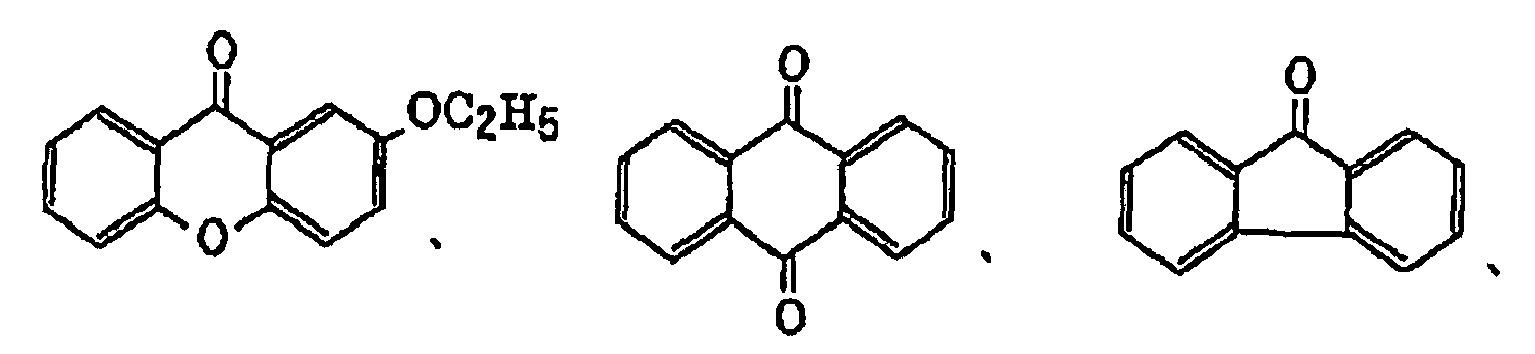


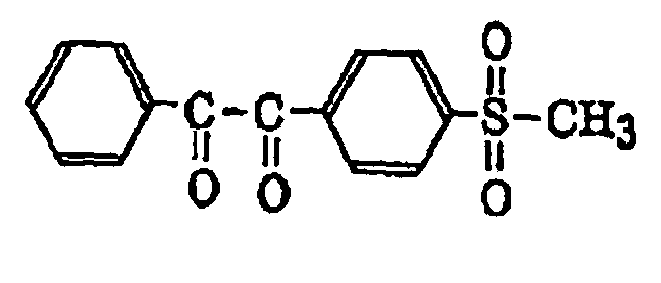
- Examples of the aromatic ketones (a) more preferably used herein are those listed below:
- α Thiobenzophenone compounds disclosed in Japanese Examined Patent Publication (hereunder referred to as "
J.P. KOKOKU") Sho 47-6416 J.P. KOKOKU Sho 47-3981 

- α -Substituted benzoin compounds disclosed in
J.P. KOKOKU Sho 47-22326 

- Benzoin derivatives disclosed in
J.P. KOKOKU Sho 47-23664 J.P. KOKAI Sho 57-30704 J.P. KOKOKU Sho 60-26483 

- Benzoin ethers disclosed in
J.P. KOKOKU Sho 60-26403 J.P. KOKAI Sho 62-81345 

- α -Amino-benzophenones disclosed in
J.P. KOKOKU Hei 1-34242 USP") No. 4,318,791 and European Patent (hereunder referred to as "EP") No. 0284561A1 such as those represented by the following chemical formulas:



- p-Di(dimethyl-aminobenzoyl) benzene disclosed in
J.P. KOKAI Hei 2-211452 
- Thio-substituted aromatic ketones disclosed in
J.P. KOKAI Sho 61-194062 


- Acyl-phosphine sulfides disclosed in
J.P. KOKOKU Hei 2-9597 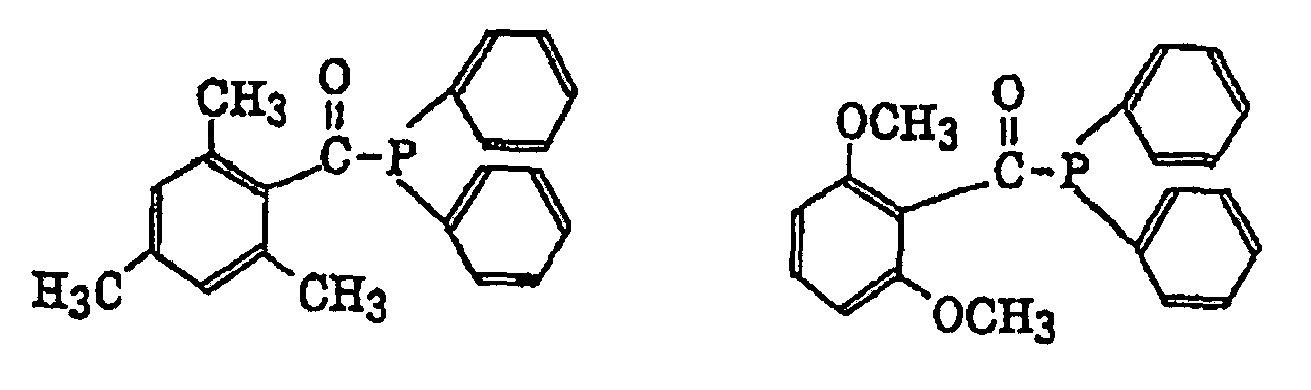
- Acyl-phosphines disclosed in
J.P. KOKOKU Hei 2-9596 
J.P. KOKOKU Sho 63-61950 J.P. KOKOKU Sho 59-42864 - Moreover, examples of the foregoing aromatic onium salts (b) as another origin of the initiator structures include aromatic onium salts with elements belonging to Groups V, VI and VII of Periodic Table such as N, P, As, Sb, Bi, O, S, Se, Te, or I. Examples of such aromatic onium salts include compounds disclosed in
J.P. KOKOKU Nos. Sho 52-14277 Sho 52-14278 Sho 52-14279 


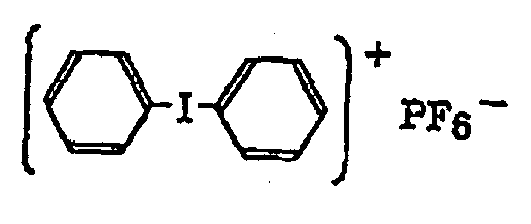

- Further examples likewise usable herein include, for instance, the following diazonium salts:
-


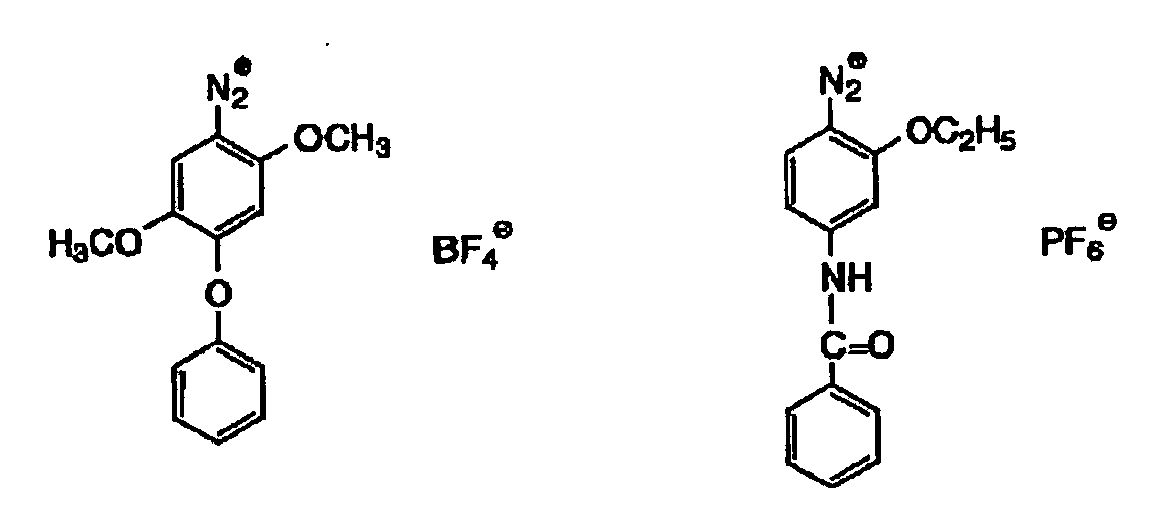


- The "organic peroxides" (c) as a further example of the polymerization initiator which can provide the initiator structure used in the present invention may include almost all of the organic compounds each having at least one oxygen-oxygen bond within the molecule and specific examples thereof are methyl ethyl ketone peroxide, cyclohexanone peroxide, 3,3,5-trimethyl-cyclohexanone peroxide, methyl-cyclohexanone peroxide, acetylacetone peroxide, 1,1-bis(t-butylperoxy)-3,3,5-trimethyl-cyclohexane, 1,1-bis(t-butyl-peroxy)-cyclohexane, 2,2-bis(t- butylperoxy)-butane, t-butyl-hydroperoxide, cumene hydroperoxide, di-isopropyl- benzene hydroperoxide, paramethane hydroperoxide, 2,5-dimethylhexane-2,5-di- hydroperoxide, 1,1,3,3-tetramethyl-butyl hydroperoxide, di-t-butyl peroxide, t-butyl-cumyl peroxide, di-cumyl peroxide, bis(t-butylperoxy-isopropyl) benzene, 2,5-dimethyl-2,5-di(t-butylperoxy) hexane, 2,5-xylenecarbonyl peroxide, succinic acid peroxide, benzoyl peroxide, 2,4-dichlorobenzoyl peroxide, m-toluoyl peroxide, diisopropyl-peroxy dicarbonate, di-2-ethylhexyl peroxy-dicarbonate, di-2-ethoxy- ethyl peroxy-dicarbonate, dimethoxy-isopropyl peroxy-dicarbonate, di-(3-methyl-3- methoxybutyl) peroxy-dicarbonate, t-butylperoxy acetate, t-butylperoxy pivalate, t-butylperoxy neodecanoate, t-butylperoxy octanoate, t-butylperoxy-3,5,5-trimethyl hexanoate, t-butylperoxy laurate, tertiary carbonate, 3,3',4,4'-tetra-(t-butylperoxy- carbonyl) benzophenone, 3,3',4,4'-tetra-(t-amylperoxy-carbonyl) benzophenone, 3,3',4,4'-tetra-(t-hexylperoxy-carbonyl) benzophenone, 3,3',4,4'-tetra-(t-octylperoxy- carbonyl) benzophenone, 3,3',4,4'-tetra-(cumylperoxy-carbonyl) benzophenone, 3,3',4,4'-tetra-(p-isopropyl-cumyl-peroxycarbonyl) benzophenone, carbonyl di-(t-butylperoxy-dihydrogen di-phthalate) and carbonyl di-(t-hexylperoxy-dihydrogen di-phthalate).
- Among them, preferably used herein are peroxy esters such as 3,3',4,4'-tetra- (t-butyl-peroxycarbonyl) benzophenone, 3,3',4,4'-tetra-(t-amylperoxy-carbonyl) benzophenone, 3,3',4,4'-tetra-(t-hexylperoxy-carbonyl) benzophenone, 3,3',4,4'-tetra-(t-octylperoxy-carbonyl) benzophenone, 3,3',4,4'-tetra-(cumylperoxy-carbonyl) benzophenone, 3,3',4,4'-tetra-(p-isopropyl-cumyl-peroxycarbonyl) benzophenone, and di-t-butyl di-peroxy isophthalate.
- The thio compounds (d) as polymerization initiators capable of providing the initiator structures used in the present invention are those represented by the following general formulas (II):
R20-NH-C(R21)=S or R20-N=C(R21)-SH (II)
(Wherein R20 represents an aryl or substituted aryl group, and R21 represents a hydrogen atom or an alkyl group, provided that R20 and R21 represent non-metal atomic groups capable of being bonded together to form a 5- to 7-membered ring which may comprise a hetero atom selected from oxygen, sulfur and nitrogen atoms). - The alkyl group present in the foregoing general formula (II) is preferably one having 1 to 4 carbon atoms. In addition, the aryl group is preferably one having 6 to 10 carbon atoms such as a phenyl or naphthyl group and the substituted aryl groups include, for instance, the foregoing aryl groups each substituted with a halogen atom, an alkyl group such as a methyl group, or an alkoxy group such as a methoxy or ethoxy group. R21 preferably represents an alkyl group having 1 to 4 carbon atoms. Specific examples of the thio compounds represented by the general formula (II) include those represented by the following compounds:
No. R20 R21 1 H H 2 H CH3 3 CH3 H 4 CH3 CH3 5 C6H5 C2H5 6 C6R6 C4H9 7 C6H4Cl CH3 8 C6H4Cl C4H9 9 C6H4-CH3 C4H9 10 C6H4-OCH3 CH3 11 C6H4-OCH3 C2H5 12 C6H4OC2H5 CH3 13 C6H4OC2H5 C2H5 14 C6H4OCH3 C4H9 15 
16 
17 -CH(CH3)-CH2-S- 18 -CH2-CH(CH3)-S- 19 -C(CH3)2-CH2-S- 20 -CH2-G(CH3)2-S- 21 
22 -CH(CH3)-CH2-O- 23 -C(CH3)2-CH2-O- 24 -CH=CH-N(CH3)- 25 -(CH2)3-S- 26 
27 
28 
29 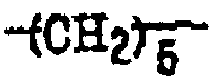
30 -N=C(SCH3)-S- 31 -C6H4-NH- 32 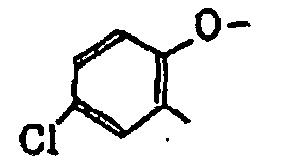
- The hexaaryl-biimidazole compounds (e) as further examples of the polymerization initiators capable of providing the initiator structures used in the present invention may be lophine dimers disclosed in
J.P. KOKOKU Nos. Sho 45-37377 Sho 44-86516 - The ketoxime ester compounds (f) as further examples of the polymerization initiators capable of providing the initiator structures used in the present invention may be, for instance, 3-benzoyloxy-iminobutan-2-one, 3-acetoxy-iminobutan-2-one, 3-propionyloxy-iminobutan-2-one, 2-acetoxyimino-pentan-3-one, 2-acetoxyimino-1- phenylpropan-1-one, 2-benzoyloxyimino-1-phenylpropan-1-one, 3-p-toluenesulfonyl-oxyiminobutan-2-one, and 2-ethoxycarbonyloxyimino-1-phenylpropan-1-one.
- Examples of the borate salts (g) as further examples of the polymerization initiators capable of providing the initiator structures used in the present invention include compounds represented by the following general formula (III):
R22-B·(R23)(R24)-R25 Z+ (III)
(Wherein R22, R23, R24 and R25 may be the same or different from one another and each independently represents a substituted or unsubstituted alkyl group, a substituted or unsubstituted aryl group, a substituted or unsubstituted alkenyl group, a substituted or unsubstituted alkynyl group, or a substituted or unsubstituted heterocyclic group, or at least two of these substituents R22, R23, R24 and R25 may be bonded together to form a ring-like structure, provided that at least one of these substituents R22, R23, R24 and R25 represents a substituted or unsubstituted alkyl group. Z+ represents an alkali metal cation or a quaternary ammonium cation). The alkyl groups represented by the foregoing substituents R22 to R25may be linear, branched or cyclic ones and preferably those having 1 to 18 carbon atoms. Specific examples thereof are methyl, ethyl, propyl, isopropyl, butyl, pentyl, hexyl, octyl, stearyl, cyclobutyl, cyclopentyl, and cyclohexyl groups. In addition, examples of the substituted alkyl groups are alkyl groups listed above which are substituted with the following substituents: halogen atoms (such as -Cl, and -Br), cyano group, nitro group, aryl groups (preferably phenyl group), hydroxyl group, the group represented by the following general formula: -N(R26)(R27) (wherein R26 and R27 each independently represents a hydrogen atom, an alkyl group having 1 to 14 carbon atoms or an aryl group), -COOR28 (wherein R28 represents a hydrogen atom, an alkyl group having 1 to 14 carbon atoms or an aryl group), -OCOR29 or -OR30 (wherein each of R29 and R30 represents an alkyl group having 1 to 14 carbon atoms or an aryl group). The aryl groups represented by R22 to R25 may be, for instance, monocyclic to tricyclic aryl groups such as phenyl and naphthyl groups and the substituted aryl groups may be, for instance, those described above which are substituted with substituents such as those listed above in connection with the substituted alkyl groups, or alkyl groups having 1 to 14 carbon atoms. The alkenyl groups represented by the foregoing substituents R22 to R25 may be linear, branched or cyclic ones having 2 to 18 carbon atoms and examples of substituents for the substituted alkenyl groups may be, for instance, those listed above in connection with the substituted alkyl groups. The alkynyl groups represented by the foregoing substituents R22 to R25may be linear or branched ones having 2 to 28 carbon atoms and examples of substituents for the substituted alkynyl groups may be, for instance, those listed above in connection with the substituted alkyl groups. The heterocyclic groups represented by the foregoing substituents R22 to R25 may be, for instance, 5-membered or higher heterocyclic groups each having at least one member selected from N, S and O and preferably 5- to 7-membered heterocyclic groups and these heterocyclic groups each may comprise a fused ring. Moreover, each of thee heterocyclic group may further comprise a substituent selected from those listed above in connection with the substituted aryl groups. Specific examples of the compounds represented by Formula (III) those disclosed inUSP Nos. 3,567,453 and4,343,891 andEP Nos. 109,772 109,773 






- The azinium compounds (h) as further examples of the polymerization initiators capable of providing the initiator structures used in the present invention include, for instance, a group of N-O bond-containing compounds disclosed in
J.P. KOKAI Nos. Sho 63-138345 Sho 63-142345 Sho 63-142346 63-143537 J.P. KOKOKU Sho 46-42363 - The metallocene compounds (i) as further examples of the polymerization initiators capable of providing the initiator structures include, for instance, titanocene compounds disclosed in
J.P. KOKAI Nos. Sho 59-152396 Sho 61-151197 Sho 63-41484 Hei 2-249 Hei 2-4705 J.P. KOKAI Nos. Hei 1-304453 Hei 1-152109 - Specific examples of the foregoing titanocene compounds include di-cyclopentadienyl-Ti-di-chloride, di-cyclopentadienyl-Ti-bis-phenyl, di-cyclopentadienyl-Ti-bis-2,3,4,5,6-pentafluorophen-1-yl, di-cyclopentadienyl-Ti-bis-2,3,5,6-tetrafluoro- phen-1-yl, di-cyclopentadienyl-Ti-bis-2,4,6-trifluorophen-1-yl, di-cyclopentadienyl-Ti-2,6-difluorophen-1-yl, di-cyclopentadienyl-Ti-bis-2,4-difluorophen-1-yl, dimethyl- cyclopentadienyl-Ti-bis-2,3,4,5,6-pentafluorophen-1-yl, dimethyl-cyclopentadienyl- Ti-bis-2,3,5,6-tetrafluorophen-1-yl, di-methyl-cyclopentadienyl-Ti-bis-2,4-diffuoro- phen-1-yl, bis(cyclopentadienyl)-bis[2,6-difluoro-3-(pyr-1-yl) phenyl] titanium, bis-(cyclopentadienyl)-bis[2,6-difluoro-3-(methyl-sulfonamide) phenyl] titanium, bis-(cyclopentadienyl)-bis[2,6-difluoro-3-(N-butyl-biaroyl-amino) phenyl] titanium, bis- (cyclopentadienyl)-bis[2,6-difluoro-3-(N-ethylacetyl-amino) phenyl] titanium, bis- (cydopentadienyl)-bis[2,6-difluoro-3-(N-methylacetyl-amino) phenyl] titanium, bis- (cyclopentadienyl)-bis[2,G-difluoro-3-(N-ethyl-propionyl-amino) phenyl] titanium, bis(cyclopentadienyl)-bis[2,6-difluoro-3-(N-ethyl-(2,2-dimethyl-butanoyl) amino) phenyl] titanium, bis(cyclopentadienyl)-bis[2,6-difluoro-3-(N-butyl-(2,2-dimethylbutanoyl) amino) phenyl] titanium, bis(cyclopentadienyl)-bis[2,6-difluoro-3-(N-pentyl-(2,2-dimethylbutanoyl) amino) phenyl] titanium, bis(cyclopentadienyl)-bis-[2,6-difluoro-3-(N-hexyl)-(2,2-dimethylbutanoyl) phenyl] titanium, bis(cyclopentadienyl)-bis[2,6-difluoro-3-(N-methyl-butyryl-amino) phenyl] titanium, bis(cyclopentadienyl)-bis[2,6-difluoro-3-(N-methyl-pentanoyl-amino) phenyl] titanium, bis-(cyclopentadienyl)-bis[2,6-difluoro-3-(N-ethylcyclohexyl-carbonylamino) phenyl] titanium, bis(cyclopentadienyl)-bis[2,6-difluoro-3-(N-ethyl-isobutyryl-amino) phenyl] titanium, bis(cyclopentadienyl)-bis[2,6-difluoro-3-(N-ethylacetyl-amino) phenyl] titanium, bis(cyclopentadienyl)-bis[2,6-difluoro-3-(2,2,5,5-tetramethyl-1,2,5-azadisilolidin-1-yl) phenyl] titanium, bis(cyclopentadienyl)-bis[2,6-difluoro-3-(octyl-sulfonamide) phenyl] titanium, bis(cyclopentadienyl)-bis[2,6-difluoro-3-(4- tolyl-sulfonamide) phenyl] titanium, bis(cyclopentadienyl)-bis[2,6-difluoro-3-(4- dodecylphenyl-sulfonamide) phenyl] titanium, bis(cyclopentadienyl)-bis[2,6-di- fluoro-3-(4-(1-pentylheptyl) phenyl-sulfonamide) phenyl] titanium, bis(cyclopentadienyl)-bis[2,6-difluoro-3-(ethyl-sulfonylamide) phenyl] titanium, bis(cyclopentadienyl)-bis[2,6-difluoro-3-((4-bromophenyl)-sulfonylamide) phenyl] titanium, bis-(cyclopentadienyl)-bis[2,6-difluoro-3-(2-naphthyl-sulfonylamide) phenyl] titanium, bis(cyclopentadienyl)-bis[2,6-diffuoro-3-(hexadecyl-sulfonylamide) phenyl] titanium, bis(cyclopentadienyl)-bis[2,6-difluoro-3-(N-methyl-(4-dodecylphenyl) sulfonylamide) phenyl] titanium, bis(cyclopentadienyl)-bis[2,6-difluoro-3-(N-methyl-4-(1-pentyl- heptyl) phenyl) sulfonylamide] titanium, bis(cyclopentadienyl)-bis[2,6-difluoro-3-(N-hexyl-(4-tolyl)-sulfonylamide) phenyl] titanium, bis(cyclopentadienyl)-bis[2,6-di- fluoro-3-(pyrrolidine-2,5-dion-1-yl) phenyl] titanium, bis(cyclopentadienyl)-bis[2,6-difluoro-3-(3,4-dimethyl-3-pyrrolidine-2,5-dion-1-yl) phenyl] titanium, bis(cyclopentadienyl)-bis[2,G-difluoro-3-(phthalimide) phenyl] titanium, bis(cyclopentadienyl)-bis[2,6-difluoro-3-(isobutoxy-carbonylamino) phenyl] titanium, bis(cyclopentadienyl)-bis[2,6-difluoro-3-(ethoxy-carbonylamino) phenyl] titanium, bis(cyclo- pentadienyl)-bis[2,6-difluoro-3-(2-chloroethoxy-carbonylamino) phenyl] titanium;
bis(cyclopentadienyl)-bis[2,6-difluoro-3-(phenoxy-carbonylamino) phenyl] titanium, bis(cyclopentadienyl)-bis[2,6-difuoro-3-(3-phenyl-thioureido) phenyl] titanium, bis(cyclopentadienyl)-bis[2,6-difluoro-3-(3-butyl-thioureido) phenyl] titanium, bis(cyclopentadienyl)-bis[2,6-difluoro-3-(3-phenylureido) phenyl] titanium, bis(cyclopentadienyl)-bis[2,6-difluoro-3-(3-butylureido) phenyl] titanium, bis(cyclo- pentadienyl)-bis[2,6-difluoro-3-(N,N-di-acetylamino) phenyl] titanium, bis(cyclo- pentadienyl)-bis[2,6-difluoro-3-(3,3-dimethylureido) phenyl] titanium, bis(cyclo- pentadienyl)-bis[2,6-difluoro-3-(acetylamino) phenyl] titanium, bis(cyclopenta- dienyl)-bis[2,6-difluoro-3-(butyryl-amino) phenyl] titanium, bis(cyclopentadienyl)- bis[2,6-difluoro-3-(decanoyl-amino) phenyl] titanium, bis(cyclopentadienyl)-bis[2,6- difluoro-3-(octadecanoyl-amino) phenyl] titanium, bis(cyclopentadienyl)-bis[2,6-di- fluoro-3-(isobutyryl-amino) phenyl] titanium, bis(cyclopentadienyl)-bis[2,6-difluoro- 3-(2-ethylhexanoylamino) phenyl] titanium, bis(cyclopentadienyl)-bis[2,6-difluoro- 3-(2-methylbutanoylamino) phenyl] titanium, bis(cyclopentadienyl)-bis[2,6-difluoro- 3-(pivaloylamino) phenyl] titanium, bis(cyclopentadienyl)-bis[2,6-difluoro- 3-(2,2-di- methyl-butanoylamino) phenyl] titanium, bis(cyclopentadienyl)-bis[2,6-difluoro-3-(2-ethyl-2-methylheptanoylamino) phenyl] titanium, bis(cyclopentadienyl)-bis[2,6- di-fluoro-3-(cyclohexyl-carbonylamino) phenyl] titanium, bis(cyclopentadienyl)-bis-[2,6-difluoro-3-(2,2-dimethyl-3-chloropropanoylamino) phenyl] titanium, bis(cyclopentadienyl)-bis[2,6-difluoro-3-(3-phenylpropanoylamino) phenyl] titanium, bis-(cyclopentadienyl)-bis[2,6-difluoro-3-(2-chloromethyl-2-methyl-3-chloropropanoylamino) phenyl] titanium, bis(cyclopentadienyl)-bis[2,6-difluoro-3-(3,4-xyloylamino) phenyl] titanium, bis(cyclopentadienyl)-bis[2,6-difluoro-3-(4-ethylbenzoylamino) phenyl] titanium, bis(cyclopentadienyl)-bis[2,6-difluoro-3-(2,4,6-mesitylcarbonyl- amino) phenyl] titanium, bis(cyclopentadienyl)-bis[2,G-difluoro-3-(benzoylamino) phenyl] titanium, bis(cyclopentadienyl)-bis[2,6-dinuoro-3-(N-(3-phenylpropyl) benzoylamino) phenyl]titanium, bis(cyclopentadienyl)-bis[2,6-difluoro-3-(N-(3-ethyl-heptyl)-2,2-dimethyl-pentanoylamino) phenyl] titanium, bis(cyclopentadienyl)-bis[2,6-difluoro-3-(N-isobutyl-(4-toluyl) amino) phenyl] titanium, bis(cyclopentadienyl)-bis[2,6-difluoro-3-(N-isobutyl-benzoylamino) phenyl] titanium, bis-(cyclopentadienyl)-bis[2,6-difluoro-3-(N-cyclohexyl-methyl-pivaloylamino) phenyl] titanium, bis(eyclopentadienyl)-bis[2,6-difluoro-3-(N-(oxolan-2-ylmethyl) benzoylamino) phenyl] titanium, bis(cyclopentadienyl)-bis[2,6-difluoro-3-(N-(3-ethylheptyl)-2,2-dimethyl-butanoylamino) phenyl] titanium, bis(cyclopentadienyl)-bis-[2,6-difluoro-3-(N-(3-phenylpropyl-(4-toluylamino) phenyl] titanium, bis(cyclopenta- dienyl)-bis[2,6-difluoro-3-(N-(oxolan-2-ylmethyl)-(4-toluyl) amino) phenyl] titanium, bis(cyclopentadienyl)-bis[2,6-difluoro-3-(N-(4-toluylmethyl) benzoylamino) phenyl] titanium,
bis(cyclopentadienyl)-bis[2,6-difluoro-3-(N-(4-toluylmethyl)-(4-toluyl) amino) phenyl] titanium, bis(cyclopentadienyl)-bis[2,6-difluoro-3-(N-butyl-benzoylamino) phenyl] titanium, bis(cyclopentadienyl)-bis[2,6-difluoro-3-(N-butyl-(4-toluyl) amino) phenyl] titanium, bis(cyclopentadienyl)-bis[2,6-difluoro-3-(N-hexyl-(4-toluyl) amino) phenyl] titanium, bis(cyclopentadienyl)-bis[2,6-difluoro-3-(N-(2,4-dimethylpentyl)-2,2-dimethyl-butanoylamino) phenyl] titanium, bis(cyclopentadienyl)-bis[2,6-difluoro-3-(2,4-dimethylpentyl)-2,2-dimethyl-pentanoylamino) phenyl] titanium, bis- (cyclopentadienyl)-bis[2,6-difluoro-3-((4-toluyl) amino) phenyl] titanium, bis(cyclo- pentadienyl)-bis[2,6-difluoro-3-(2,2-dimethyl-pentanoylamino) phenyl] titanium,
bis(cyclopentadienyl)-bis[2,6-difluoro-3-(2,2-dimethyl-3-ethoxy-propanoylamino) phenyl] titanium, bis(cyclopentadienyl)-bis[2,6-difluoro-3-(2,2-dimethyl-3-allyloxy-propanoyl-amino) phenyl] titanium, bis(cyclopentadienyl)-bis[2,6-difluoro-3-(N-allyl-acetylamino) phenyl] titanium, bis(cyclopentadienyl)-bis[2,6-difluoro-3-(2-ethyl-butanoylamino) phenyl] titanium, bis(cyclopentadienyl)-bis[2,6-difluoro-3-(N- cyclohexylmethyl-benzoylamino) phenyl] titanium, bis(cyclopentadienyl)-bis[2,6-difluoro-3-(N-cydohexylmethyl-(4-toluyl) amino) phenyl] titanium, bis(cyclopentadienyl)-bis[2,6-difluoro-3-(N-(2-ethylhexyl) benzoylamino) phenyl] titanium, bis-(cyclopentadienyl)-bis[2,6-difluoro-3-(N-isopropyl-benzoylamino) phenyl] titanium, bis(cyclopentadienyl)-bis[2,6-difluoro-3-(N-(3-phenylpropyl)-2,2-dimethylpentano yl-amino) phenyl] titanium, bis(cyclopentadienyl)-bis[2,6-difluoro-3-(N-hexyl-benzoyl- amino) phenyl] titanium, bis(cyclopentadienyl)-bis[2,6-difluoro-3-(N-cyclohexylmethyl)-(2,2-dimethyl-pentanoylamino) phenyl] titanium, bis(cyclopentadienyl)-bis- [2,6-difluoro-3-(N-butyl-benzoylamino) phenyl] titanium, bis(cyclopentadienyl)-bis-[2,6-difluoro-3-(N-(2-ethylhexyl)-(2,2-dimethyl-pentanoyl) amino) phenyl] titanium,
bis(cyclopentadienyl)-bis-[2,6-difluoro-3-(N-hexyl-2,2-dimethyl-pentanoyl-amino) phenyl] titanium, bis(cyclopentadienyl)-bis[2,6-difluoro-3-(N-isopropyl-2,2-dimethyl-pentanoyl-amino) phenyl] titanium, bis(cyclopentadienyl)-bis[2,6-difluoro-3-(N-(3-phneylpropyl) pivaloylamino) phenyl] titanium, bis(cyclopentadienyl)-bis-[2,6-difluoro-3-(N-butyl-2,2-dimethylpentanoylamino) phenyl] titanium, bis(cyclopentadienyl)-bis-[2,6-difluoro-3-(N-(2-methoxyethyl) benzoylamino) phenyl] titanium, bis(cyclopentadienyl)-bis[2,6-difluoro-3-(N-benzyl-benzoylamino) phenyl] titanium, bis(cyclopentadienyl)-bis[2,6-difluoro-3-(N-benzyl-(4-toluyl) amino) phenyl] titanium, bis(cyclopentadienyl)-bis[2,6-difluoro-3-(N-(2-methoxyethyl)-(4- toluyl) amino) phenyl] titanium, bis(cyclopentadienyl)-bis[2,6-difluoro-3-(N-(4-methylphenyl-methyl)-2,2-dimethyl-pentanoylamino) phenyl] titanium, bis(cyclopentadienyl)-bis-[2,6-difluoro-3-(N-(2-methoxyethyl)-2,2-dimethyl-pentanoylamin o) phenyl] titanium, bis(cyclopentadienyl)-bis[2,6-difluoro-3-(N-cyclohexylmethyl-(2-ethyl-2-methylheptanoyl) amino) phenyl] titanium,
bis(cyclopentadienyl)-bis[2,6-difluoro-3-(N-butyl-(4-chlorobenzoyl) amino) phenyl] titanium, bis(cyclopentadienyl)-bis[2,6-difluoro-3-(N-hexyl-(2-ethyl-2-methyl-butanoyl) amino) phenyl] titanium, bis(cyclopentadienyl)-bis[2,6-difluoro-3-(N-cyclohexyl-2,2-dimethylpentanoyl) amino) phenyl] titanium, bis(cyclopentadienyl)-bis(2,6-difluoro-3-(N-(oxolan-2-ylmethyl)-2,2-dimethylpentanoyl) amino) phenyl] titanium, bis(cyclopentadienyl)-bis[2,6-difluoro-3-(N-cyclohexyl-(4-chlorobenzoyl) amino) phenyl] titanium, bis(cyclopentadienyl)-bis[2,6-difluoro-3-(N-cyclo- hexyl-(2-chlorobenzoyl) amino) phenyl] titanium, bis(cyclopentadienyl)-bis[2,6-difluoro-3-(3,3-dimethyl-2-azetidinon-1-yl) phenyl] titanium, bis(cyclopentadienyl)-bis [2,6-difluoro-3-(isocyanate) phenyl] titanium, bis(cyclopentadienyl)-bis[2,6-difluoro- 3-(N-ethyl-(4-tolylsulfonyl) amino) phenyl] titanium, bis(cyclopentadienyl)-bis[2,6- difluoro-3-(N-hexyl-(4-tolylsulfonyl) amino) phenyl] titanium, bis(cyclopentadienyl)-bis[2,6-difluoro-3-(N-butyl-(4-tolylsulfonyl) amino) phenyl] titanium, bis(cyclopenta- dienyl)-bis[2,6-difluoro-3-(N-isobutyl-(4-tolylsulfonyl) amino) phenyl] titanium, bis-(cyclopenta-dienyl)-bis[2,6-difluoro-3-(N-butyl-(2,2-dimethyl-3-chloro-propanoyl) amino) phenyl] titanium, bis(cyclopentadienyl)-bis[2,6-difluoro-3-(N-(3-phenylpropanoyl)-2,2-dimethyl-3-chloropropanoyl) amino) phenyl] titanium, bis(cyclopenta-dienyl)-bis[2,6-di-fluoro-3-(N-cyclohexyl-methyl-(2,2-di-methyl-3-chloropropanoyl) amino) phenyl] titanium, bis(cyclopentadienyl)-bis[2,6-difluoro-3-(N-isobutyl-(2,2-dimethyl-3-chloropropanoyl) amino) phenyl] titanium, bis(cyclopentadienyl)-bis[2,6-difluoro-3-(N-butyl-(2-chloromethyl-2-methyl-3-chloropropanoyl) amino) phenyl] titanium, bis(cyclopentaclienyl)-bis[2,6-clifluoro-3-(butyl-thio-carbonylamino) phenyl] titanium, bis(cyclopentadienyl)-bis[2,6-difluoro-3-(phenyl- thio-carbonylamino) phenyl] titanium, bis(cyclopentadienyl)-bis[2,6-difluoro-3-iso- cyanato-phenyl] titanium, bis(cyclopentadienyl)-bis[2,6-difluoro-3-(N-ethyl-(4-tolyl- sulfonyl) amino) phenyl] titanium, bis(cyclopentadienyl)-bis[2,6-difluoro-3-(N-hexyl- (4-tolylsulfonyl) amino) phenyl] titanium, bis(cyclopentadienyl)-bis[2,6-difluoro-3-(N-butyl-(4-tolylsulfonyl) amino) phenyl] titanium, bis(cyclopentadienyl)-bis[2,6-di- fluoro-3-(N-isobutyl-(4-tolylsulfonyl) amino) phenyl] titanium, bis(cyclopentadienyl)-bis[2,6-difluoro-3-(N-butyl-(2,2-di-methyl-3-chloropropanoyl) amino) phenyl] titanium, bis(cyclopentadienyl)-bis[2,6-difluoro-3-(N-(3-phenylpropanoyl)-2,2-dimethyl-3-chloropropanoyl) amino) phenyl] titanium, bis(cyclopentadienyl)-bis[2,6-difluoro-3-(N-cyclohexyl-methyl-(2,2-dimethyl-3-chloropropanoyl) amino) phenyl] titanium, bis(cyclo-pentadienyl)-bis[2,6-di-fluoro-3-(N-isobutyl-(2,2-dimethyl-3-chloro-propanoyl) amino) phenyl] titanium, bis(cyclopentadienyl)-bis[2,6-difluoro-3-(N-butyl-(2-chloromethyl-2-methyl-3-chloro-propanoyl) amino) phenyl] titanium, bis(cyclopentadienyl)-bis[2,6-difluoro-3-(butylthio-carbonylamino) phenyl] titanium, bis(cyclopentadienyl)-bis[2,6-difluoro-3-(phenylthio-carbonylamino) phenyl] titanium,
bis(methyl-cyclopentadienyl)-bis[2,6-difluoro-3-(N-hexyl-2,2-dimethyl-butanoyl) phenyl] amino] titanium, bis(methyl-cyclopentadienyl)-bis[2,6-difluoro-3-(N-hexyl-2,2-dimethyl-pentanoylamino) phenyl] titanium, bis(methyl-cyclopentadienyl)-bis- [2,6-difluoro-3-(N-ethyl-acetylamino) phenyl] titanium, bis(methyl-cyclopentadienyl)-bis[2,6-diffuoro-3-(N-ethyl-propionyl-amino) phenyl] titanium, bis(trimethylsilyl-pentadienyl)-bis[2,6-clifluoro-3-(N-butyl-2,2-dimethyl-propanoylamino ) phenyl] titanium, bis(cyclopentadienyl)-bis[2,6-difluoro-3-(N-(2-methoxyethyl)-trimethylsilyl-amino) phenyl] titanium, bis(cyclopentadienyl)-bis[2,6-difluoro-3-(N-butyl-hexyl-dimethylsilyl-amino) phenyl] titanium, bis(cyclopentadienyl)-bis[2,6-di- fluoro-3-(N-ethyl-(1,1,2-trimethylpropyl) dimethylsilyl-amino) phenyl] titanium, bis(cyclo-pentadienyl)-bis[2,6-diuuoro-3-(3-ethoxy-methyl-3-methyl-2-azetidinon-1- yl) phenyl] titanium, bis(cyclopentadienyl)-bis[2,6-difluoro-3-(3-allyloxy-methyl-3-methyl-2-azetidinon-1-yl) phenyl] titanium, bis(cyclopentadienyl)-bis[2,6-difluoro-3-(3-chloromethyl-3-methyl-2-azetidinon-1-yl) phenyl] titanium, bis(cyclopentadienyl)-bis[2,6-difluoro-3-(N-benzyl-2,2-dimethyl-propanoyl-amino) phenyl] titanium,
bis(cyclopentadienyl)-bis[2,6-difluoro-3-(5,5-dimethyl-2-pyrrolidinon-1-yl) phenyl] titanium, bis(cyclopentadienyl)-bis[2,6-difluoro-3-(6,6-diphenyl-2-piperidinon-1-yl) phenyl] titanium, bis(cyclopentadienyl)-bis[2,6-difluoro-3-(N-(2,3-dihydro-1,2-benzothiazol-3-one-(1,1-dioxide)-2-yl) phenyl] titanium, bis(cyclopenta- dienyl)-bis[2,6-difluoro-3-(N-hexyl-(4-chlorobenzoyl) amino) phenyl] titanium, bis-(cyclopentadienyl)-bis[2,6-difluoro-3-(N-hexyl-(2-chlorobenzoyl) amino) phenyl] titanium, bis(cyclopentadienyl)-bis[2,6-difluoro-3-(N-isopropyl-(4-chlorobenzoyl) amino) phenyl] titanium, bis(cyclopentadienyl)-bis[2,6-difluoro-3-(N-(4-methylphenylmethyl)-(4-chlorobenzoyl) amino) phenyl] titanium, bis(cyclopentadienyl)-bis[2,6-difluoro-3-(N-(4-methyl-phenylmethyl)-(2-chlorobenzoyl) amino) phenyl] titanium, bis(cyclopentadienyl)-bis[2,6-difluoro-3-(N-butyl-(4-chlorobenzoyl) amino) phenyl] titanium, bis(cyclopentadienyl)-bis[2,6-difluoro-3-(N-benzyl-2,2-dimethyl- pentanoyl-amino) phenyl] titanium, bis(cyclopentadienyl)-bis(2,6-difluoro-3-(N-(2-ethylhexyl)-4-tolylsulfonyl) amino) phenyl] titanium, bis(cyclopentadienyl)-bis[2,6- difluoro-3-(N-(3-oxaheptyl) benzoylamino) phenyl] titanium, bis(cyclopentadienyl)- bis[2,6-difluoro-3-(N-(3,6-dioxadecyl) benzoylamino) phenyl] titanium, bis(cyclopentadienyl)-bis[2,6-difluoro-3-(trifluoromethyl-sulfonyl) amino) phenyl] titanium, bis(cyclopentadienyl)-bis[2,6-difluoro-3-(trifluoro-acetylamino) phenyl] titanium, bis(cyclopentadienyl)-bis[2,6-difluoro-3-(2-chlorobenzoyl) amino) phenyl] titanium, bis(cyclopentadienyl)-bis[2,6-difluoro-3-(4-chlorobenzoyl) amino) phenyl] titanium, bis(cyclopentadienyl)-bis[2,6-difluoro-3-(N-(3,6-dioxadecyl)-2,2-dimethylpentanoyl amino) phenyl] titanium, bis(cyclopentadienyl)-bis[2,6-difluoro-3-(N-(3,7-dimethyl- 7-methoxy-octyl) benzoylamino) phenyl] titanium, and bis(cyclopentadienyl)-bis-[2,6-difluoro-3-(N-cyclohexyl-benzoylamino) phenyl] titanium. - The activated ester compounds (j) as further examples of the polymerization initiators capable of providing the initiator structures used herein include, for instance, imidosulfonate compounds disclosed in
J.P. KOKOKU Sho 62-6223 J.P. KOKOKU Sho 63-14340 J.P. KOKAI Sho 59-174831 - The carbon-halogen bond-containing compounds (k) as further examples of the polymerization initiators capable of providing the initiator structures preferably used herein include, for instance, those represented by the following general formulas (IV) to (X):


General Formula (VI)
R34-Z2-CH(2·m)(X3)mR35 (VI)
(In the formula (VI), R34 represents an aryl or substituted aryl group; R35 represents a halogen atom or a group represented by the following formula:


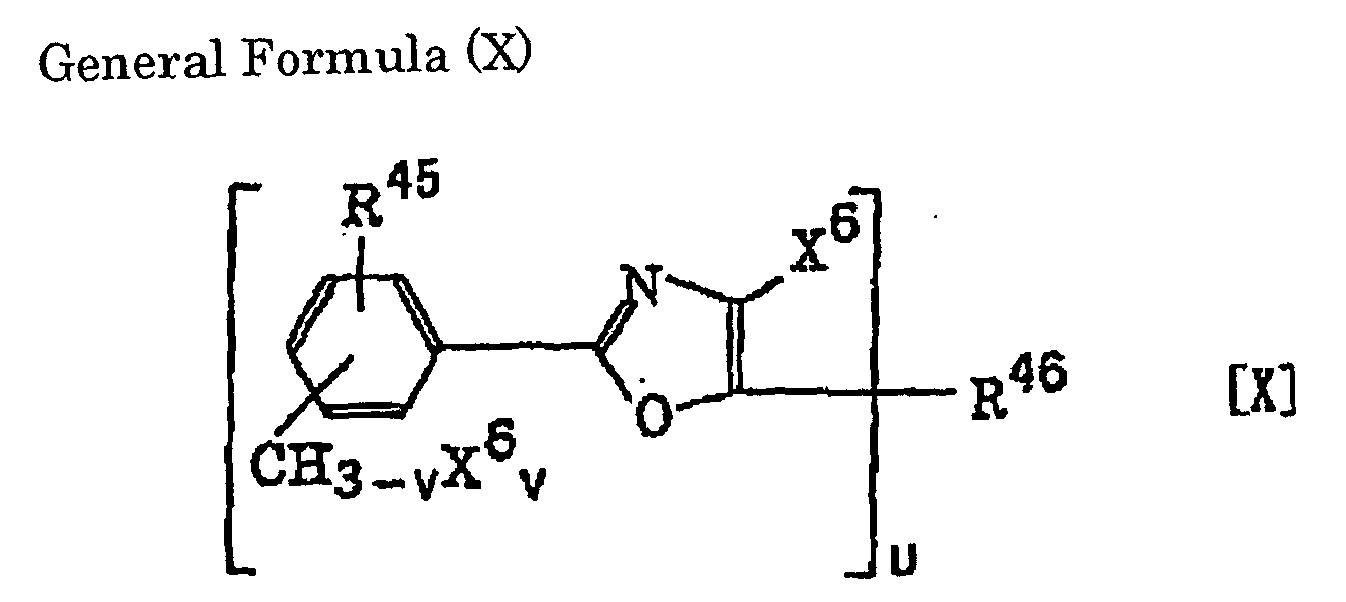
- Specific examples of such carbon-halogen bond-containing compounds include compounds disclosed in WAKABAYASHI et al., Bull. Chem. Soc. Japan, 1969, 42:2924 such as 2-phenyl-4,6-bis(trichloromethyl)-S-triazine, 2-(p-chlorophenyl)-4,6-bis(trichloromethyl)-S-triazine, 2-(p-tolyl)-4,6-bis(trichloromethyl)-S-triazine, 2-(p-methoxyphenyl)-4,6-bis(trichloromethyl)-S-triazine, 2-(2',4'-dichlorophenyl)-4,6-bis(trichloromethyl)-S-triazine, 2,4,6-tris(trichloromethyl)-S-triazine, 2- methyl-4,6-bis(trichloromethyl)-S-triazine, 2-n-nonyl-4,6-bis(trichloromethyl)-S-tri- azine and 2-( α , α, β -trichloroethyl)-4,6-bis(trichloromethyl)-S-triazine. Specific examples thereof further include compounds disclosed in British Patent (hereunder referred to as "GBP")
No. 1,388,492 J.P. KOKAI Sho 53-133428 No. 3,337,024 such as those represented by the following chemical formulas:


- Examples of the compounds (k) likewise include those disclosed in F.C. Schaefer et al., J. Org. Chem., 1964, 29:1527 such as 2-methyl-4,6-bis(tribromomethyl)-S-triazine, 2,4,6-tris(tribromomethyl)-S-triazine, 2,4,6-tris(di-bromomethyl)-S-triazine, 2-amino-4-methyl-6-tribromomethyl-S-triazine and 2-methoxy- 4-methyl-6-trichloromethyl-S-triazine. Further, examples of the compounds (k) also include those disclosed in
J.P. KOKAI Sho 62-58241 


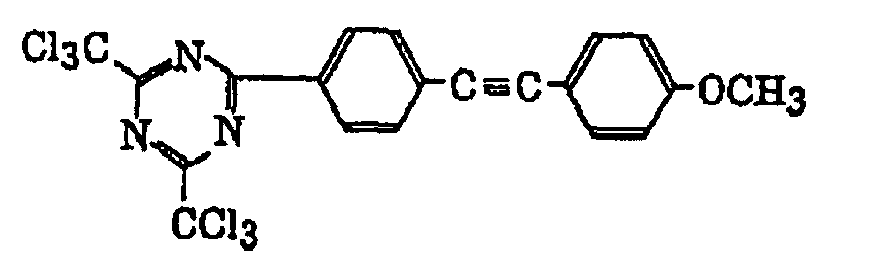


- Examples of the compounds (k) likewise include those disclosed in
J.P. KOKAI Hei 5-281728 

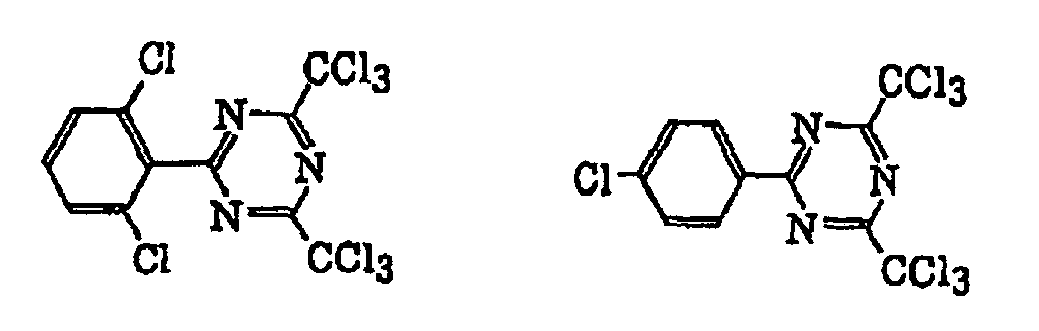

- Examples of the compounds (k) likewise include a group of the following compounds which can easily be prepared by one of ordinary skill in the art according to the synthetic method disclosed by M.P. Hutt, E.F. Elslager and L.M. Herbel et al. in "Journal of Heterocyclic Chemistry", 1970, Vol. 7 (No. 3), infra p. 511:


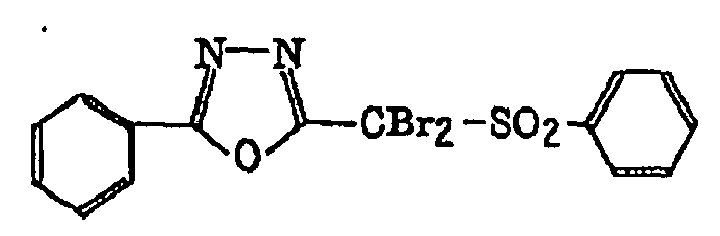


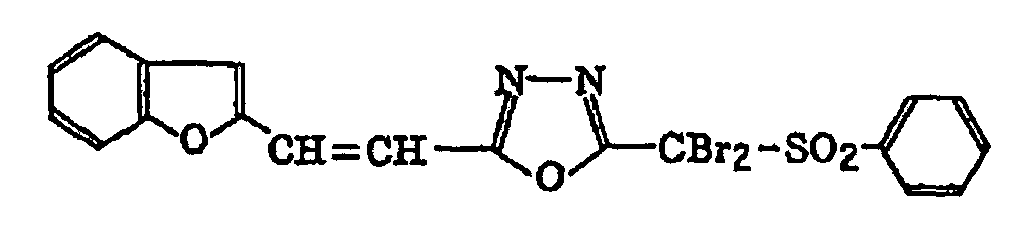
- Examples of the compounds (k) likewise include those disclosed in GP No. 2,641,100 such as 4-(4-methoxy-styryl)-6-(3,3,3-trichloropropenyl)-2-pyrone and 4-(3,4,5-trimethoxy-styryl)-6-trichloromethyl-2-pyrone, or compounds disclosed in GP No. 3,333,450 such as those represented by the following general formulas:

Table 2 R42 M L q (C(X4)3)r 1 C2H5 1,2-phenylene H 1 4-CCl3 2 CH2C6H5 1,2-phenylene H 1 4-CCl3 3 C2H5 1,2-phenylene H 1 3-CCl3 4 C2H5 1,2-phenylene H 1 4-CF3 5 C2H5 5-CH3-1,2-phenylene H 0 CCl3 6 CH2C6H5 1,2-phenylene H 0 CCl3 7 C2H4OCH3 1,2-phenylene H 1 4-CCl3 - Moreover, examples of the compounds (k) likewise include a groups of compounds disclosed in GP No. 3,021590 such as those represented by the following general formula:

R47 X7 1 
Cl 2 
Cl 3 
Cl 

- Examples of the compounds (k) likewise include a groups of compounds disclosed in GP No. 3,021,599 such as those represented by the following chemical formula:


- Examples of the polymerization initiators having the structures represented by Formula (I) more preferably used in the present invention are those capable of generating radicals by the action of laser light beams whose wavelength falls within the range of from 300 nm to 1200 nm. Examples of the polymerization initiators further preferably used herein are compounds having, as skeletal structures, those derived from (a) aromatic ketones, (b) aromatic onium salts, (c) organic peroxides, (e) hexaaryl-biimidazoles, (i) metallocene compounds and (k) carbon-halogen bond- containing compounds. Moreover, examples of polymerization initiators most preferably used herein are aromatic iodonium salts, aromatic diazonium salts, titanocene compounds, and trihalomethyl-S-triazine compounds represented by Formula (IV).
- Then, specific examples of the polymerization initiators having the structures represented by Formula (I) will be given below:
Group A (A-1)-(A-40) 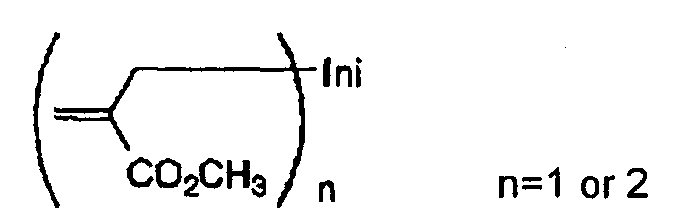
Compound No. Ini A-1 
A-2 
A-3 
A-4 
A-5 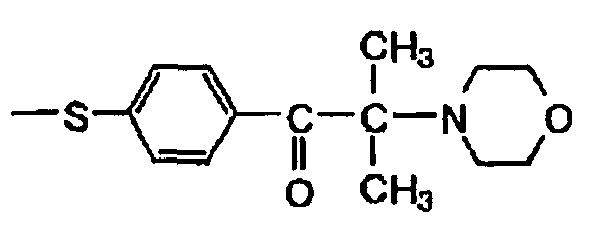
A-6 
A-7 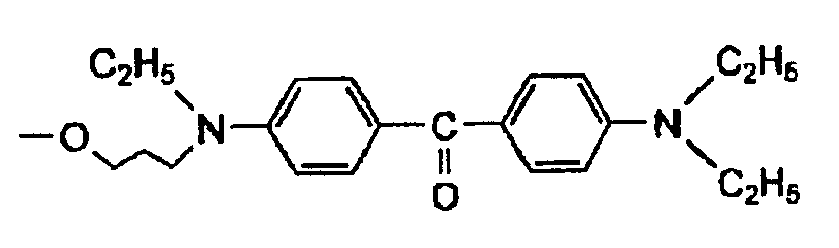
A-8 
A-9 
A-10 
A-11 
A-12 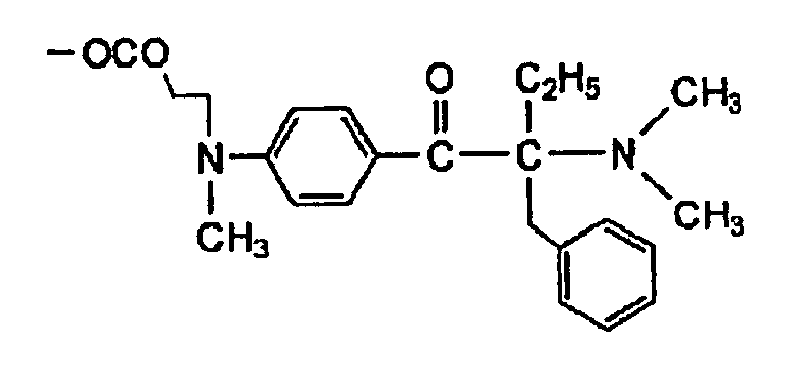
A-13 
A-14 
A-15 
A-16 
A-17 
A-18 
A-19 
A-20 
A-21 
A-22 
A-23 
A-24 
A-25 
A-26 
A-27 
A-28 
A-29 
A-30 
A-31 
A-32 
A-33 
A-34 
A-35 
A-36 
A-37 
A-38 
A-39 
A-40 
Group B (B-1)-(B-40) 
Compound No. Ini B-1 
B-2 
B-3 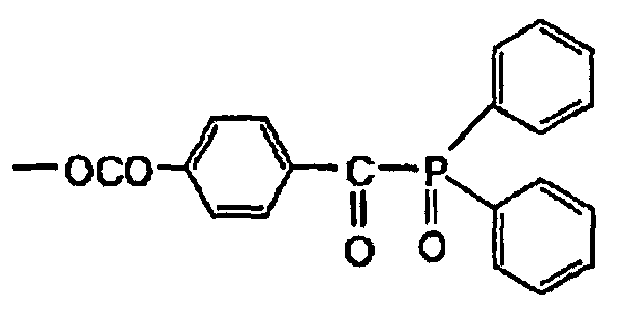
B-4 
B-5 
B-6 
B-7 
B-8 
B-9 
B-10 
B-11 
B-12 
B-13 
B-14 
B-15 
B-16 
B-17 
B-18 
B-19 
B-20 
B-21 
B-22 
B-23 
B-24 
B-25 
B-26 
B-27 
B-28 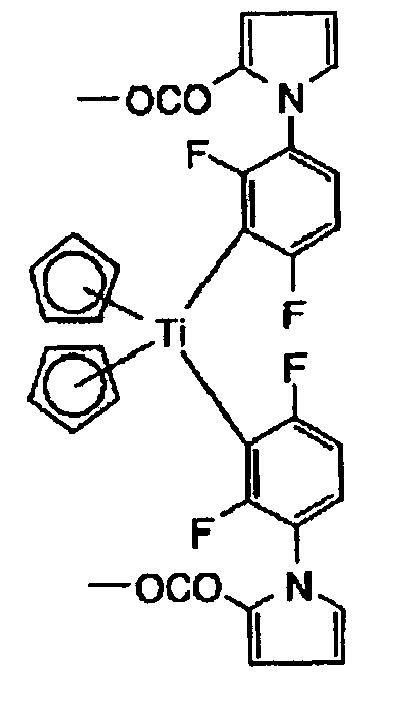
B-29 
B-30 
B-31 
B-32 
B-33 
B-34 
B-35 
B-36 
B-37 
B-38 
B-39 
B-40 
Group C (C-1)-(C-40) 
Compound No. Ini C-1 
C-2 
C-3 
C-4 
C-5 
C-6 
C-7 
C-8 
C-9 
C-10 
C-11 
C-12 
C-13 
C-14 
C-15 
C-16 
C-17 
C-18 
C-19 
C-20 
C-21 
C-22 
C-23 
C-24 
C-25 
C-26 
C-27 
C-28 
C-29 
C-30 
C-31 
C-32 
C-33 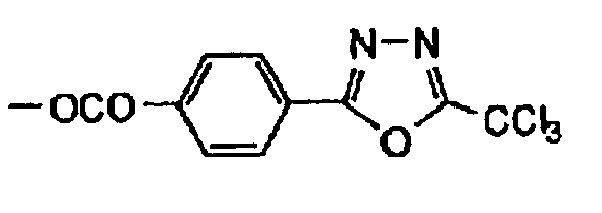
C-34 
C-35 
C-36 
C-37 
C-38 
C-39 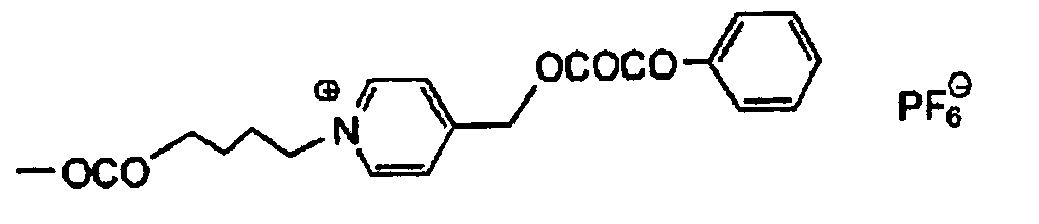
C-40 
Group D (D-1)-(D-40) 
Compound No. Ini D-1 
D-2 
D-3 
D-4 
D-5 
D-6 
D-7 
D-8 
D-9 
D-10 
D-11 
D-12 
D-13 
D-14 
D-15 
D-16 
D-17 
D-18 
D-19 
D-20 
D-21 
D-22 
D-23 
D-24 
D-25 
D-26 
D-27 
D-28 
D-29 
D-30 
D-31 
D-32 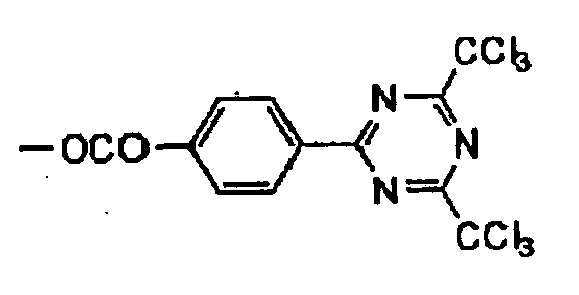
D-33 
D-34 
D-35 
D-36 
D-37 
D-38 
D-39 
D-40 
Group E (E-1)-(E-40) 
Compound No. Ini E-1 
E-2 
E-3 
E-4 
E-5 
E-6 
E-7 
E-8 
E-9 
E-10 
E-11 
E-12 
E-13 
E-14 
E-15 
E-16 
E-17 
E-18 
E-19 
E-20 
E-21 
E-22 
E-23 
E-24 
E-25 
E-26 
E-27 
E-28 
E-29 
E-30 
E-31 
E-32 
E-33 
E-34 
E-35 
E-36 
E-37 
E-38 
E-39 
E-40 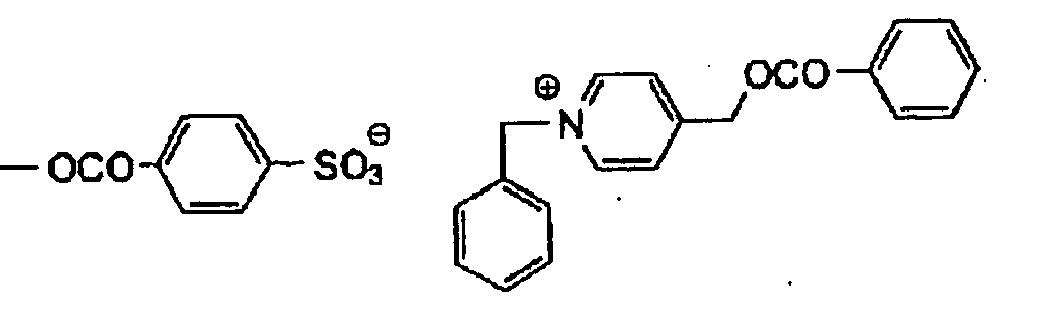
Group F (F-1)-(F-40) 
Compound No. Ini F-1 
F-2 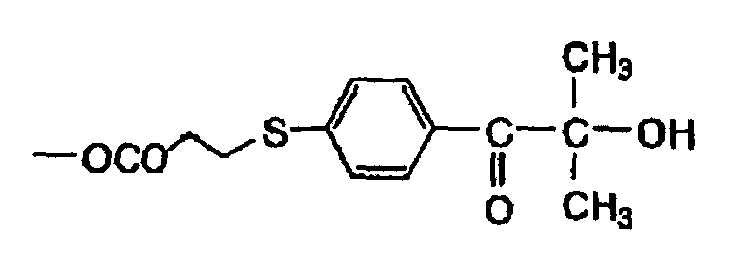
F-3 
F-4 
F-5 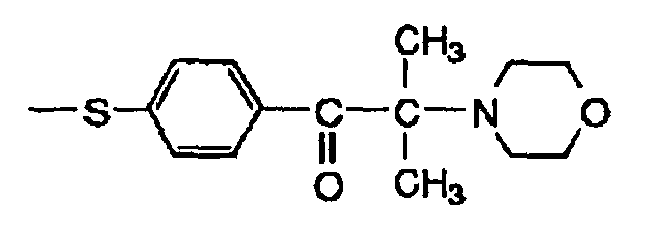
F-6 
F-7 
F-8 
F-9 
F-10 
F-11 
F-12 
F-13 
F-14 
F-15 
F-16 
F-17 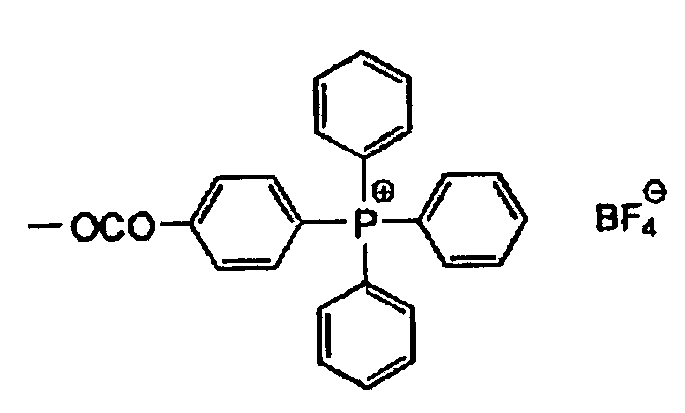
F-18 
F-19 
F-20 
F-21 
F-22 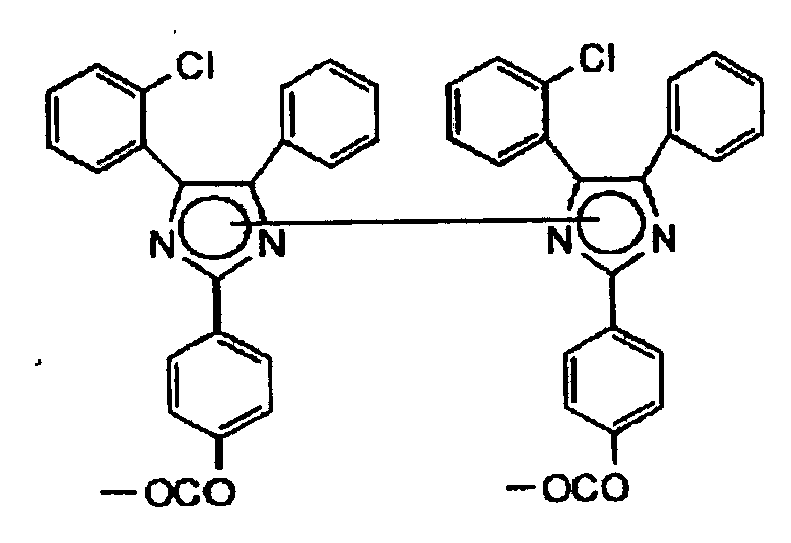
F-23 
F-24 
F-25 
F-26 
F-27 
F-28 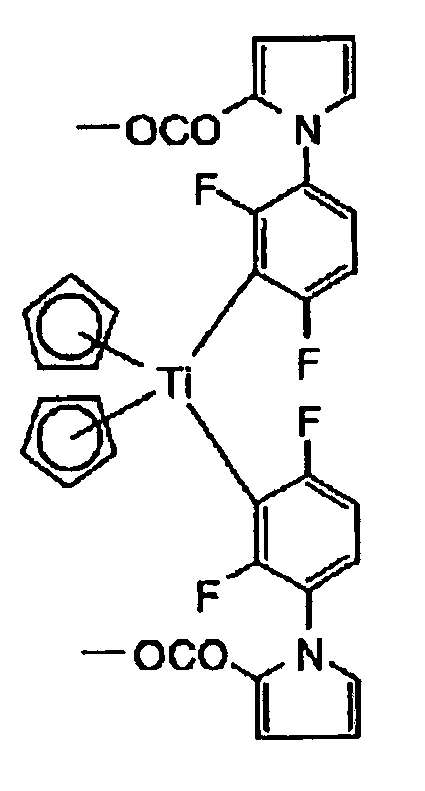
F-29 
F-30 
F-31 
F-32 
F-33 
F-34 
F-35 
F-36 
F-37 
F-38 
F-39 
F-40 
Group G (G-1)-(G-40) 
Compound No. Ini G-1 
G-2 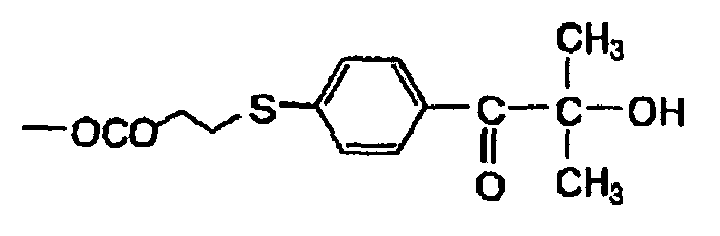
G-3 
G-4 
G-5 
G-6 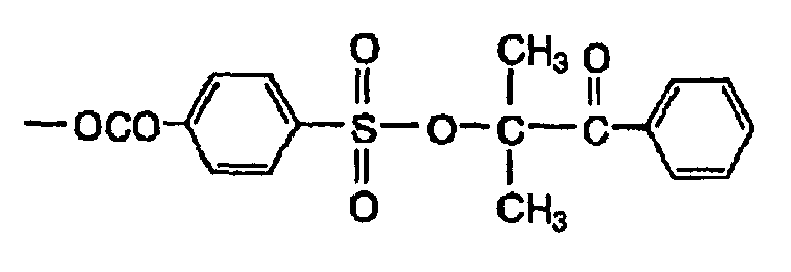
G-7 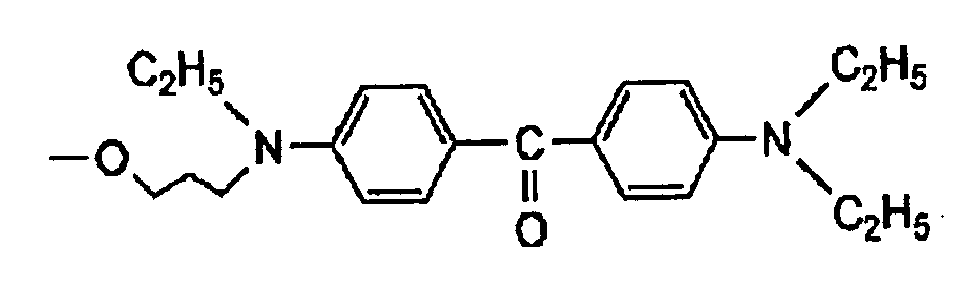
G-8 
G-9 
G-10 
G-11 
G-12 
G-13 
G-14 
G-15 
G-16 
G-17 
G-18 
G-19 
G-20 
G-21 
G-22 
G-23 
G-24 
G-25 
G-26 
G-27 
G-28 
G-29 
G-30 
G-31 
G-32 
G-33 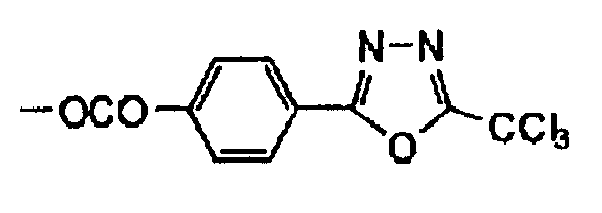
G-34 
G-35 
G-36 
G-37 
G-38 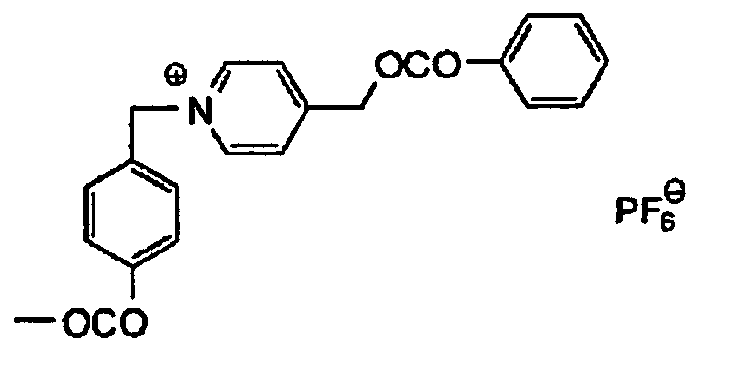
G-39 
G-40 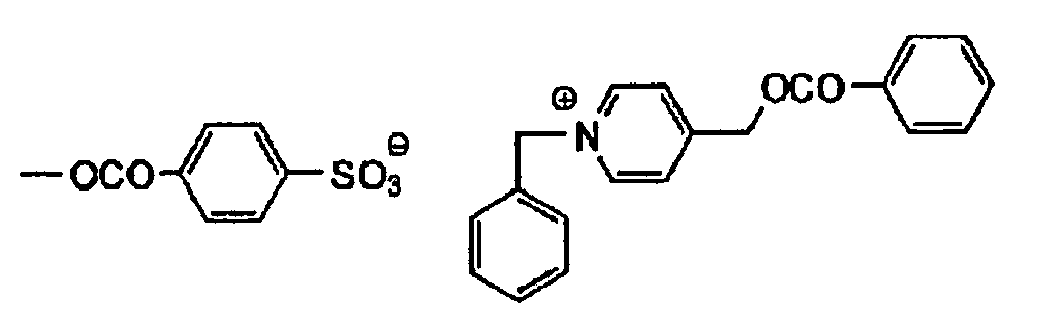
Group H (H-1-(H-40) 
Compound No. Ini H-1 
H-2 
H-3 
H-4 
H-5 
H-6 
H-7 
H-8 
H-9 
H-10 
H-11 
H-12 
H-13 
H-14 
H-15 
H-16 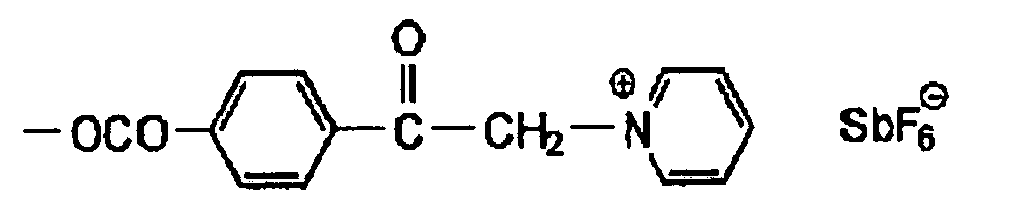
H-17 
H-18 
H-19 
H-20 
H-21 
H-22 
H-23 
H-24 
H-25 
H-26 
H-27 
H-28 
H-29 
H-30 
H-31 
H-32 
H-33 
H-34 
H-35 
H-36 
H-37 
H-38 
H-39 
H-40 
Group J (J-1)-(J-40) 
Compound No. Ini J-1 
J-2 
J-3 
J-4 
J-5 
J-6 
J-7 
J-8 
J-9 
J-10 
J-11 
J-12 
J-13 
J-14 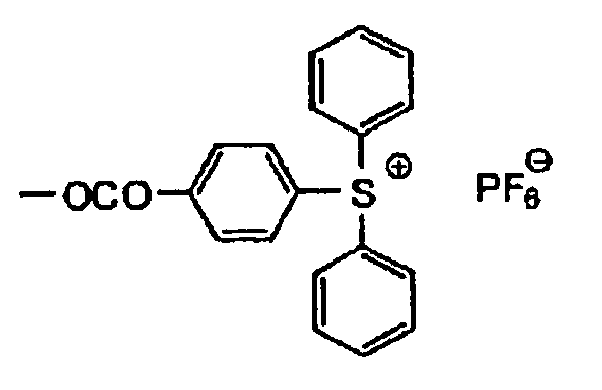
J-15 
J-16 
J-17 
J-18 
J-19 
J-20 
J-21 
J-22 
J-23 
J-24 
J-25 
J-26 
J-27 
J-28 
J-29 
J-30 
J-31 
J-32 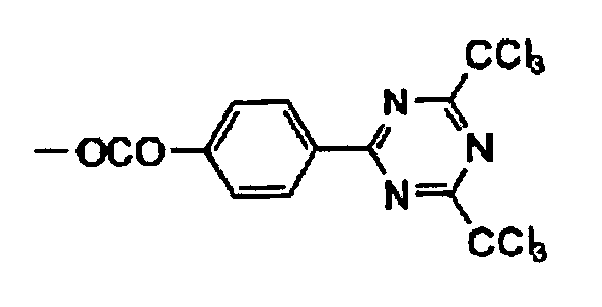
J-33 
J-34 
J-35 
J-36 
J-37 
J-38 
J-39 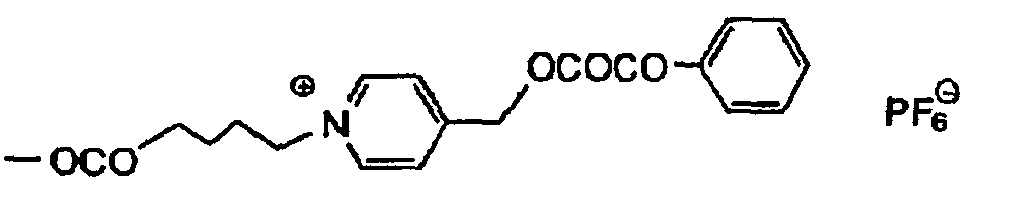
J-40 
- The polymerization initiators employed in the present invention may suitably be used alone or in any combination of at least two of them. The polymerization initiators each having a structure represented by the foregoing general formula (I) can in general be easily synthesized according to the method as shown in the following reaction scheme. However, the present invention is not restricted to the initiators prepared according to this specific method at all.
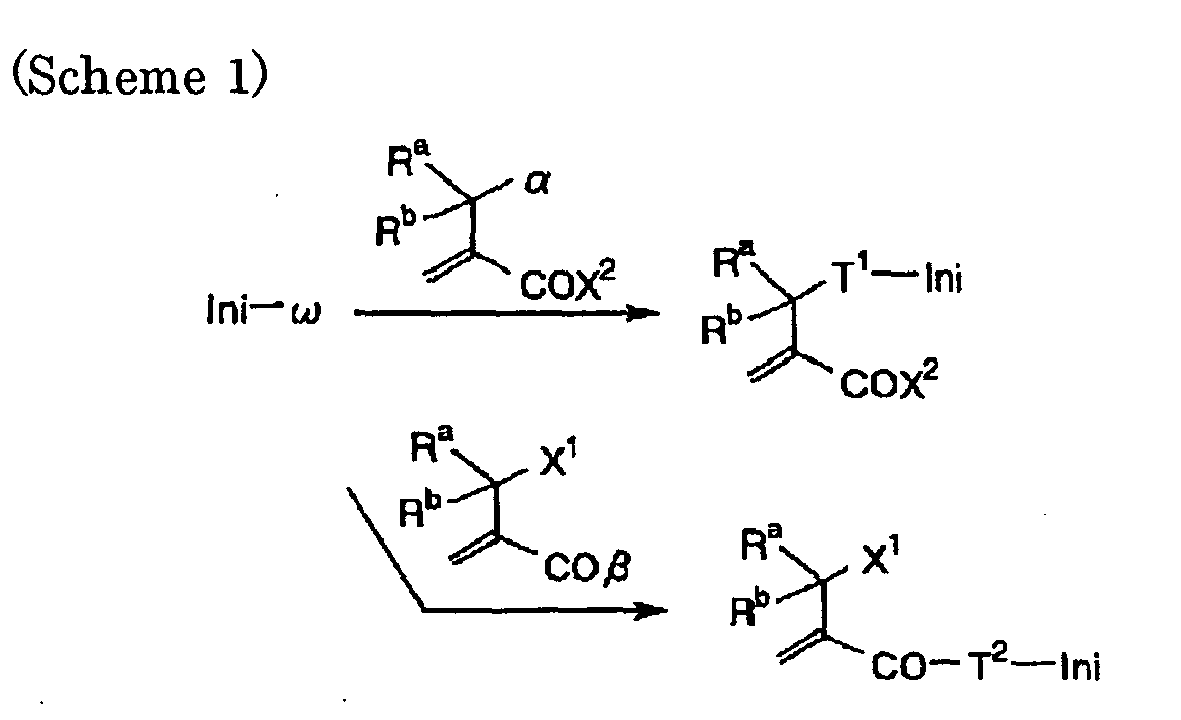
- More specifically, a desired polymerization initiator having a structure represented by the foregoing Formula (I) can be prepared by reacting and coupling a polymerization initiator having, at the terminal of the molecular structure, a reactive group mainly selected from the group consisting of -CO2H, -OH, -SH, -N(R)2 groups (wherein R represents an alkyl group or an aryl group) with a compound as a precursor for the structure of Formula (I) (such as a Br-, OH-, CO2H- or COCl-carrying derivative). In this connection, the details of other synthetic methods similar to the foregoing are disclosed in the patents listed above in connection with the foregoing corresponding polymerization initiators.
- The amount of the polymerization initiator to be incorporated into the ink composition of the present invention preferably ranges from 0.01 to 60% by mass and more preferably 0.05 to 30% by mass on the basis of the mass of the whole components of the composition. In addition, when using a sensitizing dye, the molar ratio of the polymerization initiator to the sensitizing dye as will be detailed later preferably ranges from 100:0 to 1:99 and more preferably 90:10 to 10:90 and most preferably 80:20 to 20:80, in the ink composition of the present invention. Further, when using a co-sensitizing agent as will be described later, it is suitably used in an amount preferably ranging from 0.01 to 50 parts by mass, more preferably 0.02 to 20 parts by mass and most preferably 0.05 to 10 parts by mass, per one part by mass of the polymerization initiator used.
- As the polymerizable compound, there can be used herein, for instance, α -hetero atom-containing methacrylic compounds, monoacrylate compounds, polyfunctional acrylate monomers and polyfunctional acrylate oligomers, which may be used herein alone or in any combination.
- Examples of such other polymerizable compounds are isomyristyl acrylate, isostearyl acrylate, lauryl acrylate, isoamyl acrylate, stearyl acrylate, ethoxy-diethylene glycol acrylate, methoxy-polyethylene glycol acrylate, methoxy-dipropylene glycol acrylate, 2-(2-ethoxyethoxy) ethyl acrylate, butoxy ethyl acrylate, isobornyl acrylate, phenoxy polyethylene glycol acrylate, 2-ethylhexyl-diglycol acrylate, 2-acryloyloxyethyl phthalate, 2-acryloyloxyethyl-2-hydroxyethyl phthalate, ethoxylated phenyl acrylate, 2-acryloyloxyethyl succinate, nonylphenol-ethylene oxide adduct acrylate, 2-acryloyloxyethyl hexahydro-phthalate, lactone-modified flexible acrylate, poly(tetramethylene glycol diacrylate), tetramethylene glycol diacrylate, hydroxy pivalic acid neopentyl glycol diacrylate, dimethylol tricyclo- decane diacrylate, dimethylol di-cyclopentane diacrylate, propylene glycol diglycidyl ether-acrylic acid adduct, modified bisphenol A diacrylates such as bisphenol A diglycidyl ether-(meth)acrylic acid adduct, diacrylate of bisphenol A-propylene oxide adduct, diacrylate of bisphenol A-ethylene oxide adduct, glycerin propoxy tri- acrylate, pentaerythritol tetraacrylate, pentaerythritol ethoxy tetra-acrylate, pentaerythritol hexaacrylate, caprolactone-modified di-pentaerythritol hexaacrylate, ethylene oxide-modified trimethylol-propane triacrylate, capro-lactone-modified tri- methylol-propane triacrylate, di-trimethylolpropane tetra-acrylate, amine-modified polyester tetraacrylate, pentaerythritol triacrylate tolylene diisocyanate urethane prepolymer, and pentaerythritol triacrylate hexamethylene diisocyanate urethane prepolymer. It is also possible to use a polymerizable monomer or oligomer having a molecular weight of not less than 400 (such as an acrylate monomer or an acrylate oligomer having a molecular weight of not less than 400) simultaneous with the foregoing polymerizable compounds. Among them, preferably used herein as such polymerizable compounds are at least one member selected from the group consisting of isomyristyl acrylate, isostearyl acrylate, lauryl acrylate, isoamyl acrylate, stearyl acrylate, ethoxy-diethylene glycol acrylate, methoxy-polyethylene glycol acrylate, methoxy-dipropylene glycol acrylate, 2-(2-ethoxyethoxy) ethyl acrylate and lactone-modified flexible acrylate.
- The polymerizable compound can be used in the ink composition of the present invention in an amount preferably ranging from 0.01 to 50.0% by mass, more preferably 0.1 to 10.0% by mass and most preferably 0.1 to 5.0% by mass on the basis of the total mass of the ink composition. The amount of the polymerizable compound thus preferably falls within the foregoing range from the viewpoint of the degree of curing and the storage stability of the resulting ink composition.
- Then the coloring materials usable in the present invention will be described below in detail. The coloring material usable herein is not restricted to any specific one and preferably used herein are pigments excellent in the weatherability, but it is possible to use, in the present invention, any known coloring material such as water- soluble dyes and oil-soluble dyes.
- Now, pigments preferably used herein will be described below in detail. The ink composition of the present invention may comprise pigments which cannot practically be applied to the ink jet-recording ink composition because they do not necessarily have high color-developing ability (color density per unitary concentration thereof added), while the use thereof at a high concentration would results in such a phenomenon that the melt viscosity of the resulting ink composition increases up to an extremely high level due to the difficulty in the preparation of a uniform fine particle-dispersion. More specifically, the coloring materials used in the present invention are not restricted to specific ones, but specific examples thereof are organic and inorganic pigments specified by the following numerals and disclosed in, for instance, Color Index:
- Examples thereof include red or magenta pigments such as Pigment Red 3, 5, 19, 22, 31, 38, 43, 48:1, 48:2, 48:3, 48:4, 48:5, 49:1, 53:1, 57:1, 57:2, 58:4, 63:1, 81, 81:1, 81:2, 81:3, 81:4, 88, 104, 108, 112, 122, 123, 144, 146, 149, 166, 168, 169, 170, 177, 178, 179, 184, 185, 208, 216, 226, and 257, Pigment Violet 3, 19, 23, 29, 30, 37, 50, and 88, and Pigment Orange 13, 16, 20 and 36; blue or cyan pigments such as Pigment Blue 1, 15, 15:1, 15:2, 15:3, 15:4, 15:6, 16, 17-1, 22, 27, 28, 29, 36, and 60; green pigments such as Pigment Green 7, 26, 36, and 50; yellow pigments such as Pigment Yellow 1, 3, 12, 13, 14, 17, 34, 35, 37, 55, 74, 81, 83, 93, 94, 95, 97, 108, 109, 110, 137, 138, 139, 153, 154, 155, 157, 166, 167, 168, 180, 185, and 193; black pigments such as Pigment Black 7, 28, and 26; and white pigments such as Pigment White 6, 18, and 21, which can arbitrarily be selected depending on the intended purposes.
- In this connection, the coloring material can be dispersed in the composition using a various kinds of dispersion devices such as a ball mill, a sand mill, an attritor, a roll mill, an agitator, a Henschel mixer, a colloid mill, an ultrasonic homogenizer, a pearl mill, a wet jet-mill, and a paint shaker. In addition, a dispersant may be used when the coloring material is dispersed within the composition. Such a dispersant is not restricted to any specific one, but preferably used herein are polymeric dispersants and examples thereof include those available from Zeneca Company under the trade name of Solsperse series. It is also possible to use, as an auxiliary agent for dispersion, a synergist corresponding to each pigment. These dispersants and auxiliary agents for dispersion are preferably added to the ink composition in an amount ranging from 1 to 50 parts by mass per 100 parts of the pigment used in the invention. In this connection, a dispersion medium may be used. The dispersion medium may be a solvent or the polymerizable compound used in the present invention, but the radiation-curable ink composition of the present invention is preferably free of any solvent, since it should be cured through the reaction thereof immediately after the bombardment of a subject with the ink composition. If the solvent remains within the cured images, various problems arise, for instance, the deterioration of the resistance to solvent attack and various troubles related to the VOC (Volatile Organic Compound) due to the residual solvent. For this reason, the dispersion medium used herein is not a solvent, but a polymerizable compound, in particular, a monomer preferably selected from those having a lowest possible viscosity, from the viewpoint of the dispersibility of the pigment.
- In the present invention, a pigment, a dispersant and a dispersion medium, the conditions for the dispersion thereof and the conditions for the filtration thereof should appropriately be selected in such a manner that the average particle size of the pigment used in the invention preferably ranges from 0.08 to 0.5µ m; and the maximum particle size thereof suitably ranges, for instance, from 0.3 to 10µ m and preferably 0.3 to 3µ m. Such particle size control would permit and ensure the inhibition of the occurrence of any clogging of head nozzles, and the improvement or conservation of storage stability, transparency and sensitivity to curing of the resulting ink. Moreover, when incorporating a coloring material into the ink composition of the present invention, it is suitable that the amount thereof to be added ranges from 1 to 10% by mass and preferably 2 to 8% by mass on the basis of the total mass of the ink composition.
- Other components may if necessary be incorporated into the ink composition of the present invention, in addition to those described above.
- When using, for instance, an electron beam or X-rays as the radiant rays for irradiation, it is not necessary to use any polymerization initiator, but when using ultraviolet rays (UV light rays), visible or infrared light rays as the radiant rays, a radical polymerization initiator, an auxiliary agent for initiating polymerization, a sensitizing dye or the like is added to the composition while taking into consideration the wavelength of the radiant rays selected. The amount of these compounds to be added in general ranges from 1 to 10% by mass on the basis of the total mass of the ink composition. Such a polymerization initiator used herein may be a variety of known compounds, but it is preferred to select the same from those soluble in the polymerizable compounds used in the invention and specific examples thereof are xanthone or thioxanthone type polymerization initiators, benzophenone type polymerization initiators, quinone type polymerization initiators and phosphine oxide type polymerization initiators.
- In addition, a polymerization inhibitor is preferably added to the ink composition in an amount ranging from 200 to 20000 ppm, in order to improve the shelf stability of the resulting composition. The ink jet-recording ink composition of the present invention is preferably heated to a temperature ranging from 40 to 80°C to thus reduce the viscosity thereof prior to the injection thereof and
- accordingly, a polymerization inhibitor is preferably added to the composition to prevent any clogging of the head due to the heat polymerization thereof. Examples of such polymerization inhibitors are hydroquinone, benzoquinone, p-methoxy-phenol, TEMPO, TEMPOL and Cupferron Al.
- In addition to the foregoing, any known compound may if necessary be added to the ink composition of the invention. Such known compounds may appropriately be selected from the group consisting of, for instance, surfactants, additives for leveling, matting agents, and additives for adjusting the physical properties of the ink film such as polyester resins, polyurethane resins, vinyl resins, acrylic resins, rubber type resins and waxes. In addition, it is likewise preferred that a tackifier which never adversely affects the polymerization, is incorporated into the ink composition for the improvement of the ink in the adhesion to the recording medium made of, for instance, polyolefin and/or PET. Specific examples of such tackifiers are high molecular weight adhesive polymers (such as copolymers derived from esters of (meth)acrylic acids and alcohols carrying alkyl groups each having 1 to 20 carbon atoms, esters of (meth)acrylic acids and alicyclic alcohols having 3 to 14 carbon atoms, and esters of (meth)acrylic acids and aromatic alcohols having 6 to 14 carbon atoms) disclosed in
J.P. KOKAI 2001-49200 - It is effective to use an organic solvent for the improvement of the adhesion thereof to a recording medium in a quite small amount. In this case, it is important to use the same in an amount which never becomes a cause of the occurrence of problems concerning the resistance to solvent attack and VOC and accordingly, the amount thereof preferably ranges from 0.1 to 5% by mass and more preferably 0.1 to 3% by mass on the basis of the total mass of the ink composition.
- According to a further preferred embodiment of the present invention, a cation polymerizable monomer having a long service life as a polymerization initiator is used in combination with a polymerization initiator as a means for preventing any reduction of the sensitivity of the ink due to the light-shielding effect of the coloring material incorporated into the ink to thus give a radical/cation hybrid type curable ink.
- The ink composition of the present invention preferably has a viscosity, at the temperature encountered when it is injected, on the order of, for instance, 7 to 30 mPa · sec and more preferably 7 to 20 mPa · sec, or the mixing ratio of the components of the composition is preferably controlled and determined in such a manner that the viscosity of the resulting composition falls within the range specified above. For instance, the viscosity of the ink composition, as determined at a temperature ranging from 25 to 30°C, ranges from 35 to 500 mPa · sec and preferably 35 to 200 mPa · sec. The use of an ink composition whose viscosity at room temperature is set at a higher level would permit the prevention of any penetration thereof into a recording medium even when using a porous recording medium, the reduction of the amount of uncured monomer and the reduction of the quantity of bad smells. Further, this likewise suppresses the occurrence of any bleeding upon the impact of the ink on the recording medium and as a result, the quality of the image obtained is considerably improved. If the viscosity of the ink, as determined at a temperature ranging from 25 to 30°C, is less than 35 mPa · sec, the resulting effect of controlling the bleeding is too low, while it exceeds 500 mPa · sec, the resulting ink liquid suffers from a problem concerning the delivery thereof.
- The surface tension of the ink composition according to the present invention preferably ranges, for instance, from 20 to 30 mN/m and more preferably 23 to 28 mN/m. When using a variety of recording mediums such as polyolefin materials, PET materials, coated paper and non-coated paper for recording, the surface tension of the ink composition is preferably not less than 20 mN/m from the viewpoint of the bleeding and penetration of the resulting ink, while it is preferably not more than 30 mN/m from the viewpoint of the wettability.
- Then, the substrate will be described hereunder in detail, which can be used in the method for the preparation of a lithographic printing plate, according to the present invention.
- The substrate (recording medium) used in the present invention is not restricted to any specific one inasmuch as it is a dimensionally stable plate-like hydrophilic substrate. Specific examples thereof include paper, paper laminated with a plastic film (such as a polyethylene, polypropylene or polystyrene film), a metal plate (such as an aluminum, zinc or copper plate), a plastic film (such as a film of, for instance, cellulose diacetate, cellulose triacetate, cellulose propionate, cellulose butyrate, cellulose acetate butyrate, cellulose nitrate, polyethylene terephthalate, polyethylene, polystyrene, polypropylene, polycarbonate and polyvinyl acetal), and paper or a plastic film laminated with the foregoing metal foil or on which the foregoing metal is vapor-deposited. Preferred substrates are, for instance, polyester films and aluminum plates. Preferably used herein are polyester films and aluminum plates. Among them, aluminum plates are particularly preferred, since they have high dimensional stability and they are relatively cheap.
- The aluminum plate may be a pure aluminum plate, a plate of an aluminum alloy comprising aluminum as a main component and a trace amount of foreign elements or a thin film of aluminum or an aluminum alloy, which is laminated with a plastic film. Examples of such foreign elements included in the aluminum alloy are silicon, iron, manganese, copper, magnesium, chromium, zinc, bismuth, nickel and titanium. The content of these foreign elements present in the aluminum alloy is preferably not more than 10% by mass. In the present invention, a pure aluminum plate is preferably used as such a substrate, but it would be difficult to form a completely pure aluminum plate because of the limit in the refining technique and therefore, preferably used herein may be aluminum plates containing trace amounts of foreign elements. The aluminum plate usable herein is not restricted in its composition and those prepared from any known and currently used aluminum material can appropriately be used without any restriction.
- The thickness of the substrate preferably ranges from 0.1 to 0.6 mm and more preferably 0.15 to 0.4 mm.
- Prior to the practical use of the aluminum plate, it is preferably subjected to a surface treatment such as a surface-roughening treatment and/or an anodization treatment. These surface-treatments permit the improvement of the hydrophilicity of the substrate surface and make, easy, the achievement of high adhesion thereof to the image-recording layer. The aluminum plate is if necessary degreased with, for instance, a surfactant, an organic solvent and/or an aqueous alkali solution for the removal of the rolling oil present on the surface of the plate prior to the surface-roughening treatment of the aluminum plate.
- The aluminum plate may be surface-roughened according to a variety of methods and examples thereof include a mechanical surface-roughening treatment, an electrochemical surface-roughening treatment (surface-roughening treatment in which the surface of the aluminum plate is electrochemically dissolved) and a chemical surface-roughening treatment (surface-roughening treatment in which the surface of the plate is chemically and selectively dissolved).
- Specific examples of such mechanical surface-roughening treatments are various known ones such as a ball-polishing method, a brush-polishing method, a blast- polishing method and a buff-polishing method. Alternatively, it is also possible to use a transfer method in which uneven patterns are transferred to the surface of the plate using a roll having such uneven patterns on its surface during the step for rolling the aluminum plate.
- Examples of such electrochemical surface-roughening treatments include those in which the surface-roughening is carried out by passing, through the aluminum plate, an alternating or direct current in an electrolyte containing, for instance, an acid such as hydrochloric acid or nitric acid. In addition, it is also possible to use a method which makes use of a mixed acid as disclosed in
J.P. KOKAI Sho 54-63902 - The aluminum plate thus surface-roughened may if necessary be subjected to an alkali etching treatment using an aqueous solution of, for instance, potassium hydroxide or sodium hydroxide, then it is subjected to a neutralization treatment and thereafter, the plate is if necessary anodized for the improvement of the wear resistance.
- Electrolytes usable in the anodization treatment of the aluminum plate are, for instance, a variety of electrolytes capable of forming porous anodized layer and specific examples thereof currently used include sulfuric acid, hydrochloric acid, oxalic acid, chromic acid and mixtures thereof. The concentrations of these electrolytes are appropriately determined depending on the kinds of the electrolytes selected.
- The anodization conditions may variously vary depending on the electrolyte used and cannot unconditionally be specified, but preferably used are as follows: an electrolyte concentration ranging from 1 to 80% by mass; an electrolyte solution temperature ranging from 5 to 70°C; a current density ranging from 5 to 60 A/dm2; an electric voltage ranging from 1 to 100 V; and an electrolyzation time ranging from 10 seconds to 5 minutes. The quantity of the anodized layer formed preferably ranges from 1.0 to 5.0 g/m2 and more preferably 1.5 to 4.0 g/m2. The anodized layer formed in an amount falling within the range specified above would permits the formation of a printing plate having good printing durability and carrying non-image area having good resistance to defects.
- The foregoing surface-treated and anodized substrate may be used as the substrate of the present invention without any post-treatment, but the plate may if necessary be subjected to a treatment for the further improvement of the adhesion to the upper layers, the hydrophilicity, the anti-fouling properties, and heat insulating properties, selected from, for instance, the following ones: a treatment for expanding the micropores present in the anodized layer, a sealing treatment of the layer such as those disclosed in
J.P. KOKAI Nos. 2001-253181 2001-322365 - Examples of such sealing treatments are a steam-sealing treatment, a sealing treatment with fluoro-zirconic acid alone, a sealing treatment with an aqueous solution containing an inorganic fluorine atom-containing compound such as sodium fluoride, a lithium chloride-containing steam-sealing treatment and a sealing treatment with hot water.
- Among them, preferably used herein are sealing treatments using aqueous solutions containing inorganic fluorine atom-containing compounds, a steam-sealing treatment and a sealing treatment with hot water. These treatments will now be described in more detail below:
- In this sealing treatment using an aqueous solution containing an inorganic fluorine atom-containing compound, such an inorganic fluorine atom-containing compound used may suitably be metal fluorides.
- Specific examples thereof are sodium fluoride, potassium fluoride, calcium fluoride, magnesium fluoride, sodium fluorozirconate, potassium fluorozirconate, sodium fluorotitanate, potassium fluorotitanate, ammonium fluorozirconate, ammonium fluorotitanate, fluoro-zirconic acid, fluoro-titanic acid, hexafluoro-silicic acid, nickel fluoride, iron fluoride, fluoro- phosphoric acid, and ammonium fluoro-phosphate. Among these, preferred are sodium fluorozirconate, sodium fluorotitanate, fluoro-zirconic acid and fluoro-titanic acid.
- The concentration of the inorganic fluorine atom-containing compound present in the aqueous solution is preferably not less than 0.01% by mass and more preferably not less than 0.05% by mass for ensuring the sufficient sealing of the micropores present in the anodized layer; and preferably not more than 1% by mass and more preferably not more than 0.5% by mass from the viewpoint of the anti-fouling properties.
- Preferably, the aqueous solution containing an inorganic fluorine atom-containing compound further comprises a phosphoric acid salt compound. The incorporation of such a compound would permit the improvement of the hydrophilicity of the surface of the anodized layer and this in turn leads to the improvement in the ability of the resulting plate to be developed on a printing machine and the anti-fouling properties of the resulting printing plate.
- Examples of such phosphoric acid salt compounds are salts of phosphoric acid with metals such as alkali metals and alkaline earth metals.
- Specific examples thereof include zinc phosphate, aluminum phosphate, ammonium phosphate, di-ammonium hydrogen phosphate, ammonium di-hydrogen phosphate, mono-ammonium phosphate, mono-potassium phosphate, mono-sodium phosphate, potassium di-hydrogen phosphate, di-potassium hydrogen phosphate, calcium phosphate, ammonium sodium hydrogen phosphate, magnesium hydrogen phosphate, magnesium phosphate, ferrous phosphate, ferric phosphate, sodium di-hydrogen phosphate, sodium phosphate, di-sodium hydrogen phosphate, lead phosphate, di-ammonium phosphate, calcium di-hydrogen phosphate, lithium phosphate, phospho-tungstic acid, ammonium phospho-tungstate, sodium phospho- tungstate, ammonium phospho-molybdate, sodium phospho-molybdate, sodium phosphite, sodium tripolyphosphate, and sodium pyrophosphate. Among them, preferred are sodium di-hydrogen phosphate, di-sodium hydrogen phosphate, potassium di-hydrogen phosphate and di-potassium hydrogen phosphate.
- The combination of the inorganic fluoride compound with the phosphoric acid salt compound is not restricted to any specific one, but the aqueous solution preferably comprises at least sodium fluorozirconate as the inorganic fluorine atom-containing compound and at least sodium di-hydrogen phosphate as the phosphoric acid salt compound.
- The concentration of the phosphoric acid salt compound in the aqueous solution is preferably not less than 0.01% by mass and more preferably not less than 0.1% by mass from the viewpoint of the ability of the resulting plate to be developed on a printing machine and the anti-fouling properties of the resulting printing plate, while it is preferably not more than 20% by mass and more preferably not more than 5% by mass from the viewpoint of the solubility thereof in the solution.
- The mixing ratio of the compounds in the aqueous solution is not restricted to any specific one, but the ratio (by mass) of the inorganic fluorine atom-containing compound to the phosphoric acid salt compound preferably ranges from 1/200 to 10/1 and more preferably 1/30 to 2/1.
- Moreover, the temperature of the aqueous solution is preferably not less than 20°C and more preferably not less than 40°C, while it is preferably not more than 100°C and more preferably not more than 80°C.
- In addition, the aqueous solution preferably has a pH value of not less than 1 and more preferably not less than 2, while the aqueous solution preferably has a pH value of not more than 11 and more preferably not more than 5.
- The method for sealing treatment using an aqueous solution containing an inorganic fluorine atom-containing compound is not limited to any particular one and may be, for instance, a dipping method and a spraying method. These methods may be used alone once or over several times, or they may be used in any combination of at least two of them.
- Among these, preferably used herein is a dipping method. When the aluminum plate is treated according to the dipping method, the treating time is preferably not less than one second and more preferably not less than 3 seconds, while it is preferably not more than 100 seconds and more preferably not more than 20 seconds.
- The sealing treatment with steam may be, for instance, one in which the aluminum plate having an anodized layer formed thereon is continuously or intermittently brought into close contact with pressurized steam or the steam under ordinary pressure.
- The temperature of the steam is preferably not less than 80°C and more preferably not less than 95°C, while it is preferably not more than 105°C.
- The pressure of the steam preferably ranges from (atmospheric pressure - 50mmAq) to (atmospheric pressure + 300mmAq) (1.008 × 10⁵ to 1.043 × 10⁵ Pa).
- In addition, the contact time is preferably not less than one second and more preferably not less than 3 seconds, while it is preferably not more than 100 seconds and more preferably not more than 20 seconds.
- The sealing treatment with hot water may be, for instance, one in which the aluminum plate having an anodized layer formed thereon is dipped in hot water.
- The hot water used in this treatment may comprise an inorganic salt (such as a phosphoric acid salt) or an organic salt.
- The temperature of the hot water is preferably not less than 80°C and more preferably not less than 95°C, while it is preferably not more than 100°C.
- The time required for dipping the plate in hot water is preferably not less than one second and more preferably not less than 3 seconds, while it is preferably not more than 100 seconds and more preferably not more than 20 seconds.
- The hydrophilization treatment used in the present invention may be, for instance, the treatment with alkali metal silicates such as those disclosed in
USP Nos. 2,714,066 ,3,181,461 ,3,280,734 and3,902,734 . In this method, the treatment comprises the step of dipping a substrate in an aqueous solution of, for instance, sodium silicate or electrolyzing the substrate in such an aqueous solution. In addition to the foregoing, usable herein include, for instance, a method disclosed inJ.P. KOKOKU Sho 36-22063 USP Nos. 3,276,868 ,4,153,461 and4,689,272 , wherein a substrate is treated with polyvinyl sulfonic acid. - The substrate usable herein preferably has a center line average surface roughness on the order of 0.10 to 1.2µ m. The use of a substrate having such an average surface roughness would permit the achievement of good adhesion to the image- recording layer and the good printing durability and anti-fouling properties of the resulting printing plate.
- The ink jet-recording method and the ink jet-recording device, which can suitably be adopted in the present invention, will now be described below in detail.
- In the ink jet-recording method, it is preferred that the ink composition is heated to a temperature ranging from 40 to 80°C to thus reduce the viscosity of the ink composition to a level on the order of 7 to 30 mPa·sec, prior to the injection thereof onto the surface of a substrate. The use of this method would permit the achievement of highly stable injection of the ink composition. In general, the radiation-curable ink composition has a high viscosity as compared with that observed for the usual water-based ink and therefore, the viscosity thereof widely varies in response to the temperature variation encountered during the printing operations. The variation of ink viscosity may greatly affect the size change of ink droplets and the fluctuation in the injection rate thereof and this in turn results in the deterioration of the image quality. Therefore, the variation of the ink temperature during printing should be controlled to a level as low as possible. Thus, the ink temperature should suitably be controlled so that the variation thereof falls within the following range: the set temperature±5°C, preferably the set temperature ±2°C and more preferably the set temperature ± 1°C.
- The ink jet-recording device usable in the present invention is characterized, on the one hand, in that it is provided with a means for stabilizing the temperature of the ink composition in order to control the temperature, to a predetermined constant level, of the whole piping works and parts positioned between the ink tank (including an intermediate tank when the device is provided with the same) and the injection plane of the nozzle.
- The method for controlling the temperature at this stage is not restricted to any particular one, but it is preferred to arrange a plurality of temperature sensors at every piping works to thus heat the system or to control the temperature while taking into consideration the flow rate of ink and the environmental temperature. The head unit to be heated is preferably thermally insulated or thermally shielded so that the main body of the device is never affected by the temperature of the outside air. It is likewise preferred that the heat content of a heating unit is reduced and simultaneously it is thermally isolated from other portions to make the printer-rise time required for the heating short or to reduce the loss of heating energy.
- Then, the conditions for the irradiation of the ink composition injected on the surface of a substrate will be described below. The fundamental irradiation method and conditions for irradiating with such radiant rays are disclosed in
J.P. KOKAI Sho 60-132767 WO 99/54415 - Moreover, it is desirable in the present invention that the ink composition is warmed to a predetermined constant temperature and, simultaneously, the irradiation with radiant rays should be carried out after the elapse of a desired time period from the impact of the ink composition on the substrate, which ranges from 0.01 to 0.5 second, preferably 0.01 to 0.3 second and more preferably 0.01 to 0.15 second. Any bleeding of the ink composition injected on the substrate possibly observed prior to the curing of the ink composition can be inhibited by controlling the time elapsed from the impact of the ink till the irradiation with radiant rays to a level as short as possible, as has been discussed above. Moreover, in case of a porous recording medium, the ink injected on the substrate can be exposed to radiant rays before the ink penetrates even in such a deeper portion that the light rays from the light sources never reach and therefore, the cured ink composition or the recorded material is almost free of any un-reacted monomer and as a result, the generation of any offensive odor can be suppressed. The combination of the ink jet-recording method as has been described above with the ink composition of the present invention would permit the achievement of an extremely high synergistic effect. In particular, a considerably excellent effect would be obtained by the use of an ink composition having a viscosity as determined at 25°C ranging from 35 to 500MP · sec. If using the foregoing ink jet-recording method, the dot diameter of the ink impacted on the surface can be kept constant even when using a variety of recording mediums having different surface wettability and the quality of images can thus be improved. Incidentally, a color image is preferably obtained by superposing colors, in order, from a low lightness one to a higher lightness one. If multiple ink compositions are thus superposed, in order of the magnitude of lightness, the radiant rays are liable to easily reach even the lower ink layers and accordingly, it would be expected to ensure high sensitivity to curing, to reduce the amount of residual monomers, to suppress the generation of any offensive odor and to improve the adhesion. In addition, all of the ink compositions can first be injected and then comprehensively exposed to light rays, but it is rather preferred to expose each time a color is injected from the viewpoint of the acceleration of the curing.
- The ink jet-recording device usable in the present invention is not restricted to any particular one and may be any commercially available one. According to the present invention, images can be recorded on a recording medium using any commercially available ink jet-recording device.
- The present invention will hereunder be described in more detail with reference to the following Examples, but the present invention is not restricted to the embodiments illustrated in these specific Examples at all.
- According to the following method, there was prepared each of the following yellow, magenta, cyan and black pigment dispersions 1. In this respect, each dispersion was prepared using a known dispersion device while appropriately adjusting the dispersion conditions in such a manner that the average particle size of each pigment dispersion fell within the range of from 0.2 to 0.3µ m and then filtered through a filter with heating to thus give each corresponding pigment dispersion.
(Yellow Pigment Dispersion 1) Component Amt. (part by mass) C.I. Pigment Yellow 12 10 Polymeric dispersant (Solsperse series, available from Zeneca Company) 5 Stearyl acrylate 85 (Magenta Pigment Dispersion 1) Component Amt. (part by mass) C.I. Pigment Red 57:1 15 Polymeric dispersant (Solsperse series, available from Zeneca Company) 5 Stearyl acrylate 80 (Cyan Pigment Dispersion 1) Component Amt. (part by mass) C.I. Pigment Blue 15:3 20 Polymeric dispersant (Solsperse series, available from Zeneca Company) 5 Stearyl acrylate 75 (Black Pigment Dispersion 1) Component Amt. (part by mass) C.I. Pigment Black 7 20 Polymeric dispersant (Solsperse series, available from Zeneca Company) 5 Stearyl acrylate 75 - An ink having each corresponding color was prepared according to the method described below and using each dispersion 1 prepared above:
(Yellow Ink 1) Component Amt. (part by mass) Yellow Pigment Dispersion 1 20 Stearyl acrylate 60 Difunctional aromatic urethane acrylate specified below (molecular weight (Mw): 1500) 10 Hexa-functional aliphatic urethane acrylate specified below (Mw: 1000) 5 Polymerization Initiator (A-2) 5 (Magenta Ink 1) Component Amt. (part by mass) Magenta Pigment Dispersion 1 20 Stearyl acrylate 60 Difunctional aromatic urethane acrylate specified below (Mw: 1500) 10 Hexa-functional aliphatic urethane acrylate specified below (Mw: 1000) 5 Polymerization Initiator (A-2) 5 (Cyan Ink 1) Component Amt. (part by mass) Cyan Pigment Dispersion 1 15 Stearyl acrylate 65 Difunctional aromatic urethane acrylate specified below (Mw: 1500) 10 Hexa-functional aliphatic urethane acrylate specified below (Mw: 1000) 5 Polymerization Initiator (A-2) 5 (Black Ink 1) Component Amt. (part by mass) Black Pigment Dispersion 1 15 Stearyl acrylate 65 Difunctional aromatic urethane acrylate specified below (Mw: 1500) 10 Hexa-functional aliphatic urethane acrylate specified below (Mw: 1000) 5 Polymerization Initiator (A-2) 5 - Each of the foregoing formulations having the corresponding colors and compositions thus prepared was filtered through a filter having an absolute degree of filtration of 2 µm to thus give each intended ink 1 having the corresponding color.
- Then, images were recorded on a recording medium using a commercially available ink jet-recording device provided with a piezoelectric ink jet-nozzle. The ink-supply system thereof comprised a main tank, piping works for supply, an ink-supply tank arranged immediately before the ink jet head, a filter, and a piezoelectric ink-injection head and the region extending from the ink-supply tank to the ink jet head portion was thermally insulated and heated. Temperature sensors were positioned on the ink-supply tank and at a position in the proximity to the nozzle of the ink jet head and the temperature of the device was controlled in such a manner that the nozzle portion was always maintained at a temperature of 70°C±2°C. The piezoelectric ink-injection head was operated in such a manner that it could inject multiple-sized dots of 8 to 30 pl at a resolution of 720 × 720 dpi. After the impact of the ink on the recording medium, UV-A light rays were condensed to an illuminance at the exposed surface of 100 mW/cm2, and the exposure system, the main scanning speed and the frequency of injection were controlled in such a manner that the irradiation with the light rays was initiated after 0.1 second from the impact of the ink on the medium. Moreover, the exposure time was set at a variety of levels and the exposure energy was applied onto the impacted ink. In this connection, the unit "dpi" used herein means the number of dots per unit length (one inch (2.54 cm)).
- The inks each having the corresponding color and prepared above were injected on a recording medium in the order, black, cyan, magenta and yellow, at the environmental temperature of 25°C and the irradiation with the ultraviolet rays was carried out every time each ink was applied. In this respect, the total energy exposed per color was evenly set at 300 mJ/cm2, which was the energy required for the complete curing of each color ink till the bombarded ink completely lost its stickiness through the examination by touch. Each color image was recorded on, as recording mediums, a surface-grained aluminum substrate, a surface-treated transparent twin-screw extruded polypropylene film to which good printability was imparted, a soft polyvinyl chloride film, cast-coated paper, and commercially available regenerated paper and as a result, each image thus obtained had a high resolution and was free of any dot's bleeding. Further, all of the inks were completely free of any strike through even when an image was recorded on wood free paper, the ink was sufficiently cured and the resulting recorded images never gave out bad smells due to the presence of un-reacted monomers. Moreover, the ink recorded on a film was sufficiently flexible, the ink never underwent any cracking even if it was folded and any problem never arose in the Cellotape (registered trade mark)-peel test for the inspection of adhesiveness.
- Magenta inks 2 to 5 were prepared according to the method described below.
(Magenta Ink 2) Component Amt. (part by mass) Magenta Pigment Dispersion 1 20 Isonorbornyl acrylate 40 Di-functional aromatic urethane acrylate specified below (Mw: 1500) 10 Hexa-functional aliphatic urethane acrylate specified below (Mw: 1000) 5 Polymerization Initiator (A-18) 5 (Magenta Ink 3) Component Amt. (part by mass) Magenta Pigment Dispersion 1 20 Isonorbornyl acrylate 50 Lactone-modified acrylate specified below (Mw: 458) 20 Hexa-functional aliphatic urethane acrylate specified below (Mw: 1000) 5 Polymerization Initiator (B-2) 5 (Magenta Ink 4) Component Amt. (part by mass) Magenta Pigment Dispersion 2 20 Isonorbornyl acrylate 70 Hexa-functional aliphatic urethane acrylate specified below (Mw: 1000) 5 Polymerization Initiator (C-5) 5 - The same procedures used in the preparation of the magenta pigment dispersion 1 described in Example 1 were repeated except for using isobornyl acrylate in place of the stearyl acrylate used in Example 1 to thus obtain a pigment dispersion (magenta pigment dispersion 2).
(Magenta Ink 5) Component Amt. (part by mass) Magenta pigment dispersion 2 20 Isobornyl acrylate 60 Tetramethylol-methane triacrylate 15 Polymerization Initiator (J-1) 5 - A product obtained by capping the terminal of a condensate (Mw1500):


- A product obtained by capping the terminal of a condensate (Mw: 1500):


-

- The ink compositions prepared in Comparative Examples 1 to 5 were the same as the foregoing magenta inks 1 to 5 in which the following polymerization initiators each free of any polymerizable group were substituted for the polymerizable group-containing polymerization initiators:
"A-2" → "X-1"; "A-18" → "X-2"; "B-2" → "X-3"; "C-5" → "X-4"; and "J-1" → "X-5" - The following are the structures of these compounds (X-1 to X-5):


- The ink compositions prepared in the foregoing Examples and Comparative Examples were found to have viscosities as determined at the injection temperature falling within the range of from 7 to 20 mPa · sec.
- Magenta images were printed according to the method used in Example 1 using the magenta inks 2 to 7 prepared above and the magenta ink 1 prepared in
- Then the images thus recorded were inspected for the sensitivity required for curing, the penetrability thereof through commercially available regenerated paper, the ink-bleeding on a surface-grained aluminum substrate, the adhesion, the printing durability of the resulting printing plate and the storage stability, according to the following methods.
- The quantity of energy (mJ/cm2) applied onto the image-carrying plane irradiated with ultraviolet rays, which was required for curing the ink till it completely lost the stickiness, was herein defined to be the desired sensitivity to curing. In this respect, the smaller the numerical value thus determined, the higher the sensitivity to curing.
- The images printed on commercially available regenerated paper were inspected for the ability thereof to pass through the paper and the latter was evaluated on the basis of the following evaluation criteria:
- ○: There was observed almost no penetration of ink and the image never gave out any smells of the residual monomers.
- Δ: There was observed a slight penetration of the ink and the image slightly gave out smells of the residual monomers.
- ×: There was observed the distinct penetration of the ink even to the back face of the recording medium and the image gave out strong smells of the residual monomers.
- The images printed on a surface-grained aluminum substrate were inspected for the bleeding thereof on the aluminum substrate and the latter was evaluated on the basis of the following evaluation criteria:
- ○: There was not observed any bleeding between the neighboring dots.
- Δ: There was observed slight bleeding of dots.
- ×: There was observed bleeding of dots and the images distinctly became dim.
- The foregoing printed images were used as such (defect-free samples) and there were made 11 each of vertical and horizontal cuts on each printed image at intervals of 1 mm according to JIS K-5400 to form 100 checkers of 1 mm square and to thus form each corresponding checker pattern-carrying sample. A cellophane tape (Cellotape (registered trade mark)) was adhered to the image-carrying face of each sample, then quickly peeled off at an angle of 90 degrees and the conditions or printed images remained un-remove were evaluated on the basis of the following criteria:
- ○: There was not observed any peeling off of the printed image even in the checker pattern-cutting (lattice pattern-cutting) test at all.
- Δ: There was observed slight peeling off of the printed image in the checker pattern-cutting test, but there was observed almost no peeling off of the printed image on the defect (checker pattern)-free samples.
- ×: There was observed easy peeling off of the printed image in the both Cellotape-peeling tests carried out using the foregoing defect-free and checker pattern-carrying samples.
- The printing plate prepared above by printing images on a surface-grained aluminum substrate was fitted to a Heidel KOR-D printing press and printed matters were prepared by the operation of the printing press to thus determine the number of printed matters carrying complete images and the number of printed matters were relatively compared with one another (the number of the complete printed matters obtained using the sample of Example 1 was defined to be 100) and the results thus obtained were used as the indication of the printing durability. In this respect, the greater the number of the printed matters, the higher the printing durability of the printing plate.
- The viscosity of each ink was determined at the injection temperature after storing the same at 75% RH and 60°C for 3 days and the increment of the ink viscosity was expressed in terms of the ratio of the viscosity observed after its storage to that observed before its storage. In this connection, if the viscosity is not changed and the ratio is closer to 1.0, the corresponding ink had greater storage stability and it is not preferred to use an ink having a ratio exceeding 1.5, since the ink often causes clogging of the injection nozzle during the impact of the ink.
- The results obtained in these evaluation tests are summarized in the following Table A.
Table A-1 (Examples) Ex. No. 1 2 3 4 5 Magenta Ink No. 1 2 3 4 5 Sensitivity to curing (mJ/cm2) 170 150 150 140 160 Penetrability ○ ○ ○ ○ ○ Bleeding of Ink ○ ○ ○ ○ ○ Adhesion ○ ○ ○ ○ ○ Printing Durability 100 120 120 100 100 Storage Stability 1.2 1.2 1.3 1.3 1.2 Table A-2 (Comparative Examples) Ex. No. 1 2 3 4 5 Magenta Ink No. 1 2 3 4 5 Sensitivity to curing (mJ/cm2) 200 200 200 200 200 Penetrability × Δ Δ Δ Δ Bleeding of Ink × Δ Δ Δ Δ Adhesion X Δ Δ Δ × Printing Durability 50 80 70 80 60 Storage Stability 1.6 1.5 1.6 1.5 1.5 - As will be seen from the data listed in Table A, the ink composition which makes use of, as the polymerization initiator, the α -hetero atom-containing methacrylic compound according to the present invention is highly sensitive to the irradiation with radiant rays, has a good ability to form images on paper or an ability of forming high quality images thereon and is excellent in the storage stability and further, the ink composition likewise permits the formation of images excellent in the printing durability and the quality thereof even when using the same in the preparation of a printing plate. (see, Examples 1 to 5) Contrary to this, the ink composition which makes use of a conventional polymerization initiator has a low sensitivity to curing, can not form an image free of any ink bleeding on paper, and is further inferior in the adhesion to the substrate and the storage stability. The latter forms images having impaired printing durability, when using the same in the preparation of a printing plate. (see, Comparatice Examples 1 to 5)
Claims (12)
- An ink jet-recording ink composition capable of being cured through the irradiation with radiant rays, which comprises at least a coloring material, a polymerizable compound and a polymerization initiator, wherein the polymerization initiator is a compound possessing a polymerizable structure in the molecule.
- The ink jet-recording ink composition as set forth in claim 1, wherein the polymerizable structure of the polymerization initiator is selected from the group consiting of acryl group, methacryl group, styryl group, allyl group, vinyl group, and α-hetero methacryl group represented by the general formula (I):

- The ink jet-recording ink composition as set forth in claim 2, wherein the polymerizable structure of the polymerization initiator is α -hetero methacryl group represented by the following general formula (I).
- The ink jet-recording ink composition as set forth in claim 1, wherein the polymerization initiator is a compound represented by the following general formula (II):

- The ink jet-recording ink composition as set forth in claim 4, wherein the "monovalent group bonded through a hetero atom" is a hydroxyl group, a substituted oxy group, a mercapto group, a substituted thio group, an amino group, a substituted amino group, a sulfo group, a sulfonate group, a substituted sulfinyl group, a substituted sulfonyl group, a phosphono group, a substituted phosphono group, a phosphonate group, a substituted phosphonate group, a nitro group or a hetero ring-containing group (provided that this group is linked through the hetero atom), and the "divalent group bonded through a hetero atom" is one derived from the foregoing monovalent group in which one hydrogen atom or other atom or group is replaced with a bonding arm.
- The ink jet-recording ink composition as set forth in claim 4, wherein the monovalent to hexa-valent structure for initiating polymerization is derived from a polymerization initiator selected from the group consisting of (a) aromatic ketones, (b) aromatic onium salt compounds, (c) organic peroxides, (d) thio compounds, (e) hexaaryl-biimidazole compounds, (f) ketoxime ester compounds, (g) borate compounds, (h) azinium compounds, (i) metallocene compounds, (j) activated ester compounds, and (k) carbon-halogen bond-containing compounds.
- The ink jet-recording ink composition as set forth in claim 6, wherein the monovalent to hexa-valent structure for initiating polymerization is derived from a polymerization initiator selected from the group consisting of (a) aromatic ketones, (b) aromatic onium salt compounds, (f) ketoxime ester compounds, and (k) carbon-halogen bond-containing compounds.
- The ink jet-recording ink composition as set forth in claim 7, wherein (a) aromatic ketones are represented by the following general formula Rd-1:

- The ink jet-recording ink composition as set forth in claim 7, wherein (f) ketoxime ester compounds are represented by the following general formula Rd-2:

- The ink jet-recording ink composition as set forth in claim 7, wherein (b) aromatic onium salt compounds are represented by the following general formula Rd-3, Rd-4, Rd-5 or Rd-6:

- The ink jet-recording ink composition as set forth in claim 7, wherein (k) carbon-halogen bond-containing compounds are represented by the following general formula Rd-7:
Ar2(̵CCl3) n Rd-7
wherein Ar2 is an optionally substituted C6-C18 hetero atom-containing aromatic hydrocarbon, and n is an integer from 1 to 3. - A method for the preparation of a lithographic printing plate comprising the steps of ejecting an ink composition as set forth in claim 1 to place it on a hydrophilic substrate and then irradiating the ink composition with radiant rays to thus form an image on the substrate.
Applications Claiming Priority (1)
| Application Number | Priority Date | Filing Date | Title |
|---|---|---|---|
| JP2005160176A JP2006335826A (en) | 2005-05-31 | 2005-05-31 | Ink composition for inkjet recording and method for manufacturing planographic printing plate using the same |
Publications (2)
| Publication Number | Publication Date |
|---|---|
| EP1728838A1 true EP1728838A1 (en) | 2006-12-06 |
| EP1728838B1 EP1728838B1 (en) | 2007-08-15 |
Family
ID=37012120
Family Applications (1)
| Application Number | Title | Priority Date | Filing Date |
|---|---|---|---|
| EP20060011082 Not-in-force EP1728838B1 (en) | 2005-05-31 | 2006-05-30 | Ink composition for ink jet-recording and method for preparing lithographic printing plate using the same |
Country Status (5)
| Country | Link |
|---|---|
| US (1) | US20060268083A1 (en) |
| EP (1) | EP1728838B1 (en) |
| JP (1) | JP2006335826A (en) |
| AT (1) | ATE370205T1 (en) |
| DE (1) | DE602006000071T2 (en) |
Cited By (3)
| Publication number | Priority date | Publication date | Assignee | Title |
|---|---|---|---|---|
| WO2007131336A1 (en) * | 2006-05-17 | 2007-11-22 | American Dye Source Inc. | New materials for lithographic plates coatings, lithographic plates and coatings containing same, methods of preparation and use |
| EP1829682A3 (en) * | 2006-03-03 | 2008-03-19 | FUJIFILM Corporation | Method of producing planographic printing plate and planographic printing plate |
| US8093405B2 (en) | 2008-05-16 | 2012-01-10 | University Of Newcastle Upon Tyne | Formation of 18F and 19F fluoroarenes bearing reactive functionalities |
Families Citing this family (4)
| Publication number | Priority date | Publication date | Assignee | Title |
|---|---|---|---|---|
| JP5204371B2 (en) * | 2005-06-06 | 2013-06-05 | 富士フイルム株式会社 | INK COMPOSITION FOR INKJET RECORDING AND METHOD FOR PRODUCING A lithographic printing plate using this |
| DE102011106039A1 (en) * | 2011-06-30 | 2013-01-03 | Pelikan Hardcopy Production Ag | Ultraviolet-curable ink useful e.g. in dot matrix printers, comprises coloring agent, preferably pigments, radical or cationic photoinitiator, ultraviolet-curable alkoxylated or polyalkoxylated polyfunctional acrylate monomer, and additives |
| WO2013090892A1 (en) * | 2011-12-16 | 2013-06-20 | The University Of Akron | Substituted phenacyl molecules and photoresponsive polymers |
| CN114805048B (en) * | 2022-04-14 | 2024-11-26 | 乐凯华光印刷科技有限公司 | Ionium salt initiator, treatment-free heat-sensitive plate precursor and treatment-free heat-sensitive plate containing the same, and application thereof |
Citations (60)
| Publication number | Priority date | Publication date | Assignee | Title |
|---|---|---|---|---|
| US2714066A (en) | 1950-12-06 | 1955-07-26 | Minnesota Mining & Mfg | Planographic printing plate |
| US3181461A (en) | 1963-05-23 | 1965-05-04 | Howard A Fromson | Photographic plate |
| US3276868A (en) | 1960-08-05 | 1966-10-04 | Azoplate Corp | Planographic printing plates |
| US3280734A (en) | 1963-10-29 | 1966-10-25 | Howard A Fromson | Photographic plate |
| US3567453A (en) | 1967-12-26 | 1971-03-02 | Eastman Kodak Co | Light sensitive compositions for photoresists and lithography |
| JPS4642363B1 (en) | 1968-10-09 | 1971-12-15 | ||
| JPS473981B1 (en) | 1968-06-11 | 1972-02-03 | ||
| JPS476416B1 (en) | 1968-04-16 | 1972-02-23 | ||
| JPS4722326B1 (en) | 1968-07-26 | 1972-06-22 | ||
| JPS4723664B1 (en) | 1968-07-26 | 1972-07-01 | ||
| GB1388492A (en) | 1971-09-03 | 1975-03-26 | Minnesota Mining & Mfg | Chromophore-substituted halomethyl-s-triazines |
| US3902734A (en) | 1974-03-14 | 1975-09-02 | Twm Mfg Co | Frames for axle suspension systems |
| JPS5214277B2 (en) | 1974-05-02 | 1977-04-20 | ||
| JPS5214278B2 (en) | 1974-05-02 | 1977-04-20 | ||
| JPS5214279B2 (en) | 1974-05-02 | 1977-04-20 | ||
| JPS53133428A (en) | 1977-04-25 | 1978-11-21 | Hoechst Ag | Radiation sensitive copying constitute |
| US4153461A (en) | 1967-12-04 | 1979-05-08 | Hoechst Aktiengesellschaft | Layer support for light-sensitive material adapted to be converted into a planographic printing plate |
| JPS5463902A (en) | 1977-10-31 | 1979-05-23 | Fuji Photo Film Co Ltd | Method of making offset printing plate |
| JPS5730704A (en) | 1980-06-24 | 1982-02-19 | Bayer Ag | Photopolymerizable mixture containing aroylphosphoric acid ester as photoinitiator |
| US4318791A (en) | 1977-12-22 | 1982-03-09 | Ciba-Geigy Corporation | Use of aromatic-aliphatic ketones as photo sensitizers |
| US4343891A (en) | 1980-05-23 | 1982-08-10 | Minnesota Mining And Manufacturing Company | Fixing of tetra (hydrocarbyl) borate salt imaging systems |
| EP0109772A2 (en) | 1982-10-25 | 1984-05-30 | Minnesota Mining And Manufacturing Company | Fixing of tetra(hydrocarbyl)borate salt imaging systems |
| EP0109773A2 (en) | 1982-10-25 | 1984-05-30 | Minnesota Mining And Manufacturing Company | Dispersed imaging systems with tetra(hydrocarbyl) borate salts |
| JPS59152396A (en) | 1983-02-11 | 1984-08-31 | チバ−ガイギ− アクチエンゲゼルシヤフト | Metallocene, manufacture and photopolymerizable composition containing same |
| JPS59174831A (en) | 1983-03-24 | 1984-10-03 | Fuji Photo Film Co Ltd | Photopolymerizable composition |
| JPS5942864B2 (en) | 1979-04-13 | 1984-10-18 | 京セラミタ株式会社 | Method for preparing a projection manuscript and electrostatic photographic transfer film used therein |
| DE3337024A1 (en) | 1983-10-12 | 1985-04-25 | Hoechst Ag, 6230 Frankfurt | LIGHT SENSITIVE COMPOUNDS HAVING TRICHLORMETHYL GROUPS, METHOD FOR THE PRODUCTION THEREOF AND LIGHT SENSITIVE MIXTURE CONTAINING THESE COMPOUNDS |
| JPS6026403B2 (en) | 1977-05-17 | 1985-06-24 | メルク・パテント・ゲゼルシヤフト・ミツト・ベシユレンクテル・ハフツング | Photosensitizer for photopolymerization of unsaturated compounds |
| JPS6026483B2 (en) | 1972-07-28 | 1985-06-24 | チバ・ガイギ−・アクチエンゲゼルシヤフト | Sensitizer for polymerization-based photopolymerization reactions containing unsaturated compounds |
| JPS60132767A (en) | 1983-12-21 | 1985-07-15 | Seikosha Co Ltd | Inkjet printer |
| JPS61151197A (en) | 1984-12-20 | 1986-07-09 | チバ‐ガイギー アーゲー | Titanocenes and radiation-curable composition containing same |
| JPS61194062A (en) | 1985-02-21 | 1986-08-28 | メルク・パテント・ゲゼルシヤフト・ミツト・ベシユレンクテル・ハフツング | Photopolymerization initiator using thio-substituted ketone compound |
| JPS626223B2 (en) | 1979-03-06 | 1987-02-09 | Fuji Photo Film Co Ltd | |
| JPS6258241A (en) | 1985-09-09 | 1987-03-13 | Fuji Photo Film Co Ltd | Photosensitive composition |
| JPS6281345A (en) | 1985-09-28 | 1987-04-14 | チバ―ガイギー アクチェンゲゼルシャフト | Copolymerizable photoinitiator |
| US4689272A (en) | 1984-02-21 | 1987-08-25 | Hoechst Aktiengesellschaft | Process for a two-stage hydrophilizing post-treatment of aluminum oxide layers with aqueous solutions and use thereof in the manufacture of supports for offset printing plates |
| JPS6341484A (en) | 1986-08-01 | 1988-02-22 | チバ−ガイギ− ア−ゲ− | Titanocene, its production and composition containing the same |
| JPS6314340B2 (en) | 1980-09-17 | 1988-03-30 | Fuji Photo Film Co Ltd | |
| JPS63138345A (en) | 1986-11-21 | 1988-06-10 | イーストマン コダック カンパニー | Photographic image forming system |
| JPS63142345A (en) | 1986-11-21 | 1988-06-14 | イーストマン コダック カンパニー | High image forming composition containing azinium activating agent |
| JPS63142346A (en) | 1986-11-21 | 1988-06-14 | イーストマン コダック カンパニー | Negative type photoresist |
| JPS63143537A (en) | 1986-11-21 | 1988-06-15 | イーストマン コダック カンパニー | Negative type photoresist |
| EP0284561A2 (en) | 1987-03-26 | 1988-09-28 | Ciba-Geigy Ag | Alpha-aminoacetophenones as photo initiators |
| JPS6361950B2 (en) | 1981-03-16 | 1988-11-30 | ||
| JPH01152109A (en) | 1987-12-09 | 1989-06-14 | Toray Ind Inc | Photopolymerizable composition |
| JPH01304453A (en) | 1988-06-02 | 1989-12-08 | Toyobo Co Ltd | Photopolymerizable composition |
| JPH02249A (en) | 1987-12-01 | 1990-01-05 | Ciba Geigy Ag | Titanocene and photopolymerizable composition containing it |
| JPH024705A (en) | 1988-03-24 | 1990-01-09 | Dentsply Internatl Inc | Titanate initiator for a photosetting composition |
| JPH029596B2 (en) | 1980-05-27 | 1990-03-02 | Basf Ag | |
| JPH029597B2 (en) | 1980-09-15 | 1990-03-02 | Basf Ag | |
| JPH02211452A (en) | 1988-12-01 | 1990-08-22 | Polychrome Corp | Light initiator |
| US5030548A (en) * | 1988-08-11 | 1991-07-09 | Fuji Photo Film Co., Ltd. | Photo-polymerizable composition |
| JPH05281728A (en) | 1992-04-01 | 1993-10-29 | Fuji Photo Film Co Ltd | Photopolymerizable composition |
| WO1999054415A1 (en) | 1998-04-15 | 1999-10-28 | Nof Corporation | Method for formation of coating film and coating composition |
| JP2001049200A (en) | 1999-08-11 | 2001-02-20 | Soken Chem & Eng Co Ltd | Acrylic pressure-sensitive adhesive composition, production of pressure-sensitive adhesive tape by using the composition and pressure-sensitive adhesive tape |
| JP2001253181A (en) | 2000-03-09 | 2001-09-18 | Fuji Photo Film Co Ltd | Original plate for positive type heat sensitive lithographic printing |
| JP2001322365A (en) | 2000-05-16 | 2001-11-20 | Fuji Photo Film Co Ltd | Original plate for heat-sensitive lithographic printing |
| JP2003192943A (en) | 2001-10-19 | 2003-07-09 | Konica Corp | Ink for inkjet recording, method for inkjet recording by using it, and inkjet recording device |
| WO2004090030A1 (en) * | 2003-04-08 | 2004-10-21 | Ciba Specialty Chemicals Holding Inc. | Light stabilising polymer dispersants in pigment dispersions |
| JP3622063B2 (en) | 1995-11-20 | 2005-02-23 | 光洋精工株式会社 | Hydraulic control valve |
Family Cites Families (4)
| Publication number | Priority date | Publication date | Assignee | Title |
|---|---|---|---|---|
| JPH11256085A (en) * | 1998-03-12 | 1999-09-21 | Ricoh Co Ltd | Ink jet recording ink composition and direct plate making method using the same |
| JP2002069110A (en) * | 2000-09-01 | 2002-03-08 | Fuji Photo Film Co Ltd | Photopolymerizable composition |
| WO2002048202A1 (en) * | 2000-12-13 | 2002-06-20 | Ciba Specialty Chemicals Holding Inc. | Surface-active photoinitiators |
| JP2003246818A (en) * | 2002-02-25 | 2003-09-05 | Konica Corp | Active energy ray-curable composition, and active energy ray-curable ink for inkjet recording using it and lithographic printing plate |
-
2005
- 2005-05-31 JP JP2005160176A patent/JP2006335826A/en active Pending
-
2006
- 2006-05-25 US US11/442,542 patent/US20060268083A1/en not_active Abandoned
- 2006-05-30 DE DE200660000071 patent/DE602006000071T2/en active Active
- 2006-05-30 AT AT06011082T patent/ATE370205T1/en not_active IP Right Cessation
- 2006-05-30 EP EP20060011082 patent/EP1728838B1/en not_active Not-in-force
Patent Citations (62)
| Publication number | Priority date | Publication date | Assignee | Title |
|---|---|---|---|---|
| US2714066A (en) | 1950-12-06 | 1955-07-26 | Minnesota Mining & Mfg | Planographic printing plate |
| US3276868A (en) | 1960-08-05 | 1966-10-04 | Azoplate Corp | Planographic printing plates |
| US3181461A (en) | 1963-05-23 | 1965-05-04 | Howard A Fromson | Photographic plate |
| US3280734A (en) | 1963-10-29 | 1966-10-25 | Howard A Fromson | Photographic plate |
| US4153461A (en) | 1967-12-04 | 1979-05-08 | Hoechst Aktiengesellschaft | Layer support for light-sensitive material adapted to be converted into a planographic printing plate |
| US3567453A (en) | 1967-12-26 | 1971-03-02 | Eastman Kodak Co | Light sensitive compositions for photoresists and lithography |
| JPS476416B1 (en) | 1968-04-16 | 1972-02-23 | ||
| JPS473981B1 (en) | 1968-06-11 | 1972-02-03 | ||
| JPS4722326B1 (en) | 1968-07-26 | 1972-06-22 | ||
| JPS4723664B1 (en) | 1968-07-26 | 1972-07-01 | ||
| JPS4642363B1 (en) | 1968-10-09 | 1971-12-15 | ||
| GB1388492A (en) | 1971-09-03 | 1975-03-26 | Minnesota Mining & Mfg | Chromophore-substituted halomethyl-s-triazines |
| JPS6026483B2 (en) | 1972-07-28 | 1985-06-24 | チバ・ガイギ−・アクチエンゲゼルシヤフト | Sensitizer for polymerization-based photopolymerization reactions containing unsaturated compounds |
| US3902734A (en) | 1974-03-14 | 1975-09-02 | Twm Mfg Co | Frames for axle suspension systems |
| JPS5214277B2 (en) | 1974-05-02 | 1977-04-20 | ||
| JPS5214278B2 (en) | 1974-05-02 | 1977-04-20 | ||
| JPS5214279B2 (en) | 1974-05-02 | 1977-04-20 | ||
| JPS53133428A (en) | 1977-04-25 | 1978-11-21 | Hoechst Ag | Radiation sensitive copying constitute |
| JPS6026403B2 (en) | 1977-05-17 | 1985-06-24 | メルク・パテント・ゲゼルシヤフト・ミツト・ベシユレンクテル・ハフツング | Photosensitizer for photopolymerization of unsaturated compounds |
| JPS5463902A (en) | 1977-10-31 | 1979-05-23 | Fuji Photo Film Co Ltd | Method of making offset printing plate |
| JPH0134242B2 (en) | 1977-12-22 | 1989-07-18 | Ciba Geigy | |
| US4318791A (en) | 1977-12-22 | 1982-03-09 | Ciba-Geigy Corporation | Use of aromatic-aliphatic ketones as photo sensitizers |
| JPS626223B2 (en) | 1979-03-06 | 1987-02-09 | Fuji Photo Film Co Ltd | |
| JPS5942864B2 (en) | 1979-04-13 | 1984-10-18 | 京セラミタ株式会社 | Method for preparing a projection manuscript and electrostatic photographic transfer film used therein |
| US4343891A (en) | 1980-05-23 | 1982-08-10 | Minnesota Mining And Manufacturing Company | Fixing of tetra (hydrocarbyl) borate salt imaging systems |
| JPH029596B2 (en) | 1980-05-27 | 1990-03-02 | Basf Ag | |
| JPS5730704A (en) | 1980-06-24 | 1982-02-19 | Bayer Ag | Photopolymerizable mixture containing aroylphosphoric acid ester as photoinitiator |
| JPH029597B2 (en) | 1980-09-15 | 1990-03-02 | Basf Ag | |
| JPS6314340B2 (en) | 1980-09-17 | 1988-03-30 | Fuji Photo Film Co Ltd | |
| JPS6361950B2 (en) | 1981-03-16 | 1988-11-30 | ||
| EP0109773A2 (en) | 1982-10-25 | 1984-05-30 | Minnesota Mining And Manufacturing Company | Dispersed imaging systems with tetra(hydrocarbyl) borate salts |
| EP0109772A2 (en) | 1982-10-25 | 1984-05-30 | Minnesota Mining And Manufacturing Company | Fixing of tetra(hydrocarbyl)borate salt imaging systems |
| JPS59152396A (en) | 1983-02-11 | 1984-08-31 | チバ−ガイギ− アクチエンゲゼルシヤフト | Metallocene, manufacture and photopolymerizable composition containing same |
| JPS59174831A (en) | 1983-03-24 | 1984-10-03 | Fuji Photo Film Co Ltd | Photopolymerizable composition |
| DE3337024A1 (en) | 1983-10-12 | 1985-04-25 | Hoechst Ag, 6230 Frankfurt | LIGHT SENSITIVE COMPOUNDS HAVING TRICHLORMETHYL GROUPS, METHOD FOR THE PRODUCTION THEREOF AND LIGHT SENSITIVE MIXTURE CONTAINING THESE COMPOUNDS |
| JPS60132767A (en) | 1983-12-21 | 1985-07-15 | Seikosha Co Ltd | Inkjet printer |
| US4689272A (en) | 1984-02-21 | 1987-08-25 | Hoechst Aktiengesellschaft | Process for a two-stage hydrophilizing post-treatment of aluminum oxide layers with aqueous solutions and use thereof in the manufacture of supports for offset printing plates |
| JPS61151197A (en) | 1984-12-20 | 1986-07-09 | チバ‐ガイギー アーゲー | Titanocenes and radiation-curable composition containing same |
| JPS61194062A (en) | 1985-02-21 | 1986-08-28 | メルク・パテント・ゲゼルシヤフト・ミツト・ベシユレンクテル・ハフツング | Photopolymerization initiator using thio-substituted ketone compound |
| JPS6258241A (en) | 1985-09-09 | 1987-03-13 | Fuji Photo Film Co Ltd | Photosensitive composition |
| JPS6281345A (en) | 1985-09-28 | 1987-04-14 | チバ―ガイギー アクチェンゲゼルシャフト | Copolymerizable photoinitiator |
| US4922004A (en) * | 1985-09-28 | 1990-05-01 | Merck Patent Gesellschaft mit bescrankter Haftung | Copolymerizable photoinitiators |
| JPS6341484A (en) | 1986-08-01 | 1988-02-22 | チバ−ガイギ− ア−ゲ− | Titanocene, its production and composition containing the same |
| JPS63142345A (en) | 1986-11-21 | 1988-06-14 | イーストマン コダック カンパニー | High image forming composition containing azinium activating agent |
| JPS63142346A (en) | 1986-11-21 | 1988-06-14 | イーストマン コダック カンパニー | Negative type photoresist |
| JPS63143537A (en) | 1986-11-21 | 1988-06-15 | イーストマン コダック カンパニー | Negative type photoresist |
| JPS63138345A (en) | 1986-11-21 | 1988-06-10 | イーストマン コダック カンパニー | Photographic image forming system |
| EP0284561A2 (en) | 1987-03-26 | 1988-09-28 | Ciba-Geigy Ag | Alpha-aminoacetophenones as photo initiators |
| JPH02249A (en) | 1987-12-01 | 1990-01-05 | Ciba Geigy Ag | Titanocene and photopolymerizable composition containing it |
| JPH01152109A (en) | 1987-12-09 | 1989-06-14 | Toray Ind Inc | Photopolymerizable composition |
| JPH024705A (en) | 1988-03-24 | 1990-01-09 | Dentsply Internatl Inc | Titanate initiator for a photosetting composition |
| JPH01304453A (en) | 1988-06-02 | 1989-12-08 | Toyobo Co Ltd | Photopolymerizable composition |
| US5030548A (en) * | 1988-08-11 | 1991-07-09 | Fuji Photo Film Co., Ltd. | Photo-polymerizable composition |
| JPH02211452A (en) | 1988-12-01 | 1990-08-22 | Polychrome Corp | Light initiator |
| JPH05281728A (en) | 1992-04-01 | 1993-10-29 | Fuji Photo Film Co Ltd | Photopolymerizable composition |
| JP3622063B2 (en) | 1995-11-20 | 2005-02-23 | 光洋精工株式会社 | Hydraulic control valve |
| WO1999054415A1 (en) | 1998-04-15 | 1999-10-28 | Nof Corporation | Method for formation of coating film and coating composition |
| JP2001049200A (en) | 1999-08-11 | 2001-02-20 | Soken Chem & Eng Co Ltd | Acrylic pressure-sensitive adhesive composition, production of pressure-sensitive adhesive tape by using the composition and pressure-sensitive adhesive tape |
| JP2001253181A (en) | 2000-03-09 | 2001-09-18 | Fuji Photo Film Co Ltd | Original plate for positive type heat sensitive lithographic printing |
| JP2001322365A (en) | 2000-05-16 | 2001-11-20 | Fuji Photo Film Co Ltd | Original plate for heat-sensitive lithographic printing |
| JP2003192943A (en) | 2001-10-19 | 2003-07-09 | Konica Corp | Ink for inkjet recording, method for inkjet recording by using it, and inkjet recording device |
| WO2004090030A1 (en) * | 2003-04-08 | 2004-10-21 | Ciba Specialty Chemicals Holding Inc. | Light stabilising polymer dispersants in pigment dispersions |
Non-Patent Citations (4)
| Title |
|---|
| F.C. SCHAEFER, J. ORG. CHEM., vol. 29, 1964, pages 1527 |
| J. P . FOUASSIER; J. F. RABEK, RADIATION CURING IN POLYMER SCIENCE AND TECHNOLOGY, 1993, pages 77 - 117 |
| M.P. HUTT; E.F. ELSLAGER; L.M. HERBEL, JOURNAL OF HETEROCYCLIC CHEMISTRY, vol. 7, no. 3, 1970, pages 511 |
| WAKABAYASHI, BULL. CHEM. SOC. JAPAN, vol. 42, 1969, pages 2924 |
Cited By (6)
| Publication number | Priority date | Publication date | Assignee | Title |
|---|---|---|---|---|
| EP1829682A3 (en) * | 2006-03-03 | 2008-03-19 | FUJIFILM Corporation | Method of producing planographic printing plate and planographic printing plate |
| WO2007131336A1 (en) * | 2006-05-17 | 2007-11-22 | American Dye Source Inc. | New materials for lithographic plates coatings, lithographic plates and coatings containing same, methods of preparation and use |
| US7910768B2 (en) | 2006-05-17 | 2011-03-22 | American Dye Source, Inc. | Materials for lithographic plates coatings, lithographic plates and coatings containing same, methods of preparation and use |
| US8021827B2 (en) | 2006-05-17 | 2011-09-20 | American Dye Source, Inc. | Materials for lithographic plates coatings, lithographic plates and coatings containing same, methods of preparation and use |
| US8323867B2 (en) | 2006-05-17 | 2012-12-04 | American Dye Source, Inc. | Materials for lithographic plates coatings, lithographic plates and coatings containing same, methods of preparation and use |
| US8093405B2 (en) | 2008-05-16 | 2012-01-10 | University Of Newcastle Upon Tyne | Formation of 18F and 19F fluoroarenes bearing reactive functionalities |
Also Published As
| Publication number | Publication date |
|---|---|
| DE602006000071T2 (en) | 2008-05-08 |
| DE602006000071D1 (en) | 2007-09-27 |
| EP1728838B1 (en) | 2007-08-15 |
| ATE370205T1 (en) | 2007-09-15 |
| JP2006335826A (en) | 2006-12-14 |
| US20060268083A1 (en) | 2006-11-30 |
Similar Documents
| Publication | Publication Date | Title |
|---|---|---|
| EP1739141B1 (en) | Ink composition, image forming method and printed article | |
| EP1975160B1 (en) | Polymerizable compound, polymer, ink composition, printed articles and inkjet recording method | |
| JP2010235880A (en) | Ink composition, ink composition for inkjet, inkjet recording method, and printed matter by inkjet method | |
| EP2388146A2 (en) | Printing method, method for preparing overprint, method for processing laminate, light-emitting diode curable coating composition, and light-emitting diode curable ink composition | |
| EP1728838B1 (en) | Ink composition for ink jet-recording and method for preparing lithographic printing plate using the same | |
| US20090214797A1 (en) | Inkjet ink composition, and inkjet recording method and printed material employing same | |
| JP4474317B2 (en) | Preparation method of lithographic printing plate | |
| JP5441464B2 (en) | Pigment dispersion, ink composition using the same, curable composition, and curable ink composition | |
| EP1666551B1 (en) | Ink for ink jet-recording curable through irradiation and method for preparing lithographic printing plates using the same | |
| EP1721945B1 (en) | Ink composition | |
| US7690783B2 (en) | Ink for inkjet printing, lithographic printing plate using it and method for making such plate | |
| JP2006182971A (en) | Ink for inkjet recording and lithographic printing plate using the same | |
| JP5204371B2 (en) | INK COMPOSITION FOR INKJET RECORDING AND METHOD FOR PRODUCING A lithographic printing plate using this | |
| JP5255260B2 (en) | Ink composition, inkjet recording method, and printed matter | |
| JP4864311B2 (en) | Ink jet recording ink curable by radiation irradiation and lithographic printing plate preparation method using the same | |
| US7815724B2 (en) | Ink composition | |
| JP2012025862A (en) | Active energy ray curable ink composition and inkjet recording method | |
| JP2007154031A (en) | Ink composition | |
| JP2007262218A (en) | Ink composition | |
| JP5005216B2 (en) | Ink composition | |
| JP2007177057A (en) | Ink composition | |
| JP2006182990A (en) | Ink composition for inkjet recording and method for preparing lithographic printing plate by using it | |
| JP2007177058A (en) | Ink composition | |
| JP2007161759A (en) | Ink composition | |
| JP2007056129A (en) | Ink composition |
Legal Events
| Date | Code | Title | Description |
|---|---|---|---|
| PUAI | Public reference made under article 153(3) epc to a published international application that has entered the european phase |
Free format text: ORIGINAL CODE: 0009012 |
|
| AK | Designated contracting states |
Kind code of ref document: A1 Designated state(s): AT BE BG CH CY CZ DE DK EE ES FI FR GB GR HU IE IS IT LI LT LU LV MC NL PL PT RO SE SI SK TR |
|
| AX | Request for extension of the european patent |
Extension state: AL BA HR MK YU |
|
| GRAP | Despatch of communication of intention to grant a patent |
Free format text: ORIGINAL CODE: EPIDOSNIGR1 |
|
| 17P | Request for examination filed |
Effective date: 20070112 |
|
| RAP1 | Party data changed (applicant data changed or rights of an application transferred) |
Owner name: FUJIFILM CORPORATION |
|
| GRAS | Grant fee paid |
Free format text: ORIGINAL CODE: EPIDOSNIGR3 |
|
| GRAA | (expected) grant |
Free format text: ORIGINAL CODE: 0009210 |
|
| AK | Designated contracting states |
Kind code of ref document: B1 Designated state(s): AT BE BG CH CY CZ DE DK EE ES FI FR GB GR HU IE IS IT LI LT LU LV MC NL PL PT RO SE SI SK TR |
|
| AKX | Designation fees paid |
Designated state(s): AT BE BG CH CY CZ DE DK EE ES FI FR GB GR HU IE IS IT LI LT LU LV MC NL PL PT RO SE SI SK TR |
|
| REG | Reference to a national code |
Ref country code: GB Ref legal event code: FG4D |
|
| REG | Reference to a national code |
Ref country code: CH Ref legal event code: EP |
|
| REG | Reference to a national code |
Ref country code: IE Ref legal event code: FG4D |
|
| REF | Corresponds to: |
Ref document number: 602006000071 Country of ref document: DE Date of ref document: 20070927 Kind code of ref document: P |
|
| PG25 | Lapsed in a contracting state [announced via postgrant information from national office to epo] |
Ref country code: NL Free format text: LAPSE BECAUSE OF FAILURE TO SUBMIT A TRANSLATION OF THE DESCRIPTION OR TO PAY THE FEE WITHIN THE PRESCRIBED TIME-LIMIT Effective date: 20070815 Ref country code: IS Free format text: LAPSE BECAUSE OF FAILURE TO SUBMIT A TRANSLATION OF THE DESCRIPTION OR TO PAY THE FEE WITHIN THE PRESCRIBED TIME-LIMIT Effective date: 20071215 Ref country code: BG Free format text: LAPSE BECAUSE OF FAILURE TO SUBMIT A TRANSLATION OF THE DESCRIPTION OR TO PAY THE FEE WITHIN THE PRESCRIBED TIME-LIMIT Effective date: 20071115 Ref country code: ES Free format text: LAPSE BECAUSE OF FAILURE TO SUBMIT A TRANSLATION OF THE DESCRIPTION OR TO PAY THE FEE WITHIN THE PRESCRIBED TIME-LIMIT Effective date: 20071126 Ref country code: LT Free format text: LAPSE BECAUSE OF FAILURE TO SUBMIT A TRANSLATION OF THE DESCRIPTION OR TO PAY THE FEE WITHIN THE PRESCRIBED TIME-LIMIT Effective date: 20070815 Ref country code: FI Free format text: LAPSE BECAUSE OF FAILURE TO SUBMIT A TRANSLATION OF THE DESCRIPTION OR TO PAY THE FEE WITHIN THE PRESCRIBED TIME-LIMIT Effective date: 20070815 |
|
| NLV1 | Nl: lapsed or annulled due to failure to fulfill the requirements of art. 29p and 29m of the patents act | ||
| PG25 | Lapsed in a contracting state [announced via postgrant information from national office to epo] |
Ref country code: AT Free format text: LAPSE BECAUSE OF FAILURE TO SUBMIT A TRANSLATION OF THE DESCRIPTION OR TO PAY THE FEE WITHIN THE PRESCRIBED TIME-LIMIT Effective date: 20070815 Ref country code: CH Free format text: LAPSE BECAUSE OF FAILURE TO SUBMIT A TRANSLATION OF THE DESCRIPTION OR TO PAY THE FEE WITHIN THE PRESCRIBED TIME-LIMIT Effective date: 20070815 Ref country code: LI Free format text: LAPSE BECAUSE OF FAILURE TO SUBMIT A TRANSLATION OF THE DESCRIPTION OR TO PAY THE FEE WITHIN THE PRESCRIBED TIME-LIMIT Effective date: 20070815 Ref country code: PL Free format text: LAPSE BECAUSE OF FAILURE TO SUBMIT A TRANSLATION OF THE DESCRIPTION OR TO PAY THE FEE WITHIN THE PRESCRIBED TIME-LIMIT Effective date: 20070815 |
|
| REG | Reference to a national code |
Ref country code: CH Ref legal event code: PL |
|
| PG25 | Lapsed in a contracting state [announced via postgrant information from national office to epo] |
Ref country code: LV Free format text: LAPSE BECAUSE OF FAILURE TO SUBMIT A TRANSLATION OF THE DESCRIPTION OR TO PAY THE FEE WITHIN THE PRESCRIBED TIME-LIMIT Effective date: 20070815 Ref country code: BE Free format text: LAPSE BECAUSE OF FAILURE TO SUBMIT A TRANSLATION OF THE DESCRIPTION OR TO PAY THE FEE WITHIN THE PRESCRIBED TIME-LIMIT Effective date: 20070815 |
|
| EN | Fr: translation not filed | ||
| PG25 | Lapsed in a contracting state [announced via postgrant information from national office to epo] |
Ref country code: GR Free format text: LAPSE BECAUSE OF FAILURE TO SUBMIT A TRANSLATION OF THE DESCRIPTION OR TO PAY THE FEE WITHIN THE PRESCRIBED TIME-LIMIT Effective date: 20071116 Ref country code: DK Free format text: LAPSE BECAUSE OF FAILURE TO SUBMIT A TRANSLATION OF THE DESCRIPTION OR TO PAY THE FEE WITHIN THE PRESCRIBED TIME-LIMIT Effective date: 20070815 |
|
| PG25 | Lapsed in a contracting state [announced via postgrant information from national office to epo] |
Ref country code: PT Free format text: LAPSE BECAUSE OF FAILURE TO SUBMIT A TRANSLATION OF THE DESCRIPTION OR TO PAY THE FEE WITHIN THE PRESCRIBED TIME-LIMIT Effective date: 20080115 Ref country code: SK Free format text: LAPSE BECAUSE OF FAILURE TO SUBMIT A TRANSLATION OF THE DESCRIPTION OR TO PAY THE FEE WITHIN THE PRESCRIBED TIME-LIMIT Effective date: 20070815 Ref country code: CZ Free format text: LAPSE BECAUSE OF FAILURE TO SUBMIT A TRANSLATION OF THE DESCRIPTION OR TO PAY THE FEE WITHIN THE PRESCRIBED TIME-LIMIT Effective date: 20070815 |
|
| PLBE | No opposition filed within time limit |
Free format text: ORIGINAL CODE: 0009261 |
|
| STAA | Information on the status of an ep patent application or granted ep patent |
Free format text: STATUS: NO OPPOSITION FILED WITHIN TIME LIMIT |
|
| PG25 | Lapsed in a contracting state [announced via postgrant information from national office to epo] |
Ref country code: RO Free format text: LAPSE BECAUSE OF FAILURE TO SUBMIT A TRANSLATION OF THE DESCRIPTION OR TO PAY THE FEE WITHIN THE PRESCRIBED TIME-LIMIT Effective date: 20070815 Ref country code: SE Free format text: LAPSE BECAUSE OF FAILURE TO SUBMIT A TRANSLATION OF THE DESCRIPTION OR TO PAY THE FEE WITHIN THE PRESCRIBED TIME-LIMIT Effective date: 20071115 |
|
| 26N | No opposition filed |
Effective date: 20080516 |
|
| PG25 | Lapsed in a contracting state [announced via postgrant information from national office to epo] |
Ref country code: MC Free format text: LAPSE BECAUSE OF NON-PAYMENT OF DUE FEES Effective date: 20080531 |
|
| PG25 | Lapsed in a contracting state [announced via postgrant information from national office to epo] |
Ref country code: IE Free format text: LAPSE BECAUSE OF NON-PAYMENT OF DUE FEES Effective date: 20080530 Ref country code: EE Free format text: LAPSE BECAUSE OF FAILURE TO SUBMIT A TRANSLATION OF THE DESCRIPTION OR TO PAY THE FEE WITHIN THE PRESCRIBED TIME-LIMIT Effective date: 20070815 |
|
| PG25 | Lapsed in a contracting state [announced via postgrant information from national office to epo] |
Ref country code: SI Free format text: LAPSE BECAUSE OF FAILURE TO SUBMIT A TRANSLATION OF THE DESCRIPTION OR TO PAY THE FEE WITHIN THE PRESCRIBED TIME-LIMIT Effective date: 20070815 |
|
| PG25 | Lapsed in a contracting state [announced via postgrant information from national office to epo] |
Ref country code: CY Free format text: LAPSE BECAUSE OF FAILURE TO SUBMIT A TRANSLATION OF THE DESCRIPTION OR TO PAY THE FEE WITHIN THE PRESCRIBED TIME-LIMIT Effective date: 20070815 |
|
| PG25 | Lapsed in a contracting state [announced via postgrant information from national office to epo] |
Ref country code: LU Free format text: LAPSE BECAUSE OF NON-PAYMENT OF DUE FEES Effective date: 20080530 Ref country code: HU Free format text: LAPSE BECAUSE OF FAILURE TO SUBMIT A TRANSLATION OF THE DESCRIPTION OR TO PAY THE FEE WITHIN THE PRESCRIBED TIME-LIMIT Effective date: 20080216 |
|
| PG25 | Lapsed in a contracting state [announced via postgrant information from national office to epo] |
Ref country code: TR Free format text: LAPSE BECAUSE OF FAILURE TO SUBMIT A TRANSLATION OF THE DESCRIPTION OR TO PAY THE FEE WITHIN THE PRESCRIBED TIME-LIMIT Effective date: 20070815 |
|
| PG25 | Lapsed in a contracting state [announced via postgrant information from national office to epo] |
Ref country code: IT Free format text: LAPSE BECAUSE OF FAILURE TO SUBMIT A TRANSLATION OF THE DESCRIPTION OR TO PAY THE FEE WITHIN THE PRESCRIBED TIME-LIMIT Effective date: 20070815 |
|
| PG25 | Lapsed in a contracting state [announced via postgrant information from national office to epo] |
Ref country code: FR Free format text: LAPSE BECAUSE OF FAILURE TO SUBMIT A TRANSLATION OF THE DESCRIPTION OR TO PAY THE FEE WITHIN THE PRESCRIBED TIME-LIMIT Effective date: 20080411 |
|
| PGFP | Annual fee paid to national office [announced via postgrant information from national office to epo] |
Ref country code: DE Payment date: 20210505 Year of fee payment: 16 |
|
| PGFP | Annual fee paid to national office [announced via postgrant information from national office to epo] |
Ref country code: GB Payment date: 20210505 Year of fee payment: 16 |
|
| REG | Reference to a national code |
Ref country code: DE Ref legal event code: R119 Ref document number: 602006000071 Country of ref document: DE |
|
| GBPC | Gb: european patent ceased through non-payment of renewal fee |
Effective date: 20220530 |
|
| PG25 | Lapsed in a contracting state [announced via postgrant information from national office to epo] |
Ref country code: GB Free format text: LAPSE BECAUSE OF NON-PAYMENT OF DUE FEES Effective date: 20220530 Ref country code: DE Free format text: LAPSE BECAUSE OF NON-PAYMENT OF DUE FEES Effective date: 20221201 |