EP1724709A2 - Verfahren zum Betreiben eines tragbaren Datenträgers - Google Patents
Verfahren zum Betreiben eines tragbaren Datenträgers Download PDFInfo
- Publication number
- EP1724709A2 EP1724709A2 EP06009754A EP06009754A EP1724709A2 EP 1724709 A2 EP1724709 A2 EP 1724709A2 EP 06009754 A EP06009754 A EP 06009754A EP 06009754 A EP06009754 A EP 06009754A EP 1724709 A2 EP1724709 A2 EP 1724709A2
- Authority
- EP
- European Patent Office
- Prior art keywords
- time information
- portable data
- data carrier
- application
- initial value
- Prior art date
- Legal status (The legal status is an assumption and is not a legal conclusion. Google has not performed a legal analysis and makes no representation as to the accuracy of the status listed.)
- Granted
Links
Images
Classifications
-
- G—PHYSICS
- G06—COMPUTING OR CALCULATING; COUNTING
- G06K—GRAPHICAL DATA READING; PRESENTATION OF DATA; RECORD CARRIERS; HANDLING RECORD CARRIERS
- G06K19/00—Record carriers for use with machines and with at least a part designed to carry digital markings
- G06K19/06—Record carriers for use with machines and with at least a part designed to carry digital markings characterised by the kind of the digital marking, e.g. shape, nature, code
- G06K19/067—Record carriers with conductive marks, printed circuits or semiconductor circuit elements, e.g. credit or identity cards also with resonating or responding marks without active components
- G06K19/07—Record carriers with conductive marks, printed circuits or semiconductor circuit elements, e.g. credit or identity cards also with resonating or responding marks without active components with integrated circuit chips
Definitions
- the invention relates to a method for operating a portable data carrier. Furthermore, the invention relates to a portable data carrier.
- Portable data carriers can be used in a wide variety of ways, for example for processing payment transaction transactions, as identity documents for access controls, as proof of authorization for the use of a mobile radio system or for other services, etc.
- time information plays an important role. For example, time information regarding permissions granted for a limited period of time is important.
- logging with time is provided in some applications.
- a secure electronic unit which has a time measuring device and a device for confirming information regarding a date or a time interval.
- the confirmation means receives from the time measuring means data relating to the date or the time interval and generates confirmation data of the information relating to the date and the time interval which are directed to an external unit.
- the time measuring device has a capacitor whose charge state is evaluated for the time measurement.
- WO 02/47020 A2 discloses a multi-application smart card that allows multiple applications to run concurrently.
- the invention has for its object to make available in a portable data carrier with the least possible effort time information.
- the inventive method is intended for the operation of a portable data carrier having an electronic circuit in which a plurality of applications are implemented.
- the peculiarity of the method according to the invention is that time information is provided by a first application of the portable data carrier and the time information is transferred to at least one further application of the portable data carrier.
- the invention has the advantage that it makes available time information within the portable data carrier with comparatively little effort.
- the time information can be used by all applications of the portable data carrier, if desired.
- processes within the portable data carrier can be handled or monitored in a time-dependent manner. In this case, a reliable protection against manipulation is possible since all evaluations of time-dependent events within the portable data carrier can be made.
- the time information is determined by the first application based on an initial value.
- the initial value of the time information is preferably transmitted from an external source to the first application.
- an external initial value of the time information it is not necessary for the portable data carrier to be permanently operational in order to continuously update the time information. Rather, it is sufficient to transmit an initial value of the time information to the portable data carrier at the beginning of each operating phase. This in turn means that the portable data carrier can be dispensed with an internal power source.
- the external source can be, in particular, a so-called middleware, ie a software which, in the manner of a service provider, mediates between two software components which are not connected to one another.
- Middleware may be implemented in any programmable device, such as a personal computer, notebook, other small or microcomputer, mobile telephone, etc.
- a personal computer such as a personal computer, notebook, other small or microcomputer, mobile telephone, etc.
- Of particular interest to the invention are the above-mentioned and possibly other devices with which access to the Internet or any other data network is possible.
- a secured channel can be established between the external source and the first application for the transmission of the initial value of the time information.
- a particularly high level of security can be achieved by establishing the secure channel between the external source and the first application after successful authentication.
- the initial value of the time information may be transmitted from a receiving device to the external source. In this way, it is possible to use an initial value generated by a remote trusted institution.
- the state of a counter is taken into account when determining the time information.
- the counter may be part of the first application or a portable device operating system.
- the counter is preferably started after the transmission of the initial value of the time information.
- the counter is set to the transmitted initial value after the transmission of the initial value of the time information. This means that the counter immediately from this point in time represents the time information.
- the state of the counter for determining the time information is in each case linked to the initial value of the time information.
- the initial value of the time information must be transmitted only once during an operating phase of the portable data carrier. However, using the counter throughout the operating phase provides up-to-date time information within the portable data carrier.
- the portable data carrier according to the invention has an electronic circuit in which a plurality of applications are implemented.
- the special feature of the portable data carrier according to the invention is that a the first application for providing time information and an internal interface for transferring the time information to at least one further application are provided.
- the portable data carrier according to the invention has the advantage that no additional hardware effort is required for the provision of the time information.
- the portable data carrier according to the invention is designed as a chip card.
- the portable data carrier is designed as a smart card.
- the invention equally includes other portable data carriers.
- a computer system in the sense of the invention is to be considered as a portable data carrier in which the resources, ie memory resources and / or computing capacity (computing power) are limited, eg a chip card (smart card, microprocessor chip card) or a token or a chip module for installation in a chip card or in a token.
- the portable data carrier has a body in which a CPU (a microprocessor) is arranged, and which can have any standardized or non-standardized shape, for example the shape of a flat chip card without standard or according to a standard such as ISO 7810 (eg ID- 1, ID-00, ID-000) or a voluminous token.
- the portable data carrier may further have one or more arbitrary interfaces for contactless and / or contact communication with a reader or data processing system (eg personal computer, workstation, server).
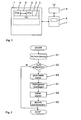
- the chip card 1 shows an embodiment of a chip card 1 designed according to the invention in a possible operating environment in a greatly simplified block diagram.
- the chip card 1 has a microcontroller 2 whose architecture is shown in a highly simplified form and only partially.
- the microcontroller 2 has an operating system 3 which is suitable for executing a plurality of programs at the same time, ie which has multitasking or multithreading properties.
- An operating system with these properties for example, from the above-mentioned WO 02/47020 A2 known for smart cards or removable for computer systems in general from many UNIX manuals.
- multitasking operating systems are not the subject of the solution proposed here and are therefore not explained further.
- the microcontroller 2 implements a time application 4 and a number of further applications 5, only one of which is shown by way of example. Furthermore, an internal interface 6 between the time application 4 and the other applications 5 is provided in the microcontroller 2.
- the internal interface 6 can be designed, for example, as a standardized Java Card3.0 interface.
- the Java SE class can java.util.Calendar be implemented as an interface in a Java Card runtime environment.
- Another possibility for implementing the interface 6 is, for example, the use of the element time.h in conjunction with a POSIX (Portable Operating System Interface for Unix) interface.
- a middleware 7 is shown symbolically in FIG. 1 which is in data connection with the chip card 1.
- the middleware 7 is a software that is implemented in a relative to the chip card 1 external device and with their help, for example, a connection of the chip card 1 to the external device is possible.
- the middleware 7 may be implemented in any programmable device such as a personal computer, a notebook, a cellular phone, and so on. Of particular interest to the invention are devices with access to the Internet or other data network through which services are available that are time-consuming when used.
- the middleware 7 has a time service 8 and is in data connection with a receiver 9.
- the receiver 9 is for receiving time information broadcast by a remote trusted institution.
- time information is provided to the further applications 5 by the time application 4, which may include a date and / or a time. How this is realized in detail will be explained with reference to FIG. 2.
- FIG. 2 shows a flow chart for the operation of the chip card 1 illustrated in FIG. 1. Only process steps associated with the determination and provision of the time information are shown.
- step S1 a mutual authentication between the smart card 1 and the middleware 7 is performed.
- step S2 a step S2 follows, in which the further procedure is made dependent on the result of the authentication. If the authentication failed, the flow of the flowchart is finished.
- step S3 a secure channel is established between the time application 4 of the smart card 1 and the time service 8 of the middleware 7.
- step S3 is followed by a step S4 in which time information is transmitted from the time service 8 of the middleware 7 to the time application 4 of the chip card 1 via the secure channel. This time information is used as an initial value in the manner to be described later.
- the time service 8 of the middleware 7 has previously received this time information from the receiver 9, for example.
- step S5 a step S5 is executed, in which the time application 4 of the chip card 1 starts a counter.
- the counter can either be run autonomously by the time application 4 or with the support of the operating system 3.
- step S6 is carried out, in which the time application 4 provides a current time information for the other applications 5. This current time information can be transferred via the internal interface 6 to each additional application 5, which has a need for this.
- the determination of the current time information is determined on the basis of the initial value transmitted to the time application 4 in step S4 and of the counter started in step S5. For this purpose, for example, it is possible to proceed in such a way that the initial value of the time information is stored and added to the respective current state of the counter. Alternatively, the counter may be started with the initial value of the time information and Thus, the current state of the meter are used directly as current time information.
- step S6 is continued for the entire operating time of the chip card 1, so that the flow of the flowchart ends only with the decommissioning of the chip card 1.
- the decommissioning of the chip card 1 is done in particular by interrupting the operating voltage, which is the chip card 1 provided by an external device.
- the middleware 7 can also be implemented in this external device.
Landscapes
- Engineering & Computer Science (AREA)
- Computer Hardware Design (AREA)
- Microelectronics & Electronic Packaging (AREA)
- Physics & Mathematics (AREA)
- General Physics & Mathematics (AREA)
- Theoretical Computer Science (AREA)
- Storage Device Security (AREA)
- Electromechanical Clocks (AREA)
- Electric Clocks (AREA)
Abstract
Description
- Die Erfindung betrifft ein Verfahren zum Betreiben eines tragbaren Datenträgers. Weiterhin betrifft die Erfindung einen tragbaren Datenträger.
- Tragbare Datenträger können sehr vielfältig eingesetzt werden, beispielsweise zur Abwicklung von Transaktionen des Zahlungsverkehrs, als Ausweisdokumente bei Zugangskontrollen, als Berechtigungsnachweis zur Nutzung eines Mobilfunksystems oder von sonstigen Dienstleistungen usw. Bei einer Reihe von Anwendungsfällen spielen Zeitinformationen eine wichtige Rolle. Beispielsweise sind Zeitinformationen im Hinblick auf Berechtigungen, die für einen begrenzten Zeitraum vergeben werden, von Bedeutung. Außerdem ist bei manchen Anwendungsfällen eine Protokollierung mit Zeitangabe vorgesehen.
- Diesbezüglich ist es bereits bekannt, die benötigten Zeitinformationen von einer externen Einrichtung an den tragbaren Datenträger zu übermitteln. Dies setzt allerdings voraus, dass die externen Zeitinformationen jederzeit für den tragbaren Datenträger verfügbar sind. Bei einer Sicherheitsrelevanz der Zeitinformation ist zudem jeweils vom tragbaren Datenträger zu prüfen, ob diese von einer vertrauenswürdigen Einrichtung stammt. Eine zeitliche Überwachung eines Vorgangs durch den tragbaren Datenträger oder die Realisierung zeitabhängiger Abläufe unter der Kontrolle des tragbaren Datenträgers sind auf diese Weise nur schwer durchführbar, da der tragbare Datenträger hierzu kontinuierlich oder zumindest in kurzen Abständen mit externen Zeitinformationen versorgt werden müsste. Zeitabhängige Bedingungen werden daher in der Regel außerhalb des tragbaren Datenträgers ausgewertet. Beispielsweise aus Gründen der Sicherheit oder einer möglichst effizienten Abwicklung besteht aber bei einer Reihe von Anwendungsfällen der Wunsch, zeitabhängige Bedingungen im tragbaren Datenträger auszuwerten oder sonstige zeitabhängige Aktionen mit dem tragbaren Datenträger durchzuführen.
- Aus der
WO 2004/066195 A1 ist eine sichere elektronische Einheit bekannt, die eine Zeitmesseinrichtung und eine Einrichtung zur Bestätigung einer Information bezüglich eines Datums oder eines Zeitintervalls aufweist. Die Bestätigungseinrichtung empfängt von der Zeitmesseinrichtung Daten bezüglich des Datums oder des Zeitintervalls und erzeugt Bestätigungsdaten der Informationen bezüglich des Datums und des Zeitintervalls, die an eine externe Einheit gerichtet sind. Die Zeitmesseinrichtung weist einen Kondensator auf, dessen Ladungszustand für die Zeitmessung ausgewertet wird. -
WO 02/47020 A2 - Der Erfindung liegt die Aufgabe zugrunde, in einem tragbaren Datenträger mit einem möglichst geringen Aufwand Zeitinformationen verfügbar zu machen.
- Diese Aufgabe wird durch ein Verfahren mit der Merkmalskombination des Anspruchs 1 sowie durch einen tragbaren Datenträger gemäß Anspruch 13 gelöst.
- Das erfindungsgemäße Verfahren ist für den Betrieb eines tragbaren Datenträgers vorgesehen, der eine elektronische Schaltung aufweist, in der mehrere Anwendungen implementiert sind. Die Besonderheit des erfindungsgemäßen Verfahrens besteht darin, dass von einer ersten Anwendung des tragbaren Datenträgers eine Zeitinformation bereitgestellt wird und die Zeitinformation an wenigstens eine weitere Anwendung des tragbaren Datenträgers übergeben wird.
- Die Erfindung hat den Vorteil dass sie mit einem vergleichsweise geringen Aufwand Zeitinformationen innerhalb des tragbaren Datenträgers verfügbar macht. Die Zeitinformationen können von allen Anwendungen des tragbaren Datenträgers genutzt werden, falls dies gewünscht wird. Dadurch können innerhalb des tragbaren Datenträgers Vorgänge zeitabhängig abgewickelt oder überwacht werden. Dabei ist ein zuverlässiger Schutz vor Manipulationen möglich, da sämtliche Auswertungen von zeitabhängigen Ereignissen innerhalb des tragbaren Datenträgers vorgenommen werden können.
- In einem bevorzugten Ausführungsbeispiel wird die Zeitinformation von der ersten Anwendung auf Basis eines Anfangswerts ermittelt. Der Anfangswert der Zeitinformation wird vorzugsweise von einer externen Quelle an die erste Anwendung übermittelt. Durch die Verwendung eines externen Anfangswerts der Zeitinformation ist es nicht erforderlich, dass der tragbare Datenträger permanent betriebsbereit ist, um die Zeitinformation fortlaufend zu aktualisieren. Es ist vielmehr ausreichend, zu Beginn jeder Betriebsphase einen Anfangswert der Zeitinformation an den tragbaren Datenträger zu übermitteln. Dies bedeutet wiederum, dass beim tragbaren Datenträger auf eine interne Energiequelle verzichtet werden kann.
- Bei der externen Quelle kann es sich insbesondere um eine sogenannte Middleware handeln, d.h. eine Software, die nach Art eines Dienstleisters zwischen zwei an sich nicht verbundenen Softwarekomponenten vermittelt. Eine Middleware kann in jedem programmierbaren Gerät implementiert werden, beispielsweise in einem Personalcomputer, in einem Notebook, in einem sonstigen Klein- oder Mikrocomputer, in einem Mobilfunktelefon usw. Von besonderem Interesse für die Erfindung sind die vorstehend genannten und ggf. weitere Geräte, mit denen ein Zugang zum Internet oder einem sonstigen Datennetz möglich ist.
- Um Manipulationen zu verhindern kann für die Übermittlung des Anfangswerts der Zeitinformation ein gesicherter Kanal zwischen der externen Quelle und der ersten Anwendung aufgebaut werden. Ein besonders hohes Sicherheitsniveau läßt sich dadurch erreichen, dass der gesicherte Kanal nach einer erfolgreichen Authentisierung zwischen der externen Quelle und der ersten Anwendung aufgebaut wird. Der Anfangswert der Zeitinformation kann von einer Empfangseinrichtung an die externe Quelle übermittelt werden. Auf diese Weise ist es möglich, einen Anfangwert zu verwenden, der von einer entfernt angeordneten vertrauenswürdigen Institution erzeugt wird.
- Im Rahmen des erfindungsgemäßen Verfahrens kann weiterhin vorgesehen sein, dass bei der Ermittlung der Zeitinformation der Stand eines Zählers berücksichtigt wird. Der Zähler kann ein Bestandteil der ersten Anwendung oder eines Betriebssystems des tragbaren Datenträgers sein. Der Zähler wird vorzugsweise nach der Übermittlung des Anfangswerts der Zeitinformation gestartet. Bei einer ersten Variante wird der Zähler nach der Übermittlung des Anfangswerts der Zeitinformation auf den übermittelten Anfangswert gesetzt. Dies bedeutet, dass der Zähler ab diesem Zeitpunkt jeweils unmittelbar die Zeitinformation repräsentiert. Bei einer weiteren Variante wird der Stand des Zählers zur Ermittlung der Zeitinformation jeweils mit dem Anfangswert der Zeitinformation verknüpft. Bei beiden Varianten muss der Anfangswert der Zeitinformation während einer Betriebsphase des tragbaren Datenträgers nur einmal übermittelt werden. Dennoch sind durch die Nutzung des Zählers während der gesamten Betriebsphase aktuelle Zeitinformationen innerhalb des tragbaren Datenträgers verfügbar.
- Der erfindungsgemäße tragbarer Datenträger weist eine elektronische Schaltung auf, in der mehrere Anwendungen implementiert sind. Die Besonderheit des erfindungsgemäßen tragbaren Datenträgers besteht darin, dass eine erste Anwendung zur Bereitstellung einer Zeitinformation und eine interne Schnittstellte zur Übergabe der Zeitinformation an wenigstens eine weitere Anwendung vorgesehen sind.
- Der erfindungsgemäße tragbare Datenträger hat den Vorteil, dass für die Bereitstellung der Zeitinformation kein zusätzlicher Hardware-Aufwand erforderlich ist.
- Vorzugsweise ist der erfindungsgemäße tragbare Datenträger als eine Chipkarte ausgebildet.
- Die Erfindung wird nachstehend anhand der in der Zeichnung dargestellten Ausführungsbeispiele erläutert, wobei der tragbare Datenträger als eine Chipkarte ausgebildet ist. Die Erfindung bezieht allerdings gleichermaßen auch andere tragbare Datenträger ein. Dabei ist als ein tragbarer Datenträger im Sinn der Erfindung ein Rechnersystem anzusehen, bei dem die Ressourcen, d.h. Speicherressourcen und/oder Rechenkapazität (Rechenleistung) begrenzt sind, z.B. eine Chipkarte (Smart Card, Mikroprozessor-Chipkarte) oder ein Token oder ein Chipmodul zum Einbau in eine Chipkarte oder in ein Token. Der tragbare Datenträger hat einen Körper, in dem eine CPU (ein Mikroprozessor) angeordnet ist, und der jede beliebige standardisierte oder nicht standardisierte Gestalt haben kann, beispielsweise die Gestalt einer flachen Chipkarte ohne Norm oder nach einer Norm wie z.B. ISO 7810 (z.B. ID-1, ID-00, ID-000) oder die eines volumigen Tokens. Der tragbare Datenträger kann weiter eine oder mehrere beliebige Schnittstellen für eine kontaktlose und/oder kontaktbehaftete Kommunikation mit einem Lesegerät oder Datenverarbeitungssystem (z.B. Personal Computer, Workstation, Server) haben.
- Es zeigen:
- Fig. 1
- ein Ausführungsbeispiel einer erfindungsgemäß ausgebildeten Chipkarte in einer möglichen Betriebsumgebung in einer stark vereinfachten Blockdarstellung und
- Fig. 2
- ein Flussdiagramm für den Betrieb der in Fig. 1 dargestellten Chipkarte.
- Fig. 1 zeigt ein Ausführungsbeispiel einer erfindungsgemäß ausgebildeten Chipkarte 1 in einer möglichen Betriebsumgebung in einer stark vereinfachten Blockdarstellung. Die Chipkarte 1 weist einen Mikrocontroller 2 auf, dessen Architektur in stark vereinfachter Form und lediglich zum Teil dargestellt ist.
- Der Mikrocontroller 2 verfügt über ein Betriebssystem 3, das geeignet ist mehrere Programme gleichzeitig auszuführen., d.h. das Multitasking- oder Multithreadingeigenschaften aufweist. Ein Betriebssystem mit diesen Eigenschaften ist beispielsweise aus der eingangs erwähnten
WO 02/47020 A2 - Im Mikrocontroller 2 sind eine Zeitanwendung 4 und eine Reihe weiterer Anwendungen 5, von denen lediglich eine beispielhaft dargestellt ist, implementiert. Weiterhin ist im Mikrocontroller 2 eine interne Schnittstelle 6 zwischen der Zeitanwendung 4 und den weiteren Anwendungen 5 vorgesehen. Die interne Schnittstelle 6 kann beispielsweise als standardisierte Java-Card3.0 Schnittstelle ausgebildet sein. Insbesondere kann die Java SE Klasse java.util.Calendar als Schnittstelle in einer Java Card Laufzeitumgebung realisiert sein. Ein andere Möglichkeit zur Implemetierung der Schnittstelle 6 ist beispielsweise die Nutzung des Elementes time.h in Verbindung mit einer POSIX (Portable Operating System Interface for Unix) Schnittstelle.
- Zusätzlich zur Chipkarte 1 ist in Fig. 1 eine Middleware 7 symbolisch dargestellt die mit der Chipkarte 1 in Datenverbindung steht. Bei der Middleware 7 handelt es sich um eine Software, die in einem bezogen auf die Chipkarte 1 externen Gerät implementiert ist und mit deren Hilfe beispielsweise eine Anbindung der Chipkarte 1 an das externe Gerät möglich ist. Die Middleware 7 kann in einem beliebigen programmierbaren Gerät, beispielsweise in einem Personalcomputer, in einem Notebook, in einem Mobilfunktelefon usw. implementiert sein. Von besonderem Interesse für die Erfindung sind Geräte mit einem Zugang zum Internet oder einem sonstigen Datennetz, über das Dienste verfügbar sind, bei deren Inanspruchnahme die Zeit von Relevanz ist. Die Middleware 7 weist insbesondere einen Zeitservice 8 auf und steht mit einem Empfänger 9 in Datenverbindung. Der Empfänger 9 dient dem Empfang von Zeitinformationen, die von einer entfernt angeordneten vertrauenswürdigen Institution ausgestrahlt werden.
- Während des Betriebs der in Fig. 1 dargestellten Chipkarte 1 wird den weiteren Anwendungen 5 von der Zeitanwendung 4 eine Zeitinformation zur Verfügung gestellt, die ein Datum und/oder eine Uhrzeit beinhalten kann. Wie dies im Einzelnen realisiert wird, wird anhand von Fig. 2 erläutert.
- Fig. 2 zeigt ein Flussdiagramm für den Betrieb der in Fig. 1 dargestellten Chipkarte 1. Dargestellt sind lediglich Verfahrensschritte, die mit der Ermittlung und Bereitstellung der Zeitinformation in Zusammenhang stehen.
- Der Durchlauf des Flussdiagramms beginnt mit einem Schritt S1, in dem eine gegenseitige Authentisierung zwischen der Chipkarte 1 und der Middleware 7 durchgeführt wird. An Schritt S1 schließt sich ein Schritt S2 an, in dem die weitere Vorgehensweise vom Ergebnis der Authentisierung abhängig gemacht wird. Ist die Authentisierung fehlgeschlagen, so ist der Durchlauf des Flussdiagramms beendet. Bei einer erfolgreichen Authentisierung wird als nächstes ein Schritt S3 ausgeführt. Im Schritt S3 wird ein gesicherter Kanal zwischen der Zeitanwendung 4 der Chipkarte 1 und dem Zeitservice 8 der Middleware 7 aufgebaut. Auf Schritt S3 folgt ein Schritt S4, in dem über den gesicherten Kanal eine Zeitinformation vom Zeitservice 8 der Middleware 7 an die Zeitanwendung 4 der Chipkarte 1 übertragen wird. Diese Zeitinformation wird auf die im Folgenden noch näher beschriebene Weise als ein Anfangswert verwendet. Der Zeitservice 8 der Middleware 7 hat diese Zeitinformation beispielsweise zuvor vom Empfänger 9 erhalten.
- Anschließend an Schritt S4 wird ein Schritt S5 ausgeführt, in dem die Zeitanwendung 4 der Chipkarte 1 einen Zähler startet. Der Zähler kann entweder von der Zeitanwendung 4 autark geführt werden oder mit Unterstützung des Betriebssystems 3. Danach wird ein Schritt S6 ausgeführt, in dem die Zeitanwendung 4 eine aktuelle Zeitinformation für die sonstigen Anwendungen 5 bereitstellt. Diese aktuelle Zeitinformation kann über die interne Schnittstelle 6 an jede weitere Anwendung 5 übergeben werden, die hierfür Bedarf hat.
- Die Ermittlung der aktuellen Zeitinformation wird auf Basis des im Schritt S4 an die Zeitanwendung 4 übermittelten Anfangswerts und des im Schritt S5 gestarteten Zählers ermittelt. Hierzu kann beispielsweise so vorgegangen werden, dass der Anfangswert der Zeitinformation gespeichert wird und zum jeweils aktuellen Stand des Zählers addiert wird. Alternativ dazu kann der Zähler mit dem Anfangswert der Zeitinformation gestartet werden und somit der jeweils aktuelle Stand des Zählers direkt als aktuelle Zeitinformation herangezogen werden.
- Die Ausführung des Schritts S6 wird für die gesamte Betriebszeit der Chipkarte 1 fortgesetzt, so dass der Durchlauf des Flussdiagramms erst mit der Außerbetriebnahme der Chipkarte 1 endet. Die Außerbetriebnahme der Chipkarte 1 erfolgt insbesondere durch Unterbrechung der Betriebsspannung, die der Chipkarte 1 von einem externen Gerät zur Verfügung gestellt wird. In diesem externen Gerät kann auch die Middleware 7 implementiert sein.
Claims (15)
- Verfahren zum Betreiben eines tragbaren Datenträgers (1), der eine elektronische Schaltung (2) aufweist, in der mehrere Anwendungen (4, 5) implementiert sind, dadurch gekennzeichnet, dass von einer ersten Anwendung (4) des tragbaren Datenträgers (1) eine Zeitinformation bereitgestellt wird und die Zeitinformation an wenigstens eine weitere Anwendung (5) des tragbaren Datenträgers (1) übergeben wird.
- Verfahren nach Anspruch 1, dadurch gekennzeichnet, dass die Zeitinformation von der ersten Anwendung (4) auf Basis eines Anfangswerts ermittelt wird.
- Verfahren nach Anspruch 2, dadurch gekennzeichnet, dass der Anfangswert der Zeitinformation von einer externen Quelle (7) an die erste Anwendung (4) übermittelt wird.
- Verfahren nach Anspruch 3, dadurch gekennzeichnet, dass es sich bei der externen Quelle (7) um eine Middleware handelt.
- Verfahren nach einem der Ansprüche 2 bis 4, dadurch gekennzeichnet, dass für die Übermittlung des Anfangswerts der Zeitinformation ein gesicherter Kanal zwischen der externen Quelle (7) und der ersten Anwendung (4) aufgebaut wird.
- Verfahren nach Anspruch 5, dadurch gekennzeichnet, dass der gesicherte Kanal nach einer erfolgreichen Authentisierung zwischen der externen Quelle (7) und der ersten Anwendung (4) aufgebaut wird.
- Verfahren nach einem der Ansprüche 3 bis 6, dadurch gekennzeichnet, dass der Anfangswert der Zeitinformation von einer Empfangseinrichtung (9) an die externe Quelle (7) übermittelt wird.
- Verfahren nach einem der vorhergehenden Ansprüche, dadurch gekennzeichnet, dass bei der Ermittlung der Zeitinformation der Stand eines Zählers berücksichtigt wird.
- Verfahren nach Anspruch 8, dadurch gekennzeichnet, dass der Zähler ein Bestandteil der ersten Anwendung (4) oder eines Betriebssystems (3) des tragbaren Datenträgers (1) ist.
- Verfahren nach einem der Ansprüche 8 oder 9, dadurch gekennzeichnet, dass der Zähler nach der Übermittlung des Anfangswerts der Zeitinformation gestartet wird.
- Verfahren nach einem der Ansprüche 8 bis 10, dadurch gekennzeichnet, dass der Zähler nach der Übermittlung des Anfangswerts der Zeitinformation auf den übermittelten Anfangswert gesetzt wird.
- Verfahren nach einem der Ansprüche 8 bis 10, dadurch gekennzeichnet, dass der Stand des Zählers zur Ermittlung der Zeitinformation jeweils mit dem Anfangswert der Zeitinformation verknüpft wird.
- Tragbarer Datenträger mit einer elektronischen Schaltung (2), in der mehrere Anwendungen (4, 5) implementiert sind, dadurch gekennzeichnet, dass eine erste Anwendung (4) zur Bereitstellung einer Zeitinformation und eine interne Schnittstellte (6) zur Übergabe der Zeitinformation an wenigstens eine weitere Anwendung (5) vorgesehen sind.
- Tragbarer Datenträger nach Anspruch 13, dadurch gekennzeichnet, dass er als eine Chipkarte ausgebildet ist.
- Tragbarer Datenträger nach Anspruch 13, dadurch gekennzeichnet, daß er über ein Betriebssystem mit Multitasking- oder Multithreadingeigenschaften verfügt, das geeignet ist, mehrere Programme gleichzeitig auszuführen.
Applications Claiming Priority (1)
| Application Number | Priority Date | Filing Date | Title |
|---|---|---|---|
| DE102005023034A DE102005023034A1 (de) | 2005-05-13 | 2005-05-13 | Verfahren zum Betreiben eines tragbaren Datenträgers |
Publications (3)
| Publication Number | Publication Date |
|---|---|
| EP1724709A2 true EP1724709A2 (de) | 2006-11-22 |
| EP1724709A3 EP1724709A3 (de) | 2008-07-16 |
| EP1724709B1 EP1724709B1 (de) | 2016-09-14 |
Family
ID=36917356
Family Applications (1)
| Application Number | Title | Priority Date | Filing Date |
|---|---|---|---|
| EP06009754.0A Expired - Lifetime EP1724709B1 (de) | 2005-05-13 | 2006-05-11 | Verfahren zum Betreiben eines tragbaren Datenträgers |
Country Status (2)
| Country | Link |
|---|---|
| EP (1) | EP1724709B1 (de) |
| DE (1) | DE102005023034A1 (de) |
Citations (3)
| Publication number | Priority date | Publication date | Assignee | Title |
|---|---|---|---|---|
| WO2002047020A2 (en) | 2000-12-06 | 2002-06-13 | Mobile-Mind, Inc. | Concurrent communication with multiple applications on a smart card |
| FR2844897A1 (fr) | 2002-09-25 | 2004-03-26 | Oberthur Card Syst Sa | Entite electronique securisee avec gestion du temps |
| WO2004066195A1 (fr) | 2002-12-20 | 2004-08-05 | Oberthur Card Systems S.A. | Entité électronique sécurisée permettant une certification du temps |
Family Cites Families (3)
| Publication number | Priority date | Publication date | Assignee | Title |
|---|---|---|---|---|
| US5578808A (en) * | 1993-12-22 | 1996-11-26 | Datamark Services, Inc. | Data card that can be used for transactions involving separate card issuers |
| DE20100158U1 (de) * | 2001-01-05 | 2002-05-08 | Bundesdruckerei GmbH, 10969 Berlin | Identifikations- und Sicherheitskarte aus laminierten und/oder gespritzten Kunststoffen |
| DE10219731A1 (de) * | 2002-05-02 | 2003-11-20 | Giesecke & Devrient Gmbh | Verfahren zur Ausführung einer Datentransaktion mittels einer aus einer Haupt- und einer trennbaren Hilfskomponente bestehenden Transaktionsvorrichtung |
-
2005
- 2005-05-13 DE DE102005023034A patent/DE102005023034A1/de not_active Ceased
-
2006
- 2006-05-11 EP EP06009754.0A patent/EP1724709B1/de not_active Expired - Lifetime
Patent Citations (3)
| Publication number | Priority date | Publication date | Assignee | Title |
|---|---|---|---|---|
| WO2002047020A2 (en) | 2000-12-06 | 2002-06-13 | Mobile-Mind, Inc. | Concurrent communication with multiple applications on a smart card |
| FR2844897A1 (fr) | 2002-09-25 | 2004-03-26 | Oberthur Card Syst Sa | Entite electronique securisee avec gestion du temps |
| WO2004066195A1 (fr) | 2002-12-20 | 2004-08-05 | Oberthur Card Systems S.A. | Entité électronique sécurisée permettant une certification du temps |
Also Published As
| Publication number | Publication date |
|---|---|
| EP1724709A3 (de) | 2008-07-16 |
| DE102005023034A1 (de) | 2006-11-16 |
| EP1724709B1 (de) | 2016-09-14 |
Similar Documents
| Publication | Publication Date | Title |
|---|---|---|
| DE3784824T2 (de) | System zum gewaehren des zugangs in speicherfeldbereiche einer chipkarte fuer mehrere anwendungen. | |
| DE60310139T2 (de) | Erkennung von manipulation an einer chipkartenschnittstelle | |
| DE60100050T2 (de) | Mobiltelefon mit Chipkartenleser | |
| EP0159539A1 (de) | Chipkartensystem | |
| EP2393032B1 (de) | Verfahren zum ausführen einer applikation mit hilfe eines tragbaren datenträgers | |
| EP1188151A1 (de) | Einrichtungen und verfahren zur biometrischen authentisierung | |
| EP2673731B1 (de) | Verfahren zur programmierung eines mobilendgeräte-chips | |
| WO2011131359A1 (de) | Verfahren zur handhabung von elektronischen tickets | |
| EP2885907B1 (de) | Verfahren zur installation von sicherheitsrelevanten anwendungen in einem sicherheitselement eines endgerät | |
| DE102006020683A1 (de) | Kommunikationsverfahren, Kommunikationsvorrichtung, Zugriffssteuerverfahren und Smartcard | |
| EP1525731B1 (de) | Identifikation eines benutzers eines mobilterminals und generierung einer aktionsberechtigung | |
| DE102007041370B4 (de) | Chipkarte, elektronisches Gerät, Verfahren zur Herstellung einer Chipkarte und Verfahren zur Inbenutzungnahme einer Chipkarte | |
| EP1724709B1 (de) | Verfahren zum Betreiben eines tragbaren Datenträgers | |
| WO2001015075A1 (de) | Vorrichtung zum datenaustausch zwischen einer schreib-/leseeinrichtung für kontaktbehaftete chipkarten und einem kontaktlosen datenträger | |
| AT509336B1 (de) | Chipkarte mit autorun-funktion | |
| EP2923264B1 (de) | Verfahren und system zur applikationsinstallation in einem sicherheitselement | |
| DE102008047639A1 (de) | Verfahren und Vorrichtung zum Zugriff auf ein maschinenlesbares Dokument | |
| DE10360998A1 (de) | Schutz von Chips gegen Attacken | |
| EP1152377B1 (de) | Verfahren und Endgerät zur Durchführung von Transaktionen unter Einschaltung eines tragbaren Datenträgers | |
| EP2850553A1 (de) | Elektronisches zugangsschutzsystem, verfahren zum betrieb eines computersystems, chipkarte und firmwarekomponente | |
| EP3963534B1 (de) | Verfahren zum zuordnen eines terminals zu einer typenklasse, und sicherheitselement | |
| DE102007027935A1 (de) | Tragbarer Datenträger und Verfahren zur Personalisierung eines tragbaren Datenträgers | |
| WO2000002170A1 (de) | Verfahren zum schutz von daten auf einem datenträger sowie dazu ausgestaltete chipkarte, lesegerät und chipsatz | |
| WO2004081851A1 (de) | Als eintrittskarte nutzbarer tragbarer datenträger und verfahren zu seiner handhabung | |
| DE102013014187A1 (de) | Verfahren und Vorrichtung zur Übertragung einer Information |
Legal Events
| Date | Code | Title | Description |
|---|---|---|---|
| PUAI | Public reference made under article 153(3) epc to a published international application that has entered the european phase |
Free format text: ORIGINAL CODE: 0009012 |
|
| AK | Designated contracting states |
Kind code of ref document: A2 Designated state(s): AT BE BG CH CY CZ DE DK EE ES FI FR GB GR HU IE IS IT LI LT LU LV MC NL PL PT RO SE SI SK TR |
|
| AX | Request for extension of the european patent |
Extension state: AL BA HR MK YU |
|
| PUAL | Search report despatched |
Free format text: ORIGINAL CODE: 0009013 |
|
| AK | Designated contracting states |
Kind code of ref document: A3 Designated state(s): AT BE BG CH CY CZ DE DK EE ES FI FR GB GR HU IE IS IT LI LT LU LV MC NL PL PT RO SE SI SK TR |
|
| AX | Request for extension of the european patent |
Extension state: AL BA HR MK YU |
|
| 17P | Request for examination filed |
Effective date: 20090116 |
|
| 17Q | First examination report despatched |
Effective date: 20090224 |
|
| AKX | Designation fees paid |
Designated state(s): AT BE BG CH CY CZ DE DK EE ES FI FR GB GR HU IE IS IT LI LT LU LV MC NL PL PT RO SE SI SK TR |
|
| GRAJ | Information related to disapproval of communication of intention to grant by the applicant or resumption of examination proceedings by the epo deleted |
Free format text: ORIGINAL CODE: EPIDOSDIGR1 |
|
| GRAP | Despatch of communication of intention to grant a patent |
Free format text: ORIGINAL CODE: EPIDOSNIGR1 |
|
| GRAP | Despatch of communication of intention to grant a patent |
Free format text: ORIGINAL CODE: EPIDOSNIGR1 |
|
| RIN1 | Information on inventor provided before grant (corrected) |
Inventor name: BSCHORR, WERNER Inventor name: SPITZ, STEPHAN |
|
| INTG | Intention to grant announced |
Effective date: 20160329 |
|
| RIN1 | Information on inventor provided before grant (corrected) |
Inventor name: BSCHORR, WERNER Inventor name: SPITZ, STEPHAN, DR. |
|
| GRAS | Grant fee paid |
Free format text: ORIGINAL CODE: EPIDOSNIGR3 |
|
| GRAA | (expected) grant |
Free format text: ORIGINAL CODE: 0009210 |
|
| AK | Designated contracting states |
Kind code of ref document: B1 Designated state(s): AT BE BG CH CY CZ DE DK EE ES FI FR GB GR HU IE IS IT LI LT LU LV MC NL PL PT RO SE SI SK TR |
|
| REG | Reference to a national code |
Ref country code: GB Ref legal event code: FG4D Free format text: NOT ENGLISH |
|
| REG | Reference to a national code |
Ref country code: CH Ref legal event code: EP |
|
| REG | Reference to a national code |
Ref country code: IE Ref legal event code: FG4D Free format text: LANGUAGE OF EP DOCUMENT: GERMAN |
|
| REG | Reference to a national code |
Ref country code: AT Ref legal event code: REF Ref document number: 829724 Country of ref document: AT Kind code of ref document: T Effective date: 20161015 |
|
| REG | Reference to a national code |
Ref country code: DE Ref legal event code: R096 Ref document number: 502006015153 Country of ref document: DE |
|
| REG | Reference to a national code |
Ref country code: LT Ref legal event code: MG4D |
|
| REG | Reference to a national code |
Ref country code: NL Ref legal event code: MP Effective date: 20160914 |
|
| PG25 | Lapsed in a contracting state [announced via postgrant information from national office to epo] |
Ref country code: LT Free format text: LAPSE BECAUSE OF FAILURE TO SUBMIT A TRANSLATION OF THE DESCRIPTION OR TO PAY THE FEE WITHIN THE PRESCRIBED TIME-LIMIT Effective date: 20160914 Ref country code: FI Free format text: LAPSE BECAUSE OF FAILURE TO SUBMIT A TRANSLATION OF THE DESCRIPTION OR TO PAY THE FEE WITHIN THE PRESCRIBED TIME-LIMIT Effective date: 20160914 |
|
| PG25 | Lapsed in a contracting state [announced via postgrant information from national office to epo] |
Ref country code: LV Free format text: LAPSE BECAUSE OF FAILURE TO SUBMIT A TRANSLATION OF THE DESCRIPTION OR TO PAY THE FEE WITHIN THE PRESCRIBED TIME-LIMIT Effective date: 20160914 Ref country code: ES Free format text: LAPSE BECAUSE OF FAILURE TO SUBMIT A TRANSLATION OF THE DESCRIPTION OR TO PAY THE FEE WITHIN THE PRESCRIBED TIME-LIMIT Effective date: 20160914 Ref country code: NL Free format text: LAPSE BECAUSE OF FAILURE TO SUBMIT A TRANSLATION OF THE DESCRIPTION OR TO PAY THE FEE WITHIN THE PRESCRIBED TIME-LIMIT Effective date: 20160914 Ref country code: SE Free format text: LAPSE BECAUSE OF FAILURE TO SUBMIT A TRANSLATION OF THE DESCRIPTION OR TO PAY THE FEE WITHIN THE PRESCRIBED TIME-LIMIT Effective date: 20160914 Ref country code: GR Free format text: LAPSE BECAUSE OF FAILURE TO SUBMIT A TRANSLATION OF THE DESCRIPTION OR TO PAY THE FEE WITHIN THE PRESCRIBED TIME-LIMIT Effective date: 20161215 |
|
| PG25 | Lapsed in a contracting state [announced via postgrant information from national office to epo] |
Ref country code: RO Free format text: LAPSE BECAUSE OF FAILURE TO SUBMIT A TRANSLATION OF THE DESCRIPTION OR TO PAY THE FEE WITHIN THE PRESCRIBED TIME-LIMIT Effective date: 20160914 Ref country code: EE Free format text: LAPSE BECAUSE OF FAILURE TO SUBMIT A TRANSLATION OF THE DESCRIPTION OR TO PAY THE FEE WITHIN THE PRESCRIBED TIME-LIMIT Effective date: 20160914 |
|
| REG | Reference to a national code |
Ref country code: FR Ref legal event code: PLFP Year of fee payment: 12 |
|
| PG25 | Lapsed in a contracting state [announced via postgrant information from national office to epo] |
Ref country code: BG Free format text: LAPSE BECAUSE OF FAILURE TO SUBMIT A TRANSLATION OF THE DESCRIPTION OR TO PAY THE FEE WITHIN THE PRESCRIBED TIME-LIMIT Effective date: 20161214 Ref country code: PT Free format text: LAPSE BECAUSE OF FAILURE TO SUBMIT A TRANSLATION OF THE DESCRIPTION OR TO PAY THE FEE WITHIN THE PRESCRIBED TIME-LIMIT Effective date: 20170116 Ref country code: CZ Free format text: LAPSE BECAUSE OF FAILURE TO SUBMIT A TRANSLATION OF THE DESCRIPTION OR TO PAY THE FEE WITHIN THE PRESCRIBED TIME-LIMIT Effective date: 20160914 Ref country code: SK Free format text: LAPSE BECAUSE OF FAILURE TO SUBMIT A TRANSLATION OF THE DESCRIPTION OR TO PAY THE FEE WITHIN THE PRESCRIBED TIME-LIMIT Effective date: 20160914 Ref country code: IS Free format text: LAPSE BECAUSE OF FAILURE TO SUBMIT A TRANSLATION OF THE DESCRIPTION OR TO PAY THE FEE WITHIN THE PRESCRIBED TIME-LIMIT Effective date: 20170114 Ref country code: PL Free format text: LAPSE BECAUSE OF FAILURE TO SUBMIT A TRANSLATION OF THE DESCRIPTION OR TO PAY THE FEE WITHIN THE PRESCRIBED TIME-LIMIT Effective date: 20160914 |
|
| REG | Reference to a national code |
Ref country code: DE Ref legal event code: R097 Ref document number: 502006015153 Country of ref document: DE |
|
| PG25 | Lapsed in a contracting state [announced via postgrant information from national office to epo] |
Ref country code: IT Free format text: LAPSE BECAUSE OF FAILURE TO SUBMIT A TRANSLATION OF THE DESCRIPTION OR TO PAY THE FEE WITHIN THE PRESCRIBED TIME-LIMIT Effective date: 20160914 |
|
| REG | Reference to a national code |
Ref country code: DE Ref legal event code: R081 Ref document number: 502006015153 Country of ref document: DE Owner name: GIESECKE+DEVRIENT MOBILE SECURITY GMBH, DE Free format text: FORMER OWNER: GIESECKE & DEVRIENT GMBH, 81677 MUENCHEN, DE |
|
| PLBE | No opposition filed within time limit |
Free format text: ORIGINAL CODE: 0009261 |
|
| STAA | Information on the status of an ep patent application or granted ep patent |
Free format text: STATUS: NO OPPOSITION FILED WITHIN TIME LIMIT |
|
| PG25 | Lapsed in a contracting state [announced via postgrant information from national office to epo] |
Ref country code: DK Free format text: LAPSE BECAUSE OF FAILURE TO SUBMIT A TRANSLATION OF THE DESCRIPTION OR TO PAY THE FEE WITHIN THE PRESCRIBED TIME-LIMIT Effective date: 20160914 |
|
| 26N | No opposition filed |
Effective date: 20170615 |
|
| PG25 | Lapsed in a contracting state [announced via postgrant information from national office to epo] |
Ref country code: LU Free format text: LAPSE BECAUSE OF NON-PAYMENT OF DUE FEES Effective date: 20170531 |
|
| PG25 | Lapsed in a contracting state [announced via postgrant information from national office to epo] |
Ref country code: SI Free format text: LAPSE BECAUSE OF FAILURE TO SUBMIT A TRANSLATION OF THE DESCRIPTION OR TO PAY THE FEE WITHIN THE PRESCRIBED TIME-LIMIT Effective date: 20160914 |
|
| REG | Reference to a national code |
Ref country code: CH Ref legal event code: PL |
|
| GBPC | Gb: european patent ceased through non-payment of renewal fee |
Effective date: 20170511 |
|
| PG25 | Lapsed in a contracting state [announced via postgrant information from national office to epo] |
Ref country code: MC Free format text: LAPSE BECAUSE OF FAILURE TO SUBMIT A TRANSLATION OF THE DESCRIPTION OR TO PAY THE FEE WITHIN THE PRESCRIBED TIME-LIMIT Effective date: 20160914 |
|
| REG | Reference to a national code |
Ref country code: IE Ref legal event code: MM4A |
|
| PG25 | Lapsed in a contracting state [announced via postgrant information from national office to epo] |
Ref country code: CH Free format text: LAPSE BECAUSE OF NON-PAYMENT OF DUE FEES Effective date: 20170531 Ref country code: LI Free format text: LAPSE BECAUSE OF NON-PAYMENT OF DUE FEES Effective date: 20170531 |
|
| PG25 | Lapsed in a contracting state [announced via postgrant information from national office to epo] |
Ref country code: LU Free format text: LAPSE BECAUSE OF NON-PAYMENT OF DUE FEES Effective date: 20170511 |
|
| REG | Reference to a national code |
Ref country code: BE Ref legal event code: MM Effective date: 20170531 |
|
| PG25 | Lapsed in a contracting state [announced via postgrant information from national office to epo] |
Ref country code: GB Free format text: LAPSE BECAUSE OF NON-PAYMENT OF DUE FEES Effective date: 20170511 Ref country code: IE Free format text: LAPSE BECAUSE OF NON-PAYMENT OF DUE FEES Effective date: 20170511 |
|
| REG | Reference to a national code |
Ref country code: FR Ref legal event code: PLFP Year of fee payment: 13 |
|
| REG | Reference to a national code |
Ref country code: AT Ref legal event code: MM01 Ref document number: 829724 Country of ref document: AT Kind code of ref document: T Effective date: 20170511 |
|
| REG | Reference to a national code |
Ref country code: FR Ref legal event code: TP Owner name: GIESECKE+DEVRIENT MOBILE SECURITY GMBH, DE Effective date: 20180619 |
|
| PG25 | Lapsed in a contracting state [announced via postgrant information from national office to epo] |
Ref country code: BE Free format text: LAPSE BECAUSE OF NON-PAYMENT OF DUE FEES Effective date: 20170531 Ref country code: AT Free format text: LAPSE BECAUSE OF NON-PAYMENT OF DUE FEES Effective date: 20170511 |
|
| PG25 | Lapsed in a contracting state [announced via postgrant information from national office to epo] |
Ref country code: HU Free format text: LAPSE BECAUSE OF FAILURE TO SUBMIT A TRANSLATION OF THE DESCRIPTION OR TO PAY THE FEE WITHIN THE PRESCRIBED TIME-LIMIT; INVALID AB INITIO Effective date: 20060511 |
|
| PGFP | Annual fee paid to national office [announced via postgrant information from national office to epo] |
Ref country code: DE Payment date: 20190531 Year of fee payment: 14 |
|
| PGFP | Annual fee paid to national office [announced via postgrant information from national office to epo] |
Ref country code: FR Payment date: 20190521 Year of fee payment: 14 |
|
| PG25 | Lapsed in a contracting state [announced via postgrant information from national office to epo] |
Ref country code: CY Free format text: LAPSE BECAUSE OF NON-PAYMENT OF DUE FEES Effective date: 20160914 |
|
| PG25 | Lapsed in a contracting state [announced via postgrant information from national office to epo] |
Ref country code: TR Free format text: LAPSE BECAUSE OF FAILURE TO SUBMIT A TRANSLATION OF THE DESCRIPTION OR TO PAY THE FEE WITHIN THE PRESCRIBED TIME-LIMIT Effective date: 20160914 |
|
| REG | Reference to a national code |
Ref country code: DE Ref legal event code: R119 Ref document number: 502006015153 Country of ref document: DE |
|
| PG25 | Lapsed in a contracting state [announced via postgrant information from national office to epo] |
Ref country code: FR Free format text: LAPSE BECAUSE OF NON-PAYMENT OF DUE FEES Effective date: 20200531 |
|
| PG25 | Lapsed in a contracting state [announced via postgrant information from national office to epo] |
Ref country code: DE Free format text: LAPSE BECAUSE OF NON-PAYMENT OF DUE FEES Effective date: 20201201 |