EP1714942B1 - Ceramic powder, methods to prepare the ceramic powder and a method to prepare a ceramic - Google Patents
Ceramic powder, methods to prepare the ceramic powder and a method to prepare a ceramic Download PDFInfo
- Publication number
- EP1714942B1 EP1714942B1 EP05291723.4A EP05291723A EP1714942B1 EP 1714942 B1 EP1714942 B1 EP 1714942B1 EP 05291723 A EP05291723 A EP 05291723A EP 1714942 B1 EP1714942 B1 EP 1714942B1
- Authority
- EP
- European Patent Office
- Prior art keywords
- cermet
- powder
- ceramic
- nano
- powders
- Prior art date
- Legal status (The legal status is an assumption and is not a legal conclusion. Google has not performed a legal analysis and makes no representation as to the accuracy of the status listed.)
- Expired - Lifetime
Links
Images






Classifications
-
- A—HUMAN NECESSITIES
- A45—HAND OR TRAVELLING ARTICLES
- A45D—HAIRDRESSING OR SHAVING EQUIPMENT; EQUIPMENT FOR COSMETICS OR COSMETIC TREATMENTS, e.g. FOR MANICURING OR PEDICURING
- A45D20/00—Hair drying devices; Accessories therefor
- A45D20/04—Hot-air producers
- A45D20/08—Hot-air producers heated electrically
- A45D20/10—Hand-held drying devices, e.g. air douches
- A45D20/12—Details thereof or accessories therefor, e.g. nozzles, stands
-
- C—CHEMISTRY; METALLURGY
- C22—METALLURGY; FERROUS OR NON-FERROUS ALLOYS; TREATMENT OF ALLOYS OR NON-FERROUS METALS
- C22C—ALLOYS
- C22C29/00—Alloys based on carbides, oxides, nitrides, borides, or silicides, e.g. cermets, or other metal compounds, e.g. oxynitrides, sulfides
- C22C29/02—Alloys based on carbides, oxides, nitrides, borides, or silicides, e.g. cermets, or other metal compounds, e.g. oxynitrides, sulfides based on carbides or carbonitrides
-
- B—PERFORMING OPERATIONS; TRANSPORTING
- B82—NANOTECHNOLOGY
- B82Y—SPECIFIC USES OR APPLICATIONS OF NANOSTRUCTURES; MEASUREMENT OR ANALYSIS OF NANOSTRUCTURES; MANUFACTURE OR TREATMENT OF NANOSTRUCTURES
- B82Y30/00—Nanotechnology for materials or surface science, e.g. nanocomposites
-
- C—CHEMISTRY; METALLURGY
- C01—INORGANIC CHEMISTRY
- C01B—NON-METALLIC ELEMENTS; COMPOUNDS THEREOF; METALLOIDS OR COMPOUNDS THEREOF NOT COVERED BY SUBCLASS C01C
- C01B21/00—Nitrogen; Compounds thereof
- C01B21/082—Compounds containing nitrogen and non-metals and optionally metals
- C01B21/0828—Carbonitrides or oxycarbonitrides of metals, boron or silicon
-
- C—CHEMISTRY; METALLURGY
- C01—INORGANIC CHEMISTRY
- C01B—NON-METALLIC ELEMENTS; COMPOUNDS THEREOF; METALLOIDS OR COMPOUNDS THEREOF NOT COVERED BY SUBCLASS C01C
- C01B32/00—Carbon; Compounds thereof
- C01B32/90—Carbides
-
- C—CHEMISTRY; METALLURGY
- C01—INORGANIC CHEMISTRY
- C01B—NON-METALLIC ELEMENTS; COMPOUNDS THEREOF; METALLOIDS OR COMPOUNDS THEREOF NOT COVERED BY SUBCLASS C01C
- C01B32/00—Carbon; Compounds thereof
- C01B32/90—Carbides
- C01B32/907—Oxycarbides; Sulfocarbides; Mixture of carbides
-
- C—CHEMISTRY; METALLURGY
- C04—CEMENTS; CONCRETE; ARTIFICIAL STONE; CERAMICS; REFRACTORIES
- C04B—LIME, MAGNESIA; SLAG; CEMENTS; COMPOSITIONS THEREOF, e.g. MORTARS, CONCRETE OR LIKE BUILDING MATERIALS; ARTIFICIAL STONE; CERAMICS; REFRACTORIES; TREATMENT OF NATURAL STONE
- C04B35/00—Shaped ceramic products characterised by their composition; Ceramics compositions; Processing powders of inorganic compounds preparatory to the manufacturing of ceramic products
- C04B35/515—Shaped ceramic products characterised by their composition; Ceramics compositions; Processing powders of inorganic compounds preparatory to the manufacturing of ceramic products based on non-oxide ceramics
- C04B35/56—Shaped ceramic products characterised by their composition; Ceramics compositions; Processing powders of inorganic compounds preparatory to the manufacturing of ceramic products based on non-oxide ceramics based on carbides or oxycarbides
- C04B35/5607—Shaped ceramic products characterised by their composition; Ceramics compositions; Processing powders of inorganic compounds preparatory to the manufacturing of ceramic products based on non-oxide ceramics based on carbides or oxycarbides based on refractory metal carbides
- C04B35/5611—Shaped ceramic products characterised by their composition; Ceramics compositions; Processing powders of inorganic compounds preparatory to the manufacturing of ceramic products based on non-oxide ceramics based on carbides or oxycarbides based on refractory metal carbides based on titanium carbides
-
- C—CHEMISTRY; METALLURGY
- C04—CEMENTS; CONCRETE; ARTIFICIAL STONE; CERAMICS; REFRACTORIES
- C04B—LIME, MAGNESIA; SLAG; CEMENTS; COMPOSITIONS THEREOF, e.g. MORTARS, CONCRETE OR LIKE BUILDING MATERIALS; ARTIFICIAL STONE; CERAMICS; REFRACTORIES; TREATMENT OF NATURAL STONE
- C04B35/00—Shaped ceramic products characterised by their composition; Ceramics compositions; Processing powders of inorganic compounds preparatory to the manufacturing of ceramic products
- C04B35/515—Shaped ceramic products characterised by their composition; Ceramics compositions; Processing powders of inorganic compounds preparatory to the manufacturing of ceramic products based on non-oxide ceramics
- C04B35/56—Shaped ceramic products characterised by their composition; Ceramics compositions; Processing powders of inorganic compounds preparatory to the manufacturing of ceramic products based on non-oxide ceramics based on carbides or oxycarbides
- C04B35/5607—Shaped ceramic products characterised by their composition; Ceramics compositions; Processing powders of inorganic compounds preparatory to the manufacturing of ceramic products based on non-oxide ceramics based on carbides or oxycarbides based on refractory metal carbides
- C04B35/5626—Shaped ceramic products characterised by their composition; Ceramics compositions; Processing powders of inorganic compounds preparatory to the manufacturing of ceramic products based on non-oxide ceramics based on carbides or oxycarbides based on refractory metal carbides based on tungsten carbides
-
- C—CHEMISTRY; METALLURGY
- C04—CEMENTS; CONCRETE; ARTIFICIAL STONE; CERAMICS; REFRACTORIES
- C04B—LIME, MAGNESIA; SLAG; CEMENTS; COMPOSITIONS THEREOF, e.g. MORTARS, CONCRETE OR LIKE BUILDING MATERIALS; ARTIFICIAL STONE; CERAMICS; REFRACTORIES; TREATMENT OF NATURAL STONE
- C04B35/00—Shaped ceramic products characterised by their composition; Ceramics compositions; Processing powders of inorganic compounds preparatory to the manufacturing of ceramic products
- C04B35/515—Shaped ceramic products characterised by their composition; Ceramics compositions; Processing powders of inorganic compounds preparatory to the manufacturing of ceramic products based on non-oxide ceramics
- C04B35/58—Shaped ceramic products characterised by their composition; Ceramics compositions; Processing powders of inorganic compounds preparatory to the manufacturing of ceramic products based on non-oxide ceramics based on borides, nitrides, i.e. nitrides, oxynitrides, carbonitrides or oxycarbonitrides or silicides
- C04B35/58007—Shaped ceramic products characterised by their composition; Ceramics compositions; Processing powders of inorganic compounds preparatory to the manufacturing of ceramic products based on non-oxide ceramics based on borides, nitrides, i.e. nitrides, oxynitrides, carbonitrides or oxycarbonitrides or silicides based on refractory metal nitrides
- C04B35/58014—Shaped ceramic products characterised by their composition; Ceramics compositions; Processing powders of inorganic compounds preparatory to the manufacturing of ceramic products based on non-oxide ceramics based on borides, nitrides, i.e. nitrides, oxynitrides, carbonitrides or oxycarbonitrides or silicides based on refractory metal nitrides based on titanium nitrides, e.g. TiAlON
- C04B35/58021—Shaped ceramic products characterised by their composition; Ceramics compositions; Processing powders of inorganic compounds preparatory to the manufacturing of ceramic products based on non-oxide ceramics based on borides, nitrides, i.e. nitrides, oxynitrides, carbonitrides or oxycarbonitrides or silicides based on refractory metal nitrides based on titanium nitrides, e.g. TiAlON based on titanium carbonitrides
-
- C—CHEMISTRY; METALLURGY
- C04—CEMENTS; CONCRETE; ARTIFICIAL STONE; CERAMICS; REFRACTORIES
- C04B—LIME, MAGNESIA; SLAG; CEMENTS; COMPOSITIONS THEREOF, e.g. MORTARS, CONCRETE OR LIKE BUILDING MATERIALS; ARTIFICIAL STONE; CERAMICS; REFRACTORIES; TREATMENT OF NATURAL STONE
- C04B35/00—Shaped ceramic products characterised by their composition; Ceramics compositions; Processing powders of inorganic compounds preparatory to the manufacturing of ceramic products
- C04B35/622—Forming processes; Processing powders of inorganic compounds preparatory to the manufacturing of ceramic products
- C04B35/626—Preparing or treating the powders individually or as batches ; preparing or treating macroscopic reinforcing agents for ceramic products, e.g. fibres; mechanical aspects section B
- C04B35/62605—Treating the starting powders individually or as mixtures
- C04B35/6261—Milling
- C04B35/62615—High energy or reactive ball milling
-
- C—CHEMISTRY; METALLURGY
- C04—CEMENTS; CONCRETE; ARTIFICIAL STONE; CERAMICS; REFRACTORIES
- C04B—LIME, MAGNESIA; SLAG; CEMENTS; COMPOSITIONS THEREOF, e.g. MORTARS, CONCRETE OR LIKE BUILDING MATERIALS; ARTIFICIAL STONE; CERAMICS; REFRACTORIES; TREATMENT OF NATURAL STONE
- C04B35/00—Shaped ceramic products characterised by their composition; Ceramics compositions; Processing powders of inorganic compounds preparatory to the manufacturing of ceramic products
- C04B35/622—Forming processes; Processing powders of inorganic compounds preparatory to the manufacturing of ceramic products
- C04B35/626—Preparing or treating the powders individually or as batches ; preparing or treating macroscopic reinforcing agents for ceramic products, e.g. fibres; mechanical aspects section B
- C04B35/62605—Treating the starting powders individually or as mixtures
- C04B35/62645—Thermal treatment of powders or mixtures thereof other than sintering
- C04B35/6265—Thermal treatment of powders or mixtures thereof other than sintering involving reduction or oxidation
-
- C—CHEMISTRY; METALLURGY
- C04—CEMENTS; CONCRETE; ARTIFICIAL STONE; CERAMICS; REFRACTORIES
- C04B—LIME, MAGNESIA; SLAG; CEMENTS; COMPOSITIONS THEREOF, e.g. MORTARS, CONCRETE OR LIKE BUILDING MATERIALS; ARTIFICIAL STONE; CERAMICS; REFRACTORIES; TREATMENT OF NATURAL STONE
- C04B35/00—Shaped ceramic products characterised by their composition; Ceramics compositions; Processing powders of inorganic compounds preparatory to the manufacturing of ceramic products
- C04B35/622—Forming processes; Processing powders of inorganic compounds preparatory to the manufacturing of ceramic products
- C04B35/626—Preparing or treating the powders individually or as batches ; preparing or treating macroscopic reinforcing agents for ceramic products, e.g. fibres; mechanical aspects section B
- C04B35/62605—Treating the starting powders individually or as mixtures
- C04B35/62645—Thermal treatment of powders or mixtures thereof other than sintering
- C04B35/6268—Thermal treatment of powders or mixtures thereof other than sintering characterised by the applied pressure or type of atmosphere, e.g. in vacuum, hydrogen or a specific oxygen pressure
-
- C—CHEMISTRY; METALLURGY
- C04—CEMENTS; CONCRETE; ARTIFICIAL STONE; CERAMICS; REFRACTORIES
- C04B—LIME, MAGNESIA; SLAG; CEMENTS; COMPOSITIONS THEREOF, e.g. MORTARS, CONCRETE OR LIKE BUILDING MATERIALS; ARTIFICIAL STONE; CERAMICS; REFRACTORIES; TREATMENT OF NATURAL STONE
- C04B41/00—After-treatment of mortars, concrete, artificial stone or ceramics; Treatment of natural stone
- C04B41/009—After-treatment of mortars, concrete, artificial stone or ceramics; Treatment of natural stone characterised by the material treated
-
- C—CHEMISTRY; METALLURGY
- C04—CEMENTS; CONCRETE; ARTIFICIAL STONE; CERAMICS; REFRACTORIES
- C04B—LIME, MAGNESIA; SLAG; CEMENTS; COMPOSITIONS THEREOF, e.g. MORTARS, CONCRETE OR LIKE BUILDING MATERIALS; ARTIFICIAL STONE; CERAMICS; REFRACTORIES; TREATMENT OF NATURAL STONE
- C04B41/00—After-treatment of mortars, concrete, artificial stone or ceramics; Treatment of natural stone
- C04B41/45—Coating or impregnating, e.g. injection in masonry, partial coating of green or fired ceramics, organic coating compositions for adhering together two concrete elements
- C04B41/50—Coating or impregnating, e.g. injection in masonry, partial coating of green or fired ceramics, organic coating compositions for adhering together two concrete elements with inorganic materials
- C04B41/5053—Coating or impregnating, e.g. injection in masonry, partial coating of green or fired ceramics, organic coating compositions for adhering together two concrete elements with inorganic materials non-oxide ceramics
- C04B41/5057—Carbides
- C04B41/5061—Titanium carbide
-
- C—CHEMISTRY; METALLURGY
- C04—CEMENTS; CONCRETE; ARTIFICIAL STONE; CERAMICS; REFRACTORIES
- C04B—LIME, MAGNESIA; SLAG; CEMENTS; COMPOSITIONS THEREOF, e.g. MORTARS, CONCRETE OR LIKE BUILDING MATERIALS; ARTIFICIAL STONE; CERAMICS; REFRACTORIES; TREATMENT OF NATURAL STONE
- C04B41/00—After-treatment of mortars, concrete, artificial stone or ceramics; Treatment of natural stone
- C04B41/80—After-treatment of mortars, concrete, artificial stone or ceramics; Treatment of natural stone of only ceramics
- C04B41/81—Coating or impregnation
- C04B41/85—Coating or impregnation with inorganic materials
- C04B41/87—Ceramics
-
- A—HUMAN NECESSITIES
- A45—HAND OR TRAVELLING ARTICLES
- A45D—HAIRDRESSING OR SHAVING EQUIPMENT; EQUIPMENT FOR COSMETICS OR COSMETIC TREATMENTS, e.g. FOR MANICURING OR PEDICURING
- A45D2200/00—Details not otherwise provided for in A45D
- A45D2200/20—Additional enhancing means
- A45D2200/202—Ionisation
-
- A—HUMAN NECESSITIES
- A45—HAND OR TRAVELLING ARTICLES
- A45D—HAIRDRESSING OR SHAVING EQUIPMENT; EQUIPMENT FOR COSMETICS OR COSMETIC TREATMENTS, e.g. FOR MANICURING OR PEDICURING
- A45D2200/00—Details not otherwise provided for in A45D
- A45D2200/20—Additional enhancing means
- A45D2200/205—Radiation, e.g. UV, infrared
-
- B—PERFORMING OPERATIONS; TRANSPORTING
- B22—CASTING; POWDER METALLURGY
- B22F—WORKING METALLIC POWDER; MANUFACTURE OF ARTICLES FROM METALLIC POWDER; MAKING METALLIC POWDER; APPARATUS OR DEVICES SPECIALLY ADAPTED FOR METALLIC POWDER
- B22F2998/00—Supplementary information concerning processes or compositions relating to powder metallurgy
- B22F2998/10—Processes characterised by the sequence of their steps
-
- B—PERFORMING OPERATIONS; TRANSPORTING
- B22—CASTING; POWDER METALLURGY
- B22F—WORKING METALLIC POWDER; MANUFACTURE OF ARTICLES FROM METALLIC POWDER; MAKING METALLIC POWDER; APPARATUS OR DEVICES SPECIALLY ADAPTED FOR METALLIC POWDER
- B22F2999/00—Aspects linked to processes or compositions used in powder metallurgy
-
- C—CHEMISTRY; METALLURGY
- C01—INORGANIC CHEMISTRY
- C01P—INDEXING SCHEME RELATING TO STRUCTURAL AND PHYSICAL ASPECTS OF SOLID INORGANIC COMPOUNDS
- C01P2002/00—Crystal-structural characteristics
- C01P2002/50—Solid solutions
-
- C—CHEMISTRY; METALLURGY
- C01—INORGANIC CHEMISTRY
- C01P—INDEXING SCHEME RELATING TO STRUCTURAL AND PHYSICAL ASPECTS OF SOLID INORGANIC COMPOUNDS
- C01P2002/00—Crystal-structural characteristics
- C01P2002/70—Crystal-structural characteristics defined by measured X-ray, neutron or electron diffraction data
- C01P2002/72—Crystal-structural characteristics defined by measured X-ray, neutron or electron diffraction data by d-values or two theta-values, e.g. as X-ray diagram
-
- C—CHEMISTRY; METALLURGY
- C01—INORGANIC CHEMISTRY
- C01P—INDEXING SCHEME RELATING TO STRUCTURAL AND PHYSICAL ASPECTS OF SOLID INORGANIC COMPOUNDS
- C01P2004/00—Particle morphology
- C01P2004/01—Particle morphology depicted by an image
- C01P2004/03—Particle morphology depicted by an image obtained by SEM
-
- C—CHEMISTRY; METALLURGY
- C01—INORGANIC CHEMISTRY
- C01P—INDEXING SCHEME RELATING TO STRUCTURAL AND PHYSICAL ASPECTS OF SOLID INORGANIC COMPOUNDS
- C01P2004/00—Particle morphology
- C01P2004/01—Particle morphology depicted by an image
- C01P2004/04—Particle morphology depicted by an image obtained by TEM, STEM, STM or AFM
-
- C—CHEMISTRY; METALLURGY
- C01—INORGANIC CHEMISTRY
- C01P—INDEXING SCHEME RELATING TO STRUCTURAL AND PHYSICAL ASPECTS OF SOLID INORGANIC COMPOUNDS
- C01P2004/00—Particle morphology
- C01P2004/60—Particles characterised by their size
- C01P2004/64—Nanometer sized, i.e. from 1-100 nanometer
-
- C—CHEMISTRY; METALLURGY
- C04—CEMENTS; CONCRETE; ARTIFICIAL STONE; CERAMICS; REFRACTORIES
- C04B—LIME, MAGNESIA; SLAG; CEMENTS; COMPOSITIONS THEREOF, e.g. MORTARS, CONCRETE OR LIKE BUILDING MATERIALS; ARTIFICIAL STONE; CERAMICS; REFRACTORIES; TREATMENT OF NATURAL STONE
- C04B2235/00—Aspects relating to ceramic starting mixtures or sintered ceramic products
- C04B2235/02—Composition of constituents of the starting material or of secondary phases of the final product
- C04B2235/30—Constituents and secondary phases not being of a fibrous nature
- C04B2235/32—Metal oxides, mixed metal oxides, or oxide-forming salts thereof, e.g. carbonates, nitrates, (oxy)hydroxides, chlorides
- C04B2235/3231—Refractory metal oxides, their mixed metal oxides, or oxide-forming salts thereof
- C04B2235/3232—Titanium oxides or titanates, e.g. rutile or anatase
-
- C—CHEMISTRY; METALLURGY
- C04—CEMENTS; CONCRETE; ARTIFICIAL STONE; CERAMICS; REFRACTORIES
- C04B—LIME, MAGNESIA; SLAG; CEMENTS; COMPOSITIONS THEREOF, e.g. MORTARS, CONCRETE OR LIKE BUILDING MATERIALS; ARTIFICIAL STONE; CERAMICS; REFRACTORIES; TREATMENT OF NATURAL STONE
- C04B2235/00—Aspects relating to ceramic starting mixtures or sintered ceramic products
- C04B2235/02—Composition of constituents of the starting material or of secondary phases of the final product
- C04B2235/30—Constituents and secondary phases not being of a fibrous nature
- C04B2235/32—Metal oxides, mixed metal oxides, or oxide-forming salts thereof, e.g. carbonates, nitrates, (oxy)hydroxides, chlorides
- C04B2235/3231—Refractory metal oxides, their mixed metal oxides, or oxide-forming salts thereof
- C04B2235/3258—Tungsten oxides, tungstates, or oxide-forming salts thereof
-
- C—CHEMISTRY; METALLURGY
- C04—CEMENTS; CONCRETE; ARTIFICIAL STONE; CERAMICS; REFRACTORIES
- C04B—LIME, MAGNESIA; SLAG; CEMENTS; COMPOSITIONS THEREOF, e.g. MORTARS, CONCRETE OR LIKE BUILDING MATERIALS; ARTIFICIAL STONE; CERAMICS; REFRACTORIES; TREATMENT OF NATURAL STONE
- C04B2235/00—Aspects relating to ceramic starting mixtures or sintered ceramic products
- C04B2235/02—Composition of constituents of the starting material or of secondary phases of the final product
- C04B2235/30—Constituents and secondary phases not being of a fibrous nature
- C04B2235/38—Non-oxide ceramic constituents or additives
- C04B2235/3817—Carbides
- C04B2235/3839—Refractory metal carbides
-
- C—CHEMISTRY; METALLURGY
- C04—CEMENTS; CONCRETE; ARTIFICIAL STONE; CERAMICS; REFRACTORIES
- C04B—LIME, MAGNESIA; SLAG; CEMENTS; COMPOSITIONS THEREOF, e.g. MORTARS, CONCRETE OR LIKE BUILDING MATERIALS; ARTIFICIAL STONE; CERAMICS; REFRACTORIES; TREATMENT OF NATURAL STONE
- C04B2235/00—Aspects relating to ceramic starting mixtures or sintered ceramic products
- C04B2235/02—Composition of constituents of the starting material or of secondary phases of the final product
- C04B2235/30—Constituents and secondary phases not being of a fibrous nature
- C04B2235/38—Non-oxide ceramic constituents or additives
- C04B2235/3817—Carbides
- C04B2235/3839—Refractory metal carbides
- C04B2235/3843—Titanium carbides
-
- C—CHEMISTRY; METALLURGY
- C04—CEMENTS; CONCRETE; ARTIFICIAL STONE; CERAMICS; REFRACTORIES
- C04B—LIME, MAGNESIA; SLAG; CEMENTS; COMPOSITIONS THEREOF, e.g. MORTARS, CONCRETE OR LIKE BUILDING MATERIALS; ARTIFICIAL STONE; CERAMICS; REFRACTORIES; TREATMENT OF NATURAL STONE
- C04B2235/00—Aspects relating to ceramic starting mixtures or sintered ceramic products
- C04B2235/02—Composition of constituents of the starting material or of secondary phases of the final product
- C04B2235/30—Constituents and secondary phases not being of a fibrous nature
- C04B2235/38—Non-oxide ceramic constituents or additives
- C04B2235/3817—Carbides
- C04B2235/3839—Refractory metal carbides
- C04B2235/3847—Tungsten carbides
-
- C—CHEMISTRY; METALLURGY
- C04—CEMENTS; CONCRETE; ARTIFICIAL STONE; CERAMICS; REFRACTORIES
- C04B—LIME, MAGNESIA; SLAG; CEMENTS; COMPOSITIONS THEREOF, e.g. MORTARS, CONCRETE OR LIKE BUILDING MATERIALS; ARTIFICIAL STONE; CERAMICS; REFRACTORIES; TREATMENT OF NATURAL STONE
- C04B2235/00—Aspects relating to ceramic starting mixtures or sintered ceramic products
- C04B2235/02—Composition of constituents of the starting material or of secondary phases of the final product
- C04B2235/30—Constituents and secondary phases not being of a fibrous nature
- C04B2235/38—Non-oxide ceramic constituents or additives
- C04B2235/3852—Nitrides, e.g. oxynitrides, carbonitrides, oxycarbonitrides, lithium nitride, magnesium nitride
- C04B2235/3856—Carbonitrides, e.g. titanium carbonitride, zirconium carbonitride
-
- C—CHEMISTRY; METALLURGY
- C04—CEMENTS; CONCRETE; ARTIFICIAL STONE; CERAMICS; REFRACTORIES
- C04B—LIME, MAGNESIA; SLAG; CEMENTS; COMPOSITIONS THEREOF, e.g. MORTARS, CONCRETE OR LIKE BUILDING MATERIALS; ARTIFICIAL STONE; CERAMICS; REFRACTORIES; TREATMENT OF NATURAL STONE
- C04B2235/00—Aspects relating to ceramic starting mixtures or sintered ceramic products
- C04B2235/02—Composition of constituents of the starting material or of secondary phases of the final product
- C04B2235/30—Constituents and secondary phases not being of a fibrous nature
- C04B2235/38—Non-oxide ceramic constituents or additives
- C04B2235/3852—Nitrides, e.g. oxynitrides, carbonitrides, oxycarbonitrides, lithium nitride, magnesium nitride
- C04B2235/3886—Refractory metal nitrides, e.g. vanadium nitride, tungsten nitride
-
- C—CHEMISTRY; METALLURGY
- C04—CEMENTS; CONCRETE; ARTIFICIAL STONE; CERAMICS; REFRACTORIES
- C04B—LIME, MAGNESIA; SLAG; CEMENTS; COMPOSITIONS THEREOF, e.g. MORTARS, CONCRETE OR LIKE BUILDING MATERIALS; ARTIFICIAL STONE; CERAMICS; REFRACTORIES; TREATMENT OF NATURAL STONE
- C04B2235/00—Aspects relating to ceramic starting mixtures or sintered ceramic products
- C04B2235/02—Composition of constituents of the starting material or of secondary phases of the final product
- C04B2235/30—Constituents and secondary phases not being of a fibrous nature
- C04B2235/38—Non-oxide ceramic constituents or additives
- C04B2235/3895—Non-oxides with a defined oxygen content, e.g. SiOC, TiON
-
- C—CHEMISTRY; METALLURGY
- C04—CEMENTS; CONCRETE; ARTIFICIAL STONE; CERAMICS; REFRACTORIES
- C04B—LIME, MAGNESIA; SLAG; CEMENTS; COMPOSITIONS THEREOF, e.g. MORTARS, CONCRETE OR LIKE BUILDING MATERIALS; ARTIFICIAL STONE; CERAMICS; REFRACTORIES; TREATMENT OF NATURAL STONE
- C04B2235/00—Aspects relating to ceramic starting mixtures or sintered ceramic products
- C04B2235/02—Composition of constituents of the starting material or of secondary phases of the final product
- C04B2235/30—Constituents and secondary phases not being of a fibrous nature
- C04B2235/42—Non metallic elements added as constituents or additives, e.g. sulfur, phosphor, selenium or tellurium
- C04B2235/422—Carbon
-
- C—CHEMISTRY; METALLURGY
- C04—CEMENTS; CONCRETE; ARTIFICIAL STONE; CERAMICS; REFRACTORIES
- C04B—LIME, MAGNESIA; SLAG; CEMENTS; COMPOSITIONS THEREOF, e.g. MORTARS, CONCRETE OR LIKE BUILDING MATERIALS; ARTIFICIAL STONE; CERAMICS; REFRACTORIES; TREATMENT OF NATURAL STONE
- C04B2235/00—Aspects relating to ceramic starting mixtures or sintered ceramic products
- C04B2235/02—Composition of constituents of the starting material or of secondary phases of the final product
- C04B2235/30—Constituents and secondary phases not being of a fibrous nature
- C04B2235/44—Metal salt constituents or additives chosen for the nature of the anions, e.g. hydrides or acetylacetonate
-
- C—CHEMISTRY; METALLURGY
- C04—CEMENTS; CONCRETE; ARTIFICIAL STONE; CERAMICS; REFRACTORIES
- C04B—LIME, MAGNESIA; SLAG; CEMENTS; COMPOSITIONS THEREOF, e.g. MORTARS, CONCRETE OR LIKE BUILDING MATERIALS; ARTIFICIAL STONE; CERAMICS; REFRACTORIES; TREATMENT OF NATURAL STONE
- C04B2235/00—Aspects relating to ceramic starting mixtures or sintered ceramic products
- C04B2235/02—Composition of constituents of the starting material or of secondary phases of the final product
- C04B2235/30—Constituents and secondary phases not being of a fibrous nature
- C04B2235/44—Metal salt constituents or additives chosen for the nature of the anions, e.g. hydrides or acetylacetonate
- C04B2235/442—Carbonates
-
- C—CHEMISTRY; METALLURGY
- C04—CEMENTS; CONCRETE; ARTIFICIAL STONE; CERAMICS; REFRACTORIES
- C04B—LIME, MAGNESIA; SLAG; CEMENTS; COMPOSITIONS THEREOF, e.g. MORTARS, CONCRETE OR LIKE BUILDING MATERIALS; ARTIFICIAL STONE; CERAMICS; REFRACTORIES; TREATMENT OF NATURAL STONE
- C04B2235/00—Aspects relating to ceramic starting mixtures or sintered ceramic products
- C04B2235/02—Composition of constituents of the starting material or of secondary phases of the final product
- C04B2235/50—Constituents or additives of the starting mixture chosen for their shape or used because of their shape or their physical appearance
- C04B2235/54—Particle size related information
- C04B2235/5418—Particle size related information expressed by the size of the particles or aggregates thereof
- C04B2235/5436—Particle size related information expressed by the size of the particles or aggregates thereof micrometer sized, i.e. from 1 to 100 micron
-
- C—CHEMISTRY; METALLURGY
- C04—CEMENTS; CONCRETE; ARTIFICIAL STONE; CERAMICS; REFRACTORIES
- C04B—LIME, MAGNESIA; SLAG; CEMENTS; COMPOSITIONS THEREOF, e.g. MORTARS, CONCRETE OR LIKE BUILDING MATERIALS; ARTIFICIAL STONE; CERAMICS; REFRACTORIES; TREATMENT OF NATURAL STONE
- C04B2235/00—Aspects relating to ceramic starting mixtures or sintered ceramic products
- C04B2235/02—Composition of constituents of the starting material or of secondary phases of the final product
- C04B2235/50—Constituents or additives of the starting mixture chosen for their shape or used because of their shape or their physical appearance
- C04B2235/54—Particle size related information
- C04B2235/5418—Particle size related information expressed by the size of the particles or aggregates thereof
- C04B2235/5445—Particle size related information expressed by the size of the particles or aggregates thereof submicron sized, i.e. from 0,1 to 1 micron
-
- C—CHEMISTRY; METALLURGY
- C04—CEMENTS; CONCRETE; ARTIFICIAL STONE; CERAMICS; REFRACTORIES
- C04B—LIME, MAGNESIA; SLAG; CEMENTS; COMPOSITIONS THEREOF, e.g. MORTARS, CONCRETE OR LIKE BUILDING MATERIALS; ARTIFICIAL STONE; CERAMICS; REFRACTORIES; TREATMENT OF NATURAL STONE
- C04B2235/00—Aspects relating to ceramic starting mixtures or sintered ceramic products
- C04B2235/02—Composition of constituents of the starting material or of secondary phases of the final product
- C04B2235/50—Constituents or additives of the starting mixture chosen for their shape or used because of their shape or their physical appearance
- C04B2235/54—Particle size related information
- C04B2235/5418—Particle size related information expressed by the size of the particles or aggregates thereof
- C04B2235/5454—Particle size related information expressed by the size of the particles or aggregates thereof nanometer sized, i.e. below 100 nm
-
- C—CHEMISTRY; METALLURGY
- C04—CEMENTS; CONCRETE; ARTIFICIAL STONE; CERAMICS; REFRACTORIES
- C04B—LIME, MAGNESIA; SLAG; CEMENTS; COMPOSITIONS THEREOF, e.g. MORTARS, CONCRETE OR LIKE BUILDING MATERIALS; ARTIFICIAL STONE; CERAMICS; REFRACTORIES; TREATMENT OF NATURAL STONE
- C04B2235/00—Aspects relating to ceramic starting mixtures or sintered ceramic products
- C04B2235/02—Composition of constituents of the starting material or of secondary phases of the final product
- C04B2235/50—Constituents or additives of the starting mixture chosen for their shape or used because of their shape or their physical appearance
- C04B2235/54—Particle size related information
- C04B2235/549—Particle size related information the particle size being expressed by crystallite size or primary particle size
-
- C—CHEMISTRY; METALLURGY
- C04—CEMENTS; CONCRETE; ARTIFICIAL STONE; CERAMICS; REFRACTORIES
- C04B—LIME, MAGNESIA; SLAG; CEMENTS; COMPOSITIONS THEREOF, e.g. MORTARS, CONCRETE OR LIKE BUILDING MATERIALS; ARTIFICIAL STONE; CERAMICS; REFRACTORIES; TREATMENT OF NATURAL STONE
- C04B2235/00—Aspects relating to ceramic starting mixtures or sintered ceramic products
- C04B2235/70—Aspects relating to sintered or melt-casted ceramic products
- C04B2235/74—Physical characteristics
- C04B2235/77—Density
-
- C—CHEMISTRY; METALLURGY
- C04—CEMENTS; CONCRETE; ARTIFICIAL STONE; CERAMICS; REFRACTORIES
- C04B—LIME, MAGNESIA; SLAG; CEMENTS; COMPOSITIONS THEREOF, e.g. MORTARS, CONCRETE OR LIKE BUILDING MATERIALS; ARTIFICIAL STONE; CERAMICS; REFRACTORIES; TREATMENT OF NATURAL STONE
- C04B2235/00—Aspects relating to ceramic starting mixtures or sintered ceramic products
- C04B2235/70—Aspects relating to sintered or melt-casted ceramic products
- C04B2235/80—Phases present in the sintered or melt-cast ceramic products other than the main phase
- C04B2235/81—Materials characterised by the absence of phases other than the main phase, i.e. single phase materials
Definitions
- a cermet means ceramic metal composite sinter.
- the cermet includes hard phase of TiC and Ti(CN) and binding phase of metal such as Ni, Co, Fe, etc., and an additive such as carbide, nitride, carbo-nitride, etc. of IV, V and VI Group metals of the periodic table.
- a cermet is prepared by mixing hard ceramic powders of WC, NbC, TaC, Mo 2 C, etc., in addition to TiC or Ti(CN), with metal powders of Co, Ni, etc., which is matrix phase for binding the ceramic powders, and sintering the mixture under a vacuum or hydrogen atmosphere.
- the cermet having such core/rim structure still has a problem in that the cermet has toughness lower than that of WC-Co hard alloy, so that the cermet cannot yet replace WC-Co completely.
- the object of the present invention is to provide a ceramic, a method for preparing the ceramic powder, and a method for preparing the ceramic, wherein the problem of low toughness due to high hardness that conventional cermets (especially TiC or Ti(CN) based cermet) have is resolved because a complete solid-solution phase without core/rim structure can be obtained as a microstructure, and wherein further increased the hardness as well as the toughness, thereby substantially and considerably increasing general mechanical properties of materials using the ceramic or the cermet and thus substituting WC-Co hard material and allowing manufacturing of cutting tools with high hardness and toughness, and wherein the complete solid-solution phase without core/rim structure can be obtained even in the reducing and carburizing condition of low temperature of 1300 °C or less and relatively short time, thereby increasing an efficiency of the overall process.
- a ceramic powder comprising a carbide or a carbo-nitride of Ti and at least one further element of metal selected from IV, V and VI Group metals of the periodic table, and having nano-sized crystallites of 100 nm or less and a homogenous microstructure consisting of a single complete solid-solution phase, wherein the amount of the further element besides Ti in the form of its carbide or carbonitride is 5 ⁇ 90wt% relative to total weight of the powder.
- the amount of W is 30 ⁇ 90wt%, and the amount of Mo, Nb and/or Ta is below 10wt% if added.
- the cermet powder is an agglomerate comprising (i) a carbide, a carbo-nitride or mixture thereof of at least two elements of metals selected, including Ti, from IV, V and VI Group metals of periodic table, and (ii) at least one element of metals selected from Ni, Co and Fe, the agglomerate having a microstructure of a complete solid-solution phase.
- the amount of W is 10 ⁇ 85wt%, and the amount of Mo, Nb and/or Ta is below 10wt% if added, and the amount of binding phase of Ni, Co and/or Fe is below 30wt%.
- the cermet further comprises one or more reinforced coating layers of TiC, TiN, Ti(CN), TiAIN or TiAlCrN on the surface of the cermet, the reinforced coating layers being formed with CVD or PVD method after sintering the cermet powder.
- the method further comprises the process of forming one or more reinforced coating layers of TiC-Me, Ti(CN)-Me, (Ti, M1, M2..)C-Me or (Ti, M1, M2..)(CN)-Me (Me is a binding phase, which is one or more selected from the group consisting of Ni, Co, Fe) on the surface of the ceramic, the reinforced coating layers being formed with CVD or PVD method after sintering the ceramic powder.
- a method for preparing cermet powder comprising the steps of: mixing (i) oxides, hydroxides, carbonates or hydrates having nano size of at least one element of metals selected from Ni, Co and Fe, (ii) oxides, hydroxides, carbonates or hydrates having nano size of at least one element of metals selected from IV, V and VI Group metals of periodic table, and (iii) carbon powders or carbon source material, in a predetermined composition (S1-3); and reducing and carburizing the mixture of (i), (ii) and (iii) (S2).
- the primary step for preparing cermet powder includes oxides, hydroxides, carbonates or hydrates having micron size of metals selected, preferably including Ti, from IV, V, VI Group elements of periodic table and binder such as Ni, Co or Fe having micron size with carbon powders or carbon source material, and grinding the mixture to nano size or amorphous state.
- micron-sized binder metal such as Ni, Co, etc.
- performed is mixing oxides, hydroxides, carbonates or hydrates having nano or micron size of metal selected, preferably including Ti, from IV, V, VI Group elements of periodic table and carbon powders or carbon source material with the micron-sized binding metal, and then performed is grinding the mixture to nano size or amorphous state.
- a homogeneous microstructure consisting of a complete solid-solution phase without a core/rim structure can be attained.
- a ceramic or cermet can be attained with a direct sintering of the ceramic powder or the cermet powder without additional mixing processes.
- reducing and carburizing at low temperature of 1300 °C or less and relatively short time which means the increment of the efficiency of the overall process, are possible as shown below by producing nanocrystalline or amorphous phase with full of defects, which increases the diffusion velocity and decreases the diffusion distance.
- the second step for preparing ceramic powder and cermet powder includes reducing and carburizing. If necessary, the second step includes reducing, carburizing and nitriding (S2).
- reducing and carburizing are conducted through an annealing for 3 hours or less at a temperature of 1000 to 1300°C (it should be noted that such a low temperature and relatively short time can be realized) under a vacuum or hydrogen atmosphere, and then nitriding is conducted, so that minimum quantity of oxygen and proper quantity of carbon and nitrogen are secured to prevent the formation of voids and to improve the mechanical properties of the cermet.
- the anatase-TiO 2 of purity 99+%, NiO of purity 99% (avg. particle size of 45 ⁇ m) and WO 3 of purity 99+% (avg. particle size of 20 ⁇ m) were used.
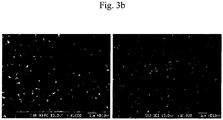
- FIG. 3a shows photographs of a microstructure of the sintered specimens having the compositions (i) and (ii), in which the left photograph indicates a case of composition (i), and the right photograph indicates a case of composition (ii).
- the cermets were sintered at 1450°C for 1hour after carbothermal reduction at 1200°C for 1hours.
- Table 3 WC content (wt%) Relative density (%) Hardness (GPa) Toughness (MPam 1/2 ) 85 95 13.5 10.5 80 98 15.3 11.7 70 99 15.0 11.9 60 100 15.4 9.5 WC-10Co (ref.) >98 13-14 11-12
- Table 4 shows mechanical properties of the cermet prepared by an example of the present description. For comparison, an evaluation was conducted for a cermet fabricated by micron sized commercial powders with the same composition.
- Table 4-1 Sintering condition Composition Compact density Sintering density Mechanical Charicteristic Porosity (g/cm 3 ) (%) (g/cm 3 ) (%) H V (GPa)
- K IC MPam 1/2 ) 1510°C 1hour (Ti,W)C-Ni 15 wt.% WC 3.97 63.6 6.13 100 12.3 13.2 A2B1 30 wt.% WC 4.55 63.9 7.05 100 11.1 13.8 A2B2 (Ti, W)(C,N)-Ni 15 wt.% WC 3.58 57.3 6.16 98.8 12.2 12.8
- the cermet prepared had a high sintering density and a low porosity even in case of the simple composition of the cermet. Furthermore, a value of K IC in the cermet was of a high toughness of 11 ⁇ 14 MPam 1/2 while that of the comparison example was of a toughness of 6 ⁇ 8 MPam 1/2 . From this, it can be estimated that the cermet may become to be widely utilized comparing with that of the prior art. A high sintering density, a low porosity, a high toughness and a high hardness are also shown in the ceramic, as Table 4-2 shows.
- a simple target composition has been firstly selected, and to this end, TiO 2 , WO 3 , NiO nano oxides having a 100nm crystallite size according to the respective contents has been prepared.
- compositions were selected as follows: (i) (Ti,W)C-Ni (containing 15wt% of WC), (ii) (Ti,W)C-Ni (containing 30wt% of WC), (iii) (Ti,W)CN-Ni (containing 15wt% of WC) and (iv) (Ti,W)CN-Ni (containing 30wt% of WC), whereby the cermet powders fall outside of the scope of the invention as claimed.
- Carbon powders and above nano oxides prepared were mixed and ground, and the ground nano powders were annealed at 1300°C for two hours under a vacuum or hydrogen, CH 4 , CO/CO 2 atmosphere to be reduced, and carburized. In case of carbo-nitride, nitrogen was injected into a vacuum furnace.
- a ceramic powder, a method for preparing the ceramic powder, a ceramic using the ceramic powder, a method for preparing the ceramic, a cermet powder including the ceramic powder, a method for preparing the cermet powder, a cermet using the cermet powder and a method for preparing the cermet can resolve a problem that the cermet such as TiC or Ti(CN) based cermet of the prior art had a lower toughness due to its high hardness, and provide the further improvement of the hardness as well as the toughness, so that it can be properly used in cutting tools, die materials and so on substituting the conventional WC-Co.
Landscapes
- Chemical & Material Sciences (AREA)
- Engineering & Computer Science (AREA)
- Ceramic Engineering (AREA)
- Organic Chemistry (AREA)
- Materials Engineering (AREA)
- Manufacturing & Machinery (AREA)
- Structural Engineering (AREA)
- Inorganic Chemistry (AREA)
- Physics & Mathematics (AREA)
- Nanotechnology (AREA)
- Thermal Sciences (AREA)
- Condensed Matter Physics & Semiconductors (AREA)
- Crystallography & Structural Chemistry (AREA)
- General Physics & Mathematics (AREA)
- Mechanical Engineering (AREA)
- Metallurgy (AREA)
- Composite Materials (AREA)
- Powder Metallurgy (AREA)
- Cutting Tools, Boring Holders, And Turrets (AREA)
- Ceramic Products (AREA)
- Manufacture Of Metal Powder And Suspensions Thereof (AREA)
- Physical Vapour Deposition (AREA)
- Chemical Vapour Deposition (AREA)
Description
- The present invention relates to a ceramic powder, a method for preparing the ceramic powder, and a method for preparing the ceramic, which are adapted to materials for high-speed cutting tools and die used in a machine industry such as manufacture of machine, an automotive industry and so on, in order to improve general mechanical properties, particularly toughness and hardness for the materials.
- In this context, "nano size" means the size of 100mn or less as is known well.
- In this context, the capital letter of W, M1, M2... and the small letter of w, m1, m2..are used simultaneously. It is intended that the small letter of w, m1, m2..are meant to show small amount of metal relatively in comparison with the capital letter W, M1, M2···.
- For major cutting tools or wear-resistance tools utilized in metal cutting required for a machine industry, WC based hard alloys, various TiC or Ti(CN) based cermet alloys and other ceramic or high-speed steels, etc. are used.
- A cermet means ceramic metal composite sinter. Usually, the cermet includes hard phase of TiC and Ti(CN) and binding phase of metal such as Ni, Co, Fe, etc., and an additive such as carbide, nitride, carbo-nitride, etc. of IV, V and VI Group metals of the periodic table.
- That is, uaually, a cermet is prepared by mixing hard ceramic powders of WC, NbC, TaC, Mo2C, etc., in addition to TiC or Ti(CN), with metal powders of Co, Ni, etc., which is matrix phase for binding the ceramic powders, and sintering the mixture under a vacuum or hydrogen atmosphere.
- Titanium carbide and titanium carbo-nitride are excellent hard materials with broad applications. As titanium carbide has a high hardness (Vicker's = 3200kg/mm2), high melting points (3260°C), high chemical and thermal stability, high wear-resistance and high solvency for other carbides, it has been used for high-speed cutting tools in substitution of WC-Co alloy. However, in the TiC-Ni cermet system, coarsening of TiC grains results in poor mechanical properties. Further, in case of preparing a cermet using TiC, upon sintered, binding phase metal of Ni is used as a liquid metal, so that a wetting angle comes to be large in comparison with that of a combination of WC-Co and rapid grain growth of TiC comes to occur, which cause the problem of reducing a toughness of the cermet.
- Nevertheless, in 1956, Ford Motor Company mass-fabricated TiC-Mo2C-Ni cermet. Although the toughness of the cermet was not largely improved, the cermet had been used in semi-finishing and finishing as material for high hardness tools for precise machining operations.
- In the 1960's and 1970's, to improve the toughness that was a great weakness of the TiC-Ni cermet system, there had been an attempt to add various kinds of elements thereto, which, however, could not have attained tangible results.
- On the way, in the 1970's, performed was adding TiN to TiC in order to form Ti(C,N) of a more stable thermodynamic phase, which could improve toughness in a certain degree.
- That is, since Ti(C,N) had a micro fine structure in comparison with TiC, toughness thereof had been improved, in addition to a chemical stability and a mechanical shock resistance.
- Meanwhile, to improve toughness, various additive carbides such as WC, Mo2C, TaC, NbC, etc. have been used, and even now products in the form of Ti(C,N)-M1C-M2C-···-Ni/Co are commercializing.
- When adapting the additive carbides for the improvement of toughness, a general microstructure of TiC based or Ti(C,N) based cermet sinter is observed as a core/rim structure of hard phase, around which Ni, Co, etc. of binding phase surround.
- The core of the structure is undissolved TiC or Ti(C,N) in liquefied metal binder (Ni, Co and so on) during sintering, the core having a structure with high hardness.
- On the contrary, a structure of rim surrounding the core is a solid-solution of TiC or Ti(CN), which is the component of the core, and the carbides, which are the additives [the solid-solution is expressed as (Ti,M1,M2···)(C,N)].
- The structure of rim has high toughness rather than hardness. Therefore, in order to resolve the fatal weakness of toughness that simple cermet such as TiC or Ti(C,N)-Ni has, the structure of rim has been provided in the cermet.
- However, the cermet having such core/rim structure still has a problem in that the cermet has toughness lower than that of WC-Co hard alloy, so that the cermet cannot yet replace WC-Co completely.
- Further, the strain developed at the interface between core and rim phases exerts a negative effect on the properties, facilitating crack propagation through the interface during machining. Thus, many efforts have been performed steadily by Japanese tool companies such as Sumitomo, Kyocera, etc. and researchers of EU and NATO to produce a homogeneous solid-solution of single phase without core/rim structure. However, many industrial attempts targeting this homogeneity have failed to provide it.
- In particular, according to the prior art, it was impossible to attain a homongeneous solid-solution phase without core/rim structure in the reducing and carburiznig condition of low temperature of 1300 °C or less and relatively short time because the solid-solution phase is formed during a sintering process and an amount of the solid-solution phase formed depends on a temperature and time of the sintering process, which require high temperature of 1400 °C or more and relatively long time.
US 5,380,688 andUS 5,166,103 disclose solid solution carbide powders and methods for making the same. - Accordingly, the present invention has been made to solve the above-mentioned problems occurring in the prior art.
- The object of the present invention is to provide a ceramic, a method for preparing the ceramic powder, and a method for preparing the ceramic, wherein the problem of low toughness due to high hardness that conventional cermets (especially TiC or Ti(CN) based cermet) have is resolved because a complete solid-solution phase without core/rim structure can be obtained as a microstructure, and wherein further increased the hardness as well as the toughness, thereby substantially and considerably increasing general mechanical properties of materials using the ceramic or the cermet and thus substituting WC-Co hard material and allowing manufacturing of cutting tools with high hardness and toughness, and wherein the complete solid-solution phase without core/rim structure can be obtained even in the reducing and carburizing condition of low temperature of 1300 °C or less and relatively short time, thereby increasing an efficiency of the overall process.
- In order to achieve the object, according to the present invention, there is provided a ceramic powder comprising a carbide or a carbo-nitride of Ti and at least one further element of metal selected from IV, V and VI Group metals of the periodic table, and having nano-sized crystallites of 100 nm or less and a homogenous microstructure consisting of a single complete solid-solution phase, wherein the amount of the further element besides Ti in the form of its carbide or carbonitride is 5∼90wt% relative to total weight of the powder.
- In the ceramic powder according to the present invention, the amount of W is 10∼90wt%.
- In the ceramic powder according to the present invention, the amount of W is 10∼80wt%, and the amount of Mo, Nb and/or Ta is below 25wt% if added.
- In the ceramic powder according to the present invention, the amount of W is 10∼80wt%, and the amount of Mo, Nb and/or Ta is below 10wt% if added.
- In the ceramic powder according to the present invention, the amount of W is 30∼90wt%, and the amount of Mo, Nb and/or Ta is below 10wt% if added.
- Further, according to the present invention, there is provided a ceramic being a sinter of the ceramic powder.
- In the ceramic according to the present invention, the ceramic further comprises one or more reinforced coating layers of TiC-Me, Ti(CN)-Me, (Ti, M1, M2..)C-Me or (Ti, M1, M2..)(CN)-Me (Me is a binding phase, which is one or more selected from the group consisting of Ni, Co, Fe) on the surface of the ceramic, the reinforced coating layer being formed with CVD or PVD method after sintering the ceramic powder.
- Further, here is disclosed a cermet powder being an agglomerate comprising (i) a carbide, a carbo-nitride or mixture thereof of at least one element of metals selected from IV, V and VI Group metals of periodic table, and (ii) at least one element of metals selected from Ni, Co and Fe, the agglormerate having a microstructure of a complete solid-solution phase.
- The cermet powder is an agglomerate comprising (i) a carbide, a carbo-nitride or mixture thereof of at least two elements of metals selected, including Ti, from IV, V and VI Group metals of periodic table, and (ii) at least one element of metals selected from Ni, Co and Fe, the agglomerate having a microstructure of a complete solid-solution phase.
- In the cermet powder, the agglomerate has nano-sized crystallites of 100nm or less.
- In the cermet powder, the amount of W is 10∼85wt%, and the amount of Mo, Nb and/or Ta is below 10wt% if added, and the amount of binding phase of Ni, Co and/or Fe is below 30wt%.
- In the cermet powder, the amount of W is 10∼60wt%, and the amount of Mo, Nb and/or Ta is below 10wt% if added, and the amount of binding phase of Ni, Co and/or Fe is below 30wt%.
- Further, there is disclosed a cermet being a sinter of the cermet powder.
- The cermet is a sinter of the mixture of the cermet powder of TiC-Me or Ti(CN)-Me having nano-sized crystallites of 100nm or less (Me is a binding phase, which is one or more selected from the group consisting of Ni, Co, Fe) and the cermet powder of one or more selected from the group consisting of WC-Me, Mo2C-Me, TaC-Me, NbC-Me, ZrC-Me and/or HfC-Me, all of which have nano-sized crystallites of 100nm or less (Me is a binding phase, which is one or more selected from the group consisting of Ni, Co, Fe), and the sinter has core of TiC or Ti(CN).
- The cermet is a sinter of the mixture of the cermet powder of TiC-Me or Ti(CN)-Me having nano-sized crystallites of 100nm or less (Me is a binding phase, which is one or more selected from the group consisting of Ni, Co, Fe) and the cermet powder which is an agglomerate comprising (i) a carbide, a carbo-nitride or mixture thereof of at least two elements of metals selected, including Ti, from IV, V and VI Group metals of periodic table, and (ii) at least one element of metals selected from Ni, Co and Fe, the agglomerate having complete solid-solution and nano-sized crystallites of 100nm or less.
- The cermet further comprises a hard phase of TiC, Ti(CN), (Ti,M1,M2..)C or (Ti,M1,M2..)(CN) only on the surface of the cermet, the hard phase being formed with sintering the cermet powder under the control of amount of nitrogen introduced to a furnace and/or time of introducing nitrogen to a furnace during the sintering.
- The cermet further comprises one or more reinforced coating layers of TiC, TiN, Ti(CN), TiAIN or TiAlCrN on the surface of the cermet, the reinforced coating layers being formed with CVD or PVD method after sintering the cermet powder.
- Further, according to the present invention, there is provided a method for preparing a ceramic powder, comprising the steps of: mixing oxides, hydroxides, carbonates or hydrates having nano size of at least two elements of metals selected, including Ti, from IV, V and VI Group metals of periodic table with carbon powder or carbon source material, in a predetermined composition (S1-1); and reducing and carburizing the mixture (S2).
- In the method according to the present invention, the step (S1-1) further comprises grinding the mixture.
- Further, according to the present invention, there is provided a method for preparing a ceramic powder, comprising the steps of: mixing oxides, hydroxides, carbonates or hydrates having micron size of at least two elements of metals selected, including Ti, from IV, V and VI Group metals of periodic table with carbon powders or carbon source material, in a predetermined composition, and grinding the mixture to nano size or amorphous state (S1-2); and reducing and carburizing the mixture (S2).
- Further, according to the present invention, there is provided a method for preparing a ceramic, the method comprising the step of: sintering the ceramic powder.
- In the method according to the present invention, the method further comprises the process of forming one or more reinforced coating layers of TiC-Me, Ti(CN)-Me, (Ti, M1, M2..)C-Me or (Ti, M1, M2..)(CN)-Me (Me is a binding phase, which is one or more selected from the group consisting of Ni, Co, Fe) on the surface of the ceramic, the reinforced coating layers being formed with CVD or PVD method after sintering the ceramic powder.
- Further, there is disclosed a method for preparing cermet powder, the method comprising the steps of: mixing (i) oxides, hydroxides, carbonates or hydrates having nano size of at least one element of metals selected from Ni, Co and Fe, (ii) oxides, hydroxides, carbonates or hydrates having nano size of at least one element of metals selected from IV, V and VI Group metals of periodic table, and (iii) carbon powders or carbon source material, in a predetermined composition (S1-3); and reducing and carburizing the mixture of (i), (ii) and (iii) (S2).
- In the method, the step of (S1-3) comprises mixing (i) oxides, hydroxides, carbonates or hydrates having nano size of at least one element of metals selected from Ni, Co and Fe, (ii) oxides, hydroxides, carbonates or hydrates having nano size of at least two elements of metals selected, including Ti, from IV, V and VI Group metals of periodic table, and (iii) carbon powders or carbon source material, in a predetermined composition.
- In the method, the step (S1-3) further comprises grinding the mixture of (i), (ii) and (iii).
- Further, there is disclosed a method for preparing cermet powder, the method comprising the steps of: mixing (i) oxides, hydroxides, carbonates or hydrates having micron size of at least one element of metals selected from Ni, Co and Fe, (ii) oxides, hydroxides, carbonates or hydrates having micron size of at least one element of metals selected from IV, V and VI Group metals of periodic table, and (iii) carbon powders or carbon source material, in a predetermined composition, and grinding the mixture of (i), (ii) and (iii) to nano size or amorphous state (SI-4); and reducing and carburizing the mixture of (i), (ii) and (iii) (S2).
- In the method, the step of (SI-4) comprises mixing (i) oxides, hydroxides, carbonates or hydrates having micron size of at least one element of metals selected from Ni, Co and Fe, (ii) oxides, hydroxides, carbonates or hydrates having micron size of at least two elements of metals selected, including Ti, from IV, V and VI Group metals of periodic table, and (iii) carbon powders or carbon source material, in a predetermined composition, and grinding the mixture of (i), (ii) and (iii) to nano size or amorphous state.
- In the methods, the step (S2) further comprises nitriding the mixture in addition to the reducing and carburizing.
- In the methods, the step (S2) is preformed so that the reducing and carburizing are conducted at a temperature of 1000 to 1300 °C for 3 hours or less under a vacuum or hydrogen, CH4, CO/CO2 atmosphere, and then the nitriding is conducted under a nitrogen atmosphere.
- Further, there is disclosed a method for preparing a cermet, the method comprising the step of: sintering the cermet powder.
- In the method, sintered is the mixture of the cermet powder of TiC-Me or Ti(CN)-Me having nano-sized crystallites of 100nm or less (Me is a binding phase, which is one or more selected from the group consisting of Ni, Co, Fe) and the cermet powder of one or more selected from the group consisting of WC-Me, Mo2C-Me, TaC-Me, NbC-Me, ZrC-Me and/or HfC-Me, all of which have nano-sized crystallites of 100nm or less (Me is a binding phase, which is one or more selected from the group consisting of Ni, Co, Fe).
- In the method, sintered is the mixture of the cermet powder of TiC-Me or Ti(CN)-Me having nano-sized crystallites of 100nm or less (Me is a binding phase, which is one or more selected from the group consisting of Ni, Co, Fe) and the cermet powder which is an agglomerate comprising (i) a carbide, a carbo-nitride or mixture thereof of at least two elements of metals selected, including Ti, from IV, V and VI Group metals of periodic table, and (ii) at least one element of metals selected from Ni, Co and Fe, the agglomerate having a complete solid-solution and nano-sized crystallites of 100nm or less.
- In the method, the method further comprises the process of forming a hard phase of TiC, Ti(CN), (Ti,M1,M2..)C or (Ti,M1,M2..)(CN) only on the surface of the cermet with sintering the cermet powder under the control of amount of nitrogen introduced to a furnace and/or time of introducing nitrogen to a furnace during the sintering.
- In the method, the method further comprises the process of forming one or more reinforced coating layers of TiC, TiN, Ti(CN), TiAlN or TiAlCrN on the surface of the cermet with CVD or PVD method after sintering the cermet powder.
-
-
FIG. 1a shows a result of XRD phase analysis of (Ti,W)C ceramic powders (containing 15wt% of WC) according to the present invention; -
FIG. 1b shows a result of XRD phase analysis of (Ti,W)C-Ni cermet powders (containing 30wt% of WC); -
FIG. 1c shows a result of XRD phase analysis of (Ti,W)(C,N)-Ni cermet powders (containing 30wt% of WC and C/N=3:1); -
FIG. 2a is a photograph of SEM showing a shape of (Ti,W)C-Ni cermet powders (containing 15wt% of WC); -
FIG. 2b is a photograph of TEM showing a shape of (Ti,W)C-Ni cermet powders (containing 15wt% of WC); -
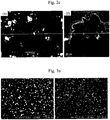
FIG. 2c is a photograph of SEM(1) and TEM(2) showing (Ti,W)C powders (containing 45wt% of WC) prepared by one example of the present invention. -
FIG. 3a are photographs of FE-SEM showing respective sinters (1510°C and one hour) of (Ti,W)C-Ni cermet powders (containing 15wt% of WC) and (Ti,W)C-Ni cermet powders (containing 30wt% of WC); -
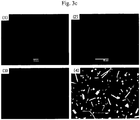
FIG. 3b are photographs of FE-SEM showing respective sinters (1510°C and one hour) of (Ti,W)(C,N)-Ni cermet powders (containing 15wt% of WC and C/N=2:1) and (Ti,W)(C,N)-Ni cermet powders (containing 30wt% of WC and C/N=3:1); -
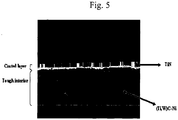
FIG. 3c shows photographs of a microstructure of the sintered (Ti,W)C ceramics (1510°C and one hour) having the compositions equivalent to (1) TiC-45wt%WC, reduced and carburized at 1120°C for 1 hours; (2) TiC-77wt%WC, reduced and carburized at 1120°C for 1 hours; (3) TiC-58wt%WC, reduced and carburized at 1200°C for 1 hours; (4) TiC-77wt%WC, reduced and carburized at 1200°C for 1 hours; -
FIG. 3d shows SEM/BSE images of cermets equivalent to the composition of TiC-xWC-10Co (in wt%); (a) x=85, (b) x=80, (c) x=70, (d) x=60, sintered at 1450°C for 1hour after carbothermal reduction at 1200°C for 1 hours: White and black phases are WC and Co, respectively while the phases in dark and light gray are (Ti,W)C; -
FIG. 4a are photographs of FE-SEM showing the sintered specimen (1510°C and one hour) of (Ti,W)C-Ni cermet powder (containing 15wt% of WC) in nitrogen atmosphere; -
FIG. 4b is a photograph of FE-SEM showing the surface of the sintered specimen (1200°C and one hour) of (Ti,W)C-Ni cermet powder (containing 30wt% of WC) in nitrogen atmosphere; -
FIG.5 is a photograph of FE-SEM showing sinter (1510°C and one hour) of (Ti,W)C-Ni cermet powders (containing 15wt% of WC), the surface of which is coated with TiN hard coating layer by PVD; -
FIG. 6a is photograph of FE-SEM showing sinter (1510°C and one hour) of cermet powders mixture of TiC-Ni and WC-Ni; -
FIG. 6b is photograph of FE-SEM showing sinter (1510°C and one hour) of cermet powders mixture of Ti(CN)-Ni and MO2C-Ni; and -
FIG. 7 is photograph of FE-SEM showing sinter (1510 °C and one hour) of cermet powders mixture of (Ti,W)(CN)-Ni and Ti(CN)-Ni (30wt% Ti(CN)-Ni). - In the present invention, the "carbon source material" means material, which can provide carbon to other materials, besides carbon powders, and includes acetone, ethanol, butanol, carbon tetrachloride, carbon tetrabromide, bromotrichloromethane, etc.
- In the present invention, a hydroxide, carbonate or hydrate as well as oxide of metal can be used in that the hydroxide, carbonate or hydrate can be reduced easily as oxide.
- According to the present invention, the ceramic powder or the cermet powder, which is an agglomerate, including a binding metal in addition to the ceramic powder possibly provide a complete solid-solution phase without a core/rim structure, which substantially and considerably increase a toughness of the cermet prepared.
- Further, preferably, the ceramic powder or the cermet powder have nano-sized crystallites with a size of 100nm or less. Of course, the crystallite size of the ceramic powder or the cermet powder can be analyzed differently according to the analyzing method such as scherrer method, linear fitting method and least-squares fitting method, etc. However, in any case of using the known analyzing methods, it is preferable that the crystallite size of the ceramic powder or the cermet powder prepared according to the present invention is not over the size of 100nm from the viewpoint of the efficiency of the method of the present invention.
- According to the present invention, methods for preparing the ceramic powder and the cermet powder comprise two steps respectively:
- The primary step for preparing ceramic powder includes mixing oxides, hydroxides, carbonates or hydrates having nano size of metals selected, including Ti, from IV, V, VI Group elements of periodic table with carbon powders or carbon source material, or mixing and grinding the mixture, if necessary (S1-1).
- Otherwise, the primary step for preparing ceramic powder includes mixing oxides, hydroxides, carbonates or hydrates having micron size of metals selected, including Ti, from IV, V, VI Group elements of periodic table with carbon powders or carbon source material, and grinding the mixture to nano size or amorphous state (S1-2).
- In order to prepare carbide or carbo-nitride ceramic powder having a complete solid-solution phase, in the primary step, it is possible that available oxides, hydroxides, carbonates or hydrates having nano size are used. However, it is preferable that the oxides, hydroxides, carbonates or hydrates having micron sizes are ground to nano sizes or amorphous state by using a high energy ball milling (e.g. using a planetary mill or attrition mill).
- That is, for example, in order to prepare TiC based ceramic powder having nano size, performed may be mixing a nano-sized TiO2, oxides having nano size of any one or at least two metals selected, excluding Ti, from IV, V and VI Group metals of periodic table (for example WO3) with carbon powders. Then, if necessary, further performed may be grinding the mixed powders of nano-sized oxides and carbon powders.
- However, if not used metal oxides that have already been nano-sized before mixing and/or grinding, performed is mixing the micron-sized TiO2, oxides having micron size of any one or at least two metals selected, excluding Ti, from IV, V and VI Group metals of periodic table with carbon powders, and then performed is grinding the mixed powders to have nano size or amorphous state.
- Herein, an amount of mixing can be properly selected according to a predetermined composition of ceramic powder. Further, upon the grinding, a high energy ball milling as described above may be used. In the present invention, even only through the ball milling process, nano-sized crystallites or amorphous state are easily prepared.
- Meanwhile, the primary step for preparing cermet powder includes mixing oxides, hydroxides, carbonates or hydrates having nano size of metals selected, preferably including Ti, from IV, V, VI Group elements of periodic table and binder such as Ni, Co or Fe having nano size with carbon powders or carbon source material, or mixing and grinding the mixture, if necessary.
- Otherwise, the primary step for preparing cermet powder includes oxides, hydroxides, carbonates or hydrates having micron size of metals selected, preferably including Ti, from IV, V, VI Group elements of periodic table and binder such as Ni, Co or Fe having micron size with carbon powders or carbon source material, and grinding the mixture to nano size or amorphous state.
- That is, in order to prepare cermet powder according to the present invention, performed is mixing binder metal in nano size such as Ni, Co, Fe or Ni/Co, etc.; and oxides, hydroxides, carbonates or hydrates having nano size of metals selected, preferably including Ti, from IV, V, VI Group elements of periodic table; and carbon powders or carbon source material. If necessary, grinding is further conducted even in this case.
- Herein, when used micron-sized binder metal such as Ni, Co, etc., performed is mixing oxides, hydroxides, carbonates or hydrates having nano or micron size of metal selected, preferably including Ti, from IV, V, VI Group elements of periodic table and carbon powders or carbon source material with the micron-sized binding metal, and then performed is grinding the mixture to nano size or amorphous state.
- According to the primary step, a homogeneous microstructure consisting of a complete solid-solution phase without a core/rim structure can be attained. Further, a ceramic or cermet can be attained with a direct sintering of the ceramic powder or the cermet powder without additional mixing processes. Further, reducing and carburizing at low temperature of 1300 °C or less and relatively short time, which means the increment of the efficiency of the overall process, are possible as shown below by producing nanocrystalline or amorphous phase with full of defects, which increases the diffusion velocity and decreases the diffusion distance.
- Next, the second step for preparing ceramic powder and cermet powder includes reducing and carburizing. If necessary, the second step includes reducing, carburizing and nitriding (S2).
- That is, after the mixed and/or ground mixture are reduced under, for example, a vacuum, hydrogen, CO/CO2 or CH4 atmosphere, and then carburized (carburized and nitrided), ceramic powder having nano crystallite and consisting of complete solid-solution phase are prepared. Also, in case of cermet powder, an agglormerate having nano crystallite and complete solid-solution is prepared.
- Further, for example, upon the formation of carbo-nitride, reducing and carburizing are conducted through an annealing for 3 hours or less at a temperature of 1000 to 1300°C (it should be noted that such a low temperature and relatively short time can be realized) under a vacuum or hydrogen atmosphere, and then nitriding is conducted, so that minimum quantity of oxygen and proper quantity of carbon and nitrogen are secured to prevent the formation of voids and to improve the mechanical properties of the cermet.
- The content of oxygen is an important factor in the carbide or cabo-nitride nano powders prepared by above process. Generally, if the content of oxygen is increased, it is subject to form voids, so that it is necessary to secure minimum content of oxygen and a proper quantity of carbon in conformity with the oxygen content.
- Accordingly, the mixed and/or ground powders are reduced at 1000 to 1300°C under a vacuum or hydrogen atmosphere for 3 hours or less and are then carburized (carburized and nitrided), so that as shown in the following example, even nano powders, particularly in case of Ti(CN) based nano crystallites, have the oxygen content similar to that of normal micron-sized powders .
- Under the processing condition, an amount of nitrogen can be freely selected according to a process temperature, a partial pressure of nitrogen upon composing of powders, and an amount of carbon added to the powders. Particularly, as a stable composition, C/N (mol ratio) is preferably 3/7, 5/5 or 7/3, more preferably 7/3.
- Then, the ceramic powders or cermet powders prepared are sintered with a temperature and time for sintering the ceramic powders or cermet powders under a atmosphere such as vacuum atmosphere so that ceramic or cermet having complete solid-solution phase is attained.
- According to the method of the present invention, there can be prepared complete ceramic powders having a type of (Ti,M1,M2···)C, (Ti,M1,M2···)(C,N), (Ti,M1,M2···)C-Ni and (Ti,M1,M2···)(C,N)-Ni···. Further, the ceramic using the ceramic powder, the cermet powder including said ceramic powder and a cermet using the cermet powder can be provided.
- Especially, TiC or Ti(CN) based ceramic powder prepared according to the present invention become to have nano-sized crystallites of 100nm or less. Further, ceramic and cermet prepared become an agglomerate having nano-sized crystallites of 100nm or less.
- The size of the powder and agglomerate can be regulated in various sizes. That is, by regulating milling condition such as time, speed, temperature, etc., powders composition condition such as time, temperature, etc., the size of the powders and agglomerates can be regulated. Further, the agglomerates can be prepared to have a submicron size (more than 100nm, and less than 1 µm), and a micron size (a few µm).
- However, since the manufacturing equipment and process of the cermet of prior art are optimized for powders having a size more than submicron, it is proper to prepare an agglomerates of 200nm or less according to the present invention in light of easy approach and economical efficiency.
- All metals that are solutes in the ceramic powders of the present invention can form a complete solid-solution phase within the range of solid solubility of the respective metals. This is also the case for the cermet powders.
- Ti is included in the complete ceramic powders of the present invention, and the amount of the other element besides the Ti is 5∼90wt%.
- Particularly, in the complete ceramic powders of the present invention, for example, if W is included therein, the amount of W can be 10∼90wt%. Further, in case that W is included therein with other Mo, Nb, Ta, the amount of Mo, Nb and/or Ta can be 0∼25wt%, preferably 0∼10wt% and the amount of W can be preferably 30∼90wt%. Also, in the case of the ceremet powders, the amount of Mo, Nb and/or Ta can be 0∼10wt% and the amount of W can be 10∼85wt%, preferably 10∼60wt% and the amount of the binding phase of Ni, Co and/or Fe can be 0∼30wt%.
- The scope of the present invention does not include the sintered body wherein, for example, (Ti,W)C are present with WC in the microstructure of the sintered body due to the usage of much amount of WC(with the weight ratio of WC/TiC>4). For further improving the hardness of a cermet or the ceramic having a high toughness prepared according to the present invention, two methods wherein one or more reinforced layers or coating layers is formed on the surface of the cermet or ceramic may be used during the sintering according to the present invention.
- One is a method to form a hard layer on a surface of the cermet or ceramic and the other is a method to form a high hard coating on a surface of the cermet or ceramic.
- For example, for forming the hard layer on a surface of the cermet, the amount, preferably the amount of nitrogen introduced to a furnace and time for introducing nitrogen to a furnace are controlled during the sintering. That is, during the sintering of the cermet powders, 1∼100 torr of nitrogen is introduced to the furnace from before or during the sintering temperature, and the pressure can be made to be kept to a cooling process. To this end, solid-solution phase in the form of (Ti, W, M1, M2···)C/(Ti, W, M1, M2···)CN are induced to be decomposed to TiC, Ti(CN), (Ti,w, m1, m2..)C or (Ti, w, m1,m2..) (CN) of high hardness with/without WC, M1C, M2C, so that the high hard phase come to be formed as a hard layer only on the surface of the cermet and, therefore, the whole cermet sinter becomes to keep its high toughness, and have high hardness.
- Further, for forming a high hard coating layer on a surface of the cermet, one or more high hard coating layers of TiC, TiN, Ti(CN), TiAlN, TiAlCrN, etc. are made to be formed on the surface of the cermet by using the CVD, PVD, etc. method after sintering the cermet powder. Further, if necessary for controlling a lattice mismatch (decreasing the lattice mismatch), after the size of the solid-solution phase on the surface of the cermet is made to be lager (the cermet becomes to have extended size of solid-solution phase) or the binding phase of metal is made to be rich near on the surface of the cermet by using the atmosphere of vacuum or argon, nitrogen, etc. during the sintering of the cermet powders, then the high hard coating layer are made to be formed.
- Furthermore, for forming a reinforced (especially in toughness) coating layer on a surface of the ceramic, one or more reinforced coating layers of TiC-Me, Ti(CN)-Me, (Ti, M1, M2..)C-Me or (Ti, M1, M2..)(CN)-Me (Me is a binding phase, which is one or more selected from the group consisting of Ni, Co, Fe) are made to be formed on the surface of the ceramic with CVD or PVD method after sintering the ceramic powder.
- Further to using the above-mentioned methods or without using the methods, ultra fine or nano size cermet of high toughness having high hardness wholly can be prepared by the following two methods.
- One is a method that nano crystallite powder of TiC-Me or Ti(CN)-Me with WC-Me, Mo2C-Me, TaC-Me, NbC-Me, ZrC-Me and/or HfC-Me (Me is a binding phase, which is one or more selected from the group consisting of Ni, Co, Fe) according to the present invention are mixed in a predetermined amount, and are sintered so that the sinter having core of fine TiC or Ti(CN) is prepared.
- The other method is that nano crystallite powder of TiC-Me or Ti(CN)-Me (Me is a binding phase, which is one or more selected from the group consisting of Ni, Co, Fe) and the cermet powder of complete solids-solution are mixed in a predetermined amount, and are sintered so that the hardness of the cermet can be reinforced.
- As described above, said methods can be used with the method of forming the hard layer on a surface of the cermet or with the method of forming a high hard coating on a surface of the cermet.
- Hereinafter, preferred embodiments of a method according to the present invention will be described in detail.
- As an example, the anatase-TiO2 of purity 99+%, NiO of purity 99% (avg. particle size of 45 µm) and WO3 of purity 99+% (avg. particle size of 20 µm) were used.
- They were mixed with carbon powder for the five target compositions as follows: (i) (Ti,W)C-Ni (containing 15wt% of WC), (ii) (Ti,W)C-Ni (containing 30wt% of WC), (iii) (Ti,W)(C,N)-Ni (containing 15wt% of WC and C/N = 2:1), (iv) (Ti,W)(C,N)-Ni (containing 30wt% of WC and C/N=3:1), and (v) (Ti,W)C (containing 15wt% of WC), (vi) (Ti,W)C (varying the amount of WC), whereby the cermet compositions fall outside of the invention as claimed. They were ground, i.e. high-energy ball milled using a planetary mill (Fritsch Pulverisette 7). Tungsten carbide (WC) balls with 5mm in a diameter were used as milling media and mixed with powders at a ball-to-powder weight ratio of 20:1.
- A tungsten carbide bowl was used and all milling was conducted at a speed of 250 RPM in air for 20 hours.
- To this end, the ground nano powders were annealed at 1300°C for one and half hours under a vacuum or hydrogen atmosphere to be reduced, and carburized. Herein, in case of carbo-nitride, nitrogen was injected into a vacuum furnace to be nitrided.
-
FIG. 1 shows a result of XRD phase analysis of nano powders prepared by one example of the present invention. - In the drawings,
FIG. 1a shows that a complete ceramic powders of (Ti,W)C (containing 15wt% of WC) have been prepared from a mixture of TiO2, WO3 and C,FIG. 1b shows that cermet powders having a complete solid-solution phase of (Ti,W)C-Ni (containing 30wt% of WC) have been prepared from a mixture of TiO2, WO3, NiO and C, andFIG. 1c shows that cermet powders having a complete solid-solution phase of (Ti,W)(C,N)-Ni (containing 30wt% of WC) have been prepared from a mixture of TiO2, WO3, NiO and C. - As shown in
FIG. 1a , the solid-solution phase formed is a single phase, which cannot be formed in the prior art.FIGs. 1b and 1c also show that Ni nano powders have been existed in a shape of being mixed with a single solid-solution phase. - It is proved that a homogeneous microstructure has been attained through using nano sized Ni and nano sized carbide or carbo-nitride. Also, from the above method, a cermet can be attained by a direct sintering without an additional mixing process in a preparing process of the cermet.
-
FIG. 2a is a photograph of SEM showing (Ti,W)C-Ni powders (containing 15wt% of WC) prepared by one example, andFIG. 2b is a photograph of TEM showing (Ti,W)C-Ni powders (containing 15wt% of WC) prepared by one example. It is proved that, fromFIG. 2a , the powders have been formed into a homogeneous agglomerates of approximately 200nm in a given scale, and fromFIG. 2b , the powders have been formed into a small mixed agglomerates having a size smaller than approximately 100nm in a given scale. -
FIG. 2c is a photograph of SEM(1) and TEM(2) showing (Ti,W)C powders (containing 45wt% of WC) prepared by one example of the present invention. - The SEM photograph of
FIG. 2c shows that the powders formed a homogeneous agglormerate of 100nm∼1µm under the given scale. The TEM photograph ofFIG. 2c shows that the powders formed a small agglormerate of carbide of 20∼50nm under the given scale. - This phenomenon of agglomerating is generally found in the nano powders, the formation of agglomerates contributes to a sintering besides an excessive agglomerating.
- Table 1 is an analysis result of CNO element of the powders prepared on the basis of above compositions by the above process. As a comparison example, an analysis for commercial powders with the same composition was conducted.
Table 1-1 Compositions C N O 15 wt.% WC* Nano (Ti,W)C-Ni* 12.14 0.52 1.14 COMMERCIAL TiC-WC-Ni 14.19 0.00 0.99 30 wt.% WC** Nano (Ti,W)C-Ni** 10.65 0.38 1.08 COMMERCIAL TiC-WC-Ni 12.15 0.00 0.83 15 wt.% WC* Nano (Ti,W)C-Ni* 11.45 5.58 0.38 COMMERCIAL TiC-WC-Ni 10.10 4.44 0.81 30 wt.% WC** Nano (Ti,W)C-Ni** 10.39 3.66 0.08 COMMERCIAL TiC-WC-Ni 9.00 3.39 0.83 * The composition was made from Ti(CN)-15 wt.% WC-Ni as a starting composition.
** The composition was made from Ti(CN)-30 wt.% WC-Ni as a starting composition.Table 1-2 Compositions C N O 45 wt.% WC [(Ti,W)C] 11.566 0.258 0.058 58 wt.% WC [(Ti,W)C] 10.658 0.222 0.086 69 wt.% WC [(Ti,W)C] 9.003 0.072 0.02 77 wt.% WC [(Ti,W)C] 8.508 0.003 0.022 - As shown in Table 1-1, nano powders prepared is cermet powders of (Ti,W)C-Ni and (Ti,W)(C,N)-Ni with 15 and 30wt% WC, and particularly, in case of (Ti,W)(C,N)-Ni, the oxygen content is lower than that of commercial powders.
- As shown in Table 1-2, in the case of ceramic powder of (Ti,W)C without Ni, the more the amount of WC, the less the amount oxygen.
- Table 2 shows cermet powders having several possible compositions.
Table 2 Composition of two phase Solid-solution (wt%) Composition of three phase Solid-solution (wt%) Composition of four phase Solid-solution (wt%) (Ti, 15W, 5Mo)(CN)-20Ni (Ti, 5Nb)C-20Ni (Ti, 15W, 10Mo)(CN)-20Ni (Ti, 10Mo)C-20Ni (Ti, 5W, 30Mo)(CN)-20Ni (Ti, 15W, 3Mo, 1Nb)(CN)-20Ni (Ti, 20Mo)C-20Ni (Ti, 10W, 20Mo)(CN)-20Ni (Ti, 15W, 5Mo, 3Nb)(CN)-15Co (Ti, 30Mo)C-20Ni (Ti, 10Mo, 5Nb)(CN)-20Ni (Ti, 15W, 10Mo, 5Nb)(CN)-20Ni (Ti, 40Mo)C-20Ni (Ti, 10Mo, 5Nb)(CN)-15Co (Ti, 15W, 10Mo, 5Nb)(CN)-7.5Co-7.5Ni (Ti, 15Mo)(CN)-20Ni (Ti, 10Mo, 5Nb)(CN)-7.5Co-7.5Ni (Ti, 15W)C-20Ni (Ti, 10Mo, 10Nb)(CN)-20Ni (Ti, 15W, 3Mo, 1Ta)(CN)-20Ni (Ti, 15W)(CN)-20Ni (Ti, 15Mo, 5Nb)(CN)-20Ni (Ti, 15W, 5Mo, 3Ta)(CN)-20Ni (Ti, 30W)C-20Ni (Ti, 20Mo, 5Nb)(CH)-20Ni (Ti, 15W, 5Mo, 3Ta)(CN)-15Co (Ti, 30W)(CN)-20Ni (Ti, 20Mo, 10Nb)(CN)-20Ni (Ti, 30Mo, 5Nb)(CN)-20Ni - The powders having the former compositions prepared by the above method of the present invention were sintered at a normal sintering temperature of 1510 °C for one hour under a vacuum atmosphere of 10-2 Torr.
-
FIG. 3a shows photographs of a microstructure of the sintered specimens having the compositions (i) and (ii), in which the left photograph indicates a case of composition (i), and the right photograph indicates a case of composition (ii). -
FIG. 3b shows photographs of a microstructure of the sintered specimens having the compositions (iii) and (iv), in which the left photograph indicates a case of composition (iii), and the right photograph indicates a case of composition (iv). - As shown in
FIG. 3a , when sintered using (Ti,W)C-Ni cermet powders, a size of crystallite was of less than 100nm, and as shown inFIG. 3b , in case of (Ti,W)(C,N)-Ni cermet powders, a microstructure was of a size of less than 1 µm. -
FIG. 3c shows photographs of a microstructure of the sintered (Ti,W)C ceramics (1510°C and one hour) having the compositions equivalent to (1) TiC-45wt%WC, reduced and carburized at 1120°C for 1 hours; (2) TiC-77wt%WC, reduced and carburized at 1120°C for 1 hours; (3) TiC-58wt%WC, reduced and carburized at 1200°C for 1 hours; (4) TiC-77wt%WC, reduced and carburized at 1200°C for 1 hours. - As shown in
FIG. 3c , when sintering with the ceramic powders of (Ti,W)C, it was difficult to find WC in case of (1) and (3). On the other hand, shown was the microstructure wherein 3∼5 µm of WC (white phase) is present with the dark and light gray phase of (Ti,W)C. -
FIG. 3d shows SEM/BSE images of cermets equivalent to the composition of TiC-xWC-10Co (in wt%); (a) x=85, (b) x=80, (c) x=70, (d) x=60, sintered at 1450°C for 1hour after carbothermal reduction at 1200°C for 1 hours: White and black phases are WC and Co, respectively while the phases in dark and light gray are (Ti,W)C. - As shown in
FIG. 3d , according to the amount of WC, WC becomes to coexist with (Ti,W)C in the microstructure. - Table 3 shows properties of cermets in
Fig. 3d equivalent to the composition of TiC-xWC-10Co (in wt.%); (a) x=85, (b) x=80, (c) x=70 and (d) x=60. The cermets were sintered at 1450°C for 1hour after carbothermal reduction at 1200°C for 1hours.Table 3 WC content (wt%) Relative density (%) Hardness (GPa) Toughness (MPam1/2) 85 95 13.5 10.5 80 98 15.3 11.7 70 99 15.0 11.9 60 100 15.4 9.5 WC-10Co (ref.) >98 13-14 11-12 - As a result, it can be proved that a structure of a complete solid-solution phase is formed without being observed a core/rim structure in comparison with the conventional system of Ti(C,N)-M1C-M2C-···-Ni/Co and so on.
- Table 4 shows mechanical properties of the cermet prepared by an example of the present description. For comparison, an evaluation was conducted for a cermet fabricated by micron sized commercial powders with the same composition.
Table 4-1 Sintering condition Composition Compact density Sintering density Mechanical Charicteristic Porosity (g/cm3) (%) (g/cm3) (%) HV (GPa) KIC (MPam1/2) 1510°C 1hour (Ti,W)C-Ni 15 wt.% WC 3.97 63.6 6.13 100 12.3 13.2 A2B1 30 wt.% WC 4.55 63.9 7.05 100 11.1 13.8 A2B2 (Ti, W)(C,N)-Ni 15 wt.% WC 3.58 57.3 6.16 98.8 12.2 12.8 A3B1 30 wt.% WC 4.48 62.8 7.03 98.5 11.2 12.6 A2B3 1400°C 1hour (Ti, W)C-Ni 15 wt.% WC 3.97 63.6 6.23 100 12.3 10.9 A1B2 30 wt.% WC 4.55 63.8 7.08 100 11.2 11.7 A1B2 (Ti, W)(C,N)-Ni 15 wt.% WC 3.60 57.7 6.22 99.7 12.6 8.4 A2B1 30 wt.% WC 4.49 62.9 7.01 98.1 11.5 11.5 A2B2 
- As shown in Table 4-1, it could be seen that the cermet prepared had a high sintering density and a low porosity even in case of the simple composition of the cermet. Furthermore, a value of KIC in the cermet was of a high toughness of 11∼14 MPam1/2 while that of the comparison example was of a toughness of 6∼8 MPam1/2. From this, it can be estimated that the cermet may become to be widely utilized comparing with that of the prior art. A high sintering density, a low porosity, a high toughness and a high hardness are also shown in the ceramic, as Table 4-2 shows.
- As an example, a simple target composition has been firstly selected, and to this end, TiO2, WO3, NiO nano oxides having a 100nm crystallite size according to the respective contents has been prepared.
- As a target composition, two compositions were selected as follows: (i) (Ti,W)C-Ni (containing 15wt% of WC) and (ii) (Ti,W)C-Ni (containing 30wt% of WC), whereby the cermet powders fall outside of the scope of the invention as claimed. Carbon powders and above nano oxides prepared were mixed and ground, and the ground nano powders were annealed at 1300°C for two hours under a vacuum or hydrogen, CH4, CO/CO2 atmosphere to be reduced, and carburized.
- During sintering of the cermet powders prepared, 1∼100 torr of nitrogen is introduced to the furnace at the sintering temperature, and the pressure (1-100 torr) is made to be kept to a cooling process.
-
FIG. 4a are photographs of FE-SEM showing the sintered specimen (1510°C and one hour) of (Ti,W)C-Ni cermet powder (containing 15wt% of WC) in nitrogen atmosphere. - As
FIG. 4a shows, a microstructure of the sintered specimen having two different complete solid-solution phases of (Ti,W)C-Ni at the surface and interior of the specimen. (Ti,W)C-Ni specimen (containing 15 wt% of WC) have been prepared from a mixture of TiO2, WO3, NiO and C and were exposed to nitrogen (-100 torr) atmosphere during sintering (1510°C and one hour) until cooling process. - SEM/EDS analysis for the compositions of solid-solution phases on the surface and in the interior of the sintered cermet in nitrogen atmosphere is shown in Table 5.
Table 5 interior surface Ti 89.49 92.44 W 10.51 7.56 Total 100 at.% 100 at.% - As shown in Table 5, the solid-solution phases formed are different in the compositions. The solid-solution phase near the surface has higher amount of Ti than interior, which enhance the hardness of the surface layer. It is known that the hardness of TiC/Ti(CN) based solid-solution increases with Ti amount in the solid-solutions.
FIG. 4a shows the growth of the surface solid-solution along with an increase of the metal binders near the surface. - Meanwhile,
FIG. 4b is a photograph of FE-SEM showing the surface of the sintered specimen (1200°C and one hour) of (Ti,W)C-Ni cermet powder (containing 30wt% of WC) in nitrogen atmosphere. - As
FIG. 4b shows, a microstructure of surface of the sintered specimen show the generation of very hard phase of TiC [or Ti(CN)], which has black color. - Therefore, it is proved that a harder surface microstructure has been attained through using nitrogen atmosphere from before or during sintering. This condition can be extended to cooling process.
- As an example, a simple target composition has been firstly selected, and to this end, TiO2, WO3, NiO nano oxides having a 100nm crystallite size according to the respective contents has been prepared.
- As a target composition, four compositions were selected as follows: (i) (Ti,W)C-Ni (containing 15wt% of WC), (ii) (Ti,W)C-Ni (containing 30wt% of WC), (iii) (Ti,W)CN-Ni (containing 15wt% of WC) and (iv) (Ti,W)CN-Ni (containing 30wt% of WC), whereby the cermet powders fall outside of the scope of the invention as claimed. Carbon powders and above nano oxides prepared were mixed and ground, and the ground nano powders were annealed at 1300°C for two hours under a vacuum or hydrogen, CH4, CO/CO2 atmosphere to be reduced, and carburized. In case of carbo-nitride, nitrogen was injected into a vacuum furnace.
- During sintering of the cermet powders prepared, vacuum atmosphere (or argon, nitrogen) is used. Further, coating layer of TiN is formed on the surface of the cermet sintered by using PVD method. The coating layer of TiN show characteristics of high hardness and wear-resistance, so that forming the coating layer of TiN on the surface of the cermet gives great improvement in the hardness of the cermet.
-
FIG.5 is a photograph of FE-SEM showing sinter (1510°C and one hour) of (Ti,W)C-Ni cermet powders (containing 15wt% of WC), the surface of which is coated with TiN hard coating layer by PVD. - As shown in the
FIG. 5 , the coating layer was formed on the surface of the cermet. The thickness of the layer was 1-1.5 micron. - The mechanical characteristics of respective sinters are shown in Table 6.
Table 6 Condition Composition Interior TiN coated layer Hardness (Gpa) Toughness (MPa·m1/2) Hardness (Gpa) Toughness (MPa·m1/2) Nano 1510 °C 1h (Ti,W)C-Ni 15 WC 12.3 13.2 14.3 8.8 30 WC 11.1 13.8 14.1 8.8 (Ti,W)CN-Ni 15 WC 12.2 12.0 15.3 10.2 30 WC 11.2 12.6 14.8 9.3 - As shown in Table 6, although the coated layer has lower toughness than that of interior phase, the coated layer shows higher hardness than that of interior phase. Therefore, it came to our knowledge that the coated layer on the surface of the cermet gives high hardness to the cermet which has also high toughness wholly (interior + coated layer), thus providing the suitability of the cermet for cutting tools.
- As an example, at first, nano powder of Ti(CN)-Ni, WC-Ni and MO2C-Ni were selected as a target composition for mixing, and to this end, (TiO2, NiO), (WO3, NiO) and (MO2, NiO) nano oxides having a 100nm crystallite size according to the respective contents has been prepared.
- As described above, the following three compositions were selected: (i) Ti(CN)-Ni (containing 20wt% of Ni, C/N=7:3), (ii) WC-Ni (containing 20wt% of Ni) and (iii) MO2C-Ni (containing 20wt% of Ni), whereby the cermet powders fall outside the scope of the invention as claimed. Carbon powders and above nano oxides prepared were mixed and ground, and the ground nano powders were annealed at 1300°C for two hours under a vacuum or hydrogen, CH4, CO/CO2 atmosphere to be reduced, and carburized. In case of carbo-nitride, nitrogen was injected into a vacuum furnace.
- The three nano powders prepared in the above method was mixed for two target compositions as follows: (i) Ti(CN)-Ni + WC-Ni (containing 15wt% of WC-Ni) and (ii) Ti(CN)-Ni + MO2C-Ni (containing 15wt% of MO2C-Ni).
-
FIG. 6a is photograph of FE-SEM (bar scale : 5 µm) showing sinter (1510°C and one hour) of cermet powders mixture of TiC-Ni and WC-Ni.FIG. 6b is photograph of FE-SEM (bar scale : 5 µm) showing sinter (1510°C and one hour) of cermet powders mixture of Ti(CN)-Ni and MO2C-Ni. - As
FIGs. 6a and 6b shows, sinters of mixture of carbide and cabo-nitride especially containing Ni were obtained. According to this method, reinforcement of hardness and change of composition become to be easy. - As an example, for preparing cermet powder and Ti(CN)-Ni, (TiO2, WO3, NiO) and (TiO2, NiO) nano oxides having a 100nm crystallite size according to the respective contents has been prepared.
- As a target composition, two compositions were selected as follows: (i) (Ti,W)(CN)-Ni (containing 30wt% of WC, containing 20wt% of Ni) and (ii) Ti(CN)-Ni (containing 20wt% of Ni, C/N=7:3). Cermet powder of (Ti,W)(CN)-Ni prepared and powder of Ti(CN)-Ni, were mixed for a composition (30wt% Ti(CN)-Ni), and were sintered.
-
FIG. 7 is photograph of FE-SEM (bar scale : 5 µm) showing sinter (1510°C and one hour) of cermet powders mixture of (Ti,W)(CN)-Ni and Ti(CN)-Ni (30wt% Ti(CN)-Ni). - As
FIG. 7 shows, sinter of mixture of cermet powder and Ti(CN)-Ni were obtained. According to this method, reinforcement of hardness also becomes to be easy. - As described above, a ceramic powder, a method for preparing the ceramic powder, a ceramic using the ceramic powder, a method for preparing the ceramic, a cermet powder including the ceramic powder, a method for preparing the cermet powder, a cermet using the cermet powder and a method for preparing the cermet can resolve a problem that the cermet such as TiC or Ti(CN) based cermet of the prior art had a lower toughness due to its high hardness, and provide the further improvement of the hardness as well as the toughness, so that it can be properly used in cutting tools, die materials and so on substituting the conventional WC-Co.
- From the foregoing, in a ceramic powder, a method for preparing the ceramic powder, and a method for preparing the ceramic, a cermet powder including the ceramic powder, a method for preparing the cermet powder, a cermet using the cermet powder and a method for preparing the cermet, a complete solid-solution phase is provided to a microstructure of the ceramic powder, especially TiC or Ti(CN) based ceramic powder, considerably and substantially increasing a toughness of the cermet material, having an advantage in that a direct sintering can be conducted without additional mixing processes, and providing an effect of fabricating high hardness and toughness cutting tools to substitute WC-Co super hard material due to its excellent general mechanical properties.
- Although the preferred embodiments of the present invention have been described for illustrative purposes, those skilled in the art will appreciate that various modifications, additions and substitutions are possible, without departing from the scope of the invention as disclosed in the accompanying claims.
Claims (12)
- A ceramic powder comprising a carbide or a carbo-nitride of Ti and at least one further element of metal selected from IV, V and VI Group metals of the periodic table, and having nano-sized crystallites of 100 nm or less and a homogenous microstructure consisting of a single complete solid-solution phase, wherein the amount of the further element besides Ti in the form of its carbide or carbo-nitride is 5∼90wt% relative to total weight of the powder.
- The ceramic powder according to claim 1, wherein the further element of metal besides Ti is selected from IV and VI Group metals of the periodic table.
- The ceramic powder according to claim 1, wherein the amount of W in the form of its carbide or carbo-nitride is 10∼90wt% relative to total weight of the powder.
- The ceramic powder according to claim 1, wherein the amount of W in the form of its carbide or carbo-nitride is 10∼80wt% relative to total weight of the powder, and the amount of Mo, Nb and/or Ta in the form of its carbide or carbo-nitride is below 25wt% relative to total weight of the powder if added.
- The ceramic powder according to claim 1, wherein the amount of W is 30∼90wt% relative to total weight of the powder, and the amount of Mo, Nb and/or Ta is below 10wt% relative to total weight of the powder if added.
- A method for preparing a ceramic powder according to claim 1, comprising the steps of:mixing nano-sized (100 nm or less) oxides, hydroxides, carbonates or hydrates of Ti and at least one further element of metal selected from IV, V and VI Group metals of the periodic table with carbon powder or carbon source material (S1-1); andreducing and carburizing the mixture for 3 hours or less in the temperature range from 1000°C or more and less than 1300°C (S2).
- The method according to claim 6, the step (S1-1) further comprises grinding the mixture.
- A method for preparing a ceramic powder according to claim 1, comprising the steps of:mixing oxides, hydroxides, carbonates or hydrates having micron size of Ti and at least one further element of metal selected from IV, V and VI Group metals of the periodic table with carbon powders or carbon source material, and grinding the mixture to nano size (100 nm or less) or amorphous state (S1-2); andreducing and carburizing the mixture for 3 hours or less in the temperature range from 1000°C or more and less than 1300°C (S2).
- A method for preparing a ceramic, comprising the step of sintering the ceramic powder according to claim 1.
- The method according to claim 9, wherein the method further comprises the process of forming one or more reinforced coating layers of TiC-Me, Ti(CN)-Me, (Ti, M1, M2..)C-Me or (Ti, M1, M2..)(CN)-Me, wherein Me is a binding phase, which is one or more selected from the group consisting of Ni, Co, Fe, on the surface of the ceramic, the reinforced coating layers being formed with CVD or PVD method after sintering the ceramic powder.
- A ceramic powder comprising a carbide or a carbo-nitride of Ti and W and a metal selected from Mo, Nb and/or Ta, and having nano-sized crystallites of 100nm or less and a homogeneous microstructure consisting of a single complete solid-solution phase.
- A ceramic powder, according to claim 1, comprising a carbide or a carbo-nitride of Ti and W, and having nano-sized crystallites of 100nm or less and a homogeneous microstructure consisting of a single complete solid-solution phase, wherein the amount of W in the form of its carbide or carbo-nitride is 10∼90wt% relative to total weight of the powder.
Applications Claiming Priority (1)
| Application Number | Priority Date | Filing Date | Title |
|---|---|---|---|
| KR1020050032533A KR100792190B1 (en) | 2005-04-19 | 2005-04-19 | Solid solution powder without a core structure, a manufacturing method thereof, cermet powder including the solid solution powder, a manufacturing method thereof, a ceramic sintered body and cermet without a core structure using the solid powder and the powder for cermet |
Publications (2)
| Publication Number | Publication Date |
|---|---|
| EP1714942A1 EP1714942A1 (en) | 2006-10-25 |
| EP1714942B1 true EP1714942B1 (en) | 2018-04-11 |
Family
ID=36071236
Family Applications (1)
| Application Number | Title | Priority Date | Filing Date |
|---|---|---|---|
| EP05291723.4A Expired - Lifetime EP1714942B1 (en) | 2005-04-19 | 2005-08-12 | Ceramic powder, methods to prepare the ceramic powder and a method to prepare a ceramic |
Country Status (4)
| Country | Link |
|---|---|
| EP (1) | EP1714942B1 (en) |
| JP (1) | JP2006299396A (en) |
| KR (1) | KR100792190B1 (en) |
| CN (1) | CN1854104A (en) |
Families Citing this family (30)
| Publication number | Priority date | Publication date | Assignee | Title |
|---|---|---|---|---|
| JP2010500477A (en) | 2006-08-08 | 2010-01-07 | 財団法人ソウル大学校産学協力財団 | Mixed powder containing solid solution powder and sintered body using the same, mixed cermet powder containing solid solution powder, cermet using the same, and method for producing them |
| KR100904234B1 (en) * | 2007-10-02 | 2009-06-25 | 재단법인서울대학교산학협력재단 | Ceramics with improved toughness, manufacturing method thereof, Cermet with improved toughness, manufacturing method thereof |
| WO2009082178A2 (en) * | 2007-12-26 | 2009-07-02 | Seoul National University Industry Foundation | Solid-solution carbide/carbonitride powder and method for preparing thereof under high temperature |
| KR101113489B1 (en) * | 2007-12-26 | 2012-02-29 | 재단법인서울대학교산학협력재단 | Solid-solution carbide/carbonitride powder and method for preparing thereof |
| WO2009082180A2 (en) * | 2007-12-26 | 2009-07-02 | Seoul National University Industry Foundation | Solid-solution carbide/carbonitride powder and method for preparing thereof |
| EP2316790A4 (en) | 2008-07-16 | 2012-08-22 | Japan Fine Ceramics Ct | HARD POWDER, METHOD FOR MANUFACTURING HARD POWDER AND SINTERED ALLOY |
| JP5559575B2 (en) | 2009-03-10 | 2014-07-23 | 株式会社タンガロイ | Cermet and coated cermet |
| WO2010150335A1 (en) | 2009-06-22 | 2010-12-29 | 株式会社タンガロイ | Tool having coated cubic boron nitride sintered body |
| JPWO2011002008A1 (en) * | 2009-06-30 | 2012-12-13 | 株式会社タンガロイ | Cermet and coated cermet |
| KR20110043258A (en) * | 2009-10-21 | 2011-04-27 | 서울대학교산학협력단 | Carbide Wear Resistant Composites |
| WO2011065512A1 (en) * | 2009-11-27 | 2011-06-03 | 独立行政法人物質・材料研究機構 | Cermet coating, spraying particles for forming same, method for forming cermet coating, and article with coating |
| EP2559504B1 (en) | 2010-04-16 | 2019-08-21 | Tungaloy Corporation | Coated sintered cbn |
| EP2591869B1 (en) | 2010-07-06 | 2015-09-09 | Tungaloy Corporation | Coated polycrystalline cbn tool |
| JP5618364B2 (en) * | 2010-11-04 | 2014-11-05 | 一般財団法人ファインセラミックスセンター | Method for producing ultrafine and homogeneous titanium carbonitride solid solution powder |
| CN102162057B (en) * | 2011-03-30 | 2013-05-01 | 北矿新材科技有限公司 | A kind of high-strength and low-magnetism lightweight cemented carbide for dynamic pressure air bearing and preparation method thereof |
| GB201209482D0 (en) * | 2012-05-29 | 2012-07-11 | Element Six Gmbh | Polycrystalline material,bodies comprising same,tools comprising same and method for making same |
| KR101412775B1 (en) | 2012-07-27 | 2014-07-02 | 서울대학교산학협력단 | Porous carbon and method for preparing the same |
| DE102013201104A1 (en) | 2013-01-24 | 2014-07-24 | H.C. Starck Gmbh | Process for the production of chromium nitride-containing spray powders |
| KR101450661B1 (en) * | 2014-04-22 | 2014-10-15 | 한국지질자원연구원 | The method of preparation for ternary titanium carbonitride sintered bodies having enhanced mechanical properties and ternary titanium carbonitride sintered bodies prepared thereby |
| CN104987075B (en) * | 2015-06-09 | 2019-05-21 | 四川大学 | (M1,M2)(CxN1-x) powder the rotary continuous preparation method of dynamic and rotary dynamic continuous sintering device |
| JP6669471B2 (en) * | 2015-11-02 | 2020-03-18 | 勝義 近藤 | Method for producing nitrogen solid solution titanium sintered body |
| CN109175387B (en) * | 2018-10-23 | 2021-05-25 | 北京工业大学 | Method for preparing nanocrystalline WC-Co hard alloy by amorphous crystallization |
| CN110144511A (en) * | 2019-06-21 | 2019-08-20 | 台州市锐安硬质合金工具有限公司 | A kind of non-homogeneous gradient hard alloy and preparation method thereof |
| CN111663093B (en) * | 2020-06-05 | 2022-07-26 | 广东电网有限责任公司 | Cermet material, cermet coating and preparation method thereof |
| CN114231780B (en) * | 2021-11-08 | 2022-12-23 | 成都美奢锐新材料有限公司 | Cermet material special for cigar scissors and preparation method thereof |
| CN114014692B (en) * | 2021-12-16 | 2022-08-30 | 武汉新科冶金设备制造有限公司 | High red hard cermet blade |
| CN115233073B (en) * | 2022-07-07 | 2023-02-24 | 九江学院 | (W, ti) (C, N) -based cermet material with core-ring structure and in-situ synthesis method thereof |
| CN115283670A (en) * | 2022-08-09 | 2022-11-04 | 西迪技术股份有限公司 | A Ti(C,N)-Mo-Fe composite powder and its preparation method and application |
| CN116535215B (en) * | 2023-05-08 | 2023-12-19 | 中南大学 | Preparation method of non-stoichiometric multi-carbide ceramic |
| CN118407039B (en) * | 2023-09-18 | 2025-11-25 | 攀枝花学院 | A (Ti,Mo)C reinforced nickel-based alloy coating and its preparation method |
Family Cites Families (6)
| Publication number | Priority date | Publication date | Assignee | Title |
|---|---|---|---|---|
| JPH0233647B2 (en) * | 1982-06-07 | 1990-07-30 | Mitsubishi Kinzoku Kk | FUKUGOTANCHITSUKABUTSUKOYOTAIFUNMATSUNOSEIZOHO |
| JPS58213842A (en) | 1982-06-08 | 1983-12-12 | Mitsubishi Metal Corp | Manufacture of high strength cermet |
| US5166103A (en) * | 1991-08-13 | 1992-11-24 | Vladimir Krstic | Method of making monotunsten carbide and mixtures of monotungsten carbide-titanium carbide powders |
| US5380688A (en) * | 1993-08-09 | 1995-01-10 | The Dow Chemical Company | Method for making submicrometer carbides, submicrometer solid solution carbides, and the material resulting therefrom |
| US6793875B1 (en) * | 1997-09-24 | 2004-09-21 | The University Of Connecticut | Nanostructured carbide cermet powders by high energy ball milling |
| KR100528046B1 (en) * | 2003-08-26 | 2005-11-15 | 한국과학기술연구원 | Fabrication method for ultrafine cermet alloys with a homogeneous solid solution grain structure |
-
2005
- 2005-04-19 KR KR1020050032533A patent/KR100792190B1/en not_active Expired - Fee Related
- 2005-08-11 JP JP2005233775A patent/JP2006299396A/en active Pending
- 2005-08-12 EP EP05291723.4A patent/EP1714942B1/en not_active Expired - Lifetime
- 2005-08-15 CN CNA2005100904859A patent/CN1854104A/en active Pending
Non-Patent Citations (1)
| Title |
|---|
| None * |
Also Published As
| Publication number | Publication date |
|---|---|
| CN1854104A (en) | 2006-11-01 |
| EP1714942A1 (en) | 2006-10-25 |
| KR100792190B1 (en) | 2008-01-07 |
| KR20060110431A (en) | 2006-10-25 |
| JP2006299396A (en) | 2006-11-02 |
Similar Documents
| Publication | Publication Date | Title |
|---|---|---|
| EP1714942A1 (en) | Solid-solution powder, method to prepare the solid-solution powder, ceramic using the solid-solution powder, method to prepare the ceramic, cermet powder including the solid-solution powder, method to prepare the cermet powder, cermet using the cermet powder and method to prepare the cermet | |
| US7892315B2 (en) | Solid-solution powder, method to prepare the solid-solution powder, cermet powder including the solid-solution powder, method to prepare the cermet powder, cermet using the cermet powder and method to prepare the cermet | |
| EP2462083B1 (en) | Tough coated hard particles consolidated in a tough matrix material | |
| US20100273638A1 (en) | Solid-solution carbide/carbonitride powder and method for preparing thereof | |
| US20100267542A1 (en) | Solid-solution carbide/carbonitride powder and method for preparing thereof under high temperature | |
| KR101113489B1 (en) | Solid-solution carbide/carbonitride powder and method for preparing thereof | |
| EP3871809A1 (en) | Cemented carbide and cutting tool comprising same as base material | |
| EP2407263B1 (en) | Cermet and coated cermet | |
| KR20140081149A (en) | Manufacturing method of super hard metal containing carbon nanotube, the super hard metal manufactured using the same and cutting tools comprising the super hard metal | |
| KR20120086457A (en) | Complete solid-solution powder for cemented carbide, cemented carbide containing platelet carbides, coated cemented carbides and processes for preparing thereof | |
| US8303681B2 (en) | Mixed powder and sintered body, mixed cermet powder and cermet, and fabrication methods thereof | |
| EP2047005B1 (en) | Ceramic and cermet having the second phase to improve toughness via phase separation from complete solid-solution phase and the method for preparing them | |
| KR100755882B1 (en) | New Ti-based solid cutting tool material | |
| KR20150043276A (en) | Manufacturing method of super hard metal containing carbon nanotube, the super hard metal manufactured using the same and cutting tools comprising the super hard metal | |
| KR100904234B1 (en) | Ceramics with improved toughness, manufacturing method thereof, Cermet with improved toughness, manufacturing method thereof | |
| KR20200050558A (en) | Cermet having improved toughness and method for manufacturing the same | |
| KR20110043258A (en) | Carbide Wear Resistant Composites | |
| CN121941783A (en) | Sintered cemented carbide, crushing tools, mixing tools, wear-resistant tools and molds | |
| KR20210020054A (en) | Cermet having improved toughness and method for manufacturing the same | |
| KR20140036781A (en) | High-performance microdrill via solid-solution carbide/carbonitride nano powder |
Legal Events
| Date | Code | Title | Description |
|---|---|---|---|
| PUAI | Public reference made under article 153(3) epc to a published international application that has entered the european phase |
Free format text: ORIGINAL CODE: 0009012 |
|
| 17P | Request for examination filed |
Effective date: 20050820 |
|
| AK | Designated contracting states |
Kind code of ref document: A1 Designated state(s): AT BE BG CH CY CZ DE DK EE ES FI FR GB GR HU IE IS IT LI LT LU LV MC NL PL PT RO SE SI SK TR |
|
| AX | Request for extension of the european patent |
Extension state: AL BA HR MK YU |
|
| 17Q | First examination report despatched |
Effective date: 20070212 |
|
| AKX | Designation fees paid |
Designated state(s): AT BE BG CH CY CZ DE DK EE ES FI FR GB GR HU IE IS IT LI LT LU LV MC NL PL PT RO SE SI SK TR |
|
| STAA | Information on the status of an ep patent application or granted ep patent |
Free format text: STATUS: EXAMINATION IS IN PROGRESS |
|
| REG | Reference to a national code |
Ref country code: DE Ref legal event code: R079 Ref document number: 602005053792 Country of ref document: DE Free format text: PREVIOUS MAIN CLASS: C01B0031300000 Ipc: C01B0032900000 |
|
| RIC1 | Information provided on ipc code assigned before grant |
Ipc: C01B 32/949 20170101ALI20170726BHEP Ipc: C01B 32/921 20170101ALI20170726BHEP Ipc: C01B 32/90 20170101AFI20170726BHEP |
|
| GRAP | Despatch of communication of intention to grant a patent |
Free format text: ORIGINAL CODE: EPIDOSNIGR1 |
|
| STAA | Information on the status of an ep patent application or granted ep patent |
Free format text: STATUS: GRANT OF PATENT IS INTENDED |
|
| INTG | Intention to grant announced |
Effective date: 20171026 |
|
| GRAS | Grant fee paid |
Free format text: ORIGINAL CODE: EPIDOSNIGR3 |
|
| GRAA | (expected) grant |
Free format text: ORIGINAL CODE: 0009210 |
|
| STAA | Information on the status of an ep patent application or granted ep patent |
Free format text: STATUS: THE PATENT HAS BEEN GRANTED |
|
| RAP1 | Party data changed (applicant data changed or rights of an application transferred) |
Owner name: SEOUL NATIONAL UNIVERSITY R&DB FOUNDATION |
|
| AK | Designated contracting states |
Kind code of ref document: B1 Designated state(s): AT BE BG CH CY CZ DE DK EE ES FI FR GB GR HU IE IS IT LI LT LU LV MC NL PL PT RO SE SI SK TR |
|
| REG | Reference to a national code |
Ref country code: GB Ref legal event code: FG4D |
|
| REG | Reference to a national code |
Ref country code: CH Ref legal event code: EP |
|
| REG | Reference to a national code |
Ref country code: AT Ref legal event code: REF Ref document number: 987821 Country of ref document: AT Kind code of ref document: T Effective date: 20180415 |
|
| REG | Reference to a national code |
Ref country code: IE Ref legal event code: FG4D |
|
| REG | Reference to a national code |
Ref country code: DE Ref legal event code: R096 Ref document number: 602005053792 Country of ref document: DE |
|
| REG | Reference to a national code |
Ref country code: SE Ref legal event code: TRGR |
|
| REG | Reference to a national code |
Ref country code: NL Ref legal event code: MP Effective date: 20180411 |
|
| REG | Reference to a national code |
Ref country code: LT Ref legal event code: MG4D |
|
| PG25 | Lapsed in a contracting state [announced via postgrant information from national office to epo] |
Ref country code: NL Free format text: LAPSE BECAUSE OF FAILURE TO SUBMIT A TRANSLATION OF THE DESCRIPTION OR TO PAY THE FEE WITHIN THE PRESCRIBED TIME-LIMIT Effective date: 20180411 |
|
| PG25 | Lapsed in a contracting state [announced via postgrant information from national office to epo] |
Ref country code: ES Free format text: LAPSE BECAUSE OF FAILURE TO SUBMIT A TRANSLATION OF THE DESCRIPTION OR TO PAY THE FEE WITHIN THE PRESCRIBED TIME-LIMIT Effective date: 20180411 Ref country code: LT Free format text: LAPSE BECAUSE OF FAILURE TO SUBMIT A TRANSLATION OF THE DESCRIPTION OR TO PAY THE FEE WITHIN THE PRESCRIBED TIME-LIMIT Effective date: 20180411 Ref country code: PL Free format text: LAPSE BECAUSE OF FAILURE TO SUBMIT A TRANSLATION OF THE DESCRIPTION OR TO PAY THE FEE WITHIN THE PRESCRIBED TIME-LIMIT Effective date: 20180411 Ref country code: FI Free format text: LAPSE BECAUSE OF FAILURE TO SUBMIT A TRANSLATION OF THE DESCRIPTION OR TO PAY THE FEE WITHIN THE PRESCRIBED TIME-LIMIT Effective date: 20180411 Ref country code: BG Free format text: LAPSE BECAUSE OF FAILURE TO SUBMIT A TRANSLATION OF THE DESCRIPTION OR TO PAY THE FEE WITHIN THE PRESCRIBED TIME-LIMIT Effective date: 20180711 |
|
| PG25 | Lapsed in a contracting state [announced via postgrant information from national office to epo] |
Ref country code: GR Free format text: LAPSE BECAUSE OF FAILURE TO SUBMIT A TRANSLATION OF THE DESCRIPTION OR TO PAY THE FEE WITHIN THE PRESCRIBED TIME-LIMIT Effective date: 20180712 Ref country code: LV Free format text: LAPSE BECAUSE OF FAILURE TO SUBMIT A TRANSLATION OF THE DESCRIPTION OR TO PAY THE FEE WITHIN THE PRESCRIBED TIME-LIMIT Effective date: 20180411 |
|
| REG | Reference to a national code |
Ref country code: CH Ref legal event code: PK Free format text: BERICHTIGUNGEN |
|
| REG | Reference to a national code |
Ref country code: AT Ref legal event code: MK05 Ref document number: 987821 Country of ref document: AT Kind code of ref document: T Effective date: 20180411 |
|
| PG25 | Lapsed in a contracting state [announced via postgrant information from national office to epo] |
Ref country code: PT Free format text: LAPSE BECAUSE OF FAILURE TO SUBMIT A TRANSLATION OF THE DESCRIPTION OR TO PAY THE FEE WITHIN THE PRESCRIBED TIME-LIMIT Effective date: 20180813 |
|
| RIC2 | Information provided on ipc code assigned after grant |
Ipc: C01B 32/90 20170101AFI20170726BHEP Ipc: C01B 32/949 20170101ALI20170726BHEP Ipc: C01B 32/921 20170101ALI20170726BHEP |
|
| REG | Reference to a national code |
Ref country code: DE Ref legal event code: R097 Ref document number: 602005053792 Country of ref document: DE |
|
| PG25 | Lapsed in a contracting state [announced via postgrant information from national office to epo] |
Ref country code: CZ Free format text: LAPSE BECAUSE OF FAILURE TO SUBMIT A TRANSLATION OF THE DESCRIPTION OR TO PAY THE FEE WITHIN THE PRESCRIBED TIME-LIMIT Effective date: 20180411 Ref country code: SK Free format text: LAPSE BECAUSE OF FAILURE TO SUBMIT A TRANSLATION OF THE DESCRIPTION OR TO PAY THE FEE WITHIN THE PRESCRIBED TIME-LIMIT Effective date: 20180411 Ref country code: RO Free format text: LAPSE BECAUSE OF FAILURE TO SUBMIT A TRANSLATION OF THE DESCRIPTION OR TO PAY THE FEE WITHIN THE PRESCRIBED TIME-LIMIT Effective date: 20180411 Ref country code: AT Free format text: LAPSE BECAUSE OF FAILURE TO SUBMIT A TRANSLATION OF THE DESCRIPTION OR TO PAY THE FEE WITHIN THE PRESCRIBED TIME-LIMIT Effective date: 20180411 Ref country code: DK Free format text: LAPSE BECAUSE OF FAILURE TO SUBMIT A TRANSLATION OF THE DESCRIPTION OR TO PAY THE FEE WITHIN THE PRESCRIBED TIME-LIMIT Effective date: 20180411 Ref country code: EE Free format text: LAPSE BECAUSE OF FAILURE TO SUBMIT A TRANSLATION OF THE DESCRIPTION OR TO PAY THE FEE WITHIN THE PRESCRIBED TIME-LIMIT Effective date: 20180411 |
|
| REG | Reference to a national code |
Ref country code: CH Ref legal event code: PK Free format text: BERICHTIGUNGEN |
|
| RIC2 | Information provided on ipc code assigned after grant |
Ipc: C01B 32/90 20170101AFI20170726BHEP Ipc: C01B 32/921 20170101ALI20170726BHEP Ipc: C01B 32/949 20170101ALI20170726BHEP |
|
| PLBE | No opposition filed within time limit |
Free format text: ORIGINAL CODE: 0009261 |
|
| STAA | Information on the status of an ep patent application or granted ep patent |
Free format text: STATUS: NO OPPOSITION FILED WITHIN TIME LIMIT |
|
| PG25 | Lapsed in a contracting state [announced via postgrant information from national office to epo] |
Ref country code: IT Free format text: LAPSE BECAUSE OF FAILURE TO SUBMIT A TRANSLATION OF THE DESCRIPTION OR TO PAY THE FEE WITHIN THE PRESCRIBED TIME-LIMIT Effective date: 20180411 |
|
| 26N | No opposition filed |
Effective date: 20190114 |
|
| PG25 | Lapsed in a contracting state [announced via postgrant information from national office to epo] |
Ref country code: MC Free format text: LAPSE BECAUSE OF FAILURE TO SUBMIT A TRANSLATION OF THE DESCRIPTION OR TO PAY THE FEE WITHIN THE PRESCRIBED TIME-LIMIT Effective date: 20180411 |
|
| REG | Reference to a national code |
Ref country code: CH Ref legal event code: PL |
|
| GBPC | Gb: european patent ceased through non-payment of renewal fee |
Effective date: 20180812 |
|
| PG25 | Lapsed in a contracting state [announced via postgrant information from national office to epo] |
Ref country code: LU Free format text: LAPSE BECAUSE OF NON-PAYMENT OF DUE FEES Effective date: 20180812 Ref country code: CH Free format text: LAPSE BECAUSE OF NON-PAYMENT OF DUE FEES Effective date: 20180831 Ref country code: LI Free format text: LAPSE BECAUSE OF NON-PAYMENT OF DUE FEES Effective date: 20180831 |
|
| REG | Reference to a national code |
Ref country code: BE Ref legal event code: MM Effective date: 20180831 |
|
| REG | Reference to a national code |
Ref country code: IE Ref legal event code: MM4A |
|
| PG25 | Lapsed in a contracting state [announced via postgrant information from national office to epo] |
Ref country code: SI Free format text: LAPSE BECAUSE OF FAILURE TO SUBMIT A TRANSLATION OF THE DESCRIPTION OR TO PAY THE FEE WITHIN THE PRESCRIBED TIME-LIMIT Effective date: 20180411 |
|
| PG25 | Lapsed in a contracting state [announced via postgrant information from national office to epo] |
Ref country code: IE Free format text: LAPSE BECAUSE OF NON-PAYMENT OF DUE FEES Effective date: 20180812 |
|
| PG25 | Lapsed in a contracting state [announced via postgrant information from national office to epo] |
Ref country code: BE Free format text: LAPSE BECAUSE OF NON-PAYMENT OF DUE FEES Effective date: 20180831 Ref country code: FR Free format text: LAPSE BECAUSE OF NON-PAYMENT OF DUE FEES Effective date: 20180831 |
|
| PG25 | Lapsed in a contracting state [announced via postgrant information from national office to epo] |
Ref country code: GB Free format text: LAPSE BECAUSE OF NON-PAYMENT OF DUE FEES Effective date: 20180812 |
|
| PG25 | Lapsed in a contracting state [announced via postgrant information from national office to epo] |
Ref country code: TR Free format text: LAPSE BECAUSE OF FAILURE TO SUBMIT A TRANSLATION OF THE DESCRIPTION OR TO PAY THE FEE WITHIN THE PRESCRIBED TIME-LIMIT Effective date: 20180411 |
|
| PG25 | Lapsed in a contracting state [announced via postgrant information from national office to epo] |
Ref country code: HU Free format text: LAPSE BECAUSE OF FAILURE TO SUBMIT A TRANSLATION OF THE DESCRIPTION OR TO PAY THE FEE WITHIN THE PRESCRIBED TIME-LIMIT; INVALID AB INITIO Effective date: 20050812 |
|
| PG25 | Lapsed in a contracting state [announced via postgrant information from national office to epo] |
Ref country code: CY Free format text: LAPSE BECAUSE OF FAILURE TO SUBMIT A TRANSLATION OF THE DESCRIPTION OR TO PAY THE FEE WITHIN THE PRESCRIBED TIME-LIMIT Effective date: 20180411 |
|
| PG25 | Lapsed in a contracting state [announced via postgrant information from national office to epo] |
Ref country code: IS Free format text: LAPSE BECAUSE OF FAILURE TO SUBMIT A TRANSLATION OF THE DESCRIPTION OR TO PAY THE FEE WITHIN THE PRESCRIBED TIME-LIMIT Effective date: 20180811 |
|
| PGFP | Annual fee paid to national office [announced via postgrant information from national office to epo] |
Ref country code: DE Payment date: 20240722 Year of fee payment: 20 |
|
| PGFP | Annual fee paid to national office [announced via postgrant information from national office to epo] |
Ref country code: SE Payment date: 20240723 Year of fee payment: 20 |
|
| REG | Reference to a national code |
Ref country code: DE Ref legal event code: R071 Ref document number: 602005053792 Country of ref document: DE |
|
| REG | Reference to a national code |
Ref country code: SE Ref legal event code: EUG |