EP1710724A2 - Application program verification system, application program verification method and computer program - Google Patents
Application program verification system, application program verification method and computer program Download PDFInfo
- Publication number
- EP1710724A2 EP1710724A2 EP06251927A EP06251927A EP1710724A2 EP 1710724 A2 EP1710724 A2 EP 1710724A2 EP 06251927 A EP06251927 A EP 06251927A EP 06251927 A EP06251927 A EP 06251927A EP 1710724 A2 EP1710724 A2 EP 1710724A2
- Authority
- EP
- European Patent Office
- Prior art keywords
- application program
- source code
- verification
- api
- transmitting
- Prior art date
- Legal status (The legal status is an assumption and is not a legal conclusion. Google has not performed a legal analysis and makes no representation as to the accuracy of the status listed.)
- Granted
Links
Images



Classifications
-
- G—PHYSICS
- G06—COMPUTING OR CALCULATING; COUNTING
- G06F—ELECTRIC DIGITAL DATA PROCESSING
- G06F21/00—Security arrangements for protecting computers, components thereof, programs or data against unauthorised activity
- G06F21/10—Protecting distributed programs or content, e.g. vending or licensing of copyrighted material ; Digital rights management [DRM]
- G06F21/12—Protecting executable software
- G06F21/14—Protecting executable software against software analysis or reverse engineering, e.g. by obfuscation
-
- G—PHYSICS
- G06—COMPUTING OR CALCULATING; COUNTING
- G06F—ELECTRIC DIGITAL DATA PROCESSING
- G06F15/00—Digital computers in general; Data processing equipment in general
-
- G—PHYSICS
- G06—COMPUTING OR CALCULATING; COUNTING
- G06F—ELECTRIC DIGITAL DATA PROCESSING
- G06F21/00—Security arrangements for protecting computers, components thereof, programs or data against unauthorised activity
- G06F21/10—Protecting distributed programs or content, e.g. vending or licensing of copyrighted material ; Digital rights management [DRM]
- G06F21/105—Arrangements for software license management or administration, e.g. for managing licenses at corporate level
-
- G—PHYSICS
- G06—COMPUTING OR CALCULATING; COUNTING
- G06F—ELECTRIC DIGITAL DATA PROCESSING
- G06F21/00—Security arrangements for protecting computers, components thereof, programs or data against unauthorised activity
- G06F21/10—Protecting distributed programs or content, e.g. vending or licensing of copyrighted material ; Digital rights management [DRM]
- G06F21/12—Protecting executable software
-
- G—PHYSICS
- G06—COMPUTING OR CALCULATING; COUNTING
- G06F—ELECTRIC DIGITAL DATA PROCESSING
- G06F21/00—Security arrangements for protecting computers, components thereof, programs or data against unauthorised activity
- G06F21/50—Monitoring users, programs or devices to maintain the integrity of platforms, e.g. of processors, firmware or operating systems
- G06F21/51—Monitoring users, programs or devices to maintain the integrity of platforms, e.g. of processors, firmware or operating systems at application loading time, e.g. accepting, rejecting, starting or inhibiting executable software based on integrity or source reliability
Definitions
- the present invention relates to an application program verification system, an application program verification method, and a computer program.
- a scheme can also be contemplated which requires AP developers to present a binary code of APs, performs black box test in a test-house, and allows those which passed without any problems to be registered into a distribution server.
- a method of testing the binary code lacks completeness of verification compared with the source-level verification. Enhancing the verification may increase verification workload, which may result in a long-time verification. Therefore, it is concerned that the time period until an ISV can introduce an AP to the native application market for mobile phones after completion of its development may be prolonged, raising the risk that the ISV may miss a business chance.
- the present invention is an application program verification system (AP verification system, hereinafter) composed of an application program transmitting device (AP transmitting device, hereinafter) and an application program verification device (AP verification device, hereinafter) which are connected to a network
- the AP transmitting device comprising: an application program interface-in-use extracting means (API-in-use extracting means, hereinafter) for extracting information relating to the application program interface (occasionally referred to as API, hereinafter) being used in the source code of the AP; an encryption means for encrypting the source code of the AP; and an application program transmitting means (AP transmitting means, hereinafter) for transmitting the extracted information relating to the API and the encrypted source code to the AP verification device, over the network, and the AP verification device comprising: a verification means for verifying the transmitted information relating to the API; a digital signature means for providing a digital signature to the source code whose information relating to the API has been verified; and a verified application program transmitting means (verified
- the API-in-use extracting means of the AP transmitting device extracts information relating to the API used in the source code, and the AP transmitting means transmits the information to the AP verification device
- the AP verification device can receive information relating to the API-in-use.
- the encryption means of the AP transmitting device encrypts the source code, which is then transmitted by the AP transmitting means to the AP verification device
- the AP verification device then receives the encrypted source code, whereby leakage of technology and know-how of the ISV can be prevented.
- the detecting means of the AP verification device verifies the transmitted information relating to the API, the source-level verification can be performed in a short time.
- the digital signature means of the AP verification device provides a digital signature to the source code whose information relating to the API has been verified, and the verified AP transmitting means transmits the source code bearing the digital signature to the network, the verified source code bearing a digital signature can be distributed over the network.
- an application program verification method comprising the steps of: preparing an AP transmitting device and an AP verification device which are mutually connected over a network; extracting information relating to an API used in a source code of an AP and encrypting the source code of the AP in the AP transmitting device; transmitting, to the AP verification device, the extracted information relating to the API and the encrypted source code, over the network; verifying the transmitted information relating to the API in the AP verification device; providing a digital signature to the source code whose information relating to the API has been verified; and transmitting the source code bearing the digital signature to the network.
- a computer program executable in an AP transmitting device connected to an AP verification device over a network wherein the program causes the AP transmitting device to execute the steps of: extracting information relating to an API used in a source code of an AP and encrypting the source code of the AP; and transmitting the extracted information relating to the API and the encrypted source code to the AP verification device, over the network.
- an AP verification method and a computer program of the present invention a source-level verification by a third-party organization can be performed in a shorter time, while preventing leakage of technology and know-how of an ISV.
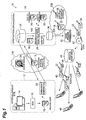
- Fig. 1 illustrates an aspect of delivering a verified AP, using an AP verification system according to a first embodiment of the present invention.
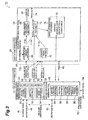
- Fig. 2 illustrates an arrangement of the AP verification system according to the first embodiment of the present invention.
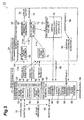
- Fig. 3 illustrates an arrangement of an AP verification system according to a second embodiment of the present invention.
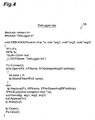
- Fig. 4 illustrates a source code to be verified in the first embodiment of the present invention.
- Fig. 5 illustrates an example of extracting an API-in-use and verifying the API-in-use in the first embodiment of the present invention.
- Fig. 6 illustrates verification subjects of the API-in-use to be verified in an AP verification system according to a third embodiment of the present invention.
- Fig. 7 illustrates an aspect of delivering a verified AP using a conventional AP verification system.
- Fig. 8 illustrates an aspect of delivering a verified AP using a conventional AP verification system.
- FIG. 1 illustrates an aspect of delivering a verified AP, using the AP verification system according to the first embodiment of the present invention.
- An AP verification system 10 of the present embodiment is composed of an AP development site 12 (AP transmitting device) and a verification organization 24 (AP verification device) which are connected via a network 130.
- an AP developer 14 develops an AP using an SDK (Software Development Kit) 16.
- a source code 18 of the developed AP will be transmitted over the network 130 to the verification organization 24 as submission data to which a development site signature 22 is provided by a submission data generating tool 20 (computer program) as will be described below.
- the submission data is stored in a received-data storage unit 26.
- the stored submission data is analyzed by a source code analysis tool 28 to verify its validity.
- the analysis target is changed on basis of the development site signature 22. In other words, different types of analysis can be performed for individual development site, according to a check policy associated with the development site signature 22.
- an error report 34 describing the details is sent back to the AP development site 12 over the network 130.
- the source code 18 and the like are stored in a verified AP storage unit 36. Then, the verified data including the source code 18, the development site signature 22, and the verification approval signature 38 is transmitted to the network 130.
- the verified data which is transmitted to the network 130 is rendered into a data including a binary code 42, the development site signature 22, and the verification approval signature 38, by a verified application generating tool 40 running on a computer connected to one end of the network 130. Then, the data including the binary code 42, the development site signature 22, and the verification approval signature 38 is downloaded to a mobile phone 46, by an application delivery server 44.
- Fig. 2 illustrates an arrangement of the AP verification system according to the first embodiment of the present invention.
- the AP verification system 10 according the present embodiment is physically implemented as computer devices in the AP development site 12 and the verification organization 24, which are connected over the network 130.
- the illustrated functionalities are adapted to be effective by executing a submission data generating tool 20 in the AP development site 12 and executing a source code analysis tool 28 in the verification organization 24.
- the verified data is adapted to be returned to the AP development site 12, whereby the AP development site 12 can obtain a verified application 94 by executing the verified application generating tool 40.
- Execution of the submission data generating tool 20 provides the AP development site 12 with an API-in-use extracting functionality 50 (API-in-use extracting means), an encryption functionality 52 (encryption means), an authenticity proving functionality 54, and an AP transmitting functionality 56 (AP transmitting means).
- the API-in-use extracting functionality 50 extracts information relating to the API used in the source code 18. In the present embodiment, an API name to be used is extracted from the source code 18.
- Fig. 4 illustrates a source code to be verified in the first embodiment of the present invention
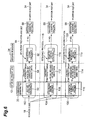
- Fig. 5 illustrates an example of extracting an API-in-use and verifying the API-in-use in the first embodiment of the present invention.
- an API-in-use set 58 as shown in Fig. 5 is extracted from the source code 18 as shown in Fig. 4, using the API-in-use extracting functionality 50.
- the encryption functionality 52 encrypts the source code 18 using an encryption key A: 48 and generates an encrypted source code 60. Encryption can be performed according to symmetric-key cryptography such as DES (Data Encryption Standard).
- the authenticity proving functionality 54 generates an authenticity proving data 62 from the API-in-use set 58 and the verified source code 60.
- the authenticity proving data 62 may be a hash value, for example, calculated from the API-in-use set 58 and the encrypted source code 60 by a hash function.
- the API-in-use set 58, the encrypted source code 60, and the authenticity proving data 62 are transmitted to the verification organization 24 over the network 130 by the AP transmitting functionality 56.
- execution of the source code analysis tool 28 provides the verification organization 24 with an API-in-use validity checking functionality 66 (verification means), an error report generating functionality 68, an authenticity proving functionality 70, a digital signature functionality 72 (digital signature means), a verified AP transmitting functionality 76 (verified AP transmitting means).
- the API-in-use validity checking functionality 66 verifies the validity of the API being used by matching the API-in-use set 58 with an API-permitted-for-use set 64.
- the digital signature functionality 72 provides a digital signature to the encrypted source code 60 according to a private key B: 74, under the condition that the authenticity proving functionality 70 has determined that the data from the AP development site 12 is authentic.
- the digital signature may be provided according to asymmetric-key cryptography such as RSA.
- the authenticity proving functionality 70 can verify that the transmitted data has not been tampered with.
- the verified source code 78 encrypted with the encryption key A: 48 and bearing a digital signature provided via the private key B: 74, is returned to the AP-development site 12 over a network not shown, by the verified AP transmitting functionality 76.
- execution of the verified application generating tool 40 provides the AP development site 12 with a signature verification functionality 84, a decryption functionality 86, a binary code generating functionality. 88, and a certificate provision functionality 90.
- the signature verification functionality 84 verifies the digital signature by decrypting the private key B: 74 using the public key B: 80. In this manner, it can be proved that the digital signature has not been tampered with, but provided by the verification organization 24.
- the decryption functionality 86 decrypts, using a decryption key A: 82, the source code which has been encrypted with the encryption key A: 48.
- the binary code generating functionality 88 generates a binary code from the decrypted source code.
- the certificate provision functionality 90 provides the binary code with a certificate 92 pre-stored in the verified application generating tool 40 and generates a verified application 94.
- FIGs. 7 and 8 illustrate an aspect of delivering the verified AP using a conventional AP verification system.
- source code analysis 28a for yet-to-be-encrypted source code is manually performed as shown in Fig. 7, there exists the risk of information leakage by the tester or the code viewer.
- verification time tends to be longer due to verification by the tester.
- thoroughness of the verification there exists a shortcoming in that thoroughness of the verification depends on the tester's skill, although a source code level verification may be possible.
- know-how of the ISV can be protected because the AP development site is required to submit the encrypted source code.
- verification time can be shortened because verification is performed on the already extracted API.
- verification since verification is performed on the already extracted API, a source code level verification is possible, without depending on the skill of the tester owing to the automated verification using a tool.
- the processes of verification, binary code generation, and registration to the application delivery server can be automated, robustness against occurrence of mistakes or fraud is high, whereby fairness of testing environment is assured.
- Fig. 3 illustrates an arrangement of the AP verification system according to a second embodiment of the present invention.
- This embodiment is different from the first embodiment in that the certificate provision functionality 90 of the verified application generating tool 40 provides an encrypted certificate 96 transmitted from the verification organization 24, instead of providing a certificate pre-stored in the verified application generating tool 40.
- the certificate 96 is encrypted using an encryption key C: 98 and transmitted to the AP development site 12.
- the encrypted certificate 96 is decrypted by a decryption key C: 100 in the verified application generating tool 40 and provided to the verified application 94.
- the risk of leakage of the certificate itself can be reduced because the certificate is provided from the verification organization in an already encrypted form.
- individual certificate is issued according to the verification level and the content so that certificates can be appropriately used on a purpose-basis.
- Fig. 6 illustrates verification subjects of the API-in-use to be verified in an AP verification system according to a third embodiment of the present invention.
- This embodiment is different from the first and the second embodiments in that a plurality of groups of check functionalities 102, 104 and 106 perform verification of plural types of subjects.
- the submission data generating tool 20 of AP development site 12 extracts the API-in-use set 58 using the API-in-use extracting functionality 50, and the verification organization 24 examines, with the API-in-use validity checking functionality 66, whether or not an API other than those permitted for use is called.
- the submission data generating tool 20 of the AP development site 12 extracts an API call sequence list 112 using an API call sequence extracting functionality 108, and the verification organization 24 examines, using a sequence checking functionality 118, whether or not the API call sequence satisfies a sequence rule by matching the API call sequence list 112 and a sequence protocol 116.
- the submission data generating tool 20 of the AP development site 12 extracts an API parameters-at-the-time-of-call list 114 using an API parameters-at-the-time-of call extracting functionality 110, and the verification organization 24 examines, using an API-parameters-at-the-time-of-call checking functionality 115, whether or not the parameters at the point of calling the API is within the range of the rule, by matching the API parameters-at-the-time-of-call list 114 and an API usage protocol 120 (API specification). For example, a static checking of an argument having an upper or lower limit, or a parameter type restriction checking of a void argument may be performed. With this aspect, a wider variety of verification with regard to an AP can be performed by providing various kinds of checking functionality groups.
Landscapes
- Engineering & Computer Science (AREA)
- Theoretical Computer Science (AREA)
- Software Systems (AREA)
- Computer Security & Cryptography (AREA)
- General Engineering & Computer Science (AREA)
- General Physics & Mathematics (AREA)
- Physics & Mathematics (AREA)
- Computer Hardware Design (AREA)
- Multimedia (AREA)
- Technology Law (AREA)
- Debugging And Monitoring (AREA)
- Stored Programmes (AREA)
- Storage Device Security (AREA)
Abstract
Description
- The present invention relates to an application program verification system, an application program verification method, and a computer program.
- Currently, services using JAVA (registered trademark) technology are common, in Japan, as aftermarket Application Programs (referred to as AP or application, hereinafter) which can be downloaded to, and executed on, mobile phone terminals. On the other hand, mobile phones are heading for platformization. Consequrenly, their native applications written in C language, C++, or the like with potential superiority in execution speed and functionality, are beginning to distribute. Although native applications are superior to JAVA in terms of speed and functionality, they have many problems in terms of security, which may produce adverse effect due to execution of an unauthorized AP. Therefore schemes are being considered to prevent distribution of an unauthorized AP when downloading APs for execution on mobile phone terminals.
- For example, there is a scheme which requires an AP developer (ISV: Independent Software Vendor) to present a source code of APs and provides a verification certificate to those which have been verified that no unauthorized process is performed (see
Japanese Patent Application Laid-Open No. 2002-140126 - Alternatively, a scheme can also be contemplated which requires AP developers to present a binary code of APs, performs black box test in a test-house, and allows those which passed without any problems to be registered into a distribution server.
- However, a method requiring the ISV to disclose the source code as described in the above-mentioned patent literature allows the test-house to have a look around the technology of the ISV, whereby some ISVs may be discouraged and avoid entering the market.
- On the other hand, a method of testing the binary code lacks completeness of verification compared with the source-level verification. Enhancing the verification may increase verification workload, which may result in a long-time verification. Therefore, it is concerned that the time period until an ISV can introduce an AP to the native application market for mobile phones after completion of its development may be prolonged, raising the risk that the ISV may miss a business chance.
- It is thus an object of the present invention, contemplated in view of the above circumstances, to provide a means to perform a source-level verification by a third-party organization in a shorter time, while preventing leakage of technology and know-how of the ISV.
- The present invention is an application program verification system (AP verification system, hereinafter) composed of an application program transmitting device (AP transmitting device, hereinafter) and an application program verification device (AP verification device, hereinafter) which are connected to a network, the AP transmitting device comprising: an application program interface-in-use extracting means (API-in-use extracting means, hereinafter) for extracting information relating to the application program interface (occasionally referred to as API, hereinafter) being used in the source code of the AP; an encryption means for encrypting the source code of the AP; and an application program transmitting means (AP transmitting means, hereinafter) for transmitting the extracted information relating to the API and the encrypted source code to the AP verification device, over the network, and the AP verification device comprising: a verification means for verifying the transmitted information relating to the API; a digital signature means for providing a digital signature to the source code whose information relating to the API has been verified; and a verified application program transmitting means (verified AP transmitting means, hereinafter) for transmitting the source code bearing the digital signature to the network.
- According to such an arrangement, since the API-in-use extracting means of the AP transmitting device extracts information relating to the API used in the source code, and the AP transmitting means transmits the information to the AP verification device, the AP verification device can receive information relating to the API-in-use. In addition, since the encryption means of the AP transmitting device encrypts the source code, which is then transmitted by the AP transmitting means to the AP verification device, the AP verification device then receives the encrypted source code, whereby leakage of technology and know-how of the ISV can be prevented. Furthermore, since the detecting means of the AP verification device verifies the transmitted information relating to the API, the source-level verification can be performed in a short time. Additionally, since the digital signature means of the AP verification device provides a digital signature to the source code whose information relating to the API has been verified, and the verified AP transmitting means transmits the source code bearing the digital signature to the network, the verified source code bearing a digital signature can be distributed over the network.
- According to another aspect of the invention, there is provided an application program verification method (AP verification method, hereinafter), comprising the steps of: preparing an AP transmitting device and an AP verification device which are mutually connected over a network; extracting information relating to an API used in a source code of an AP and encrypting the source code of the AP in the AP transmitting device; transmitting, to the AP verification device, the extracted information relating to the API and the encrypted source code, over the network; verifying the transmitted information relating to the API in the AP verification device; providing a digital signature to the source code whose information relating to the API has been verified; and transmitting the source code bearing the digital signature to the network.
- Furthermore, according to another aspect of the invention, there is provided a computer program executable in an AP transmitting device connected to an AP verification device over a network, wherein the program causes the AP transmitting device to execute the steps of:
extracting information relating to an API used in a source code of an AP and encrypting the source code of the AP; and transmitting the extracted information relating to the API and the encrypted source code to the AP verification device, over the network. - According to an AP verification system, an AP verification method and a computer program of the present invention, a source-level verification by a third-party organization can be performed in a shorter time, while preventing leakage of technology and know-how of an ISV.
- Fig. 1 illustrates an aspect of delivering a verified AP, using an AP verification system according to a first embodiment of the present invention.
- Fig. 2 illustrates an arrangement of the AP verification system according to the first embodiment of the present invention.
- Fig. 3 illustrates an arrangement of an AP verification system according to a second embodiment of the present invention.
- Fig. 4 illustrates a source code to be verified in the first embodiment of the present invention.
- Fig. 5 illustrates an example of extracting an API-in-use and verifying the API-in-use in the first embodiment of the present invention.
- Fig. 6 illustrates verification subjects of the API-in-use to be verified in an AP verification system according to a third embodiment of the present invention.
- Fig. 7 illustrates an aspect of delivering a verified AP using a conventional AP verification system.
- Fig. 8 illustrates an aspect of delivering a verified AP using a conventional AP verification system.
- In the following, an AP verification system according to an embodiment of the invention will be described, referring to the accompanying drawings. Here, in descriptions of the drawings, same or similar elements are provided with same numerals and duplicate description will be omitted.
- First, an outline of delivering an AP which has been verified by an AP verification system according to the present embodiment is described. Fig. 1 illustrates an aspect of delivering a verified AP, using the AP verification system according to the first embodiment of the present invention. An
AP verification system 10 of the present embodiment is composed of an AP development site 12 (AP transmitting device) and a verification organization 24 (AP verification device) which are connected via anetwork 130. At the APdevelopment site 12, an APdeveloper 14 develops an AP using an SDK (Software Development Kit) 16. Asource code 18 of the developed AP will be transmitted over thenetwork 130 to theverification organization 24 as submission data to which adevelopment site signature 22 is provided by a submission data generating tool 20 (computer program) as will be described below. - In the
verification organization 24, the submission data is stored in a received-data storage unit 26. As will be described below, the stored submission data is analyzed by a sourcecode analysis tool 28 to verify its validity. Using different data for individual development site, such ascode 30 for Corporation A,code 32 for Corporation B, the analysis target is changed on basis of thedevelopment site signature 22. In other words, different types of analysis can be performed for individual development site, according to a check policy associated with thedevelopment site signature 22. - If any problem was detected as a result of the analysis, an
error report 34 describing the details is sent back to the APdevelopment site 12 over thenetwork 130. On the other hand, if no problem was detected, thesource code 18 and the like are stored in a verified APstorage unit 36. Then, the verified data including thesource code 18, thedevelopment site signature 22, and theverification approval signature 38 is transmitted to thenetwork 130. - The verified data which is transmitted to the
network 130 is rendered into a data including abinary code 42, thedevelopment site signature 22, and theverification approval signature 38, by a verifiedapplication generating tool 40 running on a computer connected to one end of thenetwork 130. Then, the data including thebinary code 42, thedevelopment site signature 22, and theverification approval signature 38 is downloaded to amobile phone 46, by anapplication delivery server 44. - The AP verification system of the present embodiment will be described in further detail as follows. Fig. 2 illustrates an arrangement of the AP verification system according to the first embodiment of the present invention. The AP
verification system 10 according the present embodiment is physically implemented as computer devices in the APdevelopment site 12 and theverification organization 24, which are connected over thenetwork 130. The illustrated functionalities are adapted to be effective by executing a submissiondata generating tool 20 in the APdevelopment site 12 and executing a sourcecode analysis tool 28 in theverification organization 24. Here, with the example of Fig. 2, the verified data is adapted to be returned to the APdevelopment site 12, whereby the APdevelopment site 12 can obtain a verifiedapplication 94 by executing the verifiedapplication generating tool 40. - Execution of the submission
data generating tool 20 provides the APdevelopment site 12 with an API-in-use extracting functionality 50 (API-in-use extracting means), an encryption functionality 52 (encryption means), anauthenticity proving functionality 54, and an AP transmitting functionality 56 (AP transmitting means). The API-in-use extracting functionality 50 extracts information relating to the API used in thesource code 18. In the present embodiment, an API name to be used is extracted from thesource code 18. - Fig. 4 illustrates a source code to be verified in the first embodiment of the present invention, and Fig. 5 illustrates an example of extracting an API-in-use and verifying the API-in-use in the first embodiment of the present invention. In the AP verification system of the present embodiment, an API-in-
use set 58 as shown in Fig. 5 is extracted from thesource code 18 as shown in Fig. 4, using the API-in-use extracting functionality 50. - Returning to Fig. 2, the
encryption functionality 52 encrypts thesource code 18 using an encryption key A: 48 and generates anencrypted source code 60. Encryption can be performed according to symmetric-key cryptography such as DES (Data Encryption Standard). In addition, theauthenticity proving functionality 54 generates anauthenticity proving data 62 from the API-in-use set 58 and the verifiedsource code 60. Theauthenticity proving data 62 may be a hash value, for example, calculated from the API-in-use set 58 and theencrypted source code 60 by a hash function. The API-in-use set 58, theencrypted source code 60, and theauthenticity proving data 62 are transmitted to theverification organization 24 over thenetwork 130 by theAP transmitting functionality 56. - As shown in Fig. 2, execution of the source
code analysis tool 28 provides theverification organization 24 with an API-in-use validity checking functionality 66 (verification means), an errorreport generating functionality 68, anauthenticity proving functionality 70, a digital signature functionality 72 (digital signature means), a verified AP transmitting functionality 76 (verified AP transmitting means). The API-in-usevalidity checking functionality 66 verifies the validity of the API being used by matching the API-in-use set 58 with an API-permitted-for-use set 64. - For example, when matching of the API-permitted-for-use set 64 with the API-in-use set 58 is performed by the API-in-use
validity checking functionality 66 as shown in Fig. 5, methods "Format" and "Write" are determined as invalid because they do not exist in the API-permitted-for-use set 64. In this case, anerror report 34 indicating the fact is created by the errorreport generating functionality 68. On the other hand, if all of the APIs of the API-in-use set 58 are included in the API-permitted-for-use set 64, thedigital signature functionality 72 provides a digital signature to theencrypted source code 60 according to a private key B: 74, under the condition that theauthenticity proving functionality 70 has determined that the data from theAP development site 12 is authentic. The digital signature may be provided according to asymmetric-key cryptography such as RSA. - By matching the hash value calculated, using a hash function, from the API-in-use set 58 and the
encrypted source code 60 which have been transmitted from theAP development site 12, with the hash value of theauthenticity proving data 62, theauthenticity proving functionality 70 can verify that the transmitted data has not been tampered with. - The verified
source code 78, encrypted with the encryption key A: 48 and bearing a digital signature provided via the private key B: 74, is returned to the AP-development site 12 over a network not shown, by the verifiedAP transmitting functionality 76. - As shown in Fig. 2, execution of the verified
application generating tool 40 provides theAP development site 12 with asignature verification functionality 84, adecryption functionality 86, a binary code generating functionality. 88, and acertificate provision functionality 90. Thesignature verification functionality 84 verifies the digital signature by decrypting the private key B: 74 using the public key B: 80. In this manner, it can be proved that the digital signature has not been tampered with, but provided by theverification organization 24. Thedecryption functionality 86 decrypts, using a decryption key A: 82, the source code which has been encrypted with the encryption key A: 48. The binarycode generating functionality 88 generates a binary code from the decrypted source code. Thecertificate provision functionality 90 provides the binary code with acertificate 92 pre-stored in the verifiedapplication generating tool 40 and generates a verifiedapplication 94. - The operation and effect of the AP verification system of the present embodiment will be described below. Figs. 7 and 8 illustrate an aspect of delivering the verified AP using a conventional AP verification system.
- If
source code analysis 28a for yet-to-be-encrypted source code is manually performed as shown in Fig. 7, there exists the risk of information leakage by the tester or the code viewer. In addition, verification time tends to be longer due to verification by the tester. With regard to thoroughness of the verification, there exists a shortcoming in that thoroughness of the verification depends on the tester's skill, although a source code level verification may be possible. - In the case of the black box test using the binary code as shown in Fig. 8, it is superior in view of know-how protection since only the binary code is required to be presented, eliminating contact between the tester and the source code. However, since the black box test requires many processes for assuring completeness of the verification, the verification time tends to be longer. In addition, the black box test has a limited completeness of verification.
- With the present embodiment, on the other hand, know-how of the ISV can be protected because the AP development site is required to submit the encrypted source code. In addition, verification time can be shortened because verification is performed on the already extracted API. Furthermore, since verification is performed on the already extracted API, a source code level verification is possible, without depending on the skill of the tester owing to the automated verification using a tool. In addition, since the processes of verification, binary code generation, and registration to the application delivery server can be automated, robustness against occurrence of mistakes or fraud is high, whereby fairness of testing environment is assured.
- Fig. 3 illustrates an arrangement of the AP verification system according to a second embodiment of the present invention. This embodiment is different from the first embodiment in that the
certificate provision functionality 90 of the verifiedapplication generating tool 40 provides anencrypted certificate 96 transmitted from theverification organization 24, instead of providing a certificate pre-stored in the verifiedapplication generating tool 40. In theverification organization 24, thecertificate 96 is encrypted using an encryption key C: 98 and transmitted to theAP development site 12. At theAP development site 12, theencrypted certificate 96 is decrypted by a decryption key C: 100 in the verifiedapplication generating tool 40 and provided to the verifiedapplication 94. - With the above-mentioned aspect, the risk of leakage of the certificate itself can be reduced because the certificate is provided from the verification organization in an already encrypted form. In addition, individual certificate is issued according to the verification level and the content so that certificates can be appropriately used on a purpose-basis.
- Fig. 6 illustrates verification subjects of the API-in-use to be verified in an AP verification system according to a third embodiment of the present invention. This embodiment is different from the first and the second embodiments in that a plurality of groups of
check functionalities checking functionality group 102, as with the first and the second embodiments, the submissiondata generating tool 20 ofAP development site 12 extracts the API-in-use set 58 using the API-in-use extracting functionality 50, and theverification organization 24 examines, with the API-in-usevalidity checking functionality 66, whether or not an API other than those permitted for use is called. - In the
checking functionality group 104, the submissiondata generating tool 20 of theAP development site 12 extracts an APIcall sequence list 112 using an API callsequence extracting functionality 108, and theverification organization 24 examines, using asequence checking functionality 118, whether or not the API call sequence satisfies a sequence rule by matching the APIcall sequence list 112 and a sequence protocol 116. In thechecking functionality group 106, the submissiondata generating tool 20 of theAP development site 12 extracts an API parameters-at-the-time-of-call list 114 using an API parameters-at-the-time-ofcall extracting functionality 110, and theverification organization 24 examines, using an API-parameters-at-the-time-of-call checking functionality 115, whether or not the parameters at the point of calling the API is within the range of the rule, by matching the API parameters-at-the-time-of-call list 114 and an API usage protocol 120 (API specification). For example, a static checking of an argument having an upper or lower limit, or a parameter type restriction checking of a void argument may be performed. With this aspect, a wider variety of verification with regard to an AP can be performed by providing various kinds of checking functionality groups. - It is needless to say that the AP verification system, AP verification method and the computer program of the present invention are not limited by the above-mentioned embodiments, and various modifications can be made without departing from the spirit of the present invention.
Claims (3)
- An application program verification system composed of an application program transmitting device and an application program verification device which are connected to a network, the application program transmitting device comprising:an application program interface-in-use extracting means for extracting information relating to an application program interface being used in a source code of an application program;an encryption means for encrypting the source code of the application program; andan application program transmitting means for transmitting the extracted information relating to the application program interface and the encrypted source code to the application program verification device, via the network, andthe application program verification device comprising:a verification means for verifying the transmitted information relating to the application program interface;a digital signature means for providing a digital signature to the source code whose information relating to the application program interface has been verified; anda verified application program transmitting means for transmitting the source code bearing the digital signature to the network.
- An application program verification method comprising the steps of:preparing an application program transmitting device and an application program verification device which are mutually connected over a network;in the application program transmitting device,extracting information relating to an application program interface used in a source code of an application program and encrypting the source code of the application program;transmitting the extracted information relating to the application program interface and the encrypted source code to the application program verification device, via the network;in the application program verification device,verifying the transmitted information relating to the application program interface;providing a digital signature to the source code whose information relating to the application program interface has been verified; andtransmitting the source code bearing the digital signature to the network.
- A computer program executable in an application program transmitting device connected to an application program verification device via a network, wherein the program causes the application program transmitting device to execute the steps of:extracting information relating to an application program interface used in a source code of an application program and encrypting the source code of the application program; andtransmitting the extracted information relating to the application program interface and the encrypted source code to the application program verification device, via the network.
Applications Claiming Priority (1)
| Application Number | Priority Date | Filing Date | Title |
|---|---|---|---|
| JP2005108885A JP4727278B2 (en) | 2005-04-05 | 2005-04-05 | Application program verification system, application program verification method, and computer program |
Publications (3)
| Publication Number | Publication Date |
|---|---|
| EP1710724A2 true EP1710724A2 (en) | 2006-10-11 |
| EP1710724A3 EP1710724A3 (en) | 2012-03-28 |
| EP1710724B1 EP1710724B1 (en) | 2013-07-17 |
Family
ID=36693867
Family Applications (1)
| Application Number | Title | Priority Date | Filing Date |
|---|---|---|---|
| EP06251927.7A Ceased EP1710724B1 (en) | 2005-04-05 | 2006-04-05 | Application program verification system, application program verification method and computer program |
Country Status (5)
| Country | Link |
|---|---|
| US (1) | US8332823B2 (en) |
| EP (1) | EP1710724B1 (en) |
| JP (1) | JP4727278B2 (en) |
| KR (1) | KR100826466B1 (en) |
| CN (1) | CN100418096C (en) |
Cited By (4)
| Publication number | Priority date | Publication date | Assignee | Title |
|---|---|---|---|---|
| EP2078248A4 (en) * | 2006-09-27 | 2010-07-07 | Bright Hub Inc | Software development and sales life-cycle services |
| US20150121083A1 (en) * | 2012-06-26 | 2015-04-30 | Tencent Technology (Shenzhen) Company Limited | Method, device, and terminal for installing browser plug-in |
| EP3136279A1 (en) * | 2015-08-26 | 2017-03-01 | Fuji Xerox Co., Ltd. | Information processing system and information processing method |
| US10691801B2 (en) | 2018-02-06 | 2020-06-23 | AO Kaspersky Lab | System and method of termination of a functionally-limited application interrelated with a website and started without installation |
Families Citing this family (22)
| Publication number | Priority date | Publication date | Assignee | Title |
|---|---|---|---|---|
| US8074205B2 (en) * | 2007-04-18 | 2011-12-06 | Microsoft Corporation | Binary verification service |
| US8997054B2 (en) * | 2007-11-30 | 2015-03-31 | Red Hat, Inc. | Software application certification service |
| US8621591B2 (en) * | 2010-10-19 | 2013-12-31 | Symantec Corporation | Software signing certificate reputation model |
| KR101295644B1 (en) * | 2011-11-11 | 2013-09-16 | 한국전자통신연구원 | System and method for verifying smart phone application |
| US8843887B2 (en) * | 2012-08-31 | 2014-09-23 | Oracle International Corporation | Fast dispatch predicate for overloaded functions with generic type hierarchies that lack contravariance |
| CN103823665B (en) * | 2012-11-19 | 2017-02-22 | 中国移动通信集团公司 | SDK (software development kit) activeness analyzing method, network server and system |
| JP5863689B2 (en) * | 2013-02-28 | 2016-02-17 | 京セラドキュメントソリューションズ株式会社 | Shared library with unauthorized use prevention function |
| EP3069231B1 (en) * | 2013-11-13 | 2020-11-04 | Palo Alto Networks, Inc. | Automated sdk ingestion |
| CN103914329B (en) * | 2014-03-20 | 2017-05-10 | 北京京东尚科信息技术有限公司 | Program compiling method and device |
| CN104035874B (en) * | 2014-06-30 | 2017-11-07 | 深圳数字电视国家工程实验室股份有限公司 | A kind of software program detection method, apparatus and system |
| US9841972B2 (en) | 2014-12-17 | 2017-12-12 | Cisco Technology, Inc. | Securing secret information in source code verification and at runtime |
| US9921941B2 (en) * | 2015-04-10 | 2018-03-20 | Siemens Aktiengesellschaft | Verification and validation of third party PLC code |
| CN106156609B (en) * | 2015-04-21 | 2020-08-04 | 宇龙计算机通信科技(深圳)有限公司 | Application authentication, installation method, device, and terminal |
| US9471285B1 (en) | 2015-07-09 | 2016-10-18 | Synopsys, Inc. | Identifying software components in a software codebase |
| CN108259413B (en) | 2016-12-28 | 2021-06-01 | 华为技术有限公司 | A method for obtaining certificate and authentication and network device |
| US10061921B1 (en) * | 2017-02-13 | 2018-08-28 | Trend Micro Incorporated | Methods and systems for detecting computer security threats |
| JP6660911B2 (en) * | 2017-03-30 | 2020-03-11 | Kddi株式会社 | Reliability determination device, reliability determination system, and source code sharing system |
| JP6730235B2 (en) * | 2017-08-31 | 2020-07-29 | 株式会社日立製作所 | Application operation monitoring device and monitoring method |
| KR102229879B1 (en) * | 2019-03-25 | 2021-03-19 | (주)블록체인글로벌 | Source code managing method using block chain, server performing the same, and source code developing method using the same |
| JP7272156B2 (en) * | 2019-07-16 | 2023-05-12 | 富士電機株式会社 | Information processing device, information processing method |
| CN113126996B (en) * | 2019-12-31 | 2023-10-20 | 华控清交信息科技(北京)有限公司 | Code auditing method, device and system |
| CN114285584B (en) * | 2021-12-22 | 2024-01-16 | 北京正奇盾数据安全技术有限公司 | Encryption algorithm experiment system |
Citations (2)
| Publication number | Priority date | Publication date | Assignee | Title |
|---|---|---|---|---|
| EP0778522A2 (en) | 1995-12-08 | 1997-06-11 | Sun Microsystems, Inc. | System and method for generating trusted, architecture specific, compiled versions of architecture neutral programs |
| US20020053024A1 (en) | 2000-10-31 | 2002-05-02 | Kabushiki Kaisha Toshiba | Encrypted program distribution system using computer network |
Family Cites Families (34)
| Publication number | Priority date | Publication date | Assignee | Title |
|---|---|---|---|---|
| JPH0444176A (en) * | 1990-06-11 | 1992-02-13 | Mitsubishi Electric Corp | Software development backup tool |
| JPH05334125A (en) * | 1992-06-03 | 1993-12-17 | Toshiba Corp | Method for verifying specification of software |
| US5724425A (en) | 1994-06-10 | 1998-03-03 | Sun Microsystems, Inc. | Method and apparatus for enhancing software security and distributing software |
| US5692047A (en) * | 1995-12-08 | 1997-11-25 | Sun Microsystems, Inc. | System and method for executing verifiable programs with facility for using non-verifiable programs from trusted sources |
| US6108420A (en) * | 1997-04-10 | 2000-08-22 | Channelware Inc. | Method and system for networked installation of uniquely customized, authenticable, and traceable software application |
| JPH10320234A (en) * | 1997-05-21 | 1998-12-04 | Hitachi Ltd | How to test software automatically |
| JP4098448B2 (en) * | 1999-10-07 | 2008-06-11 | 富士通株式会社 | Program verification method and apparatus |
| GB2359908B (en) * | 2000-03-04 | 2004-09-15 | Motorola Inc | Communication system architecture and method of controlling data download to subscriber equipment |
| JP2001273169A (en) * | 2000-03-24 | 2001-10-05 | Toshiba Corp | Program test specification generator |
| US6766353B1 (en) * | 2000-07-11 | 2004-07-20 | Motorola, Inc. | Method for authenticating a JAVA archive (JAR) for portable devices |
| KR20020009994A (en) * | 2000-07-28 | 2002-02-02 | 신형인 | Pneumatic tire with improved durability |
| EP1626326B1 (en) * | 2000-09-21 | 2010-09-01 | Research In Motion Limited | Software code signing system and method |
| US20020131404A1 (en) * | 2000-11-28 | 2002-09-19 | 4Thpass Inc. | Method and system for maintaining and distributing wireless applications |
| US20020067833A1 (en) * | 2000-12-05 | 2002-06-06 | Han Ching-Chih (Jason) | Method and apparatus for providing conditional access to the source code of a program |
| DE10108487A1 (en) * | 2001-02-22 | 2002-09-12 | Giesecke & Devrient Gmbh | Method and system for the distributed creation of a program for a programmable, portable data carrier |
| US7099663B2 (en) * | 2001-05-31 | 2006-08-29 | Qualcomm Inc. | Safe application distribution and execution in a wireless environment |
| KR100443621B1 (en) | 2002-02-25 | 2004-08-09 | 주식회사 마크애니 | Method of authenticating an application for personal digital assistant using a unique ID based a person computer and system using thereof |
| ATE345012T1 (en) * | 2002-03-20 | 2006-11-15 | Research In Motion Ltd | MOBILE ACCESS TO LDAP SERVERS |
| US7822495B2 (en) * | 2002-04-15 | 2010-10-26 | Fisher-Rosemount Systems, Inc. | Custom function blocks for use with process control systems |
| US20030212639A1 (en) * | 2002-05-06 | 2003-11-13 | Cronce Paul A. | Method and system for providing secure authoring services for protected software |
| JP2003337630A (en) * | 2002-05-17 | 2003-11-28 | Ntt Docomo Inc | Communication terminal, program, recording medium, communication terminal access control method, and content providing method |
| JP2004133793A (en) * | 2002-10-11 | 2004-04-30 | Dainippon Printing Co Ltd | Motion analysis device, program development system and motion analysis program |
| US7165246B2 (en) * | 2003-01-16 | 2007-01-16 | Sun Microsystems, Inc. | Optimized representation of data type information in program verification |
| US7272830B2 (en) * | 2003-01-16 | 2007-09-18 | Sun Microsystems, Inc. | Ordering program data for loading on a device |
| CN1754173A (en) * | 2003-02-21 | 2006-03-29 | 松下电器产业株式会社 | Software management system, recording medium and information processing device |
| FR2864654B1 (en) * | 2003-12-30 | 2007-02-23 | Trusted Logic | METHOD FOR DETERMINING OPERATIONAL CHARACTERISTICS OF A PROGRAM |
| US7434217B2 (en) * | 2004-04-06 | 2008-10-07 | Scenera Technologies, Llc | Method and system for distributing a software application to a specified recipient |
| GB2413407B (en) * | 2004-04-22 | 2007-11-07 | Ibm | Method and system for software or data distribution |
| CN1311341C (en) * | 2004-05-10 | 2007-04-18 | 杭州斯达康通讯有限公司 | Method for conducting digital signature when downloading computer data to mobile phone |
| US7685596B1 (en) * | 2004-09-01 | 2010-03-23 | The Mathworks, Inc. | Deploying and distributing of applications and software components |
| US8156488B2 (en) * | 2004-10-20 | 2012-04-10 | Nokia Corporation | Terminal, method and computer program product for validating a software application |
| US7730455B2 (en) * | 2004-11-08 | 2010-06-01 | Ntt Docomo, Inc. | Method and apparatus for enforcing safety properties of computer programs by generating and solving constraints |
| US20060161968A1 (en) * | 2004-12-21 | 2006-07-20 | Nintendo Co., Ltd. | Method and apparatus for secure delivery and evaluation of prototype software over a network |
| WO2006136001A1 (en) * | 2005-06-24 | 2006-12-28 | Research In Motion Limited | System and method for associating message addresses with certificates |
-
2005
- 2005-04-05 JP JP2005108885A patent/JP4727278B2/en not_active Expired - Fee Related
-
2006
- 2006-04-04 US US11/396,451 patent/US8332823B2/en not_active Expired - Fee Related
- 2006-04-05 KR KR1020060031007A patent/KR100826466B1/en not_active Expired - Fee Related
- 2006-04-05 CN CNB2006100732128A patent/CN100418096C/en not_active Expired - Fee Related
- 2006-04-05 EP EP06251927.7A patent/EP1710724B1/en not_active Ceased
Patent Citations (2)
| Publication number | Priority date | Publication date | Assignee | Title |
|---|---|---|---|---|
| EP0778522A2 (en) | 1995-12-08 | 1997-06-11 | Sun Microsystems, Inc. | System and method for generating trusted, architecture specific, compiled versions of architecture neutral programs |
| US20020053024A1 (en) | 2000-10-31 | 2002-05-02 | Kabushiki Kaisha Toshiba | Encrypted program distribution system using computer network |
Cited By (5)
| Publication number | Priority date | Publication date | Assignee | Title |
|---|---|---|---|---|
| EP2078248A4 (en) * | 2006-09-27 | 2010-07-07 | Bright Hub Inc | Software development and sales life-cycle services |
| US20150121083A1 (en) * | 2012-06-26 | 2015-04-30 | Tencent Technology (Shenzhen) Company Limited | Method, device, and terminal for installing browser plug-in |
| EP3136279A1 (en) * | 2015-08-26 | 2017-03-01 | Fuji Xerox Co., Ltd. | Information processing system and information processing method |
| US9971552B2 (en) | 2015-08-26 | 2018-05-15 | Fujii Xerox Co., Ltd. | Information processing system and information processing method |
| US10691801B2 (en) | 2018-02-06 | 2020-06-23 | AO Kaspersky Lab | System and method of termination of a functionally-limited application interrelated with a website and started without installation |
Also Published As
| Publication number | Publication date |
|---|---|
| KR100826466B1 (en) | 2008-05-02 |
| EP1710724B1 (en) | 2013-07-17 |
| CN1848129A (en) | 2006-10-18 |
| JP2006293417A (en) | 2006-10-26 |
| JP4727278B2 (en) | 2011-07-20 |
| CN100418096C (en) | 2008-09-10 |
| KR20060107344A (en) | 2006-10-13 |
| EP1710724A3 (en) | 2012-03-28 |
| US8332823B2 (en) | 2012-12-11 |
| US20060236114A1 (en) | 2006-10-19 |
Similar Documents
| Publication | Publication Date | Title |
|---|---|---|
| US8332823B2 (en) | Application program verification system, application program verification method and computer program | |
| Reaves et al. | Mo (bile) money, mo (bile) problems: Analysis of branchless banking applications | |
| Continella et al. | Obfuscation-Resilient Privacy Leak Detection for Mobile Apps Through Differential Analysis. | |
| US20020053024A1 (en) | Encrypted program distribution system using computer network | |
| Ménétrey et al. | Watz: A trusted webassembly runtime environment with remote attestation for trustzone | |
| JP2019505887A (en) | Mobile device with reliable execution environment | |
| CN104199657B (en) | The call method and device of open platform | |
| US20080168562A1 (en) | Secure Processing Device and Secure Processing System | |
| JP4295684B2 (en) | Program production device | |
| Ozkan et al. | Security analysis of mobile authenticator applications | |
| KR20220140638A (en) | Model protection methods and devices, electronic devices, model protection systems, storage media and computer programs | |
| JP4664055B2 (en) | Program dividing device, program executing device, program dividing method, and program executing method | |
| KR101872104B1 (en) | System and method for integrity verification of banking application using APK file dynamic loading technique | |
| JP2003050641A (en) | Program management system, its program management method, and information management program | |
| CN102024124A (en) | Method, device and system for processing mobile widgets as well as client-side | |
| EP2873023B1 (en) | Technique for determining a malign or non-malign behavior of an executable file | |
| CN107066888B (en) | Extensible trusted user interface, method and electronic device | |
| CN114238982A (en) | Application security testing method and device, storage medium and electronic device | |
| CN110602051B (en) | Information processing method based on consensus protocol and related device | |
| CN108563953B (en) | Safe and extensible trusted application development method | |
| CN108259490B (en) | Client verification method and device | |
| Msgna et al. | Secure application execution in mobile devices | |
| CN114070584A (en) | Secret calculation method, device, equipment and storage medium | |
| Shin et al. | An Investigation of PSA Certified | |
| CN116186695B (en) | A method, apparatus, and device for determining application security |
Legal Events
| Date | Code | Title | Description |
|---|---|---|---|
| PUAI | Public reference made under article 153(3) epc to a published international application that has entered the european phase |
Free format text: ORIGINAL CODE: 0009012 |
|
| AK | Designated contracting states |
Kind code of ref document: A2 Designated state(s): AT BE BG CH CY CZ DE DK EE ES FI FR GB GR HU IE IS IT LI LT LU LV MC NL PL PT RO SE SI SK TR |
|
| AX | Request for extension of the european patent |
Extension state: AL BA HR MK YU |
|
| PUAL | Search report despatched |
Free format text: ORIGINAL CODE: 0009013 |
|
| AK | Designated contracting states |
Kind code of ref document: A3 Designated state(s): AT BE BG CH CY CZ DE DK EE ES FI FR GB GR HU IE IS IT LI LT LU LV MC NL PL PT RO SE SI SK TR |
|
| AX | Request for extension of the european patent |
Extension state: AL BA HR MK YU |
|
| RIC1 | Information provided on ipc code assigned before grant |
Ipc: G06F 21/00 20060101AFI20120220BHEP |
|
| 17P | Request for examination filed |
Effective date: 20120601 |
|
| AKX | Designation fees paid |
Designated state(s): GB |
|
| REG | Reference to a national code |
Ref country code: DE Ref legal event code: R108 |
|
| REG | Reference to a national code |
Ref country code: DE Ref legal event code: R108 Effective date: 20121205 |
|
| GRAP | Despatch of communication of intention to grant a patent |
Free format text: ORIGINAL CODE: EPIDOSNIGR1 |
|
| RAP1 | Party data changed (applicant data changed or rights of an application transferred) |
Owner name: NTT DOCOMO, INC. |
|
| GRAS | Grant fee paid |
Free format text: ORIGINAL CODE: EPIDOSNIGR3 |
|
| GRAA | (expected) grant |
Free format text: ORIGINAL CODE: 0009210 |
|
| AK | Designated contracting states |
Kind code of ref document: B1 Designated state(s): GB |
|
| REG | Reference to a national code |
Ref country code: GB Ref legal event code: FG4D |
|
| PLBE | No opposition filed within time limit |
Free format text: ORIGINAL CODE: 0009261 |
|
| STAA | Information on the status of an ep patent application or granted ep patent |
Free format text: STATUS: NO OPPOSITION FILED WITHIN TIME LIMIT |
|
| 26N | No opposition filed |
Effective date: 20140422 |
|
| PGFP | Annual fee paid to national office [announced via postgrant information from national office to epo] |
Ref country code: GB Payment date: 20180329 Year of fee payment: 13 |
|
| GBPC | Gb: european patent ceased through non-payment of renewal fee |
Effective date: 20190405 |
|
| PG25 | Lapsed in a contracting state [announced via postgrant information from national office to epo] |
Ref country code: GB Free format text: LAPSE BECAUSE OF NON-PAYMENT OF DUE FEES Effective date: 20190405 |