EP1708537A1 - System, apparatus and method for updating of an active set of a mobile terminal in a mobile communications system - Google Patents
System, apparatus and method for updating of an active set of a mobile terminal in a mobile communications system Download PDFInfo
- Publication number
- EP1708537A1 EP1708537A1 EP06111645A EP06111645A EP1708537A1 EP 1708537 A1 EP1708537 A1 EP 1708537A1 EP 06111645 A EP06111645 A EP 06111645A EP 06111645 A EP06111645 A EP 06111645A EP 1708537 A1 EP1708537 A1 EP 1708537A1
- Authority
- EP
- European Patent Office
- Prior art keywords
- cell
- mobile terminal
- active set
- radio channel
- request
- Prior art date
- Legal status (The legal status is an assumption and is not a legal conclusion. Google has not performed a legal analysis and makes no representation as to the accuracy of the status listed.)
- Withdrawn
Links
- 238000000034 method Methods 0.000 title claims abstract description 13
- 238000010295 mobile communication Methods 0.000 title claims description 25
- 238000012217 deletion Methods 0.000 claims abstract description 65
- 230000037430 deletion Effects 0.000 claims abstract description 65
- 238000004891 communication Methods 0.000 claims abstract description 14
- 230000005764 inhibitory process Effects 0.000 claims description 7
- 238000012545 processing Methods 0.000 claims description 7
- 230000002401 inhibitory effect Effects 0.000 abstract description 9
- 238000005259 measurement Methods 0.000 description 5
- 238000010586 diagram Methods 0.000 description 4
- 230000004044 response Effects 0.000 description 4
- 230000001413 cellular effect Effects 0.000 description 1
- 238000007796 conventional method Methods 0.000 description 1
- 238000012937 correction Methods 0.000 description 1
- 238000005516 engineering process Methods 0.000 description 1
- 238000012986 modification Methods 0.000 description 1
- 230000004048 modification Effects 0.000 description 1
- 230000000754 repressing effect Effects 0.000 description 1
Images


Classifications
-
- H—ELECTRICITY
- H04—ELECTRIC COMMUNICATION TECHNIQUE
- H04W—WIRELESS COMMUNICATION NETWORKS
- H04W36/00—Hand-off or reselection arrangements
- H04W36/16—Performing reselection for specific purposes
- H04W36/18—Performing reselection for specific purposes for allowing seamless reselection, e.g. soft reselection
-
- H—ELECTRICITY
- H04—ELECTRIC COMMUNICATION TECHNIQUE
- H04W—WIRELESS COMMUNICATION NETWORKS
- H04W36/00—Hand-off or reselection arrangements
- H04W36/24—Reselection being triggered by specific parameters
- H04W36/30—Reselection being triggered by specific parameters by measured or perceived connection quality data
Definitions
- the present invention relates to a control of addition and deletion to and from an active set used in a handover control method in a CDMA (Code Division Multiple Access) mobile communications system, and particularly relates to a mobile communications system, a radio network controller and an active set control method for performing active set control in a system in which a high-speed signal is introduced in an uplink radio channel from a mobile terminal to a base station.
- CDMA Code Division Multiple Access
- a mobile terminal in a CDMA (Code Division Multiple Access) mobile communications system is capable of simultaneously setting up radio channels between the mobile terminal and a plurality of base stations.
- a new radio channel from the mobile terminal to a base station is established before old radio links from the mobile station to other base stations are removed when the mobile station performs handover.
- the mobile terminal keeps its connection to the other end during the handover operation because the mobile terminal keeps at least one radio link to one of the base stations even when the mobile terminal is performing handover.
- a radio network controller (RNC: Radio Network Controller) in the CDMA mobile communications system manages radio channels, which are set between a mobile terminal and each of the base stations during handover, by using active sets of respective mobile terminals.
- An active set is a list of cells in each of which a mobile terminal sets radio channels (an access link) during handover. The content of the active set varies in accordance with the movement of a mobile terminal during handover. More specifically, a cell included in the active set is deleted or added depending on the location of the mobile terminal which is moving.
- the active set is not a list of base stations, but instead, includes a list of cells.
- the reason thereof is as follows.
- handover in which the mobile terminal moves from a cell to another cell means handover from a certain base station to another certain base station.
- one base station does not always correspond to one cell.
- the base station corresponds to the plurality of cells. If a cell from which a mobile terminal moves and a cell to which the mobile terminal moves belong to the same base station, then handover between the base stations is not performed even though the mobile terminal performs handover between cells.
- the active set is not a list of base stations to which the mobile terminal sets up radio channels, but instead, includes a list of cells in which the mobile terminals set up radio channels.
- the cell included in the list of the active set does not mean an area where effective radio signals reach a base station, but instead, indicates a radio channel which is set up corresponding to the cell between the mobile terminal and the base station.
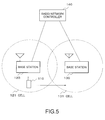
- FIG. 5 illustrates the CDMA mobile communications system including a radio network controller (RNC: Radio Network Controller) 140 and base stations 120 and 130. Each of the base stations 120 and 130 is connected to the radio network controller 140.
- the radio network controller 140 is a host apparatus which, for example, sets up radio channels each between a mobile terminal 110 and any of the base stations 120 and 130, and controls handover operations between the base stations 120 and 130.
- FIG. 5 shows a case where the mobile terminal 110 was in a cell 121 of the base station 120 and moves to a cell 131 of the base station 130.
- Operations for active set control of a conventional example 1 are for controlling addition / deletion of a cell to / from the active set initiated by the mobile terminal which measures a signal power of a downlink reference channel from each base station.
- FIG. 6 detailed descriptions will be provided below of the operations of the conventional example 1, using the case in which the mobile terminal 110 moves from the cell 121 of the base station 120 to the cell 131 of the mobile station 130.
- the mobile terminal 110 has a radio channel linked in cell 121. Simultaneously, the mobile terminal 110 periodically measures a downlink reference signal power of the neighboring cell 131.
- the mobile terminal 110 sends an event trigger (a radio channel setup request signal) for adding the cell 131 to the active set to the radio network controller 140 through the existing radio channel between the mobile terminal 110 and the base station 120.
- an event trigger a radio channel setup request signal
- the radio network controller 140 Upon receiving the event trigger from the mobile terminal 110, the radio network controller 140 sends, to each of the base station 130 and the mobile terminal 110, a radio channel setup signal for setting up a radio channel of the cell 131.
- the radio network controller 140 also adds the cell 131 to the active set of the mobile terminal 110 in the active set table.
- the base station 130 and the mobile terminal 110 Upon receiving the radio channel setup signal from the radio network controller 140, the base station 130 and the mobile terminal 110 set up a radio channel of cell 131 and start communications on the radio channel of cell 131. Then, the sequence of operations for adding the cell 131 to the active set is completed.
- the mobile terminal 110 sends an event trigger (a radio channel release request signal) for deleting the cell 121 from the active set to the radio network controller 140 through any one of the existing radio channels each between the mobile terminal 110 and any one of the base stations 120 and 130.
- an event trigger a radio channel release request signal
- the radio network controller 140 Upon receiving the event trigger from the mobile terminal 110, the radio network controller 140 sends, to the base station 120 and the mobile terminal 110, a radio channel release signal for releasing the radio channel of the cell 121. The radio network controller 140 also deletes the cell 121 from the active set of the mobile terminal 110 in the active set table.
- the base station 120 and the mobile terminal 110 Upon receiving the radio channel release signal from the radio network controller 140, the base station 120 and the mobile terminal 110 release the radio channel of the cell 121, between them. Then, the sequence of operations for deleting the cell 121 from the active set is completed.
- the conventional example 2 is for controlling a deletion of a cell from the active set initiated by the base station which monitors a receiving condition of an uplink high-speed signal from the mobile terminal.
- FIG. 7 detailed descriptions will be provided of the operations of the conventional example 2, using the case where the mobile terminal 110 moves from the cell 121 of base station 120 to the cell 131 of base station 130.
- Each of the base stations 120 and 130 respectively forms the cells 121 and 131, which are included in the active set of the radio network controller 140, and measures a received SIR (Signal to Interference power Ratio) of an uplink high-speed signal transmitted from the mobile terminal 110.
- Each of the base stations 120 and 130 monitors a difference between the received SIR and a target SIR which satisfies the minimum requirement of communications quality for the radio channels and which the radio network controller 140 has provided to the base stations 120 and 130.
- the base station 120 sends, to the radio network controller 140, a radio channel release request signal for releasing a radio channel of cell 121 (a radio channel of uplink high-speed signal), presuming that the mobile terminal 110 has started sending the uplink high-speed signal in accordance with a rate control signal of the other base station 130 (see FIG. 8).
- the radio network controller 140 Upon receiving the radio channel release request signal from the base station 120, the radio network controller 140 sends, to each of the base station 120 and the mobile terminal 110, the radio channel release signal for releasing the radio channel of the cell 121.
- each of the base station 120 and the mobile terminal 110 releases the radio channel (the radio channel of uplink high-speed signal) between the mobile terminal 110 and the base station 120. Then, the sequence of operations for deleting the cell 121 from the active set is completed.
- an uplink channel and a down link reference channel have different propagation environments because of a difference in phasing (fluctuations of received signal strength) conditions caused by a difference in frequencies between the uplink high-speed signal and the downlink reference signal (or the rate signal), a difference in interference conditions between the uplink high-speed signal and the downlink reference signal (or the rate control signal), and the like.
- the operations in the conventional example 1 it happens that the access link remains in the active set because the downlink channel is satisfying receiving strength for the mobile terminal even if the uplink channel have been degraded and the uplink channel does not work for communications any longer, whereby radio resources are wasted. Effective use of radio resources is strongly required especially under such a coming circumstance that the uplink high-speed channel is used to transmit a large amount of data such as moving images at high speed from the mobile terminal. Since radio resources are not used effectively, in some cases, in the deletion control by the operations of the conventional example 1, the operations of the conventional example 1 are used together with the operations of the conventional example 2.
- the propagation environment when the propagation environment is preferable in the downlink radio channel but is not preferable in the uplink radio channel between the mobile terminal 110 and the base station 120, it causes the operations for addition and deletion of the active set in series because of the addition of the cell 121 to the active set in response to the radio channel setup request signal from the mobile terminal 110, and the deletion of the cell 121 from the active set in response to the radio channel release request signal from the base station 120. This results in the deletion and addition occurring in series in a short time.
- the present invention solves the above-described problems in a communications system, a radio network controller and an active set control method for performing active set control with respect to each uplink high-speed signal between a mobile terminal and each base station.
- the radio network controller after deleting a cell from an active set, starts a timer for a predetermined period of time for inhibiting addition of an access link regarding the cell before expiration of the timer, whereby the addition and deletion of the access link are prevented from successive operation of the addition and deletion in a short time. Accordingly, it is made possible to prevent the deletion and addition of the cell from and to the active set from successive operations in a short time, under a propagation circumstance in which a receiving strength of an uplink high-speed signal is degraded, while a downlink signal receiving strength is sufficient for maintaining the access link of the cell in the active set.
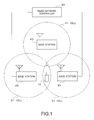
- FIG. 1 is a first block diagram schematically showing a configuration of a mobile communications system, according to an exemplary aspect of the present invention
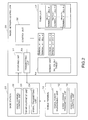
- FIG. 2 is a second block diagram schematically showing the configuration of the mobile communications system, according to an exemplary aspect of the present invention
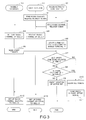
- FIG. 3 is a flow chart schematically showing operations of the mobile communications system, according to an exemplary aspect of the present invention
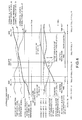
- FIG. 4 is a schematic view for explaining an example of a control of addition/deletion of an active set in the mobile communications system, according to an exemplary aspect of the present invention
- FIG. 5 is a block diagram schematically showing a configuration of a mobile communications system, according to a conventional example
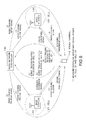
- FIG. 6 is a schematic view for explaining operations of active set control in a CDMA mobile communications system, according to a first conventional example
- FIG. 7 is a schematic view for explaining operations of active set control in a CDMA mobile communications system, according to a second conventional example.
- FIG. 8 is a schematic view for explaining an example of control of addition/deletion of an active set in a mobile communications system, according to the conventional example.
- FIGs. 1 and 2 are block diagrams each showing a configuration of the communications system according to an exemplary aspect of the present invention.
- FIG. 1 shows an exemplary case in which a mobile terminal 10 which was in an overlapped area of two cells 21 and 31 moves into an overlapped area of three cells 21, 31 and 41.
- base stations 30 and 40 are omitted.
- the exemplary communications system in FIG. 1 is a CDMA communications system including the mobile terminal 10, base stations 20, 30 and 40, and a radio network controller 50.
- the mobile terminal 10 is a terminal capable of having a plurality of radio channels each connecting with any one of base stations 20 to 40, and can be, for example, a cellular telephone. As shown in FIG. 2, the exemplary mobile terminal 10 can include a signal power measurement unit 11, an event trigger transmitting unit 12 and a radio channel control unit 13.
- the signal power measurement unit 11 While a radio channel is connecting to a first cell (for example, the cell 21), the signal power measurement unit 11 is capable of periodically measuring power of downlink reference signals of other neighboring cells, such as a second cell (for example, the cell 31).
- the event trigger transmitting unit 12 sends, to the radio network controller 50, an event trigger (a radio channel setup request signal) for adding the cell 31 to an active set through a radio channel of the cell 21.
- an active set addition threshold level e.g., see FIG. 4
- the event trigger transmitting unit 12 sends, to the radio network controller 50, an event trigger (a radio channel setup request signal) for adding the cell 31 to an active set through a radio channel of the cell 21.
- an active set deletion threshold level e.g., see FIG.
- the event trigger transmitting unit 12 sends, to the radio network controller 50, an event trigger for deleting the first cell (the cell 21) from the active set through any one of existing radio channels between the mobile terminal 10 and the base stations 20 and 30.
- the active set addition threshold level can be a threshold level for judging whether or not a concerned cell is added to the active set by comparing the level of a downlink reference signal power to the active set addition threshold level.
- the active set deletion threshold level can be a threshold level for judging whether or not a concerned cell is deleted from the active set by comparing the level of a downlink reference signal power to the active set deletion threshold level.
- a radio channel control unit 13 sets up a radio channel of a cell (for example, cell 31) by receiving a radio channel setup signal (for instruction of setting up a radio channel of a cell, for example, the cell 31) from the radio network controller 50. Further, the radio channel control unit 13 releases a radio channel of a cell (for example, the cell 31), which channel has been set up, by receiving a radio channel release signal (for instruction of releasing a radio channel of a cell, for example, the cell 31) from the radio network controller 50.
- any one of the base stations 20 to 40 sets up a radio channel between itself and the mobile terminal 10 within their cells in response to a signal from the radio network controller 50.
- a cell for example, the cell 21 of the base station 20, indicates two things. First, the cell 21 indicates a communications area in which a mobile terminal is possible to communicate with the base station 20. Second, it indicates that the cell 21 is an access link corresponding to a radio channel between a mobile terminal and the base station 20 within the cell 21. In the second meaning, a cell is a target unit to be managed by the active set.
- the base station 20 includes a radio channel control unit 22, a SIR measurement unit 23 and a signal transmitting unit 24.
- Each of the base stations 30 and 40 also can include the same configuration as the exemplary case of the base station 20.
- the radio channel control unit 22 sets up a radio channel in a designated cell (for example, the cell 31) upon receiving a radio channel setup signal (for instruction of setting up of a radio channel of, for example, the cell 31) from the radio network controller 50.
- the radio channel control unit 22 releases an already-existing radio channel in a designated cell (for example, the cell 31) upon receiving a radio channel release signal (for instruction of release of a radio channel of, for example, the cell 31) from the radio network controller 50.
- the SIR measurement unit 23 measures a received SIR (Signal to Interference power Ratio) of an uplink high-speed signal, and judges a receiving condition of the uplink signal based on the received SIR and a target SIR indicating a required level for satisfying communications quality provided by the radio network controller 50. More specifically, the SIR measurement unit 23 monitors whether or not the level of a received SIR becomes lower than the active set deletion SIR threshold level (e.g., see FIG. 4) continuously for a predetermined time (an active set deletion protection time; e.g., see FIG. 4).
- the active set deletion SIR threshold level is a level of value obtained by subtracting a correction value from the value of the target SIR.
- the active-set deletion protection time can be a protection time for determining whether or not deletion of the active set is performed or not.
- the signal transmitting unit 24 sends, to the radio network controller 50, the radio channel release request signal for requesting to release the radio channel, which is of the cell 21, for the uplink high-speed signal.
- the radio network controller 50 is connected to each of the base stations 20 to 40, and controls hand over and radio channels setup for each of the base stations 20 to 40.
- the radio network controller 50 includes a receiving unit 51, a control unit 52, a transmitting unit 53, a memory unit 54, and a timer unit 55.
- the receiving unit 51 receives information on a request of the addition/deletion of the active set (the event trigger, the radio channel setup request signal, and the radio channel release request signal) from the mobile terminal 10 or any one of the base stations 20 to 40.
- the transmitting unit 53 sends information on setup/deletion of an access link (the radio channel setup signal, and the radio channel release signal) to instruct the mobile terminal 10 and any one of the base stations 20 to 40 to setup or release a radio channel as the result of operation of addition to / deletion from the active set performed by the control unit 52, which is to be described later, based on the request information on addition to/ deletion from the active set which was sent from the mobile terminal 10 or any one of the base stations 20 to 40 and received at the receiving unit 51.
- an access link the radio channel setup signal, and the radio channel release signal
- the memory unit 54 stores information of an active set table indicating a state of an active set for each of the mobile terminals.
- the active set holds the list of cells corresponding to access links which are connected in handover operation for each mobile terminal.
- the timer unit 55 counts a time from deletion of the cell until a predetermined period of time after which the radio network controller 50 accepts the addition request of the same cell to the active set again.
- the control unit 52 performs control processing of the active sets for the respective mobile terminals based on the active set table stored in the memory unit 54, in response to the request of addition to / deletion from an active set (the event trigger, the radio channel setup request signal, and the radio channel release request signal) received by receiving unit 51 from the mobile terminal 10 or any one of the base stations 20 to 40.
- an active set the event trigger, the radio channel setup request signal, and the radio channel release request signal
- the control unit 52 upon receiving an event trigger of the radio channel release request signal for deleting the cell 21 from the active set sent from the mobile terminal 10, the control unit 52 deletes, from the active set table stored in the memory unit 54, the cell 21 associated with the mobile terminal 10.
- the control unit 52 upon receiving the radio channel release request signal for releasing the radio channel of uplink high-speed signal of the cell 21 sent from the base station 20, the control unit 52 deletes, from the active set table stored in the memory unit 54, the cell 21 associated with the mobile terminal 10 using the radio channel.
- control unit 52 further performs deletion operation of the actual radio channel corresponding to the cell having been deleted from the active set.
- the control unit 52 issues the radio channel release signal for releasing the radio channel of the uplink high-speed signal associated with the cell 21 which has been deleted from the active set table and sends it through the transmitting unit 53, to each of the mobile terminal 10 and the base station 20.
- control unit 52 inhibits re-addition of the same cell in a certain condition for a predetermined period of time counted by the timer unit 55.
- the control unit 52 Upon receiving the radio channel release request signal from the base station (for releasing a radio channel of uplink-high speed signal of a cell, for example, a cell # n) and deleting the cell from the active set table, the control unit 52 starts an unused timer of the timer unit 55 for counting elapsed time from the point of the deleting operation from the active set table up to a predetermined period of time. The control unit 52 associates the timer counting elapsed time with the cell #n of the mobile terminal 10.
- the control unit 52 Upon receiving an event trigger (a radio channel setup request signal for adding the cell # n to the active set) from the mobile terminal 10, the control unit 52 checks whether or not the cell #n of the mobile terminal 10 was deleted from the active set within a predetermined period of time by the timer of the timer unit 55. The control unit 52 also checks the number of cells associated with mobile terminal 10 in the active set table stored in the memory unit 54. If there is a timer counting for the cell #n of the mobile terminal 10 and it is not yet expired, and there are two or more cells of the mobile terminal 10 in the active set table, the control unit 52 inhibits operations for the addition of the cell # n to the active set, the addition having been requested by the mobile terminal 10.
- an event trigger a radio channel setup request signal for adding the cell # n to the active set
- the control unit 52 accepts the adding request and sends a radio channel setup signal for setting up a radio channel relating to the cell # n (for example, the cell 21) to a concerned base station (for example, the base station 20) and the mobile terminal 10, even if there is a timer of the cell #n associated with the mobile terminal 10 and it is not yet expired.
- the control unit 52 clears all timers counting for cells associated with the mobile terminal 10 in the timer unit 55.
- the clearing timer operation by the control unit 52 is to secure the number of cells for the mobile terminal 10. If the last cell of mobile terminal 10 is deleted from the active set, the mobile terminal 10 loses all of the radio channels to the mobile stations, and all of the connections for services. Therefore, if the remaining cell is the only one in the active set, the control unit 52 stops inhibiting operation to secure the number of cells and adds the cell to the active set by accepting the radio channel setup request. This control operation for securing cell numbers continues until one or more cells of the mobile terminal 10 is added. Therefore, all other timers corresponding to the mobile terminal 10 are to be cleared at the same time.
- FIG. 3 is a flow chart schematically showing the operations of the mobile communications system according to the exemplary aspects of the present invention.
- FIG. 4 is a schematic view for explaining an example of control of addition to / deletion from the active set in the mobile communications system according to the exemplary aspects of the present invention.
- the level of the received SIR of the uplink high-speed signal from the mobile terminal 10 at the base station 20 is lower than the active set deletion SIR threshold level.
- the base station 20 sends the radio channel release request signal (for requesting the release of the radio channel of the uplink high-speed signal, which is a radio channel of the cell 21) to the radio network controller 50 (Step A1).
- the radio channel release request signal may be the event trigger sent from the mobile terminal 10.
- the radio network controller 50 Upon receiving the radio channel release request signal from the base station 20, the radio network controller 50 sends, to the base station 20 and the mobile terminal 10, the radio channel release signal for requesting to release the radio channel of the uplink high-speed signal, which is the radio channel of the cell 21 (Step A2).
- the radio network controller 50 deletes the cell 21 corresponding to the radio channel from the active set of the mobile terminal 10 in the active set table.
- the mobile terminal 10 Upon receiving, from the radio network controller 50, the radio channel release signal, the mobile terminal 10 releases the radio channel of the cell 21 being set up between the mobile terminal 10 and the base station 20 (Step A3). Further, upon receiving the radio channel release signal from the radio network controller 50, the base station 20 also releases the radio channel having being set up between the base station 20 and the mobile terminal 10 (Step A4). Then, the sequence of processing for deleting the cell 21 from the active set associated with the mobile terminal 10 is completed.
- the radio network controller 50 After sending the radio channel release signal (for deleting the cell 21 from the active set), the radio network controller 50 inhibits the cell addition to the active set relating to the mobile terminal 10 for a predetermined time.
- the control unit 52 starts a timer of the timer unit 55 associating with the cell 21 of the mobile terminal 10 and inhibits the addition the cell 21 of mobile terminal 10 to the active set table for a predetermined time (Step A5).
- the mobile terminal 10 sends the event trigger (the radio channel setup request signal for adding the cell 21 to the active set) to the radio network controller 50 (Step A6 in FIG. 3).
- the control unit 52 of the radio network controller 50 Upon receiving the event trigger from the mobile terminal 10, the control unit 52 of the radio network controller 50 checks whether or not any timer of the cell 21 associated with the mobile terminal 10 is counting the time and if the timer is not yet expired (Step A7).
- Step A7 If there is a timer counting for the cell 21 of the mobile terminal 10 (YES in Step A7), the control unit 52 checks whether or not there is only one cell in the active set of the mobile terminal 10 in the active set table stored in the memory unit 54 (Step A8).
- Step A9 the control unit 52 inhibits the addition of the cell 21 of the mobile terminal 10 to the active set.
- the inhibition operation from addition of the access link to the active set for a certain period of time prevents the addition/deletion operation to the active set at frequent intervals.
- the radio network controller 50 If there is not a timer counting for the cell 21 associated with the mobile terminal 10 (NO in Step A7), or the number of cells associated with the mobile terminal 10 is only one in the active set table (YES in Step A8), the radio network controller 50 resets all timers relating to the mobile terminal 10 in the timer unit 55 (Step A10).
- clearing all timers relating to the mobile terminal 10 in the timer unit 55 is to stop inhibiting the adding operation to the active set table and to secure the number of cells of the mobile terminal 10.
- clearing all timers similarly with in case of YES in Step A8 is also to secure the number of cells of the mobile terminal 10.
- the radio network controller 50 receives a request for setup of a radio channel other than radio channels which were deleted from the active set table before a predetermined period of time or shorter. Because the radio channel requested to be set up in the case of NO in Step A7 is the channel for which any timer does not count in the timer unit 55.
- the radio network controller 50 stops inhibiting the adding operation of cells to the active set table and gives the mobile terminal 10 an opportunity to increase the number of cells in the active set in the radio network controller 50 expecting that the radio channel condition around the mobile terminal 10 is changed for the better.
- the radio network controller 50 After clearing all timers relating to the mobile terminal 10 in the timer unit 55 (Step A10), the radio network controller 50 sends, to the concerned base station 20 and the mobile terminal 10, the radio channel setup signal for setting up the radio channel corresponding to the cell 21 of the mobile terminal 10 (Step A11).
- the mobile terminal 10 Upon receiving the radio channel setup signal (for setting up the radio channel of the uplink high-speed signal of the cell 21) from the radio network controller 50, the mobile terminal 10 sets up the radio channel of the cell 21, between the mobile terminal 10 and the base station 20 (Step A12).
- the base station 20 Upon receiving the radio channel set up signal (for setting up the radio channel of the uplink high-speed signal, which radio signal relates to the cell 21) from the radio network controller 50, the base station 20 sets up the radio channel of the cell 21, between the base station 20 and the mobile terminal 10 (Step A13). Then, the sequence of operations for adding the cell 21 to the active set relating to the mobile terminal 10 is completed.
- the sequence can be for the case in which the base station 20 sends the radio channel release request signal to the radio network controller 50 (Step A1) and then the mobile terminal 10 sends the event trigger (the radio channel setup request signal for adding the cell 21 to the active set) to the radio network controller 50 (Step A6). If the mobile terminal 10 sends the event trigger (the radio channel release request signal) in Step A1, the radio network controller 50 performs similar operations after Step A1 with the above exemplary description of FIG. 3. Also, if the base station 20 sends the radio channel release request signal in Step A6, the radio network controller 50 also performs similar operations after Step A6 with the above exemplary description of FIG. 3.
- the radio network controller 50 performs the inhibiting operation based not on whether the mobile terminal or one of the base stations sends the request for setting up or releasing a radio channel, but instead, based on the cell number corresponding to the radio channel, the relating mobile terminal, the interval time between deletion / addition operations of the concerned cell, and the number of cells remaining in the active set of the mobile terminal.
- the radio network controller 50 sets a timer for inhibiting the addition of an access link of the cell until the timer is expired, thereby preventing instability in the addition/deletion of the access link. Accordingly, according to the exemplary aspects of the present invention, it is made possible to prevent the radio network controller from frequently performing the operation of deletion and addition of the cell from and to the active set, in the case that the receiving condition of the uplink high-speed signal is deteriorated while the downlink signal power is preferable. For this reason, according to the exemplary aspects of the present invention, it is made possible to avoid the problem caused by the difference between the uplink propagation environment and the downlink propagation environment.
- the active set from the frequent operation caused not only by the difference between the uplink propagation environment and the downlink propagation environment, but also, by any other reasons, because the inhibiting operation does not depend on the cause of adding / deleting operation to the active set and works without distinction of the cause of the frequent operations.
- An active set control method for handover operation in a CDMA communications system in which propagation conditions of an uplink channel and a downlink channel for an access link of cell are different, provides that when a cell is deleted from the active set based on a request of a base station which has detected a degraded signal of the uplink channel, a predetermined period of time is to be counted for inhibiting addition of the same cell in the active set based on a request of a mobile terminal which has detected a satisfied signal of the downlink channel, thereby preventing the deletion and addition of the cell in the active set from successive operations in a short time.
Landscapes
- Engineering & Computer Science (AREA)
- Computer Networks & Wireless Communication (AREA)
- Signal Processing (AREA)
- Mobile Radio Communication Systems (AREA)
Abstract
An active set control method for handover operation in a CDMA communications system in which propagation conditions of an uplink channel and a downlink channel for an access link of cell are different, provides that when a cell is deleted from the active set based on a request of a base station which has detected a degraded signal of the uplink channel, a predetermined period of time is to be counted for inhibiting addition of the same cell in the active set based on a request of a mobile terminal which has detected a satisfied signal of the downlink channel, thereby preventing the deletion and addition of the cell in the active set from successive operations in a short time.
Description
-
- The present invention relates to a control of addition and deletion to and from an active set used in a handover control method in a CDMA (Code Division Multiple Access) mobile communications system, and particularly relates to a mobile communications system, a radio network controller and an active set control method for performing active set control in a system in which a high-speed signal is introduced in an uplink radio channel from a mobile terminal to a base station.
- A mobile terminal in a CDMA (Code Division Multiple Access) mobile communications system is capable of simultaneously setting up radio channels between the mobile terminal and a plurality of base stations. In the CDMA mobile communications system, a new radio channel from the mobile terminal to a base station is established before old radio links from the mobile station to other base stations are removed when the mobile station performs handover. The mobile terminal keeps its connection to the other end during the handover operation because the mobile terminal keeps at least one radio link to one of the base stations even when the mobile terminal is performing handover.
- A radio network controller (RNC: Radio Network Controller) in the CDMA mobile communications system manages radio channels, which are set between a mobile terminal and each of the base stations during handover, by using active sets of respective mobile terminals. An active set is a list of cells in each of which a mobile terminal sets radio channels (an access link) during handover. The content of the active set varies in accordance with the movement of a mobile terminal during handover. More specifically, a cell included in the active set is deleted or added depending on the location of the mobile terminal which is moving.
- The active set is not a list of base stations, but instead, includes a list of cells. The reason thereof is as follows.
- If one base station always corresponds to one cell, handover in which the mobile terminal moves from a cell to another cell means handover from a certain base station to another certain base station. However, one base station does not always correspond to one cell. In a case in which one base station forms a plurality of cells with a plurality of directional antennas, the base station corresponds to the plurality of cells. If a cell from which a mobile terminal moves and a cell to which the mobile terminal moves belong to the same base station, then handover between the base stations is not performed even though the mobile terminal performs handover between cells. To deal with such a case, it is necessary that the active set is not a list of base stations to which the mobile terminal sets up radio channels, but instead, includes a list of cells in which the mobile terminals set up radio channels. Additionally, as would be clear to the ordinarily skilled artisan from the above descriptions, the cell included in the list of the active set does not mean an area where effective radio signals reach a base station, but instead, indicates a radio channel which is set up corresponding to the cell between the mobile terminal and the base station.
- Descriptions of a conventional handover in the CDMA mobile communications system will be exemplarily described with reference to FIG. 5. FIG. 5 illustrates the CDMA mobile communications system including a radio network controller (RNC: Radio Network Controller) 140 and
base stations base stations radio network controller 140. Theradio network controller 140 is a host apparatus which, for example, sets up radio channels each between amobile terminal 110 and any of thebase stations base stations mobile terminal 110 was in acell 121 of thebase station 120 and moves to acell 131 of thebase station 130. - Descriptions of conventional technologies in operations of active set control, such as the active set selecting method for selecting a cell to be included in the active set, are providing by
JP 2000-197092 A JP 2003-189368 A JP 2003-24875 A - Operations for active set control of a conventional example 1 are for controlling addition / deletion of a cell to / from the active set initiated by the mobile terminal which measures a signal power of a downlink reference channel from each base station. With reference to FIG. 6, detailed descriptions will be provided below of the operations of the conventional example 1, using the case in which the
mobile terminal 110 moves from thecell 121 of thebase station 120 to thecell 131 of themobile station 130. - (1) The
mobile terminal 110 has a radio channel linked incell 121. Simultaneously, themobile terminal 110 periodically measures a downlink reference signal power of the neighboringcell 131. - (2) When the downlink reference signal power of the
cell 131 becomes larger, themobile terminal 110 sends an event trigger (a radio channel setup request signal) for adding thecell 131 to the active set to theradio network controller 140 through the existing radio channel between themobile terminal 110 and thebase station 120. - (3) Upon receiving the event trigger from the
mobile terminal 110, theradio network controller 140 sends, to each of thebase station 130 and themobile terminal 110, a radio channel setup signal for setting up a radio channel of thecell 131. Theradio network controller 140 also adds thecell 131 to the active set of themobile terminal 110 in the active set table. - (4) Upon receiving the radio channel setup signal from the
radio network controller 140, thebase station 130 and themobile terminal 110 set up a radio channel ofcell 131 and start communications on the radio channel ofcell 131. Then, the sequence of operations for adding thecell 131 to the active set is completed. - (5) When a downlink signal power of the
cell 121 becomes smaller because the mobile terminal has moved from thecell 121 to thecell 131, themobile terminal 110 sends an event trigger (a radio channel release request signal) for deleting thecell 121 from the active set to theradio network controller 140 through any one of the existing radio channels each between themobile terminal 110 and any one of thebase stations - (6) Upon receiving the event trigger from the
mobile terminal 110, theradio network controller 140 sends, to thebase station 120 and themobile terminal 110, a radio channel release signal for releasing the radio channel of thecell 121. Theradio network controller 140 also deletes thecell 121 from the active set of themobile terminal 110 in the active set table. - (7) Upon receiving the radio channel release signal from the
radio network controller 140, thebase station 120 and themobile terminal 110 release the radio channel of thecell 121, between them. Then, the sequence of operations for deleting thecell 121 from the active set is completed. - Operations for active set control of a second way, the conventional example 2 is for controlling a deletion of a cell from the active set initiated by the base station which monitors a receiving condition of an uplink high-speed signal from the mobile terminal. With reference to FIG. 7, detailed descriptions will be provided of the operations of the conventional example 2, using the case where the
mobile terminal 110 moves from thecell 121 ofbase station 120 to thecell 131 ofbase station 130. - (1) Each of the
base stations cells radio network controller 140, and measures a received SIR (Signal to Interference power Ratio) of an uplink high-speed signal transmitted from themobile terminal 110. Each of thebase stations radio network controller 140 has provided to thebase stations - (2) When the received SIR becomes lower than a deletion SIR threshold level from the active set (a level determined based on the target SIR) and this state continues for a certain protection time, the
base station 120 sends, to theradio network controller 140, a radio channel release request signal for releasing a radio channel of cell 121 (a radio channel of uplink high-speed signal), presuming that themobile terminal 110 has started sending the uplink high-speed signal in accordance with a rate control signal of the other base station 130 (see FIG. 8). - (3) Upon receiving the radio channel release request signal from the
base station 120, theradio network controller 140 sends, to each of thebase station 120 and themobile terminal 110, the radio channel release signal for releasing the radio channel of thecell 121. - (4) Upon receiving the radio channel release signal from the
radio network controller 140, each of thebase station 120 and themobile terminal 110 releases the radio channel (the radio channel of uplink high-speed signal) between themobile terminal 110 and thebase station 120. Then, the sequence of operations for deleting thecell 121 from the active set is completed. - In a practical environment of the CDMA communications system, an uplink channel and a down link reference channel (or a rate control signal) have different propagation environments because of a difference in phasing (fluctuations of received signal strength) conditions caused by a difference in frequencies between the uplink high-speed signal and the downlink reference signal (or the rate signal), a difference in interference conditions between the uplink high-speed signal and the downlink reference signal (or the rate control signal), and the like.
- For this reason, in the operations in the conventional example 1, it happens that the access link remains in the active set because the downlink channel is satisfying receiving strength for the mobile terminal even if the uplink channel have been degraded and the uplink channel does not work for communications any longer, whereby radio resources are wasted. Effective use of radio resources is strongly required especially under such a coming circumstance that the uplink high-speed channel is used to transmit a large amount of data such as moving images at high speed from the mobile terminal. Since radio resources are not used effectively, in some cases, in the deletion control by the operations of the conventional example 1, the operations of the conventional example 1 are used together with the operations of the conventional example 2.
- On the other hand, if the operations of the examples 1 and 2 are used in combination, the operations for addition and deletion of the active set possibly occurs in series in a short time.
- As shown in FIG. 8, when the propagation environment is preferable in the downlink radio channel but is not preferable in the uplink radio channel between the
mobile terminal 110 and thebase station 120, it causes the operations for addition and deletion of the active set in series because of the addition of thecell 121 to the active set in response to the radio channel setup request signal from themobile terminal 110, and the deletion of thecell 121 from the active set in response to the radio channel release request signal from thebase station 120. This results in the deletion and addition occurring in series in a short time. - The present invention solves the above-described problems in a communications system, a radio network controller and an active set control method for performing active set control with respect to each uplink high-speed signal between a mobile terminal and each base station.
- According to the present invention, after deleting a cell from an active set, the radio network controller starts a timer for a predetermined period of time for inhibiting addition of an access link regarding the cell before expiration of the timer, whereby the addition and deletion of the access link are prevented from successive operation of the addition and deletion in a short time. Accordingly, it is made possible to prevent the deletion and addition of the cell from and to the active set from successive operations in a short time, under a propagation circumstance in which a receiving strength of an uplink high-speed signal is degraded, while a downlink signal receiving strength is sufficient for maintaining the access link of the cell in the active set.
- The above and other purposes, features and advantages of the present invention will be more apparent from the following detailed description when taken in conjunction with the accompanying drawings wherein:
- FIG. 1 is a first block diagram schematically showing a configuration of a mobile communications system, according to an exemplary aspect of the present invention;
- FIG. 2 is a second block diagram schematically showing the configuration of the mobile communications system, according to an exemplary aspect of the present invention;
- FIG. 3 is a flow chart schematically showing operations of the mobile communications system, according to an exemplary aspect of the present invention;
- FIG. 4 is a schematic view for explaining an example of a control of addition/deletion of an active set in the mobile communications system, according to an exemplary aspect of the present invention;
- FIG. 5 is a block diagram schematically showing a configuration of a mobile communications system, according to a conventional example;
- FIG. 6 is a schematic view for explaining operations of active set control in a CDMA mobile communications system, according to a first conventional example;
- FIG. 7 is a schematic view for explaining operations of active set control in a CDMA mobile communications system, according to a second conventional example; and
- FIG. 8 is a schematic view for explaining an example of control of addition/deletion of an active set in a mobile communications system, according to the conventional example.
- A mobile communications system according to an exemplary aspect of the present invention will be described with reference to FIGs. 1 and 2. FIGs. 1 and 2 are block diagrams each showing a configuration of the communications system according to an exemplary aspect of the present invention. FIG. 1 shows an exemplary case in which a
mobile terminal 10 which was in an overlapped area of twocells cells base stations - The exemplary communications system in FIG. 1 is a CDMA communications system including the
mobile terminal 10,base stations radio network controller 50. - The
mobile terminal 10 is a terminal capable of having a plurality of radio channels each connecting with any one ofbase stations 20 to 40, and can be, for example, a cellular telephone. As shown in FIG. 2, the exemplary mobile terminal 10 can include a signalpower measurement unit 11, an eventtrigger transmitting unit 12 and a radiochannel control unit 13. - While a radio channel is connecting to a first cell (for example, the cell 21), the signal
power measurement unit 11 is capable of periodically measuring power of downlink reference signals of other neighboring cells, such as a second cell (for example, the cell 31). - When the down link reference signal power becomes higher than an active set addition threshold level (e.g., see FIG. 4), the event
trigger transmitting unit 12 sends, to theradio network controller 50, an event trigger (a radio channel setup request signal) for adding thecell 31 to an active set through a radio channel of thecell 21. When the level of a downlink reference signal power of a first cell (for example, the cell 21) is lower than an active set deletion threshold level (e.g., see FIG. 4) because themobile terminal 10 moves from the first cell to a second cell (for example, the cell 31), the eventtrigger transmitting unit 12 sends, to theradio network controller 50, an event trigger for deleting the first cell (the cell 21) from the active set through any one of existing radio channels between themobile terminal 10 and thebase stations - The active set addition threshold level can be a threshold level for judging whether or not a concerned cell is added to the active set by comparing the level of a downlink reference signal power to the active set addition threshold level. The active set deletion threshold level can be a threshold level for judging whether or not a concerned cell is deleted from the active set by comparing the level of a downlink reference signal power to the active set deletion threshold level.
- A radio
channel control unit 13 sets up a radio channel of a cell (for example, cell 31) by receiving a radio channel setup signal (for instruction of setting up a radio channel of a cell, for example, the cell 31) from theradio network controller 50. Further, the radiochannel control unit 13 releases a radio channel of a cell (for example, the cell 31), which channel has been set up, by receiving a radio channel release signal (for instruction of releasing a radio channel of a cell, for example, the cell 31) from theradio network controller 50. - Any one of the
base stations 20 to 40 sets up a radio channel between itself and themobile terminal 10 within their cells in response to a signal from theradio network controller 50. Here, a cell, for example, thecell 21 of thebase station 20, indicates two things. First, thecell 21 indicates a communications area in which a mobile terminal is possible to communicate with thebase station 20. Second, it indicates that thecell 21 is an access link corresponding to a radio channel between a mobile terminal and thebase station 20 within thecell 21. In the second meaning, a cell is a target unit to be managed by the active set. - The
base station 20 includes a radiochannel control unit 22, aSIR measurement unit 23 and asignal transmitting unit 24. Each of thebase stations base station 20. - The radio
channel control unit 22 sets up a radio channel in a designated cell (for example, the cell 31) upon receiving a radio channel setup signal (for instruction of setting up of a radio channel of, for example, the cell 31) from theradio network controller 50. The radiochannel control unit 22 releases an already-existing radio channel in a designated cell (for example, the cell 31) upon receiving a radio channel release signal (for instruction of release of a radio channel of, for example, the cell 31) from theradio network controller 50. - The
SIR measurement unit 23 measures a received SIR (Signal to Interference power Ratio) of an uplink high-speed signal, and judges a receiving condition of the uplink signal based on the received SIR and a target SIR indicating a required level for satisfying communications quality provided by theradio network controller 50. More specifically, theSIR measurement unit 23 monitors whether or not the level of a received SIR becomes lower than the active set deletion SIR threshold level (e.g., see FIG. 4) continuously for a predetermined time (an active set deletion protection time; e.g., see FIG. 4). The active set deletion SIR threshold level is a level of value obtained by subtracting a correction value from the value of the target SIR. The active-set deletion protection time can be a protection time for determining whether or not deletion of the active set is performed or not. - When the level of the received SIR continuously is lower than the predetermined level (the active set deletion SIR threshold level; e.g., see FIG. 4) for the certain protection time, the
signal transmitting unit 24 sends, to theradio network controller 50, the radio channel release request signal for requesting to release the radio channel, which is of thecell 21, for the uplink high-speed signal. - The
radio network controller 50 is connected to each of thebase stations 20 to 40, and controls hand over and radio channels setup for each of thebase stations 20 to 40. Theradio network controller 50 includes a receivingunit 51, acontrol unit 52, a transmittingunit 53, amemory unit 54, and atimer unit 55. - The receiving
unit 51 receives information on a request of the addition/deletion of the active set (the event trigger, the radio channel setup request signal, and the radio channel release request signal) from themobile terminal 10 or any one of thebase stations 20 to 40. - The transmitting
unit 53 sends information on setup/deletion of an access link (the radio channel setup signal, and the radio channel release signal) to instruct themobile terminal 10 and any one of thebase stations 20 to 40 to setup or release a radio channel as the result of operation of addition to / deletion from the active set performed by thecontrol unit 52, which is to be described later, based on the request information on addition to/ deletion from the active set which was sent from themobile terminal 10 or any one of thebase stations 20 to 40 and received at the receivingunit 51. - The
memory unit 54 stores information of an active set table indicating a state of an active set for each of the mobile terminals. The active set holds the list of cells corresponding to access links which are connected in handover operation for each mobile terminal. - When a certain cell has been deleted from the active set based on the deletion request by any one of
base stations timer unit 55 counts a time from deletion of the cell until a predetermined period of time after which theradio network controller 50 accepts the addition request of the same cell to the active set again. - The
control unit 52 performs control processing of the active sets for the respective mobile terminals based on the active set table stored in thememory unit 54, in response to the request of addition to / deletion from an active set (the event trigger, the radio channel setup request signal, and the radio channel release request signal) received by receivingunit 51 from themobile terminal 10 or any one of thebase stations 20 to 40. - For example, upon receiving an event trigger of the radio channel release request signal for deleting the
cell 21 from the active set sent from themobile terminal 10, thecontrol unit 52 deletes, from the active set table stored in thememory unit 54, thecell 21 associated with themobile terminal 10. Similarly, upon receiving the radio channel release request signal for releasing the radio channel of uplink high-speed signal of thecell 21 sent from thebase station 20, thecontrol unit 52 deletes, from the active set table stored in thememory unit 54, thecell 21 associated with themobile terminal 10 using the radio channel. - After the above-described deletion operation on the active set, the
control unit 52 further performs deletion operation of the actual radio channel corresponding to the cell having been deleted from the active set. Thecontrol unit 52 issues the radio channel release signal for releasing the radio channel of the uplink high-speed signal associated with thecell 21 which has been deleted from the active set table and sends it through the transmittingunit 53, to each of themobile terminal 10 and thebase station 20. - Further, after deleting the
cell 21 from the active set table stored in thememory unit 54, as exemplarily shown in a flow chart of FIG. 4 to be described later, thecontrol unit 52 inhibits re-addition of the same cell in a certain condition for a predetermined period of time counted by thetimer unit 55. - Upon receiving the radio channel release request signal from the base station (for releasing a radio channel of uplink-high speed signal of a cell, for example, a cell # n) and deleting the cell from the active set table, the
control unit 52 starts an unused timer of thetimer unit 55 for counting elapsed time from the point of the deleting operation from the active set table up to a predetermined period of time. Thecontrol unit 52 associates the timer counting elapsed time with the cell #n of themobile terminal 10. - Upon receiving an event trigger (a radio channel setup request signal for adding the cell # n to the active set) from the
mobile terminal 10, thecontrol unit 52 checks whether or not the cell #n of themobile terminal 10 was deleted from the active set within a predetermined period of time by the timer of thetimer unit 55. Thecontrol unit 52 also checks the number of cells associated with mobile terminal 10 in the active set table stored in thememory unit 54. If there is a timer counting for the cell #n of themobile terminal 10 and it is not yet expired, and there are two or more cells of themobile terminal 10 in the active set table, thecontrol unit 52 inhibits operations for the addition of the cell # n to the active set, the addition having been requested by themobile terminal 10. - If there is only one cell of the
mobile terminal 10 in the active set table, thecontrol unit 52 accepts the adding request and sends a radio channel setup signal for setting up a radio channel relating to the cell # n (for example, the cell 21) to a concerned base station (for example, the base station 20) and themobile terminal 10, even if there is a timer of the cell #n associated with themobile terminal 10 and it is not yet expired. At the same time, thecontrol unit 52 clears all timers counting for cells associated with themobile terminal 10 in thetimer unit 55. - The clearing timer operation by the
control unit 52 is to secure the number of cells for themobile terminal 10. If the last cell ofmobile terminal 10 is deleted from the active set, themobile terminal 10 loses all of the radio channels to the mobile stations, and all of the connections for services. Therefore, if the remaining cell is the only one in the active set, thecontrol unit 52 stops inhibiting operation to secure the number of cells and adds the cell to the active set by accepting the radio channel setup request. This control operation for securing cell numbers continues until one or more cells of themobile terminal 10 is added. Therefore, all other timers corresponding to themobile terminal 10 are to be cleared at the same time. - Next, operations of the mobile communications system, according to the exemplary aspects of the present invention, will be described with reference to FIG. 3. FIG. 3 is a flow chart schematically showing the operations of the mobile communications system according to the exemplary aspects of the present invention. FIG. 4 is a schematic view for explaining an example of control of addition to / deletion from the active set in the mobile communications system according to the exemplary aspects of the present invention.
- At the point of P2 in FIG. 4, the level of the received SIR of the uplink high-speed signal from the
mobile terminal 10 at thebase station 20 is lower than the active set deletion SIR threshold level. After the active set deletion protection time has elapsed in this state, thebase station 20 sends the radio channel release request signal (for requesting the release of the radio channel of the uplink high-speed signal, which is a radio channel of the cell 21) to the radio network controller 50 (Step A1). Note that the radio channel release request signal may be the event trigger sent from themobile terminal 10. - Upon receiving the radio channel release request signal from the
base station 20, theradio network controller 50 sends, to thebase station 20 and themobile terminal 10, the radio channel release signal for requesting to release the radio channel of the uplink high-speed signal, which is the radio channel of the cell 21 (Step A2). Theradio network controller 50 deletes thecell 21 corresponding to the radio channel from the active set of themobile terminal 10 in the active set table. - Upon receiving, from the
radio network controller 50, the radio channel release signal, themobile terminal 10 releases the radio channel of thecell 21 being set up between themobile terminal 10 and the base station 20 (Step A3). Further, upon receiving the radio channel release signal from theradio network controller 50, thebase station 20 also releases the radio channel having being set up between thebase station 20 and the mobile terminal 10 (Step A4). Then, the sequence of processing for deleting thecell 21 from the active set associated with themobile terminal 10 is completed. - After sending the radio channel release signal (for deleting the
cell 21 from the active set), theradio network controller 50 inhibits the cell addition to the active set relating to themobile terminal 10 for a predetermined time. Thecontrol unit 52 starts a timer of thetimer unit 55 associating with thecell 21 of themobile terminal 10 and inhibits the addition thecell 21 of mobile terminal 10 to the active set table for a predetermined time (Step A5). - When the level of the downlink reference signal power of the
cell 21, which power is measured by themobile terminal 10, is higher than the active set addition threshold level (after the point of P1 as well as after the time P2 in FIG. 4), themobile terminal 10 sends the event trigger (the radio channel setup request signal for adding thecell 21 to the active set) to the radio network controller 50 (Step A6 in FIG. 3). - Upon receiving the event trigger from the
mobile terminal 10, thecontrol unit 52 of theradio network controller 50 checks whether or not any timer of thecell 21 associated with themobile terminal 10 is counting the time and if the timer is not yet expired (Step A7). - If there is a timer counting for the
cell 21 of the mobile terminal 10 (YES in Step A7), thecontrol unit 52 checks whether or not there is only one cell in the active set of themobile terminal 10 in the active set table stored in the memory unit 54 (Step A8). - If the number of cells associated with
mobile terminal 10 is more than one in the active set table (NO in Step A8), thecontrol unit 52 inhibits the addition of thecell 21 of themobile terminal 10 to the active set (Step A9). The inhibition operation from addition of the access link to the active set for a certain period of time prevents the addition/deletion operation to the active set at frequent intervals. - If there is not a timer counting for the
cell 21 associated with the mobile terminal 10 (NO in Step A7), or the number of cells associated with themobile terminal 10 is only one in the active set table (YES in Step A8), theradio network controller 50 resets all timers relating to themobile terminal 10 in the timer unit 55 (Step A10). - As described above, in case of YES in Step A8, clearing all timers relating to the
mobile terminal 10 in thetimer unit 55 is to stop inhibiting the adding operation to the active set table and to secure the number of cells of themobile terminal 10. In the case of NO in Step A7, clearing all timers similarly with in case of YES in Step A8 is also to secure the number of cells of themobile terminal 10. In the case of NO in Step A7, theradio network controller 50 receives a request for setup of a radio channel other than radio channels which were deleted from the active set table before a predetermined period of time or shorter. Because the radio channel requested to be set up in the case of NO in Step A7 is the channel for which any timer does not count in thetimer unit 55. In the case of NO in Step A7, theradio network controller 50 stops inhibiting the adding operation of cells to the active set table and gives the mobile terminal 10 an opportunity to increase the number of cells in the active set in theradio network controller 50 expecting that the radio channel condition around themobile terminal 10 is changed for the better. - After clearing all timers relating to the
mobile terminal 10 in the timer unit 55 (Step A10), theradio network controller 50 sends, to theconcerned base station 20 and themobile terminal 10, the radio channel setup signal for setting up the radio channel corresponding to thecell 21 of the mobile terminal 10 (Step A11). - Upon receiving the radio channel setup signal (for setting up the radio channel of the uplink high-speed signal of the cell 21) from the
radio network controller 50, themobile terminal 10 sets up the radio channel of thecell 21, between themobile terminal 10 and the base station 20 (Step A12). Upon receiving the radio channel set up signal (for setting up the radio channel of the uplink high-speed signal, which radio signal relates to the cell 21) from theradio network controller 50, thebase station 20 sets up the radio channel of thecell 21, between thebase station 20 and the mobile terminal 10 (Step A13). Then, the sequence of operations for adding thecell 21 to the active set relating to themobile terminal 10 is completed. - In the above description of operations of the mobile communications system according to the exemplary aspects of the present invention, with reference to FIG. 3, the sequence can be for the case in which the
base station 20 sends the radio channel release request signal to the radio network controller 50 (Step A1) and then themobile terminal 10 sends the event trigger (the radio channel setup request signal for adding thecell 21 to the active set) to the radio network controller 50 (Step A6). If themobile terminal 10 sends the event trigger (the radio channel release request signal) in Step A1, theradio network controller 50 performs similar operations after Step A1 with the above exemplary description of FIG. 3. Also, if thebase station 20 sends the radio channel release request signal in Step A6, theradio network controller 50 also performs similar operations after Step A6 with the above exemplary description of FIG. 3. Theradio network controller 50 performs the inhibiting operation based not on whether the mobile terminal or one of the base stations sends the request for setting up or releasing a radio channel, but instead, based on the cell number corresponding to the radio channel, the relating mobile terminal, the interval time between deletion / addition operations of the concerned cell, and the number of cells remaining in the active set of the mobile terminal. - Note that, with respect to the control of addition to / deletion from the active set in the above-described exemplary aspects of the communications system, the explanations are given for the operations between the
mobile terminal 10, thebase station 20 and theradio network controller 50. However, the ordinarily skilled artisan would know and understand that is the exemplary aspects are applicable to operations between themobile terminal 10, thebase station 30 and theradio network controller 50, or between themobile terminal 10, thebase station 40 and theradio network controller 50. - According to the exemplary aspects, after deleting a cell from the active set, the
radio network controller 50 sets a timer for inhibiting the addition of an access link of the cell until the timer is expired, thereby preventing instability in the addition/deletion of the access link. Accordingly, according to the exemplary aspects of the present invention, it is made possible to prevent the radio network controller from frequently performing the operation of deletion and addition of the cell from and to the active set, in the case that the receiving condition of the uplink high-speed signal is deteriorated while the downlink signal power is preferable. For this reason, according to the exemplary aspects of the present invention, it is made possible to avoid the problem caused by the difference between the uplink propagation environment and the downlink propagation environment. - Note that, according to the exemplary aspects of the present invention, it is possible to prevent the active set from the frequent operation caused not only by the difference between the uplink propagation environment and the downlink propagation environment, but also, by any other reasons, because the inhibiting operation does not depend on the cause of adding / deleting operation to the active set and works without distinction of the cause of the frequent operations.
- By preventing the frequent addition and deletion operations of the access link, it is made possible to prevent the hardware of a radio network controller from performing unnecessary operations and to achieve effective use of radio resources by repressing unnecessary active set control signals on the radio channels.
- While this invention has been described in connection with certain exemplary aspects, it is to be understood that the subject matter encompassed by way of this invention is not to be limited to those specific exemplary aspects. On the contrary, it is intended for the subject matter of the invention to include all alternatives, modifications and equivalents as can be included within the spirit and scope of the following claims.
- Further, it is the inventor's intent to retain all equivalents of the claimed invention even if the claims are amended during prosecution.
- According to the present invention, an embodiment may be summarized as: An active set control method for handover operation in a CDMA communications system in which propagation conditions of an uplink channel and a downlink channel for an access link of cell are different, provides that when a cell is deleted from the active set based on a request of a base station which has detected a degraded signal of the uplink channel, a predetermined period of time is to be counted for inhibiting addition of the same cell in the active set based on a request of a mobile terminal which has detected a satisfied signal of the downlink channel, thereby preventing the deletion and addition of the cell in the active set from successive operations in a short time.
Claims (21)
- A mobile communications system, comprising:a mobile terminal;a plurality of base stations each of which sets up a radio channel between the base station and the mobile terminal; anda radio network controller which is connected to each of the base stations, and which includes an active set table indicating a state of an active set for the mobile terminal, the active set including a list of cells in which a radio channel between the mobile terminal and a base station is set up when the mobile terminal performs handover between cells which are formed by the base stations,wherein the radio network controller deletes a cell from the active set of the mobile terminal by being requested to release a radio channel corresponding to the cell in the active set of the mobile terminal from any one of the mobile terminal and the base stations, and then, upon receiving a set up request of the radio channel, the radio network controller performs processing for any of responding and ignoring the set up request of the radio channel based on an elapsed time after a last deletion of the cell from the active set.
- The mobile communications system according to claim 1, wherein, when the radio network controller deletes the cell from the active set of the mobile terminal by the release request of the radio channel corresponding to the cell from any one of the mobile terminal and the base stations, the radio network controller ignores the set up request of the radio channel if the set up request is received before a predetermined time after the last deletion of the cell from the active set.
- The mobile communications system according to claim 1 or 2, wherein, when the radio network controller deletes the cell from the active set of the mobile terminal by the release request of the radio channel corresponding to the cell in the active set of the mobile terminal from any one of the mobile terminal and the base stations, the radio network controller sets up the radio channel based on the set up request and adds the cell to the active set of the mobile terminal if the set up request is received after a predetermined time from the last deletion of the cell from the active set.
- The mobile communications system according to one of claims 1 to 3, wherein the radio network controller includes:a control unit which receives a radio channel release request signal for requesting a release of a radio channel corresponding to a cell in the active set of the mobile terminal, sent from any one of the mobile terminal and the base stations, and deletes a cell corresponding to the radio channel indicated in the radio channel release request signal from the active set of the mobile terminal; anda timer unit which counts a time from the last deletion of the cell from the active set of the mobile terminal,wherein the control unit of the radio network controller receives a radio channel setup request signal for requesting a setup of the radio channel corresponding to the cell sent from the mobile terminal, and ignores the radio channel setup request signal if a time counted by the timer unit does not exceed a predetermined time.
- The communications system according to claim 4, wherein the control processing unit of the radio network controller sets up the radio channel based on the setup request and adds the cell to the active set if the number of the cell is one in the active set of the mobile terminal even if a time counted by the timer unit does not exceed a predetermined time.
- A radio network controller which is connected to each of base stations, and which has an active set table indicating a state of an active set for each of mobile terminals, the active set including a list of cells in each of which a radio channel between a mobile terminal and a base station is set up when the mobile terminal performs handover between cells which are formed by the base stations,
wherein the radio network controller deletes a cell from the active set of the mobile terminal by a request to release a radio channel corresponding to the cell from any one of the mobile terminals and the base stations, and then, upon receiving a setup request of the radio channel, the radio network controller performs processing for any of responding and ignoring the setup request based on an elapsed time after the last deletion of the cell. - The radio network controller according to claim 6, wherein when a cell is deleted from the active set of the mobile terminal by a request to release a radio channel corresponding to the cell by any one of the mobile terminal and the base stations, the setup request which is requested before a predetermined time after the last deletion of the cell is ignored.
- The radio network controller according to claim 6 or 7, wherein a cell is deleted from the active set of the mobile terminal by a request to release a radio channel corresponding to the cell in the active set of the mobile terminal from any one of the mobile terminal and the base stations; and
wherein, upon receiving a setup request of the radio channel, the radio channel is set up based on a setup request of the radio channel and the cell is added to the active set if the setup request is requested after a predetermined time after the last deletion of the cell. - The radio network controller according to one of claims 6 to 8, further comprising:a control unit which receives a radio channel release request signal for requesting a release of a radio channel corresponding to a cell in the active set of a mobile terminal, sent from any one of the mobile terminal and the base stations, and which deletes the cell from the active set; anda timer unit which counts a time after the deletion of the cell from the active set,wherein the control unit receives a radio channel setup request signal for requesting a setup of the radio channel corresponding to the cell sent from the mobile terminal, and ignores the radio channel setup request signal if a time counted by the timer unit does not exceed a predetermined time.
- The radio network controller according to claim 9, wherein the control unit of the radio network controller sets up the radio channel corresponding to the cell based on a setup request of the radio channel relating to the cell, and to then add the cell to the active set corresponding to the mobile terminal, when there is only one cell in the active set corresponding to the mobile terminal if a time counted by the timer unit does not exceed a predetermined time.
- The radio network controller according to claim 9, wherein the control unit of the radio network controller sets up the radio channel based on the radio channel setup request signal, and adds the cell to the active set corresponding to the mobile terminal, if the number of cells is one in the active set even if a time counted by the timer unit does not exceed a predetermined time.
- An active set control method of controlling, in a radio network controller, addition and deletion of a cell to and from an active set, which is a list of cells in each of which a radio channel between a mobile terminal and a base station is set up when the mobile terminal performs handover between cells which are formed by the base stations, the active set control method comprising:a cell addition control step of deleting a cell corresponding to a radio channel from the active set of the mobile terminal by a request to release the radio channel corresponding to the cell from any one of the mobile terminal and the base stations, and receiving a set up request of the radio channel, and performing processing for any of responding and ignoring the setup request based on an elapsed time after the last deletion of the cell from the active set.
- The active set control method according to claim 12, wherein, when a cell is deleted from the active set by a request to release a radio channel corresponding to the cell from any one of the mobile terminal and the base stations, the cell addition control step further includes a cell addition inhibition step of ignoring a setup request of the radio channel if the setup request is received before a predetermined time after the last deletion of the cell.
- The active set control method according to claim 12 or 13, wherein, when a cell is deleted from the active set by a request to release a radio channel corresponding to the cell in the active set of the mobile terminal from any one of the mobile terminal and the base stations, the cell addition control step further includes a cell addition step of:setting up a radio channel corresponding to the cell based on the setup request; andadding the cell to the active set if the setup request is received after a predetermined time from the last deletion of the cell.
- The active set control method according to one of claims 12 to 14, further comprising:a cell deletion elapsed time counting step of counting a time after deleting a cell from the active set of a mobile terminal, upon receiving a radio channel release request signal for requesting a release of a radio channel corresponding to the cell sent from any one of the mobile terminal and the base stations,wherein the cell addition control step further includes a cell addition inhibition step of ignoring a radio channel set up request signal for setting up the radio channel if the radio channel set up request signal is received before a time counted in the cell deletion elapsed time counting step does not exceed a predetermined time.
- The active set control method according to claim 15, wherein the cell addition control step further includes a cell addition inhibition exception step of:setting up the radio channel based on the request to set up the radio channel corresponding to the cell; and thenadding the cell to the active set corresponding to the mobile terminal, when there is only one cell in the active set corresponding to the mobile terminal even if a time counted in the cell deletion elapsed time counting step does not exceed the predetermined time.
- An active set control system of controlling, in a radio network controller, addition and deletion of a cell to and from an active set, the system comprising:means for modifying the active set, which includes a list of cells in each of which a radio channel between a mobile terminal and a base station is set up when the mobile terminal performs handover between cells which are formed by the base stations; andcell addition control means for deleting a cell corresponding to a radio channel from the active set of the mobile terminal by a request to release the radio channel corresponding to the cell from any one of the mobile terminal and the base stations, and for receiving a set up request of the radio channel, and for performing processing for any of responding to and ignoring the setup request based on an elapsed time after the last deletion of the cell from the active set.
- The system according to claim 17, wherein, when a cell is deleted from the active set by a request to release a radio channel corresponding to the cell from any one of the mobile terminal and the base stations, the cell addition control means includes:cell addition inhibition means for ignoring a setup request of the radio channel if the setup request is received before a predetermined time after the last deletion of the cell.
- The system according to claim 17 or 18, wherein, when a cell is deleted from the active set by a request to release a radio channel corresponding to the cell in the active set of the mobile terminal from any one of the mobile terminal and the base stations, the cell addition control means includes:cell addition means for setting up a radio channel corresponding to the cell based on the setup request, and adding the cell to the active set if the setup request is received after a predetermined time from the last deletion of the cell.
- The system according to one of claims 17 to 18, further comprising:cell deletion elapsed time counting means for counting a time after deleting a cell from the active set of a mobile terminal, upon receiving a radio channel release request signal for requesting a release of a radio channel corresponding to the cell sent from any one of the mobile terminal and the base stations,wherein the cell addition control means includes:cell addition inhibition means for ignoring a radio channel set up request signal for setting up the radio channel if the radio channel set up request signal is received before a time counted by the cell deletion elapsed time counting means does not exceed a predetermined time.
- The system according to one of claims 17 to 20, wherein the cell addition control means includes:cell addition inhibition exception means for setting up the radio channel based on the request to set up the radio channel corresponding to the cell; andmeans for adding the cell to the active set corresponding to the mobile terminal, when there is only one cell in the active set corresponding to the mobile terminal even if a time counted in the cell deletion elapsed time counting step does not exceed the predetermined time.
Applications Claiming Priority (1)
| Application Number | Priority Date | Filing Date | Title |
|---|---|---|---|
| JP2005099572A JP4539403B2 (en) | 2005-03-30 | 2005-03-30 | Mobile communication system, base station control device, and active set control method |
Publications (1)
| Publication Number | Publication Date |
|---|---|
| EP1708537A1 true EP1708537A1 (en) | 2006-10-04 |
Family
ID=36642460
Family Applications (1)
| Application Number | Title | Priority Date | Filing Date |
|---|---|---|---|
| EP06111645A Withdrawn EP1708537A1 (en) | 2005-03-30 | 2006-03-23 | System, apparatus and method for updating of an active set of a mobile terminal in a mobile communications system |
Country Status (4)
| Country | Link |
|---|---|
| US (1) | US7583966B2 (en) |
| EP (1) | EP1708537A1 (en) |
| JP (1) | JP4539403B2 (en) |
| CN (1) | CN100584085C (en) |
Families Citing this family (22)
| Publication number | Priority date | Publication date | Assignee | Title |
|---|---|---|---|---|
| JP4539403B2 (en) * | 2005-03-30 | 2010-09-08 | 日本電気株式会社 | Mobile communication system, base station control device, and active set control method |
| WO2007051480A1 (en) * | 2005-11-02 | 2007-05-10 | Telefonaktiebolaget Lm Ericsson (Publ) | Wireless telecommunications systems |
| CN101507330A (en) * | 2006-08-25 | 2009-08-12 | 艾利森电话股份有限公司 | Method for recovering from a failed handover procedure in a telecommunication system |
| WO2008073735A2 (en) * | 2006-12-08 | 2008-06-19 | Adaptix, Inc. | System and method for managing wireless base station handoff information |
| CN101198156B (en) * | 2006-12-08 | 2012-10-31 | 昂达博思公司 | System and method for managing radio base station switch information |
| TWI380724B (en) * | 2007-12-31 | 2012-12-21 | Htc Corp | Method for distributing network resource and user equipment thereof |
| EP2111071A1 (en) * | 2008-04-17 | 2009-10-21 | Nokia Siemens Networks Oy | Methods, apparatuses, system, and related computer program product for reference signaling |
| CN102685771B (en) * | 2008-08-28 | 2015-07-29 | 华为技术有限公司 | Processing method, the device of subscriber equipment access time-out |
| US20100194896A1 (en) * | 2009-02-04 | 2010-08-05 | Microsoft Corporation | Automatically tagging images with nearby short range communication device information |
| KR101483573B1 (en) * | 2009-03-13 | 2015-01-16 | 닛본 덴끼 가부시끼가이샤 | Wireless communication system, method, and wireless base station |
| US8247664B2 (en) * | 2009-05-14 | 2012-08-21 | Monsanto Technology Llc | Plants and seeds of hybrid corn variety CH458156 |
| US8514733B2 (en) * | 2009-05-22 | 2013-08-20 | Qualcomm Incorporated | Outer loop power control in a wireless communication system |
| CN101925087B (en) * | 2009-06-11 | 2016-05-25 | 中兴通讯股份有限公司 | A kind of measurement report method of closed user group cell |
| US8838114B2 (en) | 2009-12-28 | 2014-09-16 | Qualcomm Incorporated | Method and apparatus for efficient serving cell change using multiple parallel timers |
| US8730861B2 (en) * | 2010-06-21 | 2014-05-20 | Qualcomm Incorporated | Rate matching for data and control channels in wireless communication systems |
| US8532651B2 (en) * | 2010-11-30 | 2013-09-10 | Alcatel Lucent | Method of rejecting radio links based on timing information regarding a detected cell |
| KR101949890B1 (en) | 2012-04-02 | 2019-04-26 | 삼성전자주식회사 | Method and apparatus for providing a cooperative service in a wireless communication system |
| CN103812627B (en) * | 2012-11-12 | 2016-12-21 | 上海贝尔股份有限公司 | A kind of for sending the method for schedule information, device and base station |
| KR102450976B1 (en) * | 2015-07-31 | 2022-10-05 | 삼성전자 주식회사 | Apparatus and method for controlling the scell in wireless communication system |
| US10644784B2 (en) * | 2017-02-17 | 2020-05-05 | Ahmad Jalali | Communications system for providing broadband access to aerial platforms |
| CN110324838B (en) * | 2018-03-30 | 2023-03-31 | 北京小米松果电子有限公司 | Method, device, terminal and storage medium for updating active set cells |
| CN111294984A (en) * | 2018-12-06 | 2020-06-16 | 中国移动通信有限公司研究院 | Terminal releasing method, positioning server, terminal and network equipment |
Citations (3)
| Publication number | Priority date | Publication date | Assignee | Title |
|---|---|---|---|---|
| US6553231B1 (en) * | 2000-04-11 | 2003-04-22 | Telefonaktiebolaget Lm Ericsson (Publ) | Method and arrangement in a telecommunication system |
| EP1377101A1 (en) * | 2002-05-31 | 2004-01-02 | TeliaSonera Finland Oyj | Method and controller for updating an active set of a subscriber terminal in a cellular radio system |
| US20050044130A1 (en) * | 2002-10-08 | 2005-02-24 | Eero Sillasto | Method for optimizing resources in radio system, and radio system |
Family Cites Families (6)
| Publication number | Priority date | Publication date | Assignee | Title |
|---|---|---|---|---|
| JP2000197092A (en) | 1998-12-25 | 2000-07-14 | Nec Corp | Radio channel branch control method in diversity handover and mobile communication equipment |
| US7123916B2 (en) * | 2000-07-25 | 2006-10-17 | Denso Corporation | Handoff adaptation for CDMA systems |
| JP3902465B2 (en) | 2001-12-21 | 2007-04-04 | 日本電気通信システム株式会社 | Mobile communication system |
| JP3931668B2 (en) * | 2002-01-29 | 2007-06-20 | 日本電気株式会社 | Base station control apparatus and method for preventing redundancy processing of diversity handover thereof |
| US7277707B2 (en) * | 2004-03-25 | 2007-10-02 | Lucent Technologies Inc. | Radio telecommunications network, and a method of selecting base station antennas for connection with a mobile user terminal |
| JP4539403B2 (en) * | 2005-03-30 | 2010-09-08 | 日本電気株式会社 | Mobile communication system, base station control device, and active set control method |
-
2005
- 2005-03-30 JP JP2005099572A patent/JP4539403B2/en not_active Expired - Fee Related
-
2006
- 2006-03-20 US US11/378,250 patent/US7583966B2/en not_active Expired - Fee Related
- 2006-03-23 EP EP06111645A patent/EP1708537A1/en not_active Withdrawn
- 2006-03-28 CN CN200610058477A patent/CN100584085C/en not_active Expired - Lifetime
Patent Citations (3)
| Publication number | Priority date | Publication date | Assignee | Title |
|---|---|---|---|---|
| US6553231B1 (en) * | 2000-04-11 | 2003-04-22 | Telefonaktiebolaget Lm Ericsson (Publ) | Method and arrangement in a telecommunication system |
| EP1377101A1 (en) * | 2002-05-31 | 2004-01-02 | TeliaSonera Finland Oyj | Method and controller for updating an active set of a subscriber terminal in a cellular radio system |
| US20050044130A1 (en) * | 2002-10-08 | 2005-02-24 | Eero Sillasto | Method for optimizing resources in radio system, and radio system |
Also Published As
| Publication number | Publication date |
|---|---|
| JP4539403B2 (en) | 2010-09-08 |
| CN100584085C (en) | 2010-01-20 |
| US7583966B2 (en) | 2009-09-01 |
| JP2006279856A (en) | 2006-10-12 |
| CN1842212A (en) | 2006-10-04 |
| US20060223538A1 (en) | 2006-10-05 |
Similar Documents
| Publication | Publication Date | Title |
|---|---|---|
| EP1708537A1 (en) | System, apparatus and method for updating of an active set of a mobile terminal in a mobile communications system | |
| EP3120636B1 (en) | Method and device for switching a transmission time interval | |
| US10917821B2 (en) | Inter-cell handover method and controller | |
| US10075313B2 (en) | Pilot grouping and route protocols in multi-carrier communication systems | |
| KR101389492B1 (en) | Method and system for reporting extra measurement result | |
| CN108882316B (en) | Cell switching method, terminal, base station equipment and communication system | |
| US10924971B2 (en) | Communication method, terminal device and network device | |
| EP2028894B1 (en) | Methods for handling measurement reports in a wireless communication system | |
| KR100918214B1 (en) | Method and apparatus for call recovery in wireless communication system | |
| EP1448010A1 (en) | A method of performing a handover or reselection procedure | |
| EP1662729A1 (en) | Determining cells to be deleted from an active set based on the reception state of an uplink high-speed signal | |
| EP3840503A1 (en) | Time domain resource allocation method and access network device | |
| EP2009932A1 (en) | System, equipment and method for determining omitted- configuration adjoining cell | |
| KR102148273B1 (en) | Data transmission method, system and terminal equipment in unlicensed spectrum | |
| TWI426795B (en) | Method and system for automatically determining internal system boundary threshold | |
| CN109819461B (en) | Cell identification system and device | |
| EP1411739A1 (en) | A method of selecting cells of base stations for soft-handover connection, and a network for mobile telecommunications | |
| EP2048897B1 (en) | A method for reducing the risk of dropped calls in a mobile communications network | |
| CN100525157C (en) | Communication method and system for improving receiving quality of control signal during cross-connecting | |
| EP4366380B1 (en) | Use of estimated arrival probability-related information to select target secondary nodes for early data forwarding for dual connectivity wireless communications |
Legal Events
| Date | Code | Title | Description |
|---|---|---|---|
| PUAI | Public reference made under article 153(3) epc to a published international application that has entered the european phase |
Free format text: ORIGINAL CODE: 0009012 |
|
| AK | Designated contracting states |
Kind code of ref document: A1 Designated state(s): AT BE BG CH CY CZ DE DK EE ES FI FR GB GR HU IE IS IT LI LT LU LV MC NL PL PT RO SE SI SK TR |
|
| AX | Request for extension of the european patent |
Extension state: AL BA HR MK YU |
|
| 17P | Request for examination filed |
Effective date: 20070404 |
|
| AKX | Designation fees paid |
Designated state(s): DE FR GB IT |
|
| STAA | Information on the status of an ep patent application or granted ep patent |
Free format text: STATUS: THE APPLICATION HAS BEEN WITHDRAWN |
|
| 18W | Application withdrawn |
Effective date: 20100202 |