EP1702944A1 - Foamed polymer composition comprising polystyrene and polyethyleneterephthalate - Google Patents
Foamed polymer composition comprising polystyrene and polyethyleneterephthalate Download PDFInfo
- Publication number
- EP1702944A1 EP1702944A1 EP05425159A EP05425159A EP1702944A1 EP 1702944 A1 EP1702944 A1 EP 1702944A1 EP 05425159 A EP05425159 A EP 05425159A EP 05425159 A EP05425159 A EP 05425159A EP 1702944 A1 EP1702944 A1 EP 1702944A1
- Authority
- EP
- European Patent Office
- Prior art keywords
- sheet
- mixture
- polystyrene
- weight
- pet
- Prior art date
- Legal status (The legal status is an assumption and is not a legal conclusion. Google has not performed a legal analysis and makes no representation as to the accuracy of the status listed.)
- Withdrawn
Links
- 239000000203 mixture Substances 0.000 title claims abstract description 41
- 239000004793 Polystyrene Substances 0.000 title claims abstract description 24
- 229920000139 polyethylene terephthalate Polymers 0.000 title claims abstract description 24
- 229920002223 polystyrene Polymers 0.000 title claims abstract description 24
- 239000005020 polyethylene terephthalate Substances 0.000 title claims abstract description 23
- 229920000642 polymer Polymers 0.000 title 1
- 238000001816 cooling Methods 0.000 claims abstract description 22
- 238000000034 method Methods 0.000 claims abstract description 22
- 238000004519 manufacturing process Methods 0.000 claims abstract description 14
- 238000002844 melting Methods 0.000 claims abstract description 9
- 230000008018 melting Effects 0.000 claims abstract description 9
- 239000004604 Blowing Agent Substances 0.000 claims abstract description 6
- 230000001747 exhibiting effect Effects 0.000 claims abstract description 6
- 238000010438 heat treatment Methods 0.000 claims abstract description 5
- 238000001125 extrusion Methods 0.000 claims description 9
- 235000013305 food Nutrition 0.000 claims description 7
- 238000003856 thermoforming Methods 0.000 claims description 6
- 238000004806 packaging method and process Methods 0.000 claims description 5
- 239000002667 nucleating agent Substances 0.000 claims description 4
- 239000007788 liquid Substances 0.000 claims description 3
- 239000012803 melt mixture Substances 0.000 abstract 1
- 239000010410 layer Substances 0.000 description 21
- 210000004027 cell Anatomy 0.000 description 18
- 239000004794 expanded polystyrene Substances 0.000 description 7
- 230000008569 process Effects 0.000 description 7
- KRKNYBCHXYNGOX-UHFFFAOYSA-N citric acid Chemical compound OC(=O)CC(O)(C(O)=O)CC(O)=O KRKNYBCHXYNGOX-UHFFFAOYSA-N 0.000 description 6
- 239000000126 substance Substances 0.000 description 6
- 239000000463 material Substances 0.000 description 5
- 239000004094 surface-active agent Substances 0.000 description 5
- UIIMBOGNXHQVGW-UHFFFAOYSA-M Sodium bicarbonate Chemical compound [Na+].OC([O-])=O UIIMBOGNXHQVGW-UHFFFAOYSA-M 0.000 description 4
- 239000000155 melt Substances 0.000 description 4
- 230000003287 optical effect Effects 0.000 description 4
- 239000002344 surface layer Substances 0.000 description 4
- 239000012815 thermoplastic material Substances 0.000 description 4
- 239000000654 additive Substances 0.000 description 3
- 235000012438 extruded product Nutrition 0.000 description 3
- 238000003475 lamination Methods 0.000 description 3
- 239000000454 talc Substances 0.000 description 3
- 229910052623 talc Inorganic materials 0.000 description 3
- VTYYLEPIZMXCLO-UHFFFAOYSA-L Calcium carbonate Chemical compound [Ca+2].[O-]C([O-])=O VTYYLEPIZMXCLO-UHFFFAOYSA-L 0.000 description 2
- CURLTUGMZLYLDI-UHFFFAOYSA-N Carbon dioxide Chemical compound O=C=O CURLTUGMZLYLDI-UHFFFAOYSA-N 0.000 description 2
- 239000004594 Masterbatch (MB) Substances 0.000 description 2
- JXLHNMVSKXFWAO-UHFFFAOYSA-N azane;7-fluoro-2,1,3-benzoxadiazole-4-sulfonic acid Chemical compound N.OS(=O)(=O)C1=CC=C(F)C2=NON=C12 JXLHNMVSKXFWAO-UHFFFAOYSA-N 0.000 description 2
- 239000001273 butane Substances 0.000 description 2
- 230000008859 change Effects 0.000 description 2
- 150000001875 compounds Chemical class 0.000 description 2
- 238000007765 extrusion coating Methods 0.000 description 2
- 229920005669 high impact polystyrene Polymers 0.000 description 2
- 239000004797 high-impact polystyrene Substances 0.000 description 2
- 238000002347 injection Methods 0.000 description 2
- 239000007924 injection Substances 0.000 description 2
- IJDNQMDRQITEOD-UHFFFAOYSA-N n-butane Chemical compound CCCC IJDNQMDRQITEOD-UHFFFAOYSA-N 0.000 description 2
- OFBQJSOFQDEBGM-UHFFFAOYSA-N n-pentane Natural products CCCCC OFBQJSOFQDEBGM-UHFFFAOYSA-N 0.000 description 2
- 239000011734 sodium Substances 0.000 description 2
- 229910052708 sodium Inorganic materials 0.000 description 2
- 229910000030 sodium bicarbonate Inorganic materials 0.000 description 2
- 235000017557 sodium bicarbonate Nutrition 0.000 description 2
- 241000251468 Actinopterygii Species 0.000 description 1
- 239000005995 Aluminium silicate Substances 0.000 description 1
- 230000009471 action Effects 0.000 description 1
- 150000001338 aliphatic hydrocarbons Chemical class 0.000 description 1
- 239000003513 alkali Substances 0.000 description 1
- 229910052784 alkaline earth metal Inorganic materials 0.000 description 1
- 150000001342 alkaline earth metals Chemical class 0.000 description 1
- 235000012211 aluminium silicate Nutrition 0.000 description 1
- 125000000129 anionic group Chemical group 0.000 description 1
- 239000002585 base Substances 0.000 description 1
- 229910000019 calcium carbonate Inorganic materials 0.000 description 1
- 238000003490 calendering Methods 0.000 description 1
- 229910052799 carbon Inorganic materials 0.000 description 1
- 239000001569 carbon dioxide Substances 0.000 description 1
- 229910002092 carbon dioxide Inorganic materials 0.000 description 1
- 150000004649 carbonic acid derivatives Chemical class 0.000 description 1
- 125000002091 cationic group Chemical group 0.000 description 1
- 210000003850 cellular structure Anatomy 0.000 description 1
- 239000003086 colorant Substances 0.000 description 1
- 238000004040 coloring Methods 0.000 description 1
- 230000003247 decreasing effect Effects 0.000 description 1
- 230000000694 effects Effects 0.000 description 1
- ILEDWLMCKZNDJK-UHFFFAOYSA-N esculetin Chemical compound C1=CC(=O)OC2=C1C=C(O)C(O)=C2 ILEDWLMCKZNDJK-UHFFFAOYSA-N 0.000 description 1
- -1 ester salts Chemical class 0.000 description 1
- 230000006872 improvement Effects 0.000 description 1
- NLYAJNPCOHFWQQ-UHFFFAOYSA-N kaolin Chemical compound O.O.O=[Al]O[Si](=O)O[Si](=O)O[Al]=O NLYAJNPCOHFWQQ-UHFFFAOYSA-N 0.000 description 1
- 235000013372 meat Nutrition 0.000 description 1
- 229910052751 metal Inorganic materials 0.000 description 1
- 239000002184 metal Substances 0.000 description 1
- 150000002739 metals Chemical class 0.000 description 1
- 230000004048 modification Effects 0.000 description 1
- 238000012986 modification Methods 0.000 description 1
- 230000006911 nucleation Effects 0.000 description 1
- 238000010899 nucleation Methods 0.000 description 1
- 150000007524 organic acids Chemical class 0.000 description 1
- 235000005985 organic acids Nutrition 0.000 description 1
- 239000004033 plastic Substances 0.000 description 1
- 239000000843 powder Substances 0.000 description 1
- 238000002360 preparation method Methods 0.000 description 1
- 230000001105 regulatory effect Effects 0.000 description 1
- 238000004062 sedimentation Methods 0.000 description 1
- 238000000926 separation method Methods 0.000 description 1
- 210000002966 serum Anatomy 0.000 description 1
- BDHFUVZGWQCTTF-UHFFFAOYSA-N sulfonic acid Chemical class OS(=O)=O BDHFUVZGWQCTTF-UHFFFAOYSA-N 0.000 description 1
Images


Classifications
-
- C—CHEMISTRY; METALLURGY
- C08—ORGANIC MACROMOLECULAR COMPOUNDS; THEIR PREPARATION OR CHEMICAL WORKING-UP; COMPOSITIONS BASED THEREON
- C08J—WORKING-UP; GENERAL PROCESSES OF COMPOUNDING; AFTER-TREATMENT NOT COVERED BY SUBCLASSES C08B, C08C, C08F, C08G or C08H
- C08J9/00—Working-up of macromolecular substances to porous or cellular articles or materials; After-treatment thereof
- C08J9/0061—Working-up of macromolecular substances to porous or cellular articles or materials; After-treatment thereof characterized by the use of several polymeric components
-
- C—CHEMISTRY; METALLURGY
- C08—ORGANIC MACROMOLECULAR COMPOUNDS; THEIR PREPARATION OR CHEMICAL WORKING-UP; COMPOSITIONS BASED THEREON
- C08L—COMPOSITIONS OF MACROMOLECULAR COMPOUNDS
- C08L25/00—Compositions of, homopolymers or copolymers of compounds having one or more unsaturated aliphatic radicals, each having only one carbon-to-carbon double bond, and at least one being terminated by an aromatic carbocyclic ring; Compositions of derivatives of such polymers
- C08L25/02—Homopolymers or copolymers of hydrocarbons
- C08L25/04—Homopolymers or copolymers of styrene
-
- C—CHEMISTRY; METALLURGY
- C08—ORGANIC MACROMOLECULAR COMPOUNDS; THEIR PREPARATION OR CHEMICAL WORKING-UP; COMPOSITIONS BASED THEREON
- C08J—WORKING-UP; GENERAL PROCESSES OF COMPOUNDING; AFTER-TREATMENT NOT COVERED BY SUBCLASSES C08B, C08C, C08F, C08G or C08H
- C08J2201/00—Foams characterised by the foaming process
- C08J2201/02—Foams characterised by the foaming process characterised by mechanical pre- or post-treatments
- C08J2201/03—Extrusion of the foamable blend
-
- C—CHEMISTRY; METALLURGY
- C08—ORGANIC MACROMOLECULAR COMPOUNDS; THEIR PREPARATION OR CHEMICAL WORKING-UP; COMPOSITIONS BASED THEREON
- C08J—WORKING-UP; GENERAL PROCESSES OF COMPOUNDING; AFTER-TREATMENT NOT COVERED BY SUBCLASSES C08B, C08C, C08F, C08G or C08H
- C08J2325/00—Characterised by the use of homopolymers or copolymers of compounds having one or more unsaturated aliphatic radicals, each having only one carbon-to-carbon double bond, and at least one being terminated by an aromatic carbocyclic ring; Derivatives of such polymers
- C08J2325/02—Homopolymers or copolymers of hydrocarbons
- C08J2325/04—Homopolymers or copolymers of styrene
- C08J2325/06—Polystyrene
-
- C—CHEMISTRY; METALLURGY
- C08—ORGANIC MACROMOLECULAR COMPOUNDS; THEIR PREPARATION OR CHEMICAL WORKING-UP; COMPOSITIONS BASED THEREON
- C08J—WORKING-UP; GENERAL PROCESSES OF COMPOUNDING; AFTER-TREATMENT NOT COVERED BY SUBCLASSES C08B, C08C, C08F, C08G or C08H
- C08J2467/00—Characterised by the use of polyesters obtained by reactions forming a carboxylic ester link in the main chain; Derivatives of such polymers
Definitions
- the present invention refers to the foamed plastic material sector in general.
- thermoplastic material sheet having a uniform and consistent cell structure, and exhibiting a compact integral layer on at least one of its surfaces.
- the invention also concerns a method for the production of the aforesaid sheet as well as trays manufactured from said sheet.
- Foamed thermoplastic material sheets having at least one compact surface layer have been known for some time and are used to obtain greater mechanical resistance and a better appearance (smooth uniform surface skin) but they are obtained by using complex and expensive processes such as lamination with a previously extruded compact material film or simultaneous extrusion by means of two different extruders, one for the foamed layer and the other for the compact layer, followed by in line calendering of the two layers obtained in this manner (extrusion coating).
- Another possibility consists in using two different extruders, one for the foamed part and the other for the compact part, whichmerge together to the same extrusion head (coextrusion).
- this compact layer irrespective of how it is obtained according to the prior art, will increase the total weight of the sheet.
- Simpler systems for obtaining extruded foamed sheets of thermoplastic material with a compact surface layer are based on intense cooling of the sheet surface before and/or during expansion in order to reduce the expansion of the aforesaid surface due to the increase in material viscosity.
- the surface does not turn out to be perfectly compact, but only less expanded, and with only a small increase in the surface hardness and very little improvement in appearance.
- obtaining a more compact surface layer by cooling the sheet surface before and/or during expansion results also in an increase in the overall density, and therefore in an increased weight, the thickness being equal, or in a decreased thickness, the weight being equal.
- the problem underlying the present invention is to provide an extruded foamed sheet of thermoplastic material exhibiting at least one surface being compact, in order to increase the mechanical resistance of the sheet, and smooth in order to improve the appearance. This, without the need for the application of additional layers of material which, as well as making the method more complicated, also lead to an increased weight of the sheet, and without increasing the sheet weight by the intense surface cooling according to the known technique.
- said integral compact layer has a thickness of at least 30 ⁇ m and more advantageously between 50 and 150 ⁇ m.
- the aforesaid sheet can present said integral compact layer on both of its surfaces.
- the sheet according to the invention can have internally? a closed cell structure or a structure with mainly open and substantially ruptured cells in the central part and a mainly closed cell structure in the areas adjacent to the external compact layers.
- the starting mixture is free of any nucleating agents, while it may contain other additives such as e.g. surfactants.
- the temperature is generally raised to over 270°C, and more advantageously to approximately 290°C, in order to obtain complete PET melting.
- a further aspect of the present invention relates to a tray for food packaging obtained by thermoforming the above described sheet.
- Trays for food products liable to release a liquid or serum, such as meat or fish for example can be advantageously manufactured from the sheet according to the present invention in its embodiment comprising an internal layer of mainly open and ruptured cells, which act as receptacles to collect the released liquid.
- the tray will advantageously exhibit on the inside, at least at the base, a plurality of holes that cross the compact layer and that extend inside the open cell structure.
- Said holes can be made after the thermoforming of the tray, or they can be made on the surface of the starting sheet intended to form the internal surface of the tray.
- sheets with a substantially closed cell structure can be used, having greater mechanical resistance.
- the trays according to the present invention show, in any case, a higher mechanical resistance, the overall weight being equal.
- trays with a weight lighter than those obtained according to the known technique can be manufactured while maintaining the same mechanical resistance.
- the sheets according to the present invention besides possessing a hard surface and a considerably improved appearance, thanks to the compact surface layer, also have greater resistance to flexion. This latter property is very important in the case where sheets are used to thermoform trays intended for food packaging on automatic wrapping machines.
- the PET performs a nucleating action, in other words, it acts as a regulator on the cell structure, thus making it possible to obtain many smallsized cells and therefore a resilient structure.
- the nucleating agents known in the art are composed of powdered substances which can be finely divided inert materials such as talc, kaolin, calcium carbonate, or substances which release a gas in the form of microbubbles that act as nucleation centres on the substance used as a blowing agent (for example azocarbonamide or mixtures of alkali carbonates and organic acids).
- this process involves powdered substances that are notoriously more difficult to manipulate and correctly measure than granulated products such as PET.
- Blowing agents that can be used in the process according to the invention could be, for example, lower aliphatic hydrocarbons, HFC, carbon dioxide and mixtures thereof.
- a surfactant can be added to the starting mixture for the production of the sheet according to the invention, generally in quantities comprised between 0.2% and 10% of the weight of the polystyrene, and said surfactant can be anionic, cationic, or non-ionic.
- Particularly preferable are sulphonic acid salts or sulphuric ester salts with alkaline metals or alkaline-earth metals.
- additives that can be added to the starting mixture can be organic or inorganic coloring substances.
- the process according to an embodiment of the present invention comprises an initial preparation step of a mixture composed of 97-99.5% of polystyrene and 0.5-3% of PET, to which additives, such as colorants or surfactants can be added according to necessity.
- an extruder that can be of various types, that is single-screw, single twin-screw, tandem single screw or tandem with primary twin screw.
- the mixture is then plasticized and homogenized inside the extruder, by heating it to a temperature sufficient to melt the PET, in other words, by setting a temperature in the first zones of the extruder 50 - 80° higher than those commonly set in the known production technique for expanded polystyrene sheets.
- the mixture thus cooled is extruded through a die, which preferably has the outlet opening in the shape of a circular crown, cooling at least one of the two surfaces by means of an air blow.
- the extruded product will be expanded with a very fine and consistent cellular structure and with at least one of the two surfaces composed of a compact layer.
- the extruded product is then sized and cooled to give it the final dimension by means of an internally cooled cylindrical mandrel, around the exterior of which the tubular extruded product is made to slide, through the crown-shaped die.
- a mixture was prepared as follows composed of: 100 kg of polystyrene with a Melt Flow Index of 1.2; 1.60 kg of PET with an intrinsic viscosity of 0.8.
- the aforesaid mixture was fed into a tandem 60-90 mm extruder with screws having a length/diameter ratio equal to 30:1.
- Butane in a total amount of 3.3 kg, was added by means of a continuous metering pump to said mixture, after it had passed through the first part of the extruder, where it had been heated and homogenized.
- the expanded polystyrene tubular product extruded in this manner is sized on a mandrel with a diameter of 423 mm, to provide after having been longitudinally cut and laid out, a sheet 1330 mm wide and 4 mm thick with a weight of 285 g/m 2 .
- the sheet thus obtained exhibited a closed cell structure with very fine cells close to the surface of the sheet and in particular, one of the external layers was very much more compact than the central layer.
- Photo 1 shows a section of said sheet taken with the aid of a microscope.
- the sheet obtained was 4 mm thick with a weight of 285 gr/m 2 and had a uniform closed cell structure with a larger cell size than that obtained in example 1, as it can be seen in figure 2, showing a section photographed through microscope.
- a mixture was prepared composed of 100 kg of Polystyrene with a Melt Flow Index of 1.2; 0.400 kg of talc; 0.200 Kg of Hydrocerol compound, which is a commercial blend of sodium bicarbonate and citric acid, 1.00 kg of a Master Batch composed of 50% of polystyrene and 50% sodium alkyl(C12-C14)sulphonate, used as a surfactant.
- the aforesaid mixture was fed into a tandem 60-90 mm extruder with screws having a length/diameter ratio equal to 30:1.
- Butane in a total amount of 3.2 kg, was added by means of a continuous metering pump to said mixture, after it had passed through the first part of the extruder, where it had been heated and homogenized.
- the expanded polystyrene tubular product extruded in this manner was sized on a mandrel with a diameter of 423 mm, to provide, once cut and laid out, a sheet 1330 mm wide and 3.8 mm thick with a weight of 253 gr/m 2 .
- the sheet obtained in this manner was then laminated with HIPS film (High Impact Polystyrene) using a flat head extruder according to known art, to form a sheet with a total weight of 283/gr/m 2 .
- HIPS film High Impact Polystyrene
- the sheet thus obtained had absorbing properties thanks to a ruptured cell structure, as shown in figure 3 in a section through microscope.
- the sheet obtained was 4.2 mm thick with a weight of 280 g/m 2 .
- the sheet thus obtained exhibited an extremely compact structure in the more external layers and a ruptured cell structure in the central part.
- Photo 4 shows a section of said sheet viewed under the microscope.
Landscapes
- Chemical & Material Sciences (AREA)
- Health & Medical Sciences (AREA)
- Chemical Kinetics & Catalysis (AREA)
- Medicinal Chemistry (AREA)
- Polymers & Plastics (AREA)
- Organic Chemistry (AREA)
- Engineering & Computer Science (AREA)
- Materials Engineering (AREA)
- Extrusion Moulding Of Plastics Or The Like (AREA)
Abstract
An expanded extruded polystyrene sheet is described, containing 0.5% to 3% polyethyleneterephthalate (PET) by weight of the polystyrene weight and /exhibiting an integral compact layer on at least one of its surfaces, as well as a method for the production of said sheet comprising the steps of forming a mixture comprising polystyrene and 0.5%-3% of (PET), melting the mixture by heating inside an extruder, adding a blowing agent to the melt mixture and extruding the mixture in an environment at lower pressure through a die, cooling the sheet on exit from the die on at least one of its surfaces by means of air blow.
Description
- The present invention refers to the foamed plastic material sector in general.
- In particular it refers to a foamed thermoplastic material sheet having a uniform and consistent cell structure, and exhibiting a compact integral layer on at least one of its surfaces. The invention also concerns a method for the production of the aforesaid sheet as well as trays manufactured from said sheet.
- Foamed thermoplastic material sheets having at least one compact surface layer have been known for some time and are used to obtain greater mechanical resistance and a better appearance (smooth uniform surface skin) but they are obtained by using complex and expensive processes such as lamination with a previously extruded compact material film or simultaneous extrusion by means of two different extruders, one for the foamed layer and the other for the compact layer, followed by in line calendering of the two layers obtained in this manner (extrusion coating). Another possibility consists in using two different extruders, one for the foamed part and the other for the compact part, whichmerge together to the same extrusion head (coextrusion). However, the addition of this compact layer, irrespective of how it is obtained according to the prior art, will increase the total weight of the sheet.
- Simpler systems for obtaining extruded foamed sheets of thermoplastic material with a compact surface layer are based on intense cooling of the sheet surface before and/or during expansion in order to reduce the expansion of the aforesaid surface due to the increase in material viscosity. However, with these latter systems, the surface does not turn out to be perfectly compact, but only less expanded, and with only a small increase in the surface hardness and very little improvement in appearance.
- Furthermore, obtaining a more compact surface layer by cooling the sheet surface before and/or during expansion results also in an increase in the overall density, and therefore in an increased weight, the thickness being equal, or in a decreased thickness, the weight being equal.
- The problem underlying the present invention is to provide an extruded foamed sheet of thermoplastic material exhibiting at least one surface being compact, in order to increase the mechanical resistance of the sheet, and smooth in order to improve the appearance. This, without the need for the application of additional layers of material which, as well as making the method more complicated, also lead to an increased weight of the sheet, and without increasing the sheet weight by the intense surface cooling according to the known technique.
- Such a problem has been solved by a sheet of expanded extruded polystyrene containing 0.5% to 3% polyethyleneterephthalate (PET)by weight ofthe polystyrene weight, and exhibiting an integral compact layer on at least one of its surfaces.
- Preferably, said integral compact layer has a thickness of at least 30 µm and more advantageously between 50 and 150 µm.
- By "compact layer" a layer where a cell structure is not discernable is meant.
- The aforesaid sheet can present said integral compact layer on both of its surfaces.
- The sheet according to the invention can have internally? a closed cell structure or a structure with mainly open and substantially ruptured cells in the central part and a mainly closed cell structure in the areas adjacent to the external compact layers. These different internal structures in the sheet can be obtained by means of suitable modifications in the experimental conditions during the performing of the production process of said sheet.
- The latter process, which represents a further aspect of the present invention, comprises the steps of:
- forming a mixture comprising polystyrene and a quantity of polyethyleneterephthalate (PET) between 0.5% and 3% by weight of the polystyrene weight,
- melting the aforesaid mixture by means of heating inside an extruder,
- adding a blowing agent to the above melted mixture.
- extruding the mixture in an environment having a lower pressure, through a die, cooling the sheet as it exits from the die on at least one of its surfaces by means of air blow.
- Preferably, the starting mixture is free of any nucleating agents, while it may contain other additives such as e.g. surfactants.
- During the step in which the mixture is heated inside the extruder, the temperature is generally raised to over 270°C, and more advantageously to approximately 290°C, in order to obtain complete PET melting.
- By regulating the temperature in the final zone of the extruder in an appropriate manner, it is possible to obtain with relatively low temperatures, sheets having a substantially closed cell structure or, with temperatures that are relatively higher, sheets can be obtained having a mainly open and ruptured cell structure in their central part.
- A further aspect of the present invention relates to a tray for food packaging obtained by thermoforming the above described sheet. Trays for food products liable to release a liquid or serum, such as meat or fish for example, can be advantageously manufactured from the sheet according to the present invention in its embodiment comprising an internal layer of mainly open and ruptured cells, which act as receptacles to collect the released liquid. The tray will advantageously exhibit on the inside, at least at the base, a plurality of holes that cross the compact layer and that extend inside the open cell structure.
- Said holes can be made after the thermoforming of the tray, or they can be made on the surface of the starting sheet intended to form the internal surface of the tray.
- On the other hand, for other types of food products, sheets with a substantially closed cell structure can be used, having greater mechanical resistance.
- In comparison with trays of the same shape, size and type, obtained by known processes, the trays according to the present invention show, in any case, a higher mechanical resistance, the overall weight being equal.. Alternatively, trays with a weight lighter than those obtained according to the known technique can be manufactured while maintaining the same mechanical resistance.
- It has been surprisingly demonstrated that the addition of PET to the polystyrene in the initial mixture allows to obtain, following the process described above, a foamed extruded sheet with an integral compact layer on at least one of its surfaces, and that said compact layer appears smooth and polished, with an appearance that is perfectly comparable with that obtained using sheets having an additional layer applied by lamination, extrusion coating or coextrusion.
- Such result is obtained without having to resort to additional extruders or calenders for lamination, and without any increase in the density of the sheet as it occurs in the case where intense cooling is applied to the sheet surface before and/or during its expansion.
- The sheets according to the present invention, besides possessing a hard surface and a considerably improved appearance, thanks to the compact surface layer, also have greater resistance to flexion. This latter property is very important in the case where sheets are used to thermoform trays intended for food packaging on automatic wrapping machines.
- It was also surprisingly found that with the addition of PET to polystyrene in the starting mixture, it is possible and even advantageous to avoid the addition of the nucleating agent. In fact, the PET performs a nucleating action, in other words, it acts as a regulator on the cell structure, thus making it possible to obtain many smallsized cells and therefore a resilient structure.
- The nucleating agents known in the art are composed of powdered substances which can be finely divided inert materials such as talc, kaolin, calcium carbonate, or substances which release a gas in the form of microbubbles that act as nucleation centres on the substance used as a blowing agent (for example azocarbonamide or mixtures of alkali carbonates and organic acids).
- In any case, this process involves powdered substances that are notoriously more difficult to manipulate and correctly measure than granulated products such as PET.
- With the method according to the present invention, which uses granulated components only, not only is the metering more reliable and constant, but it also prevents the separation of the mixture components through sedimentation in the extruder hopper, which can occur very easily when some of the mixture components are in powder form such as the nucleating substances used in the known art.
- Blowing agents that can be used in the process according to the invention could be, for example, lower aliphatic hydrocarbons, HFC, carbon dioxide and mixtures thereof.
- As stated previously, a surfactant can be added to the starting mixture for the production of the sheet according to the invention, generally in quantities comprised between 0.2% and 10% of the weight of the polystyrene, and said surfactant can be anionic, cationic, or non-ionic. Particularly preferable are sulphonic acid salts or sulphuric ester salts with alkaline metals or alkaline-earth metals.
- Other additives that can be added to the starting mixture can be organic or inorganic coloring substances.
- The present invention will be further described with reference to certain embodiments provided hereafter by way of illustrative and non limiting example with reference to the appended drawings.
-
- Figure 1 is an optical microscope photograph of a section of a sheet according to the invention;
- Figure 2 is an optical microscope photograph of a section of a comparison sheet ;
- Figure 3 is an optical microscope photograph of a section of a comparison sheet;
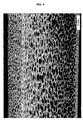
- Figure 4 is an optical microscope photograph of a section of a sheet according to the invention.
- The process according to an embodiment of the present invention comprises an initial preparation step of a mixture composed of 97-99.5% of polystyrene and 0.5-3% of PET, to which additives, such as colorants or surfactants can be added according to necessity.
- Then the mixture is introduced into an extruder that can be of various types, that is single-screw, single twin-screw, tandem single screw or tandem with primary twin screw.
- The mixture is then plasticized and homogenized inside the extruder, by heating it to a temperature sufficient to melt the PET, in other words, by setting a temperature in the first zones of the extruder 50 - 80° higher than those commonly set in the known production technique for expanded polystyrene sheets.
- Once the mixture has been plasticized, a blowing agent is introduced to cool it, setting the temperatures of the known technique for the expanded polystyrene extrusion.
- The mixture thus cooled is extruded through a die, which preferably has the outlet opening in the shape of a circular crown, cooling at least one of the two surfaces by means of an air blow. The extruded product will be expanded with a very fine and consistent cellular structure and with at least one of the two surfaces composed of a compact layer.
- The extruded product is then sized and cooled to give it the final dimension by means of an internally cooled cylindrical mandrel, around the exterior of which the tubular extruded product is made to slide, through the crown-shaped die.
- Finally, the foamed sheet thus obtained is wound onto reels before it is sent off for thermoforming.
- The aforesaid operational method was used to prepare several extruded foamed sheets, among which, those described in the examples provided below.
- A mixture was prepared as follows composed of: 100 kg of polystyrene with a Melt Flow Index of 1.2; 1.60 kg of PET with an intrinsic viscosity of 0.8.
- The aforesaid mixture was fed into a tandem 60-90 mm extruder with screws having a length/diameter ratio equal to 30:1.
- Butane, in a total amount of 3.3 kg, was added by means of a continuous metering pump to said mixture, after it had passed through the first part of the extruder, where it had been heated and homogenized.
- The resulting mixture was extruded through a normal head for the production of expanded polystyrene, equipped with a die with a 110 mm diameter, open to 0.9 mm, and an air cooling ring, under the following operating conditions:
Primary Extruder: Melting zone temperature 290°C Gas injection zone temperature 200°C Filter change temperature: 200°C Secondary Extruder: First cooling zone temperature: 160°C Second cooling zone temperature: 155°C Third cooling zone temperature: 140°C Fourth cooling zone temperature: 135°C Fifth cooling zone temperature: 130°C Extrusion head temperature: 130°C Male die temperature: 120°C External ring air pressure: 0.5 bar External ring air temperature: 10°C Primary screw rotation speed: 100 rpm Secondary screw rotation speed: 12 rpm Hourly production: 100 kg/hour - The expanded polystyrene tubular product extruded in this manner is sized on a mandrel with a diameter of 423 mm, to provide after having been longitudinally cut and laid out, a sheet 1330 mm wide and 4 mm thick with a weight of 285 g/m2.
- The sheet thus obtained exhibited a closed cell structure with very fine cells close to the surface of the sheet and in particular, one of the external layers was very much more compact than the central layer.
-
Photo 1 shows a section of said sheet taken with the aid of a microscope. - Under the same extrusion conditions (temperature, screw speed, hourly production, cooling ring air pressure) as those used for example 1, with the exception of the melting temperature which was that normally used for the production of expanded polystyrene, i.e. 210°C, a mixture was then introduced into the extruder composed of 100 kg of Polystyrene with a Melt Flow Index of 1.2; 0.800 kg of talc; 0.400 Kg of Hydrocerol Compound, which is a commercial blend of sodium bicarbonate and citric acid.
- The sheet obtained was 4 mm thick with a weight of 285 gr/m2 and had a uniform closed cell structure with a larger cell size than that obtained in example 1, as it can be seen in figure 2, showing a section photographed through microscope.
- A mixture was prepared composed of 100 kg of Polystyrene with a Melt Flow Index of 1.2; 0.400 kg of talc; 0.200 Kg of Hydrocerol compound, which is a commercial blend of sodium bicarbonate and citric acid, 1.00 kg of a Master Batch composed of 50% of polystyrene and 50% sodium alkyl(C12-C14)sulphonate, used as a surfactant.
- The aforesaid mixture was fed into a tandem 60-90 mm extruder with screws having a length/diameter ratio equal to 30:1.
- Butane, in a total amount of 3.2 kg, was added by means of a continuous metering pump to said mixture, after it had passed through the first part of the extruder, where it had been heated and homogenized.
- The resulting mixture was extruded through a normal head for the production of expanded polystyrene, equipped with a die with a 110 mm diameter, open to 0.9 mm, and an air cooling ring, under the following operating conditions:
Primary Extruder: Melting zone temperature: 210°C Gas injection zone temperature: 200°C Filter change temperature: 200°C Secondary Extruder: First cooling zone temperature: 190°C Second cooling zone temperature: 180°C Third cooling zone temperature: 178°C Fourth cooling zone temperature: 168°C Fifth cooling zone temperature: 168°C Extrusion head temperature: 125°C Male drawplate temperature: 95°C External ring air pressure: 0.5 bar External ring air temperature: 10°C Primary screw rotation speed: 105 rpm Secondary screw rotation speed: 12.5 rpm Hourly production: 100 kg/hour - The expanded polystyrene tubular product extruded in this manner was sized on a mandrel with a diameter of 423 mm, to provide, once cut and laid out, a sheet 1330 mm wide and 3.8 mm thick with a weight of 253 gr/m2.
- The sheet obtained in this manner was then laminated with HIPS film (High Impact Polystyrene) using a flat head extruder according to known art, to form a sheet with a total weight of 283/gr/m2.
- The sheet thus obtained had absorbing properties thanks to a ruptured cell structure, as shown in figure 3 in a section through microscope.
- Under the same extrusion conditions (temperature, screw speed, hourly production, cooling ring air pressure) as those used for example 3, with the exception of the melting temperature which was raised to 290°C to melt the PET, a mixture was then introduced composed of 100 kg of Polystyrene with a Melt Flow Index of 1.2; 2.1 kg of PET, 1.00 kg of a Master Batch composed of 50% of polystyrene and sodium alkyl(C12-C14)sulphonate.
- The sheet obtained was 4.2 mm thick with a weight of 280 g/m2.
- The sheet thus obtained exhibited an extremely compact structure in the more external layers and a ruptured cell structure in the central part.
- Photo 4 shows a section of said sheet viewed under the microscope.
- Comparing the resistance to flexion of the trays obtained by thermoforming the sheet produced according to example 3 with the first method (tray 1) with those obtained using the method according to this patent (tray 2) a considerable increase in mechanical resistance parameters of the tray was immediately recognisable (see table below). Furthermore from the appearance viewpoint, tray 2, although it was not laminated as in the case of
tray 1 with a subsequent application of a film obtained through extrusion, the surface effect was just as pleasing as that oftray 1.TRAY CHARACTERISTICS Weight [g] Thickness (mm) Breaking load [N] Tray 112 4 41 Tray 2 11.87 4.6 48.6
Claims (10)
1. Sheet of expanded extruded polystyrene containing 0.5% to 3% polyethyleneterephthalate (PET) by weight of the polystyrene weight and exhibiting an integral compact layer on at least one of its surfaces.
2. Sheet according to claim 1, wherein said integral compact layer has a thickness of at least 30µm.
3. Sheet according to claims 1 or 2, characterized in that it exhibits, in section, in its central zone a mainly open cell structure and, in the zone adjacent to the said integral compact layer, a mainly closed cell structure
4. Sheet according to claims 1 or 2, characterized in that it presents a substantially closed cell structure .
5. Method for the production of a sheet of expanded extruded polystyrene containing 0.5% to 3% polyethyleneterephtalate (PET) by weight of the polystyrene weight and exhibiting an integral compact layer on at least one of its surfaces, said method comprising the following steps:
forming a mixture comprising polystyrene and a quantity of polyethyleneterephthalate (PET) between 0.5% and 3% by weight of the polystyrene weight,
melting said mixture by means of heating inside an extruder,
adding a blowing agent to said melted mixture,
extruding said mixture in an environment having a lower pressure, through a die, cooling the sheet on exit from the die on at least one of its surfaces by means of air blow.
6. Method according to claim 5, characterized in that the mixture subjected to melting and extrusion is free of nucleating agents.
7. Method according to claim 5 or 6, wherein said mixture is melted by heating to a temperature over 270°C and preferably approximately 290°C.
8. Tray for the packaging of food products, characterized in that it is obtained by thermoforming a sheet according to claim 1 or 2.
8. Tray for the packaging of food products liable to release liquids, characterized in that it is obtained by thermoforming a sheet according to claim 3 and that it exhibits on its internal surface, at least at its base, a plurality of holes that extend inside the mainly open cell structure.
9. Use of a sheet according to any one of the claims from 1 to 4 for the production of trays for the packaging of food products.
Priority Applications (1)
| Application Number | Priority Date | Filing Date | Title |
|---|---|---|---|
| EP05425159A EP1702944A1 (en) | 2005-03-17 | 2005-03-17 | Foamed polymer composition comprising polystyrene and polyethyleneterephthalate |
Applications Claiming Priority (1)
| Application Number | Priority Date | Filing Date | Title |
|---|---|---|---|
| EP05425159A EP1702944A1 (en) | 2005-03-17 | 2005-03-17 | Foamed polymer composition comprising polystyrene and polyethyleneterephthalate |
Publications (1)
| Publication Number | Publication Date |
|---|---|
| EP1702944A1 true EP1702944A1 (en) | 2006-09-20 |
Family
ID=34943105
Family Applications (1)
| Application Number | Title | Priority Date | Filing Date |
|---|---|---|---|
| EP05425159A Withdrawn EP1702944A1 (en) | 2005-03-17 | 2005-03-17 | Foamed polymer composition comprising polystyrene and polyethyleneterephthalate |
Country Status (1)
| Country | Link |
|---|---|
| EP (1) | EP1702944A1 (en) |
Citations (4)
| Publication number | Priority date | Publication date | Assignee | Title |
|---|---|---|---|---|
| US4902748A (en) * | 1986-03-10 | 1990-02-20 | Montedison, S.P.A. | Polymeric blends based on vinyl-aromatic polymers |
| US6279738B1 (en) * | 2000-06-17 | 2001-08-28 | Cryovac, Inc. | Foam packaging tray and packaging method using same |
| US6383983B1 (en) * | 1997-06-09 | 2002-05-07 | Toyo Boseki Kabushiki Kaisha | Porous polyester film and thermal transfer image-receiving sheet |
| US6790870B1 (en) * | 1999-09-20 | 2004-09-14 | North Carolina State University | Methods of making foamed materials of blended thermoplastic polymers using carbon dioxide |
-
2005
- 2005-03-17 EP EP05425159A patent/EP1702944A1/en not_active Withdrawn
Patent Citations (4)
| Publication number | Priority date | Publication date | Assignee | Title |
|---|---|---|---|---|
| US4902748A (en) * | 1986-03-10 | 1990-02-20 | Montedison, S.P.A. | Polymeric blends based on vinyl-aromatic polymers |
| US6383983B1 (en) * | 1997-06-09 | 2002-05-07 | Toyo Boseki Kabushiki Kaisha | Porous polyester film and thermal transfer image-receiving sheet |
| US6790870B1 (en) * | 1999-09-20 | 2004-09-14 | North Carolina State University | Methods of making foamed materials of blended thermoplastic polymers using carbon dioxide |
| US6279738B1 (en) * | 2000-06-17 | 2001-08-28 | Cryovac, Inc. | Foam packaging tray and packaging method using same |
Similar Documents
| Publication | Publication Date | Title |
|---|---|---|
| US5670552A (en) | Foam and process for producing foam using a carbon dioxide blowing agent | |
| EP1040158B2 (en) | Microcellular foam extrusion/blow molding process and article made thereby | |
| KR101161599B1 (en) | Method of producing composite sheet having polyolefin foam layer | |
| EP0055437B1 (en) | A continuous process for the production of polystyrene foamed articles | |
| US12128666B2 (en) | Multi-layer thermoformed polymeric foam articles and methods | |
| EP0553522A1 (en) | Coextruded foam composite | |
| US5356944A (en) | High melt index polystytene foam and method | |
| EP0482518B1 (en) | Process for production of polypropylene sheets or films | |
| CA2209015A1 (en) | Plastics articles | |
| US7223806B2 (en) | Manufacturing method of film-like materials of resin and film-like materials of resin | |
| DE19544858A1 (en) | Stiff, self-supporting thermo-formed polypropylene packaging foam prodn. | |
| JP3581025B2 (en) | Method for producing non-crosslinked polypropylene resin foam sheet and non-crosslinked polypropylene resin foam sheet | |
| EP0965426B1 (en) | Process for manufacturing meat trays | |
| US11111350B2 (en) | Method for production of low density polyester foam and articles made thereof utilizing low I.V. polyester feedstock | |
| GB1439438A (en) | Laminates of foamed polymeric material | |
| CN113544202A (en) | Polyolefin resin particles and their utilization | |
| RU2356732C2 (en) | Method for recycling of biaxially oriented polystyrene film wastes | |
| EP1468820B1 (en) | A method for producing an expanded polystyrene sheet for a tray containing food products which can release liquids and a tray obtained from said sheet | |
| JP5318307B2 (en) | Polyolefin resin film and composition for polyolefin resin film | |
| JP6582217B1 (en) | LAMINATED SHEET, METHOD FOR PRODUCING LAMINATED SHEET, AND MOLDED BODY | |
| US20240254292A1 (en) | Master batch composition for a weight-reduced plastic product and method of manufacturing the same | |
| WO2020055274A1 (en) | Multilayer thermoplastic sheet and method to produce the same | |
| JP4149060B2 (en) | Foamed polyester sheet having fine bubbles and molding method thereof | |
| EP1329299A1 (en) | Process for manufacturing meat trays | |
| GB2263435A (en) | Plastics laminate containing foamed polypropylene |
Legal Events
| Date | Code | Title | Description |
|---|---|---|---|
| PUAI | Public reference made under article 153(3) epc to a published international application that has entered the european phase |
Free format text: ORIGINAL CODE: 0009012 |
|
| AK | Designated contracting states |
Kind code of ref document: A1 Designated state(s): AT BE BG CH CY CZ DE DK EE ES FI FR GB GR HU IE IS IT LI LT LU MC NL PL PT RO SE SI SK TR |
|
| AX | Request for extension of the european patent |
Extension state: AL BA HR LV MK YU |
|
| AKX | Designation fees paid | ||
| REG | Reference to a national code |
Ref country code: DE Ref legal event code: 8566 |
|
| STAA | Information on the status of an ep patent application or granted ep patent |
Free format text: STATUS: THE APPLICATION IS DEEMED TO BE WITHDRAWN |
|
| 18D | Application deemed to be withdrawn |
Effective date: 20070321 |