EP1687150B1 - Water vapour barrier paper - Google Patents
Water vapour barrier paper Download PDFInfo
- Publication number
- EP1687150B1 EP1687150B1 EP04767123A EP04767123A EP1687150B1 EP 1687150 B1 EP1687150 B1 EP 1687150B1 EP 04767123 A EP04767123 A EP 04767123A EP 04767123 A EP04767123 A EP 04767123A EP 1687150 B1 EP1687150 B1 EP 1687150B1
- Authority
- EP
- European Patent Office
- Prior art keywords
- paper
- layer
- mixture
- acrylic polymers
- barrier layer
- Prior art date
- Legal status (The legal status is an assumption and is not a legal conclusion. Google has not performed a legal analysis and makes no representation as to the accuracy of the status listed.)
- Expired - Lifetime
Links
- 230000004888 barrier function Effects 0.000 title claims abstract description 120
- XLYOFNOQVPJJNP-UHFFFAOYSA-N water Substances O XLYOFNOQVPJJNP-UHFFFAOYSA-N 0.000 title claims abstract description 64
- 239000000203 mixture Substances 0.000 claims abstract description 57
- 229920000058 polyacrylate Polymers 0.000 claims abstract description 45
- 239000000839 emulsion Substances 0.000 claims abstract description 24
- 235000009508 confectionery Nutrition 0.000 claims abstract description 20
- 239000002253 acid Substances 0.000 claims abstract description 19
- 239000004372 Polyvinyl alcohol Substances 0.000 claims description 34
- 229920002451 polyvinyl alcohol Polymers 0.000 claims description 34
- QVGXLLKOCUKJST-UHFFFAOYSA-N atomic oxygen Chemical compound [O] QVGXLLKOCUKJST-UHFFFAOYSA-N 0.000 claims description 32
- 239000001301 oxygen Substances 0.000 claims description 32
- 229910052760 oxygen Inorganic materials 0.000 claims description 32
- 239000001993 wax Substances 0.000 claims description 27
- 229920000642 polymer Polymers 0.000 claims description 23
- 229920001577 copolymer Polymers 0.000 claims description 17
- VGGSQFUCUMXWEO-UHFFFAOYSA-N Ethene Chemical compound C=C VGGSQFUCUMXWEO-UHFFFAOYSA-N 0.000 claims description 16
- 239000005977 Ethylene Substances 0.000 claims description 16
- IMROMDMJAWUWLK-UHFFFAOYSA-N Ethenol Chemical compound OC=C IMROMDMJAWUWLK-UHFFFAOYSA-N 0.000 claims description 14
- 239000012188 paraffin wax Substances 0.000 claims description 8
- 239000011347 resin Substances 0.000 claims description 6
- 229920005989 resin Polymers 0.000 claims description 6
- 229920001909 styrene-acrylic polymer Polymers 0.000 claims description 6
- 239000012764 mineral filler Substances 0.000 claims description 5
- 239000000463 material Substances 0.000 description 8
- 229910052751 metal Inorganic materials 0.000 description 7
- 239000002184 metal Substances 0.000 description 7
- 239000004816 latex Substances 0.000 description 4
- 229920000126 latex Polymers 0.000 description 4
- 238000004806 packaging method and process Methods 0.000 description 4
- KWYUFKZDYYNOTN-UHFFFAOYSA-M Potassium hydroxide Chemical compound [OH-].[K+] KWYUFKZDYYNOTN-UHFFFAOYSA-M 0.000 description 3
- 230000000181 anti-adherent effect Effects 0.000 description 3
- 239000011248 coating agent Substances 0.000 description 3
- 238000000576 coating method Methods 0.000 description 3
- 239000011888 foil Substances 0.000 description 3
- 238000000034 method Methods 0.000 description 3
- 230000035699 permeability Effects 0.000 description 3
- 229920003023 plastic Polymers 0.000 description 3
- 239000004033 plastic Substances 0.000 description 3
- 238000003490 calendering Methods 0.000 description 2
- 239000001913 cellulose Substances 0.000 description 2
- 229920002678 cellulose Polymers 0.000 description 2
- 239000003086 colorant Substances 0.000 description 2
- 239000002131 composite material Substances 0.000 description 2
- 230000001419 dependent effect Effects 0.000 description 2
- 235000013305 food Nutrition 0.000 description 2
- 230000014509 gene expression Effects 0.000 description 2
- 239000000976 ink Substances 0.000 description 2
- 238000004519 manufacturing process Methods 0.000 description 2
- 239000000049 pigment Substances 0.000 description 2
- 239000000843 powder Substances 0.000 description 2
- 238000005406 washing Methods 0.000 description 2
- PPBRXRYQALVLMV-UHFFFAOYSA-N Styrene Natural products C=CC1=CC=CC=C1 PPBRXRYQALVLMV-UHFFFAOYSA-N 0.000 description 1
- NIXOWILDQLNWCW-UHFFFAOYSA-N acrylic acid group Chemical group C(C=C)(=O)O NIXOWILDQLNWCW-UHFFFAOYSA-N 0.000 description 1
- 239000003911 antiadherent Substances 0.000 description 1
- 235000013361 beverage Nutrition 0.000 description 1
- 239000011230 binding agent Substances 0.000 description 1
- 235000015895 biscuits Nutrition 0.000 description 1
- 235000019219 chocolate Nutrition 0.000 description 1
- 230000007613 environmental effect Effects 0.000 description 1
- 229920001038 ethylene copolymer Polymers 0.000 description 1
- 238000009459 flexible packaging Methods 0.000 description 1
- 238000009472 formulation Methods 0.000 description 1
- 239000007789 gas Substances 0.000 description 1
- 239000004519 grease Substances 0.000 description 1
- SWQJXJOGLNCZEY-UHFFFAOYSA-N helium atom Chemical compound [He] SWQJXJOGLNCZEY-UHFFFAOYSA-N 0.000 description 1
- 229910052500 inorganic mineral Inorganic materials 0.000 description 1
- 239000011707 mineral Substances 0.000 description 1
- AYOOGWWGECJQPI-NSHDSACASA-N n-[(1s)-1-(5-fluoropyrimidin-2-yl)ethyl]-3-(3-propan-2-yloxy-1h-pyrazol-5-yl)imidazo[4,5-b]pyridin-5-amine Chemical compound N1C(OC(C)C)=CC(N2C3=NC(N[C@@H](C)C=4N=CC(F)=CN=4)=CC=C3N=C2)=N1 AYOOGWWGECJQPI-NSHDSACASA-N 0.000 description 1
- 230000003472 neutralizing effect Effects 0.000 description 1
- 239000002904 solvent Substances 0.000 description 1
- 229920003048 styrene butadiene rubber Polymers 0.000 description 1
- 239000000126 substance Substances 0.000 description 1
- 230000000153 supplemental effect Effects 0.000 description 1
- 239000002966 varnish Substances 0.000 description 1
Images



Classifications
-
- D—TEXTILES; PAPER
- D21—PAPER-MAKING; PRODUCTION OF CELLULOSE
- D21H—PULP COMPOSITIONS; PREPARATION THEREOF NOT COVERED BY SUBCLASSES D21C OR D21D; IMPREGNATING OR COATING OF PAPER; TREATMENT OF FINISHED PAPER NOT COVERED BY CLASS B31 OR SUBCLASS D21G; PAPER NOT OTHERWISE PROVIDED FOR
- D21H27/00—Special paper not otherwise provided for, e.g. made by multi-step processes
- D21H27/10—Packing paper
-
- B—PERFORMING OPERATIONS; TRANSPORTING
- B41—PRINTING; LINING MACHINES; TYPEWRITERS; STAMPS
- B41M—PRINTING, DUPLICATING, MARKING, OR COPYING PROCESSES; COLOUR PRINTING
- B41M5/00—Duplicating or marking methods; Sheet materials for use therein
- B41M5/50—Recording sheets characterised by the coating used to improve ink, dye or pigment receptivity, e.g. for ink-jet or thermal dye transfer recording
- B41M5/502—Recording sheets characterised by the coating used to improve ink, dye or pigment receptivity, e.g. for ink-jet or thermal dye transfer recording characterised by structural details, e.g. multilayer materials
- B41M5/506—Intermediate layers
-
- B—PERFORMING OPERATIONS; TRANSPORTING
- B65—CONVEYING; PACKING; STORING; HANDLING THIN OR FILAMENTARY MATERIAL
- B65D—CONTAINERS FOR STORAGE OR TRANSPORT OF ARTICLES OR MATERIALS, e.g. BAGS, BARRELS, BOTTLES, BOXES, CANS, CARTONS, CRATES, DRUMS, JARS, TANKS, HOPPERS, FORWARDING CONTAINERS; ACCESSORIES, CLOSURES, OR FITTINGS THEREFOR; PACKAGING ELEMENTS; PACKAGES
- B65D85/00—Containers, packaging elements or packages, specially adapted for particular articles or materials
- B65D85/60—Containers, packaging elements or packages, specially adapted for particular articles or materials for sweets or like confectionery products
-
- D—TEXTILES; PAPER
- D21—PAPER-MAKING; PRODUCTION OF CELLULOSE
- D21H—PULP COMPOSITIONS; PREPARATION THEREOF NOT COVERED BY SUBCLASSES D21C OR D21D; IMPREGNATING OR COATING OF PAPER; TREATMENT OF FINISHED PAPER NOT COVERED BY CLASS B31 OR SUBCLASS D21G; PAPER NOT OTHERWISE PROVIDED FOR
- D21H19/00—Coated paper; Coating material
- D21H19/10—Coatings without pigments
- D21H19/14—Coatings without pigments applied in a form other than the aqueous solution defined in group D21H19/12
-
- D—TEXTILES; PAPER
- D21—PAPER-MAKING; PRODUCTION OF CELLULOSE
- D21H—PULP COMPOSITIONS; PREPARATION THEREOF NOT COVERED BY SUBCLASSES D21C OR D21D; IMPREGNATING OR COATING OF PAPER; TREATMENT OF FINISHED PAPER NOT COVERED BY CLASS B31 OR SUBCLASS D21G; PAPER NOT OTHERWISE PROVIDED FOR
- D21H19/00—Coated paper; Coating material
- D21H19/10—Coatings without pigments
- D21H19/14—Coatings without pigments applied in a form other than the aqueous solution defined in group D21H19/12
- D21H19/20—Coatings without pigments applied in a form other than the aqueous solution defined in group D21H19/12 comprising macromolecular compounds obtained by reactions only involving carbon-to-carbon unsaturated bonds
-
- D—TEXTILES; PAPER
- D21—PAPER-MAKING; PRODUCTION OF CELLULOSE
- D21H—PULP COMPOSITIONS; PREPARATION THEREOF NOT COVERED BY SUBCLASSES D21C OR D21D; IMPREGNATING OR COATING OF PAPER; TREATMENT OF FINISHED PAPER NOT COVERED BY CLASS B31 OR SUBCLASS D21G; PAPER NOT OTHERWISE PROVIDED FOR
- D21H19/00—Coated paper; Coating material
- D21H19/80—Paper comprising more than one coating
-
- Y—GENERAL TAGGING OF NEW TECHNOLOGICAL DEVELOPMENTS; GENERAL TAGGING OF CROSS-SECTIONAL TECHNOLOGIES SPANNING OVER SEVERAL SECTIONS OF THE IPC; TECHNICAL SUBJECTS COVERED BY FORMER USPC CROSS-REFERENCE ART COLLECTIONS [XRACs] AND DIGESTS
- Y10—TECHNICAL SUBJECTS COVERED BY FORMER USPC
- Y10T—TECHNICAL SUBJECTS COVERED BY FORMER US CLASSIFICATION
- Y10T428/00—Stock material or miscellaneous articles
- Y10T428/24—Structurally defined web or sheet [e.g., overall dimension, etc.]
- Y10T428/24802—Discontinuous or differential coating, impregnation or bond [e.g., artwork, printing, retouched photograph, etc.]
Definitions
- the invention relates to novel barrier papers having a low permeability to water vapour, these papers being able to be cold sealed, heat sealed or they can be twistable papers for confectionery.
- these products are more particularly intended for the flexible packaging field, e.g. confectionary, chocolate bar, coffee, biscuit and washing powder packages.
- the papers used for these applications must have a certain number of properties, such as especially a low permeability to water vapour, to grease and, when necessary, to oxygen and aroma.
- sealable paper is often used in connection with all these applications.
- the sealability of the paper is obtained by applying, on the whole or on one part of one of the sides of the actual support paper, a layer of a specific composition consisting generally of (natural or synthetic) latex.
- the paper can be cold sealable or heat sealable (thermo sealable).
- the confectionery papers can be in the form of so-called "twistable” papers, i.e. these papers can be twisted. This is the case e.g. with candy papers.
- the twistable paper is a paper having a sufficient deformation and resistance capacity for absorbing the torsion energy during the packaging without being torn. This capacity comes, among other high mechanical characteristics, from a cross directional elongation in the order of 8 %.
- WO 94/26513 describes a recyclable paper, the characteristics of which do not allow using it as a twistable or sealable paper.
- the paper described in this document allows this in relation with food packaging, especially with beverage packages, the main objective being that it is recyclable and has a water vapour barrier.
- the support is coated with a first layer comprising a polymer such as e.g. an ethylene/vinyl acetate copolymer, then a second layer consisting of an emulsion combining an acrylic styrene copolymer and wax, in a proportion respectively of between 20 and 90 % and from 5 to 70 % by dry weight.
- WO 96/05054 describes a recyclable paper of the same type as the one previously described, except for the fact that the second layer consists advantageously of a styrene-butadiene copolymer used in maximum proportions of 90 % by dry weight of the layer.
- DE-A-4445193 describes a paper comprising a support coated with a composite three-layered gas barrier.
- the three-layered composite is formed of a metal layer situated in a sandwich structure between two layers of film-forming polymers, the polymer being heat sealable. The coating must thus take place in three separate steps, the first film-forming polymer, the metal layer and the second film-forming polymer respectively.
- US-A-5 429 294 discusses a manufacture of folding or corrugated boxes.
- the box material includes a water barrier, and the barrier property is totally dependent on the amount of wax in the coating.
- the document teaches that the amount of wax needed is 4 to 12 pounds per one thousand square feet (equals to 20 to 57 g/m 2 ).
- FR-A-2 745 553 discusses a barrier paper structure, where, on the one hand, the functioning of the barrier layer is totally dependent on the presence of a metal layer, and, on the other hand, that the metal layer requires a varnish layer on both sides thereof.
- This product can be used for manufacturing cold or hot sealable papers, but also twistable papers for confectionery.
- the invention concerns a cold sealable barrier paper consisting of an actual support paper printed on the face side thereof, and having a sealable layer on the whole or on one part of the reverse side thereof.
- This paper is characterized in that it further has, on the face side thereof, a water vapour barrier layer comprising a mixture of acrylic polymers as an emulsion, the total acid number of which is between 30 and 65, the mixture comprising less than 5 % of wax by weight.
- the printing corresponds to one or more ink layers, the layers being deposited by any technique, such as heliogravure or flexogravure printing, known by a person skilled in the art.
- cold sealable layer denotes a layer prepared from natural or synthetic latex; these formulations are denoted by the term “cold seal” by those skilled in the art, the layer being applied in an amount of 2 - 5 g/m 2 .
- the wax present in the acrylic polymer mixture is notably paraffin.
- the water vapour barrier layer consists of a mixture of acrylic polymers as an emulsion, the total acid number of which is between 30 and 65, the mixture representing advantageously 100 % by dry weight of the layer.
- the mixture of polymers contains from 2 to 10 % by weight of resin and less than 5% of wax by weight.
- the mixture of acrylic polymers is a mixture of styrene-acrylic polymers.
- the cold sealable paper of the invention can appear in several forms.
- the water vapour layer is positioned directly on the printing, which itself is directly in contact with the actual paper.
- this layer can be applied at one go, respectively in an amount of 2 -. 10 g/m 2 as humid matter or of 1 - 5 g/m 2 as dry matter, by any technique known by a person skilled in the art, such as especially but in a non limitative manner, heliogravure or reverse roll.
- the sealable layer is, in turn, applied directly on the whole or on one part of the reverse side of the actual paper, in an amount of for example 1 - 5 g/m 2 as dry matter, especially by the helio coating technique.
- the polymer constitutive of the water vapour barrier layer had anti-adherent properties, whereby the presence of a supplemental anti-adherent layer on the water vapour barrier layer becomes unnecessary.
- At least one oxygen and aroma barrier layer is inserted between the actual support paper and the sealable layer.
- the oxygen barrier layer comprises an ethylene/vinyl alcohol (EVOH) copolymer or a polyvinyl alcohol (PVA) polymer deposited in an amount of 3 - 4 g/m 2 as dry matter.
- EVOH ethylene/vinyl alcohol
- PVA polyvinyl alcohol
- the oxygen barrier layer consists exclusively of an ethylene/vinyl alcohol (EVOH) copolymer or polyvinyl alcohol (PVA), even though other embodiments can be envisaged as a mixture with other polymers or as a mixture with mineral fillers, the ethylene copolymer / EVOH or polyvinyl alcohol (PVA) representing, in a continuous manner, at least 50 % by weight of the layer.
- EVOH ethylene/vinyl alcohol
- PVA polyvinyl alcohol
- the invention relates also to a heat sealable barrier paper, i.e. at a temperature of between 120 and 250°C, consisting of an actual support paper, printed or printable on the face side thereof.
- the support is characterized in that it has at least on its reverse side a heat sealable layer and a water vapour barrier layer comprising a mixture of acrylic polymers as an emulsion, the total acid number of which is between 30 and 60, the mixture comprising less than 5 % by weight of wax.
- the mixture comprises from 2 to 10% of resin and represents 100 % by dry weight of the layer.
- the mixture of acrylic polymers is advantageously a mixture of styrene acrylic polymers, like the wax is paraffin.
- an advanced heat sealable paper i.e. a paper further having oxygen and aroma barrier properties.
- an oxygen and aroma barrier layer is inserted, which is of the same type as previously described in case of the cold sealable paper.
- the paper has additionally a second water vapour barrier layer deposited directly on the printing.
- the specific water vapour barrier layer of the invention can also be applied to confectionery papers, i.e. for twistable papers.
- the paper for confectionery intended to be twistable consists of an actual twistable support paper, the face of which is printed or printable.
- This paper is characterized in that a water vapour barrier layer, comprising a mixture of acrylic polymers as an emulsion, the total acid number of which is between 30 and 65, the mixture having less than 5 % of wax by weight, is deposited on the printing.
- the twistable paper has oxygen and aroma barrier properties.
- an oxygen and aroma barrier layer of the previously described type i.e. a layer comprising an ethylene/vinyl alcohol (EVOH) copolymer or polyvinyl alcohol (PVA) polymer, the mass of which is between 3 and 4 g/m 2 .
- EVOH ethylene/vinyl alcohol
- PVA polyvinyl alcohol
- the mixture of acrylic polymers as an emulsion contained in the water vapour barrier layer further contains from 2 to 10 % of resin and represents 100 % by dry weight of the layer.
- the mixture of acrylic polymers is a mixture of styrene acrylic polymers. Accordingly, the wax is notably paraffin.
- the reverse side of the support paper is provided with a paraffin layer, the mass of which is between 2 and 6 g/m 2 .
- the above-discussed invention makes it possible to use new types of paper-based materials for packaging food, coffee or washing powder, for example.
- plastics or specifically designed paper-based materials have been used.
- plastic materials and papers having metal foils or layers and/or heavy wax content have been less desirable, as the plastics and/or metal foils do not degrade in itself in the nature, and the waxes, in higher amounts, cause problems in case the materials are recycled.
- the present invention discusses a novel paper-based material for the above-discussed types of packaging, the material being free of metal foils or layers, and including such a low amount of wax that the presence of wax does not take away the recyclability of the material.
- the water vapour barrier, oxygen barrier and printing layers as well as the cold sealable layer have always the same composition from one example to another, respectively:
- the product represented in this first example corresponds to the structure illustrated in figure 1 .
- the cold sealable paper consists of the following elements:
- Example 2 corresponds to an advanced embodiment of the example 1, insofar that it further has oxygen and aroma barrier properties.
- the structure of the cold sealable paper of the example 2 corresponds to the structure illustrated in the figures 2A, 2B .
- the figure 2A corresponds to the figure 1 , with the exception that it has an oxygen and aroma barrier layer (5) between the water vapour barrier layer (4) and the printing (2).
- the oxygen and aroma barrier layer (5) is not positioned in direct contact with the printing (2) but between the reverse side of the actual paper (1) and the cold sealable layer (3).
- Example 3 concerns a heat sealable paper, the structure of which is represented in the figure 3 .
- This paper consists of the actual paper (1) corresponding to that described in the previous examples, covered with a printing (2) on the face side, and on reverse with a water vapour barrier layer (4) deposited in an amount of 5 - 8 g/m 2 as dry matter.
- Example 4 is an advanced embodiment of the example 3 insofar as the structure consists of at least one oxygen and aroma barrier layer.
- This layer (5) is positioned between the actual paper and the water vapour barrier layer ( figure 4 ).
- Example 5 is an advanced embodiment of the example 4 insofar as the structure consists of a second water vapour barrier layer (4) situated directly on the printing, thus on the face side.
- Example 6 corresponds to a twistable paper for confectionery, the structure of which is represented in the figure this paper comprises an actual paper (1) sold by AHLSTROM under the name ROCAL 400 MO, having a weight of 40 g/m 2 .
- This support is printed (2), the printing being itself covered with a water vapour barrier layer (4).
- Example 7 corresponds to an advanced embodiment of the example6 and is represented in the figure 7 .
- the reverse side of the support paper is coated with paraffin (7), the mass of which is 3 g/m 2 .
- Example 8 corresponds to an advanced embodiment of the example 6 insofar as the structure further contains at least one oxygen and aroma barrier layer 5, this layer being positioned e.g. between the waster vapour barrier layer and the printing layer ( figure 8 ).
- PVE 20 g/m 2 /day, 38°C, . 90 % relative humidity.
Landscapes
- Laminated Bodies (AREA)
- Paper (AREA)
- Pens And Brushes (AREA)
- Wrappers (AREA)
- Heat Sensitive Colour Forming Recording (AREA)
- Making Paper Articles (AREA)
Abstract
Description
- The invention relates to novel barrier papers having a low permeability to water vapour, these papers being able to be cold sealed, heat sealed or they can be twistable papers for confectionery. In practice, these products are more particularly intended for the flexible packaging field, e.g. confectionary, chocolate bar, coffee, biscuit and washing powder packages.
- The papers used for these applications must have a certain number of properties, such as especially a low permeability to water vapour, to grease and, when necessary, to oxygen and aroma.
- The so called "sealable" paper is often used in connection with all these applications. The sealability of the paper is obtained by applying, on the whole or on one part of one of the sides of the actual support paper, a layer of a specific composition consisting generally of (natural or synthetic) latex. Depending on the nature of the latex used, the paper can be cold sealable or heat sealable (thermo sealable).
- The confectionery papers can be in the form of so-called "twistable" papers, i.e. these papers can be twisted. This is the case e.g. with candy papers. The twistable paper is a paper having a sufficient deformation and resistance capacity for absorbing the torsion energy during the packaging without being torn. This capacity comes, among other high mechanical characteristics, from a cross directional elongation in the order of 8 %.
-
WO 94/26513 -
WO 96/05054 -
DE-A-4445193 describes a paper comprising a support coated with a composite three-layered gas barrier. The three-layered composite is formed of a metal layer situated in a sandwich structure between two layers of film-forming polymers, the polymer being heat sealable. The coating must thus take place in three separate steps, the first film-forming polymer, the metal layer and the second film-forming polymer respectively. -
US-A-5 429 294 discusses a manufacture of folding or corrugated boxes. The box material includes a water barrier, and the barrier property is totally dependent on the amount of wax in the coating. The document teaches that the amount of wax needed is 4 to 12 pounds per one thousand square feet (equals to 20 to 57 g/m2). -
FR-A-2 745 553 - The applicant has noticed that the use of a mixture of acrylic polymers as an emulsion, having a total acid number of between 30 and 65, and a wax concentration less than 5 %, reduced strongly the permeability to water vapour. Such a product corresponds e.g. to a product sold by the MICHELMAN company under the name "MR130".
- This product can be used for manufacturing cold or hot sealable papers, but also twistable papers for confectionery.
- Consequently and according to a first characteristic, the invention concerns a cold sealable barrier paper consisting of an actual support paper printed on the face side thereof, and having a sealable layer on the whole or on one part of the reverse side thereof. This paper is characterized in that it further has, on the face side thereof, a water vapour barrier layer comprising a mixture of acrylic polymers as an emulsion, the total acid number of which is between 30 and 65, the mixture comprising less than 5 % of wax by weight.
- In the rest of the description and in the claims, the expressions are defined as follows:
- "total acid number" denotes the milligrams of potassium hydroxide needed for neutralizing the acidity of one gram of polymer in normalized conditions,
- "actual support paper" denotes a coated calendered (cellulose + pigment layer composed of mineral pigments and of a latex-type binder) or uncoated calendered (consisting of only cellulose) support paper, the mass of which is between 25 and 110 g/m2, advantageously between 25 and 60 g/m2.
- Likewise, the printing corresponds to one or more ink layers, the layers being deposited by any technique, such as heliogravure or flexogravure printing, known by a person skilled in the art.
- Moreover, the expression "cold sealable layer" denotes a layer prepared from natural or synthetic latex; these formulations are denoted by the term "cold seal" by those skilled in the art, the layer being applied in an amount of 2 - 5 g/m2 .
- The wax present in the acrylic polymer mixture is notably paraffin. As already mentioned, the water vapour barrier layer consists of a mixture of acrylic polymers as an emulsion, the total acid number of which is between 30 and 65, the mixture representing advantageously 100 % by dry weight of the layer. Advantageously, the mixture of polymers contains from 2 to 10 % by weight of resin and less than 5% of wax by weight. Preferably, the mixture of acrylic polymers is a mixture of styrene-acrylic polymers.
- The cold sealable paper of the invention can appear in several forms.
- In a first embodiment, the water vapour layer is positioned directly on the printing, which itself is directly in contact with the actual paper.
- In practice, this layer can be applied at one go, respectively in an amount of 2 -. 10 g/m2 as humid matter or of 1 - 5 g/m2 as dry matter, by any technique known by a person skilled in the art, such as especially but in a non limitative manner, heliogravure or reverse roll.
- The sealable layer is, in turn, applied directly on the whole or on one part of the reverse side of the actual paper, in an amount of for example 1 - 5 g/m2 as dry matter, especially by the helio coating technique.
- Moreover, the applicant has noticed that, completely surprisingly, the polymer constitutive of the water vapour barrier layer had anti-adherent properties, whereby the presence of a supplemental anti-adherent layer on the water vapour barrier layer becomes unnecessary.
- In order to confer oxygen and aroma barrier properties on this embodiment, at least one oxygen and aroma barrier layer is inserted between the actual support paper and the sealable layer.
- In practice, the oxygen barrier layer comprises an ethylene/vinyl alcohol (EVOH) copolymer or a polyvinyl alcohol (PVA) polymer deposited in an amount of 3 - 4 g/m2 as dry matter.
- In an advantageous embodiment, the oxygen barrier layer consists exclusively of an ethylene/vinyl alcohol (EVOH) copolymer or polyvinyl alcohol (PVA), even though other embodiments can be envisaged as a mixture with other polymers or as a mixture with mineral fillers, the ethylene copolymer / EVOH or polyvinyl alcohol (PVA) representing, in a continuous manner, at least 50 % by weight of the layer.
- Moreover, the applicant has noticed the product sold by MICHELMAN based on an acrylic polymer emulsion under the reference "MR 130" did not only have water vapour barrier and anti-adherent properties, but was also heat sealable at a temperature of between 120 and 250°C.
- Consequently, this means that the previously described cold sealable layer can be replaced with one and only layer, which acts as a water vapour barrier layer and is also thermo sealable.
- In other words, the invention relates also to a heat sealable barrier paper, i.e. at a temperature of between 120 and 250°C, consisting of an actual support paper, printed or printable on the face side thereof. The support is characterized in that it has at least on its reverse side a heat sealable layer and a water vapour barrier layer comprising a mixture of acrylic polymers as an emulsion, the total acid number of which is between 30 and 60, the mixture comprising less than 5 % by weight of wax. Preferably, the mixture comprises from 2 to 10% of resin and represents 100 % by dry weight of the layer.
- In the same way as previously, the mixture of acrylic polymers is advantageously a mixture of styrene acrylic polymers, like the wax is paraffin.
- It is also possible to provide an advanced heat sealable paper, i.e. a paper further having oxygen and aroma barrier properties. In this case, between the actual paper and the water vapour barrier layer, an oxygen and aroma barrier layer is inserted, which is of the same type as previously described in case of the cold sealable paper.
- In order to protect the oxygen barrier layer and to enhance the water vapour layer without affecting the sealability, the paper has additionally a second water vapour barrier layer deposited directly on the printing.
- Finally, the specific water vapour barrier layer of the invention can also be applied to confectionery papers, i.e. for twistable papers.
- In this case, the paper for confectionery intended to be twistable consists of an actual twistable support paper, the face of which is printed or printable. This paper is characterized in that a water vapour barrier layer, comprising a mixture of acrylic polymers as an emulsion, the total acid number of which is between 30 and 65, the mixture having less than 5 % of wax by weight, is deposited on the printing.
- In an advanced embodiment, the twistable paper has oxygen and aroma barrier properties. In this case, between the water vapour barrier and the printing there is inserted an oxygen and aroma barrier layer of the previously described type, i.e. a layer comprising an ethylene/vinyl alcohol (EVOH) copolymer or polyvinyl alcohol (PVA) polymer, the mass of which is between 3 and 4 g/m2.
- In the same way as previously, in an advantageous embodiment, the mixture of acrylic polymers as an emulsion contained in the water vapour barrier layer further contains from 2 to 10 % of resin and represents 100 % by dry weight of the layer. In a preferred embodiment, the mixture of acrylic polymers is a mixture of styrene acrylic polymers. Accordingly, the wax is notably paraffin.
- In an advantageous embodiment, the reverse side of the support paper is provided with a paraffin layer, the mass of which is between 2 and 6 g/m2.
- The above-discussed invention makes it possible to use new types of paper-based materials for packaging food, coffee or washing powder, for example. Earlier either plastics or specifically designed paper-based materials have been used. For both environmental and recyclability reasons both plastic materials and papers having metal foils or layers and/or heavy wax content have been less desirable, as the plastics and/or metal foils do not degrade in itself in the nature, and the waxes, in higher amounts, cause problems in case the materials are recycled.
- Now the present invention discusses a novel paper-based material for the above-discussed types of packaging, the material being free of metal foils or layers, and including such a low amount of wax that the presence of wax does not take away the recyclability of the material.
- The invention and the advantages which stem therefrom will become more apparent from the following illustrative examples supported by the appended figures.
-
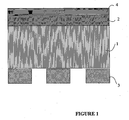
Figure 1 illustrates a first embodiment of a cold sealable water vapour barrier paper according to the invention. -
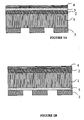
Figure 2 (2A, 2B) illustrates an advanced embodiment of thefigure 1 , in which the presence of at least one oxygen and aroma barrier layer is provided. -
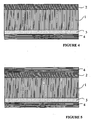
Figure 3 illustrates a heat sealable water vapour barrier paper according to the invention. -
Figure 4 illustrates an advanced embodiment of thefigure 3 , in which at least one oxygen and aroma barrier layer is provided. -
Figure 5 illustrates an advanced embodiment of thefigure 4 , in which a second water vapour barrier layer is provided. -
Figure 6 illustrates a water vapour barrier paper for confectionery according to the invention. -
Figure 7 illustrates a second embodiment of a water vapour barrier paper for confectionery according to the invention. -
Figure 8 illustrates advanced embodiments of thefigure 6 , in which at least one oxygen and aroma barrier is provided. - The different examples hereinafter describe the assembly of structures of cold, heat sealable papers or of twistable papers covered by the invention.
- The water vapour barrier, oxygen barrier and printing layers as well as the cold sealable layer, which are mentioned in these examples, have always the same composition from one example to another, respectively:
- a water vapour barrier layer designated by the reference (4): 100 % by dry weight of MR 130, sold by MICHELMAN, mass 6 g/m2,
- an oxygen and aroma barrier layer designated by the reference (5): 100 % ethylene/vinyl alcohol copolymer by dry weight, sold under the name EXCEVAL by KURARAY,
mass 3,5 g/m2, - a printing layer designated by the reference (2): i.e. a printing layer e.g. of seven colours, deposited on the paper by heliogravure (water-based or solvent-based inks),
- cold sealable layer designated by the reference (3): 100 % by dry weight of latex, sold under the name IP 7883 by the company SUN chemicals, mass deposited in an amount of 2 - 5 g/m2.
- The product represented in this first example corresponds to the structure illustrated in
figure 1 . - The cold sealable paper consists of the following elements:
- a support paper (1) sold by the Applicant under the name ROCAL 400 BAR, the mass of which is 37 g/m2,
- a printing (2) of 7 colours, deposited directly at the surface of the support (1),
- the cold sealable layer (3), applied directly on the reverse side of the support paper (1),
- the water vapour barrier layer (4).
- Example 2 corresponds to an advanced embodiment of the example 1, insofar that it further has oxygen and aroma barrier properties.
- The structure of the cold sealable paper of the example 2 corresponds to the structure illustrated in the
figures 2A, 2B . - The
figure 2A corresponds to thefigure 1 , with the exception that it has an oxygen and aroma barrier layer (5) between the water vapour barrier layer (4) and the printing (2). - In another advanced embodiment represented in the
figure 2B , the oxygen and aroma barrier layer (5) is not positioned in direct contact with the printing (2) but between the reverse side of the actual paper (1) and the cold sealable layer (3). - Example 3 concerns a heat sealable paper, the structure of which is represented in the
figure 3 . - This paper consists of the actual paper (1) corresponding to that described in the previous examples, covered with a printing (2) on the face side, and on reverse with a water vapour barrier layer (4) deposited in an amount of 5 - 8 g/m2 as dry matter.
- Example 4 is an advanced embodiment of the example 3 insofar as the structure consists of at least one oxygen and aroma barrier layer.
- This layer (5) is positioned between the actual paper and the water vapour barrier layer (
figure 4 ). - Example 5 is an advanced embodiment of the example 4 insofar as the structure consists of a second water vapour barrier layer (4) situated directly on the printing, thus on the face side.
- Example 6 corresponds to a twistable paper for confectionery, the structure of which is represented in the figure this paper comprises an actual paper (1) sold by AHLSTROM under the name ROCAL 400 MO, having a weight of 40 g/m2. This support is printed (2), the printing being itself covered with a water vapour barrier layer (4).
- Example 7 corresponds to an advanced embodiment of the example6 and is represented in the
figure 7 . - In this illustrative example, the reverse side of the support paper is coated with paraffin (7), the mass of which is 3 g/m2.
- Example 8 corresponds to an advanced embodiment of the example 6 insofar as the structure further contains at least one oxygen and
aroma barrier layer 5, this layer being positioned e.g. between the waster vapour barrier layer and the printing layer (figure 8 ). - An example of the water vapour barrier for the structure, object of the example 3.
- PVE = 20 g/m2/day, 38°C, . 90 % relative humidity.
Claims (27)
- Cold sealable barrier paper consisting of an actual support paper (1) printed on the face side thereof and having a sealable layer (3) on the whole or on one part of the reverse side thereof, characterized in that it further consists, on the face side thereof, of a water vapour barrier layer (4) consisting of a mixture of acrylic polymers, and less than 5% of wax by weight, which has been applied as an emulsion, the total acid number of the acrylic polymers being between 30 and 65.
- Cold sealable barrier paper consisting of an actual support paper (1) printed on the face side thereof and having a sealable layer (3) on the whole or on one part of the reverse side thereof, characterized in that it further consists, on the face side thereof, of a water vapour barrier layer (4) consisting of a mixture of acrylic polymers and less than 5% of wax by weight, which has been applied as an emulsion, the total acid number of the acrylic polymers being between 30 and 65, and of at least one oxygen aroma barrier layer (5) between the printing (2) and the water vapor barrier layer (4), or between the actual support paper and the sealable layer, the oxygen aroma barrier layer (5) consisting of ethylene/vinyl alcohol (EVOH) copolymer or polyvinyl alcohol (PVA) polymer, the mass of which is between 3 and 4 g/m2.
- Cold sealable barrier paper consisting of an actual support paper (1) printed on the face side thereof and having a sealable layer (3) on the whole or on one part of the reverse side thereof, characterized in that it further consists, on the face side thereof, of a water vapour barrier layer (4) consisting of a mixture of acrylic polymers, and less than 5% of wax by weight, which has been applied as an emulsion, the total acid number of the acrylic polymers being between 30 and 65, and of at least one oxygen aroma barrier layer (5) between the printing (2) and the water vapor barrier layer (4), or between the support paper (1) and the sealable layer (3), the oxygen aroma barrier layer (5) consisting of ethylene/vinyl alcohol (EVOH) copolymer or polyvinyl alcohol (PVA) polymer as a mixture with other polymers or as a mixture with mineral fillers, the EVOH or PVA representing at least 50 % by weight of the layer.
- Cold sealable barrier paper according to any of claims 1 to 3, characterized in that the water vapour barrier layer is positioned directly in contact with the printing and has a mass of between 2 and 10 g/m2 as humid matter.
- Cold sealable barrier paper according to any of claims 1 to 4, characterized in that the sealable, layer is positioned directly in contact with the whole or one part of the reverse side of the actual paper.
- Cold sealable barrier paper according to any of claims 1 to 5, characterized in that the mixture of acrylic polymers as an emulsion is a mixture of styrene acrylic polymers.
- Cold sealable barrier paper according to any of claims 1 to 6, characterized in that the mixture of acrylic polymers further contains from 2 to 10 % by weight of resin.
- Cold sealable barrier paper according to any of claims 1 to 7, characterized in that the mixture of acrylic polymers represents 100 % by dry weight of the layer.
- Cold sealable barrier paper according to claim 2, characterized in that the ethylene/vinyl alcohol (EVOH) copolymer or the polyvinyl alcohol (PVA) represents 100 % by dry weight of the layer.
- Heat sealable barrier paper consisting of an actual support paper (1) printed or printable on the face side thereof, characterized in that it consists, at least on its reverse side, of a heat sealable layer and water vapour barrier layer (4) said water vapour barrier layer (4) consisting of a mixture of acrylic polymers, and less than 5% of wax by weight, which has been applied as an emulsion, the total acid number of the acrylic polymers being between 30 and 65.
- Heat sealable barrier paper consisting of an actual support paper (1) printed or printable on the face side thereof, characterized in that it consists, at least on its reverse side, of a heat sealable layer and water vapour barrier layer (4), the water vapour barrier layer (4) consisting of a mixture of acrylic polymers, and less than 5% of wax by weight, which has been applied as an emulsion, the total acid number of the acrylic polymers being between 30 and 65, and of an oxygen aroma barrier layer (5) between the actual paper (1) and the water vapour barrier layer (4), the oxygen aroma barrier layer (5) consisting of ethylene/vinyl alcohol (EVOH) copolymer and polyvinyl alcohol (PVA) polymer, the mass of which is between 3 and 4 g/m2.
- Heat sealable barrier paper consisting of an actual support paper (1) printed or printable on the face side thereof, characterized in that it consists, at least on its reverse side, of a heat sealable layer and water vapour barrier layer (4), the water vapour barrier layer (4) consisting of a mixture of acrylic polymers, and less than 5% of wax by weight, which has been applied as an emulsion, the total acid number of the acrylic polymers being between 30 and 65, and of an oxygen aroma barrier layer (5) between the actual paper (1) and the water vapour barrier layer (4), the oxygen aroma barrier layer (5) consisting of ethylene/vinyl alcohol (EVOH) copolymer and polyvinyl alcohol (PVA) polymer as a mixture with other polymers or as a mixture with mineral fillers, the EVOH or PVA representing at least 50 % by weight of the layer.
- Heat sealable barrier paper according to any of claims 10 to 12, characterized in that it further contains a second water vapour barrier layer deposited directly on the printing.
- Heat sealable barrier paper according to any of claims 10 to 13, characterised in that the mixture of acrylic polymers as an emulsion is a mixture of styrene acrylic polymers.
- Heat sealable barrier paper according to any of claims 10 to 14, characterized in that the mixture of acrylic polymers further contains from 2 to 10 % by weight of resin.
- Heat sealable barrier paper according to any of claims 10 to 12, characterized in that the mixture of acrylic polymers represents 100% by dry weight of the layer.
- Heat sealable barrier paper according to claim 11, characterized in that the ethylene/vinyl alcohol (EVOH) copolymer or polyvinyl alcohol (PVA) represents 100 % by dry weight of the layer.
- Confectionery barrier paper consisting of an actual twistable support paper (1) printed on the face side thereof, characterized in that it further consists, directly in contact with the printing (2), of a water vapour barrier layer (4) consisting of a mixture of acrylic polymers, and less than 5% of wax by weight, which has been applied as an emulsion, the total acid number of the acrylic polymers being between 30 and 65.
- Confectionery barrier paper consisting of an actual twistable support paper (1) printed on the face side thereof, characterized in that it further consists of a water vapour barrier layer (4) consisting of a mixture of acrylic polymers, and less than 5% of wax by weight, which has been applied as an emulsion, the total acid number of the acrylic polymers being between 30 and 65, and of at least one oxygen and aroma barrier layer (5) consisting of an ethylene/vinyl alcohol (EVOH) copolymer or a polyvinyl alcohol (PVA) polymer, the mass of which is between 3 and 4 g/m2, positioned between the water vapour barrier layer (4) and the printing (2).
- Confectionery barrier paper consisting of an actual twistable support paper (1) printed on the face side thereof, characterized in that it further consists of a water vapour barrier layer (4) consisting of a mixture of acrylic polymers, and less than 5% of wax by weight, which has been applied as an emulsion, the total acid number of the acrylic polymers being between 30 and 65, and of at least one oxygen and aroma barrier layer (5) consisting of an ethylene/vinyl alcohol (EVOH) copolymer or a polyvinyl alcohol (PVA) polymer as a mixture with other polymers or as a mixture with mineral fillers, the EVOH or PVA representing at least 50 % by weight of the layer, the mass of which is between 3 and 4 g/m2, positioned between the water vapour barrier layer (4) and the printing (2).
- Confectionery barrier paper consisting of an actual twistable support paper printed on the face side thereof, characterized in that it further consists, directly in contact with the printing (2), of a water vapour barrier layer (4) consisting of a mixture of acrylic polymers, and less than 5% of wax by weight, which has been applied as an emulsion, the total acid number of the acrylic polymers being between 30 and 65, and of a paraffin layer (7) having a mass of 2-6 g/m2 on the reverse side of the support paper (1).
- Confectionery barrier paper consisting of an actual twistable support paper printed on the face side thereof, characterized in that it further consists of a water vapour barrier layer (4) consisting of a mixture of acrylic polymers, and less than 5% of wax by weight, which has been applied as an emulsion, the total acid number of the acrylic polymers being between 30 and 65, of at least one oxygen and aroma barrier layer (5) consisting of an ethylene/vinyl alcohol (EVOH) copolymer or a polyvinyl alcohol (PVA) polymer, the mass of which is between 3 and 4 g/m2, positioned between the water vapour barrier layer (4) and the printing (2), and of a paraffin layer (7) having a mass of 2-6 g/m2 on the reverse side of the support paper (1).
- Confectionery barrier paper consisting of an actual twistable support paper (1) printed on the face side thereof, characterized in that it further consists of a water vapour barrier layer (4) consisting of a mixture of acrylic polymers, and less than 5% of wax by weight, which has been applied as an emulsion, the total acid number of the acrylic polymers being between 30 and 65, of at least one oxygen and aroma barrier layer (5) consisting of an ethylene/vinyl alcohol (EVOH) copolymer or a polyvinyl alcohol (PVA) polymer as a mixture with other polymers or as a mixture with mineral fillers, the EVOH or PVA representing at least 50 % by weight of the layer, the mass of which is between 3 and 4 g/m2, positioned between the water vapour barrier layer (4) and the printing (2), and of a paraffin layer (7) having a mass of 2 - 6 g/m2 on the reverse side of the support paper (1).
- Confectionery paper according to any of claims 18 to 23, characterized in that the mixture of acrylic polymers as an emulsion is a mixture of styrene acrylic polymers.
- Confectionery paper according to any of claims 18 to 23, characterized in that the mixture of acrylic polymers further contains from 2 to 10 % by weight of resin.
- Confectionery paper according to any of claims 18 to 23, characterized in that the mixture of acrylic polymers represents 100 % by dry weight of the layer.
- Confectionery paper according to any of claims 19 or 22, characterized in that the ethylene/vinyl alcohol (EVOH) copolymer or polyvinyl alcohol (PVA) represents 100 % by dry weight of the layer.
Priority Applications (1)
| Application Number | Priority Date | Filing Date | Title |
|---|---|---|---|
| PL04767123T PL1687150T3 (en) | 2003-10-14 | 2004-10-13 | Water vapour barrier paper |
Applications Claiming Priority (2)
| Application Number | Priority Date | Filing Date | Title |
|---|---|---|---|
| FR0350682A FR2860808B1 (en) | 2003-10-14 | 2003-10-14 | BARRIER PAPER WITH WATER VAPOR |
| PCT/FI2004/000609 WO2005037568A1 (en) | 2003-10-14 | 2004-10-13 | Water vapour barrier paper |
Publications (2)
| Publication Number | Publication Date |
|---|---|
| EP1687150A1 EP1687150A1 (en) | 2006-08-09 |
| EP1687150B1 true EP1687150B1 (en) | 2008-12-10 |
Family
ID=34355523
Family Applications (1)
| Application Number | Title | Priority Date | Filing Date |
|---|---|---|---|
| EP04767123A Expired - Lifetime EP1687150B1 (en) | 2003-10-14 | 2004-10-13 | Water vapour barrier paper |
Country Status (10)
| Country | Link |
|---|---|
| US (1) | US20070009715A1 (en) |
| EP (1) | EP1687150B1 (en) |
| JP (1) | JP2007508165A (en) |
| AT (1) | ATE416929T1 (en) |
| CA (1) | CA2542488A1 (en) |
| DE (1) | DE602004018376D1 (en) |
| ES (1) | ES2319656T3 (en) |
| FR (1) | FR2860808B1 (en) |
| PL (1) | PL1687150T3 (en) |
| WO (1) | WO2005037568A1 (en) |
Cited By (1)
| Publication number | Priority date | Publication date | Assignee | Title |
|---|---|---|---|---|
| EP3437860B1 (en) | 2016-03-28 | 2021-06-09 | Nippon Paper Industries Co., Ltd. | Paper-made barrier material |
Families Citing this family (10)
| Publication number | Priority date | Publication date | Assignee | Title |
|---|---|---|---|---|
| EP2870288A2 (en) * | 2012-07-03 | 2015-05-13 | Huhtamäki Oyj | A recyclable sheet material and a container thereof |
| PL3115316T3 (en) | 2015-07-07 | 2018-10-31 | Swiss Coffee Innovation Ag | Capsule containing beverage powder, particularly for preparing brewed coffee |
| US10540071B2 (en) * | 2015-09-08 | 2020-01-21 | Apple Inc. | Device, method, and graphical user interface for displaying a zoomed-in view of a user interface |
| ES3034660T3 (en) | 2017-11-30 | 2025-08-21 | Dart Container | Process for forming a paper container and related methods and materials |
| DE102018117071A1 (en) | 2018-07-13 | 2020-01-16 | Mitsubishi Hitec Paper Europe Gmbh | Heat sealable barrier paper |
| PT3736228T (en) * | 2019-05-07 | 2022-03-31 | Swiss Coffee Innovation Ag | CAPSULE TO PREPARE A DRINK, METHOD FOR PRODUCING IT AND USE OF SUCH CAPSULE |
| KR20210053361A (en) * | 2019-10-31 | 2021-05-12 | 주식회사 신세계푸드 | Moisture barrier biodegradable film, manufacturing method thereof, packaging sheet and sticker comprising the film |
| JP6944024B1 (en) * | 2020-07-09 | 2021-10-06 | 凸版印刷株式会社 | Gas barrier laminate and packaging bag |
| FR3137386B1 (en) * | 2022-07-01 | 2025-04-25 | Tifany Emballages | Composition and its use for waterproofing |
| DE102024127707A1 (en) * | 2024-09-25 | 2026-03-26 | Huhtamaki Flexible Packaging Germany Gmbh & Co. Kg | Wrapping material with vacuum-coated paper layer |
Family Cites Families (24)
| Publication number | Priority date | Publication date | Assignee | Title |
|---|---|---|---|---|
| US3864181A (en) * | 1972-06-05 | 1975-02-04 | Pratt & Lambert Inc | Polymer foam compositions |
| US4804573A (en) * | 1986-05-05 | 1989-02-14 | Mccarthy Brian A | Packaging materials |
| US4977004A (en) * | 1987-09-28 | 1990-12-11 | Tropicana Products, Inc. | Barrier structure for food packages |
| JP2508276B2 (en) * | 1989-07-03 | 1996-06-19 | 富士ゼロックス株式会社 | Thermal transfer recording film |
| US5491009A (en) * | 1990-08-03 | 1996-02-13 | W. R. Grace & Co.-Conn. | Amorphous nylon composition and films |
| US5102699A (en) * | 1990-08-10 | 1992-04-07 | E. I. Du Pont De Nemours And Company | Solvent blockers and multilayer barrier coatings for thin films |
| US5603996A (en) * | 1992-01-22 | 1997-02-18 | A*Ware Technologies, L.C. | Coated sheet material and method |
| US5393566A (en) * | 1992-10-27 | 1995-02-28 | Tim-Bar Coproration | Recyclable plastic coated containers |
| US5425972A (en) * | 1993-04-16 | 1995-06-20 | Westvaco Corporation | Heat sealed, ovenable food carton lids |
| US5837383A (en) * | 1993-05-10 | 1998-11-17 | International Paper Company | Recyclable and compostable coated paper stocks and related methods of manufacture |
| US5763100A (en) * | 1993-05-10 | 1998-06-09 | International Paper Company | Recyclable acrylic coated paper stocks and related methods of manufacture |
| DE4445193C2 (en) * | 1993-12-24 | 1997-01-30 | Renker Gmbh & Co Kg | Coated paper / cardboard with low permeability for gaseous substances and their use |
| US6140386A (en) * | 1994-04-19 | 2000-10-31 | Vanderhoff; John W. | Aqueous coating compositions, methods for making same and uses thereof |
| DE4432080A1 (en) * | 1994-09-09 | 1996-03-14 | Basf Ag | Packaging with barrier properties against oxygen |
| GB9425874D0 (en) * | 1994-12-21 | 1995-02-22 | Ici Plc | Receiver sheet |
| BE1010023A3 (en) * | 1996-03-01 | 1997-11-04 | Illochroma | Monoemballage, method of preparation and use. |
| FR2751337B1 (en) * | 1996-07-16 | 1998-09-18 | Atochem Elf Sa | OVERLAY VARNISH BASED ON MIXED LATEX POLYMER OF HYDROPHOBIC MONOMERS / STYRENE RESIN-MALEIC ANHYDRIDE |
| US6964797B2 (en) * | 1996-07-17 | 2005-11-15 | Stora Enso Oyj | Laminated package material, method for manufacturing the same, and a package |
| US6251512B1 (en) * | 1997-08-27 | 2001-06-26 | 3M Innovative Properties Company | Writable matte article |
| US6723200B1 (en) * | 1999-08-18 | 2004-04-20 | Meadwestvaco Corporation | Method for releasing laminated materials |
| WO2001025856A1 (en) * | 1999-10-01 | 2001-04-12 | Foto-Wear, Inc. | Image transfer material with image receiving layer and heat transfer process using the same |
| US7021666B2 (en) * | 2000-02-25 | 2006-04-04 | Foto-Wear Inc. | Transferable greeting cards |
| US6258517B1 (en) * | 2000-06-06 | 2001-07-10 | Eastman Kodak Company | Imaged element with improved wet abrasion resistance |
| US20030091767A1 (en) * | 2001-11-02 | 2003-05-15 | Podhajny Richard M. | Anti-microbial packaging materials and methods for making the same |
-
2003
- 2003-10-14 FR FR0350682A patent/FR2860808B1/en not_active Expired - Fee Related
-
2004
- 2004-10-13 US US10/575,722 patent/US20070009715A1/en not_active Abandoned
- 2004-10-13 JP JP2006534775A patent/JP2007508165A/en active Pending
- 2004-10-13 AT AT04767123T patent/ATE416929T1/en active
- 2004-10-13 WO PCT/FI2004/000609 patent/WO2005037568A1/en not_active Ceased
- 2004-10-13 PL PL04767123T patent/PL1687150T3/en unknown
- 2004-10-13 DE DE602004018376T patent/DE602004018376D1/en not_active Expired - Lifetime
- 2004-10-13 ES ES04767123T patent/ES2319656T3/en not_active Expired - Lifetime
- 2004-10-13 EP EP04767123A patent/EP1687150B1/en not_active Expired - Lifetime
- 2004-10-13 CA CA002542488A patent/CA2542488A1/en not_active Abandoned
Cited By (1)
| Publication number | Priority date | Publication date | Assignee | Title |
|---|---|---|---|---|
| EP3437860B1 (en) | 2016-03-28 | 2021-06-09 | Nippon Paper Industries Co., Ltd. | Paper-made barrier material |
Also Published As
| Publication number | Publication date |
|---|---|
| WO2005037568A1 (en) | 2005-04-28 |
| FR2860808B1 (en) | 2006-02-17 |
| ES2319656T3 (en) | 2009-05-11 |
| US20070009715A1 (en) | 2007-01-11 |
| FR2860808A1 (en) | 2005-04-15 |
| EP1687150A1 (en) | 2006-08-09 |
| PL1687150T3 (en) | 2009-07-31 |
| DE602004018376D1 (en) | 2009-01-22 |
| JP2007508165A (en) | 2007-04-05 |
| ATE416929T1 (en) | 2008-12-15 |
| CA2542488A1 (en) | 2005-04-28 |
Similar Documents
| Publication | Publication Date | Title |
|---|---|---|
| EP4106996B1 (en) | A multi-layer flexible packaging material | |
| EP3559344B1 (en) | Method for manufacturing a packaging material and a packaging material made by the method | |
| EP4008836B1 (en) | A method for manufacturing a coated sheet, a coated sheet, a containerboard comprising the coated sheet, a container comprising the coated sheet or the containerboard and use of the coated sheet | |
| CN113330160A (en) | Heat sealable paperboard | |
| US4946372A (en) | Composite paper | |
| US20070009715A1 (en) | Water vapour barrier paper | |
| DE102020112672A1 (en) | Paper packaging material with improved resuspension of the cellulose fibers | |
| US20070000568A1 (en) | Packaging material for food items containing permeating oils | |
| US5660898A (en) | Heat sealed, ovenable food cartons | |
| JP3208089B2 (en) | Composite material for frozen food packaging and method for producing the same | |
| US20250083425A1 (en) | A multi-layer flexible packaging material | |
| US5855973A (en) | Heat sealed, ovenable food cartons and lids | |
| WO2024052337A1 (en) | Barrier paper | |
| EP2032358A2 (en) | Packaging material for food items containing permeating oils | |
| EP4435177A1 (en) | Coated barrier paper | |
| JP2021130470A (en) | Packaging bag and manufacturing method thereof | |
| EP4435178A1 (en) | Coated barrier paper | |
| EP4715116A1 (en) | Barrier papers | |
| EP4566968A1 (en) | Primary package | |
| DE102024106562A1 (en) | Coated paper | |
| JP2008265880A (en) | Insulator package | |
| WO2026068413A1 (en) | Protective packaging material comprising a vacuum-coated paper layer | |
| WO2006118723A1 (en) | Blister board with enhanced heat seal characteristics |
Legal Events
| Date | Code | Title | Description |
|---|---|---|---|
| PUAI | Public reference made under article 153(3) epc to a published international application that has entered the european phase |
Free format text: ORIGINAL CODE: 0009012 |
|
| 17P | Request for examination filed |
Effective date: 20060504 |
|
| AK | Designated contracting states |
Kind code of ref document: A1 Designated state(s): AT BE BG CH CY CZ DE DK EE ES FI FR GB GR HU IE IT LI LU MC NL PL PT RO SE SI SK TR |
|
| 17Q | First examination report despatched |
Effective date: 20061212 |
|
| DAX | Request for extension of the european patent (deleted) | ||
| RIN1 | Information on inventor provided before grant (corrected) |
Inventor name: MATHEVET, FRANCOIS Inventor name: SANTARELLA, JEAN-MICHEL Inventor name: CARTIER, NOEL Inventor name: MARY, PIERRE |
|
| GRAP | Despatch of communication of intention to grant a patent |
Free format text: ORIGINAL CODE: EPIDOSNIGR1 |
|
| GRAS | Grant fee paid |
Free format text: ORIGINAL CODE: EPIDOSNIGR3 |
|
| RAP1 | Party data changed (applicant data changed or rights of an application transferred) |
Owner name: AHLSTROM RESEARCH AND SERVICES Owner name: AHLSTROM LABELPACK Owner name: AHLSTROM CORPORATION |
|
| GRAA | (expected) grant |
Free format text: ORIGINAL CODE: 0009210 |
|
| RAP1 | Party data changed (applicant data changed or rights of an application transferred) |
Owner name: AHLSTROM CORPORATION |
|
| AK | Designated contracting states |
Kind code of ref document: B1 Designated state(s): AT BE BG CH CY CZ DE DK EE ES FI FR GB GR HU IE IT LI LU MC NL PL PT RO SE SI SK TR |
|
| REG | Reference to a national code |
Ref country code: GB Ref legal event code: FG4D |
|
| REG | Reference to a national code |
Ref country code: CH Ref legal event code: EP |
|
| REG | Reference to a national code |
Ref country code: IE Ref legal event code: FG4D |
|
| REF | Corresponds to: |
Ref document number: 602004018376 Country of ref document: DE Date of ref document: 20090122 Kind code of ref document: P |
|
| REG | Reference to a national code |
Ref country code: ES Ref legal event code: FG2A Ref document number: 2319656 Country of ref document: ES Kind code of ref document: T3 |
|
| PG25 | Lapsed in a contracting state [announced via postgrant information from national office to epo] |
Ref country code: SI Free format text: LAPSE BECAUSE OF FAILURE TO SUBMIT A TRANSLATION OF THE DESCRIPTION OR TO PAY THE FEE WITHIN THE PRESCRIBED TIME-LIMIT Effective date: 20081210 Ref country code: NL Free format text: LAPSE BECAUSE OF FAILURE TO SUBMIT A TRANSLATION OF THE DESCRIPTION OR TO PAY THE FEE WITHIN THE PRESCRIBED TIME-LIMIT Effective date: 20081210 |
|
| NLV1 | Nl: lapsed or annulled due to failure to fulfill the requirements of art. 29p and 29m of the patents act | ||
| PG25 | Lapsed in a contracting state [announced via postgrant information from national office to epo] |
Ref country code: RO Free format text: LAPSE BECAUSE OF FAILURE TO SUBMIT A TRANSLATION OF THE DESCRIPTION OR TO PAY THE FEE WITHIN THE PRESCRIBED TIME-LIMIT Effective date: 20081210 Ref country code: BG Free format text: LAPSE BECAUSE OF FAILURE TO SUBMIT A TRANSLATION OF THE DESCRIPTION OR TO PAY THE FEE WITHIN THE PRESCRIBED TIME-LIMIT Effective date: 20090310 Ref country code: EE Free format text: LAPSE BECAUSE OF FAILURE TO SUBMIT A TRANSLATION OF THE DESCRIPTION OR TO PAY THE FEE WITHIN THE PRESCRIBED TIME-LIMIT Effective date: 20081210 |
|
| REG | Reference to a national code |
Ref country code: PL Ref legal event code: T3 |
|
| PG25 | Lapsed in a contracting state [announced via postgrant information from national office to epo] |
Ref country code: CZ Free format text: LAPSE BECAUSE OF FAILURE TO SUBMIT A TRANSLATION OF THE DESCRIPTION OR TO PAY THE FEE WITHIN THE PRESCRIBED TIME-LIMIT Effective date: 20081210 Ref country code: SE Free format text: LAPSE BECAUSE OF FAILURE TO SUBMIT A TRANSLATION OF THE DESCRIPTION OR TO PAY THE FEE WITHIN THE PRESCRIBED TIME-LIMIT Effective date: 20090310 Ref country code: PT Free format text: LAPSE BECAUSE OF FAILURE TO SUBMIT A TRANSLATION OF THE DESCRIPTION OR TO PAY THE FEE WITHIN THE PRESCRIBED TIME-LIMIT Effective date: 20090511 |
|
| PG25 | Lapsed in a contracting state [announced via postgrant information from national office to epo] |
Ref country code: SK Free format text: LAPSE BECAUSE OF FAILURE TO SUBMIT A TRANSLATION OF THE DESCRIPTION OR TO PAY THE FEE WITHIN THE PRESCRIBED TIME-LIMIT Effective date: 20081210 |
|
| PLBE | No opposition filed within time limit |
Free format text: ORIGINAL CODE: 0009261 |
|
| STAA | Information on the status of an ep patent application or granted ep patent |
Free format text: STATUS: NO OPPOSITION FILED WITHIN TIME LIMIT |
|
| PG25 | Lapsed in a contracting state [announced via postgrant information from national office to epo] |
Ref country code: DK Free format text: LAPSE BECAUSE OF FAILURE TO SUBMIT A TRANSLATION OF THE DESCRIPTION OR TO PAY THE FEE WITHIN THE PRESCRIBED TIME-LIMIT Effective date: 20081210 |
|
| 26N | No opposition filed |
Effective date: 20090911 |
|
| PG25 | Lapsed in a contracting state [announced via postgrant information from national office to epo] |
Ref country code: MC Free format text: LAPSE BECAUSE OF NON-PAYMENT OF DUE FEES Effective date: 20091031 |
|
| PG25 | Lapsed in a contracting state [announced via postgrant information from national office to epo] |
Ref country code: IE Free format text: LAPSE BECAUSE OF NON-PAYMENT OF DUE FEES Effective date: 20091013 Ref country code: GR Free format text: LAPSE BECAUSE OF FAILURE TO SUBMIT A TRANSLATION OF THE DESCRIPTION OR TO PAY THE FEE WITHIN THE PRESCRIBED TIME-LIMIT Effective date: 20090311 |
|
| PG25 | Lapsed in a contracting state [announced via postgrant information from national office to epo] |
Ref country code: LU Free format text: LAPSE BECAUSE OF NON-PAYMENT OF DUE FEES Effective date: 20091013 |
|
| PG25 | Lapsed in a contracting state [announced via postgrant information from national office to epo] |
Ref country code: HU Free format text: LAPSE BECAUSE OF FAILURE TO SUBMIT A TRANSLATION OF THE DESCRIPTION OR TO PAY THE FEE WITHIN THE PRESCRIBED TIME-LIMIT Effective date: 20090611 |
|
| PG25 | Lapsed in a contracting state [announced via postgrant information from national office to epo] |
Ref country code: CY Free format text: LAPSE BECAUSE OF FAILURE TO SUBMIT A TRANSLATION OF THE DESCRIPTION OR TO PAY THE FEE WITHIN THE PRESCRIBED TIME-LIMIT Effective date: 20081210 |
|
| REG | Reference to a national code |
Ref country code: FR Ref legal event code: PLFP Year of fee payment: 12 |
|
| REG | Reference to a national code |
Ref country code: FR Ref legal event code: PLFP Year of fee payment: 13 |
|
| REG | Reference to a national code |
Ref country code: FR Ref legal event code: PLFP Year of fee payment: 14 |
|
| REG | Reference to a national code |
Ref country code: FR Ref legal event code: PLFP Year of fee payment: 15 |
|
| PGFP | Annual fee paid to national office [announced via postgrant information from national office to epo] |
Ref country code: FI Payment date: 20211021 Year of fee payment: 18 Ref country code: ES Payment date: 20211223 Year of fee payment: 18 Ref country code: TR Payment date: 20211007 Year of fee payment: 18 Ref country code: AT Payment date: 20211021 Year of fee payment: 18 |
|
| PGFP | Annual fee paid to national office [announced via postgrant information from national office to epo] |
Ref country code: CH Payment date: 20211020 Year of fee payment: 18 Ref country code: BE Payment date: 20211020 Year of fee payment: 18 |
|
| PGFP | Annual fee paid to national office [announced via postgrant information from national office to epo] |
Ref country code: PL Payment date: 20211004 Year of fee payment: 18 |
|
| PGFP | Annual fee paid to national office [announced via postgrant information from national office to epo] |
Ref country code: FR Payment date: 20221028 Year of fee payment: 19 |
|
| PGFP | Annual fee paid to national office [announced via postgrant information from national office to epo] |
Ref country code: IT Payment date: 20221026 Year of fee payment: 19 Ref country code: GB Payment date: 20221019 Year of fee payment: 19 Ref country code: DE Payment date: 20221019 Year of fee payment: 19 |
|
| REG | Reference to a national code |
Ref country code: CH Ref legal event code: PL |
|
| REG | Reference to a national code |
Ref country code: AT Ref legal event code: MM01 Ref document number: 416929 Country of ref document: AT Kind code of ref document: T Effective date: 20221013 |
|
| REG | Reference to a national code |
Ref country code: BE Ref legal event code: MM Effective date: 20221031 |
|
| PG25 | Lapsed in a contracting state [announced via postgrant information from national office to epo] |
Ref country code: LI Free format text: LAPSE BECAUSE OF NON-PAYMENT OF DUE FEES Effective date: 20221031 Ref country code: CH Free format text: LAPSE BECAUSE OF NON-PAYMENT OF DUE FEES Effective date: 20221031 Ref country code: AT Free format text: LAPSE BECAUSE OF NON-PAYMENT OF DUE FEES Effective date: 20221013 |
|
| PG25 | Lapsed in a contracting state [announced via postgrant information from national office to epo] |
Ref country code: BE Free format text: LAPSE BECAUSE OF NON-PAYMENT OF DUE FEES Effective date: 20221031 |
|
| REG | Reference to a national code |
Ref country code: ES Ref legal event code: FD2A Effective date: 20231128 |
|
| PG25 | Lapsed in a contracting state [announced via postgrant information from national office to epo] |
Ref country code: PL Free format text: LAPSE BECAUSE OF NON-PAYMENT OF DUE FEES Effective date: 20221013 |
|
| PG25 | Lapsed in a contracting state [announced via postgrant information from national office to epo] |
Ref country code: ES Free format text: LAPSE BECAUSE OF NON-PAYMENT OF DUE FEES Effective date: 20221014 |
|
| PG25 | Lapsed in a contracting state [announced via postgrant information from national office to epo] |
Ref country code: ES Free format text: LAPSE BECAUSE OF NON-PAYMENT OF DUE FEES Effective date: 20221014 |
|
| PG25 | Lapsed in a contracting state [announced via postgrant information from national office to epo] |
Ref country code: FI Free format text: LAPSE BECAUSE OF NON-PAYMENT OF DUE FEES Effective date: 20221013 |
|
| REG | Reference to a national code |
Ref country code: DE Ref legal event code: R119 Ref document number: 602004018376 Country of ref document: DE |
|
| GBPC | Gb: european patent ceased through non-payment of renewal fee |
Effective date: 20231013 |
|
| PG25 | Lapsed in a contracting state [announced via postgrant information from national office to epo] |
Ref country code: GB Free format text: LAPSE BECAUSE OF NON-PAYMENT OF DUE FEES Effective date: 20231013 |
|
| PG25 | Lapsed in a contracting state [announced via postgrant information from national office to epo] |
Ref country code: GB Free format text: LAPSE BECAUSE OF NON-PAYMENT OF DUE FEES Effective date: 20231013 Ref country code: FR Free format text: LAPSE BECAUSE OF NON-PAYMENT OF DUE FEES Effective date: 20231031 Ref country code: DE Free format text: LAPSE BECAUSE OF NON-PAYMENT OF DUE FEES Effective date: 20240501 |
|
| PG25 | Lapsed in a contracting state [announced via postgrant information from national office to epo] |
Ref country code: TR Free format text: LAPSE BECAUSE OF NON-PAYMENT OF DUE FEES Effective date: 20221013 |
|
| PG25 | Lapsed in a contracting state [announced via postgrant information from national office to epo] |
Ref country code: IT Free format text: LAPSE BECAUSE OF NON-PAYMENT OF DUE FEES Effective date: 20231013 |
|
| PG25 | Lapsed in a contracting state [announced via postgrant information from national office to epo] |
Ref country code: IT Free format text: LAPSE BECAUSE OF NON-PAYMENT OF DUE FEES Effective date: 20231013 |