EP1680903B1 - Method for transferring encrypted useful data objects - Google Patents
Method for transferring encrypted useful data objects Download PDFInfo
- Publication number
- EP1680903B1 EP1680903B1 EP04791191.2A EP04791191A EP1680903B1 EP 1680903 B1 EP1680903 B1 EP 1680903B1 EP 04791191 A EP04791191 A EP 04791191A EP 1680903 B1 EP1680903 B1 EP 1680903B1
- Authority
- EP
- European Patent Office
- Prior art keywords
- mms
- telecommunication terminal
- useful data
- data object
- telecommunication
- Prior art date
- Legal status (The legal status is an assumption and is not a legal conclusion. Google has not performed a legal analysis and makes no representation as to the accuracy of the status listed.)
- Expired - Lifetime
Links
- 238000000034 method Methods 0.000 title claims description 61
- 238000004891 communication Methods 0.000 claims description 15
- 230000008569 process Effects 0.000 claims description 11
- 238000007726 management method Methods 0.000 claims description 9
- 238000012546 transfer Methods 0.000 claims description 9
- 238000012545 processing Methods 0.000 claims description 5
- 230000003213 activating effect Effects 0.000 claims 1
- 239000003795 chemical substances by application Substances 0.000 description 36
- 230000005540 biological transmission Effects 0.000 description 21
- 230000011664 signaling Effects 0.000 description 8
- 230000006399 behavior Effects 0.000 description 4
- 230000010354 integration Effects 0.000 description 4
- 238000010586 diagram Methods 0.000 description 3
- 238000011156 evaluation Methods 0.000 description 3
- 230000008901 benefit Effects 0.000 description 2
- 238000012790 confirmation Methods 0.000 description 2
- 238000010295 mobile communication Methods 0.000 description 2
- 230000004044 response Effects 0.000 description 2
- 230000001360 synchronised effect Effects 0.000 description 2
- 241001136792 Alle Species 0.000 description 1
- 206010012335 Dependence Diseases 0.000 description 1
- 230000004913 activation Effects 0.000 description 1
- 230000001413 cellular effect Effects 0.000 description 1
- 238000010276 construction Methods 0.000 description 1
- 230000003111 delayed effect Effects 0.000 description 1
- 230000001419 dependent effect Effects 0.000 description 1
- 239000000284 extract Substances 0.000 description 1
- 230000006870 function Effects 0.000 description 1
- 239000003999 initiator Substances 0.000 description 1
- 230000008520 organization Effects 0.000 description 1
- 238000010200 validation analysis Methods 0.000 description 1
Images
Classifications
-
- H—ELECTRICITY
- H04—ELECTRIC COMMUNICATION TECHNIQUE
- H04L—TRANSMISSION OF DIGITAL INFORMATION, e.g. TELEGRAPHIC COMMUNICATION
- H04L12/00—Data switching networks
- H04L12/02—Details
- H04L12/16—Arrangements for providing special services to substations
- H04L12/18—Arrangements for providing special services to substations for broadcast or conference, e.g. multicast
- H04L12/189—Arrangements for providing special services to substations for broadcast or conference, e.g. multicast in combination with wireless systems
-
- H—ELECTRICITY
- H04—ELECTRIC COMMUNICATION TECHNIQUE
- H04L—TRANSMISSION OF DIGITAL INFORMATION, e.g. TELEGRAPHIC COMMUNICATION
- H04L63/00—Network architectures or network communication protocols for network security
- H04L63/04—Network architectures or network communication protocols for network security for providing a confidential data exchange among entities communicating through data packet networks
- H04L63/0428—Network architectures or network communication protocols for network security for providing a confidential data exchange among entities communicating through data packet networks wherein the data content is protected, e.g. by encrypting or encapsulating the payload
-
- H—ELECTRICITY
- H04—ELECTRIC COMMUNICATION TECHNIQUE
- H04L—TRANSMISSION OF DIGITAL INFORMATION, e.g. TELEGRAPHIC COMMUNICATION
- H04L63/00—Network architectures or network communication protocols for network security
- H04L63/18—Network architectures or network communication protocols for network security using different networks or channels, e.g. using out of band channels
-
- H—ELECTRICITY
- H04—ELECTRIC COMMUNICATION TECHNIQUE
- H04W—WIRELESS COMMUNICATION NETWORKS
- H04W12/00—Security arrangements; Authentication; Protecting privacy or anonymity
- H04W12/03—Protecting confidentiality, e.g. by encryption
-
- H—ELECTRICITY
- H04—ELECTRIC COMMUNICATION TECHNIQUE
- H04W—WIRELESS COMMUNICATION NETWORKS
- H04W12/00—Security arrangements; Authentication; Protecting privacy or anonymity
- H04W12/03—Protecting confidentiality, e.g. by encryption
- H04W12/033—Protecting confidentiality, e.g. by encryption of the user plane, e.g. user's traffic
-
- H—ELECTRICITY
- H04—ELECTRIC COMMUNICATION TECHNIQUE
- H04W—WIRELESS COMMUNICATION NETWORKS
- H04W4/00—Services specially adapted for wireless communication networks; Facilities therefor
- H04W4/12—Messaging; Mailboxes; Announcements
-
- H—ELECTRICITY
- H04—ELECTRIC COMMUNICATION TECHNIQUE
- H04L—TRANSMISSION OF DIGITAL INFORMATION, e.g. TELEGRAPHIC COMMUNICATION
- H04L2463/00—Additional details relating to network architectures or network communication protocols for network security covered by H04L63/00
- H04L2463/101—Additional details relating to network architectures or network communication protocols for network security covered by H04L63/00 applying security measures for digital rights management
-
- H—ELECTRICITY
- H04—ELECTRIC COMMUNICATION TECHNIQUE
- H04W—WIRELESS COMMUNICATION NETWORKS
- H04W80/00—Wireless network protocols or protocol adaptations to wireless operation
- H04W80/08—Upper layer protocols
- H04W80/12—Application layer protocols, e.g. WAP [Wireless Application Protocol]
Definitions
- the present invention relates to a method for transmitting encrypted user data objects to a telecommunication terminal, such as a mobile telephone.
- the present invention relates to a method in which the arrival and the utilization of the encrypted user data object is displayed in a user-friendly manner on the telecommunication terminal.
- a method or service for the reliable and billable transfer of user data objects to a telecommunication terminal, in particular in the embodiment of a mobile device or mobile telephone, in a telecommunication network is currently being discussed.
- the transmission or downloading of the user data objects to the mobile device is to take place by means of a protocol specified by the Open Mobile Alliance (OMA) or an Internet protocol (for example Hypertext Transfer Protocol: http).
- OMA Open Mobile Alliance
- a transmission service can be specified such that a user with an application program available on the mobile radio device, which can be referred to as a transmission client or in the case of a pure download of data as a download client, is to be allowed to transmit any user data objects which are offered by one or more data delivery components, in particular servers of service providers or content providers, in the data communications network.
- OMA Open Mobile Alliance
- the practical implementation is accomplished by describing the restrictions with an appropriate language, such as the Open Digital Rights Language (ODRL) or the OMA DRM Rights Expression Language (REL) specified by the OMA, where the transmission client or other specific application, a so-called DRM agent, for managing the rights associated with a (digital) user data object (DRM: Digital Rights Management), receives the rights description, evaluates it, stores it in a protected area of memory inaccessible to the user and stores the rights in a request from the User granted to use the object according to the rights description or not.
- DRM Digital Rights Management
- receives the rights description evaluates it, stores it in a protected area of memory inaccessible to the user and stores the rights in a request from the User granted to use the object according to the rights description or not.
- DRM Digital Rights Management
- a payload data object provided by a data provisioning component is encrypted and transported for storage and storage on a telecommunications terminal, such as a Mobile device, packed in a so-called container file or a so-called container object (for example, the data type or content type "Application / VND.OMA.DRM.Content” has been assigned).
- a service for reliable transmission content of a data delivery component content download
- the encrypted user data object in the container object packaged by WAP protocols (such as the WSP: Wireless Session Protocol) or Internet protocols (such as the http) transmitted to the telecommunications terminal.
- a so-called rights object is transmitted via a secure channel to the telecommunication terminal, for example automatically by means of WAP push.
- the rights object contains a description of the rights granted to the user for using the encrypted user data object, a reference to the container object, which allows the rights object to be assigned to the corresponding container object, and a key, which decrypts the encrypted user data object can to use it afterwards.
- a special device or application is necessary to use the combination of the encrypted user data object packed in the container object and the rights object, which may be the above-mentioned DRM agent.
- the rights object After the rights object has been transferred to the telecommunication device, the rights object is transferred directly to the DRM agent, which is responsible for managing and maintaining the secret, namely the key for decrypting the encrypted user data object.
- the DRM agent stores the rights object protected from unauthorized access by other applications or users on the telecommunications terminal. If an encrypted user data object is to be used, the DRM agent is activated first.
- the value of digital data is no longer transmitted by the (encrypted) user data object or the container object itself, but rather by the rights object and the object contained therein Key represented, without which yes the encrypted user data object is not usable.
- the encrypted user data objects packed in the container objects can be stored freely accessible on the telecommunication terminal.
- the (encrypted) user data objects to be transmitted can be data objects with multimedia contents and thus data with a large volume
- a service with a large transmission capacity is required for a corresponding transmission of such data.
- the 3GPP (3rd Generation Partnership Project) and OMA-specified Multimedia Messaging Service (MMS) is capable of performing switching and transmission of multimedia messages to and from mobile communication subscribers.
- a combination of both DRM and MMS techniques makes sense. With MMS valuable digital content can be transferred to other participants, whereby the concrete rights of use for the content can be defined and also transmitted.
- the contents are packed in the DRM container objects and optionally encrypted (depending on the DRM method selected).
- the use of the content can be limited to the addressed recipient of the MMS message and, for example, prevent unwanted retransmission by simply forwarding a message by the first recipient.
- subscription-type services can be considered.
- a user orders to a provider of such a service, the delivery of user data objects (with picture content, audio content, text content or other information content) of any kind when available, ie, for example, regularly when certain events occur (at a goal in a football match a video sequence with the course of the gate, current weather forecast with a picture of a weather map and audio information to explain the map, etc.).
- user data objects with picture content, audio content, text content or other information content
- the provider sends by his data provision component DBK (for example, a data server on the Internet) to the user to his telecommunication terminal TG1 the desired information in the form of encrypted user data objects NDO via MMS, ie the / the user data objects NDO integrated into a multimedia message MM reach the telecommunication terminal TG1 via a switching component VK, for example in the form of an MMS switching unit, in push mode at times that the user generally can not predict and without the user to explicitly download a download, which is a significant difference to the so-called pull Mode in which the user must always send an explicit request to the provider in order to obtain a desired user data object.
- DBK for example, a data server on the Internet
- the rights provider which may be identical to the service provider mentioned above, sends the rights object (s) RO assigned to the encrypted user data object NDO by the data provision component DBK via WAP push via a WAP push proxy gateway PPG to the telecommunication terminal TG1 of the user.
- the MMS user application MUA and the DRM agent DA may be software applications executed by a processing unit (not shown), such as a microprocessor, in the telecommunication terminal TG1.
- the encrypted user data objects and the corresponding binary rights objects are transmitted on separate independent transport channels.
- the transmission is traditionally time-unsynchronized. Only when both objects are present on the receiving terminal is it possible to use the protected contents of a user data object on the terminal.
- OMA Download the special variant of the Open Mobile Alliance for downloading user data objects to mobile devices
- the user actively requests a concrete user data object with a so-called "http Get Request”. which is subsequently sent to him in the so-called "http response message”.
- the provider can automatically deliver a rights object by short message service (SMS) or via WAP push in addition to the user data object.
- SMS short message service
- the behavior of the telecommunication terminal can be unsynchronized in time Reception of DRM-protected user data objects via MMS and corresponding rights objects so far not specifically tailored to the needs of DRM.
- An incoming MMS message MM with contained DRM-protected user data objects NDO is the user directly in a first receive message via a user interface GUI (see FIG. FIG. 1 ), which has, for example, a display DSP and a loudspeaker LS. If the user opens the message and the necessary rights objects are not yet available, the use of the user data object (s) is initially denied by the terminal.
- the user After the arrival of the / the corresponding rights objects, the user is additionally signaled in a second receive message that a use of the user data object in the multimedia message is now possible.
- this type of information display by his terminal is relatively unsatisfactory, since he is first informed about the arrival of the multimedia message, but this can not use because the required rights objects have not been received in the rule (by the temporally asynchronous reception of user data object and rights object (s) as described above). Only when the user is informed a second time that the required rights objects have now arrived, he can really use the message. The user is thus unnecessarily informed twice and additionally reminded the first time that the user data objects are subject to protection, ie certain restrictions.
- US2002138435 discloses a method for content distribution control wherein a user, after receiving a transaction mark via a first network, sends back a validation report over a second network and finally receives the desired content
- a method for transmitting encrypted user data objects to a first telecommunication terminal comprises the following steps. First, at least one encrypted user data object is transmitted from a switching component of a telecommunication network to the first telecommunication terminal. Furthermore, a time information is transmitted from the switching component to the first telecommunication terminal, indicating the time until which the at least one encrypted user data object associated rights object containing the key and the usage rights for the associated user data object, also arrives at the first telecommunication terminal. On the one hand, the time can be determined or specified such that a specific absolute time and / or a specific absolute date is indicated in the time information until when an assigned rights object should arrive, or on the other hand can be determined by a subsequent time interval.
- a rights object assigned to the at least one user data object is then received by the first telecommunication terminal.
- the first telecommunication terminal now checks whether the time specified in the time information has already elapsed and, in the event that it has not yet elapsed, outputs via a user interface a signal (for example, optically or acoustically) relating to the receipt of a usable payload data object. This means that only when both the user data object and the associated matching rights object for utilization of the user data object at the telecommunication terminal have arrived (within the predetermined time), then a signaling by the telecommunication terminal to the user.
- the first telecommunication terminal determines during the check that the time specified in the time information has already elapsed, then according to an embodiment via the user interface, there is a (simple) signal that an encrypted user data object was received, but not (yet) any rights or no rights object is available for utilization.
- a predetermined in the first telecommunication terminal time or a predetermined period of time (after receiving the Nutz Schemes) can be used, which is set for example by the user of the telecommunication terminal .
- a minimum value or maximum value of the two points in time (specified in the time information or preset by the user) can be used as the final last point in time, ie. either the nearer or farther time from reception of the (encrypted) user data object, be used.
- the illustrated method for transmitting encrypted user data objects to the first telecommunication terminal takes place according to an advantageous embodiment according to the Multimedia Messaging Service (MMS).
- MMS Multimedia Messaging Service
- the at least one encrypted user data object is transmitted together with the time information by means of a delivery message to the first telecommunication terminal.
- the encrypted user data object and the time information can be integrated here in an MMS delivery message.
- the time information is transmitted separately by means of a notification message (in the case of the MMS by means of an MMS receiver notification), which indicates that a user data object is ready for delivery to the first telecommunication terminal at the switching component, to the first telecommunication terminal.
- the time information is first transmitted in a first message and the useful data object is transmitted to the first telecommunication terminal only later in a second message.
- the respective notification message and / or delivery message can have a separate header field, to which the time information is assigned as field value.
- the at least one encrypted user data object can be sent by a data provision component, for example a data server of a provider of content or user data objects (in the telecommunication network) to the switching component for forwarding to the first telecommunication terminal.
- a data provision component for example a data server of a provider of content or user data objects (in the telecommunication network) to the switching component for forwarding to the first telecommunication terminal.
- the user data objects can be transmitted as part of a subscription or another information service.
- the first telecommunication terminal has a time measuring device or a timer, which it instructs after receiving the time information to measure the time up to the time specified in the time information.
- the telecommunication arrangement comprises a data provision component DBK of a provider of content or user data objects, wherein the data provision component can also serve as a "rights provisioning component" RBK of a provider of rights objects to the respective user data objects (the provider of rights objects and the provider of user data object can be identical)
- the switching component VK, the data provision component DBK or rights provision component RBK can be provided in the mobile radio network assigned to the mobile telephone TG1 or can be provided, for example, on the Internet, which is connected to the mobile radio network of the mobile telephone TG1 via corresponding WAP gateways.
- the mobile telephone TG1 comprises an MMS user application or MMS user application MUA for carrying out the communication in particular in accordance with the MMS with the switching component and a DRM application or a DRM agent DA for managing the encrypted user data objects. Furthermore, the mobile telephone TG1 comprises a user interface GUI which, for example, includes a loudspeaker LS and a display DSP for displaying text and / or graphic contents.
- the user interface GUI then outputs the just mentioned positive (case 6. And 7. B)) or negative (case 7. A)) information suitably, for example, via the display DSP in the form of a text message or a corresponding icon and the user can speak in the positive Case to access the message or the user data object.
- an essential point in the method just described for transmitting user data objects to a telecommunications terminal or mobile telephone in the controlled output of information about received multimedia messages or user data objects and associated rights objects by the telecommunication terminal is the transmission of content or user data objects and rights objects via two logically separate transport channels to two logically separate functional units (MMS user application and DRM agent), wherein the transmission is not synchronized in time.
- MMS user application and DRM agent two logically separate functional units
- the transmission of encrypted or DRM protected user data objects from the switching component VK to the telecommunication terminal TG1 can be done by MMS.
- the detailed message flow for this purpose between the switching component VK, in particular in the execution of an MMS switching unit or a MMS relay server MRS in a telecommunication network, and the MMS user application MUA on the telecommunication terminal or mobile phone TG1 is in FIG. 4 shown.
- an MMS recipient notification M-Nind is sent by WAP push from the MRS to the MUA.
- the MUA first answers the message M-Nind with a confirmation M-NRind for the notification.
- the MUA sends a download request W-Greq to the MRS.
- the MUA also confirms the delivery of the multimedia message with the delivery confirmation M-Aind.
- an additional information element for the time information in a receiver notification takes place in this example as an additional header field, which receives the name "X-MmS-DRM-Separate-Delivery" by way of example.
- X-Mms-Transaction-ID Transaction-id-value Mandatory. Transaction ID for identifying the recipient notification (M-Notification.ind or M-Nind) and the corresponding acknowledgment by the recipient (M-NotifyResp.ind or M-NRind).
- X-Mms-MMS-Version MMS-version-value Mandatory. The MMS version number. from From-value Optional. Address of the last MMS user application that handled the multimedia message, ie that either sent or forwarded the multimedia message. Subject Subject value Optional. Subject of the multimedia message.
- X-Mms-Content-Location Content-location-value Mandatory. Reference to download the multimedia message.
- X-Mms-DRM Separate Delivery DRM separate delivery value Optional. Indicates that one or more DRM-protected objects will be included in the MMS delivery message and that, in addition, DRM rights objects will be transmitted to the telecommunications terminal via WAP push, optionally also describing the maximum delivery delay or describing a date / time will be up to which the delivery will be made.
- an MMS receiver notification can now in principle the in FIG. 5 have shown construction, the header fields are shown for the sake of clarity as text.
- binary codes are used.
- the presented variant has the advantage that already after the delivery of the MMS receiver notification for the MMS user application it is obvious that the MMS message will contain DRM-protected objects and from this a recipient-specific behavior can be derived, according to which all messages with DRM protected user data objects are downloaded immediately to the telecommunication terminal or similar.
- MMS user applications should simply ignore unknown headers and discard their contents.
- FIG. 6 illustrated example of a text-coded MMS delivery message is analogous to the MMS recipient notification shown above and in turn contains the inventive new header field "X-Mms-DRM-Separate-Delivery" - this time due to the somewhat later delivery, however, with a reduced “delta-seconds -value ".
- a method for transmitting encrypted user data objects NDO to a first telecommunication terminal TG1 with the following steps. First, at least one encrypted user data object is transmitted from a switching component of a telecommunication network to the first telecommunication terminal. Furthermore, a time information s ABS is transmitted from the switching component to the first telecommunication terminal, indicating at which time a rights object RO assigned to the at least one encrypted user data object containing the key and the usage rights for the assigned user data object arrives at the first telecommunication terminal as well , Subsequently, a rights object assigned to the at least one user data object is then received by the first telecommunication terminal.
- the first telecommunication terminal now checks whether the time specified in the time information has already elapsed and, in the event that it has not yet elapsed, does not yet output a signal concerning the reception of a user data object via a user interface. Only when either the specified time has elapsed or the at least one necessary rights object (before the lapse of the given time) has been received by the first telecommunication terminal, the MMS user application forwards the information about the presence of a multimedia message with included user data object to the user interface for output.
Landscapes
- Engineering & Computer Science (AREA)
- Computer Security & Cryptography (AREA)
- Computer Networks & Wireless Communication (AREA)
- Signal Processing (AREA)
- Computer Hardware Design (AREA)
- Computing Systems (AREA)
- General Engineering & Computer Science (AREA)
- Mobile Radio Communication Systems (AREA)
Description
Die vorliegende Erfindung betrifft ein Verfahren zum Übertragen von verschlüsselten Nutzdatenobjekten auf ein Telekommunikationsendgerät, wie beispielsweise ein Mobiltelefon. Insbesondere betrifft die vorliegende Erfindung ein Verfahren, bei dem das Eintreffen und die Nutzbarmachung des verschlüsselten Nutzdatenobjekts auf dem Telekommunikationsendgerät benutzerfreundlich angezeigt wird.The present invention relates to a method for transmitting encrypted user data objects to a telecommunication terminal, such as a mobile telephone. In particular, the present invention relates to a method in which the arrival and the utilization of the encrypted user data object is displayed in a user-friendly manner on the telecommunication terminal.
Es wird derzeit ein Verfahren bzw. Dienst zum zuverlässigen und abrechenbaren Übertragen von Nutzdatenobjekten auf ein Telekommunikationsendgerät, insbesondere in der Ausführung eines Mobilfunkgeräts oder Mobiltelefons, in einem Telekommunikationsnetz diskutiert. Dabei soll das Übertragen oder auch Herunterladen der Nutzdatenobjekte zu dem Mobilfunkgerät mittels eines von der Open Mobile Alliance (OMA) spezifizierten Protokolls oder einem Internet-Protokoll (z.B. Hypertext Transfer Protocol: http) erfolgen. Ein Dienst zum Übertragen kann dabei derart spezifiziert sein, dass einem Benutzer mit einem auf dem Mobilfunkgerät verfügbaren Anwendungsprogramm, das als ein Übertragungsklient oder im Fall eines reinen Herunterladens von Daten als ein Herunterlad-Klient bezeichnet werden kann, das Übertragen von beliebigen Nutzdatenobjekten ermöglicht werden soll, die von einer oder mehreren Datenbereitstellungskomponenten, insbesondere Servern von Dienstanbietern oder Inhaltanbietern, im Datenkommunikationsnetz angeboten werden.A method or service for the reliable and billable transfer of user data objects to a telecommunication terminal, in particular in the embodiment of a mobile device or mobile telephone, in a telecommunication network is currently being discussed. In this case, the transmission or downloading of the user data objects to the mobile device is to take place by means of a protocol specified by the Open Mobile Alliance (OMA) or an Internet protocol (for example Hypertext Transfer Protocol: http). In this case, a transmission service can be specified such that a user with an application program available on the mobile radio device, which can be referred to as a transmission client or in the case of a pure download of data as a download client, is to be allowed to transmit any user data objects which are offered by one or more data delivery components, in particular servers of service providers or content providers, in the data communications network.
Das WAP-Forum bzw. dessen Nachfolgeorganisation Open Mobile Alliance (OMA) hat dabei verschiedene Verfahren zur Verwaltung expliziter Nutzungsrechte für digitale Inhalte beliebiger Art, wie beispielsweise auch multimedialer Daten, definiert. Dabei ist vorgesehen, ein zu übertragendes Nutzdatenobjekt mit Restriktionen bzw. Beschränkungen bezüglich der Nutzung durch den Empfänger bzw. Benutzer des Mobilfunkgeräts zu versehen. Beispielsweise kann damit die Anzahl der Benutzungen des Nutzdatenobjekts oder auch die Benutzungsdauer eingeschränkt werden. Die praktische Umsetzung erfolgt durch die Beschreibung der Restriktionen mit einer entsprechenden Sprache, wie beispielsweise der ODRL (Open Digital Rights Language) oder der von der OMA spezifizierten OMA DRM Rights Expression Language (REL), wobei der Übertragungs-Klient oder eine andere spezielle Anwendung, ein sogenannter DRM-Agent, zur Verwaltung der mit einem (digitalen) Nutzdatenobjekt verknüpften Rechte (DRM: Digital Rights Management) die Rechtebeschreibung empfängt, auswertet, in einem geschützten, dem Benutzer nicht zugänglichen Speicherbereich auf dem Mobilfunkgerät ablegt und die Rechte bei einer Anfrage des Benutzers, das Objekt zu nutzen, entsprechend der Rechtebeschreibung gewährt oder nicht. Das Nutzdatenobjekt selbst kann vor unautorisiertem Zugriff entweder dadurch geschützt werden, dass es verschlüsselt in einem frei zugänglichen Speicherbereich auf dem Mobilfunkgerät abgelegt wird, oder dass es von einer speziellen Anwendung, beispielsweise dem DRM-Agenten, verwaltet wird, die keinen unautorisierten Zugriff auf das Objekt durch den Benutzer zulässt.The WAP Forum or its successor organization Open Mobile Alliance (OMA) has various procedures for the administration of explicit rights of use for digital content of any kind, such as multimedia data. Are defined. It is provided to provide a user data object to be transmitted with restrictions or restrictions on the use of the receiver or user of the mobile device. For example, this can be used to limit the number of uses of the user data object or the duration of use. The practical implementation is accomplished by describing the restrictions with an appropriate language, such as the Open Digital Rights Language (ODRL) or the OMA DRM Rights Expression Language (REL) specified by the OMA, where the transmission client or other specific application, a so-called DRM agent, for managing the rights associated with a (digital) user data object (DRM: Digital Rights Management), receives the rights description, evaluates it, stores it in a protected area of memory inaccessible to the user and stores the rights in a request from the User granted to use the object according to the rights description or not. The user data object itself can be protected against unauthorized access either by being stored in encrypted form in a freely accessible memory area on the mobile device or by being managed by a special application, for example the DRM agent, which does not have unauthorized access to the object by the user.
Gemäß einer von der Open Mobile Alliance spezifizierten Variante, der sogenannten "Separate-Delivery" (getrennte Übersendung), für die Verwaltung von DRM-geschützten Inhalten wird ein von einer Datenbereitstellungskomponente bereitgestelltes Nutzdatenobjekt verschlüsselt und zum Transport und zur Speicherung auf ein Telekommunikationsendgerät, wie einem Mobilfunkgerät, in einer sogenannten Container-Datei bzw. einem sogenannten Container-Objekt verpackt (der beispielsweise den Datentyp oder Content-Typ "Application/VND.OMA.DRM.Content" zugewiesen bekommen hat). Mit einem Dienst zum zuverlässigen Übertragen von Inhalten von einer Datenbereitstellungskomponente (Content Download) wird das verschlüsselte Nutzdatenobjekt in dem Container-Objekt verpackt mittels WAP-Protokollen (wie beispielsweise dem WSP: Wireless Session Protocol) oder Internet-Protokollen (wie beispielsweise dem http) auf das Telekommunikationsendgerät übertragen. Separat vom verschlüsselten Nutzdatenobjekt wird ein sogenanntes Rechteobjekt über einen sicheren Kanal auf das Telekommunikationsendgerät, beispielsweise automatisch mittels WAP-Push, übertragen. Das Rechteobjekt enthält eine Beschreibung der Rechte, die dem Benutzer zur Nutzung des verschlüsselten Nutzdatenobjekts gewährt werden, eine Referenz auf das Container-Objekt, die eine Zuordnung des Rechteobjekts zum entsprechenden Container-Objekt ermöglicht, und einen Schlüssel, mit dem das verschlüsselte Nutzdatenobjekt entschlüsselt werden kann, um es anschließend zu nutzen. Auf dem Telekommunikationsendgerät, wie dem Mobilfunkgerät, ist zur Nutzung der Kombination aus dem in dem Container-Objekt gepackten, verschlüsselten Nutzdatenobjekt und dem Rechteobjekt eine spezielle Einrichtung bzw. Anwendung notwendig, die der oben erwähnte DRM-Agent sein kann. Nach dem Übertragen des Rechteobjekts auf die Telekommunikationseinrichtung wird das Rechteobjekt direkt dem DRM-Agenten übergeben, der für die Verwaltung und Wahrung des Geheimnisses, nämlich des Schlüssels zum Entschlüsseln des verschlüsselten Nutzdatenobjekts, verantwortlich ist. Praktisch legt der DRM-Agent das Rechteobjekt vor einem unautorisierten Zugriff durch andere Anwendungen oder Benutzer auf dem Telekommunikationsendgerät geschützt ab. Wenn ein verschlüsseltes Nutzdatenobjekt genutzt werden soll, so wird zunächst der DRM-Agent aktiviert. Dieser sucht ein zu dem Container-Objekt passendes Rechteobjekt in dem von ihm verwalteten Speicherbereich in der Telekommunikationseinrichtung anhand der im Container-Objekt und auch im Rechteobjekt enthaltenen Identifikation, überprüft, ob für die angefragte Nutzungsart (wie beispielsweise ein "Abspielen" von Musikdaten oder ein "Anzeigen" von Bilddaten, usw.) Rechte gewährt werden können und entschlüsselt das Nutzdatenobjekt mit dem Schlüssel aus dem Rechteobjekt, falls die Rechte gewährt werden können. Mit dem oben beschriebenen Verfahren, bei dem ein verschlüsseltes Nutzdatenobjekt und ein von diesem separates Rechteobjekt verwendet werden können, wird der Wert digitaler Daten nicht mehr durch das (verschlüsselte) Nutzdatenobjekt oder das Container-Objekt selbst, sondern vielmehr durch das Rechteobjekt und dem darin enthaltenen Schlüssel dargestellt, ohne den ja das verschlüsselte Nutzdatenobjekt nicht nutzbar ist. Somit können in diesem Fall die verschlüsselten Nutzdatenobjekte verpackt in den Container-Objekten frei zugänglich auf dem Telekommunikationsendgerät gespeichert werden.According to a variant specified by the Open Mobile Alliance, the so-called "separate delivery", for the management of DRM-protected contents, a payload data object provided by a data provisioning component is encrypted and transported for storage and storage on a telecommunications terminal, such as a Mobile device, packed in a so-called container file or a so-called container object (for example, the data type or content type "Application / VND.OMA.DRM.Content" has been assigned). With a service for reliable transmission content of a data delivery component (content download), the encrypted user data object in the container object packaged by WAP protocols (such as the WSP: Wireless Session Protocol) or Internet protocols (such as the http) transmitted to the telecommunications terminal. Separately from the encrypted user data object, a so-called rights object is transmitted via a secure channel to the telecommunication terminal, for example automatically by means of WAP push. The rights object contains a description of the rights granted to the user for using the encrypted user data object, a reference to the container object, which allows the rights object to be assigned to the corresponding container object, and a key, which decrypts the encrypted user data object can to use it afterwards. On the telecommunications terminal, such as the mobile device, a special device or application is necessary to use the combination of the encrypted user data object packed in the container object and the rights object, which may be the above-mentioned DRM agent. After the rights object has been transferred to the telecommunication device, the rights object is transferred directly to the DRM agent, which is responsible for managing and maintaining the secret, namely the key for decrypting the encrypted user data object. In practice, the DRM agent stores the rights object protected from unauthorized access by other applications or users on the telecommunications terminal. If an encrypted user data object is to be used, the DRM agent is activated first. This searches for a matching to the container object rights object in the memory area managed by him in the telecommunication device based on the identification contained in the container object and also in the rights object, checks whether for the requested type of use (such as a "playing" of music data or a "View" image data, etc.) rights can be granted and decrypt the payload object with the key from the rights object if the rights can be granted. With the method described above, in which an encrypted user data object and a separate rights object can be used, the value of digital data is no longer transmitted by the (encrypted) user data object or the container object itself, but rather by the rights object and the object contained therein Key represented, without which yes the encrypted user data object is not usable. Thus, in this case, the encrypted user data objects packed in the container objects can be stored freely accessible on the telecommunication terminal.
Da es sich, wie bereits erwähnt, bei den zu übertragenden (verschlüsselten) Nutzdatenobjekten um Datenobjekte mit multimedialen Inhalten und somit Daten mit großem Umfang handeln kann, ist für eine entsprechende Übertragung derartiger Daten ein Dienst mit großer Übertragungskapazität erforderlich. Beispielsweise ist der von der 3GPP (3rd Generation Partnership Project) und von der OMA spezifizierte Multimedia Messaging Service (MMS) in der Lage, eine Vermittlung und Übertragung von multimedialen Nachrichten zu und von Mobilkommunikationsteilnehmern durchzuführen.Since, as already mentioned, the (encrypted) user data objects to be transmitted can be data objects with multimedia contents and thus data with a large volume, a service with a large transmission capacity is required for a corresponding transmission of such data. For example, the 3GPP (3rd Generation Partnership Project) and OMA-specified Multimedia Messaging Service (MMS) is capable of performing switching and transmission of multimedia messages to and from mobile communication subscribers.
Eine Kombination beider Techniken DRM und MMS ist somit sinnvoll. Mit MMS können wertvolle digitale Inhalte zu anderen Teilnehmern übertragen werden, wobei die konkreten Nutzungsrechte für die Inhalte definiert und ebenfalls übermittelt werden können. Die Inhalte werden dazu in den DRM-Container-Objekten gepackt und optional verschlüsselt (abhängig vom gewählten DRM-Verfahren). Damit kann die Nutzung der Inhalte auf den/die adressierten Empfänger der MMS-Nachricht eingeschränkt werden und z.B. einer unerwünschten Weiterverbreitung durch einfaches Weiterleiten einer Nachricht durch den ersten Empfänger vorgebeugt werden. Als ein Beispiel für die Anwendung einer Kombination aus DRM und MMS können abonnementartige Dienste angesehen werden. Ein Benutzer ordert dazu bei einem Anbieter eines derartigen Dienstes die Zustellung von Nutzdatenobjekten (mit Bildinhalten, Audioinhalten, Textinhalten oder sonstigen Informationsinhalten) beliebiger Art bei Verfügbarkeit, d.h. zum Beispiel regelmäßig wenn bestimmte Ereignisse eintreten (bei einem Tor in einem Fußballspiel eine Videosequenz mit dem Hergang des Tores, aktuelle Wettervorhersage mit einem Bild einer Wetterkarte und einer Audioinformation zur Erläuterung der Karte, usw.). Wie es in
Wie bereits erwähnt, werden die verschlüsselten Nutzdatenobjekte und die entsprechenden binären Rechteobjekte auf separaten unabhängigen Transportkanälen übertragen. Dabei erfolgt die Übertragung herkömmlicherweise zeitlich unsynchronisiert. Erst wenn beide Objekte auf dem Empfangsendgerät vorliegen ist eine Nutzung der geschützten Inhalte eines Nutzdatenobjekts auf dem Endgerät möglich. Bei Nutzung des http bzw. der speziellen Variante der Open Mobile Alliance zum Herunterladen von Nutzdatenobjekten auf mobile Endgeräte (sogenannter "OMA Download") fordert der Benutzer mit einem sogenannten "http Get-Request" (http-Zustellaufforderung) aktiv ein konkretes Nutzdatenobjekt an, das ihm in der sogenannten "http Response-Message" (http-Antwortnachricht) anschließend zugestellt wird. Bei dieser Art der Zustellung eines DRM-geschützten Nutzdatenobjektes kann der Anbieter zusätzlich zum Nutzdatenobjekt automatisch ein Rechteobjekt per Short-Message-Service (SMS) bzw. per WAP Push zustellen.As already mentioned, the encrypted user data objects and the corresponding binary rights objects are transmitted on separate independent transport channels. The transmission is traditionally time-unsynchronized. Only when both objects are present on the receiving terminal is it possible to use the protected contents of a user data object on the terminal. When using the http or the special variant of the Open Mobile Alliance for downloading user data objects to mobile devices (so-called "OMA Download"), the user actively requests a concrete user data object with a so-called "http Get Request". which is subsequently sent to him in the so-called "http response message". With this type of delivery of a DRM-protected user data object, the provider can automatically deliver a rights object by short message service (SMS) or via WAP push in addition to the user data object.
Anders ausgedrückt, kann herkömmlicherweise das Verhalten des Telekommunikationsendgeräts beim zeitlich unsynchronisierten Empfang von DRM-geschützten Nutzdatenobjekten per MMS und entsprechenden Rechteobjekten bisher nicht spezifisch auf die Belange von DRM abgestimmt werden. Eine eingehende MMS-Nachricht MM mit enthaltenen DRM-geschützten Nutzdatenobjekten NDO wird dem Benutzer unmittelbar in einer ersten Empfangsnachricht über eine Benutzerschnittstelle GUI (vgl.
us2002138435 offenbart ein Verfahren zur Inhalteverteilungskontrolle wobei ein Gebraucher, nach Empfang einer Transaktionsmarkierung über ein erstes Netzwerk, ein Validierungsbericht über ein zweites Netzwerk zurückschickt und schliesslich die gewünschten Inhalte empfängtUS2002138435 discloses a method for content distribution control wherein a user, after receiving a transaction mark via a first network, sends back a validation report over a second network and finally receives the desired content
Es ist somit die Aufgabe der vorliegenden Erfindung eine benutzfreundliche Möglichkeit zu schaffen, den Empfang eines nutzbaren Nutzdatenobjekts auf einem Telekommunikationsendgerät zu signalisieren.It is therefore the object of the present invention to provide a user-friendly option to signal the receipt of a usable user data object on a telecommunication terminal.
Diese Aufgabe wird durch die unabhängigen Ansprüche gelöst. Vorteilhafte Ausgestaltungen sind Gegenstand der Unteransprüche.This object is solved by the independent claims. Advantageous embodiments are the subject of the dependent claims.
Dabei umfasst ein Verfahren zum Übertragen von verschlüsselten Nutzdatenobjekten an ein erstes Telekommunikationsendgerät folgende Schritte. Zunächst wird zumindest ein verschlüsseltes Nutzdatenobjekt von einer Vermittlungskomponente eines Telekommunikationsnetzes an das erste Telekommunikationsendgerät übertragen. Ferner wird eine Zeitinformation von der Vermittlungskomponente an das erste Telekommunikationsendgerät übertragen, die angibt, bis zu welchem Zeitpunkt ein dem zumindest einen verschlüsselten Nutzdatenobjekt zugeordnetes Rechteobjekt, das den Schlüssel sowie die Benutzungsrechte für das zugeordnete Nutzdatenobjekt enthält, ebenso beim ersten Telekommunikationsendgerät eintrifft. Der Zeitpunkt kann dabei zum einen derart bestimmt bzw. angegeben sein, dass eine konkrete absolute Zeit und/oder ein konkretes absolutes Datum in der Zeitinformation angegeben ist, bis wann ein zugeordnetes Rechteobjekt eintreffen soll, oder kann zum anderen durch ein folgendes Zeitintervall bestimmt sein, innerhalb dem (bis zum letztmöglichen Zeitpunkt) die Rechteobjekte zu erwarten sind. Anschließend wird nun ein dem zumindest einen Nutzdatenobjekt zugeordnetes Rechteobjekt von dem ersten Telekommunikationsendgerät empfangen. Das erste Telekommunikationsendgerät überprüft nun, ob der in der Zeitinformation angegebene Zeitpunkt schon verstrichen ist, und gibt in dem Fall, dass er noch nicht verstrichen ist, über eine Benutzerschnittstelle ein Signal (beispielsweise optisch oder akustisch) bezüglich des Empfangens eines benutzbaren Nutzdatenobjekts aus. Das bedeutet, erst wenn sowohl das Nutzdatenobjekt und das zugehörige passende Rechteobjekt zur Nutzbarmachung des Nutzdatenobjekts beim Telekommunikationsendgerät (innerhalb der vorbestimmten Zeit) eingetroffen sind, dann erfolgt eine Signalisierung durch das Telekommunikationsendgerät an den Benutzer. Durch diese verzögerte Signalisierung erfährt der Benutzer somit erst bei Vorliegen eines nutzbaren Nutzdatenobjekts, dass ein solches auf seinem Telekommunikationsendgerät eingetroffen ist, und wird gar nicht erst darüber in Kenntnis gesetzt, dass das Nutzdatenobjekt geschützt bzw. verschlüsselt ist, und zur Entschlüsselung ein Rechteobjekt benötigt, das eventuell noch an das Telekommunikationsendgerät zugestellt wird. Durch diese benutzfreundlich Methode der Übertragung von verschlüsselten Nutzdatenobjekten an ein Telekommunikationsendgerät und Signalisierung darüber an einen Benutzer kann die Akzeptanz bezüglich der Einführung verschlüsselter Nutzdatenobjekt erhöht werden.In this case, a method for transmitting encrypted user data objects to a first telecommunication terminal comprises the following steps. First, at least one encrypted user data object is transmitted from a switching component of a telecommunication network to the first telecommunication terminal. Furthermore, a time information is transmitted from the switching component to the first telecommunication terminal, indicating the time until which the at least one encrypted user data object associated rights object containing the key and the usage rights for the associated user data object, also arrives at the first telecommunication terminal. On the one hand, the time can be determined or specified such that a specific absolute time and / or a specific absolute date is indicated in the time information until when an assigned rights object should arrive, or on the other hand can be determined by a subsequent time interval. Within the (until the last possible time) the rights objects are to be expected. Subsequently, a rights object assigned to the at least one user data object is then received by the first telecommunication terminal. The first telecommunication terminal now checks whether the time specified in the time information has already elapsed and, in the event that it has not yet elapsed, outputs via a user interface a signal (for example, optically or acoustically) relating to the receipt of a usable payload data object. This means that only when both the user data object and the associated matching rights object for utilization of the user data object at the telecommunication terminal have arrived (within the predetermined time), then a signaling by the telecommunication terminal to the user. As a result of this delayed signaling, the user does not experience the presence of a usable payload data object until it has arrived at its telecommunication terminal, and is not even informed that the user data object is protected or encrypted, and requires a rights object for decryption, which may still be delivered to the telecommunication terminal. By this user-friendly method of transmitting encrypted user data objects to a telecommunications terminal and signaling to a user about it, the acceptance of the introduction of encrypted user data object can be increased.
Stellt das erste Telekommunikationsendgerät bei der Überprüfung fest, dass der in der Zeitinformation angegebene Zeitpunkt schon verstrichen ist, so gibt es gemäß einer Ausgestaltung über die Benutzerschnittstelle ein (einfaches) Signal aus, dass zwar ein verschlüsseltes Nutzdatenobjekt empfangen wurde, jedoch (noch) keine Rechte bzw. kein Rechteobjekt zur Nutzbarmachung zur Verfügung steht.If the first telecommunication terminal determines during the check that the time specified in the time information has already elapsed, then according to an embodiment via the user interface, there is a (simple) signal that an encrypted user data object was received, but not (yet) any rights or no rights object is available for utilization.
Als Kriterium, bis wann ein Rechteobjekt noch gültigerweise ohne Ausgabe eines einfachen Signals empfangen werden darf, kann ferner ein im ersten Telekommunikationsendgerät vorbestimmter Zeitpunkt bzw. eine vorbestimmte Zeitspanne (nach Empfang des Nutzdatenobjekts) verwendet werden, der/die beispielsweise vom Benutzer des Telekommunikationsendgerät einstellbar ist. Dabei kann als endgültig letzter Zeitpunkt ein Minimalwert oder Maximalwert der beiden Zeitpunkte (in der Zeitinformation angegeben bzw. vom Benutzer voreingestellt), d.h. entweder der näher oder weiterweg liegende Zeitpunkt vom Empfang des (verschlüsselten) Nutzdatenobjekts, verwendet werden.As a criterion until when a rights object may still be validly received without output of a simple signal, a predetermined in the first telecommunication terminal time or a predetermined period of time (after receiving the Nutzdatenobjekts) can be used, which is set for example by the user of the telecommunication terminal , In this case, a minimum value or maximum value of the two points in time (specified in the time information or preset by the user) can be used as the final last point in time, ie. either the nearer or farther time from reception of the (encrypted) user data object, be used.
Das dargestellte Verfahren zum Übertragen von verschlüsselten Nutzdatenobjekten an das erste Telekommunikationsendgerät erfolgt gemäß einer vorteilhaften Ausgestaltung gemäß dem Multimedia Messaging Service (MMS). Dadurch wird eine Übertragung von (verschlüsselten) Nutzdatenobjekten ermöglicht, die auch multimediale Inhalte mit großem Datenumfang, wie digitale Fotos oder Video-Clips, umfassen können.The illustrated method for transmitting encrypted user data objects to the first telecommunication terminal takes place according to an advantageous embodiment according to the Multimedia Messaging Service (MMS). This allows a transmission of (encrypted) user data objects, which also multimedia content with large Scope of data, such as digital photos or video clips.
Gemäß einer vorteilhaften Ausgestaltung wird das zumindest eine verschlüsselte Nutzdatenobjekt zusammen mit der Zeitinformation mittels einer Zustellnachricht an das erste Telekommunikationsendgerät übertragen. Im Falle des MMS kann hier das verschlüsselte Nutzdatenobjekt und die Zeitinformation in einer MMS-Zustellnachricht integriert sein. Es ist auch denkbar, dass die Zeitinformation separat mittels einer Benachrichtigungsnachricht (im Fall des MMS mittels einer MMS-Empfängerbenachrichtigung), die angibt, dass bei der Vermittlungskomponente ein Nutzdatenobjekt zur Zustellung an das erste Telekommunikationsendgerät bereitliegt, an das erste Telekommunikationsendgerät übertragen wird. Das bedeutet im letzteren Fall wird zunächst in einer ersten Nachricht die Zeitinformation und erst später in einer zweiten Nachricht das Nutzdatenobjekt an das erste Telekommunikationsendgerät übertragen. Die jeweilige Benachrichtigungsnachricht und/oder Zustellnachricht kann ein separates Kopffeld aufweisen, dem als Feldwert, die Zeitinformation zugeordnet ist.According to an advantageous embodiment, the at least one encrypted user data object is transmitted together with the time information by means of a delivery message to the first telecommunication terminal. In the case of the MMS, the encrypted user data object and the time information can be integrated here in an MMS delivery message. It is also conceivable that the time information is transmitted separately by means of a notification message (in the case of the MMS by means of an MMS receiver notification), which indicates that a user data object is ready for delivery to the first telecommunication terminal at the switching component, to the first telecommunication terminal. In the latter case, the time information is first transmitted in a first message and the useful data object is transmitted to the first telecommunication terminal only later in a second message. The respective notification message and / or delivery message can have a separate header field, to which the time information is assigned as field value.
Gemäß einer weiteren vorteilhaften Ausgestaltung kann das zumindest eine verschlüsselte Nutzdatenobjekt von einer Datenbereitstellungskomponente, beispielsweise einem Datenserver eines Anbieters von Inhalten bzw. Nutzdatenobjekten (im Telekommunikationsnetz) an die Vermittlungskomponente zur Weiterleitung an das erste Telekommunikationsendgerät gesendet werden. Dabei können die Nutzdatenobjekte im Rahmen eines Abonnements oder eines sonstigen Informationsdienstes übertragen werden. Ferner ist es auch möglich, dass verschlüsselte Nutzdatenobjekte von einem zweiten Telekommunikationsendgerät an die Vermittlungskomponente zur Weiterleitung an das erste Telekommunikationsendgerät gesendet werden.According to a further advantageous embodiment, the at least one encrypted user data object can be sent by a data provision component, for example a data server of a provider of content or user data objects (in the telecommunication network) to the switching component for forwarding to the first telecommunication terminal. In this case, the user data objects can be transmitted as part of a subscription or another information service. Furthermore, it is also possible for encrypted user data objects to be sent from a second telecommunication terminal to the switching component for forwarding to the first telecommunication terminal.
Gemäß einer weiteren vorteilhaften Ausgestaltung hat das erste Telekommunikationsendgerät eine Zeitmesseinrichtung bzw. einen Timer, den es nach Erhalt der Zeitinformation anweist, die Zeit bis zu dem in der Zeitinformation angegebenen Zeitpunkt zu messen.According to a further advantageous embodiment, the first telecommunication terminal has a time measuring device or a timer, which it instructs after receiving the time information to measure the time up to the time specified in the time information.
Weiterhin kann das erste Telekommunikationsendgerät eine Kommunikationseinrichtung zum Durchführen der Kommunikation mit der Vermittlungskomponente, insbesondere eine MMS-Nutzeranwendung, und eine Verwaltungseinrichtung, insbesondere einen DRM-Agenten, zum Verwalten der verschlüsselten Nutzdatenobjekte, welche mit der Kommunikationseinrichtung in Verbindung steht, aufweisen. Hierbei ist es möglich, dass die Kommunikationseinrichtung nach Empfang des zumindest einen verschlüsselten Nutzdatenobjekts bei der Verwaltungseinrichtung anfragt, ob für das zumindest eine verschlüsselte Nutzdatenobjekt bereits ein Rechteobjekt vorhanden ist, und bei Nichtvorhandensein, die Zeitmesseinrichtung anweist, die Zeit zu messen.Furthermore, the first telecommunication terminal can have a communication device for carrying out the communication with the switching component, in particular an MMS user application, and a management device, in particular a DRM agent, for managing the encrypted user data objects which is in communication with the communication device. In this case, it is possible that after receiving the at least one encrypted user data object the communication device inquires with the management device whether a rights object is already present for the at least one encrypted user data object, and in the absence of this instructs the time measuring device to measure the time.
Gemäß einer weiteren vorteilhaften Ausgestaltung werden das zumindest eine verschlüsselte Nutzdatenobjekt und das jeweils zugeordnete Rechteobjekt über zwei verschiedene Transportkanäle zum ersten Telekommunikationsendgerät übertragen.According to a further advantageous embodiment, the at least one encrypted user data object and the respectively associated rights object are transmitted via two different transport channels to the first telecommunication terminal.
Gemäß einer vorteilhaften Ausgestaltung sind das erste Telekommunikationsendgerät und eventuell weitere Telekommunikationsendgeräte sowie die Vermittlungskomponente Teil eines Telekommunikationsnetzes. Dabei kann das oder die weiteren Telekommunikationsendgeräte Teil eines ersten Telekommunikationsnetzes sein (im Falle mehrerer Telekommunikationsendgeräte müssen diese jedoch nicht Teil desselben Telekommunikationsnetzes sein). Entsprechend kann die Vermittlungskomponente, welche insbesondere als ein Server eines Datenübertragungsdienstes, wie beispielsweise als ein MMS-Relay-Server ausgebildet ist, in einem zweiten Telekommunikationsnetz vorgesehen sein, das mit dem oder den Telekommunikationsnetzen, welche dem oder den weiteren Telekommunikationsendgeräten zugeordnet sind, verbunden ist. Dieses zweite Telekommunikationsnetz kann insbesondere als ein auf Internet-Protokollen, wie dem Hypertext Transfer Protocol, basiertes Telekommunikationsnetz ausgeführt sein. Es ist ferner denkbar, dass die Datenbereitstellungskomponente auch in dem zweiten Telekommunikationsnetz oder in einem weiteren mit diesem verbundenen Telekommunikationsnetz vorgesehen ist.According to an advantageous embodiment, the first telecommunication terminal and possibly further telecommunication terminals and the switching component are part of a telecommunication network. In this case, the one or more telecommunications terminals may be part of a first telecommunications network (in the case of several telecommunications terminals, however, they do not have to be part of the same telecommunications network). Accordingly, the switching component, which in particular as a server of a data transmission service, such as is designed as a MMS relay server to be provided in a second telecommunication network, which is connected to the one or more telecommunications networks, which are assigned to the one or more telecommunication terminals. This second telecommunication network can be embodied, in particular, as a telecommunications network based on Internet protocols, such as the Hypertext Transfer Protocol. It is also conceivable that the data supply component is also provided in the second telecommunication network or in a further telecommunication network connected thereto.
Um das Verfahren zum Übertragen von Nutzdaten-Objekten möglichst flexibel nutzen zu können, kann das Telekommunikationsendgerät (oder auch die weiteren Telekommunikationsendgeräte) vorzugsweise als ein mobiles Telekommunikationsendgerät ausgebildet sein. Insbesondere ist es denkbar, dass die Daten bzw. Nachrichten zu und von dem ersten oder dem weiteren Telekommunikationsendgerät über eine Luftschnittstelle gesendet werden. Dabei kann das jeweilige Telekommunikationsendgerät ein Funkmodul umfassen. Das Telekommunikationsendgerät kann beispielsweise als ein Mobiltelefon, ein Schnurlostelefon, als ein Smartphone (Kombination aus einem kleinen tragbaren Computer und einem Mobiltelefon), als ein PDA (PDA: Personal Digital Assistant = persönlicher digitaler Assistent) bzw. als ein Organizer ausgebildet sein. Weiterhin kann das Telekommunikationsendgerät auch andere mobil erreichbare Geräte umfassen, wie einen Personal Computer (PC) oder einen Laptop, die mittels eines angeschlossenen Mobilfunkgeräts (Mobiltelefon oder Mobilfunkmodul) über ein Mobilfunknetz erreicht werden können. Das Mobilfunkgerät kann dann beispielsweise über ein Kabel an den Personal Computer bzw. Laptop angeschlossen sein oder auch diese drahtlos über eine Infrarot-Schnittstelle oder ein lokales Bluetooth-Netz kontaktieren. Wie bereits erwähnt, kann die Übertragung von Daten und Nachrichten zu und von dem jeweiligen Telekommunikationsendgerät dann mittels WAP-Protokollen oder dem Hypertext Transfer Protocol (http) erfolgen. Dabei kann ein Telekommunikationsendgerät, wie das Mobilfunkgerät, einschließlich des diesem zugeordneten Telekommunikationsnetzes in der Ausführung eines Mobilfunknetzes gemäß dem GSM (Global System for Mobile Communication)-Standard oder dem UMTS (Universal Mobile Telecommunications System)-Standard usw. arbeiten. Derartige Mobilfunknetze bzw. Telekommunikationseinrichtungen gemäß dem GSM- oder UMTS-Standard können eine Plattform für WAP-Protokolle bzw. den WAP-Protokoll-Stack (WAP: Wireless Application Protocol) darstellen, mittels dem Daten (Mitteilungen bzw. Nutzdaten-Objekte) im jeweiligen Mobilfunknetz übertragbar sind.In order to be able to use the method for transmitting user data objects as flexibly as possible, the telecommunication terminal (or also the further telecommunication terminals) can preferably be designed as a mobile telecommunication terminal. In particular, it is conceivable that the data or messages are sent to and from the first or the further telecommunication terminal via an air interface. In this case, the respective telecommunication terminal may comprise a radio module. The telecommunication terminal may be, for example, a mobile phone, a cordless phone, a smartphone (combination of a small portable computer and a mobile phone), a PDA (PDA: personal digital assistant), and an organizer, respectively. Furthermore, the telecommunication terminal may include other mobile devices accessible, such as a personal computer (PC) or a laptop, which can be achieved by means of a connected mobile device (mobile phone or mobile module) via a mobile network. The mobile device can then be connected for example via a cable to the personal computer or laptop or even contact them wirelessly via an infrared interface or a local Bluetooth network. As mentioned earlier, the transmission of data and messages to and from the respective Telecommunication terminal then using WAP protocols or the Hypertext Transfer Protocol (http) done. In this case, a telecommunications terminal, such as the mobile device, including its associated telecommunications network in the execution of a mobile network according to the GSM (Global System for Mobile Communication) standard or the UMTS (Universal Mobile Telecommunications System) standard, etc. work. Such mobile networks or telecommunication devices according to the GSM or UMTS standard can represent a platform for WAP protocols or the WAP protocol stack (WAP: Wireless Application Protocol), by means of which data (messages or user data objects) in the respective Mobile network are transferable.
Vorteilhafterweise sind das erste und das zweite Telekommunikationsnetz durch eine Verbindungskomponente miteinander verbunden. Im Falle der Verwendung des WAP-Protokoll-Stack, wie oben erwähnt, ist es möglich, durch die Verwendung eines WAP-Gateways als Schnittstelle bzw. Verbindungskomponente zwischen einem Mobilfunknetz und einem anderen Netzwerk, beispielsweise einem auf einem Internet-Protokoll basierenden Netz, eine Verbindung zu diesem zu schaffen. Auf diese Weise ist es möglich, dass sich die Vermittlungskomponenten in einem auf einem Internet-Protokoll basierenden Netzwerk, wie dem Internet, befindet, wobei die Daten (Nachrichten, Nutzdatenobjekte) über ein WAP-Gateway und schließlich über eine Luftschnittstelle eines Mobilfunknetzes zwischen der oder den Basisstationen des Mobilfunknetzes und an die jeweiligen Telekommunikationsendgeräte von Benutzern übertragen werden können. In diesem Zusammenhang sei erwähnt, dass insbesondere im Rahmen des MMS-Datenübertragungsdienstes Nachrichten von einem MMS-Relay-Server als Teil einer Vermittlungskomponente automatisch, d.h. ohne Anforderung eines Telekommunikationsendgeräts, an ein Telekommunikationsendgerät mittels WAP-Push gesendet werden können. Hierbei dient der MMS-Relay-Server als sogenannter Push-Initiator, der das WAP-Gateway bzw. eine Unterkomponente von diesem, nämlich das Push-Proxy-Gateway, dazu veranlasst, eine Nachricht per WAP-Push an das Telekommunikationsendgerät zu senden. Beispielsweise wird gemäß dem MMS-Übertragungsdienst die Empfängerbenachrichtung mittels WAP-Push an das erste Telekommunikationsendgerät übertragen. Die Rechteobjekte werden von der Datenbereitstellungskomponente direkt an das WAP Push-Proxy-Gateway (PPG) zur Zustellung zum Telekommunikationsendgerät gegeben. Die beiden Transportwege von der Datenbereitstellungskomponente zum Telekommunikationsendgerät sind für das Nutzdatenobjekt und das Rechteobjekt somit unterschiedlich und zeitlich nicht synchronisiert, da die Datenbereitstellungskomponente keinen direkten Einfluss auf die Zustellung der Multimedianachricht durch die Vermittlungskomponente zur Telekommunikationseinrichtung hat.Advantageously, the first and the second telecommunication network are interconnected by a connection component. In the case of using the WAP protocol stack as mentioned above, it is possible by using a WAP gateway as an interface between a mobile network and another network, such as an Internet Protocol-based network To connect to this. In this way, it is possible for the switching components to reside in an Internet Protocol-based network, such as the Internet, with the data (messages, payload data) going through a WAP gateway and finally over an air interface of a cellular network between the or the base stations of the mobile network and to the respective telecommunications terminal users can be transmitted. In this context, it should be mentioned that, in particular within the framework of the MMS data transmission service, messages from an MMS relay server as part of a switching component are automatically sent to a telecommunications terminal by means of WAP push, ie without a request from a telecommunications terminal can. Here, the MMS relay server serves as a so-called push initiator, which causes the WAP gateway or a subcomponent of this, namely the push proxy gateway, to send a message via WAP push to the telecommunication terminal. For example, according to the MMS transmission service, the receiver notification is transmitted by WAP push to the first telecommunication terminal. The rights objects are given by the data provisioning component directly to the WAP Push Proxy Gateway (PPG) for delivery to the telecommunications terminal. The two transport paths from the data supply component to the telecommunication terminal are thus different for the payload data object and the rights object and are not synchronized in terms of time since the data provision component has no direct influence on the delivery of the multimedia message by the switching component to the telecommunication device.
Gemäß einer vorteilhaften Ausgestaltung kann es sich bei den Nutzdatenobjekten um Daten in Form von Textdaten, Bilddaten bzw. Videodaten, Audiodaten, ausführbare Programme oder Softwarekomponenten oder eine Kombination dieser Datenarten, d.h. um multimediale Daten bzw. Inhalte, handeln.According to an advantageous embodiment, the user data objects may be data in the form of text data, image data or video data, audio data, executable programs or software components or a combination of these types of data, i. to multimedia data or content, act.
Gemäß einem weiteren Aspekt wird eine Telekommunikationsanordnung umfassend eine Vermittlungskomponente und ein erstes Telekommunikationsendgerät mit einer Benutzerschnittstelle geschaffen, wobei die Telekommunikationsanordnung dafür ausgelegt ist, ein oben erwähntes Verfahren durchzuführen.In accordance with another aspect, there is provided a telecommunications apparatus comprising a switch component and a first telecommunications terminal having a user interface, the telecommunications apparatus being adapted to perform a method as mentioned above.
Bevorzugte Ausführungsformen der vorliegenden Erfindung werden nachfolgend bezugnehmend auf die beiliegenden Zeichnungen näher erläutert. Es zeigen:
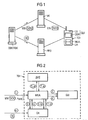
Figur 1- ein Blockschaltbild einer Architektur einer Telekommunikationsanordnung zum Übertragen von verschlüsselten Nutzdatenobjekten sowie zugeordneten Rechteobjekten von einer Datenbereitstellungskomponente über eine Vermittlungskomponente an ein Telekommunikationsendgerät;
Figur 2- ein Blockschaltbild der wesentlichen Komponenten eines Telekommunikationsendgeräts, bei dem der Nachrichtenfluss beim Empfang eines verschlüsselten Nutzdatenobjekts gemäß einer bevorzugten Ausführungsform der Erfindung darstellt ist;
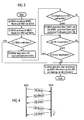
Figur 3- ein Ablaufdiagramm zur Erläuterung des Prozessablaufs in einer MMS-Nutzerapplikation beim Empfang einer Multimedianachricht bzw. MMS-Nachricht mit DRM-geschützten Nutzdatenobjekten;
Figur 4- ein Blockschaltbild, das den Nachrichtenfluss bei der Zustellung eines verschlüsselten Nutzdatenobjekts an ein Telekommunikationsendgerät gemäß dem MMS zeigt;
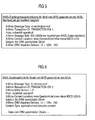
Figur 5- eine MMS-Nachricht in Form einer MMS-Empfängerbenachrichtigung gemäß einer Ausführungsform der Erfindung;
Figur 6- eine MMS-Nachricht in Form einer MMS-Zustellnachricht gemäß einer Ausführungsform der Erfindung.
- FIG. 1
- a block diagram of an architecture of a telecommunications arrangement for transmitting encrypted user data objects and associated rights objects from a data supply component via a switching component to a telecommunications terminal;
- FIG. 2
- a block diagram of the essential components of a telecommunications terminal, in which the message flow when receiving an encrypted user data object according to a preferred embodiment of the invention is shown;
- FIG. 3
- a flowchart for explaining the process flow in an MMS user application when receiving a multimedia message or MMS message with DRM-protected user data objects;
- FIG. 4
- a block diagram showing the message flow in the delivery of an encrypted user data object to a telecommunications terminal according to the MMS;
- FIG. 5
- an MMS message in the form of an MMS recipient notification according to an embodiment of the invention;
- FIG. 6
- an MMS message in the form of an MMS delivery message according to an embodiment of the invention.
zur Erläuterung des Nachrichtenfluss gemäß einer bevorzugten Ausführungsform der Erfindung zwischen den wesentlichen Komponenten eines Telekommunikationsendgeräts beim Empfang eines verschlüsselten Nutzdatenobjekts entsprechend
Wie es in
Wie es ferner in
Im Folgenden soll nun eine Ausführungsform der Erfindung bezüglich des Empfangs und der Auswertung einer empfangenen Multimedianachricht und von zugeordneten Rechteobjekten, sowie die darauf basierende Ausgabe von Informationen für den Nutzer durch das Mobiltelefon TG1 anhand von
- 1. Eine von der Vermittlungskomponente VK stammende Multimedianachricht MM mit den enthaltenen, DRM-geschützten Inhalten bzw. Nutzdatenobjekten NDO wird von dem Mobiltelefon TG1 empfangen und von der darin integrierten MMS-Nutzerapplikation MUA verarbeitet und ausgewertet. Dabei stellt die MMS-Nutzerapplikation MUA in dem dargestellten Fall fest, dass die MMS-Nachricht MM DRM-geschützten Inhalt gemäß der Methode "Separate Delivery" enthält, d.h. dass die Inhalte bzw. Nutzdatenobjekte NDO in Objekte bzw. Container-Objekte mit dem MIME-Typ "application/vnd.oma.drm.content" eingebettet sind. Weiterhin stellt die MMS-Nutzerapplikation MUA fest, ob die MMS-Nachricht MM eine Signalisierung bzw. Zeitinformation sABS enthält (vgl. dazu beispielsweise unten Erläuterung zu
den Figuren 5 und 6 ), mit der eine zeitlich nahe Zustellung des/der zur Nutzbarmachung benötigten Rechteobjekte/s angezeigt wird. Beides wird in dem dargestellten Fall als gegeben angenommen. - 2. Dieser Schritt stellt zum besseren Verständnis das Verhalten einer herkömmlichen MMS-Nutzerapplikation MUA dar und ist hier nur zur Information enthalten. Danach gibt die MMS-Nutzerapplikation MUA an die graphische Nutzerschnittstelle die Information über eine eingegangene Multimedianachricht MM bzw. ein eingegangenes verschlüsseltes NDO zur Darstellung für den Benutzer weiter. Gemäß der bevorzugten Ausführungsform der Erfindung wird genau dieses Verhalten im dargestellten Fall unterbunden. Stattdessen erfolgt die weitere Verarbeitung wie nachfolgend dargestellt.
- 3. Die MMS-Nutzerapplikation MUA fragt zunächst bei dem DRM-Agent DA nach, ob für das oder die in der Multimedianachricht MM enthaltenen DRM-geschützten Nutzdatenobjekte NDO entsprechende Rechteobjekte schon vorliegen. Das kann beispielsweise bei einem Abonnement von Nutzdatenobjekten (wie regelmäßige Übertragung von Börseninformationen oder Fußballergebnissen) der Fall sein, oder wenn die Rechteobjekte bereits zugestellt wurden bevor die Multimedianachricht eingetroffen ist.
- 4. Der DRM-Agent DA sucht nach passenden Rechteobjekten. Im hier dargestellten Fall findet er keine und meldet dies an die MMS-Nutzerapplikation MUA weiter.
- 5. a) Die MMS-Nutzerapplikation MUA wertet die Zeitinformation sABS in dem Informationselement in der MMS-Nachricht MM aus und startet eine Zeitmesseinrichtung bzw. einen Timer ZME mit diesem Wert. Alternativ kann die MMS-Nutzerapplikation MUA einen Minimalwert aus sABS und der Obergrenze einer Zeitverzögerung für die Benachrichtigung des Benutzers über eingegangene Nachrichten bzw. Nutzdatenobjekte bilden und den Timer ZME mit diesem Wert starten. b) Die MMS-Nutzerapplikation MUA startet im DRM-Agent DA eine Funktion, durch die der DRM-Agent DA bei eintreffenden Rechteobjekten, die einen Zugriff auf die DRM-geschützten Nutzdatenobjekte in der Multimedianachricht MM ermöglichen, eine Nachricht an die MMS-Nutzerapplikation MUA schickt. Ein Übergabeparameter ist bzw. sind die Identifizierer (ContentID) der DRM-geschützten Nutzdatenobjekte NDO. Diese Identifizierer sind auch in den zugeordneten Rechteobjekten RO enthalten. Die Identifizierer dienen also dazu, die zugeordneten Rechteobjekte zu erkennen.
Anschließend geht die MMS-Nutzerapplikation MUA in eine Warteschleife, die sie bei Eintreten eines Ereignisses gemäß 7a) oder 7b) wieder verlässt. - 6. Ein oder mehrere Rechteobjekte RO werden vom Mobiltelefon TG1 beispielsweise per WAP-Push über ein WAP-Push-Proxy-Gateway PPG (vgl. dazu wieder
Figur 1 ) empfangen und intern an den DRM-Agent DA gereicht. In diesem Beispiel geschieht dies bevor der Timer ZME abläuft. - 7.
- a) Der Timer ZME läuft ab und sendet eine Benachrichtigung darüber an die MMS-Nutzerapplikation MUA oder alternativ -
- b) gemäß 6) wurden die erforderlichen Rechteobjekte RO empfangen und der DRM-Agent DA benachrichtigt darüber die MMS-Nutzerapplikation MUA.
- 8. Die MMS-Nutzerapplikation steuert nun die graphische Benutzerschnittstelle GUI an, so dass diese den Eingang einer neuen Multimedianachricht MM, d.h. den Eingang eines Nutzdatenobjekts NDO anzeigt. Je nachdem, ob die Rechte vorliegen, wird die Multimedianachricht entsprechend entweder bei vorliegenden Rechteobjekten als "nutzbar" (
vgl. den Fall 6.Und 7. b)) oder bei nicht vorliegenden Rechteobjekten mit dem Hinweis angezeigt, dass eine Aktivierung noch erforderlich ist (vgl. den Fall 7.a)).
- 1. A multimedia message MM originating from the switching component VK with the contained, DRM-protected contents or user data objects NDO is received by the mobile telephone TG1 and processed and evaluated by the MMS user application MUA integrated therein. In the illustrated case, the MMS user application MUA determines that the MMS message contains MM DRM-protected content according to the method "Separate Delivery", ie that the content or user data objects NDO into objects or container objects with the MIME Type "application / vnd.oma.drm.content" are embedded. Furthermore, the MMS user application MUA determines whether the MMS message MM contains a signaling or time information s ABS (cf. for example, below explanation of the
FIGS. 5 and 6 ), with which a timely delivery of the rights / s needed for the utilization is displayed. Both are taken as given in the case shown. - 2. This step represents for better understanding the behavior of a conventional MMS user application MUA and is included here for information only. Afterwards, the MMS user application MUA forwards to the graphical user interface the information about a received multimedia message MM or a received encrypted NDO for presentation to the user. According to the preferred embodiment of the invention, exactly this behavior is prevented in the illustrated case. Instead, further processing is as shown below.
- 3. The MMS user application MUA first asks the DRM agent DA whether there are already rights objects corresponding to the DRM-protected user data objects NDO contained in the multimedia message MM. This may for example be the case with a subscription of user data objects (such as regular transmission of stock market information or football results), or if the rights objects have already been delivered before the multimedia message has arrived.
- 4. The DRM agent DA searches for suitable rights objects. In the case shown here, he finds none and reports this to the MMS user application MUA.
- 5. a) The MMS user application MUA evaluates the time information s ABS in the information element in the MMS message MM and starts a time measuring device or a timer ZME with this value. Alternatively, the MMS user application MUA can form a minimum value of s ABS and the upper limit of a time delay for the notification of the user about received messages or user data objects and start the timer ZME with this value. b) The MMS user application MUA starts in the DRM agent DA a function by which the DRM agent DA a message to the MMS user application MUA for incoming rights objects that allow access to the DRM-protected user data objects in the multimedia message MM sends. A transfer parameter is or are the identifiers (ContentID) of the DRM-protected user data objects NDO. These identifiers are also included in the associated rights objects RO. The identifiers thus serve to recognize the assigned rights objects.
Subsequently, the MMS user application MUA goes into a waiting loop, which leaves it on the occurrence of an event according to 7a) or 7b). - 6. One or more rights objects RO are picked up by the mobile phone TG1, for example by WAP push, via a WAP push proxy gateway PPG (cf.
FIG. 1 ) and internally passed to the DRM Agent DA. In this example, this happens before the timer ZME expires. - 7th
- a) The timer ZME expires and sends a notification to the MMS user application MUA or alternatively -
- b) according to FIG. 6), the required rights objects RO have been received and the DRM agent DA has notified the MMS user application MUA about them.
- 8. The MMS user application now controls the graphical user interface GUI, so that it displays the receipt of a new multimedia message MM, ie the input of a user data object NDO. Depending on whether the rights exist, the multimedia message is displayed as either "usable" (see
cases 6 and 7 b)) or, if the rights objects are not present, with the indication that activation is still required see Case 7.a)).
Die Benutzerschnittstelle GUI gibt dann die gerade erwähnte positive (Fall 6. Und 7. b)) oder negative (Fall 7. a)) Information geeignet beispielsweise über das Display DSP in Form einer Textnachricht oder eines entsprechenden Symbols aus und der Benutzer kann im positiven Fall auf die Nachricht bzw. das Nutzdatenobjekt zugreifen.The user interface GUI then outputs the just mentioned positive (
In
- A) Nach dem Start des Prozesses empfängt die MMS-Nutzerapplikation MUA eine MMS-Nachricht MM, die DRM-geschützte Nutzdatenobjekte NDO sowie eine Zeitinformation sABS über die künftige Zustellung von Rechteobjekten enthält.
- B) Die MMS-Nutzerapplikation MUA untersucht die MMS-Nachricht MM auf enthaltene DRM-geschützte Nutzdatenobjekte NDO und enthaltene Signalisierung bzw. eine Zeitinformation SABS, dass zusätzlich die zugeordneten Rechteobjekte RO auf separatem Transportweg in naher Zukunft zugestellt werden.
- C) Falls beides nicht der Fall ist, wird zu Prozessschritt I) gesprungen. Ansonsten geht die Verarbeitung mit Schritt D) weiter.
- D) Die MMS-Nutzerapplikation MUA fragt (bei Vorhandensein von enthaltenen DRM-geschützten Nutzdatenobjekten) beim DRM-Agenten DA nach, ob die den DRM-geschützten Nutzdatenobjehten NDO zugeordneten Rechteobjekte RO bereits vorliegen und erhalt die Information vom DRM-Agent als Antwort.
- E) Falls die erforderlichen Rechteobjekte RO bereits vorliegen, wird wieder zu Prozessschritt I) gesprungen, ansonsten geht der Prozess mit Schritt F) weiter.
- F) Die MMS-Nutzerapplikation extrahiert die Zeitinformation bzw. den Wert sABS aus dem entsprechenden Informationselement der MMS-Nachricht MM, falls dieses vorhanden ist. Wenn mehrere dieser Informationselemente in der MMS-Nachricht MM enthalten sind, was bei mehreren DRM-geschützten Nutzdatenobjekten NDO und individueller Signalisierung der separaten Zustellung von Rechteobjekten der Fall sein kann, kann die MMS-Nutzerapplikation MUA die Information z.B. durch Bildung des Maximalwertes oder auch durch Addition der angegebenen Zeitdauern auf einen einzigen Zeitwert sGES reduzieren. Danach kann die MMS-Nutzerapplikation MUA den Zeitwert noch auf einen Maximalwert beschränken, der implementierungsspezifisch im Endgerät abgespeichert werden kann und durch den Benutzer einstellbar sein kann. Mit dem resultierenden Zeitwert startet die MMS-Nutzerapplikation MUA einen Timer ZME und setzt bei dem DRM-Agent DA eine Bedingung, wonach der DRM-Agent DA die MMS-Nutzerapplikation MUA beim Eintreffen von passenden Rechteobjekten RO, d.h. die den DRM-geschützten Nutzdatenobjekten NDO der MMS-Nachricht MM zugeordnet sind, informiert.
- G) Die MMS-Nutzerapplikation MUA überprüft, ob alle erforderlichen Rechteobjekte RO für die vorliegende MMS-Nachricht MM eingetroffen sind. Falls ja, d.h. wenn der DRM-Agenten vor Ablauf des Timers ZME eine positive Nachricht über das Eintreffen der passenden Rechteobjekte an die MMS-Nutzerapplikation MUA gesendet hat, wird der Prozess mit Schritt I) fortgesetzt, ansonsten wird der Prozess mit Schritt H) fortgesetzt.
- H) Die MMS-Nutzerapplikation MUA überprüft, ob der Timer ZME abgelaufen ist. Falls ja, wird der Prozess mit Schritt I) fortgesetzt, ansonsten wird der Prozess mit Schritt G) tortgesetzt, d.h. die Schleife erneut durchlaufen.
- I) Die MMS-Nutzerapplikation MUA gibt die Informationen über die empfangene MMS-Nachricht MM an die graphische Benutzerschnittstelle GUI zur Ausgabe für den Benutzer weiter. Im positiven Fall liegen die zur Nutzung der MMS-Nachricht MM bzw. der darin enthaltenen Nutzdatenobjekte NDO erforderlichen Rechteobjekte RO zu diesem Zeitpunkt vor und der Nutzer kann die Nachricht bzw. die in dieser enthaltenen Nutzdatenobjekte NDO nutzen. Liegen die erforderlichen Rechteobjekte noch nicht vor, so wird dem Benutzer eine Nachricht angezeigt, eine Nutzung ist aber noch nicht oder nur eingeschränkt möglich.
- A) After the start of the process, the MMS user application MUA receives an MMS message MM containing DRM-protected user data objects NDO and a time information s ABS on the future delivery of rights objects.
- B) The MMS user application MUA examines the MMS message MM for contained DRM-protected user data objects NDO and contained signaling or a time information S ABS , that in addition the assigned rights objects RO are delivered on separate transport in the near future.
- C) If both are not the case, the process step I) is jumped. Otherwise, the processing continues with step D).
- D) The MMS user application MUA queries (in the presence of contained DRM-protected user data objects) the DRM agent DA whether the DRM protected Nutzdatenobjehten NDO associated rights objects RO already exist and receive the information from the DRM agent in response.
- E) If the required rights objects RO already exist, the process jumps back to process step I), otherwise the process continues with step F).
- F) The MMS user application extracts the time information or the value s ABS from the corresponding information element of the MMS message MM, if present. If several of these information elements are contained in the MMS message MM, which may be the case for several DRM-protected user data objects NDO and individual signaling of the separate delivery of rights objects, the MMS user application MUA the information eg by forming the maximum value or by Add the specified time periods to a single time value s GES . Afterwards, the MMS user application MUA can still set the time value to one Limit maximum value that can be stored specific to the implementation in the terminal and can be adjusted by the user. With the resulting time value, the MMS user application MUA starts a timer ZME and sets a condition for the DRM agent DA, according to which the DRM agent DA the MMS user application MUA on the arrival of matching rights objects RO, ie the DRM-protected user data objects NDO the MMS message MM are assigned informed.
- G) The MMS user application MUA checks whether all required rights objects RO have arrived for the present MMS message MM. If yes, ie if the DRM agent has sent a positive message about the arrival of the appropriate rights objects to the MMS user application MUA before the expiry of the timer ZME, the process continues with step I), otherwise the process continues with step H) ,
- H) The MMS user application MUA checks whether the timer ZME has expired. If yes, the process continues with step I), otherwise the process at step G) is continued, ie, iterated through the loop.
- I) The MMS user application MUA forwards the information about the received MMS message MM to the graphical user interface GUI for output to the user. In the affirmative case, the rights objects RO required for the use of the MMS message MM or the user data objects NDO contained therein are available at this time and the user can use the message or the user data objects NDO contained therein. Are the required rights objects still not available, the user will be shown a message, but use is not possible or only to a limited extent.
Zusammenfassend kann also festegestellt werden, dass ein wesentlicher Punkt bei dem gerade dargestellten Verfahren zur Übertragung von Nutzdatenobjekten an ein Telekommunikationsendgerät bzw. Mobiltelefon in der gesteuerten Ausgabe von Informationen über eingegangene Multimedianachrichten bzw. Nutzdatenobjekte und zugeordnete Rechteobjekte durch das Telekommunikationsendgerät zu sehen ist. Ein wesentlicher Aspekt ist die Übertragung von Inhalten bzw. Nutzdatenobjekten und Rechteobjekten über zwei logisch separate Transportkanäle zu zwei logisch separaten Funktionseinheiten (MMS-Nutzerapplikation und DRM-Agent), wobei die Übertragung zeitlich nicht synchronisiert ist.In summary, it can thus be stated that an essential point in the method just described for transmitting user data objects to a telecommunications terminal or mobile telephone in the controlled output of information about received multimedia messages or user data objects and associated rights objects by the telecommunication terminal. An essential aspect is the transmission of content or user data objects and rights objects via two logically separate transport channels to two logically separate functional units (MMS user application and DRM agent), wherein the transmission is not synchronized in time.
- Die Auswertung der eingehenden Multimedia-Nachricht durch die MMS-Nutzerapplikation MUA auf in der Nachricht enthaltenes DRM-geschütztes Nutzdatenobjekt NDO,The evaluation of the incoming multimedia message by the MMS user application MUA to DRM-protected user data object NDO contained in the message,
- Die Auswertung der eingehenden Multimedia-Nachricht MM durch die MMS-Nutzerapplikation MUA auf in der Nachricht enthaltene Informationselemente, die eine in naher Zukunft zu erwartende Zustellung von Rechteobjekten für die DRM-geschützten Inhalte signalisieren,The evaluation of the incoming multimedia message MM by the MMS user application MUA on information elements contained in the message, which signal a likely in the near future delivery of rights objects for the DRM protected content,
- Die interne Kommunikation zwischen MMS-Nutzerapplikation MUA und DRM-Agent DA, d.h. Abfrage der MMS-Nutzerapplikation MUA bei dem DRM-Agenten DA auf dem Telekommunikationsendgerät, ob für das oder die in der MMS-Nachricht MM enthaltene(n) DRM-geschützte(n) Nutzdatenobjekt(e) auf dem Telekommunikationsendgerät bereits zugeordnete Rechteobjekte RO vorliegen,The internal communication between MMS user application MUA and DRM agent DA, ie query of the MMS user application MUA at the DRM agent DA on the telecommunication terminal, whether for the one or more contained in the MMS message MM DRM protected ( n) User data object (s) already assigned rights objects RO on the telecommunication terminal,
- Die interne Steuerung eines Timers ZME durch die MMS-Nutzerapplikation MUA, d.h. das Starten eines Timers ZME durch die MMS-Nutzerapplikation MUA, wobei das oder die in der MMS-Nachricht MM enthaltenen Informationselemente bzw. Zeitinformationen zur Signalisierung einer bevorstehenden separaten Zustellung von Rechteobjekten RO berücksichtigt wird/werden und weiterhin auch eine maximale Laufzeit des Timers berücksichtigt wird, die implementierungsspezifisch sein und/oder auch vom Benutzer gewählt werden kann,The internal control of a timer ZME by the MMS user application MUA, i. the starting of a timer ZME by the MMS user application MUA, whereby the information element or time information contained in the MMS message MM is / are taken into account for signaling an imminent separate delivery of rights objects RO and furthermore a maximum runtime of the timer is taken into account that can be implementation-specific and / or user-selected,
- Abwarten des Eintreffens des/der einer MMS-Nachricht oder einzelnen MM-Elementen zugeordneten Rechteobjekte(s), wobei der DRM-Agent die Rechteobjekte RO direkt empfängt und verwaltet, und/oder Ablaufen des Timers ZME durch die MMS-Nutzerapplikation MUA,Waiting for the arrival of the MMS message or individual MM elements associated rights objects (s), wherein the DRM agent receives and manages the rights objects RO directly, and / or expiration of the timer ZME by the MMS user application MUA,
- Zeitlich verzögerte Ausgabe und Signalisierung der eingegangenen Multimedianachricht MM mit DRM-geschützten Nutzdatenobjekten NDO auf der Benutzerschnittstelle GUI des Telekommunikationsendgerät (TG1), wenn entweder die erforderlichen Rechte vorliegen (oder mindestens eins vorliegt) und der Benutzer direkt auf die Nutzdatenobjekte der Multimedianachricht zugreifen und sie nutzen kann oder alternativ der Timer ZME abgelaufen ist.Time-delayed output and signaling of the received multimedia message MM with DRM-protected user data objects NDO on the user interface GUI of the telecommunication terminal (TG1) when either the required rights exist (or at least one) and the user directly access and use the user data objects of the multimedia message or alternatively the timer ZME has expired.
Wie bereits zu
Zunächst wird eine MMS-Empfängerbenachrichtigung M-Nind per WAP-Push vom MRS an die MUA gesendet. In dem dargestellten Fall beantwortet die MUA die Nachricht M-Nind zunächst mit einer Bestätigung M-NRind für die Benachrichtigung. Zu einem späteren Zeitpunkt sendet die MUA eine Herunterladeanfrage W-Greq an den MRS. Dieser antwortet mit einer Zustellnachricht M-Rconf in der das Nutzdatenobjekt bzw. multimediale Inhalt der Nachricht enthalten ist. Schließlich bestätigt die MUA auch die Zustellung der Multimedianachricht mit der Zustellbestätigung M-Aind.First, an MMS recipient notification M-Nind is sent by WAP push from the MRS to the MUA. In the illustrated case, the MUA first answers the message M-Nind with a confirmation M-NRind for the notification. At a later time, the MUA sends a download request W-Greq to the MRS. This replies with a delivery message M-Rconf in which the user data object or multimedia content of the message is contained. Finally, the MUA also confirms the delivery of the multimedia message with the delivery confirmation M-Aind.
Die beiden folgenden Beispiele verdeutlichen die erfindungsgemäß mögliche Einbettung eines neuen Kopffeldes in eine MMS-Empfängerbenachrichtigung M-Nind bzw. eine MMS-Zustellnachricht M-Rconf:The following two examples illustrate the possible embedding of a new header field into an MMS recipient notification M-Nind or an MMS delivery message M-Rconf according to the invention:
Die Integration eines zusätzlichen Informationselementes für die Zeitinformation in eine Empfängerbenachrichtigung erfolgt in diesem Beispiel als zusätzliches Kopffeld, das beispielhaft den Namen "X-MmS-DRM-Separate-Delivery" erhält. Tabelle 1 zeigt die Kopffelder für eine MMS-Empfängerbenachrichtigung inklusive dem erfindungsgemäß neuen Kopffeld "X-Mms-DRM-Separate-Delivery". Es sei hierzu erwähnt, dass in der folgenden Tabelle 1 die Feldnamen und Feldwerte in den originalen englischen Bezeichnungen angegeben sind, die dem Fachmann bekannt sind.
Es sei erwähnt, dass bei der MMS-Empfängerbenachrichtigung gemäß obiger Ausführungsform der Erfindung in Tabelle 1 das neue Kopffeld doppelt eingerahmt ist.It should be noted that in the MMS receiver notification according to the above embodiment of the invention in Table 1, the new header field is double-framed.
Gemäß der Ausführungsform kann folgende Definition für den Wert des neuen Kopffeldes angegeben werden:
- X-Mms-DRM-Separate-Delivey = Value-length (Absolute-token Date-value | Relative-token Delta-secods-value)
- Date-value: Datum und Uhrzeit, bis zu der das oder die erforderliche(n) Rechteobjekt(e) zum Endgerät übertragen sein wird/werden.
- Delta-secods-value: Anzahl der Sekunden, innerhalb derer das oder die erforderliche(n) Rechteobjekt(e) zum Endgerät übertragen sein wird/werden
- Absolute-token = <Oktet 128>
- Relative-token = <Oktet 129>
- X-Mms-DRM-Separate-Delivey = Value-length (Absolute-token Date-value | Relative-token Delta-secods-value)
- Date-value: Date and time by which the required rights object (s) will be transmitted to the terminal.
- Delta-secods-value: Number of seconds within which the required rights object (s) will be transmitted to the terminal
- Absolute-token = <Octet 128>
- Relative-token = <octet 129>
Als binäres Token für die Codierung des Kopffeldnamens "X-Mms-DRM-Separate-Delivery" wird gemäß der Ausführungsform einer der Werte "0x34", "0x35", "0x36", "0x37", "0x38", "0x39", "0x3A", "0x3B", "0x3C", "0x3D", "0x3E" oder "0x3F" verwendet. Dies hat den Vorteil einer kompakteren Darstellung und einer effizienteren Übertragung der MMS-Nachricht.As a binary token for coding the header field name "X-Mms-DRM-Separate-Delivery", according to the embodiment, one of the values "0x34", "0x35", "0x36", "0x37", "0x38", "0x39", "0x3A", "0x3B", "0x3C", "0x3D", "0x3E" or "0x3F" is used. This has the advantage of a more compact representation and a more efficient transmission of the MMS message.
Ausgehend von dieser Erläuterung kann nun eine MMS-Empfängerbenachrichtigung prinzipiell den in
In dem in
Die vorgestellte Variante hat den Vorteil, dass bereits nach der Zustellung der MMS-Empfängerbenachrichtigung für die MMS-Nutzerapplikation offensichtlich ist, dass die MMS-Nachricht DRM-geschützte Objekte enthalten wird und davon ein empfängerspezifisches Verhalten abgeleitet werden kann, wonach beispielsweise alle Nachrichten mit DRM-geschützten Nutzdatenobjekten sofort auf das Telekommunikationsendgerät heruntergeladen werden o.ä..The presented variant has the advantage that already after the delivery of the MMS receiver notification for the MMS user application it is obvious that the MMS message will contain DRM-protected objects and from this a recipient-specific behavior can be derived, according to which all messages with DRM protected user data objects are downloaded immediately to the telecommunication terminal or similar.
Eine Rückwärtskompatibilität für MMS Nutzerapplikationen ohne Unterstützung der zusätzlichen DRM-Funktionalität ist mit dem hier vorgestellten Verfahren problemlos möglich. Gemäß OMA/WAP Spezifikation sollen MMS-Nutzerapplikationen unbekannte Kopffelder einfach ignorieren und deren Inhalt verwerfen.Backward compatibility for MMS user applications without support of the additional DRM functionality is easily possible with the method presented here. According to the OMA / WAP specification, MMS user applications should simply ignore unknown headers and discard their contents.
Integration des zusätzlichen Informationselements (Zeitinformation) in Form eines Kopffeldes in die MMS-ZustellnachrichtIntegration of the additional information element (time information) in the form of a header field in the MMS delivery message
Das folgende Beispiel demonstriert die Integration eines zusätzlichen Informationselementes in eine MMS-Zustellnachricht. Dies erfolgt analog zu Beispiel A. Die folgende Tabelle 2 zeigt die Definition des erfindungsgemäßen neuen Kopffeldes "X-Mms-DRM-Separate-Delivery" wie bereits in Tabelle 1 dargestellt.
Das in
Offenbart ist ein Verfahren zum Übertragen von verschlüsselten Nutzdatenobjekten NDO an ein erstes Telekommunikationsendgerät TG1 mit folgenden Schritten. Zunächst wird zumindest ein verschlüsseltes Nutzdatenobjekt von einer Vermittlungskomponente eines Telekommunikationsnetzes an das erste Telekommunikationsendgerät übertragen wird. Ferner wird eine Zeit information sABS von der Vermittlungskomponente an das erste Telekommunikationsendgerät übertragen, die angibt, bis zu welchem Zeitpunkt ein dem zumindest einen verschlüsselten Nutzdatenobjekt zugeordnetes Rechteobjekt RO, das den Schlüssel sowie die Benutzungsrechte für das zugeordnete Nutzdatenobjekt enthält, ebenso beim ersten Telekommunikationsendgerät eintrifft. Anschließend wird nun ein dem zumindest einen Nutzdatenobjekt zugeordnetes Rechteobjekt von dem ersten Telekommunikationsendgerät empfangen. Das erste Telekommunikationsendgerät überprüft nun, ob der in der Zeitinformation angegebene Zeitpunkt schon verstrichen ist, und gibt in dem Fall, dass er noch nicht verstrichen ist, über eine Benutzerschnittstelle noch kein Signal bezüglich des Empfangens eines Nutzdatenobjekts aus. Erst wenn entweder der angegebene Zeitpunkt verstrichen ist oder das zumindest eine nötige Rechteobjekt (vor dem Verstreichen des angegebenen Zeitpunkts) vom ersten Telekommunikationsendgerät empfangen wurde, gibt die MMS-Nutzerapplikation die Information über das Vorliegen einer Multimedianachricht mit enthaltenem Nutzdatenobjekt an die Benutzerschnittstelle zur Ausgabe weiter.Disclosed is a method for transmitting encrypted user data objects NDO to a first telecommunication terminal TG1 with the following steps. First, at least one encrypted user data object is transmitted from a switching component of a telecommunication network to the first telecommunication terminal. Furthermore, a time information s ABS is transmitted from the switching component to the first telecommunication terminal, indicating at which time a rights object RO assigned to the at least one encrypted user data object containing the key and the usage rights for the assigned user data object arrives at the first telecommunication terminal as well , Subsequently, a rights object assigned to the at least one user data object is then received by the first telecommunication terminal. The first telecommunication terminal now checks whether the time specified in the time information has already elapsed and, in the event that it has not yet elapsed, does not yet output a signal concerning the reception of a user data object via a user interface. Only when either the specified time has elapsed or the at least one necessary rights object (before the lapse of the given time) has been received by the first telecommunication terminal, the MMS user application forwards the information about the presence of a multimedia message with included user data object to the user interface for output.
Claims (23)
- Method for transferring encrypted useful data objects (NDO) to a first telecommunication terminal (TG1), according to which:at least one encrypted useful data object is transferred to the first telecommunication terminal (TG1) by a switching component (VK) of a telecommunication network;a time information (sABS) is transferred to the first telecommunication terminal (TG1) by the switching component (VK), specifying the time-point by when a rights object (RO) will also have arrived at the first telecommunication terminal, said rights object being assigned to the at least one encrypted useful data object (NDO) and containing the key and the usage rights for the assigned useful data object;the first telecommunication terminal (TG1) receives a rights object (RO) which is assigned to the at least one useful data object (NDO);the first telecommunication terminal (TG1) does not output a signal via a user interface (GUI) which has been assigned to this first telecommunication terminal, said signal concerning the receipt of a useful data object, until either the time-point specified in the time information has passed or a predefined time-point in the first telecommunication terminal following receipt of the useful data object has passed, or the at least one rights object which is received for activating the useful data object has been received.
- Method according to claim 1, according to which if a rights object (RO) is received before the time-point which is specified in the time information or before a predefined time-point in the telecommunication terminal, the user interface outputs a signal concerning the receipt of a useable useful data object.
- Method according to claim 1 or 2, according to which if the time-point which is specified in the time information or the predefined time-point in the telecommunication terminal is passed before a rights objects RO is received, the user interface (GUI) merely outputs a signal concerning the receipt of an encrypted useful data object.
- Method according to one of the claims 1 to 3, according to which the at least one encrypted useful data object (NDO) together with the time information is transferred to the first telecommunication terminal (TG1) by means of a delivery message (M-Rconf).
- Method according to one of the claims 1 to 3, according to which the time information is transferred to the first telecommunication terminal by means of a notification message (M-Nind) which specifies that a useful data object (NDO) is available at the switching component (VK) for delivery to the first telecommunication terminal (TG1).
- Method according to one of the claims 1 to 5, according to which the at least one encrypted useful data object (NDO) is sent by a data provision component (DBK) of the telecommunication network or by a second telecommunication terminal to the switching component (VK) for forwarding to the first telecommunication terminal (TG1).
- Method according to one of the claims 1 to 6, according to which following receipt of the time information (sABS) the first telecommunication terminal (TG1) instructs a time measuring entity (ZME), which is assigned to said first telecommunication terminal, to measure the time until the time-point which is specified in the time information or until the time-point which is predefined in the telecommunication device.
- Method according to one of the claims 1 to 7, according to which the first telecommunication terminal (TG1) has a communication entity (MUA) for carrying out the communication with the switching component (VK) and a management entity (DA), which is connected to the communication entity, for managing the encrypted useful data objects (NDO).
- Method according to claim 7 and 8, according to which following receipt of the at least one encrypted useful data object, the communication entity (MUA) asks the management entity (DA) whether a rights object (RO) is already present for the at least one encrypted useful data object (NSO) and, if not, instructs the time measuring entity to measure the time.
- Method according to one of the claims 1 to 9, according to which the at least one encrypted useful data object (NDO) and the relevant assigned rights object (RO) are transferred to the first telecommunication terminal (TG1) via two different transport channels.
- Method according to one of the preceding claims, according to which the messages and data are transferred between the switching component (VK) and the first telecommunication terminal (TG1) in the context of the Multimedia Messaging Service.
- Method according to one of the claims 4 or 5 in conjunction with claim 11, according to which the delivery message is an MMS delivery message and/or the notification message is an MMS recipient notification, wherein the MMS delivery message and/or MMS recipient notification have a separate header field (X-Mms-DRM-Separate-Delivery) to which the time information is assigned as a field value.
- Method according to one of the claims 1 to 12, according to which data to and from the first (TG1) and/or second telecommunication terminal is sent via an air interface.
- Method according to claim 13, according to which the first and/or second telecommunication terminal (TG1) includes a radio module and is designed in particular as a mobile telephone, a cordless telephone, or a portable computer.
- Method according to claim 13 or 14, according to which the transfer of messages to and from the first and/or second telecommunication terminal (TG1) takes place by means of WAP protocols or the Hypertext Transfer Protocol (http).
- Method according to one of the claims 1 to 15, according to which the first telecommunication terminal (TG1) is part of a first telecommunication network.
- Method according to claim 16, according to which the first telecommunication network is implemented as a mobile radio network which works in particular according to the GSM or UMTS standard.
- Method according to one of the claims 16 or 17, according to which the switching component (VK) is designed as part of a second telecommunication network which is connected to the first telecommunication network, said second telecommunication network being implemented in particular as a telecommunication network which is based on Internet protocols such as the Hypertext Transfer Protocol.
- Method according to claim 18, according to which the first and the second telecommunication networks are connected together by means of a connection component which is implemented in particular as a WAP gateway.
- Method according to one of the claims 1 to 19, according to which the data provision component (DBK) is designed as a server of a content provider.
- Method according to one of the claims 1 to 19, according to which the useful data object (NDO) contains text information, audio information, video information, an executable program, a software module or a combination of these information elements.
- Telecommunication arrangement comprising a switching component (VK) and at least one first telecommunication terminal (TG1), wherein the telecommunication arrangement is designed to carry out a method as claimed in one of the claims 1 to 19.
- Telecommunication terminal (TG1) for processing encrypted useful data objects (NDO), having the following features:a communication entity (MUA) for receiving at least one encrypted useful data object;a management entity (DA) for receiving and managing rights objects which are assigned to encrypted useful data objects, said rights objects containing the key and the usage rights for an assigned useful data object;a user interface (GUI) for outputting information to a user;wherein the communication entity (MUA) is also configured to process a time information (sABS), which is received in the context of the receipt of the at least one encrypted useful data object and specifies the time-point by when a rights object (RO) which is assigned to the at least one encrypted useful data object (NDO) will arrive at the management entity (DA), and to output a signal via the user interface (GUI) concerning the receipt of a useable useful data object only if the management entity (DA) receives a rights object (RO) before the specified time-point.
Applications Claiming Priority (2)
| Application Number | Priority Date | Filing Date | Title |
|---|---|---|---|
| DE10351961A DE10351961B4 (en) | 2003-11-07 | 2003-11-07 | Method for transmitting encrypted user data objects |
| PCT/EP2004/052494 WO2005046160A1 (en) | 2003-11-07 | 2004-10-11 | Method for transferring encrypted useful data objects |
Publications (2)
| Publication Number | Publication Date |
|---|---|
| EP1680903A1 EP1680903A1 (en) | 2006-07-19 |
| EP1680903B1 true EP1680903B1 (en) | 2014-01-01 |
Family
ID=34559439
Family Applications (1)
| Application Number | Title | Priority Date | Filing Date |
|---|---|---|---|
| EP04791191.2A Expired - Lifetime EP1680903B1 (en) | 2003-11-07 | 2004-10-11 | Method for transferring encrypted useful data objects |
Country Status (6)
| Country | Link |
|---|---|
| US (2) | US7835992B2 (en) |
| EP (1) | EP1680903B1 (en) |
| KR (1) | KR101124121B1 (en) |
| CN (1) | CN1875600B (en) |
| DE (1) | DE10351961B4 (en) |
| WO (1) | WO2005046160A1 (en) |
Families Citing this family (14)
| Publication number | Priority date | Publication date | Assignee | Title |
|---|---|---|---|---|
| DE10351961B4 (en) * | 2003-11-07 | 2008-01-10 | Siemens Ag | Method for transmitting encrypted user data objects |
| WO2007074420A2 (en) * | 2005-12-26 | 2007-07-05 | Koninklijke Philips Electronics N.V. | Method and device for rights management |
| US8832466B1 (en) | 2006-01-27 | 2014-09-09 | Trustwave Holdings, Inc. | Methods for augmentation and interpretation of data objects |
| KR100834752B1 (en) * | 2006-02-17 | 2008-06-05 | 삼성전자주식회사 | Apparatus and method for delivering a license of content |
| US11201868B2 (en) * | 2006-10-23 | 2021-12-14 | Nokia Technologies Oy | System and method for adjusting the behavior of an application based on the DRM status of the application |
| KR20080063601A (en) * | 2007-01-02 | 2008-07-07 | 삼성전자주식회사 | Apparatus and method for transmitting a content right through a multimedia message in a mobile communication system |
| KR100988374B1 (en) * | 2007-12-14 | 2010-10-18 | 엘지전자 주식회사 | How to move usage rights, management method and system for issuing rights of usage rights |
| US8819838B2 (en) | 2008-01-25 | 2014-08-26 | Google Technology Holdings LLC | Piracy prevention in digital rights management systems |
| KR101000693B1 (en) * | 2008-10-21 | 2010-12-10 | 엘지전자 주식회사 | How to move usage rights in digital rights management |
| US20100106610A1 (en) * | 2008-10-23 | 2010-04-29 | Nokia Corporation | Method and apparatus for transferring media |
| US9378359B2 (en) * | 2011-10-11 | 2016-06-28 | Citrix Systems, Inc. | Gateway for controlling mobile device access to enterprise resources |
| EP2859742B1 (en) * | 2012-08-06 | 2020-04-29 | Huawei Technologies Co., Ltd. | Method for providing a multimedia message service |
| US20190132437A1 (en) * | 2017-10-30 | 2019-05-02 | Harrison R. Fenoglio | Time delayed messaging system |
| US11681781B2 (en) * | 2018-02-21 | 2023-06-20 | Comcast Cable Communications, Llc | Systems and methods for content security |
Family Cites Families (10)
| Publication number | Priority date | Publication date | Assignee | Title |
|---|---|---|---|---|
| WO1996017313A1 (en) * | 1994-11-18 | 1996-06-06 | Oracle Corporation | Method and apparatus for indexing multimedia information streams |
| NO971605L (en) * | 1997-04-08 | 1998-10-09 | Ericsson Telefon Ab L M | Device for improving accessibility of services in a communication system |
| US6128387A (en) * | 1997-05-19 | 2000-10-03 | Industrial Technology Research Institute | Method and system for using a non-inversible transform and dynamic keys to protect firmware |
| JP2000232423A (en) * | 1999-02-09 | 2000-08-22 | Sony Corp | Communication device, communication system and method |
| MY123388A (en) * | 1999-03-15 | 2006-05-31 | Sony Corp | Processing method and apparatus for encrypted data transfer |
| US6977909B2 (en) * | 2000-01-19 | 2005-12-20 | Phonepages Of Sweden, Inc. | Method and apparatus for exchange of information in a communication network |
| US6915425B2 (en) * | 2000-12-13 | 2005-07-05 | Aladdin Knowledge Systems, Ltd. | System for permitting off-line playback of digital content, and for managing content rights |
| US20020138435A1 (en) * | 2001-03-26 | 2002-09-26 | Williams L. Lloyd | Method and system for content delivery control using a parallel network |
| AU2001265950B2 (en) * | 2001-04-30 | 2007-08-30 | Nokia Siemens Networks Gmbh & Co. Kg | Method for controlling a link in a telecommunication network |
| DE10351961B4 (en) * | 2003-11-07 | 2008-01-10 | Siemens Ag | Method for transmitting encrypted user data objects |
-
2003
- 2003-11-07 DE DE10351961A patent/DE10351961B4/en not_active Expired - Fee Related
-
2004
- 2004-10-11 KR KR1020067010345A patent/KR101124121B1/en not_active Expired - Fee Related
- 2004-10-11 EP EP04791191.2A patent/EP1680903B1/en not_active Expired - Lifetime
- 2004-10-11 US US10/595,713 patent/US7835992B2/en not_active Expired - Fee Related
- 2004-10-11 CN CN2004800323962A patent/CN1875600B/en not_active Expired - Fee Related
- 2004-10-11 WO PCT/EP2004/052494 patent/WO2005046160A1/en not_active Ceased
-
2010
- 2010-09-17 US US12/885,131 patent/US8762282B2/en not_active Expired - Fee Related
Also Published As
| Publication number | Publication date |
|---|---|
| CN1875600A (en) | 2006-12-06 |
| KR20060120158A (en) | 2006-11-24 |
| DE10351961A1 (en) | 2005-06-23 |
| US20110007898A1 (en) | 2011-01-13 |
| US20070038571A1 (en) | 2007-02-15 |
| CN1875600B (en) | 2010-04-28 |
| DE10351961B4 (en) | 2008-01-10 |
| US8762282B2 (en) | 2014-06-24 |
| EP1680903A1 (en) | 2006-07-19 |
| WO2005046160A1 (en) | 2005-05-19 |
| US7835992B2 (en) | 2010-11-16 |
| KR101124121B1 (en) | 2012-03-21 |
Similar Documents
| Publication | Publication Date | Title |
|---|---|---|
| DE602004005319T2 (en) | NEWS MANAGEMENT | |
| EP1680903B1 (en) | Method for transferring encrypted useful data objects | |
| EP1678962B1 (en) | Method for transmitting encrypted useful data objects | |
| DE102005033667B4 (en) | Communication session server unit, communication terminal, broadcast server unit, network unit, method for controlling a communication session with a plurality of communication terminals, method for establishing a communication session, method for transmitting data in the context of a communication session by means of a broadcast server Unity and computer program elements | |
| EP1632065B1 (en) | Method for transmitting messages in a mms-based communications system | |
| DE10104713A1 (en) | Message accessing method e.g. for multi-media messaging service, allows initial message to by manipulated, called back or altered via transmission of second message | |
| WO2002058359A1 (en) | Method and mobile telecommunications device for transmitting data in a mobile radio network | |
| WO2004068878A1 (en) | Method and system for inserting a multimedia message multiple element into a multimedia message | |
| DE102014000763B4 (en) | Communication system and communication method | |
| EP1555786A1 (en) | Method for establishing a data connection between first and second mobile devices | |
| DE102004037338B4 (en) | A communication system, method for controlling a communication system, server, method for operating a server, communication terminal and method for operating a communication terminal | |
| EP2030348B1 (en) | Method for signalling a connection request | |
| WO2005011311A1 (en) | Transmission of a useful data object from an exchange component to a mobile station | |
| EP3304957A1 (en) | Method for transmitting parameter data between a telecommunications network and a telecommunications terminal and for activating and/or changing and/or deactivating a communication profile on the telecommunications terminal, which communication profile is defined or denoted by the parameter data, system for transmitting parameter data, telecommunications terminal for transmitting parameter data, computer program and computer program product | |
| WO2004021663A1 (en) | Method and device for the data source-specific marking of useful push data | |
| DE10215567A1 (en) | Method for the transmission of data, in particular with multimedia content, in a mobile radio network | |
| EP1771993B1 (en) | Method for monitoring message traffic, and a first and second network unit for the execution thereof | |
| WO2004043033A1 (en) | Method and device for the transmission of encoded useful data objects | |
| WO2004086675A1 (en) | Method for transmitting user data including information on cost assumption in a communication network | |
| DE102004058747B4 (en) | Subscriber device and method for operating a user device | |
| EP1564966B1 (en) | System, apparatus and method for processing a message exchanged between a mobile network and a peer-to-peer fixed-line network. | |
| EP1352500B1 (en) | Method and mobile telecommunications device for transmitting data in a mobile radio network | |
| EP2059003B1 (en) | Method for preparing presence information | |
| EP1878181B1 (en) | Method and communications device for handling an mms version conflict | |
| DE10308932B4 (en) | A method for signaling control instructions to a telecommunications device |
Legal Events
| Date | Code | Title | Description |
|---|---|---|---|
| PUAI | Public reference made under article 153(3) epc to a published international application that has entered the european phase |
Free format text: ORIGINAL CODE: 0009012 |
|
| 17P | Request for examination filed |
Effective date: 20060405 |
|
| AK | Designated contracting states |
Kind code of ref document: A1 Designated state(s): AT BE BG CH CY CZ DE DK EE ES FI FR GB GR HU IE IT LI LU MC NL PL PT RO SE SI SK TR |
|
| DAX | Request for extension of the european patent (deleted) | ||
| RAP1 | Party data changed (applicant data changed or rights of an application transferred) |
Owner name: SIEMENS AKTIENGESELLSCHAFT |
|
| REG | Reference to a national code |
Ref country code: DE Ref legal event code: R079 Ref document number: 502004014485 Country of ref document: DE Free format text: PREVIOUS MAIN CLASS: H04L0029060000 Ipc: H04L0012180000 |
|
| GRAP | Despatch of communication of intention to grant a patent |
Free format text: ORIGINAL CODE: EPIDOSNIGR1 |
|
| RIC1 | Information provided on ipc code assigned before grant |
Ipc: H04W 80/12 20090101ALI20130704BHEP Ipc: H04L 29/06 20060101ALI20130704BHEP Ipc: H04L 12/18 20060101AFI20130704BHEP Ipc: H04W 12/02 20090101ALI20130704BHEP Ipc: H04W 4/12 20090101ALI20130704BHEP |
|
| INTG | Intention to grant announced |
Effective date: 20130724 |
|
| GRAS | Grant fee paid |
Free format text: ORIGINAL CODE: EPIDOSNIGR3 |
|
| GRAA | (expected) grant |
Free format text: ORIGINAL CODE: 0009210 |
|
| AK | Designated contracting states |
Kind code of ref document: B1 Designated state(s): AT BE BG CH CY CZ DE DK EE ES FI FR GB GR HU IE IT LI LU MC NL PL PT RO SE SI SK TR |
|
| REG | Reference to a national code |
Ref country code: GB Ref legal event code: FG4D Free format text: NOT ENGLISH |
|
| REG | Reference to a national code |
Ref country code: CH Ref legal event code: EP |
|
| REG | Reference to a national code |
Ref country code: IE Ref legal event code: FG4D Free format text: LANGUAGE OF EP DOCUMENT: GERMAN |
|
| REG | Reference to a national code |
Ref country code: AT Ref legal event code: REF Ref document number: 648001 Country of ref document: AT Kind code of ref document: T Effective date: 20140215 |
|
| REG | Reference to a national code |
Ref country code: DE Ref legal event code: R096 Ref document number: 502004014485 Country of ref document: DE Effective date: 20140220 |
|
| REG | Reference to a national code |
Ref country code: NL Ref legal event code: VDEP Effective date: 20140101 |
|
| RAP2 | Party data changed (patent owner data changed or rights of a patent transferred) |
Owner name: SIEMENS AKTIENGESELLSCHAFT |
|
| PG25 | Lapsed in a contracting state [announced via postgrant information from national office to epo] |
Ref country code: CY Free format text: LAPSE BECAUSE OF FAILURE TO SUBMIT A TRANSLATION OF THE DESCRIPTION OR TO PAY THE FEE WITHIN THE PRESCRIBED TIME-LIMIT Effective date: 20140101 Ref country code: PT Free format text: LAPSE BECAUSE OF FAILURE TO SUBMIT A TRANSLATION OF THE DESCRIPTION OR TO PAY THE FEE WITHIN THE PRESCRIBED TIME-LIMIT Effective date: 20140502 Ref country code: SE Free format text: LAPSE BECAUSE OF FAILURE TO SUBMIT A TRANSLATION OF THE DESCRIPTION OR TO PAY THE FEE WITHIN THE PRESCRIBED TIME-LIMIT Effective date: 20140101 Ref country code: FI Free format text: LAPSE BECAUSE OF FAILURE TO SUBMIT A TRANSLATION OF THE DESCRIPTION OR TO PAY THE FEE WITHIN THE PRESCRIBED TIME-LIMIT Effective date: 20140101 Ref country code: ES Free format text: LAPSE BECAUSE OF FAILURE TO SUBMIT A TRANSLATION OF THE DESCRIPTION OR TO PAY THE FEE WITHIN THE PRESCRIBED TIME-LIMIT Effective date: 20140101 Ref country code: NL Free format text: LAPSE BECAUSE OF FAILURE TO SUBMIT A TRANSLATION OF THE DESCRIPTION OR TO PAY THE FEE WITHIN THE PRESCRIBED TIME-LIMIT Effective date: 20140101 |
|
| REG | Reference to a national code |
Ref country code: DE Ref legal event code: R097 Ref document number: 502004014485 Country of ref document: DE |
|
| PG25 | Lapsed in a contracting state [announced via postgrant information from national office to epo] |
Ref country code: RO Free format text: LAPSE BECAUSE OF FAILURE TO SUBMIT A TRANSLATION OF THE DESCRIPTION OR TO PAY THE FEE WITHIN THE PRESCRIBED TIME-LIMIT Effective date: 20140101 Ref country code: EE Free format text: LAPSE BECAUSE OF FAILURE TO SUBMIT A TRANSLATION OF THE DESCRIPTION OR TO PAY THE FEE WITHIN THE PRESCRIBED TIME-LIMIT Effective date: 20140101 Ref country code: DK Free format text: LAPSE BECAUSE OF FAILURE TO SUBMIT A TRANSLATION OF THE DESCRIPTION OR TO PAY THE FEE WITHIN THE PRESCRIBED TIME-LIMIT Effective date: 20140101 Ref country code: CZ Free format text: LAPSE BECAUSE OF FAILURE TO SUBMIT A TRANSLATION OF THE DESCRIPTION OR TO PAY THE FEE WITHIN THE PRESCRIBED TIME-LIMIT Effective date: 20140101 |
|
| PLBE | No opposition filed within time limit |
Free format text: ORIGINAL CODE: 0009261 |
|
| STAA | Information on the status of an ep patent application or granted ep patent |
Free format text: STATUS: NO OPPOSITION FILED WITHIN TIME LIMIT |
|
| PG25 | Lapsed in a contracting state [announced via postgrant information from national office to epo] |
Ref country code: SK Free format text: LAPSE BECAUSE OF FAILURE TO SUBMIT A TRANSLATION OF THE DESCRIPTION OR TO PAY THE FEE WITHIN THE PRESCRIBED TIME-LIMIT Effective date: 20140101 Ref country code: PL Free format text: LAPSE BECAUSE OF FAILURE TO SUBMIT A TRANSLATION OF THE DESCRIPTION OR TO PAY THE FEE WITHIN THE PRESCRIBED TIME-LIMIT Effective date: 20140101 |
|
| 26N | No opposition filed |
Effective date: 20141002 |
|
| REG | Reference to a national code |
Ref country code: DE Ref legal event code: R097 Ref document number: 502004014485 Country of ref document: DE Effective date: 20141002 |
|
| PG25 | Lapsed in a contracting state [announced via postgrant information from national office to epo] |
Ref country code: MC Free format text: LAPSE BECAUSE OF FAILURE TO SUBMIT A TRANSLATION OF THE DESCRIPTION OR TO PAY THE FEE WITHIN THE PRESCRIBED TIME-LIMIT Effective date: 20140101 Ref country code: SI Free format text: LAPSE BECAUSE OF FAILURE TO SUBMIT A TRANSLATION OF THE DESCRIPTION OR TO PAY THE FEE WITHIN THE PRESCRIBED TIME-LIMIT Effective date: 20140101 Ref country code: LU Free format text: LAPSE BECAUSE OF FAILURE TO SUBMIT A TRANSLATION OF THE DESCRIPTION OR TO PAY THE FEE WITHIN THE PRESCRIBED TIME-LIMIT Effective date: 20141011 |
|
| REG | Reference to a national code |
Ref country code: CH Ref legal event code: PL |
|
| PG25 | Lapsed in a contracting state [announced via postgrant information from national office to epo] |
Ref country code: BE Free format text: LAPSE BECAUSE OF NON-PAYMENT OF DUE FEES Effective date: 20141031 |
|
| REG | Reference to a national code |
Ref country code: IE Ref legal event code: MM4A |
|
| PG25 | Lapsed in a contracting state [announced via postgrant information from national office to epo] |
Ref country code: LI Free format text: LAPSE BECAUSE OF NON-PAYMENT OF DUE FEES Effective date: 20141031 Ref country code: CH Free format text: LAPSE BECAUSE OF NON-PAYMENT OF DUE FEES Effective date: 20141031 |
|
| REG | Reference to a national code |
Ref country code: FR Ref legal event code: PLFP Year of fee payment: 12 |
|
| PG25 | Lapsed in a contracting state [announced via postgrant information from national office to epo] |
Ref country code: IE Free format text: LAPSE BECAUSE OF NON-PAYMENT OF DUE FEES Effective date: 20141011 |
|
| REG | Reference to a national code |
Ref country code: AT Ref legal event code: MM01 Ref document number: 648001 Country of ref document: AT Kind code of ref document: T Effective date: 20141011 |
|
| PG25 | Lapsed in a contracting state [announced via postgrant information from national office to epo] |
Ref country code: AT Free format text: LAPSE BECAUSE OF NON-PAYMENT OF DUE FEES Effective date: 20141011 |
|
| PG25 | Lapsed in a contracting state [announced via postgrant information from national office to epo] |
Ref country code: BG Free format text: LAPSE BECAUSE OF FAILURE TO SUBMIT A TRANSLATION OF THE DESCRIPTION OR TO PAY THE FEE WITHIN THE PRESCRIBED TIME-LIMIT Effective date: 20140101 |
|
| PG25 | Lapsed in a contracting state [announced via postgrant information from national office to epo] |
Ref country code: GR Free format text: LAPSE BECAUSE OF FAILURE TO SUBMIT A TRANSLATION OF THE DESCRIPTION OR TO PAY THE FEE WITHIN THE PRESCRIBED TIME-LIMIT Effective date: 20140402 |
|
| PG25 | Lapsed in a contracting state [announced via postgrant information from national office to epo] |
Ref country code: TR Free format text: LAPSE BECAUSE OF FAILURE TO SUBMIT A TRANSLATION OF THE DESCRIPTION OR TO PAY THE FEE WITHIN THE PRESCRIBED TIME-LIMIT Effective date: 20140101 Ref country code: HU Free format text: LAPSE BECAUSE OF FAILURE TO SUBMIT A TRANSLATION OF THE DESCRIPTION OR TO PAY THE FEE WITHIN THE PRESCRIBED TIME-LIMIT; INVALID AB INITIO Effective date: 20041011 |
|
| REG | Reference to a national code |
Ref country code: FR Ref legal event code: PLFP Year of fee payment: 13 |
|
| REG | Reference to a national code |
Ref country code: FR Ref legal event code: PLFP Year of fee payment: 14 |
|
| PGFP | Annual fee paid to national office [announced via postgrant information from national office to epo] |
Ref country code: DE Payment date: 20171219 Year of fee payment: 14 Ref country code: FR Payment date: 20171019 Year of fee payment: 14 |
|
| PGFP | Annual fee paid to national office [announced via postgrant information from national office to epo] |
Ref country code: IT Payment date: 20171025 Year of fee payment: 14 Ref country code: GB Payment date: 20171017 Year of fee payment: 14 |
|
| REG | Reference to a national code |
Ref country code: DE Ref legal event code: R119 Ref document number: 502004014485 Country of ref document: DE |
|
| GBPC | Gb: european patent ceased through non-payment of renewal fee |
Effective date: 20181011 |
|
| PG25 | Lapsed in a contracting state [announced via postgrant information from national office to epo] |
Ref country code: DE Free format text: LAPSE BECAUSE OF NON-PAYMENT OF DUE FEES Effective date: 20190501 |
|
| PG25 | Lapsed in a contracting state [announced via postgrant information from national office to epo] |
Ref country code: FR Free format text: LAPSE BECAUSE OF NON-PAYMENT OF DUE FEES Effective date: 20181031 |
|
| PG25 | Lapsed in a contracting state [announced via postgrant information from national office to epo] |
Ref country code: GB Free format text: LAPSE BECAUSE OF NON-PAYMENT OF DUE FEES Effective date: 20181011 Ref country code: IT Free format text: LAPSE BECAUSE OF NON-PAYMENT OF DUE FEES Effective date: 20181011 |