EP1679950B1 - Tomatoes having reduced polygalacturonase activity caused by non-transgenic mutations in the polygalacturonase gene - Google Patents
Tomatoes having reduced polygalacturonase activity caused by non-transgenic mutations in the polygalacturonase gene Download PDFInfo
- Publication number
- EP1679950B1 EP1679950B1 EP03789950A EP03789950A EP1679950B1 EP 1679950 B1 EP1679950 B1 EP 1679950B1 EP 03789950 A EP03789950 A EP 03789950A EP 03789950 A EP03789950 A EP 03789950A EP 1679950 B1 EP1679950 B1 EP 1679950B1
- Authority
- EP
- European Patent Office
- Prior art keywords
- polygalacturonase
- gene
- tomato
- dna
- tomatoes
- Prior art date
- Legal status (The legal status is an assumption and is not a legal conclusion. Google has not performed a legal analysis and makes no representation as to the accuracy of the status listed.)
- Expired - Lifetime
Links
- 230000035772 mutation Effects 0.000 title claims abstract description 86
- 230000000694 effects Effects 0.000 title claims abstract description 32
- 240000003768 Solanum lycopersicum Species 0.000 title claims description 168
- 108010059820 Polygalacturonase Proteins 0.000 title claims description 138
- 235000007688 Lycopersicon esculentum Nutrition 0.000 title abstract description 139
- 230000009261 transgenic effect Effects 0.000 title abstract description 7
- 235000013399 edible fruits Nutrition 0.000 claims abstract description 33
- 108090000623 proteins and genes Proteins 0.000 claims abstract description 30
- 102000004190 Enzymes Human genes 0.000 claims abstract description 5
- 108090000790 Enzymes Proteins 0.000 claims abstract description 5
- 108020004414 DNA Proteins 0.000 claims description 65
- 239000002773 nucleotide Substances 0.000 claims description 12
- 125000003729 nucleotide group Chemical group 0.000 claims description 12
- DHMQDGOQFOQNFH-UHFFFAOYSA-N Glycine Chemical compound NCC(O)=O DHMQDGOQFOQNFH-UHFFFAOYSA-N 0.000 claims description 10
- 108091081024 Start codon Proteins 0.000 claims description 6
- 239000004475 Arginine Substances 0.000 claims description 5
- 239000004471 Glycine Substances 0.000 claims description 5
- ODKSFYDXXFIFQN-UHFFFAOYSA-N arginine Natural products OC(=O)C(N)CCCNC(N)=N ODKSFYDXXFIFQN-UHFFFAOYSA-N 0.000 claims description 5
- ZDXPYRJPNDTMRX-UHFFFAOYSA-N glutamine Natural products OC(=O)C(N)CCC(N)=O ZDXPYRJPNDTMRX-UHFFFAOYSA-N 0.000 claims description 4
- HNDVDQJCIGZPNO-UHFFFAOYSA-N histidine Natural products OC(=O)C(N)CC1=CN=CN1 HNDVDQJCIGZPNO-UHFFFAOYSA-N 0.000 claims description 4
- 238000004519 manufacturing process Methods 0.000 claims description 4
- 229930024421 Adenine Natural products 0.000 claims 2
- GFFGJBXGBJISGV-UHFFFAOYSA-N Adenine Chemical compound NC1=NC=NC2=C1N=CN2 GFFGJBXGBJISGV-UHFFFAOYSA-N 0.000 claims 2
- 229960000643 adenine Drugs 0.000 claims 2
- UYTPUPDQBNUYGX-UHFFFAOYSA-N guanine Chemical compound O=C1NC(N)=NC2=C1N=CN2 UYTPUPDQBNUYGX-UHFFFAOYSA-N 0.000 claims 2
- RWQNBRDOKXIBIV-UHFFFAOYSA-N thymine Chemical compound CC1=CNC(=O)NC1=O RWQNBRDOKXIBIV-UHFFFAOYSA-N 0.000 claims 2
- 229940113082 thymine Drugs 0.000 claims 1
- 238000000034 method Methods 0.000 abstract description 22
- 238000012216 screening Methods 0.000 abstract description 7
- 238000003306 harvesting Methods 0.000 abstract description 5
- 108020004707 nucleic acids Proteins 0.000 abstract description 3
- 102000039446 nucleic acids Human genes 0.000 abstract description 3
- 150000007523 nucleic acids Chemical class 0.000 abstract description 3
- 241000227653 Lycopersicon Species 0.000 abstract 4
- 241000196324 Embryophyta Species 0.000 description 50
- 238000003556 assay Methods 0.000 description 17
- 230000008859 change Effects 0.000 description 15
- 238000003752 polymerase chain reaction Methods 0.000 description 13
- 102000004169 proteins and genes Human genes 0.000 description 12
- 150000001413 amino acids Chemical class 0.000 description 11
- 210000002421 cell wall Anatomy 0.000 description 10
- 239000000047 product Substances 0.000 description 10
- PLUBXMRUUVWRLT-UHFFFAOYSA-N Ethyl methanesulfonate Chemical compound CCOS(C)(=O)=O PLUBXMRUUVWRLT-UHFFFAOYSA-N 0.000 description 9
- 229940024606 amino acid Drugs 0.000 description 9
- 239000000499 gel Substances 0.000 description 9
- 238000012408 PCR amplification Methods 0.000 description 8
- AFYNADDZULBEJA-UHFFFAOYSA-N bicinchoninic acid Chemical compound C1=CC=CC2=NC(C=3C=C(C4=CC=CC=C4N=3)C(=O)O)=CC(C(O)=O)=C21 AFYNADDZULBEJA-UHFFFAOYSA-N 0.000 description 8
- 239000000872 buffer Substances 0.000 description 8
- 239000012634 fragment Substances 0.000 description 8
- 239000000523 sample Substances 0.000 description 8
- 238000004458 analytical method Methods 0.000 description 7
- 239000003153 chemical reaction reagent Substances 0.000 description 7
- 230000005070 ripening Effects 0.000 description 7
- 238000001262 western blot Methods 0.000 description 7
- FAPWRFPIFSIZLT-UHFFFAOYSA-M Sodium chloride Chemical compound [Na+].[Cl-] FAPWRFPIFSIZLT-UHFFFAOYSA-M 0.000 description 6
- 101100290380 Caenorhabditis elegans cel-1 gene Proteins 0.000 description 5
- 108091028043 Nucleic acid sequence Proteins 0.000 description 5
- 238000001962 electrophoresis Methods 0.000 description 5
- 230000002255 enzymatic effect Effects 0.000 description 5
- 239000000284 extract Substances 0.000 description 5
- 230000014509 gene expression Effects 0.000 description 5
- 238000011534 incubation Methods 0.000 description 5
- 239000006166 lysate Substances 0.000 description 5
- 239000000243 solution Substances 0.000 description 5
- ZHNUHDYFZUAESO-UHFFFAOYSA-N Formamide Chemical compound NC=O ZHNUHDYFZUAESO-UHFFFAOYSA-N 0.000 description 4
- 108010031186 Glycoside Hydrolases Proteins 0.000 description 4
- 102000005744 Glycoside Hydrolases Human genes 0.000 description 4
- 108020005120 Plant DNA Proteins 0.000 description 4
- 230000001488 breeding effect Effects 0.000 description 4
- 238000006243 chemical reaction Methods 0.000 description 4
- 230000002068 genetic effect Effects 0.000 description 4
- 108020004999 messenger RNA Proteins 0.000 description 4
- 239000003471 mutagenic agent Substances 0.000 description 4
- 231100000707 mutagenic chemical Toxicity 0.000 description 4
- 238000012163 sequencing technique Methods 0.000 description 4
- 238000012360 testing method Methods 0.000 description 4
- XLYOFNOQVPJJNP-UHFFFAOYSA-N water Substances O XLYOFNOQVPJJNP-UHFFFAOYSA-N 0.000 description 4
- VZUNGTLZRAYYDE-UHFFFAOYSA-N N-methyl-N'-nitro-N-nitrosoguanidine Chemical compound O=NN(C)C(=N)N[N+]([O-])=O VZUNGTLZRAYYDE-UHFFFAOYSA-N 0.000 description 3
- 108091034117 Oligonucleotide Proteins 0.000 description 3
- HEMHJVSKTPXQMS-UHFFFAOYSA-M Sodium hydroxide Chemical compound [OH-].[Na+] HEMHJVSKTPXQMS-UHFFFAOYSA-M 0.000 description 3
- 238000009395 breeding Methods 0.000 description 3
- 210000004027 cell Anatomy 0.000 description 3
- 230000003247 decreasing effect Effects 0.000 description 3
- 230000001747 exhibiting effect Effects 0.000 description 3
- 238000000605 extraction Methods 0.000 description 3
- 239000000463 material Substances 0.000 description 3
- 238000002703 mutagenesis Methods 0.000 description 3
- 231100000350 mutagenesis Toxicity 0.000 description 3
- 239000008188 pellet Substances 0.000 description 3
- 229920001184 polypeptide Polymers 0.000 description 3
- 230000008569 process Effects 0.000 description 3
- 102000004196 processed proteins & peptides Human genes 0.000 description 3
- 108090000765 processed proteins & peptides Proteins 0.000 description 3
- 238000011160 research Methods 0.000 description 3
- 239000011780 sodium chloride Substances 0.000 description 3
- 239000006228 supernatant Substances 0.000 description 3
- 238000013519 translation Methods 0.000 description 3
- MTCFGRXMJLQNBG-REOHCLBHSA-N (2S)-2-Amino-3-hydroxypropansäure Chemical compound OC[C@H](N)C(O)=O MTCFGRXMJLQNBG-REOHCLBHSA-N 0.000 description 2
- LNCCBHFAHILMCT-UHFFFAOYSA-N 2-n,4-n,6-n-triethyl-1,3,5-triazine-2,4,6-triamine Chemical compound CCNC1=NC(NCC)=NC(NCC)=N1 LNCCBHFAHILMCT-UHFFFAOYSA-N 0.000 description 2
- ARSRBNBHOADGJU-UHFFFAOYSA-N 7,12-dimethyltetraphene Chemical compound C1=CC2=CC=CC=C2C2=C1C(C)=C(C=CC=C1)C1=C2C ARSRBNBHOADGJU-UHFFFAOYSA-N 0.000 description 2
- HRPVXLWXLXDGHG-UHFFFAOYSA-N Acrylamide Chemical compound NC(=O)C=C HRPVXLWXLXDGHG-UHFFFAOYSA-N 0.000 description 2
- NLXLAEXVIDQMFP-UHFFFAOYSA-N Ammonia chloride Chemical compound [NH4+].[Cl-] NLXLAEXVIDQMFP-UHFFFAOYSA-N 0.000 description 2
- IJGRMHOSHXDMSA-UHFFFAOYSA-N Atomic nitrogen Chemical compound N#N IJGRMHOSHXDMSA-UHFFFAOYSA-N 0.000 description 2
- 108020004705 Codon Proteins 0.000 description 2
- KCXVZYZYPLLWCC-UHFFFAOYSA-N EDTA Chemical compound OC(=O)CN(CC(O)=O)CCN(CC(O)=O)CC(O)=O KCXVZYZYPLLWCC-UHFFFAOYSA-N 0.000 description 2
- 206010064571 Gene mutation Diseases 0.000 description 2
- 108091027305 Heteroduplex Proteins 0.000 description 2
- KFZMGEQAYNKOFK-UHFFFAOYSA-N Isopropanol Chemical compound CC(C)O KFZMGEQAYNKOFK-UHFFFAOYSA-N 0.000 description 2
- TWRXJAOTZQYOKJ-UHFFFAOYSA-L Magnesium chloride Chemical compound [Mg+2].[Cl-].[Cl-] TWRXJAOTZQYOKJ-UHFFFAOYSA-L 0.000 description 2
- CSNNHWWHGAXBCP-UHFFFAOYSA-L Magnesium sulfate Chemical compound [Mg+2].[O-][S+2]([O-])([O-])[O-] CSNNHWWHGAXBCP-UHFFFAOYSA-L 0.000 description 2
- ZRKWMRDKSOPRRS-UHFFFAOYSA-N N-Methyl-N-nitrosourea Chemical compound O=NN(C)C(N)=O ZRKWMRDKSOPRRS-UHFFFAOYSA-N 0.000 description 2
- 229920002230 Pectic acid Polymers 0.000 description 2
- 238000012300 Sequence Analysis Methods 0.000 description 2
- CDBYLPFSWZWCQE-UHFFFAOYSA-L Sodium Carbonate Chemical compound [Na+].[Na+].[O-]C([O-])=O CDBYLPFSWZWCQE-UHFFFAOYSA-L 0.000 description 2
- 125000000539 amino acid group Chemical group 0.000 description 2
- 238000013459 approach Methods 0.000 description 2
- 238000005251 capillar electrophoresis Methods 0.000 description 2
- 230000015556 catabolic process Effects 0.000 description 2
- 238000003776 cleavage reaction Methods 0.000 description 2
- 230000006835 compression Effects 0.000 description 2
- 238000007906 compression Methods 0.000 description 2
- 238000006731 degradation reaction Methods 0.000 description 2
- 230000003111 delayed effect Effects 0.000 description 2
- 238000001514 detection method Methods 0.000 description 2
- 238000011161 development Methods 0.000 description 2
- 238000010790 dilution Methods 0.000 description 2
- 239000012895 dilution Substances 0.000 description 2
- 238000011156 evaluation Methods 0.000 description 2
- 239000011536 extraction buffer Substances 0.000 description 2
- 235000013305 food Nutrition 0.000 description 2
- 239000007788 liquid Substances 0.000 description 2
- MBABOKRGFJTBAE-UHFFFAOYSA-N methyl methanesulfonate Chemical compound COS(C)(=O)=O MBABOKRGFJTBAE-UHFFFAOYSA-N 0.000 description 2
- 230000003505 mutagenic effect Effects 0.000 description 2
- 235000010987 pectin Nutrition 0.000 description 2
- 229920001277 pectin Polymers 0.000 description 2
- 239000001814 pectin Substances 0.000 description 2
- 230000010152 pollination Effects 0.000 description 2
- 239000010318 polygalacturonic acid Substances 0.000 description 2
- 238000002360 preparation method Methods 0.000 description 2
- 238000012545 processing Methods 0.000 description 2
- 108091008146 restriction endonucleases Proteins 0.000 description 2
- 230000007017 scission Effects 0.000 description 2
- 239000001488 sodium phosphate Substances 0.000 description 2
- 229910000162 sodium phosphate Inorganic materials 0.000 description 2
- 239000007858 starting material Substances 0.000 description 2
- 239000000126 substance Substances 0.000 description 2
- 239000000758 substrate Substances 0.000 description 2
- 235000000346 sugar Nutrition 0.000 description 2
- 150000008163 sugars Chemical class 0.000 description 2
- 239000000725 suspension Substances 0.000 description 2
- 238000012225 targeting induced local lesions in genomes Methods 0.000 description 2
- RYFMWSXOAZQYPI-UHFFFAOYSA-K trisodium phosphate Chemical compound [Na+].[Na+].[Na+].[O-]P([O-])([O-])=O RYFMWSXOAZQYPI-UHFFFAOYSA-K 0.000 description 2
- JKMHFZQWWAIEOD-UHFFFAOYSA-N 2-[4-(2-hydroxyethyl)piperazin-1-yl]ethanesulfonic acid Chemical compound OCC[NH+]1CCN(CCS([O-])(=O)=O)CC1 JKMHFZQWWAIEOD-UHFFFAOYSA-N 0.000 description 1
- MWBWWFOAEOYUST-UHFFFAOYSA-N 2-aminopurine Chemical compound NC1=NC=C2N=CNC2=N1 MWBWWFOAEOYUST-UHFFFAOYSA-N 0.000 description 1
- HEGWNIMGIDYRAU-UHFFFAOYSA-N 3-hexyl-2,4-dioxabicyclo[1.1.0]butane Chemical compound O1C2OC21CCCCCC HEGWNIMGIDYRAU-UHFFFAOYSA-N 0.000 description 1
- 102100040036 Adhesion G-protein coupled receptor G4 Human genes 0.000 description 1
- 240000007087 Apium graveolens Species 0.000 description 1
- 235000015849 Apium graveolens Dulce Group Nutrition 0.000 description 1
- 235000010591 Appio Nutrition 0.000 description 1
- 108091003079 Bovine Serum Albumin Proteins 0.000 description 1
- BVKZGUZCCUSVTD-UHFFFAOYSA-L Carbonate Chemical compound [O-]C([O-])=O BVKZGUZCCUSVTD-UHFFFAOYSA-L 0.000 description 1
- 108091026890 Coding region Proteins 0.000 description 1
- CMSMOCZEIVJLDB-UHFFFAOYSA-N Cyclophosphamide Chemical compound ClCCN(CCCl)P1(=O)NCCCO1 CMSMOCZEIVJLDB-UHFFFAOYSA-N 0.000 description 1
- 102000016928 DNA-directed DNA polymerase Human genes 0.000 description 1
- 108010014303 DNA-directed DNA polymerase Proteins 0.000 description 1
- ZFIVKAOQEXOYFY-UHFFFAOYSA-N Diepoxybutane Chemical compound C1OC1C1OC1 ZFIVKAOQEXOYFY-UHFFFAOYSA-N 0.000 description 1
- 102100031780 Endonuclease Human genes 0.000 description 1
- 108010042407 Endonucleases Proteins 0.000 description 1
- VGGSQFUCUMXWEO-UHFFFAOYSA-N Ethene Chemical compound C=C VGGSQFUCUMXWEO-UHFFFAOYSA-N 0.000 description 1
- 239000005977 Ethylene Substances 0.000 description 1
- IAYPIBMASNFSPL-UHFFFAOYSA-N Ethylene oxide Chemical compound C1CO1 IAYPIBMASNFSPL-UHFFFAOYSA-N 0.000 description 1
- 108700024394 Exon Proteins 0.000 description 1
- 101000959604 Homo sapiens Adhesion G-protein coupled receptor G4 Proteins 0.000 description 1
- 101000718237 Homo sapiens Putative adhesion G protein-coupled receptor E4P Proteins 0.000 description 1
- 101000951145 Homo sapiens Succinate dehydrogenase [ubiquinone] cytochrome b small subunit, mitochondrial Proteins 0.000 description 1
- 101000934888 Homo sapiens Succinate dehydrogenase cytochrome b560 subunit, mitochondrial Proteins 0.000 description 1
- PWGOWIIEVDAYTC-UHFFFAOYSA-N ICR-170 Chemical compound Cl.Cl.C1=C(OC)C=C2C(NCCCN(CCCl)CC)=C(C=CC(Cl)=C3)C3=NC2=C1 PWGOWIIEVDAYTC-UHFFFAOYSA-N 0.000 description 1
- 108091092195 Intron Proteins 0.000 description 1
- 108091026898 Leader sequence (mRNA) Proteins 0.000 description 1
- 241000146226 Physalis ixocarpa Species 0.000 description 1
- 102100026426 Putative adhesion G protein-coupled receptor E4P Human genes 0.000 description 1
- 108020004511 Recombinant DNA Proteins 0.000 description 1
- 229920005654 Sephadex Polymers 0.000 description 1
- 239000012507 Sephadex™ Substances 0.000 description 1
- 102100038014 Succinate dehydrogenase [ubiquinone] cytochrome b small subunit, mitochondrial Human genes 0.000 description 1
- 102100025393 Succinate dehydrogenase cytochrome b560 subunit, mitochondrial Human genes 0.000 description 1
- 239000012505 Superdex™ Substances 0.000 description 1
- 108091036066 Three prime untranslated region Proteins 0.000 description 1
- 238000002835 absorbance Methods 0.000 description 1
- 239000011543 agarose gel Substances 0.000 description 1
- 235000019270 ammonium chloride Nutrition 0.000 description 1
- 230000003321 amplification Effects 0.000 description 1
- 238000000137 annealing Methods 0.000 description 1
- 230000000692 anti-sense effect Effects 0.000 description 1
- 239000000074 antisense oligonucleotide Substances 0.000 description 1
- 238000012230 antisense oligonucleotides Methods 0.000 description 1
- 239000011324 bead Substances 0.000 description 1
- 238000011325 biochemical measurement Methods 0.000 description 1
- 230000015572 biosynthetic process Effects 0.000 description 1
- 229940098773 bovine serum albumin Drugs 0.000 description 1
- UDSAIICHUKSCKT-UHFFFAOYSA-N bromophenol blue Chemical compound C1=C(Br)C(O)=C(Br)C=C1C1(C=2C=C(Br)C(O)=C(Br)C=2)C2=CC=CC=C2S(=O)(=O)O1 UDSAIICHUKSCKT-UHFFFAOYSA-N 0.000 description 1
- 239000002962 chemical mutagen Substances 0.000 description 1
- JCKYGMPEJWAADB-UHFFFAOYSA-N chlorambucil Chemical compound OC(=O)CCCC1=CC=C(N(CCCl)CCCl)C=C1 JCKYGMPEJWAADB-UHFFFAOYSA-N 0.000 description 1
- 229960004630 chlorambucil Drugs 0.000 description 1
- 239000002131 composite material Substances 0.000 description 1
- 239000002537 cosmetic Substances 0.000 description 1
- 229960004397 cyclophosphamide Drugs 0.000 description 1
- 230000000593 degrading effect Effects 0.000 description 1
- 238000012217 deletion Methods 0.000 description 1
- 230000037430 deletion Effects 0.000 description 1
- 239000003398 denaturant Substances 0.000 description 1
- 230000001419 dependent effect Effects 0.000 description 1
- 230000001066 destructive effect Effects 0.000 description 1
- DENRZWYUOJLTMF-UHFFFAOYSA-N diethyl sulfate Chemical compound CCOS(=O)(=O)OCC DENRZWYUOJLTMF-UHFFFAOYSA-N 0.000 description 1
- 229940008406 diethyl sulfate Drugs 0.000 description 1
- 230000029087 digestion Effects 0.000 description 1
- -1 dimethylnitosamine Chemical compound 0.000 description 1
- 201000010099 disease Diseases 0.000 description 1
- 208000037265 diseases, disorders, signs and symptoms Diseases 0.000 description 1
- 230000007515 enzymatic degradation Effects 0.000 description 1
- 238000001976 enzyme digestion Methods 0.000 description 1
- 239000000706 filtrate Substances 0.000 description 1
- 239000000796 flavoring agent Substances 0.000 description 1
- 235000019634 flavors Nutrition 0.000 description 1
- 238000013467 fragmentation Methods 0.000 description 1
- 238000006062 fragmentation reaction Methods 0.000 description 1
- 235000012055 fruits and vegetables Nutrition 0.000 description 1
- 239000003517 fume Substances 0.000 description 1
- 238000010353 genetic engineering Methods 0.000 description 1
- 235000013617 genetically modified food Nutrition 0.000 description 1
- 238000003205 genotyping method Methods 0.000 description 1
- 238000010438 heat treatment Methods 0.000 description 1
- GNOIPBMMFNIUFM-UHFFFAOYSA-N hexamethylphosphoric triamide Chemical compound CN(C)P(=O)(N(C)C)N(C)C GNOIPBMMFNIUFM-UHFFFAOYSA-N 0.000 description 1
- 238000000338 in vitro Methods 0.000 description 1
- 208000015181 infectious disease Diseases 0.000 description 1
- 238000003780 insertion Methods 0.000 description 1
- 230000037431 insertion Effects 0.000 description 1
- 238000002372 labelling Methods 0.000 description 1
- 238000011068 loading method Methods 0.000 description 1
- 229910001629 magnesium chloride Inorganic materials 0.000 description 1
- 229910052943 magnesium sulfate Inorganic materials 0.000 description 1
- 239000011159 matrix material Substances 0.000 description 1
- 238000005259 measurement Methods 0.000 description 1
- 229960004961 mechlorethamine Drugs 0.000 description 1
- HAWPXGHAZFHHAD-UHFFFAOYSA-N mechlorethamine Chemical class ClCCN(C)CCCl HAWPXGHAZFHHAD-UHFFFAOYSA-N 0.000 description 1
- 229960001924 melphalan Drugs 0.000 description 1
- SGDBTWWWUNNDEQ-LBPRGKRZSA-N melphalan Chemical compound OC(=O)[C@@H](N)CC1=CC=C(N(CCCl)CCCl)C=C1 SGDBTWWWUNNDEQ-LBPRGKRZSA-N 0.000 description 1
- 239000012528 membrane Substances 0.000 description 1
- WSFSSNUMVMOOMR-NJFSPNSNSA-N methanone Chemical compound O=[14CH2] WSFSSNUMVMOOMR-NJFSPNSNSA-N 0.000 description 1
- 238000002156 mixing Methods 0.000 description 1
- 239000000203 mixture Substances 0.000 description 1
- 229910052757 nitrogen Inorganic materials 0.000 description 1
- 238000010606 normalization Methods 0.000 description 1
- 238000003199 nucleic acid amplification method Methods 0.000 description 1
- 230000008447 perception Effects 0.000 description 1
- 238000000053 physical method Methods 0.000 description 1
- 230000037039 plant physiology Effects 0.000 description 1
- 102000054765 polymorphisms of proteins Human genes 0.000 description 1
- LJCNRYVRMXRIQR-UHFFFAOYSA-L potassium sodium tartrate Chemical compound [Na+].[K+].[O-]C(=O)C(O)C(O)C([O-])=O LJCNRYVRMXRIQR-UHFFFAOYSA-L 0.000 description 1
- 238000004382 potting Methods 0.000 description 1
- 238000001556 precipitation Methods 0.000 description 1
- 238000004321 preservation Methods 0.000 description 1
- CPTBDICYNRMXFX-UHFFFAOYSA-N procarbazine Chemical compound CNNCC1=CC=C(C(=O)NC(C)C)C=C1 CPTBDICYNRMXFX-UHFFFAOYSA-N 0.000 description 1
- 229960000624 procarbazine Drugs 0.000 description 1
- JETDZFFCRPFPDH-UHFFFAOYSA-N quinacrine mustard dihydrochloride Chemical compound [H+].[H+].[Cl-].[Cl-].C1=C(Cl)C=CC2=C(NC(C)CCCN(CCCl)CCCl)C3=CC(OC)=CC=C3N=C21 JETDZFFCRPFPDH-UHFFFAOYSA-N 0.000 description 1
- 230000005855 radiation Effects 0.000 description 1
- 230000009467 reduction Effects 0.000 description 1
- 239000012488 sample solution Substances 0.000 description 1
- 230000035945 sensitivity Effects 0.000 description 1
- 229960001153 serine Drugs 0.000 description 1
- 238000002415 sodium dodecyl sulfate polyacrylamide gel electrophoresis Methods 0.000 description 1
- 239000002689 soil Substances 0.000 description 1
- 238000005063 solubilization Methods 0.000 description 1
- 230000007928 solubilization Effects 0.000 description 1
- 230000002269 spontaneous effect Effects 0.000 description 1
- 238000010186 staining Methods 0.000 description 1
- 238000007862 touchdown PCR Methods 0.000 description 1
- 230000007704 transition Effects 0.000 description 1
- GPRLSGONYQIRFK-MNYXATJNSA-N triton Chemical compound [3H+] GPRLSGONYQIRFK-MNYXATJNSA-N 0.000 description 1
- WFKWXMTUELFFGS-UHFFFAOYSA-N tungsten Chemical compound [W] WFKWXMTUELFFGS-UHFFFAOYSA-N 0.000 description 1
- 229910052721 tungsten Inorganic materials 0.000 description 1
- 239000010937 tungsten Substances 0.000 description 1
- OGWKCGZFUXNPDA-XQKSVPLYSA-N vincristine Chemical compound C([N@]1C[C@@H](C[C@]2(C(=O)OC)C=3C(=CC4=C([C@]56[C@H]([C@@]([C@H](OC(C)=O)[C@]7(CC)C=CCN([C@H]67)CC5)(O)C(=O)OC)N4C=O)C=3)OC)C[C@@](C1)(O)CC)CC1=C2NC2=CC=CC=C12 OGWKCGZFUXNPDA-XQKSVPLYSA-N 0.000 description 1
- 229960004528 vincristine Drugs 0.000 description 1
- OGWKCGZFUXNPDA-UHFFFAOYSA-N vincristine Natural products C1C(CC)(O)CC(CC2(C(=O)OC)C=3C(=CC4=C(C56C(C(C(OC(C)=O)C7(CC)C=CCN(C67)CC5)(O)C(=O)OC)N4C=O)C=3)OC)CN1CCC1=C2NC2=CC=CC=C12 OGWKCGZFUXNPDA-UHFFFAOYSA-N 0.000 description 1
- DGVVWUTYPXICAM-UHFFFAOYSA-N β‐Mercaptoethanol Chemical compound OCCS DGVVWUTYPXICAM-UHFFFAOYSA-N 0.000 description 1
Classifications
-
- C—CHEMISTRY; METALLURGY
- C07—ORGANIC CHEMISTRY
- C07H—SUGARS; DERIVATIVES THEREOF; NUCLEOSIDES; NUCLEOTIDES; NUCLEIC ACIDS
- C07H21/00—Compounds containing two or more mononucleotide units having separate phosphate or polyphosphate groups linked by saccharide radicals of nucleoside groups, e.g. nucleic acids
- C07H21/04—Compounds containing two or more mononucleotide units having separate phosphate or polyphosphate groups linked by saccharide radicals of nucleoside groups, e.g. nucleic acids with deoxyribosyl as saccharide radical
-
- C—CHEMISTRY; METALLURGY
- C12—BIOCHEMISTRY; BEER; SPIRITS; WINE; VINEGAR; MICROBIOLOGY; ENZYMOLOGY; MUTATION OR GENETIC ENGINEERING
- C12N—MICROORGANISMS OR ENZYMES; COMPOSITIONS THEREOF; PROPAGATING, PRESERVING, OR MAINTAINING MICROORGANISMS; MUTATION OR GENETIC ENGINEERING; CULTURE MEDIA
- C12N9/00—Enzymes; Proenzymes; Compositions thereof; Processes for preparing, activating, inhibiting, separating or purifying enzymes
- C12N9/14—Hydrolases (3)
- C12N9/24—Hydrolases (3) acting on glycosyl compounds (3.2)
- C12N9/2402—Hydrolases (3) acting on glycosyl compounds (3.2) hydrolysing O- and S- glycosyl compounds (3.2.1)
-
- C—CHEMISTRY; METALLURGY
- C12—BIOCHEMISTRY; BEER; SPIRITS; WINE; VINEGAR; MICROBIOLOGY; ENZYMOLOGY; MUTATION OR GENETIC ENGINEERING
- C12Y—ENZYMES
- C12Y302/00—Hydrolases acting on glycosyl compounds, i.e. glycosylases (3.2)
- C12Y302/01—Glycosidases, i.e. enzymes hydrolysing O- and S-glycosyl compounds (3.2.1)
- C12Y302/01015—Polygalacturonase (3.2.1.15)
Definitions
- This invention concerns mutations in the fruit polygalacturonase (PG) gene of tomato. This description further concerns tomato plants having mutations in their PG genes. This invention further concerns a method that utilizes non-transgenic means to create tomato plants having mutations in their PG genes.
- PG fruit polygalacturonase
- Tomato fruit PG ( Della Penna et al., Proc. Natl. Acad. Sci. U.S.A. 1986 83:6420-6424 ; Bird et al., Plant Mol. Biol. 1988 11:651-662 ) belongs to a family of tomato PG genes. PG enzyme activity increases dramatically during the ripening of many fruits, including tomato, and is the primary enzymatic activity responsible for cell wall polyuronide degradation.
- transgenic tomatoes having reduced PG gene expression exhibit slower softening post harvest and increased shelf life. Additionally, these transgenic tomatoes exhibit a lower incidence of post-harvest disease infection due to the preservation of intact fruit skin and coat caused by the delayed softening. Therefore, the tomatoes with reduced PG have fewer cosmetic blemishes which deter customers.
- Reduced PG enzyme activity is important not only to the fresh market tomato industry but also to the processed tomato industry.
- pectin integrity of the tomato is lost by enzymatic degradation of the pectin by PG.
- a rapid, high heat treatment is used to destroy the PG enzyme activity.
- the annual cost associated with the total energy required to bring millions of tons of tomatoes to a temperature sufficient to rapidly inactivate the PG enzyme is a significant cost to the tomato processing industries.
- the invention includes a polygalacturonase gene and enzyme as defined in the independent claims.
- the invention also includes the use of said polygalacturonase gene for the production of a tomato plant having reduced fruit polygalacturonase activity compared to wild type tomato plants, as well as the selection of such plants, as defined in the claims.
- SEQ. ID. NO: 1 shows the DNA sequence between the start and stop codons for the coding region of Polygalacturonase (Gen Bank Accession No. M37304).
- SEQ. ID. No.: 2 shows the protein sequence encoded by SEQ. ID. No. 1.
- SEQ. ID. NOS.: 3-46 show the DNA sequences for Polygalacturonase specific primers of the present invention.
- SEQ. ID. No.: 47 shows the DNA sequence of the Polygalacturonase gene for Mutation 13345.
- SEQ. ID. No.: 48 shows the protein sequence encoded by SEQ. ID. No. 47.
- SEQ. ID. No.: 49 shows the DNA sequence of the Polygalacturonase gene for Mutation 13342.
- SEQ. ID. No.: 50 shows the protein sequence encoded by SEQ. ID. No. 49.
- the present description discloses: a series of independent non-transgenic mutations created in the polygalacturonase (PG) gene of tomato; tomato plants having these mutations in their PG gene; and a method of creating and identifying similar and/or additional mutations in the PG gene of tomato plants.
- the description further discloses tomato plants exhibiting reduced PG enzyme activity and slower fruit softening post harvest without the inclusion of foreign nucleic acids in the tomato plants' genomes.
- the tomato fruit PG gene (GenBank accession no. M37304) consists of nine exons 1 separated by eight introns 2 , and 5' and 3' untranslated regions. The DNA surrounding the gene regulates expression of the PG gene.
- the PG protein sequence contains eight highly conserved regions called blocks 3 ( http://blocks.fhcrc.org/blocks-bin/getblock.sh?IPB000742 ), listed under IPB000773 at the Fred Hutchinson Cancer Research Center Blocks website. These regions are conserved amongst polygalacturonases from many organisms.
- TILLING In order to create and identify the PG gene mutations and slower softening tomatoes, a method known as TILLING was utilized. See McCallum, et al., Nature Biotechnology (April 2000), 18: 455-457 ; McCallum, et al., (June 2000) Plant Physiology, Vol. 123, pp. 439-442 ; and US Patent No. 5,994,075 , all of which are incorporated herein by reference.
- plant material such as seeds
- chemical mutagenesis which creates a series of mutations within the genomes of the seeds' cells.
- the mutagenized seeds are grown into adult M1 plants and self-pollinated.
- DNA samples from the resulting M2 plants are pooled and are then screened for mutations in a gene of interest. Once a mutation is identified in a gene of interest, the seeds of the M2 plant carrying that mutation are grown into adult M3 plants and screened for the phenotypic characteristics associated with the gene of interest.
- Any cultivar of tomato having at least one PG gene with substantial homology to Seq. I.D. No. 1 may be used in the present invention.
- the homology between the PG gene and Seq. I.D. No. 1 may be as low as 60% provided that the homology in the conserved regions of the gene are higher.
- a tomato cultivar having few polymorphisms such as an in-bred cultivar, in order to facilitate screening for mutations within the PG gene.
- seeds from the tomato plant are mutagenized and then grown into M1 plants.
- the M1 plants are then allowed to self-pollinate and seeds from the M1 plant are grown into M2 plants, which are then screened for mutations in their PG genes.
- a variety of tomato plant materials including but not limited to, seeds, pollen, plant tissue or plant cells, may be mutagenized in order to create the PG-mutated tomato plants.
- the type of plant material mutagenized may affect when the plant DNA is screened for mutations. For example, when pollen is subjected to mutagenesis prior to pollination of a non-mutagenized plant, the seeds resulting from that pollination are grown into M1 plants. Every cell of the M1 plants will contain mutations created in the pollen, thus these M1 plants may then be screened for PG gene mutations instead of waiting until the M2 generation.
- Mutagens creating primarily point mutations and short deletions, insertions, transversions, and or transitions may be used to create the mutations.
- mutagens such as ethyl methanesulfonate (EMS), methylmethane sulfonate (MMS), N-ethyl-N-nitrosurea (ENU), triethylmelamine (TEM), N-methyl-N-nitrosourea (MNU), procarbazine, chlorambucil, cyclophosphamide, diethyl sulfate, acrylamide monomer, melphalan, nitrogen mustard, vincristine, dimethylnitosamine, N-methyl-N'-nitro-Nitrosoguanidine (MNNG), nitrosoguanidine, 2-aminopurine, 7,12 dimethyl-benz(a)anthracene (DMBA), ethylene
- EMS ethyl methanesulfonate
- MMS methylmethane
- any method of plant DNA preparation known to those of skill in the art may be used to prepare the tomato plant DNA for PG mutation screening.
- Any method of plant DNA preparation known to those of skill in the art may be used to prepare the tomato plant DNA for PG mutation screening.
- kits including kits from Qiagen (Valencia, CA) and Qbiogene (Carlsbad, CA).
- the prepared DNA from individual tomato plants are then pooled in order to expedite screening for mutations in the PG genes of the entire population of plants originating from the mutagenized plant tissue.
- the size of the pooled group is dependent upon the sensitivity of the screening method used. Preferably, groups of four or more individuals are pooled.
- PG gene-specific amplification techniques such as Polymerase Chain Reaction (PCR).
- PCR Polymerase Chain Reaction
- Any primer specific to the PG gene or the sequences immediately adjacent to the PG gene may be utilized to amplify the PG genes within the pooled DNA sample.
- the primer is designed to amplify the regions of the PG gene where useful mutations are most likely to arise.
- the primer should maximize the amount of exonic sequence of the PG gene and, likewise, avoid intronic sequences of the gene. Additionally, it is preferable for the primer to avoid known polymorphism sites in order to ease screening for point mutations. Furthermore, when specifically screening for mutations that will knock out the PG enzymatic activity, it is preferable to target the 5'-end of the PG gene or to target areas of the PG gene that are highly conserved. To facilitate detection of PCR products on a gel, the PCR primer may be labeled using any conventional labeling method. Exemplary primers (SEQ. ID. Nos.3-46) that have proven useful in identifying useful mutations within the PG gene sequence are shown below in Table 1. TABLE 1 NAME SEQUENCE SEQUENCE I.D.
- the PCR amplification products may be screened for PG mutations using any method that identifies heteroduplexes between wild type and mutant genes. For example, but not limited to, denaturing high pressure liquid chromotography (dHPLC), constant denaturant capillary electrophoresis (CDCE), temperature gradient capillary electrophoresis (TGCE) ( Q. Li, et al., Electrophoresis, 23(10):1499-1511 (May 2002 ), or by fragmentation using chemical cleavage, such as used in the high throughput method described by Colbert et al., Plant Physiology, 126:480-484 (June 2001 ).
- dHPLC denaturing high pressure liquid chromotography
- DCE constant denaturant capillary electrophoresis
- TGCE temperature gradient capillary electrophoresis
- the PCR amplification products are incubated with an endonuclease that preferentially cleaves mismatches in heteroduplexes between wild type and mutant sequences.
- Cleavage products are electrophoresed using an automated sequencing gel apparatus, and gel images are analyzed with the aid of a standard commercial image-processing program.
- Mutations that reduce PG enzyme activity in the plant are desirable.
- Preferred mutations include those that prematurely truncate the translation of the PG protein, such as those mutations that create a stop codon within the amino acid sequence of the PG protein.
- Additional preferred mutations include those that cause the mRNA to be alternatively spliced, such as mutations in and around the intron splice sites within the mRNA.
- any mutations that create an amino acid change within one of the fifteen highly conserved residues of the PG polypeptide are also preferred.
- the mutations are analyzed to determine its potential affect on the expression, translation, and/or activity of the PG enzyme.
- the PCR fragment containing the mutation is sequenced, using standard sequencing techniques, in order to determine the exact location of the mutation in relation to the overall PG gene sequence.
- a LOGO analysis is performed on the amino acid sequence BLOCK in which a mutation is located. Protein BLOCKS are multiply-aligned, ungapped segments corresponding to the most highly conserved regions of the protein families. Henikoff et al., Gene 163: GC17-GC26 (1995 ).
- LOGOs are a graphical representation of aligned sequences where the size of each amino acid residue is proportional to its frequency in that position.
- the LOGO for a BLOCK is calculated from the position-specific scoring matrix (PSSM).
- PSSM position-specific scoring matrix
- Tomato PG belongs to the glycoside hydrolase protein family 28 (BLOCK IPB000743). One hundred and forty-seven members of this family were used to identify the seven conserved blocks within the family that are included in the BLOCKS database.
- the M2 plant is backcrossed twice in order to eliminate background mutations. Then the M2 plant is self pollinated in order to create a plant that is homozygous for the PG mutation.
- Mutant PG tomatoes are evaluated for delayed softening compared to the normal (wild type) parental tomato lines. Normal fruit ripens such that the color of the tomato changes from light green to red. As this change happens, the fruit tends to become softer such that compression under a specified weight becomes greater and/or the force required to depress the surface of the fruit a specified distance becomes greater. See Cantwell, M. Report to the California Tomato Commission: Tomato Variety Trials: Postharvest Evaluations for 2001 ; Edan, Y., H. Pasternak, I. Shmulevich, D. Rachmani, D. Guedalia, S. Grinberg and E. Fallik. 1997.
- the following mutations are exemplary of the tomato mutations identified according to the present invention.
- One exemplary mutation correlates with a change of G to A at nucleotide 1969 of SEQ. ID. NO. 1, counting A in the ATG of the START CODON as nucleotide position 1.
- This mutation results in a change from glycine to arginine at amino acid 178 in the expressed protein.
- the change from glycine to arginine at 178 is a dramatic amino acid change both in terms of charge and size.
- the G178R mutation is within block B of this family. As shown in FIG. 2 , G178 is one of the fifteen most conserved residues within the glycoside hydrolase protein family.
- Lycopersicon esculentum seeds of the cultivar Shady Lady containing this mutation were deposited with the American Type Culture Collection, 10801 University Boulevard., Mannassas, VA 20110-2209, on September 9, 2002 and given Accession No. 13345 and Patent Deposit Designation PTA-4702.
- Another exemplary mutation, identified according to the present invention correlates with a T to A change at nucleotide position 2940 of SEQ. ID. NO. 1, counting A in the ATG of the START CODON as nucleotide position 1.
- This mutation results in a change from histidine to glutamine at amino acid 252.
- the H252Q mutation is within block D of the glycoside hydrolase protein family. As shown in FIG. 3 , H252Q is also a change in a very conserved region of this protein family. Lycopersicon esculentum seeds of the cultivar Shady Lady containing this mutation were deposited with the American Type Culture Collection, 10801 University Boulevard., Mannassas, VA 20110-2209, on September 20, 2002 and given Accession No. 13342 and Patent Deposit Designation PTA-4702.
- tomato seeds of cultivars Shady Lady (hybrid) and NC 84173 (inbred line provided by R. Gardner at the University of North Carolina) were vacuum infiltrated in H 2 O (ca. 4 min. with ca. 1000 seeds/100 ml H 2 O). The seeds were then placed on a shaker (45 rpm) in a fume hood at ambient temperature. The mutagen ethyl methanesulfonate (EMS) was added to the imbibing seeds for final concentrations ranging from about 0.1% to about 1.6% (v/v). EMS concentrations of about 0.4 to about 1.2% were determined to be optimal for these studies. Following a 24-hour incubation, the EMS solution was replaced with fresh H 2 O (4x to an est.
- EMS mutagen ethyl methanesulfonate
- EMS dilution 1/2,000,000,000 The seeds were then rinsed under running water for ca. 1 hour. Finally, the mutagenized seeds were planted (96/tray) in potting soil and allowed to germinate in the greenhouse. Four to six week old surviving plants were transferred to the field to grow to fully mature M1 plants. The mature M1 plants were allowed to self-pollinate and then seeds from the M1 plant were collected and planted to produce M2 plants.
- DNA from these M2 plants was extracted and prepared in order to identify which M2 plants carried a mutation in their PG gene.
- the M2 plant DNA was prepared using the methods and reagents contained in the Qiagen® (Valencia, CA) 96 Plant Kit. Approximately 0.1g of frozen plant sample was placed in a sample tube with a tungsten bead, frozen in liquid nitrogen and ground 2 times for 1 minute each at 20 Hz using the Qiagen® Mixer Mill MM 300. Next 400 ⁇ l solution AP1 [buffer AP1, solution DX and RNAse (100 ⁇ g/ml)] at 80°C was added to the sample. The tube was sealed and shaken for 15 seconds. Following the addition of 130 ⁇ l buffer AP2, the tube was shaken for 15 seconds.
- the samples were then frozen for at least 10 minutes at minus 20°C.
- the samples were then centrifuged for 20 minutes at 5600 X g.
- a 400 ⁇ l aliquot of supernatant was transferred to another sample tube.
- 600 ⁇ l of buffer AP3/E this sample tube was capped and shaken for 15 seconds.
- a filter plate was placed on a square well block and 1ml of the sample solution was applied to each well and the plate was sealed.
- the plate and block were centrifuged for 4 minutes at 5600 X g.
- 800 ⁇ l of buffer AW was added to each well of the filter plate, sealed and spun for 15 minutes at 5600 X g in the square well block.
- the filter plate was then placed on a new set of sample tubes and 100 ⁇ l of buffer AE was applied to the filter. It was capped and incubated at room temperature for 1 minute and then spun for 2 minutes at 5600 X g. This step was repeated with an additional 100 ⁇ l buffer AE. The filter plate was removed and the filtrates were pooled and the tubes capped. Then the individual samples were normalized to a concentration of 25ng/ ⁇ l.
- the M2 DNA was pooled into groups of four or more individual plants each. For pools containing four individuals, the DNA concentration for each individual within the pool was 0.25 ng/ ⁇ l with a final concentration of 1ng/ ⁇ l for the entire pool.
- the pooled DNA samples were arrayed on microtiter plates and subjected to gene-specific PCR.
- PCR amplification was performed in 15 ⁇ l volumes containing 5ng pooled or individual DNA, 0.75X ExTaq buffer (Panvera, Madison, WI), 2.6 mM MgCl2, 0.3mM dNTPs, 0.3 ⁇ M primers, 0.05U Ex-Taq (Panvera, Madison, WI) DNA polymerase.
- PCR amplifications were performed using an MJ Research thermal cycler as follows: 95°C for 2 minutes; 8 cycles of "touchdown PCR" (94°C for 20 second, followed by annealing step starting at 70-68°C for 30 seconds decreasing 1°C per cycle, then a temperature ramp of 0.5°C per second to 72°C followed by 72°C for 1 minute); 25-45 cycles of 94°C for 20 seconds, 63-61°C for 30 seconds, ramp 0.5°C/sec to 72°C, 72°C for 1 minute; 72°C for 8 minutes; 98°C for 8 minutes; 80°C for 20 seconds; 60 cycles of 80°C for 7 seconds -0.3 degrees/cycle.
- the PCR, primers were mixed as follows: 9 ⁇ l 100 ⁇ M IRD-700 labeled Left primer 1 ⁇ l 100 ⁇ M Left primer 10 ⁇ l 100 ⁇ M Right primer
- the IRD-700 label can be attached to either the right or left primer.
- the labeled to unlabeled primer ratio is 9:1.
- Cy5.5 modified primers or IRD-800 modified primers could be used.
- the label was coupled to the oligonucleotide using conventional phosphoamidite chemistry.
- CEL 1 was purified from 30 kg of celery as described by Oleykowski et al., Nucleic Acids Res 26: 4597-4602 (1998 ), except that Poros HQ rather than Mono Q was used, and the PhenylSepharose and Superdex 75 columns were omitted.
- the specific activity was 1 x 10 6 units mL -1 , where a unit is defined as the amount of CEL 1 required to digest 50% of 200 ng of a 500-bp DNA fragment that has a single mismatch in 50% of the duplexes.
- Reactions were stopped by addition of 5 ⁇ L 0.15 M EDTA (pH 8) and the mixture pipetted into wells of a spin plate (G50, Sephadex) prepared and spun according to the manufacturer's recommendations into a plate containing 1 to 1.5 ⁇ L of formamide load solution [1mM EDTA (pH 8) and 200 ⁇ g mL -1 bromophenol blue in deionized formamide].
- the volume was reduced to a minimum by incubation at 80°C uncovered (30-40 min) and stored on ice, then transferred to a membrane comb using a comb-loading robot (MWG Biotech).
- MWG Biotech comb-loading robot
- the DNA samples could have been concentrated using isopropanol precipitation.
- the comb was inserted into a slab acrylamide gel, electrophoresed for 10 min, and removed. Electrophoresis was continued for 4h at 1,500-V, 40-W, and 40-mA limits at 50°C.
- the gel was imaged using a LI-COR (Lincoln, NE) scanner which was set at a channel capable of detecting the IR Dye 700 label.
- the gel image showed sequence-specific pattern of background bands common to all 96 lanes. Rare events, such as mutations, created a new band that stood out above the background pattern. Plants with bands indicative of mutations of interest were evaluated by sequencing individual PCR products. Plants carrying mutations confirmed by sequencing were grown up as described above (e.g., the M2 plant was backcrossed twice in order to eliminate background mutations and self-pollinated in order to create a plant that was homozygous for the mutation).
- dCAPing a genetic method for determining single base pair mismatches referred to in the scientific literature as "dCAPing", see M.M Neff et al., The Plant Journal 14:387-392 (1998 ). Briefly, a degenerate PCR oligonucleotide is designed to create a restriction endonuclease recognition site when the mutant base pair is present. Plants are then simply genotyped using a PCR reaction followed by a restriction enzyme digestion and then analysis on an agarose gel.
- Polygalacturonase enzymatic activity was measured spectrophotometrically using two different in vitro color assays that quantify the formation of reduced sugars from a polygalacturonic substrate.
- One assay utilized 3,5-dintrosalicylate (DNS) for color detection, and was performed as in Redenbaugh K, Hiatt W, Martineau B, Kramer M, Sheehy R, Sanders R, Houck C, and Emlay D. Safety Assessment of Genetically Engineered Fruits and Vegetables: A Case Study of the Flavr Savr Tomato. CRC Press (1992 ); R. Sheehy, et al., PNAS 85:8805-8809 (1988 ); Z. M. Ali and C.J. Brady, Aust. J.
- DNS Based Assay for PG Activity Briefly, cell wall extracts from individual tomatoes were prepared as follows: tomatoes were sliced, locular tissue and seeds were removed, and 100 grams of the remaining tomato tissue were homogenized in 300 milliliters (ml) cold H 2 O and centrifuged at 4000 rpm in a tabletop centrifuge. The pellet was resuspended in 300 ml extraction buffer (1.7 M NaCl, 40mM ⁇ -mercaptoethanol, 50mM sodium phosphate, pH 4.6) and stirred for 4 hours at 4° C. The suspension was then centrifuged as before and the supernatant was reserved for use in the DNS color assay.
- 300 ml extraction buffer 1.7 M NaCl, 40mM ⁇ -mercaptoethanol, 50mM sodium phosphate, pH 4.6
- Results of the DNS based PG activity assay demonstrate that homozygous 13345 tomato fruits have less than 40% the activity of the wild type control. Tomatoes used in this assay were vine ripened and picked at equivalent stages in development.
- BCA Based Assay for PG Activity Briefly, cell wall extracts from individual tomatoes were prepared as follows: tomatoes were sliced, locular tissue and seeds were removed, and 15 g of the remaining tissue was homogenized in 30ml cold H 2 O. ⁇ 7.5 mls 1N HCl was added (to a final pH of 3.0), and the homogenate was spun at 4000 rpm in a tabletop centrifuge. The pellet was washed in 30 mls cold H 2 O, and spun as before, The washed pellet was then resuspended in 7.5 mls extraction buffer (0.1M sodium phosphate pH 6.5, 1.2M NaCl) and incubated on ice for 30 minutes. The suspension was spun as before, and the supernatant was reserved for use in the BCA color assay. Again, the lysates were normalized to wet weight starting material in the 13345 mutant, and protein concentration in the 13342 mutant.
- Results of the BCA based PG activity assay demonstrate that both mutants exhibit decreased PG activity as compared to wild type (controls).
- tomatoes from both M3 and F2 generations of tomatoes were assayed.
- tomatoes from M3, F2 and F3 generations were assayed.
- results of the Western blot demonstrate that significantly less PG protein is detected in cell wall extraction lysates from mutant 13345 tomatoes than from wild type controls.
- the level of PG protein detected in red ripe mutant 13345 tomatoes is approximately that found in the early developmental stages of wild type tomatoes (FIG. 8).
- the level of PG protein detected in red ripe mutant 13342 tomatoes is approximately the same as that found in red ripe wild type tomatoes.
- the Western blot results combined with the PG enzyme activity data for mutant 13342 tomatoes indicate that a non-functional form of PG protein is present in mutant 13342 tomatoes.
- Coomassie staining shows that PG is the predominant protein found in cell wall extraction lysates.
- DNA from tomato plant 13345 originating from seeds of cultivar Shady Lady that were incubated in 1.2% EMS, was amplified using primer pair PGL3 (SEQ. ID. NOs. 023 and 043).
- the PCR amplification products were then incubated with CEL 1 and electrophoresed.
- the electrophoresis gel image showed a fragment at the approximate position of 204bp, above the background pattern for the PCR amplification products. Therefore, it was likely that this fragment contained a heteroduplex created by a mutation in the PG gene. Sequence analysis of this fragment showed that the mutation was associated with a G to A change at nucleotide 1969 of SEQ. I.D. No. 1, counting A in the ATG of the START CODON as nucleotide position 1. This mutation correlates with a change from glycine to arginine at amino acid 178 of the PG polypeptide.
- This mutation is within block B of the glycoside hydrolase protein family. LOGO analysis of the G178R mutation within this block revealed that the mutation lies at one of the fifteen most conserved amino acids within the family.
- Tomato fruits containing Mutation 13345 exhibited lower PG enzyme activity compared to their wild type sibling, and were considered firmer than the wild type sibling.
- Tomato plant 13342 originating from seeds of cultivar Shady Lady that were incubated in 0.6% EMS, was screened with primer pair PGL9 (SEQ. ID. NOs. 027 and 039). The PCR amplification products were then incubated with CEL 1 and electrophoresed. The electrophoresis gel image showed a fragment at the approximate position of 385bp, above the background pattern for the PCR amplification products. Therefore, it was likely that this fragment contained a heteroduplex created by a mutation in the PG gene. Sequence analysis of this fragment showed the mutation was associated with a T to A change at nucleotide 2940 of SEQ. I.D. No. 1, counting A in the ATG of the START CODON as nucleotide position 1. This mutation correlates with a change from histidine to glutamine at amino acid 252 of the PG polypeptide.
- Tomato fruits containing Mutation 13345 exhibited lower PG enzyme activity compared to their wild type sibling, and were consider former than their wild type sibling.
Landscapes
- Chemical & Material Sciences (AREA)
- Life Sciences & Earth Sciences (AREA)
- Organic Chemistry (AREA)
- Health & Medical Sciences (AREA)
- Genetics & Genomics (AREA)
- Biochemistry (AREA)
- Engineering & Computer Science (AREA)
- Zoology (AREA)
- Wood Science & Technology (AREA)
- Bioinformatics & Cheminformatics (AREA)
- Molecular Biology (AREA)
- General Health & Medical Sciences (AREA)
- Biotechnology (AREA)
- General Engineering & Computer Science (AREA)
- Biomedical Technology (AREA)
- Microbiology (AREA)
- Medicinal Chemistry (AREA)
- Breeding Of Plants And Reproduction By Means Of Culturing (AREA)
- Measuring Or Testing Involving Enzymes Or Micro-Organisms (AREA)
Abstract
Description
- This invention concerns mutations in the fruit polygalacturonase (PG) gene of tomato. This description further concerns tomato plants having mutations in their PG genes. This invention further concerns a method that utilizes non-transgenic means to create tomato plants having mutations in their PG genes.
- United States consumers spend more than $4 billion each year on fresh market tomatoes. During the summer months, most of these fresh market tomatoes are grown on farms located throughout the United States and then sold locally. During the cooler months, when locally grown tomatoes are not available, most of these tomatoes are grown in the southern portions of the United States and in Mexico and then shipped by truck throughout the rest of the country. Unfortunately, when these southern grown tomatoes are allowed to fully ripen on the vine before shipping, they do not remain in marketable condition long enough for supermarkets to shelve them and for consumers to buy them.
- To prevent the tomatoes from rotting before they reach consumers, farmers typically pick, pack, and ship the tomatoes while green. Before sale, the green tomatoes are gassed with ethylene to redden them. These unripened "gassed" tomatoes do not spoil quickly, but they have developed a reputation for poor flavor, especially compared to the summer "vine-ripened" tomatoes.
- Due to consumer dissatisfaction with the unripened "gassed" tomatoes, research and breeding efforts have focused on developing tomatoes that exhibit a longer shelf-life when they are allowed to ripen fully on the vine. One approach to developing longer shelf-life tomatoes is to use traditional breeding techniques, i.e., crossing tomato plants with desired characteristics and selecting those progeny plants with fruits exhibiting longer shelf-lives. While traditional breeding techniques have been used to develop most of the tomato cultivars used by growers today, these methods are very time intensive. It can take years to breed a novel tomato variety that may exhibit only a modest increase in shelf-life.
- Another approach to developing longer shelf-life tomatoes is to use genetic techniques to manipulate the biochemical and physiological changes associated with the ripening process in tomatoes. One biochemical change in ripening fruit is the depolymerization and solubilization of cell wall polyuronides by the ripening-induced cell wall degrading enzyme, polygalacturonase (PG). Tomato fruit PG (Della Penna et al., Proc. Natl. Acad. Sci. U.S.A. 1986 83:6420-6424; Bird et al., Plant Mol. Biol. 1988 11:651-662) belongs to a family of tomato PG genes. PG enzyme activity increases dramatically during the ripening of many fruits, including tomato, and is the primary enzymatic activity responsible for cell wall polyuronide degradation.
- For example, in
U.S. Patent Nos. 5,107,065 ;5,442,052 ;5,453,566 ;5,569,831 ; and5,759,829 , tomato plants were transformed with DNA constructs encoding an antisense oligonucleotide for the PG gene. When expressed, the foreign DNA provided an RNA sequence capable of binding to the naturally existing mRNAs of the PG gene in the transformed tomato plant thereby preventing the translation of the mRNA into the PG protein. The fruit of transformed tomato plants showed improved properties in terms of slower softening post harvest, thereby increasing the shelf-life of the tomato. - Another research group, using a complicated series of transgenic manipulations involving transposon sequences from another plant species, created a "knock out" of the PG gene in tomato. Enzymatic analysis of fruit from plants containing the knock out of the PG gene showed at least a 1000-fold reduction in PG levels. See Cooley, M. B. and Yoder, J.I., Plant Mol. Biol., 1998 Nov. 1, 38(4):521-30; Cooley et al., Mol. Gen. Genet. 1996 Aug. 27, 252(1-2):184-194.
- This anti-sense and "knock-out" work indicates that fruit PG gene expression is not necessary for viable, normal tomato fruit production. While several features of the ripening process remain normal, transgenic tomatoes having reduced PG gene expression exhibit slower softening post harvest and increased shelf life. Additionally, these transgenic tomatoes exhibit a lower incidence of post-harvest disease infection due to the preservation of intact fruit skin and coat caused by the delayed softening. Therefore, the tomatoes with reduced PG have fewer cosmetic blemishes which deter customers.
- Reduced PG enzyme activity is important not only to the fresh market tomato industry but also to the processed tomato industry. During commercial processing of tomatoes, pectin integrity of the tomato is lost by enzymatic degradation of the pectin by PG. In order to avoid this degradation, a rapid, high heat treatment is used to destroy the PG enzyme activity. The annual cost associated with the total energy required to bring millions of tons of tomatoes to a temperature sufficient to rapidly inactivate the PG enzyme is a significant cost to the tomato processing industries.
- While the use of these genetic techniques has resulted in producing tomatoes with reduced PG gene expression, the genetic techniques used to date employ recombinant DNA being introduced into tomatoes. Since many consumers have clear preferences against genetically modified foods, it would be useful to have a tomato exhibiting reduced levels of fruit PG that was not the result of genetic engineering methods. However, to date, no one has ever found or described a naturally occurring "knockout" of the endogenous tomato PG gene. Therefore, a tomato with its fruit PG gene either knocked out or otherwise hindered would have tremendous value to the entire tomato industry.
- The invention includes a polygalacturonase gene and enzyme as defined in the independent claims.
- The invention also includes the use of said polygalacturonase gene for the production of a tomato plant having reduced fruit polygalacturonase activity compared to wild type tomato plants, as well as the selection of such plants, as defined in the claims.
- SEQ. ID. NO: 1 shows the DNA sequence between the start and stop codons for the coding region of Polygalacturonase (Gen Bank Accession No. M37304).
- SEQ. ID. No.: 2 shows the protein sequence encoded by SEQ. ID. No. 1.
- SEQ. ID. NOS.: 3-46 show the DNA sequences for Polygalacturonase specific primers of the present invention.
- SEQ. ID. No.: 47 shows the DNA sequence of the Polygalacturonase gene for Mutation 13345.
- SEQ. ID. No.: 48 shows the protein sequence encoded by SEQ. ID. No. 47.
- SEQ. ID. No.: 49 shows the DNA sequence of the Polygalacturonase gene for Mutation 13342.
- SEQ. ID. No.: 50 shows the protein sequence encoded by SEQ. ID. No. 49.
-
- FIG. 1 is an illustration of the regions of the PG gene.
- FIG. 2 is a LOGO analysis of Mutation 13345.
- FIG. 3 is a LOGO analysis of Mutation 13342.
- FIG. 4 is a graph of the results of a blind "squeeze" test.
- FIG. 5 is a graph of the results of the DNS based assay for PG activity.
- FIG. 6 is a composite graph of the results of the BCA based assay for PG activity.
- FIG. 7 shows a Western blot of PG protein levels in Mutant 13345.
- FIG. 8 shows a Western blot of PG protein levels in developing Wild Type Tomatoes.
- FIG. 9 shows Western blots of PG protein levels in Mutants 13345 and 13342.
- The present description discloses: a series of independent non-transgenic mutations created in the polygalacturonase (PG) gene of tomato; tomato plants having these mutations in their PG gene; and a method of creating and identifying similar and/or additional mutations in the PG gene of tomato plants. The description further discloses tomato plants exhibiting reduced PG enzyme activity and slower fruit softening post harvest without the inclusion of foreign nucleic acids in the tomato plants' genomes.
- As shown in Fig. 1, the tomato fruit PG gene (GenBank accession no. M37304) consists of nine exons 1 separated by eight introns 2, and 5' and 3' untranslated regions. The DNA surrounding the gene regulates expression of the PG gene. The PG protein sequence contains eight highly conserved regions called blocks 3 (http://blocks.fhcrc.org/blocks-bin/getblock.sh?IPB000742), listed under IPB000773 at the Fred Hutchinson Cancer Research Center Blocks website. These regions are conserved amongst polygalacturonases from many organisms. Of all the conserved amino acid residues in the blocks, 15 amino acids are either invariant or are found in the majority of all polygalacturonases (using the criteria of only one other amino acid found at that position in a minority of protein sequences). J.G. Henikoff, et al., Nucl. Acids Res. 28:228-230 (2000). S. Henikoff, et al., Bioinformatics 15(6):471-479 (1999).
- In order to create and identify the PG gene mutations and slower softening tomatoes, a method known as TILLING was utilized. See McCallum, et al., Nature Biotechnology (April 2000), 18: 455-457; McCallum, et al., (June 2000) Plant Physiology, Vol. 123, pp. 439-442; and
US Patent No. 5,994,075 , all of which are incorporated herein by reference. In the basic TILLING methodology, plant material, such as seeds, are subjected to chemical mutagenesis, which creates a series of mutations within the genomes of the seeds' cells. The mutagenized seeds are grown into adult M1 plants and self-pollinated. DNA samples from the resulting M2 plants are pooled and are then screened for mutations in a gene of interest. Once a mutation is identified in a gene of interest, the seeds of the M2 plant carrying that mutation are grown into adult M3 plants and screened for the phenotypic characteristics associated with the gene of interest. - Any cultivar of tomato having at least one PG gene with substantial homology to Seq. I.D. No. 1 may be used in the present invention. The homology between the PG gene and Seq. I.D. No. 1 may be as low as 60% provided that the homology in the conserved regions of the gene are higher. Thus one of skill in the art may prefer a tomato cultivar having commercial popularity or one having specific desired characteristics in which to create their PG- mutated tomato plants. Alternatively, one of skill in the art may prefer a tomato cultivar having few polymorphisms, such as an in-bred cultivar, in order to facilitate screening for mutations within the PG gene.
- In one example, it is shown now seeds from the tomato plant are mutagenized and then grown into M1 plants. The M1 plants are then allowed to self-pollinate and seeds from the M1 plant are grown into M2 plants, which are then screened for mutations in their PG genes. However, one of skill in the art would understand that a variety of tomato plant materials, including but not limited to, seeds, pollen, plant tissue or plant cells, may be mutagenized in order to create the PG-mutated tomato plants. However, the type of plant material mutagenized may affect when the plant DNA is screened for mutations. For example, when pollen is subjected to mutagenesis prior to pollination of a non-mutagenized plant, the seeds resulting from that pollination are grown into M1 plants. Every cell of the M1 plants will contain mutations created in the pollen, thus these M1 plants may then be screened for PG gene mutations instead of waiting until the M2 generation.
- Mutagens creating primarily point mutations and short deletions, insertions, transversions, and or transitions (about 1 to about 5 nucleotides), such as chemical mutagens or radiation, may be used to create the mutations. For example, but not limited to, mutagens such as ethyl methanesulfonate (EMS), methylmethane sulfonate (MMS), N-ethyl-N-nitrosurea (ENU), triethylmelamine (TEM), N-methyl-N-nitrosourea (MNU), procarbazine, chlorambucil, cyclophosphamide, diethyl sulfate, acrylamide monomer, melphalan, nitrogen mustard, vincristine, dimethylnitosamine, N-methyl-N'-nitro-Nitrosoguanidine (MNNG), nitrosoguanidine, 2-aminopurine, 7,12 dimethyl-benz(a)anthracene (DMBA), ethylene oxide, hexamethylphosphoramide, bisulfan, diepoxyalkanes (diepoxyoctane (DEO), diepoxybutane (BEB), and the like), 2-methoxy-6-chloro-9[3-(ethyl-2-chloroethyl)aminopropylamino] acridine dihydrochloride (ICR-170), formaldehyde, and the like may be used to mutagenize the plant tissue in order to create the PG gene mutations. Spontaneous mutations in the fruit PG gene that may not have been directly caused by the mutagen can also be identified using the present invention.
- Any method of plant DNA preparation known to those of skill in the art may be used to prepare the tomato plant DNA for PG mutation screening. For example, See D.H. Chen and Ronald, P.C., Plant Molecular Biology Reporter 17: 53-57 (1999); C.N. Stewart and Via, LE, Bio Techniques, 1993, Vol. 14(5): 748-749. Additionally, several commercial kits are available, including kits from Qiagen (Valencia, CA) and Qbiogene (Carlsbad, CA).
- The prepared DNA from individual tomato plants are then pooled in order to expedite screening for mutations in the PG genes of the entire population of plants originating from the mutagenized plant tissue. The size of the pooled group is dependent upon the sensitivity of the screening method used. Preferably, groups of four or more individuals are pooled.
- After the DNA samples are pooled, the pools are subjected to PG gene-specific amplification techniques, such as Polymerase Chain Reaction (PCR). For a general overview of PCR, see PCR Protocols: A Guide to Methods and Applications (Inns, M., Gelfand, D., Sninsky, J., and White, T., eds.), Academic Press, San Diego (1990). Any primer specific to the PG gene or the sequences immediately adjacent to the PG gene may be utilized to amplify the PG genes within the pooled DNA sample. Preferably, the primer is designed to amplify the regions of the PG gene where useful mutations are most likely to arise. For example, the primer should maximize the amount of exonic sequence of the PG gene and, likewise, avoid intronic sequences of the gene. Additionally, it is preferable for the primer to avoid known polymorphism sites in order to ease screening for point mutations. Furthermore, when specifically screening for mutations that will knock out the PG enzymatic activity, it is preferable to target the 5'-end of the PG gene or to target areas of the PG gene that are highly conserved. To facilitate detection of PCR products on a gel, the PCR primer may be labeled using any conventional labeling method. Exemplary primers (SEQ. ID. Nos.3-46) that have proven useful in identifying useful mutations within the PG gene sequence are shown below in Table 1.
TABLE 1 NAME SEQUENCE SEQUENCE I.D. NO. Lc PG-L1 TTGAGACGGGAGAAGACAAGCCAGA 003 Lc PG-L2 CCAACCATATGAACAACCTCACACATGC 004 Lc PG-L3 TGTGGGGTAGATCGATCCAGAGGTTG 005 Lc PG-L4 ACGCCTCGTACATTCGAGATCGTTG 006 Lc PG-L5 TCACAAGAAAAGGGATAGTTCAAAGTG 007 Lc PG-L6 TGAAGTCATTTCAAAACGAATCAAAT 008 LePG-L10-700 TTCTCCTTCTCATTATTATTTTTGCTTCATCA 009 LePG-L11-700 CTGGAATTGCAAAAATTTGAAAGTGAATAA 010 PG1Lnew-IRD TTGAGACGGGAGAAGACAAGCCAGAC 011 PG3Lnew-IRD AGTGGCTTTCGTACTACATAATCTTAG 012 PG-5Lnew CATGCAATAATTATTGACGAAATGTGGT 013 PG-L1 TTGAGACGGGAGAAGACAAGCCAGA 014 PGL1 IRD700 TGAGACGGGAGAAGACAAGCCAGAC 015 PG-L10 TTCTCCTTCTCATTATTATTTTTGCTTCATCA 016 PG-L11 CTGGAATTGCAAAAATTTGAAAGTGAATAA 017 PGL12 TTGACGAAATGTGGTTTTGGTACCTATAATCTT 018 PGL14 CACAAACGAATACATGCAGATTCTCAAACA 019 PG-L2-700 CCAACCATATGAACAACCTCACACATGC 020 PG-L2B ATCTTCAATCTACCATATTGAAATATTG 021 PG-L2C TACATTTGGTAGTGTTTCTTATCGTG 022 PG-L3-new AGTGGCTTTCGTACTACATAATCTTAG 023 PG-L7 CAAAAGACGAAATGATGAATAATTTTGCGAAT 024 PG-L8 CACAAACGAATACATGCAGATTCTCAAACA 025 PG-L8B AGTAGAGTATATCCTTAAAAGAGAGC 026 PG-L9 ACGCCTCTGACATTCGAGATCGTTG 027 Lc PG-R1 CCATGGAAAATAGCTTTTCCTCGCTTA 028 Lc PG-R2 CATTTTGATAATTCCTCACTAATCCGCTAA 029 Lc PG-R3 CAAGGGGTAATAGGTCCTGCCCAAA 030 Lc PG-R4 CTGCTTTTATTCGCCCATCCAAACG 031 Lc PG-R5 GAATCTCAAAGTTTTAATGATGTAAGGTGA 032 Lc PG-R6 TTATACAAAAGAGCTTCATCCTCTGAAAT 033 PG-R10 CCTGTTGTATACATGGTTCAACTCGATCACA 034 PG-R11 CCTCTGAAATTTCTAGTGAAGTGCAGTGTGG 035 PG-R12 TCCATGGAAAATGACTTTCCTCGCTTAC 036 PG-R13 ATAGAAGATCTGCATGGACCTGAAAAGGTGA 037 PG-R14 AAGTAATATTTGTGGCCTGCACATTTGAG 038 PG-R15 CCTAATTATTGTGCTAAGTCATTAACCATAAAGAC 039 PGR16 GACCATAGTCCAAAAGATCCATAAATTAGAAGAAAA 040 PGR17 TGACATTATAGTTCAACAAGAAATACCAAAGGGATA 041 PG-R7 ACCATGGAAAATAGCTTTCCTCGCTTAA 042 PG-R8 CAAAGGGGTAATAGTCCTGCCCAAA 043 PG-R9 CTACTTTTATTACGCCCATCCAAACG 044 PGseqint7 AAGTGTAAATGTGTTGCTTTGTTTAGAAGTTTGG 045 Pgint8 TGAAAAGAATCTCAAAGTTTTAATGATGTAAGGTGA 046 - The PCR amplification products may be screened for PG mutations using any method that identifies heteroduplexes between wild type and mutant genes. For example, but not limited to, denaturing high pressure liquid chromotography (dHPLC), constant denaturant capillary electrophoresis (CDCE), temperature gradient capillary electrophoresis (TGCE) (Q. Li, et al., Electrophoresis, 23(10):1499-1511 (May 2002), or by fragmentation using chemical cleavage, such as used in the high throughput method described by Colbert et al., Plant Physiology, 126:480-484 (June 2001). Preferably the PCR amplification products are incubated with an endonuclease that preferentially cleaves mismatches in heteroduplexes between wild type and mutant sequences. Cleavage products are electrophoresed using an automated sequencing gel apparatus, and gel images are analyzed with the aid of a standard commercial image-processing program.
- Mutations that reduce PG enzyme activity in the plant are desirable. Preferred mutations include those that prematurely truncate the translation of the PG protein, such as those mutations that create a stop codon within the amino acid sequence of the PG protein. Additional preferred mutations include those that cause the mRNA to be alternatively spliced, such as mutations in and around the intron splice sites within the mRNA. Furthermore, any mutations that create an amino acid change within one of the fifteen highly conserved residues of the PG polypeptide are also preferred.
- Once an M2 plant having a mutated PG gene is identified, then the mutations are analyzed to determine its potential affect on the expression, translation, and/or activity of the PG enzyme. First, the PCR fragment containing the mutation is sequenced, using standard sequencing techniques, in order to determine the exact location of the mutation in relation to the overall PG gene sequence. Second, in order to determine the severity of the change, a LOGO analysis is performed on the amino acid sequence BLOCK in which a mutation is located. Protein BLOCKS are multiply-aligned, ungapped segments corresponding to the most highly conserved regions of the protein families. Henikoff et al., Gene 163: GC17-GC26 (1995). LOGOs are a graphical representation of aligned sequences where the size of each amino acid residue is proportional to its frequency in that position. The LOGO for a BLOCK is calculated from the position-specific scoring matrix (PSSM). Tomato PG belongs to the glycoside hydrolase protein family 28 (BLOCK IPB000743). One hundred and forty-seven members of this family were used to identify the seven conserved blocks within the family that are included in the BLOCKS database.
- If the initial assessment of the mutation in the M2 plant appears to be in a useful position within the PG gene, then further phenotypic analysis of the tomato plant containing that mutation is pursued. First, the M2 plant is backcrossed twice in order to eliminate background mutations. Then the M2 plant is self pollinated in order to create a plant that is homozygous for the PG mutation.
- Physical and biochemical characteristics of these homozygous PG mutant plants are then assessed. Mutant PG tomatoes are evaluated for delayed softening compared to the normal (wild type) parental tomato lines. Normal fruit ripens such that the color of the tomato changes from light green to red. As this change happens, the fruit tends to become softer such that compression under a specified weight becomes greater and/or the force required to depress the surface of the fruit a specified distance becomes greater. See Cantwell, M. Report to the California Tomato Commission: Tomato Variety Trials: Postharvest Evaluations for 2001; Edan, Y., H. Pasternak, I. Shmulevich, D. Rachmani, D. Guedalia, S. Grinberg and E. Fallik. 1997. Color and firmness classification of fresh market tomatoes. J. Food Science 62(4): 793-796; Errington, N., J.R. Mitchell and G.A. Tucker. 1997. Changes in the force relaxation and compression responses of tomatoes during ripening: the effect of continual testing and polygalacturonase activity. Postharvest Biol. Tech. 11: 141-147; Lesage, P. and M-F. Destain. 1996. Measurement of tomato firmness by using a non-destructive mechanical sensor. Postharvest Biol. Tech. 8: 45-55.
- The following mutations are exemplary of the tomato mutations identified according to the present invention. One exemplary mutation, correlates with a change of G to A at nucleotide 1969 of SEQ. ID. NO. 1, counting A in the ATG of the START CODON as nucleotide position 1. This mutation results in a change from glycine to arginine at amino acid 178 in the expressed protein. The change from glycine to arginine at 178 is a dramatic amino acid change both in terms of charge and size. The G178R mutation is within block B of this family. As shown in FIG. 2, G178 is one of the fifteen most conserved residues within the glycoside hydrolase protein family. Lycopersicon esculentum seeds of the cultivar Shady Lady containing this mutation were deposited with the American Type Culture Collection, 10801 University Blvd., Mannassas, VA 20110-2209, on September 9, 2002 and given Accession No. 13345 and Patent Deposit Designation PTA-4702.
- Another exemplary mutation, identified according to the present invention, correlates with a T to A change at nucleotide position 2940 of SEQ. ID. NO. 1, counting A in the ATG of the START CODON as nucleotide position 1. This mutation results in a change from histidine to glutamine at amino acid 252. The H252Q mutation is within block D of the glycoside hydrolase protein family. As shown in FIG. 3, H252Q is also a change in a very conserved region of this protein family. Lycopersicon esculentum seeds of the cultivar Shady Lady containing this mutation were deposited with the American Type Culture Collection, 10801 University Blvd., Mannassas, VA 20110-2209, on September 20, 2002 and given Accession No. 13342 and Patent Deposit Designation PTA-4702.
- The following Examples are offered by way of illustration, not limitation.
- In one example tomato seeds of cultivars Shady Lady (hybrid) and NC 84173 (inbred line provided by R. Gardner at the University of North Carolina) were vacuum infiltrated in H2O (ca. 4 min. with ca. 1000 seeds/100 ml H2O). The seeds were then placed on a shaker (45 rpm) in a fume hood at ambient temperature. The mutagen ethyl methanesulfonate (EMS) was added to the imbibing seeds for final concentrations ranging from about 0.1% to about 1.6% (v/v). EMS concentrations of about 0.4 to about 1.2% were determined to be optimal for these studies. Following a 24-hour incubation, the EMS solution was replaced with fresh H2O (4x to an est. EMS dilution 1/2,000,000,000). The seeds were then rinsed under running water for ca. 1 hour. Finally, the mutagenized seeds were planted (96/tray) in potting soil and allowed to germinate in the greenhouse. Four to six week old surviving plants were transferred to the field to grow to fully mature M1 plants. The mature M1 plants were allowed to self-pollinate and then seeds from the M1 plant were collected and planted to produce M2 plants.
- DNA from these M2 plants was extracted and prepared in order to identify which M2 plants carried a mutation in their PG gene. The M2 plant DNA was prepared using the methods and reagents contained in the Qiagen® (Valencia, CA) 96 Plant Kit. Approximately 0.1g of frozen plant sample was placed in a sample tube with a tungsten bead, frozen in liquid nitrogen and ground 2 times for 1 minute each at 20 Hz using the Qiagen® Mixer Mill MM 300. Next 400µl solution AP1 [buffer AP1, solution DX and RNAse (100µg/ml)] at 80°C was added to the sample. The tube was sealed and shaken for 15 seconds. Following the addition of 130 µl buffer AP2, the tube was shaken for 15 seconds. The samples were then frozen for at least 10 minutes at minus 20°C. The samples were then centrifuged for 20 minutes at 5600 X g. A 400µl aliquot of supernatant was transferred to another sample tube. Following the addition of 600µl of buffer AP3/E, this sample tube was capped and shaken for 15 seconds. A filter plate was placed on a square well block and 1ml of the sample solution was applied to each well and the plate was sealed. The plate and block were centrifuged for 4 minutes at 5600 X g. Next 800 µl of buffer AW was added to each well of the filter plate, sealed and spun for 15 minutes at 5600 X g in the square well block. The filter plate was then placed on a new set of sample tubes and 100 µl of buffer AE was applied to the filter. It was capped and incubated at room temperature for 1 minute and then spun for 2 minutes at 5600 X g. This step was repeated with an additional 100 µl buffer AE. The filter plate was removed and the filtrates were pooled and the tubes capped. Then the individual samples were normalized to a concentration of 25ng/µl.
- The M2 DNA was pooled into groups of four or more individual plants each. For pools containing four individuals, the DNA concentration for each individual within the pool was 0.25 ng/µl with a final concentration of 1ng/µl for the entire pool. The pooled DNA samples were arrayed on microtiter plates and subjected to gene-specific PCR.
- PCR amplification was performed in 15µl volumes containing 5ng pooled or individual DNA, 0.75X ExTaq buffer (Panvera, Madison, WI), 2.6 mM MgCl2, 0.3mM dNTPs, 0.3µM primers, 0.05U Ex-Taq (Panvera, Madison, WI) DNA polymerase. PCR amplifications were performed using an MJ Research thermal cycler as follows: 95°C for 2 minutes; 8 cycles of "touchdown PCR" (94°C for 20 second, followed by annealing step starting at 70-68°C for 30 seconds decreasing 1°C per cycle, then a temperature ramp of 0.5°C per second to 72°C followed by 72°C for 1 minute); 25-45 cycles of 94°C for 20 seconds, 63-61°C for 30 seconds, ramp 0.5°C/sec to 72°C, 72°C for 1 minute; 72°C for 8 minutes; 98°C for 8 minutes; 80°C for 20 seconds; 60 cycles of 80°C for 7 seconds -0.3 degrees/cycle.
- The PCR, primers (MWG Biotech, Inc., High Point, NC) were mixed as follows:
9µl 100µM IRD-700 labeled Left primer
1µl 100µM Left primer
10µl 100µM Right primer
The IRD-700 label can be attached to either the right or left primer. Preferably, the labeled to unlabeled primer ratio is 9:1. Alternatively, Cy5.5 modified primers or IRD-800 modified primers could be used. The label was coupled to the oligonucleotide using conventional phosphoamidite chemistry. - For digestion of 15-µL PCR products in 96-well plates, 30 µL of a solution containing 10mM HEPES [4-(2-hydroxyethyl)-1-piperazineethanesulfonic acid] (pH 7.5), 10 mM MgSO4, 0.002% (w/v) Triton X-1 00, 20 ng mL-1 of bovine serum albumin, and 1/1000 dilution of CEL 1 (50 units µL-1) was added with mixing on ice, and the plate was incubated at 45°C for 15 min. CEL 1 was purified from 30 kg of celery as described by Oleykowski et al., Nucleic Acids Res 26: 4597-4602 (1998), except that Poros HQ rather than Mono Q was used, and the PhenylSepharose and Superdex 75 columns were omitted. The specific activity was 1 x 10⁶ units mL-1, where a unit is defined as the amount of CEL 1 required to digest 50% of 200 ng of a 500-bp DNA fragment that has a single mismatch in 50% of the duplexes. Reactions were stopped by addition of 5 µL 0.15 M EDTA (pH 8) and the mixture pipetted into wells of a spin plate (G50, Sephadex) prepared and spun according to the manufacturer's recommendations into a plate containing 1 to 1.5 µL of formamide load solution [1mM EDTA (pH 8) and 200 µg mL-1 bromophenol blue in deionized formamide]. The volume was reduced to a minimum by incubation at 80°C uncovered (30-40 min) and stored on ice, then transferred to a membrane comb using a comb-loading robot (MWG Biotech). Alternatively, the DNA samples could have been concentrated using isopropanol precipitation. The comb was inserted into a slab acrylamide gel, electrophoresed for 10 min, and removed. Electrophoresis was continued for 4h at 1,500-V, 40-W, and 40-mA limits at 50°C.
- After electrophoresis, the gel was imaged using a LI-COR (Lincoln, NE) scanner which was set at a channel capable of detecting the IR Dye 700 label. The gel image showed sequence-specific pattern of background bands common to all 96 lanes. Rare events, such as mutations, created a new band that stood out above the background pattern. Plants with bands indicative of mutations of interest were evaluated by sequencing individual PCR products. Plants carrying mutations confirmed by sequencing were grown up as described above (e.g., the M2 plant was backcrossed twice in order to eliminate background mutations and self-pollinated in order to create a plant that was homozygous for the mutation).
- Individual tomatoes selected for study were picked from plants derived from siblings of the same cross to preserve background phenotypes as much as possible. The plants and fruit were genotyped as homozygous for the mutation, heterozygous for the mutation, or wild type. Genotyping was performed using a genetic method for determining single base pair mismatches referred to in the scientific literature as "dCAPing", see M.M Neff et al., The Plant Journal 14:387-392 (1998). Briefly, a degenerate PCR oligonucleotide is designed to create a restriction endonuclease recognition site when the mutant base pair is present. Plants are then simply genotyped using a PCR reaction followed by a restriction enzyme digestion and then analysis on an agarose gel.
- A test was devised to simulate consumer perception of tomato fruit firmness in the three genotypes of the 13345 mutant. Fruits were evaluated at the red ripe stage. Four fruits of each genotype were blindly labeled, and 15 people were asked to rank each set as most firm, least firm, or in between (mid firm). Of the people surveyed, 80% ranked the homozygous PG mutant tomatoes as the most firm; 20% ranked the heterozygous mutant tomatoes as the most firm; and no one ranked the wild type as the most firm. Results are shown in FIG. 4.
- Objective color values were determined for table-ripe wild type and mutant 13345 and 13342 tomatoes using a Minolta Color meter. Data were reported as "hue" and from 20-30 hue values were measured. Hue is the single most useful color value and the lower the hue value, the redder the tomato. In support of the idea that some characteristics associated with ripening do not differ, the results showed that PG mutants (hue values of 35.8 and 34.5) were similar in color to wild type tomatoes (hue value of 36.6).
- Polygalacturonase enzymatic activity was measured spectrophotometrically using two different in vitro color assays that quantify the formation of reduced sugars from a polygalacturonic substrate. One assay utilized 3,5-dintrosalicylate (DNS) for color detection, and was performed as in Redenbaugh K, Hiatt W, Martineau B, Kramer M, Sheehy R, Sanders R, Houck C, and Emlay D. Safety Assessment of Genetically Engineered Fruits and Vegetables: A Case Study of the Flavr Savr Tomato. CRC Press (1992); R. Sheehy, et al., PNAS 85:8805-8809 (1988); Z. M. Ali and C.J. Brady, Aust. J. Plant Physiol. 9:155-169 (1982). The other assay utilized bicinchoninic acid (BCA) as the color substrate and was performed as in G.E. Anthon et al., Journal of Agricultural and Food Chemistry 50:6153-6159 (2002); and D. Fachin, et al., Journal of Food Science 67:1610-1615 (2002).
- DNS Based Assay for PG Activity: Briefly, cell wall extracts from individual tomatoes were prepared as follows: tomatoes were sliced, locular tissue and seeds were removed, and 100 grams of the remaining tomato tissue were homogenized in 300 milliliters (ml) cold H2O and centrifuged at 4000 rpm in a tabletop centrifuge. The pellet was resuspended in 300 ml extraction buffer (1.7 M NaCl, 40mM β-mercaptoethanol, 50mM sodium phosphate, pH 4.6) and stirred for 4 hours at 4° C. The suspension was then centrifuged as before and the supernatant was reserved for use in the DNS color assay. Because PG enzyme is the predominant protein in the cell wall extracts, any variation in PG protein amount due to genotype would interfere with using protein concentration in the normalization process, thus in the 13345 mutant where PG protein is absent the lysates were instead normalized to wet weight of starting material.
- For the color assay, 0.1 ml 2M ammonium chloride, 1 ml 1% polygalacturonic acid, and 0.1 ml cell wall extract were mixed together in tubes on ice. Samples were vortexed and a small amount was reserved as a control for the amount of reduced sugars present prior to incubation with PG enzyme. The remainder of each sample was incubated at 37° C for 2 hours. After incubation, samples were place on ice and 0.1 ml of each was transferred to a new tube at room temperature with 0.2 ml DNS color reagent (1g DNS/20 mls 2M NaOH, 30 g sodium potassium tartarate/50mls warm water; the two reagents are then combined and diluted to 100 mls with warm water). Tubes were boiled in a water bath for 5 minutes and then 2 mls H2O added to each tube. Tubes were spun to clarify and then read at an absorbance of A540 on a spectrophotometer.
- Results of the DNS based PG activity assay, shown in FIG. 5, demonstrate that homozygous 13345 tomato fruits have less than 40% the activity of the wild type control. Tomatoes used in this assay were vine ripened and picked at equivalent stages in development.
- BCA Based Assay for PG Activity: Briefly, cell wall extracts from individual tomatoes were prepared as follows: tomatoes were sliced, locular tissue and seeds were removed, and 15 g of the remaining tissue was homogenized in 30ml cold H2O. ∼7.5 mls 1N HCl was added (to a final pH of 3.0), and the homogenate was spun at 4000 rpm in a tabletop centrifuge. The pellet was washed in 30 mls cold H2O, and spun as before, The washed pellet was then resuspended in 7.5 mls extraction buffer (0.1M sodium phosphate pH 6.5, 1.2M NaCl) and incubated on ice for 30 minutes. The suspension was spun as before, and the supernatant was reserved for use in the BCA color assay. Again, the lysates were normalized to wet weight starting material in the 13345 mutant, and protein concentration in the 13342 mutant.
- For the BCA color assay, 0.5 ml 1% polygalacturonic acid, 0.2 ml 1M NaCl, 1.3 ml H2O and 10µL extract were mixed together and incubated at 37° C for 30 minutes. After incubation, 1 ml carbonate buffer (54.3g/L disodium carbonate/24.2 g/L sodium monocarbonate) was added to terminate each reaction. 0.6 mls each terminated reaction was then added to 1.9 ml H2O and 1.6 mls color reagent (equal volumes reagents A and B where reagent A is 1.96 g bicinchoninic acid/L H2O and reagent B is 1.24 g/L CuSO4-H2O, 1.26 g/L L-serine), and incubated at 80° C for 30 minutes. Color development was then measured at A560 using a spectrophotometer.
- Results of the BCA based PG activity assay, shown in FIG. 6, demonstrate that both mutants exhibit decreased PG activity as compared to wild type (controls). For the 13342 mutant, tomatoes from both M3 and F2 generations of tomatoes were assayed. For the 13345 mutant, tomatoes from M3, F2 and F3 generations were assayed. These assays not only demonstrate efficacy of the mutations in decreasing PG enzymatic activity, they also demonstrate the stability of the mutations in a breeding program.
- To ascertain the amounts of PG enzyme in the mutant tomatoes relative to wild type tomatoes, cell wall extraction lysates from the activity assays were run on SDS-PAGE gels and visualized both by Coomassie stain and by Western blot using a PG-specific polyclonal antibody as in D. DellaPenna et al., PNAS, 83:6420-6424 (1986). (PG antibody was a generous gift of Dr Alan Bennett, University of California, Davis).
- Results of the Western blot, shown in FIG. 7, demonstrate that significantly less PG protein is detected in cell wall extraction lysates from mutant 13345 tomatoes than from wild type controls. The level of PG protein detected in red ripe mutant 13345 tomatoes is approximately that found in the early developmental stages of wild type tomatoes (FIG. 8). As shown in FIG. 9, the level of PG protein detected in red ripe mutant 13342 tomatoes is approximately the same as that found in red ripe wild type tomatoes. The Western blot results combined with the PG enzyme activity data for mutant 13342 tomatoes indicate that a non-functional form of PG protein is present in mutant 13342 tomatoes. Coomassie staining shows that PG is the predominant protein found in cell wall extraction lysates.
- DNA from tomato plant 13345, originating from seeds of cultivar Shady Lady that were incubated in 1.2% EMS, was amplified using primer pair PGL3 (SEQ. ID. NOs. 023 and 043). The PCR amplification products were then incubated with CEL 1 and electrophoresed. The electrophoresis gel image showed a fragment at the approximate position of 204bp, above the background pattern for the PCR amplification products. Therefore, it was likely that this fragment contained a heteroduplex created by a mutation in the PG gene. Sequence analysis of this fragment showed that the mutation was associated with a G to A change at nucleotide 1969 of SEQ. I.D. No. 1, counting A in the ATG of the START CODON as nucleotide position 1. This mutation correlates with a change from glycine to arginine at amino acid 178 of the PG polypeptide.
- This mutation is within block B of the glycoside hydrolase protein family. LOGO analysis of the G178R mutation within this block revealed that the mutation lies at one of the fifteen most conserved amino acids within the family.
- Tomato fruits containing Mutation 13345 exhibited lower PG enzyme activity compared to their wild type sibling, and were considered firmer than the wild type sibling.
- Tomato plant 13342, originating from seeds of cultivar Shady Lady that were incubated in 0.6% EMS, was screened with primer pair PGL9 (SEQ. ID. NOs. 027 and 039). The PCR amplification products were then incubated with CEL 1 and electrophoresed. The electrophoresis gel image showed a fragment at the approximate position of 385bp, above the background pattern for the PCR amplification products. Therefore, it was likely that this fragment contained a heteroduplex created by a mutation in the PG gene. Sequence analysis of this fragment showed the mutation was associated with a T to A change at nucleotide 2940 of SEQ. I.D. No. 1, counting A in the ATG of the START CODON as nucleotide position 1. This mutation correlates with a change from histidine to glutamine at amino acid 252 of the PG polypeptide.
- Tomato fruits containing Mutation 13345 exhibited lower PG enzyme activity compared to their wild type sibling, and were consider former than their wild type sibling.
-
- <110> McCallum, Claire
Slade, Ann J.
Colbert, Trent
Knauf, Vic
Anawah Inc. - <120> Tomatoes Having Reduced Polygalacturonase Activity Caused by Non-Transgenic Mutations in the Polygalacturonase Gene
- <130> MBHB 02-276
- <160> 50
- <170> PatentIn version 3.1
- <210> 1
<211> 7456
<212> DNA
<213> Lycopersicon esculentum - <220>
<221> CDS
<222> (1479)..(1757)
<223> - <220>
<221> CDS
<222> (2416)..(2547)
<223> - <220>
<221> CDS
<222> (3327)..(3491)
<223> - <220>
<221> CDS
<222> (3696)..(3716)
<223> - <220>
<221> CDS
<222> (4260)..(4467)
<223> - <220>
<221> CDS
<222> (4567)..(4648)
<223> - <220>
<221> CDS
<222> (5602)..(5710)
<223> - <220>
<221> CDS
<222> (6139)..(6255)
<223> - <220>
<221> CDS
<222> (6788)..(7045)
<223> - <400> 1


- <210> 2
<211> 457
<212> PRT
<213> Lycopersicon esculentum - <400> 2


- <210> 3
<211> 25
<212> DNA
<213> Lycopersicon esculentum - <400> 3
ttgagacggg agaagacaag ccaga 25 - <210> 4
<211> 28
<212> DNA
<213> Lycopersicon esculentum - <400> 4
ccaaccatat gaacaacctc acacatgc 28 - <210> 5
<211> 26
<212> DNA
<213> Lycopersicon esculentum - <400> 5
tgtggggtag atcgatccag aggttg 26 - <210> 6
<211> 25
<212> DNA
<213> Lycopersicon esculentum - <400> 6
acgcctcgta cattcgagat cgttg 25 - <210> 7
<211> 27
<212> DNA
<213> Lycopersicon esculentum - <400> 7
tcacaagaaa agggatagtt caaagtg 27 - <210> 8
<211> 26
<212> DNA
<213> Lycopersicon esculentum - <400> 8
tgaagtcatt tcaaaacgaa tcaaat 26 - <210> 9
<211> 32
<212> DNA
<213> Lycopersicon esculentum - <400> 9
ttctccttct cattattatt tttgcttcat ca 32 - <210> 10
<211> 30
<212> DNA
<213> Lycopersicon esculentum - <400> 10
ctggaattgc aaaaatttga aagtgaataa 30 - <210> 11
<211> 26
<212> DNA
<213> Lycopersicon esculentum - <400> 11
ttgagacggg agaagacaag ccagac 26 - <210> 12
<211> 27
<212> DNA
<213> Lycopersicon esculentum - <400> 12
agtggctttc gtactacata atcttag 27 - <210> 13
<211> 28
<212> DNA
<213> Lycopersicon esculentum - <400> 13
catgcaataa ttattgacga aatgtggt 28 - <210> 14
<211> 25
<212> DNA
<213> Lycopersicon esculentum - <400> 14
ttgagacggg agaagacaag ccaga 25 - <210> 15
<211> 25
<212> DNA
<213> Lycopersicon esculentum - <400> 15
tgagacggga gaagacaagc cagac 25 - <210> 16
<211> 32
<212> DNA
<213> Lycopersicon esculentum - <400> 16
ttctccttct cattattatt tttgcttcat ca 32 - <210> 17
<211> 30
<212> DNA
<213> Lycopersicon esculentum - <400> 17
ctggaattgc aaaaatttga aagtgaataa 30 - <210> 18
<211> 33
<212> DNA
<213> Lycopersicon esculentum - <400> 18
ttgacgaaat gtggttttgg tacctataat ctt 33 - <210> 19
<211> 30
<212> DNA
<213> Lycopersicon esculentum - <400> 19
cacaaacgaa tacatgcaga ttctcaaaca 30 - <210> 20
<211> 28
<212> DNA
<213> Lycopersicon esculentum - <400> 20
ccaaccatat gaacaacctc acacatgc 28 - <210> 21
<211> 28
<212> DNA
<213> Lycopersicon esculentum - <400> 21
atcttcaatc taccatattg aaatattg 28 - <210> 22
<211> 26
<212> DNA
<213> Lycopersicon esculentum - <400> 22
tacatttggt agtgtttctt atcgtg 26 - <210> 23
<211> 27
<212> DNA
<213> Lycopersicon esculentum - <400> 23
agtggctttc gtactacata atcttag 27 - <210> 24
<211> 32
<212> DNA
<213> Lycopersicon esculentum - <400> 24
caaaagacga aatgatgaat aattttgcga at 32 - <210> 25
<211> 30
<212> DNA
<213> Lycopersicon esculentum - <400> 25
cacaaacgaa tacatgcaga ttctcaaaca 30 - <210> 26
<211> 26
<212> DNA
<213> Lycopersicon esculentum - <400> 26
agtagagtat atccttaaaa gagagc 26 - <210> 27
<211> 25
<212> DNA
<213> Lycopersicon esculentum - <400> 27
acgcctctga cattcgagat cgttg 25 - <210> 28
<211> 27
<212> DNA
<213> Lycopersicon esculentum - <400> 28
ccatggaaaa tagcttttcc tcgctta 27 - <210> 29
<211> 30
<212> DNA
<213> Lycopersicon esculentum - <400> 29
cattttgata attcctcact aatccgctaa 30 - <210> 30
<211> 25
<212> DNA
<213> Lycopersicon esculentum - <400> 30
caaggggtaa taggtcctgc ccaaa 25 - <210> 31
<211> 25
<212> DNA
<213> Lycopersicon esculentum - <400> 31
ctgcttttat tcgcccatcc aaacg 25 - <210> 32
<211> 30
<212> DNA
<213> Lycopersicon esculentum - <400> 32
gaatctcaaa gttttaatga tgtaaggtga 30 - <210> 33
<211> 29
<212> DNA
<213> Lycopersicon esculentum - <400> 33
ttatacaaaa gagcttcatc ctctgaaat 29 - <210> 34
<211> 31
<212> DNA
<213> Lycopersicon esculentum - <400> 34
cctgttgtat acatggttca actcgatcac a 31 - <210> 35
<211> 31
<212> DNA
<213> Lycopersicon esculentum - <400> 35
cctctgaaat ttctagtgaa gtgcagtgtg g 31 - <210> 36
<211> 28
<212> DNA
<213> Lycopersicon esculentum - <400> 36
tccatggaaa atgactttcc tcgcttac 28 - <210> 37
<211> 31
<212> DNA
<213> Lycopersicon esculentum - <400> 37
atagaagatc tgcatggacc tgaaaaggtg a 31 - <210> 38
<211> 29
<212> DNA
<213> Lycopersicon esculentum - <400> 38
aagtaatatt tgtggcctgc acatttgag 29 - <210> 39
<211> 35
<212> DNA
<213> Lycopersicon esculentum - <400> 39
cctaattatt gtgctaagtc attaaccata aagac 35 - <210> 40
<211> 36
<212> DNA
<213> Lycopersicon esculentum - <400> 40
gaccatagtc caaaagatcc ataaattaga agaaaa 36 - <210> 41
<211> 36
<212> DNA
<213> Lycopersicon esculentum - <400> 41
tgacattata gttcaacaag aaataccaaa gggata 36 - <210> 42
<211> 28
<212> DNA
<213> Lycopersicon esculentum - <400> 42
accatggaaa atagctttcc tcgcttaa 28 - <210> 43
<211> 25
<212> DNA
<213> Lycopersicon esculentum - <400> 43
caaaggggta atagtcctgc ccaaa 25 - <210> 44
<211> 26
<212> DNA
<213> Lycopersicon esculentum - <400> 44
ctacttttat tacgcccatc caaacg 26 - <210> 45
<211> 34
<212> DNA
<213> Lycopersicon esculentum - <400> 45
aagtgtaaat gtgttgcttt gtttagaagt ttgg 34 - <210> 46
<211> 36
<212> DNA
<213> Lycopersicon esculentum - <400> 46
tgaaaagaat ctcaaagttt taatgatgta aggtga 36 - <210> 47
<211> 7456
<212> DNA
<213> Lycopersicon esculentum - <220>
<221> CDS
<222> (1479)..(1757)
<223> - <220>
<221> CDS
<222> (2416)..(2547)
<223> - <220>
<221> CDS
<222> (3327)..(3491)
<223> - <220>
<221> CDS
<222> (3696)..(3716)
<223> - <220>
<221> CDS
<222> (4260)..(4467)
<223> - <220>
<221> CDS
<222> (4567)..(4648)
<223> - <220>
<221> CDS
<222> (5602)..(5710)
<223> - <220>
<221> CDS
<222> (6139)..(6255)
<223> - <220>
<221> CDS
<222> (6788)..(7045)
<223> - <400> 47 ,


- <210> 48
<211> 457
<212> PRT
<213> Lycopersicon esculentum - <400> 48


- <210> 49
<211> 7456
<212> DNA
<213> Lycopersicon esculentum - <220>
<221> CDS
<222> (1479)..(1757)
<223> - <220>
<221> CDS
<222> (2416)..(2547)
<223> - <220>
<221> CDS
<222> (3327)..(3491)
<223> - <220>
<221> CDS
<222> (3696)..(3716)
<223> - <220>
<221> CDS
<222> (4260)..(4467)
<223> - <220>
<221> CDS
<222> (4567)..(4648)
<223> - <220>
<221> CDS
<222> (5602)..(5710)
<223> - <220>
<221> CDS
<222> (6139)..(6255)
<223> - <220>
<221> CDS
<222> (6788)..(7045)
<223> - <400> 49


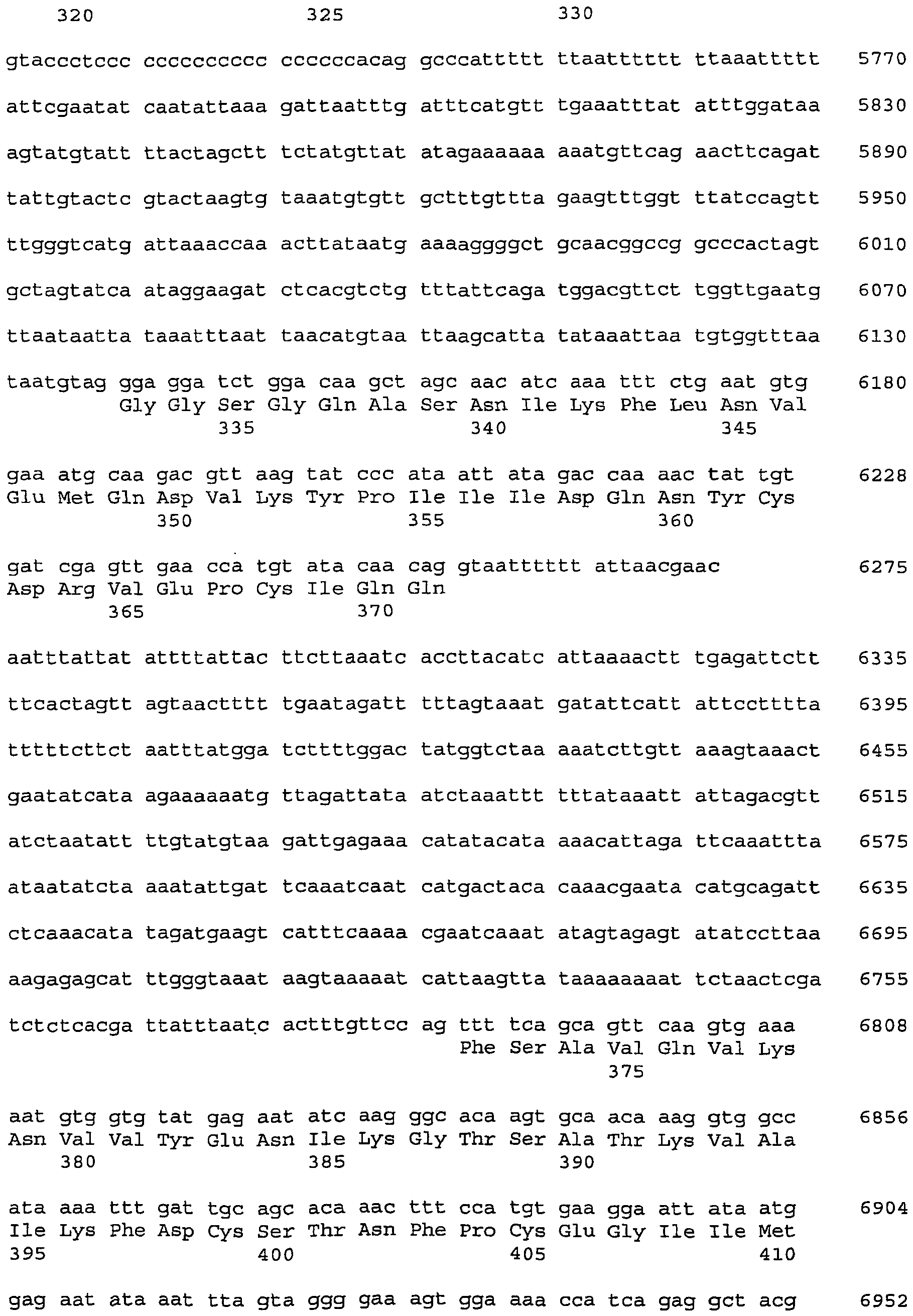

- <210> 50
<211> 457
<212> PRT
<213> Lycopersicon esculentum - <400> 50


Claims (14)
- A polygalacturonase enzyme comprising a glycine to arginine mutation at a position corresponding to position 178 of SEQ ID NO:2.
- The polygalacturonase enzyme according to claim 1, comprising SEQ ID NO:2 and having a glycine to arginine mutation at position 178.
- A polygalacturonase gene coding for the polygalacturonase enzyme of claim 1 or 2.
- The polygalacturonase gene according to claim 3 comprising SEQ ID NO: 1 and having a guanine to adenine mutation at 1969, counting A in the ATG of the START CODON as nucleotide position 1.
- The polygalacturonase gene according to claim 3 having the sequence SEQ ID NO: 47.
- Use of a polygalacturonase gene according to anyone of claims 3 to 5 for the production of a tomato plant having reduced fruit polygalacturonase enzyme activity compared to wild type tomato plants wherein said reduced enzyme activity is caused by said gene.
- Use of a polygalacturonase gene according to anyone of claims 3 to 5 for the selection of a tomato plant having reduced fruit polygalacturonase enzyme activity compared to wild type tomato plants wherein genomic DNA is isolated from the tomato plant, and segments of said polygalacturonase gene is amplified and the presence of said gene detected.
- A polygalacturonase enzyme comprising a histidine to glutamine mutation at a position corresponding to position 252 of SEQ ID NO:2.
- The polygalacturonase enzyme according to claim 8, comprising SEQ ID NO:2 and having a histidine to glutamine mutation at a position 252.
- A polygalacturonase gene coding for the polygalacturonase enzyme of claim 18 or 19.
- The polygalacturonase gene according to claim 10 comprising SEQ ID NO: and having a thymine to adenine mutation at nucleotide 2940, counting A in the ATG of the START CODON as nucleotide position 1.
- The polygalacturonase gene according to claim 11 having the sequence SEQ ID NO: 49.
- Use of a polygalacturonase gene according to anyone of claims 10 to 12 for the production of a tomato plant having reduced fruit polygalacturonase enzyme activity compared to wild type tomato plants wherein said reduced enzyme activity is caused by said gene.
- Use of a polygalacturonase gene according to anyone of claims 10 to 12 for the selection of a tomato plant having reduced fruit polygalacturonase enzyme activity compared to wild type tomato plants wherein genomic DNA is isolated from the tomato plant, and segments of said polygalacturonase gene is amplified and the presence of said gene detected.
Applications Claiming Priority (2)
| Application Number | Priority Date | Filing Date | Title |
|---|---|---|---|
| US10/691,374 US20040250322A1 (en) | 2002-10-22 | 2003-10-22 | Tomatoes having reduced polygalacturonase activity caused by non-transgenic mutations in the polygalacturonase gene |
| PCT/US2003/037406 WO2005046309A2 (en) | 2003-10-22 | 2003-11-21 | Tomatoes having reduced polygalacturonase activity caused by non-transgenic mutations in the polygalacturonase gene |
Publications (3)
| Publication Number | Publication Date |
|---|---|
| EP1679950A2 EP1679950A2 (en) | 2006-07-19 |
| EP1679950A4 EP1679950A4 (en) | 2007-07-11 |
| EP1679950B1 true EP1679950B1 (en) | 2012-01-04 |
Family
ID=34590656
Family Applications (1)
| Application Number | Title | Priority Date | Filing Date |
|---|---|---|---|
| EP03789950A Expired - Lifetime EP1679950B1 (en) | 2003-10-22 | 2003-11-21 | Tomatoes having reduced polygalacturonase activity caused by non-transgenic mutations in the polygalacturonase gene |
Country Status (4)
| Country | Link |
|---|---|
| US (3) | US20040250322A1 (en) |
| EP (1) | EP1679950B1 (en) |
| AT (1) | ATE539607T1 (en) |
| WO (1) | WO2005046309A2 (en) |
Families Citing this family (3)
| Publication number | Priority date | Publication date | Assignee | Title |
|---|---|---|---|---|
| WO2010003008A1 (en) | 2008-07-01 | 2010-01-07 | Arcadia Biosciences, Inc. | Tomatoes that soften more slowly post-harvest due to non-transgenic alterations in an expansin gene |
| NZ570886A (en) * | 2008-08-29 | 2011-05-27 | Nz Inst Plant & Food Res Ltd | Method and compositions to reduce polygalacturonase expression in plants for increasing storage-life of fruit |
| WO2016038079A1 (en) * | 2014-09-11 | 2016-03-17 | Bayer Cropscience Nv | Plants with altered fruit abscission properties |
Family Cites Families (11)
| Publication number | Priority date | Publication date | Assignee | Title |
|---|---|---|---|---|
| US5453566A (en) * | 1986-03-28 | 1995-09-26 | Calgene, Inc. | Antisense regulation of gene expression in plant/cells |
| US5107065A (en) * | 1986-03-28 | 1992-04-21 | Calgene, Inc. | Anti-sense regulation of gene expression in plant cells |
| US4801540A (en) * | 1986-10-17 | 1989-01-31 | Calgene, Inc. | PG gene and its use in plants |
| GB8626879D0 (en) * | 1986-11-11 | 1986-12-10 | Ici Plc | Dna |
| US5413937A (en) * | 1986-11-11 | 1995-05-09 | Zeneca Limited | DNA constructs containing segments from tomato polygalacturonase and pectin esterase genes |
| GB9024323D0 (en) * | 1990-11-08 | 1990-12-19 | Ici Plc | Regulation of gene expression |
| US5387747A (en) * | 1992-02-24 | 1995-02-07 | Laboratoires Upsa | Triazolopyrimidine derivatives which are angiotensin II receptor antagonists, their methods of preparation and pharmaceutical compositions in which they are present |
| ZW6193A1 (en) * | 1992-05-08 | 1993-11-10 | Univ Arizona | Transgenic tomato plants with altered polygalacturonase isoforms |
| US5994075A (en) * | 1996-05-17 | 1999-11-30 | Hexagen Technology Limited | Methods for identifying a mutation in a gene of interest without a phenotypic guide |
| EP1187910A1 (en) | 1999-04-16 | 2002-03-20 | Washington State University Research Foundation | Methods for enhancing plant defense |
| AU2001253063A1 (en) * | 2000-03-31 | 2001-10-15 | Fred Hutchinson Cancer Research Center | Reverse genetic strategy for identifying functional mutations in genes of known sequence |
-
2003
- 2003-10-22 US US10/691,374 patent/US20040250322A1/en not_active Abandoned
- 2003-11-21 AT AT03789950T patent/ATE539607T1/en active
- 2003-11-21 WO PCT/US2003/037406 patent/WO2005046309A2/en not_active Ceased
- 2003-11-21 EP EP03789950A patent/EP1679950B1/en not_active Expired - Lifetime
-
2005
- 2005-10-07 US US11/246,793 patent/US7393996B2/en not_active Expired - Lifetime
-
2008
- 2008-05-19 US US12/123,428 patent/US7928298B2/en not_active Expired - Lifetime
Also Published As
| Publication number | Publication date |
|---|---|
| EP1679950A4 (en) | 2007-07-11 |
| US20090280234A1 (en) | 2009-11-12 |
| WO2005046309A3 (en) | 2006-08-17 |
| WO2005046309A2 (en) | 2005-05-26 |
| US20060037112A1 (en) | 2006-02-16 |
| EP1679950A2 (en) | 2006-07-19 |
| US20040250322A1 (en) | 2004-12-09 |
| US7928298B2 (en) | 2011-04-19 |
| ATE539607T1 (en) | 2012-01-15 |
| US7393996B2 (en) | 2008-07-01 |
Similar Documents
| Publication | Publication Date | Title |
|---|---|---|
| US9392760B2 (en) | Non-transgenic tomato varieties having increased shelf life post-harvest | |
| AU2013211241B2 (en) | Androecious cucurbit plants, methods of obtaining and uses of said cucurbit plants | |
| US7928298B2 (en) | Tomatoes having reduced polygalacturonase activity caused by non-transgenic mutations in the polygalacturonase gene | |
| US8735649B2 (en) | Wheat having reduced waxy protein due to non-transgenic alterations of a waxy gene | |
| EP1689862A2 (en) | Tomatoes having reduced deoxyhypusine synthase activity caused by non-transgenic alterations in a deoxyhypusine synthase gene | |
| Cooley et al. | Insertional inactivation of the tomato polygalacturonase gene | |
| US20050120418A1 (en) | Tomatoes having altered acid invertase activity due to non-transgenic alterations in acid invertase genes | |
| US9399772B2 (en) | Tomatoes that soften more slowly post-harvest due to non-transgenic alterations in an expansin gene | |
| EP1523548B1 (en) | Polynucleotide sequences encoding alkaline a-galactosidases and methods of using same | |
| KR101219546B1 (en) | Development of grain weevils resistive molecular markers in mung beans and uses thereof | |
| US8933301B2 (en) | Non-transgenic tomato varieties having increased shelf life post-harvest due to alterations in β-galactosidase 4 | |
| EP0990043B2 (en) | A method for identifying a barley variety and a barley having a brewing property | |
| US20050155109A1 (en) | Tomato having reduced deoxyhypusine synthase activity caused by non-transgenic alterations in a deoxyhypusine synthase gene | |
| WO2019134962A1 (en) | Cereal comprising starch with low gelatinisation temperature | |
| Kiyozumi et al. | Pollen UDP-glucose pyrophosphorylase showing polymorphism well-correlated to the S genotype of Pyrus pyrifolia | |
| WO2022075335A1 (en) | Gramineous plant and method for creating same | |
| CN121152881A (en) | Barley with improved characteristics | |
| AU2258500A (en) | Low temperature expression chitinase cDNAs and method for isolating the same | |
| Kusolwa et al. | Identification of expressed lectin-like protein profiles from tepary bean G40199 and interspecific hybrids and phylogenetic relationship to other bean lectins. |
Legal Events
| Date | Code | Title | Description |
|---|---|---|---|
| PUAI | Public reference made under article 153(3) epc to a published international application that has entered the european phase |
Free format text: ORIGINAL CODE: 0009012 |
|
| 17P | Request for examination filed |
Effective date: 20060517 |
|
| AK | Designated contracting states |
Kind code of ref document: A2 Designated state(s): AT BE BG CH CY CZ DE DK EE ES FI FR GB GR HU IE IT LI LU MC NL PT RO SE SI SK TR |
|
| PUAK | Availability of information related to the publication of the international search report |
Free format text: ORIGINAL CODE: 0009015 |
|
| RAP1 | Party data changed (applicant data changed or rights of an application transferred) |
Owner name: ARCADIA BIOSCIENCES, INC. |
|
| RIC1 | Information provided on ipc code assigned before grant |
Ipc: C12N 15/01 20060101ALI20060919BHEP Ipc: A01H 5/08 20060101ALI20060919BHEP Ipc: A01H 1/06 20060101AFI20060919BHEP Ipc: A01H 1/00 20060101ALI20060919BHEP |
|
| RIN1 | Information on inventor provided before grant (corrected) |
Inventor name: SLADE, ANN, J. Inventor name: MCCALLUM, CLAIRE, M. Inventor name: KNAUF, VIC, C. Inventor name: COLBERT, TRENTON, G. Inventor name: HURST, SUSAN |
|
| A4 | Supplementary search report drawn up and despatched |
Effective date: 20070611 |
|
| 17Q | First examination report despatched |
Effective date: 20070911 |
|
| GRAJ | Information related to disapproval of communication of intention to grant by the applicant or resumption of examination proceedings by the epo deleted |
Free format text: ORIGINAL CODE: EPIDOSDIGR1 |
|
| GRAP | Despatch of communication of intention to grant a patent |
Free format text: ORIGINAL CODE: EPIDOSNIGR1 |
|
| GRAS | Grant fee paid |
Free format text: ORIGINAL CODE: EPIDOSNIGR3 |
|
| GRAA | (expected) grant |
Free format text: ORIGINAL CODE: 0009210 |
|
| AK | Designated contracting states |
Kind code of ref document: B1 Designated state(s): AT BE BG CH CY CZ DE DK EE ES FI FR GB GR HU IE IT LI LU MC NL PT RO SE SI SK TR |
|
| REG | Reference to a national code |
Ref country code: GB Ref legal event code: FG4D |
|
| REG | Reference to a national code |
Ref country code: CH Ref legal event code: EP |
|
| REG | Reference to a national code |
Ref country code: AT Ref legal event code: REF Ref document number: 539607 Country of ref document: AT Kind code of ref document: T Effective date: 20120115 |
|
| REG | Reference to a national code |
Ref country code: IE Ref legal event code: FG4D |
|
| REG | Reference to a national code |
Ref country code: NL Ref legal event code: T3 |
|
| REG | Reference to a national code |
Ref country code: DE Ref legal event code: R096 Ref document number: 60339625 Country of ref document: DE Effective date: 20120301 |
|
| PG25 | Lapsed in a contracting state [announced via postgrant information from national office to epo] |
Ref country code: SI Free format text: LAPSE BECAUSE OF FAILURE TO SUBMIT A TRANSLATION OF THE DESCRIPTION OR TO PAY THE FEE WITHIN THE PRESCRIBED TIME-LIMIT Effective date: 20120104 |
|
| PG25 | Lapsed in a contracting state [announced via postgrant information from national office to epo] |
Ref country code: BG Free format text: LAPSE BECAUSE OF FAILURE TO SUBMIT A TRANSLATION OF THE DESCRIPTION OR TO PAY THE FEE WITHIN THE PRESCRIBED TIME-LIMIT Effective date: 20120404 Ref country code: BE Free format text: LAPSE BECAUSE OF FAILURE TO SUBMIT A TRANSLATION OF THE DESCRIPTION OR TO PAY THE FEE WITHIN THE PRESCRIBED TIME-LIMIT Effective date: 20120104 |
|
| PG25 | Lapsed in a contracting state [announced via postgrant information from national office to epo] |
Ref country code: FI Free format text: LAPSE BECAUSE OF FAILURE TO SUBMIT A TRANSLATION OF THE DESCRIPTION OR TO PAY THE FEE WITHIN THE PRESCRIBED TIME-LIMIT Effective date: 20120104 Ref country code: GR Free format text: LAPSE BECAUSE OF FAILURE TO SUBMIT A TRANSLATION OF THE DESCRIPTION OR TO PAY THE FEE WITHIN THE PRESCRIBED TIME-LIMIT Effective date: 20120405 Ref country code: PT Free format text: LAPSE BECAUSE OF FAILURE TO SUBMIT A TRANSLATION OF THE DESCRIPTION OR TO PAY THE FEE WITHIN THE PRESCRIBED TIME-LIMIT Effective date: 20120504 |
|
| REG | Reference to a national code |
Ref country code: AT Ref legal event code: MK05 Ref document number: 539607 Country of ref document: AT Kind code of ref document: T Effective date: 20120104 |
|
| PG25 | Lapsed in a contracting state [announced via postgrant information from national office to epo] |
Ref country code: CY Free format text: LAPSE BECAUSE OF FAILURE TO SUBMIT A TRANSLATION OF THE DESCRIPTION OR TO PAY THE FEE WITHIN THE PRESCRIBED TIME-LIMIT Effective date: 20120104 |
|
| PG25 | Lapsed in a contracting state [announced via postgrant information from national office to epo] |
Ref country code: RO Free format text: LAPSE BECAUSE OF FAILURE TO SUBMIT A TRANSLATION OF THE DESCRIPTION OR TO PAY THE FEE WITHIN THE PRESCRIBED TIME-LIMIT Effective date: 20120104 Ref country code: EE Free format text: LAPSE BECAUSE OF FAILURE TO SUBMIT A TRANSLATION OF THE DESCRIPTION OR TO PAY THE FEE WITHIN THE PRESCRIBED TIME-LIMIT Effective date: 20120104 Ref country code: SE Free format text: LAPSE BECAUSE OF FAILURE TO SUBMIT A TRANSLATION OF THE DESCRIPTION OR TO PAY THE FEE WITHIN THE PRESCRIBED TIME-LIMIT Effective date: 20120104 Ref country code: DK Free format text: LAPSE BECAUSE OF FAILURE TO SUBMIT A TRANSLATION OF THE DESCRIPTION OR TO PAY THE FEE WITHIN THE PRESCRIBED TIME-LIMIT Effective date: 20120104 Ref country code: CZ Free format text: LAPSE BECAUSE OF FAILURE TO SUBMIT A TRANSLATION OF THE DESCRIPTION OR TO PAY THE FEE WITHIN THE PRESCRIBED TIME-LIMIT Effective date: 20120104 |
|
| PLBE | No opposition filed within time limit |
Free format text: ORIGINAL CODE: 0009261 |
|
| STAA | Information on the status of an ep patent application or granted ep patent |
Free format text: STATUS: NO OPPOSITION FILED WITHIN TIME LIMIT |
|
| PG25 | Lapsed in a contracting state [announced via postgrant information from national office to epo] |
Ref country code: IT Free format text: LAPSE BECAUSE OF FAILURE TO SUBMIT A TRANSLATION OF THE DESCRIPTION OR TO PAY THE FEE WITHIN THE PRESCRIBED TIME-LIMIT Effective date: 20120104 Ref country code: SK Free format text: LAPSE BECAUSE OF FAILURE TO SUBMIT A TRANSLATION OF THE DESCRIPTION OR TO PAY THE FEE WITHIN THE PRESCRIBED TIME-LIMIT Effective date: 20120104 |
|
| 26N | No opposition filed |
Effective date: 20121005 |
|
| PG25 | Lapsed in a contracting state [announced via postgrant information from national office to epo] |
Ref country code: AT Free format text: LAPSE BECAUSE OF FAILURE TO SUBMIT A TRANSLATION OF THE DESCRIPTION OR TO PAY THE FEE WITHIN THE PRESCRIBED TIME-LIMIT Effective date: 20120104 |
|
| REG | Reference to a national code |
Ref country code: DE Ref legal event code: R097 Ref document number: 60339625 Country of ref document: DE Effective date: 20121005 |
|
| PG25 | Lapsed in a contracting state [announced via postgrant information from national office to epo] |
Ref country code: ES Free format text: LAPSE BECAUSE OF FAILURE TO SUBMIT A TRANSLATION OF THE DESCRIPTION OR TO PAY THE FEE WITHIN THE PRESCRIBED TIME-LIMIT Effective date: 20120415 |
|
| REG | Reference to a national code |
Ref country code: CH Ref legal event code: PL |
|
| GBPC | Gb: european patent ceased through non-payment of renewal fee |
Effective date: 20121121 |
|
| PG25 | Lapsed in a contracting state [announced via postgrant information from national office to epo] |
Ref country code: CH Free format text: LAPSE BECAUSE OF NON-PAYMENT OF DUE FEES Effective date: 20121130 Ref country code: LI Free format text: LAPSE BECAUSE OF NON-PAYMENT OF DUE FEES Effective date: 20121130 |
|
| REG | Reference to a national code |
Ref country code: IE Ref legal event code: MM4A |
|
| REG | Reference to a national code |
Ref country code: DE Ref legal event code: R119 Ref document number: 60339625 Country of ref document: DE Effective date: 20130601 |
|
| PG25 | Lapsed in a contracting state [announced via postgrant information from national office to epo] |
Ref country code: DE Free format text: LAPSE BECAUSE OF NON-PAYMENT OF DUE FEES Effective date: 20130601 Ref country code: IE Free format text: LAPSE BECAUSE OF NON-PAYMENT OF DUE FEES Effective date: 20121121 |
|
| PG25 | Lapsed in a contracting state [announced via postgrant information from national office to epo] |
Ref country code: GB Free format text: LAPSE BECAUSE OF NON-PAYMENT OF DUE FEES Effective date: 20121121 |
|
| PG25 | Lapsed in a contracting state [announced via postgrant information from national office to epo] |
Ref country code: TR Free format text: LAPSE BECAUSE OF FAILURE TO SUBMIT A TRANSLATION OF THE DESCRIPTION OR TO PAY THE FEE WITHIN THE PRESCRIBED TIME-LIMIT Effective date: 20120104 Ref country code: MC Free format text: LAPSE BECAUSE OF NON-PAYMENT OF DUE FEES Effective date: 20121130 |
|
| PG25 | Lapsed in a contracting state [announced via postgrant information from national office to epo] |
Ref country code: LU Free format text: LAPSE BECAUSE OF NON-PAYMENT OF DUE FEES Effective date: 20121121 |
|
| PG25 | Lapsed in a contracting state [announced via postgrant information from national office to epo] |
Ref country code: HU Free format text: LAPSE BECAUSE OF FAILURE TO SUBMIT A TRANSLATION OF THE DESCRIPTION OR TO PAY THE FEE WITHIN THE PRESCRIBED TIME-LIMIT Effective date: 20031121 |
|
| REG | Reference to a national code |
Ref country code: FR Ref legal event code: PLFP Year of fee payment: 13 |
|
| REG | Reference to a national code |
Ref country code: FR Ref legal event code: PLFP Year of fee payment: 14 |
|
| REG | Reference to a national code |
Ref country code: FR Ref legal event code: PLFP Year of fee payment: 15 |
|
| PGFP | Annual fee paid to national office [announced via postgrant information from national office to epo] |
Ref country code: NL Payment date: 20191126 Year of fee payment: 17 |
|
| PGFP | Annual fee paid to national office [announced via postgrant information from national office to epo] |
Ref country code: FR Payment date: 20191125 Year of fee payment: 17 |
|
| REG | Reference to a national code |
Ref country code: NL Ref legal event code: MM Effective date: 20201201 |
|
| PG25 | Lapsed in a contracting state [announced via postgrant information from national office to epo] |
Ref country code: NL Free format text: LAPSE BECAUSE OF NON-PAYMENT OF DUE FEES Effective date: 20201201 |
|
| PG25 | Lapsed in a contracting state [announced via postgrant information from national office to epo] |
Ref country code: FR Free format text: LAPSE BECAUSE OF NON-PAYMENT OF DUE FEES Effective date: 20201130 |