EP1679836A2 - Print system and printing method using Bluetooth HCRP - Google Patents
Print system and printing method using Bluetooth HCRP Download PDFInfo
- Publication number
- EP1679836A2 EP1679836A2 EP05257255A EP05257255A EP1679836A2 EP 1679836 A2 EP1679836 A2 EP 1679836A2 EP 05257255 A EP05257255 A EP 05257255A EP 05257255 A EP05257255 A EP 05257255A EP 1679836 A2 EP1679836 A2 EP 1679836A2
- Authority
- EP
- European Patent Office
- Prior art keywords
- image forming
- forming apparatus
- host device
- host
- printer
- Prior art date
- Legal status (The legal status is an assumption and is not a legal conclusion. Google has not performed a legal analysis and makes no representation as to the accuracy of the status listed.)
- Withdrawn
Links
- 238000007639 printing Methods 0.000 title claims abstract description 10
- 238000000034 method Methods 0.000 title claims description 22
- 238000004891 communication Methods 0.000 claims abstract description 112
- 238000012545 processing Methods 0.000 claims description 63
- 230000005540 biological transmission Effects 0.000 claims description 36
- 230000004044 response Effects 0.000 claims description 7
- 230000008859 change Effects 0.000 claims description 4
- 238000012544 monitoring process Methods 0.000 claims 4
- 230000006870 function Effects 0.000 description 10
- 230000015654 memory Effects 0.000 description 10
- 230000008569 process Effects 0.000 description 10
- 238000010276 construction Methods 0.000 description 7
- KNMAVSAGTYIFJF-UHFFFAOYSA-N 1-[2-[(2-hydroxy-3-phenoxypropyl)amino]ethylamino]-3-phenoxypropan-2-ol;dihydrochloride Chemical compound Cl.Cl.C=1C=CC=CC=1OCC(O)CNCCNCC(O)COC1=CC=CC=C1 KNMAVSAGTYIFJF-UHFFFAOYSA-N 0.000 description 3
- 238000010586 diagram Methods 0.000 description 3
- 238000005516 engineering process Methods 0.000 description 3
- 238000012937 correction Methods 0.000 description 2
- 238000012217 deletion Methods 0.000 description 2
- 230000037430 deletion Effects 0.000 description 2
- 230000006978 adaptation Effects 0.000 description 1
- 239000000872 buffer Substances 0.000 description 1
- 230000002093 peripheral effect Effects 0.000 description 1
- 238000001228 spectrum Methods 0.000 description 1
- 238000012546 transfer Methods 0.000 description 1
Images



Classifications
-
- H—ELECTRICITY
- H04—ELECTRIC COMMUNICATION TECHNIQUE
- H04W—WIRELESS COMMUNICATION NETWORKS
- H04W28/00—Network traffic management; Network resource management
- H04W28/16—Central resource management; Negotiation of resources or communication parameters, e.g. negotiating bandwidth or QoS [Quality of Service]
- H04W28/18—Negotiating wireless communication parameters
-
- H—ELECTRICITY
- H04—ELECTRIC COMMUNICATION TECHNIQUE
- H04W—WIRELESS COMMUNICATION NETWORKS
- H04W28/00—Network traffic management; Network resource management
- H04W28/02—Traffic management, e.g. flow control or congestion control
- H04W28/06—Optimizing the usage of the radio link, e.g. header compression, information sizing, discarding information
-
- H—ELECTRICITY
- H04—ELECTRIC COMMUNICATION TECHNIQUE
- H04W—WIRELESS COMMUNICATION NETWORKS
- H04W40/00—Communication routing or communication path finding
- H04W40/24—Connectivity information management, e.g. connectivity discovery or connectivity update
- H04W40/246—Connectivity information discovery
-
- H—ELECTRICITY
- H04—ELECTRIC COMMUNICATION TECHNIQUE
- H04W—WIRELESS COMMUNICATION NETWORKS
- H04W48/00—Access restriction; Network selection; Access point selection
- H04W48/08—Access restriction or access information delivery, e.g. discovery data delivery
- H04W48/14—Access restriction or access information delivery, e.g. discovery data delivery using user query or user detection
-
- H—ELECTRICITY
- H04—ELECTRIC COMMUNICATION TECHNIQUE
- H04W—WIRELESS COMMUNICATION NETWORKS
- H04W84/00—Network topologies
- H04W84/18—Self-organising networks, e.g. ad-hoc networks or sensor networks
Definitions
- the present invention relates to a print system and a printing method for transmitting print data by radio communication.
- a print system including a host computer (host PC) and a printer
- the host PC and the printer are interconnected via a cable, and status information indicating various printer statuses including error information, residual ink amount, battery capacity and the like are relayed to the host PC (for example, Related Art 1: Japanese Patent Application Laid-Open No. 2004-050726).
- the host PC transmits a status information acquisition command to the printer, and the type of desired status information has been previously registered in the printer.
- the status information of the registered type changes, it is updated, and the status information of the type registered by the host PC is read by polling.
- proposed is a print system where all the status information can be arbitrarily transmitted from the printer side to the host PC without transmission of a status information acquisition command .
- Bluetooth communication adopting spread spectrum communication in a frequency band of 2.4 GHz is utilized.
- the profiles are determined in correspondence with the respective use cases, and communication control is performed in accordance with each profile.
- Hardcopy Cable Replacement Profile hereinbelow, "HCRP”
- HCRP Hardcopy Cable Replacement Profile
- L2CAP Logical Link Control and Adaptation Protocol
- BD_ADDR A unique 48-bit Bluetooth device address is allocated to a Bluetooth communication device, and upon connection, the BD_ADDR is notified for link connection.
- the host PC transmits communication data on a data channel, and performs various controls on a control channel.
- the number of data bytes receivable by its device (printer) on the control channel is provided as credit to the communication opposite-end device (host PC).
- the communication opposite-end device transmits communication data through the data channel within the range of the given credit. Further, on the control channel, the device ID of the printer can be received.
- a printer driver installed in the host PC side determines whether or not the printer status information can be received with the utilized protocol stack. If the printer driver determines that the printer status information can be received, the printer driver transmits a status information command through the data channel to the printer to register desired status information on the printer side. On the other hand, the printer side checks its current status in accordance with the received status information command, and transmits the status including error information, residual ink amount, battery capacity and the like in a predetermined format, based on the registered status information, on the data channel. To notify a user of the printer status, the host PC side displays information on a monitor or the like accompanying the host PC based on the received status information.
- the printer driver determines that the printer status information cannot be received with the protocol stack utilized in the host PC, the printer driver does not transmit the status information command to receive the printer status information.
- link connection and disconnection are performed by one data transmission.
- link connection and disconnection are performed for one print job.
- the status information acquisition command is a sort of print job, upon each transmission of status information acquisition command from the host PC, link connection and disconnection are performed unless the link is already established during printing or the like.
- a host PC capable of two-way communication transmits the status information command upon each link connection and performs two-way communication.
- the printer clears the status type registered upon connection. Accordingly, the host PC transmits the status information acquisition command upon each connection with the printer to obtain the printer status information. For example, even when the host PC monitors the printer status without performing print processing, the host PC transmits the status information acquisition command.
- the arbitrary transmission of all the status information from the printer side to the host PC without status information acquisition command may be applied to the Bluetooth communication.
- the printer is not always connected to such host PC.
- application software or driver which cannot receive status information, operates in a host PC, the host PC transmits data that the printer cannot interpret, and a difficulty may occur in the host PC.
- the present invention has been made in consideration of the above situation, and has its object to improve convenience in communication between a host device and an image forming apparatus.
- Another object of the present invention is to perform processing with reduced redundancy in communication between the host device and the image forming apparatus, thereby improving the convenience of the communication.
- a print system for transmitting print data from a host device to an image forming apparatus by radio communication and performing printing, characterized in that the host device (2) comprises: determination means (201) for determining whether or not two-way communication by radio communication is possible; and transmission means (202) for, if the two-way communication is possible, transmitting to the image forming apparatus information indicating that the two-way communication is possible, and the image forming apparatus (1) comprises:
- an image forming apparatus to be connected to a host device by using Bluetooth communication, characterized by comprising: reception means (101, 102) for, when the image forming apparatus is connected to a host device by a predetermined Bluetooth connection profile, receiving information indicating that the host device can receive status information of the image forming apparatus; registration means (101, 104) for registering the host device which transmitted the information; and first transmission means (101, 102) for, when the image forming apparatus is connected to the host device registered in the registration means by the predetermined connection profile, transmitting the status information.
- a host device to be connected to an image forming apparatus by using Bluetooth communication characterized by comprising: connection means (202) for connecting the host device to an image forming apparatus by a predetermined Bluetooth connection profile; determination means (201) for determining based on information from the image forming apparatus connected by the connection means whether or not the host device is registered in the image forming apparatus; and transmission means (201, 202) for transmitting information for registration of the host device as a host device which can obtain status information of the image forming apparatus in the image forming apparatus, in correspondence with determination by the determination means.
- an image forming apparatus characterized by comprising: registration means (101, 104) for registering a host device which can obtain status information of the image forming apparatus; determination means (101) for determining whether or not a host device connected to the image forming apparatus is registered in the registration means; and notification means (101, 102) for notifying the host device of the status information of the image forming apparatus in correspondence with determination by the determination means.
- a host device to be connected to an image forming apparatus, characterized by comprising: determination means (201) for determining whether or not the host device is registered in the image forming apparatus; and transmission means (201, 202) for transmitting information for registration of the host device as a host device which can obtain status information in the image forming apparatus, in correspondence with determination by the determination means.
- Bluetooth technology is applied to a radio communication system for close range communication between devices such as an image forming apparatus and a host device. Further, data communication using Bluetooth technology in a print system having a host device (personal computer) and an image forming apparatus (printer) will be described.
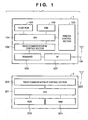
- Fig. 1 is a block diagram showing an example of the construction of a print system according to a first embodiment of the present invention.
- the print system has a printer 1 and at least one host PC 2.
- the printer 1 has a printer control section 105, a CPU 101, a flash ROM 103, a RAM 104, a radio communication I/F control section 102, a baseband section 106, an RF section 107 and an antenna 108.
- the flash ROM 103 holds programs to control the printer 1, various operation tables and the like. Note that the objects of the present invention can be attained by simultaneously using nonvolatile memories such as ROMs and EEPROMs without the flash ROM 103.
- the RAM 104 holds various variables, control tables, data for temporary use, transmission and reception buffers for packet reception and the like.
- the CPU 101 performs processing to be described later in accordance with the programs stored in the flash ROM 103. Programs described in the flowcharts of Fig. 2,3,6 and 7 are stored in Flash ROM 103 and they are executed by CPU 101.
- a signal received through the antenna 108 is subjected to demodulation processing by the RF section 107, and outputted to the baseband section 106.
- error correction processing is performed on the demodulated data, and in correspondence with the processing result, normally- received data is outputted to the radio communication I/F control section 102.
- a retransmission request is transmitted to the communication opposite-end device.
- an authentication request is transmitted to the communication opposite-end device and encryption processing is performed in accordance with setting of a security mode.
- Various controls between the baseband section 106 and the radio communication I/F control section 102, event processing and data communication are performed in packet units in accordance with a standardized host controller interface (hereinbelow, "HCI").
- transmission data in the HCI packet form is transferred from the radio communication I/F control section 102 to the baseband section 106, and an error correction code and the like are added to the transmission data. Then the data is converted into predetermined format data, and outputted to the RF section 107. In the RF section 107, the input data is modulated, and transmitted to the other radio communication device by the antenna.
- the radio communication I/F control section 102 Upon data reception, data is transferred in a reverse route to that of transmission, and finally, HIC packet data, inputted from the baseband section 106 into the radio communication I/F control section 102, is analyzed.
- the radio communication I/F control section 102 performs various control processings necessary for communication such as a link connection negotiation, service search response, connection negotiations in the respective protocol layers, data transfer and flow control.
- the printer 1 is capable of two-way communication for receiving print data on the data channel and transmitting its status information to the host PC 2 upon HCRP connection. Further, on the control channel, the printer 1 responds with its device ID as prescribed in the HCRP protocol.
- the host PC 2 as the opposite-end side of the connection has a CPU 201, a radio communication I/F control section 202, a ROM 203, a RAM 204 and an antenna 205.
- the host PC 2 is connected with the printer 1 by radio communication through the radio communication I/F control section 202 and performs transmission/reception of various print data and control data, and transmits print data to perform printing.
- the host PC 2 analyzes status information data received from the printer 1 and presents the status of the printer 1 to the user. Further, the host PC 2 has a printer driver to be described later in the RAM 204 or ROM 203 or a hard disk (not shown). Programs described in the flowcharts of Fig.4 and 9 are stored in RAM 204 or ROM 203 or the hard disk and they are executed by CPU 201.
- Fig. 2 is a flowchart showing processing when the printer 1 has accepted HCRP connection from the host PC 2. This processing is performed to update setting of a registration completion flag based on a return value of a device ID and setting of a registration full flag set when the number of registered devices reaches the maximum number.
- identification information such as BD_ADDR address of HCRP two-way communicable devices are stored in a nonvolatile memory or the RAM.
- the CPU 101 of the printer 1 determines whether or not the device is registered based on identification information of the radio device connected to the printer 1 (S202). If the device is registered, the registration completion flag is set (S203). If the device is not registered, the registration completion flag is reset (S204).
- the registration full flag is set (S206). If the number of registered host PCs has not reached the maximum number, the registration full flag is reset (S207). In this manner, the partial information of the device ID (the registration completion flag and the registration full flag) is updated upon HCRP connection in preparation for a future device ID request from the host PC 2.
- a device ID value including a device name, a maker name and the like as well as the set registration information is returned.
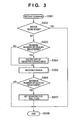
- Fig. 3 is a flowchart showing processing when a two-way communication enable command has been transmitted from the host PC 2 during the HCRP connection.
- the command has been received (S301)
- deletion can be performed starting with the oldest record, or from the lowest priority record in accordance with priority order based on connection frequency or the like.
- the registration area is ensured, and the identification information of unregistered device is registered (S305). Thereafter, it is determined whether or not the number of registered devices has reached the maximum number (S306), and when the number of registered devices has reached the maximum number, the registration full flag is updated (S307), and the process ends (S308). As described above, when the two-way communication enable command has been received from the host PC 2, the identification information of the device is registered in the printer 1.
- the printer driver is software which operates as an application on the host PC 2.
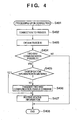
- the printer driver transmits print data interpretable for the printer 1. Further, the printer driver analyzes the status information received from the printer 1, and displays the result of analysis on the display device of the host PC 2. Further, the printer driver determines whether or not the host PC 2 can perform two-way communication based on print port information of the host PC 2, the installed protocol stack information and the like.
- the printer driver is started by print processing or printer status checking processing by the user, and performs processing with respect to the printer 1 upon connection (S401).
- the printer driver establishes connection with the printer 1 by the procedures of link connection and the HCRP connection (S402).
- the printer driver issues a device ID request to the printer 1 on the HCRP control channel, and obtains a device ID (S403).
- the printer driver checks whether or not two-way communication is possible by an application for Bluetooth communication installed in the host PC 2 (S404). If two-way communication is impossible, the process ends without any processing (S408).
- the registration completion flag is checked from the already obtained device ID information to determine whether or not the host PC 2 has been already registered in the printer 1 (S405).
- the two-way communication enable command is transmitted to the printer 1 (S406).
- the status information transmitted from the printer 1 is received (S407), and the process ends (S408).
- the status information has been received, the information is analyzed and the status of the printer 1 is displayed on the display device of the host PC 2 for notifying the user of the printer status.
- the host PC 2 transmits a link connection request to the printer 1 (S501).
- the printer 1 returns an acknowledge (S502), thereby establishing a link connection.
- a HCRP control channel connection request is transmitted in the L2CAP layer (S503), then the printer 1 side returns an acknowledge (S504), thereby control channel connection is established.
- connection request and negotiation request regarding the data channel are transmitted (S509 to S514), and the negotiation of parameters on the data channel is completed.
- the host PC 2 transmits a device ID request to the printer 1 utilizing the control channel (S515).
- the printer 1 transmits its device ID where the registration completion flag indicating that the host PC is registered in the device ID is set (S516).
- the host PC 2 transmits the two-way communication enable command through the data channel, thereby performing registration in accordance with the procedure in Fig. 3. In this manner, when the host PC has not been registered, data communication on the data channel from the host PC 2 to the printer 1 occurs.
- the host PC 2 checks that the device is registered in the printer 1 as a two-way communicable device, and provides a credit where the number of bytes corresponds to its receivable value to the printer 1 (S517). Then the printer 1 returns an acknowledge (S518), thereby giving the credit to the printer 1. The printer 1 transmits the current status as the status information data through the data channel (S519). The host PC 2 analyzes the received status information data, and displays the status of the printer 1.
- the status of the printer 1 is always detected in the host PC 2
- the status of the printer 1 can be detected without data communication through the data channel from the host PC 2 side.
- the frequency of data transmission can be reduced by registering a radio device capable of two-way communication in a printer.
- the processing is performed by the CPU 101 of the printer 1 in accordance with the program stored in the flash ROM 103 or the RAM 104. Further, the processing relates to setting of the registration completion flag set in the device ID and setting of the registration full flag set when the number of devices registered in the printer 1 has reached the maximum number.
- Fig. 6 is a flowchart showing processing upon Bluetooth connection in the printer 1 according to the second embodiment.
- the CPU 101 checks whether or not the HCRP connection has been performed (S602). In the case of connection by another profile, processing corresponding to the profile is performed (S603).
- the BD_ADDR of the host PC 2 is obtained by Bluetooth technology from information upon connection (S604).
- a list of BD_ADDR addresses of host PCs capable of HCRP two-way communication which receive status information has been previously stored in its nonvolatile memory or the RAM 104 by processing to be described later.
- the CPU 101 determines whether or not the obtained BD_ADDR address is registered in the list (S605), and if the BD_ADDR address is registered, sets the registration completion flag (S606) while if the BD_ADDR address is not registered, the CPU 101 resets the registration completion flag (S607).
- the CPU 101 checks whether or not the number of registered devices has reached the maximum number registrable in the BD_ADDR list (S608), and when the number of registered device has reached the maximum number, sets the registration full flag (S609), while when the number of registered devices has not reached the maximum number, resets the registration full flag (S610). In this manner, the partial information of the device ID (the registration completion flag and the registration full flag) is updated upon HCRP connection in preparation for a future device ID request from the host PC 2.
- Fig. 7 is a flowchart showing processing indicating command reception processing in the printer 1 according to the second embodiment. The processing is performed by the CPU 101 of the printer 1 upon reception of "status information reception enable command" from the host PC 2 during the HCRP connection.
- the CPU 101 checks whether or not the BD_ADDR address of the host PC 2 obtained upon the HCRP connection at step S604 has been already registered in the list stored in the RAM 104 (S702). When the address has already been registered in the list, the process ends (S707). When the address has not been registered in the list, the CPU 101 checks whether or not the number of host PCs registered in the printer 1 has reached the maximum number (S703). When the number of host PCs has reached the maximum number, the CPU 101 sets the registration full flag (S706), and the process ends (S707).
- the CPU 101 registers the BD_ADDR address of the connected host PC 2 in the list (S704). Thereafter, the CPU 101 checks whether or not the number of host PCs has reached the maximum number (S705). When the number of host PCs has reached the maximum number, the CPU 101 sets the registration full flag (S706), and the process ends (S707).
- the BD_ADDR address of the host PC 2 is registered in the RAM 104 of the printer 1, when the "status information reception enable command" has been received from the host PC 2.
- the registered device is not automatically changed but the current status as whether or not the registration is possible is indicated with the registration full flag.
- one of the registered records can be deleted so as to ensure a registration area for the host PC in the RAM 104 and register the address of the host PC.
- the deletion can be performed from the oldest record, or from the lowest priority record in accordance with priority order based on connection frequency or the like.
- the CPU 101 of the printer 1 detects the request (S802). Then the CPU 101 combines a predetermined ID of the printer with the registration completion flag and the registration full flag set by the processings shown in the flowcharts of Figs. 6 and 7, and transmits the combined information as a device ID to the host PC 2 (S803).
- the CPU 101 of the printer 1 checks whether or not the BD_ADDR of the host PC 2 that requested the device ID has been registered by the processing shown in the flowchart of Fig. 3 (S804).
- the CPU 101 determines whether or not the HCRP connection has been broken (S807), and when the HCRP connection has been broken, the process ends (S808).
- the CPU 101 monitors the status of the printer (the error status, the residual ink amount, the battery capacity and the like) (S805)
- the status information after the change is transmitted to the host PC 2 on the data channel (S806). This processing is repeated during the HCRP connection (S807 and S808).
- the printer 1 performs device ID response and status information transmission.
- the device ID request is monitored by loop processing, however, the CPU can respond to the device ID request by interrupting processing from the protocol stack.
- the printer driver is software in the host PC 2 which receives data from a general application and transmits print data to the printer 1. Further, the printer driver, including an application called "status monitor” to monitor the status of the printer 1, analyzes the status information data received from the printer 1 and displays the status of the printer 1 on the display device of the host PC 2. Further, the printer driver determines whether or not the host PC 2 is capable of HCRP two-way communication based on print port information of the host PC 2 and information on the installed protocol stack.
- Fig. 9 is a flowchart showing the flow of processing by the status monitor application included in the printer driver. Note that for the sake of simplicity of explanation, the processing of the registration full flag is omitted from the flowchart.
- the status monitor application included in the printer driver is started by the CPU 201 in accordance with the user's instruction (S901).
- the status monitor checks whether or not HCRP two-way communication is possible based on the Bluetooth protocol stack installed in the host PC 2 (S902).
- the HCRP two-way communication is impossible, as the status information cannot be received from the printer 1, the process ends without any processing (S913).
- the printer driver controls the radio communication I/F control section 202, to perform processing upon Bluetooth connection with respect to the printer 1 (S903), then perform HCRP connection processing (S904).
- the printer driver requests a device ID from the printer 1 on the HCRP control channel, and obtains a device ID (S905).
- the printer driver checks the registration completion flag in the obtained device ID, to determine whether or not the BD_ADDR address of the host PC 2 has already been registered in the printer 1 (S906).
- the printer driver transmits the "status information reception enable command" to the printer 1 (S907) to register the BD_ADDR address of the host PC 2 in the printer 1.
- the printer driver receives the status information transmitted from the printer 1 thereafter (S908).
- the printer driver determines that the status of the printer 1 has not changed. Further, when the status information has been received, the printer driver analyzes the information and displays the status of the printer 1 on the display device of the host PC 2 to notify the user of the status of the printer 1.
- HCRP disconnect processing is performed (S909), then Bluetooth disconnect processing is performed (S910).
- the printer driver terminates the operation of the status monitor (S913). Further, if no instruction has been inputted, the printer driver performs sleep processing for an arbitrary period (S912), and repeats the operation of the status monitor to monitor the printer 1.
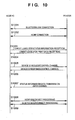
- Fig. 10 shows the flow of processing when the status monitor application included in the printer driver operates.
- the Bluetooth connection is established between the host PC 2 and the printer 1 on the initiative of the printer driver (S1001).
- the HCRP connection is established (S1002), and credit exchange for HCRP two-way communication is performed.
- the host PC 2 presents a credit for status information reception to the printer 1 (S1003), and the printer 1 presents a credit for print data reception to the host PC 2 (S1004).
- the host PC 2 transmits a device ID request to the printer 1 on the control channel (S1005). Then, the printer 1 transmits the device ID where the registration completion flag indicating that the address of the host PC has been registered in the printer 1 is set (S1006). The host PC 2 checks that the host PC is registered in the printer 1 as a device capable of receiving the status information, and waits for the status information. As the address of the host PC 2 has been registered, the printer 1 transmits the status information of the printer 1 to the host PC 2 on the data channel (S1007).
- the printer driver on the host PC 2 receives the status information from the printer 1, the printer driver analyzes the information, and displays the status of the printer 1 on the display device of the host PC 2 to notify the user of the status of the printer 1. Thereafter, the HCRP disconnect processing is performed (S1008) and the Bluetooth disconnect processing is performed (S1009).
- the device ID acquisition and the status information reception are performed between the host PC 2 and the printer 1.
- the host PC transmits the status information acquisition command to monitor the status of the printer upon each communication.
- the host PC transmits the status information reception enable command and registers its BD_ADDR address in the printer, thereby it obtains the status information. Accordingly, as in the case of USB connection, the status of the printer can be monitored by polling processing in accordance with a simple read operation.
- the interface occupation is changed in accordance with data communication from a host PC, as communication by the host PC to monitor the status of the printer does not occur on the data channel, it is not necessary to change the interface occupation. In this case, the status information can be transmitted without disturbing communication by the other interface.
- a highly convenient system where processing with reduced redundancy can be performed between a host device and an image forming apparatus can be provided.
- the host device it is not necessary for the host device to transmit the status information acquisition command at every connection to monitor the status of the image forming apparatus. Further, the inconvenience due to inadvertent transmission of status information from the printer to a host device which cannot receive the status information can be prevented.
- the present invention is not limited to the above-described arrangements, but all or a part of the functions of the respective processings shown in Figs. 2 to 4 and Figs. 6 to 9 can be realized by specialized hardware.
- the memory described above can be a nonvolatile memory such as a HDD, a magneto-optical disk device, a flash memory, a read- only storage medium such as a CD-ROM, a volatile memory other than RAM, computer reading by using a combination of these media, or a writable recording medium.
- the respective processings shown in Figs. 2 to 4 and Figs. 6 to 9 can be performed by recording the programs to realize the functions of the respective processings in a computer-readable storage medium, then installing the programs into a computer system and executing the programs.
- the above "computer system” includes an OS and hardware such as peripheral devices. More particularly, the present invention also includes the case where, after a program read from the storage medium is written in a function expansion card which is inserted into the computer or in a memory provided in a function expansion unit which is connected to the computer, a CPU or the like contained in the function expansion card or unit performs a part or entire process in accordance with designations of the program and realizes functions of the above embodiments.
- the "computer-readable storage medium” means a portable medium such as a flexible disk, a magneto-optical disk, a ROM or a CD-ROM, or a storage device such as a hard disk included in the computer system.
- the "computer-readable storage medium” includes a medium holding a program for a predetermined period such as a volatile memory (RAM) in a computer system which serves as a server or a client upon transmission of program via a network such as the Internet or communication line such as a telephone line.
- RAM volatile memory
- the program above can be transmitted from the computer system holding the program in the storage device or the like to another computer system via a transmission medium or transmission wave in the transmission medium.
- transmission medium means a medium having information transmission function including a network (communication network) such as the Internet and a communication line such as a telephone line.
- the above program can be employed to realize a part of the functions described above.
- the program can be a so-called difference file (difference program) to realize the above-described functions with the combination of the program and a program already recorded in the computer system.
- a program product such as a computer-readable storage medium holding the above program can be employed as an embodiment of the present invention.
- the program above, the storage medium, the transmission medium, and the program product are included in the scope of the present invention.
Landscapes
- Engineering & Computer Science (AREA)
- Quality & Reliability (AREA)
- Computer Networks & Wireless Communication (AREA)
- Signal Processing (AREA)
- Accessory Devices And Overall Control Thereof (AREA)
- Mobile Radio Communication Systems (AREA)
Abstract
Description
- The present invention relates to a print system and a printing method for transmitting print data by radio communication.
- Conventionally, in a print system including a host computer (host PC) and a printer, the host PC and the printer are interconnected via a cable, and status information indicating various printer statuses including error information, residual ink amount, battery capacity and the like are relayed to the host PC (for example, Related Art 1: Japanese Patent Application Laid-Open No. 2004-050726).
- In this print system, the host PC transmits a status information acquisition command to the printer, and the type of desired status information has been previously registered in the printer. When the status information of the registered type changes, it is updated, and the status information of the type registered by the host PC is read by polling. Further, in recent years, proposed is a print system where all the status information can be arbitrarily transmitted from the printer side to the host PC without transmission of a status information acquisition command .
- Today, as one radio data communication system, Bluetooth communication adopting spread spectrum communication in a frequency band of 2.4 GHz is utilized.
- In Bluetooth communication, the profiles are determined in correspondence with the respective use cases, and communication control is performed in accordance with each profile. In Hardcopy Cable Replacement Profile (hereinbelow, "HCRP") as one of the profiles, the method related to communication between a host PC and a printer or scanner is defined in detail. In the HCRP profile, communication is performed through the Logical Link Control and Adaptation Protocol (hereinbelow, "L2CAP") layer of the Bluetooth communication. A unique 48-bit Bluetooth device address (hereinbelow, "BD_ADDR") is allocated to a Bluetooth communication device, and upon connection, the BD_ADDR is notified for link connection.
- In the HCRP profile, two channels are provided in the L2CAP layer. The host PC transmits communication data on a data channel, and performs various controls on a control channel. In the print system, upon data flow control on the data channel, for example, the number of data bytes receivable by its device (printer) on the control channel is provided as credit to the communication opposite-end device (host PC). The communication opposite-end device transmits communication data through the data channel within the range of the given credit. Further, on the control channel, the device ID of the printer can be received.
- Next, a method for acquisition of status information between the host PC and the printer will be described. Note that when the printer and the host PC are interconnected by the HCRP, to display the current status of the printer on the host PC side, the status information can be transmitted from the printer through the data channel. However, there is a device which cannot normally receive printer status information in accordance with specification of protocol stack software.
- A printer driver installed in the host PC side determines whether or not the printer status information can be received with the utilized protocol stack. If the printer driver determines that the printer status information can be received, the printer driver transmits a status information command through the data channel to the printer to register desired status information on the printer side. On the other hand, the printer side checks its current status in accordance with the received status information command, and transmits the status including error information, residual ink amount, battery capacity and the like in a predetermined format, based on the registered status information, on the data channel. To notify a user of the printer status, the host PC side displays information on a monitor or the like accompanying the host PC based on the received status information.
- Further, when the printer driver determines that the printer status information cannot be received with the protocol stack utilized in the host PC, the printer driver does not transmit the status information command to receive the printer status information.
- Note that in the case where data communication is performed using Bluetooth communication, to prevent occupation of radio communication band, or to prevent electric current consumption, otherwise, due to the specification problem of limitation of simultaneous connection i.e. up to seven devices to one master, link connection and disconnection are performed by one data transmission. In an HCRP print system, link connection and disconnection are performed for one print job. As the status information acquisition command is a sort of print job, upon each transmission of status information acquisition command from the host PC, link connection and disconnection are performed unless the link is already established during printing or the like.
- As described above, as some devices cannot perform two-way communication in accordance with a connection opposite-end host PC, when status information is transmitted without discretion from a printer side to such device incapable of two-way communication, a difficulty may occur on the communication opposite-end device.
- Accordingly, a host PC capable of two-way communication transmits the status information command upon each link connection and performs two-way communication. To always check the printer status and release the printer to be utilized by other devices, it is necessary to prepare a process to establish link connection at predetermined periods, transmit the status information command during the link connection, and receive the status information data.
- Further, when Bluetooth communication is used, as link connection and disconnection are performed by each print job, the printer clears the status type registered upon connection. Accordingly, the host PC transmits the status information acquisition command upon each connection with the printer to obtain the printer status information. For example, even when the host PC monitors the printer status without performing print processing, the host PC transmits the status information acquisition command.
- In a printer having plural interfaces in which an interface occupation status is changed in accordance with data communication from a host PC, in the case where data communication from the host PC is performed upon each connection, the interface occupation status is inconveniently temporarily changed.
- Further, as in the case of recent cable- connection print systems, the arbitrary transmission of all the status information from the printer side to the host PC without status information acquisition command may be applied to the Bluetooth communication. In this case, it is necessary to operate a driver which always normally receives status information in the host PC. However, the printer is not always connected to such host PC. When application software or driver, which cannot receive status information, operates in a host PC, the host PC transmits data that the printer cannot interpret, and a difficulty may occur in the host PC.
- The present invention has been made in consideration of the above situation, and has its object to improve convenience in communication between a host device and an image forming apparatus.
- Further, another object of the present invention is to perform processing with reduced redundancy in communication between the host device and the image forming apparatus, thereby improving the convenience of the communication.
- To attain the above objects, according to an aspect of the present invention, provided is a print system for transmitting print data from a host device to an image forming apparatus by radio communication and performing printing, characterized in that the host device (2) comprises: determination means (201) for determining whether or not two-way communication by radio communication is possible; and transmission means (202) for, if the two-way communication is possible, transmitting to the image forming apparatus information indicating that the two-way communication is possible, and the image forming apparatus (1) comprises:
- registration means (101, 104) for registering identification information of the host device which transmitted the information indicating that the two-way communication is possible.
- Further, according to another aspect of the present invention, provided is an image forming apparatus to be connected to a host device by using Bluetooth communication, characterized by comprising: reception means (101, 102) for, when the image forming apparatus is connected to a host device by a predetermined Bluetooth connection profile, receiving information indicating that the host device can receive status information of the image forming apparatus; registration means (101, 104) for registering the host device which transmitted the information; and first transmission means (101, 102) for, when the image forming apparatus is connected to the host device registered in the registration means by the predetermined connection profile, transmitting the status information.
- Further, according to another aspect of the present invention, provided is a host device to be connected to an image forming apparatus by using Bluetooth communication, characterized by comprising: connection means (202) for connecting the host device to an image forming apparatus by a predetermined Bluetooth connection profile; determination means (201) for determining based on information from the image forming apparatus connected by the connection means whether or not the host device is registered in the image forming apparatus; and transmission means (201, 202) for transmitting information for registration of the host device as a host device which can obtain status information of the image forming apparatus in the image forming apparatus, in correspondence with determination by the determination means.
- Further, according to another aspect of the present invention, provided is an image forming apparatus characterized by comprising: registration means (101, 104) for registering a host device which can obtain status information of the image forming apparatus; determination means (101) for determining whether or not a host device connected to the image forming apparatus is registered in the registration means; and notification means (101, 102) for notifying the host device of the status information of the image forming apparatus in correspondence with determination by the determination means.
- Further, according to another aspect of the present invention, provided is a host device to be connected to an image forming apparatus, characterized by comprising: determination means (201) for determining whether or not the host device is registered in the image forming apparatus; and transmission means (201, 202) for transmitting information for registration of the host device as a host device which can obtain status information in the image forming apparatus, in correspondence with determination by the determination means.
- Other features and advantages of the present invention will be apparent from the following description taken in conjunction with the accompanying drawings, in which like reference characters designate the same name or similar parts throughout the figures thereof.
- The accompanying drawings, which are incorporated in and constitute a part of the specification, illustrate embodiments of the invention and, together with the description, serve to explain the principles of the invention.
- Fig. 1 is a block diagram showing an example of the construction of a print system according to a first embodiment of the present invention;
- Fig. 2 is a flowchart showing processing when a
printer 1 has accepted HCRP connection from ahost PC 2; - Fig. 3 is a flowchart showing processing when a two-way communication enable command has been transmitted from the
host PC 2 during the HCRP connection; - Fig. 4 is a flowchart showing processing by a printer driver installed in the
host PC 2; - Fig. 5 illustrates a communication sequence between the
printer 1 and the registeredhost PC 2; - Fig. 6 is a flowchart showing processing upon Bluetooth connection in the
printer 1 according to a second embodiment of the present invention; - Fig. 7 is a flowchart showing command reception processing in the
printer 1 according to the second embodiment; - Fig. 8 is a flowchart showing device ID response processing and status information transmission processing in the HCRP connection;
- Fig. 9 is a flowchart showing the flow of processing in a status monitor application included in the printer driver; and
- Fig. 10 illustrates a processing sequence of the status monitor application installed in the printer driver.
- Hereinbelow, preferred embodiments of the present invention will now be described in detail in accordance with the accompanying drawings. In the embodiments, Bluetooth technology is applied to a radio communication system for close range communication between devices such as an image forming apparatus and a host device. Further, data communication using Bluetooth technology in a print system having a host device (personal computer) and an image forming apparatus (printer) will be described.
- Fig. 1 is a block diagram showing an example of the construction of a print system according to a first embodiment of the present invention. As shown in Fig. 1, the print system has a
printer 1 and at least onehost PC 2. Theprinter 1 has aprinter control section 105, aCPU 101, aflash ROM 103, aRAM 104, a radio communication I/F control section 102, abaseband section 106, an RF section 107 and anantenna 108. - The
flash ROM 103 holds programs to control theprinter 1, various operation tables and the like. Note that the objects of the present invention can be attained by simultaneously using nonvolatile memories such as ROMs and EEPROMs without theflash ROM 103. TheRAM 104 holds various variables, control tables, data for temporary use, transmission and reception buffers for packet reception and the like. TheCPU 101 performs processing to be described later in accordance with the programs stored in theflash ROM 103. Programs described in the flowcharts of Fig. 2,3,6 and 7 are stored inFlash ROM 103 and they are executed byCPU 101. - A signal received through the
antenna 108 is subjected to demodulation processing by the RF section 107, and outputted to thebaseband section 106. In thebaseband section 106, error correction processing is performed on the demodulated data, and in correspondence with the processing result, normally- received data is outputted to the radio communication I/F control section 102. Regarding error-detected data, a retransmission request is transmitted to the communication opposite-end device. Further, an authentication request is transmitted to the communication opposite-end device and encryption processing is performed in accordance with setting of a security mode. Various controls between thebaseband section 106 and the radio communication I/F control section 102, event processing and data communication are performed in packet units in accordance with a standardized host controller interface (hereinbelow, "HCI"). - Upon data transmission, transmission data in the HCI packet form is transferred from the radio communication I/
F control section 102 to thebaseband section 106, and an error correction code and the like are added to the transmission data. Then the data is converted into predetermined format data, and outputted to the RF section 107. In the RF section 107, the input data is modulated, and transmitted to the other radio communication device by the antenna. - Upon data reception, data is transferred in a reverse route to that of transmission, and finally, HIC packet data, inputted from the
baseband section 106 into the radio communication I/F control section 102, is analyzed. The radio communication I/F control section 102 performs various control processings necessary for communication such as a link connection negotiation, service search response, connection negotiations in the respective protocol layers, data transfer and flow control. - Note that the
printer 1 is capable of two-way communication for receiving print data on the data channel and transmitting its status information to thehost PC 2 upon HCRP connection. Further, on the control channel, theprinter 1 responds with its device ID as prescribed in the HCRP protocol. - As in the case of the
printer 1, thehost PC 2 as the opposite-end side of the connection has aCPU 201, a radio communication I/F control section 202, aROM 203, aRAM 204 and anantenna 205. Thehost PC 2 is connected with theprinter 1 by radio communication through the radio communication I/F control section 202 and performs transmission/reception of various print data and control data, and transmits print data to perform printing. - Further, as the
host PC 2 has a display device (not shown), thehost PC 2 analyzes status information data received from theprinter 1 and presents the status of theprinter 1 to the user. Further, thehost PC 2 has a printer driver to be described later in theRAM 204 orROM 203 or a hard disk (not shown). Programs described in the flowcharts of Fig.4 and 9 are stored inRAM 204 orROM 203 or the hard disk and they are executed byCPU 201. - In the construction above, the operation of the
printer 1 upon acceptance of HCRP connection from thePC 2 will be described in detail with reference to the flowchart of Fig. 2. - Fig. 2 is a flowchart showing processing when the
printer 1 has accepted HCRP connection from thehost PC 2. This processing is performed to update setting of a registration completion flag based on a return value of a device ID and setting of a registration full flag set when the number of registered devices reaches the maximum number. - Note that in the
printer 1, identification information such as BD_ADDR address of HCRP two-way communicable devices are stored in a nonvolatile memory or the RAM. - When the HCRP connection is performed from the
host PC 2 with respect to the printer 1 (S201), theCPU 101 of theprinter 1 determines whether or not the device is registered based on identification information of the radio device connected to the printer 1 (S202). If the device is registered, the registration completion flag is set (S203). If the device is not registered, the registration completion flag is reset (S204). - Next, it is checked based on a list of BD_ADDR addresses whether or not the number of registered host PCs in the
printer 1 has reached the maximum number (S205). If the number of registered host PCs has reached the maximum number, the registration full flag is set (S206). If the number of registered host PCs has not reached the maximum number, the registration full flag is reset (S207). In this manner, the partial information of the device ID (the registration completion flag and the registration full flag) is updated upon HCRP connection in preparation for a future device ID request from thehost PC 2. - Note that when a device ID request has been transmitted from the host PC through the HCRP control channel, a device ID value including a device name, a maker name and the like as well as the set registration information is returned.
- Next, registration of two-way communicable host PC in the
printer 1 will be described in detail with reference to the flowchart of Fig. 3. - Fig. 3 is a flowchart showing processing when a two-way communication enable command has been transmitted from the
host PC 2 during the HCRP connection. When the command has been received (S301), it is determined in theprinter 1 whether or not the identification information of the host PC has already been registered (S302). If the identification information has been registered, it is checked whether or not the entire recording area of theprinter 1 is full and the number of registered devices has reached the maximum number (S303). When the number of registered devices has reached the maximum number, one of the registered records is deleted so as to ensure a recording area (S304). - Note that the deletion can be performed starting with the oldest record, or from the lowest priority record in accordance with priority order based on connection frequency or the like.
- In this manner, the registration area is ensured, and the identification information of unregistered device is registered (S305). Thereafter, it is determined whether or not the number of registered devices has reached the maximum number (S306), and when the number of registered devices has reached the maximum number, the registration full flag is updated (S307), and the process ends (S308). As described above, when the two-way communication enable command has been received from the
host PC 2, the identification information of the device is registered in theprinter 1. - Next, the construction of the printer driver in the
host PC 2 will be described. The printer driver is software which operates as an application on thehost PC 2. The printer driver transmits print data interpretable for theprinter 1. Further, the printer driver analyzes the status information received from theprinter 1, and displays the result of analysis on the display device of thehost PC 2. Further, the printer driver determines whether or not thehost PC 2 can perform two-way communication based on print port information of thehost PC 2, the installed protocol stack information and the like. - Next, the processing by the printer driver installed in the
host PC 2 will be described in detail with reference to the flowchart of Fig. 4. The printer driver is started by print processing or printer status checking processing by the user, and performs processing with respect to theprinter 1 upon connection (S401). First, the printer driver establishes connection with theprinter 1 by the procedures of link connection and the HCRP connection (S402). Next, the printer driver issues a device ID request to theprinter 1 on the HCRP control channel, and obtains a device ID (S403). - Next, the printer driver checks whether or not two-way communication is possible by an application for Bluetooth communication installed in the host PC 2 (S404). If two-way communication is impossible, the process ends without any processing (S408). When two-way communication is possible, the registration completion flag is checked from the already obtained device ID information to determine whether or not the
host PC 2 has been already registered in the printer 1 (S405). When thehost PC 2 has not been registered, the two-way communication enable command is transmitted to the printer 1 (S406). Thereafter, the status information transmitted from theprinter 1 is received (S407), and the process ends (S408). When the status information has been received, the information is analyzed and the status of theprinter 1 is displayed on the display device of thehost PC 2 for notifying the user of the printer status. - Next, the flow of communication between the
printer 1 and theregistered host PC 2 will be described in detail with reference to the sequence of Fig. 5. - When a print command has been issued from the
host PC 2 by the user's operation or the like, thehost PC 2 transmits a link connection request to the printer 1 (S501). In response to the link connection request, theprinter 1 returns an acknowledge (S502), thereby establishing a link connection. Next, a HCRP control channel connection request is transmitted in the L2CAP layer (S503), then theprinter 1 side returns an acknowledge (S504), thereby control channel connection is established. - In the L2CAP layer, as negotiations between both sides are required in the respective connections, negotiations are made regarding parameters transferred on the control channel. First, the
host PC 2 side requests negotiation of the control channel (S505), then theprinter 1 side returns an acknowledge (S506), thereby the negotiation on thehost PC 2 side is completed. Similarly, theprinter 1 side transmits a negotiation request for negotiating its parameters (S507), then receives an acknowledge (S508), thereby completing the negotiation. - Next, as in the case of the control channel, connection request and negotiation request regarding the data channel are transmitted (S509 to S514), and the negotiation of parameters on the data channel is completed.
- Next, the
host PC 2 transmits a device ID request to theprinter 1 utilizing the control channel (S515). In response to the request, theprinter 1 transmits its device ID where the registration completion flag indicating that the host PC is registered in the device ID is set (S516). When the host PC has not been registered, thehost PC 2 transmits the two-way communication enable command through the data channel, thereby performing registration in accordance with the procedure in Fig. 3. In this manner, when the host PC has not been registered, data communication on the data channel from thehost PC 2 to theprinter 1 occurs. - The
host PC 2 checks that the device is registered in theprinter 1 as a two-way communicable device, and provides a credit where the number of bytes corresponds to its receivable value to the printer 1 (S517). Then theprinter 1 returns an acknowledge (S518), thereby giving the credit to theprinter 1. Theprinter 1 transmits the current status as the status information data through the data channel (S519). Thehost PC 2 analyzes the received status information data, and displays the status of theprinter 1. - Accordingly, in the case where the status of the
printer 1 is always detected in thehost PC 2, once thehost PC 2 has been registered in theprinter 1, the status of theprinter 1 can be detected without data communication through the data channel from thehost PC 2 side. - According to the first embodiment, the frequency of data transmission can be reduced by registering a radio device capable of two-way communication in a printer.
- Next, a second embodiment of the present invention will be described in detail with reference to the drawings.
- As the print system has the same construction as that in Fig. 1 used in the first embodiment, the description of the construction according to the second embodiment will be omitted.
- Hereinbelow, the operation of the
printer 1 upon acceptance of the Bluetooth connection from thehost PC 2 will be described with reference to the flowchart of Fig. 6. The processing is performed by theCPU 101 of theprinter 1 in accordance with the program stored in theflash ROM 103 or theRAM 104. Further, the processing relates to setting of the registration completion flag set in the device ID and setting of the registration full flag set when the number of devices registered in theprinter 1 has reached the maximum number. - Fig. 6 is a flowchart showing processing upon Bluetooth connection in the
printer 1 according to the second embodiment. When the Bluetooth connection is performed from thehost PC 2 with respect to the printer 1 (S601), theCPU 101 checks whether or not the HCRP connection has been performed (S602). In the case of connection by another profile, processing corresponding to the profile is performed (S603). When the HCRP connection has been performed, the BD_ADDR of thehost PC 2 is obtained by Bluetooth technology from information upon connection (S604). In theprinter 1, a list of BD_ADDR addresses of host PCs capable of HCRP two-way communication which receive status information has been previously stored in its nonvolatile memory or theRAM 104 by processing to be described later. - The
CPU 101 determines whether or not the obtained BD_ADDR address is registered in the list (S605), and if the BD_ADDR address is registered, sets the registration completion flag (S606) while if the BD_ADDR address is not registered, theCPU 101 resets the registration completion flag (S607). Next, theCPU 101 checks whether or not the number of registered devices has reached the maximum number registrable in the BD_ADDR list (S608), and when the number of registered device has reached the maximum number, sets the registration full flag (S609), while when the number of registered devices has not reached the maximum number, resets the registration full flag (S610). In this manner, the partial information of the device ID (the registration completion flag and the registration full flag) is updated upon HCRP connection in preparation for a future device ID request from thehost PC 2. - Next, the registration of a host PC which is capable of two-way communication and which accepts the status information will be described in detail with reference to the flowchart of Fig. 7. The processing is performed by the
CPU 101 of theprinter 1 in accordance with the program stored in theflash ROM 103 or theRAM 104. - Fig. 7 is a flowchart showing processing indicating command reception processing in the
printer 1 according to the second embodiment. The processing is performed by theCPU 101 of theprinter 1 upon reception of "status information reception enable command" from thehost PC 2 during the HCRP connection. - When the
printer 1 has received the status information reception enable command (S701), theCPU 101 checks whether or not the BD_ADDR address of thehost PC 2 obtained upon the HCRP connection at step S604 has been already registered in the list stored in the RAM 104 (S702). When the address has already been registered in the list, the process ends (S707). When the address has not been registered in the list, theCPU 101 checks whether or not the number of host PCs registered in theprinter 1 has reached the maximum number (S703). When the number of host PCs has reached the maximum number, theCPU 101 sets the registration full flag (S706), and the process ends (S707). - When the number of host PCs has not reached the maximum number, the
CPU 101 registers the BD_ADDR address of theconnected host PC 2 in the list (S704). Thereafter, theCPU 101 checks whether or not the number of host PCs has reached the maximum number (S705). When the number of host PCs has reached the maximum number, theCPU 101 sets the registration full flag (S706), and the process ends (S707). - As described above, the BD_ADDR address of the
host PC 2 is registered in theRAM 104 of theprinter 1, when the "status information reception enable command" has been received from thehost PC 2. - Note that in the flowchart of Fig. 7, the registered device is not automatically changed but the current status as whether or not the registration is possible is indicated with the registration full flag. However, when the number of registered devices has reached the maximum number, one of the registered records can be deleted so as to ensure a registration area for the host PC in the
RAM 104 and register the address of the host PC. In this case, the deletion can be performed from the oldest record, or from the lowest priority record in accordance with priority order based on connection frequency or the like. - Next, device ID response processing and status information transmission processing during the HCRP connection will be described in detail with reference to the flowchart of Fig. 8. The processing is performed by the
CPU 101 of theprinter 1 in accordance with the program stored in theflash ROM 103 or theRAM 104. - When the
host PC 2 transmits a device ID request to theprinter 1 on the control channel as prescribed in the HCRP protocol, theCPU 101 of theprinter 1 detects the request (S802). Then theCPU 101 combines a predetermined ID of the printer with the registration completion flag and the registration full flag set by the processings shown in the flowcharts of Figs. 6 and 7, and transmits the combined information as a device ID to the host PC 2 (S803). - Next, the
CPU 101 of theprinter 1 checks whether or not the BD_ADDR of thehost PC 2 that requested the device ID has been registered by the processing shown in the flowchart of Fig. 3 (S804). When the BD_ADDR address of thehost PC 2 has not been registered, theCPU 101 determines whether or not the HCRP connection has been broken (S807), and when the HCRP connection has been broken, the process ends (S808). - When the BD_ADDR address of the
host PC 2 has been registered, theCPU 101 monitors the status of the printer (the error status, the residual ink amount, the battery capacity and the like) (S805) When the status of the printer has changed, the status information after the change is transmitted to thehost PC 2 on the data channel (S806). This processing is repeated during the HCRP connection (S807 and S808). - As described above, the
printer 1 performs device ID response and status information transmission. In the above description, the device ID request is monitored by loop processing, however, the CPU can respond to the device ID request by interrupting processing from the protocol stack. - Next, the construction of the printer driver stored in the
RAM 204 of thehost PC 2 will be described. The printer driver is software in thehost PC 2 which receives data from a general application and transmits print data to theprinter 1. Further, the printer driver, including an application called "status monitor" to monitor the status of theprinter 1, analyzes the status information data received from theprinter 1 and displays the status of theprinter 1 on the display device of thehost PC 2. Further, the printer driver determines whether or not thehost PC 2 is capable of HCRP two-way communication based on print port information of thehost PC 2 and information on the installed protocol stack. - Next, the operation of the printer driver performed by the
CPU 201 of thehost PC 2 will be described in detail with reference to the flowchart of Fig. 9. - Fig. 9 is a flowchart showing the flow of processing by the status monitor application included in the printer driver. Note that for the sake of simplicity of explanation, the processing of the registration full flag is omitted from the flowchart.
- The status monitor application included in the printer driver is started by the
CPU 201 in accordance with the user's instruction (S901). When the status monitor is started, first, the status monitor checks whether or not HCRP two-way communication is possible based on the Bluetooth protocol stack installed in the host PC 2 (S902). When the HCRP two-way communication is impossible, as the status information cannot be received from theprinter 1, the process ends without any processing (S913). - Further, when the HCRP two-way communication is possible, the printer driver controls the radio communication I/
F control section 202, to perform processing upon Bluetooth connection with respect to the printer 1 (S903), then perform HCRP connection processing (S904). When the HCRP connection has been established, the printer driver requests a device ID from theprinter 1 on the HCRP control channel, and obtains a device ID (S905). Next, the printer driver checks the registration completion flag in the obtained device ID, to determine whether or not the BD_ADDR address of thehost PC 2 has already been registered in the printer 1 (S906). When the BD_ADDR address has not been registered, the printer driver transmits the "status information reception enable command" to the printer 1 (S907) to register the BD_ADDR address of thehost PC 2 in theprinter 1. When the BD_ADDR address has been registered, the printer driver receives the status information transmitted from theprinter 1 thereafter (S908). - When the status has not changed on the
printer 1 side, as the status information is not transmitted to thehost PC 2, thehost PC 2 side actually does not receive the status information. In this case, the printer driver determines that the status of theprinter 1 has not changed. Further, when the status information has been received, the printer driver analyzes the information and displays the status of theprinter 1 on the display device of thehost PC 2 to notify the user of the status of theprinter 1. - Thereafter, HCRP disconnect processing is performed (S909), then Bluetooth disconnect processing is performed (S910). When the user inputs a status monitor termination instruction, the printer driver terminates the operation of the status monitor (S913). Further, if no instruction has been inputted, the printer driver performs sleep processing for an arbitrary period (S912), and repeats the operation of the status monitor to monitor the
printer 1. - Next, the flow of communication between the
printer 1 and thehost PC 2 the BD_ADDR address of which has been registered will be described in detail with reference to the sequence diagram of Fig. 10. Fig. 10 shows the flow of processing when the status monitor application included in the printer driver operates. - When the status monitor application included in the printer driver is started on the
host PC 2 in accordance with the user's instruction, the Bluetooth connection is established between thehost PC 2 and theprinter 1 on the initiative of the printer driver (S1001). Next, the HCRP connection is established (S1002), and credit exchange for HCRP two-way communication is performed. Thehost PC 2 presents a credit for status information reception to the printer 1 (S1003), and theprinter 1 presents a credit for print data reception to the host PC 2 (S1004). - Next, the
host PC 2 transmits a device ID request to theprinter 1 on the control channel (S1005). Then, theprinter 1 transmits the device ID where the registration completion flag indicating that the address of the host PC has been registered in theprinter 1 is set (S1006). Thehost PC 2 checks that the host PC is registered in theprinter 1 as a device capable of receiving the status information, and waits for the status information. As the address of thehost PC 2 has been registered, theprinter 1 transmits the status information of theprinter 1 to thehost PC 2 on the data channel (S1007). - On the other hand, when the printer driver on the
host PC 2 receives the status information from theprinter 1, the printer driver analyzes the information, and displays the status of theprinter 1 on the display device of thehost PC 2 to notify the user of the status of theprinter 1. Thereafter, the HCRP disconnect processing is performed (S1008) and the Bluetooth disconnect processing is performed (S1009). - As described above, the device ID acquisition and the status information reception are performed between the
host PC 2 and theprinter 1. - As it is apparent from the embodiments described above, it is not necessary for the host PC to transmit the status information acquisition command to monitor the status of the printer upon each communication. In the first connection, the host PC transmits the status information reception enable command and registers its BD_ADDR address in the printer, thereby it obtains the status information. Accordingly, as in the case of USB connection, the status of the printer can be monitored by polling processing in accordance with a simple read operation.
- Further, commonality of codes of the printer driver in the host PC can be achieved in the Bluetooth connection and the USB connection. Further, the inconvenience due to inadvertent transmission of status information from the printer to a host PC which cannot receive the status information can be prevented.
- Further, in a printer having plural interfaces, in which the interface occupation is changed in accordance with data communication from a host PC, as communication by the host PC to monitor the status of the printer does not occur on the data channel, it is not necessary to change the interface occupation. In this case, the status information can be transmitted without disturbing communication by the other interface.
- According to the second embodiment, a highly convenient system where processing with reduced redundancy can be performed between a host device and an image forming apparatus can be provided.
- For example, it is not necessary for the host device to transmit the status information acquisition command at every connection to monitor the status of the image forming apparatus. Further, the inconvenience due to inadvertent transmission of status information from the printer to a host device which cannot receive the status information can be prevented.
- Note that the respective processings shown in Figs. 2 to 4 and Figs. 6 to 9 are realized by reading the programs to realize the functions of the respective processings from the memory and executing the programs by the CPU.
- Further, the present invention is not limited to the above-described arrangements, but all or a part of the functions of the respective processings shown in Figs. 2 to 4 and Figs. 6 to 9 can be realized by specialized hardware. Further, the memory described above can be a nonvolatile memory such as a HDD, a magneto-optical disk device, a flash memory, a read- only storage medium such as a CD-ROM, a volatile memory other than RAM, computer reading by using a combination of these media, or a writable recording medium.
- Further, the respective processings shown in Figs. 2 to 4 and Figs. 6 to 9 can be performed by recording the programs to realize the functions of the respective processings in a computer-readable storage medium, then installing the programs into a computer system and executing the programs.
- Note that the above "computer system" includes an OS and hardware such as peripheral devices. More particularly, the present invention also includes the case where, after a program read from the storage medium is written in a function expansion card which is inserted into the computer or in a memory provided in a function expansion unit which is connected to the computer, a CPU or the like contained in the function expansion card or unit performs a part or entire process in accordance with designations of the program and realizes functions of the above embodiments.
- Further, the "computer-readable storage medium" means a portable medium such as a flexible disk, a magneto-optical disk, a ROM or a CD-ROM, or a storage device such as a hard disk included in the computer system. Further, the "computer-readable storage medium" includes a medium holding a program for a predetermined period such as a volatile memory (RAM) in a computer system which serves as a server or a client upon transmission of program via a network such as the Internet or communication line such as a telephone line.
- Further, the program above can be transmitted from the computer system holding the program in the storage device or the like to another computer system via a transmission medium or transmission wave in the transmission medium. Note that the "transmission medium" means a medium having information transmission function including a network (communication network) such as the Internet and a communication line such as a telephone line.
- Further, the above program can be employed to realize a part of the functions described above. Further, the program can be a so-called difference file (difference program) to realize the above-described functions with the combination of the program and a program already recorded in the computer system.
- Further, a program product such as a computer-readable storage medium holding the above program can be employed as an embodiment of the present invention. The program above, the storage medium, the transmission medium, and the program product are included in the scope of the present invention.
- As many apparently widely different embodiments of the present invention can be made without departing from the spirit and scope thereof, it is to be understood that the invention is not limited to the specific embodiments thereof except as defined in the appended claims.
Claims (23)
- A print system for transmitting print data from a host device to an image forming apparatus by radio communication and performing printing,
characterized in that said host device (2) comprises:determination means (201) for determining whether or not two-way communication by radio communication is possible; andtransmission means (202) for, if said two-way communication is possible, transmitting to said image forming apparatus information indicating that said two-way communication is possible,and said image forming apparatus (1) comprises:registration means (101, 104) for registering identification information of said host device which transmitted the information indicating that said two-way communication is possible. - The print system according to claim 1, characterized by further comprising means (101, 102) for performing notification to a host device connected to said image forming apparatus by adding information, indicating whether or not the identification information of said host device is registered in said image forming apparatus, to device ID information.
- The print system according to claim 1, characterized by further comprising means (101, 102) for, if it is determined from the identification information registered in said image forming apparatus that connection is made from a host capable of said two-way communication, automatically transmitting status information of said image forming apparatus to the host device by said two-way communication.
- The print system according to claim 1, even if it is determined that said host device is capable of two-way communication by radio communication, when it is determined based on device ID information, first received from said image forming apparatus, that said identification information is registered in said image forming apparatus, information indicating that said two-way communication is possible is not transmitted.
- The print system according to claim 1, when a maximum number of identification information of host devices are registered in said image forming apparatus, information indicating that registration is impossible is set in the device ID information.
- An image forming apparatus to be connected to a host device by using Bluetooth communication, characterized by comprising:reception means (101, 102) for, when said image forming apparatus is connected to a host device by a predetermined Bluetooth connection profile, receiving information indicating that the host device can receive status information of said image forming apparatus;registration means (101, 104) for registering the host device which transmitted said information; andfirst transmission means (101, 102) for, when said image forming apparatus is connected to said host device registered in said registration means by said predetermined connection profile, transmitting said status information.
- The image forming apparatus according to claim 6, characterized by further comprising:determination means (101) for determining whether or not said host device is registered in said registration means; andupdate means (101) for updating the information transmitted to said host device in correspondence with determination by said determination means.
- The image forming apparatus according to claim 6, characterized by further comprising monitoring means (101) for monitoring change of status of said image forming apparatus,
wherein said first transmission means transmits said status information in correspondence with the result of monitoring by said monitoring means. - The image forming apparatus according to claim 6, characterized by further comprising second transmission means (101, 102) for transmitting information indicating that said host device is registered in response to a request from said host device.
- The image forming apparatus according to claim 6, characterized in that said registration means registers a Bluetooth device address of said host device.
- A host device to be connected to an image forming apparatus by using Bluetooth communication, characterized by comprising:connection means (202) for connecting said host device to an image forming apparatus by a predetermined Bluetooth connection profile;determination means (201) for determining based on information from the image forming apparatus connected by said connection means whether or not said host device is registered in said image forming apparatus; andtransmission means (201, 202) for transmitting information for registration of said host device as a host device which can obtain status information of said image forming apparatus in said image forming apparatus, in correspondence with determination by said determination means.
- The host device according to claim 11,
characterized by further comprising processing means (201) for obtaining said status information transmitted from said image forming apparatus and performing predetermined processing. - An image forming apparatus characterized by comprising:registration means (101, 104) for registering a host device which can obtain status information of said image forming apparatus;determination means (101) for determining whether or not a host device connected to said image forming apparatus is registered in said registration means; andnotification means (101, 102) for notifying the host device of the status information of said image forming apparatus in correspondence with determination by said determination means.
- The image forming apparatus according to claim 13, characterized by further comprising transmission means (107, 108) for transmitting information indicating that the host device connected to said image forming apparatus is registered in said registration means.
- The image forming apparatus according to claim 13, characterized in that said notification means notifies said status information based on change of status of said image forming apparatus.
- The image forming apparatus according to claim 13, characterized in that said image forming apparatus is link-connected to a host device by radio communication.
- A host device to be connected to an image forming apparatus, characterized by comprising:determination means (201) for determining whether or not said host device is registered in said image forming apparatus; andtransmission means (201, 202) for transmitting information for registration of said host device as a host device which can obtain status information in said image forming apparatus, in correspondence with determination by said determination means.
- A printing method for transmitting print data from a host device (2) to an image forming apparatus (1) by radio communication and performing printing,
characterized by comprising:a determination step (S404) of determining whether or not two-way communication by radio communication is possible in said host device;a transmission step (S406) of, if said two-way communication is possible, transmitting information indicating that said two-way communication is possible to said image forming apparatus; anda registration step (S305) of registering identification information of said host device which transmitted the information indicating that said two-way communication is possible. - A control method for an image forming apparatus (1), characterized by comprising:a determination step (S804) of determining whether or not a host device connected to said image forming apparatus is registered in said image forming apparatus; anda notification step (S806) of notifying the host device of the status information of said image forming apparatus in correspondence with determination at said determination step.
- A control method for a host device (2) to be connected to an image forming apparatus (1),
characterized by comprising:a determination step (S906) of determining whether or not said host device is registered in said image forming apparatus; anda transmission step (S907) of transmitting information for registration of said host device as a host device which can obtain status information in said image forming apparatus, in correspondence with determination at said determination step. - A program for performing the printing method in claim 18 by a computer.
- A program for performing the control method in claim 19 by a computer.
- A program for performing the control method in claim 20 by a computer.
Applications Claiming Priority (2)
| Application Number | Priority Date | Filing Date | Title |
|---|---|---|---|
| JP2004342250A JP4438068B2 (en) | 2004-11-26 | 2004-11-26 | Image forming apparatus and host apparatus connected to image forming apparatus |
| JP2004363377A JP4314187B2 (en) | 2004-12-15 | 2004-12-15 | Printer system, printing method, host PC, information processing method, and program |
Publications (2)
| Publication Number | Publication Date |
|---|---|
| EP1679836A2 true EP1679836A2 (en) | 2006-07-12 |
| EP1679836A3 EP1679836A3 (en) | 2006-08-02 |
Family
ID=36273396
Family Applications (1)
| Application Number | Title | Priority Date | Filing Date |
|---|---|---|---|
| EP05257255A Withdrawn EP1679836A3 (en) | 2004-11-26 | 2005-11-25 | Print system and printing method using Bluetooth HCRP |
Country Status (2)
| Country | Link |
|---|---|
| US (1) | US8064081B2 (en) |
| EP (1) | EP1679836A3 (en) |
Families Citing this family (16)
| Publication number | Priority date | Publication date | Assignee | Title |
|---|---|---|---|---|
| JP4548372B2 (en) * | 2006-03-23 | 2010-09-22 | 日本電気株式会社 | Integrated print memory system |
| JP4827615B2 (en) * | 2006-05-29 | 2011-11-30 | キヤノン株式会社 | Information processing apparatus, printing system, monitoring method, program, and storage medium |
| JP4143659B2 (en) * | 2006-07-07 | 2008-09-03 | キヤノン株式会社 | Control method and information processing apparatus using printer utility means |
| JP4936547B2 (en) * | 2007-10-19 | 2012-05-23 | キヤノン株式会社 | Monitoring system, monitoring method, image processing apparatus, request processing method, storage medium, program |
| KR20090124588A (en) * | 2008-05-30 | 2009-12-03 | 삼성전자주식회사 | How to connect a plurality of Bluetooth profiles and Bluetooth devices using the same |
| GB0908406D0 (en) * | 2009-05-15 | 2009-06-24 | Cambridge Silicon Radio Ltd | Proximity pairing |
| JP4978661B2 (en) * | 2009-06-05 | 2012-07-18 | コニカミノルタビジネステクノロジーズ株式会社 | Image processing device |
| US9021084B2 (en) * | 2009-10-22 | 2015-04-28 | Xerox Corporation | Network device discovery |
| JP2012086449A (en) * | 2010-10-19 | 2012-05-10 | Canon Inc | Image forming apparatus, job management method, and program |
| JP5929397B2 (en) * | 2012-03-23 | 2016-06-08 | 富士ゼロックス株式会社 | Image processing apparatus, image processing system, and program |
| JP6155607B2 (en) | 2012-11-19 | 2017-07-05 | ブラザー工業株式会社 | Communication relay program and communication relay device |
| JP6141061B2 (en) * | 2013-03-15 | 2017-06-07 | キヤノン株式会社 | Information processing apparatus, control method, and information processing system |
| JP6435821B2 (en) | 2014-12-04 | 2018-12-12 | セイコーエプソン株式会社 | Printing apparatus, printing system, and printing apparatus control method |
| JP6405957B2 (en) | 2014-12-04 | 2018-10-17 | セイコーエプソン株式会社 | Printing apparatus, printing system, and printing apparatus control method |
| JP6887748B2 (en) * | 2015-12-11 | 2021-06-16 | キヤノン株式会社 | Data transmission device, data transmission method and program |
| JP6711659B2 (en) * | 2016-03-24 | 2020-06-17 | キヤノン株式会社 | Communication device, communication device control method, and program |
Citations (1)
| Publication number | Priority date | Publication date | Assignee | Title |
|---|---|---|---|---|
| JP2004050726A (en) | 2002-07-23 | 2004-02-19 | Canon Inc | Image processing device |
Family Cites Families (13)
| Publication number | Priority date | Publication date | Assignee | Title |
|---|---|---|---|---|
| JPH0844512A (en) | 1994-07-29 | 1996-02-16 | Canon Inc | PRINTING DEVICE, ELECTRONIC DEVICE CONNECTING THE SAME, AND THEIR CONTROL METHOD |
| JP3697438B2 (en) | 1995-09-11 | 2005-09-21 | 株式会社東芝 | Communication control device and method, communication terminal |
| US6246696B1 (en) | 1995-09-11 | 2001-06-12 | Kabushiki Kaisha Toshiba | Method of controlling a communication and apparatus for the same |
| JPH1195941A (en) | 1997-09-19 | 1999-04-09 | Fujitsu Ltd | Printer system and its printer device and its computer device |
| US7577111B2 (en) * | 2000-11-10 | 2009-08-18 | Toshiba Tec Kabushiki Kaisha | Method and system for wireless interfacing of electronic devices |
| JP2003114772A (en) | 2001-10-05 | 2003-04-18 | Kyocera Mita Corp | Printing system, and printing method |
| JP4035331B2 (en) * | 2002-01-21 | 2008-01-23 | キヤノン株式会社 | Printing system, printing apparatus, alternative processing apparatus, alternative processing method, and program |
| JP4163878B2 (en) | 2002-02-22 | 2008-10-08 | 富士ゼロックス株式会社 | Printing system, server, printing method, and program |
| US7324462B1 (en) * | 2002-07-25 | 2008-01-29 | 3Com Corporation | Methods for discovering devices within a wireless network |
| US20040160623A1 (en) * | 2003-02-18 | 2004-08-19 | Michael Strittmatter | Wireless device imaging |
| JP2005039335A (en) * | 2003-07-15 | 2005-02-10 | Canon Inc | Image data recording apparatus, image data output system, control method for image data recording apparatus, program, and recording medium |
| US20060077410A1 (en) * | 2004-10-07 | 2006-04-13 | Lite-On Technology Corporation | BT/USB image-printing converter and the converting method |
| JP4677346B2 (en) * | 2006-01-05 | 2011-04-27 | キヤノン株式会社 | COMMUNICATION DEVICE, PRINTING DEVICE, PRINTING SYSTEM INCLUDING THE SAME, AND CONTROL METHOD THEREOF |
-
2005
- 2005-11-21 US US11/282,770 patent/US8064081B2/en not_active Expired - Fee Related
- 2005-11-25 EP EP05257255A patent/EP1679836A3/en not_active Withdrawn
Patent Citations (1)
| Publication number | Priority date | Publication date | Assignee | Title |
|---|---|---|---|---|
| JP2004050726A (en) | 2002-07-23 | 2004-02-19 | Canon Inc | Image processing device |
Also Published As
| Publication number | Publication date |
|---|---|
| US8064081B2 (en) | 2011-11-22 |
| EP1679836A3 (en) | 2006-08-02 |
| US20060114499A1 (en) | 2006-06-01 |
Similar Documents
| Publication | Publication Date | Title |
|---|---|---|
| EP1679836A2 (en) | Print system and printing method using Bluetooth HCRP | |
| EP1718012B1 (en) | Communication apparatus, communication system, and method for setting communication parameters of the communication apparatus | |
| EP2169990B1 (en) | Wireless communication device, method for wireless connection, and program therefor | |
| EP1043885B1 (en) | Negotiating an exchange of image processing functionality | |
| US8416432B2 (en) | Method and apparatus for automatically establishing connection in wireless communication network and wireless communication network using the same | |
| US20060098618A1 (en) | Method and bridging device for priortizing transfer of data streams | |
| US20050111036A1 (en) | Information processor and control method therefor | |
| KR100472495B1 (en) | Method and apparatus interfacing a wire and wireless data | |
| WO2005050458A1 (en) | Data storage apparatus, data processing apparatus, information processing system, and data storage method | |
| US20050138231A1 (en) | Information processing device, information processing system, transmission rate setting method, transmission rate setting computer program, and storage medium containing computer program | |
| CN101630964B (en) | Image forming system, image forming apparatus, information processing apparatus and control method thereof | |
| EP1734704B1 (en) | Automatic detection and configuration of a device connected to a wireless network | |
| JP4262166B2 (en) | Wireless network system, wireless communication device, and connection setting method | |
| CN100394377C (en) | Print system and printing method | |
| JP2006350808A (en) | Communication device | |
| US10440202B2 (en) | Information processing apparatus and communication system | |
| CN116243853A (en) | Data transmission method, device, electronic device and nonvolatile storage medium | |
| US10624139B2 (en) | Communication device and storage medium suitable for connection to wireless LAN (local area network) | |
| US20220085847A1 (en) | Communication apparatus and communication method | |
| US8270005B2 (en) | Wireless communication device, computer readable medium storing wireless communication program, wireless communication system, image formation device, and computer readable medium storing control program for image formation device | |
| US20070279189A1 (en) | Communication method between host and RFID reader, host device, RFID reader, and RFID communication system | |
| JP4314187B2 (en) | Printer system, printing method, host PC, information processing method, and program | |
| JP3870946B2 (en) | Wireless connection establishment method and system, and wireless device control terminal used therefor | |
| JP2006123239A (en) | System for printing by printer, printer device, wireless terminal device | |
| JP2005051314A (en) | Wireless LAN system, access point, terminal device, and connection management program |
Legal Events
| Date | Code | Title | Description |
|---|---|---|---|
| PUAI | Public reference made under article 153(3) epc to a published international application that has entered the european phase |
Free format text: ORIGINAL CODE: 0009012 |
|
| PUAL | Search report despatched |
Free format text: ORIGINAL CODE: 0009013 |
|
| AK | Designated contracting states |
Kind code of ref document: A2 Designated state(s): AT BE BG CH CY CZ DE DK EE ES FI FR GB GR HU IE IS IT LI LT LU LV MC NL PL PT RO SE SI SK TR |
|
| AX | Request for extension of the european patent |
Extension state: AL BA HR MK YU |
|
| AK | Designated contracting states |
Kind code of ref document: A3 Designated state(s): AT BE BG CH CY CZ DE DK EE ES FI FR GB GR HU IE IS IT LI LT LU LV MC NL PL PT RO SE SI SK TR |
|
| AX | Request for extension of the european patent |
Extension state: AL BA HR MK YU |
|
| 17P | Request for examination filed |
Effective date: 20070202 |
|
| AKX | Designation fees paid |
Designated state(s): DE FR GB IT |
|
| 17Q | First examination report despatched |
Effective date: 20100927 |
|
| RIC1 | Information provided on ipc code assigned before grant |
Ipc: H04W 84/18 20090101ALN20110920BHEP Ipc: H04W 48/14 20090101ALN20110920BHEP Ipc: H04W 40/24 20090101AFI20110920BHEP |
|
| GRAP | Despatch of communication of intention to grant a patent |
Free format text: ORIGINAL CODE: EPIDOSNIGR1 |
|
| RIC1 | Information provided on ipc code assigned before grant |
Ipc: H04W 84/18 20090101ALN20111124BHEP Ipc: H04W 48/14 20090101ALN20111124BHEP Ipc: H04W 40/24 20090101AFI20111124BHEP |
|
| STAA | Information on the status of an ep patent application or granted ep patent |
Free format text: STATUS: THE APPLICATION HAS BEEN WITHDRAWN |
|
| 18W | Application withdrawn |
Effective date: 20120426 |