EP1677249A2 - Processing input data based on attribute information - Google Patents
Processing input data based on attribute information Download PDFInfo
- Publication number
- EP1677249A2 EP1677249A2 EP05111533A EP05111533A EP1677249A2 EP 1677249 A2 EP1677249 A2 EP 1677249A2 EP 05111533 A EP05111533 A EP 05111533A EP 05111533 A EP05111533 A EP 05111533A EP 1677249 A2 EP1677249 A2 EP 1677249A2
- Authority
- EP
- European Patent Office
- Prior art keywords
- data processing
- processing apparatus
- data
- attribute information
- information
- Prior art date
- Legal status (The legal status is an assumption and is not a legal conclusion. Google has not performed a legal analysis and makes no representation as to the accuracy of the status listed.)
- Withdrawn
Links
Images




Classifications
-
- H—ELECTRICITY
- H04—ELECTRIC COMMUNICATION TECHNIQUE
- H04N—PICTORIAL COMMUNICATION, e.g. TELEVISION
- H04N5/00—Details of television systems
- H04N5/76—Television signal recording
- H04N5/765—Interface circuits between an apparatus for recording and another apparatus
-
- G—PHYSICS
- G11—INFORMATION STORAGE
- G11B—INFORMATION STORAGE BASED ON RELATIVE MOVEMENT BETWEEN RECORD CARRIER AND TRANSDUCER
- G11B20/00—Signal processing not specific to the method of recording or reproducing; Circuits therefor
- G11B20/10—Digital recording or reproducing
-
- G—PHYSICS
- G06—COMPUTING OR CALCULATING; COUNTING
- G06T—IMAGE DATA PROCESSING OR GENERATION, IN GENERAL
- G06T5/00—Image enhancement or restoration
-
- H—ELECTRICITY
- H04—ELECTRIC COMMUNICATION TECHNIQUE
- H04N—PICTORIAL COMMUNICATION, e.g. TELEVISION
- H04N5/00—Details of television systems
- H04N5/14—Picture signal circuitry for video frequency region
- H04N5/21—Circuitry for suppressing or minimising disturbance, e.g. moiré or halo
-
- H—ELECTRICITY
- H04—ELECTRIC COMMUNICATION TECHNIQUE
- H04N—PICTORIAL COMMUNICATION, e.g. TELEVISION
- H04N5/00—Details of television systems
- H04N5/76—Television signal recording
- H04N5/765—Interface circuits between an apparatus for recording and another apparatus
- H04N5/775—Interface circuits between an apparatus for recording and another apparatus between a recording apparatus and a television receiver
Definitions
- the present invention relates to data processing.
- the apparatus includes a host device 110, for example a digital versatile disk player (DVDP), and includes an image quality enhancing unit 112, a control unit 114 and an image generating unit 116.
- the apparatus also includes a display device 120 which includes an image quality enhancing unit 122, a control unit 124 and an image output unit 126.
- the host device 110 and the display device 120 are connected to each other by an image interface 300.
- the image quality enhancing unit 112 enhances image quality of an image signal generated by the image generating unit 116 of the host device 110 and outputs the image signal with enhanced image quality.
- the image signal output from the host device 110 is input to the display device 120 via the image interface 300.
- the control unit 124 controls the image signal.
- the image quality enhancing unit 122 enhances the image quality of the image signal and outputs the image signal with enhanced image quality to the image output unit 126.
- the apparatus described above suffers the drawback that image enhancement may be repeatedly and unnecessarily performed which may lead to a reduction in image quality.
- Other types of apparatus may also suffer from the problem of unnecessary data processing.
- the present invention seeks to ameliorate this problem.
- a data processing method comprising receiving attribute information of at least one of a plurality of data processing apparatus, determining a data processing condition for processing input data based on the attribute information and transmitting the data processing condition to the at least one of the data processing apparatus.
- the input data may be image data and the data processing apparatus may be image quality enhancing units which enhance image quality of the image data.
- the input data may be audio data
- the data processing apparatus may be audio processing units enhancing audio quality of the audio data.
- the data processing apparatus may exchange their attribute information and data processing conditions via a bi-directional interface.
- the attribute information of the at least one of the data processing apparatus may include at least one of a manufacturer, a year of manufacture, and a product version of the at least one of the data processing apparatus.
- the attribute information of the at least one of the data processing apparatus may include information regarding at least one of contrast enhancement, detail enhancement, brightness enhancement, color enhancement, noise elimination, scale conversion, and format conversion.
- the attribute information of the at least one of the data processing apparatus may include at least one of information regarding an algorithm used for data processing and information regarding parameters set in the algorithm.
- the determining of the data processing condition may include selecting one of the at least one of the data processing apparatus to process the input data based on the attribute information of the at least one of the data processing apparatus, and the determined data processing condition comprises information indicating a data processing apparatus to process the input data.
- the determining of the data processing condition may include selecting at least one of the at least one of the data processing apparatus to process the input data based on the attribute information of the at least one of the data processing apparatus, and the determined data processing condition comprises information indicating that the selected at least one of the data processing apparatus is to process the input data or information indicating a data processing function of each of the data processing apparatus.
- the attribute information of the at least one of the data processing apparatus may include at least one of a year of manufacture and a product version of the at least one of the data processing apparatus, and the determining of the data processing condition may further include determining a newest one of the at least one of the data processing apparatus as an apparatus for processing the input data and determining not to perform data processing at the remaining data processing apparatus.
- the attribute information of the at least one of the data processing apparatus may include at least one of a year of manufacture and a product version of the at least one of the data processing apparatus, and the determining of the data processing condition may include determining a newest one of the at least one of the data processing apparatus as an apparatus for processing the input data and determining to perform data processing with the remaining data processing apparatus using set default values.
- apparatus for processing input data comprising an input unit which receives attribute information of at least one of the data processing apparatus; a determining unit which determines a data processing condition for processing the input data based on the information; and a transmitting unit which transmits the determined data processing condition to the at least one of the data processing apparatus.
- a data processing method using a plurality of data processing apparatus using a plurality of data processing apparatus, one of which is a master apparatus, the method comprising transmitting attribute information of a current data processing apparatus, among the plurality of data processing apparatus, to the master apparatus, receiving data processing condition information determined according to attribute information of at least one of the data processing apparatus from the master apparatus, and processing input data based on the data processing condition.
- an apparatus for processing input data in association with a plurality of data processing apparatus one of which is a master apparatus, the apparatus comprising a transmitting unit which transmits attribute information of the data processing apparatus to the master apparatus; an input unit which receives data processing condition information determined according to attribute information of at least one of the data processing apparatus from the master apparatus; and a data processing unit which processes the input data based on the data processing condition.
- plural (in this example, n) data processing apparatus 210, 220, 230, 290 include respective data processing units 212, 222, 232, 292, respective control units 214, 224, 234, 294, and respective lookup tables 216, 226, 236, 296 and at least one (in this example, n-1) bi-directional interface means transmit data between the data processing apparatus 210, 220, 230, 290.
- the interface means used in the present exemplary embodiment include a physical connection means, for example, a serial communication channel, and a logical connection means, for example, inserting information into a watermark that conceals information in data itself or an inactive region of a video signal.
- Figure 3 illustrates one of the lookup tables 216, 226, 236, 296.
- the lookup table includes product information, such as a year of manufacture, a product version and a product name, of the corresponding one of the data processing units 212, 222, 232, 292.
- the lookup table includes information regarding items used for image quality enhancement by a corresponding data processing unit.
- the items may be information regarding contrast control, detail control, brightness control, colour control, noise elimination control, scale conversion control, and format conversion control.
- the lookup table also includes information regarding an algorithm for processing signals using the items and information regarding parameters set in the algorithm.
- lookup table shown in Figure 3 is just one example of a lookup table.
- Other lookup tables which include other items for image quality enhancement, may also be used.
- the lookup table can include an algorithm for processing such data, for example, in the case of voice data, information regarding parameters set in graceful degradation technology for preventing degradation of voice quality.
- the lookup table may include information for synchronizing image data with voice data.
- Figure 4A illustrates the data configuration of the items stored in the lookup table of Figure 3.
- 16 bits of data are used for the item and a first bit indicates whether the item is controlled by a master command. For example, if a value of the first bit is "0", a set value of the item is maintained constant since the master command is not received. If the value of the first bit is "1", the processing of the item is controlled by the master command.
- Second to fifth bits indicate item indexes. For example, if values of the second to fifth bits are "0000”, then the item is product information; if the values of these bits are "0001", then the item is contrast enhancement; if the values of these bits are "0010", then the item is detail enhancement; if the values of these bits are "0011”, then the item is brightness enhancement; if the values of these bits are "0101", then the item is colour enhancement; if the values of the second through fifth bits are "0110", then the item is noise elimination; if the values of these bits are "0111", then the item is scale conversion; and if the values of these bits are "1000", then the item is format conversion.
- Sixth to sixteenth bits indicate control information of the item. For example, if the value of the first bit is "0" and the values of the second to fifth bits are "0001", then the second to sixteenth bits indicate an intensity value currently set within a predetermined range (e.g., 1 to 100) of intensity values for contrast adjustment.
- a predetermined range e.g. 1 to 100
- the item for product information has a data configuration identical to items for other data processing.
- an address in the lookup table for example, a first address, may indicate product information differently from the data configuration described above.
- Figure 4B illustrates the data configuration of one of the items in the lookup table of Figure 3.
- 16 bits of data are used for the item, and first to fourth bits indicate item indexes.
- the functions of the first to fourth bits are identical to those of the second to fifth bits of Figure 4A and thus will not be described again.
- fifth to sixteenth bits indicate control information of a detail item.
- the functions of the fifth to sixteenth bits are identical to those of the sixth to sixteenth bits of Figure 4A and thus will not be described again.
- Figure 5 illustrates a mode table classified by year of manufacture and manufacturer's number of the data processing units.
- One of the control units 214, 224, 234, 294 ( Figure 2) is set as a master control unit and the remaining control units 214, 224, 234, 294 are set as slave control units.
- the master control unit 294 selects an optimum data processing unit with reference to product information and a mode table stored in one of the lookup tables 216, 226, 236, 296 in the data processing apparatus 210, 220, 230, 290.
- the data processing unit 214 of the first data processing apparatus 210 was manufactured on 1 March 2001.
- the data processing unit 224 of the second data processing apparatus 220 such as a set-top box, was manufactured on 1 March 2003.
- the data processing unit 230 of the n th image processing apparatus 290 was manufactured on 1 March 2004.
- the data processing unit 292 of the n th data processing apparatus 290 i.e. the TV set
- data processing performed by the data processing unit 212 of the first data processing apparatus 210, i.e. the DVD player, and the data processing unit 224 of the second data processing apparatus 220, i.e. the set-top box are based on default values and the data processing unit 292 of the n th data processing apparatus 290, i.e. the TV set, is set as a main data processing unit.
- the master control unit 294 transmits a master command to the control units 214, 224 of the first and second data processing apparatus 210, 220 such that the data processing units process data based on default values.
- the master control unit 294 can transmit control information including a set value of each item needed to control data processing as well as the master command.
- the master control unit 294 transmits the master command to the control unit of the n th data processing apparatus such that the data processing unit can perform the main processing of data.
- the master control unit 294 can also transmit control information including a set value for each item needed to control data processing to the control unit of the n th data processing apparatus, together with the master command.
- the control units 214, 224, 234, 294 included in the data processing apparatus 210, 220, 230, 290 respectively control data processing of the data processing units based on the master command received from the master control unit.
- only the selected data processing unit may be set to process data in response to an input signal and the remaining data processing units may be set to skip data processing.
- Figure 5 illustrates a mode table classified by year of manufacture and manufacturer's number of the data processing units.
- a mode table classified by the functions of the data processing units or a mode table classified by data processing apparatus may also be used.
- the mode table can be created such that the data processing unit of the DVD processes data to eliminate noise.
- the n th data processing apparatus 290 is set as a master apparatus. Accordingly, the control unit 294 of the n th data processing apparatus 290 is the master control unit and the first through (n-1) th data processing apparatus 210, 220, 230 operate as slave control units.
- the master control unit i.e. the control unit 294 of the n th data processing apparatus 290, selects an optimum data processing unit or a combination of data processing units for processing input data with reference to information regarding detail items included in the lookup tables 216, 226, 236, 296 and a mode table (not shown) stored in a predetermined section of the master apparatus.
- the master control unit generates a master command including the information indicating the optimum data processing unit or a combination of data processing units and transmits the master command to each of the slave control units.
- the mode table is stored in the predetermined section of the master apparatus. Also, mode tables stored in the slave apparatus may be used.
- the slave control units receive the master command and control the operations of their respective data processing units based on the master command.
- the master control unit transmits master commands to the first data processing apparatus 210 and the third to n th data processing apparatus 230, 290 such that the data processing units 212, 232, 292 of the first data processing apparatus 210 and the third to n th data processing apparatus 230, 290 process data based on default values.
- the master control unit also transmits a master command to the second data processing apparatus 220 such that the data processing unit 222 performs the main processing of data.
- the master control unit i.e. the control unit 294 of the n th data processing apparatus 290, may transmit master commands to the first through n th data processing apparatus 210, 220, 230, 290 to perform specific functions on input data.
- the master control unit can transmit different master commands to the first through n th data processing apparatus 210, 220, 230, 290 such that the data processing unit 212 of the first data processing apparatus 210 performs a function for eliminating noise, the data processing unit 222 of the second data processing apparatus 220 performs a function for a format conversion, and the data processing unit of the n th data processing apparatus 290 performs a function for enhancing contrast.
- a user may select a master apparatus from a plurality of data processing apparatus.
- a manufacturer of the data processing apparatus may determine a default master apparatus according to a predetermined standard. For example, among a plurality of data processing apparatus, a display device which processes data temporally last or an AV receiver may be set as a default master apparatus.
- the master apparatus and the slave apparatus may share their respective attribute information stored respectively in each memory of the master apparatus and the slave apparatus to carry out optimum data processing.
- data processing may be performed based on the stored information regarding the optimum combination of data processing apparatus.
- data processing apparatus in a network may share their attribute information and determine a data processing apparatus or a combination of data processing apparatus, which can bring the best result, based on a predetermined standard.
- data processing may be carried out by the determined data processing apparatus or the determined combination of data processing apparatus.
- a standard for determining an optimum data processing apparatus or an optimum combination of data processing apparatus may be an objective standard and a subjective standard.
- An example of the objective standard is Peak Signal-to-Noise Ratio (PSNR). If the objective standard is used, a plurality of data processing apparatus determines an optimum data processing unit or an optimum combination of data processing units based on the PSNR.
- PSNR Peak Signal-to-Noise Ratio
- Table 1 shows an example of signal processing quality using the objective standard.
- the master apparatus processes a predetermined input signal in a plurality of modes, and calculates a PSNR value for each mode.
- Table 1 DVD Set-top TV Set PSNR Mode 1 Noise elimination Format conversion Contrast 30 dB Mode 2 Format conversion Noise elimination Contrast 25 dB Mode 3 Format conversion Contrast Noise elimination 20 dB ... ... ... ... 10 dB ... ... ... ... 5 dB
- an optimum mode is mode 1, which has the highest PSNR value. Accordingly, the data processing apparatus process the input signal for noise elimination, format conversion, contrast enhancement, and the like. For example, a DVD eliminates noise, a TV set enhances contrast, and a Set-top box converts a format.
- An optimum data processing unit or an optimum combination of data processing units may be determined according to the subjective standard.
- a predetermined input signal may be processed in a plurality of predetermined modes, and a user may select an optimum data processing unit or an optimum combination of data processing units, based on the result of the data processing.
- the master apparatus determines that such slave apparatus do not process data and determines an optimum data processing unit or an optimum combination of data processing units from only those slave apparatus that share information with the master apparatus. Then, data is processed by the determined data processing unit or the determined combination of data processing units.
- the master apparatus determines the optimum data processing unit or the optimum combination of data processing units in consideration of all slave apparatus which provide information that the master apparatus can recognize. Then, the data is processed by the determined optimum data processing unit or the determined optimum combination of data processing units.
- FIG. 6 is a flowchart illustrating a data processing method performed by the master apparatus. The method will now be described with reference to Figures 2 to 6.
- the master control unit i.e., the control unit 294 of the n th data processing apparatus 290, which is predetermined as the master apparatus, receives attribute information of at least one of the data processing units 212, 222, 232 of the first to (n-1) th data processing apparatus 210, 220, 230 from at least one of the first to (n-1) th data processing apparatus 210, 220, 230 , i.e. slave apparatus.
- the data processing units 212, 222, 232 may or may not be manufactured by the same manufacturer, or information regarding the data processing units 212, 222, 232 can be recognized by the master apparatus.
- the master control unit sets a condition for processing input data based on the attribute information of the data processing units 212, 222, 232
- the data processing condition may be determined based on the attribute information of the data processing units 212, 222, 232 and the mode table illustrated in Figure 5.
- the newest one of the data processing units 212, 222, 232 is set to process the input data.
- each of the data processing units 212, 222, 232 may be set to perform a specific data processing function.
- step 660 the mater control unit, i.e. the control unit 294 of the n th data processing apparatus 290, generates the data processing condition determined in step 640 as a master command and transmits the master command to each of the slave apparatus.
- the mater control unit i.e. the control unit 294 of the n th data processing apparatus 290
- FIG 7 is a flowchart illustrating a data processing method performed by one of the slave apparatus. The method will now be described with reference to Figures 2 to 5.
- step 720 the control unit 214 of the first data processing apparatus 210, which is determined to be one of the slave apparatus, transmits attribute information of the data processing unit 212 to the master control unit, i.e., the control unit 294 of the n th data processing unit 290, which is predetermined to be the master apparatus, via a bi-directional interface.
- the master control unit i.e., the control unit 294 of the n th data processing unit 290, which is predetermined to be the master apparatus, via a bi-directional interface.
- step 740 the data control unit 214 of the first data processing apparatus 210 receives the master command containing information regarding the data processing condition determined based on the attribute information of the data processing units 212, 222, 232.
- step 760 the data processing unit 212 performs or skips the processing of input data based on the data processing condition received in step 740.
- parameters of the data processing unit 212 may be set based on the received information regarding the data processing condition.
- FIG 8 is a block diagram for illustrating a data processing method.
- an input signal contains video data and data processing apparatus are a DVDP 810 and a TV set 840, which include image quality enhancing units 814, 844, respectively.
- a method of enhancing image quality when the image quality enhancing units 814 and 844 of the DVDP 810 and the TV set 840 are manufactured by the same manufacturer, or the DVDP 810 and the TV set 840 can share attribute information of their respective image quality enhancing units 814 and 844 will now be described with reference to Figure 8.
- the image quality enhancing units 814, 844 of the DVDP 810 and the TV set 840 are considered.
- the identical data processing method may also be applied to an audio processing unit.
- the DVDP 810 includes an image generating unit 812, the image quality enhancing unit 814, a control unit 816, a lookup table 818, and an interface unit 820.
- the TV set 840 includes an image output unit 842, the image quality enhancing unit 844, a control unit 846, a lookup table 848, and an interface unit 850.
- the control unit 846 of the TV set 840 is set as a master control unit by a user.
- the control unit 846 set as the master control unit determines an optimum condition for enhancing image quality based on attribute information of the image quality enhancing unit 814 stored in the lookup table 818 of the DVDP 810, such as a manufacturer, a year of manufacture, a product version, information regarding detail image quality enhancement and so on, and attribute information of the image quality enhancing unit 844 stored in the lookup table 848 of the TV set 840, such as a manufacturer, a year of manufacture, a product version, information regarding detail image quality enhancement and so on.
- the interface units 820 and 850 use digital video interactive (DVI)/high definition multimedia interface (HDMI).
- DVI digital video interactive
- HDMI high definition multimedia interface
- the selected image quality enhancing unit 814, 844 processes input data to enhance image quality.
- the master control unit i.e., the control unit 846 of the TV set 840, transmits a master command to the image quality enhancing unit 814 of the DVDP 810 instructing the image quality enhancing unit 814 not to process the input data to enhance image quality.
- the master control unit transmits a master command to the image quality enhancing unit 844 of the TV set 840 instructing the image quality enhancing unit 814 to process the input data to enhance image quality.
- Image data generated by the image generating unit 812 of the DVDP 810 is transmitted to the TV set 840 via the interface unit 820 and an interface 860 without being processed by the image quality enhancing unit 814, which is controlled by the control unit 816.
- the image data transmitted to the TV set 840 is processed by the image quality enhancing unit 844, which is controlled by the control unit 846, to enhance image quality and transmitted to the image output unit 842.
- the image quality enhancing units 814, 844 may perform different processes on the input image data.
- the image quality enhancing unit 814 of the DVDP 810 may eliminate noise and convert a format of the input image data, and the image quality enhancing unit 844 of the TV set 840 may enhance contrast.
- the master control unit transmits a master command to each of the DVDP 810 and the TV set 840 such that the image quality enhancing units 814 and 844 perform the different processes on the image data to enhance image quality.
- the image quality enhancing unit 814 of the DVDP 810 eliminates noise from and converts the format of image data generated by the image generating unit 812 but does not enhance the contrast of the image data.
- the image data which the process noise for elimination and format conversion is performed, is transmitted to the TV set 840 via the interface.
- the image quality enhancing unit 844 of the TV set 840 does not remove noise from or convert the format of the image data but enhances the contrast of the image data. Then, the image data with enhanced contrast is transmitted to the image output unit 842.
- the TV set 810 of Figure 8 such as a digital TV, performs diverse image quality enhancement functions.
- image quality enhancement is not a primary goal of an apparatus such as a DVDP or a set-top box which is connected to a TV set and inputs images to the TV set. Therefore, such an apparatus did not have a function for image quality enhancement, or otherwise only included a low-performance image quality enhancing unit.
- image quality enhancing units of the same version manufactured by the same manufacturer or different versions of a image quality enhancing unit manufactured by the same manufacturer may be installed in TV sets and DVDPs that input images to the TV sets.
- the process of enhancing image quality is redundantly performed, thereby distorting image quality as described above.
- the present invention can prevent the redundant image quality enhancement processes.
- different image quality enhancement processes performed by image devices can be combined to perform an optimum image quality enhancement process.
- an optimum data processing apparatus or an optimum combination of data processing apparatus can be selected to optimally process input data by allowing a plurality of data processing apparatus to share attribute information among themselves.
- image devices performing a series of data processing include at least image quality enhancing units and/or audio processing units
- the present invention can prevent redundant image quality enhancement processes.
- image quality and/or enhancement processes among data processing apparatus can be combined to perform an optimum image quality and/or enhancement process.
- the present invention may be implemented as a computer program on a computer-readable recording medium. Those skilled in the art will understand how to write codes and code segments comprising the computer program.
- the computer program can be stored in a computer-readable recording medium, and be read and executed by a computer system. Examples of the computer-readable mediums include magnetic tapes, optical data storage devices, and carrier waves.
Landscapes
- Engineering & Computer Science (AREA)
- Signal Processing (AREA)
- Physics & Mathematics (AREA)
- General Physics & Mathematics (AREA)
- Theoretical Computer Science (AREA)
- Multimedia (AREA)
- Television Signal Processing For Recording (AREA)
- Television Receiver Circuits (AREA)
- Two-Way Televisions, Distribution Of Moving Picture Or The Like (AREA)
- Signal Processing For Digital Recording And Reproducing (AREA)
- Image Processing (AREA)
- Compression, Expansion, Code Conversion, And Decoders (AREA)
Abstract
Description
- The present invention relates to data processing.
- Referring to Figure 1, an image processing apparatus is shown in which a conventional process for enhancing image quality in performed. The apparatus includes a
host device 110, for example a digital versatile disk player (DVDP), and includes an imagequality enhancing unit 112, acontrol unit 114 and animage generating unit 116. The apparatus also includes adisplay device 120 which includes an imagequality enhancing unit 122, acontrol unit 124 and animage output unit 126. Thehost device 110 and thedisplay device 120 are connected to each other by animage interface 300. - Controlled by the
control unit 114, the imagequality enhancing unit 112 enhances image quality of an image signal generated by theimage generating unit 116 of thehost device 110 and outputs the image signal with enhanced image quality. The image signal output from thehost device 110 is input to thedisplay device 120 via theimage interface 300. Once the image signal is input to thedisplay device 120, thecontrol unit 124 controls the image signal. Controlled by thecontrol unit 124, the imagequality enhancing unit 122 enhances the image quality of the image signal and outputs the image signal with enhanced image quality to theimage output unit 126. - The apparatus described above suffers the drawback that image enhancement may be repeatedly and unnecessarily performed which may lead to a reduction in image quality. Other types of apparatus may also suffer from the problem of unnecessary data processing.
- The present invention seeks to ameliorate this problem.
- According to an aspect of the present invention there is provided a data processing method comprising receiving attribute information of at least one of a plurality of data processing apparatus, determining a data processing condition for processing input data based on the attribute information and transmitting the data processing condition to the at least one of the data processing apparatus.
- The input data may be image data and the data processing apparatus may be image quality enhancing units which enhance image quality of the image data.
- The input data may be audio data, and the data processing apparatus may be audio processing units enhancing audio quality of the audio data.
- The data processing apparatus may exchange their attribute information and data processing conditions via a bi-directional interface.
- The attribute information of the at least one of the data processing apparatus may include at least one of a manufacturer, a year of manufacture, and a product version of the at least one of the data processing apparatus.
- The attribute information of the at least one of the data processing apparatus may include information regarding at least one of contrast enhancement, detail enhancement, brightness enhancement, color enhancement, noise elimination, scale conversion, and format conversion.
- The attribute information of the at least one of the data processing apparatus may include at least one of information regarding an algorithm used for data processing and information regarding parameters set in the algorithm.
- The determining of the data processing condition may include selecting one of the at least one of the data processing apparatus to process the input data based on the attribute information of the at least one of the data processing apparatus, and the determined data processing condition comprises information indicating a data processing apparatus to process the input data.
- The determining of the data processing condition may include selecting at least one of the at least one of the data processing apparatus to process the input data based on the attribute information of the at least one of the data processing apparatus, and the determined data processing condition comprises information indicating that the selected at least one of the data processing apparatus is to process the input data or information indicating a data processing function of each of the data processing apparatus.
- The attribute information of the at least one of the data processing apparatus may include at least one of a year of manufacture and a product version of the at least one of the data processing apparatus, and the determining of the data processing condition may further include determining a newest one of the at least one of the data processing apparatus as an apparatus for processing the input data and determining not to perform data processing at the remaining data processing apparatus.
- The attribute information of the at least one of the data processing apparatus may include at least one of a year of manufacture and a product version of the at least one of the data processing apparatus, and the determining of the data processing condition may include determining a newest one of the at least one of the data processing apparatus as an apparatus for processing the input data and determining to perform data processing with the remaining data processing apparatus using set default values.
- According to another aspect of the present invention there is provided apparatus for processing input data, the apparatus comprising an input unit which receives attribute information of at least one of the data processing apparatus; a determining unit which determines a data processing condition for processing the input data based on the information; and a transmitting unit which transmits the determined data processing condition to the at least one of the data processing apparatus.
- According to another aspect of the present invention, there is provided a data processing method using a plurality of data processing apparatus, one of which is a master apparatus, the method comprising transmitting attribute information of a current data processing apparatus, among the plurality of data processing apparatus, to the master apparatus, receiving data processing condition information determined according to attribute information of at least one of the data processing apparatus from the master apparatus, and processing input data based on the data processing condition.
- According to another aspect of the present invention there is provided an apparatus for processing input data in association with a plurality of data processing apparatus, one of which is a master apparatus, the apparatus comprising a transmitting unit which transmits attribute information of the data processing apparatus to the master apparatus; an input unit which receives data processing condition information determined according to attribute information of at least one of the data processing apparatus from the master apparatus; and a data processing unit which processes the input data based on the data processing condition.
- According to yet another the present invention there is provided a computer program for performing the method and a computer readable medium storing the computer program.
- Embodiments of the present invention will now be described, by way of example, with reference to Figures 2 to 8 of the accompanying drawings in which:
- Figure 1 is a block diagram of conventional image processing apparatus for enhancing image quality;
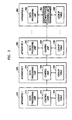
- Figure 2 is a block diagram of a plurality of data processing apparatus for illustrating a method of processing data using the data processing apparatus in accordance with the present invention;
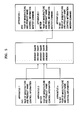
- Figure 3 illustrates a lookup table included in one of the data processing apparatus shown in Figure 2;
- Figures 4A and 4B illustrate data configurations of items in the lookup table illustrated in Figure 3 in accordance with the present invention;
- Figure 5 illustrates a mode tablein accordance with the present invention;
- Figure 6 is a flowchart illustrating a data processing method of a master apparatus in accordance with the present invention;
- Figure 7 is a flowchart illustrating a data processing method of a slave apparatus in accordance with the present invention; and
- Figure 8 is a block diagram for illustrating a data processing method in accordance with the present invention.
- Referring to Figure 2, plural (in this example, n)
data processing apparatus data processing units respective control units data processing apparatus - The interface means used in the present exemplary embodiment include a physical connection means, for example, a serial communication channel, and a logical connection means, for example, inserting information into a watermark that conceals information in data itself or an inactive region of a video signal.
- Figure 3 illustrates one of the lookup tables 216, 226, 236, 296. The lookup table includes product information, such as a year of manufacture, a product version and a product name, of the corresponding one of the
data processing units - In addition, the lookup table includes information regarding items used for image quality enhancement by a corresponding data processing unit. For example, the items may be information regarding contrast control, detail control, brightness control, colour control, noise elimination control, scale conversion control, and format conversion control. The lookup table also includes information regarding an algorithm for processing signals using the items and information regarding parameters set in the algorithm.
- The lookup table shown in Figure 3 is just one example of a lookup table. Other lookup tables, which include other items for image quality enhancement, may also be used.
- Furthermore, when input data includes voice data or other types of data, the lookup table can include an algorithm for processing such data, for example, in the case of voice data, information regarding parameters set in graceful degradation technology for preventing degradation of voice quality. Alternatively, the lookup table may include information for synchronizing image data with voice data.
- Since data of each address in the lookup table shown in Figure 3 is coded, the data is decoded by the corresponding one of the
control units - Figure 4A illustrates the data configuration of the items stored in the lookup table of Figure 3. In this embodiment, 16 bits of data are used for the item and a first bit indicates whether the item is controlled by a master command. For example, if a value of the first bit is "0", a set value of the item is maintained constant since the master command is not received. If the value of the first bit is "1", the processing of the item is controlled by the master command.
- Second to fifth bits indicate item indexes. For example, if values of the second to fifth bits are "0000", then the item is product information; if the values of these bits are "0001", then the item is contrast enhancement; if the values of these bits are "0010", then the item is detail enhancement; if the values of these bits are "0011", then the item is brightness enhancement; if the values of these bits are "0101", then the item is colour enhancement; if the values of the second through fifth bits are "0110", then the item is noise elimination; if the values of these bits are "0111", then the item is scale conversion; and if the values of these bits are "1000", then the item is format conversion.
- Sixth to sixteenth bits indicate control information of the item. For example, if the value of the first bit is "0" and the values of the second to fifth bits are "0001", then the second to sixteenth bits indicate an intensity value currently set within a predetermined range (e.g., 1 to 100) of intensity values for contrast adjustment.
- In this embodiment, the item for product information has a data configuration identical to items for other data processing. Alternatively, an address in the lookup table, for example, a first address, may indicate product information differently from the data configuration described above.
- Figure 4B illustrates the data configuration of one of the items in the lookup table of Figure 3. In this embodiment, 16 bits of data are used for the item, and first to fourth bits indicate item indexes. The functions of the first to fourth bits are identical to those of the second to fifth bits of Figure 4A and thus will not be described again. In addition, fifth to sixteenth bits indicate control information of a detail item. The functions of the fifth to sixteenth bits are identical to those of the sixth to sixteenth bits of Figure 4A and thus will not be described again.
- Figure 5 illustrates a mode table classified by year of manufacture and manufacturer's number of the data processing units. One of the
control units remaining control units - Referring to Figures 2 and 5, the
master control unit 294 selects an optimum data processing unit with reference to product information and a mode table stored in one of the lookup tables 216, 226, 236, 296 in thedata processing apparatus - The
data processing unit 214 of the firstdata processing apparatus 210, for example a DVD player, was manufactured on 1 March 2001. Thedata processing unit 224 of the seconddata processing apparatus 220, such as a set-top box, was manufactured on 1 March 2003. Thedata processing unit 230 of the nthimage processing apparatus 290, for instance a TV set, was manufactured on 1 March 2004. - Since the
data processing unit 292 of the nthdata processing apparatus 290, i.e. the TV set, is the newest data processing unit, data processing performed by thedata processing unit 212 of the firstdata processing apparatus 210, i.e. the DVD player, and thedata processing unit 224 of the seconddata processing apparatus 220, i.e. the set-top box, are based on default values and thedata processing unit 292 of the nthdata processing apparatus 290, i.e. the TV set, is set as a main data processing unit. - In other words, the
master control unit 294 transmits a master command to thecontrol units data processing apparatus master control unit 294 can transmit control information including a set value of each item needed to control data processing as well as the master command. Themaster control unit 294 transmits the master command to the control unit of the nth data processing apparatus such that the data processing unit can perform the main processing of data. Themaster control unit 294 can also transmit control information including a set value for each item needed to control data processing to the control unit of the nth data processing apparatus, together with the master command. - The
control units data processing apparatus - Alternatively, if one of the data processing units is selected as an optimum data processing unit, only the selected data processing unit may be set to process data in response to an input signal and the remaining data processing units may be set to skip data processing.
- Figure 5 illustrates a mode table classified by year of manufacture and manufacturer's number of the data processing units. However, a mode table classified by the functions of the data processing units or a mode table classified by data processing apparatus may also be used. For example, if it is desirable for the DVD, i.e. the first data processing apparatus, to perform a function for eliminating noise, the mode table can be created such that the data processing unit of the DVD processes data to eliminate noise.
- Referring to Figures 2 to 5, among the
data processing apparatus data processing apparatus 290 is set as a master apparatus. Accordingly, thecontrol unit 294 of the nthdata processing apparatus 290 is the master control unit and the first through (n-1)thdata processing apparatus - The master control unit, i.e. the
control unit 294 of the nthdata processing apparatus 290, selects an optimum data processing unit or a combination of data processing units for processing input data with reference to information regarding detail items included in the lookup tables 216, 226, 236, 296 and a mode table (not shown) stored in a predetermined section of the master apparatus. The master control unit generates a master command including the information indicating the optimum data processing unit or a combination of data processing units and transmits the master command to each of the slave control units. - In this embodiment, the mode table is stored in the predetermined section of the master apparatus. Also, mode tables stored in the slave apparatus may be used. The slave control units receive the master command and control the operations of their respective data processing units based on the master command.
- For example, if the
data processing unit 222 of the seconddata processing apparatus 220 is determined to be the optimum data processing unit, the master control unit transmits master commands to the firstdata processing apparatus 210 and the third to nthdata processing apparatus data processing units data processing apparatus 210 and the third to nthdata processing apparatus data processing apparatus 220 such that thedata processing unit 222 performs the main processing of data. - Alternatively, the master control unit, i.e. the
control unit 294 of the nthdata processing apparatus 290, may transmit master commands to the first through nthdata processing apparatus data processing apparatus data processing unit 212 of the firstdata processing apparatus 210 performs a function for eliminating noise, thedata processing unit 222 of the seconddata processing apparatus 220 performs a function for a format conversion, and the data processing unit of the nthdata processing apparatus 290 performs a function for enhancing contrast. - A user may select a master apparatus from a plurality of data processing apparatus. Alternatively, a manufacturer of the data processing apparatus may determine a default master apparatus according to a predetermined standard. For example, among a plurality of data processing apparatus, a display device which processes data temporally last or an AV receiver may be set as a default master apparatus.
- When one of a plurality of data processing apparatus operates as a master apparatus and the remaining data processing apparatus operate as slave apparatus, the master apparatus and the slave apparatus may share their respective attribute information stored respectively in each memory of the master apparatus and the slave apparatus to carry out optimum data processing.
- For example, if a manufacturer tests diverse data processing apparatus in advance and stores information regarding an optimum combination of data processing apparatus, which can provide the best results, in a predetermined memory region, data processing may be performed based on the stored information regarding the optimum combination of data processing apparatus.
- Also, data processing apparatus in a network may share their attribute information and determine a data processing apparatus or a combination of data processing apparatus, which can bring the best result, based on a predetermined standard. In this case, data processing may be carried out by the determined data processing apparatus or the determined combination of data processing apparatus.
- A standard for determining an optimum data processing apparatus or an optimum combination of data processing apparatus may be an objective standard and a subjective standard.
- An example of the objective standard is Peak Signal-to-Noise Ratio (PSNR). If the objective standard is used, a plurality of data processing apparatus determines an optimum data processing unit or an optimum combination of data processing units based on the PSNR.
- Table 1 shows an example of signal processing quality using the objective standard. Referring to Table 1, the master apparatus processes a predetermined input signal in a plurality of modes, and calculates a PSNR value for each mode.
Table 1 DVD Set-top TV Set PSNR Mode 1 Noise elimination Format conversion Contrast 30 dB Mode 2 Format conversion Noise elimination Contrast 25 dB Mode 3 Format conversion Contrast Noise elimination 20 dB ... ... ... ... 10 dB ... ... ... ... 5 dB - In this case, an optimum mode is
mode 1, which has the highest PSNR value. Accordingly, the data processing apparatus process the input signal for noise elimination, format conversion, contrast enhancement, and the like. For example, a DVD eliminates noise, a TV set enhances contrast, and a Set-top box converts a format. - An optimum data processing unit or an optimum combination of data processing units may be determined according to the subjective standard. In this case, a predetermined input signal may be processed in a plurality of predetermined modes, and a user may select an optimum data processing unit or an optimum combination of data processing units, based on the result of the data processing.
- If the master apparatus and some of the slave apparatus are manufactured by different manufacturers and the master apparatus cannot obtain information regarding all of the slave apparatus, the master apparatus cannot render any judgment on the slave apparatus which do not provide information. Thus, the master apparatus determines that such slave apparatus do not process data and determines an optimum data processing unit or an optimum combination of data processing units from only those slave apparatus that share information with the master apparatus. Then, data is processed by the determined data processing unit or the determined combination of data processing units.
- If the master apparatus and some of the slave apparatus are manufactured by different manufacturers, but the slave apparatus can provide information that the master apparatus can recognize, the master apparatus determines the optimum data processing unit or the optimum combination of data processing units in consideration of all slave apparatus which provide information that the master apparatus can recognize. Then, the data is processed by the determined optimum data processing unit or the determined optimum combination of data processing units.
- Figure 6 is a flowchart illustrating a data processing method performed by the master apparatus. The method will now be described with reference to Figures 2 to 6.
- In
step 620, the master control unit, i.e., thecontrol unit 294 of the nthdata processing apparatus 290, which is predetermined as the master apparatus, receives attribute information of at least one of thedata processing units data processing apparatus data processing apparatus data processing units data processing units - In
step 640, the master control unit sets a condition for processing input data based on the attribute information of thedata processing units data processing units - For example, if the mode table is classified by year of manufacture or product version, the newest one of the
data processing units data processing units - In
step 660, the mater control unit, i.e. thecontrol unit 294 of the nthdata processing apparatus 290, generates the data processing condition determined instep 640 as a master command and transmits the master command to each of the slave apparatus. - Figure 7 is a flowchart illustrating a data processing method performed by one of the slave apparatus. The method will now be described with reference to Figures 2 to 5.
- In
step 720, thecontrol unit 214 of the firstdata processing apparatus 210, which is determined to be one of the slave apparatus, transmits attribute information of thedata processing unit 212 to the master control unit, i.e., thecontrol unit 294 of the nthdata processing unit 290, which is predetermined to be the master apparatus, via a bi-directional interface. - In
step 740, thedata control unit 214 of the firstdata processing apparatus 210 receives the master command containing information regarding the data processing condition determined based on the attribute information of thedata processing units - In
step 760, thedata processing unit 212 performs or skips the processing of input data based on the data processing condition received instep 740. Alternatively, parameters of thedata processing unit 212 may be set based on the received information regarding the data processing condition. - Figure 8 is a block diagram for illustrating a data processing method. In Figure 8, an input signal contains video data and data processing apparatus are a
DVDP 810 and aTV set 840, which include imagequality enhancing units - A method of enhancing image quality when the image
quality enhancing units DVDP 810 and theTV set 840 are manufactured by the same manufacturer, or theDVDP 810 and theTV set 840 can share attribute information of their respective imagequality enhancing units - In this example, the image
quality enhancing units DVDP 810 and theTV set 840 are considered. However, the identical data processing method may also be applied to an audio processing unit. - Referring to Figure 8, the
DVDP 810 includes animage generating unit 812, the imagequality enhancing unit 814, acontrol unit 816, a lookup table 818, and aninterface unit 820. In addition, theTV set 840 includes animage output unit 842, the imagequality enhancing unit 844, acontrol unit 846, a lookup table 848, and aninterface unit 850. In the present exemplary embodiment, thecontrol unit 846 of theTV set 840 is set as a master control unit by a user. - By using an
interface 870 providing bi-directional communication between theinterface units control unit 846 set as the master control unit determines an optimum condition for enhancing image quality based on attribute information of the imagequality enhancing unit 814 stored in the lookup table 818 of theDVDP 810, such as a manufacturer, a year of manufacture, a product version, information regarding detail image quality enhancement and so on, and attribute information of the imagequality enhancing unit 844 stored in the lookup table 848 of theTV set 840, such as a manufacturer, a year of manufacture, a product version, information regarding detail image quality enhancement and so on. In this example, theinterface units - In this example, only one of the image
quality enhancing units quality enhancing unit quality enhancing unit 844 of theTV set 840 is newer than the imagequality enhancing unit 814 of theDVDP 810, the master control unit, i.e., thecontrol unit 846 of theTV set 840, transmits a master command to the imagequality enhancing unit 814 of theDVDP 810 instructing the imagequality enhancing unit 814 not to process the input data to enhance image quality. The master control unit transmits a master command to the imagequality enhancing unit 844 of theTV set 840 instructing the imagequality enhancing unit 814 to process the input data to enhance image quality. - Image data generated by the
image generating unit 812 of theDVDP 810 is transmitted to theTV set 840 via theinterface unit 820 and aninterface 860 without being processed by the imagequality enhancing unit 814, which is controlled by thecontrol unit 816. The image data transmitted to theTV set 840 is processed by the imagequality enhancing unit 844, which is controlled by thecontrol unit 846, to enhance image quality and transmitted to theimage output unit 842. - In another embodiment of the present invention, the image
quality enhancing units quality enhancing unit 814 of theDVDP 810 may eliminate noise and convert a format of the input image data, and the imagequality enhancing unit 844 of theTV set 840 may enhance contrast. In this case, the master control unit transmits a master command to each of theDVDP 810 and theTV set 840 such that the imagequality enhancing units - Therefore, controlled by the
control unit 816, the imagequality enhancing unit 814 of theDVDP 810 eliminates noise from and converts the format of image data generated by theimage generating unit 812 but does not enhance the contrast of the image data. The image data, which the process noise for elimination and format conversion is performed, is transmitted to theTV set 840 via the interface. Controlled by thecontrol unit 846, the imagequality enhancing unit 844 of theTV set 840 does not remove noise from or convert the format of the image data but enhances the contrast of the image data. Then, the image data with enhanced contrast is transmitted to theimage output unit 842. - The
TV set 810 of Figure 8, such as a digital TV, performs diverse image quality enhancement functions. However, image quality enhancement is not a primary goal of an apparatus such as a DVDP or a set-top box which is connected to a TV set and inputs images to the TV set. Therefore, such an apparatus did not have a function for image quality enhancement, or otherwise only included a low-performance image quality enhancing unit. - However, as technology has developed and customer needs have become more sophisticated, a high-performance image quality enhancing unit has been added to an image input apparatus such as a DVDP. For example, image quality enhancing units of the same version manufactured by the same manufacturer or different versions of a image quality enhancing unit manufactured by the same manufacturer may be installed in TV sets and DVDPs that input images to the TV sets.
- In this case, the process of enhancing image quality is redundantly performed, thereby distorting image quality as described above. However, the present invention can prevent the redundant image quality enhancement processes. In addition, different image quality enhancement processes performed by image devices can be combined to perform an optimum image quality enhancement process.
- As described above, according to the present invention, an optimum data processing apparatus or an optimum combination of data processing apparatus can be selected to optimally process input data by allowing a plurality of data processing apparatus to share attribute information among themselves. In addition, when image devices performing a series of data processing include at least image quality enhancing units and/or audio processing units, the present invention can prevent redundant image quality enhancement processes. Also, image quality and/or enhancement processes among data processing apparatus can be combined to perform an optimum image quality and/or enhancement process.
- The present invention may be implemented as a computer program on a computer-readable recording medium. Those skilled in the art will understand how to write codes and code segments comprising the computer program. The computer program can be stored in a computer-readable recording medium, and be read and executed by a computer system. Examples of the computer-readable mediums include magnetic tapes, optical data storage devices, and carrier waves.
- While the present invention has been particularly shown and described with reference to embodiments thereof, it will be understood by those skilled in the art that various changes may be made without departing from the scope of the present invention as defined by the following claims.
Claims (26)
- A data processing method comprising:receiving attribute information relating to at least one data processing apparatus (210, 220, 230, 290);determining a data processing condition for processing input data based on the attribute information; andtransmitting the data processing condition to the at least one data processing apparatus.
- A method according to claim 1, wherein the determining of the data processing condition comprises selecting one of the at least one of the data processing apparatus to process the input data based on the attribute information of the at least one of the data processing apparatus and the data processing condition comprises information indicating a data processing apparatus to process the input data.
- A method according to claim 1 or 2, wherein the determining of the data processing condition comprises selecting at least one of the at least one of the data processing apparatus to process the input data based on the attribute information of the at least one of the data processing apparatus and the data processing condition comprises information indicating that the selected at least one of the data processing apparatus is to process the input data or information indicating a data processing function of each of the data processing apparatus.
- A method according to any preceding claim, wherein the attribute information of the at least one of the data processing apparatus comprises at least one of a year of manufacture and a product version of the at least one of the data processing apparatus, and the determining of the data processing condition further comprises determining a newest one of the at least one of the data processing apparatus as an apparatus for processing the input data and determining not to perform data processing at the remaining data processing apparatus.
- A method according to any preceding claim, wherein the attribute information of the at least one of the data processing apparatus comprises at least one of a year of manufacture and a product version of the at least one of the data processing apparatus, and the determining of the data processing condition comprises determining a newest one of the at least one of the data processing apparatus as an apparatus for processing the input data and determining to perform data processing with the remaining data processing apparatus using set default values.
- A data processing method comprising:transmitting attribute information of a current data processing apparatus, among a plurality of data processing apparatus, to a master apparatus;receiving data processing condition information determined according to attribute information of at least one of the data processing apparatus from the master apparatus; andprocessing input data based on the data processing condition information.
- A method according to claim 6, wherein the data processing condition information comprises information indicating whether the current data processing apparatus is to process the input data.
- A method according to claim 6 or 7, wherein the data processing condition information comprises information indicating whether the current data processing apparatus is for processing the input data or information indicating a data processing function of the current data processing apparatus.
- A method according to any one of claims 6 to 8, wherein the attribute information of the at least one of the data processing apparatus comprises at least one of a year of manufacture and a product version of the at least one of the data processing apparatus and the data processing condition information comprises information indicating whether the current data processing apparatus is a newest one of the data processing apparatus.
- A method according to any one of claims 6 to 9, wherein the attribute information of the at least one of the data processing apparatus comprises at least one of a year of manufacture and a product version of the at least one of the data processing apparatus and the data processing condition information comprises information indicating whether the current data processing apparatus is a newest one of the data processing apparatus or information indicating a data processing function of the current data processing apparatus.
- A method according to any one of claims 1 to 10, wherein the input data is image data and the data processing apparatus are image quality enhancing units which enhance image quality of the image data.
- A method according to any one of claims 1 to 10, wherein the input data is audio data and the data processing apparatus are audio processing units which enhance audio quality of the audio data.
- A method according to any preceding claim, wherein the data processing apparatus exchange their attribute information and data processing condition information via a bi-directional interface.
- A method according to any preceding claim, wherein the attribute information of the at least one of the data processing apparatus comprises at least one of a manufacturer, a year of manufacture and a product version of the at least one of the data processing apparatus.
- A method according to any preceding claim, wherein the attribute information of the at least one of the data processing apparatus comprises information regarding at least one of contrast enhancement, detail enhancement, brightness enhancement, colour enhancement, noise elimination, scale conversion and format conversion.
- A method according to any preceding claim, wherein the attribute information of the at least one of the data processing apparatus comprises at least one of information regarding an algorithm used for data processing and information regarding parameters set in the algorithm.
- A computer program for causing a data processing apparatus to perform a method according to any preceding claim.
- A computer-readable recording medium storing a computer program according to claim 17.
- Apparatus for processing input data comprising:means for receiving attribute information relating to at least one data processing apparatus;means (214) for determining a data processing condition for processing the input data based on the attribute information; andmeans for transmitting the data processing condition to the at least one data processing apparatus.
- Apparatus according to claim 19, wherein the determining means is configured to select one of the at least one of the data processing apparatus to process the input data based on the attribute information of the at least one of the data processing apparatus and the data processing condition comprises information indicating that the selected data processing apparatus is to process the input data.
- Apparatus according to claim 19, wherein the determining means is configured to select at least one of the at least one of the data processing apparatus to process the input data based on the attribute information of the at least one of the data processing apparatus, and the data processing condition comprises information indicating that the selected at least one of the data processing apparatus is to process the input data or information indicating a data processing function of each of the data processing apparatus.
- Apparatus for processing input data comprising:means for transmitting attribute information of the apparatus to a master apparatus;means for receiving data processing condition information determined according to attribute information of at least one data processing apparatus from the master apparatus; andmeans for processing the input data based on the data processing condition information.
- Apparatus according to claim 22, further comprising determining means configured to select one of the at least one of the data processing apparatus to process the input data based on the attribute information of the at least one of the data processing apparatus, and the data processing condition information comprises information indicating that the selected data processing apparatus is to process the input data.
- Apparatus according to claim 22, further comprising determining means configured to select at least one of the at least one of the data processing apparatus to process the input data based on the attribute information of the at least one of the data processing apparatus, and the data processing condition information comprises information indicating that the selected at least one of the data processing apparatus is to process the input data and information indicating a data processing function of each of the data processing apparatus.
- Apparatus according to any one of claims 22 to 24, wherein the attribute information of the at least one of the data processing apparatus comprises at least one of a year of manufacture and a product version of the at least one of the data processing apparatus, and a determining mean is configured to determine a newest one of the at least one of the data processing apparatus as an apparatus for processing the input data and to determine not to perform data processing with the remaining data processing apparatus.
- Apparatus according to any one of claims 22 to 25, wherein the attribute information of the at least one of the data processing apparatus comprises at least one of a year of manufacture and a product version of the at least one of the data processing apparatus and a determining means is configured to determine a newest one of the at least one of the data processing apparatus as an apparatus for processing the input data and to determine to perform data processing with the remaining data processing apparatus using set default values.
Applications Claiming Priority (1)
| Application Number | Priority Date | Filing Date | Title |
|---|---|---|---|
| KR1020040115036A KR100677545B1 (en) | 2004-12-29 | 2004-12-29 | A data processing apparatus using a plurality of data processing apparatuses and a method thereof, and a recording medium having recorded thereon a program for implementing the same |
Publications (2)
| Publication Number | Publication Date |
|---|---|
| EP1677249A2 true EP1677249A2 (en) | 2006-07-05 |
| EP1677249A3 EP1677249A3 (en) | 2015-12-02 |
Family
ID=36353930
Family Applications (1)
| Application Number | Title | Priority Date | Filing Date |
|---|---|---|---|
| EP05111533.5A Withdrawn EP1677249A3 (en) | 2004-12-29 | 2005-11-30 | Processing input data based on attribute information |
Country Status (5)
| Country | Link |
|---|---|
| US (1) | US7756352B2 (en) |
| EP (1) | EP1677249A3 (en) |
| JP (1) | JP2006217571A (en) |
| KR (1) | KR100677545B1 (en) |
| CN (1) | CN1815606B (en) |
Cited By (5)
| Publication number | Priority date | Publication date | Assignee | Title |
|---|---|---|---|---|
| US20090153737A1 (en) * | 2007-12-17 | 2009-06-18 | Ati Technologies Ulc | Method, apparatus and machine-readable medium for apportioning video processing between a video source device and a video sink device |
| WO2009076767A1 (en) | 2007-12-17 | 2009-06-25 | Ati Technologies Ulc | Method, apparatus and machine-readable medium for video processing capability communication between a video source device and a video sink device |
| EP2232848A4 (en) * | 2007-12-20 | 2012-10-24 | Ati Technologies Ulc | Adjusting video processing in a system having a video source device and a video sink device |
| US8830393B2 (en) | 2007-12-20 | 2014-09-09 | Ati Technologies Ulc | Method, apparatus and machine-readable medium for handling interpolated video content |
| WO2019045859A1 (en) * | 2017-08-31 | 2019-03-07 | Rovi Guides, Inc. | Methods and systems for enhancing set-top box capabilities |
Families Citing this family (12)
| Publication number | Priority date | Publication date | Assignee | Title |
|---|---|---|---|---|
| JP2009099203A (en) * | 2007-10-17 | 2009-05-07 | Sony Corp | Auxiliary storage device, information processing device, information processing system, and information processing method |
| JP2010081332A (en) | 2008-09-26 | 2010-04-08 | Sony Corp | Information processing apparatus and method, program, and information processing system |
| JP2012099869A (en) * | 2009-02-26 | 2012-05-24 | Panasonic Corp | Control device and control method |
| JP5444797B2 (en) * | 2009-04-10 | 2014-03-19 | ソニー株式会社 | Transmission device, display device, and image display system |
| KR20110013606A (en) * | 2009-08-03 | 2011-02-10 | 엘지전자 주식회사 | Menu execution method in mobile communication terminal and mobile communication terminal applying same |
| EP2611206A3 (en) * | 2011-12-27 | 2014-01-22 | Samsung Electronics Co., Ltd. | Display apparatus and control method thereof |
| US9413821B2 (en) * | 2013-02-11 | 2016-08-09 | Qualcomm Connected Experiences, Inc. | Method for allowing devices to interact with each other in a user-determined manner |
| JP6191412B2 (en) * | 2013-11-21 | 2017-09-06 | 株式会社リコー | Information processing apparatus, image projection apparatus, image projection system, distortion correction instruction method, and program |
| JP6274067B2 (en) * | 2014-10-03 | 2018-02-07 | ソニー株式会社 | Information processing apparatus and information processing method |
| CN104683695B (en) * | 2015-02-15 | 2017-12-19 | 北京空间机电研究所 | A kind of selfreparing image processing system of multiplexing suitable for space flight |
| US11068376B2 (en) | 2017-03-11 | 2021-07-20 | International Business Machines Corporation | Analytics engine selection management |
| CN109547841B (en) * | 2018-12-20 | 2020-02-07 | 北京微播视界科技有限公司 | Short video data processing method and device and electronic equipment |
Family Cites Families (15)
| Publication number | Priority date | Publication date | Assignee | Title |
|---|---|---|---|---|
| JPH0784928A (en) * | 1993-09-09 | 1995-03-31 | Canon Inc | Information processing apparatus and information setting method in the apparatus |
| US5864681A (en) * | 1996-08-09 | 1999-01-26 | U.S. Robotics Access Corp. | Video encoder/decoder system |
| KR100210125B1 (en) | 1996-10-30 | 1999-07-15 | 전주범 | DVI-S and set-top box interface using RS422 |
| JPH10340531A (en) | 1997-06-10 | 1998-12-22 | Sony Corp | Information signal recording device, information signal recording method, and information signal recording medium |
| JP2000353108A (en) | 1999-06-11 | 2000-12-19 | Fujitsu Ltd | Information processing device |
| DE60041259D1 (en) * | 1999-07-14 | 2009-02-12 | Panasonic Corp | DEVICE FOR PROVIDING INFORMATION, INFORMATION RECEIVER AND STORAGE MEDIUM |
| KR100862598B1 (en) | 1999-12-03 | 2008-10-09 | 톰슨 라이센싱 | Adaptive Video Image Information Processing System |
| JP2001251525A (en) | 2000-03-03 | 2001-09-14 | Canon Inc | Information processing apparatus, information processing method, and storage medium storing device driver program |
| KR100327377B1 (en) | 2000-03-06 | 2002-03-06 | 구자홍 | Method of Displaying Digital Broadcasting signals Using Digital Broadcasting Receiver and Digital Display Apparatus |
| KR100385975B1 (en) | 2000-08-23 | 2003-06-02 | 삼성전자주식회사 | Apparatus for converting video format and method thereof |
| JP4434467B2 (en) * | 2000-11-01 | 2010-03-17 | キヤノン株式会社 | User interface control device |
| BR0303361A (en) * | 2002-03-08 | 2004-03-30 | Koninkl Philips Electronics Nv | Method and devices for providing information for obtaining the best perceived image quality of a transmitted video data stream and for processing a video data stream, signal format for use in transmitting a video data stream and storage medium. |
| KR100440969B1 (en) * | 2002-05-23 | 2004-07-21 | 삼성전자주식회사 | Method and apparatus of networking |
| CN100378658C (en) * | 2002-12-03 | 2008-04-02 | 韩国电子通信研究院 | Apparatus and method for adapting graphic content and system thereof |
| EP1661430B1 (en) * | 2003-08-07 | 2016-09-21 | Samsung Electronics Co., Ltd. | A/v system available for integrated control and method of controlling the same |
-
2004
- 2004-12-29 KR KR1020040115036A patent/KR100677545B1/en not_active Expired - Fee Related
-
2005
- 2005-11-07 US US11/267,297 patent/US7756352B2/en not_active Expired - Fee Related
- 2005-11-30 CN CN2005101258350A patent/CN1815606B/en not_active Expired - Fee Related
- 2005-11-30 EP EP05111533.5A patent/EP1677249A3/en not_active Withdrawn
- 2005-12-21 JP JP2005367942A patent/JP2006217571A/en active Pending
Cited By (13)
| Publication number | Priority date | Publication date | Assignee | Title |
|---|---|---|---|---|
| US8479253B2 (en) | 2007-12-17 | 2013-07-02 | Ati Technologies Ulc | Method, apparatus and machine-readable medium for video processing capability communication between a video source device and a video sink device |
| WO2009076767A1 (en) | 2007-12-17 | 2009-06-25 | Ati Technologies Ulc | Method, apparatus and machine-readable medium for video processing capability communication between a video source device and a video sink device |
| WO2009076766A1 (en) | 2007-12-17 | 2009-06-25 | Ati Technologies Ulc | Method, apparatus and machine-readable medium for apportioning video processing between a video source device and a video sink device |
| EP2232849A4 (en) * | 2007-12-17 | 2012-06-27 | Ati Technologies Ulc | METHOD, APPARATUS AND COMPUTER-READABLE MEDIUM FOR COMMUNICATING VIDEO PROCESSING CAPABILITIES BETWEEN A VIDEO SOURCE DEVICE AND A VIDEO RECEIVING DEVICE |
| EP2232850A4 (en) * | 2007-12-17 | 2012-08-15 | Ati Technologies Ulc | METHOD, APPARATUS AND COMPUTER-READABLE MEDIUM FOR DISTRIBUTING VIDEO PROCESSING BETWEEN VIDEO SOURCE DEVICE AND VIDEO RECEIVING DEVICE |
| US20090153737A1 (en) * | 2007-12-17 | 2009-06-18 | Ati Technologies Ulc | Method, apparatus and machine-readable medium for apportioning video processing between a video source device and a video sink device |
| US8866971B2 (en) * | 2007-12-17 | 2014-10-21 | Ati Technologies Ulc | Method, apparatus and machine-readable medium for apportioning video processing between a video source device and a video sink device |
| US9473678B2 (en) | 2007-12-17 | 2016-10-18 | Ati Technologies Ulc | Method, apparatus and machine-readable medium for apportioning video processing between a video source device and a video sink device |
| EP2232848A4 (en) * | 2007-12-20 | 2012-10-24 | Ati Technologies Ulc | Adjusting video processing in a system having a video source device and a video sink device |
| US8615156B2 (en) | 2007-12-20 | 2013-12-24 | Ati Technologies Ulc | Adjusting video processing in a system having a video source device and a video sink device |
| US8830393B2 (en) | 2007-12-20 | 2014-09-09 | Ati Technologies Ulc | Method, apparatus and machine-readable medium for handling interpolated video content |
| CN101971617B (en) * | 2007-12-20 | 2015-12-02 | Ati技术无限责任公司 | There is the adjustment Video processing in the system of source video sequence device and video receiving apparatus |
| WO2019045859A1 (en) * | 2017-08-31 | 2019-03-07 | Rovi Guides, Inc. | Methods and systems for enhancing set-top box capabilities |
Also Published As
| Publication number | Publication date |
|---|---|
| CN1815606A (en) | 2006-08-09 |
| JP2006217571A (en) | 2006-08-17 |
| KR20060076570A (en) | 2006-07-04 |
| US20060140499A1 (en) | 2006-06-29 |
| CN1815606B (en) | 2013-12-11 |
| KR100677545B1 (en) | 2007-02-02 |
| US7756352B2 (en) | 2010-07-13 |
| EP1677249A3 (en) | 2015-12-02 |
Similar Documents
| Publication | Publication Date | Title |
|---|---|---|
| US7756352B2 (en) | Apparatus and method for data processing by using plurality of data processing apparatuses and recording medium storing program for executing the method | |
| US10931914B2 (en) | Image playback device, display device, and transmission device | |
| RU2643485C2 (en) | Device and method for conversion of dynamic range of images | |
| US20100138887A1 (en) | Transmission apparatus, information transmission method, reception apparatus, and information processing method | |
| JP4693918B2 (en) | Image quality adjusting apparatus and image quality adjusting method | |
| US20050008323A1 (en) | Apparatus and method of signal reproduction using a digital visual interface/high definition multimedia interface compatible connector | |
| JPWO2016157839A1 (en) | Signal processing apparatus, recording / reproducing apparatus, signal processing method, and program | |
| US8401359B2 (en) | Video receiving apparatus and video receiving method | |
| CN100440952C (en) | Image processing device and image processing method | |
| EP3654656B1 (en) | Video display system and video display method | |
| US7542618B2 (en) | Apparatus and method for data processing by using a plurality of data processing apparatuses and recording medium storing program for executing the method | |
| JP2011259050A (en) | Hdmi connection device | |
| JP6463179B2 (en) | Signal processing apparatus, signal processing method, and imaging apparatus | |
| US20100110292A1 (en) | Video apparatus and method of controlling the video apparatus | |
| JP2010122743A (en) | Hdmi receiver | |
| US20070083905A1 (en) | Media player, control method thereof, and media play system having the same | |
| CN1326403C (en) | video device | |
| WO2019044170A1 (en) | Conversion device, conversion method, display device, program, and recording medium | |
| EP1818906A2 (en) | Display device and driving method thereof | |
| CN114615444B (en) | Display control device, data output method, HDMI distributor and medium | |
| US20050273657A1 (en) | Information processing apparatus and method, and recording medium and program for controlling the same | |
| JP2007013335A (en) | Video display device | |
| US8310559B2 (en) | Method and apparatus for transmitting/receiving data | |
| WO2011092572A1 (en) | Interface device for an apparatus for processing a plurality of multi -medial high resolution operative programs and functions, integrated with a television receiver screen, for setting and performing such multi -medial operative programs and functions and displaying the same onto such video screen | |
| KR20110017161A (en) | Display device and control method thereof |
Legal Events
| Date | Code | Title | Description |
|---|---|---|---|
| PUAI | Public reference made under article 153(3) epc to a published international application that has entered the european phase |
Free format text: ORIGINAL CODE: 0009012 |
|
| AK | Designated contracting states |
Kind code of ref document: A2 Designated state(s): AT BE BG CH CY CZ DE DK EE ES FI FR GB GR HU IE IS IT LI LT LU LV MC NL PL PT RO SE SI SK TR |
|
| AX | Request for extension of the european patent |
Extension state: AL BA HR MK YU |
|
| RAP1 | Party data changed (applicant data changed or rights of an application transferred) |
Owner name: SAMSUNG ELECTRONICS CO., LTD. |
|
| PUAL | Search report despatched |
Free format text: ORIGINAL CODE: 0009013 |
|
| AK | Designated contracting states |
Kind code of ref document: A3 Designated state(s): AT BE BG CH CY CZ DE DK EE ES FI FR GB GR HU IE IS IT LI LT LU LV MC NL PL PT RO SE SI SK TR |
|
| AX | Request for extension of the european patent |
Extension state: AL BA HR MK YU |
|
| RIC1 | Information provided on ipc code assigned before grant |
Ipc: H04N 5/00 20110101ALI20151026BHEP Ipc: G11B 27/00 20060101ALI20151026BHEP Ipc: G06T 5/00 20060101AFI20151026BHEP |
|
| AKY | No designation fees paid | ||
| AXX | Extension fees paid |
Extension state: AL Extension state: MK Extension state: YU Extension state: HR Extension state: BA |
|
| REG | Reference to a national code |
Ref country code: DE Ref legal event code: R108 |
|
| STAA | Information on the status of an ep patent application or granted ep patent |
Free format text: STATUS: THE APPLICATION IS DEEMED TO BE WITHDRAWN |
|
| 18D | Application deemed to be withdrawn |
Effective date: 20160603 |