EP1677192A2 - EDV-System und Verfahren zur Berechnung einer Erholzeit eines Anwendungssystems - Google Patents
EDV-System und Verfahren zur Berechnung einer Erholzeit eines Anwendungssystems Download PDFInfo
- Publication number
- EP1677192A2 EP1677192A2 EP05111411A EP05111411A EP1677192A2 EP 1677192 A2 EP1677192 A2 EP 1677192A2 EP 05111411 A EP05111411 A EP 05111411A EP 05111411 A EP05111411 A EP 05111411A EP 1677192 A2 EP1677192 A2 EP 1677192A2
- Authority
- EP
- European Patent Office
- Prior art keywords
- backup
- recovery time
- time
- recovery
- redologs
- Prior art date
- Legal status (The legal status is an assumption and is not a legal conclusion. Google has not performed a legal analysis and makes no representation as to the accuracy of the status listed.)
- Withdrawn
Links
Images



Classifications
-
- G—PHYSICS
- G06—COMPUTING OR CALCULATING; COUNTING
- G06F—ELECTRIC DIGITAL DATA PROCESSING
- G06F11/00—Error detection; Error correction; Monitoring
- G06F11/30—Monitoring
- G06F11/34—Recording or statistical evaluation of computer activity, e.g. of down time, of input/output operation ; Recording or statistical evaluation of user activity, e.g. usability assessment
- G06F11/3447—Performance evaluation by modeling
-
- G—PHYSICS
- G06—COMPUTING OR CALCULATING; COUNTING
- G06F—ELECTRIC DIGITAL DATA PROCESSING
- G06F11/00—Error detection; Error correction; Monitoring
- G06F11/07—Responding to the occurrence of a fault, e.g. fault tolerance
- G06F11/14—Error detection or correction of the data by redundancy in operations
- G06F11/1446—Point-in-time backing up or restoration of persistent data
- G06F11/1458—Management of the backup or restore process
-
- G—PHYSICS
- G06—COMPUTING OR CALCULATING; COUNTING
- G06F—ELECTRIC DIGITAL DATA PROCESSING
- G06F11/00—Error detection; Error correction; Monitoring
- G06F11/30—Monitoring
- G06F11/34—Recording or statistical evaluation of computer activity, e.g. of down time, of input/output operation ; Recording or statistical evaluation of user activity, e.g. usability assessment
- G06F11/3409—Recording or statistical evaluation of computer activity, e.g. of down time, of input/output operation ; Recording or statistical evaluation of user activity, e.g. usability assessment for performance assessment
- G06F11/3419—Recording or statistical evaluation of computer activity, e.g. of down time, of input/output operation ; Recording or statistical evaluation of user activity, e.g. usability assessment for performance assessment by assessing time
-
- G—PHYSICS
- G06—COMPUTING OR CALCULATING; COUNTING
- G06F—ELECTRIC DIGITAL DATA PROCESSING
- G06F11/00—Error detection; Error correction; Monitoring
- G06F11/07—Responding to the occurrence of a fault, e.g. fault tolerance
- G06F11/14—Error detection or correction of the data by redundancy in operations
- G06F11/1446—Point-in-time backing up or restoration of persistent data
- G06F11/1458—Management of the backup or restore process
- G06F11/1469—Backup restoration techniques
-
- G—PHYSICS
- G06—COMPUTING OR CALCULATING; COUNTING
- G06F—ELECTRIC DIGITAL DATA PROCESSING
- G06F2201/00—Indexing scheme relating to error detection, to error correction, and to monitoring
- G06F2201/87—Monitoring of transactions
Definitions
- the invention relates in general to a method for calculating a recovery time of an application system in a computer system for tuning the computer system dynamically so an agreed recovery time can be secured.
- the invention further refers to an appropriate computing system, a computer program and a computer program product.
- a so-called backup describes generally the step of copying data within a computer system on a storage medium as well as the copy itself. Doing a regular backup alone is no guaranteed protection against data loss since there may be internal influences to the backup system which make the backup invalid.
- An execution of such a backup can result in utilisation of a large number of resources for a long period of time because of the large amount of data to be stored. Nevertheless, it is very important to execute backups regularly, for that several versions of backups are available in case of a restore.
- the so-called recovery of data provides the database after restoring with complete functionality, so that all data of the database are available without restrictions.
- One way of protecting data is by backing up the data to backup media, e.g., tapes or disks. Such backup is typically performed manually or automatically at preset intervals using backup software. The backup media are then stored away in a safe location.
- backup media e.g., tapes or disks.
- backup systems vary in the levels of protection they provide, the amount of time required to restore the backed up data and the difficulty associated with their integration with the businesses' other systems and applications.
- An offline backup An application system that is being backed up has to be quiesced and cannot be used during the backup process since it is "offline" for users. Moreover, users may be unable to access the files during a full system backup. Accordingly, the cost of performing such backups is greater in terms of user productivity and/or system resources.
- Figure 1 illustrates such an offline backup.
- an application system DB will be shutdown or set offline.
- the movement of actual data objects takes place from the application system DB to a backup storage TSM as indicated by reference number 1.
- the application system DB will be set online or start up again at a point in time t 2 .
- redologs 2 will be written by the application system DB and saved to the backup storage system TSM until the next backup process starts or the application goes offline at a point in time t 3 .
- FIG. 2 Another type of backup can be referred to as an “online” backup which is illustrated in figure 2.
- an application system DB that is being backed up is placed in a different mode at a point in time t 1 , called “online backup mode", and stays in this mode during the backup process, namely within a period of time t b11 .
- the mechanics of this online backup mode or hot backup mode is proprietary to a specific application.
- the similarity for all application systems which are regarded within the scope of the present invention is the creation of more detailed log information describing application activity relevant to the data repository to enable later restoration of this repository during recovery. This additional log information is made persistent within the redologs of the application system.
- a backup process performed during the period of time t b11 performs a full system backup every time the files are backed up as indicated by reference number 1.
- a full system backup ensures that a complete and consistent set of data objects on the application system DB is copied to a secondary or redundant storage, namely a backup storage system TSM.
- a backup storage system TSM In case of an online backup all redologs produced during the online backup mode t b11 need to be saved by the backup storage system TSM as indicated by reference number 2.
- the application system DB will be set in normal operation mode at a point in time t 2 .
- redologs 4 will be written by the application system DB and saved to the backup storage system TSM until the next backup process starts or the application system DB goes offline at a point in time t 4 .
- a backup process can be established to backup data on a regular or periodic basis (e.g., daily, nightly, weekly, etc.).
- a log file is a list of actions that have occurred for the purpose of analysis at a later time, for diagnostic or measurement purposes. It is possible to maintain a temporary log of data transactions since the last save of data. When a user saves data to the database, the temporary log is wiped out. Normally, log files only contain forward information, thereby limiting the use and effectiveness of the log files in restoring information. Within the context of restoring and within the following description log files will be referred to as redologs. By definition, restoration is to a point in the past.
- redologs can only move information forward through time implies that they must be used in conjunction with some other forms of data restoration, such as restoring an offline full backup, in order to achieve a restoration to a point in the past.
- Restoration proceeds by overwriting the data with stored copies and by undoing the changes to the redologs. According to such a procedure it is very difficult to preview a specific time frame or window in which a recovery can be done.
- Restoring of data corresponds to replace data of the so-called production computer with data of the backup stored on a backup storage system. Therefore, it is very important, that the backup is precisely done, because otherwise wrong data are brought in during restoring. In the worst case, the database is unusable after termination of the restoring.
- a user executes a regular backup under optimised use of his resources.
- the backup of a database for example is executed according to the following steps.
- the data of the database are first copied.
- changes are saved during or after the backup.
- recovery If recovery is decided, the point in time at which the recovery has to be executed has to be determined. All data which have been deposited in the database until this point in time have to be restored. After restoring, the so-called recovery can be started, so that the complete functionality of the database is re-established.
- recovery time frame cannot be exactly estimated. Providers of a recovery service have no possibility to maintain predefined recovery times, because prediction of the time frame is hardly possible.
- recovery time covers the whole period of time necessary to restore backed up data and corresponding redologs as well as to recover those restored data with the associated redologs.
- the present invention proposes a method with the features of claim 1, a computing system with the features of claim 8, a computer program product with the features of claim 13 and a computer program with the features of claim 14.
- a method for calculating a recovery time of an application system in a computer system for tuning the computer system dynamically, wherein the recovery time is calculated and controlled within flexible predefined time slices and compared to a predefined time period and a trigger is set in case that the calculated recovery time exceeds the predefined time period.
- application system covers, within the scope of the present invention, each kind of data storage, such as for example databases and applications and log files thereof.
- the calculated recovery time is isochronously displayed for review.
- the trigger initiates a warning signal for a user.
- the trigger enables simulator options on a corresponding client for modulating systematically backup performance parameters.
- a recovery time can be determined or at least estimated. This can be used again to modulate backup performance parameters accordingly.
- Such a simulation can also lead for example to an activation of additional appropriate system resources for reducing the recovery time.
- the trigger initiates a warning signal combined with an activation of additional appropriate system resources for reducing the recovery time. It is possible that a simulation is performed first after the warning signal, leading then to an activation of additional appropriate system resources for reducing the recovery time.
- an execution plan for a backup is generated on the basis of the calculation of the recovery time.
- the execution plan comprises a schedule of the execution of the backup and the backup is executed on demand according to the execution plan schedule.
- the recovery time is determined using the following system parameters: backup duration of saved data of the application system, an amount of associated redologs of the application system, throughput values for a backup of the redologs and an overall throughput for a recovery of the saved data with the associated redologs.
- the recovery time can always be calculated and compared with the predefined time period. If the calculated recovery time achieves the predefined time period, a provider can be informed and/or further backup- or restore-resources can be provided so that the predefined time period can be met.
- warning signal can be combined with various options for optimising the backup.
- An automatic schedule of the backup with provision of appropriate backup- or restore-resources can also be provided.
- Another possibility is to execute in preliminary stages a simulation with respect to the environment of a specific user combined with the calculation of the recovery time frame together with the needed backup and restore resources.
- the method can be implemented whenever users have certain needs on how long their business can afford to stay offline with a certain application. Whenever questions like “how fast must an application be recovered” or “how much time is allowed until restore and recover is done” arise, the method can be applied.
- parameters describing the state of the computer system are continuously collected and used to calculate the time, a full recovering of the data requested by a specific critical application system will take. Such a calculated value will either be displayed for review or also may be used as an input for a schedule mechanism.
- a user can define how long a specific business process allows him to be offline with a particular application. He may decide to schedule a new backup on demand if the predefined time period is exceeded.
- the present invention further refers to a computing system for calculating a recovery time of an application system in a computer system for tuning the computer system dynamically, the system comprising a calculating unit for calculating the recovery time within flexible predefined time slices, a control unit for comparing the calculated recovery time with a predefined time period and an indicator unit for indicating when the calculated recovery time exceeds the predefined time period.
- the system further comprises a monitor unit with the help of which the calculated recovery time can be isochronously displayed for review.
- system further comprises a generating unit for generating an execution plan for a backup on the basis of the calculation of the recovery time, the execution plan comprising a schedule of the execution of the backup according to which the backup can be executed.
- the computing system determines the recovery time using the following system parameters: backup duration of saved data of the application system, an amount of associated redologs of the application system, throughput values for a backup of the redologs and an overall throughput for a recovery of the saved data with the associated redologs.
- the invention covers a computer program product according to claim 12 and a computer program with the features of claim 13.
- the method and the computing system of the present invention may operate with a wide variety of types of network devices including networks and communication systems dramatically different from specific examples illustrated in the following drawings. It should be understood that while the invention is described in terms of a computer system, that the invention has applications in a variety of communication systems, such as advanced cable-television systems, advanced telephone networks or any other communication system that would benefit from the computing system or method according to the present invention. It is intended that the word "computer system” as used in the specification and claims be read to cover any communication system unless the context requires otherwise.
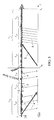
- FIG 3 shows an application system DB and a backup storage system TSM.
- the backup storage system TSM can be for example a so-called Tivoli Storage Manager, a product of IBM® .
- IBM Tivoli Storage Manager empowers an user with a flexible backup method for his computer system.
- the Tivoli Storage Manager is mainly adapted to specific operating systems, as for example to a so-called AIX system.
- the operating system AIX is a so-called file system which expands over a so-called logical volume.
- the Tivoli Storage Manager helps to protect data and to provide bare metal restore capabilities. It offers a comprehensive system backup, restore and reinstallation tool.
- the application system DB and the backup storage system TSM are linked with each other over a time bar.
- the backup storage system TSM manages backups of data files 1 and redologs 2, 3 and 4 of the application system DB. Furthermore, the backup storage system TSM keeps records of the amount of data of both types, namely of backups of data files 1 of the application system DB and archives of redologs of the application system DB. In case of an online backup all redologs produced during the online backup mode t b11 need to be saved by the backup storage system TSM as indicated by reference number 2. After completion of this backup process the application system DB will be set in normal operation mode at a point in time t 2 .
- redologs 4 will be written by the application system DB and saved to the backup storage system TSM until the next backup process starts or the application system DB goes offline at a point in time t 4 .
- the time bar shows a point in time t A where a restore/recovery process starts.
- a further point in time marked as "0" specifies the point in time until to which data should be restored and recovered in order to rebuild the state of the application system DB at this point in time. Changes within the data which happened during "0" and t A are lost.
- Backups are copies of active online data stored on offline storage. Should an online storage device fail, a data error occur or someone accidentally deletes a file, the offline copy of that data can be copied, namely restored, to online storage.
- Tivoli Storage Manager TSM uses multiple techniques to make data backups and restores as fast, flexible and low-impact as possible.
- the "Size_log_backup" is dependent on a certain point in time an administrator chooses to recover the backup. The more early this point is in time the more will the “Size_log_backup" decrease.
- the calculated value t r will now either be displayed for review or may directly serve as an input for a schedule mechanism.
- a user can define how long his business process allows him to be offline with a particular application and may decide to schedule a new backup on demand if a predefined time period is exceeded by the calculated value t r .
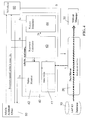
- FIG 4 shows an example of a computing system according to the present invention, more particularly a backup environment based on existing applications used to protect a so-called SAP R/3 database 10.
- Backup/restore processing of the database 10 is done by a database specific unit 20, called Data Mover and a further specific unit 30, called Storage Manager.
- Figure 4 also shows a so-called Administration Assistant 40 providing system administrators with means to administer the backup/restore processing.
- the Administration Assistant 40 is implemented as a client/server application.
- the Administration Assistant 40 comprises a server 41.
- the server 41 stores performance data received from the Data Mover 20. On its' browser based client it provides the user with several monitor panels like a performance monitor or a system Status Monitor 42.
- a calculating unit 43 called Recovery Calculator 43 which has to be initialised by a user by means of an Administration Assistant Client 50 specifying a system's recovery speed, a time interval indicating up to which point of time after the last backup the system has to be recoverable and a predefined time period to corresponding to a maximum time frame for a recovery process. This is done over a connection 1a.
- the Recovery Calculator 43 uses this data and the duration and data amount values from the Data Store 41 (connection 1) to calculate an overall recovery time t r . It then compares the overall recovery time t r with the predefined maximum recovery time to. Depending on the result of this comparison appropriate actions are taken. There are three different ways the result can be handled:
- Figure 5 shows a flowchart representing a recovery time calculation for online backups of an application system according to a possible embodiment of the method according to the present invention.
- a calculating unit of an appropriate computing system which does the calculation holds a set of default values:
- Redologs may already start while the data file backup is being processed. As already mentioned, there is a difference between archives being processed during a backup and those being processed after the backup has been finished. Redologs that are written during a backup contain much more data for a comparable content than those written after the backup has been finished. As the recovery time is not proportional to the amount of data but to the content to be restored, the recovery speed for the former redologs (created during the backup) v rec1 is a little higher than v rec2 . This leads to different recovery speed values v rec1 and v rec2 for both archive types.
- the calculator For every finished archive the calculator adds the duration t a to the total restore time t r2 and depending on the archive type (performed during a backup: a 1 or after a backup: a 2 ) the amount of data saved is added to S a1 or S a2 .
- the result t r is finally checked against the predefined time period t 0 . If t 0 is exceeded the appropriate application is informed.
- FIG. 6 shows a possible implementation of the method according to the present invention where only visual (and accustic) warnings are presented to a user.
- An existing monitor application which provides a set of status information can be enhanced to show an additional value for a recovery interval, namely a recovery time t r .
- the recovery interval status may be displayed as a red or green indicator on a corresponding client GUI (graphical user interface).
- Figure 7 shows another possible implementation variant of the method according to the present invention where visual (and accustic) warnings are combined with additional features for backup optimization.
- An existing monitor application which provides a set of status information can be enhanced to show an additional value for a recovery interval, namely a recovery time t r .
- the implemented assistant can support an administrator for a recovery by proposing a point in time that can be recovered within the predefined time period, namely a maximum recovery window. Also there might be parameters available to tweak the restore time where the assistant can also either propose or automatically change values to meet the maximum recovery window with an efficient use of available resources as for example tape drives, network connections, priority for copy processes etc. These are parameters which are available to tweaken the restore times.
- the recovery interval status may be displayed as a red or green indicator on a corresponding client GUI.
- a red indicator a user will be able to start a simulation process. Two different enhancement procedures are conceivable.
- a simulator automatically checks all possible parameter combinations and determines the optimum performance parameters. The result is presented to the user who then can decide to accept the new settings.
- An update of the configuration profiles may be automatically done by the application system or manually by the user.
- a scheduler tries to increase the number of backups to reduce the total recovery time.
- the new schedule is presented to the user who then can decide to accept the new settings.
- Figure 8 shows still another implementation variant of the method according to the present invention where an automatic re-scheduling mechanism starts in case a predefined time period t 0 has been exceeded by a calculated recovery time t r .
- a scheduler tries to increase the number of backups to reduce the total recovery time t r .
Landscapes
- Engineering & Computer Science (AREA)
- Theoretical Computer Science (AREA)
- General Engineering & Computer Science (AREA)
- Quality & Reliability (AREA)
- Physics & Mathematics (AREA)
- General Physics & Mathematics (AREA)
- Computer Hardware Design (AREA)
- Life Sciences & Earth Sciences (AREA)
- Bioinformatics & Computational Biology (AREA)
- Evolutionary Biology (AREA)
- Bioinformatics & Cheminformatics (AREA)
- Debugging And Monitoring (AREA)
- Information Retrieval, Db Structures And Fs Structures Therefor (AREA)
Priority Applications (1)
| Application Number | Priority Date | Filing Date | Title |
|---|---|---|---|
| EP05111411A EP1677192A3 (de) | 2004-12-29 | 2005-11-29 | EDV-System und Verfahren zur Berechnung einer Erholzeit eines Anwendungssystems |
Applications Claiming Priority (2)
| Application Number | Priority Date | Filing Date | Title |
|---|---|---|---|
| EP04107049 | 2004-12-29 | ||
| EP05111411A EP1677192A3 (de) | 2004-12-29 | 2005-11-29 | EDV-System und Verfahren zur Berechnung einer Erholzeit eines Anwendungssystems |
Publications (2)
| Publication Number | Publication Date |
|---|---|
| EP1677192A2 true EP1677192A2 (de) | 2006-07-05 |
| EP1677192A3 EP1677192A3 (de) | 2009-02-18 |
Family
ID=36216781
Family Applications (1)
| Application Number | Title | Priority Date | Filing Date |
|---|---|---|---|
| EP05111411A Withdrawn EP1677192A3 (de) | 2004-12-29 | 2005-11-29 | EDV-System und Verfahren zur Berechnung einer Erholzeit eines Anwendungssystems |
Country Status (1)
| Country | Link |
|---|---|
| EP (1) | EP1677192A3 (de) |
Cited By (1)
| Publication number | Priority date | Publication date | Assignee | Title |
|---|---|---|---|---|
| WO2010089003A1 (en) * | 2009-02-03 | 2010-08-12 | International Business Machines Corporation | Method and system for multi-server application synchronization without stopping i/o |
Citations (2)
| Publication number | Priority date | Publication date | Assignee | Title |
|---|---|---|---|---|
| EP1359506A2 (de) | 2002-04-24 | 2003-11-05 | Software Engineering GmbH | Bestimmung von Kennzahlen bezüglich der Dauer von Datenbankwiederherstellungsprozessen |
| US20040210577A1 (en) | 2003-04-16 | 2004-10-21 | Oracle International Corporation | Techniques for increasing the usefulness of transaction logs |
Family Cites Families (1)
| Publication number | Priority date | Publication date | Assignee | Title |
|---|---|---|---|---|
| US5574897A (en) * | 1992-09-30 | 1996-11-12 | International Business Machines Corporation | System managed logging of objects to speed recovery processing |
-
2005
- 2005-11-29 EP EP05111411A patent/EP1677192A3/de not_active Withdrawn
Patent Citations (2)
| Publication number | Priority date | Publication date | Assignee | Title |
|---|---|---|---|---|
| EP1359506A2 (de) | 2002-04-24 | 2003-11-05 | Software Engineering GmbH | Bestimmung von Kennzahlen bezüglich der Dauer von Datenbankwiederherstellungsprozessen |
| US20040210577A1 (en) | 2003-04-16 | 2004-10-21 | Oracle International Corporation | Techniques for increasing the usefulness of transaction logs |
Cited By (5)
| Publication number | Priority date | Publication date | Assignee | Title |
|---|---|---|---|---|
| WO2010089003A1 (en) * | 2009-02-03 | 2010-08-12 | International Business Machines Corporation | Method and system for multi-server application synchronization without stopping i/o |
| US8108575B2 (en) | 2009-02-03 | 2012-01-31 | International Business Machines Corporation | Methods of multi-server application synchronization without stopping I/O |
| JP2012517042A (ja) * | 2009-02-03 | 2012-07-26 | インターナショナル・ビジネス・マシーンズ・コーポレーション | I/oを中断しないマルチサーバ・アプリケーション同期の方法、プログラム、及び、システム |
| US8321610B2 (en) | 2009-02-03 | 2012-11-27 | International Business Machines Corporation | Methods of multi-server application synchronization without stopping I/O |
| US8656073B2 (en) | 2009-02-03 | 2014-02-18 | International Business Machines Corporation | Methods of multi-server application synchronization without stopping I/O |
Also Published As
| Publication number | Publication date |
|---|---|
| EP1677192A3 (de) | 2009-02-18 |
Similar Documents
| Publication | Publication Date | Title |
|---|---|---|
| US7657583B2 (en) | Calculating recovery time of an application system | |
| US8185505B1 (en) | Techniques for processing recovery points | |
| US7418619B1 (en) | Backup and restore operations of interdependent system components | |
| US8429359B1 (en) | Method and apparatus for dynamically backing up database files | |
| US8140484B2 (en) | Techniques for determining an implemented data protection policy | |
| US7546428B1 (en) | Computer architecture for managing replication of data in a data storage environment | |
| TWI554875B (zh) | 基於資源存取模式預測、診斷應用程式故障並從應用程式故障恢復 | |
| JP4321705B2 (ja) | スナップショットの取得を制御するための装置及び記憶システム | |
| CN110851302B (zh) | 一种数据库信息的备份方法及恢复方法 | |
| US7246254B2 (en) | System and method for automatically and dynamically optimizing application data resources to meet business objectives | |
| US8527479B2 (en) | Determining whether a selected backup set satisfies a retention policy | |
| US20130166511A1 (en) | Determining an overall assessment of a likelihood of a backup set resulting in a successful restore | |
| JP2004535638A (ja) | 強化されたエラー検出及び復元を備えた情報複製システム | |
| US20200210374A1 (en) | Apparatus and method for file capture, preservation and management | |
| US6965976B2 (en) | Backup method on a hierarchical backup system | |
| JP2004038516A (ja) | 業務処理システム、運用管理方法及び運用管理を行うためのプログラム | |
| US20100312751A1 (en) | Data retention using logical objects | |
| EP1677192A2 (de) | EDV-System und Verfahren zur Berechnung einer Erholzeit eines Anwendungssystems | |
| JP2004046658A (ja) | データ転送方法 | |
| US12124596B2 (en) | Universal platform for data protection | |
| Vale | AUTOMATED SNAPSHOT LIFECYCLE MANAGEMENT FOR HEALTH IT STORAGE | |
| Haubert | Threats of human error in a high-performance storage system: Problem statement and case study | |
| WO2003003209A1 (en) | Information replication system having enhanced error detection and recovery | |
| Kuhn et al. | Backup and Recovery 101 | |
| Plan | Backup, Recovery, and Maintenance |
Legal Events
| Date | Code | Title | Description |
|---|---|---|---|
| PUAI | Public reference made under article 153(3) epc to a published international application that has entered the european phase |
Free format text: ORIGINAL CODE: 0009012 |
|
| AK | Designated contracting states |
Kind code of ref document: A2 Designated state(s): AT BE BG CH CY CZ DE DK EE ES FI FR GB GR HU IE IS IT LI LT LU LV MC NL PL PT RO SE SI SK TR |
|
| AX | Request for extension of the european patent |
Extension state: AL BA HR MK YU |
|
| PUAL | Search report despatched |
Free format text: ORIGINAL CODE: 0009013 |
|
| AK | Designated contracting states |
Kind code of ref document: A3 Designated state(s): AT BE BG CH CY CZ DE DK EE ES FI FR GB GR HU IE IS IT LI LT LU LV MC NL PL PT RO SE SI SK TR |
|
| AX | Request for extension of the european patent |
Extension state: AL BA HR MK YU |
|
| RIC1 | Information provided on ipc code assigned before grant |
Ipc: G06F 11/14 20060101ALI20090109BHEP Ipc: G06F 11/34 20060101AFI20090109BHEP |
|
| 17P | Request for examination filed |
Effective date: 20090226 |
|
| AKX | Designation fees paid |
Designated state(s): AT BE BG CH CY CZ DE DK EE ES FI FR GB GR HU IE IS IT LI LT LU LV MC NL PL PT RO SE SI SK TR |
|
| STAA | Information on the status of an ep patent application or granted ep patent |
Free format text: STATUS: THE APPLICATION IS DEEMED TO BE WITHDRAWN |
|
| 18D | Application deemed to be withdrawn |
Effective date: 20120601 |