EP1676210B1 - Verfahren und vorrichtung zur handhabung von text- und binär-markup-sprachen in einer datenverarbeitungseinrichtung - Google Patents
Verfahren und vorrichtung zur handhabung von text- und binär-markup-sprachen in einer datenverarbeitungseinrichtung Download PDFInfo
- Publication number
- EP1676210B1 EP1676210B1 EP04768808A EP04768808A EP1676210B1 EP 1676210 B1 EP1676210 B1 EP 1676210B1 EP 04768808 A EP04768808 A EP 04768808A EP 04768808 A EP04768808 A EP 04768808A EP 1676210 B1 EP1676210 B1 EP 1676210B1
- Authority
- EP
- European Patent Office
- Prior art keywords
- mark
- plug
- parser
- language
- client
- Prior art date
- Legal status (The legal status is an assumption and is not a legal conclusion. Google has not performed a legal analysis and makes no representation as to the accuracy of the status listed.)
- Expired - Lifetime
Links
Images




Classifications
-
- G—PHYSICS
- G06—COMPUTING OR CALCULATING; COUNTING
- G06F—ELECTRIC DIGITAL DATA PROCESSING
- G06F40/00—Handling natural language data
- G06F40/20—Natural language analysis
- G06F40/205—Parsing
-
- G—PHYSICS
- G06—COMPUTING OR CALCULATING; COUNTING
- G06F—ELECTRIC DIGITAL DATA PROCESSING
- G06F40/00—Handling natural language data
- G06F40/10—Text processing
- G06F40/12—Use of codes for handling textual entities
- G06F40/14—Tree-structured documents
- G06F40/143—Markup, e.g. Standard Generalized Markup Language [SGML] or Document Type Definition [DTD]
Definitions
- This invention relates to an extensible framework for handling different mark up language parsers and generators.
- the invention finds application in a computing device. Its advantages arc especially valuable for a resource constrained mobile computing device, i.e. a battery powered, portable device in which there arc power and memory constraints, but arc relevant to other kinds of computing devices, such as desktop PCs, set top boxes etc.
- Mark-up language is a set of codes in a text or binary file that enable a computing device to format the text for correct display or printing.
- a client i.e. any process that requests a service from another process
- parsers and generators have been specific to certain kinds of mark-up languages.
- a client could use an XML (extensible mark-up language) parser to interpret and handle XML files; it could use a separate WBXML (WAP binary XML) parser to interpret and handle WBMT. files.
- WBXML WAP binary XML
- the client talks directly to the XML parser and the separate WBXML parser.
- the client needs to generate mark-up language format files, there could be an XML generator and a separate WBXML generator. Again, the client would talk directly to each generator.
- Clients therefore have had to be hard-coded to handle and talk directly with these specific kinds of parsers and generators; in practice, different mark up language formats (further increasing the demand on both ROM and also RAM memory) or else they are restricted to a single mark-up language format.
- WO 03/046757 A2 discloses a system for processing XML documents.
- a mobile device is arranged to transcode received XML documents using a locally stored code book. If the required code book is not stored locally, the mobile device requests the correct code book from a data server.
- Makoto Ouizuka "Tutorial: XML Toolkit", University of Washington, 5 September 2002 , discloses a framework for light-weight and high performance XML data stream processing.
- WO 03/014971 A2 discloses a web interaction system which enables a mobile telephone to interact with web resources.
- the web interaction system includes a query engine which parses XML data into SAX events. The SAX events are then queried by the query engine and the results of the query are sent to the mobile telephone.
- WO 02/17075 A discloses a method of enabling a wireless device to access data services.
- it discloses an extensible framework which handles data passing to and from applications on the device and data service providers.
- the present invention is a computing device programmed with a client that can operate with a parser or generator for both text and binary mark up languages; the client uses a unique integer value that can be interpreted in an index of elements, attributes and attribute values needed to describe a particular type of mark-up document, the index mapping that unique integer value not only (a) to a token associated with prededefined element, attribute or attribute value to enable a token based mark up language to be handled but also (b) to a string associated with a prededefined element, attribute or attribute value to enable to enable a string based mark up language to be handled.
- the text mark up language is XML and the binary mark up language is WBXML.
- the invention in effect provides for there to be a common API to parse binary (e.g. WBXML) as well as text (e.g. XML) mark-up language. This greatly simplifies the implementation of clients. Further, clients that require parsing of different mark-up languages will require less memory, as they will communicate with only one common API to parse both binary and text mark-up languages. Also, clients will not need to know what the source document is (i.e. text or binary) as the APIs are the same. Appendix C discusses this approach in more detail.
- a core technical advantage offered by the present invention is that it reduces device memory requirements; this in turn can lead to faster loading of code and/or less use of virtual memory.
- These advantages are especially useful in mobile computing devices, where techniques that lower memory requirements, reduce power consumption and extend battery life are very valuable.
- the term 'mobile computing device' should be expansively construed to cover mobile telephones, smartphones, personal organisers, wireless information device and any other kind of portable, mobile computing device. But these advantages are also valuable in fixed computing devices such as PCs, set top boxes, games consoles etc. and can lead directly to lower BOM (bill of material) costs because of the lower memory requirements.
- mappings of each of the tokens to each of the strings there is a table of mappings of each of the tokens to each of the strings that is created and each mapping is given one of the unique integer values.
- Two lists of unique integer values are created: one indexed on tokens and the other indexed on the index of the position of a string in a string pool table. The two indexed lists are for performance, so that we can quickly find a token from an index and vice versa.
- an extensible framework can be deployed that accepts one or more mark-up language parsers and/or generators, each implemented as plug-ins to the framework, with different plug-ins enabling different kinds of mark up languages to be handled by the device.
- a namespace plug-in to the extensible framework sets-up all the elements, attributes and attribute values for a namespace.
- the index that maps the unique integer value to both the tokens and strings is encapsulated in the namespace plug-in and therefore is insulated from the client, parser and generator.
- the extensible framework is an API (which term includes a set of APIs) that enables different types of mark-up parsers and generators to be included in the framework by means of the parser/generator plug-ins.
- a plug-in is a replaceable item of executable code that provides specific services to a loosely coupled application that can load or invoke it at run-time; it can therefore extend the framework at run-time (i.e. there is no need to recompile or change the framework for a plug-in to work).
- the extensible framework approach has many advantages over the conventional approach of hard-coding clients to specific parsers and generators. Because of the extensible plug-in design, it is possible to allow new kinds of parsers and generators to be loaded onto a device after that device has been shipped to an end-user. The only requirement is that they are implemented as plug-ins that are compatible with the extensible framework. This is especially useful in the context of mark up language parsers and generators since there are many potential languages that might need to be handled by a device but it is impractical to hard-code the capability to handle all of these when the device is designed because of the memory overhead.
- the extensible framework may be a stand alone application or may form part of a device operating system: if the latter, a particular version of the operating system that includes the extensible framework can be developed and included in device ROM for a broad range of computing devices: this version will be able to handle different kinds of mark up languages when appropriate parser/generator plug ins are used.
- SymbianOS is an operating system for smart phones and advanced mobile telephones, and other kinds of portable computing devices.
- the Mark-Up Language framework implements three key features.
- Clients are separated from mark-up language parsers/generators by an extensible framework that accepts one or more mark-up language parsers and/or generators, each implemented as plug-ins to the framework, with different plug-ins enabling different kinds of mark up languages to be handled by the device.
- the extensible framework is in effect an intermediary (i.e. abstraction) layer that (a) insulates the client from having to communicate directly with the parser or generator and is (b) generic in that it presents a common API to the client irrespective of the specific kind of parser or generator the intermediary layer interfaces with.
- Mark-up language parser or generator plug-ins to the extensible framework can access components to validate, pre-filter or alter data; the components are plug-in components to the extensible framework that operate using a 'chain of responsibility' design pattern.
- the mark-up language parsers or generators can access data from a source using a generic data supplier API, insulating the parser or generator from having to communicate directly with the data source.
- parsers and generators are plug-ins to an extensible framework; the framework is in one implementation part of the operating system of the device.
- the present invention may hence readily allow the device to operate with different kinds of parsers and generators: this extensibility is impossible to achieve with prior art hard-coded systems.
- this layer (a) insulates the client from having to communicate directly with the parser or generator and is (b) generic in that it presents a common API to the client irrespective of the specific kind of parser or generator the intermediary layer interfaces with.
- the client is no longer tied to a single kind of parser or generator; it can operate with any different kind of parser compatible with the intermediary layer, yet it remains far simpler than prior art clients that are hard-coded to operate directly with several different kinds of parsers and generators.
- the API is typically implemented as a header file.
- the specific kind of parser or generator being used is not known to the client: the intermediary layer fully insulates the client from needing to be aware of these specifics. Instead, the client deals only with the intermediary layer, which presents to the client as a generic parser or a generic generator - i.e. a parser or generator which behaves in a way that is common to all parsers or generators.
- the SyncML the protocol supports both XML and WBXML.
- a SyncML client can use either or both type of parser and generator without knowing about the type of mark-up language; as a result, the design of the SyncML client is greatly simplified.
- WBXML and XML are quite different in the way they represent their data, one very useful feature of the invention is the mapping of WBXML tokens to a string in a static string pool table. Appendix C expands on this idea.
- the present invention may provide a flexible and extensible, file conversion system: for example, the device could parse a document written in one mark up language format and then use the parsed document data to generate an equivalent document in a different file format. Because of the extensible plug-in design of an implementation of the system, it is possible to provide far greater kinds of file conversion capabilities than was previously the case. New kinds of parsers and generators can be provided for loading onto a device after that device has been shipped to an end-user. The only requirement is that they are compatible with the intermediary layer.
- Another advantage of the present invention is that it allows not only different parsers and generators to be readily used by the same client, but it allows also several different clients to share the same parsers and generators as well.
- the API may itself be extensible, so that extensions to its capabilities (e.g. to enable a new/extended mark-up language of a document to be handled) can be made without affecting compatibility with existing clients or existing parsers and generators.
- new kinds of clients can be provided for loading onto a device after that device has been shipped to an end-user. The only requirement is that they are compatible with the intermediary layer.
- mark-up language parser or generator can access components to validate, pre-filter or alter data, in which the components are plug-in components that operate using a chain of responsibility. They may be plug-ins to the extensible framework described above.
- the system is inherently flexible and extensible compared with prior art systems in which a component (for validating, prefiltering or altering data from a parser or generator) would be tied exclusively to a given parser.
- a mark up language of a document is extended, or a new one created, it is possible to write any new validation/pre-filter/altering plug-in that is needed to work with the extended or new language.
- These new kinds of validation/pre-filter/altering plug-ins can be provided for loading onto a device even after that device has been shipped to an end-user.
- the 'chain of responsibility' design pattern whilst known in object oriented programming, has not previsouly been used in the present context.
- the plug-in components may all present a common, generic API to the parser and generator. Hence, the same plug-in can be used with different types of parsers and generators (e.g. a XML parser, a WBXML parser, a RTF parser etc.).
- the plug-ins also present a common, generic API to a client component using the parser or generator. Hence, the same plug-ins can be used by different clients.
- a DTD validator plug-in could be written that validates the mark-up of a document and can report errors to the client.
- an auto correction plug-in filter could be written that tries to correct errors found in the mark-up language, such as a missing end element tag, or a incorrectly placed element tag. The auto correction plug-in will, if it can, fix the error transparently to the client. This enables a web browser to still display a document rather then just displaying an error reporting that there was an error in the document.
- the parser could notify the validator plug-in of elements it is parsing and these in turn would go to the auto correction plug-in to be fixed if required and finally the client would receive these events.
- the mark-up framework allows parser plug-ins to expose the parsed element stack to all validation/pre-filter/altering plug-ins.
- the parsed element stack is a stack populated with elements from a document extracted as that document is parsed; this stack is made available to all validation/pre-filter/altering plug-ins to avoid the need to duplicate the stack for each of these plug-ins).
- This also enables the plug-ins to use the stack information to aid in validation and filtering. For example an auto corrector plug-in may need to know the entire element list that is on the stack in order to figure out how to fix a problem.
- filter/validator plug-ins in mark-up language generators is especially useful for developers writing a client to the framework and generating mark-up documents as the same validator plug-in used by the parser can be used in the generator. Errors are reported to the client when the mark-up does not conform to the validator which will enable the developer to make sure they are writing well formed mark-up that conforms to the DTD and catch error early on during development.
- the mark-up framework incorporates a character conversion module that enables documents written in different character sets (e,g, ASCII, various Kanji character sets etc.) to be parsed and converted to UTF8.
- the mark-up language parser or generator accesses data from a source using the extensible framework - i.e. a generic data supplier API.
- the parser or generator is insulated from having to talk directly to a data source; instead, it does so via the generic data supplier API, acting as an intermediary layer.
- the present invention allows parsing and generation to be carried out with any data source.
- a buffer in memory could be used, as could a file, as could streaming from a socket (hence enabling the ability to parse in real-time from data streamed over the internet).
- a socket enabling the ability to parse in real-time from data streamed over the internet.
- the system allows any source that can use the generic data supplier API to be adopted. New types of data sources can be utilised by computing device, even after those devices have been shipped to end-users.
- SymbianOS is an operating system for smart phones and advanced mobile telephones, and other kinds of portable computing devices.
- Appendix C describes a particular technique, referred to as 'String Pool', which is used in the Mark-Up Language Framework.
- Various SymbianOS specific programming techniques and structures are referred to. There is an extensive published literature describing these techniques; reference may for example be made to " Professional Symbian Programming" Wrox Press Inc. ISBN: 186100303X , the contents of which are incorporated by reference.
- the mark-up language extensible framework is shown schematically in Figure 1 . This is implemented as part of the operating system of a computing device.
- the Client 1 is the application using the mark-up framework for parsing or generating a document.
- the Parser 2 and Generator 3 components are plug-ins specific to a mark-up language (e.g. XML or WBXML); they are plug-ins to the extensible framework - i.e. a set of generic APIs that enable the client 1 to communicate with Parser 2 and Generator 3.
- the plug-ins conform to Symbian OS requirements known as 'ECOM'.
- parsers and generators e.g. to handle extensions to mark up languages, new languages or new schemas
- parsers and generators can readily be loaded onto the device, even after the device has shipped.
- different clients running on the device can share the same parser or generator; these clients are simpler than prior art clients since they need to operate with a single, generic API.
- the API is shown symbolically as the API abstraction or intermediary layer 10.
- the Parser 2 and Generator 3 components use the Namespace collection 4 to retrieve information about a specific namespace during the parsing or generating phase.
- the Namespace Plug-in 5 component is an ECOM plug-in that sets-up all the elements, attributes and attribute values for a namespace. For each namespace used ,there must be a plug-in that describes the namespace.
- the namespace information is stored in a string pool.
- the string pool is a way of storing strings that makes comparison almost instantaneous at the expense of string creation. It is particurarly efficient at handling string constants that are known at compile time, which makes it very suitable for processing documents.
- Appendix C includes more detail on string pools.
- the Namespace collection 4 owns the string pool that the Parser 2, Generator 3 and Client 1 can gain access to.
- the Namespace Plug-in 5 simply sets-up the string pool with the required strings for the namespace the plug-in represents.
- the Client 1 may get access to the Namespace Collection 4 via the Parser 2 or Generator 3 to pre-load namespaces prior to parsing or generating documents which may speed up the parsing or generating session.
- the Plug-in components (5A - 5D) are optional and allow further processing of the data before the client receives it, such as. DTD validators or document auto correctors. Validators check the elements and attributes conform to the DTD. Document auto correction plug-ins are used to try to correct errors reported from DTD validators.
- These components are also plug-ins to the extensible framework and hence share at least some of the same APIs 10 as the Parser 2 and Generator 3.
- the Parser 2 is event driven and sends events to the various plug-ins and UI during parsing.
- FIG. 2 shows a Client 21 parsing with a DTD validator 22 and Auto corrector 23; these components are also plug-ins to the extensible framework and use the same generic interface, again indicated schematically as layer 10. As a consequence, these components will operate with any parser or generator that that is a plug-in the extensible framework.
- the Client 21 talks to the Parser 24 directly to start the parse.
- the Parser 24 sends events to the Plug-ins, 22, 23; they operate using a 'chain of responsibility'.
- the first plug-in that receives events is the DTD validator plug-in 22. This plug-in validates that the data in the event it received is correct.
- the Parser 24 sent to the Validator 22 to the Auto corrector 23 except for a error code that will describe the problem the Validator 22 encountered. It the event data is valid the same event will be sent to the Auto corrector 23. Now the Auto corrector 23 receives the event and can check for any errors. If there is an error it can attempt to correct it. If it can correct the error it will modify the data in the event and remove the error code before sending the event to the client. The Client 21 finally receives the event and can now handle it.
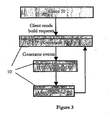
- Figure 3 illustrates a Client 31 generating mark up language using a generator 34 with a DTD validator 32 and Auto corrector plug-in 33. All plug-ins are plug-ins to the extensible framework and hence share at least some of the same APIs, again symbolically shown .as API Layer 10. A real client would probably never use a generator and auto corrector since the data the client generates should always be valid, but it is used here to show the flow of events from a generator and any plug-ins attached.
- the Client 31 sends a build request to the Generator 34.
- the first thing the Generator 34 does is to send the request as an event to the DTD validator plug-in 32.
- the situation is similar to the parser: the DTD validator plug-in 32 validates that the data in the event it received is correct. If it is not correct, it will send the same event the Generator 34 sent to the Validator 32 to the Auto corrector 33 except for an error code that will describe the problem the Validator 32 encountered. It the event data is valid the same event will be sent to the Auto corrector 33. Now the Auto corrector 33 receives the event and can check for any errors. If there is an error it can attempt to correct it. If it can correct the error it will modify the data in the event and remove the error code before sending the event back to the Generator 34.
- the major difference between the events during parsing and generating is that with generating, once the final plug-in has dealt with the event it gets sent back to the generator.
- the generator receives the event and builds up part of the document using the details
- Parsing WBXML is quite different to parsing XML or HTML.
- the main difference is elements and attributes are defined as tokens rather than using their text representation. This means a mapping needs to be stored between a WBXML token and its static string representation.
- the Namespace plug-in for a particular namespace will store these mappings.
- a WBXML parser and generator can then obtain a string from the namespace plug-in given the WBXML token and vice versa. Appendix C deals with this in more detail.
- the class diagram for the mark-up framework is shown in Figure 4 .
- the diagram also depicts plug-ins that makes use of the framework.
- the dark grey classes are the plug-ins that provide implementation to the mark-up framework.
- CxmlParser 42 and CwbxmlParser 43 provide an implementation to parse XML and WBXML documents respectively.
- CxmlGenerator 44 and CwbxmlGenerator 45 generate XML and WBXML documents respectively.
- Cvalidator 47 is a plug-in which will validate the mark-up document during parsing or generating.
- CautoCorrector 46 is a plug-in that corrects invalid mark-up documents.
- the element RString in the event is a handle to a string in the string pool. If this is a known string, i.e. one that has been added by the Namespace Plug-in then the string will be static. Otherwise, if it is an unknown string, the parser will add the string to the string pool as a dynamic string and return a RString with a handle of this string. It is not possible to know if a RString is dynamic or static so the parser or generator that obtains a RString must be sure to close it to ensure any memory is released if the string is dynamic.
- a client that wishes to use the RString after the event returns to the parser must make a copy of it which will increase the reference count and make sure it is not deleted when the parser closes it.
- the key to the Figure 4 shading is as follows: NAME TYPE OF tCLASS RNamespaceCollection Mark-up framework class RParserSession Mark-up framework class RGeneratorSession Mark-up framework class CMarkupPluginBase Mark-up framework class CMarkupNamespace Mark-up framework class RTableCodePage Mark-up framework class CMarkupCharSetConverter Mark-up framework class CMarkupPlugin Mark-up framework class CParserSession Mark-up framework class CGeneratorSession Mark-up framework class RAttribute Mark-up framework class RElementStack Mark-up framework class MMarkupCallback Mix-in class used for call-backs MDataSupplierReader Mix-in class used for call-backs MDataSupplierWriter Mix-in class used
- Figure 5 is an example class diagram that shows the major classes for parsing WBXML SyncML documents.
- the client creates a CdescriptorDataSupplier 51 that supplies the data to the parser.
- CwbxmlParser 52 is the class that actually parses the document.
- CSyncMLNamespace 53 is the namespace for SyncML that the parser uses to map WBXML tokens to strings. All the other classes belong to the mark-up framework. To parse a document with different namespaces the only thing that needs to be added is a plug-in for each namespace.
- Object name Description Associated (owned/dependant) objects MMarkupCallback A call-back that a client must implement so that the parser can report events back to the client during the parsing session.
- RNarnespaceCollection Contains a collection of namespaces. Contains reference counter so multiple parsers or generators may use the same namespace collection. Owned by either CParserSession or CGeneratorSession. Owns an array of CMarkupNamespace plug-ins.
- CMarkupNamespace ECOM interface to implement a namespace. Inherited by any namespace plug-ins.
- RGeneratorSession Public interface for a client to create a generator session. Owned by the client.
- CMarkupCharSetConve rter Helper function which uses CCnvCharacterSetConverter for the client, parser and generator to do any character set conversions or resolving MIB Enums or Internet-standard names of character sets. Owned by RParserSession and RGeneratorSession.
- CMarkupPlugin ECOM interface for plug-ins to be used by the parser and generator.
- MDataSupplierReader Pure virtual interface to be implemented by a data supplier for reading data. Inherited by the client's data provider. MDataSupplierWriter Pure virtual interface to be implemented by a data supplier for writing data. Inherited by the client's data provider.
- CParserSession ECOM interface for parser plug-ins. Inherited by a concrete parser implementation.
- CGeneratorSession ECOM interface for generator plug-ins. Inherited by a concrete generator implementation.
- RAttribute Contains the name and value of an attribute. Used by the parse, generator and client.
- CWbxmlGenerator A WBXML generator implementation. Owned by RGeneratorSession.
- CNamespace A namespace plug-in to use with a parser and generator. Owned by RNamespaceCollection.
- REleinentStack A stack of the currently processed elements during parsing or generating. Owned by CParserSession and CGeneratorSession.
- Method Description void OpenL(MDataSupplierReader& aReader, const TDesC8& aMarkupMimeType, const TDesC8& aDocumentMimeType, MMarkupCallback& aCallback) Opens a parser session.
- aReader is the data supplier reader to use during parsing.
- aMarkupMimeType is the MIME type of the parser to open.
- aDocumentMimeType is the MIME type of the document to parse.
- aCallback is a reference to the call-back so the parser can report events.
- OpenL (MDataSupplierReader& aReader, const TDesC8& aMarkupMimeType, const TDesC8& aDocumentMimeType, MMarkupCallback& aCallback, RMarkupPlugins aPlugins ) Opens a parser session.
- aReader is the data supplier reader to use during parsing.
- aMarkupMimeType is the MIME type of the parser to open.
- aDocumentMimeType is the MIME type of the document to parse.
- aCallback is a reference to the call-back so the parser can report events.
- aPlugins is an array of plug-ins to use with the parser.
- the first plug-in in the list is the first plug- in to be called back from the parser.
- the first plug-in will then call-back to the second plug-in etc.
- void OpenL (MDataSupplierReader& aReader, const TDesC8& aMarkupMimeType, corist TDesC8& aDocumentMimeType, MMarkupCallback& aCallback, RMarkupPlugins aPlugins ⁇ , RNamespaceCollection aNamespaceCollection ) Opens a parser session.
- aReader is the data supplier reader to use during parsing.
- aMarkupMimeType is the MIME type of the parser to open.
- aDocumentMimeType is the MIME type of the document to parse.
- aCallback is a reference to the call-back so the parser can report events.
- aPlugins is an array of plug-ins to use with the parser. The first plug-in in the list is the first plug-in to be called back from the parser. The first plug-in will then call-back to the second plug-in etc.
- aNamespaceCollection is a handle to a previous namespace collection. This is useful if a generator or another parser session has been created so that same namespace collection can be shared. void Close() Closes the parser session. void Smrt() Start parsing the document. void Stop() Stop parsing the document.
- void Reset (MDataSupplierReader& aReader, MMarkupCallback& aCallback ) Resets the parser ready to parse a new document.
- aReader is the data supplier reader to use during parsing.
- aCallback is a reference to the call-back so the parser can report events.
- TInt SetParseMode (TInt aParseMode ) Selects one or more parse modes.
- aParseMode is one or more of the following.
- EConvertTagsToLowerCase Converts elements and attributes to lowercase. This can be used for case-insensitive HTML so that a tag can be matched to a static string in the string pool.
- EErrorOnUnrecognisedTags Reports an error when unrecognised tags are found.
- EReportUnrecognisedTags - Reports unrecognised tags.
- EReportNamespaces Reports the namespace.
- EReportNamespacePrefixes Reports the namespace prefix.
- ESendFullContentInOneChunk Sends all content data for an element in one chunk.
- EReportNameSpaceMapping Reports namespace mappings via the DoStartPrefixMapping () & DoEndPrefixMapping() methods. If this function is not called the default will be: EReportUnrecognisedTags
- EReportNamespaces If the parsing mode is not supported KErrNotSupported is returned.
- Method Description void OpenL(MDataSupplierWriter& a Writer, TUid aMarkupMimeType, const TDesC8& aDocumentMimeType ) Opens a generator session.
- a Writer is the data supplier writer used to generate a document.
- aMarkupMimeType is the MIME type of the generator to open.
- aDocumentMimeType is the MIME type of the document to parse.
- aWriter is the data supplier writer used to generate a document.
- aMarkupMimeType is the MIME type of the generator to open.
- aDocumentMimeType is the MIME type of the document to parse.
- aPlugins is an array of plug-ins to use with the generator. void OpenL(MDataSupplierWriter& aWriter, TUid aMarkupMimeType, const TDesC8& aDocumentMimeType, RMarkupPlugins aPlugins ⁇ , RNamespaceCollection aNamespaceCollection ) Opens a generator session.
- aWriter is the data supplier writer used to generate a document.
- aMarkupMimeType is the MIME type of the generator to open.
- aDocumentMimeType is the MIME type of the document to parse.
- aPlugins is an array of plug-ins to use with the generator.
- aNamespaceCollection is a handle to a previous namespace collection. This is useful if a generator or another parser session has been created so that same namespace collection can be shared.
- void Close() Closes the generator session.
- void Reset(MDataSupplierWriter& aWriter, MMarkupCallback& aCallback ) Resets the generator ready to generate a new document.
- aWriter is the data supplier writer used to generate a document.
- aCallback is a reference to the call-back so the generator can report events.
- aDocParam specifies the various parameters of the document. In the case of WBXML this would state the public ID and string table.
- void BuildEndDocumentL() Builds the end of the document.
- void BuildStartElementL(RTagInfo& aElement, RAttributeArray& aAttributes ) Builds the start element with attributes and namespace if specified.
- aElement is a handle to the element's details.
- aAttributes contains the attributes for the element.
- void BuildEndElementL(RTagInfo& aElement ) Builds the end of the element.
- aElement is a handle to the element's details.
- void BuildContentL(const TDesC8& aContentPart ) Builds part or all of the content. Large content should be built in chunks. I.e. this function should be called many times for each chunk.
- aBytes is the raw content data. This data must be converted to the correct character set by the client.
- void BuildPrefixMappingL(RString& aprefix, RString& aUri ) Builds a prefix - URI namespace for the next element to be built. This method can be called for each namespace that needs to be declared.
- aPrefix is the Namespace prefix being declared.
- aUri is the Namespace URI the prefix is mapped to.
- void BuildProcessingInstructionL(RString& aTarget, RString& aData ) Build a processing instruction.
- aTarget is the processing instruction target.
- Method Description void Open(RString& aUri, RString& aPrefix, RString& aLocalName ) Sets the tag information for an element or attribute.
- aUri is the URI of the namespace.
- aPrefix is the prefix of the qualified name.
- aLocalName is the local name of the qualified name.
- Close() Closes the tag information.
- RString& Uri() Returns the URI.
- RString& LocalName() Returns the local name.
- RString& Prefix() Returns the prefix.
- void Connect() Every time this method is called a reference counter is incremented so that the namespace collection is only destroyed when no clients are using it.
- void Close() Every time this method is called a reference counter is decremented and the object is destroyed only when the reference counter is zero.
- const CMarkupNameSpace& OpenNamespaceL(const TDesC8& aMimeType ) Opens a namespace plug-in and returns a reference to the namespace plug-in. If the namespace plug-in is not loaded it will be automatically loaded.
- aMimeType is the MIME type of the plug-in to open.
- aStringPool is a handle of the string pool to add static string tables.
- RString& Element (TUint8 aWbxmlToken ) const Returns a handle to the string.
- aWbxmlToken is the WBXML token of the element.
- AttributeValuePair (TUint8 aWbxmlToken RString& aAttribute , RString& aValue ) const Returns a handle to the attribute and value strings.
- aWbxmlToken is the WBXML token of the attribute.
- aAttribute is the handle to the attribute string.
- aValue is the handle to the value string.
- RString& AttributeValue(TUint8 aWbxmlToken ) const Returns a handle to an attribute value.
- aWbxmlToken is the WBXML token of the attribute.
- RString& NamespaceUri() const Returns the namespace name.
- TUint8 CodePage() const Returns the code page for this namespace.
- CMarkupPluginBase& RootPlugin Returns a reference to the root plug-in. This must be either a parser or generator plug-in.
- CMarkupPluginBase& ParentPlugin Returns a reference to the Parent plug-in.
- RElementStack& ElementStack Returns a handle to the element stack.
- RNameSpaceCollection& NamespaceCollection Returns a handle to the namespace collection.
- CMarkupCharSetConverter& CharSetConverter() Returns a reference to the character set converter object.
- CMarkupPlugin* NewL (MMarkupCallback& aCallback ) Creates an instance of a mark-up plug-in.
- aCallback is a reference to the call-back to report events.
- void SetParent(CMarkupPluginBase* aParentPlugin ) Sets the parent plug-in for this plug-in.
- aParentPlugin is a pointed to the parent plug-in or NULL if there is no parent. A parser or generator does not have a parent so this must not be set, as the default NULL will indication there is not parent.
- aCallback is a reference to the call-back so the parser can report events.
- aNamespaceCollection is a handle to a previous namespace collection. Set to NULL if a new RNamespaceCollection is to be used.
- aCharSetConverter is a reference to the character set conversion class.
- void Start() Start parsing the document.
- Stop() Stop parsing the document
- aReader is the data supplier reader to use during parsing.
- aCallback is a reference to the call-back so the parser can report events.
- void SetParseMode(TInt aParseMode ) Selects one or more parse modes. See RParserSession for details on aParseMode .
- Method Description void OpenL(MDataSupplierWriter& aWriter , TUid aMarkupMimeType , const TDesC8& aDocumentMimeType , MMarkupCallback& aCallback , RNamespaceCollection* Opens a generator session.
- aWriter is the data supplier writer used to generate a document.
- aMarkupMimeType is the MIME type of the generator to open.
- aDocumentMimeType is the MIME type of the document to parse.
- aNamespaceCollection CMarkupCharSetConverter& aCharSetConverter
- aCallback is a reference to the call-back so the generator can report events.
- aNamespaceCollection is a handle to a previous namespace collection. Set to NULL if a new RNamespaceCollection is to be used.
- aCharSetConverter is a reference to the character set conversion class. void,Reset(MDataSupplierWriter& aWriter , MMarkupCallback& aCallback ) Resets the generator ready to generate a new document
- aWriter is the data supplier writer used to generate a document.
- aCallback is a reference to the call-back so the generator can report events.
- aDocParam specifies the various parameters of the document.
- void BuildEndDocumentL() Builds the end of the document.
- void BuildStartElementL(RTagInfo& aElement , RAttributeArray& aAttributes ) Builds the start element with attributes and namespace if specified.
- aElement is a handle to the element's details.
- aAttributes contains the attributes for the element.
- void BuildEndElementL( RTagInfo& aElement ) Builds the end of the element.
- aElement is a handle to the element's details.
- void BuildContentL(const TDesC8& aContentPart ) Builds part or all of the content. Large content should be built in chunks. I.e. this function should be called many times for each chunk. aBytes is the raw content data. This data must be converted to the correct character set by the client. void BuildProcessingInstructionL(RString& aTarget, RString& aData ) Build a processing instruction. aTarget is the processing instruction target. aData is the processing instruction data.
- aDocParam specifies the various parameters of the document. aErrorCode is the error code. If this is not KErrNone then special action may be required. void OnEndDocumentL(TInt aErrorCode ); Indicates the end of the document has been reached aErrorCode is the error code. If this is not KErrNone then special action may be required.
- OnStartElementL (RTagInfo& aElement , RAttributeArray& aAttributes , TInt aErrorCode ); Callback to indicate an element has been parsed.
- aElement is a handle to the element's details.
- aAttributes contains the attributes for the element.
- aErrorCode is the error code. If this is not KErrNone then special action may be required.
- aElement is a handle to the element's details.
- aErrorCode is the error code.
- OnContent L (const TDesC8& aBytes , TInt aErrorCode ) Sends the content of the element. Not all the content may be returned in one go. The data may be sent in chunks. When an OnEndElementL is received this means there is no more content to be sent.
- aBytes is the raw content data for the element. The client is responsible for converting the data to the required character set if necessary. In some instances with WBXML opaque data the content may be binary and must not be converted.
- aErrorCode is the error code. If this is not KErrNone then special action may be required.
- aPrefix is the Namespace prefix being declared.
- aUri is the Namespace URI the prefix is mapped to.
- aErrorCode is the error code. If this is not KErrNone then special action may be required.
- OnEndPrefixMappingL(RString& aPrefix , TInt aErrorCode ) Notification of the end of the scope of a prefix-URI mapping.
- aPrefix is the Namespace prefix that was mapped.
- aErrorCode is the error code. If this is not KErrNone then special action may be required.
- OnIgnoreableWhiteSpaceL (const TDesC8& aBytes , TInt aErrorCode ) Notification of ignorable whitespace in element content. aBytes are the ignored bytes from the document being parsed.
- aErrorCode is the error code. If this is not KErrNone then special action may be required.
- OnSkippedEntityL(RString& aName , TInt aErrorCode ) Notification of a skipped entity.
- aName is the name of the skipped entity.
- aErrorCode is the error code. If this is not KErrNone then special action may be required.
- void OnProcessingInstructionL( const TDesC8& aTarget, const TDesC8& aData , TInt aErrorCode ) Receive notification of a processing instruction.
- aTarget is the processing instruction target.
- aData is the processing instruction data. If empty none was supplied.
- aErrorCode is the error code. If this is not KErrNone then special action may be required.
- OnOutOfDataL There is no more data in the data supplier to parse. If there is more data to parse Start () should be called once there is more data in the supplier to continue parsing. void OnError(TInt aError ) An error has occurred where aError is the error code
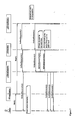
- Figure 6 shows the interaction of the client with the various parser objects to create a parser and generator session.
- the parsing of a simple document with only one element and generation of one element is shown. It is assumed a DTD validator and auto correct component are used. Auto correction in this example is only used with the parser.
- the generator only checks that tags are DTD compliant but does not try to correct any DTD errors.
- the bad element is detected by the DTD validator and sent to the auto correct component.
- the auto corrector realises that this element has an error from the error code passed in the call-back and tries to find out where the element should go, and send back the appropriate OnEndElementL() call-backs to the client.
- the data supplier and parser generator set-up components can be tested individually - all the functions are synchronous and therefore no active objects need to be created for testing.
- Symbian is the content for the element "Name”.
- DTD Document Type Definition MIME Multipurpose Internet Mail Extensions Code Page Since only 32 elements can be defined In WBXML, code pages are created so that each code page can have 32 elements.
- XSLT Extensible Style-sheet Language Transformations
- SOAP Simple Object Access Protocol URI Uniform Resource Identifiers qualified name.
- a qualified name specifies a prefix : local name e.g. 'HTML:B' prefix From the qualified name example this is 'HTML' local name From the qualified name example this is 'B'
- Table A1 shows a situation where the end tags are the wrong way round for A and B. This is very easy to fix since the DTD validator keeps a stack of the tags, it knows what the end tag should be.
- Table A 1 End tags that are the wrong way round ⁇ A> Content ⁇ B> More content ⁇ /A> ⁇ /B>
- Table A2 shows the situation where the B end tag is missing. Since the end tag does not match a guess can be made that there should be an end tag for B before the end tag of A.
- Table A3 shows the situation where there are no end tags for A and B.
- the DTD validator will detect the problem and send an end tag for B to the client.
- the auto correct component will query the DTD validator if the C tag is valid for the parent element A. If it is valid a OnStartELementL () will be sent to the client, otherwise the auto correct component can check further up the element stack to find where this element is valid. If it is not valid anywhere in the stack then it will be ignored together with any content and end element tag.
- Table A3 Missing end tags ⁇ A>Content ⁇ B> More content ⁇ C> Some content ⁇ /C>
- Tables 1 to 3 each represent a static string table. Tables 1 shows the elements for code page 0. Tables 2 and 3 are for attribute value pairs respectively. Each attribute index on Table 2 refers to the values of the same index in Table 3. These token values must match up in Tables 2 and 3. If an attribute does not have a value then there must be a blank as shown in Table 3 with token 8. For attribute values, these also appear in Table 3 but have a WBXML token value of 128 or greater.
- Table 1 ElementTable0, code page 0 Element type name WBXML token Addr 5 AddType 6 Auth 7 AuthLevel 8
- Table 2 AttributeValuePairNameTable, code page 0 Attribute name/value pair WBXML (attribute part) token WBXML token TYPE 6 TYPE 7 NAME 8 NAME 9
- Table 3 AttributeValuePairValueTable, code page 0 Attribute name/value pair (value part) WBXML token ADDRESS 6 URL 7 8 BEARER 9 GSM/CSD 128 GSM/SMS 129 GSM/USSD 130
- the Mark-up Language framework design relies on the fact that it is possible (using the 'String Pool' techniques described below, although other mapping techniques can also be used) to provide the same interface to clients no matter if text or binary mark-up language is used.
- Text based mark up languages use strings, i.e. sequences of characters or binary data.
- strings i.e. sequences of characters or binary data.
- static tables of these strings are created at compile time, with one string table per namespace, for all the elements, attributes and attribute values needed to describe a particular type of mark-up document.
- Each element, attribute and attribute value is assigned an integer number and these integer 'handles' form an index of the strings.
- a string in an XML document can be rapidly compared to all strings in the string table by the efficient process of comparing the integer representation of the string with all of the integer handles in the static string table.
- the main benefit of using a string pool for parsing is therefore that it makes it very easy and efficient for the client to check for what is being parsed, since handles to strings are used instead of actual strings.
- the client can therefore parse a binary or text document without having to know about the specific format - it simply uses the integer handle (RString), which will work correctly for both text and binary mark-up languages.
- Rtring integer handle
Landscapes
- Engineering & Computer Science (AREA)
- Theoretical Computer Science (AREA)
- Health & Medical Sciences (AREA)
- Artificial Intelligence (AREA)
- Audiology, Speech & Language Pathology (AREA)
- Computational Linguistics (AREA)
- General Health & Medical Sciences (AREA)
- Physics & Mathematics (AREA)
- General Engineering & Computer Science (AREA)
- General Physics & Mathematics (AREA)
- Devices For Executing Special Programs (AREA)
- Stored Programmes (AREA)
- Machine Translation (AREA)
- Document Processing Apparatus (AREA)
- Two-Way Televisions, Distribution Of Moving Picture Or The Like (AREA)
- Television Systems (AREA)
- Television Signal Processing For Recording (AREA)
- Aiming, Guidance, Guns With A Light Source, Armor, Camouflage, And Targets (AREA)
- Magnetic Resonance Imaging Apparatus (AREA)
- Character Discrimination (AREA)
Claims (15)
- Computervorrichtung, die mit einem Client (1, 21, 31, 41) programmiert ist, der mit einem Parser (2, 24, 42, 43) oder Generator (3, 34, 44, 45) für sowohl Text als auch binäre Auszeichnungssprachen arbeitet, dadurch gekennzeichnet, dass der Client einen eindeutigen Ganzzahlwert verwendet, der in einem Index von Elementen, Attributen oder Attributwerten interpretiert werden kann, die benötigt werden, um eine bestimmte Art von Auszeichnungsdokument zu beschreiben, wobei der Index den eindeutigen Ganzzahlwert abbildet auf (a) ein mit vordefiniertem Element, Attribut oder Attributwert assoziiertes Token, um die Handhabung einer Token-basierten Auszeichnungssprache zu ermöglichen, und auch auf (b) eine mit einem Element, Attribut oder Attributwert assoziierte Zeichenkette, um die Handhabung einer Zeichenketten-basierten Auszeichnungssprache zu ermöglichen.
- Vorrichtung nach Anspruch 1, bei welcher die Textauszeichnungssprache XML ist und die binäre Auszeichnungssprache WBXML ist.
- Vorrichtung nach Anspruch 1 oder 2, bei welcher eine Tabelle von Abbildungen jedes der Token auf jede der Zeichenketten erzeugt wird und jeder Abbildung einer der eindeutigen Ganzzahlwerte gegeben wird.
- Vorrichtung nach Anspruch 3, bei welcher zwei Listen eindeutiger Ganzzahlwerte erzeugt werden: eine auf Token indizierte und die andere auf den Index einer Position einer Zeichenkette in einer Zeichenkettenpooltabelle indiziert.
- Vorrichtung nach einem der vorstehenden Ansprüche, bei welcher es ein erweiterbares Framework (10) gibt, das eine oder mehrere Auszeichnungssprachen-Parser (2, 24, 42, 43) und/oder Generatoren (3, 34, 44, 45) akzeptiert, die alle als Plug-ins zum Framework implementiert sind, wobei unterschiedliche Plug-ins die Handhabung unterschiedlicher Arten von Auszeichnungssprachen durch die Vorrichtung ermöglichen.
- Vorrichtung nach Anspruch 5, bei welcher ein Namensraum-Plug-in (5) zum erweiterbaren Framework (10) existiert, welches alle Elemente, Attribute oder Attributwerte für einen Namensraum einrichtet.
- Vorrichtung nach Anspruch 6, bei welcher der Index im Namensraum-Plug-in (5) eingekapselt ist und daher gegenüber Client, Parser und Generator isoliert ist.
- Verfahren zum Parsen eines Auszeichnungssprachendokuments, gekennzeichnet durch den Schritt, dass ein Client (1, 21, 31, 41) einen eindeutigen Ganzzahlwert verwendet, der in einem Index von Elementen, Attributen und Attributwerten interpretiert wird, die gebraucht werden, um eine bestimmte Art von Auszeichnungsdokument zu beschreiben, wobei der Index diesen eindeutigen Ganzzahlwert abbildet auf (a) ein mit dem vordefinierten Element, Attribut oder Attributwert assoziiertes Token, um die Handhabung einer Token-basierten Auszeichnungssprache zu ermöglichen, und auch auf (b) eine mit einem vorgegebenen Element, Attribut oder Attributwert assoziierte Zeichenkette, um die Handhabung einer Zeichenketten-basierten Auszeichnungssprache zu ermöglichen.
- Verfahren zum Erzeugen eines Auszeichnungssprachendokuments, gekennzeichnet durch den Schritt, dass ein Client (1, 21, 31, 41) einen eindeutigen Ganzzahlwert verwendet, der in einem Index von Elementen, Attributen und Attributwerten interpretiert wird, die gebraucht werden, um eine bestimmte Art von Auszeichnungsdokument zu beschreiben, wobei der Index diesen eindeutigen Ganzzahlwert abbildet auf (a) ein mit dem vordefinierten Element, Attribut oder Attributwert assoziiertes Token, um die Handhabung einer Token-basierten Auszeichnungssprache zu ermöglichen, und auch auf (b) eine mit einem vorgegebenen Element, Attribut oder Attributwert assoziierte Zeichenkette, um die Handhabung einer Zeichenketten-basierten Auszeichnungssprache zu ermöglichen.
- Verfahren nach Anspruch 8 oder 9, bei welchem die Textauszeichnungssprache XML und die binäre Auszeichnungssprache WBXML ist.
- Verfahren nach einem der vorstehenden Ansprüche 8 bis 10, bei welchem eine Tabelle von Abbildungen jedes der Token auf jede der Zeichenketten erzeugt wird und jeder Abbildung einer der eindeutigen Ganzzahlwerte gegeben wird.
- Verfahren nach einem der vorstehenden Ansprüche 8 bis 11, bei welchem zwei Listen von eindeutigen Ganzzahlwerten erzeugt werden: ein auf Token indizierter und der andere auf den Index der Position einer Zeichenkette in einer Zeichenkettentabelle indiziert.
- Verfahren nach einem der vorstehenden Ansprüche 8 bis 12, bei welchem es ein erweiterbares Framework (10) gibt, welches ein oder mehrere Auszeichnungssprachen-Parser (2, 24, 42, 43) und/oder Generatoren (3, 34, 44, 45) akzeptiert, die alle als Plug-ins zum Framework implementiert sind, wobei unterschiedliche Plug-ins die Handhabung unterschiedlicher Arten von Auszeichnungssprachen durch die Vorrichtung ermöglichen.
- verfahren nach Anspruch 13, bei welchem es ein Namensraum-Plug-in zum erweiterbaren Framework (10) gibt, das all die Elemente, Attribute und Attributwerte für einen Namensraum einrichtet.
- Verfahren nach Anspruch 14, bei welchem der Index im Namensraum-Plug-in (5) eingekapselt ist und daher gegenüber dem Client, Parser und Generator isoliert ist.
Applications Claiming Priority (4)
| Application Number | Priority Date | Filing Date | Title |
|---|---|---|---|
| GB0323440A GB0323440D0 (en) | 2003-10-07 | 2003-10-07 | Mark-up language framework with validation components |
| GB0323442A GB0323442D0 (en) | 2003-10-07 | 2003-10-07 | Generic handling by a client of different mark up language parsers and generators |
| GB0323439A GB0323439D0 (en) | 2003-10-07 | 2003-10-07 | Mark-up language framework with generic handling of data sources |
| PCT/GB2004/004275 WO2005036389A2 (en) | 2003-10-07 | 2004-10-07 | Method and apparatus for handling text and binary mark up languages in a computing device |
Publications (2)
| Publication Number | Publication Date |
|---|---|
| EP1676210A2 EP1676210A2 (de) | 2006-07-05 |
| EP1676210B1 true EP1676210B1 (de) | 2009-09-16 |
Family
ID=33458159
Family Applications (2)
| Application Number | Title | Priority Date | Filing Date |
|---|---|---|---|
| EP04768808A Expired - Lifetime EP1676210B1 (de) | 2003-10-07 | 2004-10-07 | Verfahren und vorrichtung zur handhabung von text- und binär-markup-sprachen in einer datenverarbeitungseinrichtung |
| EP04768809A Expired - Lifetime EP1678629B1 (de) | 2003-10-07 | 2004-10-07 | Erweiterbarer rahmen zur behandlung verschiedener markup-sprachen-parser und -generatoren in einer datenverarbeitungseinrichtung |
Family Applications After (1)
| Application Number | Title | Priority Date | Filing Date |
|---|---|---|---|
| EP04768809A Expired - Lifetime EP1678629B1 (de) | 2003-10-07 | 2004-10-07 | Erweiterbarer rahmen zur behandlung verschiedener markup-sprachen-parser und -generatoren in einer datenverarbeitungseinrichtung |
Country Status (6)
| Country | Link |
|---|---|
| US (2) | US20070124362A1 (de) |
| EP (2) | EP1676210B1 (de) |
| AT (2) | ATE443292T1 (de) |
| DE (2) | DE602004030469D1 (de) |
| GB (2) | GB2406939A (de) |
| WO (2) | WO2005036389A2 (de) |
Families Citing this family (25)
| Publication number | Priority date | Publication date | Assignee | Title |
|---|---|---|---|---|
| US7647415B1 (en) * | 2004-02-25 | 2010-01-12 | Sun Microsystems, Inc. | Dynamic web services stack |
| US7562293B2 (en) * | 2005-05-27 | 2009-07-14 | International Business Machines Corporation | Method and apparatus for processing a parseable document |
| GB0516426D0 (en) * | 2005-08-10 | 2005-09-14 | Symbian Software Ltd | A method of operating a computing device through the use of extensible thread states |
| US8104016B2 (en) | 2005-12-22 | 2012-01-24 | Synopsys, Inc. | Scalable language infrastructure for electronic system level tools |
| US8127021B2 (en) * | 2006-03-18 | 2012-02-28 | Metafluent, Llc | Content aware routing of subscriptions for streaming and static data |
| WO2008066876A1 (en) * | 2006-12-02 | 2008-06-05 | Andrew Macgaffey | Smart jms network stack |
| WO2008094449A1 (en) * | 2007-01-26 | 2008-08-07 | Andrew Macgaffey | Novel jms api for standardized to financial market data systems |
| JP2009059215A (ja) * | 2007-08-31 | 2009-03-19 | Canon Inc | 構造化文書処理装置、構造化文書処理方法 |
| US8015168B2 (en) * | 2007-11-12 | 2011-09-06 | Sap Ag | String pooling |
| US8344639B1 (en) | 2008-11-26 | 2013-01-01 | Farhad Bahrehmand | Programmable LED driver |
| EP2081361B1 (de) * | 2008-01-21 | 2014-03-26 | Alcatel Lucent | Konvergierte Informationssysteme |
| US20100036847A1 (en) * | 2008-08-08 | 2010-02-11 | International Business Machines Corporation | Extendable and pluggable method for validating xml data |
| US8806506B2 (en) * | 2008-09-30 | 2014-08-12 | Ebay Inc. | System and method for processing messages using a common interface platform supporting multiple pluggable data formats in a service-oriented pipeline architecture |
| US8763008B2 (en) | 2008-09-30 | 2014-06-24 | Ebay Inc. | System and method for processing messages using native data serialization/deserialization in a service-oriented pipeline architecture |
| US8904276B2 (en) * | 2008-11-17 | 2014-12-02 | At&T Intellectual Property I, L.P. | Partitioning of markup language documents |
| US8341280B2 (en) | 2008-12-30 | 2012-12-25 | Ebay Inc. | Request and response decoupling via pluggable transports in a service oriented pipeline architecture for a request response message exchange pattern |
| US8885708B2 (en) * | 2009-12-11 | 2014-11-11 | Dialogic Corporation | Reusable and extensible framework for multimedia application development |
| JP5722456B2 (ja) * | 2010-11-09 | 2015-05-20 | エクソンモービル ケミカル パテンツ インコーポレイテッド | 2成分繊維およびそれらを作製する方法 |
| US8930380B1 (en) * | 2011-06-30 | 2015-01-06 | Sumo Logic | Automatic parser generation |
| US8929225B2 (en) * | 2012-12-07 | 2015-01-06 | Hewlett-Packard Development Company, L.P. | Customer edge device problem identification |
| CN109949391B (zh) * | 2019-03-18 | 2023-09-26 | 武汉斗鱼鱼乐网络科技有限公司 | 图文绘制方法、装置、电子设备和存储介质 |
| CN111773733B (zh) * | 2020-07-06 | 2024-04-19 | 北京思明启创科技有限公司 | 基于Arcade平台的编程方法、设备及存储介质 |
| US11762735B2 (en) * | 2021-10-01 | 2023-09-19 | Western Digital Technologies, Inc. | Interleaved ECC coding for key-value data storage devices |
| US11934264B2 (en) | 2021-11-22 | 2024-03-19 | Western Digital Technologies, Inc. | ECC parity biasing for Key-Value data storage devices |
| US11809512B2 (en) * | 2021-12-14 | 2023-11-07 | Sap Se | Conversion of user interface events |
Family Cites Families (10)
| Publication number | Priority date | Publication date | Assignee | Title |
|---|---|---|---|---|
| US6119079A (en) * | 1997-04-24 | 2000-09-12 | Hewlett-Packard Company | Method and structure for tokenized message logging system |
| US6701383B1 (en) * | 1999-06-22 | 2004-03-02 | Interactive Video Technologies, Inc. | Cross-platform framework-independent synchronization abstraction layer |
| GB2371178B (en) * | 2000-08-22 | 2003-08-06 | Symbian Ltd | A method of enabling a wireless information device to access data services |
| US20020184401A1 (en) * | 2000-10-20 | 2002-12-05 | Kadel Richard William | Extensible information system |
| WO2003014971A2 (en) * | 2001-08-10 | 2003-02-20 | Cellectivity Limited | Web interaction system which enables a mobile telephone to interact with web resources |
| US20030079052A1 (en) * | 2001-10-24 | 2003-04-24 | Kushnirskiy Igor Davidovich | Method and apparatus for a platform independent plug-in |
| WO2003046757A2 (en) | 2001-11-23 | 2003-06-05 | Research In Motion Limited | System and method for processing extensible markup language (xml) documents |
| US7065561B2 (en) * | 2002-03-08 | 2006-06-20 | Bea Systems, Inc. | Selective parsing of an XML document |
| US6813637B2 (en) * | 2002-03-15 | 2004-11-02 | Sun Microsystems, Inc. | System and method for automatically partitioning an application between a web server and an application server |
| US7565647B2 (en) * | 2002-03-22 | 2009-07-21 | Sun Microsystems, Inc. | Markup compiler that outputs MIDlets |
-
2004
- 2004-10-07 AT AT04768808T patent/ATE443292T1/de not_active IP Right Cessation
- 2004-10-07 EP EP04768808A patent/EP1676210B1/de not_active Expired - Lifetime
- 2004-10-07 DE DE602004030469T patent/DE602004030469D1/de not_active Expired - Lifetime
- 2004-10-07 AT AT04768809T patent/ATE491186T1/de not_active IP Right Cessation
- 2004-10-07 EP EP04768809A patent/EP1678629B1/de not_active Expired - Lifetime
- 2004-10-07 GB GB0422300A patent/GB2406939A/en not_active Withdrawn
- 2004-10-07 WO PCT/GB2004/004275 patent/WO2005036389A2/en not_active Ceased
- 2004-10-07 US US10/574,727 patent/US20070124362A1/en not_active Abandoned
- 2004-10-07 GB GB0422298A patent/GB2406938A/en not_active Withdrawn
- 2004-10-07 DE DE602004023216T patent/DE602004023216D1/de not_active Expired - Lifetime
- 2004-10-07 WO PCT/GB2004/004276 patent/WO2005036390A2/en not_active Ceased
- 2004-10-07 US US10/574,728 patent/US8695018B2/en not_active Expired - Fee Related
Also Published As
| Publication number | Publication date |
|---|---|
| US8695018B2 (en) | 2014-04-08 |
| DE602004030469D1 (de) | 2011-01-20 |
| WO2005036390A2 (en) | 2005-04-21 |
| GB2406939A (en) | 2005-04-13 |
| EP1676210A2 (de) | 2006-07-05 |
| WO2005036389A2 (en) | 2005-04-21 |
| US20070006068A1 (en) | 2007-01-04 |
| US20070124362A1 (en) | 2007-05-31 |
| GB0422298D0 (en) | 2004-11-10 |
| DE602004023216D1 (de) | 2009-10-29 |
| EP1678629A2 (de) | 2006-07-12 |
| EP1678629B1 (de) | 2010-12-08 |
| GB0422300D0 (en) | 2004-11-10 |
| WO2005036390A3 (en) | 2006-02-16 |
| ATE491186T1 (de) | 2010-12-15 |
| WO2005036389A3 (en) | 2006-02-16 |
| GB2406938A (en) | 2005-04-13 |
| ATE443292T1 (de) | 2009-10-15 |
Similar Documents
| Publication | Publication Date | Title |
|---|---|---|
| EP1676210B1 (de) | Verfahren und vorrichtung zur handhabung von text- und binär-markup-sprachen in einer datenverarbeitungseinrichtung | |
| US7356764B2 (en) | System and method for efficient processing of XML documents represented as an event stream | |
| EP2825978B1 (de) | System und verfahren zur bereitstellung einer binären darstellung einer webseite | |
| US7962925B2 (en) | System and method for XML data binding | |
| US20050114405A1 (en) | Flat file processing method and system | |
| US7441185B2 (en) | Method and system for binary serialization of documents | |
| US20010039540A1 (en) | Method and structure for dynamic conversion of data | |
| TW200422881A (en) | Method and computer-readable medium for importing and exporting hierarchically structured data | |
| US7318194B2 (en) | Methods and apparatus for representing markup language data | |
| US20090037807A1 (en) | Coordinated xml data parsing and processing from within separate computing processes | |
| Werner et al. | Compressing soap messages by using pushdown automata | |
| JP5044942B2 (ja) | 文書分析において受付状態を決定するシステム及び方法 | |
| CN105700992A (zh) | 一种嵌入式系统日志记录方法及日志记录系统 | |
| CN106557974B (zh) | 一种imix协议数据的处理方法及系统 | |
| CN100485692C (zh) | Xml数据存储系统和方法 | |
| JP2006221656A (ja) | データ文書の高速符号化方法及びシステム | |
| CN117149713A (zh) | 编码数据处理方法、装置、设备及存储介质 | |
| US20060167912A1 (en) | Method and system for use of subsets in serialized documents | |
| US7716576B1 (en) | Flexible XML parsing based on p-code | |
| KR100564767B1 (ko) | Xml처리 장치 및 이를 적용한 시스템의 xml 처리 방법 | |
| CN119513101A (zh) | 一种采用超类型存取数据的方法和系统及设备 | |
| CN121217850A (zh) | 一种请求报文的方法、装置、存储介质及处理器 | |
| CN116107588A (zh) | 程序语言转化方法、装置、设备、介质和程序产品 | |
| CN112528080A (zh) | 一种docx文件文本内容的提取方法及装置 | |
| Suzuki et al. | Mobile Content Transformation using XSLT and its Evaluation. |
Legal Events
| Date | Code | Title | Description |
|---|---|---|---|
| PUAI | Public reference made under article 153(3) epc to a published international application that has entered the european phase |
Free format text: ORIGINAL CODE: 0009012 |
|
| AK | Designated contracting states |
Kind code of ref document: A2 Designated state(s): AT BE BG CH CY CZ DE DK EE ES FI FR GB GR HU IE IT LI LU MC NL PL PT RO SE SI SK TR |
|
| AX | Request for extension of the european patent |
Extension state: AL HR LT LV MK |
|
| PUAK | Availability of information related to the publication of the international search report |
Free format text: ORIGINAL CODE: 0009015 |
|
| 17P | Request for examination filed |
Effective date: 20060816 |
|
| RBV | Designated contracting states (corrected) |
Designated state(s): AT BE BG CH CY CZ DE DK EE ES FI FR GB GR HU IE IT LI LU MC NL PL PT RO SE SI SK TR |
|
| 17Q | First examination report despatched |
Effective date: 20061023 |
|
| DAX | Request for extension of the european patent (deleted) | ||
| GRAP | Despatch of communication of intention to grant a patent |
Free format text: ORIGINAL CODE: EPIDOSNIGR1 |
|
| GRAP | Despatch of communication of intention to grant a patent |
Free format text: ORIGINAL CODE: EPIDOSNIGR1 |
|
| RAP1 | Party data changed (applicant data changed or rights of an application transferred) |
Owner name: NOKIA CORPORATION |
|
| GRAS | Grant fee paid |
Free format text: ORIGINAL CODE: EPIDOSNIGR3 |
|
| GRAA | (expected) grant |
Free format text: ORIGINAL CODE: 0009210 |
|
| AK | Designated contracting states |
Kind code of ref document: B1 Designated state(s): AT BE BG CH CY CZ DE DK EE ES FI FR GB GR HU IE IT LI LU MC NL PL PT RO SE SI SK TR |
|
| REG | Reference to a national code |
Ref country code: GB Ref legal event code: FG4D |
|
| REG | Reference to a national code |
Ref country code: CH Ref legal event code: EP |
|
| REG | Reference to a national code |
Ref country code: IE Ref legal event code: FG4D |
|
| REF | Corresponds to: |
Ref document number: 602004023216 Country of ref document: DE Date of ref document: 20091029 Kind code of ref document: P |
|
| PG25 | Lapsed in a contracting state [announced via postgrant information from national office to epo] |
Ref country code: SE Free format text: LAPSE BECAUSE OF FAILURE TO SUBMIT A TRANSLATION OF THE DESCRIPTION OR TO PAY THE FEE WITHIN THE PRESCRIBED TIME-LIMIT Effective date: 20090916 Ref country code: FI Free format text: LAPSE BECAUSE OF FAILURE TO SUBMIT A TRANSLATION OF THE DESCRIPTION OR TO PAY THE FEE WITHIN THE PRESCRIBED TIME-LIMIT Effective date: 20090916 |
|
| PG25 | Lapsed in a contracting state [announced via postgrant information from national office to epo] |
Ref country code: NL Free format text: LAPSE BECAUSE OF FAILURE TO SUBMIT A TRANSLATION OF THE DESCRIPTION OR TO PAY THE FEE WITHIN THE PRESCRIBED TIME-LIMIT Effective date: 20090916 Ref country code: PL Free format text: LAPSE BECAUSE OF FAILURE TO SUBMIT A TRANSLATION OF THE DESCRIPTION OR TO PAY THE FEE WITHIN THE PRESCRIBED TIME-LIMIT Effective date: 20090916 Ref country code: SI Free format text: LAPSE BECAUSE OF FAILURE TO SUBMIT A TRANSLATION OF THE DESCRIPTION OR TO PAY THE FEE WITHIN THE PRESCRIBED TIME-LIMIT Effective date: 20090916 |
|
| NLV1 | Nl: lapsed or annulled due to failure to fulfill the requirements of art. 29p and 29m of the patents act | ||
| PG25 | Lapsed in a contracting state [announced via postgrant information from national office to epo] |
Ref country code: CY Free format text: LAPSE BECAUSE OF FAILURE TO SUBMIT A TRANSLATION OF THE DESCRIPTION OR TO PAY THE FEE WITHIN THE PRESCRIBED TIME-LIMIT Effective date: 20090916 |
|
| PG25 | Lapsed in a contracting state [announced via postgrant information from national office to epo] |
Ref country code: RO Free format text: LAPSE BECAUSE OF FAILURE TO SUBMIT A TRANSLATION OF THE DESCRIPTION OR TO PAY THE FEE WITHIN THE PRESCRIBED TIME-LIMIT Effective date: 20090916 Ref country code: PT Free format text: LAPSE BECAUSE OF FAILURE TO SUBMIT A TRANSLATION OF THE DESCRIPTION OR TO PAY THE FEE WITHIN THE PRESCRIBED TIME-LIMIT Effective date: 20100118 Ref country code: CZ Free format text: LAPSE BECAUSE OF FAILURE TO SUBMIT A TRANSLATION OF THE DESCRIPTION OR TO PAY THE FEE WITHIN THE PRESCRIBED TIME-LIMIT Effective date: 20090916 Ref country code: EE Free format text: LAPSE BECAUSE OF FAILURE TO SUBMIT A TRANSLATION OF THE DESCRIPTION OR TO PAY THE FEE WITHIN THE PRESCRIBED TIME-LIMIT Effective date: 20090916 Ref country code: ES Free format text: LAPSE BECAUSE OF FAILURE TO SUBMIT A TRANSLATION OF THE DESCRIPTION OR TO PAY THE FEE WITHIN THE PRESCRIBED TIME-LIMIT Effective date: 20091227 |
|
| PG25 | Lapsed in a contracting state [announced via postgrant information from national office to epo] |
Ref country code: SK Free format text: LAPSE BECAUSE OF FAILURE TO SUBMIT A TRANSLATION OF THE DESCRIPTION OR TO PAY THE FEE WITHIN THE PRESCRIBED TIME-LIMIT Effective date: 20090916 Ref country code: MC Free format text: LAPSE BECAUSE OF NON-PAYMENT OF DUE FEES Effective date: 20091031 |
|
| REG | Reference to a national code |
Ref country code: CH Ref legal event code: PL |
|
| PG25 | Lapsed in a contracting state [announced via postgrant information from national office to epo] |
Ref country code: BE Free format text: LAPSE BECAUSE OF FAILURE TO SUBMIT A TRANSLATION OF THE DESCRIPTION OR TO PAY THE FEE WITHIN THE PRESCRIBED TIME-LIMIT Effective date: 20090916 Ref country code: AT Free format text: LAPSE BECAUSE OF FAILURE TO SUBMIT A TRANSLATION OF THE DESCRIPTION OR TO PAY THE FEE WITHIN THE PRESCRIBED TIME-LIMIT Effective date: 20090916 |
|
| PLBE | No opposition filed within time limit |
Free format text: ORIGINAL CODE: 0009261 |
|
| STAA | Information on the status of an ep patent application or granted ep patent |
Free format text: STATUS: NO OPPOSITION FILED WITHIN TIME LIMIT |
|
| PG25 | Lapsed in a contracting state [announced via postgrant information from national office to epo] |
Ref country code: DK Free format text: LAPSE BECAUSE OF FAILURE TO SUBMIT A TRANSLATION OF THE DESCRIPTION OR TO PAY THE FEE WITHIN THE PRESCRIBED TIME-LIMIT Effective date: 20090916 |
|
| 26N | No opposition filed |
Effective date: 20100617 |
|
| PG25 | Lapsed in a contracting state [announced via postgrant information from national office to epo] |
Ref country code: IE Free format text: LAPSE BECAUSE OF NON-PAYMENT OF DUE FEES Effective date: 20091007 Ref country code: LI Free format text: LAPSE BECAUSE OF NON-PAYMENT OF DUE FEES Effective date: 20091031 Ref country code: GR Free format text: LAPSE BECAUSE OF FAILURE TO SUBMIT A TRANSLATION OF THE DESCRIPTION OR TO PAY THE FEE WITHIN THE PRESCRIBED TIME-LIMIT Effective date: 20091217 Ref country code: CH Free format text: LAPSE BECAUSE OF NON-PAYMENT OF DUE FEES Effective date: 20091031 |
|
| PG25 | Lapsed in a contracting state [announced via postgrant information from national office to epo] |
Ref country code: BG Free format text: LAPSE BECAUSE OF FAILURE TO SUBMIT A TRANSLATION OF THE DESCRIPTION OR TO PAY THE FEE WITHIN THE PRESCRIBED TIME-LIMIT Effective date: 20091031 |
|
| PGFP | Annual fee paid to national office [announced via postgrant information from national office to epo] |
Ref country code: IT Payment date: 20101018 Year of fee payment: 7 |
|
| PG25 | Lapsed in a contracting state [announced via postgrant information from national office to epo] |
Ref country code: LU Free format text: LAPSE BECAUSE OF NON-PAYMENT OF DUE FEES Effective date: 20091007 |
|
| PG25 | Lapsed in a contracting state [announced via postgrant information from national office to epo] |
Ref country code: HU Free format text: LAPSE BECAUSE OF FAILURE TO SUBMIT A TRANSLATION OF THE DESCRIPTION OR TO PAY THE FEE WITHIN THE PRESCRIBED TIME-LIMIT Effective date: 20100317 |
|
| PG25 | Lapsed in a contracting state [announced via postgrant information from national office to epo] |
Ref country code: TR Free format text: LAPSE BECAUSE OF FAILURE TO SUBMIT A TRANSLATION OF THE DESCRIPTION OR TO PAY THE FEE WITHIN THE PRESCRIBED TIME-LIMIT Effective date: 20090916 |
|
| PG25 | Lapsed in a contracting state [announced via postgrant information from national office to epo] |
Ref country code: IT Free format text: LAPSE BECAUSE OF NON-PAYMENT OF DUE FEES Effective date: 20111007 |
|
| PGFP | Annual fee paid to national office [announced via postgrant information from national office to epo] |
Ref country code: DE Payment date: 20131002 Year of fee payment: 10 Ref country code: FR Payment date: 20131009 Year of fee payment: 10 Ref country code: GB Payment date: 20131002 Year of fee payment: 10 |
|
| REG | Reference to a national code |
Ref country code: DE Ref legal event code: R119 Ref document number: 602004023216 Country of ref document: DE |
|
| GBPC | Gb: european patent ceased through non-payment of renewal fee |
Effective date: 20141007 |
|
| PG25 | Lapsed in a contracting state [announced via postgrant information from national office to epo] |
Ref country code: DE Free format text: LAPSE BECAUSE OF NON-PAYMENT OF DUE FEES Effective date: 20150501 Ref country code: GB Free format text: LAPSE BECAUSE OF NON-PAYMENT OF DUE FEES Effective date: 20141007 |
|
| REG | Reference to a national code |
Ref country code: FR Ref legal event code: ST Effective date: 20150630 |
|
| PG25 | Lapsed in a contracting state [announced via postgrant information from national office to epo] |
Ref country code: FR Free format text: LAPSE BECAUSE OF NON-PAYMENT OF DUE FEES Effective date: 20141031 |