EP1674091B1 - Ophthalmic composition for treating lacrimal disorders - Google Patents
Ophthalmic composition for treating lacrimal disorders Download PDFInfo
- Publication number
- EP1674091B1 EP1674091B1 EP04788468.9A EP04788468A EP1674091B1 EP 1674091 B1 EP1674091 B1 EP 1674091B1 EP 04788468 A EP04788468 A EP 04788468A EP 1674091 B1 EP1674091 B1 EP 1674091B1
- Authority
- EP
- European Patent Office
- Prior art keywords
- tear
- eye
- keratoconjunctive
- ophthalmic composition
- dysfunction
- Prior art date
- Legal status (The legal status is an assumption and is not a legal conclusion. Google has not performed a legal analysis and makes no representation as to the accuracy of the status listed.)
- Expired - Lifetime
Links
- 239000000203 mixture Substances 0.000 title claims description 71
- 208000011671 Lacrimal disease Diseases 0.000 title 1
- 230000004064 dysfunction Effects 0.000 claims description 78
- WHBMMWSBFZVSSR-UHFFFAOYSA-N 3-hydroxybutyric acid Chemical compound CC(O)CC(O)=O WHBMMWSBFZVSSR-UHFFFAOYSA-N 0.000 claims description 38
- 210000000110 microvilli Anatomy 0.000 claims description 32
- 210000004027 cell Anatomy 0.000 claims description 29
- 239000004480 active ingredient Substances 0.000 claims description 19
- 230000006378 damage Effects 0.000 claims description 18
- 210000000981 epithelium Anatomy 0.000 claims description 18
- 150000003839 salts Chemical class 0.000 claims description 18
- 208000037265 diseases, disorders, signs and symptoms Diseases 0.000 claims description 17
- 201000010099 disease Diseases 0.000 claims description 16
- 230000014759 maintenance of location Effects 0.000 claims description 16
- 238000011282 treatment Methods 0.000 claims description 12
- 230000008020 evaporation Effects 0.000 claims description 6
- 238000001704 evaporation Methods 0.000 claims description 6
- 239000003814 drug Substances 0.000 claims description 5
- 230000005764 inhibitory process Effects 0.000 claims description 5
- 238000004519 manufacturing process Methods 0.000 claims description 2
- 241000700159 Rattus Species 0.000 description 60
- 239000003889 eye drop Substances 0.000 description 48
- 208000003556 Dry Eye Syndromes Diseases 0.000 description 41
- 206010013774 Dry eye Diseases 0.000 description 41
- 239000011734 sodium Substances 0.000 description 30
- 230000000694 effects Effects 0.000 description 27
- 235000002639 sodium chloride Nutrition 0.000 description 18
- 210000004087 cornea Anatomy 0.000 description 17
- 208000027418 Wounds and injury Diseases 0.000 description 16
- 208000003464 asthenopia Diseases 0.000 description 16
- 208000014674 injury Diseases 0.000 description 16
- 239000003795 chemical substances by application Substances 0.000 description 15
- 238000000034 method Methods 0.000 description 15
- 230000028327 secretion Effects 0.000 description 14
- 210000002919 epithelial cell Anatomy 0.000 description 12
- 239000003755 preservative agent Substances 0.000 description 11
- 229940012356 eye drops Drugs 0.000 description 10
- 230000002335 preservative effect Effects 0.000 description 10
- 206010013082 Discomfort Diseases 0.000 description 9
- KRKNYBCHXYNGOX-UHFFFAOYSA-N citric acid Chemical compound OC(=O)CC(O)(C(O)=O)CC(O)=O KRKNYBCHXYNGOX-UHFFFAOYSA-N 0.000 description 9
- 230000001965 increasing effect Effects 0.000 description 9
- 206010070245 Foreign body Diseases 0.000 description 8
- -1 e.g. Proteins 0.000 description 8
- 230000035807 sensation Effects 0.000 description 8
- 239000000243 solution Substances 0.000 description 8
- 230000001939 inductive effect Effects 0.000 description 7
- 208000024891 symptom Diseases 0.000 description 7
- QTBSBXVTEAMEQO-UHFFFAOYSA-N Acetic acid Chemical compound CC(O)=O QTBSBXVTEAMEQO-UHFFFAOYSA-N 0.000 description 6
- LFQSCWFLJHTTHZ-UHFFFAOYSA-N Ethanol Chemical compound CCO LFQSCWFLJHTTHZ-UHFFFAOYSA-N 0.000 description 6
- 239000000872 buffer Substances 0.000 description 5
- 230000006870 function Effects 0.000 description 5
- 239000007951 isotonicity adjuster Substances 0.000 description 5
- 150000002632 lipids Chemical class 0.000 description 5
- 230000001105 regulatory effect Effects 0.000 description 5
- 239000003381 stabilizer Substances 0.000 description 5
- PEDCQBHIVMGVHV-UHFFFAOYSA-N Glycerine Chemical compound OCC(O)CO PEDCQBHIVMGVHV-UHFFFAOYSA-N 0.000 description 4
- DGAQECJNVWCQMB-PUAWFVPOSA-M Ilexoside XXIX Chemical compound C[C@@H]1CC[C@@]2(CC[C@@]3(C(=CC[C@H]4[C@]3(CC[C@@H]5[C@@]4(CC[C@@H](C5(C)C)OS(=O)(=O)[O-])C)C)[C@@H]2[C@]1(C)O)C)C(=O)O[C@H]6[C@@H]([C@H]([C@@H]([C@H](O6)CO)O)O)O.[Na+] DGAQECJNVWCQMB-PUAWFVPOSA-M 0.000 description 4
- 241001465754 Metazoa Species 0.000 description 4
- NBIIXXVUZAFLBC-UHFFFAOYSA-N Phosphoric acid Chemical compound OP(O)(O)=O NBIIXXVUZAFLBC-UHFFFAOYSA-N 0.000 description 4
- HVYWMOMLDIMFJA-DPAQBDIFSA-N cholesterol Chemical compound C1C=C2C[C@@H](O)CC[C@]2(C)[C@@H]2[C@@H]1[C@@H]1CC[C@H]([C@H](C)CCCC(C)C)[C@@]1(C)CC2 HVYWMOMLDIMFJA-DPAQBDIFSA-N 0.000 description 4
- 230000000052 comparative effect Effects 0.000 description 4
- 238000003745 diagnosis Methods 0.000 description 4
- 230000002401 inhibitory effect Effects 0.000 description 4
- 238000005259 measurement Methods 0.000 description 4
- 238000002360 preparation method Methods 0.000 description 4
- 238000004626 scanning electron microscopy Methods 0.000 description 4
- 229910052708 sodium Inorganic materials 0.000 description 4
- 238000010998 test method Methods 0.000 description 4
- WHBMMWSBFZVSSR-GSVOUGTGSA-M (R)-3-hydroxybutyrate Chemical compound C[C@@H](O)CC([O-])=O WHBMMWSBFZVSSR-GSVOUGTGSA-M 0.000 description 3
- 208000002177 Cataract Diseases 0.000 description 3
- 206010010744 Conjunctivitis allergic Diseases 0.000 description 3
- 206010010755 Conjunctivitis viral Diseases 0.000 description 3
- LYCAIKOWRPUZTN-UHFFFAOYSA-N Ethylene glycol Chemical compound OCCO LYCAIKOWRPUZTN-UHFFFAOYSA-N 0.000 description 3
- KWYUFKZDYYNOTN-UHFFFAOYSA-M Potassium hydroxide Chemical compound [OH-].[K+] KWYUFKZDYYNOTN-UHFFFAOYSA-M 0.000 description 3
- DNIAPMSPPWPWGF-UHFFFAOYSA-N Propylene glycol Chemical compound CC(O)CO DNIAPMSPPWPWGF-UHFFFAOYSA-N 0.000 description 3
- 208000021386 Sjogren Syndrome Diseases 0.000 description 3
- HEMHJVSKTPXQMS-UHFFFAOYSA-M Sodium hydroxide Chemical compound [OH-].[Na+] HEMHJVSKTPXQMS-UHFFFAOYSA-M 0.000 description 3
- 206010042033 Stevens-Johnson syndrome Diseases 0.000 description 3
- 231100000168 Stevens-Johnson syndrome Toxicity 0.000 description 3
- 208000005914 Viral Conjunctivitis Diseases 0.000 description 3
- 230000002411 adverse Effects 0.000 description 3
- 208000002205 allergic conjunctivitis Diseases 0.000 description 3
- 208000024998 atopic conjunctivitis Diseases 0.000 description 3
- 208000010217 blepharitis Diseases 0.000 description 3
- 201000010002 cicatricial pemphigoid Diseases 0.000 description 3
- 238000011161 development Methods 0.000 description 3
- 238000011156 evaluation Methods 0.000 description 3
- 238000009472 formulation Methods 0.000 description 3
- 210000005036 nerve Anatomy 0.000 description 3
- 230000003204 osmotic effect Effects 0.000 description 3
- 239000008363 phosphate buffer Substances 0.000 description 3
- 239000008213 purified water Substances 0.000 description 3
- 230000001953 sensory effect Effects 0.000 description 3
- XLYOFNOQVPJJNP-UHFFFAOYSA-N water Chemical compound O XLYOFNOQVPJJNP-UHFFFAOYSA-N 0.000 description 3
- 208000005494 xerophthalmia Diseases 0.000 description 3
- WRMNZCZEMHIOCP-UHFFFAOYSA-N 2-phenylethanol Chemical compound OCCC1=CC=CC=C1 WRMNZCZEMHIOCP-UHFFFAOYSA-N 0.000 description 2
- UPXRTVAIJMUAQR-UHFFFAOYSA-N 4-(9h-fluoren-9-ylmethoxycarbonylamino)-1-[(2-methylpropan-2-yl)oxycarbonyl]pyrrolidine-2-carboxylic acid Chemical compound C1C(C(O)=O)N(C(=O)OC(C)(C)C)CC1NC(=O)OCC1C2=CC=CC=C2C2=CC=CC=C21 UPXRTVAIJMUAQR-UHFFFAOYSA-N 0.000 description 2
- TYJOQICPGZGYDT-UHFFFAOYSA-N 4-methylsulfonylbenzenesulfonyl chloride Chemical compound CS(=O)(=O)C1=CC=C(S(Cl)(=O)=O)C=C1 TYJOQICPGZGYDT-UHFFFAOYSA-N 0.000 description 2
- 102000009027 Albumins Human genes 0.000 description 2
- 108010088751 Albumins Proteins 0.000 description 2
- QFOHBWFCKVYLES-UHFFFAOYSA-N Butylparaben Chemical compound CCCCOC(=O)C1=CC=C(O)C=C1 QFOHBWFCKVYLES-UHFFFAOYSA-N 0.000 description 2
- 229920000858 Cyclodextrin Polymers 0.000 description 2
- RGHNJXZEOKUKBD-SQOUGZDYSA-N D-gluconic acid Chemical compound OC[C@@H](O)[C@@H](O)[C@H](O)[C@@H](O)C(O)=O RGHNJXZEOKUKBD-SQOUGZDYSA-N 0.000 description 2
- FEWJPZIEWOKRBE-JCYAYHJZSA-N Dextrotartaric acid Chemical compound OC(=O)[C@H](O)[C@@H](O)C(O)=O FEWJPZIEWOKRBE-JCYAYHJZSA-N 0.000 description 2
- VEXZGXHMUGYJMC-UHFFFAOYSA-N Hydrochloric acid Chemical compound Cl VEXZGXHMUGYJMC-UHFFFAOYSA-N 0.000 description 2
- 108010063045 Lactoferrin Proteins 0.000 description 2
- 102100032241 Lactotransferrin Human genes 0.000 description 2
- TWRXJAOTZQYOKJ-UHFFFAOYSA-L Magnesium chloride Chemical compound [Mg+2].[Cl-].[Cl-] TWRXJAOTZQYOKJ-UHFFFAOYSA-L 0.000 description 2
- CSNNHWWHGAXBCP-UHFFFAOYSA-L Magnesium sulfate Chemical compound [Mg+2].[O-][S+2]([O-])([O-])[O-] CSNNHWWHGAXBCP-UHFFFAOYSA-L 0.000 description 2
- 102000016943 Muramidase Human genes 0.000 description 2
- 108010014251 Muramidase Proteins 0.000 description 2
- 108010062010 N-Acetylmuramoyl-L-alanine Amidase Proteins 0.000 description 2
- WCUXLLCKKVVCTQ-UHFFFAOYSA-M Potassium chloride Chemical compound [Cl-].[K+] WCUXLLCKKVVCTQ-UHFFFAOYSA-M 0.000 description 2
- CDBYLPFSWZWCQE-UHFFFAOYSA-L Sodium Carbonate Chemical compound [Na+].[Na+].[O-]C([O-])=O CDBYLPFSWZWCQE-UHFFFAOYSA-L 0.000 description 2
- UIIMBOGNXHQVGW-UHFFFAOYSA-M Sodium bicarbonate Chemical compound [Na+].OC([O-])=O UIIMBOGNXHQVGW-UHFFFAOYSA-M 0.000 description 2
- FAPWRFPIFSIZLT-UHFFFAOYSA-M Sodium chloride Chemical compound [Na+].[Cl-] FAPWRFPIFSIZLT-UHFFFAOYSA-M 0.000 description 2
- FEWJPZIEWOKRBE-UHFFFAOYSA-N Tartaric acid Natural products [H+].[H+].[O-]C(=O)C(O)C(O)C([O-])=O FEWJPZIEWOKRBE-UHFFFAOYSA-N 0.000 description 2
- DKGAVHZHDRPRBM-UHFFFAOYSA-N Tert-Butanol Chemical compound CC(C)(C)O DKGAVHZHDRPRBM-UHFFFAOYSA-N 0.000 description 2
- UCTWMZQNUQWSLP-UHFFFAOYSA-N adrenaline Chemical compound CNCC(O)C1=CC=C(O)C(O)=C1 UCTWMZQNUQWSLP-UHFFFAOYSA-N 0.000 description 2
- 229910052784 alkaline earth metal Inorganic materials 0.000 description 2
- 229910000147 aluminium phosphate Inorganic materials 0.000 description 2
- KGBXLFKZBHKPEV-UHFFFAOYSA-N boric acid Chemical compound OB(O)O KGBXLFKZBHKPEV-UHFFFAOYSA-N 0.000 description 2
- 239000004327 boric acid Substances 0.000 description 2
- 150000001720 carbohydrates Chemical class 0.000 description 2
- 235000014633 carbohydrates Nutrition 0.000 description 2
- 239000003093 cationic surfactant Substances 0.000 description 2
- OSASVXMJTNOKOY-UHFFFAOYSA-N chlorobutanol Chemical compound CC(C)(O)C(Cl)(Cl)Cl OSASVXMJTNOKOY-UHFFFAOYSA-N 0.000 description 2
- 235000012000 cholesterol Nutrition 0.000 description 2
- 150000001875 compounds Chemical class 0.000 description 2
- 230000003247 decreasing effect Effects 0.000 description 2
- 230000003292 diminished effect Effects 0.000 description 2
- 239000002552 dosage form Substances 0.000 description 2
- 229940079593 drug Drugs 0.000 description 2
- 235000011187 glycerol Nutrition 0.000 description 2
- 101150026046 iga gene Proteins 0.000 description 2
- 238000010191 image analysis Methods 0.000 description 2
- 229960004184 ketamine hydrochloride Drugs 0.000 description 2
- CSSYQJWUGATIHM-IKGCZBKSSA-N l-phenylalanyl-l-lysyl-l-cysteinyl-l-arginyl-l-arginyl-l-tryptophyl-l-glutaminyl-l-tryptophyl-l-arginyl-l-methionyl-l-lysyl-l-lysyl-l-leucylglycyl-l-alanyl-l-prolyl-l-seryl-l-isoleucyl-l-threonyl-l-cysteinyl-l-valyl-l-arginyl-l-arginyl-l-alanyl-l-phenylal Chemical compound C([C@H](N)C(=O)N[C@@H](CCCCN)C(=O)N[C@@H](CS)C(=O)N[C@@H](CCCNC(N)=N)C(=O)N[C@@H](CCCNC(N)=N)C(=O)N[C@@H](CC=1C2=CC=CC=C2NC=1)C(=O)N[C@@H](CCC(N)=O)C(=O)N[C@@H](CC=1C2=CC=CC=C2NC=1)C(=O)N[C@@H](CCCNC(N)=N)C(=O)N[C@@H](CCSC)C(=O)N[C@@H](CCCCN)C(=O)N[C@@H](CCCCN)C(=O)N[C@@H](CC(C)C)C(=O)NCC(=O)N[C@@H](C)C(=O)N1CCC[C@H]1C(=O)N[C@@H](CO)C(=O)N[C@@H]([C@@H](C)CC)C(=O)N[C@@H]([C@@H](C)O)C(=O)N[C@@H](CS)C(=O)N[C@@H](C(C)C)C(=O)N[C@@H](CCCNC(N)=N)C(=O)N[C@@H](CCCNC(N)=N)C(=O)N[C@@H](C)C(=O)N[C@@H](CC=1C=CC=CC=1)C(O)=O)C1=CC=CC=C1 CSSYQJWUGATIHM-IKGCZBKSSA-N 0.000 description 2
- 229940078795 lactoferrin Drugs 0.000 description 2
- 235000021242 lactoferrin Nutrition 0.000 description 2
- 239000004325 lysozyme Substances 0.000 description 2
- 235000010335 lysozyme Nutrition 0.000 description 2
- 229960000274 lysozyme Drugs 0.000 description 2
- LXCFILQKKLGQFO-UHFFFAOYSA-N methylparaben Chemical compound COC(=O)C1=CC=C(O)C=C1 LXCFILQKKLGQFO-UHFFFAOYSA-N 0.000 description 2
- 239000011259 mixed solution Substances 0.000 description 2
- BASFCYQUMIYNBI-UHFFFAOYSA-N platinum Chemical compound [Pt] BASFCYQUMIYNBI-UHFFFAOYSA-N 0.000 description 2
- QELSKZZBTMNZEB-UHFFFAOYSA-N propylparaben Chemical compound CCCOC(=O)C1=CC=C(O)C=C1 QELSKZZBTMNZEB-UHFFFAOYSA-N 0.000 description 2
- 235000018102 proteins Nutrition 0.000 description 2
- 102000004169 proteins and genes Human genes 0.000 description 2
- 108090000623 proteins and genes Proteins 0.000 description 2
- 125000001453 quaternary ammonium group Chemical group 0.000 description 2
- HFHDHCJBZVLPGP-UHFFFAOYSA-N schardinger α-dextrin Chemical compound O1C(C(C2O)O)C(CO)OC2OC(C(C2O)O)C(CO)OC2OC(C(C2O)O)C(CO)OC2OC(C(O)C2O)C(CO)OC2OC(C(C2O)O)C(CO)OC2OC2C(O)C(O)C1OC2CO HFHDHCJBZVLPGP-UHFFFAOYSA-N 0.000 description 2
- 230000000087 stabilizing effect Effects 0.000 description 2
- 238000002636 symptomatic treatment Methods 0.000 description 2
- 239000011975 tartaric acid Substances 0.000 description 2
- 235000002906 tartaric acid Nutrition 0.000 description 2
- 229960004175 xylazine hydrochloride Drugs 0.000 description 2
- HDTRYLNUVZCQOY-UHFFFAOYSA-N α-D-glucopyranosyl-α-D-glucopyranoside Natural products OC1C(O)C(O)C(CO)OC1OC1C(O)C(O)C(O)C(CO)O1 HDTRYLNUVZCQOY-UHFFFAOYSA-N 0.000 description 1
- KIUKXJAPPMFGSW-DNGZLQJQSA-N (2S,3S,4S,5R,6R)-6-[(2S,3R,4R,5S,6R)-3-Acetamido-2-[(2S,3S,4R,5R,6R)-6-[(2R,3R,4R,5S,6R)-3-acetamido-2,5-dihydroxy-6-(hydroxymethyl)oxan-4-yl]oxy-2-carboxy-4,5-dihydroxyoxan-3-yl]oxy-5-hydroxy-6-(hydroxymethyl)oxan-4-yl]oxy-3,4,5-trihydroxyoxane-2-carboxylic acid Chemical compound CC(=O)N[C@H]1[C@H](O)O[C@H](CO)[C@@H](O)[C@@H]1O[C@H]1[C@H](O)[C@@H](O)[C@H](O[C@H]2[C@@H]([C@@H](O[C@H]3[C@@H]([C@@H](O)[C@H](O)[C@H](O3)C(O)=O)O)[C@H](O)[C@@H](CO)O2)NC(C)=O)[C@@H](C(O)=O)O1 KIUKXJAPPMFGSW-DNGZLQJQSA-N 0.000 description 1
- LUEWUZLMQUOBSB-FSKGGBMCSA-N (2s,3s,4s,5s,6r)-2-[(2r,3s,4r,5r,6s)-6-[(2r,3s,4r,5s,6s)-4,5-dihydroxy-2-(hydroxymethyl)-6-[(2r,4r,5s,6r)-4,5,6-trihydroxy-2-(hydroxymethyl)oxan-3-yl]oxyoxan-3-yl]oxy-4,5-dihydroxy-2-(hydroxymethyl)oxan-3-yl]oxy-6-(hydroxymethyl)oxane-3,4,5-triol Chemical compound O[C@H]1[C@@H](O)[C@H](O)[C@@H](CO)O[C@H]1O[C@@H]1[C@@H](CO)O[C@@H](O[C@@H]2[C@H](O[C@@H](OC3[C@H](O[C@@H](O)[C@@H](O)[C@H]3O)CO)[C@@H](O)[C@H]2O)CO)[C@H](O)[C@H]1O LUEWUZLMQUOBSB-FSKGGBMCSA-N 0.000 description 1
- SPSPIUSUWPLVKD-UHFFFAOYSA-N 2,3-dibutyl-6-methylphenol Chemical compound CCCCC1=CC=C(C)C(O)=C1CCCC SPSPIUSUWPLVKD-UHFFFAOYSA-N 0.000 description 1
- UXVMQQNJUSDDNG-UHFFFAOYSA-L Calcium chloride Chemical compound [Cl-].[Cl-].[Ca+2] UXVMQQNJUSDDNG-UHFFFAOYSA-L 0.000 description 1
- 229920002134 Carboxymethyl cellulose Polymers 0.000 description 1
- WJLVQTJZDCGNJN-UHFFFAOYSA-N Chlorhexidine hydrochloride Chemical compound Cl.Cl.C=1C=C(Cl)C=CC=1NC(N)=NC(N)=NCCCCCCN=C(N)N=C(N)NC1=CC=C(Cl)C=C1 WJLVQTJZDCGNJN-UHFFFAOYSA-N 0.000 description 1
- FBPFZTCFMRRESA-FSIIMWSLSA-N D-Glucitol Natural products OC[C@H](O)[C@H](O)[C@@H](O)[C@H](O)CO FBPFZTCFMRRESA-FSIIMWSLSA-N 0.000 description 1
- FBPFZTCFMRRESA-KVTDHHQDSA-N D-Mannitol Chemical compound OC[C@@H](O)[C@@H](O)[C@H](O)[C@H](O)CO FBPFZTCFMRRESA-KVTDHHQDSA-N 0.000 description 1
- FBPFZTCFMRRESA-JGWLITMVSA-N D-glucitol Chemical compound OC[C@H](O)[C@@H](O)[C@H](O)[C@H](O)CO FBPFZTCFMRRESA-JGWLITMVSA-N 0.000 description 1
- RGHNJXZEOKUKBD-UHFFFAOYSA-N D-gluconic acid Natural products OCC(O)C(O)C(O)C(O)C(O)=O RGHNJXZEOKUKBD-UHFFFAOYSA-N 0.000 description 1
- 229920002307 Dextran Polymers 0.000 description 1
- KCXVZYZYPLLWCC-UHFFFAOYSA-N EDTA Chemical compound OC(=O)CN(CC(O)=O)CCN(CC(O)=O)CC(O)=O KCXVZYZYPLLWCC-UHFFFAOYSA-N 0.000 description 1
- 208000020564 Eye injury Diseases 0.000 description 1
- 206010015946 Eye irritation Diseases 0.000 description 1
- 229920002148 Gellan gum Polymers 0.000 description 1
- 229920002581 Glucomannan Polymers 0.000 description 1
- WQZGKKKJIJFFOK-GASJEMHNSA-N Glucose Natural products OC[C@H]1OC(O)[C@H](O)[C@@H](O)[C@@H]1O WQZGKKKJIJFFOK-GASJEMHNSA-N 0.000 description 1
- 239000004354 Hydroxyethyl cellulose Substances 0.000 description 1
- 229920000663 Hydroxyethyl cellulose Polymers 0.000 description 1
- 125000002059 L-arginyl group Chemical class O=C([*])[C@](N([H])[H])([H])C([H])([H])C([H])([H])C([H])([H])N([H])C(=N[H])N([H])[H] 0.000 description 1
- HNDVDQJCIGZPNO-YFKPBYRVSA-N L-histidine Chemical class OC(=O)[C@@H](N)CC1=CN=CN1 HNDVDQJCIGZPNO-YFKPBYRVSA-N 0.000 description 1
- 125000001176 L-lysyl group Chemical class [H]N([H])[C@]([H])(C(=O)[*])C([H])([H])C([H])([H])C([H])([H])C(N([H])[H])([H])[H] 0.000 description 1
- 229920000161 Locust bean gum Polymers 0.000 description 1
- 229930195725 Mannitol Natural products 0.000 description 1
- WHNWPMSKXPGLAX-UHFFFAOYSA-N N-Vinyl-2-pyrrolidone Chemical compound C=CN1CCCC1=O WHNWPMSKXPGLAX-UHFFFAOYSA-N 0.000 description 1
- 239000002202 Polyethylene glycol Substances 0.000 description 1
- 239000004372 Polyvinyl alcohol Substances 0.000 description 1
- 241000083513 Punctum Species 0.000 description 1
- 239000004288 Sodium dehydroacetate Substances 0.000 description 1
- 229920002385 Sodium hyaluronate Polymers 0.000 description 1
- 229920002125 Sokalan® Polymers 0.000 description 1
- 229930006000 Sucrose Natural products 0.000 description 1
- CZMRCDWAGMRECN-UGDNZRGBSA-N Sucrose Chemical compound O[C@H]1[C@H](O)[C@@H](CO)O[C@@]1(CO)O[C@@H]1[C@H](O)[C@@H](O)[C@H](O)[C@@H](CO)O1 CZMRCDWAGMRECN-UGDNZRGBSA-N 0.000 description 1
- LSNNMFCWUKXFEE-UHFFFAOYSA-N Sulfurous acid Chemical class OS(O)=O LSNNMFCWUKXFEE-UHFFFAOYSA-N 0.000 description 1
- GUGOEEXESWIERI-UHFFFAOYSA-N Terfenadine Chemical compound C1=CC(C(C)(C)C)=CC=C1C(O)CCCN1CCC(C(O)(C=2C=CC=CC=2)C=2C=CC=CC=2)CC1 GUGOEEXESWIERI-UHFFFAOYSA-N 0.000 description 1
- HDTRYLNUVZCQOY-WSWWMNSNSA-N Trehalose Natural products O[C@@H]1[C@@H](O)[C@@H](O)[C@@H](CO)O[C@@H]1O[C@@H]1[C@H](O)[C@@H](O)[C@@H](O)[C@@H](CO)O1 HDTRYLNUVZCQOY-WSWWMNSNSA-N 0.000 description 1
- TVXBFESIOXBWNM-UHFFFAOYSA-N Xylitol Natural products OCCC(O)C(O)C(O)CCO TVXBFESIOXBWNM-UHFFFAOYSA-N 0.000 description 1
- 230000002159 abnormal effect Effects 0.000 description 1
- 230000002378 acidificating effect Effects 0.000 description 1
- 239000013543 active substance Substances 0.000 description 1
- 239000000654 additive Substances 0.000 description 1
- 239000003732 agents acting on the eye Substances 0.000 description 1
- 239000003513 alkali Substances 0.000 description 1
- HDTRYLNUVZCQOY-LIZSDCNHSA-N alpha,alpha-trehalose Chemical compound O[C@@H]1[C@@H](O)[C@H](O)[C@@H](CO)O[C@@H]1O[C@@H]1[C@H](O)[C@@H](O)[C@H](O)[C@@H](CO)O1 HDTRYLNUVZCQOY-LIZSDCNHSA-N 0.000 description 1
- 235000001014 amino acid Nutrition 0.000 description 1
- 150000001413 amino acids Chemical class 0.000 description 1
- 238000004458 analytical method Methods 0.000 description 1
- 230000001387 anti-histamine Effects 0.000 description 1
- 229940121363 anti-inflammatory agent Drugs 0.000 description 1
- 239000002260 anti-inflammatory agent Substances 0.000 description 1
- 239000000739 antihistaminic agent Substances 0.000 description 1
- 239000000607 artificial tear Substances 0.000 description 1
- 230000001174 ascending effect Effects 0.000 description 1
- QVGXLLKOCUKJST-UHFFFAOYSA-N atomic oxygen Chemical compound [O] QVGXLLKOCUKJST-UHFFFAOYSA-N 0.000 description 1
- 229960000686 benzalkonium chloride Drugs 0.000 description 1
- 229960001950 benzethonium chloride Drugs 0.000 description 1
- UREZNYTWGJKWBI-UHFFFAOYSA-M benzethonium chloride Chemical compound [Cl-].C1=CC(C(C)(C)CC(C)(C)C)=CC=C1OCCOCC[N+](C)(C)CC1=CC=CC=C1 UREZNYTWGJKWBI-UHFFFAOYSA-M 0.000 description 1
- CADWTSSKOVRVJC-UHFFFAOYSA-N benzyl(dimethyl)azanium;chloride Chemical compound [Cl-].C[NH+](C)CC1=CC=CC=C1 CADWTSSKOVRVJC-UHFFFAOYSA-N 0.000 description 1
- WQZGKKKJIJFFOK-VFUOTHLCSA-N beta-D-glucose Chemical compound OC[C@H]1O[C@@H](O)[C@H](O)[C@@H](O)[C@@H]1O WQZGKKKJIJFFOK-VFUOTHLCSA-N 0.000 description 1
- 230000004397 blinking Effects 0.000 description 1
- 238000007664 blowing Methods 0.000 description 1
- 235000010354 butylated hydroxytoluene Nutrition 0.000 description 1
- 229940067596 butylparaben Drugs 0.000 description 1
- 239000001110 calcium chloride Substances 0.000 description 1
- 229910001628 calcium chloride Inorganic materials 0.000 description 1
- 235000011148 calcium chloride Nutrition 0.000 description 1
- BVKZGUZCCUSVTD-UHFFFAOYSA-N carbonic acid Chemical compound OC(O)=O BVKZGUZCCUSVTD-UHFFFAOYSA-N 0.000 description 1
- 239000001768 carboxy methyl cellulose Substances 0.000 description 1
- 235000010948 carboxy methyl cellulose Nutrition 0.000 description 1
- 239000008112 carboxymethyl-cellulose Substances 0.000 description 1
- 235000010418 carrageenan Nutrition 0.000 description 1
- 239000000679 carrageenan Substances 0.000 description 1
- 229920001525 carrageenan Polymers 0.000 description 1
- 229940113118 carrageenan Drugs 0.000 description 1
- 239000004359 castor oil Substances 0.000 description 1
- 235000019438 castor oil Nutrition 0.000 description 1
- 125000002091 cationic group Chemical group 0.000 description 1
- 229960001927 cetylpyridinium chloride Drugs 0.000 description 1
- YMKDRGPMQRFJGP-UHFFFAOYSA-M cetylpyridinium chloride Chemical compound [Cl-].CCCCCCCCCCCCCCCC[N+]1=CC=CC=C1 YMKDRGPMQRFJGP-UHFFFAOYSA-M 0.000 description 1
- 238000006243 chemical reaction Methods 0.000 description 1
- 229960003333 chlorhexidine gluconate Drugs 0.000 description 1
- YZIYKJHYYHPJIB-UUPCJSQJSA-N chlorhexidine gluconate Chemical compound OC[C@@H](O)[C@@H](O)[C@H](O)[C@@H](O)C(O)=O.OC[C@@H](O)[C@@H](O)[C@H](O)[C@@H](O)C(O)=O.C1=CC(Cl)=CC=C1NC(=N)NC(=N)NCCCCCCNC(=N)NC(=N)NC1=CC=C(Cl)C=C1 YZIYKJHYYHPJIB-UUPCJSQJSA-N 0.000 description 1
- 229960004504 chlorhexidine hydrochloride Drugs 0.000 description 1
- 229960004926 chlorobutanol Drugs 0.000 description 1
- 235000015165 citric acid Nutrition 0.000 description 1
- 230000001143 conditioned effect Effects 0.000 description 1
- 230000003750 conditioning effect Effects 0.000 description 1
- 238000012790 confirmation Methods 0.000 description 1
- 239000000470 constituent Substances 0.000 description 1
- 239000000850 decongestant Substances 0.000 description 1
- 230000007812 deficiency Effects 0.000 description 1
- 235000014113 dietary fatty acids Nutrition 0.000 description 1
- 208000035475 disorder Diseases 0.000 description 1
- 239000006196 drop Substances 0.000 description 1
- 229960001484 edetic acid Drugs 0.000 description 1
- BEFDCLMNVWHSGT-UHFFFAOYSA-N ethenylcyclopentane Chemical compound C=CC1CCCC1 BEFDCLMNVWHSGT-UHFFFAOYSA-N 0.000 description 1
- 229960001617 ethyl hydroxybenzoate Drugs 0.000 description 1
- 239000004403 ethyl p-hydroxybenzoate Substances 0.000 description 1
- 235000010228 ethyl p-hydroxybenzoate Nutrition 0.000 description 1
- NUVBSKCKDOMJSU-UHFFFAOYSA-N ethylparaben Chemical compound CCOC(=O)C1=CC=C(O)C=C1 NUVBSKCKDOMJSU-UHFFFAOYSA-N 0.000 description 1
- 231100000013 eye irritation Toxicity 0.000 description 1
- 239000003885 eye ointment Substances 0.000 description 1
- 210000000744 eyelid Anatomy 0.000 description 1
- 239000000194 fatty acid Substances 0.000 description 1
- 229930195729 fatty acid Natural products 0.000 description 1
- 150000004665 fatty acids Chemical class 0.000 description 1
- GNBHRKFJIUUOQI-UHFFFAOYSA-N fluorescein Chemical compound O1C(=O)C2=CC=CC=C2C21C1=CC=C(O)C=C1OC1=CC(O)=CC=C21 GNBHRKFJIUUOQI-UHFFFAOYSA-N 0.000 description 1
- 235000010492 gellan gum Nutrition 0.000 description 1
- 239000000216 gellan gum Substances 0.000 description 1
- 229940046240 glucomannan Drugs 0.000 description 1
- 239000000174 gluconic acid Substances 0.000 description 1
- 235000012208 gluconic acid Nutrition 0.000 description 1
- 239000008103 glucose Substances 0.000 description 1
- 235000001727 glucose Nutrition 0.000 description 1
- 150000004676 glycans Chemical class 0.000 description 1
- ZEMPKEQAKRGZGQ-XOQCFJPHSA-N glycerol triricinoleate Natural products CCCCCC[C@@H](O)CC=CCCCCCCCC(=O)OC[C@@H](COC(=O)CCCCCCCC=CC[C@@H](O)CCCCCC)OC(=O)CCCCCCCC=CC[C@H](O)CCCCCC ZEMPKEQAKRGZGQ-XOQCFJPHSA-N 0.000 description 1
- KWIUHFFTVRNATP-UHFFFAOYSA-N glycine betaine Chemical compound C[N+](C)(C)CC([O-])=O KWIUHFFTVRNATP-UHFFFAOYSA-N 0.000 description 1
- 229920002674 hyaluronan Polymers 0.000 description 1
- 229960003160 hyaluronic acid Drugs 0.000 description 1
- 230000005661 hydrophobic surface Effects 0.000 description 1
- 235000019447 hydroxyethyl cellulose Nutrition 0.000 description 1
- 239000001866 hydroxypropyl methyl cellulose Substances 0.000 description 1
- 235000010979 hydroxypropyl methyl cellulose Nutrition 0.000 description 1
- 229920003088 hydroxypropyl methyl cellulose Polymers 0.000 description 1
- UFVKGYZPFZQRLF-UHFFFAOYSA-N hydroxypropyl methyl cellulose Chemical compound OC1C(O)C(OC)OC(CO)C1OC1C(O)C(O)C(OC2C(C(O)C(OC3C(C(O)C(O)C(CO)O3)O)C(CO)O2)O)C(CO)O1 UFVKGYZPFZQRLF-UHFFFAOYSA-N 0.000 description 1
- 208000015181 infectious disease Diseases 0.000 description 1
- 239000003112 inhibitor Substances 0.000 description 1
- FZWBNHMXJMCXLU-BLAUPYHCSA-N isomaltotriose Chemical compound O[C@@H]1[C@@H](O)[C@H](O)[C@@H](CO)O[C@@H]1OC[C@@H]1[C@@H](O)[C@H](O)[C@@H](O)[C@@H](OC[C@@H](O)[C@@H](O)[C@H](O)[C@@H](O)C=O)O1 FZWBNHMXJMCXLU-BLAUPYHCSA-N 0.000 description 1
- 239000007788 liquid Substances 0.000 description 1
- 239000003589 local anesthetic agent Substances 0.000 description 1
- 235000010420 locust bean gum Nutrition 0.000 description 1
- 239000000711 locust bean gum Substances 0.000 description 1
- 239000003120 macrolide antibiotic agent Substances 0.000 description 1
- 229910001629 magnesium chloride Inorganic materials 0.000 description 1
- 235000011147 magnesium chloride Nutrition 0.000 description 1
- 229910052943 magnesium sulfate Inorganic materials 0.000 description 1
- 235000019341 magnesium sulphate Nutrition 0.000 description 1
- 239000000594 mannitol Substances 0.000 description 1
- 235000010355 mannitol Nutrition 0.000 description 1
- HEBKCHPVOIAQTA-UHFFFAOYSA-N meso ribitol Natural products OCC(O)C(O)C(O)CO HEBKCHPVOIAQTA-UHFFFAOYSA-N 0.000 description 1
- 239000004292 methyl p-hydroxybenzoate Substances 0.000 description 1
- 235000010270 methyl p-hydroxybenzoate Nutrition 0.000 description 1
- 229960002216 methylparaben Drugs 0.000 description 1
- 239000003604 miotic agent Substances 0.000 description 1
- 229940125702 ophthalmic agent Drugs 0.000 description 1
- 210000000056 organ Anatomy 0.000 description 1
- 229910052762 osmium Inorganic materials 0.000 description 1
- SYQBFIAQOQZEGI-UHFFFAOYSA-N osmium atom Chemical compound [Os] SYQBFIAQOQZEGI-UHFFFAOYSA-N 0.000 description 1
- 239000001301 oxygen Substances 0.000 description 1
- 229910052760 oxygen Inorganic materials 0.000 description 1
- 244000052769 pathogen Species 0.000 description 1
- WVDDGKGOMKODPV-ZQBYOMGUSA-N phenyl(114C)methanol Chemical compound O[14CH2]C1=CC=CC=C1 WVDDGKGOMKODPV-ZQBYOMGUSA-N 0.000 description 1
- 229940067107 phenylethyl alcohol Drugs 0.000 description 1
- 229910052697 platinum Inorganic materials 0.000 description 1
- 229920001223 polyethylene glycol Polymers 0.000 description 1
- 229920000139 polyethylene terephthalate Polymers 0.000 description 1
- 239000005020 polyethylene terephthalate Substances 0.000 description 1
- 210000001316 polygonal cell Anatomy 0.000 description 1
- 229920005862 polyol Polymers 0.000 description 1
- 150000003077 polyols Chemical class 0.000 description 1
- 229920001282 polysaccharide Polymers 0.000 description 1
- 239000005017 polysaccharide Substances 0.000 description 1
- 229920002451 polyvinyl alcohol Polymers 0.000 description 1
- 229920000036 polyvinylpyrrolidone Polymers 0.000 description 1
- 235000013855 polyvinylpyrrolidone Nutrition 0.000 description 1
- XAEFZNCEHLXOMS-UHFFFAOYSA-M potassium benzoate Chemical compound [K+].[O-]C(=O)C1=CC=CC=C1 XAEFZNCEHLXOMS-UHFFFAOYSA-M 0.000 description 1
- 239000001103 potassium chloride Substances 0.000 description 1
- 235000011164 potassium chloride Nutrition 0.000 description 1
- 229940069328 povidone Drugs 0.000 description 1
- 235000010232 propyl p-hydroxybenzoate Nutrition 0.000 description 1
- 239000004405 propyl p-hydroxybenzoate Substances 0.000 description 1
- 229960003415 propylparaben Drugs 0.000 description 1
- 239000000018 receptor agonist Substances 0.000 description 1
- 229940044601 receptor agonist Drugs 0.000 description 1
- 230000002829 reductive effect Effects 0.000 description 1
- 238000009877 rendering Methods 0.000 description 1
- 230000000717 retained effect Effects 0.000 description 1
- 238000004904 shortening Methods 0.000 description 1
- 235000017557 sodium bicarbonate Nutrition 0.000 description 1
- 229910000030 sodium bicarbonate Inorganic materials 0.000 description 1
- 229910000029 sodium carbonate Inorganic materials 0.000 description 1
- 239000011780 sodium chloride Substances 0.000 description 1
- 235000019259 sodium dehydroacetate Nutrition 0.000 description 1
- 229940079839 sodium dehydroacetate Drugs 0.000 description 1
- 229940010747 sodium hyaluronate Drugs 0.000 description 1
- 159000000000 sodium salts Chemical class 0.000 description 1
- DSOWAKKSGYUMTF-GZOLSCHFSA-M sodium;(1e)-1-(6-methyl-2,4-dioxopyran-3-ylidene)ethanolate Chemical compound [Na+].C\C([O-])=C1/C(=O)OC(C)=CC1=O DSOWAKKSGYUMTF-GZOLSCHFSA-M 0.000 description 1
- YWIVKILSMZOHHF-QJZPQSOGSA-N sodium;(2s,3s,4s,5r,6r)-6-[(2s,3r,4r,5s,6r)-3-acetamido-2-[(2s,3s,4r,5r,6r)-6-[(2r,3r,4r,5s,6r)-3-acetamido-2,5-dihydroxy-6-(hydroxymethyl)oxan-4-yl]oxy-2-carboxy-4,5-dihydroxyoxan-3-yl]oxy-5-hydroxy-6-(hydroxymethyl)oxan-4-yl]oxy-3,4,5-trihydroxyoxane-2- Chemical compound [Na+].CC(=O)N[C@H]1[C@H](O)O[C@H](CO)[C@@H](O)[C@@H]1O[C@H]1[C@H](O)[C@@H](O)[C@H](O[C@H]2[C@@H]([C@@H](O[C@H]3[C@@H]([C@@H](O)[C@H](O)[C@H](O3)C(O)=O)O)[C@H](O)[C@@H](CO)O2)NC(C)=O)[C@@H](C(O)=O)O1 YWIVKILSMZOHHF-QJZPQSOGSA-N 0.000 description 1
- 239000004334 sorbic acid Substances 0.000 description 1
- 235000010199 sorbic acid Nutrition 0.000 description 1
- 229940075582 sorbic acid Drugs 0.000 description 1
- 239000000600 sorbitol Substances 0.000 description 1
- 235000010356 sorbitol Nutrition 0.000 description 1
- 239000000126 substance Substances 0.000 description 1
- 239000005720 sucrose Substances 0.000 description 1
- 238000012360 testing method Methods 0.000 description 1
- 229940124597 therapeutic agent Drugs 0.000 description 1
- 230000001225 therapeutic effect Effects 0.000 description 1
- 235000013343 vitamin Nutrition 0.000 description 1
- 239000011782 vitamin Substances 0.000 description 1
- 229940088594 vitamin Drugs 0.000 description 1
- 229930003231 vitamin Natural products 0.000 description 1
- 239000000230 xanthan gum Substances 0.000 description 1
- 229920001285 xanthan gum Polymers 0.000 description 1
- 235000010493 xanthan gum Nutrition 0.000 description 1
- 229940082509 xanthan gum Drugs 0.000 description 1
- 239000000811 xylitol Substances 0.000 description 1
- HEBKCHPVOIAQTA-SCDXWVJYSA-N xylitol Chemical compound OC[C@H](O)[C@@H](O)[C@H](O)CO HEBKCHPVOIAQTA-SCDXWVJYSA-N 0.000 description 1
- 235000010447 xylitol Nutrition 0.000 description 1
- 229960002675 xylitol Drugs 0.000 description 1
- UHVMMEOXYDMDKI-JKYCWFKZSA-L zinc;1-(5-cyanopyridin-2-yl)-3-[(1s,2s)-2-(6-fluoro-2-hydroxy-3-propanoylphenyl)cyclopropyl]urea;diacetate Chemical compound [Zn+2].CC([O-])=O.CC([O-])=O.CCC(=O)C1=CC=C(F)C([C@H]2[C@H](C2)NC(=O)NC=2N=CC(=CC=2)C#N)=C1O UHVMMEOXYDMDKI-JKYCWFKZSA-L 0.000 description 1
Images

Classifications
-
- A—HUMAN NECESSITIES
- A61—MEDICAL OR VETERINARY SCIENCE; HYGIENE
- A61K—PREPARATIONS FOR MEDICAL, DENTAL OR TOILETRY PURPOSES
- A61K31/00—Medicinal preparations containing organic active ingredients
- A61K31/185—Acids; Anhydrides, halides or salts thereof, e.g. sulfur acids, imidic, hydrazonic or hydroximic acids
- A61K31/19—Carboxylic acids, e.g. valproic acid
-
- A—HUMAN NECESSITIES
- A61—MEDICAL OR VETERINARY SCIENCE; HYGIENE
- A61K—PREPARATIONS FOR MEDICAL, DENTAL OR TOILETRY PURPOSES
- A61K9/00—Medicinal preparations characterised by special physical form
- A61K9/0012—Galenical forms characterised by the site of application
- A61K9/0048—Eye, e.g. artificial tears
-
- A—HUMAN NECESSITIES
- A61—MEDICAL OR VETERINARY SCIENCE; HYGIENE
- A61P—SPECIFIC THERAPEUTIC ACTIVITY OF CHEMICAL COMPOUNDS OR MEDICINAL PREPARATIONS
- A61P27/00—Drugs for disorders of the senses
- A61P27/02—Ophthalmic agents
- A61P27/04—Artificial tears; Irrigation solutions
-
- A—HUMAN NECESSITIES
- A61—MEDICAL OR VETERINARY SCIENCE; HYGIENE
- A61P—SPECIFIC THERAPEUTIC ACTIVITY OF CHEMICAL COMPOUNDS OR MEDICINAL PREPARATIONS
- A61P37/00—Drugs for immunological or allergic disorders
- A61P37/02—Immunomodulators
Definitions
- the present invention relates to an ophthalmic composition having an effect of preventing desiccation of eyes and to an ophthalmic composition for treating tear dysfunction. More specifically, it relates to an ophthalmic composition which comprises 3-hydroxybutyric acid and/or salts thereof as active ingredients and is used to prevent desiccation of eyes, and to an ophthalmic composition which is used to treat tear dysfunction.
- Tear is a thin liquid layer having a thickness of about 7 ⁇ m and covering the outermost layer of a ocular surface.
- the tear has a three-layer structure comprising, from the surface, a lipid layer, an aqueous layer and a mucin layer, and these layers influence one another to form the structure of the tear film.
- each of the layers of the tear contains various components such as proteins, e.g., lactoferrin, lysozyme, IgA, IgG and albumin, wax, cholesterol, glucide, and mucin.
- Illustrative examples of the functions of the tear containing these components include keeping the ocular surface wet, preventing the eyes from infection with pathogens coming from the outside, supplying a number of physiologically active substances, and supplying oxygen to the cornea that is an avascular organ.
- tear has a variety of functions.
- the functions of the tear may not be exercised normally.
- tear dysfunctions occur, desiccation of the eyes is found as a subjective symptom.
- the number of patients who complain about discomforts caused by tear dysfunctions such as desiccation of the eyes, foreign-body sensation, feeling of discomfort on the eyes and eye strain has been increasing.
- a symptom in which an injury has occurred on the keratoconjunctive epithelium along with such tear dysfunctions is defined as dry eye.
- a case where dysfunctions in the secretion and quality of tear are seen and no injury is seen on the keratoconjunctive epithelium is also considered as suspected dry eye.
- an ophthalmic composition having an effect of treating tear dysfunctions, e.g., increasing the amount of secretion of tear or reducing the amount of evaporation of tear by improving the quality of the tear, discomforts caused by tear dysfunctions, such as desiccation of the eyes, foreign-body sensation, feeling of discomfort on the eyes and eye strain can be improved, and development of diseases caused by tear dysfunctions, such as dry eye and suspected dry eye which are dysfunctions related to desiccation of the eyes can be inhibited.
- Illustrative examples of the dry eye and suspected dry eye include diseases such as hypolacrimation, alacrima, xerophthalmia, Sjogren's syndrome, Stevens-Johnson syndrome, ocular pemphigus, marginal blepharitis, dysfunctions of lidaperture and sensory nerves, dry eye associated with allergic conjunctivitis, viral conjunctivitis and cataract operation, BUT-shortened dry eye characterized in that only a tear film breakup time (hereinafter abbreviated as "BUT") which is one of the test method for diagnosis of tear is shortened, and symptoms caused by VDT operations which have been increasing in recent years.
- BUT tear film breakup time
- a method of alleviating discomforts such as desiccation of the eyes and a method of alleviating or treating dry eye and suspected dry eye
- a method comprising applying artificial tear from the outside to cover a deficiency of tear and a method comprising closing punctum are known, for example.
- a method using eye-drops containing sodium hyaluronate is also known, for example.
- the effects of all the above methods are temporary.
- these methods are intended to treat injuries on the keratoconjunctive which are caused by tear dysfunctions and cannot inhibit the occurrence of dry eye and suspected dry eye and are merely symptomatic treatments. For these reasons, these methods are unsatisfactory. Therefore, not such symptomatic treatments as described above, but, for example, an ophthalmic composition having an effect of preventing desiccation of eyes and an ophthalmic composition for treating tear dysfunctions have been needed so as to improve discomforts caused by tear dysfunctions, such as desiccation of the eyes, foreign-body sensation, feeling of discomfort on the eyes and eye strain and to inhibit the occurrence of dry eye and suspected dry eye.
- an eye drop which contains glucomannan as an active ingredient for example, refer to Patent Publication 1
- an eye solution which contains trimethylglycine for example, refer to Patent Publication 2
- a composition containing a ⁇ 2 adrenaline receptor agonist as an active ingredient can be used as an agent for treating or preventing diseases related to dry eye or the keratoconjunctive sicca (for example, refer to Patent Publication 3).
- a dry eye treating agent which contains a macrolide compound having an excellent improving effect as an active ingredient for example, refer to Patent Publication 4
- a composition for treating tear secretion dysfunctions including dry eye which contains a fatty acid derivative as an active ingredient for example, refer to Patent Publication 5
- the present applicant has proposed a therapeutic agent for ectocornea injury (for example, refer to Patent Publication 6) and a cornea turbidity inhibitor (for example, refer to Patent Publication 7) as ophthalmic therapeutic preparations containing 3-hydroxybutyric acid as an active ingredient.
- a therapeutic agent for ectocornea injury for example, refer to Patent Publication 6
- a cornea turbidity inhibitor for example, refer to Patent Publication 7
- no reports have been made on use thereof for preventing desiccation of eyes and for treating tear dysfunction.
- Patent Publication 1 JP-A 6-345653 (the term "JP-A” as used herein means an "unexamined published Japanese patent application") Patent Publication 2 JP-A 2000-281563 Patent Publication 3 WO01/041806 Patent Publication 4 JP-A 2002-543132 Patent Publication 5 JP-A 2003-504397 Patent Publication 6 JP-A 10-265378 Patent Publication 7 JP-A 2001-89366 Nakashima et al. (Invest. Ophthalmol. Vis. Sci. 2003; 44 ;: E-abstract 2533) discloses the effect of D-3-Hydroxybutyrate (HBA) on Corneal Epithelial Disorder in Dry Eye Condition.
- HBA D-3-Hydroxybutyrate
- An object of the present invention is to provide an ophthalmic composition having an effect of preventing desiccation of eyes and an ophthalmic composition for treating tear dysfunction.
- an ophthalmic composition which comprises 3-hydroxybutyric acid and/or salts thereof as active ingredients and is used to prevent desiccation of eyes, and an ophthalmic composition which is used to treat tear dysfunction.
- the present invention provides a composition which comprises 3-hydroxybutyric acid and/or salts thereof as active ingredients for use in treating lacrimal dysfunction.
- the present invention further provides use of 3-hydroxybutyric acid and/or salts thereof in the production of a medicament for use in treating lacrimal dysfunction.
- the ophthalmic composition of the present invention contains 3-hydroxybutyric acid and/or salts thereof as active ingredients for use in treating lacrymal dysfunction.
- 3-hydroxybutyric acid is known to have a D form, a D,L-racemic form and an L form with respect to the configuration of the C3 position of its chemical structural formula.
- 3-hydroxybutyric acid having any of the structures can be used in the present invention.
- the salt of 3-hydroxybutyric acid at least one compound selected from the group consisting of a sodium salt, a potassium salt, an L-lysine salt, an L-hystidine salt and an L-arginine salt is preferably selected as appropriate.
- These 3-hydroxybutyric acid and/or salts thereof can be used alone or in combination of two or more as appropriate.
- the concentration of 3-hydroxybutyric acid and/or salts thereof in the ophthalmic composition of the present invention is determined suitably according to the age and severity of the symptom of a patient or purpose of its use and, preferably ranges from 0.8 to 800 mmol/L, more preferably from 4 to 400 mmol/L, much more preferably from 8 to 240 mmol/L, particularly preferably from 10 to 150 mmol/L.
- the ophthalmic composition of the present invention is used for preventing desiccation of eyes.
- preventing desiccation of eyes indicates treatment of tear dysfunction.
- the tear dysfunction refers to when the amount of secretion of tear is decreased due to the occurrence of dysfunction in the secretion of tear or when the amount of evaporation of tear is increased due to the occurrence of dysfunction in the quality of tear, especially, to the above cases of tear dysfunctions without injuries on the keratoconjunctive.
- problems may occur in the stability of tear and the retention of tear on the surface of the eye.
- preventing desiccation of eyes and treatment of tear dysfunction in the present invention refer to treatment of the above tear dysfunctions, improvements of discomforts caused by tear dysfunctions such as desiccation of the eyes, foreign-body sensation, feeling of discomfort on the eyes and eye strain, and inhibition of the occurrences of diseases caused by tear dysfunctions, especially, inhibition of the occurrences of diseases caused by tear dysfunction without injuries on the keratoconjunctives.
- a treatment of tear dysfunction includes those achieved by an improvement in the stability of tear film and/or an improvement in the retention of tears on the keratoconjunctive.
- Illustrative examples of the dry eye and suspected dry eye include diseases such as hypolacrimation, alacrima, xerophthalmia, Sjogren's syndrome, Stevens-Johnson syndrome, ocular pemphigus, marginal blepharitis, dysfunctions of lidaperture and sensory nerves, dry eye associated with allergic conjunctivitis, viral conjunctivitis and cataract operation, BUT-shortened dry eye characterized in that only BUT which is one of the test method for diagnosis of tear is shortened, and symptoms caused by VDT operations which have been increasing in recent years.
- diseases such as hypolacrimation, alacrima, xerophthalmia, Sjogren's syndrome, Stevens-Johnson syndrome, ocular pemphigus, marginal blepharitis, dysfunctions of lidaperture and sensory nerves
- dry eye associated with allergic conjunctivitis dry eye associated with allergic conjunctivitis
- viral conjunctivitis and cataract operation BUT-shortened dry eye characterized in that
- the improvement in the stability of the tear film indicates an improvement in the stability of at least one of a lipid layer, an aqueous layer and a mucin layer which constitute tear.
- the improvement in the stability of the tear film in the present invention is achieved by an increase in the amount of secretion of at least one of the lipid layer, the aqueous layer and the mucin layer, for example.
- it is achieved by an increase in the amount of secretion of at least one of components contained in tear such as proteins, e.g. , lactoferrin, lysozyme, IgA, IgG and albumin, wax, cholesterol, glucide, and mucin.
- proteins e.g. , lactoferrin, lysozyme, IgA, IgG and albumin, wax, cholesterol, glucide, and mucin.
- proteins e.g. , lactoferrin, lysozyme, IgA, IgG and albumin, wax, cholesterol
- the layers which constitute tear affect one another and have an important function for the stability of tear.
- the lipid layer serves to inhibit evaporation of tears by covering the whole aqueous layer and to prevent an outflow of tear from flowing out from the eyelid margin.
- the aqueous layer has the most of the thickness of tear and serves to retain the lubricity of the surface of the eye.
- the mucin layer covers the hydrophobic surface of the keratoconjunctive epithelium, thereby rendering the keratoconjunctive epithelium hydrophilic to prevent an outflow of tear from the surface of the eye.
- the amount of secretion of at least one of the lipid layer, the aqueous layer and the mucin layer is increased, and among functions of the tear film mentioned above, for example, the effect of inhibiting evaporation of tears and the effect of preventing an outflow of tear from the surface of the eye can be attained.
- Specific examples of such effects include an effect of inhibiting appearance of dry spots and an effect of extending BUT.
- the improvement in the retention of tear on the keratoconjunctive indicates an improvement in the retention of tear on the keratoconjunctive by maintaining keratoconjunctive epithelium cells in a normal state and/or restoring the keratoconjunctive epithelium cells to the normal state by use of the ophthalmic composition of the present invention. More specifically, by use of the ophthalmic composition of the present invention, the microvilli/microvillus of the keratoconjunctive epithelium cells can be maintained in a normal state and/or restored to the normal state.
- keratoconjunctive epithelium cells which have diminished cell activity or are about to fall off show a diminished effect of retaining tear due to shortened microvilli/microvillus.
- the protruding structures of the microvilli/microvillus become indistinct due to desiccation of the keratoconjunctive and the influences of preservative and the like.
- the ophthalmic composition of the present invention can maintain such microvilli/microvillus in a normal state and/or restore them to the normal state, thereby making it possible to improve the retention of tear on the keratoconjunctive.
- the retention of tear on the keratoconjunctive can be improved, so that preventing desiccation of eyes, i.e., treatment of tear dysfunction, can be achieved.
- the ophthalmic composition of the present invention has the effect of improving the stability of the tear film and/or the effect of improving the retention of tear on the keratoconjunctive as described above, tear dysfunctions such as dysfunction in the secretion of tear and dysfunction in the quality of tear, particularly, tear dysfunctions without injuries on the keratoconjunctive, can be treated by use of the composition.
- tear dysfunctions such as dysfunction in the secretion of tear and dysfunction in the quality of tear, particularly, tear dysfunctions without injuries on the keratoconjunctive
- discomforts caused by tear dysfunctions such as desiccation of the eyes, foreign-body sensation, feeling of discomfort on the eyes and eye strain can be improved by use of the composition.
- the occurrences of diseases caused by tear dysfunctions such as dry eye and suspected dry eye that are injuries associated with desiccation of the eyes, particularly, the occurrences of diseases caused by tear dysfunctions without injuries on the keratoconjunctives, can be inhibited.
- Illustrative examples of the dry eye and suspected dry eye include diseases such as hypolacrimation, alacrima, xerophthalmia, Sjogren's syndrome, Stevens-Johnson syndrome, ocular pemphigus, marginal blepharitis, dysfunctions of lidaperture and sensory nerves, dry eye associated with allergic conjunctivitis, viral conjunctivitis and cataract operation, BUT-shortened dry eye characterized in that only BUT which is one of the test method for diagnosis of tear is shortened, and symptoms caused by VDT operations which have been increasing in recent years.
- the ophthalmic composition of the present invention is preferably used on patients having discomforts such as desiccation of the eyes, foreign-body sensation, feeling of discomfort on the eyes and eye strain. Further, the ophthalmic composition of the present invention is preferably used on patients having tear dysfunctions such as dysfunction in the secretion of tear and dysfunction in the quality of tear and preferably used for treating the tear dysfunctions of patients without injuries on the keratoconjunctive. In addition, the ophthalmic composition of the present invention is preferably used for inhibiting the occurrences of diseases caused by tear dysfunctions and more preferably used for inhibiting the occurrences of diseases caused by tear dysfunctions without injuries on the keratoconjunctive.
- the ophthalmic composition refers to a medicinal composition used for preventing desiccation of eyes. Accordingly, its dosage form is preferably a dosage form selected from an eye drop, an eye wash and an eye ointment that are parenteral formulations and is particularly preferably an eye drop.
- the ophthalmic composition may also be a formulation which is not directly administered to the eyes such as an oral formulation as long as it is administered for the purpose of treating or preventing the disease of the eyes.
- the ophthalmic composition of the present invention contains 3-hydroxybutyric acid as an active ingredient and may also contain various other components as required as long as preventing desiccation of eyes and treatment of tear dysfunctions by 3-hydroxybutyric acid are not hindered.
- the composition can contain various additives such as a buffer, an isotonic agent, a stabilizer, a viscosity inducing agent and a pH regulating agent and other components as required to attain the stability and ease of administration of the eye drop.
- these various components can be contained alone or in combination of two or more as appropriate. In most cases, the components are preferably contained in combination of two or more.
- a description will be given to a case where the ophthalmic composition of the present invention is used as an eye drop. However, the present invention shall not be limited thereto.
- the buffer mentioned above can be contained for the purpose of stabilizing the pH of an eye drop when the ophthalmic composition of the present invention is used as the eye drop.
- the buffer may be anything that is generally used as buffer in eye drop. Illustrative examples thereof include boric acid, citric acid, phosphoric acid, tartaric acid, gluconic acid, acetic acid, carbonic acid, and salts thereof. These may be used alone or in combination of two or more.
- the concentration of the buffer ranges preferably from 0.001 to 5 w/v%, more preferably from 0.01 to 1 w/v%.
- the isotonic agent mentioned above can be contained for the purpose of adjusting the osmotic pressure of eye drop when the ophthalmic composition of the present invention is used as the eye drop.
- the isotonic agent may be anything that is generally used as isotonic agent in eye drop.
- Illustrative examples thereof include inorganic salts such as alkali or alkaline earth metal salts, e.g., sodium chloride, potassium chloride, calcium chloride, magnesium chloride and magnesium sulfate, and carbohydrates such as glucose, mannitol, sorbitol, xylitol, dextran and glycerin. These may be used alone or in combination of two or more.
- the concentration of the isotonic agent ranges preferably 0.001 from to 5 w/v%, more preferably from 0.01 to 3 w/v%.
- the stabilizer mentioned above can be contained for the purpose of stabilizing the active ingredients of eye drop when the ophthalmic composition of the present invention is used as the eye drop.
- the stabilizer may be anything that is generally used as stabilizer in eye drop. Illustrative examples thereof include edetic acid and salts thereof, cyclodextrin, sulfite salts, citric acid and salts thereof, and dibutyl hydroxytoluene. These may be used alone or in combination of two or more.
- the concentration of the stabilizer ranges preferably from 0.001 to 5 w/v%, more preferably from 0.01 to 1 w/v%.
- the viscosity inducing agent mentioned above can be contained for the purpose of adjusting the viscosity of eye drop when the ophthalmic composition of the present invention is used as the eye drop.
- the viscosity inducing agent may be anything that is generally used as viscosity inducing agent in eye drop.
- Illustrative examples thereof include polyols such as glycerine, ethylene glycol, propylene glycol, polyethylene glycol and polyvinyl alcohol, carbohydrates such as trehalose, sucrose, carboxymethylcellulose, hydroxyethylcellulose, hydroxypropylmethylcellulose and cyclodextrin, and carboxy vinyl polymers.
- polysaccharides such as xanthan gum, locust bean gum, gellan gum and carrageenan gum, hyaluronic acid and salts thereof, povidone, and castor oil can also be contained. These may be used alone or in combination of two or more.
- concentration of the viscosity inducing agent ranges preferably from 0.001 to 10 w/v%, more preferably from 0.01 to 5 w/v%.
- the pH regulating agent mentioned above can be contained for the purpose of adjusting the pH of eye drop when the ophthalmic composition of the present invention is used as the eye drop.
- the pH regulating agent may be anything that is generally used as pH regulating agent in eye drop. Illustrative examples thereof include sodium hydroxide, potassium hydroxide, sodium carbonate, sodium hydrogen carbonate, hydrochloric acid, citric acid, boric acid, phosphoric acid, acetic acid, tartaric acid, and salts thereof. These may be used alone or in combination of two or more.
- the pH of the ophthalmic composition of the present invention is adjusted to a desired pH by addition of an appropriate amount of the pH regulating agent.
- the other components mentioned above can be contained in the ophthalmic composition of the present invention as the eye drop for the purpose of imparting effects corresponding to the components.
- the other components may be anything that is generally used as ophthalmic agents. Illustrative examples thereof include a decongestant, anti-inflammatory agent, astringent, antihistamine, local anesthetic, vitamins, amino acids, sulfa drug, refreshing agent and miotic agent. These may be used alone or in combination of two or more.
- the ophthalmic composition of the present invention contains these components, it is preferably checked whether the components and their concentrations are not those which do not adversely affect preventing desiccation of eyes and treatment of tear dysfunctions by 3-hydroxybutyric acid which is an active ingredient in the present invention, according to the ages, symptoms and the like of patients.
- preservatives may also be contained in the eye drops for the purpose of imparting a preservative effect when the ophthalmic composition of the present invention is used as the eye drop.
- the preservative may be anything that is generally used as preservative in eye drop.
- Illustrative examples thereof include cationic preservatives such as parabens, e.g. , methyl paraben, ethyl paraben, propyl paraben and butyl paraben, chlorhexidine gluconate, chlorobutanol, phenylethyl alcohol, benzyl alcohol, sodium dehydroacetate, sorbic acid and salts thereof, a quaternary ammonium cationic surfactant and chlorhexidine hydrochloride.
- parabens e.g. , methyl paraben, ethyl paraben, propyl paraben and butyl paraben
- chlorhexidine gluconate chlorobutanol
- Illustrative examples of the quaternary ammonium cationic surfactant include benzalkonium chloride, benzethonium chloride, and cetylpyridinium chloride. These may be used alone or in combination of two or more.
- the concentration of the preservative ranges preferably from 0.0001 to 0.1 w/v%, more preferably from 0.001 to 0.05 w/v%.
- the preservative generally instabilizes the tear film and has an adverse effect on the keratoconjunctive epithelium cells. Further, since a tear exchange rate may be abnormal when there are/is dysfunction in the secretion of tear and/or dysfunction in the quality of tear, the preservative may remain in the conjunctival sac for a long time. Further, when the keratoconjunctive epithelium has injuries, the injuries may further deteriorate. Thus, since application of an eye drop containing the preservative may have a further adverse effect on tear and the keratoconjunctive epithelium, it is more preferred that the preservative be not contained. When not containing the preservative, the eye drop of the present invention is preferably filled in a container of the type that is disposed once used, i.e., "disposable container".
- the ophthalmic composition of the present invention when used as an eye drop, it is preferred to adjust the pH after various constituents are combined.
- the range of the pH is not particularly limited as long as it is an acceptable range as an eye drop. For example, a pH of 4 to 10 is preferred, and a pH of 6 to 8.5 is more preferred.
- An eye drop having an acidic pH of less than 4 or an alkaline pH of more than 10 is not preferred because it may cause eye irritation or eye injuries.
- the osmotic pressure of the composition is not particularly limited as long as it is within a range acceptable as an eye drop. For example, it ranges preferably from 100 to 600 mOsm., more preferably from 150 to 500 mOsm.
- the ophthalmic composition of the present invention can be prepared in accordance with a generally known method.
- the composition can be generally prepared by dissolving various components mentioned above in purified water (or sterilized purified water as required) sequentially.
- the composition when used as an eye drop containing a viscosity inducing agent, it can be obtained by dissolving the viscosity inducing agent in sterilized purified water firstly, followed by dissolving the active ingredients and various components in the solution, adjusting the pH as required, and then filling the solution in a container made of polyethylene terephthalate or the like under sterile conditions.
- the dosage of the ophthalmic composition of the present invention is not particularly limited as long as it is within an ophthalmologically acceptable range.
- the composition when used in the form of an eye drop as described above, one to three drops at a time are generally applied for one to twenty times, particularly preferably for one to ten times, in a day.
- HBA ⁇ Na sodium D-3-hydroxybutyrate
- the rats were carried into a low humidity environment kept at a room temperature of 20 ⁇ 2°C and a relative humidity of 25 ⁇ 5% to blow air against the rat by a fan at a wind velocity of 2 to 4 m/s. Air was blown with the rat's front facing the blown air for 8 hours and with the rat allowed to move freely for 16 hours. This operation was conducted for 5 consecutive days.
- the above environment is referred to as "dry environment”.
- eye drops prepared by dissolving HBA ⁇ Na in phosphate buffer sodium solutions (hereinafter abbreviated as "PBS") to 40, 80 and 120 mmol/L were prepared. Further, as a comparative solution, an eye drop comprising only PBS was used. HBA ⁇ Na of each concentration was applied to the right eye of a rat, and PBS was applied to the left eye of the rat. The eye drops were prepared to have a pH of 7.4 and an osmotic pressure of 280 mOsm. The first application of the eye drops was carried out immediately after the rats were placed in the dry environment such that the rats faced wind at the front, and the eye drops were then applied every two hours for a total of four times. On the second and subsequent days, the first application of the eye drops was also carried out immediately after the rats were placed such that they faced wind at the front, and the eye drops were then applied every two hours for a total of four times. This operation was conducted for 5 days.
- PBS phosphate buffer sodium solutions
- a xylazine hydrochloride/ketamine hydrochloride mixed solution was injected (2 ml/kg) into the rats to anesthetize them.
- the rats were fixed, forced to blink and then allowed to open the eyes. Dry spot areas had been observed for 5 minutes since the eye-opening by use of a dry eye observation device "DR-1" (product of KOWA CO., LTD.), and the observed images were recorded on a videotape.
- the observed images were analyzed by use of image analysis software "Scion Image (version 4.02 ⁇ )" (product of Scion Corporation) to determine a dry spot area per unit area [dry spot area (pixel)/area of observed area on the cornea (pixel)].
- the dry spot area was calculated based on an increase and decrease from the eye-opening.
- Fig. 1 The results are shown in Fig. 1 .
- the above procedure was conducted for HBA ⁇ Na concentrations of 80 and 120 mmol/L, and each of the HBA ⁇ Na concentrations was evaluated based on 12 eyes of 12 rats.
- the eye drop containing HBA ⁇ Na that was an active ingredient in the present invention was applied to the rat prepared under the same condition, the tear film showed a smaller dry spot area and improved stability. It was confirmed from these results that the ophthalmic composition of the present invention containing HBA ⁇ Na had an effect of improving the stability of the tear film.
- the ophthalmic composition of the present invention had an effect of improving the stability of the tear film and was effective in preventing desiccation of eyes and treating tear dysfunction.
- the corneal epithelial cells of the rats after HBA ⁇ Na and PBS were applied were observed by a scanning electron microscope (hereinafter abbreviated as "SEM").
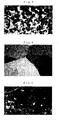
- Fig. 3 shows the result of the normal environment.
- Fig. 4 shows a macrophotograph of Fig. 3
- Fig. 5 shows the result of the dry environment
- Fig. 6 shows a macrophotograph of Fig. 5 .
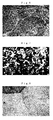
- Fig. 7 shows the result of applying HBA ⁇ Na to the samples
- Fig. 8 shows a macrophotograph of Fig. 7
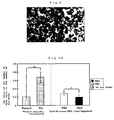
- Fig. 9 shows the result of applying PBS to the samples.
- corneal epithelial cells In observation of corneal epithelial cells by an SEM, it is known that according to the degree of brightness of cells, three kinds of polygonal cells, i.e., bright cells which show high cell activity and have long microvilli/microvillus, intermediate cells which have shortened microvilli/microvillus, and dark cells having microvilli/microvillus whose protruding structures are lost and about to fall off, are observed.
- keratoconjunctive epithelial cells dark cells
- a high proportion of dark cells indicates that adhesion of the mucin layer of tear is poor and retention of tear on the keratoconjunctive is low
- a low proportion of dark cells indicates that adhesion of the mucin layer of tear is good and retention of tear on the keratoconjunctive is high.
- Figs. 3 and 5 the rat in the dry environment has a higher proportion of dark cells than that in the normal environment. Further, as is clear from Figs. 4 and 6 , it was confirmed that the protruding structures of the microvilli/microvillus of the corneal epithelial cells of the rat in the dry environment were lost. It is understood from these results that the microvilli/microvillus of the corneal epithelial cells of rats are lost in the dry environment. This indicates that retention of tear on the cornea deteriorates. Consequently, it was confirmed that the present model is a dry eye model with tear dysfunction.
- the corneal epithelial cells of the rat given 80 mmol/l of HBA ⁇ Na show a significantly lower proportion of dark cells than the corneal epithelial cells of the rat given PBS (refer to Fig. 10 ) and show a similar condition to that of the corneal epithelial cells of the rat in the normal environment shown in Fig. 3 .
- Fig. 6 it was confirmed from comparison of Fig. 6 with Fig. 8 that when HBA ⁇ Na was applied to the corneal epithelial cells of the rat in the dry environment, the microvilli /microvillus of the corneal epithelial cells of the rat were retained in a normal state and/or restored to the normal state.
- the condition thereof was similar to the condition of the corneal epithelial cells of the rat in the normal environment shown in Fig. 4 .
- the ophthalmic composition of the present invention containing HBA ⁇ Na had an effect of retaining the microvilli/microvillus of corneal epithelial cells in a normal state and/or restoring them to the normal state. Therefore, it was confirmed that the ophthalmic composition of the present invention had an effect of improving the retention of tear and was effective in preventing desiccation of eyes and treating tear dysfunction.
- the ophthalmic composition of the present invention can prevent desiccation of eyes and treat tear dysfunction by containing 3-hydroxybutyric acid and/or salts thereof as active ingredients. Accordingly, by use of the composition, discomforts caused by tear dysfunction, such as desiccation of the eyes, foreign-body sensation, feeling of discomfort on the eyes and eye strain, can be improved. Further, the ophthalmic composition of the present invention can inhibit development of diseases caused by tear dysfunction, e.g. , dry eye and suspected dry eye which are dysfunction associated with desiccation of the eyes, particularly, development of diseases caused by tear dysfunction without injuries on the keratoconjunctive.
- tear dysfunction e.g. , dry eye and suspected dry eye which are dysfunction associated with desiccation of the eyes
Landscapes
- Health & Medical Sciences (AREA)
- Veterinary Medicine (AREA)
- General Health & Medical Sciences (AREA)
- Chemical & Material Sciences (AREA)
- Public Health (AREA)
- Medicinal Chemistry (AREA)
- Life Sciences & Earth Sciences (AREA)
- Pharmacology & Pharmacy (AREA)
- Animal Behavior & Ethology (AREA)
- Epidemiology (AREA)
- Ophthalmology & Optometry (AREA)
- General Chemical & Material Sciences (AREA)
- Engineering & Computer Science (AREA)
- Nuclear Medicine, Radiotherapy & Molecular Imaging (AREA)
- Organic Chemistry (AREA)
- Immunology (AREA)
- Chemical Kinetics & Catalysis (AREA)
- Bioinformatics & Cheminformatics (AREA)
- Acyclic And Carbocyclic Compounds In Medicinal Compositions (AREA)
- Medicinal Preparation (AREA)
- Medicines Containing Material From Animals Or Micro-Organisms (AREA)
Description
- The present invention relates to an ophthalmic composition having an effect of preventing desiccation of eyes and to an ophthalmic composition for treating tear dysfunction. More specifically, it relates to an ophthalmic composition which comprises 3-hydroxybutyric acid and/or salts thereof as active ingredients and is used to prevent desiccation of eyes, and to an ophthalmic composition which is used to treat tear dysfunction.
- Tear is a thin liquid layer having a thickness of about 7 µm and covering the outermost layer of a ocular surface. The tear has a three-layer structure comprising, from the surface, a lipid layer, an aqueous layer and a mucin layer, and these layers influence one another to form the structure of the tear film. Further, each of the layers of the tear contains various components such as proteins, e.g., lactoferrin, lysozyme, IgA, IgG and albumin, wax, cholesterol, glucide, and mucin. Illustrative examples of the functions of the tear containing these components include keeping the ocular surface wet, preventing the eyes from infection with pathogens coming from the outside, supplying a number of physiologically active substances, and supplying oxygen to the cornea that is an avascular organ.
- As described above, tear has a variety of functions. However, for example, when the amount of secretion of the tear is decreased due to the occurrence of dysfunction in secretion of the tear or when the amount of evaporation of the tear is increased due to the occurrence of dysfunction in the quality of the tear, the functions of the tear may not be exercised normally. When such tear dysfunctions occur, desiccation of the eyes is found as a subjective symptom. In recent years, along with an increased level of desiccation in a room due to wide use of air conditioners and increase of VDT operations on personal computers and the like, the number of patients who complain about discomforts caused by tear dysfunctions, such as desiccation of the eyes, foreign-body sensation, feeling of discomfort on the eyes and eye strain has been increasing. Further, a symptom in which an injury has occurred on the keratoconjunctive epithelium along with such tear dysfunctions is defined as dry eye. However, in the broad sense, even a case where dysfunctions in the secretion and quality of tear are seen and no injury is seen on the keratoconjunctive epithelium is also considered as suspected dry eye. Thus, it is conceived that by using an ophthalmic composition having an effect of treating tear dysfunctions, e.g., increasing the amount of secretion of tear or reducing the amount of evaporation of tear by improving the quality of the tear, discomforts caused by tear dysfunctions, such as desiccation of the eyes, foreign-body sensation, feeling of discomfort on the eyes and eye strain can be improved, and development of diseases caused by tear dysfunctions, such as dry eye and suspected dry eye which are dysfunctions related to desiccation of the eyes can be inhibited. Illustrative examples of the dry eye and suspected dry eye include diseases such as hypolacrimation, alacrima, xerophthalmia, Sjogren's syndrome, Stevens-Johnson syndrome, ocular pemphigus, marginal blepharitis, dysfunctions of lidaperture and sensory nerves, dry eye associated with allergic conjunctivitis, viral conjunctivitis and cataract operation, BUT-shortened dry eye characterized in that only a tear film breakup time (hereinafter abbreviated as "BUT") which is one of the test method for diagnosis of tear is shortened, and symptoms caused by VDT operations which have been increasing in recent years.
- At present, as a method of alleviating discomforts such as desiccation of the eyes and a method of alleviating or treating dry eye and suspected dry eye, a method comprising applying artificial tear from the outside to cover a deficiency of tear and a method comprising closing punctum are known, for example. Further, to treat injuries on the keratoconjunctive epithelium which have occurred due to dysfunctions in the secretion and quality of tear, a method using eye-drops containing sodium hyaluronate is also known, for example. However, the effects of all the above methods are temporary. Further, these methods are intended to treat injuries on the keratoconjunctive which are caused by tear dysfunctions and cannot inhibit the occurrence of dry eye and suspected dry eye and are merely symptomatic treatments. For these reasons, these methods are unsatisfactory. Therefore, not such symptomatic treatments as described above, but, for example, an ophthalmic composition having an effect of preventing desiccation of eyes and an ophthalmic composition for treating tear dysfunctions have been needed so as to improve discomforts caused by tear dysfunctions, such as desiccation of the eyes, foreign-body sensation, feeling of discomfort on the eyes and eye strain and to inhibit the occurrence of dry eye and suspected dry eye.
- Heretofore, to prevent desiccation of the surface of the keratoconjunctive, an eye drop which contains glucomannan as an active ingredient (for example, refer to Patent Publication 1) and an eye solution which contains trimethylglycine (for example, refer to Patent Publication 2) have been disclosed. Further, it is also disclosed that a composition containing a β2 adrenaline receptor agonist as an active ingredient can be used as an agent for treating or preventing diseases related to dry eye or the keratoconjunctive sicca (for example, refer to Patent Publication 3).
- Further, as preparations for treating dry eye, in the test method for diagnosis of tear such as BUT, a dry eye treating agent which contains a macrolide compound having an excellent improving effect as an active ingredient (for example, refer to Patent Publication 4) and a composition for treating tear secretion dysfunctions including dry eye which contains a fatty acid derivative as an active ingredient (for example, refer to Patent Publication 5) are disclosed.
- Meanwhile, with respect to 3-hydroxybutyric acid which is used as an active ingredient in the present invention, the present applicant has proposed a therapeutic agent for ectocornea injury (for example, refer to Patent Publication 6) and a cornea turbidity inhibitor (for example, refer to Patent Publication 7) as ophthalmic therapeutic preparations containing 3-hydroxybutyric acid as an active ingredient. However, with respect to an ophthalmic composition containing 3-hydroxybutyric acid, no reports have been made on use thereof for preventing desiccation of eyes and for treating tear dysfunction.
Patent Publication 1JP-A 6-345653
Patent Publication 2JP-A 2000-281563
Patent Publication 3WO01/041806
Patent Publication 4JP-A 2002-543132
Patent Publication 5JP-A 2003-504397
Patent Publication 6JP-A 10-265378
Patent Publication 7JP-A 2001-89366
Nakashima et al. (Invest. Ophthalmol. Vis. Sci. 2003; 44;: E-abstract 2533) discloses the effect of D-3-Hydroxybutyrate (HBA) on Corneal Epithelial Disorder in Dry Eye Condition. - An object of the present invention is to provide an ophthalmic composition having an effect of preventing desiccation of eyes and an ophthalmic composition for treating tear dysfunction.
- Other objects and advantages of the present invention will become apparent from the following description.
- According to the present invention, the above object and advantage of the present invention are achieved by an ophthalmic composition which comprises 3-hydroxybutyric acid and/or salts thereof as active ingredients and is used to prevent desiccation of eyes, and an ophthalmic composition which is used to treat tear dysfunction.
- The present invention provides a composition which comprises 3-hydroxybutyric acid and/or salts thereof as active ingredients for use in treating lacrimal dysfunction.
- The present invention further provides use of 3-hydroxybutyric acid and/or salts thereof in the production of a medicament for use in treating lacrimal dysfunction.
-
-
Fig. 1 shows dry spot areas per unit area of rats in a normal environment and a dry environment and dry spot areas per unit area when sodium D-3-hydroxybutyrate (hereinafter abbreviated as "HBA·Na") and phosphate buffer sodium solution (hereinafter abbreviated as "PBS") were applied to the eyes of rats in the dry environment. -
Fig. 2 shows BUTs of rats in the normal environment
and the dry environment and also shows BUTs when HBA·Na and PBS were applied to the eyes of rats in the dry environment. -
Fig. 3 shows a scanning electron microscopy observation photograph of the cornea of a rat in the normal environment. -
Fig. 4 shows a macrophotograph ofFig. 3 . -
Fig. 5 shows a scanning electron microscopy observation photograph of the cornea of a rat in the dry environment. -
Fig. 6 shows a macrophotograph ofFig. 5 . -
Fig. 7 shows a scanning electron microscopy observation photograph of the cornea of a rat in the dry environment when HBA·Na was applied to the eye of the rat. -
Fig. 8 shows a macrophotograph ofFig. 7 . -
Fig. 9 shows a scanning electron microscopy observation photograph of the cornea of a rat in the dry environment when PBS was applied to the eye of the rat. -
Fig. 10 shows the proportions of dark cells in the corneas of rats in the normal environment and the dry environment and also shows the proportions of dark cells in the corneas of rats in the dry environment when HBA·Na and PBS were applied to the eyes of the rats. - The ophthalmic composition of the present invention contains 3-hydroxybutyric acid and/or salts thereof as active ingredients for use in treating lacrymal dysfunction. 3-hydroxybutyric acid is known to have a D form, a D,L-racemic form and an L form with respect to the configuration of the C3 position of its chemical structural formula. 3-hydroxybutyric acid having any of the structures can be used in the present invention. Further, as the salt of 3-hydroxybutyric acid, at least one compound selected from the group consisting of a sodium salt, a potassium salt, an L-lysine salt, an L-hystidine salt and an L-arginine salt is preferably selected as appropriate. These 3-hydroxybutyric acid and/or salts thereof can be used alone or in combination of two or more as appropriate. The concentration of 3-hydroxybutyric acid and/or salts thereof in the ophthalmic composition of the present invention is determined suitably according to the age and severity of the symptom of a patient or purpose of its use and, preferably ranges from 0.8 to 800 mmol/L, more preferably from 4 to 400 mmol/L, much more preferably from 8 to 240 mmol/L, particularly preferably from 10 to 150 mmol/L.
- The ophthalmic composition of the present invention is used for preventing desiccation of eyes. In the present invention, preventing desiccation of eyes indicates treatment of tear dysfunction. Further, in the present invention, the tear dysfunction refers to when the amount of secretion of tear is decreased due to the occurrence of dysfunction in the secretion of tear or when the amount of evaporation of tear is increased due to the occurrence of dysfunction in the quality of tear, especially, to the above cases of tear dysfunctions without injuries on the keratoconjunctive. Along with these dysfunctions, problems may occur in the stability of tear and the retention of tear on the surface of the eye. For example, such phenomena as appearance of dry spots, shortening of BUT and dysfunctions in the microvilli/microvillus of the keratoconjunctive epithelium cells are observed. These phenomena cause discomforts caused by tear dysfunctions, such as desiccation of the eyes, foreign-body sensation, feeling of discomfort on the eyes and eye strain, thereby causing dry eye and suspected dry eye which are injuries associated with desiccation of the eyes. Therefore, preventing desiccation of eyes and treatment of tear dysfunction in the present invention refer to treatment of the above tear dysfunctions, improvements of discomforts caused by tear dysfunctions such as desiccation of the eyes, foreign-body sensation, feeling of discomfort on the eyes and eye strain, and inhibition of the occurrences of diseases caused by tear dysfunctions, especially, inhibition of the occurrences of diseases caused by tear dysfunction without injuries on the keratoconjunctives. Further, in the present invention, such a treatment of tear dysfunction includes those achieved by an improvement in the stability of tear film and/or an improvement in the retention of tears on the keratoconjunctive. Illustrative examples of the dry eye and suspected dry eye include diseases such as hypolacrimation, alacrima, xerophthalmia, Sjogren's syndrome, Stevens-Johnson syndrome, ocular pemphigus, marginal blepharitis, dysfunctions of lidaperture and sensory nerves, dry eye associated with allergic conjunctivitis, viral conjunctivitis and cataract operation, BUT-shortened dry eye characterized in that only BUT which is one of the test method for diagnosis of tear is shortened, and symptoms caused by VDT operations which have been increasing in recent years. Hereinafter, the improvement in the stability of the tear film and the improvement in the retention of tears on the keratoconjunctive will be described.
- In the present invention, the improvement in the stability of the tear film indicates an improvement in the stability of at least one of a lipid layer, an aqueous layer and a mucin layer which constitute tear. Further, the improvement in the stability of the tear film in the present invention is achieved by an increase in the amount of secretion of at least one of the lipid layer, the aqueous layer and the mucin layer, for example. For example, it is achieved by an increase in the amount of secretion of at least one of components contained in tear such as proteins, e.g. , lactoferrin, lysozyme, IgA, IgG and albumin, wax, cholesterol, glucide, and mucin. However, it may be achieved by other factors.
- The layers which constitute tear affect one another and have an important function for the stability of tear. For example, the lipid layer serves to inhibit evaporation of tears by covering the whole aqueous layer and to prevent an outflow of tear from flowing out from the eyelid margin. The aqueous layer has the most of the thickness of tear and serves to retain the lubricity of the surface of the eye. The mucin layer covers the hydrophobic surface of the keratoconjunctive epithelium, thereby rendering the keratoconjunctive epithelium hydrophilic to prevent an outflow of tear from the surface of the eye. By use of the ophthalmic composition of the present invention, for example, the amount of secretion of at least one of the lipid layer, the aqueous layer and the mucin layer is increased, and among functions of the tear film mentioned above, for example, the effect of inhibiting evaporation of tears and the effect of preventing an outflow of tear from the surface of the eye can be attained. Specific examples of such effects include an effect of inhibiting appearance of dry spots and an effect of extending BUT. Thus, by use of the ophthalmic composition of the present invention, the stability of the tear film can be improved, so that preventing desiccation of eyes, i.e., treatment of tear dysfunction, can be achieved.
- Meanwhile, in the present invention, the improvement in the retention of tear on the keratoconjunctive indicates an improvement in the retention of tear on the keratoconjunctive by maintaining keratoconjunctive epithelium cells in a normal state and/or restoring the keratoconjunctive epithelium cells to the normal state by use of the ophthalmic composition of the present invention. More specifically, by use of the ophthalmic composition of the present invention, the microvilli/microvillus of the keratoconjunctive epithelium cells can be maintained in a normal state and/or restored to the normal state. A large number of protruding microvilli/microvillus exist on the surfaces of the keratoconjunctive epithelium cells and serve to improve adhesion of the mucin layer of the tear layer and retain tear on the keratoconjunctive. However, it is known that keratoconjunctive epithelium cells which have diminished cell activity or are about to fall off show a diminished effect of retaining tear due to shortened microvilli/microvillus. Further, it is known that the protruding structures of the microvilli/microvillus become indistinct due to desiccation of the keratoconjunctive and the influences of preservative and the like. The ophthalmic composition of the present invention can maintain such microvilli/microvillus in a normal state and/or restore them to the normal state, thereby making it possible to improve the retention of tear on the keratoconjunctive. Thus, by use of the ophthalmic composition of the present invention, the retention of tear on the keratoconjunctive can be improved, so that preventing desiccation of eyes, i.e., treatment of tear dysfunction, can be achieved.
- Since the ophthalmic composition of the present invention has the effect of improving the stability of the tear film and/or the effect of improving the retention of tear on the keratoconjunctive as described above, tear dysfunctions such as dysfunction in the secretion of tear and dysfunction in the quality of tear, particularly, tear dysfunctions without injuries on the keratoconjunctive, can be treated by use of the composition. Thus, discomforts caused by tear dysfunctions, such as desiccation of the eyes, foreign-body sensation, feeling of discomfort on the eyes and eye strain can be improved by use of the composition. Further, the occurrences of diseases caused by tear dysfunctions, such as dry eye and suspected dry eye that are injuries associated with desiccation of the eyes, particularly, the occurrences of diseases caused by tear dysfunctions without injuries on the keratoconjunctives, can be inhibited. Illustrative examples of the dry eye and suspected dry eye include diseases such as hypolacrimation, alacrima, xerophthalmia, Sjogren's syndrome, Stevens-Johnson syndrome, ocular pemphigus, marginal blepharitis, dysfunctions of lidaperture and sensory nerves, dry eye associated with allergic conjunctivitis, viral conjunctivitis and cataract operation, BUT-shortened dry eye characterized in that only BUT which is one of the test method for diagnosis of tear is shortened, and symptoms caused by VDT operations which have been increasing in recent years.
- Further, the ophthalmic composition of the present invention is preferably used on patients having discomforts such as desiccation of the eyes, foreign-body sensation, feeling of discomfort on the eyes and eye strain. Further, the ophthalmic composition of the present invention is preferably used on patients having tear dysfunctions such as dysfunction in the secretion of tear and dysfunction in the quality of tear and preferably used for treating the tear dysfunctions of patients without injuries on the keratoconjunctive. In addition, the ophthalmic composition of the present invention is preferably used for inhibiting the occurrences of diseases caused by tear dysfunctions and more preferably used for inhibiting the occurrences of diseases caused by tear dysfunctions without injuries on the keratoconjunctive.
- In the present invention, the ophthalmic composition refers to a medicinal composition used for preventing desiccation of eyes. Accordingly, its dosage form is preferably a dosage form selected from an eye drop, an eye wash and an eye ointment that are parenteral formulations and is particularly preferably an eye drop. In addition, the ophthalmic composition may also be a formulation which is not directly administered to the eyes such as an oral formulation as long as it is administered for the purpose of treating or preventing the disease of the eyes.
- The ophthalmic composition of the present invention contains 3-hydroxybutyric acid as an active ingredient and may also contain various other components as required as long as preventing desiccation of eyes and treatment of tear dysfunctions by 3-hydroxybutyric acid are not hindered. For example, when the ophthalmic composition of the present invention is to be used as an eye drop, the composition can contain various additives such as a buffer, an isotonic agent, a stabilizer, a viscosity inducing agent and a pH regulating agent and other components as required to attain the stability and ease of administration of the eye drop. These various components can be contained alone or in combination of two or more as appropriate. In most cases, the components are preferably contained in combination of two or more. Hereinafter, a description will be given to a case where the ophthalmic composition of the present invention is used as an eye drop. However, the present invention shall not be limited thereto.
- The buffer mentioned above can be contained for the purpose of stabilizing the pH of an eye drop when the ophthalmic composition of the present invention is used as the eye drop. The buffer may be anything that is generally used as buffer in eye drop. Illustrative examples thereof include boric acid, citric acid, phosphoric acid, tartaric acid, gluconic acid, acetic acid, carbonic acid, and salts thereof. These may be used alone or in combination of two or more. The concentration of the buffer ranges preferably from 0.001 to 5 w/v%, more preferably from 0.01 to 1 w/v%.
- The isotonic agent mentioned above can be contained for the purpose of adjusting the osmotic pressure of eye drop when the ophthalmic composition of the present invention is used as the eye drop. The isotonic agent may be anything that is generally used as isotonic agent in eye drop. Illustrative examples thereof include inorganic salts such as alkali or alkaline earth metal salts, e.g., sodium chloride, potassium chloride, calcium chloride, magnesium chloride and magnesium sulfate, and carbohydrates such as glucose, mannitol, sorbitol, xylitol, dextran and glycerin. These may be used alone or in combination of two or more. The concentration of the isotonic agent ranges preferably 0.001 from to 5 w/v%, more preferably from 0.01 to 3 w/v%.
- The stabilizer mentioned above can be contained for the purpose of stabilizing the active ingredients of eye drop when the ophthalmic composition of the present invention is used as the eye drop. The stabilizer may be anything that is generally used as stabilizer in eye drop. Illustrative examples thereof include edetic acid and salts thereof, cyclodextrin, sulfite salts, citric acid and salts thereof, and dibutyl hydroxytoluene. These may be used alone or in combination of two or more. The concentration of the stabilizer ranges preferably from 0.001 to 5 w/v%, more preferably from 0.01 to 1 w/v%.
- The viscosity inducing agent mentioned above can be contained for the purpose of adjusting the viscosity of eye drop when the ophthalmic composition of the present invention is used as the eye drop. The viscosity inducing agent may be anything that is generally used as viscosity inducing agent in eye drop. Illustrative examples thereof include polyols such as glycerine, ethylene glycol, propylene glycol, polyethylene glycol and polyvinyl alcohol, carbohydrates such as trehalose, sucrose, carboxymethylcellulose, hydroxyethylcellulose, hydroxypropylmethylcellulose and cyclodextrin, and carboxy vinyl polymers. In addition, polysaccharides such as xanthan gum, locust bean gum, gellan gum and carrageenan gum, hyaluronic acid and salts thereof, povidone, and castor oil can also be contained. These may be used alone or in combination of two or more. The concentration of the viscosity inducing agent ranges preferably from 0.001 to 10 w/v%, more preferably from 0.01 to 5 w/v%.
- The pH regulating agent mentioned above can be contained for the purpose of adjusting the pH of eye drop when the ophthalmic composition of the present invention is used as the eye drop. The pH regulating agent may be anything that is generally used as pH regulating agent in eye drop. Illustrative examples thereof include sodium hydroxide, potassium hydroxide, sodium carbonate, sodium hydrogen carbonate, hydrochloric acid, citric acid, boric acid, phosphoric acid, acetic acid, tartaric acid, and salts thereof. These may be used alone or in combination of two or more. The pH of the ophthalmic composition of the present invention is adjusted to a desired pH by addition of an appropriate amount of the pH regulating agent.
- The other components mentioned above can be contained in the ophthalmic composition of the present invention as the eye drop for the purpose of imparting effects corresponding to the components. The other components may be anything that is generally used as ophthalmic agents. Illustrative examples thereof include a decongestant, anti-inflammatory agent, astringent, antihistamine, local anesthetic, vitamins, amino acids, sulfa drug, refreshing agent and miotic agent. These may be used alone or in combination of two or more. When the ophthalmic composition of the present invention contains these components, it is preferably checked whether the components and their concentrations are not those which do not adversely affect preventing desiccation of eyes and treatment of tear dysfunctions by 3-hydroxybutyric acid which is an active ingredient in the present invention, according to the ages, symptoms and the like of patients.
- Meanwhile, preservatives may also be contained in the eye drops for the purpose of imparting a preservative effect when the ophthalmic composition of the present invention is used as the eye drop. The preservative may be anything that is generally used as preservative in eye drop. Illustrative examples thereof include cationic preservatives such as parabens, e.g. , methyl paraben, ethyl paraben, propyl paraben and butyl paraben, chlorhexidine gluconate, chlorobutanol, phenylethyl alcohol, benzyl alcohol, sodium dehydroacetate, sorbic acid and salts thereof, a quaternary ammonium cationic surfactant and chlorhexidine hydrochloride. Illustrative examples of the quaternary ammonium cationic surfactant include benzalkonium chloride, benzethonium chloride, and cetylpyridinium chloride. These may be used alone or in combination of two or more. The concentration of the preservative ranges preferably from 0.0001 to 0.1 w/v%, more preferably from 0.001 to 0.05 w/v%.
- However, it is known that the preservative generally instabilizes the tear film and has an adverse effect on the keratoconjunctive epithelium cells. Further, since a tear exchange rate may be abnormal when there are/is dysfunction in the secretion of tear and/or dysfunction in the quality of tear, the preservative may remain in the conjunctival sac for a long time. Further, when the keratoconjunctive epithelium has injuries, the injuries may further deteriorate. Thus, since application of an eye drop containing the preservative may have a further adverse effect on tear and the keratoconjunctive epithelium, it is more preferred that the preservative be not contained. When not containing the preservative, the eye drop of the present invention is preferably filled in a container of the type that is disposed once used, i.e., "disposable container".
- Further, when the ophthalmic composition of the present invention is used as an eye drop, it is preferred to adjust the pH after various constituents are combined. The range of the pH is not particularly limited as long as it is an acceptable range as an eye drop. For example, a pH of 4 to 10 is preferred, and a pH of 6 to 8.5 is more preferred. An eye drop having an acidic pH of less than 4 or an alkaline pH of more than 10 is not preferred because it may cause eye irritation or eye injuries.
- Further, when the ophthalmic composition of the present invention is used as an eye drop, the osmotic pressure of the composition is not particularly limited as long as it is within a range acceptable as an eye drop. For example, it ranges preferably from 100 to 600 mOsm., more preferably from 150 to 500 mOsm.
- The ophthalmic composition of the present invention can be prepared in accordance with a generally known method. The composition can be generally prepared by dissolving various components mentioned above in purified water (or sterilized purified water as required) sequentially. For example, when the composition is used as an eye drop containing a viscosity inducing agent, it can be obtained by dissolving the viscosity inducing agent in sterilized purified water firstly, followed by dissolving the active ingredients and various components in the solution, adjusting the pH as required, and then filling the solution in a container made of polyethylene terephthalate or the like under sterile conditions.
- The dosage of the ophthalmic composition of the present invention is not particularly limited as long as it is within an ophthalmologically acceptable range. For example, when the composition is used in the form of an eye drop as described above, one to three drops at a time are generally applied for one to twenty times, particularly preferably for one to ten times, in a day.
- Hereinafter, the present invention will be described more specifically with reference to Examples and Comparative Examples. However, the present invention shall not be limited to these Examples and Comparative Examples in any way.
- Air was blown against rats in a low humidity environment as described below to prepare rat dry eye models. An effect of sodium D-3-hydroxybutyrate (hereinafter abbreviated as "HBA·Na") which is an active ingredient in the present invention, i.e., its effect of improving the stability of tear film, was examined by use of the prepared rat dry eye models. That is, observation of dry spot areas in the tear film of the rats and measurement of BUT of the tear film were made.
- As the animals to be examined, there were used female SD rats of 8 weeks old that had been conditioned in an animal room where they were kept under light for 12 hours and in the dark for 12 hours at a room temperature of 23±2°C and a relative humidity of 60±10%. The rats were kept in the animal room for 4 days.
- After the conditioning, the rats were carried into a low humidity environment kept at a room temperature of 20±2°C and a relative humidity of 25±5% to blow air against the rat by a fan at a wind velocity of 2 to 4 m/s. Air was blown with the rat's front facing the blown air for 8 hours and with the rat allowed to move freely for 16 hours. This operation was conducted for 5 consecutive days. In the present example, the above environment is referred to as "dry environment".
- Prior to observation of the tear film and measurement of its BUT by HBA·Na instillation and PBS instillation, observation of dry spot areas in the tear film of the rat and measurement of BUT in the tear film in a normal environment (characterized by normal humidity and no air blowing) and the dry environment were carried out. As a result, it was found that rats in the dry environment showed significantly larger dry spot areas and significantly smaller BUT than rats in the normal environment (refer to
Figs. 1 and 2 ). Consequently, it was found that the tear layer of the rat becomes unstable in the dry environment. Accordingly, it was confirmed that the present models were dry eye models with dysfunction in tear. - As the compositions according to the present invention, eye drops prepared by dissolving HBA·Na in phosphate buffer sodium solutions (hereinafter abbreviated as "PBS") to 40, 80 and 120 mmol/L were prepared. Further, as a comparative solution, an eye drop comprising only PBS was used. HBA·Na of each concentration was applied to the right eye of a rat, and PBS was applied to the left eye of the rat. The eye drops were prepared to have a pH of 7.4 and an osmotic pressure of 280 mOsm. The first application of the eye drops was carried out immediately after the rats were placed in the dry environment such that the rats faced wind at the front, and the eye drops were then applied every two hours for a total of four times. On the second and subsequent days, the first application of the eye drops was also carried out immediately after the rats were placed such that they faced wind at the front, and the eye drops were then applied every two hours for a total of four times. This operation was conducted for 5 days.
- After passage of two hours from the last application of the eye drops on the fifth day, a xylazine hydrochloride/ketamine hydrochloride mixed solution was injected (2 ml/kg) into the rats to anesthetize them. The rats were fixed, forced to blink and then allowed to open the eyes. Dry spot areas had been observed for 5 minutes since the eye-opening by use of a dry eye observation device "DR-1" (product of KOWA CO., LTD.), and the observed images were recorded on a videotape. The observed images were analyzed by use of image analysis software "Scion Image (version 4.02β)" (product of Scion Corporation) to determine a dry spot area per unit area [dry spot area (pixel)/area of observed area on the cornea (pixel)]. From the area, a dry spot area per unit area of the cornea [dry spot area (mm2)/area of observed area on the cornea (mm2)] was calculated by use of a conversion formula (1 pixel = 0.0000195 mm2) and evaluated. The dry spot area was calculated based on an increase and decrease from the eye-opening. The results are shown in
Fig. 1 . In the present example, the above procedure was conducted for HBA·Na concentrations of 80 and 120 mmol/L, and each of the HBA·Na concentrations was evaluated based on 12 eyes of 12 rats. - After passage of two hours from the last application of the eye drops on the fifth day, a xylazine hydrochloride/ketamine hydrochloride mixed solution was injected (2 ml/kg) into the rats to anesthetize them. After 1% fluorescein was added to the eyes of the rats and the rats were forced to blink a few times, BUT was measured. The above procedure was conducted for HBA·Na concentrations of 40, 80 and 120 mmol/L, and each of the HBA·Na concentrations was evaluated based on 8 eyes of 8 rats. The results were shown in
Fig. 2 . - It was found from the results shown in
Fig. 1 that the tear film of the rat given the eye drop containing 80 mmol/l of HBA·Na which was an active ingredient in the present invention showed a significantly smaller dry spot area (p < 0.05) than the tear film of the rat given PBS which was a comparative solution. Further, there was seen a tendency that when the eye drop containing 120 mmol/l of HBA·Na was given, the dry spot area also became smaller than that when PBS was given. This indicates that the tear film of the rat prepared in the dry environment is unstable, the tear film is not stabilized by application of PBS, tear disappears on the keratoconjunctive immediately after blinking, and dry spots appear. Meanwhile, it was confirmed that when the eye drop containing HBA·Na that was an active ingredient in the present invention was applied to the rat prepared under the same condition, the tear film showed a smaller dry spot area and improved stability. It was confirmed from these results that the ophthalmic composition of the present invention containing HBA·Na had an effect of improving the stability of the tear film. - Further, it was found from the results shown in
Fig. 2 that BUT extended more significantly by application of HBA·Na of any concentration than application of PBS. This indicates that even if PBS was applied to the rat prepared in the dry environment that had an unstable tear film and shortened BUT, the stability of the tear film is not improved. Meanwhile, it was confirmed that when the eye drop containing HBA·Na was applied to the rat prepared under the same condition, BUT was extended and the stability of the tear film was improved. It was confirmed from these results that the ophthalmic composition of the present invention containing HBA·Na had an effect of improving the stability of the tear film. - As described above, it was confirmed that the ophthalmic composition of the present invention had an effect of improving the stability of the tear film and was effective in preventing desiccation of eyes and treating tear dysfunction.
- By use of the rat dry eye models described in Example 1, the corneal epithelial cells of the rats after HBA·Na and PBS were applied were observed by a scanning electron microscope (hereinafter abbreviated as "SEM").
- Samples were prepared in the following manner.
- (1) In accordance with the methods described (1), (2) and (4) of Example 1, after 80 mmol/l of HBA·Na and a PBS solution were applied for 5 days, the corneas of the rats were removed immediately and washed with a phosphate buffer (hereinafter abbreviated as "PB"). After washed, the corneas were immersed in 2.5% glutaraldehyde-0.1 mol/l PB and pre-fixed at 4°C for 20 minutes.
- (2) The corneas were fully washed with 0.1 mol/l PB and post-fixed in 1% osmium tetraoxide-0.1 mol/l PB at 4°C for 1 hour.
- (3) The corneas were fully washed with 0.1 mol/l PB and dehydrated with ethanol ascending series.
- (4) Ethanol was removed and replaced by t-butyl alcohol.
- (5) The samples were freeze-dried and then bonded to sample stages.
- (6) The samples were coated with platinum.
- Prior to observation by an SEM after applications of HBA·Na and PBS, the corneas of rats in the normal environment and dry environment were observed by an SEM (X-650 of Hitachi, Ltd.) and photographed for the purpose of confirmation.
Fig. 3 shows the result of the normal environment.Fig. 4 shows a macrophotograph ofFig. 3, Fig. 5 shows the result of the dry environment, andFig. 6 shows a macrophotograph ofFig. 5 . Further, as the results of observing the samples prepared in the above (i) by the SEM,Fig. 7 shows the result of applying HBA·Na to the samples,Fig. 8 shows a macrophotograph ofFig. 7 andFig. 9 shows the result of applying PBS to the samples. - The photographs taken by the above method were subjected to image analysis to calculate the proportion of the number of dark cells. In the analysis, 6 spots of a certain area were selected randomly from the photograph, the numbers of cells and dark cells within the areas were counted, and the ratio of the number of dark cells to the number of all cells was calculated. The results are shown in
Fig. 10 . - In observation of corneal epithelial cells by an SEM, it is known that according to the degree of brightness of cells, three kinds of polygonal cells, i.e., bright cells which show high cell activity and have long microvilli/microvillus, intermediate cells which have shortened microvilli/microvillus, and dark cells having microvilli/microvillus whose protruding structures are lost and about to fall off, are observed.
- As already described, since it is known that keratoconjunctive epithelial cells (dark cells) having shortened microvilli/microvillus show a reduced tear retaining effect, a high proportion of dark cells indicates that adhesion of the mucin layer of tear is poor and retention of tear on the keratoconjunctive is low, while a low proportion of dark cells indicates that adhesion of the mucin layer of tear is good and retention of tear on the keratoconjunctive is high.
- It is understood from
Figs. 3 and 5 that the rat in the dry environment has a higher proportion of dark cells than that in the normal environment. Further, as is clear fromFigs. 4 and6 , it was confirmed that the protruding structures of the microvilli/microvillus of the corneal epithelial cells of the rat in the dry environment were lost. It is understood from these results that the microvilli/microvillus of the corneal epithelial cells of rats are lost in the dry environment. This indicates that retention of tear on the cornea deteriorates. Consequently, it was confirmed that the present model is a dry eye model with tear dysfunction. - Further, it is understood from
Figs. 7 and9 that the corneal epithelial cells of the rat given 80 mmol/l of HBA·Na show a significantly lower proportion of dark cells than the corneal epithelial cells of the rat given PBS (refer toFig. 10 ) and show a similar condition to that of the corneal epithelial cells of the rat in the normal environment shown inFig. 3 . Further, it was confirmed from comparison ofFig. 6 withFig. 8 that when HBA·Na was applied to the corneal epithelial cells of the rat in the dry environment, the microvilli /microvillus of the corneal epithelial cells of the rat were retained in a normal state and/or restored to the normal state. In addition, it was found that the condition thereof was similar to the condition of the corneal epithelial cells of the rat in the normal environment shown inFig. 4 . - It was confirmed from these results that the ophthalmic composition of the present invention containing HBA·Na had an effect of retaining the microvilli/microvillus of corneal epithelial cells in a normal state and/or restoring them to the normal state. Therefore, it was confirmed that the ophthalmic composition of the present invention had an effect of improving the retention of tear and was effective in preventing desiccation of eyes and treating tear dysfunction.
- As is obvious from the above description, the ophthalmic composition of the present invention can prevent desiccation of eyes and treat tear dysfunction by containing 3-hydroxybutyric acid and/or salts thereof as active ingredients. Accordingly, by use of the composition, discomforts caused by tear dysfunction, such as desiccation of the eyes, foreign-body sensation, feeling of discomfort on the eyes and eye strain, can be improved. Further, the ophthalmic composition of the present invention can inhibit development of diseases caused by tear dysfunction, e.g. , dry eye and suspected dry eye which are dysfunction associated with desiccation of the eyes, particularly, development of diseases caused by tear dysfunction without injuries on the keratoconjunctive.
Claims (12)
- A composition which comprises 3-hydroxybutyric acid and/or salts thereof as active ingredients for use in treating lacrimal dysfunction.
- A composition for use according to claim 1 wherein the treatment of the lacrimal dysfunction is achieved by an improvement in the stability of the tear film and/or an improvement in the retention of tears on the keratoconjunctive.
- A composition for use according to claim 2 wherein the lacrimal dysfunction is lacrimal dysfunction without injuries on the keratoconjunctive.
- A composition for use according to claim 2 or claim 3 wherein the treatment comprises inhibition of the occurrence of disease caused by the lacrimal dysfunction.
- Use of 3-hydroxybutyric acid and/or salts thereof in the production of a medicament for use in treating lacrimal dysfunction.
- Use according to claim 5 wherein the treatment of the lacrimal dysfunction is achieved by an improvement in the stability of the tear film and/or an improvement in the retention of tears on the keratoconjunctive.
- Use according to claim 6 wherein the improvement in the stability of the tear film is achieved by inhibition of evaporation of tear:
- Use according to claim 6 wherein the improvement in the stability of the tear film is achieved by an improvement in tear film breakup time.
- Use according to claim 6 wherein the improvement in the retention of tears is achieved by maintaining keratoconjunctive epithelium cells in a normal state
and/or restoring the keratoconjunctive epithelium cells to the normal state. - Use according to claim 9 wherein the improvement in the retention of tears is achieved by maintaining the microvilli/microvillus of keratoconjunctive epithelium cells in a normal state and/or restoring the microvilli/microvillus of the keratoconjunctive epithelium cells to the normal state.
- Use according to claim 6 wherein the lacrimal dysfunction is lacrimal dysfunction without injuries on the keratoconjunctive.
- Use according to claim 6 or claim 11 wherein the treatment comprises inhibition of the occurrence of disease caused by the lacrimal dysfunction.
Applications Claiming Priority (2)
| Application Number | Priority Date | Filing Date | Title |
|---|---|---|---|
| JP2003346858 | 2003-10-06 | ||
| PCT/JP2004/014774 WO2005032534A1 (en) | 2003-10-06 | 2004-09-30 | Ophthalmic composition for treating lacrimal disorders |
Publications (3)
| Publication Number | Publication Date |
|---|---|
| EP1674091A1 EP1674091A1 (en) | 2006-06-28 |
| EP1674091A4 EP1674091A4 (en) | 2009-09-02 |
| EP1674091B1 true EP1674091B1 (en) | 2014-04-23 |
Family
ID=34419564
Family Applications (1)
| Application Number | Title | Priority Date | Filing Date |
|---|---|---|---|
| EP04788468.9A Expired - Lifetime EP1674091B1 (en) | 2003-10-06 | 2004-09-30 | Ophthalmic composition for treating lacrimal disorders |
Country Status (7)
| Country | Link |
|---|---|
| US (1) | US8541468B2 (en) |
| EP (1) | EP1674091B1 (en) |
| JP (1) | JP4249185B2 (en) |
| CN (1) | CN1863522A (en) |
| CA (1) | CA2541302A1 (en) |
| TW (1) | TW200514554A (en) |
| WO (1) | WO2005032534A1 (en) |
Families Citing this family (3)
| Publication number | Priority date | Publication date | Assignee | Title |
|---|---|---|---|---|
| JPWO2008053982A1 (en) * | 2006-10-30 | 2010-02-25 | 株式会社オフテクス | Allergy treatment composition |
| EP3177284B1 (en) | 2014-07-21 | 2020-01-15 | Oulun Yliopisto | Oligomeric forms of 3-hydroxybutyrate |
| US10588877B2 (en) | 2016-07-21 | 2020-03-17 | Savind, Inc. | Compositions comprising β-hydroxybutyric acid and salt, and methods of using the same |
Family Cites Families (15)
| Publication number | Priority date | Publication date | Assignee | Title |
|---|---|---|---|---|
| US5116868A (en) * | 1989-05-03 | 1992-05-26 | The Johns Hopkins University | Effective ophthalmic irrigation solution |
| JPH06345653A (en) | 1993-06-08 | 1994-12-20 | Asahi Chem Ind Co Ltd | Eye lotion |
| US5849761A (en) * | 1995-09-12 | 1998-12-15 | Regents Of The University Of California | Peripherally active anti-hyperalgesic opiates |
| JPH10265378A (en) * | 1997-03-25 | 1998-10-06 | Ofutekusu:Kk | Therapeutic agent for ectocornea injury |
| US5811446A (en) * | 1997-04-18 | 1998-09-22 | Cytos Pharmaceuticals Llc | Prophylactic and therapeutic methods for ocular degenerative diseases and inflammations and histidine compositions therefor |
| US6495598B1 (en) * | 1997-04-22 | 2002-12-17 | Ophtecs Corporation | Perfusate preparation for ophthalmic operation |
| JP3228699B2 (en) * | 1997-04-22 | 2001-11-12 | 株式会社オフテクス | Perfusion solution for eye surgery |
| JP2000281563A (en) | 1999-03-29 | 2000-10-10 | Asahi Chem Ind Co Ltd | Liquid for ophthalmology |
| CN1190194C (en) | 1999-04-30 | 2005-02-23 | 苏坎波公司 | Use of macrolide compounds for treatment of dry eye |
| TWI225398B (en) | 1999-07-14 | 2004-12-21 | R Tech Ueno Ltd | Composition for treatment of external secretion disorders |
| JP2001089366A (en) * | 1999-09-14 | 2001-04-03 | Ophtecs Corp | Cornea turbidity inhibitor |
| WO2001041806A1 (en) | 1999-12-07 | 2001-06-14 | Rohto Pharmaceutical Co., Ltd. | Ophthalmic compositions |
| EP1247526B1 (en) * | 2000-01-11 | 2005-12-14 | Ophtecs Corporation | Perfusion liquid preparations for ophthalmic operations |
| JP2003313124A (en) * | 2002-02-20 | 2003-11-06 | Ophtecs Corp | Composition for preventing and/or treating ophthalmopathy caused by apoptosis and caused by dry eye |
| JP2003313123A (en) * | 2002-02-20 | 2003-11-06 | Ophtecs Corp | Composition for preventing and/or treating ophthalmopathy (excluding ophthalmopathy caused by dry eye) caused by apoptosis |
-
2004
- 2004-09-30 WO PCT/JP2004/014774 patent/WO2005032534A1/en not_active Ceased
- 2004-09-30 CA CA002541302A patent/CA2541302A1/en not_active Abandoned
- 2004-09-30 EP EP04788468.9A patent/EP1674091B1/en not_active Expired - Lifetime
- 2004-09-30 CN CNA2004800292682A patent/CN1863522A/en active Pending
- 2004-09-30 JP JP2005514499A patent/JP4249185B2/en not_active Expired - Fee Related
- 2004-09-30 US US10/574,615 patent/US8541468B2/en not_active Expired - Fee Related
- 2004-10-05 TW TW093130064A patent/TW200514554A/en unknown
Non-Patent Citations (2)
| Title |
|---|
| NAKAMURA S ET AL: "PROTECTIVE EFFECT OF D-BETA-HYDROXYBUTYRATE ON CORNEAL EPITHELIA IN DRY EYE CONDITIONS THROUGH SUPPRESSION OF APOPTOSIS", INVESTIGATIVE OPHTHALMOLOGY & VISUAL SCIENCE, ASSOCIATION FOR RESEARCH IN VISION AND OPHTHALMOLOGY, US, vol. 44, no. 11, 1 November 2003 (2003-11-01), pages 4682 - 4688, XP009051914, ISSN: 0146-0404 * |
| NAKASHIMA H ET AL: "EFFECT OF D - 3 - HYDROXYBUTYRATE ( HBA ) ON CORNEAL EPITHELIAL DISORDER IN DRY EYE CONDITION", ARVO ANNUAL MEETING ABSTRACT SEARCH AND PROGRAM PLANNER (ANNUAL MEETING OF THE ASSOCIATION FOR RESEARCH IN VISION AND OPHTHALMOLOGY; FORT LAUDERDALE, FL, USA; MAY 04-08, 2003),, 1 January 2003 (2003-01-01), XP009128228 * |
Also Published As
| Publication number | Publication date |
|---|---|
| JPWO2005032534A1 (en) | 2006-12-14 |
| US20070225369A1 (en) | 2007-09-27 |
| US8541468B2 (en) | 2013-09-24 |
| WO2005032534A1 (en) | 2005-04-14 |
| JP4249185B2 (en) | 2009-04-02 |
| CA2541302A1 (en) | 2005-04-14 |
| EP1674091A1 (en) | 2006-06-28 |
| EP1674091A4 (en) | 2009-09-02 |
| TW200514554A (en) | 2005-05-01 |
| CN1863522A (en) | 2006-11-15 |
Similar Documents
| Publication | Publication Date | Title |
|---|---|---|
| US20070265353A1 (en) | Eye Drops for the Treatment of Dry Eye | |
| JP2014528930A (en) | An ophthalmic composition comprising a prostaglandin F2α derivative and hyaluronic acid | |
| Uusitalo et al. | Pharmacokinetics, efficacy and safety profiles of preserved and preservative‐free tafluprost in healthy volunteers | |
| KR101778004B1 (en) | A Pharmaceutical Composition For Preventing and Treating Dry Eye Syndrome And Eye Disease With Dry Eye Syndrome Comprising Imatinib | |
| CN117752662A (en) | Formulations of 4- (7-hydroxy-2-isopropyl-4-oxo-4H-quinazolin-3-yl) -benzonitrile | |
| WO2004069181A2 (en) | Composition for the treatment of intraocular pressure | |
| US6403598B1 (en) | Ophthalmic composition | |
| US7321000B2 (en) | Ophthalmic composition containing N-acetyl-cysteine for the treatment of dry-eye syndrome | |
| CN113453686B (en) | Treatment for ocular surface pain | |
| CN112206312A (en) | Pharmaceutical composition for treating dry eye comprising PEDF | |
| JP4377052B2 (en) | Sustained eye drops | |
| JP2026004313A (en) | Crystalline forms of 4-(7-hydroxy-2-isopropyl-4-oxo-4H-quinazolin-3-yl)-benzonitrile and preparations thereof | |
| US8541468B2 (en) | Ophthalmic composition for treating tear dysfunction | |
| EP3539533A1 (en) | Eye-drop composition for lowering intraocular pressure | |
| KR100938233B1 (en) | Prostaglandin-based eye drop composition and preparation method thereof | |
| CN110200904B (en) | A kind of ocular hypotensive sustained-release eye drop composition and preparation method thereof | |
| US20090270474A1 (en) | Therapeutic Agent for Keratoconjunctival Disorder | |
| KR20070030729A (en) | Ophthalmic composition for the treatment of lacrimal abnormalities | |
| WO2025159099A1 (en) | Pharmaceutical composition, blepharospasm treatment agent, hypersensitivity or dystonia treatment agent, and symptom model mouse | |
| US20080070958A1 (en) | Therapeutic Agent for Keratoconjunctival Disorder | |
| JP2005306815A (en) | Composition for ophthalmology for preventing and/or treating ophthalmopathy | |
| KR20260007821A (en) | An ophthalmic composition containing imatinib | |
| YU | Drug development | |
| KR20120107742A (en) | Composition having effect on prevention and treatment of dry eye syndrome | |
| JP2005200411A (en) | Tear film stabilizer |
Legal Events
| Date | Code | Title | Description |
|---|---|---|---|
| PUAI | Public reference made under article 153(3) epc to a published international application that has entered the european phase |
Free format text: ORIGINAL CODE: 0009012 |
|
| 17P | Request for examination filed |
Effective date: 20060404 |
|
| AK | Designated contracting states |
Kind code of ref document: A1 Designated state(s): AT BE BG CH CY CZ DE DK EE ES FI FR GB GR HU IE IT LI LU MC NL PL PT RO SE SI SK TR |
|
| DAX | Request for extension of the european patent (deleted) | ||
| A4 | Supplementary search report drawn up and despatched |
Effective date: 20090730 |
|
| 17Q | First examination report despatched |
Effective date: 20100126 |
|
| RIC1 | Information provided on ipc code assigned before grant |
Ipc: A61K 9/00 20060101ALI20130924BHEP Ipc: A61P 27/04 20060101ALI20130924BHEP Ipc: A61K 9/06 20060101ALI20130924BHEP Ipc: A61K 9/08 20060101ALI20130924BHEP Ipc: A61K 31/19 20060101AFI20130924BHEP |
|
| GRAP | Despatch of communication of intention to grant a patent |
Free format text: ORIGINAL CODE: EPIDOSNIGR1 |
|
| INTG | Intention to grant announced |
Effective date: 20131108 |
|
| RIN1 | Information on inventor provided before grant (corrected) |
Inventor name: NAKAMURA, SHIGERU Inventor name: UMEDA, YUZURU Inventor name: NAKASHIMA, HIDEO Inventor name: SHIBUYA, MICHIKO Inventor name: OKADA, SHOJI Inventor name: SAITOH, YASUKAZU |
|
| GRAS | Grant fee paid |
Free format text: ORIGINAL CODE: EPIDOSNIGR3 |
|
| GRAA | (expected) grant |
Free format text: ORIGINAL CODE: 0009210 |
|
| AK | Designated contracting states |
Kind code of ref document: B1 Designated state(s): AT BE BG CH CY CZ DE DK EE ES FI FR GB GR HU IE IT LI LU MC NL PL PT RO SE SI SK TR |
|
| REG | Reference to a national code |
Ref country code: GB Ref legal event code: FG4D |
|
| REG | Reference to a national code |
Ref country code: CH Ref legal event code: EP |
|
| REG | Reference to a national code |
Ref country code: AT Ref legal event code: REF Ref document number: 663353 Country of ref document: AT Kind code of ref document: T Effective date: 20140515 |
|
| REG | Reference to a national code |
Ref country code: IE Ref legal event code: FG4D |
|
| REG | Reference to a national code |
Ref country code: DE Ref legal event code: R096 Ref document number: 602004044915 Country of ref document: DE Effective date: 20140528 |
|
| REG | Reference to a national code |
Ref country code: AT Ref legal event code: MK05 Ref document number: 663353 Country of ref document: AT Kind code of ref document: T Effective date: 20140423 |
|
| REG | Reference to a national code |
Ref country code: NL Ref legal event code: VDEP Effective date: 20140423 |
|
| PG25 | Lapsed in a contracting state [announced via postgrant information from national office to epo] |
Ref country code: CY Free format text: LAPSE BECAUSE OF FAILURE TO SUBMIT A TRANSLATION OF THE DESCRIPTION OR TO PAY THE FEE WITHIN THE PRESCRIBED TIME-LIMIT Effective date: 20140423 Ref country code: FI Free format text: LAPSE BECAUSE OF FAILURE TO SUBMIT A TRANSLATION OF THE DESCRIPTION OR TO PAY THE FEE WITHIN THE PRESCRIBED TIME-LIMIT Effective date: 20140423 Ref country code: BG Free format text: LAPSE BECAUSE OF FAILURE TO SUBMIT A TRANSLATION OF THE DESCRIPTION OR TO PAY THE FEE WITHIN THE PRESCRIBED TIME-LIMIT Effective date: 20140723 Ref country code: GR Free format text: LAPSE BECAUSE OF FAILURE TO SUBMIT A TRANSLATION OF THE DESCRIPTION OR TO PAY THE FEE WITHIN THE PRESCRIBED TIME-LIMIT Effective date: 20140724 Ref country code: NL Free format text: LAPSE BECAUSE OF FAILURE TO SUBMIT A TRANSLATION OF THE DESCRIPTION OR TO PAY THE FEE WITHIN THE PRESCRIBED TIME-LIMIT Effective date: 20140423 |
|
| PG25 | Lapsed in a contracting state [announced via postgrant information from national office to epo] |
Ref country code: ES Free format text: LAPSE BECAUSE OF FAILURE TO SUBMIT A TRANSLATION OF THE DESCRIPTION OR TO PAY THE FEE WITHIN THE PRESCRIBED TIME-LIMIT Effective date: 20140423 Ref country code: SE Free format text: LAPSE BECAUSE OF FAILURE TO SUBMIT A TRANSLATION OF THE DESCRIPTION OR TO PAY THE FEE WITHIN THE PRESCRIBED TIME-LIMIT Effective date: 20140423 Ref country code: AT Free format text: LAPSE BECAUSE OF FAILURE TO SUBMIT A TRANSLATION OF THE DESCRIPTION OR TO PAY THE FEE WITHIN THE PRESCRIBED TIME-LIMIT Effective date: 20140423 Ref country code: PL Free format text: LAPSE BECAUSE OF FAILURE TO SUBMIT A TRANSLATION OF THE DESCRIPTION OR TO PAY THE FEE WITHIN THE PRESCRIBED TIME-LIMIT Effective date: 20140423 |
|
| PG25 | Lapsed in a contracting state [announced via postgrant information from national office to epo] |
Ref country code: PT Free format text: LAPSE BECAUSE OF FAILURE TO SUBMIT A TRANSLATION OF THE DESCRIPTION OR TO PAY THE FEE WITHIN THE PRESCRIBED TIME-LIMIT Effective date: 20140825 |
|
| REG | Reference to a national code |
Ref country code: DE Ref legal event code: R097 Ref document number: 602004044915 Country of ref document: DE |
|
| PG25 | Lapsed in a contracting state [announced via postgrant information from national office to epo] |
Ref country code: BE Free format text: LAPSE BECAUSE OF FAILURE TO SUBMIT A TRANSLATION OF THE DESCRIPTION OR TO PAY THE FEE WITHIN THE PRESCRIBED TIME-LIMIT Effective date: 20140423 Ref country code: SK Free format text: LAPSE BECAUSE OF FAILURE TO SUBMIT A TRANSLATION OF THE DESCRIPTION OR TO PAY THE FEE WITHIN THE PRESCRIBED TIME-LIMIT Effective date: 20140423 Ref country code: EE Free format text: LAPSE BECAUSE OF FAILURE TO SUBMIT A TRANSLATION OF THE DESCRIPTION OR TO PAY THE FEE WITHIN THE PRESCRIBED TIME-LIMIT Effective date: 20140423 Ref country code: DK Free format text: LAPSE BECAUSE OF FAILURE TO SUBMIT A TRANSLATION OF THE DESCRIPTION OR TO PAY THE FEE WITHIN THE PRESCRIBED TIME-LIMIT Effective date: 20140423 Ref country code: CZ Free format text: LAPSE BECAUSE OF FAILURE TO SUBMIT A TRANSLATION OF THE DESCRIPTION OR TO PAY THE FEE WITHIN THE PRESCRIBED TIME-LIMIT Effective date: 20140423 Ref country code: RO Free format text: LAPSE BECAUSE OF FAILURE TO SUBMIT A TRANSLATION OF THE DESCRIPTION OR TO PAY THE FEE WITHIN THE PRESCRIBED TIME-LIMIT Effective date: 20140423 |
|
| PLBE | No opposition filed within time limit |
Free format text: ORIGINAL CODE: 0009261 |
|
| STAA | Information on the status of an ep patent application or granted ep patent |
Free format text: STATUS: NO OPPOSITION FILED WITHIN TIME LIMIT |
|
| 26N | No opposition filed |
Effective date: 20150126 |
|
| PG25 | Lapsed in a contracting state [announced via postgrant information from national office to epo] |
Ref country code: LU Free format text: LAPSE BECAUSE OF FAILURE TO SUBMIT A TRANSLATION OF THE DESCRIPTION OR TO PAY THE FEE WITHIN THE PRESCRIBED TIME-LIMIT Effective date: 20140930 Ref country code: MC Free format text: LAPSE BECAUSE OF FAILURE TO SUBMIT A TRANSLATION OF THE DESCRIPTION OR TO PAY THE FEE WITHIN THE PRESCRIBED TIME-LIMIT Effective date: 20140423 |
|
| REG | Reference to a national code |
Ref country code: CH Ref legal event code: PL |
|
| REG | Reference to a national code |
Ref country code: DE Ref legal event code: R097 Ref document number: 602004044915 Country of ref document: DE Effective date: 20150126 |
|
| REG | Reference to a national code |
Ref country code: IE Ref legal event code: MM4A |
|
| PG25 | Lapsed in a contracting state [announced via postgrant information from national office to epo] |
Ref country code: CH Free format text: LAPSE BECAUSE OF NON-PAYMENT OF DUE FEES Effective date: 20140930 Ref country code: LI Free format text: LAPSE BECAUSE OF NON-PAYMENT OF DUE FEES Effective date: 20140930 Ref country code: SI Free format text: LAPSE BECAUSE OF FAILURE TO SUBMIT A TRANSLATION OF THE DESCRIPTION OR TO PAY THE FEE WITHIN THE PRESCRIBED TIME-LIMIT Effective date: 20140423 |
|
| PG25 | Lapsed in a contracting state [announced via postgrant information from national office to epo] |
Ref country code: IE Free format text: LAPSE BECAUSE OF NON-PAYMENT OF DUE FEES Effective date: 20140930 |
|
| PG25 | Lapsed in a contracting state [announced via postgrant information from national office to epo] |
Ref country code: HU Free format text: LAPSE BECAUSE OF FAILURE TO SUBMIT A TRANSLATION OF THE DESCRIPTION OR TO PAY THE FEE WITHIN THE PRESCRIBED TIME-LIMIT; INVALID AB INITIO Effective date: 20040930 Ref country code: TR Free format text: LAPSE BECAUSE OF FAILURE TO SUBMIT A TRANSLATION OF THE DESCRIPTION OR TO PAY THE FEE WITHIN THE PRESCRIBED TIME-LIMIT Effective date: 20140423 |
|
| REG | Reference to a national code |
Ref country code: FR Ref legal event code: PLFP Year of fee payment: 13 |
|
| REG | Reference to a national code |
Ref country code: FR Ref legal event code: PLFP Year of fee payment: 14 |
|
| PGFP | Annual fee paid to national office [announced via postgrant information from national office to epo] |
Ref country code: IT Payment date: 20170925 Year of fee payment: 14 Ref country code: FR Payment date: 20170810 Year of fee payment: 14 Ref country code: GB Payment date: 20170927 Year of fee payment: 14 |
|
| PGFP | Annual fee paid to national office [announced via postgrant information from national office to epo] |
Ref country code: DE Payment date: 20170927 Year of fee payment: 14 |
|
| REG | Reference to a national code |
Ref country code: DE Ref legal event code: R119 Ref document number: 602004044915 Country of ref document: DE |
|
| GBPC | Gb: european patent ceased through non-payment of renewal fee |
Effective date: 20180930 |
|
| PG25 | Lapsed in a contracting state [announced via postgrant information from national office to epo] |
Ref country code: IT Free format text: LAPSE BECAUSE OF NON-PAYMENT OF DUE FEES Effective date: 20180930 Ref country code: DE Free format text: LAPSE BECAUSE OF NON-PAYMENT OF DUE FEES Effective date: 20190402 |
|
| PG25 | Lapsed in a contracting state [announced via postgrant information from national office to epo] |
Ref country code: FR Free format text: LAPSE BECAUSE OF NON-PAYMENT OF DUE FEES Effective date: 20180930 |
|
| PG25 | Lapsed in a contracting state [announced via postgrant information from national office to epo] |
Ref country code: GB Free format text: LAPSE BECAUSE OF NON-PAYMENT OF DUE FEES Effective date: 20180930 |