EP1673916B9 - Apparatuses and method for authentication in heterogeneous ip networks - Google Patents
Apparatuses and method for authentication in heterogeneous ip networks Download PDFInfo
- Publication number
- EP1673916B9 EP1673916B9 EP04769606.7A EP04769606A EP1673916B9 EP 1673916 B9 EP1673916 B9 EP 1673916B9 EP 04769606 A EP04769606 A EP 04769606A EP 1673916 B9 EP1673916 B9 EP 1673916B9
- Authority
- EP
- European Patent Office
- Prior art keywords
- message
- authentication
- network
- access
- eap
- Prior art date
- Legal status (The legal status is an assumption and is not a legal conclusion. Google has not performed a legal analysis and makes no representation as to the accuracy of the status listed.)
- Expired - Lifetime
Links
Images



Classifications
-
- H—ELECTRICITY
- H04—ELECTRIC COMMUNICATION TECHNIQUE
- H04W—WIRELESS COMMUNICATION NETWORKS
- H04W12/00—Security arrangements; Authentication; Protecting privacy or anonymity
- H04W12/06—Authentication
-
- H—ELECTRICITY
- H04—ELECTRIC COMMUNICATION TECHNIQUE
- H04L—TRANSMISSION OF DIGITAL INFORMATION, e.g. TELEGRAPHIC COMMUNICATION
- H04L63/00—Network architectures or network communication protocols for network security
- H04L63/08—Network architectures or network communication protocols for network security for authentication of entities
-
- G—PHYSICS
- G06—COMPUTING OR CALCULATING; COUNTING
- G06F—ELECTRIC DIGITAL DATA PROCESSING
- G06F21/00—Security arrangements for protecting computers, components thereof, programs or data against unauthorised activity
- G06F21/30—Authentication, i.e. establishing the identity or authorisation of security principals
- G06F21/44—Program or device authentication
-
- H—ELECTRICITY
- H04—ELECTRIC COMMUNICATION TECHNIQUE
- H04L—TRANSMISSION OF DIGITAL INFORMATION, e.g. TELEGRAPHIC COMMUNICATION
- H04L63/00—Network architectures or network communication protocols for network security
- H04L63/08—Network architectures or network communication protocols for network security for authentication of entities
- H04L63/0876—Network architectures or network communication protocols for network security for authentication of entities based on the identity of the terminal or configuration, e.g. MAC address, hardware or software configuration or device fingerprint
-
- H—ELECTRICITY
- H04—ELECTRIC COMMUNICATION TECHNIQUE
- H04W—WIRELESS COMMUNICATION NETWORKS
- H04W12/00—Security arrangements; Authentication; Protecting privacy or anonymity
- H04W12/04—Key management, e.g. using generic bootstrapping architecture [GBA]
- H04W12/043—Key management, e.g. using generic bootstrapping architecture [GBA] using a trusted network node as an anchor
- H04W12/0431—Key distribution or pre-distribution; Key agreement
-
- H—ELECTRICITY
- H04—ELECTRIC COMMUNICATION TECHNIQUE
- H04W—WIRELESS COMMUNICATION NETWORKS
- H04W12/00—Security arrangements; Authentication; Protecting privacy or anonymity
- H04W12/08—Access security
-
- H—ELECTRICITY
- H04—ELECTRIC COMMUNICATION TECHNIQUE
- H04W—WIRELESS COMMUNICATION NETWORKS
- H04W80/00—Wireless network protocols or protocol adaptations to wireless operation
-
- H—ELECTRICITY
- H04—ELECTRIC COMMUNICATION TECHNIQUE
- H04W—WIRELESS COMMUNICATION NETWORKS
- H04W80/00—Wireless network protocols or protocol adaptations to wireless operation
- H04W80/04—Network layer protocols, e.g. mobile IP [Internet Protocol]
-
- H—ELECTRICITY
- H04—ELECTRIC COMMUNICATION TECHNIQUE
- H04L—TRANSMISSION OF DIGITAL INFORMATION, e.g. TELEGRAPHIC COMMUNICATION
- H04L63/00—Network architectures or network communication protocols for network security
- H04L63/04—Network architectures or network communication protocols for network security for providing a confidential data exchange among entities communicating through data packet networks
- H04L63/0428—Network architectures or network communication protocols for network security for providing a confidential data exchange among entities communicating through data packet networks wherein the data content is protected, e.g. by encrypting or encapsulating the payload
-
- H—ELECTRICITY
- H04—ELECTRIC COMMUNICATION TECHNIQUE
- H04L—TRANSMISSION OF DIGITAL INFORMATION, e.g. TELEGRAPHIC COMMUNICATION
- H04L63/00—Network architectures or network communication protocols for network security
- H04L63/08—Network architectures or network communication protocols for network security for authentication of entities
- H04L63/0892—Network architectures or network communication protocols for network security for authentication of entities by using authentication-authorization-accounting [AAA] servers or protocols
-
- H—ELECTRICITY
- H04—ELECTRIC COMMUNICATION TECHNIQUE
- H04W—WIRELESS COMMUNICATION NETWORKS
- H04W12/00—Security arrangements; Authentication; Protecting privacy or anonymity
- H04W12/02—Protecting privacy or anonymity, e.g. protecting personally identifiable information [PII]
Definitions
- This invention relates to a system and a method for authenticating and authorizing network services.
- network services may be provisioned through many different network access methods, for example CDMA2000 (Code Division Multiple Access, version 2000), non-cellular IP based network, 802.11 Wireless LAN (Local Area Network), Bluetooth, or Ethernet.
- CDMA2000 Code Division Multiple Access, version 2000
- non-cellular IP based network 802.11 Wireless LAN (Local Area Network)
- 802.11 Wireless LAN Local Area Network
- Bluetooth or Ethernet.
- CDMA2000 Code Division Multiple Access, version 2000
- 3GPP2 mobile devices are currently only able to access network services using CDMA2000 access methods. Therefore, in order to more reliably and efficiently provision network services there is a need to allow mobile devices the ability to authenticate through different types of access networks so that different access networks can authorize services.
- R-UIM Radio Access Management Function
- the terminal is using a WLAN (Wireless LAN) or Bluetooth radio for its connections, e.g., to the Internet, and using the same registration identity from the R-UIM module, it needs a separate non-cellular protocol to achieve this, which is the problem this application addresses.
- WLAN Wireless LAN
- Bluetooth radio for its connections, e.g., to the Internet
- XP010626772 describes an interface selection mechanism for multi homed mobile hosts. This mechanism allows a dynamic decision making during the operation of a mobile device.
- Document US 2003/119481 A1 discloses a method how a terminal equipment may select a particular public land mobile network.
- the terminal equipment selects a public mobile network by means of a comparison of a received public land mobile network identifier and public land mobile identifiers stored in the terminal equipment.
- the object underlying the present invention resides in providing a possibility for a mobile device to authenticate through different types of access networks.
- the mobile device receives information regarding a network access type (this information message may be an explicit message sent to the mobile device or may be information which is generally available in the network).
- This information message may be an explicit message sent to the mobile device or may be information which is generally available in the network).
- the mobile device creates a start message containing the user identity and sends it in an authentication message to an access controller.
- the access controller evaluates the start message and forwards it to the correct authentication server.
- the mobile device needs to address only one access controller, which forwards the authentication message to the correct authentication server. That is, it is not necessary for the mobile device to find out how the authentication server is to be reached.
- a plurality of authentication server for different services may be provided.
- the mobile device would have to send a plurality of authentication messages to all different authentication servers the services of which are to be used.
- the mobile device only has to send one start message in which a plurality of authentication messages corresponding to the authentication servers are encapsulated.
- the authentication procedure is simplified.
- the traffic load on the network is reduced since only one single start message is required although a plurality of services is to be used.
- the information message may indicates extensible authentication protocol (EAP) support.
- EAP extensible authentication protocol
- the information message may be issued when the mobile device enters a network.
- the start message may contain a client identifier option message and a extensible authentication protocol support identity option message, wherein said messages contain information regarding at least one of client type, user identity, and information on how to address the client inside the core IP network (referred to in the following also as core address information).
- a protocol between the mobile device and the access network may comprise at least one of network layer protocols like UDP, ICMP, ICMPv6 or link-layer protocols like IEEE 802.1x, IEEE 802.11i, and a Bluetooth profile.
- An authentication mechanism applied may comprise an extensible authentication protocol (EAP).
- EAP extensible authentication protocol
- An authentication mechanism applied may be an authentication mechanism using a removable user identity module (R-UIM) applying a Cellular Authentication and Voice Encryption (CAVE) algorithm, or a USIM applying the AKA algorithm
- R-UIM removable user identity module
- CAVE Cellular Authentication and Voice Encryption
- USIM USIM applying the AKA algorithm
- a system for authenticating and authorizing network services comprises: a router for issuing a router advertisement containing indicating network access type and extensible authentication protocol support; a mobile device that upon receipt of the router advertisement determines the network access type and creates a start message containing an client identifier option message and a EAP (Extensible Authentication Protocol) identity option message, which contain client type, user identity, and core address information, further encapsulates the start message in an IPv4 or IPv6 protocol compatible with access network identified in the router advertisement, for example UDP, ICMPv6 (Internet Control Message Protocol version 6 (for IPv6)), or a link layer protocol like IEEE 802.1x, IEEE 802.11i, or a suitable Bluetooth profile, and an access controller for reading the encapsulated message from the mobile and forwarding the encapsulated message to an authentication server identified in the encapsulated message.
- a router for issuing a router advertisement containing indicating network access type and extensible authentication protocol support
- a mobile device that upon receipt of the router advertisement
- EAP-AKA Authentication and Key Agreement
- USIM Universal Subscriber Identity Module
- R-UIM Removable user identiy module
- CAVE Cellular Authentication and Voice Encryption
- a first embodiment relates to a combined use of CDMA2000 cellular and non-cellular packet data networks, and specifically relates to user authentication and the authorization of services using a Universal Subscriber Identity Module (USIM) when communicating over multiple types of access networks using the EAP-AKA specification.
- USIM Universal Subscriber Identity Module
- This capability is useful for automating key management leveraging on existing key infrastructure for non-data authentications, as has been shown with similar methods in other cellular environments.
- Authenticating the user and authorizing service allows the cellular operator to provide the user various access network types, while maintaining a unified service provisioning, user-based network access management, and roaming authorization, while leveraging all this from existing authentication/accounting/billing infrastructure.
- the benefit can be summarized as unification of smartcard-based CDMA2000 authentication for multiple access methods.
- the embodiment describes one way of network access, mobility signaling, and other services authentication for WLAN/CDMA2000 users.
- a multi-access scheme is provided where the network authentication from WLAN, as well as mobility management signaling protection, uses the special combination of AAAv6 (Authentication, Authorization and Accounting for Ipv6), EAP-AKA (Extensible Authentication Protocol Authentication and Key Agreement), and Radius protocols, as well as the CDMA2000 specific multi-access architecture for the presented method.
- AAAv6 Authentication, Authorization and Accounting for Ipv6
- EAP-AKA Extensible Authentication Protocol Authentication and Key Agreement
- Radius protocols as well as the CDMA2000 specific multi-access architecture for the presented method.
- the problem is to be solved that the terminal needs to use some other method to authenticate itself with the operator's network and receive service if it is not using the CDMA2000 cellular network.
- the problem is overcome by defining a method to authenticate a user using the EAP-AKA specification to run over any access and core technology as long as the user has a USIM that holds the user's identity, as will be described in the following in detail.
- the EAP-AKA authentication mechanism (as defined in J. Arkko, H. Haverinen. EAP AKA Authentication (work in progress), Internet Draft (draft-arkko-pppext-eap-aka-10.txt), Internet Engineering Task Force, June 2003, for example) is applied to authenticate a user to the network using any network access technology.
- a mutual authentication, network authorization, and service provisioning by a multiparty interaction involving (but not limited to) the following entities is achieved: terminal, USIM (Universal Subscriber Identity Module), Access Controller, Authentication Gateway, and the CDMA2000 network's Authentication Center (AuC/HLR (Home Location Register, the AuC is located in the HLR)).
- AuC/HLR Home Location Register, the AuC is located in the HLR
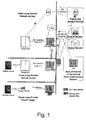
- Fig. 1 shows a CDMA2000 Multi-access network reference model, in which in particular also the Access controller (AC) and the Authentication Server (AS) are provided.
- AC Access controller
- AS Authentication Server
- a visited access provider network (in particular, the serving network) is shown.
- a source radio network (RN) is connected to a serving PDSN via a RAN-PDSN interface (R-P interface).
- A10 and A11 are interfaces for control messages defined in CDMA2000.
- the PDSN Packet Data Serving Network
- WAP Wireless Application Protocol
- the source RN is also connected to a Mobile Services Switching Center (MSC) via an interface A1.
- MSC Mobile Services Switching Center
- the MSC is connected to the home access provider network of the mobile station via an SS7 network.
- the home access provider network comprises a Home Location Register (HLR) and an Authentication Center (AuC), which is needed according to the embodiments described in the following.
- HLR Home Location Register
- AuC Authentication Center
- a target visited access provider network is shown, to which a mobile station may be connected.
- the target access provider network comprises a target RN and a target PDSN, which are connected by an R-P interface similar as in the serving visited access provider network.
- Both PDSN are also connected to an IP network (Internet Protocol version 4 (Ipv4) and/or Internet Protocol version 6 (Ipv6)).
- IP network Internet Protocol version 4 (Ipv4) and/or Internet Protocol version 6 (Ipv6)
- Ipv6 Internet Protocol version 6
- an interface Pi is defined in CDMA2000.
- the serving PDSN is also connected to an AAAL (Local AA (Authentication, Authorization and Accounting)) server, which also has access to the IP network.
- AAAL Local AA (Authentication, Authorization and Accounting) server
- a home IP network connected to the IP network and comprising an AAAH (Home AAA), and a broker network comprising an AAA server is shown.
- the Home Agent (HA) is illustrated, which may be arranged in the home IP network, in a private network or in the home access provider network.
- FIG. 1 A further access possibility for the mobile station is shown in the lower left part of Fig. 1 , in which a further target visited access provider network is illustrated.
- the mobile station connects to a target WLAN (Wireless Local Area Network).
- the WLAN is connected via an IP interface to an Access Controller (AC) which will be described in more detail later.
- the AC is connected to an Access Server (AS), which provides a connection to the IP network and also to the home access provider network, in particular to the AuC of the home access provider network.
- A Access Server
- the new functionalities i.e., the devices comprising the new functionalties
- these new functionalities are in the AC and the AS.
- the AS may be provided in the AAAH of the home IP network.
- the terminal is a device that needs to be capable of gaining access to all kinds of IP networks, including the IP network that is part of the cellular network and also the OWLAN (Operator Wireless LAN) access network.
- the terminal also needs to be able to run the AKA algorithms by having a USIM. And it also needs to run the IPv6 protocol. If MIPv6 is used, this process can also be utilized to dynamically create Security Associations between the Home Agent and the terminal.
- the EAP-AKA specification shows how the AKA authentication can be carried out using EAP messages. According to this embodiment, it is described how this specification can be used for authentication regardless of the access technology.
- RA Router Advertisement
- the terminal At the time the terminal enters a network capable of this functionality, it receives a Router Advertisement (RA), which includes an indication of support, e.g., a router or agent advertisement option from the local AC (Access controller) indicating this type of AAA (Authentication, Authorization and Accounting) support.
- RA Router Advertisement
- This initiates the authentication, key generation, and service provisioning according to the present embodiment.
- the EAP messages are encapsulated in either AAAv6 messages or in the WLAN link-layer (such as in IEEE 802.1x, IEEE 802.11i or in a suitable Bluetooth profile message, in PPP EAP encapsulation, or in any suitable last-hop PANA protocol message, as standardized in the future) when they are exchanged between the terminal and the access controller, which is the network element responsible for controlling the access of users to the IP network.
- AAAv6 the initial EAP/AKA identity message goes in the EAP Identity option in the AAAv6 message.
- the EAP messages are carried in a core network protocol like Diameter or Radius.
- the AC determines the Authentication Server's IP address by mapping it from the IMSI (International Mobile Subscriber Identity) and realm.
- the Authentication Server has a logical interface to the HLR/Authentication Center (AuC) through the MSC. It acts as a gateway between the MAP protocol (SS7 network) and the authentication protocols used on IP.
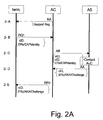
- the signal flow diagram illustrates the signals exchanged between the terminal (term., i.e. the UE), the Authentication Center (AC) and the Authentication Server (AS).
- the terminal receives a Router Advertisement (either unsolicited or solicited) from the AC.
- the Router Advertisement (RA) includes the AAA Challenge Option containing the Local Challenge.
- the terminal Before sending the following message, the terminal must have acquired an assigned IP address (in case of an IPv4 address from, for example, a DHCP (Dynamic Host Configuration Protocol) server. In case of an IPv6 address it could be an autoconfigured address).
- IPv4 address from, for example, a DHCP (Dynamic Host Configuration Protocol) server.
- IPv6 address it could be an autoconfigured address.
- step 2-B the terminal deducts from the presence of an AAA flag in the Router Advertisement that AAA access authentication needs to be performed.
- the terminal starts the authentication sequence by sending an AAA Request message (indicated by RQ1) to the AC.
- the AAA Request contains an AAA Client Identifier Option (indicated in the signal flow diagram as cID) as well as an option carrying the EAP Identity message.
- Both the AAA Client Identifier Option and the EAP Identity message contain the NAI of the user (IMSI@realm).
- step 2-C the AC derives the address of the AS from the NAI contained in the AAA Client Identifier Option (using DNS, if needed) and sends a AAA-Request (AR) message to the AS.
- the AR contains the EAP Identity message (in the EAP-Payload attribute) and the NAI (in the User-Name attribute) received in the AAA Client Identifier Option in step B.
- step 2-D the AS performs the following upon receipt of the AR message in step 2-C:
- step 2-E the AC sends an AAA Reply message (RP2), containing the EAP Request (ERq in the signal flow diagram)/AKA/Challenge in the AAAv6 Embedded Data Option, an AAA Client Identifier Option containing the NAI and an AAAv6 Challenge Option, to the terminal.
- the AAAv6 Challenge Option contains a Local Challenge value set by the AC.
- step 2-F the terminal performs the following upon receipt of the AAA Reply in step 2-E:
- step 2-G the AC sends an AAA Request (AR) message to the AS (identified by the NAI).
- AR AAA Request
- the AR message contains the EAP Response/AKA/Challenge (in the 3GPP2 vendor-specific attribute) and the NAI (in the User-Name attribute) received in the AAA Client Identifier Option of the AAA Request.
- step 2-H the AS performs the following upon receipt of the AR message in step 2-G:
- step 2-I the AC knows upon receipt of the AA message in step 2-H that the AKA authentication was successful.
- the AC sends an AAA Reply message (indicated by RP3 in Fig. 2A ) with the Code field set to indicate SUCCESS (value 0), to the terminal.
- the terminal receives this message, the OWLAN access network authentication is accomplished. If the authentication was successful, the AC shall apply a filtering rule allowing packets sent from the authenticated terminal to pass.
- step 3-A the terminal implicitly receives a knowledge of its HA being able to perform a AKA authentication.
- the terminal Before sending the following message, the terminal must have acquired an assigned IPv4 address, e.g., with DHCP.
- step 3-B the terminal deducts from its static knowledge with its home network that binding authentication needs to be performed.
- the terminal starts the authentication sequence by sending an AAA Request message (indicated by RQ1 in Fig. 3A ) to the HA.
- the AAA Request contains an AAA Client Identifier Option (cID) as well as an option carrying the EAP response and EAP Identity message (ERs/EAPIdentity).
- cID AAA Client Identifier Option
- EAP Identity message EAP response and EAP Identity message
- Both the AAA Client Identifier Option and the EAP Identity message contain the NAI of the user (IMSI@realm).
- the HA derives the address of the AS from the NAI contained in the AAA Client Identifier Option (using a dynamic name server (DNS), if needed) and sends an AAA-Request (AR) message to the AS.
- the AR contains the EAP Identity message (in the EAP-Payload attribute) and the NAI (in the User-Name attribute) received in the AAA Client Identifier Option in step B.
- step 3-D the AS performs the following upon receipt of the AR message in step 3-B:
- step 3-E the HA sends an AAA Reply message (indicated by RP2 in the figure), containing the EAP Request/AKA/Challenge in the AAAv6 Embedded Data Option, an AAA Client Identifier Option and an AAAv6 Challenge Option, to the terminal.
- the AAA Client Identifier Option contains the NAI identifying the user and the AAAv6 Challenge Option contains a Local Challenge value set by the HA.
- step 3-F the terminal performs the following upon receipt of the AAA Reply in step 3-E:
- step 3-G the HA sends an AR message to the AS (identified by the NAI).
- the AR message contains the EAP Response/AKA/Challenge (in the 3GPP2 vendor-specific attribute) and the NAI (in the User-Name attribute) received in the AAA Client Identifier Option.
- step 3-H the AS performs the following upon receipt of the AR message in step 3-F:
- step 3-I the HA creates or renews the Security Association to be used with the terminal for authenticating the Binding Updates, associates the key K as the authentication key with it and initializes the lifetime for the SA according to the value received in the key lifetime attribute.
- the HA then sends an AAA Reply message (RP3), containing an AAA Generalized Key Reply Option and the Code field set to indicate SUCCESS (value 0), to the terminal.
- the AAA Generalized Key Reply Option does not contain the key K, but the Lifetime field is set to the value received in the key lifetime attribute and the value of the Key SPI field is set to indicate the Security Association between the HA and the terminal.
- the terminal receives this message the general BU authentication key establishment procedure is completed.
- step 3-J for the Mobile IPv4 application, the terminal will form the Mobile-Home Authentication Extension into the Mobile IPv4 Registration Request (RREQ), using the BSA's, as created from the key material.
- the HA will automatically apply the corresponding BSA to the MN-HA Authentication Extension when performing message authentication of the RREQ.
- the terminal will send IPSec protected binding updates to the HA, so that the R-UIM keyed IPSec security associations will automatically be applied to the sent packet.
- the HA receives the packet, its IPSec module automatically knows the SA that it now can apply to the incoming mobility header packet.
- This packet can be the Mobile IPv6 HOTI or the Binding Update message.
- step 3-K for the Mobile IPv4 application, the HA will apply the Mobile-Home Authentication Extension into the constructed Mobile IPv4 Registration Reply (RREP), using the BSA's, as created from the key material received from AS. The terminal will then automatically apply the corresponding BSA to the MN-HA Authentication Extension when performing message authentication of the received RREP.
- RREP Mobile IPv4 Registration Reply
- the IPSec module of HA will automatically protect the sent BAck message using the R-UIM keyed SA(s). Then, when receiving an IPSec -secured mobility header packet from HA, the terminal automatically applies the R-UIM keyed IPSec security association for the opposite direction compared to the one used in step N.
- the second embodiment is directed to the field of combined use of CDMA2000 cellular and non-cellular packet data networks, and specifically relates to user authentication and the authorization of services using a Removable User Identity Module (R-UIM) when communicating over multiple types of access networks.
- R-UIM Removable User Identity Module
- Authenticating the user and authorizing service allows the cellular operator to provide the user various access network types, while maintaining a unified service provisioning, user-based network access management, and roaming authorization, while leveraging all this from existing authentication/accounting/billing infrastructure.
- the benefit can be summarized as unification of smartcard-based CDMA2000 authentication for multiple access methods.
- various protocols are combined into a R-UIM based multi-access authentication and key distribution mechanism, runnable over IP on different link-layers.
- the system using various encapsulation messages at different stages, allows the network elements to exchange data so that both the terminal equipment and the operator network can run the CDMA2000 CAVE (Cellular Authentication and Voice Encryption) algorithm for IP-based non-cellular and cellular packet data services.
- CDMA2000 CAVE Cellular Authentication and Voice Encryption
- the terminal and access network can mutually authenticate each other, and derive secure keys that can be used for a limited-time applications, such as network access authorization or message protection of roaming signaling authentication.
- the CAVE algorithm is further described in ANSI-TIA/EIA-41, "Cellular Radio Telecommunications Intersystem Operations", 1997 , for example.
- the terminal can perform IP-based authenticated sessions over heterogeneous network types, including CDMA2000, 802.11 Wireless LAN, Bluetooth, or Ethernet.
- the access network can be point-to-point, or point-to-multipoint.
- the terminal can combine running this method with Mobile Ipv6, or it can run it over a simple IPv6 access, one without mobility support.
- a uniform method is provided for the mobile equipment and operator network to communicate with each other over any IP-capable network, and securely exchange credentials and establish service provisioning, regardless of the characteristics of the underlying network used.
- the method as described, is tied to the existing CDMA2000 method by sharing the registration identity only, so that using this method, operators are not required to re-tool each technology, but can leverage this more generic method when a link-layer specific mechanism is not used.
- the operator may leverage their existing CDMA2000 service infrastructure with little or no change to the existing network elements.
- the embodiment is directed to mobile phones or other mobile devices (heretofore referred to as an ME or a mobile equipment), which have IP-based communication capabilities, usually over wireless links, and which has the R-UIM module.
- the embodiment can also be used with fixed devices in their startup but is most useful with mobile devices.
- the embodiment allows mutual authentication, network authorization, and service provisioning by a multiparty interaction involving (but not limited to) the following entities: ME, R-UIM (which is considered a separate entity by virtue of its internal processor, non-volatile memory, and private data and algorithms), Access Controller, Authentication Gateway, and the CDMA2000 network's Authentication Center (AuC/HLR (Home Location Register)), similar as in the first embodiment.
- the ME receives a Router Advertisement, which includes an indication of GRASP support, e.g., a router or agent advertisement option from the local AC indicating this type of AAA support. This initiates the authentication, key generation, and service provisioning as described in this invention.
- the ME responds to the AC with an EAP R-UIM/Start message containing a Client Identifier option and an EAP Identity option.
- Both options contain the user identity (IMSI@realm), which is constructed from the user's IMSI in the R-UIM, at ME startup time, and the realm in an extra file in the R-UIM or in the ME's non-volatile memory.
- IMSI@realm the user identity
- This identity EAP message is encapsulated in IP/IPv6 as an access link AAA message.
- the access link AAA message can be, e.g., in UDP or ICMPv6 messages, as described in a best implementation case in Appendix A for IPv4 and IPv6, respectively, in a link-layer encapsulation, such as in IEEE 802.1x, IEEE 802.11i or in a suitable Bluetooth profile message, in PPP EAP encapsulation, or in any suitable last-hop PANA protocol message, as standardized in the future).
- a link-layer encapsulation such as in IEEE 802.1x, IEEE 802.11i or in a suitable Bluetooth profile message, in PPP EAP encapsulation, or in any suitable last-hop PANA protocol message, as standardized in the future).
- the AC determines the Authentication Server's IP address by mapping it from the IMSI and realm, and forwards the AAA message to the IP core using, e.g., RADIUS, or any other core AAA protocol such as DIAMETER, for its encapsulation transport.
- the message is then received by the AS, which then contacts the AuC /HLR.
- the AS can be an AAA server which communicates directly or via the serving MSC with the AuC/HLR using SS7 or A1 messaging emulating voice circuit authentications.
- the AS would have a functionality to communicate with the AuC/HLR.
- the existing CDMA network can stay unmodified, only an AS must be added. This is the non-intrusive overlay approach.
- the AS can be an AAA (RADIUS) client/broker in the PDSN, which forwards the authentications to a modified-to-standard Home AAA server (AAAH) in the CDMA2000 packet core network.
- AAA modified-to-standard Home AAA server
- the latter requires the AAAH have the functionality to communicate with the AuC/HLR, a modification to the CDMA2000 packet core.
- the latter architectural choice would give the possibility to use R-UIM authentications for native CDMA2000 packet data sessions via a PDSN, as is currently done with EAP-CHAP, or EAP-PAP, since those authentications terminate at the end of the PPP session at PDSN, and cause a RADIUS message exchange with the AAAH server.
- the latter alternative would broker non-cellular R-UIM authentications via the PDSN or directly to the home AAA server, or transfer cellular PPP-R-UIM authentications to the same endpoint, using extended PDSN RADIUS client capabilities.
- the extension would be the EAP-R-UIM capability and its mapping to RADIUS messages, potentially re-using the non-cellular RADIUS messaging for the described method.
- the AS When the AS receives a registration, it proceeds to retrieve randomized keying material from the AuC, in the form of a RAND or RANDU (depending on the global, or unique nature of the authentication being performed), and returns this random information as a challenge to the ME, in the form of an EAP R-UIM/Challenge message containing a client ID option, inside of an AAA Answer (which is transported over RADIUS).
- the ME has received the random challenge (RAND) from the AS, and is ready to run the CAVE algorithm in order to authenticate itself and generate encryption keys for the session.
- the ME sends a command to the R-UIM to start the Run CAVE algorithm, and provides the ESN (electronic serial number of the phone, determined and ME startup time), RAND/RANDU, rand type (unique or global, depending on what was supplied), and the PIN number, if necessary, for this R-UIM.
- the ME then runs Get Response, to get the R-UIM to pass the output AUTHR or AUTHU (global or unique challenge response) to the ME.
- the ME After the ME has received the challenge response, it sends it to the AC in a similar packet as described above, but it is an EAP/R-UIM/Start message with the Local Challenge, Client ID, and an embedded data option containing the challenge response material.
- the AC looks up the AS's address as in the previous step, and forwards the message via RADIUS.
- the AS gets the message, and determines which AuC/HLR to contact by doing a mapping lookup based on the IMSI and Realm received in the identity suboption, and also retrieves its stored session state based on the IMSI@Realm.
- the AS proceeds to verify the authenticity of the client by retrieving CAVE credentials from the AuC/HLR, running the CAVE algorithm, and comparing the response received from the ME with the response received from AuC/HLR.
- the AS forwards the session key and success code back to the AC in another EAP message.
- the AC grants access to the ME and saves the session key for use during the session. This happens, e.g., by the core AAA client functionality in the AC. It keys an IPsec security association(s) with ME in the AC, or creates a firewall rule to grant access to the network for the ME.
- the AC then transmits the message back to the ME, embedded in the last-hop AAA protocol as described previously (e.g., in ICMPv6), with the key suboption removed.
- the key is not transmitted over the last hop, which may be insecure, and the ME uses the key it derived in the R-UIM, and the AC uses the key transmitted back from the AS through RADIUS.
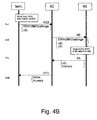
- step 4-A the terminal receives a Router Advertisement (either unsolicited or solicited) from the AC.
- the Router Advertisement (RA) includes a flag indicating AAA support.
- the terminal Before sending the following message, the terminal must have acquired an assigned IPv4 address, e.g., with DHCP.
- step 4-B the terminal deducts from the presence of an AAA flag in the Router Advertisement that AAA access authentication needs to be performed.
- the terminal starts the authentication sequence by sending an AAA Request message (RQ1) to the AC.
- the AAA Request contains an AAA Client Identifier Option as well as an option carrying the EAP Identity message.
- Both the AAA Client Identifier Option and the EAP Identity message contain the NAI of the user (IMSI@realm).
- step 4-C the AC derives the address of the AS from the NAI contained in the AAA Client Identifier Option (using DNS, if needed) and sends a AAA-Request (AR) message to the AS.
- the AR contains the EAP Identity message (in the EAP-Payload attribute) and the NAI (in the User-Name attribute) received in the AAA Client Identifier Option in step B.
- step 4-D the AS performs the following upon receipt of the AR message in step 4-C:
- step 4-E the AC sends an AAA Reply message (RP1), containing the EAP Request/R-UIM/Start in the an Embedded Data Option and an AAA Client
- RP1 AAA Reply message
- the AAA Client Identifier Option contains the NAI identifying the user.
- step 4-F the terminal sends an AAA Request message (RQ1), containing an AAA Client Identifier Option containing the NAI (IMSI@realm) and an AAA Embedded Data Option carrying an EAP Response/R-UIM/Start message.
- the Reason field of the EAP Response/R-UIM/Start is set to 0 (zero), indicating that the session key will not be used for anything (only the CAVE authentication is performed).
- step 4-G the AC derives the address of the AS from the NAI contained in the AAA Client Identifier Option (using DNS, if needed) and sends a AAA-Request (AR) message to the AS.
- the AR contains the EAP Response/R-UIM/Start message and the NAI (in the vendor-specific Radius attribute fields), as received in the AAA Client Identifier Option in step 4-F.
- step 4-H the AS performs the following upon receipt of the AR message in step G:
- step 4-I the AC sends an AAA Reply message (RP2), containing the EAP Request/R-UIM/Challenge in the AAA Embedded Data Option, an AAA Client Identifier Option containing the NAI.
- RP2 AAA Reply message
- step 4-J the terminal performs the following upon receipt of the AAA Reply in step 4-I:
- step 4-K the AC sends an AR message to the AS (identified by the NAI).
- the AR message contains the EAP Response/R-UIM/Challenge and the NAI (in a vendor-specific Radius attribute field) as received in the AAA Client Identifier Option of the AAA Request.
- step 4-L the AS performs the following upon receipt of the AR message in step K:
- step 4-M the AC knows upon receipt of the AA message in step 4-L, whether the CAVE authentication was successful or not. If the authentication was successful, the AC sends an AAA Reply message with the Code field set to indicate SUCCESS (value 0), to the terminal. When the terminal receives this message, the OWLAN access network authentication is accomplished.
- the AC shall apply a filtering rule allowing packets sent from the authenticated terminal to pass.
- a filtering rule allowing packets sent from the authenticated terminal to pass.
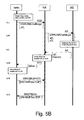
- signaling flow between MS, HA, and AS is described, using access link signaling (NAAP, PPP-LCP, or such), and core link signaling (Radius or DIAMETER), and EAP-R-UIM as the end-to-end signaling.
- NAAP access link signaling
- PPP-LCP PPP-LCP
- DIAMETER core link signaling
- EAP-R-UIM EAP-R-UIM
- step 5-A the terminal implicitly receives a knowledge of its HA being able to perform a R-UIM authentication.
- the terminal Before sending the following message, the terminal must have acquired an assigned IPv4 address, e.g., with DHCP.
- step 5-B the terminal deducts from its static knowledge with its home network that binding authentication needs to be performed.
- the terminal starts the authentication sequence by sending an AAA Request message (RQ1) to the HA.
- the AAA Request contains an AAA Client Identifier Option as well as an option carrying the EAP Identity message.
- Both the AAA Client Identifier Option and the EAP Identity message contain the NAI of the user (IMSI@realm).
- step 5-C the HA derives the address of the AS from the NAI contained in the AAA Client Identifier Option (using DNS, if needed) and sends a AAA-Request (AR) message to the AS.
- the AR contains the EAP Identity message (in the EAP-Payload attribute) and the NAI (in the User-Name attribute) received in the AAA Client Identifier Option in step 5-B.
- step 5-D the AS performs the following upon receipt of the AR message in step C:
- step 5-E the HA sends an AAA Reply message (RP1), containing the EAP Request/R-UIM/Start Request in the Embedded Data Option and an AAA Client Identifier Option to the terminal.
- the AAA Client Identifier Option contains the NAI identifying the user.
- step 5-F the terminal sends an AAA Request message (RQ2), containing an AAA Client Identifier Option containing the NAI (IMSI@realm) and an AAA Embedded Data Option carrying an EAP Response/R-UIM/Start message.
- RQ2 AAA Request message
- the Reason field of the EAP Response/R-UIM/Start is set to 2 (binary 10), indicating that the session key will be used for home registration protection (the CAVE authentication will be performed after step I and Ipsec security associations are created for protecting mobility headers with HA after step M).
- step 5-G the HA derives the address of the AS from the NAI contained in the AAA Client Identifier Option (using DNS, if needed) and sends an AAA-Request (AR) message to the AS.
- the AR contains the EAP Response/R-UIM/Start message and the NAI (in the vendor-specific Radius attribute fields), as received in the AAA Client Identifier Option in step F.
- step 5-H the AS performs the following upon receipt of the AR message in step G:
- step 5-I the HA sends an AAA Reply message (RP2), containing the EAP Request/R-UIM/Challenge in the AAA Embedded Data Option, an AAA Client Identifier Option containing the NAI.
- RP2 AAA Reply message
- step 5-J the terminal performs the following upon receipt of the AAA Reply in step 5-1:
- step 5-K the HA sends an AR message to the AS (identified by the NAI).
- the AR message contains the EAP Response/R-UIM/Challenge and the NAI (in a vendor-specific Radius attribute field) as received in the AAA Client Identifier Option of the AAA Request.
- step 5-L the AS performs the following upon receipt of the AR message in step K:
- step 5-M the HA knows upon receipt of the AA message in step 5-L, whether the CAVE authentication was successful or not. If the authentication was successful, the HA sends an AAA Reply message (RP3) with the Code field set to indicate SUCCESS (value 0) to the terminal. When the terminal receives this message, the OWLAN home registration authorization and keying is done. If the R-UIM authentication was successful, the HA shall key
- step 5-N for the Mobile IPv4 application, the terminal will form the Mobile-Home Authentication Extension into the Mobile IPv4 Registration Request (RREQ), using the BSA's, as created from the key material.
- the HA will automatically apply the corresponding BSA to the MN-HA Authentication Extension when performing message authentication of the RREQ.
- the terminal will send IPSec protected binding updates to the HA, so that the R-UIM keyed IPSec security associations will automatically be applied to the sent packet.
- the HA receives the packet, its IPSec module automatically knows the SA that it now can apply to the incoming mobility header packet.
- This packet can be the Mobile IPv6 HOTI (Home Test Init) or the Binding Update (BU) message.
- step 5-O for the Mobile IPv4 application, the HA will apply the Mobile-Home Authentication Extension into the constructed Mobile IPv4 Registration Reply (RREP), using the BSA's, as created from the key material received from AS. The terminal will then automatically apply the corresponding BSA to the MN-HA Authentication Extension when performing message authentication of the received RREP.
- RREP Mobile IPv4 Registration Reply
- the IPSec module of HA will, in step 5-O, automatically protect the sent Back (Binding Acknowledgement) message using the R-UIM keyed SA(s). Then, when receiving an IPSec - secured mobility header packet from HA, the terminal automatically applies the R-UIM keyed IPSec security association for the opposite direction compared to the one used in step N.
- the invention as described in the above embodiments can be implemented in a software or embedded hardware system or chip elements, running on various network entities involved in the exchange.
- Important functionalities of the implementation in a terminal are: access to an API for standard R-UIM functions, and the ability to construct arbitrary IP packets including encapsulated addresses.
- important functions are packet encapsulation and decapsulation into access AAA messages, such as UDP or ICMPv6, and core AAA messages, such as RADIUS or DIAMETER messages, e.g., adapting from the NASREQ application (as described in P. Calhoun, W. Bulley, A. Rubens, J. Haag, G. Zorn. Diameter NASREQ Application (work in progress).
- Fig. 1 The best mode of implementation of the second embodiment is outlined in Fig. 1 .
- the functionality would send and receive GRASP protocol messages with the IP access router, access server, or base station to which the mobile device connects over the radio network.
- the mobile device When the mobile device has received messages from the network elements that supply input information (a challenge, or RAND) to the authentication algorithm, it will access the R-UIM to run the CAVE algorithm. This locally generates a response and a shared secret with the network.
- input information a challenge, or RAND
- the invention can be implemented by additional software on the access router/WLAN base station, to accept encapsulated messages from the mobile equipment, and re-encapsulate them in the server-based RADIUS protocol, for transit back to the operator's network.
- An optional Mobile IP Home Agent with additional software is added to the operator's network, and additionally a gateway (AS or AAAH) is used to translate messages between RADIUS and the CDMA2000 SS7 messages.
- AS or AAAH AAAH
- the security of the CAVE protocol is confined to the confines of the ME and AuC/HLR, and existing infrastructure in the CDMA2000 network is re-used for authentication and authorization, possibly even for billing and accounting.
- no or minimal changes are needed to the IP or CDMA2000 networks.
- the functional implementation can occur in various places of operating systems, for instance in the OS (Operating System) kernels, or in user-level software, depending on the implementation specifics.
- OS Operating System
- user-level software depending on the implementation specifics.
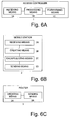
- Fig. 6A shows an access controller (AC) according to the above embodiments.
- the access controller 1 comprises a receiving means 1a, which receives an authentication message in which a start message described above is encapsulated.
- the access controller comprises a processing means 1b.
- the processing means 1b reads the encapsulated start message (e.g., client identifier option message and a EAP (Extensible Authentication Protocol) identity option message, which contain client type, user identity, and core address information, as described above).
- the encapsualted message is then forwarded by a forwarding means 1c to an authentication server identified in the encapsulated message.
- Fig. 6B shows a mobile terminal 2. It is noted that the mobile terminal is only an example for a subscriber device.
- the mobile terminal 2 comprises a determining means 2a which determines a network access type upon receipt of an information message (i.e. router advertisement RA described above) which indicates at least one network access type.
- the mobile terminal 3 comprises a creating means 2b which creates the start message as described above.
- An encapsulating means 2c of the mobile station 2 encapsulates the start message in an authentication message compatible with an access network identified in the information message, and a sending means 2d of the mobile station 2 sends the start message to an access controller.
- Fig. 6c shows a router 3 as used in the above embodiments.
- the router 3 comprises a creating means 3a which creates the information message described above, i.e., a Router Advertisement.
- a sending means 3b of the router 3 sends the information message to a subscriber device. It is noted that router 3 and the access controller 1 may be arranged in one unit (as according to the embodiments described above).
- the above embodiments can be freely combined, such that EAP-AKA authentication mechanisma using USIM and an authentication using R-UIM based on the CAVE algorithm are both used.
- a protocol between the mobile device and the access network may comprise at least one of network layer protocols like UDP, ICMP, ICMPv6 and link-layer protocols like IEEE 802.1x, IEEE 802.1 li, and a Bluetooth profile.
Landscapes
- Engineering & Computer Science (AREA)
- Computer Security & Cryptography (AREA)
- Computer Networks & Wireless Communication (AREA)
- Signal Processing (AREA)
- General Engineering & Computer Science (AREA)
- Computer Hardware Design (AREA)
- Computing Systems (AREA)
- Theoretical Computer Science (AREA)
- Software Systems (AREA)
- Physics & Mathematics (AREA)
- General Physics & Mathematics (AREA)
- Power Engineering (AREA)
- Mobile Radio Communication Systems (AREA)
- Data Exchanges In Wide-Area Networks (AREA)
Priority Applications (1)
| Application Number | Priority Date | Filing Date | Title |
|---|---|---|---|
| PL04769606T PL1673916T3 (pl) | 2003-10-13 | 2004-10-12 | Urządzenia i sposób dla uwierzytelniania w heterogenicznych sieciach IP |
Applications Claiming Priority (3)
| Application Number | Priority Date | Filing Date | Title |
|---|---|---|---|
| US51078703P | 2003-10-13 | 2003-10-13 | |
| US10/960,641 US8341700B2 (en) | 2003-10-13 | 2004-10-08 | Authentication in heterogeneous IP networks |
| PCT/IB2004/003313 WO2005036852A1 (en) | 2003-10-13 | 2004-10-12 | Apparatuses and method for authentication in heterogeneuous ip networks |
Publications (3)
| Publication Number | Publication Date |
|---|---|
| EP1673916A1 EP1673916A1 (en) | 2006-06-28 |
| EP1673916B1 EP1673916B1 (en) | 2016-11-23 |
| EP1673916B9 true EP1673916B9 (en) | 2017-04-19 |
Family
ID=34426256
Family Applications (1)
| Application Number | Title | Priority Date | Filing Date |
|---|---|---|---|
| EP04769606.7A Expired - Lifetime EP1673916B9 (en) | 2003-10-13 | 2004-10-12 | Apparatuses and method for authentication in heterogeneous ip networks |
Country Status (9)
| Country | Link |
|---|---|
| US (3) | US8341700B2 (enExample) |
| EP (1) | EP1673916B9 (enExample) |
| JP (1) | JP4475596B2 (enExample) |
| KR (1) | KR20060084513A (enExample) |
| CN (1) | CN1875598B (enExample) |
| AU (1) | AU2004306553B2 (enExample) |
| DK (1) | DK1673916T3 (enExample) |
| PL (1) | PL1673916T3 (enExample) |
| WO (1) | WO2005036852A1 (enExample) |
Families Citing this family (103)
| Publication number | Priority date | Publication date | Assignee | Title |
|---|---|---|---|---|
| US7900242B2 (en) * | 2001-07-12 | 2011-03-01 | Nokia Corporation | Modular authentication and authorization scheme for internet protocol |
| US8140845B2 (en) * | 2001-09-13 | 2012-03-20 | Alcatel Lucent | Scheme for authentication and dynamic key exchange |
| US20070111799A1 (en) * | 2001-09-28 | 2007-05-17 | Robb Harold K | Controlled access switch |
| US7181196B2 (en) * | 2003-05-15 | 2007-02-20 | Lucent Technologies Inc. | Performing authentication in a communications system |
| GB0311921D0 (en) * | 2003-05-23 | 2003-06-25 | Ericsson Telefon Ab L M | Mobile security |
| CN1601958B (zh) * | 2003-09-26 | 2010-05-12 | 北京三星通信技术研究有限公司 | 基于cave算法的hrpd网络接入认证方法 |
| US20050096048A1 (en) * | 2003-10-30 | 2005-05-05 | Cellco Partnership | Optimized network employing seamless and single sign on capabilities for users accessing data applications on different networks |
| GB2417856B (en) * | 2004-03-20 | 2008-11-19 | Alcyone Holding S A | Wireless LAN cellular gateways |
| US9686669B2 (en) * | 2004-04-08 | 2017-06-20 | Nokia Technologies Oy | Method of configuring a mobile node |
| US7904715B2 (en) * | 2004-04-09 | 2011-03-08 | Alcatel-Lucent Usa Inc. | Method for authenticating dual-mode access terminals |
| US8526914B2 (en) * | 2004-06-04 | 2013-09-03 | Alcatel Lucent | Self-synchronizing authentication and key agreement protocol |
| US20060002351A1 (en) * | 2004-07-01 | 2006-01-05 | Telefonaktiebolaget L M Ericsson (Publ) | IP address assignment in a telecommunications network using the protocol for carrying authentication for network access (PANA) |
| US20060002329A1 (en) * | 2004-07-01 | 2006-01-05 | Lila Madour | Method and system for providing backward compatibility between protocol for carrying authentication for network access (PANA) and point-to-point protocol (PPP) in a packet data network |
| JP4241577B2 (ja) * | 2004-11-05 | 2009-03-18 | ブラザー工業株式会社 | サービス登録システム、サーバ、端末装置および周辺装置 |
| US7941512B2 (en) * | 2004-12-13 | 2011-05-10 | Cisco Technology, Inc. | Use of IPv6 in access networks |
| KR100843072B1 (ko) * | 2005-02-03 | 2008-07-03 | 삼성전자주식회사 | 무선 네트워크 시스템 및 이를 이용한 통신 방법 |
| FI20050491A0 (fi) | 2005-05-09 | 2005-05-09 | Nokia Corp | Järjestelmä varmenteiden toimittamiseksi viestintäjärjestelmässä |
| JP4903792B2 (ja) * | 2005-06-22 | 2012-03-28 | エレクトロニクス アンド テレコミニュケーションズ リサーチ インスティチュート | 無線携帯インターネットシステム用の認証キー識別子の割り当て方法 |
| CN1897589B (zh) | 2005-07-13 | 2010-12-15 | 上海贝尔阿尔卡特股份有限公司 | IPv6无状态地址配置中的接入装置、路由设备及方法 |
| KR100735221B1 (ko) * | 2005-08-12 | 2007-07-03 | 삼성전자주식회사 | 컨텐츠를 다수의 단말기에서 재생할 수 있도록 하는 컨텐츠재생 방법 및 이를 이용한 시스템과 단말 장치 |
| US8230221B2 (en) * | 2005-08-15 | 2012-07-24 | Telefonaktiebolaget L M Ericsson (Publ) | Routing advertisement authentication in fast router discovery |
| US8213412B2 (en) * | 2005-09-29 | 2012-07-03 | Comcast Cable Holdings, Llc | System and method for providing multimedia services utilizing a local proxy |
| ATE484143T1 (de) * | 2005-09-30 | 2010-10-15 | Alcyone Holding S A | Verfahren und vorrichtung zum aufbau einer verbindung zwischen einer mobilen vorrichtung und einem netzwerk |
| JP4545085B2 (ja) * | 2005-12-08 | 2010-09-15 | 富士通株式会社 | ファイアウォール装置 |
| DE102006015033B4 (de) * | 2005-12-16 | 2016-07-07 | Siemens Aktiengesellschaft | Mobile Station als Gateway für mobile Endgeräte zu einem Zugangsnetz sowie Verfahren zur Netzanmeldung der mobilen Station und der mobilen Endgeräte |
| US20070154016A1 (en) * | 2006-01-05 | 2007-07-05 | Nakhjiri Madjid F | Token-based distributed generation of security keying material |
| US8457109B2 (en) * | 2006-01-31 | 2013-06-04 | United States Cellular Corporation | Access based internet protocol multimedia service authorization |
| KR101276821B1 (ko) | 2006-02-06 | 2013-06-18 | 엘지전자 주식회사 | 멀티플 네트워크 연결 방법 및 그 통신 장치 |
| US8391153B2 (en) | 2006-02-17 | 2013-03-05 | Cisco Technology, Inc. | Decoupling radio resource management from an access gateway |
| US8195805B2 (en) * | 2006-02-28 | 2012-06-05 | Harris Corporation | Device configuration and data extraction using a portable transaction format |
| JP2009528743A (ja) | 2006-03-02 | 2009-08-06 | ノキア コーポレイション | 無線アクセス・ネットワークを経由した接続先ネットワークへのアクセス支援 |
| CN101496387B (zh) * | 2006-03-06 | 2012-09-05 | 思科技术公司 | 用于移动无线网络中的接入认证的系统和方法 |
| JP4854338B2 (ja) * | 2006-03-07 | 2012-01-18 | ソフトバンクBb株式会社 | 移動体通信における認証システム及び認証方法 |
| US7673061B2 (en) * | 2006-03-28 | 2010-03-02 | Tellabs San Jose, Inc. | Method and apparatus for neighborhood discovery across disparate point-to-point networks |
| US20070240214A1 (en) * | 2006-03-30 | 2007-10-11 | Berry Andrea N | Live routing |
| CN1901449B (zh) * | 2006-07-19 | 2010-05-12 | 华为技术有限公司 | 一种网络接入的方法和网络通信系统 |
| EP2051452B1 (en) * | 2006-08-09 | 2013-07-17 | Hitachi, Ltd. | Communication system using multi-radio mode |
| US8090358B2 (en) * | 2006-08-16 | 2012-01-03 | At&T Intellectual Property I, L.P. | Methods and computer-readable media for location-based targeted advertising |
| CN100488305C (zh) * | 2006-09-23 | 2009-05-13 | 西安西电捷通无线网络通信有限公司 | 一种网络接入鉴别与授权方法以及授权密钥更新方法 |
| US8270948B2 (en) * | 2007-01-18 | 2012-09-18 | Toshiba America Research, Inc. | Solving PANA bootstrapping timing problem |
| KR100864158B1 (ko) * | 2007-01-29 | 2008-10-16 | 주식회사 케이티 | 휴대 인터넷 망에서 임시 주소 생성/할당 방법 및 그를이용한 무선 자원 할당 방법 |
| US20080276303A1 (en) * | 2007-05-03 | 2008-11-06 | Trapeze Networks, Inc. | Network Type Advertising |
| CN101123540B (zh) * | 2007-08-21 | 2010-12-08 | 广东志成冠军集团有限公司 | 一种基于异构网络的监控方法及系统 |
| US8265593B2 (en) * | 2007-08-27 | 2012-09-11 | Alcatel Lucent | Method and system of communication using extended sequence number |
| US8457044B2 (en) * | 2007-09-24 | 2013-06-04 | Qualcomm Incorporated | Selective review of bundled messages from a wireless communication device |
| US8379854B2 (en) * | 2007-10-09 | 2013-02-19 | Alcatel Lucent | Secure wireless communication |
| CN100583997C (zh) * | 2007-10-19 | 2010-01-20 | 深圳华为通信技术有限公司 | 网络电视的业务启动方法、装置和系统以及网络电视终端 |
| EP2053886A3 (en) * | 2007-10-26 | 2015-03-25 | Hitachi, Ltd. | Communication system and gateway apparatus |
| US7895319B2 (en) * | 2007-10-31 | 2011-02-22 | Microsoft Corporation | Variable DNS responses based on client identity |
| US8166527B2 (en) * | 2007-11-16 | 2012-04-24 | Ericsson Ab | Optimized security association database management on home/foreign agent |
| CN101471936B (zh) * | 2007-12-29 | 2012-08-08 | 华为技术有限公司 | 建立ip会话的方法、装置及系统 |
| JP4344957B2 (ja) * | 2008-02-14 | 2009-10-14 | 日本電気株式会社 | 処理分散システム、認証サーバ、分散サーバ及び処理分散方法 |
| EP2091204A1 (en) | 2008-02-18 | 2009-08-19 | Panasonic Corporation | Home agent discovery upon changing the mobility management scheme |
| RU2371884C1 (ru) * | 2008-03-04 | 2009-10-27 | Министерство обороны Российской Федерации Государственное образовательное учреждение ВОЕННАЯ АКАДЕМИЯ СВЯЗИ имени С.М. Буденного | Способ (варианты) и система (варианты) управления доступом к сети cdma |
| US8250629B2 (en) * | 2008-04-01 | 2012-08-21 | Bridgewater Systems Corp. | Systems and methods for flexible service delivery network services |
| JP4336766B1 (ja) * | 2008-04-18 | 2009-09-30 | 日本電気株式会社 | 無線通信システム、認証処理部選択方法 |
| US20090290539A1 (en) * | 2008-05-21 | 2009-11-26 | Huawei Technologies, Co., Ltd. | Method and apparatus for home agent address acquisition for IPv4 mobile nodes |
| US8224330B2 (en) * | 2008-08-07 | 2012-07-17 | Futurewei Technologies, Inc. | Method and system for interworking between two different networks |
| KR101016641B1 (ko) * | 2008-10-27 | 2011-02-25 | 주식회사 케이티 | 단말에 대한 인증 제어 장치 및 방법 |
| US8825011B2 (en) * | 2008-12-19 | 2014-09-02 | Tecore, Inc. | Intelligent network access control |
| US8693642B2 (en) * | 2009-04-16 | 2014-04-08 | Alcatel Lucent | Emergency call handling in accordance with authentication procedure in communication network |
| CN102450056B (zh) | 2009-06-04 | 2015-11-25 | 黑莓有限公司 | 在使用radius兼容协议促进向移动终端传送相邻网络信息中使用的方法和装置 |
| CN101730104A (zh) * | 2009-06-23 | 2010-06-09 | 中兴通讯股份有限公司 | 用户设备接入认证方法、装置及无线局域网接入网络 |
| US8953557B2 (en) | 2009-06-30 | 2015-02-10 | Alcatel Lucent | Roaming method for a mobile terminal in WLAN, related access controller and access point device |
| CN102056144B (zh) * | 2009-10-28 | 2015-05-20 | 中兴通讯股份有限公司 | 多接入的处理方法、家乡代理及用户设备 |
| CN101742497B (zh) * | 2009-12-24 | 2013-03-20 | 中兴通讯股份有限公司 | 接入认证的实现方法和客户端 |
| US8296836B2 (en) * | 2010-01-06 | 2012-10-23 | Alcatel Lucent | Secure multi-user identity module key exchange |
| US8280351B1 (en) * | 2010-02-04 | 2012-10-02 | Cellco Partnership | Automatic device authentication and account identification without user input when application is started on mobile station |
| CN102369699B (zh) | 2010-05-25 | 2014-09-17 | 华为技术有限公司 | 本地路由授权的方法、装置和系统 |
| US8677451B1 (en) | 2010-06-22 | 2014-03-18 | Cellco Partnership | Enabling seamless access to a domain of an enterprise |
| US8432872B2 (en) * | 2010-08-31 | 2013-04-30 | Qualcomm Incorporated | Creating PDN context in EHRPD network over a LTE tunnel |
| CN101958908B (zh) * | 2010-10-13 | 2012-08-08 | 西安西电捷通无线网络通信股份有限公司 | 网络访问控制方法及系统 |
| WO2012048552A1 (zh) | 2010-10-13 | 2012-04-19 | 西安西电捷通无线网络通信股份有限公司 | 网络访问控制方法及系统 |
| WO2012095184A1 (en) * | 2011-01-14 | 2012-07-19 | Nokia Siemens Networks Oy | External authentication support over an untrusted network |
| EP2772077B1 (en) * | 2011-10-25 | 2018-06-13 | Nokia Technologies Oy | Method for securing host configuration messages |
| US9235406B2 (en) * | 2012-04-24 | 2016-01-12 | Apple Inc. | Methods and apparatus for user identity module update without service interruption |
| US9578548B2 (en) * | 2012-06-22 | 2017-02-21 | Futurewei Technologies, Inc. | System and method for configuring multiple IP connections |
| CN102916981A (zh) * | 2012-11-20 | 2013-02-06 | 北京恒华伟业科技股份有限公司 | 网络权限的控制方法和装置 |
| CN103973658A (zh) * | 2013-02-04 | 2014-08-06 | 中兴通讯股份有限公司 | 静态用户终端认证处理方法及装置 |
| JP6157222B2 (ja) * | 2013-05-30 | 2017-07-05 | キヤノン株式会社 | 通信装置、制御方法、及びプログラム |
| US10250579B2 (en) * | 2013-08-13 | 2019-04-02 | Alcatel Lucent | Secure file transfers within network-based storage |
| CN103532946B (zh) * | 2013-10-09 | 2016-11-23 | 北京奇虎科技有限公司 | 基于无密码或任意密码的网络授权的方法、系统和装置 |
| CN103634796B (zh) * | 2013-12-06 | 2017-02-01 | 北京航空航天大学 | 一种空天信息网络漫游可信安全接入方法 |
| US20160352731A1 (en) * | 2014-05-13 | 2016-12-01 | Hewlett Packard Enterprise Development Lp | Network access control at controller |
| WO2015195022A1 (en) * | 2014-06-18 | 2015-12-23 | Telefonaktiebolaget L M Ericsson (Publ) | Methods and arrangements for identification of user equipments for authentication purposes |
| CN105812337A (zh) * | 2014-12-31 | 2016-07-27 | 中兴通讯股份有限公司 | 一种Radius和Diameter相结合认证授权的方法及装置 |
| US9537808B1 (en) * | 2015-07-14 | 2017-01-03 | Kyocera Document Solutions, Inc. | Communication between peripheral device and client device |
| CN105611488A (zh) * | 2015-12-31 | 2016-05-25 | 福建联迪商用设备有限公司 | 一种蓝牙自动连接方法和主设备、从设备和系统 |
| CN105743914B (zh) * | 2016-03-31 | 2019-03-22 | 宇龙计算机通信科技(深圳)有限公司 | 一种语音加密通信方法、主叫端、被叫端及系统 |
| CN106792661B (zh) * | 2016-04-29 | 2021-05-14 | 新华三技术有限公司 | 一种wlan接入方法及装置 |
| TWI602445B (zh) | 2016-06-08 | 2017-10-11 | 中華電信股份有限公司 | 用於整合異質網路之認證系統及其認證方法 |
| US9769668B1 (en) * | 2016-08-01 | 2017-09-19 | At&T Intellectual Property I, L.P. | System and method for common authentication across subscribed services |
| WO2018075784A1 (en) | 2016-10-21 | 2018-04-26 | Syverson Benjamin | Methods and systems for setting trajectories and target locations for image guided surgery |
| CN108738019B (zh) * | 2017-04-25 | 2021-02-05 | 华为技术有限公司 | 融合网络中的用户认证方法及装置 |
| US10464592B2 (en) * | 2017-10-30 | 2019-11-05 | Steering Solutions Ip Holding Corporation | Steering column motion control assembly |
| US10778449B2 (en) * | 2018-01-26 | 2020-09-15 | Huawei Technologies Co., Ltd. | System and method for shared sessions in communication networks |
| WO2019161545A1 (zh) * | 2018-02-23 | 2019-08-29 | Oppo广东移动通信有限公司 | 完整性校验方法、网络设备、终端设备及计算机存储介质 |
| EP3609240A1 (de) | 2018-08-09 | 2020-02-12 | Siemens Aktiengesellschaft | Computerimplementiertes verfahren und netzwerkzugangsserver zum verbinden einer netzwerkkomponente mit einem netzwerk, insbesondere einem mobilfunknetz, mit einem erweiterten netzwerkzugangskennzeichen |
| CN115038081B (zh) * | 2019-03-30 | 2023-04-28 | 华为技术有限公司 | 通信方法和通信设备 |
| CN114553831B (zh) * | 2020-11-25 | 2023-09-08 | 华为技术有限公司 | 一种与发送管理ip地址相关的方法及系统 |
| US11411954B1 (en) | 2021-12-27 | 2022-08-09 | Coretech LT, UAB | Access control policy for proxy services |
| US20250365573A1 (en) | 2022-06-20 | 2025-11-27 | Telefonaktiebolaget Lm Ericsson (Publ) | Providing an authentication token for authentication of a user device for a third-party application using an authentication server |
| US12563024B2 (en) * | 2024-07-12 | 2026-02-24 | Noetic Global Corp. | Continuous universal trust architecture and method |
Family Cites Families (2)
| Publication number | Priority date | Publication date | Assignee | Title |
|---|---|---|---|---|
| FI114276B (fi) * | 2002-01-11 | 2004-09-15 | Nokia Corp | Verkkovierailun järjestäminen |
| EP1486881A4 (en) * | 2002-03-18 | 2005-07-27 | Sony Corp | INFORMATION PROCESSING SYSTEM, INFORMATION PROCESSING DEVICE AND METHOD |
-
2004
- 2004-10-08 US US10/960,641 patent/US8341700B2/en active Active
- 2004-10-12 EP EP04769606.7A patent/EP1673916B9/en not_active Expired - Lifetime
- 2004-10-12 JP JP2006530754A patent/JP4475596B2/ja not_active Expired - Lifetime
- 2004-10-12 AU AU2004306553A patent/AU2004306553B2/en not_active Expired
- 2004-10-12 WO PCT/IB2004/003313 patent/WO2005036852A1/en not_active Ceased
- 2004-10-12 CN CN2004800317586A patent/CN1875598B/zh not_active Expired - Lifetime
- 2004-10-12 DK DK04769606.7T patent/DK1673916T3/en active
- 2004-10-12 PL PL04769606T patent/PL1673916T3/pl unknown
- 2004-10-12 KR KR1020067007047A patent/KR20060084513A/ko not_active Ceased
-
2012
- 2012-11-16 US US13/679,804 patent/US8869242B2/en not_active Expired - Lifetime
-
2014
- 2014-09-29 US US14/500,758 patent/US9445272B2/en not_active Expired - Lifetime
Also Published As
| Publication number | Publication date |
|---|---|
| CN1875598A (zh) | 2006-12-06 |
| US20130074161A1 (en) | 2013-03-21 |
| US8341700B2 (en) | 2012-12-25 |
| JP4475596B2 (ja) | 2010-06-09 |
| EP1673916A1 (en) | 2006-06-28 |
| JP2007508614A (ja) | 2007-04-05 |
| CN1875598B (zh) | 2012-10-03 |
| US9445272B2 (en) | 2016-09-13 |
| KR20060084513A (ko) | 2006-07-24 |
| WO2005036852A8 (en) | 2005-06-30 |
| WO2005036852A1 (en) | 2005-04-21 |
| AU2004306553B2 (en) | 2009-10-08 |
| EP1673916B1 (en) | 2016-11-23 |
| US20150016609A1 (en) | 2015-01-15 |
| AU2004306553A1 (en) | 2005-04-21 |
| US20050078824A1 (en) | 2005-04-14 |
| DK1673916T3 (en) | 2017-02-06 |
| PL1673916T3 (pl) | 2017-04-28 |
| US8869242B2 (en) | 2014-10-21 |
Similar Documents
| Publication | Publication Date | Title |
|---|---|---|
| EP1673916B1 (en) | Apparatuses and method for authentication in heterogeneous ip networks | |
| JP2007508614A5 (enExample) | ||
| JP4832756B2 (ja) | Wlanローミングの間にgsm認証を行う方法およびシステム | |
| KR101961301B1 (ko) | 통합된 스몰 셀 및 wi-fi 네트워크를 위한 통합 인증 | |
| US9716999B2 (en) | Method of and system for utilizing a first network authentication result for a second network | |
| KR100935421B1 (ko) | 모바일 인터넷 프로토콜 키 분배를 위한 일반 인증아키텍처의 이용 | |
| US7626963B2 (en) | EAP/SIM authentication for mobile IP to leverage GSM/SIM authentication infrastructure | |
| KR101195053B1 (ko) | Uicc 없는 호출들을 지원 | |
| US20050228893A1 (en) | Method of configuring a mobile node | |
| KR20030019336A (ko) | 패킷데이터 네트워크에서의 인증 | |
| EP1770940B1 (en) | Method and apparatus for establishing a communication between a mobile device and a network | |
| RU2295200C2 (ru) | Способ и система для gsm-аутентификации при роуминге в беспроводных локальных сетях | |
| EP1842385A1 (en) | Controlling network access | |
| Haverinen et al. | Authentication and key generation for mobile IP using GSM authentication and roaming | |
| ES2616499T3 (es) | Aparatos y método para autenticación en redes de IP heterogéneas | |
| Živković et al. | Authentication across heterogeneous networks | |
| GB2417856A (en) | Wireless LAN Cellular Gateways | |
| Laurent-Maknavicius et al. | Inter-domain security for Mobile IPv6 | |
| Wang | Authentication for Inter-Domain Roaming in Wireless IP Networks | |
| HK1079365B (en) | Method and system for gsm authentication during wlan roaming |
Legal Events
| Date | Code | Title | Description |
|---|---|---|---|
| PUAI | Public reference made under article 153(3) epc to a published international application that has entered the european phase |
Free format text: ORIGINAL CODE: 0009012 |
|
| 17P | Request for examination filed |
Effective date: 20060330 |
|
| AK | Designated contracting states |
Kind code of ref document: A1 Designated state(s): AT BE BG CH CY CZ DE DK EE ES FI FR GB GR HU IE IT LI LU MC NL PL PT RO SE SI SK TR |
|
| 17Q | First examination report despatched |
Effective date: 20060810 |
|
| DAX | Request for extension of the european patent (deleted) | ||
| RIN1 | Information on inventor provided before grant (corrected) |
Inventor name: SAHASRABUDHE, MEGHANA Inventor name: KNIVETON, TIMOTHY J. Inventor name: MALINEN, JARI T. |
|
| RAP1 | Party data changed (applicant data changed or rights of an application transferred) |
Owner name: NOKIA CORPORATION |
|
| RAP1 | Party data changed (applicant data changed or rights of an application transferred) |
Owner name: NOKIA TECHNOLOGIES OY |
|
| REG | Reference to a national code |
Ref country code: DE Ref legal event code: R079 Ref document number: 602004050373 Country of ref document: DE Free format text: PREVIOUS MAIN CLASS: H04L0029060000 Ipc: H04W0012060000 |
|
| GRAP | Despatch of communication of intention to grant a patent |
Free format text: ORIGINAL CODE: EPIDOSNIGR1 |
|
| INTG | Intention to grant announced |
Effective date: 20160226 |
|
| RIC1 | Information provided on ipc code assigned before grant |
Ipc: H04W 12/06 20090101AFI20160212BHEP Ipc: H04L 29/06 20060101ALI20160212BHEP |
|
| GRAJ | Information related to disapproval of communication of intention to grant by the applicant or resumption of examination proceedings by the epo deleted |
Free format text: ORIGINAL CODE: EPIDOSDIGR1 |
|
| GRAP | Despatch of communication of intention to grant a patent |
Free format text: ORIGINAL CODE: EPIDOSNIGR1 |
|
| GRAS | Grant fee paid |
Free format text: ORIGINAL CODE: EPIDOSNIGR3 |
|
| GRAP | Despatch of communication of intention to grant a patent |
Free format text: ORIGINAL CODE: EPIDOSNIGR1 |
|
| INTG | Intention to grant announced |
Effective date: 20160713 |
|
| GRAA | (expected) grant |
Free format text: ORIGINAL CODE: 0009210 |
|
| AK | Designated contracting states |
Kind code of ref document: B1 Designated state(s): AT BE BG CH CY CZ DE DK EE ES FI FR GB GR HU IE IT LI LU MC NL PL PT RO SE SI SK TR |
|
| REG | Reference to a national code |
Ref country code: GB Ref legal event code: FG4D |
|
| REG | Reference to a national code |
Ref country code: CH Ref legal event code: EP |
|
| REG | Reference to a national code |
Ref country code: IE Ref legal event code: FG4D |
|
| REG | Reference to a national code |
Ref country code: AT Ref legal event code: REF Ref document number: 848853 Country of ref document: AT Kind code of ref document: T Effective date: 20161215 |
|
| REG | Reference to a national code |
Ref country code: DE Ref legal event code: R096 Ref document number: 602004050373 Country of ref document: DE |
|
| REG | Reference to a national code |
Ref country code: NL Ref legal event code: FP |
|
| REG | Reference to a national code |
Ref country code: DK Ref legal event code: T3 Effective date: 20170130 |
|
| REG | Reference to a national code |
Ref country code: SE Ref legal event code: TRGR |
|
| GRAT | Correction requested after decision to grant or after decision to maintain patent in amended form |
Free format text: ORIGINAL CODE: EPIDOSNCDEC |
|
| REG | Reference to a national code |
Ref country code: AT Ref legal event code: MK05 Ref document number: 848853 Country of ref document: AT Kind code of ref document: T Effective date: 20161123 |
|
| PG25 | Lapsed in a contracting state [announced via postgrant information from national office to epo] |
Ref country code: GR Free format text: LAPSE BECAUSE OF FAILURE TO SUBMIT A TRANSLATION OF THE DESCRIPTION OR TO PAY THE FEE WITHIN THE PRESCRIBED TIME-LIMIT Effective date: 20170224 |
|
| PG25 | Lapsed in a contracting state [announced via postgrant information from national office to epo] |
Ref country code: AT Free format text: LAPSE BECAUSE OF FAILURE TO SUBMIT A TRANSLATION OF THE DESCRIPTION OR TO PAY THE FEE WITHIN THE PRESCRIBED TIME-LIMIT Effective date: 20161123 Ref country code: PT Free format text: LAPSE BECAUSE OF FAILURE TO SUBMIT A TRANSLATION OF THE DESCRIPTION OR TO PAY THE FEE WITHIN THE PRESCRIBED TIME-LIMIT Effective date: 20170323 |
|
| REG | Reference to a national code |
Ref country code: ES Ref legal event code: FG2A Ref document number: 2616499 Country of ref document: ES Kind code of ref document: T3 Effective date: 20170613 |
|
| PG25 | Lapsed in a contracting state [announced via postgrant information from national office to epo] |
Ref country code: RO Free format text: LAPSE BECAUSE OF FAILURE TO SUBMIT A TRANSLATION OF THE DESCRIPTION OR TO PAY THE FEE WITHIN THE PRESCRIBED TIME-LIMIT Effective date: 20161123 Ref country code: EE Free format text: LAPSE BECAUSE OF FAILURE TO SUBMIT A TRANSLATION OF THE DESCRIPTION OR TO PAY THE FEE WITHIN THE PRESCRIBED TIME-LIMIT Effective date: 20161123 Ref country code: CZ Free format text: LAPSE BECAUSE OF FAILURE TO SUBMIT A TRANSLATION OF THE DESCRIPTION OR TO PAY THE FEE WITHIN THE PRESCRIBED TIME-LIMIT Effective date: 20161123 Ref country code: SK Free format text: LAPSE BECAUSE OF FAILURE TO SUBMIT A TRANSLATION OF THE DESCRIPTION OR TO PAY THE FEE WITHIN THE PRESCRIBED TIME-LIMIT Effective date: 20161123 |
|
| REG | Reference to a national code |
Ref country code: DE Ref legal event code: R097 Ref document number: 602004050373 Country of ref document: DE |
|
| PG25 | Lapsed in a contracting state [announced via postgrant information from national office to epo] |
Ref country code: BG Free format text: LAPSE BECAUSE OF FAILURE TO SUBMIT A TRANSLATION OF THE DESCRIPTION OR TO PAY THE FEE WITHIN THE PRESCRIBED TIME-LIMIT Effective date: 20170223 |
|
| REG | Reference to a national code |
Ref country code: FR Ref legal event code: PLFP Year of fee payment: 14 |
|
| PLBE | No opposition filed within time limit |
Free format text: ORIGINAL CODE: 0009261 |
|
| STAA | Information on the status of an ep patent application or granted ep patent |
Free format text: STATUS: NO OPPOSITION FILED WITHIN TIME LIMIT |
|
| 26N | No opposition filed |
Effective date: 20170824 |
|
| PG25 | Lapsed in a contracting state [announced via postgrant information from national office to epo] |
Ref country code: SI Free format text: LAPSE BECAUSE OF FAILURE TO SUBMIT A TRANSLATION OF THE DESCRIPTION OR TO PAY THE FEE WITHIN THE PRESCRIBED TIME-LIMIT Effective date: 20161123 |
|
| PG25 | Lapsed in a contracting state [announced via postgrant information from national office to epo] |
Ref country code: MC Free format text: LAPSE BECAUSE OF FAILURE TO SUBMIT A TRANSLATION OF THE DESCRIPTION OR TO PAY THE FEE WITHIN THE PRESCRIBED TIME-LIMIT Effective date: 20161123 |
|
| REG | Reference to a national code |
Ref country code: CH Ref legal event code: PL |
|
| PG25 | Lapsed in a contracting state [announced via postgrant information from national office to epo] |
Ref country code: CH Free format text: LAPSE BECAUSE OF NON-PAYMENT OF DUE FEES Effective date: 20171031 Ref country code: LI Free format text: LAPSE BECAUSE OF NON-PAYMENT OF DUE FEES Effective date: 20171031 Ref country code: LU Free format text: LAPSE BECAUSE OF NON-PAYMENT OF DUE FEES Effective date: 20171012 |
|
| REG | Reference to a national code |
Ref country code: FR Ref legal event code: PLFP Year of fee payment: 15 |
|
| PG25 | Lapsed in a contracting state [announced via postgrant information from national office to epo] |
Ref country code: HU Free format text: LAPSE BECAUSE OF FAILURE TO SUBMIT A TRANSLATION OF THE DESCRIPTION OR TO PAY THE FEE WITHIN THE PRESCRIBED TIME-LIMIT; INVALID AB INITIO Effective date: 20041012 |
|
| PG25 | Lapsed in a contracting state [announced via postgrant information from national office to epo] |
Ref country code: CY Free format text: LAPSE BECAUSE OF NON-PAYMENT OF DUE FEES Effective date: 20161123 |
|
| P01 | Opt-out of the competence of the unified patent court (upc) registered |
Effective date: 20230527 |
|
| PGFP | Annual fee paid to national office [announced via postgrant information from national office to epo] |
Ref country code: NL Payment date: 20230915 Year of fee payment: 20 Ref country code: IT Payment date: 20230913 Year of fee payment: 20 Ref country code: IE Payment date: 20230912 Year of fee payment: 20 Ref country code: GB Payment date: 20230831 Year of fee payment: 20 |
|
| PGFP | Annual fee paid to national office [announced via postgrant information from national office to epo] |
Ref country code: SE Payment date: 20230830 Year of fee payment: 20 Ref country code: PL Payment date: 20230830 Year of fee payment: 20 Ref country code: FR Payment date: 20230911 Year of fee payment: 20 Ref country code: BE Payment date: 20230918 Year of fee payment: 20 |
|
| PGFP | Annual fee paid to national office [announced via postgrant information from national office to epo] |
Ref country code: ES Payment date: 20231107 Year of fee payment: 20 |
|
| PGFP | Annual fee paid to national office [announced via postgrant information from national office to epo] |
Ref country code: TR Payment date: 20231011 Year of fee payment: 20 Ref country code: FI Payment date: 20231011 Year of fee payment: 20 Ref country code: DK Payment date: 20231016 Year of fee payment: 20 Ref country code: DE Payment date: 20230830 Year of fee payment: 20 |
|
| REG | Reference to a national code |
Ref country code: DE Ref legal event code: R071 Ref document number: 602004050373 Country of ref document: DE |
|
| REG | Reference to a national code |
Ref country code: DK Ref legal event code: EUP Expiry date: 20241012 |
|
| REG | Reference to a national code |
Ref country code: NL Ref legal event code: MK Effective date: 20241011 |
|
| REG | Reference to a national code |
Ref country code: ES Ref legal event code: FD2A Effective date: 20241025 |
|
| REG | Reference to a national code |
Ref country code: GB Ref legal event code: PE20 Expiry date: 20241011 |
|
| REG | Reference to a national code |
Ref country code: SE Ref legal event code: EUG |
|
| REG | Reference to a national code |
Ref country code: IE Ref legal event code: MK9A |
|
| REG | Reference to a national code |
Ref country code: BE Ref legal event code: MK Effective date: 20241012 |
|
| PG25 | Lapsed in a contracting state [announced via postgrant information from national office to epo] |
Ref country code: GB Free format text: LAPSE BECAUSE OF EXPIRATION OF PROTECTION Effective date: 20241011 |
|
| PG25 | Lapsed in a contracting state [announced via postgrant information from national office to epo] |
Ref country code: IE Free format text: LAPSE BECAUSE OF EXPIRATION OF PROTECTION Effective date: 20241012 |
|
| PG25 | Lapsed in a contracting state [announced via postgrant information from national office to epo] |
Ref country code: ES Free format text: LAPSE BECAUSE OF EXPIRATION OF PROTECTION Effective date: 20241013 |
|
| PG25 | Lapsed in a contracting state [announced via postgrant information from national office to epo] |
Ref country code: IE Free format text: LAPSE BECAUSE OF EXPIRATION OF PROTECTION Effective date: 20241012 Ref country code: GB Free format text: LAPSE BECAUSE OF EXPIRATION OF PROTECTION Effective date: 20241011 Ref country code: ES Free format text: LAPSE BECAUSE OF EXPIRATION OF PROTECTION Effective date: 20241013 |