EP1673442B1 - Transgenic organisms with lower growth temperature - Google Patents
Transgenic organisms with lower growth temperature Download PDFInfo
- Publication number
- EP1673442B1 EP1673442B1 EP04804497A EP04804497A EP1673442B1 EP 1673442 B1 EP1673442 B1 EP 1673442B1 EP 04804497 A EP04804497 A EP 04804497A EP 04804497 A EP04804497 A EP 04804497A EP 1673442 B1 EP1673442 B1 EP 1673442B1
- Authority
- EP
- European Patent Office
- Prior art keywords
- cpn60
- mutant
- chaperonin
- cpn10
- antarctica
- Prior art date
- Legal status (The legal status is an assumption and is not a legal conclusion. Google has not performed a legal analysis and makes no representation as to the accuracy of the status listed.)
- Expired - Lifetime
Links
Images







Classifications
-
- C—CHEMISTRY; METALLURGY
- C12—BIOCHEMISTRY; BEER; SPIRITS; WINE; VINEGAR; MICROBIOLOGY; ENZYMOLOGY; MUTATION OR GENETIC ENGINEERING
- C12N—MICROORGANISMS OR ENZYMES; COMPOSITIONS THEREOF; PROPAGATING, PRESERVING, OR MAINTAINING MICROORGANISMS; MUTATION OR GENETIC ENGINEERING; CULTURE MEDIA
- C12N1/00—Microorganisms; Compositions thereof; Processes of propagating, maintaining or preserving microorganisms or compositions thereof; Processes of preparing or isolating a composition containing a microorganism; Culture media therefor
- C12N1/20—Bacteria; Culture media therefor
- C12N1/205—Bacterial isolates
-
- C—CHEMISTRY; METALLURGY
- C12—BIOCHEMISTRY; BEER; SPIRITS; WINE; VINEGAR; MICROBIOLOGY; ENZYMOLOGY; MUTATION OR GENETIC ENGINEERING
- C12N—MICROORGANISMS OR ENZYMES; COMPOSITIONS THEREOF; PROPAGATING, PRESERVING, OR MAINTAINING MICROORGANISMS; MUTATION OR GENETIC ENGINEERING; CULTURE MEDIA
- C12N1/00—Microorganisms; Compositions thereof; Processes of propagating, maintaining or preserving microorganisms or compositions thereof; Processes of preparing or isolating a composition containing a microorganism; Culture media therefor
- C12N1/20—Bacteria; Culture media therefor
-
- C—CHEMISTRY; METALLURGY
- C12—BIOCHEMISTRY; BEER; SPIRITS; WINE; VINEGAR; MICROBIOLOGY; ENZYMOLOGY; MUTATION OR GENETIC ENGINEERING
- C12R—INDEXING SCHEME ASSOCIATED WITH SUBCLASSES C12C - C12Q, RELATING TO MICROORGANISMS
- C12R2001/00—Microorganisms ; Processes using microorganisms
- C12R2001/01—Bacteria or Actinomycetales ; using bacteria or Actinomycetales
Definitions
- the present invention in general relates to the growth temperature of organisms, especially plants and microorganisms and the manipulation of the tolerable cultivation temperature. More specifically, the present invention relates to the expression of heterologous proteins in microorganisms, and especially to the heterologous expression of heat sensitive proteins in bacteria, either gram-negative or gram-positive.
- E . coli is suitable for expression of a wide range of heterologous proteins, both intracellular and secreted.
- problems are often encountered due to the production of intracellularly agglomerated protein, which is enzymatically inactive.
- the reason for the inactivity of these agglomerates, also called inclusion bodies, is the misfolding of the polypeptide chains which are intensely synthesized after induction or which cannot attain their natural active conformation when expressed in E. coli or other hosts.
- Various attempts for the in vitro folding of purified agglomerated protein have been proposed and are used on an industrial scale. However, the folding in vitro requires numerous processing steps to produce enzymatically active protein, i.e. protein in its correct folding structure.
- a drawback of low cultivation temperatures of mesophilic host organisms is the dramatically reduced growth rate, and, consequently a reduced synthesis rate of the heterologous protein.
- the present invention aims at providing organisms, especially micro organisms which are capable of growth at lower temperature, for instance at temperatures similar to the range of growth temperatures of psychrophiles. Furthermore, the present invention aims at providing an expression system for heterologous proteins in micro organisms which are capable of producing correctly folded protein, i.e. protein with a structure which retains the enzymatic or interactive activity of the native wild type protein.
- the present invention provides a method for producing heterologous proteins in micro organisms as well as the micro organisms themselves, i.e. animal and plant cells, gram-negative and gram-positive bacteria, fungi and yeasts, characterized in that at least one gene from a psychrophilic micro organism coding for at least one chaperone or chaperonin is expressed.
- the heterologous proteins to be expressed comprise gene-products from mesophilic as well as psychrophilic organisms.
- a method for in vitro folding of aggregated or misfolded protein characterized in that at least one chaperone or chaperonin from a psychrophilic micro-organism is contacted with the aggregated or misfolded protein in presence of necessary nucleotides.
- DNA and amino acid sequences are provided for native chaperonins Cpn10 and Cpn60 of Oleispira antarctica along with mutant chaperonins with altered characteristics as well as methodology and guidelines for cloning, expressing and adapting chaperones for enhancing the expression of heterologous proteins, and especially thermo-sensitive heterologous proteins, in their native conformation in host organisms, for adapting host organisms to lower growth temperatures and for re-folding, at low thermal conditions, denatured protein in vitro.
- the invention is illustrated in relation to the chaperones from the psychrophilic bacterium Oleispira antarctica, which have been designated Cpn60 and Cpn10 and which are cooperative in their wild type forms.
- the standard growth temperature of the widely used expression host bacterium E. coli is 37 °C with an experimental lower limit of approximately 15°C.
- the theoretical lower limit can be calculated to 7.5 °C by the square-root growth model of Ratkowsky et al., J. Bacteriol., 1222-1226 (1983 ).
- thermo-sensitive protein can be produced by E . coli in its native conformation, e.g. enzymatically active.
- Cpn60 adapts its tertiary structure in a temperature-dependent manner.
- the predominant tertiary structure of Cpn60 is a heptameric single ring of identical subunits along with lower molecular weight dissociation intermediates.
- Cpn60 is predominantly present as a 14-mer, consisting of two stacked rings, each comprised of seven identical subunits.
- the dissociation of the stacked heptameric rings at lower temperature is dependent on the presence of nucleotides of adenine, citidine, uridine or guanidine. It was shown that the activity of Cpn60 to refold denatured proteins is dependent on nucleotides, e.g. adenonsine triphosphate (ATP).
- ATP adenonsine triphosphate
- Derivatives or mutant forms of the chaperonins Cpn60 and Cpn10 of Oleispira antarctica which retain the functional properties in respect of the lowering of the growth temperature of a transformed mesophilic host organism and/or in respect of the chaperone activity to refold denatured proteins extracellularly, for example in vitro, are also accessible on the basis of the examples given below.
- sequence alignment studies and comparisons can be employed, for example exploiting homologies of Cpn60 of O. antarctica to GroEL of E. coli and Cpn60 of Paracoccus denitrificans in order to identify residues with an influence on substrate specificity and/or conformation of the chaperonin.
- Variants can be constructed in accordance with the methodology presented below for producing mutant chaperonins of O. antarctica .
- Derivatives or mutant forms of O. antarctica can readily be obtained by genetically engineering the DNA sequence of the genes encoding Cpn60 and/or Cpn10. Such mutants may have altered substrate binding specificities, altered nucleotide binding properties or an altered secondary or tertiary structure or altered interaction parameters of a chaperonin with its co-chaperonin, e.g. of mutant Cpn60 with mutant Cpn10.
- mutations introduced at sites responsible for substrate binding change the substrate specificity
- mutations at sites responsible for the association of subunits to the single ring conformation change the single ring structure
- mutations at sites responsible for the interaction of ring structures with one another to stacked rings change the conformation and consequently the stability and the temperature-dependent association of rings and ultimately their activity and/or substrate specificity.
- Example 1 Cultivation of Oleispira antarctica and isolation of Cpn60 and Cpn10 :
- O. antarcitca RB-8 were cultivated at 4 °C in 400 mL ONR7a medium ( Dyksterhouse et al., I. J. Sys. Bacteriol. 116-123 (1995 )) supplemented with 0.2 vol % Tween 80 (Sigma Chemicals) to an optical density of 0.7 to 0.8 at 600 nm, harvested by centrifugation (4500 x g, 30 min, 4 °C) and frozen at -20 °C.
- Thawed cells were suspended in two-fold volume of buffer containing 50 mM Tris-HCl, pH 7.0, 10 mM MgCl 2 , 10 mM KCl, 2 mM EDTA, 1 mM DTT, 1 tablet protease inhibitor cocktail (Roche) and Dnase I grade II, then homogenized in a French press at 68.95 bar (1000 psi), centrifuged (35,000 x g, 35 min, 4 °C) and the supernatant concentrated by ultrafiltration by centrifugation against a membrane with a cut-off at 10 kDa (Centricon, Amicon Inc.) to 2 mL.
- buffer containing 50 mM Tris-HCl, pH 7.0, 10 mM MgCl 2 , 10 mM KCl, 2 mM EDTA, 1 mM DTT, 1 tablet protease inhibitor cocktail (Roche) and Dnase I grade II, then homogenized
- the purification was by elution from a Mono-Q HR 10/10 ion exchange column, equilibrated with 50 mM Tris-HCl, pH 7.0, 10 mM MgCl 2 , 10 mM KCl, with a 0 - 1 M NaCl gradient in the same buffer for 200 min at 2.0 mL/min.
- Fractions containing Cpn60 and Cpn10 were identified by SDS-PAGE with subsequent blotting and immunodetection with a polyclonal antibody directed against the N-termini of both Cpn10 and Cpn60 as well as by an activity test of the refolding activity using chemically denatured rhodanese as the substrate.
- Active fractions were eluted at 0.30 - 0.45 M NaCl, pooled, dialyzed against 50 mM Tris-HCl, pH 7.0, 10 mM MgCl 2 , 10 mM KCl, 150 mM NaCl and concentrated by centrifugation against a membrane with a cut-off at 10 kDa (Centricon, Amicon Inc.).
- the concentrated pooled fractions were purified by gel-filtration on a Superdex 200 16/60 column, equilibrated in 50 mM Tris-HCl, pH 7.0, 10 mM MgCl 2 , 10 mM KCl, 150 mM NaCl at 4 °C at a flow rate of 1 mL/min.
- Fractions were pooled, dialyzed against 50 mM Tris-HCl, pH 7.0, 10 mM MgCl 2 , 10 mM KCl, concentrated by ultrafiltration by centrifugation (10 kD cut-off membrane), then further purified by ion-exchange chromatography on a Mono-Q HR 5/5 column at 0.5 mL/min of a linear gradient (20 mL) of 0 - 1 M NaCl and fractions pooled.
- a comprehensive genomic library comprising 5 x 10 8 phage particles / ⁇ L, total of 8 mL with an average insert size of 7.5 kb was created using the ZAP Express Kit of Stratagene according to the manufacturers instructions. Briefly7.5 kb fragments of genomic DNA from O. antarctica were cloned into a plasmid using the well known procedure of the ZAP Express kit (Stratagene).
- the amplified fragment of approximately 930 bp was cloned into plasmid pCR2.1 (Invitrogen). Briefly, the fragment was purified from an agarose gel and ligated into the pCR2.1 plasmid. Subsequent sequencing of the cloned PCR product revealed a high similarity of its deducible amino acid sequence to the Cpn60/Hsp60 family.
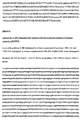
- the cloned PCR fragment was then excised from vector pCR2.1, labelled with digoxygenin (DIG DNA Labelling Kit, Roche Diagnostics) and used as a hybridisation probe to screen the lambda phage genomic library of RB-8. From phage plaques that hybridized and identified using the immuno-detection of digoxygenin (Roche Diagnostics), the cloned DNA fragments were rescued with the infection of helper phage fl to give plasmids pBK-CMV. The inserted DNA fragments of pBK-CMV was sequenced. The amino acid sequence of Cpn60 and Cpn10 translated from the DNA sequence (shown in Figure 2 ) are given below in Figure 1 .
- Example 3 Simultaneous expression of Cpn60 and Cpn10 of Oleispira antarctica in E. coli.
- Cpn60 and Cpn10 were induced from the vector pPST26, originating from the lambda clone No 26 that hybridized with the DNA probe for cpn60, designated pBK26, which was deleted upstream by a restriction with PstI.
- the expression vector carries both genes in the orientation that enables their expression from the P lac -promoter.
- E. coli cells XL-1 Blue MRF' were transformed with pPST26, grown in LB medium to an optical density at 600 nm of 0.6 to 0.8 and induced by the addition of IPTG (isopropyl- ⁇ -D-thiogalactopyranoside) to a final concentration of 2 mM.
- Cells were harvested by centrifugation 2 to 3 hours after induction, resuspended in 2 mM EDTA, 1 mM dithiothreitol (DTT), 1 tablet protease inhibitor cocktail (Roche) and Dnase I grade II, incubated on ice for 30-45 min and sonicated for 4 min total time.
- 2 mM EDTA 1 mM dithiothreitol
- DTT dithiothreitol
- Roche tablet protease inhibitor cocktail
- Dnase I grade II incubated on ice for 30-45 min and sonicated for 4 min total time.
- the cell lysate was centrifuged at 10,000 x g, 30 min, 4 °C and the soluble supernatant was dialyzed overnight against 50 mM Tris-HCl, pH 7.0, 10 mM MgCl 2 , 10 mM KCl, then concentrated by ultrafiltration by centrifugation against a membrane with a cut-off at 10 kDa (Centricon, Amicon Inc.) to 2 mL.
- Mutants of Cpn60 were constructed which show an increased stability of the two stacked heptameric ring conformations, forming the tetradecamer of Cpn60. Mutations were introduced by site-directed mutagenesis using primers in PCR amplifications which carry the desired nucleotide exchanges to yield a different codon, as it is generally known to the skilled person. For introducing the mutations into the wild type gene of Cpn60 from O. antarctica, the following oligonucleotides were used in PCR:
- Lysin 468 was exchanged for a Threonin
- Serin 471 was exchanged for a Glycine
- a double mutant Lys468Thr/Ser471Gly was produced.
- These plasmids were expressed in E. coli strain XLOLR as described in Example 3 with the appropriate antibiotic kanamycin added. All three mutants demonstrated a more stable association of the heptameric rings to the tetradecameric stacked ring structure during native gel electrophoresis (7.5 % PAGE, poly acryl amide gel electrophoresis according to Laemmli).
- Example 5 Mutant of Cpn60 with decreased stability of the tetradecameric structure
- a mutant with three amino acid substitutions was produced as above, introducing the mutations Glu461Ala, Ser463Ala and Val464Ala. This mutant was shown in native PAGE to have a single ring heptameric conformation with an apparent mass of approximately 400 kDa, which corresponds to the wild-type single heptameric ring conformation.
- the stabilized double ring mutant Lys468Thr/Ser471Gly has an increased temperature stability at 45 - 55 °C and a at a rate for ATP hydrolysis 1.3 to 1.6 times higher than the wild type and the stabilized single ring mutant Glu461Ala/Ser463Ala/Val464Ala, the latter having temperature stability up to 24 -28 °C.
- the wild type Cpn60 from O. antarctica, without its co-chaperonin Cpn10 has refolding activity under both physiological and temperature stress conditions of 0 - 30 °C, which is in correlation with the range of the growth temperature of the source organism.
- isolated wild type Cpn60 When used in in vitro folding procedures, isolated wild type Cpn60 refolds denatured protein as a single ring at 4 to 8 °C, whereas at>12 °C, the predominant conformation of the active form is the double ring complex.
- the stabilized double ring mutant Lys468Thr/Ser471Gly yields a low refolding effect (20%) at low temperature of 4 °C, approximately four times lower than the stabilized single ring mutant (80%).
- Wild type Cpn60 was active from 4 to 20 °C, showing a higher refolding activity at lower temperatures.
- the stabilized double ring mutant was active, i.e. at 28 °C the refolding yield was more than ten times that of the wild type Cpn60 and that of the stabilized single ring mutant, with activity up to 36 °C.
- the temperature range, in which a chaperonin is active for refolding denatured protein can be influenced by its conformation as a stabilized single or stabilized double ring variant. Furthermore, at least the amino acids in homologous positions as Lys468 and Ser 471, respectively, in Cpn60 of O. antarctica are responsible for this temperature range of chaperone activity.
- Cpn60 catalyzes the refolding of denatured protein when in combination with its co-chaperonin.
- Further experiments using a competition assay of radio-labelled Cpn10 and non-labelled Cpn10 at 4 °C and 20 °C demonstrated that the co-chaperonin is released from the stabilized single ring mutant of Cpn60 only at the lower temperature and in presence of denatured protein substrate (denatured mtMDH). At the higher temperature, the bound co-chaperonin was not released from this mutant Cpn60 when denatured protein substrate was added.
- the release of the co-chaperonin was independent from the temperature and lower by a factor of 4 - 5 compared to the stabilized single ring mutant.
- E. coli have been transformed with a plasmid bearing, under the control of an IPTG inducible lac promoter the gene for wild type chaperonin Cpn60 and its co-chaperonin Cpn10 of O. antarctica, the stabilized single ring mutant Glu461Ala/Ser463Ala/Val464Ala, and the stabilized double ring mutant Lys468Thr/Ser471Gly, respectively.
- Figure 9 E.
- the GroEL from E. coli was mutated doubly by Thr468Lys and Gly471 Ser to arrive at a chaperonin with altered activity at temperatures below that of unmodified GroEL.
- the sequence of GroEL of E. coli is available as accession No P06139 at the Swissprot databank.
- Example 8 Chaperone activity of Cpn60 and its mutants in vivo
- the esterase gene from O. antarctica RB-8 (DSMZ No. 14852T) was cloned from the genomic lambda library described in example 2. Detection of clones expressing active esterase was after infection of E. coli XL1-Blue MRF' and incubation by overlay with an aqueous solution containing per mL 60 ⁇ L naphthyl acetate (20 mg/mL acetone), 0.25 mM IPTG and 16 ⁇ L of Fast Blue RR (80mg/mL dimethyl sulfoxide). Positive clones exhibited a brown halo after about 2 h incubation and were isolated after consequent phage particle dilution, infection of E. coli and halo detection. The inserted DNA sequence from positive clones was rescued by helper phage infection and sequenced. The amino acid sequence and the DNA sequence of the esterase from O. antarctica are given in Figures 3 and 4 , respectively.
- the esterase gene (est) was cloned into an E . coli expression vector under the control of a lac-promoter, alternatively in combination with an expression cassette under a lac-promoter of the wild type chaperonin Cpn60 and its co-chaperonin Con10 (cpn10::cpn60::est, see Figures 5 and 6 for amino acid and DNA sequences, respectively) and in combination with the stabilized single ring mutant Glu461Ala/Ser463Ala/Val464Ala and Cpn10 (cpn10::stabilized single ring mutant Glu461Ala/Ser463Ala/Val464Ala::est, see Figures 7 and 8 for amino acid and DNA sequences, respectively), under control from a lac-promoter as well. Standard PCR-cloning procedures with primers designed according to the established gene sequences were used.
- E. coli cells TOP10 (Invitrogen) were transformed with the above plasmids by electroporation and incubated in LB broth containing the appropriate antibiotic kanamycin at 4, 8, 10, 15, 20, 30, and 37 °C each. Induction was done with 1 mM IPTG. Once the cultures reached maximal esterase activities, the cells were harvested by centrifugation, resuspended in 50 mM Tris-HCl, pH 7.0, 50 mM MgCl 2 , 50 mM KCl containing one protease inhibitor tablet (Roche Diagnostics) and Dnase I grade II, incubated on ice for 30 - 45 min and sonicated for a total of 4 min.
- the pool was loaded onto a Resource 15PHE hydrophobic chromatography column, previously equilibrated with 50 mM Tris-HCl, pH 7,0, 1 M (NH 4 ) 2 SO 4 , washed with a decreasing 1.0-0 linear (NH 4 ) 2 SO 4 gradient in 10 mM Tris-HCl, pH 7.0.
- the fractions active for esterase were pooled, dialysed against 10 mM Tris-HCl, pH7.0, 150 mM NaCl and concentrated as before.
Landscapes
- Life Sciences & Earth Sciences (AREA)
- Chemical & Material Sciences (AREA)
- Engineering & Computer Science (AREA)
- Health & Medical Sciences (AREA)
- Genetics & Genomics (AREA)
- Biotechnology (AREA)
- Organic Chemistry (AREA)
- Zoology (AREA)
- Bioinformatics & Cheminformatics (AREA)
- Wood Science & Technology (AREA)
- Medicinal Chemistry (AREA)
- Microbiology (AREA)
- Biomedical Technology (AREA)
- Virology (AREA)
- Biochemistry (AREA)
- General Engineering & Computer Science (AREA)
- General Health & Medical Sciences (AREA)
- Tropical Medicine & Parasitology (AREA)
- Micro-Organisms Or Cultivation Processes Thereof (AREA)
- Enzymes And Modification Thereof (AREA)
- Agricultural Chemicals And Associated Chemicals (AREA)
Abstract
Description
- The present invention in general relates to the growth temperature of organisms, especially plants and microorganisms and the manipulation of the tolerable cultivation temperature. More specifically, the present invention relates to the expression of heterologous proteins in microorganisms, and especially to the heterologous expression of heat sensitive proteins in bacteria, either gram-negative or gram-positive.
- It is generally known that the mesophilic host E. coli is suitable for expression of a wide range of heterologous proteins, both intracellular and secreted. When expression of proteins is induced on a large scale in E. coli, problems are often encountered due to the production of intracellularly agglomerated protein, which is enzymatically inactive. The reason for the inactivity of these agglomerates, also called inclusion bodies, is the misfolding of the polypeptide chains which are intensely synthesized after induction or which cannot attain their natural active conformation when expressed in E. coli or other hosts. Various attempts for the in vitro folding of purified agglomerated protein have been proposed and are used on an industrial scale. However, the folding in vitro requires numerous processing steps to produce enzymatically active protein, i.e. protein in its correct folding structure.
- Feller, G. et al., Appl. Env. Microbiol, p. 1163-1165 (1998) describe the expression of the psychrophilic α-Amylase from the Antarctic psychrophile Alteromonas haloplanktis in E. coli by lowering the cultivation temperature of the transformed expression host to 18 °C. It was demonstrated that the expression of active enzyme could be increased over that of the wild type Alteromonas haloplanktis and furthermore that the recombinantly produced enzyme had the same kinetic parameters as the wild type enzyme produced at 4 °C. The authors therefore concluded that the psychrophilic enzyme is correctly folded when expressed recombinantly in E. coli at 18°C.
- A drawback of low cultivation temperatures of mesophilic host organisms is the dramatically reduced growth rate, and, consequently a reduced synthesis rate of the heterologous protein.
- In view of the known state of art the present invention aims at providing organisms, especially micro organisms which are capable of growth at lower temperature, for instance at temperatures similar to the range of growth temperatures of psychrophiles. Furthermore, the present invention aims at providing an expression system for heterologous proteins in micro organisms which are capable of producing correctly folded protein, i.e. protein with a structure which retains the enzymatic or interactive activity of the native wild type protein.
- In a first aspect, the present invention provides a method for producing heterologous proteins in micro organisms as well as the micro organisms themselves, i.e. animal and plant cells, gram-negative and gram-positive bacteria, fungi and yeasts, characterized in that at least one gene from a psychrophilic micro organism coding for at least one chaperone or chaperonin is expressed. The heterologous proteins to be expressed comprise gene-products from mesophilic as well as psychrophilic organisms.
- In a second aspect, there is provided a method for in vitro folding of aggregated or misfolded protein, characterized in that at least one chaperone or chaperonin from a psychrophilic micro-organism is contacted with the aggregated or misfolded protein in presence of necessary nucleotides.
- In a third aspect, DNA and amino acid sequences are provided for native chaperonins Cpn10 and Cpn60 of Oleispira antarctica along with mutant chaperonins with altered characteristics as well as methodology and guidelines for cloning, expressing and adapting chaperones for enhancing the expression of heterologous proteins, and especially thermo-sensitive heterologous proteins, in their native conformation in host organisms, for adapting host organisms to lower growth temperatures and for re-folding, at low thermal conditions, denatured protein in vitro.
- The invention is illustrated in relation to the chaperones from the psychrophilic bacterium Oleispira antarctica, which have been designated Cpn60 and Cpn10 and which are cooperative in their wild type forms.
- The standard growth temperature of the widely used expression host bacterium E. coli is 37 °C with an experimental lower limit of approximately 15°C. The theoretical lower limit can be calculated to 7.5 °C by the square-root growth model of Ratkowsky et al., J. Bacteriol., 1222-1226 (1983).
- It has now been discovered that the expression of chaperonin Cpn60 and its co-operating co-chaperonin Cpn10 in E. coli decreases the actual growth temperature to 0 to 7 °C with a theoretical minimum of -13.7 °C. The growth rate of these coldness-adapted E. coli reaches 0.28 /h at 8 °C and 0.22 /h at 4 °C.
- When heterologous genes are expressed in E. coli which harbour both the chaperonin Cpn60 and its co-chaperonin Cpn10, then the expression can take place at significantly lower cultivation temperatures, i.e. 0 to 7 °C and thermo-sensitive protein can be produced by E. coli in its native conformation, e.g. enzymatically active.
- It was shown that Cpn60 adapts its tertiary structure in a temperature-dependent manner. At the normal growth temperature of O. antarctica of 4 to 10 °C, the predominant tertiary structure of Cpn60 is a heptameric single ring of identical subunits along with lower molecular weight dissociation intermediates. In a temperature range of 12 to 24 °C, Cpn60 is predominantly present as a 14-mer, consisting of two stacked rings, each comprised of seven identical subunits. However, the dissociation of the stacked heptameric rings at lower temperature is dependent on the presence of nucleotides of adenine, citidine, uridine or guanidine. It was shown that the activity of Cpn60 to refold denatured proteins is dependent on nucleotides, e.g. adenonsine triphosphate (ATP).
- Derivatives or mutant forms of the chaperonins Cpn60 and Cpn10 of Oleispira antarctica which retain the functional properties in respect of the lowering of the growth temperature of a transformed mesophilic host organism and/or in respect of the chaperone activity to refold denatured proteins extracellularly, for example in vitro, are also accessible on the basis of the examples given below.
- When screening other psychrophilic organisms for chaperonins homologous to those of O. antarctica, sequence alignment studies and comparisons can be employed, for example exploiting homologies of Cpn60 of O. antarctica to GroEL of E. coli and Cpn60 of Paracoccus denitrificans in order to identify residues with an influence on substrate specificity and/or conformation of the chaperonin. Variants can be constructed in accordance with the methodology presented below for producing mutant chaperonins of O. antarctica.
- Derivatives or mutant forms of O. antarctica can readily be obtained by genetically engineering the DNA sequence of the genes encoding Cpn60 and/or Cpn10. Such mutants may have altered substrate binding specificities, altered nucleotide binding properties or an altered secondary or tertiary structure or altered interaction parameters of a chaperonin with its co-chaperonin, e.g. of mutant Cpn60 with mutant Cpn10. It can be expected that mutations introduced at sites responsible for substrate binding change the substrate specificity, mutations at sites responsible for the association of subunits to the single ring conformation change the single ring structure, and mutations at sites responsible for the interaction of ring structures with one another to stacked rings change the conformation and consequently the stability and the temperature-dependent association of rings and ultimately their activity and/or substrate specificity.
-
-
Figure 1 shows the amino acid sequences of native Cpn10 (SEQ ID No 1) and Cpn60 (SEQ ID No 2) of O. antarctica. -
Figure 2 shows the DNA sequences of native Cpn10 and Cpn60 (SEQ ID No 3) of O. antarctica. -
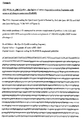
Figure 3 shows the amino acid sequence of esterase (SEQ ID No 4) of O. antarctica. -
Figure 4 shows the DNA sequence of esterase (SEQ ID No 5) of O. antarctica. -
Figure 5 shows the amino acid sequences of native Cpn10 (SEQ ID No 6) and Cpn60 (SEQ ID No 7) of O. antarctica and esterase (SEQ ID No 8) of O. antarctica. -
Figure 6 shows the DNA sequence of the expression cassette of native Cpn10 and Cpn60 and of O. antarctica with the esterase (SEQ ID No 9) of O. antarctica. -
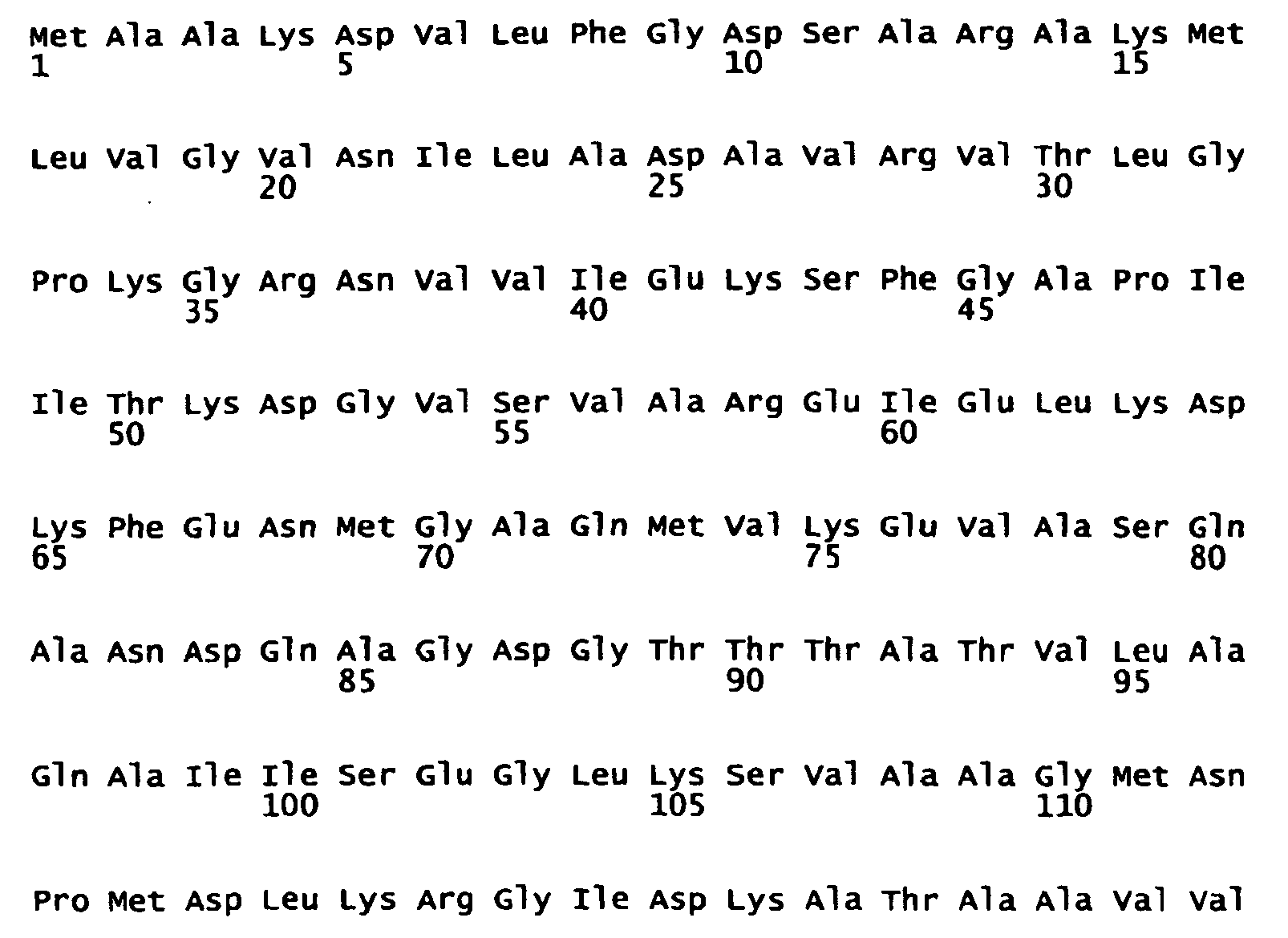
Figure 7 shows the amino acid sequences expressed from the expression vector coding for the co-expression of native Cpn10 (SEQ ID No 10) and the stabilized single ring mutant Glu461Ala/Ser463Ala/Val464Ala of Cpn60 (SEQ ID No 11) of O. antarctica with the esterase (SEQ ID No 12) of O. antarctica. -
Figure 8 shows the DNA sequence of the expression vector SEQ ID No 13) coding for the co-expression of native Cpn10 (SEQ ID No 10) and the stabilized single ring mutant Cpn60 (SEQ ID No 11) of O. antarctica with the esterase (SEQ ID No 12) of O. antarctica. -
Figure 9 shows the amino acid sequences of native Cpn10 (SEQ ID No 14) and of the stabilized single ring mutant Glu461Ala/Ser463Ala/Val464Ala of Cpn60 (SEQ ID No 15) of O. antarctica. -
Figure 10 shows the DNA sequence of the stabilized single ring mutant Glu461Ala/Ser463Ala/Val464Ala of Cpn60 (SEQ ID No 16) of O. antarctica. - The examples below describe the methodology of cloning the chaperonin genes Cpn60 and Cpn10 from O. antarctica as well as generating mutant and variant chaperones. Therefore, the skilled person will be instructed on how to influence stability and activity parameters of chaperones having similar functional parameters as those described specifically.
- O. antarcitca RB-8 were cultivated at 4 °C in 400 mL ONR7a medium (Dyksterhouse et al., I. J. Sys. Bacteriol. 116-123 (1995)) supplemented with 0.2 vol % Tween 80 (Sigma Chemicals) to an optical density of 0.7 to 0.8 at 600 nm, harvested by centrifugation (4500 x g, 30 min, 4 °C) and frozen at -20 °C. Thawed cells were suspended in two-fold volume of buffer containing 50 mM Tris-HCl, pH 7.0, 10 mM MgCl2, 10 mM KCl, 2 mM EDTA, 1 mM DTT, 1 tablet protease inhibitor cocktail (Roche) and Dnase I grade II, then homogenized in a French press at 68.95 bar (1000 psi), centrifuged (35,000 x g, 35 min, 4 °C) and the supernatant concentrated by ultrafiltration by centrifugation against a membrane with a cut-off at 10 kDa (Centricon, Amicon Inc.) to 2 mL.
- The purification was by elution from a Mono-Q HR 10/10 ion exchange column, equilibrated with 50 mM Tris-HCl, pH 7.0, 10 mM MgCl2, 10 mM KCl, with a 0 - 1 M NaCl gradient in the same buffer for 200 min at 2.0 mL/min. Fractions containing Cpn60 and Cpn10 were identified by SDS-PAGE with subsequent blotting and immunodetection with a polyclonal antibody directed against the N-termini of both Cpn10 and Cpn60 as well as by an activity test of the refolding activity using chemically denatured rhodanese as the substrate. Active fractions were eluted at 0.30 - 0.45 M NaCl, pooled, dialyzed against 50 mM Tris-HCl, pH 7.0, 10 mM MgCl2, 10 mM KCl, 150 mM NaCl and concentrated by centrifugation against a membrane with a cut-off at 10 kDa (Centricon, Amicon Inc.). The concentrated pooled fractions were purified by gel-filtration on a Superdex 200 16/60 column, equilibrated in 50 mM Tris-HCl, pH 7.0, 10 mM MgCl2, 10 mM KCl, 150 mM NaCl at 4 °C at a flow rate of 1 mL/min. Fractions were pooled, dialyzed against 50 mM Tris-HCl, pH 7.0, 10 mM MgCl2, 10 mM KCl, concentrated by ultrafiltration by centrifugation (10 kD cut-off membrane), then further purified by ion-exchange chromatography on a Mono-
Q HR 5/5 column at 0.5 mL/min of a linear gradient (20 mL) of 0 - 1 M NaCl and fractions pooled. - Starting from Oleispira antarctica RB-8, available as DSMZ accession No 14852, a comprehensive genomic library comprising 5 x 10⁸ phage particles /µL, total of 8 mL with an average insert size of 7.5 kb was created using the ZAP Express Kit of Stratagene according to the manufacturers instructions. Briefly7.5 kb fragments of genomic DNA from O. antarctica were cloned into a plasmid using the well known procedure of the ZAP Express kit (Stratagene).
- Degenerate forward primer 5'-GCI GCI GGI ATG AAY CCI ATG G (Seq ID No 17) and reverse primer 5'-CCI CCI CCI GCI ACI ACI CCY TC (Seq ID No 18) were designed on the basis of the sequences analyzed from purified chaperonin fragments SVAAGMNPMDLQR (Seq ID No 19) and VEEGVVAGGGVAAL-LR (Seq ID No 20), respectively. These primers were used for PCR amplification of the genomic DNA of strain RB-8 (Smits et al., Environ. Mircrobiol. 307-317 (1999)). The amplified fragment of approximately 930 bp was cloned into plasmid pCR2.1 (Invitrogen). Briefly, the fragment was purified from an agarose gel and ligated into the pCR2.1 plasmid. Subsequent sequencing of the cloned PCR product revealed a high similarity of its deducible amino acid sequence to the Cpn60/Hsp60 family.
- The cloned PCR fragment was then excised from vector pCR2.1, labelled with digoxygenin (DIG DNA Labelling Kit, Roche Diagnostics) and used as a hybridisation probe to screen the lambda phage genomic library of RB-8. From phage plaques that hybridized and identified using the immuno-detection of digoxygenin (Roche Diagnostics), the cloned DNA fragments were rescued with the infection of helper phage fl to give plasmids pBK-CMV. The inserted DNA fragments of pBK-CMV was sequenced. The amino acid sequence of Cpn60 and Cpn10 translated from the DNA sequence (shown in
Figure 2 ) are given below inFigure 1 . - The expression of Cpn60 and Cpn10 was induced from the vector pPST26, originating from the lambda clone No 26 that hybridized with the DNA probe for cpn60, designated pBK26, which was deleted upstream by a restriction with PstI. The expression vector carries both genes in the orientation that enables their expression from the Plac-promoter. For overexpression, E. coli cells XL-1 Blue MRF' were transformed with pPST26, grown in LB medium to an optical density at 600 nm of 0.6 to 0.8 and induced by the addition of IPTG (isopropyl-β-D-thiogalactopyranoside) to a final concentration of 2 mM. Cells were harvested by centrifugation 2 to 3 hours after induction, resuspended in 2 mM EDTA, 1 mM dithiothreitol (DTT), 1 tablet protease inhibitor cocktail (Roche) and Dnase I grade II, incubated on ice for 30-45 min and sonicated for 4 min total time. The cell lysate was centrifuged at 10,000 x g, 30 min, 4 °C and the soluble supernatant was dialyzed overnight against 50 mM Tris-HCl, pH 7.0, 10 mM MgCl2, 10 mM KCl, then concentrated by ultrafiltration by centrifugation against a membrane with a cut-off at 10 kDa (Centricon, Amicon Inc.) to 2 mL.
- Mutants of Cpn60 were constructed which show an increased stability of the two stacked heptameric ring conformations, forming the tetradecamer of Cpn60. Mutations were introduced by site-directed mutagenesis using primers in PCR amplifications which carry the desired nucleotide exchanges to yield a different codon, as it is generally known to the skilled person. For introducing the mutations into the wild type gene of Cpn60 from O. antarctica, the following oligonucleotides were used in PCR:
- Lys468Thr: 5'-GGT GGT CAG TGG TTG TTG TTG ATA CAG TGA AAT CTG GCA CAG-3' (Seq ID No 21) and 5'-CCT GTG CCA GAT TTC ACT GTA TCA ACA ACC ACT GAC C-3' (Seq ID No 22)
- Ser471Gly: 5'-GGT GAT AAA GTG AAA GGT GGC ACA GGT AGC-3' (Seq ID No 23) and 5'-GCT ACC TGT GCC ACC TTT CAC TTT ATC AAC-3' (Seq ID No 24)
- Lys471Thr: 5'-GGT CAG TGG TTG TTG ATA CAG TGA AAG GTG GCA CAG GTA GCT TTG G-3' (Seq ID No 25) and 5'-CCA AAG CTA CCT GTG CCA CCT TTC ACT GTA TCA ACA ACC ACT GAC C-3' (Seq ID No 26)
- GLU461ALA/SER463ALA/VAL464ALA: 5'-CCT AAC GCA GGT GCT GCA GGG GCA GCG GTT GTT GAT AAA GTG-3' (Seq ID No 27)and 5'-CTC TTT ATC AAC AAC CGC TGC CCC TGC AGC ACC TGC GTT ACC-3' (Seq ID No 28).
- Firstly, Lysin 468 was exchanged for a Threonin, and secondly, Serin 471 was exchanged for a Glycine and thirdly, a double mutant Lys468Thr/Ser471Gly was produced. These plasmids were expressed in E. coli strain XLOLR as described in Example 3 with the appropriate antibiotic kanamycin added. All three mutants demonstrated a more stable association of the heptameric rings to the tetradecameric stacked ring structure during native gel electrophoresis (7.5 % PAGE, poly acryl amide gel electrophoresis according to Laemmli).
- As a fourth variant, a mutant with three amino acid substitutions was produced as above, introducing the mutations Glu461Ala, Ser463Ala and Val464Ala. This mutant was shown in native PAGE to have a single ring heptameric conformation with an apparent mass of approximately 400 kDa, which corresponds to the wild-type single heptameric ring conformation.
- The above described mutants were purified as described in Example 1. The analysis of the mutant proteins by circular dichroism demonstrated that the triple mutant Glu461Ala/Ser463Ala/Val464Ala as well as the double mutant Lys468Thr/Ser471Gly were not destabilized in their respective overall secondary conformations in comparison to the wild-type Cpn60.
- Using the measurement of peptide ellipticity at 220 nm to monitor the loss of secondary structure due to increasing temperature, it could be demonstrated that the stabilized double ring mutant Lys468Thr/Ser471Gly has an increased temperature stability at 45 - 55 °C and a at a rate for ATP hydrolysis 1.3 to 1.6 times higher than the wild type and the stabilized single ring mutant Glu461Ala/Ser463Ala/Val464Ala, the latter having temperature stability up to 24 -28 °C.
- Similar results for an increased temperature stability at increased hydrolysis rates for ATP are obtained for mutants of Cpn60 of O. antarctica Leu468Thr and Ser471Gly, which each show an increased stability of the double ring structure compared to the wild type, at least in presence of ATP.
- With a view to adapting chaperones to the cultivation temperature, it can therefore be concluded that single ring variants of chaperonins, especially of Cpn60 of O. antarctica RB-8, are essential for producing protein in its correct conformation at low temperatures, e.g. at 0 - 8 °C, whereas variants of chaperonins, especially of Cpn60 of O. antarctica RB-8, are essential for producing protein in its correct conformation at higher temperatures, e.g. at above 10 - 12 °C.
- The wild type Cpn60 from O. antarctica, without its co-chaperonin Cpn10 has refolding activity under both physiological and temperature stress conditions of 0 - 30 °C, which is in correlation with the range of the growth temperature of the source organism.
- When used in in vitro folding procedures, isolated wild type Cpn60 refolds denatured protein as a single ring at 4 to 8 °C, whereas at>12 °C, the predominant conformation of the active form is the double ring complex.
- When using chemically denatured mtMDH (mitochondrial malate dehydrogenase) (Nielsen et al., Mol. Cell 93-99 (1995)) as the substrate for in vitro refolding procedures, it was found that spontaneous refolding occurred at about 16-24 % at a temperature range of 4 to 30 °C in 50 mM Tris-HCl, pH 7.0,50 mM MgCl2, 50 mM KCl.
- When testing the refolding activity of the wild type Cpn60, the stabilized single ring mutant Glu461Ala/Ser463Ala/Val464Ala, and the stabilized double ring mutant Lys468Thr/Ser471Gly under the same conditions with added Cpn10 and ATP (1 mM), it was found that the stabilized single ring mutant catalysed refolding at 4 to 8 °C at 70 - 80%, but was inactive for refolding at above 10 °C. The behaviour of the stabilized single ring mutant led to the conclusion that at the low temperature, the co-chaperonin Cpn10 could bind even to the heptameric conformation, whereas at elevated temperature presumably Cpn10 could not be released from this heptameric single ring.
- In contrast to the stabilized single ring mutant, the stabilized double ring mutant Lys468Thr/Ser471Gly yields a low refolding effect (20%) at low temperature of 4 °C, approximately four times lower than the stabilized single ring mutant (80%).
- Wild type Cpn60 was active from 4 to 20 °C, showing a higher refolding activity at lower temperatures.
- Although the wild type Cpn60 as well as the stabilized single ring mutant could not catalyse refolding at temperatures of above 25 - 30 °C, the stabilized double ring mutant was active, i.e. at 28 °C the refolding yield was more than ten times that of the wild type Cpn60 and that of the stabilized single ring mutant, with activity up to 36 °C.
- From these results it can be inferred that the temperature range, in which a chaperonin is active for refolding denatured protein can be influenced by its conformation as a stabilized single or stabilized double ring variant. Furthermore, at least the amino acids in homologous positions as Lys468 and Ser 471, respectively, in Cpn60 of O. antarctica are responsible for this temperature range of chaperone activity.
- Furthermore it is demonstrated that even as a single ring structure, Cpn60 catalyzes the refolding of denatured protein when in combination with its co-chaperonin. Further experiments using a competition assay of radio-labelled Cpn10 and non-labelled Cpn10 at 4 °C and 20 °C demonstrated that the co-chaperonin is released from the stabilized single ring mutant of Cpn60 only at the lower temperature and in presence of denatured protein substrate (denatured mtMDH). At the higher temperature, the bound co-chaperonin was not released from this mutant Cpn60 when denatured protein substrate was added. When testing the stabilized double ring mutant of Cpn60 under the same conditions, the release of the co-chaperonin was independent from the temperature and lower by a factor of 4 - 5 compared to the stabilized single ring mutant.
- The effect of the presence of a gene product coding for the wild type chaperone from a psychrophilic organism as well as of variant chaperones thereof have been assessed for the growth of E. coli at varying temperatures. E. coli have been transformed with a plasmid bearing, under the control of an IPTG inducible lac promoter the gene for wild type chaperonin Cpn60 and its co-chaperonin Cpn10 of O. antarctica, the stabilized single ring mutant Glu461Ala/Ser463Ala/Val464Ala, and the stabilized double ring mutant Lys468Thr/Ser471Gly, respectively. As shown in
Figure 9 , E. coli without heterologous chaperone grew at 15 °C only to some extent (OD600 after 48 h incubation 0.74 +/- 0.24), at 4 °C, no growth was observed. Only E. coli expressing the wild type chaperonin Cpn60 and Cpn10 or the stabilized single ring mutant Glu461Ala/Ser463Ala/Val464Ala grew at 4 °C up to an OD600 =1.5 +/- 0.14 after 48 h.. However, at 15 °C, the stabilized single ring mutant Glu461Ala/Ser463Ala/Val464Ala (OD600 = 0.75 +/-0.10) did not enhance viability, but wild type Cpn60 and Cpn10 (OD600 = 1.45 +/-0.12) and the stabilized double ring mutant Lys468Thr/Ser471Gly (OD600 =1.63 +/-0.24) allowed for an enhanced growth. - From these findings it is clear that when screening for or constructing variant chaperonins it has to be considered that at lower temperatures for growth of host cells and for refolding of denatured protein to their native conformation the effectiveness, i.e. activity of the chaperonin is dependent on its tertiary conformation. As has been detailed for chaperonin Cpn60 and Cpn10 of O. antarctica, the active conformation of Cpn60 at low temperatures, i.e. below 12 °C is the single heptameric ring structure, whereas at higher temperatures, i.e. above 12 °C, the active conformation of Cpn60 is the double ring structure.
- Since this temperature dependence of the chaperonin activity has been elucidated for Cpn60 of O. antarctica, the skilled persons will be able to apply these findings to homologous chaperones from psychrophiles and to mutant and variant forms thereof using standard methodology. In detail, the influence of the amino acids Lys468 and Ser471 on the stabilisation of the association of the heptameric rings of Cpn60 has been demonstrated. Accordingly, the influence on stability of the tertiary conformation of their functionally equivalent residues in homologous chaperonins is evident and can be used to manipulate the tertiary structure and, as a consequence the temperature dependence of homologous and variant chaperones.
- As one mutant form of a homologous chaperonin, the GroEL from E. coli was mutated doubly by Thr468Lys and Gly471 Ser to arrive at a chaperonin with altered activity at temperatures below that of unmodified GroEL. The sequence of GroEL of E. coli is available as accession No P06139 at the Swissprot databank.
- The influence of chaperones from psychrophilic organisms on the expression of protein in its native, i.e. non-denatured conformation is demonstrated on the example of the temperature sensitive esterase from O. antarctica in E. coli with and without presence of the heterologous chaperonin Cpn60 from O. antarctica.
- The esterase gene from O. antarctica RB-8 (DSMZ No. 14852T) was cloned from the genomic lambda library described in example 2. Detection of clones expressing active esterase was after infection of E. coli XL1-Blue MRF' and incubation by overlay with an aqueous solution containing per mL 60 µL naphthyl acetate (20 mg/mL acetone), 0.25 mM IPTG and 16 µL of Fast Blue RR (80mg/mL dimethyl sulfoxide). Positive clones exhibited a brown halo after about 2 h incubation and were isolated after consequent phage particle dilution, infection of E. coli and halo detection. The inserted DNA sequence from positive clones was rescued by helper phage infection and sequenced. The amino acid sequence and the DNA sequence of the esterase from O. antarctica are given in
Figures 3 and4 , respectively. - For expression experiments of the thermo sensitive esterase as cloned above, the esterase gene (est) was cloned into an E. coli expression vector under the control of a lac-promoter, alternatively in combination with an expression cassette under a lac-promoter of the wild type chaperonin Cpn60 and its co-chaperonin Con10 (cpn10::cpn60::est, see
Figures 5 and6 for amino acid and DNA sequences, respectively) and in combination with the stabilized single ring mutant Glu461Ala/Ser463Ala/Val464Ala and Cpn10 (cpn10::stabilized single ring mutant Glu461Ala/Ser463Ala/Val464Ala::est, seeFigures 7 and8 for amino acid and DNA sequences, respectively), under control from a lac-promoter as well. Standard PCR-cloning procedures with primers designed according to the established gene sequences were used. - E. coli cells TOP10 (Invitrogen) were transformed with the above plasmids by electroporation and incubated in LB broth containing the appropriate antibiotic kanamycin at 4, 8, 10, 15, 20, 30, and 37 °C each. Induction was done with 1 mM IPTG. Once the cultures reached maximal esterase activities, the cells were harvested by centrifugation, resuspended in 50 mM Tris-HCl, pH 7.0, 50 mM MgCl2, 50 mM KCl containing one protease inhibitor tablet (Roche Diagnostics) and Dnase I grade II, incubated on ice for 30 - 45 min and sonicated for a total of 4 min. After centrifugation at 10,000 x g for 30 min at 30, the supernatant was dialysed overnight against 50 mM Tris-HCl, pH 7.0, 50 mM MgCl2, 50 mM KCl and concentrated by ultrafiltration with a 10 kDa cut-off membrane (Centricon, Millipore).
- Purification was by ion-exchange chromatography on Mono-Q HR 10/10, equilibrated with 50 mM Tris-HCl, pH 7.0,50 mM MgCl2, 50 mM KCl, elution with a 0 - 1 M NaCl gradient in the same buffer for 200 min at 0.5 mL/min. Esterase containing fractions were eluted at about 0.3 M NaCl and pooled. After changing the buffer by dialysis and ultrafiltration, the pool was loaded onto a Resource 15PHE hydrophobic chromatography column, previously equilibrated with 50 mM Tris-HCl, pH 7,0, 1 M (NH4)2SO4, washed with a decreasing 1.0-0 linear (NH4)2SO4 gradient in 10 mM Tris-HCl, pH 7.0. The fractions active for esterase were pooled, dialysed against 10 mM Tris-HCl, pH7.0, 150 mM NaCl and concentrated as before. Finally, gel filtration was performed on a Superose 12 HR 10/30 in 10 mM Tris-HCl, pH 7.0, 150 mM NaCl at 4 °C and 0.4 mL/min. N-terminal sequencing was employed to corroborate the identity of the enzyme.
- The results are given in table 1 below.
Table 1: Growth temperature [°C] Without additional chaperonin cpn10::cpn60::est cpn10::stabilized single ring mutant Glu46Ala/Ser463Ala/Val 464Ala::est Protein expression1 Esterase activity2 Protein expression1 Esterase activity2 Protein expression1 Esterase activity2 37 2 - 5 12 2-5 12 2 - 5 12 30 2 - 5 127 2-5 127 2 - 5 127 20 <2 504 2-5 768 <2 528 15 <1 15603 2-5 20404 <1 14003 10 n.d. n.d. 2-5 23045 2-5 23046 8 n.d. n.d. 2-5 24005 2-5 24006 4 n.d. n.d. 2-5 24005 2-5 24006 1Expression as % by weight of total cell protein
2Whole cell activity in µmol tributyrin per min per g cell lyophilisate, measured in Tris-HCl buffer, pH 8.5 at 20 °C
3Growth rate of 0.15 /h, late-exponential phase reached in 60 h
4Growth rate of 0.46 /h, late-exponential phase reached in 24 h
5Growth rate of 0.22-0.28 /h, late-exponential phase reached in 30 h
6Growth rate of 0.5 /h, late-exponential phase reached in 20 h
n.d. No growth observed or growth rate below 0.01 /h - When analysing the heterologously expressed cloned esterase from O. antarctica in E. coli under identical conditions except for the presence of IPTG inducible chaperonin genes it was found that without additional chaperonins in E. coli, at 37 °C the hydrolytic activity was very low, i.e. 190 µmol/min/g. When reducing the cultivation temperature, higher specific activity of the esterase was observed. However, the higher specific activity correlated with a dramatically reduced expression level at lower temperatures.
- In E. coli also expressing the chaperonin from O. antarctica in its wild type and stabilized single ring mutant forms, respectively, esterase was expressed at much higher level, with the wild type chaperonin reaching the late-exponential growth phase after 30 h and the stabilized single ring mutant chaperoning after only 20 h.
- When comparing the different chaperonins expressed, it becomes clear that their structure greatly influences their activity at different temperatures. In detail, the stabilized single ring mutant Glu461Ala/Ser463Ala/Val464Ala was only efficient for production of active esterase at below 10 °C.
- At temperatures above 20 °C, the esterase activity was significantly lower for all transformants and it is assumed that this is due to the instability of the esterase at these temperatures. However, when analysing the fluorescence intensity of esterase obtained from cultures at 4 °C and 37 °C for both chaperonin transformants, i.e. wild type cpn10::cpn60::est and cpn10::stabilized single ring mutant Glu461Ala/Ser463Ala/Val464Ala::est, the fluorescence intensity of esterase for each transformant measured for the 4 °C culture were five times higher than those for the 37 °C culture. Therefore, misfolding of the thermo-sensitive esterase due to its expression at 37 °C can practically ruled out but higher fluorescence values for the esterase expressed at 4 °C indicate a better folding state, correlating with a higher specific esterase activity.
-
- <110> Gesellschaft für Biotechnologische Forschung mbH
Ferrer, Manuel
Chernikova, Tatjana
Golyshin, Peter
Timmis, Kenneth
Yakimov, Michail - <120> Transgenic organisms with lower growth temperatures
- <130> G1000PCT
- <150>
EP 03023032.0
<151> 2003-10-13 - <160> 28
- <170> PatentIn version 3.1
- <210> 1
<211> 97
<212> PRT
<213> artificial sequence - <220>
<223> Cpn10 - <400> 1


- <210> 2
<211> 548
<212> PRT
<213> artificial sequence - <220>
<223> Cpn60 - <400> 2


- <210> 3
<211> 2783
<212> DNA
<213> oleispira antarctica - <400> 3


- <210> 4
<211> 333
<212> PRT
<213> oleispira antarctica - <400> 4


- <210> 5
<211> 3939
<212> DNA
<213> artificial sequence - <220>
<223> DNA fragment from plasmid pBK1Est coding for esterase of oleispir a antarctica - <400> 5


- <210> 6
<211> 97
<212> PRT
<213> artificial sequence - <220>
<223> cpn10 - <400> 6


- <210> 7
<211> 548
<212> PRT
<213> artificial sequence - <220>
<223> cpn10 - <400> 7


- <210> 8
<211> 333
<212> PRT
<213> oleispira antarctica - <400> 8


- <210> 9
<211> 5373
<212> DNA
<213> artificial sequence - <220>
<223> fusion fo native chaperonin-coding fragments with esterase of Ole ispira antarctica - <400> 9


- <210> 10
<211> 97
<212> PRT
<213> artificial sequence - <220>
<223> fusion protein - <400> 10


- <210> 11
<211> 548
<212> PRT
<213> artificial sequence - <220>
<223> mutant protein - <400> 11


- <210> 12
<211> 333
<212> PRT
<213> Oleispira antarctica - <400> 12


- <210> 13
<211> 5373
<212> DNA
<213> artificial sequence - <220>
<223> expression cassette for fusion protein - <400> 13


- <210> 14
<211> 97
<212> PRT
<213> artificial sequence - <220>
<223> Cpn10, nucleotides 458 - 751 - <400> 14

- <210> 15
<211> 548
<212> PRT
<213> artificial sequence - <220>
<223> Cpn60, nucleotides 458 - 751 - <400> 15


- <210> 16
<211> 2783
<212> DNA
<213> artificial sequence - <220>
<223> mutant protein - <400> 16


- <210> 17
<211> 22
<212> DNA
<213> artificial sequence - <220>
<223> Forward Primer
<220>
<221> misc_feature
<222> (1)..(22)
<223> "n" defines inosine - <400> 17
gcngcnggna tgaayccnat gg 22 - <210> 18
<211> 23
<212> DNA
<213> artificial sequence - <220>
<223> Reverse Primer
<220>
<221> misc_feature
<222> (1)..(23)
<223> residue "n" designates inosine - <400> 18
ccnccnccng cnacnacncc ytc 23 - <210> 19
<211> 13
<212> PRT
<213> oleispira antarctica - <400> 19

- <210> 20
<211> 16
<212> PRT
<213> oleispira antarctica - <400> 20

- <210> 21
<211> 42
<212> DNA
<213> artificial sequence - <220>
<223> oligonucleotide - <400> 21
ggtggtcagt ggttgttgtt gatacagtga aatctggcac ag 42 - <210> 22
<211> 37
<212> DNA
<213> artificial sequence - <220>
<223> oligonucleotide - <400> 22
cctgtgccag atttcactgt atcaacaacc actgacc 37 - <210> 23
<211> 30
<212> DNA
<213> artificial sequence - <220>
<223> oligonucleotide - <400> 23
ggtgataaag tgaaaggtgg cacaggtagc 30 - <210> 24
<211> 30
<212> DNA
<213> artificial sequence - <220>
<223> oligonucleotide - <400> 24
gctacctgtg ccacctttca ctttatcaac 30 - <210> 25
<211> 46
<212> DNA
<213> artificial sequence - <220>
<223> oligonucleotide - <400> 25
ggtcagtggt tgttgataca gtgaaaggtg gcacaggtag ctttgg 46 - <210> 26
<211> 46
<212> DNA
<213> artificial sequence - <220>
<223> oligonucleotide - <400> 26
ccaaagctac ctgtgccacc tttcactgta tcaacaacca ctgacc 46 - <210> 27
<211> 42
<212> DNA
<213> artificial sequence - <220>
<223> oligonucleotide - <400> 27
cctaacgcag gtgctgcagg ggcagcggtt gttgataaag tg 42 - <210> 28
<211> 42
<212> DNA
<213> artificial sequence - <220>
<223> oligonucleotide - <400> 28
ctctttatca acaaccgctg cccctgcagc acctgcgtta cc 42
Claims (6)
- Process for producing a protein by heterologous expression in a host microorganism containing a gene sequence encoding the heterologous protein, characterized in that the micro-organism is genetically manipulated to contain a DNA sequence encoding the chaperonin of Oleispira antarctica Cpn60 and/or Cpn10 (Seq ID No. 1 and/or 2) or a functional mutant thereof and in using a cultivation temperature of below 25 °C.
- Process according to claim 1, characterized in that the microorganism is selected from the group comprising animal cell lines, plant cell lines, Gram-positive or Gram-negative bacteria, fungi and yeasts.
- Process according to one of the preceding claims, characterized in that the chaperonin Cpn60 and/or Cpn10 (Seq ID No. 1 and/or 2) is replaced by a stabilized single ring mutant chaperonin Glu461Ala/Ser463Ala/Val464Ala (Seq ID No. 16) or a mutant chaperonin Lys468Thr/Ser471Gly of Cpn 60 and/or Cpn10.
- Process according to one of the preceding claims, characterized in that the heterologous protein is selected from the group consisting of mammalian proteins, psychrophilic mammalian or bacterial proteins, mesophilic bacterial, fungal or yeast proteins, and mutant or fusion variants thereof.
- Process according to one of the preceding claims, characterized in that the heterologous protein has enzymatic activity or hormonal activity in its native conformation.
- Process according to one of the preceding claims, characterized in that the cultivation temperature is 4 to 15 °C.
Priority Applications (1)
| Application Number | Priority Date | Filing Date | Title |
|---|---|---|---|
| EP04804497A EP1673442B1 (en) | 2003-10-13 | 2004-10-11 | Transgenic organisms with lower growth temperature |
Applications Claiming Priority (3)
| Application Number | Priority Date | Filing Date | Title |
|---|---|---|---|
| EP03023032 | 2003-10-13 | ||
| EP04804497A EP1673442B1 (en) | 2003-10-13 | 2004-10-11 | Transgenic organisms with lower growth temperature |
| PCT/EP2004/052492 WO2005035750A2 (en) | 2003-10-13 | 2004-10-11 | Transgenic organisms with lower growth temperature |
Publications (2)
| Publication Number | Publication Date |
|---|---|
| EP1673442A2 EP1673442A2 (en) | 2006-06-28 |
| EP1673442B1 true EP1673442B1 (en) | 2008-07-09 |
Family
ID=34429236
Family Applications (1)
| Application Number | Title | Priority Date | Filing Date |
|---|---|---|---|
| EP04804497A Expired - Lifetime EP1673442B1 (en) | 2003-10-13 | 2004-10-11 | Transgenic organisms with lower growth temperature |
Country Status (6)
| Country | Link |
|---|---|
| US (1) | US7811784B2 (en) |
| EP (1) | EP1673442B1 (en) |
| AT (1) | ATE400644T1 (en) |
| CA (1) | CA2542576C (en) |
| DE (1) | DE602004014959D1 (en) |
| WO (1) | WO2005035750A2 (en) |
Families Citing this family (2)
| Publication number | Priority date | Publication date | Assignee | Title |
|---|---|---|---|---|
| WO2010005708A2 (en) * | 2008-06-16 | 2010-01-14 | University Of Maryland Biotechnology Institute | Improved folding of recombinant proteins via co-expression of archaeal chaperones |
| AU2010305273B2 (en) * | 2009-10-07 | 2016-09-29 | Uvic Industry Partnerships Inc. | Vaccines comprising heat-sensitive transgenes |
-
2004
- 2004-10-11 CA CA2542576A patent/CA2542576C/en not_active Expired - Lifetime
- 2004-10-11 DE DE602004014959T patent/DE602004014959D1/en not_active Expired - Lifetime
- 2004-10-11 AT AT04804497T patent/ATE400644T1/en not_active IP Right Cessation
- 2004-10-11 WO PCT/EP2004/052492 patent/WO2005035750A2/en not_active Ceased
- 2004-10-11 EP EP04804497A patent/EP1673442B1/en not_active Expired - Lifetime
- 2004-10-11 US US10/575,505 patent/US7811784B2/en active Active
Also Published As
| Publication number | Publication date |
|---|---|
| DE602004014959D1 (en) | 2008-08-21 |
| WO2005035750A3 (en) | 2005-10-20 |
| CA2542576A1 (en) | 2005-04-21 |
| US20090255014A1 (en) | 2009-10-08 |
| EP1673442A2 (en) | 2006-06-28 |
| CA2542576C (en) | 2013-01-08 |
| ATE400644T1 (en) | 2008-07-15 |
| US7811784B2 (en) | 2010-10-12 |
| WO2005035750A2 (en) | 2005-04-21 |
Similar Documents
| Publication | Publication Date | Title |
|---|---|---|
| US8518669B2 (en) | Recombinant expression plasmid vector and recombinant strain to be used in producing oxalate decarboxylase, and method of producing recombinant oxalate decarboxylase | |
| EP4269574A1 (en) | Atp-prt variant with reduced feedback inhibition by histidine, and histidine-producing strain expressing same | |
| EP4269575A1 (en) | Atp-prt variant with reduced feedback inhibition by histidine, and histidine-producing strain expressing same | |
| US20110262977A1 (en) | Process for production of optically active amine derivative | |
| CN116745412A (en) | ATP-PRT variant with reduced feedback inhibition caused by histidine and histidine-producing strain expressing the variant | |
| JP4216719B2 (en) | Halogen compound-resistant novel formate dehydrogenase and method for producing the same | |
| US7811784B2 (en) | Transgenic organisms with lower growth temperature | |
| CN111925999B (en) | Tylosin reductase mutant and application thereof | |
| JP3850557B2 (en) | Novel gene and transformed cell carrying the gene | |
| JP4815219B2 (en) | DNA containing an alkalophilic cyclodextran synthase gene, recombinant DNA, and method for producing an alkalophilic cyclodextran synthase | |
| CN101137743B (en) | Escherichia strain capable of converting XMP into GMP and keeping genes related to GMP degradation in an inactivated state and method of use thereof | |
| JP4415247B2 (en) | Novel glycerol kinase, gene and method for producing glycerol kinase using the gene | |
| JP2003339385A (en) | New 3-hydroxybutyric acid dehydrogenase gene, method for producing the same enzyme, method for measuring ketone body by using the same enzyme and composition for measurement | |
| US20090098605A1 (en) | MUTATED TRUNCATED mt-pfkA GENE FOR THE SYNTHESIS OF ACTIVE SHORTER FRAGMENT OF 6-PHOSPHOFRUCTO-1-KINASE | |
| Saadati et al. | Cloning and Production of Protease Enzyme from Aeribacillus pallidus P18 Strain | |
| EP1543126B1 (en) | A gene encoding vitamin b6-phosphate phosphatase and use thereof | |
| JPWO2000008170A1 (en) | Genes involved in the production of homoglutamic acid and uses thereof | |
| WO2026088754A1 (en) | Production of recombinant ascorbate oxidase | |
| WO2025258362A1 (en) | Alginate lyase | |
| JP2004089052A (en) | Method for producing glucose dehydrogenase | |
| JP4402574B2 (en) | Mutanase | |
| JP2001321179A (en) | New production method of raffinose | |
| CN119752956A (en) | A strain of Streptomyces mobaraensis that produces high levels of phospholipase D | |
| JP2001275669A (en) | New catalase gene and method for producing new catalase using the gene | |
| JP4402573B2 (en) | α-1,3-glucanase |
Legal Events
| Date | Code | Title | Description |
|---|---|---|---|
| PUAI | Public reference made under article 153(3) epc to a published international application that has entered the european phase |
Free format text: ORIGINAL CODE: 0009012 |
|
| 17P | Request for examination filed |
Effective date: 20060426 |
|
| AK | Designated contracting states |
Kind code of ref document: A2 Designated state(s): AT BE BG CH CY CZ DE DK EE ES FI FR GB GR HU IE IT LI LU MC NL PL PT RO SE SI SK TR |
|
| 17Q | First examination report despatched |
Effective date: 20060907 |
|
| DAX | Request for extension of the european patent (deleted) | ||
| RAP1 | Party data changed (applicant data changed or rights of an application transferred) |
Owner name: HELMHOLTZ-ZENTRUM FUER INFEKTIONSFORSCHUNG GMBH |
|
| GRAP | Despatch of communication of intention to grant a patent |
Free format text: ORIGINAL CODE: EPIDOSNIGR1 |
|
| GRAS | Grant fee paid |
Free format text: ORIGINAL CODE: EPIDOSNIGR3 |
|
| GRAA | (expected) grant |
Free format text: ORIGINAL CODE: 0009210 |
|
| AK | Designated contracting states |
Kind code of ref document: B1 Designated state(s): AT BE BG CH CY CZ DE DK EE ES FI FR GB GR HU IE IT LI LU MC NL PL PT RO SE SI SK TR |
|
| REG | Reference to a national code |
Ref country code: GB Ref legal event code: FG4D |
|
| REG | Reference to a national code |
Ref country code: CH Ref legal event code: EP |
|
| REF | Corresponds to: |
Ref document number: 602004014959 Country of ref document: DE Date of ref document: 20080821 Kind code of ref document: P |
|
| REG | Reference to a national code |
Ref country code: IE Ref legal event code: FG4D |
|
| NLV1 | Nl: lapsed or annulled due to failure to fulfill the requirements of art. 29p and 29m of the patents act | ||
| PG25 | Lapsed in a contracting state [announced via postgrant information from national office to epo] |
Ref country code: NL Free format text: LAPSE BECAUSE OF FAILURE TO SUBMIT A TRANSLATION OF THE DESCRIPTION OR TO PAY THE FEE WITHIN THE PRESCRIBED TIME-LIMIT Effective date: 20080709 Ref country code: PT Free format text: LAPSE BECAUSE OF FAILURE TO SUBMIT A TRANSLATION OF THE DESCRIPTION OR TO PAY THE FEE WITHIN THE PRESCRIBED TIME-LIMIT Effective date: 20081209 Ref country code: ES Free format text: LAPSE BECAUSE OF FAILURE TO SUBMIT A TRANSLATION OF THE DESCRIPTION OR TO PAY THE FEE WITHIN THE PRESCRIBED TIME-LIMIT Effective date: 20081020 |
|
| PG25 | Lapsed in a contracting state [announced via postgrant information from national office to epo] |
Ref country code: SI Free format text: LAPSE BECAUSE OF FAILURE TO SUBMIT A TRANSLATION OF THE DESCRIPTION OR TO PAY THE FEE WITHIN THE PRESCRIBED TIME-LIMIT Effective date: 20080709 Ref country code: BG Free format text: LAPSE BECAUSE OF FAILURE TO SUBMIT A TRANSLATION OF THE DESCRIPTION OR TO PAY THE FEE WITHIN THE PRESCRIBED TIME-LIMIT Effective date: 20081009 Ref country code: AT Free format text: LAPSE BECAUSE OF FAILURE TO SUBMIT A TRANSLATION OF THE DESCRIPTION OR TO PAY THE FEE WITHIN THE PRESCRIBED TIME-LIMIT Effective date: 20080709 Ref country code: FI Free format text: LAPSE BECAUSE OF FAILURE TO SUBMIT A TRANSLATION OF THE DESCRIPTION OR TO PAY THE FEE WITHIN THE PRESCRIBED TIME-LIMIT Effective date: 20080709 |
|
| PG25 | Lapsed in a contracting state [announced via postgrant information from national office to epo] |
Ref country code: BE Free format text: LAPSE BECAUSE OF FAILURE TO SUBMIT A TRANSLATION OF THE DESCRIPTION OR TO PAY THE FEE WITHIN THE PRESCRIBED TIME-LIMIT Effective date: 20080709 |
|
| PG25 | Lapsed in a contracting state [announced via postgrant information from national office to epo] |
Ref country code: DK Free format text: LAPSE BECAUSE OF FAILURE TO SUBMIT A TRANSLATION OF THE DESCRIPTION OR TO PAY THE FEE WITHIN THE PRESCRIBED TIME-LIMIT Effective date: 20080709 Ref country code: EE Free format text: LAPSE BECAUSE OF FAILURE TO SUBMIT A TRANSLATION OF THE DESCRIPTION OR TO PAY THE FEE WITHIN THE PRESCRIBED TIME-LIMIT Effective date: 20080709 |
|
| PLBE | No opposition filed within time limit |
Free format text: ORIGINAL CODE: 0009261 |
|
| STAA | Information on the status of an ep patent application or granted ep patent |
Free format text: STATUS: NO OPPOSITION FILED WITHIN TIME LIMIT |
|
| PG25 | Lapsed in a contracting state [announced via postgrant information from national office to epo] |
Ref country code: RO Free format text: LAPSE BECAUSE OF FAILURE TO SUBMIT A TRANSLATION OF THE DESCRIPTION OR TO PAY THE FEE WITHIN THE PRESCRIBED TIME-LIMIT Effective date: 20080709 Ref country code: MC Free format text: LAPSE BECAUSE OF NON-PAYMENT OF DUE FEES Effective date: 20081031 Ref country code: CZ Free format text: LAPSE BECAUSE OF FAILURE TO SUBMIT A TRANSLATION OF THE DESCRIPTION OR TO PAY THE FEE WITHIN THE PRESCRIBED TIME-LIMIT Effective date: 20080709 Ref country code: SK Free format text: LAPSE BECAUSE OF FAILURE TO SUBMIT A TRANSLATION OF THE DESCRIPTION OR TO PAY THE FEE WITHIN THE PRESCRIBED TIME-LIMIT Effective date: 20080709 |
|
| REG | Reference to a national code |
Ref country code: CH Ref legal event code: PL |
|
| 26N | No opposition filed |
Effective date: 20090414 |
|
| PG25 | Lapsed in a contracting state [announced via postgrant information from national office to epo] |
Ref country code: IT Free format text: LAPSE BECAUSE OF FAILURE TO SUBMIT A TRANSLATION OF THE DESCRIPTION OR TO PAY THE FEE WITHIN THE PRESCRIBED TIME-LIMIT Effective date: 20080709 |
|
| PG25 | Lapsed in a contracting state [announced via postgrant information from national office to epo] |
Ref country code: IE Free format text: LAPSE BECAUSE OF NON-PAYMENT OF DUE FEES Effective date: 20081011 Ref country code: CH Free format text: LAPSE BECAUSE OF NON-PAYMENT OF DUE FEES Effective date: 20081031 Ref country code: LI Free format text: LAPSE BECAUSE OF NON-PAYMENT OF DUE FEES Effective date: 20081031 |
|
| PG25 | Lapsed in a contracting state [announced via postgrant information from national office to epo] |
Ref country code: SE Free format text: LAPSE BECAUSE OF FAILURE TO SUBMIT A TRANSLATION OF THE DESCRIPTION OR TO PAY THE FEE WITHIN THE PRESCRIBED TIME-LIMIT Effective date: 20081009 |
|
| PG25 | Lapsed in a contracting state [announced via postgrant information from national office to epo] |
Ref country code: PL Free format text: LAPSE BECAUSE OF FAILURE TO SUBMIT A TRANSLATION OF THE DESCRIPTION OR TO PAY THE FEE WITHIN THE PRESCRIBED TIME-LIMIT Effective date: 20080709 |
|
| PG25 | Lapsed in a contracting state [announced via postgrant information from national office to epo] |
Ref country code: CY Free format text: LAPSE BECAUSE OF FAILURE TO SUBMIT A TRANSLATION OF THE DESCRIPTION OR TO PAY THE FEE WITHIN THE PRESCRIBED TIME-LIMIT Effective date: 20080709 Ref country code: LU Free format text: LAPSE BECAUSE OF NON-PAYMENT OF DUE FEES Effective date: 20081011 Ref country code: HU Free format text: LAPSE BECAUSE OF FAILURE TO SUBMIT A TRANSLATION OF THE DESCRIPTION OR TO PAY THE FEE WITHIN THE PRESCRIBED TIME-LIMIT Effective date: 20090110 |
|
| PG25 | Lapsed in a contracting state [announced via postgrant information from national office to epo] |
Ref country code: TR Free format text: LAPSE BECAUSE OF FAILURE TO SUBMIT A TRANSLATION OF THE DESCRIPTION OR TO PAY THE FEE WITHIN THE PRESCRIBED TIME-LIMIT Effective date: 20080709 |
|
| PG25 | Lapsed in a contracting state [announced via postgrant information from national office to epo] |
Ref country code: GR Free format text: LAPSE BECAUSE OF FAILURE TO SUBMIT A TRANSLATION OF THE DESCRIPTION OR TO PAY THE FEE WITHIN THE PRESCRIBED TIME-LIMIT Effective date: 20081010 |
|
| REG | Reference to a national code |
Ref country code: FR Ref legal event code: PLFP Year of fee payment: 12 |
|
| REG | Reference to a national code |
Ref country code: FR Ref legal event code: PLFP Year of fee payment: 13 |
|
| REG | Reference to a national code |
Ref country code: FR Ref legal event code: PLFP Year of fee payment: 14 |
|
| REG | Reference to a national code |
Ref country code: FR Ref legal event code: PLFP Year of fee payment: 15 |
|
| PGFP | Annual fee paid to national office [announced via postgrant information from national office to epo] |
Ref country code: GB Payment date: 20231025 Year of fee payment: 20 |
|
| PGFP | Annual fee paid to national office [announced via postgrant information from national office to epo] |
Ref country code: FR Payment date: 20231023 Year of fee payment: 20 Ref country code: DE Payment date: 20230906 Year of fee payment: 20 |
|
| REG | Reference to a national code |
Ref country code: DE Ref legal event code: R071 Ref document number: 602004014959 Country of ref document: DE |
|
| REG | Reference to a national code |
Ref country code: GB Ref legal event code: PE20 Expiry date: 20241010 |
|
| PG25 | Lapsed in a contracting state [announced via postgrant information from national office to epo] |
Ref country code: GB Free format text: LAPSE BECAUSE OF EXPIRATION OF PROTECTION Effective date: 20241010 |
|
| PG25 | Lapsed in a contracting state [announced via postgrant information from national office to epo] |
Ref country code: GB Free format text: LAPSE BECAUSE OF EXPIRATION OF PROTECTION Effective date: 20241010 |