EP1670215B1 - Method and system for securely provisioning a client device - Google Patents
Method and system for securely provisioning a client device Download PDFInfo
- Publication number
- EP1670215B1 EP1670215B1 EP05111673A EP05111673A EP1670215B1 EP 1670215 B1 EP1670215 B1 EP 1670215B1 EP 05111673 A EP05111673 A EP 05111673A EP 05111673 A EP05111673 A EP 05111673A EP 1670215 B1 EP1670215 B1 EP 1670215B1
- Authority
- EP
- European Patent Office
- Prior art keywords
- client
- computing device
- network address
- server
- authenticate
- Prior art date
- Legal status (The legal status is an assumption and is not a legal conclusion. Google has not performed a legal analysis and makes no representation as to the accuracy of the status listed.)
- Expired - Lifetime
Links
Images



Classifications
-
- G—PHYSICS
- G06—COMPUTING OR CALCULATING; COUNTING
- G06F—ELECTRIC DIGITAL DATA PROCESSING
- G06F15/00—Digital computers in general; Data processing equipment in general
- G06F15/16—Combinations of two or more digital computers each having at least an arithmetic unit, a program unit and a register, e.g. for a simultaneous processing of several programs
-
- H—ELECTRICITY
- H04—ELECTRIC COMMUNICATION TECHNIQUE
- H04L—TRANSMISSION OF DIGITAL INFORMATION, e.g. TELEGRAPHIC COMMUNICATION
- H04L63/00—Network architectures or network communication protocols for network security
- H04L63/08—Network architectures or network communication protocols for network security for authentication of entities
- H04L63/0869—Network architectures or network communication protocols for network security for authentication of entities for achieving mutual authentication
-
- H—ELECTRICITY
- H04—ELECTRIC COMMUNICATION TECHNIQUE
- H04L—TRANSMISSION OF DIGITAL INFORMATION, e.g. TELEGRAPHIC COMMUNICATION
- H04L61/00—Network arrangements, protocols or services for addressing or naming
- H04L61/50—Address allocation
- H04L61/5007—Internet protocol [IP] addresses
- H04L61/5014—Internet protocol [IP] addresses using dynamic host configuration protocol [DHCP] or bootstrap protocol [BOOTP]
-
- H—ELECTRICITY
- H04—ELECTRIC COMMUNICATION TECHNIQUE
- H04L—TRANSMISSION OF DIGITAL INFORMATION, e.g. TELEGRAPHIC COMMUNICATION
- H04L63/00—Network architectures or network communication protocols for network security
- H04L63/08—Network architectures or network communication protocols for network security for authentication of entities
- H04L63/0876—Network architectures or network communication protocols for network security for authentication of entities based on the identity of the terminal or configuration, e.g. MAC address, hardware or software configuration or device fingerprint
-
- H—ELECTRICITY
- H04—ELECTRIC COMMUNICATION TECHNIQUE
- H04L—TRANSMISSION OF DIGITAL INFORMATION, e.g. TELEGRAPHIC COMMUNICATION
- H04L69/00—Network arrangements, protocols or services independent of the application payload and not provided for in the other groups of this subclass
- H04L69/16—Implementation or adaptation of Internet protocol [IP], of transmission control protocol [TCP] or of user datagram protocol [UDP]
- H04L69/161—Implementation details of TCP/IP or UDP/IP stack architecture; Specification of modified or new header fields
Definitions
- a computer may need to change its configuration frequently.
- a mobile computer moves from one wireless network to another, it might change its network address to one compatible with the new network.
- administrative and security policies may require the computer to change its configuration to one more acceptable to the ad hoc group.
- some computers change their configuration, at least their network address, every time they access the Internet through an Internet Service Provider (ISP).
- ISP Internet Service Provider
- the DHCP server assigns a currently unused IP address to the client, but this dynamic address is valid only for a limited period of time as set by the DHCP server or until the client explicitly gives up its use of the address.
- the DHCP server responds to the client's request by informing the client of the IP address assigned to it along with, in the case of dynamic allocation, the time period of the assignment. If the DHCP server cannot provide an IP address (possibly because all of the addresses in its pool are currently in use), then the DHCP server informs the client of this fact, and the client must wait until later to access the network.
- the link-layer agnostic network access authentication protocol PANA that runs between an access requesting node and a server of a network is described in XP 015024807.
- Any client device attempting to access a network may request configuration information from a configuration server associated with that network, but the server does not comply with the request until the client has successfully authenticated itself as a device authorized to receive configuration information for the network.
- the configuration server may provide the client with temporary configuration information, e.g., a temporary network address, that allows the client to proceed with the authentication process but that denies the client full access to the network.
- the server may give the client new, non-temporary configuration information or may change the status of the information already given from temporary to a status giving fuller access.
- the present invention uses an existing dynamic configuration protocol, such as DHCP, without the need for changing that protocol.
- Messages used in the authentication process are carried within existing configuration messages, for example within the options field in DHCP messages.
- EAP messages can be carried in the options field of DHCP messages.
- a client requests configuration information, it includes within its DHCP message an EAP capability option.
- EAP is pursued until the client has authenticated itself to the DHCP server (and, in some scenarios, the server has authenticated itself to the client). At that point, the DHCP server can respond to the initial request by providing the requested configuration information.
- Figure 1 is a block diagram showing a client device attempting to join a network that is "guarded" by a secure configuration server;
- Figure 2 is a schematic diagram generally illustrating an exemplary computing device that supports the present invention
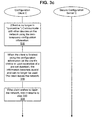
- FIGS. 3a through 3c together are a logic flow diagram showing an exemplary exchange between a client and a secure configuration server
- the secure configuration server 104 Upon receiving the configuration client 106's request to join the network 100, but before providing the configuration client 106 with a proper set of configuration parameters, the secure configuration server 104 forces the configuration client 106 to authenticate itself, that is, to prove that it is a device authorized to join the network 100. How that authorization is initially set up is beyond the scope of the present discussion, but numerous methods are well known in the art.
- the configuration client 106 proceeds to prove its identity to the secure configuration server 104.
- Detailed examples of this authentication process accompany Figures 3a through 3c , 4a , 4b , and 5 .
- the secure configuration server also proves its identity to the requesting configuration client. This two-way, or mutual, authentication enhances the security of these networks by preventing a rogue device from impersonating the network's secure configuration server.
- the configuration client 106 leaves the network 100. This may be at the discretion of the configuration client 106, or the set of configuration parameters provided to it may expire. In any case, those configuration parameters are no longer valid, and whenever the configuration client 106 wishes to rejoin the network 100, it repeats the above process.
- the scenario of Figure 1 is intentionally simplified in order to focus on relevant aspects of the present invention.
- the secure configuration server 104 of Figure 1 may in some networks actually be a configuration server working with a separate security server. Also, the secure configuration server 104 (of whatever description) may not actually reside within the network 100: A relay agent sitting in the network 100 may transfer configuration and authentication messages to a secure configuration server located remotely. Relay agents eliminate the necessity of having a secure configuration server on every secure network segment.
- the configuration client 106 and the secure configuration server 104 of Figure 1 may be of any architecture.
- Figure 2 is a block diagram generally illustrating an exemplary computer system that supports the present invention.
- the computer system of Figure 2 is only one example of a suitable environment and is not intended to suggest any limitation as to the scope of use or functionality of the invention.
- the client 106 nor the secure configuration server 104 be interpreted as having any dependency or requirement relating to any one or combination of components illustrated in Figure 2 .
- the invention is operational with numerous other general-purpose or special-purpose computing environments or configurations.
- the client 106 and the secure configuration server 104 typically include at least one processing unit 200 and memory 202.
- the memory 202 may be volatile (such as RAM), non-volatile (such as ROM or flash memory), or some combination of the two. This most basic configuration is illustrated in Figure 2 by the dashed line 204.
- the client 106 and the secure configuration server 104 may have additional features and functionality.
- additional storage removable and non-removable
- additional storage including, but not limited to, magnetic and optical disks and tape.
- additional storage is illustrated in Figure 2 by removable storage 206 and by non-removable storage 208.
- Computer-storage media include volatile and non-volatile, removable and non-removable, media implemented in any method or technology for storage of information such as computer-readable instructions, data structures, program modules, or other data.
- Memory 202, removable storage 206, and non-removable storage 208 are all examples of computer-storage media.
- Computer-storage media include, but are not limited to, RAM, ROM, EEPROM, flash memory, other memory technology, CD-ROM, digital versatile disks, other optical storage, magnetic cassettes, magnetic tape, magnetic disk storage, other magnetic storage devices, and any other media that can be used to store the desired information and that can be accessed by the client 106 or by the secure configuration server 104. Any such computer-storage media may be part of the client 106 or of the secure configuration server 104.
- the client 106 and the secure configuration server 104 may also contain communications channels 210 that allow them to communicate with other devices, including devices on a network 100. Communications channels 210 are examples of communications media.
- Communications media typically embody computer-readable instructions, data structures, program modules, or other data in a modulated data signal such as a carrier wave or other transport mechanism and include any information delivery media.
- modulated data signal means a signal that has one or more of its characteristics set or changed in such a manner as to encode information in the signal.
- communications media include optical media, wired media, such as wired networks and direct-wired connections, and wireless media such as acoustic, RF, infrared, and other wireless media.
- computer-readable media includes both storage media and communications media.
- the client 106 and the secure configuration server 104 may also have input devices 212 such as a touch-sensitive display screen, a hardware keyboard, a mouse, a voice-input device, etc.
- Output devices 214 include the devices themselves, such as the touch-sensitive display screen, speakers, and a printer, and rendering modules (often called "adapters") for driving these devices. All these devices are well know in the art and need not be discussed at length here.
- the client 106 and the secure configuration server 104 each has a power supply 216.
- Figures 3a through 3c provide details of exemplary secure configuration schemes according to the present invention.
- the logic flow diagram of these figures includes options and variations that might not apply in a given embodiment.
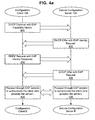
- the steps in the figures represent logical tasks and do not necessarily correspond one-to-one with individual messages. More specific details of a particular embodiment, including message exchanges and message formats, is discussed in relation to Figures 4a , 4b , and 5 .
- the logic of Figure 3a begins in step 300 when the configuration client 106 requests from the secure configuration server 104 a set of configuration parameters that are valid for use on the network 100. Rather than immediately complying with the request, the secure configuration server 104 in step 302 asks the configuration client 106 to authenticate itself. In some embodiments (see specifically step 400 of Figure 4a ), the configuration client 106 does not wait for the secure configuration server 104 to request authentication; instead, the configuration client 106 begins the authentication process concurrently with its initial configuration request.
- step 304 the secure configuration server 104 provides a valid set of configuration parameters to the configuration client 106 so that the client 106 can continue the authentication process.
- the provided configuration information while valid, is "temporary" and is only useful during authentication.
- the configuration information can include an IP address that marks the user of the address as not fully authenticated.
- the configuration client 106 receives the temporary configuration information and will use it during the remainder of the authentication process.
- the temporary configuration information prevents the configuration client 106 from conversing with any device in the network 100 other than the secure configuration server 104: The configuration client 106 is said to be in "quarantine.”
- step 308 the configuration client 106 and the secure configuration server 104 proceed through the authentication process.
- Many such authentication processes are well known in the art, and any of them can be used here.
- the particular authentication process to be used is negotiated between the configuration client 106 and the secure configuration server 104.
- the authentication process may be mutual with the configuration client 106 and the secure configuration server 104 each authenticating itself to the other.
- the configuration client 106 is denied access to the network 100. If the configuration client 106 received temporary configuration information in step 306, the network 100 is still secure because of the limited use to which that information can be put. If the authentication process succeeds, then in step 310 of Figure 3b the secure configuration server 104 applies policies in place in the network 100, if any, to decide how to provide the requested configuration information. These policies may, for example, limit the duration or scope of use of the configuration information (e.g., that information is only valid for a one-hour "lease").
- step 312 the secure configuration server 104 provides the requested configuration information to the configuration client 106, along with information on any limitations on use set by policy in step 310.
- the configuration process fails even though the authentication process succeeded.
- resource availability is checked before proceeding through the authentication process, and the secure configuration server 104 can deny the configuration request on that basis instead of beginning the authentication process in step 302.
- this is not preferred because it provides confidential information (that the network 100 is low on resources) to a configuration client 106 that has not been authenticated and that might be able to use the information to the detriment of the network 100.
- Step 314 notes that if the configuration client 106 was provided with temporary configuration information in step 304, then, in some embodiments, the secure configuration server 104 may choose to simply change the status of that information to non-temporary rather than sending a new set of configuration parameters. The effect is the same in either case.
- the configuration client 106 With authentication complete and with the non-temporary configuration information in hand, the configuration client 106 is now a device on the network 100 and, in step 316 of Figure 3c , can communicate with the other devices 102 (subject to whatever policy limitations were imposed on the provided configuration information). This continues until step 318 where the configuration client 106 either chooses to relinquish the provided configuration information, or a lease on the information expires. In the later case, the secure configuration server 104 marks the provided configuration information as invalid. In either case, the client 106 exits the network 100 and, if it wishes to continue communicating, repeats the secure configuration process (step 320).
- step 400 of Figure 4a the configuration client 106 initiates the process by sending a DHCP Discover message to the secure configuration server 104.
- This DHCP message contains the configuration client 106's request for configuration information. Carried within the options field of the DHCP Discover message is a notice that the configuration client 106 is prepared to use EAP to authenticate itself.
- DHCP and EAP are well known in the art, and so their details need not be discussed here. They are defined, respectively, in the Requests for Comments 2131 and 3748 of the Internet Engineering Task Force, which are incorporated herein in their entireties by reference.
- the secure configuration server 104 Because the secure configuration server 104 will not provide configuration information to an un-authenticated client, it responds in step 402 with a DHCP Offer message containing within its options field an EAP message requesting the identity of the configuration client 106.
- the configuration client 106 responds in step 404 by sending an EAP message containing its identity.
- the EAP message is, once again, contained within the options field of a DHCP message.
- EAP allows the configuration client 106 and the secure configuration server 104 to negotiate and to use any of a number of authentication mechanisms.
- the two parties proceed through the details of EAP and of the authentication mechanism they have chosen.
- EAP need not be altered in any way for the purposes of the present invention, and so the details of EAP known in the art apply as well here.
- EAP messages are carried within the options fields of DHCP messages.
- the secure configuration server 104 accepts the authenticity of the configuration client 106, and, in step 410 of Figure 4b , sends an EAP Success message carried in the options field of a DHCP ACK message. That DHCP message also includes the requested configuration information.
- the configuration client 106 When the configuration client 106 has completed its work with the network 100, it relinquishes the configuration information by sending a DHCP Release message in step 412.
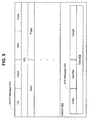
- FIG. 5 is an exemplary data structure diagram of a DHCP message 500 containing, within its options field 502, an EAP message 504.
- the heart of the EAP message is its data field 506.
Landscapes
- Engineering & Computer Science (AREA)
- Computer Networks & Wireless Communication (AREA)
- Signal Processing (AREA)
- Computer Hardware Design (AREA)
- Computer Security & Cryptography (AREA)
- General Engineering & Computer Science (AREA)
- Computing Systems (AREA)
- Power Engineering (AREA)
- Theoretical Computer Science (AREA)
- General Physics & Mathematics (AREA)
- Physics & Mathematics (AREA)
- Software Systems (AREA)
- Data Exchanges In Wide-Area Networks (AREA)
- Small-Scale Networks (AREA)
- Computer And Data Communications (AREA)
- Storage Device Security (AREA)
- Automobile Manufacture Line, Endless Track Vehicle, Trailer (AREA)
- Soil Working Implements (AREA)
- Communication Control (AREA)
- Circuits Of Receivers In General (AREA)
Applications Claiming Priority (1)
| Application Number | Priority Date | Filing Date | Title |
|---|---|---|---|
| US11/007,122 US7558866B2 (en) | 2004-12-08 | 2004-12-08 | Method and system for securely provisioning a client device |
Publications (2)
| Publication Number | Publication Date |
|---|---|
| EP1670215A1 EP1670215A1 (en) | 2006-06-14 |
| EP1670215B1 true EP1670215B1 (en) | 2008-10-01 |
Family
ID=35759413
Family Applications (1)
| Application Number | Title | Priority Date | Filing Date |
|---|---|---|---|
| EP05111673A Expired - Lifetime EP1670215B1 (en) | 2004-12-08 | 2005-12-05 | Method and system for securely provisioning a client device |
Country Status (14)
| Country | Link |
|---|---|
| US (1) | US7558866B2 (enExample) |
| EP (1) | EP1670215B1 (enExample) |
| JP (1) | JP4673734B2 (enExample) |
| KR (1) | KR101159355B1 (enExample) |
| CN (1) | CN1832490B (enExample) |
| AT (1) | ATE410020T1 (enExample) |
| AU (1) | AU2005239707B2 (enExample) |
| BR (1) | BRPI0505394B1 (enExample) |
| CA (1) | CA2529230C (enExample) |
| DE (1) | DE602005010033D1 (enExample) |
| MY (1) | MY148705A (enExample) |
| RU (1) | RU2390828C2 (enExample) |
| TW (1) | TWI405088B (enExample) |
| ZA (1) | ZA200509936B (enExample) |
Families Citing this family (25)
| Publication number | Priority date | Publication date | Assignee | Title |
|---|---|---|---|---|
| US7237257B1 (en) | 2001-04-11 | 2007-06-26 | Aol Llc | Leveraging a persistent connection to access a secured service |
| US7881225B2 (en) | 2005-11-23 | 2011-02-01 | Comcast Cable Holdings, Llc | Customer premise equipment device-specific access-limiting for a cable modem and a customer premise equipment device |
| US8745253B2 (en) * | 2006-03-08 | 2014-06-03 | Alcatel Lucent | Triggering DHCP actions from IEEE 802.1x state changes |
| US7831997B2 (en) * | 2006-06-22 | 2010-11-09 | Intel Corporation | Secure and automatic provisioning of computer systems having embedded network devices |
| CN101132629B (zh) * | 2006-08-25 | 2010-07-14 | 华为技术有限公司 | 发现呼叫控制系统入口的方法和系统 |
| US8628522B2 (en) | 2007-05-21 | 2014-01-14 | Estech, Inc. (Endoscopic Technologies, Inc.) | Cardiac ablation systems and methods |
| US8006193B2 (en) | 2007-10-03 | 2011-08-23 | Microsoft Corporation | Web service user experience without upfront storage expense |
| US8108911B2 (en) * | 2007-11-01 | 2012-01-31 | Comcast Cable Holdings, Llc | Method and system for directing user between captive and open domains |
| US9178857B2 (en) * | 2007-11-19 | 2015-11-03 | Verizon Patent And Licensing Inc. | System and method for secure configuration of network attached devices |
| EP2088734A1 (en) * | 2008-02-07 | 2009-08-12 | Nokia Siemens Networks Oy | Method and device for data processing and communication system comprising such device |
| JP5029994B2 (ja) * | 2008-03-24 | 2012-09-19 | Necアクセステクニカ株式会社 | 通信システム、通信装置、アドレス割当装置、通信制御方法、及び通信制御プログラム |
| US8661252B2 (en) * | 2008-06-20 | 2014-02-25 | Microsoft Corporation | Secure network address provisioning |
| JP4710966B2 (ja) * | 2008-12-12 | 2011-06-29 | コニカミノルタビジネステクノロジーズ株式会社 | 画像処理装置、画像処理装置の制御方法、及び画像処理装置の制御プログラム |
| CN102148712B (zh) * | 2011-04-21 | 2014-05-14 | 天讯天网(福建)网络科技有限公司 | 基于云计算的服务管理系统 |
| US9143937B2 (en) | 2011-09-12 | 2015-09-22 | Qualcomm Incorporated | Wireless communication using concurrent re-authentication and connection setup |
| US8837741B2 (en) | 2011-09-12 | 2014-09-16 | Qualcomm Incorporated | Systems and methods for encoding exchanges with a set of shared ephemeral key data |
| US9439067B2 (en) | 2011-09-12 | 2016-09-06 | George Cherian | Systems and methods of performing link setup and authentication |
| US9690638B2 (en) * | 2011-09-29 | 2017-06-27 | Oracle International Corporation | System and method for supporting a complex message header in a transactional middleware machine environment |
| US9054874B2 (en) | 2011-12-01 | 2015-06-09 | Htc Corporation | System and method for data authentication among processors |
| WO2013090940A1 (en) * | 2011-12-16 | 2013-06-20 | Huawei Technologies Co., Ltd. | System and method for concurrent address allocation and authentication |
| US9055611B2 (en) * | 2012-12-21 | 2015-06-09 | Broadcom Corporation | Resilient peer network with 802.11 technology |
| JP6334940B2 (ja) * | 2014-02-12 | 2018-05-30 | キヤノン株式会社 | 通信装置、通信装置の制御方法およびプログラム |
| US10367848B2 (en) | 2014-09-25 | 2019-07-30 | Nec Corporation | Transmitting relay device identification information in response to broadcast request if device making request is authorized |
| US10805291B2 (en) * | 2015-09-11 | 2020-10-13 | Comcast Cable Communications, Llc | Embedded authentication in a service provider network |
| CN121713637A (zh) * | 2023-08-30 | 2026-03-20 | 高通股份有限公司 | 开放式无线电接入网络(o-ran)中的用户装备(ue)标识符 |
Family Cites Families (20)
| Publication number | Priority date | Publication date | Assignee | Title |
|---|---|---|---|---|
| US6643696B2 (en) * | 1997-03-21 | 2003-11-04 | Owen Davis | Method and apparatus for tracking client interaction with a network resource and creating client profiles and resource database |
| US6412025B1 (en) | 1999-03-31 | 2002-06-25 | International Business Machines Corporation | Apparatus and method for automatic configuration of a personal computer system when reconnected to a network |
| US6393484B1 (en) * | 1999-04-12 | 2002-05-21 | International Business Machines Corp. | System and method for controlled access to shared-medium public and semi-public internet protocol (IP) networks |
| RU2163745C2 (ru) * | 1999-04-29 | 2001-02-27 | Щеглов Андрей Юрьевич | Система защиты виртуального канала корпоративной сети с аутентифицирующим маршрутизатором, построенной на каналах и средствах коммутации сети связи общего пользования |
| US6684243B1 (en) | 1999-11-25 | 2004-01-27 | International Business Machines Corporation | Method for assigning a dual IP address to a workstation attached on an IP data transmission network |
| US6643694B1 (en) * | 2000-02-09 | 2003-11-04 | Michael A. Chernin | System and method for integrating a proxy server, an e-mail server, and a DHCP server, with a graphic interface |
| WO2001067708A2 (en) * | 2000-03-07 | 2001-09-13 | General Instrument Corporation | Authenticated dynamic address assignment |
| US7065578B2 (en) * | 2000-03-20 | 2006-06-20 | At&T Corp. | Service selection in a shared access network using policy routing |
| US6792474B1 (en) * | 2000-03-27 | 2004-09-14 | Cisco Technology, Inc. | Apparatus and methods for allocating addresses in a network |
| US6618757B1 (en) * | 2000-05-17 | 2003-09-09 | Nortel Networks Limited | System and method for dynamic IP address management |
| JP3447687B2 (ja) * | 2000-10-13 | 2003-09-16 | 日本電気株式会社 | 無線ネットワークシステム及びネットワークアドレス割当方法 |
| US20020138635A1 (en) | 2001-03-26 | 2002-09-26 | Nec Usa, Inc. | Multi-ISP controlled access to IP networks, based on third-party operated untrusted access stations |
| US6728718B2 (en) | 2001-06-26 | 2004-04-27 | International Business Machines Corporation | Method and system for recovering DHCP data |
| JP2003224577A (ja) * | 2001-10-05 | 2003-08-08 | Toyo Commun Equip Co Ltd | インターネット中継装置 |
| JP2003152731A (ja) * | 2001-11-16 | 2003-05-23 | Mitsumi Electric Co Ltd | 通信装置、ipアドレス取得方法、ローミング方法 |
| WO2003094438A1 (en) * | 2002-05-01 | 2003-11-13 | Telefonaktiebolaget Lm Ericsson (Publ) | System, apparatus and method for sim-based authentication and encryption in wireless local area network access |
| JP4023240B2 (ja) * | 2002-07-10 | 2007-12-19 | 日本電気株式会社 | ユーザ認証システム |
| EP1434404B1 (en) * | 2002-12-20 | 2005-03-16 | Alcatel | Method and system to provide authentication for a user |
| JP2004247955A (ja) | 2003-02-13 | 2004-09-02 | Toshiba Solutions Corp | 通信システムおよび通信方法 |
| CN100499483C (zh) * | 2003-11-07 | 2009-06-10 | 华为技术有限公司 | 对不同类型用户实现统一动态地址分配的方法 |
-
2004
- 2004-12-08 US US11/007,122 patent/US7558866B2/en not_active Expired - Fee Related
-
2005
- 2005-12-01 AU AU2005239707A patent/AU2005239707B2/en not_active Ceased
- 2005-12-05 AT AT05111673T patent/ATE410020T1/de not_active IP Right Cessation
- 2005-12-05 DE DE602005010033T patent/DE602005010033D1/de not_active Expired - Lifetime
- 2005-12-05 TW TW094142831A patent/TWI405088B/zh not_active IP Right Cessation
- 2005-12-05 EP EP05111673A patent/EP1670215B1/en not_active Expired - Lifetime
- 2005-12-06 BR BRPI0505394-3A patent/BRPI0505394B1/pt not_active IP Right Cessation
- 2005-12-07 RU RU2005138105/09A patent/RU2390828C2/ru not_active IP Right Cessation
- 2005-12-07 ZA ZA200509936A patent/ZA200509936B/en unknown
- 2005-12-07 KR KR1020050118811A patent/KR101159355B1/ko not_active Expired - Fee Related
- 2005-12-07 CA CA2529230A patent/CA2529230C/en not_active Expired - Fee Related
- 2005-12-07 MY MYPI20055710A patent/MY148705A/en unknown
- 2005-12-08 JP JP2005354885A patent/JP4673734B2/ja not_active Expired - Fee Related
- 2005-12-08 CN CN2005101290820A patent/CN1832490B/zh not_active Expired - Fee Related
Also Published As
| Publication number | Publication date |
|---|---|
| TW200629085A (en) | 2006-08-16 |
| ZA200509936B (en) | 2008-05-28 |
| CA2529230C (en) | 2016-05-31 |
| AU2005239707A1 (en) | 2006-06-22 |
| RU2005138105A (ru) | 2007-06-20 |
| JP2006191552A (ja) | 2006-07-20 |
| RU2390828C2 (ru) | 2010-05-27 |
| BRPI0505394B1 (pt) | 2018-01-16 |
| BRPI0505394A (pt) | 2006-09-12 |
| CN1832490A (zh) | 2006-09-13 |
| US7558866B2 (en) | 2009-07-07 |
| US20060123118A1 (en) | 2006-06-08 |
| DE602005010033D1 (de) | 2008-11-13 |
| AU2005239707B2 (en) | 2010-02-25 |
| CA2529230A1 (en) | 2006-06-08 |
| EP1670215A1 (en) | 2006-06-14 |
| MY148705A (en) | 2013-05-31 |
| ATE410020T1 (de) | 2008-10-15 |
| KR101159355B1 (ko) | 2012-06-25 |
| TWI405088B (zh) | 2013-08-11 |
| CN1832490B (zh) | 2010-12-29 |
| JP4673734B2 (ja) | 2011-04-20 |
| KR20060064544A (ko) | 2006-06-13 |
Similar Documents
| Publication | Publication Date | Title |
|---|---|---|
| US7558866B2 (en) | Method and system for securely provisioning a client device | |
| JP4805389B2 (ja) | ネットワーク環境の検出 | |
| US9438630B2 (en) | Network access control using subnet addressing | |
| JP5714078B2 (ja) | 分散セキュアコンテンツ管理システムに対する認証 | |
| CN100580610C (zh) | 动态网络中的安全链路管理方法 | |
| US20180198786A1 (en) | Associating layer 2 and layer 3 sessions for access control | |
| CN101203841B (zh) | 防止欺骗性因特网帐户接入 | |
| US20120311660A1 (en) | SYSTEM AND METHOD FOR MANAGING IPv6 ADDRESS AND ACCESS POLICY | |
| US20090165096A1 (en) | Dynamic radius | |
| CN101986598B (zh) | 认证方法、服务器及系统 | |
| WO2004015958A2 (en) | Fine grained access control for wireless networks | |
| CN113039745A (zh) | 用于云文件系统的认证和授权 | |
| KR100953595B1 (ko) | 홈네트워크 서비스 품질 관리 시스템 | |
| US7571308B1 (en) | Method for controlling access to a network by a wireless client | |
| US10404684B1 (en) | Mobile device management registration | |
| CN108600207B (zh) | 基于802.1x与savi的网络认证与访问方法 | |
| CN101001148A (zh) | 一种设备安全管理维护的方法及装置 | |
| JP7680988B2 (ja) | シングルサインオン認証システムおよびシングルサインオン認証装置 | |
| US8250640B1 (en) | Transparent kerboros delegation with a storage virtualization system | |
| CN115296926A (zh) | 一种网络流量管控方法、装置、设备及介质 | |
| EP1619822A1 (en) | Delegation protocol | |
| KR20060133489A (ko) | Cdma2000망에서의 접속 시간 단축을 위한 고속 데이터호 접속 방법 | |
| JP2006216014A (ja) | メッセージを認証するためのシステムおよび方法、メッセージを認証するためのファイアウォール、ネットワーク装置、および、コンピュータ読み取り可能な媒体 | |
| JP4796977B2 (ja) | リモートアクセス方法、ネットワーク接続設定方法およびリモートアクセスシステム | |
| JP2024515154A (ja) | セキュアキー管理デバイス、認証システム、広域ネットワーク、およびセッションキーを生成する方法 |
Legal Events
| Date | Code | Title | Description |
|---|---|---|---|
| PUAI | Public reference made under article 153(3) epc to a published international application that has entered the european phase |
Free format text: ORIGINAL CODE: 0009012 |
|
| AK | Designated contracting states |
Kind code of ref document: A1 Designated state(s): AT BE BG CH CY CZ DE DK EE ES FI FR GB GR HU IE IS IT LI LT LU LV MC NL PL PT RO SE SI SK TR |
|
| AX | Request for extension of the european patent |
Extension state: AL BA HR MK YU |
|
| 17P | Request for examination filed |
Effective date: 20061114 |
|
| 17Q | First examination report despatched |
Effective date: 20061218 |
|
| AKX | Designation fees paid |
Designated state(s): AT BE BG CH CY CZ DE DK EE ES FI FR GB GR HU IE IS IT LI LT LU LV MC NL PL PT RO SE SI SK TR |
|
| 17Q | First examination report despatched |
Effective date: 20061218 |
|
| GRAP | Despatch of communication of intention to grant a patent |
Free format text: ORIGINAL CODE: EPIDOSNIGR1 |
|
| GRAS | Grant fee paid |
Free format text: ORIGINAL CODE: EPIDOSNIGR3 |
|
| GRAA | (expected) grant |
Free format text: ORIGINAL CODE: 0009210 |
|
| AK | Designated contracting states |
Kind code of ref document: B1 Designated state(s): AT BE BG CH CY CZ DE DK EE ES FI FR GB GR HU IE IS IT LI LT LU LV MC NL PL PT RO SE SI SK TR |
|
| REG | Reference to a national code |
Ref country code: GB Ref legal event code: FG4D |
|
| REG | Reference to a national code |
Ref country code: CH Ref legal event code: EP |
|
| REG | Reference to a national code |
Ref country code: IE Ref legal event code: FG4D |
|
| REF | Corresponds to: |
Ref document number: 602005010033 Country of ref document: DE Date of ref document: 20081113 Kind code of ref document: P |
|
| PG25 | Lapsed in a contracting state [announced via postgrant information from national office to epo] |
Ref country code: SI Free format text: LAPSE BECAUSE OF FAILURE TO SUBMIT A TRANSLATION OF THE DESCRIPTION OR TO PAY THE FEE WITHIN THE PRESCRIBED TIME-LIMIT Effective date: 20081001 |
|
| NLV1 | Nl: lapsed or annulled due to failure to fulfill the requirements of art. 29p and 29m of the patents act | ||
| PG25 | Lapsed in a contracting state [announced via postgrant information from national office to epo] |
Ref country code: BG Free format text: LAPSE BECAUSE OF FAILURE TO SUBMIT A TRANSLATION OF THE DESCRIPTION OR TO PAY THE FEE WITHIN THE PRESCRIBED TIME-LIMIT Effective date: 20090101 Ref country code: LT Free format text: LAPSE BECAUSE OF FAILURE TO SUBMIT A TRANSLATION OF THE DESCRIPTION OR TO PAY THE FEE WITHIN THE PRESCRIBED TIME-LIMIT Effective date: 20081001 Ref country code: AT Free format text: LAPSE BECAUSE OF FAILURE TO SUBMIT A TRANSLATION OF THE DESCRIPTION OR TO PAY THE FEE WITHIN THE PRESCRIBED TIME-LIMIT Effective date: 20081001 Ref country code: ES Free format text: LAPSE BECAUSE OF FAILURE TO SUBMIT A TRANSLATION OF THE DESCRIPTION OR TO PAY THE FEE WITHIN THE PRESCRIBED TIME-LIMIT Effective date: 20090112 |
|
| PG25 | Lapsed in a contracting state [announced via postgrant information from national office to epo] |
Ref country code: IS Free format text: LAPSE BECAUSE OF FAILURE TO SUBMIT A TRANSLATION OF THE DESCRIPTION OR TO PAY THE FEE WITHIN THE PRESCRIBED TIME-LIMIT Effective date: 20090201 Ref country code: NL Free format text: LAPSE BECAUSE OF FAILURE TO SUBMIT A TRANSLATION OF THE DESCRIPTION OR TO PAY THE FEE WITHIN THE PRESCRIBED TIME-LIMIT Effective date: 20081001 Ref country code: FI Free format text: LAPSE BECAUSE OF FAILURE TO SUBMIT A TRANSLATION OF THE DESCRIPTION OR TO PAY THE FEE WITHIN THE PRESCRIBED TIME-LIMIT Effective date: 20081001 Ref country code: PL Free format text: LAPSE BECAUSE OF FAILURE TO SUBMIT A TRANSLATION OF THE DESCRIPTION OR TO PAY THE FEE WITHIN THE PRESCRIBED TIME-LIMIT Effective date: 20081001 Ref country code: LV Free format text: LAPSE BECAUSE OF FAILURE TO SUBMIT A TRANSLATION OF THE DESCRIPTION OR TO PAY THE FEE WITHIN THE PRESCRIBED TIME-LIMIT Effective date: 20081001 |
|
| PG25 | Lapsed in a contracting state [announced via postgrant information from national office to epo] |
Ref country code: EE Free format text: LAPSE BECAUSE OF FAILURE TO SUBMIT A TRANSLATION OF THE DESCRIPTION OR TO PAY THE FEE WITHIN THE PRESCRIBED TIME-LIMIT Effective date: 20081001 Ref country code: RO Free format text: LAPSE BECAUSE OF FAILURE TO SUBMIT A TRANSLATION OF THE DESCRIPTION OR TO PAY THE FEE WITHIN THE PRESCRIBED TIME-LIMIT Effective date: 20081001 Ref country code: DK Free format text: LAPSE BECAUSE OF FAILURE TO SUBMIT A TRANSLATION OF THE DESCRIPTION OR TO PAY THE FEE WITHIN THE PRESCRIBED TIME-LIMIT Effective date: 20081001 Ref country code: BE Free format text: LAPSE BECAUSE OF FAILURE TO SUBMIT A TRANSLATION OF THE DESCRIPTION OR TO PAY THE FEE WITHIN THE PRESCRIBED TIME-LIMIT Effective date: 20081001 Ref country code: MC Free format text: LAPSE BECAUSE OF NON-PAYMENT OF DUE FEES Effective date: 20081231 |
|
| PLBE | No opposition filed within time limit |
Free format text: ORIGINAL CODE: 0009261 |
|
| STAA | Information on the status of an ep patent application or granted ep patent |
Free format text: STATUS: NO OPPOSITION FILED WITHIN TIME LIMIT |
|
| PG25 | Lapsed in a contracting state [announced via postgrant information from national office to epo] |
Ref country code: SE Free format text: LAPSE BECAUSE OF FAILURE TO SUBMIT A TRANSLATION OF THE DESCRIPTION OR TO PAY THE FEE WITHIN THE PRESCRIBED TIME-LIMIT Effective date: 20090101 Ref country code: CZ Free format text: LAPSE BECAUSE OF FAILURE TO SUBMIT A TRANSLATION OF THE DESCRIPTION OR TO PAY THE FEE WITHIN THE PRESCRIBED TIME-LIMIT Effective date: 20081001 |
|
| 26N | No opposition filed |
Effective date: 20090702 |
|
| PG25 | Lapsed in a contracting state [announced via postgrant information from national office to epo] |
Ref country code: SK Free format text: LAPSE BECAUSE OF FAILURE TO SUBMIT A TRANSLATION OF THE DESCRIPTION OR TO PAY THE FEE WITHIN THE PRESCRIBED TIME-LIMIT Effective date: 20081001 |
|
| PG25 | Lapsed in a contracting state [announced via postgrant information from national office to epo] |
Ref country code: IE Free format text: LAPSE BECAUSE OF NON-PAYMENT OF DUE FEES Effective date: 20081205 |
|
| PG25 | Lapsed in a contracting state [announced via postgrant information from national office to epo] |
Ref country code: HU Free format text: LAPSE BECAUSE OF FAILURE TO SUBMIT A TRANSLATION OF THE DESCRIPTION OR TO PAY THE FEE WITHIN THE PRESCRIBED TIME-LIMIT Effective date: 20090402 Ref country code: LU Free format text: LAPSE BECAUSE OF NON-PAYMENT OF DUE FEES Effective date: 20081205 Ref country code: CY Free format text: LAPSE BECAUSE OF FAILURE TO SUBMIT A TRANSLATION OF THE DESCRIPTION OR TO PAY THE FEE WITHIN THE PRESCRIBED TIME-LIMIT Effective date: 20081001 |
|
| REG | Reference to a national code |
Ref country code: CH Ref legal event code: PL |
|
| PG25 | Lapsed in a contracting state [announced via postgrant information from national office to epo] |
Ref country code: TR Free format text: LAPSE BECAUSE OF FAILURE TO SUBMIT A TRANSLATION OF THE DESCRIPTION OR TO PAY THE FEE WITHIN THE PRESCRIBED TIME-LIMIT Effective date: 20081001 |
|
| PG25 | Lapsed in a contracting state [announced via postgrant information from national office to epo] |
Ref country code: LI Free format text: LAPSE BECAUSE OF NON-PAYMENT OF DUE FEES Effective date: 20091231 Ref country code: CH Free format text: LAPSE BECAUSE OF NON-PAYMENT OF DUE FEES Effective date: 20091231 Ref country code: GR Free format text: LAPSE BECAUSE OF FAILURE TO SUBMIT A TRANSLATION OF THE DESCRIPTION OR TO PAY THE FEE WITHIN THE PRESCRIBED TIME-LIMIT Effective date: 20090102 |
|
| PG25 | Lapsed in a contracting state [announced via postgrant information from national office to epo] |
Ref country code: PT Free format text: LAPSE BECAUSE OF FAILURE TO SUBMIT A TRANSLATION OF THE DESCRIPTION OR TO PAY THE FEE WITHIN THE PRESCRIBED TIME-LIMIT Effective date: 20081001 |
|
| REG | Reference to a national code |
Ref country code: DE Ref legal event code: R082 Ref document number: 602005010033 Country of ref document: DE Representative=s name: GRUENECKER, KINKELDEY, STOCKMAIR & SCHWANHAEUS, DE |
|
| REG | Reference to a national code |
Ref country code: GB Ref legal event code: 732E Free format text: REGISTERED BETWEEN 20150115 AND 20150121 |
|
| REG | Reference to a national code |
Ref country code: DE Ref legal event code: R082 Ref document number: 602005010033 Country of ref document: DE Representative=s name: GRUENECKER PATENT- UND RECHTSANWAELTE PARTG MB, DE Effective date: 20150126 Ref country code: DE Ref legal event code: R081 Ref document number: 602005010033 Country of ref document: DE Owner name: MICROSOFT TECHNOLOGY LICENSING, LLC, REDMOND, US Free format text: FORMER OWNER: MICROSOFT CORP., REDMOND, WASH., US Effective date: 20150126 |
|
| REG | Reference to a national code |
Ref country code: FR Ref legal event code: TP Owner name: MICROSOFT TECHNOLOGY LICENSING, LLC, US Effective date: 20150724 |
|
| REG | Reference to a national code |
Ref country code: FR Ref legal event code: PLFP Year of fee payment: 11 |
|
| REG | Reference to a national code |
Ref country code: FR Ref legal event code: PLFP Year of fee payment: 12 |
|
| REG | Reference to a national code |
Ref country code: FR Ref legal event code: PLFP Year of fee payment: 13 |
|
| PGFP | Annual fee paid to national office [announced via postgrant information from national office to epo] |
Ref country code: FR Payment date: 20181120 Year of fee payment: 14 |
|
| PGFP | Annual fee paid to national office [announced via postgrant information from national office to epo] |
Ref country code: IT Payment date: 20181220 Year of fee payment: 14 |
|
| PGFP | Annual fee paid to national office [announced via postgrant information from national office to epo] |
Ref country code: DE Payment date: 20191119 Year of fee payment: 15 |
|
| PGFP | Annual fee paid to national office [announced via postgrant information from national office to epo] |
Ref country code: GB Payment date: 20191206 Year of fee payment: 15 |
|
| PG25 | Lapsed in a contracting state [announced via postgrant information from national office to epo] |
Ref country code: IT Free format text: LAPSE BECAUSE OF NON-PAYMENT OF DUE FEES Effective date: 20191205 Ref country code: FR Free format text: LAPSE BECAUSE OF NON-PAYMENT OF DUE FEES Effective date: 20191231 |
|
| REG | Reference to a national code |
Ref country code: DE Ref legal event code: R119 Ref document number: 602005010033 Country of ref document: DE |
|
| GBPC | Gb: european patent ceased through non-payment of renewal fee |
Effective date: 20201205 |
|
| PG25 | Lapsed in a contracting state [announced via postgrant information from national office to epo] |
Ref country code: GB Free format text: LAPSE BECAUSE OF NON-PAYMENT OF DUE FEES Effective date: 20201205 Ref country code: DE Free format text: LAPSE BECAUSE OF NON-PAYMENT OF DUE FEES Effective date: 20210701 |