EP1669869A1 - Management device for managing information processing device, managing system, program, and recording medium - Google Patents
Management device for managing information processing device, managing system, program, and recording medium Download PDFInfo
- Publication number
- EP1669869A1 EP1669869A1 EP04773277A EP04773277A EP1669869A1 EP 1669869 A1 EP1669869 A1 EP 1669869A1 EP 04773277 A EP04773277 A EP 04773277A EP 04773277 A EP04773277 A EP 04773277A EP 1669869 A1 EP1669869 A1 EP 1669869A1
- Authority
- EP
- European Patent Office
- Prior art keywords
- information processing
- index value
- processing apparatus
- time band
- use state
- Prior art date
- Legal status (The legal status is an assumption and is not a legal conclusion. Google has not performed a legal analysis and makes no representation as to the accuracy of the status listed.)
- Granted
Links
Images


Classifications
-
- G—PHYSICS
- G06—COMPUTING OR CALCULATING; COUNTING
- G06Q—INFORMATION AND COMMUNICATION TECHNOLOGY [ICT] SPECIALLY ADAPTED FOR ADMINISTRATIVE, COMMERCIAL, FINANCIAL, MANAGERIAL OR SUPERVISORY PURPOSES; SYSTEMS OR METHODS SPECIALLY ADAPTED FOR ADMINISTRATIVE, COMMERCIAL, FINANCIAL, MANAGERIAL OR SUPERVISORY PURPOSES, NOT OTHERWISE PROVIDED FOR
- G06Q10/00—Administration; Management
- G06Q10/06—Resources, workflows, human or project management; Enterprise or organisation planning; Enterprise or organisation modelling
-
- G—PHYSICS
- G06—COMPUTING OR CALCULATING; COUNTING
- G06F—ELECTRIC DIGITAL DATA PROCESSING
- G06F11/00—Error detection; Error correction; Monitoring
- G06F11/30—Monitoring
- G06F11/34—Recording or statistical evaluation of computer activity, e.g. of down time, of input/output operation ; Recording or statistical evaluation of user activity, e.g. usability assessment
- G06F11/3409—Recording or statistical evaluation of computer activity, e.g. of down time, of input/output operation ; Recording or statistical evaluation of user activity, e.g. usability assessment for performance assessment
-
- G—PHYSICS
- G06—COMPUTING OR CALCULATING; COUNTING
- G06F—ELECTRIC DIGITAL DATA PROCESSING
- G06F11/00—Error detection; Error correction; Monitoring
- G06F11/30—Monitoring
- G06F11/34—Recording or statistical evaluation of computer activity, e.g. of down time, of input/output operation ; Recording or statistical evaluation of user activity, e.g. usability assessment
- G06F11/3409—Recording or statistical evaluation of computer activity, e.g. of down time, of input/output operation ; Recording or statistical evaluation of user activity, e.g. usability assessment for performance assessment
- G06F11/3433—Recording or statistical evaluation of computer activity, e.g. of down time, of input/output operation ; Recording or statistical evaluation of user activity, e.g. usability assessment for performance assessment for load management
-
- G—PHYSICS
- G06—COMPUTING OR CALCULATING; COUNTING
- G06F—ELECTRIC DIGITAL DATA PROCESSING
- G06F11/00—Error detection; Error correction; Monitoring
- G06F11/30—Monitoring
- G06F11/34—Recording or statistical evaluation of computer activity, e.g. of down time, of input/output operation ; Recording or statistical evaluation of user activity, e.g. usability assessment
- G06F11/3466—Performance evaluation by tracing or monitoring
- G06F11/3476—Data logging
Definitions
- the present invention relates to management of an information processing apparatus, in particular to a management apparatus for instructing an information processing apparatus to execute a management program, a management system, a program and a recording medium.
- Patent Document 1 discloses a technique in which a server for managing software performs installation processing only when the software installed on a client is not the latest version.
- Patent Document 2 discloses a technique in which the number of clients to be delivered with software at the same time is controlled on the server side to reduce network traffic.
- the object of the present invention is to provide a management apparatus capable of causing a management program to be executed on an information processing apparatus, such as a client computer, during appropriate hours, a management system, a program and a recording medium.
- the present invention provides a management apparatus for managing at least one information processing apparatus, the management apparatus comprising: use state acquisition means for acquiring ause state of the information processing apparatus and quantifying the acquired use state into an index value; index value recording means for recording the index value for each time band; time band selection means for selecting a time band where the index value recorded by the index value recording means is equal to or above a reference index value determined in advance, as a scheduled time band where execution of a management program on the information processing apparatus is scheduled; and program execution instruction means for causing the management program to be executed on the information processing apparatus at the scheduled time band selected by the time band selection means; a management system provided with the management apparatus; a program for controlling the management apparatus and a recording medium in which the program is recorded.
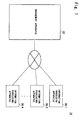
- FIG. 1 shows the outline of a management system 10.
- the management system 10 is provided with a management apparatus 20 which is a sever computer, and information processing apparatuses 30-1 to 30-N which are client computers connected to the management apparatus 20 via a network.
- the management apparatus 20 is intended to cause the information processing apparatuses 30-1 to 30-N to execute a management program for managing the information processing apparatuses 30-1 to 30-N at such an appropriate time band that the works of the users of the information processing apparatuses 30-1 to 30-N are not interfered with.
- FIG. 2 shows a block diagram of the management apparatus 20.
- the management apparatus 20 has instruction sending means 200, use state acquisition means 210, index value recording means 220, a schedule DB 230, reference index value setting means 240, reference index value storage means 250, time band selection means 260, reference index value change means 270, program execution instruction means 280 and a management program DB 290.
- the instruction sending means 200 When execution of a management program is instructed by a user of the management apparatus 20, the instruction sending means 200 sends a sending ins truction for caus ing the use s tate of the information processing apparatus 30-1 to be sent to the management apparatus 20, to the information processing apparatus 30-1.
- the instruction sending means 200 also sends the sending instruction to each of the information processing apparatuses 30-2 to 30-N similarly. Since other processings performed by the management apparatus 20 for the information processing apparatus 30-1 are almost the same as those performed for each of the information processing apparatuses 30-2 to 30-N, description about each of the information processing apparatuses 30-2 to 30-N will be omitted.
- the use state acquisition means 210 acquires a use state of the information processing apparatus 30-1 from the information processing apparatus 30-1 as a response to the sending instruction. Specifically, the use state acquisition means 210 acquires a system use rate indicating the ratio of actual throughput of the information processing apparatus 30-1 to the maximum throughput per unit time of the information processing apparatus 30-1, from the information processing apparatus 30-1 as the use state. The use state acquisition means 210 further acquires a use frequency indicating the frequency of use of an input device of the information processing apparatus 30-1, from the information processing apparatus 30-1 as the use state. The use state acquisition means 210 also acquires an operation state indicating whether or not the information processing apparatus 30-1 is currently operating, from the information processing apparatus 30-1 as the use state.
- the system use rate is, for example, the use rate of the centralprocessing unit of the information processing apparatus 30-1, theuserateof the main memory of the information processing apparatus 30-1, the amount of use of a page file of the information processing apparatus 30-1, the frequency of access to the hard disk drive of the information processing apparatus 30-1 or combination thereof.
- the input device use frequency may be, for example, the frequency of moving a pointer by a mouse, the amount of movement of the pointer or the frequency of typing akey of akey board.
- the use state acquisition means 210 may acquire information about whether a screen saver has been activated or not or the frequency of the activation as information indicating the use frequency instead of acquiring the use frequency itself.
- the use state acquisitionmeans 210 mayuse the operation probability itself as the index value or may use a value obtained by subtracting the system use rate from 1 as the index value. Alternatively, it may user a value obtained by subtracting the use frequency fromapredeterminedreference frequency as the index value.
- the index value recording means 220 stores the index value quantified by the use state acquisition means 210 in the schedule DB 230 for each time band.
- the reference index value setting means 240 sets a predetermined threshold (for example, 1) for the above index value as a reference index value and stores it in the reference index value storage means 250. As described later, this reference index value can be changed.
- the reference index value storage means 250 may store the reference index value, for example, for each of the managed information processing apparatuses.
- the time band selection means 260 selects a time band where the past index value stored by the index value recording means 220 indicates that the information processing apparatus 30-1 had not been used at and above a predetermined reference rate, as a scheduled time band where the management program for managing the information processing apparatus 30-1 is to be executed. For example, the time band selection means 260 selects a time band where the index value recorded by the index value recording means 220 is equal to or above the reference index value stored in the reference index value storage means 250.
- the time band selection means 260 selects a reference index value for an information processing apparatus on which the management program is to be executed, from the reference index value storage means 250, and selects a time band where the index value recorded by the index value recording means 220 is equal to or above the selected reference index value as the scheduled time band.
- the reference index value change means 270 reduces the reference index value stored in the reference index value storage means 250 and causes the time band selection means 260 to reselect a scheduled time band.
- the program execution instruction means 280 acquires the management program stored in the management program DB 290 and causes the information processing apparatus 30-1 to execute it at the scheduled time band selected by the time band selection means 260. Prior to the execution, the program execution instruction means 280 may notify the information processing apparatus 30-1 that the management program is to be executed. In this case, the program execution instruction means 280 starts execution of the management program unless it does not receive an unpermission instruction indicating that execution is not permitted, from the information processing apparatus 30-1 within a predetermined period.
- the management program stored in the management program DB 290 may be, for example, a program for installing a new application program, a program for adding or modifying a function of an application program already installed, or a program for detecting/removing a computer virus which has intruded into an information processing apparatus. Though such a management program is capable of operating in parallel with other programs in an information processing apparatus, it may sometimes decrease the operation speedof the otherprograms or require re-activation of the information processing apparatus.
- the management apparatus 20 can select a time band appropriate for execution of such a management program.
- FIG. 3 shows a block diagram of the information processing apparatus 30-1.
- the information processing apparatus 30-1 has operation history recording means 300, an operation history DB 310, instruction input means 320, notification means 330 and program execution means 340. Since each of the information processing apparatuses 30-2 to 30-N has almost the same configuration as the information processing apparatus 30-1, description thereof will be omitted.
- the operation history recording means 300 records an operation state by periodically recording information to the effect that the information processing apparatus 30-1 is operating in the operation history DB 310 in association with the time at which the information processing apparatus 30-1 is operating.
- the operation history recording means 300 also detects the system use rate and the input frequency of the information processing apparatus 30-1 and stores them in the operation history DB 310 in association with the time of the detection.
- the operation history DB 310 When receiving a sending instruction from the instruction sending means 200 , the operation history DB 310 sends information indicating the operation state, the system use rate and the input frequency to the management apparatus 20.
- the instruction input means 320 When receiving a notification to the effect that the management program is to be executed, from the management apparatus 20, the instruction input means 320 causes the user of the information processing apparatus 30-1 to input an unpermission instruction indicating that the program execution instructionmeans 280 is not permitted to cause the management program to be executed. For example, the instruction input means 320 may display to the user an input screen for prompting the user to input whether or not execution of the management program may be started.
- the notification means 330 sends an unpermission notification to the effect that execution of the management program is not permitted, to the management apparatus 20 .
- the program execution means 340 starts execution of the management program received from the management apparatus 20.
- Figure 4 is a diagram for illustrating a use state acquired by the use state acquisition means 210.
- the use state acquisition means 210 acquires a system use rate, an input device use frequency and an operation state from the information processing apparatus 30-1 as the use state.
- This figure shows a busy rate determined based on the system use rate and the use frequency acquired by the use state acquisition means 210, and an operation probability determined based on the operation state acquired by the use state acquisition means 210, for each time band for each day of the week.
- the use state acquisition means 210 acquires such a use state that the busy rate of the information processing apparatus 30-1 shows 0.15 and the operation probability shows 1 at the one-hour time band from ten o'clock on Monday. Since the outline of the use state to be acquired by the use state acquisition means 210 for the information processing apparatuses 30-2 to 30-N is almost the same as that for the information processing apparatus 30-1, description thereof will be omitted.
- the operation probability is a probability that the information processing apparatus 30-1 is operating.
- the operation probability may be a probability that the information processing apparatus 30-1 is powered on, a probability that the central processing unit of the information processing apparatus 30-1 is ready to execute a command, or a probability that the information processing apparatus 30-1 is ready to communicate with the outside.
- the operation probability may be a probability that the information processing apparatus 30-1 is operating within a range where communication from the management apparatus 20 is possible via a network. For example, when the information processing apparatus 30-1 is operating as a stand-alone, it may be treated as not being operating.
- the use state acquisition means 210 calculates the operation probability, for example, in accordance with the following procedure.
- the use state acquisition means 210 acquires, from the operation history recording means 300, the operation state in which operation instruction log information indicating that the information processing apparatus 30-1 is operating is associated with the time when the information processing apparatus 30-1 is operating.
- the use state acquisitionmeans 210 classifies each of multiple pieces of operation instruction log information according to the time band to which the time associated with the operation instruction log information belongs.
- the use state acquisition means 210 calculates the ratio of the number of pieces of operation instruction log information classified under each time band to the maximum number of pieces of operation instruction log information that canbe recorded at the time band, as the operation probability.
- the use state acquisition means 210 calculates an operation probability as 0.75 by dividing three by four.
- Figure 5 is a graph showing a use state acquired by the use state acquisition means 210.
- the continuous line indicates the busy rate of the information processing apparatus 30-1 at each time band on Monday.
- the dotted line shows the operation probability of the information processing apparatus 30-1 at each time band on Monday.
- the management apparatus 20 causes the management program to be executed at a time band where the operation probability of the information processing apparatus 30-1 is high.
- the operation probability is high at the time band from about nine o'clock to eighteen o'clock, and the possibility that the management program can be executed is high at this time band.
- the management program may interfere with the work of the user of the information processing apparatus 30-1 when the busy rate of the information processing apparatus 30-1 is equal to or above a predetermined level.
- the busy rate is high at the time band from about eleven o'clock to about thirteen o'clock, and it is desirable to avoid execution of the management program at this time band.
- the management apparatus 20 selects a time band where the operation probability is high to some extent and the work of the user is not interfered with, as a scheduled time band where the management program is to be executed, based on the busy rate and the operation probability stored in the schedule DB 230.
- Figure 6 (A) shows an example of the data structure of an index value stored in the schedule DB 230.
- the use state acquisition means 210 calculates an index value for each of the information processing apparatuses 30-1 to 30-N, for each time band of each day of the week, in accordance with the formula below.
- Index value operation probability ⁇ ( 1 -busy rate )
- the use state acquisition means 210 acquires a use state indicating that the busy rate of the information processing apparatus 30-1 is 0.15 and the operation probability of the information processing apparatus 30-1 is 0.80 at the one-hour time band from nine o'clock on Monday, as shown in Figure 4. Accordingly, the use state acquisition means 210 calculates an index value as 0.68 by multiplying the operation probability 0.80 by 0.85 obtained by subtracting the busy rate 0.15 from 1.
- time bands where the index value shows the maximum value 1 are indicated with continuous lines. These time bands are such that are the most preferable for execution of the management program. Time bands where the index value is 0.7 or above are indicated with dotted lines. These time bands are such that are the second most preferable for execution of the management program. Time bands where the index value is 0.4 or above are indicated with dashed lines.
- the schedule DB 230 stores an index value for each time band for each day of the week.
- the schedule DB 230 may store an index value for each time band irrespective of the day of the week or may store an index value for each time band for a weekday and for a holiday separately.
- Figures 6 (B) and 6 (C) are diagrams for illustrating a concrete example of the processing performed by the time band selection means 260.
- the time band selection means 260 selects a time band where a past index value stored in the schedule DB 230 is equal to or above the reference index value stored in the reference index value storage means 250, as a scheduled time band where the management program for managing the information processing apparatus 30-1 is to be executed.
- a time band which can be selected by the time band selection means 260 as the scheduled time band is denoted by 1. That is, if the reference index value is 1, the time band selection means 260 can select one hour from twelve o'clock on Tuesday to Thursday, one hour from thirteen o' clock on Thursday or one hour from ten o'clock on Friday, as the scheduled time band.
- the time band selection means 260 calculates the number of information processing apparatuses the index value of which is equal to or above the reference index value, for each time band for each day of the week, by summing up data in which a selectable scheduled time band is denoted by 1 for each information processing apparatus for each day of the week. Then, the time band selection means 260 preferentially selects, for each of the multiple information processing apparatuses , a time band where there are fewer other information processing apparatuses with an index value above the reference index value, from among time bands where the index value is equal to or above the reference index value, as a scheduled time band of the information processing apparatus.
- the time band selection means 260 preferentially selects the one hour from ten o'clock on Friday as the scheduled time band.
- Figure 7 shows the operational flow of processing performed by the management apparatus 20 to cause the information processing apparatus 30-1 to execute the management program.
- the instruction sending means 200 sends to the information processing apparatus 30-1 a sending instruction for causing the use state of the information processing apparatus 30-1, for example, the system use rate, the use frequency and the operation probability to be sent to the management apparatus 20 (S705).
- the operation history recording means 300 records the operation state by periodically recording information to the effect that the information processing apparatus 30-1 is operating to the operation history DB 310 in association with the time when the information processing apparatus 30-1 is operating (S710) .
- Theoperationhistory recording means 300 also detects the system use rate and the input frequency of the information processing apparatus 30-1 and stores them in association with the time of the detection.
- the operation history DB310 When receiving the sending instruction from the management apparatus 20, the operation history DB310 sends information indicating the operation state, the system use rate and the input frequency to the management apparatus 20 as a reply to the sending instruction (S715) .
- the use state acquisition means 210 quantifies the system use rate, the use frequency and the operation state into an index value (S725).
- the schedule DB 230 records the index value of the information processing apparatus 30-1 for each time band (S730).
- the time band selection means 260 performs processing for selecting a scheduled time band where execution of the management program for managing the information processing apparatus 30-1 is scheduled, based on the index value (S735). The details will be described later.
- the program execution instruction means 280 notifies the information processing apparatus 30-1 to the effect that the management program is to be executed (S740).
- the instruction input means 320 When receiving the notification to the effect that the management program is to be executed, from the management apparatus 20, the instruction input means 320 causes the user of the information processing apparatus 30-1 to input an unpermission instruction indicating that the program execution instruction means 280 is not permitted to cause the management program to be executed (S745).
- the instruction input means 320 may display to the user an input screen for prompting the user to input whether or not execution of the management program may be started.
- the notification means 330 sends an unpermission notification to the effect that execution of the management program is not permitted, to the management apparatus 20.
- the program execution instruction means 280 returns the processing to S735 to cause the time band selection means 260 to reselect another time band as a scheduled time band.
- the program executionmeans 340 starts execution of the management program (S780). That is, the program execution instruction means 280 can cause execution of the management program to be started if the unpermission instruction has not been inputted within a predetermined input period.
- FIG 8 shows the details of the processing at S735 in Figure 7.
- the time band selection means 260 selects a reference index value for the information processing apparatus 30-1 on which the management program is to be executed (S800). If an operation tendency index, which is the probability of being operating at predetermined multiple time bands, for example, the probability of operating through one entire week is lower than a predetermined value (S810: YES), then the reference index value setting means 240 decreases the reference index value stored in the reference index value storage means 250 (S820). Thereby, even for such an information processing apparatus that the probability of operating through one entire week is extremely low, a scheduled time band where the management program is to be executed can be quickly and appropriately selected.
- the management apparatus 20 performs the processing for selecting a scheduled time band for the multiple targets to be managed (S870).
- the case where there are multiple information processing apparatuses to be managed means, for example, the case where it is required to execute a management program for modifying an application program used in multiple information processing apparatuses. The details of the processing will be described later.
- the time band selection means 260 selects the detected time bands as the scheduled time band (S860) .
- the reference index value change means 270 decreases the reference index value stored in the reference index value storage means 250 (S850) and returns the processing to S840.
- FIG 9 shows the details of the processing at S870 in Figure 8.
- the time band selection means 260 sets the reference index value, which is used for comparison with an index value, to a value acquired from the reference index value storage means 250 (S900).
- the time bandselectionmeans260 clears, for each of the information processing apparatuses 30-1 to 30-N, the content of a data area for recording the progress of selecting a scheduled time band (S910).
- the time band selection means 260 sequentially performs the following processing for each of the information processing apparatuses 30-1 to 30-N (S920).
- the time band selection means 260 selects a time band where the number of information processing apparatuses with an index value equal to or above the reference index value is the smallest, as a candidate time band to be a candidate for a scheduled time band (S930).
- the time band selection means 260 determines whether or not the index value of the information processing apparatus is equal to or above the reference index value at multiple time bands which are continuous from the candidate time band and exceed the time required for execution of the management program (S940). If the index value is smaller than the reference indexvalue (S940 : NO) , then the time band selection means 260 determines whether or not all the time bands have been selected as a candidate time band (S950).
- the time band selection means 260 selects a time band where the number of information processing apparatuses with an index value equal to or above the reference index value is the second smallest (S960) , and returns the processing to S940.
- the reference index value change means 270 decreases the set reference index value (S970) and returns the processing to S910.
- the case where all the time bands have been selected as a candidate time band at S950 means the case where the time bands with an index value equal to or above the reference index value, longer than the time required for the management program, cannot be selected, or the case where the number of information processing apparatuses on which the management program is to be executed at the same scheduled time band reaches the upper limit. That is, if a time band with an index value equal to or above the reference index value, longer than the time required for the management program cannot be selected, or if the number of information processing apparatuses on which the management program is to be executed at the same scheduled time band reaches the upper limit, then the reference index value change means 270 reduces the reference index value and causes the time band selection means 260 to reselect a scheduled time band.
- the time band selection means 260 excludes the scheduled time band from those to be selected (S990).
- Thetimebandselectionmeans260 repeatstheaboveprocessing for the respective information processing apparatuses (S995).
- the time band selection means 260 preferentially selects a time band where the number of information processing apparatuses which execute the management program at the same time band is smaller, as a scheduled timeband, under the condition that the number of information processing apparatuses which execute the management program at the same time band should not be above the upper limit.
- the time band selection means 260 preferentially selects a time band where the number of information processing apparatuses which execute the management program at the same time band is smaller, as a scheduled timeband, under the condition that the number of information processing apparatuses which execute the management program at the same time band should not be above the upper limit.
- the time band selection means 260 sets a reference index value to be compared with an index value to a value acquired from the reference index value storage means 250.
- the time band selection means 260 may set the reference index value to 1, which is the maximum value the index value can take.
- time bands can be sequentially selected as a candidate for a scheduled time band by starting from the most appropriate time band.
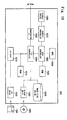
- FIG. 10 shows an example of the hardware configuration of a computer 500 which functions as the management apparatus 20 or the information processing apparatuses 30-1 to 30-N.
- the computer 500 is provided with a CPU peripheral part having a CPU 1000, a RAM 1020, a graphic controller 1075, and a display device 1080 which are mutually connected via a host controller 1082; an input/output part having a communication interface (I/F) 1030, a hard disk drive 1040 and a CD-ROM drive 1060 which are connected to the host controller 1082 via an input/output controller 1084; and a legacy input/output part having a ROM1010, a flexible disk (FD) drive 1050 and an input/output chip 1070 which are connected to the input/output controller (I/O) 1084.
- a CPU peripheral part having a CPU 1000, a RAM 1020, a graphic controller 1075, and a display device 1080 which are mutually connected via a host controller 1082
- an input/output part having a communication interface (
- the CD-ROM drive 1060 reads a program or data from a CD-ROM 1095, and the flexible drive 1050 exchanges a program or data with a flexible disk 1090.
- the communication interface 1030 communicates with external devices via a network such as an Ethernet (registered trademark) network.
- the ROM 1010 stores a boot program, which is executed by the CPU 1000 when the computer 500 is activated, and programs dependent on the hardware of the computer 500.
- the input/output chip 1070 connects various input/output devices, for example, via a parallel port, a serial port, a keyboard port, a mouse port or the like, in addition to the flexible disk 1090.
- the program to be installed and executed on the computer 500 which functions as the management apparatus 20 includes an instruction sendingmodule,ausestateacquisitionmodule,anindexvaluerecording module, a reference index value setting module, a time band selection module, a reference index value change module and a program execution instruction module.
- This program may use the hard disk drive 1040 as the schedule DB 230, the reference index value storage means 250 or the management program DB 290.
- the computer 500 may read the program to be executed on the information processing apparatuses 30-1 to 30-N from a recording medium via the input/output chip 1070 or the input/output controller 1084, provide it for the information processing apparatuses 30-1 to 30-N from the communication interface 1030 via a network, and cause it to be executed by the information processors 30-1 to 30-N.
- the program to be provided for and executed on the information processing apparatuses 30-1 to 30-N includes an operation history recording module, an instruction input module, a notification module and a program execution module. This program may use the hard disk drive 1040 of the computer 500 which functions as the information processing apparatuses 30-1 to 30-N as the operation history DB 310.
- each module causes the management apparatus 20 or the information processing apparatuses 30-1 to 30-N to operate is the same as the operation of a correspondingmember of the management apparatus 20 or the information processing apparatuses 30-1 to 30-N described through Figures 1 to 9, description thereof will be omitted.
- the programs or modules described above may be stored in an externalstoragemedium.
- Astherecordingmedium,anopticalrecording medium such as a DVD and a PD, a magneto-optical recording medium such as an MD, a tape medium, a semiconductor memory such as an IC card or the like can be used in addition to the flexible disk 1090 and the CD-ROM 1095.
- the programs may be provided for the computer 500 with the use of a storage device, such as a hard disk and a RAM, provided for a server system connected to a dedicated communication network or the Internet as a recording medium, via the network.
- the management apparatus 20 records, for each of at least one information processing apparatus, the system use rate, the input device use frequency and the operation probability in the past for each time band. Then, the management apparatus 20 selects a time band where the operation probability is equal to or above a predetermined level and the system use rate is equal to or below a predetermined level, as a time band where the management program is to be executed on a day different from the data when the use rate and the other values were recorded, based on the recorded information. Thereby, it is possible for the administrator of the management apparatus 20 to avoid such a situation that execution of the management program must be attempted many times because the information processing apparatuses 30-1 to 30-N are not operating and quickly complete the execution of the management program. It is also possible to prevent the execution of the management program from interfering with the work of the users of the information processing apparatuses 30-1 to 30-N.
- the time band selection means 260 preferentially selects a time band where the number of information processing apparatuses executing the management program at the same time bandis smaller, as ascheduled time band. Thereby, it is possible to avoid such a situation that the management program is redundantly executed at a particular time band and reduce network traffic.
Landscapes
- Engineering & Computer Science (AREA)
- Theoretical Computer Science (AREA)
- General Engineering & Computer Science (AREA)
- Quality & Reliability (AREA)
- General Physics & Mathematics (AREA)
- Physics & Mathematics (AREA)
- Computer Hardware Design (AREA)
- Business, Economics & Management (AREA)
- Entrepreneurship & Innovation (AREA)
- Human Resources & Organizations (AREA)
- Economics (AREA)
- Strategic Management (AREA)
- Game Theory and Decision Science (AREA)
- Tourism & Hospitality (AREA)
- General Business, Economics & Management (AREA)
- Marketing (AREA)
- Educational Administration (AREA)
- Operations Research (AREA)
- Development Economics (AREA)
- Debugging And Monitoring (AREA)
- Computer And Data Communications (AREA)
- Telephonic Communication Services (AREA)
- Data Exchanges In Wide-Area Networks (AREA)
Abstract
Description
- The present invention relates to management of an information processing apparatus, in particular to a management apparatus for instructing an information processing apparatus to execute a management program, a management system, a program and a recording medium.
- Recently, with the spread of computer networks, it is common to construct an intranet in an office. Thereby, communication or information sharing among users is facilitated, and improvement of efficiency in work, cost reduction and the like are realized.
- Conventionally, when software to be installed in computers is updated, an administrator in an office has to install the software in each of computers in the intranet, which is a very troublesome work. Accordingly, there has been proposed a technique in which a server for centrally managing software to be installed performs installation processing for each client computer (see
Patent Document 1 and Patent Document 2). - For example,
Patent Document 1 discloses a technique in which a server for managing software performs installation processing only when the software installed on a client is not the latest version. Meanwhile,Patent Document 2 discloses a technique in which the number of clients to be delivered with software at the same time is controlled on the server side to reduce network traffic. - Patent Document 1: Published Unexamined Patent Application No. 2002-215400
- Patent Document 2 : Published Unexamined Patent Application No. 2003-50762
- However, it may be unsuitable to install software at some time bands. For example, during working hours, users often use client computers, and installation of software may interfere with the work of the users. On the other hand, during hours other than the working hours, the client computers are of ten powered off, and the installation processing itself may be impossible.
- Accordingly, the object of the present invention is to provide a management apparatus capable of causing a management program to be executed on an information processing apparatus, such as a client computer, during appropriate hours, a management system, a program and a recording medium.
- In order to solve the above problem, the present invention provides a management apparatus for managing at least one information processing apparatus, the management apparatus comprising: use state acquisition means for acquiring ause state of the information processing apparatus and quantifying the acquired use state into an index value; index value recording means for recording the index value for each time band; time band selection means for selecting a time band where the index value recorded by the index value recording means is equal to or above a reference index value determined in advance, as a scheduled time band where execution of a management program on the information processing apparatus is scheduled; and program execution instruction means for causing the management program to be executed on the information processing apparatus at the scheduled time band selected by the time band selection means; a management system provided with the management apparatus; a program for controlling the management apparatus and a recording medium in which the program is recorded.
-
- Figure 1 shows the outline of a
management system 10; - Figure 2 shows a block diagram of the
management apparatus 20; - Figure 3 shows a block diagram of an information processing apparatus 30-1;
- Figure 4 is a diagram for illustrating a use state acquired by use state acquisition means 210;
- Figure 5 is a graph showing a use state acquired by the use state acquisition means 210;
- Figure 6 (A) shows an example of the data structure of an index value stored in a
schedule DB 230, and Figures 6(B) and 6(C) are diagrams for illustrating a concrete example of the processing performed by time band selection means 260; - Figure 7 shows the operational flow of processing performed by the
management apparatus 20 to cause the information processing apparatus 30-1 to execute a management program; - Figure 8 shows the details of the processing at S735 in Figure 7;
- Figure 9 shows the details of the processing at S870 in Figure 8; and
- Figure 10 shows an example of the hardware configuration of a
computer 500 which functions as themanagement apparatus 20 or the information processing apparatuses 30-1 to 30-N. - The present invention will be described through an embodiment of the invention. However, the embodiment below is not intended to limit the present invention to the claims, and all the combinations of characteristics described in the embodiment are not necessarily required for solution means of the invention.
- Figure 1 shows the outline of a
management system 10. Themanagement system 10 is provided with amanagement apparatus 20 which is a sever computer, and information processing apparatuses 30-1 to 30-N which are client computers connected to themanagement apparatus 20 via a network. Themanagement apparatus 20 is intended to cause the information processing apparatuses 30-1 to 30-N to execute a management program for managing the information processing apparatuses 30-1 to 30-N at such an appropriate time band that the works of the users of the information processing apparatuses 30-1 to 30-N are not interfered with. - Figure 2 shows a block diagram of the
management apparatus 20. Themanagement apparatus 20 has instruction sending means 200, use state acquisition means 210, index value recording means 220, aschedule DB 230, reference index value setting means 240, reference index value storage means 250, time band selection means 260, reference index value change means 270, program execution instruction means 280 and amanagement program DB 290. - When execution of a management program is instructed by a user of the
management apparatus 20, the instruction sending means 200 sends a sending ins truction for caus ing the use s tate of the information processing apparatus 30-1 to be sent to themanagement apparatus 20, to the information processing apparatus 30-1. The instruction sending means 200 also sends the sending instruction to each of the information processing apparatuses 30-2 to 30-N similarly. Since other processings performed by themanagement apparatus 20 for the information processing apparatus 30-1 are almost the same as those performed for each of the information processing apparatuses 30-2 to 30-N, description about each of the information processing apparatuses 30-2 to 30-N will be omitted. - The use state acquisition means 210 acquires a use state of the information processing apparatus 30-1 from the information processing apparatus 30-1 as a response to the sending instruction. Specifically, the use state acquisition means 210 acquires a system use rate indicating the ratio of actual throughput of the information processing apparatus 30-1 to the maximum throughput per unit time of the information processing apparatus 30-1, from the information processing apparatus 30-1 as the use state. The use state acquisition means 210 further acquires a use frequency indicating the frequency of use of an input device of the information processing apparatus 30-1, from the information processing apparatus 30-1 as the use state. The use state acquisition means 210 also acquires an operation state indicating whether or not the information processing apparatus 30-1 is currently operating, from the information processing apparatus 30-1 as the use state.
- Here, the system use rate is, for example, the use rate of the centralprocessing unit of the information processing apparatus 30-1, theuserateof the main memory of the information processing apparatus 30-1, the amount of use of a page file of the information processing apparatus 30-1, the frequency of access to the hard disk drive of the information processing apparatus 30-1 or combination thereof. The input device use frequency may be, for example, the frequency of moving a pointer by a mouse, the amount of movement of the pointer or the frequency of typing akey of akey board. The use state acquisition means 210 may acquire information about whether a screen saver has been activated or not or the frequency of the activation as information indicating the use frequency instead of acquiring the use frequency itself.
- Then, the
use state acquisitionmeans 210 quantifies the acquired use state into an index value indicating availability of the information processing apparatus 30-1. Specifically, the use state acquisition means 210 quantifies the acquired use state into such an index value as is lower when the system use rate is higher than when the system use rate is lower, lower when the input device use frequency is higher than when the use frequency is lower, and higher when the operation probability of the information processing apparatus 30-1 is higher than when the operation probability is lower. As an example, the use state acquisition means 210 may calculate the index value in accordance with the following formula with the use of a busy rate, which is a value between 0 and 1 and takes a higher value when the system use rate and the use frequency are higher than when they are lower.
- Instead, the
use state acquisitionmeans 210 mayuse the operation probability itself as the index value or may use a value obtained by subtracting the system use rate from 1 as the index value. Alternatively, it may user a value obtained by subtracting the use frequency fromapredeterminedreference frequency as the index value. - The index value recording means 220 stores the index value quantified by the use state acquisition means 210 in the
schedule DB 230 for each time band. The reference index value setting means 240 sets a predetermined threshold (for example, 1) for the above index value as a reference index value and stores it in the reference index value storage means 250. As described later, this reference index value can be changed. The reference index value storage means 250 may store the reference index value, for example, for each of the managed information processing apparatuses. - The time band selection means 260 selects a time band where the past index value stored by the index value recording means 220 indicates that the information processing apparatus 30-1 had not been used at and above a predetermined reference rate, as a scheduled time band where the management program for managing the information processing apparatus 30-1 is to be executed. For example, the time band selection means 260 selects a time band where the index value recorded by the index value recording means 220 is equal to or above the reference index value stored in the reference index value storage means 250. In the case where the reference index value storage means 250 stores a reference index value for each information processing apparatus, the time band selection means 260 selects a reference index value for an information processing apparatus on which the management program is to be executed, from the reference index value storage means 250, and selects a time band where the index value recorded by the index value recording means 220 is equal to or above the selected reference index value as the scheduled time band.
- When the number of information processing apparatuses for which the same scheduled time band is selected by the time band selection means 260 reaches a predetermined upper limit, then the reference index value change means 270 reduces the reference index value stored in the reference index value storage means 250 and causes the time band selection means 260 to reselect a scheduled time band. The program execution instruction means 280 acquires the management program stored in the
management program DB 290 and causes the information processing apparatus 30-1 to execute it at the scheduled time band selected by the time band selection means 260. Prior to the execution, the program execution instruction means 280 may notify the information processing apparatus 30-1 that the management program is to be executed. In this case, the program execution instruction means 280 starts execution of the management program unless it does not receive an unpermission instruction indicating that execution is not permitted, from the information processing apparatus 30-1 within a predetermined period. - The management program stored in the management program DB 290 may be, for example, a program for installing a new application program, a program for adding or modifying a function of an application program already installed, or a program for detecting/removing a computer virus which has intruded into an information processing apparatus. Though such a management program is capable of operating in parallel with other programs in an information processing apparatus, it may sometimes decrease the operation speedof the otherprograms or require re-activation of the information processing apparatus. The
management apparatus 20 according to this embodiment can select a time band appropriate for execution of such a management program. - Figure 3 shows a block diagram of the information processing apparatus 30-1. The information processing apparatus 30-1 has operation history recording means 300, an
operation history DB 310, instruction input means 320, notification means 330 and program execution means 340. Since each of the information processing apparatuses 30-2 to 30-N has almost the same configuration as the information processing apparatus 30-1, description thereof will be omitted. The operation history recording means 300 records an operation state by periodically recording information to the effect that the information processing apparatus 30-1 is operating in theoperation history DB 310 in association with the time at which the information processing apparatus 30-1 is operating. The operation history recording means 300 also detects the system use rate and the input frequency of the information processing apparatus 30-1 and stores them in theoperation history DB 310 in association with the time of the detection. - When receiving a sending instruction from the instruction sending means 200 , the
operation history DB 310 sends information indicating the operation state, the system use rate and the input frequency to themanagement apparatus 20. When receiving a notification to the effect that the management program is to be executed, from themanagement apparatus 20, the instruction input means 320 causes the user of the information processing apparatus 30-1 to input an unpermission instruction indicating that theprogram execution instructionmeans 280 is not permitted to cause the management program to be executed. For example, the instruction input means 320 may display to the user an input screen for prompting the user to input whether or not execution of the management program may be started. - Then, if the unpermission instruction is inputted, the notification means 330 sends an unpermission notification to the effect that execution of the management program is not permitted, to the
management apparatus 20 . On the other hand, if the unpermission instruction is not inputted within a predetermined input period, the program execution means 340 starts execution of the management program received from themanagement apparatus 20. - Figure 4 is a diagram for illustrating a use state acquired by the use state acquisition means 210. The use state acquisition means 210 acquires a system use rate, an input device use frequency and an operation state from the information processing apparatus 30-1 as the use state. This figure shows a busy rate determined based on the system use rate and the use frequency acquired by the use state acquisition means 210, and an operation probability determined based on the operation state acquired by the use state acquisition means 210, for each time band for each day of the week. For example, the use state acquisition means 210 acquires such a use state that the busy rate of the information processing apparatus 30-1 shows 0.15 and the operation probability shows 1 at the one-hour time band from ten o'clock on Monday. Since the outline of the use state to be acquired by the use state acquisition means 210 for the information processing apparatuses 30-2 to 30-N is almost the same as that for the information processing apparatus 30-1, description thereof will be omitted.
- Here, the operation probability is a probability that the information processing apparatus 30-1 is operating. For example, the operation probability may be a probability that the information processing apparatus 30-1 is powered on, a probability that the central processing unit of the information processing apparatus 30-1 is ready to execute a command, or a probability that the information processing apparatus 30-1 is ready to communicate with the outside. Alternatively, the operation probability may be a probability that the information processing apparatus 30-1 is operating within a range where communication from the
management apparatus 20 is possible via a network. For example, when the information processing apparatus 30-1 is operating as a stand-alone, it may be treated as not being operating. - The use state acquisition means 210 calculates the operation probability, for example, in accordance with the following procedure. The use state acquisition means 210 acquires, from the operation history recording means 300, the operation state in which operation instruction log information indicating that the information processing apparatus 30-1 is operating is associated with the time when the information processing apparatus 30-1 is operating. Next, the
use state acquisitionmeans 210 classifies each of multiple pieces of operation instruction log information according to the time band to which the time associated with the operation instruction log information belongs. Then, the use state acquisition means 210 calculates the ratio of the number of pieces of operation instruction log information classified under each time band to the maximum number of pieces of operation instruction log information that canbe recorded at the time band, as the operation probability. As an example, when the operation history recording means 300 records operation instruction log information every fifteen minutes, themaximumnumber of pieces of operation instruction log information that can be recorded at a one-hour time band is four. In this case, if the number of pieces of operation instruction log information classified under the time band is three, then the use state acquisition means 210 calculates an operation probability as 0.75 by dividing three by four. - Figure 5 is a graph showing a use state acquired by the use state acquisition means 210. The continuous line indicates the busy rate of the information processing apparatus 30-1 at each time band on Monday. The dotted line shows the operation probability of the information processing apparatus 30-1 at each time band on Monday. In order to cause the management program to be executed on the information processing apparatus 30-1, it is premised that the information processing apparatus 30-1 is operating. Therefore, it is desirable that the
management apparatus 20 causes the management program to be executed at a time band where the operation probability of the information processing apparatus 30-1 is high. In the example of this figure, the operation probability is high at the time band from about nine o'clock to eighteen o'clock, and the possibility that the management program can be executed is high at this time band. - However, if the management program is executed without exception when the operation probability is higher than the reference probability, it may interfere with the work of the user of the information processing apparatus 30-1 when the busy rate of the information processing apparatus 30-1 is equal to or above a predetermined level. For example, in the example of this figure, the busy rate is high at the time band from about eleven o'clock to about thirteen o'clock, and it is desirable to avoid execution of the management program at this time band. In order to respond to these requests, the
management apparatus 20 according to this embodiment selects a time band where the operation probability is high to some extent and the work of the user is not interfered with, as a scheduled time band where the management program is to be executed, based on the busy rate and the operation probability stored in theschedule DB 230. - Figure 6 (A) shows an example of the data structure of an index value stored in the
schedule DB 230. The use state acquisition means 210 calculates an index value for each of the information processing apparatuses 30-1 to 30-N, for each time band of each day of the week, in accordance with the formula below.
- For example, the use state acquisition means 210 acquires a use state indicating that the busy rate of the information processing apparatus 30-1 is 0.15 and the operation probability of the information processing apparatus 30-1 is 0.80 at the one-hour time band from nine o'clock on Monday, as shown in Figure 4. Accordingly, the use state acquisition means 210 calculates an index value as 0.68 by multiplying the operation probability 0.80 by 0.85 obtained by subtracting the busy rate 0.15 from 1.
- In this figure, time bands where the index value shows the
maximum value 1 are indicated with continuous lines. These time bands are such that are the most preferable for execution of the management program. Time bands where the index value is 0.7 or above are indicated with dotted lines. These time bands are such that are the second most preferable for execution of the management program. Time bands where the index value is 0.4 or above are indicated with dashed lines. - In the example of this figure, the
schedule DB 230 stores an index value for each time band for each day of the week. Instead, theschedule DB 230 may store an index value for each time band irrespective of the day of the week or may store an index value for each time band for a weekday and for a holiday separately. - Figures 6 (B) and 6 (C) are diagrams for illustrating a concrete example of the processing performed by the time band selection means 260. The time band selection means 260 selects a time band where a past index value stored in the
schedule DB 230 is equal to or above the reference index value stored in the reference index value storage means 250, as a scheduled time band where the management program for managing the information processing apparatus 30-1 is to be executed. In Figure 6 (B) , a time band which can be selected by the time band selection means 260 as the scheduled time band is denoted by 1. That is, if the reference index value is 1, the time band selection means 260 can select one hour from twelve o'clock on Tuesday to Thursday, one hour from thirteen o' clock on Thursday or one hour from ten o'clock on Friday, as the scheduled time band. - As shown in Figure 6(C), the time band selection means 260 calculates the number of information processing apparatuses the index value of which is equal to or above the reference index value, for each time band for each day of the week, by summing up data in which a selectable scheduled time band is denoted by 1 for each information processing apparatus for each day of the week. Then, the time band selection means 260 preferentially selects, for each of the multiple information processing apparatuses , a time band where there are fewer other information processing apparatuses with an index value above the reference index value, from among time bands where the index value is equal to or above the reference index value, as a scheduled time band of the information processing apparatus.
- For example, at the time bands of one hour from twelve o' clock on Tuesday, one hour from twelve o' clock on Wednesday, one hour from twelve o'clock on Thursday, one hour from thirteen o'clock on Thursday and one hour from ten o'clock on Friday which can be selected as a scheduled time band in the information processing apparatus 30-1, the numbers of information processing apparatuses the index value of which is equal to or above the reference index value are 95, 95, 95, 30 and 20, respectively. Accordingly, the time band selection means 260 preferentially selects the one hour from ten o'clock on Friday as the scheduled time band.
- Figure 7 shows the operational flow of processing performed by the
management apparatus 20 to cause the information processing apparatus 30-1 to execute the management program. When execution of the management program is instructed by the user of the management apparatus 20 (S700: YES) , the instruction sending means 200 sends to the information processing apparatus 30-1 a sending instruction for causing the use state of the information processing apparatus 30-1, for example, the system use rate, the use frequency and the operation probability to be sent to the management apparatus 20 (S705). - The operation history recording means 300 records the operation state by periodically recording information to the effect that the information processing apparatus 30-1 is operating to the
operation history DB 310 in association with the time when the information processing apparatus 30-1 is operating (S710) . Theoperationhistory recording means 300 also detects the system use rate and the input frequency of the information processing apparatus 30-1 and stores them in association with the time of the detection. - When receiving the sending instruction from the
management apparatus 20, the operation history DB310 sends information indicating the operation state, the system use rate and the input frequency to themanagement apparatus 20 as a reply to the sending instruction (S715) . When receiving each of the system use rate, the use frequency and the operation state (S720 : YES) , the use state acquisition means 210 quantifies the system use rate, the use frequency and the operation state into an index value (S725). - The
schedule DB 230 records the index value of the information processing apparatus 30-1 for each time band (S730). The time band selection means 260 performs processing for selecting a scheduled time band where execution of the management program for managing the information processing apparatus 30-1 is scheduled, based on the index value (S735). The details will be described later. Subsequently, the program execution instruction means 280 notifies the information processing apparatus 30-1 to the effect that the management program is to be executed (S740). - When receiving the notification to the effect that the management program is to be executed, from the
management apparatus 20, the instruction input means 320 causes the user of the information processing apparatus 30-1 to input an unpermission instruction indicating that the program execution instruction means 280 is not permitted to cause the management program to be executed (S745). For example, the instruction input means 320 may display to the user an input screen for prompting the user to input whether or not execution of the management program may be started. - Then, if an unpermission instruction is inputted (S750), the notification means 330 sends an unpermission notification to the effect that execution of the management program is not permitted, to the
management apparatus 20. When receiving the unpermission notification (S760: YES) , the program execution instruction means 280 returns the processing to S735 to cause the time band selection means 260 to reselect another time band as a scheduled time band. On the other hand, if a predetermined input period has elapsed without the unpermission instruction being inputted (S770: YES), then the program executionmeans 340 starts execution of the management program (S780). That is, the program execution instruction means 280 can cause execution of the management program to be started if the unpermission instruction has not been inputted within a predetermined input period. - Figure 8 shows the details of the processing at S735 in Figure 7. The time band selection means 260 selects a reference index value for the information processing apparatus 30-1 on which the management program is to be executed (S800). If an operation tendency index, which is the probability of being operating at predetermined multiple time bands, for example, the probability of operating through one entire week is lower than a predetermined value (S810: YES), then the reference index value setting means 240 decreases the reference index value stored in the reference index value storage means 250 (S820). Thereby, even for such an information processing apparatus that the probability of operating through one entire week is extremely low, a scheduled time band where the management program is to be executed can be quickly and appropriately selected.
- In the case where there are multiple information processing apparatuses to be managed (S830: NO) , the
management apparatus 20 performs the processing for selecting a scheduled time band for the multiple targets to be managed (S870). The case where there are multiple information processing apparatuses to be managed means, for example, the case where it is required to execute a management program for modifying an application program used in multiple information processing apparatuses. The details of the processing will be described later. - On the other hand, in the case where there is one information processing apparatus to be managed (S830:YES), if detecting continuous time bands where the index value is equal to or above the reference index value and which exceed the time required for execution of the management program (S840: YES) , then the time band selection means 260 selects the detected time bands as the scheduled time band (S860) .
- On the other hand, if such continuous time bands exceeding the required time cannot be detected (S840 : NO) , then the reference index value change means 270 decreases the reference index value stored in the reference index value storage means 250 (S850) and returns the processing to S840.
- Figure 9 shows the details of the processing at S870 in Figure 8. The time band selection means 260 sets the reference index value, which is used for comparison with an index value, to a value acquired from the reference index value storage means 250 (S900). The time bandselectionmeans260clears, for each of the information processing apparatuses 30-1 to 30-N, the content of a data area for recording the progress of selecting a scheduled time band (S910). The time band selection means 260 sequentially performs the following processing for each of the information processing apparatuses 30-1 to 30-N (S920).
- The time band selection means 260 selects a time band where the number of information processing apparatuses with an index value equal to or above the reference index value is the smallest, as a candidate time band to be a candidate for a scheduled time band (S930). The time band selection means 260 determines whether or not the index value of the information processing apparatus is equal to or above the reference index value at multiple time bands which are continuous from the candidate time band and exceed the time required for execution of the management program (S940). If the index value is smaller than the reference indexvalue (S940 : NO) , then the time band selection means 260 determines whether or not all the time bands have been selected as a candidate time band (S950).
- In the case where there is a time band which has not been selected as a candidate time band (S950: NO) , the time band selection means 260 selects a time band where the number of information processing apparatuses with an index value equal to or above the reference index value is the second smallest (S960) , and returns the processing to S940. On the other hand, in the case where all the time bands have been selected as a candidate time band (S950 : YES) , then the reference index value change means 270 decreases the set reference index value (S970) and returns the processing to S910.
- Here, the case where all the time bands have been selected as a candidate time band at S950 means the case where the time bands with an index value equal to or above the reference index value, longer than the time required for the management program, cannot be selected, or the case where the number of information processing apparatuses on which the management program is to be executed at the same scheduled time band reaches the upper limit. That is, if a time band with an index value equal to or above the reference index value, longer than the time required for the management program cannot be selected, or if the number of information processing apparatuses on which the management program is to be executed at the same scheduled time band reaches the upper limit, then the reference index value change means 270 reduces the reference index value and causes the time band selection means 260 to reselect a scheduled time band.
- Subsequently, if the number of information processing apparatuses for which the same scheduled time band is selected reaches a predetermined upper limit (S980 : YES) , then the time band selection means 260 excludes the scheduled time band from those to be selected (S990). Thetimebandselectionmeans260repeatstheaboveprocessing for the respective information processing apparatuses (S995).
- As described above, as shown in this figure, if there are multiple information processing apparatuses to be managed, the time band selection means 260 preferentially selects a time band where the number of information processing apparatuses which execute the management program at the same time band is smaller, as a scheduled timeband, under the condition that the number of information processing apparatuses which execute the management program at the same time band should not be above the upper limit. Thereby, it is possible to keep network traffic, which is increased by sending the management program it self or data required for execution of the management program, below a predetermined level. Furthermore, it is also possible to prevent interference with a user's work as much as possible and to select a time band where the operation probability of the information processing apparatus is high.
- The procedure shown in this figure is only an example, and various modification can be made thereto. For example, at S900, the time band selection means 260 sets a reference index value to be compared with an index value to a value acquired from the reference index value storage means 250. However, instead of this, the time band selection means 260 may set the reference index value to 1, which is the maximum value the index value can take. In this case, time bands can be sequentially selected as a candidate for a scheduled time band by starting from the most appropriate time band.
- Figure 10 shows an example of the hardware configuration of a
computer 500 which functions as themanagement apparatus 20 or the information processing apparatuses 30-1 to 30-N. Thecomputer 500 is provided with a CPU peripheral part having aCPU 1000, aRAM 1020, agraphic controller 1075, and adisplay device 1080 which are mutually connected via ahost controller 1082; an input/output part having a communication interface (I/F) 1030, ahard disk drive 1040 and a CD-ROM drive 1060 which are connected to thehost controller 1082 via an input/output controller 1084; and a legacy input/output part having a ROM1010, a flexible disk (FD) drive 1050 and an input/output chip 1070 which are connected to the input/output controller (I/O) 1084. - The CD-
ROM drive 1060 reads a program or data from a CD-ROM 1095, and theflexible drive 1050 exchanges a program or data with aflexible disk 1090. Thecommunication interface 1030 communicates with external devices via a network such as an Ethernet (registered trademark) network. TheROM 1010 stores a boot program, which is executed by theCPU 1000 when thecomputer 500 is activated, and programs dependent on the hardware of thecomputer 500. The input/output chip 1070 connects various input/output devices, for example, via a parallel port, a serial port, a keyboard port, a mouse port or the like, in addition to theflexible disk 1090. - Since the configuration of the
above computer 500 is already well known, the details of each component thereof will be omitted. - The program to be installed and executed on the
computer 500 which functions as themanagement apparatus 20 includes an instruction sendingmodule,ausestateacquisitionmodule,anindexvaluerecording module, a reference index value setting module, a time band selection module, a reference index value change module and a program execution instruction module. This program may use thehard disk drive 1040 as theschedule DB 230, the reference index value storage means 250 or themanagement program DB 290. - The
computer 500 may read the program to be executed on the information processing apparatuses 30-1 to 30-N from a recording medium via the input/output chip 1070 or the input/output controller 1084, provide it for the information processing apparatuses 30-1 to 30-N from thecommunication interface 1030 via a network, and cause it to be executed by the information processors 30-1 to 30-N. The program to be provided for and executed on the information processing apparatuses 30-1 to 30-N includes an operation history recording module, an instruction input module, a notification module and a program execution module. This program may use thehard disk drive 1040 of thecomputer 500 which functions as the information processing apparatuses 30-1 to 30-N as theoperation history DB 310. Since the operation which each module causes themanagement apparatus 20 or the information processing apparatuses 30-1 to 30-N to operate is the same as the operation of a correspondingmember of themanagement apparatus 20 or the information processing apparatuses 30-1 to 30-N described through Figures 1 to 9, description thereof will be omitted. - The programs or modules described above may be stored in an externalstoragemedium. Astherecordingmedium,anopticalrecording medium such as a DVD and a PD, a magneto-optical recording medium such as an MD, a tape medium, a semiconductor memory such as an IC card or the like can be used in addition to the
flexible disk 1090 and the CD-ROM 1095. The programs may be provided for thecomputer 500 with the use of a storage device, such as a hard disk and a RAM, provided for a server system connected to a dedicated communication network or the Internet as a recording medium, via the network. - As shown in the embodiment described above, the
management apparatus 20 records, for each of at least one information processing apparatus, the system use rate, the input device use frequency and the operation probability in the past for each time band. Then, themanagement apparatus 20 selects a time band where the operation probability is equal to or above a predetermined level and the system use rate is equal to or below a predetermined level, as a time band where the management program is to be executed on a day different from the data when the use rate and the other values were recorded, based on the recorded information. Thereby, it is possible for the administrator of themanagement apparatus 20 to avoid such a situation that execution of the management program must be attempted many times because the information processing apparatuses 30-1 to 30-N are not operating and quickly complete the execution of the management program. It is also possible to prevent the execution of the management program from interfering with the work of the users of the information processing apparatuses 30-1 to 30-N. - Furthermore, when there are multiple information processing apparatuses to be managed, the time band selection means 260 preferentially selects a time band where the number of information processing apparatuses executing the management program at the same time bandis smaller, as ascheduled time band. Thereby, it is possible to avoid such a situation that the management program is redundantly executed at a particular time band and reduce network traffic.
- An embodiment of the present invention has been described above. The technical scope of the present invention, however, is not limited to the range described in the above embodiment. It is apparent to those skilled in the art that various modifications and improvements can be made to the above embodiment. Embodiments to which such modifications or embodiments have been made can be also included in the technical scope of the present invention.
Claims (18)
- A management apparatus for managing at least one information processing apparatus, the management apparatus comprising:use state acquisition means for acquiring a use state of the information processing apparatus and quantifying the acquired use state into an index value;index value recording means for recording the index value for each time band;time band selection means for selecting a time band where the index value recorded by the index value recording means indicates that the information processing apparatus has not been used at or above a predetermined reference rate, as a scheduled time band where execution of a management program on the information processing apparatus is scheduled; andprogram execution instruction means for causing the management program to be executed on the information processing apparatus at the scheduled time band selected by the time band selection means.
- The management apparatus according to claim 1, wherein
the use state acquisition means acquires the use state of the information processing apparatus from the information processing apparatus and quantifies the acquired use state into an index value indicating availability of the information processing apparatus; and
the time band selection means selects a time band at which the index value is equal to or above a predetermined reference index value and which is determined by the index value in advance as a time band indicating that the information processing apparatus has not been used at or above a predetermined reference rate, as the scheduled time band. - The management apparatus according to claim 2, wherein
the use state acquisition means acquires a system use rate indicating the ratio of actual through put of the information processing apparatus to the maximum throughput per unit time of the information processing apparatus from the information processing apparatus as the use state, and quantifies the acquired system use rate into the index value which is lower when the system use rate is higher than when the system use rate is lower. - The management apparatus according to claim 2, wherein
the use state acquisition means acquires a use frequency, a frequency of use of an input device of the information processing apparatus, from the information processing apparatus as the use state, and quantifies the acquired use frequency into the index value which is lower when the use frequency is higher than when the use frequency is lower. - The management apparatus according to claim 2, wherein
the use state acquisition means acquires an operation state indicating whether the information processing apparatus is operating or not from the information processing apparatus as the use state, and quantifies the acquired operation state into the index value which is lower when an operation probability, a probability that the information processing apparatus is operating, is higher than when the operation probability is lower. - The management apparatus according to claim 5, further comprising reference index value setting means for setting a lower value when an operation tendency index, which is the operation probability at predetermined multiple time bands, is lower than when the operation tendency index is higher, as the reference index value; wherein
the time band selection means selects a time band where the operation probability quantified by the use state acquisition means into the index value is higher than the reference index value set by the reference index value setting means. - The management apparatus according to claim 5, wherein
the use state acquisition means further acquires a system use rate indicating the ratio of actual throughput of the information processing apparatus to the maximum throughput per unit time of the information processing apparatus and a use frequency, a frequency of use of an input device of the information processing apparatus, from the information processing apparatus as the use state, and quantifies the acquired use state into the index value which is lower when the system use rate is higher than when the system use rate is lower, lower when the use frequency is higher than when the use frequency is lower, and higher when the operation probability is higher than when the operation probability is lower. - The management apparatus according to claim 2, further comprising reference index value storage means for storing the reference index value for each of the managed information processing apparatuses; wherein
the time band selection means selects the reference index value for an information processing apparatus on which the management program is to be executed, from the reference index value storage means, and selects a time band where the index value is equal to or above the selected reference index value. - The management apparatus according to claim 2, wherein
the use state acquisition means acquires the index value from each of the multiple information processing apparatuses;
the index value recording means records the index value for each time band and for each information processing apparatus; and
the time band selection means preferentially selects, for each of the multiple information processing apparatuses , a time band where there are fewer other information processing apparatuses with an index value equal to or above the reference index value, from among timebandswheretheindexvalueof the information processing apparatus is equal to or above the reference index value, as the scheduled time band for the information processing apparatus. - The management apparatus according to claim 2, wherein
the use state acquisition means acquires the use state from each of the multiple information processing apparatuses;
the index value recording means records the index value for each time band and for each information processing apparatus;
the time band selection mans selects, for each of the multiple information processing apparatuses, a time band where the index value of the information processing apparatus is equal to or above the reference index value, as the scheduled time band; and
the management apparatus further comprises reference index value change means for,when the number of information processing apparatuses for which the same schedule time band is selected by the time band selection means reaches a predetermined upper limit, decreasing the reference index value and causing the scheduled time band to be reselected. - The management apparatus according to claim 2, further comprising reference index value change means for, when the time band selection means is not able to select multiple continuous time bands the index value of which is equal to or above the reference index value and the length of which is longer than time required for execution of the management program, decreasing the reference index value and causing the scheduled time band to be reselected.
- The management apparatus according to claim 1, further comprising instruction sending means for, when execution of the management program is instructed by a user of the management apparatus, sending a sending instruction to cause the use state to be sent to the management apparatus, to the information processing apparatus; wherein
the use state acquisition means acquires the use state from the information processing apparatus as a response to the sending instruction. - A management system comprising at least one information processing apparatus and a management apparatus for managing the information processing apparatus, wherein
the management apparatus comprises:use state acquisition means for acquiring a use state of the information processing apparatus and quantifying the acquired use state into an index value;index value recording means for recording the index value for each time band;time band selection means for selecting a time band where the index value recorded by the index value recording means indicates that the information processing apparatus has not been used at or above a predetermined reference rate, as a scheduled time band where execution of a management program on the information processing apparatus is scheduled; andprogram execution instruction means for causing the management program to be executed on the information processing apparatus at the scheduled time band selected by the time band selection means; andthe information processing apparatus comprises:program execution means for executing the management program based on an instruction from the program execution instruction means. - The management system according to claim 13, wherein
the information processing apparatus further comprises:instruction input means for causing a user of the information processing apparatus to input an unpermission instruction indicating that the program execution instruction means is not permitted to cause the management program to be executed; andnotification means for, when the unpermission instruction is inputted, sending an unpermission notification to the effect that execution of the management program is not permitted, to the management apparatus; andthe time band selection means selects, when receiving the unpermission notification from the notification means, another time band where the index value indicates that the information processing apparatus has not been used at or above the reference rate, as the scheduled time band. - The management system according to claim 14, wherein
the program execution instruction means causes execution of the management program to start unless the unpermission instruction is inputted within a predetermined input period. - The management system according to claim 13, wherein
the information processing apparatus further comprises operation history recording means for recording an operation state by periodically recording information to the effect that the information processing apparatus is operating, in association with the time when the information processing apparatus is operating; and
the use state acquisition means acquires the operation state recorded by the operation history recording means as the use state. - A program for causing a computer to function as a management apparatus for managing at least one information processing apparatus, the program causing the computer to function as:use state acquisition means for acquiring a use state of the information processing apparatus and quantifying the acquired use state into an index value;index value recording means for recording the index value for each time band;time band selection means for selecting a time band where the index value recorded by the index value recording means indicates that the information processing apparatus has not been used at or above a predetermined reference rate, as a scheduled time band where execution of a management program on the information processing apparatus is scheduled; andprogram execution instruction means for causing the management program to be executed on the information processing apparatus at the scheduled time band selected by the time band selection means.
- A recording medium on which the program according to claim 17 is recorded.
Applications Claiming Priority (2)
| Application Number | Priority Date | Filing Date | Title |
|---|---|---|---|
| JP2003342279 | 2003-09-30 | ||
| PCT/JP2004/013642 WO2005033940A1 (en) | 2003-09-30 | 2004-09-17 | Management device for managing information processing device, managing system, program, and recording medium |
Publications (3)
| Publication Number | Publication Date |
|---|---|
| EP1669869A1 true EP1669869A1 (en) | 2006-06-14 |
| EP1669869A4 EP1669869A4 (en) | 2009-10-21 |
| EP1669869B1 EP1669869B1 (en) | 2014-03-12 |
Family
ID=34419256
Family Applications (1)
| Application Number | Title | Priority Date | Filing Date |
|---|---|---|---|
| EP04773277.1A Expired - Lifetime EP1669869B1 (en) | 2003-09-30 | 2004-09-17 | Management device for managing information processing device, managing system, program, and recording medium |
Country Status (6)
| Country | Link |
|---|---|
| US (1) | US7685285B2 (en) |
| EP (1) | EP1669869B1 (en) |
| JP (1) | JP4511468B2 (en) |
| KR (1) | KR20060089210A (en) |
| CN (1) | CN100419692C (en) |
| WO (1) | WO2005033940A1 (en) |
Families Citing this family (15)
| Publication number | Priority date | Publication date | Assignee | Title |
|---|---|---|---|---|
| JP2007287066A (en) * | 2006-04-20 | 2007-11-01 | Konica Minolta Business Technologies Inc | Image processing apparatus, method for installing application in the same and application installation processing program |
| US8843905B2 (en) | 2006-11-02 | 2014-09-23 | Tokyo Electron Limited | Server apparatus, manufacturing apparatus, group management system, information processing method, and storage medium |
| JP2008140369A (en) * | 2006-11-02 | 2008-06-19 | Tokyo Electron Ltd | Server apparatus, manufacturing apparatus, group management system, information processing method, and program |
| JP4673284B2 (en) * | 2006-12-15 | 2011-04-20 | キヤノン株式会社 | Server device |
| JP2009021654A (en) * | 2007-07-10 | 2009-01-29 | Panasonic Corp | Wireless communication apparatus and communication load calculation method thereof |
| US8488500B2 (en) * | 2008-05-02 | 2013-07-16 | Dhaani Systems | Power management of networked devices |
| JP2015038638A (en) * | 2009-09-16 | 2015-02-26 | 株式会社東芝 | Information processing apparatus and control method |
| US9083762B2 (en) * | 2010-05-28 | 2015-07-14 | Greg Saunders | System and method for providing hybrid on demand services to a work unit |
| JP5659894B2 (en) * | 2011-03-17 | 2015-01-28 | 日本電気株式会社 | Software update device, software update method, and software update program |
| WO2012169020A1 (en) * | 2011-06-08 | 2012-12-13 | 株式会社日立製作所 | Impact analysis method, impact analysis device, and storage medium |
| JP2013254401A (en) * | 2012-06-08 | 2013-12-19 | Hitachi Consumer Electronics Co Ltd | Server, schedule preparation method and maintenance system |
| JP5987488B2 (en) * | 2012-06-19 | 2016-09-07 | 株式会社リコー | Remote management system, managed device and management information notification method |
| JP6261389B2 (en) * | 2014-03-05 | 2018-01-17 | 三菱電機株式会社 | Data transmission apparatus, data transmission method, and program |
| JP2019046000A (en) * | 2017-08-30 | 2019-03-22 | 富士通株式会社 | Log management apparatus, log management method, and log management program |
| JP6992667B2 (en) * | 2018-04-20 | 2022-01-13 | 株式会社オートネットワーク技術研究所 | In-vehicle update device, in-vehicle update system, update processing method and update processing program |
Family Cites Families (19)
| Publication number | Priority date | Publication date | Assignee | Title |
|---|---|---|---|---|
| US6038586A (en) | 1993-12-30 | 2000-03-14 | Frye; Russell | Automated software updating and distribution |
| JP3254081B2 (en) * | 1994-06-23 | 2002-02-04 | 富士通株式会社 | Computer system and control method thereof |
| US6185514B1 (en) * | 1995-04-17 | 2001-02-06 | Ricos International, Inc. | Time and work tracker with hardware abstraction layer |
| JP3726310B2 (en) * | 1995-06-01 | 2005-12-14 | 富士ゼロックス株式会社 | Information communication system |
| JPH10333914A (en) * | 1997-06-04 | 1998-12-18 | Hitachi Ltd | System automatic update method in information processing device |
| US5995757A (en) * | 1997-08-29 | 1999-11-30 | Dell Usa, L.P. | Software installation and testing for a build-to order computer system |
| JP3376906B2 (en) * | 1998-02-18 | 2003-02-17 | トヨタ自動車株式会社 | Computer load factor measurement system |
| JP3852522B2 (en) * | 1998-07-15 | 2006-11-29 | 富士通株式会社 | Maintenance center, user system, remote maintenance system and their computer-readable recording medium |
| US6836800B1 (en) * | 1998-09-30 | 2004-12-28 | Netscout Systems, Inc. | Managing computer resources |
| US6401238B1 (en) | 1998-12-10 | 2002-06-04 | International Business Machines Corporation | Intelligent deployment of applications to preserve network bandwidth |
| US6247126B1 (en) * | 1999-01-25 | 2001-06-12 | Dell Usa, L.P. | Recoverable software installation process and apparatus for a computer system |
| JP2001042966A (en) * | 1999-07-30 | 2001-02-16 | Sharp Corp | Peripheral device maintenance management method and maintenance management device |
| US6393101B1 (en) * | 1999-11-01 | 2002-05-21 | Lucent Technologies Inc. | Method and apparatus for determining whether the advance state of a telecommunications switch is adequate for a software upgrade |
| CN1298149A (en) * | 1999-11-25 | 2001-06-06 | 戴尔美国公司 | Factory software management system |
| JP2001325126A (en) * | 2000-05-15 | 2001-11-22 | Matsushita Electric Ind Co Ltd | Computer system monitoring method and computer system monitoring device |
| JP3501138B2 (en) * | 2001-03-30 | 2004-03-02 | ミノルタ株式会社 | Data communication program, computer-readable recording medium recording data communication program, data communication device, and data communication method |
| US7406310B2 (en) * | 2003-04-22 | 2008-07-29 | Hitachi Communication Technologies, Ltd. | Network management apparatus and method of selecting base station for software update |
| US7269757B2 (en) * | 2003-07-11 | 2007-09-11 | Reflectent Software, Inc. | Distributed computer monitoring system and methods for autonomous computer management |
| US20050097407A1 (en) * | 2003-11-04 | 2005-05-05 | Weijia Zhang | System and method for management of remote software deployment to information handling systems |
-
2004
- 2004-09-17 JP JP2005514391A patent/JP4511468B2/en not_active Expired - Fee Related
- 2004-09-17 WO PCT/JP2004/013642 patent/WO2005033940A1/en not_active Ceased
- 2004-09-17 EP EP04773277.1A patent/EP1669869B1/en not_active Expired - Lifetime
- 2004-09-17 CN CNB2004800285392A patent/CN100419692C/en not_active Expired - Fee Related
- 2004-09-17 KR KR1020067005584A patent/KR20060089210A/en not_active Ceased
-
2006
- 2006-03-29 US US11/392,332 patent/US7685285B2/en active Active
Also Published As
| Publication number | Publication date |
|---|---|
| US20060250301A1 (en) | 2006-11-09 |
| EP1669869A4 (en) | 2009-10-21 |
| US7685285B2 (en) | 2010-03-23 |
| WO2005033940A1 (en) | 2005-04-14 |
| CN100419692C (en) | 2008-09-17 |
| CN1860449A (en) | 2006-11-08 |
| JP4511468B2 (en) | 2010-07-28 |
| EP1669869B1 (en) | 2014-03-12 |
| JPWO2005033940A1 (en) | 2007-11-15 |
| KR20060089210A (en) | 2006-08-08 |
Similar Documents
| Publication | Publication Date | Title |
|---|---|---|
| EP1669869A1 (en) | Management device for managing information processing device, managing system, program, and recording medium | |
| EP1769352B1 (en) | Method and apparatus for dynamic cpu resource management | |
| US8468532B2 (en) | Adjusting CPU time allocated to next thread based on gathered data in heterogeneous processor system having plurality of different instruction set architectures | |
| US6167538A (en) | Method and apparatus for monitoring components of a computer system | |
| AU2001286605B2 (en) | Method and system for determining the use and non-use of software programs | |
| JP4428483B2 (en) | Information processing apparatus, control method, program, and recording medium | |
| US7137117B2 (en) | Dynamically variable idle time thread scheduling | |
| US7302595B2 (en) | Method and apparatus for dynamic power management in a processor system | |
| US20180067767A1 (en) | Scheduling computer program jobs | |
| JP2013232207A (en) | Method, system, and apparatus for scheduling computer micro-jobs for execution without disruption | |
| US20150128277A1 (en) | Scanning computer files for specified content | |
| US20050144332A1 (en) | Autonomic input/output scheduler selector | |
| US20090112952A1 (en) | Low latency optimization for generational garbage collection | |
| US20070033240A1 (en) | Scheduling garbage collection | |
| US7849463B2 (en) | Dynamically variable idle time thread scheduling | |
| JP3006551B2 (en) | Business distribution system between plural computers, business distribution method, and recording medium recording business distribution program | |
| US20200142736A1 (en) | Computer processing system with resource optimization and associated methods | |
| JP5299869B2 (en) | Computer micro job | |
| JPWO2021117186A1 (en) | Data processing execution device, data processing execution method and data processing execution program | |
| CN114510324B (en) | Disk management method and system for KVM virtual machine with ceph volume mounted thereon | |
| US11500676B2 (en) | Information processing apparatus, method, and non-transitory computer-readable storage medium | |
| JP2025144648A (en) | Control device, control method, and control program | |
| JPH10312297A (en) | Resource management method, resource management device, and recording medium in information processing system having multitask function | |
| JPH1091515A (en) | Data buffer management device | |
| CN118012531A (en) | Computer startup control method, system and storage medium |
Legal Events
| Date | Code | Title | Description |
|---|---|---|---|
| PUAI | Public reference made under article 153(3) epc to a published international application that has entered the european phase |
Free format text: ORIGINAL CODE: 0009012 |
|
| 17P | Request for examination filed |
Effective date: 20060330 |
|
| AK | Designated contracting states |
Kind code of ref document: A1 Designated state(s): DE FR GB |
|
| DAX | Request for extension of the european patent (deleted) | ||
| RBV | Designated contracting states (corrected) |
Designated state(s): DE FR GB |
|
| RAP1 | Party data changed (applicant data changed or rights of an application transferred) |
Owner name: LENOVO (SINGAPORE) PTE. LTD. |
|
| A4 | Supplementary search report drawn up and despatched |
Effective date: 20090917 |
|
| RIC1 | Information provided on ipc code assigned before grant |
Ipc: G06F 11/34 20060101AFI20090911BHEP |
|
| 17Q | First examination report despatched |
Effective date: 20100210 |
|
| GRAP | Despatch of communication of intention to grant a patent |
Free format text: ORIGINAL CODE: EPIDOSNIGR1 |
|
| INTG | Intention to grant announced |
Effective date: 20131016 |
|
| INTG | Intention to grant announced |
Effective date: 20131022 |
|
| GRAS | Grant fee paid |
Free format text: ORIGINAL CODE: EPIDOSNIGR3 |
|
| GRAA | (expected) grant |
Free format text: ORIGINAL CODE: 0009210 |
|
| AK | Designated contracting states |
Kind code of ref document: B1 Designated state(s): DE FR GB |
|
| REG | Reference to a national code |
Ref country code: GB Ref legal event code: FG4D |
|
| REG | Reference to a national code |
Ref country code: DE Ref legal event code: R096 Ref document number: 602004044596 Country of ref document: DE Effective date: 20140424 |
|
| REG | Reference to a national code |
Ref country code: DE Ref legal event code: R097 Ref document number: 602004044596 Country of ref document: DE |
|
| PLBE | No opposition filed within time limit |
Free format text: ORIGINAL CODE: 0009261 |
|
| STAA | Information on the status of an ep patent application or granted ep patent |
Free format text: STATUS: NO OPPOSITION FILED WITHIN TIME LIMIT |
|
| 26N | No opposition filed |
Effective date: 20141215 |
|
| REG | Reference to a national code |
Ref country code: DE Ref legal event code: R097 Ref document number: 602004044596 Country of ref document: DE Effective date: 20141215 |
|
| REG | Reference to a national code |
Ref country code: FR Ref legal event code: ST Effective date: 20150529 |
|
| PG25 | Lapsed in a contracting state [announced via postgrant information from national office to epo] |
Ref country code: FR Free format text: LAPSE BECAUSE OF NON-PAYMENT OF DUE FEES Effective date: 20140930 |
|
| PGFP | Annual fee paid to national office [announced via postgrant information from national office to epo] |
Ref country code: GB Payment date: 20190930 Year of fee payment: 16 |
|
| REG | Reference to a national code |
Ref country code: DE Ref legal event code: R082 Ref document number: 602004044596 Country of ref document: DE Representative=s name: SCHWEIGER & PARTNERS, DE Ref country code: DE Ref legal event code: R081 Ref document number: 602004044596 Country of ref document: DE Owner name: LENOVO PC INTERNATIONAL LIMITED, HK Free format text: FORMER OWNER: LENOVO (SINGAPORE) PTE. LTD., SINGAPORE, SG |
|
| PGFP | Annual fee paid to national office [announced via postgrant information from national office to epo] |
Ref country code: DE Payment date: 20190930 Year of fee payment: 16 |
|
| REG | Reference to a national code |
Ref country code: GB Ref legal event code: 732E Free format text: REGISTERED BETWEEN 20200220 AND 20200226 |
|
| REG | Reference to a national code |
Ref country code: DE Ref legal event code: R119 Ref document number: 602004044596 Country of ref document: DE |
|
| GBPC | Gb: european patent ceased through non-payment of renewal fee |
Effective date: 20200917 |
|
| PG25 | Lapsed in a contracting state [announced via postgrant information from national office to epo] |
Ref country code: DE Free format text: LAPSE BECAUSE OF NON-PAYMENT OF DUE FEES Effective date: 20210401 |
|
| PG25 | Lapsed in a contracting state [announced via postgrant information from national office to epo] |
Ref country code: GB Free format text: LAPSE BECAUSE OF NON-PAYMENT OF DUE FEES Effective date: 20200917 |