EP1663263B1 - Verwendung von fettgewebezellen zur einleitung der bildung eines funktionalen gefässnetzes - Google Patents
Verwendung von fettgewebezellen zur einleitung der bildung eines funktionalen gefässnetzes Download PDFInfo
- Publication number
- EP1663263B1 EP1663263B1 EP04787313A EP04787313A EP1663263B1 EP 1663263 B1 EP1663263 B1 EP 1663263B1 EP 04787313 A EP04787313 A EP 04787313A EP 04787313 A EP04787313 A EP 04787313A EP 1663263 B1 EP1663263 B1 EP 1663263B1
- Authority
- EP
- European Patent Office
- Prior art keywords
- cells
- fsv
- adipose tissue
- cult
- use according
- Prior art date
- Legal status (The legal status is an assumption and is not a legal conclusion. Google has not performed a legal analysis and makes no representation as to the accuracy of the status listed.)
- Revoked
Links
Images

Classifications
-
- C—CHEMISTRY; METALLURGY
- C12—BIOCHEMISTRY; BEER; SPIRITS; WINE; VINEGAR; MICROBIOLOGY; ENZYMOLOGY; MUTATION OR GENETIC ENGINEERING
- C12N—MICROORGANISMS OR ENZYMES; COMPOSITIONS THEREOF; PROPAGATING, PRESERVING, OR MAINTAINING MICROORGANISMS; MUTATION OR GENETIC ENGINEERING; CULTURE MEDIA
- C12N5/00—Undifferentiated human, animal or plant cells, e.g. cell lines; Tissues; Cultivation or maintenance thereof; Culture media therefor
- C12N5/06—Animal cells or tissues; Human cells or tissues
- C12N5/0602—Vertebrate cells
- C12N5/0652—Cells of skeletal and connective tissues; Mesenchyme
- C12N5/0653—Adipocytes; Adipose tissue
-
- A—HUMAN NECESSITIES
- A61—MEDICAL OR VETERINARY SCIENCE; HYGIENE
- A61K—PREPARATIONS FOR MEDICAL, DENTAL OR TOILETRY PURPOSES
- A61K35/00—Medicinal preparations containing materials or reaction products thereof with undetermined constitution
- A61K35/12—Materials from mammals; Compositions comprising non-specified tissues or cells; Compositions comprising non-embryonic stem cells; Genetically modified cells
- A61K35/28—Bone marrow; Haematopoietic stem cells; Mesenchymal stem cells of any origin, e.g. adipose-derived stem cells
-
- A—HUMAN NECESSITIES
- A61—MEDICAL OR VETERINARY SCIENCE; HYGIENE
- A61K—PREPARATIONS FOR MEDICAL, DENTAL OR TOILETRY PURPOSES
- A61K35/00—Medicinal preparations containing materials or reaction products thereof with undetermined constitution
- A61K35/12—Materials from mammals; Compositions comprising non-specified tissues or cells; Compositions comprising non-embryonic stem cells; Genetically modified cells
- A61K35/35—Fat tissue; Adipocytes; Stromal cells; Connective tissues
-
- A—HUMAN NECESSITIES
- A61—MEDICAL OR VETERINARY SCIENCE; HYGIENE
- A61P—SPECIFIC THERAPEUTIC ACTIVITY OF CHEMICAL COMPOUNDS OR MEDICINAL PREPARATIONS
- A61P9/00—Drugs for disorders of the cardiovascular system
-
- A—HUMAN NECESSITIES
- A61—MEDICAL OR VETERINARY SCIENCE; HYGIENE
- A61P—SPECIFIC THERAPEUTIC ACTIVITY OF CHEMICAL COMPOUNDS OR MEDICINAL PREPARATIONS
- A61P9/00—Drugs for disorders of the cardiovascular system
- A61P9/10—Drugs for disorders of the cardiovascular system for treating ischaemic or atherosclerotic diseases, e.g. antianginal drugs, coronary vasodilators, drugs for myocardial infarction, retinopathy, cerebrovascula insufficiency, renal arteriosclerosis
-
- C—CHEMISTRY; METALLURGY
- C12—BIOCHEMISTRY; BEER; SPIRITS; WINE; VINEGAR; MICROBIOLOGY; ENZYMOLOGY; MUTATION OR GENETIC ENGINEERING
- C12N—MICROORGANISMS OR ENZYMES; COMPOSITIONS THEREOF; PROPAGATING, PRESERVING, OR MAINTAINING MICROORGANISMS; MUTATION OR GENETIC ENGINEERING; CULTURE MEDIA
- C12N5/00—Undifferentiated human, animal or plant cells, e.g. cell lines; Tissues; Cultivation or maintenance thereof; Culture media therefor
- C12N5/06—Animal cells or tissues; Human cells or tissues
- C12N5/0602—Vertebrate cells
- C12N5/069—Vascular Endothelial cells
- C12N5/0691—Vascular smooth muscle cells; 3D culture thereof, e.g. models of blood vessels
-
- C—CHEMISTRY; METALLURGY
- C12—BIOCHEMISTRY; BEER; SPIRITS; WINE; VINEGAR; MICROBIOLOGY; ENZYMOLOGY; MUTATION OR GENETIC ENGINEERING
- C12N—MICROORGANISMS OR ENZYMES; COMPOSITIONS THEREOF; PROPAGATING, PRESERVING, OR MAINTAINING MICROORGANISMS; MUTATION OR GENETIC ENGINEERING; CULTURE MEDIA
- C12N2501/00—Active agents used in cell culture processes, e.g. differentation
- C12N2501/10—Growth factors
- C12N2501/165—Vascular endothelial growth factor [VEGF]
-
- C—CHEMISTRY; METALLURGY
- C12—BIOCHEMISTRY; BEER; SPIRITS; WINE; VINEGAR; MICROBIOLOGY; ENZYMOLOGY; MUTATION OR GENETIC ENGINEERING
- C12N—MICROORGANISMS OR ENZYMES; COMPOSITIONS THEREOF; PROPAGATING, PRESERVING, OR MAINTAINING MICROORGANISMS; MUTATION OR GENETIC ENGINEERING; CULTURE MEDIA
- C12N2502/00—Coculture with; Conditioned medium produced by
- C12N2502/13—Coculture with; Conditioned medium produced by connective tissue cells; generic mesenchyme cells, e.g. so-called "embryonic fibroblasts"
- C12N2502/1305—Adipocytes
-
- C—CHEMISTRY; METALLURGY
- C12—BIOCHEMISTRY; BEER; SPIRITS; WINE; VINEGAR; MICROBIOLOGY; ENZYMOLOGY; MUTATION OR GENETIC ENGINEERING
- C12N—MICROORGANISMS OR ENZYMES; COMPOSITIONS THEREOF; PROPAGATING, PRESERVING, OR MAINTAINING MICROORGANISMS; MUTATION OR GENETIC ENGINEERING; CULTURE MEDIA
- C12N2510/00—Genetically modified cells
-
- C—CHEMISTRY; METALLURGY
- C12—BIOCHEMISTRY; BEER; SPIRITS; WINE; VINEGAR; MICROBIOLOGY; ENZYMOLOGY; MUTATION OR GENETIC ENGINEERING
- C12N—MICROORGANISMS OR ENZYMES; COMPOSITIONS THEREOF; PROPAGATING, PRESERVING, OR MAINTAINING MICROORGANISMS; MUTATION OR GENETIC ENGINEERING; CULTURE MEDIA
- C12N2533/00—Supports or coatings for cell culture, characterised by material
- C12N2533/70—Polysaccharides
- C12N2533/78—Cellulose
Definitions
- the present invention relates to the use of cells derived from medullary or extra-medullary white adipose tissue, and in particular of the extra-medullary vascular stromal fraction (FSV) and / or of dedifferentiated mature adipocytes whatever their origin. , to induce the formation of a functional vascularization.
- FSV extra-medullary vascular stromal fraction
- the therapeutic strategies proposed to limit the deleterious effects of ischemia call for the stimulation of the growth and remodeling of vessels at the site of ischemia and / or the transplantation of endothelial progenitor cells.
- the methods proposed up to now are essentially based on obtaining mature endothelial cells from circulating endothelial progenitor cells of the adult.
- BM-MNC bone marrow-mononuclear cells
- BM-MNC transplantation bone marrow-mollonuclear cells
- BM-MNC transplantation bone marrow-mollonuclear cells
- Adipose tissue exists in different forms in mammals: extramedullary white adipose tissue, which is the body's main storage organ, white medullary adipose tissue whose exact role is not known, and thermogenic brown adipose tissue.
- the white adipose tissue of the adult is a source of abundant cells and easy to obtain.
- the vascular stromal fraction conventionally used to study the differentiation of preadipocytes into mature adipocytes, has been shown to be a source of pluripotent stem cells comprising, besides adipocyte progenitors (preadipocytes), only hematopoietic and neurogenic progenitors, and stem cells.
- preadipocytes adipocyte progenitors
- mesenchymal cells capable of differentiating into osteogenic, chondrogenic and myogenic lines (10; 11; 12; 13; International Application PCT WO 02/055678 and American demand US 2003/0082152 ).
- White adipose tissue has unique angiogenic properties resulting from the effect on differentiated vascular endothelial cells of pro-angiogenic factors produced by adipocytes ( Bouloumié et al., Ann. Endocrin., 2002, 63, 91-95 ; Wang et al., Horm. Metab. Res., 2003, 35, 211-216 ) and vascular stromal cells ( Rehman et al., Journal of the American College of Cardiology, 2003, 41, 6 Supplement A, 308A ).
- the neovascularization results not only from the effect of pro-angiogenic factors on the endothelial cells of preexisting vessels (angiogenesis) but also from the production and incorporation into the forming vessels of differentiated endothelial cells. produced from endothelial progenitor cells (vasculogenesis).
- Such endothelial progenitor cells have not been isolated from the adipose tissue and in particular from the vascular stromal fraction containing pluripotent cells.
- the inventors have isolated a homogeneous subpopulation of medullary or extra-medullary white adipose tissue cells (easy to obtain (liposuction, for example), capable of differentiating into mature endothelial cells which make it possible to obtain a reconstruction total or partial of a functional vascular network.
- the subject of the present invention is therefore the use of white adullous medullary or extra-medullary adipose tissue cells forming homogeneous subpopulations, expressing at least the CD13 and HLA ABC and CD34 (CD13 + , HLA ABC +) surface antigens, CD34 + ) and not expressing CD14, CD45, CD31 and CD144 surface antigens for the preparation of a medicament for total or partial reconstruction of a functional vascular network, particularly in the context of ischemia.
- said adipose tissue cells are represented by a homogeneous subpopulation of cells of the extramedullary stromal vascular fraction (hereinafter referred to as FSV-CULT), obtainable by limited cell expansion in culture.
- FSV-CULT extramedullary stromal vascular fraction
- said homogeneous subpopulation of cells of the extra-medullary vascular stromal fraction is capable of being obtained by limited cell expansion by a number of successive passages less than 10 of said cells.
- a limited cell expansion because of the number of successive passages limited to at most 10, promotes the proliferation of a homogeneous population of cells possessing surface antigens which are characteristic of cells with pro-angiogenic potential, but which have no surface marker characteristic of hematopoietic cells including those of the monocyte / macrophage lineage or differentiated endothelial cells.
- such cells are obtained by culture in a minimum medium, such as a DMEM medium comprising 10% fetal calf serum or neonate, for example.
- a minimum medium such as a DMEM medium comprising 10% fetal calf serum or neonate, for example.
- said adipose tissue cells are represented by a homogeneous subpopulation of dedifferentiated mature adipocytes (hereinafter referred to as DDAC).
- the dedifferentiated adipocytes are in particular obtained under the conditions described in Negrel R. et al. (17) or in Shigematsu M. et al. (19).
- sub-populations of cells expressing at least the above-mentioned surface antigens are obtained, namely: CD 13, HLA ABC (CD13 + , HLA ABC + ).
- the CD34 surface antigen that is present in freshly isolated cells may gradually disappear during successive passages in culture.
- Against these cells in particular not express the following surface antigens: CD45, CD14, CD31 and CD 144 (CD45 -, CD14 -, CD31 - and CD144 -).
- the subpopulations of cells expressing at least the above surface antigens are capable of differentiating into functional endothelial cells expressing CD31 and CD144 surface antigens.
- said adipose tissue cells forming homogeneous subpopulations expressing at least the surface antigens as in claim 1 are associated with a solid or semi-solid polymeric support.
- said solid polymeric support is preferably a reconstituted basement membrane matrix comprising at least one of the following elements: collagen, laminin and proteoglycans or a reconstituted extracellular matrix comprising one of the following elements: fibronectin, collagen, laminin and thrombospondin.
- Said support may further comprise degradation enzymes of said matrices as well as enzyme inhibitors and growth factors.
- Matrigel ® matrices (Becton Dickinson, 40) can be cited as particularly suitable matrices, for example.
- said semi-solid polymeric support is preferably a cellulose derivative and especially methylcellulose.
- Said genetically modified cells are preferably of human origin.
- the present invention also relates to the use of a composition containing white, medullary or extramedullary adipose tissue cells forming homogeneous subpopulations, expressing at least the following surface antigens: CD13 + , CD34 + , HLA ABC + as defined above, and at least one carrier and / or carrier suitable for parenteral or intrapsite ( in situ at the injured organ), for the preparation of a drug for total reconstruction or partial of a functional vascular network.
- the subject of the present invention is also a pharmaceutical composition containing white, medullary or extramedullary adipose tissue cells forming homogeneous subpopulations, expressing at least the CD13 and HLA ABC surface antigens as defined above, said cells being associated to a solid or semi-solid polymeric support as defined above, and at least one carrier and / or carrier suitable for parenteral or intrasite administration.
- the cells as defined in the present invention are useful for the treatment of any ischemic pathology, including cadiovascular pathologies, such as atherosclerosis.
- any ischemic pathology including cadiovascular pathologies, such as atherosclerosis.
- the factor triggering ischemia in an arteritic patient is the rupture of an atheromatous plaque and the formation of a thrombus.
- ischemic tissue are active regardless of the nature of the ischemic tissue and can be used for the treatment of ischemia affecting a tissue such as in particular the brain, pancreas, liver, muscle and heart.
- These cells are active whatever the route of administration; they can be administered, in particular by the general route (intramuscular, intraperitoneal or intravenous) or directly at the damaged tissue.
- the growth factor capable of stimulating the formation of endothelial cells is especially VEGF, preferably at a concentration of approximately 10 ng / ml.
- the oxygen environment of the culture is 1%; from a few hours to a few days.
- the method according to the invention is useful both for screening new chemical molecules and for producing new genes potentially active on differentiated endothelial cells.
- the step of culture in solid medium is preceded by a preculture under the conditions for increasing the pro-angiogenic potential of said cells, as defined above.
- the step of culture in a semi-solid medium is carried out under conditions making it possible to increase the pro-angiogenic potential of said cells, as defined above.
- mice 7-week-old male C57B1 / 6 or nu / nu (Harlan, France) mice are reared in a controlled environment (cycle of 12 hours of light and 12 hours of darkness at 21 ° C) with free access to the water and the standard food ration. At the end of the experiments, the mice are sacrificed by cervical dislocation under CO 2 anesthesia. The inguinal adipose tissue and muscle are rapidly removed and processed for further analysis.
- the animals are anesthetized by inhalation of isoflurane. Ligation is performed on the right femoral artery. Then, 10 6 FSV-CULT cells are injected intramuscularly into the ischemic limb.
- the bone marrow cells are obtained by washing the shins and femurs and then isolating the low density mononuclear cells by Ficoll density gradient centrifugation (34).
- mice inguinal adipose tissue is digested with 2 mg / ml collagenase (Sigma) in PBS phosphate buffer containing 0.2% BSA at 37 ° C for 45 minutes. After removal of the unhydrolyzed fragments by 100 ⁇ m nylon membrane filtration, the mature adipocytes are separated from the FSV-EXT cell pellets by centrifugation (600 g, 10 minutes).
- the FSV-EXT cells are inoculated at a density of 30,000 cells / cm 2 in DMEM F12 medium supplemented with 10% newborn calf serum (SVN). After 6 hours of culture, the non-adherent cells are removed by washing, and the (adherent) cells are cultured for a few days (1 to 3) before being used; thus, FSV-CULT cells are obtained.
- Vessel density is assessed by high definition micro-angiography at the end of the treatment period (36).
- the angiographic score is expressed as the percentage of pixels per image occupied by vessels in a quantization area.
- the micro-angiographic analysis is completed by the evaluation of the capillary density by means of an antibody directed against the total fibronectin (36).
- the capillary density is then calculated in random fields of a defined area, using the software Optilab / Pro.
- the function of the vascular network after ischemia is analyzed by Doppler laser perfusion imaging performed in mice as described in Silvestre JS et al. (36).
- angiogenic potential of adipose tissue was evaluated with mouse FSV-CULT cells, compared with bone marrow mononuclear cells.
- FSV-CULT cells are prepared from inguinal adipose tissue and cultured to achieve limited expansion for 1-3 days (number of successive passages limited to less than 10).
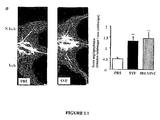
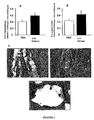
- Transplantation of 1 ⁇ 10 6 FSV-CULT cells markedly improves tissue neovascularization in ischemic lower limbs as shown by the 2.6-fold increase in angiographic score, ( Figure 1a , P ⁇ 0.01), the 2.3-fold increase in tissue perfusion score by Doppler ( Figure 1b , P ⁇ 0.001) and the 1.6-fold increase in capillary density ( Figure 1c , P ⁇ 0.01).
- the degree of neovascularization observed after injection of 1 ⁇ 10 6 FSV-CULT cells is comparable to that observed after injection of 1 ⁇ 10 6 bone marrow mononuclear cells ( Figures 1a-c ).
- the culture process according to the invention improves the angiogenic potential of FSV-CULT cells in a very significant manner, as shown by the very low neovascularization observed after direct injection of FSV-EXT cells (without culture with limited expansion as in the invention).
- experiments with vascular stromal cells from brown adipose tissue, known to be more vascularized than white tissue have been unsuccessful.
- the FSV-EXT and FSV-CULT mouse cells are prepared as specified in Example 1.
- Corresponding human cells are similarly prepared from abdominal dermolipectomy or nephrectomy specimens containing human subcutaneous abdominal tissue obtained with patient consent.
- the cells are labeled in phosphate buffered saline containing 0.2% fetal calf serum; they are incubated with anti-mouse or anti-human monoclonal antibodies (mAb) coupled to fluorescein isothiocyanate (FITC), phycoerythrin (PE) or chlorophyll peridinine protein (PerCP) for 30 minutes at 4 ° vs. After washing, the cells are analyzed by flow cytometry (FACS Calibur, Becton Dickinson). The data obtained is then analyzed using Cell Quest software (Becton Dickinson). All antibodies are from BD Biosciences, with the exception of CD144 from Serotec.
- FITC fluorescein isothiocyanate
- PE phycoerythrin
- PerCP chlorophyll peridinine protein
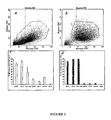
- FSV-EXT cells obtained from human subcutaneous adipose tissue are heterogeneous as shown by the scatter plot of the Figure 2a .
- the culture of these cells for 1-3 days under the conditions of the invention leads to a homogenization of the cell population, as shown by the obtention of a single cell population, called FSV-CULT ( Figure 2b ).
- FSV-EXT cells are heterogeneous and include different populations, including hematopoietic cells (CD45 positive cells) and a non-hematopoietic cell population (negative for CD45 marker), expressing CD34, CD13 and HLA ABC markers. ( Figure 2c ).
- the vascular stromal fraction does not contain a significant proportion of mature endothelial cells, as evidenced by the absence of labeling with the antibodies directed against VE-cadherin (CD144) and the CD31 marker ( Figure 2c ).
- the population is predominantly composed of undifferentiated cells with 90 ⁇ 3% of cells expressing the CD34 marker and 99 ⁇ 0.2% of cells being positive for CD13 markers and HLA ABC.
- these FSV-CULT cells do not express either the characteristic markers of hematopoietic cells (CD45) or of monocytes / macrophages (CD14) or the markers CD 144 and CD31 characteristic of differentiated endothelial cells ( Figure 2c ).
- mice Naked / bare male mice (Harlan, France) aged 7 weeks are reared under the same conditions as those described in Example 1.
- the human adipose tissue samples are identical to those used in Example 2.
- the human and mouse FSV-CULT cells are isolated as specified in Examples 1 and 2.
- VEGF vascular endothelial growth factor
- FSV extramedullary vascular stromal fraction
- FSV-CULT cells are cultured in semi-solid medium (methylcellulose; 15).
- a primary culture of FSV-CULT cells is trypsinated. then inoculated at a concentration of 7 ⁇ 10 3 cells / ml in 1.5 ml of Methocult MG3534, MG, H4534 (StemCell Technologies) or any other equivalent medium.
- the cells are cultured for 10 days to stimulate their development in cells having an endothelial type morphology and then analyzed by immunostaining.
- the colonies of cultures in the presence of methyl cellulose are washed with PBS buffer and fixed in a mixture of methanol / acetone for 20 minutes at -20 ° C.
- the preparations are then blocked in PBS containing 1% BSA, and incubated for 1 hour with either human anti-CD3 antibodies (Dako, reference MO823) or anti-human or mouse vWF antibodies.
- the angiogenesis test in vivo, using the Matrigel ® matrix is performed as follows.
- the mice are injected subcutaneously with a volume of 0.5 ml of Matrigel ® matrix containing 10 6 of FSV-CULT cells isolated from mouse tissue, or human tissue.
- angiogenesis is analyzed as described in Tamarat R et al. (37).
- matrices of Matrigel ® are treated as described in Nibbelink M. et al. (35).
- FSV-CULT cells are cultured in an adipogenic medium (Björntorp et al., Supra).
- FSV-CULT cells Differentiation of FSV-CULT cells was analyzed in vitro in a semi-solid medium to study cell differentiation at the clonal level by preserving cell function (methylcellulose), and in vivo after injection of cells associated with a solid matrix (Matrigel ® )
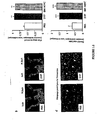
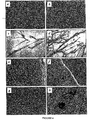
- the FSV-CULT cells form a network having a hollow tube-like structure ( Figure 4b ).
- vWF von Willebrand factor
- the FSV-CULT cells When FSV-CULT cells are injected in combination with a Matrigel ® matrix, the cells form many tubular structures within the Matrigel ® matrix. The presence of erythrocytes in the lumen of these tubular-type structures demonstrates the existence of a functional vascular structure ( Figure 4e and F).
- Antibodies directed against the CD31 marker and against the vWF marker positively mark these vessel-like structures ( Figure 4g and h ).
- FSV-CULT cells cultured in an adipogenic medium differentiate into adipocytes ( figure 4a ).
- EXAMPLE 5 Dedifferentiation of mature human adipocytes in culture
- the fraction of mature human adipocytes isolated from a sample of adipose tissue as described in Example 1, is gently washed in DMEM F12 medium supplemented with 10% of SVN and prepared as a suspension at a concentration of 10 6 cells / ml.
- a 100 ⁇ l sample of the cell suspension is transferred to a 25 mm Thermanox coverslip and placed in a culture dish of 35 mm. The first coverslip is covered by a second, and after incubation for 15 minutes at room temperature, 1.5 ml of DMEM F12 supplemented with 10% of SVN are added.
- the adherent cells containing small lipid droplets appear; they change into a fibroblast-like morphology that lacks lipid droplets (hDDAC cells for human dedifferenciated adipose cells ).
- fibroblastic type cells then enter active division and can undergo a few passages without major modification of their characteristics.
- Dedifferentiated human adipocytes are cultured in methylcellulose and analyzed by immunostaining as described in Example 4. In addition, their angiogenic potential is analyzed in vivo, after injection into a Matrigel ® matrix, as described in the example 4. The angiogenic potential of FSV-CULT cells prepared as described in Example 3 is analyzed in parallel.
- the dedifferentiated human adipocytes are cultured in adipogenic medium (Björntorp et al., Cited above).
- adipocyte precursor cells In order to obtain a homogeneous population of adipocyte precursor cells from adipose tissue and to confirm the existence of a precursor common to adipocytes and endothelial cells derived from FSV-CULT cells, mature adipocytes have been dedifferentiated, according to previously described protocols (16; 17; 18; 19). Mature adipocytes isolated from adipose tissue represent 99% of a population of floating cells. The only cellular contamination comes from macrophages rich in lipid droplets, with a ratio of a few contaminating cells per 1000 cells.
- adipocytes When the adipocytes are cultured under the abovementioned conditions (17), they initially lose their fatty acids and change their morphology into pre-adipocyte type cells and then into fibroblastic type cells that can bind to the coverslip. This morphological change is associated with functional changes as adipocytes also lose their enzymatic content for lipolysis and lipogenesis as well as molecular markers (17).
- the homogeneous population of dedifferentiated human adipocytes has the ability to proliferate and differentiate back into adipocytes when cultured in an adipogenic medium ( Figure 5a ).
- hDDAC dedifferentiated human adipocytes
- FSV-CULT cells when hDDAC cells are injected in combination with the Matrigel ® matrix, they form numerous tubular structures, which contain erythrocytes in their lumen demonstrating the existence of a functional vascular structure.
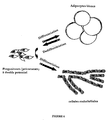
- Adipocyte progenitor cells have the ability to differentiate into adipocytes and to acquire a functional endothelial phenotype.
- the mature adipocytes can be dedifferentiated into progenitor cells with double proliferative potential.
- EXAMPLE 6 Stimulation of neovascularization in ischemic muscle of mice, by human dedifferentiated mouse adipocytes and differentiation of these adipocytes into endothelial cells.
- hDDAC cells The angiogenic potential of hDDAC cells was analyzed in Nude mice as well as in FSV-CULT cells (Example 3) which serve as a comparison.
- HDDAC cells are as effective as FSV-CULT cells in restoring vascularization of the ischemic lower limbs ( Figures 5d and 5e ).
- FSV-CULT cells many CD31-positive cells that coat the newly formed vessels of the lower limb, in which the hDDAC cells have been injected, are identified ( Figure 5f ).
- the angiogenic potential of the SVF-CULT cells was analyzed in the ApoE deficient mice (ApoE knock-out (ApoE KO or ApoE - / -); Iffa-Credo), aged 14 weeks, as mice C57B1 / 6 ( example 1).
- the angiogenic potential of bone marrow mononuclear cells in ApoE KO mice is analyzed in parallel for comparison.
- the control group receives an injection of PBS under the same conditions.
- neovascularization process was analyzed by microangiography and Doppler laser, 4 weeks after femoral occlusion.
- a Bonferroni t test then identified the groups that caused these differences. A value of P ⁇ 0.05 is considered significant.
- FSV-CULT adipose cells increased the angiographic score by a factor of 2 (p ⁇ 0.01) and blood flow by a factor of 1.5 (p ⁇ 0.01) in the lower limb ischemia of mice ApoE KO treated, compared to untreated ApoE KO mice (Table I).
- the angiogenic potential of FSV-CULT adipose cells is similar to that of mononuclear bone marrow cells (Table I).
- ischemic limb of ApoE (- / -) mice Treatment of the ischemic limb of ApoE (- / -) mice is effective and promotes angiogenesis / neovascularization. This effect is as effective as the injection of bone marrow mononuclear cells. FSV-CULT cells retain their pro-angiogenic potential in an atheromatous context.
- the angiogenic potential of the treated FSV-CULT cells in vitro with antimycin (40nM) and / or pyrrolidine dithiocarbamate (PDTC, 0.5 mM) two days before injection, was analyzed in the model of the mice with a lower ischemic limb as described in Example 1.
- the mice received or not, daily ip injection of antimycin (50 ⁇ L to 40 nM).
- the angiogenic potential of untreated FSV-CULT cells in untreated mice after cell injection was analyzed in parallel for comparison.
- the control group received an injection of ethanol under the same conditions.
Landscapes
- Health & Medical Sciences (AREA)
- Engineering & Computer Science (AREA)
- Life Sciences & Earth Sciences (AREA)
- Biomedical Technology (AREA)
- Chemical & Material Sciences (AREA)
- Cell Biology (AREA)
- Zoology (AREA)
- Biotechnology (AREA)
- Bioinformatics & Cheminformatics (AREA)
- General Health & Medical Sciences (AREA)
- Organic Chemistry (AREA)
- Genetics & Genomics (AREA)
- Wood Science & Technology (AREA)
- Veterinary Medicine (AREA)
- Public Health (AREA)
- Animal Behavior & Ethology (AREA)
- Pharmacology & Pharmacy (AREA)
- Medicinal Chemistry (AREA)
- Developmental Biology & Embryology (AREA)
- Immunology (AREA)
- General Engineering & Computer Science (AREA)
- Virology (AREA)
- Microbiology (AREA)
- Epidemiology (AREA)
- Biochemistry (AREA)
- Vascular Medicine (AREA)
- Cardiology (AREA)
- Rheumatology (AREA)
- Hematology (AREA)
- Heart & Thoracic Surgery (AREA)
- Chemical Kinetics & Catalysis (AREA)
- General Chemical & Material Sciences (AREA)
- Nuclear Medicine, Radiotherapy & Molecular Imaging (AREA)
- Urology & Nephrology (AREA)
- Medicines Containing Material From Animals Or Micro-Organisms (AREA)
- Micro-Organisms Or Cultivation Processes Thereof (AREA)
- Measuring Or Testing Involving Enzymes Or Micro-Organisms (AREA)
- Medicinal Preparation (AREA)
- Investigating Or Analysing Biological Materials (AREA)
Claims (18)
- Verwendung von Zellen des medullären oder extramedullären weißen Fettgewebes, die homogene Subpopulationen bilden, nämlich CD13+, HLA ABC+, CD14-, CD45-, CD31-, CD144- und CD34+, zur Herstellung eines Medikaments, das für eine vollständige oder partielle Rekonstruktion eines funktionellen Vaskulärsystems bestimmt ist.
- Verwendung nach Anspruch 1, dadurch gekennzeichnet, dass die Zellen des Fettgewebes von einer homogenen Subpopulation von Zellen der extramedullären stromavaskulären Fraktion dargestellt sind, die durch limitierte Zellexpansion in Kultur erhalten werden können.
- Verwendung nach Anspruch 2, dadurch gekennzeichnet, dass die homogene Subpopulation von Zellen der extramedullären stromavaskulären Fraktion durch eine limitierte Zellexpansion mit weniger als 10 aufeinanderfolgenden Passagen der Zellen erhalten werden kann.
- Verwendung nach Anspruch 1, dadurch gekennzeichnet, dass die Zellen des Fettgewebes von einer homogenen Subpopulation von reifen dedifferenzierten Adipozyten dargestellt werden.
- Verwendung nach einem der Ansprüche 1 bis 4, dadurch gekennzeichnet, dass die Zellen des Fettgewebes, die homogene Subpopulationen bilden und die wenigstens die Oberflächenantigene CD13 und HLA ABC exprimieren, an einem festen oder halbfesten Polymerträger haften.
- Verwendung nach Anspruch 5, dadurch gekennzeichnet, dass der feste Polymerträger ausgewählt ist aus der Gruppe bestehend aus rekonstituierten basalen Membranmatrizen, umfassend wenigstens eines der folgenden Elemente: Kollagen, Laminin und Proteoglykane, und rekonstituierten extrazellulären Matrizen, umfassend eines der folgenden Elemente: Fibronectin, Kollagen, Laminin und Thrombospondin.
- Verwendung nach Anspruch 5 oder Anspruch 6, dadurch gekennzeichnet, dass der Polymerträger weiterhin Enzyme zum Abbau der Matrizen, sowie enzymatische Inhibitoren und Wachstumspromotoren umfassen kann.
- Verwendung nach Anspruch 5, dadurch gekennzeichnet, dass der halbfeste Träger bevorzugt ein Zellulosederivat, insbesondere Methylzellulose, ist.
- Verwendung nach einem der Ansprüche 1 bis 8, dadurch gekennzeichnet, dass die Zellen gentechnisch modifiziert sind.
- Verwendung nach Anspruch 9, dadurch gekennzeichnet, dass die Zellen wenigstens eine Mutation eines autologen Gens umfassen.
- Verwendung nach Anspruch 9, dadurch gekennzeichnet, dass die Zellen wenigstens eine Kopie eines heterologen Gens enthalten.
- Verwendung nach einem der Ansprüche 9 bis 11, dadurch gekennzeichnet, dass die Zellen menschlichen Ursprungs sind.
- Verwendung einer Zusammensetzung, enthaltend Zellen des medullären oder extramedullären weißen Fettgewebes, die homogene Subpopulationen bilden und die wenigstens die Oberflächenantigene CD13 und HLA ABC exprimieren, nach einem der Ansprüche 1 bis 12, und wenigstens ein Vehikel und/oder einen Träger, die für eine parenterale oder intra-site Verabreichung geeignet sind, zur Herstellung eines Medikaments, das für eine vollständige oder partielle Rekonstruktion eines funktionellen Vaskulärsystems bestimmt ist.
- Pharmazeutische Zusammensetzung, enthaltend Zellen des medullären oder extramedullären weißen Fettgewebes, die homogene Subpopulationen bilden und die wenigstens die Oberflächenantigene CD13 und HLA ABC exprimieren und die nicht die Oberflächenantigene CD14, CD45, CD31 und CD144 exprimieren, nach einem der Ansprüche 1 bis 4 und 9 bis 12, wobei die Zellen auf einem festen oder halbfesten Träger nach einem der Ansprüche 5 bis 8 haften, und wenigstens ein Vehikel und/oder einen Träger, die für eine parenterale oder intra-site Verabreichung geeignet sind.
- Verfahren zur Kultivierung von Zellen des medullären oder extramedullären weißen Fettgewebes, die homogene Subpopulationen bilden und die wenigstens eines der Oberflächenantigene CD13 und HLA ABC exprimieren, wobei das Verfahren dadurch gekennzeichnet ist, dass es wenigstens folgende Schritte umfasst:- limitierte Zellexpansion von Zellen der extramedullären stromavaskulären Fraktion oder von reifen dedifferenzierten Adipozyten mit weniger als 10 aufeinanderfolgenden Passagen der Zellen auf einem geeigneten festen Kulturträger in einer Umgebung umfassend wenigstens einen Wachstumsfaktor, der in der Lage ist, die Bildung von Endothelzellen zu stimulieren, und gegebenenfalls ein geeignetes Zytokin;- kontinuierliche oder transiente Veränderung der Sauerstoffumgebung der Kultur, und- kontinuierliche oder transiente Veränderung des Redoxgleichgewichts der Zellen oder der Produktion von aktiven Sauerstoffspezies durch die Zellen durch Zugabe von oxidierenden oder antioxidierenden Molekülen in das extra-oder intrazelluläre Milieu.
- Verfahren nach Anspruch 15, dadurch gekennzeichnet, dass der Wachstumsfaktor, der in der Lage ist, die Bildung von Endothelzellen zu stimulieren, insbesondere VEGF ist, bevorzugt bei einer Konzentration von etwa 10 ng/ml.
- Verfahren nach Anspruch 15 oder Anspruch 16, dadurch gekennzeichnet, dass die Sauerstoffumgebung der Kultur für einige Stunden bis einige Tage 1% ist.
- Verfahren zum Screenen von aktiven Molekülen auf den differenzierten Endothelzellen, wobei das Verfahren dadurch gekennzeichnet ist, dass es wenigstens die folgenden Schritte umfasst:- Kultivieren von Zellen des medullären oder extramedullären weißen Fettgewebes, die homogene Subpopulationen bilden und die wenigstens die Oberflächenantigene CD13 und HLA ABC exprimieren und die nicht die Oberflächenantigene CD14, CD45, CD31 und CD144 exprimieren, nach einem der Ansprüche 1 bis 4 und 9 bis 12 in einer halbfesten polymeren Kulturumgebung,- In-Kontakt-bringen der auf diese Art erhaltenen differenzierten Endothelzellen mit einer Molekülbibliothek zum Testen, und- Identifizierung und Selektion von aktiven Molekülen auf den differenzierten Endothelzellen.
Applications Claiming Priority (2)
| Application Number | Priority Date | Filing Date | Title |
|---|---|---|---|
| FR0310504A FR2859381B1 (fr) | 2003-09-05 | 2003-09-05 | Utilisaton de cellules issues du tissu adipeux pour induire la formation d'un reseau vasculaire fonctionnel |
| PCT/FR2004/002258 WO2005025584A1 (fr) | 2003-09-05 | 2004-09-06 | Utilisation de cellules issues du tissu adipeux pour induire la formation d'un reseau vasculaire fonctionnel. |
Publications (2)
| Publication Number | Publication Date |
|---|---|
| EP1663263A1 EP1663263A1 (de) | 2006-06-07 |
| EP1663263B1 true EP1663263B1 (de) | 2011-11-23 |
Family
ID=34178812
Family Applications (1)
| Application Number | Title | Priority Date | Filing Date |
|---|---|---|---|
| EP04787313A Revoked EP1663263B1 (de) | 2003-09-05 | 2004-09-06 | Verwendung von fettgewebezellen zur einleitung der bildung eines funktionalen gefässnetzes |
Country Status (8)
| Country | Link |
|---|---|
| US (2) | US20070116674A1 (de) |
| EP (1) | EP1663263B1 (de) |
| JP (1) | JP4977463B2 (de) |
| AT (1) | ATE534395T1 (de) |
| CA (1) | CA2537482C (de) |
| ES (1) | ES2378165T3 (de) |
| FR (1) | FR2859381B1 (de) |
| WO (1) | WO2005025584A1 (de) |
Families Citing this family (23)
| Publication number | Priority date | Publication date | Assignee | Title |
|---|---|---|---|---|
| CA2469370C (en) | 2001-12-07 | 2014-07-08 | Macropore Biosurgery, Inc. | Adipose-derived cell processing unit |
| US8105580B2 (en) | 2001-12-07 | 2012-01-31 | Cytori Therapeutics, Inc. | Methods of using adipose derived stem cells to promote wound healing |
| US7651684B2 (en) | 2001-12-07 | 2010-01-26 | Cytori Therapeutics, Inc. | Methods of using adipose tissue-derived cells in augmenting autologous fat transfer |
| US7771716B2 (en) * | 2001-12-07 | 2010-08-10 | Cytori Therapeutics, Inc. | Methods of using regenerative cells in the treatment of musculoskeletal disorders |
| US9597395B2 (en) | 2001-12-07 | 2017-03-21 | Cytori Therapeutics, Inc. | Methods of using adipose tissue-derived cells in the treatment of cardiovascular conditions |
| US20050095228A1 (en) | 2001-12-07 | 2005-05-05 | Fraser John K. | Methods of using regenerative cells in the treatment of peripheral vascular disease and related disorders |
| US8404229B2 (en) | 2001-12-07 | 2013-03-26 | Cytori Therapeutics, Inc. | Methods of using adipose derived stem cells to treat acute tubular necrosis |
| US7585670B2 (en) | 2001-12-07 | 2009-09-08 | Cytori Therapeutics, Inc. | Automated methods for isolating and using clinically safe adipose derived regenerative cells |
| EP1878789A4 (de) * | 2005-04-14 | 2008-08-27 | Japan As Represented By Genera | Aus fett stammende vorläuferzelle und verwendung davon |
| US8003388B2 (en) | 2006-03-24 | 2011-08-23 | Nortis, Inc. | Method for creating perfusable microvessel systems |
| US7622298B2 (en) * | 2006-03-24 | 2009-11-24 | Norits, Inc. | Method for creating perfusable microvessel systems |
| US8445280B2 (en) * | 2006-03-24 | 2013-05-21 | Nortis, Inc. | Method for creating perfusable microvessel systems |
| FR2901136B1 (fr) * | 2006-05-18 | 2010-10-01 | Centre Nat Rech Scient | Utilisation de cellules derivees du tissu adipeux pour la preparation d'un medicament anti-tumoral |
| FR2902011B1 (fr) * | 2006-06-12 | 2008-12-26 | Inst Radioprot Et De Surete Nu | Utilisation de fractions cellulaires du tissu adipeux pour la regeneration tissulaire post irradiation |
| ES2392729T5 (es) | 2007-09-19 | 2015-08-28 | Pluristem Ltd. | Células adherentes de tejidos adiposos o de placenta y uso de las mismas en terapia |
| WO2010021993A1 (en) * | 2008-08-19 | 2010-02-25 | Cytori Therapeutics, Inc. | Methods of using adipose tissue-derived cells in the treatment of the lymphatic system and malignant disease |
| US20130287745A1 (en) * | 2010-02-15 | 2013-10-31 | Keith Leonard March | Compositions and methods to stimulate vascular structure formation |
| FI20115670A0 (fi) * | 2011-06-23 | 2011-06-23 | Tampereen Yliopisto | Kardiovaskulaarinen in vitro-malli |
| JP6241890B2 (ja) * | 2012-08-18 | 2017-12-06 | 国立大学法人 千葉大学 | 血管組織およびその作製方法 |
| WO2016140716A1 (en) | 2015-03-02 | 2016-09-09 | The Trustees Of Columbia University In The City Of New York | Injectable microtissue systems, devices, and methods |
| JP2018087141A (ja) * | 2015-03-27 | 2018-06-07 | 学校法人日本大学 | 脱分化脂肪細胞を有効成分とする血管再生療法用組成物 |
| KR101812979B1 (ko) * | 2015-07-10 | 2017-12-29 | 가톨릭대학교 산학협력단 | 동질성을 가지는 줄기세포 분획의 분리방법 |
| JP7348612B2 (ja) * | 2018-10-18 | 2023-09-21 | 学校法人日本大学 | 壊死性腸炎治療用組成物 |
Family Cites Families (8)
| Publication number | Priority date | Publication date | Assignee | Title |
|---|---|---|---|---|
| US6184035B1 (en) * | 1998-11-18 | 2001-02-06 | California Institute Of Technology | Methods for isolation and activation of, and control of differentiation from, skeletal muscle stem or progenitor cells |
| US20030082152A1 (en) * | 1999-03-10 | 2003-05-01 | Hedrick Marc H. | Adipose-derived stem cells and lattices |
| RU2306335C2 (ru) * | 1999-03-10 | 2007-09-20 | Юниверсити Оф Питтсбург Оф Дзе Коммонвелт Систем Оф Хайер Эдьюкейшн | Стволовые клетки и решетки, полученные из жировой ткани |
| FR2819265B1 (fr) * | 2001-01-10 | 2004-01-02 | Centre Nat Rech Scient | Cellules du tissu adipeux extramedullaire et leurs applications dans la reconstitution des lignees hematopoietiques |
| KR20050044392A (ko) * | 2001-11-09 | 2005-05-12 | 아르테셀 사이언스, 인크. | 각막 결함 및 안와내 결함 복원용의 지방조직 유래스트로마 세포 및 이의 용도 |
| US20030161818A1 (en) * | 2002-02-25 | 2003-08-28 | Kansas State University Research Foundation | Cultures, products and methods using stem cells |
| AU2003220424A1 (en) * | 2002-03-19 | 2003-10-08 | Advanced Research And Technology Transfer | Adipose stromal stem cells for tissue and vascular modification |
| WO2005085422A1 (en) * | 2004-02-27 | 2005-09-15 | Michigan State University | Adult stem cells and uses thereof |
-
2003
- 2003-09-05 FR FR0310504A patent/FR2859381B1/fr not_active Expired - Fee Related
-
2004
- 2004-09-06 JP JP2006525167A patent/JP4977463B2/ja not_active Expired - Fee Related
- 2004-09-06 EP EP04787313A patent/EP1663263B1/de not_active Revoked
- 2004-09-06 WO PCT/FR2004/002258 patent/WO2005025584A1/fr not_active Ceased
- 2004-09-06 AT AT04787313T patent/ATE534395T1/de active
- 2004-09-06 CA CA2537482A patent/CA2537482C/fr not_active Expired - Fee Related
- 2004-09-06 ES ES04787313T patent/ES2378165T3/es not_active Expired - Lifetime
- 2004-09-06 US US10/570,458 patent/US20070116674A1/en not_active Abandoned
-
2012
- 2012-02-08 US US13/369,245 patent/US20120207722A1/en not_active Abandoned
Non-Patent Citations (1)
| Title |
|---|
| GRONTHOS S ET AL: "Surface protein characterization of human adipose tissue-derived stromal cells", JOURNAL OF CELLULAR PHYSIOLOGY, vol. 189, 2001, pages 54 - 63 * |
Also Published As
| Publication number | Publication date |
|---|---|
| CA2537482C (fr) | 2014-07-08 |
| JP4977463B2 (ja) | 2012-07-18 |
| JP2007504204A (ja) | 2007-03-01 |
| CA2537482A1 (fr) | 2005-03-24 |
| US20120207722A1 (en) | 2012-08-16 |
| FR2859381A1 (fr) | 2005-03-11 |
| ATE534395T1 (de) | 2011-12-15 |
| WO2005025584A1 (fr) | 2005-03-24 |
| FR2859381B1 (fr) | 2008-07-25 |
| ES2378165T3 (es) | 2012-04-09 |
| EP1663263A1 (de) | 2006-06-07 |
| US20070116674A1 (en) | 2007-05-24 |
Similar Documents
| Publication | Publication Date | Title |
|---|---|---|
| CA2537482C (fr) | Utilisation de cellules issues du tissu adipeux pour induire la formation d'un reseau vasculaire fonctionnel | |
| EP1527161B1 (de) | Stammzellen aus fettgewebe und differenzierte zellen die davon abstammen | |
| Cathery et al. | Concise review: the regenerative journey of pericytes toward clinical translation | |
| Ishikane et al. | Allogeneic injection of fetal membrane-derived mesenchymal stem cells induces therapeutic angiogenesis in a rat model of hind limb ischemia | |
| Chandra et al. | Generation of pancreatic hormone-expressing islet-like cell aggregates from murine adipose tissue-derived stem cells | |
| Castelo-Branco et al. | Intraperitoneal but not intravenous cryopreserved mesenchymal stromal cells home to the inflamed colon and ameliorate experimental colitis | |
| US20130224157A1 (en) | Stem cells for treating lung diseases | |
| EP2184068A1 (de) | Population erwachsener stammzellen aus herzfettgewebe und ihre verwendung zur herzregeneration | |
| WO2007085745A1 (fr) | Procede de culture de cellules issues du tissu adipeux et leurs applications | |
| Linard et al. | Autologous bone marrow mesenchymal stem cells improve the quality and stability of vascularized flap surgery of irradiated skin in pigs | |
| EP1605040B1 (de) | Von monozyten stammende multipotente zelle momc | |
| Chun‐mao et al. | Human bone marrow‐derived mesenchymal stem cells differentiate into epidermal‐like cells in vitro | |
| EP3964564A1 (de) | Verfahren zur erzeugung einer endothelialkolonie zur bildung von zellartigen zellen | |
| FR2810045A1 (fr) | Procede d'obtention de population cellulaires caracterisees d'origine musculaire et utilisations | |
| WO2009035612A2 (en) | Multilineage-inducible cells and uses thereof | |
| Xaymardan et al. | c-Kit function is necessary for in vitro myogenic differentiation of bone marrow hematopoietic cells | |
| Lin et al. | Intravenous transplantation of human hair follicle-derived mesenchymal stem cells ameliorates trabecular bone loss in osteoporotic mice | |
| EP3747993A1 (de) | Verfahren zur herstellung von kardiomyozyten | |
| Su et al. | Cartilage-derived stromal cells: is it a novel cell resource for cell therapy to regenerate infarcted myocardium? | |
| FR2962443A1 (fr) | Modele de tissu adipeux et procede de preparation | |
| EP1934333B1 (de) | Verfahren zur gewinnung menschlicher glatter muskelzellen und verwendungen davon | |
| FR2843123A1 (fr) | Cellules souches issues de tissu adipeux humain | |
| Diekman | Stem Cell-Based Strategies to Study, Prevent, and Treat Cartilage Injury and Osteoarthritis | |
| Khan | The Infrapatellar Fat Pad as a Source of Adult Mesenchymal Stem Cells for Cartilage Repair | |
| WO2004003181A2 (fr) | Procede de preparation de cellules souches adultes animales ou humaines et utilisation desdites cellules souches en therapie. |
Legal Events
| Date | Code | Title | Description |
|---|---|---|---|
| PUAI | Public reference made under article 153(3) epc to a published international application that has entered the european phase |
Free format text: ORIGINAL CODE: 0009012 |
|
| 17P | Request for examination filed |
Effective date: 20060327 |
|
| AK | Designated contracting states |
Kind code of ref document: A1 Designated state(s): AT BE BG CH CY CZ DE DK EE ES FI FR GB GR HU IE IT LI LU MC NL PL PT RO SE SI SK TR |
|
| DAX | Request for extension of the european patent (deleted) | ||
| RIN1 | Information on inventor provided before grant (corrected) |
Inventor name: CASTEILLA, LOUIS Inventor name: PLANAT-BENARD, VALERIE Inventor name: SILVESTRE, JEAN-SEBASTIEN Inventor name: PENICAUD, LUC Inventor name: LEVY, BERNARD Inventor name: TEDGUI, ALAIN |
|
| RIN1 | Information on inventor provided before grant (corrected) |
Inventor name: PLANAT-BENARD, VALERIE Inventor name: CASTEILLA, LOUIS Inventor name: TEDGUI, ALAIN Inventor name: LEVY, BERNARD Inventor name: SILVESTRE, JEAN-SEBASTIEN Inventor name: PENICAUD, LUC |
|
| 17Q | First examination report despatched |
Effective date: 20070817 |
|
| GRAP | Despatch of communication of intention to grant a patent |
Free format text: ORIGINAL CODE: EPIDOSNIGR1 |
|
| GRAS | Grant fee paid |
Free format text: ORIGINAL CODE: EPIDOSNIGR3 |
|
| GRAA | (expected) grant |
Free format text: ORIGINAL CODE: 0009210 |
|
| AK | Designated contracting states |
Kind code of ref document: B1 Designated state(s): AT BE BG CH CY CZ DE DK EE ES FI FR GB GR HU IE IT LI LU MC NL PL PT RO SE SI SK TR |
|
| REG | Reference to a national code |
Ref country code: GB Ref legal event code: FG4D Free format text: NOT ENGLISH |
|
| REG | Reference to a national code |
Ref country code: DE Ref legal event code: R081 Ref document number: 602004035440 Country of ref document: DE Owner name: UNIVERSITE PAUL SABATIER (TOULOUSE III), FR Free format text: FORMER OWNERS: CENTRE NATIONAL DE LA RECHERCHE SCIENTIFIQUE (C.N.R.S.), PARIS, FR; INSTITUT NATIONAL DE LA SANTE ET DE LA RECHERCHE MEDICALE, PARIS, FR; UNIVERSITE PAUL SABATIER (TOULOUSE III) ET. PUBLIC A CARACTERE SCIENTIFIQUE, CULTUREL ET PROFESSIONNEL, TOULOUSE, FR; UNIVERSITE PARIS VII, PARIS, FR Ref country code: DE Ref legal event code: R081 Ref document number: 602004035440 Country of ref document: DE Owner name: CENTRE NATIONAL DE LA RECHERCHE SCIENTIFIQUE (, FR Free format text: FORMER OWNERS: CENTRE NATIONAL DE LA RECHERCHE SCIENTIFIQUE (C.N.R.S.), PARIS, FR; INSTITUT NATIONAL DE LA SANTE ET DE LA RECHERCHE MEDICALE, PARIS, FR; UNIVERSITE PAUL SABATIER (TOULOUSE III) ET. PUBLIC A CARACTERE SCIENTIFIQUE, CULTUREL ET PROFESSIONNEL, TOULOUSE, FR; UNIVERSITE PARIS VII, PARIS, FR Ref country code: DE Ref legal event code: R081 Ref document number: 602004035440 Country of ref document: DE Owner name: INSTITUT NATIONAL DE LA SANTE ET DE LA RECHERC, FR Free format text: FORMER OWNERS: CENTRE NATIONAL DE LA RECHERCHE SCIENTIFIQUE (C.N.R.S.), PARIS, FR; INSTITUT NATIONAL DE LA SANTE ET DE LA RECHERCHE MEDICALE, PARIS, FR; UNIVERSITE PAUL SABATIER (TOULOUSE III) ET. PUBLIC A CARACTERE SCIENTIFIQUE, CULTUREL ET PROFESSIONNEL, TOULOUSE, FR; UNIVERSITE PARIS VII, PARIS, FR |
|
| REG | Reference to a national code |
Ref country code: CH Ref legal event code: EP |
|
| REG | Reference to a national code |
Ref country code: IE Ref legal event code: FG4D Free format text: LANGUAGE OF EP DOCUMENT: FRENCH |
|
| REG | Reference to a national code |
Ref country code: DE Ref legal event code: R096 Ref document number: 602004035440 Country of ref document: DE Effective date: 20120119 |
|
| REG | Reference to a national code |
Ref country code: CH Ref legal event code: NV Representative=s name: ISLER & PEDRAZZINI AG |
|
| REG | Reference to a national code |
Ref country code: NL Ref legal event code: T3 |
|
| REG | Reference to a national code |
Ref country code: SE Ref legal event code: TRGR |
|
| REG | Reference to a national code |
Ref country code: ES Ref legal event code: FG2A Ref document number: 2378165 Country of ref document: ES Kind code of ref document: T3 Effective date: 20120409 |
|
| PG25 | Lapsed in a contracting state [announced via postgrant information from national office to epo] |
Ref country code: SI Free format text: LAPSE BECAUSE OF FAILURE TO SUBMIT A TRANSLATION OF THE DESCRIPTION OR TO PAY THE FEE WITHIN THE PRESCRIBED TIME-LIMIT Effective date: 20111123 Ref country code: PT Free format text: LAPSE BECAUSE OF FAILURE TO SUBMIT A TRANSLATION OF THE DESCRIPTION OR TO PAY THE FEE WITHIN THE PRESCRIBED TIME-LIMIT Effective date: 20120323 Ref country code: GR Free format text: LAPSE BECAUSE OF FAILURE TO SUBMIT A TRANSLATION OF THE DESCRIPTION OR TO PAY THE FEE WITHIN THE PRESCRIBED TIME-LIMIT Effective date: 20120224 |
|
| REG | Reference to a national code |
Ref country code: IE Ref legal event code: FD4D |
|
| PG25 | Lapsed in a contracting state [announced via postgrant information from national office to epo] |
Ref country code: CY Free format text: LAPSE BECAUSE OF FAILURE TO SUBMIT A TRANSLATION OF THE DESCRIPTION OR TO PAY THE FEE WITHIN THE PRESCRIBED TIME-LIMIT Effective date: 20111123 |
|
| PG25 | Lapsed in a contracting state [announced via postgrant information from national office to epo] |
Ref country code: DK Free format text: LAPSE BECAUSE OF FAILURE TO SUBMIT A TRANSLATION OF THE DESCRIPTION OR TO PAY THE FEE WITHIN THE PRESCRIBED TIME-LIMIT Effective date: 20111123 Ref country code: CZ Free format text: LAPSE BECAUSE OF FAILURE TO SUBMIT A TRANSLATION OF THE DESCRIPTION OR TO PAY THE FEE WITHIN THE PRESCRIBED TIME-LIMIT Effective date: 20111123 Ref country code: IE Free format text: LAPSE BECAUSE OF FAILURE TO SUBMIT A TRANSLATION OF THE DESCRIPTION OR TO PAY THE FEE WITHIN THE PRESCRIBED TIME-LIMIT Effective date: 20111123 Ref country code: EE Free format text: LAPSE BECAUSE OF FAILURE TO SUBMIT A TRANSLATION OF THE DESCRIPTION OR TO PAY THE FEE WITHIN THE PRESCRIBED TIME-LIMIT Effective date: 20111123 Ref country code: SK Free format text: LAPSE BECAUSE OF FAILURE TO SUBMIT A TRANSLATION OF THE DESCRIPTION OR TO PAY THE FEE WITHIN THE PRESCRIBED TIME-LIMIT Effective date: 20111123 Ref country code: BG Free format text: LAPSE BECAUSE OF FAILURE TO SUBMIT A TRANSLATION OF THE DESCRIPTION OR TO PAY THE FEE WITHIN THE PRESCRIBED TIME-LIMIT Effective date: 20120223 |
|
| PLBI | Opposition filed |
Free format text: ORIGINAL CODE: 0009260 |
|
| PG25 | Lapsed in a contracting state [announced via postgrant information from national office to epo] |
Ref country code: RO Free format text: LAPSE BECAUSE OF FAILURE TO SUBMIT A TRANSLATION OF THE DESCRIPTION OR TO PAY THE FEE WITHIN THE PRESCRIBED TIME-LIMIT Effective date: 20111123 Ref country code: PL Free format text: LAPSE BECAUSE OF FAILURE TO SUBMIT A TRANSLATION OF THE DESCRIPTION OR TO PAY THE FEE WITHIN THE PRESCRIBED TIME-LIMIT Effective date: 20111123 |
|
| REG | Reference to a national code |
Ref country code: AT Ref legal event code: MK05 Ref document number: 534395 Country of ref document: AT Kind code of ref document: T Effective date: 20111123 |
|
| 26 | Opposition filed |
Opponent name: CYTORI THERAPEUTICS, INC. Effective date: 20120822 |
|
| PLAX | Notice of opposition and request to file observation + time limit sent |
Free format text: ORIGINAL CODE: EPIDOSNOBS2 |
|
| REG | Reference to a national code |
Ref country code: DE Ref legal event code: R026 Ref document number: 602004035440 Country of ref document: DE Effective date: 20120822 |
|
| PLBB | Reply of patent proprietor to notice(s) of opposition received |
Free format text: ORIGINAL CODE: EPIDOSNOBS3 |
|
| PG25 | Lapsed in a contracting state [announced via postgrant information from national office to epo] |
Ref country code: AT Free format text: LAPSE BECAUSE OF FAILURE TO SUBMIT A TRANSLATION OF THE DESCRIPTION OR TO PAY THE FEE WITHIN THE PRESCRIBED TIME-LIMIT Effective date: 20111123 |
|
| PLAB | Opposition data, opponent's data or that of the opponent's representative modified |
Free format text: ORIGINAL CODE: 0009299OPPO |
|
| R26 | Opposition filed (corrected) |
Opponent name: CYTORI THERAPEUTICS, INC. Effective date: 20120822 |
|
| PG25 | Lapsed in a contracting state [announced via postgrant information from national office to epo] |
Ref country code: FI Free format text: LAPSE BECAUSE OF FAILURE TO SUBMIT A TRANSLATION OF THE DESCRIPTION OR TO PAY THE FEE WITHIN THE PRESCRIBED TIME-LIMIT Effective date: 20111123 |
|
| PLAB | Opposition data, opponent's data or that of the opponent's representative modified |
Free format text: ORIGINAL CODE: 0009299OPPO |
|
| R26 | Opposition filed (corrected) |
Opponent name: CYTORI THERAPEUTICS, INC. Effective date: 20120822 |
|
| RDAF | Communication despatched that patent is revoked |
Free format text: ORIGINAL CODE: EPIDOSNREV1 |
|
| APAH | Appeal reference modified |
Free format text: ORIGINAL CODE: EPIDOSCREFNO |
|
| APBM | Appeal reference recorded |
Free format text: ORIGINAL CODE: EPIDOSNREFNO |
|
| APBP | Date of receipt of notice of appeal recorded |
Free format text: ORIGINAL CODE: EPIDOSNNOA2O |
|
| APBQ | Date of receipt of statement of grounds of appeal recorded |
Free format text: ORIGINAL CODE: EPIDOSNNOA3O |
|
| PG25 | Lapsed in a contracting state [announced via postgrant information from national office to epo] |
Ref country code: TR Free format text: LAPSE BECAUSE OF FAILURE TO SUBMIT A TRANSLATION OF THE DESCRIPTION OR TO PAY THE FEE WITHIN THE PRESCRIBED TIME-LIMIT Effective date: 20111123 |
|
| PG25 | Lapsed in a contracting state [announced via postgrant information from national office to epo] |
Ref country code: HU Free format text: LAPSE BECAUSE OF FAILURE TO SUBMIT A TRANSLATION OF THE DESCRIPTION OR TO PAY THE FEE WITHIN THE PRESCRIBED TIME-LIMIT Effective date: 20040906 |
|
| PLAB | Opposition data, opponent's data or that of the opponent's representative modified |
Free format text: ORIGINAL CODE: 0009299OPPO |
|
| R26 | Opposition filed (corrected) |
Opponent name: CYTORI THERAPEUTICS, INC. Effective date: 20120822 |
|
| REG | Reference to a national code |
Ref country code: FR Ref legal event code: PLFP Year of fee payment: 12 |
|
| REG | Reference to a national code |
Ref country code: FR Ref legal event code: PLFP Year of fee payment: 13 |
|
| PLAB | Opposition data, opponent's data or that of the opponent's representative modified |
Free format text: ORIGINAL CODE: 0009299OPPO |
|
| APAH | Appeal reference modified |
Free format text: ORIGINAL CODE: EPIDOSCREFNO |
|
| REG | Reference to a national code |
Ref country code: FR Ref legal event code: PLFP Year of fee payment: 14 |
|
| R26 | Opposition filed (corrected) |
Opponent name: CYTORI THERAPEUTICS, INC. Effective date: 20120822 |
|
| REG | Reference to a national code |
Ref country code: FR Ref legal event code: TQ Owner name: UNIVERSITE PARIS VII, FR Effective date: 20170816 Ref country code: FR Ref legal event code: TQ Owner name: INSTITUT NATIONAL DE LA SANTE ETDE LA RECHERCH, FR Effective date: 20170816 Ref country code: FR Ref legal event code: TQ Owner name: UNIVERSITE PAUL SABATIER (TOULOUSE III)ETABLIS, FR Effective date: 20170816 Ref country code: FR Ref legal event code: TQ Owner name: UNIVERSITE PARIS DIDEROT - PARIS 7, FR Effective date: 20170816 |
|
| REG | Reference to a national code |
Ref country code: CH Ref legal event code: PUEA Owner name: INSTITUT NATIONAL DE LA SANTE ET DE LA RECHERC, FR Free format text: FORMER OWNER: UNIVERSITE PARIS VII, FR |
|
| REG | Reference to a national code |
Ref country code: DE Ref legal event code: R082 Ref document number: 602004035440 Country of ref document: DE Representative=s name: WINTER, BRANDL, FUERNISS, HUEBNER, ROESS, KAIS, DE Ref country code: DE Ref legal event code: R081 Ref document number: 602004035440 Country of ref document: DE Owner name: INSTITUT NATIONAL DE LA SANTE ET DE LA RECHERC, FR Free format text: FORMER OWNERS: CENTRE NATIONAL DE LA RECHERCHE SCIENTIFIQUE (C.N.R.S.), PARIS, FR; INSTITUT NATIONAL DE LA SANTE ET DE LA RECHERCHE MEDICALE, PARIS, FR; UNIVERSITE PARIS VII, PARIS, FR; UNIVERSITE PAUL SABATIER (TOULOUSE III), TOULOUSE, FR Ref country code: DE Ref legal event code: R081 Ref document number: 602004035440 Country of ref document: DE Owner name: CENTRE NATIONAL DE LA RECHERCHE SCIENTIFIQUE (, FR Free format text: FORMER OWNERS: CENTRE NATIONAL DE LA RECHERCHE SCIENTIFIQUE (C.N.R.S.), PARIS, FR; INSTITUT NATIONAL DE LA SANTE ET DE LA RECHERCHE MEDICALE, PARIS, FR; UNIVERSITE PARIS VII, PARIS, FR; UNIVERSITE PAUL SABATIER (TOULOUSE III), TOULOUSE, FR Ref country code: DE Ref legal event code: R081 Ref document number: 602004035440 Country of ref document: DE Owner name: UNIVERSITE PAUL SABATIER (TOULOUSE III), FR Free format text: FORMER OWNERS: CENTRE NATIONAL DE LA RECHERCHE SCIENTIFIQUE (C.N.R.S.), PARIS, FR; INSTITUT NATIONAL DE LA SANTE ET DE LA RECHERCHE MEDICALE, PARIS, FR; UNIVERSITE PARIS VII, PARIS, FR; UNIVERSITE PAUL SABATIER (TOULOUSE III), TOULOUSE, FR |
|
| REG | Reference to a national code |
Ref country code: NL Ref legal event code: PD Owner name: UNIVERSITE PAUL SABATIER (TOULOUSE III) ETABLISSE Free format text: DETAILS ASSIGNMENT: CHANGE OF OWNER(S), ASSIGNMENT; FORMER OWNER NAME: UNIVERSITE PAUL SABATIER (TOULOUSE III) ETABLISSEMENT PUBLIC A CARACTERE SCIENTIFIQUE, CULTUREL ET PROFESSIONNEL Effective date: 20171206 |
|
| REG | Reference to a national code |
Ref country code: GB Ref legal event code: 732E Free format text: REGISTERED BETWEEN 20180201 AND 20180207 Ref country code: BE Ref legal event code: PD Owner name: UNIVERSITE PAUL SABATIER (TOULOUSE III) ETABLISSE Free format text: DETAILS ASSIGNMENT: CHANGE OF OWNER(S), CESSION; FORMER OWNER NAME: UNIVERSITE PARIS VII Effective date: 20180117 |
|
| PGFP | Annual fee paid to national office [announced via postgrant information from national office to epo] |
Ref country code: LU Payment date: 20180816 Year of fee payment: 15 |
|
| REG | Reference to a national code |
Ref country code: FR Ref legal event code: PLFP Year of fee payment: 15 |
|
| REG | Reference to a national code |
Ref country code: DE Ref legal event code: R064 Ref document number: 602004035440 Country of ref document: DE Ref country code: DE Ref legal event code: R103 Ref document number: 602004035440 Country of ref document: DE |
|
| PGFP | Annual fee paid to national office [announced via postgrant information from national office to epo] |
Ref country code: MC Payment date: 20180820 Year of fee payment: 15 Ref country code: NL Payment date: 20180814 Year of fee payment: 15 Ref country code: DE Payment date: 20180913 Year of fee payment: 15 Ref country code: IT Payment date: 20180911 Year of fee payment: 15 Ref country code: FR Payment date: 20180928 Year of fee payment: 15 |
|
| APBU | Appeal procedure closed |
Free format text: ORIGINAL CODE: EPIDOSNNOA9O |
|
| RDAG | Patent revoked |
Free format text: ORIGINAL CODE: 0009271 |
|
| STAA | Information on the status of an ep patent application or granted ep patent |
Free format text: STATUS: PATENT REVOKED |
|
| REG | Reference to a national code |
Ref country code: CH Ref legal event code: PL |
|
| PGFP | Annual fee paid to national office [announced via postgrant information from national office to epo] |
Ref country code: GB Payment date: 20180919 Year of fee payment: 15 Ref country code: CH Payment date: 20180921 Year of fee payment: 15 Ref country code: SE Payment date: 20180917 Year of fee payment: 15 Ref country code: BE Payment date: 20180924 Year of fee payment: 15 |
|
| 27W | Patent revoked |
Effective date: 20181015 |
|
| GBPR | Gb: patent revoked under art. 102 of the ep convention designating the uk as contracting state |
Effective date: 20181015 |
|
| PGFP | Annual fee paid to national office [announced via postgrant information from national office to epo] |
Ref country code: ES Payment date: 20181023 Year of fee payment: 15 |
|
| REG | Reference to a national code |
Ref country code: SE Ref legal event code: ECNC |