EP1659130A1 - Rare earth metal complex, material for thin-film formation, and process for producing thin film - Google Patents
Rare earth metal complex, material for thin-film formation, and process for producing thin film Download PDFInfo
- Publication number
- EP1659130A1 EP1659130A1 EP04771133A EP04771133A EP1659130A1 EP 1659130 A1 EP1659130 A1 EP 1659130A1 EP 04771133 A EP04771133 A EP 04771133A EP 04771133 A EP04771133 A EP 04771133A EP 1659130 A1 EP1659130 A1 EP 1659130A1
- Authority
- EP
- European Patent Office
- Prior art keywords
- tris
- sec
- butylcyclopentadienyl
- thin film
- rare earth
- Prior art date
- Legal status (The legal status is an assumption and is not a legal conclusion. Google has not performed a legal analysis and makes no representation as to the accuracy of the status listed.)
- Granted
Links
Images

Classifications
-
- C—CHEMISTRY; METALLURGY
- C07—ORGANIC CHEMISTRY
- C07F—ACYCLIC, CARBOCYCLIC OR HETEROCYCLIC COMPOUNDS CONTAINING ELEMENTS OTHER THAN CARBON, HYDROGEN, HALOGEN, OXYGEN, NITROGEN, SULFUR, SELENIUM OR TELLURIUM
- C07F5/00—Compounds containing elements of Groups 3 or 13 of the Periodic Table
-
- C—CHEMISTRY; METALLURGY
- C23—COATING METALLIC MATERIAL; COATING MATERIAL WITH METALLIC MATERIAL; CHEMICAL SURFACE TREATMENT; DIFFUSION TREATMENT OF METALLIC MATERIAL; COATING BY VACUUM EVAPORATION, BY SPUTTERING, BY ION IMPLANTATION OR BY CHEMICAL VAPOUR DEPOSITION, IN GENERAL; INHIBITING CORROSION OF METALLIC MATERIAL OR INCRUSTATION IN GENERAL
- C23C—COATING METALLIC MATERIAL; COATING MATERIAL WITH METALLIC MATERIAL; SURFACE TREATMENT OF METALLIC MATERIAL BY DIFFUSION INTO THE SURFACE, BY CHEMICAL CONVERSION OR SUBSTITUTION; COATING BY VACUUM EVAPORATION, BY SPUTTERING, BY ION IMPLANTATION OR BY CHEMICAL VAPOUR DEPOSITION, IN GENERAL
- C23C16/00—Chemical coating by decomposition of gaseous compounds, without leaving reaction products of surface material in the coating, i.e. chemical vapour deposition [CVD] processes
- C23C16/06—Chemical coating by decomposition of gaseous compounds, without leaving reaction products of surface material in the coating, i.e. chemical vapour deposition [CVD] processes characterised by the deposition of metallic material
- C23C16/18—Chemical coating by decomposition of gaseous compounds, without leaving reaction products of surface material in the coating, i.e. chemical vapour deposition [CVD] processes characterised by the deposition of metallic material from metallo-organic compounds
-
- C—CHEMISTRY; METALLURGY
- C07—ORGANIC CHEMISTRY
- C07F—ACYCLIC, CARBOCYCLIC OR HETEROCYCLIC COMPOUNDS CONTAINING ELEMENTS OTHER THAN CARBON, HYDROGEN, HALOGEN, OXYGEN, NITROGEN, SULFUR, SELENIUM OR TELLURIUM
- C07F17/00—Metallocenes
Definitions
- This invention relates to a novel rare earth metal complex having sec-butylcyclopentadiene as a ligand, a material for thin film formation containing the rare earth metal complex, and a process for forming a rare earth metal-containing thin film using the material for thin film formation.
- the novel rare earth metal complex of the present invention is useful as a material for thin film formation, particularly for chemical vapor deposition (hereinafter sometimes abbreviated as CVD).
- a rare earth metal-containing thin film formed by using the material of the invention is useful as, for example, a member of electronic components or a member of optical communication devices using optical glass.
- a thin film containing a rare earth metal is used as a member of electronic components, such as high dielectric constant capacitors, ferroelectric capacitors, gate insulators, and superconducting thin films, and an element of optical communication devices using optical glass, such as laser oscillators, optical fibers, optical waveguides, optical amplifiers, and optical switches.
- Processes for forming a thin film for the above applications include flame hydrolysis deposition, sputtering, ion plating, MOD techniques including dipping-pyrolysis process and sol-gel process, and chemical vapor deposition.
- Chemical vapor deposition processes inclusive of ALD are the most suitable for many advantages, such as compositional controllability, excellent step coverage, suitability to large volume production, and capability of hybrid integration.
- Patent Document 1 discloses a CVD process using a tris(alkylcyclopentadienyl) complex of a rare earth metal. The description refers to a sec-butyl group as the alkyl group but gives no specific reference to a complex using a sec-butylcyclopentadiene nor mention of the preparation therefor, evaluation of the physical properties thereof, and thin film formation using the same.
- Patent Document 2 discloses a complex using an ethylcyclopentadiene having satisfactory volatility characteristics. All the proposed complexes are solid, which are inconvenient to deliver as a CVD material. Moreover, the ethylcyclopentadienyl complex of JP-A-2002-338590 leaves about 20% by mass of a volatilization residue in differential thermal analysis in argon, indicating a problem with heat resistance.
- tris(alkylcyclopentadienyl) complexes of a rare earth metal those which are liquid at room temperature include tris(butylcyclopentadienyl)yttrium, tris(butylcyclopentadienyl)praseodymium, and tris(butylcyclopentadienyl)erbium.
- they involve the problem that their volatility reduces with increase of molecular weight.
- Patent Document 1 U.S. Patent 4,882,206 Patent Document 2: JP-A-2002-338590
- a problem to be solved is that we have not yet developed a rare earth metal complex that is useful as a material for forming a rare earth metal-containing thin film and excellent in deliverability, heat resistance, and volatility.
- An object of the present invention is to provide a rare earth metal complex which is excellent in heat resistance and volatility and which is liquid and therefore suitable as a material for thin film formation, a material for thin film formation containing the rare earth metal complex, and a process for forming a thin film using the material for thin film formation.
- the present invention provides a tris(sec-butylcyclopentadienyl) complex of a rare earth metal represented by general formula (I) shown below; a material for thin film formation containing the complex; and a process of forming a rare earth metal-containing thin film using the material for thin film formation.
- a rare earth metal represented by general formula (I) shown below a material for thin film formation containing the complex.
- M represents a rare earth metal atom
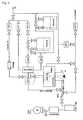
- Fig. 1 is a schematic diagram illustrating an example of a CVD system that can be used to carry out the thin film formation process according to the invention.
- General formula (I) of the present invention shown above represents a rare earth metal complex in which three sec-butylcyclopentadiene molecules are coordinated to one rare earth metal atom. While a sec-butyl group is a group having an optically active site, the formula (I) is not distinguished between an R-form and an S-form. Either an R-form or an S-form is effective. So is an R/S mixture.
- the rare earth metal atom represented by M includes scandium, yttrium, lanthanum, cerium, praseodymium, neodymium, promethium, samarium, europium, gadolinium, terbium, dysprosium, holmium, erbium, thulium, ytterbium, and lutetium.
- the tris(sec-butylcyclopentadienyl) complex of the invention is particularly useful as a material for CVD. Usefulness of the tris(sec-butylcyclopentadienyl) complex of the invention as a CVD material will be discussed.
- the tris(sec-butylcyclopentadienyl) complex of the invention is useful because it is liquid.
- fluidity is required of the source material because a fluid material is easier to deliver.
- a conceivable liquid state of a material include a dissolved state of the material in an organic solvent and a molten state of the material under heating.
- Rare earth metal complexes having an alkyl-substituted cyclopentadienyl ligand include tris(ethylcyclopentadienyl) complexes and tris(isopropylcyclopentadienyl) complexes.
- the tris(ethylcyclopentadienyl) complexes for example, Y complexes, La complexes, Pr complexes, and Er complexes have a melting point of 48° to 51°C, 93° to 95°C, 70° to 73°C, and 55° to 58°C, respectively.
- the tris(isopropylcyclopentadienyl) complexes for example, Pr complexes and Er complexes have a melting point of 50° to 54°C, 63° to 65°C, respectively, and tris(isopropylcyclopentadienyl)La complex is liquid at room temperature.
- the tris(sec-butylcyclopentadienyl) complex of the invention of whichever of Y, La, Pr, and Er, is liquid at room temperature.
- the tris(sec-butylcyclopentadienyl) complex of the invention is useful because it has high heat stability.
- a source for CVD undergoes heating when delivered and/or vaporized. If it has insufficient heat stability, the rare earth metal supply to a thin film will reduce with time, making film composition control difficult. Moreover, troubles will occur due to adhesion of decomposition products to the inside of the CVD system or contamination of the CVD system with decomposition products.
- the volatilization residue of the tris(sec-butylcyclopentadienyl) complexes of the invention in TG analysis. The volatilization residues around 340°C are not more than 1% by mass, which prove that the tris(sec-butylcyclopentadienyl) complexes of the invention volatilize without thermal decomposition.
- the tris(sec-butylcyclopentadienyl) complex of the invention is useful because of satisfactory volatility.
- the tris(sec-butylcyclopentadienyl) complex of the invention is characterized by its superior volatility.
- the tris(sec-butylcyclopentadienyl) complex of the invention can be prepared utilizing well-known reactions with no particular restrictions. Suitable processes for the preparation include salt exchange reaction between an alkali metal complex, e.g., sec-butylcyclopentadienylsodium or sec-butylcyclopentadienylpotassium, and a rare earth metal halide, e.g., a trichloride or a tribromide.
- an alkali metal complex e.g., sec-butylcyclopentadienylsodium or sec-butylcyclopentadienylpotassium
- a rare earth metal halide e.g., a trichloride or a tribromide.
- the material for thin film formation according to the present invention contains the aforementioned tris(sec-butylcyclopentadienyl) complex of the invention as a metal source compound for thin film formation.
- the form of the material depends on the thin film formation technique using the material, including flame hydrolysis deposition, ion plating, MOD processes such as dipping-pyrolysis and sol-gel process, and chemical vapor deposition inclusive of ALD.
- the material for thin film formation of the invention is especially useful as a source of chemical vapor deposition (CVD) in view of the physical properties of the tris(sec-butylcyclopentadienyl) complex.
- the material for thin film formation of the invention is a source for chemical vapor deposition (CVD)
- the form of the material is selected as appropriate to the procedures of the CVD process adopted, such as the source delivery system.
- the source delivery system includes a vapor delivery system in which the material for CVD is vaporized by heating and/or pressure reduction in a chamber and introduced into a deposition reaction site, if desired, together with a carrier gas, e.g., argon, nitrogen or helium, and a liquid delivery system in which the material for CVD is carried in the form of a liquid or a solution to a vaporizer, where it is vaporized by heating and/or pressure reduction and then led to a deposition reaction site.
- a carrier gas e.g., argon, nitrogen or helium
- a liquid delivery system in which the material for CVD is carried in the form of a liquid or a solution to a vaporizer, where it is vaporized by heating and/or pressure reduction and then led to a deposition reaction site.
- the tris(sec-butylcyclopentadienyl) complex of the invention per se is a material for CVD.
- the source delivery systems are also divided into a multi-source system in which a plurality of precursors are used and a single source system using a mixture of a plurality of precursors at a prescribed ratio is used.
- the material for CVD is a mixture or mixed solution containing the tris(sec-butylcyclopentadienyl) complex of the invention and other precursor(s).
- the organic solvent that can be used in the material for CVD is not particularly limited, and any well-known organic solvent is useful.
- examples are alcohols, such as methanol, ethanol, 2-propanol, and n-butanol; acetic esters, such as ethyl acetate, butyl acetate, and methoxyethyl acetate; ether alcohols, such as ethylene glycol monomethyl ether, ethylene glycol monoethyl ether, ethylene glycol monobutyl ether, and diethylene glycol monomethyl ether; ethers, such as tetrahydrofuran, ethylene glycol dimethyl ether, diethylene glycol dimethyl ether, triethylene glycol dimethyl ether, and dibutyl ether; ketones, such as methyl butyl ketone, methyl isobutyl ketone, ethyl butyl ketone, dipropyl ketone, diisobutyl ketone, methyl amyl
- a solvent or a mixture of solvents to be used is selected properly according to, for example, solubility for the solute and the boiling temperature or ignition temperature in relation to the working temperature.
- the total concentration of the tris(sec-butylcyclopentadienyl) complex of the invention and other component(s) in the organic solvent is preferably 0.01 to 2.0 mol/l, still preferably 0.05 to 1.0 mol/l.
- precursors that can be used in combination with the tris(sec-butylcyclopentadienyl) complex of the invention in the multi-component CVD system are not particularly limited, and any precursors well-known in the art for use as CVD materials can be used.
- the amount of the other precursors to be used is determined from a desired thin film composition.
- Examples of the other precursors include compounds formed between a metal and one or more organic coordinating compounds selected from alcohol compounds, glycol compounds, ⁇ -diketones, cyclopentadiene compounds, and so forth.
- Examples of the metal include magnesium, calcium, strontium, barium, titanium, zirconium, hafnium, vanadium, niobium, tantalum, manganese, iron, ruthenium, cobalt, rhodium, iridium, nickel, palladium, platinum, copper, silver, gold, zinc, gallium, indium, germanium, tin, lead, antimony, bismuth, and silicon.
- the material for CVD can contain a nucleophilic reagent to stabilize the tris(sec-butylcyclopentadienyl) complex of the invention and other precursor.
- suitable nucleophilic reagents include ethylene glycol ethers, such as glyme, diglyme, triglyme, and tetraglyme; crown ethers, such as 18-crown-6, dicyclohexyl-18-crown-6, 24-crown-8, dicyclohexyl-24-crown-8, and dibenzo-24-crown-8; polyamines, such as ethylenediamine, N,N'-tetramethylethylenediamine, diethylenetriamine, triethylenetetramine, tetraethylenepentamine, pentaethylenehexamine, 1,1,4,7,7-pentamethyldiethylenetriamine, and 1,1,4,7,10,10-hexamethyl-triethylenetetramine; cyclic polyamines, such as
- the process of forming a thin film according to the present invention is by chemical vapor deposition (CVD) using the material for thin film formation according to the invention as a material for CVD.
- CVD is a process in which a vaporized material and, if necessary, a reactive gas is/are led to a substrate (e.g., a plate) and allowed to decompose and/or react on the substrate, and the decomposition product is allowed to grow and build up in thin film form on the substrate.
- the process of forming a thin film according to the present invention is not particularly restricted by the method of material delivery, the mode of deposition, the film formation conditions, the film formation equipment, and the like. Any conditions and methods commonly known in the art are made use of.
- the reactive gas which can be used if necessary includes oxidizing gases, such as oxygen, ozone, nitrogen dioxide, nitrogen monoxide, water vapor, and hydrogen peroxide; and reducing gases, such as hydrogen.
- Reactive gases that can be used to form a nitride film include organic amine compounds, such as monoalkylamines, dialkylamines, trialkylamines, and alkylenediamines; hydrazine; and ammonia.
- the method of material delivery includes the above-described vapor delivery system, liquid delivery system, single source system, and multi-source system.
- the deposition modes include thermal CVD (only heat is used to cause the vaporized precursor or a mixture of the vaporized precursor and a reactive gas to react to deposit a film), plasma-enhanced CVD (heat and plasma are used), photo-assisted CVD (heat and light are used), photo plasma-assisted CVD (heat, light, and plasma are used), and atomic layer deposition (ALD) in which a deposition reaction of CVD is divided into elementary reaction steps so as to build up a film stepwise on a molecular level.
- the film formation conditions include reaction temperature (the substrate temperature), reaction pressure, and deposition rate.
- the reaction temperature is preferably 160°C or higher at which the tris(sec-butylcyclopentadienyl) complex of the invention reacts sufficiently, still preferably 250° to 800°C.
- the reaction pressure is from atmospheric pressure to 10 Pa for thermal CVD and photo-assisted CVD or from 10 to 2000 Pa for film formation using plasma.
- the deposition rate can be controlled by the material feed conditions (vaporizing temperature and vaporizing pressure) and the reaction temperature and pressure. Too high a deposition rate tends to result in deteriorated characteristics of the resulting thin film, and too low a deposition rate can result in poor productivity.
- a preferred deposition rate ranges from 0.5 to 5000 nm/min, still preferably 1 to 1000 nm/min.
- the film thickness is controlled by the number of cycles to reach a desired film thickness.
- the resulting thin film may be subjected to annealing to obtain improved electrical characteristics.
- the process can have the step of reflowing the thin film.
- the reflow is preferably conducted at 600° to 1200°C, still preferably 700° to 1000°C.
- the material for thin film formation according to the invention and the process of thin film formation according to the invention provide a thin film of desired kind, such as oxide ceramics, nitride ceramics, and glass, in combination with appropriate selection of a precursor of other component, a reactive gas, and film forming conditions.
- a thin film of desired kind such as oxide ceramics, nitride ceramics, and glass
- Applications of the oxide ceramics include high dielectric constant capacitor films for semiconductors, gate insulator films for semiconductors, ferroelectric capacitor films for semiconductors, and superconducting thin films.
- Applications of the nitride ceramics include barrier layers for semiconductors.
- Applications of the glass film include optical glass applications, such as optical fibers, optical waveguides, optical amplifiers, and optical switches.
- the thin films that can be formed by the invention include rare earth metal oxide films such as Ln 2 O 3 ; rare earth metal, aluminum and/or silicon complex oxide films; rare earth metal, zirconium and/or hafnium complex oxide films; rare earth metal, silicon, and zirconium and/or hafnium complex oxide films; rare earth metal, tantalum and/or niobium complex oxide films; rare earth metal, silicon, and tantalum and/or niobium complex oxide films; films of rare earth metal-doped ferroelectric complex oxides (e.g., lead titanate, lead zirconate titanate, bismuth titanate, and the recited complex oxides further containing silicon); rare earth metal-doped silica glass containing silicon oxide and at least one member selected from the group consisting of aluminum oxide, germanium oxide, and a titanium compound; rare earth metal-doped fluoride glass containing at least one member selected from the group consisting of zirconium fluoride, barium fluoride, lanthanum
- Examples 1 to 4 present examples of the tris(sec-butylcyclopentadienyl complexes of the invention.
- Examples 5 to 8 present examples of the thin film formation materials of the invention containing each of the tris(sec-butylcyclopentadienyl complexes obtained in Examples 1 to 4 and examples of the film formation process of the invention using each of the film formation materials.
- vapor pressure of each of the tris(sec-butylcyclopentadienyl) complexes of the invention obtained in Examples 1, 3, and 4 and comparative compounds was measured.
- An yttrium-silicon complex oxide thin film was formed on a silicon wafer using the CVD system shown in Fig. 1 under the following conditions.
- the thin film was measured for thickness and composition by X-ray fluorescence analysis. The results of measurement are shown below.
- Yttrium source tris(sec-butylcyclopentadienyl)yttrium obtained in Example 1 (source temperature: 180°C; pressure: 100 to 200 Pa; carrier gas: 200 sccm argon)
- Silicon source tri(dimethylamino)silane (source temperature: 20°C; pressure: 0.1 MPa; carrier gas: 35 sccm argon)
- Oxidizing gas 50 sccm oxygen Reaction pressure: 660 Pa Reaction temperature: 450°C
- Tetrahydropyran was dried over metallic sodium wire and purified by distillation in an argon stream. The initial 10 mass% fraction and the final 10 mass% fraction were discarded to obtain a solvent with a water content less than 1 ppm.
- To 500 ml of the thus prepared solvent were added 0.010 mol of the tris(sec-butylcyclopentadienyl)lanthanum obtained in Example 2 and 0.04 mol of tetrakis(1,1-dimethyl-2-methoxyethoxy)hafnium in an argon stream to prepare a CVD material.
- a lanthanum-hafnium complex oxide film was formed on a silicon wafer using the resulting CVD material by the use of the CVD system shown in Fig.
- Ethylcyclohexane was dried over metallic sodium wire and purified by distillation in an argon stream. The initial 10 mass% fraction and the final 10 mass% fraction were discarded to obtain a solvent with a water content less than 1 ppm.
- To 500 ml of the thus prepared solvent was added 0.250 mol of the tris(sec-butylcyclopentadienyl)praseodymium obtained in Example 3 in an argon stream to prepare a CVD material.
- a thin film was formed using the resulting CVD material by the use of the CVD system shown in Fig. 2 under the following conditions and in accordance with the following steps.
- the resulting thin film was analyzed in the same manner as in Example 1. The results are shown below. (Film formation conditions) Reaction temperature (substrate temperature): 450°C Reactive gas: water vapor
- Ethylcyclohexane was dried over metallic sodium wire and purified by distillation in an argon stream. The initial 10 mass% fraction and the final 10 mass% fraction were discarded to obtain a solvent with a water content less than 1 ppm.
- To 500 ml of the thus prepared solvent was added 0.250 mol of the tris(sec-butylcyclopentadienyl)erbium obtained in Example 4 in an argon stream to prepare a CVD material.
- a thin film was formed using the resulting CVD material by the use of the CVD system shown in Fig. 2 under the following conditions and in accordance with the following steps.
- the resulting thin film was analyzed in the same manner as in Example 1. The results are shown below. (Film formation conditions) Reaction temperature (substrate temperature): 450°C Reactive gas: water vapor
- the resulting tris(sec-butylcyclopentadienyl) complexes of the invention are liquid at room temperature and excellent in heat resistance and volatility. Furthermore, Examples 5 to 8 prove that the thin film forming material containing the tris(sec-butylcyclopentadienyl) complex of the invention provides a thin film with satisfactory deliverability and compositional controllability when used in accordance with the thin film formation process of the invention.
- the rare earth metal complex of the invention which has a sec-butylcyclopentadiene ligand, is liquid at room temperature and has satisfactory heat stability. Therefore, it is useful as a material for thin film formation, especially a material for CVD. Use of the rare earth metal complex of the invention enables establishment of a CVD process for forming a rare earth metal-containing thin film.
Landscapes
- Chemical & Material Sciences (AREA)
- Organic Chemistry (AREA)
- General Chemical & Material Sciences (AREA)
- Chemical Kinetics & Catalysis (AREA)
- Engineering & Computer Science (AREA)
- Materials Engineering (AREA)
- Mechanical Engineering (AREA)
- Metallurgy (AREA)
- Chemical Vapour Deposition (AREA)
- Formation Of Insulating Films (AREA)
- Oxygen, Ozone, And Oxides In General (AREA)
- Compounds Of Alkaline-Earth Elements, Aluminum Or Rare-Earth Metals (AREA)
Abstract
Description
- This invention relates to a novel rare earth metal complex having sec-butylcyclopentadiene as a ligand, a material for thin film formation containing the rare earth metal complex, and a process for forming a rare earth metal-containing thin film using the material for thin film formation. The novel rare earth metal complex of the present invention is useful as a material for thin film formation, particularly for chemical vapor deposition (hereinafter sometimes abbreviated as CVD). A rare earth metal-containing thin film formed by using the material of the invention is useful as, for example, a member of electronic components or a member of optical communication devices using optical glass.
- A thin film containing a rare earth metal is used as a member of electronic components, such as high dielectric constant capacitors, ferroelectric capacitors, gate insulators, and superconducting thin films, and an element of optical communication devices using optical glass, such as laser oscillators, optical fibers, optical waveguides, optical amplifiers, and optical switches.
- Processes for forming a thin film for the above applications include flame hydrolysis deposition, sputtering, ion plating, MOD techniques including dipping-pyrolysis process and sol-gel process, and chemical vapor deposition. Chemical vapor deposition processes inclusive of ALD (atomic layer deposition) are the most suitable for many advantages, such as compositional controllability, excellent step coverage, suitability to large volume production, and capability of hybrid integration.
- MOD and CVD processes use an organic metal compound as a precursor supplying a rare earth metal to a thin film. Having a relatively high vapor pressure, cyclopentadienyl complexes are used as a precursor particularly in processes involving vaporization. For example,
Patent Document 1 discloses a CVD process using a tris(alkylcyclopentadienyl) complex of a rare earth metal. The description refers to a sec-butyl group as the alkyl group but gives no specific reference to a complex using a sec-butylcyclopentadiene nor mention of the preparation therefor, evaluation of the physical properties thereof, and thin film formation using the same. Patent Document 2 discloses a complex using an ethylcyclopentadiene having satisfactory volatility characteristics. All the proposed complexes are solid, which are inconvenient to deliver as a CVD material. Moreover, the ethylcyclopentadienyl complex of JP-A-2002-338590 leaves about 20% by mass of a volatilization residue in differential thermal analysis in argon, indicating a problem with heat resistance. - Of known tris(alkylcyclopentadienyl) complexes of a rare earth metal those which are liquid at room temperature include tris(butylcyclopentadienyl)yttrium, tris(butylcyclopentadienyl)praseodymium, and tris(butylcyclopentadienyl)erbium. However, they involve the problem that their volatility reduces with increase of molecular weight.
- Patent Document 1: U.S. Patent 4,882,206
Patent Document 2: JP-A-2002-338590 - A problem to be solved is that we have not yet developed a rare earth metal complex that is useful as a material for forming a rare earth metal-containing thin film and excellent in deliverability, heat resistance, and volatility.
- An object of the present invention is to provide a rare earth metal complex which is excellent in heat resistance and volatility and which is liquid and therefore suitable as a material for thin film formation, a material for thin film formation containing the rare earth metal complex, and a process for forming a thin film using the material for thin film formation.
- As a result of extensive investigation, the present inventors have found that the above problem is solved by a rare earth metal complex having cyclopentadiene having introduced therein a sec-butyl group as a substituent, i.e., sec-butylcyclopentadiene as a ligand. They have reached the present invention based on this finding.
- The present invention provides a tris(sec-butylcyclopentadienyl) complex of a rare earth metal represented by general formula (I) shown below; a material for thin film formation containing the complex; and a process of forming a rare earth metal-containing thin film using the material for thin film formation.
-

- Fig. 1 is a schematic diagram illustrating an example of a CVD system that can be used to carry out the thin film formation process according to the invention.
- Fig. 2 is a schematic diagram illustrating another example of a CVD system that can be used to carry out the thin film formation process according to the invention.
- General formula (I) of the present invention shown above represents a rare earth metal complex in which three sec-butylcyclopentadiene molecules are coordinated to one rare earth metal atom. While a sec-butyl group is a group having an optically active site, the formula (I) is not distinguished between an R-form and an S-form. Either an R-form or an S-form is effective. So is an R/S mixture. The rare earth metal atom represented by M includes scandium, yttrium, lanthanum, cerium, praseodymium, neodymium, promethium, samarium, europium, gadolinium, terbium, dysprosium, holmium, erbium, thulium, ytterbium, and lutetium.
- Compared with other known alkylcyclopentadienyl complexes, the tris(sec-butylcyclopentadienyl) complex of the invention is particularly useful as a material for CVD.
Usefulness of the tris(sec-butylcyclopentadienyl) complex of the invention as a CVD material will be discussed. - First of all, the tris(sec-butylcyclopentadienyl) complex of the invention is useful because it is liquid. In CVD and ALD, fluidity is required of the source material because a fluid material is easier to deliver. A conceivable liquid state of a material include a dissolved state of the material in an organic solvent and a molten state of the material under heating. In using a material that is solid at room temperature in either liquid state, however, it is difficult to avoid a problem of precipitation into a solid phase in a liquid source deliver system caused, e.g., by a change in feed rate.
- Rare earth metal complexes having an alkyl-substituted cyclopentadienyl ligand include tris(ethylcyclopentadienyl) complexes and tris(isopropylcyclopentadienyl) complexes. The tris(ethylcyclopentadienyl) complexes, for example, Y complexes, La complexes, Pr complexes, and Er complexes have a melting point of 48° to 51°C, 93° to 95°C, 70° to 73°C, and 55° to 58°C, respectively. The tris(isopropylcyclopentadienyl) complexes, for example, Pr complexes and Er complexes have a melting point of 50° to 54°C, 63° to 65°C, respectively, and tris(isopropylcyclopentadienyl)La complex is liquid at room temperature. On the other hand, the tris(sec-butylcyclopentadienyl) complex of the invention, of whichever of Y, La, Pr, and Er, is liquid at room temperature.
- Secondly, the tris(sec-butylcyclopentadienyl) complex of the invention is useful because it has high heat stability. A source for CVD undergoes heating when delivered and/or vaporized. If it has insufficient heat stability, the rare earth metal supply to a thin film will reduce with time, making film composition control difficult. Moreover, troubles will occur due to adhesion of decomposition products to the inside of the CVD system or contamination of the CVD system with decomposition products. In Examples given later are shown the volatilization residue of the tris(sec-butylcyclopentadienyl) complexes of the invention in TG analysis. The volatilization residues around 340°C are not more than 1% by mass, which prove that the tris(sec-butylcyclopentadienyl) complexes of the invention volatilize without thermal decomposition.
- Thirdly, the tris(sec-butylcyclopentadienyl) complex of the invention is useful because of satisfactory volatility. Compared with trisbutylcyclopentadienyl complexes, which are liquid and equal in molecular weight, the tris(sec-butylcyclopentadienyl) complex of the invention is characterized by its superior volatility.
- The tris(sec-butylcyclopentadienyl) complex of the invention can be prepared utilizing well-known reactions with no particular restrictions. Suitable processes for the preparation include salt exchange reaction between an alkali metal complex, e.g., sec-butylcyclopentadienylsodium or sec-butylcyclopentadienylpotassium, and a rare earth metal halide, e.g., a trichloride or a tribromide.
- The material for thin film formation according to the present invention contains the aforementioned tris(sec-butylcyclopentadienyl) complex of the invention as a metal source compound for thin film formation. The form of the material depends on the thin film formation technique using the material, including flame hydrolysis deposition, ion plating, MOD processes such as dipping-pyrolysis and sol-gel process, and chemical vapor deposition inclusive of ALD. The material for thin film formation of the invention is especially useful as a source of chemical vapor deposition (CVD) in view of the physical properties of the tris(sec-butylcyclopentadienyl) complex.
- Where the material for thin film formation of the invention is a source for chemical vapor deposition (CVD), the form of the material is selected as appropriate to the procedures of the CVD process adopted, such as the source delivery system.
- The source delivery system includes a vapor delivery system in which the material for CVD is vaporized by heating and/or pressure reduction in a chamber and introduced into a deposition reaction site, if desired, together with a carrier gas, e.g., argon, nitrogen or helium, and a liquid delivery system in which the material for CVD is carried in the form of a liquid or a solution to a vaporizer, where it is vaporized by heating and/or pressure reduction and then led to a deposition reaction site. When applied to the vapor delivery system, the tris(sec-butylcyclopentadienyl) complex of the invention per se is a material for CVD. In the case of liquid delivery system, the tris(sec-butylcyclopentadienyl) complex of the invention per se or a solution of the complex in an organic solvent is a material for CVD.
- In a multi-component CVD process, the source delivery systems are also divided into a multi-source system in which a plurality of precursors are used and a single source system using a mixture of a plurality of precursors at a prescribed ratio is used. In the case of the single source system, the material for CVD is a mixture or mixed solution containing the tris(sec-butylcyclopentadienyl) complex of the invention and other precursor(s).
- The organic solvent that can be used in the material for CVD is not particularly limited, and any well-known organic solvent is useful. Examples are alcohols, such as methanol, ethanol, 2-propanol, and n-butanol; acetic esters, such as ethyl acetate, butyl acetate, and methoxyethyl acetate; ether alcohols, such as ethylene glycol monomethyl ether, ethylene glycol monoethyl ether, ethylene glycol monobutyl ether, and diethylene glycol monomethyl ether; ethers, such as tetrahydrofuran, ethylene glycol dimethyl ether, diethylene glycol dimethyl ether, triethylene glycol dimethyl ether, and dibutyl ether; ketones, such as methyl butyl ketone, methyl isobutyl ketone, ethyl butyl ketone, dipropyl ketone, diisobutyl ketone, methyl amyl ketone, cyclohexanone, and methylcyclohexanone; hydrocarbons, such as hexane, cyclohexane, methylcyclohexane, ethylcyclohexane, heptane, octane, toluene, and xylene; hydrocarbons having a cyano group, such as 1-cyanopropane, 1-cyanobutane, 1-cyanohexane, cyanocyclohexane, cyanobenzene, 1,3-dicyanopropane, 1,4-dicyanobutane, 1,6-dicyanohexane, 1,4-dicyanocyclohexane, and 1,4-dicyanobenzene; pyridine, and lutidine. A solvent or a mixture of solvents to be used is selected properly according to, for example, solubility for the solute and the boiling temperature or ignition temperature in relation to the working temperature. In using these organic solvents, the total concentration of the tris(sec-butylcyclopentadienyl) complex of the invention and other component(s) in the organic solvent is preferably 0.01 to 2.0 mol/l, still preferably 0.05 to 1.0 mol/l.
- Other precursors that can be used in combination with the tris(sec-butylcyclopentadienyl) complex of the invention in the multi-component CVD system are not particularly limited, and any precursors well-known in the art for use as CVD materials can be used. The amount of the other precursors to be used is determined from a desired thin film composition.
- Examples of the other precursors include compounds formed between a metal and one or more organic coordinating compounds selected from alcohol compounds, glycol compounds, β-diketones, cyclopentadiene compounds, and so forth. Examples of the metal include magnesium, calcium, strontium, barium, titanium, zirconium, hafnium, vanadium, niobium, tantalum, manganese, iron, ruthenium, cobalt, rhodium, iridium, nickel, palladium, platinum, copper, silver, gold, zinc, gallium, indium, germanium, tin, lead, antimony, bismuth, and silicon.
- If desired, the material for CVD can contain a nucleophilic reagent to stabilize the tris(sec-butylcyclopentadienyl) complex of the invention and other precursor. Examples of suitable nucleophilic reagents include ethylene glycol ethers, such as glyme, diglyme, triglyme, and tetraglyme; crown ethers, such as 18-crown-6, dicyclohexyl-18-crown-6, 24-crown-8, dicyclohexyl-24-crown-8, and dibenzo-24-crown-8; polyamines, such as ethylenediamine, N,N'-tetramethylethylenediamine, diethylenetriamine, triethylenetetramine, tetraethylenepentamine, pentaethylenehexamine, 1,1,4,7,7-pentamethyldiethylenetriamine, and 1,1,4,7,10,10-hexamethyl-triethylenetetramine; cyclic polyamines, such as cyclam and cyclen; β-ketonic esters or β-diketones, such as methyl acetoacetate, ethyl acetoacetate, and 2-methoxyethyl acetoacetate. The nucleophilic reagent as a stabilizer is used in an amount of 0.1 to 10 mol, preferably 1 to 4 mol, per mole of the metal compound.
- The process of forming a thin film according to the present invention is by chemical vapor deposition (CVD) using the material for thin film formation according to the invention as a material for CVD. CVD is a process in which a vaporized material and, if necessary, a reactive gas is/are led to a substrate (e.g., a plate) and allowed to decompose and/or react on the substrate, and the decomposition product is allowed to grow and build up in thin film form on the substrate. The process of forming a thin film according to the present invention is not particularly restricted by the method of material delivery, the mode of deposition, the film formation conditions, the film formation equipment, and the like. Any conditions and methods commonly known in the art are made use of.
- The reactive gas which can be used if necessary includes oxidizing gases, such as oxygen, ozone, nitrogen dioxide, nitrogen monoxide, water vapor, and hydrogen peroxide; and reducing gases, such as hydrogen. Reactive gases that can be used to form a nitride film include organic amine compounds, such as monoalkylamines, dialkylamines, trialkylamines, and alkylenediamines; hydrazine; and ammonia.
- The method of material delivery includes the above-described vapor delivery system, liquid delivery system, single source system, and multi-source system.
- The deposition modes include thermal CVD (only heat is used to cause the vaporized precursor or a mixture of the vaporized precursor and a reactive gas to react to deposit a film), plasma-enhanced CVD (heat and plasma are used), photo-assisted CVD (heat and light are used), photo plasma-assisted CVD (heat, light, and plasma are used), and atomic layer deposition (ALD) in which a deposition reaction of CVD is divided into elementary reaction steps so as to build up a film stepwise on a molecular level.
- The film formation conditions include reaction temperature (the substrate temperature), reaction pressure, and deposition rate. The reaction temperature is preferably 160°C or higher at which the tris(sec-butylcyclopentadienyl) complex of the invention reacts sufficiently, still preferably 250° to 800°C. The reaction pressure is from atmospheric pressure to 10 Pa for thermal CVD and photo-assisted CVD or from 10 to 2000 Pa for film formation using plasma. The deposition rate can be controlled by the material feed conditions (vaporizing temperature and vaporizing pressure) and the reaction temperature and pressure. Too high a deposition rate tends to result in deteriorated characteristics of the resulting thin film, and too low a deposition rate can result in poor productivity. A preferred deposition rate ranges from 0.5 to 5000 nm/min, still preferably 1 to 1000 nm/min. In the case of ALD, the film thickness is controlled by the number of cycles to reach a desired film thickness.
- In the film formation process of the present invention, the resulting thin film may be subjected to annealing to obtain improved electrical characteristics. Where step coverage is required, the process can have the step of reflowing the thin film. The reflow is preferably conducted at 600° to 1200°C, still preferably 700° to 1000°C.
- The material for thin film formation according to the invention and the process of thin film formation according to the invention provide a thin film of desired kind, such as oxide ceramics, nitride ceramics, and glass, in combination with appropriate selection of a precursor of other component, a reactive gas, and film forming conditions. Applications of the oxide ceramics include high dielectric constant capacitor films for semiconductors, gate insulator films for semiconductors, ferroelectric capacitor films for semiconductors, and superconducting thin films. Applications of the nitride ceramics include barrier layers for semiconductors. Applications of the glass film include optical glass applications, such as optical fibers, optical waveguides, optical amplifiers, and optical switches.
- The thin films that can be formed by the invention include rare earth metal oxide films such as Ln2O3; rare earth metal, aluminum and/or silicon complex oxide films; rare earth metal, zirconium and/or hafnium complex oxide films; rare earth metal, silicon, and zirconium and/or hafnium complex oxide films;
rare earth metal, tantalum and/or niobium complex oxide films; rare earth metal, silicon, and tantalum and/or niobium complex oxide films; films of rare earth metal-doped ferroelectric complex oxides (e.g., lead titanate, lead zirconate titanate, bismuth titanate, and the recited complex oxides further containing silicon); rare earth metal-doped silica glass containing silicon oxide and at least one member selected from the group consisting of aluminum oxide, germanium oxide, and a titanium compound; rare earth metal-doped fluoride glass containing at least one member selected from the group consisting of zirconium fluoride, barium fluoride, lanthanum fluoride, aluminum fluoride, and sodium fluoride; and rare earth metal-doped, tellurite glass, borate glass, chalcogenite glass, sulfide glass, bismuth oxide glass, phosphosilicate glass or borosilicate glass. - The present invention will now be illustrated in greater detail with reference to Examples and Evaluation Example, but it should be understood that the present invention is not construed as being limited thereto.
Examples 1 to 4 present examples of the tris(sec-butylcyclopentadienyl complexes of the invention. Examples 5 to 8 present examples of the thin film formation materials of the invention containing each of the tris(sec-butylcyclopentadienyl complexes obtained in Examples 1 to 4 and examples of the film formation process of the invention using each of the film formation materials. In Evaluation Example, vapor pressure of each of the tris(sec-butylcyclopentadienyl) complexes of the invention obtained in Examples 1, 3, and 4 and comparative compounds was measured. - Into a reaction flask purged with dry argon were put 0.948 mol of sodium hydride having been thoroughly washed with hexane and 30 ml of tetrahydrofuran, and 0.948 mol of sec-butylcyclopentadiene (racemate) was added thereto dropwise at 10°C or lower. After the dropwise addition, the mixture was stirred at 30°C until gas evolution ceased to obtain a solution. The solution was cooled to 10°C or lower and added to a mixture of 0.190 mol of yttrium trichloride and 30 ml of tetrahydrofuran while cooling so that the temperature of the reaction system might not exceed 10°C. After stirring the reaction mixture at room temperature for 10 hours, the solvent was removed by evaporation. To the residue was added 600 ml of toluene, and the solid phase was separated by filtration. The filtrate was freed of the solvent by evaporation under reduced pressure and then distilled under reduced pressure by use of a light-shielding distillation apparatus. A yellow liquid weighing 39.4 g (yield: 46%) was obtained as a fraction at a vapor temperature of 169° to 175°C and 35 Pa. As a result of analyses, the yellow liquid was identified to be tris(sec-butylcyclopentadienyl)yttrium. The results of the analyses are shown below.
- Results of analyses
- (1) Elemental analysis (CH: CHN analyzer; metal analysis: ICP-MS)
C: 71.0 mass% (calcd.: 71.67 mass%); H: 8.62 mass% (calcd.: 8.69 mass%); Y: 19.5 mass% (calcd.: 19.65 mass%) - (2) Molecular weight (TOF mass spectrum): 456.5
- (3) Impurity element analysis (chlorine: X-ray fluorescence analysis; sodium: ICP-MS) Cl: 100 ppm or less; Na: 37 ppb
- (4) TG-DTA (Ar: 100 ml/min; temperature rise: 10°C/min; sample weight: 14.922 mg) 50% mass loss temperature: 307°C; residue at 336°C: 0.39 mass%
- Into a reaction flask purged with dry argon were put 0.816 mol of sodium hydride having been thoroughly washed with hexane and 30 ml of tetrahydrofuran, and 0.816 mol of sec-butylcyclopentadiene (racemate) was added thereto dropwise at 10°C or lower. After the dropwise addition, the mixture was stirred at 30°C until gas evolution ceased to obtain a solution. The solution was cooled to 10°C or lower and added to a mixture of 0.204 mol of lanthanum trichloride and 30 ml of tetrahydrofuran while cooling so that the temperature of the reaction system might not exceed 10°C. After stirring the reaction mixture at room temperature for 30 hours, the solid phase was removed by filtration. The filtrate was freed of the solvent by evaporation under reduced pressure and then distilled under reduced pressure by use of a light-shielding distillation apparatus. A pale yellow liquid weighing 43.1 g (yield: 42%) was collected as a fraction at a vapor temperature of 205° to 207°C and 100 Pa. As a result of analyses, the pale yellow liquid was identified to be tris(sec-butylcyclopentadienyl)lanthanum. The results of the analyses are shown below.
- Results of analyses
- (1) Elemental analysis (CH: CHN analyzer; metal analysis: ICP-MS)
C: 63.9 mass% (calcd.: 64.53 mass%); H: 7.77 mass% (calcd.: 7.82 mass%); La: 27.5 mass% (calcd.: 27.64 mass%) - (2) Molecular weight (TOF mass spectrum): 502.5
- (3) Impurity element analysis (chlorine: X-ray fluorescence analysis; sodium: ICP-MS) Cl: 100 ppm or less; Na: 22 ppb
- (4) TG-DTA (Ar: 100 ml/min; temperature rise: 10°C/min; sample weight: 14.063 mg) 50% mass loss temperature: 301°C; residue at 334°C: 0.33 mass%
- Into a reaction flask purged with dry argon were put 0.158 mol of sodium hydride having been thoroughly washed with hexane and 50 ml of tetrahydrofuran, and 0.158 mol of sec-butylcyclopentadiene (racemate) was added thereto dropwise at 10°C or lower. After the dropwise addition, the mixture was stirred at 30°C until gas evolution ceased to obtain a solution. The solution was cooled to 10°C or lower and added to a mixture of 0.040 mol of praseodymium trichloride and 15 ml of tetrahydrofuran while cooling so that the temperature of the reaction system might not exceed 10°C. After stirring the reaction mixture at room temperature for 10 hours, the solvent was removed by evaporation under reduced pressure. To the residue was added 100 ml of hexane, and the solid phase was removed by filtration. The filtrate was freed of the solvent by evaporation under reduced pressure and then distilled under reduced pressure by use of a light-shielding distillation apparatus. A green liquid weighing 11.3 g (yield: 56%) was collected as a fraction at a vapor temperature of 170°C and 35 Pa. As a result of analyses, the green liquid was identified to be tris(sec-butylcyclopentadienyl)praseodymium. The results of the analyses are shown below.
- Results of analyses
- (1) Elemental analysis (CH: CHN analyzer; metal analysis: ICP-MS)
C: 64.0 mass% (calcd.: 64.28 mass%); H: 7.71 mass% (calcd.: 7.79 mass%); Pr: 27.7 mass% (calcd.: 27.93 mass%) - (2) Molecular weight (TOF mass spectrum): 504.5
- (3) Impurity element analysis (chlorine: X-ray fluorescence analysis; sodium: ICP-MS) Cl: 100 ppm or less; Na: 30 ppb
- (4) TG-DTA (Ar: 100 ml/min; temperature rise: 10°C/min; sample weight: 14.632 mg) 50% mass loss temperature: 302°C; residue at 335°C: 0.90 mass%
- Into a reaction flask purged with dry argon were put 0.158 mol of sodium hydride having been thoroughly washed with hexane and 50 ml of tetrahydrofuran, and 0.158 mol of sec-butylcyclopentadiene (racemate) was added thereto dropwise at 10°C or lower. After the dropwise addition, the mixture was stirred at 30°C until gas evolution ceased to obtain a reaction mixture. The reaction mixture was cooled to 10°C or lower and added to a mixture of 0.040 mol of erbium trichloride and 15 ml of tetrahydrofuran while cooling so that the temperature of the reaction system might not exceed 10°C. After stirring the reaction mixture at room temperature for 30 hours, the solvent was removed by evaporation. To the residue was added 50 ml of hexane, and the solid phase was removed by filtration. The filtrate was freed of the solvent by evaporation under reduced pressure and then distilled under reduced pressure by use of a light-shielding distillation apparatus. A brown liquid weighing 8.24 g (yield: 39%) was collected as a fraction at a vapor temperature of 175°C and 40 Pa. As a result of analyses, the brown liquid was identified to be tris(sec-butylcyclopentadienyl)erbium. The results of the analyses are shown below.
- Results of analyses
- (1) Elemental analysis (CH: CHN analyzer; metal analysis: ICP-MS) C: 61.0 mass% (calcd.: 61.09 mass%); H: 7.26 mass% (calcd.: 7.40 mass%); Er: 31.4 mass% (calcd.: 31.51 mass%)
- (2) Molecular weight (TOF mass spectrum): 530.9
- (3) Impurity element analysis (chlorine: X-ray fluorescence analysis; sodium: ICP-MS) Cl: 100 ppm or less; Na: 44 ppb
- (4) TG-DTA (Ar: 100 ml/min; temperature rise: 10°C/min; sample weight: 13.597 mg) 50% mass loss temperature: 309°C; residue at 340°C: 0.99 mass%
- Each of the complexes obtained in Examples 1, 3, and 4 and
comparative compounds 1 to 4 which are liquid at room temperature and equal in molecular weight to the corresponding complexes of the invention was measured for vapor pressure. Vapor pressure measurement was carried out by measuring the saturated vapor temperature near the liquid surface under a fixed pressure. The results obtained are shown in Tables 1 through 3. -
TABLE 1 Comparison of Yttrium Complexes Rare Earth Metal Complex Vapor Pressure (Pa/°C) Tris(s-butylcyclopentadienyl)yttrium (Example 1) 35/173 Tris(butylcyclopentadienyl)yttrium (comparative compound 1) 35/183 Tris(isobutylcyclopentadienyl)yttrium (comparative compound 2) 35/178 -
TABLE 2 Comparison of Praseodymium Complexes Rare Earth Metal Complex Vapor Pressure Tris(s-butylcyclopentadienyl)praseodymium (Example 3) 30/168 Tris(butylcyclopentadienyl)praseodymium (comparative compound 3) 30/180 -
TABLE 3 Comparison of Erbium Complexes Rare Earth Metal Complex Vapor Pressure (Pa/°C) Tris(s-butylcyclopentadienyl)erbium (Example 4) 30/166 Tris(butylcyclopentadienyl)erbium (comparative compound 4) 14/230 - An yttrium-silicon complex oxide thin film was formed on a silicon wafer using the CVD system shown in Fig. 1 under the following conditions. The thin film was measured for thickness and composition by X-ray fluorescence analysis. The results of measurement are shown below.
(Film formation conditions)
Yttrium source: tris(sec-butylcyclopentadienyl)yttrium obtained in Example 1 (source temperature: 180°C; pressure: 100 to 200 Pa; carrier gas: 200 sccm argon)
Silicon source: tri(dimethylamino)silane (source temperature: 20°C; pressure:
0.1 MPa; carrier gas: 35 sccm argon) Oxidizing gas: 50 sccm oxygen Reaction pressure: 660 Pa Reaction temperature: 450°C Film forming time: 2 min
(Results of measurement)
Film thickness: 24 nm
Composition (by mole): Y/Si=1.00/1.06 - Tetrahydropyran was dried over metallic sodium wire and purified by distillation in an argon stream. The initial 10 mass% fraction and the final 10 mass% fraction were discarded to obtain a solvent with a water content less than 1 ppm. To 500 ml of the thus prepared solvent were added 0.010 mol of the tris(sec-butylcyclopentadienyl)lanthanum obtained in Example 2 and 0.04 mol of tetrakis(1,1-dimethyl-2-methoxyethoxy)hafnium in an argon stream to prepare a CVD material. A lanthanum-hafnium complex oxide film was formed on a silicon wafer using the resulting CVD material by the use of the CVD system shown in Fig. 2 under the following conditions. The resulting thin film was analyzed in the same manner as in Example 1. The results are shown below.
(Film formation conditions) Vaporizer temperature: 195°C CVD material flow rate: 20 mg/min Oxygen gas flow rate: 200 sccm Reaction pressure: 1000 Pa Reaction time: 2 mins Substrate temperature: 450°C Carrier Ar gas: 200 sccm (Results of measurement) Film thickness: 21 nm Composition (by mole): La/Hf=1.00/3.87 - Ethylcyclohexane was dried over metallic sodium wire and purified by distillation in an argon stream. The initial 10 mass% fraction and the final 10 mass% fraction were discarded to obtain a solvent with a water content less than 1 ppm. To 500 ml of the thus prepared solvent was added 0.250 mol of the tris(sec-butylcyclopentadienyl)praseodymium obtained in Example 3 in an argon stream to prepare a CVD material. A thin film was formed using the resulting CVD material by the use of the CVD system shown in Fig. 2 under the following conditions and in accordance with the following steps. The resulting thin film was analyzed in the same manner as in Example 1. The results are shown below.
(Film formation conditions) Reaction temperature (substrate temperature): 450°C Reactive gas: water vapor - A series of steps (1) through (4) below, which make one cycle, were repeated 100 times (cycles). Finally, the film formed was annealed at 600°C for 3 minutes.
- (1) The CVD material vaporized under conditions of a vaporizer temperature of 195°C, a material flow rate of 20 mg/min, and a vaporizer pressure of 100 Pa was introduced into the vacuum chamber and deposited under 100 Pa for 1 second.
- (2) The chamber was purged with argon for 2 seconds to expel any unreacted material.
- (3) Water vapor was introduced to cause reaction under 100 Pa for 1 second.
- (4) The chamber was purged with argon for 2 seconds to remove any unreacted material.
- Film thickness: 16 nm
- Ethylcyclohexane was dried over metallic sodium wire and purified by distillation in an argon stream. The initial 10 mass% fraction and the final 10 mass% fraction were discarded to obtain a solvent with a water content less than 1 ppm. To 500 ml of the thus prepared solvent was added 0.250 mol of the tris(sec-butylcyclopentadienyl)erbium obtained in Example 4 in an argon stream to prepare a CVD material. A thin film was formed using the resulting CVD material by the use of the CVD system shown in Fig. 2 under the following conditions and in accordance with the following steps. The resulting thin film was analyzed in the same manner as in Example 1. The results are shown below.
(Film formation conditions) Reaction temperature (substrate temperature): 450°C Reactive gas: water vapor - A series of steps (1) through (4) below, which make one cycle, were repeated 40 times (cycles). Finally, the film formed was annealed at 600°C for 3 minutes.
(1) The CVD material vaporized under conditions of a vaporizer temperature of 195°C, a material flow rate of 20 mg/min, and a vaporizer pressure of 100 Pa was introduced into the vacuum chamber and deposited under 100 Pa for 1 second.
(2) The chamber was purged with argon for 2 seconds to expel any unreacted material.
(3) Water vapor was introduced to cause reaction under 100 Pa for 1 second.
(4) The chamber was purged with argon for 2 seconds to remove any unreacted material.(Results of measurement) Film thickness: 7 nm - As is apparent from Examples 1 to 4 and Evaluation Example, the resulting tris(sec-butylcyclopentadienyl) complexes of the invention are liquid at room temperature and excellent in heat resistance and volatility. Furthermore, Examples 5 to 8 prove that the thin film forming material containing the tris(sec-butylcyclopentadienyl) complex of the invention provides a thin film with satisfactory deliverability and compositional controllability when used in accordance with the thin film formation process of the invention.
- The rare earth metal complex of the invention, which has a sec-butylcyclopentadiene ligand, is liquid at room temperature and has satisfactory heat stability. Therefore, it is useful as a material for thin film formation, especially a material for CVD. Use of the rare earth metal complex of the invention enables establishment of a CVD process for forming a rare earth metal-containing thin film.
Claims (7)
- A tris(sec-butylcyclopentadienyl) complex of a rare earth metal represented by general formula (I):

- The tris(sec-butylcyclopentadienyl) complex according to claim 1, wherein M is yttrium.
- The tris(sec-butylcyclopentadienyl) complex according to claim 1, wherein M is lanthanum.
- The tris(sec-butylcyclopentadienyl) complex according to claim 1, wherein M is praseodymium.
- The tris(sec-butylcyclopentadienyl) complex according to claim 1, wherein M is erbium.
- A material for thin film formation comprising the tris(sec-butylcyclopentadienyl) complex according to any one of claims 1 to 5.
- A process of forming a thin film, comprising vaporizing the material for thin film formation according to claim 6, introducing the resulting vapor containing the tris(sec-butylcyclopentadienyl) complex onto a substrate, and causing the tris(sec-butylcyclopentadienyl) complex to decompose and/or chemically react to form a rare earth metal-containing thin film on the substrate.
Applications Claiming Priority (2)
| Application Number | Priority Date | Filing Date | Title |
|---|---|---|---|
| JP2003299736A JP4312006B2 (en) | 2003-08-25 | 2003-08-25 | Rare earth metal complex, raw material for thin film formation, and method for producing thin film |
| PCT/JP2004/011043 WO2005019234A1 (en) | 2003-08-25 | 2004-08-02 | Rare earth metal complex, material for thin-film formation, and process for producing thin film |
Publications (3)
| Publication Number | Publication Date |
|---|---|
| EP1659130A1 true EP1659130A1 (en) | 2006-05-24 |
| EP1659130A4 EP1659130A4 (en) | 2008-11-05 |
| EP1659130B1 EP1659130B1 (en) | 2011-08-31 |
Family
ID=34213776
Family Applications (1)
| Application Number | Title | Priority Date | Filing Date |
|---|---|---|---|
| EP04771133A Expired - Lifetime EP1659130B1 (en) | 2003-08-25 | 2004-08-02 | Rare earth metal complex, material for thin-film formation, and process for producing thin film |
Country Status (6)
| Country | Link |
|---|---|
| US (1) | US20060275545A1 (en) |
| EP (1) | EP1659130B1 (en) |
| JP (1) | JP4312006B2 (en) |
| KR (1) | KR20060058710A (en) |
| CN (1) | CN1832952A (en) |
| WO (1) | WO2005019234A1 (en) |
Cited By (4)
| Publication number | Priority date | Publication date | Assignee | Title |
|---|---|---|---|---|
| WO2008013665A2 (en) | 2006-07-21 | 2008-01-31 | The Boc Group, Inc. | Methods and apparatus for the vaporization and delivery of solution precursors for atomic layer deposition |
| DE102008029385A1 (en) | 2008-06-23 | 2009-12-24 | Carl Von Ossietzky Universität Oldenburg | Process for the preparation of rare earth metal oxide layers |
| WO2009122361A3 (en) * | 2008-03-31 | 2010-01-14 | L'air Liquide Societe Anonyme Pour L'etude Et L'exploitation Des Procedes Georges Claude | Preparation of lanthanide-containing precursors and deposition of lanthanide-containing films |
| RU2547489C2 (en) * | 2012-09-24 | 2015-04-10 | Закрытое акционерное общество "РИТВЕРЦ" | Volatile ytterbium compounds and methods of obtaining thereof |
Families Citing this family (24)
| Publication number | Priority date | Publication date | Assignee | Title |
|---|---|---|---|---|
| JP4775996B2 (en) * | 2005-03-29 | 2011-09-21 | 日本碍子株式会社 | Method for producing metal oxide film |
| WO2007106788A2 (en) | 2006-03-10 | 2007-09-20 | Advanced Technology Materials, Inc. | Precursor compositions for atomic layer deposition and chemical vapor deposition of titanate, lanthanate, and tantalate dielectric films |
| JP2007250202A (en) * | 2006-03-13 | 2007-09-27 | Seiko Epson Corp | Glass tube for lamp, manufacturing method thereof, and lamp |
| JP4745137B2 (en) * | 2006-06-02 | 2011-08-10 | 株式会社Adeka | Thin film forming raw material, thin film manufacturing method, and hafnium compound |
| US20090117274A1 (en) * | 2007-11-06 | 2009-05-07 | Ce Ma | Solution based lanthanum precursors for atomic layer deposition |
| JP5245365B2 (en) * | 2007-11-12 | 2013-07-24 | 信越化学工業株式会社 | Rare earth hydroxide coating and method for forming rare earth oxide coating |
| US8852460B2 (en) * | 2008-03-19 | 2014-10-07 | Air Liquide Electronics U.S. Lp | Alkali earth metal precursors for depositing calcium and strontium containing films |
| US8283201B2 (en) * | 2008-06-05 | 2012-10-09 | American Air Liquide, Inc. | Preparation of lanthanide-containing precursors and deposition of lanthanide-containing films |
| US9373677B2 (en) | 2010-07-07 | 2016-06-21 | Entegris, Inc. | Doping of ZrO2 for DRAM applications |
| JP2012148922A (en) * | 2011-01-19 | 2012-08-09 | Toshiba Mitsubishi-Electric Industrial System Corp | Method for depositing magnesium oxide (mgo) insulating film, magnesium oxide insulating film, and apparatus for depositing magnesium oxide insulating film |
| US9443736B2 (en) | 2012-05-25 | 2016-09-13 | Entegris, Inc. | Silylene compositions and methods of use thereof |
| WO2014124056A1 (en) | 2013-02-08 | 2014-08-14 | Advanced Technology Materials, Inc. | Ald processes for low leakage current and low equivalent oxide thickness bitao films |
| US20170073812A1 (en) * | 2015-09-15 | 2017-03-16 | Ultratech, Inc. | Laser-assisted atomic layer deposition of 2D metal chalcogenide films |
| JP6912913B2 (en) | 2017-03-29 | 2021-08-04 | 株式会社Adeka | Method for producing yttrium oxide-containing thin film by atomic layer deposition |
| JP7235466B2 (en) * | 2018-01-26 | 2023-03-08 | レール・リキード-ソシエテ・アノニム・プール・レテュード・エ・レクスプロワタシオン・デ・プロセデ・ジョルジュ・クロード | Lanthanoid compound, lanthanoid-containing thin film, and method for forming a lanthanoid-containing thin film using the lanthanoid compound |
| WO2021065646A1 (en) * | 2019-10-04 | 2021-04-08 | 株式会社Adeka | Method for producing yttrium oxide-containing film |
| US11274069B2 (en) | 2020-08-13 | 2022-03-15 | L'Air Liquide, Société Anonyme pour l'Etude et l'Exploitation des Procédés Georges Claude | Mono-substituted cyclopentadienes and metal cyclopentadienyl complexes and synthesis methods thereof |
| KR20230102179A (en) * | 2021-12-30 | 2023-07-07 | (주)디엔에프 | Indium compound, manufacturing method thereof, composition for thin film containing the same, and manufacturing method of indium-containing thin film |
| JP7522793B2 (en) | 2022-06-17 | 2024-07-25 | 大陽日酸株式会社 | Quantitative method for ferrocene compounds |
| JP2026500860A (en) * | 2023-01-12 | 2026-01-08 | インテグリス・インコーポレーテッド | Yttrium Complexes and Related Methods |
| CN117362357A (en) * | 2023-11-08 | 2024-01-09 | 江苏南大光电材料股份有限公司 | High purity La (iPrCp) 3 Preparation method and application thereof |
| KR102726441B1 (en) * | 2023-11-21 | 2024-11-05 | (주)엘케이켐 | Novel metal precursor for forming thin film using cyclopentadiene and method for manufacturing the same |
| TW202602894A (en) * | 2024-03-29 | 2026-01-16 | 美商恩特葛瑞斯股份有限公司 | Synthesizing yttrium complexes |
| CN119530568B (en) * | 2024-09-09 | 2025-09-26 | 江苏创元合度新材料科技有限公司 | Sublimation purification method of ultra-high purity rare earth compound |
Family Cites Families (5)
| Publication number | Priority date | Publication date | Assignee | Title |
|---|---|---|---|---|
| US4882206A (en) * | 1988-06-22 | 1989-11-21 | Georgia Tech Research Corporation | Chemical vapor deposition of group IIIB metals |
| WO2002027063A2 (en) * | 2000-09-28 | 2002-04-04 | President And Fellows Of Harward College | Vapor deposition of oxides, silicates and phosphates |
| JP2002338590A (en) | 2001-05-15 | 2002-11-27 | Kojundo Chem Lab Co Ltd | Tris(ethylcyclopentadienyl)lanthanoid, method of producing the same and method of producing oxide thin film through vapor-phase |
| JP3951171B2 (en) * | 2002-05-30 | 2007-08-01 | 独立行政法人科学技術振興機構 | Electron movable body forming material, electron movable body forming method, and electron movable body |
| JP4107923B2 (en) * | 2002-09-11 | 2008-06-25 | 株式会社Adeka | Method for producing yttrium-containing composite oxide thin film |
-
2003
- 2003-08-25 JP JP2003299736A patent/JP4312006B2/en not_active Expired - Lifetime
-
2004
- 2004-08-02 CN CNA2004800228648A patent/CN1832952A/en active Pending
- 2004-08-02 KR KR1020067002699A patent/KR20060058710A/en not_active Withdrawn
- 2004-08-02 US US10/568,611 patent/US20060275545A1/en not_active Abandoned
- 2004-08-02 EP EP04771133A patent/EP1659130B1/en not_active Expired - Lifetime
- 2004-08-02 WO PCT/JP2004/011043 patent/WO2005019234A1/en not_active Ceased
Non-Patent Citations (2)
| Title |
|---|
| No further relevant documents disclosed * |
| See also references of WO2005019234A1 * |
Cited By (5)
| Publication number | Priority date | Publication date | Assignee | Title |
|---|---|---|---|---|
| WO2008013665A2 (en) | 2006-07-21 | 2008-01-31 | The Boc Group, Inc. | Methods and apparatus for the vaporization and delivery of solution precursors for atomic layer deposition |
| EP2047009A4 (en) * | 2006-07-21 | 2010-05-19 | Linde Inc | METHODS AND APPARATUS FOR VAPORIZATION AND ADMINISTRATION OF SOLUTION PRECURSORS FOR ATOMIC LAYER DEPOSITION |
| WO2009122361A3 (en) * | 2008-03-31 | 2010-01-14 | L'air Liquide Societe Anonyme Pour L'etude Et L'exploitation Des Procedes Georges Claude | Preparation of lanthanide-containing precursors and deposition of lanthanide-containing films |
| DE102008029385A1 (en) | 2008-06-23 | 2009-12-24 | Carl Von Ossietzky Universität Oldenburg | Process for the preparation of rare earth metal oxide layers |
| RU2547489C2 (en) * | 2012-09-24 | 2015-04-10 | Закрытое акционерное общество "РИТВЕРЦ" | Volatile ytterbium compounds and methods of obtaining thereof |
Also Published As
| Publication number | Publication date |
|---|---|
| KR20060058710A (en) | 2006-05-30 |
| EP1659130B1 (en) | 2011-08-31 |
| US20060275545A1 (en) | 2006-12-07 |
| EP1659130A4 (en) | 2008-11-05 |
| WO2005019234A1 (en) | 2005-03-03 |
| JP4312006B2 (en) | 2009-08-12 |
| JP2005068074A (en) | 2005-03-17 |
| CN1832952A (en) | 2006-09-13 |
Similar Documents
| Publication | Publication Date | Title |
|---|---|---|
| EP1659130B1 (en) | Rare earth metal complex, material for thin-film formation, and process for producing thin film | |
| EP1698614B1 (en) | Metal compound, material for forming thin film and method for preparing thin film | |
| US9881796B2 (en) | Method for manufacturing molybdenum oxide-containing thin film | |
| KR101145070B1 (en) | Alkoxide compound, raw material for thin film formation and process for producing thin film | |
| US8003814B2 (en) | Metal alkoxide compound, material for forming thin film, and method for producing thin film | |
| JP2006143693A (en) | Alkoxide compound, raw material for thin film formation, and method for producing thin film | |
| JP7592611B2 (en) | Novel tin compound, thin film forming material containing said compound, thin film formed using said thin film forming material, method of using said compound as precursor for producing said thin film, and method of producing said thin film | |
| EP2233491B1 (en) | Metal compound, chemical vapor deposition material containing the same, and method for producing metal-containing thin film | |
| TWI801355B (en) | Compound, raw material for forming thin film, raw material for forming thin film for use in atomic layer deposition method, and method for manufacturing thin film | |
| KR100876777B1 (en) | Manufacturing method of thin film and raw material for chemical vapor growth | |
| JP4823069B2 (en) | Metal compound, thin film forming raw material, and thin film manufacturing method | |
| KR102768702B1 (en) | Raw material for forming thin film, method for producing thin film and novel scandium compound | |
| JP5063074B2 (en) | Thin film forming raw material, thin film manufacturing method, and zinc compound | |
| EP4589048A1 (en) | Precursor for forming lanthanide metal-containing thin film, method for forming lanthanide metal-containing thin film using same, and semiconductor element including lanthanide metal-containing thin film | |
| JP4745137B2 (en) | Thin film forming raw material, thin film manufacturing method, and hafnium compound | |
| JP7701969B2 (en) | Tin compounds, raw materials for thin film formation, thin films, methods for producing thin films, and halogen compounds | |
| JP4059662B2 (en) | Copper raw material for chemical vapor deposition and method for producing thin film using the same | |
| JP4107924B2 (en) | Method for producing thin film and raw material composition for chemical vapor deposition used therefor | |
| JP2018083771A (en) | Compound, material for thin film formation, and thin film production method | |
| JP2005119982A (en) | Silicon compound, raw material for thin film formation, and method for producing thin film |
Legal Events
| Date | Code | Title | Description |
|---|---|---|---|
| PUAI | Public reference made under article 153(3) epc to a published international application that has entered the european phase |
Free format text: ORIGINAL CODE: 0009012 |
|
| 17P | Request for examination filed |
Effective date: 20060203 |
|
| AK | Designated contracting states |
Kind code of ref document: A1 Designated state(s): DE FR GB |
|
| RAP1 | Party data changed (applicant data changed or rights of an application transferred) |
Owner name: ADEKA CORPORATION |
|
| DAX | Request for extension of the european patent (deleted) | ||
| RBV | Designated contracting states (corrected) |
Designated state(s): DE FR GB |
|
| A4 | Supplementary search report drawn up and despatched |
Effective date: 20081009 |
|
| 17Q | First examination report despatched |
Effective date: 20091021 |
|
| GRAP | Despatch of communication of intention to grant a patent |
Free format text: ORIGINAL CODE: EPIDOSNIGR1 |
|
| GRAS | Grant fee paid |
Free format text: ORIGINAL CODE: EPIDOSNIGR3 |
|
| GRAA | (expected) grant |
Free format text: ORIGINAL CODE: 0009210 |
|
| AK | Designated contracting states |
Kind code of ref document: B1 Designated state(s): DE FR GB |
|
| REG | Reference to a national code |
Ref country code: GB Ref legal event code: FG4D |
|
| REG | Reference to a national code |
Ref country code: DE Ref legal event code: R096 Ref document number: 602004034237 Country of ref document: DE Effective date: 20111027 |
|
| PLBE | No opposition filed within time limit |
Free format text: ORIGINAL CODE: 0009261 |
|
| STAA | Information on the status of an ep patent application or granted ep patent |
Free format text: STATUS: NO OPPOSITION FILED WITHIN TIME LIMIT |
|
| 26N | No opposition filed |
Effective date: 20120601 |
|
| REG | Reference to a national code |
Ref country code: DE Ref legal event code: R097 Ref document number: 602004034237 Country of ref document: DE Effective date: 20120601 |
|
| REG | Reference to a national code |
Ref country code: FR Ref legal event code: PLFP Year of fee payment: 13 |
|
| REG | Reference to a national code |
Ref country code: FR Ref legal event code: PLFP Year of fee payment: 14 |
|
| REG | Reference to a national code |
Ref country code: FR Ref legal event code: PLFP Year of fee payment: 15 |
|
| PGFP | Annual fee paid to national office [announced via postgrant information from national office to epo] |
Ref country code: FR Payment date: 20190822 Year of fee payment: 16 |
|
| PGFP | Annual fee paid to national office [announced via postgrant information from national office to epo] |
Ref country code: GB Payment date: 20190821 Year of fee payment: 16 |
|
| GBPC | Gb: european patent ceased through non-payment of renewal fee |
Effective date: 20200802 |
|
| PG25 | Lapsed in a contracting state [announced via postgrant information from national office to epo] |
Ref country code: FR Free format text: LAPSE BECAUSE OF NON-PAYMENT OF DUE FEES Effective date: 20200831 |
|
| PG25 | Lapsed in a contracting state [announced via postgrant information from national office to epo] |
Ref country code: GB Free format text: LAPSE BECAUSE OF NON-PAYMENT OF DUE FEES Effective date: 20200802 |
|
| P01 | Opt-out of the competence of the unified patent court (upc) registered |
Effective date: 20230522 |
|
| PGFP | Annual fee paid to national office [announced via postgrant information from national office to epo] |
Ref country code: DE Payment date: 20230821 Year of fee payment: 20 |
|
| REG | Reference to a national code |
Ref country code: DE Ref legal event code: R071 Ref document number: 602004034237 Country of ref document: DE |