EP1650259A1 - Vinyl ether curing composition - Google Patents
Vinyl ether curing composition Download PDFInfo
- Publication number
- EP1650259A1 EP1650259A1 EP04747561A EP04747561A EP1650259A1 EP 1650259 A1 EP1650259 A1 EP 1650259A1 EP 04747561 A EP04747561 A EP 04747561A EP 04747561 A EP04747561 A EP 04747561A EP 1650259 A1 EP1650259 A1 EP 1650259A1
- Authority
- EP
- European Patent Office
- Prior art keywords
- vinyl ether
- compound
- curing composition
- weight
- parts
- Prior art date
- Legal status (The legal status is an assumption and is not a legal conclusion. Google has not performed a legal analysis and makes no representation as to the accuracy of the status listed.)
- Granted
Links
- ISWSIDIOOBJBQZ-UHFFFAOYSA-N Oc1ccccc1 Chemical compound Oc1ccccc1 ISWSIDIOOBJBQZ-UHFFFAOYSA-N 0.000 description 2
- MVZCZTXMONZXEL-UHFFFAOYSA-N CC1(C=CC(C(C(c(cc2)ccc2OC)c(cc2)ccc2OC=C)c(cc2)ccc2OC=C)=CC1)OC=C Chemical compound CC1(C=CC(C(C(c(cc2)ccc2OC)c(cc2)ccc2OC=C)c(cc2)ccc2OC=C)=CC1)OC=C MVZCZTXMONZXEL-UHFFFAOYSA-N 0.000 description 1
Classifications
-
- C—CHEMISTRY; METALLURGY
- C08—ORGANIC MACROMOLECULAR COMPOUNDS; THEIR PREPARATION OR CHEMICAL WORKING-UP; COMPOSITIONS BASED THEREON
- C08L—COMPOSITIONS OF MACROMOLECULAR COMPOUNDS
- C08L61/00—Compositions of condensation polymers of aldehydes or ketones; Compositions of derivatives of such polymers
- C08L61/04—Condensation polymers of aldehydes or ketones with phenols only
-
- C—CHEMISTRY; METALLURGY
- C08—ORGANIC MACROMOLECULAR COMPOUNDS; THEIR PREPARATION OR CHEMICAL WORKING-UP; COMPOSITIONS BASED THEREON
- C08K—Use of inorganic or non-macromolecular organic substances as compounding ingredients
- C08K5/00—Use of organic ingredients
- C08K5/49—Phosphorus-containing compounds
- C08K5/5399—Phosphorus bound to nitrogen
-
- C—CHEMISTRY; METALLURGY
- C08—ORGANIC MACROMOLECULAR COMPOUNDS; THEIR PREPARATION OR CHEMICAL WORKING-UP; COMPOSITIONS BASED THEREON
- C08J—WORKING-UP; GENERAL PROCESSES OF COMPOUNDING; AFTER-TREATMENT NOT COVERED BY SUBCLASSES C08B, C08C, C08F, C08G or C08H
- C08J5/00—Manufacture of articles or shaped materials containing macromolecular substances
- C08J5/24—Impregnating materials with prepolymers which can be polymerised in situ, e.g. manufacture of prepregs
-
- C—CHEMISTRY; METALLURGY
- C08—ORGANIC MACROMOLECULAR COMPOUNDS; THEIR PREPARATION OR CHEMICAL WORKING-UP; COMPOSITIONS BASED THEREON
- C08K—Use of inorganic or non-macromolecular organic substances as compounding ingredients
- C08K3/00—Use of inorganic substances as compounding ingredients
- C08K3/34—Silicon-containing compounds
- C08K3/36—Silica
-
- C—CHEMISTRY; METALLURGY
- C08—ORGANIC MACROMOLECULAR COMPOUNDS; THEIR PREPARATION OR CHEMICAL WORKING-UP; COMPOSITIONS BASED THEREON
- C08K—Use of inorganic or non-macromolecular organic substances as compounding ingredients
- C08K5/00—Use of organic ingredients
- C08K5/0008—Organic ingredients according to more than one of the "one dot" groups of C08K5/01 - C08K5/59
- C08K5/0066—Flame-proofing or flame-retarding additives
-
- C—CHEMISTRY; METALLURGY
- C08—ORGANIC MACROMOLECULAR COMPOUNDS; THEIR PREPARATION OR CHEMICAL WORKING-UP; COMPOSITIONS BASED THEREON
- C08L—COMPOSITIONS OF MACROMOLECULAR COMPOUNDS
- C08L61/00—Compositions of condensation polymers of aldehydes or ketones; Compositions of derivatives of such polymers
- C08L61/04—Condensation polymers of aldehydes or ketones with phenols only
- C08L61/06—Condensation polymers of aldehydes or ketones with phenols only of aldehydes with phenols
- C08L61/14—Modified phenol-aldehyde condensates
-
- C—CHEMISTRY; METALLURGY
- C08—ORGANIC MACROMOLECULAR COMPOUNDS; THEIR PREPARATION OR CHEMICAL WORKING-UP; COMPOSITIONS BASED THEREON
- C08J—WORKING-UP; GENERAL PROCESSES OF COMPOUNDING; AFTER-TREATMENT NOT COVERED BY SUBCLASSES C08B, C08C, C08F, C08G or C08H
- C08J2361/00—Characterised by the use of condensation polymers of aldehydes or ketones; Derivatives of such polymers
- C08J2361/04—Condensation polymers of aldehydes or ketones with phenols only
-
- C—CHEMISTRY; METALLURGY
- C08—ORGANIC MACROMOLECULAR COMPOUNDS; THEIR PREPARATION OR CHEMICAL WORKING-UP; COMPOSITIONS BASED THEREON
- C08J—WORKING-UP; GENERAL PROCESSES OF COMPOUNDING; AFTER-TREATMENT NOT COVERED BY SUBCLASSES C08B, C08C, C08F, C08G or C08H
- C08J2361/00—Characterised by the use of condensation polymers of aldehydes or ketones; Derivatives of such polymers
- C08J2361/04—Condensation polymers of aldehydes or ketones with phenols only
- C08J2361/06—Condensation polymers of aldehydes or ketones with phenols only of aldehydes with phenols
- C08J2361/14—Modified phenol-aldehyde condensates
-
- C—CHEMISTRY; METALLURGY
- C08—ORGANIC MACROMOLECULAR COMPOUNDS; THEIR PREPARATION OR CHEMICAL WORKING-UP; COMPOSITIONS BASED THEREON
- C08L—COMPOSITIONS OF MACROMOLECULAR COMPOUNDS
- C08L2201/00—Properties
- C08L2201/02—Flame or fire retardant/resistant
-
- H—ELECTRICITY
- H05—ELECTRIC TECHNIQUES NOT OTHERWISE PROVIDED FOR
- H05K—PRINTED CIRCUITS; CASINGS OR CONSTRUCTIONAL DETAILS OF ELECTRIC APPARATUS; MANUFACTURE OF ASSEMBLAGES OF ELECTRICAL COMPONENTS
- H05K1/00—Printed circuits
- H05K1/02—Details
- H05K1/03—Use of materials for the substrate
- H05K1/0313—Organic insulating material
- H05K1/032—Organic insulating material consisting of one material
- H05K1/0326—Organic insulating material consisting of one material containing O
Definitions
- the present invention relates to a vinyl ether curing composition composed of a polyfunctional vinyl ether compound and a polyhydric phenol compound. More particularly, it relates to a vinyl ether curing composition which provides a cured product with a low dielectric constant on heat curing reaction between the polyfunctional vinyl ether compound and the polyhydric phenol compound.
- the vinyl ether curing composition is preferably used to make prepregs used in laminates, particularly build-up laminates.
- Heat- or photo-curing compositions containing a curing resin such as an epoxy resin are widely used as a material of laminated sheets, coatings, adhesives, photolithography, and the like.
- curing resins are epoxy resins obtained from various epoxy compounds including aromatic epoxy compounds typified by bisphenol A diglycidyl ether; alicyclic epoxy compounds, e.g., 2,2-bis(3,4-epoxycyclohexyl)propane and 3,4-epoxycyclohexylcarbonyloxymethyl-3,4-epoxycyclohexane; and aliphatic epoxy compounds, e.g., ethylene glycol diglycidyl ether and glycidyl (meth)acrylate, and curing agents including polyamine compounds, polyhydric phenol compounds, and acid anhydrides.
- photo-curing resins using dipentaerythritol hexaacrylate, etc. are also known.
- cured products In obtaining a cured product from these curing resins, it is necessary to control characteristics, such as glass transition temperature, water absorption, dielectric constant, impact strength, tensile strength, elongation in tension, and adhesion strength; and curing rate and curing conditions at the time of curing.
- characteristics such as glass transition temperature, water absorption, dielectric constant, impact strength, tensile strength, elongation in tension, and adhesion strength
- curing rate and curing conditions at the time of curing.
- the structure of compounds and the composition should be selected properly.
- cured products used in multilayer printed circuits are required to have a high glass transition temperature, excellent dielectric characteristics, and a low water absorption.
- an object of the present invention is to provide a curing composition capable of forming a cured product having, in particular, a low dielectric constant.
- the present invention accomplishes the above object by providing a vinyl ether curing composition composed of a polyfunctional vinyl ether compound and a polyhydric phenol compound.
- the invention according to claim 2 provides the vinyl ether curing composition of claim 1 which contains 100 parts by weight of the polyfunctional vinyl ether compound, 30 to 200 parts by weight of the polyhydric phenol compound, 10 to 3000 parts by weight of a filler, and 10 to 200 parts by weight of a flame retardant.
- the invention according to claim 3 provides the vinyl ether curing composition of claim 1 or 2, wherein the polyfunctional vinyl ether compound is a tetra- or higher functional vinyl ether compound.
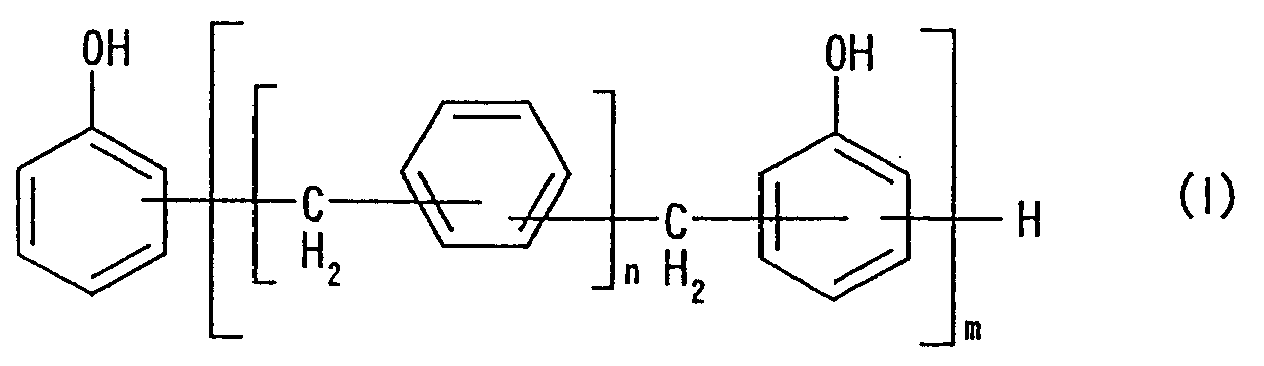
- the invention according to claim 4 provides the vinyl ether curing composition of any one of claims 1 to 3, wherein the polyhydric phenol compound is a phenol resin represented by general formula (I):
- the invention according to claim 5 provides the vinyl ether curing composition of any one of claims 1 to 4 which contains 10 to 1000 parts by weight of silica as the filler per 100 parts by weight of the total of the polyfunctional vinyl ether compound and the polyhydric phenol compound.
- the invention according to claim 6 provides the vinyl ether curing composition according to any one of claims 1 to 5 which contains 10 to 50 parts by weight of a phosphorus-based flame retardant as the flame retardant per 100 parts by weight of the total of the polyfunctional vinyl ether compound and the polyhydric phenol compound.
- the invention according to claim 7 provides the vinyl ether curing composition of claim 6, wherein the phosphorus-based flame retardant is a compound represented by formula (II):
- the invention according to claim 8 provides the vinyl ether curing composition according to any one of claims 1 to 7 which contains a polyepoxy compound.
- the invention according to claim 9 provides a prepreg formed by using the vinyl ether curing composition according to any one of claims 1 to 8.
- the vinyl ether curing composition of the present invention composed of a polyfunctional vinyl ether compound and a polyhydric phenol compound provides a cured product having a low dielectric constant and enables fine patterning of multilayer printed circuits.
- the polyfunctional vinyl ether compound that can be used in the vinyl ether curing composition of the invention includes, but is not limited to, vinyl ether derivatives of polyhydric alcohols or polyhydric phenols.
- the polyhydric alcohols are ethylene glycol, propylene glycol, tetramethylene glycol, neopentyl glycol, glycerol, trimethylolpropane, pentaerythritol, dipentaerythritol, 1,4-cyclohexanedimethanol, and ethylene oxide- or propylene oxide-adducts of polyhydric phenols, such as 2,2-bis(4-(2-hydroxyethyloxy)phenyl)propane.
- polyhydric phenols examples include hydroquinone, bisphenol A, bisphenol F, bisphenol S, 1,1,2,2-tetrakis(4-hydroxyphenyl)ethane, 1,3,5-tris(4-hydroxybenzyl)-1,3,5-triazine-2,4,6-trion, 1,1,3-tris(4-hydroxyphenyl)butane, and phenolic resins, such as phenol novolak and cresol novolak.
- polyfunctional vinyl ether compounds those having tetra- or higher functionality are preferred; for they provide a cured product having a high glass transition temperature.
- polyfunctional vinyl ether compounds include, but are not limited to, compound Nos. 1 to 5 shown below.
- n' represents a number of from 1 to 10000.
- the polyhydric phenol compounds that can be used in the vinyl ether curing composition of the invention include hydroquinone, bisphenol A, bisphenol F, bisphenol S, 1,1,2,2-tetrakis(4-hydroxyphenyl)ethane, 1,3,5-tris(4-hydroxybenzyl)-1,3,5-triazine-2,4,6-trion, 1,1,3-tris(4-hydroxyphenyl)butane, and phenolic resins, such as phenol novolak and cresol novolak. Particularly preferred of them are phenolic resins represented by general formula (I) shown supra in view of the excellent mechanical strength of a resulting cured product.
- polyhydric phenol compounds include compound Nos. 6 through 9 shown below.
- the amount of the polyhydric phenol compound in the vinyl ether curing composition is preferably 30 to 200 parts by weight, still preferably 50 to 150 parts by weight, per 100 parts by weight of the polyfunctional vinyl ether compound.
- the vinyl ether curing composition of the invention preferably contains a polyepoxy compound, an epoxy resin curing agent, a filler, a flame retardant, and so forth according to necessity.
- the polyepoxy compound includes aromatic epoxy compounds, alicyclic epoxy compounds, and aliphatic epoxy compounds.
- the aromatic epoxy compounds include glycidyl ether compounds of polyhydric phenols, such as hydroquinone, resorcinol, bisphenol A, bisphenol F, 4,4'-dihydroxybiphenyl, novolak, tetrabromobisphenol A, and 2,2-bis(4-hydroxyphenyl)-1,1,1,3,3,3-hexafluoropropane.
- the alicyclic epoxy compounds include polyglycidyl ethers of polyhydric alcohols having at least one alicyclic ring and cyclohexene oxide- or cyclopentene oxide-containing compounds obtained by epoxidizing cyclohexene ring- or cyclopentene ring-containing compounds with an oxidizing agent.
- alicyclic epoxy compounds are hydrogenated bisphenol A diglycidyl ether, 2,2-bis(3,4-epoxycyclohexyl)propane, 3,4-epoxycyclohexylmethyl- 3,4-epoxycyclohexylcarboxylate, 3,4-epoxy-1-methylcyclohexyl-3,4-epoxy-1-methylhexanecarboxylate, 6-methyl-3,4-epoxycyclohexylmethyl-6-methyl-3,4-epoxycyclohexanecarboxylate, 3,4-epoxy-3-methylcyclohexylmethyl-3,4-epoxy-3-methylcyclohexanecarboxylate, 3,4-epoxy-5-methylcyclohexylmethyl-3,4-epoxy-5-methylcyclohexanecarboxylate, bis(3,4-epoxycyclohexylmethyl) adipate, methylenebis(3,4-epoxycyclohexy
- the aliphatic epoxy compounds include polyglycidyl ethers of aliphatic polyhydric alcohols or alkylene oxide adducts thereof, polyglycidyl esters of aliphatic long-chain polybasic acids, vinyl polymerization homopolymers of glycidyl acrylate or glycidyl methacrylate, and vinyl polymerization copolymers of glycidyl acrylate or glycidyl methacrylate and other vinyl monomer(s).
- aliphatic epoxy compounds include glycidyl ethers of polyhydric alcohols, such as 1,4-butanediol diglycidyl ether, 1,6-hexanediol diglycidyl ether, glycerol triglycidyl ether, trimethylolpropane triglycidyl ether, sorbitol tetraglycidyl ether, dipentaerythritol hexaglycidyl ether, polyethylene glycol diglycidyl ether, and polypropylene glycol diglycidyl ether; polyether polyol polyglycidyl ethers obtained by adding at least one kind of an alkylene oxide to an aliphatic polyhydric alcohol, e.g., propylene glycol, trimethylolpropane or glycerol; and diglycidyl esters of aliphatic long-chain dibasic acids.
- polyhydric alcohols such as 1,4
- monoglycidyl ethers of aliphatic higher alcohols monoglycidyl ethers of phenol, cresol, butylphenol or a polyether alcohol obtained by adding an alkylene oxide thereto, glycidyl esters of higher fatty acids, epoxidized soybean oil, octyl epoxystearate, butyl epoxystearate, and epoxidized polybutadiene.
- the epoxy resin curing agent includes latent curing agents, polyamine compounds, polyphenol compounds, and cationic initiators.
- the latent curing agents include dicyandiamides, hydrazides, imidazole compounds, amine adducts, sulfonium salts, onium salts, ketimines, acid anhydrides, and tertiary amines. These latent curing agents are preferred; for they provide an easy-to-handle, one-pack type curing composition.
- acid anhydrides examples include phthalic anhydride, trimellitic anhydride, pyromellitic anhydride, tetrahydrophthalic anhydride, hexahydrophthalic anhydride, maleic anhydride, succinic anhydride, and 2,2-bis(3,4-dicarboxyphenyl)-1,1,1,3,3,3-hexafluoropropane dianhydride.
- the polyamine compounds include aliphatic polyamines, such as ethylenediamine, diethylenetriamine, and triethylenetetramine; alicyclic polyamines, such as menthenediamine, isophoronediamine, bis(4-amino-3-methylcyclohexyl)methane, bis(aminomethyl)cyclohexane, and 3,9-bis(3-aminopropyl)-2,4,8,10-tetraoxaspiro[5.5]-undecane; aliphatic amines having an aromatic ring, such as m-xylenediamine; and aromatic polyamines, such as m-phenylenediamine, 2,2-bis(4-aminophenyl)propane, diaminodiphenylmethane, diaminodiphenylsulfone, ⁇ , ⁇ -bis(4-aminophenyl)-p-diisopropylbenzene, and 2,2-bis(4-a
- the polyphenol compounds include phenol novolak, o-cresol novolak, t-butylphenol novolak, dicyclopentadiene cresol, terpene diphenol, terpene dicatechol, 1,1,3-tris(3-t-butyl-4-hydroxy-6-methylphenyl)butane, butylidenebis(3-t-butyl-4-hydroxy-6-methylphenyl), and 2,2-bis(4-hydroxyphenyl)-1,1,1,3,3,3-hexafluoropropane.
- Preferred of them is phenol novolak in view of the electrical characteristics and mechanical strength of the resulting cured product that are suited for use as laminates.
- the cationic initiators are compounds which release, on energy ray irradiation, a substance inducing cationic polymerization. Double salts releasing a Lewis acid on energy ray irradiation which are onium salts and derivatives thereof are particularly preferred cationic initiators. Such compounds are typically exemplified by salts composed of a cation and an anion and represented by general formula [A] m+ [B] m- .
- the cation [A] m+ is preferably an onium ion, the structure of which can be presented by, for example, general formula [(R 1 ) a Q] m+ ,
- the anion [B] m- is preferably a halide complex ion, the structure of which can be represented by, for example, general formula [LX b ] m- ,
- L represents a metal or a metalloid as a center atom of the halide complex, e.g., B, P, As, Sb, Fe, Sn, Bi, Al, Ca, In, Ti, Zn, Sc, V, Cr, Mn or Co;
- X represents a halogen atom; and
- b represents an integer of 3 to 7.
- the atomic valence of L in general formula [LX b ] m- representing the anion [B] m- being taken as p, the formula must satisfy the relation: m b-p.
- Examples of the anion represented by general formula [LX b ] m- include a tetrafluoroborate anion (BF 4 ) - , a hexafluorophosphate anion (PF 6 ) - , a hexafluoroantimonate anion (SbF 6 ) - , a hexafluoroarsenate anion (AsF 6 ) - , and a hexachloroantimonate anion (SbCl 6 ) - .
- a structure represented by general structure: [LX b-1 (OH)] m- is also preferred as the anion [B] m- , wherein L, X, and b are as defined in general formula [LX b ] m- .
- Further included in the anion [B] m- are a perchlorate ion (ClO 4 ), a trifluoromethylsulfite ion (CF 3 SO 3 ) - , a fluorosulfonate ion (FSO 3 ) - , a toluenesulfonate anion, and a trinitrobenzenesulfonate anion.
- onium salts it is particularly effective to use the following aromatic onium salts (a) to (c). These compounds can be used either individually or as a mixture of two or more thereof.
- Aryldiazonium salts including phenyldiazonium hexafluorophosphate, 4-methoxyphenyldiazonium hexafluoroantimonate, and 4-methylphenyldiazonium hexafluorophosphate.
- Diaryliodonium salts including diphenyliodonium hexafluoroantimonate, di(4-methylphenyl)iodonium hexafluorophosphate, and di(4-tert-butylphenyl)iodonium hexafluorophosphate.
- Triarylsulfonium salts including triphenylsulfonium hexafluoroantimonate, tris(4-methoxyphenyl)sulfonium hexafluorophosphate, diphenyl-4-thiophenoxyphenylsulfonium hexafluoroantimonate, diphenyl-4-thiophenoxyphenylsulfonium hexafluorophosphat, 4,4'-bis(diphenylsulfonio) phenylsulfide-bis(hexafluoroantimonate), 4,4'-bis(diphenylsulfonio)phenylsulfide-bis (hexafluorophosphate), 4,4 '-bis[di( ⁇ -hydroxyethoxy)phenylsulfonio]phenylsulfide-bis(hexafluoroantimonate), 4,4'-bis[di( ⁇ -hydroxyethoxy)phenyl
- iron arene complexes such as ( ⁇ 5 -2,4-cyclopentadien-1-yl)[(1,2,3,4,5,6- ⁇ )-(1-methylethyl)benzene]iron hexafluorophosphate, and mixtures of an aluminum complex, such as tris(acetylacetonato)aluminum, tris(ethylacetonatoacetato)aluminum or tris(salicylaldehydo)aluminum, and a silanol, such as triphenylsilanol.
- iron arene complexes such as ( ⁇ 5 -2,4-cyclopentadien-1-yl)[(1,2,3,4,5,6- ⁇ )-(1-methylethyl)benzene]iron hexafluorophosphate
- aluminum complex such as tris(acetylacetonato)aluminum, tris(ethylacetonatoacetato
- aromatic iodonium salts aromatic sulfonium salts
- iron arene complexes from the standpoint of practical utility and photo sensitivity.
- the photo initiator may be used in combination with one or more known photo polymerization accelerators such as benzoic acid compounds and tertiary amine compounds.
- the photo initiator is preferably used in an amount of 0.1% to 30% by weight based on the vinyl ether curing composition of the invention. Amounts less than 0.1 % by weight can fail to produce effect of addition. Amounts more than 30% by weight can result in reduction of mechanical strength of a cured product.
- Known light sources such as a high pressure mercury lamp, a metal halide lamp, and a xenon lamp, can be used in the polymerization using the photo initiator. Irradiation with active energy rays, such as ultraviolet rays, electron beams, X-rays, radial rays, and radiofrequency waves using these light sources causes the photo initiator to release a Lewis acid, whereby the polyepoxy compound is cured. Light sources having a wavelength of 400 nm or shorter are effective.
- the vinyl ether curing composition of the invention composed of the polyfunctional vinyl ether compound and the polyhydric phenol compound can be cured by heat curing similarly to conventionally known epoxy resins.
- a curing agent such as an amine curing agent or an acid anhydride curing agent
- curing by self-polymerization using a curing catalyst curing by self-polymerization using a curing catalyst
- photo curing using a photo initiator curing rate control by a combined use of a cure accelerator.
- the kind and the amount of the polyepoxy compound are selected as appropriate for the intended use of a cured product. Because the polyhydric phenol compound functions as a curing agent for both the polyfunctional vinyl ether compound and the polyepoxy compound, the amount of the polyepoxy compound is preferably selected from the range of 5% to 100% by weight, still preferably 10% to 50% by weight, even still preferably 10% to 30% by weight, based on the polyfunctional vinyl ether compound as long as the advantage of low dielectric constant attributed to the use of the polyfunctional vinyl ether compound is assured.
- the amount of the epoxy resin curing agent to be used is not particularly limited but is usually such that the ratio of the total number of moles of epoxy groups to the number of functional groups of the epoxy resin curing agent ranges from 0.9/1.0 to 1.0/0.9.
- the epoxy resin curing agent also reacts with the polyhydric phenol compound to become a cured product, part of the polyfunctional vinyl ether compound may be displaced with the epoxy resin curing agent as long as the amount of the polyhydric phenol compound falls within a range of from 30 to 200 parts by weight per 100 parts by weight of the polyfunctional vinyl ether compound.
- the filler that is preferably used in the vinyl ether curing composition of the invention includes fibrous fillers, such as glass fiber, aluminum borate whisker, and boron nitride whisker, and spherical fillers, such as silica and alumina. It is preferred to select the longer axis length and the aspect ratio of the fibrous filler as appropriate for the intended use.
- the spherical filler preferably has a true spherical shape with a small diameter.
- the amount of the filler to be used is preferably 10 to 3000 parts by weight, still preferably 20 to 200 parts by weight, per 100 parts by weight of the polyfunctional vinyl ether compound.
- the amount is preferably 10 to 1000 parts by weight, still preferably 20 to 100 parts by weight, per 100 parts by weight of the total amount of the polyfunctional vinyl ether compound and the polyhydric phenol compound.
- the flame retardant that can be used in the vinyl ether curing composition of the invention includes, but is not limited to, halogen-based ones, phosphorus-based ones, and inorganic ones. Preferred of them are phosphorus-based flame retardants because of the least effect on the environment.
- the compound represented by formula (II) shown supra, which has reactivity with an epoxy compound, etc., is particularly preferred because of the least adverse effect on the mechanical properties of the resin such as the glass transition temperature.
- the amount of the flame retardant to be added is preferably 10 to 200 parts by weight, still preferably 10 to 100 parts by weight, per 100 parts by weight of the polyfunctional vinyl ether compound.
- the amount to be added is preferably 10 to 50 parts by weight, still preferably 10 to 30 parts by weight, per 100 parts by weight of the total amount of the polyfunctional vinyl ether compound and the polyhydric phenol compound.
- the recited flame retardants may be used either individually or as a combination of two or more thereof.
- the flame retardants may be used in combination with non-dripping agents, such as polytetrafluoroethylene and polysiloxane, and flame retardant aids, such as antimony compounds and melamines.
- Curing compositions were prepared in accordance with the formulations shown in Table 1 below. Each of the resulting curing compositions was maintained at 180°C for 1 hour, then at 200°C for 1 hour, and finally at 220°C for 1 hour to give a cured product.
- the performance properties (glass transition temperature, dielectric constant, dielectric loss tangent, water absorption, and flame retardance) of the resulting cured product were measured in accordance with the following methods of measurement.
- the flame retardant was used in an amount to give a phosphorus content of 1 % by weight in the final curing composition.
- Tg glass transition temperature
- dielectric constant dielectric constant
- dielectric loss tangent dielectric loss tangent
- water absorption water absorption
- the cured products obtained from the vinyl ether curing compositions comprising the polyfunctional vinyl ether compound and the polyhydric phenol compound (Examples 1 to 5) have a lower dielectric constant, a smaller dielectric loss tangent, and a lower water absorption than the cured product obtained from the epoxy resin curing composition (Comparative Example 1), proving that the vinyl ether curing composition of the invention to be suited for use as electronic components such as laminates.
- the resulting cured product has a high glass transition temperature and therefore exhibits further improved mechanical characteristics as well as the excellent electrical characteristics.
Landscapes
- Chemical & Material Sciences (AREA)
- Health & Medical Sciences (AREA)
- Chemical Kinetics & Catalysis (AREA)
- Medicinal Chemistry (AREA)
- Polymers & Plastics (AREA)
- Organic Chemistry (AREA)
- Engineering & Computer Science (AREA)
- Materials Engineering (AREA)
- Manufacturing & Machinery (AREA)
- Microelectronics & Electronic Packaging (AREA)
- Epoxy Resins (AREA)
- Compositions Of Macromolecular Compounds (AREA)
- Reinforced Plastic Materials (AREA)
- Macromonomer-Based Addition Polymer (AREA)
- Polyoxymethylene Polymers And Polymers With Carbon-To-Carbon Bonds (AREA)
- Addition Polymer Or Copolymer, Post-Treatments, Or Chemical Modifications (AREA)
Abstract
Description
- The present invention relates to a vinyl ether curing composition composed of a polyfunctional vinyl ether compound and a polyhydric phenol compound. More particularly, it relates to a vinyl ether curing composition which provides a cured product with a low dielectric constant on heat curing reaction between the polyfunctional vinyl ether compound and the polyhydric phenol compound. The vinyl ether curing composition is preferably used to make prepregs used in laminates, particularly build-up laminates.
- Heat- or photo-curing compositions containing a curing resin such as an epoxy resin are widely used as a material of laminated sheets, coatings, adhesives, photolithography, and the like. Among known curing resins are epoxy resins obtained from various epoxy compounds including aromatic epoxy compounds typified by bisphenol A diglycidyl ether; alicyclic epoxy compounds, e.g., 2,2-bis(3,4-epoxycyclohexyl)propane and 3,4-epoxycyclohexylcarbonyloxymethyl-3,4-epoxycyclohexane; and aliphatic epoxy compounds, e.g., ethylene glycol diglycidyl ether and glycidyl (meth)acrylate, and curing agents including polyamine compounds, polyhydric phenol compounds, and acid anhydrides.
- In addition to the epoxy resins, photo-curing resins using dipentaerythritol hexaacrylate, etc. are also known.
- In obtaining a cured product from these curing resins, it is necessary to control characteristics, such as glass transition temperature, water absorption, dielectric constant, impact strength, tensile strength, elongation in tension, and adhesion strength; and curing rate and curing conditions at the time of curing. For that purpose, the structure of compounds and the composition should be selected properly. In particular, cured products used in multilayer printed circuits are required to have a high glass transition temperature, excellent dielectric characteristics, and a low water absorption.
- For laminate applications, epoxy resins enjoy broad use in view of the performance balance. Characteristics control by structural design of epoxy compounds is described, e.g., in Patent Document 1 and Patent Document 2. The publications teach that 2,2-bis(3,4-epoxycyclohexyl)propane has a high glass transition temperature and propose using the compound in photolithographic applications or laminate applications.
-
- Patent Document 1: JP-A-5-105896
- Patent Document 2 : JP-A-11-255863
- It is difficult for a cured product composed mainly of an epoxy compound and a curing agent therefor to satisfy all the required performance properties. It has been desired to provide a curing composition capable of forming a cured product with a low dielectric constant particularly in the filed of laminates having seen remarkable development in fine processing technology.
- Accordingly, an object of the present invention is to provide a curing composition capable of forming a cured product having, in particular, a low dielectric constant.
- The present invention (the invention according to claim 1) accomplishes the above object by providing a vinyl ether curing composition composed of a polyfunctional vinyl ether compound and a polyhydric phenol compound.
- The invention according to claim 2 provides the vinyl ether curing composition of claim 1 which contains 100 parts by weight of the polyfunctional vinyl ether compound, 30 to 200 parts by weight of the polyhydric phenol compound, 10 to 3000 parts by weight of a filler, and 10 to 200 parts by weight of a flame retardant.
- The invention according to claim 3 provides the vinyl ether curing composition of claim 1 or 2, wherein the polyfunctional vinyl ether compound is a tetra- or higher functional vinyl ether compound.
- The invention according to claim 4 provides the vinyl ether curing composition of any one of claims 1 to 3, wherein the polyhydric phenol compound is a phenol resin represented by general formula (I):
-
- The invention according to claim 5 provides the vinyl ether curing composition of any one of claims 1 to 4 which contains 10 to 1000 parts by weight of silica as the filler per 100 parts by weight of the total of the polyfunctional vinyl ether compound and the polyhydric phenol compound.
- The invention according to claim 6 provides the vinyl ether curing composition according to any one of claims 1 to 5 which contains 10 to 50 parts by weight of a phosphorus-based flame retardant as the flame retardant per 100 parts by weight of the total of the polyfunctional vinyl ether compound and the polyhydric phenol compound.
- The invention according to claim 7 provides the vinyl ether curing composition of claim 6, wherein the phosphorus-based flame retardant is a compound represented by formula (II):
-

- The invention according to claim 8 provides the vinyl ether curing composition according to any one of claims 1 to 7 which contains a polyepoxy compound.
- The invention according to claim 9 provides a prepreg formed by using the vinyl ether curing composition according to any one of claims 1 to 8.
- The vinyl ether curing composition of the present invention composed of a polyfunctional vinyl ether compound and a polyhydric phenol compound provides a cured product having a low dielectric constant and enables fine patterning of multilayer printed circuits.
- The present invention will be described in detail. The term "the (present) invention" as used herein means one or more embodiments according to claims 1 to 8.
- The polyfunctional vinyl ether compound that can be used in the vinyl ether curing composition of the invention includes, but is not limited to, vinyl ether derivatives of polyhydric alcohols or polyhydric phenols. Examples of the polyhydric alcohols are ethylene glycol, propylene glycol, tetramethylene glycol, neopentyl glycol, glycerol, trimethylolpropane, pentaerythritol, dipentaerythritol, 1,4-cyclohexanedimethanol, and ethylene oxide- or propylene oxide-adducts of polyhydric phenols, such as 2,2-bis(4-(2-hydroxyethyloxy)phenyl)propane. Examples of the polyhydric phenols are hydroquinone, bisphenol A, bisphenol F, bisphenol S, 1,1,2,2-tetrakis(4-hydroxyphenyl)ethane, 1,3,5-tris(4-hydroxybenzyl)-1,3,5-triazine-2,4,6-trion, 1,1,3-tris(4-hydroxyphenyl)butane, and phenolic resins, such as phenol novolak and cresol novolak. Of the polyfunctional vinyl ether compounds those having tetra- or higher functionality are preferred; for they provide a cured product having a high glass transition temperature.
- Specific examples of the polyfunctional vinyl ether compounds include, but are not limited to, compound Nos. 1 to 5 shown below. In compound No. 4, n' represents a number of from 1 to 10000.
- Compound No. 1:

- Compound No. 2:

- Compound No. 3:

- Compound No. 4:

- Compound No. 5:

- The polyhydric phenol compounds that can be used in the vinyl ether curing composition of the invention include hydroquinone, bisphenol A, bisphenol F, bisphenol S, 1,1,2,2-tetrakis(4-hydroxyphenyl)ethane, 1,3,5-tris(4-hydroxybenzyl)-1,3,5-triazine-2,4,6-trion, 1,1,3-tris(4-hydroxyphenyl)butane, and phenolic resins, such as phenol novolak and cresol novolak. Particularly preferred of them are phenolic resins represented by general formula (I) shown supra in view of the excellent mechanical strength of a resulting cured product.
- Specific but non-limiting examples of the polyhydric phenol compounds include compound Nos. 6 through 9 shown below.
- Compound No. 6:

- Compound No. 7:

- Compound No. 8:
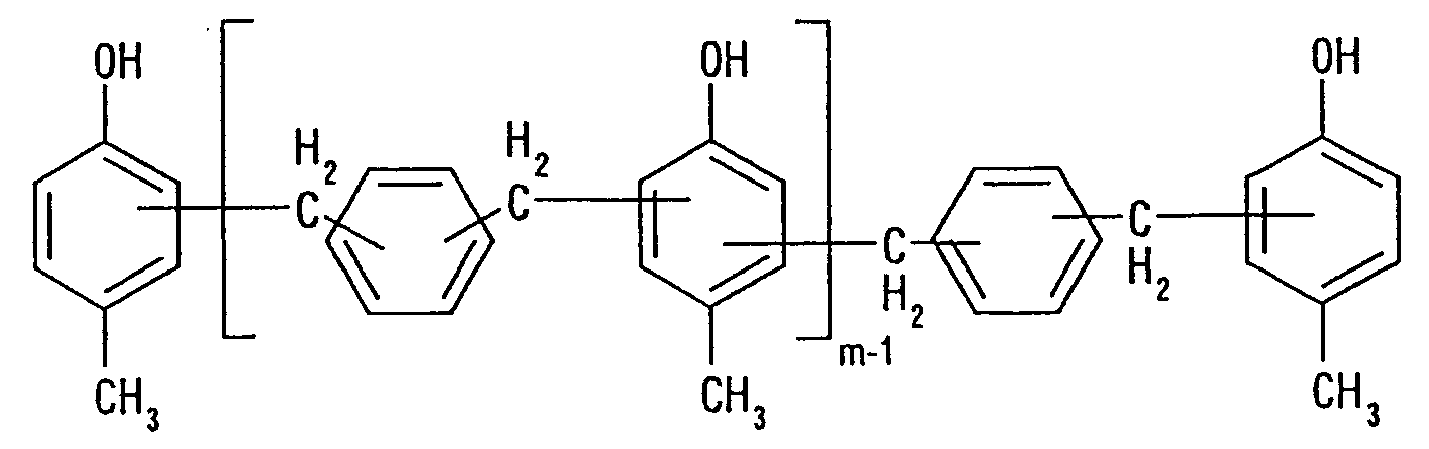
- Compound No. 9:

- The amount of the polyhydric phenol compound in the vinyl ether curing composition is preferably 30 to 200 parts by weight, still preferably 50 to 150 parts by weight, per 100 parts by weight of the polyfunctional vinyl ether compound.
- The vinyl ether curing composition of the invention preferably contains a polyepoxy compound, an epoxy resin curing agent, a filler, a flame retardant, and so forth according to necessity.
- The polyepoxy compound includes aromatic epoxy compounds, alicyclic epoxy compounds, and aliphatic epoxy compounds. The aromatic epoxy compounds include glycidyl ether compounds of polyhydric phenols, such as hydroquinone, resorcinol, bisphenol A, bisphenol F, 4,4'-dihydroxybiphenyl, novolak, tetrabromobisphenol A, and 2,2-bis(4-hydroxyphenyl)-1,1,1,3,3,3-hexafluoropropane. The alicyclic epoxy compounds include polyglycidyl ethers of polyhydric alcohols having at least one alicyclic ring and cyclohexene oxide- or cyclopentene oxide-containing compounds obtained by epoxidizing cyclohexene ring- or cyclopentene ring-containing compounds with an oxidizing agent. Typical examples of the alicyclic epoxy compounds are hydrogenated bisphenol A diglycidyl ether, 2,2-bis(3,4-epoxycyclohexyl)propane, 3,4-epoxycyclohexylmethyl- 3,4-epoxycyclohexylcarboxylate, 3,4-epoxy-1-methylcyclohexyl-3,4-epoxy-1-methylhexanecarboxylate, 6-methyl-3,4-epoxycyclohexylmethyl-6-methyl-3,4-epoxycyclohexanecarboxylate, 3,4-epoxy-3-methylcyclohexylmethyl-3,4-epoxy-3-methylcyclohexanecarboxylate, 3,4-epoxy-5-methylcyclohexylmethyl-3,4-epoxy-5-methylcyclohexanecarboxylate, bis(3,4-epoxycyclohexylmethyl) adipate, methylenebis(3,4-epoxycyclohexane), 2,2-bis(3,4-epoxycyclohexyl)propane, dicyclopentadiene diepoxide, ethylenebis(3,4-epoxycyclohexanecarboxylate), dioctyl epoxyhexahydrophthalate, and di-2-ethylhexyl epoxyhexahydrophthalate. The aliphatic epoxy compounds include polyglycidyl ethers of aliphatic polyhydric alcohols or alkylene oxide adducts thereof, polyglycidyl esters of aliphatic long-chain polybasic acids, vinyl polymerization homopolymers of glycidyl acrylate or glycidyl methacrylate, and vinyl polymerization copolymers of glycidyl acrylate or glycidyl methacrylate and other vinyl monomer(s). Typical examples of the aliphatic epoxy compounds include glycidyl ethers of polyhydric alcohols, such as 1,4-butanediol diglycidyl ether, 1,6-hexanediol diglycidyl ether, glycerol triglycidyl ether, trimethylolpropane triglycidyl ether, sorbitol tetraglycidyl ether, dipentaerythritol hexaglycidyl ether, polyethylene glycol diglycidyl ether, and polypropylene glycol diglycidyl ether; polyether polyol polyglycidyl ethers obtained by adding at least one kind of an alkylene oxide to an aliphatic polyhydric alcohol, e.g., propylene glycol, trimethylolpropane or glycerol; and diglycidyl esters of aliphatic long-chain dibasic acids. Further included are monoglycidyl ethers of aliphatic higher alcohols, monoglycidyl ethers of phenol, cresol, butylphenol or a polyether alcohol obtained by adding an alkylene oxide thereto, glycidyl esters of higher fatty acids, epoxidized soybean oil, octyl epoxystearate, butyl epoxystearate, and epoxidized polybutadiene.
- The epoxy resin curing agent includes latent curing agents, polyamine compounds, polyphenol compounds, and cationic initiators.
- The latent curing agents include dicyandiamides, hydrazides, imidazole compounds, amine adducts, sulfonium salts, onium salts, ketimines, acid anhydrides, and tertiary amines. These latent curing agents are preferred; for they provide an easy-to-handle, one-pack type curing composition.
- Examples of the acid anhydrides are phthalic anhydride, trimellitic anhydride, pyromellitic anhydride, tetrahydrophthalic anhydride, hexahydrophthalic anhydride, maleic anhydride, succinic anhydride, and 2,2-bis(3,4-dicarboxyphenyl)-1,1,1,3,3,3-hexafluoropropane dianhydride.
- The polyamine compounds include aliphatic polyamines, such as ethylenediamine, diethylenetriamine, and triethylenetetramine; alicyclic polyamines, such as menthenediamine, isophoronediamine, bis(4-amino-3-methylcyclohexyl)methane, bis(aminomethyl)cyclohexane, and 3,9-bis(3-aminopropyl)-2,4,8,10-tetraoxaspiro[5.5]-undecane; aliphatic amines having an aromatic ring, such as m-xylenediamine; and aromatic polyamines, such as m-phenylenediamine, 2,2-bis(4-aminophenyl)propane, diaminodiphenylmethane, diaminodiphenylsulfone, α,α-bis(4-aminophenyl)-p-diisopropylbenzene, and 2,2-bis(4-aminophenyl)-1,1,1,3,3,3 - hexafluoropropane.
- The polyphenol compounds include phenol novolak, o-cresol novolak, t-butylphenol novolak, dicyclopentadiene cresol, terpene diphenol, terpene dicatechol, 1,1,3-tris(3-t-butyl-4-hydroxy-6-methylphenyl)butane, butylidenebis(3-t-butyl-4-hydroxy-6-methylphenyl), and 2,2-bis(4-hydroxyphenyl)-1,1,1,3,3,3-hexafluoropropane. Preferred of them is phenol novolak in view of the electrical characteristics and mechanical strength of the resulting cured product that are suited for use as laminates.
- The cationic initiators are compounds which release, on energy ray irradiation, a substance inducing cationic polymerization. Double salts releasing a Lewis acid on energy ray irradiation which are onium salts and derivatives thereof are particularly preferred cationic initiators. Such compounds are typically exemplified by salts composed of a cation and an anion and represented by general formula [A]m+[B]m-.
- The cation [A]m+ is preferably an onium ion, the structure of which can be presented by, for example, general formula [(R1)aQ]m+,
- wherein R' represents an organic group having 1 to 60 carbon atoms which may contain any number of atoms other than carbon; a represents an integer of 1 to 5; aR1's is each independent may be the same or different; at least one of aR1's and preferably contains an aromatic ring; Q represents an atom or an atomic group selected from the group consisting of S, N, Se, Te, P, As, Sb, Bi, O, I, Br, Cl, F, and N=N. The atomic valence of Q in general formula [(R1)aQ]m+ representing the cation [A]m+ being taken as q, the formula must satisfy the relation: m=a-q (the atomic valence of N=N is regarded to be 0).
- The anion [B]m- is preferably a halide complex ion, the structure of which can be represented by, for example, general formula [LXb]m-,
- wherein L represents a metal or a metalloid as a center atom of the halide complex, e.g., B, P, As, Sb, Fe, Sn, Bi, Al, Ca, In, Ti, Zn, Sc, V, Cr, Mn or Co; X represents a halogen atom; and b represents an integer of 3 to 7. The atomic valence of L in general formula [LXb]m- representing the anion [B]m- being taken as p, the formula must satisfy the relation: m=b-p.
- Examples of the anion represented by general formula [LXb]m- include a tetrafluoroborate anion (BF4)-, a hexafluorophosphate anion (PF6)-, a hexafluoroantimonate anion (SbF6)-, a hexafluoroarsenate anion (AsF6)-, and a hexachloroantimonate anion (SbCl6)-.
- A structure represented by general structure: [LXb-1(OH)]m- is also preferred as the anion [B]m-, wherein L, X, and b are as defined in general formula [LXb]m-. Further included in the anion [B]m- are a perchlorate ion (ClO4), a trifluoromethylsulfite ion (CF3SO3)-, a fluorosulfonate ion (FSO3)-, a toluenesulfonate anion, and a trinitrobenzenesulfonate anion.
- Of the above-described onium salts it is particularly effective to use the following aromatic onium salts (a) to (c). These compounds can be used either individually or as a mixture of two or more thereof.
- (a) Aryldiazonium salts including phenyldiazonium hexafluorophosphate, 4-methoxyphenyldiazonium hexafluoroantimonate, and 4-methylphenyldiazonium hexafluorophosphate.
- (b) Diaryliodonium salts including diphenyliodonium hexafluoroantimonate, di(4-methylphenyl)iodonium hexafluorophosphate, and di(4-tert-butylphenyl)iodonium hexafluorophosphate.
- (c) Triarylsulfonium salts including triphenylsulfonium hexafluoroantimonate, tris(4-methoxyphenyl)sulfonium hexafluorophosphate, diphenyl-4-thiophenoxyphenylsulfonium hexafluoroantimonate, diphenyl-4-thiophenoxyphenylsulfonium hexafluorophosphat, 4,4'-bis(diphenylsulfonio) phenylsulfide-bis(hexafluoroantimonate), 4,4'-bis(diphenylsulfonio)phenylsulfide-bis (hexafluorophosphate), 4,4 '-bis[di(β-hydroxyethoxy)phenylsulfonio]phenylsulfide-bis(hexafluoroantimonate), 4,4'-bis[di(β-hydroxyethoxy)phenylsulfonio]phenylsulfide-bis (hexafluorophosphate), 4-[4'-(benzoyl)phenylthio]phenyl-di(4-fluorophenyl )sulfonium hexafluoroantimonate, and 4-[4'-(benzoyl)phenylthio]phenyl-di(4-fluorophenyl)sulfonium hexafluorophosphate.
- In addition to the compounds (a) to (c), also preferred are iron arene complexes, such as (η5-2,4-cyclopentadien-1-yl)[(1,2,3,4,5,6-η)-(1-methylethyl)benzene]iron hexafluorophosphate, and mixtures of an aluminum complex, such as tris(acetylacetonato)aluminum, tris(ethylacetonatoacetato)aluminum or tris(salicylaldehydo)aluminum, and a silanol, such as triphenylsilanol.
- Especially preferred of the recited compounds are aromatic iodonium salts, aromatic sulfonium salts, and iron arene complexes from the standpoint of practical utility and photo sensitivity.
- The photo initiator may be used in combination with one or more known photo polymerization accelerators such as benzoic acid compounds and tertiary amine compounds. The photo initiator is preferably used in an amount of 0.1% to 30% by weight based on the vinyl ether curing composition of the invention. Amounts less than 0.1 % by weight can fail to produce effect of addition. Amounts more than 30% by weight can result in reduction of mechanical strength of a cured product.
- Known light sources, such as a high pressure mercury lamp, a metal halide lamp, and a xenon lamp, can be used in the polymerization using the photo initiator. Irradiation with active energy rays, such as ultraviolet rays, electron beams, X-rays, radial rays, and radiofrequency waves using these light sources causes the photo initiator to release a Lewis acid, whereby the polyepoxy compound is cured. Light sources having a wavelength of 400 nm or shorter are effective.
- The vinyl ether curing composition of the invention composed of the polyfunctional vinyl ether compound and the polyhydric phenol compound can be cured by heat curing similarly to conventionally known epoxy resins. Where the polyepoxy compound is used in combination, known techniques relating to epoxy resin curing can be applied, including curing with a curing agent such as an amine curing agent or an acid anhydride curing agent, curing by self-polymerization using a curing catalyst, photo curing using a photo initiator, and curing rate control by a combined use of a cure accelerator.
- The kind and the amount of the polyepoxy compound are selected as appropriate for the intended use of a cured product. Because the polyhydric phenol compound functions as a curing agent for both the polyfunctional vinyl ether compound and the polyepoxy compound, the amount of the polyepoxy compound is preferably selected from the range of 5% to 100% by weight, still preferably 10% to 50% by weight, even still preferably 10% to 30% by weight, based on the polyfunctional vinyl ether compound as long as the advantage of low dielectric constant attributed to the use of the polyfunctional vinyl ether compound is assured.
- The amount of the epoxy resin curing agent to be used is not particularly limited but is usually such that the ratio of the total number of moles of epoxy groups to the number of functional groups of the epoxy resin curing agent ranges from 0.9/1.0 to 1.0/0.9. Where the epoxy resin curing agent also reacts with the polyhydric phenol compound to become a cured product, part of the polyfunctional vinyl ether compound may be displaced with the epoxy resin curing agent as long as the amount of the polyhydric phenol compound falls within a range of from 30 to 200 parts by weight per 100 parts by weight of the polyfunctional vinyl ether compound.
- The filler that is preferably used in the vinyl ether curing composition of the invention includes fibrous fillers, such as glass fiber, aluminum borate whisker, and boron nitride whisker, and spherical fillers, such as silica and alumina. It is preferred to select the longer axis length and the aspect ratio of the fibrous filler as appropriate for the intended use. The spherical filler preferably has a true spherical shape with a small diameter.
- The amount of the filler to be used is preferably 10 to 3000 parts by weight, still preferably 20 to 200 parts by weight, per 100 parts by weight of the polyfunctional vinyl ether compound. In using silica as a filler, for example, the amount is preferably 10 to 1000 parts by weight, still preferably 20 to 100 parts by weight, per 100 parts by weight of the total amount of the polyfunctional vinyl ether compound and the polyhydric phenol compound.
- The flame retardant that can be used in the vinyl ether curing composition of the invention includes, but is not limited to, halogen-based ones, phosphorus-based ones, and inorganic ones. Preferred of them are phosphorus-based flame retardants because of the least effect on the environment. The compound represented by formula (II) shown supra, which has reactivity with an epoxy compound, etc., is particularly preferred because of the least adverse effect on the mechanical properties of the resin such as the glass transition temperature.
- The amount of the flame retardant to be added is preferably 10 to 200 parts by weight, still preferably 10 to 100 parts by weight, per 100 parts by weight of the polyfunctional vinyl ether compound. In using the phosphorus-based flame retardant, in particular, the amount to be added is preferably 10 to 50 parts by weight, still preferably 10 to 30 parts by weight, per 100 parts by weight of the total amount of the polyfunctional vinyl ether compound and the polyhydric phenol compound.
- The recited flame retardants may be used either individually or as a combination of two or more thereof. The flame retardants may be used in combination with non-dripping agents, such as polytetrafluoroethylene and polysiloxane, and flame retardant aids, such as antimony compounds and melamines.
- The present invention will now be illustrated in greater detail with reference to Examples and Comparative Example, but it should be understood that the present invention is not construed as being limited thereto.
- Curing compositions were prepared in accordance with the formulations shown in Table 1 below. Each of the resulting curing compositions was maintained at 180°C for 1 hour, then at 200°C for 1 hour, and finally at 220°C for 1 hour to give a cured product. The performance properties (glass transition temperature, dielectric constant, dielectric loss tangent, water absorption, and flame retardance) of the resulting cured product were measured in accordance with the following methods of measurement. The flame retardant was used in an amount to give a phosphorus content of 1 % by weight in the final curing composition.
- Methods of Measurement:
- The glass transition temperature was measured by a dynamic viscoelasticity method.
- The dielectric constant and the dielectric loss tangent were measured with a material analyzer HP-4291B (from Agilent Technology).
- The water absorption was measured by immersing a sample in distilled water at room temperature for 24 hours. The percentage of weight gain due to the immersion was taken as a water absorption.
- The flame retardance was evaluated by UL-94.
- The results of measurement of glass transition temperature (Tg), dielectric constant, dielectric loss tangent, and water absorption are shown in Table 1. All the test specimens were graded V-0 in the flame retardance test.
-
TABLE 1 Example Comp. Ex. 1 1 2 3 4 5 Polyfunctional Vinyl Ether Compound: Compound No. 1 100 Compound No. 2 100 Compound No. 3 100 Compound No. 4 100 Compound No. 5 100 Epoxy Compound: Comparative Compound 1 *1 100 Polyhydric Phenol Compound: Phenol 1*2 62.1 32.0 143 74.2 30.9 Phenol 2*3 62.1 32.0 126.7 30.9 Amorphous Silica*4 12.4 9.1 13.5 9.7 12.6 9.0 Spherical Silica*5 37.3 27.3 40.4 29.0 37.7 26.9 Flame Retardant*6 24.3 17.9 26.2 18.9 24.6 17.5 Solvent*7 100 100 100 200 200 100 Curing Catalyst*8 7.1 3.8 10.1 5.4 5.6 3.7 Tg (°C) 125 135 210 200 180 130 Dielectric Constant (2 GHz) 2.9 3.0 2.8 2.9 2.8 3.5 Dielectric Loss Tangent 0.009 (2 GHz) 0.009 0.010 0.008 0.007 0.006 0.200 Water Absorption (wt%) 0.25 0.20 0.30 0.20 0.15 1.50 Note *1: Bisphenol A diglycidyl ether *2: PR-53194 (from Sumitomo Bakelite Co., Ltd.) *3: Milex XLC-LL (from Mitsui Chemicals, Inc.) *4: Aerosil 200 (from Nippon Aerosil Co., Ltd.) *5: SO-E5 (from Admatechs Co., Ltd.) *6: 
*7: Ethylene glycol butyl ether acetate *8: 2-Ethyl-4-methylimidazole - It is apparent that the cured products obtained from the vinyl ether curing compositions comprising the polyfunctional vinyl ether compound and the polyhydric phenol compound (Examples 1 to 5) have a lower dielectric constant, a smaller dielectric loss tangent, and a lower water absorption than the cured product obtained from the epoxy resin curing composition (Comparative Example 1), proving that the vinyl ether curing composition of the invention to be suited for use as electronic components such as laminates. Where in using a tetra- or higher functional vinyl ether compound as the polyfunctional vinyl ether compound (Examples 3 to 5), the resulting cured product has a high glass transition temperature and therefore exhibits further improved mechanical characteristics as well as the excellent electrical characteristics.
Claims (9)
- A vinyl ether curing composition comprising a polyfunctional vinyl ether compound and a polyhydric phenol compound.
- The vinyl ether curing composition according to claim 1, comprising 100 parts by weight of the polyfunctional vinyl ether compound, 30 to 200 parts by weight of the polyhydric phenol compound, 10 to 3000 parts by weight of a filler, and 10 to 200 parts by weight of a flame retardant.
- The vinyl ether curing composition according to claim 1 or 2, wherein the polyfunctional vinyl ether compound is a tetra- or higher functional vinyl ether compound.
- The vinyl ether curing composition according to any one of claims 1 to 3, wherein the polyhydric phenol compound is a phenol resin represented by general formula (I):

- The vinyl ether curing composition according to any one of claims 1 to 4, containing 10 to 1000 parts by weight of silica as the filler per 100 parts by weight of the total of the polyfunctional vinyl ether compound and the polyhydric phenol compound.
- The vinyl ether curing composition according to any one of claims 1 to 5, containing 10 to 50 parts by weight of a phosphorus-based flame retardant as the flame retardant per 100 parts by weight of the total of the polyfunctional vinyl ether compound and the polyhydric phenol compound.
- The vinyl ether curing composition according to claim 6, wherein the phosphorus-based flame retardant is a compound represented by formula (II):

- The vinyl ether curing composition according to any one of claims 1 to 7, further comprising a polyepoxy compound.
- A prepreg formed by using the vinyl ether curing composition according to any one of claims 1 to 8.
Applications Claiming Priority (2)
| Application Number | Priority Date | Filing Date | Title |
|---|---|---|---|
| JP2003278953A JP4514418B2 (en) | 2003-07-24 | 2003-07-24 | Vinyl ether curable composition |
| PCT/JP2004/010095 WO2005010098A1 (en) | 2003-07-24 | 2004-07-15 | Vinyl ether curing composition |
Publications (3)
| Publication Number | Publication Date |
|---|---|
| EP1650259A1 true EP1650259A1 (en) | 2006-04-26 |
| EP1650259A4 EP1650259A4 (en) | 2006-07-19 |
| EP1650259B1 EP1650259B1 (en) | 2015-07-15 |
Family
ID=34100794
Family Applications (1)
| Application Number | Title | Priority Date | Filing Date |
|---|---|---|---|
| EP04747561.1A Expired - Lifetime EP1650259B1 (en) | 2003-07-24 | 2004-07-15 | Vinyl ether curing composition |
Country Status (6)
| Country | Link |
|---|---|
| US (1) | US7595357B2 (en) |
| EP (1) | EP1650259B1 (en) |
| JP (1) | JP4514418B2 (en) |
| KR (1) | KR101064788B1 (en) |
| TW (1) | TW200517429A (en) |
| WO (1) | WO2005010098A1 (en) |
Families Citing this family (3)
| Publication number | Priority date | Publication date | Assignee | Title |
|---|---|---|---|---|
| GB0817795D0 (en) * | 2008-09-30 | 2008-11-05 | 3M Innovative Properties Co | Fast curing oil-uptaking epozxy-based structural adhesives |
| JP5360508B2 (en) * | 2011-03-18 | 2013-12-04 | 日立化成株式会社 | Resin composition and prepreg and printed wiring board using the same |
| US9766378B2 (en) * | 2014-09-26 | 2017-09-19 | Fujifilm Corporation | Optical film, polarizing plate equipped with the optical film, liquid crystal display device, and method for producing an optical film |
Family Cites Families (15)
| Publication number | Priority date | Publication date | Assignee | Title |
|---|---|---|---|---|
| GB1089871A (en) | 1964-01-03 | 1967-11-08 | Canadian Ind | Foams from vinyl ether prepolymers |
| JP3038062B2 (en) | 1991-10-15 | 2000-05-08 | 旭電化工業株式会社 | Lubricants for refrigerators |
| US6121358A (en) * | 1997-09-22 | 2000-09-19 | The Dexter Corporation | Hydrophobic vinyl monomers, formulations containing same, and uses therefor |
| JP3933294B2 (en) | 1998-03-06 | 2007-06-20 | 株式会社Adeka | Curable composition |
| US6211320B1 (en) * | 1999-07-28 | 2001-04-03 | Dexter Corporation | Low viscosity acrylate monomers formulations containing same and uses therefor |
| US6627704B2 (en) * | 1999-12-01 | 2003-09-30 | General Electric Company | Poly(arylene ether)-containing thermoset composition, method for the preparation thereof, and articles derived therefrom |
| JP2002313841A (en) * | 2000-04-14 | 2002-10-25 | Namics Corp | Flip chip mounting method |
| JP4548901B2 (en) * | 2000-06-14 | 2010-09-22 | 株式会社Adeka | Flame retardant epoxy resin composition |
| JP3948646B2 (en) * | 2000-08-31 | 2007-07-25 | 東京応化工業株式会社 | Positive resist composition and resist pattern forming method using the same |
| US6667194B1 (en) * | 2000-10-04 | 2003-12-23 | Henkel Loctite Corporation | Method of bonding die chip with underfill fluxing composition |
| JP4721309B2 (en) * | 2001-02-14 | 2011-07-13 | 日東電工株式会社 | Thermosetting resin composition and semiconductor device |
| TW574739B (en) * | 2001-02-14 | 2004-02-01 | Nitto Denko Corp | Thermosetting resin composition and semiconductor device using the same |
| JP2003026784A (en) * | 2001-07-18 | 2003-01-29 | Yokohama Rubber Co Ltd:The | Curable resin composition and easy dismantling method for joining member |
| JP2003082061A (en) * | 2001-09-10 | 2003-03-19 | Asahi Denka Kogyo Kk | Curable composition |
| JP3955234B2 (en) * | 2001-09-28 | 2007-08-08 | 日東電工株式会社 | Thermosetting resin composition and semiconductor device using the same |
-
2003
- 2003-07-24 JP JP2003278953A patent/JP4514418B2/en not_active Expired - Fee Related
-
2004
- 2004-07-15 WO PCT/JP2004/010095 patent/WO2005010098A1/en not_active Ceased
- 2004-07-15 US US10/560,815 patent/US7595357B2/en not_active Expired - Fee Related
- 2004-07-15 EP EP04747561.1A patent/EP1650259B1/en not_active Expired - Lifetime
- 2004-07-15 KR KR1020057024945A patent/KR101064788B1/en not_active Expired - Fee Related
- 2004-07-23 TW TW093122161A patent/TW200517429A/en not_active IP Right Cessation
Also Published As
| Publication number | Publication date |
|---|---|
| KR20060038951A (en) | 2006-05-04 |
| JP2005154448A (en) | 2005-06-16 |
| EP1650259B1 (en) | 2015-07-15 |
| TW200517429A (en) | 2005-06-01 |
| KR101064788B1 (en) | 2011-09-14 |
| WO2005010098A1 (en) | 2005-02-03 |
| US7595357B2 (en) | 2009-09-29 |
| TWI344477B (en) | 2011-07-01 |
| JP4514418B2 (en) | 2010-07-28 |
| US20060178454A1 (en) | 2006-08-10 |
| EP1650259A4 (en) | 2006-07-19 |
Similar Documents
| Publication | Publication Date | Title |
|---|---|---|
| KR101328015B1 (en) | Epoxy Resin Curable Composition for Prepreg | |
| KR20180127326A (en) | Curable composition and cured product thereof | |
| JP2009161578A (en) | Insulating sheet and laminated structure | |
| JP4497704B2 (en) | Flame retardant, flame retardant epoxy resin composition containing the flame retardant, and curable composition for buildup comprising the composition | |
| US8426504B2 (en) | Hardenable epoxy resin composition | |
| JP4353589B2 (en) | Flame retardant epoxy resin composition | |
| JP2003082061A (en) | Curable composition | |
| KR20150079627A (en) | Curable compositions comprising 1,3-dioxiranylcyclopentane epoxide compounds and thermosets prepared therefrom | |
| EP1650259B1 (en) | Vinyl ether curing composition | |
| JP4463005B2 (en) | Epoxy resin composition | |
| KR20230096917A (en) | Polymerizable composition, cured product and method for preparing cured product | |
| JP4243980B2 (en) | 2,2-bis (3,4-epoxycyclohexyl) -1,1,1,3,3,3-hexafluoropropane and epoxy resin composition using the compound | |
| CN104769000B (en) | Epoxy resin mixture, epoxy resin composition and cured product thereof | |
| KR20240023506A (en) | Epoxy resin composition | |
| JP4548901B2 (en) | Flame retardant epoxy resin composition | |
| US7294660B2 (en) | Epoxy resin composition | |
| JP2008007566A (en) | Novel compound, epoxy resin composition and cured product thereof | |
| JP2002020462A (en) | Epoxy resin composition | |
| JP4798855B2 (en) | Flame retardant epoxy resin composition | |
| JP2023145207A (en) | Epoxy compounds, curable compositions and cured products |
Legal Events
| Date | Code | Title | Description |
|---|---|---|---|
| PUAI | Public reference made under article 153(3) epc to a published international application that has entered the european phase |
Free format text: ORIGINAL CODE: 0009012 |
|
| 17P | Request for examination filed |
Effective date: 20060112 |
|
| AK | Designated contracting states |
Kind code of ref document: A1 Designated state(s): DE FR GB |
|
| A4 | Supplementary search report drawn up and despatched |
Effective date: 20060620 |
|
| DAX | Request for extension of the european patent (deleted) | ||
| RBV | Designated contracting states (corrected) |
Designated state(s): DE FR GB |
|
| RAP1 | Party data changed (applicant data changed or rights of an application transferred) |
Owner name: ADEKA CORPORATION |
|
| 17Q | First examination report despatched |
Effective date: 20120113 |
|
| GRAP | Despatch of communication of intention to grant a patent |
Free format text: ORIGINAL CODE: EPIDOSNIGR1 |
|
| INTG | Intention to grant announced |
Effective date: 20150316 |
|
| GRAS | Grant fee paid |
Free format text: ORIGINAL CODE: EPIDOSNIGR3 |
|
| GRAA | (expected) grant |
Free format text: ORIGINAL CODE: 0009210 |
|
| AK | Designated contracting states |
Kind code of ref document: B1 Designated state(s): DE FR GB |
|
| REG | Reference to a national code |
Ref country code: GB Ref legal event code: FG4D |
|
| REG | Reference to a national code |
Ref country code: DE Ref legal event code: R096 Ref document number: 602004047506 Country of ref document: DE |
|
| REG | Reference to a national code |
Ref country code: FR Ref legal event code: PLFP Year of fee payment: 12 |
|
| PGFP | Annual fee paid to national office [announced via postgrant information from national office to epo] |
Ref country code: DE Payment date: 20150703 Year of fee payment: 12 Ref country code: GB Payment date: 20150827 Year of fee payment: 12 |
|
| PGFP | Annual fee paid to national office [announced via postgrant information from national office to epo] |
Ref country code: FR Payment date: 20150903 Year of fee payment: 12 |
|
| REG | Reference to a national code |
Ref country code: DE Ref legal event code: R097 Ref document number: 602004047506 Country of ref document: DE |
|
| PLBE | No opposition filed within time limit |
Free format text: ORIGINAL CODE: 0009261 |
|
| STAA | Information on the status of an ep patent application or granted ep patent |
Free format text: STATUS: NO OPPOSITION FILED WITHIN TIME LIMIT |
|
| 26N | No opposition filed |
Effective date: 20160418 |
|
| REG | Reference to a national code |
Ref country code: DE Ref legal event code: R119 Ref document number: 602004047506 Country of ref document: DE |
|
| GBPC | Gb: european patent ceased through non-payment of renewal fee |
Effective date: 20160715 |
|
| PG25 | Lapsed in a contracting state [announced via postgrant information from national office to epo] |
Ref country code: FR Free format text: LAPSE BECAUSE OF NON-PAYMENT OF DUE FEES Effective date: 20160801 Ref country code: DE Free format text: LAPSE BECAUSE OF NON-PAYMENT OF DUE FEES Effective date: 20170201 |
|
| REG | Reference to a national code |
Ref country code: FR Ref legal event code: ST Effective date: 20170331 |
|
| PG25 | Lapsed in a contracting state [announced via postgrant information from national office to epo] |
Ref country code: GB Free format text: LAPSE BECAUSE OF NON-PAYMENT OF DUE FEES Effective date: 20160715 |