EP1647603A2 - Gene assay method for predicting glaucoma onset risk - Google Patents
Gene assay method for predicting glaucoma onset risk Download PDFInfo
- Publication number
- EP1647603A2 EP1647603A2 EP06000681A EP06000681A EP1647603A2 EP 1647603 A2 EP1647603 A2 EP 1647603A2 EP 06000681 A EP06000681 A EP 06000681A EP 06000681 A EP06000681 A EP 06000681A EP 1647603 A2 EP1647603 A2 EP 1647603A2
- Authority
- EP
- European Patent Office
- Prior art keywords
- seq
- gene
- glaucoma
- positions
- oligonucleotide
- Prior art date
- Legal status (The legal status is an assumption and is not a legal conclusion. Google has not performed a legal analysis and makes no representation as to the accuracy of the status listed.)
- Granted
Links
- 208000010412 Glaucoma Diseases 0.000 title claims abstract description 64
- 108090000623 proteins and genes Proteins 0.000 title claims abstract description 58
- 238000003556 assay Methods 0.000 title claims description 22
- 101150000679 OPTN gene Proteins 0.000 claims abstract description 38
- 230000035772 mutation Effects 0.000 claims abstract description 38
- 108091026890 Coding region Proteins 0.000 claims abstract description 15
- 238000000034 method Methods 0.000 claims description 57
- 108091034117 Oligonucleotide Proteins 0.000 claims description 50
- 230000000295 complement effect Effects 0.000 claims description 23
- 150000007523 nucleic acids Chemical group 0.000 claims description 14
- 238000006467 substitution reaction Methods 0.000 claims description 14
- 239000003153 chemical reaction reagent Substances 0.000 claims description 13
- 206010030348 Open-Angle Glaucoma Diseases 0.000 claims description 9
- 108091028043 Nucleic acid sequence Proteins 0.000 claims description 7
- 201000006366 primary open angle glaucoma Diseases 0.000 claims description 7
- 102100031822 Optineurin Human genes 0.000 claims description 6
- 101710131459 Optineurin Proteins 0.000 claims description 6
- 230000003321 amplification Effects 0.000 claims description 6
- 238000003199 nucleic acid amplification method Methods 0.000 claims description 6
- 108020004707 nucleic acids Proteins 0.000 claims description 6
- 102000039446 nucleic acids Human genes 0.000 claims description 6
- 108091033319 polynucleotide Proteins 0.000 claims description 4
- 102000040430 polynucleotide Human genes 0.000 claims description 4
- 239000002157 polynucleotide Substances 0.000 claims description 4
- 230000008569 process Effects 0.000 claims description 2
- 239000003550 marker Substances 0.000 abstract description 4
- 108020004414 DNA Proteins 0.000 description 36
- 239000000523 sample Substances 0.000 description 13
- 239000012634 fragment Substances 0.000 description 12
- 238000003752 polymerase chain reaction Methods 0.000 description 12
- 238000006243 chemical reaction Methods 0.000 description 10
- 201000010099 disease Diseases 0.000 description 8
- 208000037265 diseases, disorders, signs and symptoms Diseases 0.000 description 8
- 238000001514 detection method Methods 0.000 description 7
- 238000012217 deletion Methods 0.000 description 6
- 230000037430 deletion Effects 0.000 description 6
- 238000003780 insertion Methods 0.000 description 6
- 230000037431 insertion Effects 0.000 description 6
- 102000004169 proteins and genes Human genes 0.000 description 6
- FWMNVWWHGCHHJJ-SKKKGAJSSA-N 4-amino-1-[(2r)-6-amino-2-[[(2r)-2-[[(2r)-2-[[(2r)-2-amino-3-phenylpropanoyl]amino]-3-phenylpropanoyl]amino]-4-methylpentanoyl]amino]hexanoyl]piperidine-4-carboxylic acid Chemical compound C([C@H](C(=O)N[C@H](CC(C)C)C(=O)N[C@H](CCCCN)C(=O)N1CCC(N)(CC1)C(O)=O)NC(=O)[C@H](N)CC=1C=CC=CC=1)C1=CC=CC=C1 FWMNVWWHGCHHJJ-SKKKGAJSSA-N 0.000 description 5
- 102000016928 DNA-directed DNA polymerase Human genes 0.000 description 5
- 108010014303 DNA-directed DNA polymerase Proteins 0.000 description 5
- 206010064571 Gene mutation Diseases 0.000 description 5
- JLCPHMBAVCMARE-UHFFFAOYSA-N [3-[[3-[[3-[[3-[[3-[[3-[[3-[[3-[[3-[[3-[[3-[[5-(2-amino-6-oxo-1H-purin-9-yl)-3-[[3-[[3-[[3-[[3-[[3-[[5-(2-amino-6-oxo-1H-purin-9-yl)-3-[[5-(2-amino-6-oxo-1H-purin-9-yl)-3-hydroxyoxolan-2-yl]methoxy-hydroxyphosphoryl]oxyoxolan-2-yl]methoxy-hydroxyphosphoryl]oxy-5-(5-methyl-2,4-dioxopyrimidin-1-yl)oxolan-2-yl]methoxy-hydroxyphosphoryl]oxy-5-(6-aminopurin-9-yl)oxolan-2-yl]methoxy-hydroxyphosphoryl]oxy-5-(6-aminopurin-9-yl)oxolan-2-yl]methoxy-hydroxyphosphoryl]oxy-5-(6-aminopurin-9-yl)oxolan-2-yl]methoxy-hydroxyphosphoryl]oxy-5-(6-aminopurin-9-yl)oxolan-2-yl]methoxy-hydroxyphosphoryl]oxyoxolan-2-yl]methoxy-hydroxyphosphoryl]oxy-5-(5-methyl-2,4-dioxopyrimidin-1-yl)oxolan-2-yl]methoxy-hydroxyphosphoryl]oxy-5-(4-amino-2-oxopyrimidin-1-yl)oxolan-2-yl]methoxy-hydroxyphosphoryl]oxy-5-(5-methyl-2,4-dioxopyrimidin-1-yl)oxolan-2-yl]methoxy-hydroxyphosphoryl]oxy-5-(5-methyl-2,4-dioxopyrimidin-1-yl)oxolan-2-yl]methoxy-hydroxyphosphoryl]oxy-5-(6-aminopurin-9-yl)oxolan-2-yl]methoxy-hydroxyphosphoryl]oxy-5-(6-aminopurin-9-yl)oxolan-2-yl]methoxy-hydroxyphosphoryl]oxy-5-(4-amino-2-oxopyrimidin-1-yl)oxolan-2-yl]methoxy-hydroxyphosphoryl]oxy-5-(4-amino-2-oxopyrimidin-1-yl)oxolan-2-yl]methoxy-hydroxyphosphoryl]oxy-5-(4-amino-2-oxopyrimidin-1-yl)oxolan-2-yl]methoxy-hydroxyphosphoryl]oxy-5-(6-aminopurin-9-yl)oxolan-2-yl]methoxy-hydroxyphosphoryl]oxy-5-(4-amino-2-oxopyrimidin-1-yl)oxolan-2-yl]methyl [5-(6-aminopurin-9-yl)-2-(hydroxymethyl)oxolan-3-yl] hydrogen phosphate Polymers Cc1cn(C2CC(OP(O)(=O)OCC3OC(CC3OP(O)(=O)OCC3OC(CC3O)n3cnc4c3nc(N)[nH]c4=O)n3cnc4c3nc(N)[nH]c4=O)C(COP(O)(=O)OC3CC(OC3COP(O)(=O)OC3CC(OC3COP(O)(=O)OC3CC(OC3COP(O)(=O)OC3CC(OC3COP(O)(=O)OC3CC(OC3COP(O)(=O)OC3CC(OC3COP(O)(=O)OC3CC(OC3COP(O)(=O)OC3CC(OC3COP(O)(=O)OC3CC(OC3COP(O)(=O)OC3CC(OC3COP(O)(=O)OC3CC(OC3COP(O)(=O)OC3CC(OC3COP(O)(=O)OC3CC(OC3COP(O)(=O)OC3CC(OC3COP(O)(=O)OC3CC(OC3COP(O)(=O)OC3CC(OC3COP(O)(=O)OC3CC(OC3CO)n3cnc4c(N)ncnc34)n3ccc(N)nc3=O)n3cnc4c(N)ncnc34)n3ccc(N)nc3=O)n3ccc(N)nc3=O)n3ccc(N)nc3=O)n3cnc4c(N)ncnc34)n3cnc4c(N)ncnc34)n3cc(C)c(=O)[nH]c3=O)n3cc(C)c(=O)[nH]c3=O)n3ccc(N)nc3=O)n3cc(C)c(=O)[nH]c3=O)n3cnc4c3nc(N)[nH]c4=O)n3cnc4c(N)ncnc34)n3cnc4c(N)ncnc34)n3cnc4c(N)ncnc34)n3cnc4c(N)ncnc34)O2)c(=O)[nH]c1=O JLCPHMBAVCMARE-UHFFFAOYSA-N 0.000 description 5
- 239000008280 blood Substances 0.000 description 5
- 210000004369 blood Anatomy 0.000 description 5
- 238000007792 addition Methods 0.000 description 4
- 238000013459 approach Methods 0.000 description 4
- 239000000047 product Substances 0.000 description 4
- 210000001519 tissue Anatomy 0.000 description 4
- 108700002895 trabecular meshwork-induced glucocorticoid response Proteins 0.000 description 4
- 230000015572 biosynthetic process Effects 0.000 description 3
- 239000002299 complementary DNA Substances 0.000 description 3
- 230000004438 eyesight Effects 0.000 description 3
- 230000002068 genetic effect Effects 0.000 description 3
- 238000009396 hybridization Methods 0.000 description 3
- 108020004999 messenger RNA Proteins 0.000 description 3
- 239000000758 substrate Substances 0.000 description 3
- 238000003786 synthesis reaction Methods 0.000 description 3
- 230000004544 DNA amplification Effects 0.000 description 2
- 238000007400 DNA extraction Methods 0.000 description 2
- 108090000790 Enzymes Proteins 0.000 description 2
- 102000004190 Enzymes Human genes 0.000 description 2
- 108700024394 Exon Proteins 0.000 description 2
- 101150104791 MYOC gene Proteins 0.000 description 2
- FAPWRFPIFSIZLT-UHFFFAOYSA-M Sodium chloride Chemical compound [Na+].[Cl-] FAPWRFPIFSIZLT-UHFFFAOYSA-M 0.000 description 2
- QAOWNCQODCNURD-UHFFFAOYSA-N Sulfuric acid Chemical compound OS(O)(=O)=O QAOWNCQODCNURD-UHFFFAOYSA-N 0.000 description 2
- 238000004458 analytical method Methods 0.000 description 2
- 239000012472 biological sample Substances 0.000 description 2
- 238000007796 conventional method Methods 0.000 description 2
- 230000000694 effects Effects 0.000 description 2
- 238000005516 engineering process Methods 0.000 description 2
- 238000000605 extraction Methods 0.000 description 2
- 238000010353 genetic engineering Methods 0.000 description 2
- 238000005259 measurement Methods 0.000 description 2
- 210000001328 optic nerve Anatomy 0.000 description 2
- 239000000126 substance Substances 0.000 description 2
- 230000002194 synthesizing effect Effects 0.000 description 2
- 238000011282 treatment Methods 0.000 description 2
- 229940048102 triphosphoric acid Drugs 0.000 description 2
- 238000005406 washing Methods 0.000 description 2
- ASJSAQIRZKANQN-CRCLSJGQSA-N 2-deoxy-D-ribose Chemical compound OC[C@@H](O)[C@@H](O)CC=O ASJSAQIRZKANQN-CRCLSJGQSA-N 0.000 description 1
- 108700028369 Alleles Proteins 0.000 description 1
- 108020004635 Complementary DNA Proteins 0.000 description 1
- 206010018325 Congenital glaucomas Diseases 0.000 description 1
- 206010012565 Developmental glaucoma Diseases 0.000 description 1
- 229920002307 Dextran Polymers 0.000 description 1
- 108060002716 Exonuclease Proteins 0.000 description 1
- 101150037073 FIP2 gene Proteins 0.000 description 1
- 108700039691 Genetic Promoter Regions Proteins 0.000 description 1
- 206010071602 Genetic polymorphism Diseases 0.000 description 1
- 101000725164 Homo sapiens Cytochrome P450 1B1 Proteins 0.000 description 1
- 101000992283 Homo sapiens Optineurin Proteins 0.000 description 1
- 238000012408 PCR amplification Methods 0.000 description 1
- 206010036790 Productive cough Diseases 0.000 description 1
- 101100212791 Saccharomyces cerevisiae (strain ATCC 204508 / S288c) YBL068W-A gene Proteins 0.000 description 1
- 101100160255 Saccharomyces cerevisiae (strain ATCC 204508 / S288c) YLR154C-H gene Proteins 0.000 description 1
- 238000002105 Southern blotting Methods 0.000 description 1
- 230000000692 anti-sense effect Effects 0.000 description 1
- 210000001742 aqueous humor Anatomy 0.000 description 1
- 210000004204 blood vessel Anatomy 0.000 description 1
- 210000004556 brain Anatomy 0.000 description 1
- 238000010804 cDNA synthesis Methods 0.000 description 1
- 230000000747 cardiac effect Effects 0.000 description 1
- 230000015556 catabolic process Effects 0.000 description 1
- 230000008859 change Effects 0.000 description 1
- 239000007795 chemical reaction product Substances 0.000 description 1
- 230000008878 coupling Effects 0.000 description 1
- 238000010168 coupling process Methods 0.000 description 1
- 238000005859 coupling reaction Methods 0.000 description 1
- 238000005520 cutting process Methods 0.000 description 1
- 125000004122 cyclic group Chemical group 0.000 description 1
- 238000006731 degradation reaction Methods 0.000 description 1
- 238000013399 early diagnosis Methods 0.000 description 1
- 238000001962 electrophoresis Methods 0.000 description 1
- 210000003527 eukaryotic cell Anatomy 0.000 description 1
- 230000029142 excretion Effects 0.000 description 1
- 102000013165 exonuclease Human genes 0.000 description 1
- 238000002474 experimental method Methods 0.000 description 1
- 239000012530 fluid Substances 0.000 description 1
- ZHNUHDYFZUAESO-UHFFFAOYSA-N formamide Substances NC=O ZHNUHDYFZUAESO-UHFFFAOYSA-N 0.000 description 1
- 238000010438 heat treatment Methods 0.000 description 1
- 230000006801 homologous recombination Effects 0.000 description 1
- 238000002744 homologous recombination Methods 0.000 description 1
- 208000026278 immune system disease Diseases 0.000 description 1
- 238000002955 isolation Methods 0.000 description 1
- 238000004519 manufacturing process Methods 0.000 description 1
- 239000000463 material Substances 0.000 description 1
- 238000010369 molecular cloning Methods 0.000 description 1
- 210000000214 mouth Anatomy 0.000 description 1
- 210000004400 mucous membrane Anatomy 0.000 description 1
- 238000002205 phenol-chloroform extraction Methods 0.000 description 1
- 239000013612 plasmid Substances 0.000 description 1
- 229920002401 polyacrylamide Polymers 0.000 description 1
- 238000002360 preparation method Methods 0.000 description 1
- 238000000746 purification Methods 0.000 description 1
- 230000002285 radioactive effect Effects 0.000 description 1
- 108091008146 restriction endonucleases Proteins 0.000 description 1
- 238000007894 restriction fragment length polymorphism technique Methods 0.000 description 1
- 210000003296 saliva Anatomy 0.000 description 1
- 238000012216 screening Methods 0.000 description 1
- 210000000582 semen Anatomy 0.000 description 1
- 210000002966 serum Anatomy 0.000 description 1
- 239000011780 sodium chloride Substances 0.000 description 1
- 239000001509 sodium citrate Substances 0.000 description 1
- 239000001488 sodium phosphate Substances 0.000 description 1
- 229910000162 sodium phosphate Inorganic materials 0.000 description 1
- 210000003802 sputum Anatomy 0.000 description 1
- 208000024794 sputum Diseases 0.000 description 1
- 208000024891 symptom Diseases 0.000 description 1
- 238000012360 testing method Methods 0.000 description 1
- 238000013518 transcription Methods 0.000 description 1
- 230000035897 transcription Effects 0.000 description 1
- HRXKRNGNAMMEHJ-UHFFFAOYSA-K trisodium citrate Chemical compound [Na+].[Na+].[Na+].[O-]C(=O)CC(O)(CC([O-])=O)C([O-])=O HRXKRNGNAMMEHJ-UHFFFAOYSA-K 0.000 description 1
- 229940038773 trisodium citrate Drugs 0.000 description 1
- RYFMWSXOAZQYPI-UHFFFAOYSA-K trisodium phosphate Chemical compound [Na+].[Na+].[Na+].[O-]P([O-])([O-])=O RYFMWSXOAZQYPI-UHFFFAOYSA-K 0.000 description 1
Images

Classifications
-
- C—CHEMISTRY; METALLURGY
- C12—BIOCHEMISTRY; BEER; SPIRITS; WINE; VINEGAR; MICROBIOLOGY; ENZYMOLOGY; MUTATION OR GENETIC ENGINEERING
- C12Q—MEASURING OR TESTING PROCESSES INVOLVING ENZYMES, NUCLEIC ACIDS OR MICROORGANISMS; COMPOSITIONS OR TEST PAPERS THEREFOR; PROCESSES OF PREPARING SUCH COMPOSITIONS; CONDITION-RESPONSIVE CONTROL IN MICROBIOLOGICAL OR ENZYMOLOGICAL PROCESSES
- C12Q1/00—Measuring or testing processes involving enzymes, nucleic acids or microorganisms; Compositions therefor; Processes of preparing such compositions
- C12Q1/68—Measuring or testing processes involving enzymes, nucleic acids or microorganisms; Compositions therefor; Processes of preparing such compositions involving nucleic acids
- C12Q1/6876—Nucleic acid products used in the analysis of nucleic acids, e.g. primers or probes
- C12Q1/6883—Nucleic acid products used in the analysis of nucleic acids, e.g. primers or probes for diseases caused by alterations of genetic material
-
- C—CHEMISTRY; METALLURGY
- C12—BIOCHEMISTRY; BEER; SPIRITS; WINE; VINEGAR; MICROBIOLOGY; ENZYMOLOGY; MUTATION OR GENETIC ENGINEERING
- C12Q—MEASURING OR TESTING PROCESSES INVOLVING ENZYMES, NUCLEIC ACIDS OR MICROORGANISMS; COMPOSITIONS OR TEST PAPERS THEREFOR; PROCESSES OF PREPARING SUCH COMPOSITIONS; CONDITION-RESPONSIVE CONTROL IN MICROBIOLOGICAL OR ENZYMOLOGICAL PROCESSES
- C12Q1/00—Measuring or testing processes involving enzymes, nucleic acids or microorganisms; Compositions therefor; Processes of preparing such compositions
- C12Q1/68—Measuring or testing processes involving enzymes, nucleic acids or microorganisms; Compositions therefor; Processes of preparing such compositions involving nucleic acids
- C12Q1/6876—Nucleic acid products used in the analysis of nucleic acids, e.g. primers or probes
- C12Q1/6883—Nucleic acid products used in the analysis of nucleic acids, e.g. primers or probes for diseases caused by alterations of genetic material
- C12Q1/6886—Nucleic acid products used in the analysis of nucleic acids, e.g. primers or probes for diseases caused by alterations of genetic material for cancer
-
- C—CHEMISTRY; METALLURGY
- C12—BIOCHEMISTRY; BEER; SPIRITS; WINE; VINEGAR; MICROBIOLOGY; ENZYMOLOGY; MUTATION OR GENETIC ENGINEERING
- C12Q—MEASURING OR TESTING PROCESSES INVOLVING ENZYMES, NUCLEIC ACIDS OR MICROORGANISMS; COMPOSITIONS OR TEST PAPERS THEREFOR; PROCESSES OF PREPARING SUCH COMPOSITIONS; CONDITION-RESPONSIVE CONTROL IN MICROBIOLOGICAL OR ENZYMOLOGICAL PROCESSES
- C12Q2600/00—Oligonucleotides characterized by their use
- C12Q2600/156—Polymorphic or mutational markers
Definitions
- the present invention relates to an assay method for a glaucoma-related gene in the clinical testing field, and to an assay method for predicting a glaucoma onset risk using a mutation(s) in the gene as a marker. More specifically, the invention relates to a gene assay method in which, for example, a mutation of the gene encoding optineurin (hereinafter referred to as "OPTN") known as a glaucoma-related gene, is detected. Glaucoma is thereby predicted using, as a marker, the detected anomaly, i.e., a mutation of a base or bases at a specific position or specific positions in the gene. More particularly, the present invention relates to an assay method for predicting the possibility of a future onset of glaucoma in an individual.
- OPTN optineurin
- Glaucoma is a disease in which it is difficult to discharge aqueous humor from the eye and as a result ocular tension increases, resulting in a degradation of the functions of the eye. If a glaucomatous eye is left untreated, the field of vision of the eye becomes smaller or eyesight is degraded, eventually resulting in loss of eyesight. There are also cases where the ocular tension is normal but the optic nerve is damaged.
- Glaucoma is classified in five disease types such as primary open angle glaucoma (POAG), normal ocular tension glaucoma (NTG), primary closing angle glaucoma (PCAG), congenital glaucoma and secondary glaucoma.
- POAG primary open angle glaucoma
- NTG normal ocular tension glaucoma
- PCAG primary closing angle glaucoma
- congenital glaucoma glaucoma
- secondary glaucoma Among the 20% of glaucoma said to be genetic, POAG is found in most cases. According to a nationwide epidemiological survey conducted by Japan Oculists' Society, an incorporated body, 3.56% of the population of those who are forty years old or older are glaucoma patients.
- That patent further provides a method and a reagent for diagnosing glaucoma and glaucoma-related diseases, as well as other diseases such as diseases of cardiac blood vessels, immune diseases, and diseases influenced by expression and activity of said protein.
- a method of diagnosing glaucoma in an individual by detecting the presence of a mutation in the CYP1B1 gene, one of the glaucoma-related genes that may be used as a marker of glaucoma is also disclosed (International Patent Publication No. WO 98/36098 Al).
- Rezaie, T. et al. identified the OPTN (optinuerin) gene as causing glaucoma as a gene known as GLC1E (Science, Feb.
- the OPTN gene (Genbank entry NM_021980) was previously known as the FIP2 gene. However, means to predict the onset risk of glaucoma in the future are not disclosed in these publications.
- OPTN gene is not disclosed in the WO 01/88120A1. Since glaucoma develops slowly, a better method of early diagnosis or effectively predicting the possibility of an onset of glaucoma is desired so that measures for preventing or alleviating glaucoma can be taken before serious damage is caused to the optic nerve.
- the inventors analyzed the gene sequence of the coding region of OPTN genes of glaucoma patients and non-patients and made an effort at studying them. As a result, the inventors found that the frequencies of a mutation observed for the gene(s) are significantly different between the group of patients and the group of non-patients. Furthermore, the inventors found that the onset rate of glaucoma has statistically significant dependence on whether the mutation is present or not, compared to the onset rate of the general group, and the inventors thus completed the invention.
- the present invention provides:
- the inventors determined the coding sequence in the coding region of each exon, constituting a glaucoma-related gene, consisting of the base sequence denoted by SEQ ID NO: 1. In the course of this determination, it was verified that genetic polymorphism occurs with a difference in frequency in the coding region of the gene between the glaucoma patient group and the non-patient group. Furthermore, the onset rate of glaucoma depends thereon statistically in a significant manner compared to the rate thereof in the general group. The invention is constituted based on the above new findings.
- OPTN optical neuropeptide
- the structure and the coding sequence of the optineurin gene are as shown in Fig. 1 and as listed in Table 1 and, for example, there are coding regions to be transcribed and translated into protein, and non-translated regions as well as other elements.
- the base positions of the OPTN gene conform with the base numbers defined in SEQ ID NO: 1 (Genbank entry number AF420371, AF420372 and AF420373).
- the OPTN protein contains 13 exons.
- SEQ ID NO: 2 for exon 4 The sequence of each exon and the location of it is denoted by SEQ ID NO: 2 for exon 4, by SEQ ID NO: 3 for exon 5, by SEQ ID NO: 4 for exon 6, by SEQ ID NO: 5 for exon 7, by SEQ ID NO: 6 for exon 8, by SEQ ID NO: 7 for exon 9, by SEQ ID NO: 8 for exon 10, by SEQ ID NO: 9 for exon 11, by SEQ ID NO: 10 for exon 12, by SEQ ID NO: 11 for exon 13, by SEQ ID NO: 12 for exon 14, by SEQ ID NO: 13 for exon 15 and by SEQ ID NO: 14 for exon 16.
- the correspondence between the base sequence of the OPTN gene represented as the sequence denoted by SEQ ID NO: 1 and the base sequence of each exon represented as the sequences denoted by SEQ ID NOS: 2 to 14 is as follows.
- a mutation in the glaucoma-related gene for detection in the present invention refers to substitution, in deletion and/or insertion of at least one base at a specific position(s) in the base sequence of the OPTN gene.
- the "specific position” refers to a position selected from the positions 619 and/or 898 of the base sequence denoted by SEQ ID NO: 1.
- the method is not limited, as far as detecting the specific mutation of the OPTN gene disclosed herein, but various methods currently known or to be known in the future can be used for detection of a relevant mutation.
- various methods can be used for analyzing the base sequences containing the position(s) of a possible mutation.
- these methods for example, Southern hybridization method, dot hybridization method (see J. Mol. Biol, 98: 503-517 (1975) etc.), dideoxy base sequence determination method (Sanger's method), the various detecting methods combined with DNA amplification approaches can be listed [for example, PCR-restriction fragments length polymorphism analyzing method (RFLP), PCR-single-chain-high-order structure polymorphism analyzing method (see Proc. Natl. Acad.
- RFLP PCR-restriction fragments length polymorphism analyzing method
- PCR-single-chain-high-order structure polymorphism analyzing method see Proc. Natl. Acad.
- the sample to be prepared for the assay method of the invention is not specifically limited but may be any biological sample containing the OPTN gene of the subject, such as tissues collected from a living body, tissue cut out in an operation and tissue from the oral cavity mucous membrane, blood, serum, excretions, ejaculated semen, expectorated sputum, saliva, brain and spinal fluid, hair etc.
- the OPTN gene extracted by a known gene extraction method such as phenol-chloroform method from a biological sample such as tissue that has been crushed using a blender can be used as a sample to be examined.
- the extracted OPTN gene can be prepared as a sample to be examined by amplifying and concentrating it.
- the sample to be examined may either be the full-length of the DNA of the OPTN gene or a DNA fragment (a portion of the full-length DNA).
- a DNA fragment When a DNA fragment is examined, it is preferred for the fragment to include the complete or partial coding region of at least one (1), preferably, two (2) or more, and, more preferably, three (3) or more exons.
- the DNA fragment in terms of its base length as long as it is useable for the detection of a gene mutation, i.e., as long as it has a length available for measurement as a sample DNA prepared for the examination of a base mutation.
- a length of around ten (10) or more bases and, preferably, around 20 or more bases can be selected.
- a length of around 100-1000 bases and, preferably, around 200-300 bases is selected.
- the sample to be examined may either be DNA or a DNA transcription product. More specifically, the sample may either be a messenger RNA (mRNA) transcribed from DNA, cDNA further reverse-transcribed from the mRNA or other complementary DNA.
- mRNA messenger RNA
- All of the various steps that may be employed in the detection method for the gene mutation of the invention, such as, for example, synthesis of DNA or DNA fragment; enzyme treatments with the purpose of cutting, deleting, adding or coupling DNA; isolation, purification, duplication and selection of DNA; and amplification of DNA fragment may be performed according to conventional methods (see Methods for Experiments in Molecular Genetics, Kyouritsu Shuppan Co., Ltd., 1983, etc.). These steps can be modified according to conventional procedure as necessary.
- Amplification of nucleic acid in order to prepare a sample to be examined may be implemented according to, for example, a PCR method or its variant method (see PCR Technology, Takara Shuzo Co., Ltd., 1990, etc.).
- an oligonucleotide capable of specifically forming a hybrid at a portion of a glaucoma-related gene more specifically, an oligonucleotide having a primer function, is suitably selected so that it specifically amplifies a desired DNA fragment having at least one (1) or more of the above specific positions, related to mutation.
- an oligonucleotide such as, for example, (1) an oligonucleotide comprising a base sequence denoted by any of SEQ ID NO:s 15-40, (2) a complementary chain of an oligonucleotide described in above (1), (3) an oligonucleotide capable of hybridizing under stringent conditions with an oligonucleotide described in above (1) or (2), (4) an oligonucleotide having a homology of 60% or more to an oligonucleotide described in any of above (1) to (3), (5) an oligonucleotide including a base sequence in which one (1) to several bases are mutated by substitution, deletion, insertion or addition in an oligonucleotide described in above (1) to (4), and etc. can be used.
- An oligonucleotide itself can be designed by known methods, i.e., for example, it can be chemically synthesized. Also, it is possible to cut natural chain(s) of nucleic acid using restriction enzyme etc., to modify the natural nucleic acid chain or to couple or cut chains so that the natural nucleic acid is constituted by an above base sequence. More specifically, oligonucleotides can be synthesized using an oligonucleotide synthesizing apparatus (manufactured by Applied Biosystems, Expedite Model 8909 DNA Synthesizer) etc. Furthermore, known production methods can be used as synthesizing methods of oligonucleotides having one (1) to several bases varied such as by substitution, deletion, insertion or addition.
- the synthesis can be carried out using, for example, portion-specific mutation introduction method, gene homologous recombination method, primer elongation method and polymerase chain reaction method (PCR) or using a plurality of these methods in combination. Furthermore, the synthesis can be carried out according to the methods described in, for example, Molecular Cloning; A Laboratory Manual, Second Edition, Edited by Sambrook et al., Cold Spring Harbor Laboratory Press, Cold Spring Harbor, New York, 1989; Labo Manual Genetic Engineering, Edited by Masami Matsumura, Maruzen Co., Ltd., 1988; PCR Technology, The Principle and Application of DNA Amplification, Edited by Ehrlich, HE., Stockton Press, 1989, etc. Furthermore, a modified version of an above method such as, for example, a technique by Ulmer (Science (1983) 219:666) can be used.
- Generally known conditions can be selected as the stringent conditions for hybridization and, as an example thereof, , after hybridizing over night at 42°C in a solution containing 50%-formamide, 5X SSC (150mM of NaCl, 15mM of trisodium citrate), 50mM of sodium phosphate (pH 7.6), 5X Denhart's solution, 10%-dextran sulfuric acid, and 20 ⁇ g/ml of DNA, a primary washing in 2X SSC•0.1% of SDS at room temperature and a secondary washing in 0.1 X SSC•0.1% of SDS.
- 5X SSC 150mM of NaCl, 15mM of trisodium citrate
- 50mM of sodium phosphate pH 7.6
- 5X Denhart's solution 10%-dextran sulfuric acid
- 20 ⁇ g/ml of DNA a primary washing in 2X SSC•0.1% of SDS at room temperature and a secondary washing in 0.1 X SSC•0.1% of SDS.
- a mutation of DNA can be detected by, for example, determining the base sequence of the OPTN gene contained in the sample to be examined using Sanger's method.
- a complementary chain is synthesized with DNA polymerase in the direction from the position 5' to the position 3'.
- the oligonucleotide used as a primer is, for example, an oligonucleotide as described above.
- a complementary chain is synthesized by adding a small amount of dideoxyribonucleotide-triphosphoric acid (ddNTP) to each base in addition to four (4) kinds of deoxyribonucleotide-triphosphoric acid (dNTP) as substrates for the reaction.
- ddNTP is an analogue (analogous substance) having an -H group at the position 3' of a deoxyribose instead of an -OH group.
- the synthesized DNA can be labeled by adding, for example, a primer or dNTP labeled with a chemiluminescent substance or a radioactive isotope. Then, the base sequence can be determined by the electrophoresis of reaction products with denatured polyacrylamide.
- Klenow enzyme, T7 phage and thermophilic-bacteria-originated DNA polymerases can be listed as DNA polymerase used in Sanger's method.
- the exonuclease activity of these DNA polymerases is commonly removed in a genetic-engineering approach.
- the target genes were used in a form of one chain in Sanger's method but, at present, a method is often used in which double-chain plasmid is alkali-denatured as it is and is used in the detection method.
- Sequence reactions can be carried out by Sanger's method or a cycle sequence method.
- Cycle sequence method is a method formed by combining Sanger's method and the PCR method. In this method, template DNA does not need to be single-chain DNA.
- the reaction is carried out with DNA, one kind of primer, dNTPs, ddNTPs and heat-resistant DNA polymerase in the reaction system. It is the same as Sanger's method in that, during the PCR reaction, ddNTPs are taken up, elongation is terminated and, as a result, DNA having the same bases at the 3'-terminal position is synthesized.
- sequence reactions for automatic sequencers there are dye primer method in which the primer is marked with fluophor, dye terminator method in which ddNTP is marked with fluophor, internal-label method in which dNTP substrate is labeled etc.
- the invention also includes an assaying reagent and an assaying reagent kit used for the gene assay method for predicting glaucoma.
- the assaying reagent may be any of the various reagents used for the method of the invention such as, for example, a primer for amplification of the sample to be examined, a primer for determining the base sequences of the sample to be examined, various polymerase, base substrates, marking materials, etc.
- the assaying reagent kit may be any kit in which at least two (2) of the reagents used for the method of the invention are present.
- Blood provided by a subject was processed according to a conventional method and DNA was extracted from an eukaryotic cell.
- a kit product named "Dr. GenTLE TM (for blood) (manufactured by Takara Shuzo Co., Ltd.,)" as the DNA extraction kit DNA was extracted according to the protocol provided by the instruction manual of the product.
- OPTN gene was amplified in PCR using a kit product named "LATaq (manufactured by Applied Biosystems)", a kit for PCR amplification.
- each exon from exon 4 to exon 16 is disclosed in a Genbank entry No. NT_031849 and each sequence is represented by the base sequence of the region described as follows in the sequences denoted by SEQ ID NO:s 2 to 14.
- Oligonucleotide represented by each of the base sequences denoted by SEQ ID NOS: 15 to 40 was used to amplify each exon. The relation of positions between each primer and each exon is shown in Figs. 2 to 14. However, each antisense primer consists of sequences based on a complementary chain of the sequences denoted by SEQ ID NOS: 2 to 14.
- the PCR reaction was carried out such that a cycle of heating 30 seconds at 94°C, 30 seconds at 60°C and 30 seconds at 72°C was repeated for 30 times.
- the base sequence of the DNA fragment obtained by above PCR for each exon was determined using an automatic DNA sequencer ABI Prism3100 (manufactured by Applied Biosystems) according to the protocol provided by the instruction manual of the sequencer. In this procedure, the cyclic sequence reactions were carried out with either a forward primer or a reverse primer among the primers used in PCR reactions for each exon. (4) Determination of the Base Sequence of DNA fragment of Each Exon in the Control Group.
- blood obtained from a group of non-patient volunteers as a control group was processed according to the above approach and the base sequence dominant in the non-patient group was determined for DNA fragment of each exon.
- Blood obtained from a patient diagnosed to have open angle glaucoma by a medical institution was processed according to the approach used in the above Example. Then, the base sequence of the OPTN gene contained therein was studied and the sequence was compared to base sequences of the non-patient group.
- Table 1 shows the result of the above.
- the first line in Table 1 lists exon numbers, the second line lists the SEQ ID NO:s representing each exon, the third line lists the base positions in each sequence and the fourth line lists the change of bases detected as a mutation.
- the disclosure obtained concerning gene mutation according to the invention is effective for predicting future onset of glaucoma.
- future onset of, especially, open angle glaucoma can be predicted by detecting a mutation of the OPTN gene by a gene assay method of the invention, it is possible to prevent the onset of the disease or to treat the disease early on.
Landscapes
- Chemical & Material Sciences (AREA)
- Life Sciences & Earth Sciences (AREA)
- Proteomics, Peptides & Aminoacids (AREA)
- Health & Medical Sciences (AREA)
- Organic Chemistry (AREA)
- Wood Science & Technology (AREA)
- Analytical Chemistry (AREA)
- Zoology (AREA)
- Genetics & Genomics (AREA)
- Engineering & Computer Science (AREA)
- Pathology (AREA)
- Immunology (AREA)
- Microbiology (AREA)
- Molecular Biology (AREA)
- Biotechnology (AREA)
- Biophysics (AREA)
- Physics & Mathematics (AREA)
- Biochemistry (AREA)
- Bioinformatics & Cheminformatics (AREA)
- General Engineering & Computer Science (AREA)
- General Health & Medical Sciences (AREA)
- Measuring Or Testing Involving Enzymes Or Micro-Organisms (AREA)
- Management, Administration, Business Operations System, And Electronic Commerce (AREA)
Abstract
Description
- The present invention relates to an assay method for a glaucoma-related gene in the clinical testing field, and to an assay method for predicting a glaucoma onset risk using a mutation(s) in the gene as a marker. More specifically, the invention relates to a gene assay method in which, for example, a mutation of the gene encoding optineurin (hereinafter referred to as "OPTN") known as a glaucoma-related gene, is detected. Glaucoma is thereby predicted using, as a marker, the detected anomaly, i.e., a mutation of a base or bases at a specific position or specific positions in the gene. More particularly, the present invention relates to an assay method for predicting the possibility of a future onset of glaucoma in an individual.
- Glaucoma is a disease in which it is difficult to discharge aqueous humor from the eye and as a result ocular tension increases, resulting in a degradation of the functions of the eye. If a glaucomatous eye is left untreated, the field of vision of the eye becomes smaller or eyesight is degraded, eventually resulting in loss of eyesight. There are also cases where the ocular tension is normal but the optic nerve is damaged.
- Glaucoma is classified in five disease types such as primary open angle glaucoma (POAG), normal ocular tension glaucoma (NTG), primary closing angle glaucoma (PCAG), congenital glaucoma and secondary glaucoma. Among the 20% of glaucoma said to be genetic, POAG is found in most cases. According to a nationwide epidemiological survey conducted by Japan Oculists' Society, an incorporated body, 3.56% of the population of those who are forty years old or older are glaucoma patients.
- The major risk factor of glaucoma is familial anamnesis and it is strongly suggested that the onset of glaucoma has a genetic basis. In U.S. Patent No. 5,789,169 (Nguyen et al.) filed on May 17, 1996, a gene that encodes TIGR (trabecular meshwork-induced glucocorticoid response) protein is disclosed as a glaucoma related gene. The TIGR gene is also known as the MYOC gene. The U.S. Patent No. 5,789,169 (Nguyen et al.) also discloses the cDNA sequence that encodes the TIGR protein, the protein itself, molecules bonded to the protein and the nucleic acid molecule encoding the bonded molecules. That patent further provides a method and a reagent for diagnosing glaucoma and glaucoma-related diseases, as well as other diseases such as diseases of cardiac blood vessels, immune diseases, and diseases influenced by expression and activity of said protein. A method of diagnosing glaucoma in an individual by detecting the presence of a mutation in the CYP1B1 gene, one of the glaucoma-related genes that may be used as a marker of glaucoma is also disclosed (International Patent Publication No. WO 98/36098 Al). Furthermore, Rezaie, T. et al. identified the OPTN (optinuerin) gene as causing glaucoma as a gene known as GLC1E (Science, Feb. 8, 2002; 295 (5557): 1077-9). The OPTN gene (Genbank entry NM_021980) was previously known as the FIP2 gene. However, means to predict the onset risk of glaucoma in the future are not disclosed in these publications.
- On the other hand, in International Patent Publication No. WO 01/88120 Al, a method of detecting a mutation at position -153 of the promoter region of the MYOC gene is disclosed. It is also described that the method can be used as a screening method for glaucoma for a patient worrying that he/she is in a family line that has a heredity risk of glaucoma, or he/she is a glaucoma carrier having no developed symptoms.
- However, OPTN gene is not disclosed in the WO 01/88120A1. Since glaucoma develops slowly, a better method of early diagnosis or effectively predicting the possibility of an onset of glaucoma is desired so that measures for preventing or alleviating glaucoma can be taken before serious damage is caused to the optic nerve.
- If individuals possessing a genetic risk of developing glaucoma can be identified, and examination for glaucoma can be concentrated on such individuals, it is considered that early detection and early treatment of glaucoma can be conducted efficiently. Concerning such a situation, it is the purpose of this invention to provide an assay method for genes that can be used to effectively predict the onset risk of glaucoma based upon studying the relation between glaucoma-related genes and the onset of glaucoma.
- Noting that the onset of glaucoma is related to a mutation of a gene(s), the inventors analyzed the gene sequence of the coding region of OPTN genes of glaucoma patients and non-patients and made an effort at studying them. As a result, the inventors found that the frequencies of a mutation observed for the gene(s) are significantly different between the group of patients and the group of non-patients. Furthermore, the inventors found that the onset rate of glaucoma has statistically significant dependence on whether the mutation is present or not, compared to the onset rate of the general group, and the inventors thus completed the invention.
- That is, the present invention provides:
- 1. A gene assay method comprising the steps of:
- detecting a mutation of at least one base in the coding region of an optineurin (OPTN)
- gene of a human subject; and predicting future onset of glaucoma in the subject using the
- mutation as an index.
- 2. The gene assay method of item1, wherein the coding region of said glaucoma-related gene is an OPTN gene has a nucleic acid sequence denoted by SEQ ID NO: 1.
- 3. The gene assay method of
item 2, wherein said mutation is a substitution of G for A at position 619 and/or a substitution of A for G at position 898 in the nucleic acid sequence denoted by SEQ ID NO:1. - 4. The gene assay method of
item 2, wherein said mutation is a deletion of one or more bases in the nucleic acid sequence denoted by SEQ ID NO: 1. - 5. The gene assay method of
item 2, wherein said mutation is an insertion of one or more bases in the nucleic acid sequence denoted by SEQ ID NO: 1. - 6. The gene assay method of
item 2, wherein said mutation is two or more substitutions of bases in the nucleic acid sequence denoted by SEQ ID NO: 1. - 7. The gene assay method according to
claim 1, wherein the glaucoma is primary open angle glaucoma and/or normal ocular tension glaucoma. - 8. The gene assay method according to
item 1, wherein the mutation is detected by using an oligonucleotide capable of forming a hybrid at a specific position of the coding region of the OPTN gene. - 9. An oligonucleotide selected from the group consisting of oligonucleotides comprising sequences as follows:
- (1) an oligonucleotide consisting of a base sequence represented by any of SEQ ID NOs: 15 to 40;
- (2) a complementary chain of an oligonucleotide according to (1);
- (3) an oligonucleotide that hybridizes with an oligonucleotide according to (1) or (2) under stringent conditions;
- (4) an oligonucleotide having a homology of 60% or more to an oligonucleotide according to any one of (1) to (3); and
- (5) an oligonucleotide according to any one of (1) to (4) having one to several bases mutated by substitution, deletion, insertion or addition.
- 10. A gene assay method for predicting future onset of primary open angle glaucoma and/or normal ocular tension glaucoma, comprising the steps of:
- (a) isolating a polynucleotide sample from a subject suspected of having a mutation in a glaucoma-related gene,
- (b) performing a nucleic acid amplification process on said polynucleotide using at least one oligonucleotide selected from the group consisting of oligonucleotides comprising sequences as follows:
- (1) an oligonucleotide consisting of a base sequence represented by any of SEQ ID NOs: 15 to 40;
- (2) a complementary chain of an oligonucleotide according to (1);
- (3) an oligonucleotide that hybridizes with an oligonucleotide according to (1) or (2) under stringent conditions;
- (4) an oligonucleotide having a homology of 60% or more to an oligonucleotide according to any one of (1) to (3) ; and
- (5) an oligonucleotide according to any one of (1) to (4) having one to several bases mutated by substitution, deletion, insertion or addition
- (c) detecting a mutation of at least one base in the coding region of a glaucoma-related gene; and
- (d) predicting future onset of primary open angle glaucoma and/or normal ocular tension glaucoma using the mutation as an index.
- 11. An assaying reagent or an assaying reagent kit comprising an oligonucleotide of
item 9. -
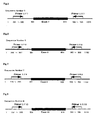
- Fig. 1 shows the structure of the OPTN gene (Example 1);
- Fig. 2 shows the structure of
exon 4 of the OPTN gene and the relation of positions between it and its corresponding primer (Example 1); - Fig. 3 shows the structure of
exon 5 of the OPTN gene and the relation of positions between it and its corresponding primer (Example 1); - Fig. 4 shows the structure of
exon 6 of the OPTN gene and the relation of positions between it and its corresponding primer (Example 1); - Fig. 5 shows the structure of
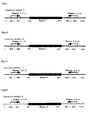
exon 7 of the OPTN gene and the relation of positions between it and its corresponding primer (Example 1); - Fig. 6 shows the structure of
exon 8 of the OPTN gene and the relation of positions between it and its corresponding primer (Example 1); - Fig. 7 shows the structure of
exon 9 of the OPTN gene and the relation of positions between it and its corresponding primer (Example 1); - Fig. 8 shows the structure of
exon 10 of the OPTN gene and the relation of positions between it and its corresponding primer (Example 1); - Fig. 9 shows the structure of
exon 11 of the OPTN gene and the relation of positions between it and its corresponding primer (Example 1); - Fig. 10 shows the structure of
exon 12 of the OPTN gene and the relation of positions between it and its corresponding primer (Example 1); - Fig. 11 shows the structure of
exon 13 of the OPTN gene and the relation of positions between it and its corresponding primer (Example 1); - Fig. 12 shows the structure of
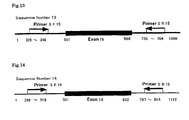
exon 14 of the OPTN gene and the relation of positions between it and its corresponding primer (Example 1); - Fig. 13 shows the structure of
exon 15 of the OPTN gene and the relation of positions between it and its corresponding primer (Example 1); and - Fig. 14 shows the structure of
exon 16 of the OPTN gene and the relation of positions between it and its corresponding primer (Example 1). - The inventors determined the coding sequence in the coding region of each exon, constituting a glaucoma-related gene, consisting of the base sequence denoted by SEQ ID NO: 1. In the course of this determination, it was verified that genetic polymorphism occurs with a difference in frequency in the coding region of the gene between the glaucoma patient group and the non-patient group. Furthermore, the onset rate of glaucoma depends thereon statistically in a significant manner compared to the rate thereof in the general group. The invention is constituted based on the above new findings.
- As an example of the glaucoma-related genes, OPTN (optineurin) gene can be noted. The structure and the coding sequence of the optineurin gene are as shown in Fig. 1 and as listed in Table 1 and, for example, there are coding regions to be transcribed and translated into protein, and non-translated regions as well as other elements. The base positions of the OPTN gene conform with the base numbers defined in SEQ ID NO: 1 (Genbank entry number AF420371, AF420372 and AF420373). The OPTN protein contains 13 exons. The sequence of each exon and the location of it is denoted by SEQ ID NO: 2 for
exon 4, by SEQ ID NO: 3 forexon 5, by SEQ ID NO: 4 forexon 6, by SEQ ID NO: 5 forexon 7, by SEQ ID NO: 6 forexon 8, by SEQ ID NO: 7 forexon 9, by SEQ ID NO: 8 forexon 10, by SEQ ID NO: 9 forexon 11, by SEQ ID NO: 10 forexon 12, by SEQ ID NO: 11 forexon 13, by SEQ ID NO: 12 forexon 14, by SEQ ID NO: 13 forexon 15 and by SEQ ID NO: 14 forexon 16. The correspondence between the base sequence of the OPTN gene represented as the sequence denoted by SEQ ID NO: 1 and the base sequence of each exon represented as the sequences denoted by SEQ ID NOS: 2 to 14 is as follows. The positions 501-666 in SEQ ID NO: 2 to the positions 1-166 of SEQ ID NO: 1, the positions 501-703 in SEQ ID NO: 3 to the positions 167-369 of SEQ ID NO: 1, the positions 501-683 in SEQ ID NO: 4 to the positions 370-552 of SEQ ID NO: 1, the positions 501-574 in SEQ ID NO: 5 to the positions 553-626 of SEQ ID NO: 1, the positions 501-653 in SEQ ID NO: 6 to the positions 627-779 of SEQ ID NO: 1, the positions 501-603 in SEQ ID NO: 7 to the positions 780-882 of SEQ ID NO: 1, the positions 501-616 in SEQ ID NO: 8 to the positions 883-998 of SEQ ID NO: 1, the positions 501-650 in SEQ ID NO: 9 to the positions 999-1148 of SEQ ID NO: 1, the positions 501-594 in SEQ ID NO: 10 to the positions 1149-1242 of SEQ ID NO: 1, the positions 501-659 in SEQ ID NO: 11 to the positions 1243-1401 of SEQ ID NO: 1, the positions 501-631 in SEQ ID NO: 12 to the positions 1402-1532 of SEQ ID NO: 1, the positions 501-580 in SEQ ID NO: 13 to the positions 1533-1612 of SEQ ID NO: 1, the positions 501-622 in SEQ ID NO: 14 to the positions 1613-1734 of SEQ ID NO: 1. - A mutation in the glaucoma-related gene for detection in the present invention refers to substitution, in deletion and/or insertion of at least one base at a specific position(s) in the base sequence of the OPTN gene. The "specific position" refers to a position selected from the positions 619 and/or 898 of the base sequence denoted by SEQ ID NO: 1.
- As the detailed substitution of bases at specific positions in the invention, a substitution of G for A at the position 619 and/or a substitution of A for G at the position 898 in the base sequence denoted by SEQ ID NO: 1 are mentioned.
- In the method for assaying for the mutation of the glaucoma-related gene, the method is not limited, as far as detecting the specific mutation of the OPTN gene disclosed herein, but various methods currently known or to be known in the future can be used for detection of a relevant mutation.
- In order to check for a mutation as disclosed in this invention in the OPTN gene of a subject, various methods can be used for analyzing the base sequences containing the position(s) of a possible mutation. As these methods, for example, Southern hybridization method, dot hybridization method (see J. Mol. Biol, 98: 503-517 (1975) etc.), dideoxy base sequence determination method (Sanger's method), the various detecting methods combined with DNA amplification approaches can be listed [for example, PCR-restriction fragments length polymorphism analyzing method (RFLP), PCR-single-chain-high-order structure polymorphism analyzing method (see Proc. Natl. Acad. Sci., U.S.A., 86: 2766-2770 (1989) etc.), PCR-specific sequence oligonucleotide method (SSO), allele specific oligonucleotide method using PCR-SSO and dot hybridization method (see Nature, 324: 163-166 (1986) etc.)] can be employed. For the position(s) of the gene mutation to be detected as disclosed and identified in this invention, those skilled in the art can detect the mutation using known methods.
- In order to analyze the OPTN gene of a subject, the sample to be prepared for the assay method of the invention is not specifically limited but may be any biological sample containing the OPTN gene of the subject, such as tissues collected from a living body, tissue cut out in an operation and tissue from the oral cavity mucous membrane, blood, serum, excretions, ejaculated semen, expectorated sputum, saliva, brain and spinal fluid, hair etc. For example, the OPTN gene extracted by a known gene extraction method such as phenol-chloroform method, from a biological sample such as tissue that has been crushed using a blender can be used as a sample to be examined. Furthermore, the extracted OPTN gene can be prepared as a sample to be examined by amplifying and concentrating it.
- The sample to be examined may either be the full-length of the DNA of the OPTN gene or a DNA fragment (a portion of the full-length DNA). When a DNA fragment is examined, it is preferred for the fragment to include the complete or partial coding region of at least one (1), preferably, two (2) or more, and, more preferably, three (3) or more exons. There is no limitation on the DNA fragment in terms of its base length as long as it is useable for the detection of a gene mutation, i.e., as long as it has a length available for measurement as a sample DNA prepared for the examination of a base mutation. As the base length of such DNA, a length of around ten (10) or more bases and, preferably, around 20 or more bases can be selected. Generally, a length of around 100-1000 bases and, preferably, around 200-300 bases is selected.
- Furthermore, the sample to be examined may either be DNA or a DNA transcription product. More specifically, the sample may either be a messenger RNA (mRNA) transcribed from DNA, cDNA further reverse-transcribed from the mRNA or other complementary DNA. All of the various steps that may be employed in the detection method for the gene mutation of the invention, such as, for example, synthesis of DNA or DNA fragment; enzyme treatments with the purpose of cutting, deleting, adding or coupling DNA; isolation, purification, duplication and selection of DNA; and amplification of DNA fragment may be performed according to conventional methods (see Methods for Experiments in Molecular Genetics, Kyouritsu Shuppan Co., Ltd., 1983, etc.). These steps can be modified according to conventional procedure as necessary.
- Amplification of nucleic acid in order to prepare a sample to be examined may be implemented according to, for example, a PCR method or its variant method (see PCR Technology, Takara Shuzo Co., Ltd., 1990, etc.). In this case, an oligonucleotide capable of specifically forming a hybrid at a portion of a glaucoma-related gene, more specifically, an oligonucleotide having a primer function, is suitably selected so that it specifically amplifies a desired DNA fragment having at least one (1) or more of the above specific positions, related to mutation.
- As oligonucleotides having a primer function, an oligonucleotide such as, for example, (1) an oligonucleotide comprising a base sequence denoted by any of SEQ ID NO:s 15-40, (2) a complementary chain of an oligonucleotide described in above (1), (3) an oligonucleotide capable of hybridizing under stringent conditions with an oligonucleotide described in above (1) or (2), (4) an oligonucleotide having a homology of 60% or more to an oligonucleotide described in any of above (1) to (3), (5) an oligonucleotide including a base sequence in which one (1) to several bases are mutated by substitution, deletion, insertion or addition in an oligonucleotide described in above (1) to (4), and etc. can be used.
- An oligonucleotide itself can be designed by known methods, i.e., for example, it can be chemically synthesized. Also, it is possible to cut natural chain(s) of nucleic acid using restriction enzyme etc., to modify the natural nucleic acid chain or to couple or cut chains so that the natural nucleic acid is constituted by an above base sequence. More specifically, oligonucleotides can be synthesized using an oligonucleotide synthesizing apparatus (manufactured by Applied Biosystems, Expedite Model 8909 DNA Synthesizer) etc. Furthermore, known production methods can be used as synthesizing methods of oligonucleotides having one (1) to several bases varied such as by substitution, deletion, insertion or addition. The synthesis can be carried out using, for example, portion-specific mutation introduction method, gene homologous recombination method, primer elongation method and polymerase chain reaction method (PCR) or using a plurality of these methods in combination. Furthermore, the synthesis can be carried out according to the methods described in, for example, Molecular Cloning; A Laboratory Manual, Second Edition, Edited by Sambrook et al., Cold Spring Harbor Laboratory Press, Cold Spring Harbor, New York, 1989; Labo Manual Genetic Engineering, Edited by Masami Matsumura, Maruzen Co., Ltd., 1988; PCR Technology, The Principle and Application of DNA Amplification, Edited by Ehrlich, HE., Stockton Press, 1989, etc. Furthermore, a modified version of an above method such as, for example, a technique by Ulmer (Science (1983) 219:666) can be used.
- Generally known conditions can be selected as the stringent conditions for hybridization and, as an example thereof, , after hybridizing over night at 42°C in a solution containing 50%-formamide, 5X SSC (150mM of NaCl, 15mM of trisodium citrate), 50mM of sodium phosphate (pH 7.6), 5X Denhart's solution, 10%-dextran sulfuric acid, and 20µg/ml of DNA, a primary washing in 2X SSC•0.1% of SDS at room temperature and a secondary washing in 0.1 X SSC•0.1% of SDS.
- A mutation of DNA can be detected by, for example, determining the base sequence of the OPTN gene contained in the sample to be examined using Sanger's method.
- Using a one-chain target OPTN gene hybridized with a complementary oligonucleotide as a primer, a complementary chain is synthesized with DNA polymerase in the direction from the position 5' to the position 3'. The oligonucleotide used as a primer is, for example, an oligonucleotide as described above.
- A complementary chain is synthesized by adding a small amount of dideoxyribonucleotide-triphosphoric acid (ddNTP) to each base in addition to four (4) kinds of deoxyribonucleotide-triphosphoric acid (dNTP) as substrates for the reaction. ddNTP is an analogue (analogous substance) having an -H group at the position 3' of a deoxyribose instead of an -OH group. Once ddNTP is taken in instead of dNTP, the complementary chain is not synthesized further and DNAs having various lengths are obtained. In the reaction system, the synthesized DNA can be labeled by adding, for example, a primer or dNTP labeled with a chemiluminescent substance or a radioactive isotope. Then, the base sequence can be determined by the electrophoresis of reaction products with denatured polyacrylamide.
- For example, Klenow enzyme, T7 phage and thermophilic-bacteria-originated DNA polymerases can be listed as DNA polymerase used in Sanger's method. The exonuclease activity of these DNA polymerases is commonly removed in a genetic-engineering approach. At first, the target genes were used in a form of one chain in Sanger's method but, at present, a method is often used in which double-chain plasmid is alkali-denatured as it is and is used in the detection method.
- Sequence reactions can be carried out by Sanger's method or a cycle sequence method. Cycle sequence method is a method formed by combining Sanger's method and the PCR method. In this method, template DNA does not need to be single-chain DNA. The reaction is carried out with DNA, one kind of primer, dNTPs, ddNTPs and heat-resistant DNA polymerase in the reaction system. It is the same as Sanger's method in that, during the PCR reaction, ddNTPs are taken up, elongation is terminated and, as a result, DNA having the same bases at the 3'-terminal position is synthesized. As sequence reactions for automatic sequencers, there are dye primer method in which the primer is marked with fluophor, dye terminator method in which ddNTP is marked with fluophor, internal-label method in which dNTP substrate is labeled etc.
- The invention also includes an assaying reagent and an assaying reagent kit used for the gene assay method for predicting glaucoma. The assaying reagent may be any of the various reagents used for the method of the invention such as, for example, a primer for amplification of the sample to be examined, a primer for determining the base sequences of the sample to be examined, various polymerase, base substrates, marking materials, etc. The assaying reagent kit may be any kit in which at least two (2) of the reagents used for the method of the invention are present.
- The invention will be specifically described referring to examples. However, the invention is not limited to those examples.
- Blood provided by a subject was processed according to a conventional method and DNA was extracted from an eukaryotic cell. Using a kit product named "Dr. GenTLE ™ (for blood) (manufactured by Takara Shuzo Co., Ltd.,)" as the DNA extraction kit, DNA was extracted according to the protocol provided by the instruction manual of the product.
- Using the obtained DNA extraction solution as a template, OPTN gene was amplified in PCR using a kit product named "LATaq (manufactured by Applied Biosystems)", a kit for PCR amplification.
- The sequence of each exon from
exon 4 toexon 16 is disclosed in a Genbank entry No. NT_031849 and each sequence is represented by the base sequence of the region described as follows in the sequences denoted by SEQ ID NO:s 2 to 14. - Exon 4: SEQ ID NO: 2, the positions 501-666
- Exon 5: SEQ ID NO: 3, the positions 501-703
- Exon 6: SEQ ID NO: 4, the positions 501-683
- Exon 7: SEQ ID NO: 5, the positions 501-574
- Exon 8: SEQ ID NO: 6, the positions 501-653
- Exon 9: SEQ ID NO: 7, the positions 501-603
- Exon 10: SEQ ID NO: 8, the positions 501-616
- Exon 11: SEQ ID NO: 9, the positions 501-650
- Exon 12: SEQ ID NO: 10, the positions 501-594
- Exon 13: SEQ ID NO: 11, the positions 501-659
- Exon 14: SEQ ID NO: 12, the positions 501-631
- Exon 15: SEQ ID NO: 13, the positions 501-580
- Exon 16: SEQ ID NO: 14, the positions 501-622
- Oligonucleotide represented by each of the base sequences denoted by SEQ ID NOS: 15 to 40 was used to amplify each exon. The relation of positions between each primer and each exon is shown in Figs. 2 to 14. However, each antisense primer consists of sequences based on a complementary chain of the sequences denoted by SEQ ID NOS: 2 to 14.
-
- Normal Chain, SF4, SEQ ID NO: 15; region = SEQ ID NO: 2, the positions 337-359
- Inverted Chain, SR4, SEQ ID NO: 16; region = the complementary sequence of SEQ ID NO: 2, positions 828-852
-
- Normal Chain, SF5, SEQ ID NO: 17; region = SEQ ID NO: 3, the positions 304-323
- Inverted Chain, SR5, SEQ ID NO: 18; region = the complementary sequence of SEQ ID NO: 3, positions 858-878
-
- Normal Chain, SF6, SEQ ID NO: 19; region = SEQ ID NO: 4, the positions 302-321
- Inverted Chain, SR6, SEQ ID NO: 20; region = the complementary sequence of SEQ ID NO: 4, positions 850-875
-
- Normal Chain, SF7, SEQ ID NO: 21; region = SEQ ID NO: 5, the positions 261-280
- Inverted Chain, SR7, SEQ ID NO: 22; region = the complementary sequence of SEQ ID NO: 5, positions 765-784
-
- Normal Chain, SF8, SEQ ID NO: 23; region = SEQ ID NO: 6, the positions 349-367
- Inverted Chain, SR8, SEQ ID NO: 24; region = the complementary sequence of SEQ ID NO: 6, positions 967-988
-
- Normal Chain, SF9, SEQ ID NO: 25; region = SEQ ID NO: 7, the positions 244-263
- Inverted Chain, SR9, SEQ ID NO: 26; region = the complementary sequence of SEQ ID NO: 7, positions 750-769
-
- Normal Chain, SF10, SEQ ID NO: 27; region = SEQ ID NO: 8, the positions 251-269
- Inverted Chain, SR10, SEQ ID NO: 28; region = the complementary sequence of SEQ ID NO: 8, positions 765-786
-
- Normal Chain, SF11, SEQ ID NO: 29; region = SEQ ID NO: 9, the positions 325-344
- Inverted Chain, SR11, SEQ ID NO: 30; region = the complementary sequence of SEQ ID NO: 9, positions 834-853
-
- Normal Chain, SF12, SEQ ID NO: 31; region = SEQ ID NO: 10, the positions 354-380
- Inverted Chain, SR12, SEQ ID NO: 32; region = the complementary sequence of SEQ ID NO: 10, positions 800-820
-
- Normal Chain, SF13, SEQ ID NO: 33; region = SEQ ID NO: 11, the positions 333-350
- Inverted Chain, SR13, SEQ ID NO: 34; region = the complementary sequence of SEQ ID NO: 11, positions 858-878
-
- Normal Chain, SF14, SEQ ID NO: 35; region = SEQ ID NO: 12, the positions 268-287
- Inverted Chain, SR14, SEQ ID NO: 36; region = the complementary sequence of SEQ ID NO: 12, positions 875-895
-
- Normal Chain, SF15, SEQ ID NO: 37; region = SEQ ID NO: 13, the positions 326-349
- Inverted Chain, SR15, SEQ ID NO: 38; region = the complementary sequence of SEQ ID NO: 13, positions 735-754
-
- Normal Chain, SF16, SEQ ID NO: 39; region = SEQ ID NO: 14, the positions 299-318
- Inverted Chain, SR16, SEQ ID NO: 40; region = the complementary sequence of SEQ ID NO: 14, positions 797-814
- The PCR reaction was carried out such that a cycle of heating 30 seconds at 94°C, 30 seconds at 60°C and 30 seconds at 72°C was repeated for 30 times.
- The base sequence of the DNA fragment obtained by above PCR for each exon was determined using an automatic DNA sequencer ABI Prism3100 (manufactured by Applied Biosystems) according to the protocol provided by the instruction manual of the sequencer. In this procedure, the cyclic sequence reactions were carried out with either a forward primer or a reverse primer among the primers used in PCR reactions for each exon. (4) Determination of the Base Sequence of DNA fragment of Each Exon in the Control Group.
- Furthermore, blood obtained from a group of non-patient volunteers as a control group was processed according to the above approach and the base sequence dominant in the non-patient group was determined for DNA fragment of each exon.
- Blood obtained from a patient diagnosed to have open angle glaucoma by a medical institution was processed according to the approach used in the above Example. Then, the base sequence of the OPTN gene contained therein was studied and the sequence was compared to base sequences of the non-patient group.
- Table 1 shows the result of the above. The first line in Table 1 lists exon numbers, the second line lists the SEQ ID NO:s representing each exon, the third line lists the base positions in each sequence and the fourth line lists the change of bases detected as a mutation.
- As a result, a mutation was recognized only for the patient group and no mutation was recognized for the non-patient group at the base position 567 in the SEQ ID NO: 5, i.e., the base position 619 in the SEQ ID NO: 1 and at the base position 516 in the SEQ ID NO: 8, i.e., the base position 898 in the SEQ ID NO: 1.
Table 1 Exon 7 10 SEQ ID NO: 5 8 Base Position 567 516 Position in the SEQ ID NO: 1 619 898 A mutation A to G G to A Frequency in a patient group 1.4% 0.8% Frequency in a nin-patient group 0.0% 0.0% - As has been set forth, the disclosure obtained concerning gene mutation according to the invention is effective for predicting future onset of glaucoma. When the future onset of, especially, open angle glaucoma can be predicted by detecting a mutation of the OPTN gene by a gene assay method of the invention, it is possible to prevent the onset of the disease or to treat the disease early on.


Claims (6)
- A gene assay method comprising the steps of:detecting substitution of A for G at position 898 in the coding region of a optineurin (OPTN) gene in a sample obtained from a human subject, said OPTN gene having a nucleic acid sequence denoted by SEQ ID NO: 1; andpredicting future onset of glaucoma in the subject using the mutation as an index.
- The gene method according to claim 1, wherein the substitution is detected by using an oligonucleotide capable of forming a hybrid at a specific position of the coding region of the OPTN gene.
- An oligonucleotide selected from the group consisting of:(1) an oligonucleotide represented by SEQ ID NO: 27;(2) a complementary chain of an oligonucleotide according to (1);(3) an oligonucleotide represented by SEQ ID NO: 28; and(4) a complementary chain of an oligonucleotide according to (3).
- A gene assay method for predicting future onset of glaucoma, comprising steps of :(a) isolating a polynucleotide from a sample obtained from a human subject; (b) performing a nucleic acid amplification process on said polynucleotide using an oligonucleotide of claim 3;(c) detecting a substitution of A for G at position 898 in the coding region of a glaucoma-related gene having a nucleic acid sequence denoted by SEQ ID NO: 1; and(d) predicting future onset of glaucoma in the subject using the mutation as an index.
- The gene assay method according to claim 1 or 4, wherein the glaucoma is primary open angle glaucoma and/or normal ocular tension glaucoma.
- An assaying reagent or an assaying reagent kit comprising an oligonucleotide of claim 3.
Applications Claiming Priority (2)
| Application Number | Priority Date | Filing Date | Title |
|---|---|---|---|
| JP2002226612 | 2002-08-02 | ||
| EP03447201A EP1388590B1 (en) | 2002-08-02 | 2003-07-29 | Gene assay method for predicting glaucoma onset risk |
Related Parent Applications (1)
| Application Number | Title | Priority Date | Filing Date |
|---|---|---|---|
| EP03447201A Division EP1388590B1 (en) | 2002-08-02 | 2003-07-29 | Gene assay method for predicting glaucoma onset risk |
Publications (3)
| Publication Number | Publication Date |
|---|---|
| EP1647603A2 true EP1647603A2 (en) | 2006-04-19 |
| EP1647603A3 EP1647603A3 (en) | 2006-05-03 |
| EP1647603B1 EP1647603B1 (en) | 2007-01-17 |
Family
ID=30437717
Family Applications (2)
| Application Number | Title | Priority Date | Filing Date |
|---|---|---|---|
| EP03447201A Expired - Lifetime EP1388590B1 (en) | 2002-08-02 | 2003-07-29 | Gene assay method for predicting glaucoma onset risk |
| EP06000681A Expired - Lifetime EP1647603B1 (en) | 2002-08-02 | 2003-07-29 | Gene assay method for predicting glaucoma onset risk |
Family Applications Before (1)
| Application Number | Title | Priority Date | Filing Date |
|---|---|---|---|
| EP03447201A Expired - Lifetime EP1388590B1 (en) | 2002-08-02 | 2003-07-29 | Gene assay method for predicting glaucoma onset risk |
Country Status (4)
| Country | Link |
|---|---|
| US (1) | US20040091914A1 (en) |
| EP (2) | EP1388590B1 (en) |
| AT (2) | ATE323181T1 (en) |
| DE (2) | DE60304518T2 (en) |
Cited By (1)
| Publication number | Priority date | Publication date | Assignee | Title |
|---|---|---|---|---|
| WO2008152656A3 (en) * | 2007-06-13 | 2009-02-05 | Decode Genetics Ehf | Genetic variants on chr 15q24 as markers for use in diagnosis, prognosis and treatment of exfoliation syndrome and glaucoma |
Families Citing this family (1)
| Publication number | Priority date | Publication date | Assignee | Title |
|---|---|---|---|---|
| CN109453380A (en) * | 2018-09-29 | 2019-03-12 | 浙江大学 | Application of the optineurin albumen in preparation diagnosing and treating acute liver damage product |
Family Cites Families (3)
| Publication number | Priority date | Publication date | Assignee | Title |
|---|---|---|---|---|
| BR9808251B1 (en) * | 1997-03-11 | 2012-09-04 | vaccine, and use of an isolated or recombinant protein or antigenic fragment thereof. | |
| EP1293569A3 (en) * | 2001-09-14 | 2004-03-31 | Research Association for Biotechnology | Full-length cDNAs |
| CA2471452A1 (en) * | 2001-12-24 | 2003-07-10 | University Of Connecticut | Optineurin and glaucoma |
-
2003
- 2003-07-28 US US10/627,757 patent/US20040091914A1/en not_active Abandoned
- 2003-07-29 EP EP03447201A patent/EP1388590B1/en not_active Expired - Lifetime
- 2003-07-29 AT AT03447201T patent/ATE323181T1/en not_active IP Right Cessation
- 2003-07-29 AT AT06000681T patent/ATE351926T1/en not_active IP Right Cessation
- 2003-07-29 EP EP06000681A patent/EP1647603B1/en not_active Expired - Lifetime
- 2003-07-29 DE DE60304518T patent/DE60304518T2/en not_active Expired - Fee Related
- 2003-07-29 DE DE60311330T patent/DE60311330T2/en not_active Expired - Fee Related
Cited By (1)
| Publication number | Priority date | Publication date | Assignee | Title |
|---|---|---|---|---|
| WO2008152656A3 (en) * | 2007-06-13 | 2009-02-05 | Decode Genetics Ehf | Genetic variants on chr 15q24 as markers for use in diagnosis, prognosis and treatment of exfoliation syndrome and glaucoma |
Also Published As
| Publication number | Publication date |
|---|---|
| EP1647603A3 (en) | 2006-05-03 |
| DE60304518D1 (en) | 2006-05-24 |
| EP1647603B1 (en) | 2007-01-17 |
| EP1388590A3 (en) | 2004-05-06 |
| EP1388590A2 (en) | 2004-02-11 |
| DE60311330D1 (en) | 2007-03-08 |
| ATE323181T1 (en) | 2006-04-15 |
| EP1388590B1 (en) | 2006-04-12 |
| DE60311330T2 (en) | 2007-11-22 |
| DE60304518T2 (en) | 2006-11-23 |
| US20040091914A1 (en) | 2004-05-13 |
| ATE351926T1 (en) | 2007-02-15 |
Similar Documents
| Publication | Publication Date | Title |
|---|---|---|
| US6927028B2 (en) | Non-invasive methods for detecting non-host DNA in a host using epigenetic differences between the host and non-host DNA | |
| US11214834B2 (en) | Methods of detecting Charcot-Marie tooth disease type 2A | |
| KR102158716B1 (en) | SNP marker for diagnosis of intracranial aneurysm comprising SNP of ARHGAP32 gene | |
| EP1647603B1 (en) | Gene assay method for predicting glaucoma onset risk | |
| KR102158721B1 (en) | SNP marker for diagnosis of intracranial aneurysm comprising SNP of RNF144A gene | |
| KR102158713B1 (en) | SNP marker for diagnosis of intracranial aneurysm comprising SNP of GBA gene | |
| KR102158715B1 (en) | SNP marker for diagnosis of intracranial aneurysm comprising SNP of OLFML2A gene | |
| EP1491627B1 (en) | Gene examination method for judging the onset risk of glaucoma | |
| KR102158723B1 (en) | SNP marker for diagnosis of intracranial aneurysm comprising SNP of SPCS3 gene | |
| KR102158719B1 (en) | SNP marker for diagnosis of intracranial aneurysm comprising SNP of LOC102724084 gene | |
| US7514211B2 (en) | Genomic DNAs participating in rheumatoid arthritis, method of diagnosing the same, method of judging onset risk and diagnostic kit for detecting the same | |
| JP2005034112A (en) | Method for testing gene for determining risk of glaucoma onset | |
| US20020034742A1 (en) | Disease association by stratification | |
| KR102158725B1 (en) | SNP marker for diagnosis of intracranial aneurysm comprising SNP of MINK1 gene | |
| KR102158714B1 (en) | SNP marker for diagnosis of intracranial aneurysm comprising SNP of TCF24 gene | |
| KR102158720B1 (en) | SNP marker for diagnosis of intracranial aneurysm comprising SNP of LRRC3 gene | |
| KR102158722B1 (en) | SNP marker for diagnosis of intracranial aneurysm comprising SNP of FLJ45964 gene | |
| JP2004201666A (en) | Method for testing gene for judging risk of glaucoma onset | |
| JP2004208661A (en) | Method for testing gene for judging risk of glaucoma onset | |
| JP2004121090A (en) | Genetic testing method for judging crisis risk of glaucoma | |
| JP2004121150A (en) | Genetic testing method for judging crisis risk of glaucoma | |
| US20140288121A1 (en) | Asthma | |
| HK1127788A1 (en) | Association of pde4d allelic variants with stroke | |
| HK1127788B (en) | Association of pde4d allelic variants with stroke | |
| WO2000034515A1 (en) | Use of factor x polymorphism in the diagnosis and treatment of factor x and/or factor xa mediated diseases |
Legal Events
| Date | Code | Title | Description |
|---|---|---|---|
| PUAI | Public reference made under article 153(3) epc to a published international application that has entered the european phase |
Free format text: ORIGINAL CODE: 0009012 |
|
| PUAL | Search report despatched |
Free format text: ORIGINAL CODE: 0009013 |
|
| 17P | Request for examination filed |
Effective date: 20060113 |
|
| AC | Divisional application: reference to earlier application |
Ref document number: 1388590 Country of ref document: EP Kind code of ref document: P |
|
| AK | Designated contracting states |
Kind code of ref document: A2 Designated state(s): AT BE BG CH CY CZ DE DK EE ES FI FR GB GR HU IE IT LI LU MC NL PT RO SE SI SK TR |
|
| AK | Designated contracting states |
Kind code of ref document: A3 Designated state(s): AT BE BG CH CY CZ DE DK EE ES FI FR GB GR HU IE IT LI LU MC NL PT RO SE SI SK TR |
|
| RIN1 | Information on inventor provided before grant (corrected) |
Inventor name: TAKAHATA, TAKAYUKI,C/O SYSMEX CORPORATION Inventor name: KOUCHI, YASUHIRO,C/O SYSMEX CORPORATION Inventor name: MASAGO, AKINORI,C/O SYSMEX CORPORATION |
|
| GRAP | Despatch of communication of intention to grant a patent |
Free format text: ORIGINAL CODE: EPIDOSNIGR1 |
|
| GRAS | Grant fee paid |
Free format text: ORIGINAL CODE: EPIDOSNIGR3 |
|
| GRAA | (expected) grant |
Free format text: ORIGINAL CODE: 0009210 |
|
| AKX | Designation fees paid |
Designated state(s): AT BE BG CH CY CZ DE DK EE ES FI FR GB GR HU IE IT LI LU MC NL PT RO SE SI SK TR |
|
| RAP1 | Party data changed (applicant data changed or rights of an application transferred) |
Owner name: SYSMEX CORPORATION |
|
| AC | Divisional application: reference to earlier application |
Ref document number: 1388590 Country of ref document: EP Kind code of ref document: P |
|
| AK | Designated contracting states |
Kind code of ref document: B1 Designated state(s): AT BE BG CH CY CZ DE DK EE ES FI FR GB GR HU IE IT LI LU MC NL PT RO SE SI SK TR |
|
| PG25 | Lapsed in a contracting state [announced via postgrant information from national office to epo] |
Ref country code: AT Free format text: LAPSE BECAUSE OF FAILURE TO SUBMIT A TRANSLATION OF THE DESCRIPTION OR TO PAY THE FEE WITHIN THE PRESCRIBED TIME-LIMIT Effective date: 20070117 Ref country code: NL Free format text: LAPSE BECAUSE OF FAILURE TO SUBMIT A TRANSLATION OF THE DESCRIPTION OR TO PAY THE FEE WITHIN THE PRESCRIBED TIME-LIMIT Effective date: 20070117 Ref country code: LI Free format text: LAPSE BECAUSE OF FAILURE TO SUBMIT A TRANSLATION OF THE DESCRIPTION OR TO PAY THE FEE WITHIN THE PRESCRIBED TIME-LIMIT Effective date: 20070117 Ref country code: DK Free format text: LAPSE BECAUSE OF FAILURE TO SUBMIT A TRANSLATION OF THE DESCRIPTION OR TO PAY THE FEE WITHIN THE PRESCRIBED TIME-LIMIT Effective date: 20070117 Ref country code: FI Free format text: LAPSE BECAUSE OF FAILURE TO SUBMIT A TRANSLATION OF THE DESCRIPTION OR TO PAY THE FEE WITHIN THE PRESCRIBED TIME-LIMIT Effective date: 20070117 Ref country code: CH Free format text: LAPSE BECAUSE OF FAILURE TO SUBMIT A TRANSLATION OF THE DESCRIPTION OR TO PAY THE FEE WITHIN THE PRESCRIBED TIME-LIMIT Effective date: 20070117 Ref country code: SI Free format text: LAPSE BECAUSE OF FAILURE TO SUBMIT A TRANSLATION OF THE DESCRIPTION OR TO PAY THE FEE WITHIN THE PRESCRIBED TIME-LIMIT Effective date: 20070117 |
|
| REG | Reference to a national code |
Ref country code: GB Ref legal event code: FG4D |
|
| REG | Reference to a national code |
Ref country code: CH Ref legal event code: EP |
|
| REG | Reference to a national code |
Ref country code: IE Ref legal event code: FG4D |
|
| REF | Corresponds to: |
Ref document number: 60311330 Country of ref document: DE Date of ref document: 20070308 Kind code of ref document: P |
|
| PG25 | Lapsed in a contracting state [announced via postgrant information from national office to epo] |
Ref country code: SE Free format text: LAPSE BECAUSE OF FAILURE TO SUBMIT A TRANSLATION OF THE DESCRIPTION OR TO PAY THE FEE WITHIN THE PRESCRIBED TIME-LIMIT Effective date: 20070417 Ref country code: BG Free format text: LAPSE BECAUSE OF FAILURE TO SUBMIT A TRANSLATION OF THE DESCRIPTION OR TO PAY THE FEE WITHIN THE PRESCRIBED TIME-LIMIT Effective date: 20070417 |
|
| PG25 | Lapsed in a contracting state [announced via postgrant information from national office to epo] |
Ref country code: ES Free format text: LAPSE BECAUSE OF FAILURE TO SUBMIT A TRANSLATION OF THE DESCRIPTION OR TO PAY THE FEE WITHIN THE PRESCRIBED TIME-LIMIT Effective date: 20070428 |
|
| PG25 | Lapsed in a contracting state [announced via postgrant information from national office to epo] |
Ref country code: PT Free format text: LAPSE BECAUSE OF FAILURE TO SUBMIT A TRANSLATION OF THE DESCRIPTION OR TO PAY THE FEE WITHIN THE PRESCRIBED TIME-LIMIT Effective date: 20070618 |
|
| NLV1 | Nl: lapsed or annulled due to failure to fulfill the requirements of art. 29p and 29m of the patents act | ||
| PGFP | Annual fee paid to national office [announced via postgrant information from national office to epo] |
Ref country code: DE Payment date: 20070719 Year of fee payment: 5 |
|
| ET | Fr: translation filed | ||
| REG | Reference to a national code |
Ref country code: CH Ref legal event code: PL |
|
| PLBE | No opposition filed within time limit |
Free format text: ORIGINAL CODE: 0009261 |
|
| STAA | Information on the status of an ep patent application or granted ep patent |
Free format text: STATUS: NO OPPOSITION FILED WITHIN TIME LIMIT |
|
| PG25 | Lapsed in a contracting state [announced via postgrant information from national office to epo] |
Ref country code: SK Free format text: LAPSE BECAUSE OF FAILURE TO SUBMIT A TRANSLATION OF THE DESCRIPTION OR TO PAY THE FEE WITHIN THE PRESCRIBED TIME-LIMIT Effective date: 20070117 |
|
| 26N | No opposition filed |
Effective date: 20071018 |
|
| PG25 | Lapsed in a contracting state [announced via postgrant information from national office to epo] |
Ref country code: BE Free format text: LAPSE BECAUSE OF FAILURE TO SUBMIT A TRANSLATION OF THE DESCRIPTION OR TO PAY THE FEE WITHIN THE PRESCRIBED TIME-LIMIT Effective date: 20070117 Ref country code: CZ Free format text: LAPSE BECAUSE OF FAILURE TO SUBMIT A TRANSLATION OF THE DESCRIPTION OR TO PAY THE FEE WITHIN THE PRESCRIBED TIME-LIMIT Effective date: 20070117 Ref country code: RO Free format text: LAPSE BECAUSE OF FAILURE TO SUBMIT A TRANSLATION OF THE DESCRIPTION OR TO PAY THE FEE WITHIN THE PRESCRIBED TIME-LIMIT Effective date: 20070117 |
|
| PGFP | Annual fee paid to national office [announced via postgrant information from national office to epo] |
Ref country code: GB Payment date: 20070720 Year of fee payment: 5 |
|
| PG25 | Lapsed in a contracting state [announced via postgrant information from national office to epo] |
Ref country code: IT Free format text: LAPSE BECAUSE OF FAILURE TO SUBMIT A TRANSLATION OF THE DESCRIPTION OR TO PAY THE FEE WITHIN THE PRESCRIBED TIME-LIMIT Effective date: 20070117 Ref country code: GR Free format text: LAPSE BECAUSE OF FAILURE TO SUBMIT A TRANSLATION OF THE DESCRIPTION OR TO PAY THE FEE WITHIN THE PRESCRIBED TIME-LIMIT Effective date: 20070418 Ref country code: MC Free format text: LAPSE BECAUSE OF NON-PAYMENT OF DUE FEES Effective date: 20070731 |
|
| PGFP | Annual fee paid to national office [announced via postgrant information from national office to epo] |
Ref country code: FR Payment date: 20070710 Year of fee payment: 5 |
|
| PG25 | Lapsed in a contracting state [announced via postgrant information from national office to epo] |
Ref country code: IE Free format text: LAPSE BECAUSE OF NON-PAYMENT OF DUE FEES Effective date: 20070730 |
|
| PG25 | Lapsed in a contracting state [announced via postgrant information from national office to epo] |
Ref country code: EE Free format text: LAPSE BECAUSE OF FAILURE TO SUBMIT A TRANSLATION OF THE DESCRIPTION OR TO PAY THE FEE WITHIN THE PRESCRIBED TIME-LIMIT Effective date: 20070117 |
|
| GBPC | Gb: european patent ceased through non-payment of renewal fee |
Effective date: 20080729 |
|
| PG25 | Lapsed in a contracting state [announced via postgrant information from national office to epo] |
Ref country code: DE Free format text: LAPSE BECAUSE OF NON-PAYMENT OF DUE FEES Effective date: 20090203 |
|
| REG | Reference to a national code |
Ref country code: FR Ref legal event code: ST Effective date: 20090331 |
|
| PG25 | Lapsed in a contracting state [announced via postgrant information from national office to epo] |
Ref country code: GB Free format text: LAPSE BECAUSE OF NON-PAYMENT OF DUE FEES Effective date: 20080729 |
|
| PG25 | Lapsed in a contracting state [announced via postgrant information from national office to epo] |
Ref country code: CY Free format text: LAPSE BECAUSE OF FAILURE TO SUBMIT A TRANSLATION OF THE DESCRIPTION OR TO PAY THE FEE WITHIN THE PRESCRIBED TIME-LIMIT Effective date: 20070117 |
|
| PG25 | Lapsed in a contracting state [announced via postgrant information from national office to epo] |
Ref country code: LU Free format text: LAPSE BECAUSE OF NON-PAYMENT OF DUE FEES Effective date: 20070729 Ref country code: FR Free format text: LAPSE BECAUSE OF NON-PAYMENT OF DUE FEES Effective date: 20080731 |
|
| PG25 | Lapsed in a contracting state [announced via postgrant information from national office to epo] |
Ref country code: TR Free format text: LAPSE BECAUSE OF FAILURE TO SUBMIT A TRANSLATION OF THE DESCRIPTION OR TO PAY THE FEE WITHIN THE PRESCRIBED TIME-LIMIT Effective date: 20070117 Ref country code: HU Free format text: LAPSE BECAUSE OF FAILURE TO SUBMIT A TRANSLATION OF THE DESCRIPTION OR TO PAY THE FEE WITHIN THE PRESCRIBED TIME-LIMIT Effective date: 20070718 |