EP1645252B1 - Removable intra-oral corrective anti-snoring device - Google Patents
Removable intra-oral corrective anti-snoring device Download PDFInfo
- Publication number
- EP1645252B1 EP1645252B1 EP04738219A EP04738219A EP1645252B1 EP 1645252 B1 EP1645252 B1 EP 1645252B1 EP 04738219 A EP04738219 A EP 04738219A EP 04738219 A EP04738219 A EP 04738219A EP 1645252 B1 EP1645252 B1 EP 1645252B1
- Authority
- EP
- European Patent Office
- Prior art keywords
- force
- component
- tongue
- fixer
- snoring
- Prior art date
- Legal status (The legal status is an assumption and is not a legal conclusion. Google has not performed a legal analysis and makes no representation as to the accuracy of the status listed.)
- Expired - Lifetime
Links
- 206010041235 Snoring Diseases 0.000 title claims abstract description 85
- 239000000463 material Substances 0.000 claims abstract description 20
- 210000001584 soft palate Anatomy 0.000 claims abstract description 14
- 206010028813 Nausea Diseases 0.000 claims abstract description 11
- 230000008693 nausea Effects 0.000 claims abstract description 11
- 210000002396 uvula Anatomy 0.000 claims abstract description 8
- 210000001519 tissue Anatomy 0.000 claims abstract description 7
- 230000002093 peripheral effect Effects 0.000 claims abstract description 6
- 210000001847 jaw Anatomy 0.000 claims description 5
- 239000007943 implant Substances 0.000 claims description 4
- 239000002861 polymer material Substances 0.000 claims description 4
- 229920003002 synthetic resin Polymers 0.000 claims description 3
- 239000000057 synthetic resin Substances 0.000 claims description 3
- 239000002184 metal Substances 0.000 claims 1
- 201000002859 sleep apnea Diseases 0.000 abstract description 4
- 210000002345 respiratory system Anatomy 0.000 abstract description 3
- 210000003254 palate Anatomy 0.000 description 13
- 238000000034 method Methods 0.000 description 12
- 238000003825 pressing Methods 0.000 description 7
- 230000000694 effects Effects 0.000 description 6
- 239000004033 plastic Substances 0.000 description 5
- 210000003128 head Anatomy 0.000 description 4
- 230000000399 orthopedic effect Effects 0.000 description 4
- 210000002050 maxilla Anatomy 0.000 description 3
- 229910001000 nickel titanium Inorganic materials 0.000 description 3
- 229910001285 shape-memory alloy Inorganic materials 0.000 description 3
- 239000000956 alloy Substances 0.000 description 2
- 230000000903 blocking effect Effects 0.000 description 2
- 238000001723 curing Methods 0.000 description 2
- 238000004519 manufacturing process Methods 0.000 description 2
- 230000000241 respiratory effect Effects 0.000 description 2
- 230000000452 restraining effect Effects 0.000 description 2
- 229920002379 silicone rubber Polymers 0.000 description 2
- 206010003497 Asphyxia Diseases 0.000 description 1
- 208000003251 Pruritus Diseases 0.000 description 1
- 230000002159 abnormal effect Effects 0.000 description 1
- 229910045601 alloy Inorganic materials 0.000 description 1
- 208000008784 apnea Diseases 0.000 description 1
- QVGXLLKOCUKJST-UHFFFAOYSA-N atomic oxygen Chemical compound [O] QVGXLLKOCUKJST-UHFFFAOYSA-N 0.000 description 1
- 230000004888 barrier function Effects 0.000 description 1
- 201000010099 disease Diseases 0.000 description 1
- 208000037265 diseases, disorders, signs and symptoms Diseases 0.000 description 1
- 239000003814 drug Substances 0.000 description 1
- 230000007774 longterm Effects 0.000 description 1
- 210000003205 muscle Anatomy 0.000 description 1
- 210000003928 nasal cavity Anatomy 0.000 description 1
- 231100000957 no side effect Toxicity 0.000 description 1
- 210000001331 nose Anatomy 0.000 description 1
- 210000000056 organ Anatomy 0.000 description 1
- 229910052760 oxygen Inorganic materials 0.000 description 1
- 239000001301 oxygen Substances 0.000 description 1
- 210000002741 palatine tonsil Anatomy 0.000 description 1
- 230000009747 swallowing Effects 0.000 description 1
- 230000000472 traumatic effect Effects 0.000 description 1
Images



Classifications
-
- A—HUMAN NECESSITIES
- A61—MEDICAL OR VETERINARY SCIENCE; HYGIENE
- A61F—FILTERS IMPLANTABLE INTO BLOOD VESSELS; PROSTHESES; DEVICES PROVIDING PATENCY TO, OR PREVENTING COLLAPSING OF, TUBULAR STRUCTURES OF THE BODY, e.g. STENTS; ORTHOPAEDIC, NURSING OR CONTRACEPTIVE DEVICES; FOMENTATION; TREATMENT OR PROTECTION OF EYES OR EARS; BANDAGES, DRESSINGS OR ABSORBENT PADS; FIRST-AID KITS
- A61F5/00—Orthopaedic methods or devices for non-surgical treatment of bones or joints; Nursing devices ; Anti-rape devices
- A61F5/56—Devices for preventing snoring
- A61F5/566—Intra-oral devices
-
- Y—GENERAL TAGGING OF NEW TECHNOLOGICAL DEVELOPMENTS; GENERAL TAGGING OF CROSS-SECTIONAL TECHNOLOGIES SPANNING OVER SEVERAL SECTIONS OF THE IPC; TECHNICAL SUBJECTS COVERED BY FORMER USPC CROSS-REFERENCE ART COLLECTIONS [XRACs] AND DIGESTS
- Y10—TECHNICAL SUBJECTS COVERED BY FORMER USPC
- Y10S—TECHNICAL SUBJECTS COVERED BY FORMER USPC CROSS-REFERENCE ART COLLECTIONS [XRACs] AND DIGESTS
- Y10S602/00—Surgery: splint, brace, or bandage
- Y10S602/902—Antisnoring or mouth closing devices
Definitions
- the present invention relates to a snore curing field, especially relates to a comfortable type removable tongue position corrective anti-snoring & anti-suffocating device for preventing snore and remitting sleep apnoea syndrome (i.e. the so-called snoring with suffocating).
- the closest prior art is DE 20214663 U1 , which defines the preamble of claim 1.
- the snore is a rebarbative but very familiar physiological phenomenon, it results in not only affecting other sleeping person in the same or adjacent room, but also an apnoea and even suffocation for short of oxygen, then induces many diseases, harms to health, reduces the efficiency of work and learning and even reduces life-span.
- the curing method for snore includes operation, medicine and positive press breath machine assistant and orthopedics method. Among which, the orthopedics method is not traumatic, has no side-effects, is simple and convenient, thus has a well development in the future.
- the Chinese utility model 90215295 discloses an orthopedics method of NiTi shape memory alloy anti-snoring device, it is made from the NiTi shape memory alloy material to manufacture a force piece that suitable to the normal tongue base or soft palate, and acts on the affected part (i.e. the big tongue base and uvula) of the patient's body to stop the snoring. It has, however, the following drawbacks in practice: (1) it often suffers from the upward pushing force from the big tongue base since it is mostly applied on lower jaw, the pushing force is conducted through collar to the teeth and produce some bad pain as pulling out teeth; (2) since it directly acts on the uvula position, moreover after research people find that the other tissue near the uvula (e.g.
- tongue palate bow and palate tonsil is more sensitive and easy to cause itch and nausea; (3) since it acts directly on the big tongue base, and after research we find that the big tongue base itself is specially sensitive and easier to cause pain and nausea. All the three drawbacks above are severely affecting its application, so the patent is not practical with only 1 to 2 suitable patients from 100 patients.
- D1 and D2 mainly use screw and nut as the adjusting mechanism, coupled with the tongue-pressing pieces of different shapes;
- D4 uses a shaped hinge and a spring clip as the adjusting mechanism, coupled with a shaped bracket having a rotatable tongue-pressing loop;
- D6 uses the tension of a horizontal chain to adjust, coupled with a pressure pad with double link bars; while D3 only uses a closed semi-circlar loop as the tongue-pressing piece, D5 only uses a pikestaff-like strip body as the tongue-pressing piece.
- these designs are either too complicated (such as D1, D2, D4 and D6), or too rigid (such as D3 and D5).
- the purpose of the present invention is to overcome the drawbacks of all kinds of prior anti-snoring devices, providing a new technical solution of a comfortable removable tongue position corrective anti-snoring device guaranteeing an unobstructed respiratory passage, which is concise and necessary, indeed makes patients easily adapt and accept it, and at the same time can indeed achieve the ideal anti-snoring and anti-suffocating effects.
- the present invention is defined in claim 1.
- the technical scheme of the present invention is as follows: it makes use of wire or band material provided with suitable elasticity and rigidity to manufacture a comfortable removable tongue position corrective anti-snoring device whose fixer is mainly applied on upper jaw, characterized in that, it includes not only a nether force-component (3) connecting with the fixer (1), but also an upper force-component (2) connecting with the fixer (1), the force end of the said nether force-component (3) being designed to be suitable to the normal configuration of the posterior of the tongue, its head having a holding plate (4) and being designed to be located on the portion in front of the sensitive position of the posterior of the big tongue, and being able to press the big tongue downward/front downward without causing discomfort and nausea; the force end of the said upper force-component (2) being designed to be suitable to the normal configuration of the soft palate palatine, its head having a pressure plate (4) and being designed to be located on the portion in front of the sensitive position of the soft palate palatine, so as to suitably
- 1 is the fixer
- 2 is the upper force-component
- 3 is the nether force-component
- 4 is the holding plate/pressure plate
- 5 is the base plate (tongue plate/palate plate/maxilla plate)
- 6 is the support bar (lingual bar/palatal bar/cheek bar/labial bar)
- 7 is the direct retainer (clasp/bent labial arch etc)
- 8 is the indirect retainer (hyoplastron/palate-plank/rest etc)
- 9 is the functional accessory (inclined bite plate/articulation plate/articulation mat etc)
- 10 is the circle retainer (band/dental crown cover etc)
- 11 is the link bar
- 12 is the connecter
- 13 is the adjustment
- 14 is the teeth
- 15 is the clip
- 16 is the connecting wire
- 17 is the group clips
- 18 is the axial clip
- 19 is the precision attachment/magnetic implant denture
- 20 is the complete denture
- 21 is the perdue false tooth
- the comfortable type removable tongue position corrective anti-snoring device is designed to be applied on upper jaw, including fixer 1, upper force-component 2 and nether force-component 3, the upper force-component and nether force-component 3 are made of material (preferably high elastic alloy wire or band) provided with suitable elasticity and rigidity.
- the elongation part (i.e. the connecter 12) of the non-force end of the upper force-component 2 is embedded in the back area of the fixer 1, the other end i.e.
- the force end extends backwardly and is designed to be suitable to the normal configuration of the soft palate palatine, the head is designed to be located on the portion in front of the sensitive position of the soft palate palatine and little withstand it.
- the connecter 12 of the non-force end of the nether force-component 3 is also embedded in the back area of the fixer 1, but the other end i.e.
- the force end is normally bowed from middle lip side toward far end away the lip side like a bowed nose bridge along the palate
- the bottom of bridge is designed to be suitable to the normal configuration of the posterior of the big tongue
- the head is designed to be located on the portion in front of the sensitive position of the posterior of the big tongue, and press the big tongue downward/front downward, thus, on the premise of not causing discomfort and nausea of peripheral tissue
- the tongue base is held effectively to prevent shrinking backward and press the palatine and uvula to cause the nasal cavity blocking and produce suffocating and snoring, and as mentioned above, the co-action of the upper and nether force-components 2, 3 could remarkably enlarge and keep the intra-oral effective inner space, thus could increase the breath efficiency and prevent developing sleep apnoea syndrome.
- the holding plate/pressure plate 4 set on the head portion of the force end of the upper and nether force-components 2, 3 is to buffer the force of the force-components 2, 3 and divide it onto the contact position evenly,.
- the holding plate/pressure plate 4 is generally made from synthetic resin (plastic etc) and/ or soft polymer material (silicon rubber etc), and its size should be suitable to the position.
- the fixer 1 may have various forms. As Fig.2 shows, it is only a normal form, which is suitable for snoring patients with good teeth fixing.
- the fixer includes base plate 5 (here is a palate plate), support bar 6 (palatal bar) and direct retainer 7 (clasp etc), the whole anti-snoring device is fixed onto the suitable position of the upper jaw of the patient.
- the indirect retainer 8 (palate-plank/rest etc) may be used in need to reinforce fixing and safety factor.
- Fig.3 it shows a comfortable type removable tongue position corrective anti-snoring device including a fixer 1 having at least the base plate 5 and support bar 6 (here is a labial bar). It is designed to be applied on upper jaw, which includes not only the upper force-component 2, but also the nether force-component 3.
- the material and the making method of the upper force-component 2 and the nether force-component 3 are same to those in the example 1, but the fixer is slightly different.
- the fixer's base plate may be made of plastic with soft polymer material (silicon rubber etc) covering on it to increase the flexibility with the palate;
- the palate side may add the support bar 6 (palatal bar) to increase rigidity and/or decrease base plate's area;
- Vertical curve may be set on the labial bar for dismounting.
- Fig.4 it shows a comfortable type removable tongue position corrective anti-snoring device , which includes at least base plate5 (here is a maxilla plate) and direct retainer7 (clip 15, connecting wire 16, group clips 17, axial clip 18 etc). It is designed to be applied on upper jaw, which includes not only the upper force-component 2, but also the nether force-component 3.
- the making method of the upper force-component 2 is also same to that in the example 1, but the force-component 3 is similar to a semi-tube with a seam in middle of it as figure shows
- the lip-cheek side and tongue-palate side of the maxilla plate may respectively make use of the partial support bar (labial bar/tongue palatal bar) to increase the rigidity and/or decrease base plate's area, an indirect retainer 8 (palate-plank/rest etc) may also be added to reinforce fixing, this kind of the anti-snoring device is suitable for the snoring patient with poor fixing.
- Fig.5 it shows a comfortable type removable tongue position corrective anti-snoring device , which uses at least the functional accessory 9 (here is an articulation mat) as the fixer. It is designed to be applied on upper jaw, which includes not only the upper force-component 2, but also the nether force-component 3. The material and the making method of the upper force-component 2 and the nether force-component 3 are same to those in the example 1, but the fixer is slightly different. The fixer requires that the surface of the occlusal pad should have a deep groove to cover the tooth tip and corona. To increase rigidity, the support bar (tongue palatal bar/labial bar) may be set and the back area may be closed. This kind of the anti-snoring device is suitable for the snoring patient with good teeth fixing or small height.
- the functional accessory 9 here is an articulation mat
- Fig.6 it shows a comfortable type removable tongue position corrective anti-snoring device which uses at least the complete denture as the fixer. It is designed to be applied on upper jaw, which includes not only the upper force-component 2, but also the nether force-component 3. The material and the making method of the upper force-component 2 and the nether force-component 3 are same to those in the example 1, but the fixer is slightly different.
- the tongue-palate side of the complete denture may also be added a support bar (tongue palatal bar) to decrease the base plate's area.
- This kind of the anti-snoring device is suitable for the snoring patient with non dental jaw.
- Fig.7 it shows a comfortable type removable tongue position corrective anti-snoring device which uses at least the coving dental prosthesis or magnetic implant dental prosthesis as the fixer, is designed to be applied on upper jaw, and includes not only the upper force-component 2, but also the nether force-component 3.
- the material and the making method of the upper force-component 2 and the nether force-component 3 are same to those in the example 1, but the fixer is slightly different.
- the features of the fixing manner is that it has parts to form a complete set with gum precision attachment/button tract or magnetic implant denture 19. It is suitable for the snoring patient with bad teeth layout or high fixing requirement. Its back area may be closed, and added a support bar (tongue palatal bar etc) or netlike bracket to increase rigidity.
- FIG.8 it shows a comfortable type removable tongue position corrective anti-snoring device which uses at least the perdue false tooth as the fixer. It is designed to be applied on upper jaw, which includes not only the upper force-component 2, but also the nether force-component 3. The material and the making method of the upper force-component 2 and the nether force-component 3 are same to those in the example 1, but the fixer is slightly different.
- a base plate plastic
- This kind of the anti-snoring device is suitable for the snoring patient with non dental jaw and less teeth of high quality requirement.
- FIG.9 it shows a comfortable type removable tongue position corrective anti-snoring device which uses at least the support bar 6 (here is a tongue palatal bar) and circle retainer 10 (band/dental crown cover etc) as the fixer. It is designed to be applied on upper jaw, which includes not only the upper force-component 2, but also the nether force-component 3.
- the material and the making method of the upper force-component 2 and the nether force-component 3 are same to those in the example 1, but the fixer is slightly different.
- the non-force end of the force-component is connected with the circle retainer 10 in a suitable way.
- This kind of the anti-snoring device is suitable for the snoring patient with good bow and teeth gap.
- Fig.10 it shows a comfortable type removable tongue position corrective anti-snoring device which uses at least the tooth cover of the upper and lower jaws and cheek side support bar 11 as the fixer. It is designed to be applied on upper jaw, which includes not only the upper force-component 2, but also the nether force-component 3.
- the material and the making method of the upper force-component 2 and the nether force-component 3 are same to those in the example 1, but the fixer is slightly different.
- a base plate plastic
- the support bar tongue palatal bar
- This kind of the anti-snoring device is suitable for the snoring patient with the shrinking backward of the lower jaw and abnormal tongue position.
- the upper force-component 2 and nether force-component 3 are the most special parts of the anti-snoring device, enough elasticity and suitable rigidity are both extremely important, any one of which is indispensable. Meanwhile, the suitable thickness or diameter is important also, it may directly affect the elasticity.
- the force-component piece 2, 3 may be connected with the support bar 6, or separated as Fig.12 shows; it may use same material and size or different material and size.
- the force end of the force-component 3 may point directly to the end position in form of spring, single wire and band or spring tube (as Fig.11 and Fig.4 show), or indirectly to the end position (as Fig.5 and Fig.8 show);
- the middle of the force-component 2, 3 may at least have an adjustment 13 to adjust the length and angle as Fig.12 shows.
- the support bar 6 may be a lingual bar, palatal bar, cheek bar, labial bar etc;
- the direct retainer 7 may be a clasp and bendted labial arch etc;
- the indirect retainer 8 may be a hyoplastron, palate-plank, rest etc;
- the functional accessory 9 may be a inclined bite plate, articulation plate or articulation mat etc.
- the comfortable and type removable tongue position corrective anti-snoring device above proved by about one thousand clinical trials, is concise, reasonable and convenient, and has a good clinic effect with a better design result, it has wider applicable range with a better effect for more than 98% patients, thus it can substitute the ventilator without any side effects.
Landscapes
- Health & Medical Sciences (AREA)
- Otolaryngology (AREA)
- Pulmonology (AREA)
- Nursing (AREA)
- Orthopedic Medicine & Surgery (AREA)
- Engineering & Computer Science (AREA)
- Biomedical Technology (AREA)
- Heart & Thoracic Surgery (AREA)
- Vascular Medicine (AREA)
- Life Sciences & Earth Sciences (AREA)
- Animal Behavior & Ethology (AREA)
- General Health & Medical Sciences (AREA)
- Public Health (AREA)
- Veterinary Medicine (AREA)
- Orthopedics, Nursing, And Contraception (AREA)
Abstract
Description
- The present invention relates to a snore curing field, especially relates to a comfortable type removable tongue position corrective anti-snoring & anti-suffocating device for preventing snore and remitting sleep apnoea syndrome (i.e. the so-called snoring with suffocating). The closest prior art is
DE 20214663 U1 , which defines the preamble ofclaim 1. - The snore is a rebarbative but very familiar physiological phenomenon, it results in not only affecting other sleeping person in the same or adjacent room, but also an apnoea and even suffocation for short of oxygen, then induces many diseases, harms to health, reduces the efficiency of work and learning and even reduces life-span. The curing method for snore includes operation, medicine and positive press breath machine assistant and orthopedics method. Among which, the orthopedics method is not traumatic, has no side-effects, is simple and convenient, thus has a well development in the future.
- The Chinese utility model
90215295 discloses an orthopedics method of NiTi shape memory alloy anti-snoring device, it is made from the NiTi shape memory alloy material to manufacture a force piece that suitable to the normal tongue base or soft palate, and acts on the affected part (i.e. the big tongue base and uvula) of the patient's body to stop the snoring. It has, however, the following drawbacks in practice: (1) it often suffers from the upward pushing force from the big tongue base since it is mostly applied on lower jaw, the pushing force is conducted through collar to the teeth and produce some bad pain as pulling out teeth; (2) since it directly acts on the uvula position, moreover after research people find that the other tissue near the uvula (e.g. tongue palate bow and palate tonsil) is more sensitive and easy to cause itch and nausea; (3) since it acts directly on the big tongue base, and after research we find that the big tongue base itself is specially sensitive and easier to cause pain and nausea. All the three drawbacks above are severely affecting its application, so the patent is not practical with only 1 to 2 suitable patients from 100 patients. - Other specific applications of the orthopedics method are various oral anti-snoring devices. Before the present invention, the German patent
DE 202 14 663 U1 (hereinafter named as reference D1), the U.S. PatentUS-A-3 132 647 (hereinafter named as reference D2), the U.S. PatentUS-B1-6 467 484 (hereinafter named as reference D3), the European PatentEP-A1-0 679 378 (hereinafter named as reference D4), PCT international patent application.WO 96/11653 A DE 100 11 687 A1 (hereinafter named as reference D6), respectively disclosed their own newly designed anti-snoring devices. Their common ground is that: 1. All were designed to be used on the upper jaw (wherein D3 could be used on the upper jaw and the lower jaw together); 2. Except that the fixer in D4 was designed to be a tooth plate, others were designed to be tooth covers that can encase the teeth; 3. All only were designed to have a so-called anti-snoring force-component acting on the big tongue, but either it was uncertain that which position of the big tongue (which is very important) was acted on by the force-component, or the force-component was designed at wrong positions. - The differences among D1-D6 are that: D1 and D2 mainly use screw and nut as the adjusting mechanism, coupled with the tongue-pressing pieces of different shapes; D4 uses a shaped hinge and a spring clip as the adjusting mechanism, coupled with a shaped bracket having a rotatable tongue-pressing loop; D6 uses the tension of a horizontal chain to adjust, coupled with a pressure pad with double link bars; while D3 only uses a closed semi-circlar loop as the tongue-pressing piece, D5 only uses a pikestaff-like strip body as the tongue-pressing piece. Evidently, these designs are either too complicated (such as D1, D2, D4 and D6), or too rigid (such as D3 and D5).
- The first common feature of the above mentioned previous anti-snoring devices that these devices were designed to be used on the upper jaw is undoubtedly a right choice. Because if they were designed on the lower jaw, the reaction force exerted by the tongue to the tongue-pressing piece would have deviated from the fixed tooth cover or made the fixed tooth plate produce pain like pulling teeth through the clasp, so as to hamper the normal use of the anti-snoring devices. However, apart from the merit, the above mentioned previous anti-snoring devices have the following common shortcomings:
- First, it is unfeasible to just have one force-component acting on the big tongue for anti-snoring. According to the applicant's long-term research, it has been demonstrated that the basic reason of snoring is the obstruction of the respiratory tract, specifically speaking, snoring is caused by the nasopharyngeal cavity blocked or partially blocked by the intra-oral organs (mainly big tongue base and uvula). The intra-oral structure of each people may be slowly deformed along with the increased age, increased fat and flabby muscle, etc. The palate and tongue form a natural barrier in the mouth to assist the food swallowing and air transferring. If the palate is gradually drooping and the big tongue is gradually raising, the inner form of mouth would be changed to result in blocking the tract, and form a "whistle" effect, the snoring and the suffocating are thus produced. Only restraining the uplifting of the big tongue (besides, such restrainability has a limit) without restraining the drooping of the soft palate simultaneously can not change the trend that the respiratory passage continues becoming narrower, thus can not really prevent snoring and suffocating.
- Secondly, it may be because a large number of clinical trials were not carried out in the references D1-D6, so the researchers did not realize and can not yet disclose clearly that how to define the accurate position of the big tongue acted by the force-component, which is very crucial, and is related directly to whether the anti-snoring devices they designed is useful and effective or not. From their schematic figures, expect that the position can not be judged for the tongue showed in D1 is a retrusive tongue, the acting point in D3 and D4 is 1/2 of the tongue, i.e. the middle of the tongue; the acting point in D2, D5 and D6 is 3/3 of the tongue, i.e. the tongue base. However the applicant's further study has demonstrated that the force-component pressing the middle of the tongue not only causes the severe pain of the tongue, but also aggravated the uplift of the back of the tongue to cause more serious snoring; the force-component pressing the tongue base would cause nausea, and can not be tolerated by the majority of people, thus they can not be used to play the anti-snoring role.
- Thirdly, since the known previous anti-snoring devices were either too complicated devices (such as D1, D2, D4 and D6), or too rigid (such as D3 and D5), they would have disadvantages if they are used in the oral clinical activities which need relatively great flexibility and have very limited space.
- The purpose of the present invention is to overcome the drawbacks of all kinds of prior anti-snoring devices, providing a new technical solution of a comfortable removable tongue position corrective anti-snoring device guaranteeing an unobstructed respiratory passage, which is concise and necessary, indeed makes patients easily adapt and accept it, and at the same time can indeed achieve the ideal anti-snoring and anti-suffocating effects.
- The present invention is defined in
claim 1. The technical scheme of the present invention is as follows: it makes use of wire or band material provided with suitable elasticity and rigidity to manufacture a comfortable removable tongue position corrective anti-snoring device whose fixer is mainly applied on upper jaw, characterized in that, it includes not only a nether force-component (3) connecting with the fixer (1), but also an upper force-component (2) connecting with the fixer (1), the force end of the said nether force-component (3) being designed to be suitable to the normal configuration of the posterior of the tongue, its head having a holding plate (4) and being designed to be located on the portion in front of the sensitive position of the posterior of the big tongue, and being able to press the big tongue downward/front downward without causing discomfort and nausea; the force end of the said upper force-component (2) being designed to be suitable to the normal configuration of the soft palate palatine, its head having a pressure plate (4) and being designed to be located on the portion in front of the sensitive position of the soft palate palatine, so as to suitably raise up the soft palate palatine and uvula (i.e."small tongue") upward/upward and backward without causing discomfort of peripheral tissue and nausea; the said upper and nether force-components (2) and (3) being made of suitable elastic and rigid material with a gap between them to enlarge and dredge the blocked respiratory tract, and on the premise of comfort, it works to prevent snoring and remit sleep apnoea syndrome (i.e. the suffocating). - Next, a further description will be made as to the present invention with the specification figures.
-
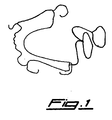
Fig.1 is an illustrative view showing the NiTi shape memory alloy anti-snoring device of Chinese utility model90215295 ; -
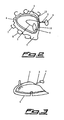
Fig.2 is an illustrative view showing an embodiment of the comfortable type removable tongue position corrective anti-snoring device according to the present invention; -
Fig.3 is an illustrative view showing an example of a comfortable type removable tongue position corrective anti-snoring device ; -
Fig.4 is an illustrative view showing a further example of a comfortable type removable tongue position corrective anti-snoring device according to the present invention; -
Fig.5 is an illustrative view showing another example of a comfortable type removable tongue position corrective anti-snoring device ; -
Fig.6 is an illustrative view showing another comfortable type removable tongue position corrective anti-snoring device ; -
Fig.7 is an illustrative view showing a further comfortable type removable tongue position corrective anti-snoring device ; -
Fig.8 is an illustrative view showing another example of a confortable type removable tongue position corrective anti-snoring device -
Fig.9 is an illustrative view showing a further example of a comfortable type removable tongue position corrective anti-snoring device ; -
Fig.10 is an illustrative view showing another comfortable type removable tongue position corrective anti-snoring device ; -
Fig.11 is an illustrative view showing an embodiment of the comfortable type removable tongue position corrective anti-snoring device according to the present invention; -
Fig.12 is an illustrative view showing examples and an embodiment of the comfortable type removable tongue position corrective anti-snoring device according to the present invention. - In the
figures, 1 is the fixer, 2 is the upper force-component, 3 is the nether force-component, 4 is the holding plate/pressure plate, 5 is the base plate (tongue plate/palate plate/maxilla plate), 6 is the support bar (lingual bar/palatal bar/cheek bar/labial bar), 7 is the direct retainer (clasp/bent labial arch etc), 8 is the indirect retainer (hyoplastron/palate-plank/rest etc), 9 is the functional accessory (inclined bite plate/articulation plate/articulation mat etc), 10 is the circle retainer (band/dental crown cover etc), 11 is the link bar, 12 is the connecter, 13 is the adjustment, 14 is the teeth, 15 is the clip, 16 is the connecting wire, 17 is the group clips, 18 is the axial clip, 19 is the precision attachment/magnetic implant denture, 20 is the complete denture, 21 is the perdue false tooth, 22 is tooth cover. - Referring to
Fig.2 , the comfortable type removable tongue position corrective anti-snoring device according to the present invention is designed to be applied on upper jaw, includingfixer 1, upper force-component 2 and nether force-component 3, the upper force-component and nether force-component 3 are made of material (preferably high elastic alloy wire or band) provided with suitable elasticity and rigidity. The elongation part (i.e. the connecter 12) of the non-force end of the upper force-component 2 is embedded in the back area of thefixer 1, the other end i.e. force end extends backwardly and is designed to be suitable to the normal configuration of the soft palate palatine, the head is designed to be located on the portion in front of the sensitive position of the soft palate palatine and little withstand it. Thus, on the premise of not causing discomfort and nausea of peripheral tissue, it could bring an externally reinforced force to the soft palate palatine to prevent snoring. Theconnecter 12 of the non-force end of the nether force-component 3 is also embedded in the back area of thefixer 1, but the other end i.e. force end is normally bowed from middle lip side toward far end away the lip side like a bowed nose bridge along the palate, the bottom of bridge is designed to be suitable to the normal configuration of the posterior of the big tongue, the head is designed to be located on the portion in front of the sensitive position of the posterior of the big tongue, and press the big tongue downward/front downward, thus, on the premise of not causing discomfort and nausea of peripheral tissue, the tongue base is held effectively to prevent shrinking backward and press the palatine and uvula to cause the nasal cavity blocking and produce suffocating and snoring, and as mentioned above, the co-action of the upper and nether force-components pressure plate 4 set on the head portion of the force end of the upper and nether force-components components pressure plate 4 is generally made from synthetic resin (plastic etc) and/ or soft polymer material (silicon rubber etc), and its size should be suitable to the position. - In the comfortable type removable tongue position corrective anti-snoring device according to the present invention, the
fixer 1 may have various forms. AsFig.2 shows, it is only a normal form, which is suitable for snoring patients with good teeth fixing. The fixer includes base plate 5 (here is a palate plate), support bar 6 (palatal bar) and direct retainer 7 (clasp etc), the whole anti-snoring device is fixed onto the suitable position of the upper jaw of the patient. And the indirect retainer 8 (palate-plank/rest etc) may be used in need to reinforce fixing and safety factor. - Referring to
Fig.3 , it shows a comfortable type removable tongue position corrective anti-snoring device including afixer 1 having at least thebase plate 5 and support bar 6 (here is a labial bar). It is designed to be applied on upper jaw, which includes not only the upper force-component 2, but also the nether force-component 3. The material and the making method of the upper force-component 2 and the nether force-component 3 are same to those in the example 1, but the fixer is slightly different. The fixer's base plate may be made of plastic with soft polymer material (silicon rubber etc) covering on it to increase the flexibility with the palate; In terms of need, the palate side may add the support bar 6 (palatal bar) to increase rigidity and/or decrease base plate's area; Vertical curve may be set on the labial bar for dismounting. This kind of the anti-snoring device is suitable for the snoring patient with good teeth layout of palate - Referring to
Fig.4 , it shows a comfortable type removable tongue position corrective anti-snoring device , which includes at least base plate5 (here is a maxilla plate) and direct retainer7 (clip 15, connectingwire 16, group clips 17,axial clip 18 etc). It is designed to be applied on upper jaw, which includes not only the upper force-component 2, but also the nether force-component 3. The making method of the upper force-component 2 is also same to that in the example 1, but the force-component 3 is similar to a semi-tube with a seam in middle of it as figure shows The lip-cheek side and tongue-palate side of the maxilla plate may respectively make use of the partial support bar (labial bar/tongue palatal bar) to increase the rigidity and/or decrease base plate's area, an indirect retainer 8 (palate-plank/rest etc) may also be added to reinforce fixing, this kind of the anti-snoring device is suitable for the snoring patient with poor fixing. - Referring to
Fig.5 , it shows a comfortable type removable tongue position corrective anti-snoring device , which uses at least the functional accessory 9 (here is an articulation mat) as the fixer. It is designed to be applied on upper jaw, which includes not only the upper force-component 2, but also the nether force-component 3. The material and the making method of the upper force-component 2 and the nether force-component 3 are same to those in the example 1, but the fixer is slightly different. The fixer requires that the surface of the occlusal pad should have a deep groove to cover the tooth tip and corona. To increase rigidity, the support bar (tongue palatal bar/labial bar) may be set and the back area may be closed. This kind of the anti-snoring device is suitable for the snoring patient with good teeth fixing or small height. - Referring to
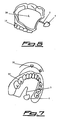
Fig.6 , it shows a comfortable type removable tongue position corrective anti-snoring device which uses at least the complete denture as the fixer. It is designed to be applied on upper jaw, which includes not only the upper force-component 2, but also the nether force-component 3. The material and the making method of the upper force-component 2 and the nether force-component 3 are same to those in the example 1, but the fixer is slightly different. The tongue-palate side of the complete denture may also be added a support bar (tongue palatal bar) to decrease the base plate's area. This kind of the anti-snoring device is suitable for the snoring patient with non dental jaw. - Referring to
Fig.7 , it shows a comfortable type removable tongue position corrective anti-snoring device which uses at least the coving dental prosthesis or magnetic implant dental prosthesis as the fixer, is designed to be applied on upper jaw, and includes not only the upper force-component 2, but also the nether force-component 3. The material and the making method of the upper force-component 2 and the nether force-component 3 are same to those in the example 1, but the fixer is slightly different. The features of the fixing manner is that it has parts to form a complete set with gum precision attachment/button tract ormagnetic implant denture 19. It is suitable for the snoring patient with bad teeth layout or high fixing requirement. Its back area may be closed, and added a support bar (tongue palatal bar etc) or netlike bracket to increase rigidity. - Referring to
Fig.8 , it shows a comfortable type removable tongue position corrective anti-snoring device which uses at least the perdue false tooth as the fixer. It is designed to be applied on upper jaw, which includes not only the upper force-component 2, but also the nether force-component 3. The material and the making method of the upper force-component 2 and the nether force-component 3 are same to those in the example 1, but the fixer is slightly different. A base plate (plastic) may be set on the tongue palate side of the concealed dental prosthesis to increase rigidity and embed the link bar (tongue palate bar etc), and its back area may be closed. This kind of the anti-snoring device is suitable for the snoring patient with non dental jaw and less teeth of high quality requirement. - Referring to
Fig.9 , it shows a comfortable type removable tongue position corrective anti-snoring device which uses at least the support bar 6 (here is a tongue palatal bar) and circle retainer 10 (band/dental crown cover etc) as the fixer. It is designed to be applied on upper jaw, which includes not only the upper force-component 2, but also the nether force-component 3. The material and the making method of the upper force-component 2 and the nether force-component 3 are same to those in the example 1, but the fixer is slightly different. The non-force end of the force-component is connected with thecircle retainer 10 in a suitable way. This kind of the anti-snoring device is suitable for the snoring patient with good bow and teeth gap. - Referring to
Fig.10 , it shows a comfortable type removable tongue position corrective anti-snoring device which uses at least the tooth cover of the upper and lower jaws and cheekside support bar 11 as the fixer. It is designed to be applied on upper jaw, which includes not only the upper force-component 2, but also the nether force-component 3. The material and the making method of the upper force-component 2 and the nether force-component 3 are same to those in the example 1, but the fixer is slightly different. A base plate (plastic) may be set on the tongue palate side of the tooth cover, and the support bar (tongue palatal bar) may be embeded in the plastic base plate, and the back area can be reinforced. This kind of the anti-snoring device is suitable for the snoring patient with the shrinking backward of the lower jaw and abnormal tongue position. - It should be noticed that the upper force-
component 2 and nether force-component 3 are the most special parts of the anti-snoring device, enough elasticity and suitable rigidity are both extremely important, any one of which is indispensable. Meanwhile, the suitable thickness or diameter is important also, it may directly affect the elasticity. In design, the force-component piece support bar 6, or separated asFig.12 shows; it may use same material and size or different material and size. The force end of the force-component 3 may point directly to the end position in form of spring, single wire and band or spring tube (asFig.11 andFig.4 show), or indirectly to the end position (asFig.5 andFig.8 show); The middle of the force-component adjustment 13 to adjust the length and angle asFig.12 shows. Meanwhile, thesupport bar 6 may be a lingual bar, palatal bar, cheek bar, labial bar etc; thedirect retainer 7 may be a clasp and bendted labial arch etc; theindirect retainer 8 may be a hyoplastron, palate-plank, rest etc; the functional accessory 9 may be a inclined bite plate, articulation plate or articulation mat etc. - The comfortable and type removable tongue position corrective anti-snoring device above, proved by about one thousand clinical trials, is concise, reasonable and convenient, and has a good clinic effect with a better design result, it has wider applicable range with a better effect for more than 98% patients, thus it can substitute the ventilator without any side effects.
Claims (10)
- A comfortable type removable tongue position corrective anti-snoring device, comprising:a fixer (1);a nether force-component (3) connecting with the fixer (1); andan upper force-component (2) connecting with the fixer (1);wherein the fixer is mainly located at the upper jaw, but can also be located at the upper jaw and the lower jaw together,the force end of said nether force-component (3) being designed to be suitable to the normal configuration of the posterior of the tongue, its head having a holding plate (4) and being designed to be located on the portion in front of the sensitive position of the posterior of the big tongue, thus being able to press the big tongue downward/frontward and downward without causing discomfort of peripheral tissue and nausea;the upper and nether force-components (2) and (3) being made of suitable elastic and rigid material with a gap between them to enlarge the intra-oral inner space, i.e. intra-oral tract, to increase the efficiency of breath and play the anti-snoring and anti-suffocating role,characterised in that the force end of said upper force-component (2) is designed to be suitable to the normal configuration of the soft palate palatine velum, its head having a pressure plate (4) and being designed to be located on the portion in front of the sensitive position of the soft palate palatine velum, so as to suitably raise up the soft palate palatine velum and uvula, i.e. "small tongue", upward/upward and backward without causing discomfort of peripheral tissue and nausea.
- The comfortable and type removable tongue position corrective anti-snoring device according to Claim 1, wherein the non-force end of the said upper force-component (2) is connected with the postdam area of the fixer (1), then bows along the palatine median suture to the anterior lip, the non-force end of the said nether force-component (3) being also connected with the postdam area of the fixer (1), then bowing first along the palatine median suture to the anterior lip, then bowing downwardly and backwardly away from the anterior lip, like a nose-like protuberance having at least one bend seen from the lip side, there being an appropriate space between the upside and the bottom of the nose-like protuberance.
- The comfortable type removable tongue position corrective anti-snoring device according to Claim 1or 2, wherein the said upper force-component (2) and/or nether force-component (3) are at least made of wire or band material, the wire or band material having suitable thickness or diameter.
- The comfortable type removable tongue position corrective anti-snoring device according to any one of Claims 1 to 3, wherein the said upper force-component (2) and/or nether force-component (3) are made of elastic wire and/or band.
- The comfortable type removable tongue position corrective anti-snoring device according to any one of Claims 1 to 4, wherein the holding plate/pressure plate (4) has a suitable shape and size and may be made from synthetic resin and/or soft polymer material.
- The comfortable type removable tongue position corrective anti-snoring device according to Claim 1, wherein the said fixer (1) is made up of at least any one of the base plate (5), support bar (6), direct retainer (7), indirect retainer (8), functional accessory (9); its material being at least any one of synthetic resin, metal, soft polymer material, concealed dental prosthesis material.
- The comfortable type removable tongue position corrective anti-snoring device according to Claim 1, wherein the said fixer may be made of covering dental prosthesis or tooth cover or magnetic implant dental prosthesis, or at least made of support bar (6) and circle retainer (10) connected with support bar (6).
- The comfortable type removable tongue position corrective anti-snoring device according to Claim 1, wherein each cheek side has a link bar (11) which could work to move the jaws in case of setting the said fixer (1) on the upper and lower jaws simultaneously.
- The comfortable type removable tongue position corrective anti-snoring device according to Claims 1 and 4, wherein the elongation part, i.e. connector (12), of the non-force end of the upper and nether force-components (2, 3) is connected with the support bar (6), or separated; it may use same material and size, or different material and size.
- The comfortable type removable tongue position corrective anti-snoring device according to Claims 1 and 2, wherein the middle portions of the said upper and nether force-components (2, 3) at least have an adjustment (13) to adjust the length and position in clinical use.
Applications Claiming Priority (2)
| Application Number | Priority Date | Filing Date | Title |
|---|---|---|---|
| CN03129136A CN100579491C (en) | 2003-06-09 | 2003-06-09 | Demountable snore relieving and correcting equipment of tongue position |
| PCT/CN2004/000621 WO2004108028A1 (en) | 2003-06-09 | 2004-06-09 | Removable intra-oral corrective anti-snoring device |
Publications (3)
| Publication Number | Publication Date |
|---|---|
| EP1645252A1 EP1645252A1 (en) | 2006-04-12 |
| EP1645252A4 EP1645252A4 (en) | 2007-10-31 |
| EP1645252B1 true EP1645252B1 (en) | 2012-02-15 |
Family
ID=33494602
Family Applications (1)
| Application Number | Title | Priority Date | Filing Date |
|---|---|---|---|
| EP04738219A Expired - Lifetime EP1645252B1 (en) | 2003-06-09 | 2004-06-09 | Removable intra-oral corrective anti-snoring device |
Country Status (6)
| Country | Link |
|---|---|
| US (1) | US7770582B2 (en) |
| EP (1) | EP1645252B1 (en) |
| JP (1) | JP4567678B2 (en) |
| CN (1) | CN100579491C (en) |
| AT (1) | ATE545395T1 (en) |
| WO (1) | WO2004108028A1 (en) |
Families Citing this family (38)
| Publication number | Priority date | Publication date | Assignee | Title |
|---|---|---|---|---|
| US7983720B2 (en) | 2004-12-22 | 2011-07-19 | Broadcom Corporation | Wireless telephone with adaptive microphone array |
| US7451767B2 (en) * | 2005-06-23 | 2008-11-18 | Bryan Keropian | Sleep appliance |
| CH696626A5 (en) * | 2005-08-19 | 2007-08-31 | Velumount Gmbh | Device for treating snoring sounds and breathing interruptions. |
| FR2893833B1 (en) * | 2005-11-25 | 2008-08-08 | Stephane Valero | DENTO-FACIAL ORTHOPEDIC APPARATUS. |
| US8613283B2 (en) * | 2006-06-19 | 2013-12-24 | Insono Therapeutics, Inc. | Mandibular advancement appliance |
| US8347890B2 (en) * | 2006-06-19 | 2013-01-08 | Insono Therapeutics, Inc. | Automated tissue retention system |
| US8857439B2 (en) * | 2006-06-19 | 2014-10-14 | Insono Therapeutics, Inc. | Variable automated tissue retention system |
| US20110180076A1 (en) * | 2006-06-19 | 2011-07-28 | Kasey K. LI | Wearable tissue retention device |
| JP2011500178A (en) * | 2007-10-19 | 2011-01-06 | スキミット‐バイランドト,ジュルゲン | Mandibular protrusive system to prevent snoring and apnea |
| DE102007050309B3 (en) * | 2007-10-19 | 2009-01-29 | Schmitt-Bylandt, Jürgen, Dr. med. dent. | Lower jaw protrusion system to prevent snoring and apnea comprises upper and lower jaw rails connected by bent sprung metal clamps |
| US8122889B2 (en) * | 2007-11-13 | 2012-02-28 | Apnicure, Inc. | Methods and systems for improving airway patency |
| US9655768B2 (en) * | 2007-11-13 | 2017-05-23 | Apnicure, Inc. | Oral device for mandibular advancement and medial tongue constraint |
| US9241825B2 (en) * | 2007-11-13 | 2016-01-26 | Apnicure, Inc. | Oral device for mandibular advancement and medial tongue constraint |
| US10772756B2 (en) * | 2007-11-13 | 2020-09-15 | Somnics, Inc. | Oral device for mandibular advancement and medial tongue constraint |
| US7954494B1 (en) | 2008-03-26 | 2011-06-07 | Connor Robert A | Device with actively-moving members that hold or move the tongue |
| EP2331035B1 (en) | 2008-10-02 | 2014-08-27 | Lumen Devices LLC | A palate retainer with attached nasopharyngeal airway extender for use in the treatment of obstructive sleep apnea |
| WO2010068493A1 (en) | 2008-11-25 | 2010-06-17 | Lumen Devices Llc | Devices, systems and methods for the treatment of sleep apnea |
| US20100241159A1 (en) * | 2009-03-20 | 2010-09-23 | Li Kasey K | Airflow restriction system |
| US8646453B2 (en) * | 2009-03-20 | 2014-02-11 | Kasey Kai-Chi Li | Extendable airflow restriction system |
| CN102596022A (en) * | 2009-08-26 | 2012-07-18 | 堪萨斯大学 | Devices, systems and methods for determining mouth/lip stiffness |
| US8322344B2 (en) | 2010-01-05 | 2012-12-04 | Ranir, Llc | Oral orthosis |
| EP2575709A2 (en) | 2010-06-07 | 2013-04-10 | Sleepy, Inc. | Tongue retaining oral appliance |
| US8302609B2 (en) * | 2010-09-23 | 2012-11-06 | Lubin Martinez | Snoring and sleep apnea prevention device |
| US9668911B2 (en) | 2011-02-17 | 2017-06-06 | Lumen Devices, LLC | Apparatus and methods for the treatment of sleep apnea |
| US20130333707A1 (en) | 2012-06-19 | 2013-12-19 | Duane C. Keller | Article For Stabilizing Jaw Joint Relationships For Treatment Of Sleep Apnea |
| USD685098S1 (en) * | 2012-07-31 | 2013-06-25 | Richard Sims Tompkins | Sleep apnea appliance |
| CN102846421B (en) * | 2012-09-26 | 2014-09-10 | 深圳市光明新区人民医院 | Functional snore guard |
| WO2014189540A1 (en) | 2012-10-16 | 2014-11-27 | Catalano Peter J | Method and apparatus for treating obstructive sleep apnea (osa) |
| EP2961361B1 (en) * | 2013-03-01 | 2021-01-13 | Somnics, Inc. | Oral device for mandibular advancement and medial tongue constraint |
| CN105392433B (en) | 2013-08-05 | 2019-02-19 | 库克医学技术有限责任公司 | Medical device with releasable tubular member and method of use |
| CN104546264B (en) * | 2013-09-16 | 2017-09-29 | 张湘民 | A kind of outer formula tooth side fixator of lip for back elastic traction device |
| CA2864357C (en) | 2013-09-18 | 2021-03-16 | Panthera Dental Inc. | Set of occlusal splints and method of making same |
| US9974563B2 (en) | 2014-05-28 | 2018-05-22 | Cook Medical Technologies Llc | Medical devices having a releasable member and methods of using the same |
| EP3177219B1 (en) | 2014-08-04 | 2018-09-26 | Cook Medical Technologies LLC | Medical devices having a releasable tubular member |
| US10383760B2 (en) * | 2016-08-04 | 2019-08-20 | Bryan Ramp, LLC | Therapeutic dental appliance |
| JP7441594B2 (en) | 2017-02-28 | 2024-03-01 | ケース ウェスタン リザーブ ユニバーシティ | Oropharyngeal appliance to maintain airway patency |
| CN111513881B (en) * | 2020-05-09 | 2021-10-15 | 北京大学口腔医学院 | A method and system for making a prosthesis for a maxillary defect |
| US11166841B1 (en) | 2021-01-29 | 2021-11-09 | Lubin Martinez | Snoring and sleep apnea prevention device and methods |
Family Cites Families (23)
| Publication number | Priority date | Publication date | Assignee | Title |
|---|---|---|---|---|
| US3132647A (en) * | 1962-04-19 | 1964-05-12 | Corniello Giuseppe | Anti-snoring device |
| US4669459A (en) * | 1985-11-29 | 1987-06-02 | Spiewak Martin H | Anti-snoring device |
| US4901737A (en) * | 1987-04-13 | 1990-02-20 | Toone Kent J | Method and therapeutic apparatus for reducing snoring |
| USD303834S (en) * | 1987-08-24 | 1989-10-03 | Collins Jr John A | Orthodontic appliance |
| CN2075076U (en) * | 1990-09-10 | 1991-04-17 | 上海钢铁研究所 | Ni-ti marmen device for preventing snore |
| HU206452B (en) * | 1990-11-28 | 1992-11-30 | Janos Walter | Device for locking teeth in the night for decreasing respectively preventing the bruxomania and shoring |
| DE59400096D1 (en) * | 1994-03-03 | 1996-03-07 | Cci Consulting Ag | Anti-snoring device |
| JPH07308335A (en) * | 1994-05-13 | 1995-11-28 | Thomas E Meade | Device and method to suppress snoring |
| EP0779800A4 (en) * | 1994-10-12 | 1998-07-29 | Widmer Pierre Andre Kennard Ma | Snorguard anti snoring device |
| AU3801395A (en) * | 1994-12-01 | 1996-06-19 | Torsten De Voss | A device for preventing stertorous breathing or snoring and for preventing abrasion of the teeth during sleep |
| DE19512761C2 (en) * | 1995-04-05 | 1997-01-30 | Ekkehard Proschinsky | Device for preventing human snoring |
| DE29506512U1 (en) | 1995-04-15 | 1995-06-08 | Erkodent Erich Kopp Gmbh, 72285 Pfalzgrafenweiler | Oral anti-snoring device |
| US5915385A (en) * | 1997-04-02 | 1999-06-29 | Hakimi; Farhad | Snore and stress relieving device |
| DE29905809U1 (en) * | 1999-03-30 | 1999-06-10 | Heinzer, Waltraud, 35039 Marburg | Anti-snoring device |
| WO2001034073A1 (en) * | 1999-11-10 | 2001-05-17 | Sato Motoyasu | Snore suppressing device |
| US6408852B2 (en) * | 2000-01-11 | 2002-06-25 | Tnv Research And Development | Oral orthesis to reduce snoring and sleep apnea symptoms |
| US6418933B1 (en) * | 2001-06-15 | 2002-07-16 | Patrick J. Strong | Anti-snoring device and method of making same |
| FR2831427B1 (en) * | 2001-10-26 | 2004-08-20 | Philippe Mousselon | ANTI-SNORING INTRA-ORAL ORTHESIS |
| US7073505B2 (en) * | 2002-09-06 | 2006-07-11 | Apneon, Inc. | Systems and methods for moving and/or restraining tissue in the oral cavity |
| US7216648B2 (en) * | 2002-09-06 | 2007-05-15 | Apneon, Inc. | Systems and methods for moving and/or restraining tissue in the upper respiratory system |
| US6955172B2 (en) * | 2002-09-06 | 2005-10-18 | Apneon, Inc. | Systems and methods for moving and/or restraining the tongue in the oral cavity |
| DE20214663U1 (en) * | 2002-09-23 | 2003-01-09 | Manderla, Günter, 45525 Hattingen | Anti-snoring tongue restraint has mould fitting around teeth and with sprung support for tongue pad |
| US6766802B1 (en) * | 2003-06-05 | 2004-07-27 | Bryan Keropian | Sleep appliance |
-
2003
- 2003-06-09 CN CN03129136A patent/CN100579491C/en not_active Expired - Fee Related
-
2004
- 2004-06-09 US US10/559,229 patent/US7770582B2/en not_active Expired - Fee Related
- 2004-06-09 JP JP2006515629A patent/JP4567678B2/en not_active Expired - Fee Related
- 2004-06-09 EP EP04738219A patent/EP1645252B1/en not_active Expired - Lifetime
- 2004-06-09 WO PCT/CN2004/000621 patent/WO2004108028A1/en not_active Ceased
- 2004-06-09 AT AT04738219T patent/ATE545395T1/en active
Also Published As
| Publication number | Publication date |
|---|---|
| ATE545395T1 (en) | 2012-03-15 |
| CN1565398A (en) | 2005-01-19 |
| JP2006527031A (en) | 2006-11-30 |
| US7770582B2 (en) | 2010-08-10 |
| WO2004108028A1 (en) | 2004-12-16 |
| EP1645252A4 (en) | 2007-10-31 |
| CN100579491C (en) | 2010-01-13 |
| JP4567678B2 (en) | 2010-10-20 |
| EP1645252A1 (en) | 2006-04-12 |
| US20060130850A1 (en) | 2006-06-22 |
Similar Documents
| Publication | Publication Date | Title |
|---|---|---|
| US7770582B2 (en) | Removable tongue position corrective anti-snoring and anti-suffocating device | |
| CN110013332B (en) | Invisible appliance for cat-shaped auxiliary bow | |
| US5415542A (en) | Orthodontic finishing appliance | |
| WO1999009908A1 (en) | An appliance adapted to fit many mouth and tooth sizes for orthodontic correction and other uses | |
| EP1843715B1 (en) | Device for mandibular advancement | |
| AU2017293472B2 (en) | Dental appliance for sleep apnea, snoring and tongue and oral cavity remodeling | |
| CA2996663A1 (en) | Masticatory and airway stabilizing orthotic, and associated systems and methods | |
| US20240050199A1 (en) | Shell-shaped dental instrument and shell-shaped dental appliance set | |
| CN108478296A (en) | Cast type backteeth forces down appliance | |
| WO2024222548A1 (en) | Dental appliance, orthodontic system, and design method therefor | |
| CN215019359U (en) | Orthotic system | |
| US20250114238A1 (en) | Apparatus, method, and system for improving nasal breathing by reducing mouth breathing | |
| AU2020461645B2 (en) | Mandible adjusting device | |
| CN218305273U (en) | Adjustable mandibular advancement appliance | |
| US20250195178A1 (en) | Orthopedic appliance | |
| CN121059321A (en) | Invisible tooth corrector with removable lip block | |
| HK1118003B (en) | A dental orthotic device |
Legal Events
| Date | Code | Title | Description |
|---|---|---|---|
| PUAI | Public reference made under article 153(3) epc to a published international application that has entered the european phase |
Free format text: ORIGINAL CODE: 0009012 |
|
| 17P | Request for examination filed |
Effective date: 20060104 |
|
| AK | Designated contracting states |
Kind code of ref document: A1 Designated state(s): AT BE BG CH CY CZ DE DK EE ES FI FR GB GR HU IE IT LI LU MC NL PL PT RO SE SI SK TR |
|
| DAX | Request for extension of the european patent (deleted) | ||
| A4 | Supplementary search report drawn up and despatched |
Effective date: 20071004 |
|
| 17Q | First examination report despatched |
Effective date: 20080307 |
|
| RAP1 | Party data changed (applicant data changed or rights of an application transferred) |
Owner name: SHANGHAI GUANG REN ANTI-SNORING HEALTH CENTER |
|
| RIN1 | Information on inventor provided before grant (corrected) |
Inventor name: CHEN, HAIDONG |
|
| RIN1 | Information on inventor provided before grant (corrected) |
Inventor name: CHEN, HAIDONG Inventor name: CHEN, YUEYANG |
|
| GRAP | Despatch of communication of intention to grant a patent |
Free format text: ORIGINAL CODE: EPIDOSNIGR1 |
|
| GRAS | Grant fee paid |
Free format text: ORIGINAL CODE: EPIDOSNIGR3 |
|
| GRAA | (expected) grant |
Free format text: ORIGINAL CODE: 0009210 |
|
| AK | Designated contracting states |
Kind code of ref document: B1 Designated state(s): AT BE BG CH CY CZ DE DK EE ES FI FR GB GR HU IE IT LI LU MC NL PL PT RO SE SI SK TR |
|
| REG | Reference to a national code |
Ref country code: GB Ref legal event code: FG4D Ref country code: CH Ref legal event code: EP |
|
| REG | Reference to a national code |
Ref country code: IE Ref legal event code: FG4D |
|
| REG | Reference to a national code |
Ref country code: AT Ref legal event code: REF Ref document number: 545395 Country of ref document: AT Kind code of ref document: T Effective date: 20120315 |
|
| REG | Reference to a national code |
Ref country code: DE Ref legal event code: R096 Ref document number: 602004036516 Country of ref document: DE Effective date: 20120412 |
|
| REG | Reference to a national code |
Ref country code: NL Ref legal event code: VDEP Effective date: 20120215 |
|
| PG25 | Lapsed in a contracting state [announced via postgrant information from national office to epo] |
Ref country code: NL Free format text: LAPSE BECAUSE OF FAILURE TO SUBMIT A TRANSLATION OF THE DESCRIPTION OR TO PAY THE FEE WITHIN THE PRESCRIBED TIME-LIMIT Effective date: 20120215 |
|
| PG25 | Lapsed in a contracting state [announced via postgrant information from national office to epo] |
Ref country code: BE Free format text: LAPSE BECAUSE OF FAILURE TO SUBMIT A TRANSLATION OF THE DESCRIPTION OR TO PAY THE FEE WITHIN THE PRESCRIBED TIME-LIMIT Effective date: 20120215 Ref country code: FI Free format text: LAPSE BECAUSE OF FAILURE TO SUBMIT A TRANSLATION OF THE DESCRIPTION OR TO PAY THE FEE WITHIN THE PRESCRIBED TIME-LIMIT Effective date: 20120215 Ref country code: PT Free format text: LAPSE BECAUSE OF FAILURE TO SUBMIT A TRANSLATION OF THE DESCRIPTION OR TO PAY THE FEE WITHIN THE PRESCRIBED TIME-LIMIT Effective date: 20120615 Ref country code: PL Free format text: LAPSE BECAUSE OF FAILURE TO SUBMIT A TRANSLATION OF THE DESCRIPTION OR TO PAY THE FEE WITHIN THE PRESCRIBED TIME-LIMIT Effective date: 20120215 Ref country code: GR Free format text: LAPSE BECAUSE OF FAILURE TO SUBMIT A TRANSLATION OF THE DESCRIPTION OR TO PAY THE FEE WITHIN THE PRESCRIBED TIME-LIMIT Effective date: 20120516 |
|
| REG | Reference to a national code |
Ref country code: AT Ref legal event code: MK05 Ref document number: 545395 Country of ref document: AT Kind code of ref document: T Effective date: 20120215 |
|
| PG25 | Lapsed in a contracting state [announced via postgrant information from national office to epo] |
Ref country code: CY Free format text: LAPSE BECAUSE OF FAILURE TO SUBMIT A TRANSLATION OF THE DESCRIPTION OR TO PAY THE FEE WITHIN THE PRESCRIBED TIME-LIMIT Effective date: 20120215 |
|
| PG25 | Lapsed in a contracting state [announced via postgrant information from national office to epo] |
Ref country code: DK Free format text: LAPSE BECAUSE OF FAILURE TO SUBMIT A TRANSLATION OF THE DESCRIPTION OR TO PAY THE FEE WITHIN THE PRESCRIBED TIME-LIMIT Effective date: 20120215 Ref country code: SE Free format text: LAPSE BECAUSE OF FAILURE TO SUBMIT A TRANSLATION OF THE DESCRIPTION OR TO PAY THE FEE WITHIN THE PRESCRIBED TIME-LIMIT Effective date: 20120215 Ref country code: RO Free format text: LAPSE BECAUSE OF FAILURE TO SUBMIT A TRANSLATION OF THE DESCRIPTION OR TO PAY THE FEE WITHIN THE PRESCRIBED TIME-LIMIT Effective date: 20120215 Ref country code: CZ Free format text: LAPSE BECAUSE OF FAILURE TO SUBMIT A TRANSLATION OF THE DESCRIPTION OR TO PAY THE FEE WITHIN THE PRESCRIBED TIME-LIMIT Effective date: 20120215 Ref country code: SI Free format text: LAPSE BECAUSE OF FAILURE TO SUBMIT A TRANSLATION OF THE DESCRIPTION OR TO PAY THE FEE WITHIN THE PRESCRIBED TIME-LIMIT Effective date: 20120215 Ref country code: EE Free format text: LAPSE BECAUSE OF FAILURE TO SUBMIT A TRANSLATION OF THE DESCRIPTION OR TO PAY THE FEE WITHIN THE PRESCRIBED TIME-LIMIT Effective date: 20120215 |
|
| PG25 | Lapsed in a contracting state [announced via postgrant information from national office to epo] |
Ref country code: SK Free format text: LAPSE BECAUSE OF FAILURE TO SUBMIT A TRANSLATION OF THE DESCRIPTION OR TO PAY THE FEE WITHIN THE PRESCRIBED TIME-LIMIT Effective date: 20120215 Ref country code: IT Free format text: LAPSE BECAUSE OF FAILURE TO SUBMIT A TRANSLATION OF THE DESCRIPTION OR TO PAY THE FEE WITHIN THE PRESCRIBED TIME-LIMIT Effective date: 20120215 |
|
| PLBE | No opposition filed within time limit |
Free format text: ORIGINAL CODE: 0009261 |
|
| STAA | Information on the status of an ep patent application or granted ep patent |
Free format text: STATUS: NO OPPOSITION FILED WITHIN TIME LIMIT |
|
| 26N | No opposition filed |
Effective date: 20121116 |
|
| PG25 | Lapsed in a contracting state [announced via postgrant information from national office to epo] |
Ref country code: AT Free format text: LAPSE BECAUSE OF FAILURE TO SUBMIT A TRANSLATION OF THE DESCRIPTION OR TO PAY THE FEE WITHIN THE PRESCRIBED TIME-LIMIT Effective date: 20120215 Ref country code: MC Free format text: LAPSE BECAUSE OF NON-PAYMENT OF DUE FEES Effective date: 20120630 |
|
| REG | Reference to a national code |
Ref country code: CH Ref legal event code: PL |
|
| REG | Reference to a national code |
Ref country code: CH Ref legal event code: PL |
|
| REG | Reference to a national code |
Ref country code: DE Ref legal event code: R097 Ref document number: 602004036516 Country of ref document: DE Effective date: 20121116 |
|
| REG | Reference to a national code |
Ref country code: IE Ref legal event code: MM4A |
|
| PG25 | Lapsed in a contracting state [announced via postgrant information from national office to epo] |
Ref country code: IE Free format text: LAPSE BECAUSE OF NON-PAYMENT OF DUE FEES Effective date: 20120609 Ref country code: CH Free format text: LAPSE BECAUSE OF NON-PAYMENT OF DUE FEES Effective date: 20120630 Ref country code: LI Free format text: LAPSE BECAUSE OF NON-PAYMENT OF DUE FEES Effective date: 20120630 Ref country code: ES Free format text: LAPSE BECAUSE OF FAILURE TO SUBMIT A TRANSLATION OF THE DESCRIPTION OR TO PAY THE FEE WITHIN THE PRESCRIBED TIME-LIMIT Effective date: 20120526 |
|
| PG25 | Lapsed in a contracting state [announced via postgrant information from national office to epo] |
Ref country code: BG Free format text: LAPSE BECAUSE OF FAILURE TO SUBMIT A TRANSLATION OF THE DESCRIPTION OR TO PAY THE FEE WITHIN THE PRESCRIBED TIME-LIMIT Effective date: 20120515 |
|
| PGFP | Annual fee paid to national office [announced via postgrant information from national office to epo] |
Ref country code: DE Payment date: 20130620 Year of fee payment: 10 Ref country code: GB Payment date: 20130619 Year of fee payment: 10 |
|
| PGFP | Annual fee paid to national office [announced via postgrant information from national office to epo] |
Ref country code: FR Payment date: 20130703 Year of fee payment: 10 |
|
| PG25 | Lapsed in a contracting state [announced via postgrant information from national office to epo] |
Ref country code: TR Free format text: LAPSE BECAUSE OF FAILURE TO SUBMIT A TRANSLATION OF THE DESCRIPTION OR TO PAY THE FEE WITHIN THE PRESCRIBED TIME-LIMIT Effective date: 20120215 |
|
| PG25 | Lapsed in a contracting state [announced via postgrant information from national office to epo] |
Ref country code: LU Free format text: LAPSE BECAUSE OF NON-PAYMENT OF DUE FEES Effective date: 20120609 |
|
| PG25 | Lapsed in a contracting state [announced via postgrant information from national office to epo] |
Ref country code: HU Free format text: LAPSE BECAUSE OF FAILURE TO SUBMIT A TRANSLATION OF THE DESCRIPTION OR TO PAY THE FEE WITHIN THE PRESCRIBED TIME-LIMIT Effective date: 20040609 |
|
| REG | Reference to a national code |
Ref country code: DE Ref legal event code: R119 Ref document number: 602004036516 Country of ref document: DE |
|
| GBPC | Gb: european patent ceased through non-payment of renewal fee |
Effective date: 20140609 |
|
| REG | Reference to a national code |
Ref country code: FR Ref legal event code: ST Effective date: 20150227 |
|
| REG | Reference to a national code |
Ref country code: DE Ref legal event code: R119 Ref document number: 602004036516 Country of ref document: DE Effective date: 20150101 |
|
| PG25 | Lapsed in a contracting state [announced via postgrant information from national office to epo] |
Ref country code: DE Free format text: LAPSE BECAUSE OF NON-PAYMENT OF DUE FEES Effective date: 20150101 |
|
| PG25 | Lapsed in a contracting state [announced via postgrant information from national office to epo] |
Ref country code: GB Free format text: LAPSE BECAUSE OF NON-PAYMENT OF DUE FEES Effective date: 20140609 Ref country code: FR Free format text: LAPSE BECAUSE OF NON-PAYMENT OF DUE FEES Effective date: 20140630 |