EP1642894B1 - Quaternary ammonium salt, electrolyte, and electrochemical device - Google Patents
Quaternary ammonium salt, electrolyte, and electrochemical device Download PDFInfo
- Publication number
- EP1642894B1 EP1642894B1 EP04747092A EP04747092A EP1642894B1 EP 1642894 B1 EP1642894 B1 EP 1642894B1 EP 04747092 A EP04747092 A EP 04747092A EP 04747092 A EP04747092 A EP 04747092A EP 1642894 B1 EP1642894 B1 EP 1642894B1
- Authority
- EP
- European Patent Office
- Prior art keywords
- formula
- ethyl
- quaternary ammonium
- electrolytic solution
- ammonium salt
- Prior art date
- Legal status (The legal status is an assumption and is not a legal conclusion. Google has not performed a legal analysis and makes no representation as to the accuracy of the status listed.)
- Expired - Lifetime
Links
- 0 **1(CO*)CCCC1 Chemical compound **1(CO*)CCCC1 0.000 description 3
Images


Classifications
-
- C—CHEMISTRY; METALLURGY
- C07—ORGANIC CHEMISTRY
- C07D—HETEROCYCLIC COMPOUNDS
- C07D207/00—Heterocyclic compounds containing five-membered rings not condensed with other rings, with one nitrogen atom as the only ring hetero atom
- C07D207/02—Heterocyclic compounds containing five-membered rings not condensed with other rings, with one nitrogen atom as the only ring hetero atom with only hydrogen or carbon atoms directly attached to the ring nitrogen atom
- C07D207/04—Heterocyclic compounds containing five-membered rings not condensed with other rings, with one nitrogen atom as the only ring hetero atom with only hydrogen or carbon atoms directly attached to the ring nitrogen atom having no double bonds between ring members or between ring members and non-ring members
- C07D207/08—Heterocyclic compounds containing five-membered rings not condensed with other rings, with one nitrogen atom as the only ring hetero atom with only hydrogen or carbon atoms directly attached to the ring nitrogen atom having no double bonds between ring members or between ring members and non-ring members with hydrocarbon radicals, substituted by hetero atoms, attached to ring carbon atoms
-
- C—CHEMISTRY; METALLURGY
- C07—ORGANIC CHEMISTRY
- C07D—HETEROCYCLIC COMPOUNDS
- C07D207/00—Heterocyclic compounds containing five-membered rings not condensed with other rings, with one nitrogen atom as the only ring hetero atom
- C07D207/02—Heterocyclic compounds containing five-membered rings not condensed with other rings, with one nitrogen atom as the only ring hetero atom with only hydrogen or carbon atoms directly attached to the ring nitrogen atom
- C07D207/04—Heterocyclic compounds containing five-membered rings not condensed with other rings, with one nitrogen atom as the only ring hetero atom with only hydrogen or carbon atoms directly attached to the ring nitrogen atom having no double bonds between ring members or between ring members and non-ring members
- C07D207/10—Heterocyclic compounds containing five-membered rings not condensed with other rings, with one nitrogen atom as the only ring hetero atom with only hydrogen or carbon atoms directly attached to the ring nitrogen atom having no double bonds between ring members or between ring members and non-ring members with hetero atoms or with carbon atoms having three bonds to hetero atoms with at the most one bond to halogen, e.g. ester or nitrile radicals, directly attached to ring carbon atoms
-
- C—CHEMISTRY; METALLURGY
- C07—ORGANIC CHEMISTRY
- C07D—HETEROCYCLIC COMPOUNDS
- C07D295/00—Heterocyclic compounds containing polymethylene-imine rings with at least five ring members, 3-azabicyclo [3.2.2] nonane, piperazine, morpholine or thiomorpholine rings, having only hydrogen atoms directly attached to the ring carbon atoms
- C07D295/04—Heterocyclic compounds containing polymethylene-imine rings with at least five ring members, 3-azabicyclo [3.2.2] nonane, piperazine, morpholine or thiomorpholine rings, having only hydrogen atoms directly attached to the ring carbon atoms with substituted hydrocarbon radicals attached to ring nitrogen atoms
- C07D295/08—Heterocyclic compounds containing polymethylene-imine rings with at least five ring members, 3-azabicyclo [3.2.2] nonane, piperazine, morpholine or thiomorpholine rings, having only hydrogen atoms directly attached to the ring carbon atoms with substituted hydrocarbon radicals attached to ring nitrogen atoms substituted by singly bound oxygen or sulfur atoms
-
- H—ELECTRICITY
- H01—ELECTRIC ELEMENTS
- H01G—CAPACITORS; CAPACITORS, RECTIFIERS, DETECTORS, SWITCHING DEVICES, LIGHT-SENSITIVE OR TEMPERATURE-SENSITIVE DEVICES OF THE ELECTROLYTIC TYPE
- H01G11/00—Hybrid capacitors, i.e. capacitors having different positive and negative electrodes; Electric double-layer [EDL] capacitors; Processes for the manufacture thereof or of parts thereof
- H01G11/54—Electrolytes
- H01G11/58—Liquid electrolytes
- H01G11/60—Liquid electrolytes characterised by the solvent
-
- H—ELECTRICITY
- H01—ELECTRIC ELEMENTS
- H01G—CAPACITORS; CAPACITORS, RECTIFIERS, DETECTORS, SWITCHING DEVICES, LIGHT-SENSITIVE OR TEMPERATURE-SENSITIVE DEVICES OF THE ELECTROLYTIC TYPE
- H01G11/00—Hybrid capacitors, i.e. capacitors having different positive and negative electrodes; Electric double-layer [EDL] capacitors; Processes for the manufacture thereof or of parts thereof
- H01G11/54—Electrolytes
- H01G11/58—Liquid electrolytes
- H01G11/62—Liquid electrolytes characterised by the solute, e.g. salts, anions or cations therein
-
- H—ELECTRICITY
- H01—ELECTRIC ELEMENTS
- H01M—PROCESSES OR MEANS, e.g. BATTERIES, FOR THE DIRECT CONVERSION OF CHEMICAL ENERGY INTO ELECTRICAL ENERGY
- H01M10/00—Secondary cells; Manufacture thereof
- H01M10/05—Accumulators with non-aqueous electrolyte
- H01M10/052—Li-accumulators
-
- H—ELECTRICITY
- H01—ELECTRIC ELEMENTS
- H01M—PROCESSES OR MEANS, e.g. BATTERIES, FOR THE DIRECT CONVERSION OF CHEMICAL ENERGY INTO ELECTRICAL ENERGY
- H01M10/00—Secondary cells; Manufacture thereof
- H01M10/05—Accumulators with non-aqueous electrolyte
- H01M10/056—Accumulators with non-aqueous electrolyte characterised by the materials used as electrolytes, e.g. mixed inorganic/organic electrolytes
- H01M10/0564—Accumulators with non-aqueous electrolyte characterised by the materials used as electrolytes, e.g. mixed inorganic/organic electrolytes the electrolyte being constituted of organic materials only
- H01M10/0566—Liquid materials
- H01M10/0568—Liquid materials characterised by the solutes
-
- H—ELECTRICITY
- H01—ELECTRIC ELEMENTS
- H01M—PROCESSES OR MEANS, e.g. BATTERIES, FOR THE DIRECT CONVERSION OF CHEMICAL ENERGY INTO ELECTRICAL ENERGY
- H01M10/00—Secondary cells; Manufacture thereof
- H01M10/05—Accumulators with non-aqueous electrolyte
- H01M10/056—Accumulators with non-aqueous electrolyte characterised by the materials used as electrolytes, e.g. mixed inorganic/organic electrolytes
- H01M10/0564—Accumulators with non-aqueous electrolyte characterised by the materials used as electrolytes, e.g. mixed inorganic/organic electrolytes the electrolyte being constituted of organic materials only
- H01M10/0566—Liquid materials
- H01M10/0569—Liquid materials characterised by the solvents
-
- H—ELECTRICITY
- H01—ELECTRIC ELEMENTS
- H01M—PROCESSES OR MEANS, e.g. BATTERIES, FOR THE DIRECT CONVERSION OF CHEMICAL ENERGY INTO ELECTRICAL ENERGY
- H01M6/00—Primary cells; Manufacture thereof
- H01M6/14—Cells with non-aqueous electrolyte
- H01M6/16—Cells with non-aqueous electrolyte with organic electrolyte
- H01M6/162—Cells with non-aqueous electrolyte with organic electrolyte characterised by the electrolyte
- H01M6/166—Cells with non-aqueous electrolyte with organic electrolyte characterised by the electrolyte by the solute
-
- H—ELECTRICITY
- H01—ELECTRIC ELEMENTS
- H01M—PROCESSES OR MEANS, e.g. BATTERIES, FOR THE DIRECT CONVERSION OF CHEMICAL ENERGY INTO ELECTRICAL ENERGY
- H01M10/00—Secondary cells; Manufacture thereof
- H01M10/05—Accumulators with non-aqueous electrolyte
- H01M10/056—Accumulators with non-aqueous electrolyte characterised by the materials used as electrolytes, e.g. mixed inorganic/organic electrolytes
- H01M10/0564—Accumulators with non-aqueous electrolyte characterised by the materials used as electrolytes, e.g. mixed inorganic/organic electrolytes the electrolyte being constituted of organic materials only
- H01M10/0566—Liquid materials
- H01M10/0567—Liquid materials characterised by the additives
-
- H—ELECTRICITY
- H01—ELECTRIC ELEMENTS
- H01M—PROCESSES OR MEANS, e.g. BATTERIES, FOR THE DIRECT CONVERSION OF CHEMICAL ENERGY INTO ELECTRICAL ENERGY
- H01M2300/00—Electrolytes
- H01M2300/0017—Non-aqueous electrolytes
- H01M2300/0025—Organic electrolyte
-
- H—ELECTRICITY
- H01—ELECTRIC ELEMENTS
- H01M—PROCESSES OR MEANS, e.g. BATTERIES, FOR THE DIRECT CONVERSION OF CHEMICAL ENERGY INTO ELECTRICAL ENERGY
- H01M6/00—Primary cells; Manufacture thereof
- H01M6/14—Cells with non-aqueous electrolyte
- H01M6/16—Cells with non-aqueous electrolyte with organic electrolyte
- H01M6/162—Cells with non-aqueous electrolyte with organic electrolyte characterised by the electrolyte
- H01M6/164—Cells with non-aqueous electrolyte with organic electrolyte characterised by the electrolyte by the solvent
-
- Y—GENERAL TAGGING OF NEW TECHNOLOGICAL DEVELOPMENTS; GENERAL TAGGING OF CROSS-SECTIONAL TECHNOLOGIES SPANNING OVER SEVERAL SECTIONS OF THE IPC; TECHNICAL SUBJECTS COVERED BY FORMER USPC CROSS-REFERENCE ART COLLECTIONS [XRACs] AND DIGESTS
- Y02—TECHNOLOGIES OR APPLICATIONS FOR MITIGATION OR ADAPTATION AGAINST CLIMATE CHANGE
- Y02E—REDUCTION OF GREENHOUSE GAS [GHG] EMISSIONS, RELATED TO ENERGY GENERATION, TRANSMISSION OR DISTRIBUTION
- Y02E60/00—Enabling technologies; Technologies with a potential or indirect contribution to GHG emissions mitigation
- Y02E60/10—Energy storage using batteries
-
- Y—GENERAL TAGGING OF NEW TECHNOLOGICAL DEVELOPMENTS; GENERAL TAGGING OF CROSS-SECTIONAL TECHNOLOGIES SPANNING OVER SEVERAL SECTIONS OF THE IPC; TECHNICAL SUBJECTS COVERED BY FORMER USPC CROSS-REFERENCE ART COLLECTIONS [XRACs] AND DIGESTS
- Y02—TECHNOLOGIES OR APPLICATIONS FOR MITIGATION OR ADAPTATION AGAINST CLIMATE CHANGE
- Y02E—REDUCTION OF GREENHOUSE GAS [GHG] EMISSIONS, RELATED TO ENERGY GENERATION, TRANSMISSION OR DISTRIBUTION
- Y02E60/00—Enabling technologies; Technologies with a potential or indirect contribution to GHG emissions mitigation
- Y02E60/13—Energy storage using capacitors
-
- Y—GENERAL TAGGING OF NEW TECHNOLOGICAL DEVELOPMENTS; GENERAL TAGGING OF CROSS-SECTIONAL TECHNOLOGIES SPANNING OVER SEVERAL SECTIONS OF THE IPC; TECHNICAL SUBJECTS COVERED BY FORMER USPC CROSS-REFERENCE ART COLLECTIONS [XRACs] AND DIGESTS
- Y02—TECHNOLOGIES OR APPLICATIONS FOR MITIGATION OR ADAPTATION AGAINST CLIMATE CHANGE
- Y02T—CLIMATE CHANGE MITIGATION TECHNOLOGIES RELATED TO TRANSPORTATION
- Y02T10/00—Road transport of goods or passengers
- Y02T10/60—Other road transportation technologies with climate change mitigation effect
- Y02T10/70—Energy storage systems for electromobility, e.g. batteries
Definitions
- the present invention relates to quaternary ammonium salts, electrolytes, electrolytic solutions and electrochemical devices. More particularly, the invention relates to functional materials which are usable as electrolytes having a high solubility in organic solvents, high voltage resistance and high electrical conductivity.
- Organic electrolytic solutions have found wider use than aqueous electrolytic solutions from the viewpoint of voltage resistance.
- examples of organic electrolytic solutions are those prepared by dissolving alkali metal salts or solid ammonium salts in an organic solvent such as propylene carbonate.
- Electrolytic solutions of the former type are used for lithium ion cells, while those of the latter type are used for electric double-layer capacitors.
- Organic electrolytic solutions are inferior to aqueous solutions in electrical conductivity, and numerous studies have been made on organic solvents or electrolytes to obtain improved electrical conductivity.
- JP 1991-58526 A discloses asymmetric ammonium salts for use as electrolytes for electric double-layer capacitors.
- Ue et al., J. Electrochem. Soc. 141(2989).1994 shows detailed investigations into kinds of tetraalkylammonium salts and electrical conductivity thereof. Tetraethylammonium tetrafluoroborate and triethylmethylammonium tetrafluoroborate are generally in use.
- the electrical conductivity of nonaqueous electrolytic solutions comprising such a solid electrolyte dissolved in a solvent varies with the concentration of the electrolyte. With a rise in the concentration, the ion concentration.of the solution increases to increase the electrical conductivity, which will reach a maximum in due course. The electrical conductivity reaching the maximum starts to decrease presumably because the electrolyte becomes difficult to dissociate and increases in viscosity at the same time owing to increased interaction between the solvent and ions and between the ions as the number of ions increases in the electrolytic solution. When further increasing in concentration, the electrolyte becomes no longer dissociable, and the concentration of the electrolyte levels off.
- Suitable to use as electrolytes are tetraethylammonium tetrafluoroborate, triethylmethylammonium tetrafluoroborate and the like which are relatively soluble in solvents of high dielectric constant, whereas these electrolytes are limited in solubility to a concentration of about 2 M at room temperature and have the disadvantage of permitting separation of crystals when to be dissolved to higher concentrations or at lower temperatures. These electrolytes are almost insoluble in solvents of low dielectric constant, failing to form electrolytic solutions which are useful as such.
- the electrolyte is governed by the solvent decomposition voltage even if the electrolyte has high voltage resistance, with the result that the conventional capacitors are limited to about 2.5 V in operating voltage if highest. If the capacitor is operated at voltage exceeding 2.5 V, the electrolytic solution (mainly the solvent) undergoes electrochemical decomposition, becomes seriously impaired in performance and produces undesirable phenomena such as evolution of gas.
- the electrolytic solution mainly the solvent
- salts having a melting point around room temperature or salts having a melting point not higher than room temperature are salts having a melting point around room temperature or salts having a melting point not higher than room temperature (salts melting at room temperature). It is known that even if solid at room temperature, such salts dissolve in organic solvents at a higher concentration than usual electrolytes. Furthermore, the salts melting at room temperature are miscible with a specific organic solvent in a desired ratio. Accordingly, these salts afford electrolytic solutions having a high concentration not available by dissolving conventional solid electrolytes in organic solvents, while although having a high concentration, the solution is less likely to encounter the problem that the salt will separate out in a low-temperature environment. The salt melting at room temperature is itself liquid and is therefore usable singly as an electrolyte.
- salts melting at room temperature although liquid, are low in vapor pressure and not easily combustible because they comprise ions only. Accordingly, when dissolved in an organic solvent at a high concentration, the salt melting at room temperature serves as a flame retardant for electrolytic solutions.
- EMI ⁇ BF 4 1-ethyl-3-methylimidazolium tetrafluoroborate
- the salt EMI ⁇ BF 4 has a high electrical conductivity, and the application of this salt to electrochemical devices including lithium secondary cells and electric double-layer capacitors is under study.
- the imidazolium salt is about 4 V in electrochemical stability, such that when applied to electric double-layer capacitors, the salt is about 2.5 V in the upper limit of operating voltage and is still in limited use.
- salts melting at room temperature and stable in a wider potential range have been made in recent years on salts melting at room temperature and stable in a wider potential range.
- salts melting at room temperature and comprising a cationic component with an aliphatic ammonium skeleton as disclosed in Japanese Patent No. 2981545 are at least 5.8 V in voltage resistance and are considered to be applicable to lithium secondary cells.
- the salts melting at room temperature and having an aliphatic ammonium skeleton in the cationic component nevertheless have the drawback of being generally high in viscosity and low in electrical conductivity. Although improved in electrical conductivity when mixed with an organic solvent, the conductivity level is still lower than that of the solutions of conventional solid electrolytes in organic solvents.
- WO 02/076924 discloses that aliphatic ammonium salts having an alkoxyalkyl group introduced thereinto are highly soluble in a nonaqueous organic solvent and are less likely to separate out at low temperatures, while electrolytes still higher in solubility in organic solvents, voltage resistance and electrical conductivity are demanded.
- the solutions are lower in electrical conductivity than the electrolytic solutions prepared by dissolving conventional solid electrolytes (e.g., triethylmethylammonium tetrafluoroborate, etc.) in an organic solvent.
- solid electrolytes e.g., triethylmethylammonium tetrafluoroborate, etc.
- the disclosed salts still remain to be improved in solubility in a chain carbonate, and electrolytes are demanded which are higher in solubility in organic solvents, voltage resistance and electrical conductivity.
- EP-A-1365427 , 1548866 and 1548750 disclose quaternary N-methyl-N-methoxymethylpyrrolidinium salts.
- EP-A-1380569 discloses a quaternary N-methyl-N-methoxyethylpyrrolidinium salt.
- Electrochem. Soc. Proceed., 99-41, 186 (2000 ) and J. Electrochem. Soc., 148, A267 (2001 ) refer to quaternary ammonium salts which are not pyrrolidinium salts.
- An object of the present invention is to provide a quaternary ammonium salt which is high in electrical conductivity and voltage resistance.
- Another object of the invention is to provide an electrolyte which is high in solubility in organic solvents, voltage resistance and electrical conductivity.
- Another object of the invention is to provide an electrolytic solution which is high in voltage resistance and electrical conductivity.
- Another object of the invention is to provide an electrolyte which affords an electrolytic solution of high electrolyte concentration when dissolved in a solvent and consequently provide an electrochemical device usable at a high voltage and having a high discharge capacity and great current discharge performance.
- the present invention provides a quaternary ammonium salt of the formula (1) wherein R 1 ⁇ R 2 are methyl or ethyl, and X is BF 4 - or N (CF 3 SO 2 ) 2 - , provided that R 1 and R 2 are not methyl simultaneously.
- the present invention provides quaternary ammonium salts of the formula (1) which are composed of a quaternary ammonium cation and a fluorine-containing anion.
- Examples of quaternary ammonium cations are N-ethyl-N-methoxymethylpyrrolidinium cation, N-ethoxymethyl-N-methylpyrrolidinium cation, N-ethyl-N-ethoxymethylpyrrolidinium cation (N-ethoxymethyl-N-ethylpyrrolidinium cation),
- N-ethyl-N-methoxymethylpyrrolidinium cation More preferable are N-ethoxymethyl-N-methylpyrrolidinium cation and N-ethoxymethyl-N-methylpyrrolidinium cation.
- Especially preferable salts which are combination of these cations and anions are N-ethyl-N-methoxymethylpyrrolidinium tetrafluoroborate, N-ethoxymethyl-N-methylpyrrolidinium tetrafluoroborate, and N-ethyl-N-methoxymethylpyrrolidinium bistrifluoromethanesulfonylimide, N-ethoxymethyl-N-methylpyrrolidinium bistrifluoromethanesulfonylimide.
- the quaternary ammonium salts provided by the present invention are salts melting at room temperature and the salts per se are usable as liquid electrolytes.
- one of the salts is usable singly, or at least two kinds of salts may be used in admixture.
- the quaternary ammonium salt obtained by the invention may be used as admixed with a suitable organic solvent.
- suitable organic solvents include cyclic carbonic acid esters, chain carbonic acid esters, phosphoric acid esters, cyclic ethers, chain ethers, lactone compounds, chain esters, nitrile compounds, amide compounds and sulfone compounds. Examples of such compounds are given below although the solvents to be used are not limited to these compounds.
- cyclic carbonic acid esters are ethylene carbonate, propylene carbonate, butylene carbonate and the like, among which propylene carbonate is preferable.
- chain carbonic acid esters are dimethyl carbonate, ethylmethyl carbonate, diethyl carbonate and the like, among which dimethyl carbonate and ethylmethyl carbonate are preferred.
- phosphoric acid esters are trimethyl phosphate, triethyl phosphate, ethyldimethyl phosphate, diethylmethyl phosphate and the like.
- cyclic ethers examples include tetrahydrofuran, 2-methyltetrahydrofuran and the like.
- chain ethers are dimethoxyethane and the like.
- lactone compounds are ⁇ -butyrolactone and the like.
- chain esters are methyl propionate, methyl acetate, ethyl acetate, methyl formate and the like.
- nitrile compounds are acetonitrile and the like.
- amide compounds are dimethylformamide and the like.
- sulfone compounds are sulfolane, methyl sulfolane and the like.
- cyclic carbonic acid esters Preferable are cyclic carbonic acid esters, chain carbonic acid esters, nitrile compounds and sulfone compounds.
- solvents may be used singly, or at least two kinds of solvents may be used in admixture.
- preferred organic solvent mixtures are mixtures of cyclic carbonic acid ester and chain carbonic acid ester such as those of ethylene carbonate and dimethyl carbonate, ethylene carbonate and ethylmethyl carbonate, ethylene carbonate and diethyl carbonate, propylene carbonate and dimethyl carbonate, propylene carbonate and ethylmethyl carbonate and propylene carbonate and diethyl carbonate, mixtures of chain carbonic acid esters such as dimethyl carbonate and ethylmethyl carbonate, and mixtures of sulfolane compounds such as sulfolane and methylsulfolane. More preferable are mixtures of ethylene carbonate and ethylmethyl carbonate, propylene carbonate and ethylmethyl carbonate, and dimethyl carbonate and ethylmethyl carbonate.
- the electrolyte concentration is preferably at least 0.1 M, more preferably at least 0.5 M and most preferably at least 1 M. If the concentration is less than 0.1 M, low electrical conductivity will result, producing electrochemical devices of impaired performance.
- the upper limit concentration is a separation concentration when the electrolyte is a liquid salt at room temperature. When the solution does not separate, the limit concentration is 100%. When the salt is solid at room temperature, the limit concentration is the concentration at which the solution is saturated with the salt.
- the electrolyte of the present invention can be used as admixed with electrolytes other than those of the invention.
- electrolytes to be used as admixed with the electrolyte of the invention are alkali metal salts, quaternary ammonium salts, quaternary phosphonium salts, etc. These electrolytes may be used singly, or at least two kinds of them are usable in combination, as admixed with the electrolyte of the invention.
- Useful alkali metal salts include lithium salts, sodium salts and potassium salts.
- lithium salts examples include lithium hexafluorophosphate, lithium borofluoride, lithium perchlorate, lithium trifluoromethanesulfonate, sulfonylimide lithium, sulfonylmethide lithium and the like, which nevertheless are not limitative.
- useful sodium salts are sodium hexafluorophosphate, sodium borofluoride, sodium perchlorate, sodium trifluoromethanesulfonate, sulfonylimide sodium, sulfonylmethide sodium and the like.
- potassium salts examples include potassium hexafluorophosphate, potassium borofluoride, potassium perchlorate, potassium trifluoromethanesulfonate, sulfonylimide potassium, sulfonylmethide potassium and the like although these are not limitative.
- Useful quaternary ammonium salts include tetraalkylammonium salts, imidazolium salts, pyrazolium salts, pyridinium salts, triazolium salts, pyridazinium salts, etc., which are not limitative.
- tetraalkylammonium salts examples include tetraethylammonium tetrafluoroborate, tetramethylammonium tetrafluoroborate, tetrapropylammonium tetrafluoroborate, tetrabutylammonium tetrafluoroborate, triethylmethylammonium tetrafluoroborate, trimethylethylammonium tetrafluoroborate, dimethyldiethylammonium tetrafluoroborate, trimethylpropylammonium tetrafluoroborate, trimethylbutylammonium tetrafluoroborate, dimethylethylpropylammonium tetrafluoroborate, methylethylpropylbutylammonium tetrafluoroborate, N,N-dimethylpyrrolidinium tetrafluoroborate, N-ethyl-N-methyl
- imidazolium salts are 1,3-dimethylimidazolium tetrafluoroborate, 1-ethyl-3-methylimidazolium tetrafluoroborate, 1,3-diethylimidazolium tetrafluoroborate, 1,2-dimethyl-3-ethylimidazolium tetrafluoroborate and 1,2-dimethyl-3-propylimidazolium tetrafluoroborate, but are not limited to these.
- Examples of pyrazolium salts are 1,2-dimethylpyrazolium tetrafluoroborate, 1-methyl-2-ethylpyrazolium tetrafluoroborate, 1-propyl-2-methylpyrazolium tetrafluoroborate and 1-methyl-2-butylpyrazolium tetrafluoroborate, but are not limited to these.
- Examples of pyridinium salts are N-methylpyridinium tetrafluoroborate, N-ethylpyridinium tetrafluoroborate, N-propylpyridinium tetrafluoroborate and N-butylpyridinium tetrafluoroborate, but are not limited to these.
- triazolium salts are 1-methyltriazolium tetrafluoroborate, 1-ethyltriazolium tetrafluoroborate, 1-propyltriazolium tetrafluoroborate and 1-butyltriazolium tetrafluoroborate, but are not limited to these.
- pyridazinium salts are 1-methylpyridazinium tetrafluoroborate, 1-ethylpyridazinium tetrafluoroborate, 1-propylpyridazinium tetrafluoroborate and 1-butylpyridazinium tetrafluoroborate, but are not limited to these.
- Examples of quaternary phosphonium salts are tetraethylphosphonium tetrafluoroborate, tetramethylphosphonium tetrafluoroborate, tetrapropylphosphonium tetrafluoroborate, tetrabutylphosphonium tetrafluoroborate, triethylmethylphosphonium tetrafluoroborate, trimethylethylphosphonium tetrafluoroborate, dimethyldiethylphosphonium tetrafluoroborate, trimethylpropylphosphonium tetrafluoroborate, trimethylbutylphosphonium tetrafluoroborate, dimethylethylpropylphosphonium tetrafluoroborate, methylethylpropylbutylphosphonium tetrafluoroborate, but are not limited to these. These are usable singly or in at least two of them.
- Useful examples include those given above in which the tetrafluroborate is replaced by bistrifluoromethanesulfonylimide, hexafluorophosphate or trifluoroacetate.
- the upper limit concentration of the above-mentioned electrolyte to be used in the mixture is a concentration permitting precipitation or separation of the electrolyte.
- the lower limit concentration of the electrolyte to be used in the mixture depends on the kind of electrochemical device to be fabricated. For example when the electrolyte to be used in the mixture for use as an electrolyte for electric double-layer capacitors, the lower limit concentration thereof is 0 M since the quaternary ammonium salt of the invention alone is usable. For use in lithium cells, at least the above-mentioned lithium salt is used in the mixture.
- the concentration of the lithium salt is preferably at least 0.1 M to not higher than 2.0 M, more preferably at least 0.15 M to not higher than 1.5 M, further more preferably at least 0.2 M to not higher than 1.2 M. Especially, the preferred concentration is at least 0.3 M to not higher than 1.0 M.
- the quaternary ammonium salt (1) of the present invention can be prepared by various processes. Typical of these processes are represented by Equation-1 and Equation-2 given below. Preparation Process of Equation-1
- An alkylpyrrolidine of the formula (7) wherein R 1 is the same as above is reacted with a compound of the formula (8) wherein R 2 is the same as above, and Y is Cl, Br, I or the like to prepare a quaternary ammonium salt of the formula (5), which is then reacted with a compound of the formula (9) to prepare a quaternary ammonium salt of the formula (1) wherein X is other than Y.
- M in the formula (9) is one of atoms including hydrogen, alkali metal atoms such as Na, K and Li, alkaline-earth metal atoms such as Ca, Mg and Ba, and metal atoms such as Ag.
- X is CF 3 CO 2 , CF 3 SO 3 , N(CF 3 SO 2 ) 2 , N(CF 3 CF 2 SO 2 ) 2 , C(CF 3 SO 2 ) 3 , N(CF 3 SO 2 ) (CF 3 CO), BF 4 , PF 6 , etc.
- the alkylpyrrolidine of the formula (7) is reacted with the compound of the formula (8), whereby a quaternary ammonium salt of the formula (5) of the invention is prepared.
- alkylpyrrolidine of the formula (7) serving as the starting material and the compound of the formula (8) are both known substances.
- alkylpyrrolidines of the formula (7) are methylpyrrolidine, ethylpyrrolidine, n-propylpyrrolidine, isopropylpyrrolidine, n-butylpyrrolidine, isobutylpyrrolidine,, tert-butylpyrrolidine, etc.
- Examples of compounds of the formula (8) are chloromethyl methyl ether, bromomethyl methyl ether, iodomethyl methyl ether, chloromethyl ethyl ether, bromomethyl ethyl ether, iodomethyl ethyl ether, etc. The two compounds are reacted in a suitable solvent.
- the solvent to be used can be a wide variety of known solvents insofar as they are capable of solving the alkylpyrrolidine of the formula (7) and the compound of the formula (8) and will not adversely affect the reaction.
- solvents are benzene, toluene, xylene and like aromatic hydrocarbons, dichloromethane, chloroform, carbon tetrachloride and like hydrocarbon halides, methanol, ethanol, isopropanol, n-butanol, tert-butanol and like lower alcohols, acetone, methyl ethyl ketone and like ketones, diethyl ether, diisopropyl ether and like ethers, n-hexane, n-heptane and like aliphatic hydrocarbons, cyclohexane and like aliphatic hydrocarbons, etc.
- solvents Preferable among these solvents are toluene and like aromatic hydrocarbons, chloroform and like hydrocarbon halides and acetone and like ketones. These solvents can be used singly, or at least two of them are usable in admixture. Especially preferable to use are solvents which are free from water (up to 1000 ppm in water content).
- the alkylpyrrolidine of the formula (7) and the compound of the formula (8) are used in the ratio usually of 0.5 to 5 moles, preferably 0.9 to 1.2 moles, of the latter per mole of the former.
- the reaction of the alkylpyrrolidine of the formula (7) with the compound of the formula (8) is conducted usually at -30 to 100 ° C, more particularly at -10 to 40° C. The reaction is completed generally in several hours to about 24 hours.
- reaction of the quaternary ammonium salt of the formula (5) obtained above with the compound of the formula (9) is conducted usually by a salt exchange reaction.
- the compound of the formula (9) used as a starting material is a known compound.
- these are CF 3 CO 2 H, CF 3 CO 2 Li, CF 3 CO 2 Na, CF 3 CO 2 K, CF 3 SO 3 H, CF 3 SO 3 Li, CF 3 SO 3 Na, CF 3 SO 3 K, HN(CF 3 SO 2 ) 2 , LiN(CF 3 SO 2 ) 2, NaN(CF 3 SO 2 ) 2 , K(CF 3 SO 2 ) 2, HN(CF 3 CF 2 SO 2 ) 2, LiN(CF 3 CF 2 SO 2 ) 2 .
- the reaction is conducted in a suitable solvent.
- the solvent to be used can be a wide variety of known solvents insofar as they are capable of dissolving the quaternary ammonium salt of the formula (5) and the compound of the formula (9) and will not adversely affect the reaction.
- solvents examples include water, dichloromethane, chloroform, carbon tetrachloride and like hydrocarbon halides, methanol, ethanol, isopropanol, n-butanol, tert-butanol and like lower alcohols, acetone, methyl ethyl ketone and like ketones, ethyl acetate, butyl acetate and like esters, dimethyl sulfoxide, dimethylformamide and like aprotic polar solvents.
- methanol and like lower alcohols chloroform and like hydrocarbon halides and water.
- These solvents are usable singly, or at least two of them are usable in admixture.
- the quaternary ammonium salt of the formula (5) and the compound of the formula (9) are used in the ratio usually of 0.3 to 5 moles, preferably 0.9 to 1.2 moles, of the latter per mole of the former.
- reaction of the quaternary ammonium salt of the formula (5) with the compound of the formula (9) proceeds usually rapidly, so that a solution of the two reactants as dissolved in a solvent is reacted at 5 to 150° C for about 10 minutes to about 2 hours.
- the desired products obtained by the foregoing respective reactions can each be readily isolated from the reaction mixture and purified by usual isolating and purifying means such as centrifuging, concentration, washing, organic solvent extraction, chromatography and recrystallization.
- the amount of halogen present can be diminished by subjecting the halogen salt to neutralization or salt exchange once to remove the halogen, and further converting the product into a salt in conformity with the contemplated use.
- useful neutralizing agents are alkali metal salts, alkaline earth metal salts, organic alkali metal salts, silver salts, etc.
- Such agents are sodium carbonate, potassium carbonate, lithium carbonate, calcium carbonate, sodium hydrogencarbonate, potassium hydrogencarbonate, lithium hydrogencarbonate, calcium hydrogencarbonate, sodium hydroxide, potassium hydroxide, lithium hydroxide, calcium hydroxide, sodium perchlorate, potassium perchlorate, lithium perchlorate, sodium acetate, potassium acetate, silver sulfate, silver nitrate, silver perchlorate, etc.
- the reaction can be carried out in the same mode as the procedure for preparing the quaternary ammonium salt of the formula (1).
- the dehalogenated intermediate can be represented by the formula (6) wherein R 1 and R 2 are as defined in formula (1) and Z - is 1/2CO 3 2- , HCO 3 - , 1/2SO 4 2- , ClO 4 - , CH 3 CO 2 - or OH - .
- Examples thereof are 1-ethoxymethyl-1-methylpyrrolidinium carbonate, 1-ethoxymethyl-1-methylpyrrolidinium hydroxide, 1-ethoxymethyl-1-methylpyrrolidinium sulfonate, 1-ethoxymethyl-1-methylpyrrolidinium perchlorate, 1-ethoxymethyl-1-methylpyrrolidinium acetate, 1-ethoxymethyl-1-methylpyrrolidinium hydrocarbonate, 1-ethyl-1-methoxymethylpyrrolidinium carbonate, 1-ethyl-1-methoxymethylpyrrolidinium hydroxide, 1-ethyl-1-methoxymethylpyrrolidinium sulfonate, 1-ethyl-1-methoxymethylpyrrolidinium perchlorate, 1-ethyl-1-methoxymethylpyrrolidinium acetate and 1-ethyl-1-methoxymethylpyrrolidinium hydrocarbonate.
- the procedure for preparing the quaternary ammonium salt of the formula (1) is usable
- the quaternary ammonium salt of the formula (1) wherein X is BF 4 is prepared from a quaternary ammonium salt of the formula (5) by the reaction procedure to be described below.
- the quaternary ammonium salt of the formula (5) is dissolved in one of the lower alcohols mentioned above, and a specified amount of a fluoroborate, such as methanol-borofluoric acid or silver borofluoride (for example, up to 70 wt. % in borofluoric acid concentration) is added to the solution to conduct a reaction at 5 to 150° C for about 30 minutes.
- a fluoroborate such as methanol-borofluoric acid or silver borofluoride
- the hydrogen halide resulting from the reaction is distilled off, silver halide or like halogen salt is filtered off, and the filtrate is concentrated in a vacuum and dried, whereby the desired compound can be isolated.
- the hydrogen halide can be removed, for example, by centrifuging, by bubbling of N 2 gas while holding the system hot (e.g., at 60 to 150 C), or by distillation in a vacuum.
- the quaternary ammonium salt obtained by the above procedure is to be used as an electrolyte, the water contained will adversely affect the performance of the device, hence there is a need to fully remove the water.
- the water is removable by bubbling of N 2 gas through the system while the system is hot or by distillation in a vacuum, whereas these methods are not limitative.
- the salt electrolyte is preferably up to 100 ppm, more preferably up to 50 ppm, further more preferably up to 30 ppm, especially most preferably up to 10 ppm.
- the quaternary ammonium salt of the formula (1) wherein X is N(SO 2 CF 3 ) 2 is prepared from a quaternary ammonium salt of the formula (5) by the reaction procedure to be described below specifically.
- the quaternary ammonium salt of the formula (5) is dissolved in water, a specified amount of alkali metal salt of bistrifluoromethanesulfonylimide (lithium salt, sodium salt, potassium salt or like salt of bistrifluoromethanesulfonylimide) is added to the solution, followed by a reaction at 0 to 50° C for 30 minutes to several hours.
- the desired product formed is extracted from a suitable solvent (such as dichloromethane, chloroform or ethyl acetate), and the extract is washed with water, then concentrated in a vacuum and dried, whereby the desired product can be isolated.
- a suitable solvent such as dichloromethane, chloroform or ethyl acetate
- the water contained will adversely affect the performance of the device, hence there is a need to fully remove the water.
- the water is removable by bubbling of N 2 gas through the system while holding the system hot or by distillation in a vacuum, whereas these methods are not limitative.
- the salt electrolyte is preferably up to 100 ppm, more preferably up to 50 ppm, further more preferably up to 30 ppm, especially most preferably up to 10 ppm.
- the quaternary ammonium salt of the formula (1) intended for use in which the presence of halogen in the product is objectionable is prepared by the reaction procedure to be described below specifically.
- the quaternary ammonium salt of the formula (5) is dissolved in methanol or water, and a specified amount of a metal salt other than halogen salts, such as sodium carbonate or silver sulfate, is added to the solution to effect a reaction at 0 to 50° C for about 1 hour.
- the solvent is thereafter concentrated or dried in a vacuum, the residue is dissolved again in a solvent in which the halogenated metal salt formed by the reaction is insoluble and the quaternary ammonium salt is soluble, such as dichloromethane or like halogen solvent, or isopropanol, butanol or like alcohol, and the halogen salt is filtered off.
- the filtrate is concentrated in a vacuum and dried, whereby a quaternary ammonium salt can be obtained from which the halogen has been predominantly removed.
- the desired salt is, for example, a fluorine-containing anion salt
- the quaternary ammonium salt from which a major portion of halogen salt has been removed is dissolved in water, a specified amount of alkali metal salt of bistrifluoromethanesulfonylimide (lithium salt, sodium salt, potassium salt or like salt of bistrifluoromethanesulfonylimide) or hexafluorophosphoric acid salt (potassium, sodium or lithium hexafluorophosphate) is added to the solution, and the mixture is reacted at 0 to 50° C for 30 minutes to several hours.
- alkali metal salt of bistrifluoromethanesulfonylimide lithium salt, sodium salt, potassium salt or like salt of bistrifluoromethanesulfonylimide
- hexafluorophosphoric acid salt potassium, sodium or lithium hexafluorophosphate
- the desired product formed is extracted from a suitable solvent (such as dichloromethane, chloroform or ethyl acetate), and the extract is washed with water, thereafter concentrated in a vacuum and dried, whereby the desired product can be obtained in which the halogen content has been reduced to a very small value.
- a suitable solvent such as dichloromethane, chloroform or ethyl acetate
- the alkoxypyrrolidine of the formula (10) is reacted with the compound of the formula (11), whereby a quaternary ammonium salt of the formula (5) of the invention is prepared.
- the alkoxypyrrolidine of the formula (10) to be used as the starting material is prepared by known processes. Such processes are disclosed, for example, in C. M. McLeod und G. M. Robinson, J. Chem. Soc. 119, 1470(1921 ), G. M. Robinson und R. Robinson, J. Chem. Soc. 123, 532(1923 ), Stewert, T. D.; Bradly, W. E., J. Am. Chem. Soc. 1932, 54, 4172-4183 .
- the alkoxypyrrolidine of the formula (10) is prepared generally by using pyrrolidine, formaldehyde or p-formaldehyde, alcohol, and alkali carbonate. Used per mole of pyrrolidine are 0.5 to 3.0 moles, preferably 0.6 to 1.5 moles of formaldehyde or p-formaldehyde, 0.5 to 3.0 moles, preferably 2.0 to 3.0 moles of an alcohol, and 0.2 to 3.0 moles, preferably 0.4 to 1.0 mole of an alkali carbonate.
- the reaction is conducted at a temperature of -5 to 100° C and is completed in several hours to about 24 hours.
- the desired product can be isolated by extraction and rectification.
- the compound of the formula (11) is a known compound. Examples of thereof are methyl chloride, methyl bromide, methyl iodide, ethyl iodide, ethyl bromide, n-propyl chloride, n-propyl bromide, n-propyl iodide, iso-propyl chloride, iso-propyl bromide, iso-propyl iodide, n-butyl chloride, n-butyl bromide, n-butyl iodide, iso-butyl chloride, iso-butyl bromide, iso-butyl iodide, tert-butyl chloride, tert-butyl bromide and tert-butyl iodide.
- the alkoxypyrrolidine of the formula (10) is reacted with the compound of the formula (11) in a suitable solvent.
- the solvent to be used can be a wide variety of those already known insofar as they are capable of dissolving the alkoxypyrrolidine of the formula (10) and the compound of the formula (11) and will not adversely affect the reaction.
- solvents are benzene, toluene, xylene and like aromatic hydrocarbons, dichloromethane, chloroform, carbon tetrachloride and like hydrocarbon halides, methanol, ethanol, isopropanol, n-butanol, tert-butanol and like lower alcohols, acetone, methyl ethyl ketone and like ketones, diethyl ether, diisopropyl ether and like ethers, n-hexane, n-heptane and like aliphatic hydrocarbons, cyclohexane and like aliphatic hydrocarbons, etc.
- solvents Preferable among these solvents are acetone and like ketone, toluene and like aromatic hydrocarbons, and chloroform and like hydrocarbon halides. These solvents can be used singly, or at least two of them are usable in admixture. Especially preferable to use are solvents which are free from water (up to 1000 ppm in water content).
- the alkoxypyrrolidine of the formula (10) and the compound of the formula (11) are used in the ratio usually of 0.5 to 5 moles, preferably 0.9 to 1.2 moles, of the latter per mole of the former.
- the reaction of the alkoxypyrrolidine of the formula (10) with the compound of the formula (11) is conducted usually at 0 to 150° C.
- the reaction is completed generally in about 24 hours to about 72 hours.
- an alkyl halide having a low boiling point is used for producing the quaternary salt, it is desirable to use an autoclave.
- reaction of the quaternary ammonium salt of the formula (5) obtained above with the compound of the formula (9) is conducted usually by a salt exchange reaction.
- the reaction is conducted in a suitable solvent.
- the solvent to be used can be a wide variety of known solvents insofar as they are capable of dissolving the quaternary ammonium salt of the formula (5) and the compound of the formula (9) and will not adversely affect the reaction.
- solvents examples include water, dichloromethane, chloroform, carbon tetrachloride and like hydrocarbon halides, methanol, ethanol, isopropanol, n-butanol, tert-butanol and like lower alcohols, acetone, methyl ethyl ketone and like ketones, ethyl acetate, butyl acetate and like esters, dimethyl sulfoxide, dimethylformamide and like aprotic polar solvents.
- methanol and like lower alcohols chloroform and like hydrocarbon halides and water.
- These solvents are usable singly, or at least two of them are usable in admixture.
- the quaternary ammonium salt of the formula (5) and the compound of the formula (9) are used in the ratio usually of 0.3 to 5 moles, preferably 0.9 to 1.2 moles, of the latter per mole of the former.
- reaction of the quaternary ammonium salt of the formula (5) with the compound of the formula (9) proceeds usually rapidly, so that a solution of the two reactants in a solvent is reacted at about 5 to about 150° C for about 10 minutes to about 2 hours.
- the desired products obtained by the foregoing respective reactions can each be readily isolated from the reaction mixture and purified by usual isolating and purifying means such as centrifuging, concentration, washing, organic solvent extraction, chromatography and recrystallization.
- the amount of halogen present can be diminished by subjecting the halogen salt to neutralization or salt exchange once to remove the halogen, and further converting the product into a salt in conformity with the contemplated use.
- useful neutralizing agents are alkali metal salts, alkaline earth metal salts, organic alkali metal salts, silver salts, etc.
- Such agents are sodium carbonate, potassium carbonate, lithium carbonate, calcium carbonate, sodium hydrogencarbonate, potassium hydrogencarbonate, lithium hydrogencarbonate, calcium hydrogencarbonate, sodium hydroxide, potassium hydroxide, lithium hydroxide, calcium hydroxide, sodium perchlorate, potassium perchlorate, lithium perchlorate, sodium acetate, potassium acetate, silver sulfate, silver nitrate, silver perchlorate, etc.
- the reaction can be carried out in the same mode as the procedure for preparing the quaternary ammonium salt of the formula (1).
- the dehalogenated intermediate can be represented by the formula (6). wherein R 1 and R 2 are defined as in formula (1) and Z - is 1/2CO 3 2- , HCO 3 - , 1/2SO 4 2- , ClO 4 - , CH 3 CO 2 - or OH - .
- Examples thereof are 1-ethoxymethyl-1-methylpyrrolidinium carbonate, 1-ethoxymethyl-1-methylpyrrolidinium hydroxide, 1-ethoxymethyl-1-methylpyrrolidinium sulfonate, 1-ethoxymethyl-1-methylpyrrolidinium perchlorate, 1-ethoxymethyl-1-methylpyrrolidinium acetate, 1-ethoxymethyl-1-methylpyrrolidinium hydrocarbonate, 1-ethyl-1-methoxymethylpyrrolidinium carbonate, 1-ethyl-1-methoxymethylpyrrolidinium hydroxide, 1-ethyl-1-methoxymethylpyrrolidinium sulfonate, 1-ethyl-1-methoxymethylpyrrolidinium perchlorate, 1-ethyl-1-methoxymethylpyrrolidinium acetate and 1-ethyl-1-methoxymethylpyrrolidinium hydrocarbonate.
- the procedure for preparing the quaternary ammonium salt of the formula (1) is usable
- an alkoxypyrrolidine with an acid ester produces a halogen-free intermediate.
- useful acid esters include carbonic acid esters, sulfuric acid esters, alkyl esters and phosphoric acid esters, among which carbonic acid esters are preferred.
- useful carbonic acid esters are dimethyl carbonate, diethyl carbonate, dipropyl carbonate, diisopropyl carbonate, etc. It is usually efficient to conduct the reaction in an autoclave at 50 to 160° C. It is sufficient to conduct the reaction for several hours to about 48 hours.
- the halogen-free intermediate can be represented by the formula (12) wherein R 1 and R 2 are defined as in formula (1) and Q is R 1 OCO 2 .
- the quaternary ammonium salt of the formula (1) wherein X is BF 4 is prepared from a quaternary ammonium salt of the formula (5) by the reaction procedure to be described below.
- the quaternary ammonium salt of the formula (5) is dissolved in one of the lower alcohols mentioned above, and a specified amount of a fluoroborate, such as methanol-borofluoric acid or silver borofluoride (for example, up to 70 wt. % in borofluoric acid concentration) is added to the solution to conduct a reaction at 5 to 150° C for about 30 minutes.
- a fluoroborate such as methanol-borofluoric acid or silver borofluoride
- the hydrogen halide resulting from the reaction is distilled off, silver halide or like halogen salt is filtered off, and the filtrate is concentrated in a vacuum and dried, whereby the desired compound can be isolated.
- the hydrogen halide can be removed, for example, by centrifuging, by bubbling of N 2 gas while holding the system hot (e.g., at 60 to 150 C), or by distillation in a vacuum.
- the quaternary ammonium salt obtained by the above procedure is to be used as an electrolyte, the water contained will adversely affect the performance of the device, hence there is a need to fully remove the water.
- the water is removable by bubbling of N 2 through the system while holding the system hot or by distillation in a vacuum, whereas these methods are not limitative.
- the salt electrolyte is preferably up to 100 ppm, more preferably up to 50 ppm, further more preferably up to 30 ppm, especially most preferably up to 10 ppm.
- the quaternary ammonium salt of the formula (1) wherein X is N(SO 2 CF 3 ) 2 is prepared from a quaternary ammonium salt of the formula (5) by the reaction procedure to be described below specifically.
- the quaternary ammonium salt of the formula (5) is dissolved in water, a specified amount of alkali metal salt of bistrifluoromethanesulfonylimide (lithium salt, sodium salt, potassium salt or like salt of bistrifluoromethanesulfonylimide) is added to the solution, followed by a reaction at 0 to 50° C for 30 minutes to several hours.
- the desired product formed is extracted from a suitable solvent (such as dichloromethane, chloroform or ethyl acetate), and the extract is washed with water, then concentrated in a vacuum and dried, whereby the desired product can be isolated.
- a suitable solvent such as dichloromethane, chloroform or ethyl acetate
- the water contained will adversely affect the performance of the device, hence there is a need to fully remove the water.
- the water is removable by bubbling of N 2 through the system while holding the system hot or by distillation in a vacuum, whereas these methods are not limitative.
- the salt electrolyte is preferably up to 100 ppm, more preferably up to 50 ppm, further more preferably up to 30 ppm, especially most preferably up to 10 ppm.
- the quaternary ammonium salt of the formula (1) intended for use in which the presence of halogen in the product is objectionable is prepared by the reaction procedure to be described below specifically.
- the quaternary ammonium salt of the formula (5) is dissolved in methanol or water, and a specified amount of a metal salt other than halogen salts, such as sodium carbonate or silver sulfate, is added to the solution to effect a reaction at 0 to 50° C for about 1 hour.
- the solvent is thereafter concentrated or dried in a vacuum, the residue is dissolved again in a solvent in which the halogenated metal salt formed by the reaction is insoluble and the quaternary ammonium salt is soluble, such as dichloromethane or like halogen solvent, or isopropanol, butanol or like alcohol, and the halogen salt is filtered off.
- the filtrate is concentrated in a vacuum and dried, whereby a quaternary ammonium salt can be obtained from which the halogen has been predominantly removed.
- the desired salt is, for example, a fluorine-containing anion salt
- the quaternary ammonium salt from which a major portion of halogen salt has been removed is dissolved in water, a specified amount of alkali metal salt of bistrifluoromethanesulfonylimide (lithium salt, sodium salt, potassium salt or like salt of bistrifluoromethanesulfonylimide) or hexafluorophosphoric acid salt (potassium, sodium or lithium hexafluorophosphate) is added to the solution, and the mixture is reacted at 0 to 50° C for 30 minutes to several hours.
- alkali metal salt of bistrifluoromethanesulfonylimide lithium salt, sodium salt, potassium salt or like salt of bistrifluoromethanesulfonylimide
- hexafluorophosphoric acid salt potassium, sodium or lithium hexafluorophosphate
- the desired product formed is extracted from a suitable solvent (such as dichloromethane, chloroform or ethyl acetate), and the extract is washed with water, thereafter concentrated in a vacuum and dried, whereby the desired product can be obtained in which the halogen content has been reduced to a very small value.
- a suitable solvent such as dichloromethane, chloroform or ethyl acetate
- the quaternary ammonium salt of the invention or a solution of such a salt as dissolved in an organic solvent is usable as an electrolyte for electrochemical devices such as electric double-layer capacitors or secondary cells.
- the concentration of the electrolyte is preferably at least 0.1 M, more preferably at least 0.5 M and most preferably at least 1 M. If the concentration is lower than 0.1 M, the solution is low in electrical conductivity, providing electrochemical devices of impaired performance.
- the upper limit concentration is the concentration permitting the salt to separate from the organic solvent when the salt is liquid at room temperature. If the salt is free of separation, the upper limit concentration is 100%. When the salt is solid at room temperature, the concentration at which the organic solvent becomes saturated with the salt is the upper limit concentration.
- An electrolytic solution for electrochemical devices can be prepared favorably using the quaternary ammonium salt of the invention.
- the electrolytic solution obtained by the invention is usable for electrochemical devices wherein electric energy can be stored by a physical activity or chemical activity and can be used suitably in electric double-layer capacitors and lithium cells.
- the salt is usable as it is as an electrolytic solution, while the salt may be used as mixed with a suitable organic solvent.
- the quaternary ammonium salt prepared is to be handled or mixed with an organic solvent, the work is performed in an environment which is not particularly limited insofar as the salt or solution can be free from the atmospheric air since water adversely affects the performance of electric double-layer capacitors, whereas it is desirable to conduct the work within a glove box having an inert atmosphere of argon or nitrogen.
- the water content of the work environment can be controlled using a dewpoint meter and is preferably up to minus 60° C.
- the electrolyte or electrolytic solution will absorb water from the atmosphere and therefore rises in water content.
- the water content of the electrolyte or electrolytic solution can be measured by a Karl Fischer meter.
- the concentration of the electrolyte is not limited if it is at least 0.1 M from the viewpoint of electrical conductivity of the solution as previously stated insofar as the electrolyte is free of separation.
- the electrolyte concentration is preferably at least 0.5 M, more preferably at least 1 M.
- the upper limit concentration is not defined insofar as no precipitation or separation of the electrolyte occurs.
- organic solvents to be used are various as previously mentioned, whereas since the properties such as dielectric constant, viscosity and melting point differ depending on the combination of the quaternary ammonium salt of the invention and the kind of solvent to be mixed therewith, it is desirable to determine the composition of the mixture in accordance with the combination of the quaternary ammonium salt of the invention and the solvent to be mixed therewith for use.
- the solution comprises preferably 10 to 80 wt. %, more preferably 15 to 70 wt. %, further more preferably 20 to 60 wt.
- the solution comprises preferably 10 to 90 wt. %, more preferably 20 to 70 wt. %, further more preferably 30 to 60 wt. % of the tetrafluoroborate.
- the solution comprises preferably 40 to 90 wt. %, more preferably 60 to 80 wt. % of the tetrafluoroborate.
- the solution comprises preferably 65 to 90 wt. %, more preferably 65 to 80 wt. % of the tetrafluoroborate.
- organic solvents are usable in admixture.
- the proportion of N-methoxymethyl-N-methylpyrrolidinium tetrafluoroborate is preferably 40 to 80 wt. %.
- the quaternary ammonium salt of the invention is usable as an electrolytic solution also for lithium cells. Since water adversely affects the characteristics of lithium cells as when the electrolytic solution of electric double-layer capacitors is prepared, the solution is prepared preferably within a glove box having its dewpoint controlled.
- the salt is usable as an electrolytic solution when having a lithium salt dissolved therein.
- the quaternary ammonium salt of the invention is admixed with a suitable organic solvent, and a lithium salt is dissolved in the mixture for use as an electrolytic solution.
- the lithium salt to be used can be a wide variety of salts as already mentioned and is not limited particularly insofar as the solution is free of separation of the salt.
- the concentration of the lithium salt is preferably at least 0.1 M to not higher than 2.0 M, more preferably at least 0.15 M to not higher than 1.5 M, further more preferably at least 0.2 M to not higher than 1.2.M, most preferably at least 0.3 M to not higher than 1.0 M. If the concentration is less than 0.1 M and when the charge-discharge rate is great, depletion of lithium ion occurs in the vicinity of the electrode to result in impaired charge-discharge characteristics. If the lithium ion concentration is over 2.0 M, the electrolytic solution has a high viscosity to entail lower electrical conductivity. It is desired that either one of the two kinds of anions forming the quaternary ammonium salt of the invention and the lithium salt includes BF 4 - .
- the electrolyte of the present invention can be used as diluted with an organic solvent.
- organic solvents usable are cyclic carbonic acid esters, chain carbonic acid esters, cyclic ethers, chain ethers, nitrile compounds, sulfone compounds, etc.
- cyclic carbonic acid esters are ethylene carbonate, propylene carbonate and the like.
- chain carbonic acid esters are dimethyl carbonate, ethylmethyl carbonate and the like.
- Examples of cyclic ethers are tetrahydrofuran, hexahydropyran and the like.
- chain ethers are 1,2-dimethoxyethane and the like.
- nitrile compounds are acetonitrile and the like.
- sulfone compounds are sulfolane and the like. These solvents can be used in the form of a mixture, such as ethylene carbonate and dimethyl carbonate, ethylene carbonate and ethylmethyl carbonate, ethylene carbonate and propylene carbonate, ethylene carbonate and tetrahydrofuran, etc.
- the electrolytic solution to be used in the present invention contain at least one of specific organic additives.
- the term the specific organic additives refers to the compounds of the following Formula A, Formula B and Formula C.
- SEI solid electrolyte interface
- the organic additive incorporated into the solution forms on the surface of the negative electrode of the lithium cell a film known as SEI (solid electrolyte interface) for lithium ions to permeate therethrough selectively, inhibiting the decomposition of ammonium cations which form the salt melting at room temperature or insertion of ammonium cations into the negative electrode material and consequently giving stabilized charge-discharge characteristics.
- Some kinds of such organic additives are substances also having the function of a diluting organic solvent.
- additives having the structure of Formula A are ethylene carbonate, vinylene carbonate, butylene carbonate, etc.
- additives having the structure of Formula B are ethylene trithiocarbonate, vinylene trithiocarbonate, etc.
- additives having the structure of Formula C are ethylene sulfite, etc. although these examples are not limitative. These additives may be used singly, or at lest two of them are usable in admixture.
- All the organic additives to be used may be organic additives of Formula A, Formula B and Formula C. At least one of the organic additives of these formulae is used preferably in a proportion preferably of at least 1 wt. % to not greater than 40 wt. %, more preferably at least 1 wt.
- % to not greater than 30 wt. % further more preferably at least 1 wt. % to not greater than 20 wt. %, most preferably at least 1 wt. % to not greater than 10 weight %, based on the weight of the entire electrolytic solution. If the proportion is less than 1 wt. %, a satisfactory film will not be formed over the surface of the negative electrode, permitting the decomposition or insertion of the salt melting at room temperature.
- R 3 -O(CO)-O-R 4 Formula A R 5 -S-(CS)-S-R 6 Formula B R 7 -O(SO)-O-R 8 Formula C wherein R 3 to R 8 are each a saturated hydrocarbon group having 1 to 3 carbon atoms or unsaturated hydrocarbon group having 1 to 3 carbon atoms, and each pair of R 3 and R 4 , R 5 and R 6 , and R 7 and R 8 may be linked by a single bond, double bond or triple bond to form a ring.
- Electric double-layer capacitors can be fabricated favorably using the electrolytic solution of the invention thus obtained.
- FIG. 7 shows an example of such electric double-layer capacitor. A further description will be given with reference to FIG. 7.
- FIG. 7 is a view showing an electric double-layer capacitor of the present invention in section. Indicated at 41 in the drawing is the capacitor, at 42 a first container, at 43 a first electrode, at 44 a second container, at 45 a second electrode, at 46 a partition, at 47 a nonconductive material, and at 48 an electrolytic solution.
- the first container 42 is electrically connected to the first electrode 43, and the second container 44 to the second electrode 45. However, the first electrode 42 is separated from the second electrode 45 by the intervening partition 46. Preferably, the first electrode 43 and the second electrode 45 are arranged as opposed to each other.
- the first container 42 and the second container 44 are made from a conductive material which will not be corroded with the electrolytic solution 48, such as aluminum, stainless steel or like material.
- the first electrode 43 and the second electrode 45 to be electrically connected to the respective containers are made from a conductive material.
- these electrodes are made porous so as to have an increased surface area to obtain a high capacity.
- These electrodes are made preferably from a mixture of a powder of conductive substance and a binder by molding the mixture.
- sheetlike electrodes each made by mixing a powder of conductive substance and a binder with pyrrolidine or like organic solvent to prepare a paste, coating a current collector of aluminum foil with the paste, and drying the coating.
- Useful conductive substances are activated carbon power, activated carbon fiber and like carbon materials; noble metal oxide materials; conductive high-molecular-weight materials; etc., among which carbon materials are inexpensive and therefore desirable.
- the partition 46 to be interposed between the first electrode 43 and the second electrode 45 for separating these electrodes is made from a material which is not limited particularly insofar as the material readily permits the passage of the electrolytic solution therethrough, has insulating properties against the conduction of electrons and is chemically stable. Examples of suitable materials are rayon paper, porous polyolefin film, nonwoven polyethylene fabric, nonwoven polypropylene fabric, cellulose, etc.
- the electric double-layer capacitor of the invention is assembled by filling the space between the first container 42 and the second container 44 with the electrolytic solution 48 and sealing off the junction between the containers with the nonconductive material 47 so as not to electrically connect the containers.
- the electrolytic solution 48 to be used is one already described above.
- the containers to be filled with the solution are dried in a vacuum, and then filled with the solution 48 within a glove box filled with an inert gas, followed by aging.
- the containers are dried in a vacuum, preferably with heating at 120 to 300° C, preferably for about 5 to about 100 hours although the time varies with the size of the capacitor.
- the aging is done to cause the electrodes, especially porous electrodes made from activated carbon or the like, to adsorb ions to the deep portions of the cores to decompose traces of impurities present, preferably by charging the capacitor with voltage of 2 to 3 V at room temperature for about 5 to about 100 hours. It is desirable to finally remove bubbles in a vacuum to complete the electric double-layer capacitor.
- the first container 42 and the second container 44 are serviceable at the respective inner sides thereof as current collectors for the first electrode 43 and the second electrode 45, and also serviceable at the respective outer sides thereof as connecting terminals for the first electrode 43 and the second electrode 45.
- Lithium secondary cells can be fabricated favorably using the electrolytic solution of the invention thus obtained.
- Such cells of the invention are in the form of coins, cylinders, rectangular parallelepipeds, laminates, etc. and are not limited particularly in shape.
- the lithium secondary cell of the invention can be, for example, in the form of a coin as shown in FIG. 9.
- a positive electrode and a negative electrode are arranged with a separator provided therebetween, and active substance layers of these positive and negative electrodes and the separator are impregnated with the electrolytic solution.
- the pair of positive electrode and negative electrode and the separator are enclosed along with a spacer and spring inside a positive electrode can and a negative electrode can, which are crimped and sealed off with a gasket provided therebetween.
- positive electrode active substances for use in the present invention are composite oxides of lithium and transition metal or metals, such as LiCoO 2 , LiNiO 2 , LiNi 1-x Co x O 2, LiNi 1-x-y Co x Mn y , LiNi 0.5 Mn 0.5 O 2 , LiMnO 2 , LiMn 2 O 4 and LiNi 0.5 Mn 1.5 O 4 , oxides such as TiO 2 and V 2 O 5 , sulfides such as TiS 2 and FeS, etc. From the viewpoint of cell capacity and energy density, composite oxides of lithium and transition metal or metals are desirable.
- Such a positive electrode active substance can be molded into a positive electrode along with known auxiliary conductive agent and binder under pressure.
- the positive electrode can be made by mixing the positive electrode active substance with pyrrolidine or like organic solvent along with known conductive agent and binder to prepare a paste, coating a current collector of aluminum foil with the paste and drying the coating.
- the negative electrode for use in the present invention can be made from a metal lithium, alloy of metal lithium and other metal, and a material for lithium ions to be inserted thereinto and to be released therefrom.
- alloys of metal lithium and other metals are Li-Al, Li-Sn, Li-Zn, Li-Si; etc.
- materials for lithium ions to be inserted thereinto and to be released therefrom are carbon materials prepared by firing a resin or pitch, a carbon material obtained by adding a boron compound to such a carbon material, natural graphite, etc. These negative electrode materials can be used singly, or at least two of them are usable in admixture.
- Such a negative electrode material can be molded into a negative electrode along with known auxiliary conductive agent and binder under pressure.
- the negative electrode can be made by mixing the negative electrode active substance with pyrrolidine or like organic solvent along with known conductive agent and binder to prepare a paste, coating a current collector of copper foil with the paste and drying the coating.
- the separator for use in the invention can be made from a material which is not limited particularly insofar as the material readily passes the electrolytic solution therethrough, has insulating properties and is chemically stable.
- the quaternary ammonium salt of the invention and the electrolytic solution containing the salt are high in voltage resistance, electrical conductivity and solubility in organic solvents, and are suitable for use as an electrolytic solution for electrochemical devices.
- electrochemical devices are electric double-layer capacitors, secondary cells, solar cells of the pigment sensitizer type, electrochromic devices, condenser, etc., which are nevertheless not limitative.
- electrochemical devices are electric double-layer capacitors and secondary cells.
- the electrical conductivity was measured using an electrical conductivity meter (product of Radiometer Analytical SAS).
- the measuring cell used was CDC641T, product of Radiometer Analytical SAS.
- the voltage resistance was measured using a 3-pole electrochemical cell. Used as the working electrode was a glassy carbon electrode (product of BAS Inc.) 1.0 mm in diameter and 0.0079 cm -2 in electrode area.
- the reference electrode used was a silver wire (product of the Nilaco Corp., 99.99% in purity) having a diameter of 0.5 mm.
- the counter electrode used was a platinum electrode (product of BAS Inc. 11-2233) measuring 0.5 mm in diameter and 50 mm in length.
- Linear sweep voltammetry was conducted to individually determine the potentials giving an oxidizing current density and reducing current density of 0.5 mAcm -2 . The difference between the potentials was taken as the voltage resistance.
- the potential sweep application speed was 50 mVs -1 . HZ-3000, product of Hokuto Denko Co., Ltd. was used for electrochemical measurement. Table 1 shows the result of measurement.
- N-methylpyrrolidine (reagent, product of Tokyo Kasei Co., Ltd. as purified by rectification and up to 0.1% in both pyrrolidine and water contents) was dissolved in 510 g of dehydrated acetone (up to 0.1% in water content), followed by replacement with nitrogen.
- To the solution was added dropwise 96.6 g of chloromethyl ethyl ether (reagent, product of Tokyo Kasei Co., Ltd. as purified by distillation) at 3°C over a period of 1 hour.
- the mixture was stirred at 5°C for 1 hour and at 5 to not higher than 15°C for 4 hours to terminate the reaction.
- the reaction mixture was concentrated, and the concentrate was dried in a vacuum using a vacuum pump.
- Example 2 A 30.0 g quantity of the N-ethoxymethyl-N-methylpyrrolidinium chloride prepared in Example 1 was dissolved in 30.0 g of MeOH, and 51.3 g of methanol solution of 30 wt. % HBF 4 was added to the solution. The mixture was heated at 130°C in a nitrogen stream to remove hydrogen chloride produced as a by-product, an excess of HBF 4 and methanol, giving 37.2 g of the desired product.
- a 34.71 g quantity of N-ethylpyrrolidine (reagent, product of Tokyo Kasei Co., Ltd. as purified by rectification and up to 0.1% in both pyrrolidine and water contents) was dissolved in 189 g of dehydrated acetone (up to 0.1% in water content), followed by replacement with nitrogen.
- To the solution was added dropwise 28.18 g of chloromethyl ethyl ether (reagent, product of Tokyo Kasei Co., Ltd. as purified by distillation) at 5°C over a period of 1 hour. The mixture was stirred at 5°C for 5 hours, whereby the reaction was terminated.
- a 34.90 g quantity of N-ethylpyrrolidine (reagent, product of Tokyo Kasei Co., Ltd. as purified by rectification and up to 0.1% in both pyrrolidine and water contents) was dissolved in 203 g of dehydrated acetone (up to 0.1% in water content), followed by replacement with nitrogen.
- To the solution was added dropwise 33.27 g of chloromethyl ethyl ether (reagent, product of Tokyo Kasei Co., Ltd. as purified by distillation) at 5°C over a period of 1 hour. The mixture was stirred at 5°C for 5 hours, whereby the reaction was terminated.
- N-ethoxymethyl-N-methylpyrrolidinium tetrafluorobrorate prepared in Example 2 and propylene carbonate (product of Kishida Chemical Co., Ltd., lithium battery grade) were mixed together to obtain solutions of varying concentrations, which were then checked for electrical conductivity.
- Table 1 shows the results of measurement.
- N-ethyl-N-methoxymethylpyrrolidinium tetrafluoroborate prepared in Example 5 and propylene carbonate (product of Kishida Chemical Co., Ltd., lithium battery grade) were mixed together to obtain solutions of varying concentrations, which were then checked for electrical conductivity.
- Table 2. shows the results of measurement.
- N-ethoxymethyl-N-ethylpyrrolidinium tetrafluoroborate prepared in Example 8 and propylene carbonate (product of Kishida Chemical Co., Ltd., lithium battery grade) were mixed together to obtain solutions of varying concentrations, which were then checked for electrical conductivity, Table 3 shows the results of measurement.
- N-ethoxymethyl-N-methylpyrrolidinium bistrifluoromethanesulfonylimide prepared in Example 3 and propylene carbonate (product of Kishida Chemical Co., Ltd., lithium battery grade) were mixed together to obtain solutions of varying concentrations, which were then checked for electrical conductivity. .
- Table 4 shows the results of measurement.
- N-ethoxymethyl-N-methylpyrrolidinium bistrifluoromethanesulfonylimide prepared in Example 3 and ethylene carbonate/dimethyl carbonate 1/1(V/V) (product of Kishida Chemical Co., Ltd., lithium battery grade) were mixed together to obtain solutions of varying concentrations, which were then checked for electrical conductivity.
- Table 5 shows the results of measurement.
- N-ethoxymethyl-N-methylpyrrolidinium tetrafluoroborate prepared in Example 2 and ethylmethyl carbonate (EMC) product of Kishida Chemical Co., Ltd., lithium battery grade
- EMC ethylmethyl carbonate
- the solutions prepared were checked for water content by a Karl Fischer moisture meter (Hiranuma Moisture Meter AQ-7, product of Hiranuma Sangyo Co., Ltd.) and found to be up to 30 ppm in water content.
- Table 6 shows the concentrations of the solutions.
- N-ethyl-N-methoxymethylpyrrolidinium tetrafluoroborate prepared in Example 5 and ethylmethyl carbonate (EMC) product of Kishida Chemical Co., Ltd., lithium battery grade
- EMC ethylmethyl carbonate
- the solutions prepared were checked for water content by a Karl Fischer moisture meter (Hiranuma Moisture Meter AQ-7, product of Hiranuma Sangyo Co., Ltd.) and found to be up to 30 ppm in water content. Table 7 shows the concentrations of the solutions.
- N-ethoxymethyl-N-ethylpyrrolidinium tetrafluoroborate prepared in Example 8 and ethylmethyl carbonate (EMC) product of Kishida Chemical Co., Ltd., lithium battery grade
- EMC ethylmethyl carbonate
- the solutions prepared were checked for water content by a Karl Fischer moisture meter (Hiranuma Moisture Meter AQ-7, product of Hiranuma Sangyo Co., Ltd.) and found to be up to 30 ppm in water content.
- Table 8 shows the concentrations of the solutions.
- compositions prepared in Examples 14 to 16 were each placed into glass containers having a screw plug inside the dry box, in an amount of 4 cc in each container and brought out of the dry box.
- the glass containers containing the composition were immersed in a constant-temperature bath and held at 25°C, 0°C or -30°C for 5 hours and checked for state visually.
- the results are shown in Tables 6 to 8, in which "-" indicates separation into two layers, and "solid” represents a solid state.
- FIG. 1 shows a cylindrical electric double-layer capacitor 1 having a closed cylindrical container 2. Enclosed in the closed container 2 are an electrode roll 3, two disklike current collectors 4, 5 and an electrolytic solution.
- the electrode roll 3 comprises a striplike positive electrode 6, a striplike negative electrode 7, and two striplike separators 8, 9 having sandwiched therebetween one of these electrodes 6, 7, i.e., the positive electrode 6 according to the present embodiment, these components 6 to 9 being lapped over one another to form an assembly.
- the electrode 3 is formed by winding the assembly around an Al core 10 spirally, with one of the separators, 8, on the outer side of the positive electrode 6 located in the innermost position.
- the other separator 9 between the two electrodes 6,7 extends outward beyond the outer end of the negative electrode 7 over a length corresponding to approximately one turn of winding so as to cover the outer peripheral portion of the negative electrode 7.
- the positive electrode 6 has a striplike current collector 11 and a pair of polarizable electrodes 12 laminated on the respective opposite surfaces of the current collector 11.
- the current collector 11 has one side edge portion extending longitudinally thereof and providing an electrodeless area over each of opposite surfaces thereof.
- the electrodeless side edge portion serves as a portion 13 connectable to a positive electrode terminal 22.
- the negative electrode 7, which is symmetrical to the positive electrode 6 about a point, has a current collector 11, which has one side edge portion extending longitudinally thereof and providing an electrodeless area over each of opposite surfaces thereof.
- the electrodeless side edge portion serves as a portion 14 connectable to a negative electrode terminal.
- the closed container 2 comprises a tubular body 15 made of Al and having a bottom, and a closure 16 for closing an opening of the body 15.
- the closure 16 has an annular outer peripheral plate 17 made of Al and welded to the body 15, an annular intermediate plate 19 made of electrically insulating resin and provided with an outer peripheral groove 18 having fitted therein an inner peripheral edge of the outer peripheral plate 17, and the positive electrode terminal 22 which is tubular and made of an Al alloy and has an outer peripheral ridge 21 fitted in an inner peripheral groove 20 in the intermediate plate 19.
- One of the disklike current collectors, 4, which is made of an Al alloy, has at its center a boss 23 fitting in a center bore 24 of the tubular positive electrode terminal 22 and welded thereto.
- a disk 25 has a plurality of V-shaped ridges 26 arranged radially and projecting downward.
- the connectable portion 13 of the positive electrode 6 shown in FIG. 2 is welded to the bottoms of the ridges 26.
- the other disklike current collector 5 which is made of an Al alloy, has at its center a boss 27 welded to the bottom wall of the tubular body 15 serving as the negative electrode terminal 28.
- a disk 29 has a plurality of ridges 30 arranged radially and projecting upward.
- the connectable portion 14 of the negative electrode 7 shown in FIG. 2 is welded to ridgeline portions of the ridges 30.
- the electrolytic solution is injected into the closed container 2 through an injection port 31 formed in the boss 27 of the disklike current collector 5 on the negative electrode side.
- the port 31 is thereafter closed with a rubber plug 32.
- Each of the polarizable electrodes 12 shown in FIG. 2 comprises an activated carbon, conductive filler and binder.
- the materials used were 80 wt. % of activated carbon, 10 wt. % of Ketjen Black EC and 10 wt. % of Teflon 6J (trade name, product of Du Pont-Mitsui Fluorochemical Co., Ltd.), which were kneaded together, and the kneaded mixture was then rolled into an electrode sheet having a thickness of 150 ⁇ m. Striplike polarizable electrodes 12, 103 mm in width and 1400 mm in length, were cut out from the electrode sheet.
- two polarizable electrodes 12 and a striplike current collector 11 in the form of aluminum foil, 109 mm in width, 1400 mm in length and 30 ⁇ m in thickness, were pressure-bonded under linear pressure of 6 t using a pair of pressure rollers to make a striplike positive electrode 6.
- a negative electrode 7 was also made in the same manner as above.
- the positive electrode 6, negative electrode 7 and two striplike separators 8, 9 were lapped over one another, with the positive electrode 6 sandwiched between the separators, to obtain an assembly, which was then helically wound around an Al core 10 so that the separator 8 on the outer side of the positive electrode 6 would be located in the innermost position, whereby an electrode roll 3 measuring 38.5 mm in outside diameter D1 and 115 mm in length was prepared.
- the electrode roll 3 was placed into a tubular body 15 having a bottom and measuring 39.5 mm in inside diameter D2 and 120 mm in length, and an electrolytic solution was injected into the body 15.
- the injection port 31 was thereafter closed with a rubber plug 32.
- Electrodes 33, 34 were made by kneading a conductive substance consisting mainly of activated carbon, binder and N-methylpyrrolidone to prepare a paste, coating aluminum foil with the paste to a thickness of 150 ⁇ m, thereafter drying the coating to obtain an electrode sheet and cutting out disks from the sheet.
- a container 36, container 37, spacer and spring were made of stainless steel, and a separator was made of a nonwoven polypropylene fabric.
- the capacitor was fabricated inside a glove box filled with argon gas.
- the electrodes 33, 34, containers 36, 37, spring and spacer were dried in a vacuum with heating at 120°C for 24 hours and thereafter brought into the glove box.
- the electrodes 33, 34 and separator were impregnated with the electrolytic solution of Example 58 for use in capacitors of the type mentioned, and the containers 36, 37 were crimped with a gasket provided therebetween to obtain the capacitor of the construction shown in FIG.3
- Electric double-layer capacitors B of the construction shown in FIG. 4 were fabricated.
- a first electrode 43 and a second electrode 45 were made each by kneading a conductive substance consisting mainly of activated carbon with a binder, and molding the mixture into a disk.
- the first and second containers 42, 44 were both made of aluminum, and the first and second electrodes 43, 45 were bonded to the respective containers 42, 44 with a conductive adhesive.
- a partition 46 is rayon paper.
- Each capacitor was fabricated by drying in a vacuum the containers of the construction shown in FIG. 4 and above material at 150°C for 5 hours, and thereafter filling the electrolytic solution into the containers inside a glove box filled with argon gas.
- FIG. 5 shows a coin-shaped lithium secondary cell.
- indicated at 49 is a positive electrode, at 50 a negative electrode, at 51 a separator, at 52 a positive electrode can, at 53 a negative electrode can, at 54 a gasket, at 55 a spacer, and at 56 a spring.
- the lithium secondary cell shown in FIG. 9 was fabricated by the following procedure.
- the positive electrode can 52, negative electrode can 53, spacer 55 and spring 56 used were made of stainless steel.
- the negative electrode 50 used was made from metal lithium foil having a thickness of 200 ⁇ m, by cutting out a circular shape.
- a powder of LiCoO 2 , acetylene black serving as an auxiliary conductive agent and PVdF serving as a binder were mixed together in the ratio of 85:10:5, and the mixture was made into a paste with addition of N-methylpyrrolidone.
- Aluminum foil, 30 ⁇ m in thickness, was uniformly coated with the paste with an applicator for use in electrode coating.
- the coated foil was then dried in a vacuum at 120°C for 8 hours and cut out in a circular shape by an electrode blanking machine to obtain the positive electrode 49.
- the separator and the blanked-out positive electrode were impregnated with the electrolytic solution obtained in Example 73.
- the positive electrode was placed on the bottom wall of the positive electrode can 52, the separator was placed on the electrode, and the gasket 54 was placed into the can 52.
- the negative electrode 50, spacer 55, spring 56 and negative electrode can 53 were placed one after another over the separator, and an opening portion of the positive electrode can 52 was inwardly folded using a cell crimping machine to seal off the opening and fabricate a lithium secondary cell.
- electrolytes of the invention provides electrolytic solutions having high voltage resistance and high electrical conductivity.
- the electrolyte of the invention affords an electrolytic solution having a high electrolyte concentration and superior in electrical conductivity to electrolytic solutions obtained by dissolving conventional solid electrolytes in organic solvents. Consequently, the electrolytic solution of the invention provides electrochemical devices useful at a high voltage, having a high discharge capacity and exhibiting great current discharge performance.
- the electrolyte is also highly soluble in chain carbonates and suited to uses requiring high voltage resistance.
Landscapes
- Chemical & Material Sciences (AREA)
- Chemical Kinetics & Catalysis (AREA)
- Electrochemistry (AREA)
- Engineering & Computer Science (AREA)
- Organic Chemistry (AREA)
- Power Engineering (AREA)
- General Chemical & Material Sciences (AREA)
- Manufacturing & Machinery (AREA)
- Inorganic Chemistry (AREA)
- General Physics & Mathematics (AREA)
- Condensed Matter Physics & Semiconductors (AREA)
- Physics & Mathematics (AREA)
- Microelectronics & Electronic Packaging (AREA)
- Electric Double-Layer Capacitors Or The Like (AREA)
- Secondary Cells (AREA)
- Pyrrole Compounds (AREA)
- Organic Low-Molecular-Weight Compounds And Preparation Thereof (AREA)
- Hybrid Cells (AREA)
- Electrolytic Production Of Non-Metals, Compounds, Apparatuses Therefor (AREA)
- Telephone Function (AREA)
- Percussion Or Vibration Massage (AREA)
Abstract
Description
- The present invention relates to quaternary ammonium salts, electrolytes, electrolytic solutions and electrochemical devices. More particularly, the invention relates to functional materials which are usable as electrolytes having a high solubility in organic solvents, high voltage resistance and high electrical conductivity.
- In recent years, higher output densities and improved energy densities have been required of electrochemical devices including cells and capacitors. Organic electrolytic solutions have found wider use than aqueous electrolytic solutions from the viewpoint of voltage resistance. Examples of organic electrolytic solutions are those prepared by dissolving alkali metal salts or solid ammonium salts in an organic solvent such as propylene carbonate. Electrolytic solutions of the former type are used for lithium ion cells, while those of the latter type are used for electric double-layer capacitors. Organic electrolytic solutions are inferior to aqueous solutions in electrical conductivity, and numerous studies have been made on organic solvents or electrolytes to obtain improved electrical conductivity. As a result,
JP 1991-58526 A - The electrical conductivity of nonaqueous electrolytic solutions comprising such a solid electrolyte dissolved in a solvent varies with the concentration of the electrolyte. With a rise in the concentration, the ion concentration.of the solution increases to increase the electrical conductivity, which will reach a maximum in due course. The electrical conductivity reaching the maximum starts to decrease presumably because the electrolyte becomes difficult to dissociate and increases in viscosity at the same time owing to increased interaction between the solvent and ions and between the ions as the number of ions increases in the electrolytic solution. When further increasing in concentration, the electrolyte becomes no longer dissociable, and the concentration of the electrolyte levels off. Thus, an attempt to increase the concentration of the electrolyte encounters the problem that the electrolyte becomes less soluble. Another problem is also experienced in that when electrolytic solutions having an electrolyte dissolved therein at a high concentration is used in an environment of low temperature, a salt will separate out to impair the electrical conductivity of the solution. Solvents of high dielectric constant are usually preferred for dissociating electrolytes to a higher degree, and propylene carbonate, ethylene carbonate, gamma-butyrolactone, etc. are in use. Suitable to use as electrolytes are tetraethylammonium tetrafluoroborate, triethylmethylammonium tetrafluoroborate and the like which are relatively soluble in solvents of high dielectric constant, whereas these electrolytes are limited in solubility to a concentration of about 2 M at room temperature and have the disadvantage of permitting separation of crystals when to be dissolved to higher concentrations or at lower temperatures. These electrolytes are almost insoluble in solvents of low dielectric constant, failing to form electrolytic solutions which are useful as such.
- When propylene carbonate, ethylene carbonate, gamma-butyrolactone or the like is used as the solvent for applications necessitating a high voltage, the electrolyte is governed by the solvent decomposition voltage even if the electrolyte has high voltage resistance, with the result that the conventional capacitors are limited to about 2.5 V in operating voltage if highest. If the capacitor is operated at voltage exceeding 2.5 V, the electrolytic solution (mainly the solvent) undergoes electrochemical decomposition, becomes seriously impaired in performance and produces undesirable phenomena such as evolution of gas. In the application of capacitors as energy storage devices to mobile bodies such as hybrid cars and electric motor vehicles, improved energy capacities are demanded, and a higher operating voltage is effective means for giving an improved energy density, whereas it has been impossible to improve the voltage resistance with use of conventional electrolytic solutions, hence a need for electrolytes and solvents of higher voltage resistance. Although chain carbonate solvents are solvents of higher voltage resistance, conventional electrolytes such as tetraethylammonium tetrafluoroborate and triethylmethylammonium tetrafluoroborate are low in solubility in these solvents which are low in dielectric constant, and are not usable as electrolytic solutions.
- Found in recent years are salts having a melting point around room temperature or salts having a melting point not higher than room temperature (salts melting at room temperature). It is known that even if solid at room temperature, such salts dissolve in organic solvents at a higher concentration than usual electrolytes. Furthermore, the salts melting at room temperature are miscible with a specific organic solvent in a desired ratio. Accordingly, these salts afford electrolytic solutions having a high concentration not available by dissolving conventional solid electrolytes in organic solvents, while although having a high concentration, the solution is less likely to encounter the problem that the salt will separate out in a low-temperature environment. The salt melting at room temperature is itself liquid and is therefore usable singly as an electrolyte.
- It is also known that salts melting at room temperature, although liquid, are low in vapor pressure and not easily combustible because they comprise ions only. Accordingly, when dissolved in an organic solvent at a high concentration, the salt melting at room temperature serves as a flame retardant for electrolytic solutions.
- Typical of such salts melting at room temperature is 1-ethyl-3-methylimidazolium tetrafluoroborate (EMI·BF4). The salt EMI·BF4 has a high electrical conductivity, and the application of this salt to electrochemical devices including lithium secondary cells and electric double-layer capacitors is under study. However, the imidazolium salt is about 4 V in electrochemical stability, such that when applied to electric double-layer capacitors, the salt is about 2.5 V in the upper limit of operating voltage and is still in limited use.
- Research has been made in recent years on salts melting at room temperature and stable in a wider potential range. For example, salts melting at room temperature and comprising a cationic component with an aliphatic ammonium skeleton as disclosed in Japanese Patent No.
2981545 -
WO 02/076924 - Even in the case where the salts melting at room temperature, having diethylmethylmethoxyethylammonium as a cation component and disclosed in
WO 02/076 924 -
-
EP-A-1380569 discloses a quaternary N-methyl-N-methoxyethylpyrrolidinium salt. - From Tensides.Surf.Det.,30, 328 (1993) quaternary pyrrolidinium salts having chloro anions are known.
- Electrochem. Soc. Proceed., 99-41, 186 (2000) and J. Electrochem. Soc., 148, A267 (2001) refer to quaternary ammonium salts which are not pyrrolidinium salts.
- An object of the present invention is to provide a quaternary ammonium salt which is high in electrical conductivity and voltage resistance.
- Another object of the invention is to provide an electrolyte which is high in solubility in organic solvents, voltage resistance and electrical conductivity.
- Another object of the invention is to provide an electrolytic solution which is high in voltage resistance and electrical conductivity.
- Another object of the invention is to provide an electrolyte which affords an electrolytic solution of high electrolyte concentration when dissolved in a solvent and consequently provide an electrochemical device usable at a high voltage and having a high discharge capacity and great current discharge performance.
- The present invention provides a quaternary ammonium salt of the formula (1)

- We have conducted intensive research to develop novel chemical substances which fulfill the object of exhibiting improved electrical conductivity, and consequently found that cations having an N,O-acetal skeleton structure of the formula (1) in the molecule have high electrical conductivity, and that an ammonium cation included among these cations and having a pyrrolidine skeleton and an N,O-acetal group is especially high in electrical conductivity, voltage resistance and solubility in organic solvents.
- The present invention provides quaternary ammonium salts of the formula (1) which are composed of a quaternary ammonium cation and a fluorine-containing anion.
- Examples of quaternary ammonium cations are
N-ethyl-N-methoxymethylpyrrolidinium cation,
N-ethoxymethyl-N-methylpyrrolidinium cation,
N-ethyl-N-ethoxymethylpyrrolidinium cation (N-ethoxymethyl-N-ethylpyrrolidinium cation), - More preferable are N-ethyl-N-methoxymethylpyrrolidinium cation and N-ethoxymethyl-N-methylpyrrolidinium cation.
- Especially preferable salts which are combination of these cations and anions are N-ethyl-N-methoxymethylpyrrolidinium tetrafluoroborate, N-ethoxymethyl-N-methylpyrrolidinium tetrafluoroborate, and N-ethyl-N-methoxymethylpyrrolidinium bistrifluoromethanesulfonylimide, N-ethoxymethyl-N-methylpyrrolidinium bistrifluoromethanesulfonylimide.
- The quaternary ammonium salts provided by the present invention are salts melting at room temperature and the salts per se are usable as liquid electrolytes. In this case, one of the salts is usable singly, or at least two kinds of salts may be used in admixture.
- When to be used as an electrolyte, the quaternary ammonium salt obtained by the invention may be used as admixed with a suitable organic solvent. Useful solvents include cyclic carbonic acid esters, chain carbonic acid esters, phosphoric acid esters, cyclic ethers, chain ethers, lactone compounds, chain esters, nitrile compounds, amide compounds and sulfone compounds. Examples of such compounds are given below although the solvents to be used are not limited to these compounds.
- Examples of cyclic carbonic acid esters are ethylene carbonate, propylene carbonate, butylene carbonate and the like, among which propylene carbonate is preferable.
- Examples of chain carbonic acid esters are dimethyl carbonate, ethylmethyl carbonate, diethyl carbonate and the like, among which dimethyl carbonate and ethylmethyl carbonate are preferred.
- Examples of phosphoric acid esters are trimethyl phosphate, triethyl phosphate, ethyldimethyl phosphate, diethylmethyl phosphate and the like.
- Examples of cyclic ethers are tetrahydrofuran, 2-methyltetrahydrofuran and the like.
- Examples of chain ethers are dimethoxyethane and the like.
- Examples of lactone compounds are γ-butyrolactone and the like.
- Examples of chain esters are methyl propionate, methyl acetate, ethyl acetate, methyl formate and the like.
- Examples of nitrile compounds are acetonitrile and the like.
- Examples of amide compounds are dimethylformamide and the like.
- Examples of sulfone compounds are sulfolane, methyl sulfolane and the like.
- Preferable are cyclic carbonic acid esters, chain carbonic acid esters, nitrile compounds and sulfone compounds.
- These solvents may be used singly, or at least two kinds of solvents may be used in admixture. Examples of preferred organic solvent mixtures are mixtures of cyclic carbonic acid ester and chain carbonic acid ester such as those of ethylene carbonate and dimethyl carbonate, ethylene carbonate and ethylmethyl carbonate, ethylene carbonate and diethyl carbonate, propylene carbonate and dimethyl carbonate, propylene carbonate and ethylmethyl carbonate and propylene carbonate and diethyl carbonate, mixtures of chain carbonic acid esters such as dimethyl carbonate and ethylmethyl carbonate, and mixtures of sulfolane compounds such as sulfolane and methylsulfolane. More preferable are mixtures of ethylene carbonate and ethylmethyl carbonate, propylene carbonate and ethylmethyl carbonate, and dimethyl carbonate and ethylmethyl carbonate.
- When the quaternary ammonium salt of the invention is to be used as an electrolyte, the electrolyte concentration is preferably at least 0.1 M, more preferably at least 0.5 M and most preferably at least 1 M. If the concentration is less than 0.1 M, low electrical conductivity will result, producing electrochemical devices of impaired performance. The upper limit concentration is a separation concentration when the electrolyte is a liquid salt at room temperature. When the solution does not separate, the limit concentration is 100%. When the salt is solid at room temperature, the limit concentration is the concentration at which the solution is saturated with the salt.
- The electrolyte of the present invention can be used as admixed with electrolytes other than those of the invention. Examples of electrolytes to be used as admixed with the electrolyte of the invention are alkali metal salts, quaternary ammonium salts, quaternary phosphonium salts, etc. These electrolytes may be used singly, or at least two kinds of them are usable in combination, as admixed with the electrolyte of the invention. Useful alkali metal salts include lithium salts, sodium salts and potassium salts. Examples of such lithium salts are lithium hexafluorophosphate, lithium borofluoride, lithium perchlorate, lithium trifluoromethanesulfonate, sulfonylimide lithium, sulfonylmethide lithium and the like, which nevertheless are not limitative. Examples of useful sodium salts are sodium hexafluorophosphate, sodium borofluoride, sodium perchlorate, sodium trifluoromethanesulfonate, sulfonylimide sodium, sulfonylmethide sodium and the like. Examples of useful potassium salts are potassium hexafluorophosphate, potassium borofluoride, potassium perchlorate, potassium trifluoromethanesulfonate, sulfonylimide potassium, sulfonylmethide potassium and the like although these are not limitative.
- Useful quaternary ammonium salts include tetraalkylammonium salts, imidazolium salts, pyrazolium salts, pyridinium salts, triazolium salts, pyridazinium salts, etc., which are not limitative. Examples of useful tetraalkylammonium salts are tetraethylammonium tetrafluoroborate, tetramethylammonium tetrafluoroborate, tetrapropylammonium tetrafluoroborate, tetrabutylammonium tetrafluoroborate, triethylmethylammonium tetrafluoroborate, trimethylethylammonium tetrafluoroborate, dimethyldiethylammonium tetrafluoroborate, trimethylpropylammonium tetrafluoroborate, trimethylbutylammonium tetrafluoroborate, dimethylethylpropylammonium tetrafluoroborate, methylethylpropylbutylammonium tetrafluoroborate, N,N-dimethylpyrrolidinium tetrafluoroborate, N-ethyl-N-methylpyrrolidinium tetrafluoroborate, N-methyl-N-propylpyrrolidinium tetrafluoroborate, N-ethyl-N-propylpyrrolidinium tetrafluoroborate, N,N-dimethylpiperidinium tetrafluoroborate, N-methyl-N-ethylpiperidinium tetrafluoroborate, N-methyl-N-propylpiperidinium tetrafluoroborate, N-ethyl-N-propylpiperidinium tetrafluoroborate, N,N-dimethylmorpholinium tetrafluoroborate, N-methyl-N-ethylmorpholinium tetrafluoroborate, N-methyl-N-propylmorpholinium tetrafluoroborate, N-ethyl-N-propylmorpholinium tetrafluoroborate and the like, whereas these examples are not limitative.
- Examples of imidazolium salts are 1,3-dimethylimidazolium tetrafluoroborate, 1-ethyl-3-methylimidazolium tetrafluoroborate, 1,3-diethylimidazolium tetrafluoroborate, 1,2-dimethyl-3-ethylimidazolium tetrafluoroborate and 1,2-dimethyl-3-propylimidazolium tetrafluoroborate, but are not limited to these. Examples of pyrazolium salts are 1,2-dimethylpyrazolium tetrafluoroborate, 1-methyl-2-ethylpyrazolium tetrafluoroborate, 1-propyl-2-methylpyrazolium tetrafluoroborate and 1-methyl-2-butylpyrazolium tetrafluoroborate, but are not limited to these. Examples of pyridinium salts are N-methylpyridinium tetrafluoroborate, N-ethylpyridinium tetrafluoroborate, N-propylpyridinium tetrafluoroborate and N-butylpyridinium tetrafluoroborate, but are not limited to these.
- Examples of triazolium salts are 1-methyltriazolium tetrafluoroborate, 1-ethyltriazolium tetrafluoroborate, 1-propyltriazolium tetrafluoroborate and 1-butyltriazolium tetrafluoroborate, but are not limited to these.
- Examples of pyridazinium salts are 1-methylpyridazinium tetrafluoroborate, 1-ethylpyridazinium tetrafluoroborate, 1-propylpyridazinium tetrafluoroborate and 1-butylpyridazinium tetrafluoroborate, but are not limited to these.
- Examples of quaternary phosphonium salts are tetraethylphosphonium
tetrafluoroborate, tetramethylphosphonium tetrafluoroborate,
tetrapropylphosphonium tetrafluoroborate, tetrabutylphosphonium
tetrafluoroborate, triethylmethylphosphonium tetrafluoroborate,
trimethylethylphosphonium tetrafluoroborate,
dimethyldiethylphosphonium tetrafluoroborate,
trimethylpropylphosphonium tetrafluoroborate,
trimethylbutylphosphonium tetrafluoroborate,
dimethylethylpropylphosphonium tetrafluoroborate,
methylethylpropylbutylphosphonium tetrafluoroborate, but are not limited to these. These are usable singly or in at least two of them. - Useful examples include those given above in which the tetrafluroborate is replaced by bistrifluoromethanesulfonylimide, hexafluorophosphate or trifluoroacetate.
- When the electrolyte of the invention is to be admixed with the above-mentioned electrolyte for use as an electrolyte, the upper limit concentration of the above-mentioned electrolyte to be used in the mixture is a concentration permitting precipitation or separation of the electrolyte. The lower limit concentration of the electrolyte to be used in the mixture depends on the kind of electrochemical device to be fabricated. For example when the electrolyte to be used in the mixture for use as an electrolyte for electric double-layer capacitors, the lower limit concentration thereof is 0 M since the quaternary ammonium salt of the invention alone is usable. For use in lithium cells, at least the above-mentioned lithium salt is used in the mixture. The concentration of the lithium salt is preferably at least 0.1 M to not higher than 2.0 M, more preferably at least 0.15 M to not higher than 1.5 M, further more preferably at least 0.2 M to not higher than 1.2 M. Especially, the preferred concentration is at least 0.3 M to not higher than 1.0 M.
- The quaternary ammonium salt (1) of the present invention can be prepared by various processes. Typical of these processes are represented by Equation-1 and Equation-2 given below. Preparation Process of Equation-1

- An alkylpyrrolidine of the formula (7) wherein R1 is the same as above is reacted with a compound of the formula (8) wherein R2 is the same as above, and Y is Cl, Br, I or the like to prepare a quaternary ammonium salt of the formula (5), which is then reacted with a compound of the formula (9) to prepare a quaternary ammonium salt of the formula (1) wherein X is other than Y. Represented by M in the formula (9) is one of atoms including hydrogen, alkali metal atoms such as Na, K and Li, alkaline-earth metal atoms such as Ca, Mg and Ba, and metal atoms such as Ag. X is CF3CO2, CF3SO3, N(CF3SO2)2, N(CF3CF2SO2)2, C(CF3SO2)3, N(CF3SO2) (CF3CO), BF4, PF6, etc.
- The alkylpyrrolidine of the formula (7) is reacted with the compound of the formula (8), whereby a quaternary ammonium salt of the formula (5) of the invention is prepared.
- The alkylpyrrolidine of the formula (7) serving as the starting material and the compound of the formula (8) are both known substances. Examples of alkylpyrrolidines of the formula (7) are methylpyrrolidine, ethylpyrrolidine, n-propylpyrrolidine, isopropylpyrrolidine, n-butylpyrrolidine, isobutylpyrrolidine,, tert-butylpyrrolidine, etc. Examples of compounds of the formula (8) are chloromethyl methyl ether, bromomethyl methyl ether, iodomethyl methyl ether, chloromethyl ethyl ether, bromomethyl ethyl ether, iodomethyl ethyl ether, etc. The two compounds are reacted in a suitable solvent.
- The solvent to be used can be a wide variety of known solvents insofar as they are capable of solving the alkylpyrrolidine of the formula (7) and the compound of the formula (8) and will not adversely affect the reaction. Examples of such solvents are benzene, toluene, xylene and like aromatic hydrocarbons, dichloromethane, chloroform, carbon tetrachloride and like hydrocarbon halides, methanol, ethanol, isopropanol, n-butanol, tert-butanol and like lower alcohols, acetone, methyl ethyl ketone and like ketones, diethyl ether, diisopropyl ether and like ethers, n-hexane, n-heptane and like aliphatic hydrocarbons, cyclohexane and like aliphatic hydrocarbons, etc. Preferable among these solvents are toluene and like aromatic hydrocarbons, chloroform and like hydrocarbon halides and acetone and like ketones. These solvents can be used singly, or at least two of them are usable in admixture. Especially preferable to use are solvents which are free from water (up to 1000 ppm in water content).
- The alkylpyrrolidine of the formula (7) and the compound of the formula (8) are used in the ratio usually of 0.5 to 5 moles, preferably 0.9 to 1.2 moles, of the latter per mole of the former.
- The reaction of the alkylpyrrolidine of the formula (7) with the compound of the formula (8) is conducted usually at -30 to 100 ° C, more particularly at -10 to 40° C. The reaction is completed generally in several hours to about 24 hours.
- The reaction of the quaternary ammonium salt of the formula (5) obtained above with the compound of the formula (9) is conducted usually by a salt exchange reaction.
- The compound of the formula (9) used as a starting material is a known compound. Examples of these are CF3CO2H, CF3CO2Li, CF3CO 2Na, CF3CO2K, CF3SO3H, CF3SO3Li, CF3SO3Na, CF3SO3K, HN(CF3SO2)2, LiN(CF3SO2)2, NaN(CF3SO2) 2, K(CF3SO2)2, HN(CF3CF2SO2)2, LiN(CF3CF2SO2 )2. NaN (CF3CF2SO2)2, KN(CF3CF2SO2)2, HC(CF3SO2)3, LiC(CF3SO2)3, NaC(CF3SO2)3, KC(CF3SO2)3, HN (CF3SO2) (CF3CO), LiN(CF3SO2) (CF3CO), NaN(CF3SO2)(CF3CO), KN(CF3SO2)(CF3CO), HBF4, LiBF4, NaBF4, KBF4, AgBF4, HPF6, LiPF6, NaPF6, KPF6 and AgPF6.
- This reaction is conducted in a suitable solvent. The solvent to be used can be a wide variety of known solvents insofar as they are capable of dissolving the quaternary ammonium salt of the formula (5) and the compound of the formula (9) and will not adversely affect the reaction. Examples of such solvents are water, dichloromethane, chloroform, carbon tetrachloride and like hydrocarbon halides, methanol, ethanol, isopropanol, n-butanol, tert-butanol and like lower alcohols, acetone, methyl ethyl ketone and like ketones, ethyl acetate, butyl acetate and like esters, dimethyl sulfoxide, dimethylformamide and like aprotic polar solvents. Preferable among these are methanol and like lower alcohols, chloroform and like hydrocarbon halides and water. These solvents are usable singly, or at least two of them are usable in admixture.
- The quaternary ammonium salt of the formula (5) and the compound of the formula (9) are used in the ratio usually of 0.3 to 5 moles, preferably 0.9 to 1.2 moles, of the latter per mole of the former.
- The reaction of the quaternary ammonium salt of the formula (5) with the compound of the formula (9) proceeds usually rapidly, so that a solution of the two reactants as dissolved in a solvent is reacted at 5 to 150° C for about 10 minutes to about 2 hours.
- The desired products obtained by the foregoing respective reactions can each be readily isolated from the reaction mixture and purified by usual isolating and purifying means such as centrifuging, concentration, washing, organic solvent extraction, chromatography and recrystallization.
- In the case where the product is to be placed into use in which the presence of halogen in the product is objectionable, the amount of halogen present can be diminished by subjecting the halogen salt to neutralization or salt exchange once to remove the halogen, and further converting the product into a salt in conformity with the contemplated use. Examples of useful neutralizing agents are alkali metal salts, alkaline earth metal salts, organic alkali metal salts, silver salts, etc. More specific examples of such agents are sodium carbonate, potassium carbonate, lithium carbonate, calcium carbonate, sodium hydrogencarbonate, potassium hydrogencarbonate, lithium hydrogencarbonate, calcium hydrogencarbonate, sodium hydroxide, potassium hydroxide, lithium hydroxide, calcium hydroxide, sodium perchlorate, potassium perchlorate, lithium perchlorate, sodium acetate, potassium acetate, silver sulfate, silver nitrate, silver perchlorate, etc. The reaction can be carried out in the same mode as the procedure for preparing the quaternary ammonium salt of the formula (1). The dehalogenated intermediate can be represented by the formula (6)

- Examples thereof are
1-ethoxymethyl-1-methylpyrrolidinium carbonate,
1-ethoxymethyl-1-methylpyrrolidinium hydroxide,
1-ethoxymethyl-1-methylpyrrolidinium sulfonate,
1-ethoxymethyl-1-methylpyrrolidinium perchlorate,
1-ethoxymethyl-1-methylpyrrolidinium acetate,
1-ethoxymethyl-1-methylpyrrolidinium hydrocarbonate,
1-ethyl-1-methoxymethylpyrrolidinium carbonate,
1-ethyl-1-methoxymethylpyrrolidinium hydroxide,
1-ethyl-1-methoxymethylpyrrolidinium sulfonate,
1-ethyl-1-methoxymethylpyrrolidinium perchlorate,
1-ethyl-1-methoxymethylpyrrolidinium acetate and
1-ethyl-1-methoxymethylpyrrolidinium hydrocarbonate. The procedure for preparing the quaternary ammonium salt of the formula (1) is usable also as the subsequent procedure for converting the dehalogenated salt into a salt in conformity with the contemplated use. - Stated specifically, the quaternary ammonium salt of the formula (1) wherein X is BF4 is prepared from a quaternary ammonium salt of the formula (5) by the reaction procedure to be described below. The quaternary ammonium salt of the formula (5) is dissolved in one of the lower alcohols mentioned above, and a specified amount of a fluoroborate, such as methanol-borofluoric acid or silver borofluoride (for example, up to 70 wt. % in borofluoric acid concentration) is added to the solution to conduct a reaction at 5 to 150° C for about 30 minutes. The hydrogen halide resulting from the reaction is distilled off, silver halide or like halogen salt is filtered off, and the filtrate is concentrated in a vacuum and dried, whereby the desired compound can be isolated. The hydrogen halide can be removed, for example, by centrifuging, by bubbling of N2 gas while holding the system hot (e.g., at 60 to 150 C), or by distillation in a vacuum. When the quaternary ammonium salt obtained by the above procedure is to be used as an electrolyte, the water contained will adversely affect the performance of the device, hence there is a need to fully remove the water. The water is removable by bubbling of N2 gas through the system while the system is hot or by distillation in a vacuum, whereas these methods are not limitative. In water content, the salt electrolyte is preferably up to 100 ppm, more preferably up to 50 ppm, further more preferably up to 30 ppm, especially most preferably up to 10 ppm.
- The quaternary ammonium salt of the formula (1) wherein X is N(SO2CF3)2 is prepared from a quaternary ammonium salt of the formula (5) by the reaction procedure to be described below specifically. The quaternary ammonium salt of the formula (5) is dissolved in water, a specified amount of alkali metal salt of bistrifluoromethanesulfonylimide (lithium salt, sodium salt, potassium salt or like salt of bistrifluoromethanesulfonylimide) is added to the solution, followed by a reaction at 0 to 50° C for 30 minutes to several hours. The desired product formed is extracted from a suitable solvent (such as dichloromethane, chloroform or ethyl acetate), and the extract is washed with water, then concentrated in a vacuum and dried, whereby the desired product can be isolated. When the quaternary ammonium salt obtained by this procedure is to be used as an electrolyte, the water contained will adversely affect the performance of the device, hence there is a need to fully remove the water. The water is removable by bubbling of N2 gas through the system while holding the system hot or by distillation in a vacuum, whereas these methods are not limitative. In water content, the salt electrolyte is preferably up to 100 ppm, more preferably up to 50 ppm, further more preferably up to 30 ppm, especially most preferably up to 10 ppm.
- The quaternary ammonium salt of the formula (1) intended for use in which the presence of halogen in the product is objectionable is prepared by the reaction procedure to be described below specifically. The quaternary ammonium salt of the formula (5) is dissolved in methanol or water, and a specified amount of a metal salt other than halogen salts, such as sodium carbonate or silver sulfate, is added to the solution to effect a reaction at 0 to 50° C for about 1 hour. The solvent is thereafter concentrated or dried in a vacuum, the residue is dissolved again in a solvent in which the halogenated metal salt formed by the reaction is insoluble and the quaternary ammonium salt is soluble, such as dichloromethane or like halogen solvent, or isopropanol, butanol or like alcohol, and the halogen salt is filtered off. The filtrate is concentrated in a vacuum and dried, whereby a quaternary ammonium salt can be obtained from which the halogen has been predominantly removed. When the desired salt is, for example, a fluorine-containing anion salt, the conversion process to be practiced will be described. The quaternary ammonium salt from which a major portion of halogen salt has been removed is dissolved in water, a specified amount of alkali metal salt of bistrifluoromethanesulfonylimide (lithium salt, sodium salt, potassium salt or like salt of bistrifluoromethanesulfonylimide) or hexafluorophosphoric acid salt (potassium, sodium or lithium hexafluorophosphate) is added to the solution, and the mixture is reacted at 0 to 50° C for 30 minutes to several hours. The desired product formed is extracted from a suitable solvent (such as dichloromethane, chloroform or ethyl acetate), and the extract is washed with water, thereafter concentrated in a vacuum and dried, whereby the desired product can be obtained in which the halogen content has been reduced to a very small value.
-

- An alkoxypyrrolidine of the formula (10) wherein R2 is the same as above is reacted with a compound of the formula (11) wherein R1 and Y are the same as above to prepare a quaternary ammonium salt of the formula (5), which is then reacted with a compound of the formula (9) wherein M and X are the same as above to thereby prepare a quaternary ammonium salt of the formula (1) wherein X is a group other than Y.
- The alkoxypyrrolidine of the formula (10) is reacted with the compound of the formula (11), whereby a quaternary ammonium salt of the formula (5) of the invention is prepared.
- The alkoxypyrrolidine of the formula (10) to be used as the starting material is prepared by known processes. Such processes are disclosed, for example, in C. M. McLeod und G. M. Robinson, J. Chem. Soc. 119, 1470(1921), G. M. Robinson und R. Robinson, J. Chem. Soc. 123, 532(1923), Stewert, T. D.; Bradly, W. E., J. Am. Chem. Soc. 1932, 54, 4172-4183.
- The alkoxypyrrolidine of the formula (10) is prepared generally by using pyrrolidine, formaldehyde or p-formaldehyde, alcohol, and alkali carbonate. Used per mole of pyrrolidine are 0.5 to 3.0 moles, preferably 0.6 to 1.5 moles of formaldehyde or p-formaldehyde, 0.5 to 3.0 moles, preferably 2.0 to 3.0 moles of an alcohol, and 0.2 to 3.0 moles, preferably 0.4 to 1.0 mole of an alkali carbonate. The reaction is conducted at a temperature of -5 to 100° C and is completed in several hours to about 24 hours. The desired product can be isolated by extraction and rectification.
- The compound of the formula (11) is a known compound. Examples of thereof are methyl chloride, methyl bromide, methyl iodide, ethyl iodide, ethyl bromide, n-propyl chloride, n-propyl bromide, n-propyl iodide, iso-propyl chloride, iso-propyl bromide, iso-propyl iodide, n-butyl chloride, n-butyl bromide, n-butyl iodide, iso-butyl chloride, iso-butyl bromide, iso-butyl iodide, tert-butyl chloride, tert-butyl bromide and tert-butyl iodide. The alkoxypyrrolidine of the formula (10) is reacted with the compound of the formula (11) in a suitable solvent.
- The solvent to be used can be a wide variety of those already known insofar as they are capable of dissolving the alkoxypyrrolidine of the formula (10) and the compound of the formula (11) and will not adversely affect the reaction. Examples of such solvents are benzene, toluene, xylene and like aromatic hydrocarbons, dichloromethane, chloroform, carbon tetrachloride and like hydrocarbon halides, methanol, ethanol, isopropanol, n-butanol, tert-butanol and like lower alcohols, acetone, methyl ethyl ketone and like ketones, diethyl ether, diisopropyl ether and like ethers, n-hexane, n-heptane and like aliphatic hydrocarbons, cyclohexane and like aliphatic hydrocarbons, etc. Preferable among these solvents are acetone and like ketone, toluene and like aromatic hydrocarbons, and chloroform and like hydrocarbon halides. These solvents can be used singly, or at least two of them are usable in admixture. Especially preferable to use are solvents which are free from water (up to 1000 ppm in water content).
- The alkoxypyrrolidine of the formula (10) and the compound of the formula (11) are used in the ratio usually of 0.5 to 5 moles, preferably 0.9 to 1.2 moles, of the latter per mole of the former.
- The reaction of the alkoxypyrrolidine of the formula (10) with the compound of the formula (11) is conducted usually at 0 to 150° C. The reaction is completed generally in about 24 hours to about 72 hours. When an alkyl halide having a low boiling point is used for producing the quaternary salt, it is desirable to use an autoclave.
- The reaction of the quaternary ammonium salt of the formula (5) obtained above with the compound of the formula (9) is conducted usually by a salt exchange reaction.
- This reaction is conducted in a suitable solvent. The solvent to be used can be a wide variety of known solvents insofar as they are capable of dissolving the quaternary ammonium salt of the formula (5) and the compound of the formula (9) and will not adversely affect the reaction. Examples of such solvents are water, dichloromethane, chloroform, carbon tetrachloride and like hydrocarbon halides, methanol, ethanol, isopropanol, n-butanol, tert-butanol and like lower alcohols, acetone, methyl ethyl ketone and like ketones, ethyl acetate, butyl acetate and like esters, dimethyl sulfoxide, dimethylformamide and like aprotic polar solvents. Preferable among these are methanol and like lower alcohols, chloroform and like hydrocarbon halides and water. These solvents are usable singly, or at least two of them are usable in admixture.
- The quaternary ammonium salt of the formula (5) and the compound of the formula (9) are used in the ratio usually of 0.3 to 5 moles, preferably 0.9 to 1.2 moles, of the latter per mole of the former.
- The reaction of the quaternary ammonium salt of the formula (5) with the compound of the formula (9) proceeds usually rapidly, so that a solution of the two reactants in a solvent is reacted at about 5 to about 150° C for about 10 minutes to about 2 hours.
- The desired products obtained by the foregoing respective reactions can each be readily isolated from the reaction mixture and purified by usual isolating and purifying means such as centrifuging, concentration, washing, organic solvent extraction, chromatography and recrystallization.
- In the case where the product is to be placed into use in which the presence of halogen in the product is objectionable, the amount of halogen present can be diminished by subjecting the halogen salt to neutralization or salt exchange once to remove the halogen, and further converting the product into a salt in conformity with the contemplated use. Examples of useful neutralizing agents are alkali metal salts, alkaline earth metal salts, organic alkali metal salts, silver salts, etc. More specific examples of such agents are sodium carbonate, potassium carbonate, lithium carbonate, calcium carbonate, sodium hydrogencarbonate, potassium hydrogencarbonate, lithium hydrogencarbonate, calcium hydrogencarbonate, sodium hydroxide, potassium hydroxide, lithium hydroxide, calcium hydroxide, sodium perchlorate, potassium perchlorate, lithium perchlorate, sodium acetate, potassium acetate, silver sulfate, silver nitrate, silver perchlorate, etc. The reaction can be carried out in the same mode as the procedure for preparing the quaternary ammonium salt of the formula (1). The dehalogenated intermediate can be represented by the formula (6).

- Examples thereof are
1-ethoxymethyl-1-methylpyrrolidinium carbonate,
1-ethoxymethyl-1-methylpyrrolidinium hydroxide,
1-ethoxymethyl-1-methylpyrrolidinium sulfonate,
1-ethoxymethyl-1-methylpyrrolidinium perchlorate,
1-ethoxymethyl-1-methylpyrrolidinium acetate,
1-ethoxymethyl-1-methylpyrrolidinium hydrocarbonate,
1-ethyl-1-methoxymethylpyrrolidinium carbonate,
1-ethyl-1-methoxymethylpyrrolidinium hydroxide,
1-ethyl-1-methoxymethylpyrrolidinium sulfonate,
1-ethyl-1-methoxymethylpyrrolidinium perchlorate,
1-ethyl-1-methoxymethylpyrrolidinium acetate and
1-ethyl-1-methoxymethylpyrrolidinium hydrocarbonate. The procedure for preparing the quaternary ammonium salt of the formula (1) is usable also as the subsequent procedure for converting the dehalogenated salt into a salt in conformity with the contemplated use. - Furthermore, the reaction of an alkoxypyrrolidine with an acid ester produces a halogen-free intermediate. Examples of useful acid esters include carbonic acid esters, sulfuric acid esters, alkyl esters and phosphoric acid esters, among which carbonic acid esters are preferred. Examples of useful carbonic acid esters are dimethyl carbonate, diethyl carbonate, dipropyl carbonate, diisopropyl carbonate, etc. It is usually efficient to conduct the reaction in an autoclave at 50 to 160° C. It is sufficient to conduct the reaction for several hours to about 48 hours.
- The halogen-free intermediate can be represented by the formula (12)

- More specific examples of such intermediates are 1 - ethoxymethyl-1-methylpyrrolidinium methyl carbonate, 1-ethyl-1-methoxymethylpyrrolidinium ethyl carbonate, etc.
- Stated specifically, the quaternary ammonium salt of the formula (1) wherein X is BF4 is prepared from a quaternary ammonium salt of the formula (5) by the reaction procedure to be described below. The quaternary ammonium salt of the formula (5) is dissolved in one of the lower alcohols mentioned above, and a specified amount of a fluoroborate, such as methanol-borofluoric acid or silver borofluoride (for example, up to 70 wt. % in borofluoric acid concentration) is added to the solution to conduct a reaction at 5 to 150° C for about 30 minutes. The hydrogen halide resulting from the reaction is distilled off, silver halide or like halogen salt is filtered off, and the filtrate is concentrated in a vacuum and dried, whereby the desired compound can be isolated. The hydrogen halide can be removed, for example, by centrifuging, by bubbling of N2 gas while holding the system hot (e.g., at 60 to 150 C), or by distillation in a vacuum. When the quaternary ammonium salt obtained by the above procedure is to be used as an electrolyte, the water contained will adversely affect the performance of the device, hence there is a need to fully remove the water. The water is removable by bubbling of N2 through the system while holding the system hot or by distillation in a vacuum, whereas these methods are not limitative. In water content, the salt electrolyte is preferably up to 100 ppm, more preferably up to 50 ppm, further more preferably up to 30 ppm, especially most preferably up to 10 ppm.
- The quaternary ammonium salt of the formula (1) wherein X is N(SO2CF3)2 is prepared from a quaternary ammonium salt of the formula (5) by the reaction procedure to be described below specifically. The quaternary ammonium salt of the formula (5) is dissolved in water, a specified amount of alkali metal salt of bistrifluoromethanesulfonylimide (lithium salt, sodium salt, potassium salt or like salt of bistrifluoromethanesulfonylimide) is added to the solution, followed by a reaction at 0 to 50° C for 30 minutes to several hours. The desired product formed is extracted from a suitable solvent (such as dichloromethane, chloroform or ethyl acetate), and the extract is washed with water, then concentrated in a vacuum and dried, whereby the desired product can be isolated. When the quaternary ammonium salt obtained by this procedure is to be used as an electrolyte, the water contained will adversely affect the performance of the device, hence there is a need to fully remove the water. The water is removable by bubbling of N2 through the system while holding the system hot or by distillation in a vacuum, whereas these methods are not limitative. In water content, the salt electrolyte is preferably up to 100 ppm, more preferably up to 50 ppm, further more preferably up to 30 ppm, especially most preferably up to 10 ppm.
- The quaternary ammonium salt of the formula (1) intended for use in which the presence of halogen in the product is objectionable is prepared by the reaction procedure to be described below specifically. The quaternary ammonium salt of the formula (5) is dissolved in methanol or water, and a specified amount of a metal salt other than halogen salts, such as sodium carbonate or silver sulfate, is added to the solution to effect a reaction at 0 to 50° C for about 1 hour. The solvent is thereafter concentrated or dried in a vacuum, the residue is dissolved again in a solvent in which the halogenated metal salt formed by the reaction is insoluble and the quaternary ammonium salt is soluble, such as dichloromethane or like halogen solvent, or isopropanol, butanol or like alcohol, and the halogen salt is filtered off. The filtrate is concentrated in a vacuum and dried, whereby a quaternary ammonium salt can be obtained from which the halogen has been predominantly removed. When the desired salt is, for example, a fluorine-containing anion salt, the conversion process to be practiced will be described. The quaternary ammonium salt from which a major portion of halogen salt has been removed is dissolved in water, a specified amount of alkali metal salt of bistrifluoromethanesulfonylimide (lithium salt, sodium salt, potassium salt or like salt of bistrifluoromethanesulfonylimide) or hexafluorophosphoric acid salt (potassium, sodium or lithium hexafluorophosphate) is added to the solution, and the mixture is reacted at 0 to 50° C for 30 minutes to several hours. The desired product formed is extracted from a suitable solvent (such as dichloromethane, chloroform or ethyl acetate), and the extract is washed with water, thereafter concentrated in a vacuum and dried, whereby the desired product can be obtained in which the halogen content has been reduced to a very small value.
- The quaternary ammonium salt of the invention or a solution of such a salt as dissolved in an organic solvent is usable as an electrolyte for electrochemical devices such as electric double-layer capacitors or secondary cells.
- When the solution of the quaternary ammonium salt as dissolved in an organic solvent is to be used as an electrolyte for electrochemical devices, the concentration of the electrolyte is preferably at least 0.1 M, more preferably at least 0.5 M and most preferably at least 1 M. If the concentration is lower than 0.1 M, the solution is low in electrical conductivity, providing electrochemical devices of impaired performance. The upper limit concentration is the concentration permitting the salt to separate from the organic solvent when the salt is liquid at room temperature. If the salt is free of separation, the upper limit concentration is 100%. When the salt is solid at room temperature, the concentration at which the organic solvent becomes saturated with the salt is the upper limit concentration.
- An electrolytic solution for electrochemical devices can be prepared favorably using the quaternary ammonium salt of the invention. The electrolytic solution obtained by the invention is usable for electrochemical devices wherein electric energy can be stored by a physical activity or chemical activity and can be used suitably in electric double-layer capacitors and lithium cells.
- A description will be given of a method of preparing an electrolytic solution for use in electric double-layer capacitors using the quaternary ammonium salt of the invention. When the quaternary ammonium of the invention itself is a liquid, the salt is usable as it is as an electrolytic solution, while the salt may be used as mixed with a suitable organic solvent. When the quaternary ammonium salt prepared is to be handled or mixed with an organic solvent, the work is performed in an environment which is not particularly limited insofar as the salt or solution can be free from the atmospheric air since water adversely affects the performance of electric double-layer capacitors, whereas it is desirable to conduct the work within a glove box having an inert atmosphere of argon or nitrogen. The water content of the work environment can be controlled using a dewpoint meter and is preferably up to minus 60° C. When the work environment is in excess of minus 60° C and if the work is conducted over a prolonged period of time, the electrolyte or electrolytic solution will absorb water from the atmosphere and therefore rises in water content. The water content of the electrolyte or electrolytic solution can be measured by a Karl Fischer meter.
- In the case where a solution of the quaternary ammonium salt of the invention in an organic solvent is to be used as the electrolytic solution of electrochemical devices, the concentration
of the electrolyte is not limited if it is at least 0.1 M from the viewpoint of electrical conductivity of the solution as previously stated insofar as the electrolyte is free of separation. The electrolyte concentration is preferably at least 0.5 M, more preferably at least 1 M. The upper limit concentration is not defined insofar as no precipitation or separation of the electrolyte occurs. Examples of organic solvents to be used are various as previously mentioned, whereas since the properties such as dielectric constant, viscosity and melting point differ depending on the combination of the quaternary ammonium salt of the invention and the kind of solvent to be mixed therewith, it is desirable to determine the composition of the mixture in accordance with the combination of the quaternary ammonium salt of the invention and the solvent to be mixed therewith for use. For example, in the case of an electrolytic solution comprising N-methoxymethyl-N-methylpyrrolidinium tetrafluoroborate and propylene carbonate, the solution comprises preferably 10 to 80 wt. %, more preferably 15 to 70 wt. %, further more preferably 20 to 60 wt. % of the tetrafluoroborate. In the case of an electrolytic solution comprising N-methoxymethyl-N-methylpyrrolidinium tetrafluoroborate and acetonitrile, the solution comprises preferably 10 to 90 wt. %, more preferably 20 to 70 wt. %, further more preferably 30 to 60 wt. % of the tetrafluoroborate. In the case of an electrolytic solution comprising N-methoxymethyl-N-methylpyrrolidinium tetrafluoroborate and dimethyl carbonate, the solution comprises preferably 40 to 90 wt. %, more preferably 60 to 80 wt. % of the tetrafluoroborate. In the case of an electrolytic solution comprising N-methoxymethyl-N-methylpyrrolidinium tetrafluoroborate and ethylmethyl carbonate, the solution comprises preferably 65 to 90 wt. %, more preferably 65 to 80 wt. % of the tetrafluoroborate. Furthermore organic solvents are usable in admixture. In the case where dimethyl carbonate and ethylmethyl carbonate are used in admixture, the proportion of N-methoxymethyl-N-methylpyrrolidinium tetrafluoroborate is preferably 40 to 80 wt. %. - The quaternary ammonium salt of the invention is usable as an electrolytic solution also for lithium cells. Since water adversely affects the characteristics of lithium cells as when the electrolytic solution of electric double-layer capacitors is prepared, the solution is prepared preferably within a glove box having its dewpoint controlled.
- In the case where the quaternary ammonium salt of the invention itself is a liquid, the salt is usable as an electrolytic solution when having a lithium salt dissolved therein. Alternatively, the quaternary ammonium salt of the invention is admixed with a suitable organic solvent, and a lithium salt is dissolved in the mixture for use as an electrolytic solution. The lithium salt to be used can be a wide variety of salts as already mentioned and is not limited particularly insofar as the solution is free of separation of the salt. The concentration of the lithium salt is preferably at least 0.1 M to not higher than 2.0 M, more preferably at least 0.15 M to not higher than 1.5 M, further more preferably at least 0.2 M to not higher than 1.2.M, most preferably at least 0.3 M to not higher than 1.0 M. If the concentration is less than 0.1 M and when the charge-discharge rate is great, depletion of lithium ion occurs in the vicinity of the electrode to result in impaired charge-discharge characteristics. If the lithium ion concentration is over 2.0 M, the electrolytic solution has a high viscosity to entail lower electrical conductivity. It is desired that either one of the two kinds of anions forming the quaternary ammonium salt of the invention and the lithium salt includes BF4 -. Although still remaining to be clarified, the reason appears to be that when the tetrafluoroborate is present, a passive film is formed over the surface of aluminum serving as a positive electrode current collector, inhibiting aluminum from dissolving out. It is desired to adjust the number of BF4 - anions present to at least 0.5%, preferably at least 0.8%, of the total number of anions in the electrolytic solution. The upper limit for the number of BF4 - anions to be contained is 100% of the total number of anions in the solution.
- The electrolyte of the present invention can be used as diluted with an organic solvent. Examples of organic solvents usable are cyclic carbonic acid esters, chain carbonic acid esters, cyclic ethers, chain ethers, nitrile compounds, sulfone compounds, etc. Examples of cyclic carbonic acid esters are ethylene carbonate, propylene carbonate and the like. Examples of chain carbonic acid esters are dimethyl carbonate, ethylmethyl carbonate and the like. Examples of cyclic ethers are tetrahydrofuran, hexahydropyran and the like. Examples of chain ethers are 1,2-dimethoxyethane and the like. Examples of nitrile compounds are acetonitrile and the like. Examples of sulfone compounds are sulfolane and the like. These solvents can be used in the form of a mixture, such as ethylene carbonate and dimethyl carbonate, ethylene carbonate and ethylmethyl carbonate, ethylene carbonate and propylene carbonate, ethylene carbonate and tetrahydrofuran, etc.
- It is desired that the electrolytic solution to be used in the present invention contain at least one of specific organic additives. The term the specific organic additives refers to the compounds of the following Formula A, Formula B and Formula C. The reason is that the organic additive incorporated into the solution forms on the surface of the negative electrode of the lithium cell a film known as SEI (solid electrolyte interface) for lithium ions to permeate therethrough selectively, inhibiting the decomposition of ammonium cations which form the salt melting at room temperature or insertion of ammonium cations into the negative electrode material and consequently giving stabilized charge-discharge characteristics. Some kinds of such organic additives are substances also having the function of a diluting organic solvent. Examples of additives having the structure of Formula A are ethylene carbonate, vinylene carbonate, butylene carbonate, etc. Examples of additives having the structure of Formula B are ethylene trithiocarbonate, vinylene trithiocarbonate, etc. Examples of additives having the structure of Formula C are ethylene sulfite, etc. although these examples are not limitative. These additives may be used singly, or at lest two of them are usable in admixture. All the organic additives to be used may be organic additives of Formula A, Formula B and Formula C. At least one of the organic additives of these formulae is used preferably in a proportion preferably of at least 1 wt. % to not greater than 40 wt. %, more preferably at least 1 wt. % to not greater than 30 wt. %, further more preferably at least 1 wt. % to not greater than 20 wt. %, most preferably at least 1 wt. % to not greater than 10 weight %, based on the weight of the entire electrolytic solution. If the proportion is less than 1 wt. %, a satisfactory film will not be formed over the surface of the negative electrode, permitting the decomposition or insertion of the salt melting at room temperature.
R3-O(CO)-O-R4 Formula A
R5-S-(CS)-S-R6 Formula B
R7-O(SO)-O-R8 Formula C
wherein R3 to R8 are each a saturated hydrocarbon group having 1 to 3 carbon atoms or unsaturated hydrocarbon group having 1 to 3 carbon atoms, and each pair of R3 and R4, R5 and R6, and R7 and R8 may be linked by a single bond, double bond or triple bond to form a ring. - Electric double-layer capacitors can be fabricated favorably using the electrolytic solution of the invention thus obtained. FIG. 7 shows an example of such electric double-layer capacitor. A further description will be given with reference to FIG. 7.
- FIG. 7 is a view showing an electric double-layer capacitor of the present invention in section. Indicated at 41 in the drawing is the capacitor, at 42 a first container, at 43 a first electrode, at 44 a second container, at 45 a second electrode, at 46 a partition, at 47 a nonconductive material, and at 48 an electrolytic solution.
- The
first container 42 is electrically connected to thefirst electrode 43, and thesecond container 44 to thesecond electrode 45. However, thefirst electrode 42 is separated from thesecond electrode 45 by the interveningpartition 46. Preferably, thefirst electrode 43 and thesecond electrode 45 are arranged as opposed to each other. - The
first container 42 and thesecond container 44 are made from a conductive material which will not be corroded with theelectrolytic solution 48, such as aluminum, stainless steel or like material. Thefirst electrode 43 and thesecond electrode 45 to be electrically connected to the respective containers are made from a conductive material. Preferably, these electrodes are made porous so as to have an increased surface area to obtain a high capacity. These electrodes are made preferably from a mixture of a powder of conductive substance and a binder by molding the mixture. Alternatively preferable to use are sheetlike electrodes each made by mixing a powder of conductive substance and a binder with pyrrolidine or like organic solvent to prepare a paste, coating a current collector of aluminum foil with the paste, and drying the coating. Useful conductive substances are activated carbon power, activated carbon fiber and like carbon materials; noble metal oxide materials; conductive high-molecular-weight materials; etc., among which carbon materials are inexpensive and therefore desirable. Thepartition 46 to be interposed between thefirst electrode 43 and thesecond electrode 45 for separating these electrodes is made from a material which is not limited particularly insofar as the material readily permits the passage of the electrolytic solution therethrough, has insulating properties against the conduction of electrons and is chemically stable. Examples of suitable materials are rayon paper, porous polyolefin film, nonwoven polyethylene fabric, nonwoven polypropylene fabric, cellulose, etc. - The electric double-layer capacitor of the invention is assembled by filling the space between the
first container 42 and thesecond container 44 with theelectrolytic solution 48 and sealing off the junction between the containers with thenonconductive material 47 so as not to electrically connect the containers. - The
electrolytic solution 48 to be used is one already described above. Preferably, the containers to be filled with the solution are dried in a vacuum, and then filled with thesolution 48 within a glove box filled with an inert gas, followed by aging. The containers are dried in a vacuum, preferably with heating at 120 to 300° C, preferably for about 5 to about 100 hours although the time varies with the size of the capacitor. The aging is done to cause the electrodes, especially porous electrodes made from activated carbon or the like, to adsorb ions to the deep portions of the cores to decompose traces of impurities present, preferably by charging the capacitor with voltage of 2 to 3 V at room temperature for about 5 to about 100 hours. It is desirable to finally remove bubbles in a vacuum to complete the electric double-layer capacitor. - With the electric double-layer capacitor of the present invention thus fabricated, the
first container 42 and thesecond container 44 are serviceable at the respective inner sides thereof as current collectors for thefirst electrode 43 and thesecond electrode 45, and also serviceable at the respective outer sides thereof as connecting terminals for thefirst electrode 43 and thesecond electrode 45. - Lithium secondary cells can be fabricated favorably using the electrolytic solution of the invention thus obtained. Such cells of the invention are in the form of coins, cylinders, rectangular parallelepipeds, laminates, etc. and are not limited particularly in shape. The lithium secondary cell of the invention can be, for example, in the form of a coin as shown in FIG. 9. A further description will be given with reference to FIG. 9. With the coin-shaped cell, a positive electrode and a negative electrode are arranged with a separator provided therebetween, and active substance layers of these positive and negative electrodes and the separator are impregnated with the electrolytic solution. As shown in FIG. 9, the pair of positive electrode and negative electrode and the separator are enclosed along with a spacer and spring inside a positive electrode can and a negative electrode can, which are crimped and sealed off with a gasket provided therebetween.
- Examples of positive electrode active substances for use in the present invention are composite oxides of lithium and transition metal or metals, such as LiCoO2, LiNiO2, LiNi1-xCoxO2, LiNi1-x-yCoxMny, LiNi0.5Mn0.5O2, LiMnO2, LiMn2O4 and LiNi0.5Mn1.5O4, oxides such as TiO2 and V2O5, sulfides such as TiS2 and FeS, etc. From the viewpoint of cell capacity and energy density, composite oxides of lithium and transition metal or metals are desirable. Such a positive electrode active substance can be molded into a positive electrode along with known auxiliary conductive agent and binder under pressure. Alternatively, the positive electrode can be made by mixing the positive electrode active substance with pyrrolidine or like organic solvent along with known conductive agent and binder to prepare a paste, coating a current collector of aluminum foil with the paste and drying the coating.
- The negative electrode for use in the present invention can be made from a metal lithium, alloy of metal lithium and other metal, and a material for lithium ions to be inserted thereinto and to be released therefrom. Examples of alloys of metal lithium and other metals are Li-Al, Li-Sn, Li-Zn, Li-Si; etc. Examples of materials for lithium ions to be inserted thereinto and to be released therefrom are carbon materials prepared by firing a resin or pitch, a carbon material obtained by adding a boron compound to such a carbon material, natural graphite, etc. These negative electrode materials can be used singly, or at least two of them are usable in admixture. Such a negative electrode material can be molded into a negative electrode along with known auxiliary conductive agent and binder under pressure. Alternatively, the negative electrode can be made by mixing the negative electrode active substance with pyrrolidine or like organic solvent along with known conductive agent and binder to prepare a paste, coating a current collector of copper foil with the paste and drying the coating.
- The separator for use in the invention can be made from a material which is not limited particularly insofar as the material readily passes the electrolytic solution therethrough, has insulating properties and is chemically stable.
- The quaternary ammonium salt of the invention and the electrolytic solution containing the salt are high in voltage resistance, electrical conductivity and solubility in organic solvents, and are suitable for use as an electrolytic solution for electrochemical devices. Examples of electrochemical devices are electric double-layer capacitors, secondary cells, solar cells of the pigment sensitizer type, electrochromic devices, condenser, etc., which are nevertheless not limitative. Especially suitable as electrochemical devices are electric double-layer capacitors and secondary cells.
-
-
FIG. 1 is a sectional view showing an electric double-layer capacitor of the invention. -
FIG. 2 is a perspective view showing the construction of the capacitor of the invention. -
FIG. 3 is a sectional view showing an electric double-layer capacitor having a different construction. -
FIG. 4 is a sectional view showing an electric double-layer capacitor having a different construction. -
FIG. 5 is a sectional view showing a coin-shaped lithium secondary cell. - The present invention will be described with reference to the following Reference Examples, Examples and Test Examples, but is not limited to these examples.
- In these examples, the electrical conductivity was measured using an electrical conductivity meter (product of Radiometer Analytical SAS). The measuring cell used was CDC641T, product of Radiometer Analytical SAS.
- The voltage resistance was measured using a 3-pole electrochemical cell. Used as the working electrode was a glassy carbon electrode (product of BAS Inc.) 1.0 mm in diameter and 0.0079 cm-2 in electrode area. The reference electrode used was a silver wire (product of the Nilaco Corp., 99.99% in purity) having a diameter of 0.5 mm. The counter electrode used was a platinum electrode (product of BAS Inc. 11-2233) measuring 0.5 mm in diameter and 50 mm in length. Linear sweep voltammetry was conducted to individually determine the potentials giving an oxidizing current density and reducing current density of 0.5 mAcm-2. The difference between the potentials was taken as the voltage resistance. The potential sweep application speed was 50 mVs-1. HZ-3000, product of Hokuto Denko Co., Ltd. was used for electrochemical measurement. Table 1 shows the result of measurement.
- A 87.0 g quantity of N-methylpyrrolidine (reagent, product of Tokyo Kasei Co., Ltd. as purified by rectification and up to 0.1% in both pyrrolidine and water contents) was dissolved in 510 g of dehydrated acetone (up to 0.1% in water content), followed by replacement with nitrogen. To the solution was added dropwise 96.6 g of chloromethyl ethyl ether (reagent, product of Tokyo Kasei Co., Ltd. as purified by distillation) at 3°C over a period of 1 hour. The mixture was stirred at 5°C for 1 hour and at 5 to not higher than 15°C for 4 hours to terminate the reaction. The reaction mixture was concentrated, and the concentrate was dried in a vacuum using a vacuum pump. To the residue was added 700 ml of a 2-butanone/acetone solvent mixture (8/2 = V/V) for recrystallization at -30°C. The crystals were filtered, washed with a solvent mixture of 2-butanone/acetone and dried in a vacuum, giving 153.1 g of white crystals as the desired product.
1H-NMR (CD3OD) δ ppm: 1.30 (t 3H), 2.23 (m 4H), 3.12(s 3H), 3.47(m 2H), 3.60(m 2H), 3.89(q 2H), 4.71(s 2H) - A 30.0 g quantity of the N-ethoxymethyl-N-methylpyrrolidinium chloride prepared in Example 1 was dissolved in 30.0 g of MeOH, and 51.3 g of methanol solution of 30 wt. % HBF4 was added to the solution. The mixture was heated at 130°C in a nitrogen stream to remove hydrogen chloride produced as a by-product, an excess of HBF4 and methanol, giving 37.2 g of the desired product.
- The compound obtained was checked for electrical conductivity and voltage resistance,
1H-NMR (CD3OD) δ ppm: 1.29(t 3H), 2.20(m 4H), 3.08(s 3H), 3.44(m 2H), 3.56(m 2H), 3.86(q 2H), 4.63(s 2H)
State (25°C): liquid
Conductivity (25°C): 5.4 mScm-1
Voltage resistance: 6.0 V - A 15.5 g quantity of N-ethoxymethyl-N-methylpyrrolidinium chloride prepared in Example 1 was dissolved in 92 g of water, and 30.0 g of lithium bistrifluoromethanesulfonylimide (reagent, product of Aldrich Corp.) was added to the solution. The mixture was stirred for 30 minutes, and dichloromethane was then added to the mixture for extraction. The organic layer was washed with 200 g of water six times, then concentrated in a vacuum and dried, giving 31.8 g of a colorless liquid as the desired product.
- The compound obtained was checked for electrical conductivity and voltage resistance.
1H-NMR (cD3OD) δ ppm: 1.29 (t 3H), 2.21 (m 4H), 3.08(s 3H), 3.43 (m 2H), 3.56(m 2H), 3.86(q 2H), 4.62(s 2H)
State (25°C): liquid
Conductivity (25°C): 5.0 mScm-1
Voltage resistance: 5.7 V - A 34.71 g quantity of N-ethylpyrrolidine (reagent, product of Tokyo Kasei Co., Ltd. as purified by rectification and up to 0.1% in both pyrrolidine and water contents) was dissolved in 189 g of dehydrated acetone (up to 0.1% in water content), followed by replacement with nitrogen. To the solution was added dropwise 28.18 g of chloromethyl ethyl ether (reagent, product of Tokyo Kasei Co., Ltd. as purified by distillation) at 5°C over a period of 1 hour. The mixture was stirred at 5°C for 5 hours, whereby the reaction was terminated. The reaction mixture was filtered, washed with 100 g of acetone and dried in a vacuum, giving 50.08 g of a white solid product.
1H-NMR (CD3OD) δ ppm: 1.36(m 3H), 2.17(m 4H), 3.41 ∼ 3.64 (m 6H), 3.64(s 3H), 4.59(s 2H) - A 29.5 g quantity of the N-ethyl-N-methoxymethylpyrrolidinium chloride prepared in Example 4 was dissolved in 30.0 g of MeOH, and 50.4 g of methanol solution of 30 wt. % HBF4 was added to the solution. The mixture was heated at 130°C in a nitrogen stream to remove hydrogen chloride produced as a by-product, an excess of HBF4 and methanol, giving 36.5 g of the desired product.
1H-NMR (CD3OD) δ ppm: 1.33 (m 3H), 2.16 (m 4H), 3.41∼3.62 (m 6H), 3. 62 (s 3H), 4.54(s 2H) - A 15.38 g quantity of N-ethyl-N-methoxymethylpyrrolidinium chloride prepared in Example 4 was dissolved in 88 g of water, and 30.13 g of lithium bistrifluoromethanesulfonylimide (reagent, product of Aldrich Corp.) was added to the solution at room temperature. The mixture was stirred for 30 minutes, and dichloromethane was thereafter added to the mixture for extraction. The organic layer was washed with 200 g of water seven times, then concentrated in a vacuum and dried, giving 30.5 g of a colorless liquid as the desired product.
1H-NMR (CD3OD) δ ppm: 1.33 (m 3H), 2.16 (m 4H), 3.39 ∼ 3.62 (m 6H) , 3.62(s 3H), 4.54(s 2H) - A 34.90 g quantity of N-ethylpyrrolidine (reagent, product of Tokyo Kasei Co., Ltd. as purified by rectification and up to 0.1% in both pyrrolidine and water contents) was dissolved in 203 g of dehydrated acetone (up to 0.1% in water content), followed by replacement with nitrogen. To the solution was added dropwise 33.27 g of chloromethyl ethyl ether (reagent, product of Tokyo Kasei Co., Ltd. as purified by distillation) at 5°C over a period of 1 hour. The mixture was stirred at 5°C for 5 hours, whereby the reaction was terminated. The reaction mixture was cooled to -30°C, filtered, washed with 100 g of cold acetone and dried in a vacuum, giving 52.10 g of the desired product.
1H-NMR (CD3OD) δ ppm: 1.27∼1.37(m 6H) , 2.18 (m 4H), 3.41 ∼3.68 (m 6H), 3.84(q 2H), 4.64(s 2H) - A 25.0 g quantity of the N-ethoxymethyl-N-ethylpyrrolidinium chloride prepared in Example 35 was dissolved in 25.0 g of MeOH, and 36.7 g of methanol solution of 30 wt. % HBF4 was added to the solution. The mixture was heated at 130°C in a nitrogen stream to remove hydrogen chloride produced as a by-product, an excess of HBF4 and methanol, giving 30.4 g of the desired product.
1H-NMR (CD3OD) δ ppm: 1.26 ∼1. 36 (m 6H) , 2.16 (m 4H) , 3.39∼3.61 (m 6H) , 3.83(q 2H), 4.59(s 2H) - The N-ethoxymethyl-N-methylpyrrolidinium tetrafluorobrorate prepared in Example 2 and propylene carbonate (product of Kishida Chemical Co., Ltd., lithium battery grade) were mixed together to obtain solutions of varying concentrations, which were then checked for electrical conductivity. Table 1 shows the results of measurement.
- The N-ethyl-N-methoxymethylpyrrolidinium tetrafluoroborate prepared in Example 5 and propylene carbonate (product of Kishida Chemical Co., Ltd., lithium battery grade) were mixed together to obtain solutions of varying concentrations, which were then checked for electrical conductivity. Table 2. shows the results of measurement.
- The N-ethoxymethyl-N-ethylpyrrolidinium tetrafluoroborate prepared in Example 8 and propylene carbonate (product of Kishida Chemical Co., Ltd., lithium battery grade) were mixed together to obtain solutions of varying concentrations, which were then checked for electrical conductivity, Table 3 shows the results of measurement.
- The N-ethoxymethyl-N-methylpyrrolidinium bistrifluoromethanesulfonylimide prepared in Example 3 and propylene carbonate (product of Kishida Chemical Co., Ltd., lithium battery grade) were mixed together to obtain solutions of varying concentrations, which were then checked for electrical conductivity. . Table 4 shows the results of measurement.
- The N-ethoxymethyl-N-methylpyrrolidinium bistrifluoromethanesulfonylimide prepared in Example 3 and ethylene carbonate/dimethyl carbonate 1/1(V/V) (product of Kishida Chemical Co., Ltd., lithium battery grade) were mixed together to obtain solutions of varying concentrations, which were then checked for electrical conductivity. Table 5 shows the results of measurement.
Table 1 Quaternary ammonium salt : N-ethoxymethyl-N-methylpyrrolidinium tetrafluoroborate (EOMMP-BF4)
Solvent : Propylene carbonate (PC)concentration (%) electrical conductivity mScm-1 (25°C) 0 0 20 12.6 29 15.0 40 14.6 60 12.7 80 9.2 100 5.4 Table 2 Quaternary ammonium salt : N-ethyl-N-methoxymethylpyrrolidinium tetrafluoroborate (EMMP-BF4)
Solvent : Propylene carbonate (PC)concentration (%) electrical conductivity mScm-1 (25°C) 0 0 20 12.7 29 15.5 35 15.7 40 15.6 50 15.1 60 13.5 80 9.2 Table 3 Quaternary ammonium salt : N-ethoxymethyl-N-ethylpyrrolidinium tetrafluoroborate (EEMP-BF4)
Solvent : Propylene carbonate (PC)concentration (%) electrical conductivity mScm-1 (25°C) 0 0 20 12.3 31 14.9 40 14.7 60 12.7 80 8.8 Table 4 Quaternary ammonium salt : N-ethoxymethyl-N-methylpyrrolidinium bistrifluoromethanesulfonylimide (EOMMP-TFSI)
Solvent : Propylene carbonate (PC)concentration (%) electrical conductivity mScm-1 (25°C) 0 0 20 8.2 40 11.4 60 11.2 80 8.7 100 5.0 Table 5 Quaternary ammonium salt : N-ethoxymethyl-N-methylpyrrolidinium bistrifluoromethanesulfonylimide (EOMMP-TFSI)
Solvent : ethylene carbonate/dimethyl carbonate [EC/DMC=1/1(V/V)]concentration (%) electrical conductivity mscm-1 (25°C) 0 0 20 12.3 30 15.1 40 16.8 50 16.9 60 16.1 80 11.2 100 5.0 - Preparation of Electrolytic Solutions for Electric Double-Layer Capacitors
- The N-ethoxymethyl-N-methylpyrrolidinium tetrafluoroborate prepared in Example 2 and ethylmethyl carbonate (EMC) (product of Kishida Chemical Co., Ltd., lithium battery grade) were mixed together within a dry box having a nitrogen atmosphere, up to -60°C in dew point, to obtain solutions having varying concentrations. The solutions prepared were checked for water content by a Karl Fischer moisture meter (Hiranuma Moisture Meter AQ-7, product of Hiranuma Sangyo Co., Ltd.) and found to be up to 30 ppm in water content. Table 6 shows the concentrations of the solutions.
- The N-ethyl-N-methoxymethylpyrrolidinium tetrafluoroborate prepared in Example 5 and ethylmethyl carbonate (EMC) (product of Kishida Chemical Co., Ltd., lithium battery grade) were mixed together within a dry box having a nitrogen atmosphere, up to -60°C in dew point, to obtain solutions having varying concentrations. The solutions prepared were checked for water content by a Karl Fischer moisture meter (Hiranuma Moisture Meter AQ-7, product of Hiranuma Sangyo Co., Ltd.) and found to be up to 30 ppm in water content. Table 7 shows the concentrations of the solutions.
- The N-ethoxymethyl-N-ethylpyrrolidinium tetrafluoroborate prepared in Example 8 and ethylmethyl carbonate (EMC) (product of Kishida Chemical Co., Ltd., lithium battery grade) were mixed together within a dry box having a nitrogen atmosphere, up to -60°C in dew point, to obtain solutions having varying concentrations. The solutions prepared were checked for water content by a Karl Fischer moisture meter (Hiranuma Moisture Meter AQ-7, product of Hiranuma Sangyo Co., Ltd.) and found to be up to 30 ppm in water content. Table 8 shows the concentrations of the solutions.
- The compositions prepared in Examples 14 to 16 were each placed into glass containers having a screw plug inside the dry box, in an amount of 4 cc in each container and brought out of the dry box. The glass containers containing the composition were immersed in a constant-temperature bath and held at 25°C, 0°C or -30°C for 5 hours and checked for state visually. The results are shown in Tables 6 to 8, in which "-" indicates separation into two layers, and "solid" represents a solid state.
- The solution compositions which were found to be in a liquid state free of separation or solidification were brought out of the dry box and checked for electrical conductivity using a conductivity meter (CDM210, product of Radiometer Analytical SAS). The measuring cell used was XE-100 (product of Radiometer Analytical SAS). Tables 6 to 8 show the results.
Table 6 N-ethoxymethyl-N-methyl-pyrrolidinium tetrafluoroborate (wt%) ethylmethyl carbonate (wt%) conductivity (25°C) mScm-1 conductivity (0°C) mScm-1 conductivity (-30°C) mScm -120 80 - - - 40 60 - - - 60 40 11.9 6.2 1.9 80 20 9.9 4.3 1.0 100wt% 0 5.4 1.8 0.2 Table 7 N-ethyl-N-methoxymethyl- pyrrolidinium tetrafluoroborate (wt%) ethylmethyl carbonate methyl (wt%) conductivity (25°C) mScm-1 conductivity (0°C) mScm-1 conductivity (-30°C) mScm -120 80 - - - 40 60 - - - 60 40 13.2 6.9 0.8 80 20 10.6 solid solid Table 8 N-ethoxymethyl-N-ethyl-pyrrolidinium tetrafluoroborate (wt%) ethyl-methyl carbonate (wt%) conductivity (25°C) mScm-1 conductivity (0°C) mScm-1 conductivity (-30°C) mScm -120 80 - - - 40 60 8.8 5.3 2.1 60 40 11.8 6.2 1.8 80 20 9.3 3.9 0.8 -
FIG. 1 shows a cylindrical electric double-layer capacitor 1 having a closedcylindrical container 2. Enclosed in theclosed container 2 are an electrode roll 3, two disklikecurrent collectors 4, 5 and an electrolytic solution. - As shown in
FIG. 2 , the electrode roll 3 comprises a striplikepositive electrode 6, a striplikenegative electrode 7, and twostriplike separators 8, 9 having sandwiched therebetween one of theseelectrodes positive electrode 6 according to the present embodiment, thesecomponents 6 to 9 being lapped over one another to form an assembly. The electrode 3 is formed by winding the assembly around anAl core 10 spirally, with one of the separators, 8, on the outer side of thepositive electrode 6 located in the innermost position. The other separator 9 between the twoelectrodes negative electrode 7 over a length corresponding to approximately one turn of winding so as to cover the outer peripheral portion of thenegative electrode 7. - The
positive electrode 6 has a striplikecurrent collector 11 and a pair ofpolarizable electrodes 12 laminated on the respective opposite surfaces of thecurrent collector 11. Thecurrent collector 11 has one side edge portion extending longitudinally thereof and providing an electrodeless area over each of opposite surfaces thereof. The electrodeless side edge portion serves as aportion 13 connectable to apositive electrode terminal 22. Thenegative electrode 7, which is symmetrical to thepositive electrode 6 about a point, has acurrent collector 11, which has one side edge portion extending longitudinally thereof and providing an electrodeless area over each of opposite surfaces thereof. The electrodeless side edge portion serves as aportion 14 connectable to a negative electrode terminal. - With reference to
FIG. 1 , theclosed container 2 comprises atubular body 15 made of Al and having a bottom, and aclosure 16 for closing an opening of thebody 15. Theclosure 16 has an annular outerperipheral plate 17 made of Al and welded to thebody 15, an annularintermediate plate 19 made of electrically insulating resin and provided with an outer peripheral groove 18 having fitted therein an inner peripheral edge of the outerperipheral plate 17, and thepositive electrode terminal 22 which is tubular and made of an Al alloy and has an outerperipheral ridge 21 fitted in an innerperipheral groove 20 in theintermediate plate 19. - One of the disklike current collectors, 4, which is made of an Al alloy, has at its center a boss 23 fitting in a center bore 24 of the tubular
positive electrode terminal 22 and welded thereto. Adisk 25 has a plurality of V-shapedridges 26 arranged radially and projecting downward. Theconnectable portion 13 of thepositive electrode 6 shown inFIG. 2 is welded to the bottoms of theridges 26. - The other disklike
current collector 5, which is made of an Al alloy, has at its center aboss 27 welded to the bottom wall of thetubular body 15 serving as thenegative electrode terminal 28. Adisk 29 has a plurality ofridges 30 arranged radially and projecting upward. Theconnectable portion 14 of thenegative electrode 7 shown inFIG. 2 is welded to ridgeline portions of theridges 30. - The electrolytic solution is injected into the
closed container 2 through aninjection port 31 formed in theboss 27 of the disklikecurrent collector 5 on the negative electrode side. Theport 31 is thereafter closed with arubber plug 32. - Each of the
polarizable electrodes 12 shown inFIG. 2 comprises an activated carbon, conductive filler and binder. The materials used were 80 wt. % of activated carbon, 10 wt. % of Ketjen Black EC and 10 wt. % of Teflon 6J (trade name, product of Du Pont-Mitsui Fluorochemical Co., Ltd.), which were kneaded together, and the kneaded mixture was then rolled into an electrode sheet having a thickness of 150 µm. Striplikepolarizable electrodes 12, 103 mm in width and 1400 mm in length, were cut out from the electrode sheet. Subsequently, twopolarizable electrodes 12 and a striplikecurrent collector 11 in the form of aluminum foil, 109 mm in width, 1400 mm in length and 30 µm in thickness, were pressure-bonded under linear pressure of 6 t using a pair of pressure rollers to make a striplikepositive electrode 6. Anegative electrode 7 was also made in the same manner as above. - The
positive electrode 6,negative electrode 7 and twostriplike separators 8, 9 were lapped over one another, with thepositive electrode 6 sandwiched between the separators, to obtain an assembly, which was then helically wound around anAl core 10 so that theseparator 8 on the outer side of thepositive electrode 6 would be located in the innermost position, whereby an electrode roll 3 measuring 38.5 mm in outside diameter D1 and 115 mm in length was prepared. - The electrode roll 3 was placed into a
tubular body 15 having a bottom and measuring 39.5 mm in inside diameter D2 and 120 mm in length, and an electrolytic solution was injected into thebody 15. Theinjection port 31 was thereafter closed with arubber plug 32. - An electric double-layer capacitor A having the construction of
FIG. 3 was fabricated.Electrodes container 36,container 37, spacer and spring were made of stainless steel, and a separator was made of a nonwoven polypropylene fabric. The capacitor was fabricated inside a glove box filled with argon gas. Theelectrodes containers electrodes containers FIG.3 - Electric double-layer capacitors B of the construction shown in
FIG. 4 were fabricated. Afirst electrode 43 and asecond electrode 45 were made each by kneading a conductive substance consisting mainly of activated carbon with a binder, and molding the mixture into a disk. The first andsecond containers second electrodes respective containers partition 46 is rayon paper. - Each capacitor was fabricated by drying in a vacuum the containers of the construction shown in
FIG. 4 and above material at 150°C for 5 hours, and thereafter filling the electrolytic solution into the containers inside a glove box filled with argon gas. -
FIG. 5 shows a coin-shaped lithium secondary cell. With reference toFIG. 5 , indicated at 49 is a positive electrode, at 50 a negative electrode, at 51 a separator, at 52 a positive electrode can, at 53 a negative electrode can, at 54 a gasket, at 55 a spacer, and at 56 a spring. The lithium secondary cell shown in FIG. 9 was fabricated by the following procedure. The positive electrode can 52, negative electrode can 53,spacer 55 andspring 56 used were made of stainless steel. Thenegative electrode 50 used was made from metal lithium foil having a thickness of 200 µm, by cutting out a circular shape. To make thepositive electrode 49, a powder of LiCoO2, acetylene black serving as an auxiliary conductive agent and PVdF serving as a binder were mixed together in the ratio of 85:10:5, and the mixture was made into a paste with addition of N-methylpyrrolidone. Aluminum foil, 30 µm in thickness, was uniformly coated with the paste with an applicator for use in electrode coating. The coated foil was then dried in a vacuum at 120°C for 8 hours and cut out in a circular shape by an electrode blanking machine to obtain thepositive electrode 49. The separator and the blanked-out positive electrode were impregnated with the electrolytic solution obtained in Example 73. The positive electrode was placed on the bottom wall of the positive electrode can 52, the separator was placed on the electrode, and thegasket 54 was placed into thecan 52. Thenegative electrode 50,spacer 55,spring 56 and negative electrode can 53 were placed one after another over the separator, and an opening portion of the positive electrode can 52 was inwardly folded using a cell crimping machine to seal off the opening and fabricate a lithium secondary cell. - The use of electrolytes of the invention provides electrolytic solutions having high voltage resistance and high electrical conductivity. When dissolved in a solvent, the electrolyte of the invention affords an electrolytic solution having a high electrolyte concentration and superior in electrical conductivity to electrolytic solutions obtained by dissolving conventional solid electrolytes in organic solvents. Consequently, the electrolytic solution of the invention provides electrochemical devices useful at a high voltage, having a high discharge capacity and exhibiting great current discharge performance. The electrolyte is also highly soluble in chain carbonates and suited to uses requiring high voltage resistance.
Claims (27)
- A quaternary ammonium salt of the formula (1)

- A quaternary ammonium salt according to claim 1 wherein R1 is methyl, R2 is ethyl, and X is BF4 -.
- A quaternary ammonium salt according to claim 1 wherein R1 is methyl, R2 is ethyl, and X- is N (CF3SO2)2 -.
- A quaternary ammonium salt according to claim 1 wherein R1 is ethyl, R2 is methyl, and X- is BF4 -.
- A quaternary ammonium salt according to claim 1 wherein R 1 is ethyl, R2 is ethyl, and X is BF4 -.
- An electrolyte of the formula (1)

- An electrolyte according to claim 6 wherein R1 is methyl, R2 is ethyl, and X is BF4 -.
- An electrolyte according to claim 6 wherein R1 is methyl, A2 is ethyl, and X- is N (CF3SO2)2·
- An electrolyte according to claim 6 wherein R1 is ethyl, R2 is methyl, and X- is BF4 -.
- An electrolyte according to claim 6 wherein R1 is ethyl, R2 is ethyl, and X- is BF4 -.
- An electrolytic solution for use in electrochemical devices which is characterized in that the solution contains the electrolyte according to claim 6.
- An electrolytic solution for use in electrochemical devices which is characterized in that the solution contains the electrolyte according to claim 6 and an organic solvent.
- An electrolytic solution for use in electrochemical devices according to claim 12 which is characterized in that the organic solvent comprises one or at least two organic solvents selected from among cyclic carbonic acid esters, chain carbonic acid esters, nitrile compounds and sulfone compounds.
- An electrolytic solution for use in electrochemical devices according to claim 12 which is characterized in that the organic solvent comprises one or at least two organic solvents selected from among propylene carbonate, dimethyl carbonate, ethylmethyl carbonate, acetonitrile and sulfolane.
- An electrolytic solution for use in electrochemical devices according to claim 12 which is characterized in that the organic solvent is propylene carbonate.
- An electrolytic solution for use in electrochemical devices according to claim 12 which is characterized in that the organic solvent is dimethyl carbonate.
- An electrolytic solution for use in electrochemical devices according to claim 12 which is characterized in that the organic solvent is ethylmethyl carbonate.
- An electrolytic solution for use in electrochemical devices according to claim 12 which is characterized in that the organic solvent is acetonitrile.
- An electrolytic solution for use in electrochemical devices according to claim 12 which is characterized in that the organic solvent is a mixture of at least two organic solvents selected from among propylene carbonate, ethylene carbonate, dimethyl carbonate and ethylmethyl carbonate.
- An electrolytic solution for use in electrochemical devices according to claim 12 which is characterized in that the organic solvent is an organic solvent mixture comprising dimethyl carbonate and ethylmethyl carbonate.
- An electrochemical device characterized in that the device comprises the electrolytic solution according to claim 11.
- An electrochemical device characterized in that the device comprises the electrolytic solution according to claim 12.
- An electrochemical device characterized in that the device comprises the electrolytic solution according to any one of claims 13 to 20.
- A capacitor characterized in that the capacitor comprises the electrolytic solution according to any one of claims 11 to 20.
- A lithium secondary cell characterized in that the cell comprises the electrolytic solution according to any one of claims 11 to 20.
- A process for preparing a quaternary ammonium salt of the formula (1) comprising a step of reacting a quaternary ammonium salt of the formula (5) and a compound of the formula (9)

MX (9)
wherein M is a hydrogen atom, alkali metal, alkaline earth metal or metallic atom, and X is BF4 or N(CF3SO2)2
- A process for preparing a quaternary ammonium salt of the formula (1) comprising (a) a step of reacting an alkylpyrrolidine of the formula (7) and a compound of the formula (8) to obtain a quaternary ammonium salt of the formula (5), and

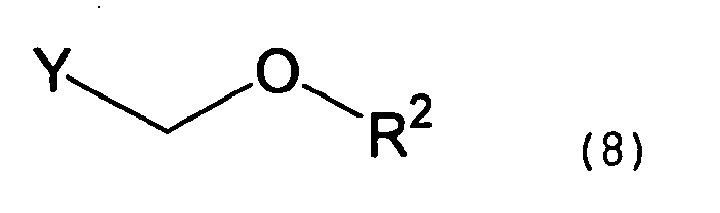

MX (9)
wherein M is a hydrogen atom, alkali metal, alkaline earth metal or metallic atom, and X is BF4 or N(CF3SO2)2.
Priority Applications (1)
| Application Number | Priority Date | Filing Date | Title |
|---|---|---|---|
| EP09157322.0A EP2172463B1 (en) | 2003-07-01 | 2004-06-30 | Quaternary ammonium salt, electrolytic solution and electrochemical device |
Applications Claiming Priority (2)
| Application Number | Priority Date | Filing Date | Title |
|---|---|---|---|
| JP2003270225 | 2003-07-01 | ||
| PCT/JP2004/009623 WO2005003108A1 (en) | 2003-07-01 | 2004-06-30 | Quaternary ammonium salt, electrolyte, and electrochemical device |
Related Child Applications (2)
| Application Number | Title | Priority Date | Filing Date |
|---|---|---|---|
| EP09157322.0A Division EP2172463B1 (en) | 2003-07-01 | 2004-06-30 | Quaternary ammonium salt, electrolytic solution and electrochemical device |
| EP09157322.0 Division-Into | 2009-04-03 |
Publications (3)
| Publication Number | Publication Date |
|---|---|
| EP1642894A1 EP1642894A1 (en) | 2006-04-05 |
| EP1642894A4 EP1642894A4 (en) | 2008-01-23 |
| EP1642894B1 true EP1642894B1 (en) | 2012-01-18 |
Family
ID=33562607
Family Applications (2)
| Application Number | Title | Priority Date | Filing Date |
|---|---|---|---|
| EP04747092A Expired - Lifetime EP1642894B1 (en) | 2003-07-01 | 2004-06-30 | Quaternary ammonium salt, electrolyte, and electrochemical device |
| EP09157322.0A Expired - Lifetime EP2172463B1 (en) | 2003-07-01 | 2004-06-30 | Quaternary ammonium salt, electrolytic solution and electrochemical device |
Family Applications After (1)
| Application Number | Title | Priority Date | Filing Date |
|---|---|---|---|
| EP09157322.0A Expired - Lifetime EP2172463B1 (en) | 2003-07-01 | 2004-06-30 | Quaternary ammonium salt, electrolytic solution and electrochemical device |
Country Status (11)
| Country | Link |
|---|---|
| US (3) | US7834197B2 (en) |
| EP (2) | EP1642894B1 (en) |
| JP (5) | JP3950464B2 (en) |
| KR (1) | KR100757166B1 (en) |
| CN (1) | CN100554256C (en) |
| AT (1) | ATE542259T1 (en) |
| AU (1) | AU2004254231B2 (en) |
| CA (1) | CA2530814C (en) |
| RU (1) | RU2329257C2 (en) |
| TW (1) | TWI263632B (en) |
| WO (1) | WO2005003108A1 (en) |
Cited By (1)
| Publication number | Priority date | Publication date | Assignee | Title |
|---|---|---|---|---|
| EP4539216A3 (en) * | 2021-12-23 | 2025-12-10 | Skeleton Technologies GmbH | A method for manufacturing a supercapacitor |
Families Citing this family (74)
| Publication number | Priority date | Publication date | Assignee | Title |
|---|---|---|---|---|
| DE602006012933D1 (en) * | 2005-01-12 | 2010-04-29 | Otsuka Chemical Co Ltd | QUATERNARY AMMONIUM SALT, ELECTROLYTE, ELECTROLYTE SOLUTION, AND ELECTROCHEMICAL APPARATUS |
| CA2597882C (en) * | 2005-01-12 | 2010-09-14 | Otsuka Chemical Co., Ltd. | Quaternary ammonium salt, electrolyte, electrolyte solution and electrochemical device |
| JP2006206457A (en) * | 2005-01-25 | 2006-08-10 | Toyota Motor Corp | Cyclic ammonium molten salt and use thereof |
| JP4519685B2 (en) * | 2005-03-14 | 2010-08-04 | 株式会社東芝 | Non-aqueous electrolyte battery |
| JP4751629B2 (en) * | 2005-03-23 | 2011-08-17 | ステラケミファ株式会社 | Quaternary ammonium salts, electrolytes, electrolytes and electrochemical devices |
| JP5179712B2 (en) * | 2005-08-18 | 2013-04-10 | 広栄化学工業株式会社 | Antistatic cyclic olefin polymer composition |
| JP4868350B2 (en) * | 2005-11-15 | 2012-02-01 | 株式会社Gsユアサ | Non-aqueous electrolyte battery |
| GB0606016D0 (en) * | 2006-03-25 | 2006-05-03 | Ionic Polymer Solutions Ltd | Quaternary ammonium compounds and their uses |
| US20100118469A1 (en) * | 2007-03-28 | 2010-05-13 | Otsuka Chemical Co., Ltd. | Electrolyte solution for electric double layer capacitor |
| FR2917537B1 (en) * | 2007-06-15 | 2009-09-25 | Saft Groupe Sa | LITHIUM-ION BATTERY CONTAINING ELECTROLYTE COMPRISING IONIC LIQUID |
| EP2023434B1 (en) | 2007-07-23 | 2016-09-07 | Litarion GmbH | Electrolyte preparations for energy storage devices based on ionic fluids |
| JP4930403B2 (en) * | 2008-02-13 | 2012-05-16 | ソニー株式会社 | Nonaqueous electrolyte battery and manufacturing method thereof |
| JP2009218398A (en) * | 2008-03-11 | 2009-09-24 | Otsuka Chemical Co Ltd | Electrolyte and electrochemical device |
| DE102008021271A1 (en) | 2008-04-29 | 2010-01-28 | Merck Patent Gmbh | Reactive ionic liquids |
| JP2010050125A (en) * | 2008-08-19 | 2010-03-04 | Otsuka Chem Co Ltd | Electric double layer capacitor |
| JP5473296B2 (en) * | 2008-11-04 | 2014-04-16 | 大塚化学株式会社 | Quaternary ammonium salt |
| CN102786449A (en) * | 2008-12-05 | 2012-11-21 | 华中科技大学 | Ionic liquid synthesized from perfluoroalkyl sulfonyl imide alkali metal salt |
| US8920669B2 (en) * | 2009-08-03 | 2014-12-30 | Merck Patent Gmbh | Electrolyte system |
| KR101375450B1 (en) * | 2009-12-11 | 2014-03-17 | 다이킨 고교 가부시키가이샤 | Electric double layer capacitor |
| TW201141816A (en) * | 2010-01-15 | 2011-12-01 | Ube Industries | Photochemical cell including semiconductor fine particles sensitized by binuclear ruthenium complex dye, and electrolyte solution that contains ammonium salt compound or phosphonium salt compound |
| JP4888575B2 (en) * | 2010-02-17 | 2012-02-29 | 日産自動車株式会社 | Drying apparatus and drying method |
| JP5430464B2 (en) * | 2010-03-25 | 2014-02-26 | 大塚化学株式会社 | Electrolytic solution for electric double layer capacitor and electric double layer capacitor |
| RU2419907C1 (en) | 2010-04-23 | 2011-05-27 | ЮГ Инвестмент Лтд. | Multiple-element electrochemical capacitor and its manufacturing method |
| US8795904B2 (en) | 2010-05-13 | 2014-08-05 | The United States Of America As Represented By The Secretary Of The Army | Nonaqueous electrolyte solvents and additives |
| WO2011149095A1 (en) | 2010-05-28 | 2011-12-01 | 株式会社日本触媒 | Alkali metal salt of fluorosulfonyl imide, and production method therefor |
| JP5557010B2 (en) * | 2010-06-01 | 2014-07-23 | トヨタ自動車株式会社 | Electrolyte production method |
| JP2012018916A (en) * | 2010-06-10 | 2012-01-26 | Otsuka Chem Co Ltd | Nonaqueous electrolyte and nonaqueous electrolyte battery |
| US8795544B2 (en) | 2010-06-30 | 2014-08-05 | Semiconductor Energy Laboratory Co., Ltd. | Power storage device, lithium-ion secondary battery, electric double layer capacitor and lithium-ion capacitor |
| US10438753B2 (en) | 2010-07-06 | 2019-10-08 | The United States Of America As Represented By The Secretary Of The Army | Electrolytes in support of 5V Li ion chemistry |
| CN103053069A (en) * | 2010-08-03 | 2013-04-17 | 新日铁住金化学株式会社 | Sealing structure for photoelectric conversion element, photoelectric conversion element, and photoelectric conversion element module |
| WO2012017520A1 (en) * | 2010-08-03 | 2012-02-09 | トヨタ自動車株式会社 | Lithium secondary battery |
| JP5862094B2 (en) | 2010-08-17 | 2016-02-16 | セントラル硝子株式会社 | Method for producing lithium hexafluorophosphate concentrate |
| US8951664B2 (en) * | 2011-06-03 | 2015-02-10 | Semiconductor Energy Laboratory Co., Ltd. | Ionic liquid and power storage device including the same |
| EP2721686B1 (en) | 2011-06-17 | 2018-11-28 | NantEnergy, Inc. | Ionic liquid containing sulfonate ions |
| EP3336962B1 (en) * | 2011-06-17 | 2019-02-20 | NantEnergy, Inc. | Electrochemical cell comprising electrolyte having hetero ionic complex |
| US9558894B2 (en) | 2011-07-08 | 2017-01-31 | Fastcap Systems Corporation | Advanced electrolyte systems and their use in energy storage devices |
| WO2013009720A2 (en) | 2011-07-08 | 2013-01-17 | Fastcap Systems Corporation | High temperature energy storage device |
| JP5781386B2 (en) * | 2011-07-12 | 2015-09-24 | 大塚化学株式会社 | Non-aqueous electrolyte and non-aqueous electrolyte battery |
| JP2013047217A (en) * | 2011-07-27 | 2013-03-07 | Nichia Corp | Ionic liquid |
| CN103858269B (en) * | 2011-07-28 | 2017-02-15 | 和光纯药工业株式会社 | Electrolyte solution for electrochemical devices |
| US8636916B2 (en) * | 2011-08-30 | 2014-01-28 | Corning Incorporated | Electrolyte synthesis for ultracapacitors |
| CN103843191B (en) * | 2011-10-07 | 2016-10-12 | 丰田自动车株式会社 | The electrolyte of lithium-air battery |
| KR20130073822A (en) | 2011-12-23 | 2013-07-03 | 가부시키가이샤 한도오따이 에네루기 켄큐쇼 | Ionic liquid, nonaqueous electrolyte, and power storage device |
| JP6151910B2 (en) * | 2011-12-23 | 2017-06-21 | 株式会社半導体エネルギー研究所 | Ionic liquid, non-aqueous solvent, electrolyte, power storage device |
| CN103794368A (en) * | 2012-10-29 | 2014-05-14 | 中国科学院长春应用化学研究所 | Capacitor-used electrolyte, preparation method thereof and asymmetric electrochemical capacitor |
| KR102388479B1 (en) * | 2013-06-14 | 2022-04-21 | 테슬라, 인크. | Energy storage device with enhanced energy density |
| US10872737B2 (en) | 2013-10-09 | 2020-12-22 | Fastcap Systems Corporation | Advanced electrolytes for high temperature energy storage device |
| US9490067B2 (en) * | 2013-11-08 | 2016-11-08 | Cooper Technologies Company | Joining dissimilar materials using an epoxy resin composition |
| CN103762382B (en) * | 2014-02-19 | 2015-12-30 | 安徽安凯汽车股份有限公司 | A kind of lithium-ion battery electrolytes and the lithium battery containing this electrolyte |
| RU2552357C1 (en) * | 2014-04-11 | 2015-06-10 | Мсд Текнолоджис Частная Компания С Ограниченной Ответственностью | Supercapacitor electrolyte |
| WO2015190624A1 (en) * | 2014-06-09 | 2015-12-17 | 상명대학교서울산학협력단 | Method for preparing electrolyte for electric double layer capacitor and electric double layer capacitor using electrolyte prepared thereby |
| WO2015196427A1 (en) * | 2014-06-26 | 2015-12-30 | 深圳新宙邦科技股份有限公司 | Electrolyte solute, electrolyte and high-voltage super-capacitor |
| US10593488B2 (en) | 2014-12-11 | 2020-03-17 | Otsuka Chemical Co., Ltd. | Nonaqueous electrolytic solution for electric double layer capacitors |
| JP6413751B2 (en) * | 2014-12-22 | 2018-10-31 | 日清紡ホールディングス株式会社 | Plating solution |
| JP2016119409A (en) * | 2014-12-22 | 2016-06-30 | 日清紡ホールディングス株式会社 | Power storage device |
| JP6467908B2 (en) * | 2014-12-22 | 2019-02-13 | 日清紡ホールディングス株式会社 | Substrate for heat medium |
| JP6592891B2 (en) | 2014-12-22 | 2019-10-23 | 日清紡ホールディングス株式会社 | Secondary battery electrolyte and secondary battery |
| KR102668693B1 (en) | 2015-01-27 | 2024-05-27 | 패스트캡 시스템즈 코포레이션 | Wide temperature range ultracapacitor |
| RU2585170C1 (en) * | 2015-03-20 | 2016-05-27 | Открытое акционерное общество "Литий-Элемент" | Method for production of electrolyte for primary lithium cells |
| CN108024967B (en) * | 2015-06-15 | 2021-12-21 | 库姆制药有限责任公司 | Glycopyrronium fatty acid salt and preparation method thereof |
| WO2017023487A1 (en) * | 2015-08-05 | 2017-02-09 | Albemarle Corporation | Processes for synthesizing methoxy alkylether quaternary ammonium bromides |
| CA3019132A1 (en) | 2016-04-01 | 2017-10-05 | NOHMs Technologies, Inc. | Modified ionic liquids containing phosphorus |
| CN107424848B (en) * | 2016-05-24 | 2020-01-07 | 深圳新宙邦科技股份有限公司 | A kind of electrolyte for supercapacitor, supercapacitor |
| EP3549148B1 (en) | 2016-12-02 | 2025-01-01 | Fastcap Systems Corporation | Composite electrode |
| FR3064265A1 (en) * | 2017-03-23 | 2018-09-28 | Commissariat A L'energie Atomique Et Aux Energies Alternatives | NOVEL SALTS USED AS IONIC LIQUIDS OR INTERMEDIATE SALTS FOR THE PREPARATION OF IONIC LIQUIDS |
| US11335959B2 (en) | 2017-05-26 | 2022-05-17 | Toyota Motor Engineering & Manufacturing North America, Inc. | Ionic liquids for artificial SEI transplantation |
| US10505219B2 (en) * | 2017-05-26 | 2019-12-10 | Toyota Motor Engineering & Manufacturing North America, Inc. | Artificial SEI transplantation |
| US11349111B2 (en) | 2017-05-26 | 2022-05-31 | Toyota Motor Engineering & Manufacturing North America, Inc. | Artificial SEI transplantation for insertion anodes |
| WO2019018432A1 (en) | 2017-07-17 | 2019-01-24 | NOHMs Technologies, Inc. | Phosphorus containing electrolytes |
| US11424484B2 (en) | 2019-01-24 | 2022-08-23 | Octet Scientific, Inc. | Zinc battery electrolyte additive |
| CN109841901B (en) * | 2019-03-14 | 2021-04-09 | 北京卫蓝新能源科技有限公司 | Ionic liquid electrolyte and lithium battery |
| CN110429334B (en) * | 2019-07-16 | 2021-06-08 | 中国电子新能源(武汉)研究院有限责任公司 | Electrolyte and preparation method thereof and battery |
| CN114142087A (en) * | 2021-10-14 | 2022-03-04 | 合肥国轩高科动力能源有限公司 | Electrolyte for improving high-temperature performance of lithium ion battery and lithium ion battery |
| EP4383301A3 (en) * | 2022-11-09 | 2024-08-07 | Skeleton Technologies GmbH | Process for manufacturing a supercapacitor, in particular electrolyte injection |
Family Cites Families (12)
| Publication number | Priority date | Publication date | Assignee | Title |
|---|---|---|---|---|
| DE3126522A1 (en) * | 1981-07-04 | 1983-01-20 | Basf Ag, 6700 Ludwigshafen | QUATERNAIRE AMMONIUM SALTS AND METHOD FOR THEIR PRODUCTION |
| JPH0831401B2 (en) * | 1986-10-31 | 1996-03-27 | 三菱化学株式会社 | Electrolyte |
| US4938854A (en) * | 1988-11-28 | 1990-07-03 | Southwestern Analytical Chemicals, Inc. | Method for purifying quaternary ammonium hydroxides |
| US5965054A (en) * | 1997-08-12 | 1999-10-12 | Covalent Associates, Inc. | Nonaqueous electrolyte for electrical storage devices |
| KR100316686B1 (en) * | 1999-07-01 | 2001-12-12 | 안복현 | Nonaqueous electrolyte battery |
| JP2001348388A (en) * | 2000-04-07 | 2001-12-18 | Stella Chemifa Corp | Method of producing quaternary ammonium salt represented by r1r2r3r4n+.bf4- |
| WO2002059317A2 (en) * | 2001-01-24 | 2002-08-01 | Zymogenetics, Inc. | Cub domain protein zcub3 and materials and methods for making it |
| EP2295399A3 (en) * | 2001-03-26 | 2018-04-04 | Nisshinbo Industries, Inc. | Liquid electrolytes for electrical storage devices |
| JP4374888B2 (en) * | 2002-04-22 | 2009-12-02 | 旭硝子株式会社 | Electric double layer capacitor |
| DE60319769T2 (en) * | 2002-04-22 | 2009-04-30 | Asahi Glass Co., Ltd. | Electric double layer capacitor |
| JP2004146346A (en) * | 2002-08-28 | 2004-05-20 | Nisshinbo Ind Inc | Non-aqueous electrolyte and non-aqueous electrolyte secondary battery |
| JP4298246B2 (en) * | 2002-09-20 | 2009-07-15 | 日清紡ホールディングス株式会社 | Nonaqueous electrolyte, electric double layer capacitor and nonaqueous electrolyte secondary battery |
-
2004
- 2004-06-30 RU RU2006102854/04A patent/RU2329257C2/en not_active IP Right Cessation
- 2004-06-30 AU AU2004254231A patent/AU2004254231B2/en not_active Ceased
- 2004-06-30 AT AT04747092T patent/ATE542259T1/en active
- 2004-06-30 KR KR1020057025342A patent/KR100757166B1/en not_active Expired - Fee Related
- 2004-06-30 WO PCT/JP2004/009623 patent/WO2005003108A1/en not_active Ceased
- 2004-06-30 CA CA2530814A patent/CA2530814C/en not_active Expired - Fee Related
- 2004-06-30 US US10/563,125 patent/US7834197B2/en not_active Expired - Fee Related
- 2004-06-30 TW TW093119367A patent/TWI263632B/en not_active IP Right Cessation
- 2004-06-30 JP JP2005511389A patent/JP3950464B2/en not_active Expired - Fee Related
- 2004-06-30 EP EP04747092A patent/EP1642894B1/en not_active Expired - Lifetime
- 2004-06-30 CN CNB2004800157411A patent/CN100554256C/en not_active Expired - Fee Related
- 2004-06-30 EP EP09157322.0A patent/EP2172463B1/en not_active Expired - Lifetime
-
2006
- 2006-09-01 JP JP2006238217A patent/JP4024824B2/en not_active Expired - Fee Related
- 2006-12-28 JP JP2006353819A patent/JP4698575B2/en not_active Expired - Fee Related
-
2007
- 2007-07-05 JP JP2007177516A patent/JP4704395B2/en not_active Expired - Fee Related
-
2010
- 2010-06-04 JP JP2010128704A patent/JP5279764B2/en not_active Expired - Fee Related
- 2010-11-09 US US12/926,313 patent/US8366956B2/en not_active Expired - Fee Related
-
2012
- 2012-09-13 US US13/615,315 patent/US8747690B2/en not_active Expired - Fee Related
Cited By (1)
| Publication number | Priority date | Publication date | Assignee | Title |
|---|---|---|---|---|
| EP4539216A3 (en) * | 2021-12-23 | 2025-12-10 | Skeleton Technologies GmbH | A method for manufacturing a supercapacitor |
Also Published As
Similar Documents
| Publication | Publication Date | Title |
|---|---|---|
| EP1642894B1 (en) | Quaternary ammonium salt, electrolyte, and electrochemical device | |
| EP1837333B1 (en) | Quaternary ammonium salt, electrolyte, electrolyte solution and electrochemical device | |
| JP7663950B2 (en) | Modified ionic liquids containing cyclic phosphorus moieties | |
| EP1689016B1 (en) | Electrolyte solution and non-aqueous electrolyte lithium secondary battery comprising the same | |
| JP4836578B2 (en) | Quaternary ammonium salts, electrolytes, electrolytes and electrochemical devices | |
| EP1840124B1 (en) | Quaternary ammonium salt, electrolyte, electrolyte solution and electrochemical device | |
| JP4751629B2 (en) | Quaternary ammonium salts, electrolytes, electrolytes and electrochemical devices |
Legal Events
| Date | Code | Title | Description |
|---|---|---|---|
| PUAI | Public reference made under article 153(3) epc to a published international application that has entered the european phase |
Free format text: ORIGINAL CODE: 0009012 |
|
| 17P | Request for examination filed |
Effective date: 20060125 |
|
| AK | Designated contracting states |
Kind code of ref document: A1 Designated state(s): AT BE BG CH CY CZ DE DK EE ES FI FR GB GR HU IE IT LI LU MC NL PL PT RO SE SI SK TR |
|
| DAX | Request for extension of the european patent (deleted) | ||
| A4 | Supplementary search report drawn up and despatched |
Effective date: 20071228 |
|
| 17Q | First examination report despatched |
Effective date: 20080922 |
|
| REG | Reference to a national code |
Ref country code: DE Ref legal event code: R079 Ref document number: 602004036191 Country of ref document: DE Free format text: PREVIOUS MAIN CLASS: C07D0295080000 Ipc: H01M0010050000 |
|
| RIC1 | Information provided on ipc code assigned before grant |
Ipc: H01M 10/05 20100101AFI20110331BHEP Ipc: C07D 295/08 20060101ALI20110331BHEP |
|
| GRAP | Despatch of communication of intention to grant a patent |
Free format text: ORIGINAL CODE: EPIDOSNIGR1 |
|
| GRAC | Information related to communication of intention to grant a patent modified |
Free format text: ORIGINAL CODE: EPIDOSCIGR1 |
|
| GRAS | Grant fee paid |
Free format text: ORIGINAL CODE: EPIDOSNIGR3 |
|
| GRAA | (expected) grant |
Free format text: ORIGINAL CODE: 0009210 |
|
| RAP1 | Party data changed (applicant data changed or rights of an application transferred) |
Owner name: STELLA CHEMIFA CORPORATION Owner name: OTSUKA CHEMICAL CO., LTD. |
|
| AK | Designated contracting states |
Kind code of ref document: B1 Designated state(s): AT BE BG CH CY CZ DE DK EE ES FI FR GB GR HU IE IT LI LU MC NL PL PT RO SE SI SK TR |
|
| REG | Reference to a national code |
Ref country code: GB Ref legal event code: FG4D |
|
| REG | Reference to a national code |
Ref country code: CH Ref legal event code: EP |
|
| REG | Reference to a national code |
Ref country code: DE Ref legal event code: R082 Ref document number: 602004036191 Country of ref document: DE Representative=s name: PETER BARZ, DE Ref country code: DE Ref legal event code: R082 Ref document number: 602004036191 Country of ref document: DE Representative=s name: MEISSNER, BOLTE & PARTNER GBR, DE Ref country code: DE Ref legal event code: R082 Ref document number: 602004036191 Country of ref document: DE Representative=s name: MEISSNER BOLTE PATENTANWAELTE RECHTSANWAELTE P, DE |
|
| REG | Reference to a national code |
Ref country code: IE Ref legal event code: FG4D Ref country code: AT Ref legal event code: REF Ref document number: 542259 Country of ref document: AT Kind code of ref document: T Effective date: 20120215 |
|
| REG | Reference to a national code |
Ref country code: DE Ref legal event code: R096 Ref document number: 602004036191 Country of ref document: DE Effective date: 20120315 |
|
| REG | Reference to a national code |
Ref country code: NL Ref legal event code: VDEP Effective date: 20120118 |
|
| PG25 | Lapsed in a contracting state [announced via postgrant information from national office to epo] |
Ref country code: BG Free format text: LAPSE BECAUSE OF FAILURE TO SUBMIT A TRANSLATION OF THE DESCRIPTION OR TO PAY THE FEE WITHIN THE PRESCRIBED TIME-LIMIT Effective date: 20120418 Ref country code: BE Free format text: LAPSE BECAUSE OF FAILURE TO SUBMIT A TRANSLATION OF THE DESCRIPTION OR TO PAY THE FEE WITHIN THE PRESCRIBED TIME-LIMIT Effective date: 20120118 Ref country code: NL Free format text: LAPSE BECAUSE OF FAILURE TO SUBMIT A TRANSLATION OF THE DESCRIPTION OR TO PAY THE FEE WITHIN THE PRESCRIBED TIME-LIMIT Effective date: 20120118 |
|
| PG25 | Lapsed in a contracting state [announced via postgrant information from national office to epo] |
Ref country code: FI Free format text: LAPSE BECAUSE OF FAILURE TO SUBMIT A TRANSLATION OF THE DESCRIPTION OR TO PAY THE FEE WITHIN THE PRESCRIBED TIME-LIMIT Effective date: 20120118 Ref country code: PT Free format text: LAPSE BECAUSE OF FAILURE TO SUBMIT A TRANSLATION OF THE DESCRIPTION OR TO PAY THE FEE WITHIN THE PRESCRIBED TIME-LIMIT Effective date: 20120518 Ref country code: PL Free format text: LAPSE BECAUSE OF FAILURE TO SUBMIT A TRANSLATION OF THE DESCRIPTION OR TO PAY THE FEE WITHIN THE PRESCRIBED TIME-LIMIT Effective date: 20120118 Ref country code: GR Free format text: LAPSE BECAUSE OF FAILURE TO SUBMIT A TRANSLATION OF THE DESCRIPTION OR TO PAY THE FEE WITHIN THE PRESCRIBED TIME-LIMIT Effective date: 20120419 |
|
| REG | Reference to a national code |
Ref country code: AT Ref legal event code: MK05 Ref document number: 542259 Country of ref document: AT Kind code of ref document: T Effective date: 20120118 |
|
| PG25 | Lapsed in a contracting state [announced via postgrant information from national office to epo] |
Ref country code: CY Free format text: LAPSE BECAUSE OF FAILURE TO SUBMIT A TRANSLATION OF THE DESCRIPTION OR TO PAY THE FEE WITHIN THE PRESCRIBED TIME-LIMIT Effective date: 20120118 |
|
| PG25 | Lapsed in a contracting state [announced via postgrant information from national office to epo] |
Ref country code: EE Free format text: LAPSE BECAUSE OF FAILURE TO SUBMIT A TRANSLATION OF THE DESCRIPTION OR TO PAY THE FEE WITHIN THE PRESCRIBED TIME-LIMIT Effective date: 20120118 Ref country code: SI Free format text: LAPSE BECAUSE OF FAILURE TO SUBMIT A TRANSLATION OF THE DESCRIPTION OR TO PAY THE FEE WITHIN THE PRESCRIBED TIME-LIMIT Effective date: 20120118 Ref country code: SE Free format text: LAPSE BECAUSE OF FAILURE TO SUBMIT A TRANSLATION OF THE DESCRIPTION OR TO PAY THE FEE WITHIN THE PRESCRIBED TIME-LIMIT Effective date: 20120118 Ref country code: CZ Free format text: LAPSE BECAUSE OF FAILURE TO SUBMIT A TRANSLATION OF THE DESCRIPTION OR TO PAY THE FEE WITHIN THE PRESCRIBED TIME-LIMIT Effective date: 20120118 Ref country code: DK Free format text: LAPSE BECAUSE OF FAILURE TO SUBMIT A TRANSLATION OF THE DESCRIPTION OR TO PAY THE FEE WITHIN THE PRESCRIBED TIME-LIMIT Effective date: 20120118 Ref country code: RO Free format text: LAPSE BECAUSE OF FAILURE TO SUBMIT A TRANSLATION OF THE DESCRIPTION OR TO PAY THE FEE WITHIN THE PRESCRIBED TIME-LIMIT Effective date: 20120118 |
|
| PLBE | No opposition filed within time limit |
Free format text: ORIGINAL CODE: 0009261 |
|
| STAA | Information on the status of an ep patent application or granted ep patent |
Free format text: STATUS: NO OPPOSITION FILED WITHIN TIME LIMIT |
|
| PG25 | Lapsed in a contracting state [announced via postgrant information from national office to epo] |
Ref country code: SK Free format text: LAPSE BECAUSE OF FAILURE TO SUBMIT A TRANSLATION OF THE DESCRIPTION OR TO PAY THE FEE WITHIN THE PRESCRIBED TIME-LIMIT Effective date: 20120118 Ref country code: IT Free format text: LAPSE BECAUSE OF FAILURE TO SUBMIT A TRANSLATION OF THE DESCRIPTION OR TO PAY THE FEE WITHIN THE PRESCRIBED TIME-LIMIT Effective date: 20120118 |
|
| 26N | No opposition filed |
Effective date: 20121019 |
|
| PG25 | Lapsed in a contracting state [announced via postgrant information from national office to epo] |
Ref country code: AT Free format text: LAPSE BECAUSE OF FAILURE TO SUBMIT A TRANSLATION OF THE DESCRIPTION OR TO PAY THE FEE WITHIN THE PRESCRIBED TIME-LIMIT Effective date: 20120118 Ref country code: MC Free format text: LAPSE BECAUSE OF NON-PAYMENT OF DUE FEES Effective date: 20120630 |
|
| REG | Reference to a national code |
Ref country code: CH Ref legal event code: PL |
|
| REG | Reference to a national code |
Ref country code: CH Ref legal event code: PL |
|
| REG | Reference to a national code |
Ref country code: DE Ref legal event code: R097 Ref document number: 602004036191 Country of ref document: DE Effective date: 20121019 |
|
| REG | Reference to a national code |
Ref country code: IE Ref legal event code: MM4A |
|
| PG25 | Lapsed in a contracting state [announced via postgrant information from national office to epo] |
Ref country code: ES Free format text: LAPSE BECAUSE OF FAILURE TO SUBMIT A TRANSLATION OF THE DESCRIPTION OR TO PAY THE FEE WITHIN THE PRESCRIBED TIME-LIMIT Effective date: 20120429 Ref country code: CH Free format text: LAPSE BECAUSE OF NON-PAYMENT OF DUE FEES Effective date: 20120630 Ref country code: IE Free format text: LAPSE BECAUSE OF NON-PAYMENT OF DUE FEES Effective date: 20120630 Ref country code: LI Free format text: LAPSE BECAUSE OF NON-PAYMENT OF DUE FEES Effective date: 20120630 |
|
| REG | Reference to a national code |
Ref country code: DE Ref legal event code: R082 Ref document number: 602004036191 Country of ref document: DE Representative=s name: MEISSNER, BOLTE & PARTNER GBR, DE Ref country code: DE Ref legal event code: R082 Ref document number: 602004036191 Country of ref document: DE Representative=s name: MEISSNER BOLTE PATENTANWAELTE RECHTSANWAELTE P, DE |
|
| REG | Reference to a national code |
Ref country code: DE Ref legal event code: R082 Ref document number: 602004036191 Country of ref document: DE Representative=s name: MEISSNER, BOLTE & PARTNER GBR, DE |
|
| PG25 | Lapsed in a contracting state [announced via postgrant information from national office to epo] |
Ref country code: TR Free format text: LAPSE BECAUSE OF FAILURE TO SUBMIT A TRANSLATION OF THE DESCRIPTION OR TO PAY THE FEE WITHIN THE PRESCRIBED TIME-LIMIT Effective date: 20120118 |
|
| PG25 | Lapsed in a contracting state [announced via postgrant information from national office to epo] |
Ref country code: LU Free format text: LAPSE BECAUSE OF NON-PAYMENT OF DUE FEES Effective date: 20120630 |
|
| PG25 | Lapsed in a contracting state [announced via postgrant information from national office to epo] |
Ref country code: HU Free format text: LAPSE BECAUSE OF FAILURE TO SUBMIT A TRANSLATION OF THE DESCRIPTION OR TO PAY THE FEE WITHIN THE PRESCRIBED TIME-LIMIT Effective date: 20040630 |
|
| PGFP | Annual fee paid to national office [announced via postgrant information from national office to epo] |
Ref country code: GB Payment date: 20140627 Year of fee payment: 11 |
|
| REG | Reference to a national code |
Ref country code: FR Ref legal event code: PLFP Year of fee payment: 12 |
|
| PGFP | Annual fee paid to national office [announced via postgrant information from national office to epo] |
Ref country code: FR Payment date: 20150630 Year of fee payment: 12 |
|
| PGFP | Annual fee paid to national office [announced via postgrant information from national office to epo] |
Ref country code: DE Payment date: 20150828 Year of fee payment: 12 |
|
| GBPC | Gb: european patent ceased through non-payment of renewal fee |
Effective date: 20150630 |
|
| PG25 | Lapsed in a contracting state [announced via postgrant information from national office to epo] |
Ref country code: GB Free format text: LAPSE BECAUSE OF NON-PAYMENT OF DUE FEES Effective date: 20150630 |
|
| REG | Reference to a national code |
Ref country code: DE Ref legal event code: R119 Ref document number: 602004036191 Country of ref document: DE |
|
| REG | Reference to a national code |
Ref country code: FR Ref legal event code: ST Effective date: 20170228 |
|
| PG25 | Lapsed in a contracting state [announced via postgrant information from national office to epo] |
Ref country code: FR Free format text: LAPSE BECAUSE OF NON-PAYMENT OF DUE FEES Effective date: 20160630 Ref country code: DE Free format text: LAPSE BECAUSE OF NON-PAYMENT OF DUE FEES Effective date: 20170103 |