EP1641252A2 - Vehicle-mounted displaying device employing tv program displaying method - Google Patents
Vehicle-mounted displaying device employing tv program displaying method Download PDFInfo
- Publication number
- EP1641252A2 EP1641252A2 EP05255882A EP05255882A EP1641252A2 EP 1641252 A2 EP1641252 A2 EP 1641252A2 EP 05255882 A EP05255882 A EP 05255882A EP 05255882 A EP05255882 A EP 05255882A EP 1641252 A2 EP1641252 A2 EP 1641252A2
- Authority
- EP
- European Patent Office
- Prior art keywords
- image
- vehicle
- displaying
- small image
- displayed
- Prior art date
- Legal status (The legal status is an assumption and is not a legal conclusion. Google has not performed a legal analysis and makes no representation as to the accuracy of the status listed.)
- Withdrawn
Links
Images


Classifications
-
- G—PHYSICS
- G01—MEASURING; TESTING
- G01C—MEASURING DISTANCES, LEVELS OR BEARINGS; SURVEYING; NAVIGATION; GYROSCOPIC INSTRUMENTS; PHOTOGRAMMETRY OR VIDEOGRAMMETRY
- G01C21/00—Navigation; Navigational instruments not provided for in groups G01C1/00 - G01C19/00
- G01C21/26—Navigation; Navigational instruments not provided for in groups G01C1/00 - G01C19/00 specially adapted for navigation in a road network
- G01C21/34—Route searching; Route guidance
- G01C21/36—Input/output arrangements for on-board computers
- G01C21/3664—Details of the user input interface, e.g. buttons, knobs or sliders, including those provided on a touch screen; remote controllers; input using gestures
-
- B—PERFORMING OPERATIONS; TRANSPORTING
- B60—VEHICLES IN GENERAL
- B60K—ARRANGEMENT OR MOUNTING OF PROPULSION UNITS OR OF TRANSMISSIONS IN VEHICLES; ARRANGEMENT OR MOUNTING OF PLURAL DIVERSE PRIME-MOVERS IN VEHICLES; AUXILIARY DRIVES FOR VEHICLES; INSTRUMENTATION OR DASHBOARDS FOR VEHICLES; ARRANGEMENTS IN CONNECTION WITH COOLING, AIR INTAKE, GAS EXHAUST OR FUEL SUPPLY OF PROPULSION UNITS IN VEHICLES
- B60K35/00—Instruments specially adapted for vehicles; Arrangement of instruments in or on vehicles
- B60K35/10—Input arrangements, i.e. from user to vehicle, associated with vehicle functions or specially adapted therefor
-
- B—PERFORMING OPERATIONS; TRANSPORTING
- B60—VEHICLES IN GENERAL
- B60K—ARRANGEMENT OR MOUNTING OF PROPULSION UNITS OR OF TRANSMISSIONS IN VEHICLES; ARRANGEMENT OR MOUNTING OF PLURAL DIVERSE PRIME-MOVERS IN VEHICLES; AUXILIARY DRIVES FOR VEHICLES; INSTRUMENTATION OR DASHBOARDS FOR VEHICLES; ARRANGEMENTS IN CONNECTION WITH COOLING, AIR INTAKE, GAS EXHAUST OR FUEL SUPPLY OF PROPULSION UNITS IN VEHICLES
- B60K35/00—Instruments specially adapted for vehicles; Arrangement of instruments in or on vehicles
- B60K35/20—Output arrangements, i.e. from vehicle to user, associated with vehicle functions or specially adapted therefor
- B60K35/21—Output arrangements, i.e. from vehicle to user, associated with vehicle functions or specially adapted therefor using visual output, e.g. blinking lights or matrix displays
- B60K35/22—Display screens
-
- B—PERFORMING OPERATIONS; TRANSPORTING
- B60—VEHICLES IN GENERAL
- B60K—ARRANGEMENT OR MOUNTING OF PROPULSION UNITS OR OF TRANSMISSIONS IN VEHICLES; ARRANGEMENT OR MOUNTING OF PLURAL DIVERSE PRIME-MOVERS IN VEHICLES; AUXILIARY DRIVES FOR VEHICLES; INSTRUMENTATION OR DASHBOARDS FOR VEHICLES; ARRANGEMENTS IN CONNECTION WITH COOLING, AIR INTAKE, GAS EXHAUST OR FUEL SUPPLY OF PROPULSION UNITS IN VEHICLES
- B60K35/00—Instruments specially adapted for vehicles; Arrangement of instruments in or on vehicles
- B60K35/20—Output arrangements, i.e. from vehicle to user, associated with vehicle functions or specially adapted therefor
- B60K35/26—Output arrangements, i.e. from vehicle to user, associated with vehicle functions or specially adapted therefor using acoustic output
-
- B—PERFORMING OPERATIONS; TRANSPORTING
- B60—VEHICLES IN GENERAL
- B60K—ARRANGEMENT OR MOUNTING OF PROPULSION UNITS OR OF TRANSMISSIONS IN VEHICLES; ARRANGEMENT OR MOUNTING OF PLURAL DIVERSE PRIME-MOVERS IN VEHICLES; AUXILIARY DRIVES FOR VEHICLES; INSTRUMENTATION OR DASHBOARDS FOR VEHICLES; ARRANGEMENTS IN CONNECTION WITH COOLING, AIR INTAKE, GAS EXHAUST OR FUEL SUPPLY OF PROPULSION UNITS IN VEHICLES
- B60K35/00—Instruments specially adapted for vehicles; Arrangement of instruments in or on vehicles
- B60K35/20—Output arrangements, i.e. from vehicle to user, associated with vehicle functions or specially adapted therefor
- B60K35/28—Output arrangements, i.e. from vehicle to user, associated with vehicle functions or specially adapted therefor characterised by the type of the output information, e.g. video entertainment or vehicle dynamics information; characterised by the purpose of the output information, e.g. for attracting the attention of the driver
-
- B—PERFORMING OPERATIONS; TRANSPORTING
- B60—VEHICLES IN GENERAL
- B60K—ARRANGEMENT OR MOUNTING OF PROPULSION UNITS OR OF TRANSMISSIONS IN VEHICLES; ARRANGEMENT OR MOUNTING OF PLURAL DIVERSE PRIME-MOVERS IN VEHICLES; AUXILIARY DRIVES FOR VEHICLES; INSTRUMENTATION OR DASHBOARDS FOR VEHICLES; ARRANGEMENTS IN CONNECTION WITH COOLING, AIR INTAKE, GAS EXHAUST OR FUEL SUPPLY OF PROPULSION UNITS IN VEHICLES
- B60K35/00—Instruments specially adapted for vehicles; Arrangement of instruments in or on vehicles
- B60K35/50—Instruments characterised by their means of attachment to or integration in the vehicle
-
- B—PERFORMING OPERATIONS; TRANSPORTING
- B60—VEHICLES IN GENERAL
- B60K—ARRANGEMENT OR MOUNTING OF PROPULSION UNITS OR OF TRANSMISSIONS IN VEHICLES; ARRANGEMENT OR MOUNTING OF PLURAL DIVERSE PRIME-MOVERS IN VEHICLES; AUXILIARY DRIVES FOR VEHICLES; INSTRUMENTATION OR DASHBOARDS FOR VEHICLES; ARRANGEMENTS IN CONNECTION WITH COOLING, AIR INTAKE, GAS EXHAUST OR FUEL SUPPLY OF PROPULSION UNITS IN VEHICLES
- B60K35/00—Instruments specially adapted for vehicles; Arrangement of instruments in or on vehicles
- B60K35/60—Instruments characterised by their location or relative disposition in or on vehicles
-
- B—PERFORMING OPERATIONS; TRANSPORTING
- B60—VEHICLES IN GENERAL
- B60K—ARRANGEMENT OR MOUNTING OF PROPULSION UNITS OR OF TRANSMISSIONS IN VEHICLES; ARRANGEMENT OR MOUNTING OF PLURAL DIVERSE PRIME-MOVERS IN VEHICLES; AUXILIARY DRIVES FOR VEHICLES; INSTRUMENTATION OR DASHBOARDS FOR VEHICLES; ARRANGEMENTS IN CONNECTION WITH COOLING, AIR INTAKE, GAS EXHAUST OR FUEL SUPPLY OF PROPULSION UNITS IN VEHICLES
- B60K35/00—Instruments specially adapted for vehicles; Arrangement of instruments in or on vehicles
- B60K35/90—Calibration of instruments, e.g. setting initial or reference parameters; Testing of instruments, e.g. detecting malfunction
-
- H—ELECTRICITY
- H04—ELECTRIC COMMUNICATION TECHNIQUE
- H04N—PICTORIAL COMMUNICATION, e.g. TELEVISION
- H04N21/00—Selective content distribution, e.g. interactive television or video on demand [VOD]
- H04N21/40—Client devices specifically adapted for the reception of or interaction with content, e.g. set-top-box [STB]; Operations thereof
- H04N21/41—Structure of client; Structure of client peripherals
- H04N21/414—Specialised client platforms, e.g. receiver in car or embedded in a mobile appliance
- H04N21/41422—Specialised client platforms, e.g. receiver in car or embedded in a mobile appliance located in transportation means, e.g. personal vehicle
-
- H—ELECTRICITY
- H04—ELECTRIC COMMUNICATION TECHNIQUE
- H04N—PICTORIAL COMMUNICATION, e.g. TELEVISION
- H04N21/00—Selective content distribution, e.g. interactive television or video on demand [VOD]
- H04N21/40—Client devices specifically adapted for the reception of or interaction with content, e.g. set-top-box [STB]; Operations thereof
- H04N21/41—Structure of client; Structure of client peripherals
- H04N21/422—Input-only peripherals, i.e. input devices connected to specially adapted client devices, e.g. global positioning system [GPS]
- H04N21/42202—Input-only peripherals, i.e. input devices connected to specially adapted client devices, e.g. global positioning system [GPS] environmental sensors, e.g. for detecting temperature, luminosity, pressure, earthquakes
-
- H—ELECTRICITY
- H04—ELECTRIC COMMUNICATION TECHNIQUE
- H04N—PICTORIAL COMMUNICATION, e.g. TELEVISION
- H04N21/00—Selective content distribution, e.g. interactive television or video on demand [VOD]
- H04N21/40—Client devices specifically adapted for the reception of or interaction with content, e.g. set-top-box [STB]; Operations thereof
- H04N21/43—Processing of content or additional data, e.g. demultiplexing additional data from a digital video stream; Elementary client operations, e.g. monitoring of home network or synchronising decoder's clock; Client middleware
- H04N21/431—Generation of visual interfaces for content selection or interaction; Content or additional data rendering
- H04N21/4312—Generation of visual interfaces for content selection or interaction; Content or additional data rendering involving specific graphical features, e.g. screen layout, special fonts or colors, blinking icons, highlights or animations
- H04N21/4316—Generation of visual interfaces for content selection or interaction; Content or additional data rendering involving specific graphical features, e.g. screen layout, special fonts or colors, blinking icons, highlights or animations for displaying supplemental content in a region of the screen, e.g. an advertisement in a separate window
-
- H—ELECTRICITY
- H04—ELECTRIC COMMUNICATION TECHNIQUE
- H04N—PICTORIAL COMMUNICATION, e.g. TELEVISION
- H04N21/00—Selective content distribution, e.g. interactive television or video on demand [VOD]
- H04N21/40—Client devices specifically adapted for the reception of or interaction with content, e.g. set-top-box [STB]; Operations thereof
- H04N21/45—Management operations performed by the client for facilitating the reception of or the interaction with the content or administrating data related to the end-user or to the client device itself, e.g. learning user preferences for recommending movies, resolving scheduling conflicts
- H04N21/462—Content or additional data management e.g. creating a master electronic programme guide from data received from the Internet and a Head-end or controlling the complexity of a video stream by scaling the resolution or bit-rate based on the client capabilities
- H04N21/4622—Retrieving content or additional data from different sources, e.g. from a broadcast channel and the Internet
-
- H—ELECTRICITY
- H04—ELECTRIC COMMUNICATION TECHNIQUE
- H04N—PICTORIAL COMMUNICATION, e.g. TELEVISION
- H04N21/00—Selective content distribution, e.g. interactive television or video on demand [VOD]
- H04N21/40—Client devices specifically adapted for the reception of or interaction with content, e.g. set-top-box [STB]; Operations thereof
- H04N21/47—End-user applications
- H04N21/478—Supplemental services, e.g. displaying phone caller identification, shopping application
-
- H—ELECTRICITY
- H04—ELECTRIC COMMUNICATION TECHNIQUE
- H04N—PICTORIAL COMMUNICATION, e.g. TELEVISION
- H04N21/00—Selective content distribution, e.g. interactive television or video on demand [VOD]
- H04N21/40—Client devices specifically adapted for the reception of or interaction with content, e.g. set-top-box [STB]; Operations thereof
- H04N21/47—End-user applications
- H04N21/482—End-user interface for programme selection
-
- H—ELECTRICITY
- H04—ELECTRIC COMMUNICATION TECHNIQUE
- H04N—PICTORIAL COMMUNICATION, e.g. TELEVISION
- H04N5/00—Details of television systems
- H04N5/44—Receiver circuitry for the reception of television signals according to analogue transmission standards
-
- H—ELECTRICITY
- H04—ELECTRIC COMMUNICATION TECHNIQUE
- H04N—PICTORIAL COMMUNICATION, e.g. TELEVISION
- H04N5/00—Details of television systems
- H04N5/44—Receiver circuitry for the reception of television signals according to analogue transmission standards
- H04N5/445—Receiver circuitry for the reception of television signals according to analogue transmission standards for displaying additional information
- H04N5/45—Picture in picture, e.g. displaying simultaneously another television channel in a region of the screen
-
- H—ELECTRICITY
- H04—ELECTRIC COMMUNICATION TECHNIQUE
- H04N—PICTORIAL COMMUNICATION, e.g. TELEVISION
- H04N21/00—Selective content distribution, e.g. interactive television or video on demand [VOD]
- H04N21/40—Client devices specifically adapted for the reception of or interaction with content, e.g. set-top-box [STB]; Operations thereof
- H04N21/45—Management operations performed by the client for facilitating the reception of or the interaction with the content or administrating data related to the end-user or to the client device itself, e.g. learning user preferences for recommending movies, resolving scheduling conflicts
- H04N21/4508—Management of client data or end-user data
- H04N21/4524—Management of client data or end-user data involving the geographical location of the client
Definitions
- aspects of the invention relate to a TV program displaying method and a vehicle-mounted displaying device employing such a method.
- a vehicle-mounted device such as a car navigation system generally includes a displaying device and has a function of displaying a TV program on the displaying device.
- a vehicle-mounted device is typically configured such that a TV function is executed as a background process, while, for example, the navigation function can be executed as a foreground process when the vehicle (e.g., a car) is being driven to run. That is, a TV screen is not displayed when the vehicle driven and only the sound of the TV program currently selected is output.
- An example of such a vehicle-mounted device is disclosed in Japanese Patent Provisional Publication No. P2002-101355A (hereinafter, simply referred to as '355 publication).
- aspects of the invention provide an improved vehicle-mounted displaying device allowing a user to easily recognize the content of a TV program when the TV channel is switched while the TV function is executed as a background process with suppressing hindering affect to the foreground function such as the navigation function.
- the vehicle-mounted device capable of executing a predetermined function as a foreground process and a TV function as a background process.
- the vehicle-mounted device is provided with a displaying device, an image corresponding to the predetermined function being displayed on the displaying device when the predetermined function is executed, a program switching system that is operated by a user to switch TV programs one by one, a small image generating system that generates a small image which is smaller than the image corresponding to the predetermined function when the program switching system is operated to switch the TV programs, the small image being superimposed on the image corresponding to the predetermined function, and a display control system that displays the small image on the displaying devices such that the small image is superimposed on the image corresponding to the predetermined function, the display control system extinguishing the small image at a predetermined timing.
- the predetermined timing may be a timing at which a predetermined time has elapsed after the small image was displayed on the displaying device.
- the vehicle-mounted device may further include a text information displaying system that displays text information related to the switched TV program only when the small image is being displayed on the displaying device.
- the display control system may immediately extinguish the small image and display a small image which is generated by the small image generating system corresponding to the switched TV program.
- the vehicle-mounted device may further include a drive detection system that detects whether the vehicle is running, and the display control system may not display the small image when the drive detection system detects that the vehicle is running.
- the vehicle-mounted device may further include a drive detection system that detects whether the vehicle is running, and the display control system may immediately extinguish the small image if the drive detection system detects that the vehicle is running while the small image is being displayed.
- the predetermined function may be a car navigation function.
- aspects of the invention provide a method of displaying a TV program for a vehicle-mounted device capable of executing a predetermined function as a foreground process and a TV function as a background process, the vehicle-mounted device having a displaying device that is configured to display an image corresponding to the predetermined function when the predetermined function is executed.
- the method includes the steps of switching TV programs from a current program to another program, generating a small image which is smaller than the image corresponding to the predetermined function when the TV program is switched to current one to the other, displaying the small image such that the small image is superimposed on the image corresponding to the predetermined function, and extinguishing the small image at a predetermined timing.
- the predetermined timing may be a timing at which a predetermined time has elapsed after the small image was displayed on the displaying device.
- the method may further include a step of displaying text information related to the switched TV program only when the small image is being displayed on the displaying device.
- the small image may be extinguished immediately, and a small image corresponding to the other program may be generated and displayed on the displaying device.
- the method may further include a step of detecting whether the vehicle is running.
- the step of displaying the small image may not display the small image when the vehicle is detected to be running.
- the method may further include a step of detecting whether the vehicle is running.
- the step of displaying may immediately extinguish the small image if the drive detection system detects that the vehicle is running while the small image is being displayed.
- the predetermined function may be a car navigation function.
- aspects of the invention further provide a vehicle-mounted device capable of executing a first function as a foreground process and a second function as a background process.
- the vehicle-mounted device is provided with a displaying device, a first image generating system that generates a first image corresponding to the first function, a second image generating system that generates a second image corresponding to the second function, the second image being smaller than the first image, a switching system that is operated by a user to switch an operational condition of the second function, and a display control system that displays the small image on the displaying devices such that the small image is superimposed on the image corresponding to the predetermined function.
- the second image generating system is configured to generate the second image when the switching system is operated to switch the operational condition of the second function, and the display control system extinguish the second image at a predetermined timing after displayed on the displaying device.
- the predetermined timing may be a timing at which a predetermined time has elapsed after the second image was displayed on the displaying device.
- the vehicle-mounted device may further include a text information displaying system that displays text information related to the switched operational condition only when the second image is being displayed on the displaying device.
- the display control system may immediately extinguish the second image and display a second image which is generated by the second image generating system corresponding to the switched operational condition.
- the vehicle-mounted device may further include a drive detection system that detects whether the vehicle is running.
- the display control system may not display the second image when the drive detection system detects that the vehicle is running.
- the vehicle-mounted device may further include a drive detection system that detects whether the vehicle is running.
- the display control system may immediately extinguish the second image if the drive detection system detects that the vehicle is running while the second image is being displayed.
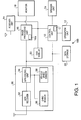
- Fig. 1 is a block diagram showing a system configuration of a vehicle-mounted device 100.
- Figs. 2A and 2B show exemplary screen images displayed on the vehicle-mounted device 100.
- the vehicle-mounted device 100 has a so-called car navigation function, which guides a driver to a destination.
- the vehicle-mounted device 100 is provided with, as shown in Fig. 1, a control unit 10 that controls the entire operation of the vehicle-mounted device 100, an operation unit 12 through which a user can operate the vehicle-mounted device, and a receiver unit 14 configured to receive a TV broadcast wave.
- the operation unit 12 may be a remote controller (either wired or wireless) and/or one or more switches (e.g., button switches) provided to the vehicle-mounted device 100.
- the receiver unit 14 is provided with an antenna for receiving TV broadcast waves, and a tuner for selecting TV channels. Typically, a tuning (i.e., selection of a TV channel) is executed through the operation unit 12.
- the vehicle-mounted device 100 is provided with a data storage 22 that stores various pieces of data including digital map data and audio data for navigation, and other data as well, and an image processing unit 16 that generates TV picture based on an image signal included in the TV broadcast wave received by the receiver unit 14.
- the vehicle-mounted device 100 is further provided with a monitor 18 for displaying TV picture, an image of a map for navigation generated by the image processing unit 16, and the like.
- the vehicle-mounted device 100 is further provided with a GPS (Global Positioning System) unit 30 that obtains a current position of the vehicle on which the vehicle-mounted device (and thus, the GPS unit 30) is mounted.
- the GPS unit 30 includes a GPS receiver 32 that receives GPS signals output from the GPS satellites, a GPS control unit 34 that control the entire operation of the GPS unit 30, a gyro sensor 36 for measuring an angular speed of the vehicle, and a vehicle speed sensor that generates a vehicle speed pulse signal in response to rotation of driving tires on both right and left sides of the vehicle.
- the GPS control unit 34 carries out dead reckoning (hereinafter, abbreviated as DR) in accordance with the signals output by the gyro sensor 36 and the vehicle speed sensor 38.
- DR is a operation to calculate a direction in which the vehicle is heading or oriented and a distance the vehicle has ran. Then, based on the results of the DR and result of the GPS measurement, digital image data around the current location of the vehicle is extracted from the data storage 22. The thus extracted digital map data is transmitted to the image processing unit 16.
- the image processing unit 16 applies a D/A (digital-to-analog) conversion the extracted map to generate a video signal representing an image of the map, and outputs the image of the map as converted to the monitor 18 together with a vehicle location mark indicative of a current location of the vehicle on the map.
- a D/A digital-to-analog
- the map181 around the current location of the vehicle is displayed, and the vehicle location mark (a black arrowhead in this figure) 182 is also displayed on the map.
- the vehicle location mark 182 is displayed at a predetermined position on the screen of the monitor 18, and the map in the neighborhood of the vehicle is displayed on the entire area of the screen of the monitor 18.
- the control unit 10 retrieves an appropriate piece of audio data from the data storage 22 in accordance with the results of the DR and GPS measurement, digital map data corresponding to the current location and in the neighborhood of the vehicle, and the orientation and the current location of the vehicle, and transmits the retrieved data to the speaker unit 24. Then, the speaker unit 24 drives a speaker included therein to output the voice message for the navigation.
- a process for displaying TV picture on the monitor 18 and reproducing TV sound The receiver unit 14 receives the TV broadcast wave, and the tuner function thereof outputs the broadcast wave of the selected channel to the control unit 10.
- the control unit 10 extracts the video signal included in the broadcast wave as selected and transmits the extracted video signal to the image processing unit 16. At the same time, the control unit 10 extracts the audio signal included in the broadcast wave.
- the image processing unit 16 converts the input video signal into a brightness signal and color difference signals, and stores the converted signals in a memory 16a provided to the image processing unit 16 as video data.
- the memory 16a consists of a plurality of memory areas respectively storing the brightness signal and color difference signals.
- the image processing unit 16 reads the video data synchronously with a synchronizing signal for readout, which is output by the control unit 1 to generate a screen of an image and transmits the image to the monitor 18. Then, on the monitor 18, the TV picture is displayed on the full screen of the displaying area thereof.
- the control unit 10 applies a predetermined processing to the extracted audio signal and transmits the same to the speaker unit 24, then the TV sound is reproduced.
- the vehicle-mounted device 100 further includes an OSD (On Screen Display) module 20, which generates text information to be displayed on the monitor 18 as shown in Fig. 2B.
- OSD On Screen Display
- the control unit 10 obtains the TV channel information representing the selected TV channel, which is selected through the operation unit 12, and retrieves corresponding data from the data storage 22.
- the data to be retrieved includes, for example, a name of each broadcasting station and channel number thereof, which have been stored in the data storage 22 in advance. Then, the control unit 10 retrieves text data corresponding to the obtained TV channel information, and transmits the retrieved text data to the OSD module 20.
- the OSD module 20 generates character images indicating the name of the broadcasting station, channel number and the like in accordance with the received text data, and transmits the generated images to the image processing unit 16.
- the image processing unit 16 the superimposes the character images on the image (e.g., the image of the navigation map or TV picture) displayed on the monitor 18 as shown in Fig. 2B.
- the character images generated by the OSD module 20 and displayed on the monitor 18 need not be limited to the information related to the receiving TV channel.
- the character information 18a displayed on the monitor may include information related to the TV sound, which may included whether the TV sound is stereo sound or monaural sound, or whether the TV sound is main sound or sub sound, as indicated in Fig. 2B.
- the OSD module 20 may generate an image of a box surrounding the displayed channel information (see Fig. 2B).
- a position where the character information 18a is displayed need not be limited to the position shown in Fig. 2B, but may be displayed at any position, for example, at a lower end portion on the screen of the monitor 18.
- the vehicle-mounted device 100 is configured to inhibit displaying the TV picture when the vehicle is running so that the driver concentrates on driving, and to allow display of the TV picture when the vehicle stops.
- the control unit 10 checks the signal output by the vehicle speed sensor 38 to determine whether the vehicle is running or not based on the signal output by the vehicle speed sensor 38.
- control unit 10 When the control unit 10 detects that the car is running, the control unit 10 forcibly change the image displayed on the monitor 18 form TV picture (if displayed) to the map image (or other images such as an image representing the information related to medium such as a CD being played).
- the control unit 10 does not allow monitor 18 to display the TV picture when the vehicle is detected to be running. That is, as far as the vehicle is running, the TV picture will not be displayed on the monitor 18.
- the control unit 10 may judge whether the vehicle is running based on another condition. For example, the control unit 10 may judge whether the car is running based on a position of a shift lever of the vehicle. That is, the control unit 10 may be configured to determine that the vehicle is not running when the shift lever is located at a parking position or a neutral position, and determine that the vehicle is running when the shift lever is located at another position (e.g., a back position or a drive position).
- the vehicle-mounted device 100 is configured such that the navigation function is executed as a foreground process, while the TV function is executed as a background process.
- a map is displayed for navigation, while the TV sound is output from the speaker 24.
- the TV sound is temporarily lowered or muted when a voice message for the navigation is output from the speaker 24.
- a picture-in-picture system is employed. That is, when the map image is displayed in accordance with the main process (i.e., the navigation process), a small window (hereinafter, referred to as a child screen) 18b (see Fig. 2B) is displayed on the main screen of the monitor 18, and the TV picture is displayed in the child screen 18b. It should be noted that the child screen 18b is displayed temporarily only for allowing the user to recognize the content of the switched TV channel.
- the image processing unit 16 applies a filtering process in which part of the TV picture data is eliminated to reduce the displaying size of the entire image and further the reduced TV picture data is processed so that the reduced TV picture appears smoothly when displayed on the child screen 18b.
- the childe screen 18b displaying the TV picture is generated inside the main screen displaying the map.
- the image shown in the childe screen 18b can be either an animating picture or a still image representing a frame of the TV picture.
- a frame rate of the animating picture may be reduced in order to reduce load to the image processing unit 16.
- a location of the childe screen 18b in the main screen need not be limited to the location shown in Fig. 2B, and may be any position (e.g., at a lower portion) on the main screen.
- the size of the child screen 18b need not be limited to the size shown in Fig. 2B, and can be either larger or smaller.
- the vehicle-mounted device 100 may be configured such that the location and/or the size of the childe screen 18b can be determined and set by the user, for example, through the operation unit 12. In such a case, the user can determine an appropriate size and/or location through the operation unit 12, and minimize the interference by the child screen 18b with respect to the main screen (i.e., the map or other images of foreground process).
- the child screen 18b remains displayed only for a predetermined period. Thereafter, the child screen 18b disappears and the user can view the entire image of the main screen of the monitor 18, which is displayed in accordance with the foreground process.
- Fig. 3 is a flowchart illustrating a channel information displaying process executed in the vehicle-mounted device 100.
- the channel information displaying process shown in Fig. 3 is started when the TV function is started as the background process while the navigation function (or another, non-TV function) is executed as the foreground function.
- the channel information displaying process is finished when the vehicle-mounted device 100 is powered OFF, or the TV functions is switched to the foreground process.
- the navigation map is displayed on the monitor 18 as shown in Fig. 2A, and from the speaker 24, the TV sound is output as mentioned above.
- another function is executed as the foreground process
- another image e.g., an image of a web site
- the navigation function is executed as the foreground process for the sake of explanation.
- the control unit 10 checks the signal output by the vehicle speed sensor 38 to determine whether the vehicle is running or not (S1). If the vehicle is determined to be running (S1: YES), the control unit 10 repeats S1 at every predetermined period. If the control unit 10 determined that the vehicle is parking (not running) (S1: NO), the control unit 10 judges whether a TV channel is switched by user's operation of the operation unit 12 (S2). If the channel is switched (S2: YES), the control unit 10 executes S3 at which a subroutine, displaying process is called. If the channel is not switched (S2: NO), the control unit 10 executes S1.
- Fig. 4 is a flowchart illustrating a displaying process, which is a subroutine called in the channel information displaying process show in Fig. 3.
- the control unit 10 keeps checking the vehicle speed sensor 38 even when the displaying process is executed. If it is detected that the vehicle starts running when the displaying process is executed, the control unit 10 turns out the character information 18a and the childe screen 18b, and returns to the channel information displaying process, therefore S1 is executed.
- control unit 10 sets a counter C (see Fig. 1) built in the control unit 10 to zero (S11).
- control unit 10 controls the image processing unit 16 to superimpose the character information 18a and the child screen 18b as shown in Fig. 2B (S12).
- the control unit 10 increments the counter C by one (S13), and judges whether the value of the counter C is equal to or greater than a predetermined value (S14). If the value of the counter C is smaller than the predetermined value (S14: NO), the control unit 10 returns to S13 and increments the counter C. Thus, S13 and S14 are repeated until the value of the counter C becomes equal to the predetermined value.
- the control unit 10 controls the image processing unit 16 to turn out the character information 18a and the child screen 18b (S15).
- S14 YES
- the control unit 10 turns out the currently displayed channel information and executes S11. Then, the character information 18a and the child screen 18b for the newly selected TV channel are superimposed on the image displayed on the monitor 18.
- the information corresponding to the newly selected TV channel is superimposed on the navigation image. Therefore, the user can recognize the content of the selected TV channel quickly and correctly. Further, the childe screen 18b is automatically extinguished after a predetermined period has passed.
- the "predetermined period" is a sufficiently short period which enables the user to recognize the content of the selected TV channel. Therefore, the display of the child screen 18b on the monitor 18 dose not substantially hinder the display of the navigation image, or the hindrance by the child screen 18b to the navigation image is minimized.
- the size of the TV picture is displayed on the child screen 18b, which also contribute to reduce hindrance by the TV image to the navigation image.
Landscapes
- Engineering & Computer Science (AREA)
- Signal Processing (AREA)
- Multimedia (AREA)
- Chemical & Material Sciences (AREA)
- Combustion & Propulsion (AREA)
- Transportation (AREA)
- Mechanical Engineering (AREA)
- Remote Sensing (AREA)
- Radar, Positioning & Navigation (AREA)
- Human Computer Interaction (AREA)
- Databases & Information Systems (AREA)
- Business, Economics & Management (AREA)
- Marketing (AREA)
- General Physics & Mathematics (AREA)
- Physics & Mathematics (AREA)
- Life Sciences & Earth Sciences (AREA)
- Biodiversity & Conservation Biology (AREA)
- Ecology (AREA)
- Emergency Management (AREA)
- Environmental & Geological Engineering (AREA)
- Environmental Sciences (AREA)
- Automation & Control Theory (AREA)
- Navigation (AREA)
- Fittings On The Vehicle Exterior For Carrying Loads, And Devices For Holding Or Mounting Articles (AREA)
Abstract
Description
- The present disclosure relates to the subject matter contained in Japanese Patent Application No. 2004-281255, filed on September 28, 2004, which is expressly incorporated herein by reference in its entirety.
- Aspects of the invention relate to a TV program displaying method and a vehicle-mounted displaying device employing such a method.
- A vehicle-mounted device such as a car navigation system generally includes a displaying device and has a function of displaying a TV program on the displaying device. Such a vehicle-mounted device is typically configured such that a TV function is executed as a background process, while, for example, the navigation function can be executed as a foreground process when the vehicle (e.g., a car) is being driven to run. That is, a TV screen is not displayed when the vehicle driven and only the sound of the TV program currently selected is output. An example of such a vehicle-mounted device is disclosed in Japanese Patent Provisional Publication No. P2002-101355A (hereinafter, simply referred to as '355 publication).
- In a case of the car navigation system, when the navigating function is executed as the foreground process and the TV function is executed as the background process, a map for navigation is displayed on the displaying device, while the sound of the TV program is output from a speaker. In such a situation, if a user of the car navigation system switches a TV channel to another program, the sound is switched to the changed program. According to the '355 publication, in such a case, information regarding the switched channel (e.g., a TV station name, channel number, etc.) is superimposed, in the form of text, on the navigation map.
- Sometimes, such text information is insufficient to recognize the content of the switched program. It may be possible to display further information regarding the switched TV channel. However, too much information may hinder the image for the navigation, which obstacles a driver from driving using the navigation function. Further, too much text information requires the driver's attention, which should be avoided in view of safety driving.
- Aspects of the invention provide an improved vehicle-mounted displaying device allowing a user to easily recognize the content of a TV program when the TV channel is switched while the TV function is executed as a background process with suppressing hindering affect to the foreground function such as the navigation function.
- Aspects of the invention provide a vehicle-mounted device capable of executing a predetermined function as a foreground process and a TV function as a background process. The vehicle-mounted device is provided with a displaying device, an image corresponding to the predetermined function being displayed on the displaying device when the predetermined function is executed, a program switching system that is operated by a user to switch TV programs one by one, a small image generating system that generates a small image which is smaller than the image corresponding to the predetermined function when the program switching system is operated to switch the TV programs, the small image being superimposed on the image corresponding to the predetermined function, and a display control system that displays the small image on the displaying devices such that the small image is superimposed on the image corresponding to the predetermined function, the display control system extinguishing the small image at a predetermined timing.
- The predetermined timing may be a timing at which a predetermined time has elapsed after the small image was displayed on the displaying device.
- The vehicle-mounted device may further include a text information displaying system that displays text information related to the switched TV program only when the small image is being displayed on the displaying device.
- If the program switching system is operated to switch the TV programs when the small image is being displayed, the display control system may immediately extinguish the small image and display a small image which is generated by the small image generating system corresponding to the switched TV program.
- The vehicle-mounted device may further include a drive detection system that detects whether the vehicle is running, and the display control system may not display the small image when the drive detection system detects that the vehicle is running.
- The vehicle-mounted device may further include a drive detection system that detects whether the vehicle is running, and the display control system may immediately extinguish the small image if the drive detection system detects that the vehicle is running while the small image is being displayed.
- The predetermined function may be a car navigation function.
- Aspects of the invention provide a method of displaying a TV program for a vehicle-mounted device capable of executing a predetermined function as a foreground process and a TV function as a background process, the vehicle-mounted device having a displaying device that is configured to display an image corresponding to the predetermined function when the predetermined function is executed. The method includes the steps of switching TV programs from a current program to another program, generating a small image which is smaller than the image corresponding to the predetermined function when the TV program is switched to current one to the other, displaying the small image such that the small image is superimposed on the image corresponding to the predetermined function, and extinguishing the small image at a predetermined timing.
- The predetermined timing may be a timing at which a predetermined time has elapsed after the small image was displayed on the displaying device.
- The method may further include a step of displaying text information related to the switched TV program only when the small image is being displayed on the displaying device.
- If the TV program is switched from the current program to the other when the small image corresponding to the current program is being displayed, the small image may be extinguished immediately, and a small image corresponding to the other program may be generated and displayed on the displaying device.
- The method may further include a step of detecting whether the vehicle is running. The step of displaying the small image may not display the small image when the vehicle is detected to be running.
- The method may further include a step of detecting whether the vehicle is running. The step of displaying may immediately extinguish the small image if the drive detection system detects that the vehicle is running while the small image is being displayed.
- The predetermined function may be a car navigation function.
- Aspects of the invention further provide a vehicle-mounted device capable of executing a first function as a foreground process and a second function as a background process. The vehicle-mounted device is provided with a displaying device, a first image generating system that generates a first image corresponding to the first function, a second image generating system that generates a second image corresponding to the second function, the second image being smaller than the first image, a switching system that is operated by a user to switch an operational condition of the second function, and a display control system that displays the small image on the displaying devices such that the small image is superimposed on the image corresponding to the predetermined function. The second image generating system is configured to generate the second image when the switching system is operated to switch the operational condition of the second function, and the display control system extinguish the second image at a predetermined timing after displayed on the displaying device.
- The predetermined timing may be a timing at which a predetermined time has elapsed after the second image was displayed on the displaying device.
- The vehicle-mounted device may further include a text information displaying system that displays text information related to the switched operational condition only when the second image is being displayed on the displaying device.
- If the switching system is operated to switch the operational condition when the second image is being displayed, the display control system may immediately extinguish the second image and display a second image which is generated by the second image generating system corresponding to the switched operational condition.
- The vehicle-mounted device may further include a drive detection system that detects whether the vehicle is running. The display control system may not display the second image when the drive detection system detects that the vehicle is running.
- The vehicle-mounted device may further include a drive detection system that detects whether the vehicle is running. The display control system may immediately extinguish the second image if the drive detection system detects that the vehicle is running while the second image is being displayed.
- The invention will now be described, purely by way of example, and with reference to the figures, in which:
- Fig. 1 is a block diagram showing a system configuration of a vehicle-mounted device according to an embodiment of the invention.
- Figs. 2A and 2B show exemplary screen images displayed on the vehicle-mounted device according to the embodiment of the invention.
- Fig. 3 is a flowchart illustrating a channel information displaying process according to the embodiment of the invention.
- Fig. 4 is a flowchart illustrating a displaying process, which is a subroutine called in the channel information displaying process show in Fig. 3.
- Referring to accompanying drawings, a vehicle-mounted
device 100 according to an embodiment of the invention will be described in detail. - Fig. 1 is a block diagram showing a system configuration of a vehicle-mounted
device 100. Figs. 2A and 2B show exemplary screen images displayed on the vehicle-mounteddevice 100. - The vehicle-mounted
device 100 has a so-called car navigation function, which guides a driver to a destination. The vehicle-mounteddevice 100 is provided with, as shown in Fig. 1, acontrol unit 10 that controls the entire operation of the vehicle-mounteddevice 100, anoperation unit 12 through which a user can operate the vehicle-mounted device, and areceiver unit 14 configured to receive a TV broadcast wave. Theoperation unit 12 may be a remote controller (either wired or wireless) and/or one or more switches (e.g., button switches) provided to the vehicle-mounteddevice 100. Thereceiver unit 14 is provided with an antenna for receiving TV broadcast waves, and a tuner for selecting TV channels. Typically, a tuning (i.e., selection of a TV channel) is executed through theoperation unit 12. - Further, the vehicle-mounted
device 100 is provided with adata storage 22 that stores various pieces of data including digital map data and audio data for navigation, and other data as well, and animage processing unit 16 that generates TV picture based on an image signal included in the TV broadcast wave received by thereceiver unit 14. The vehicle-mounteddevice 100 is further provided with amonitor 18 for displaying TV picture, an image of a map for navigation generated by theimage processing unit 16, and the like. - The vehicle-mounted
device 100 is further provided with a GPS (Global Positioning System)unit 30 that obtains a current position of the vehicle on which the vehicle-mounted device (and thus, the GPS unit 30) is mounted. TheGPS unit 30 includes aGPS receiver 32 that receives GPS signals output from the GPS satellites, aGPS control unit 34 that control the entire operation of theGPS unit 30, agyro sensor 36 for measuring an angular speed of the vehicle, and a vehicle speed sensor that generates a vehicle speed pulse signal in response to rotation of driving tires on both right and left sides of the vehicle. - First, a process of displaying an image of a map for navigation on the
monitor 18 will be described. TheGPS control unit 34 carries out dead reckoning (hereinafter, abbreviated as DR) in accordance with the signals output by thegyro sensor 36 and thevehicle speed sensor 38. The DR is a operation to calculate a direction in which the vehicle is heading or oriented and a distance the vehicle has ran. Then, based on the results of the DR and result of the GPS measurement, digital image data around the current location of the vehicle is extracted from thedata storage 22. The thus extracted digital map data is transmitted to theimage processing unit 16. - The
image processing unit 16 applies a D/A (digital-to-analog) conversion the extracted map to generate a video signal representing an image of the map, and outputs the image of the map as converted to themonitor 18 together with a vehicle location mark indicative of a current location of the vehicle on the map. As shown in Fig. 2A, on a screen of themonitor 18, the map181 around the current location of the vehicle is displayed, and the vehicle location mark (a black arrowhead in this figure) 182 is also displayed on the map. Specifically, thevehicle location mark 182 is displayed at a predetermined position on the screen of themonitor 18, and the map in the neighborhood of the vehicle is displayed on the entire area of the screen of themonitor 18. - Next, a process for reproducing voice messages (i.e., outputting the audio data from the speaker unit 24) will be described. When the voice messages a reproduced, the
control unit 10 retrieves an appropriate piece of audio data from thedata storage 22 in accordance with the results of the DR and GPS measurement, digital map data corresponding to the current location and in the neighborhood of the vehicle, and the orientation and the current location of the vehicle, and transmits the retrieved data to thespeaker unit 24. Then, thespeaker unit 24 drives a speaker included therein to output the voice message for the navigation. - A process for displaying TV picture on the
monitor 18 and reproducing TV sound. Thereceiver unit 14 receives the TV broadcast wave, and the tuner function thereof outputs the broadcast wave of the selected channel to thecontrol unit 10. Thecontrol unit 10 extracts the video signal included in the broadcast wave as selected and transmits the extracted video signal to theimage processing unit 16. At the same time, thecontrol unit 10 extracts the audio signal included in the broadcast wave. - The
image processing unit 16 converts the input video signal into a brightness signal and color difference signals, and stores the converted signals in amemory 16a provided to theimage processing unit 16 as video data. According to the embodiment, thememory 16a consists of a plurality of memory areas respectively storing the brightness signal and color difference signals. Theimage processing unit 16 reads the video data synchronously with a synchronizing signal for readout, which is output by thecontrol unit 1 to generate a screen of an image and transmits the image to themonitor 18. Then, on themonitor 18, the TV picture is displayed on the full screen of the displaying area thereof. At the same time, thecontrol unit 10 applies a predetermined processing to the extracted audio signal and transmits the same to thespeaker unit 24, then the TV sound is reproduced. - The vehicle-mounted
device 100 further includes an OSD (On Screen Display)module 20, which generates text information to be displayed on themonitor 18 as shown in Fig. 2B. - A process for generating the text information using the
OSD module 20 will be described in detail. Thecontrol unit 10 obtains the TV channel information representing the selected TV channel, which is selected through theoperation unit 12, and retrieves corresponding data from thedata storage 22. The data to be retrieved includes, for example, a name of each broadcasting station and channel number thereof, which have been stored in thedata storage 22 in advance. Then, thecontrol unit 10 retrieves text data corresponding to the obtained TV channel information, and transmits the retrieved text data to theOSD module 20. - The
OSD module 20 generates character images indicating the name of the broadcasting station, channel number and the like in accordance with the received text data, and transmits the generated images to theimage processing unit 16. Theimage processing unit 16 the superimposes the character images on the image (e.g., the image of the navigation map or TV picture) displayed on themonitor 18 as shown in Fig. 2B. - It should be noted that the character images generated by the
OSD module 20 and displayed on themonitor 18 need not be limited to the information related to the receiving TV channel. For example, thecharacter information 18a displayed on the monitor may include information related to the TV sound, which may included whether the TV sound is stereo sound or monaural sound, or whether the TV sound is main sound or sub sound, as indicated in Fig. 2B. Further, theOSD module 20 may generate an image of a box surrounding the displayed channel information (see Fig. 2B). A position where thecharacter information 18a is displayed need not be limited to the position shown in Fig. 2B, but may be displayed at any position, for example, at a lower end portion on the screen of themonitor 18. - According to the embodiment, the vehicle-mounted
device 100 is configured to inhibit displaying the TV picture when the vehicle is running so that the driver concentrates on driving, and to allow display of the TV picture when the vehicle stops. Specifically, thecontrol unit 10 checks the signal output by thevehicle speed sensor 38 to determine whether the vehicle is running or not based on the signal output by thevehicle speed sensor 38. - When the
control unit 10 detects that the car is running, thecontrol unit 10 forcibly change the image displayed on themonitor 18 form TV picture (if displayed) to the map image (or other images such as an image representing the information related to medium such as a CD being played). Thecontrol unit 10 does not allowmonitor 18 to display the TV picture when the vehicle is detected to be running. That is, as far as the vehicle is running, the TV picture will not be displayed on themonitor 18. - When the
control unit 10 detects that the cur is not running (e.g., the car is parking), no inhibition regarding displaying of the TV picture is performed. Thus, when the car stops, the user can make monitor 18 to display the TV picture if the TV broadcast wave can be received. Thecontrol unit 10 may judge whether the vehicle is running based on another condition. For example, thecontrol unit 10 may judge whether the car is running based on a position of a shift lever of the vehicle. That is, thecontrol unit 10 may be configured to determine that the vehicle is not running when the shift lever is located at a parking position or a neutral position, and determine that the vehicle is running when the shift lever is located at another position (e.g., a back position or a drive position). - The vehicle-mounted
device 100 is configured such that the navigation function is executed as a foreground process, while the TV function is executed as a background process. On themonitor 18, a map is displayed for navigation, while the TV sound is output from thespeaker 24. Typically, the TV sound is temporarily lowered or muted when a voice message for the navigation is output from thespeaker 24. When the car is parking, or not running, by operating theoperation unit 12, the user can switch the map and TV picture as the image displayed on themonitor 18. - When the TV function is executed as the background process, user only hear the TV sound. Therefore, when the user operates the
operation unit 12 to switch the TV channels, it is difficult for the user to recognize a content of a TV program of a newly selected TV channel. According to the vehicle-mounteddevice 100, a picture-in-picture system is employed. That is, when the map image is displayed in accordance with the main process (i.e., the navigation process), a small window (hereinafter, referred to as a child screen) 18b (see Fig. 2B) is displayed on the main screen of themonitor 18, and the TV picture is displayed in thechild screen 18b. It should be noted that thechild screen 18b is displayed temporarily only for allowing the user to recognize the content of the switched TV channel. - Hereinafter, generation of the
child screen 18b displaying the TV picture will be described in detail. - If the video signal of the TV broadcast is normally processed as mentioned above, the TV picture covering the entire area of the main screen of the
monitor 18 is generated. In order to generate the small-sized child window 18b, theimage processing unit 16 applies a filtering process in which part of the TV picture data is eliminated to reduce the displaying size of the entire image and further the reduced TV picture data is processed so that the reduced TV picture appears smoothly when displayed on thechild screen 18b. With this process, on themonitor 18, thechilde screen 18b displaying the TV picture is generated inside the main screen displaying the map. - It should be noted that since the
child screen 18b is displayed to assist the user to recognize the content of the selected TV program, the image shown in thechilde screen 18b can be either an animating picture or a still image representing a frame of the TV picture. When the animating picture is displayed on thechild screen 18b, a frame rate of the animating picture may be reduced in order to reduce load to theimage processing unit 16. - A location of the
childe screen 18b in the main screen need not be limited to the location shown in Fig. 2B, and may be any position (e.g., at a lower portion) on the main screen. Further, the size of thechild screen 18b need not be limited to the size shown in Fig. 2B, and can be either larger or smaller. Optionally, the vehicle-mounteddevice 100 may be configured such that the location and/or the size of thechilde screen 18b can be determined and set by the user, for example, through theoperation unit 12. In such a case, the user can determine an appropriate size and/or location through theoperation unit 12, and minimize the interference by thechild screen 18b with respect to the main screen (i.e., the map or other images of foreground process). Importantly, according to the embodiment, thechild screen 18b remains displayed only for a predetermined period. Thereafter, thechild screen 18b disappears and the user can view the entire image of the main screen of themonitor 18, which is displayed in accordance with the foreground process. - Fig. 3 is a flowchart illustrating a channel information displaying process executed in the vehicle-mounted
device 100. - The channel information displaying process shown in Fig. 3 is started when the TV function is started as the background process while the navigation function (or another, non-TV function) is executed as the foreground function. The channel information displaying process is finished when the vehicle-mounted
device 100 is powered OFF, or the TV functions is switched to the foreground process. - When both the navigation function and the TV function are executed, the navigation map is displayed on the
monitor 18 as shown in Fig. 2A, and from thespeaker 24, the TV sound is output as mentioned above. It should be noted that when another function is executed as the foreground process, another image (e.g., an image of a web site) corresponding to the foreground process is displayed instead of the navigation map. In the following description, it is assumed that the navigation function is executed as the foreground process for the sake of explanation. - When the channel information displaying process is started, the
control unit 10 checks the signal output by thevehicle speed sensor 38 to determine whether the vehicle is running or not (S1). If the vehicle is determined to be running (S1: YES), thecontrol unit 10 repeats S1 at every predetermined period. If thecontrol unit 10 determined that the vehicle is parking (not running) (S1: NO), thecontrol unit 10 judges whether a TV channel is switched by user's operation of the operation unit 12 (S2). If the channel is switched (S2: YES), thecontrol unit 10 executes S3 at which a subroutine, displaying process is called. If the channel is not switched (S2: NO), thecontrol unit 10 executes S1. - Fig. 4 is a flowchart illustrating a displaying process, which is a subroutine called in the channel information displaying process show in Fig. 3. The
control unit 10 keeps checking thevehicle speed sensor 38 even when the displaying process is executed. If it is detected that the vehicle starts running when the displaying process is executed, thecontrol unit 10 turns out thecharacter information 18a and thechilde screen 18b, and returns to the channel information displaying process, therefore S1 is executed. - When the displaying process is started, the
control unit 10 sets a counter C (see Fig. 1) built in thecontrol unit 10 to zero (S11). In S12,control unit 10 controls theimage processing unit 16 to superimpose thecharacter information 18a and thechild screen 18b as shown in Fig. 2B (S12). Thereafter, thecontrol unit 10 increments the counter C by one (S13), and judges whether the value of the counter C is equal to or greater than a predetermined value (S14). If the value of the counter C is smaller than the predetermined value (S14: NO), thecontrol unit 10 returns to S13 and increments the counter C. Thus, S13 and S14 are repeated until the value of the counter C becomes equal to the predetermined value. When the value of the counter C is equal to or greater than the predetermined value (S14: YES), which means that a predetermined time period has passed since the displaying process was called in S3 of the channel information displaying process, thecontrol unit 10 controls theimage processing unit 16 to turn out thecharacter information 18a and thechild screen 18b (S15). When the displaying process is finished, process returns to the channel information displaying process, and S1 is executed. - If switching of the TV channel is detected while the subroutine shown in Fig. 4 is being executed, then, regardless of whichever step of the displaying process is being executed, the
control unit 10 turns out the currently displayed channel information and executes S11. Then, thecharacter information 18a and thechild screen 18b for the newly selected TV channel are superimposed on the image displayed on themonitor 18. - As described above, even if the TV channel is switched while the navigation image (i.e., the navigation map) is displayed on the
monitor 18, the information corresponding to the newly selected TV channel, in particular, thechild screen 18b showing the TV picture of the newly selected TV channel, is superimposed on the navigation image. Therefore, the user can recognize the content of the selected TV channel quickly and correctly. Further, thechilde screen 18b is automatically extinguished after a predetermined period has passed. The "predetermined period" is a sufficiently short period which enables the user to recognize the content of the selected TV channel. Therefore, the display of thechild screen 18b on themonitor 18 dose not substantially hinder the display of the navigation image, or the hindrance by thechild screen 18b to the navigation image is minimized. In addition, the size of the TV picture is displayed on thechild screen 18b, which also contribute to reduce hindrance by the TV image to the navigation image.
Claims (20)
- A vehicle-mounted device (100) capable of executing a predetermined function as a foreground process and a TV function as a background process, comprising:a displaying device (18) for displaying an image corresponding to the predetermined function when the predetermined function is executed;a program switching system (12) that is operable by a user to switch TV programs one by one;a small image generating system (16) for generating a small image which is smaller than the image corresponding to the predetermined function when the program switching system is operated to switch the TV programs, the small image being superimposed on the image corresponding to the predetermined function; anda display control system (10) for displaying the small image on the displaying device such that the small image is superimposed on the image corresponding to the predetermined function, and for extinguishing the small image at a predetermined timing.
- The vehicle-mounted device (100) according to claim 1, wherein the predetermined timing is a timing at which a predetermined time has elapsed after the small image was displayed on the displaying device.
- The vehicle-mounted device (100) according to claim 1 or 2, further including a text information displaying system (20) for displaying text information related to the switched TV program only when the small image is being displayed on the displaying device.
- The vehicle-mounted device (100) according to claim 1, 2 or 3, wherein, if the program switching system is operated to switch the TV programs when the small image is being displayed, the display control system is arranged to immediately extinguish the small image and display a small image which is generated by the small image generating system corresponding to the switched TV program.
- The vehicle-mounted device (100) according to claim 1, 2, 3 or 4,
further including a drive detection system (38) for detecting whether the vehicle is running,
wherein the display control system (10) is arranged not to display the small image when the drive detection system detects that the vehicle is running. - The vehicle-mounted device (100) according to claim 1, 2, 3, 4 or 5,
further including a drive detection system (38) that detects whether the vehicle is running,
wherein the display control system (10) is arranged to immediately extinguish the small image if the drive detection system detects that the vehicle is running while the small image is being displayed. - The vehicle-mounted device (100) according to any preceding claim, wherein the predetermined function is a car navigation function.
- A method of displaying a TV program for a vehicle-mounted device (100) capable of executing a predetermined function as a foreground process and a TV function as a background process, the vehicle-mounted device having a displaying device (18) that is configured to display an image corresponding to the predetermined function when the predetermined function is executed, the method comprising:switching (S2) TV programs from a current program to another program;generating (S15) a small image which is smaller than the image corresponding to the predetermined function when the TV program is switched to current one to the other;displaying (S3) the small image such that the small image is superimposed on the image corresponding to the predetermined function; andextinguishing the small image at a predetermined timing.
- The method according to claim 8, wherein the predetermined timing is a timing at which a predetermined time has elapsed after the small image was displayed on the displaying device.
- The method according to claim 8 or 9, further including displaying text information related to the switched TV program only when the small image is being displayed on the displaying device.
- The method according to claim 8, 9 or 10, wherein, if the TV program is switched from the current program to the other when the small image corresponding to the current program is being displayed, the small image is extinguished immediately, a small image corresponding to the other program being generated and displayed on the displaying device.
- The method according to claim 8, 9, 10 or 11,
further including detecting (S1) whether the vehicle is running,
wherein the displaying the small image does not display the small image when the vehicle is detected to be running. - The method according to any one of claims 8 to 12,
further including detecting whether the vehicle is running,
wherein the display control system immediately extinguishes the small image if the drive detection system detects that the vehicle is running while the small image is being displayed. - The method according to any one of claims 8 to 13, wherein the predetermined function is a car navigation function.
- A vehicle-mounted device (100) capable of executing a first function as a foreground process and a second function as a background process, comprising:a displaying device (18);a first image generating system for generating a first image corresponding to the first function;a second image generating system for generating a second image corresponding to the second function, the second image being smaller than the first image;a switching system (12) that is operable by a user to switch an operational condition of the second function; anda display control system (10) for displaying the small image on the displaying devices such that the small image is superimposed on the image corresponding to the predetermined function,wherein the second image generating system is arranged to generate the second image when the switching system is operated to switch the operational condition of the second function, and
wherein the display control system is arranged to extinguish the second image at a predetermined timing after displayed on the displaying device. - The vehicle-mounted device (100) according to claim 15, wherein the predetermined timing is a timing at which a predetermined time has elapsed after the second image was displayed on the displaying device.
- The vehicle-mounted device (100) according to claim 15 or 16, further including a text information displaying system (20) for displaying text information related to the switched operational condition only when the second image is being displayed on the displaying device.
- The vehicle-mounted device (100) according to claim 15, 16 or 17, wherein, if the switching system is operated to switch the operational condition when the second image is being displayed, the display control system is arranged to immediately extinguish the second image and displays a second image which is generated by the second image generating system corresponding to the switched operational condition.
- The vehicle-mounted device (100) according to any one of claims 15 to 18,
further including a drive detection system (38) for detecting whether the vehicle is running,
wherein the display control system is arranged not to display the second image when the drive detection system detects that the vehicle is running. - The vehicle-mounted device (100) according to any one of claims 15 to 19,
further including a drive detection system (38) for detecting whether the vehicle is running,
wherein the display control system is arranged to immediately extinguish the second image if the drive detection system detects that the vehicle is running while the second image is being displayed.
Applications Claiming Priority (1)
| Application Number | Priority Date | Filing Date | Title |
|---|---|---|---|
| JP2004281255A JP4192132B2 (en) | 2004-09-28 | 2004-09-28 | On-vehicle device and television program display method |
Publications (2)
| Publication Number | Publication Date |
|---|---|
| EP1641252A2 true EP1641252A2 (en) | 2006-03-29 |
| EP1641252A3 EP1641252A3 (en) | 2008-04-23 |
Family
ID=35478720
Family Applications (1)
| Application Number | Title | Priority Date | Filing Date |
|---|---|---|---|
| EP05255882A Withdrawn EP1641252A3 (en) | 2004-09-28 | 2005-09-22 | Vehicle-mounted displaying device employing tv program displaying method |
Country Status (4)
| Country | Link |
|---|---|
| US (1) | US7825988B2 (en) |
| EP (1) | EP1641252A3 (en) |
| JP (1) | JP4192132B2 (en) |
| CN (1) | CN100591106C (en) |
Cited By (4)
| Publication number | Priority date | Publication date | Assignee | Title |
|---|---|---|---|---|
| EP1956840A1 (en) * | 2007-02-12 | 2008-08-13 | Peugeot Citroen Automobiles SA | Device for processing an incoming video flow intended for being displayed on a video screen of a vehicle and processing method implemented by such a device |
| EP2190191A3 (en) * | 2008-10-30 | 2011-09-07 | Nissan Motor Manufacturing (UK) Ltd. | Automotive entertainment system |
| EP2480003A1 (en) * | 2011-01-04 | 2012-07-25 | Alpine Electronics, Inc. | Electronic apparatus for remotely controlling a mobile information terminal device |
| EP2627097A3 (en) * | 2012-02-13 | 2014-09-17 | Acer Incorporated | Video/audio switching in a computing device |
Families Citing this family (17)
| Publication number | Priority date | Publication date | Assignee | Title |
|---|---|---|---|---|
| CN101400548B (en) * | 2006-03-17 | 2010-12-08 | 夏普株式会社 | multiple image display device |
| US8891683B2 (en) * | 2006-09-01 | 2014-11-18 | Clarion Co., Ltd. | IBOC broadcast receiver |
| KR20080088195A (en) * | 2007-03-29 | 2008-10-02 | 에스케이씨앤씨 주식회사 | Navigation device with digital frame function and its operation method |
| JP2009033236A (en) * | 2007-07-24 | 2009-02-12 | Panasonic Corp | Digital radio receiver |
| JP5115394B2 (en) * | 2008-08-13 | 2013-01-09 | 株式会社Jvcケンウッド | Navigation device and program |
| KR101515859B1 (en) * | 2008-12-05 | 2015-05-06 | 삼성전자 주식회사 | Display apparatus and display method of contents list thereof |
| CN103258553B (en) * | 2012-02-17 | 2016-08-03 | 宏碁股份有限公司 | Audio-video playback device, audio-video processing device, system and method |
| JP5929719B2 (en) * | 2012-11-12 | 2016-06-08 | ソニー株式会社 | Information processing apparatus, communication system, and information processing method |
| CN104969286B (en) * | 2013-01-31 | 2017-03-22 | 三菱电机株式会社 | display control system |
| DE102014217422B4 (en) * | 2013-12-04 | 2024-12-24 | Hyundai Motor Company | Method for controlling a data flow of a mirror link system |
| JP2015118483A (en) * | 2013-12-17 | 2015-06-25 | パイオニア株式会社 | Display device, display cooperation system, display device control method, and program |
| CN103986961B (en) * | 2014-05-26 | 2017-11-21 | 惠州华阳通用电子有限公司 | A kind of method and apparatus that picture-in-picture is realized based on QNX onboard systems |
| CN105518487B (en) * | 2014-10-27 | 2017-09-12 | 深圳市大疆创新科技有限公司 | The position indicating method and device of aircraft |
| WO2020122129A1 (en) * | 2018-12-14 | 2020-06-18 | 日本精機株式会社 | Vehicle display device |
| JP2020152161A (en) * | 2019-03-18 | 2020-09-24 | 株式会社デンソー | Vehicle display control device, vehicle display control method, vehicle display control program |
| JP7496903B2 (en) * | 2022-06-09 | 2024-06-07 | アイテル株式会社 | Image Control Device |
| CN115009016B (en) * | 2022-07-01 | 2026-03-13 | 浙江吉利控股集团有限公司 | Solutions, systems, devices, and storage media for excessive screen display on car infotainment systems. |
Citations (5)
| Publication number | Priority date | Publication date | Assignee | Title |
|---|---|---|---|---|
| US5557338A (en) | 1995-04-05 | 1996-09-17 | Thomson Consumer Electronics, Inc. | Television receiver using received channel guide information and a secondary video signal processor for displaying secondary channel information |
| US5818541A (en) | 1995-09-18 | 1998-10-06 | Sony Corporation | Television receiver and tuning control method including a program-scanning mode |
| US5900916A (en) * | 1996-12-30 | 1999-05-04 | Mitsubishi Consumer Electronics America, Inc. | Apparatus for control of images from multiple sources |
| JP2002101355A (en) | 2000-09-22 | 2002-04-05 | Denso Corp | In-vehicle TV receiver |
| US20030007227A1 (en) | 2001-07-03 | 2003-01-09 | Takayuki Ogino | Display device |
Family Cites Families (8)
| Publication number | Priority date | Publication date | Assignee | Title |
|---|---|---|---|---|
| JPS6074881A (en) | 1983-09-30 | 1985-04-27 | Matsushita Electric Ind Co Ltd | Television receiver |
| JP3227035B2 (en) | 1993-04-20 | 2001-11-12 | クラリオン株式会社 | Navigation device |
| US6144920A (en) * | 1997-08-29 | 2000-11-07 | Denso Corporation | Map displaying apparatus |
| JPH11196436A (en) | 1997-12-26 | 1999-07-21 | Alpine Electron Inc | Video signal output device, video display system and on-vehicle navigation system |
| JP2000346651A (en) | 1999-06-07 | 2000-12-15 | Tokai Rika Co Ltd | Display system |
| JP2003189204A (en) * | 2001-12-21 | 2003-07-04 | Fujitsu Ten Ltd | Display system |
| JP2004180201A (en) | 2002-11-29 | 2004-06-24 | Sanyo Electric Co Ltd | On-vehicle broadcast receiver |
| JP3925654B2 (en) | 2004-02-02 | 2007-06-06 | ソニー株式会社 | Receiving device and high frequency viewing program automatic recording method |
-
2004
- 2004-09-28 JP JP2004281255A patent/JP4192132B2/en not_active Expired - Fee Related
-
2005
- 2005-09-22 US US11/232,849 patent/US7825988B2/en active Active
- 2005-09-22 EP EP05255882A patent/EP1641252A3/en not_active Withdrawn
- 2005-09-28 CN CN200510105638.2A patent/CN100591106C/en not_active Expired - Fee Related
Patent Citations (5)
| Publication number | Priority date | Publication date | Assignee | Title |
|---|---|---|---|---|
| US5557338A (en) | 1995-04-05 | 1996-09-17 | Thomson Consumer Electronics, Inc. | Television receiver using received channel guide information and a secondary video signal processor for displaying secondary channel information |
| US5818541A (en) | 1995-09-18 | 1998-10-06 | Sony Corporation | Television receiver and tuning control method including a program-scanning mode |
| US5900916A (en) * | 1996-12-30 | 1999-05-04 | Mitsubishi Consumer Electronics America, Inc. | Apparatus for control of images from multiple sources |
| JP2002101355A (en) | 2000-09-22 | 2002-04-05 | Denso Corp | In-vehicle TV receiver |
| US20030007227A1 (en) | 2001-07-03 | 2003-01-09 | Takayuki Ogino | Display device |
Cited By (5)
| Publication number | Priority date | Publication date | Assignee | Title |
|---|---|---|---|---|
| EP1956840A1 (en) * | 2007-02-12 | 2008-08-13 | Peugeot Citroen Automobiles SA | Device for processing an incoming video flow intended for being displayed on a video screen of a vehicle and processing method implemented by such a device |
| EP2190191A3 (en) * | 2008-10-30 | 2011-09-07 | Nissan Motor Manufacturing (UK) Ltd. | Automotive entertainment system |
| EP2480003A1 (en) * | 2011-01-04 | 2012-07-25 | Alpine Electronics, Inc. | Electronic apparatus for remotely controlling a mobile information terminal device |
| EP2627097A3 (en) * | 2012-02-13 | 2014-09-17 | Acer Incorporated | Video/audio switching in a computing device |
| US9066124B2 (en) | 2012-02-13 | 2015-06-23 | Acer Incorporated | Video/audio switching in a computing device |
Also Published As
| Publication number | Publication date |
|---|---|
| US20060066762A1 (en) | 2006-03-30 |
| EP1641252A3 (en) | 2008-04-23 |
| CN100591106C (en) | 2010-02-17 |
| CN1756324A (en) | 2006-04-05 |
| JP4192132B2 (en) | 2008-12-03 |
| JP2006100908A (en) | 2006-04-13 |
| US7825988B2 (en) | 2010-11-02 |
Similar Documents
| Publication | Publication Date | Title |
|---|---|---|
| US7825988B2 (en) | Vehicle-mounted displaying device employing TV program displaying method | |
| US7106184B2 (en) | Rear entertainment system and control method thereof | |
| JP3626215B2 (en) | Display device | |
| JP2006033210A (en) | Image display apparatus and method | |
| JP2013148946A (en) | On-vehicle device and control method of the same | |
| JP2002228466A (en) | Navigation device | |
| WO2001001076A1 (en) | Navigation device | |
| JP3227035B2 (en) | Navigation device | |
| US7865136B2 (en) | Vehicular audio/visual system and method of controlling the same | |
| JP3339298B2 (en) | Vehicle view device | |
| JP2007096402A (en) | Digital broadcast receiver | |
| JP3796131B2 (en) | Navigation device | |
| KR20090029442A (en) | Screen blocking device and method using navigation speed information of vehicle A / V system | |
| JP2008143520A (en) | On-vehicle display device | |
| JP2009058845A (en) | Signal processor, method for controlling signal processor, and control program | |
| JP4402984B2 (en) | Terrestrial digital broadcast receiving apparatus and navigation apparatus | |
| JP2003046893A (en) | Display device | |
| JP4875353B2 (en) | In-vehicle display controller | |
| KR20120053157A (en) | Apparatus and method for displaying wall paper of drive screen using image display device of vehicle | |
| JP4470998B2 (en) | Audio system for vehicles | |
| JP2005293168A (en) | Display data output apparatus | |
| JP2007142513A (en) | Operation system | |
| JP2010025797A (en) | Navigator | |
| JP3493011B2 (en) | Navigation device | |
| JP2004069715A (en) | Navigation system |
Legal Events
| Date | Code | Title | Description |
|---|---|---|---|
| PUAI | Public reference made under article 153(3) epc to a published international application that has entered the european phase |
Free format text: ORIGINAL CODE: 0009012 |
|
| AK | Designated contracting states |
Kind code of ref document: A2 Designated state(s): AT BE BG CH CY CZ DE DK EE ES FI FR GB GR HU IE IS IT LI LT LU LV MC NL PL PT RO SE SI SK TR |
|
| AX | Request for extension of the european patent |
Extension state: AL BA HR MK YU |
|
| PUAL | Search report despatched |
Free format text: ORIGINAL CODE: 0009013 |
|
| AK | Designated contracting states |
Kind code of ref document: A3 Designated state(s): AT BE BG CH CY CZ DE DK EE ES FI FR GB GR HU IE IS IT LI LT LU LV MC NL PL PT RO SE SI SK TR |
|
| AX | Request for extension of the european patent |
Extension state: AL BA HR MK YU |
|
| 17P | Request for examination filed |
Effective date: 20081023 |
|
| AKX | Designation fees paid |
Designated state(s): DE FR GB |
|
| 17Q | First examination report despatched |
Effective date: 20101220 |
|
| STAA | Information on the status of an ep patent application or granted ep patent |
Free format text: STATUS: THE APPLICATION HAS BEEN WITHDRAWN |
|
| 18W | Application withdrawn |
Effective date: 20140313 |