EP1640887A1 - Method for designing primer for realtime PCR - Google Patents
Method for designing primer for realtime PCR Download PDFInfo
- Publication number
- EP1640887A1 EP1640887A1 EP05015909A EP05015909A EP1640887A1 EP 1640887 A1 EP1640887 A1 EP 1640887A1 EP 05015909 A EP05015909 A EP 05015909A EP 05015909 A EP05015909 A EP 05015909A EP 1640887 A1 EP1640887 A1 EP 1640887A1
- Authority
- EP
- European Patent Office
- Prior art keywords
- primer
- designing
- base sequence
- information
- splicing
- Prior art date
- Legal status (The legal status is an assumption and is not a legal conclusion. Google has not performed a legal analysis and makes no representation as to the accuracy of the status listed.)
- Withdrawn
Links
- 238000000034 method Methods 0.000 title claims abstract description 38
- 238000003753 real-time PCR Methods 0.000 title claims abstract description 9
- 238000013461 design Methods 0.000 claims abstract description 10
- 238000010845 search algorithm Methods 0.000 claims abstract description 4
- 108020004999 messenger RNA Proteins 0.000 claims description 44
- 108090000623 proteins and genes Proteins 0.000 claims description 13
- 108700024394 Exon Proteins 0.000 claims description 6
- 238000010586 diagram Methods 0.000 claims description 3
- 108020004414 DNA Proteins 0.000 description 26
- 230000000994 depressogenic effect Effects 0.000 description 7
- 238000003757 reverse transcription PCR Methods 0.000 description 7
- 108091081021 Sense strand Proteins 0.000 description 6
- 230000003321 amplification Effects 0.000 description 5
- 238000003199 nucleic acid amplification method Methods 0.000 description 5
- 238000005259 measurement Methods 0.000 description 4
- 238000002474 experimental method Methods 0.000 description 2
- 108700026220 vif Genes Proteins 0.000 description 2
- 108091028043 Nucleic acid sequence Proteins 0.000 description 1
- 238000004458 analytical method Methods 0.000 description 1
- 230000000295 complement effect Effects 0.000 description 1
- 230000000881 depressing effect Effects 0.000 description 1
- 238000012938 design process Methods 0.000 description 1
- 239000012895 dilution Substances 0.000 description 1
- 238000010790 dilution Methods 0.000 description 1
- 239000007850 fluorescent dye Substances 0.000 description 1
- 108020004707 nucleic acids Proteins 0.000 description 1
- 150000007523 nucleic acids Chemical class 0.000 description 1
- 102000039446 nucleic acids Human genes 0.000 description 1
- 238000012545 processing Methods 0.000 description 1
- 239000000243 solution Substances 0.000 description 1
Images




Classifications
-
- G—PHYSICS
- G16—INFORMATION AND COMMUNICATION TECHNOLOGY [ICT] SPECIALLY ADAPTED FOR SPECIFIC APPLICATION FIELDS
- G16B—BIOINFORMATICS, i.e. INFORMATION AND COMMUNICATION TECHNOLOGY [ICT] SPECIALLY ADAPTED FOR GENETIC OR PROTEIN-RELATED DATA PROCESSING IN COMPUTATIONAL MOLECULAR BIOLOGY
- G16B45/00—ICT specially adapted for bioinformatics-related data visualisation, e.g. displaying of maps or networks
-
- G—PHYSICS
- G16—INFORMATION AND COMMUNICATION TECHNOLOGY [ICT] SPECIALLY ADAPTED FOR SPECIFIC APPLICATION FIELDS
- G16B—BIOINFORMATICS, i.e. INFORMATION AND COMMUNICATION TECHNOLOGY [ICT] SPECIALLY ADAPTED FOR GENETIC OR PROTEIN-RELATED DATA PROCESSING IN COMPUTATIONAL MOLECULAR BIOLOGY
- G16B25/00—ICT specially adapted for hybridisation; ICT specially adapted for gene or protein expression
- G16B25/20—Polymerase chain reaction [PCR]; Primer or probe design; Probe optimisation
-
- G—PHYSICS
- G16—INFORMATION AND COMMUNICATION TECHNOLOGY [ICT] SPECIALLY ADAPTED FOR SPECIFIC APPLICATION FIELDS
- G16B—BIOINFORMATICS, i.e. INFORMATION AND COMMUNICATION TECHNOLOGY [ICT] SPECIALLY ADAPTED FOR GENETIC OR PROTEIN-RELATED DATA PROCESSING IN COMPUTATIONAL MOLECULAR BIOLOGY
- G16B25/00—ICT specially adapted for hybridisation; ICT specially adapted for gene or protein expression
Definitions
- the present invention relates to a method for designing a primer in a real-time PCR (to be hereafter referred to as RT-PCR).
- RT-PCR is widely utilized in recent years as a method for measuring the amount of accumulated mRNA.
- the accumulated amount of mRNA is measured as follows. Samples grown under different conditions, or samples of different series grown under identical conditions are prepared, and mRNA is extracted from a tissue of concern. Using the thus extracted mRNA as a template, PCR is conducted under conditions including a primer set specific to a target gene and a fluorescent dye that binds to double strands to emit color.
- the fluorescent intensity in a reaction solution is measured in parallel with the reaction, whereby the number of nucleic acids in the double strands is measured. Based on the increase in fluorescent intensity, the amount of amplification product is determined.
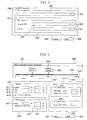
- PCR is a highly sensitive process and is theoretically capable of performing amplification even from a few copies of template. If genomic DNA is mixed in the extracted mRNA, amplification even occurs based on the genomic DNA as a template. In this case, PCR products would include both those based on mRNA as a template and those based on genomic DNA as a template. As a result, the amount of mRNA would not be accurately measured. With reference to Fig. 1, the relationship between the types of template and the length of PCR products is described.
- Genomic DNA 101 has intron 102 and exon 103.
- Primer 104 on the sense strand side is represented by an arrow pointing to the right, and primer on the nonsense strand side by an arrow pointing to the left.
- a PCR product 106 would include an intron portion.
- a PCR product 111 would not include an intron portion and would therefore be shorter than when genomic DNA is used as a template.
- amplification products based on genomic DNA as a template can be distinguished from amplification products based on mRNA as a template.
- a method is required for designing a primer on exons with an intron portion disposed between them.
- an analytical curve must be prepared. Theoretically, if the temperature cycle in PCR differs by one cycle, the amount of template doubles. However, in practice, this varies from one experiment to another, depending on experimental conditions, target base sequence, and primer sequence.
- a PCR product is prepared that includes only the target base sequence of the primer, and then an analytical curve is prepared using the dilution series of DNA that contains only the target base sequence as a template. Accordingly, a method is required for designing a primer for preparing a template that only contains the target base sequence of the primer for measuring the mRNA amount.
- Patent Document 1 JP Patent Publication (Kokai) No. 2001-245697 A
- the invention provides a method for designing a primer for real-time PCR, comprising the steps of:
- Fig. 2 shows a block diagram of a RT-PCR primer designing apparatus according to the invention.
- the RT-PCR primer designing apparatus of the present embodiment includes a file 200 containing the base sequence data about a target gene and splicing information; a parameter input screen for primer designing purposes; a display unit 201 for displaying the information about the primer that has been designed; input means 202 including a keyboard and mouse; a file 203 containing the designed-primer information; a central processing unit 204; and a program memory 205 in which various programs are stored.
- the program memory 205 stores search programs 206 and drawing programs 207.
- the search programs 206 include a splicing information calculation program 208 for calculating splicing information, and a primer sequence search program 209 for a primer designing process, namely, for retrieving a primer sequence.
- the drawing programs 207 include a file selection program 210 for displaying a screen for the entry of a file to be selected as a template; a parameter input program 211 for displaying a screen for the entry of primer designing parameters (conditions); a re-search screen display program 212 for displaying a screen on which primer search results can be narrowed; and a detailed information display program 213 for displaying a detailed information screen for an mRNA amount measuring primer.
- the primer designing process is carried out in the wizard format. When any of these programs is run, a dialog-format screen is displayed. When a process is initiated by the primer designing apparatus of the present embodiment, the file selection program 210 is initially run, whereby a screen shown in Fig. 3 is displayed.
- Fig. 3 shows an example of the file-selection screen that is displayed when the file selection program 210 is run.
- the screen incorporates a radio button 300 for selecting a file with annotation information as a template, and another radio button 301 for selecting a file without annotation information as a template.
- a radio button 300 for selecting a file with annotation information as a template
- another radio button 301 for selecting a file without annotation information as a template.
- a published gene database file can be mentioned.
- a genomic DNA and mRNA base sequence data prepared by the user can be mentioned.
- the user selects either one of the radio buttons.
- the selected field is placed in an input-activated state.
- the field that has not been selected is placed in an input-deactivated state.
- Selecting the button 300 activates a button 303 for displaying a list of files in the published gene database for clicking.
- a button 303 is clicked and a file is selected, a path of the selected file is displayed in a text box 302.
- Selecting the button 301 activates a button 305 for displaying a list of the files of the genomic DNA base sequence, and a button 307 for displaying a list of the mRNA base sequence files, for clicking.
- the button 305 or 307 is clicked and a file is selected, the path of the selected file is displayed in a text box 304 or 306.
- the user may directly enter a path in the text box 302, 304, or 306.
- a cancel button 308 is depressed.
- the process can be continued by depressing a button 309.
- the parameter input program 211 is activated, whereby the screen shown in Fig. 4 is displayed. If the button 309 is depressed when the button 301 has been selected, the splicing information calculation program 208 is activated, whereby the splicing information is acquired. After the splicing information is thus acquired, the parameter program 211 is run, whereby the screen shown in Fig. 4 is displayed.
- the files in the published gene database contain splicing information while the genomic DNA and mRNA base sequence data prepared by the user do not contain splicing information.
- published gene databases do not contain splicing information and the splicing information is obtained from the genomic DNA sequence data and mRNA base sequence data prepared by the user.
- Fig. 4 shows an example of a screen for the entry of primer designing conditions (parameters), which is displayed when the parameter input program 211 is run.
- the screen includes a field 400 for displaying splicing information; a field 410 for the entry of primer search conditions; a field 420 for the entry of PCR product conditions; and a field 430 for designating design options.
- the field 400 shows a gene name 401 and splicing information in a schematic fashion.
- the splicing information includes schematic representations of mRNA base sequence 402, full length 403, intron number 404, exon number 405, the length of intron sequence removed by splicing 406, and position 407 of binding by splicing.
- the field 410 includes the length and value width 411 of a designed primer; Tm value 412, GC content 413, and a check box 414 for designating an option for selecting only those primer candidates whose 3' terminal is G or C.
- the field 420 includes the length and value width 421 of PCR product obtained by the designed primer; a text box 422 for the entry of a minimum value of the difference in length of PCR products [The length of PCR product when genomic DNA is used as template - the length of PCR product when mRNA is used as template]; and a text box 423 for the entry of a minimum value of intron ratio [The length of intron / the length of PCR product when mRNA is used as template ⁇ 100].
- the user makes an entry in either one of the two text boxes 422 and 423.
- the field 430 includes a check box 431 for designating the exon number on the left and right sides for designing each primer; and a check box 432 for designating the intron number displaced between exons.
- the two check boxes 431 and 432 may be selected simultaneously.
- a comma "" may be inserted between the individual numbers.
- the screen further includes a button 441 for returning to the previous data input screen shown in Fig. 3, and a button 442 for proceeding to the next process.
- the button 442 is depressed, the primer sequence search program 209 is initiated.
- a screen shown in Fig. 5 is displayed.
- Fig. 5 shows an example of the screen that is displayed when the re-search screen display program 212 is being run, for the entry of conditions for narrowing the search results.
- the screen includes a text box 500 for displaying the total number of primer sets that have been retrieved; a text box 501 for displaying the total number of retrieved primers on the sense strand side; a text box 502 for displaying the total number of retrieved primers on the nonsense strand side; a field 503 for the entry of parameters for narrowing the displayed results; and a check box 504 for designating an option for displaying only those primers among the primer combinations that most well correspond to conditions.
- the field 503 includes individual areas for the Tm value, GC content, and the length of primer.
- the screen further includes a refresh button 505, a button 506 for returning to the dialog screen for designating the primer designing conditions shown in Fig. 4; and a button 507 for proceeding to the next process.
- a refresh button 505 is depressed after narrowing conditions have been entered in the field 503, only those primer information is extracted that correspond to the conditions, and the information is reflected on the values in the text boxes 500, 501, and 502.
- the button 507 is clicked, the detailed information display program 213 is initiated, and a screen shown in Fig. 6 is displayed.
- Fig. 6 shows an example of the screen for displaying the detailed results of designing an mRNA amount-measuring primer, which is displayed when the detailed information display program 213 is run.
- This screen includes a field 600 for displaying primer information in a schematic fashion, and a field 610 for displaying the detailed information about the primer set selected in the field 600.
- the field 600 includes, in addition to the field 601 for displaying the splicing information about the target gene, a field 602 for displaying the position information regarding the primer set.
- a primer set herein refers to a plurality of primers on the nonsense strand side relative to one primer on sense strand side. If the position information regarding a primer set cannot be displayed all at once, the display area is moved using a scroll bar 603.
- the field 610 shows the primer name; primer base sequence; position on the mRNA base sequence where complementary binding of the 5' terminal of primer occurs; primer length; Tm and GC contents of primer; and the length of PCR product in a case where mRNA is used as template and a case where genomic DNA is used as template.
- the field 610 includes a check box 613 for selecting all of the primer sets and a check box 614 for selecting a single primer set.
- the screen also includes a button 615 for checking all of the primer sets; a button 616 for proceeding to the primer design step for preparing a template for creating an analytical curve; a button 617 for returning to the previous process; and a button 618 for ending the primer designing and outputting the information about a selected primer to the file 203.
- the button 616 can be clicked when the check box 614 is selected. Specifically, a set of primers is selected when preparing a template for the creation of an analytical curve. When the button 616 is clicked, a condition excluding an area sandwiched by a set of primers selected in the check box 614 is added in the parameters for primer design, and then primer designing starts. Thereafter the screen shown in Fig. 5 for narrowing the display results is displayed again, and the above-described procedure is performed. When the button 507 in the screen of Fig. 5 is depressed, a screen for displaying the result of the primer for preparing an analytical curve-creating template is displayed, as shown in Fig. 7.
- Fig. 7 shows an example of the screen for displaying the result of designing a primer for preparing an analytical curve-creating template.
- the screen includes a field 700 for displaying primer information in a schematic fashion, and a field 710 for displaying the detailed information about the primer set selected in the field 700.
- the field 701 for displaying the splicing information shows the position information 703 for the measurement primer set selected in the check box 614 in the screen shown in Fig. 6.
- the screen also includes a button 713 for checking all of the primer sets; a button 714 for returning to the previous process; and a button 715 for ending the primer designing and adding the information about the selected primer to the file 203.
- Fig. 8 shows an outline of the processes performed by the primer designing apparatus of the invention.
- base sequence data is entered.
- the base sequence data includes splicing information, so that the routine proceeds to step S804.
- the radio button 301 has been clicked to select the use of the base sequence data for genomic DNA and mRNA prepared by the user as a template of Fig. 3, the base sequence data does not contain splicing information, so that the routine proceeds to step S803.
- a process for calculating the splicing information is performed, of which the details will be described with reference to Fig. 9.
- the screen of Fig. 4 is displayed, which includes the field 400 for displaying the splicing information, and fields 410, 420, and 430 for the entry of primer design conditions (parameters).
- a primer design process is carried out based on the thus entered parameters, of which the details will be described with reference to Fig. 10.
- the primer designing for preparing an analytical curve-creating template is to be conducted, the area sandwiched by the measurement primer set selected in the check box 614 in the screen of Fig. 6 is excluded from the processed object, and the primer designing process is performed again.
- step S808 information about the primer that has been designed is outputted to the file 203, and the routine ends.
- Fig. 9 shows an outline of the process for calculating the splicing information at step S803.
- the process is carried out by the pricing information calculating process program 208.
- genomic DNA and mRNA base sequence data are entered.
- the base sequence is processed as a character string, and an initial value of zero is substituted in the variable "DNA position" and the variable "mRNA position.”
- An initial value of zero is also entered in the variable "exon number,” which counts the number of exons.
- step S903 10 characters from the "mRNA position” in the mRNA base sequence are substituted in a character string "Searched sequence.”
- step S904 sequences corresponding to the genomic DNA base sequence are retrieved from the "DNA position.”
- the mRNA base sequences obtained by splicing are all included in the genomic DNA base sequence.
- step S905 it is determined if there is a corresponding sequence. If not, the input data is erroneous, and therefore the process terminates. If there is a corresponding sequence, the subscript of the corresponding letter in the genomic DNA base sequence is used as the corresponding position, and is substituted into the variables "exon start position" and "DNA position” at step S906. Because there is exon in this case, the "exon number” is incremented.
- step S907 the "mRNA position" and "DNA position” are incremented.
- Steps S908 to S910 constitute a search loop, in which the letter following the "DNA position" in the genomic DNA base sequence and the letter in the "mRNA position” in the mRNA base sequence are compared. If they correspond, the "mRNA position" and “DNA position” are incremented at step S909, and then it is determined once again if they correspond. The comparison is repeated until they do not correspond. When they cease to correspond, this means the end of exon, and therefore the routine advances to step S911.
- step S911 the "DNA position" is substituted into the variable "exon end position,” and the "exon number,” “exon start position,” and “exon end position” are added to the splicing information.
- step S912 it is determined whether the "mRNA position" is at the end of the mRNA sequence. If the "mRNA position" is not at the end of the mRNA sequence, the routine returns to step S903. If the "mRNA position" is at the end of the mRNA sequence, the routine advances to step S913 where the splicing information is outputted.
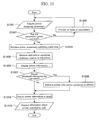
- Fig. 10 shows an outline of the process for retrieving a sequence from a target area at step S805 that is suitable for a primer.
- This process is carried out by the primer sequence search program 209.
- the primer designing conditions (parameters) entered in the fields 410, 420, and 430 of Fig. 4 are acquired.
- primers on the nonsense string side with corresponding positional relationship condition relative to a primer on the sense string side are retrieved and grouped into a primer set.
- the obtained primer information is displayed in the field 602 shown in Fig. 6.
- it is determined whether or not the displayed information is to be narrowed Specifically, it is determined whether the refresh button 505 of Fig. 5 has been clicked. If the information is to be narrowed, primer information corresponding to the conditions entered in the field 503 of Fig. 5 is retrieved at step S1008.
- the detailed information about the corresponding primer set is displayed in the field 602 of Fig. 6.
- the information about the primer set selected by the user is acquired, which completes the entire process.
Landscapes
- Life Sciences & Earth Sciences (AREA)
- Physics & Mathematics (AREA)
- Engineering & Computer Science (AREA)
- Health & Medical Sciences (AREA)
- Bioinformatics & Computational Biology (AREA)
- Medical Informatics (AREA)
- Theoretical Computer Science (AREA)
- Spectroscopy & Molecular Physics (AREA)
- Biophysics (AREA)
- Bioinformatics & Cheminformatics (AREA)
- General Health & Medical Sciences (AREA)
- Biotechnology (AREA)
- Evolutionary Biology (AREA)
- Chemical & Material Sciences (AREA)
- Chemical Kinetics & Catalysis (AREA)
- Molecular Biology (AREA)
- Genetics & Genomics (AREA)
- Data Mining & Analysis (AREA)
- Management, Administration, Business Operations System, And Electronic Commerce (AREA)
- Measuring Or Testing Involving Enzymes Or Micro-Organisms (AREA)
Abstract
Description
- The present invention relates to a method for designing a primer in a real-time PCR (to be hereafter referred to as RT-PCR).
- As one of the means for comparing the amount of expression of genes, a method whereby the amount of mRNA accumulated in cells is determined is widely employed. RT-PCR is widely utilized in recent years as a method for measuring the amount of accumulated mRNA. In a general procedure involving RT-PCR, the accumulated amount of mRNA is measured as follows. Samples grown under different conditions, or samples of different series grown under identical conditions are prepared, and mRNA is extracted from a tissue of concern. Using the thus extracted mRNA as a template, PCR is conducted under conditions including a primer set specific to a target gene and a fluorescent dye that binds to double strands to emit color. The fluorescent intensity in a reaction solution is measured in parallel with the reaction, whereby the number of nucleic acids in the double strands is measured. Based on the increase in fluorescent intensity, the amount of amplification product is determined.
PCR is a highly sensitive process and is theoretically capable of performing amplification even from a few copies of template. If genomic DNA is mixed in the extracted mRNA, amplification even occurs based on the genomic DNA as a template. In this case, PCR products would include both those based on mRNA as a template and those based on genomic DNA as a template. As a result, the amount of mRNA would not be accurately measured.
With reference to Fig. 1, the relationship between the types of template and the length of PCR products is described. In a eukaryotic experimental system, when splicing a target gene, individual primers are designed on different exons.Genomic DNA 101 hasintron 102 andexon 103.Primer 104 on the sense strand side is represented by an arrow pointing to the right, and primer on the nonsense strand side by an arrow pointing to the left. Whengenomic DNA 101 is used as a template, aPCR product 106 would include an intron portion. WhenmRNA 110 is used as a template, aPCR product 111 would not include an intron portion and would therefore be shorter than when genomic DNA is used as a template. Based on the lengths of the PCR products, amplification products based on genomic DNA as a template can be distinguished from amplification products based on mRNA as a template. For this purpose, a method is required for designing a primer on exons with an intron portion disposed between them. Furthermore, when the measured mRNA amount is compared between different samples, an analytical curve must be prepared. Theoretically, if the temperature cycle in PCR differs by one cycle, the amount of template doubles. However, in practice, this varies from one experiment to another, depending on experimental conditions, target base sequence, and primer sequence. Thus, for comparing the mRNA amount between different samples, a PCR product is prepared that includes only the target base sequence of the primer, and then an analytical curve is prepared using the dilution series of DNA that contains only the target base sequence as a template. Accordingly, a method is required for designing a primer for preparing a template that only contains the target base sequence of the primer for measuring the mRNA amount. - Patent Document 1: JP Patent Publication (Kokai) No. 2001-245697 A
- In experiment utilizing RT-PCR, an experiment-supporting functionality is required for designing a primer at positions with intron disposed between them. To realize such functionality, the following three conditions must be met:
- (1) The genomic base sequence and mRNA base sequence of a target gene have been determined by prior studies.
- (2) The primer can be designed at positions that do not include a splicing site on exons sandwiching an intron with an experimentally measurable length.
- (3) The information about the designed primer can be displayed in an easy-to-understand manner for the preparation of an analytical curve and for determination purposes, thereby facilitating comparison and analysis.
- It is therefore an object of the invention to provide a method whereby the
aforementioned conditions - The invention provides a method for designing a primer for real-time PCR, comprising the steps of:
- entering the base sequence data for a target gene;
- determining whether or not said base sequence data contains splicing information;
- acquiring splicing information if it is determined in said determination step that splicing information is not contained;
- entering primer design conditions for the designing of a primer at positions of exon with intron disposed between them;
- retrieving a primer set using a known primer search algorithm and in accordance with said primer design conditions;
- visually displaying a retrieved primer set, together with said splicing information and said base sequence;
- entering a condition for narrowing the displayed primer set; and
- visually displaying said primer set narrowed using the narrowing condition, together with said splicing information and base sequence.
-
- Fig. 1 illustrates the relationship between types of templates and the length of PCR products.
- Fig. 2 shows a block diagram of a RT-PCR primer designing apparatus of the invention.
- Fig. 3 shows an example of a screen for the entry of data.
- Fig. 4 shows an example of a screen for the entry of primer designing parameters.
- Fig. 5 shows a screen for narrowing display results.
- Fig. 6 shows a screen for displaying measurement primer results.
- Fig. 7 shows the result of designing a primer for preparing a template for creating an analytical curve.
- Fig. 8 shows a flowchart outlining the processes performed in accordance with the invention.
- Fig. 9 shows a flowchart of the processes for calculating splicing information.
- Fig. 10 shows a flowchart of the processes for retrieving a sequence suitable for a primer from a target region.
- An embodiment of the invention is described in the following with reference to the drawings. Fig. 2 shows a block diagram of a RT-PCR primer designing apparatus according to the invention. The RT-PCR primer designing apparatus of the present embodiment includes a
file 200 containing the base sequence data about a target gene and splicing information; a parameter input screen for primer designing purposes; adisplay unit 201 for displaying the information about the primer that has been designed; input means 202 including a keyboard and mouse; afile 203 containing the designed-primer information; acentral processing unit 204; and aprogram memory 205 in which various programs are stored. - The
program memory 205stores search programs 206 anddrawing programs 207. Thesearch programs 206 include a splicinginformation calculation program 208 for calculating splicing information, and a primersequence search program 209 for a primer designing process, namely, for retrieving a primer sequence. Thedrawing programs 207 include afile selection program 210 for displaying a screen for the entry of a file to be selected as a template; aparameter input program 211 for displaying a screen for the entry of primer designing parameters (conditions); a re-searchscreen display program 212 for displaying a screen on which primer search results can be narrowed; and a detailedinformation display program 213 for displaying a detailed information screen for an mRNA amount measuring primer. The primer designing process is carried out in the wizard format. When any of these programs is run, a dialog-format screen is displayed. When a process is initiated by the primer designing apparatus of the present embodiment, thefile selection program 210 is initially run, whereby a screen shown in Fig. 3 is displayed. - Fig. 3 shows an example of the file-selection screen that is displayed when the
file selection program 210 is run. The screen incorporates aradio button 300 for selecting a file with annotation information as a template, and anotherradio button 301 for selecting a file without annotation information as a template. As an example of the file with annotation information, a published gene database file can be mentioned. As an example of the file without annotation information, a genomic DNA and mRNA base sequence data prepared by the user can be mentioned. The user selects either one of the radio buttons. The selected field is placed in an input-activated state. The field that has not been selected is placed in an input-deactivated state. - Selecting the
button 300 activates abutton 303 for displaying a list of files in the published gene database for clicking. When thebutton 303 is clicked and a file is selected, a path of the selected file is displayed in atext box 302. - Selecting the
button 301 activates abutton 305 for displaying a list of the files of the genomic DNA base sequence, and abutton 307 for displaying a list of the mRNA base sequence files, for clicking. When thebutton text box text box - When the process is to be terminated, a cancel
button 308 is depressed. The process can be continued by depressing abutton 309. - If the
button 309 is depressed when thebutton 300 has been selected, theparameter input program 211 is activated, whereby the screen shown in Fig. 4 is displayed. If thebutton 309 is depressed when thebutton 301 has been selected, the splicinginformation calculation program 208 is activated, whereby the splicing information is acquired. After the splicing information is thus acquired, theparameter program 211 is run, whereby the screen shown in Fig. 4 is displayed. - In the above example, it is assumed that the files in the published gene database contain splicing information while the genomic DNA and mRNA base sequence data prepared by the user do not contain splicing information. However, there are cases in which published gene databases do not contain splicing information and the splicing information is obtained from the genomic DNA sequence data and mRNA base sequence data prepared by the user.
- Fig. 4 shows an example of a screen for the entry of primer designing conditions (parameters), which is displayed when the
parameter input program 211 is run. The screen includes afield 400 for displaying splicing information; afield 410 for the entry of primer search conditions; afield 420 for the entry of PCR product conditions; and afield 430 for designating design options. Thefield 400 shows agene name 401 and splicing information in a schematic fashion. The splicing information includes schematic representations ofmRNA base sequence 402,full length 403,intron number 404,exon number 405, the length of intron sequence removed by splicing 406, andposition 407 of binding by splicing. - The
field 410 includes the length andvalue width 411 of a designed primer;Tm value 412,GC content 413, and acheck box 414 for designating an option for selecting only those primer candidates whose 3' terminal is G or C. Thefield 420 includes the length andvalue width 421 of PCR product obtained by the designed primer; atext box 422 for the entry of a minimum value of the difference in length of PCR products [The length of PCR product when genomic DNA is used as template - the length of PCR product when mRNA is used as template]; and atext box 423 for the entry of a minimum value of intron ratio [The length of intron / the length of PCR product when mRNA is used as template × 100]. The user makes an entry in either one of the twotext boxes - The
field 430 includes acheck box 431 for designating the exon number on the left and right sides for designing each primer; and acheck box 432 for designating the intron number displaced between exons. The twocheck boxes button 441 for returning to the previous data input screen shown in Fig. 3, and abutton 442 for proceeding to the next process. When thebutton 442 is depressed, the primersequence search program 209 is initiated. When the primersequence search program 209 is being run, a screen shown in Fig. 5 is displayed. - Fig. 5 shows an example of the screen that is displayed when the re-search
screen display program 212 is being run, for the entry of conditions for narrowing the search results. The screen includes atext box 500 for displaying the total number of primer sets that have been retrieved; atext box 501 for displaying the total number of retrieved primers on the sense strand side; atext box 502 for displaying the total number of retrieved primers on the nonsense strand side; afield 503 for the entry of parameters for narrowing the displayed results; and acheck box 504 for designating an option for displaying only those primers among the primer combinations that most well correspond to conditions. Thefield 503 includes individual areas for the Tm value, GC content, and the length of primer. - The screen further includes a
refresh button 505, abutton 506 for returning to the dialog screen for designating the primer designing conditions shown in Fig. 4; and abutton 507 for proceeding to the next process. If therefresh button 505 is depressed after narrowing conditions have been entered in thefield 503, only those primer information is extracted that correspond to the conditions, and the information is reflected on the values in thetext boxes button 507 is clicked, the detailedinformation display program 213 is initiated, and a screen shown in Fig. 6 is displayed. - Fig. 6 shows an example of the screen for displaying the detailed results of designing an mRNA amount-measuring primer, which is displayed when the detailed
information display program 213 is run. This screen includes afield 600 for displaying primer information in a schematic fashion, and afield 610 for displaying the detailed information about the primer set selected in thefield 600. Thefield 600 includes, in addition to thefield 601 for displaying the splicing information about the target gene, afield 602 for displaying the position information regarding the primer set. With regard to the primer set, a primer set herein refers to a plurality of primers on the nonsense strand side relative to one primer on sense strand side. If the position information regarding a primer set cannot be displayed all at once, the display area is moved using ascroll bar 603. - When a line corresponding to a particular primer set is selected in the
field 602, the detailed information about that primer set is displayed in thefield 610. Thefield 610 shows the primer name; primer base sequence; position on the mRNA base sequence where complementary binding of the 5' terminal of primer occurs; primer length; Tm and GC contents of primer; and the length of PCR product in a case where mRNA is used as template and a case where genomic DNA is used as template. - The
field 610 includes acheck box 613 for selecting all of the primer sets and acheck box 614 for selecting a single primer set. The screen also includes abutton 615 for checking all of the primer sets; abutton 616 for proceeding to the primer design step for preparing a template for creating an analytical curve; abutton 617 for returning to the previous process; and abutton 618 for ending the primer designing and outputting the information about a selected primer to thefile 203. - The
button 616 can be clicked when thecheck box 614 is selected. Specifically, a set of primers is selected when preparing a template for the creation of an analytical curve. When thebutton 616 is clicked, a condition excluding an area sandwiched by a set of primers selected in thecheck box 614 is added in the parameters for primer design, and then primer designing starts. Thereafter the screen shown in Fig. 5 for narrowing the display results is displayed again, and the above-described procedure is performed. When thebutton 507 in the screen of Fig. 5 is depressed, a screen for displaying the result of the primer for preparing an analytical curve-creating template is displayed, as shown in Fig. 7. - Fig. 7 shows an example of the screen for displaying the result of designing a primer for preparing an analytical curve-creating template. The screen includes a
field 700 for displaying primer information in a schematic fashion, and afield 710 for displaying the detailed information about the primer set selected in thefield 700. In the present example, thefield 701 for displaying the splicing information shows theposition information 703 for the measurement primer set selected in thecheck box 614 in the screen shown in Fig. 6. The screen also includes abutton 713 for checking all of the primer sets; abutton 714 for returning to the previous process; and abutton 715 for ending the primer designing and adding the information about the selected primer to thefile 203. When a line corresponding to a set of primers is selected in thefield 702 and then thebutton 715 is depressed, the result of primer designing for preparing the selected template for analytical curve creating purposes is added to the selected measurement primer information. The screen then returns to the screen shown in Fig. 6. - Fig. 8 shows an outline of the processes performed by the primer designing apparatus of the invention. At step S801, base sequence data is entered. At step S802, it is determined whether the entered base sequence data contains splicing information. As described above, when the
radio button 300 for selecting the use of a file in a published gene database as a template of Fig. 3 has been clicked, the base sequence data includes splicing information, so that the routine proceeds to step S804. On the other hand, when theradio button 301 has been clicked to select the use of the base sequence data for genomic DNA and mRNA prepared by the user as a template of Fig. 3, the base sequence data does not contain splicing information, so that the routine proceeds to step S803. At step S803, a process for calculating the splicing information is performed, of which the details will be described with reference to Fig. 9. At step S804, the screen of Fig. 4 is displayed, which includes thefield 400 for displaying the splicing information, and fields 410, 420, and 430 for the entry of primer design conditions (parameters). At step S805, a primer design process is carried out based on the thus entered parameters, of which the details will be described with reference to Fig. 10. At step S806, it is determined whether or not the primer designing for preparing an analytical curve-creating template is to be conducted. If the primer designing for preparing an analytical curve-creating template is to be conducted, the area sandwiched by the measurement primer set selected in thecheck box 614 in the screen of Fig. 6 is excluded from the processed object, and the primer designing process is performed again. At step S808, information about the primer that has been designed is outputted to thefile 203, and the routine ends. - Fig. 9 shows an outline of the process for calculating the splicing information at step S803. The process is carried out by the pricing information calculating
process program 208. At step S901, genomic DNA and mRNA base sequence data are entered. At step S902, the base sequence is processed as a character string, and an initial value of zero is substituted in the variable "DNA position" and the variable "mRNA position." An initial value of zero is also entered in the variable "exon number," which counts the number of exons. At step S903, 10 characters from the "mRNA position" in the mRNA base sequence are substituted in a character string "Searched sequence." At step S904, sequences corresponding to the genomic DNA base sequence are retrieved from the "DNA position." The mRNA base sequences obtained by splicing are all included in the genomic DNA base sequence. At step S905, it is determined if there is a corresponding sequence. If not, the input data is erroneous, and therefore the process terminates. If there is a corresponding sequence, the subscript of the corresponding letter in the genomic DNA base sequence is used as the corresponding position, and is substituted into the variables "exon start position" and "DNA position" at step S906. Because there is exon in this case, the "exon number" is incremented. At step S907, the "mRNA position" and "DNA position" are incremented. - Steps S908 to S910 constitute a search loop, in which the letter following the "DNA position" in the genomic DNA base sequence and the letter in the "mRNA position" in the mRNA base sequence are compared. If they correspond, the "mRNA position" and "DNA position" are incremented at step S909, and then it is determined once again if they correspond. The comparison is repeated until they do not correspond. When they cease to correspond, this means the end of exon, and therefore the routine advances to step S911.
- At step S911, the "DNA position" is substituted into the variable "exon end position," and the "exon number," "exon start position," and "exon end position" are added to the splicing information.
- At step S912, it is determined whether the "mRNA position" is at the end of the mRNA sequence. If the "mRNA position" is not at the end of the mRNA sequence, the routine returns to step S903. If the "mRNA position" is at the end of the mRNA sequence, the routine advances to step S913 where the splicing information is outputted.
- Fig. 10 shows an outline of the process for retrieving a sequence from a target area at step S805 that is suitable for a primer. This process is carried out by the primer
sequence search program 209. At step S1001, the primer designing conditions (parameters) entered in thefields field 602 shown in Fig. 6. At step S1007, it is determined whether or not the displayed information is to be narrowed. Specifically, it is determined whether therefresh button 505 of Fig. 5 has been clicked. If the information is to be narrowed, primer information corresponding to the conditions entered in thefield 503 of Fig. 5 is retrieved at step S1008. At step S1009, the detailed information about the corresponding primer set is displayed in thefield 602 of Fig. 6. At step S1010, the information about the primer set selected by the user is acquired, which completes the entire process. - While a preferred embodiment of the invention has been described using specific terms, such description is for illustrative purposes only, and it is to be understood that changes and variation may be made without departing from the spirit or scope of the following claims.


Claims (4)
- A method for designing a primer for real-time PCR, comprising the steps of:entering base sequence data regarding a target gene;determining whether or not said base sequence data contains splicing information;acquiring splicing information if it is determined in said determination step that splicing information is not contained;entering primer design conditions for the designing of a primer at positions of exon with intron disposed between them;retrieving a primer set using a known primer search algorithm and in accordance with said primer design conditions;visually displaying a retrieved primer set, together with said splicing information andsaid base sequence;entering a condition for narrowing the displayed primer set; andvisually displaying said primer set narrowed using the narrowing condition, together with said splicing information and base sequence.
- The method for designing a primer for real-time PCR according to claim 1, wherein said primer design conditions include the exon numbers on the left and right sides of intron, or the intron number between exons.
- The method for designing a primer for real-time PCR according to claim 1 or 2, further comprising designing a primer for preparing a template for creating an analytical curve,
wherein the designing step comprises visually displaying a selected primer set together with base sequences, and performing the primary set search step while excluding an area sandwiched between the selected primer set. - The method for designing a primer for real-time PCR according to claim 1, 2 or 3,
wherein the displaying step comprises displaying the mRNA base sequence of a target gene using a diagram, in which, along said mRNA base sequence, the intron number, exon number, the length of an intron sequence removed by splicing, and the position of binding by splicing are displayed, and in which, in association with said mRNA base sequence, information about the position of said primer set is displayed.
Applications Claiming Priority (1)
| Application Number | Priority Date | Filing Date | Title |
|---|---|---|---|
| JP2004254745A JP2006072656A (en) | 2004-09-01 | 2004-09-01 | Primer design method for real time pcr |
Publications (1)
| Publication Number | Publication Date |
|---|---|
| EP1640887A1 true EP1640887A1 (en) | 2006-03-29 |
Family
ID=35530867
Family Applications (1)
| Application Number | Title | Priority Date | Filing Date |
|---|---|---|---|
| EP05015909A Withdrawn EP1640887A1 (en) | 2004-09-01 | 2005-07-21 | Method for designing primer for realtime PCR |
Country Status (3)
| Country | Link |
|---|---|
| US (1) | US7698069B2 (en) |
| EP (1) | EP1640887A1 (en) |
| JP (1) | JP2006072656A (en) |
Families Citing this family (2)
| Publication number | Priority date | Publication date | Assignee | Title |
|---|---|---|---|---|
| WO2012100089A1 (en) * | 2011-01-19 | 2012-07-26 | Cb Biotechnologies, Inc. | Polymerase preference index |
| WO2013134341A1 (en) | 2012-03-07 | 2013-09-12 | Dow Agrosciences Llc | Primer designing pipeline for targeted sequencing |
Citations (3)
| Publication number | Priority date | Publication date | Assignee | Title |
|---|---|---|---|---|
| US20020038185A1 (en) * | 2000-09-25 | 2002-03-28 | Hitachi, Ltd. | Method for indicating relationship between cDNA sequence and genome recording medium, sequencer apparatus, and method for designing a primer |
| WO2002081656A2 (en) * | 2001-04-05 | 2002-10-17 | The Henry M. Jackson Foundation | Enhanced diagnostic potential of prostate-specific antigen expressing cells |
| US20040153254A1 (en) * | 2000-03-31 | 2004-08-05 | Roche Molecular Systems, Inc. | Method for the efficiency-corrected real-time quantification of nucleic acids |
Family Cites Families (2)
| Publication number | Priority date | Publication date | Assignee | Title |
|---|---|---|---|---|
| JP2001245697A (en) | 2000-03-08 | 2001-09-11 | Japan Science & Technology Corp | Gene expression quantification method |
| WO2003065146A2 (en) * | 2002-01-25 | 2003-08-07 | Applera Corporation | Methods for placing, accepting, and filling orders for products and services |
-
2004
- 2004-09-01 JP JP2004254745A patent/JP2006072656A/en active Pending
-
2005
- 2005-07-21 US US11/185,892 patent/US7698069B2/en not_active Expired - Fee Related
- 2005-07-21 EP EP05015909A patent/EP1640887A1/en not_active Withdrawn
Patent Citations (3)
| Publication number | Priority date | Publication date | Assignee | Title |
|---|---|---|---|---|
| US20040153254A1 (en) * | 2000-03-31 | 2004-08-05 | Roche Molecular Systems, Inc. | Method for the efficiency-corrected real-time quantification of nucleic acids |
| US20020038185A1 (en) * | 2000-09-25 | 2002-03-28 | Hitachi, Ltd. | Method for indicating relationship between cDNA sequence and genome recording medium, sequencer apparatus, and method for designing a primer |
| WO2002081656A2 (en) * | 2001-04-05 | 2002-10-17 | The Henry M. Jackson Foundation | Enhanced diagnostic potential of prostate-specific antigen expressing cells |
Also Published As
| Publication number | Publication date |
|---|---|
| JP2006072656A (en) | 2006-03-16 |
| US7698069B2 (en) | 2010-04-13 |
| US20060047442A1 (en) | 2006-03-02 |
Similar Documents
| Publication | Publication Date | Title |
|---|---|---|
| Clewley et al. | MEGALIGN: the multiple alignment module of LASERGENE | |
| Zerbino et al. | WiggleTools: parallel processing of large collections of genome-wide datasets for visualization and statistical analysis | |
| Cary et al. | EchinoBase: tools for echinoderm genome analyses | |
| WO2013025561A1 (en) | Sequence read archive interface | |
| Li et al. | ChimeRScope: a novel alignment-free algorithm for fusion transcript prediction using paired-end RNA-Seq data | |
| KR101312156B1 (en) | Analysis system, analysis device, vessel, analysis method, and recording medium | |
| CN108780065B (en) | Mass spectrometry data analysis apparatus, method and non-transitory computer readable medium | |
| Mendoza-Parra et al. | NGS-QC generator: a quality control system for ChIP-seq and related deep sequencing-generated datasets | |
| Janowska et al. | HDXBoxeR: an R package for statistical analysis and visualization of multiple Hydrogen–Deuterium Exchange Mass-Spectrometry datasets of different protein states | |
| EP1640887A1 (en) | Method for designing primer for realtime PCR | |
| Hennell et al. | Using GenBank® for genomic authentication: a tutorial | |
| EP1583016A2 (en) | Data processing and display method for gene expression analysis system and gene expression analysing system | |
| Pielesiak et al. | RNApdbee 3.0: A unified web server for comprehensive RNA secondary structure annotation from 3D coordinates | |
| US20100125589A1 (en) | Method for graphically processing displayed data records for minimizing a selection error rate | |
| JP4579525B2 (en) | Gene expression data management display method | |
| Hung et al. | Identifying regions enriched in a ChIP-seq data set (peak finding) | |
| Wang et al. | A trimming-and-retrieving alignment scheme for reduced representation bisulfite sequencing | |
| David et al. | Targeted domain assembly for fast functional profiling of metagenomic datasets with S3A | |
| RU2850115C1 (en) | Method and device for displaying status of experiment with biological sample and system for analysing biological samples | |
| US20220284986A1 (en) | Systems and methods for identifying exon junctions from single reads | |
| US20040193589A1 (en) | Key word frequency calculation method and program for carrying out the same | |
| Nedwed | Enhancing analysis and interpretation workflows for transcriptome data with an interactive R/Bioconductor toolkit | |
| Song et al. | Model-based linkage analysis of a quantitative trait | |
| Todesco et al. | PABS: An online platform to assist BAC-by-BAC sequencing projects | |
| Blanco et al. | EasyDIVER+: An Advanced Tool for Analyzing High Throughput Sequencing Data from In Vitro Evolution of Nucleic Acids or Amino Acids |
Legal Events
| Date | Code | Title | Description |
|---|---|---|---|
| PUAI | Public reference made under article 153(3) epc to a published international application that has entered the european phase |
Free format text: ORIGINAL CODE: 0009012 |
|
| 17P | Request for examination filed |
Effective date: 20050721 |
|
| AK | Designated contracting states |
Kind code of ref document: A1 Designated state(s): AT BE BG CH CY CZ DE DK EE ES FI FR GB GR HU IE IS IT LI LT LU LV MC NL PL PT RO SE SI SK TR |
|
| AX | Request for extension of the european patent |
Extension state: AL BA HR MK YU |
|
| AKX | Designation fees paid |
Designated state(s): DE FR GB |
|
| 17Q | First examination report despatched |
Effective date: 20060517 |
|
| STAA | Information on the status of an ep patent application or granted ep patent |
Free format text: STATUS: THE APPLICATION IS DEEMED TO BE WITHDRAWN |
|
| 18D | Application deemed to be withdrawn |
Effective date: 20070703 |